Today, June 12, is Anne Frank’s birthday. Everyone must have heard her name in some way or the other. Either in her book, or in speeches or in the news. On this day, let’s remember this beautiful and kind soul who despite facing so much trouble, still believed in humanity.
Anne Frank was a German-Dutch diarist of Jewish heritage. One of the most discussed victim of the Holocaust, she gained fame posthumously with the publication of her diary titled,”The Diary of A Young Girl” in 1947.
In this diary, she documents her life in hiding during the German occupation of Netherlands during World War II. It is one of the most famous books in the world and has been transformed into plays and short films in various languages.
Anne Frank was born in Frankfurt, Germany in 1929. However at the age of four, they had to move to Amsterdam, Netherlands when the Nazi took control over Germany. Anne was German national, but her entire family’s citizenship was revoked, thus rendering them stateless. They later had to go into hiding due to the Nazi occupation of Netherlands. This was the plight of not just them, but all the Jews who were under German rule or whose territories were occupied by the Nazis.
By 1942, the persecutions of Jews was more rapid and rising further. Hence, Anne and her family went into hiding in some concealed rooms behind the office where Anne’s gather, Otto worked. Anne recieved a diary as her birthday gift in 1942. She kept records of her life in hiding and daily incidents that occurred. She kept the diary very private, not disclosing any of the thoughts and emotions that she penned down in it. She kept writing in the diary until 1944, when the family was captured by the Gestapo.
Anne and her sister, Margot were sent to a different concentration camp where they died(probably due to typhus). The only member of the family who survived was Otto Frank, who went back to his workplace to discover that the secretary had safeguarded Anne’s diary. Due to his efforts, this novel exists in the present and the world could witness the story of a young and talented girl.
Anne’s diary begins on her thirteenth birthday, and ends at about her fifteenth. At the start of the diary, Anne described typical experiences any girl would talk about. Her friendship with other girls, her crushes on boys and her academic performance in school.
Anne matures considerably throughout the course of her diary. Her entries started moving from detailed accounts of incidents into profound thoughts of humanity and life, in general. Anne feels lonely due her confinement and deprivation and also speaks about her relationship between family members.
In her diary, she longs to be seen as an individual, rather than a member of any society or religious group. We get to see the world’s developments during the war from a 15 year old girl’s perspective. Her last entry was on August 1, 1944. On August 4, her family was captured by the Germans.
This book shows us the horrors of the Holocaust and the condition in which Jews has to live due to fear of being killed. The Jews were killed due to their very existence and for no fault of their own. This shows us the views of a young, innocent girl who had so much to look forward to in life and it all just disappeared due to a war started by people.
This memoir will always remind us of the brutalities faced by people during the war and the impact of violence on younger generations.
This article will help you with those Important dates and events that are Important. So, in order to prepare better, we need to remember this list of important dates and days of the year. This will helps you learn about Important days of National and International i.e. India and World.
For this list of Important dates we will make them Month wise. And list out all the Important dates for that each month. In this article we are considering the dates and days of year 2021.
Mostly it consists of International Days:
Important dates and days in January 2021
1-January-2021: New Year’s Day, Global Family Day
4-January-2021: World Braille Day
6-January-2021: World War Orphans day, National Technology Day
9-january-2021: NRI Day
10-January-2021: World Hindi Day
11-January-2021: National Human Trafficking Awareness Day
Jio 5G India launch date is expected to be announced on June 24th at Reliance Industries Limited Annual General Meeting.RIL is developing an indigenous 5G network infrastructure in partnership with Qualcomm.We expect Reliance Jio 5G plans to be priced competitively.the next big thing in the world of telecom, looks set to become a reality in India very soon.
The Department of Telecommunications has given a go-ahead to four telecom operators in the Indian market — Airtel, Reliance Jio, VI, and MTNL — to test 5G networks in the country. However, Reliance Jio 5G network is expected to be the first to officially roll out to consumers in India. The company has been busy testing 5G equipment and setting up the infrastructure for the 5G network in the country. Thanks to the official information, leaks, and rumors, we have a pretty good idea about Jio 5G India launch date, plans, and speeds.
Let us have a look.Jio 5G launch date in India The Mukesh Ambani-backed RIL is expected to make Jio 5G launch on June 24th during its Annual General Meeting. Going by the reports online, it looks like the telecom operator will showcase the key Jio 5G features during the AGM, and the actual rollout will likely take place later in the future. It is also worth mentioning that the company is expected to launch an affordable Jio 5G smartphone at the event.Reliance-Jio-AGM-2021-Jio-5GThe Department of Telecommunications is yet to allot 5G spectrums to telecom operators in India. It is believed that the 5G spectrum will be allotted to these companies by the end of this year. So, you can expect Jio 5G network to roll out pan-India by the end of 2021 or in early 2022.Jio 5G plans Reliance could announce Jio 5G plans on June 24th during the AGM. However, that is just our speculation considering that the brand is expected to launch the Jio 5G service at the event.To recall, the entire telecom landscape in India was changed with the entry of Jio into the market. Reliance Jio offered extremely affordable cellular plans compared to the competitors. This, in turn, forced companies like Airtel and VI to drop the prices of their mobile plans.
Well, if Jio’s pricing history is anything to go by, we expect that Reliance will offer very affordable Jio 5G plans in India in order to boost adoption and keep its market share as the industry leader.Jio 5G network details Reliance Jio has been working on developing its own 5G network infrastructure (think of it as 5G equipment) instead of relying on Ericsson, Nokia, and Samsung. To achieve this feat, Reliance Jio has been working with Qualcomm to develop indigenous 5G network infrastructure and virtualized Radio Access Network (RAN).In layman terms, virtualised RAN allows the company’s 5G software to run on conventional off-the-shelf servers instead of having dedicated servers built exclusively for the job. This technology is expected to fast-track the rollout of the Jio 5G network in the country.Jio 5G speed in India As mentioned earlier, the Department of Telecommunications has given permission to Reliance to test the Jio 5G network, and the company has already commenced the Jio 5G testing in India. According to a report published by Qualcomm in 2020, Reliance managed to achieve 1Gbps speed on the Jio 5G network in the trials. Don’t get too excited though. That speed might have been achieved in lab conditions, which are very different from real-world conditions.Now, India is a thickly populated country with many closely packed buildings and civil infrastructures. This affects the penetration and ultimately the travel distance of 5G radio waves, which drastically reduces the data speed. Therefore, it is highly unlikely that we will get 1Gbps speed on the Jio 5G network in real life. Hopefully, Reliance will reveal real-life Jio 5G data speed on June 24th.
Secretary HK Dwivedi on Monday to discover the means being taken by the organization to manage the “incredibly disturbing” law and order circumstance in post-survey Bengal, which he named as “retributive viciousness”.
Dhankhar, who has been in constant disagreement with the Mamata Banerjee-drove government over the post-survey viciousness, scored up the charges to another level on Sunday, by tweeting: “Amazingly disturbing law and request situation. The security climate is genuinely settled. In a particularly dreary circumstance called upon (the) boss secretary to brief me on the rule of peace and law circumstance on Monday and show all means required to contain post-survey viciousness.”
“The state is in (the) grip of unprecedented post poll retributive violence at an unimaginable scale, with lakhs of people being displaced and property worth hundreds of crores vandalised. Rampant vandalism and hooliganism have resulted in large scale arson, loot, destruction of property,” he tweeted.
“Police is locked in as an augmentation of the decision regulation to let free malevolence on political rivals. In a particularly bleak circumstance, the main secretary of the state will be called upon to brief me desperately on Monday, seventh June, and demonstrate all means required to contain post-survey savagery,” Dhankhar said.
The lead representative claimed that individuals who have cast a ballot against the TMC were casualties of “designated viciousness”. Transferring a video in his Twitter handle, the lead representative said, “this to ‘rebuff and teach’ rivals for ‘setting out to cast a ballot in a majority rule government”.
Censuring the supposed occurrences of viciousness and “social blacklist and forswearing of advantages to individuals who had decided in favor of the TMC rivals”, he said individuals are compelled to pay “coercion charges for living in their own home or maintaining their own business”.
“Democratic values are openly shredded and trampled upon by the ruling party. People are in mortal fear of the police and that in turn is at the feet of the ruling party rogue elements,” he tweeted.
He kept up that the state functionaries “are not perceiving this discomfort, substantially less finding a way ways to contain it”.
The lead representative and the main pastor have been occupied with a conflict of words regarding post-survey brutality and the lead representative’s visit to Sitalkuchi in Coochbehar and Nandigram.
While consumers have been gravitating to e-commerce from traditional brick-and-mortar retail for years, the pandemic has sped up that transition even further:
Government shutdowns of nonessential retailers in March eliminated brick-and-mortar as an option for consumers to buy many products.
Many consumers concerned about the coronavirus began reducing in-person trips to grocery stores and other retailers deemed essential and allowed to operate throughout the pandemic.
As a result, online retailers like Amazon and Instacart reported massive sales increases, and essential retailers also saw a sharp rise in online sales and use of services like curbside pickup. Entering the holiday season, online sales still continue to surge even after most retailers have reopened.
Though related opportunities are numerous, flexible packaging is one area where growth through 2024 will in part be propelled by e-commerce trends that the pandemic is accelerating. More amenable to shipping than other types of packaging due to their light weight and strength, for instance, pouches are expected to especially benefit from increased reliance on e-commerce for food, beverages, pharmaceuticals, and consumer goods.
2. Online Food Delivery Reaches Broad New Audience Following Restaurant Closures
One of the industries hardest hit by the economic shutdowns of March and the social distancing requirements of the May reopenings, the restaurant industry is attempting to offset revenues lost from dine-in capacity restrictions and consumer unease about eating out during a pandemic by getting online.
Online food delivery platforms like DoorDash, GrubHub, and UberEats have been around for a while, but staunch consumer preferences for eating out, particularly in the major US market, had been a key restrainer of growth. Covid-19 has changed all that, driving rapid expansion in the user base for these platforms as well as the number of restaurants hosted by them that is expected to outlast the pandemic.
Unexpected Consumer Markets Surge Due to Shutdowns
Stuck at home in quarantine, consumer purchasing behavior took a turn toward indulgence, comfort, and novelty during the pandemic.
3. Frozen Food Packaging Suppliers Get Boost as Consumers Splurge & Stock Freezers
Panic buying and increased indulgence purchases have driven remarkable growth for frozen food and ice cream brands during the pandemic compared to historical levels, boosting demand for the different types of packaging used for these products.
Freedonia analyst Carolyn Zulandt says, “Unlike a number of other industries, frozen foods — and the packaging for these foods — are seeing a boost in sales during the pandemic, primarily due to shifts in consumer buying habits. Consumers are preparing more meals at home and stockpiling food items with longer shelf lives, all of which benefits sales in the freezer aisle.”
Among the packaging products expected to benefit from increases in frozen food sales are the cups commonly used for the traditional ice-cream pint, as well as the ready-to-heat trays and (increasingly) bowls used for single-serve frozen meals.
4. With Shift to Remote Work & Learning, Pet Ownership Skyrockets
Covid-19 led to a boom year for the pet industry by triggering a surge in pet adoption, as widely reported in the press and confirmed by Packaged Facts pet owner surveys. A significant component of this surge has consisted of pet lovers adding to their menageries, says David Sprinkle of MarketResearch.com’s Packaged Facts, such that new pet acquisition has extended beyond dogs and cats to other types of pets, especially reptiles and small mammals.
Sprinkle explains: “The pet adoption wave ties not only to the stay-at-home pandemic period, but more specifically to having kids underfoot at home, given school closures and the disruption of recreational and entertainment activities. Given that pet ownership is a discretionary expense, and typically a considerable one, multiple-pet households tend to be relatively higher-income, further fueling the pet product and service premiumization trend that has reshaped the pet industry and made it an apple of investors’ eyes.”
5. E-Bike Sales Boom as Consumers Seek Fun, Safe Alternatives to Public Transport
When lockdowns struck in March, bike retailers were bracing for a major slump. Instead, the opposite happened. Demand for bikes and particularly e-bikes soared worldwide as consumers sought fun, safe alternatives to public transport during the pandemic, and supply chains struggled to keep up.
Freedonia analyst Gleb Mytko says Europe’s importance to the global e-bike market will continue to grow post pandemic: “The region offers manufacturers countless opportunities because it includes some of the world’s most developed e-bike markets (Germany, Netherlands) as well as markets with immense growth potential, like France. Today, both regional and foreign e-bikes are making strategic investments in Europe, expanding their sales and distribution networks, and rolling out the next generation of e-bikes.”
In India as the corona virus speed is heavy the government has decided to keep the people safe in because this virus will spread through air. If any of the person is affected by the virus if he spits or while coughing are doing if his saliva comes out it is the corona virus it can stay 2 to 9 hours sometimes 11 days it differs. So the government ordered the whole country full lockdown no one should do anything all must stay in their respective houses. Lockdown came into an effect in the year October 1993. The corona virus was first began in the December 2019 in Wuhan, China from that country it was spread to other countries to in India it was in a high range so the government has told to strictly follow the lockdown. Due to the COVID-19 pandemic, a number of non-pharmaceutical interventions colloquially known as lockdowns (encompassing stay-at-home orders, curfews, quarantines, cordons sanitaires and similar societal restrictions) have been implemented in numerous countries and territories around the world. In all over the world all the government is taking steps to prevent corona virus in that the lockdown is the best thing to control the virus. This lockdown has made many things different from the normal life.
The Animals freedom:
In this lockdown most of the people in the world this all will happen like that as people are in home some animals came out of the forest to the streets on bear came to the street and tried to open a car, many deer’s were playing in the beach with waves, some animals were roaming in the road and busy playing in the road all these things happen because the roads are clear animals, birds and plants have equal rights in this world but we are not giving their space to live so now they are using the space and enjoying happily in the roads and everywhere.
Air pollution:
In this lockdown all are in our respective house no one is roaming out in the street or roads. The pollution in the country is very low no companies are opened so there is no pollution. All are in our respective house in that we should sit with opening all doors and windows to get fresh air and sunlight to prevent from this corona virus. This had changed us a lot in our life we cannot be freely as we are before because we didn’t respect the plants, sunlight and air. By seeing the beauty of nature we all want to be like this for our rest of our lives but as this corona virus comes to control we all will be polluting the air again.
Water pollution:
That lockdown is formed to save all the people from the corona virus so that the companies or tourist all are closed because of this lockdown. No people is allowed to come out of the house so that the people near the river, or lake didn’t go to bath or wash the clothes and tourist person didn’t go so that water in the river, lake, beaches etc our pure. If the government opens the company, tourist places the place will be worst. The nature is beauty will be lost in that place.
“WE SHOULD TREAT OTHER THINGS WITH RESPECT EVEN IF ITS NOT LIVING THEN ONLY IT WILL TREAT US WELL”.
Happiness is subjective. There may be nobody manner in which the term can be defined. For special humans, happiness holds one-of-a-kind connotations. For some, it implies a kingdom of thoughts; for others, it would imply a standard of way of life. every man or woman is an impartial, loose-thinking individual. absolutely everyone has an outlook on existence this is distinctive from the opposite. therefore, the definition of happiness is likewise variable for human beings. however, something can be the definition of happiness, there may be no denying that happiness is a vital part of our lives. without it, there is no factor in a dwelling or going about in existence.
There may be a commonplace word that is going: “cash can’t purchase happiness.” to a degree, it could be heralded as being valid. however, a few humans may additionally find it to be fake. For a selected section of society, happiness is defined by way of wealth. those people generally tend to do not to forget wealth as the measuring rod for their joys in life. For them, happiness in life comes from material ownership and properly-being. Riches, money, jewels, gold, and wealth cause them to glad; they remain content with those in their lives.
“Happiness lies in the joy of achievement and the thrill of creative effort.”
For any other phase of society, wealth does now not act because of the agent for happiness in their lives. Many consider happiness to be a non-violent and calm sense of pleasure that occurs within one’s mind. For them, it can not be measured in terms of worldly matters. happiness tends to come to be a feeling, that can be grasped thru the pleasure of the mind and soul, and not via the pleasure of the body. happiness, for a few, can also mean achievement. Being ambitious, hardworking, and successful; regularly turn out to be ways wherein a person obtains happiness in life.
Something is our modes and methods of turning into satisfied, it tends to maintain changing over the years. No feeling is absolute. it’d manifest that the matters used to make us secure for the duration of our formative years, no longer keep the identical importance in our lives. This takes place due to the fact our priorities and our desires alternate through the years. As we develop up, our outlook and imaginative and prescient lifestyles mature, and we no longer base our happiness on matters we used to love formerly.
As a result, the nation of being happy largely relies upon upon what a specific person wishes from life. It relies upon someone’s goals and dreams in lifestyles. specifically and in most cases, indulging in the things that one loves the maximum turns into the important thing to a happy existence. consequently, love and happiness are without delay related. Without love, Happiness does now not persist. Likewise, without happiness, love does no longer persists.
As stated, the spread of things makes an expansion of human beings happy. there’s no proper or wrong way to acquire Happiness. exceptional human beings have unique strategies by which they can derive happiness. all of them are legitimate; none of them are fake or wrong. Judging people based on what they love and what they hate isn’t justifiable. all of us have distinctive priorities in life, and now not all of these are comparable. They can be different, but that doesn’t suggest they’re wrong. Doing something that makes one feel glad interior out ought to be considered as valid and rightful.
In Conclusion, HAPPINESS can most certainly be found – and not just momentary pleasure, but genuine, long-lasting happiness, which is not something that comes to a person randomly. In fact, most people have to work very hard for a very long time to finally find happiness, to create the best possible version of it.
Digital Marketing involves showcasing labor and products utilizing advanced innovations and computerized mediums. In this specific circumstance, it is appropriate to take note that with the coming of Web 2.0 or online media, advertisers currently get the opportunity to use the chances offered by computerized showcasing utilizing web-based media like Facebook. This article investigates the benefits and disservices of utilizing Facebook for computerized advertising and talks about the different issues encompassing this idea. Prior to dispatching into the conversation, it is advantageous to take note that the unmatched admittance to an enormous customer base managed by Facebook settles on it the ideal vehicle of decision for advertisers particularly those occupied with buyer merchandise and FMCG or Fast Moving Consumer Goods. This is on the grounds that Facebook has a consolidated client base of in excess of a billion group and arrives at almost one of every four grown-ups in the United States alone. Aside from this, the utilization of Facebook in the developing business sectors is significantly more inescapable with gauges recommending that out of the 80% of the absolute Facebook clients who are from outside of the United States, almost 50% of them are dynamic clients causing the medium a stage for brands to be seen in the “loud social media world”.
advantage of using facebook
Proceeding with the focuses made above, it is without a doubt the case that Facebook offers entrance and reach to advertisers particularly those working on careful financial plans, as they don’t need to spend a lot of cash on costly showcasing efforts. Also, dissimilar to customary media where the adequacy and viability of an advertising effort can’t be estimated straightforwardly and all things being equal, readership or viewership measurements are utilized, Facebook promoting can be estimated for its adequacy as navigate and transformation of eyeballs into buys is promptly accessible. Further, Facebook offers the exceptional possibility for advertisers to focus on a worldwide crowd and simultaneously, think about nearby factors. As such, this means advertisers can make crusades, which have a worldwide subject, and simultaneously can contact their neighborhood crowd also. The conflation of contacting a more extensive crowd without settling on the neighborhood clients implies that Facebook turns into the informal communication site of decision when contrasted with Twitter and Instagram that are more engaged in their compass. Further, the “death of distance” and the evacuation of the topographical imperatives imply that spatial and locational obstructions are nonexistent with Facebook Digital Marketing. As of now, organizations like Coca-Cola and Starbucks have utilized the force of Facebook to incorporate it with their advertising techniques for viable client outreach.
downsides of using facebook
Obviously, there are disadvantages to utilizing Facebook as a marketing tool and these incorporate the rate with which negative exposure can go all throughout the planet in a jiffy. For example, a desirous contender or a disappointed worker may post negative remarks or data about the brand or the item, and considering the manners by which such remarks can go “viral” very quickly and even minutes, the case advertisers and organizations must be consistently watching out for what is being said and remarked upon on their items. The highlight is noted here is that when, the advertiser, the organization delegate concocts a reply or the refuting of the negative remark or exposure, the harm would have been finished. Aside from this, utilizing Facebook as the computerized promoting medium implies that moment satisfaction is the standard as opposed to any supported commitment with the brand. This outcome in clients (who are generally of Generation Y) sizing up the brand in a shallow and shallow way which implies that little consideration is paid to more profound idea and nuanced advertising similar to the case with customary media.
other issues to be considered
We enjoy thinking about the benefits and burdens of utilizing Facebook for Digital Marketing. Aside from these, different issues include Facebook. For example, promoting on Facebook is simple and economical when contrasted with customary media as one should simply incorporate Facebook into the organization’s internet advertising procedure and make a fan page or a devoted page as well as accommodating designated messages pointed the engaged shopper portion. Further, promoting on Facebook can bring extra advantages as can be found in the organization’s new moves to be more forceful to the extent online business and m-Commerce are concerned. This has for quite some time been a staying point among Facebook and its corporate customers, as the last needed the previous to incorporate these perspectives more into the general technique.
Prior to concluding this article, one should consider the way that news voyages quickly in the online world and ventures promptly in the web-based media world. Thusly, this can be a power for great and simultaneously, can yield capricious outcomes. In addition, incorporating Facebook into an organization’s general promoting methodology should be done solely after due ingenuity is done as the money-saving advantage investigation turns out distinctively for various organizations in the various areas. Taking everything into account, Facebook is a distinct advantage for advertisers and the arising patterns show that it would be utilized more by the advertisers as they look for all the more value for the money as far as the profits per dollar spent on showcasing and promoting.
Foeticide is the destruction of a fetus in the womb of the mother itself. Ultrasound technology is available using which sex of the child can be determined while the fetus is in the womb and parents who don’t want a girl child undergo this test and then kill the baby in the womb before it is born.
The sex-selective abortion is not at all supportable. ‘Historically, in the absence of genetic testing, infanticide was the only inhumane option for discarding the female child. This heinous practise continues even today in India’s southern parts, where families cannot afford an illegal ultrasound test.
foeticide is the destruction of a fetus in the womb of the mother itself. Ultrasound technology is available using which sex of the child can be determined while the fetus is in the womb and parents who don’t want a girl child undergo this test and then kill the baby in the womb before it is born.
Government and individual institutions are trying their best to deal with this menace.
In India, the Pre-conception and Prenatal Diagnostic Techniques (Prohibition of Sex Selection) Act, 1994 (amended in 2003) prohibits sex-selection or disclosure of the sex of the foetus. It also prohibits sale of “any ultrasound machine or any other equipment capable of detecting sex of foetus” to persons, laboratories and clinics not registered under the Act .The government of India also recently launched the ‘BETI BACHAO ,BETI PADHAO’ Movement in order to promote girl education and demote the practice of female foeticide and infanticide.
The Ministry of Health and Family Welfare of India has targeted education and media advertisements to reach clinics and medical professionals to increase awareness. The Indian Medical Association has undertaken efforts to prevent prenatal sex selection by giving its members Beti Bachao (save the daughter) badges during its meetings and conferences.
Sports occupies a vital role in our lives. … Sports is one such activity which helps us in maintaining a proper physique and a positive mentality. Apart from keeping a healthy body and mind, sports also helps us in alerting our senses, keeps us aware and an undaunting personality and outlook on life. Apart from keeping a healthy body and mind, sports also helps us in alerting our senses, keeps us aware and an undaunting personality and outlook on life.
Hence, sports has a multi-faceted role in our lives. Students in schools are asked to write essays on the topic of sports for their exams and assignments. For their convenience, we have provided sample essays on the subject Sports is such an activity that it can be taken up by anyone; at any age and any point in life. Adults, children and elders – everyone alike can take part in sports.
Many regard sports as a mere co-curricular or extra-curricular activity in schools. However, in reality, sports play an equally important role as does education in a person’s life.
To achieve overall and all-round development in life, one should be well-versed in both sports and culture. While training sharpens the mind, sports sharpens the body and fitness. Thus, both are essential.
There are numerous advantages of involving oneself in sports. First and foremost, as known by all and very definitively, competitions increase the physical fitness of an individual. Additionally, sports also contribute to building stable mental well-being of a person.
Various researchers show that people who are in the daily practice of sports in any form record better mental as well as physical health. Moreover, sports also eliminates the risk of a person catching diseases or facing any bodily interruptions. Competitions increase immunity and increase people’s stamina.
Sports also influence the life expectancy of people, increasing the potential years to live of an average human individual. All of us are associated with games somehow or the other in our lives.
While at schools and as kids, we were exposed to sports in various forms. However, since many institutions do not make it obligatory to pursue sports in higher academics, some of us are dissociated from its practice. However, a lot of people take up games further, on their own accord. Some people even decide on pursuing a career in the field.
A lot of people take up a lot of different kinds of sporting activities. There are many outdoor sports; these include cricket, badminton, football, hockey, volleyball etc. Indoor sports such as various board games, table tennis, chess etc. are also popular. One can choose from a large variety.
While outdoor sports contribute heavily in building the physical aspect of one’s being, indoor games have a more psychological impact. However, none of the activities can be categorised in a hard and fast way. Every sporting activity contributes to the well- being of a person, both physically and mentally.
Healthy food refers to food that contains the right amount of nutrients to keep our body fit. We need healthy food to keep ourselves fit.
Furthermore, healthy food is also very delicious as opposed to popular thinking. Nowadays, kids need to eat healthy food more than ever. We must encourage good eating habits so that our future generations will be healthy and fit.
Most importantly, the harmful effects of junk food and the positive impact of healthy food must be stressed upon. People should teach kids from an early age about the same.
Healthy food does not have merely one but numerous benefits. It helps us in various spheres of life. Healthy food does not only impact our physical health but mental health too.
When we intake healthy fruits and vegetables that are full of nutrients, we reduce the chances of diseases. For instance, green vegetables help us to maintain strength and vigor. In addition, certain healthy food items keep away long-term illnesses like diabetes and blood pressure.
Similarly, obesity is the biggest problems our country is facing now. People are falling prey to obesity faster than expected. However, this can still be controlled. Obese people usually indulge in a lot of junk food. The junk food contains sugar, salt fats and more which contribute to obesity. healthy food can help you get rid of all this as it does not contain harmful things.
In addition, healthy food also helps you save money. It is much cheaper in comparison to junk food. Plus all that goes into the preparation of healthy food is also of low cost. Thus, you will be saving a great amount when you only consume healthy food.
Asthma is the most common respiratory condition in children worldwide and with asthma treatment, asthma can be controlled and cured by medication.
The ongoing inflammation of airways in the lungs is called asthma. This inflammation of airways causes a problem in breathing which is in general called an asthma attack. Allergies and colds are common triggers of the condition.
An asthmatic child needs to participate in normal physical activities that have less effort. In simple words, a child if once, get an asthma attack then he\she should not suffer from asthma again more than once in a week. Asthmatic children should not participate in sports or any physical activity. Asthma is well treated through medicines but every patients’ asthma is different that changes with time.
Doctors treat and recommend medicines according to the child’s severity and frequency of symptoms in accordance with age. Those children who get asthma occasionally get short medication course that treats them well while children who often get the asthma problem are recommended long course according to the severity and frequency of symptoms. A child specialist may recommend several medicines at the start but then those several medicines become few. The doctor does this in order to control asthma at a very initial stage.
At the most initial stage, parents are asked questions regarding their child’s asthma after observing asthma symptoms. Parents would be asked questions like “Does anybody in the family have asthma problems?” “How often your child get such symptoms?” “Has your child faced the emergency need for breathing problems?” “Does your child have any allergy from pollen dust etc?” “Does your child wake up at night due to shortness of breath and too much cough?” “For how long does your child had the breathing problem?” And after all this discussion, they would be asked to conduct their child’s blood test, allergy test, and chest X-Ray test. These three tests decide whether the child is asthmatic or not.
When a child is diagnosed to be asthmatic then special treatment is given to him. Try to treat your child with daily medication to prevent asthma attacks and also maintain normal physical activities. Children are treated gradually stepwise to manage with the minimum number of asthma attacks which requires short-term treatment.
On the other hand, long-term medication is also there that plays a role to treat severe cases. Inhaled corticosteroids are commonly used for the treatment of long term asthma. Control drugs like Leukotriene modifiers are then later used if corticosteroid treatment does not work properly and the child does not get stable. This drug is chewable for the age of 2-6 years. Another long term treatment is the inhaling of drug Long-acting beta agonist that is added into inhaler which has even more good effects. Short term medication is based on a few medicines that cure the child quickly within a few weeks.
During or after the asthma treatment, parents should keep a record of each minute of their child. “Did the child had a breathing problem again and how many times?” “What does he do which makes him asthmatic?” These questions are asked to check the result of the treatment and to recommend some other treatment to make the child well.
1. Earth, our home, is the third planet from the sun. Earth is the fifth-largest planet in the solar system. … It’s smaller than the four gas giants — Jupiter, Saturn, Uranus and Neptune — but larger than the three other rocky planets, Mercury, Mars and Venus. Let’s unite to save our life by giving life to our mother earth. SAVING LIFE – The evolution of each of us has been possible because of the plant or the forests. The forest we give some oxygen, food, shelter, medicine, furniture. The forest protects us from the heat of the sun, cold waves and strong rains. Reduce, reuse, and recycle. Cut down on what you throw away. …
2. Volunteer. Volunteer for cleanups in your community. …
3. Educate. …
4. Conserve water. …
5. Choose sustainable. …
6. Shop wisely. …
7. Use long-lasting light bulbs. …
8. Plant a tree.
1. Instead of saying that humans live on the outside surface of a hollow planet—sometimes called a “convex” Hollow Earth hypothesis—some have claimed humans live on the inside surface of a hollow spherical world, so that our universe itself lies in that world’s interiorThe Earth has Air, Water and Vegetation.
2. By Saving the Earth we Save All Life.
3. Air Pollution is a Source of Environmental Destruction.
4. Water Pollution and Deforestation Degrade the Earth.
5. The Earth must be Saved for our Own Survival.
6. Planet Earth can Sustain Life.
“REDUCE MENTAL STRESS IN THESE 4 WAYS”
Stress that we continue to have becomes depression and depression leads to many mental disorders that ruin many lives if it is not taken care of. Reduce mental stress in life with the following 4 steps:
Find the causes of stress:
To start reducing stress, first identify the reason for your stress and the things that are bothering you. The reasons may be the burden of your work, divorce, your children, the burden of studies including many others. Never consider stress as an integral part of your life and do a keen observation of what bothers you at which point and ponder over your habits and attitude. The observation will help you identify what makes you nervous and what is keeping you stressed. Accept your responsibilities and do not think of them as a burden. Try to maintain your active role in life and stay socially active. Everything is in your mind. You just need to control your over-thinking.
Practice these 4 A’s (avoid, alter, adapt, accept):
Unnecessary stress should be avoided; try to avoid toxic people who became the reason for your stress. If anyone stresses you by his/her toxic behavior then end that relationship and stop meeting them.
Control your routine; if you feel stressed in too much traffic then avoid too much traveling. If you are stressed due to the unpleasant news on television then stop watching it.
Lastly, the avoid rule is to learn to say NO to whatever you are not fine with; know your limits and tell others that they cannot impose their order on you. You should be aware of your own rules and limits.
Altering the situation; never expect others to change their behavior rather have a check on yourself. First, change yourself and then expect others to behave in the right way. Balance your life and manage your life properly. Family, office, and friends should be given separate time.
Be grateful for what you have and adapt yourself to the stressors. Never have jealousy for others because it will only give you more stress. Never demand perfection because nothing can be perfect. Just adapt to the present situation and be happy for what it is.
Acceptance is the foremost thing that releases stress. Learn to accept the situation. Forgive others and look for more opportunities. Accept other people’s behavior. They have their lives and you have your own, never try to change others. Rather share your feelings with some trusted friend. You will feel less stressed.
Keep moving:
Never get disappointed with your life. You will always have new opportunities. To release stress, do small things like take long walks rather than traveling by car. Spend more time in nature than on social media. Listen to soft soothing songs. Play outdoor games. These things will help you keep moving in life.
Do fun:
Reduce mental stress by not letting negative things occupy your mind. Things will change, the situation will be resolved and the current phase of life will pass. Try to live within a situation, make out leisure time just relax.
“EVERYTHING IS IN YOUR HEAD. OVERTHINKING IS THE ROOT CAUSE OF YOUR STRESS”
All the existing vehicles will be electric, and most pollution will come to an end. The governments of countries such as all the European countries, Canada, USA, India, China, and other countries will almost become carbon neutral in teams of energy production. The growing energy demand will be fulfilled by renewable source energy such as Tidal energy, Solar energy, wind energy, etc.
Space mining will start by this time, which the resource will be extracted from the meteoroids, which can be used in further research studies and mine metals like gold, iron, copper, etc. This will form a completely new field in the space industry, giving a boost to space travel. By these means, humans can explore more insights into space easily. Mars will play a key role in exploring deeper space. This mining will be done on an asteroid belt situated in front of Mars. This red planet can perform the role of docking station for the raw material collected during mining and then as a transfer medium to transport it back to earth.
Quantum Computer is the fastest computer that humans have ever made. It is so powerful that if a supercomputer takes thousands of years to solve a problem, this monster can solve it in few minutes. This type of computer holds the computational power to simulate the prototype of the universe in just minutes. With this kind of power, the scientists will have the power to invent such bacteria’s which convert synthetic matter into organic matter. And with the combination of Artificial Intelligence Quantum Computer, the humans and I will solve most of their problems in just seconds. Quantum Internet a network where there will be no limits of speeds. All the data will be processed instantly, with no buffering, no lag, no latency. This network will be unhackable as the data sequences will be changing a trillion or quadrillion times per second.
Humanoid Robots will play a key role in changing our lifestyles; they will be replacing today’s IoT devices. These robots will be able to work 24/7 all day without any break, which will increase the production rate of a factory, and as these robots do not take a salary, this will be profitable for companies to implement. They will serve themselves as our everyday friend; they will communicate with us and have the ability to think and give their opinion on a certain topic while making conversation. These robots will help humans to take care of their child and pets.
In the other sectors such as medicine, Nanobots will be the next breakthrough by which humans can destroy lumps, cancer cells, and all other certain diseases as fast as possible. The technology in smart devices will be more advance as smartphones will be extinct, and smartwatches will take action as our smartphones with a very long battery life up to 2-3 months on a single charge. The holographic projection technics will be evolved, which will later replace TV’s, Laptops and Desktops.
Our heartaches seeing woman degrading another woman despite of knowing the challenges faced by the female gender in the society. The jealousy factor is very high among women and they are not comfortable in seeing someone rising and moving ahead in life. Since very long time, People have started listening the decision made by women and follows them. It took a lot of time and struggle in reaching the position that we are today.
Education have played an very important role in making women independent and strong without fearing anybody. They can live their life on their terms. No one can tell them what to do in 21st century. Women have a capability of being way more mature than men when some difficult situation comes in front of them. People used to compare women with Goddess Durga in Hindu religion. The factor which had shown so many repercussions in the flow of success chart of women is that they don’t want to help and support other women while working in the same field and environment.
In several workplaces so many rumor’s starts spreading when someone is talented and working hard to achieve her goals just to damage her reputation. If we work on supporting others with the right intention , then no women will be tortured or face any domestic violence in their houses. It is the time to overcome from our fear of jealousy and start complimenting others for their achievements and dedication.
Women can also stand tall against men and can take better decisions in the patriarchal society. Every women is special in their own way, we can’t judge them by comparing them with others. God has made us different and It’s ok to be different. To know your self worth and move ahead in life is the quality we need to celebrate and accept. Accepting our flaws and being helpful to the needy person is the best thing to do.
“Women can support other women, It’s a time to change and Change start within yourself.”
Electricity is the future fuel of all existing and upcoming vehicles, machines, and other things. Before 2030, We humans will be part of an extraordinary historic moment: The first human to step on Mars. This can be from any country; this will set up a millstone for the space journey of humans. NASA is also planning to send humans again on the moon by 2024 by their Artemis Program. This the human will explore the blind part of the moon, which is untouched.
In the future, there will be wireless charging lanes that charge up the EV’s and will help the cars to maintain a high range. This concept is a bit expensive to implement, but its benefits are of its own. Also, it will power the electric Trucks( both Pickup trucks and heavily loaded trucks), it will benefit both conventional and other transport sectors. This wireless charging is the setup formed by loading copper coils to create a magnetic field and then transfer it to the opposite, which is present on the vehicle.
Overpopulation will be the leading cause because a significant part will not have access to clean water. By this, we may face problems regarding e-waste, plastic waste, medical waste, and other such wastes. The scientists will discover bacteria that can convert plastic into an organic form; due to overproduction, some regular living organisms will become extinct. People will face problems due to rising sea levels, increasing temperature, and climate change. Like the hurricanes will be more powerful and may occur frequently. Blackouts may be the common thing in many places, etc.
Other developments will be done in the medical sector. Scientists will discover antiaging drugs by which the human skin will remain fresh and healthy, cure many diseases, and implement A. I will increase the survival chances of an infected person. Artificial intelligence will play an essential in developing and making our life easier. Self-driving cars, trucks, airplanes will become a common thing. Quantum Computers will be the next generation of computers, which will help scientists solve significant problems as soon as possible.
In this modern aeon of society, any salesperson would have a limitless budget to market his/her business to find new customers for their products. The salesperson can buy offline and online advertising for their growth or run promotions and campaigns to bring traffic towards their products. The most basic thing is to understand that the possibilities for getting new customers to range from cold calling names to buying lists of those customers who can drive new businesses to their website.
Increasing sales isn’t an easy job. You need a great marketing plan to approach the customers and get them to buy your products. Before finding new customers, you must understand your customer’s needs and concerns, what is currently trending, what are facilities you offer and what your competitors are offering. Building trust and understanding is the basis of every relationship so you as a seller need to understand your customer and earn their trust. To understand your customer and their needs, you have to break down the whole process in a series of continuous steps which the customer will have to go through. This series of processes create a funnel.
A Funnel is a journey travelled by a customer from being a usual viewer to a devoted customer of the product. This funnel concept includes visiting the website, checking the product and its features, trying the free trial and then finally purchasing the product. It is also concerned with product development and is based on the customer’s buying perspective. To design the best funnel for your customer you must get rid of the issues and the loopholes that are disturbing your customer. The funnel should include the areas of interests of the customer. This concept will make the customers compelled to try your products and you can become successful.
If your company has a slogan that is eye-catching and ensures the people that your company is concerned for them, the customers will check out your products. It also highlights your company’s first impression and abilities. For broken funnel steps, you must try to understand the customer’s perspective again and redesign or try to use what encourages them. Even if all of this does not work, you should consider Jaffe’s phrase “flipping the funnel”.
Flipping the funnel means spending fewer resources on gaining new customers and spending more on acknowledging and retaining the current customers. If you make sure that the current customers are satisfied then they will reach out to their known ones and share their product experience which will bring you more sales. You have to use the information of your existing customer to develop a target audience and drive their way to your products.
To check whether flipping the funnel is beneficial or not, you can compare how much you are receiving from your customers to how much you are investing in them. The hardest part of flipping the funnel is changing the company’s organization and culture. Your company must commit to staffing customer service call centres even on the weekends, answering emails promptly and maintaining a system for monitoring the social handles daily to keep it updated. Your company has to recognize and reward outstanding customers. Rewarding and recognition does not always mean giving away free products, at times it just means a simple welcoming gesture, thanking them and saying comforting things.
You can also try various schemes like special offers or one day free trial for the best customers. Such schemes attract people and can make your product popular. Some products may be appealing to a particular group of audience but they may not be liked by another so to eliminate this issue you can conduct surveys. A survey is a list of questions that are aimed at extracting data from your customers. It includes questions regarding your products and customer’s reviews. The surveys will tell you about your weaknesses, strengths, opportunities, threats and they give you an overall look of how your customer thinks about your product.
Proper and convincing management is a must to fulfil the final step, i.e., to catch and cover up all of these things. It seems hard to start a business by yourself but once you get started with it, you will be used to it and can even learn from your mistakes.
We keep hearing all the time about the benefits of exercise or yoga, but a lot of people don’t understand the specific benefits that can be enjoyed with a consistent exercise plan. There are more benefits that come along with a good exercise routine performed on a daily basis. Not only will we get all of the health benefits including a toned, fit and well shaped muscular body, but we will also restore our confidence and self esteem in the process.
Self esteem is one of the best pros of exercise that we do not always hear about. When we start to get in shape and lose weight little by little with our daily exercise routine, we will automatically feel better about ourselves and work even harder on ourselves. For many people, this is the beginning of a whole new way of life. Even if we don’t begin with a healthy diet, the restoration of our self esteem and the boost to our self confidence will inspire ourselves to start watching what we eat as well, we become conscious about it ultimately.
Confidence and boldness is one of the most must have and appealing qualities that a person can have. confident People hold themselves taller and are not afraid to try new things. This can make us more attractive because of our relatively smaller size and weight loss that we will experience from our exercise routine. Anxiety and awkwardness lowers as people around us start admiring our fitness.
Of course, there are many health benefits of daily exercise that should not be ignored. Obesity is responsible for more health problems than almost any other major issue. When one begins to include exercise in his daily routine and starts burning calories at a much faster rate, he will begin to lose weight. With all that, practice a healthy diet and the weight will reduce even faster.Weight loss results in a decrease of risk of heart diseases, diabetes and cancer. These are no small benefits and they are ones that will help anyone to live a longer and healthier life.
As James Allen writes in his book “as the man thinketh”, “Disease and health, like circumstances are rooted in thought”.
All of these above mentioned benefits can be used by including exercise in one’s daily schedule. Even if there has been lack of exercise for over a long period of time, one can start off with a brisk walk to get started on the road to fine health. Wake up a little earlier, and start off the day with a quick walk around the block. Over time, more distance can be added to the walk and before we know it, we will be racking up the miles every day. As they say, small daily steps lead to stunning results. Keep on with your own pace and learn to listen to your mind and body while you are just starting out. It automatically gives us signals.
Starting with a good warm up and ending exercise with a cool down is good practise. This is the best way to care for your muscles before you start any hard exercises as it will prevent injury and muscle tear. The benefits of exercise can be at fullest if you include exercises and asana of yoga that you enjoy in your daily routine. Dance, if that is what you enjoy. Go for a night walk or take a swim. Just keep the movement daily and watch the food i.e the calories intake.
Take care of your body as it is the only place you live in.
Who loves creative writings and reading fictional novels.
Feminist in public
“There is no gender identity behind the expressions of gender…”-Judith Butler
Sometimes, we get lost but come back to the mainstream of life by our own willpower. In keeping pace with the society, both men and women have taken part in equal struggle. Women are moving forward in tandem with men in various fields of action.
In literature, women are triumphing from all aspects of philosophy in the ideals of art. Women are ahead in all aspects of ideal everywhere. We women are pioneers in the struggle for existence. From primitive times until this time of 21st century, we have been deprived of our freedom.We have somehow mastered the lesson of not losing. We have won the losing battle on emphatic will. We are moving forward vigorously.
The seeds of this very long battle of identity were sown by our elder fighters; as a result we are plantings the trees of that fight. We were warriors, we are warriors, and we will be warriors for life. Together we shall blast this battle of identity and existence.
The current age of science and technology has impacted the individual in every sphere, the expansion of social networking and media has led to huge spread of socialization digitally. Basically, the social networking site is defined as an online platform which provides people with an opportunity to build social relationships with different people around the world, and match the people with common interests and connections. Social media has facilitated a lot of people in reshaping and enhancing their expressing and communication skills, thus, it has the potential of engaging the people constantly.
Gradually, social media has became an integral part of the individual life, as it has the potential to boost the personality of the user. It is no more a medium of informal communication a rather became a significant mode to promote one’s business, organization, etc. it is an excellent instrument to attract and advertise one’s talent and activities as social media allows consistent engagement of the people of the society.
However, every type and site of social media has two sides- Bright and Dark. It can be regarded as helpful or disturbing on the basis of the manner of the usage. India has around 400 million people that make use of one or other social media platform, and most of these users operate through their phones that cam be mentally stressful as well as is prone to hacking and malicious activities. The heavy usage of social media among the children and youngsters has led to certain hostile incidents like, Mental disorder or instability, attempts to suicide, Self-injurious behavior, etc. It is worth noting that introduction of social media has brought a kind of reformation and modernization in the society; yet, on the other hand, excessive usage of this blessing has also brought various negative consequences and transformed it into a curse.
Thus, it becomes necessary to analysis the advantages and disadvantages of social media to know the positive or negative impact of this Double-edged Sword.
ADVANTAGES:
The social media is a great medium to establish connectivity among different individuals. The people from all around the world can communicate and connect with each other very easily. The distance among the individuals feels to be reduced even if they are a continent apart, they feel close by having a communication through any social media site.
Also, the people can share their views and ideas on a specific issue and get to hear other’s perspective. For example, if someone publish something on their social media profile, the other visiting users have the liberty to comment upon the same.
The social websites can be a mode of helping the people around you and resolving the prevailing social issues. Even during the pandemic situation, the social media platform has helped the individuals in need to approach others for help and vice versa. Thus, the connections can be viable if it simplifies the things.
The businesses and organizations now have the opportunity to know the need of the people through the social media websites and produce the necessary product. Also, the existing businesses can easily accept the consumer review and enhance their product accordingly. It has helped the individuals certainly in expanding their businesses.
Various small businesses have come up, these people might not have a specifically built infrastructure, they are operating from their residence through their social media accounts and are receiving overwhelming responses.
The technological improvement and establishment of social media platform has been educational for the young generation and its significance has drastically increased during the pandemic and lockdown situations.
DISADVANTAGES:
The social media is prone to certain setbacks and lacking, the sharing of ideas and news on the social media has led to various sites coming up and posting contradictory news on the same issue. Thus, there is wide spread of fake and misleading information on the social media, this creates confusion among the people and can lead to adverse instances.
The social media has given birth to a whole new term of Cyber-bullying, some immoral people feel pleasure in attacking the other individuals. As, the individuals can chose to hide their real identity and misrepresent themselves, this causes a lot of difficulties in identification of the user. This problem is more common among the young users of social media, who do these mischiefs for fun without knowing the future consequences of the same.
Social media is quite addictive and at the same time it is damaging for the mental, physical as well as social well-being of an individual. Excessive use of anything is dangerous and the same phrase is applicable to the social media platforms. The harmful radiations coming from the electronic devices can affect the mental health of the operator and thus, it can cause a decline in the ability to think and function of an individual, it increases complication and complexities.
Thus, the negative impact of the social networking sites should be kept in mind while making use of these platforms. Communication is a vital part of the human society, however, the increase in penetration of social media affects the individual practical skills adversely. There is an urgent need to keep a check upon the social activities of the young children by the parents to ensure that they learn good things and to avoid their involvement in wicked activities.
Khaled Hosseini-a master storyteller who knows how to pull the strings of readers heart. Through his epic publication , he has depicted the crippled emotions of human mind. The stories that he tell through his books haunt the reader for many fortnights. He was born in Afghanistan, but his family had to migrate to United States for many reasons. Khaled never forgot his homeland but used his writing skills to expose the life of people in Afghanistan to the world. The stories that he provide to the reader is equally powerful and haunting and is not among those to forget.
The kite runner , The thousand splendid suns and The mountains echoed are three among his books which will definitely leave an impact on the readers mind. He explains through his vivid writing , the life of people in a place where war and destruction continuously affected. The women and children were the most affected and the were the most vulnerable. His writing has the power to make the reader feel the pain of the people. Many a times we feel that , we are present at the scene and experience the emotional input given by the writer. But he ensures to provide the reader a better ending. He first breaks the heart of reader and the ends by proving a reason to smile. Hosseini knows the bond that tie people together and he uses it to lift the emotions of his readers.
He speaks the truth of evil and its effect on people who tries to lead a normal life with peace. “The kite runner” is worth reading as it is based on the fundamental relation-friendship. Love, loss and betrayal are the elements of this haunting story. It depicts the innocence of childhood and friendship. The story gives many heart crippling events to the reader to cry. Hosseini has explained how political and personal evils can cause extreme pain to one self and others. The truth that , a act done can never be undone even if we try to. The selfishness and innocence comes face to face in many situations provided by the writer.
Hosseini always use the relations to convey his story. “And the mountains echoed” showcases the pure love between a sister and brother. Cruel act occurred out of poverty separates the siblings and shatters the heart of readers. Poverty and struggle from it compels people to do many evil things. Hosseini has incorporated many characters in this book and each character has a story to tell. All are chained to the struggles in life , and is too far away from what they really want. Their attainment of happiness seems to be far away , and they take up any way to reach there. But the mirage of happiness deceit them leaving them with a pile of sorrow.
“The thousand splendid suns ” showcases the life of Afghan women and the atrocities they had to face. It is equally heart breaking as the above two and shows the pain when you are not even allowed to dream. Dream is just a myth for them.
But Hosseini is kindhearted enough to provide the reader to smile at the last. Every bad dream ends up with a smile of happiness. There is always a reason to smile hidden at the end of the journey.
Have you ever wondered why communication skills are so important? Communication is the way of the medium by which two people speak to express their opinions. There are many ways of communicating but sometimes our words could’ve been misinterpreted by them. Many schools, colleges, and even offices give a training session to improve one’s own communication skills.
Communication skills are more important when it comes to business dealings. If you lack the skill to explain or convince the client, there are higher chances that they will leave the meeting or the dealing will be closed. There are two ways of communication
1. One-way communication
2. Two-way communication
We could’ve seen this one-way communication in lecture halls, motivational speeches, and many areas where the speaker will talk for everyone. In this, we will only get the insight and knowledge on what they are speaking and we can’t question them on what they are speaking.
In two-way communication, we will communicate with another person and the other person will answer our queries. Or we will tell them something. It would be even more engaging. Teachers mostly prefer two-way communication because the class would become interesting only if you ask questions or if they ask questions. Simply listening will make you tired and you will start becoming sleepy.
If you have poor communication skills it will lead to confusion and frustration. The other person will get frustrated and may walk away from that place. We can improve our communication skills by giving attention to details around us. If we watch a good show try to pay attention to their eye- contact, body language, conscience, respect, and audacity. You will get some ideas on how they are waiting for the other person to speak before giving their opinion. It will give you a clear understanding of how communication works.
You should speak with respect. That is the most important thing in communication. If you don’t give respect to the other person then that communication will end in a quarrel or conflict. That will create a bad impression on you.
You can start practicing your communication skills by reading books. There are many books written on communication skills. If you are a beginner and have not read any books, start by picking books for beginners instead of reading some complicated ones. It will take you more time to understand the concepts.
Communication skills are not only important in business meetings or work-related things. It is also important in relationships. The main reason why many relationships fail is this communication gap. Your partner will get your ideas in some other way. In the end, they will reflect on their own thoughts. It will gradually create a rift in your relationship.
If you are a good and extraordinary speaker the company will give you many chances to explore your skills. There is nothing wrong with being an introvert. But, not having communication skills will definitely land you in trouble. It is important that you start learning them and try to improve your communication skills.
Communication skills will play an important role in your interview selection. If you have impeccable communication skills and good talents it will increase your chances of getting hired.
There are often times where we will feel that everything has come to end and we will get ready to give up. But, have you ever thought that you have come across this far and there are very few steps needed to complete the work. We should often think about the reason why we started? It will give the answer to us. It will push us forward in achieving our goals.
We can start by reading motivational books. They will give you some idea of what needs to be done and some strategies to be followed by you. It will motivate you. You can find some of the top 10 best motivating books for beginners on google. It will provide you with lots of options. You can check on reviews and but the one that attracted you.
Start by reading gradually. Don’t push yourself too fast. Remember these are motivational books, not any romantic novels which will keep you engaged right from the beginning till the end. It will take some time to understand the depth of the things mentioned in them. And making them enter your brain will take some time. So, start gradually and you will find some amazing change in yourself at the end.
If you have read books or not interested in them you can listen to Ted Talks. Ted Talks are the best when it comes to motivation. There are many people who will give inspirational speeches on how they struggled and what are things they did to achieve this position. You can simply search on Youtube and start listening to them. And this too listen to one ted talk at a time. Don’t push yourself too hard.
Ted talks are given by many speakers across the world. We can even learn how they are doing this public speaking. How they overcame their fear of public speaking or holding a mike in their hand? And most importantly, how they handled criticism? Because of this thing many people fail to follow. Criticism will help us to give the thirst and quench needed to achieve our target. It will never fail us. But, we should never take criticism to our heart and don’t take success to our brain. These two things will help you to achieve the most important things in life. We should often remember that we shouldn’t spend too much time celebrating success. It will become a headweight.
Don’t be jealous of others’ achievements. Have you ever thought about the sacrifices they made to get into this position? They could’ve faced many struggles and hurdles to reach that position. Don’t be too hard on yourself. Never lose your friends just because your friend achieved the thing that you couldn’t achieve. Simply believe that something is waiting for you to come at the right time. You just need to believe yourself. If you are good at what you are doing then success is just a few steps away.
With these things in mind, we should at least give it a try before quitting. We never know if we will get succeed or not without taking a chance.
Cyber laws are defined as laws governing the inter relation of networks of computers. Cyber Crime is not defined in Information Technology Act 2000 nor in the National Cyber Security Policy 2013 nor in any other regulation in India.
The Information Technology Act 2000 (the IT Act) read with the rules and regulations framed thereunder deal with cybersecurity and the cybercrimes associated therewith.
NEED OF LAW-As the time passed by it became more transactional with e-business, e-commerce, e-governance and e-procurement etc. All legal issues related to internet crime are dealt with through cyber laws.
🎗️Why mobile phones are chosen for criminal activity?
Our phones can be used to transfer money
Device’s GPS capabilities make it prone to location data
Some scams are specific to mobile.
🎗️Types of Mobile Based Crimes:- 1.Mobile Banking and Credit card information theft and fraud 2.Personal Information theft. 3.Phishing via mobile phones. 4.OTP based crimes. 5.Duplicate Apps,Malicious Apps 6.Fake messages send for causing harm
Have you ever thought that you are having lots of free time and don’t know how to use it productively without binge-watching a series? That too many could have had that thought in these covid times. How difficult it is to sit in one place and watching our entire day going without any improvement. We can invest our time in learning a new skill. You could have analyzed how competitions are increasing and how difficult it is to get placed in an interview. They are looking for skills not just your degree but some real-time experiences.
It is a good time to start something new and learn some good skills. We can’t wait for somebody to push us and tell us the good things in learning something in particular. We just have the thirst to explore the skills. We can start by learning online courses. When we speak about online courses, it is not just paid courses that come with certificates. We can start by doing free online courses. There are lots fo platforms like Udemy, Coursera, and Great learning that are providing free online courses with certificates for students. These are some really good platforms to enhance your skills.
Many companies will consider you in their interviews if you have completed courses from these platforms. Because they are some of the renowned and genuine platforms to learn online courses. New skills will help you to explore your creativity and knowledge. You could be astonished by seeing your potential, capacity, and the end result. It will have the power to keep you engaged right from the beginning till the end. But, try to learn a skill which you are really interested in. Don’t enroll yourself in all the courses at a time. It will make your energy down and you will lose your enthusiasm for learning them. Enroll one course at a time. You can complete it faster and the energy will be doubled seeing the end results.
When you go for interviews the first thing the employer will look at will be your interview. If you explain to them that you just finished your college degree and don’t have any skills or completed any online courses. They will take some time to consider you. On the other hand, if your resume is good enough with many certificates from online platforms they will proceed to the second round of interviews immediately. That is the power of learning a new skill.
These skills need not be just learning. For example, drawing is also considered a new skill. You can only find out if you start doing them. Life will not throw surprises all the time. We have to do some little effort from our side.
It is the right time to explore yourselves. Start by enrolling yourselves in any of these platforms and make yourselves skilled. We never know when another disaster will come to our life. To face it we have to be good enough to handle the situations. It will happen only if we start engaging ourselves with new activities. So kick start your day with enthusiasm.
Life will often throw surprises and turbulence without giving an iota of hint. But, we are the ones who have the ability to control it. We are responsible for letting people enter our life. Have you ever thought that your life was so good before that person?
Of course, we could have at least a million times if we have suffered difficult times. We often think about our past and try to control our emotions. Thinking that he/ she was good it was my fault that they left me. But, why are you explaining yourself? Remember you don’t owe any explanations. You have the privilege to live your life. If he/ she left you then it is for your own good. Keep this one thing in your mind “Everything happens for a reason”.
There are many reasons, but don’t hurt yourself by explaining them and waiting for them to come. You should keep in mind that you shouldn’t do this because it will break your piece. Don’t think about your past that you good you were as a couple and don’t complain to anyone about them.. Don’t wait for them to come and apologize and thinking that you can again start over your life with them.
Make your mind understand this bitter truth that they are gone and don’t give chance to enter them in your life again. It is not worth it. It will create more problems and destroy your life completely. There’s more to life than thinking about them. Have you ever thought about how you were happy without their presence in your life? Just try to think about that many times and you will definitely get a clear look at yourself. It will help you to start over your life without that person.
Initially, you will find it more difficult to start. But, believe me, time is the biggest medicine. Time heals everything and will give you the much-needed courage and will push you forward. Accepting will help you not only in forgetting a person but also in your future relationships. Because, after some days or months or years another person will enter your life and a fresh relationship will start. You could’ve definitely learnt from your previous relationships. The most important thing you should keep in mind is that you should not compare them with your previous relationships. That will help you a lot more.
Don’t vent your anger on someone. Instead, help someone who is broken like you. So, that you will know that you are not the only one fighting this battle. Any many people are out there. Don’t share everything with someone. There are high chances that you will be judged. Try to write them in an online journal. There are many online journals that come with password protection. It will help you a lot and your heart will become light.
These things will help you in understanding and remember we can only learn from lessons. So, enjoy your life and move on with present people.
Consider it to be an art or a science, Indians are obsessed with astrology and often follow it religiously. But its even more surprising that youngsters, known to have scientific or rational approach, are inclining towards astrology. Twenty three year old Anish Choudhary said in a interview to The Indian Express that one day his horoscope predicted that he would be having work pressure soon and the same day he had to stay late at his office due to a client crisis. Besides reading his horoscope Anish also follows a historical astrology show on Aaj Tak.
But Anish isn’t the only young adult to believe in astrology. A survey reveals that 75 per cent of young adults in the US believe in astrology and 65 per cent regularly check their horoscope.
Astrology’s popularity has transformed it into a huge online business. Many investors are eager to invest in astrology relate websites and applications.
Causes of rise in Astrology
Stress
According to American Psychological Association survey data, Millennials have been the most stressed generation. An Indian survey revealed that one in every 5 young adults in the country is suffering from depression, anxiety or stress. The excessive pressure of education, job and relationships has made suicide the most common reason of death amongst youngsters in India. Hence people look for solutions in astrology.
2. Uncertainty
Psychology says that human beings have had a desire to know about their future since centuries. As astrology tells us about future people get inclined towards it. Specially young adults get attracted toward it because according to a survey of International Labor Organization 38 per cent of this generation is uncertain about their future due to the covid-19 crisis.
3. Internet
Internet and social media have changed astrology to make it more accessible than it was ever before. Apple store contains more than two hundred astrology apps and users of such apps have increased significantly during the lockdown period.
How does it help?
Removes uncertainty
We are not aware of our future and thus a uncertainty always prevails. Astrology helps remove this uncertainty to an extent.
2. Get something to blame
Suppose one’s facing a rough situation. When such a person visits an astrologer and gets to know something like a certain celestial phenomenon causing a rough time, they get something to blame for their problem. And studies have shown that while facing a difficult situation, if we get something or someone to blame for our miseries, that actually makes us feel better about ourselves.
3. Gives confidence
Many a times, astrology serves as our friend who keeps telling us that even if the situation is not well presently, there is something positive coming soon. And this provides us the confidence to face our problems which is also known as the placebo effect.
An experimental study was conducted where half of the students were told a positive horoscope and the other students were shown a negative horoscope before a certain maths test. And surprisingly a majority of the students who were shown positive horoscope scored better than those students who were shown negative horoscope. This was an example of how placebo effect works.
Negative consequences
Obsession
Clinical psychologist Dr Andrew said that people may get obsessed to such an extent that they check their horoscope 5 to 6 times every day and may even get depressed if faced with a negative horoscope.
2. External locus of control
This implies that people suddenly start to believe that their life is controlled only by external factors and they themselves have no responsibility towards it. And this idea is dangerous in the long run thus should be avoided.
Solutions
Accept uncertainty of the future.
Consider professional services to tackle stress and other psychological issues.
Maintain good work-life balance.
Although our beliefs are all our choices but it should be kept in mind that we can always create belief and disbelief regarding anything and thus should never be dependent on our beliefs. That’s the only way we can draw out positives from our beliefs.
Media, the fourth pillar of democracy act like a puppet in front of politicians lately. With many toolkits, cases highlight. Excessive paid news reporting during Election. Exhibits how media is governed by political parties. Today massive advertisement by the political parties shows the nexus between media and political parties. Showcase their close economic connections. Media also alleged for running agenda and propaganda for their allied politician during elections. Which hampered the credibility of the media. Many journalists appear to favor their alleged political parties openly in their text, report, and debate. Even the questions asked in interviews are biased one sustaining only one side or party. Its been observed during elections, this funding increase manifold. To dominate media investment partnership, toolkit, gifts, privileges are some tactics that political parties used without coming into suspicion. Such malpractice is performed by political parties to bribe the Media. To use it as a weapon during election campaigns. witnessed in the way media seems divided in their message. They showcase only the positive side of their party, their positive work shaping the idea and ideology of the common people. Media runs agenda and propaganda to deviate audience from the basic problem of the society and shift towards the direction their funders want. media propagates only those messages there supportive parties want. Maximum paid news reports are linked with political parties. Many politician leaders names are highlighted and summoned by the election campaign. But lack of proof and unwillingness lead to no fruitful result. And no severe action was taken place. Now media listen and write only what there investor wants. The incomplete, partial and biased information shared by the news channel became a hindrance for the sovereignty of the country. Severe actions and identification of the political parties became the necessity of time. the large number of manipulation on the part of the media shows that it has lost the credibility and trust that people have in them prior. Passive audience are consuming the biased or manufactured message that can hamper the autonomy and sovereignty of the country. Nowadays, Beside politicians many private institutions and cooperate giants seem to invest their large chunks in the media .For example, Mukesh Ambani, his family and friends owned INX Media recently. That show media became a puppet now.
LOCATING DARA SHUKOH IN INDIA’S COMPOSITE AND MYSTICAL TRADITIONS.
Dara shukoh – emperor Shah Jahan’s favourite son, and heir-apparent to the mughal throne prior to being defeated by Aurangzeb – has sometimes been portrayed as an effete prince, incompetent in military and administrative matters. But the myths and anecdotes surrounding him and his desperate effort and zeal to seek the truth along with his distinctive nature of tolerance toward other faiths, continue to fuel the popular imagination. In this discourse of study, the main objective is to explore and provide an overview of Dara Shukoh’s mystical and philosophical thoughts, rather than discussing his royal credentials, and try to locate him amidst the culturally heterogeneous society of India. He occupies an unique place amongst the Mughal princes for his comparative study of Muslim Mysticism and Classical Hindu philosophy. Being a follower of the Qadiri order of Sufis and a disciple of Miyan Mir, Dara believed that the mystical traditions of both Hinduism and Islam spoke of the same truth. Dara Shukoh greatly contributed to the study of Ancient Indian Spirituality along with Islamic Mystical Traditions by highlighting commonalities between classical Hindu and Islamic Sufi teachings. Like many Muslim Sufis, he belived that their mingling could bring about harmony between the Hindu and the Muslim subjects of Mughal Empire. The Mughal Emperors, in general, were great scholars by themselves and patronized scholarship in all forms, be it worldly science, or the religious and mystical one. Right from Babur to Bahadur Shah Zafar, most of them patronized the learned scholars of both the creeds – Islam and Hinduism.
Mughal Prince Dara Shukoh was the symbol of ‘cultural pluralism’. However, it should be remembered that many liberal thinkers in India before and after him made sincere efforts to promote mutual understanding and dialogue between different communities, which in the words of Prof. Amit Dey, is the “sine qua non” for human progress and peaceful as well as meaningful coexistence based on mutual intimacy and interactions. In respect of ‘Indian Renaissance’, the history of enlightenment in India can be traced back particularly to the sixteenth century, because of Akbar’s experiment, advent of the Naqshbandi Sufis and the Europeans, and the increase in number of ‘Hajis’ (those who have performed the Hajj pilgrimage). One of the manifestations of this Indo- Muslim synthesis in the domain of spirituality was the emergence and popularity of a number of Reformist Religious Trends. These religious reformers called for bringing the Hindus and the Muslim closer to each other by mutual accommodation of each others’ religious teachings. “Instead of promoting the process of Persianization, the leading Sufi Saints in India often encouraged Vernacularization of religious knowledge in order to reach out to the common people.” Like the Sufis the Bhakti Saints also encouraged this Vernacularization process. This linguistic intermingling can be called as “Majma-ul-Zabanat”, that actually preceded Dara’s “Majma-ul-Bahrain” or Intermingling of Two Oceans; Hinduism and Islam. In this way a liberal environment was created in different parts of India and this intermingling and admixture of different traditions characterised Indian Civilization even before Dara Shukoh.
Scholars such as Satish Chandra, Amalendu De and others have pointed out that the spirit of mutual understanding and appreciation was strengthened by the interaction between the Sufi and Bhakti Movements in Indian Subcontinent and that this process started earlier than the age of Dara. Great scholar Al Biruni translated Patanjali’s ‘Yoga Sutra’ into Arabic. Yogis used to visit Sufi ‘Khanqah’ and “Jamat Khanah’s” run by Sufis. In Fact some of them including Shaikh Nizamuddin Auliya adopted some breathing exercises, basically after being influenced by the yogis. The Sufi doctrines of ‘Wahdat-ul-Wajud’ and ‘Hama Ust’ meaning everything is ‘He’ often extended in claiming that “god is also reflected in a Heathen or a Hindu and under such circumstances a Hindu cannot be denounced as a ‘kafir’ or ‘infidel’”. Mirza mazhar Jan-i-Janan, a Naqshbandi Sufi poet, propounded that the vedas were revealed books, like Quran and hence, Hindus could not be identified with the ‘kafirs’. “He even argued that there was little difference between idol worship and ‘tasawwar-i-shaikh’… or concentration on the mental image of the perceptor.” Sultan Zaynul Abidin of Kashmir, Sultan Sikandar Lodi and several other Muslim rulers undertook the task of translating various Sanskrit works into Persian not only “to satisfy their own intellectual curiosity” but also “to increase muslim understanding of hinduism”.
However, it was with the Great Mughal Emperor Akbar (1556- 1605), that the interest in religious matters took a dramatic turn. The Ramayana and Mahabharata were translated into Persian in the ‘Maktab Khana’ set up by Akbar. He came in contact with other religions and was convinced that “all religions contained some truth and that this was not the prerogative of Islam”. Akbar sought to build a bridge between the various composite cultures of his subjects and even introduced a new religion called ‘Din-i-Illahi’ in which he tried to combine the selected elements of a number of religions – Muslim mysticism, Hinduism, Jainism, Zoroaster-ism and others. He claimed to have realized his ‘Rabb-i-Nav’, the enlightened form, residing in the ‘Alam-i-Misal’ (the world of form), resembling the platonic world of ideas as put forward in Shihabuddin Suhrawardi Maqtul’s ‘Ishraqi’ philosophy (illuminationism) which Abul Fazl justifying Akbar’s Mysticism, wrote in Ain-i-Akbari that a just king (Badshah-i-Adil) is illumined by divine light (Farr-i-Izidi) and ‘Kingly Luminescence’ (Kaiwan-Khura). Akbar’s philosophy of ‘Sulh-i-Kul’ (peace with all) also demanded religious tolerance and he, to some extent, was able to establish “Pax – Mughalica” or Mughal Peace. Even his son, Jahangir had liberal views, who had pitted that “the science of Bedant [Vedanta] is the science of Tasawwuf.” Thus, “Dara Shukoh, did not invest this notion, he inherited it; but he wonderfully elaborated it and endeavored to prove it in detail.”
The most prominent representative of these syncretistic religious and philosophical thoughts, in the medieval period, was Dara Shukoh, who by his literary and philosophical works greatly contributed to the spiritual treasure of the subcontinent. Never perhaps, in the history of Mughal Empire, was there an eclectic personality, who could be equated with the Mughal Prince Dara Shukoh in terms of Mystical Chauvinism and “multiculturalism”. Dara shukoh, the eldest son of Mughal Ruler Shah Jahan, born in the suburbs of Sagartal Lake, near Ajmer on 29 Safar, 1024 A.H (Monday, 20th Mar, 1615 A.D), was “a sound scholar, poet and calligrapher with an artistic bent of mind”, having no desire to be another conqueror, rather wanted to be a ‘thinker’. There are not many sources to get to know more about him other than his own works, with exception of Padshanama and Muhammad Salih Kambu’s ‘Amal-i-Salih’ which are some early sources from where we get meagre information about this brilliant personality. Mulla Abdul Latif, teacher of Dara, was responsible for intellectual advancement of the young prince, under whom Dara “studied the Quran and Hadith but with his eyes open and rejected from his childhood, the commentaries of the orthodox school.” Thus from the very childhood, Dara refrained from making a “fetish of the stereotyped dogmas.”
In the beginning, Sufism played an important role in the formation of Dara’s philosophical outlook. In the introduction of his own work, ‘Sirr-i-Akbar’, he himself has mentioned that “his Sufistic Learnings from an early age led him to study the well-known works on Islamic Mysticism”. Highly influenced by Miyan Mir, Dara was initiated to Qadiriya order by Mullah Shah Badakhshi, in 1049 A.H, which provided him a scope for spiritual attainment and opened the door of Mysticism and Self-realization for him. His studies, other than Sufism and Islamism, extended a wide range, starting from Hindu Mythology, Gnosticism, Vedanta Philosophy, the ‘Psalms’, the ‘Gospel’, and Pentateuch to Upanishads, Yoga Vasistha, and Bhagawat Gita, of which he was greatly involved in Persian translations. Also, he patronised learned men from all grounds – Saints, Theologians, Philosophers, Poets and Mystics of every community – Hindus, Muslims, Christians, Jews and so on. Thus, “with an insatiable thirst for knowledge and truth”, gradually Dara’s religious outlook became broadened and he started contributing to Mysticism extensively.
Dara Shukoh, like his Great Grandfather, Akbar, must have also realized the the need of secularism to facilitate a smooth governance in a multicultural country like India, and thus in a composite Indian Culture, his motives may have engaged some political agendas, since he was the would-be ruler of Mughal India. Some scholars try to prove this hypothesis, but B.J. Hasrat, in his work, ‘Dara Shikoh: Life and Works’, has asserted Dara’s approach towards other faiths to be from a different point of view, and that it was not at all politically motivated. According to him, “it was the approach of a seeker of truth, in whose heart was burning passion for knowledge, and who, irrespective of the basis of its source, eagerly sought it whenever he could find it”. He mentions that Dara had a Mystic Enthusiasm and was an ardent advocate of the Unity of God, who tried to establish a sort of ‘rapprochement’ between Islam and Hinduism.
His earlier works were the outcome of his association and respect for Sufis and religious divines. Dara had not only contributed to the Sufi Literature, rather handsomely produced Persian Literature and Prose, and thus has left behind a substantial amount of literary heritage. His early works include ‘Safinat-ul-Auliya’ (The Notebook of the Saints) 1640, ‘Sakinat-ul-Auliya’ (1642-43), and ‘Risala-i-Haq Numa (The ‘Compass of Truth’) 1651-1653. These books are basically about the life and works of Sufi Saints, and revolve around Mysticism, where in his very first work, most significantly, focus on women and female mystics are found. In another work ‘Hasanat-al- Arfeen’ (1652), Dara has collected sayings of the Saints belonging to different orders. “Mukalma-e-Baba Lal w Dara Shikoh” written in 1653 contains Dara’s dialogue with Bhakti leader Baba Lal Das Bairagi. There are several discussions in this book mainly on the subjects of Indian philosophy and mythology. His other early works include ‘Tariqat-ul-Haqiqat’, ‘Hasanut-ul-’Arifin’, and ‘Iksir-i-A’zam’ (Diwan-i-Dara Shikuh).
First published in the Journal of Royal Asian Society of Bengal in 1939, ‘Iksir-i-A’zam’ is very important for the study of the philosophical viewpoint of Dara Shikoh. In this work Dara has explained his Pantheistic world outlook through poetry. In the perception of Dara, the world and nature are parts of God and the emanation of His essence. Therefore, everything that exists in this world carries divine essence. All remaining that does not carry His essence is mirage, and illusion of the man. According to Dara, man himself is not only the creation of God but also the part of His essence, therefore he calls for cognizing oneself in order to know the essence of God. In his poetry he writes that man is like a drop and God is like Ocean. It is characteristic of Pantheism to consider the unity of opposites as the highest substance. God as the highest unity unifying in Him all seem incompatible opposites therefore the most important in Pantheist philosophy is the problem of unity and diversity, immortal and mortal and in ethical context – problem of good and evil. In the works of Dara the image of the highest substance – God is compared with the image of a limitless sea or ocean. And the world, surrounding the human are like the waves, bubbles and drops made by the movements of the God-ocean. By these images Dara Shikoh emphasizes mortality of all existing and immortality of God-ocean, which gives birth to all existing, that will at the end return to Him.
In his epic work, ‘Majma-ul-Bahrain’ (Intermingling of Two Oceans), he brings out the points of agreement between the two schools – ‘Wahdat-al-Wujud’ and the Vedanta philosophy. In this work, Dara has tried to discover the affinities between Vedic and Sufi perceptions of the Ultimate Truth. He desires to establish a fundamental similarity between the Islamic and Hindu doctrines of Unity of God. He identifies three important angels, ‘Jibrail’, ‘Mikail’ and ‘Israfil’ with Brahma, Vishnu and Maheshwara (shiv). “Dara again identifies the angels with Devata, the Absolute and Necessary Being with Nirgun and Nirankar, Allah with Om, Huma (he) with ‘sab’ and ‘Mazhar-i-Atam’ with Awatara (incarnation) and believes incarnation to be the source of the manifestation of His Power (Qudrat). ” It appears from this work that Dara believed in ‘Ijtihad’ (interpreting scriptures according to situation), and put emphasis on ‘Aql’ (reason) rather on ‘Ilm’ (scriptural knowledge in narrow sense) like his forefather Akbar and cultural successor, Raja Ram Mohan Ray. His other works include ‘Mukalama-i-Baba Lal wa Dara Shikuh’ (1062 A.H), Yoga Vasishta (1066 A.H), Bhagavat Gita (1067 A.H) and ‘Sirr-i-Akbar’ (1067 A.H), which were basically the translations from Sanskrit to study Hinduism and its philosophy.
“Dara portrayed himself as a ‘fakir’ endowed with esoteric knowledge (Ilm-i-Batin) with which he aspired to know the tenets of religion of the Indian monotheists”. Dara acquired knowledge about ‘Tawhid’ (monotheism) and ‘Irfan’ (divine knowledge) which enabled him to explore and appreciate Upanishadic monotheism. In 1066 A.H, he got ‘Jug Bashist’ translated into Persian and next he himself translated the Upanishads in Persian Prose (Sirr-i-Akbar).Dara speaks of four planes of existence (awalim) – ‘Alam-i-Nasut’ (world of matter), ‘Alam-i-Malakut’ or ‘Alam-i-Misal’ (world of angels, spirits and forms), ‘Alam-i-Jabarut’ (world of divine attributes) and ultimately ‘Alam-i-Lahut’ (world of ‘huwiyah’ or ‘thatness’ ). Dara believed that the book “which was hidden”, suggested in Quran, ‘Kitab al-Maknun’, symbolises the ‘Upanekhets’ (“secrets to be concealed”) for it is ‘a treasure –house of monotheism’.
In his eclectic mind, Dara had an ambition “to supplant exoteric Islam by Esoteric Mysticism as a living moral force among the Muslim intellectuals.” His ideal was to liberate the true spirit of Islam from the dogmatism of that time. His new formula was to preach the ‘Underlying Unity’ of different religions, for he knew that the conflict between Pandits and Mullas were on grounds of rituals but in spiritual matters they could be easily reconciled. The main doctrines propounded by Dara were ‘tawhid’ (‘He is everything’), ‘huwaiyyat’ (the truth) and ‘ruyat’ (vision of god). He indicates that there is no difference between ‘I’ and ‘Thou’ and has himself said that,
“here is the secret of tawhid, O friend, understand it;
nowhere exists anything but god;
all that you see or know other than him;
verily is separate in name, but in essence one with god.”
According to Dara, the ‘Vision of God’ is common faith of all men and has elaborated five kinds of it.
Dara Shukoh, in his ‘Sirr-i-Akbar’ (the Great Secret), has translated the Upanishad in 1067 A.H, “without any worldly motive”. According to B.J. Hasrat, this work “throws light on Dara Shikuh’s spiritual longings, his thirst for religious investigation and attitude towards Hinduism ”. Because of his advanced liberal personality and their narrow political objectives, the orthodox muslims denounced him to be a ‘heretic, atheist, hypocrite, opportunist and devoid of all religions’ and thus he was beheaded on September 10, 1659 at the age of 44 years, when Aurangzeb won the succession war.
Thus, ended the life of a brilliant being, who was ahead of his time in respect of his thinking and mind. Although he could not succeed in building a bridge between different communities of our multicultural country during his time, his efforts came as an inspiration to every man with a wider outlook, placing religion on a broader foundation, and tended to create a brotherhood between hindus and muslims. Bernier has commented on Dara’s nature that – “born a Muhametan, he continued in the exercise of that religion; but although publicly thus professing his adherence to the faith, Dara Shikuh, was , in private, a Gentile with a Gentile and a Christian with a Christian.”
In Dara Sukhoh, we thus see a rare combination of contradictions. A rational thinker and a practicing Mystic, a Prince by virtue of his birth, a Sufi by temperament….. He wanted to go where the argument led him and was relentless in search of truth. He was aware of harshness that grew around him particularly amongst the ulama group, but he didn’t care – for he wrote – “heaven is where there’s no mullah, nor any desputation, nor noise from the mullah.” Indian traditions remember Dara Shukuh not so much as an Emperor’s son, but as a Mystic Philosopher. The Great dream of his life – a dream shattered by his untimely death – was the brotherhood of all faiths and the unity of mankind. After him the vision of unity was lost in the atmosphere of hatred and rivalry created by the warring sects and religious school. Dara Shukoh should be called “a propounder of the concept of modernism based on universalism”, which was more visible in the ideas and activities of Raja Ram Mohan Ray since the beginning of the 19th c. Rabindranath Tagore, has realized the importance of Dara Shukoh in Indian History, in respect of Hindu-Muslim Unity. In the context of “multiculturalism”, Maulana Abdul Kalam Azad (1888-1958) continued the eclectic thread of Dara and thus the legacy of Eclecticism of Dara continued.
Dara Shukoh’s work on Mystic Islam and Hindu scriptures particularly his translation of the Upanishads into Persian played a very important role in stirring Western academic interest in the wisdom of subcontinent. Later, the Persian translations of Dara’s Upanishads were translated into various European languages. Dara opened the window of Indian Mysticism and philosophy for the intellectual circles of the West. Thus, as an eclectic minded prince, Dara Shukoh remains to be appreciated by academicians and scholars for his masterpiece contributions to the Mystical Traditions in a composite cultural country, for which his stand in Mysticism shall always remain intact.
SOURCES –
Dey Amit, ‘Islam in South Asia’, Parul Prakashani, kolkata, 2016
Dey Amit, ‘Dara Shukoh, Abul Kalam Azad And Eclectic Traditions In India.’
Hasrat BikramaJit, ‘Dara Shikuh: Life and works’, Prabhat Kumar Mukherjee, Viswabharati Publishing Department, 1953.
Latif Shahid and Mushtaq Abdul Qadir, ‘Dara Shukoh: Mystical and Philosophical Discourse’, International Journal of History and Research (IJHR), 2013. [Source: Jstor]
Hussain Tasadduq, ‘The Spiritual journey of Dara Shukoh’, Medieval India, IHC: Proceedings, 61st (Millennium) session, 2001. [Source: Jstor]
Elon musk is the person of vision who has established his dominance over many sectors such as electric vehicles, the space industry, and recently satellite internet. He is the owner of the world’s most renowned companies, some of which are,
SpaceX.
Tesla.
The Boring Company.
SpaceX is working on sending humans to Mars by 2025. For this, they have developed an efficient way which they call “Starship.” Starship is of its kind flying ship that is self-sustained in how it can take off on its own and land on the surface on its own. This Starship will play a key role in setting up a new colony on Mars.
At the beginning of the mission, there will be some complications about how the payload of the life support and all other necessary equipment will be delivered. There will be a small space center above the mars orbit waiting for the crew to dock themselves after completing the mission.
After landing on Mars, the crew will adjust themselves as per the situation. And from this, the jobs of various scientists begin; firstly, the geologist will per from specific tests to judge the various mineral values and different aspects. Then, the role of botanists comes where they examine the soil on Mars for testing the salinity of the ground.
And shortly after few days, the crew will come back to earth. This will be the start of humans settling on mars by 2050. In between meantime, the space travel industry will become a regular thing as we travel by airplane today. As there is water on Mars in the form of ice, there are some chances that it is possible to set a new civilization on this red planet.
Have you ever felt sick before an exam? Have you had days when you were so loaded with work that you had some trouble sleeping? Have you ever been so worried about something that you ended up with a terrible headache? If so, this is usually called STRESS.
Stress is when you feel when you are worried or uncomfortable about something. Stress makes your body and mind tired and feel bad. It feels angry, frustrated, scared., which can physically affect you and give you a headache.
This stress affects our body and mind, and its impact can be both positive and negative. Stress is about two types positive and negative stress.
POSITIVE STRESS :
This positive stress occurs when your stress level is high enough to motivate you to take action and accomplish things. It improves your performance.
NEGATIVE STRESS :
This negative stress occurs when you are overstressed and when you are overall performance is reduced. Sometimes, a bad experience can lead to negative stress.
You cannot avoid stress, but you can handle this stress by taking steps to reduce it.
>Take a break, breath deeply, listen to some good music. >Communicate and share your emotions, and don’t hide them. >Practise meditation. >Do something which you love to do. >Learn to plan and organize. >Spend some time with your loved ones. >Laugh to generate happiness. >Set some short-term goals and try to reach them. >Avoid negative thoughts.
Indeed, it is not within your power to change an event, but it is within your capacity to change your attitude towards the things that cause stress to you.
The concept of photography came into existence from 1839 to the middle of the last century and had been a topic of debate whether photography is an art form or just a way of using the optical-mechanical instrument to capture reality. But today it can be safely said that it is indeed a form of art.
“Unlike any other visual image, a photograph is not a rendering, an imitation, or an interpretation of its subject, but a trace of it. No painting or drawing, however naturalist, belongs to its subject in the way that a photograph does.”- John Berger
Photography today has become a way of how we see history and the everyday world. The purpose of a photograph is not just limited to capturing a moment, but it has the power to represent an entire social movement or can cause a change. Just as stories and poetry are used by authors and poets to express themselves similarly photography is like a language only that is used by photographers to express not only their opinions but the other’s opinion as well. The final product of photography is a photograph which can be defined as an image captured on film, paper, or in digital form.
With the advancement of technology today, photographers can change the outcome of an image with help of various cameras, lenses, film, etc. Tools such as filters, studio lighting, digital enhancement are used to enhance the photographs. Photography is a unique art form as one gets to show his/her vision through it. A proper skill set is required to get a final photo that exactly translates an idea.
A photograph becomes a piece of art when the photographer establishes a connection with the subject. Photography is a significant part of today’s world. It also happens to be the most accessible and democratic way of making art that has ever been invented.
How is photography an art form?
Wikipedia defines art as a “diverse range of human activities in creating visual, auditory or performing artifacts, expressing the author’s imaginative or technical skill, intended to be appreciated for their beauty or emotional power.”
One can immediately link photography to this definition of art. Both art and photography have a key feature in common which is capturing emotions. A photographer can create art from any genre be it still life, street photography, documentary, landscape, nude, or portrait using a particular style and point of view, choice of lens, type of lighting, colour, or black and white.
Photography requires creativity and imagination. It has the ability to capture emotions through small details and it understands abstraction. It is the photographer’s idea that defines photography as art and offers us a different and fresh view of reality.
One doesn’t require to master the skill set to learn and appreciate the art of photography. It is a way to express ourselves through the lens of a camera and give wings to our imagination. Anyone can develop an artistic eye and great photographers have been able to develop their understanding of isolation and seeing beyond the original over time.
Change could happen in any person life in any way, I had my breakup for it to make that change in me, so I had my story which helped me to see life through a new perspective!
As everyone had there breakup stories, I too had mine, and it Sincerely helped me grow as a person, so as everyone think, I also used to think I had a different relationship than others, I also used to think maybe this is forever listening to that person used to be my routine , listening how was her day ,what did she eat, what time she did what, I always think yeah maybe this is said being complete in life and maybe in most of relationship this is how this works,
I had 2 year long relationship at time of my high school and I always thought that we are different, as we see in today movies how every couple says we are different but I really thought we are we really didn’t liked to showcase how things are going between us to rest of world and I ever thought that I love you once said to someone meant forever yeah an old school stuff I always thought.
But you never realize maybe the other person doesn’t feel the same anymore or they never felt
So when I faced my breakup, I was not ready to be honest no one has to ever planned it but when it happened I felt like I lost myself I did each thing that a mad person do after breakup just to justify myself yeah my love was true, I lied, hurt myself , drink, alone dark nights, Physiatrist and much more shit just to justify myself that my love was true,
But I never faced a reality that rather than a full stop why don’t I treat it as a coma, everyone had a lesson which make a person more stronger and shows some harsh reality of lives but why don’t treat life full of expectations but just from ourselves
I ain’t saying for learning a lesson you should have a breakup but if any tragedy is giving a change rather than justifying it ,trust on yourself and scare the shit of that change and be the person the nature wants you
Jack ma yun is a person who is born in 10th September 1964 in a small and poor family in Hangzhou China. He was weak in studies he did not able to pass in smaller studies itself but out of his hardwork he passed. One day the living place of jack ma was changed into a tourist place. Jack ma by seeing the tourist people who are visiting the place by seeing them he is trying to learn the language which the tourist people spoke. He turned himself as a guide and by that he got two new friends. As days goes by he had finished his studies he went for work no one accepted him as professor then he thought that we can do any work which the owner gives us. He was roaming for job he was going to every workshop and companies and offices but no one accepted him as a server too because of his face. Then the college in Hangzhou gave a job as an English professor in Hangzhou Institute of Electronics and Engineering (now Hangzhou Dianzi University). Then his intrest in English gave him during that time any of the people in china don’t know to speak or write in English. So he was appointed as a translator. Then he went to America because he was the translator that time he saw the people in America are using computer. His intrest in computer grew on that day so he studied it and told his friends and some people who have no work joined all decided to begin a company. In that all spent some money in it but it was at a failure because no people interested to buy things are invest in their company. Then slowly they understood the situation they tried change the people somehow they were devolped and Goldman Sachs and soft bank two companies invested 5 million and 20 million in Allibaba company. Much of Ma’s wealth is linked to Alibaba. He used to own an 11.7% stake with the largest controlling interest in the company and its subsidiaries, though he has been divesting his shares over time. The firm’s roots date back to 1995, when Ma and his wife started a site-creating company called China Yellow Pages. The name Allibaba came from the character Ali Baba from the Middle Eastern folk-tale collection One Thousand and One Nights because of its universal appeal. As Jack Ma, one of the founders, explained: One day I was in San Francisco in a coffee shop, and I was thinking of Alibaba so I kept this name. Jack Ma is primarily known as the founder of the e-commerce giant ‘Alibaba,’ which is one of the top e-commerce websites in the world. The firm, which is considered a rival of other famous websites, such as ‘eBay’, jack ma bought company was eBay then only the Goldman Sachs and Soft bank company gave money from that they run the company without getting any money from the people. This E bay has helped Jack Ma become the richest man in China. He is not bigger than Amazon but he is known as richest person around the world wide.
Searching algorithms is a basic, vital step in computing. It is a step-by-step technique to locate a particular data among a collection of data.
In computer science, there are various type of search algorithms available. The way they perform their activity decides the performance and efficiency of the manner in which the data is being used.
These algorithms are mainly categorised in 2 categories on the basis of their type of search operations. The two categories are:
Sequential Search: In this, the list or array is tracked sequentially and every element is checked. For example: Linear Search
Interval Search: These algorithms are precisely designed for searching in organized data-structures. These type of searching algorithms are more efficient than Sequential Search method, as they repetitively target the centre of the search structure and divide the search space in 2 halves. For Example: Binary Search.
Few of the searching algorithms are:
Linear Search
Binary Search
Jump Search
Interpolation Search
Exponential Search
Linear Search:
A linear search or sequential search is a technique for finding an element within a list. This type of searching algorithms sequentially checks each element of the list until a match is found or the whole list has to be searched.
A linear search runs in at worst linear time and makes at most n comparisons, where n is the length of the list. The time complexity of this algorithm is O(n).
Binary Search:
This type of searching algorithms is used to find the location of a specific value contained in a sorted array. Binary search algorithm works on the principle of divide & conquer and it is considered the best searching algorithms because of its rapid speed to search (Provided the data is in sorted form). A binary search is also known as a half-interval search or logarithmic search. The time complexity of above algorithm is O(log n).
Jump Search:
Just like Binary Search, this algorithm is one of the searching algorithms for sorted arrays. The basic idea is to check fewer elements (than linear search) by jumping ahead by fixed steps or avoiding some elements in place of searching all elements. The time complexity of this algorithm is between linear search (O(n)) and Binary Search (O(Log n)).
Interpolation Search:
Interpolation search is an upgraded variant of binary search. This search algorithm works on the searching position of the required value. For this algorithm to work properly, the data collection should be in a sorted form and equally distributed. Interpolation search is that type of searching algorithms, used for searching for a key in an array that has been ordered by numerical values assigned to the elements (key values). Time Complexity: O(log2(log2 n)) for the average case, and O(n) for the worst case (when items are distributed exponentially)
Exponential Search:
Exponential search is also known as doubling or galloping search. This mechanism is used to find the range where the search key may exist.
If L and U are the upper and lower bound of the list, then L and U both are the power of 2. For the last section, the U is the last position of the list. For that reason, it is known as exponential. After finding the specific range, it uses the binary search technique to find the exact location of the search key.
“WE ALL ARE HERE IN THE WORLD DUE TO MENSTRUAL BLOOD AND STILL IT IS CONSIDERED IMPURE”.
A MENSTRUAL TABOO is any SOCIAL TABOO concerned with MENSTRUATION. The word “MENSTRUATION” is etymologically related to “MOON”. The term “MENSTRUATION” and “MENSES” are derived from the LATIN Mendis(MONTH). MENSTRUATION is a phenomenon unique to girls. Also referred to as “monthly”,”date”,”problem”,”time”or,”monthly birthday” amongst others, is a natural biological process that all women regularly undergo during a major period of their lives. MENSTRUATION is the natural part of reproductive cycle in which blood from the UTERUS exists through the VAGINA. It is a natural process that first occurs in girls usually between the age of 11 and 14 years and is one of the indicators of onset of PUBERTY, among them. Despite, being a phenomenon unique to girls, this has always been surrounded by MYTHS, SECRECY, and TABOOS that exclude women from many aspects of SOCIO-CULTURAL life. All around the World, and throughout history WOMEN have been shamed, sequestered, and medicalised for bleeding regularly. Such TABOOS about MENSTRUATION present in many societies, impact on girl’s and women’s emotional state, mentality, lifestyle, and most importantly, health!
In INDIA, even mere mention of the TOPIC has been a taboo in the past and even to this date. Culturally, in many parts of INDIA, Menstruation is still considered to be IMPURE and DIRTY. The origin of this myth dates back to the VEDIC time,and is often been linked to INDRA’S SLAYING OF VRITRAS. Women in the HINDU FAITH, are prohibited from participating in normal life while MENSTRUATING. She must be purified before she is allowed to return to her family and her day to day chores of her life. Many girls and women are subject to restrictions in their daily lives while MENSTRUATING. Not entering the “PUJA ROOM” is one of the major restrictions on URBAN GIRLS and WOMEN whereas NOT ENTERING KITCHEN is among RURAL GIRLS while MENSTRUATING.
MENSTRUATING GIRLS and WOMEN are also restricted from offering PRAYERS and TOUCHING HOLY BOOKS. The underlying basis for this myth is also the CULTURAL BELIEFS of IMPURITY associated with MENSTRUATION. It is further believed that MENSTRUATING WOMEN are UNHYGIENIC and UNCLEAN and hence the food they prepare and handle are contaminated and no one else can have it. In some cultures, its believed that a women should avoid sleeping with her husband during MENSTRUATION. It may sound ridiculous as many modern women have also seen it following.
Interestingly, in ASIA, including INDIA such beliefs are still practiced. However, there seems to be no logical or scientific explanation behind this behaviour. In some parts of INDIA, some strict dietary restrictions are also followed during MENSTRUATION such as, sour food like curd, pickles, tamarind are usually avoided by MENSTRUATING GIRLS and WOMEN. It is believed that such food will disturb or stop the MENSTRUAL flow. In some parts of KARNATAKA and MAHARASHTRA, a prevalent practice is of MENSTRUATING WOMEN living in a different room amd restricting their daily activities. Where as in some parts, perceptions of HINDUISM centre on notions of purity and pollution. All women regardless of their Social Caste, incur pollution through the bodily process of MENSTRUATION. Such TABOOS about MENSTRUATION present in many societies impact on girl’s and women’s emotional state, mentality, lifestyle and most importantly health.
Its interesting that so much embarrassment, awkwardness, and shame surround a NATURAL BODILY FUNCTION Experienced by half the population at some point in their lives. On one hand, many SANITARY NAPKIN ADVERTISEMENTS encourage women to “touch the pickle” and continue pursuing their interests like playing BASKETBALL, FOOTBALL, DANCE, but on the other hand, our traditions and customs restrict these activities. This creates a confusion among ADOLESCENT GIRLS and if they try to question this, they don’t always receive an answer. We don’t hide toilet paper away, yet some women get flustered if a TAMPON or SANITARY NAPKIN drops out of their handbag. WOULDN’T YOU FIND THIS RIDICULOUS?
And yet, that’s what we do all the time with SANITARY PRODUCTS, as though the evidence that we have PERIODS, is something to be ashamed of!
1.Vietnam 1 Indian Rupee = 314.01 Vietnamese Dong Vietnam is a Southeast Asian country . It is home to a plethora of temples, shrines, pagodas, and religious sites. These enchanting structures range from Hindu shrines to Buddist monasteries. Visit these temples in cities like Hanoi, Ho Chi Minh, and others. It’s a great way to appreciate the nation’s history and culture. 2.Colombia 1 Indian Rupee = 49.32 Colombian Peso Colombia, officially the Republic of Colombia, is a country in South America with territories in North America. It is famous for its arepas and specialty coffee, as well as the kindness of its people. It’s known for its culturally rich heritage where art, music and theater mix, and its diverse landscapes from deserts to snow-covered mountains. 3.Mongolia 1 Indian Rupee = 39.40 Mongolian Tugrik Mongolia, a nation bordered by China and Russia, is known for vast, rugged expanses and nomadic culture.It is the world’s least populated country. Ulaanbaatar, Mongolia’s capital city, is officially the world’s coldest capital. The capital Ulaanbaatar means ‘red hero’. Mongolia boasts a wide range of birds, fish and mammals but is probably best known for the Siberian Ibex, Snow Leopard, Gobi Bear, Wild Bactrian Camel and Przewalski’s Horse. 4.Uzbekistan 1 Indian Rupee = 144.34 Uzbekistani Som Uzbekistan is a Central Asian nation and former Soviet republic. It’s known for its mosques, mausoleums and other sites linked to the Silk Road, the ancient trade route between China and the Mediterranean. Samarkand, a major city on the route, contains a landmark of Islamic architecture: the Registan, a plaza bordered by 3 ornate, mosaic-covered religious schools dating to the 15th and 17th centuries. 5.Indonesia 1 Indian Rupee = 193.89 Indonesian Rupiah Indonesia, officially the Republic of Indonesia, is a country in Southeast Asia and Oceania between the Indian and Pacific oceans. It consists of over seventeen thousand islands.Indonesia sits on the Ring of Fire, an area with some of the most active volcanoes in the world. 6.Chile 1 Indian Rupee = 9.85 Chilean Peso Chile is a long, narrow country stretching along South America’s western edge, with more than 6,000km of Pacific Ocean coastline.It is a paradise for nature lovers and outdoor enthusiasts. Within the country, one can find a diverse variety of landscapes including vineyards, volcanoes, deserts, beaches, lakes, glaciers and forests. Nature, culture, food and people just are few of the reasons to visit Chile. 7.Sri Lanka 1 Indian Rupee = 2.71 Sri Lankan Rupee Sri Lanka, formerly known as Ceylon, and officially the Democratic Socialist Republic of Sri Lanka, is an island country in South Asia.The tropical climate, beautiful beaches and incredible food of Sri Lanka are just some of the many reasons to include the South Asian country on your travel wish list.Sri Lanka is a great place to visit for water sport and wildlife enthusiasts and a haven for history buffs. 8.Hungary 1 Indian Rupee = 3.90 Hungarian Forint Hungary is a landlocked country in Central Europe. For anyone looking for a budget destination with plenty to offer, Hungary is a great choice. Budapest itself is relatively cheap for a capital city, with affordable food, drink and attractions (many of the city’s famous sights are totally free to visit, such as the Fisherman’s Bastion and Chain Bridge).
People all around the world are stuck inside their houses due to the coronavirus outbreak. It has been more than two months now that we are quarantined and spending all our time inside our homes, with our family. All this while, our busy work schedules never allow us to pause for a while and enjoy some quality time with our loved ones. However, with this lockdown, we have all the time to connect with our loved ones and make some special memories. Say goodbye to your phone for a while, travel back in time and live those days again. Utilise this time to make some special memories with your loved ones, relive those days when you spent quality time with your family and enjoyed fun games with your kids. This is one silver lining of the coronavirus outbreak, you have got time to spend with your family and you shouldn’t let it go.
Card Game: You can play so many fun card games with your deck of cards. The card game is enjoyed by everyone and the perfect way to pass time. This doesn’t really have any fixed rules and can be played between all the members of the family to a minimum 2 members. There are different games you can play like rummy, teen patti, patte pe patta, satti paan, blackjack among others. Monopoly: This classic board game has been a family-favourite for ages. You roll a dice to move around the game board. The board is littered with trades to be made and properties to be purchased and developed. You collect money as rent, as well as for the properties sold and while trading. You can even go to jail on the board. The aim is to drive your opponent to bankruptcy. The online Monopoly is fun too. You can invite more players, and you do not have to deal with physical pieces; hence, there is no chance of making a mess. It is a fun and engaging game that you can play with your family during the lockdown. Uno: UNO- the card game that is loved by all! You can play with physical cards or enjoy the online version. The game has different colours and cards with numbers and some special cards. The aim is to finish your cards before the others. It is a fun game that can generate excitement on an otherwise dull evening. Ludo: This game has caught quite the fancy ever since the lockdown announce. It takes the much loved classic games online. You can join three others in an online match. The online Ludo games also have the in-game chat feature wherein you can tease the losers or gossip as you play. It is a great way to connect with friends and family, especially for those who are staying away. You can also play by using the ludo board with your family. Pubg: Well, who does not know about PUBG! Unless you’ve been living under a rock. This prominent online multiplayer battle royale game lets you fight for survival on an island with 99 other rivals. Ambush your enemies, formulate winning strategies, and be the last man standing because then it’s ‘Winner Winner Chicken Dinner’ all the way! Chess: We can play chess game with our family and Chess is a two-player board game using a chessboard and sixteen pieces of six types for each player. Each type of piece moves in a distinct way. The object of the game is to checkmate the opponent’s king. A game can also end in a draw in several ways.
Some people think Mahabharata is a religious text but actually, it is a part of our history. It’s not about religion it’s about stories because stories are the simplest means to learning. Mahabharat is the epic tale of the Kurukshetra War which was fought between the Kauravas and the Pandavas. Krishna, the avatar of the Hindu deity Vishnu, guides the Pandavas to victory in this war.
Lesson 1: The real enemy of strength is pride
Today humans have become the most powerful creatures on the planet with the help of technology we have gone beyond the earth, all knowledge is available at one click, can extract oil from the depths of the seas and oceans but still, we have to bend to vagaries of nature. Bheema ( one of the ‘Pandavas’) was the strongest he wasn’t scared of anyone, but one day while Bheema was in exile, a monkey appeared in front of him in the forest. The monkey appeared weak, he was not able to get out of Bheema’s way. Bheema asked the monkey to move his tale as the monkey’s tail was in bheema’s way. The monkey said, “I am weak, I can’t move my tail”. Please move my tail and go your way, the monkey requested. This request angered Bheema. He tried to move the monkey’s tail with his feet, disrespectfully but the tail didn’t move an inch. He kept his mace aside and tried to move the tail with his hands but the tail did not move at all. He used all his strength but even then, the tail didn’t move. Bheema joined his hands in surrender. He realised that this was no ordinary monkey. He realised that this was Hanuman, the son of Vayu. Hanuman appeared in his true form and said to Bheema ” Many people have strength! Some are physically strong, some are financially and some are mentally strong but the moment we start taking pride in our abilities in that movement our pride becomes our downfall”. Some tasks can be achieved with humility not with strength. There is no shame in asking others for help. The tail was just a tool, Bheema’s real hurdle was his ego, his pride. If we cast aside our ego, our pride, our superiority we will be able to progress much faster.
Lesson 2: who is a real friend?
We expect our friends to support us in everything we do. We want their help to hide our mistakes and vices. Karna and Duryodhan (eldest of ‘Kauravas’) were friends too. When Karna’s brothers mocked him, made fun of him that time Duryodhana was the one who supported him. He gave Karna a place by his side and respected him. Karna had vowed that he would be loyal to Duryodhana no matter what. Karna is a very interesting character, we can learn a lot from Karna. So where did Karna go wrong? When Duryodhana burned the Panadav place Karna should have stopped him but he didn’t.
When Duryodhana disrobed Draupadi (wife of the Pandavas) in front of his court Karna should have stopped him but he didn’t. When Duryodhana under the influence of greed set out to kill the Pandavas Karna should have stopped him but he didn’t. Karna fulfilled his promise to support Duryodhana at all times. But this support helped or harmed Duryodhana? Karna as a friend failed, he didn’t fail once, he fAiled multiple times Because he never showed a mirror to Duryodhana. Being loyal in any relationship is a good thing but being blindly loyal can be fatal and ruins the true meaning of a relationship.
Lesson 3: who is the real hero?
Neither Pandavas nor Kauravas were perfect. Pandavas do have flaws and Kauravas also have qualities. But it wouldn’t seem right if the Kauravas won and Pandavas lost. So, why do we want Pandavas to win? There was one big difference between Kauravas and Pandavas, the Pandavas faced consequences of their mistakes, they accepted their mistakes. Sometimes they won, sometimes they lost but they never ran away from their mistakes. On the other hand, Kauravas kept blaming others they never took responsibility for any of their actions. They became victims of their victimhood.
In Satyug, Good and Evil stayed in different worlds. In Tretayug, good and evil stay in the same world. In the Dwaparyug, Good and Evil stayed in the same family. Today in kaliyug, Good and Evil reside in the same person. The great war in Mahabharata is nowhere else but happening within our minds every single day. We are the ones, focused like Arjun, we are the ones, envious like Duryodhan, we are the ones who can also guide like Krishna and we are the ones who can deceive like shakuni ( uncle of Duryodhana).
Mahabharat tries to tell us something that we can have 100 different and damaging faults within us but even with 5 good qualities, we can overcome these faults. This lesson was, is and will always be relevant. There are probably 3000 lessons more to learn from Mahabharata. Mahabharata has been educating us for at least 3000 years, first passed down as oral culture and then through written form. The Mauryan empire maintained written records of Mahabharata 2300 years ago so that they could educate the people because they knew Mahabharata is ‘Panchamveda’. A Ved that can compress knowledge of the other 4 Vedas. Our ancient empires knew the power of stories and about the impact, they can make on society.
Building Collapses has become common in India especially during rainy season June – September, torrential down pours are blamed usually for the destruction. A four-storey building fell on the neighbouring two-storey building which caused death of 11 person in western Mumbai. According to the civic officials, the building has structural faults and it was further damaged by Tauktae cyclone after which there were alterations made to it. The building also affected the residential buildings nearby causing people to evacuate them.
There are many incidents like this occurring in India not only caused because of rain but due to the old condition of the structure, illegal construction, buildings built using cheap quality materials ,constructing on inappropriate places etc., that results in collapses for which the damages and losses are faced by the residents living in.
There was another incident that occurred a month before this collapse, were dozens of people died when a building collapsed in the Mahad area in the south of Mumbai. The damage that occurs after a building collapse costs more to the victim and the in-charge. If appropriate measures and proper care are taken while constructing a building major damages like these could be avoided and it wouldn’t have costed people’s life. It is very important to consider safety of residents while a building is built rather than focusing on the profit.
Home is considered as the safest zone, it gives secured feeling to people but when collapses like these occur it is threatening their ultimate safety. If people are unsafe in their home where else can they be safe.
“On Friday night, I was reading my new book, but my brain got tired, so I decided to watch some television instead.” ― Stephen Chbosky, The Perks of Being a Wallflower
Can you recall, when was the last time you sat down on your sofa or bed to watch a show on your regular cable television? If your answer is no, that is alright. The reason behind this is the rise of online streaming services. There has been a significant rise in online streaming content which has left television with a fewer audience.
Not only the streaming services with new shows or web series is the reason behind cable television becoming obsolete but the very fact that the TV shows are also available online in the form of digital media, so people don’t have to take out time from their busy schedule to watch a particular show at a particular time, as they can catch the show anytime and anywhere on their mobile phones or laptops.
People simply choose the option of paying for what they want to watch and this becomes very easy to choose when the price for the streaming services are economical. Digital media provides a vast variety of TV shows or series. For example, all movies of all genres, sitcoms, documentaries, stand-ups, etc, are available on a single platform. Even sports like cricket matches are available online and people when busy just catch the live match online. This is why people are ready to quit cable TV and enjoy the no-credit-check cable service that streaming options provide.
Cable TV came down with the rise of Netflix and Amazon. Now after these two there are many other companies and television channels which are also trying to provide online streaming of their content. According to a Netflix representative, in the U.S, every three households have subscribed to Netflix. If you add that up, keeping in mind the entire population, the numbers would reach around 40 million in the United States alone. The streaming services provide the audience with an option of binge-watching while on the other hand, one cannot receive that as the shows on television air according to a set schedule.
The high-speed internet connections paved the way for ‘Smart TV’ as the audience wants to watch their favourite Netflix or Amazon prime show on the television this also one of the reasons for the downfall of cable television.
Cable TV vs TV shows online
There are some benefits of cable television that cannot be ignored and because of which there are some people who sit in front of the cable TV once in a while.
The conventional cable television offers a fixed bandwidth for the videos it plays, so the audience will never face technical issues like pixilation, buffering, lagging, etc.
The picture quality is never affected when it comes to ‘live’ content.
The current scenario is even after these few advantages that cable TV entails, people are switching to online streaming services, and they seem to enjoy the experience. The decline of cable TV is slow but seems to be inevitable.
Day to day my life getting changed because everyday we get up we see many things like birds,animals and sparrow and pigeon everyday is not the same because every human being characteristics is getting changed everyday we learn new lessons and new things and new thoughts we came here with accomplishment with many things we learn to change our characters and living in this society others Characters to getting change by some fears which occurs to us by that many changes happen to us like wise understanding others doesn’t matter you have to understand others feelings and sorrow, pain,disturbance, hurting, try to solve others problems as my problem is the biggest understanding between your friendship when he is trouble doesn’t come with invitations it comes to anybody your trouble can be solved with speaking to others to share your thoughts with other does changes many things this is major problem faced by students facing online class street refers to students light refers to problem the refers to online basically its full form is online students problem is basically many youngsters are falling in the trap of love and marriage recently on tamilnadu many girls students facing trouble with online class tortured and physical and mentally andsexually problems are giving by their headmaster and students have completed the case to human child safety department taking care of investigate the case there are some guidelines which teachers have to follow while taking online classes which was given by education minister and given by education boards like UGC,PUC,all 1 to 10.classes guidelines is given by department of education and health all teachers should follow this guidelines all teachers are under the control of HOD,principal and Management is being controlled under and watched by cyber security police and education minister and education boards all are watching this 24/7 ×365 days day and night we all are being watched •••every due to online classes many students health gets affected to stop that central government have taken some regulation for online class for LKG and UKG minimum 1 hour is online class with their children they parents should stay with their children still the online class get over and 1 to 5th standards minimum 2 hours for online class parents should have a eye while online class is going on for 6 to puc class is for three hours they will be watched by teachers and Management control OF PUC board highest time for this online class is degree,diploma, and higher education is being watched by University and UGC board and by police officers and cyber security there will be 24/7 security for all the students in online classes the cyber security experts one things follow while attending online class is don’t click any unwanted website and don’t install unwanted files or anything relating to gift,money this all will be fake it is small link get the problem of hackers stay awake like this situation occurs call or complaint to cyber security relating your problem protect your privacy don’t give access to third person.. but always stay awake while attending online class you may get unwanted links to your mail,whatsapp, Instagram and Facebook, while online class stay awake don’t fall in to any trap or misusing the privacy STAY AWAKE WHILE ATTENDING ONLINE CLASS
Data On Out-Of-School Children To Be Compiled Through Online Module: Education Minister The online module will compile the data of out-of-school children identified by each state and Union Territory and map it with Special Training Centres (STCs) on the PRABANDH Portal of Samagra Shiksha.
An online module to compile out-of school chldren’s data has been developed
New Delhi: The Department of School Education and Literacy has developed an online module to compile out-of school chldren’s data. The online module will compile the data of out-of-school children identified by each state and Union Territory and map it with Special Training Centres (STCs) on the PRABANDH Portal of Samagra Shiksha. This compilation will ensure bringing back out of school children to the schools which are also mandated by the Right to Education Act and emphasised by the new National Education Policy (NEP 2020).
Announcing this the Union Education Minister Ramesh Pokhriyal ‘Nishank’ said: “Taking care of the every student of India is our Government’s top priority. Accordingly, the Department of School Education and Literacy developed an online module for compiling out-of-school children’s data identified by each State/UT and map with Special Training Centres on the PRABANDH portal.”
Taking care of the every student of India is our Government’s top priority. Accordingly, The @DselEduMinistry developed an online module for compiling out-of-school children’s data identified by each State/UT and map with Special Training Centres on the PRABANDH portal. pic.twitter.com/3CaqU6H2uO
— Dr. Ramesh Pokhriyal Nishank (@DrRPNishank) June 11, 2021 The child wise information of the identified out of school children and STCs will be required to be uploaded at block level under the supervision of Block Resource Coordinator of the concerned Block Resource Centre (BRC), an official statement issued in this regard said. For monitoring of the progress of mainstreaming, the quarterly progress report is also to be uploaded on the portal. A password-protected provision is created at the PRABANDH Portal for the District Magistrate or his signatory for every district to view, validate and monitor the information about out of school children, it added.
Reiterating the components of Samagra Shiksha, and the need to develop the online module, the official statement said: “In order to facilitate age-appropriate admission of out of school children in the age group of 6-14 years, in regular schools, financial provisions are made in the scheme for arranging Special Training to bridge their learning gaps and mainstreaming them in schools.”
“For out of school children in 16-18 years of age group and belonging to Socially and Economically Disadvantaged Groups (SEDG), financial assistance has been made available for the first time from the year 2021-22, to continue their education through Open/Distance Learning mode.
India is a fast developing country fighting against social, political and economic evils but still there are some more devilry issues that might not be very much visible. Child marriage is one of the serious social concern that needs special attention. In ancient India child marriage was used as a weapon to protect girls from rapes and abduction by foreign rulers. Though it was ancient practice in India, it is still prevalent in many parts of the country. People must evolve to understand the problem and obliterate the outdated practice of child marriage. India stands second in the highest number of child marriages according to the United Nations. As per the Indian law, any girl married off below the age of 18 and any boy married below the age of 21 is termed as child marriage. But the rules are still violated in rural and backward areas of the country. Almost 45% of Indian girls are wedded even before they attain they age of 18. Marriage is a sacred union with the consent of two matured individuals to share all the responsibilities in life. But child marriage is a social evil and its eradication is a laborious task. Child marriage has an effect on other social issues such as quality education, gender equality, access to quality healthcare etc. Girls are most affected in child marriages because of poor socio-economic conditions.
CAUSES OF CHILD MARRIAGE
Low status of women in society.
Financial inability of the family to take care of members. Because of this, they force their girls into marriage.
Many families do not wish to invest on their girl’s education with poor finance. Thus, many girls are illiterate and are then married to adult men.
Child marriage is considered as a tradition and is thus carried on for generations.
Gender inequality.
PROBLEMS/EFFECTS OF CHILD MARRIAGE
Responsibility- Young children are given a load of responsibilities after marriage that they will not be able to manage. There will be no one to help them out or guide them in their chores.
Teenage life- They lose their fun and freedom that they are supposed to enjoy. This affects their overall growth and turn up to be irresponsible citizens.
Early pregnancy related complications- Child marriage can lead to early pregnancy which gives rise to a lot of complications. It is due to the incomplete development of the reproductive organs. These complications are not good for both mother and baby. Some girls even die after giving birth.
Inability to manage family- The young girls have less abilities to run a family, take of children, managing health and household.
Fall in high fertility age group- When a girl is married at an early age, she normally tends to have more children and unwanted pregnancy. Lack of access to modern medical facilities to avoid or postpone pregnancy, women are forced to have pregnancy and carry the child.
As per the reports of Child Rights and You (CRY), there has been a 40% increase in the child marriages in May 2020 in India during the COVID 19. The government has brought in a lot of schemes such as “Beti Bachao Beti Padhao” and “Balika Samriddhi Yojana” ensuring the survival and protection of girl child. Thus, empowering girl child and providing financial aid to them can provide a solution to child marriage.
Exercise refers to physical activity or performing some physical work on a repetitive basis to relax your body and take away out all the mental stress. Doing regular exercise is essential in one’s life.
The advantages of regular exercise are often seen very quickly during a person if he does training regularly. An individual needs to be mentally and physically fit as we all have heard, “Healthy Mind lives in a healthy body” So to remain fit and healthy one must do exercises regularly.
One must be both physically and mentally fit. Exercising plays an essential role in our lives. It helps us in staying physically meet. Out physical body is meant to maneuver. If we don’t exercise or walk daily, then we’d quickly get susceptible to different diseases overtime.
A bit like eating food, getting to work every day is a number of the essential aspects of lifestyle exercise is additionally crucial in daily lives, and one should make it a habit to a minimum of exercise 4 out of seven days during a week.
Exercise will assist you in maintaining your weight. If you’re overweight, you’ll quickly reduce by exercising as your calories will burn during your workout period.
Your muscles will develop, and therefore the rate of your body is going to be increased, which can help you in burning more calories than usual, albeit you’re not exercising. Exercise also will help in the improvement of both oxygen level and blood flow in your body.
The recondition and reviving of our full-body is helped by doing exercise. It helps us to form our muscles strong. Exercise also prevents obesity or helps in losing the load. It maintains youthfulness and delays the method of aging.
Exercise improves the functioning of the circulatory system and prevents cardiac diseases. It strengthens our network and prevents infections. Exercise improves our mental fitness and prevents insomnia and depression.
It is said that World War III will not be fought for territories and geographic dominance, but it will be fought solely on the basis of water. This may sound unbelievable to citizens of developed nations. However, in a nation like India, there are already daily battles being waged by projects, individuals for access to this precious research.
India which almost completely depends on the annual monsoon season for water, currently faces the most severe water water crisis in its known history. A recent report by NITI Aaykg predicts that as many as 21 cities in the country will see total depletion of their groundwater resources by as early as 2020. Even today, our cities run like dry clockwork during summers. Neverthless there is not awareness raised about the simple solution of rainwater harvesting in India. Can we really afford to neglect this straightforward solution?
Let’s discuss what exactly is rainwater harvesting. It is the collection of rainwater rather than allowing it to run off. Rainwater is collected and stored in reservoirs or boreholes that allow percolation and increase of the underground water table. However, this rainwater can also be purified and then used in domestic households and agricultural practices.
In Chennai, rainwater harvesting has been made compulsory and fresh design structures have been incorporated into the Tamil Nadu Combined Developemnt and Building Rules, 2019.
In rural Maharashtra, Shirpur-once a drought stricken area-has literally turned green due to adoption of rainwater harvesting.
Major cities like Delhi, Mumbai, Bangalore and Hyderabad do have laws regarding rainwater harvesting. For example, in Bangalore, law states that every structure built on 30×40 Sq feet and above and old buildings built on 40 x 60 Sq feet and above should install rainwater harvesting systems. In case any building fails to do so, a penalty will be faced every month.
However, it is not good enough for these rules to exist just on paper. If the concerned authorities fail to check regularly to ensure their on ground implementation, rules for harvesting won’t hold value.
State governments can popularize rainwater harvesting by launching awareness drives, not just in urban areas but in rural areas as well. This can be done by incentivising housing societies that do comply, such as offering a rebate on property tax for installing the system.
But in situations like these, joint efforts need to take place. We all are citizens of this country, hence its our duty to ensure that we preserve our environment and the planet. Even if it is not given in the law, people can consciously work towards installation of rainwater harvesting systems in their building or even in their locality if they get the right kind of support.
In rural areas, rooftop water harvesting is the most easy solution. It is seen as a basic, inexpensive method for requiring minimum expertise for implementation. This is ideal for supplementing existing water sources which may become brackish or polluted.
We need to act soon, before our water resources get completely dried up. Water is slowly becoming a rare resource in many areas of the country, and this cannot happen-or India will eventually lose it’s own water wars.
In Swami and Friends by R.K. Narayan we have the theme of disobedience, conflict, control, authority, power, rebellion and independence. Narrated in the third person by an unnamed narrator the reader realises after reading the story that Narayan may be exploring the theme of disobedience.Jul 18, 2018
The protagonist of the story is a 10-year-old boy. He is an unconstrained, indiscreet, wicked but then also an exceptionally honest child. His character is a kid in the fullest feeling of the world. How he grows up, his mischiefs which made his family irritated, his wonder, growing pains and innocence and many aspects are being portrayed in the novel. He lives in a universe of bossy grown-ups. He is a student at Albert Mission School. It is a British established school where importance is given to Christianity and English education.
One of the most watershed moments in the novel is the time when Rajam joins the school and he becomes friend with Swami. That was a life-changing stage for him. But later he breaks his friendship due to some reasons.
Everyone can relate R.K. Narayan’s account of childhood games and friendship. It’s an age where friendship is more important than family and more urgent than school. Also, holidays are heaven on earth during those days. The author effectively sketches those days through Swami and Friends.
The Innocence of Youth is the fundamental theme of Swami and Friends. Swaminathan and his friends are 10-years-old at the beginning of the book, and are prone to all the typical behaviors of young children: they are fascinated with toys; they daydream in class; they take their families for granted, and they disdain schoolwork. Rather than plotting or planning out their adventures with deliberate intention, these boys participate in the risk-taking and spontaneous mischief characteristic of young children. At their youthful age, they are not yet fully equipped to understand the world around them, the class differences that already work to inevitably divide them, or to understand the repercussions of their actions. For example, Swaminathan does not understand why an angry mob gathers after the arrest of the Indian politician Gauri Sankar in Chapter Twelve, and he cannot anticipate the consequences of shattering his headmaster’s windows with a rock. In running away, he does not understand that in doing so he might miss the M.C.C. match and irrevocably damage his friendship with Rajam. These are but a few cases that illustrate the central theme of Swami and Friends, where youthful innocence wrestles with increasing tension against worldly complexity and conflict..
This thesis entitled “Myth of Innocence and Purity of Childhood in R. K. Narayan’s novel Swami and Friends” examines how childhood not only embodies fun and laughter, purity and innocence but also equally self centeredness, snobbery, vanity, callousness, cruelty and jealousy that can be seen among adults. It also assesses the novel critically and brings the hidden realities of childhood days into light that children are also not free from vices. Narayan, with the skillful use of humour, tries to capture the world of children as reflected in the growing up of Swaminathan and his companions, and their adventure and misadventure in the mythical town of ‘Malgudi.’ By providing the realistic glimpse of childhood, Narayan shows that children also have contrary qualities and are not free from multiple human natures as can be found in grown up people. As Narayan he writes in his autobiography—My Days, those children are capable of performing greater cunning activities than grown up and he beautifully puts this belief in Swami and Friends.
The Political and the Personal Under British Colonial Rule
Set in a fictional town in south India circa 1930, Swami and Friends is defined by the pressures and complexities of British colonial rule over India. While the book’s events revolve around common childhood trials and tribulations, the personal experiences of the protagonist and his friends are colored by their political context, even when the characters themselves have little understanding of it. By examining British colonial rule through the lens of an ordinary boy’s relatable…
Education and Oppression
Difficulty within educational settings is one of Swami’s constant conflicts throughout the novel. Rather than simply depicting the ordinary childhood struggles of homework and unfair teachers, Narayan uses these familiar obstacles to enact a smaller version of the colonial oppression that suffuses the book. For Swami, school is a place of both growth and restriction, where rigid rules come into conflict with Swami’s nuanced inner life. Throughout, Narayan’s depictions of Swami’s school days add…
The Fluidity of Identity
Although little more than a year passes over the course of Swami’s story, his identity and those of his friends change and develop many times throughout the novel. By demonstrating how malleable his characters’ essential traits and roles are, Narayan casts doubt on the idea of objectively “true” identity, instead seeming to argue that even core characteristics like goodness and badness can be changed and chosen according to the desires of individuals and groups…
Innocence, Family, and Growing Up
Just as Swami’s story reveals the somewhat illusory nature of personal identity, so too does it slowly strip away conventional notions of childhood innocence. While Swami seems at first to embody the quintessential idea of a carefree child, his growth over the course of the novel shows that even children of his young age are burdened by serious concerns and real-world threats. Narayan demonstrates this gradual loss of innocence in large part through his…
Just as Swami’s story reveals the somewhat illusory nature of personal identity, so too does it slowly strip away conventional notions of childhood innocence. While Swami seems at first to embody the quintessential idea of a carefree child, his growth over the course of the novel shows that even children of his young age are burdened by serious concerns and real-world threats. Narayan demonstrates this gradual loss of innocence in large part through his portrayal of Swami’s relationships with the members of his immediate family, which grow increasingly complicated and less protective over the course of the story.
At the start of the novel, Swami is almost wholly dependent on his family. He blithely takes them for granted while also calling on them to support his whims and desires, and their firm but kind presence grounds the seeming innocence that Swami enjoys in the early chapters. Swami’s mother and father, though strict at times, offer him safety and resources to pursue his academic and social goals. Even when Swami meets Rajam, whom he views as a role model, he still requires his father’s room and his mother’s cooking in order to host Swami at his home. Thanks to his parents’ help, the visit goes well, and Swami feels independent in his friendship with Rajam even as he relies on his family to support it. Swami’s Granny, whom he considers unsightly and senile but nevertheless loveable, also offers him unquestioning comfort. She affirms Swami’s stories even when they are implausible, and although she tells him stories from the family’s past, Swami dismisses her words as “old unnecessary stories.” Swami views his relationship with his grandmother as simply “snug and safe,” but Narayan makes clear that this perception relies on Swami’s ability to ignore the more complex, challenging stories that his grandmother wishes to tell. In describing the conflict between Swami and his headmaster at the mission school, Narayan hints again at the deeper reality that underlies Swami’s outwardly innocent reliance on his family. After Swami brings in his father’s letter complaining about Ebenezer’s treatment of Swami, the Mission School Headmaster scolds Ebenezer but then tells Swami that he was “foolish to go to [his] father about this matter.” The headmaster requests that Swami turn to him instead of his father about future problems, foreshadowing the novel’s later events in which Swami’s father is powerless to protect him.
As the novel progresses, Swami’s feeling of security with his family begins to erode, as both he and the reader discover evidence that his innocent trust in his own safety may have been an illusion all along. When Swami’s mother gives birth to an unnamed baby boy, Swami is initially indifferent to his new brother, calling him “hardly anything.” But as time passes, Swami realizes that the baby is now the center of the household. Although Swami soon comes to love his brother, he is also forced to admit that he is no longer the sole focus of his parents’ and grandmother’s love and attention. Around the same time, Swami notices that his father has changed to become “fussy and difficult.” His father begins to take a more active role in making Swami study for his exams, and Swami resents the realization that his father’s role is not only to protect him but also to pressure him toward growth. In the middle of the novel, Swami enters into a conflict with the son of a coachman who tricks Swami into giving him money. This episode in particular illustrates the tension between Swami’s youthful innocence and his dawning knowledge of the genuine danger of the world around him. The episode begins with Swami’s intense desire to get a hoop, a childish wish based only on a love for simple play. However, that innocent impulse soon transforms into a violent conflict with the coachman’s son; Mani beats Swami in an attempt to get the boy’s attention and then, when they confront him, his neighbors throw rocks and chase them off with dogs. Most significantly of all, Swami encounters the son again while visiting his father’s luxurious club, but finds that his father is oblivious to the danger. He decides to “seek protection” by telling his father, but quickly reverses his choice, deciding that “his father had better not know anything about the coachman’s son, however serious the situation might be.” As Swami moves away from his father’s protection, Narayan demonstrates more forcefully that Swami’s family is not truly the refuge that it initially appears to be.
By the novel’s conclusion, Swami has experienced the genuine danger of the world around him and, at the same time, come to realize the limitations of his family’s ability to comfort him and keep him safe. Through this process Narayan shows that Swami shares in the universal realities common to all coming-of-age stories, even within the unique sociopolitical context of India under English colonial rule.
After Swami and his friends form their cricket team, Swami discovers that his grandmother does not know what cricket is. Although he is upset by her “appalling ignorance,” he is nonetheless patient with her because he remembers his recent, irrational fear that “she was going to die in a few minutes” because he refused to bring her a lemon. Swami’s shift toward caring for his grandmother and her feelings marks a reversal of his previous belief that his family are the ones responsible for him. When Swami goes missing, a chapter from his father’s perspective reveals that he is completely powerless to find Swami and, given that Swami actually ran away, save him from himself. His father’s desolation and inability to alter the situation underscores the fact that Swami must now take responsibility for himself, rather than relying innocently on his family. When Swami is rescued by Mr. Nair, he is initially confused and calls the man Father. He is unable to understand his situation, thinking: “Who was this man? Was he Father? If he was not, why was he there? Even if he was, why was he there? Who was he?” This internal breakdown of Swami’s ability to comprehend his father’s role in his life represents a moment of profound growth in Swami’s self-efficacy and maturity. Later, he laments that he forgot to say goodbye to the Officer, hinting at the core truth that one cannot appreciate childhood simplicity until it is gone. Swami still lives with his family at the novel’s end, but he has lost the illusion that his life there is innocent or free of worry.
Swami’s cap becomes important to the story as he begins to develop a political consciousness. Swami thinks little of his clothes until the night that he and Mani stumble on a protest against British oppression, and Swami realizes that some of his clothing may be made by British manufacturers at the expense of Indian craftspeople. When a bystander suggests that he is “wearing a foreign cap,” Swami is ashamed and throws the cap into the fire—his first act in support of Indian liberation. However, the cap also comes to symbolize Swami’s naivete about political matters. The next morning, Swami thinks not of his devotion to Indian independence, but of the anger his father will feel when he sees that the cap is missing. Then, even after his intense experience at the protest, Swami continues to view his fledging political activity through the narrow lens of his own self-interest, telling his father that the cap was burned by someone else in the crowd rather than owning up to his own actions. Finally, Swami’s father informs him that the cap was Indian-made all along, undermining Swami’s passionate destruction of what he believed to be a symbol of England. The cap thus underscores Narayan’s point that Swami’s actions are tied to a political context even when he is only able to engage with that context in a childish, haphazard way.
Swami’s cap represents his good but misguided and uninformed intentions, which often lead him to trouble. He destroys his cap in a fit of anti-colonial anger, believing it to be English-made. His father later corrects him, revealing it was actually an Indian-made cap, leading to Swami getting in trouble with his father and later, with his school.
Cricket
The game of cricket is the story’s most potent symbol of the complex way that English colonization plays out in the lives of Swami and his friends. As a quintessentially English activity, cricket is closely tied to England’s presence in India, but instead of rejecting it for its oppressive associations, Swami and his friends—particularly team captain Rajam—embrace the game as a means of gaining self-determination, dominance over opponents, and interpersonal connection. This paradoxical pursuit demonstrates the ways in which colonized peoples like Swami and his friends must necessarily adapt to the influences of the colonizer, even embracing aspects of the oppressive culture and subverting them into mechanisms of liberation. However, the friends’ cricket team has both positive and negative effects in Swami’s life; it initially helps him put aside his political differences with Rajam, but it also tears apart their friendship when Swami misses the crucial match. Through this symbol, Narayan seems to recognize the unstable and sometimes dangerous role that even the appealing aspects of colonizing nations play in the lives of the colonized.
Not only is cricket a reminder of the colonial influence of Britain in India, it is also a symbol of competition, and on the cricket field is where Rajam and Swami actually come to a head. Rajam uses a threat against their friendship in order to control Swami’s behavior, but Swami cannot help but feel that it is wrong to skip school so that they can compete. The match represents Rajam’s emotionally desperate understanding of “victory” as an important goal. Cricket highlights the conflict between Rajam and Swami and heightens the stakes, ultimately leading to them breaking up.
Cricket is a symbol of Swami’s friendships, especially with Rajam. Swami enjoys cricket and works hard at it, just as he enjoys his friendship with Rajam and works hard to maintain it, much in the way he devotes time to practice. When Swami misses the the first match, he and Rajam both take it as a personal slight, rather than one against the team as a whole.
The Book of Fairy Tales
Swami’s somewhat surprising choice of a book of fairy tales by Hans Christian Andersen as a going-away present for Rajam acts as a symbol for the crossroads of maturity at which the two boys find themselves. Swami has struggled to enjoy reading through the novel, while Rajam has excelled at it, so Swami’s sensitivity to the kind of present that Rajam would appreciate demonstrates the way that he has begun learning to think outside of himself and his own desires. However, the fact that the book includes fairy tales rather than true facts indicates that the boys’ reality is still largely shaped by fantasy. Even as Swami is forced to face the painful fact that Rajam is moving away without repairing his friendship with Swami, he relies on the power of a book of imagined realities to bridge the gap between them. Finally, Swami thinks that the book is too full of “unknown, unpronounceable English words” for him to ever understand it himself, again hinting that mysterious foreign influence is present in every corner of his life, even the parts that concern fantasy rather than reality.
Geography (Symbol)
Geography is one of the subjects that Swami and his classmates learn at school, and they spend a lot of time memorizing the capitals of foreign countries and copying maps. His friend Mani spends many hours copying maps of Europe, India, and Africa in preparation for their exams. Learning geography is an important part in their colonial education in orienting and knowing the world, with Europe at the center. The setting of the novel, the town of Malgudi, is fictional, however, and thus Narayan refuses to map the village.
The Protest (Symbol)
The protest can be argued to represent many things, but first and foremost, it symbolizes the frustration that exists in India because of the colonial presence of the British who dominate the nation as a second-class society. The British represent the broken forces that exist among closed-minded people with economic interests. Among the problems is that India has become chronically poor because its resources are drained by the British.
Escape
Escape is a motif that continually resurfaces as Swami escapes from the headmaster in the Albert Mission School and then later at the Board High School. Escape is Swami’s usual method of dealing with difficult or painful situations, but he often ends up getting lost, or in a worse situation than before.
The Cane (Symbol)
When the headmaster of Swami’s school rejects his request to leave early for his cricket game, Swami becomes angry and throws his cane out of the window. This demonstration is a symbol because the action represents the value of the moment in Swami’s real life. The stick becomes a symbol of freedom because the stick goes where Swami wants to go—outside of the walls and hierarchal order of school.
Fire-Eyed
K. Narayan writes, “He shuddered at every thought of school: that dismal yellow building; the fire-eyed Vedanayagam, his class teacher” (3). The emblematic fire-eyedness renders the class teacher an uncompromising individual who will not bear disruptive behavior from his students. Accordingly, he arouses dread in his students due to the authoritarian persona which his eyes indicate.
Tail
Swami’s old friends, who feel like they have been abandoned by Swami, begin calling him “tail.” A “tail” is a long thing that attaches itself to an ass or a dog, as he learns in Chapter 4.
Broken Window Panes
The headmaster’s office window panes, and their shattering, are one of the more concrete symbols of the book. After Swaminathan destroys the window, his future is permanently changed though he does not know it at the time. The broken glass serves to represent that Swaminathan has defied the established order, causing a break that he cannot repair, and crossing a point of no return…
Swami’s younger brother represents his relationship to his family, without the distractions or impediments of school, class…
Swami is the ten-year-old protagonist of the novel. Swami is a schoolboy living in 1930, in the fictional town of Malgudi in the South of India under British colonial rule. At the start of the novel, Swami is a typical child who seems outwardly innocent, with only trivial concerns such as homework, impressing his classmates, and avoiding disappointing his father. Swami is considered average among his friends, neither especially clever nor stupid, brave nor cowardly. He is generally good-natured and gets along well with his peers and family, although he can be arrogant or deceitful at times, and is easily swept up in the plans and enthusiasms of others. As the novel progresses, Swami becomes more aware of his own identity and political consciousness and begins to define himself more in terms of his friendships and national identity than his family relationships. Swami is also a naturally good cricket bowler and prides himself on being nicknamed “Tate,” after a famous cricket player.
Swami is the central character of the plot. He is also the protagonist of the play. As a child, he goes to school where he does not like studies and gets bored easily. He is an honest boy of seven but, on the other hand, he also does not hesitate telling lies to his father. He loves his granny’s stories. He is good at cricket and is nicknamed “Tate.” He saw the revolution phase of Indian independence. Later in the course of the novel, he became bolder and socially prominent.
The protagonist of the novel Swaminathan (Swami) is a school going boy. He belongs to a South Indian middle-class family. His family comprises of his grandmother, mother, father, and mother. In the initial trenches of the story, his younger brother was born. He epitomizes the innocence of a youth mischievousness that childhood necessitates.
The plot of Swami and Friends revolves around Swaminathan, the central protagonist, who initially typifies the innocence of youth and all the mischievousness that childhood entails. He prefers cricket to school, takes his family for granted, and attempts to play out childhood fantasies in the often reckless games and stunts he pursues with his shifting group of friends. Initially coming across as passive and timid–more likely to follow than to lead the crowd (as we witness in the mob scene of Chapter 12)–and overshadowed amongst his peers by the more self-assured Mani and Rajam, Swaminathan, however, becomes bolder and more socially prominent over the course of the novel. The most vital player on the cricket team, it is ultimately, Swaminathan, and not Rajam or Mani that holds the key to M.C.C.’s victory. And though his rebellion against the headmaster results in childish flight, he openly and boldly defies the central authority figure of his school without waiting for Rajam’s support, and without the support of an angry mob to fuel his courage. While the novel centers on a brief period in Swaminathan’s life, in this brief journey, we witness the revolutionary change happening in India, and the subtle revolution of character and understanding that takes place within Swaminathan…
Rajam
Rajam is the son of the Police Superintendent and one of Swami’s closest friends. Rajam is new to Swami’s school at the start of the novel, and initially Swami and Mani view him as an enemy due to his quick wits, fine clothes, and fearless nature. However, Rajam quickly becomes friends with Rajam and Swami and acts as their ringleader for the remainder of the novel. Rajam does well in school and is liked by most of his classmates, and he draws confidence from his father’s prominent position (Rajam’s father is the Police Superintendent), although it also causes him to oppose the political activity that his friends support. Rajam sometimes bullies his friends and acquaintances, but more often he unites them and urges them toward new goals, most notably the formation of a cricket team. Swami loves and admires Rajam but comes into conflict with him, first because Swami supports political action that opposes Rajam’s father, and later because he doesn’t live up to his promise on Rajam’s cricket team. Rajam is so angry at Swami for missing the cricket match that he stops speaking to him, and it is unclear at the novel’s end whether the two friends have reconciled.
Rajam is the new kid at the Albert Mission School and is Swami’s rival turned best friend. Rajam is good at studies, speaks English “like a European,” and is the son of the police superintendent, which gives him more attention and status at school. He is witty and fearless in nature and naturally assumes authority in social settings. It is his idea to start a cricket team. The character of Rajam: Rajam was the guy with an endearing personality. He is smarter and grown-up than Mani. He believes in self-respect. Rajam is very sincere in academics. He likes assisting or helping his friends in academics. Mani possesses a propensity for domination amongst every one of his age but Rajat didn’t feel that within him. In fact, Rajam tries to put forward a hand for friendship with Mani. He wanted to settle the enmity with Mani and this signify the nobility Rajam has got with him.
Mani
Known as “the Mighty Good-For-Nothing,” Mani is Swami’s other closest friend. Mani is a fearless troublemaker who never does his homework, sleeps in class, and frequently resorts to violence to solve his problems. However, he is also a loyal and affectionate friend, and Swami is proud to be allied with him. Mani often plays a supporting role in Swami and Rajam’s friendship, though at the end of the novel it is Mani, rather than Swami, who takes on the role of Rajam’s best friend. Mani lives with a frightening uncle, but little else is known about his family or background.
Another close friend of Swami, Mani is described as the “Mighty Good-For-Nothing.” He is a bold and strong figure in his class. He is not good at studies and purposefully slacks off, but he likes fighting and no one dares to challenges him, even the teachers. Mani likes to dominate the whole class and also bully some of his classmates.
Swami’s Father
Swami’s father, W.T. Srinivasan, is an imposing figure who works at the courts and is usually strict with Swami. Swami sometimes feels afraid of his father, but at other times he turns to him for help and support. Swami’s father encourages Swami to study hard and helps him with homework and, notably, provides Swami with a study space within his own room. Late in the novel, Swami’s father reveals that his concern for Swami’s wellbeing outweighs his frustrations with his son, as shown when he searches for Swami all night and welcomes him home without punishment.
Swaminathan’s father is a lawyer by profession. He is stern and authoritarian, but caring. He worries about his son’s studies and encourages him to study hard. Sometimes he is overly strict, but later in the novel he also shows his concern for the well-being of his son.
Swami’s Mother
Swami’s mother appears in the novel only occasionally, usually in the context of providing Swami with something he wants or backing him up in an argument with his father. She is presented as a mild woman who is mostly concerned with her family and managing the household. She loves Swami deeply and also gives birth to a baby boy, Swami’s brother, who occupies her attention for much of the novel.
Swaminathan’s mother is in charge of the house and cares for Swami both materially and emotionally. She defends Swami in his arguments with his father. However, her appearances are occasional. She is the character that Swami misses the most when he runs away from the house.
Swami’s Grandmother / Granny Quotes in Swami and Friends
Swami’s paternal grandmother, whom he calls Granny, is an old woman who lives with Swami and his mother and father. Swami views Granny as ancient and sometimes embarrassing, but she is also a source of comfort and security during times of change, particularly when Swami’s brother is born. Granny sometimes tries to tell Swami stories about the family’s past, but he usually refuses to listen, indicating his preoccupation with his own present concerns. Swami grows more concerned with Granny’s needs over the course of the story, beginning to see himself as a caretaker for her and making more of an effort to meet her needs.
Granny is described as a sweet and sleepy lady whom Swami will often go to and tell stories about his day. She is a religious woman. She tells Swami the stories of her past. Her relationship with Swami changes throughout the novel.
Swami’s grandmother was a short and fat and a slightly bent woman. She was a notably a religious woman. She had inner beauty intact with her rather than physical. She was not an attractive woman as she herself says she wasn’t pretty. He lived with her in his childhood days. He describes her as a good friend of his. She used to wake him up during the school days and prepare breakfast for him. After the breakfast is being done his grandmother hand over the pen, wooden slate, and earthen ink-pot to him. While Swami attended school his grandmother would study the scriptures in the temple which his nearby his school
Swami’s Brother
Swami’s unnamed baby brother is born midway through the novel. While Swami at first thinks little of his brother, he soon grows fond of him and admires how quickly he learns and grows. Swami’s brother also presents a unique challenge to Swami, in that he occupies the family’s attention and makes it so that Swami is no longer the sole focus of his parents’ and grandmother’s affection.
He is the only sibling to Swami. He is born midway through the novel. He captures the prime attention of his family. Swami too cares for his little brother. However, this character has no major role as he remains a child throughout the novel.
Rajam’s Father
Rajam’s father is the Police Superintendent and acts as a powerful figure in the community. Swami and Mani are initially very excited to be associated with the Police Superintendent through their new friend Rajam, and Swami is impressed with the luxury of his household. Later, Rajam’s father becomes a symbol of political conflict when Swami witnesses him ordering the police force to violently break up the crowd of protesters. However, Rajam’s father remains kind in person to Rajam and his friends, and plays an important role in rescuing Swami at the novel’s conclusion.
Somu
Somu is one of Swami’s friends from the Mission School. He is the class monitor and gets along well with everyone, students and teachers, although he does not excel academically. Swami thinks of Somu as the “uncle of the class.” When Somu treats Swami unkindly, the experience is one of the first times that Swami is forced to admit that the people around him are more complex than he might have guessed. Later in the novel, Somu disappears from the group of friends after failing an exam, and thus not being promoted to the next grade.
Somu is Swami’s school friend from the Albert Mission School. He is the monitor of Swami’s class and carries himself with an easy and confident air. Swami calls him the “uncle of the class.”
Sankar
Sankar is one of Swami’s friends from the Mission School, known as “the most brilliant boy of the class.” Swami admires Sankar’s intelligence and relies on him for guidance at school. Sankar eventually leaves Malgudi when his father is transferred to a new town, and although he writes to Rajam and his friends intend to reply, they fall out of touch after realizing that they don’t have Sankar’s new address.
A classmate of Swami, Sankar is known as the “the most brilliant boy of the class.” Swami admires Sankar’s intellect and takes his guidance. Later, he leaves Malgudi as his father is transferred to another town.
Mission School Headmaster
The Mission School Headmaster is a primary antagonist for Swami in the novel’s early chapters. Although he confronts Ebenezar about his mistreatment of Swami, he also calls Swami foolish for telling his father what happened in scripture class and asks Swami to rely only on him in the future. Later, the headmaster’s intimidating interrogation of the students who participated in the protest goads Swami into renouncing the Mission School and ultimately transferring to the Board School. However, in comparison to the abhorrent Board School Headmaster, Swami eventually comes to think of the Mission School Headmaster as dignified and respectable.
Mr. Ebenezar
Mr. Ebenezar is the fanatical Christian scripture teacher at the Mission School. Although Swami and his friends sometimes finds his classes amusing, he uses his lectures to degrade Hinduism and argue for the superiority of Christianity. After Swami reports Ebenezar’s behavior, the Mission School Headmaster scolds the teacher, but ultimately it seems that Ebenezar is allowed to carry on teaching as before. Later, Ebenezar appears only as a benign figure in the school crowd, one who Swami even comes to view fondly after his troubles at the Board School.
He is Swami’s scripture teacher at the Albert Mission School. He is a Christian fanatic and degrades Swami’s religion, Hinduism, and considers Christianity superior to other religions. Later, he is scolded by the headmaster of the school.
The Coachman
The unnamed coachman is an acquaintance of Swami’s who promises to help him acquire a toy hoop in exchange for money. He claims to be able to turn copper coins into silver, but it becomes clear that he is lying to Swami in order to get his coins. The coachman’s son also becomes a menacing presence to Swami after this episode. Swami’s experiences with the coachman are an early example of his increasing acquaintance with the evils and dangers of the world.
The Coachman’s Son
The coachman’s son is a young boy who begins to taunt and threaten Swami after his father successfully scams Swami out of his money. Rajam forms a plan in which Mani will kidnap the son with Swami’s help, but the plan goes awry when the son tricks Mani and runs away with his toy top. Soon thereafter, Swami discovers during a visit to his father’s club that the coachman’s son works at the club, and Swami is overcome with fear that the son will attack him. This episode is one of the first instances in which Swami feels that his father is not able to protect him from harm.
Karrupan
Karrupan is a young boy who is bullied by Rajam, Mani, and Swami while out driving his cart. The three friends harass Karrupan and pretend to be government agents, frightening the boy before sending him on his way. The behavior of Swami and his friends toward Karrupan demonstrates their internalization of the colonized state’s brutal power structures.
Samuel (or The Pea)
Also nicknamed “The Pea,” Samuel is Swami’s classmate and friend. Both Swami and the Pea are close friends until the Pea changes his school. Both remain friends as they both play cricket together. He is the only Christian friend of Swami.
Dr. Kesavan
Dr. Kesavan is a physician whom Swami goes to in an effort to get a medical certificate saying he can miss school drill practice in order to go to cricket. Dr. Kesavan laughs at Swami’s self-diagnosis of delirium and pronounces him healthy, but says that he will talk to the Board School Headmaster to get Swami excused from drill practice. However, Dr. Kesavan does not talk to the headmaster at all, which leads to Swami’s punishment and eventual departure from school. Swami curses Dr. Kesavan for lying, and this episode is another of Swami’s formative experiences of betrayal.
Ranga
Ranga is the cart man who finds Swami unconscious after his night wandering lost in the wilderness. He rescues Swami by bringing him to Mr. Nair, thinking himself too simple to know what to do. Ranga is one of few peasant characters in the novel, and notably, Swami knows little of his role in the rescue and does not think to thank him later.
Mr. Nair
Mr. Nair is the District Forest Officer who helps Swami return home after being lost. Swami initially confuses him with his own father, indicating the sense of loss and disorientation that Swami undergoes as he matures. Later, Swami feels guilty for forgetting to say goodbye to Mr. Nair and worries that he did not show appropriate gratitude for his role, again drawing a parallel between Mr. Nair and Swami’s actual father. However, Mr. Nair also lies to Swami about the day of the week, presumably to keep him calm, and causes him not to realize he is missing the cricket match until it is already over.
The central theme of the novel is growing up of young Swami. He is a spontaneous, impulsive, mischievous and yet a very innocent child. His character is a child in the fullest sense of the world. Through Swami’s eyes the reader gets to peak in to the pre-independence days in South India. The life portrayed in the novel is accurate in its description of the colonial days – the uprisings, the rebellions, the contempt and the reverence the natives had for their subjugator, together with varied elements that have become one, such as cricket and education.
Unlike many colonial and post-colonial writers Narayan does not directly attack or criticize the colonial system, although elements of gentle criticism and irony directed towards the colonial system, are scattered through out Swami and Friends and all his other novels. He has rather directed his creativity at depicting the life of the people at the time. It is almost as if he is charmed by these unsophisticated and simple, yet eccentric people and their lives. It is unclear if he refrained from an all out attack on the British colonial system out of choice or reverence. But it seems at this point in his career, (and during this particular point of India’s history), when he is starting out as an author, he would write to the English speaking audience in India and for the vast audience abroad. Hence it would be folly to attack the very system that would sustain him as a novelist, his career of choice. Asked about why he was unbothered about the prevailing political crisis and other happenings during the time, Narayan replied in an interview thus ” When art is used as a vehicle for political propaganda, the mood of comedy, the sensitivity to atmosphere, the probing of psychological factors, the crisis of the individual soul and its resolution and above all the detached observation which constitutes the stuff of fiction is forced into the background.” Beyond this, he also had tremendous regard for the English language and literature as an aesthetic past time, and was not blind to its value in that regard.
The absence of criticism on the colonial system maybe also due to the fact that Narayan simply believed the colonizer and the colonized could live together in harmony, benefiting each other. Most Englishmen and the natives certainly seem to do so in his novels, such as Mr Retty (Swami and Friends) and Matheison (Waiting for the Mahatma). The rice mill owner Mr Retty was “the most Indianized of the ‘Europeans’….and was the mystery man of the place: nobody could say who he was or where he had come from: he swore at his boy and his customers in perfect Tamil and always moved about in shirt, shorts and sandaled feet.” Mr Matheison feels strongly for Indians and considers himself Indian. “You see, it is just possible I am as much attached to this country as you are.” Only Mr Brown seems to be the ‘black sheep’ in this regard. His Western mind is only capable of “classifying, labeling and departmentalizing…” And the gentle criticism and irony directed towards him was in the same way directed towards his fellow countrymen. In his mind British or Indian, they were all human beings with prejudices, follies, errors, kindness and goodness, each in varying degrees.
and Friends is an Indian book written in English published in 1935. The work was the first novel ever published by the famous Indian author R. K. Narayan. Narayan’s friend, Graham Greene, recommended his manuscript to a publisher, and it was finally published by Hamish Hamilton in 1935. The original title of Swami and Friends was Swami the Tate, but it was changed during the publishing process to Swami and Friends likely so that it could have more literary identification with Rudyard Kipling’s Stalky & Co (1899) and thus appear more marketable as part of a sub-genre of English schoolboy fiction. The novel is the first of a trilogy of novels. The second is entitled The Bachelor of Arts and the third The English Teacher. The trilogy, which counts among his earlier fiction, focuses largely on problematic social practices, such as the institution of schooling and culture of punishme
Main thing is “Friendship” and how kids react differently to the different situations. I love the story. Swami is a little boy who has a good heart but little bit a coward. Think it’s same for all the kids in that age. Swami loves his friends and ready to anything for them but his cowardliness and bad temper made the trick every time. Anyway think the most important thing in that story is simpleness. Swami is a normal boy who can find in every country and every time. He doesn’t have anything special but I think the author should give him a chance. Though he is a good cricket player he hasn’t got a chance to show it to others and it seems the only special skill he has.
Harry Potter and the Prisoner of Azkaban What’s Up With the Title?
By J.K. Rowling
Third Person (Limited)
The third installment in the Harry Potter series, Harry Potter and the Prisoner of Azkaban is written from the point-of-view of 13 year-old Harry Potter. The title refers to convicted criminal, Sirius Black, who has escaped Azkaban, a wizard prison.
In the series, this was the first title that mentions a person rather than an object. This title also stands out for being the most misleading in the series thus far… which happens to be really fitting. Azkaban is largely a mystery story (with elements of fantasy and Bildungsroman – a fancy German word for a coming-of-age story). The title helps set up the mystery elements of the novel from the get go – who is this prisoner? What did he do, and what does he want now?
Of course, just when we, and Harry, think we have the whole thing figured out, the novel throws us for a loop and we learn that we were wrong about everything. The Prisoner of Azkaban (as in, the character, not the title) isn’t the real villain of the story at all. Consider our minds blown.
This title also ties in two more of the book’s major themes – family and the past. As we learn more about the prisoner, one Sirius Black, we start to get an entire story-within-the-story – a history of the conflict with Voldemort, a crash course in the lives of James and Lilly Potter, and the strong family ties that Harry, one of the most famous orphan characters of all time, still has in the wizarding world. The Prisoner of Azkaban starts to work as a kind of metonym, which is a fancy way of saying a word or short phrase that stands for an entire concept or idea (try busting that one out on your next AP exam!). The Prisoner here stands for the entire first war with Voldemort and the ways in which Harry’s personal history is closely linked to that conflict.
1.Who is the protagonist in Harry Potter and the Prisoner of Azkaban?
Harry Potter, “The Boy Who Lived,” the savior of the wizarding world and the only living wizard to defeat Lord Voldemort, is the protagonist of J. K. Rowlings series of novels.Oct 5, 2020
What character traits does Harry Potter have?
Harry- Brave, Quick Thinking, Witty, Honourable, Self-Reliant, Confident, Instinctive and extremely stubborn/strong willed/determined. Harry is often at the front line and will protect who he loves. He fights for the good of the wizarding world and is determined to kill the man who killed his parents.
What is the Prisoner of Azkaban about?
Harry Potter’s (Daniel Radcliffe) third year at Hogwarts starts off badly when he learns deranged killer Sirius Black (Gary Oldman) has escaped from Azkaban prison and is bent on murdering the teenage wizard. While Hermione’s (Emma Watson) cat torments Ron’s (Rupert Grint) sickly rat, causing a rift among the trio, a swarm of nasty Dementors is sent to protect the school from Black. A mysterious new teacher helps Harry learn to defend himself, but what is his secret tie to Sirius Black?
4 Who is the bad guy in Harry Potter and the Prisoner of Azkaban?
. After reuniting with his best friends Ron Weasley and Hermione Granger, Harry learns that Sirius Black, a convicted supporter of the dark wizard Lord Voldemort, has escaped Azkaban prison and intends to kill him.
What is the main conflict in Harry Potter and the Prisoner of Azkaban?
major conflict The major conflict is the search to catch Sirius Black, an escaped convict from the wizard prison Azkaban, to protect Harry from him, and for Harry to come to terms with Black’s supposed role in his own parents’ death.
Why is the Prisoner of Azkaban the best?
Why was Prisoner of Azkaban widely considered the best of the Harry Potter films? POA was my favorite book, and when I watched the movie, I immediately loved it. The music and emotional scenes are awesome, as well as some awesome cinematography, such as showing the Whomping Willow while seasons changed.
Where is Hogwarts in Harry Potter?
Hogwarts School of Witchcraft and Wizardry was the British wizarding school, located in the Scottish Highlands. It accepted magical students from Great Britain and Ireland for enrolment.
What happens in Harry Potter Prisoner of Azkaban?
After reuniting with his best friends Ron Weasley and Hermione Granger, Harry learns that Sirius Black, a convicted supporter of the dark wizard Lord Voldemort, has escaped Azkaban prison and intends to kill him. … Draco exaggerates his injury, and his father Lucius Malfoy later has Buckbeak sentenced to death.
What is the moral of Harry Potter?
One of the morals of the story is that you never know what you are capable of until you try. Harry was faced with extraordinary circumstances, and he was able to rise to the challenge. He found reserves of bravery within himself, as well as special abilities. Harry Potter had no idea that he was a wizard, of course.
How old was Emma Watson Prisoner of Azkaban?
When “Prisoner of Azkaban” bowed, Emma Watson was 14, Daniel Radcliffe was 13 and Rupert Grint was 15.Jun 4, 2014
What year is Prisoner of Azkaban set in?
Harry Potter and the Prisoner of Azkaban
December 1993 – Harry receives the Marauders’ Map from Fred and George Weasley. June 1994 – Harry Potter discovers Sirius Black and finds out he’s innocent, rescues him but loses Peter Pettigrew.AprA 30, 2020
Harry potter and the prisoner of azkaban seems a bit different because it was directed by another director. Chris Columbus directed the first two movies(philosopher’s stone and chamber of secrets) keeping the theme and direction as close as possible to the books. … So the first two movies and Goblet of Fire seems same.
The Injustice of Legal Systems. This book makes several moral attacks on a legal system that is controlled by men like Lucius Malfoy who bully people until he gets his way. …
The Duality of Life. …
The Importance of Loyalty
.
Good vs. Evil
In The Prisoner of Azkaban, Harry begins to understand that the world is not divided into a simple binary of good versus evil or people who do only good things or only bad things. Harry and his friends are thirteen now, breaching adulthood, and the new cast of significant characters forces them to question their ideas of cut-and-dry, black-and-white morality.
A shining example of this new perspective is when Harry challenges Snape’s claims that his father, James Potter, was “exceedingly arrogant.” Harry tells Snape to shut up. He says, “I know the truth, all right? He saved your life! Dumbledore told me! You wouldn’t even be here if it wasn’t for my dad!” (p. 284-285). But Snape has another side of the story. He says, “Have you been imagining some act of glorious heroism? Then let me correct you—your saintly father and his friends played a highly amusing joke on me that would have resulted in my death if your father hadn’t got cold feet at the last moment. There was nothing brave about what he did. He was saving his own skin as much as mine” (p. 285). Harry has to account for this new information and consider the idea that his father, who died while Harry was still an infant, and who he only knew through photos and the stories told by those closest to him, might not be as perfect as he thought he was. His idealized vision of his father is suddenly challenged by a plausible story of someone who he loathes, Professor Snape.
Fear
The feeling of fear assumes a physical form with the introduction of Dementors, creatures who feed on hope and happiness and instill fear in anyone they approach. Once Harry encounters a Dementor, they become his greatest fear (as demonstrated by the fact that the Boggart turns into a Dementor when Harry faces it). The fact that Harry’s greatest fear is a Dementor attack means that his greatest fear is that which instills fear—in other words, he fears “fear itself,” as the popular adage goes.
The ominous and omnipresent Dementors are Rowling’s way of introducing a more tangible and adult version of the fear and trauma that Harry has endured in his life. Voldemort, though notably not present in the novel, looms in the distance; Harry, for the first time, must confront the night his parents died and the complex betrayals that led to the tragedy. At the same time, the Patronus charm is introduced as a way to physically combat the Dementors; Patronuses are inherently good, light things, battling fear and darkness and giving Harry a power he had not previously possessed. Since Patronuses can only be powered by the happiest of memories, it is easy to see what Rowling is saying, here: you won’t sink into despair or lose yourself in fear if you remember the happy, light things in your life that motivate you to keep fighting.
Friendship and Loyalty
This third installment of the Harry Potter series introduces a major conflict between Ron and Hermione, which ignites before the school year even begins. Ron’s rat Scabbers has been ill, and Hermione decides to buy a pet cat after it attacks Ron in the pet store. Throughout the book, Hermione is forced to be the voice of reason, keeping Harry’s safety her top priority, while Ron and Harry would rather focus on having a good time, going to Hogsmeade, and flying on the best and fasted broom ever made. Hermione constantly reminds Harry that he shouldn’t be leaving the castle, threatens to tell McGonagall about the Marauder’s Map, and does tell McGonagall about the Firebolt sent to Harry without any indication of who sent it.
Harry and Ron shun Hermione for much of the novel, which increases her anxiety—already heightened by her inordinate workload. Hagrid calls the boys to his cabin for tea and reminds them that they should value their friend more than rats and broomsticks, and tells them that even with all her homework, Hermione made time to help him prepare for Buckbeak’s trial (something that Harry and Ron promised they would do, too, and forgot).
Friendship and Growing Up. Harry Potter and the Prisoner of Azkaban introduces the reader to two generations of friendships: those between Harry and his friends in the present day, and those between Harry’s father, James, and James’s crew while they were students at Hogwarts.Feb 23, 2019
The Injustice of Legal Systems
This book makes several moral attacks on a legal system that is controlled by men like Lucius Malfoy who bully people until he gets his way. Due to liability and general xenophobia, Buckbeak is sentenced to execution for harming Malfoy, when every reader saw that Malfoy deserved to be scratched. Furthermore, once Black is caught, only Dumbledore believes that he is innocent, since nobody else cares to listen to a story supported by no evidence other than the words of Hermione and Harry. Cornelius Fudge even says at one point how bad losing track of Black will look for the Ministry of Magic. None of these are fair choices; they are just easy ones. A third choice involving this injustice is the assumption that Crookshanks killed Scabbers. This assumption was supported by evidence. In the cases of this story, the big people are framed, and yet the system won’t bother to notice.
The Duality of Life
As shown by Lupin, who spends much of his time as a respectable professor, and then another part as a man-eating werewolf, we understand that everything is capable of having two sides. We see this again when Black is innocent, Hermione begins breaking rules, and Buckbeak’s execution is reversed through a simple intrusion through time. Nothing in these stories is ever what it seems; everything stands in a position to surprise. In Harry Potter and the Prisoner of Azkaban, every story has two sides, and in a world where time may change, we have to believe that both of them can be true.
The Importance of Loyalty
The reason Harry feels such personal hatred toward Black is the thought that he betrayed his best friend, James Potter. When it turns out that Pettigrew had done it instead, Lupin and Black turn snarling on him. “YOU SHOULD HAVE DIED!” Black yells at him, “DIED RATHER THAN BETRAY YOUR FRIENDS, AS WE WOULD HAVE DONE FOR YOU!” Harry finds himself facing Black in the first place because he went down the Whomping Willow to rescue Ron. One of the greatest and most repeated messages in this series is summed up by Hagrid’s sobering advice to Harry and Ron in chapter fourteen: “I thought you two’d value yer friend more’n broomsticks or rats.” Human relationships are the core of this book.
Friendship and Growing Up
Harry Potter and the Prisoner of Azkaban introduces the reader to two generations of friendships: those between Harry and his friends in the present day, and those between Harry’s father, James, and James’s crew while they were students at Hogwarts. By exploring the contours of the different friendship generations and how the friendships evolve over time, the book positions how a person treats their friends as an indicator of maturity and selflessness—or as an indicator of a lack thereof.
For much of the novel, Hermione finds herself at odds with Ron and Harry. Ron is understandably angry when Hermione chooses to adopt Crookshanks, an orange cat intent on murdering his rat, Scabbers, while both boys are beside themselves when Hermione tells Professor McGonagall about the Firebolt broom that Harry receives mysteriously at Christmas. For Hermione, particularly in the case of the Firebolt, her close friendships with Ron and Harry are worth sacrificing in order to keep the two safe and healthy (she suspects the Firebolt came from Sirius Black, whom they believe at that point is trying to kill Harry). This suggests that at times, being a good friend means going against a friend’s wishes with the understanding that, eventually, the angry friend will appreciate the gesture and concern. However, for most of the novel, this concept is lost on Harry and Ron. Instead, they blame Hermione for their misery and refuse to speak to her, which means that Hermione is alone and effectively friendless at a time in her life when, thanks to her use of the Time-Turner, she could really use camaraderie. Eventually, Hagrid takes it upon himself to talk to the boys about Hermione and their treatment of her. He disappointedly tells them that he’d hoped they’d know enough to prioritize friendships over objects, which is the kick that Harry and Ron need to make up with Hermione and move in the direction of a more mature view of friendships and relationships.
The novel explores these ideas in a slightly different way in the case of James Potter, Sirius Black, Remus Lupin, and Peter Pettigrew, who are adults or deceased in the present but attended Hogwarts a generation before the trio. Lupin was allowed to attend Hogwarts in spite of the fact that he’s a werewolf–in the wizarding world, werewolves are shunned and experience discrimination, as they’re believed to be subhuman and dangerous. The Shrieking Shack and an accompanying tunnel, guarded by the Whomping Willow, were constructed so he had a safe place to transform every month, and Lupin’s true identity was kept secret from the student body. Lupin’s friends, however, became understandably curious about where and why he disappeared every month. When they learned the truth, rather than shunning him, they set out to figure out how to turn themselves into Animagi, humans who can transform into animals at will.
Because of the dangers associated with turning oneself into an Animagus, Lupin sees this as the ultimate sacrifice on the part of his friends–they could’ve died or suffered permanent damage had things gone wrong, let alone the fact that attempting the transition without Ministry supervision is illegal. However, at the time, this also appeared to be the ultimate act of friendship. James, Sirius, and Peter weren’t in danger around the werewolf Lupin in their animal forms, which enabled them to turn Lupin’s horrifying monthly transformation into something exciting, fun, and, most importantly, something he didn’t have to go through alone. With friends, the experience became bearable.
It’s important to note that in the novel’s present, Lupin and Sirius acknowledge that what they did as teens was shockingly dangerous and immature of them–their gallivanting could have easily resulted in Lupin biting someone, while becoming Animagi in the first place represented a similarly dangerous lack of judgment. In the present, Harry and Ron’s choice to ignore and be mean to Hermione comes across as stubbornly immature to both the reader and the adults in the trio’s lives. By offering the adults’ mature perspective on their own teenage friendships, however, the novel offers the hope that Harry and Ron will one day recognize their immaturity at this point in time. In the same vein, the progress that the friends do make in this regard over the course of their third year acts as proof that they are well on their way to growing up, developing adult relationships, and acquiring increasingly more mature critical thinking skills.
At the beginning of World War 1, companies started making watches for the soldiers and the dials of these watches were painted with radium. Radium was a glow in dark substance and painting the dial with radium would help the soldiers to see the time even in the dark.
For painting the dials with radium precision and accuracy is required and for this skilled girl were recruited. These girls were well paid and they were happy getting work and being well paid amidst unemployment in the USA. At first, when they used to work in the factory painting the watch dials with radium, they were asked to lick the paintbrush to make the tip of the paintbrush fine. Due to this their skin and clothes used to shine whenever they used to go out.
When Marie Curie and Pierre Currie discovered radium, only the advantages were known and it was not known at that time that radium is radioactive and this radioactivity can cause death. Radium was being used in almost everything at that time in cosmetics, toothpaste and other commonly used items.
These Radium Girls were never told about the ill effects of radium and thus they continued to work at the factory until one day one of the girls, Amelia Maggia working at the Radium Luminous Material Corp. developed a toothache and which resulted in the removal of a tooth and later on ulcers were found in her mouth which resulted in the removal of her lower jaw. Amelia died of a haemorrhage and her death shook all the radium girls they all thought her death is connected to radium but the owners were reluctant to accept this and assured these girls that radium is completely safe.
After, Amelia’s death many of the workers started getting the same symptoms. In 1925 a pathologist confirmed that these girls are at high risk of radium poisoning due to radium exposure in their biological system. Even after these reports came out the owners of the company continued denying this fact.
In 1927, the company was sued by the radium girls in court and in 1928 finally, the court had finally found Radium Dial Co. guilty. The radium girls had changed the history of the USA being the first to reform against health and safety at workplace and employees and they were the pioneer for the creation of the US Occupational Safety and Health Administration.
This story by Edgar Allan Poe, is a psychological story. It is an ambiguous investigation of a man’s paranoia. The story shows how the narrator stalks his victim as if he was an intelligent animal. There are times when Poe shows us that his character is worse than a beast as when he tortures the old man and slowly kills him. What makes the story more shocking is that the narrator tries to justify his actions, until he is finally caught.
The story begins with the narrator admitting that he is a very nervous person, whose senses are sharpened as a result of this nervousness. He can hear the smallest sounds even from heaven, hell and earth that normal people cannot hear. It is this over sensitivity that plays an important role in the story. Though he suffers from paranoia, he tells us that he is not mad. His actions on the other hand, prove otherwise. For example- the reason for which he wishes to kill the old man itself is stupid- he wants to kill him because he has a ‘vulture-like blue eye’ that scares him. Although he loves the old man as a person, he is obsessed with his eye, and is always planning out ways to kill him.
This whole plan to murder someone because of an eye shows us, that he is indeed mad. But the narrator goes on to say that one must not call this obsession madness, but rather, they must look at how wisely, and cleverly he plans the whole deed. Every night at twelve o’clock for 7 days, he would slowly open the door gently, and quietly enter the room. Because he is so careful, he sometimes takes up to an hour to go in. After that he would slowly open the lantern and let the light fall on the man’s face. But so far, when the light fell on his face, the eye was closed. So he let him live and pretended to continue their friendship as if nothing had happened.
On the eighth night, however, there is a change. When the narrator opens the lantern, he makes a sound that wakes up the old man. Because of the darkness, the old man cannot see anyone in the room. Though he sees that no one moves, he cannot go back to sleep. He has become like the narrator, paranoid, and seems to hear every little sound. As the old man lies awake, the narrator decides it is time to check once again, and so he comes out of the dark, and opens the lantern. The light falls on the man’s ‘vulture-eye’, and this makes him angry ad violent. In this state of madness he can hear the sound of a beating heart. It is here that we have our first ambiguity about ‘whose heart does he hear?’ It is a well known fact that in moments of stress and fear one’s own heartbeat increases so rapidly that we feel every beat. So, does the narrator hear his own heart beat or the old man’s?
As he waits, the heartbeat seems to become louder. Afraid that this sound will wake the neighbours the narrator drags the old man to the floor and suffocates him with the mattress. When he is dead, he narrator is happy that the eye will not torment him anymore. He cuts up the body into pieces and hides it under the floor boards of the room itself. As he does this he is very happy. He has succeeded.
But just as he finished his work the door bell rings at 4 A.M. The police were there to investigate some noises that the neighbours heard coming from the house. The narrator lets them in, completely sure that they cannot suspect him as he has not left any evidence. He even leads them to the old man’s room, in a fit of madness, and asks them to sit there and have a drink with him.
But all the time, the narrator can hear the beating sound of a heart, growing louder and louder in his ears. He wonders how the policemen cannot hear anything- and if they are only pretending they cannot hear it. He becomes more and more paranoid, and his common sense too leaves him. Eventually the guilt of what he had done, makes him shout out that he killed the old man and buried his body parts in the room.
The story is a study of character. But it is also a story of horror and suspense. The actions and the images used are scary and are meant to evoke horror. This kind of story is of the genre called Gothic, a style of writing that was very famous during the 18th and 19th centuries. Poe is one of the most famous Gothic story writers. Gothic writing is characterised by concepts like darkness, death and dying, alienation and isolation, madness, violence, horror and inhumanity in the behaviour of one person toward another or within an individual himself. In Tell Tale Heart, the narrator is the character whose actions are a representation of these concepts. ‘Darkness’ is both literal (the room is dark when the killing happens) and metaphorical ( his mind is full of darkness/evil). It is in darkness that the narrator kills the old man, using such violent means (suffocation) bringing into the story the concept of Death and Dying.
Alienation and isolation too have both literal and symbolic meanings – the two men are both alone in their home; they are separated from society because the man is old, and the narrator has mental issues. The most important element of the Gothic though, is the element of violence, horror and inhumanity. The narrator first plays with the old man (inhumanity), arouses his fear and paranoia, and only then kills him using the most violent of means – suffocation. To make matters worse, he laughs while cutting up the body and burying it in the same room. But, according to Poe, all these actions are the result of madness and psychotic behaviour. This behaviour makes the narrator dangerous as his thoughts and his actions are unpredictable and without sense.
Yet he is a character with a guilty conscience that shows itself in his hearing of the beating heart- not that of the old man, but his own, telling us that he feels excited to kill the old man, but is also guilty. It forces him to confess to betray his own actions to the police.
Leo Tolstoy is a Russian author, a master of realistic fiction and one of the world’s greatest novelists. He is best known for his two longest works, War and Peace and Anna Karenina. Tolstoy is the embodiment of nature and pure vitality, others saw him as the incarnation of the world’s conscience, but for almost all who knew him or read his works, he was not just one of the greatest writers who ever lived but a living symbol of the search for life’s meaning.
In Little Girls Wiser Than Men by Leo Tolstoy we have the theme of connection, friendship, fear, conflict, shame and control. Narrated in the third person by an unnamed narrator the reader realises from the beginning of the story that Tolstoy may be exploring the theme of connection. Both Akoulya and Malasha share a connection with each other something that Tolstoy may be highlighting through not only the fact that the girls are playing in the puddle together but also through how both girls are dressed. They are both wearing frocks that they do not wish to get dirty as they know that their mothers will scold them. It is also interesting that Malasha is afraid of how deep the puddle will be. Symbolically this may be important as the unknown depth of the puddle mirrors the unknown depths that Akoulya and Malasha’s parents will go to in order to resolve the dispute that occurs. Despite the incident of Malasha accidentally splashing Akoulya’s frock it would seem that the whole village is in uproar over something that seems to be very minor. This may be important as Tolstoy may be suggesting that at times people can get heated and hostile with others over minor or silly things. Which is very much the case in the story.
It may also be important that Tolstoy never names any of the parents as he could be suggesting that all parents have the ability to react as those in the story do. Regardless of what village, town, city or country they may live in. Parents will protect their own child and react negatively at times. Something that happens when Akoulya’s mother strikes Malasha on the neck. It is Akoulya’s mother’s reaction which escalates the situation and when the matter is not resolved by Akoulya and Malasha’s mothers their fathers intervene. While those in the village look on in amazement. If anything both sets of parents are acting more childish than Akoulya and Malasha. Yet at the time they do not recognise this due to the fact that they are angry over what has happened. Which again the reader must remember has been a minor incident that does not deserve the hostility the issue is being given. The fact that Akoulya’s mother strikes Malasha might also suggest that Akoulya’s mother has gone too far. She is basing her decision to hit Malasha on the fact that Akoulya has told her mother that what Malasha has done was done on purpose. When the reality is it was an accident.
The fact that tempers are heated throughout the story and the fact that the truth of what has happened is lost on everyone might also be important. As Tolstoy may be suggesting that people when angry can forget about the root cause of an argument. Rather than asking Malasha did she deliberately splash Akoulya’s frock everybody beings to argue and fight with one another. Believing one side of the story (Akoulya’s). It is also interesting that the only two people who seems to be practical in the story are Akoulya who cleans her frock and Akoulya’s grandmother by being the voice of reason. Everybody else is lost in an argument that does not need to happen. Nobody has been injured or hurt. All that has happened is that Akoulya’s frock has accidentally being dirtied by the water from the puddle. Throughout the story most of the characters are in conflict with one another and because they have lost control do not understand how minor the incident of the water on Akoulya’s frock is.
The end of the story is also interesting as both Akoulya and Malasha continue to play with each other despite the fact that everyone else is fighting with one another. Not only does this further suggest that both girls have a common bond or connection but it may also serve to highlight that the girls will not let the incident of the splashed water on Akoulya’s frock end their friendship. Despite everything they still remain friends. However the same can not necessarily be said for Akoulya and Malasha’s parents. It is only when Akoulya’s grandmother intervenes that both girls’ parents realise they are in the wrong. A petty argument between two friends has long been forgotten by the girls yet the men in the village very nearly came to blows over the incident. Tolstoy highlighting how quickly a minor incident can escalate into something more serious. It is also through the grandmother’s character that those who were about to physically fight each other realise that there is shame in what they are doing. Not only are they not setting a good example for their children but they are prepared to fight their neighbour. When the reality is that nobody has been hurt and there is no need to fight one another. Both sets of parents would do well to learn from Akoulya and Malasha. Just as they continue to remain as friends despite what has happened. So too should the parents. Rather than being quick to judge as Akoulya’s mother does Tolstoy might be suggesting it would be better for people to step back before they react.
Kamala Das is an Indian poet in English well known author in Malayalam from Kerala. She is one of the most prominent feminist voices in the postcolonial era. On account of her extensive contribution to the poetry in our country, she earned the label ‘The Mother of Modern Indian English Poetry’. Some of her notable works in English are the novel Alphabet of Lust (1977), the collection of short stories Padmavati the Harlot and other stories (1992) and a compilation of her poetry Summer in Calcutta (1973).
Ammu, a small girl who talks of a village, which she visits during her summer vacation, is the narrator of the story ‘Summer Vacation’. It is her grandmother’s place. Ammu lost her mother. She is worried if her grandmother, Muthassi who is sixty-eight years old also would die and leave her. The story interweaves the bonding, affinity and affection between Ammu and Muthassi who belong to an upper class and the other mothers and their children who belong to the lower classes.
The various themes in the story are childhood, nostalgia, motherhood, fear of separation from loved ones and caste discrimination. The story opens with a description of a Nyaval tree. The narrator uses adjectives like “emaciated”, “bent” and “shrivelled up branches” to describe the tree, which work as foregrounding devices to show that Muthassi is growing old. The motherless Ammu looks at her ageing grandmother as a figure of her mother. She is worried if her grandmother would also die like her mother. Das thus brings out the fears, anxieties and insecurities in Ammu that come as filters between their close bonding. On the other hand, we see acceptance and matured outlook towards life and death in Muthassi.
Kamala Das draws out the theme of motherhood in different ways. She depicts the pride of the mother of simply owning a child through the words and actions of Bharati. The unruly, insensitive nature of the illiterate women is evident when a woman with greying hair takes pity on Ammu and says, ‘Poor Child! How can she know? Just think of her fate. So very sad” in response to Bharati when she says, “No one loves a child more than its own mother does.” In their house, Muthassi asks Ammu to have her snacks in the kitchen itself. When Ammu asks if she can have her milk with others in the ‘Tekkini’, she bluntly replies, “No, That’s the way I want it done. That’s all”. Thus, Muthassi turns out to be a protective mother who does not want the child to be hurt in anyway.
Another interesting woman character through whom we can see a different way of raising up a child is Nani Amma, a maid who belongs to the lower strata of the society. Das compares the various attitudes of women towards motherhood and gives a detailed account of their mother-daughter relationships. Nani Amma is a woman who pounds rice at homes for her living. She has a five-year old daughter Amini. Class discrimination is seen when Muthassi says that she can’t allow her to come and grind whenever she wants money. Ammu who is of the same age as Amini just observes how Nani Amma caresses her daughter, which she feels she lacks in her own life.
Social hierarchy in terms of economy is evident when Nani Amma says, “We are poor people child and you are rich” in a shaky voice when Ammu accuses her of stealing the tamarind.
When it is time for Ammu to leave the place, she feels even more distanced from her grandmother. Death is a recurring theme in the story. Ammu is worried about death and the fear lingers in her heart about Muthassi. Despite the differences in caste and status, the love of the mother for her child is undying. The theme of motherhood and fear of death of our loved ones are evident from these characters in the story.
Little Girls Wiser Than Men
Leo Tolstoy is a Russian author, a master of realistic fiction and one of the world’s greatest novelists. He is best known for his two longest works, War and Peace and Anna Karenina. Tolstoy is the embodiment of nature and pure vitality, others saw him as the incarnation of the world’s conscience, but for almost all who knew him or read his works, he was not just one of the greatest writers who ever lived but a living symbol of the search for life’s meaning.
In Little Girls Wiser Than Men by Leo Tolstoy we have the theme of connection, friendship, fear, conflict, shame and control. Narrated in the third person by an unnamed narrator the reader realises from the beginning of the story that Tolstoy may be exploring the theme of connection. Both Akoulya and Malasha share a connection with each other something that Tolstoy may be highlighting through not only the fact that the girls are playing in the puddle together but also through how both girls are dressed. They are both wearing frocks that they do not wish to get dirty as they know that their mothers will scold them. It is also interesting that Malasha is afraid of how deep the puddle will be. Symbolically this may be important as the unknown depth of the puddle mirrors the unknown depths that Akoulya and Malasha’s parents will go to in order to resolve the dispute that occurs. Despite the incident of Malasha accidentally splashing Akoulya’s frock it would seem that the whole village is in uproar over something that seems to be very minor. This may be important as Tolstoy may be suggesting that at times people can get heated and hostile with others over minor or silly things. Which is very much the case in the story.
It may also be important that Tolstoy never names any of the parents as he could be suggesting that all parents have the ability to react as those in the story do. Regardless of what village, town, city or country they may live in. Parents will protect their own child and react negatively at times. Something that happens when Akoulya’s mother strikes Malasha on the neck. It is Akoulya’s mother’s reaction which escalates the situation and when the matter is not resolved by Akoulya and Malasha’s mothers their fathers intervene. While those in the village look on in amazement. If anything both sets of parents are acting more childish than Akoulya and Malasha. Yet at the time they do not recognise this due to the fact that they are angry over what has happened. Which again the reader must remember has been a minor incident that does not deserve the hostility the issue is being given. The fact that Akoulya’s mother strikes Malasha might also suggest that Akoulya’s mother has gone too far. She is basing her decision to hit Malasha on the fact that Akoulya has told her mother that what Malasha has done was done on purpose. When the reality is it was an accident.
The fact that tempers are heated throughout the story and the fact that the truth of what has happened is lost on everyone might also be important. As Tolstoy may be suggesting that people when angry can forget about the root cause of an argument. Rather than asking Malasha did she deliberately splash Akoulya’s frock everybody beings to argue and fight with one another. Believing one side of the story (Akoulya’s). It is also interesting that the only two people who seems to be practical in the story are Akoulya who cleans her frock and Akoulya’s grandmother by being the voice of reason. Everybody else is lost in an argument that does not need to happen. Nobody has been injured or hurt. All that has happened is that Akoulya’s frock has accidentally being dirtied by the water from the puddle. Throughout the story most of the characters are in conflict with one another and because they have lost control do not understand how minor the incident of the water on Akoulya’s frock is.
The end of the story is also interesting as both Akoulya and Malasha continue to play with each other despite the fact that everyone else is fighting with one another. Not only does this further suggest that both girls have a common bond or connection but it may also serve to highlight that the girls will not let the incident of the splashed water on Akoulya’s frock end their friendship. Despite everything they still remain friends. However the same can not necessarily be said for Akoulya and Malasha’s parents. It is only when Akoulya’s grandmother intervenes that both girls’ parents realise they are in the wrong. A petty argument between two friends has long been forgotten by the girls yet the men in the village very nearly came to blows over the incident. Tolstoy highlighting how quickly a minor incident can escalate into something more serious. It is also through the grandmother’s character that those who were about to physically fight each other realise that there is shame in what they are doing. Not only are they not setting a good example for their children but they are prepared to fight their neighbour. When the reality is that nobody has been hurt and there is no need to fight one another. Both sets of parents would do well to learn from Akoulya and Malasha. Just as they continue to remain as friends despite what has happened. So too should the parents. Rather than being quick to judge as Akoulya’s mother does Tolstoy might be suggesting it would be better for people to step back before they react.
Guy de Maupassant’s short story “The Necklace” was first published in the Paris newspaper “Le Gaulois” on February 17, 1884, and he was successfully incorporated into “Tales of Night,” his 1885 collection of short stories. “Like most Maupassant short fiction, it was an instantaneous achievement, and it has become his most widely read and anthologized story” Smith Christopher. TheDiamond Necklace describes Madame Loisel as beautiful and born into an average family. She is unsatisfied with her impoverished life and decides to borrow a diamond necklace from a former rich friend to fulfill her happiness. Maupassant presents the theme that one should be true to one’s self trough his use of situational irony by which he tells the story of Madame Loisel.
Maupassant describes Mathilde’s external conflicts in the story “The Necklace.” Though she is “pretty” and “charming”(1), she does not appreciate anything in life. She feels her life should have been blessed with wealth. Although her husband works at a ministry of education as a minor clerk, the money he is bringing to his wife is not enough for the kind of life Mathilde has always dreamed of. For instance, her vision is to “live in a mansion, dinning in famous restaurants, and dance among the riches” (1). She is embarrassed of her poor lifestyle, and decides not to invite any of her former friends who become rich to her home. Therefore, she suffers enormously because her whole life has been based on deficiency of luxury. The love of her husband Charles and the efforts he makes to keep his family healthy is not enough to please Mathilde. However, she happens to be a self-centered person who cares only about her appearance, instead of being thankful for the love of her husband. The author analyzes Mathilde’s internal conflicts in the story. She is unhappy and miserable. She is disappointed in herself because she thinks she deserves more than she has. Mathilde appears to be a round person; although she is attractive and pretty, she also seems depressed because of the lack of money. She is a dynamic person; she is not content with herself because her husband is not well off financially. Otherwise, she would be a cheerful person if her husband was wealthy.
Guy de Maupassant describes the characters’ verbal irony in the story; Monsieur Loisel makes an effort to invite his wife to a ball dance because he thinks she would be pleased to get out of the house. However, Mathilde chooses to reject her husband’s invitation by saying, “Give your invitation to some colleague whose wife has a more suitable gown than I”(2). She concerned more about her look and what others might think of her. Still, she convinces her husband to take money out of their life savings to buy a lovely dress for the occasion. Mathilde’s irony in the story is discontentment because she does not have anything to wear with the dress; she realizes she needs a jewel to look her best, so she will not appear as poor as she is among the women at the ministry. Furthermore, Mathilde goes to her former friend to borrow one of her diamond necklaces, which she loses unexpectedly. In the story “The Necklace,” the situational irony occurs when Mathilda sacrifices her life for years to work twice as hard to repay the loan they take to return the necklace. She loses her beauty; “she looks older, and there are traces of gray in her hair”(4). She ruins her husband and her life by not making a smart choice, and her selfishness causes her family’s pain. Nevertheless, the dramatic irony happens when she comes to learn the diamond necklace she loses is an imitation. The resolution of the story reveals that Mathilde realizes she made a fool of herself for not telling her friend exactly what had happened to the necklace. Therefore, she wastes her husband’s and her time for nothing to replace something that was not even real.
The writer points out the theme of the story as Malthilde cares only about her appearance, and her greed puts her through so much suffering in life. She should appreciate the sacrifice that her husband makes for her to buy the dress. Her attention is to “dance joyfully with everyone, intoxicates with pleasure, and to be on a cloud of happiness”(3). She does not worry too much about her husband’s feeling toward his happiness. However, she comes to discover the diamond necklace she borrows from Madame Forestier is missing, her husband Monsieur Loisel sympathetically helps her look for the necklace. Moreover, he sacrifices everything he can in his life to help his wife replace the necklace. She confidently lies to Madame Loisel about the necklace. Possibly, if she has told the truth, all the pain and misery could have been avoided. Besides all the pain she puts Monsieur Loisel through, Mathilde wishes she married a wealthy man, but she is “a poor girl with no dowry to offer” (2). Money and material things have stopped her to improve the living she desires. As a result, she loses her beauty and works harder to replace a necklace that is fake.
The short story, Test of True Love is a romantic story about a young lieutenant Blandford and lady, Hollis Meynell, who had fallen in love with each other. The author shows us the possibility of existence of a real strong relationships even though a great distances and the fact that two people can be very close to each other even having never seen each other. The young lieutenant Blandford would do anything just to win the love of Meynell and he serves during the war time, while once he faced some witty notes in the book he had been reading. They were made by a woman, whom he contacted later and who has had the power to reach inside of him through writing and renew his strength even from a far. They have been in touch during thirteen years. “YEA, THOUGH I WALK THROUGH THE VALLEY OF THE SHADOW OF DEATH, I SHALL FEAR NO EVIL” This sentence strengthened Blandford and gave him courage whenever he feared. This time the woman, who was 30, supported the lieutenant and they both trusted their true inner feelings and instincts. Now the tall young lieutenant was waiting for this woman in Grand Central Station and worried a lot. They knew about each other only from their own words. The first woman he saw was a beautiful lady, wearing a green suit but she had no red rose on her jacket, as it was in their agreement to identify each other. Then he turned around and a woman well past forty appeared to be the one he had been waiting for. However, the lieutenant behaves like a real man and doesn’t escape from the place or pretense to be somebody else. She tells him the truth that the girl he was waiting for is the one he had seen some minutes ago. The message provided by the author is that the real love can exist even in incredible conditions. The fact that two people had been in touch for such a long time and who had never met before, but finally can share a mutual feeling and emotions can prove it. The writer accomplishes this message to the reader through the use of the setting, tone and each individual character in the story. Although the setting is used to describe the atmosphere, the tone is used effectively to communicate the complete and compelling feeling and emotion to the reader. The author uses a clear image of every character. The young lieutenant is shown from the very introduction of the story. The description of the Blandford’s states includes a mixture of emotions and feelings. By drawing all attention to the lieutenant, the reader is immediately given a clear image of Lieutenant Blandford, standing anxiously waiting to meet the woman who he has never seen but claims to love To better show us the emotions of lieutenant and the drama of the situation the author uses the value of time and place. Throughout the story, the author brings the reader out of the station to places that the lieutenant has recalled thinking of this woman. The author stretches the time by retrospect. Time plays a very important role throughout the story, to show how could the time stretch while waiting an important event in your life. The whole story is set on a time schedule as the author begins the story by saying, “Six minutes to six”, and the author creates a feeling of uncertainty for the lieutenant. The time lasts eternity. The figure of the lieutenant is the reflection of many common features which is common to a real man. He’s brave (he participates in battles and combats), here his remembrance of the fight should be mentioned when his plane had been caught in the midst of a pack of Zeros. He is honest as well, and responsible – he was on time at the place of the appointment. However, the lady, Hollis Meynell, quite cunning or even sly, because one can’t approve of her trick she played with a young lieutenant. It’s cruel to examine another person’s feeling in the way she did. But after her final test to Blandford she was sure, that he is a real man, noble, honest and responsible. The atmosphere of the story changes with every line from anxiety, uncertainty and uneasiness to the disappointment (for some seconds). The author accomplishes such instant change in the mood of the story by having the lieutenant meet a woman that he did not expect to meet. As soon as the author has the reader convinced that the mood has changed from excitement to sadness, he once again effectively changes the mood, changing the story head over heels. The author uses a suspenseful tone and it grips the reader’s attention throughout the whole story, the effect makes the reader waiting anxiously from the first line to the end. By doing this, the author creates a feeling of excitement as the reader realizes something exciting is about to happen and this is a real mastery.




















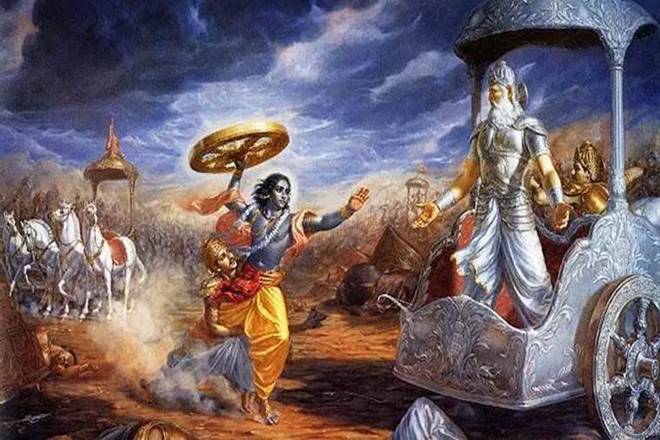
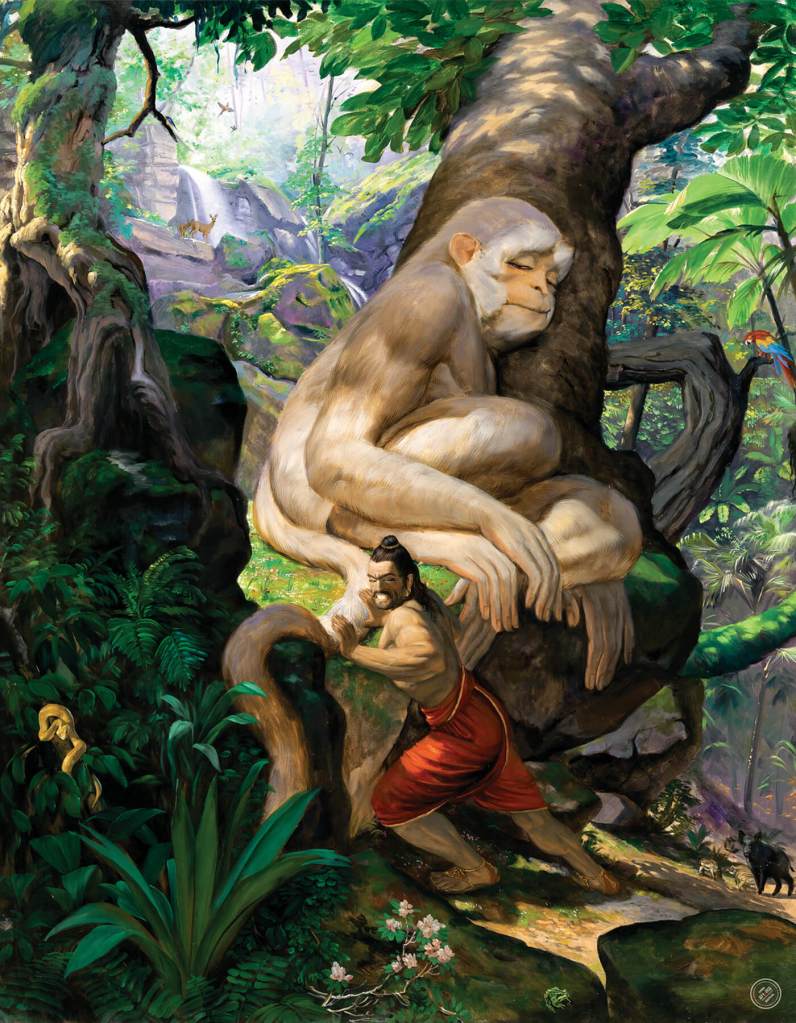
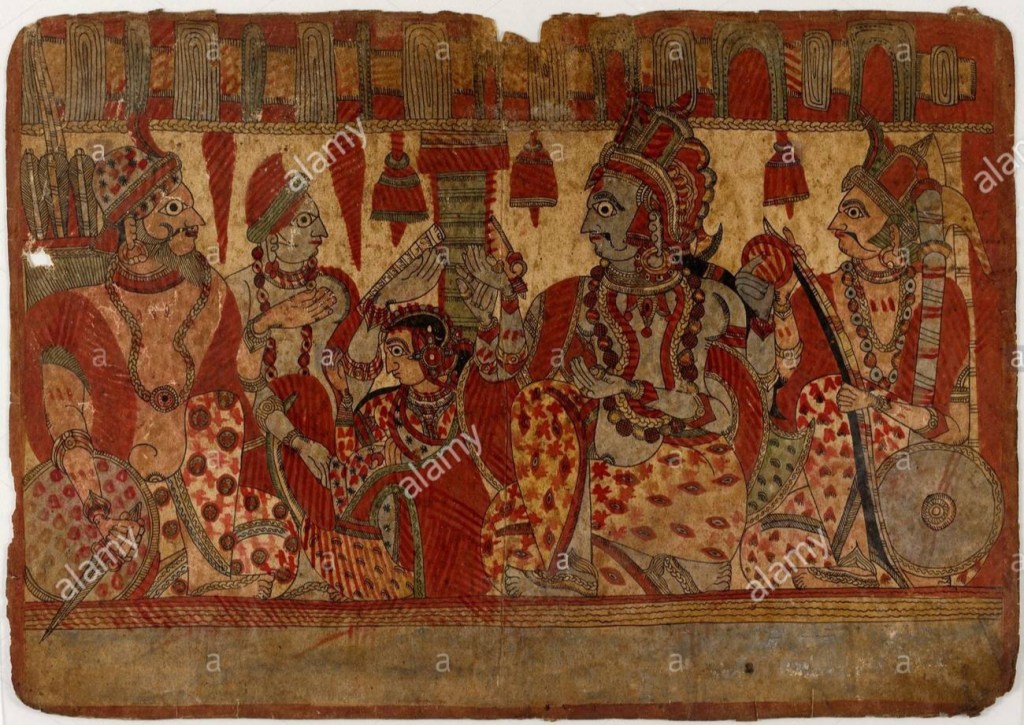






 Track2Training
You must be logged in to post a comment.