Give love, get more love.

You will never come across thisย dayย again,ย soย make every moment count?ย Is itย so?ย ofย course.

Lifeย isย veryย unfair atย times,ย learnย toย appreciateย all theย thingsย when theyย areย with you with moreย gratitudeย andย blessings.

Hereย weย go, aboutย stress!
Stressed is not to be emphasized negatively all the time.ย The act of being stressed is also good sometimes because it acts as fuel for us to think cautiously about what we go through and enable us to take action on our focus.ย So “It’s Okay.ย The path ahead is full of surprises and miracles.ย So chill out, get set with the tranquilness ofย curiosityย andย courageย on yourย pavement.

Letย usย correlateย ourselves toย water.ย See, when something isย droppedย onย water,ย itย makesย aย ripple effect.ย Itย doesn’t know that dropped thing is vibing Positive or negative.ย So it’s up to us who genuinely want to wisely decide what rather ripple effect, create your conscious mind by feeding your thoughts.ย Trustย whateverย sayย aboutย the good vibe in you, becauseย peopleย lieย butย energyย doesn’t.

Don’t stressย aboutย whatย othersย mightย thinkย orย aboutย us,ย liveย yourย lifeย and not for theย sakeย ofย others.ย Butterfliesย don’tย knowย howย beautiful theyย areย with their fascinating wings.ย But we human eyesย knowย howย beautiful theyย are.ย Presumably, you don’t know that how good the way you are, but others tend to regard that.ย Therefore toย everyone, take easy on yourself.ย I don’t know what happened in your life, but I just want to say that life is once so we tend to go through all sorts of emotions in this one life.ย Forgetย betrayers noย matterย what, how big was hoodwinked you!ย Everyoneย deservesย haters as much as they areย merely loved.ย So nothing, rise above hate.

It is not always possible to be positive, with the most commonly used phrases, this too shall pass,ย no worries, and so on.ย Andย too muchย positivity isย alsoย imperfection.ย Well, the point is we all are humans, we tend to have negative feelings, trust issues, pessimism, etc. that have been the result of circumstances and situations you deal with.ย Itย isย notย goingย toย describeย youย as aย personย itย isย a side effect of whatย youย go through.ย Itย isย notย beingย alwaysย positiveย but theย actย of being kind in yourย words, yourย attitudeย towards theย situation.ย ย 

Youย needย notย closureย or anย apologyย trulyย youย needย toย understandย your self-worth to move on.ย Peaceย alwaysย comes with understanding.ย Living inย joyย andย happinessย with theย momentย whatever theย circumstancesย of yourย life.

Moreover, yourย thoughtsย becomeย actions,ย actionsย becomeย habits, andย habitย shapes reality.ย Ourย intentionsย make a reality.ย Being human isย givenย tend toย haveย empathyย and spreading humanityย isย aย choice.ย 

Finally, Flower never competes with theย flowerย next to it.ย It just blooms positivity and radiates happiness around.ย Youย areย theย beautifulย wildflower, whereย youย can surviveย evenย in barren lands.ย Rejoice, love, andย liveย yourย lifeย in full bloom.

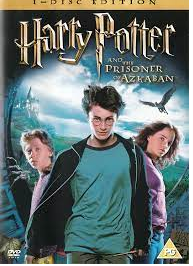
Harry Potter and the Prisoner Of Azkaban-Symbolism

In Harry Potter and the Prisoner of Azkaban, J.K. Rowling uses symbols in form of creatures presented in the story. For example, a large black dog which was the animagus form of Sirius Black. A dog is a symbol of loyalty, but the black dog was presented in the story as an omen of death.

  • Hermione’s Time-Turner (Symbol) Hermione’s Time-Turner, which takes the form of a small hourglass on a golden necklace chain, symbolizes the precious value of time. …
  • The Grim (symbol) …
  • Mystery (Motif) …
  • Dementors (Symbol) …
  • The Rat (symbol)

What do dementors symbolize?

            When a Dementor From ‘Harry Potter’ Lives in Your Mind. I forget where I read it or heard it, but the dementors in โ€œHarry Potterโ€ are the embodiment of J.K. Rowling’s depression. A depression that makes you feel cold and numb and sucks all the happiness out of the world.

Dementors Are A Metaphor For Depression

       They’re hopeless, horrible creatures who literally suck the life out of their victims, leaving them as empty shells; they drain happiness from the atmosphere, and they’re completely immortal.

In Harry Potter and the Prisoner of Azkaban, J.K. Rowling uses symbols in form of creatures presented in the story. For example, a large black dog which was the animagus form of Sirius Black. A dog is a symbol of loyalty, but the black dog was presented in the story as an omen of death.

Names

              Almost all of the names in the Harry Potter series are significant. Sirius Black means, virtually, Black Dog; the name Remus Lupin has its origins in the Latin word wolf, and in a co-founder of Rome, Remus, who was suckled by a wolf. Take also, for example, Lucius Malfoy: the “mal” in numerous languages is rooted in the word “bad,” and his first name, Lucius, is similar to Lucifer. Other names, like Dumbledore, have actual definitionsโ€”in this case, bumblebee in old English. One can liken this to Dumbledore, who is an ancient, wise wizard who works well and hard to sustain his community, the “hive” of Hogwarts. Professor Trelawney’s first name is Sibyll, the ancient prophet of mythology. Furthermore, Padfoot, Moony, Wormtail, and Prongs all are indicative of the animal they represent.

Quidditch as a social indicator

         The Quidditch game between Gryffindor and Slytherin represents each of the teams perfectly. The Slytherins attempt to injure Harry the week before the game, and when the day of the match arrives, they play a dirty game, knocking players from their broomsticks during the game, grabbing Gryffindor heads and broomsticks instead of simply the balls. The Slytherins fly poorly on very good broomsticks (bought by Malfoy’s father so that Malfoy could play on the team). Futhermore, the Slytherin team is not integrated at all: they have a team of only boys, unlike the Gryffindor team, compiled of seven highly skilled, well-practiced girls and boys, flying on a full array of differently-priced broomsticks. Gryffindor plays fairly but retaliates hard, and Harry beats Malfoy to the Snitch, despite Malfoy’s many efforts to halt Harry’s progress.

Harry Potter and the Prisoner Of Azkaban -Character Descriptions

  • Harry Potter
  • James Potter
  • Lily Potter
  • Ron Weasley
  • Hermione Granger
  • Voldemort
  • Remus Lupin
  • Sirius Black
  • Hagrid
  • Peter Pettigrew
  • Albus Dumbledore
  • The Dursleys
  • Sybill Trelawney
  • Aunt Marg

Harry Potter

The hero and protagonist, Harry is a twelve-year-old boy with messy hair and glasses who became famous within the wizard community by surviving the curse of a powerful wizard. Harry frequently finds himself entangled in dangerous adventures but he always lives to tell the tale. Harry’s character represents good intentions, innocence, and the fantasies of childhood. Harry Potter, “The Boy Who Lived,” the savior of the wizarding world and the only living wizard to defeat Lord Voldemort, is the protagonist of J. K. Rowlings series of novels. In this third installment, Harry heads back to Hogwarts with the threat of an escaped convict, Sirius Black, who according to the Ministry of Magic wants nothing more than to add Harry to his long list of alleged murder victims.

Lily Potter

Harry’s mother who sacrificed herself to save Harry from Voldemort; Harry can hear her screams when Dementors are near.

James Potter

Harry’s father, also killed by Voldemort; his animagi stag becomes the shape of Harry’s patronus. One of the creators of the Marauder’s Map.

Ron Weasley

Ron is one of Harry’s best friends and is his partner in crime. Ron comes from a huge wizarding family, the Weasleys. What they lack in wealth, they make up for in love and kindness. Ron’s relationship with Harry is sometimes strained by the notion that he is merely a “sidekick,” and he falls short of his friend’s talent and athleticism on the quidditch field. But Ron is always loyal and courageous when he needs to be.

Ron is tall, red-haired, and from a respected but poor family. Ron is one of Harry’s two best friends at Hogwarts. He is loyal to Harry, and belligerent to their enemy, Malfoy. Ron uses experience and a process of trial-and-error to solve most mysteries. Ron’s character is often overshadowed by Harry’s, but Ron always manages to succeed.

Hermione Granger

Hermione Granger is Hogwarts’ cleverest pupil and Harry’s other best friend. She learns spells easily and is always the first to solve problems and crack mysteries. Hermione’s academic ambitions play a prominent role in this book, because she requires the use of a time-turner to take more classes than is possible in the normal constraints of time. Her time-turner serves a higher purpose at the end of the book when she and Harry go back in time to save innocent lives.

            Hermione is always the top student in her class. She is clever and well-read. Most spells come easily to her and remain in her encyclopedic mind.. However, she is in principle a rule-follower, and so in this story she often alienates Harry and Ron by reporting or threatening to report them to Professor McGonagall, in cases such as Harry’s gift of the Firebolt, or his possession and use of the Marauder’s map.

Voldemort

Once a student who attended Hogwarts fifty years prior to Harry’s time, Voldemort molded himself into the most powerful dark wizard the world has ever seen. Twelve years before, he killed Harry’s parents and tried to kill Harry, only to have his curse backfire and render him powerless. It is generally believed that Sirius Black turned Harry’s parents over to Voldemort, although in truth, Peter Pettigrew is guilty.

     Voldemort. Once a student who attended Hogwarts fifty years prior to Harry’s time, Voldemort molded himself into the most powerful dark wizard the world has ever seen. Twelve years before, he killed Harry’s parents and tried to kill Harry, only to have his curse backfire and render him powerless.

Remus Lupin

Remus Lupin is the newly appointed teacher of Defense against the Dark Arts at Hogwarts. He quickly becomes a favorite teacher among students for his “hands-on” approach, teaching the students to cast spells instead of having them use their textbooks. Since he was a boy, Lupin has suffered from being a werewolf. He was best friends with Harry’s dad at Hogwarts, and together with James Potter, Sirius Black, and Peter Pettigrew, created the Marauder’s Map.

Lupin is the new Defense Against the Dark Arts teacher, and he is very competent and likeable. He teaches Harry how to defend himself against Dementors, but he is forced to leave Hogwarts at the end of the year on account of his being a werewolf. He is one of the creators of the Marauder’s Map.

Sirius Black

Sirius Black is the titular prisoner of Azkaban who is wrongly accused and convicted of causing Peter Pettigrew’s death and the death of thirteen Muggles. Harry learns over the course of the novel that Sirius Black was his father’s childhood best friend, the best man at his parent’s wedding, and his own godfather. Sirius is also an Animagus and is able to transform into a black dog at will.

  Once James Potter’s best friend, now an escaped convict from the wizard prison Azkaban, Black is suspected to be the cause of twelve Muggle deaths as well as the indirect cause of the deaths of Harry’s parents. He is a threat on the frontier of this story, one of the premier good wizards turned bad, although in the end he is revealed to be innocent in addition to being Harry’s godfather. Also, Black is able to transform himself at will into Padfoot, a large black dog that Harry mistakes for the Grim. One of the creators of the Marauder’s Map.

Hagrid

The gamekeeper at Hogwarts and a good friend of Harry’s, Hagrid is a giant, hairy man with an inimitable accent, and he has a great liking for strange and dangerous creatures. In this book, he is the defender of Buckbeak, a hippogriff that is placed on trial for injuring Draco Malfoy.

Peter Pettigrew

Peter Pettigrew was a childhood friend of James Potter, Lupin, and Sirius Black. He is an Animagus and can turn into a rat at will. The particular rat he turns into happened to fall into the hands of the Weasleys twelve years ago, after he framed Sirius for selling the Potters out to Voldemort and killing thirteen Muggles.

The fourth in the group of friends that included James Potter, Sirius Black, and Remus Lupin, Pettigrew betrayed Lily and James, turning their whereabouts over the Voldemort, then blowing up a dozen Muggles, framing Black and turning himself into a rat so that he could escape. Another of the creators of the Marauder’s Map. Disguised as Scabbers, he has lived many years as Ron’s pet rat.

Albus Dumbledore

The impish, seemingly all-knowing Headmaster of Hogwarts. Dumbledore is beyond upset by the fact that Dementors are patrolling the grounds of his school, but he recognizes that they are a necessary evil to maintain the safety of his pupils.

Dumbledore, the headmaster of Hogwarts, is a wise, powerful, elderly man with a long silver beard, and he is one of the most impressive characters Harry has ever met. He has a calm, secretive demeanor and is extremely intuitive, tolerant, and trustworthy.

The Dursleys

Uncle Vernon, Aunt Petunia, and Harry’s cousin Dudley make up the Dursleys of Number 4 Privet Drive. The Dursleys are Harry’s only living relatives, and they are Muggles who hate everything having to do with magic and forbid Harry from talking about the wizarding world. Harry’s life with the Dursley’s is miserable, but he’s forced to live there every summer. Uncle Vernon is a beefy drill salesman, Aunt Petunia is a stay-at-home gossip, and Dudley is a spoiled, gluttonous teenager who enjoys nothing more than watching his dad verbally abuse Harry.

Sybill Trelawney

Trelawney is the professor of Divination at Hogwarts. She teaches students the imprecise art of seeing the future, reading palms and tea leaves, and gazing into crystal balls. The narration suggests strongly that Trelawney lacks the “inner eye” until the end, when she appears to have a real prophecy. The catch is that she doesn’t actually remember having the prophecy.

Aunt Marge

Vernon Dursley’s visiting sister; a loud, beefy, nasty-tempered Muggle woman who adores attack dogs and enjoys insulting Harry and his late parents.

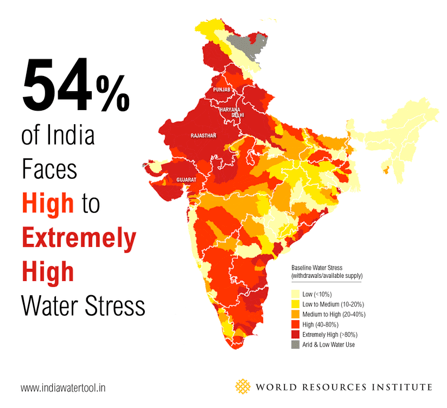
Not a drop to drink

A-five-year old girl from Rajasthan recently died from thirst. This headline was lost in the newspapers. The tragic event pushes us to think about water scarcity. Although this case got some attention in the sense that it found a corner in the newspaper, but there are many unreported cases. We are indeed blessed with many rivers and monsoon rains but India only has 4% of average global runoff and rivers which has to support 18% of the world’s population. In addition to this, due to sheer negligence of people, insensitivity towards the issue by the government at all levels and lax attitude of the administration, India suffers from water shortage. If the death of a child cannot be the reason behind the awakening of the government and the people then no one can know what will.
In 2019 one particular incident stole the spotlight. In Telangana school girls hair were cut to save water. The logic was that short hair will use less water during hair wash. The school was ordered by the administration. The students and their families were not informed about the plan and this led to a fuss. Was the bizarre experiment successful? There is no news. What we know is that this could have been avoided if water management was adopted. Water harvesting system and traditional ways of water conservation could have done a better job than resorting to haircuts. The problem is that the administration tries to solve a problem only when it hurts. The seasons when water is available in plenty are also the season when the administration is sleeping. This has to change.
Itโ€™s true that the government has taken many steps to generate awareness and incentivize people to save water but these actions are mere lip service if they do not fetch any result. Few measures in this regard include the flagship Jal Jeevan Mission (JJM). It aims to reach the target of 55 litres of water per person per day to every rural household through functional household tap connections (FHTC) by 2024. It envisions to creat a Jan Andolan by making water everyoneโ€™s priority. The initiative has operational guidelines at every level that is, national, state, district and village. Every village is expected to prepare a village action plan for water source maintenance, water supply and greywater management.
Since most of the water is utilised in agriculture water use efficiency is a part that should be emphasised in water management. Pradhan Mantri Krishi Sinchai Yojana was designed to cater to water management in agriculture. The components of the Yojana include Accelerated Irrigation Benefit Programme (AIBP), Har Khet Ko Pani, Per Drop More crop and watershed development.
In the spirit of competitive federalism, NITI Aayog introduced a composite water management index. This will push states to work to avoid water shortage. Being the most important component of life to exist, no government in the world can take a chance. India can learn from other countries and transfer technologies used by them in the field of water conservation. India itself has a rich history of water conservation technologies. Mandu Fort, Baolis and other historical structures testify this fact.
In the sustainable development index, Indiaโ€™s Performance in SDG-6 has been progressive but it is snail-paced. To change the dismal situation of water shortage, we need to act fast as a country, as a society and as an individual facing the biggest threat.

Harry Potter and the Prisoner of Azkaban

Harry Potter and the Prisoner of Azkaban What’s Up With the Title?

By J.K. Rowling

         Third Person (Limited)

    The third installment in the Harry Potter series, Harry Potter and the Prisoner of Azkaban is written from the point-of-view of 13 year-old Harry Potter. The title refers to convicted criminal, Sirius Black, who has escaped Azkaban, a wizard prison.

In the series, this was the first title that mentions a person rather than an object. This title also stands out for being the most misleading in the series thus far… which happens to be really fitting. Azkaban is largely a mystery story (with elements of fantasy and Bildungsroman โ€“ a fancy German word for a coming-of-age story). The title helps set up the mystery elements of the novel from the get go โ€“ who is this prisoner? What did he do, and what does he want now?

                               Of course, just when we, and Harry, think we have the whole thing figured out, the novel throws us for a loop and we learn that we were wrong about everything. The Prisoner of Azkaban (as in, the character, not the title) isn’t the real villain of the story at all. Consider our minds blown.

          This title also ties in two more of the book’s major themes โ€“ family and the past. As we learn more about the prisoner, one Sirius Black, we start to get an entire story-within-the-story โ€“ a history of the conflict with Voldemort, a crash course in the lives of James and Lilly Potter, and the strong family ties that Harry, one of the most famous orphan characters of all time, still has in the wizarding world. The Prisoner of Azkaban starts to work as a kind of metonym, which is a fancy way of saying a word or short phrase that stands for an entire concept or idea (try busting that one out on your next AP exam!). The Prisoner here stands for the entire first war with Voldemort and the ways in which Harry’s personal history is closely linked to that conflict.

Harry Potter and the Prisoner of Azkaban What’s Up

with the Ending?

            Harry Potter books tend to follow a certain formula, which is cool to consider. They start off with Harry’s birthday. And they end with Harry returning to the Dursleys’ house for yet another summer. The ending of this book is no exception to this format. After yet another adventure, Harry and his BFFs journey home on the Hogwarts Express, and Harry manages to sneak in another “gotcha!” moment when he reunites with the Dursleys. This year it’s “Oh, did I forget to mention that my godfather is an escaped convict?” Good times, Harry.

                   However, this ending does stand out a bit from the previous two books in that Harry now has new family members in his life and a connection to his parents that he didn’t have before. Sirius’s letter to Harry at the end points to how things are going to be changing for Harry in the future โ€“ he’s connected not only to his past but to the entire wizarding world more fully now (through his knowledge and through his ties to Remus Lupin and Sirius). The ending of this novel fittingly sets the stage for the more adult novels to come in the series.

Piramal Foundation, NITI Aayog unveil COVID home care drive

Piramal Foundation,

NITI Aayog unveil COVID home care drive


The Piramal Foundation in support of the NITI Aayog has announced plans to provide COVID home care to 20 lakh citizens staying in rural areas. The Foundation which has been working in 25 districts helping in COVID care to senior citizens since last year has now expanded its scope of work to 112 backward districts called โ€œAspirational Districtsโ€™.Both entities on Tuesday unveiled โ€˜Surakshit Hum Surakshit Tum Abhiyaanโ€™ which will be rolled out in these 112 districts to assist the district administrations in providing home-care support to patients who are asymptomatic or have mild symptoms.Most of these districts are in Jharkhand, Chhattisgarh, Odisha and Maharashtra, foundation officials said.

Campaign to address emerging problems :

This campaign is under the special initiative the Aspirational Districts Collaborative in which local leaders, civil societies and volunteers will work with the district administrations to address emerging problems in a district across key focus areas.The campaign, initially for three months and can be extended as long as required, will be led by the Magistrates of these districts in partnership with over 1,000 local NGOs that will enlist and train over 1 lakh volunteers to connect with patients through inbound outbound calls. The Piramal Foundation, with over 750 people on the ground, will support the district administrations in the training of the NGOs and the volunteers.โ€œThe campaign is expected to play a key role in district preparedness for managing nearly 70% of COVID cases at home, reducing pressure on the health system, and stemming the spread of fear amongst the people,โ€ said Ajay Piramal, chairman, Piramal Group, in an interview.We aim to reach every affected person in these 112 districts. We call all stakeholders government, NGOs, communities, and others to join hands and offer their service in this initiative,โ€ he said. The NGOs will mobilise local volunteers to provide home-care support to those affected, based on the guidelines of the Ministry of Health and Family Welfare,โ€ he said adding the Foundation will deploy whatever resources required to support this programme.

Volunteers will be trained to support 20 affected families each by educating caretakers to follow protocols, provide psycho-social support and timely updates about patients to the administration.

Correct usage of oxygen concentrators :

The campaign will also undertake capacity building of citizens for correct usage of oxygen concentrators supplied to these districts.

In a statement, NITI Aayog CEO Amitabh Kant said, โ€˜Surakshit Hum Surakshit Tum Abhiyaan is a significant initiative that responds to immediate needs and will provide long-term support to Indiaโ€™s poorest communities in the Aspirational Districts by addressing the lasting impact of COVID-19.โ€™


By : G Gnana Priya dharshini


parent-child communication

Loving parents create loving children. Your relationship with your children and how attached you are to them indicates how the child is going to be in the future. Your children who grow with a secure and healthy attachment to their parents stand a better chance of developing happy and content relationships with others in their life. A child who has a secure relationship with parents learns to regulate emotions under stress and in difficult situations. It promotes the child’s mental, linguistic and emotional development. It helps the child exhibit optimistic and confident social behaviors. Healthy parent involvement and intervention in child’s day to day life lay the foundation for better social and academic skills. A secure attachment leads to a healthy social, emotional, cognitive , and motivational development. Children also gain strong problem solving skills when they have a positive relationship with their parents. The relationship between parents and children not only needs to be strong but also flexible because you can’t behave with a ten year old in the same way you behave with a three year old.

PARENT-CHILD RELATIONSHIP AT VARIOUS STAGES

Parenting is a full time job with perks and challenges that grow as the child grows. Here, we take a look at the parent child relationship at various stages :

  1. TODDLERHOOD – When the child becomes a toddler, the focus is on shaping the child’s behavior by teaching, guiding, and nurturing them. Parents facilitate the socialization process subtly during the first two years and prepare the child to fit into a social group or the society at large.
  2. SCHOOL AGE – When the child starts elementary school, there is a shift in the focus from parents to peers, but this does not change the dynamics of the parent child relationship. With the child’s increasing cognitive and social skills, they goes beyond the home setting. This is the time when the communication becomes two way. The child is a position to tell the parent what he wants, and express his likes and dislikes. Your parenting style will decide if the communication will be two way or a one way. Parenting styles remain the same as the child grows and the style used in the preschool age continues to affect even in the middle childhood age.
  3. ADOLESCENCE – Teenage is a turbulent and vulnerable phase, which brings about physical and psychological changes in the child. Parents should acknowledge and understand their teen’s needs, support them, and give them the freedom they new without being overly controlling. Parents with love and acceptance by adopting a positive approach even during challenging times can be an effective way to guide teenagers.
  4. ADULTHOOD – Adulthood is the time when stability starts setting in. The parent and the grown up child are now able to relate to each other. Adult children are sometimes torn between their personal and aged parents. It can be quite stressful to balance the two. However, most adults do maintain a healthy relationship with their parents. The requirement and priorities of one family are different from those of another. For instance, the bond you share with your child may not be the same as the one your friend shares with their child. This means that your type of parent child bond is different from that of your friend.

PRINCIPLES OF PARENT CHILD RELATIONSHIP –

  1. SET SOME PARENTING GOALS- Whether you want to raise a healthy and disciplined child or have a healthy parent child relationship, identify your goals and understand what you need to do to achieve them.
  2. BRING IN WARMTH AND STRUCTURE IN YOUR INTERACTIONS- Treat every interaction as an opportunity to connect with your child. Be a warm and receptive parent, who encourages interaction. structure your interaction by having rules, boundaries, and consequences in place and ensure that your children understand them.
  3. GROUND RULES ARE A MUST- Ground rules tell your children how to and how to behave. Rules have to be set by discussing with the child, coming to a mid point between the parents’ and the child’s needs. You can firmly implement such rules which are comfortable and meaningful to both. But having too many rules is not a good idea.
  4. ACKNOWLEDGE AND EMPATHIZE WITH YOUR CHILD- Whether it’s a happy or difficult situation, acknowledge your child’s feelings, understand them, and reassure them that they can depend on you to solve all their problems.
  5. TAKE A PROBLEM SOLVING APPROACH TO CONFLICTS- When your child has a problem, try to look for a solution instead of punishing your child. Punishments demoralize your child and they lose trust in you. But when you work with them to find a solution, they also learn.

ACTIVITIES THAT HELP IN PARENT CHILD BONDING –

  1. POSITIVELY REINFORCE YOUR CHILDREN EVERY DAY- It can be by words “very good” or a physical gesture such as a part on the back or hug. The experience of early interpretation touch is linked with self esteem, life satisfaction, and social competence in the later years of the child. It also positively affects the child’s physical and psychological development.
  2. PLAY WITH THEM- Become a child when you are playing with your kids. This allows them to cooperate with you. Indulge in activities such as building Lego sets or pretend-play with the little ones, or pair up for video games or a game of basketball or cricket.
  3. LAUGH TOGETHER- Parenting doesn’t always have to be serious. Sharing a few lighter moments help in building some great memories.
  4. HAVE ONE ON ONE INTERACTION- Take time out from your daily lives to interact with them about their needs and how they plan to meet them. Have some parent child time every day to express your love for them, play with them together and do something together.
  5. LIVE THE MOMENT- From the moment your children wake up till the time you put them to bed enjoy the moments with them. Be present, enjoy, and live the moment. There can’t be anything more fulfilling than that.

TOM AND JERRY: A PHENOMENON

Who couldnโ€™t remember the grey cat, Thomas and the brown mouse, Jerry causing havoc in their โ€œmysteriousโ€ mistressโ€™ house? Tom and Jerry is so common among the children and adults equally. The series of the cartoon started as a short series of episodes in 1940 written by William Hanna and Joseph Barbara. No one would forget these names too because their name comes alongside the famous lion roar.

Tom is a house cat and as if to cause trouble on purpose, there is Jerry. Most of the time they are seen in hot pursuit of each other, mostly Tom chasing Jerry. Though bigger in size, Tom almost always fails to capture Jerry and finds himself in trouble. Jerry is always portrayed as the clever and cunning outwitting Tom in every situation possible.

There was some criticism about the violence per se, in the episodes. But since there were no bloodshed portrayed, it was soon dropped.

Sometimes we wonder whether we are Tom or Jerry. At least I do. There are some times when we become Tom, a victim of the situation. And sometimes, Jerry, the person in control of the situation. But we need to remember that, they are each otherโ€™s sworn enemies, but when there is a third party, no one can beat them when they are together. For example, the bull dog, Spike and his son, Tyke act as a tool for Jerry to make fun of Tom, but when he gets in real danger, it is Jerry himself saving Tom.

Another example would be the episode of the baby, where both of them together take care of the naughty baby of their owner. Maybe because they are together 24/7, they seem to know each other very well. It is almost like, when they have nothing better to do, they poke fun at each other. Isnโ€™t that what best friends do?

When the small gray mouse, Nibbles comes to visit Jerry, there is another face of Jerry that is caring and responsible for the little one, almost a fatherly character. Nibbles being Nibbles is unaware of the consequences of his actions and steals milk from poor Tom. He also tries to follow Jerryโ€™s instruction but fails miserably.

It has been 70 years since Tom and Jerry have been showering us with their daily antics and to honor them there has been movies made. The recent one being Tom and Jerry: The Movie pays homage to their 70 years of existence. But some may disagree that the recent animation of them, and are a still a huge fan of the old cartoon animation. Who would blame them because that is what they have grown up watching the old one, I am one of them.

There are many cartoons that have come and gone, but this particular duo forever have a place in our hearts which nothing can replace. We can learn so much from two characters who donโ€™t even speak. Friendship, loyalty, trust, being spontaneous are among the many characteristics that we can learn from them. It is funny how an animated being can change and scar our lives forever and has the ability to take back to childhood at any given moment.

Life secrets of being productive

We all are kind of stressed during this pandemic lockdown, so guess we all are struggling a lot to being productive in our work, business, or whatever it is.ย 

Firstly, to be productive you should stop procrastinating all your work. Procrastination is your biggest enemy ever to achieve all your accomplishments.

Is there any difference between ordinary people and extraordinary people?

The thing is extraordinary people do all the work, same as ordinary people but with consistency and discipline.ย  You have to decide whether procrastination is more significant than all your dreams and goals and works. Aim it high. Stop squandering all your time and scrounge towards being productive.

Instead of hard work, do the right work. Writing is not an art, but the way you present and allures your audience to read with emotions is an art. In this world of copycats, exposing all your own style with uniqueness may be hilarious for one and ridiculous for another. Live your life with purpose. Live and achieve all your everyday goals, that this might be the last day of your life so that you will not regret your dreams.

Once you started working, do your work stress-free by being passionate and also satisfied. Because at the end of the day, it doesn’t matter you are an early bird or night owl. But ample peace while waking up to the day as well as relaxation and satisfaction while going to sleep.

When you have a pocket full of money, but not ample peace in your mind, it doesn’t worth it of being productive in your life. Real freedom is enjoying in your real-time. If you are procrastinating all your works it leads to stress, at the time, a lazy man cannot enjoy his money but a productive man can enjoy all his necessities. Enjoy the work you do. Align all your tasks and make them correlated to do for a long time. It is also better to take a break once a week and enjoy it because you work all the rest of the days.

God puts humans in this world with lots of hurdles to know well and behave in certain circumstances and we believe different people behave in different ways according to their attitude towards it. Be consistent in your work, have faith, and celebrate all your accomplishments. No one is going to congratulate you. People can join and you don’t need to satisfy the crowd, but with what actually makes you feel good with gratitude and satisfaction.

Once you are productive, you will start to stop all the scrounge useless things.ย  So always turn all your inspiring stories or person in life into motivation and convert them to practice and reality in your life to achieve your destination.ย  You get more advice and lessons when you read failure stories, to get success in your life. Don’t expect the results, it might be either winning or losing, both happen. Experience and explore it more, without procrastinating. Go through and grow through your atmosphere to become productive, with every result of the work you do in your life.

Advantages of online shopping

Online shopping is so trending. In these covid times, going outside is really difficult. We don’t like to play with our health. Sitting in the comfort of our home we can easily shop from any site. All we to do is install the app we like or we can visit the website for shopping. Before shopping on that platform we should check for integrity and reviews. We can’t simply trust online retailers because lots of frauds can happen on online platforms.


The best thing about online shopping is you can easily buy them and try them at your home. If you do offline shopping then you have to try the dresses in their trial room. Sometimes, the trial room may be very small and you will find it difficult to get a clear look at that dress. If you are at your home your bedroom will become your trial room and you can easily check yourself in front of your mirror. It would’ve been awkward doing it in some unknown places.


You don’t have to worry about the sizes. Because in offline shopping if you buy big size dresses people will take a look at you and will judge you based on your figures. But, these things won’t happen here. It will come in a well-packed manner and the person who delivers it won’t be able to know the thing inside in that package.ย 


Trying jeans in a trial room is the worst experience ever in a girl’s life. If you take slim or skinny fit jeans to check it in a trial room you will struggle to put it. Trying jeans in your home is way more comfort you can sit on your bed and can easily try them. Buying jeans online is best you can easily exchange if you don’t like the fit that too without traveling. But in offline shopping you have to travel and if it is a holiday you have to stand in a queue to exchange your dress. Sometimes, even in an exchanged dress, it won’t give a proper look or it won’t fit you. In that case, you can’t return them and you have to either keep them or throw them.

ย 
Nowadays, you can even do Instagram shopping. Many people are opening stores on Instagram. All you have to do is take a screenshot of that dress and direct message them or you can send a message on their WhatsApp number. They will contact you and you can do your shopping for yourself. But, Instagram shopping comes with its own demerits. You should do thorough research before buying from that page.


Have safe online shopping in these tough times and enjoy with your family and friends through a virtual meeting. If you haven’t tried doing online shopping try it this time from the comfort of your home. Start by checking the reviews and then place your order. Not only dresses and accessories are considered as online shopping even books are also considered as online shopping. The best thing is you can get lots of discounts on books when you do online shopping.ย 

Toxic masculinity: A glance

In present-day society, people often address toxic masculinity to express excessive masculine traits that many cultures have widely believed or glorified. This evil concept of masculinity also places significant importance on โ€˜manlinessโ€™ based on- power, lack of emotion, self-sufficiency, dominance, and sexual virility. According to mythical toxic masculine values, a male who does not display enough of these traits may fall short of being a โ€˜real man.โ€™ Overemphasis on these features may lead to harmful shortcomings in someone trying to live up to these expectations. One example of this includes telling another person who reveals emotions to man up. This example depicts how some people view sentiment or vulnerability as โ€˜unmanly.โ€™ Another example is the saying, โ€œboys will be boys.โ€ This expression refers to reckless, hostile behavior in young males; rather than teaching them about efficiency and owning up to their blunders. These views can cause infliction and adorn the concept of masculinity, leading to an even more toxic approach toward these acts. The origins of what many people view as masculinity emerged thousands of years ago. When early homo sapiens used might, for example, to exert dominance or take administration. The most prosperous male homo sapiens were those who could struggle and hunt. In those times, the most popular traits would likely have included hostility, ruthlessness, and physical strength. These practices continued for centuries. Throughout history, powerful male rulers have gained power by conquering others.
This model survived unaltered until the 1980s and 1990s when these ancestral male behaviors became conflicting with the views of modern society. However, because present society has led to such a shift in perspective toward these male operations, and because it no longer proclaims these obsolete views of manliness, several groups still fall sufferer to these โ€˜conventional norms.โ€™ It is when masculinity can become โ€˜toxic.โ€™ It is this demand for certain men to be in a particular way as commanded by an ideology. If a male supposes they are not matching these artificial traits or not aligning with these narrow views, they may feel they are falling short. It may result in a demand to lash out these traits to re-establish their โ€˜nobility.โ€™ Some people consider that toxic masculinity is critical because it restricts a personโ€™s adulthood. When a boy or adult male sees the world through a narrow lens, they may believe that they will only win acceptance by living up to these traits. Some theories register that toxic masculinity plays a role in physical health; it may limit some men from seeking out help for possible health issues and other potential problems. For some males, asking for help may lead to feelings of inadequacy, weakness, and perceptions of being โ€˜less of a man.โ€™ Eliminating or changing toxic masculinity will not happen overnight. On a personal level, it may be easy enough to educate ourselves about their attitudes towards masculinity and hold space for others to help change their definitions. Inviting a friend to share their emotions or feelings about the topic, and openly discussing them without judgment or criticism can be a good way to move forward. Moving past toxic masculinity begins with redefining what it means to be a man. Each person should aspire to find a healthy definition of their individuality and work towards achieving it. Holding space for others to openly discuss their feelings about the issue may help people re-shape their definitions as well.

The 5 Stages of the Creative Process

In 1940, an advertising executive named James Webb Young published a short guide titled,ย A Technique for Producing Ideas. In this guide, he made a simple, but profound statement about generating creative ideas.

According to Young, innovative ideas happen when you develop new combinations of old elements. In other words, creative thinking is not about generating something new from a blank slate, but rather aboutย taking what is already present and combining those bits and pieces in a way that has not been done previously.

Most important, the ability to generate new combinations hinges upon your ability to see theย relationships between concepts. If you can form a new link between two old ideas, you have done something creative.

Young believed this process of creative connection always occurred in five steps.

  1. Gather new material.ย At first, you learn. During this stage you focus on 1) learning specific material directly related to your task and 2) learning general material by becoming fascinated with a wide range of concepts.
  2. Thoroughly work over the materials in your mind.ย During this stage, you examine what you have learned by looking at the facts from different angles and experimenting with fitting various ideas together.
  3. Step away from the problem.ย Next, you put the problem completely out of your mind and go do something else that excites you and energizes you.
  4. Let your idea return to you.ย At some point, but only after you have stopped thinking about it, your idea will come back to you with a flash of insight and renewed energy.
  5. Shape and develop your idea based on feedback.ย For any idea to succeed, you must release it out into the world, submit it to criticism, and adapt it as needed.

A Problem in Need of a Creative Solution

In the 1870s, newspapers and printers faced a very specific and very costly problem. Photography was a new and exciting medium at the time. Readers wanted to see more pictures, but nobody could figure out how to print images quickly and cheaply.

For example, if a newspaper wanted to print an image in the 1870s, they had to commission an engraver to etch a copy of the photograph onto a steel plate by hand. These plates were used to press the image onto the page, but they often broke after just a few uses. This process of photoengraving, you can imagine, was remarkably time consuming and expensive.

The man who invented a solution to this problem was named Frederic Eugene Ives. He went on to become a trailblazer in the field of photography and held over 70 patents by the end of his career. His story of creativity and innovation, which I will share now, is a useful case study for understanding the 5 key steps of the creative process.

How to apply for internships?

Internships are important for everyone as they will help you to gain some experience and you will be able to learn new things from their side as well. There are some things you should keep in mind before applying for internships. Some sites will ask you to fill the resume manually. While some other sites may ask you to upload the files. Internshala is one such platform where it will ask you to fill out the application manually.


It will be really helpful if you fill out the application manually as it will help you in each and every step so that you won’t miss any important details. Try to fill out all the details if you have experience in them. Writing an eye-catching resume will only lead you to get in touch with employers. If you don’t have a good catchy resume they will reject your application right after they receive it.ย 


Try to do some online courses. There are lots of free courses available on the internet for students to learn and most of them will provide you certificates. Adding them under your training/ courses section will increase the chances. Keep this thing in mind, don’t give too much information in your resume. Give the precise details. Filling out too much irrelevant content will clutter your resume and the employer won’t take a look at it if it is full of unwanted things.


The next thing is while applying for internships based on your interests you should’ve created a portfolio. For example, if you are applying for a content writing internship you should’ve created a word document of some articles and should upload it in google drive. So you can give that link under-sample work section. It will help the employer to take a quick look at your work. Based on that, they decide on further processes.ย 


The next step is answering why should we hire you? Here you can tell the talents you have or if you have done any specific courses which will be relevant for the internship don’t forget to mention that as it will increase your chance of getting hired. Give the genuine answers and also tell them what excites you to be a part of their program. Whether it’s the learning experience or whatever try to add them so that your application will catch their eyes.ย 
Giving them information about the start date is so important. If you are available to start the internship as soon as you get hired tell them that you are available to start the internship immediately. Because candidates who prefer to start their internship immediately will have a higher chance of getting hired. So, keep that in mind and fill out that part with precise information.


Keep these things in mind before applying for internships. These will help you to get in touch with the employers. They will give some sample assignments for you to test your skills. Take them seriously and submit them on time. If they like your work they will proceed to the next step of the selection process and will offer you the internship based on your telephonic interview.

How simple lifestyle changes can reverse most chronic diseases !

โ€œChange comes with habit and perseverance.โ€ Said my father through-out his whole existence. He always taught me the importance of โ€œhabitsโ€. He emphasised how adapting to changes for your own good becomes easier when you start making it a part of your lifestyle. I was always given an example of our ancestors and how they lived a simple yet healthy life.

Bad habits can lead to serious diseases, often known as chronic diseases. Chronic diseases are defined as a human health condition or disease that is persistent or otherwise long-lasting in its effects or a disease that comes with time. In this article, we are going to talk about the various habits and how they can help in providing us a long and efficient life.

Physical conditions-

  • Atherosclerosis
  • Heart disease and stroke
  • Obesity
  • ย Type 2 diabetes
  • ย Hypertension
  • ย ย Colon cancer
  • Premature mortality

Mental conditions-

  • Depression
  • Schizophrenia
  • Bipolar affective disorder
  • Obsessive-compulsive disorder (OCD)
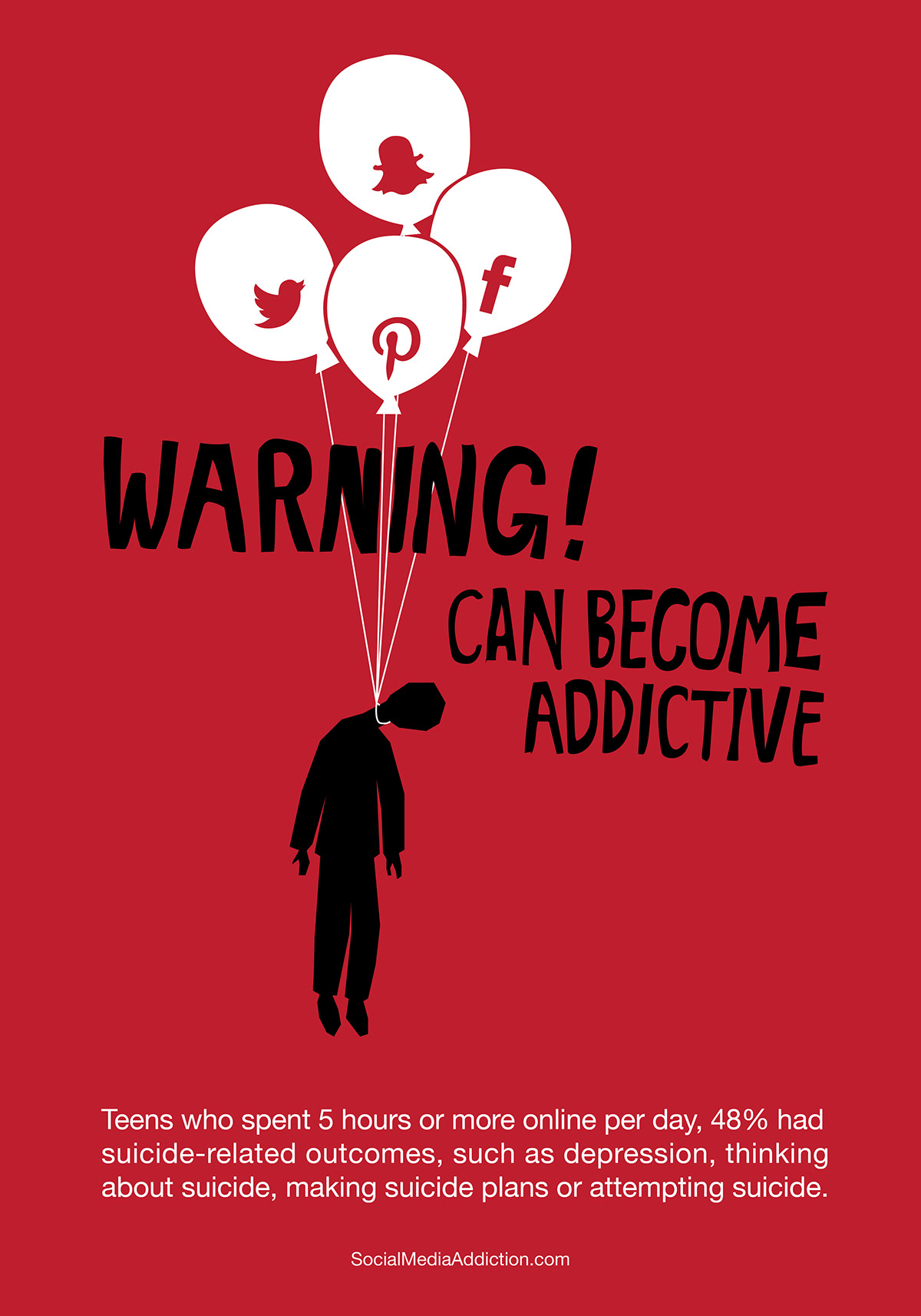
  1. With the increase in the technological support in our lives, which has made life easier for some, the ill wind of the latter keeps on increasing day by day as well. While our adults keep on insisting on the fact that an organic and natural lifestyle is a healthy one, the introduction of covid-19 into this world last year has made it even more difficult for children to cut out this technology out of their lives since their entire work life is based off on it now. But excess usage of gadgets can lead to sleep deprivation which can become the ground for many serious diseases in the near future. Excess usage of mobile phones and keeping your phone near to yourself while sleeping gives a lot of bad radiations to your body leading to a weak immune system.  
  2.  Apart from professionalism, somewhere, people are trying to replace human relations with gadgets and failing terribly to do so in the long run. They are making apps to kill loneliness but failing to recognize the walking apps i.e their friends and family in their lives. As a result, depression has now evolved to be included in the category of โ€œchronic illnessesโ€ and can lead to physical disabilities. Our society has been oblivious to discussions about mental health for so long that mental conditions are proving out to be more dangerous than the physical ones in these times.  But being on your phone all the time doesnโ€™t solve it, in fact, it is the breeding ground of these mental conditions, a fact our generations fails to acknowledge. In this case, having more and more human interactions and exposure apart from technology is a crucial part of your life and can bring about a lot of changes in your mental as well as physical health.
  3. Importance of a healthy diet- โ€œYou are what you eat.โ€  A healthy diet doesnโ€™t only provide you with nutrition, it has a lot of other benefits as well. When you eat healthy, your mind generates a sensation of joy and pride in yourself. But donโ€™t only go with the prescriptions of dieticians and health experts because everyone has a different body system. You have to figure out what keeps YOUR body healthy and happy individually. And even if you are eating unhealthy once in a while, make sure you are in control of your portion size.   
  4. Meditation- Simply giving just 10 minutes of your day to meditation can give your body enough oxygen and reduction in stress and anxiety. Just make sure you meditate close to nature because going organic is the key. Even if you are at your home, you can go close to plants at your house or your terrace and even in your balcony!
  5. Cleanliness- Practices like changing your pillow cover every week and sanitizing your phone every 2-3 days can provide you with a good hygiene and prevent you from getting many skin problems in life.
  6. Sleep on time- Sleeping really late at night has also been linked to many skin related problems according to research. This generation has brought about a trend of being a night owl which can surely bombard them with health issues later in life.

Your body and mind are the only two things which will stay with you for eternity and if we fail to keep them both in check, we will fail as a human. But the journey of turning towards a better lifestyle is mainly about self-analysis and figuring out what suits you the best and what makes you happy! So keep spreading love and be your own reason to smile!

EASY PYTHON PROJECTS

Gaining Python knowledge will be your best investment in 2021. So, if you want to achieve expertise in Python, then it is crucial to work on some real-time Python projects.

Python is one of the most accepted programming languages currently. It looks python craze is about to continue in 2021 and beyond. So, if you have started python, the best thing you can do is work on some real-time Python project ideas. Moreover, project-based learning helps improve studentโ€™s knowledge. If you work on live projects, it will help you to boost your confidence, to know the nitty-gritty of Software Development Life Cycle, to experiment and to master the concepts of programming. So here are the few projects for beginners to start with:

  1. Text Based Adventure Game:

This is a simple version of the Adventure game. It is totally text-based. In this version of the game, users can move about through different rooms within a single setting, and based on the user input, it will provide explanations for each room. This is one of the interesting python projects. 

Movement direction is important here โ€“ you must create walls and set the directions in which the users can move through the rooms, set movement restrictions, and also include a tracker that can track how far a user has walked or moved in the game.

Link: https://www.derekshidler.com/how-to-create-a-text-based-adventure-and-quiz-game-in-python

2. Rock Paper Scissor Game:

The object of the rock-paper-scissor python project is to construct a game for a single player that plays with a computer, anywhere, and anytime. This project is based on the rules that:

  • rock blunts scissors so rock wins
  • scissors cut the paper so scissors win
  • paper cover rock so paper wins

This project is build using random modules, and the basic concept of python. In this python project, players have to choose any one from rock, paper, and scissors. After that click on the play button will show the result of the game.

Link: https://realpython.com/python-rock-paper-scissors/

3. Hangman Game:

The objective of this project is to build the hangman game using Python. It doesnโ€™t require any specific modules other than random. Python loops and functions are enough to build this game. This project requires knowledge of Python which includes defining functions and managing for/while loops. The functions that we use here contain arguments that are defined in a global scope which can be further used in other functions to improve game quality. It can also be used to provide different steps when required to execute upon conditions by the for and while loops.

      Link: https://www.pythonforbeginners.com/code-snippets-source-code/game-hangman

4. Password Generator:

We know that passwords are a real security threat. To keep your account safe and prevent your password from being hacked you have to make your password hard enough that nobody can guess.It is a tool that generates passwords based on the given guidelines that you set to create an unpredictable strong password for your accounts.

The Password generator tool creates a random and customized password for users that helps them to create a strong password which provides greater security.

Link: https://www.geeksforgeeks.org/generating-strong-password-using-python/

PRIDE MONTH

Month of June also known as pride month all across the world. Pride month was introduced to give our respect to all the LGBTQIA+ communities who are fighting to be treated like a human. Every person of different gender is first a human being, They should get proper treatment and respect without any discrimination because of the different gender . In the society we live, People who belongs to LGBTQIA+ community were considered to be different from a normal human being. They werenโ€™t allowed to live on their terms. Their family members doesnโ€™t even accept them being different from male and female.

It was considered to be a disease to being a guy or a lesbian. Families used to adopt different methods like black magic, superstition and taking them to priest only to make them feel horrible about who they are. The forms filled for the admission in school or colleges, Gender section used to have only two sex i.e., Male and Female. In several foreign countries, Gay or lesbian marriage is now considered to be legal. They donโ€™t need to run away from their identities and can live happily and start a normal family .

Even in 21st century, India has not allowed gay or lesbian marriages. It is still considered to be illegal and will take more time to accept them with open hearts. It took a lot of time and efforts to make people realize about the importance of other genders who also deserves to get proper education, job and get married. Sexual preference of any individual should not be an issue , It should be personal choice .

Since long time , They have faced humiliation, discrimination and harsh words from the society. Now, Itโ€™s our time to make them feel comfortable and normal . Treat them with equal amount of respect and honor. LGBTQIA+ community deserves our support and love in order to accept them with their true identities rather than degrading them for their gender being different. Pride month is a great initiative to give them the equal position in our society. It also creates awareness about the delicacy of treating them with ill-behavior towards these communities.

Love can be between of any two people with different color, gender, age or with same gender , color or age. It is all about accepting ourself with a good motive and move forward with a kind heart.

EDUCATION

EDUCATIONย 

INTRODUCTION :

Education is the process of facilitating learning, or the acquisition of knowledge, skills, values, morals, beliefs, and habits. Educational methods include teaching, training, storytelling, discussion and directed research. Education frequently takes place under the guidance of educators, however learners can also educate themselves. Education can take place in formal or informal settings and any experience that has a formative effect on the way one thinks, feels, or acts may be considered educational. The methodology of teaching is called pedagogy.

Formal education is commonly divided formally into such stages as preschool or kindergarten, primary school, secondary school and then college, university, or apprenticeship.

Education forms a distinct line of separation between man and other creatures, making man the smartest animal on Earth. It empowers and readies us to face the challenges of life more efficiently. Additionally, Education improves oneโ€™s skills, abilities, knowledge, attitude, and personality. Noteworthy, Education narrows down the options of employment, providing an excellent job platform to a highly educated person. Thus, all governments must promote and ensure the spread of Education.

IMPORTANCE OF EDUCATION :

Education is an essential tool that helps one to acquire knowledge and plays a vital role in shaping society.
The ancient Indian education system used Gurukul to teach students. In this system, the students used to learn by residing with the gurus.
Education helps an individual earn his/her livelihood and fight for their fundamental rights. Right to Education Act 2009 is a fundamental right that makes compulsory Education for children aged 6-14 years.

The government provides free education to children up to the secondary level. There are numerous awareness programs to tell people about the importance of Education.

LEVELS OF EDUCATION :

There are three types of Education- Formal Education, which helps one to learn academic skills, Informal Education through life lessons, people, and nature, and Non-formal Education through various community/nation-based programs.

HELP OF EDUCATION :

Education enhances a person more empathetic sensible, helpful, and tolerant through social and moral values.
Education holds great responsibility in providing a person with an enhanced lifestyle. It gives individual diverse career opportunities that increase the quality of life.

The government of India, as a small step towards Education, has launched multiple Education-based initiatives like Udaan, Saksham, Pragati, etc. accessible for children.

Education prepares the children to contribute towards the development and for the future of the country.

KEY POINTS OF EDUCATION :

  • Education is an essential tool that helps one to acquire knowledge and plays a vital role in shaping society.
  • The ancient Indian education system used Gurukul to teach students. In this system, the students used to learn by residing with the gurus.
  • Education helps an individual earn his/her livelihood and fight for their fundamental rights. Right to Education Act 2009 is a fundamental right that makes compulsory Education for children aged 6-14 years.
  • The government provides free education to children up to the secondary level. There are numerous awareness programs to tell people about the importance of Education.
  • There are three types of Education- Formal Education, which helps one to learn academic skills, Informal Education through life lessons, people, and nature, and Non-formal Education through various community/nation-based programs.
  • Education helps an individual to make better decisions using knowledge and understanding, thus, increasing success rates.
  • Education enhances a person more empathetic sensible, helpful, and tolerant through social and moral values.
  • Education holds great responsibility in providing a person with an enhanced lifestyle. It gives individual diverse career opportunities that increase the quality of life.
  • The government of India, as a small step towards Education, has launched multiple Education-based initiatives like Udaan, Saksham, Pragati, etc. accessible for children.
  • Education prepares the children to contribute towards the development and for the future of the country.

PhonePe services hit as partner Yes Bank collapses

Yes Bank crisis: On 6th March morning, PhonePe founder and CEO Sameer Nigam acknowledged that the outage was due to the RBI restrictions on Yes BankBusinessToday.In | New Delhi, Saturday, March 7, 2020 | 16:22 ISTphonepe_505_060320114152.jpg Yes Bank crisis: After banking partner Yes Bank was put under restriction by the Reserve Bank of India on Thursday evening, payments firm PhonePe suffered an outage. PhonePe users were unable to pay using the platform.

The platform acknowledged the outage and said that the services were temporarily unavailable but did not say that it was due to the restrictions on its banking partner. “We are temporarily unavailable. We are going through an unscheduled maintenance activity. We apologize for any inconvenience this may cause. We will be back soon,” it had stated late night on Thursday. On Friday morning, founder and CEO Sameer Nigam acknowledged that the outage was due to the RBI restrictions on Yes Bank. “Our partner bank (Yes Bank) was placed under moratorium by RBI. Entire team’s been working all night to get services back up asap,” it stated.PhonePe is a UPI-based payments system and digital wallet company based in Bengaluru. Founded in 2015, PhonePe was acquired by Flipkart in 2016 to build its payment business.On Thursday evening, RBI placed restrictions on cash withdrawal for Yes Bank customers. The apex bank capped withdrawals for depositors at Rs 50,000. RBI superseded the Yes Bank board and appointed Prashant Kumar as the administrator of the bank. The RBI stated that it is satisfied that it must issue certain directions to Yes Bank to protect the interest of the depositors.Yes Bank will also not be able to renew or grant a loan or make any investment or transfer any of its properties or assets. The apex bank also assured the depositors that their money would be fully protected. “The Reserve Bank will explore and draw up a scheme in the next few days for the bank’s reconstruction or amalgamation and with the approval of the Central Government, put the same in place well before the period of moratorium of thirty days ends so that the depositors are not put to hardship for a long period of time,” the RBI said.

EFFECTS OF GLOBAL WARMING

Global warming is expected to have far-reaching, long-lasting and, in many cases, devastating consequences for planet Earth.

Global warming, the gradual heating of Earth’s surface, oceans and atmosphere, is caused by human activity, primarily the burning of fossil fuels that pump carbon dioxide (CO2), methane and other green house into the atmosphere.

Despite political controversy about climate change, a major report released Sept. 27, 2013, by the Intergovernmental Panel on Climate Change (IPCC) stated that scientist are more than concern of the link between human activities and global warming. More than 197 countriesย agree that global warming is real and has been caused by human action.

Already, global warming is having a measurable effect on the planet.

“Weย can observe this happening in real time in many places. Ice is melting in bothย polar ice caps and mountain glaciers.ย Lakes around the world, including Lakeย Superior, are warming rapidly โ€” in some cases faster than the surroundingย environment. Animals are changing migration patterns and plants are changingย the dates of activity,” such as trees budding their leaves earlier in the spring and dropping them later in the fall, Josef Werne, aย professor of geology and environmental science at the University of Pittsburgh, told Live Science.

Here is an in-depth look at the changes wrought by global warming.

Increase in average temperatures and temperature extremes

One of the most immediate and obvious effects of global warming is the increase in temperatures around the world. The average global temperature has increased by about 1.4 degrees Fahrenheit (0.8 degrees Celsius) over the past 100 years, according to the National Oceanic and Atmospheric Administration (NOAA).

Since record keeping began in 1895, the hottest year on record worldwide was 2016, according to NOA AND NASA. That year Earth’s surface temperature was 1.78 degrees F (0.99 degrees C) warmer than the average across the entire 20th century. Before 2016, 2015 was the warmest year on record, globally. And before 2015? Yep, 2014. In fact, 16 of the 17 warmest years on record have happened since 2001, according to NASA.

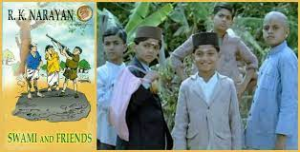
In Swami and Friends by R.K. Narayan we have the theme of disobedience, conflict, control, authority, power,ย rebellionย and independence. Narrated in the third person by an unnamed narrator the reader realises after reading the story that Narayan may be exploring the theme of disobedience.Jul 18, 2018

The protagonist of the story is a 10-year-old boy. He is an unconstrained, indiscreet, wicked but then also an exceptionally honest child. His character is a kid in the fullest feeling of the world. How he grows up, his mischiefs which made his family irritated, his wonder, growing pains and innocence and many aspects are being portrayed in the novel. He lives in a universe of bossy grown-ups. He is a student at Albert Mission School. It is a British establishedย school where importance is given to Christianity and English education.

One of the most watershed moments in the novel is the time when Rajam joins the school and he becomes friend with Swami. That was a life-changingย stage for him.ย But later he breaks his friendship due to some reasons.

Everyone can relate R.K. Narayanโ€™s account of childhood games and friendship. Itโ€™s an age where friendship is more important than family and more urgent than school. Also, holidays are heaven on earth during those days. The author effectively sketches those days throughย Swami and Friends.


Theย Innocence of Youthย is the fundamental theme ofย Swami and Friends.ย Swaminathanย and his friends are 10-years-old at the beginning of the book, and are prone to all the typical behaviors of young children: they are fascinated with toys; they daydream in class; they take their families for granted, and they disdain schoolwork. Rather than plotting or planning out their adventures with deliberate intention, these boys participate in the risk-taking and spontaneous mischief characteristic of young children. At their youthful age, they are not yet fully equipped to understand the world around them, the class differences that already work to inevitably divide them, or to understand the repercussions of their actions. For example, Swaminathan does not understand why an angry mob gathers after the arrest of the Indian politician Gauri Sankar in Chapter Twelve, and he cannot anticipate the consequences of shattering his headmasterโ€™s windows with a rock. In running away, he does not understand that in doing so he might miss the M.C.C. match and irrevocably damage his friendship withย Rajam. These are but a few cases that illustrate the central theme ofย Swami and Friends, where youthful innocence wrestles with increasing tension against worldly complexity and conflict..


This thesis entitled โ€œMyth of Innocence and Purity of Childhood in R. K. Narayanโ€™s novel Swami and Friendsโ€ examines how childhood not only embodies fun and laughter, purity and innocence but also equally self centeredness, snobbery, vanity, callousness, cruelty and jealousy that can be seen among adults. It also assesses the novel critically and brings the hidden realities of childhood days into light that children are also not free from vices. Narayan, with the skillful use of humour, tries to capture the world of children as reflected in the growing up of Swaminathan and his companions, and their adventure and misadventure in the mythical town of โ€˜Malgudi.โ€™ By providing the realistic glimpse of childhood, Narayan shows that children also have contrary qualities and are not free from multiple human natures as can be found in grown up people. As Narayan he writes in his autobiographyโ€”My Days, those children are capable of performing greater cunning activities than grown up and he beautifully puts this belief in Swami and Friends.

The Political and the Personal Under British Colonial Ruleย ย ย ย ย ย ย ย ย ย ย ย ย ย ย ย ย ย 

Set in a fictional town in south India circa 1930,ย Swami and Friendsย is defined by the pressures and complexities of British colonial rule over India. While the bookโ€™s events revolve around common childhood trials and tribulations, the personal experiences of the protagonist and his friends are colored by their political context, even when the characters themselves have little understanding of it. By examining British colonial rule through the lens of an ordinary boyโ€™s relatableโ€ฆ

Education and Oppression

Difficulty within educational settings is one ofย Swamiโ€™s constant conflicts throughout the novel. Rather than simply depicting the ordinary childhood struggles of homework and unfair teachers, Narayan uses these familiar obstacles to enact a smaller version of the colonial oppression that suffuses the book. For Swami, school is a place of both growth and restriction, where rigid rules come into conflict with Swamiโ€™s nuanced inner life. Throughout, Narayanโ€™s depictions of Swamiโ€™s school days addโ€ฆ

ย The Fluidity of Identity

Although little more than a year passes over the course ofย Swamiโ€™s story, his identity and those of his friends change and develop many times throughout the novel. By demonstrating how malleable his charactersโ€™ essential traits and roles are, Narayan casts doubt on the idea of objectively โ€œtrueโ€ identity, instead seeming to argue that even core characteristics like goodness and badness can be changed and chosen according to the desires of individuals and groupsโ€ฆ

Innocence, Family, and Growing Up

Just asย Swamiโ€™s story reveals the somewhat illusory nature of personal identity, so too does it slowly strip away conventional notions of childhood innocence. While Swami seems at first to embody the quintessential idea of a carefree child, his growth over the course of the novel shows that even children of his young age are burdened by serious concerns and real-world threats. Narayan demonstrates this gradual loss of innocence in large part through hisโ€ฆ


Just asย Swamiโ€™s story reveals the somewhat illusory nature of personal identity, so too does it slowly strip away conventional notions of childhood innocence. While Swami seems at first to embody the quintessential idea of a carefree child, his growth over the course of the novel shows that even children of his young age are burdened by serious concerns and real-world threats. Narayan demonstrates this gradual loss of innocence in large part through his portrayal of Swamiโ€™s relationships with the members of his immediate family, which grow increasingly complicated and less protective over the course of the story.

At the start of the novel, Swami is almost wholly dependent on his family. He blithely takes them for granted while also calling on them to support his whims and desires, and their firm but kind presence grounds the seeming innocence that Swami enjoys in the early chapters.ย Swamiโ€™s motherย andย father, though strict at times, offer him safety and resources to pursue his academic and social goals. Even when Swami meetsย Rajam, whom he views as a role model, he still requires his fatherโ€™s room and his motherโ€™s cooking in order to host Swami at his home. Thanks to his parentsโ€™ help, the visit goes well, and Swami feels independent in his friendship with Rajam even as he relies on his family to support it. Swamiโ€™sย Granny, whom he considers unsightly and senile but nevertheless loveable, also offers him unquestioning comfort. She affirms Swamiโ€™s stories even when they are implausible, and although she tells him stories from the familyโ€™s past, Swami dismisses her words as โ€œold unnecessary stories.โ€ Swami views his relationship with his grandmother as simply โ€œsnug and safe,โ€ but Narayan makes clear that this perception relies on Swamiโ€™s ability to ignore the more complex, challenging stories that his grandmother wishes to tell. In describing the conflict between Swami and his headmaster at the mission school, Narayan hints again at the deeper reality that underlies Swamiโ€™s outwardly innocent reliance on his family. After Swami brings in his fatherโ€™s letter complaining aboutย Ebenezerโ€™s treatment of Swami, theย Mission School Headmasterย scolds Ebenezer but then tells Swami that he was โ€œfoolish to go to [his] father about this matter.โ€ The headmaster requests that Swami turn to him instead of his father about future problems, foreshadowing the novelโ€™s later events in which Swamiโ€™s father is powerless to protect him.

As the novel progresses, Swamiโ€™s feeling of security with his family begins to erode, as both he and the reader discover evidence that his innocent trust in his own safety may have been an illusion all along. When Swamiโ€™s mother gives birth to an unnamed baby boy, Swami is initially indifferent to his newย brother, calling him โ€œhardly anything.โ€ But as time passes, Swami realizes that the baby is now the center of the household. Although Swami soon comes to love his brother, he is also forced to admit that he is no longer the sole focus of his parentsโ€™ and grandmotherโ€™s love and attention. Around the same time, Swami notices that his father has changed to become โ€œfussy and difficult.โ€ His father begins to take a more active role in making Swami study for his exams, and Swami resents the realization that his fatherโ€™s role is not only to protect him but also to pressure him toward growth. In the middle of the novel, Swami enters into a conflict with the son of aย coachmanย who tricks Swami into giving him money. This episode in particular illustrates the tension between Swamiโ€™s youthful innocence and his dawning knowledge of the genuine danger of the world around him. The episode begins with Swamiโ€™s intense desire to get a hoop, a childish wish based only on a love for simple play. However, that innocent impulse soon transforms into a violent conflict with theย coachmanโ€™s son;ย Maniย beats Swami in an attempt to get the boyโ€™s attention and then, when they confront him, his neighbors throw rocks and chase them off with dogs. Most significantly of all, Swami encounters the son again while visiting his fatherโ€™s luxurious club, but finds that his father is oblivious to the danger. He decides to โ€œseek protectionโ€ by telling his father, but quickly reverses his choice, deciding that โ€œhis father had better not know anything about the coachmanโ€™s son, however serious the situation might be.โ€ As Swami moves away from his fatherโ€™s protection, Narayan demonstrates more forcefully that Swamiโ€™s family is not truly the refuge that it initially appears to be.

By the novelโ€™s conclusion, Swami has experienced the genuine danger of the world around him and, at the same time, come to realize the limitations of his familyโ€™s ability to comfort him and keep him safe. Through this process Narayan shows that Swami shares in the universal realities common to all coming-of-age stories, even within the unique sociopolitical context of India under English colonial rule.

After Swami and his friends form theirย cricketย team, Swami discovers that his grandmother does not know what cricket is. Although he is upset by her โ€œappalling ignorance,โ€ he is nonetheless patient with her because he remembers his recent, irrational fear that โ€œshe was going to die in a few minutesโ€ because he refused to bring her a lemon. Swamiโ€™s shift toward caring for his grandmother and her feelings marks a reversal of his previous belief that his family are the ones responsible for him. When Swami goes missing, a chapter from his fatherโ€™s perspective reveals that he is completely powerless to find Swami and, given that Swami actually ran away, save him from himself. His fatherโ€™s desolation and inability to alter the situation underscores the fact that Swami must now take responsibility for himself, rather than relying innocently on his family. When Swami is rescued byย Mr. Nair, he is initially confused and calls the man Father. He is unable to understand his situation, thinking: โ€œWho was this man? Was he Father? If he was not, why was he there? Even if he was, why was he there? Who was he?โ€ This internal breakdown of Swamiโ€™s ability to comprehend his fatherโ€™s role in his life represents a moment of profound growth in Swamiโ€™s self-efficacy and maturity. Later, he laments that he forgot to say goodbye to the Officer, hinting at the core truth that one cannot appreciate childhood simplicity until it is gone. Swami still lives with his family at the novelโ€™s end, but he has lost the illusion that his life there is innocent or free of worry.


swami and friends-SYMBOLISM

Swamiโ€™s Cap

Swamiโ€™s cap becomes important to the story as he begins to develop a political consciousness. Swami thinks little of his clothes until the night that he andย Maniย stumble on a protest against British oppression, and Swami realizes that some of his clothing may be made by British manufacturers at the expense of Indian craftspeople. When a bystander suggests that he is โ€œwearing a foreign cap,โ€ Swami is ashamed and throws the cap into the fireโ€”his first act in support of Indian liberation. However, the cap also comes to symbolize Swamiโ€™s naivete about political matters. The next morning, Swami thinks not of his devotion to Indian independence, but of the anger hisย fatherย will feel when he sees that the cap is missing. Then, even after his intense experience at the protest, Swami continues to view his fledging political activity through the narrow lens of his own self-interest, telling his father that the cap was burned by someone else in the crowd rather than owning up to his own actions. Finally, Swamiโ€™s father informs him that the cap was Indian-made all along, undermining Swamiโ€™s passionate destruction of what he believed to be a symbol of England. The cap thus underscores Narayanโ€™s point that Swamiโ€™s actions are tied to a political context even when he is only able to engage with that context in a childish, haphazard way.

Swami’s cap represents his good but misguided and uninformed intentions, which often lead him to trouble. He destroys his cap in a fit of anti-colonial anger, believing it to be English-made. His father later corrects him, revealing it was actually an Indian-made cap, leading to Swami getting in trouble with his father and later, with his school.


Cricket

The game of cricket is the storyโ€™s most potent symbol of the complex way that English colonization plays out in the lives ofย Swamiย and his friends. As a quintessentially English activity, cricket is closely tied to Englandโ€™s presence in India, but instead of rejecting it for its oppressive associations, Swami and his friendsโ€”particularly team captainย Rajamโ€”embrace the game as a means of gaining self-determination, dominance over opponents, and interpersonal connection. This paradoxical pursuit demonstrates the ways in which colonized peoples like Swami and his friends must necessarily adapt to the influences of the colonizer, even embracing aspects of the oppressive culture and subverting them into mechanisms of liberation. However, the friendsโ€™ cricket team has both positive and negative effects in Swamiโ€™s life; it initially helps him put aside his political differences with Rajam, but it also tears apart their friendship when Swami misses the crucial match. Through this symbol, Narayan seems to recognize the unstable and sometimes dangerous role that even the appealing aspects of colonizing nations play in the lives of the colonized.


Not only is cricket a reminder of the colonial influence of Britain in India, it is also a symbol of competition, and on the cricket field is where Rajam and Swami actually come to a head. Rajam uses a threat against their friendship in order to control Swami’s behavior, but Swami cannot help but feel that it is wrong to skip school so that they can compete. The match represents Rajam’s emotionally desperate understanding of “victory” as an important goal. Cricket highlights the conflict between Rajam and Swami and heightens the stakes, ultimately leading to them breaking up.

Cricket is a symbol of Swami’s friendships, especially with Rajam. Swami enjoys cricket and works hard at it, just as he enjoys his friendship with Rajam and works hard to maintain it, much in the way he devotes time to practice. When Swami misses the the first match, he and Rajam both take it as a personal slight, rather than one against the team as a whole.


The Book of Fairy Tales

Swamiโ€™s somewhat surprising choice of a book of fairy tales by Hans Christian Andersen as a going-away present forย Rajamย acts as a symbol for the crossroads of maturity at which the two boys find themselves. Swami has struggled to enjoy reading through the novel, while Rajam has excelled at it, so Swamiโ€™s sensitivity to the kind of present that Rajam would appreciate demonstrates the way that he has begun learning to think outside of himself and his own desires. However, the fact that the book includes fairy tales rather than true facts indicates that the boysโ€™ reality is still largely shaped by fantasy. Even as Swami is forced to face the painful fact that Rajam is moving away without repairing his friendship with Swami, he relies on the power of a book of imagined realities to bridge the gap between them. Finally, Swami thinks that the book is too full of โ€œunknown, unpronounceable English wordsโ€ for him to ever understand it himself, again hinting that mysterious foreign influence is present in every corner of his life, even the parts that concern fantasy rather than reality.

Geography (Symbol)

Geography is one of the subjects that Swami and his classmates learn at school, and they spend a lot of time memorizing the capitals of foreign countries and copying maps. His friend Mani spends many hours copying maps of Europe, India, and Africa in preparation for their exams. Learning geography is an important part in their colonial education in orienting and knowing the world, with Europe at the center. The setting of the novel, the town of Malgudi, is fictional, however, and thus Narayan refuses to map the village.

The Protest (Symbol)

The protest can be argued to represent many things, but first and foremost, it symbolizes the frustration that exists in India because of the colonial presence of the British who dominate the nation as a second-class society. The British represent the broken forces that exist among closed-minded people with economic interests. Among the problems is that India has become chronically poor because its resources are drained by the British.

Escape

Escape is a motif that continually resurfaces as Swami escapes from the headmaster in the Albert Mission School and then later at the Board High School. Escape is Swami’s usual method of dealing with difficult or painful situations, but he often ends up getting lost, or in a worse situation than before.

The Cane (Symbol)

When the headmaster of Swami’s school rejects his request to leave early for his cricket game, Swami becomes angry and throws his cane out of the window. This demonstration is a symbol because the action represents the value of the moment in Swami’s real life. The stick becomes a symbol of freedom because the stick goes where Swami wants to goโ€”outside of the walls and hierarchal order of school.


Fire-Eyed

  1. K. Narayan writes, โ€œHe shuddered at every thought of school: that dismal yellow building; the fire-eyed Vedanayagam, his class teacherโ€ (3). The emblematic fire-eyedness renders the class teacher an uncompromising individual who will not bear disruptive behavior from his students. Accordingly, he arouses dread in his students due to the authoritarian persona which his eyes indicate.

Tail

Swami’s old friends, who feel like they have been abandoned by Swami, begin calling him “tail.” A “tail” is a long thing that attaches itself to an ass or a dog, as he learns in Chapter 4.


Broken Window Panes

The headmasterโ€™s office window panes, and their shattering, are one of the more concrete symbols of the book. Afterย Swaminathanย destroys the window, his future is permanently changed though he does not know it at the time. The broken glass serves to represent that Swaminathan has defied the established order, causing a break that he cannot repair, and crossing a point of no return…


Swami’s younger brother represents his relationship to his family, without the distractions or impediments of school, class…


Swami and friends- CHARACTER ANALYSIS

Swami

Swami is the ten-year-old protagonist of the novel. Swami is a schoolboy living in 1930, in the fictional town of Malgudi in the South of India under British colonial rule. At the start of the novel, Swami is a typical child who seems outwardly innocent, with only trivial concerns such as homework, impressing his classmates, and avoiding disappointing hisย father. Swami is considered average among his friends, neither especially clever nor stupid, brave nor cowardly. He is generally good-natured and gets along well with his peers and family, although he can be arrogant or deceitful at times, and is easily swept up in the plans and enthusiasms of others. As the novel progresses, Swami becomes more aware of his own identity and political consciousness and begins to define himself more in terms of his friendships and national identity than his family relationships. Swami is also a naturally goodย cricketย bowler and prides himself on being nicknamed โ€œTate,โ€ after a famous cricket player.

ย ย ย ย ย ย ย ย ย  Swami is the central character of the plot. He is also the protagonist of the play. As a child, he goes to school where he does not like studies and gets bored easily. He is an honest boy of seven but, on the other hand, he also does not hesitate telling lies to his father. He loves his granny’s stories. He is good at cricket and is nicknamed “Tate.” He saw the revolution phase of Indian independence. Later in the course of the novel, he became bolder and socially prominent.

The protagonist of the novel Swaminathan (Swami) is a school going boy. He belongs to a South Indian middle-class family. His family comprises of his grandmother, mother, father, and mother. In the initial trenches of the story, his younger brother was born. He epitomizes the innocence of a youthย mischievousness that childhood necessitates.

The plot ofย Swami and Friendsย revolves around Swaminathan, the centralย protagonist, who initially typifies theย innocence of youthย and all the mischievousness that childhood entails.ย He prefers cricket to school, takes his family for granted, and attempts to play out childhood fantasies in the often reckless games and stunts he pursues with his shifting group of friends. Initially coming across as passive and timid–more likely to follow than to lead the crowd (as we witness in the mob scene of Chapter 12)–and overshadowed amongst his peers by the more self-assured Mani and Rajam, Swaminathan, however, becomes bolder and more socially prominent over the course of the novel. The most vital player on the cricket team, it is ultimately, Swaminathan, and not Rajam or Mani that holds the key to M.C.C.โ€™s victory. And though his rebellion against the headmaster results in childish flight, he openly and boldly defies the central authority figure of his school without waiting for Rajamโ€™s support, and without the support of an angry mob to fuel his courage. While the novel centers on a brief period in Swaminathanโ€™s life, in this brief journey, we witness the revolutionary change happening in India, and the subtle revolution of character and understanding that takes place within Swaminathan…


Rajam

Rajam is the son of the Police Superintendent and one ofย Swamiโ€™s closest friends. Rajam is new to Swamiโ€™s school at the start of the novel, and initially Swami andย Maniย view him as an enemy due to his quick wits, fine clothes, and fearless nature. However, Rajam quickly becomes friends with Rajam and Swami and acts as their ringleader for the remainder of the novel. Rajam does well in school and is liked by most of his classmates, and he draws confidence from his fatherโ€™s prominent position (Rajamโ€™s fatherย is the Police Superintendent), although it also causes him to oppose the political activity that his friends support. Rajam sometimes bullies his friends and acquaintances, but more often he unites them and urges them toward new goals, most notably the formation of aย cricketย team. Swami loves and admires Rajam but comes into conflict with him, first because Swami supports political action that opposes Rajamโ€™s father, and later because he doesnโ€™t live up to his promise on Rajamโ€™s cricket team. Rajam is so angry at Swami for missing the cricket match that he stops speaking to him, and it is unclear at the novelโ€™s end whether the two friends have reconciled.


Rajam is the new kid at the Albert Mission School and is Swami’s rival turned best friend. Rajam is good at studies, speaks English “like a European,” and is the son of the police superintendent, which gives him more attention and status at school. He is witty and fearless in nature and naturally assumes authority in social settings. It is his idea to start a cricket team. The character of Rajam:ย Rajam was the guy with an endearing personality. He is smarter and grown-up than Mani. He believes in self-respect. Rajam is very sincere in academics. He likes assisting or helping his friends in academics. Mani possesses a propensity for domination amongst every one of his age but Rajat didnโ€™t feel that within him. In fact, Rajam tries to put forward a hand for friendship with Mani. He wanted to settle the enmity with Mani and this signify the nobility Rajam has got with him.


Mani

Known as โ€œthe Mighty Good-For-Nothing,โ€ Mani isย Swamiโ€™s other closest friend. Mani is a fearless troublemaker who never does his homework, sleeps in class, and frequently resorts to violence to solve his problems. However, he is also a loyal and affectionate friend, and Swami is proud to be allied with him. Mani often plays a supporting role in Swami andย Rajamโ€™s friendship, though at the end of the novel it is Mani, rather than Swami, who takes on the role of Rajamโ€™s best friend. Mani lives with a frightening uncle, but little else is known about his family or background.

Another close friend of Swami, Mani is described as the “Mighty Good-For-Nothing.” He is a bold and strong figure in his class. He is not good at studies and purposefully slacks off, but he likes fighting and no one dares to challenges him, even the teachers. Mani likes to dominate the whole class and also bully some of his classmates.


Swamiโ€™s Father

Swamiโ€™s father, W.T. Srinivasan, is an imposing figure who works at the courts and is usually strict withย Swami. Swami sometimes feels afraid of his father, but at other times he turns to him for help and support. Swamiโ€™s father encourages Swami to study hard and helps him with homework and, notably, provides Swami with a study space within his own room. Late in the novel, Swamiโ€™s father reveals that his concern for Swamiโ€™s wellbeing outweighs his frustrations with his son, as shown when he searches for Swami all night and welcomes him home without punishment.

Swaminathanโ€™s father is a lawyer by profession. He is stern and authoritarian, but caring. He worries about his sonโ€™s studies and encourages him to study hard. Sometimes he is overly strict, but later in the novel he also shows his concern for the well-being of his son.

Swamiโ€™s Mother

Swamiโ€™s mother appears in the novel only occasionally, usually in the context of providingย Swamiย with something he wants or backing him up in an argument with hisย father. She is presented as a mild woman who is mostly concerned with her family and managing the household. She loves Swami deeply and also gives birth to a baby boy,ย Swamiโ€™s brother, who occupies her attention for much of the novel.

Swaminathan’s mother is in charge of the house and cares for Swami both materially and emotionally. She defends Swami in his arguments with his father. However, her appearances are occasional. She is the character that Swami misses the most when he runs away from the house.


Swamiโ€™s Grandmother / Granny Quotes inย Swami and Friends

Swamiโ€™s paternal grandmother, whom he calls Granny, is an old woman who lives withย Swamiย and hisย motherย andย father. Swami views Granny as ancient and sometimes embarrassing, but she is also a source of comfort and security during times of change, particularly whenย Swamiโ€™s brotherย is born. Granny sometimes tries to tell Swami stories about the familyโ€™s past, but he usually refuses to listen, indicating his preoccupation with his own present concerns. Swami grows more concerned with Grannyโ€™s needs over the course of the story, beginning to see himself as a caretaker for her and making more of an effort to meet her needs.

Granny is described as a sweet and sleepy lady whom Swami will often go to and tell stories about his day. She is a religious woman. She tells Swami the stories of her past. Her relationship with Swami changes throughout the novel.

Swamiโ€™s grandmother was a short and fat and a slightly bent woman. She was aย notably a religious woman. She had inner beauty intactย with her rather than physical. She was not an attractive woman as she herself says she wasnโ€™t pretty. He lived with her in his childhood days. He describes her as a good friend of his. She used to wake him up during the school days and prepare breakfast for him. After the breakfast is being done his grandmother hand over the pen, wooden slate, and earthen ink-pot to him. While Swami attended school his grandmother would study the scriptures in the temple which his nearby his school

Swamiโ€™s Brother

Swamiโ€™s unnamed baby brother is born midway through the novel. While Swami at first thinks little of his brother, he soon grows fond of him and admires how quickly he learns and grows. Swamiโ€™s brother also presents a unique challenge to Swami, in that he occupies the familyโ€™s attention and makes it so that Swami is no longer the sole focus of his parentsโ€™ and grandmotherโ€™s affection.

He is the only sibling to Swami. He is born midway through the novel. He captures the prime attention of his family. Swami too cares for his little brother. However, this character has no major role as he remains a child throughout the novel.

Rajamโ€™s Father

Rajamโ€™s father is the Police Superintendent and acts as a powerful figure in the community.ย Swamiย andย Maniย are initially very excited to be associated with the Police Superintendent through their new friendย Rajam, and Swami is impressed with the luxury of his household. Later, Rajamโ€™s father becomes a symbol of political conflict when Swami witnesses him ordering the police force to violently break up the crowd of protesters. However, Rajamโ€™s father remains kind in person to Rajam and his friends, and plays an important role in rescuing Swami at the novelโ€™s conclusion.

Somu

Somu is one ofย Swamiโ€™s friends from the Mission School. He is the class monitor and gets along well with everyone, students and teachers, although he does not excel academically. Swami thinks of Somu as the โ€œuncle of the class.โ€ When Somu treats Swami unkindly, the experience is one of the first times that Swami is forced to admit that the people around him are more complex than he might have guessed. Later in the novel, Somu disappears from the group of friends after failing an exam, and thus not being promoted to the next grade.

Somu is Swamiโ€™s school friend from the Albert Mission School. He is the monitor of Swami’s class and carries himself with an easy and confident air. Swami calls him the โ€œuncle of the class.โ€

Sankar

Sankar is one ofย Swamiโ€™s friends from the Mission School, known as โ€œthe most brilliant boy of the class.โ€ Swami admires Sankarโ€™s intelligence and relies on him for guidance at school. Sankar eventually leaves Malgudi when his father is transferred to a new town, and although he writes toย Rajamย and his friends intend to reply, they fall out of touch after realizing that they donโ€™t have Sankarโ€™s new address.

A classmate of Swami, Sankar is known as the โ€œthe most brilliant boy of the class.โ€ Swami admires Sankar’s intellect and takes his guidance. Later, he leaves Malgudi as his father is transferred to another town.

Mission School Headmaster

The Mission School Headmaster is a primary antagonist forย Swamiย in the novelโ€™s early chapters. Although he confrontsย Ebenezarย about his mistreatment of Swami, he also calls Swami foolish for telling hisย fatherย what happened in scripture class and asks Swami to rely only on him in the future. Later, the headmasterโ€™s intimidating interrogation of the students who participated in the protest goads Swami into renouncing the Mission School and ultimately transferring to the Board School. However, in comparison to the abhorrentย Board School Headmaster, Swami eventually comes to think of the Mission School Headmaster as dignified and respectable.

Mr. Ebenezar

Mr. Ebenezar is the fanatical Christian scripture teacher at the Mission School. Althoughย Swamiย and his friends sometimes finds his classes amusing, he uses his lectures to degrade Hinduism and argue for the superiority of Christianity. After Swami reports Ebenezarโ€™s behavior, theย Mission School Headmasterย scolds the teacher, but ultimately it seems that Ebenezar is allowed to carry on teaching as before. Later, Ebenezar appears only as a benign figure in the school crowd, one who Swami even comes to view fondly after his troubles at the Board School.


He is Swamiโ€™s scripture teacher at the Albert Mission School. He is a Christian fanatic and degrades Swamiโ€™s religion, Hinduism, and considers Christianity superior to other religions. Later, he is scolded by the headmaster of the school.


The Coachman

The unnamed coachman is an acquaintance ofย Swamiโ€™s who promises to help him acquire a toy hoop in exchange for money. He claims to be able to turn copper coins into silver, but it becomes clear that he is lying to Swami in order to get his coins.ย The coachmanโ€™s sonย also becomes a menacing presence to Swami after this episode. Swamiโ€™s experiences with the coachman are an early example of his increasing acquaintance with the evils and dangers of the world.

The Coachmanโ€™s Son

Theย coachmanโ€™s son is a young boy who begins to taunt and threatenย Swamiย after his father successfully scams Swami out of his money.ย Rajamย forms a plan in whichย Maniย will kidnap the son with Swamiโ€™s help, but the plan goes awry when the son tricks Mani and runs away with his toy top. Soon thereafter, Swami discovers during a visit to hisย fatherโ€™s club that the coachmanโ€™s son works at the club, and Swami is overcome with fear that the son will attack him. This episode is one of the first instances in which Swami feels that his father is not able to protect him from harm.

Karrupan

Karrupan is a young boy who is bullied byย Rajam,ย Mani, andย Swamiย while out driving his cart. The three friends harass Karrupan and pretend to be government agents, frightening the boy before sending him on his way. The behavior of Swami and his friends toward Karrupan demonstrates their internalization of the colonized stateโ€™s brutal power structures.


Samuel (or The Pea)


Also nicknamed “The Pea,” Samuel is Swami’s classmate and friend. Both Swami and the Pea are close friends until the Pea changes his school. Both remain friends as they both play cricket together. He is the only Christian friend of Swami.


Dr. Kesavan

Dr. Kesavan is a physician whomย Swamiย goes to in an effort to get a medical certificate saying he can miss school drill practice in order to go toย cricket. Dr. Kesavan laughs at Swamiโ€™s self-diagnosis of delirium and pronounces him healthy, but says that he will talk to theย Board School Headmasterย to get Swami excused from drill practice. However, Dr. Kesavan does not talk to the headmaster at all, which leads to Swamiโ€™s punishment and eventual departure from school. Swami curses Dr. Kesavan for lying, and this episode is another of Swamiโ€™s formative experiences of betrayal.

Ranga

Ranga is the cart man who findsย Swamiย unconscious after his night wandering lost in the wilderness. He rescues Swami by bringing him toย Mr. Nair, thinking himself too simple to know what to do. Ranga is one of few peasant characters in the novel, and notably, Swami knows little of his role in the rescue and does not think to thank him later.

Mr. Nair

Mr. Nair is the District Forest Officer who helpsย Swamiย return home after being lost. Swami initially confuses him with his ownย father, indicating the sense of loss and disorientation that Swami undergoes as he matures. Later, Swami feels guilty for forgetting to say goodbye to Mr. Nair and worries that he did not show appropriate gratitude for his role, again drawing a parallel between Mr. Nair and Swamiโ€™s actual father. However, Mr. Nair also lies to Swami about the day of the week, presumably to keep him calm, and causes him not to realize he is missing theย cricketย match until it is already over.


SWAMI AND FRIENDS TITLE SIGNIFICANCE

The central theme of the novel is growing up of young Swami. He is a spontaneous, impulsive, mischievous and yet a very innocent child. His character is a child in the fullest sense of the world. Through Swami’s eyes the reader gets to peak in to the pre-independence days in South India. The life portrayed in the novel is accurate in its description of the colonial days – the uprisings, the rebellions, the contempt and the reverence the natives had for their subjugator, together with varied elements that have become one, such as cricket and education.

Unlike many colonial and post-colonial writers Narayan does not directly attack or criticize the colonial system, although elements of gentle criticism and irony directed towards the colonial system, are scattered through out Swami and Friends and all his other novels. He has rather directed his creativity at depicting the life of the people at the time. It is almost as if he is charmed by these unsophisticated and simple, yet eccentric people and their lives. It is unclear if he refrained from an all out attack on the British colonial system out of choice or reverence. But it seems at this point in his career, (and during this particular point of India’s history), when he is starting out as an author, he would write to the English speaking audience in India and for the vast audience abroad. Hence it would be folly to attack the very system that would sustain him as a novelist, his career of choice. Asked about why he was unbothered about the prevailing political crisis and other happenings during the time, Narayan replied in an interview thus ” When art is used as a vehicle for political propaganda, the mood of comedy, the sensitivity to atmosphere, the probing of psychological factors, the crisis of the individual soul and its resolution and above all the detached observation which constitutes the stuff of fiction is forced into the background.” Beyond this, he also had tremendous regard for the English language and literature as an aesthetic past time, and was not blind to its value in that regard.

The absence of criticism on the colonial system maybe also due to the fact that Narayan simply believed the colonizer and the colonized could live together in harmony, benefiting each other. Most Englishmen and the natives certainly seem to do so in his novels, such as Mr Retty (Swami and Friends) and Matheison (Waiting for the Mahatma). The rice mill owner Mr Retty was “the most Indianized of the ‘Europeans’โ€ฆ.and was the mystery man of the place: nobody could say who he was or where he had come from: he swore at his boy and his customers in perfect Tamil and always moved about in shirt, shorts and sandaled feet.” Mr Matheison feels strongly for Indians and considers himself Indian. “You see, it is just possible I am as much attached to this country as you are.” Only Mr Brown seems to be the ‘black sheep’ in this regard. His Western mind is only capable of “classifying, labeling and departmentalizingโ€ฆ” And the gentle criticism and irony directed towards him was in the same way directed towards his fellow countrymen. In his mind British or Indian, they were all human beings with prejudices, follies, errors, kindness and goodness, each in varying degrees.

and Friends is an Indian book written in English published in 1935. The work was the first novel ever published by the famous Indian author R. K. Narayan. Narayan’s friend, Graham Greene, recommended his manuscript to a publisher, and it was finally published by Hamish Hamilton in 1935. The original title of Swami and Friends was Swami the Tate, but it was changed during the publishing process to Swami and Friends likely so that it could have more literary identification with Rudyard Kipling’s Stalky & Co (1899) and thus appear more marketable as part of a sub-genre of English schoolboy fiction. The novel is the first of a trilogy of novels. The second is entitled The Bachelor of Arts and the third The English Teacher. The trilogy, which counts among his earlier fiction, focuses largely on problematic social practices, such as the institution of schooling and culture of punishme

Main thing is “Friendship” and how kids react differently to the different situations. I love the story. Swami is a little boy who has a good heart but little bit a coward. Think it’s same for all the kids in that age. Swami loves his friends and ready to anything for them but his cowardliness and bad temper made the trick every time. Anyway think the most important thing in that story is simpleness. Swami is a normal boy who can find in every country and every time. He doesn’t have anything special but I think the author should give him a chance. Though he is a good cricket player he hasn’t got a chance to show it to others and it seems the only special skill he has.


Harry Potter and The Prisoner of Azkaban

HARRY POTTER AND THE PRISONER OFย ย  AZKABAN


1.Who is the protagonist in Harry Potter and the Prisoner of Azkaban?


Harry Potter, “The Boy Who Lived,”ย the saviorย of the wizarding world and the only living wizard to defeatย Lord Voldemort, is the protagonist of J. K. Rowlings series of novels.Oct 5, 2020

  1. What character traits does Harry Potter have?


Harry-ย Brave, Quick Thinking, Witty, Honourable, Self-Reliant,ย Confident, Instinctive and extremely stubborn/strong willed/determined. Harry is often at the front line and will protect who he loves. He fights for the good of the wizarding world and is determined to kill the man who killed his parents.

  1. What is the Prisoner of Azkaban about?


Harry Potter’s (Daniel Radcliffe) third year at Hogwarts starts off badly when he learns deranged killer Sirius Black (Gary Oldman) has escaped from Azkaban prison and is bent on murdering the teenage wizard. While Hermione’s (Emma Watson) cat torments Ron’s (Rupert Grint) sickly rat, causing a rift among the trio, a swarm of nasty Dementors is sent to protect the school from Black. A mysterious new teacher helps Harry learn to defend himself, but what is his secret tie to Sirius Black?

4 Who is the bad guy in Harry Potter and the Prisoner of Azkaban?

. After reuniting with his best friends Ron Weasley and Hermione Granger, Harry learns that Sirius Black, a convicted supporter of the dark wizardย Lord Voldemort, has escaped Azkaban prison and intends to kill him.


What is the main conflict in Harry Potter and the Prisoner of Azkaban?

major conflictย Theย major conflictย is the search to catch Sirius Black, an escaped convict from the wizard prisonย Azkaban, to protectย Harryย from him, and forย Harryย to come to terms with Black’s supposed role in his own parents’ death.


Why is the Prisoner of Azkaban the best?

Why wasย Prisoner of Azkabanย widely considered theย bestย of the Harry Potter films? POA was my favorite book, and when I watched the movie, I immediately loved it. The music and emotional scenes are awesome, as well as some awesome cinematography, such as showing the Whomping Willow while seasons changed.


Where is Hogwarts in Harry Potter?

Hogwartsย School of Witchcraft and Wizardry was the British wizarding school, located in the Scottish Highlands. It accepted magical students from Great Britain and Ireland for enrolment.


What happens in Harry Potter Prisoner of Azkaban?

After reuniting with his best friends Ron Weasley and Hermione Granger,ย Harryย learns that Sirius Black, a convicted supporter of the dark wizard Lord Voldemort, has escapedย Azkaban prisonย and intends to kill him. … Draco exaggerates his injury, and his father Lucius Malfoy later has Buckbeak sentenced to death.


What is the moral of Harry Potter?

One of theย moralsย of the story is that you never know what you are capable of until you try.ย Harryย was faced with extraordinary circumstances, and he was able to rise to the challenge. He found reserves of bravery within himself, as well as special abilities.ย Harry Potterย had no idea that he was a wizard, of course.


How old was Emma Watson Prisoner of Azkaban?

When “Prisoner of Azkaban” bowed,ย Emma Watsonย was 14, Daniel Radcliffe was 13 and Rupert Grint was 15.Jun 4, 2014


What year is Prisoner of Azkaban set in?

Harry Potter and theย Prisoner of Azkaban

December 1993 โ€“ Harry receives the Marauders’ Map from Fred and George Weasley. June 1994 โ€“ Harry Potter discovers Sirius Black and finds out he’s innocent, rescues him but loses Peter Pettigrew.AprA 30, 2020


Why is Prisoner of Azkaban so different?

ย 

Harry potter and theย prisoner of azkabanย seems a bitย differentย because it was directed byย anotherย director. Chris Columbus directed the first two movies(philosopher’s stone and chamber of secrets) keeping the theme and direction as close as possible to the books. …ย Soย the first two movies and Goblet of Fire seems same.


Harry Potter and The Prisoner of Azkaban-Themes

  • The Injustice of Legal Systems. This book makes several moral attacks on a legal system that is controlled by men like Lucius Malfoy who bully people until he gets his way. …
  • The Duality of Life. …
  • The Importance of Loyalty

.

Good vs. Evil

Inย The Prisoner of Azkaban, Harry begins to understand that the world is not divided into a simple binary of good versus evil or people who do only good things or only bad things. Harry and his friends are thirteen now, breaching adulthood, and the new cast of significant characters forces them to question their ideas of cut-and-dry, black-and-white morality.

A shining example of this new perspective is when Harry challenges Snape’s claims that his father, James Potter, was “exceedingly arrogant.” Harry tells Snape to shut up. He says, “I know the truth, all right? He saved your life! Dumbledore told me! You wouldn’t even be here if it wasn’t for my dad!” (p. 284-285). But Snape has another side of the story. He says, “Have you been imagining some act of glorious heroism? Then let me correct youโ€”your saintly father and his friends played a highly amusing joke on me that would have resulted in my death if your father hadn’t got cold feet at the last moment. There was nothing brave about what he did. He was saving his own skin as much as mine” (p. 285). Harry has to account for this new information and consider the idea that his father, who died while Harry was still an infant, and who he only knew through photos and the stories told by those closest to him, might not be as perfect as he thought he was. His idealized vision of his father is suddenly challenged by a plausible story of someone who he loathes, Professor Snape.

Fear

The feeling of fear assumes a physical form with the introduction of Dementors, creatures who feed on hope and happiness and instill fear in anyone they approach. Once Harry encounters a Dementor, they become his greatest fear (as demonstrated by the fact that the Boggart turns into a Dementor when Harry faces it). The fact that Harry’s greatest fear is a Dementor attack means that his greatest fear is that which instills fearโ€”in other words, he fears “fear itself,” as the popular adage goes.

The ominous and omnipresent Dementors are Rowlingโ€™s way of introducing a more tangible and adult version of the fear and trauma that Harry has endured in his life. Voldemort, though notably not present in the novel, looms in the distance; Harry, for the first time, must confront the night his parents died and the complex betrayals that led to the tragedy. At the same time, the Patronus charm is introduced as a way to physically combat the Dementors; Patronuses are inherently good, light things, battling fear and darkness and giving Harry a power he had not previously possessed. Since Patronuses can only be powered by the happiest of memories, it is easy to see what Rowling is saying, here: you won’t sink into despair or lose yourself in fear if you remember the happy, light things in your life that motivate you to keep fighting.


Friendship and Loyalty

This third installment of theย Harry Potterย series introduces a major conflict between Ron and Hermione, which ignites before the school year even begins. Ron’s rat Scabbers has been ill, and Hermione decides to buy a pet cat after it attacks Ron in the pet store. Throughout the book, Hermione is forced to be the voice of reason, keeping Harry’s safety her top priority, while Ron and Harry would rather focus on having a good time, going to Hogsmeade, and flying on the best and fasted broom ever made. Hermione constantly reminds Harry that he shouldn’t be leaving the castle, threatens to tell McGonagall about the Marauder’s Map, andย doesย tell McGonagall about the Firebolt sent to Harry without any indication of who sent it.

Harry and Ron shun Hermione for much of the novel, which increases her anxietyโ€”already heightened by her inordinate workload. Hagrid calls the boys to his cabin for tea and reminds them that they should value their friend more than rats and broomsticks, and tells them that even with all her homework, Hermione made time to help him prepare for Buckbeak’s trial (something that Harry and Ron promised they would do, too, and forgot).

ย 

Friendshipย and Growing Up.ย Harry Potter and the Prisoner of Azkabanย introduces the reader to two generations ofย friendships: those betweenย Harryย and hisย friendsย in the present day, and those betweenย Harry’sย father, James, and James’s crew while they were students atย Hogwarts.Feb 23, 2019

The Injustice of Legal Systems

This book makes several moral attacks on a legal system that is controlled by men like Lucius Malfoy who bully people until he gets his way. Due to liability and general xenophobia, Buckbeak is sentenced to execution for harming Malfoy, when every reader saw that Malfoy deserved to be scratched. Furthermore, once Black is caught, only Dumbledore believes that he is innocent, since nobody else cares to listen to a story supported by no evidence other than the words of Hermione and Harry. Cornelius Fudge even says at one point how bad losing track of Black will look for the Ministry of Magic. None of these are fair choices; they are just easy ones. A third choice involving this injustice is the assumption that Crookshanks killed Scabbers. This assumption was supported by evidence. In the cases of this story, the big people are framed, and yet the system won’t bother to notice.

The Duality of Life

As shown by Lupin, who spends much of his time as a respectable professor, and then another part as a man-eating werewolf, we understand that everything is capable of having two sides. We see this again when Black is innocent, Hermione begins breaking rules, and Buckbeak’s execution is reversed through a simple intrusion through time. Nothing in these stories is ever what it seems; everything stands in a position to surprise. Inย Harry Potter and the Prisoner of Azkaban,ย every story has two sides, and in a world where time may change, we have to believe that both of them can be true.


The Importance of Loyalty

The reason Harry feels such personal hatred toward Black is the thought that he betrayed his best friend, James Potter. When it turns out that Pettigrew had done it instead, Lupin and Black turn snarling on him. “YOU SHOULD HAVE DIED!” Black yells at him, “DIED RATHER THAN BETRAY YOUR FRIENDS, AS WE WOULD HAVE DONE FOR YOU!” Harry finds himself facing Black in the first place because he went down the Whomping Willow to rescue Ron. One of the greatest and most repeated messages in this series is summed up by Hagrid’s sobering advice to Harry and Ron in chapter fourteen: “I thought you two’d value yer friend more’n broomsticks or rats.” Human relationships are the core of this book.

Friendship and Growing Up

Harry Potter and the Prisoner of Azkabanย introduces the reader to two generations of friendships: those betweenย Harryย and his friends in the present day, and those between Harry’s father,ย James, and James’s crew while they were students at Hogwarts. By exploring the contours of the different friendship generations and how the friendships evolve over time, the book positions how a person treats their friends as an indicator of maturity and selflessnessโ€”or as an indicator of a lack thereof.

For much of the novel,ย Hermioneย finds herself at odds withย Ronย and Harry. Ron is understandably angry when Hermione chooses to adoptย Crookshanks, an orange cat intent on murdering his rat,ย Scabbers, while both boys are beside themselves when Hermione tellsย Professor McGonagallย about the Firebolt broom that Harry receives mysteriously at Christmas. For Hermione, particularly in the case of the Firebolt, her close friendships with Ron and Harry are worth sacrificing in order to keep the two safe and healthy (she suspects the Firebolt came fromย Sirius Black, whom they believe at that point is trying to kill Harry). This suggests that at times, being a good friend means going against a friend’s wishes with the understanding that, eventually, the angry friend will appreciate the gesture and concern. However, for most of the novel, this concept is lost on Harry and Ron. Instead, they blame Hermione for their misery and refuse to speak to her, which means that Hermione is alone and effectively friendless at a time in her life when, thanks to her use of the Time-Turner, she could really use camaraderie. Eventually,ย Hagridย takes it upon himself to talk to the boys about Hermione and their treatment of her. He disappointedly tells them that he’d hoped they’d know enough to prioritize friendships over objects, which is the kick that Harry and Ron need to make up with Hermione and move in the direction of a more mature view of friendships and relationships.


The novel explores these ideas in a slightly different way in the case of James Potter,ย Sirius Black,ย Remus Lupin, and Peter Pettigrew, who are adults or deceased in the present but attended Hogwarts a generation before the trio. Lupin was allowed to attend Hogwarts in spite of the fact that he’s a werewolf–in the wizarding world, werewolves are shunned and experience discrimination, as they’re believed to be subhuman and dangerous. The Shrieking Shack and an accompanying tunnel, guarded by the Whomping Willow, were constructed so he had a safe place to transform every month, and Lupin’s true identity was kept secret from the student body. Lupin’s friends, however, became understandably curious about where and why he disappeared every month. When they learned the truth, rather than shunning him, they set out to figure out how to turn themselves into Animagi, humans who can transform into animals at will.


Because of the dangers associated with turning oneself into an Animagus, Lupin sees this as the ultimate sacrifice on the part of his friends–they could’ve died or suffered permanent damage had things gone wrong, let alone the fact that attempting the transition without Ministry supervision is illegal. However, at the time, this also appeared to be the ultimate act of friendship. James, Sirius, and Peter weren’t in danger around the werewolf Lupin in their animal forms, which enabled them to turn Lupin’s horrifying monthly transformation into something exciting, fun, and, most importantly, something he didn’t have to go through alone. With friends, the experience became bearable.

It’s important to note that in the novel’s present, Lupin and Sirius acknowledge that what they did as teens was shockingly dangerous and immature of them–their gallivanting could have easily resulted in Lupin biting someone, while becoming Animagi in the first place represented a similarly dangerous lack of judgment. In the present, Harry and Ron’s choice to ignore and be mean to Hermione comes across as stubbornly immature to both the reader and the adults in the trio’s lives. By offering the adults’ mature perspective on their own teenage friendships, however, the novel offers the hope that Harry and Ron will one day recognize their immaturity at this point in time. In the same vein, the progress that the friends do make in this regard over the course of their third year acts as proof that they are well on their way to growing up, developing adult relationships, and acquiring increasingly more mature critical thinking skills.


Harry Potter and the Prisoner Of Azkaban-Symbolism

Inย Harry Potter and the Prisoner of Azkaban, J.K. Rowling usesย symbolsย in form of creatures presented in the story. For example, a large black dog which was the animagus form of Sirius Black. A dog is aย symbolย of loyalty, but the black dog was presented in the story as an omen of death.

  • Hermione’s Time-Turner (Symbol) Hermione’s Time-Turner, which takes the form of a small hourglass on a golden necklace chain, symbolizes the precious value of time. …
  • The Grim (symbol) …
  • Mystery (Motif) …
  • Dementors (Symbol) …
  • The Rat (symbol)

What do dementors symbolize?

When aย Dementorย From ‘Harry Potter’ Lives in Your Mind. I forget where I read it or heard it, but theย dementorsย in โ€œHarry Potterโ€ are the embodiment of J.K. Rowling’s depression. A depression that makes you feel cold and numb and sucks all the happiness out of the world.

Dementorsย Are Aย Metaphor For Depression

They’re hopeless, horrible creatures who literally suck the life out of their victims, leaving them as empty shells; they drain happiness from the atmosphere, and they’re completely immortal.


Inย Harry Potter and the Prisoner of Azkaban, J.K. Rowling usesย symbolsย in form of creatures presented in the story. For example, a large black dog which was the animagus form of Sirius Black. A dog is aย symbolย of loyalty, but the black dog was presented in the story as an omen of death.

ย 

Names

Almost all of the names in the Harry Potter series are significant. Sirius Black means, virtually, Black Dog; the name Remus Lupin has its origins in the Latin word wolf, and in a co-founder of Rome, Remus, who was suckled by a wolf. Take also, for example, Lucius Malfoy: the “mal” in numerous languages is rooted in the word “bad,” and his first name, Lucius, is similar to Lucifer. Other names, like Dumbledore, have actual definitionsโ€”in this case, bumblebee in old English. One can liken this to Dumbledore, who is an ancient, wise wizard who works well and hard to sustain his community, the “hive” of Hogwarts. Professor Trelawney’s first name is Sibyll, the ancient prophet of mythology. Furthermore, Padfoot, Moony, Wormtail, and Prongs all are indicative of the animal they represent.

Quidditch as a social indicator


The Quidditch game between Gryffindor and Slytherin represents each of the teams perfectly. The Slytherins attempt to injure Harry the week before the game, and when the day of the match arrives, they play a dirty game, knocking players from their broomsticks during the game, grabbing Gryffindor heads and broomsticks instead of simply the balls. The Slytherins fly poorly on very good broomsticks (bought by Malfoy’s father so that Malfoy could play on the team). Futhermore, the Slytherin team is not integrated at all: they have a team of only boys, unlike the Gryffindor team, compiled of seven highly skilled, well-practiced girls and boys, flying on a full array of differently-priced broomsticks. Gryffindor plays fairly but retaliates hard, and Harry beats Malfoy to the Snitch, despite Malfoy’s many efforts to halt Harry’s progress.


Harry Potter and the Prisoner Of Azkaban -Character Descriptions

  • Harry Potter
  • James Potter

  • Lily Potter

  • Ron Weasley

  • Hermione Granger

  • Voldemort

  • Remus Lupin

  • Sirius Black

  • Hagrid

  • Peter Pettigrew

  • Albus Dumbledore

  • The Dursleys

  • Sybill Trelawney

  • Aunt Marg


Harry Potter

The hero and protagonist, Harry is a twelve-year-old boy with messy hair and glasses who became famous within the wizard community by surviving the curse of a powerful wizard. Harry frequently finds himself entangled in dangerous adventures but he always lives to tell the tale. Harry’s character represents good intentions, innocence, and the fantasies of childhood. Harry Potter, “The Boy Who Lived,” the savior of the wizarding world and the only living wizard to defeat Lord Voldemort, is the protagonist of J. K. Rowlings series of novels. In this third installment, Harry heads back to Hogwarts with the threat of an escaped convict, Sirius Black, who according to the Ministry of Magic wants nothing more than to add Harry to his long list of alleged murder victims.

Lily Potter

Harry’s mother who sacrificed herself to save Harry from Voldemort; Harry can hear her screams when Dementors are near.

James Potter

Harry’s father, also killed by Voldemort; his animagi stag becomes the shape of Harry’s patronus. One of the creators of the Marauder’s Map.

Ron Weasley

Ron is one of Harry’s best friends and is his partner in crime. Ron comes from a huge wizarding family, the Weasleys. What they lack in wealth, they make up for in love and kindness. Ron’s relationship with Harry is sometimes strained by the notion that he is merely a “sidekick,” and he falls short of his friend’s talent and athleticism on the quidditch field. But Ron is always loyal and courageous when he needs to be.

Ron is tall, red-haired, and from a respected but poor family. Ron is one of Harry’s two best friends at Hogwarts. He is loyal to Harry, and belligerent to their enemy, Malfoy. Ron uses experience and a process of trial-and-error to solve most mysteries. Ron’s character is often overshadowed by Harry’s, but Ron always manages to succeed.

Hermione Granger

Hermione Granger is Hogwarts’ cleverest pupil and Harry’s other best friend. She learns spells easily and is always the first to solve problems and crack mysteries. Hermione’s academic ambitions play a prominent role in this book, because she requires the use of a time-turner to take more classes than is possible in the normal constraints of time. Her time-turner serves a higher purpose at the end of the book when she and Harry go back in time to save innocent lives.

Hermione is always the top student in her class. She is clever and well-read. Most spells come easily to her and remain in her encyclopedic mind.. However, she is in principle a rule-follower, and so in this story she often alienates Harry and Ron by reporting or threatening to report them to Professor McGonagall, in cases such as Harry’s gift of the Firebolt, or his possession and use of the Marauder’s map.

Voldemort

Once a student who attended Hogwarts fifty years prior to Harry’s time, Voldemort molded himself into the most powerful dark wizard the world has ever seen. Twelve years before, he killed Harry’s parents and tried to kill Harry, only to have his curse backfire and render him powerless. It is generally believed that Sirius Black turned Harry’s parents over to Voldemort, although in truth, Peter Pettigrew is guilty.

Voldemort. Once a student who attendedย Hogwartsย fifty years prior toย Harry’sย time,ย Voldemortย molded himself into the most powerful dark wizard the world has ever seen. Twelve years before, he killedย Harry’sย parents and tried to killย Harry, only to have his curse backfire and render him powerless.

Remus Lupin

Remus Lupin is the newly appointed teacher of Defense against the Dark Arts at Hogwarts. He quickly becomes a favorite teacher among students for his “hands-on” approach, teaching the students to cast spells instead of having them use their textbooks. Since he was a boy, Lupin has suffered from being a werewolf. He was best friends with Harry’s dad at Hogwarts, and together with James Potter, Sirius Black, and Peter Pettigrew, created the Marauder’s Map.

Lupin is the new Defense Against the Dark Arts teacher, and he is very competent and likeable. He teaches Harry how to defend himself against Dementors, but he is forced to leave Hogwarts at the end of the year on account of his being a werewolf. He is one of the creators of the Marauder’s Map.

Sirius Black

Sirius Black is the titular prisoner of Azkaban who is wrongly accused and convicted of causing Peter Pettigrew’s death and the death of thirteen Muggles. Harry learns over the course of the novel that Sirius Black was his father’s childhood best friend, the best man at his parent’s wedding, and his own godfather. Sirius is also an Animagus and is able to transform into a black dog at will.

Once James Potter’s best friend, now an escaped convict from the wizard prison Azkaban, Black is suspected to be the cause of twelve Muggle deaths as well as the indirect cause of the deaths of Harry’s parents. He is a threat on the frontier of this story, one of the premier good wizards turned bad, although in the end he is revealed to be innocent in addition to being Harry’s godfather. Also, Black is able to transform himself at will into Padfoot, a large black dog that Harry mistakes for the Grim. One of the creators of the Marauder’s Map.

Hagrid

The gamekeeper at Hogwarts and a good friend of Harry’s, Hagrid is a giant, hairy man with an inimitable accent, and he has a great liking for strange and dangerous creatures. In this book, he is the defender of Buckbeak, a hippogriff that is placed on trial for injuring Draco Malfoy.

Peter Pettigrew

Peter Pettigrew was a childhood friend of James Potter, Lupin, and Sirius Black. He is an Animagus and can turn into a rat at will. The particular rat he turns into happened to fall into the hands of the Weasleys twelve years ago, after he framed Sirius for selling the Potters out to Voldemort and killing thirteen Muggles.

The fourth in the group of friends that included James Potter, Sirius Black, and Remus Lupin, Pettigrew betrayed Lily and James, turning their whereabouts over the Voldemort, then blowing up a dozen Muggles, framing Black and turning himself into a rat so that he could escape. Another of the creators of the Marauder’s Map. Disguised as Scabbers, he has lived many years as Ron’s pet rat.

Albus Dumbledore

The impish, seemingly all-knowing Headmaster of Hogwarts. Dumbledore is beyond upset by the fact that Dementors are patrolling the grounds of his school, but he recognizes that they are a necessary evil to maintain the safety of his pupils.

Dumbledore, the headmaster of Hogwarts, is a wise, powerful, elderly man with a long silver beard, and he is one of the most impressive characters Harry has ever met. He has a calm, secretive demeanor and is extremely intuitive, tolerant, and trustworthy.

The Dursleys

Uncle Vernon, Aunt Petunia, and Harry’s cousin Dudley make up the Dursleys of Number 4 Privet Drive. The Dursleys are Harry’s only living relatives, and they are Muggles who hate everything having to do with magic and forbid Harry from talking about the wizarding world. Harry’s life with the Dursley’s is miserable, but he’s forced to live there every summer. Uncle Vernon is a beefy drill salesman, Aunt Petunia is a stay-at-home gossip, and Dudley is a spoiled, gluttonous teenager who enjoys nothing more than watching his dad verbally abuse Harry.

Sybill Trelawney

Trelawney is the professor of Divination at Hogwarts. She teaches students the imprecise art of seeing the future, reading palms and tea leaves, and gazing into crystal balls. The narration suggests strongly that Trelawney lacks the “inner eye” until the end, when she appears to have a real prophecy. The catch is that she doesn’t actually remember having the prophecy.

Aunt Marge

Vernon Dursley’s visiting sister; a loud, beefy, nasty-tempered Muggle woman who adores attack dogs and enjoys insulting Harry and his late parents.


Fashion with glamor

If you’re a fan of the most beautiful, funny, and simply extravagant, glamorous style, you can’t be the perfect one for you. In this style, starting with a traditional look and regulations, any other item, as a result of the number of decorative elements in order to create a frightening, bright, and stylish looks.

The Glamour of the the most the latest news, Fashion, Beauty, and a lot of fun .
This glamorous style is a more-than-the ability to balance the light with your style identity, and that is the risk of a farmer is.

Fashion is a term that refers to the ” permanent trend “. In this regard, and the people are like, how they dress, and the kind of look that most people think makes them look stylish, modern and sophisticated. … In the past, in the subway, and in the small towns and cities, the fashion was completely different.

People of all ages interested in the new trends in the fashion world. There is a lot of competition in the industry and among consumers. Using a variety of different cultures, different nationalities, and that is why it is so interesting to travel to different parts of the world to see with your own eyes that the people like to wear in these countries. The ones that we did was just a way to hide our shame, but an essential means of expression.

Affordable fashion pieces for every season and any occasion, and it allows people to express themselves in different ways, depending on the time of year or the season of the year. If you look at all of the needs of the consumer, as has occurred in that period, it’s easy to see why the fashion design, has become a specialized field.

Types of mode:

1. Bohemian-style: Also known as a “boho” or “boho-chic”, the bohemian style is borrowed from the hippie aesthetic of the 1960’s, the first of its culture. This style has a down-to-earth colours, natural fabrics and color, as well as the track, and accessories from around the world. Boho style includes highlights such as the flowing maxi dresses, long skirts, bell-bottom pants, a wide-brimmed hat, fringe, suede and oversized bags,…Bohomian fashion-all for business, plus-size clothing.

2. Sport: the athletic-style, which is known as track and field, contains an element of clothing which is stocking leggings, cycling shorts and a over-sized shirts,

1. Similar: Inspired by grunge music, and its origins in Seattle in the ’80s and’ 90s, grunge fashion, covering the finds, thrift stores, which, plaid flannel shirts, oversized knitwear and women’s clothing, dahilษ™rin and subversive, tousled style. The Grunge look often has ripped off the floor, or tights, unkempt hair, hair, and black shoes.
3. A daily style: Daily, style is what you need to relax. Think about when you’re comfortable in a T-shirt and sneakers or flat shoes

4. Streetwear: Fashion, first became popular in the mid-1990’s. It’s comfortable, but also fashionable clothes such as T-shirts, logos, cropped tops, t-shirts, baggy pants, and expensive shoes.

5. Preppy Known for wearing a polo shirt, Oxford dress shirts, t-shirts, and Argyll socks, and wrapped in a premier group in the fabric

Harry Potter and The Prisoner of Azkaban-Title Significance

Harry Potter and the Prisoner of Azkaban What’s Up With the Title?

Byย J.K. Rowling

ย ย ย ย ย ย ย ย  Third Person (Limited)

The third installment in theย Harry Potterย series,ย Harry Potter and the Prisoner of Azkabanย is written from the point-of-view of 13 year-oldย Harry Potter. Theย titleย refers to convicted criminal, Sirius Black, who has escapedย Azkaban, a wizardย prison.

In the series, this was the first title that mentions a person rather than an object. This title also stands out for being the most misleading in the series thus far… which happens to be really fitting.ย Azkabanย is largely a mystery story (with elements of fantasy andย Bildungsromanย โ€“ a fancy German word for a coming-of-age story). The title helps set up the mystery elements of the novel from the get go โ€“ who is this prisoner? What did he do, and what does he want now?

Of course, just when we, and Harry, think we have the whole thing figured out, the novel throws us for a loop and we learn that we were wrong about everything. The Prisoner of Azkaban (as in, the character, not the title) isn’t the real villain of the story at all. Consider our minds blown.

This title also ties in two more of the book’s major themes โ€“ family and the past. As we learn more about the prisoner, one Sirius Black, we start to get an entire story-within-the-story โ€“ a history of the conflict with Voldemort, a crash course in the lives of James and Lilly Potter, and the strong family ties that Harry, one of the most famous orphan characters of all time, still has in the wizarding world.ย The Prisoner of Azkabanย starts to work as a kind of metonym, which is a fancy way of saying a word or short phrase that stands for an entire concept or idea (try busting that one out on your next AP exam!). The Prisoner here stands for the entire first war with Voldemort and the ways in which Harry’s personal history is closely linked to that conflict.

Harry Potter and the Prisoner of Azkaban What’s Up

with the Ending?


Harry Potterย books tend to follow a certain formula, which is cool to consider. They start off with Harry’s birthday. And they end with Harry returning to the Dursleys’ house for yet another summer. The ending of this book is no exception to this format. After yet another adventure, Harry and his BFFs journey home on the Hogwarts Express, and Harry manages to sneak in another “gotcha!” moment when he reunites with the Dursleys. This year it’s “Oh, did I forget to mention that my godfather is an escaped convict?” Good times, Harry.

However, this ending does stand out a bit from the previous two books in that Harry now has new family members in his life and a connection to his parents that he didn’t have before. Sirius’s letter to Harry at the end points to how things are going to be changing for Harry in the future โ€“ he’s connected not only to his past but to the entire wizarding world more fully now (through his knowledge and through his ties to Remus Lupin and Sirius). The ending of this novel fittingly sets the stage for the more adult novels to come in the series.


Importance Of SKILL DEVELOPMENT In Education

A bunch of essential guidelines that are acquired through learning or with direct encounters in life is named Life Skills. These abilities empower gatherings and people to handle different kinds of issues and issues viably which are generally looked at in day-by-day life. They are the capacities for versatile and positive conduct that empower people to manage each life challenge and circumstance adequately. One requires them to make the most out of life. So, any fundamental ability which is valuable in life can be considered as a fundamental ability.

Discussing younger students, these principles likewise prepare understudies to flourish in the homeroom and to the world outside.

why are life skills important?

Fundamental abilities are significant as these get beneficial outcomes the existence of a person. In this 21st century, every one of these abilities is crucial for acquire achievement for a solid society as well as for effective people. Subsequently, it is critical to developing ability preparing among kids from the actual beginning.

what is life skills education?

Exercises like basic reasoning, inventive craftsmanship, and specialty work, dynamic, critical thinking, a capacity to team up and impart alongside a feeling of obligation towards individual just as society everywhere, to contribute great citizenship goes under Life Skill.

life skill education in school

These fundamental abilities should be made necessary in school instruction as without mastering these abilities, kids can battle when it comes to true duties. Consequently, it becomes fundamental that schools give their understudies these kinds of essential mental, social and actual abilities to prepare them for driving a superior after-school life. In general, it tends to be said that these fundamental abilities ought to likewise be brought into secondary school instruction. Finishing up this, there are bunches of abilities that kids should require for their future. A portion of these are:

  1. Coordinated effort across networks
  2. Discovering better approaches for critical thinking capacity with Critical reasoning.
  3. Creative mind and Curiosity
  4. Spryness and Adaptability
  5. Drive and Entrepreneurialism
  6. Oral and composed successful correspondence
  7. Getting to and dissecting data.
  8. Potential to lead by impact
  9. Functioning admirably as a feature of a group
  10. Time and People the board
skill development in school

Schools in India, everywhere, receive a scholarly-driven model of Education. Generally in schools, the learning interaction is bound distinctly to study halls. Truth be told, this interaction is more about acquiring realities and less about learning. The absolute best approach to resolve this issue is to present extraordinary ability preparing in the school-based educational plan. Giving them a few choices at the beginning of high school allows them the opportunity to investigate and learn more things past their course books and whatever is instructed in study halls. One more benefit of presenting Life expertise for youngsters is that they get the opportunity to pick at an early age. Abilities like camaraderie, curiosity, imagination, dependability, compassion, co-appointment, confidence, and significantly more accompany fundamental ability exercises.

It is consequently a cycle that assisted youngsters with building a more grounded establishment for a flourishing future on the scholarly just as at the expert front.

the importance of life skill

In a continually evolving climate, having fundamental abilities is an essential piece of having the option to address the challenges of customary everyday presences. The sensational changes in worldwide overall economies throughout the span of the new five years have been facilitated with the adjustment of advancement innovation. All these are putting a more prominent effect on training, the workplace and at our home life.

To have the option to adapt up to the expanding speed and change of present-day life, understudies need to master fundamental abilities, for instance, the ability to oversee pressing factors and disillusionment.

benefits for the individual

In ordinary everyday life, the advancement of life skills urges understudies to:

  1. Urges them to assume liability for what they do, rather than moving faults.
  2. Assemble certainty both in talking abilities, for bunch joint effort and collaboration with joint exertion and interest.
  3. Investigate different other options, settle on choices and comprehend why they settle on certain particular choices outside the study hall.
  4. Foster a more noteworthy self-appreciation mindfulness, the sensation of care, and an appreciation for others.
  5. The ability to self-oversee, tackle issues while understanding individual duties.
  6. Status and adaptability to different positions in versatile work environments.
  7. Assist them with creating self-assurance and higher confidence.
  8. Give them a voice in their gathering, local area, society, and at schools.
  9. Empower them to make a positive commitment by creating experience and ability inside them.
  10. Set them up for impending difficulties, tough spots just as promising circumstances in their later life.
benefit for society as a whole

The more we foster fundamental abilities exclusively, the more these advantage the world where we reside by perceiving social mindfulness and citizenship makes worldwide collaboration simpler with individuals of different social orders and by regarding variety to permit innovativeness and creative mind to prosper a more created society.

Professional and fundamental abilities should be empowered. These variables are the explanation that non-industrial nations like India ought to put resources into ability advancement for youth with legitimate training.

There is urgent need for skill development of educators and supervisor training on demand so that they can better understand the need of the students and help them in excelling in academic works. There can be audio and video training modules for them to learn on their own.

To put it plainly, โ€œChildren must be taught how to think, not what to think.โ€

Instagram As A Digital Marketing Tool

Social media has changed the manner in which we speak with one another, incorporating how organizations speak with their intended interest group. The prominence of these stages has quickly made social media when all is said in done, a fundamental instrument for advertisers across ventures. In any case, one social media stage has totally changed the universe of computerized showcasing due to its impact on the two clients and brands: Instagram.

Over the most recent couple of years, Instagram has made new sub-classes, professions, and organizations and changed the manner in which individuals see organizations. Instagram is a solid power that advertisers can’t easily overlook any longer. Following are a portion of the numerous ways Instagram has affected the scene of showcasing and current client conduct.

Increasing visual marketing efforts

Because of the force of Instagram, organizations are progressively putting resources into visual advertising. All things considered, there are 500 million every day dynamic clients on Instagram. After a preliminary attempt, advertisers rapidly acknowledge how much likely lies in the stage and are resolved to execute it in their promoting techniques. On Instagram, a message’s visual effect is a lot more grounded than some other sense. Consequently, organizations are creating their own visuals to draw in their devotees, from photographs of their representatives to pictures of their items in various circumstances. Because of Instagram, organizations are getting more inventive with their way to deal with the visual promotion.

Creating more video content

As a feature of their expanding center around visual substance, advertisers are making more recordings. Instagram’s generally new video highlight is as yet developing in prominence with individual and business clients. Organizations are delivering spellbinding and shareable recordings they make for the most part in-house. This isn’t at all astonishing, as video and online media are two of the advertising apparatuses that bring the best outcomes. At the point when you join them, you have another approach to draw the consideration of your clients and prospects and construct dependable, significant associations with them.

Generating feedback is increasingly important

Feedback has consistently been significant for advertisers, yet with an online media stage like Instagram, criticism is essential. Your crowd’s response to your substance is apparent to everybody and, in this manner, can fundamentally affect your online standing. From the number of preferences, your Instagram profile needs to the number of individuals who like and remark on your photographs or recordings, everything matters to your crowd. That is the reason a few organizations are purchasing Instagram likes to expand their numbers and contact a more extensive crowd. The greater your crowd, the higher your odds of changing over more supporters into clients.

Increasing interaction with your target audience

Instagram urges organizations to connect all the more intimately with their intended interest group. On the off chance that you don’t become acquainted with your crowd and comprehend their requirements, wants, and torments, it will be more enthusiastically for you to understand what items they need. That is the reason communicating with clients and possibilities has consistently been significant for brands, however, Instagram makes it simpler and more effective. For instance, numerous organizations run photograph challenges that urge clients to share photographs of the items, arrange Q and As, etc. These strategies assist organizations in withdrawing from their intended interest group, increment brand mindfulness, and start new client ventures.

Changing content consumption

Not just have Instagram and other online media changed the kinds of substance clients and items devour, however they’ve additionally adjusted the manner in which they burn through the substance you make for them. Since web-based media stages make sharing substance simple, clients are overpowered with the huge volume of posts from individuals and organizations they know and don’t have the foggiest idea. To slice through the clamor, organizations are making scaled down (or “snackable”) substances to hang out in the feed. The present clients don’t need a hefty substance that requires an hour to devour; they need something fascinating that will engage them briefly. Giving that can have unlimited advantages for your organization.

Concluding by saying, Instagram will keep on forming marketing. All things considered, that is the place where pretty much every client and prospect is, and connecting with them at this stage is critical to accomplishing incredible computerized promoting results. Focus on how different brands in your industry are utilizing Instagram, and track down your own specific manner to associate with your crowd and urge them to buy your items or administrations.

“SMALLPOX; CAUSES, SYMPTOMS, AND PREVENTION”

“SMALLPOX; CAUSES, SYMPTOMS, AND PREVENTION”

Smallpox was an infectious disease caused by the two variants of the virus, namely Variola major and Variola minor. It was capable of spreading from one person to another. Smallpox was proven fatal for about every third person in ten patients.

The people who survived this disease have remained with permanent scars on their bodies. It had no known origin, but it spread over all the globe through trade and travel.

This disease had several stages as it tends to increase. Every stage showed its own salient features. The first stage included the time period of no visible symptoms. In this stage, the virus resided the body without causing any harm. This stage was known as the Incubation period. This usually lasted seven to nineteen days.

Once the virus started invading the body, initial symptoms started to appear which included high fever, body aches, and occasional nausea, sometimes vomiting. This phase was partially considered contagious.

The early rash phase started as the rashes started to appear as red spots on the tongue and mouth. These spots tend to spread the virus into the whole body through mouth accompanied by fever. After these spots break and burst into the mouth, these spots start appearing on the whole body.

Gradually the spots started filling with an opaque fluid forming a dent in the center. The skin sores were changed into bumps. This stage was considered highly contagious. As the days passed, the sores changed into the pustules which were solid and firm to touch and appeared like pus under the skin.

The pustules then transformed into the scabs that then fallen off in the next stage, leaving a mark behind on the skin. Till here, the disease was observed as contagious. In the last stage of being non-contagious, all the scabs left the body.

The infection is spread through direct and indirect contact with sick people. It was also capable of advancing through the airborne medium. The survey shows that the disease escalated through the infected fluid of an infected person. Direct contact through physical means, the droplets from their nose and mouth as a result of sneezing or coughing.

The scabs or pustules which were filled with fluids contained a variola virus that contaminated not only the patientโ€™s body but also the objects held by the infected person. When a healthy person touched the contaminated belongings of the ill person, the chances of being infected increased. Scientists researched that smallpox tended to be spread through the air medium only.

The only prevention to avoid the disease was to get vaccinated, but when the smallpox outbreak occurred, there was no vaccine to get cured that resulted in an extensive death toll rate. The naturally occurring case was reported back in 1977. After which no other case has been turned up till now.

” THE FIGHT BEGINS AGAINST INFECTIOUS DISEASES”

”ย  Infectious diseases introduced with Europeans, like smallpox and measles, spread from one Indian tribe to another, far in advance of Europeans themselves, and killed an estimated 95% of the New World’s Indian population”

– JERISHA. S

“TIPS FOR IMPROVING YOUR MENTAL HEALTH WHILE WORKING FROM HOME”

“TIPS FOR IMPROVING YOUR MENTAL HEALTH WHILE WORKING FROM HOME”


In the era of COVID-19 pandemic, businesses are struggling to open and more people continue working from home.

While many lost their jobs, modern technology through advancements created many new. Technology brings ease in our daily life as we can collaborate with team members and can share business documents safely and securely.


However, the combination of quarantine and constantly staying online has some negative impacts on mental health.


Before the pandemic, 81 percent of the remote workers expressed that they feel exhaustion, mental suffocation under longer working hours and 19 percent online workers revealed they feel loneliness.


Pandemic just brought more anxiety, fear of having an infection and social isolation in the community.

In order to fight against loneliness, anxiety, exhaustion and keeping the mental health in check during working from home, one must bring a balance in their lives and here is how;


1 โ€“ SEPARATE YOUR WORKSPACE:


In normal life when you leave the office you basically distance yourself from work. But in the pandemic, if you are having a meeting on the couch or opening your email in the living room and sticky notes floating as you sit in the lounge will always give you a feel that you are in the office and it will not be possible to distance yourself from work.


In this situation, experts advise to build a separate workspace in your house and do all of your work-related activities in that particular area.


No matter how much you decorate your working table to make it less depressing if itโ€™s right in front of you every time you feel depressed.


To improve your mental health itโ€™s very necessary to withdraw from the workspace at the end of the day.


2 โ€“ HAVE DEDICATED COMMUNICATION TIME SLOTS:


Emails, messages, and notification are the ones that can easily deviate your focus from work. These tiny distractions are a barrier to being productive. In order to avoid being distracted, you need to schedule a time slot in which you are going to reply to all the messages, notifications and can check emails.


Choose the time slot which is least productive. There are some people who like to work in the morning and then there are those who are productive in the nighttime. So if you are a morning person choose a slot that does not disturb your efficiency.


3 โ€“ CREATE A ROUTINE:


There is a lack of routine structure for the remote workers in the coronavirus pandemic as they need to take care of their kids, spouse, parents, and daily routine household activities.


To balance family life, you need to create a routine and follow it strictly. Make a timetable of your daily tasks and improve your mental health and deal with both the house and work-related activities accordingly.


4 โ€“ MARK YOUR BOUNDARIES:


Whether you are a freelancer dealing with challenging clients or employed as an office worker following your supervisor, it is necessary to express your limit.


The pressure of being available 24/7, responding to customers even after the office hours or handling one more task at the end of the day you feel pressure and anxiety. In order to make secure your mental health, you need to first safeguard your personal time.


All you have to do is express your concern to your supervisor regarding your availability of office hours and clarify what qualifies as an emergency. By doing that it will spark a light of positivity.


Finding an equilibrium while work from home is a difficult task but by making effort you will succeed eventually.


” THINK POSITIVE”

– MEREZJA F

EURO 2020 Guide Sheet

EURO 2020- your essential guide

The very best development and examination to this present summer’s masterpiece

Fixtures, venues, full schedule and kick-off times for 2021 tournament

Rescheduled tournament gets underway in 2021 in Rome on June 11 and runs through to Sunday July 11; Semi-finals and final take place at Wembley Stadium

24 groups will play across 51 matches in 12 cities, beginning on Friday June 11 2021.

Everything closes at Wembley Stadium with the final, which happens on Sunday July 11.

Here’s the full timetable for Euro 2020:

EURO 2020 GROUPS:
  • Group A: Italy, Switzerland, Turkey, Wales
  • Group B: Belgium, Russia, Denmark, Finland
  • Group C: Ukraine, Netherlands, Austria, North Macedonia
  • Group D: England, Croatia, Czech Republic, Scotland
  • Group E: Spain, Poland, Sweden, Slovakia
  • Group F: Germany, France, Portugal, Hungary
EURO 2020 VENUES:
  • Stadio Olimpico, Rome
  • Olympic Stadium, Baku
  • St Petersburg Stadium, Saint Petersburg
  • Parken Stadium, Copenhagen
  • Johan Cruijff ArenA, Amsterdam
  • National Arena, Bucharest
  • Wembley Stadium, London
  • Hampden Park, Glasgow
  • Estadio La Cartuja, Seville
  • FuรŸball Arena Munchen, Munich
  • Puskas Arena, Budapest

Group A: Turkey vs Italy; Kick-off 8pm (Rome)

Saturday June 12

Group A: Wales vs Switzerland; Kick-off 2pm (Baku)

Group B: Denmark vs Finland; Kick-off 5pm (Copenhagen)

Group B: Belgium vs Russia; Kick-off 8pm (St Petersburg)

Sunday June 13

Group D: England vs Croatia; Kick-off 2pm (London)

Group C: Austria vs North Macedonia; Kick-off 5pm (Bucharest)

Group C: Netherlands vs Ukraine; Kick-off 8pm (Amsterdam)

Monday June 14

Group D: Scotland vs Czech Republic; Kick-off 2pm (Glasgow)

Group E: Poland vs Slovakia; Kick-off 5pm (St Petersburg)

Group E: Spain vs Sweden; Kick-off 8pm (Seville)

Tuesday June 15

Group F: Hungary vs Portugal; Kick-off 5pm (Budapest)

Group F: France vs Germany; Kick-off 8pm (Munich)

Wednesday June 16

Group B: Finland vs Russia: Kick-off 2pm (St Petersburg)

Group A: Turkey vs Wales: Kick-off 5pm (Baku)

Group A: Italy vs Switzerland; Kick-off 8pm (Rome)

Thursday June 17

Group C: Ukraine vs North Macedonia; Kick-off 2pm (Bucharest)

Group B: Denmark vs Belgium; Kick-off 5pm (Copenhagen)

Group C: Netherlands vs Austria; Kick-off 8pm (Amsterdam)

Friday June 18

Group E: Sweden vs Slovakia; Kick-off 2pm (St Petersburg)

Group D: Croatia vs Czech Republic; Kick-off 5pm (Glasgow)

Group D: England vs Scotland; Kick-off 8pm (London)

Saturday June 19

Group F: Hungary vs France; Kick-off 2pm (Budapest)

Group F: Portugal vs Germany; Kick-off 5pm (Munich)

Group E: Spain vs Poland; Kick-off 8pm (Seville)

Sunday June 20

Group A: Italy vs Wales; Kick-off 5pm (Rome)

Group A: Switzerland vs Turkey; Kick-off 5pm (Baku)

Monday June 21

Group C: North Macedonia vs Netherlands; Kick-off 5pm (Amsterdam)

Group C: Ukraine vs Austria; Kick-off 5pm (Bucharest)

Group B: Russia vs Denmark; Kick-off 8pm (Copenhagen)

Group B: Finland vs Belgium; Kick-off 8pm (St Petersburg)

Tuesday June 22

Group D: Czech Republic vs England; Kick-off 8pm (London)

Group D: Croatia vs Scotland; Kick-off 8pm (Glasgow)

Wednesday June 23

Group E: Slovakia vs Spain; Kick-off 5pm (Seville)

Group E: Sweden vs Poland; Kick-off 5pm (St Petersburg)

Group F: Germany vs Hungary; Kick-off 8pm (Munich)

Group F: Portugal vs France; Kick-off 8pm (Budapest)

Top two in each group plus four best third-placed teams go through

Knockout phase
Round of 16:

Saturday June 26

Game 1: Group A runners-up vs Group B runners-up; Kick-off 5pm (Amsterdam)

Game 2: Group A winners vs Group C runners-up; Kick-off 8pm (London)

Sunday June 27

Game 3: Group C winners vs third-placed side from Group D/E/F; Kick-off 5pm (Budapest)

Game 4: Group B winners vs third-placed side from Group A/D/E/F; Kick-off 8pm (Seville)

Monday June 28

Game 5: Group D runners-up vs Group E runners-up; Kick-off 5pm (Copenhagen)

Game 6: Group F winners vs third-placed side from Group A/B/C; Kick-off 8pm (Bucharest)

Tuesday June 29

Game 7: Group D winners vs Group F runners-up; Kick-off 5pm (London)

Game 8: Group E winners vs third-placed side Group A/B/C/D; Kick-off 8pm (Glasgow)

Quarter-finals:

Friday July 2

Quarter-final 1: Game 6 winner vs Game 5 winner; Kick-off 5pm (St Petersburg)

Quarter-final 2: Game 4 winner vs Game 2 winner; Kick-off 8pm (Munich)

Saturday July 3

Quarter-final 3: Game 3 winner vs Game 1 winner; Kick-off 5pm (Baku)

Quarter-final 4: Game 8 winner vs Game 7 winner; Kick-off 8pm (Rome)

Semi-finals:

Tuesday July 6

Semi-final 1: Quarter-final 2 winner vs Quarter-final 1 winner; Kick-off 8pm (Wembley, London)

Wednesday July 7

Semi-final 2: Quarter-final 4 winner vs Quarter-final 3 winner; Kick-off 8pm (Wembley, London)

The Final

Sunday July 11

Kick-off 8pm (Wembley, London).

Book Review: The alchemist

Book Title: The Alchemist

Written By: Paulo Coelho

The Alchemist is written by Author Paulo Coelho. It is one of the best-selling books in entire history. It was first issued in 1988 in Portuguese and is now translated all over the world into many languages. The novel is a tale that follows a young Andalusian shepherd in his journey to the pyramids of Egypt, after having a frequent dream of finding a treasure there. Author wrote The Alchemist in only two weeks in 1987. He explained that he was able to write at this pace because the story was “already written in soul.”

The story is about Andalusian shepherd empowered to follow his dream. Santiago is an Andalusian shepherd boy who learns lessons through a dream of a treasure in the Egyptian pyramids. An old man, the king of Salem, the first of various spiritual guides, tells the boy that he has to discovered his destiny: “to realize one’s destiny is a person’s only real obligation.” So Santiago sells his sheep, sails to Tangier, is tricked out of his money, regains it through hard work, crosses the desert with a caravan, stops at an oasis long enough to fall in love, escapes from warring tribesmen by performing a miracle, reaches the pyramids, and finally gets both the gold and the girl. Along the way he meets an Englishman who describes the Soul of the World; the desert woman Fatima, who teaches him the Language of the World; and an alchemist who says, “Always listen to your heart” A message clings like ivy to every encounter (“concentrate always on the present, you’ll be a happy man”).

According to The New York Times, The Alchemist is “more self-help than literature.” The advice that was given to Santiago (“when you really want something to happen, the whole universe will conspire so that your wish comes true”) is the fundamental lesson of the novel’s philosophy and a motif that plays throughout it. Another interesting theme in the novel and that one can relate to is those related to the harmful consequences of fear. If people let fear control their lives, they will live miserably. Had Santiago let the fear from following his dream dominate his life, he wouldn’t have discovered the treasure and most importantly the meaning of his life.

Hardship is a important in the journey of every successful individual who followed his dream. What separates these great human beings from the rest is that they are never afraid of hardships. While a painter running from gallery to gallery requesting them to display his masterpiece is a hardship, but so is sitting on a desk in front of a screen, following orders, travelling in the same local train each day, and meeting the same or same kind of people for your entire life.

The difference is that the painter gone towards hardship, tackled it, and killed it. While the ones running away from them ultimately get caught and pinned down by it. Itโ€™s better to die fighting than being a prisoner, isnโ€™t it? Paulo Coelho wants people to be fighters, not prisoners. And he conveys his message in a phenomenal way!

The Alchemist is a must read.

A Typing Mistake worth $18.5 million ?

A Typing Mistake worth $18.5 million ?

We are all well known to the seven letter word ‘mistake’. All human beings commit mistakes quite naturally. But what if a single mistake costs 80 million dollars to a country?

History’s most expensive mistake

At Kennedy Space Center in America everyone was in a hurry-scurry because it was a special day. It was 27 August 1962 and NASA’s most ambitious interplanetary spacecraft Mariner-1 was all set for launch. Everything was double checked and at 1721 hours Mariner-1 was launched successfully.

But exactly after 3 minutes and 32 seconds of launch scientists at the space station got some crucial information. After almost 5 minutes Mariner-1 blasts off in air.

There was no issue either with the rocket or with calculations. The fault was a minute mistake in the code.

Whenever a spacecraft is launched into the outer space a code is used to preprogramme it with the path trajectory. Due to any unspecified reason, in the code of Mariner-1, a bar was missed that was needed to be put above R which is the radial velocity. When spacecrafts travel on their trajectory they keep moving and changing their trajectory due to various unavoidable reasons. Thus they are preprogrammed to ignore minute changes until and consider the mean trajectory. As the bar was missed in the code of Mariner-1, as soon as it was launched it started to overcorrect the minute changes in its trajectory which led it to spin randomly. Hence, Mariner-1 was destructed to prevent damage to inhabited areas on Earth.


Thus a single typing mistake was worth almost 18.5 million dollars, the cost of the spacecraft.

What is stoicism?

What is Stoicism?

Stoicism is one of the four Ancient Greek value theories, the other three are: Epicureanism, Skepticism, and Cynicism. Value theories in philosophy teach us what makes a good life, wheras moral theories tell us how we should act.Stoicism asserts that accepting oneโ€™s destiny is what makes a good life. when used in daily interactions, being stoic means being prone to accepting oneโ€™s circumstances.

According to its teachings, the path to happiness for humans is found in accepting the moment as it is, by not allowing yourself to be controlled by your emotions, and using your mind to understand the world.

So the basic definition of stoicism as they themselves defined is as , โ€œthe endurance of pain or hardship without the display of feelings and without complaint.โ€

While Aurelius, Epictetus and Seneca are the most popular and widely known stoics in today’s age, they all represent a later stage in Stoic philosophy 300+ years after the school was established by Zeno, often called ‘Roman Stoicism’. Though it demonstrates significant continuity to early Stoicism, it also took a more pragmatic turn, made other developments to the tradition, and so forth. Cicero is a good source for earlier forms of Stoicism (at least of Panaetius and other 2nd century Stoics). Didymus Arius/Stobaeus and Diognetes Laertes are often mined for fragmentary citations of early (Zeno, Chryssipus) Stoicism.

True stoicism is the ability to understand what one can control and what one cannot. What one can control should be addressed, acted upon, completed. If one encounters a situation beyond ones control, one may still control ones response. Say your company downsized, and your position is one that is eliminated. Certainly, that is beyond your control. Whether you choose to whine and cry or accept the situation gracefully is under your control – or should be, according to classical stoics. The true stoic will aim for the high road even if the going is rocky.

Some traits of stoicism:-

  1. Reason
  2. Virtue.
  3. Courage
  4. Self-mastery
  5. Calm.
  6. Preparedness.
  7. โ€œAmor fati.โ€ This phrase, popularized by Friedrich Nietzsche, means โ€œlove of fate.โ€ 

Perspective towards stoicism in today’s age

ย As Caleb beers a very well articulated well known writer writes, Stoicism is uniquely suitable for our time in history.

The received wisdom of our age is that self-acceptance is a cardinal virtue, that being โ€œin touch with your emotionsโ€ is of the highest importance, and that if youโ€™re in the gutter, itโ€™s somebody elseโ€™s fault, probably a โ€œsystemicโ€ social problem. Needless to say, the fact that these are the unspoken tenets of our time reflect the underlying problems, which are laziness, weakness, fear, and a near-total absence of anything resembling personal responsibility. People are aware of these problems, of course, in the back of their minds, but struggle to articulate it, which is why people who shout from the rooftops about the importance of responsibility and taking ownership of your own life receive such a positive response. When a speaker gets up on stage and tells a bunch of young people to get their shit together, that speaker will get a standing ovation because the audience feels invigorated by what theyโ€™re hearing. And they feel invigorated because theyโ€™re hearing something they needed to hear, but did not consciously know that they needed to hear, although perhaps they knew it instinctively.

This is where Stoicism comes into play. The main observation behind it is that there are some things you can control, and other things you cannot control, so it helps to focus on the things you can control. Like much wisdom, this is blindingly obvious but people avoid it because itโ€™s unpleasant to hear and think about. In contrast to so-called self-acceptance and being โ€œin touchโ€ with your emotions, Stoicism preaches self-improvement; โ€œIf you would be good, first believe that you are bad,โ€ says Epictetus. Control of the emotions is of the utmost importance in this philosophy, and in contrast to blaming society for your problems, Stoicism tells you to pull your head directly out of your ass and begin doing something useful.

The main critique of Stoicism comes from academics who assert that it only works for people in positions of privilege. Of course, this isnโ€™t true; one of the great Stoic philosophers, Epictetus, was a slave and thus occupied the lowest rung of the social ladder. And there have been people in dire situations who have used something similar to Stoicism; Victor Frankl, for example, was a Holocaust survivor who took comfort in the fact that only he could control his own choices, even if his captors took everything else from him. This points to the fact that the โ€œsocialโ€ critique of Stoicism comes from people in academia who, despite being quite well-off in their comfortable bourgeois occupations, have built their world view on a victimhood narrative. These critics of Stoicism have not only based their worldview on victimhood, but derive their very psychological stability from a narrative based around oppression and power, and thus feel personally threatened by a philosophy that tells them to take responsibility for themselves.


BHOPAL GAS LEAK CASE WITH REFERENCE TO THE NO- FAULT LIABILITY

Itโ€™s a very general notion that law of torts work on fault based liability means whenever there is a wrongful act or omission, liability would be there. But what about the no fault liability? Have you heard about that? In this article, Iโ€™ll be dealing with the major judgments explaining what a no- fault liability is and how it helps the plaintiff or the victims.

TABLE OF CONTENTS
1. WHAT ACTUALLY HAPPENED?
2. LEGALITIES
3. IS STRICT LIABILITY DIFFERENT FROM NO-FAULT LIABILITY?
4. CONCLUSION

WHAT ACTUALLY HAPPENED ON 3RD DECEMBER, 1984?

It was midnight of 3-4 December, 1984 when nearly 3000 thousand lost their lives just due to a gas leak called methyl Isocyanate which mixed with air causing breathing problems to the people who inhaled it. It affected plant and animal species as well. These symptoms and injuries continued to persist even after 30 years of this incident. The leak was happened because of negligence on the part of company as no proper maintenance was given to the plant.

LEGALITIES

Many people suffered due to this gas leak so, they moved to court filling their petitions against Union Carbide Corporation. As a result, Union of India taking into consideration all the complaints passed an ordinance and filed a petition in Bhopal district court and in US district court as well. US court directed Union of India to approach in India only for convenience. Bhopal court ordered Union Carbide Corporation to pay 3.3 Billion dollar, then Union Carbide Corporation moved to High Court to reduce the amount and as a result, the amount was reduced but the conflict wasnโ€™t solved yet.

So, the parties decided to approach SC who evolved the concept of no-fault liability and ordered the Union Carbide Corporation to pay 470 million by 31st march, 1989.

IS NO- FAULT LIABILITY DIFFERENT FROM STRICT LIABILITY?

No- fault liability is also known as absolute liability evolved in 1989 with 100% liability. It is a liability when the defendant is held liable and he doesnโ€™t have any remedies or defenses as compared to the strict liability. In case of no- fault liability, person will be held liable whether he has any intention to commit the crime or not, whether he took all reasonable care or not. Even act of god and plaintiffโ€™s own fault canโ€™t save him. Absolute liability is just a modified version of strict liability. ย Earlier defendants used to make excuses and take advantage of defenses available thatโ€™s why govt. introduced absolute liability to make them held liable.

CONCLUSION

No matter government has introduced many new laws after this incident but its effects are still seen in the lives of people living there having breathing problems still going on from one generation to another. But this principle of absolute liability proves to be beneficial in cases when the harm caused is serious and threatening to the lives of many people.


Hang On To The Good

When good things happen, we boost our ego. “We did this, we did that.” When bad things happen, we lose heart. We lose patience with ourselves and we blame ourselves for everything.

That’s no way to live. up’s and down’s are a pattern of life and is a evidence of the fact that we are alive.

Find the stability in your life, discover it and hang on it. Hang on to the good in you.

Khushi Agarwal

SAVE WATER

Water is the single most important resource on the planet that we live on, and that is why it is essential that we conserve it. Water is the basic necessity for all living beings, and it is incredibly important to conserve it. It is not only important for living and breathing things, but also for many inanimate objects that humans create. Water constitutes more than 70 percent of the Earthโ€™s surface, and yet we do not have enough water for our needs. It is essential to conserve and save water for ourselves and the entire planet Earth.There is water in the oceans, rivers, seas, ponds, lakes.If the water on our planet ever runs out, it would be very bad for humans, plants as well as animals. All living beings are dependent on water โ€“ plants need water to grow, animals and humans need to drink water to survive, aquatic animals live in water, so they will die if there is none. Thus, if the water on the planet gets over, there will be no future for any of us.This is the reason why we need to save water. We can save water in many ways, including by taking shorter showers or using a bucket to have a bath instead of a shower, making sure to close the tap properly after using it.
It is important to save water because all living beings need water to survive, including animals, plants, and humans, and without water, there will be no future.few things you can do in your daily life to save water, such as:
Always finish the water in your glass
Donโ€™t leave the tap running while washing your hands, brushing your teeth, etc.
Make sure that the tap is not dripping after you finish using it
Take shorter showers, or use buckets to have a bath instead

Save water theme with earth and faucet illustration

Turn off the taps:Don’t let your water consumption run out of control. Save 6 litres of water a minute by turning off your tap while you brush your teeth.
Catch rainwater:Installing water butts saves up to 5,000 litres of water a yearโ€ฏ. And your plants will thank you for rainwater rather than treated tap water.You can also cut water use by 33% by watering plants manually instead of using automatic sprinklers.
As our population rapidly increases; water scarcity only grows into a more serious problem for farming communities and people in cities. And with global warming and climate change, water scarcity further evolves into a bigger problem. Today, water security is very much at risk and it is fundamental to manage it in harmony with local ecosystems and communities
.Rainwater harvesting (RWH) is the collection and storage of rain, rather than allowing it to run off. Rainwater is collected from a roof-like surface and redirected to a tank, cistern, deep pit like well, aquifer, or a reservoir with percolation, so that it seeps down and restores the ground water. The importance of rainwater harvesting lies in the fact that it can be stored for future use. Just as it can be used directly so also the stored water can be utilized to revitalize the ground level water and improve its quality. This also helps to raise the level of ground water which then can be easily accessible.

Healthy Mind Or A Healthy Body

Man is the only creature in the entire universe blessed with a body and a mind. It is this, which makes him the crown of creation. While a healthy body is necessary, but in absence of a healthy mind, he is no longer a human being, but is more akin to an animal. Thus in my opinion a healthy mind is more important than a healthy body.

While the body is subject to ageing, the mind is not. Thus a healthy person may with a passage of time, grow old with age. On the other hand, the mental faculty of a person not only increases with age, but he becomes more mature, wiser and experienced.

So, in my opinion, a healthy mind plays a very significant role in one’s life to conquer all the barriers and challenges.

Khushi Agarwal

“Easy Ways to Avoid an Argument”

“Easy Ways to Avoid an Argument”

Arguments never help people to solve a problem or reach a compromise. Arguments always implicate tension and reciprocal irritation, which aggravates misunderstanding between the parties and turn things into great problemsArguments can be like storms โ€“ enough bad ones over a long period of time and it can really start to weather away at things

The author in this essay gives three situations to avoid an argument. Once he went to an ice cream shop with his child and demanded for 3 liters of ice cream for which the girl in the shop said โ€˜Do you know how hard it is to scoop three liters?โ€™ She wanted to question that girl but instead she understood the situation that it was too rush and she was the only girl to serve everybody. The girl felt comfort and relaxed by her words. So the author avoided the situation of an argument. The author gives three techniques in which we can avoid an argument and she calls them as โ€˜Tongue Fuโ€™.

Handle hassles with humour:

The author once happens to see a tall young man walking in San Francisco Airport. People around him were laughing because his T-Shirt says โ€˜No I am not a Basket ball playerโ€™ and at the back it was โ€˜Are you a Jockey?โ€™ The author chased him and asked for which the tall man said that he has a whole drawer full at home. The author was surprised to hear this. But the tall man said that one should not bother what others say about him and if he finds that they are making fun of him then to sometimes few catchy quotations or cartoons are put on to change the attitude of the people.

When people complain, donโ€™t explain:

The author says there are situation where we come across complaints in that situation we should not start explaining otherwise it will lead to argument. Like when somebody is ringing to the office and complaining about the catalogue, instead of explaining about the delay its better say sorry and till them that you will get to them back soon. Another example is a man was waiting an appointment with the doctor at 3 oโ€™clock. But when it was time he got angry and started shouting. But the receptionist replied him in a polite voice and convinced him.

Exit gracefully:

In a dinner table there was an argument about the highways. The father-in-law does not like and the son-in-law said it is good to have highways. The father-in-law does not like and he existed from the dinner table.

Another example, there was a talk going on between the author and his friends regarding the election and each one was favouring his own favourite party. When they asked the opinion of the author, the author didnโ€™t say anything and came out of that place. Thus the author says one can avoid argument if he remembers these three steps in life because โ€˜A spoken word flies; you wonโ€™t catch itโ€™. It is waste of time only. So we have to avoid fruitless arguments.

GLOBALIZATION: “A THREAT TO THE SOVEREIGNTY OF THE STATE”?

As a central concept in the present day international scenario, GLOBALIZATION is hard to define. Still, scholars have made attempts to provide a basic understanding of the concept. Globalization is a significant factor in competitive world that integrate and mobilize cultural values of people at the global level. In the age of rapid technical progression, many countries are unified and transformed due to the process of globalization. The concept has got inextricably linked with the process of transformation touching upon every aspect of SOCIAL, POLITICAL, and ECONOMIC DEVELOPMENT around the globe. It can be seen as a process by which the POPULATION of the world is increasingly bonded into a single society. GLOBALIZATION has a huge impact on cultural, social, monetary, political, economic, and communal life of countries. But, WHAT IS THIS GLOBALIZATION? HOW IT HAS IMPACTED RHE THE WORLD? HOW HAS IT IMPACTED US? THE PEOPLE IN THE SOCIETY?

Well, In Broader sense, the term “GLOBALIZATION” means combination of economies and societies through cross country flows of information, technology, ideas, goods, services, capital, finance, and people. In the SOCIAL front, globalization signifies closer interaction of people and homogenisation of culture and values and the world being transformed into a “GLOBAL VILLAGE”. POLITICALLY, it refers to the complex networks of global governance and shared Political values resulting in the development of a tendency towards homogenisation of global Political culture. ECONOMICALLY, it is manifested in the form of LIBERALISATION tendencies, privatisation, deregulation leading to a FREE MARKET REGIME.

The term GLOBALIZATION encompasses various aspects including expanded international trade, telecommunications, monetary co-ordination, multinational corporations, cultural exchanges of new types and scales, migration, and refugee flows, and relations between the world’s rich and poor countries. Globalization is marked by LIBERALISATION, PRIVATIZATION, FREE TRADE, DEREGULATION OF TARIFF BARRIERS, INTERNATIONALISATION OF NATIONAL ECONOMIES, GLOBAL MOVEMENT OF CAPITAL, INFORMATION AND TECHNOLOGY. Therefore, Globalization signifies: * Opening up of national economies to foreign capital, foreign direct investment and foreign technologies. * Efforts of integrating national economies with the global economy. * Free trade, meaning free flow of trade and removal of tariff and trade barriers, protective regimes including granting of Most Favoured Nation (MFN) status. * PRIVATIZATION is the key to LIBERALISATION which means less and less control of state over ownership of means of production and distribution. * Globalized social movements have resulted in global civic activism and range from movements for human rights, women’s issues, Greenpeace and other environmental movements to HIV/AIDS.

“GLOBALIZATION AND THE SOVEREIGNTY OF THE STATE”. The WESTPHALIAN MODEL OF STATE SYSTEM has come under the threats of Globalization. Though the states, still surviving, exercise their power and authority in certain respects, but the core of the WESTPHALIAN MODEL, that is, the CONCEPT OF SOVEREIGNTY, has deeply undermined in a fast globalizing world. The concept of sovereignty pertains to a specific reference, to a specific territory where governments exercise absolute authority. But the FORCES OF GLOBALIZATION have rendered the territorial limits useless. In other words, there has been a deterritorialization of the world. The state in a globalizing world has to work along with the forces which are not under its control even such as surveillance by global governance agencies, nationalism, global ecological problems, satellite communications, electronic money transfers, multinational companies, migration, information flows, technology transfers and most importantly, nuclear weapons and weapons of mass destruction. Scholars have pointed out that the concept of ABSOLUTE SOVEREIGNTY was developed under conditions of relatively low level of interdependence among the states. However, the complex level of interdependence with large flow of capital, labour, technology and information across borders has now emerged within the changing patterns of SOVEREIGNTY and its meaning and conditionally are continuously changing in a FAST GLOBALIZING WORLD.

The GLOBAL GOVERNANCE SYSTEM has also limited the STATE SOVEREIGNTY. In several fields, Ranging from conflict management, to human rights and environmental movements more than the state it is now the agencies such as THE UNITED NATIONS, THE INTERNATIONAL MONETARY FUND (IMF), the WTO, the WORLD BANK, and various regional arrangements have significant roles to play.

Global Social Movements have also now come to undermine the SOVEREIGNTY OF STATES. These Social Movements to some extent succeed in bringing about changes in the policies of the states.

Hence, it might seem that under such circumstances, Globalization has really brought an end to state sovereignty. But, experiences show that STATES do continue to be the most powerful actors and, in times of turbulence, such as global economic crisis states have again reaffirmed their authority as ultimately it is the governments who are providing bailout packages for the financial institutions in their respective countries.

“In no way have STATES become less SIGNIFICANT”.

The first step is to believe in yourselves

Believe in Yourself - Motivational Video - YouTube

โ€œMan often becomes what he believes himself to be. If I keep on saying to myself that I cannot do a certain thing, it is possible that I may end by really becoming incapable of doing it. On the contrary, if I have the belief that I can do it. I shall surely acquire the capacity to do it even if I may not have it at the beginning.โ€ โ€“ Mahatma Gandhi

Mahatma Gandhi was a man of extreme will power. He was one of the people who never gave up and kept working until he succeeded. His identity is not limited to a lawyer, nationalist or a freedom fighter. He was a leader and a writer who people used to look up to. He gave the world various learning which a normal person could not do. He was one of the people who left us in debt not of money but of knowledge.

No man is born with what he has now. All the qualities which a man possesses are the fruit of his hard work, his blood, sweat and tears. A manโ€™s thought process plays a very important role in his life, what a man believes gets reflected in his actions; later these actions become his values and a man is made up of his values. What I think is what I will do, what I think of myself is what I will be. A humanโ€™s brain has been given a special ability which is rare for any other living species and that is the power to think. The concept of thinking is not limited, might its literal meaning be considering or reasoning about something but a broad perspective is hidden behind it. To think is to imagine, to dream, to determine. One day if I think of myself as a decent person with a strong mind, I will on the same day start the journey to become one. The next day I will feel stronger and the next to next day I will feel stronger. After one month I will become the person I aspired to be and this is how thinking process works. But if I keep think of myself as a person with a weak mindset, after a month I will be weaker. This has both positive and negative effect and it depends on the person how he uses his thinking capacity. A personโ€™s attitude makes him and breaks him too. Considering things like, โ€˜I canโ€™t do thisโ€™ will make us rigid but a simple thought like โ€˜I can, I can do thisโ€™ will make us flexible. Life is all about discovering new things and adapting them. Life is like a game in which we find new adventures every day, but if you deny facing them you need to start from the 1st level to a new path. While the others who faced it are far ahead of you with new skills, values and are walking further.

Failing to do something does not denote that you cannot do it but it simply says that you need to do it again, you need to practice more. A person who fails once and thinks he cannot do it will go even behind. But the one who learns from his mistakes is even better than the people who succeeded at their first attempt. A soft sea has never made a good sailor. The more you fail, the more you learn a person can never learn something on his own or by birth. This is a concept contrary to talent, to be precise, talent is often considered an inborn skill but what is often overlooked is the hard work behind it. A veteran basketball player missed 100 shots to make 10 perfect ones; he lost 50 matches to win the 10. The person who is ahead of you has failed many more times than you did. A person fails due to his mistake not because he wasnโ€™t made for him. If I think I am not capable of a thing it will not only stop me from doing it again but make me incapable of it while I could certainly made it through if I wanted to. In a class with 50 students with a fixed mindset remained the same academically but 50 with a growth mindset improved a grade point or two. A mindset is what we nurture from the very beginning hat is our childhood, as it is well known that we tame ourselves when young. But as we know what we think, we will become so it is right to say that age is just a number. It is never too late.

The best version of a person comes out when he becomes confident of his capabilities. Years ago, it was considered impossible for a human being to cut the mountain all by himself. But soon it was proved by the mountain man when he cut the mountain single handedly with a hammer and a chisel. The man who cut the mountain was inspired by the grief of his wifeโ€™s death but it made him do something no one dreamt of. There are several examples of people doing things that a man never imagined he could. The concept certainly doesnโ€™t mean to think impossible things like flying, but to think of that, it made the Wright brothers do what no one did. What others say and what others do is something which affects a man the most, both in positive and negative ways. A man with weak mindset not only makes himself a humdrum but others too, but a person with a progressive mind can not only motivate himself but others to do what others canโ€™t. It is just a game of mindsets which assign role for people but these stereotypes are always broken now and then. A blind cannot read is just one of these assigned roles, which was broken fairly when a blind girl not only read but cracked one of the most difficult exams of the country, the UPSC mains. โ€œA man who believes he can do something is right and so is the one who believes he canโ€™t.โ€, it certainly says it all. Determination is the key to success, when a person makes his mind to do something with his full will power then there is no one stopping him unless he stops himself from doing it. Everyone would like to win but there are a few who can and the secret is to make your mind and work.

Rover starts to look for antiquated microbial life on Mars !

The Perseverance meander-er trundling the outside of Mars started its most basic mission stage โ€” searching for old microbial life. This period of the mission started on June 1, the Joint Propulsion Laboratory said in an articulation as the meander-er left the “Octavia E. Head servant” landing site. During the initial not many long stretches of the science activities stage, the meander-er will drive up to a low-lying beautiful ignore in the Jazero pit, from where it will study probably the most established topographical highlights utilizing its auto-route and examining frameworks. “The objective is to discover four spots to gather tests,” JPL said. Over the course of the following a while, Perseverance will investigate a four sq km fix of the cavity floor, from where it will gather soil tests to be gotten back to Earth in future missions. “We are putting the wanderer’s charging stage just as the arrival site in our rear view mirror and taking off,” said Jennifer Trosper, Perseverance project supervisor.

With the coming of top notch telescopes in the nineteenth century, stargazers started exploring the geographic highlights of the planet. The especially creative Giovanni Schiaparelli deciphered Mars vistas as mainlands confused by trenches. While he might not have envisioned water-filled waterways ascribed to clever plans, others unquestionably decorated his dreams. A plenty of brilliant Martian sci-fi followed. The legend of water waterways on Mars was supported by American space expert Percival Lowell’s perceptions and distributions of the mid twentieth century. The fancies of Earth-based perception combined with air choppiness would ceaselessly develop the channel fantasy until the effective Mars flyby of Mariner 4 of every 1965. It caught grainy pictures showing what seemed, by all accounts, to be a cratered planet as dead as Earth’s moon. Then, at that point, in 1971, Mariner 9 effectively entered Mars’ circle and sent tempting pictures of gullies conceivably cut by water, this time supported by “short proximity” cutting edge photography.

The SUV-sized wanderer is the most progressive lab on wheels to have arrived on Mars somewhat recently. The science objective of the mission remembers reading the Jezero locale for requests to comprehend the geography and past livability of the climate nearby and to look for indications of antiquated infinitesimal life. During the science stage, the wanderer will likewise step through estimations and examination advancements to help future human and mechanical investigations. JPL has planned the course that the meander-er will take to arrive at its new objective, alongside discretionary side roads and marked spaces of interest and expected hindrances. Scaled down automated labs on Mars lander can’t coordinate with the ability, accuracy and itemized examination of natural eyes and instruments in Earth-based labs. While the Perseverance meander-er will have cutting edge, locally available lab instruments, it will store tests to be gotten back to Earth on a future automated mission. Indeed, even before we take that Mars test gold mine back to Earth, we as of now have bits of Mars to concentrate in Earth labs. Throughout geologic time, Mars sway trash has been impacted into space toward Earth’s circle. Of the assessed 60,000 shooting stars that have been found on Earth, more than 100 of these have been controlled by isotopic mark to have begun on Mars.

The examination zeroed in on carbonate that had framed in basalt from the early stage hull of Mars. The carbonate evidently conformed to 4 billion years prior, when Mars had surface water, higher barometric pressing factor and higher temperatures. They tracked down some little cylinder like constructions, in the size scope of Earth nano-bacteria at just 200 manometers of maximum. They found poly cyclic fragrant hydrocarbons that could be related with life. They discovered strings of magnetite related with a portion of the cylinder like designs. This is like some advanced microbes. Every one of these bits of proof taken alone isn’t persuading, yet taken together, the chance, as detailed by McKay and his co-creators, could be conceivable. Over 20 years after the fact, the discussion proceeds.

Russia to zero its dollar reserve

On 4th June 2021, the finance ministry of Russia has announced the removal of the ‘Dollar’ from the National Wealth Fund. National Wealth Fund is an accumulated fund of oil reserves of Russia. Currently, the dollar accounts for nearly 35% of this fund which is expected to be changed into currencies such as the euro, yuan etc. The total worth of the national wealth fund is $186 billion now will be changed into other currencies. Russia has taken these steps in response to the economic sanctions imposed by the USA in April alleging Russia’s role in the 2020 US elections. The US has also alleged Russia of being involved with large scale computer network hacking and other illegal activities. Due to the sanctions, the US banks and institutional investors cannot invest in the Russian government ruble-denominated bonds. The analysts believe the new set of sanctions may damage the Russian economy to a significant extent. But according to the ‘wall street journal’, the decision to convert dollar holdings into other currencies is Russia’s clear message to the US that it will not fear any of sanctions imposed by the US.

Sovereign wealth funds are state-owned investment funds that help governments in investment, the flow of wealth, crisis management etc. These funds are generally for investment in bonds, stocks, gold and real estate, etc. Almost every big economy maintains one or more national wealth fund. According to the world economic forum, by January 2021, the Norwegian government pension fund is the world’s richest sovereign wealth fund worth $1.1  trillion. China investment cooperation fund is the second richest in the world with a valuation of around $1 trillion.

The emergence of the dollar as a global currency for trade

From 1870 to the first world war, the pound sterling was used extensively across the globe. This period was dominated by the economies of the UK and the US. But between WWI and WWII gold standard collapsed and the importance of the pound sterling also declined. The economic turbulence during the interwar period had made world leaders worried about the future of the global economic system. After the end of the second world war, 700/representatives from 44 countries met in a high-level conference at Bretton Woods, New Hampshire in the united states. The objective of this conference was to create a new global agreeable financial system. The Bretton woods conference established two important financial institutions- the world bank and IMF. This conference also declared the US dollar as an international reserve currency. The reason behind the US dollar being declared as an international reserve currency was its exceptional control over the global gold reserve.

Russia has intensified ‘de-dollarisation’ in the post-2014 period when its relations with the west is continuously deteriorating. With continuous deteriorating US-Russia relations, Russia’s relations with China is substantially improving. Since 2014, Russia is also working on an international monetary transfer system like china. Slowly Russia is decreasing its trade-in dollar and increasing the use of the euro and yuan. Both Russia and China have declared to take joint initiatives to end western dominance on the international payment system and the dependence on the US dollar. On 26th April 2011, Bloomberg reported that the line in global exports, the share of US currency has dropped by as much as 50%.

Hockey vs. Cricket

Hockey is the national sport of our country India . Still people love to watch Cricketย  far more than cricket . Hence the cricketers are paid 10 times more than even the highest paidย  hockey players . Even the highest paid sports are cricketers . So Cricket should be declared the National Sport of our country India . The importance that the game Hockey deserves is not given to it . So we should not only watch Cricket but also watch Hockey and other sports . That is all we can do on our part . We can not do more than this .

Sports

Sports are an integral part of ones life . It is rightly said that ” All work and no play makes Jack a dull boy “. These cannot be excluded from our lives . But during the Covid 19 pandemic we are not able to play outdoor games .ย  We all are scared to go outside our homes . So what we do is that during our free time we play online games like PUBG , Free fire , FIFA , Call Of Dutyย  etc . So that is what we can do before every thing becomes normal .

Sunil Chhetri

Sunil Chhetri , the captain of the Indian Football team never ever fails to deliver and scores goals when his team is in need the most . The Indian footballer did it again by scoring two goals against Bangladesh which enabled India to win that match . He also recently broke the World record of Messi and became the second highest International goal scorer in the game . This guy is taking Indian football to next limits . Hope he play more number of matches before his retirement .ย 

AYURVEDA VS ALLOPATHY

This conflict between Allopathy and Ayurveda is very old. It is believed that the use of modern medicine in India i.e. Allopathy started in the 16th century. At that time there were no doctors. Rather Acharya, Vaidya, Rishi and Hakim used to treat people and the methods of treatment were also quite different.

It is said that during that time millions of people died due to numerous diseases spread. It was only due to these diseases that Allopathy found its way into our country and gained people’s trust. Since then the conflict between Ayurveda and Allopathy started, which continues till today.

Ayurveda, one of the ancient methods of treatment, is considered to be 3 to four thousand years old. It is made up of two words from the Sanskrit language Ayur and Veda. Ayur means life and Veda means science. That is, Ayurveda means the science of life.

There are 114 verses in the Atharvaveda which refer to treatment by Ayurvedic method.

Many major diseases have been described in the Atharvaveda such as fever, cough, abdominal pain, diarrhea and skin diseases.

Apart from this, 67 medicines are also mentioned in the Rigveda, 82 medicines are mentioned in the Yajurveda and in the Samaveda, some mantras related to Ayurveda are described.

While Allopathy is the modern method of treatment, Ayurveda is the ancient method of treatment. One of the major reasons for the conflict between the two is that Ayurveda is seen to be associated with religion.

The British were well aware that the expansion of Allopathy in India would not be easy. Earlier, when smallpox spread in India, it was treated by Ayurvedic method. But then in the year 1796 the smallpox vaccine was developed and the British started using this vaccine in India. This smallpox vaccine saved the lives of people and thus won the trust of people.

It is said that the Acharyas and Vaidyas opposed it, but the British suppressed this opposition.

Today there are a total of 69 thousand government and private hospitals across the country, while the number of Ayush hospitals is just 3600. These include 2 thousand 827 Ayurvedic hospitals, 252 Unani hospitals, 264 hospitals of Siddha system of medicine and 216 hospitals of Homoeopathy.

It is said that Allopathy saves 20 lakh people every year in the world and it is estimated that between 2000 and 2030, 7 crore deaths due to 10 diseases will be averted due to allopathic medicines. Apart from this, the market of Allopathy is also very big.

This is why today people want to become doctors but do not want to become doctors of Ayurveda.

While allopathic treatment has so far saved the lives of crores of people all over the world, yoga and Ayurvedic treatment have also taught people about having a healthy lifestyle.

Both are efficient methods for medical treatment. Every method has its own importance. The bitter truth is that there is a conflict between the interests of human beings regarding these systems.

Devon Conway “The Big Player “

Devon Philip Conway the new kiwi player has been outrageous through out the matches that he has played . The kiwi scored a double ton in his first test match and a 87 score in his first T-20 . This player can be The Next Big Thing in the World Test Championship against India . If he can face big players like Jamesย  Anderson , Mark Wood and Stuart Broad thanย  he must be a class player and can definitely score runs against the big Indian names . So India be prepared for him .ย 

Quality of Education decreased during Pandemic

Livelihood of human being has been mostly affected during the times of Pandemic. The natural reason for the negative impact is due to lockdown and safety measures taken by the government to keep health of every human being safe and secure. During this time, Students have suffered a lot in terms of getting the proper education . Parents have become a slave of school, they have to pay the hefty amount of fees to school. They donโ€™t have an option to do anything against the school and education system. Online classes is the only way to continue our education in the lockdown. Many problems have a single solution i.e., new ways to continuously learn and grow without wasting any single year.

Online classes do have multiple benefits as it is the only choice left for us. Schools and colleges were shut due to the fear of spreading virus rapidly. Despite of several advantage, It has made our education system more lazy towards fulfilling their duties and responsibilities. Even students have lost their interest due to virtual classes which give us performing multiple task simultaneously. Being at home, It is nearly impossible for everyone to follow the time table set by schools and colleges sincerely. Both Teachers and students have faced many challenges as some doesnโ€™t had proper system for taking online classes like Laptop, Internet, Tripod, etc.

Quality of education has decreased due to the pandemic. Many students are not able to focus and learn virtually. Even the online exams conducted by schools and universities have given students several chances of not studying properly. There are so many ways to cheat in the online exams. In the upcoming future, Our Education system needs to think more ways to provide the best education to the students. The government needs to take more strict actions in implementing the education compulsory and easily available for all. Due to pandemic, Our lives have taken a u-turn which is not leading us to our brighter future. It will take a lot of time for us to overcome the negative impacts it is leaving .

Education sector needs more attention and strictness. In order to keep the students think new and creative ideas, We should encourage them in pursuing what them dream to do in the right direction.

India vs New Zealand

The World test Championship is about to get started in just 9 days . And our wait is to get over very soon . Lets see who will will this time . The good news for India is that the New Zealand Captain has been ruled out from England Test Championship . But they still have Devon Conway the batsman with an astonishing debut . Lets see if Virat Kohli can win at least one ICC Championship in his entire career or not . Pant will be the key player for the Indian side .ย 

Importance of air

Air is important for living things .Breathing is a part of a process called respiration .During respiration ,a living thing takes in oxygen from tge air and gives out carbon dioxide .the process gives animals and plants the energy to eat ,grow and live life.

importance uses of air

  • Sustain life and growth
  • combustion
  • maintain temperature
  • supplier of energy
  • photosynthesis

while the ocean contain most of the plants water water also exist as ice and water vapour .Air is important because it helps water move between their states in a process scientist call the water cycle .Heated by the sun surface water vapours into the air and becomes water vapour .

All living things need air .Animals and plants would die withou

Uniform Minimum Corporate Tax Rate

Worlds richest nations group G7 (Group of 7) have agreed that MNCs operating anywhere across the globe will be obliged to pay a minimum tax rate of at least 15%. This would be a change in global tax system that has existed so far. This would close loopholes using which MNCs could shift the profits and tax revenues to low taxing jurisdiction.

MNCs always prefer countries that charges the lowest of lowest tax to set their firm and it has always been that governments attract foreign investments to their country by lowering the tax rate they have to pay. According to U.K based Tax Justice Network, India suffers annual loss of $10.3bn from global tax abuse.

Global Minimum Tax Rate

It is the tax rate that will apply for profit made overseas, the local government of country in which the business is operating in can fix whatever corporate tax rate they want but the minimum tax rate will be met by the company by paying extra tax in their home country. Minimum Tax rate will be fixed for every MNCs, so that shifting of profits and tax revenues to low tax countries and escaping higher tax payments in home country will be blocked.

The minimum tax rate proposal was agreed but the rate of tax have not been fixed yet. The pandemic has hit the world worse and countries are trying to revive their hard hit Economy. The world economy is estimated to have shrunk by 3.5% in 2020 which has made most of the countries to use wealth from coffers to Support the economy. The G7 has also agreed on allocating equitable tax rights, with market countries awarding taxing rights on at least 20% of profit exceeding a 10% margin for the largest and the most profitable entities.

ADDICTION TO SOCIAL MEDIA

In the present generation, an addiction more dangerous that drugs is social media. Social media has literally handcuffed people to their mobile phones and laptops. After keeping their mobile down, people don’t feel comfortable to sit idle or do some work because they are urged to check to their phones several times. People forget to eat, drink, see time and look around. Phones that were first used for talking has developed over time and in present, even used to kill time. In recent years, after social media platforms like Facebook or Instagram have been developed to provide entertainment and a chance to connect with their friends and family, but have also captured them as prisoners because people cannot imagine their lives without social media.

FACTS ABOUT SOCIAL MEDIA ADDICTON

  • It is estimated that over 210 million people worldwide suffer from social media addiction.
  • The number of young adults experiencing sleep issues jumped from 26% to 41% since 2015. Social media maybe a boon in some ways but have negative impacts in many ways.
  • Teens who spend 5 or more hours per day on their smartphones are 71% more likely to have one risk factor for suicide.
  • Globally, people spend an average time of 2hours and 23 minutes on social media and messaging per day.
  • 50% of people were caught driving while using their mobile for checking social media.
  • 10% of the teenagers check their phones more than 10 times at night.

SYMPTOMS OF SOCIAL MEDIA ADDICTION

  • Spending majority time on social media.
  • Inability to focus on other things except social media.
  • Taking photos almost every time to post it.
  • Anger when its usage is reduced.
  • Always craving for internet connection.
  • The first thing you would open when you get an opportunity.
  • The compulsive need to update your every movement everyday.
  • Always checking for notification.
  • Contacting your friends and being in touch only through social media.
  • Increased use of social media even in the midst of family and friends or while even doing other activities.
  • A feel of restlessness when you are not using social media.
  • Insomnia, headaches, eye related issues are the physical symptoms.
  • Not valuing offline relationships.
  • Increasing reliance on social media for coping up and solving real life problems.

EFFECTS OF THE ADDICTION

  • A person’s concentration totally dedicated to social media cannot be able to focus on any other real life problems or jobs. They live in a world full of likes and comments for their posts that they often forget to live in the real world.
  • Ignoring relationships in real life.
  • Social media facilitates to compare the real lives of individuals with the filtered, flawless, edited and happy lives of others (which are actually not; no one’s life is perfect) can be detrimental to the mental wellbeing of the self.
  • Increase in isolation.
  • Reduces work performance.
  • Disturbed sleeping pattern.
  • Anxiety or depression.
  • Reduced physical activity which leads to another set of health issues.

Now, the question comes-How can we prevent ourselves from addiction?

Though it is a very difficult process in this technologically moving world let’s try to follow some steps to avoid addiction:

  • Setting a time limit for using social media can greatly help us because once we have a perfect schedule, we try our best to stick to it.
  • Delete the apps from your phone if you are too addicted. You can still access them from your laptop but there will be a decrease in time of usage.
  • Ensure you spend a lot of time with your loved ones in person.
  • Start a new hobby that’s not technology related.

Following these can bring your happy self back to you. Social media is a great technology when u have self-control and you know how to use it positively.

RELEVANT LINKS: https://in.finance.yahoo.com/news/economists-know-break-phone-addiction-110054105.html https://www.healthline.com/health/facebook-addiction#treatment

Best places to visit in india

1.Kashmir
Kashmir is known for its natural beauty and is thus, rightly called Heaven on Earth. The beautiful Kashmir Valley is home to many destinations ideal for nature lovers, family vacationers, honeymooners, and even a group of friends. Along with great sightseeing opportunities, it offers adventure activities like trekking, skiing, and river rafting, recreational activities like fishing & angling, and even spa & wellness.Top Places to Visit in Kashmir are Srinagr,Pahalgam,Gulmarg,Sonmarg,Aru & Betaab Valley and Gurez Valley.
2.Ladakh
Ladakh is one of the must-visit destinations in India. It is ideal for adventure enthusiasts and nature lovers alike.This destination in India is perfect for motorbiking and mountain biking, camping, river rafting, trekking and peak climbing adventures.Top Places to Visit in Ladakh are Leh,Pangong Lake,Tsomoriri,TsoKar,Nubra Valley,Zanskar Valley.
3.Sikkim
Sikkim is a glittering gem of the North-East Himalayas. This northeast Indian destination is popular for being home to the worldโ€™s third highest mountain, Kanchenjunga (8586 m). Sikkim is one of the best destinations in India to spend a peaceful and laid back holiday as well as enjoy enthralling adventure activities.Top Attractions in Sikkim are Gangtok,Yuksom,Yumthang Valley,Tsomgo Lake,Nathu La, Pelling,Lachung,Ravangla,Rumtek Monastery,Namchi,Do-Drul Chorten,Jawaharlal Nehru Botanical Garden,Zuluk.
4.Andaman
The Andaman Islands are an Indian archipelago in the Bay of Bengal. These roughly 300 islands are known for their palm-lined, white-sand beaches, mangroves and tropical rainforests. Coral reefs supporting marine life such as sharks and rays make for popular diving and snorkeling sites.
5.Kerala
Kerala is well-known for its mesmerizing backwaters, ecotourism initiatives, scenic beauty, amazing beaches, and mouthwatering cuisine.Top Places to Visit in Kerala are Fort Kochi , Muziris , Kerala Backwaters,Marari Beach , Periyar National Park, Munnar, Varkala.
6.Meghalaya
Meghalaya, meaning the โ€œabode of cloudsโ€ is a paradise for nature lovers. A hill station that is home to a beautiful, mesmerizing sky in a true sense has captivated the minds of tourists all across the globe. The state filled with huge hills, valleys, numerous lakes, captivating waterfalls, pitch dark caves, and sacred forests.
7.Goa
India’s not just full of big cities and holy sitesโ€”it also has incredible beaches down south in Goa. Its stretches of golden sand along the Arabian Sea offer something for every type of tourist, whether you’re interested in hanging out with the backpacker crowd in laid-back beach huts or having a ritzy tropical getaway at a five-star resort.One unique part of Goa is its blend of Indian and Portuguese cultures. You’ll experience the fusion throughout the destination, from its Baroque architecture and cathedrals to its spicy vindaloo curries and seafood dishes.
8.Darjeeling
Sightseeing in India doesn’t get much better than what you’ll discover in Darjeeling. The hill station in West Bengal is beloved for its lush green tea plantations, awe-inspiring snow-capped peaks (including Khangchendzonga, the world’s third-highest mountain), and serene Buddhist monasteries. This is the perfect place to arrange a mountain trek or mountain biking adventure.One of the most popular things to do in Darjeeling is taking a ride on the Darjeeling Himalayan Railway. Powered by an antique steam locomotive, the 140-year-old “Toy Train” takes tourists on two-hour fun rides from Darjeeling to Ghumโ€”a journey that’s regularly counted as one of the most scenic train rides in the world.

Why COVID-19 vaccines should be free for all in India?

ย  ย The second wave of the COVID-19 pandemic is wreaking havoc in India, devastating especially on the not so affluent sections of our society. The intermittent lockdowns and the resultant economic fallouts have left the poor to fend for themselves. With the enormity of numbers that we are witnessing in the second wave, even the capacity to afford private healthcare is becoming increasingly immaterial. The entire system is getting crushed under the rapidly rising toll of the pandemic. Swift and widespread vaccination of almost the entire adult population could thwart this catastrophic wave of sickness and death. Though the Union government has allowed vaccinations of everyone above the age of 18 from May 1, there still linger some genuine concerns.

Allowing everyone above the age of 18 to get vaccinated and making the vaccines available on such a large scale is not the same thing. Furthermore, affordability is one of the major concerns. A survey conducted by Gaon Connection, a rural media platform, found that the paramount concern for a large section of the population in rural India was the issue of affordability, with about 36% of the respondents of the survey expressing their unwillingness to pay for the vaccine. Since the question of affordability is one of the primary reasons for vaccine hesitancy, it needs to be addressed with urgency.

Many states have announced that vaccinations will be provided for free through state funded hospitals and health centers. Whether theyโ€™ll be able to keep their word depends on whether they can procure sufficient doses. As for private hospitals, the Union government has taken a free-market approach, by allowing them to procure vaccinations directly from the manufacturers.

A single dose of vaccine could be free, or could cost anywhere between Rs 700 and Rs 1,500 depending on where you get your vaccination and which vaccine you choose. The lack of a holistic approach and a uniform strategy in terms of vaccination has resulted in chaos, and the system is breaking down under the stress of policy incertitude. There is no clarity on how the manufacturers will handle the supply chain distribution between the state governments and private hospitals. Most state-owned hospitals, where the vaccines can be administered free of cost, are facing a dire shortage of vaccines. This has put the poorer sections of our society at a distinct disadvantage in our fight against the pandemic. Apropos of this, there is an increasing debate on whether the right to such lifesaving vaccinations should be part of basic human rights.

If we look at the issue from a political perspective, it is evident that a modern day Welfare State should ensure the protection of basic human rights. It should provide social services to its citizens, including in the matter of public health. All citizens, irrespective of their financial status, must be beneficiaries of these services. Consequently, the political actions of the government should among other things, be aimed at facilitating social policies for disease prevention and cure.

In India, the right to health is not explicitly referred to under the Constitution as a fundamental right, but the apex court of the nation has many a time emphasised the importance of this right. Through its landmark judgments in cases like Bandhua Mukti Morcha v Union of India & Ors, Consumer Education and Research Centre v. Union of India, and Paschim Banga Khet Mazdoor Samity & Ors. v. State of West Bengal, the Supreme Court had interpreted the provision of Article 21 of the Constitution as including a right to health. Even from the economyโ€™s point of view, there is a case to be made for providing free vaccinations. A healthy population is fundamental to a healthy economy. Perhaps this is the reason why even nations favouring free market capitalism like Switzerland are providing free COVID-19 vaccines for their residents.

The counterargument oftentimes is that India does not have the financial or economic means to execute such a large scale welfare program. This argument lacks substance, considering we as a nation have time and again in the recent past splurged sizable resources on several vanity projects. Indiaโ€™s poor track record of healthcare spending is well documented. It is estimated that the public spending of our country in the health sector has remained stagnant at just above 1% of the GDP for the past decade, which is one of the lowest in the world. The National Health Policy of 2015 estimates that more than 63 million people are faced with poverty every year due to healthcare costs. Surely, free vaccinations for all the citizens would be a bare minimum that is expected of the government to make amends to these derelictions.

In addition to the sickness many have contracted, the repercussions of the economic slowdown due to the pandemic in India have left scores of people without a means of livelihood. If the government aims to rehabilitate the general population and help them get back on their feet, the first step would be to ensure free vaccination for all its citizens.


Pandemic Affecting our Mental Health: Coping up with Stress

โ€œMental healthโ€ฆis not a destination, but a process. Itโ€™s about how you drive, not where youโ€™re going.โ€ย โ€“ Noam Shpancer, PhD


The coronavirus pandemic has affected all of us in one way or the other. This pandemic is not just about a viral infection or a disease phenomenon but has caused people to suffer from serious mental health issues like anxiety, stress, stigma, and xenophobia. This widespread COVID-19 resulted in the enforcement of regional lockdowns, social distancing, closure of educational institutions, workplaces, entertainment venues, etc. all this led to one thing which is isolation. Isolation in turn causes anxiety and stress.

Unfortunately, how this pandemic affects oneโ€™s mental health has not been studied at length. At the moment, all the focus is on understanding the epidemiology, clinical features, and ways of transmission.

Stress does not only cause anxiety, sadness, or a feeling of frustration but, is known to cause a lot more like fear, anger, and even numbness. Stress can lead to a change in appetite patterns, lack of and interest, difficulty in concentrating and making decisions, difficulty in sleeping, nightmares, and physical reactions such as headaches, body pains, stomach problems, and even skin rashes.

The use of substances like tobacco, alcohol, and others is also observed.

People who are in quarantine or self-isolation suffer more from such issues of mental health. A review published inย The Lancetย said that separation from loved ones, loss of freedom, boredom, and uncertainty can cause a deterioration in an individual’s mental health status.


Stigmatization

Pandemic is known to bring about stigmatization which affects individuals, authority figures, and health care professionals, etc. People who are released from quarantine, doctors, nurses, hospital staff, and people of Asian descent especially Chinese can experience stigmatization and xenophobia. They could be made to feel differently about themselves when they returned fully recovered and experience a different welcome by society or even by their family members. There have been cases when people come home fully recovered and the members of the family exercise social distancing from them because of the nature of transmission of this viral infection.

Such people may develop sadness, anger, or frustration because of the constant isolation and the fear that other people hold against them that they may contract the infection from them even though they have been determined not to be contagious. This situation results in a lot of stress and panic.

ย 

Ways to cope up with Stress

1. Take a break from watching, reading, or listening to news stories

Constantly listening to the increase or decrease in the number of cases, can be upsetting. You can disconnect him/herself from phone, tv, and newspapers in order to avoid stress. You can watch movies and read books.

2. Give attention to your body

Exercise and meditate regularly. Give your bodies adequate amounts of sleep and water.

Avoid excessive consumption of alcohol and tobacco.

3. Engage yourselves in different activities

Try to make time for activities that you enjoy like reading, singing, dancing. Such activities take your mind of the current situation and help you gain back your energy and interest.

4. Connect with people

Talk to people you trust about your worries and concern. Share your feelings.

ย 

ย Conclusionย 

The COVID-19 outbreak has created fear in society. We must ensure help people around us and be civil, courteous, and rational towards those who have recovered and the front-line workers. We should try to communicate with people and should offer our full support that we all are in this together.

ย 

ย 

ย 

ย 

References

https://www.psychiatrictimes.com/view/psychiatrists-beware-impact-coronavirus-pandemics-mental-health

https://www.cdc.gov/coronavirus/2019-ncov/daily-life-coping/managing-stress-anxiety.html