Global stocks, dollar rise with U.S. economic data

Reuters: A jump in U.S. business activity and home sales helped push global equities and the dollar higher on Friday, counteracting earlier stock declines in Europe. Oil fell about 1%. The Nasdaq and S&P 500 hit record highs and the dollar broke an eight-week losing streak, gaining as weaker economic data in Europe weighed on the single currency. The fresh impetus came from a preliminary purchasing managers’ survey that showed U.S. business activity in August snapped back to the highest level since early 2019, data firm IHS Markit said.

Global stocks, dollar rise with U.S. economic data

Services and manufacturing indices also rose, even though new COVID-19 cases remain high across the United States. U.S. home sales data for July showed deals rising at a record pace for the second straight month, providing another glimmer of growth in the U.S. economy.

Friday’s data counterbalanced a steep rise in U.S. jobless claims on Thursday and Federal Reserve minutes on Wednesday that suggested the economy was beginning to stall, prompting investors to seek safe havens, said Michael Arone, chief investment strategist at State Street Global Advisors in Boston.”It’s not surprising to see a pick-up in manufacturing as the economy has started to reopen, even though pockets of the country have pulled back on their reopenings,” said Lindsey Bell, chief investment strategist at Ally Invest.

“It’s an encouraging sign and it supports the upside we have seen in the markets.”The Dow Jones Industrial Average rose 190.6 points, or 0.69%, to 27,930.33. The S&P 500, which broke out of its bear market on Tuesday by recouping pandemic-related losses, powered up 11.65 points, or 0.34%, to 3,397.16. The tech heavy Nasdaq Composite added 46.85 points, or 0.42%, to 11,311.80. Among global shares, MSCI’s benchmark for global equity markets was off its lows for the day, rising 0.27% to 571.17.

Europe’s broad FTSEurofirst 300 index dropped 0.20% to 1,416.57. Meanwhile, the dollar index rose 0.63%.”Investors are exiting some of the more economically sensitive sectors of the market and going back to the old stalwarts of tech, where you get reliable growth,” Arone said of the rise in tech shares.

EUROPE DECOUPLED

Somber economic numbers earlier in the day in Europe, including eurozone data pointing to a faltering recovery, doused stock market gains in Asia overnight and also caused the euro to recoil further from recent peaks.The loss of momentum came after fresh numbers painted a muted economic outlook, with purchasing managers’ index releases from France and Germany as well as the wider euro zone falling short of expectations.

“The survey contains some strong evidence that the recovery has slowed in August, particularly in the services sector,” said Moritz Degler, senior economist at Oxford Economics. The euro fell 0.61% to $1.1787 and also ended down for the week, after seven weeks of gains against the dollar.U.S. Treasury yields declined for the week, showing the preference for safe-havens. The shift short-circuited last week’s rally and resumed the downtrend that has largely prevailed all year.

Analysts pointed to rising coronavirus infection numbers having tempered economic activity. On Thursday, France experienced a post-lockdown record in new infections, while countries across the region imposed fresh travel restrictions.Europe’s troubles weighed more heavily on oil, which lost about 1% on Friday on concerns about the global economic recovery, renewed coronavirus lockdowns and rising crude supplies.

Brent crude futures settled at $44.35 a barrel, down 55 cents, or 1.2%. U.S. West Texas Intermediate (WTI) crude futures settled at $42.34 a barrel, falling 86 cents, or 1.1%. Brent fell about 1% for the week, while WTI saw a weekly rise of nearly 1%.Spot gold dropped 0.3% to $1,937.69 an ounce. U.S. gold futures fell 0.12% to 1,934.60 an ounce.

WordPress developer said Apple wouldn’t allow updates to the free app until it added in-app purchases — letting Apple collect a 30% cut

  • WordPress is adding in-app purchases to its previously free iOS app after claiming Apple prevented it from making updates until the change was made, The Verge reported Friday.
  • WordPress’ founding developer said in a tweet Friday that Apple cut off developers from making updates to the app unless they started letting users buy domain names within the app — a service the app doesn’t currently include.
  • The Verge reported that WordPress agreed, meaning Apple effectively pressured a free app into monetizing itself, allowing it to take a 30% commission on future purchases.
  • Apple’s App Store policies, particularly its requirement that app developers use Apple’s payment systems and give the company a 30% cut, has frustrated developers for years — and recently, lawmakers who say it’s monopolistic behavior.
a close up of a wire fence: WordPress developer said Apple wouldn't allow updates to the free app until it added in-app purchases — letting Apple collect a 30% cut

Apple’s battle with app developers heated up again Friday after WordPress founding developer Matt Mullenweg claimed that the company locked developers out from making updates until it added in-app purchases to the free iOS app, The Verge reported.

“Heads up on why @WordPress iOS updates have been absent… we were locked by App Store. To be able to ship updates and bug fixes again we had to commit to support in-app purchases for .com plans,” Mullenweg tweeted Friday.

“I know why this is problematic, open to suggestions,” he added.

Mullenweg’s tweet referenced Apple’s policy requiring app developers to utilize the company’s own payment systems for any purchases made on iOS apps, of which Apple then takes a 30% commission.

The policy has drawn the ire of developers for years, but the crackdown on the WordPress app is even more controversial because the app doesn’t currently offer any purchases at all, and there’s not a good reason why it would.

WordPress, the hugely popular website builder that powers around a third of the internet, is open-source, meaning people don’t pay to create websites using it. WordPress.com, on the other hand, is a commercial entity that helps users create sites built on that open-source software, and it makes money by selling domain names and other paid website hosting and management services.

WordPress.com also develops the “WordPress” iOS app (that Apple took action against on Friday), which lets users create and manage WordPress-based sites for free — whether or not they pay WordPress.com for a premium domain name.

But because the app is developed by the commercial entity, Apple decided that WordPress.com needed to offer an option to purchase those premium domain names through the app — a 30% cut of those purchases would then go to Apple.

An Apple spokesperson told Business Insider that, per App Store policies, apps — including WordPress — operating across multiple platforms can let users access a service on their iOS app that they paid for on a different platform (such as a website), but the developers then have to offer the ability to purchase that service in the app, too.

That reasoning has angered the open-source community because the app itself is associated by users with the open-source WordPress project — not the paid services offered by WordPress.com — so they see it as unfair to force the developers to monetize a free app that isn’t designed to make money in the first place.

As Stratechery’s Ben Thompson put it in a tweet: “I am admittedly puzzled as to why Apple is denying me updates to the open source app for my open source web site because one user of that app happens to sell domains.”

Mullenweg told The Verge that WordPress has already agreed to comply with Apple’s demands and within 30 days will add in-app purchase options for the paid services offered by WordPress.com. Apple’s spokesperson told Business Insider the company approved WordPress’ latest update while they work on bringing the app into compliance.

Apple’s actions against WordPress come barely a week after Epic Games, the maker of the popular video game “Fortnite,” launched lawsuits against Apple and Google over the same in-app purchase policy (Google also collects 30% on purchases). The lawsuits have rallied several major app developers behind Epic, including Facebook, Spotify, and Match Group (which owns dating apps such as Tinder, Hinge, Match, and OkCupid).

The legal challenges thrust both Apple and Google back into the antitrust spotlight just weeks after their CEOs were grilled during a congressional hearing by lawmakers who argued the companies were unfairly using their size and market power to stifle competition and asked Apple CEO Tim Cook specific questions about how Apple treats developers.

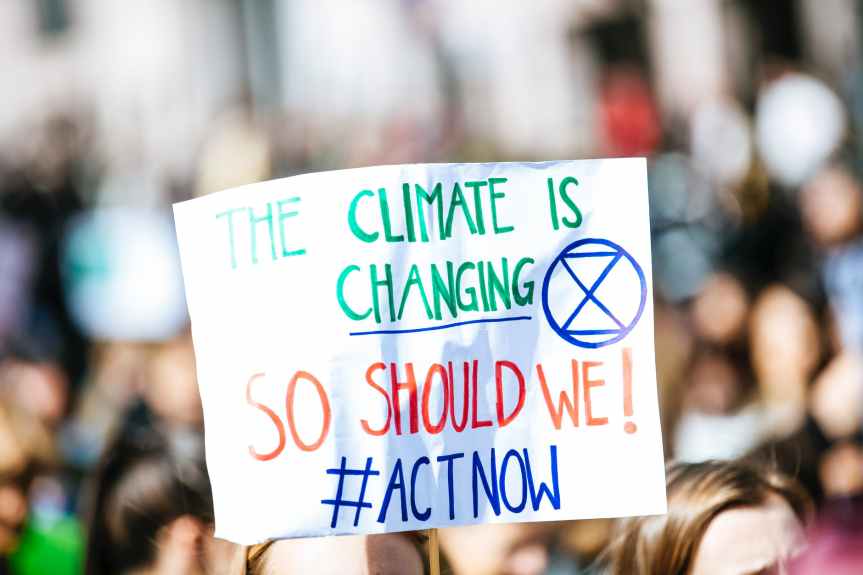
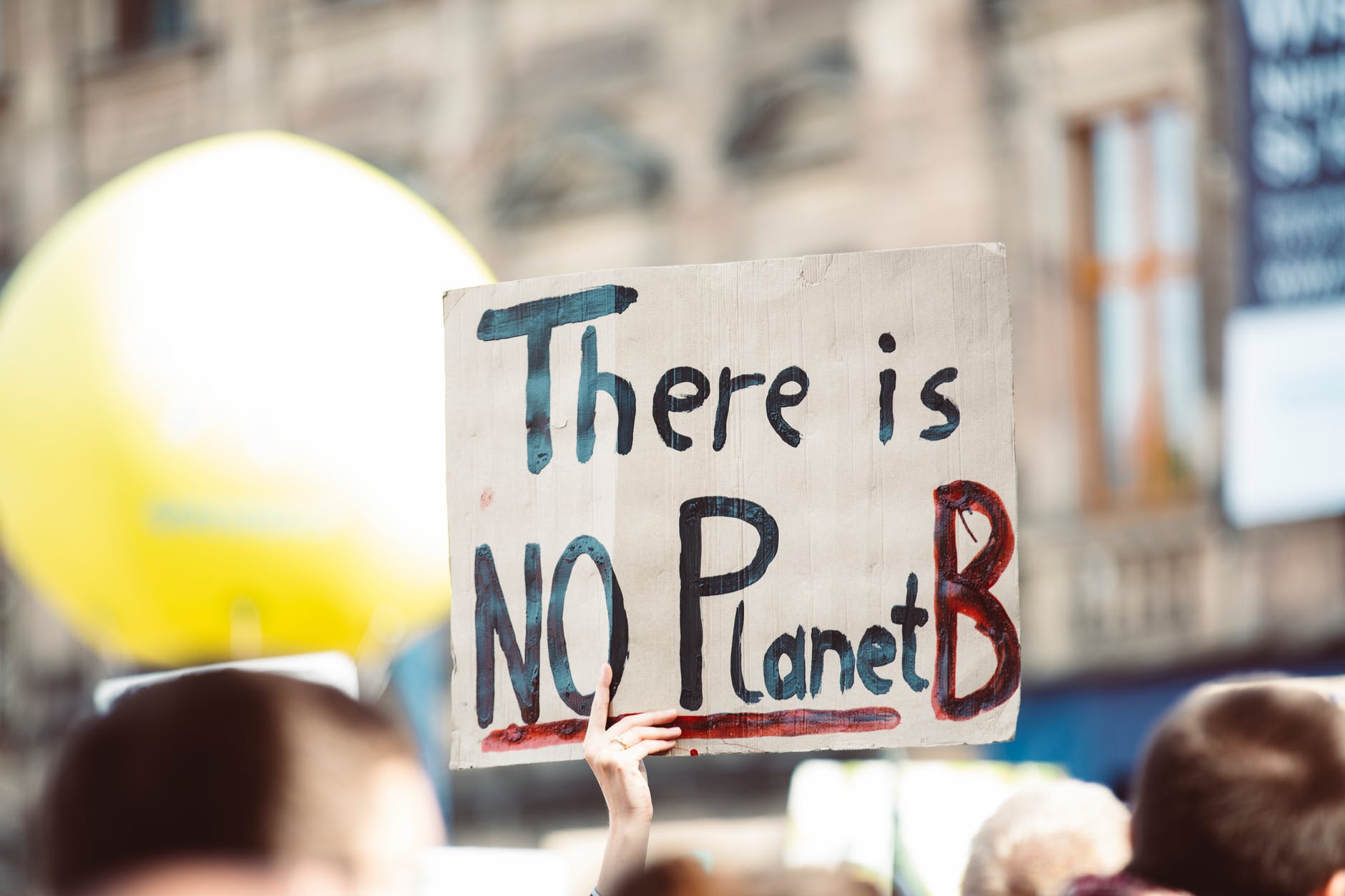
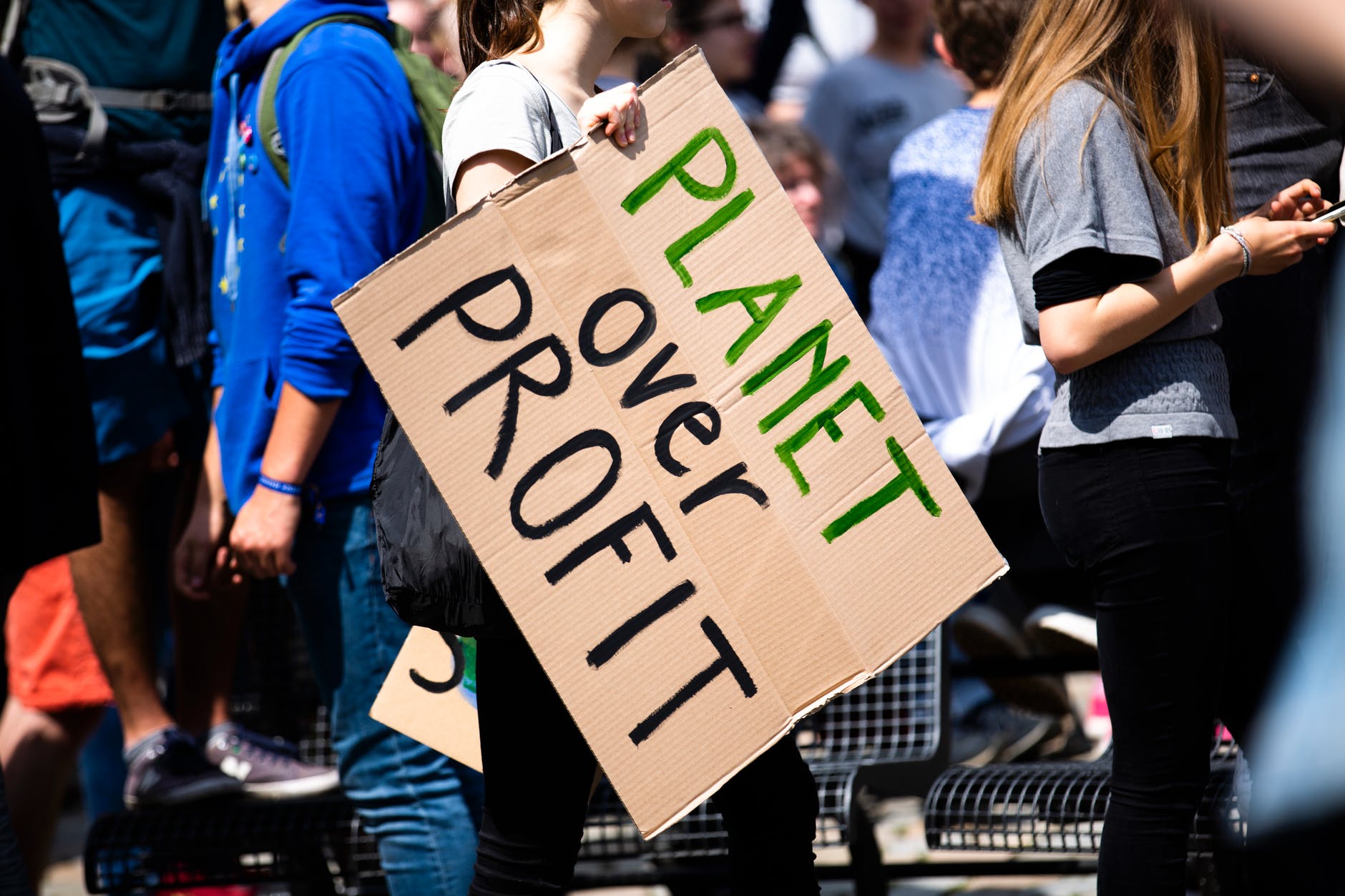
Climate Change

The phenomenon of rising temperatures of the Earth resulting in change of climate, seasons, rainfall patterns etc. is called Global warming. Global warming and its effects are together referred to as Climate Change. While these changes have been seen before but the rate of change has increased rapidly from the middle of the 20th century. Findings from different recognized scientific organizations support these claims. According to the Intergovernmental Panel on Climate Change (IPCC), “human influence on climate has been the dominant cause of observed warming since the mid-20th century”. The emission of greenhouse gases as a result of human activities have been one of the largest causes for this. Fossil fuels, Chloro-fluro carbons (CFCs), deforestation, rise in different forms of pollution are all behind this.

Photo by Markus Spiske on Pexels.com

Temperature change is also accompanied by loss of snow cover, melting permafrost, frequent natural disasters like cyclones. Land surfaces heat more quickly which have resulted in heat waves, forest fires, increase in desert area. These temperature changes are the highest in the Arctic region. Changes in environmental conditions have led to extinction of several wildlife species in forests, coral reefs etc. Rising carbon dioxide emissions lead to rising sea levels, ocean temperatures and ocean acidification. These changes bring in frequent droughts, extreme weather conditions affecting the equilibrium and natural balance.

Photo by Markus Spiske on Pexels.com

Almost all countries have come together for climate change under the umbrella of the United Nations Framework Convention on Climate Change (UNFCCC). The convention aims to “prevent dangerous anthropogenic interference with the climate system”. It has instructed policy makers that there is much greater risk to human and natural systems if the warming goes above 1.5 °C compared to pre-industrial levels. Under the Paris Agreement, nations have made climate pledges to reduce greenhouse gas (GHG) emissions, but even after following those, global warming would still reach about 2.8 °C by 2100. To prevent this from happening and limit the warming to 1.5 °C, methane emissions need to decrease to near-zero levels and carbon dioxide emissions should reach net-zero by the year 2050.

Governments should act immediately and policies should be constructed to reduce fossil fuel emissions, increase reforestation, forest prevention, use of low carbon energy technologies, food preservation. All societies should work together towards dealing with future global warming problems in a scientific way. Development of more resistant crops, better disaster management should also be considered.

Several international movements have taken place like Fridays For Future where school students take time off from school to aware people and demand climate change action from governments. They demand action from political leaders of the world for the fossil fuel industry to convert to renewable energy and take immediate measures for climate change. This movement was publicised after Greta Thunberg started a protest outside the Swedish parliament with a poster saying “School strike for climate”. She is an environmental activist who has spoken at several internationally recognised platforms. She started her journey as an activist from the time when she had convinced her parents to change their lifestyle for reducing their carbon footprint. She is known for her straight forward manner of speaking at public platforms and criticizing world leaders for their failure to address climate change. She has participated in the United Nations Climate Change Conference (2018) and UN Climate Action Summit (2019). She has also got several awards and made it into the Forbes list of The World’s 100 Most Powerful Women (2019). Though her popularity at such a young age has made her a target of critics, but she continues to work and struggle towards her goal with indomitable spirit.

COVID spared South-East?

The Buddhist majority countries in South-East Asia, namely Cambodia, Laos, Myanmar, Thailand, and Vietnam, saw rather small-scale outbreaks during this coronavirus pandemic. Despite these countries sharing borders with the origin of the deadly virus, China and India, country with most number of daily cases how have these neighboring countries managed to contain the spread of the coronavirus?
The wonder case in this region has to be Vietnam. A country with a population of approximately 97 million people, the authorities claim no deaths from Covid-19. Thailand, with 70 million people, has seen just 58 deaths and no cases of local transmission have been reported in over 40 days. Myanmar claims just six fatalities from 317 cases. Cambodia reported 141 cases and the tiny country Laos only saw 19 cases. Both these countries claimed no deaths and no local transmission since April. Geographically speaking, they have it far better than their other neighbors such as Indonesia with some 68,100 cases and 3,400 deaths, and the Philippines with 50,400 cases and 1,300 deaths, India with some 2.91million cases and 54,849 deaths. It is almost as if the pandemic has spared these Buddhist majority nations. But does it have anything to do with religion though? It would not seem so, because, Vietnam’s communist dictatorship is an atheist. Meanwhile, China, the original epicenter of the virus, also has a majority Buddhist population although it is also a communist state. Vietnam’s handling of the crisis so far is commendable. Centuries of mistrust in its great northern neighbor, China, prepared Vietnam to be extra cautious of all the information China gave about the virus at the beginning of this year. Vietnam even initiated cyber-attacks to get more knowledge about the path of the outbreak. The country closed its borders and used repressive forces to keep the population locked. They monitored and separated any affected patients. That is kind of similar to what China’s communist regime was doing. In terms of having a powerful government that can make the people follow protocols, as well as having a strong medical sector, Thailand also makes the list. The country led by generals in the name of democracy has an incredible healthcare system which makes Thailand a popular medical tourist destination. Besides, the government was swift to create a robust task force for fighting Covid-19. Initially, more contact with the Chinese people must have been a prerequisite for transmission. Yet this didn’t happen in Laos, which is too low to withstand the flattery of China, Myanmar, which is awash with Chinese traders and traffickers, or Cambodia, whose strongman, Hun Sen, is China’s greatest supporter in the region. Such countries are being reshaped by Chinese development thanks to BRI, and all came under pressure not to close borders with China as the pandemic spread. In February, at the height of the Chinese outbreak, Hun Sen traveled to Beijing. Thailand is also quite closely knit to China, it seems, as the country welcomed Chinese tourists even in March. And Myanmar’s China border seriously lacks guard. Then, why did all these visitors from China not cause a bigger outbreak in South-East Asia? Many suspects that they have done so, but these have not been revealed. Tests in Cambodia, Laos, and Myanmar are extremely restricted. But, Frank Smithuis of Medical Action Myanmar, a charity with many clinics around the country, says that his organization would have found out if there had been a large-scale transmission since a COVID-19 epidemic cannot be covered especially in Myanmar, the ” number one gossip country” in the world. Also, researchers in Cambodia, Thailand, and Vietnam do not see signs of large transmission, like people rushing to the hospitals with symptoms. Even the poorest countries have taken steps which may have helped to control coronavirus spread. Researchers in Bangkok said that migrant workers coming back from Thailand to their Myanmar villages had to quarantine in a shack outside their village for 14 days. According to health experts, many factors may have come in helpful, like large numbers of people living in the countryside rather than cities; the region’s relative youth; and a pre-existing tendency to wear masks in public which could have been trivial in pre-COVID times. Many of these countries are third world countries, non-industrialized thus people live in rooms with open windows rather than relying on air conditioning. Also, there could have been a religious element to it too. Since the Buddhist way of greeting is called the wai, where they press their palms together, unlike the handshake or hugs or cheek kisses in other parts of the world, the wai is a way of physical distancing. The question now is whether the Buddhist achievements in South-East Asia will survive second or third waves. Researchers say, perhaps low transmission from China wasn’t quite a miraculous blessing. After all, the giant neighbor soon got on top of its outbreak. Now, China is not the only problem anymore, the whole world is. The outbreak has changed its course and is still changing. Infections from across the world are being introduced across Asia, seeding local transmission, most recently in Hong Kong.

Image by rawpixel.com

Digital Detox

It all started a few months back, spending time on my phone was making me feel sick to my stomach. The strive to remain connected was making me feel annoyed, distracted and detached than ever.

Ever since data charges got cheaper and cheaper, using social media platforms one after the other became a part of our day. A routine to be exact.

It started off with taking over our lives when we felt bored at first, time does fly when you’re having fun. The transition to a time when we grew bored of it often. We’re certainly overdoing it.

However it never felt like an addiction to me, but on contemplation it became rather obvious that the struggle was inflicted by the content I consumed. The connectivity was paying a one hefty fee.

As faith would have it, one day it finally hit me. A solution to my problem lies in plain sight. Simple but genius. ‘Why do I have to do it, if it’s not healthy for me?’

A grave moment of epiphany.

The pandemic has fuelled people to spend long hours on their phones. The amount of content consumption should be a reason for concern.

We fancy all that our brothers from the West preach. We try to dress like them, eat like them and when they went onto to discovering social media platforms, we accepted it wholeheartedly.

Now as more and more such brothers preach the need for digital detoxes, this can’t be more true. They more or less do have an elder sibling effect on us.

The solution was ever apparent, for the taking to the ones that seek. We’re all stressed, tensed and severely pumped up than ever before. We all do find it hard to manage time too, and our attention span is just a little more than that of a goldfish.

Above all, the lack of sleep has also been found to have it’s toll on a few. The trends seemed to have circulated a few years back, around the time when the data charges were dragged to the ground.

The very essence of us passing time, being the very reason behind the matter of concern. They say, “the best days are the ones that doesn’t make you check your phone,” so why not do it? Make it a reality.

Social media has helped us out immensely, letting us to be connected to our loved ones around the world. Helping relationships to sustain itself over geographical and time barriers.

However we fell short to draw the boundaries. Boundaries are necessary. Knowing where to draw the line can absolutely do wonders.

The idea of a digital detox seemed a bit paradoxical to me at first. Cutting out the use of any device that is electric, seems far too barbaric, now. Our lives are so entangled that getting rid of it is not an option. However, Striking a balance seems apter by leaps and bounds.

I believe radical changes can cause more bane than boon. Whereas baby steps can take you places. Rather than completely throwing it out the window, imposing restrictions can be the first step.

Reducing the screen time to a smaller periods and then slowly stepping up a notch every now and then.

If it gets better and better, do more of it. After all life’s more about doing things that sets One’s soul on fire right.

Why should one bicker from doing more of what makes you feel better.

I believe in preaching what I believe in, A couple of months down the line, following the following has made me feel so much better lately. I’m connected but disconnected. Life got so much better.

Live and let live, right?

Street Food Around the World

One of the best ways to know about the history and culture of a place is to try out its cuisine. Not only does it provide one with a delicious treat, it also speaks a lot about the place and its people. Local cuisines range from elaborate meals to roadside snacks. But I feel, to get the real taste of a place you need to try out its street food. While trying out various dishes from the streets you get to explore a place in the best way possible. Here are some amazing food items from all around the world!

Aloo Chat – South Asia

It is a dish which is made with boiled potatoes, cut into cubes and mixed with different spices and chutney. It is popular in Pakistan, parts of Northern and Eastern India and Bangladesh. Aloo chat is a snack or side dish and it varies from region to region in terms of spices and taste.

Crepe – France

Crepe is a popular pancake like pastry which is popular in France and Belgium. They are made with all kinds of fillings and flavours. There are two types of Crepe – ones that are sweet that are made with wheat flour and ones that are savory which are made with buckwheat flour. Sweet crepes are eaten with fruits, custards, whipped cream or chocolate and savory crepes are served with eggs, mushrooms, cheese and ratatouille.

Chuan – China

Chuans are a type of kabab served with spices like black pepper, cumin seeds, sesame and red pepper flakes. These meat kababs are roasted over charcoal or deep fried in oil. It originates from the Uighur and other Muslim communities of China.

Gelato – Italy

Often confused with ice cream, Gelato is an Italian dessert made with milk, sugar, cream, nuts, fruits and toppings. It is much low in fat than traditional American ice cream and has more flavors which makes it a rich and delicious dessert. There are a lot of flavors including vanilla, chocolate, hazelnut, pistachio.

Hot Dog – United States of America

It is a classic American street food and you can find it in food trucks and restaurants across cities like New York and Chicago. A grilled sausage is served in between a steamed hot dog bun along with mustard, ketchup, onion, cheese and chilli. There are a lot of varieties which differ in shapes, taste and sizes.

Mango Sticky Rice – Thailand

Mango Sticky Rice, also called Khaoniao Mamuang is a popular Thai dessert. It is also eaten in Cambodia, Vietnam and other Southeast Asian countries. A specific form of sticky rice is mixed with coconut milk and is served with Mango slices. The coconut milk is added so that the rice absorbs all the flavour and tastes sweet. It is popular during the peak mango season in Thailand during the summer months of April and May.

Naan – Central Asia and Middle East

Naan is a traditional bread which originated in Central Asia and the Indian subcontinent. It is made with flour, water and ghee. Additional ingredients like milk and yoghurt are also added in different varieties. Made in a tandoor oven, it is a flat bread which is served with other items like curries and fillings. It is served hot brushed with butter and ghee.

The curious case of Prashant Bhushan

Prashant Bhushan, a public interest lawyer in The Supreme court of India. He is one of the founding members of ‘Swaraj Abhiyan’ and ‘Sambhavna’ founded in 2015 after dissenting from the Aam Aadmi Party, where he played a key role in implementing the ‘Jan Lokpal’ bill alongside Anna Hazare, Arvind Kejriwal, and many others. He has been tirelessly working in the field of human rights, environmental protection, and accountability of the public servants. He is associated with various organizations including the Centre for Public Interest Litigation (CPIL), People’s Union for Civil Liberties (PUCL), and Transparency International (India). Due to his family background, he is able to take cases pro-bono and for paid cases, he charges only 5% of what other lawyers charge. He also claims that he does not take cases until he feels his client is “morally right”. Being “morally right” is objective but looking into his past activities one can feel he is being moral. He represented the petition which became the first one in which an IAS(Indian Administrative Service) officer was convicted of corruption charges. He criticized governments for waging wars against Naxals and is of the idea is that the hidden agenda behind “Operation Green Hunt” was to clear the tribal lands for mining and industrialization. In order to de-escalate the situation in the Red Corridor government should suspend arms in the /Naxals region and instead focus on providing foods and infra to the tribals. He assisted Narmada Bachao Andolan activists opposing the Sardar Sarovar Dam. Bhushan advocated revoking the Armed Forces Special Powers Act in Jammu and Kashmir and is of the opinion that the government should try to persuade people of the valley to align with India but should be allowed to separate if one wishes.

Recently he has been found guilty by the Supreme Court of India on contempt for derogatory tweets against the judiciary. Why? How one can find a tweet so offensive that in the midst of a pandemic the Supreme court of India arranges a bench to hear for a case so trivial when so many questions persist of state’s response to the pandemic, when crucial cases have continued to drag on for years like-

  • Challenges to Article 370
  • Electoral bonds
  • Citizenship Amendment Act
  • Habeaus corpus petitions
  • Fundamental rights of people of Kashmir

Acts like these reflect the growing intolerance in the top authorities. Even 1500 lawyers from across the country have spoken against the decision and urged the top court to “take corrective steps to prevent miscarriage of justice”. Even the Supreme court itself has said that “The ignition of contempt should be substantial and mala fide interference wit fearless judicial actions, not fair comment or trivial reflections on judicial process and personnel”. Fair comment has not been defined but could be implied by various judgments of the court that fair criticism is criticism by a person who is competent enough to speak on the topic, has a good record, and doesn’t has the intention of demean the office of CJI or judiciary. Top authorities should remember that criticism is the basis of democracy, anyone can stand against them, not to hinder the judicial process but to have their opinion. If people are to be punished for their tweets and comments over social media, then it is a warning alarm for a democratic country. People should realize the severity of the situation and try to bolster the democratic institutions and protect them from those who are trying to undermine its sanctity. Its high time to realize how our institutions are getting biased, for making derogatory and hateful remarks regarding a particular community the responsible have not been tried, but a person with so clear record is been found guilty within 12 days of making a tweet.

Explained: Why the Kerala govt has taken control of an 800-year-old Church

Early on Monday morning, the Kerala government took control of Marthoman Jacobite Syrian Cathedral Church at Mulanthuruthy in Ernakulam district, which has been in the focus of a dispute between Jacobite and Orthodox factions of the Malankara Church, a prominent non-Catholic Christian community.

Take over triggered by SC verdict

The takeover has brought to the forefront a decade-long dispute between Jacobite and Orthodox factions of Malankara Church. The Church at Mulanthuruthy, built in AD 1200, has been managed by Jacobite faction, but as per a Supreme Court verdict of July3, 2017, its ownership should go to the rival Orthodox Church. 

The Supreme Court had upheld the validity of the 1934 constitution of the Malankara Orthodox Syrian Church to govern the parishes under the Church. Although the court verdict came on dispute over the ownership of two churches, it impacted over 1000-odd churches. The court verdict had given a clear upper hand for the Orthodox faction, which has been governed by the constitution of 1934.

Since the SC verdict, several churches under dispute have already been handed over to the Orthodox group despite stiff resistance from the bishops and laymen from the Jacobite Church. As the government delayed implementing the SC order due to political compulsions, the Orthodox Church moved various courts against the non-compliance of the order of the apex court.

Mulanthuruthy church

Established in AD 1200, the Marthoman Jacobite Syrian Cathedral Church at Mulanthuruthy is one of the ancient Churches in Kerala. The church is a fine example of Gothic architecture. The carvings, sculptures, symbolic icons and wall paintings, are a blend of Indian, West-Asian and European architecture. Most of the parishioners belong to the Jacobite faction.

Why a takeover now

In the case of the church at Mulanthuruthy, the Orthodox faction had moved a contempt of court petition, telling the Kerala High Court that their laity have been denied access to the church. The government cited the Covid-19 scenario and the monsoon havoc in the district as reasons not to take over the church as an action would demand mobilisation of force, now burdened by lockdown duties. After the single bench favoured the government stand, the Orthodox group moved a larger bench.

Rejecting the government contention, the division bench on August 12 issued an ultimatum to the Ernakulam District Collector that the church should be taken over within five days and submit a compliance report to the court. Hence, the takeover of the church in the early morning of Monday, when only a few hours have been left for executing the high court directive.

The district officials have to deploy police to remove the protesting bishops, priests and faithful of the Jacobite Church, who have been camping at the church premises since Sunday to resist the takeover. The church was locked from inside by the Jacobites, but police broke open the gates and evicted the protesting people.

Apple took just 2 years to add a trillion dollar to its market cap, but the next one won’t come easy

Apple Inc. has done it again. On Wednesday, just two years after becoming the first U.S. company to boast a trillion-dollar market valuation, it became the first to top $2 trillion. Getting to the next trillion may not be such a breeze. With its shares up roughly 60% this year, Apple is among the Big Tech winners that have benefited from a “safety premium.” Investors have piled in to the iPhone maker’s shares as well as those of other technology darlings – including Amazon.com Inc., Facebook Inc. and Google parent Alphabet Inc. –  betting their business models, robust balance sheets and large cash balances would make them more resilient amid the economic fallout from the global Covid-19 pandemic.

Indeed, Apple did post impressive June quarter financial results last month on the back of strong sales, a perfectly timed lower-cost iPhone launch and a boost from government stimulus. But it faces a more uncertain road ahead. First, Apple’s valuation now embeds elevated future expectations. To illustrate, Wall Street’s current consensus for Apple’s fiscal 2020 sales ending this September is just 3% higher than its revenue two years ago. And yet, the stock price has more than doubled in that time frame, resulting in a heady valuation of about 33 times the next four quarters’ earnings.

Apple’s lofty valuation leaves little room for disappointment, but the success of its upcoming slate of products isn’t a sure thing. In contrast to the cheaper iPhone SE model that boosted its June quarter, the company is going to have to convince consumers to buy higher-priced $1,000 iPhones when it launches new 5G-enabled models this fall. And these more expensive phones may be a tough proposition with tens of millions of Americans facing job insecurity. Further, I’m still skeptical there will be new apps anytime soon that will need the faster fifth-generation wireless speeds, making phone upgrades less compelling. Finally, according to a Bloomberg News report last week, it doesn’t look like there will be much innovation coming from Apple on the services front either – just a new virtual fitness-class subscription and some modest subscription bundles.

On top of all this, Apple is facing increased regulatory scrutiny over its dominant position in the smartphone market. In June, the European Union announced it had opened two formal antitrust investigations into Apple, with one of the probes specifically looking into the requirement guidelines of its in-app purchase system. Last month, CEO Tim Cook also had to defend the company’s App Store policies and high fee structure before a landmark House antitrust hearing as well. Obviously, if either of these global regulators clamp down on Apple’s business practices, it could negatively impact its profitability. 

There is no doubt Apple’s stunning ascent to $2 trillion is impressive. The climb to $3 trillion may be even more so, because it will be that much harder.

Economic turmoil : corona courtesy

The corona effect on the economy in a nutshell.

As the country went into lockdown mode by the end of march, there were hopes that the country would beat the virus in a matter of few weeks. Almost 6 months down the line, we’re yet awaiting the silver lining; with the ever limbing economy, crippled.

Indefinitely blurring, the promise of a better tomorrow. Like a picture by an amateur photographer.

It is difficult times we’re living through, our tales would be recited someday, on how the world lived through a pandemic in the first quarter of the twenty first century.

As always, US leading from the front, with the highest toll of covid casualties. A testament that no superpower is indeed that ‘super’ a power. Uncle Sam bowing to a virus with Communist roots.

India on the third spot on the chart, showing little hope on cutting down the numbers whilst reviving from a stringent lockdown.

Following the trend of lockdowns to curb the novel coronavirus by the end of march, slowed down the pandemic by a few months rather than preventing.

Prevention would have been ideal.

As the end of the day, millions hope that the the worst has passed, with reviving the economy being a priority and curbing the pandemic being the top priority.

The lack of health infrastructure ever apparent. ‘Events being the greatest teachers of fools,’ hoping the future game-plan would be proficient in this aspect.

The sudden surge of covid clusters in certain localities, pushes the authorities to impose further lockdowns, affecting such local economies evidently. Throwing the business owners into a frenzy.

I believe it goes without saying that the worse hit by the lockdown was the daily wage earners and the poorer households. About 50,00,000 people have lost their jobs till date.

The loss of jobs would constrain the purchasing power and consumption for good. Further derailing the economy.

Basic economics I learned in grade 11th taught me that, ‘Production’, ‘Consumption’ and ‘Investment’ constitutes the major economic activities in an economy.

With the former two limited, economy revival any time soon seems like a far fetched dream. Investment fell to the lowest in the last two decades during the past year. With the new highly criticised policy reforms promised by the Union with regards to Investments and education; makes one wonder whether covid is really at the heart of all our problems. Strange.

Don’t get me wrong, ‘Recovery does require reforms.’ Provided it addresses all the socioeconomic factors. Equality and freedom requested by popular demand.

The relief package of ₹20,00,000 crores promised by the Central Government fed the hopeless hope. But closer introspection made clear that such a generous financial aid can do nothing to crank up the economy. The relief sought after, delayed for the time being.

The current trends have shown us that the union does redress grievances; Mostly of industrialists and the people of a certain religion.

As the country is heading into the worst recession post independence, with the ones in power tolerating zero accountability and on the verge of striking down ‘the freedom of expression’. A ‘happily ever after’ seems like a far fetched dream than the reality

The Joys of Volunteering

Volunteering is a voluntary act of an individual of doing some work for the society as community service. It may include different forms of work. Some volunteers are specially trained in a particular field while some offer to help and join hands for a good cause freely. Volunteering has different sectors like medical, disaster management, education and upliftment of community. There are several NGOs and organisations which offer volunteering opportunities.

Photo by Matthias Zomer on Pexels.com

It can help you to make new friends, advance your career, and feel better. Taking some time out of our busy schedules and finding time for volunteering can be difficult for some of us. But you can start small for the sake of trying it out. Volunteering lets you help and reach out to people from different backgrounds and create social change in your own little way. It provides vital help to individuals and gives you a chance to make lives better. Surely it makes people’s lives better but it gives you greater benefits. Give a little time to volunteering and you will get a lot in return!

It helps you feel happier and healthier. Once you start volunteering, you will meet a lot of new people from different communities. Working with underprivileged communities makes us more aware of our surroundings and feel grateful about our own lives. Also, when you start doing something new it gives you a fresh start and brightens your mood. Most of us love doing new things. Volunteering will also help you spend some quality time outside of work. It will bring both fun and fulfillment to your life. It will help you combat better with issues of mental health like depression and anxiety. It will also improve your mood and give you immense joy. Seeing the smile on the face of a child will surely brighten your day.

You will meet a lot of new people. Your fellow volunteers will either be from similar fields as yours, which will definitely be a positive side or they will be from completely different walks of life giving you a chance to know about a lot of new things. If you are a person who struggles with making new friends, it is a great opportunity for you to start new friendships. Once you start working as a team with others, you will share your ideas and share responsibilities for carrying out a task. While working and planning together it is most likely that you will become great friends. This will also make you a more social person and increase your communication skills. Volunteering helps you to network with a lot of people. Especially if your career path values societal issues, it will be really helpful for you to meet important people and make connections.

Lastly it will help you enhance your career prospects. Almost all companies or educational institutions value a volunteering experience. They will be glad to know that you have been a part of something so meaningful. Volunteering increases your chances of getting selected and helps you improve your resume. It will also give you experience of working with a team and make you a more empathetic and responsible person.

Rigged Facebook

Facebook, the most prominent and prevalent social media platform in India, with 346 million active users in India alone. But, Facebook who has previously been accused of meddling with the 2016 US elections, now has been accused of actively working with political parties of Brazil, the U.K, and India, allegedly using troll armies to spread misinformation and extremists ideologies. Under Katie Harbath, a former Republican digital strategist, Facebook helped politicians across the world harness their digital tools to establish an online presence. Narendra Modi, the world’s most-followed leader on Facebook and Instagram, was one of the most famous politicians all thanks to social media. The Bloomberg report that revealed these details also alleged that after Modi’s social media reach grew, his followers began using Facebook and WhatsApp to harass political rivals. WhatsApp, which has approximately 400 million users in India, has been an influential tool in BJP’s election campaign, as admitted by union minister Amit Shah in his 2018 speech. This all came to limelight after on 14th August an investigation made by WSJ revealed that a top public policy executive at Facebook was allegedly ignoring controversial, often communal, content posted on the platform by politicians from India’s ruling Bharatiya Janata Party (BJP).  WSJ spoke to current and former employees at Facebook and found that the social media platform’s Public Policy Director for India and Central and South Asia, Ankhi Das, was against “applying hate-speech rules” to at least four politicians from the BJP, despite them being “flagged internally for promoting or participating in violence”. These include BJP leaders T. Raja Singh, who made communal statements on Rohingya Muslims and threatened to raze mosques, and legislator Anantkumar Hegde, who accused Muslims of intentionally spreading the novel corona virus as part of a conspiracy so called “Corona Jihad”. Now, this has led to a political beef in the country. According to what anonymous Facebook employees told WSJ, the social media giant showed a “broader pattern of favouritism” towards the BJP, and felt that punishing violations by their politicians “would damage the company’s business prospects in the country”. Andy Stone, a Facebook spokesperson, admitted to WSJ that Das, who is also the public policy director for South and Central Asia, was worried about the political fallout of restricting BJP leader Singh. Facebook employees had flagged Singh’s statements on social media under the “Dangerous Individuals and Organisations” policy, which is meant to ban any content that praises or supports “organized hate”, “mass murder”, “hate crimes”, or “terrorist attacks”.  But the WSJ allegations add weight to the findings of past reports by international and local media. Congress Member of Parliament (MP) Shashi Tharoor, who also heads the Parliamentary Standing Committee on Information Technology, promised that the committee would look into the allegations made by the report. When the committee called for a probe into the matter, union minister of Information Technology Ravi Shankar Prasad hit out at Congress through a tweet, calling Gandhi a “loser”. He also brought up an old accusation from 2018, claiming that Congress had colluded with Cambridge Analytica and Facebook to influence the electorate during the 2014 elections. Also, Privilege motion was moved against Rahul Gandhi and Shashi Tharoor alleging that Rahul Gandhi had “surpassed all limits of decency” while Shashi Tharoor is responsible for spreading “Fake News and hatred”. This is the usual blame game that BJP uses to play while facing allegations. In spite of answering the questions directly, BJP uses malicious ways to get around the question and indulge the proponent in trivial tasks. Whereas  Cambridge Analytica’s website declared that the company provided its services during the Bihar election in 2010 to a political party in India. Ovleno Business Intelligence (OBI), Cambridge Analytica’s Indian affiliate, named the BJP, Congress and the Janata Dal (United) of Nitish Kumar as clients. Claims are many but we must be responsible for what we see and how we react to the contents of social media. One should act responsibly and instead of spewing hate in the comment section, one should introspect and try to make judicious decisions. There is no tool that can counter fake news only us, we are the ones who spread fake news and can counter it.

5 Easy Lifestyle Changes That Can Improve Your Health at Any Age

5 Easy Lifestyle Changes That Can Improve Your Health at Any Age

As you get older, it can feel more difficult to adopt new habits or break longstanding old ones—especially when it comes to your health. You tell yourself that you’re too old to take up jogging or that you missed the boat on yoga. There’s often a tendency to stick to what you know, doing the things you’re used to whether they are good for your health or not. But while age can play a factor in your ability to engage in some activities, making healthy lifestyle choices isn’t one of them. In fact, there may not be a better time than right now to start changing your ways. It could even mean adding years to your life.

For example, the researchers at the Johns Hopkins Multi-Ethnic Study of Atherosclerosis observed the behaviors of more than 6,000 men and women between the ages of 44 and 84 over a period of seven years. In less than a decade, the team found overwhelming evidence that making healthy choices later in life had enormous benefits. Doing things like quitting smoking, following a Mediterranean diet, and getting regular exercise actually decreased an individual’s risk of death during the course of the study by 80 percent, the researchers said. With that motivation in mind, it’s time to cut out the excuses and get to work on these five healthy lifestyle choices you can make at any age. And for more things you can do to improve your health, check out 50 Important Habits Linked to a Longer Life.

1. Get some sleep.

Getting a healthy amount of sleep is essential at every age. That’s because, according to a 2020 research article from the National Sleep Foundation (NSF), sleeping restores and “fortifies virtually every system in the body.” And failure to get consistent and sufficient sleep has been proven to weaken the body’s immune system—and can even make some vaccines less effective, the NSF says. In other words, not exactly a risk you want to take during a pandemic. So, make sure you are getting the recommend seven to nine hours of sleep a night and talk to your doctor if you are having trouble. And for how your ability to rest changes as you age, check out 20 Ways Your Sleep Changes After 40.

2. Be more active.

While physical activity may feel like more of an uphill climb than it used to be in your younger years, it’s highly important that you don’t let your age prevent you from keeping active.

3. Keep your mind sharp.

It’s not only your body you have to keep in good shape, but your brain as well. And just like your body, your mind needs regular workouts. According to Harvard Medical School: “Challenging your brain with mental exercise is believed to activate processes that help maintain individual brain cells and stimulate communication among them.”

4. Quit smoking.

When it comes to the dangers of smoking—and the life-saving benefits of quitting—the stats speak for themselves. As soon as 24 hours after you stop smoking, Johns Hopkins doctors say you start to decrease your risk of having a heart attack. What’s more, quitting decreased middle-aged smokers’ risk of dying early by almost 50 percent. And for more helpful heart habits, check out 20 Ways to Reduce Your Risk of Heart Disease This Summer.

5. Eat better.

According to Hillis, one of the best things you can do to help prevent dementia and lower several other health risks is to eat a Mediterranean diet. What does that mean exactly? Load up on fruits, vegetables, whole grains, olive oil, and fish, while keeping red meat, sugar, and processed foods to an absolute minimum. And for more helpful information, sign up for our daily newsletter.

Joe Biden officially nominated US presidential nominee by Democrats

Democratic Party on Tuesday officially nominated Joe Biden as candidate for US Presidential Elections 2020. Confirming the news, Biden tweeted, “It is the honor of my life to accept the Democratic Party’s nomination for President of the United States of America.”

Joe Biden wearing a suit and tie

Former Vice President Biden appeared on camera after he officially succeeded in garnering enough delegates to be declared the Democratic presidential nominee. “Well, thank you very, very much, from the bottom of my heart. Thank you all. It means the world to me and my family, and I’ll see you on Thursday. Thank you, thank you, thank you,” Biden said in his address to his supporters.

Biden ended the roll call with a total of 3,558 delegates, compared to 1,151 which went in Bernie Sanders’ favour. Notably, Biden and Sanders were the only two candidates nominated on the ballot. During the roll call, delegations from 57 states and territories exercised their franchise to nominate candidates based on the results of the presidential primaries. 

According to the News, this year, the roll call includes delegates, parents, teachers, small business owners, essential workers, activists and elected leaders inside businesses, living rooms and in front of iconic landmarks.

Before the roll call, former Presidents Jimmy Carter and Bill Clinton offered their support for Biden.

“When I ran for president in 1976, Joe Biden was my first and most effective supporter in the Senate. For decades, he has been my loyal and dedicated friend,” Carter said. “Joe has the experience, character, and decency to bring us together and restore America’s greatness. We deserve a person with integrity and judgment, someone who is honest and fair, someone who is committed to what is best for the American people.”

PETS AND US

Our unconditional support systems.

There’s something about those animals that makes us not resist the urge to stop and play with them a little. Maybe it’s those eyes, dreamy eyes, ‘they say the eyes don’t lie.’ The innocence. Serene smiles. The enthusiasm. Unparalleled.

We get drawn to them like moth to fire. Lures us in and makes us pour our hearts out for them. Makes us slip into a beautiful vibe, pushing all worries and troubles aside. Reminding us there are no things in this world that can elude us, of our cheerfulness, but us.

It’s hard not to budge and ogle at a stranger’s pet. As cliche it may have been portrayed in motion pictures, it’s true.

To vibe with your own tribe. To strike up a conversation with somebody who you wouldn’t have, if not for his little friend.

Coming across a person who’s not a pet person seems paradoxical. With the reason of such a peeve mostly from a traumatic experience in the past. Something that can be worked on effectively to eradicate.

They say Exposure is key, perennial for growth. To elevate the character of a person. Unknowingly or knowingly paving the way to learn a thing or two. Be it whatever the species, a bird, fish or Man’s best friend our beloved little hairy friends.

From dealing with responsibilities like catering to their needs- from feeding them to taking care of them. To learning a thing or two about giving and taking respect, on how to respect the boundaries of other beings. What little time spend with them is never wasted.

For we can learn or a thing or two from them. About compassion and the love for the family. After all home is where the heart is right? Life lessons at our disposal.

To live our lives carefree and free from the shackles of worries and self doubt. To live and let live. Being unconditional to the love you give out to the ones around us. To be full of life and a little mischievous, because you only live once.

Pets are synonymous for unconditional love. Even if you’re having the baddest of days, spending a little time with them elevates the mood to a higher level. It’s funny how they can totally read the situation and act aptly, when most of our two legged buddies fail to do so.

No matter whatever you have or who you are, their love for us never flutters.

A loyal comrade. What more do you need when you can live with your best friend?

People complain how deceitful and tragic the world is. I believe in doing and not complaining. “Being the change you want to see in the world,” the best way to live.

By adopting a pet, I believe it can have umpteen effect on making the people more compassionate and generous, like they say, little acts of kindness makes the world a place.

Adopting a pet could just be a part of one’s life, but for the pet it’ll be his whole world.

The Enlightenment Age

The Age of Enlightenment, also called the Age of Reason was an intellectual revolution which dominated Europe during the 17th and 18th century. Enlightenment was the emergence and creation of ideas which challenged the existing notions of the world. It questioned the existing set of ideas and conceptions about religion, society and politics. Before this period, Europe was essentially a land dominated by religion. This intellectual movement was carried out by the Enlightenment philosophers like Baron de Montesquieu, Voltaire, David Hume and Adam Ferguson.

According to some, the beginning of the Enlightenment was after the publication of René Descartes‘ philosophy of ‘Cogito, ergo sum’ (“I think, therefore I Am”) in 1637, while others belief the publication of Isaac Newton‘s ‘Principia Mathematica’ (1687) began the Scientific Revolution and the beginning of the Enlightenment.

The philosophers and intellectuals challenged the clergy men who supported the traditional view of society. These new ideas influenced cultural practices like writing, painting, printing, music, sculpture and architecture. There was also significant progress in technology and medical science.

The key ideas of the Enlightenment were Reason, Empiricism, Science, Universalism, Individualism, Secularism, Freedom and similar others. The thinkers stressed on the primacy of reason to establish rationalist ideas based on fact. The key to expanding human knowledge was shifted upon empirical facts and scientific experiments. This concept of scientific reason was considered universal and could be applied to all situations. Philosophers opposed all traditional religious authority and stressed on the importance of knowledge free from all religious biases. They pointed out the creation of a form of knowledge which was not influenced by any religious ideas or superstitions. A secular idea was born and this spread quickly throughout Europe. This led to the belief that all individuals are same and equal despite their religious and philosophical views.

It was the idea of Individualism which was the starting point of all scientific knowledge. Science was the supreme form of knowledge as scientific facts were based on observation and experiments. This led to an increase in objective ideas and decrease in belief of superstitions. The philosophers wrote in a very direct way and took clear positions. They wrote about important changes and transitions going on in the society. A traditional social order was replaced by a modern State. The formation of a political State took place and the powers shifted from the hands of the Church to the State. Society was no longer dependent on the traditional religious institutions. It was believed that the application of reason and scientific knowledge could remove the cruelty and injustice from social institutions. The works of Voltaire instilled a desire for new ideas and belief in progress among the Europeans.

Thinkers like Saint Simon greatly influenced the societal processes. According to him modern society was threatened by anarchy and disorder. To bring back social order a Science of Society would be necessary. He constructed a ‘Social Physiology’ to bring order and stability in the society. He believed that modern society would flourish if science and industry were used for the service of humans. A major social re-organisation would be necessary to bring about order and proceed towards a successful social change which would bring about societal progress. Although his ideas were neglected at first, as Europe became engulfed with disorder and war, these ideas started influencing people. Eventually Saint Simon became a key figure in the liberal political movements of Europe.

Militarization

Militarization is at its heart a problem-solving ideology, using violence to solve problems in front of you, using military-type weapons, and using the threat of that violence. Over the last decade, the number of CAPFs (Central Armed Police Forces) has almost doubled despite the major ministries, and departments of the central government have witnessed a decline in their personnel.The foremost function of a state is to ensure the safety of its citizens. And it is discharged through two principal instruments- The Army, to protect from external aggression and police, to ensure the safety of citizens’ properties. In federal systems, the former is controlled by the center while, latter by the states. While this has been the case with India that the army performing its tasks substantially better than the police. India is rare in having a third paramilitary instrument controlled at the federal level, not by the armed forces but rather by the Ministry of Home Affairs. While the CAPFs perform a range of functions, from riot control to VIP duties, overseas deployments, and disaster relief, they have two principal functions: guarding the country’s borders, and internal security. The largest CAPF, the Central Reserve Police Force (CRPF), has been deployed principally in the two most vexing internal security challenges facing India — the strife in Jammu and Kashmir, and Left-wing extremism in central and eastern India. About 118 battalions of the CAPFs have been deployed to combat the Maoists using the Indian state’s “elephant” approach on dealing with insurgencies – throw tens of thousands of men (and now women as well) at the problem, and the sheer weight gradually crushes the opponent. More worryingly, this expansion has proceeded much more rapidly than that of the other security-providing instruments of the state, the army, and the police. In 1998, CAPFs were less than 58 percent of the size of the army and by 2015, this had increased to 82 percent and the number is climbing. The size of CAPFs relative to the civil police has increased by nearly 15 percent over the last two decades, which means that basic law and order which is the first line of defense and is already under severe stress is being neglected at the cost of a more militarized approach to policing. Organisationally, there are hard questions regarding the overall effectiveness of these forces, stemming from weaknesses in training, poor equipment, and ineffective leadership. Rapid expansion has meant that recent inductees have not gone through as much rigorous training as needed. But perhaps the biggest lacuna is leadership. The political leadership incessantly misuses them in activities like “VIP duty”. Also the officer: soldier casualty is too low as compared to the army.The results have been all too painful in the severity of casualties of the rank-and-file of the CAPFs. Suicide rates in the CRPF are at least as high as among Indian farmers, but there is little anguish in the media about that. Data indicates that far more perish from malaria and stress-related heart attacks than combat. Feeble leadership also underlies a weak esprit de corps in the units, with bodies not always recovered after ambushes, and weapons of dead soldiers looted by the Maoists, which would not happen to army units.There are fiscal implications, not just of relative priorities of public spending, but even for the CAPFs themselves, as pension and healthcare bills will sharply rise in due course and cut into much-needed spending on better equipment and facilities. This is happening to the army, where one can see the crowding-out effects of rising pensions bills on military modernization. But there might be an even more disturbing implication. The use of lethal force by organs of the state against its citizens requires utmost vigilance. The state needs to be extremely careful that the rapid growth of the CAPFs does not end up creating more problems than what it is trying to solve through this expansion.

Image by rawpixel.com

Binge watching and Mankind

We humans are the masters of our domain. At times, us, the masters go berserk by certain pursuits. We do go overboard with things, from petty tasks to pursuits complex.

I believe the quote, “Nothing to extremes, everything in moderations”, from the remarkable book ‘The monk who sold his Ferrari’, by writer Robin Sharma is something we all should adhere to. In all aspects of life.

We humans are masters of passing time.
It doesn’t matter where we’re, or what we have, we’ll inevitably find ways to destress or to chill.

We’re the lords who have mastered the art of passing time. Everyone’s a Picasso or your own ‘unique being’ for this matter.

But when the phenomenon of ‘fomo’ (fear of missing out) kicks in, beings scramble to ‘fit in’. To find a firm ground to socialise with fellow beings. Gradually paving the way for losing bits and pieces of oneself.

The recent trends of passing timeBinge watching has proven the point well.

It has united the world, that was once divided. Surveys have shown that almost all the generations; especially ‘generation z’ and ‘millennials’, have been ‘swept off their feet’ by a plethora of content to stream and chill.

For the ones that were living under a rock, the ones unaware, binge-watching refers watching far too many episodes of a tv series at one go. It’s funny I guess tv series’ are a thing of the past now. Web series’ being the new black.

Netflix was the catalyst for such a mammoth change in the lives of many. By releasing the entire season of a series to watch all at once. Doing away with the process of having to wait out a new episode every week.

This fast paced life has made such anticipation seem surreal or nerve wrecking to be aptly put. Killing the beauty of waiting.

I guess sometimes you do have to give it time. If not, you lose sight of the whatever’s beautiful in this world in the process.

A true testament that change is part of nature’s way. Embrace the change and go with the flow, or get drowned in the process.

The struggle was real earlier. A few years back, privileged were the ones that had umpteen storage facilities and a high speed internet connection. But the transmission of life into digital has made the struggles fade.

The struggle now is settling on what to watch and finish it before any spoilers. With traditional cable tvs’, cinemas and movies taking the hit in the process. Transforming the entertainment world by a few hundred steps stcsdym a time. The changes are abysmal.

The ‘work from home’ culture just fuelling the way for major streaming platforms to sow millions in this times of crisis. With too much time in hand, people going frenzy to fit in something or the other into their lives to pass time.

Like I mentioned earlier, not adhering to moderations has its own antagonising effects. The binge watching culture has made several beings vulnerable to numerous health conditions.

Having a toll on the body and the mind. Two spectrums of well-being, taking severe hits by the 4G and 5G spectrums, causing many a imbalances in the lives of mankind, as a whole.

Experts have commented that the new culture of bingeing has adverse impacts on health, as the excessive indulgence has thrown the dopamine levels of the body off the charts.

Dopamine being a chemical produced naturally in the body, is a neurotransmitter, which regulates many a actions of our bodies.

The health problems involving both physical and mental. Ranging from severe medical conditions like insomnia, chronic boredom, apathy to depression. The physical effects ranging from cardiovascular diseases, thrombosis and other vision related diseases.


The excessive snacking whilst bingeing also affecting the tummy areas too. Transforming generously the packs into a vast ‘single pack’ in the process.

All this rambling might make me sound like a boomer trying to bully the younger generations. But in all honesty, if you don’t care to stop and analyse what’s happening, then whole of life will slip away before you take notice.

Periodic reality checks should be squeezed into the equation of life. For a better and beautiful tomorrow.

For “Tomorrow has no reality, since every day is experienced as today”, excessive indulgence today might fade out all our realities amidst a global pandemic.

Succulents

Succulents are indoor plants which can grow with very little water. They are ornamental plants and are used to decorate spaces for their interesting shapes and colours. If you are in search of house plants which can thrive with little care succulents are for you. Over the last few years succulents have grown very popular. There are hundreds of unique varieties and one doesn’t need gardening skills to care for them, anyone can grow them. They have special water storing tissues which help them to grow even in very dry conditions which is not favorable for most other plants. So, they are ideal for growing in your living room. They are also very easy to find in nurseries and shops.  

In botany, succulent are plants which are thick and fleshy to retain water in arid climates or soil conditions. The word succulent comes from the Latin word sucus, meaning ‘juice’, or ‘sap’. These plants may store water in various structures, such as leaves and stems. The natural habitats of these water preserving plants are in areas where there is high temperatures and low rainfall, like deserts. Having the ability to thrive on limited water sources, such as mist and dew, succulents are equipped to survive in an ecosystem with scarce water sources. In horticulture, the term succulent regularly excludes cacti. However in botanical terminology, cacti fall under succulents.  

Photo by Ylanite Koppens on Pexels.com

Some easy to grow succulent varieties are –  

Burro’s tail – It is a trailing succulent that looks good in a hanging basket or container so it can drape over. The stems can reach up to 3 feet long and have gray-green leaves which looks like the grains of rice. Although it rarely blooms, pink or red flowers might be visible at the end of the stems in summer.  

Christmas Cactus – It has flat segmented stems like crab claws which gives it the nick name crab claw cactus. It also prefers a bit more moisture so you can water it whenever the top inch of soil in the container is dry. Keeping it in bright light near a window, can make it bloom in winter.  

Hens and Chickens – It is a very common type of succulent and is characterised by flower like structures with round edges. They are actually two different plants which look very simmilar. They have star shaped flowers.  

Photo by Ylanite Koppens on Pexels.com

Aloevera – It has long slender leaves with sharp teeth like edges. It’s well known for its sap which is used to treat skin diseases and heal wounds. Aloevera is a easy to grow houseplant and is tough to kill.  

Snake Plant –  They have thick, stiff and pointed leaves which grow straight up to 3 feet long. Having a patterned marking makes it look like a snake and hence the name. It will multiply and grow leading to filling the whole pot. It might require you to divide it in different pots.  

African Milk Tree – It is capable of growing upto nine feet tall in natural habitat, and it isn’t actually a tree. As a houseplant, this succulent reaches up to three feet tall, producing upright, triangular, branched stems bordered with short sharp thorns. The tips of the green stems have small leaves with a reddish tinge. 

Zebra Haworthia – It has striking stripes and spiky foliage which makes it look like a rare and exotic plant, but it’s often available at plant shops and is very easy-going when it comes to taking care of. It will stay small within 5 inches.  

Social Media surveillance

In the past decade, social media has gone from being extra entertaining to a fully integrated part of our lives. Social media is a good way to keep in touch with friends, families, and acquaintances, especially in the contemporary world. But it is not only being used by us but governments as well to keep in touch with its citizens. Governments are increasingly purchasing cutting edge technology to keep an eye on its citizens’ behavior on social media. This form of mass surveillance has made its way to a range of countries, from authoritarian powers to smaller and poorer countries. Coupled with an alarming rise in the number of countries where social media users have been arrested for their legitimate online activities, the growing employment of social media surveillance threatens to squeeze the space for civic activism on digital platforms. For e.g. in 2017, at least 7 people were arrested for posting ‘objectionable’ posts on social media against newly elected Chief Minister of Uttar Pradesh. As quickly as social media has insinuated into politics, the workplace, and elsewhere it continues to evolve at lightning speed making it a conundrum to guess which way it will morph next. Social media is not a utility, where people care about whether it works or not, rather people look for new hot things especially the younger generation.

Social media surveillance refers to the collection and processing of personal data pulled from digital communication platforms, often through automated technology that allows for real-time aggregation, organization, and analysis of large amounts of metadata and content. Governments have long employed people to monitor speech on social media, including by creating fraudulent accounts to connect with real-life users and gain access to networks. With the colossal amount of personal data people willingly release on social media, government agencies can easily collect and analyze populations of people as they please. Authorities in Iran have a legion of volunteers who monitor online speech. Any citizen can report for duty on the Cyber Police (FATA) website. Similarly, the ruling Communist Party in China has recruited thousands of individuals to sift through the internet and report problematic content and accounts to authorities. In India, various political parties have IT cells, although BJP has allegedly the strongest IT-cell. These groups not only monitor social media platforms but also are responsible for hate comments, cleaning some one’s image, or spread fake news. The market for social media surveillance has grown by large, giving intelligence and law enforcement agencies new tools for combing through massive amounts of information. Justifying their efforts in the name of enhancing security, limiting disinformation, and ensuring public order, governments have effectively co-opted social media platforms. While these platforms typically present themselves as social connectors and community builders, state agencies in repressive countries see them as vast storehouses of speech and personal information that can be observed, collected, and analyzed to detect and suppress dissent. Often the explanations leading to the arrests are stated that “the material was provocative and could lead to communal clash”, but it reflects the incompetency of the state to maintain harmony, and increased intolerance.China is a leader in developing, employing, and exporting social media surveillance tools. Its agencies work closely with leading companies to monitor individuals online. A complex web of regulations gives the Chinese state access to user content and metadata, allowing authorities to more easily identify and reprimand users who share sensitive content. Freedom of Net 2019: The Crisis of Social Media, examined 65 nations worldwide to find out, China topped the list of “World’s worst abuser of internet freedom” for 4 years in a row. In contrast, Iceland was “The World’s best protector of internet freedom”. India scored 55 out of 100 and was declared “partly free”. With the Internet restrictions closing in, it is a warning call to wake up to your rights.

What’s most alarming is how populist leaders and far-right groups have grown adept not only at creating viral disinformation but also at harnessing networks that disseminate it. The majority of the disinformation, wrote the authors, are from domestic sources rather than foreign interference.

Strong protections for democratic freedoms are necessary to ensure that the internet does not become a Trojan horse for tyranny and oppression,as technology advances to greater heights, the protection of our citizens must be greater as well.

Image by rawpixel.com

How to Collaborate with High Profile Scholars

by: Shashikant Nishant Sharma

Photo by Matheus Bertelli on Pexels.com

Collaborating with a high-profile researcher for a grant application is a fantastic opportunity to strengthen your proposal. Here are some recommendations for handling this situation:

  1. Highlight Collaborator’s Expertise:
    • In your grant application, emphasize the specific expertise and achievements of your foreign collaborator that directly align with the goals and objectives of the grant. Highlight any relevant publications, projects, or contributions to the field.
  2. Clearly Define Roles and Contributions:
    • Clearly outline the roles and contributions of both you and your collaborator in the project. Make it explicit how the collaboration will enhance the overall quality and impact of the proposed work.
  3. Condense the CV:
    • While the CV is extensive, you don’t need to include the entire 100 pages. Select the most relevant sections that directly support your grant application. This might include key publications, research projects, and any collaborative work that aligns with your proposed project.
  4. Create an Appendix:
    • Consider creating an appendix for the full CV and provide it as supplementary material. Mention in your application that the full CV is available upon request. This allows the grant reviewers to access additional information if they wish without overwhelming them initially.
  5. Reference Specific Achievements:
    • Reference specific achievements or experiences from the collaborator’s CV in the narrative of your proposal. For example, if they have conducted groundbreaking research in a related area, mention this as evidence of their expertise.
  6. Letter of Support:
    • Obtain a letter of support from your collaborator. This letter can express their enthusiasm for the project, their commitment to collaboration, and how their involvement will contribute to the success of the proposed research.
  7. Contact the Granting Organization:
    • If you have any concerns or questions about the format or presentation of the collaborator’s CV, consider reaching out to the granting organization for guidance. They may have specific instructions or preferences.
  8. Coordinate with Collaborator:
    • Ensure that your collaborator is aware of the grant requirements and is willing to support your application. Coordination is key, and you want to present a united front in terms of the project’s goals and expected outcomes.

Remember, the goal is to present a compelling case for why this collaboration is crucial to the success of your project. Make it easy for the reviewers to see the value that your collaborator brings to the table.

References

Barbara, Sister, and M. C. D. P. Celebrate. “Collaboration.” (1989).

Bronstein, Laura R. “A model for interdisciplinary collaboration.” Social work 48.3 (2003): 297-306.

Gardner, D. “Ten lessons in collaboration.” Online journal of issues in nursing 10.1 (2005).

Thomson, Ann Marie, James L. Perry, and Theodore K. Miller. “Conceptualizing and measuring collaboration.” Journal of public administration research and theory 19.1 (2009): 23-56.

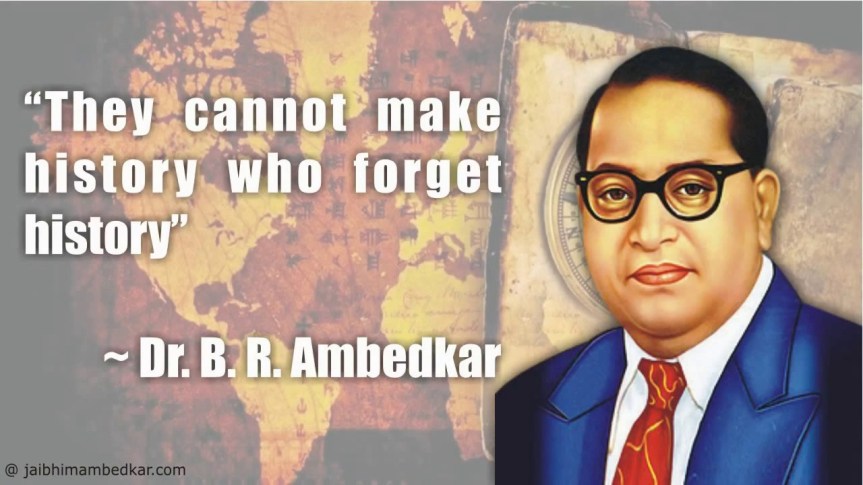
B. R. Ambedkar

Bhimrao Ramji Ambedkar was an Indian economist, politician and social reformer. He was also known as Babasaheb Ambedkar. He campaigned against social discrimination against the lower castes or Dalits of the country. Completing his doctorate from Columbia University and The London School of Economics, he gained reputation as a scholar for his research in economics, law and political science.

In the early phases of his career, he was an economist, professor and lawyer. Towards the later phases, he was actively involved in campaigns for India’s independence. He published journals and advocated for political and social rights for Dalits. He made a significant contribution to the establishment of the state of India. He was the first Minister of Law and Justice of India and the chief architect of the Constitution of India.

He had a Marathi family background and was from the town of Ambadawe in Ratnagiri district of modern-day Maharashtra. Ambedkar was born into a poor Mahar (Dalit caste), who were treated as untouchables and faced a lot of socio-economic discrimination. Although he attended school, Ambedkar and other untouchable children were segregated from the rest of the children and given little attention by teachers. They were not even allowed to sit inside the class. He had to sit on a gunny sack which he took home after school. When they needed to drink water, someone from a higher caste had to pour that water from a height as they were not allowed to touch the water vessel. It was usually the peon who did this for him and on days when the peon was not available, he had to go without water. He had later described this as “No peon, No water” in one of his writings.

During British rule, Ambedkar’s effort for the political representation of the oppressed untouchables of India bore fruit in the 1920s. The colonial state was forced to include two members from among the Dalits in the Round Table Conference in 1930. This eventually led to the framing of the Government of India Act, 1935.

From 1927, Ambedkar launched active movements against untouchability. He began public movements and marches to open up public drinking water resources for all. He led a satyagraha in Mahad to fight for the right of the untouchable community to draw water from the main water tank of the town. He also began a struggle for the right of Dalits to enter Hindu temples. In a conference in1927, Ambedkar publicly condemned the Hindu text Manusmriti (Laws of Manu), for ideologically justifying caste discrimination and “untouchability”. He ceremonially burned copies of the ancient text. On 25th December 1927, he led thousands of followers to burn copies of Manusmrti. Since then 25 December is celebrated as Manusmriti Dahan Din (Manusmriti Burning Day) by Ambedkarites and Dalits.

In 1956, he converted to Buddhism, initiating mass conversions of Dalits which eventually led to the Dalit-Buddhist movement.

A few days after completing his final manuscript ‘The Buddha and His Dhamma’, he died in his sleep on 6 December 1956 at his home in Delhi.

Multiverse

Parallel universe… Science fiction or scientific fact, I don’t know the answer for that, but certainly, the very idea of parallel universes sparks our wildest imaginations. If there is another universe with different outcomes of every decision ever made by us in this universe, might there be a way to access that world? A better life each one hopes for, and with the possibility of multiverses, this hope strengthens, that one day we would be able to transport ourselves there. Movies like “Star Trek”, “Dark”, “Avengers: Infinity wars” “Stranger Things” have bolstered such ideas.There are some shreds of evidence that advocate the existence of multiverses. We all know how we emerged from Big bang, an unknown force caused it to expand and as the expansion settled somewhat light began to emerge, the smaller pieces coalesced into bigger particles like Galaxies, stars, and planets. But the question arises, are we the only universe out there? Since the universe is curved, it looks like we are sitting in a fishbowl the only difference is that our universe is constantly expanding, and therefore we aren’t able to look beyond the bowl, if there is something beyond the bowl.
Some theories that advocate the existence of multiverse are-

  • Infinite universes- We don’t know what the shape of space-time is exactly. One prominent theory is that it is flat and goes on forever, and therefore it is possible that universes can start repeating themselves since particles can only be put together in so many ways. This would present the possibility of many universes being out there.
  • Mathematical universes- Another possible avenue is exploring mathematical universes, which, simply put, explain that the structure of mathematics may change depending on which universe you reside in. A mathematical structure is something that you can describe in a way that’s completely independent of human baggage, thus there could be a universe out there that can exist independently of me that would continue to exist even if there were no humans.
  • Parallel universes- And last but not least as the idea of parallel universes. Going back to the idea that space-time is flat, the number of possible particle configurations in multiple universes would be limited to 10^10^122 distinct possibilities, to be exact. So, with an infinite number of cosmic patches, the particle arrangements within them must repeat — infinitely many times over. This means there are infinitely many “parallel universes”: cosmic patches the same as ours (containing someone exactly like you), as well as patches that differ by just one particle’s position, patches that differ by two particles’ positions, and so on down to patches that are different from ours.
  • Daughter universes- Or perhaps multiple universes can follow the theory of quantum mechanics (how subatomic particles behave), as part of the “daughter universe” theory. If you follow the laws of probability, it suggests that for every outcome that could come from one of your decisions, there would be a range of universes – each of which saw one outcome come to be. Like in Schrodinger’s cat experiment, in one universe, the cat would be alive and in other, it won’t. 
  • Bubble universes- Another theory for multiple universes comes from “eternal inflation.” Based on research from Tufts University cosmologist Alexander Vilenkin, when looking at space-time as a whole, some areas of space stop inflating like the Big Bang inflated our universe. Others, however, will keep getting larger. So if we picture our universe as a bubble, it is sitting in a network of bubble universes of space. What’s interesting about this theory is the other universes could have very different laws of physics than our own, since they are not linked.

These are still hypotheses, and we are a long way before we can conclude anything about the presence of multiverses. But ignoring the possibilities would make us kind and we don’t do that in science. Researchers are working still to prove any of the hypotheses, Antarctica has got a station to look for evidence, as in theory already many noble minds have predicted multiverses.

Image by rawpixel.com

The Casteless Collective

 The Casteless Collective is a Chennai-based Tamil indie band. The band currently consists of nineteen members including Tenma (leader and music producer), singers Muthu, Bala Chandar, Isaivani, Arivu and Chellamuthu, Dharani (Dholak), Sarath (Satti), Gautham (Katta molam), Nandan (Parai and Tavil), Manu Krishnan (drums) and Sahib Singh (guitar).

 Formed in the year 2017, the band was started by Pa. Ranjith and Tamil Indie Musician and Composer, Tenma, founder of Madras Records. The band’s name originated from the phrase ‘Jaathi Illadha Tamizhargal’ translating to Casteless Tamils which was coined by the 19th-century anti-caste activist C. Iyothee Thass. He was a social activist who urged Dalits across Tamil Nadu to register themselves as Tamils without caste in the first census in 1871. The band makes music to protest and rebel against the age-old caste system resulting in caste-based discrimination and violence. Their songs are political and speak against the inequalities of the caste system and the oppression of women and minorities in Tamil Nadu.

The leader and music producer of the band, Tenma was preparing to put together a group of indie musical artists for the Madras Indie Collective in 2017 when he got the idea from Pa. Ranjith, of training Gaana musicians for it. They prepared auditions for over 150 applicants and looked for artists who had a socio-political motivation in their lives as well as musical strengths. A mixture of Gaana, hip-hop, rap and folk musicians were brought together. About 19 singers were selected for the initial ensemble.

It has broken caste boundaries by engaging with the current social and political issues in the state. Instead of making music for entertainment alone the band has tried to eradicate discrimination through its music. Their main intention is “to create political awareness through music and art” because “art which makes us question discomfort is beautiful”. The band is a collective without caste which aims to eradicate caste-based and religious discrimination through music.

Jai Bhim Anthem (2018), Quota (2018), Magizhchi (2018), Vada Chennai (2018), Thalaiva (2019), Dabba Dabba (2019) are popular singles of the band.

The Casteless Collective had their very first concert in January 2018 in Chennai. It was their first performance in front of more than 4000 people. The 19 members including one female artist, all dressed in identical grey suits gave a wonderful performance. Their cries of “Jai Bhim!” were greeted with thunderous applause. They had not expected such a big enthusiastic crowd and it was a very emotional experience for all of them. This was also because most of the artists came from rural backgrounds and they had mostly performed in one or two funeral processions. The instrumentalists who played katte and chatti were really overwhelmed as these instruments were restricted to only funeral events. 

 It was not a concert that had people head-banging or jumping to the beat of drums. Instead, the audience listened to the songs with rapt attention. They broke into applause and shouts of agreement whenever the lyrics hit home. The “Bhim Rap”, a song on BR Ambedkar’s life and work, was met with a very enthusiastic reception. So was the rap song that condemned honour killings in the name of caste pride which was a major social evil in Tamil Nadu. Another popular track is “Madrasin Magizhchi” which speaks about the small joys of living in Madras, despite being poor.

They say that people often ask them about the song lyrics and the stories about their experiences. This has led to the beginning of a conversation around caste. The band believes that social problems cannot be solved unless they are spoken about. Without discussions around caste-based discrimination, one cannot attempt to eradicate this evil of society. Their songs have already fulfilled their aim and created a stir among people. Here’s hoping that the band achieves greater heights and reaches out to everyone out there who has been a victim of caste discrimination and that it becomes successful in eradicating the malpractices of the system.

Cyber Security – Nobody is Safe.

The need for Cyber security in the new world

I for one, got sceptical about the internet, when I was signing up for a newsletter for some website. The ones that end up being unread in the spam folder of the inbox.

As I was about to type in my details, an option popped up on my device, offering to type out the my details for me. The moment I clicked ‘ok’, it entered all my details, which even I, myself got wrong at times. Alarmed was not the word for it.

Being a law student, a paper in the current semester brought me up close with the nuances of cyber security and its relevance in this new age world.

Prior to that, me, being a victim of a cyber attack, never crossed my mind. It felt as the fort of the ‘big body corporates’ and hackers as we’ve seen in the movies.

The scene starting of with a shot of the outside of a high rise building and then the scene progressing into the interiors filled with people in expensive suits hustling and bustling. Then we were shown a guy Sitting in a shady corner, mostly, in a far away place, with blood shot eyes behind the specs, with the hoody on and staring onto the screen with the concentration of a heart surgeon conducting bypass surgery, not concerned about the realities of the world.

The power of what all a person can accomplish with a gadget connected to the internet is old news for us, but the intensity of the troubles are worth pondering about.

The need for educating people of all walks of life about the dangers of the internet and how to steer clear is indeed the need of the hour.

If systems of international banks can be compromised over the web, why not a person like you and me, who are unaware of the pool we’ve our legs dipped in.

Surely, it has made our lives easier, closer and more colourful, but don’t forget that there are two sides to every coin. We go about living our lives believing that the ‘common man’ will never be vulnerable to cyber attacks.

In the quest of becoming more social, we often get carried away on a few things. A couple of decades back and even now at times, the society as a whole gets sceptical of exposing sensitive datas like addresses, contact details and other stuff to a complete stranger.

But now, to fit in, we’ve all details from our DOB to mail ids and everything and anything on the web for people to access. What if it goes into the hands of the wrong kind?

Completely forgetting that everything about them is just a few taps away on some site.

Most importantly I believe conversations in the past were restricted due to the fear of getting punched in the face. But now the power of the internet has made anybody a ‘somebody’, a ‘keyboard warrior’; people, hiding away behind a screen, doing anything, feeling assured against not getting punched, at all.

Sure, we can justify all these, that we’ve progressed and become free thinking but people are still people.

We were taught not to step into the cars of a stranger but now we book and share cabs with people who we’ve never met.

Whole of my life I was asked to live by the rules and I believe that’s the best way to live. When all my peers started downloading movies and songs, from random sites, I’ve never felt the need; because I’ve always been certain that there’s nothing like a ‘free lunch’ in this world. People play it smart, by downloading pirated stuff, believing that they pulled a fast one, unaware of the threats posed by such sites.

Cyber security experts have time and again conferred that such articles are often kept out as baits for snatching the weak ones. You may never know when your luck runs out.

Everything comes with a cost.

The very websites that may host such pirated content may contain malware that might end up compromising your system.

Taking everything from basic details to bank info along with it. Enough to make you lose everything you own to your name in a matter of seconds. Losing everything you’ve had to strive for your entire life, gone, in just a matter of minutes, to download a movie or two, is something we can surely live without, right?

Most websites know us like the back of their hands with the algorithms they use. Next time when you see an ad for something you were searching for a little while back, coincidence, I think not.

Digital footprint is something that’s not talked about. It’s the track of what all we’ve done across the Internet. The track would itself suffice to tell a tale or two about us.

They say energy can’t be destroyed, same applies to data, once created it can never be destroyed. Every single time we send a doc or text to the Recycle bin and get it erased from there, we feel we’ve got it out of the system. But apparently what happens is that the data gets taken out from the view but will continue to be stored on the hard disk. The tech is so advanced that, nowadays anyone can buy a software and retrieve all kinds of data from your device.

The vastness of the internet has made us ever so negligent of what all we do. .

Every time we hear somebody being a victim of a cyber attack, we judge them, that very moment, that ‘they should’ve been more careful.’ But how safe do you think you’re? It might be somebody today, and you tomorrow. Think twice before your next type/leap.

It’s better to be safe than sorry.

As the internet gets more and more entangled with our day to day lives, going the extra mile to ensure that no data is unnecessarily shared can make all the difference in all the world.

The internet is nothing more than a large network connecting and abridging the gaps between networks. It grants us access to everything and anything.

But always remember a bridge has two ends, what may connect us to everything, connects us to them too.

Beauty

One of the most unsparing habits of the human being is judging a person on the virtue of their looks that includes: complexion shade, height, figure, hair, etc. This ritual has been in the culture of all the individuals around the globe and has been followed through ages. Kings prefer attractive women; his ministry will be filled with people shorter than him. In present, it is an outrageous idea of degrading individuals on their looks. A person facing it may not be able to walk out from self-guilt. The idea of beauty is sprayed on the public by fraudulent cosmetics companies. We can take an example of Kylie Jenner who is a media personality and owns Kylie Cosmetics. She has prompted the idea to her customers that they can get looks like her if they use products from her brand. A tall man will always be held to be a leader, or an attractive woman will always be soft-spoken. We need to change this thinking pattern otherwise a lot of high potential souls will go wasted. In this 21century, spoke persons do outline the issue in a vilified manner. In the end, I would like to quote “No beauty shines brighter than a good heart”, by anonymous.One of the most unsparing habits of the human being is judging a person on the virtue of their looks that includes: complexion shade, height, figure, hair, etc. This ritual has been in the culture of all the individuals around the globe and has been followed through ages. Kings prefer attractive women; his ministry will be filled with people shorter than him. In present, it is an outrageous idea of degrading individuals on their looks. A person facing it may not be able to walk out from self-guilt. The idea of beauty is sprayed on the public by fraudulent cosmetics companies. We can take an example of Kylie Jenner who is a media personality and owns Kylie Cosmetics. She has prompted the idea to her customers that they can get looks like her if they use products from her brand. A tall man will always be held to be a leader, or an attractive woman will always be soft-spoken. We need to change this thinking pattern otherwise a lot of high potential souls will go wasted. In this 21century, spoke persons do outline the issue in a vilified manner. In the end, I would like to quote “No beauty shines brighter than a good heart”, by anonymous.

AI

Artificial Intelligence(AI) refers to the simulation of human intelligence in machines that are programmed to mimic human actions and thinking. It is an umbrella term that includes any machine that can be programmed to exhibit human traits like learning and problem-solving. The ideal characteristics of AI are its ability to rationalize and take actions to achieve a specified goal. When hearing AI, people often visualize robots, all thanks to big-budget Hollywood movies and novels like “The Terminator” etc. People often think that AI is a distant future, but they don’t acknowledge how AI has already crept in our daily life. AI can do a variety of subtle tasks like creating a playlist based on your taste in a music app, defeating humans in complex games like Deep Blue, The DeepMind system, self-driving cars, etc.. AI is based on the principle that human intelligence can be programmed such that it is comprehensible to machines. The goals of Artificial intelligence include learning, reasoning, and perception to accomplish tasks that require human intelligence. AI is categorized into three categories, ANI, AGI, AGI. ANI, Artificial Narrow Intelligence embodies a system designed to carry a narrow range of abilities like facial recognition, play chess, provide assistance like SIRI, Google Assitant. AGI, Artificial general intelligence is at par with human intelligence., it can think, understand, and act in a way that is indistinguishable from that of humans. Today’s AI is speculated to be decades away from the AGI. ASI, Artificial superintelligence is hypothetical which would surpass human intelligence and capabilities, and would be self-aware. People often see AI as next big thing in technology but they don’t realize how AI has gotten knitted into our lives. We now rely on AI more than ever. Whether it be asking Siri to ask for directions, ask Alexa to switch on a light, or just listening on Spotify which creates a playlist based on our taste. Many more applications are being devised like transportation, manufacturing units, healthcare, and education. Tesla is making breakthrough discoveries in the field of AI, like self-driving cars, automated manufacturing. AI is being used in journalism too, Bloomberg used cyborg tech to make quick sense of convoluted financial reports. AI is also helping in medical services too, helping to diagnose diseases more accurately than ever, speeding up drug discovery. With so many benefits of AI, many advocate about it and even say that only luddites are worried about safety of AI but it is not so. As said a coin has two sides, thus every pro comes with a con. AI is not benign because it would follow our order and would accomplish the task at any cost without being able to think about the consequences of actions. Humans are affected not only by results but also by the method taken to achieve the result. For e.g. you might ask an AI to eradicate evil, but ultimately it would kill you because humans make errors which may unintentionally cause evil, like in the movie “The Terminator” or you could ask a self-driving car to reach a destination, it would not matter to it if it accomplishes the task by hook or by crook. You could end up and the airport covered in vomit. Although it had accomplished what you asked for, but not what you intended.Thus AI is a risky job, we’ve gotta be more careful with what the experts sitting over there are developing. If the tech could harm even one person, then it won’t be beneficial to humanity no matter how many benefits it might have.

Beautiful Island Getaways

Island destinations offer beautiful beaches, exotic food and interesting tales of history and culture. Such islands are present all across the world. Iconic beaches, striking landscapes and coral reefs will make one fall in love with these beautiful islands. Most travellers would keep such destinations in their travelling bucket list. Some of these iconic travel destinations are mentioned here – 

Santorini – The iconic island city of Greece, is a very popular travel destination which is a must visit in every traveller’s list. The turquoise waters, aromatic Mediterranean flavours and historical tales will surely make you admire and fall in love with the island. It was devastated by a volcanic eruption in the 16th century BC, which has shaped its rugged landscape. The two principal towns Fira and Oia are situated along cliffs above an underwater crater. The unique red and black sand beaches due to the volcanic setting of the island makes some picturesque sites. Visitors can walk around the lanes of white washed villages and find some great restaurants and shops.  

Photo by Valdemaras D. on Pexels.com

Cyprus – This Mediterranean island is a home to both Greek and Turkish descendants which makes it a rich cultural amalgamation. The honey coloured beaches, ancient ruins will appeal to every traveler. It is known as the jewel of the Meditteranean. History enthusiasts can admire the Hala Sultan mosque while beach lovers will love the vibrant waters of Nissi Beach. While in Cyprus, one can also visit the city of Paphos which is the mythical birthplace of Aphrodite, the ancient Goddess of love and beauty. The traditional food include grilled meat kababs, pork marinated in coriander, fried halloumi cheese, olives, pitta bread, lamb, rabbit stews, root vegetables, chickpeas and artichokes. 

Maldives – Situated in the Indian Ocean, this island is a paradise for all beach lovers. It consists of a chain of about 1,200 small coral islands and sandbanks (some 200 of which are inhabited), grouped in clusters. The archipelago was inhabited as early as the 5th century BC by Buddhist peoples, from Sri Lanka and southern India. It has striking beaches and exceptional diving spots. You can also try activities like snorkeling at Hulhumale beach, or take a pleasant evening stroll at Cocoa Island during the sunset. The Grand Friday Mosque and Male’ Fish Market are also some popular spots. 

Phuket – This dreamy Thai island in the Andaman Sea with its dreamy white beaches with mountainous rain-forests will give you the best views. The towns are full of ornate Buddhist temples like Wat Chalong. The southernmost tip of the island, Promthep Cape, is something which you wouldn’t want to miss. You can also enjoy shopping and dining in Patong. Phuket has a tropical climate and it is usually warm, cool or rainy. It can however get quite hot in April and May. The tourist season is from November to February when it has a cool and dry weather. It is famous for a number of things like exotic beaches, vibrant nightlife, colourful night markets, delicious seafood, white marble Big Buddha and scuba diving.

Travel in 2020

The struggle was real. The itch to travel was as strong as it has ever been. From avid travellers to amateurs, taking a lesson of the nature of human life, on a thesis that life gives no certainties.

Also to be reminded that you don’t always get what you want. The average one went during the pandemic was surely to the kitchen and back, mostly till the front yard and rarely to the grocery nearby.

Standing by the gates and wondering what’s in store for us. The uncertainties raising a brow to two.

The joy of travelling is something that’s unparalleled, it brushes away all the worries of the past and halts the thoughts of the future, often making us live in the present. Just thoughtful about the moment and nothing else.

To Embrace the absolute joy of being alive. Teaching us a lesson on how to live. More Wandering, Less Wondering. Carefree & Ecstatic.

Now sadly the tables have turned; More Wondering, Less Wandering. Careful & Miserable.

To be among a crowd unknown, to munch on cuisines alien, trying to speak in their lingual, failing desperately but still having a laugh over it later on, and most importantly capturing all the beauties of this world.

Take that deep breath, we’ll definitely get to do it all over again.

The earliest fondest memories on being on the move for many, would definitely be the field trips we were taken on in elementary school. It was just a day away from the normal schooling routine and probably to a park quite nearby. But the time with the mates will always be cherished. These moments will live on forever, if it’s not for moments like these, what is life all about then.

A true testament that it’s never about the destination but the very moments, that’ll fill our hearts than anything else.

The masters of different trades and industries have always had common ground, when it came down to advocating the need for it. To get a firsthand experience of all the places we’ve seen through the books we read and the places that flashed across the screens, mostly in songs of Bollywood movies.

The wisest of people are the ones that travel, to be a part of history and to marvel the marvellous world and to be humbled by reminded how small we’re in the vastness of the universe.

People who have got a taste of it has never been able to digest a life otherwise. It’s amazing how one such activity of mankind strikes a cord with many.

If all the terrorists of the world got a taste of this fine taste of travelling life, then the only bombing they’d be doing would be ‘photobombing’. (Pun intended)

We say people are different, we stand divided on different grounds, but the thirst to travel unites us.

All these musings about travel, brings to mind a saying I heard vaguely, somewhere, which went like: “if the creator wanted us to stay someplace throughout life, we’d have been grounded with roots running deep into the ground.”

Hangovers

A hangover is the unpleasant feeling that can develop after drinking too much alcohol. A general rule of thumb is that consumption is directly proportional to the hangover, i.e. more booze you consume, more likely you are to experience hangover you are going to feel the following day. But there is no magic formula to tell how much you can safely drink and not have a hangover. Alcohol seems to be the obvious culprit here, rather its diuretic effects are. Congeners are responsible for more intensive hangovers. Congeners are substances other than desired alcohol, ethanol, produced during fermentation. Congeners include a small amount of undesired substances like methanol, acetone, acetaldehyde, esters, and aldehydes. They are responsible for the taste and odor of distilled alcoholic beverages. Whiskey, tequila has a high amount of congeners whereas colorless drinks like vodka, gin rum have low levels of congeners. Bourbon whiskey has an exceptionally high amount of congeners preset while vodka contains almost none. Alcohol contributes to hangovers through following ways-

  • Diuretic- Alcohol is diuretic and therefore makes you pee often, thus getting dehydrated after a drink is highly likely. Dehydration is the reason behind dizziness, headaches.
  • Electrolyte imbalance- ALcohol causes an imbalance of electrolytes in the body due to excess fluid loss causing headaches, irritability, weakness.
  • Hypoglycemia- Alcohol limits the production of glucose production in the body, causing fatigue, dizziness, and irritability.
  • Difficulty sleeping- Although alcohol induces sleeping but hinders high-quality sleep and thus making you drowsier the following day.

These symptoms differ from person to person. Most hangovers go on their own within 24 hours no matter how unpleasant they may seem. But it doesn’t mean you can’t do nothing to alleviate yourself from the post-party symptoms.

  • Eggs- Eggs are a 5-star brunch for some reason. Full of Vitamin B-12 and amino acids like cysteine and taurine. Cysteine helps flush acetaldehyde from the body, one of the congener. While taurin helps bolster your liver keeping you energized.
  • Potassium- Foods rich in potassium help you get energized since potassium is a vulnerable electrolyte when you are getting a booze. Bananas, avocados, dates are rich source of potassium.
  • Carbs- Need instant energy? What’s good than carbs. They raise blood sugar without roiling up your stomach helping relieve hangover.
  • Cereals- Packed with essential nutrients like VitaminsB, calcium, magnesium that help you perk you up.
  • Water- Since alcohol is diuretic, therefore replenishing the water before bed or in the morning can prevent hangover. Take slow sips or nibble an ice cube.
  • Tea- Ginger or Peppermint along with herbal tea could help your stomach to soothe.
  • Soda- Grab a soda as soda breaks down acetaldehyde and other nausea causing byproducts formed after liver metabolizes ethanol.

Unfortunately no scientific cure is present to cure hangover. But some foods might certainly help you mitigate its effects. Also since every person is unique and therefore cures too. Use your intuition and hear your gut.

Image by rawpixel.com

India announces $500 million infra project, $250 million financial aid for Maldives

With its eye on China, India on Thursday committed to Maldives a five-pronged package including infrastructure worth $500 million, a direct cargo ferry service, creation of an air travel bubble, uninterrupted supply of essential commodities and additional financial aid of $250 million to help the cash-strapped economy.

These were among the key takeaways as External Affairs Minister S Jaishankar held a detailed meeting with Maldives Foreign Minister Abdulla Shahid.

Former President of Maldives Mohamed Nasheed, who is currently Speaker of Majlis (Maldives’ parliament), took a dig at China for their debt-trap diplomacy. “The super low cost development assistance announced by @DrSJaishankar today is exactly what Maldives needs. Genuine help from a friend, to help us build critical infrastructure. Rather than eye-wateringly expensive commercial loans that leaves the nation mired in debt. @PMOIndia,” he tweeted, referring to Chinese loans to the previous Yameen government.

Maldives President Ibrahim Mohamed Solih called it a “landmark moment”, while Prime Minister Narendra Modi said, “Our special friendship is, and will always remain, as deep as the waters of the Indian Ocean.”

Responding to a request from the Maldives government, New Delhi decided to support the implementation of Greater Malé Connectivity Project (GMCP) through a financial package consisting of a grant of $100 million and a new line of credit of $400 million.

This will be the largest civilian infrastructure project in Maldives, connecting Malé (the capital) with three neighbouring islands — Villingili, Gulhifalhu (where a port is being built under Indian line of credit) and Thilafushi (new industrial zone) – by construction of a bridge-and-causeway link spanning 6.7 km.

“Once completed, this landmark project will streamline connectivity between the four islands, thereby boosting economic activity, generating employment and promoting holistic urban development in the Malé region,” a statement by the Ministry of External Affairs said.

On the direct cargo ferry service between India and Maldives, Jaishankar told his Maldivian counterpart that it will commence shortly. The service is expected to enhance sea connectivity and provide predictability in supplies for importers in Maldives and exporters in India. Shahid tweeted, “The cargo ferry service between Cochin-Kulhudhuffushi-Male will also bring immense development to the north of the Maldives.”

The air travel bubble between India and Maldives is expected to facilitate movement of people for employment, tourism and medical emergencies. Maldives is the first neighbouring country with which an air bubble is being operationalised.

“The air bubble symbolizes India’s support to shore up tourism arrivals and revenues in the Maldives. Health protocols in both countries will be strictly followed,” the MEA statement said. The first flight under the air bubble is expected on August 18.

Jaishankar also conveyed the decision to renew quotas for supply of essential commodities to Maldives for 2020-21. The commodities include food items as well as river sand and stone aggregates. “The quotas assure food security, and supply of essential construction items, and thereby provide certainty and price stability for such essential items in the Maldives,” the statement said.

Given the challenges faced by Maldives due to the Covid-19 situation and India’s commitment to assist Maldives in its economic recovery, Jaishankar told Shahid that New Delhi has decided to extend in-principle urgent financial assistance to the Government of Maldives by way of a soft loan arrangement.

Jaishankar tweeted, “Warm and fruitful discussion with FM @abdulla_shahid of #Maldives. Agreed that the #COVID19 pandemic has brought the two nations even closer. We will be reliable partners in meeting both aspirations and challenges.”

Shahid tweeted, “Connecting for Connectivity! A warm, fruitful, extremely productive meeting with EAM @DrSJaishankar today! The already robust and dynamic #MaldivesIndia-Partnership continues to strengthen, even during the pandemic! Agreement on several key initiatives moving forward.”

The interaction was part of regular high-level exchanges between India and Maldives.

According to MEA, Shahid conveyed gratitude for the financial assistance of $250 million being extended by India. He said this would help revive the Maldivian economy which is grappling with the impact of the pandemic.

Bipartisan resolution introduced in US senate China on aggression against India

A bipartisan resolution was introduced in US Senate Thursday that seeks to condemn China’s use of military aggression to change the Line of Actual Control with India and calls for a diplomatic solution.

Senators John Cornyn (Republican) and Mark Warner (Democrat) moved the resolution that “condemns the People’s Republic of China’s use of military force to change the status quo at the Line of Actual Control, as well as its refusal to de- demarcate that Line in accordance with past bilateral agreements with India.”

And it calls for a “ diplomatic solution that rapidly restores the April 2020 status quo at the Line of Actual Control”.

Without specifically mentioning the Indian ban on Chinese apps, the resolution seeks to “commend India for taking steps to secure its telecommunications infrastructure from Chinese security threats and seeks a commitment to to “deepening defense, intelligence and economic ties” between the United States and India and supports bilateral and multilateral partnerships such as the Quadrilateral Security Dialogue, “to promote a rules-based order in the Indo-Pacific”.

“The June 15 conflict between China and India, resulting in the deaths of approximately 20 Indian soldiers, should set off alarm bells regarding the PRC’s provocative actions in disputed territory,” Warner said in a statement.

He added: “This resolution condemns PRC’s actions to change the Line of Actual Control, especially in the midst of diplomatic negotiations between the two countries; and encourages the two nations to find a diplomatic resolution that restores the April 2020 status quo at the LAC.”

“I commend India’s commitment to standing up to China and maintaining a free and open Indo-Pacific,” said Cornyn. “It is more important than ever that we support our Indian partners as they defend against Chinese aggression.”

History of Chocolate

Photo by Delphine Hourlay on Pexels.com

The first thought that comes to our mind when we hear the word chocolate is a candy or a dessert which tastes sweet. At present, Chocolate is one of the most famous food items in the world. It is consumed worldwide in different forms and is loved by foodies. At first thought we think of it as something to eat and not drink. Chocolate has a very different history and the story behind its popularity is quite an interesting one. The history of Chocolate dates back to about 450 B.C. when it was originally consumed as a bitter drink mixed with spices or corn puree. It originated in Mesoamerica where the Aztecs believed that the cocoa or cacao seeds were the gifts of the God of wisdom. It was used as an aphrodisiac which gave the drinker strength. The sweet pulp of the cacao fruit surrounding the beans was also fermented into an alcoholic beverage at that time. Today local folks of South Mexico are still known to make such drinks.

Photo by Pixabay on Pexels.com

The word chocolate came from the Aztec word “xocoatl” meaning a bitter drink brewed from cacao beans. The cacao tree has a Latin name “Theobroma cacao” meaning Food of the Gods. In pre-modern Latin America, the cacao seeds were considered so valuable that they were used as a currency. It was one of the essential items in rations of the United States soldiers during war. According to a 16th century Aztec document 100 cacao beans could be exchanged for a good turkey hen. 

The cacao tree is native to Mesoamerica where its cultivation, consumption and cultural use began. When pollinated, the seeds of the cacao tree form a sheath, within which 30 to 40 brownish-red almond shaped beans are embedded in a sweet viscous pulp. The beans are bitter, but the pulp is sweet which may have been consumed by humans at first. The cacao pods grow in a wide range of colors, like pale yellow, bright green, purple and crimson. The texture may vary from sculpted to completely smooth. The plantation of the cocoa trees is a tough process. When in the natural environment, the trees can grow up to 60 feet tall but in plantations they grow only up to 20 feet. 

Photo by Karolina Grabowska on Pexels.com

Chocolate was prepared as a sweet by the Europeans when it arrived there. It got popularized among the rich and eventually among the common masses. Christopher Columbus first came across Cacao on his fourth mission to America, when he and his crew seized a canoe full of native goods for trade. He took the beans back to Spain. After it got imported to Europe, it was used as a medicine for treating abdominal diseases because of its bitter taste. After getting sweetened with the addition of sugar or honey, it became a court favorite and chocolate established a foothold in Europe within the next hundred years.  

In 1828, a Dutch chemist found a way to make powdered chocolate and this product became known as the Dutch cocoa. This led to the creation of solid chocolate. The first modern chocolate bar was made by Joseph Fry in 1847 by making a moldable chocolate paste. By 1868, a small company called Cadbury was making chocolate candies in England. A few years later milk chocolate was made by Nestle. In the 20th century the word chocolate includes a variety of sweet treats. While modern-day chocolate might be a delicacy, it is said to have been made from the hardest and least flavorful cocoa beans, and oftentimes it has more sugar and additives than actual cocoa. 

Does Tech complicate or simplify life?

Tech frenzy. Would be an apt way of putting the world we live in as of now. From toddlers to the elderly. 

The folks down at the Research and Development departments of most leading consumer gadgets are so good at their craft, that we’d have often fallen short to realise about the latest tech advancements this week.

In the act of them pursuing the craft of their desire, we have found ourselves addicted to one thing or the other. People infected with consumerism ever greater than before. Some buy to impress, some buy to get more efficient, to get more work done; but with the corporates taking the win in the end.

 A quote in a birthday card I got some time back, went like, “ Today is the oldest you’ve ever been, and the youngest you’ll ever be again.” A subtle way of saying you’ve grown older and perhaps closer to the grave. Softening the blow couldn’t get easier than this. 

As much as it is relevant to ageing, it’s relevant to the tech we consume too.

That made me wonder when was the last time I received a card for my birthday, not anytime recently, obviously.

With the outbreak of everything turning digital, I believe the jobs of cards were taken over by a simple text, via whatsapp. 

Which intrigued me of how seldom we text people these days, the days of texting close acquaintances has long passed, spending almost a rupee for a text made us value texts more. It meant something. The rules of the nature are indeed best relevant to tech now, “survival of the fittest.”

With everything turning cheaper, smaller, quicker; we’ve seem to have lost the joy of the little things. Making every single thing less significant but yet complex.

Time does really fly, we went from a time where logging onto the internet was an escape from reality, but now the tables have turned. Being able to shut out everything and taking our eyes off them, screens has become an escape from our realities. As much as I would love to not sound Cliche, the truth cannot be set aside.

Social media platforms went from simple socialising mediums to tools for marketing and making political stands. With people getting unbelievable power to express and do things like never before. Which yet again drags us back to the question, ‘has it made our lives complicated than easier?

James Franco, the brilliant Hollywood actor once joked , “My wife asked me why I spoke ever so softly in the house. I said I was afraid Mark Zuckerberg was listening! She laughed. I laughed. Alexa laughed. Siri laughed.”

If this doesn’t make you break a sweat, I don’t know what will. Our quest to socialise has cost us our privacy. A grave price to pay

There was a time, when we could’ve bored ourselves to death while being confined to our homes this long due to the pandemic . But times have changed, we no longer have the liberty or need to get bored. Unless we get bored of not getting bored that often.

The movies from the past, portraying the future have undeniably done a great job in predicting the backdrops magnificently. Setting aside a few cliche depictions like ‘flying cars’, ‘teleporting’, which are not here yet, but does seem just around the corner. 

Our cars can now self-drive, earphones are wireless, we make calls from our watches, everyone’s a photographer these days, and we can get answers for everything just with a few clicks now, these are all just from the top of my head.

Lives have been made simpler, but the question that springs to my head is whether, ‘we’ll all forget how to live, in our pursuit to live better?’.

Bullying

Bullying is repeated aggressive behavior that can be physical, verbal, or relational, in-person or online. Bullies are often relentless, bullying over and over again for long periods of time. You may live in constant fear of where and when the bully will strike next, what they’ll do, and how far they’ll go.

Physical bullying – includes hitting, kicking, or pushing you (or even just threatening to do so), as well as stealing, hiding, or ruining your things, and hazing, harassment, or humiliation.

Verbal bullying – includes name-calling, teasing, taunting, insulting, or otherwise verbally abusing you.

Relationship bullying – includes refusing to talk to you, excluding you from groups or activities, spreading lies or rumors about you, making you do things you don’t want to do.

Boys frequently bully using physical threats and actions, while girls are more likely to engage in verbal or relationship bullying. But no type of bullying should ever be tolerated.

Cyber bullying:– Technology means that bullying is no longer limited to schoolyards or street corners. Cyberbullying can occur anywhere, even at home, via smartphones, emails, texts, and social media, 24 hours a day, with potentially hundreds of people involved. Cyberbullies use digital technology to harass, threaten, or humiliate you. Unlike traditional bullying, cyberbullying doesn’t require face-to-face contact and isn’t limited to just a handful of witnesses at a time. It also doesn’t require physical power or strength in numbers.

Cyberbullies come in all shapes and sizes—almost anyone with an Internet connection or mobile phone can cyberbully someone else, often without having to reveal their true identity.

Cyberbullies can torment you 24 hours a day, seven days a week, and the bullying can follow you anywhere so that no place, not even home, ever feels safe. And with a few clicks the humiliation can be witnessed by hundreds or even thousands of people online.

The methods kids and teens use to cyberbully can be as varied and imaginative as the technology they have access to. they might range from sending threatening or taunting messages via email, text, social media, or IM, to breaking into your email account or stealing your online identity to hurt and humiliate you. Some cyberbullies may even create a website or social media page to target you

Being bullied can leave you feeling helpless, humiliated, depressed, or even suicidal. But there are ways to protect yourself — at school and online—and deal with a bully.

While there are many reasons why bullies may be targeting you, bullies tend to pick on people who are “different” or don’t fit in with the mainstream. While your individualism is something that you will celebrate later in life, it can seem like a curse when you’re young and trying to fit in. Perhaps you dress or act differently, or maybe your race, religion, or sexual orientation sets you apart. It may simply be that you’re new to the school or neighborhood and haven’t made friends yet.

Other reasons why kids bully:

  • To make themselves popular or to gain attention.
  • Because they’re jealous of you.
  • To look tough or feel powerful.
  • Because they’re being bullied themselves.
  • To escape their own problems.

Whatever the reasons for you being targeted, it’s important to remember that you’re not alone. Many of us have been bullied at some point in our lives

There is no simple solution to bullying or cyberbullying, or a foolproof way to handle a bully. But since bullying or cyberbullying is rarely limited to one or two incidents—it’s far more likely to be a sustained attack over a period of time—like the bully, you may have to be relentless in reporting each and every bullying incident until it stops. Remember: there is no reason for you to ever put up with any kind of bullying.

Don’t blame yourself. It is not your fault. No matter what a bully says or does, you should not be ashamed of who you are or what you feel. The bully is the person with the problem, not you.

Try to view bullying from a different perspective. The bully is an unhappy, frustrated person who wants to have control over your feelings so that you feel as badly as they do. Don’t give them the satisfaction.

Don’t beat yourself up. Don’t make a bullying incident worse by dwelling on it or reading cyberbullying messages over and over. Instead, delete any messages and focus on the positive experiences in your life. There are many wonderful things about you so be proud of who you are.

Spend time doing things you enjoy. The more time you spend with activities that bring you pleasure—sports, hobbies, hanging out with friends who don’t participate in bullying, for example—the less significance bullying or cyberbullying will have on your life.

Learn to manage stress. Finding healthy ways to relive the stress generated by bullying can make you more resilient so you won’t feel overwhelmed by negative experiences. Exercise, meditation, positive self-talk, muscle relaxation, and breathing exercises are all good ways to cope with the stress of bullying.

When you’re being bullied, having trusted people you can turn to for encouragement and support will ease your stress and boost your self-esteem and resilience. Talk to a parent, teacher, counselor, or other trusted adult—it doesn’t mean that you’re weak or there’s something wrong with you. And reach out to connect with real friends (those who don’t participate in any kind of bullying). If you’re new to a school or neighborhood, or don’t feel that you have anyone to turn to, there are lots of ways to make new friends. It may not always seem like it, but there are plenty of people who will love and appreciate you for who you are.

Unplug from technology. taking a break from your smartphone, computer, tablet, and video games can open you up to meeting new people.

Find others who share your same values and interests. You may be able to make friends at a youth group, book club, or religious organization. Learn a new sport, join a team, or take up a new hobby such as chess, art, or music. Or volunteer your time –helping others is a great way to feel better about yourself and expand your social network.

Share your feelings about bullying.Talk to a parent, counselor, coach, religious leader, or trusted friend. Expressing what you’re going through can make a huge difference in the way you feel, even if it doesn’t change the situation.

Boost your confidence. Exercise is a great way to boost your self-esteem and reduce stress. Go for a run or take a kick boxing class to work off your anger in a healthy way

Tips for dealing with cyberbullying—-

Dealing with cyberbullying is rarely easy, but there are steps you can take to cope with the problem. To start, it may be a good time to reassess your technology use. Spending less time on social media, or checking texts and emails, for example, and more time interacting with real people, can help you distance yourself from online bullies. It can also help to reduce anxiety, depression, and feelings of loneliness.

As well as seeking support, managing stress, and spending time with people and activities that bring you pleasure, the following tips can help:

Don’t respond to any messages or posts written about you, no matter how hurtful or untrue. Responding will only make the situation worse and provoking a reaction from you is exactly what the cyberbullies want, so don’t give them the satisfaction.

Don’t seek revenge on a cyberbully by becoming a cyberbully yourself. Again, it will only make the problem worse and could result in serious legal consequences for you. If you wouldn’t say it in person, don’t say it online.

Save the evidence of the cyberbullying,keep abusive text messages or a screenshot of a webpage, for example, and then report them to a trusted adult. If you don’t report incidents, the cyberbully will often become more aggressive.

Report threats of harm and inappropriate sexual messages to the police. In many cases, the cyberbully’s actions can be prosecuted by law.

Prevent communication from the cyberbully, by blocking their email address, cell phone number, and deleting them from social media contacts. Report their activities to their Internet service provider (ISP) or to any social media or other websites they use to target you. The cyberbully’s actions may constitute a violation of the website’s terms of service or, depending on the laws in your area, may even warrant criminal charges

EXPECTATIONS FROM AN ONLINE PLATFORM TO STUDY

STUDY

IDEAL ONLINE PLATFORM-

Though it depends on who you prefer to learn from and what you want to learn from your online course. Some of the must have features your online platform should have been-

  1. Easy to use software
  2. More emphasis on live sessions rather than recorded classes to clear your doubts then and there.
  3. Instant messages and doubt clearing capability.
  4. Online quizzes.
  5. Professional instructors.
  6. Grading/generates reports and analytics
  7. Assignment submission.

ADDITIONAL FEATURES WHICH YOU CAN SEEK FOR-

  1. Discussion pages-you should be provided with all the discussion papers created by the tutor while explaining things, so that you can pick up the topic again in case you forgot.
  2. Chat rooms with students- student-student interaction including the presence of the teacher, can discuss doubts for more clarification to the topic.
  3. Self-paced courses- should not limit the duration of the course to a very limited time, should be given abundant time to the student to complete the course. Advantageous for both intelligent student and average or weak students.
  4. Enables mobile learning-so that can continue with the learning process anytime and anywhere.
  5. Live feedback-student’s satisfaction as well as motivation to the teachers. Also teachers can improve every day.
  6. Provides demo classes-easy for course selection and judgement by the students.

Emotional quotient

When we are young we live our lives to the fullest, every emotion we have, every feeling we feel, is in its utmost intensity. we are still trying to figure out the nature of our emotions . in this process we often seem to give more focus on happiness. when every other emotion is being envied upon and tried to be avoided, sadness in particular. We develop our personality over experiences and these experiences should be most be taken care by parents. As we grow up we realize that every emotion is very well important for the overall survival of being. we should let every emotion take over when time comes but we must also be careful that we do not give the complete authority of control of our actions to any emotion in particular. Complete domination of joy can make us escape reality, complete takeover of sadness may make us loose meaning in lives, complete charge of anger can make us take wrong decisions, complete charge of disgust may make us loose our self love, complete takeover of fear may make us loose confidence and so on. While making any action we must expand our controller setup and make every emotion to contribute to make a well balanced output.

 People say you shouldn’t be emotion driven and take actions based on your emotions, after this movie I can say that you can take actions driven by emotions only if you can control your emotion and let each emotion give their valuable suggestion to you so you can take calculated actions calculated risks minimize risk.

Emotions are very  difficult to understand but what is clearly understood is that  emotions are very complex, and its so much complex that it actually knows what needs to be done. Unconscious emotions can sometimes be better than hours of scrutinized thought. because biology had it all figured out even before we knew there was something like this existed.

              End conclusion derived can be that to lead  a happy life emotions must be understood when they arise, then they need to be anylised and then Actions can be taken on a mixture of all the emotions.

OTHER IMPORTANT POINTS- every memory has the power of manifesting various emotions an memory can be happy at some point and same can get sad at some point based on the perception we have these make various emotions take over, also each individual has the power to take an memory/thought/experience and make themselves set any mood as they want and take advantage of that mood to take further steps.

  • We must keep the curious imagineative part of ourselves alive because these areas of personality which has the power to bring joy to our lives. in various circumstances we see that part of our personality dying and choose to not to do anything about it. This happens when sadness takes over. We must recognise it and get a well mix of emotions to plan out and trake actions to fix it.

INSIDE OUT IS A FABULOUS MOVIE AND IT SHOULD BE SHOWN TO EVERY PARENT AS WELL AS EVERY KID.        IT UNLEASHES SOME OF THE DEEPEST SECRETS OF HUMAN BEHAVIOR AND GROWTH

Science

Science is the systematic study of observations in order to acquire knowledge and forming empirical methods about the physical and biological world. Earlier in pre-scientific times, people were more likely to believe in magical and supernatural explanations for natural phenomena like eclipses, earthquakes, thunderstorms, etc. By contrast, scientifically minded people looked out for reasons to figure out the natural world through testing and observation. But Skeptics often question, why science can’t explain all the natural phenomena happening around the world? But, we need to keep it in mind that science is not magic, it couldn’t solve humanity’s problems but sure is the most powerful method for acquiring knowledge about the observable universe. Some of the essential elements of science are-

  • Systematic observation- Scientists observe, record, and measure the data systematically. Recording the data is necessary so that our memory biases are not able to creep in.
  • Observations lead to hypothesis- Hypothesis and theories are such to be stated that they could be tested. Extraordinary claims require extraordinary pieces of evidence.
  • Democratic- Nowadays science has gone democratic, earlier people were willing to accept the views of their kings, pharaohs, or priests. But itis not so, nowadays it doesn’t matter how reputable one is if their theories do not conform to the data, it is invalid. Earlier scientists like Copernicus, Galileo faced discrimination, because of the autocracy of the priests of the church.
  • Cumulative- Science is cumulative. Today a physics student or chemistry would know more than Newton, Rutherford could ever know, despite being eminent scientists of their time. This is so because we learn from earlier advances, so as to build on them and move farther along the path of knowledge.
  • Relevant- It is related to reality rather than floating in space. 
  • Consistent- Science is consistent. It has consequences, answers relevant questions, and pursues promising leads.

There are many people who have made substantial positive contributions to humanity in modern times. Exempli Gratia, Dr. Edward Jenner, often considered the father of immunology since he was first to conceive of and test vaccines. His pioneering work led directly to the eradication of smallpox. Fritz Haber and Norman Borlaug created The Green revolution by producing hybrid agricultural crops and synthetic fertilizers due to which we are able to meet the needs of seven billion people on people. The starvation caused is due to the political and economic factors rather our collective ability to produce food. Earlier there were fewer cars, telephones, refrigeration or electricity but now tables have just turned. 80% of the population has televisions, 84% have access to electricity all thanks to the scientific community and their inventions. Average life expectancy has substantially increased from 47 years in the 90s to 75+ years in the contemporary world. Even average IQ has also been increased due to better schooling and nutrition. All these advances are going to continue, there would be no saturation in the foreseeable future. In a civilized society democracy is prevalent in every field, be it science or any other. Therefore people should be able to take criticism and not be ignorant and contribute most to the society rather than blindly following rituals that have been there for ages.

It won’t be tangible to talk about all the feats of science in such a short space and time. Science is vast than we could imagine, therefore we should introspect into our lives and look for ways in which we can contribute to it.

WHAT IS OUR PLACE IN UNIVERSE?

Humanity has always been fascinated by looking at the stars and thinking about their place in the universe throught history there have been many philosphers who gave their opinion to this answer. Initially humanity considered itself at the center of universe and thought everything revolved around them. Then some astronomers found out that isn’t the case and earth revolved around sun not other way around. Then People thought ‘ if we aren’t most superior there must be someone who is superior than us’ this gave birth to the concept of God and shaped most of the religions. Now when we have tools capable of retracing history we  see that there wasn’t a superior being as God who created us but actually we are products of evolution. When humanity got this answer instead of getting satisfied it became even more confused and asked more questions like “ so what is purpose of life?” “ why are we here in the first place”, “ is It that life inherently has no meaning and we are result of just a big coincidence?”

These questions are yet to be answered by science, hence here is where philosophy comes in. The fact that humanity don’t have any purpose gave rise to many ideologies, everybody triend to justify the statement in their on way.

Nihilism followers believe that with life there is only suffering and the best use of life will be to end it this philosophy has caused many suicides and has been cause of depression for many people. This philosophical thought is soo strong that popular apps like Instagram/ facebook actually give warning and counselling notifications to people reading these kind of ideologies.

Then there come existentialists who also believe that life inherently has no meaning but the people need to find their own purpose. They don’t believe in conventional thought of Good/bad, right/wrong, and think that one should chase happiness and die.

Both of these philosophies are beautiful and scary at the same time. For me I prefer mix and match of all of the thoughts. I don’t fear god at the same time I refuse to deny its existence. I love life but I am not afraid to die. I will conclude this essay by imbibing one thought in the mind of readers. “ I love life but I am not afraid to die because I have been dead for millions of years before I was born and all of my inconveniences arised after inception of ‘me’

Protected wetlands in Mauritius marred by oil spill boasts mangrove forests, coral species

The oil spill off the coast of Mauritius has imperilled protected wetlands that boast rare mangrove forests and scores of fish and coral species.

The bulk carrier MV Wakashio, which struck a reef on July 25, has spewed more than 1,000 tonnes of fuel near two of Mauritius’ three “Ramsar sites”, named after the international convention to preserve wetlands.

Thankfully, salvage crews on Wednesday finished removing all the fuel that was in the vessel’s tanks, though another 100 tonnes remained on board elsewhere.

Prime Minister Pravind Jugnauth has warned, however, of a high probability that the 300-metre (984-feet) vessel will break up.

a body of water surrounded by trees: Mangroves used to be distributed all over the island but deforestation for hotel construction has left narrow belts in the North and in the West and thicker zones of trees on the Eastern coast. By 2003, the mangrove cover in Mauritius was estimated at around 2000 ha. Image credit: Yo Nature

Blue Bay

Trace amounts of oil have been found at Blue Bay, a 353-hectare (872-acre) Ramsar site featuring 38 species of coral including spherical “brain coral” that is more than a century old.

That oil was “immediately contained” as part of clean-up operations, said Sunil Dowarkasing, a former Greenpeace strategist and environmental expert assisting in the clean-up.

But a larger intrusion could deliver a hefty blow to the site abutting tourist-friendly Blue Bay Beach, he said.

“If Blue Bay Marine Park is polluted then we are going to lose a jewel for Mauritius,” Dowarkasing said.

Blue Bay’s mangroves, seagrass meadows and macro algae provide a habitat “for about 72 fish species and the endangered green turtle, as well as a nursing ground for juvenile marine species”, the Ramsar Convention notes on its website.

Pointe d’Esny

The shallow, brackish waters of the 22-hectare Pointe d’Esny site feature a mangrove forest, mud flats, threatened plants and native butterflies.

The area is more protected than Blue Bay, with a coastal road separating the mangroves from the nearby lagoon.

But mangrove roots are prone to trap oil, Dowarkasing warned, rendering Pointe d’Esny especially vulnerable if there is extensive intrusion.

Mauritius’ third Ramsar site, the Rivulet Terre Rouge Estuary Bird Sanctuary, is located on the opposite side of the country’s main island and is not threatened by the spill.

Covid-19 latest updates: 3 Indian vaccines under trial, Russia to allow civilian use this week

Pharmaceutical companies in India and around the world are putting in great efforts to treat the coronavirus disease which has infected more than 20 million people so far.

Many scientific studies are also being done as part of efforts to find treatments and vaccines for Covid-19, the illness caused by the Sars-CoV-2 virus.

A total of 26 vaccine candidates are being developed, according to the World Health Organisation, as a process normally taking up to 15 years has been squeezed into a matter of months.

Here’s everything you need to know about the global efforts being made to find a vaccine fast for Covid-19:

• In India, an expert committee on vaccine administration will meet on Wednesday to consider “logistics and ethical aspects” of procurement and administration of vaccines against Covid-19, the Uniomn health ministry said today. The committee will be chaired by NITI Aayog’s Dr VK Paul. The coronavirus disease has infected more than 2.2 million people and killed over 44,000 in India.

• According to the Indian Council of Medical Research (ICMR), three Indian vaccines are in different phases of clinical testing at present. Two of these vaccines – Bharat Biotech vaccine and DNA vaccine of Zydus Cadila have completed phase 1 and will begin phase 2 clinical trials, said the ICMR.

• Oxford vaccine, being manufactured by Serum Institute of India (SII) got approval for phase 2 and 3 clinical trials, which are starting within a week at 17 sites, the institute said.

• Karnataka’s deputy chief minister Dr CN Ashwath Narayan said on Tuesday that the state government is very keen to establish an Immunology and Vaccine Research Centre in Bengaluru in collaboration with the Emory Vaccine Centre of Atlanta University.

• Serum Institute of India (SII) had said last week that it has entered into a new partnership with international vaccine alliance Gavi and Bill & Melinda Gates Foundation to accelerate manufacturing and delivery of up to 100 million doses of Covid-19 vaccines for India as well as other low and middle-income countries. SII CEO Adar Poonawalla told a TV channel that the company will start manufacturing the vaccines by end of August.

• Globally, Russia is racing ahead to allow civilian use of a potential coronavirus vaccine before clinical trials are complete. The government plans to give a vaccine developed by Moscow’s Gamaleya Institute conditional registration as early as this week, which would open the door to civilian use. This has led an industry body to call this rush dangerous for the common people. Yet less than 100 people had officially received the inoculation against the epidemic by early August and its widespread use could be dangerous, the Association of Clinical Trials Organizations said in a letter sent to Health Minister Mikhail Murashko on Monday.

• Meanwhile, Moderna has become the first company in the world to begin phase 3 testing of its coronavirus vaccine. The tests are being carried out at its facilities in the United States. The tests started on July 27 and the company plans to enroll 30,000 study subjects.

• Pfizer too started its combined phase 2 and 3 study on July 27 and hopes to enroll 30,000 volunteers by September. The company’s CEO Albert Bourla said they have vaccinated more than 2,000 people by first week of August.

Apple iPhone 12 likely to arrive in October: Here is everything you need to know

A few days after Apple confirmed that it won’t unveil the upcoming iPhone 12 series in September, a new report reveals that the smartphone would arrive in October. Noted tipster Jon Prosser has listed down the release dates of not only iPhone 12 but also the speculated iPad and Apple Watch. Although the dates leaked by the tipster are not confirmed by Apple, Prosser in his Twitter post has claimed that he had never gotten a product announcement date wrong.

As per Jon Prosser, the Apple iPhone 12 launch event would be held on October 12 while the pre-overs would take place later that week and the shipping would take place in another week. Prosser says that the iPhone 12 would be announced on October 12 while the shipping would start from October 12. Whereas the iPhone 12 Pro devices would go on sale somewhere in November, the exact dates of which is not known.

Not only iPhone 12, Prosser has also revealed that the Apple Watch Series 6 and the Apple iPad will be launched on September 12. The company would not hold any special launch event for the iPad and Apple Watch, the launch would be announced via press release. The leaker also claimed that he never gets product announcement dates wrong and also shared the list of Apple products that were launched on the dates leaked by him. As per Prosser, he got the launch dates of iPad Pro, iPhone SE, MacBook Pro and iMac right.

Last month, the company revealed that the iPhone 12 would not be unveiled in September as speculated. During a conference call, Apple’s Chief Financial Officer Luca Maestri confirmed that the release of the new iPhones have been delayed by a few weeks. He was quoted by TechCrunch as saying, “As you know, last year we started selling new iPhones in late September. This year, we project to supply to be available a few weeks later.” Chipmaker Qualcomm too had hinted at the delay of 5G Apple iPhones.

Without naming either the brand or the smartphone, Qualcomm revealed in its Q3 earnings report that “a partial impact from the delay of a global 5G flagship phone launch.” Notably, Apple and Qualcomm had entered into a $4.5 billion deal, Apple will use Qualcomm’s 5G modem for its upcoming devices and the delay in the release of the new iPhones would also impact Qualcomm’s business.

Apple is expected to launch Apple MacBook, Apple iPad, Apple Glass, Apple Power along with the iPhone 12 series this year.

Emergency Provisions

The provisions related to emergency are given in Part XVIII of the Indian Constitution. Article 352 to Article 360 deals with the emergency provisions. An emergency is imposed in the country or a state when law and order go out of control. To prevent the country’s unity, sovereignty, and brotherhood, an emergency may be imposed in difficult times.

There are three kinds of emergency:-

1. National emergency

2. State emergency

3. Financial emergency

HEADINGS:

1. What is National Emergency

2. What is State Emergency

3. What is Financial Emergency

What is National Emergency

National emergency is given under Article 352 of the Constitution of India. The President can declare a national emergency in a situation of war or if the country’s security is at stake and under threat, or armed rebellion. Indian President must be satisfied with the happening of these grounds to impose a national emergency. The President may impose national emergency in the whole of the territory of India or even in any particular territory or state as well. This power was given to the President by the 42nd amendment in 1976.

In India national emergency has been imposed three times:-

1. 1962 Indo-China war

2. 1971 Indo-Pak war

3. 1975 Internal disturbance

By the 44th amendment in 1978, the word ‘internal disturbance’ has been replaced by ‘armed rebellion.’

National Emergency Approval

Before imposing national emergency in the country, it must be approved by both the houses of parliament. After the 44th amendment 1978, The cabinet gives a proposal of emergency in writing to the President. The time duration given for approval is one month. If both the houses of parliament approve the proposal of an emergency, then it is imposed for a period of six months. And this time period can be extended observing the situation in the country. It can be extended after every six months. There is no maximum period or limitation prescribed for the continuation of national emergency. It can be continued for any period of time.

Effects of National Emergency

The emergency in a country affects people on a large scale. The sufferance can not be described in words. It affects the system as a whole.

Some effects of National Emergency are:-

  • The federal structure of the country shifts to the unitary structure. All the powers get vested in the union government.
  • States come under the direct control of centre.
  • The President can also make alterations in financial distribution and allocation.
  • Fundamental rights are suspended in the period of emergency. Article 19 automatically revokes. But Article 20 and 21 are never revoked.
  • During the period of emergency, no elections take place.

What is State Emergency

State emergency is also known as constitutional emergency or President’s rule. When the emergency is imposed in a particular state, it is said as a state emergency under Article 356 of the Constitution of India. When the constitutional machinery of a state fails, and it is seen that the government is unable to run a state constitutionally or the state is not obeying the directions given by the union government for law and order, then the President has to impose President’s rule.

State Emergency Approval

When the President proclaims national emergency in a state, both the houses of parliament have to give approval for it within two months from the date of the issue of the proclamation. The period of emergency continues for six months after the proclamation, and it may be extended up to three years and not beyond that. But the same 44th amendment 1978 laid down two conditions that need to be satisfied if the state emergency had to be continued or operated beyond one year:-

  • The national emergency must be in operation in India. It may be imposed in the whole of the territory of India or any part of the state.
  • If the report of election commission suggests that elections in that state assembly are not possible.

Sarkaria Commission Report on State Emergency

The report contained some suggestions in regard to the imposition of President’s rule in a state:-

  • The report opined that Article 356, which deals with state emergency, must be used as a weapon of last resort.
  • The President imposes the state emergency on the report of the governor.
  • In the breakdown of government, it is the role of the governor to make a healthy government. Every possibility must be looked out for majority support of the government in assembly elections.
  • Before imposing an emergency, an alert or warning must be given to the government to settle the matter amicably.
  • It was said that Article 356 must be used in rare situations and circumstances. It cannot be a handy tool to maintain peace and order.

Case Law

S. R. Bommai vs. Union of India, 1994

“In this case, the Supreme Court said that President’s rule under Article 356 is subject to judicial review. It is open to the court for enquiring about the grounds for imposing President’s rule. By putting state emergency under the eye of #judicial review, the court has tried to prevent arbitrariness and monotonous rule.”

Effects of President’s Rule

When the President’s rule is in operation in a state, it temporarily changes the structure of a state. The effects that take place are:-

1. All the powers of the state get vested in the President. He becomes a deciding authority in that state.

2. The parliament takes all the decisions instead of the state assembly and state council.

3. It does not affect the fundamental rights of a person.

4. The President of India makes all the laws for that state until the continuation of the emergency.

What is Financial Emergency

Financial emergency is given under Article 360 of the Indian Constitution. When the President feels that there is a threat or danger to the country’s financial stability, he can impose a financial emergency.

Approval of Financial Emergency

After the proclamation of the President, within the period of two months, both the houses of parliament must approve the emergency. There is no maximum limit for the operation of financial emergency in the country. It can be continued until the President desires it to be in operation, looking at the financial situation of the country.

Effects of Financial Emergency

The consequences of financial emergency are:-

  • All the finance matters come under the direct control of the central government.
  • The President of India may issue directions in the reduction of salaries of government employees.
  • All the bills related to finance shall be reserved for future consideration, like money bills, financial bills, etc.

In India, a financial emergency has never been imposed so far. Though there have been many phases when the economic situation of the country was not so good. But a financial emergency has never been imposed. 

Graphology

Graphology is the study of hand writing to assess the personality traits of a person. It is the evaluation of physical characteristics and patterns of a handwriting to identify personality characteristics. It is also used to identify the writer and their mental state during the time of writing. The word graphology has been derived from the Greek word grapho meaning writing and logos meaning study or discussion. Graphology has been used by European psychologists and counsellors. It says that there is a relationship between personality, conducts, intellectual level, temper and character in handwriting. Hand writing can be analysed according to pressure, size, slant, zones, layout (margins, spaces between letters, words and lines). At present there are also some AI tools and websites which can be used.

 Alfred Binet conducted a study on handwriting and called graphology “the science of the future”. In 1929, Milton Bunker founded The American Grapho Analysis Society. It made two different branches in the world of American graphology – graphoanalysis and holistic graphology.

Photo by Ketut Subiyanto on Pexels.com

Graphologists

The works of some graphologists are mentioned below:

Max Pulver had authored three graphology books (from 1931 to 1949) and several articles. He has worked on pressure, intelligence, and crime. He developed the theory of symbolism of space and founded the Schweizerische Graphologische Gesellschaft (Swiss Graphological Society) in 1950 and was its president until his death.

Camillo Baldi was an Italian philosopher who worked on a variety of subjects. His best known essay on graphology was the first detailed investigation of the discipline.

Robert Saudek was a Czech-born graphologist. He was also a writer of novels, stories, poems and plays. He had considerable influence on the content and standing of graphology worldwide and published numerous articles in many languages like The Listener, the Journal of Social Psychology. He founded the Professional graphology society in the Netherlands and started two academic periodicals: in Dutch and English. Many graphologists worldwide today refer to Saudek’s work without knowing the origin. He published Experimental Graphology in 1929. Saudek examined the speed in handwriting and quantified handwriting by using a microscope, caliper, pressure board, ruler, protractor and slow-motion pictures. He also dealt with graphological phenomena in terms of the experimental psychologists.

Sheila Lowe is a British-born novelist and graphologist. Her first book was published in 1999 and was a bestseller in the Complete Idiot’s Guides series. In 2007, the first edition of Poison Pen, the first of her Claudia Rose forensic mystery series came out, published by Capital Crime Press. She is at present the president of the American Handwriting Analysis Foundation.

Studies

There have been studies in the U.S. on handwriting and sex. According to the research sex could be determined through writing at a significant level. Studies on ethnicity, race, age, nationality, sexual orientation, weight have got mixed results. According to the Hungarian Parliamentary Commissioner for Data Protection and Freedom of Information, handwriting analysis without informed consent is considered to be a privacy violation.

Controversy

Graphology has been a controversial topic for about a century. Some suggest that empirical studies have failed to show its validity to perform personality evaluation. Although it has got support from the scientific community in the mid twentieth century, recent researches have rejected the validity of graphology as a tool for assessing personality and job performance.

Standardised Testing and the Coaching Class Culture

A better love story than Twilight.

Standardised testing. A serial dream killer. Hope undermining, man-made catastrophe.

The need for an absolute overhaul is inevitable for the sake of sanities of many. A change in the thought processes of the society would be the apt stepping stone for such a revolution.

As we approach the third decade of the twenty-first century, I guess it’s time to do away the standardised testing as a measure to test the overall capacity of an individual. Following such ancient methods of evaluating young minds in such a fast paced world is absolutely bonkers, we, should know better.

Experts across the fields have endorsed the need for knowledge based learning over memory based learning. But still many are capitalising on the status quo. With millions at the receiving end having it for the worse.

We all have at least appeared for one or the other such tests in our lives. There’s no denying that, the education system is wired in such a manner that there’s no other way around it. Best to succumb to it and make it out in one piece.

It’s saddening to the very least to admit to the fact that many of our dreams were often short-lived by courtesy of such devious measures. Figuring out one’s capacity to follow up his dreams and aspirations over memory based evaluations. Preposterous.

We all have friends and acquaintances who were not able to tread upon a path close to their hearts due to their inability to mug up and show up for standardised tests.

We might even know significant numbers of people, who could’ve been significant figures in their respective favourite fields if they haven’t had fallen prey to the societal norms and ambit of such tests to pursue mainstream degrees and careers.

If you’re somebody who has not been shot down by such a measure, count your blessings. You’re indeed one of the rarest of the rare.

With every passing year, millions of students are pushed into the rat race of such tests by the pressure implied by their guardians, mostly. The crazy obsession over a few courses and institutions in lieu of a trend that has long passed, but is still not accepted by the masses. People are suckers for a safe and secure career that is entirely overrated. 

With the passing of each year, new and newer coaching centres for prepping the kids for such exams are coming up in every nook and corner of our societies. Coaching centres are definitely and will be the black for a while. 

Another number synonymous with the pass numbers of such institutions are the suicide rates among the ones that go there. With the crammed up schedules to only learn and nothing else, millions of kids are traumatised by the agony inflicted upon them.

The only good, such institutions do are their unbridled role over building smaller economies. Pressured with the need to cater to the high numbers of students joining such institutions, they’re forced to establish bigger institutions to accommodate the same. 

Hence, they resort to remoter areas where land is cheap and set up shop there. With more and more families trying to put their kids through such a process, they move closer to such institutions and play their part in fuelling the growth of such rural economies.
A blessing in disguise for many.

We live in a country where the education policies are over three decades old. Since then we’ve liberalised the markets, had massive growth of population and numerous other socioeconomic changes, but this sector falls short to such changes.

With every passing year, education becomes more political than the year before. Higher passing percentages are a matter of concern for political parties to market false bravado. Unaware of the millions who fall prey to such a process.

Rewarding students based on their abilities to rot learn and awarding them with grace marks for selfish reasons might seem reasonable in the short term. But in the long run, bringing out generations of students proficient, theoretically, would just drag this great nation to the dirt. 

A stitch in time saves 9”, better act up before it’s too late.

Do express your views in the comments below.

Learn to Say No

We all have that kind of behaviour where we put others first than ourselves. Our priority changes with people who are more important to us. But don’t you think keeping oneself to backseat every time will not help in a long run process. We have to prioritise thing for our own self too. Sometimes the most empowering decision is also the most painful decision.

Pleasing people attitude is be rooted in us since childhood. We might have been raised to be a good girl or boy, praised for being “mummy’s little helper”, or we might not have been given enough attention, and so sought it by pleasing others, even at the expense of ourselves.

Sometimes we just get so used to it that we are not answerable to our own-self what we want? Let us thing why we can’t say a simple word ‘no’ is it so hard to express it is a word with only two alphabets easy and too simple to understand but then to we just can’t speak it as we have a fear of rejection, we have a feeling that they will be disappointed by us, angry, hurt their feeling, unkind to them or rude.

We have been to many coffee dates with a person which we are not that interested in but, we just said yes as we can’t say no keeping our time, money, feelings on stake.

Learning how to cure the ‘people pleasing’ urge is a day to day process. But it is important to do it, to put boundaries and set limits, so you don’t end up living in other’s terms, but in yours.

How to set boundaries step by step

  • Realize the importance of boundaries

The first step of this journey is to realize how having no-boundaries affects our daily life and personality. Pleasing people all the time, putting them before our health and our life is the main reason of our exhaustion, stress and lack of self-esteem.

  • Be prepared

You will meet people who will try to break your boundaries but you have to mentally, physically prepared for such situation. You will have to be strong and confident on your values.

  • No guilt or fear

We mostly forget that the first person’s feeling we have to take care for is our own self and that the fear of losing others will make us lose ourselves.

  • No justification

Justifying their negative attitude towards you, will keep you ‘under their spill’. Try to be rational about this. If a friend keeps putting you down, keep blaming you for their own failures, is he/she really a friend? We should draw the line between being a good friend, and letting toxic people run your life.

  • Change your behaviour

You cannot change others, but you can change your behaviour towards them to step on all your values, they continue to do so. But when you take charge and stop them from doing it, there’s not much choices for them.

  • Make your statement and a request

After you have come to the conclusion, make sure to calmly talk to the person that made you feel uncomfortable. Take this step when you are calm enough to be rational, not when you are filled with anger and pain.

  • State the consequences

If the other person is unable to meet your request the next step is to take care of your-self. You now let the other person know how you are going to deal with the situation. It’s important to plan how you are going to behave before you make your boundary request. That’s means that if they don’t accept your terms, you have thought of some consequences on their relationship with you.

  • Mean it

If there is no persistence then the boundary doesn’t even exist. Remind yourself of the importance of your physical, mental and emotional health and how putting these boundaries is helping you protect them.

Conclusion

Choosing yourself doesn’t always feel good yet you must learn to find the wisdom that lies within the ache. The ache is where you meet your power.

History of Psychology

Psychology is an exciting field because we have explored deep beneath the oceans, above the skies but we haven’t explored ourselves. Since every person is unique therefore this branch of science is challenging than any other. And knowing the history of the field helps to make sense from where it has grown and developed. History is very crucial for understanding something. Whether you are meeting someone for the first time seeing a physician, talking to a counselor, or applying for a job, everything starts with history. the history of psychology has no definite answer, some say it started with ancient Greece, some trace it back to the 19th century when psychology was formally proposed and instituted. Precursors to psychology could be found in philosophy and physiology. In the early 1800s, these principles were taught as courses on mental and moral philosophy that taught mind based on the faculties of intellect, wills, and senses. Philosophical questions about the nature of mind and knowledge were matched in the 19th century by physiological investigations of the sensory systems of the human observer. German physiologist Hermann von Helmholtz (1821–1894) measured the speed of the neural impulse and explored the physiology of hearing and vision which indicated that our senses can deceive us and are not a mirror of the external world. This showed that even though the human senses are fallible, the mind could be measured using the methods of science. An important implication of his work was that physical reality and psychological reality are distinctive. The question of the relationship between mental and material was investigated by several German Researchers called psychophysics, which would serve as the basis for the new science of psychology. But the formal development of modern psychology was credited to a German physician, psychologist, and philosopher Wilhem Wuhnt. The researches conducted by Wilhelm attracted students from across the globe to study experimental psychology. On such student, Edward Bradford Titchener brought this idea to America and named it “structuralism”. Structuralists were interested in the contents of the mind. While structuralists were expanding in America, others like William James inspired by Darwin’s evolutionary theory formed “functionalists” who were interested in activities of the mind. Opposed to the idea of Titchener, James believed consciousness is continuous and cannot be reduced to elements. Consciousness helps us to adapt to the environment, make decisions, and have personal responsibility for the choices.  Throughout the first half of the 20th century, psychology continued to grow and flourish, one good example was Gestalt psychology whose perspective is “the whole is greater than the sum of its parts”. Most of the practitioners of Gestalt psychology were Jewish and were forced to flee Germany during the Nazi Regime. They came to America where they demonstrated their new audience how Gestalt could be used to perception and learning and thus could be said as the precursor to the rise of cognitive psychology. Behaviorism emerged early in the 20th century Championed by psychologists such as John B. Watson and B. F. Skinner, it rejected any reference to mind and viewed overt and observable behavior as the proper subject matter of psychology. For decades behaviorism dominated American psychology. Modern intelligence tests were developed by the French psychologist Alfred Binet whose goal was to develop a test that would identify schoolchildren in need of educational support. His test, included tasks of reasoning and problem solving, was introduced in the United States by Henry Goddard and later standardized by Lewis Terman at Stanford University.  Clinical psychology was also an early application of experimental psychology in America. Lightner Whitmer, a Ph.D. in experimental psychology believed that because psychology dealt with the study of sensation and perception, it should be of value in treating children with learning and behavioral problems. He is credited as the founder of both clinical and school psychology.  Given that psychology deals with the human condition, it wouldn’t be surprising that psychologists would involve themselves in social issues  Helen Thompson Woolley and Leta S. Hollingworth were pioneers in research on the psychology of sex differences who proved that emotions didn’t influence women’s more than men nor menstruation. Among the first generation of African American psychologists, Mamie Phipps Clark and her husband Kenneth Clark studied the psychology of race and demonstrated how school segregation negatively impacted the self-esteem of African American children. 

It wouldn’t be possible to mention the rich history of psychology in such a short space, thus omissions and errors are plausible. This brief history provides some glimpse of the history of psychology, hoping for you to see connections and have an appreciation for both unity and diversity of the field of psychology.

Image by rawpixel.com

Glory or Suffering?

WAR is the fight or conflict between two countries ,religion ,caste ,greed ,power the list goes on
and on .The word WAR itself says the fight to get something or which can not be obtained by
normal means . In the 21st century the war is for water ,food and jammu kashmir.
I will elaborate the war which is normalised in society with the help of the past example of
American civil war. Everyone is little bit familiar with what is american civil war .The civil war is
the central event recorded in the american history .The revolution of 1776-1783 created the
United States civil war of 1861-1865 which will determine what kind of nation it would be. The
civil war was fought between northern united states and southern united states .The primary
reason for the war was long standing controversy over the enslavement of black people .The
main reason was the colour (black and white)which lead to the biggest in the american history.
War broke out in april 1861 when the american forces attacked fort sumter in south carolina
shortly after Abraham lincoin had inaugurated as the new president of the United states.
There was a great loss of about 620,000to 750,000 lives which is more than a u.s.military
deaths in all other wars .So the war leads the great loss to the environment ,family,extreme
destruction to the material and lives of the people.This is not only one war there had been lot of
wars for other reason also as which had took place in past as INDO PAKISTHAN WAR, SINO
INDIAN WAR,KARGIL WAR ,BATTLE OF PLASSEY,THIRD BATTLE OF PANIPAT etc.
If we go for the overview of all the war fought it shows that either the war was for land
,empire,money,strength,or revenge.War is not only between the two parties it is between the
societies ,it’s between the mentality. War is evil but not all the time as for example in speaking
about the war as the conflict of interest in certain situation war is necessary which turns out into
a thing to be proud of as the attack of indian force over the pakistan in november 2018 where
74 terrorist were killed by the Indian para commando ,yes it was a revenge of india but its good
in the sense that they entered in their land and destroyed the whole terrorist cell of about the
whole village it was all under the president’s order and all came back safely and had dinner
with the president that shows the strength and power id Indian army and forces to their enemies
.If i go with the socio economical sense point of view which states that war is motive power of
progress and effective method of keeping the situation stable.
Entering into the question of why it is normalised nowadays as ,recalling the past history we
come to this conclusion that when any country or the normal person has raised their voice
leading to war they have got it . So war is the best medium to get thing done or to take
something forcefully by the mean of shedding blood , money and great loss to the environment .

Trends in fashion among youth

Every individual on the planet is engulfed with fashion fad . In today’s world clothes the outer
look, defines the man status in the society . Fashion world has undergone many notable
changes with change of time . It is really hard to coping up with such furiously changing trends
and styles . Every fashion houses bring up their lines in each season with wide variety of styles ,
trends , colors , themes and patterns . although it is tough to copy up with changes but some
time it allows one to add all fresh and new fun to the wardrobe .
Fashion is a tyrant; no tyrant is greater than that of fashion. Everyone tries to imitate the latest
fashion trends . The youth specially are mad after this . Youth does not mind any expenditure to
be made in fashion . They must have their clothes cut according to the latest vogue;their hair
made up according to the latest style, even if these places a heavy burden on their parents .
Today youth knows that this particular fashion will soon pass ;than also they spend lots of
money over it . Costly articles of dress are often discarded,only because the fashion has passed
away. Educated girls are more mad behind the fashion ,dresses, cosmetics,hair
styles,makeup,footwear,jewelry,ornaments etc.
When it comes on the different cultures ,how youth is mad on the fashion trends now days.
Many different cultures have lot of different fashion styles, ways and senses. Every fashion
trends experiences different variations and changes.( English culture) Every body is aware of the
elegant style of English men and women. Heavy dress and complex suits are out of fashion now
days. But it does not stop English fashion incorporating some of the traditional pieces into
their every day wardrobe. Man still wears suits or add some classic touch such as vintage
cuff links or blower hats. Accessories are very important to women ,too much that it is not
surprising to see any women wearing stable jewelry, reminiscent of old times. This is all about
the common man and women but when it comes on the youth ,we can see sporty roll looks
females with high heck look top ,ripped jeans and stylish heels.
Whereas,the Indian culture,the inspiration of fashion world is Indian culture . It is the role
model of fashion world . Beautiful colors, fabric ,and their flowery texture became extremely
popular and Indian designers has outdone themselves in this matter.The colorful Indian sarees
started to represent some of the Indian re flexion as an art . The quality and fabric used in the
clothes is very fine and elegant . Indian culture is known for its jewelries and their perfection in
their work of art which gives the clear view of India . Youth of India is in trap of different cultures
as it wears western dresses and make Indian dresses more of it stylish and attractive . The glow
of Indian culture is increasing with more additional ways and looks , design etc.
The fashion trends in youth is getting more and more as they them selves make their own
design as cutting their jeans into shorts and normal jeans into ripped jeans .

WAR

“Separation from the wife, disgrace from one’s own people, an enemy saved in battle,
service to a wicked king, poverty, and a mismanaged assembly these six kinds of evils, if
afflicting a person, burn him even without fire.”—Chanakya.
Since the Dawn of humanity war has been an integral part in the lives of people. War simply
shows the greedy nature of human beings. The hunger for power, for richness overrules
morality. People are ready to kill each other for some metaphorical gain. Earlier the
common people used to fight wars for their survival and protection against unknown
communities. As time passed there arisen a separate segment of people designated just for
war. The soldiers. These people have been named different things such as Kshatriya or
Vikings or Roman fighters. They were glorified because they could kill and die.
But why did war originate in first place? In earlier times getting resources were not that
easy so people had to move around in search of resources.
Professor Hanson says, “Ultimately, war is a question of economics, in which the options of
all states are confined by their ability to produce goods and services; thus, every armed
force calibrates the greatest military power for the least cost. Armies in the Dark Ages and
medieval era, like their classical predecessors, were not immune from such constraints, and
so learned quickly that man for man, infantry could be provided for at a tenth of the
expense of mounted troops.” Victor Davis Hanson, Carnage and Culture at p.213 (Anchor
(New York, 2001).
That caused wars but nowadays when we are capable of supplying resources to every part
of the world and still survive, we still fight wars. From necessity War has become an egoistic
game for the ruling people. the kings used to fight wars to consider themselves more
powerful and now governments fight wars for display of power. And somehow, we as a
society have accepted these things. Majority of the people today support war and feel that
their country should fight was against the countries to show that they are powerful. very
often we can see people in India speaking that we should wage a war against Pakistan.
This is because most of the people don’t have active participation in war since they don’t
have to be on ground zero, they don’t get the situations that are there on battlefield. A
soldier dies protecting people He doesn’t even know for a idea called country. Dying in war
is glorified, people dying in words are called Martyrs. But what will be there as long as there
is difference between humans as long as there are different communities as long as there
are different types of people because difference always creates conflict. With the
advancement in technology people are coming together more than ever. And the gap
between communities are slowly getting narrow down I believe they will soon come a time
when what is no longer necessary and humanity will come as a whole to solve the new
enemies of humanity that day is a day which we should look forward to.

KAKOOS

The documentry is all about manual scavenging, which refers to the practice of manually
cleaning, carrying, disposing or handling in any manner, human excreta from dry latrines
and sewers. The people mostly involve here are from similar caste or basically lower caste
who don’t have any income source are engaged in such activity so that they can earn their
living the serve the family. Constitution of India has banned cleaning manual scavenging
,but it has several loopholes government has mostly outsourced the work to contractors
who give minimum wages and there is lesser job security and hygiene related to work
which is most important factor. Although the government has invested crores of ruppes
for toilets and sewer cleaning but the work given to contractors are not performed well ,
workers are given gloves and masks, but the quality of those products is so bad that they
get rashes, itches and affect their skin and health . there has been many of the cases where
the people involved in such work ( sewer cleaning) are affected by severe diseases which
causes death at last and government takes not responsibility for this . These deaths if
shown on TV are termed as Accident, Slipped and Fell and some were as ridiculous as a
person’s phone fell so he jumped in. No accountability of government or contractors. It is
shown that Government has promised to provide 10 Lakhs to the family of the deceased
worker. Even this amount is not a substitute for human life. There are Dalit Communities
that take a fee or commission out of it as a form of funding the Dalit Revolution.
Government will rather spend 10 Lakhs to give the dead instead of paying for equipment
or tools to make the work less hazardarous. Documentary has 27 cases of men who died
in cleaning privates and public enterprises the report says more then 1,370 people have
died in sewer holes in last four year .
MEASURES TO BE TAKEN
As Individuals, we should realise we are equally guilty and responsible:
 Never throw tampons, condoms and plastic in the drainage. They frequently stall
the drainage.
 Throw garbage only inside dustbin. Never in the street, septic tank or outside the
dustbin.
 Ensure your garbage to be thrown in dustbin is in a proper bag, doesn’t contain
glass, and human excreta.
 Do Not use the Train toilets while the train is halted in a station.
 If you come across any manual scavenger, at the very least check if he is wearing
protective gloves and other equipments.
 If the person isn’t wearing anything for safety, consider intervening and asking the
contractor. If he doesn’t comply, you may take a video and report to police.
Government:
 First and Foremost: The Government has to invest in buying machinery which can
clean ditches, septic tanks. Incase such a device is Not fully available, import them
or invest in engineers and startup to build.
 Ensure usable and quality protective gears are provided to sanitation workers.
 Provide Immunization for workers.
 Increase minimum wage of sanitation workers.
 Implementing rehabilitation schemes (law is already there) for transitioning manual
scavengers to other work.
 Implementing schemes (law is already there) for education to children of manual
scavengers to finish schools. Enable more people to get benefit of reservation and
come up

All divided

The policy of reservation has become very much biased now, but at the time is was
implemented it was good for SC/ST generation, for promotion and upliftment of their
generation, but afterward it was like it affected the general caste category so badly that people
till now create difference among themselves. We would have left the mindset of caste system
so long bhut because of these reservations that people have, if we talk little amount of
reservation that everyone think that there is some biased-ness’ prevails. When reservation
policy was implemented it was for upliftment for 10-15-year policy but now it is used as a
vote bank policy and being used to play politics so get the advantages of SC/ST and OBC
advantage. It differently was a fraudulent act by the politician and created Outrageous for
creamy layer the general category people in term of job and education sector because not all
general caste people are rich they also need to have equal opportunities in order to compete
with other people.

Now, foreign investors allowed to invest in ‘Alternative Investment Fund’ without PAN

In what has come as a relief to non-residents investing in category I and II alternate investment fund (AIF) located in International Financial Services Center (IFSC), the income tax department has amended rules to exempt such entities from obtaining permanent account number (PAN) on a mandatory basis.

The carve-out for such investors from section 139A of the Income Tax Act is contingent on non-residents not earning income other than from said funds. Additionally, these funds are also required to deduct TDS on such income.

Further, the exempted non-resident investors are also required to furnish declaration containing name, address, country of residence and tax identification number of the country or specified territory of their residence. Among other conditions, to avail the relaxation, the funds are required to furnish quarterly statement for non-resident investors in the newly notified format.

Sunil Gidwani, partner at Nangia Andersen LLP, said, “The demand for exemption has been based on the fact that the fund operating from IFSC would be withholding tax payable by the investors. This would go a long way in making it easy for the fund managers to attract foreign investors in a fund set up in IFSC and would give impetus to IFSC as a fund jurisdiction.”

Under section 139 of the Income Tax Act, any person who has earned taxable income in the previous financial year must apply for PAN.

Want to invest in government securities? Here is how you can do it!

If you want to buy government securities or G-secs, what better way to do it than buy it on NSE app! The NSE goBID is a mobile app and web platform for investing in government securities in primary market. It provides a facility for eligible retail investors to participate in auction of government securities on noncompetitive basis. Through this platform investors can invest in Treasury Bills (T-Bills) and GoI Dated Bonds.

 How to register on NSE goBID platform? 

Eligible retail investors are required to complete one time registration on NSE goBID platform. Investors can select from any two options available for registration: 

1. All eligible retail investors (individuals, firms, corporate, trusts etc as specified by RBI) who are clients of NSE trading members (stock brokers) can sign up by selecting their respective trading member. Trading members of NSE are permitted to offer their clients use of goBID platform for placing order. If a trading member is registered on goBID platform his name will be available for selection. 

Investors will be required to provide basic details like PAN, demat account details, mobile number and email at time of registration. The account is activated in one business day after e-verification of demat details and client account details with selected trading member. 

Portals to link job-seekers and employers a good idea, also offer reskilling opportunities

While the economy continues to grapple with the economic consequences of Covid-19, the worst affected are the youth, facing mass unemployment and loss of jobs. According to data compiled by CMIE, about 41% of people aged 15-29 were out of work in May; 27 million people aged 20-30 had lost their jobs in April. Even before the pandemic started, India’s economic growth was sluggish, and youth unemployment rates were record high. The job losses due to the pandemic have only exacerbated the situation, and this is going to have severe long-term implications unless there is immediate and effective policy intervention.

The recent launch of Rozgar Bazar portal by Delhi government and the upcoming Unnati portal of the NITI Aayog are welcome steps in this direction. These portals intend to make job opportunities available to the youth, who lost employment due to the lockdown. They allow employers to update job requirements and job-seekers to update qualifications and experience. While this can definitely serve as a great medium to bring job-seekers and employers on one platform, to ensure a better and improved matching of vacancies with the unemployed, it must be complemented with efforts to address skill mismatches in the labour market. As per the government estimates, less than 5% of India’s workforce is formally skilled. Workers in the manufacturing sector particularly have staggering levels of under-education.In 2011-12, in textile and clothing sector alone, around 54.5% people with no formal education, close to 66% with below primary education and 53.7% with primary education held jobs that require higher education levels. On the other hand, close to 82% with secondary education, 76.5% with higher secondary education, 47.8% graduates, and 45.2% postgraduates held jobs requiring lower education levels.

Skilling and education are central for enhancing the employability of the rising workforce, but they would become even more important following the pandemic. Many countries are ramping up their efforts to source and curate jobs through job-matching services in order to restore jobs lost due to lockdown. Workforce Singapore (WSG), a statutory board under the ministry of manpower, Singapore, through its career-matching services, managed to match 10,000 local residents with suitable jobs over the first half of this year, taking its number of placements to be similar to the same period last year, despite the labour market being hit badly due to Covid-19. WSG complemented its job-matching efforts with a range of programmes and resources to support the career development of the job seekers, at no cost. Infosys Ltd, in partnership with pymetrics-the leader in fair talent matching-recently launched the ‘Reskill and Restart’ solution to reskill the American workforce and fulfil employment needs. While these career/talent matching services, like India’s job-matching portals, bring job-seekers and employers on one platform, they also complement it with reskilling, career-coaching, workshops and networking events, supporting workers by familiarising them and upgrading their skills to meet the changing employment needs. This also enables employers to review the available talent pool for the right match effectively.

The world of work, post Covid, will transform, and so would the kind of jobs available for the youth. Recently, while addressing the Digital Skills Conclave on the World Youth Skills Day, the PM emphasised on the need to “Skill, Reskill and Upskill” for surviving in the rapidly changing business environment. Industry 4.0 had begun to transform the world of work even before the outbreak. The pandemic has only accelerated the process. From remote working becoming the new norm to a global reappraisal of the care economy and forced digitalisation and increasing automation, the change would have otherwise taken years. Employers globally are struggling to deploy people with the required skill set, whereas a huge number of displaced workers with limited skills are striving to regain livelihood. We, therefore, need to strengthen our skilling ecosystem today so as to enable workers to regain income and meet their career aspirations by securing quality jobs on the one hand and addressing the needs of employers and firms by providing them with the requisite talent for them to stay competitive on the other. While it is definitely important to provide a platform to the workers who have lost jobs to regain employment, it is equally important to address the persisting and ever-widening skill gaps in the labour market.

NEP 2020

An analysis of the National Educational Policy formulated by the Union Cabinet.

The pace at which the world is advancing is simply magnificent, promising a totally different way of human lifestyle within the next 30 odd years. Showing even promises of human life on a second planet, to cater to the present needs. 

This paves the need to adapt to such changes. To be a catalyst, rather than a fly on the windshield in the process.

The rapid advancements in most sectors aided by technology has only the human element slogging it in most developing and underdeveloped nations. But most developed nations showing promises of being able to provide to such changes, make them stand out as model nations.

It’s quite ironic, Us, humans, slowing down the process of advancements; the very reason behind such advancements and the very factor slowing it down.

Modern problems do require modern solutions. 

A brief analysis of the incompetency of ours, shows traces of troubleshooting in the education system. 

To quote the father of the nation would be the ideal solution to the current crisis. The Mahatma had signified the importance of education in the pre-independence era and post too; the relevance of it, in the present century shows evidence of where we’ve fell short in our rat race. His overviews require praise for looking out like a true father.

The importance of education in the thoughts of people and society is quite significant and needs no more emphasis. But still the turn over is indeed minimal.

It’s more of a necessity than a luxury, in the pursuit of overall development as an individual and the development of the nation. “A journey of a thousand miles begins with a single step.”

The Union Cabinet by the end of the last month announced a New policy governing the education system in India. Promising overhaul changes both in the school and higher education system, to cater to the needs  of the twenty first century. 

A change much needed to be precise.

It’s still a policy and not a law, as the Union has the mammoth task of passing it, as after all India is a federal state and education being a subject on the concurrent list, requires forward of all the states and Union Territories.

Rather than beating around the bush more, I’ll get to the point of emphasises on the highly ambitious New Education Policy, which was formulated only after a whopping gap of 34 years.

The National policy on education was last formulated in 1986 and modified in 1992. It took the nation more than a few decades to propose a change in one of the most important sectors.

The National Education Policy proposes radical changes to the educational system of India. The norms of the policy even makes it sound ‘too good to be true’, with the promise of implementing all the proposed, heavily criticised policy by 2040.

However, most proposed comprehensive changes like completely redefining the age-old school curriculum structure of 10+2 into a structure of 5+3+3+4 has been received well.

The new school structure puts emphasis on formative education via early childhood education with an overview to implement absolute literacy and numeracy education(ability to understand basic terms and do basic calculations) by the end of the second grade.

The reports of low literacy and numeracy rates among students of elementary schools had pushed the policy formulators towards universal implementation by 2025.

The need of ensuring proper nutrition and health of students have also been targeted, with the implementation of mandatory breakfasts and midday meals in schools.

With a strive to impart quality education, the pupil-teacher ratio has been set at 30:1 and a lesser ratio for socially backward areas with a view to eradicate the socio-economic differences.

As a step in the right direction, provisions for vocational education and internships from grade 6th with a restructuring of the curriculum to inculcate critical thinking and inquiry based, discovery based learning has also been put forward.

The need for education via mother tongue till grade five has received much friction from all sides. The often negligence of regional languages and mother tongue had made the Union consider it. 

Experts from the educational field has however resented such a decision hinting that in a Country like ours with high mobility, there’s a greater need for universal mediums in the education provided in schools. Making the students who’d have to travel for reasons outside their control adversely affected by the same.

The economically constrained sections of the society has also made their voice heard, stating the inadequacy of funds from their sides, would put their children at a disadvantage compared to the children of well off families, who could afford multiple tuitions to learn English.  (Sighting the universal application)

A crown jewel in the policy, is the widened scope of universal education from transforming the 6-14 years to 3-18 years of students, while incorporating further lifelong learning habits.

The policy of a multi-disciplinary approach in higher education is also mentioned, but a foolproof framework is what it lacks, as of now.

The policy also incorporates aspirational moves towards doing away with the need for coaching class trends for higher education and to reduce the hysteria towards private english medium schools by bridging the adversities faced by the public schools.

With regards to higher education, the union focuses on allowing prestigious foreign universities to set up shop in the country and to also to aid the setting up of glamorous Indian higher education institutions in other countries. But the policy fails to make promises to further expand the number of premium institutions like IIT’s on Indian soils.

Even though the experts have welcomed most policy reforms with both hands, they’ve also presented their fair share of doubts regarding the implementation of the nuances of the policy, sighting the lack of political will towards public education and fiscal burden upon the government.

The suggestion of educational expenditure to be bumped upto 6% of GDP has been doing the rounds and has been neglected by consecutive governments. The economic slowdown caused by the pandemic also raises further doubts of the finances, also considering the surge in health and defence sector expenditures in the following years.

The policy on paper encourages the need for critical thinking, holistic learning and increase of campus activities. However, the attacks on free and critical thinkers on campuses in the recent past, raises obvious red flags.

Sighting the surge in the number of educated unemployeds and the mishap regarding the imparting of appropriate skillsets to match the employment opportunities, overhaul have been suggested regarding the formulation of 4 year undergrads shows great promise and putting an end to MPhil programs. The union also aims to restrict the functions of the UGC.

Even though the overall policy has the potential to transform the nation into a status of a powerhouse of knowledge, subsequent formulation of clear and foolproof plans which wouldn’t aggrieve any promises of tomorrow would be the ideal path to tread upon.

The Voting…

Vote is the formal expression of the choice or opinion of a person. The voting is process to choose the a person in an election. Voting systemis set of rules or law that governs the conduct of the election. As humanneed oxygen to survive likewise voting is necessary to existence of theDemocracy. Democracy has given […]

The Voting…

New Covid-19 Cases in New Zealand

On Tuesday, New Zealand announced that Auckland, its largest city, would be shutting down since 4 new cases has been found in the city.  It is the first case of domestic transmission for the nation after remaining covid free for 102 days.

New Zealand’s fight against Covid was recognised across the world. Prime Minister Jacinda Ardern was congratulated for her effective method and governance. A vigorous and decisive response to the pandemic had effectively curbed down the rates of infection. The Pacific island nation of 5 million citizens was considered to be the safest place as it remained Covid free for 100 days at a stretch. It had made a record of zero new cases of community transmission of Covid-19. From a first case on Feb 26 to the last one recorded on May 1st, the whole process of elimination took about 65 days. The nation was placed under lockdown for weeks when the virus first broke out and it had achieved a milestone of 100 days. After the last case was recorded on May 1st, the government had warned from before as countries like Australia and Vietnam which were once free from the virus are now fighting a second battle.

The Director General of Health had said that the 4 new cases are from a single family in South Auckland. It is the first local case in 102 days. The patients had no international travel history and contact tracing has been started.

With the announcement of shutdown, media reports suggested that people have started panic buying. The Prime Minister has made a surprise news conference and announced that Auckland will have Level 3 restriction from Wednesday as a “precautionary approach”. According to it, people should be staying at home, away from work, school or any social gathering. Any gathering of more than 10 people will not be allowed. This restriction would be applicable for 3 days, until Friday. This was done to assess the situation and gain further information about contact tracing. Immediate steps have been taken to find the source of the infection and to prevent further spread. There is an added concern because the source of the virus is not known this time. Travelling to Auckland, on North Island, would be restricted for people other than the ones who live there. The rest of New Zealand would go into Level 2 restriction from Wednesday for 3 days. Social gatherings would be restricted and mass gatherings of over 100 people would not be allowed. Since sources are unknown for the new cases, it is expected that there could be a rise in numbers in the coming few days.

Auckland Mayor Phil Goff has said, “I am urging Aucklanders to come together like we did last time to stamp out community transmission. Please remain calm, please do not panic buy and please follow the lockdown rules.” People have been instructed to use masks and to avoid all kinds of social gathering. Jacinda Ardern has told reporters, “No other country in the world was free of community transmission as long as New Zealand. Together we have beaten the virus before. We can do so again.”

New Zealand elections are scheduled to happen on September 19. The break of new cases was unexpected. Till now, the government has fought against the situation and done quite well as a result Ardern’s Labour Party has got a lot of support before the elections.

World Photography Day

The term “Photography” goes hand-in-hand with ‘camera’ and ‘pictures’. Photography is actually an artistic form of work which demonstrates clicking pictures of any objects, place or thing with details. Capturing a picture is not as easy as it seems, being a good photographer is really a task as one has to keep in mind the angles, focus, light etc. Several cameras and phones support a good quality of photography i.e., a person who clicks pictures, August 19, every year is celebrated as the World Photography Day to cherish the custom of Photography as to cherish the craft and uniqueness around each and every photographs. Earlier, taking aa photograph was considered as a bigger issue as it was expensive. Photography was not a matter of Entertainment those days, it was made to hold the moment forever at look at it again and again in the long run. Not many people had so much access to it as the availability of cameras or smart phones were of a luxury those times. Most of the common people were not in a position to afford them. The concept of Photography was of Black and White format, and no shades of colors were being used. The first picture was taken by French inventor Joseph Nicephore Nicepe in 1826, 1827, taking a click of the view outside Window in Burgundy. Later on, The Concept of Photography evolved and after generations we are clicking pictures on ever possible minutes, frequently too. After colored photos came into being, we saw the ‘portraits’ and ‘landscapes’ formats of Photography. “Portrait” is taking human photograph, and “Landscape denotes scenery. It is a must for all of us to capture the beautiful mountain or sea when we go out for a journey, just to reminiscence regarding it, later on. Photographs are till only still memories of a person. We often scroll down the gallery of our smartphones to look at the picture to recollect the moments we have shared with our family, friends o the close ones. Pictures are reflections of us other than the mirrors. The images remind us of all the good nostalgia and gives us positive vibes. People take up Photography as a hobby as well, like they want to go on with this activity during free times which gives them the feelings of immense pride and satisfaction. We have renowned photographers across the world who are expert in clicking pictures of models and eminent celebrities. Also, some take up photography professionally, as a source of income. We actually love to click selfies, as a part of the latest trends for the popularity of social media, as we just want to upload them on these platforms, just to show a glimpse of our lifestyle and share them with our friends. Many bloggers who take pictures of their crafts to showcase their talent on social media platforms, making their job a lot more easier. “Practice makes a man perfect”, the more a person clicks nice pictures, the more he develops himself. We can tell a lot more about any person, by looking at the body language he represents in the pictures. There are several courses out there for a person too know this skill or learn more about Photography, if he wants to take that up later on as his profession. Newspapers have Photography as a very important part of their work, to let the readers know about an incident, showing the pictures helps anyone to understand the level of occurrence, of an incident. Pictures reveals a lot more than what we say or do. Pictures are a proof of everything real, as the Detectives or Police officers tend to keep pictures or use pictures for interrogation. Photography needs editing as well, which is also a different skill, and serves as a profession or hobby as well for many. Editing is basically much related o photography, as editing is done to make the photo look prominent removing any errors. Nowadays, many pictures can even be edited and made use of wrongfully, making it a criminal offence.

Cybersecurity

Cybersecurity is the practice of protecting yourself cyber-attacks, that are targeted to access, change, steal away your inestimable information. The information could be used to extort money, interrupt normal business, or intrude elections. It is challenging because now technology can reach out to the common people far easier than ever before, the amount of data transferring over the internet is unprecedented. Even governments, military, corporates organizations are collecting your precious data for your good as they say. A significant amount of this data is sensitive and if bad guys have access to it, this could be used in many malevolent ways. People are relying more and more upon the internet, for a business, a better lifestyle, but nothing is free. The lucidity comes with a cost. With the data getting bulkier getting every moment, leaks are always possible and you could not protect yourself against attacks due to leaks. The data transferred over the internet is encrypted with keys about which only the sender and receiver know about it. The fight is to secure the key either by increasing the length of key or introducing as much randomization as possible. Both these ways have their limitations. Longer key makes the transfer speed slow and also the CPU has to do more work making the system slow. While randomization because the ways to randomize are limited. Some ciphers used to encrypt are-

  • Substitution Cipher
  • Caesar cipher
  • Monoalphabetic cipher
  • Polyalphabetic cipher
  • Vigener cipher

But the limitations of many ciphers is that key size is small which makes them susceptible to brute force attack. Brute force attacks are attempts to create every possible key by trying each and every permutation. This is a last resort for the hackers since it is tedious and time taking.Some cybersecurity threats are- 

  • Phishing- The practice of sending fraudulent emails that seem authentic but are designed to steal away the login data or credit card information. The data entered is transferred to the fraud address rather than the authentic address.
  • Side-channel attacks- Side-channel attacks are determined to extract information that devices are leaking out. Everything around us is now digital, which relies on electricity, and we all know that magnetism is complementary to electricity. We send data packets over the internet that interferes with the magnetic fields of those appliances which in turn affects the electrical appliance, we are not sensitive to the changes that are caused due to this but other electronic appliances are. Types of equipment are engineered to read the variation caused which could be used to read inside the data packet or use it to read the keys. Also, the vibrations in the mechanical parts of the devices cause an acoustic noise called ‘coiled whine’ which is in sync with the computation going on. Since cryptoanalysts design secure pathways by making some assumptions, but hackers violate those assumptions to ease off their tasks of ramming into the gates of cryptography.
  • Malware- Softwares like viruses, trojans, or spyware designed to gain unauthorized access and cause damage to the system. 
  • Ransomware- Most notorious as it blocks access to the file or the system until the Ransom is paid. The main problem is, paying the ransom doesn’t guarantee access to the files or the system.
  • Social engineering- This attack relies on human interaction. The users are tricked to leak their personal and sensitive data themselves most common being romance scams. Where attackers disguised as users of chat rooms, dating sites trick the victim to leak their data.

The systems used are not secure since they are antiquated. With the advancements in technology, the attackers have enhanced themselves but not the systems used by institutions due to financial obstructions. In 2014, a blast furnace of the German steel plant was shut down remotely by hackers that led to massive damage. Authorities suggested hackers used phishing as well as social engineering to infiltrate the plant. Wannacry the most notorious of the ransom wares recently hit the world hard leaving many banks, health infrastructures aghast. A report published by Group-IB in February 2020 suggested that credit card details of 460,000 users were put on sale on the dark web. many of those details have been collected through bank portals. You can’t defend yourself from being attacked, all you can do is be vigil. Don’t open up spam emails, use credit cards and debit cards judiciously, and never try to leak your data. These steps won’t ensure you being protected from cyberthreats but sure could make you a less appetizing prey.