Body Dysmorphic disorder is a mental disorder marked by an obsessive of perceived defects or flaws in once appearance. A flaw that to others is considered minor or not observable.
People suffering from BDD
Can feel emotion such as shame and disgust concerning a part or parts of their body part and fixate on this.
The obsession is so intense that the person repeatedly checks and compares the perceived flaw seeks reassurance sometimes for several hours each day.
The person can also adopt unusual routines to avoid social contact that exposes the perceived flaw.
This pervasive thoughts about their appearance and body image interfere with their daily life via
Educational
Occupational dysfunction and
Isolation
No matter how many times people assure them that there is no flaw, they cannot accept that the issue doesn’t exist.
The most common features about which people obsess includes:-
Nose
Wrinkles
Acne
Complexion
Blemishes
Hair
Skin
Vein appearance
Muscles size
Tone
Breast size
Buttocks
Genitalia
BDD is estimated to affect up to 2.4% of the population. The condition usually starts during adolescence affecting both men and women. BDD does not go away on its own if Untreated it may get worse with time leading to
severe depression
Anxiety
Substance abuse
Suicidal thoughts and behavior
Causes
The exact cause is unknown, but like every other disorder BDD may result from a combination of causes such as:-
Brain differences
Environmental factors; special if they involve negative social evaluations about the body or Self-image
Childhood trauma
Genetics; studies suggest that BDD is likely to run in family.
Certain factors that may increase the risk of developing the condition may include:-
A family history
Negative body image
Perfectionism
Negative life experiences such as bullying or teasing
Introversion
Media influence.
Symptoms
Extreme preoccupation with a perceived flaw in your physical appearance that appear minor to others for at least one hour a day. Attempting to hide perceived flaw with –
styling, makeup or clothes – to seeking plastic or cosmetic surgery,
avoiding social situations,
constantly comparing appearance with others,
always seeking assurance about appearance from others,
low self-esteem, compulsive behaviour such as skin picking and frequent clothes changing.
Extreme preoccupation with an appearance that interferes with social life work, school, or other functionality.
Diagnosis
A medical evaluation will be carried out other medical conditions after which further evaluation is carried out by a mental health professional.
Diagnosis is based on:-
A psychological evaluation; which aims at assessing risk factors and thoughts feeling as well as behavior can be associated with a negative self-image.
Personal, medical, family and social health history.
Treatment
Treatment option may include therapy and medication includes:-
Cognitive behavioral therapy; that helps you learn how to cope and behave to improve your mental health
Medications; such as SSRIs may help is control obsession and control repetitive behaviours
Psychiatric hospital may be suggested if the symptom is severe such as when you’re in immediate danger of harming yourself.
The extraordinary novel “Room” by Emma Donoghue is constructed on two extreme constraints: the narrator’s constrained point of view, a 5-year-old child named Jack, and the limits of Jack’s physical environment, an 11-by-11-foot room where he lives with his mother. We begin the book with our feet firmly planted in these constraints. We only know what Jack knows, thus the tension is palpable, as is our perplexity as to why these individuals are at this location. Jack appears to be content in a routine that he finds reassuring, in a location where he can see his mother at any time of the day. For him, she has devised an organised, energetic routine that includes exercises, music, and readings. The room’s primary items are given letters — Rug, Bed, Wall — which is an excellent decision because they are named beings to Jack. In an environment where his mother is his only other company, Bed is as much a buddy as anything else. In this manner, Jack is a super-charged form of a typical youngster, giving infinite pleasure and purpose to everything he does.
Donoghue gracefully directs these constraints. Jack’s voice is one of the novel’s true accomplishments: she has created a kid narrator in him who is one of the most fascinating in recent memory, his voice so ubiquitous that I could hear him chattering away throughout the day when I wasn’t reading it. Jack is lovable simply because he is lovable, as Donoghue reworks language to reflect the delicacy of a child’s learning without making him coy or excessively adorable. Donoghue gives us a glimpse into Jack’s world through dialogue and well placed hints of eavesdropping, without relying on heavy-handed or clumsy narrative. The reader understands together with Jack, and we frequently learn more than he can comprehend, yet the gap between his knowledge and ours is a zone of emotional resilience, as it is in most children’s stories.
Her creativity rises even further when she animates the novel’s physical environment through her protagonists’ rituals: they run around a handmade track; they watch Television, though not much since “it rots our brains”; they tie eggshells together with a needle to form a snake. Toys and books are regarded as valuable as gold. A lollipop is a discovery, and the tale shows early on that Room is truly a jail, with an antagonist having the key, and Ma being held captive.
The meticulous, methodically built structure of the characters’ days takes on a new tone once it is apparent that Ma does not want to be there. Ma becomes a heroic character because she can engage and fascinate a vibrant, intelligent kid despite enduring the sadness of their position.
Jack doesn’t have to change because this is his normal. The space works as a large womb, a real extension of a mother’s body in many respects, a small region of absolute intimacy and care. It’s a child’s paradise for a while, but it’d be his horror if he grew up there.
Overall, Donoghue goes the extra mile with “Room,” bringing her narrative to a dramatic conclusion that seems just right. This is a remarkable work that may be seen through a variety of perspectives: psychological, social, and political. It offers a fresh, comprehensive perspective on the world we live in while presenting an absolutely unique approach to talk about love. Never before has a modern literary classic portrayed a child’s innocence, inventiveness, and perseverance as well as this novel does.
Ma, the main character, has made numerous significant decisions regarding Jack’s upbringing. He’s been raised to think that the sound-proofed shack where he and Ma live, the ‘Room,’ is the sole reality. For example, he believes Ma is the only woman in the world and that he is the only ‘Jack’. This tough choice by Ma enables Jack to have a relatively normal upbringing. Jack is a cheerful, curious youngster like any other because of this decision – he is kept unaware of the tragedy wherein he lives for his own safety. The story then does take a turn and the author handles issues like as schooling, upbringing, and dealing with PTSD symptoms with remarkable humility, leaving the reader with a profound sense of respect and compassion for the protagonists.
We could talk about Room for hours if we wanted to, that’s how essential it is. Room will linger with you long after you put it back on your bookshelves, emotionally compelling, troubled, and with a ray of hope.
The immune system is a system that operates 24 hours a day, seven days a week to keep assaults at bay and diseases at bay. The whole system is made up of organs, tissues, and a variety of cell types that work together to defend the body. Immune cells must be able to tell the difference between native and non-native cells and proteins. Microbial cells have antigens that serve as identifiers. Antigens can induce an immune response in the human body. Each species has its own set of characteristics. Vaccines function by inducing an antibody memory response in the body without producing illness. As a result, you build immunity without becoming sick. It must include at least one antigen from the target species to trigger a response.
INTRODUCTION TO VACCINE TECHNOLOGY
A vaccination, often known as an immunisation, is a biological substance that protects people from disease-causing microorganisms. They make advantage of our immune system’s built-in ability to fight infection.
They’re produced from the same pathogens that cause the disease. They have, however, been destroyed or reduced to the point that they are no longer a source of it. Certain medicines just contain a part of the microorganism.
This is why they work so well as medications. They don’t treat or cure diseases like conventional medications; instead, they prevent them. They deceive the immune system that it has been invaded by a real intruder. When real germs enter our bodies, the same thing happens, but you don’t become ill. If you ever come into touch with a pathogen, your immune system will remember it and eradicate it before it can damage you.
TYPES
Vaccines are made using a number of techniques. Various vaccine types need different techniques to development. Antigens can be used in a variety of ways, including:
These can be delivered by a needle injected into the human skin, or ingested orally or through the nasal route.
LIVE (CHICKEN POX AND MMR)
Attenuated vaccines can be made in a variety of ways. All methods involving the transmission of a virus to a non-human host result in a virus that can be recognised by the immune system but cannot replicate in humans. When given to a human, the resulting will not be able to proliferate sufficiently to cause disease, but it will protect the individual from infection in the future. Its protection outlasts that of a dead or inactivated vaccination in most cases.
INACTIVATED (POLIO VIRUS)
A pathogen is inactivated using heat or chemicals to create this sort of vaccination. Because destroyed viruses are unable to replicate, they cannot revert to a more virulent form capable of causing disease. They are, however, less effective than live vaccines and are more likely to require renewals in order to acquire long-term protection.
RECOMBINANT (HPV)
They have been genetically modified in a lab. This method may be used to duplicate a certain gene. The HPV vaccine may be tailored to protect against strains that cause cervical cancer.
SUBUNIT (INFLUENZA AND ACELLULAR PERTUSSIS) AND CONJUGATE VACCINES (HAVING ONLY PIECES OF THE PATHOGEN)
Subunit vaccines use only a fraction of a target pathogen to elicit a response. This can be accomplished by isolating and administering a specific pathogen protein as a stand-alone antigen.
Conjugate vaccines, like recombinant vaccines, are made up of two different components. The “piece” of microbe being supplied would not typically elicit a substantial reaction on its own, but the carrier protein would. The bacterium is not the sole cause of the disease, but when combined with a carrier protein, it can render a person resistant to subsequent infections.
TOXOIDS (DIPHTHERIA AND TETANUS)
Some diseases are caused by a toxin produced by bacterium rather than by the bacterium themselves. Toxoids are inactivated toxoids that are used in vaccinations. Toxoids are classed as killed vaccines, although they are sometimes given their own category to emphasise the fact that they include an inactivated toxin.
DEVELOPMENT AND PRODUCTION
Vaccine development is a lengthy process that involves both public and private parties and takes almost a decade. Millions of individuals receive them each year, and the most of them have been in use for decades. Before being included in a country’s vaccination programme, they must undergo extensive testing to ensure their safety. Each vaccine in development must first go through screenings and evaluations to determine which antigen should be utilised to elicit a reaction. This step is completed without the use of humans. Animals are used to assess the safety and disease-prevention potential of experimental vaccinations.
STAGE 1
It takes around 2-4 years to produce and necessitates some fundamental research. Antigens, whether natural or synthetic, are identified by scientists and may help in disease prevention or therapy. Antigens might be virus-like particles, attenuated viruses or bacteria, weakened bacterial toxins, or other pathogen-derived substances.
STAGE 2
Using tissue or cell-culture techniques and animal testing, studies assess the candidate vaccine’s safety or ability to elicit an immune response. Animal topics include fish, monkeys, and mice. These studies give an idea of what to expect in terms of cellular responses in people. This period often lasts 1-2 years.
PHASE I TRIALS
The vaccine is administered to a small number of volunteers to determine its safety, confirm that it induces a reaction, and determine the optimum dosage. This round of testing is carried out on young, healthy adult participants. The goals are to determine the type and number of reactions generated by the candidate vaccine, as well as to assess the candidate vaccine’s safety.
PHASE II TRIALS
The vaccine is then given to several hundred participants to assess its safety and ability to elicit a response. Participants in this phase share the same traits as the vaccine’s intended recipients. Several studies are often undertaken during this phase to test various age groups and vaccination formulations. In most studies, a non-vaccinated group is included as a comparison group to check if the changes in the vaccinated group were due to chance or medicine.
PHASE III TRIALS
The goal is to assess vaccine safety in a large group of patients. Certain rare side effects may not have showed themselves in the low numbers of people tested in the first phase. Thousands of volunteers are given the vaccination compared to a similar number of individuals who did not receive the injection but received a comparator product to assess the vaccine’s efficacy against the illness. It is meant to protect against and to examine its safety in a much bigger group of people. To guarantee that the performance findings are applicable to a wide variety of persons, the bulk of phase three trials are conducted across various countries and different sites within a country.
PHASE IV TRIALS
Firms may conduct optional studies following the launch of a vaccine. The producer may do additional testing to determine the vaccine’s safety, efficacy, and other potential applications.
REVERSE VACCINOLOGY
Reverse vaccinology is the use of genetic information combined with technology to make vaccines without the use of microorganisms. It assists in the study of an organism’s genome for the purpose of identifying novel antigens and epitopes that may be utilised as prospective candidates. This method has been around for at least a decade. By unravelling the entire genomic sequence, it is possible to determine what molecules make up the genomic sequence. Without needing to grow the pathogen for a longer amount of time, candidate antigens can be discovered.
Reverse vaccinology has been used to create vaccines for meningococcal and staphylococcal diseases all over the world. Infections are caused by Staphylococcus bacteria, which can be found on the skin or in the nose of even healthy persons. The bacteria Neisseria meningitidis causes a serious infection of the thin covering of the brain and spinal cord.
PRODUCTION QUALITY CONTROL AND COMMERCIALIZATION
Vaccines are biological compounds that are frequently hybridised and complex to understand. They are made through a succession of manufacturing and formulation steps, with the finished product often containing a large number of component items. As a result, unlike a tiny molecule medicine, the finished product is impossible to classify. This needs a highly controlled production system as well as a personnel capable of performing such processes on a continual basis. Control testing takes over two years and occupies more than half of the time in the subsequent manufacturing process.
STEP 1- PRODUCTION
Following clinical trials, when a vaccine reaches the pre-approval stage, it is evaluated by the applicable regulatory authority for quality, safety requirements.
STEP -2 MAKING
Businesses will create development plans for a vaccine on their own. Once a vaccine is approved, production begins to pace up. The antigen has been rendered inactive. All of the components are mixed to make the final product. The entire process, from testing to manufacturing, can take a lengthy time to complete.
STEP- 3 PACKAGING
It is then bottled in glass vials and packed for safe cold storage and transportation once it is produced in bulk. It must be able to resist severe temperatures as well as the dangers associated with international shipping. As a result, glass is the most often used material for vials since it is robust and can keep its integrity under severe extrinsic factors.
STEP- 4 STORAGE
When it is excessively hot or cold, it loses its effectiveness and may even become inert. Vaccinations can be destroyed or rendered dangerous to use if kept at the improper temperature. Most vaccinations must be kept chilled between 2 and 8 degrees Celsius, necessitating the use of specialist medical freezers.
STEP-5 SHIPPING
They are transported out using particular equipment so as to maintain its integrity. Lorries deliver them from the airport to the warehouse cool room after supplies arrive in the market. New innovations have resulted in the development of portable devices that can keep vaccines cold for several days without the need of power.
QUALITY CONTROL
Once they are given out, authorities continuously check for – and assess the severity of – any potential side effects and responses from the recipients. Safety is a top priority, with frequent reviews and post-approval clinical trials reporting on its effectiveness and safety.
CAREER SCOPE
There are several prospects in vaccine research and development, clinical trials, vaccine manufacturing, and public distribution. These jobs are available at universities, companies, government laboratories and agencies, hospitals, and on the front lines of vaccine distribution all around the world. When different components of a project are handled by different groups at the same time in industry, greater teamwork is usually required, whereas a scientist in an academic lab may be a lone worker overseeing all parts of a project.
The balance between creative science and all of the business administration that comes with securing money, maintaining a budget, and overseeing other scientists or assistants is the most challenging aspect.
Research allows scientists to work on a project that has the potential to have a direct influence on public health, whether it’s on a lab bench, a production line, or to support a clinical trial.
feudalism, also called feudal system or feudality. derived from the Latin words feudum and feodalitas, both of which were used during the Middle Ages and later to refer to a form of property holding. The terms feudalism and feudal system were generally applied to the early and central Middle Ages the period from the 5th century, when central political authority in the Western empire disappeared, to the 12th century, when kingdoms began to emerge as effective centralized units of government. For a relatively brief period, from the mid-8th to the early 9″ century, the Carolingian rulers, especially Pippin and Charlemagne had remarkable success in creating and maintaining a relatively unified empire. In the absence of forceful kings and emperors, local lords expanded the territory subject to them and intensified their control over the people living there. A broader definition of feudalism, as described by Marc Bloch includes not only the obligations of the warrior nobility but the obligations of all three estates of the realm: the nobility, the clergy, and the peasantry, all of whom were bound by a system of manorialism; this is sometimes referred to as a “feudal society”. the concept of feudalism is often used by analogy, most often in discussions of feudal Japan under the shoguns, and sometimes in discussions of the Zagwe dynasty in medieval Ethiopia. Some have taken the feudalism analogy further, seeing feudalism (or traces of it) in places as diverse as China during the Spring and Autumn period ancient Egypt, the Parthian Empire, the Indian subcontinent and the Antebellum and Jim Crow American South. Feudalism, in its various forms, usually emerged as a result of the decentralization of an empire: especially in the Carolingian Empire in 8th century AD, which lacked the bureaucratic infrastructure necessary to support cavalry without allocating land to these mounted troops. Mounted soldiers began to secure a system of hereditary rule over their allocated land and their power over the territory came to encompass the social, political, judicial, and economic spheres. These acquired powers significantly diminished unitary power in these empires. However, once the infrastructure to maintain unitary power was re-established-as with the European monarchies feudalism began to yield to this new power structure and eventually disappeared. scholars in the 17th century, the medieval “feudal system” was characterized by the absence of public authority and the exercise by local lords of administrative and judicial functions formerly performed by centralized governments; general disorder and endemic conflict and the prevalence of bonds between lords and free dependents which were forged by the lords’ bestowal of property called”fiefs” and by their reception of homage from the vassals. The terms feudalism and feudal system enabled historians to deal summarily with a long span of European history whose complexities were and remain confusing The Roman Empire and the various emperors’ accomplishments provided a key to understanding Roman history, and the re emergence of states and strong rulers in the 12th century again furnished manageable focal points for historical narrative, particularly since medieval states and governmental practices can be presented as antecedents of modern nations and institutions. Those who formulated the
Book lovers one of the problem is the price. Free books are legit free, we need not pay a single penny. Where to download free books from? Is it legal to read free books? Let’s discuss.
IS IT LEGAL?
Yes! There are few websites which are legal. However, copying books without the author’s consent and downloading from illegal websites can be a crime. Yes, it is illegal to download (“make copies”) of material that is protected by copyright.
The author’s don’t get any payment for the free copy we are reading. Authors make money from libraries rarely websites. It is not the primary or the largest source of income by any means, but they do receive revenue from the borrowing cycle their books go through in libraries.
LEGAL WEBSITES
Z library.
Project Gutenberg.
Feedbooks.
Smashwords.
Bookboon.
Pdf drive.
Kindle.
Nook.
Z LIBRARY is an online project intended to create “one web page for every book ever published”. It has been funded in part by grants from the California State Library and the Kahle/Austin Foundation. It has articles and books in various formats. Z Library if used as a guest has limitation of downloading books as per our IP address.
Almost most of the popular books and most recent releases can be found in Z library. When I got to know about this website, I was thrilled to find so many books. I wanted to make sure it’s legal.
PROJECT GUTENBERG Everything from Project Gutenberg is gratis, libre, and completely without cost to readers. It buys the rights for books which are not in public domain but most of the books are indeed in public domain. They don’t have copyright infringement policies stuck to them.
Kindle app or the device will help us get free books. If we have access to kindle unlimited we can buy books that are stated as free in kindle unlimited for Rs.0.
Reading free books from websites through kindle device is possible. You have to convert the file into MOBI by using Caliber the by using the charger wire connected to laptop. We can send those converted free books to our device.
Feedbooks is a digital library and cloud publishing service for both public domain. The main focus of the web site is providing ebook with particularly high-quality typesetting in multiple formats. They are also accessible via kindle.
Although Smashwords provides authors, publishers and agents tools to publish and distribute ebooks, Smashwords itself is not a publisher, and therefore does not and cannot assume the legal rights, responsibilities or liabilities of a publisher.
Bookboon is an online publishing company of eBooks. It is focused on publishing student literature for engineering, IT and business students as well as short and practical business books.
PDF drive in itself is a service that lets you download files from the web via its servers, which are mainly a proxy.
However, free ebooks cannot beat the feel of owning a physical copy. Free ebooks are available in various platforms. I’m impressed with Z library. Do check it out and be sure about the legal usage of ebooks.
So today we will talk and know about UNESCO World Heritage Site. Hampi is famous for its ruins belonging to erstwhile medieval Hindu kingdom of Vijayanagar. The temples of Hampi, it’s monolithic sculptures and monuments, attract the traveler because of their excellent workmanship. The Hindu style of architecture found at Hampi reflects the splendor of the Vijayanagar Empire. The rugged landscape adds to the historic ambiance of this site.
Location – Hampi is situated on the banks of the Tungabhadra River in the eastern part of central Karnataka near the state border with Andhra Pradesh. It is 376 kilometers from Bengaluru, and 165 kilometers from Hubli, and 13 km from Hospet (Railway Station). It is located on top of the rugged terrain and is 467 m above sea level.
History – The first settlement in Hampi dates back to 1st Century AD and several Buddhist sites belonging to that time have been found nearby. Hampi was the capital of the mighty Vijayanagar Empire. Vijayanagar was one of the largest Hindu empires in India. Two brothers, Harihar and Bukka , founded it in 1336. Krishnadevaraya (1509-1529) was the greatest ruler and controlled almost all of peninsular India south of Tungabhadra River.
Town – The town of Hampi in the 14th century had a population of half a million people. Seven concentric lines of fortifications protected the city. It maintained a huge army to protect it from other kingdoms. Vijayanagar Empire flourished, as it controlled both cotton and spice trade routes of southern India. Medieval historians refer to Hampi as an important center of trade. However the glory was short – lived and the empire was destroyed in 1565.
Main attractions – Hampi is famous for Purandara Festival . This annual festival is held in January – February in the Vittal temple to celebrate the birth anniversary of the medieval poet – composer, Purandar. The best time to visit Hampi is from October to March. I hope by reading about Hampi you will like to visit this place once…!!!
Corruption is ubiquitous and unlimited. It has became all pervading, a world phenomenon. It has increased by leaps and bounds worldwide, in direct relation and proportion to our moral degradation, destruction of character, devaluation of human values and lust for power and money.
It is said that when character is lost everything is lost. There is no character and so we have lost all. The political leaders, the heads of governments and others at helm of the affairs of many nations are corrupt and corruption is contagious. It spreads rapidly and percolates to all the lower levels. It is there in Japan, Italy, Pakistan, Mexico, China, Iran, Iraq, America, and England, etc. There is no country immune from it. There might be a difference of degrees, but as far as its quality, gravity and pervasiveness are concerned, there is hardly any difference.
Corruption in India is rampant and well established in all spheres of our life — public life, politics, administration, business, judicial system, education, research and security. There is hardly any exception. There are scandals and scams in plenty, right from the Bofors scandal to the recent Taj heritage corridor scandal. In foreign countries, when corruption charges are proved there is suitable punishment, but in India there is no system, no tradition to bring the corrupt to trial and then to make him pay for his crime. There is crime but no punishment. It is a salient feature of Indian corruption.
In a write-up, Mr. K. Subrahmanyan has wittily remarked, “Long before our economic globalisation began, India was globalised in respect of political corruption and politician- organised crime nexus. Therefore, smugglers, narcotics’ barons, vice syndicates and protection rackets have become patrons of political parties. The former provides large resources to politicians and the latter ensures no legal enforcement against organised crime.” For example, take the Securities scam. Harshad Mehta manipulated things in such a way as to enable himself to siphon crores of rupees fraudulently from banks, under the very noses of the managers, high officials and other members of the staff of the Reserve Bank of India. Was it because of alleged system failure or because there was collusion between him and the officials concerned? The connivance of one or two cabinet ministers has also been there.
Fingers were also raised at M. J. Fherwani, the then Chairman of the National Housing Bank, who died under mysterious circumstances soon after. Consequently, a Joint Parliamentary Committee (JPC) was constituted under the chairmanship of Mr. R.N. Mirdha to probe the scandal. The JPC finally submitted its report to the Parliament but nothing happened to the people found involved in the scam. When there was a hue and cry from the Opposition, a couple of ministers were asked to submit their resignations and that was all. As has already been pointed out, we have no system, no tradition, either to punish the guilty or to bring an investigation to its logical conclusion. Moreover, public memory is very short.
There is a parallel economy in operation in India and black money is ever on the increase because of political patronage and collusion. There is a widespread evasion of taxes, to the tune of crores of rupees every year, owing to corruption in politics, administration and enforcement agencies. In return, the political gurus get huge funds to fight elections and bribes for personal accumulations. This helps them to keep themselves in positions of power and influence. The funding from organised black marketers, drug traffickers, underworld dons, mafias and smugglers is actually on a much larger scale than is apparent. This has crippled our economy and turned our planning haywire.
Corruption has become a way of life. There is no effective check on this growing menace because there is lack 6f political will. In spite of anti-corruption departments and squads, it has permeated the rank and the file of the administration. No work can be got done unless the palms of the concerned officials are greased. Lubricant in the form of gratification is a must to make the administrative machinery move smoothly in your favour. First satisfy the officials and then get satisfying results in return.
Often, investigations by CBI and vigilance departments into corruption charges against the bureaucrats have proved futile. Such is the power of manipulation, money and nepotism. Kickbacks, gratifications, bribes, and commissions are the order of the day. Students pay capitation fees to get admission in professional courses, job-seekers purchase positions in the administration, contractors grease the palms of the engineers so as to enable themselves to use sand in place of cement in contractual constructions, businessmen use the appropriate ‘lubricant’ to keep their illegal operations moving smoothly. And then these people, in turn, want to regain their money manifold and quickly by resorting to fraudulent, easy and corrupt means. Thus, there is a vicious circle engulfing all and sundry.
Honest, sincere and god-fearing officials are looked down upon. They are considered simpletons, while the bribe-takers are the heroes. The corrupt officials are doing very well for themselves and their higher-ups patronize and protect them because of their fair share in the bribes. These people, in collaboration, co-operation and collusion with others, are enriching themselves. They have fat bank balances, houses in prime locations, and all the modern amenities. They are really rolling in wealth and comprise the most successful segment of the society. There are a few honest ones but they are not courageous enough to condemn and criticism their dishonest and bribe-happy colleagues. They are silent spectators to their corrupt counterparts, being favoured with important posts and assignments. The honest officers are a demoralized lot. Consequently, the fence-sitters are being pushed on to the bandwagon of the corrupt lot.
Corruption cannot be checked and minimised unless political leaders themselves are honest and have a strong will and desire to stem the rot. The leaders should encourage honest officials and help them to unite against corrupt and dishonest ones. Corruption should be dealt with an iron hand and further rules and regulations enacted to punish the corrupt government servants and administrators. Nepotism, favoritism, and red- tapism, etc., should be eliminated because they form the very foundations of corruption. Improvement in salaries, creation of more employment opportunities can also go a long way in tackling the menace successfully.
Honesty is conspicuous these days by its absence. According to a newspaper report, even the judiciary does not seem to be free from the evil. The former Chief Justice of the Supreme Court, E.S. Venkatramaiya speaking in an interview said, “The judiciary in India has deteriorated in its standard because such judges are appointed as are willing to be influenced by lavish parties and whiskey bottles.” He added, In every high court, there are at least four to five judges who are practically out every evening, wining and dining either at a lawyer’s house or a foreign embassy.” Corruption is now so well-organized and entrenched in the system that it requires a will of steel and the courage of a lion to fight it.
Now, effective and strong strategies, backed by strong political will, should be devised to checkmate it. There should be deterrent Punishment for those indulging in corruption. Both giving and taking of bribes should be a cognizable offence. Much depends upon our political leaders, bureaucrats and the enlightened public consciousness. Unless these three units make sincere efforts and show their commitment to the democratic nation and society, nothing much will be achieved to check and eliminate corruption.
A quote says that” one cannot fight Corruption by fighting it” and this is entirely correct. Corruption means the act which stems from Lust or greed for money and going to any and every length needed to get illegal tasks done. Corruption is active in each and every part and country of the world. Corruption cannot be stopped or executed in any way. It can only be finished if it is inside a man’s heart to stop it. There are many methods of Corruption, and the most common one is bribery.
Bribery means the tactic that is used for using favours or gifts for personal gain. There are different types of favours included in this. The other is embezzlement which means withholding assets which can be further used for theft. Usually, there are one or more persons involved who are entrusted with these assets, and it can also be called a financial fraud. The third one is ‘the Graft’ which means illegal use of a politician’s power for personal gain. This one is the most commonly used by Drug lords or Narcotic Barons.
Extortion means to claim any assets, land or property illegally. Favouritism or Nepotism is also in full-fledged flow these days when only the favourite persons or direct relatives of those in power ascend into their potential. There are not many ways of stopping Corruption, but they do exist.
The government can give a better salary to their employees who are equivalent to the amount of work that they put in. Decreasing the workload and increasing workers can also be an excellent way to cease this influential and illegal practice. Strict Laws are needed for stopping this and the best way to compete; this is the way of putting guilty criminals to their End. The government can work to keep the inflation levels low in the country so they can work accordingly. Corruption cannot be fought against, and it can only be stopped.
“Health is wealth” and Health is better than wealth” are well-known and oft repeated sayings. These underline a vital fact of life. Without good health nothing is of much use. If any sensible person is asked what he would prefer, health or wealth. He would immediately answer ‘health’. Without good health and physical fitness life would become a burden and a tasteless thing.
Those who are sick, ill or weak in health are found dejected, nervous, hopeless and without any zest for life and its activities. He who has health and a fit body has hope, inspiration and so everything in fife.
Health goes far, even farther than wealth and any other thing in life. It is a sure key to success. Without physical fitness and good health nothing good or substantial can be achieved. Only the healthy citizens, and men and women make a healthy and happy nation. Only healthy people can work hopefully, steadily, constantly and at people can work hopefully, steadily, constantly and at their best, to achieve better and better results. Again, it is only a healthy man or woman who can desire and strive for perfection. Weak men can never make good citizens, leaders, businessmen, soldiers or a brave people.
Healthy minds reside in healthy bodies. Men and women indifferent to their health cannot either be intelligent or make good artists, poets, public servants and useful members of the society. Most of the great and successful men and women owe their success to their outdoor physical activities, playing habits and exercise in their youth. Their athletic habits, cultivated in their youth, always stood them in good stead later in life. Consequently, they always possessed sound health and mind, leading them to the crowning glory. Their mental vigor, exuberance of thoughts, vivacity and enthusiasm for work came from their robust health, and physical fitness, which they obtained through regular exercise, game and sports, long walks, swimming, horse-riding, yogic postures and such other activities. The way to health, happiness and success lies through physical work, exercise and animal robustness.
Therefore, look to your health, if you have it; praise your luck and stars. If you do not have it, then ponder we over your life-style and try to develop athletic habits. Go to your garden, grasp a spade and engage yourself in digging or wood-cutting. Run a mile early in the morning, play some game like football, volley ball or badminton, and you will soon regain your health and energy. And these in their turn will fill your life with a new hope and meaningfulness. Every man and woman should undertake some physical work or exercise regularly. It is the sound body that brings sound mind with it. It was in the playgrounds of Eton school that the battle of Waterloo was actually won and Napoleon defeated. The toughness acquired in the school playground was turned to good account in the battlefield. It is such physical activities as wrestling, boating, cricketing, sporting, and playing games and exercise which promote national health and strength. The player or a sports-prison who would win races honorably must have an honorable and successful career.
To do one’s work cheerfully and well. Every man and woman should possess a good constitution, and this can be got only by daily exercise in the open air. Physical education should be an integral part of education and training in our schools, colleges and universities. Physical fitness is a must for everybody. It is in the very young age that athletic habits and. love for physical work and exercise should be developed. The best time to have physical exercise is early in the morning and late in the evening. It is heartening to note that yogic exercises, postures etc., have been introduced in our schools and colleges. Through yogic exercises we can develop both our minds and bodies. These exercises are very scientific and time- tested and goes a long way in facing and eliminating stresses, tensions and worries of modern materialistic life.
Advertisements
Yoga, the oldest science of life, teaches us how to work, rest, relax and breathe to maintain good health and mental capacities. Yogic asana and postures help us lubricate the body-machine, keep the muscles and joints running smoothly, tone all the internal organs and increase blood circulation without causing any fatigue. Our body is like a perfect and subtle machine that needs proper maintenance, care and running. Anyone can practice Yoga and maintain his health and peace of mind. People who do not take regular exercise or do Yogic postures easily fall sick. Many of our modern diseases like obesity, diabetes, blood-pressure, mental tension, rheumatism, piles etc., have their roots in our lethargy, comfortable living, ease and convenience of life. They can be very easily checked and eliminated by taking daily physical exercise. Lethargy and inactivity, coupled with easy living, make our body an easy victim of diseases.
From the very young age the boys and girls should be properly trained in physical fitness and exercises. They should be helped to cultivate and develop athletic habits. It may be repeated once again that physical fitness is imperative and should not be neglected. It is high time that we pay more attention and use greater resources to develop and promote national physical standards. We should create a harmonious atmosphere where the body is given no less importance than the mind, because without physical powers there cannot be any mental power. Physical exercise, taken regularly, works like a wonderful tonic both for mind and body. But there should be moderation and there should not be too much of it. Neglect of exercise is as bad and injurious as the overdose of it.
The World Health Organisation commemorates the World Health Day celebration every year on April 7, to create awareness among people about health and cleanliness.
A healthy body holds major components that aid the functioning of the body. The first essential component is the state of physical health. Physical health refers to the state of being physically healthy devoid of any illness or diseases. When one maintains good physical fitness, they tend to have an extended lifespan. The best way to maintain physical well-being is through a balanced diet. Intake of essential nutrients in appropriate quantities helps one manage their physical health.
The next essential component is everyday exercise. To help the body maintain it’s physical fitness, one must never forget to exercise, even if it’s for ten minimum minutes. It is not advisable to consume junk food all the time. Do not drink alcohol or smoke as it is a hazard to one’s health. Lastly, try to take adequate sleep ( 7-8 hours) regularly over the use of the phone. It is best advised to not use the phone two hours before sleep.
The next health component is mental health or mental well-being. Mental health refers to a state of emotional and psychological well-being of the individual. A person’s mental well-being impacts their emotions and behavior in handling situations. The best-recommended way to maintain mental health is by staying positive and meditating.
Subsequently, cognitive and social health add equal importance to a person’s overall well-being state. A person maintains their social well-being through effective communication with other people. A person who attends social gatherings and possesses a friendly nature is stated to be socially healthy. Similarly, one’s cognitive health refers to the regular performance of mental processes leading to an effective state of health. To achieve that, one must consume healthy food and play brain boosters such as puzzles, riddles, chess, etc. This helps one to sharpen their brains.
A healthy body is a sign of a healthy mind, while unhealthy body weakness one’s ability to succeed and excel in life. However, there is this stigma about mental health. To be healthy also include mental health, but people do not consider mental disorders as an issue. Psychological well-being is as equally important as physical well-being. When people criticize mental illness, it instantly creates an adverse impact.
Parents often concentrate only on their children’s physical needs. They dress up wounds and injuries and feed their kids with nutritious food. However, they often fail to notice the crumbling mental health of their child. This is because they do not think mental health is essential. Even among elders, one fails to see their psychological well-being. It is due to a lack of awareness among people.
Therefore, one must be able to identify the signs regarding mental illness. A laughing person is not always a happy person. Never brush off mental illness as a taboo, instead pay attention and save people’s life.
As Mahatma Gandhi quoted, ‘ Health is the real wealth, not gold and silver.’ Thus, a healthy person is a happy person.
Meditation, good sleeping routine and stretching helps one to focus and relax but when anxiety starts to creep in or during times of stress, many people turn to Yoga . It might seem contradictory but by exercising and putting physical stress on one’s body, mental tensions can be relieved.
Yoga is a form of exercise that combines stretching, breathing, relaxation and meditation and has various asana or body postures that include sitting meditation pose, reclining, standing, inverted, twisting and balancing poses to overcome all kinds of sufferings and lead to ‘the state of liberation’ (Moksha) or ‘freedom’ (Kaivalya) and self-realisation. Studies have often suggested that Yoga can enhance mood and according to some researches, it may even be as effective as antidepressant drugs at treating depression and anxiety.
Yoga practice helps lower stress and anxiety by releasing endorphins, improving sleep pattern and self-image. Hence, people who do Yoga regularly are less likely to experience anxiety as compared to those who don’t since benefits of the asana are strongest when one performs them regularly.
Looking for some calming poses to deal with anxiety or stress disorder, check below for the steps and benefits of 5 easy-to-do Yoga asana at home to get promising results.
1.Sukhasana or easy pose:
Method: Sit on a Yoga mat or on the floor with your legs stretched out. Bend one of your legs and place it under the opposite thigh and repeat the same with the other leg.
Sit erect, keep your head, neck and trunk aligned in a straight line, put your hands on your knees or thighs in Chin Mudra or Jnana Mudra. Turn your palms up to be receptive or down to feel grounded and inhaling slowly, feel your spine grow long while on exhaling, root down through your seat.
Benefits: Apart from finding stillness and tranquility, this asana relieves muscle and joint pains as it helps the practitioner in maintaining a good posture, gives flexibility, keeps the back straight and provides strength to the legs. This in turn lengthens the back muscles and spine, broadens the collarbones and chest, stretches the external aspect of the knees and unlocks the hips.
2. Balasana or Child’s Pose or Child’s Resting Pose:
Method: Sit on your heels on the floor or a yoga mat and keep your knees either together or wide apart. Slowly, exhale and bend forward to touch the floor with your forehead or rest it on a block or two stacked fists while keeping your arms alongside your body and palms facing up. Alternatively, you can keep your palms facing down on the mat by reaching out your arms towards the front of the yoga mat. Now, if your knees are together, gently press your chest on the thighs or press your chest between the thighs if the knees are apart.
Relax the shoulders, jaw and eyes and find a comfortable place for the forehead as there is an energy point at its center, in between the eyebrows, that supports a “rest and digest” response by stimulating the vagus nerve. Hold onto the pose for as long as you like and pull your navel towards your spine while inhaling and softening your body and the arms while exhaling. Return to the sitting position on the heels slowly while inhaling and as if uncurling the spine.
Benefits: This beginner’s Yoga pose not only helps to reduce stress and anxiety by helps releasing the tension in the chest, back and shoulders but also helps if you have a bout of dizziness or fatigue during the day or during your workout. It can help relieve back pain as it is a gentle stretch for the back, hips, thighs and ankles.
Precautions: This exercise is not recommended for pregnant women or those suffering from diarrhea or knee injury.
3. Savasana/Shavasana or corpse pose:
Method: Lie on your back with your legs straight and arms relaxed at your sides. Gently close your eyes while keeping your feet a comfortable distance apart in a natural position and keep your arms straight along the body but away from the torso while resting your palms facing up.
Breathe naturally, allow your body to feel heavy on the ground and focus all your attention on your toes. Then shift your attention and begin to release each part of your body, organ and cell, consciously working from the toes up to the top of your head. Bring your mind gently back to your body if it wanders.
Be sure that you do not fall asleep and relax your face, feeling your eyes drop into your sockets and the softening of your jaw. Draw your attention to the sounds around you and try to find the most distant one until you find the sound closest to you.
When you feel relaxed, exit the pose by gently bringing your awareness back to your body and wriggle your fingers and toes while still keeping your eyes closed. Draw your knees in and slowly roll over to one side in sukhasana pose. Rest there for a moment in a comfortable seated position and open your eyes gently while slowly turning your attention outwards.
Benefits: Shavasana along with deep breathing relaxes the nervous system more than any other Yoga asana and this instantly brings down the body temperature. It relieves stress, repairs cells, relaxes the body and helps self-healing without pills for pregnant women.
4. Matsyasana or the Fish Pose:
Method: Lie down on your back with legs straight on the floor and hands beside the thighs. Keep your palms near the shoulders and your fingers pointing towards them. Inhale, press your palms on the floor, lift your shoulders and head up and drop the top of the head on the floor.
Arch your back while keeping your hands up in namaskar mudra. Lift both of your legs at 45 degrees’ angle. Hold the posture for 10 seconds and release.
Benefits: This exercise has multiple benefits. From stretching the chest, abs, hip flexors and neck to stimulating two important areas of the body. First is the throat chakra which relates to communication and self-expression and second is the crown chakra, on the top of your head, which is tied to wisdom and knowledge.
Precautions: Avoid this pose if you have a neck or back injury or even if you have a headache.
5. Vrikshasana or tree pose:
Method: Balance yourself on one leg, with the other one folded and supported on your inner thigh. Stretch out your hands above your head and point them directly upwards.
Clasp them together in anjali mudra. Gaze in the distance, shift the weight to your left leg while keeping the right knee bent in half lotus position and hold onto this posture for a few seconds before releasing and repeating the same with the alternate leg.
Benefits: This asana helps to bring balance to your mind and body. It makes your legs stronger and is a great hip opener as assists it the body in establishing pelvic stability and strengthens the bones of the hips and legs.
The shift of the entire body’s weight to each leg strengthens the ligaments and tendon of the feet. It also helps strengthen the thighs, calves and ankles and and helps improve focus.
Precautions: This asana should be avoided by those who suffer from vertigo or migraine or insomnia issues.
Around 75 years ago, on the historic date of 15th August 1947, India became free from British domination. It was the culmination of numerous movements and struggles that were rife throughout the time of British rule including the historic revolt of 1857. This independence was achieved through the efforts of many revolutionary freedom fighters, who took the lead in organizing the struggle which led to India’s independence. Although they were of varied ideologies ranging from moderates to extremists, their contribution to India’s freedom struggle has been immortalized in the minds of every Indian. This blog brings you the Indian freedom fighters who sacrificed their lives to ensure India’s independence.
People from every corner of the country participated in the struggle for ousting the British from India. Many of them sacrificed their lives to free India from the tyrannical rule of the British.
Here are the freedom fighters who fought bravely in the Indian Independence struggle:
1.Mahatma Gandhi:
Born on 2nd October 1869, Mohandas Karamchand Gandhi is revered as Father of the Nation for his immense sacrifices for India. He not only ushered India towards freedom, but he also became the inspiring figure for many independence struggles and rights movements across the world. Popularly called Bapu, Gandhi introduced the doctrine of non-violence in India. According to him, independence was to be achieved through a combination of non-violent movement and non-co-operation with the British. His credit lies in the fact that he was able to bring the masses into the freedom struggle. The historic Non-Cooperation movement, Dandi March and the Quit India movement were all started under his leadership.
Born: 2 October 1869, Porbandar
Full name: Mohandas Karamchand Gandhi
Assassinated: 30 January 1948, New Delhi
Famously Known As Bapu
2.Subhash Chandra Bose:
One of the greatest Indian freedom fighters that history witnessed was none other than Subhas Chandra Bose. He was born on 23rd January 1897. He was a radical nationalist and his ultimate patriotism carved a hero out of him. Bose belonged to the extremist section of the Indian freedom fighters. He was the leader of a radical youth wing of Congress from the early years of the 1920s till the end of 1930. Bose disagreed with the ideals of non-violence promoted by Gandhi, instead of believing that only armed revolt could oust the British from India. The founder of the Forward Bloc, he escaped the eyes of the British to ultimately reach Germany during the second world war. He raised the Indian National Army (INA) and with Japanese help, was able to free a portion of Indian territory from the British in Manipur, but was ultimately defeated due to Japanese surrender to the British. Although he is believed to have died in a plane crash in 1945, his death remains shrouded in mystery to date.
Born: 23 January 1897, Cuttack
Famously Known As Netaji
Died: 18 August 1945, Taipei, Taiwan
Education: Scottish Church College (1918), Presidency University
3.Sardar Vallabhbhai Patel:
Vallabhbhai Patel was born on 31st October 1875. A senior leader of the Indian National Congress, he had an immense contribution to the Indian freedom struggle as one of the most influential and strong-minded Indian freedom fighters. He was the brain and mind behind the integration of India into a united country. He was one of the most influential leaders of Gujarat, who organized peasant movements against the British based on Gandhi’s ideals of non-violence. One of the first congress leaders to have accepted the British plan of partition for India, he is remembered for his role in integrating the princely states into the dominion of India. His efforts led to the integration of around 562 princely states. After independence, he served as the first home minister and deputy prime minister of India.
Born: 31 October 1875, Nadia
Died: 15 December 1950, Mumbai
Full name: Vallabhbhai Jhaverbhai Patel
4.Jawaharlal Nehru:
Pandit Jawaharlal Nehru was born on 14th November 1889. He was the single child of Motilal Nehru and Swarup Rani Nehru. Nehru was one of the most renowned barristers and was known for his intellectual capabilities which soon made him one of the greatest politicians India had ever seen. Nehru, under the approval of Gandhi, his mentor, rose to become one of the most dominant figures in Indian politics from the 1930s onwards. Nehru, after much deliberations, accepted the partition proposal for India in 1947 and took oath as the First Prime Minister of India after attaining independence. His birthday on 14 November is widely celebrated in India as Children’s day.
Born: 14 November 1889, Prayagraj
Died: 27 May 1964, New Delhi
Spouse: Kamala Nehru (m. 1916–1936)
Parents: Motilal Nehru
Famously Known As: Chacha Nehru, Pandit Nehru
5.Bhagat Singh:
Born in 1907, Bhagat Singh was among the extreme revolutionary Indian freedom fighters. He was a largely controversial, though respected figure in the freedom struggle of India. This revolutionary hero was born in a Sikh family in the undivided state of Punjab and carried the legacy of his family and clinched to his patriotism till his death. He was involved in a plot in 1928 to assassinate James Scott, a British police superintendent to exact revenge for the death of Lala Lajpat Rai. The plot failed when they mistakenly killed another young police officer and Singh fled to Lahore to escape from punishment. The following year, he, along with his associates hurled a bomb at the Central Legislative Assembly in Delhi in protest against the implementation of the Defence of India Act and surrendered to the police. This great Indian freedom fighter was sentenced to death by hanging by the British, and executed at the age of only 23.
Born: 28 September 1907, Banga, Pakistan
Died: 23 March 1931, Lahore Central Jail, Lahore, Pakistan
Education: National College, Lahore, National College of Arts, Dayanand Anglo-Vedic Schools System
Debit cards offer the convenience of a credit card but work differently. Debit cards draw money directly from your checking account when you make the purchase. They do this by placing a hold on the amount of the purchase. Then the merchant sends in the transaction to their bank, and it is transferred to the merchant’s account. It can take a few days for this to happen, and the hold may drop off before the transaction goes through.
You will have a personal identification number (PIN) to use with your debit card at stores or ATMs. However, you can also use your debit card without a PIN at most merchants. You will sign the receipt like you would with a credit card. Below are some other facts regarding debit cards.
You won’t pay interest on your purchases.Your credit history will be unaffected by debit card spending.Paying with debit will take the money from your account pretty much immediately.
What Is a Credit Card?
A credit card is a card that allows you to borrow money against a line of credit, otherwise known as the card’s credit limit.3 You use the card to make basic transactions, which are reflected on your bill; the bank pays the merchant, and later, when you receive your bill, you pay the bank.
You will be charged interest on your purchases. To avoid paying interest, don’t carry a balance over from month to month. Credit cards have high interest rates, and your credit card balance and payment history can affect your credit score.
Advantages of credit card:
Convenience: Credit cards eliminate the need for carrying cash all the time. You can use the card for payment in most places.
Future loans: If you plan to opt for any loan in the future but have a low credit score, the card will help you improve it.
Rewards: Using a credit card enables you to receive many rewards in the form of points, cash back, and other facilities.
Spending flexibility: Unlike debit cards, a credit card’s spending limit does not depend on your bank balance. This flexibility is helpful when you need to make significant purchases and do not have enough money in your account.
Disadvantages of credit card:
Transaction charge: When you use the card in a shop or restaurant, the credit card company charges the establishment a transaction fee. The business includes this charge in your bill; so, eventually, you end up paying it.
Maintenance charge and other fees: Some credit card companies charge you a flat annual maintenance fee. They also charge a minimum spending fee if you do not spend a fixed minimum amount in a year. Additionally, you need to pay a 3.5% cash advance fee when using the card to withdraw cash from ATMs. Moreover, they charge interest on the withdrawn amount per day until you pay the credit card bill.
Minimum payment amount: Credit card bills come with a ‘minimum amount due’ option. But, if you pay only the minimum amount, the company will charge you interest on the remaining balance next month. Suppose your credit card bill amount is ₹10,000 and the minimum amount due is ₹500 (5% of the total due). If you pay only the minimum amount, the company will charge you a 3% interest on the remaining ₹9,500. So, you would have to pay an additional amount of ₹285 in the following month. If you keep paying only the minimum due amount every month, it will take you 34 years to pay off the bill! The total amount will be ₹23,254 (₹10,000 + interest).
When it comes to making a choice out of laptop and desktop computer, you need to consider several important factors and make a decision according to your needs. Here we have listed the advantages and disadvantages of the laptop over the desktop computer that will allow you to make an informed decision.
Advantages of Laptop Over Desktop Computer:
1. Portability:
Laptops are highly portable on the virtue of their compact size. They can be easily taken from one place to another in a carrying case or backpack. This is what makes them a highly convenient device that you can carry even while traveling. You don’t need to worry about delays in submitting your work reports or sending an important file from your system as you can very much do it using laptops while on the go.
On the other hand, desktop computers come in large size and they are assembled from multiple components. Though it is possible to take desktop computers from one place to another, the overall process is quite burdensome. They are specially designed to be used in one location rather than constantly moving them from one place to another.
2. The convenience of assembly:
The laptop is extremely user-friendly as it needs only a few minutes to start running. You can simply take it out of your bag and press the power key to start the system. Within only a few minutes, your system is good to go. On the other hand, desktop computers require a bit of time to install and begin use. They also require a larger space to set up as compared to laptops. The laptop allows you to do your work while keeping them on the lap, while desktop computers require a formal table or specific furniture to complete the setup.
3. Power usage:
A laptop consumes less power as compared to a desktop computer on the virtue of its smaller components that require minimal power to keep running. Laptop computers also feature battery which means there is no work loss because of fluctuations in power or accidentally shutting down of the system. In the case of desktop computers, power fluctuations can cause a risk of losing your current work files if they are not saved properly.
4. Dimensions & Weight:
The laptop contains similar components that desktop components have but they weigh only around 2-3 kgs thereby making it easy for you to carry it even in one hand. While desktop computers are known for their bulky appearance and you can’t even carry them in both hands. Laptops are slimmer than desktop computers and you can keep them even in a highly congested place.
5. Information at your fingertips:
Another key benefit of the laptop over desktop computers is that they give you access to unlimited information at your fingertips. If you are traveling or away from your home or office then you will require a laptop to get hold of all your vital information from a place of your choice. No matter where you are, you can switch on your system and get access to your data or even try the internet using laptops.
Advantages of Desktop Computer over Laptop:
1. Cost:
Desktop computers offer you a wide variety of options when choosing different components that make a device highly powerful. On the other hand, laptops come with few limitations while choosing the components and sometimes you need to compromise with an average device. In order to achieve the ideal configuration of your desktop, you don’t need to pay a very high price. In the case of the laptop, you need to create a big hole in your pocket to avail a highly powerful system that is equipped with massive storage space, outstanding graphics, and higher speed.
2. Processor:
Desktop computers have the luxury of installing powerful processors than laptop computers. In fact, any of the recently launched processors you will find in the market, are more compatible with a desktop computer than laptops. You can easily run high graphics games on desktop computers, while laptops may face a few performance issues when running powerful games.
3. Screen size:
Desktop computers are available in a wide range of sizes and you even have the flexibility to enjoy the high-user experience that you can avail yourself with your home theatre or TVs. You also have an option to connect your CPU to a projector or larger screen to enjoy a better viewing experience. This is not the optimal case with laptops as they are manufactured considering the portability aspect in mind and you rarely get a screen size of more than 19 inches in laptops. Although, you can connect your laptop to external monitors or projectors if you are willing to do so.
4. Keyboard:
Desktop computers feature full-size keyboards that also include a number pad and you don’t have any limitations while accessing specific keys offering unique functionality. On the other hand, laptops with larger sizes also struggle to offer you an all-inclusive keyboard and you have limitations on accessing the functionality directly through shortcut keys.
5. Convenience in upgrading:
Most of the key components of desktop computers can be removed easily and they are very convenient to upgrade. Desktop cases also come in a large size that facilitates easy upgrading. In the case of laptops, you will find hard drive and memory are the only components that can be upgraded easily. The rest of the components in the laptop are either non-removable or built-in that makes upgrading almost impossible. If you need to upgrade any specific component of your laptop other than hard drive and memory, then you need to purchase a laptop with the latest configuration.
6. Easy maintenance:
Repairing your desktop computer is quite easy as most of the replacement parts are easily available in local computer shops. In the case of laptops, opening your device for repair is quite a cumbersome task. Besides this, some of the replacement parts of laptops can be purchased only from the manufacturer or any other online platform that demands a significant amount of money and time from your side. As each of the laptop models has its unique design and structure, they are quite hard to upgrade and incur a high cost for maintenance purposes.
7. Video cards:
Desktop computers can easily run video cards that demand efficiency in heat dissipation and require higher power. Most desktop computers are capable of managing extreme power supply which means you can easily run multiple video cards on your device at the same time. In the case of laptops, you face a lot of limitations when it comes to graphics capabilities. The heat reduction efficiency is also quite less on laptops when compared with desktop computers.
8. Health issues:
The elongated use of laptops on a user’s lap can cause health issues as the device becomes warm after prolonged use. The integrated display of the laptop also persuades users to search for the perfect view which may cause spinal or neck injuries in the long term.
While using desktop computers, you need to achieve a perfect sitting position on a chair which means you will be facing fewer body issues. When you are using desktop computers, a distance of more than 2ft is automatically maintained between your eyes and screen.
While in the case of laptops, this distance is less than 2ft which means you have a higher risk of damaging your eyesight with laptops as compared to desktop computers.
Information technology has deeply penetrated many areas of our lives. Almost any modern person can hardly imagine himself without such devices as a smartphone, a computer, a laptop, etc. And if only recently, a stationary computer was the limit of dreams, now this area has expanded enormously. The era of portable devices, such as laptops, has come and it’s absolutely not surprising. If you look at the statistics, then the notebook market is developing much faster than the computer and technology, and the filling of modern models, and the demand for them, the market is being improved very quickly.
However, life in modern cities simply boils down to the key, and most people become more active they are striving to receive new relevant information. Be aware of the latest developments in public and political life, have a source of new impressions, the opportunity to communicate with friends, and maintain business ties in a chronic lack of time. Therefore, laptops are the best innovative tool to accomplish all their requirements.
Every technology product of today’s time is excelling in some of the key parameters while showing limitations in other parameters. The same is the case with laptops that come with strengths as well as weaknesses. So before start shopping for any of your favorite laptop model available in the market, it is necessary to make yourself well versed with its unique features and limitations. Here we have made a list of the advantages and disadvantages of laptops that will allow you to make a better comparison.
Advantages of Laptops:
1. Mobility:
The first and main advantage of a laptop, in comparison with a stationary computer, is its mobility. The lightweight, compact size, the built-in battery in the laptop allowing it to easily move from one place to another. Many models can be worn at all times, used in a park, cafe, or carted in a car. Thanks to this mobility, you can quickly access the necessary data wherever you are.
2. Finished product:
The laptop is easy to use without any additional devices. It has everything such as its own keyboard, built-in mouse (touchpad), built-in speakers, built-in microphone, many laptops have a built-in camera, and even there are options with 2 built-in cameras on both sides of the laptop cover.
3. Internet access:
Internet access is the second advantage for the rise in demand for the laptop because it provides the ability to access the Internet through wireless technology Wi-Fi. However, this possibility can be on a stationary computer, but you can only connect to the network at home. The laptop can be taken with you to any cafe, restaurant, park, or another public place, where there is Wi-Fi coverage, and connect to the Internet. Moreover, some laptops allow you to install SIM cards for access to the mobile Internet 3G or 4G.
4. Offline operation:
The laptop is also convenient to use for all kinds of presentations. In this case, you do not depend on the technical equipment of the venue. Even the connection to the mains is not necessary since the laptop can work offline from its battery (with proper use). True, batteries have their lifespan, they are not eternal.
Disadvantages of Laptops:
1. Sensitivity:
Laptops are easier to damage as compare to ordinary computers. For example, it is not uncommon for a laptop to drop, fall with rain, sit on it, etc. All this leads to a breakdown of the device. And the repair of portable computers is much more expensive than an ordinary computer.
2. Unpredictable battery:
Often, the battery pack built into the laptop breaks down because it is not eternal, and it needs to be operated according to strict rules. In addition, many users have a habit of operating a laptop in exactly the same way as a stationary PC by enacting with power while using that is the foremost reason for damaging the battery.
3. Reinstalling the native operating system:
A very important point is that laptops really do not like reinstalling the operating system. The native system that comes with the laptop works with it in the best possible way. However, it is necessary to switch to another operating system, problems with function keys, with device drivers of the laptop, etc., can begin.
Nowadays, more and more people are dedicating time to studying English as a second language. Many countries include English in their school syllabus and children are starting to learn English at a younger and younger age. But what is the true value of learning English?
Whether you are looking for a new job or planning to travel the world, studying English can help you progress in life both personally and professionally. You can compete in the global job market, increase your career skills and start to meet people around the world.
However, do you know why learning English is so important? Here are ten good reasons to take an English language course.
Why did English become important?
It’s easy to see just how important English is around the world. Many international businesses conduct meetings in English, universities teach courses in English and, around the world, tourists and travellers use English as a common language.
But how did English become so important? Well, it all goes back to the British Empire, which at its peak covered 25% of the earth’s surface. During colonial times, British rulers often obliged the people in those countries to speak English rather than their native language. Although the origins of English as a global language has a complicated past, the language has left an important mark on media, trade and business. If you’re still not sure about whether to learn the language, then check out the reasons below.
Reasons to Learn English:
1. English is a global language:
English is the most commonly spoken language in the world. One out of five people can speak or at least understand English!
2. Studying English can help you get a job:
English is the language of science, aviation, computers, diplomacy, and tourism. Knowing English increases your chances of getting a good job in a multinational company within your home country or of finding work abroad.
3. Learning English can help you meet new people:
English is the official language of 53 countries and is used as a lingua franca (a mutually known language) by people from all around the world. This means that whether you’re working in Beijing, or travelling in Brazil, studying English can help you have a conversation with people from all over the world.
4. Many scientific papers are written in English:
In the last century, the number of scientific papers written in English has started to outweigh the number of papers written in the native language of the researcher. In the Netherlands, for example, the ratio is a surprising 40 to 1. For this reason, having a knowledge of English is incredibly important to those working in the scientific field.
5. English is the language of the media industry:
Because of the prominence of Hollywood in global media, an enormous amount of films, TV shows and popular songs are written in English. If you speak English, you won’t need to rely on translations and subtitles anymore to enjoy your favourite books, songs, films and TV shows.
6. English is the language of the Internet:
English is a particularly important language online with more than half the content on the internet written in English. As well as this, some of the world’s largest tech companies are based in English speaking countries.
7. Travelling is a lot easier with a good knowledge of English:
Imagine you’re a Spanish person on holiday in Thailand, while your hotel receptionist might not be able to answer your question in Spanish, it’s likely they will be able to answer your question in English.
8. English is one of the most important languages for business:
Whether you’re a business owner, student or employee, English is incredibly important in the business world. English is considered to be one of the most important business languages due to being the de facto language of the United States and the official language of the UK, Canada, India and South Africa.
9. With English, you can study all over the world:
Since English is spoken in so many different countries there are thousands of schools and universities around the world that offer programmes in English. If you speak good academic English, there’re lots of opportunities for you to find an appropriate school and course to suit your needs. Find out about going to university in an English speaking country.
10. English gives you access to multiple cultures:
Good knowledge of English will allow you to access films, music and literature from hundreds of countries around the globe. Not to mention the fact that numerous books from across the world are translated into English. Few experiences will make you grow as a person more than learning the values, habits and way of life in a culture that is different from yours.
11.English is the Language of International Communication:
HomeBook Now Search NowELC Brighton students4 reasons why learning English is so importantOur coursesEnglish courses in BrightonEnglish courses in ChesterEnglish courses in EastbourneWhy is Learning English is so Important?English is the language of science, of aviation, computers, diplomacy, and tourism. Knowing English increases your chances of getting a good job in a multinational company within your home country or for finding work abroad. It’s also the language of international communication, the media and the internet, so learning English is important for socialising and entertainment as well as work!ELC Students visit LewesLet’s look at the top 4 reasons why studying English is so important:1. English is the Language of International Communication English may not be the most spoken language in the world, but it is the official language of 53 countries and spoken by around 400 million people across the globe. Being able to speak English is not just about being able to communicate with native English speakers, it is the most common second language in the world. If you want to speak to someone from another country then the chances are that you will both be speaking English to do this.
The British Council projects that by 2020 two billion people in the world will be studying English. Learning English is important as it enables you to communicate easily with your fellow global citizens. When you study English at ELC schools, you will be making friends with people from lots of different countries, using English as your common language!
12. English is the Language of Business:
HomeBook Now Search NowELC Brighton students4 reasons why learning English is so importantOur coursesEnglish courses in BrightonEnglish courses in ChesterEnglish courses in EastbourneWhy is Learning English is so Important?English is the language of science, of aviation, computers, diplomacy, and tourism. Knowing English increases your chances of getting a good job in a multinational company within your home country or for finding work abroad. It’s also the language of international communication, the media and the internet, so learning English is important for socialising and entertainment as well as work!ELC Students visit LewesLet’s look at the top 4 reasons why studying English is so important:1. English is the Language of International Communication English may not be the most spoken language in the world, but it is the official language of 53 countries and spoken by around 400 million people across the globe. Being able to speak English is not just about being able to communicate with native English speakers, it is the most common second language in the world. If you want to speak to someone from another country then the chances are that you will both be speaking English to do this.The British Council projects that by 2020 two billion people in the world will be studying English. Learning English is important as it enables you to communicate easily with your fellow global citizens. When you study English at ELC schools, you will be making friends with people from lots of different countries, using English as your common language!2. English is the Language of BusinessEnglish is the dominant business language and it has become almost a necessity for people to speak English if they are to enter a global workforce. Research from all over the world shows that cross-border business communication is most often conducted in English and many international companies expect employees to be fluent in English.
The importance of learning English in the international marketplace cannot be understated – learning English really can change your life.
13. Speaking English gives you Access to a World of Entertainment:
Many of the world’s top films, books and music are published and produced in English. Therefore, by learning English you will have access to a great wealth of entertainment and will be able to have a greater cultural understanding.
If you speak English, you won’t need to rely on translations and subtitles anymore to enjoy your favourite books, songs, films and TV shows. Watching movies and television programmes in the English language is also a great and fun way to learn it!
At ELC we encourage students to participate in the social programme to practice English outside a class environment. Activities include watching popular English films, sports, art galleries, museums, trips and excursions to local and historical areas. The programme is designed to encourage students to use and learn English in British culture.
14.Learning English gives you Access to more of the Internet:
According to a report by Education First, English is the language of the internet. An estimated 565 million people use the internet every day, and an estimated 52 percent of the world’s most visited websites are displayed in the English language.
Learning English is important as it gives you access to over half the content on the internet. Knowing how to read English will allow you access to billions of pages of information which may not be otherwise available!
Sports and games are not mere physical activities alone. They play a more significant role in making people confident, adaptable, alert, and happy but in most of our schools, the games period is for relaxation.
It is for breaking the humdrum of academic lessons. A sport as a career choice is still not a lucrative option for many in our country.
We perform poorly in international sports events like the Olympics despite having a demographic advantage. It is not that we are not capable enough. We lack awareness, and our players don’t get the required encouragement and support.
1.Physical benefits:
Sports and games make you more fit. They make your muscles stronger and keep the bones, heart, and lungs in good condition. When you play sports regularly, you use up the fatty molecules. It implies that you have less chance of blood clotting and heart attack. Physical games are the natural healer for the obesity menace. At least now, we should make sports a mandatory part of the curriculum in schools and colleges. Once people enjoy playing, they may not go for exercise routines to decrease weight. Children who learn to play sports become active adults.
2. Sports make you a moral human being:
Sports teach many life skills required for good conduct in society. When you play sports, you imbibe qualities such as honesty, teamwork, leadership, and strategic planning. These skills will be helpful in every walk of life. Children in sports learn to follow the rules and respect teammates and opponents. As adults, they will not readily resort to dubious and corrupt practices.
3. Sports help in enhancing your EQ:
Players are not afraid of losing a game. Sportspeople can accept rejections and defeats better. Similarly, they do not get carried away by their victories. They understand that success and failure are both part of the game. Life becomes a lot easier when a similar thought process is applied to all aspects.
4. Sports can boost academics:
Playing games increase concentration power. The more you practice, the higher the potential of your brain. You become good at decision making. You are ready to take up challenging subjects. Therefore, sportspeople can study faster and are good at solving logical and analytical problems. Moreover, sports teach you the value of time. Students who play sports do not waste their precious time in gossiping and fault-finding.
5. Sports help in healthy socializing:
One of the main problems in the present hyper-connected world is loneliness. Our social media presence seems dubious, and people have fake friendliness. While playing, people have a delightful time together and develop a healthy social life too.
6. Sports – an excellent stress-buster:
For students, sports are a source of recreation. They help in breaking the monotony of academic studies. Serious sports require intense training. Thus, sportspeople have a proper way to channelize their energy. By actively participating in games, one can balance his mood well and is likely to experience less stress in life.
7. Sports inculcates adventure spirit:
People who play in national teams, often travel abroad for their games. They get to experience different cultures and have a broader mind. They become more exploring in nature. These qualities can make you a global citizen. With more people in sports, our communities are more open to experiments. From a business point of view, it makes the country more attractive to foreign investors.
Builds a sense of teamwork:
Some sports need individual participation, while some require teamwork. Thus sports enlists teamwork in a person. Which is essential in every fieldwork. A company can only run by working together and not individually. So it is important for a person to know how to work together in a team. Only then you can achieve the desired goal.
National Development:
The main contribution of sports to nation building is by fostering feelings of unity and national pride. Students learn to be mutually loving and peaceful citizens. Team-building and cooperation are values built up by sporting activities in school. Sports help develop character and increase confidence levels in youth.
Sports also help build a good health status of the citizens of a country. Good health contributes to the high standards of living. Sports encouragethe growth of sports-related industries, which brings employment opportunities and booststhe economy.
These are all some top facts about the utility of sports in the school curriculum,which even the best schools in Lebanon swear by. In the era of budget cuts in schools, decision-makers must realize the importance of sports for all kinds of benefits.
Social and Personality Development:
Sports not only contribute to physical health but also enhance social and personality development. They helpin enhancing leadership skills and in improving capacity for goal setting and character building. A student, who is active in sports, will naturally have greater self-esteem, improved social interaction, and a more positive outlook on life.
Sports activities make children acquire ethics, values, responsibility, discipline, and a sense of confidence and mutual trust. The sportsmanship spirit helps a person deal more gracefully with the ups and downs of life. He/she will lead his/her life with good morals and a positive attitude and is thus less likely to be a victim of social evils. As per some studies, students, who compete in sports get better grades, have more confidence and graduate at higher rates. The majority of them avoid evils,such as drugs, unplanned pregnancies, obesity, suicide, and depression.
Importance for Health:
By indulging in sports, you can get the best exercises, which help maintain youroverall fitness. Regular sporting activities can prevent chronic diseases and help develop healthy heart, strong bones, and enhanced lung function. Sports help control diabetes, manage weight, enhance blood circulation, and manage levels of stress. Through sports, there is a good balance of physical and mental growth, which helps tone muscles and makes bones strong.
Sports inculcates in students the importance of a healthy lifestyle. Sports help in preventing obesity and in encouraging healthy eating habits. Young people involved in sports typically consume more fruits and vegetables, have less chance to be obese, and are more likely to become physically active adults.
Regular sports and physical activity help prevent communicable and non-communicable diseases. Hence, sports are cost-effective methods to help improve the health of the general public in developed and developing countries.
The Indian government and Indians have consistently been into reserve funds. In contrast to the westerners, India has high family esteems. The blood relations and relatives are consistently there to help each other additionally monetarily.
The bread worker of the family puts something aside for the eventual fate of the child(ren). In India, it is never similar to labouring for 40 hours per week, being paid according to the hours and chilling toward the end of the week and being down and out by Monday morning. India’s practice of venture is a drawn-out game that considers ages ahead.
The Indian government understood this before long freedom and subsequently made a great deal of plans that come as retirement plans. The banks that go under the Reserve bank of India likewise concoct approaches and plans to work with their clients into long haul arranging that implies least danger and a good speculation.
Indians have been assorted as far as their way of life. However, the one thing that ties each Indian is the affection for gold and silver. Furthermore, once more, customarily talking, gold is the image of Laxmi, the goddess of abundance. Gold is skilled to the lady and lucky man during the marriage. Gold is likewise worn as a piece of DRE gems. Monetarily talking, holding a resource can be utilized in good and bad for ages ahead.
Another exceptionally famous monetary instrument that Indians put resources into is the FD or the proper store. Be that as it may, with the new headway of computerized money, will a normal Indian embrace crypto? Allow us to see the distinctions and similitudes.
FIXED DEPOSITS VERSUS CRYPTOCURRENCY
Duty exception: When you put resources into FD, there are various areas under which you can put your cash in. For this venture that you pronounce, the public authority is informed of your system and you may get some thought under tax cut. Then again, the Indian government isn’t a too crypto master, and thus, there is no assessment exclusion on the benefits you make from putting resources into crypto.
Government-upheld: For making a FD account with your bank, the means are very simple. A stacked financial balance is a great idea to go to make a FD account. While then again, crypto speculation expects you to make a record with an exchanging stage, that, in a typical case, isn’t empowered by any administration.
Fixed return: according to the approach picked by you, your bank and your residency of FD, you will undoubtedly get a decent return. This generally doesn’t change. Regardless of whether it does, it doesn’t change too regularly. Likewise, the adjustment of the level of return isn’t an excessive amount to give a shock to the financial backer. Then again, crypto rides an exciting ride. One second the profits are multiplied and the following second you lose half of the cash you contributed. The recurrence of progress and the extent of progress is humongous.
Value-based expense: FDs are long haul plans and the passage and leave focuses are by and large ceaseless till development. Individuals for the most part don’t leave their FD plan before it develops. No exchange occurs and subsequently there is no exchange cost. Unexpectedly, since the crypto market is unstable, individuals settle on fast choices. They enter, stay for quite a while, exit and afterward return when the costs hit profound low. The quantity of passage and leave focuses is an excessive number of and this brings about a ton of conditional expenses.
No requirement for any exchanging or trade stage: For beginning a FD account, you simply need a ledger. What’s more, having a financial balance has been supported by the PM Jan Dhan Yojna. For putting resources into crypto, the client needs to have a confirmed record with an exchanging stage, connect the ledger and afterward begin to contribute.
Unpredictability: FDs are a speculation that individuals don’t contact. Individuals either start a FD for their retirement or they let it mature. The venture of crypto isn’t immaculate. The sum determined for the interest in the crypto is each effectively moved and flowed for putting resources into other cryptos or to encash into the neighbourhood cash.
Long haul Plan: FDs are long haul plans. So is the crypto venture. However, just favourable to crypto financial backers get this and are enduring. Henceforth, despite the fact that both FD and cryptos are long haul venture vehicles, many utilize the last for momentary addition.
Uncommon: FDs are not uncommon. Would you like to open a record? Fantastic! Go on. Would you like to mine bitcoin after 2140? Apologies, you can’t. Crypto accompanies a limited inventory and thus are uncommon. FDs are run on conventional cash and we would i be able to have quite a few customary cash notes as we need.
No mining: These backings the above point. There is no mining or additional work to change your conventional cash over to be put resources into FD. For cryptos, you need to mine new tokens to keep up with their dissemination or somebody mines and sells them so others can put resources into them.
Least danger: FDs are the most secure, least danger implying monetary arranging technique. When you store cash, you can fail to remember it till it develops. Cryptos involve the financial backers’ time and consideration. You lose your center, you may lose a ton!
Expansion rate and pace of revenue: As the swelling rate is higher, customary instruments like FDs and RDS don’t give incredible help. Despite the fact that crypto gets your heart beat quicker, an individual with great exploration on crypto can enter the market, stay for the time, bring in astounding cash and exit astutely. He/she doesn’t hang tight for the 5-year residency to get over.
Indians love to put cash in any case, love to contribute as long as possible and need their cash to develop. While certain individuals are daring people, some are more conventional. Venture techniques resemble food decisions. It depends from one person to another. One that works for you probably won’t work for your companion. Subsequently, it is consistently fitting to comprehend one’s necessities and needs and choose what best accommodates their objective.
It will be fair to say that Paralympics 2020 is India’s most extraordinary Paralympics ever. From 1968 to 2016, India won 12 medals at Paralympics, at Tokyo India have already secured 15 members and counting. 30th august will go down as golden day in history of Indian para sports as India claimed 5 medals in a single day. Let’s have a look at India’s journey at Paralympics till now,
Bhavina Patel created history as she won silver medal in women’s single table tennis C4. She won medal in her maiden Paralympics on august 29. Chinese paddler Ying Zhou ended her impressive run at the games in class 4 final with 0-3 win.
India’s next medal came from men’s high jump T47. India’s Nishad kumar clinched a silver medal in the event with an Asian record effort. The 21 year old cleared 2.06 m to win the silver and set an Asian record. He lost his right hand due to an accident at the age of 8.
Shooter Avani Lekhra made history as she became the first Indian woman to win a gold medal at the Paralympics as she won gold in women’s 10m air rifle shooting standing SH1. The 19 year old finished with a world record equaling total of 249.6, which is also a new Paralympic record. Also it was her maiden Paralympics.
India’s medal favorite, two time gold winning javelin throw veteran Devendra jhajharia didn’t disappointed and clinched a silver in men’s javelin throw F46. 40 year old Devendra already India’s greatest Paralympian pulled off a new personal best throw of 64.35 m for silver. Sundar Singh Gurjar, another Indian secured third place with a best effort of 64.01 m in the same event.
24 year old Yogesh Kathuniya started India’s golden day in para sports history with a silver in Men’s discus throw F56. He sent the discus to the best distance of 44.38 m and clinch the silver.
30th august didn’t stopped producing amazing moments for Indians as Sumit Antil upgraded his own world record in the Men’s javelin throw F64 category with a throw of 68.55m to hand India second gold medal of Paralympics 2020. Singhraj added to India’s medal tally by winning bronze medal in the men’s 10 m air pistol shooting SH1. He started shooting only 4 years ago and it was his debut Paralympics.
Mariyappan Thangavelu and Sharad kumar secured silver and bronze for India in men’s high jump T42 on 31th august. Mariyappan cleared 1.86m while Sharad succeeded in clinching bronze with 1.83m jump. 18 year old Parveen kumar also won silver in T64 classification of men’s high jump with the best jump of 2.07m. It was his personal best performance and his first major medal.
Avani Lekhra added 12th medal to India’s medal tally as she won bronze in women’s 50m rifle three positions SH1. She also became India’s most successful women para-athlete as it was her second medal after winning gold in women’s 10m air rifle.
We can hope for more as many more events are yet to come. India’s para-athletes are on a dream run and we hope it doesn’t stop.
Rainwater harvesting (RWH) is the collection and storage of rain, rather than allowing it to run off. Rainwater is collected from a roof-like surface and redirected to a tank, cistern, deep pit (well, shaft, or borehole), aquifer, or a reservoir with percolation, so that it seeps down and restores the ground water. Dew and fog can also be collected with nets or other tools. Rainwater harvesting differs from stormwater harvesting as the runoff is collected from roofs, rather than creeks, drains, roads, or any other land surfaces. Its uses include watering gardens, livestock, irrigation, domestic use with proper treatment, and domestic heating. The harvested water can also be committed to longer-term storage or groundwater recharge.
Rainwater harvesting is one of the simplest and oldest methods of self-supply of water for households, and residential and household-scale projects, usually financed by the user. However, larger systems for schools, hospitals, and other facilities can run up costs only able to be financed by owners, organizations, and governmental units.
Advantages
Rainwater harvesting provides the independent water supply during regional water restrictions, and in developed countries, it is often used to supplement the main supply. It provides water when a drought occurs, can help mitigate flooding of low-lying areas, and reduces demand on wells which may enable groundwater levels to be sustained. It also helps in the availability of potable water, as rainwater is substantially free of salinity and other salts. Applications of rainwater harvesting in urban water system provides a substantial benefit for both water supply and wastewater subsystems by reducing the need for clean water in water distribution systems, less generated stormwater in sewer systems,and a reduction in stormwater runoff polluting freshwater bodies.
A rainwater harvesting system that could be easily installed and maintained by local people
A large body of work has focused on the development of life cycle assessment and its costing methodologies to assess the level of environmental impacts and money that can be saved by implementing rainwater harvesting systems.
Independent water supply
Rainwater harvesting provides an independent water supply during water restrictions. In areas where clean water is costly, or difficult to come by, rainwater harvesting is a critical source of clean water. In developed countries, rainwater is often harvested to be used as a supplemental source of water rather than the main source, but the harvesting of rainwater can also decrease a household’s water costs or overall usage levels. Rainwater is safe to drink if the consumers do additional treatments before drinking. Boiling water helps to kill germs. Adding another supplement to the system such as a first flush diverter is also a common procedure to avoid contaminants of the water.
Supplemental in drought
When drought occurs, rainwater harvested in past months can be used. If rain is scarce but also unpredictable, the use of a rainwater harvesting system can be critical to capturing the rain when it does fall. Many countries with arid environments, use rainwater harvesting as a cheap and reliable source of clean water. To enhance irrigation in arid environments, ridges of soil are constructed to trap and prevent rainwater from running downhills. Even in periods of low rainfall, enough water is collected for crops to grow. Water can be collected from roofs and tanks can be constructed to hold large quantities of rainwater.
In addition, rainwater harvesting decreases the demand for water from wells, enabling groundwater levels to be further sustained rather than depleted.
Life-cycle assessment
Life-cycle assessment is a methodology used to evaluate the environmental impacts of a system from cradle-to-grave of its lifetime. Devkota et al,developed such a methodology for rainwater harvesting, and found that the building design (e.g., dimensions) and function (e.g., educational, residential, etc.) play critical roles in the environmental performance of the system.
To address the functional parameters of rainwater harvesting systems, a new metric was developed – the demand to supply ratio (D/S) – identifying the ideal building design (supply) and function (demand) in regard to the environmental performance of rainwater harvesting for toilet flushing. With the idea that supply of rainwater not only saves the potable water but also saves the stormwater entering the combined sewer network (thereby requiring treatment), the savings in environmental emissions were higher if the buildings are connected to a combined sewer network compared to separate one.
Cost-effectiveness
Although standard RWH systems can provide a water source to developing regions facing poverty, the average cost for an RWH setup can be costly depending on the type of technology used. Governmental aid and NGOs can assist communities facing poverty by providing the materials and education necessary to develop and maintain RWH setups.
Some studies show that rainwater harvesting is a widely applicable solution for water scarcity and other multiple usages, owing to its cost-effectiveness and eco-friendliness. Constructing new substantial, centralized water supply systems, such as dams, is prone to damage local ecosystems, generates external social costs, and has limited usages, especially in developing countries or impoverished communities. On the other hand, installing rainwater harvesting systems is verified by a number of studies to provide local communities a sustainable water source, accompanied by other various benefits, including protection from flood and control of water runoff, even in poor regions. Rainwater harvesting systems that do not require major construction or periodic maintenance by a professional from outside the community are more friendly to the environment and more likely to benefit the local people for a longer period of time.Thus, rainwater harvesting systems that could be installed and maintained by local people have bigger chances to be accepted and used by more people.
The usage of in-situ technologies can reduce investment costs in rainwater harvesting. In-situ technologies for rainwater harvesting could be a feasible option for rural areas since less material is required to construct them. They can provide a reliable water source that can be utilized to expand agricultural outputs. Above-ground tanks can collect water for domestic use; however, such units can be unaffordable to people in poverty.
Limitations
Rainwater harvesting is a widely used method of storing rainwater in the countries presenting with drought characteristics. Several pieces of research have derived and developed different criteria and techniques to select suitable sites for harvesting rainwater. Some research was identified and selected suitable sites for the potential erection of dams, as well as derived a model builder in ArcMap 10.4.1. The model combined several parameters, such as slope, runoff potential, land cover/use, stream order, soil quality, and hydrology to determine the suitability of the site for harvesting rainwater.
Harvested water from RWH systems can be minimal during below-average precipitation in arid urban regions such as the Mideast. RWH is useful for developing areas as it collects water for irrigation and domestic purposes. However, the gathered water should be adequately filtered to ensure safe drinking.
Quality of water harvesting
Rainwater may need to be analyzed properly, and used in a way appropriate to its safety. In the Gansu province, for example, solar water disinfection is used by boiling harvested rainwater in parabolic solar cookers before being used for drinking.These so-called “appropriate technology” methods provide low-cost disinfection options for treatment of stored rainwater for drinking.
While rainwater itself is a clean source of water, often better than groundwater or water from rivers or lakes,the process of collection and storage often leaves the water polluted and non-potable. Rainwater harvested from roofs can contain human, animal and bird feces, mosses and lichens, windblown dust, particulates from urban pollution, pesticides, and inorganic ions from the sea (Ca, Mg, Na, K, Cl, SO4), and dissolved gases (CO2, NOx, SOx). High levels of pesticide have been found in rainwater in Europe with the highest concentrations occurring in the first rain immediately after a dry spell; the concentration of these and other contaminants are reduced significantly by diverting the initial flow of run-off water to waste. Improved water quality can also be obtained by using a floating draw-off mechanism (rather than from the base of the tank) and by using a series of tanks, withdraw from the last in series. Prefiltration is a common practice used in the industry to keep the system healthy and ensure that the water entering the tank is free of large sediments.
A very interesting concept of rainwater harvesting and cleaning it with solar energy for rural household drinking purposes has been developed by Nimbkar Agricultural Research Institute.
Conceptually, a water supply system should match the quality of water with the end-user. However, in most of the developed world, high-quality potable water is used for all end uses. This approach wastes money and energy and imposes unnecessary impacts on the environment. Supplying rainwater that has gone through preliminary filtration measures for non-potable water uses, such as toilet flushing, irrigation, and laundry, maybe a significant part of a sustainable water management strategy.
Reliance Industries Ltd administrator Mukesh Ambani on Friday revealed his arrangement to do a ‘Jio’ in energy change by delivering green hydrogen for under $1 per Kg, or generally Rs 73 at Friday’s dollar conversion scale, for quicker reception of the cleanest versatility arrangement accessible to the world now.
“Green hydrogen is zero-carbon energy. It is awesome and cleanest wellspring of energy, which can assume a crucial part on the planet’s decarbonisation designs,” India’s most extravagant man revealed to International Climate Summit 2021, adding Reliance will seek after the objective of first lessen the expense to underneath $2 per kg and eventually to under $1 in 10 years.
Ambani’s vision for green hydrogen has a natural ring to it. It can possibly disturb the portability and energy change showcases the manner in which Reliance did when it entered the telecom market with Jio, which diminished taxes and got buyers snared to information benefits a vital element for moving towards web of-everything Green hydrogen as of now costs somewhere in the range of $3 and $6.55 per kg.
Ambani likewise said Reliance will set up 100 gigawatts (GW) of inexhaustible force limit by 2030, which is essential for a $10 billion environmentally friendly power energy bet he had declared to investors on June 25
The organization will utilize the force created from this ability to deliver hydrogen by electrolysing water. With plentiful daylight, India can create more than 1,000 GW of sun-based force
This energy utilizes only 0.5% of the nation’s landmass, he said, adding India has as of now accomplished 100 GW of sustainable power limit and the objective of 175 CW by December 2022 is currently well inside sight
Dependence’s emphasis on hydrogen is a critical element for accomplishing Ambani’s net-zero objectives “Last year, I had reported our aspiring obligation to make Reliance a net-carbon zero organization by 2035. This year, I introduced our technique and guide for the new energy business, which will be the following huge worth creation motor for Reliance and India,” he said.
“We have begun fostering the Dhirubhai Ambani Green Energy Giga Complex more than 5,000 sections of land in Jamnagar. It will be among the biggest coordinated environmentally friendly power fabricating offices on the planet. This perplexing will have four giga processing plants which cover the whole range of sustainable power,” he said.
Hydrogen is the kind of the period, on account of the public authority’s National Hydrogen Mission. This is important for the public authority’s methodology for decreasing the economy’s carbon impression as New Delhi fights off strain to declare a net zero objective Power and environmentally friendly power serve Raj Kumar Singh disclosed to TOI India can possibly become one of the biggest, if not the biggest maker of green hydrogen”
Head administrator Narendra Modi has defined the objective to reach 450 GW of environmentally friendly power limit by 2030 Out of this, Reliance will set up and empower somewhere around 100 GW of sunlight-based energy by 2030, he expressed. Ambani said, will make a Pan India organization of kilowatt and megawatt scale sunlight-based energy makers who can deliver green hydrogen for nearby utilization.
Throughout the following 3 years we will put rupees 75000 crores in these drives. Dependence will accordingly make a proposition a completely coordinated end2end renewables energy biological system to India and Indians he said.
The four giga manufacturing plants incorporate a coordinated sun based photovoltaic module plant, a high-level energy stockpiling battery plant, n electrolyser processing plant for the creation of green hydrogen and an energy component industrial facility e for changing over hydrogen into rationale and fixed force.
Indus civilization, also called Indus valley civilization or Harappan civilization is the earliest known urban culture of the Indian subcontinent. Among the world’s three earliest civilizations the Indus civilization was the most extensive. The civilization was first identified in 1921 at Harappa in the Punjab region and then in 1922 at Mohenjo daro near the Indus River in the Sindh oth sites are in present day Pakistan, in Punjab and Sindh provinces, respectively. The ruins of Mohenjo-daro were designated a UNESCO World Heritage site in 1980. The Indus civilization is known to have consisted of two large cities, Harappa and Mohenjo-daro, and more than 100 towns and villages, often of relatively small size. The population was estimated to be 23,500-35,000 in Harappa and 35,000-41,250 in Mohenjo daro. The civilization subsisted primarily by farming, supplemented by an appreciable but often elusive commerce. Domesticated animals included dogs and cats, humped and shorthorn cattle, domestic fowl, and possibly pigs, camels, and buffalo. Trade was extensive and apparently well-regulated, providing imported raw materials for use at internal production centres, distributing finished goods throughout the region, and arguably culminating in the establishment of Harappan colonies in both Mesopotamia and Badakhshan. The remarkable uniformity of weights and measures throughout the Indus lands were seen. Further, the widespread occurrence of inscriptions in the Harappan script almost certainly indicates the use of a single lingua franca. Stone sculpture is extremely rare, and much of it is quite crude. The figures are apparently all intended as images for worship. Such figures include seated men, recumbent composite animals a standing nude male and a dancing figure. The popular art of the Harappans was in the form of terra-cotta figurines. The majority are of standing females, often heavily laden with jewelry, but standing males some with beard and horns are also evident. Copper and bronze were the principal metals used for making tools and implements. Bronze is less common than copper, and it is notably rarer in the lowerlevels. Other special crafts include the manufacture of faience for making beads, amulets, sealings, and small vessels and the working of stone for bead manufacture and for seals. Beads were made from a variety of substances, but the carnelians Shell and ivory were also worked and were used for beads, inlays, combs, bracelets, and the like.. There are more than 500 signs, many appearing to be compounds of two or more other signs, but it is not yet clear whether these signs are ideographic, logographic, or other. The Harappans also employed regular systems of weights and measures. The decline probably occurred in several stages, perhaps over a century or more: the period between about 2000 and 1750 BCE is a reasonable estimation. The collapse of the urban system does not necessarily imply a complete breakdown in the lifestyle of the population in all parts of the Indus region, but it seems to have involved the end of whatever system of social and political control had preceded it. The end of Mohenjo-daro is known, however, and was dramatic and sudden
Dissociative personality disorder also known as multiple personality disorder r split personality disorder is a disorder intriguing the interest of a lot of people. It is characterized as endurance of a lot of personality in one person which are certainly unaware about each other as well. These personalities control their behaviour at different times. They might be accompanied by post traumatic stress disorder (PTSD) substance abuse disorder, depression, obsessive compulsive disorder, eating disorder etc. In about 90% of cases, there is a history of abuse in childhood while other cases are linked to experiences of war, or medical procedures during childhood, where as Genetic and biological factors are also believed to play al role. Treatment generally involves supportive care and psychotherapy. It is believed to affect about 1.5% of the general population DID is diagnosed about six times more often in females than males. According to the fifth Diagnostic and Statistical Manual of Mental Disorders the presence of two or more distinct personality states accompanied by the inability to recall personal information, beyond what is expected through normal forgetfulness is a major symptom of dissociative identity disorder. The majority of patients with this disorder report childhood sexual or physical abuse. It can lead to gaps in memory and hallucinations. It is one of several dissociative disorders. These disorders affect a person’s ability to connect with reality. Other dissociative disorders include Depersonalized or derealization disorder, which causes a feeling of detachment from your actions where as the other, Dissociative amnesia is a condition in which a person cannot remember important information about his or her life his forgetting may be limited to certain specific areas or may include much of the person’s life history and/or identity. In some rare cases called dissociative fugue, the person may forget most or all of his personal information and may sometimes even travel to a different location and adopt a completely new identity in all cases of dissociative amnesia, the person has a much greater memory. loss than would be expected in the course of normal forgetting. Sometimes dissociative identity disorder develops in response to a natural disaster or other traumatic events. A person with DID has two or more distinct identities. The “core” identity is the person’s usual personality. “Alters” are the person’s alternate personalities. Some people with DID have up to 100 alters The identities might have different genders, ethnicities, interests and ways of interacting with their environments. Its symptoms might include Memory loss Suicidal thoughts or self harm, drug abuse. There is no cure for it. Most people will manage the disorder for the rest of their lives. But a combination of treatments can help reduce symptoms. A strong support system can make living with DID more manageable
The year 2020, as we all know, will be a major change in our life. It has also demonstrated the opposite side of existence. We continued to count things for the future, and when the pandemic struck, it reminded us of how unexpected life can be; different aspects of life were affected, and working conditions were significantly altered. There was a lot of misunderstanding in the education industry about how to teach pupils, how to start lessons, and so on. However, technology was the solution to all problems.
People have used mobile phones for social interactions and pleasure in the past, but they have now evolved into a source of information, and we can say that school has come within our grasp. This situation is very similar to one of the chapters in NCERT’s English course book for class 9 called “The fun they had,” in which two children from the future (2050) got their hands on a real hardcover book from their grandfather and were amused by the idea of a real school and school building where all the children of the same age group used to study together under one roof and thought that happiness was being together with their friends. Did the pupils in this circumstance realise that this narrative would become so relevant and genuine to them? Many parents used to refuse to let their children to use cell phones, but it has now become a necessity.
Although there are always two sides to a coin, sales of smart phones soared as a result of the epidemic, since every home needed one additional one for their children to attend courses. Technology has also played a significant role in education, and how we use it can have positive or negative consequences. Phones have evolved into more than simply a means of communication; they have also become a lifeline and an indispensible component of our lives in some manner. It was a struggle for teachers to not only teach their material but also to engage with their pupils throughout these testing periods. They’ve also learned to utilise technology in a variety of ways, including not just communicating but also using various digital classrooms, boards, and audio and visual teaching and learning methods. They were not only effective in speaking with pupils, but also with their guardians, and despite the challenges, they were able to establish an emotional bond with them.
Many parents lost their jobs as a result of industry losses and were obliged to shift their children from private to government schools, but many were pleased to do so because the curriculum is on par with top institutions. The government and teachers have made it a point to link each and every kid with them. Many teachers aided their students financially as well as academically. Many teachers have also attempted to offer phones or internet connections to their kids, demonstrating that humanity bears primary responsibility in any scenario.
The desire for change in school education emerges as a result of continual changes in society on psychological, social, and economic levels. As a result, we must constantly introduce and upgrade a framework. As you can see with the current pandemic, a lot of adjustments are required both during and after the crisis. With this in mind, the Delhi government began giving curriculum-based work sheets to children of all grades, as well as training their teachers.
Teachers’ ability and efficiency have been improved via the use of webinars and online seminars on a regular basis. Regular trainings were provided to demonstrate how to use Google products to make the teaching and learning process more engaging and beneficial. The government has also launched a number of applications, such as Chalklit and Diksha, to provide a platform for various trainings and to keep instructors informed about innovative ways of teaching and learning. It was remarkable that students continued to attend courses on a regular basis, whether they were in the same city or in their village; their desire to study grew day by day, and they began to respond positively.
Self-love is a popular concept these days, and it looks a little different for everyone. We all have a unique way of loving ourselves. If you’re unsure about how to start showing yourself some love, here are some thought-starters for how to do it today and every day. Read about ’em, try ’em, and then make ’em your own.
1. Create a self-love ritual.
Turn off the TV and unplug from social media for 15 minutes to get centered while moisturizing your skin with intention. As you massage your feet, thank them for getting you to where you need to go; as you moisturize your hands, love them for all the transactions and introductions they’ve helped you with throughout your life. For a moment, stop taking your body for granted and shower yourself with gratitude.
2. Build a precious community.
As much as we would like to think we can, we can’t do everything ourselves. We need the support and love from people around us to stay motivated and on track. Research shows that positive energy is contagious, so whether you’re building a network or planning to go to a fun event, it’s always important to have a community you value around you regularly.
3. Make a “What’s Working for Me” list.
Truly loving yourself comes from self-acceptance. And one helpful step toward getting to that point of self-acceptance is recognizing what you already have that’s great by writing a “What’s Working for Me” list. Once you see it on paper and accept all of the positivity in your life, it will make it that much easier to love yourself.
4. Know that your body is a loving vessel.
Treating your body like a loving vessel will boost not only your self-love but also your energy. Be intentional about what you put into your body, not because you want to look good but because you want to feel good. Feeding your body nutrient-rich foods will have you oozing love out of every pore.
5. Clean out your closet.
Tidying is more therapeutic than you might think, and getting rid of old things will make room for new ones to come into your life. Cleansing your mind can sometimes work in the form of letting go of clothes, shoes, jewelry, etc., that remind you of a certain time in your life that links to a negative vibration. Don’t chase what’s already happened; love yourself enough to know the best is yet to come.
6. Don’t compare yourself to others on social media.
We’ve all done it. Browsed through social media only to see our favorite media personalities in the middle of a photoshoot for their new books, just after they had awesome shopping sprees and right before the post about their engagements. WHAT?! But remember that these positive pics on the Internet don’t always tell the whole story, and everyone—yes, everyone—has bad days.
7. Explore your spirituality.
Faith is the foundation for self-love. Whether or not you’re religious, believing in something opens up your soul to the beauty of belief and trust. It will build your intuition and help you make decisions based on your intuition. When you explore your spirituality, it will also take you on a journey to learning things about yourself, and those new thoughts, feelings, passions, and raw emotions will make you appreciate yourself for being authentically you.
8. Do something you’re good at.
If this isn’t the ultimate self-esteem booster, I don’t know what is! Self-esteem and self-love often go hand in hand, and participating in a hobby you’re good at will not only boost your endorphins but will bring out the best version of you. If you love to cook, then cook! If you love to run, then grab those sneakers, head outside, and run.
9. Find your happy place.
Think of a place that makes it simple to just be. Sit quietly and embrace the here and now, not thinking about what’s due at work or what bills need to be paid.
10. Build your letting-go muscle.
We’re constantly holding onto things in our past, which can weigh heavy on our souls and even give us low self-esteem. The more blocks we clear, the more we can really live big in the area of self-love. Although we may do this as a way to protect ourselves from hurting, it’s really only holding us back from moving forward to reaching optimal self-acceptance and loving who we are.
This quarantine, chances are that each one of us has binge-watched at least one series or movie on the web. With the advent of online web-based entertainment apps and ever since the Star Network introduced Hotstar to the public and Netflix found its way into the Indian market, the web content has become just too full of quality to ignore. There is quality in the plot, acting, scripts, and more importantly the freedom of choosing bold content. That is the primary reason why well-accomplished actors and directors are choosing the web platforms while some great new actors are being unearthed.
However, over the last two years, there have been so many platforms with so many quality shows that the catalogue seems simply endless. The two domains that have attracted a majority of the crowd are crime/action and comedy. But we are spoilt for choices to such an extent where identifying a really good show has just become impossible. Some raging shows may not be up to the mark while some undiscovered gems are critically well acclaimed but don’t often make the headlines. In this article, we have compiled a list for you of the 10 best crime series on Netflix, Hotstar, Amazon Prime Video, Voot, and Zee5. These are all high-octane, action-packed, crime thrillers that are sure to leave you gasping for more at the end. Here are the 10 best Indian crime series On Netflix, Hotstar, Amazon Prime Video, Voot and Zee5:
10. Abhay
Gore, gruesome deaths, murders, suspense, and thrill. If these things hook you on, Abhay is a must-watch for you. Revolving around the story of Abhay – a forever-frowning cop from the Special Task Force, this original inspired by true events hooks you on from the word go. Every episode is packed with intriguing mysteries, fascinatingly tantalizing deaths and engrossing cases. Produced by crime expert B.P. Singh – best known for the TV show “CID” which was the longest-running TV show on the Indian small screen, the show does not know how to disappoint.
9. Asur: Welcome to your dark side –
Starring Bollywood veterans Arshad Warsi and Barun Sobti, Oni Sen’s directorial venture “Asur” is a mythic-crime thriller that takes you on a journey of murders, suspense and the supernatural. Set in the scenic city of Varanasi, it follows the story of Nikhil Nair (Barun Sobti) and his mentor Dhananjay Rajput (Arshad Warsi) as they race against time to take on a dangerous serial killer out on a rampage in the
8. Jamtara – Sabka Number Ayega – Netflix
When the world of technology meets crime, the most common cybercrime is identity fraud. Jamtara deals with a true story of phishing activities in the Jamtara district of Jharkhand state. When Soumedra Padhi read an article about the same in a newspaper, he got hooked and sent his research team to collect more information. The result was seen four years later as Padhi weaved his research team’s efforts to direct a gripping story with a spellbinding screenplay.
7. Mirzapur – Amazon Prime Video
If you haven’t seen a Mirzapur sticker or meme out there, ask yourself this: What am I doing with my life? Primarily shot in the titular district of Mirzapur, the series was received very well by young adults and the critics. Starring Pankaj Tripathi and Ali Faizal in leading roles, this is a typical gun-first-words-later mafia movie with corrupt politicians, daring dons, and bold language.
6. SHE – Netflix
Featuring an undercover female constable who is ordered to use her sexuality as a weapon to infiltrate a gang, this thrilling crime show is written by Imtiaz Ali and author Divya Johri. Officer Bhumika Pardeshi has been recently inducted into the Anti-Narcotics Group and her first assignment is to capture an underworld drug lord. With twists and turns each episode, this is a riveting tale of the true power of seduction and the protagonist is a great example of beauty with brains.
5. Sacred Games – Netflix
You had to be living under a rock if you haven’t heard of the Sacred Games. Starring Saif Ali Khan as Inspector Sartaj Singh, Nawazuddin Siddiqui as Ganesh Gaitonde, Radhika Apte as Anjali Mathur and Pankaj Tripathi as the Guruji, the series revolves around a threat to a city that is supposed to be destroyed in 25 days. With a highly unpredictable plot and twists like never seen before, the Sacred Games has been listed in the New York times 30 best TV shows of the decade – and deservedly so!
4. Rangbaaz – Zee5
Rangbaaz is the true story of a gangster Prakash Shukla of Gorakhpur, Uttar Pradesh. The man who studied at DDU became the second most wanted man in India at one point of time, and this series is a retelling of his story.
3. Special OPS – Hotstar
Created by Neeraj Pandey and starring Kay Kay Menon, Karan Tacker, Vinay Pathak and Vipul Gupta in leading roles, the film centers around Kay Kay Menon’s character – Himmat Singh as he studies the patterns in all terrorist attacks on the country and is convinced that one man is responsible for all this. The episodes see him and his team of five try to track down the ultimate mastermind before another explosion or terrorist attack can rock the country.
2. Delhi Crime – Netflix
The series focusses on the aftermath of the brutal Delhi Gang-Rape Case of 2012 where 16 men in a moving bus raped and assaulted a 23-year old physiotherapy intern and assaulted her male friend accompanying her. The series revolves around the efforts of the Delhi Police in searching and apprehending the men responsible.
1. Breathe – Amazon Prime Video
Breathe is a psychological crime-thriller depicting the lengths that a father would go to, to save his son. R. Madhavan stars as the desperate father trying to save his son Joshua (Atharva Vishvakarma) from a deadly medical condition. Murders, cover-ups and more murders are all you get when you cross path with an over-protective father, and by the end, you cannot help but feel sympathy for the murderer, confused if he was ever the criminal or himself a victim.
So those were the Top 10 Indian crime series On Netflix, Hotstar, Amazon Prime Video, Voot, and Zee5. Do you feel a show is missing? Or is a show wrongly placed on the list? Do let us know in the comments.
So today’s post is about you, about us. I mean about our personality , about our identity, our views , our behavior, etc. Personality development encompasses the dynamic construction and deconstruction of integrative characteristics that distinguish an individual in terms of interpersonal behavioral traits.
Indeed , personality development is ever -changing and subject to contextual factors and life altering experiences. Personality development is also dimensional in description and subjective in nature. The dominant viewpoint in personality psychology indicates that personality emerges early and continues to develop across one’s lifespan.
We all possess certain personality traits that set us apart from the rest. A mix of good and bad, these traits define how we respond to situations and people. Now I tell 13 personality development ‘tips’. I hope you will enjoy reading it and become the most terrific version of you.
13 ways of personality development :
Know you are incomparable – Know that you and the other person are unique and are just incomparable
Be kind to yourself – Self compassion brings positive traits in life.
Give space to imperfections – Find your peace amidst the world’s flaws even as you strive to make a change.
Be spontaneous – Spontaneity makes one to be fun around and be per cent aware in the present moment.
Be light in mind and heart – Be happy and don’t overthink and overanalyze yourself.
Stay enthusiastic – Enthusiasm is infectious and appealing so one must never give up enthusiasm.
Be a better communicator – A skillful communicator can win over people and adverse situations through his words.
Be warm and approachable – We all like people whom we can easily mingle and talk to. Be friendly and be ready to share and help.
Do things with style – Doing things with style adds zing to your personality. At the same time, stay relaxed.
Learn to let go – After you’re done with your task, let go of your attachment with the result.
Be a lion in the face of danger – Don’t give into pressure and face every challenge confidently.
Stay calm with the power of breath – Being calm strengthens one’s personality and your stress will diminish.
Remember you’re a proton! – A proton never lose its positivity, nor can you. Your inner core continues to radiate positivity.
That’s all for today hope you will like it!! Thank you…
In computer engineering, computer architecture is a set of rules and methods that describe the functionality, organization, and implementation of computer systems.
Some definitions of architecture define it as describing the capabilities and programming model of a computer but not a particular implementation.
In other definitions computer architecture involves instruction set architecture design, microarchitecture design, logic design, and implementation.
ROLES:
An instruction set architecture (ISA) is the interface between the computer’s software and hardware and also can be viewed as the programmer’s view of the machine. Computers do not understand high-level programming languages such as Java, C++, or most programming languages used. A processor only understands instructions encoded in some numerical fashion, usually as binary numbers. Software tools, such as compilers, translate those high level languages into instructions that the processor can understand.
Besides instructions, the ISA defines items in the computer that are available to a program—e.g., data types, registers, addressing modes, and memory. Instructions locate these available items with register indexes (or names) and memory addressing modes.
The ISA of a computer is usually described in a small instruction manual, which describes how the instructions are encoded. Also, it may define short (vaguely) mnemonic names for the instructions. The names can be recognized by a software development tool called an assembler. An assembler is a computer program that translates a human-readable form of the ISA into a computer-readable form. Disassemblers are also widely available, usually in debuggers and software programs to isolate and correct malfunctions in binary computer programs.
ISAs vary in quality and completeness. A good ISA compromises between programmer convenience (how easy the code is to understand), size of the code (how much code is required to do a specific action), cost of the computer to interpret the instructions (more complexity means more hardware needed to decode and execute the instructions), and speed of the computer (with more complex decoding hardware comes longer decode time). Memory organization defines how instructions interact with the memory, and how memory interacts with itself.
During design emulation, emulators can run programs written in a proposed instruction set. Modern emulators can measure size, cost, and speed to determine whether a particular ISA is meeting its goals.
Computer organization:
Computer organization helps optimize performance-based products. For example, software engineers need to know the processing power of processors. They may need to optimize software in order to gain the most performance for the lowest price. This can require quite a detailed analysis of the computer’s organization. For example, in an SD card, the designers might need to arrange the card so that the most data can be processed in the fastest possible way.
Computer organization also helps plan the selection of a processor for a particular project. Multimedia projects may need very rapid data access, while virtual machines may need fast interrupts. Sometimes certain tasks need additional components as well. For example, a computer capable of running a virtual machine needs virtual memory hardware so that the memory of different virtual computers can be kept separated. Computer organization and features also affect power consumption and processor cost.
Implementation:
Once an instruction set and micro-architecture have been designed, a practical machine must be developed. This design process is called the implementation. Implementation is usually not considered architectural design, but rather hardware design engineering. Implementation can be further broken down into several steps:
Logic implementation designs the circuits required at a logic-gate level.
Circuit implementation does transistor-level designs of basic elements (e.g., gates, multiplexers, latches) as well as of some larger blocks (ALUs, caches etc.) that may be implemented at the logic-gate level, or even at the physical level if the design calls for it.
Physical implementation draws physical circuits. The different circuit components are placed in a chip floorplan or on a board and the wires connecting them are created.
Design validation tests the computer as a whole to see if it works in all situations and all timings. Once the design validation process starts, the design at the logic level are tested using logic emulators. However, this is usually too slow to run a realistic test. So, after making corrections based on the first test, prototypes are constructed using Field-Programmable Gate-Arrays (FPGAs). Most hobby projects stop at this stage. The final step is to test prototype integrated circuits, which may require several redesigns.
For CPUs, the entire implementation process is organized differently and is often referred to as CPU design.
Computer Architects:
Computer architects oversee the implementation of architecture strategies and policies within companies. They create computer models and standard solutions that save costs, increase capabilities and align with business needs. Their architectural solutions must deliver stability, availability and sustainability. Computer architects may deal with server storage, data backup, virtual recovery and internal applications. In order to produce efficient systems, they must stay up to date on the latest computer, programming and technology trends.
Computer architects formulate strategies that evolve compute architecture, leverage new features, explore new capabilities and improve user friendliness. They may be expected to manage and maintain enterprise-wide architecture patterns, offerings and policies. They may partner with peers and vendors regarding the integration, alignment and convergence of architectural strategies and standards. Computer architects may create communications and presentations that articulate the logic behind programming and production changes.
The Challenge of Architecting:
Creating a computer’s architecture, framework and infrastructure can be quite challenging. Computer architects must be able to present and drive the alignment and adoption of system evolution to programmers, engineers, designers and leaders. This means that they must be able to gain support and elicit alignment for project funding, strategies and recommendations. Computer architects may perform root cause analysis to understand and eliminate reoccurring incidents that impact the architectural structure and performance.
Senior computer architects may update, maintain and create system architectures that support product lines and business goals. They may review, modify and approve existing architectural designs through careful comparative research. Senior computer architects may communicate architecture strategies in order to convince executive management, technical teams and third-party vendors. Senior computer architects must have significant experience in the design, development and deployment of enterprise solutions. They should fully understand computer infrastructure, middleware and integration.
Computer architecture involves the broad infrastructure of modern PCs. All modern computers, mobile devices and similar technology rely on this architectural knowledge. Anyone who wants to become a computer architect should consider becoming an electrical, software or computer hardware engineer.
The word anxiety is derived from Latin word ‘Anxietas’ which means uneasy or troubled mind. When a person feels nervous without any obvious reason for a long time and it affects the person daily life it is termed as Anxiety Disorder. There are many types of Anxiety Disorder let’s look at few;
– GENERALIZED ANXIETY DISORDER
Humans feels tension in their daily life it can be termed as a a good pressure as it compels us to face difficult situation in a systematic and planned manner like studying for exams or some responsibilities. But when this pressure becomes too intense and start to interfere with our daily routine it can be called as generalized anxiety disorder.
– PHOBIC DISORDER
The word phobia is derived from Phobos the name of a Greek god of fear. When an individual has an intense and irrational fear of some object or situation which they are not able to overcome it is termed as phobia; there are many types of phobia like fear of heights, fear of water , social phobia, etc.
2) DEPRESSIVE DISORDER
When a person experiences an extreme feeling of sadness as well as guilt due to some negative incidences or some other external factors for atleast two weeks it is called depressive disorder. People may experience suicidal thoughts, feeling of hopelessness, lack of sleep and many more.
3) BIPOLAR DISORDER
This is also called Manic depressive disorder. An individual experiences alternate phases of extreme sadness, hopelessness, stress at one time and extreme happiness, enthusiasm, and elation at other times. In some cases this conditions happens one after the other. Genetic factors, imbalance in neurotransmitter in brain, mainly norepinephrine, serotonin and dopamine are found to be the main causative factors.
The hill stations are high-altitude towns for recreation, enjoyment and used as a place of refuge to escape the blistering heat in India during summertime. As India is a vast peninsular country with limited amounts of the coastal area most of its towns and districts face continental type of climate with summer being very hot so hill stations (as situated on high altitude due to which it faces low temperature) becomes an excellent spot to escape such hot and humid conditions as well as a place of enjoyment to spent quality time with your family and partner during summer break.
The Indian subcontinent has seven principal mountain ranges and the largest of all is the Himalayas that lies in the northern part of India. The famous peaks and ranges include the Kangchenjunga range in the Eastern Himalayas which frames the hill stations of Darjeeling and Gangtok as well as the Nanda Devi in Uttarakhand. The Shivalik range that also lies within the same region also has some famous hill stations that include Mussoorie, Drass, Dalhousie, Kullu, Shimla, Nainital and many more.
Most of the hill stations in India were developed by the British around a central mall to get respite from the oppressive summer heat. Many have picturesque lakes as their focal point, making them excellent places for boating activities.
Most of the hill stations in India are located in Jammu and Kashmir, Manipur, Himachal Pradesh, Uttarakhand, Sikkim, West Bengal, Arunachal Pradesh, Nagaland and Meghalaya in the Himalayas and in Gujarat, Maharashtra, Karnataka, Goa, Kerala, and Tamilnadu in Western ghats.[2] Some are located in Eastern ghat Tamilnadu, Andhra Pradesh, Odisha and West Bengal. Some of the hill stations in India are listed below by state.
Since a number of these hill stations attract large numbers of tourists in summer as well as other times of the year, they are well connected by rail, road, and air services to major Indian cities.
The Most Popular Hills In India are: 1.Shivalik Hills 2.Anamalai Hills 3.Ashambu Hills 4.Cardamom Hills 5.Biligiriranga Hills 6.Palani Hills 7.Nilgiri Hills 8.Nallamala Hills 9.Lushai Hills 10.Garo-Khasi-Jainitia Hills.
Hill stations in India were established for a variety of reasons. After the revolt of 1857 the “British sought further distance from what they saw as a “disease-ridden” land by escape to the Himalayas in the north and Nilgiri Hills in the south”, a pattern which started even before 1857. Other factors included anxieties about the dangers of life in India, among them “fear of degeneration brought on by too long residence in a debilitating land.” The hill stations were meant to reproduce the home country, illustrated in Lord Lytton’s statement about Ootacamund, in the 1870s, “such beautiful English rain, such delicious English mud.”[3] Shimla was officially made the “summer capital of India” in the 1860s and hill stations “served as vital centers of political and military power, especially after the 1857 revolt.
Dane Kennedy, following Monika Bührlein, identifies three stages in the evolution of hill stations in India: high refuge to hill station, and hill station to town. The first settlements started in the 1820s, primarily as sanitoria. In the 1840s and 1850s, there was a wave of new hill stations, with the main impetus being “places to rest and recuperate from the arduous life on the plains”. In the second half of the 19th century, there was a period of consolidation with few new hill stations. In the final phase, “hill stations reached their zenith in the late nineteenth century. The political importance of the official stations was underscored by the inauguration of large and costly public-building projects.”
The Indian Ocean is the third-largest of the world’s oceanic divisions, covering 70,560,000 km2 (27,240,000 sq mi) or 19.8% of the water on Earth’s surface.[5] It is bounded by Asia to the north, Africa to the west and Australia to the east. To the south it is bounded by the Southern Ocean or Antarctica, depending on the definition in use.[6] Along its core, the Indian Ocean has some large marginal or regional seas such as the Arabian Sea, the Laccadive Sea, the Somali Sea, Bay of Bengal, and the Andaman Sea.
Location – South and Southeast Asia, Western Asia, Northeast, East and Southern Africa and Australia
Max. length -9,600 km (6,000 mi) (Antarctica to Bay of Bengal)
Max. width-7,600 km (4,700 mi) (Africa to Australia)
Surface area -70,560,000 km2 (27,240,000 sq mi)
Average depth-3,741 m (12,274 ft)
Max. depth -7,258 m (23,812 ft)
Shore length1 -66,526 km (41,337 mi)
History:
The Indian Ocean, together with the Mediterranean, has connected people since ancient times, whereas the Atlantic and Pacific have had the roles of barriers or mare incognitum. The written history of the Indian Ocean, however, has been Eurocentric and largely dependent on the availability of written sources from the colonial era. This history is often divided into an ancient period followed by an Islamic period; the subsequent periods are often subdivided into Portuguese, Dutch, and British periods.
A concept of an “Indian Ocean World” (IOW), similar to that of the “Atlantic World”, exists but emerged much more recently and is not well established. The IOW is, nevertheless, sometimes referred to as the “first global economy” and was based on the monsoon which linked Asia, China, India, and Mesopotamia. It developed independently from the European global trade in the Mediterranean and Atlantic and remained largely independent from them until European 19th-century colonial dominance.
The diverse history of the Indian Ocean is a unique mix of cultures, ethnic groups, natural resources, and shipping routes. It grew in importance beginning in the 1960s and 1970s and, after the Cold War, it has undergone periods of political instability, most recently with the emergence of India and China as regional powers.
First settlements:
Pleistocene fossils of Homo erectus and other pre-H. sapiens hominid fossils, similar to H. heidelbergensis in Europe, have been found in India. According to the Toba catastrophe theory, a supereruption c. 74000 years ago at Lake Toba, Sumatra, covered India with volcanic ashes and wiped out one or more lineages of such archaic humans in India and Southeast Asia.
The Out of Africa theory states that Homo sapiens spread from Africa into mainland Eurasia. The more recent Southern Dispersal or Coastal hypothesis instead advocates that modern humans spread along the coasts of the Arabic Peninsula and southern Asia. This hypothesis is supported by mtDNA research which reveals a rapid dispersal event during the Late Pleistocene (11,000 years ago). This coastal dispersal, however, began in East Africa 75,000 years ago and occurred intermittently from estuary to estuary along the northern perimeter of the Indian Ocean at a rate of 0.7–4.0 km (0.43–2.49 mi) per year. It eventually resulted in modern humans migrating from Sunda over Wallacea to Sahul (Southeast Asia to Australia).[67] Since then, waves of migration have resettled people and, clearly, the Indian Ocean littoral had been inhabited long before the first civilisations emerged. 5000–6000 years ago six distinct cultural centres had evolved around the Indian Ocean: East Africa, the Middle East, the Indian Subcontinent, South East Asia, the Malay World, and Australia; each interlinked to its neighbours.
Food globalisation began on the Indian Ocean littoral c. 4.000 years ago. Five African crops — sorghum, pearl millet, finger millet, cowpea, and hyacinth bean — somehow found their way to Gujarat in India during the Late Harappan (2000–1700 BCE). Gujarati merchants evolved into the first explorers of the Indian Ocean as they traded African goods such as ivory, tortoise shells, and slaves. Broomcorn millet found its way from Central Asia to Africa, together with chicken and zebu cattle, although the exact timing is disputed. Around 2000 BCE black pepper and sesame, both native to Asia, appear in Egypt, albeit in small quantities. Around the same time the black rat and the house mouse emigrate from Asia to Egypt. Banana reached Africa around 3000 years ago.
At least eleven prehistoric tsunamis have struck the Indian Ocean coast of Indonesia between 7400 and 2900 years ago. Analysing sand beds in caves in the Aceh region, scientists concluded that the intervals between these tsunamis have varied from series of minor tsunamis over a century to dormant periods of more than 2000 years preceding megathrusts in the Sunda Trench. Although the risk for future tsunamis is high, a major megathrust such as the one in 2004 is likely to be followed by a long dormant period.
A group of scientists have argued that two large-scale impact events have occurred in the Indian Ocean: the Burckle Crater in the southern Indian Ocean in 2800 BCE and the Kanmare and Tabban craters in the Gulf of Carpentaria in northern Australia in 536 CE. Evidences for these impacts, the team argue, are micro-ejecta and Chevron dunes in southern Madagascar and in the Australian gulf. Geological evidences suggest the tsunamis caused by these impacts reached 205 m (673 ft) above sea level and 45 km (28 mi) inland. The impact events must have disrupted human settlements and perhaps even contributed to major climate changes.
Antiquity:
The history of the Indian Ocean is marked by maritime trade; cultural and commercial exchange probably date back at least seven thousand years.Human culture spread early on the shores of the Indian Ocean and was always linked to the cultures of the Mediterranean and the Persian Gulf. Before c. 2000 BCE, however, cultures on its shores were only loosely tied to each other; bronze, for example, was developed in Mesopotamia c. 3000 BCE but remained uncommon in Egypt before 1800 BCE.During this period, independent, short-distance oversea communications along its littoral margins evolved into an all-embracing network. The début of this network was not the achievement of a centralised or advanced civilisation but of local and regional exchange in the Persian Gulf, the Red Sea, and the Arabian Sea. Sherds of Ubaid (2500–500 BCE) pottery have been found in the western Gulf at Dilmun, present-day Bahrain; traces of exchange between this trading centre and Mesopotamia. The Sumerians traded grain, pottery, and bitumen (used for reed boats) for copper, stone, timber, tin, dates, onions, and pearls.Coast-bound vessels transported goods between the Indus Valley Civilisation (2600–1900 BCE) in the Indian subcontinent (modern-day Pakistan and Northwest India) and the Persian Gulf and Egypt.
The Red Sea, one of the main trade routes in Antiquity, was explored by Egyptians and Phoenicians during the last two millennia BCE. In the 6th century, BCE Greek explorer Scylax of Caryanda made a journey to India, working for the Persian king Darius, and his now-lost account put the Indian Ocean on the maps of Greek geographers. The Greeks began to explore the Indian Ocean following the conquests of Alexander the Great, who ordered a circumnavigation of the Arabian Peninsula in 323 BCE. During the two centuries that followed the reports of the explorers of Ptolemaic Egypt resulted in the best maps of the region until the Portuguese era many centuries later. The main interest in the region for the Ptolemies was not commercial but military; they explored Africa to hunt for war elephants.
The Rub’ al Khali desert isolates the southern parts of the Arabic Peninsula and the Indian Ocean from the Arabic world. This encouraged the development of maritime trade in the region linking the Red Sea and the Persian Gulf to East Africa and India. The monsoon (from mawsim, the Arabic word for season), however, was used by sailors long before being “discovered” by Hippalus in the 1st century. Indian wood have been found in Sumerian cities, there is evidence of Akkad coastal trade in the region, and contacts between India and the Red Sea dates back to 2300 B.C. The archipelagoes of the central Indian Ocean, the Laccadive and Maldive islands, were probably populated during the 2nd century B.C. from the Indian mainland. They appear in written history in the account of merchant Sulaiman al-Tajir in the 9th century but the treacherous reefs of the islands were most likely cursed by the sailors of Aden long before the islands were even settled.
Periplus of the Erythraean Sea, an Alexandrian guide to the world beyond the Red Sea — including Africa and India — from the first century CE, not only gives insights into trade in the region but also shows that Roman and Greek sailors had already gained knowledge about the monsoon winds.[72] The contemporaneous settlement of Madagascar by Austronesian sailors shows that the littoral margins of the Indian Ocean were being both well-populated and regularly traversed at least by this time. Albeit the monsoon must have been common knowledge in the Indian Ocean for centuries.
The Indian Ocean’s relatively calmer waters opened the areas bordering it to trade earlier than the Atlantic or Pacific oceans. The powerful monsoons also meant ships could easily sail west early in the season, then wait a few months and return eastwards. This allowed ancient Indonesian peoples to cross the Indian Ocean to settle in Madagascar around 1 CE.
In the 2nd or 1st century BCE, Eudoxus of Cyzicus was the first Greek to cross the Indian Ocean. The probably fictitious sailor Hippalus is said to have learnt the direct route from Arabia to India around this time.[78] During the 1st and 2nd centuries AD intensive trade relations developed between Roman Egypt and the Tamil kingdoms of the Cheras, Cholas and Pandyas in Southern India. Like the Indonesian people above, the western sailors used the monsoon to cross the ocean. The unknown author of the Periplus of the Erythraean Sea describes this route, as well as the commodities that were traded along various commercial ports on the coasts of the Horn of Africa and India circa 1 CE. Among these trading settlements were Mosylon and Opone on the Red Sea littoral.
Unlike the Pacific Ocean where the civilization of the Polynesians reached most of the far-flung islands and atolls and populated them, almost all the islands, archipelagos and atolls of the Indian Ocean were uninhabited until colonial times. Although there were numerous ancient civilizations in the coastal states of Asia and parts of Africa, the Maldives were the only island group in the Central Indian Ocean region where an ancient civilization flourished.Maldivians, on their annual trade trip, took their oceangoing trade ships to Sri Lanka rather than mainland India, which is much closer, because their ships were dependent of the Indian Monsoon Current
Arabic missionaries and merchants began to spread Islam along the western shores of the Indian Ocean from the 8th century, if not earlier. A Swahili stone mosque dating to the 8th–15th centuries has been found in Shanga, Kenya. Trade across the Indian Ocean gradually introduced Arabic script and rice as a staple in Eastern Africa.Muslim merchants traded an estimated 1000 African slaves annually between 800 and 1700, a number that grew to c. 4000 during the 18th century, and 3700 during the period 1800–1870. Slave trade also occurred in the eastern Indian Ocean before the Dutch settled there around 1600 but the volume of this trade is unknown.From 1405 to 1433 admiral Zheng He said to have led large fleets of the Ming Dynasty on several treasure voyages through the Indian Ocean, ultimately reaching the coastal countries of East Africa.The Portuguese navigator Vasco da Gama rounded the Cape of Good Hope during his first voyage in 1497 and became the first European to sail to India. The Swahili people he encountered along the African east coast lived in a series of cities and had established trade routes to India and to China. Among them, the Portuguese kidnapped most of their pilots in coastal raids and onboard ships. A few of the pilots, however, were gifts by local Swahili rulers, including the sailor from Gujarat, a gift by a Malindi ruler in Kenya, who helped the Portuguese to reach India. In expeditions after 1500, the Portuguese attacked and colonised cities along the African coast.
European slave trade in the Indian Ocean began when Portugal established Estado da Índia in the early 16th century. From then until the 1830s, c. 200 slaves were exported from Mozambique annually and similar figures has been estimated for slaves brought from Asia to the Philippines during the Iberian Union (1580–1640)
The Ottoman Empire began its expansion into the Indian Ocean in 1517 with the conquest of Egypt under Sultan Selim I. Although the Ottomans shared the same religion as the trading communities in the Indian Ocean the region was unexplored by them. Maps that included the Indian Ocean had been produced by Muslim geographers centuries before the Ottoman conquests; Muslim scholars, such as Ibn Battuta in the 14th Century, had visited most parts of the known world; contemporarily with Vasco da Gama, Arab navigator Ahmad ibn Mājid had compiled a guide to navigation in the Indian Ocean; the Ottomans, nevertheless, began their own parallel era of discovery which rivalled the European expansion.
The establishment of the Dutch East India Company in the early 17th century lead to a quick increase in the volume of the slave trade in the region; there were perhaps up to 500,000 slaves in various Dutch colonies during the 17th and 18th centuries in the Indian Ocean. For example, some 4000 African slaves were used to build the Colombo fortress in Dutch Ceylon. Bali and neighbouring islands supplied regional networks with c. 100,000–150,000 slaves 1620–1830. Indian and Chinese slave traders supplied Dutch Indonesia with perhaps 250,000 slaves during the 17th and 18th centuries.
The East India Company (EIC) was established during the same period and in 1622 one of its ships carried slaves from the Coromandel Coast to Dutch East Indies. The EIC mostly traded in African slaves but also some Asian slaves purchased from Indian, Indonesian and Chinese slave traders. The French established colonies on the islands of Réunion and Mauritius in 1721; by 1735 some 7,200 slaves populated the Mascarene Islands, a number which had reached 133,000 in 1807. The British captured the islands in 1810, however, and because the British had prohibited the slave trade in 1807 a system of clandestine slave trade developed to bring slaves to French planters on the islands; in all 336,000–388,000 slaves were exported to the Mascarene Islands from 1670 until 1848.
In all, European traders exported 567,900–733,200 slaves within the Indian Ocean between 1500 and 1850 and almost that same amount were exported from the Indian Ocean to the Americas during the same period. Slave trade in the Indian Ocean was, nevertheless, very limited compared to c. 12,000,000 slaves exported across the Atlantic.
Modern era:
Scientifically, the Indian Ocean remained poorly explored before the International Indian Ocean Expedition in the early 1960s. However, the Challenger expedition 1872–1876 only reported from south of the polar front. The Valdivia expedition 1898–1899 made deep samples in the Indian Ocean. In the 1930s, the John Murray Expedition mainly studied shallow-water habitats. The Swedish Deep Sea Expedition 1947–1948 also sampled the Indian Ocean on its global tour and the Danish Galathea sampled deep-water fauna from Sri Lanka to South Africa on its second expedition 1950–1952. The Soviet research vessel Vityaz also did research in the Indian Ocean.[1]The Suez Canal opened in 1869 when the Industrial Revolution dramatically changed global shipping – the sailing ship declined in importance as did the importance of European trade in favour of trade in East Asia and Australia.[86] The construction of the canal introduced many non-indigenous species into the Mediterranean. For example, the goldband goatfish (Upeneus moluccensis) has replaced the red mullet (Mullus barbatus); since the 1980s huge swarms of scyphozoan jellyfish (Rhopilema nomadica) have affected tourism and fisheries along the Levantian coast and clogged power and desalination plants. Plans announced in 2014 to build a new, much larger Suez Canal parallel to the 19th-century canal will most likely boost the economy in the region but also cause ecological damage in a much wider area.
Throughout the colonial era, islands such as Mauritius were important shipping nodes for the Dutch, French, and British. Mauritius, an inhabited island, became populated by slaves from Africa and indenture labour from India. The end of World War II marked the end of the colonial era. The British left Mauritius in 1974 and with 70% of the population of Indian descent, Mauritius became a close ally of India. In the 1980s, during the Cold War, the South African regime acted to destabilise several island nations in the Indian Ocean, including the Seychelles, Comoros, and Madagascar. India intervened in Mauritius to prevent a coup d’état, backed up by the United States who feared the Soviet Union could gain access to Port Louis and threaten the U.S. base on Diego Garcia.[88]Iranrud is an unrealised plan by Iran and the Soviet Union to build a canal between the Caspian Sea and the Persian Gulf.Testimonies from the colonial era are stories of African slaves, Indian indentured labourers, and white settlers. But, while there was a clear racial line between free men and slaves in the Atlantic World, this delineation is less distinct in the Indian Ocean — there were Indian slaves and settlers as well as black indentured labourers. There were also a string of prison camps across the Indian Ocean, from Robben Island in South Africa to Cellular Jail in the Andamans, in which prisoners, exiles, POWs, forced labourers, merchants, and people of different faiths were forcefully united. On the islands of the Indian Ocean, therefore, a trend of creolisation emerged.
On 26 December 2004 fourteen countries around the Indian Ocean were hit by a wave of tsunamis caused by the 2004 Indian Ocean earthquake. The waves radiated across the ocean at speeds exceeding 500 km/h (310 mph), reached up to 20 m (66 ft) in height, and resulted in an estimated 236,000 deaths
In the late 2000s, the ocean evolved into a hub of pirate activity. By 2013, attacks off the Horn region’s coast had steadily declined due to active private security and international navy patrols, especially by the Indian Navy.
Malaysian Airlines Flight 370, a Boeing 777 airliner with 239 persons on board, disappeared on 8 March 2014 and is alleged to have crashed into the southern Indian Ocean about 2,500 km (1,600 mi) from the coast of southwest Western Australia. Despite an extensive search, the whereabouts of the remains of the aircraft is unknown.
The Sentinelese people of North Sentinel Island, which lies near South Andaman Island in the Bay of Bengal, have been called by experts the most isolated people in the world.
The sovereignty of the Chagos Archipelago in the Indian Ocean is disputed between the United Kingdom and Mauritius.[94] In February 2019, the International Court of Justice in The Hague issued an advisory opinion stating that the UK must transfer the Chagos Archipelago to Mauritius.
Seeing the popularity and power of Social Media Channels, businesses and marketers look for different types of Social Media networks that they can use to target and convert their audiences.General people are only aware of Facebook, Twitter, Snapchat, and Instagram sorts of social channels.
Social media will help you build up loyalty of your current customers to the point that they will willingly, and for free, tell others about you.
Over 88% of the companies are now marketing on Social Media.But for a marketer or any brand, many other types of Social Media channels are there to explore, as they play a significant role in targeting and converting prospects.
Different Types of Social Media Networks:
1. Social Networks: Facebook, Twitter, LinkedIn:
Such types of Social Media are used to associate with individuals (and brands) on the web. They help your business via branding, social awareness, relationship building, customer service, lead generation, and conversion.You can channelize different types of Social Media campaigns on these networks that will help you widen your reach. Some of the benefits of these Social Marketing Networks are-(i) They encourage individuals and businesses to interact online and share data and thoughts for ensuring mutually productive relationships.
(ii) In case you are searching for the best ways to optimize current marketing campaigns then you will discover a variety of organic and paid ways to do this on Facebook, Twitter, and LinkedIn sorts of social networks.
2. Media Sharing Networks: Instagram, Snapchat, YouTube:
Media sharing types of Social Media are used to find and share photographs, live video, video and other kinds of media on the web.They are also going to help you in brand building, lead generation, targeting and so on. They give individuals and brands a place to discover and share media so the target audiences can be targeted and converted into a convincing and result-driven way possible.Social networks nowadays also offer these features, however, for Media Sharing Networks, sharing of media is their basic role.(i) Starting with image or video on Instagram, YouTube and Snapchat types of media sharing networks would be more beneficial for you.(ii) To decide whether you should use these networks for your business or not, you should consider your resources and target audiences. These channels will help you run well-planned campaigns to generate leads and widen your audience base.
3. Discussion Forums: Reddit, Quora, Digg:
Such types of Social Media channels are used for finding, sharing and discussing different kinds of information, opinions, and news.They help businesses by being a top-notch resource for doing immaculate market research. These forums are the oldest ways of running Social Media Marketing campaigns.Before the entry of popular Social Media players like Facebook, these forums were the places where professionals, experts and enthusiasts used to do different kinds of discussions concerning a variety of fields.(i) These discussion forums have a massive number of users and it ensures unprecedented reach for your business. These are the places that provide the answers to different queries of any domain.(ii) In case your business needs deep customer research then these places would the most befitting one for your business.(iii) Along with sharing information and knowing answers, these places are very impactful in advertising as well.
Opting for such types of Social Media will help you find out, share, discuss and save a variety of latest content and media that are trending as well.They are very helpful in channelizing brand awareness for your business, plus, choosing this one to run different types of Social Media Marketing campaigns will help you generate website traffic and customer engagement.In case you want to run some out of the box highly creative campaigns that can not only inform your audience and but also attract them then this one is the best fit.(i) To run a Social Media campaign on Pinterest, you need to have a site that is bookmark-friendly. You should optimize headlines and images for the feeds that Bookmarking and Content Curation Networks use for accessing and sharing your content.(ii) Flipboard lets you create your own Flipboard magazine by using most engaging content and then you can showcase that to your audiences.
Using Customer Review networks will help you find out, share and review different information about a variety of products, services or brands.When a business has positive reviews on these networks, their claims turn more credible because reviews on these networks act as Social Proof.For running a successful Social Media Marketing Campaigns, it is very important for today’s businesses to have positive reviews on these sites.In addition, resolving all the issues that your customers are posting on these Review platforms is another thing that is going to be very important for the positive and productive outcomes for your business.(i) These networks offer a place to users for reviewing different kinds of products and services that they have used.(ii) Review content adds great value to any brand because it will influence more and the number of new buyers to attempt your services.(iii) Yelp and Zomato are the types of social media platforms that offer location-based review services that will help you run location-based social campaigns.
You should choose these types of Social Media networks for publishing, discovering and commenting on articles, social media blogs and other content on the web.Content marketing is one of the most powerful ways to target, attract, engage and convert a target audience. It is going to be the base of successful online marketing campaigns that play the most important role in conversion funnels of Digital Marketing campaigns.WordPress and Blogger are the traditional blogging platforms while Tumblr (micro-blogging service) and Medium (Social Publishing Platform) is the latest blogging and publishing networks.(i) These networks are must for the businesses that want to effectively use Content Marketing, plus, you can share this content on a variety of Social Networks like Facebook, Twitter, LinkedIn, etc.(ii) Content that you use on these networks will also help you create a niche for your business and audiences who are in search of information concerning that niche will for sure visit your blog or site.
7. Social Shopping Networks: Polyvore, Etsy, Fancy:
Want to find out all the latest trends in the marketing or crave to know the shopping tips then such types of Social Media channels are for you.In addition, they help you follow different brands, share interesting things and make a purchase on these Social Shopping networks.Businesses can use such types of Social Media Platforms for creating brand awareness, boosting engagement and selling products on some new and effective platforms. These channels transform e-commerce by making them more engaging via some interesting social elements.(i) To use these networks effectively you should create a site that integrates shopping experience with social experience.(ii) These networks are very result-driven for small businesses and startups as they can sell their products without any land-based office or store.
You can use such types of Social Media networks for connecting with other people who have the same sorts of hobbies or interests.You can easily find the audiences who are interested in knowing more and more about the kinds of products and services that you offer.This makes it one of the best networks for engaging with your audience and creating exclusive brand awareness online. Compared to big social networks, using Interest-based networks would help you run a more targeted campaign.(i) Choosing these networks will help you focus solely on a single product or service related to any particular subject, for instance, home décor, Digital Marketing Training, Music, Books, etc.(ii) These networks are the best places to engage with the audiences of a particular niche.
Netflix’s popular thriller series Money Heist is coming back! It is entering its fifth and final season. The Spanish TV series will be split into two volumes of five episodes each. Created by Alex Pina and produced by Vancouver Media, the show, titled “La Casa De Papel” in Spanish, wrapped production on its last chapter on May 14. In the final season, the gang has been shut in the Bank of Spain for over 100 hours. They have managed to rescue Lisbon, played by Itziar Ituno, but their darkest moment is upon them after losing one of their own. “The Professor (Alvaro Morte) has been captured by Sierra (Najwa Nimri) and, for the first time, doesn’t have an escape plan. Just when it seems like nothing else could go wrong, an enemy comes on the scene that is much more powerful than any they’ve faced: the army. The end of the greatest heist in history is approaching, and what began as a robbery will turn into a war,” reads the official logline of the last chapter. The global hit took fans back inside the Bank of Spain where the gang is facing its biggest enemy to date – the army.
The most-awaited season of the engaging and thrilling series Money Heist is here to blow your mind. The series is filled with action, is completely unpredictable, that will keep you glued to the seat. The finale season of Netflix is going to be highly heavy-duty and exploding.
The fifth season of the popular series Money Heist is all set to release. While fans are super excited for the same, one question that is on everyone’s mind is if the new season will have the tragic death of their beloved character – the Professor.
While several fan theories have predicted that the Professor could meet his end in the very first episode of the new season, one must also notice the hints regarding the fate of the professor in the trailer. In the season 5 trailer, Professor says, “It’s possible this is the last time I speak to you.” The trailer also presents how Alicia Sierra has tied him up in chains. In another scene, she throws him from an elevated height.
Money Heist will drop heavy grenade this season as the makers promise a loaded show with more twists, a gripping storyline and a tale of complex human emotions offering an engaging ride. The new faces will surely add more weight to show giving it more dimension. It is by far safe to say that the season will explode your mind with its adventurous content. The series is split into two halves by Netflix. It has a total of ten episodes in Season 5.
Money Heist season 5 “Volume 1” will be available at 12:30pm IST on September 3. Volume 2 will release at 1:30pm IST on December 3. There are 10 episodes in total in Money Heist season 5. The five-episode Volume 1 will be available September 3. Money Heist season 5 volume 2 release date is December 3.
Kerala, a state on India’s tropical Malabar Coast, has nearly 600km of Arabian Sea shoreline. It’s known for its palm-lined beaches and backwaters, a network of canals. Inland are the Western Ghats, mountains whose slopes support tea, coffee and spice plantations as well as wildlife.
Looking for a beach vacay? What better than sun, sand, shade, surf and truck loads of fun in the beaches, right? Well, if you are looking for just all that we have mentioned, then head to Kerala on your next trip Called as the “God’s own country”, Kerala has an abundance of breathtaking beaches that are perfect for your next fun getaway with family.
1.Poovar Beach:
Poovar is a natural wonder where lake, river and sea meet the land. Poovar beach near the Kovalam beach separates the river Neyyar from the sea. This beautiful beach is a favourite spot for those who prefer solitude and serenity. Its beauty will calm your heart and soul instantly.
2.Cherai Beach:
Located on Vypeen Island, which can be reached from Kochi by ferry and then a bus or auto rickshaw ride through the villages and paddy fields Cherai beach is isolated. A substantial portion of the main beach was recently beautified, which included the addition of a new walkway. One of the remarkable sights there is beach and lagoon so close together. In fact, it is the longest beach in Kochi. This shallow, calm 10-km long beach is called the “The Princess of Arabian Sea”. Interestingly, the beach is located near to Kochi International Airport which makes it easily accessible too.
3.Bekal Beach:
Next one in the list is Bekal beach in Kerala. It lies in Kasaragod district. The virgin beauty of Bekal beach is an ideal place for some quiet and relaxing time. The centuries old fort in the beach, Bekkal Fort, facing the Arabian sea, is worth exploring too.
4.Kovalam Beach:
Many of you would have already heard about Kovalam beach in Kerala. Just as Goa’s popular Calangute and Baga beaches, Kovalam is a much preferred beach in Kerala which is located not far from the capital, Trivandrum. It’s actually made up of two main coves Hawa (also referred to as Eve’s Beach) and Lighthouse Beach. Lighthouse is the biggest and busiest of the two, with its promenade lined with open-air restaurants.
5.Varkala Beach:
A quiet and an isolated sandy beach, Varkala beach is less crowded than another popular beach – Kovalam, and offers breathtaking views. The striking beach lies at the bottom of a long stretch of cliff that’s bordered by beach shacks and shops. You can stay right on the cliff, overlooking the ocean, or set back from it.
Ozone is a form of oxygen (O3). In the stratosphere (Ozonosphere),ozone blocks out the sun’s ultraviolet rays and is a life saver.
Ozone as a natural sun block
The electromagnetic radiation emitted from the sun includes ultraviolet radiation, which is potentially harmful to most living things since it can damage DNA. The ozone layer screen out the sun’s harmful ultraviolet radiation. Even 1% reduction in the amount of ozone in the upper stratosphere causes a measurable increase in the ultraviolet radiation that reaches the earth surface. If there was a no ozone at all ,the amount of ultraviolet radiation reaches us would be catastrophically high. All living things would suffer radiation burns,unless they were underground, or in the sea.
In the stratosphere, small amount of ozone are constantly being made by the action of sunlight on oxygen. At the same time, ozone is being broken down by natural processes. The total amount of ozone usually stays constant because its formation and destruction occur at about the same rate. But unfortunately human activity has recently changed that natural balance. Some manufactured substances such as chloroflurocarbons and hydrochloroflurocarbons can destroy stratosphere ozone much faster than it is formed.
Ozone hole
Ozone loss was first detected in the stratosphere over the Antarctic. The part of the atmosphere where Ozone is most depleted is referred as ” Ozone hole” but it is not a real hole just a vast region of the upper atmosphere where there is less Ozone than elsewhere.
Ozone-poor air can spread out from the polar regions and move above others areas. In addition, direct Ozone less elsewhere is slowly increasing.
Ozone-poor air can spread out from the polar regions and move above other areas. In addition, direct Ozone depleted area is also slowly increasing.
Reason for Antarctic Ozone hole
Scientific observation prove that the ozone hole formed over Antarctic is due to compounds of chlorine and bromine formed in the atmosphere. Nearly all of the chlorine and half of the bromine in the stratosphere comes from the human activities. The chlorofluorocarbons released due to human activities get transported up into the upper stratosphere.
The most common ozone depleting substances (ODS) are chlorofluorocarbons (CFC) or freon gases,certain bromine compounds, nitrogen oxides and methyl bromide. These compounds are liberally released from air-conditioners,freezers,foam insulation, aerosol products, industrial solvents, fire extinguishers and pesticides.
Effects of ozone depletions
If the ozone is depleted more ultraviolet radiation (especially ultraviolet B (UVB) will reach the earth’s surface.
Effect on plants – will affect crop yield and forest productivity.
Effect on animals – will cause damage to fish larvae and other Small animals.
Effect on human health – results in non – melanoma skin cancer and melanoma ,acute erythemia(sun burn), ocular abnormalities, cataract,poor immune responses.
Preventing ozone depletion
1. CFC’s ( Chloro Fluoro Carbons) should be replaced by HCFC’s (Hydro Chloro Fluro Carbons). If over used could damage ozone, HFC’s ( Hydro Flouro Carbons), Hydrocarbons such as butane and propane ( but flammable and poisonous), Ammonia ( must be handled carefully), water and steam.
2. Production, use and emission of ozone-depleting chemicals should be controlled.
3. Recycling of these chemicals should be increased.
4. Servicing of refrigerators and air-conditioners should be regulated.
5. Refrigerants should be recaptured and used .
6. Adopt protection measures from sun’s radiation.
Depression is classified as a mood disorder. It may be described as feelings of sadness, loss, or anger that interfere with a person’s everyday activities. People experience depression in different ways. It may interfere with your daily work, resulting in lost time and lower productivity. It can also influence relationships and some chronic health conditions. feeling down at times is a normal part of life. Sad and upsetting events happen to everyone. But, if you’re feeling down or hopeless on a regular basis, you could be dealing with depression. Depression is considered a serious medical condition that can get worse without proper treatment. There are a lot of stigma about mental health and depression. There are various symptoms of depression example anger, aggressiveness, irritability, anxiousness, restlessness, feeling empty, sad, hopeless, loss of interest, no longer finding pleasure in favourite activities, feeling tired easily, thoughts of suicide, drinking excessively, using drugs, engaging in high-risk activities, reduced sexual desire, lack of sexual performance. Physical symptoms like fatigue, pains, headache, digestive problems, insomnia, restless sleep, excessive sleepiness, not sleeping through the night. Depression can be faced in any phase and any age of life. Depression can be caused by a lot of reasons like Family history, if you one have a family history of depression or another mood disorder they are prone to depression Early childhood trauma, Brain structure, there’s a greater risk for depression if the frontal lobe of your brain is less active. Medical conditions like chronic illness, insomnia, chronic pain, or attention-deficit hyperactivity disorder can also lead to depression. A history of drug or alcohol misuse can trigger depression. About 21 percent of people who have a substance use problem also experience depression. low self-esteem or being self-critical and stressful events, such as loss of a loved one, economic problems, or a divorce can also make a person fall for depression. weight gain or loss, physical pain and panic attacks are evidently visible in a person suffering from depression. There are many types of depression. Major depressive disorder is the more severe form of depression. It’s characterized by persistent feelings of sadness, hopelessness, and worthlessness that don’t go away on their own. Persistent depressive disorder (PDD) used to be called dysthymia. It’s a milder, but chronic, form of depression. Some ways to treatand cure depression is medical treatment, therapy, exercise, avoid the use of alcohol or drugs, meditation.
The Shrimad Bhagavad Gita (/ˌbʌɡəvəd ˈɡiːtɑː, -tə/; Sanskrit: श्रीमद्भगवद्गीता, lit. ’The Song by God’;[a] IAST: bhagavadgītā),[1] often referred to as the Gita (IAST: gītā), is a 700-verse Hindu scripture that is part of the epic Mahabharata (chapters 23–40 of Bhishma Parva), dated to the second half of the first millennium BCE and exemplary for the emerging Hindu synthesis. It is considered to be one of the holy scriptures for Hinduism.
Information
Religion Hinduism
Author Traditionally attributed to Vyasa
Language Sanskrit
Period 1st-millennium BCE
Chapters 18
Sutras Yoga Sutras
Verses 700 (approx.)
The Gita is set in a narrative framework of a dialogue between Pandava prince Arjuna and his guide and charioteer Krishna, an avatar of Lord Vishnu. At the start of the Dharma Yuddha (righteous war) between Pandavas and Kauravas, Arjuna is filled with moral dilemma and despair about the violence and death the war will cause in the battle against his own kin.He wonders if he should renounce and seeks Krishna’s counsel, whose answers and discourse constitute the Bhagavad Gita. Krishna counsels Arjuna to “fulfill his Kshatriya (warrior) duty to uphold the Dharma” through “selfless action”.The Krishna–Arjuna dialogues cover a broad range of spiritual topics, touching upon ethical dilemmas and philosophical issues that go far beyond the war Arjuna faces.
CONTENT
Structure
The Bhagavad Gita is a poem written in the Sanskrit language.Its 700 verses are structured into several ancient Indian poetic meters, with the principal being the shloka (Anushtubh chanda). It has 18 chapters in total. Each shloka consists of a couplet, thus the entire text consists of 1,400 lines. Each shloka line has two quarter verses with exactly eight syllables. Each of these quarters is further arranged into “two metrical feet of four syllables each”, state Flood and Martin.The metered verse does not rhyme.While the shloka is the principal meter in the Gita, it does deploy other elements of Sanskrit prosody.At dramatic moments, it uses the tristubh meter found in the Vedas, where each line of the couplet has two quarter verses with exactly eleven syllables.
Narrative
The Gita is a dialogue between Krishna and Arjuna right before the start of the climactic Kurukshetra War in the Hindu epic Mahabharata.Two massive armies have gathered to destroy the other. The Pandava prince Arjuna asks his charioteer Krishna to drive to the center of the battlefield so that he can get a good look at both the armies and all those “so eager for war”.He sees that some among his enemies are his own relatives, beloved friends, and revered teachers. He does not want to fight to kill them and is thus filled with doubt and despair on the battlefield.He drops his bow, wonders if he should renounce and just leave the battlefield.He turns to his charioteer and guide Krishna, for advice on the rationale for war, his choices and the right thing to do. The Bhagavad Gita is the compilation of Arjuna’s questions and moral dilemma, Krishna’s answers and insights that elaborate on a variety of philosophical concepts. The compiled dialogue goes far beyond the “a rationale for war”; it touches on many human ethical dilemmas, philosophical issues and life’s choices.According to Flood and Martin, although the Gita is set in the context of a war epic, the narrative is structured to apply to all situations; it wrestles with questions about “who we are, how we should live our lives, and how should we act in the world”.According to Sargeant, it delves into questions about the “purpose of life, crisis of self-identity, human Self, human temperaments, and ways for spiritual quest”.
Characters
The thematic story of Arjuna and Krishna at the Kurukshetra War became popular in southeast Asia as Hinduism spread there in the 1st-millennium CE.Above, an Arjuna-Krishna chariot scene in Jakarta center, Indonesia.
* Arjuna, one of the five Pandavas * Krishna, Arjuna’s charioteer and guru who was actually an incarnation of Vishnu * Sanjaya, counselor of the Kuru king Dhritarashtra (secondary narrator) * Dhritarashtra, Kuru king (Sanjaya’s audience) and father of the Kauravas
Chapters
Bhagavad Gita comprises 18 chapters (section 23 to 40)in the Bhishma Parva of the epic Mahabharata. Because of differences in recensions, the verses of the Gita may be numbered in the full text of the Mahabharata as chapters 6.25–42 or as chapters 6.23–40. The number of verses in each chapter vary in some manuscripts of the Gita discovered on the Indian subcontinent. However, variant readings are relatively few in contrast to the numerous versions of the Mahabharata it is found embedded in, and the meaning is the same.
The original Bhagavad Gita has no chapter titles. Some Sanskrit editions that separate the Gita from the epic as an independent text, as well as translators, however, add chapter titles such as each chapter being a particular form of yoga.For example, Swami Chidbhavananda describes each of the eighteen chapters as a separate yoga because each chapter, like yoga, “trains the body and the mind”. He labels the first chapter “Arjuna Vishada Yogam” or the “Yoga of Arjuna’s Dejection”. Sir Edwin Arnold titled this chapter in his 1885 translation as “The Distress of Arjuna”.
Chapter 1 (46 verses)
Some translators have variously titled the first chapter as Arjuna vishada yoga, Prathama Adhyaya, The Distress of Arjuna, The War Within, or Arjuna’s Sorrow.The Bhagavad Gita is opened by setting the stage of the Kurukshetra battlefield. Two massive armies representing different loyalties and ideologies face a catastrophic war. With Arjuna is Krishna, not as a participant in the war, but only as his charioteer and counsel. Arjuna requests Krishna to move the chariot between the two armies so he can see those “eager for this war”. He sees family and friends on the enemy side. Arjuna is distressed and in sorrow.The issue is, states Arvind Sharma, “is it morally proper to kill?” This and other moral dilemmas in the first chapter are set in a context where the Hindu epic and Krishna have already extolled ahimsa (non-violence) to be the highest and divine virtue of a human being.The war feels evil to Arjuna and he questions the morality of war. He wonders if it is noble to renounce and leave before the violence starts, or should he fight, and why.
Chapter 2 (72 verses)
Some translators title the chapter as Sankhya Yoga, The Book of Doctrines, Self-Realization, or The Yoga of Knowledge (and Philosophy).[The second chapter begins the philosophical discussions and teachings found in Gita. The warrior Arjuna whose past had focused on learning the skills of his profession now faces a war he has doubts about. Filled with introspection and questions about the meaning and purpose of life, he asks Krishna about the nature of life, Self, death, afterlife and whether there is a deeper meaning and reality. Krishna answers. The chapter summarizes the Hindu idea of rebirth, samsara, eternal Self in each person (Self), universal Self present in everyone, various types of yoga, divinity within, the nature of Self-knowledge and other concepts.The ideas and concepts in the second chapter reflect the framework of the Samkhya and Yoga schools of Hindu philosophy. This chapter is an overview for the remaining sixteen chapters of the Bhagavad Gita. Mahatma Gandhi memorized the last 19 verses of the second chapter, considering them as his companion in his non-violent movement for social justice during the colonial rule.
Chapter 3 (43 verses)
Some translators title the chapter as Karma yoga, Virtue in Work, Selfless Service, or The Yoga of Action.Arjuna, after listening to Krishna’s spiritual teachings in Chapter 2, gets more confounded and returns to the predicament he faces. He wonders if fighting the war is “not so important after all” given Krishna’s overview on the pursuit of spiritual wisdom. Krishna replies that there is no way to avoid action (karma), since abstention from work is also an action. Krishna states that Arjuna has an obligation to understand and perform his duty (dharma), because everything is connected by the law of cause and effect. Every man or woman is bound by activity. Those who act selfishly create the karmic cause and are thereby bound to the effect which may be good or bad.Those who act selflessly for the right cause and strive to do their dharmic duty do God’s work.Those who act without craving for fruits are free from the karmic effects, because the results never motivated them. Whatever the result, it does not affect them. Their happiness comes from within, and the external world does not bother them. According to Flood and Martin, chapter 3 and onwards develops “a theological response to Arjuna’s dilemma”.
Chapter 4 (42 verses)
Some translators title the fourth chapter as Jñāna–Karma-Sanyasa yoga, The Religion of Knowledge, Wisdom in Action, or The Yoga of Renunciation of Action through Knowledge.Krishna reveals that he has taught this yoga to the Vedic sages. Arjuna questions how Krishna could do this, when those sages lived so long ago, and Krishna was born more recently. Krishna reminds him that everyone is in the cycle of rebirths, and while Arjuna does not remember his previous births, he does. Whenever dharma declines and the purpose of life is forgotten by men, says Krishna, he returns to re-establish dharma.Every time he returns, he teaches about inner Self in all beings. The later verses of the chapter return to the discussion of motiveless action and the need to determine the right action, performing it as one’s dharma (duty) while renouncing the results, rewards, fruits. The simultaneous outer action with inner renunciation, states Krishna, is the secret to the life of freedom. Action leads to knowledge, while selfless action leads to spiritual awareness, state the last verses of this chapter.The 4th chapter is the first time where Krishna begins to reveal his divine nature to Arjuna.
Chapter 5 (29 verses)
Some translators title this chapter as Karma–Sanyasa yoga, Religion by Renouncing Fruits of Works, Renounce and Rejoice, or The Yoga of Renunciation. The chapter starts by presenting the tension in the Indian tradition between the life of sannyasa (monks who have renounced their household and worldly attachments) and the life of grihastha (householder). Arjuna asks Krishna which path is better. Krishna answers that both are paths to the same goal, but the path of “selfless action and service” with inner renunciation is better. The different paths, says Krishna, aim for—and if properly pursued, lead to—Self-knowledge. This knowledge leads to the universal, transcendent Godhead, the divine essence in all beings, to Brahman – the Krishna himself. The final verses of the chapter state that the self-aware who have reached self-realization live without fear, anger, or desire. They are free within, always. Chapter 5 shows signs of interpolations and internal contradictions. For example, states Arthur Basham, verses 5.23–28 state that a sage’s spiritual goal is to realize the impersonal Brahman, yet the next verse 5.29 states that the goal is to realize the personal God who is Krishna.
Chapter 6 (47 verses)
Some translators title the sixth chapter as Dhyana yoga, Religion by Self-Restraint, The Practice of Meditation, or The Yoga of Meditation.The chapter opens as a continuation of Krishna’s teachings about selfless work and the personality of someone who has renounced the fruits that are found in chapter 5. Krishna says that such self-realized people are impartial to friends and enemies, are beyond good and evil, equally disposed to those who support them or oppose them because they have reached the summit of consciousness. The verses 6.10 and after proceed to summarize the principles of Yoga and meditation in the format similar to but simpler than Patanjali’s Yogasutra. It discusses who is a true yogi, and what it takes to reach the state where one harbors no malice towards anyone.
Chapter 7 (30 verses)
Some translators title this chapter as Jnana–Vijnana yoga, Religion by Discernment, Wisdom from Realization, or The Yoga of Knowledge and Judgment. The chapter 7 once again opens with Krishna continuing his discourse. He discusses jnana (knowledge) and vijnana (realization, understanding) using the Prakriti-Purusha (matter-Self) framework of the Samkhya school of Hindu philosophy, and the Maya-Brahman framework of its Vedanta school. The chapter states that evil is the consequence of ignorance and the attachment to the impermanent, delusive Maya. It equates self-knowledge and the union with Purusha (Krishna) as the Self to be the highest goal of any spiritual pursuit.
Chapter 8 (28 verses)
Some translators title the chapter as Aksara–Brahma yoga, Religion by Devotion to the One Supreme God, The Eternal Godhead, or The Yoga of the Imperishable Brahman. The chapter opens with Arjuna asking questions such as what is Brahman and what is the nature of karma. Krishna states that his own highest nature is the imperishable Brahman, and that he lives in every creature as the adhyatman. Every being has an impermanent body and an eternal Self, and that “Krishna as Lord” lives within every creature. The chapter discusses cosmology, the nature of death and rebirth.This chapter contains eschatology of the Bhagavad Gita. Importance of the last thought before death, differences between material and spiritual worlds, and light and dark paths that a Self takes after death are described
Chapter 9 (34 verses)
Some translators title the ninth chapter as Raja–Vidya–Raja–Guhya yoga, Religion by the Kingly Knowledge and the Kingly Mystery, The Royal Path, or The Yoga of Sovereign Science and Sovereign Secret. Chapter 9 opens with Krishna continuing his discourse as Arjuna listens. Krishna states that he is everywhere and in everything in an unmanifested form, yet he is not in any way limited by them. Eons end, everything dissolves and then he recreates another eon subjecting them to the laws of Prakriti (nature).He equates himself to being the father and the mother of the universe, to being the Om, to the three Vedas, to the seed, the goal of life, the refuge and abode of all. The chapter recommends devotional worship of Krishna.According to theologian Christopher Southgate, verses of this chapter of the Gita are panentheistic,while German physicist and philos opher Max Bernhard Weinstein deems the work pandeistic. It may, in fact, be neither of them, and its contents may have no definition with previously-developed Western terms.
Chapter 10 (42 verses)
Some translators title the chapter as Vibhuti–Vistara–yoga, Religion by the Heavenly Perfections, Divine Splendor, or The Yoga of Divine Manifestations. Krishna reveals his divine being in greater detail, as the ultimate cause of all material and spiritual existence, one who transcends all opposites and who is beyond any duality. Krishna says he is the atman in all beings, Arjuna’s innermost Self, also compassionate Vishnu, the Surya (sun god), Indra, Shiva-Rudra, Ananta, Yama, as well as the Om, Vedic sages, time, Gayatri mantra, and the science of Self-knowledge. Arjuna accepts Krishna as the purushottama (Supreme Being).
Chapter 11 (55 verses)
Main article: Vishvarupa Some translators title the chapter as Vishvarupa–Darshana yoga, The Manifesting of the One and Manifold, The Cosmic Vision, or The Yoga of the Vision of the Cosmic Form. On Arjuna’s request, Krishna displays his “universal form” (Viśvarūpa).This is an idea found in the Rigveda and many later Hindu texts, where it is a symbolism for atman (Self) and Brahman (Absolute Reality) eternally pervading all beings and all existence. Chapter 11, states Eknath Eswaran, describes Arjuna entering first into savikalpa samadhi (a particular), and then nirvikalpa samadhi (a universal) as he gets an understanding of Krishna. A part of the verse from this chapter was recited by Robert Oppenheimer as he witnessed the first atomic bomb explosion.
Chapter 12 (20 verses)
Some translators title the chapter as Bhakti yoga, The Religion of Faith, The Way of Love, or The Yoga of Devotion.In this chapter, Krishna glorifies the path of love and devotion to God. Krishna describes the process of devotional service (Bhakti yoga). This chapter of the Gita, states Easwaran, offers a “vastly easier” path to most human beings to identify and love God in an anthropomorphic representation, in any form. He can be projected as “a merciful father, a divine mother, a wise friend, a passionate beloved, or even a mischievous child”, according to Easwaran. The text states that combining “action with inner renunciation” with the love of Krishna as a personal God leads to peace. In the last eight verses of this chapter, Krishna states that he loves those who have compassion for all living beings, are content with whatever comes their way, who live a detached life that is impartial and selfless, unaffected by fleeting pleasure or pain, neither craving for praise nor depressed by criticism.
Chapter 13 (34 verses)
Sanskrit, Kannada script (Karnataka) Bhagavad Gita and related commentary literature exists in numerous Indian languages.
Some translators title this chapter as Ksetra–Ksetrajna Vibhaga yoga, Religion by Separation of Matter and Spirit, The Field and the Knower, or The Yoga of Difference between the Field and Field-Knower.The chapter opens with Krishna continuing his discourse from the previous chapter. He describes the difference between transient perishable physical body (kshetra) and the immutable eternal Self (kshetrajna). The presentation explains the difference between ahamkara (ego) and atman (Self), from there between individual consciousness and universal consciousness. The knowledge of one’s true self is linked to the realization of the Self. The 13th chapter of the Gita offers the clearest enunciation of the Samkhya philosophy, states Basham, by explaining the difference between field (material world) and the knower (Self), prakriti and purusha.According to Miller, this is the chapter which “redefines the battlefield as the human body, the material realm in which one struggles to know oneself” where human dilemmas are presented as a “symbolic field of interior warfare”.
Chapter 14 (27 verses)
Some translators title the fourteenth chapter as Gunatraya–Vibhaga yoga, Religion by Separation from the Qualities, The Forces of Evolution, or The Yoga of the Division of Three Gunas.The chapter once again opens with Krishna continuing his discourse from the previous chapter. Krishna explains the difference between purusha and prakriti, by mapping human experiences to three Guṇas (tendencies, qualities).These are listed as sattva, rajas and tamas. All phenomena and individual personalities are a combination of all three gunas in varying and ever-changing proportions. The gunas affect the ego, but not the Self, according to the text.This chapter also relies on the Samkhya theories.
Chapter 15 (20 verses)
Some translators title the chapter as Purushottama yoga, Religion by Attaining the Supreme Krishna, The Supreme Self, or The Yoga of the Supreme Purusha.The fifteenth chapter expounds on Krishna theology, in the Vaishnava Bhakti tradition of Hinduism. Krishna discusses the nature of God, according to Easwaran, wherein Krishna not only transcends impermanent body (matter), he also transcends the atman (Self) in every being.According to Franklin Edgerton, the verses in this chapter in association with select verses in other chapters make the metaphysics of the Gita to be dualistic. Its overall thesis is, states Edgerton, more complex however, because other verses teach the Upanishadic doctrines and “through its God the Gita seems after all to arrive at an ultimate monism; the essential part, the fundamental element, in every thing, is after all One — is God.”
Chapter 16 (24 verses)
Some translators title the chapter as Daivasura–Sampad–Vibhaga yoga, The Separateness of the Divine and Undivine, Two Paths, or The Yoga of the Division between the Divine and the Demonic.According to Easwaran, this is an unusual chapter where two types of human nature are expounded, one leading to happiness and the other to suffering. Krishna identifies these human traits to be divine and demonic respectively. He states that truthfulness, self-restraint, sincerity, love for others, desire to serve others, being detached, avoiding anger, avoiding harm to all living creatures, fairness, compassion and patience are marks of the divine nature. The opposite of these are demonic, such as cruelty, conceit, hypocrisy and being inhumane, states Krishna.Some of the verses in Chapter 16 may be polemics directed against competing Indian religions, according to Basham The competing tradition may be the materialists (Charvaka), states Fowler.
Chapter 17 (28 verses)
Some translators title the chapter as Shraddhatraya-Vibhaga yoga, Religion by the Threefold Kinds of Faith, The Power of Faith, or The Yoga of the Threefold Faith. Krishna qualifies the three divisions of faith, thoughts, deeds, and even eating habits corresponding to the three modes (gunas)
Chapter 18 (78 verses)
Some translators title the chapter as Moksha–Sanyasa yoga, Religion by Deliverance and Renunciation, Freedom and Renunciation, or The Yoga of Liberation and Renunciation.In the final and long chapter, the Gita offers a final summary of its teachings in the previous chapters.It covers many topics, states Easwaran.It begins with discussion of spiritual pursuits through sannyasa (renunciation, monastic life) and spiritual pursuits while living in the world as a householder. It re-emphasizes the karma-phala-tyaga teaching, or “act while renouncing the fruits of your action”
India got independence on 15th August of 1947 assured in a new era in the history of the country but philatelist had to wait another 98 days for the release of India’s most commemorate stamp on 21st of November 1947.
First stamp
The Postal Telegraph Department however came out with a large Kashi postmarked with the slogan “Jai hind” for the occasion and letters mailed that the major post offices of the country were cancelled with this post mark.
The India’s first commemorative stamp features the Lion capital of Ashoka which had one set on the top of a column of Sarnath near Varanasi. The lion capital has since been around at the state emblem of India the denomination of the stamp was one and a half annas and an inspiration of “Jai hind” in Hindi was also depicted in the stamps.
Other stamps
Actually three stamps were planned to release at the time of Independence. The rest two stamps were released in the 15th of December 1947 with the three and a half annas stamp with portray of the national flag in tricolor Saffron on the top, white in the middle and green in the bottom.
The twelve annas stamp depicts an aircraft a symbol of the modern age. These stamps also have inscription “Jai hind” in hindi, they are also known are Jai Hind stamps.
The stamps were printed offset lithography. As the three and a half annas stamp was printed in three colors in three steps because difference in inking at different stages, because specimens having the top of the flag in deep orange or pale orange and the lower part in pale green and deep green were coming across.
Magical realism portrays fantastical events in an otherwise realistic tone. It brings fables, folk tales, and myths into contemporary social relevance. It is a Latin-American narrative strategy that is the inclusion of mythical elements into realistic fiction.
The term Magical Realism was introduced by Franz Roh, a German art critic. He is said to be the father of the term as he coined it.
CHARACTERISTICS OF MAGICAL REALISM
Real-world setting.
Fantasy element.
Metafiction.
Shifting POVs.
Political critique.
Authorial reticence.
Magical realism is all about mixing fantasy with mundane life.
BOOKS WITH MAGICAL REALISM
MIDNIGHT’S CHILDREN BY SALMAN RUSHDIE
Midnight’s Children is a historical fiction novel which deals with magic realism. Saleem Sinai was born at midnight, the midnight of India’s independence, and found himself mysteriously “handcuffed to history” by the coincidence. He is one of 1,001 children born at the midnight hour, each of them endowed with an extraordinary talent and whose privilege and curse it is to be both master and victims of their times.
Rushdie fuses magic and reality in this book. BUT NOW
ONE HUNDRED YEARS OF SOLITUDE BY GABRIEL GARCIA MARQUEZ
One Hundred Years of Solitude tells the multi-generational story of the Buendía family, whose patriarch, José Arcadio Buendía, founded the town of Macondo. The novel is often cited as one of the supreme achievements in literature. Magic realism is the mystical village of Macondo. BUY NOW
THE HOUSE OF THE SPIRITS BY ISABEL ALLENDE
Class struggle is the major theme in The House of the Spirits. It supports the view of peasants. One of the most important novels of the twentieth century, it is an enthralling epic that spans decades and lives, weaving the personal and the political into a universal story of love, magic, and fate.
LOVE IN THE TIME OF CHOLERA BY GABRIEL GARCIA MARQUEZ
In Love in the Time of Cholera, for example, Fermina might sense the flesh and blood presence of her dead husband – and then go about her day. This is magical realism, it fuses along with everyday lives.
“The only regret I will have in dying is if it is not for love.” BUY NOW
THE NIGHT CIRCUS BY ERIN MORGENSTERN
The Night Circus is a terrific example of magical realism. The story takes place in an ahistorical Victorian London and follows the lives of two young magical proteges. These magicians can perform actual magic and not just feats of illusion.
Magical realism authors deliberately leave magic realism unexplained to normalize and reinforce that it is part of everyday life. Critique. Authors often use magical realism to offer a tacit judgment of society, most notably politics and the society.
A most common question is, is Harry Potter a magical realism novel? The Harry Potter novels comprise elements of magical realism although is not commonly called a creation of the magic realism genre.
Banned books are a printed work, essay, poem, novel, or novella prohibited by law. A form of censorship occurs when private individuals, government officials, or organizations remove books from libraries, school reading lists, or bookstore shelves because they object to their content, ideas, or themes.
WHY BOOKS GET BANNED?
There are various reasons for banning a book however the most common are racial issues, encouraging racism, violence and damaging lifestyle.Books with content that include violence are often banned or censored. Some books have also been deemed too negative or depressing and have been banned or censored as well.
In some cases children’s books are viewed to have “inappropriate” themes for the age level at which they are written for. Many books that have been banned or censored later were dropped from banned books lists and were no longer considered controversial.
WHO DECIDES TO BAN BOOKS?
The process of banning a book begins with the individual who is issuing the challenge. Once a challenge is made, the institution in question can either ban the book from the premises, or deny the challenge. Bans are done on an institutional basis, which means if a book is banned in one library, it is not banned in all others
BANNED BOOKS AND REASONS
TO KILL A MOCKINGBIRD BY HARPER LEE
To kill a mockingbird was banned and challenged for racial slurs. It’s perception on the colored experience, featuring a white survivor, it had negative effects on students. The major conflict is it exposes the evil side of human nature.
Of Mice and Men usually is on the banned list put out by American Library Association. It has been banned because of the vulgarity, and its treatment of women. Even in the twenty-first century, the book is still being challenged. Challenges include profanity, morbid and saddening themes.
The reason is cited as sexually explicit material. Not just that, complained as a bad book, it was said to have graphic descriptions and lots of disturbing languages. It depicts child sexual abuse.
Ah! This book is really disturbing. It was adapted as a Netflix series and many viewers claim that the series based on the novel glamorizes teen suicide. The relationship between counsellors and students, adults and teens have been portrayed unrealistically. Yet the book is a bestseller.
Few schools and libraries have banned The Hunger Games for being anti-ethnic, offensive language, and violent. In 2014, the novel was also banned for reasons of inserted religious perspective.
Harry Potter!? I was shocked to know it was banned. Few Christian schools banned it deals with witchcraft and satanic. Apart from that, Harry is a terrible student, he often skips classes and it creates a bad example. More detailed reasons for Harry Potter is banned in few countries.
But it’s a fantasy novel! The whole Hogwarts is imaginary. There are few reasons for banned books that makes absolutely no sense. A book banned in a place might not be banned in another. It is not illegal if it’s not banned in your country. Few books are out of the banned list, whereas the others are still in the list.
Environment studies is all about learning the way we should live and how we can develop sustainable strategies to protect the environment. It helps individuals to develop an understanding of living and physical environment and how to resolve challenging environmental issues affecting nature. In addition to studying the physical aspects of the environment, it also emphasizes the need to conserve biodiversity and adopt a more sustainable lifestyle and utilize resources in a responsible way. To create awareness among today’s generation on pressing environmental problems, the University Grants Commission (UGC) has made it mandatory for the universities to introduce a course in environmental studies and teach students about the eco-system, pollution and problems concerned with the environment. Let us discuss the dire need to include environmental studies in the course curriculum.
Learn how to use resources sustainably: With natural resources such as air, water, oil, minerals are getting depleted rapidly, the environmental studies course can help students understand the importance of these resources and how we can improve the situation by taking appropriate actions in our regular lives to preserve these resources.
Create awareness about preserving the environment: Whether it is spreading awareness against plastic use or air pollution, universities can conduct various beyond-the-classroom activities as a part of this course to make students understand the significance of protecting the environment. Activities such as conducting awareness programs and rallies can prevent the degradation of the environment.
Participate in the mass movement to protect nature: While pursuing a course in environmental studies, students can be a part of mass public awareness movements and encourage their fellow batchmates to participate. Whether it is taking an initiative by planting trees in the campus, conducting workshops on various pressing issues or joining an NGO that supports environmental conservation, students can learn about various ways of protecting and conserving the environment.
Foster a healthy learning environment:Such important non-academic courses empower students to take a lead in creating a healthier, greener and sustainable learning environment where students understand the importance of saving the environment and take necessary steps to conserve the natural resources. Environment studies also help them develop the knowledge and skills required to address challenging environmental issues.
Pursue a full-time career in environment studies: Career opportunities in environmental studies are thriving with multiple options in the energy industry, animal conservation and more. You can prepare yourself for a fulfilling career that will include everything from conducting research, protecting the environment, crunching statistics, analyzing data, working in the field, interviewing people about disaster management and drafting policies with lawmakers to conserve the planet.To sum up the importance of introducing environment studies in course curriculum, the objectives are mainly to help students realize the significance of natural resources and learn to develop solutions to pressing environmental problems. The aim should be developing a world where every individual is aware of and concerned about environmental issues and work towards creating sustainable strategies for the current situation and preventing future problems.
You probably have a jar of Vaseline somewhere in your house. Millions of people swear by it as a remedy for clapped lips, congestions, diaper rash and dry skin. Unfortunately the popular product is more harmful than many realise.
What is Petroleum Jelly?
Petroleum jelly, commonly known by the brand name Vaseline, is a byproduct of the oil refining process. It was originally found coating the bottom of oil rigs in the mid 1800s. As a byproduct of the oil industry, it’s an unsustainable resource and far from eco-friendly.
How does it work?
Used in everything from lotions to baby products, petroleum jelly works by creating a protective barrier on the skin to hold in moisture. The waterproof barrier it created on the skin blocks pores and can lock in residue and bacteria.
When used on a burn or a sunburn area, it locks in heat and can block the body’s ability to heal. You need to stop using Vaseline for these four reasons:
It contains harmful Hydrocarbon. The skin is unable to metabolize petroleum jelly, so it sits as a barrier on the skin untill it wears off. This blocks the body from gaining any benefit from the substance. A 2011 study found strong evidence that the mineral oil hydrocarbon Vaseline contains are “the greatest contaminant of the human body”
It Promotes Collagen Breakdown. Due to the barrier that petroleum jelly creates on skin, it blocks the skin ability to breathe and absorb nutrients. This can cause the skin to pull the moisture and nutrients it needs from within, leading to collagen breakdown.
It can leads to Estrogen dominance. Estrogen dominance occurs when the body has high levels of estrogen and low levels of progesterone. It has linked to infertility, menstrual problems, allergies and autoimmune problems. Petroleum jelly contains chemicals called xenoestrogens which are believed to increase estrogen problems.
It can cause pneumonia. Although rare, a condition known as lipid pneumonia can occur when small amounts of petroleum jelly is inhaled and build up in the lungs. Because the body can’t metabolize or breakdown the substance, a severe inflammation in the lungs can occur.
Natural Alternatives
There are several natural alternatives to petroleum jelly that you can use without worrying about health risks. If you’re looking for a simple alternative, try one of these options:-
Shea butter – High is vitamin A, E and F, shea butter works to nourish the skin through the beneficial fatty acids it contains. It can also help reduce inflammation and increase collagen productions.
Beeswax – a great alternative to petroleum jelly is Beeswax. It can be blended into homemade beauty products to protect the skin. Add it to a homemade lip balm and body cream.
Coconut oil – this oil loaded with health benefits. It works to nourish the skin through the fatty acids, lauric acids and anti-inflammatory compounds.
Coco butter – it contains antioxidants and benefits fatty acids. It may even reduce the signs of ageing.
You have an extraordinary thought and the desire — what’s going on? As you go into business, there are a few things each business visionary has to know to endure that basic first year effectively. In my over 30 years as a tech chief, business person and C-level corporate leader openly and privately owned businesses, here are three of the greatest exercises I’ve learned.
1. DISREGARD PERFECTION AND FOCUS ON FINDING MORE CUSTOMERS
The main explanation business people fizzle is that they don’t have clients who need to purchase their item or administration. In light of that, your first year ought to be tied in with discovering networks of individuals who need to purchase what you’re selling — or even portion of what you’re selling.
As you do, don’t expect that you need to make the ideal item or administration before you find your client base. That will just thwart your energy. Exile negative speculation as per, “On the off chance that I simply get this piece right… ” and rather remain laser-zeroed in on the greater inquiry: “Am I ready to discover or produce sufficient interest to continue to push ahead with my thought?”
One of the most mind-blowing approaches to distinguish your base can be through paid channels like Google that expand your openness to shoppers. Consider how organizations would open in shopping centres since that is the place where the people strolling through was, yet today, the entirety of that traffic is on the web. When you find your clients, you are in a solid beginning position and you can divert to tweaking from that point.
2. CONTROL YOUR CASH
The other fundamental explanation that organizations flop from the get-go is that they run out of cash, so dealing with your month-to-month income and costs is urgent during this window. Obviously, the two-go connected at the hip: You need to have the option to endure sufficiently long to find clients.
To set yourself up for practicality, embrace a profoundly traditionalist methodology. Start by carrying out a decent income the board framework to follow the cash going in and out and have sure you comprehend the effect between income and benefit. For instance, regardless of whether you offer loads of your item to clients, that doesn’t really mean you can cover your bills. In the event that you sell, say, $50,000 worth of items on layaway with 60-day terms, yet you requested $35,000 worth of provisions to cause those items and you to need to pay your providers inside 30 days — on top of lease and finance — the math rapidly becomes muddled, and you will be unable to keep the lights on.
Part of being moderate is likewise settling on determined choices — which means, don’t over enlist ability until you decide how you will find your client base, bring in cash and be alluring to financial backers. Watching out for the entirety of this is vital for opening up development openings.
3. STAY CALM AND TAKE NEXT RIGHT STEP
During the primary year of establishing another organization, there is in every case some motivation to freeze or have an existential emergency. Possibly your new item turns out not to have the take rate you expected, or somebody who you feel is basic to the group stops, or you miss your income numbers in light of a startling cost, or unexpected rivalry enters the market — the rundown can feel perpetual.
These situations are not kidding, yet have confidence that they are common and can be explored effortlessly. The arrangement is frequently to remain quiet (I for one find that reflection assists me with trying not to become twisted up and stay sensitive to what exactly going on around me), pay attention to your impulses and do the following right thing. In the event that you do that, the way ahead will begin to uncover itself.
By conveying these strategies, business people can explore a portion of the more normal difficulties that will definitely emerge during the first — and seemingly the hardest — year while keeping fixed on what is important most for progress.
Typing is a necessary skill for today’s students. In today’s ever-evolving world, a student’s ability to type fluently enables them to focus on what they’re typing vs. how to type. Being able to quickly share thoughts and send them to their teacher from any location is much more efficient than using paper and pencil.
Why is it important for a medical assistant to document properly?
A medical assistant will still need to become familiar with important paper documents and their uses. The medical assistant is responsible for accurate documentation and maintenance of patient medical records. Without accurate and complete patient medical records, the patient can receive inadequate treatment.
How has typing helped you perform better?
If a lot of your time sitting at your desk is spent typing, you might be able to improve your posture and your health by increasing your typing speed. This will mean less time spent typing at your desk, and that will lead to more time spent standing up and stretching so as not to hurt your back, neck, and shoulders.
What is the importance of typing rhythm?
At any time while learning typing it is very important to keep a pace or rhythm in typing. This enables to achieve speed in considerable time. Pushing your limits for speed but at the same time keeping a pace in the speed you have achieved in typing is a real must.
What is the best typing method?
Sit straight and remember to keep your back straight.Keep your elbows bent at the right angle.Face the screen with your head slightly tilted forward.Keep at least 45 – 70 cm of distance between your eyes and the screen.Еxpose the shoulder, arm, and wrist muscles to the least possible strain.
What is the use of typing?
Typing is the process of writing or inputting text by pressing keys on a typewriter, computer keyboard, cell phone, or calculator. It can be distinguished from other means of text input, such as handwriting and speech recognition. Text can be in the form of letters, numbers and other symbols.
What jobs can you get with typing skills?
5 Jobs requiring typing. skillsData Entry. Freelance Transcription. Assistant and Secretarial Work. Journalism and Content-Creation. Copy-editing.
What are the 4 benefits of using touch typing?
Speed. This is going to be the first and most obvious benefit of learning to touch type.
Accuracy. One of the most important things to learn no matter how hard you type is to type accurately.
Time.
Fatigue.
Health.
Job Prospects.
Focus.
Editing.
Is touch typing a skill?
Why Touch-Typing Is Important Touch-typing is a skill that everyone should have. It allows you to work faster and spend less time doing your homework, project, work items, and more. Plus, you do not have to think about the keys.
How touch typing is helpful to new learners?
Your fingers learn where each key is placed and are able to find them without assistance from your eyes. Once you can find each key without looking at the keyboard, you’ll find your typing speed increases exponentially, and the more you practice, the faster you will get. Reward yourself!
What are the rules for typing?
Computer Tutoring suggests 7 Rules for Touch Typing:
1 Never look at the keyboard. Even with those awkward symbols and especially with UPPER and lower case letters.
2 Focus on Accuracy.
3 Find the Index Keys.
4 Practise, practise and practise some more.
5 Sit Straight.
6 Look Straight.
7 Take a Break.
What are the typing techniques?
Touch Typing. It is the most common and most efficient method to type.Hunt & Peck. Hunt & Peck is a typing technique where the person types each key one after another.Hybrid. This technique is a mix of Touch Typing and Hunt & Peck method.Buffering.Thumbing.
What is the most important part of keyboarding?
Although not classified as a true keyboarding technique, the student’s striking of each keyboard key with the correct finger is the basis of a productive touch keying skill–and thus the most important objective of keyboarding instruction.
How does typing help students?
It frees up cognitive energy so you focus on the ideas instead of just the language required to articulate them. Moreover, learning keyboarding improves accuracy and can help with decoding and sight-reading skills for children and adults who struggle with specific learning difficulties. Learn more about the benefits.
What is the goal of keyboarding?
The goal of teaching keyboarding is to help students become more comfortable using the computer to gather information, solve problems, and communicate their knowledge. Students are encouraged to practice keyboarding at home as well as in school.
What is data entry and keyboarding skills?
DATA ENTRY AND KEYBOARDING SKILLS. Typing and deleting text. For typing text in a document you should • click on the letters on the keyboard. For deleting text in a document you should • use the backspace key or the delete key. The backspace key will remove text from behind (to the left of) your cursor position.
What kind of job can I get with typing skills?
Transcriptionist. Transcriptionists translate audio recordings into typed documents.
Journalism. Regardless of what sort of journalistic endeavors you pursue, fast typing is a must for a few reasons.
Home Main navigation Jobs Career advice Recruiting Work for us About Contact Job match Search Job interview tips Aptitude test: What you can expect in an interview process An aptitude test is a way for employers to assess a candidate’s abilities through a variety of different testing formats. Aptitude tests will test your ability to perform tasks and react to situations at work. This includes problem-solving, prioritisation and numerical skills, amongst other things. The psychometric tests are multiple-choice and there is only ever one correct answer, your score is then marked and your level is compared against other candidates who have taken the same test as you. There are free tests online that you can take to gauge what sort of questions to expect when taking an aptitude test.Our recruitment consultants are here to help you to prepare for every stage of the interview process, including the aptitude test. In the world of work today, organisations typically run multiple interview stages to make sure that the candidate they hire is the perfect person for the role.
Why and how do you take an aptitude test?
Aptitude tests are a great way for a hiring manager to gauge a candidate’s suitability to a role. They are a tool used to see how candidates might deal with the challenges of the role they are interviewing for.
Aptitude tests are usually done via an online platform, however, businesses may invite you into the office to take these tests too. This depends on their recruitment processes.
Types of aptitude tests:
There are a number of aptitude tests that a business can administer to candidates.
Diagrammatic Reasoning – Tests your ability of logical reasoning, using diagrams and flowcharts.
Numerical Reasoning – Tests your mathematical ability through percentages, averages and the like.
Verbal Reasoning – Assesses you on your ability to assess verbal logic.
Inductive Reasoning – Tests your ability to see patterns and analyse data, in a pressurised environment.
Situational Judgement – Tests your problem-solving ability.
Logical Reasoning – Tests your ability to recognise patterns, sequences or relationships between shapes and imagery.
Abstract Reasoning – These are similar to IQ tests and assess general knowledge, and ability to utilise your knowledge in new situations.
Aptitude test questions :
The questions that you will be asked in an aptitude test will vary based on the type of role you are applying for. They may ask you to identify a missing number, shape or image at the end of a series, or they might give you a written scenario that you will answer questions from. Verbal aptitude tests are formatted with ‘true’, ‘false’ and ‘can’t say’ as the answers.Whether the questions are mathematical or problem-solving based, they are designed to test your ability to process information quickly. This can be useful for hiring managers who are looking for data analysts across all levels.
Preparing for an aptitude test:
The best advice we can give you if you know that you will be required to take an aptitude test is to practice beforehand. Ask your recruitment consultant or the organisation you are interviewing for what type of aptitude test it is you will be taking, then practice these online. It is never certain what questions you will be asked throughout the testing process, however, if you become familiar with the types of questions you will be presented with alongside the time constraints, we believe you will be best prepared to ace your aptitude test and land your dream job.
If you are preparing for an interview yourself, why not browse the job interview tips section of our website, our recruitment consultants have provided expert advice from experience, to help you in your job search. Alternatively, get in touch with one of our specialist recruitment consultants today.
Advantages of Aptitude Tests:
1. Standardization:
Aptitude tests are standardized and are great for the reliability and validity of results. Hence, it is difficult to challenge the results of an aptitude test, making it practical to use during the recruitment process.
2. Cost-effective:
it is easy to administer aptitude tests, as they are outsourced and carried out on laptops and computers. It also accelerates the grading process and expedites the recruitment process for a company.
3. Analysis of the individual:
An aptitude test will determine an individual’s weaknesses, which will help a company and a school to determine the training programs needed to implement for individuals to improve those specific skills.
Importance of Aptitude Test in Career Decisions:
Choosing a career is one of the most important decisions of our life and it is natural to feel confused or even stressed about it. We are constantly bugged by relatives, parents and friends firing the same question day after day, “What after 10th class?” or “What after 12th class?” or even the famous “Which stream will you be selecting after 10th?” This blog talks about the importance of aptitude test in making career decisions.
It is one of those decisions that stick with us throughout our lives and has a really huge impact on our outlook towards life itself. It helps in shaping up the life that we want to create. Considering the heavy weightage attached to this decision, it becomes rather imperative that deciding on a career option is not something that can be done half-heartedly or under the influence of friends and family. It is something that requires thought and planning.
To understand the importance of aptitude test, it is crucial to understand that choosing a career does not simply mean deciding upon the ultimate career profile which will guide you through the gates of success and fame; rather it means that a person should have the potential to grow with that career and achieve success through his/her decision.
That is why it is very important for every student to understand what is embodied within the word Aptitude and why an Aptitude Test for career selection is important when tracing your path towards success and growth. Every career option requires a particular aptitude combination that should match with the individual’s potential ability to grow with that career.
Personality development is about building your capacities, nurturing your talent, enhancing new skill sets, working on your weaknesses, and transforming them into strengths.You, as an individual, have unique skill sets. Your potential is multi-faceted, and investing in personality development enables you to harness your strengths. Focusing on individual personality development adds to your capabilities and helps your dreams and aspirations turn into a reality.To be a more charismatic person, you have to develop your inner self as well as your outer self. The importance of personality development is undisputed in personal and professional life.Take Rajesh, a lawyer who had a meteoric rise to the top of his firm. His colleagues always wondered how he managed to climb the success ladder so fast. But only his boss knew how hard he had worked to better himself. He had stepped out of his comfort zone to become a better version of himself. Rajesh had understood the importance of personality development.There is no substitute for hard work when it comes to personality development. The sooner you understand it, the better for you. Think about how to develop personality, chalk out a plan, set a goal, and work towards it every day.
IMPORTANCE OF PERSONALITY DEVELOPMENT:
Let’s look at the reasons why it is important to develop one’s personality:Personality development enables you to discover your qualitiesIt empowers you to make the right decisions and to choose wiselyIt builds that one winning quality in you- confidence. Confident people are more equipped to succeed in the long runIt assists you in communicating clearly, convincingly, and precisely Once you know how to develop personality, you will be seen as a leader by your peers and colleagues.
PERSONALITY DEVELOPMENT TIPS:
Your personality is not static and unchangeable. You can develop it for the better. Play to your strengths and work on your weaknesses.So are you ready to start creating a roadmap to becoming your best version? Here are some tips for personality development.
LEAVE YOUR COMFORT ZONE :
Come out of your shell and explore the world. A comfort zone is limiting. Staying in the comfort zone will make one miss out on the opportunity to try new things and discover themselves. The next time you meet a group of people, try engaging with them more. Introduce yourself to someone and have a conversation with them. Don’t stay in the corner or play with your phone. Interact with people.
MAKE EVERY DAY COUNT:
Plan your time management strategy and make it stronger day by day. Begin your days right. Every morning take time out to read something inspirational. Chalk out what you are going to do that day. Keep in mind your larger goal and select activities accordingly.Challenge yourself from time to time. Learn something new. Be creative. Do what you are passionate about. Take risks. Do not fear failure.Remember the words of performance coach Dale Carnegie: “Today is life-the only life you are sure of. Make the most of today. Get interested in something. Shake yourself awake. Develop a hobby. Let the winds of enthusiasm sweep through you. Live today with gusto.”
DEFINE YOUR AREA OF EXCELLENCE:
Define what you want to excel in and develop relevant skill sets. Maximize your time, energy, and resources to achieve the desired result. Say you want to be a video jockey. Seek personality development tips from a successful VJ and work on your communication skills.
Define what you want to excel in and develop relevant skill sets. Maximize your time, energy, and resources to achieve the desired result. Say you want to be a video jockey. Seek personality development tips from a successful VJ and work on your communication skills.
BE OPTIMISTIC:
Learn to look at the future with positivity. Being optimistic will help you identify opportunities and work towards them. Optimistic people know how to see failures as setbacks. Even when there are challenges and setbacks, optimistic people work on finding a solution.
EVALUATE YOURSELF:
Some people are extremely popular at work. You may wonder what their magic formula is for being constantly appreciated by their superiors. It’s not magic. They simply focus on following tips for personality development such as seeking feedback, correcting mistakes, helping people, and solving problems.Self-evaluation at regular intervals helps improve one’s personality. Evaluate your skills and areas of improvement by asking yourself: Is your public speaking effective? Are your confidence levels high? Is your behavior pleasant and co-operative? Start observing yourself, make notes, and identify the qualities you need to acquire.
NETWORK:
One of the best tips for personality development is to network. Networking has been made much easier by interactive and intelligent social media. So go ahead, create a network of dependable people who trust you, inspire you, lead you.Meeting new people is helpful in many ways. It widens your horizons. You get a chance to observe the good qualities of several dynamic personalities and learn different ways to behave and interact.
READ A LOT:
Have you read The Alchemist by Paulo Coelho? Regarded as a classic personal development novel, it takes you on an enchanting journey of self-discovery with a young shepherd who undertakes a heroic journey to find a treasure he’s been dreaming about.Books such as The Power of Now by Eckhart Tolle, The 7 Habits of Highly Effective People by Stephen Covey, Jonathan Livingston Seagull by Richard Bach, Inspiring Thoughts by Dr. A P J Abdul Kalam, contain time-tested personality development tips and lessons.
IMPROVE YOUR BODY LANGUAGE:
you in a better light. Ensure that your standing and sitting position is upright. Make eye contact while speaking.It is true that factors such as heredity, family upbringing, peer group influencers, societal culture do play a role in shaping your personality. But with proper tips for personality development and sincere efforts, you can bring a holistic change in your personality.Finding your signature voice is important. This process of self-grooming almost always turns out to be the most rewarding enterprise and enriching experience of your life. Harappa’s Building Presence course teaches you to use nonverbal cues. They are the body language techniques that help you exude confidence at work.Building your personal brand and giving your brand a vision is also important for personal growth and professional success. Learn how to do this from our experts. Now that you have read some personality development tips are you ready for the journey? We bet it will be delightful.
“There once was a blind woman who hated herself purely because she could not see. The only person she loved was her boyfriend, as he was always there for her. She said that if she could only see the world, then she would marry him.
One day, someone donated a pair of eyes to her – now she could see everything, including her boyfriend. Her loving boyfriend asked her, ‘Now that you can see the world, will you marry me?’
The woman was shocked when she saw that her boyfriend was blind too, and refused to marry him. Her boyfriend walked away in tears, and wrote a short note to her saying: ‘Just take care of my eyes, dear.’”
“Every Sunday morning I take a light jog around a park near my home. There’s a lake located in one corner of the park. Each time I jog by this lake, I see the same elderly woman sitting at the water’s edge with a small metal cage sitting beside her.
This past Sunday my curiosity got the best of me, so I stopped jogging and walked over to her. As I got closer, I realized that the metal cage was in fact a small trap. There were three turtles, unharmed, slowly walking around the base of the trap. She had a fourth turtle in her lap that she was carefully scrubbing with a spongy brush.
‘Hello,’ I said. ‘I see you here every Sunday morning. If you don’t mind my nosiness, I’d love to know what you’re doing with these turtles.’
She smiled. ‘I’m cleaning off their shells,” she replied. “Anything on a turtle’s shell, like algae or scum, reduces the turtle’s ability to absorb heat and impedes its ability to swim. It can also corrode and weaken the shell over time.’
‘Wow! That’s really nice of you!’ I exclaimed.
She went on: ‘I spend a couple of hours each Sunday morning, relaxing by this lake and helping these little guys out. It’s my own strange way of making a difference.’
‘But don’t most freshwater turtles live their whole lives with algae and scum hanging from their shells?’ I asked.
‘Yep, sadly, they do,’ she replied.
I scratched my head. ‘Well then, don’t you think your time could be better spent? I mean, I think your efforts are kind and all, but there are fresh water turtles living in lakes all around the world. And 99% of these turtles don’t have kind people like you to help them clean off their shells. So, no offense… but how exactly are your localized efforts here truly making a difference?’
The woman giggled aloud. She then looked down at the turtle in her lap, scrubbed off the last piece of algae from its shell, and said, ‘Sweetie, if this little guy could talk, he’d tell you I just made all the difference in the world.’
“Once, there was a farmer who regularly sold butter to a baker. One day, the baker decided to weigh the butter to see if he was getting the exact amount that he asked for. He found out that he wasn’t, so he took the farmer to court.
The judge asked the farmer if he uses any measure to weigh the butter. The farmer replied, ‘Your Honor, I’m primitive. I don’t have a proper measure, but I do have a scale.’
The judge replied, “Then how do you weigh the butter?”
The farmer replied; “Your Honor, long before the baker started buying butter from me, I have been buying a pound loaf of bread from him. Every day, when the baker brings the bread, I put it on the scale and give him the same weight in butter. If anyone is to be blamed, it’s the baker.’
Moral of the story:In life, you get what you give. Don’t try to cheat others.
“During a research experiment a marine biologist placed a shark into a large holding tank and then released several small bait fish into the tank.
As you would expect, the shark quickly swam around the tank, attacked and ate the smaller fish.
The marine biologist then inserted a strong piece of clear fiberglass into the tank, creating two separate partitions. She then put the shark on one side of the fiberglass and a new set of bait fish on the other.
Again, the shark quickly attacked. This time, however, the shark slammed into the fiberglass divider and bounced off. Undeterred, the shark kept repeating this behavior every few minutes to no avail. Meanwhile, the bait fish swam around unharmed in the second partition. Eventually, about an hour into the experiment, the shark gave up.
This experiment was repeated several dozen times over the next few weeks. Each time, the shark got less aggressive and made fewer attempts to attack the bait fish, until eventually the shark got tired of hitting the fiberglass divider and simply stopped attacking altogether.
The marine biologist then removed the fiberglass divider, but the shark didn’t attack. The shark was trained to believe a barrier existed between it and the bait fish, so the bait fish swam wherever they wished, free from harm.”
“After spending nearly every waking minute with Angel for eight straight days, I knew that I had to tell her just one thing. So late at night, just before she fell asleep, I whispered it in her ear. She smiled – the kind of smile that makes me smile back –and she said, ‘When I’m seventy-five and I think about my life and what it was like to be young, I hope that I can remember this very moment.’
A few seconds later she closed her eyes and fell asleep. The room was peaceful – almost silent. All I could hear was the soft purr of her breathing. I stayed awake thinking about the time we’d spent together and all the choices in our lives that made this moment possible. And at some point, I realized that it didn’t matter what we’d done or where we’d gone. Nor did the future hold any significance.
The world has been stuck hard with corona virus at an extreme level taking lots and lots of lives globally. Coronavirus disease 2019 is a contagious disease caused by severe acute respiratory syndrome.coronavirus 2. The first known case was identified in Wuhan, China, in December 2019. The disease has since spread worldwide, leading to an ongoing pandemic. Symptoms of COVID-19 are variable, but often include fever, cough, headache, fatigue, breathing difficulties, and loss of smell and taste. Symptoms may begin one to fourteen days after exposure to the virus. COVID-19 transmits when people breathe in air contaminated by droplets and small airborne particles containing the virus. The risk of breathing these in is highest when people are in close proximity, but they can be inhaled over longer distances, particularly indoors. Transmission can also occur if splashed or sprayed with contaminated fluids in the eyes, nose or mouth, and, rarely, via contaminated surfaces. Preventive measures include physical.or social distancing, quarantining, ventilation of indoor spaces, covering coughs and sneezes, hand washing, and keeping unwashed hands away from the face. The use of face masks or coverings has been recommended in public settings to minimize the risk of transmissions. The Covid-19 disease, caused by the infection of SARS Cov-2, was first reported in Wuhan, China in December 2019. The extremely communicable disease spread to other countries in a very short span of time. Professor Gautam Menon expert epidemiologist, Ashoka had an early warning of the pandemic On March 11, 2020 the WHO declared covid-19 as a pandemic. The outbreaks of covid-19 also posed other challenges, particularly supply of food and lifesaving medicines and other essential needs from within and between countries. These advances helped to design strategies to test, isolate and quarantine. to make people aware why masks and hand sanitisation are essential and planning days, if not weeks, in advance on how to increase our preparedness. Within 6 months, many vaccines and drugs entered clinical trials. The sharp drop in GDP is the largest witnessed by the countries in the history. From April to June 2020, India’s GDP dropped by a massive 24.4% According to the latest national income estimates, in the second quarter of the 2020/21 financial year of economy contracted by a further 7.4%. Where as the recovery was not very spectacular in the third and fourth quarter. In the post independence period, India’s national income has declined only four times before 2020. This means that 2020/21 is the worst year in terms of economic contraction in the country’s history, and much worse than theoverall contraction in the world. The unemployment has been suffered by a lot of people in the pandemic phase. Many small scale industries have been severely effected and were forced to shut down in the hard times of covid. The economic and social disruption caused by the pandemic is devastating tens of millions of people are at risk of falling into extreme poverty, while the number of undernourished people, currently estimated at nearly 690 million, could increase by up to 132 million by the end of the year. The pandemic has been affecting the entire food system and has laid bare its fragility. With low and irregular incomes and a lack of social support, many of them are spurred to continue working, often in unsafe conditions, thus exposing themselves and their families to additional risks. Some people are experiencing a range of new or ongoing symptoms that can last weeks or months after first being infected with the virus that causes COVID-19. Difficulty breathing or shortness of breath, Tiredness or fatigue, Symptoms that get worse after physical or mental activities, Difficulty thinking or concentrating, Cough, Rash, Mood changes, Change in smell or taste, Changes in period cycles. The world has been dealing with it from last 2 years. Lately the world has been fighting with it together and certainly the covid is getting in control and the death rates and cases has seen a sharp at a global level.
“A popular speaker started off a seminar by holding up a $20 bill. A crowd of 200 had gathered to hear him speak. He asked, ‘Who would like this $20 bill?’
200 hands went up.
He said, ‘I am going to give this $20 to one of you but first, let me do this.’ He crumpled the bill up.
He then asked, ‘Who still wants it?’
All 200 hands were still raised.
‘Well,’ he replied, ‘What if I do this?’ Then he dropped the bill on the ground and stomped on it with his shoes.
He picked it up, and showed it to the crowd. The bill was all crumpled and dirty.
‘Now who still wants it?’
All the hands still went up.
‘My friends, I have just showed you a very important lesson. No matter what I did to the money, you still wanted it because it did not decrease in value. It was still worth $20. Many times in our lives, life crumples us and grinds us into the dirt. We make bad decisions or deal with poor circumstances. We feel worthless. But no matter what has happened or what will happen, you will never lose your value. You are special – Don’t ever forget it!’
“Once upon a time, a man found a butterfly that was starting to hatch from its cocoon. He sat down and watched the butterfly for hours as it struggled to force itself through a tiny hole. Then, it suddenly stopped making progress and looked like it was stuck.
Therefore, the man decided to help the butterfly out. He took a pair of scissors and cut off the remaining bit of the cocoon. The butterfly then emerged easily, although it had a swollen body and small, shriveled wings.
The man thought nothing of it, and he sat there waiting for the wings to enlarge to support the butterfly. However, that never happened. The butterfly spent the rest of its life unable to fly, crawling around with small wings and a swollen body.
Despite the man’s kind heart, he didn’t understand that the restricting cocoon and the struggle needed by the butterfly to get itself through the small hole were God’s way of forcing fluid from the body of the butterfly into its wings to prepare itself for flying once it was free.”
“As a man was passing the elephants, he suddenly stopped, confused by the fact that these huge creatures were being held by only a small rope tied to their front leg. No chains, no cages. It was obvious that the elephants could, at anytime, break away from their bonds but for some reason, they did not.
He saw a trainer nearby and asked why these animals just stood there and made no attempt to get away. ‘Well,’ trainer said, ‘when they are very young and much smaller we use the same size rope to tie them and, at that age, it’s enough to hold them. As they grow up, they are conditioned to believe they cannot break away. They believe the rope can still hold them, so they never try to break free.’
The man was amazed. These animals could at any time break free from their bonds but because they believed they couldn’t, they were stuck right where they were.”
“A shop owner placed a sign above his door that said: ‘Puppies For Sale.’
Signs like this always have a way of attracting young children, and to no surprise, a boy saw the sign and approached the owner; ‘How much are you going to sell the puppies for?’ he asked.
The store owner replied, ‘Anywhere from $30 to $50.’
The little boy pulled out some change from his pocket. ‘I have $2.37,’ he said. ‘Can I please look at them?’
The shop owner smiled and whistled. Out of the kennel came Lady, who ran down the aisle of his shop followed by five teeny, tiny balls of fur.
One puppy was lagging considerably behind. Immediately the little boy singled out the lagging, limping puppy and said, ‘What’s wrong with that little dog?’
The shop owner explained that the veterinarian had examined the little puppy and had discovered it didn’t have a hip socket. It would always limp. It would always be lame.
The little boy became excited. ‘That is the puppy that I want to buy.’
The shop owner said, ‘No, you don’t want to buy that little dog. If you really want him, I’ll just give him to you.’
The little boy got quite upset. He looked straight into the store owner’s eyes, pointing his finger, and said;
‘I don’t want you to give him to me. That little dog is worth every bit as much as all the other dogs and I’ll pay full price. In fact, I’ll give you $2.37 now, and 50 cents a month until I have him paid for.’
The shop owner countered, ‘You really don’t want to buy this little dog. He is never going to be able to run and jump and play with you like the other puppies.’
To his surprise, the little boy reached down and rolled up his pant leg to reveal a badly twisted, crippled left leg supported by a big metal brace. He looked up at the shop owner and softly replied, ‘Well, I don’t run so well myself, and the little puppy will need someone who understands!’”




























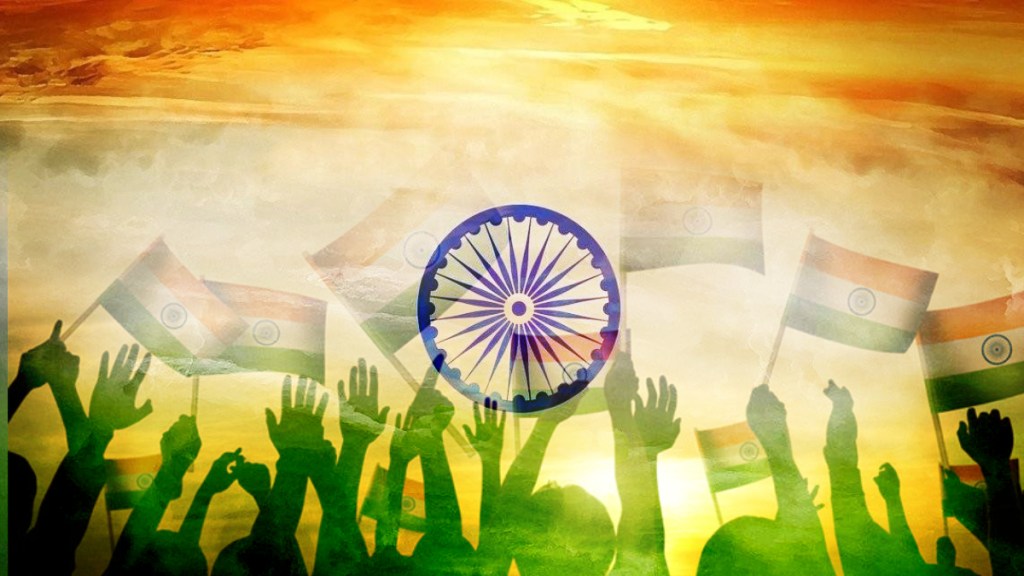
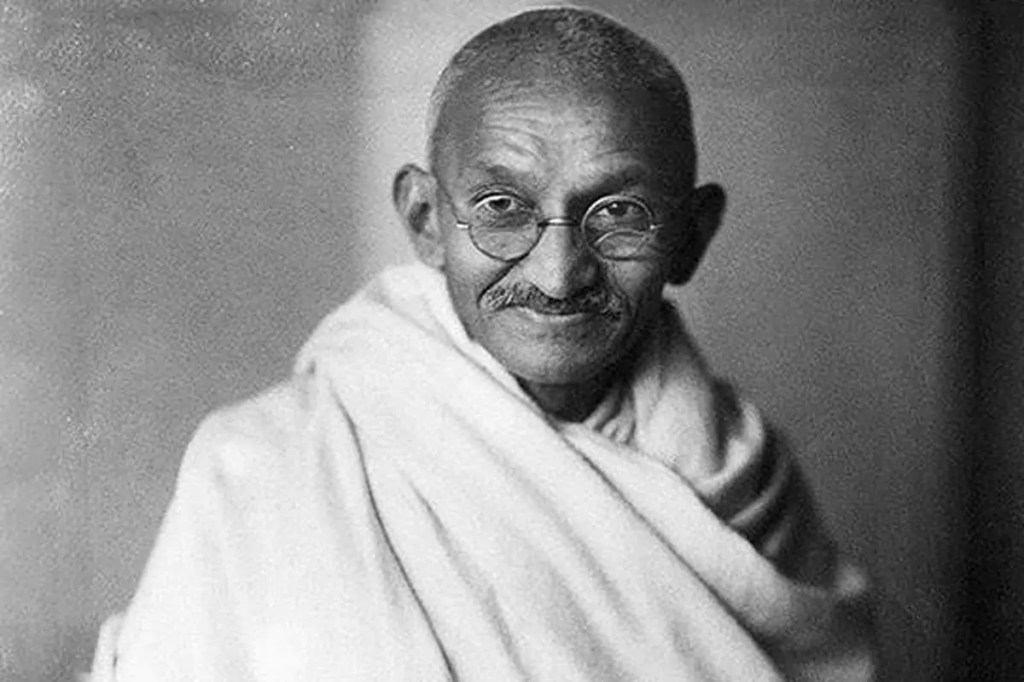
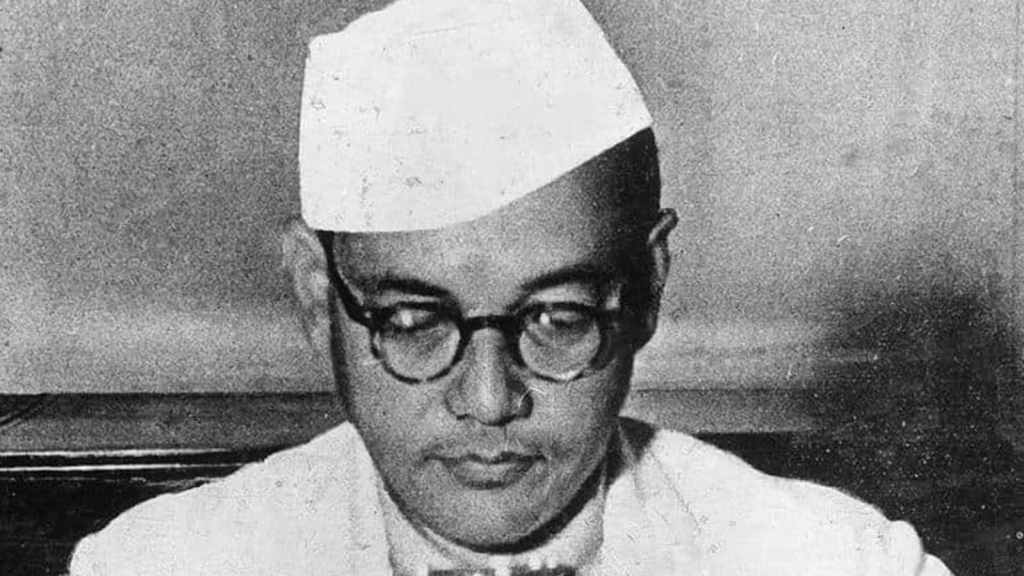
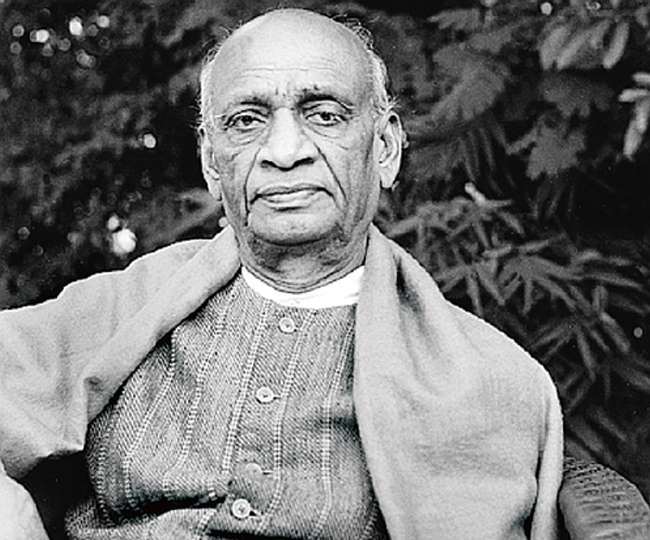
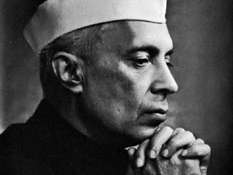
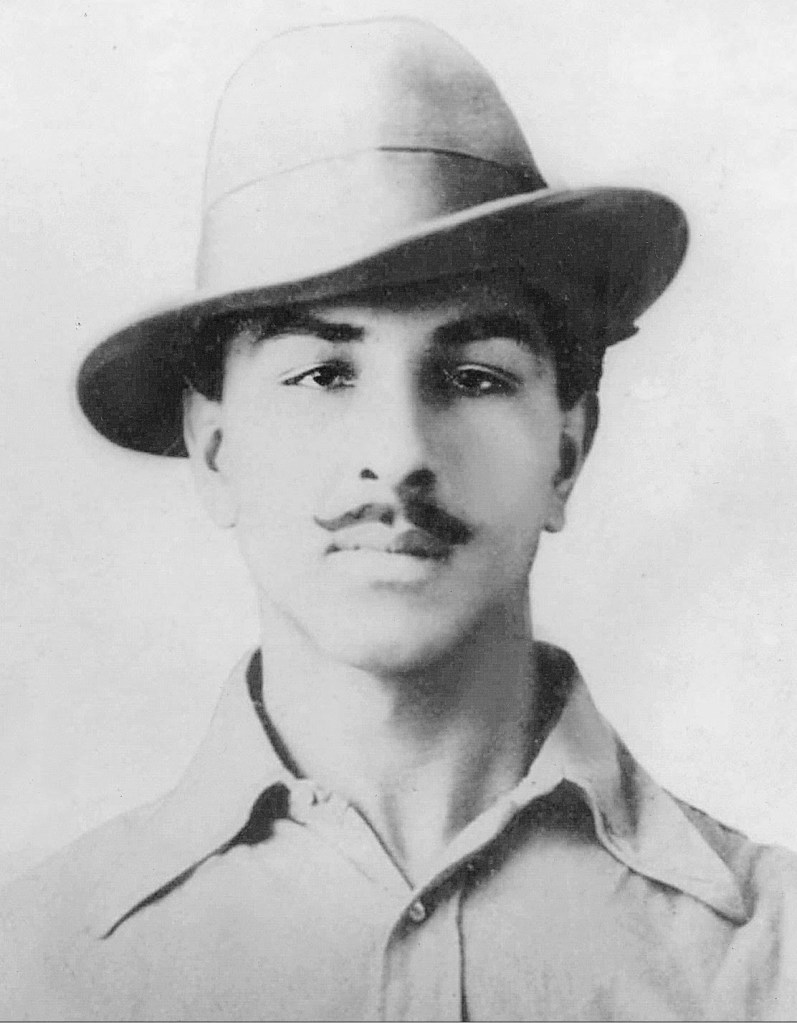

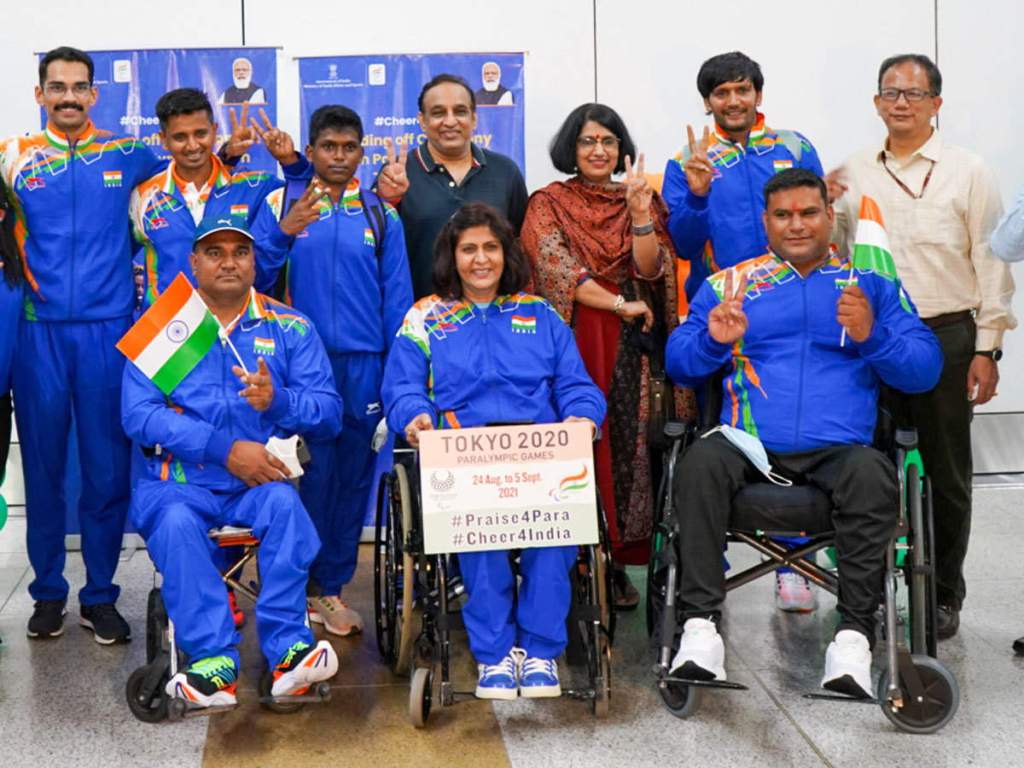


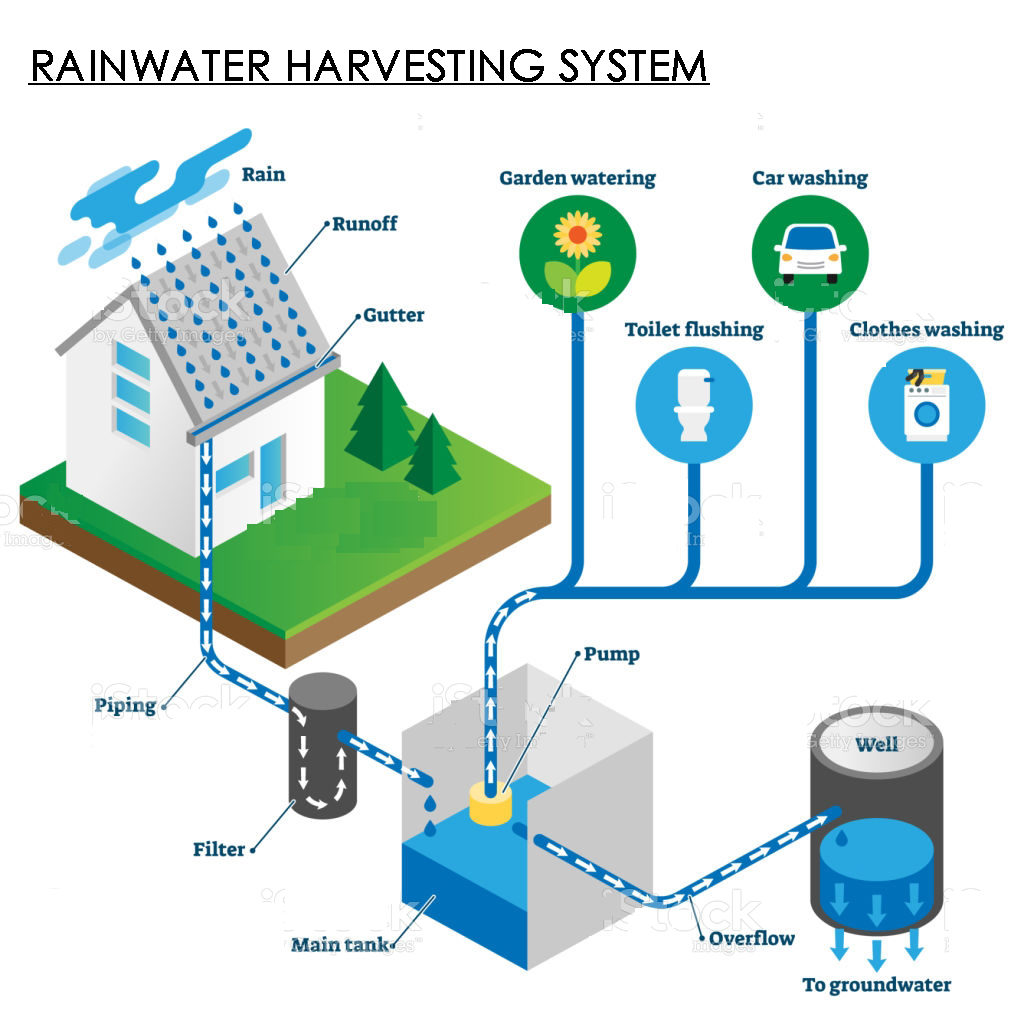













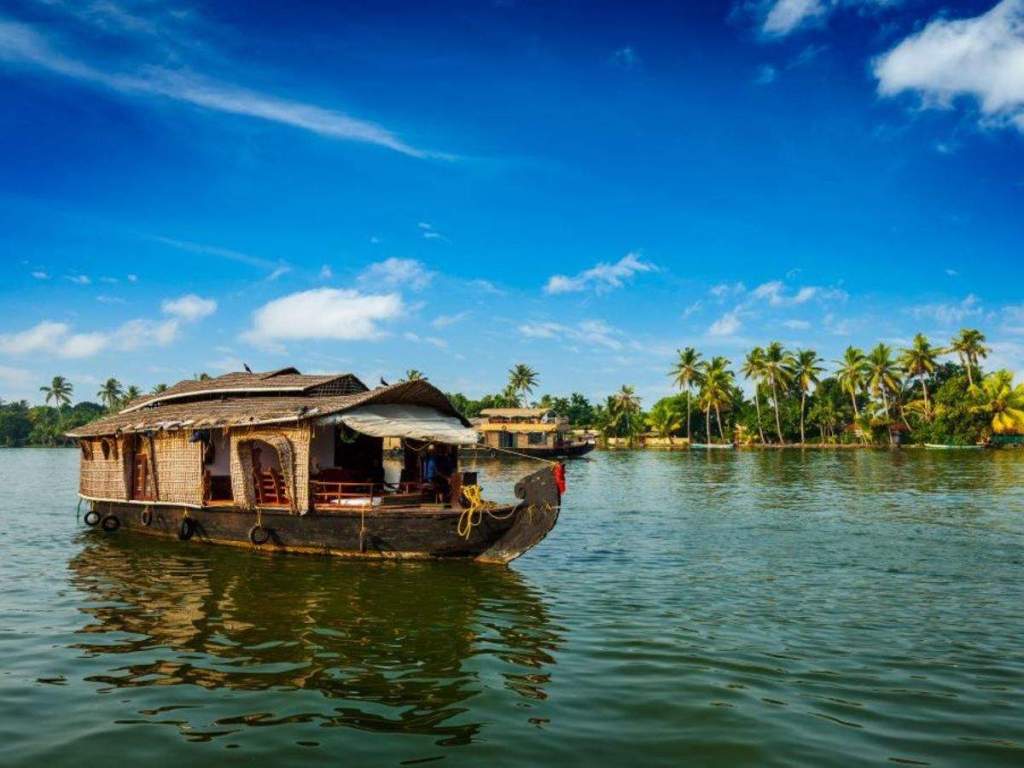
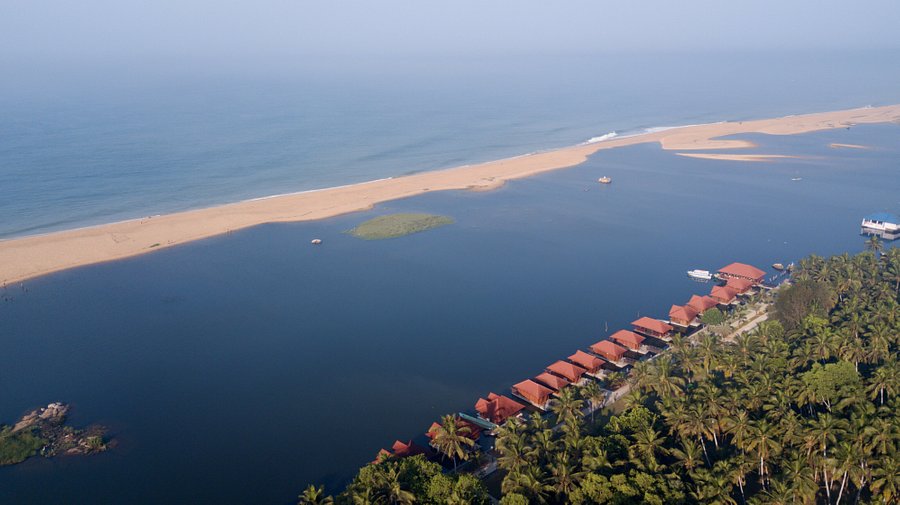

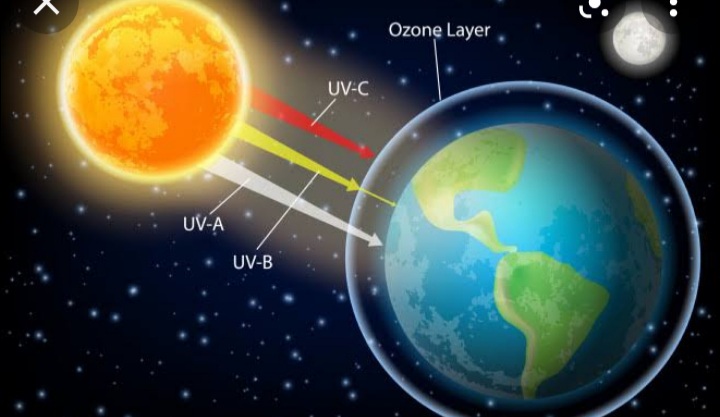

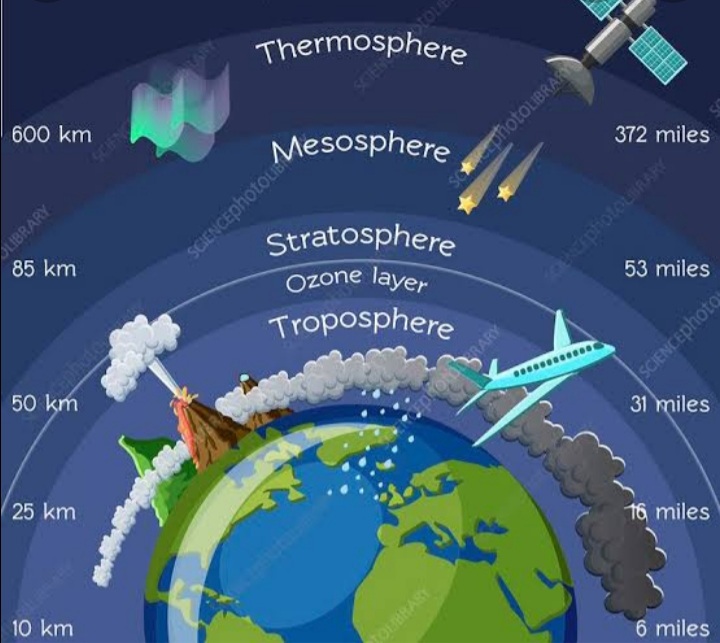
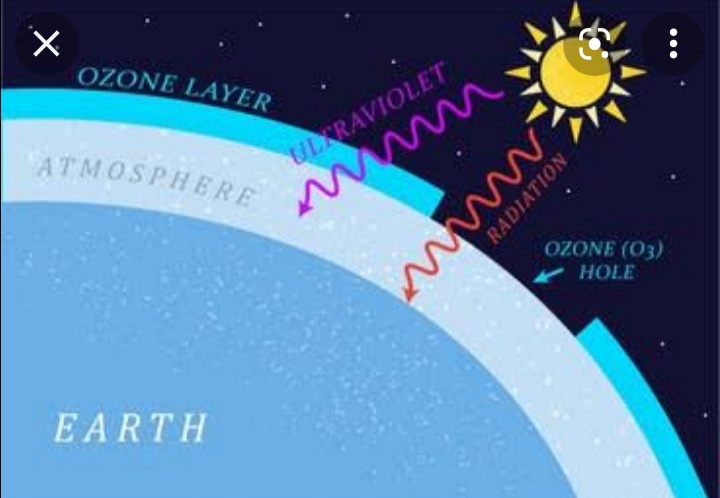








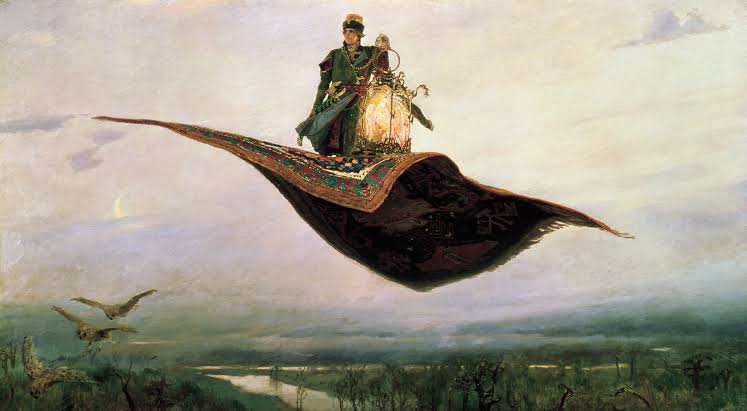



















 Track2Training
You must be logged in to post a comment.