In today’s dynamic and competitive work environment, young professionals face unique challenges as they navigate their careers and strive for success. Beyond technical expertise, the ability to effectively manage oneself and others is crucial for advancement in the corporate world. Here, we explore the top management skills essential for young professionals to thrive in their roles and emerge as effective leaders.
Effective communication lies at the heart of successful leadership. Young professionals must master the art of conveying ideas clearly, both verbally and in writing. This includes active listening, articulating thoughts persuasively, and fostering open dialogue within teams. By honing their communication skills, young leaders can build trust, resolve conflicts, and inspire others to action.
2. Emotional Intelligence
Emotional intelligence (EQ) is the ability to understand and manage emotions, both in oneself and others. Young professionals with high EQ can empathize with colleagues, adapt to diverse personalities, and navigate interpersonal relationships with finesse. By cultivating self-awareness, self-regulation, and empathy, they can foster a positive work environment and lead by example.
3. Adaptability
In today’s rapidly evolving business landscape, adaptability is a prized trait. Young professionals must embrace change, stay flexible in their approach, and continuously learn and grow. Whether faced with new technologies, market trends, or organizational restructuring, adaptable leaders remain resilient and resourceful, turning challenges into opportunities for innovation and growth.
4. Decision-Making
Effective decision-making is a hallmark of strong leadership. Young professionals must develop the ability to analyze complex situations, weigh options thoughtfully, and make timely and informed decisions. By leveraging data, seeking input from stakeholders, and considering long-term consequences, they can mitigate risks and drive strategic outcomes that align with organizational goals.
5. Problem-Solving
Problem-solving is an essential skill for overcoming obstacles and driving progress. Young professionals should approach challenges with a proactive mindset, breaking down problems into manageable components and exploring creative solutions. By fostering a culture of innovation and collaboration, they can harness the collective intelligence of their teams to address complex issues and drive sustainable change.
6. Team Leadership
Effective team leadership requires the ability to inspire, motivate, and empower others to achieve common objectives. Young professionals must cultivate a collaborative spirit, build cohesive teams, and leverage individual strengths to maximize collective performance. By setting clear goals, providing constructive feedback, and fostering a culture of accountability, they can unlock the full potential of their teams and drive results.
Conclusion
In conclusion, mastering top management skills is essential for young professionals seeking to excel in their careers and emerge as effective leaders. By prioritizing communication, emotional intelligence, adaptability, decision-making, problem-solving, and team leadership, they can navigate the complexities of the modern workplace with confidence and drive meaningful impact. As they continue to refine these skills and lead by example, they will not only achieve personal success but also inspire others to reach their full potential in the pursuit of organizational excellence.
The president of India Sri Ramnath Kovind inaugurated a virtual conference of governors on the role of national education policy NEP 2020 and transforming higher education in New Delhi. Today Prime Minister Narendra Modi addressed the inaugural session of the conference which was attended by union education minister sir Ramesh April Shank for Education Sri Sanjay Dutta governors lieutenant governor administrations of states and also some sat chief ministers and education ministers addressing the conference.
The president of India said that the national education policy NEP will take the country, especially the youth forward by the needs and aspirations of the 21st century congratulated the prime minister for his visionary leadership and inspiring role in shaping this historical document he also appreciated Dr. Kastura Runyan and ministers as well as the officials of education ministry for giving shape to NEP. Through an elaborate process that took into consideration more than two lack suggestions received 2.5 lakhs gram panchayats more than 12.5 thousand local bodies and about 675 districts if changes are effectively brought about India will emerge as an education superpower he added elaborating on the NEP. The president said that governors being chancellors of states Universities have a crucial role to play in the implementation of NEP there are some 400 states Universities with about 40k colleges affiliated with them hence it was imperative to establish coordination and dialogues with these universities which could be done by governors who are also the chancellors the president said that Education is the most effective way for social justice and hence the NEP calls for an investment of about 6 percentage of GDP jointly by the center and the states. He said the NEP emphasized strengthening public educational institutions for a vibrant democratic society and at the same time inculcating respect among students for fundamental rights duties constitutional values and patriotism speaking on the occasion the prime minister said the education policy and education system are important means of fulfilling the aspirations of the country. The prime minister said that though the responsibility of education lies with the central state and local level governments their interference in the policy should be minimal. He said the relevance and effectiveness of the education policy will increase when more and more teachers, parents, and students get associated with it. He added that NEP 2020 was drafted after receiving feedback from millions of people across the country and from those related to the Education sector which is why there is a sense of ownership and an all round acceptance among people about this policy. The prime minister further said that NEP is not only directed at reforming the education system but also at giving a new direction to the social and economic fabric of 21st-century India. he said the policy aims at making India self-reliant or atma nirbhar by making our youth further ready in a rapidly changing world and equipping them with the knowledge and skills as per the requirements of the future. He added that NEP focuses on learning rather than studying and goes beyond the curriculum to emphasize his critical thinking he said there is more emphasis given on passion practically and performance than a process he said that the policy aims at making India a knowledge economy in the 21st century. He said that it also allows for offshore campuses of top international Universities in India which will address the issue of brain drain in his welcome remarks union education Minister Sri Rameshh’s portrayal of Shank touched upon the journey evolution and consultation process of the NEP. The minister said this policy is the result of a wide-ranging consultation process covering Laksa villages block districts’ academicians vice chancellor principal teachers and scientists he stressed the new direction and support to research that will be given through the national research foundation. He said the NEP will make our education system both flexible and stable he said the focus and the police are on reform transform and performance and hope the road to a swatch status act atma nirbhar and Ek Bharat Shrestha Bharat will go through this NEP policy the minister of State for Education Sri Sanjay dutra appreciated the entering insights from the governor’s conference and thanked all the participants of the conference discussion sessions with governors lieutenant governor and education minister of the states and union Territories were held during the conference the prospect of transformational reforms in higher education under the new NEP 2020 and the road ahead was elaborately discussed upon in the session the governors and lieutenant governors briefed the president and other participants about various issues with regards to their states and union Territories.
The New Education Policy is a comprehensive and all-encompassing policy that seeks to revamp the Indian education system in its entirety. One of the most significant changes proposed by the NEP is the switch from the 10+2 education structure to a new 5+3+3+4 education system.
Under the new system, students will spend five years in elementary school, three years in middle school, three years in high school, and four years in college. This will allow for a more well-rounded and holistic education, as students will be exposed to a broader range of subjects and disciplines.
In addition, the New Education Policy 2022 also proposes introducing multiple exit options so that students can choose to leave the education system after completing elementary school, middle school, or high school if they so desire.
The NEP 2022 is an ambitious and far-reaching policy that seeks to transform the Indian education system into one that is on par with the best in the world.
This national education policy focuses on students’ individual needs. It aims to create a more flexible and adaptive education system that can meet the needs of students and the economy.
Vocational Education is part of the new education policy. It includes teaching the mother tongue and provincial languages up to the 5th year of schooling. Training in vocational skills will be included from the 6th class onwards.
Empowerment stands for giving authority and power to women. Thus, Women’s empowerment refers to empowering women to make their own decisions. It means women should have full equality across all fields, regardless of stereotypes. With higher literacy rates and equal pay for equal work, women can thrive economically and rise out of poverty. Protecting women and girls from violence and abuse while challenging the stigmas against reporting crimes would overall create a much safer society.
The Current State of Gender Equality:
On the World Economic Forum’s Global Gender Gap Index of 2021, India ranks 140th among 153 nations, “becoming the third-worst performer in South Asia.” India fell 28 places from its 2020 rank of 112th. The report cites several reasons for this fall. In terms of political empowerment, the number of female ministers declined from about 23% in 2019 to just 9% in 2021. The female workforce participation rate also decreased “from 24.8% to 22.3%.” Additionally, the “share of women in senior and managerial positions also remains low.” The report also indicates that women in India earn just one-fifth of what men earn.
Furthermore, “one in four women” endure “intimate violence” at least once in their lifetime. Although India has achieved gender parity in educational attainment, illiteracy rates among women remain high. The report indicates that just 65.8% of women in India are literate in 2021 in comparison to 82.4% of men.
Women also endure inequality concerning land and property rights. A 2016 UNICEF report noted that only 12.7% of properties in India “are in the names of women” despite 77% of women in India depending on agricultural work as a core source of income.
Benefits of Empowering Women in India:
As the majority of India’s population, women represent a significant portion of the nation’s untapped economic potential. As such, empowering women in India through equal opportunities would allow them to contribute to the economy as productive citizens. With higher literacy rates and equal pay for equal work, women can thrive economically and rise out of poverty.
Protecting women and girls from violence and abuse while challenging the stigmas against reporting crimes would overall create a much safer society. Improving the female political representation rate would enable more women to serve as role models for young girls and allow a platform to bring awareness to the issues affecting women in India. Overall, gender equality allows for women to live a better quality of life, allowing them to determine their futures beyond traditional expectations.
Women Of Worth (WOW):
According to its website, “Women Of Worth exists for the growth, empowerment, and safety of girls and women” standing “for justice, equality and change.” WOW began in 2008, created by a group of women who longed for change in a society rife with gender discriminatory practices. Its ultimate vision is “to see women and girls live up to their fullest potential.” With a mission of empowering women in India.
The organization has three focal areas:
1. Advocacy Work: WOW utilizes social media platforms to raise awareness of gender inequality and “change attitudes and behavior.”
2. Training and Health Services: WOW provides training to both men and women in schools, tertiary institutions, and companies on women’s safety and rights. It also presents lectures and “keynote addresses” on the topic. Furthermore, WOW provides counseling sessions to improve mental health. Rehabilitation and Restoration: WOW offers “counseling, life skills training, and therapy” to children and women who are victims of abuse, neglect, and trafficking.
WOW’s efforts have seen success. The organization helped to rescue 200 girls from abusive backgrounds, providing them with rehabilitation services. WOW also gave 11 girls scholarships to continue their education. WOW provided training on gender equality to about 800 working people and “1500 students” along with “200 parents” and 300 educators.
3. Gender equality is a crucial cornerstone in the advancement of any society or nation as it affects all areas of society from economic growth to education, health, and quality of life. Gender inequality in India is a deep-rooted, complex, and multi-layered issue but it is also an essential battle to overcome to see the fullest potential of the nation.
How are women empowered in India?
The Constitution of India has certain provisions that specifically focus on women’s empowerment and prevents discrimination against women in society. Article 14 talks about equality before the law. Article 15 enables the state to make special provisions for women.
Beti Bachao Beti Padhao Andolan has been launched for creating awareness among the people to educate all girl children in the country. The government successfully promotes this scheme by forming District Task Force and Block Task Force. The scheme was launched in the Panipat district of Haryana on 22 January 2015 with initial funding of Rs. 100 crore. Before the launching of this scheme, the Child Sex Ratio of Panipat was 808 in 2001 and 837 in 2011.
Massive publicity is made about the program in print and electronic media, and the logo of this scheme is very common in government buildings such as pillars of National Highway 44, Panipat District Court, bus stand, and railway station of Panipat district, etc.
Financial independence is important for women’s empowerment. Women, who are educated and earning, are in a much better position in our society as compared to uneducated women workers. Therefore, a scheme called working women hostels has been launched so that safe and convenient accommodation should be provided to working women. The benefit of this scheme is given to every working woman without any distinction of caste, religion, marital status, etc. To take benefit from this scheme, the gross total income of women should not exceed Rs. 50,000 per month in the case of metropolitan cities whereas, in the case of small cities, the gross total income should not exceed Rs. 35,000 per month.
The focus of the government has shifted from women’s development to women-led development. To achieve this goal, the government is working around the clock to maximize women’s access to education, skill training, and institutional credit. MUDRA Yojana ( Micro Units Development and Refinance Agency Ltd ) is one such scheme that was launched on 8 April 2015 in which loans up to Rs. 10 lakh are provided to women entrepreneurs, without any collateral. For instance: A woman namely Kamla daily wage laborer from Panipat has taken a loan of Rs. 45,000 from the State Bank of India to start work in a beauty parlor and she is engaged in gainful employment with dignity now.
Conclusion:
Women must have an equal voice, rights, and opportunities, throughout their lives. Gender equality can make a difference to individual lives and whole communities. Economic and Social Empowerment places women and girls in a stronger position. Women’s and girls Economic Empowerment gives a voice in decison making processes. women also should be given equal rights like men to actually empower them. They need to be strong, aware, and alert every time for their growth and development. The most common challenges are related to the education, poverty, health, and safety of women.
Elizabeth II (Elizabeth Alexandra Mary; 21 April 1926 – 8 September 2022) was Queen of the United Kingdom and other Commonwealth realms from 6 February 1952 until she died in 2022. She was queen regnant of 32 sovereign states during her lifetime and 15 at the time of her death.[a] Her reign of 70 years and 214 days is the longest of any British monarch and the longest recorded of any female head of state in history.
Elizabeth was born in Mayfair, London, as the first child of the Duke and Duchess of York (later King George VI and Queen Elizabeth). Her father acceded to the throne in 1936 upon the abdication of his brother, King Edward VIII, making Elizabeth the heir presumptive. She was educated privately at home and began to undertake public duties during the Second World War, serving in the Auxiliary Territorial Service. In November 1947, she married Philip Mountbatten, a former prince of Greece and Denmark, and their marriage lasted 73 years until his death in April 2021. They had four children: Charles, Anne, Andrew, and Edward.
When her father died in February 1952, Elizabeth—then 25 years old—became queen of seven independent Commonwealth countries: the United Kingdom, Canada, Australia, New Zealand, South Africa, Pakistan, and Ceylon (known today as Sri Lanka), as well as Head of the Commonwealth. Elizabeth reigned as a constitutional monarch through major political changes such as the Troubles in Northern Ireland, devolution in the United Kingdom, the decolonization of Africa, and the United Kingdom’s accession to the European Communities and withdrawal from the European Union. The number of her realms varied over time as territories gained independence and some realms became republics. Her many historic visits and meetings include state visits to China in 1986, Russia in 1994, and the Republic of Ireland in 2011, and meetings with five popes.
Significant events include Elizabeth’s coronation in 1953 and the celebrations of her Silver, Golden, Diamond, and Platinum jubilees in 1977, 2002, 2012, and 2022, respectively. Elizabeth was the longest-lived British monarch and the second-longest reigning sovereign in world history, behind only Louis XIV of France. She faced occasional republican sentiment and media criticism of her family, particularly after the breakdowns of her children’s marriages, her annus horribilis in 1992, and the death of her former daughter-in-law Diana, Princess of Wales, in 1997. However, support for the monarchy in the United Kingdom remained consistently high, as did her popularity. Elizabeth died aged 96 at Balmoral Castle, Aberdeenshire in 2022, months after the Platinum Jubilee, and was succeeded by her eldest son, Charles III.
Elizabeth was the elder daughter of Prince Albert, duke of York, and his wife, Lady Elizabeth Bowes-Lyon. As the child of a younger son of King George V, the young Elizabeth had little prospect of acceding to the throne until her uncle, Edward VIII (afterward duke of Windsor), abdicated in her father’s favor on December 11, 1936, at which time her father became King George VI and she became heir presumptive. The princess’s education was supervised by her mother, who entrusted her daughters to a governess, Marion Crawford; the princess was also grounded in history by C.H.K. Marten, afterward provost of Eton College, and had instruction from visiting teachers in music and languages. During World War II she and her sister, Princess Margaret Rose, perforce spent much of their time safely away from the London blitz and separated from their parents, living mostly at Balmoral Castle in Scotland and the Royal Lodge, Windsor, and Windsor Castle.
Early in 1947, Princess Elizabeth went with the king and queen to South Africa. After her return, there was an announcement of her betrothal to her distant cousin Lieutenant Philip Mountbatten of the Royal Navy, formerly Prince Philip of Greece and Denmark. The marriage took place in Westminster Abbey on November 20, 1947. On the eve of the wedding her father, the king, conferred upon the bridegroom the titles of duke of Edinburgh, earl of Merioneth, and Baron Greenwich. They took residence at Clarence House in London. Their first child, Prince Charles (Charles Philip Arthur George), was born on November 14, 1948,
In the summer of 1951, the health of King George VI entered into a serious decline, and Princess Elizabeth represented him at the Trooping the Colour and on various other state occasions. On October 7 she and her husband set out on a highly successful tour of Canada and Washington, D.C. After Christmas in England she and the duke set out in January 1952 for a tour of Australia and New Zealand, but en route, at Sagana, Kenya, news reached them of the king’s death on February 6, 1952. Elizabeth, now queen, at once flew back to England. The first three months of her reign, the period of full mourning for her father, were passed in comparative seclusion. But in the summer, after she had moved from Clarence House to Buckingham Palace, she undertook the routine duties of the sovereign and carried out her first state opening of Parliament on November 4, 1952. Her coronation was held at Westminster Abbey on June 2, 1953.
The modern monarch:
The queen seemed increasingly aware of the modern role of the monarchy, allowing, for example, the televising of the royal family’s domestic life in 1970 and condoning the formal dissolution of her sister’s marriage in 1978. In the 1990s, however, the royal family faced several challenges. The separation and later divorce (1996) of Charles and the immensely popular Diana further eroded support for the royal family, which was viewed by some as antiquated and unfeeling. The criticism intensified following Diana’s death in 1997, especially after Elizabeth initially refused to allow the national flag to fly at half-staff over Buckingham Palace. In line with her earlier attempts at modernizing the monarchy, the queen subsequently sought to present a less-stuffy and less-traditional image of the monarchy. These attempts In 2002 Elizabeth celebrated her 50th year on the throne. As part of her “Golden Jubilee,” events were held throughout the Commonwealth, including several days of festivities in London. Having dealt with several physical setbacks in recent years, Philip, who had been Elizabeth’s husband for more than seven decades, died in April 2021. On their 50th wedding anniversary, in 1997, Elizabeth had said of Philip, “He has, quite simply, been my strength and stay all these years.” Because of social-distancing protocols brought about by the COVID-19 pandemic, the queen sat alone in a choir stall in St. George’s Chapel (in Windsor Castle) at Philip’s funeral. The widely disseminated images of her tragic isolation were heartbreaking but emblematic of the dignity and courage that she brought to her reign. In June 2022 Britain celebrated Elizabeth’s 70 years on the throne with the “Platinum Jubilee,” a four-day national holiday that included the Trooping the Colour ceremony, a thanksgiving service at St. Paul’s Cathedral, a pop music concert at Buckingham Palace, and a pageant that employed street arts, theatre, music, circus, carnival, and costume to honor the queen’s reign. Health issues limited Elizabeth’s involvementElizabeth was known to favor simplicity in court life and was also known to take a serious and informed interest in government business, aside from the traditional and ceremonial duties. Privately, she became a keen horsewoman; she kept racehorses, frequently attended races, and periodically visited the Kentucky stud farms in the United States. Her financial and property holdings made her one of the world’s richest women.
A mutual fund is a company that pools money from many investors and invests the money in securities such as stocks, bonds, and short-term debt. The combined holdings of the mutual fund are known as its portfolio. Investors buy shares in mutual funds.
Why do people buy mutual funds?
Mutual funds are a popular choice among investors because they generally offer the following features:
1. Professional Management -:The fund managers research for you. They select the securities and monitor the performance. 2. Diversification-: “Don’t put all your eggs in one basket.” Mutual funds typically invest in a range of companies and industries. This helps to lower your risk if one company fails. 3. Affordability -: Most mutual funds set a relatively low dollar amount for initial investment and subsequent purchases. 4. Liquidity -: Mutual fund investors can easily redeem their shares at any time, for the current net asset value (NAV) plus any redemption fees.
What types of mutual funds are there?
1. Money market funds-: Have relatively low risks. By law, they can invest only in certain high-quality, short-term investments issued by U.S. corporations, and federal, state, and local governments. 2. Bond funds-: Have higher risks than money market funds because they typically aim to produce higher returns. Because there are many different types of bonds, the risks and rewards of bond funds can vary dramatically. 3. Stock funds-: Invest in corporate stocks. Not all stock funds are the same. Some examples are: • Growth funds-: focus on stocks that may not pay a regular dividend but have the potential for above-average financial gains. • Income funds-: invest in stocks that pay regular dividends. • Index funds-: track a particular market index such as the Standard & Poor’s 500 Index. • Sector funds-: specialize in a particular industry segment. 4. Target date funds -: Hold a mix of stocks, bonds, and other investments. Over time, the mix gradually shifts according to the fund’s strategy. Target date funds, sometimes known as lifecycle funds, are designed for individuals with particular retirement dates in mind.
What are the benefits and risks of mutual funds?
Mutual funds offer professional investment management and potential diversification. They also offer three ways to earn money:
1. Dividend Payments -: A fund may earn income from dividends on stock or interest on bonds. The fund then pays the shareholders nearly all the income, and fewer expenses. 2. Capital Gains Distributions -: The price of the securities in a fund may increase. When a fund sells a security that has increased in price, the fund has a capital gain. At the end of the year, the fund distributes these capital gains, minus any capital losses, to investors. 3. Increased NAV -: If the market value of a fund’s portfolio increases, after deducting expenses, then the value of the fund and its shares increases. The higher NAV reflects the higher value of your investment.
A fund’s past performance is not as important as you might think because past performance does not predict future returns. But past performance can tell you how volatile or stable a fund has been over a while. The more volatile the fund, the higher the investment risk.
How to buy and sell mutual funds:
Investors buy mutual fund shares from the fund itself or through a broker for the fund, rather than from other investors. The price that investors pay for the mutual fund is the fund’s per share net asset value plus any fees charged at the time of purchase, such as sales loads.
Mutual fund shares are “redeemable,” meaning investors can sell the shares back to the fund at any time. The fund usually must send you the payment within seven days.
Before buying shares in a mutual fund, read the prospectus carefully. The prospectus contains information about the mutual fund’s investment objectives, risks, performance, and expenses.
Avoiding fraud:
By law, each mutual fund is required to file a prospectus and regular shareholder reports with the SEC. Before you invest, be sure to read the prospectus and the required shareholder reports. Additionally, the investment portfolios of mutual funds are managed by separate entities known as “investment advisers” that are registered with the SEC. Always check that the investment adviser is registered before investing.
Are mutual funds safe?
Mutual funds are a safe investment if you understand them. Investors should not be worried about the short-term fluctuation in returns while investing in equity funds. You should choose the right mutual fund, which is in sync with your investment goals and invest with a long-term horizon.
Insurance is a means of protection from financial loss. It is a form of risk management, primarily used to hedge against the risk of a contingent or uncertain loss. An entity that provides insurance is known as an insurer, an insurance company, an insurance carrier, or an underwriter. an arrangement with a company in which you pay them regular amounts of money and they agree to pay the costs if, for example, you die or are ill, or if you lose or damage something.
Insurance is a contract in which an insurer indemnifies another against losses from specific contingencies or perils. It helps to protect the insured person or their family against financial loss. There are many types of insurance policies. Life, health, homeowners, and auto are the most common forms of insurance. insurance is a contract, represented by a policy, in which a policyholder receives financial protection or reimbursement against losses from an insurance company. The company pools clients’ risks to make payments more affordable for the insured.
Insurance policies are used to hedge against the risk of financial losses, both big and small, that may result from damage to the insured or their property or liability for damage or injury caused to a third party.
Key Takeways :
1. Insurance is a contract (policy) in which an insurer indemnifies another against losses from specific contingencies or perils.
2. There are many types of insurance policies. Life, health, homeowners, and auto are the most common forms of insurance.
3. The core components that make up most insurance policies are the deductible, policy limit, and premium.
How Insurance Works :
A multitude of different types of insurance policies is available, and virtually any individual or business can find an insurance company willing to insure them—for a price. The most common types of personal insurance policies are auto, health, homeowners, and life. Most individuals in the United States have at least one of these types of insurance, and car insurance is required by law. Businesses require special types of insurance policies that insure against specific types of risks faced by a particular business. For example, a fast-food restaurant needs a policy that covers damage or injury that occurs as a result of cooking with a deep fryer. An auto dealer is not subject to this type of risk but does require coverage for damage or injury that could occur during test drives. There are also insurance policies available for very specific needs, such as kidnap and ransom (K&R), medical malpractice, and professional liability insurance, also known as errors and omissions insurance.
Insurance Policy Components:
A firm understanding of these concepts goes a long way in helping you choose the policy that best suits your needs. For instance, whole life insurance may or may not be the right type of life insurance for you. Three components of any type of insurance are crucial: premium, policy limit, and deductible.
1. Premium -: A policy’s premium is its price, typically expressed as a monthly cost. The premium is determined by the insurer based on your or your business’s risk profile, which may include creditworthiness.
2. Policy Limit -: The policy limit is the maximum amount that an insurer will pay under a policy for a covered loss. Maximums may be set per period (e.g., annual or policy term), per loss or injury, or over the life of the policy, also known as the lifetime maximum.
3. Deductible -: The deductible is a specific amount that the policyholder must pay out of pocket before the insurer pays a claim. Deductibles serve as deterrents to large volumes of small and insignificant claims.
Types of Insurance :
There are many different types of insurance. Let’s look at the most important.
1.Health Insurance -: Regarding health insurance, people who have chronic health issues or need regular medical attention should look for policies with lower deductibles. Though the annual premium is higher than a comparable policy with a higher deductible, less expensive access to medical care throughout the year may be worth the tradeoff.
2. Home Insurance -: Homeowners insurance (also known as home insurance) protects your home and possessions against damage or theft. Virtually all mortgage companies require borrowers to have insurance coverage for the full or fair value of a property (usually the purchase price) and won’t make a loan or finance a residential real estate transaction without proof of it.
3. Auto Insurance -: When you buy or lease a car, it’s important to protect that investment. Getting auto insurance can offer reassurance in case you’re involved in an accident or the vehicle is stolen, vandalized, or damaged by a natural disaster. Instead of paying out of pocket for auto accidents, people pay annual premiums to an auto insurance company; the company then pays all or most of the costs associated with an auto accident or other vehicle damage.
4. Life Insurance -: Life insurance is a contract between an insurer and a policy owner. A life insurance policy guarantees that the insurer pays a sum of money to named beneficiaries when the insured dies in exchange for the premiums paid by the policyholder during their lifetime. Life insurance. life insurance provides for your family if you unexpectedly die. This is especially important if your family is dependent on your salary. Industry experts suggest a policy that pays out 10 times your yearly income. But not everyone can afford the cost. When estimating the amount of life insurance you need, factor in funeral expenses. Then calculate your family’s daily living expenses. These may include mortgage payments, outstanding loans, credit card debt, taxes, child care, and future college costs.
5. Travel Insurance -: Travel insurance is a type of insurance that covers the costs and losses associated with traveling. It is useful protection for those traveling domestically or abroad.
6. Long-Term Disability Coverage -: Long-term disability insurance is the type of insurance most of us think we will never need. Yet, according to statistics from the Social Security Administration, one in four workers entering the workforce will become disabled and will be unable to work before they reach the age of retirement. Often, even workers who have great health insurance, a nice nest egg, and a good life insurance policy don’t prepare for the day when they might not be able to work for weeks, months, or ever again. While health insurance pays for hospitalization and medical bills, you’re still left with all of the expenses that your paycheck had covered.
Is insurance an asset?
Depending on the type of life insurance policy and how it is used, permanent life insurance can be considered a financial asset because of its ability to build cash value or be converted into cash. Simply put, most permanent life insurance policies can build cash value over time.
Conclusion:
Insurance plans will help you pay for medical emergencies, hospitalization, contraction of any illnesses and treatment, and medical care required in the future. The financial loss to the family due to the unfortunate death of the sole earner can be covered by insurance plans.
LGBTQ is an acronym for “lesbian, gay, bisexual, transgender, and queer. Lesbian, Gay, Bisexual and Transgender, Queer. Over the past decade, LGBT people have gained more and more tolerance and acceptance in India, especially in large cities.
LGBTQ people in India remain closeted, fearing discrimination from their families, who might see homosexuality as shameful. Discrimination is still present in rural areas, where LGBTQ people often face rejection from their families and forced opposite-sex marriages. People in the LGBTQ community are fighting for equal rights and acceptance. Trans people, especially, face a lot of difficulty in finding acceptance. People in the LGBTQ community are looked down upon all the time.
This is a major issue because discrimination against the LGBTQ community is highly prevalent. People’s prejudices lead them to think that LGBTQ people are odd and very different. Today, homosexuality and queer identities may be acceptable to more Indian youths than ever before but within the boundaries of families, homes, and schools, acceptance remains a constant struggle for LGBTQ people. I have heard of people coming out of the closet and declaring to their families that they are not the person their family expected them to be. Being L, G, B, T, or Q is not a ‘problem’, nor is it a ‘choice’ as such. LGBTQ individuals are merely individuals who have sexual preferences that differ from what would appear to be the ‘norm’, due to differing learned behaviors and, you know, having a personal perspective and mindset that differs from everyone else’s. Saying that it’s objectively wrong for people to have sexual preferences that differ from the norm is objectively wrong itself.
Transgender people in India are allowed to change their legal gender post-sex reassignment surgery under legislation passed in 2019 and have a constitutional right to register themselves under a third gender. Additionally, some states protect hijras, a traditional third-gender population in South Asia through housing programs, and offer welfare benefits, pension schemes, free operations in government hospitals as well as other programs designed to assist them. There are approximately 480,000 transgender people in India as per Census 2011. Article 15 of our Indian Constitution Article 15, 1949. 15. Prohibition of discrimination on grounds of religion, race, caste, Sex, or place of birth.
In 2018, in the landmark decision of Navtej Singh Johar v. Union of India, the Supreme Court of India decriminalized consensual homosexual intercourse by reading down Section 377 of the Indian Penal Code and excluding consensual homosexual sex between adults from its ambit. Amidst strong political movements in favor of LGBTQ rights, people are more accepting of same-sex relationships, with around three out of four Indians supporting them according to an opinion poll. In the 2010s, LGBT people in India increasingly gained tolerance and acceptance, especially in large cities.
The backlash is the biggest concern at the moment. Homophobia is still one of the last acceptable forms of bigotry in some regions, and my hope is that that changes. Legally India has taken many steps in this area to identify the rights of LGBT community. Discrimination and the fear of discrimination is an important concern among the minorities at workplace.
If normal men and women have the right to live in this society with respect then why not a person who belongs to LGBTQ can live in this society with respect? It’s not about what our religion says it’s about what humanity says.
Feminism is a range of socio-political movements and ideologies that aim to define and establish the political, economic, personal, and social equality of the sexes. Feminism incorporates the position that society prioritizes the male point of view and that women are treated unjustly in these societies.
Who started Feminism ?
Mary Wollstonecraft is seen by many as a founder of feminism due to her 1792 book titled A Vindication of the Rights of Woman in which she argues for women’s education. Charles Fourier, a utopian socialist and French philosopher are credited with having coined the word “féminisme” in 1837.
The important aspect of feminism:
1. Feminism is defined as the belief in the social, political, and economic equality of the sexes.
2. The goal of feminism is to challenge the systemic inequalities women face daily.
3. Contrary to popular belief feminism has nothing to do with belittling men feminism does support sexism against either gender. Feminism works towards equality, not female superiority.
4. Feminists respect individual, informed choices and believe there shouldn’t be a double standard in judging a person. Everyone has the right to sexual autonomy and the ability to make decisions about when, how, and with whom to conduct their sexual life.
5. There isn’t just one type of feminism, there are a variety of feminist groups including girlie feminists, third-wave feminists, pro-sex feminists, and so on. All these groups aim to deal with different types of discrimination women, and sometimes men, face.
6. Women earn 78 cents for every dollar a man makes.
7. Only 17% of the seats in Congress are held by women.
8. Although 48% of law school graduates and 45% of law firm associates are female, women make up only 22% of federal-level and 26% of state-level judgeships.
9. Even in the 10 top paying jobs for women, females earn less than men; only one career, speech pathology, pays the same regardless of gender.
10. Despite previous attempts to ratify a UN treaty guaranteeing the elimination of all forms of discrimination against women, the U.S. refuses to support an international bill of rights for women signed by nearly every other nation on the planet.
11. What feminists want the world to know, or at least acknowledge is the different ways men and women are treated, and although there have been great strides towards equality, women and men are far from playing on the same field.
The First Wave of Feminism:
This first wave of feminism activism included mass demonstrations, the publishing of newspapers, organized debates, and the establishment of international women’s organizations. At around the same time, women became more active in communist, socialist and social democratic parties because increasing numbers of women began to work outside the home in factories and offices. Women were first allowed to go to university in the early 20th century, having both a career and a family. In certain countries, when fascist parties gained power the feminist movement was banned. Women started organizing again after the end of the Second World War, and they soon gained equal political rights in most European countries, with women’s emancipation becoming an important aim and most women being allowed to take on full-time jobs, divorce their husbands and go to university.
The Second Wave of Feminism:
The second wave of feminism aimed to achieve ‘women’s liberation, different groups had different ideas about how this should be done. Liberal feminists wanted better equality laws and reform of institutions such as schools, churches, and the media. Radical feminists argued that the root cause of women’s inequality is patriarchy: men, as a group, oppress women. They also focused on violence against women by men and started to talk about violence in the family, and rape. Socialist feminists argued that it is a combination of patriarchy and capitalism that causes women’s oppression. The second wave of feminism also resulted in new areas of science: women’s studies became a discipline to be studied at university, and books began to be published about women’s achievements in literature, music, and science and recording women’s previously unwritten history.
The women’s movement played an important role in the drafting of international documents about women’s rights, such as the Universal Declaration of Human Rights and the Convention on the Elimination of all Forms of Discrimination Against Women (CEDAW, 1979).
The Third Wave of Feminism:
The third wave of feminism mainly refers to the American movement in the 1990s, and was a reaction to the backlash of conservative media and politicians announcing the end of feminism or referring to ‘post-feminism’.t the third wave of feminism can be characterized by increased awareness of overlapping categories, such as race, class, gender, sexual orientation. More emphasis was also placed on racial issues, including the status of women in other parts of the world (global feminism). This was also a moment when several feminist non-governmental organizations were established, but focused on specific feminist issues, rather than claiming to represent general feminist ideas. Third-wave feminism actively uses media and pop culture to promote its ideas and to run activities, for example by publishing blogs or e-zines. It focuses on bringing feminism closer to people’s daily lives. The main issues that third-wave feminists are concerned about include: sexual harassment, domestic violence, the pay gap between men and women, eating disorders and body image, sexual and reproductive rights, honor crimes, and female genital mutilation.
The Fourth Wave of Feminism:
The term cyberfeminism is used to describe the work of feminists interested in theorizing, critiquing, and making use of the Internet, cyberspace, and new media technologies in general. The term and movement grew out of ‘third-wave’ feminism. Cyberfeminism is considered to be a predecessor of ‘networked feminism’, which refers generally to feminism on the Internet: for example, mobilizing people to take action against sexism, misogyny, or gender-based violence against women. One example is the online movement #metoo in 2017, which was a response on social networks from women all over the world to the case of Harvey Weinstein, a Hollywood producer who was accused of sexually harassing female staff in the movie industry.
Feminism can be seen as a movement to put an end to sexism, sexist exploitation, and oppression and to achieve full gender equality in law and practice. The women’s movement is made up of women and men who work and fight to achieve gender equality and to improve the lives of women as a social group.
A fashion blog can cover many topics, such as specific items of clothing and accessories, beauty tips, trends in various apparel markets (haute couture, prêt-à-porter, etc.), celebrity fashion choices, and street fashion trends. Many fashion blogs could also be categorized as shopping blogs, similar to the content of fashion magazines. Some retailers in the fashion industry have started blogs to promote their products. Some blogs focus more on fashion advice, featuring how-to articles for the lay reader. Articles discuss clothing fit, the matching and complementing of colors, and other information on clothes wearing and care, along with prescriptive advice on adhering to basic standards and recent trends.
History:
Fashion blogs first appeared in the blogosphere before 2002. Both the number of fashion blogs and the number of media mentions of fashion blogs have grown considerably since then. Published accounts of the growing number of fashion blogs are mentioned above, and a Facteva search reveals that media articles mentioning “fashion blogs” grew from one in 2002 to over 100 in 2006. In 2006, the commercial success and growing profile of fashion bloggers were the two main themes in the coverage of fashion blogs. In 2009, CNN wrote about a blogger, Rumi Neely of Fashion Toast, who went from a small website to the runway for a popular label.
Impact on Fashion Industry:
Fashion is a multi-billion dollar industry that has a considerable impact on the way ordinary people dress and present themselves and relies heavily on media and advertising to communicate the producer’s preferences and goals and influence public perception through various types of promotion; at the same time, fashion can be influenced by social change and counter-trends outside the producer, retailer or advertiser’s control. As fashion is driven by trends within and without the fashion industry, fashion blogs and other “new media” outside the control of traditional establishments represent a disruptive innovation to the social dynamics of mass media and fashion consumption in modern consumer society.
From the industry’s standpoint:
The New York Times “Style” section writer, Eric Wilson, did an extensive study on the impact of fashion bloggers on the fashion industry for one of his style columns. Wilson wrote that these bloggers have ascended ‘from the nosebleed seats to the front row’ in the past year and that the divide between the ‘high code’ editors with a professional opinion and the ‘amateur’ fashion bloggers is beginning to disintegrate.
From a reader’s standpoint:
A similar statement was said by Constance White, the style director for eBay and former fashion journalist, saying that the impact of the fashion blogosphere has allowed the whole population to take ownership of the fashion world, including people of all different races, genders, and social standings. Unlike fashion-focused magazines and television shows, fashion blogs can be updated more frequently, keeping up to date with the new and up-and-coming fashion trends.
From an advertising standpoint:
Many of these fashion blogs also serve as a source of advertisement for both designers and fashion retail stores. These advertisements have had a heavy influence on fashion designers of various standings, helping to give a name to small up-and-coming designers as well as bringing high-end designers back to life. Many of the top fashion bloggers are said to have received free samples of the designer pieces that they have mentioned in their blogs and some top fashion bloggers got paid for wearing and publishing a brand name product on their Instagram accounts.
Types of fashion blogs:
• By writer’s expertise:
Fashion blogs may be written by insiders, outsiders, or aspiring insiders. Insiders are people who work (or have previously worked) in the fashion industry or for the traditional fashion media. In addition, some fashion insiders write occasionally as guest bloggers on larger sites. For example, the fashion designer Nanette Lepore has contributed to Glam.com. Aspiring insiders are people who want to work in the fashion industry or media and believe their blog may provide a ‘back door entry into a mainstream fashion writing job.
• By ownership:
Fashion blogs may be owned either by individuals or by companies. The types of individuals running fashion blogs are listed above. The types of companies now running fashion blogs include large mainstream media organizations and fashion retailers. Condé Nast Publications is a mainstream media organization with fashion blogs. Fashion retailers with blogs include Bluefly, Queen of Suburbia, and Splendora.
Fashion blogs are increasingly becoming a part of the mainstream fashion press. Many big media organizations have started fashion blogs and the best fashion bloggers are now also being offered mainstream media positions. Fashion blogging is also now regarded as worthy of mainstream media coverage. The reference list below shows the very high caliber of media publications that have written about fashion blogs. These publications include the Wall Street Journal, The New York Times, Fast Company, and the Sydney Morning Herald. Fashion blogging is rapidly becoming a highly profitable new media business, with a mixture of independent blogs and well-funded fashion blog networks competing to dominate the space.
At the touch of a screen, most people now get their news information online, especially from social media. Social media reaches a maximum audience. In a recent survey, 50 percent of internet users said that they get to know about the latest news via social media even before it is on a news station. Social media in reporting is that the news does not get spread fairly quickly. If information is correct then it can be an excellent way of getting the news.
Positive -:
1. The news on social is immediate, while traditional media, can be delayed due to press times
2. Social media is versatile (you can make changes or delete once published. Whereas traditional media, once published, is set in stone.
3. The accessibility of social networks across devices makes them easy to use on the go and one of the most convenient ways to read the news.
4. RVCJ media page that provides the latest news on Instagram
Negative -:
1. There is a fierce media competition 2. Social platforms have control over what news and information we see. Our social media friends have become “managing editors” deciding what we see. An article needs to be liked and shared multiple times before many see it in their feed. Therefore, social media friends have control over what news pieces we see and what we do not. 3. The authentic content is hard to come by now. In fact, fake news is actually more likely to spread than the truth. 4. Falsehood diffused significantly farther, faster, deeper, and more broadly than the truth in all categories of information.
Conclusion -:
News happens fast now. Today’s story will be tomorrow’s forgotten story. It is easy to miss things now because of how quick stories can get turned around and shared. While having so much information at our fingertips is great, it is worth always checking sources and not taking headlines as truth. With social media as our new news managers, it is up to us to be the new fact checkers for media.
The super rich industrialists and financiers such as John D. Rockefeller, Andrew W. Mellon, Andrew Carnegie, Henry H. Rogers, J.P. Morgan, Cornelius Vanderbilt of the Vanderbilt family, and the prominent Astor family were labeled as “robber barons” by the common people.
A robber baron is a term used frequently in the 19th century during America’s Gilded Age to describe successful industrialists whose business practices were often considered ruthless or unethical. Robber baron is a term that is also sometimes attributed to any successful businessperson whose practices are considered unethical or unscrupulous. This behavior can include employee or environmental abuse, stock market manipulation, or deliberately restricting output to charge higher prices.
These practices included exerting control over natural resources, influencing high levels of government, paying subsistence wages, squashing competition by acquiring their competitors to create monopolies and raise prices, and schemes to sell stock at inflated prices to unsuspecting investors. The term combines the sense of criminal (“robber”) and illegitimate aristocracy (a baron is an illegitimate role in a republic). This monopoly was achieved in part by crushing rivals and systematically cheating Native Americans of fur pelts.
During 19th century the chief complaint that was capitalists were becoming monopolists. Fear over the robber barons and their monopoly practices increased public support for the Sherman Antitrust Act of 1890 (The Sherman Anti-Trust Act authorized the federal government to institute proceedings against trusts in order to dissolve them). Many so-called robber barons. became wealthy entrepreneurs through product innovation and business efficiency. Of the goods and services they provided, supply grew, and prices fell rapidly, greatly boosting Americans’ standards of living. This is the opposite of monopolistic behavior.
Some Of The Major Robber Barons -:
1. James Fisk, one Wall Street’s first great financiers, accumulated much of his fortune by fraudulent stock market practices. The venture brought them vast sums but led to a securities market panic that began on September 24, 1869, a day that was long remembered as Black Friday.
2. Leland Stanford became involved in Republican politics in California and was elected governor in 1861. With three colleagues, he formed the Pacific Association and used their combined assets to bribe congressmen and others with political influence in the country’s capital. In return, the association was provided 9 million acres (3.6 million hectares) and a $24 million loan financed by federal bonds.
3. John D. Rockefeller made his immense riches from monopolizing America’s oil industry. Conspiring with refinery owners, he helped found what became known as the Standard Oil monopoly. Those who stubbornly resisted were confronted with price wars. By 1890, the Rockefeller trust controlled approximately 90 percent of the petroleum production in the United States, a situation that led to the passage of the Sherman Antitrust Act that same year.
4. J.P. Morgan who organized a number of major railroads and consolidated the United States Steel, International Harvester, and General Electric corporations
5. Andrew Carnegie who led the enormous expansion of the American steel industry in the late 19th century; shipping and railroad magnate
6. Cornelius Vanderbilt, Industralist
7. George Pullman the inventor of the Pullman sleeping car
8. Henry Clay Frick who helped build the world’s largest coke and steel operations.
Common criticisms of the early robber barons -:
Poor working conditions for employees, selfishness, and greed. Some robber barons including Robert Fulton, Edward K. Collins, and Leland Stanford earned their wealth through political entrepreneurship. Many wealthy railroad tycoons during the 1800s received privileged access and financing from the government via extensive use of lobbyists.
The major considerations of robber barons are – :
•While robber barons took advantage of their workers, they sometimes offered better working conditions than the norm of the day
•Some tycoons rank among the most noted philanthropists of all time. Rockefeller donated around 10% of every paycheck he ever earned.
•Railroad tycoon James J. Hill publicized and provided free education about crop diversification, and would transport immigrants at reduced rates if they promised to farm near his railroads.
A microphone is a device that translates sound vibrations in the air into electronic signals and scribes them to a recording medium or over a loudspeaker. Microphones enable many types of audio recording devices for purposes including communications of many kinds, as well as music vocals, speech and sound recording.
Types Of Microphone
There are three main types microphones based on construction -:
A microphone in which the sound waves cause a movable wire or coil to vibrate in a magnetic field and thus induce a current.
Key Advantages -:
1. Rugged and able to handle high sound pressure levels, like those delivered by a kick drum. 2. Provide good sound quality in all areas of microphone performance. 3. They do not require a power source to run 4. They are relatively cheap
Key disadvantages -:
Heavy microphone diaphragm and wire coil limits the movement of the assembly, which in turn restricts the frequency and transient response of the microphone Generally not as suitable as condenser microphones for recording instruments with higher frequencies and harmonics, such as a violin.
Dynamic microphones can be used for many applications, produce an excellent sound and are suitably rugged – great for traveling on the road. They are best avoided when recording high-frequency content on an important recording.
For reliable, everyday tasks you will not find a more multifaceted, trustworthy device than a good quality dynamic microphone.
Ribbon -:
A ribbon microphone, also known as a ribbon velocity microphone, is a type of microphone that uses a thin aluminum, duraluminum or nanofilm of electrically conductive ribbon placed between the poles of a magnet to produce a voltage by electromagnetic induction. Ribbon microphones are typically bidirectional, meaning that they pick up sounds equally well from either side of the microphone
Key Adavantages -:
1. Ribbon Microphones are very sensitive and accurate 2. Ribbon microphones have a very low noise 3. Ribbon microphones tend not to pick up lots of background noise 4. Ribbon microphones can be very expensive 5. Ribbon microphones are good to produce a thin and tinny sound
Key disadvantages -:
1. Ribbon microphones can be very large and heavy 2. Ribbon microphones are very sensitive to air movements 3. It is very difficult to achieve a tight polar pattern 4. The ribbon is fragile and susceptible to damage 5. Ribbon microphones are not as popular as dynamic microphones Ribbon microphones require more maintenance
Ribbon microphones are often described as the most natural-sounding microphones available, and for good reason: they condenser microphones that use a thin ribbon of aluminum foil to pick up sound (instead of a solid diaphragm).
Condenser/ Capacitor Microphones -:
A Condenser capsule is constructed similarly. It consists of a thin membrane in close proximity to a solid metal plate. The membrane or diaphragm, as it is often called, must be electrically conductive, at least on its surface. The most common material is gold-sputtered mylar, but some (mostly older) models employ an extremely thin metal foil.
When sound waves hit the diaphragm, it moves back and forth relative to the solid backplate. In other words, the distance between the two capacitor plates changes. As a result, the capacitance changes to the rhythm of the sound waves. Thus, converted sound into an electrical signal.
Key Adavantages -:
1. They have a Greater Dynamic Range than Ribbon or Dynamic Mics. 2. They Have a Better Frequency Response than Dynamic Mics. 3.They Have a Better Noise Floor than Dynamic or Ribbon Mics. 4. When Hit with Loud Transients, They Generally Sound Snappier than Dynamic or Ribbon Mics.
Key Disadvantages -:
1. The limited number of operating microphones at the same time and place. 2. The limited number of radio channels. Sound files can use up a lot of computer memory in a device. 3. Voice recognition system software is not as accurate as typing manually.
Condenser microphones are best used to capture vocals and high frequencies. They are also the preferred type of microphone for most studio applications.
Conclusion -:
Microphones are used everywhere, from stage performances, broadcasting, and even talking on the phone. The microphone is a transducer, a machine that changes one form energy to another form of energy. Microphones are an essential part of any audio recording system.
Television is the most powerful medium of mass communication that has ever existed. It has revolutionized our lives in many ways. Isn’t it a wonder that we can witness the events happening all over the world in the comfort of our drawing-room by merely switching on the Television? Today television has become an integral part of our lives. Television is a recent invention. Very few homes had television sets some fifty years ago. Also, till the 1990s Doordarshan was the only channel available to a vast majority of Indians.
Evolution Of Television-:
Today television has become an integral part of our lives. 1939, television broadcasts began in the United States also. Other countries began television broadcasting on a wide scale only by the 1950s. Second World War slowed down the rapid development of the new medium, but the post-war years made up for it. The limitations of the early camera forced the actors and anchors to work with impossibly hot lights. Imagine trying to read news with full makeup under a blazing light. The early television broadcasts were all black and white. The first successful program in color was transmitted by Columbia Broadcasting System (CBS) in the USA in 1953. From being a “radio with pictures” it acquired a unique style of its own. As a result of this, this phase is often called the “golden age” of television.
Important dates -:
1. 1936 – British Broadcasting Corporation (BBC) of Britain began the first television service in the world.
2. 1939 – Television broadcasts began in the US. The 1950s – Other countries began television broadcasting on a wide scale.
3. 1953 – The first successful program in color was transmitted by CBS in the USA.
1959- TELEVISION BEGAN IN INDIA ON AN EXPERIMENTAL BASIS -:
The early programs on these experimental broadcasts were generally educational programs for school children and farmers. Several community television sets were set up in Delhi’s rural areas and schools around Delhi for the dissemination of these programs. By the 1970s, television centers were opened in other parts of the country also. In 1976, Doordarshan, which was All India Radio’s television arm until then became a separate department.
1976- DOORDARSHAN BECAME A SEPARATE DEPARTMENT INDEPENDENT OF ALL INDIA RADIO (AIR) -:
Several community television sets were distributed as a part of one of the important landmarks in the history of Indian television, the Satellite Instructional Television Experiment (SITE). It was conducted between August 1975 and July 1976. Under this program, the Indian government used the American satellite ATS-6 to broadcast educational programs to Indian villages. Six states were selected for this experiment and television sets were distributed in these states.
1975-1976 SATELLITE INSTRUCTIONAL TELEVISION EXPERIMENT (SITE) -:
SITE was an important step taken by India to use television for development. The programs were mainly produced by Doordarshan which was then a part of AIR. The telecasts happened twice a day, in the morning and evening. Other than agricultural information, health and family planning were the other important topics dealt with in these programs. Entertainment was also included in these telecasts in the form of dance, music, drama, folk, and rural art forms. A major milestone in the history of Indian television was the coverage of the Ninth Asian Games in 1982. In addition to the domestic transmission, Doordarshan was also providing content for the broadcasters of many other countries. After 1982, there was a huge increase in the live coverage of sports by Doordarshan. Doordarshan provided national coverage for the first time through the satellite INSAT 1A. Also, for the first time, the transmission was in color.
1982- DOORDARSHAN PROVIDED NATIONAL COVERAGE FOR THE FIRST TIME THROUGH THE SATELLITE INSAT 1A. -:
By 1983, the government-sanctioned a huge expansion of Doordarshan. Several new transmitters were set up throughout the country. Thus towards the end of the 80s around 75 percent of the population could be covered by the transmitters. Many of the programs of Doordarshan like Hum Log, Buniyaad, and Nukkad were immensely popular.
1983- GOVERNMENT SANCTIONS HUGE EXPANSION OF DOORDARSHAN -:
In 1997, Prasar Bharati, a statutory autonomous body was established. Doordarshan along with AIR was converted into government corporations under Prasar Bharati. The Prasar Bharati Corporation was established to serve as the public service broadcaster of the country which would achieve its objectives through AIR and DD. This was a step towards greater autonomy for Doordarshan and AIR. However, Prasar Bharati has not succeeded in shielding Doordarshan from government control.
1997- ESTABLISHMENT OF PRASAR BHARATI -:
About 90 percent of the Indian population can receive Doordarshan programs through its network. From its humble beginning as a part of All India Radio, Doordarshan has grown into a major television broadcaster with around 30 channels. These include Regional Language Satellite Channels, State Networks, International Channel, and All India Channels like DD National, DD News, DD Sports, DD Gyandarshan, DD Bharati, Loksabha Channel, and DD Urdu.
Conclusion -:
Television as a medium of visual communication offers immense possibilities to overcome the illiteracy barrier and assists in the process of modernization. It has a marked role to play in furthering the cause 2 of education and has a unique advantage over the media. While it provides words with pictures and sound effects like the movies, it scores over the latter by its high intimacy and reaches the largest number of people in the shortest possible time the visual in it has ii an edge over sound broadcasting. It can also deal with topical problems and present known persons who can provide solutions. People learn through the eye and remember things better. periodical surveys about the public reaction to television programs have indicated that most of the programs telecast are rather dull. There is a lot to be done in them. The plays particularly are uninspiring and badly directed.
Criticism against Indian television is that like the All India Radio, it is the mouthpiece of the Government and the ruling party. The News Bulletins in Hindi and English and the news and views programs are heavily colored in favor of the Government and the party in power. Achievements of the Government are highlighted while the weaknesses are ignored. There is hardly any program: which allows free, frank, and straightforward criticism of the Governmental policies and the ruling party politicians. Therefore, there has been a demand for All India Radio and Doordarshan to be turned into autonomous bodies with no control and interference by the Government.
In India, films are censored by the Central Board of Film Certification (CBFC), a statutory censorship and classification body under the Ministry of Information and Broadcasting, Government of India. Films should be certified by the board to be publicly exhibited it in India, including films shown on television.
History -:
Film censorship, the control of the content and presentation of a film, has been a part of the film industry for almost as long as it has been around. The activists of current society continue to broaden the First Amendment rights for the film industry allowing the art to be restricted to a certain limit.[24] Britain established film censorship in 1912 and the United States followed a decade later. Other early efforts of censoring the film industry include the Hays Code of 1922 and the Motion Picture Production Code of 1930.
The Film Fraternity – :
Films are considered a great medium of communication with people. With the development and progress of society and also with the progress in the field of science and technology, films have undergone a sea change and by adopting all the available technologies, have been able to reach the masses and are also significantly contributing to the social and cultural development of the country. In this way, the films are equated with the Press as Press is also considered a great medium of communication.
The Constitution-:
Article 19(1) of the Indian constitution ensures the right to freedom of speech and expression for all. Hence, this right is also applicable to moviemakers as well as writers. Article 19(2) specifies that freedom of expression should not threaten the sovereignty and integrity of the Nation. Censor Board was established based on this principle.
Central Board of Film Certification (CBFC) -:
A motion film is certified by CBFC, the regulatory authority in India, under Sections 5A and B of the Cinematograph Act, 1952. CBFC certifies and differentiates movies as ‘U (Unrestricted Public Exhibition)’, ‘U/A (Parental Guidance for children below the age of 12 years)’, A (Restricted to adults), and S (Restricted to any special class of persons).
NECESSITY OF CENSORSHIP -:
1. Influences the young -:
Nowadays, most movies have unrealistic scenes. Violent scenes that motivate young viewers to copy the tasks their heroes perform on screen may cost them their lives. movies that claim that the consumption of drugs is injurious to health are promoting the use of drugs as young minds grow curious to try them in real life. It is better if such scenes are censored. Children are also watching ‘A’ certified movies, filled with full of violence. The accessibility to movies has increased considerably. So there is a need to remove scenes of too much violence and vulgarity.
2. Tackles the unacceptable -:
If a part of a movie contains scenes or language that cannot be accepted by people of all religions, then there will be calls to ban the movie and a riot may break out. So, to avoid them, the government has set up a board that will censor those unacceptable parts. If there is no censorship, there are dangers that movies that hurt the sentiments of certain sections will be out in public. This can lead to violence and threatens public order.
3. Keeps children safe -:
Censoring certain parts of movies helps keep children away from hearing and seeing inappropriate things. Nowadays, children are addicted to watching TV. When a movie is shown on TV — and most movies are these days — children are exposed to it. Inappropriate scenes or a string of wrong words can teach them all the wrong things and have a bad influence. As a society, we have a responsibility to protect children from being exposed to dangerous content.
4. Maintains harmony -:
Scenes that make a travesty of history or create friction amongst people should be completely removed. The case of the movie, Padmaavat, which was released in January 2018, is the perfect example of the need of censoring movies to maintain communal harmony.
DISADVANTAGES OF CENSORSHIP -:
1. An art -:
The arts do not influence people’s thoughts and feelings, let alone their actions unless they connect with something already present in those people’s personalities or experiences. People choose what art they will look at, what movies they will watch, what games they will play, or what sites they will visit, because of who they already are. Cinema, like other art forms, is a medium for expression. Filmmakers translate their vision onto the big screen through months or years of hard work. Thus, to snip off portions that are undesirable in a movie is unfair.
2. Obstructs creativity -:
Censoring parts of movies obstructs their creative flow and nullifies the effect of the narrative. It is always up to us if we want to watch a movie or not. Censoring parts of it means breaking the million thoughts and ideas that go into building that movie. Documentaries, which are meant to expose truths, are also undergoing many cuts. Filmmakers spend a lot of money and time making movies. If parts of the movie are cut in the name of censorship, they will be discouraged to make more movies.
3. Essence lost-:
Be it a plot or sub-plot, every part of a movie is crucial. So, with a part missing, the entire essence of the movie is lost. It’s time to leave movies in the hands of the movie’s crew and not the certification board. People have the mental ability to decide what to watch and what not to watch. Government has no right to decide what people are allowed to watch.
Is censorship a necessary evil?
Censorship can be considered a necessary evil, but that doesn’t negate the freedom of speech and expression completely. The chief problem is that it seems that Censor Board doesn’t look into alternative options before banning a movie and fails to take into account a lot of mitigating factors involved in the making of the movies. While public interest needs to be protected, the private interest of the parties involved cutely be forgotten.
Loss of time and money :
Right from the script to music, to production and advertising, a lot of effort and money has gone into the movies which when banned enormously impacts the economic status of people involved, which in turn comes under the ambit of their fundamental right of livelihood. This repeated pattern of Board or Government banning or halting the release of movies, thereby consequently an appeal being filed to High Courts and Supreme Court where the ban is lifted is getting quite tedious.
Conclusion :
The Certification Board must take a balanced approach while reviewing movies and must take into account that the harmony between freedom of expression and a sense of security and peace in society is maintained. In a perfect world, censorship would not be necessary. Children wouldn’t be exposed to movies inappropriate for their age and every person would have the mental stability to recognize the boundary between movies and reality. But we don’t live in a perfect world – so while we can’t always monitor what our children watch, or predict what could inspire violent behavior, we can take steps to protect the unguarded things in society through classification and censorship.
A belief that races are the fundamental determinant of human traits and capacities and that racial differences produce an inherent superiority of a particular race. Ladino elites used racism to justify the displacement and enslavement of the indigenous population, and these beliefs, along with resentment created by the continued exploitation of indigenous land and labour, culminated in the Guatemalan Civil war (1960-1996). Racism is also called racialism.
(Racism)
After, Germany’s defeat in World War I, that country’s deeply ingrained anti-Semitism was successfully exploited by the Nazi Party, which seized power in 1933 and implemented policies of systematic discrimination, persecution, and eventual mass murder of Jews in Germany and the territories occupied by the country during World War II. In North America and apartheid-era South Africa, racism dictated that different races (chiefly blacks and whites) should be segregated from one another; that they should have their distinct communities and develop their institutions such as churches, schools, and hospitals; and that it was unnatural for members of different races to marry. Historically, those who openly professed or practiced racism held that members of low-status races should be limited to low-status jobs and members of the dominant race should have exclusive access to political power, economic resources, high-status jobs, and unrestricted civil rights. The lived experience of racism for members of low-status races includes acts of physical violence, daily insults, and frequent acts and verbal expressions of contempt and disrespect, all of which have profound effects on self-esteem and social relationships. Racism was at the heart of North American slavery and the colonization and empire-building activities of western Europeans, especially in the 18th century. In the 19th century, racism matured and spread around the world. In many countries, leaders began to think of the ethnic components of their societies, usually religious or language groups, in racial terms and to designate ‘higher and ‘lower races. The expressions and feelings of racial superiority that accompanied colonialism generated resentment and hostility from those who were colonized and exploited, feelings that continued even after independence. In the mid-20th century, many conflicts around the world have been interpreted in racial terms even though their origins were in the ethnic hostilities that have long characterized many human societies. By this time, many societies had begun to combat racism by raising awareness of racist beliefs, and practices by promoting human understanding in public policies, as does the Universal Declaration of Human Rights, set forth by the United Nations in 1948. Despite constitutional and legal measures aimed at protecting the rights of racial minorities in the United States, the private beliefs and practices of many Americans remained racist, and some groups assumed lower status was often made a scapegoat. That tendency has persisted well into the 21st century.
(Racism)
Racism reflects an acceptance of the deepest forms and degrees of divisiveness and implies that differences between groups are so high that they cannot be transcended. Racism evokes hatred and distrust and preludes any attempt to understand its victims. Many societies have concluded racism is wrong, and social trends have moved away from racism. For many people, “race” is linked to physical differences among people, and such features as dark skin colour have been seen as markers of low status, some experts believe that racism may be difficult to eradicate. Indeed, minds cannot be changed by laws, but beliefs about human differences can and do change, as do all cultural elements.
I sat with my friend clive to know more about his culture. He told me how he was brought up to be a Christian and what were his values. He used to go to church every morning. Then we discussed if he has ever faced discrimination due to his religion. He didn’t feel that he has experienced discrimination. I also asked my Muslim friends if they’ve had any such experiences. They also felt the same way.
All of the people that I interviewed are from a well-to-do backgrounds. This makes me come to my next observation. Are people discriminated against because of their religion or because they belong from a not so well to do background? If you see in our society, Muslim or Christian people who have money don’t have to go through the religious stigma that other people go through. For example, a poor Muslim might have to go through a lot of discrimination as compared to a well-to-do Muslim. In today’s world if you are rich then you’re a powerful man.
Credits- gettyimages
I also had the opportunity of meeting a Muslim boy who was not very well-to-do. He told me that in his school, people were always given an opportunity before him. He was the last boy to be considered for every activity and he feels it’s because of his religion. I am not trying to make a stupid assumption but I feel this has some truth to it. In today’s world, if you belong to the higher class of society, you are likely to not go through any hardships due to your religion. Although, that is not completely true because there have been a lot of events where people were either kicked out or denied to take property at a certain place.
This activity led me to discover a lot of insights into the religious stigma that exists around me. I’d encourage everyone to go and ask people from vulnerable backgrounds about their lives. It serves two purposes. They get to share their sorrows and you become more informed about the situation of the matter.
We hear the word journaling very often. Almost every other day this term falls on our ears but we simply pay no heed to it. The reason is we humans have a tendency to think that the most ordinary or simplest things cannot bring us extraordinary greatness. Which is not true ofcourse.
When it comes to journaling, we sometimes underestimate how important it is to include this beneficial habit into our daily routines. Our lives can thrive from journaling in many different ways. From increased productivity overall to self-improvement and improved mental wellness, this habit is proven to be effective.
Writing down your thoughts, feelings, or anything else you want to in order to try to understand them better is what journaling is fundamentally all about. Every time we write down our thoughts in a journal, our mind starts to get more organised, making it simpler for us to prioritise our goals and every aspect of our lives that we want to work on. As a result, journaling helps us stay productive by allowing us to acknowledge what needs to be done after letting us self-assess ourselves in a way.
The ability to learn new things quickly, as well as your capacity for analytical and innovative thought, are more important indicators of productivity in today ’s digital economy than how much work you can get done in an hour. Journaling is therefore valuable spending a few minutes on, just like any practise that enables you to learn more acutely and think more effectively.
Outlining your goals in a journal enables you to think thoroughly about all aspects of it. Journaling helps you keep motivated during the arduous process of actually achieving your goals by providing a track of the work you’ve made in that direction. We refer to it as effective journaling for this reason.
Anyone who really wishes to deal with their emotions, possibly to prevent it from driving themselves in the realms of depression or anxiety, might benefit much from this mindful practice.
You can thoroughly examine your feelings, let out chaos, and mentally assimilate your experiences through writing.
Furthermore, it can support you in attaining a significant purpose or work with you to reduce certain sources of stress. Creating and reflecting on the story of your life, including all of the decisions you have committed and the moments that have shaped who you are today, is something you may do by keeping a diary.
In a word, journaling’s healing effects are “enlightening.
You can’t change it all in your life instantly, and attempting to create healthy habits and break negative ones in a single day is probably not going to work. Legitimate, lasting change occurs when you only take on something that you can manage; frequently, altering one significant habit can have knock-on impacts that enhance your life and move you forward to your commitments in other aspects.
One such discipline is writing; it may help you stay focused, determine your capabilities and limitations, provide an outlet for awareness of self , but also much more. Merely keeping track of your ideas, emotions, and doings can change your life in unanticipated ways.
Communication is the process of sending and receiving messages through verbal or nonverbal means, including speech, or oral communication; writing and graphical representations (such as info graphics, maps, and charts); and signs, signals, and behavior. More simply, communication is said to be “the creation and exchange of meaning.”. Communication is a two-way progression that empowers you to exchange your thoughts, notions, and opinions with each other. Communication has now become overbearing to flourish in the world of business.
We have already stepped into a modern world! Haven’t we? The excessive exposure to the use of gadgets and increasing knowledge because of that makes us more sensitive today. We are always worried about our image in society and on social media. And, when we are concerned, it is bound to create sensitivity around the way we behave and communicate in the larger groups, our office, in our neighborhood, or on social media. And as we are humans, we get impacted by what others do and how they react. Social dynamics bring together the ideas from people who would want to influence the changes and thus communication is the act of conveying your thoughts to others through the use of mutually understood signs which will influence their behavior.
Social dynamics such as seminars, interviews and even conversations during networking call for excellent communication skills. One person can be distinguished from another with the development of different skills which can influence people around them and one of utmost importance skill that is the influence are the Communication Skills. It is the sole medium through which people share their ideas, feelings, knowledge, and thoughts with others. If you have effective communication skills, you will be able to present yourself and your knowledge with everyone confidently and be able to stand out from the crowd.
Someone has truly said that if you want to be a good communicator, learn how to be a good listener. One with better listening ability master’s communication skills. Listening is as important as speaking and is the key to developing good communication skills. Communication can be verbal, visual, or written. To ensure that you maintain the social dynamics of the society, as an individual, you need to be a good communicator. Here‘s what you can do to improve your communication which can create a positive impact on Social Dynamics around you:
Always know what type of communication you are doing and where. Is it a written, oral, social, etc.? Is it happening between two people or a larger group?
Be confident and have the courage to speak what you think. But that does not mean that you speak without thinking. Always take some time to think and then react to a situation that might be as small as a casual conversation with people in a group.
If you are getting prepared to speak in public or make a presentation, do the practice. It is very well said that “Practice makes the man perfect.” In case you are speaking for the first time, remember that new skills take time to shape up, but every time you use your communication skills, you prepare yourself for opportunities and future consoles.
When you are speaking or communicating, make sure that you have eye contact with others, and you use gestures to express yourself. Gestures are a great way to communicate a positive body language, make optimal use of them.
To create an impact on what you want to present, have the right attitude and behaviour in your communication. When the qualities as honesty, peace, culture, optimism, etc. reflect in your talk, it definitely elevates you and your communication.
User right words and learn to speak words that are simple and not confuse people. Do not hesitate to bring a change in your communication style on the basis of past experiences so that others do not have to say to repeat the thing.
With strong communication skills, you can clearly impact your business. Great communicators are the ones who bring solutions, drive change, motivate and inspire their colleagues.
By improving communication skills, we can improve employee engagement, teamwork, decision-making, and interdepartmental communication in the workplace.
Group Discussion comprises of group of individuals who discuss a topic of similar interest, either formally or informally. Group Discussion tests the individual’s leadership skills, general awareness, communication skills, social skills and behavior, listening skills, confidence and problem solving skills. Formal Group Discussion normally comprises 10-15 members and lasts for 15-20 minutes. The seating arrangement for a group discussion is circular, semi- circular, horseshoe or rectangular. Usually 3-5 minutes are given for preparation after the topic is given by the moderator. After the start of the discussion, the moderator(s) silently observes the speakers and judges them on various parameters. Anyone can start or end the discussion and moderator doesn’t help anyone with the topic.
How to prepare for a Group Discussion?
Reading: Reading is a never ending process. The more you read the better. Reading helps you in gaining knowledge on various topics. Its important to be in touch with current affairs, debate topics, etc. It is also important to read different articles on same topic to know various perspectives about the topic.
Mocks: We all are aware of the fact that practice makes a man perfect. Forming a group discussion group and practicing helps to overcome shyness and confident. Also, it improves the communication skills.
Initiating a Group Discussion
Initiating a Group Discussion is the best way to grab moderator’s attention. It is a high profit- high loss strategy. Initiating a group discussion grabs the attention of moderator and fellow candidates however stuttering or stammering while initiating causes irreparable damage, that is why it is important to initiate only when there is in-depth knowledge about the topic. However, make sure to participate later also even if you initiate.
Techniques to initiate a Group Discussion:
1. Quotes: Starting with a quote is an effective way to start the group discussion. Quoting something catchy which is relevant to the topic grabs the attention of fellow candidates and moderator. For example, Customer is King- There is one boss: the customer.
2. Definition: Defining the topic is also an effective way. Any discussion should always start with definition of the topic. You can always start a group discussion by giving introduction or by defining the topic. For example, Advertising is a diplomatic way of telling a lie- define advertising.
3. Question: Asking a question related to the topic and then answering it yourself is also an effective way to start a group discussion. Also, it promotes a flow of ideas. For example, “What does war bring to the people of the nation”?
4. Shock Statement: Starting a group discussion about the topic with a shock statement immediately grabs the attention. For example, Impact of population on Indian Economy- “At the center of the Indian capital stands a population clock that ticks away relentlessly, It tracks 33 births a minute.”
5. Facts, figures and statistics: Telling a facts, figures and statistics about a topic shows your knowledge about the topic and can give you an advantage if you start with it. However, make sure you quote only correct facts because wrong facts adds to disadvantage.
6. Short story: Initiating with a short story is also an effective way to start a group discussion.
7. General Statement: You can also start group discussion with a general statement to put it in the right perspective. For example, Should Sonia Gandhi be the Prime Minister of India? – Before jumping into conclusions like, “Yes Sonia Gandhi should be…”
How to interrupt someone in Group Discussion?
“Excuse me, but I feel that what you are saying isn’t universally true..“
“Yes, I agree with your idea, and I would like to further add to it..”
“Yes, I think you are right when you say that, but could you clarify what if…”
How to ward off stubbornness and aggressiveness in Group Discussion?
Ignore the person and address the others.
Be assertive and inform the person that he is wrong.
Point out to him that his point is well taken and the group must progress and discuss other views.
How to conclude in a Group Discussion?
Most group discussions do not have any conclusions but it is important to summarize a group discussion. A group discussion can be summarized if the time is available on hand otherwise no summary is needed.
How to summarize a group discussion:- – Avoiding raising new points – Avoid stating only your views – Avoid concentrating on only one aspect of group discussion – Keep it brief and concise – Include/Incorporate all important points – Summarization includes end of Group Discussion – Do not add anything after Summarization.
People feel generally competent and confident when discussing matters of communication. Some perceive communication as one of the fundamental differences between human and other animal species, and as the very element that led to human change, development, adaptation, and domination. But to try and define such a broad term is a difficult task – one that many scholars have undertaken. The essence of communication though can be expressed in simple words: communication is the transfer of thoughts, feelings, ideas, and opinions from one person to another (or to a group of others) through specific channels.
The Virtual Scenario
Virtual communication clearly has many advantages including increased productivity, reduced business costs and a better work/life balance of the workforce. However, virtual communication also entails numerous challenges and obstacles which are often neglected in light of the benefits.
When communication is effective, it leaves all parties involved satisfied and feeling accomplished. By delivering messages clearly, there is no room for misunderstanding or alteration of messages, which decreases the potential for conflict. In situations where conflict does arise, effective communication is a key factor to ensure that the situation is resolved in a respectful manner. How one communicates can be a make or break factor in securing a job, maintaining a healthy relationship, and healthy self-expression.
In contemporary virtual scenario, effective communication fosters trust with others. Your ability to listen attentively and embrace different points of view helps others trust that you are making optimal decisions for everyone in the group. The ability to communicate effectively plays a large role in resolving conflicts and preventing potential ones from arising. The key is to remain calm, make sure all parties are heard and find a solution that is ideal for everyone involved. With people feeling more confident in their work and in their understanding of what they need to do, they become more engaged with their work as a whole. To cite a day-to-day example, video-conference with clients on another continent or even replying to a flood of emails for that matter, can be two of the very prominent instances, one may come across quite frequently.
A video-conference with clients on another continent, can be best accomplished only with one’s spontaneous communication skills, virtually. It is definitely not as easy as it may seem in an authentic face-to-face scenario.
The same holds true for online classes as well. Communicating with teachers, and students, virtually, isn’t as fun as it used to be in the past in a non-virtual scenario. To make situations like these more welcoming. One must have good communication skills and must know the right way to make use of it too. Being able to communicate effectively is one of the most important life skills to learn.
Communication is the integral part of our life.It is the process of share whatever we want and sharing ideas,feelings. communication is the key to directing function of the management.
TYPES OF COMMUNICATION:-
There are three types of communication:-
* Formal communication.
* Informal communication.
FORMAL COMMUNICATION:-
Formal communication divided into two types,
* Horizontal communication.
* Vertical communication.
Formal communication is usually takes between the manager to sub manager,sub manager to manager.Who are in the same level of post.
HORIZONTAL COMMUNICATION:-
It is also called as lateral communication.It takes place between one division to another division.
VERTICAL COMMUNICATION:-
Vertical communication as the name suggests flows vertically upwards or downwards through formal channels. Upward communication refers to the flow of communication from a subordinate to a superior whereas downward communication flows from a superior to a subordinate.
INFORMAL COMMUNICATION:-
Informal communication is nothing but the communication takes place without following the formal types is called informal communication.It is also called as grapevine.
HOW COMMUNICATION IS EFFECTIVE:-
Communication is very effective tool.With communication we can able to understand others feelings And delivery of message.If false message delivered it becomes rumor and cause problems in life.
IMPORTANCE OF COMMUNICATION:-
* Basis of Decision-Making and Planning.
* Smooth and Efficient Working of an Organisation.
Interpersonal skills are the soft skills that you rely on to communicate or interact with others. These skills are essential for communication between people. Effective interpersonal skills can get you a good job and have a bright light on your career advancement. Some of the interpersonal skills include leadership, teamwork, active listening, responsibility, dependability, motivation, flexibility, patience, and empathy. In the workplace, strong interpersonal skills are an asset to you that helps you to be confident.
WHY INTERPERSONAL SKILLS ARE IMPORTANT?
Strong interpersonal skills help you during the interview for your jobs since interviewers will always expect a person who can easily interact with others. This will also help you to succeed in your job by helping you with understanding others and adjust according to them to work effectively. These skills are essential for communicating and working in groups in your personal and professional life. People with strong intercommunication skills can always maintain a good relationship with friends, families, and colleagues. Other benefits include good problem-solving techniques and decision-making skills.
TIPS FOR IMPROVING INTERPERSONAL SKILLS:
You can improve your interpersonal skills by following the tips listed below:
FIND WHAT YOU NEED TO IMPROVE: Identify the areas of interpersonal skills that you are weak. You can find it by asking for feedback from your friends, teachers, or family members since they know you well. After getting feedback from them, work on that area to improve your skills.
LEARN FROM OTHERS: Learning is a great habit to improve yourself. Learning happens everywhere. Even a small kid can teach something that will be useful for you and others around you. Learn from your colleagues, friends, and leaders who inspire you. Note their tone of voice, body language, and facial expressions. Apply those skills to improve your communication skills.
TRAIN YOURSELF: Put yourself in a position where you can use your interpersonal skills. For example, you can join the social events and clubs of the company/college where you can get a chance to interact with others.
AVOID DISTRACTIONS: Put your mobile aside when you are communicating with others. Give full attention to what they are saying so that you can understand them and respond to them more effectively.
ENROLL IN COURSES: Enroll yourself in courses to learn and improve your skills. Different apps like BYJUs, Coursera, Udemy, etc., provide various courses for developing your interpersonal skills. You can also see a lot of videos posted on YouTube regarding interpersonal skills and practice in daily life.
RECORD YOURSELF: Record your speaking on your phone or recorder and then listen to it. Then identify the areas where you are mistaken. Note things that you would like to change or develop such as grammatical errors, tenses, tone of voice, speed of talking, or body language. Record periodically to assess your progress. Also, speak in front of mirrors so that you can see your body language and expression.
BE CONFIDENT: Teach yourself to be positive and confident by reminding the good things you have accomplished earlier. Try to see the positive things in every work you are assigned so that you do not need to be stressed or depressed.
BE ASSERTIVE: Assertiveness is when you confidently express your ideas fairly and honestly considering the views of other people. People are more likely to like and respect you if you are assertive.
AVOID TALKING OVER OTHERS: Always practice the habit of listening to others. Good listeners will always possess strong communication skills. Wait until the opposite person ends their conversation and then convey your ideas on that.
THINK BEFORE YOU SPEAK: Consider your words while you are communicating with others. Don’t use harsh words while speaking. You must be calm, honest, and also respectful.
There are 3 basic questions that arise in the minds of each individual when thinking about their interpersonal skills:
What are interpersonal skills?
Why is there a need to absorb these skills?
How to identify and improve them?
MEANING
Interpersonal skills are the skills that a person uses to interact with others. They are also referred as social skills, which helps you to interact , communicate & collaborate with others effectively. Some examples of such skills are:
Self confidence
Positive attitude
Empathy
Listening skills
Controlling your emotions
Communication skills
COMMUNICATION SKILLS
In today’s world the most important interpersonal skill is the communication skill. For an effective interaction and good relations, we need to posess and polish our communication skills. It is divided into 3 divisions:
Verbal communication– To convey our thoughts and ideas to the other person, it is very important to express them clearly and precisely, either verbally or through written mediums(letters, reports, etc.)
Non-Verbal communication– Not all conversations are verbal, some are also carried by non-verbal components like when we express our opinion by our gestures or body language.
Effective listening– Yes, listening is also a part of communication. Only a good listener can be a good speaker, as to make others understand your viewpoint, you need to first listen theirs.
WHY TO ABSORB THEM?
We often come across various people for different purposes but our relation with them depends on our ability to handle them. The key role, here, is played by our interpersonal skills. As we grow, we possess some of these skills unconsciously while some of these has to be assimilated.
For a successful career we need to have good relations with others. A student having good social skills has many opportunity doors opened and can explore different areas. A person seeking job needs to first pass the interview round(in almost every paid job)where his interpersonal skills are tested. Even in a business, good social relations increases the chances of a longer and successful business.
Not only for our career but social skills are also important for a good personal life. Whether it is our friends, family, relatives or partners, each of them is to be handled with care by using your skills. These skills also enhances your overall personality, boosts your confidence and makes you a better person. Also some people may wonder that such skills are present in every human being by birth but that’s not true, each individual is different and such skills comes with experience. As we grow, we tend to develop them, but to make them useful you need to polish them as well.
HOW TO IDENTIFY AND IMPROVE?
By now, you may have identified some of the social skills you have. To identify these skills, the most effective way is to interact with more &more people(known and unknown)as this will help you spot your strengths and weaknesses. After doing so just pick out your strengths and practice them daily and use them to overpower you weakness. In due course of time you will see that your polished strengths have reduced and ultimately removed your weaknesses.
So just focus on your skills, improve them and conquer your dreams….
Even after taking care of every other detail, some differences arise. So, to reduce these differences, we have to understand the most common barriers to effective communication.
The method of communication has multiple difficulties. The expected MESSAGE will often be disturbed and twisted leading to a form of difference and collapse of communication. The barriers to effective communication can be of many types.
The communication limits may prevent communication or carry wrong meaning due to which confusion may be created. Hence, it is essential for a supervisor to identify such boundaries and take suitable measures to overcome them. The unique barriers to communication in organizations can be:
1. Physical Barriers to Communication
They are the most prominent barriers to efficient communication. These barriers are mostly easily removable in principle at least. They include barriers like noise, closed doors, faulty equipment used for communication, closed cabins, etc. Sometimes, in a large office, the physical separation between various employees combined with faulty equipment may result in severe barriers to effective communication.
Learn more about Interpersonal Skills and Emotional Intelligence here in detail.
2. Cultural Barriers of Communication
As the world is getting more and more globalized, any big office may have people from various parts of the world. Various cultures have different meanings for several fundamental values of society. Dressing, Religions or lack of them, food, drinks, pets, and the general behaviour will change drastically from one culture to another.
Hence it is a must that we must take these different cultures into account while communicating. This is what we call being culturally appropriate. In many multinational companies, special courses are offered at the orientation stages that let people know about other cultures and how to be courteous and tolerant of others.
3. Organisational Structure Barriers
As we saw there are many systems of communication at an organizational level. Each of these systems has its own problems and constraints that may become barriers to effective communication. Most of these barriers arise because of misinformation or a lack of relevant transparency available to the employees.
4. Attitude Barriers
Some people like to be left alone. They are introverts or just people who are not very social. Others like to be social. Both these cases could become a barrier to communication. Some people have attitude issues, like huge egos and inconsiderate behaviours.
These employees can cause severe tensions in the communication channels that they are present in. Certain personality traits like nervousness, agitation, social anxiety may be removable through courses and proper training. However, problems like egocentric behaviour and self-indulgence may not be correctable.
5. Perception Barriers
Different people perceive the same things differently. This is a fact which we must consider during the communication process. Knowledge of the perception levels of the audience is crucial to effective communication. All the messages or communique must be easy and clear. There shouldn’t be any room for a diversified interpretational set.
6. Physiological Barriers
Certain disorders or diseases or other limitations could also prevent effective communication between the various channels of an organization. The shrillness of voice, dyslexia, etc are some examples of physiological barriers to effective communication. However, these are not crucial because they can easily be compensated and removed.
7. Technological Barriers
Other barriers include technological barriers. The technology is developing fast and as a result, it becomes difficult to keep up with the freshest developments. Hence sometimes the technological advance may become a barrier. In addition to this, the cost of technology is sometimes very high.
Most organizations will not be able to afford a decent tech for the purpose of communication. Hence, this becomes a very crucial barrier. Other barriers are socio-religious barriers. In a patriarchal society, a woman or a transgender may face many difficulties and barriers while communicating.
Even after taking care of every other detail, some differences arise. So, to reduce these differences, we have to understand the most common barriers to effective communication.
The method of communication has multiple difficulties. The expected MESSAGE will often be disturbed and twisted leading to a form of difference and collapse of communication. The barriers to effective communication can be of many types.
The communication limits may prevent communication or carry false meaning due to which confusions may be created. Therefore, a supervisor needs to identify such boundaries and take suitable measures to overcome them. The barriers to communication in organizations can be:
1. SEMANTIC Barriers
These are concerned with the obstacles and difficulties in the process of encoding and decoding a message into words or impressions. Usually, such barriers happen due to the use of improper words, erroneous translations, varying interpretations, etc.
For example, a manager has to communicate with workers who have no knowledge of English and on the other side, he is not well conversed with Hindi. Here, language is a barrier to communication as the manager may not be able to communicate properly with the workers.
2. Psychological Barriers
Emotional or psychological factors also play as barriers to communication. The state of mind of both the sender and receiver of communication indicates ineffective communication. A troubled person cannot communicate properly and an irritated recipient cannot understand the message properly.
Thus, at the time of communication, both the sender and the receiver need to be psychologically sound. Also, they should trust each other. If they do not believe each other, they cannot understand each other’s message in its original sense.
Some people have stage fear, speech disorders, phobia, depression etc. All of these conditions are very difficult to manage sometimes and will most certainly limit the ease of communication.
3. Organizational Barriers
The factors related to organizational structure, rules and regulations authority relationships, etc. may sometimes act as barriers to effective communication. In an organization with a highly centralized pattern, people may not be encouraged to have free communication. Also, rigid rules and regulations and cumbersome procedures may become a hurdle to communication.
4. Personal Barriers
The personal factors of both sender and receiver may act as a barrier to effective communication. If a superior thinks that a particular communication may adversely affect his authority, he may suppress such communication.
Also, if the superiors do not have confidence in the competency of their subordinates, they may not ask for their advice. The subordinates may not be willing to offer useful suggestions in the absence of any reward or appreciation for a good suggestion.
5. Linguistic Barriers
The language barrier is one of the main barriers that limit effective communication. Language is the most commonly employed tool of communication. The fact that each major region has its own language is one of the Barriers to effective communication. Sometimes even a thick dialect may render the communication ineffective.
As per some estimates, the dialects of every two regions change within a few kilometers. Even in the same workplace, different employees will have different linguistic skills. As a result, the communication channels that span across the organization would be affected by this.
Thus keeping this barrier in mind, different considerations have to be made for different employees. Some of them are very proficient in a certain language and others will be ok with these languages.
6. Emotional Barriers
The emotional IQ of a person determines the ease and comfort with which they can communicate. An emotionally mature person will be able to communicate effectively. On the other hand, people who let their emotions take over will face certain difficulties.
A perfect mixture of emotions and facts is necessary for effective communication. Emotions like anger, frustration, humour, can blur the decision-making capacities of a person and thus limit the effectiveness of their communication.
“To effectively communicate, we must realize that we are all different in the way we perceive the world and use this understanding as a guide to our communication with others.” – Tony Robbins
Communication is fundamental to the existence and survival of humans as well as to an organization. Communication is actually the act of conveying information from one place, person, or group to another. The complexity is why great communication skills are deemed so desirable by employers around the world: accurate, effective and unambiguous communication is actually extremely hard.
Every communication involves (at least) one sender, a message, and a recipient. This may sound simple, but communication is actually a very complex subject.
The transmission of the message from sender to recipient can be affected by a huge range of things. These include our emotions, the cultural situation, the medium used to communicate, and even our location.
It is a process of creating and sharing ideas, information, views, facts, feelings, etc. among the people to reach a common understanding. Communication is the key to the Directing function of management.
A manager may be highly qualified and skilled but if he does not possess good communication skills, all his ability becomes irrelevant. A manager must communicate his directions effectively to the subordinates to get the work done from them properly.
Communication Process
Communication is a perpetual process that essentially involves three factors which are: sender, message, and receiver. The factors involved in the communication process are:
1. Sender
The sender/communicator creates the message and sends it to the receiver. He is the source and the one who starts the communication.
2. Message
The message is the idea, information, view, fact, feeling, etc. that is created by the sender and is then intended to be communicated further.
3. Encoding
The message generated by the sender is encoded symbolically such as in the form of words, pictures, gestures, etc. before it is being communicated.
4. Media
It is the manner in which the encoded message is conveyed. The message may be conveyed orally or in writing. The medium of communication includes telephone, internet, post, fax, e-mail, etc. The choice of medium is decided by the sender.
5. Decoding
It is the means of transforming the symbols encoded by the sender. The message is received by the receiver after decoding.
6. Receiver
This person is last in the chain for whom the message is sent by the sender. Once the receiver receives the message and interprets it in the proper viewpoint and acts according to the message, then the purpose of communication is successful.
7. Feedback
Once the receiver confirms to the sender that he has received the message and understood it, the process of communication is complete.
8. Noise
It refers to any hindrance caused by the sender, message, or receiver during the process of communication. For example, poor telephone connection, defective encoding, weak decoding, unmindful receiver, weak understanding of message due to bias or improper gestures, etc.
Every communication involves (at least) one sender, a message, and a recipient. This may sound easy, but communication is actually a very tricky subject. The delivery of the message from sender to recipient can be influenced by a huge range of things. These include our sentiments, the social situation, the medium used to communicate, as well as our location.
Mass communication and journalism is a rapidly growing field of study. The world is now connected through the media. The information we get daily is the hard work of the mass communication industry. They are constantly working to provide us with the latest happenings around the world every moment of the day.
But this is not a job of just a handful of people. Thousands of people work day and night on-screen and off-screen.
Earlier it was assumed that the only career option after a degree in mass communication and journalism would land you a job as a reporter or an anchor. And it was not considered a cup of tea for everyone. But today, people are becoming well aware of the different roles people in this industry play and choosing to opt them as a career.
If you are confused as to what are the many job options in this industry, below is a list of some of the jobs other than the commonly known ones.
Public relations:
These are the people who serve as a representative for businesses, institutions, persons and government bodies. PR executives launch campaigns through print, electronic, and online media. Their main role is to create and develop a brand and help them build a positive image and communication in public. You also have to make sure that correct information about your client is being conveyed to the people at the right time.
To become a PR executive you need to have good communication skills, creative, reliable and tech-savvy. Moreover, you need good written and oral skills, strong command over language and good organising skills.
Photography:
As a professional photographer, you will be responsible to manage artists/products, set lights, manage time and create quality content. Your job is not limited to clicking photos only. You can pick one or more than one genre of photography. The genres include candid, food photography, photojournalism, wildlife, fashion or interior.
If you have a passion for photography and make a career in it, this is the job for you. You must be tech-savvy and willing to learn on the go. The main aspect of this job is to capture emotions and moments.
News Editor:
The job of news editor involves deciding which news stories need to be printed. He manages and produces news to present information with flow, accuracy and within a time frame. They work as a coordinator with other team members and other departments.
Sound engineer:
They work in films, music, television and radio. They can also work for live performances and shows. They handle tasks like adding sound effects to recordings, resolving technical problems, performing duties assigned by directors and producers. Qualities you must have are, editing techniques and different audio recordings to perform well with the various tasks appointed.
Art director:
The look after the creation of visual material for print, advertisement, film production and other related things. The see how to present the concept visually and which photographs or design elements in the best way possible. Their role is to develop the overall style of publication, television and advertising campaign. They understand the designs elements of projects and keep the projects on budget within the given time frame.
There are other job opportunities as well. The list is long and this is a field that people are not ready to explore completely.
But as people are becoming aware, they are seeking jobs in this field. Some other jobs you can try in mass communication and journalism are:
News reporter
TV correspondent
Producer
Radio jockey
Content writer
Sound mixer
Screenwriter
Film writer
And the list goes on. Some qualities are specifically important in people working in the mass communication industry. They should be inquisitive, alert, confident, patient and enthusiastic.
If you are looking to pursue a career in mass communication and journalism, these are some of the options out of the many that you can opt for. The jobs are well paying and you get to learn something new every day.
We used to watch the news and feel bad for people in China regarding COVID-19, little did we know that in a month it will hit us. Things changed drastically. The way we used to interact with people, work, shop, eat, or travel outside; it all underwent a major transformation. Due to this, we have realized what needs to be valued that we took for granted earlier.
We can no longer exploit nature ruthlessly. Oceans are other water bodies that have cleaned up. There has been a return of wildlife as seen by the residents. The quality of air has improved. The ozone layer which depleting rapidly has started repairing itself. We can easily save our environment just like we during the lockdown. Only we need to be cognizant of this important factor once we completely resume our lives.
Now we have started valuing our loved ones more. Not able to interact like we used to, no meetings, no parties, no concerts; all of it was a part of our mundane lives has become so important in the last few months. We still don’t know when we will be able to socialize like earlier. Hopefully, we don’t take this for granted once we are back at it again.
We realized how fragile the economy is. There immense employees lay-off, salary cuts, migrant laborers were thrown out of factories or other workplaces leaving them without money. This crisis made us realize one should save enough that if anything like this happens again, one can tackle them with little ease.
We realized how important water it, and lack of it can be troublesome. As asked by the Government to wash our hands 20 seconds at a time has revealed the weak water infrastructure. This simple act has wasted a lot of water during this time. Not just this, there were millions of people who still don’t have access to water facilities in the country. They don’t receive clean water to wash their hands in the middle of the pandemic. The bells are loud and clear. Immediate action needs to be taken. Also, people should educate themselves about water conservation and try adopting it.
It has taught us about the importance of preparation- Preparation of everything! Whether it is money, food, healthcare anything.
At last, the virus has taught us how to be patient and the benefits of silence and solitude. We could look into ourselves and explore our consciousness. Otherwise, our busy lives would never have given us this chance. We were so involved in superficial activities and never got time for ourselves. Now that we have this opportunity, use it to the fullest. This will not only uplift each individual but society at large.
Introverts or extrovert, social interaction is a need for everyone. No one is liking the fact that physical distancing isn’t taking place on their terms.
Self Isolation, physical distancing and ‘Real Friends’
To give you a breakup: Some of my friends aren’t taking self-isolation very well. Some don’t seem to be minding it at all. And then there are those who, on the surface, seem to be taking it well, but in reality are carrying the heavy load of being ‘the strong friend’.
In April, a tweet by the handle @/tiamowry got viral, it read “During this pandemic, you’ll really see who your friends are. Who’s really checking up on you? Making sure you’re okay? Remember that when all this is over?”. It was deleted after the backlash, but the sheer number of likes, retweets and all the ‘yes omg, you’re right’ comments it received made it clear that a lot of us follow the same mentality that the tweet reflected. The mentality, in plain words, is being self-absorbed. Sure, all of us want to receive love and feel loved. We want constant reassurance from our friends and family that care about us.
However, to go ahead and suggest that a friend who is not constantly checking up on you isn’t a ‘real’ friend is parochial. This mentality implies that the pandemic is only affecting you and your mental health. It fails to acknowledge that it is also affecting everyone else, which includes your ‘real’ friends.
The last thing you should do is measure the strength of your friendships based on how often a friend is checking up on you as if they don’t have other things that could be worrying them or occupying their time during a pandemic.
Personally, I’ve been checking in on my friends, talking to them as much as I can. Doing as much listening as sharing. In no way am I doing this expecting everyone else to do the same for me. While saying this, it is also important that I mention the context- I’m in an extremely privileged position than most in this whole situation. For one, I have a roof over my head, three hot meals and not any financial burden to keep me worried about. I am someone who can be described as an ‘overly productive’ person during the pandemic. While on most day I like to be buried in work, but there are also days when everything starts to take a toll on me, on those days, sometimes I’m busy pretending to be strong for people even though I can hardly seem do anything for my own mental health. The other times I prioritise myself, something I learned the hard way.
Who SHOULD YOU CHECK UP ON?
There is no fixed answer to this question. It could be people with emotional/mental disorders, your current friends, old friends, new friends, family or even distant relatives. It is okay to do this as long as it doesn’t cost you your own peace of mind. You can not help anyone if you yourself are struggling. If you are over extending yourself it is okay to not check in with people you regularly check in with. You can keep yourself first without dissolving in guilt.
UNLEARNING
Like I mentioned before, I personally don’t take offence to whether or not a friend drops me a text or randomly video calls me. The pandemic isn’t just about me nor is it just about them. It is something that we are all collectively experiencing combined with our own personal struggles.
Take a quick moment to practice a more open and accommodating mindset.
It’s again the time to apply for colleges while you’re just out of school. This stage in life always involves uncertainty and stress, and in addition COVID-19 has made it even more challenging for students. Here are some things I wish I knew before I got out of school-
It’s okay to not have everything figured out just yet
I’m sure you have heard all types of questions about your future- ranging from which college would you like to get into to what do you want to major in, from what type of career do you want after college to what’s your plan-B. If you know the answer to such questions then, congratulations you’re the lucky one. But It’s okay if you don’t know the answers to these right now. Most people don’t have their entire life figured out at age of 17/18. You’ll get there eventually. Try exploring one question at a time instead of stressing about all of these at once. Small steps, remember?
Don’t be afraid to get out of your comfort zone
This is probably one of the biggest things I had to learn after getting out of school. It’s so important that you learn to step out of your comfort zone while you’re in school. School offers you a very sheltered environment, but college doesn’t. You’ll have to make ways to achieve things you want and even go and extra mile for them. Inculcating this habit will benefit you in the long run. You surely don’t want to miss out on opportunities in college simply because you were afraid to take a risk.
You and your friends might grow apart
I was fortunate enough to experience my school friendships grow even stronger after leaving school. But this wan’t the case with most of the friend groups in my school batch. It is something that happens when you all jet off to different cities, when you meet new people who you connect with better or when you see that people who you were close to in school aren’t making as much effort to communicate as you are, which happens a lot. It’s highly unlikely for your entire friend group to end up in the same university or college after graduation or for them to make the same efforts they were making when you all were meeting each day. Either way, don’t be discouraged if you realise you’re not as close as you were in school.
ask for help
Don’t be afraid to ask for help. Whether it’s your pride or your fear holding you back, try and get over it. You don’t have to force yourself to struggle when you can ask the ones you trust for help. Whether it’s related to academics or your personal struggle adjusting to a new environment, reach out for help. Looking back you will wish you had asked for help when you had the chance to. This will make your life a lot more easier.
PRIORITIzE your health, physical and mental
Learn to prioritize your health and pay attention to what your body needs from you. Pulling all nighters day after day after day will destroy you and your focus. And No, you can’t survive the whole day at college on a diet of lays and coke forever. Don’t skip your meals. Your health is very important.
You don’t have to be the same person you were in high school
College is the perfect time to reinvent yourself. It’s the perfect time to unlearn concepts and opinions that you no longer agree with. It’s the perfect time to to better yourself educating yourself with issues that are revenant around you. University offers you an environment suitable to reinvent yourself, it offers you the space to give educated opinions and to find like minded people who you willingly want to interact with online school where you had to interact with your classmates only. If you were the brainiac that always had a secret passion for art, then join your college’s art club. If in school you were into sports but always appreciated and enjoyed debating, then join the debate club while participate in the sports activities of your choice. You don’t have to stay the same and that’s the beauty of it.
A lot of us, without even realising, engage in toxic and unhealthy behaviours online. I’ll shares some tips that I follow for avoiding getting sucked into such behaviours.
RECOGNISING TOXIC BEHAVIOUR ONLINE
People today are always on some form of social media all the time, whether it’s Facebook, Instagram, Snapchat, TikTok, Twitter, the list is never ending. Though using social media has its own benefits, I feel as though a lot of people get trapped in unhealthy behaviour patterns online without even knowing, as it isn’t something we talk about often.
step 1: Unfollow the ones you compare yourself to
It is a drastic step, but I really do believe that this helps you to stop comparing yourself to others online. If you compare yourself to people online and if you’ve been doing for a while, then it will be natural for you to compare yourself to the ones that you deem perfect. The best way to stop doing this, is to unfollow such accounts and fill your feed with accounts that are raw and make you feel good and real about yourself. After you have completed this step, you will begin to feel positive about yourself when you scroll your feed.
step 2: Make yourself Realise that it’s just one photo not their whole life
When you post a picture on any social media platform, do you tend to post when you’re having a bad day, or do you post it when you know you look your best? It’s more likely that you post a picture when you feel good about yourself, when you’re enjoying yourself, when you’re having fun and you then post the highlight of your day. When we look a someone’s picture, we automatically assume that you know everything about their lives, and that everything in their life is as perfect at their post. When you realise that every single person tends to post only the bits of the day that they love or enjoy, the sooner you’ll be able to ditch the unhealthy pattern and it will instantly make you feel good and much happierWhen you realise that every single person tends to post only those bits of their day that they love or enjoy, the sooner you’ll be able to ditch this unhealthy pattern and it will instantly make you feel good and much happier about where you are in life.
step 3: Set aside time to scroll
But I seem to have even 5 free minutes to myself I will pick up my phone and scrolled through my social media feed as if it is my daily newspaper. But this is something that I am working on and that something that you should aim to change too. The more you endlessly scroll through your social media feed, be it any platform, the more you will be out of touch with reality. That is why it is important to set aside some time for scrolling. In a long run this would allow you to focus throughout the day on things that you actually need to do as you know whenThat is why it is important to set aside some time for scrolling. In a long run this would allow you to focus throughout the day on things that you actually need to do as you know when you have allotted time to scroll.
Social Media can be a positive and an empowering place, but when/if it starts to have a negative impact on your mental health then something needs to change. Start making these small CHANGES today – you can do it
REMINDER: IT’S OKAY TO NOT BE PRODUCTIVE EVERYDAY. YOUR WORTH IS INDEPENDENT OF YOUR PRODUCTIVITY
PART 1
Here are 4 productive things to do during quarantine:
1. Learn to play an instrument
Playing an instrument is a great skill, you could start with an instrument that you have always thought of playing- a guitar, a ukulele, a tabla or an instrument that is fascinating to you. Though it will take some time to get used to the habit of following YouTube tutorials or online lessons, but once you get a hang of it, you’ll realise just how rewarding it is. With so much time on your hands you’ll not be under any pressure to reschedule your day and make time out of you busy schedule, instead you’ll be able to take it at your pace and pay more attention to details.
There are hundreds of thousands of authors and an even bigger amount of books you could read. Books are an essential item for improving your language as well as your vocabulary. They develop your knowledge – and like instruments, they help sharpen your memory. If you don’t want to shell out money from your pocket and/or are sceptical to order paperbacks online from stores like Amazon or Flipkart, the easier way out is free e-book websites.
Baking is incredible and extremely fulfilling: mix a few ingredients, put it in the oven – and bingo! You have a tasty treat for yourself. Baking can also be advantageous for mental health as it is very therapeutic and calming for the brain. Research show that it is a great stress reliever and can leave you feeling happier and more positive.
Here are some YouTube channels that will make you want to run to you kitchen to get your supplies
If you want to level up and attempt a more challenging activity, which will benefit you exceedingly- learn a new language. It is scientifically proven that learning a new language makes you smarter and helps in developing cognitive abilities. Learning a new language help strengthen your listening and multitasking skills. Research also suggests that it helps prevent the onset of Alzheimers.
There are plenty apps and e-learning wesbites that can help you learn a language. These include: Affordable yet excellent language courses on Udemy and Courseraalso offers such free and paid courses by prestigious universities from all over the globe.
Human beings are social animals. Not a day passes by without interacting with people in both personal and professional life. We do everything in our hands to make people like us, accept us and agree with us. Our communication skills play a major role in making the image that we want of ourselves in the eyes of the people we are trying to impress. It is not even only the effective conviction of the messages we are trying to send but the how we structure the message so that it appeals to people. To persuade someone is to make them believe in your ideas.
Persuasion is not that simple. It doesn’t matter if you are trying to sell a good or a service or just sending your idea across, you must know how psychology works and what makes people agree. Yes! Human psyche also plays a major role in making a person reject or accept another person’s offer, keeping aside a person’s perspective about the thing that has been offered. What I am saying is it is not always the attractiveness and the benefits that could be derived from the thing that is presented but also the way in which it is presented.
Dr Robert B Cialdini, a renowned psychologist and an academician, has defined six principles of persuasion in his book ‘Influence: The Psychology of Persuasion’ and each one of them are briefly explained in the following section:
Reciprocity
When you do something nice for someone, they might do something nice for you in return as well or simply, a positive action leads to a positive action. Humans have a tendency to return favors so as to not feel indebted. This is the universal principle of reciprocity. It is demonstrated when you are offered something for free, maybe in a restaurant or a store, and it makes you wanna go back and/or make another purchase. Reciprocity is also at play when a colleague offers to do some of your work when your workload is high and you do the same for them in their time of need.
Scarcity
Like the literal meaning of the word ‘scarcity’, when a particular thing is available in limited amounts, it makes you wanna lay your hand on it. We want to have things that are limited edition because of the uniqueness compared to things that are in abundance and it makes us feel special. Very general examples can be seen on online shopping sites when a particular article is about to get sold out and they inform it to you by displaying ‘only 3 left in stock’. In personal life, a person might value you more if you give to them, something that is scarce – your time.
Authority
When you associate, whatever you are trying to convey, with a person who is an expert in the field or has relevant knowledge, the chances of your audience believing you become significantly higher. In everyday life, we see advertisements in which a dentist recommends a particular toothpaste brand or a doctor recommends a soap. The principle of authority is at play here. Even when you are making a point in a conversation with your friends or colleagues, people might get immediately convinced the moment you quote a credible source to support your argument.
Consistency
If someone was to get interviewed on news about their views on education of underprivileged children, there’s a good chance that they might agree to make a donation to an NGO who is working towards the very cause. People like to be consistent with their words and actions. Why would anyone want to be called a hypocrite and even if no one points it out, at least their perspective of themselves will change but it’s still inacceptable and leads to discontent.
Liking
This principle doesn’t need as much explanation. People who are likable find persuading people much easier than people who are not. It is important to make your intended audience like you for them to hear what you are offering or you would like to tell. Companies appoint celebrities for brand endorsements because they are influential and people like and follow them. With a complete stranger, you might wanna start with a personal conversation and see what you and them have in common to make you like them before you get down to business.
Social Proof
Not only do people follow celebrities, they also follow what is being done on a large scale. If something has become a trend and almost everyone in every section of the society is doing it, you will do it too. It doesn’t even have to be every section. If most of your colleagues are carpooling to commute to the office, you will want to carpool too. Even when you read reviews about a product or a movie, they influence your decision of whether you will buy it or watch it or not.
Similar to eBay, Depop is a platform for those who want to sell their clothing, jewelry, artwork, and anything else under the sun. The app is well known for being populated by vintage lovers and those who want to reduce their carbon footprint by practicing sustainability. The app also includes item recommendations based on your taste, top sellers based on style, and world favourites. Users can decide to follow shops and sellers in order to keep track of the items they are selling.
Starting up on this app is very elementary. The user only needs to connect their Paypal account for transactions and other payments. In addition to payments, many sellers and users on the app also participate in trades where they trade items from either store of similar value. After this step, the only thing left is setting up an account with a profile photo, a biography, and social media links, if that’s what your heart desires. From here, you can post photos of whatever you want to sell and choose the price.
If your item is a clothing item, a jewellery piece, or an accessory of any sort, wearing it in a photo for reference is normally preferred by buyers so they can see how it may fit another individual. Always take as many photos of your product as possible. This usually increases the likelihood that someone will buy it because you show all the angles of the product as well as the flaws it may have. Include a bunch of tags related to your item under the post. These tags are used for when other users search an item through keywords.
Youtube
For creators from all walks of life, Youtube is one of Gen Z’s golden media platforms. From compilations to make up tutorials to daily vlogs to art tutorials to photography tips, the platform is extremely versatile. And this is where you come in. Like the previous idea, take something you like and start a channel on it. If you’re really religious, start a channel on things you have learned or practice. If you love makeup, become a practicing beauty guru. Or maybe even just do daily vlogs and stream your routine in quarantine. The possibilities of Youtube are endless, but that doesn’t always promise you money. Many Youtubers correlate their large incomes from Youtube to brand deals, views and hard work But the message on success in the Youtube space is clear: you need to be patient. Success on Youtube doesn’t just come with the click of the upload button, you need to work for it or do something that is worth remembering.
SELL YOUR ART
This option is much more universal than you think. Whether you are a skilled artist or not, selling paintings or art on eBay is much more simple than one would expect. If you’re an amateur then start by making a small abstract piece. If you’ve mastered an art form then you have an upper hand, show your art skills, create more art pieces since you have more time on your hand.
You’ve lost your job but you are still in the possession of your skills.
“Unemployed, what to do now?” “From where to start?” “I can’t find anything else to do!” It’s better to ponder over the strategies to get a job instead of spoiling the mood following such qualms. Stop worrying, start learning something new. Because it’s just the scepticisms talking!
Many fundamental tasks at home must have been hung back, caused by unemployment. But it does not mean that all the portals are closed. You have got time to think something raw, something fresh and to do something new as well. Then why not to do the enhancement of your skills? First and foremost, start making a plan to control the expenditures and start executing it at your earliest convenience. You can do anything you want to do. Just think ahead about what to do.
Think of ahead, what do you want to do
It happens many times that we stay in a job despite the fact that it is bearing no interest. Or say that we never really wanted to do.
Co-founder of a career assessment – ‘Map My Talent’, Rohit Sehgal says, “About 80% of employees believe that they are stuck in their jobs which actually is not for them.”
So you seek such a job that interests you. For that, if you need to do any course or get enrolled in any program of two or three months, just go for it. Can do work from home or would like to start something of your own, considering all these aspects, search for a new job.
“Don’t Worry About Job Burn-Out. Worry About Job Boredom.” -Darius Foroux
Learn something new
HR consultant, Nirmala Menon says, “You’ve to remember one thing that whether the company has fired you or you’ve left the job, no matter what’s the case with you, your skills are still lodging in there!” Instead of being disappointed, think about the ways in which you can reinforce your skills. Due to lockdown, you’ve got enough time to train yourself to be a multitasker. If you want to learn something new, then choose the hi-tech way! Choose your desired online course from a list of choices and join online programs. (‘Modern problems require modern solutions!’)
Don’t flatten the graph of evolution
Networking is constructive
A survey of Yale University claims that 70% of jobs are available through the networks only. So you need to find a new networking strategy. You need to be active on social media platforms. Keep your revamped profile on job providers or search engines, particularly for jobs like LinkedIn and other job sites. If you are looking for a job in marketing, then you can join the space of global marketing and communication professionals on LinkedIn. Stay connected to your seniors and ex-colleagues. Discuss and swap viewpoints, seek pieces of advice. Thrive the flexibility of decision-making as per the requirement of time. Don’t think twice about challenging yourself otherwise you’d stop evolving.
The current pandemic situation has driven everyone to their homes in order to protect themselves from the novel Coronavirus. Countries are in the phase of ‘unlocking’ now as they can’t afford the lockdown anymore but the virus is still prevalent. Social distancing measures must be taken up even when all activities resume and other necessary precautions like wearing a mask and maintaining hygiene must be taken as well. The work-from-home culture has been adopted worldwide and both a person who is working individually and people who are working in teams need to be managed.
A virtual team is a group of individuals in remote locations that are working together towards a common goal and the mode of communication through which they coordinate their activities is electronic. Before the pandemic, virtual teams were formed when people from different countries were on board for a project. Such a team was advantageous because the organisation could save up on real estate costs and it was also favourable for the employees because their time wasn’t spent on commuting, leading to more productivity. There are also disadvantages like technological issues and lack of that level of bonding associated with workplace teams. Managing a virtual team is obviously more difficult than workplace teams, especially when the communication between the team members isn’t as effective.
Due to the prevailing circumstances, formation of virtual teams is inevitable but there are a few differences. The members of the team aren’t necessarily in different locations and the was formed to ensure social distancing and prevent the transmission of virus, in turn. There is a chance that the members of the team know each other personally beforehand. Formation of a virtual team is also more complex because the people with qualities like effective communication and sense of individualism have to be handpicked and assigned role after due thought process for smooth working of the team.
The leader of a virtual team isn’t very different from the workplace team and needs to have qualities like emotional intelligence and effective communication so that the members of the team are clearly aware of division of work and goals of the team and shortcomings of face-to-face interaction can be prevented. There is a possibility that the members might hesitate to speak up their concerns in such a setting but the leader must encourage them to speak their hearts out whenever needed.
Now that there is a team with a leader, the members have to get to know each other personally in case they don’t and the targets have to be made and communicated. Short term milestones should also be set in order to keep the members motivated for them to keep up with their efforts continually in order to reach them. The means of electronic communication should also be decided and they should be favorable with whatever project the team is taking up. There are an array of platforms like Zoom and Microsoft Teams available that facilitate the work-from-home culture. Video conferencing should be done regularly for both work and non-work related conversations to increase cohesiveness.




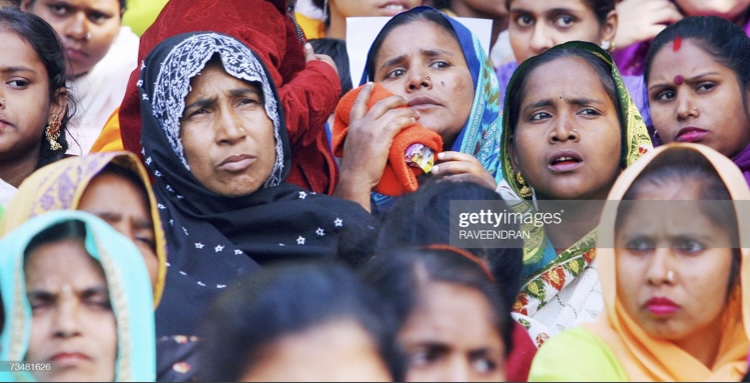


















 Track2Training
You must be logged in to post a comment.