An interview is a structured conversation where one person asks questions, and the other one answers. The word “interview” refers to a one-on-one conversation between an interviewer and an interviewee in common parlance.
The more you know about the interview style, the better you can prepare. Here is a list of types of unique interviews:
The Lunch / Dinner Interview
This type of interview gives an employer an opportunity to evaluate your communication and interpersonal, social skills as well as your business etiquette and table manners. So order wisely and make sure you don’t spill your beverage.
This type of interview can have various question formats.
Lunch/Dinner Interview indicates that the interviewer wants to learn more about you and your behavior outside the office. This is still a part of your interview and you need to try to be your best when you are at it.
Competency-Based Interviews
These are conducted to show the employee’s competencies the employer is seeking for the job. These will usually be detailed in the job spectrum so make sure you research and read the relevant material thoroughly.
Portfolio Based Interviews
In the design/digital/communications industry, it is anticipated that you will be asked to take your portfolio along or show it to employers. Keep your work is up to date and balanced. Make sure that your images and fonts are big enough for the interviewer to look at properly.
Informational Interview
An informational interview is conducted with the objective is to take advice and acquire more knowledge about a particular organization, sector, or employer. Examining industry specialists is a great way to add to your employment knowledge. Gaining this information makes you extra prepared. It is also an exceptional way of networking and adding contacts.
Case Interview
The case interview is a specific format of the interview in which you’re given a business problem to solve or describe the process in detail. Case interviews were solely the field of striving consultants, however, now they’re conducted everywhere from tech companies to NGOs.
Your interview could be made up of case interview questions. The interviewer is may not look for the correct answer but wants to evaluate your problem-solving skills. If you do not have information to arrange a solution, you may need to ask the interviewer a question.
Task-Oriented or Testing Interview
In these types of interviews, you can express your creative and analytical capabilities in problem-solving through different tasks or exercises. It includes a short test to assess your technical knowledge and skills. Other tasks can be presenting to a group to define your communication skills.
The Sequential Interview
These are numerous interviews in turn with a unique interviewer each time. Each interviewer can ask a series of questions to test various sets of competencies. If you are asked the same questions, you can answer each one as thoroughly as you did the previous time.
Stress Interview
This interview involves the interviewer triggering you to see your response and reaction. The interview wants to check your weaknesses and your reaction under pressure. The interviewer can constantly interrupt you, provoke you, be oddly silent, and may also put across challenging interrogation-type questions to push you to your limits.
The Puzzle Interview
Highly competitive companies ask “puzzle” questions in their interviews. The interviewer wants to conclude how fast you can think on your feet, how you’ll approach a difficult situation, and how you can make development during a challenging situation.
The Working Interview
Some industries may ask the interviewee to complete a job task as part of the interview. Your interviewers basically want to see you doing the job instead of you telling them you can do it.
The Career Fair Interview
These interviews usually last for 10-15 minutes and involve impromptu interviews where you can grab your chance to be called for an actual interview.
Serial Interview
These interviews consist of a series of interviews on the same day. So if you are registered for an interview from 1-3:30, you may have five half an hour interviews with different people. Each interviewer will mostly ask you unique questions.
Conclusion
Some interviews may be formal, others are maybe informal. However, it is important to remember that you are still being evaluated on whether you are a right fit for the company or not, so prepare well, and keep your answers clear and to the point.
Technology advancements have been a blessing to human beings, and today, computers and mobile devices have been a part of our daily lives. The internet is also a part of the technology that many of us have come to appreciate. Basically, in this day and age, it is the internet that makes many the world go round. Social media, for instance, is a part of the internet that has created a greater avenue for people to interact across the globe. Nowadays, social media negative effects are not unknown. Sadly, our youth have taken on the use of social media to the extend that it can have some very severe effects on their overall well being if not monitored or restricted.
As much as social media is known to a great social network tool, its evils in society cannot be overlooked. Youth are susceptible to potential harm posed by social media usage. If not recognized on on time and handled, these negative impacts of social media can be risky to the health and social well being of the youth. The negative effects of social media on youth are as following:
ANXIETY-We are more curious about knowing what other people are doing rather than spending time for ourselves. Those who spend more time on social media become victims of depression and anxiety because it adversely affects the thought processes and mood. Good mental health is important for study, career, and personal life. Thus, it is recommended to spend only half a hour per day instead of wasting your whole day.
DECREASED ACTIVITY-Teenagers who use social media heavily do not spend enough time on activities that definitely increase mental abilities, skills, and physical movement. Those who exercise daily, their body releases endorphins that signal our brain to stay positive and reduce depression. Thus decreased activities reduce thee secretion of endorphins and it is causing depression.
POOR CONCENTRATION-Today negative effects on social media on students can be seen easily. Different tasks, such as schoolwork, classwork, or homework, require more concentration to deal with something important, but now teenagers have a habit of simultaneously using social media. Most of them consider it multitasking, but it is not. Researches show constant interruption has an adverse effect on attention and reduces learning and performance.
SOCIAL ISOLATION-There is a statistical relationship between the use of social media and social isolation. When teenagers see pictures or videos of a party where they were not invited, it can bring anxiety. It is known as “fear of missing out”. Most of the time, teenage children believe they are connecting to different persons using social media, but actually, they are out of the present moment and their lives. It can become a cause to feel more isolated and a reason for FOMO.
SLEEP DEPRIVATION-Social media is among the leading causes of sleep deprivation in teens nowadays. They are constantly worried about what their friends are posting and sharing. Adolescents can stay active on social media for longer durations. And if they do these, especially during sleep time or just before the sleep, then there is a high possibility of their sleep being disrupted. The reading can help you understand the importance of sleep and the associated risks of sleep loss.
LOWER SELF ESTEEM-Most teen girls start comparing themselves with celebrities after spending time on social media and want to look slim, pretty and rich like them. It is normal to copy those persons they admire or consider a role model in the teenage. This imitation can negatively affect their self respect and dignity. Different studies outcomes are that girls who spend more time on social media to portray themselves like celebrities are isolated from friend circles. Their friends will not accept them.
CYBERSTALKING-Smartphones are connecting people. But, negative effects of smartphones on youth can be seen today. If you’re always sharing your location, then social media friends know where you are. Teenagers are used to updating their status, share what they’re watching, listening to, reading and where they check-in. This habit becomes an addiction and make them hyperactive because they always look for new updates from their friends. They check every notification and alert to respond because they believe responding on time is necessary.
CYBERBULLYING-A bullying is the use of social media to communicate false, embarrassing, or hostile information to specific users. Among the major effects of social media, cyberbullying is an evil that has become such an atypical today. victims of prolonged cyber bullying often end up with psychological problems like depression, loneliness, anxiety and some even become suicidal.
There are many practices in the world to keep the mental and body health in harmony; One such practice is yoga. In the last few years there has been an surge in the number of yoga practitioners as these days there are more health problems and more awareness and it does have a positive impact on the body. Yoga is the art and science of uniting the body and mind that helps in “Self-Realisation”. Yoga was a method used for liberation of individual souls but now it is presented as a solution for global problems. Yoga has various branches that are practiced based on the problems one would like to be deal with. Yoga gives inner peace.
Yoga has its origins from the Indian Subcontinent and is practiced and passed on for many generations. The word ‘Yoga’ is derived from the Sanskrit root ‘Yuj’, meaning ‘to unite’. The highest or ultimate result of yoga is ‘samadhi’. A lot number of seals and fossil remains of the Indus Saraswati valley civilisation suggest the presence of yoga in ancient India. The presence of yoga is available in folk traditions, Indus valley civilization, Vedic and Upanishadic heritage, Buddhist and Jain traditions, the epics of Mahabharat and Ramayana etc. Yoga is broadly classified into four divisions- mantra yoga, raja yoga, laya yoga, hatha yoga. The practice of yoga in the vedic tradition was as a result of the internalization of the vedic ritual and its elevation symbolically from the material plane into the mental plane. By practicing yoga you have
Ability to move everywhere
Ability to control everything
Ability to become light or heavy
Ability to fulfil desires etc.
ADVANTAGES OF YOGA
Yoga is very deep and its understanding cannot be expressed in words. However, there are many advantages of performing yoga:
Yoga helps to enhance the circulation of blood and nutrients to circulate to all parts of the body.
Yoga can be done anywhere, anytime and doesn’t need any equipment.
Yoga brings out the inner strength in your body and helps you to have a stronger body. It also aids in lifting your own body.
Yoga improves your body posture making it healthy.
Yoga improves the concentration of individuals.
Brings up a healthy weight.
Yoga prevents the risk of heart diseases because it help to reduce blood pressure, pulse rate, cholesterol and maintains a healthy weight too.
There is a state of balance in the body and mind when practicing yoga.
Yoga delays premature ageing because it is also a technique to detox your body.
It is an effective treatment for depression and studies have shown that it acts as an anti-depressant and reduce stress.
Yoga improves your body flexibility.
Yoga helps you to sleep better without any disturbance.
Yoga increases immunity because it is a type of healing that helps every cell in the body to be immune.
It helps to improve the mood and helps to get rid of laziness, anxiety and dullness.
It helps in the better functioning of the lungs through breathing exercises which is very much necessary for the existence of life.
COVID-19 has completely driven the people lives of India as well as rest of the world, totally in a different way. Hence similar to other countries, India is also badly troubling now in an enormous way like education and so called best health infrastructures totally affect the economic condition towards downward direction of today’s time and the future in a cruel manner. There is no end till now to stop this pandemic and the whole world are facing another COVID-19 aftermath i.e. pandemic crisis. Economically, India was already in a bad condition before start of this pandemic and now this crisis has created more and more pathetic situation for the people. All the people lives of both urban and rural areas are deadly affected by this pandemic crisis. Social distancing and other safety precaution are not fully followed by the people. On the other hand, this pandemic crisis has increased the unemployment rate with anxiety and depression. In that situation, both government and public health care sector are collapsed due to heavy COVID-19 patients. The earlier physical class room system is totally changed into online class room system and learners (basically in rural sectors) fell some difficulty to adopt this. This crisis generates a new system for work, called work from home. In this chapter, we discuss about some major points of crisis in this pandemic situation in India.Millions of Indians have lost jobs in the formal sector since April due to the economic stress caused by novel coronavirus. However, the pandemic is not the only reason behind the ongoing job crisis in the country.The economic impact of the COVID-19 pandemic in India has been largely disruptive. India’s growth in the fourth quarter of the fiscal year 2020 went down to 3.1% according to the Ministry of Statistics. The Chief Economic Adviser to the Government of India said that this drop is mainly due to the coronavirus pandemic effect on the Indian economy. Notably India had also been witnessing a pre-pandemic slowdown, and according to the World Bank, the current pandemic has “magnified pre-existing risks to India’s economic outlook”.Major companies in India such as Larsen & Toubro, Bharat Forge, UltraTech Cement, Grasim Industries, Aditya Birla Group, BHEL and Tata Motors temporarily suspended or significantly reduced operations. Young startups have been impacted as funding has fallen.Fast-moving consumer goods companies in the country have significantly reduced operations and are focusing on essentials. Stock markets in India posted their worst loses in history on 23 March 2020. However, on 25 March, one day after a complete 21-day lockdown was announced by the Prime Minister, SENSEX and NIFTY posted their biggest gains in 11 years.The Government of India announced a variety of measures to tackle the situation, from food security and extra funds for healthcare and for the states, to sector related incentives and tax deadline extensions. On 26 March a number of economic relief measures for the poor were announced totaling over ₹170,000 crore.India does not have reliable, official high-frequency data on jobs. While CMIE’s jobs data has been the centre of a political slugfest in the past, with government officials repeatedly questioning the survey’s methodology, Sen said that it doesn’t matter now because what we are interested in is “capturing change”.
Neem leaf is used formerly ,eye disorders,bloody nose ,intesential worms ,stomach upset ,loss of appetite , skin ulcers , diseases of heart and blood vessels , fever , diabetes , gum disease and liver problems .
Neem seed extract contains an active compound that affect hair and skin such as live .Azadirachtun works by disrupting parasite growth and other cellular processes.
Chewing Neem bark to promote oral hygiene is a common practice in India.
Neem’s antiseptic , anti – inflammatory , antioxidant and immune -boosting properties may promote oral health . Although more research is needed studies indicate that Neem may relieve pain and help treat gingivitis ,periodontitis and tooth decay .
Although Neem appears to have numerous therapeutic effect , results are inconclusive sine they’re based on test -tube and animal research with very few human studies.
The Deep Ocean Mission which was pending for a long time has been approved by the union cabinet. The mission is to be implemented at an estimated cost of Rs. 4,077 crore for a period of 5 years. It will be Phase-wise, where the first phase for 3 years(2021-2024) will be Rs. 2823.4crore.The Ministry of Earth Science [MoES] will be the Nodal Ministry implementing this multi-institutional mission. The institutions are ISRO, DRDO, BARC, CSIR, Department of Biotechnology etc.,
Deep Ocean Mission is a project to support the Blue Economy initiative of govt. of India. The mission will let India explore the Polymetallic nodules in the allotted area of 75,000 sq. km in the Central Indian Ocean Basin [COIB] by the UN National Seabed Authority. The rocks containing copper, iron, manganese, nickel and cobalt are scattered in the seabed.
The mission involves 6 main components they are:
1) Deep sea mining and Manned submersible:
Developing a manned submersible capable of carrying 3 people with scientific sensors and tools to a depth of 6000 metre. For mining of Polymetallic nodules in central Indian ocean an integrated mining system will be developed.
2) Ocean climate change advisory service:
Developing a suite of observations and models to understand and provide future projections of important climate variables on seasonal to decadal time scales.
3) Exploration and conservation of deep-sea habitat:
Technological innovations for exploring deep sea flora and fauna, including microbes and make study on sustainable utilization of these bio-resources.
4) Deep sea survey and exploration:
To explore and identify sources of hypothermal minerals as it is the source for precious metals formed from earth’s crust found along the Indian ocean mid oceanic ridges.
5) Energy and fresh water from ocean:
Studies and detailed engineering design for off shore Ocean Thermal Energy Conservation[OTEC] powered desalination plant.
6) Advanced marine station for ocean:
Developing Human resource in the ocean science field. By grooming experts and developing enterprises in ocean biology and engineering. This will translate research into industrial application and product development through online site business incubator facility.
The Deep Ocean Mission was envisaged in 2019 as Rs. 8000 crore mission. If it works, India will be in the list of those countries that is able to launch underwater mission in the unexplored depths of ocean.
It is so rare for us to see someone who is not bent over their digital gadget and drunken in their own world. I say drunken, because an alcoholic can be compared to how we are drawn to our gadgets, especially mobile phones. It can be seen as a form of addiction seeing many children are taken to psychiatrists to even communicate properly even with their parents.
It was, at first considered as a blessing to communicate with our loved ones who are far away from us and keep a check on them. But since then, the technology and the gadgets have evolved so much so that, we are at a point where we cannot even control what the internet knows about us. If that is not threatening enough, I don’t know what is.
If there is something good, there ought to be something. Our human brain is made like that, to think of the opposite ways in which a power can be used. There are loopholes for everything and no one is. Sure, there are million ways in which internet and gadgets can be used to our good, but there are equal million ways in which it can be misused. It is a point of concern because even small kids are using internet and it is important for the adults to supervise what is accessible to them.
When there are ways possible in which the technology can be misused, it will be abused. There are many cases of cybercrimes and cyber bullying reported day to day. The lack of education on proper use of internet and the lack of control and restriction on what can be uploaded in the internet is what leads to this.
From the simple task of students copying stuff from the internet to the bigger crimes like fraud in internet banking takes place because of internet. These are times when we are looked upon strangely if we don’t know how to use internet, especially if you are a millennial or a Gen Z-er. Our intellect is finalized with our skills in using technology. People who grew without internet and technology are struggling to cope with the rapid increase in the expectation of them to portray themselves as intelligent. As the age old saying goes, from 2 years to 82 years of age, all people are forced to adapt themselves to changing situation.
Even Government has started moving the transactions and other Government services to the internet through the movement, ‘Digital India’. The problem with that is, due to abundance of population and the amount of misuse in the form of hacking and even simple problems of internet connectivity has delayed to main idea of the initiative. Needless to say, there are some villages without even a taste of internet and they are just doing fine.
So should we shun internet and go back to the medieval days? It is true to stay up to date and in competition with the internet and technology in order compete bigger giants such as US and China, else we will be trampled on, but it needs time and that time has not yet come. It would take at least a decade for all the citizens of India to adapt themselves and equip themselves for this change.
There are plethora of things in the internet. It is up to us whether we use it to our gain or not.
36 mini heart attacks and 2 sleepless nights. That’s it.
If you can relate to this, guess what, you are nyctophobic. In simple terms, nyctophobia means the fear of the dark.
But don’t panic, you are not alone. Nyctophobia is the third most common phobia of all phobias, so you are not the only one who sees immortal figures at night. But that does not mean that you shouldn’t take it seriously. Also, guess what? It can go away.
Nyctophobia should not be confused with phasmophobia though. Phasmophobia is the fear of ghosts but nyctophobia includes a lot of things. Fear from anything which has an evil or a dark side.
While this type of phobia cannot surely be referred as a mental disease, it is, however a mental condition. But you do need to go to a psychiatrist for it and again IT SHOULD NOT BE IGNORED.
Basically, a person with nyctophobia sees things that aren’t present there. Not only ghosts or monsters, but they can also imagine that somebody wants to kill them or something. Most people with this condition cannot even sleep alone with the lights switched off, because they are not able to convince their mind that THEY ARE sleeping alone in fact. If you know what I mean.
In my case, for example, whenever I used to sleep alone and I closed my eyes, my mind used to tell me that there was somebody standing inside the room staring at me and I used to end up opening my eyes each time. According to my mom, it was very normal of anybody on this planet to not be able to sleep alone for about 2-3 nights after watching a haunted movie or something and so I do not need a psychiatrist. But you know that you are nyctophobic when there is another haunted movie going on inside your head each day even without taking a glimpse of it on tv. So now, after a lot of persuasions, my mom is convinced to allow me to see a psychologist.
This war is difficult to win and I know it because you have got to fight a long battle with your own mind over here and oh boy your subconscious is more powerful and strong than you know. So, the following are some things you can do to get a strong spell on your own subconscious and overcome this fear of the dark:
1. MEDITATE – This one is very important. It is going to help you to peace out your mind. It will help you get in terms with your subconscious. You can meditate daily for 20- 30 minutes any time of the day.
2. Believe in god- Even if you aren’t a very religious person, just believing that there is a greater force out there that is holding something positive for you can help a lot. And yes, it is tried and tested.
3. Medicate- Yes, there are drugs like Antidepressants and anti-anxiety medications that can control the physical reactions you have to the dark, like racing heart and panic attacks. But this cure is pretty temporary and not really advisable because it may start to affect your health.
4. Cognitive Behavioral Therapy [CBT] – The success rate of this therapy is over 90% and it is very much long-term. You will have to consult a therapist or psychiatrist for this.
5. Avoid watching movies or shows that scare you. This can decrease your level of anxiety at night.
6. Start with little steps. You can start by leaving a little light lamp ON at night and then go to sleeping in complete darkness.
7. CONSULT AAAAA THEERRRRAAAPIISSSSTTT ! Because if you simply don’t, this fear can start to have adverse effects on your health. It will affect the amount and quality of your sleep and cause sleep deprivation. THIS can interfere with our daily life chores. This fear can lead you to take sleeping pills, which as we all know are not trustable enough in regards to our health as well.
There aren’t any well-defined causes of this type of fear. It can be genetic or hereditary, if any of your parents have it, there are high chances of them passing it on to you. It can also be caused through the memories of any bad incidents in the past like the death of a loved one, or an accident. Or it can be NATURAL, and it might go away with your growing age.
Lastly, you should definitely not ignore this phobia as it can persist for a lifetime if not taken care of. You should not, however, panic or feel embarrassed because of your fears and should tell your parents asap because these types of phobias are pretty common and can naturally be found in any person. So just cherish your life and realize that there is a bodacious side to the darkness that is waiting to be discovered and admired by you : )
Scientists have shown that the cold desert of Ladakh Himalaya once experienced large floods that rose much above the present-day river level. It implies that in the scenario of global warming, when the higher Himalaya regions are expected to respond dramatically, flood frequency in Ladakh may increase, which may call for serious urban and rural planning.
Large floods that naturally occur in major rivers of India fed by melting snow and glaciers and a continental scale precipitation regime of Indian Summer Monsoon (ISM) and Westerlies and East Asian Summer Monsoon (EASM) significantly modify the landscape and impact lives and economy of all that encroached into its geomorphic domain.
These floods are of various kinds and origin (Glacial/landslide lake outbursts, cloud bursts, excessively strong monsoon) and have different forcing factors and frequencies and therefore add large uncertainty in flood prediction models. An instrumental record of these floods is of ~100 years is not enough to understand the natural ramp of flood occurrences in the Himalayas, and therefore archive going deep into time is required.
A team of students and scientists lead by the Wadia Institute of Himalayan Geology at Dehradun, an autonomous institute of the Department of Science & Technology, Government of India, travelled through the tough terrains of Zanskar and Indus drained Himalaya and looked minutely into geological signatures of past floods in Ladakh region that date between 15-3 thousand years before present. This study was recently published online in the Geological Society of America Bulletin.
Flood leaves a stack of fine sand and silts at places along its channel where the flood energy drastically reduces, for example, wider segments of river valleys, confluences, behind rock embayments which is called as Slack Water Deposits (SWDs). The SWDs were located at several locations along the Zanskar and Indus rivers, counted vertically for the number of floods, and were dated using technology called Optically Stimulated Luminescence (OSL) and Accelerator Mass Spectrometry of 14C. The flood deposits were also analysed for their source.
This analysis showed that the cold desert once experienced a large flood that rose to more than 30 m above the present-day river level. The active flood plains nearer to river were also utilized by Humans, possibly as camping sites and cooking as indicated by presence of hearths at several locations and levels of flood deposits.
The chronology of the flood deposits pointed towards three phases of increased flooding occurred in Ladakh after the period called Last Glacial Maximum (14–11, 10–8, and 7–4 (1000 years) or ka). These were times when due to warming, the Indian summer monsoon was active in Ladakh as well. The results also suggest that Ladakh floods are chronologically out-of-phase with those occurring in North-Eastern Himalayas and mainland China during the past 15 thousand years. This implies that the modern relationship between the ISM and EASM goes deep into more than 14 thousand years. Further, the rocks of Higher Himalayan Crystalline and Tethyan sequences equally act as hotspots of erosion in the regions during the flood phases.
The preliminary study of hearths suggested that there was an inbound migration of people along the mountain corridors of Ladakh after the Last Glacial Maximum when temperatures were relatively warmer, and hydrology of the region was supporting. According to the WIHG team, a detailed genomic and isotopic-based study of these anthropogenic relics may further help understand the geographical antiquity of migrating humans and the kind of food and vegetation they were living on.
Bangladesh will set up an international institute for vaccine production including for COVID 19.
Announcing it in Parliament on Wednesday, Prime Minister Sheikh Hasina said that the government will sign an agreement with South Korea to set up the vaccine institute in Bangladesh. She said that government to government negotiations are going on with the countries which have developed vaccines for COVID 19 for technology transfer.
The capacity of three Banglaesshi firms has been assessed for the production of the COVID 19 vaccines. Prime Minister Hasina told parliament that a vaccine developed by one of the Bangladeshi companies Globe Biotech Ltd is now in the trial stage.
Prime Minister Sheikh Hasina said that the government has taken initiative to produce COVID 19 vaccine alongwith collecting vaccines from various sources in the world in view of the Corona pandemic. She said Bangladesh has so far received 1.08 crore doses of the COVID 19 vaccine from foreign sources out of which 1.02 crore doses came from India including the gifted doses of over 3 million doses.
India continues to report Covid cases below 1 lakh per day.
As the various states across the country begin unlocking in a graded manner, a section of people are hopeful of easing in travel restriction by several countries which came into play as India was hit hard by the second wave of Corona.
There is a large population of students who have been lucky to secure admission in various foreign Universities but were unable to join their institutions as the spread of Covid and subsequent closure of the various embassy and Consulate offices almost stopped processing of all type of Visa applications. The sudden and unprecedented situation created a panic among many people who got stuck in India. Various embassies started getting urgent calls but they largely remained unfulfilled due to strict Covid Guidelines and travel restrictions. Now as the situation of the pandemic in India is fast deescalating, various foreign Missions have started indication that things might get well soon.
France has called for students interested in studying in France to apply for Visas. French Ambassador Emannuel Lenin took to Twitter “Looking to study in France? Student visa applications are now open at your nearest VFS centre! Get all the information you need on programmes & scholarships, plus free counselling at your nearest Campus France office:” He tweeted.
The U.S. Embassy and Consulates in India are continuing their important operations. Spokesperson of the US embassy In Delhi said that student visas remains a top priority and the U.S. Mission to India is making every attempt to facilitate student travel in time for the fall semester, including by offering tens of thousands of July and August student visa appointments at posts across India. Most other routine nonimmigrant visa appointments at U.S. Embassy New Delhi and the consulates in Chennai, Hyderabad, Kolkata, and Mumbai remain limited. Mission India posts will make every attempt to continue to honour approved emergency visa appointments. Emergency services for U.S. citizens will continue.
For people keen on travelling to the UK, The High Commission has already started Visa application centres for quite some time. A British High Commission spokesperson said: “The UK’s Visa Application Centres in India are open and we continue to process applications for many visa categories, including student and skilled worker visas.” The UK’s new Graduate Route for international students are opening for applications on 1 July 2021. The spokesperson said, “Our universities are global institutions which thrive on the contribution of international students, including those from India.”
Meanwhile, “The UK has also modified visa rules to ensure students can study online until they’re able to travel to the UK for in-person tuition.” He added further
Acknowledging the deep people-to-people links between India and Singapore, A representative from the High Commission responded, “We hope that the situation continues to improve. We will continue to monitor the situation and adjust our border measures accordingly.” The representative further added Singapore government is working closely with IATA to safely rebuild connectivity. Singapore is one of the first countries to adopt the IATA Travel Pass for the submission of pre-departure PCR test results to airlines and immigration checkpoints from 1 May 2021.
The pandemic has affected all aspects of life globally. With the global fight getting stronger against the pandemic with aggressive vaccination, things are gradually moving back to normalcy.
India has signed an agreement extending a US$ 100 million Line of Credit (LOC) to Sri Lanka for projects in the Solar Energy Sector.
The agreement was signed between the Government of Sri Lanka and the Export-Import Bank of India.
A press statement from the Indian High Commission in Colombo said, ‘India has become the first country to partner with Sri Lanka in fulfilling the vision of the President of Sri Lanka, Gotabaya Rajapaksa, to ensure that 70% of Sri Lanka’s national power requirements are fulfilled by renewable energy sources by 2030,”
The agreement was exchanged in the presence of President Rajapaksa, between the High Commissioner of India to Sri Lanka, Gopal Baglay and the Secretary to the Treasury, S.R. Attygalle. President Gotabaya Rajapaksa and the High Commissioner of India also discussed the striking similarity in the national objectives outlined by India and Sri Lanka in connection with solar energy.
President Rajapaksa in his tweet said “Sri Lanka is going green, and we are working extensively to make it happen. Today, we formalized the agreement on the Line of Credit worth US$ 100M b/w Sri Lanka and the Export & Import Bank of India. Steadily, we’re getting closer to the goal of 70% renewable energy by 2030.”
This US$ 100 million LOC will help finance various projects in the solar energy sector in Sri Lanka, such as rooftop solar photo-voltaic systems for households and government buildings. Some of the projects were announced during the Founding Conference of the International Solar Alliance (ISA) held in March 2018 in Delhi.
Thus far 89 countries, including Sri Lanka, have signed the Framework Agreement of the ISA, which intends to bring together countries to promote the large-scale deployment of solar energy and overcome challenges related to technology, finance and capacity.
Bangladesh reported its highest level of single day COVID 19 infection and deaths in over 6 weeks on Wednesday.
According to the latest figures released by the Directorate General of Health Services (DGHS), 60 people died and 3956 new Corona Positive cases were detected in the last 24 hours on Wednesday morning.
The single day death toll on Wednesday is highest since May 4 when 61 people had died due to Corona. Similarly, the new COVID 19 infection on Wednesday marks the highest level since April 22 when 4014 new cases were detected.
The sample positivity rate also continued to rise. It was reported to be 16.62 percent on Wednesday marking a sharp rise from 14.27 percent on Tuesday.
In order to control the further spread of Coronavirus in the country, the government of Bangladesh has extended the ongoing restrictions on movement and public gathering till July 15. Government has imposed COVID 19 related restrictions in the country since April 5 which has been extended with certain modifications in several phases. The current phase of COVID restrictions ended on Tuesday.
According to the notification issued by the Cabinet Division on Tuesday, the government has authorised district administration of high risk districts to decide about restrictions or lockdown. All tourist places, resorts, community centres and recreation centres will remain closed. Social, religious or political gathering will be restricted. Hotels and restaurants will be allowed to serve people upto half of their capacity. Similarly, public transport will also operate by allowing people to board only upto half of their capacity. However, government and private offices and factories will remain open with observance of health guidelines.
Rajesh Jha/Dhaka/16.6.2021 Rajesh Sir: Bangladesh to set up international vaccine institute- Prime Minister Hasina
Bangladesh will set up an international institute for vaccine production including for COVID 19. Announcing it in Parliament on Wednesday, Prime Minister Sheikh Hasina said that the government will sign an agreement with South Korea to set up the vaccine institute in Bangladesh. She said that government to government negotiations are going on with the countries which have developed vaccines for COVID 19 for technology transfer.
The capacity of three Banglaesshi firms has been assessed for the production of the COVID 19 vaccines. Prime Minister Hasina told parliament that a vaccine developed by one of the Bangladeshi companies Globe Biotech Ltd is now in the trial stage.
Prime Minister Sheikh Hasina said that the government has taken initiative to produce COVID 19 vaccine alongwith collecting vaccines from various sources in the world in view of the Corona pandemic. She said Bangladesh has so far received 1.08 crore doses of the COVID 19 vaccine from foreign sources out of which 1.02 crore doses came from India including the gifted doses of over 3 million doses.
The Sports Authority of India has recieved requests through NRAI for the vaccination of two skeet shooters Angad Vir Singh Bajwa and Mairaj Ahmed Khan who are shooting in Italy.
The former needs his second dose and the latter requiring his first, since he has recovered from Covid infection just over a month ago.
For the vaccination of the skeet shooters, National Rifle Association of India intimated SAI on June 10. The Embassy of India in Rome, has taken the issue up with the concerned Italian authorities and are working towards organising vaccine doses for both. The SAI and Embassy are in touch with both athletes to help resolve the issue. The Italian government’s health department has requested for details of athletes with regards to their past Covid history, which have been furnished.
As for the extension of the gun permits and visas of the two shooters and visa of the physical trainer Jitender Arya till July 18, the Ministry of Youth Affairs and Sports has already written to the Ministry of External Affairs for assistance. Since Italian authorities have said the visas of those already in Italy cannot be extended as per rules, the Embassy of India in Rome has taken it up with the Italian Olympic Committee to help secure the extension of visas.
Both athletes are likely to travel to Croatia for the World cup from Italy. The Indian Government has also made backup arrangements for their vaccination in Croatia in the event of vaccination not taking place in Italy, so that both athletes get two doses before their travel to Tokyo.
Cell towers, also known as cell sites, are where electric communications equipment and antennae are mounted, allowing the surrounding area to use wireless communication devices like telephones and radios. Cell towers are usually built by a tower company or a wireless carrier when they expand their network coverage or capacity, providing a better reception signal in that area. Cell towers are basically everywhere across the United States, although some cities have more than others. And Millman Land was there since the late 1990s, ensuring that the cell towers are all properly inspected. There are currently more than 307,000 cell towers in the United States. Sometimes they can be spotted on tops of buildings. Other times cities require cell towers to blend into the cityscape seamlessly. Rural areas sometimes hide them in treescapes, disguising them as a tree.
Our wireless services include cell tower surveys, cell tower audits and As-builts. In this article, we aim to tell you more about cell towers and how they work. We also want to address people’s growing concerns over 5G and put to rest the rumors. How Do Cell Towers Work? cell tower in New YorkThere are over 300 million cell phones being used daily in the United States.
Whenever a cell phone is used, it emits an electromagnetic radio wave, called a radio frequency, that is received by the nearest cell tower’s antenna. Once the cell tower receives this signal, it will transmit the signals to a switching center. This allows the call to be connected to either another mobile phone or to a telephone network. It’s crazy to think all of this happens in mere seconds. Related: The Ultimate Guide to ALTA Surveys Parts of a Cell Tower The insanely fast technology of a cell tower is due to its parts. You’ll hear us mentioning cell carriers a lot in this section. That’s because a lot of the parts of a cell tower are provided by individual cell carriers, also known as wireless networks. There are four wireless networks in the United States that have the best coverage. Right now the top provider is Verizon, which has 70% 4G coverage. AT&T is in close second with 68%. T-Mobile has 62% and Spring is in fourth with 27%, a major decline in coverage. Verizon US 4G coverage cell towers in US The Tower There are actually four different types of cell towers. The first kind is known as a lattice tower. Also called a self-supporting tower, this type of tower offers incredible flexibility. It usually has three or four sides with similar shaped bases. The second type of tower is a monopole tower. This type of tower features a single steel or concrete tube tower, usually under 50 meters. It only requires one foundation. The antennas are attached to the exterior. A guyed tower is cost-effective but requires a bigger amount of land. It’s usually built 100 meters or greater, connected buy guy wires to anchor and support it. They are attached to the ground in all directions. Most radio and television towers are guyed towers. The fourth type is the stealth tower, which we briefly touched upon before. Often required by councils, these are more expensive than the other three options but aim to beautify the community they’re in. They require additional materials that help them hide in plain sight. While much more appealing, they often do not provide the same amount of capacity for tenants.
The Equipment The equipment on cell towers includes transceivers and other supporting technology. These are installed in cabinets or shelters or any other way that wireless carriers choose to protect them. Some even create outdoor cabinets on concrete pads or prefabricated equipment shelters.
The Antennas Alright, we’ve touched on antennas a lot, but what are they? There are multiple antennas attached to a cell tower, typically mounted on a head frame. Some towers even have up to 15 antennas per carrier. This number really depends on the antenna’s performance, coverage and capacity requirements. Utilities and Access Carriers will also install utilities at the cell tower site. Each carrier has power to run to the site as well as phone service. Each cell tower also requires access by the carriers for initial installation and ongoing maintenance.Cell Tower Range The aforementioned parts help determine just how far a cell tower can be a from a cell phone while still able to pick up its signal. That distance is determined by the connecting technology, landscape features (hills, trees and buildings), the power of the tower’s transmitter, the size of the cellphone network and the network’s design capacity. What’s interesting is that a cell tower will sometimes have their transmitter seat to a lower power on purpose to ensure it doesn’t interfere with neighboring cells. But even with all of those factors, the typical cell tower can provide service up to 45 miles away. That’s quite impressive! Let’s take a closer look at what various components affect a cell tower’s range and effectiveness.
What Affects a Cell Tower’s Range?
The range of a cell tower is not a fixed figure. That’s because there are so many variables when it comes to the range in which a cell tower connects a mobile device. The most common variables include:How hight the antenna is over the surrounding landscape.The frequency of the signal in use.The rated power of the transmitter.The directional characteristics of the antenna array on the site.Nearby buildings and vegetation absorbing and reflecting radio energy.The local geographical or regulatory factors and weather conditions.Cell towers are often built in areas with high population densities. That’s because these cities have the most potential cell phone users. For that reason, you’ll often find cell towers “overlapping” in more crowded areas. This helps to avoid interference problems. If you find yourself wondering why you don’t have a signal on your cell phone, it could be because you’re too far from a tower or because the cell phone signal has been decreased by hills, large buildings or other structures. You may also lose your signal if a lot of people are attempting to use the cell tower at the same time. That often leads to calls getting dropped. While driving, your phone can switch from one cell tower to the next mid-conversation. As you continue your journey, the cell phone will pick the strongest signal and release the weaker cell tower, making it available to another caller. Another factor that could affect your signal is a problem with the cell tower. With help from surveyors like Millman National Land Service, these issues can be identified so they don’t turn into a major headache. man on cell tower overlooking city dangerousIs
5G Dangerous?With the coronavirus pandemic continuing to strike fear into people all over the world, it’s no surprise that we’re seeing an abundance of conspiracy theories regarding COVID-19 and how it’s spread. One of the most bizarre are the Facebook posts claiming that 5G has created the coronavirus pandemic. While definitely a little on the radical side, there are still some health concerns about 5G that are a bit more grounded in science. But no: 5G did not cause the coronavirus. What is 5G?Big wireless carriers like AT&T, Verizon and Spring have started to implement 5G as the new wireless standard. In a year or so, 5G will be available throughout the United States. There are currently some devices that use 5G, like Samsung’s Galaxy S10, but most current phone models do not support 5G just yet. 5G will basically be a major improvement on network performance. It’s considered a huge upgrade from 4G, which debuted back in 2009. While 4G delivers 10 Mbps, 5G will deliver peak speeds between 10 and 20 Gbps. It’s also more ideal for video game streaming, downloading movies and other heavy-duty data activities since network latency will drop from 30ms to 1ms. While this is all exciting technology-wise, there are currently growing concerns over the health risks of 5G, since it’s a stronger radiofrequency. While 5G has not caused the coronavirus, are there other dangers lurking on cell towers across the United States?
How Dangerous Is Radiofrequency Radiation?So what are these Facebook conspiracy theorists claiming about 5G? There are growing concerns that 5G’s higher energy radiation will bring potentially damaging effects to human beings near the cell towers. This increase in radiofrequency radiation will supposedly lead to cancer, premature aging and disruption in cell metabolism thanks to damage done to human DNA. Is this true? Well, not to be an alarmist, but RFR can also be found in your microwave, radios and other daily activities and common household items. Even computer monitors. Because of this, it’s already been determined that RFR is not really all that dangerous unless used in certain circumstances. What are these dangerous circumstances? Well, the radiation has to be “ionizing” to be strong enough to break chemical bonds. This includes x-rays and gamma rays. Wi-fi and FM radio are “non-ionizing,” meaning they’re too weak to cause any damage. Non-ionizing RFR, like those found coming from cell towers, have no known mechanism that causes biological effects or DNA mutations. In other words, it’s completely safe. The Risks of 5GSo 5G is a new technology – a stronger technology. Should people be concerned? Currently, 5G is a non-ionizing RFR, meaning it’s not able to do any real damage. Many conspiracy theories point towards the fact that 5G will require more transmitters. Since there are more popping up in cities, towns and neighborhoods, will the dose be higher? While a reasonable question to ask, 5G cell towers are still not a threat, even when there’s more cropping up. The electromagnetic radiation you withstand by walking outside is far greater than a 5G cell tower. But what about 5G’s higher gigahertz frequency? Since it’s higher, is it more dangerous to living organisms? Currently, there’s no science supporting this. The FCC has also stated that there are no health problems currently associated with cell towers. “For 5G equipment, the signals from commercial wireless transmitters are typically far below the RF exposure limits at any location that is accessible to the public,” said Neil Derek Grace, a communications officer at the FCC.While scientists are continuing to look into 5G technology and possible health risks, there is currently nothing to support that 5G cell towers do real harm to humans or animals.
Groundwater is a critical resource for food security, providing 40% of the world’s irrigation . Millions of farmers depend on groundwater irrigation to help produce 40% of the world’s agricultural production, including a large proportion of staple crops like rice and wheat . Yet, groundwater reserves are becoming rapidly depleted in many important agricultural regions across the globe . While the extent of current and projected groundwater depletion is well documented , the potential impact of this depletion on food production remains poorly quantified. Furthermore, it is unclear whether there are any adaptation strategies that may reduce the projected negative impacts of groundwater depletion on agricultural production. Yet, such information could help identify which adaptation strategies should be prioritized in which regions to ameliorate and avoid large production losses in the areas most at risk for groundwater depletion.
It is especially critical to quantify the impacts of groundwater depletion on crop production in India—the world’s largest consumer of groundwater—where groundwater provides 60% of the nation’s irrigation supply. Tube well construction has rapidly increased since the 1960s across India, allowing farmers to increase cropping intensity, or the number of seasons when crops are planted in a given year, by expanding production into the largely dry winter and summer seasons . This increase in cropping intensity is credited for much of the food production gains achieved over the past 50 years across India. However, because of high rates of extraction, aquifers are rapidly becoming depleted across much of India, with the northwest and south predicted to have critically low groundwater availability by 2025 This is of concern given that India produces 10% of global agricultural production and is the second largest producer of wheat and rice. Furthermore, a majority of India’s rural population, approximately 8% of the world’s population, depends on agriculture as a primary livelihood, and a reduction in agricultural production will negatively affect household welfare .
Very few studies have attempted to quantify the potential impacts of groundwater depletion on agricultural production in India. To date, efforts have largely relied on modeling approaches , which necessarily make assumptions about the relationship between groundwater use and crop productivity. With such an approach, it is difficult to account for real-world constraints that may reduce the efficiency of groundwater use, such as inefficient pumps and the inability of some farmers to irrigate at full capacity. Accounting for these limitations is particularly critical in regions like India, where water use efficiency is low and extremely heterogeneous across the country . Only one previous study has incorporated empirical data on the relationship between irrigation use, crop production, and groundwater depletion. However, because of data limitations, this study relied on coarse district-level agricultural census statistics that do not distinguish between whether a crop is irrigated by groundwater or other sources, like canals. Thus, to date, it has not been possible to empirically estimate the association between groundwater use, crop production, and groundwater depletion, which is critical for accurately estimating the potential production losses that may occur when overexploited groundwater is lost.
In this pandemic, it’s all about staying safe home at doing all the regular activities for over days and months, and we are still counting. So being in-home, we do take this time, taken for granted, and using it more lethargic.
Time is claimed to be an endless, everlasting one. It’s said that it neither has a beginning nor an end. Yet men can measure it as years, months, days, hours, minutes, seconds. They give meanings to the words past, present, future. True, time incorporates a meaning. It moves. What was yesterday isn’t today, what’s today won’t be tomorrow, so what try and live the instant at the moment? and in all the tiny ordinary miracles of day-to-day lives. Yet a time is claimed to possess no holidays. It exists always.
The entire creation moves on in keeping with a time pattern, there’s birth, growth, and death. There’s time for everything we stumble upon. Plants bloom flowers and provide juicy fruits. Seasons come and alter consistently with time. When a toddler is born, it grows into childhood stages, teenage, youth, middle age, and adulthood consistent with age and time. Every movement of creation on this planet is linked with time. One cannot grow paddy or wheat during a month nor daily. Consequently, one child cannot become an adult in an exceedingly year. Everything is fixed to a time frame.
Time could be a free force. It does not wait for any. It’s a commonly said quote that” time and tide anticipate none”. Time is like money. A second, not usefully spent is a never-ending loss. And yes, I spotted it after I came so far at this point in my life. you’ll be able to never come back to the lost day and time. The time flies and never returns.
Therefore one has got to know the worth of your time. Seize it and do use every moment of it. Never shelve what you’ll be able to do today to tomorrow because you are doing not know the way tomorrow would be. Procrastination is that the thief of your time, it results in a waste of your time, and at last, it wastes you. All men tend to be emotional at some point of the stage in life. Time heals all the injuries and even it heals what reason cannot. When negative emotions like anxiety, envy, fear of missing out have overtaken them, they act hurriedly resulting in serious consequences. they will repent later after emotions calm down. But the damage done is finished and it remains forever. Even that damage can heal over the passage of your time. People involved may forget and forgive. that’s the importance of your time and its healing touch. Time may be a wise counselor. Passage of your time allows a private to grow. This growth gives you experience. Experience helps in taking decisions over tasks.
Wasting time isn’t harming others. One is harming is himself Some people always complain that they’re running out of your time and there’s no time for them to try and do any of the work and it’s late. That doesn’t actually seem correct. If one is ready to wisely plan all his activities, there’ll be time for everything happening. somebody’s a part of nature, cannot grumble over time. Time is more powerful. It conquers everyone.
To conclude in today’s technology there are plenty of smartwatch brands, applications that are developed to stay remind of all of your works and make the foremost of it. If you’re not on time, you’ll miss the flight and you miss it forever. Once you miss it, it flies off. you’ll never catch that point. Hence it’s called fleeting time. Learn to use the time more authentically and fruitfully.
Urbanization is simply the expansion of urban areas onto rural areas, is now a growing issue faced by wildlife managers, city planners, and environmentalists. Urban expansion has led to some of the most significant local extinction rates as it has caused a huge alteration in the habitat of various animals to land that continues to be transformed by anthropogenic infrastructures, roadways, energy use, and activity.
Today we see various architectural and infrastructural built-ups being made every day for human use. Urbanization has surged at a global level and this rapid growth of urbanization has severe effects on the wildlife. The ecological consequences have now reached far beyond the boundaries of cities and have led to biodiversity loss and decline in species richness.
Urbanization has caused a significant decrement in the transmission of wildlife parasites, in some cases, an increase among urban-adapted hosts which affects the rarer wildlife or those living beyond city limits. Continued rapid urbanization poses a risk of multi-host pathogens against humans and vulnerable wildlife populations. Therefore, the need of the hour is for research on wildlife diseases in urban landscapes.
Studies show that continuous urbanization taking place all around the world will lead to two-thirds of the human population residing in cities within 30 years. The latest research depicts that ecologists have started to find the mechanisms by which urbanization affects biodiversity and causes a decline in species richness, including processes related to resource competition, altered trophic interactions, and the spreading of different diseases caused by parasites. Studies also show that during the process of urbanization some animal species will disappear from the newly urbanized habitat. For example, birds that feed on specific food sources which are naturally available to them will fly to other areas in search of food. Species that cannot reproduce at a rate at which urbanization is expanding will eventually disappear.
Fox squirrels are an ideal species for studying the impacts of urbanization on anti-predator responses. Fox squirrels are one of the common species found in urban areas and it seems that they are comfortable with the disturbances caused by anthropogenic settings. It is observed that squirrels found in urban areas have a lower giving-up density when it comes to foraging, which means a lower limit of food density in which they will dismiss efforts to forage. This means they spend more energy obtaining food, and potentially less energy expended toward anti-predator behaviours.
Urban fox squirrels allow humans to come within closer proximity than rural squirrels will allow. This response and boldness of fox squirrels toward humans indicate that at least to some degree they have lost some of their innate anti-predator response.
Several differences can be observed in the behaviour of wildlife seen in urban and rural areas, and it is clear that anti-predator responses are among those changes. However, exploring the surrounding responses to different types of predators is required.
As human populations continue to migrate into cities and urban areas increase, future research becomes very essential to manage disease threats against humans and animals at the interface of two rapidly growing disciplines: urban ecosystem studies and infectious disease ecology. Therefore, we aim to control forest fragmentation or agricultural intensification so that animals are not left behind without a habitat to grow and reproduce.
The term “warrior” refers to those who work hard selflessly for the country. During the times of COVID-19, We have seen so many COVID warriors who have worked day and night just to help the people . Poverty is one of the reason why people have suffered so much during the lockdown period. In India, Poverty rate every year increases due to high population, limited resources and poor quality of education available for the poor section of the society.
The main contribution towards being a COVID warrior is of doctor’s. The responsibility that a doctor carries is bigger than anything in this world. They are the one’s who protected us from this pandemic and have shown so much enthusiasm in dealing with hard times. Doctor’s deserve our love and care as they are risking their own lives in keeping us safe and healthy. Being in a PPE kit for more than their normal working hours becomes exhausting still they are giving their best. It is the time to honor them with our support and love. There is so much risk in this profession, when your mistake can take away all the hardwork you did before. Doctor’s are our source of motivation to be a better person and help others however we can.
Companies like TCS, Wipro, Google, Infosys and many more have donated so much for the people of India. Ratan Tata have recently announced salary for the family of deceased employee from his company till the age of his/her retirement. Azim Premji , Ratan Tata are one of the examples who doesn’t give up in the time when India needs them the most. There are several other people whose names are not mentioned , but they have contributed so much to show their empathy and love for India. Such warrior’s deserve our true care and love for doing so much for India.
In Bollywood Industry, People like Sonu sood deserves all the respect for the work he is doing. He is praised by every single person in our country. The hardwork he is doing for every single person is incredible. People have so much hope from the young star of India. He has influenced so many lives and still doing it. It should be appreciated about the way he is selflessly working for every single citizen.
Several NGO’s like Hemkunt Foundation, Khalsa Aid are also working in providing the basic necessary items in every part of India. NGO’s are one of the organization which have not stopped working during COVID-19 and have given their best in whatever they did and also currently doing. No reward can be enough for such organizations to honor them for the work they are doing.
COVID warriors are the one we should never forget in upcoming future. They have united us and helped so many of us. We can’t repay them in any form for the amount of help they are doing for our society. We all should stay inside our house in order to help them as this is the only way we show our genuine concern and respect for corona warriors.
A cricket player’s fitness and endurance on the pitch are controlled by what they do off the pitch. As a game dependent on quick, amazing developments it is fundamental for fuse strength preparing into your wellness routine to improve your game.
strength training for batsmen
There’s an actual interest in a cricketer’s body that requires the correct reinforcing and molding. As a batsman, you are utilizing your entire body to play out a smooth motion. The portability, strength, and vigorous wellness make up the collection of a batsman. You ought to likewise consider how your solidarity as a batsman is influenced by your stuff, as far as your cushions or the bat you use. Along these lines, you should zeroing in on each of these in your exercise center preparing program.
For batting, you depend upon the muscles in your back, shoulders, and biceps. You’re likewise captivating your center muscles to help turn the body as you swing the bat. Along these lines, your solidarity preparing should zero in on compound developments, for example:
i. Bicep twists ii. Hammer rows iii. Close-hold pull-ups iv. Overhead presses like military presses x. Hitting the rear arm muscles with plunges and rear arm muscle expansions will assist with fostering that dangerousness expected to present the bat. xi. Adjust your daily practice with center activities like boards and varieties of crunches.
strength training for bowlers
Bowling is another full-body development yet with more spotlight on the predominant bowling arm. Bowlers by and large notification their bowling arm has more strength and muscle tone because of the tedious development. The abs, obliques, and back muscles additionally advantageous from a fortifying project since they are fundamentally used to turn the body as the bowler runs and deliveries the ball.
It is encouraging zero in on rotator cuff strengthening, rotator strength, and dangerous development. The rotator sleeve contains the tendons that help the arm at the shoulder. In quick bowling, the shoulder inside and remotely turns as the hip and center muscles settle and force the development.
i. Free weight flys. ii. Link inside and outside turns. Focus on a 10-15 rep range zeroing in on legitimate structure. iii. For abs, attempt medication ball pummels to help reinforce the settling muscles.
strength training for fielding
Defenders play out a ton of sudden halting and dangerous speed while out on the pitch. Along these lines, zeroing in on lower body strength for speed and deftness and chest and shoulder practices for tossing the ball could profit from your on-pitch performance.
i. To heat up play out a case hop preceding your solidarity preparing exercise. The advantage of a container bounce is that it builds your instability. Begin by performing 3-5 reps at a difficult tallness. ii. Squats, strolling thrusts, and single-leg deadlifts with a leap enacts those muscles needed for speed, force, and execution. iii. For shoulder and chest strength, take a gander at joining shoulder presses and lat-pulldowns during your preparation program. iv. Another incredible exercise for field cricketers is frog squats, as this development can help in handling ground balls. 2 – 4 meetings seven days will assist with reinforcing and condition your entire body. v. As defenders spend extensive stretches on their feet switching back and forth between stopping and running, make certain to adjust your solidarity program with vigorous preparing like running, paddling, or cycling.
3 essential stretches for cricketers
Batting, bowling, and handling all convey a danger of injury. You’re putting a great deal of weight on the body with dreary development and extensive stretches of play. Extending may appear to be a little piece of your solidarity preparing program however it assumes an imperative part. Attempt these stretches after your solidarity preparing project to forestall injury and keep up on-field execution:
Hip abductor stretch: In a bowing position, bring the correct leg out in front, and push your left hip forward until you feel a stretch in the left hip. Rehash on opposite side.
Pectoral stretch: Standing sideways against a divider with one foot before the other, bring your back arm against the divider behind you, and delicately press the arm against the divider by turning somewhat toward the left.
Side stretch: Remaining with feet shoulder-width separated, bring the arms up to the roof catching the hands together. Gradually twist aside feeling a stretch in the side body. Rehash on the opposite side.
Regardless of what level you’re at as a cricket player, strength preparing will improve your game and by and large execution by expanding deftness and wellness. Cricket is a method-driven game, where strength and molding ought to be custom-made to your particular job in the game. Get more grounded to forestall injury, construct your unstable speed, and increment ideal execution with an extending program.
We are within the age of science and technology. Man cannot live without the help of science. Science has engulfed our lives that nothing can happen in our day o day work without the assistance of science. Our food, transport, learning, administration, recreation, and social life are linked with science in various ways.
To answer the question, whether science has come to mankind as a boon or because of the reason for ruin. one should know what science actually means. Science is claimed to be a scientific classification of experiences. We, men, wonder at the varied thing and events happening around us. We get doubts about what are they? why are they happening? If so why these questions are the fundamental seats of science. then starts with thinking, analyzing, reasoning, synthesis, and contrast, and at last, the reality reveals. scientists say there’s a methodology for everything and there are inevitable steps to follow, they include, observation, hypothesis, experiment, theory, and proofs. all scientists having the way followed these steps.
Aim of science:
The aim of science is to go looking for truth and to grasp things, hitherto unknown. A scientist doesn’t accept ideas, just because they were accepted by others earlier. Great discoveries are a result of reasoning. lots of patience and observation are required. Civilization, because it today, is that the result of a variety of discoveries made within the field or of science. The invention of the easy wheel has resulted in our modern industrialization. Electricity, as a source of energy, has revolutionized the planet. Science has contributed to the success of our revolution and now we’ve enough food for all. we’ve enough clothing and better shelter too. All this can be possible, only because of science. Radios, television, and cinemas that entertain us are the products of science. So as a standard man must conclude that science is boon to mankind.
There is another side of the coin too, where such gave science which gave birth to destructive weapons like guns, rifles, rockets, atom bombs, hydrogen bombs, etc. It’s the science that has electric power and nuclear energy, hydroelectric power but atomic energy isn’t used for peaceful purposes, like Hiroshima and Nagasaki which happened as a result of science, it’s the bane of humanity.
Leaving that apart, another creation of science is that the pollution of the environment. Industrialization with the help of science has polluted air, food, and every one of the atmosphere. The ozonosphere is giving threatening signals. so here is the case for a person to contemplate science as a bane.
A human could be a rational being. to safeguard themselves against all odds. that’s how he was able to conquer and control all the creatures within the world. So allow us to believe that his wisdom will prevail and he would conclude for the well-being of his kind on this planet.
When the universe reveals more secrets to humans by means of science, there’s hope that this man will become a superman and eventually science would be only a boon and not a bane of his life. Science without conscience is that the death of the soul.
An interview is a structured conversation where one person asks questions, and the other one answers. The word “interview” refers to a one-on-one conversation between an interviewer and an interviewee in common parlance.
The more you know about the interview style, the better you can prepare. Here is a list of some common interviews:
1. The Traditional Interview
This is the most common interview type: You sit down with a solo interviewer and answer a series of questions designed to help her figure out if you’re a great candidate for the job. You sit with an interviewer/s, face-to-face and answer a bunch of questions which helps them evaluate whether you are a perfect fit for their job.
A traditional interview has been very common. The length varies between half an hour to one and a half hours. You are usually asked many questions from some Common Interview Questions section and probably a few behavioral questions related to the job. If you clear this interview, you might be invited for another round of interviews to evaluate your eligibility for the job further.
2. The Telephone Interview
A call is a first-round screening to see if you are eligible to come for a full interview. Companies can initiate a telephone interview before inviting you in for a face-to-face meeting to get a better understanding of the type of candidate you are. You should do just as much preparation for a telephonic interview as you would for a face-to-face interview because your first impression is important. Make sure that you speak confidently, at a good pace, and try to answer all the questions that are asked.
Phone interviews are a more cost-effective way to screen candidates. A typical telephonic interview can range from 10 to 30 minutes. Also, do not forget to ask about the next step.
3. The Video Interview
With the pandemic, video interviews are becoming common. They’re becoming a regular part of the job application process for many companies. They take the phone interviews to the next level.
From choosing the right outfit to making sure that you have no technical difficulties, you’ll want to be absolutely ready.
4. The Panel Interview
The panel interview is popular among the public sector companies. The purpose of conducting such an interview is for staff members to meet the candidates and to keep the number of interviews a candidate has limited to one or two. This interview can take place if you’ll be reporting to several people or working with a team.
In a panel interview, you will be in a room with usually three to ten people. These interviews involve several people sitting on a panel with one as chairperson. You can answer the tough questions once, but it can also be tricky to make a strong connection with each panelist interviewing you.
Sometimes a person can ask you a series of questions, and other times only some panelists will ask questions while the rest of them listen. The questions can be traditional, behavioral, or both.
5. The Second Interview
You will be called for a second interview if you have passed the first interview. The company would like to know more and decide further if you are eligible to work for them.
To ace your second interview, you need to review your first interview. There is a possibility that you might be asked the same questions as the first interview, so you could better your answers this time.
Research about the company by checking their website, their clientele, recent news, etc and find out what the company is talking about.
these interviews may also be longer, some lasting half/full-day. Try finding out about the agenda for the day as this will make you feel less nervous about the process.
6. Behavioral-Based Interview
These interviews are also known as Critical Behavioral Interviewing (CBI). This type of interview is more complex than the usual interviewing techniques. Be structured in your answers and explain your examples in terms of the situation, the task, the action you took, and the outcome achieved.
Behavioral interviews provide the interviewer with information about how you think, respond and behave in certain situations. A great way to answer behavioral interview questions is to provide the interviewer with information known as the STAR Method: Situation, Task, Action, and Results.
Conclusion
Some interviews may be formal, others may be informal. However, it is important to remember that you are still being evaluated on whether you are a right fit for the company or not, so prepare well, and keep your answers clear and to be point.
As beautiful but unachievable as the word “Perfection” sounds, the meaning behind the word “perfection-ism” is quite the opposite. Perfectionism starts because of low self-esteem and leads to even lower self-esteem. As I am writing this article, perfectionism is trying to trap me and halt my productiveness, it’s telling me that I shouldn’t write this article if I can’t write it with uttermost perfection in this world. Perfectionism is like unconditional love, we spend our whole lives chasing it, while the ‘intellectuals’ of this world try to figure out if it even exists or not.
Have you seen those paper balls lying around an author’s desk in movies or in real life? Well, they would define perfectionism better than some mere words. But here is the real definition. Perfectionism is often defined as the need to be or appear to be perfect, or even to believe that it’s possible to achieve perfection.
It is not a mental disorder, however, it can be considered as a mental condition. To get a better insight on this, we need to know about the 3 ‘P’s- Perfectionism, proficiency and procrastination. Basically, perfectionism can lead to either proficiency OR procrastination. In simple words, proficiency is- expertise or improvement and procrastination is- what you have done your whole 11th grade. And sadly, perfectionism has a better chance of putting you into that loop of procrastination than increasing your proficiency.
What makes you a perfectionist? -Unrealistic Expectations. Unrealistic can be parental or through your peers. But how can you identify that you, in fact, are one? Let’s take a walk on this.
The loop of perfectionism
You focus on the results more than the process- If you are not a big fan of making your journey at beautiful as your destiny, you might fit into this category.
You are always afraid of not being enough- Constantly having a feeling that you can never be a 100% in your life can get you into the feedback loop from hell which can effect your self esteem to extents.
You are too afraid of failure- Again, perfectionists get that fear of failure inside their head even before getting started with the assigned task.
All or nothing- You have a thought process that you shouldn’t do that work at all if you can execute it with ultimate perfection which leads to procrastination.
You can’t even take constructive criticism- You see criticism regarding your performance as a degradation to your personality and not as a stepping stone towards improvement.
Start your day with a fresh mind- Morning meditation can help you in diving deep into your conscience and getting to know it. It also gives a productive start to your day.
Follow the loop of productiveness- According to this, one completed task gives us the motivation to start with another task on our list. You need to follow this and alarm yourself if you feel that your chain is breaking.
Stop overthinking- Whenever you feel like you are blaming yourself a little too much for something, think about something which is going to destress you. For me, it is dogs and music, likewise, you will have to do some self analysis to find your contentment.
Don’t push yourself for every small mistake you commit.
Go to therapy- No, I don’t mean listen to Taylor swift songs duh! I am insisting on really going to therapy for this.
Take out time for yourself- Everyone has that one thing they’d do if nobody would be there to judge them. JUST DO THAT THING, without the pressure of being perfect at it.
Remember that you don’t have to be productive all the time- In my case, I used to procrastinate the whole day and feel guilty about it at the end of the day and procrastinate even further. SO PLEASE START NOW if you haven’t already.
Just remember that you aren’t the only one who finds themselves stuck in this loop everyday. You just need to be reminded that you can’t get out of any loop until you change your direction.
Perfection is not attainable, but if we chase perfection we can catch excellence.
Yoga comes with loads of health benefits which include physical, psychological as well as spiritual benefits.
The benefits of various yoga asanas have actually been professed to improve body versatility, stress reduction, performance, attainment of inner peace, and self-realization.
This system of exercise has been advocated as a complementary treatment to aid healing of a number of conditions such as coronary heart disease, anxiety, anxiety conditions, asthma, mental health and comprehensive rehab for conditions consisting of musculoskeletal issues, traumatic brain injury, etc.
The system has been actually likewise recommended as a behavioral therapy for smoking cigarette cessations and substance abuses (consisting of alcoholic abuse).
Physical Benefits
Enhancement of body flexibility and balance
Enhancement of cardiovascular endurance (stronger heart).
Enhancement of food digestion.
Enhancement of stomach strength.
Improvement in general muscular strength.
Relaxing muscular stress.
Controlled weight
Increase of energy levels.
Enhancement of the body immune system.
Psychological Benefits
Relief and relaxation from tension resulting from the control of feelings.
Prevention and remedy from stress-related disorders and mental health issues.
Intellectual enhancement, self realization and awareness causing improved decision-making ability.
Spiritual Spiritual
Life with meaning, resolve, and direction.
Inner peace and stability of mind.
tranquility
Having mentioned all these benefits, something as powerful and formidable as this is like fire. If done in a wrong way can invite more problems than what it can solve. These days a major problem that has risen up front is that many just start learning about these things by reading on instagram, facebook or watching a video or two without real world knowledge and guidance.
Some things to exceptionally note for people outside, especially in the west, is that Even if you join a class near your home, there’s no guarantee that your facilitator has a deep and proper knowledge of what they are teaching. In India,there are major institutes where the teacher training program itself is 5-6 months long and even after that people are not allowed to teach on their own. Traditional schools, called ashrams or gurukuls, are very strict about these things. To any random unaware kid or person, it might appear to be just some random exercise and positions to be performed but had it been that simple, peace, stability of mind and tranquility would have had no value, just perform these actions and of you go on the way of spirituality but that is not how it is. Thousands and thousands of years took to develop this art and improve it to its smallest details and ultimate perfection. Hence, it is best not to learn yoga from any random place and find someone who has years and years of practice and has themselves learnt from a great Master or Guru.
The human stomach related framework is home to an immense local area of microorganisms known as the gut microbiome. The MSU-UNC research group found that the gut microbiome was diverse in babies with solid dread reactions and newborn children with milder reactions.These dread reactions – how somebody responds to a terrifying circumstance – in early life can be pointers of future psychological wellness. Furthermore, there is developing proof tying neurological prosperity to the microbiome in the gut.The new discoveries recommend that the gut microbiome could one day furnish scientists and doctors with another device to screen and support sound neurological turn of events. This early formative period is a period of enormous freedom for advancing solid mental health, said the head of the new investigation distributed June 2 in the diary Nature Communications.The microbiome is an energizing new objective that can be possibly utilized for that.Studies of this association and its part in dread reaction in creatures drove Knickmeyer, a partner educator in the College of Human Medicine’s Department of Pediatrics and Human Development, and her group to search for something comparable in people. Also, concentrating how people, particularly little youngsters, handle dread is significant on the grounds that it can help conjecture psychological wellness sometimes.
Fear responses are a typical piece of kid improvement. Kids ought to know about dangers in their current circumstance and be prepared to react to them. In any case, on the off chance that they can’t hose that reaction when they’re protected, they might be at uplifted danger to foster nervousness and sorrow later on in life.On the opposite finish of the reaction range, kids with particularly quieted dread reactions may proceed to foster insensitive, apathetic characteristics related with solitary conduct, Knickmeyer said.To decide if the gut microbiome was associated with dread reaction in people, Knickmeyer and her colleagues planned a pilot concentrate with around 30 babies. The specialists chose the accomplice cautiously to keep whatever number elements affecting the gut microbiome as predictable as could be allowed. For instance, the entirety of the youngsters were breastfed and none was on antibiotics.The scientists then, at that point described the kids’ microbiome by investigating feces tests and surveyed a kid’s dread reaction utilizing a basic test: seeing how a kid responded to somebody going into the room while wearing a Halloween cover.
We truly needed the experience to be charming for both the children and their folks. The guardians were there the entire time and they could bounce in at whatever point they needed. These are actually the sorts of encounters babies would have in their ordinary lives.Compiling all the information, the specialists saw huge relationship between explicit highlights of the gut microbiome and the strength of baby dread responses.For model, youngsters with lopsided microbiomes at multi month old enough were more unfortunate at 1 year old enough. Lopsided microbiomes are overwhelmed by a little arrangement of microorganisms, though even microbiomes are more balanced.The analysts likewise found that the substance of the microbial local area at 1 year old enough identified with dread reactions. Contrasted and less unfortunate kids, babies with uplifted reactions had a greater amount of certain kinds of microscopic organisms and less of others.
The group, nonetheless, didn’t notice an association between the kids’ gut microbiome and how the youngsters responded to outsiders who weren’t wearing covers. Knickmeyer said this is likely because of the various pieces of the cerebrum engaged with preparing conceivably alarming situations.With outsiders, there is a social component. So kids may have a social attentiveness, however they don’t consider aliens to be quick dangers. At the point when kids see a veil, they don’t consider it to be social. It goes into that no fuss appraisal part of the mind. As a component of the examination, the group additionally imaged the kids’ cerebrums utilizing MRI innovation. They tracked down that the substance of the microbial local area at 1 year was related with the size of the amygdala, which is important for the mind engaged with conveying fast choices about expected intimidations.
Drawing an obvious conclusion proposes that the microbiome may impact how the amygdala creates and works. That is one of many fascinating conceivable outcomes revealed by this new examination, which the group is presently attempting to imitate. Knickmeyer is additionally getting ready to fire up new lines of request with new joint efforts at IQ, posing new inquiries that she’s eager to answer.We have an extraordinary chance to help neurological wellbeing early on.Our long haul objective is that we’ll realize how we can deal with cultivate sound development and improvement.
A Transformer is an electrical device which works on principle of Faraday’s Law of electromagnetic induction. It transfers electrical power from one circuit to the other circuit by electromagnetic induction. It is a passive electrical device. It used for increasing low AC voltages at high current (called as step-up transformer) or decreasing high AC voltages at low current (called as step-down transformer), which is required for transmission and distribution of electricity.
Parts of Transformer:
A transformer has three main parts:
Primary Winding: It is connected to an external AC source and its purpose is to produce magnetic flux inside of transformer.
Secondary Winding: The flux produced by primary winding passes through the core and gets linked with the secondary winding. This winding is also present on the same core and provides the output of the transformer.
Magnetic Core: The flux produced by the primary winding, that will pass through this low reluctance path linked with secondary winding and create a closed magnetic circuit.
How does a Transformer work?
In a transformer there are two Windings (coils) which are called as ‘primary coil’ and ‘secondary coil’ of transformer. These coils are wound up on a soft iron core on the two opposite sides. So, when the AC voltage is connected with primary winding, an alternating flux is produced inside of transformer and surrounds the primary winding. Now if another coil is brought closer to this primary coil, the continuously changing flux will get linked with the coil and induce a voltage in it according to Faraday Law of Electromagnetic Induction and the current will flow in the circuit attached to the winding. The voltage may be higher or lower than supplied voltage depending upon the number of turns of coils. The winding which gives the output voltage due to voltage induced in it is known as the ‘secondary winding’ and the winding in which the AC voltage is provided is called ‘primary winding’.
Now, increase or decrease in voltage by transformer depends upon the number of turns present in secondary and primary winding. If there are more turns on the primary coil than the secondary coil than the voltage will decrease, which means transformer will work as a step down transformer and if there are less turns on the primary coil than the secondary coil than the voltage will increase, which means the transformer will work as a step up transformer.
Now, both these winding are wound up on a same magnetic core which is usually of soft iron. This is done because in open air very little flux will get linked with secondary winding and the current induced will be very small. That’s why we use magnetic core or soft iron core, whose purpose is to provide a low reluctance path, through which the maximum amount of flux produced by the primary winding is passed through and linked with the secondary winding.
Some important formulae related to transformer are,
The transformer turns ratio is the number of turns of the primary winding divided by the number of turns of the secondary coil. Denoted by K.
No. of turns in primary coil = Np No. of turns in secondary coil = Ns
Voltage in primary coil = Vp Voltage in secondary coil = Vs
Extended periods of ‘lockdown,’ in which entire populations were urged to remain in their homes save to obtain necessary supplies, care for others, or exercise, were one of the most critical public health measures taken during the COVID-19 epidemic.
The epidemic of COVID-19 and the resulting limitations enforced by governments around the world have had significant social and psychological consequences, particularly for young adults.
Isolation and social distancing measures have been used over the world to safeguard against the possibility of COVID-19 infection. On these reasons, different governments have been implementing regional and national containment measures or lockdowns since January 2020.
Lockdown
The lockdown restrictions have had a significant influence on the mental health of every individuals. Everybody have felt overwhelmed and stressed hence mental health deteriorated.
Effects of Lockdown
psychological impact : Young carers need more psychological support in dealing with day-to-day life, according to the study, as well as more access to peer support, whether online or in person.
loneliness: Loneliness is a major risk factor for children’s and young people’s mental health and well-being during lockdown. Increases in children and young people experiencing loneliness may be linked to mental health problems in children and young people, according to a fast evaluation of the connection between loneliness and mental health.
Anxiety: Concerns about the future and school Worries and concerns about their education (all ages), missing school (all ages), transitions and being away from school (primary school age), academic pressures (secondary school age), their career (young adults) are among the other factors influencing the mental health and wellbeing of children and young people, according to emerging evidence from the COVID-19 pandemic. Lack of social interaction, boredom, inability to attend school, financial concerns, and general anxiety about the future are all factors that have an affect on mental health and wellness.
Family issues: The effects of quarantine on both the relational familial situations in which children and young people are isolating, as well as the implications on the mental health and wellbeing of parents and caregivers in general, is a significant concern.Such traumatic occurrences can include, but are not limited to, witnessing or experiencing domestic violence, abuse, and neglect, as well as substance misuse, mental health issues, parental separation, and a general lack of sense of safety, stability, and connectedness. Similarly, social isolation and loneliness have been found to have a deleterious impact on adult mental health outcomes.
Insufficient resources: The length of isolation, fear of infection, frustration and boredom, and insufficient resources and information are all elements that have been found to affect stresses and wellbeing.
Financial instability: Concerns about finances, family life, and the future According to emerging findings from the COVID-19 epidemic, many individuals are apprehensive or concerned about the future. Adults who are unemployed, in particular, have reported struggling19, with a quarter of this group feeling hopeless, with key concerns about financial stability.
Depression: Sleep deprivation was found to be strongly linked to an increase in depression symptoms. A decrease in alcohol consumption was also seen, as well as a significant change toward a ‘evening’ diurnal preference. Depression are likely to increase suicidal thoughts.
Conclusion
The goal of this article is to offer an overview of the evidence on the mental health and wellbeing effects of lockdown on children and young people during the COVID-19 epidemic and other analogous incidents in the past.
Mucormycosis, also known as black fungus, is a rare but dangerous Infection. Its caused by a group of molds called mucormycetes and often affects the sinuses, lungs, skin and brain. You can inhale the mold spores or come into contact with them in Things like soil, rotting produce or bread, or compost piles.
Symptoms of Mucormycosis
The symptoms of mucormycosis will depend on where in your body the fungus is growing.
They may include:
Fever
Cough
Chest pain
Shortness of breath
Swelling on one side of your face
Headache
Sinus congestion
Black lesions on the bridge of your nose or the inside of your mouth
Belly pain
Nausea and vomiting
Gastrointestinal bleeding
Diarrhea
If your skin is infected, the area can look blistered, red, or swollen. It might turn black or feel warm or painful. The infection can also spread to other parts of your body through your blood. This is called disseminated mucormycosis. When this happens, the fungus can affect organs like your spleen and heart. In severe cases, you may have changes to your mental state or go into a coma. It can even be deadly.
Diagnosis and Treatment of Mucormycosis-
If you suspect mucormycosis, your doctor will give you a physical exam and ask about your medical history. Let them know if you’ve been around spoiled foods or other places in which fungal spores are often found. If it looks like you have a lung or sinus infection, your doctor may take a sample of the fluid from your nose or throat and send it to be tested in a lab. They might also do a tissue biopsy, taking out a small piece of infected tissue for testing. Your doctor may do imaging tests like CT or MRI scans to find out whether the infection has spread to your brain or other organs. If you’re diagnosed with mucormycosis, you should start treatment as soon as possible with prescription antifungal medications. These medicines stop the growth of the fungus, destroy it, and bring the infection under control.
You might take:
Amphotericin B
Isavuconazole
Posaconazole
You get these medications through a vein (intravenous or IV) or as pills that you swallow. Your doctor may start with high doses through an IV until the infection is under control, which can take several weeks. Then, you’ll switch to pills. Let your doctor know if a medication has troublesome side effects like stomach pain, heartburn, or trouble breathing. They may be able to change your treatment plan. In severe cases, your doctor may recommend surgery to remove infected or dead tissue to keep the fungus from spreading. This might include removing parts of your nose or eyes. It can be disfiguring. But it’s crucial to treat this life-threatening infection.
Blindness
Blood clots or blocked vessels
Nerve damage
Mucormycosis can be deadly without treatment. Because the infection is so rare, the exact mortality rate isn’t clear. But researchers estimate that overall, 54% of people with mucormycosis die. The likelihood of death depends on which part of the body is affected. The outlook is better for people who have sinus infections than it is for lung or brain infections.
Mucormycosis Prevention-
There is no way to avoid breathing in spores. But you can do a few Things to lower your chances of mucormycosis. It’s especially important if you have a health condition that raises your risk.
Stay away from areas with a lot of dust or soil, like construction or excavation sites. If you have to be in these areas, wear a face mask like an N95.
Avoid infected water. This can include floodwater or water-damaged buildings, especially after natural disasters like hurricanes or floods
If you have a weakened immune system, avoid activities that involve dust and soil, like gardening or yard work.
If you can’t, protect your skin with shoes, gloves, long pants, and long sleeves. Wash cuts or scrapes with soap and water as soon as you can.
If you get mucormycosis, be sure to take your medications as directed. If side effects cause problems or the infection doesn’t get better, let your doctor know right away.
A Foreign Direct Investment (FDI) is a form of investment to get controlling ownership in a business in one country by a business or entity based in another country. Generally, Foreign Direct Investment (FDI) takes place when an investor is establishing business operations or is acquiring assets in a foreign company. The investment can be of two types: 1) Organically- by expanding the operations of the existing business in another country. 2) Inorganically- by buying the company in another or target country. It refers to building a new facility and the investing business or entity should have control over 10 percent or more of the voting rights of the business or firm in which it has invested. However, this definition is flexible, as there are instances where the control can be less than 10 percent of the business or firm’s voting shares. Foreign Direct Investment (FDI) is the summation of the following: 1) Sum of equity capital 2) long-term capital 3) and short-term capital as reflected in the Balance of Payments (BOP).
History of Foreign Direct Investment (FDI)
Three quarters of the new Foreign Direct Investment (FDI) was acquired by the United States during the period of 1945 to 1960. Since then Foreign Direct Investment (FDI) has grown a great importance as a global phenomenon. It no longer remained the exclusive preserve of OECD countries. After 1945, global FDI flows recovered from depression and war, but there was a transformation in the geographical pattern of Foreign Direct Investment (FDI). In 1945-80 most of the investment flow took place within and between the developed countries. Foreign Direct Investment (FDI) has grown its importance in the global economy and it accounts a great share in the global GDP. In the early 1900s two third of the world FDI was flowing into present developed countries (which were developing countries at that time). But now FDI is flowing more in the developing countries. Foreign Direct Investment (FDI) to developing countries in the early twentieth century was mainly for the exploitation of the natural resources present in the host country. But now government is opening up more areas for the private sector for the development of their country. Economic liberalization started in India after the 1991 economic crisis and since then Foreign Direct Investment (FDI) has gradually increased, which subsequently generated more than one crore (10 million) jobs. Since then many changes are made in FDI policies to attract more foreign investors to invest in India. The new FDI policy does not restrict markets.
Foreign Direct Investment (FDI) by direction
Inward FDI Inward Foreign Direct Investment (FDI) is encouraged by different economic factors. These include loans, tax breaks, subsidies and the removal of restrictions and limitations. These factors determine the growth of FDI in the country. Outward FDI The outward Foreign Direct Investment (FDI) is backed by the government for all types of associated risks. This form of Foreign Direct Investment (FDI) involves tax incentives, subsidies and risk coverage provided to the domestic industries.
Foreign Direct Investment (FDI) by target
Greenfield Investment In Greenfield investments a company operates in other countries by investing n sites, plants, offices, etc. and acquires control over its activities. Horizontal FDI It means when a business or fir duplicates its home country based activities at the same value in a host country through Foreign Direct Investment (FDI). Vertical FDI It takes place when a business or firm through Foreign Direct Investment (FDI) moves upstream or downstream in different value chains.
Benefits of Foreign Direct Investment (FDI) Advantages to the investor: 1) Market diversification
The diversification strategies are developed in order to reduce the risks perceived by investors. The investors can diversify their business by investing in various stocks of foreign companies, mergers and acquisitions, investing in already established companies or firms, etc. This helps them to diversify their business and their market in various foreign companies.
2) Tax incentives
Foreign Direct Investment (FDI) provided by the foreign company helps the company which it has invested in to provide them with expertise, technology and products. Therefore, the foreign investor gets tax incentives that are useful for their select area of business.
3) Low labour costs
The foreign investor gets skilled labour in developing countries like India at very cheap rates which results in increasing their profits by cutting down their costs.
Advantages to the host country: 1) FDI leads to economic development
It results in opening of factories and businesses in the host country for which labor and other sources are utilized. It also increases employment rate in the host country because of the large scale employment that takes place in a newly established business or firm.
2) FDI increases employment opportunities
The service and manufacturing sectors of the host country receive a boost which results in a large scale creation of jobs. People are employed for these jobs created and now they have a source of income.
3) FDI helps in development of human resources
The employees are known as human resources. They are provided with adequate training and skills required for the respective jobs, which help to boost their knowledge. As more and more people are trained, they can train others also which will be beneficial for the economy.
4) FDI helps in development of backward areas
Foreign Direct Investment (FDI) enables the transformation of backward areas of the host country into industrial centers. The people employed in the industrial sectors get job which increases their standard of living.
5) FDI leads to creation of a competitive market
Foreign Direct Investment (FDI) creates a competitive environment in the host country for the already existing domestic firms. A healthy competition pushes these domestic industries or firms to continuously enhance their products and services.
Investment Risks
1. Economic Risk
This type of risk refers to the country’s ability to pay back its debts. The economies which are stronger and have stable finances provide more reliability for investments than the economy which is weaker and has unstable finances.
2. Political Risk
This type of risk refers to the political decisions made in a country that might lead to unanticipated loss for the investors. Political risk is associated with the willingness of a country to pay off its debts.
3. Sovereign Risk
This is the risk that a foreign central bank will change its foreign exchange regulations which could result in nullifying or reducing the value of its foreign exchange contracts.
Market Size
According to the Department of Promotion of Industry and International Trade (DPIIT), Foreign Direct Investment (FDI) equity flow in India stood at US$ 521.47 billion between April 2020 and December 2020, which indicates that the government’s efforts to improve the ease of doing business in India and relaxing FDI norms lead to very good results. Foreign Direct Investment (FDI) equity flow in India stood at US$ 521.47 billion in 2020-21 (between April 2020 and December 2020). The data for 2020-21 indicates that the top four sectors which attracted the highest FDI inflows were: • computer hardware and software sector – US$ 24.39 billion • construction (infrastructure activities) – US$ 7.15 billion • Service sector – US$ 3.86 billion • Trading sector – US$ 2.14 billion Highest Foreign Direct Investment (FDI) equity inflows from other countries in India in 2020-21 (between April 2020 and December 2020): • Singapore – US$ 15.72 billion • United States (US) – 12.83 billion • United Arab Emirates (UAE) – US$ 3.92 billion • Mauritius – US$ 3.48 billion • Cayman Islands – US$ 2.53 billion • Netherlands – US$ 2.44 billion • United Kingdom (UK) – US$ 1.83 billion States that received highest Foreign Direct Investment (FDI) equity inflows in 2020-21 (between April 2020 and December 2020): • Gujarat – US$ 21.24 billion • Maharashtra – US$ 13.64 billion • Karnataka – US$ 6.37 billion • Delhi – US$ 4.22 billion
Flow of FDI in India over the years (2010-2019)
From the graph it is visible that the FDI inflows from 2010-2019 kept varying year after year.
• India’s Foreign Direct Investment (FDI) for 2019 was $50.61 billion, a 20.17% increase from 2018. • India’s Foreign Direct Investment (FDI) for 2018 was $42.12 billion, a 5.38% increase from 2017. • India’s Foreign Direct Investment (FDI) for 2017 was $39.97 billion, a 10.01% decline from 2016. • India’s Foreign Direct Investment (FDI) for 2016 was $44.46 billion, a 1.02% increase from 2015.
Conclusion
FDI flow into an economy benefits the economy in terms of investment capital, technology transfer, management skills, and job creation. It also improves the standard of living of the people and encourages domestic firms to improve themselves in product specialization and have the ability to withstand competition from other firms. We have seen in the report that in many sectors flow of FDI has increased over the period of time, but there are still some sectors in which 100% FDI is not allowed. We saw the performance of various sectors over the years. In recent years, FDI inflows have increased in the Education, Non-Conventional Energy, Hospital and Diagnostics sectors. Like them many other sectors are also performing very well. However, Hotel and Tourism, Construction, Drugs and Pharmaceuticals are among the sectors receiving inconsistent FDIs annually. We also saw a consistent increase in annual FDI inflows over the decades. This was only possible because of the measures taken by the government on the fronts of FDI policy reforms, investment facilitation and ease of doing business have resulted in increased FDI inflows into the country over the years due to which India is getting very high FDI inflows as compared to previous years and we hope the same to continue for a long period of time. FDI is not only an alternative to domestic investment, but can also improve the host country’s balance of payments. It is one of the major stimuli to economic development of the developing countries, like India.
In the event that you seek to any half-fair degree of football, you’ll need to chip away at your endurance.
The normal expert player currently covers over 10km in an hour and a half match. Nowadays it’s not just about expanding lung limit – the requests of the game have expanded so dramatically that being greater, more remarkable, and touchy is more basic than any time in recent memory.
With that, here’s the football fitness preparing system you need.
be able to run for days
Get yourself on a treadmill or track down any open space fit for running. Span preparing is certainly not a customary endurance developer however it is the thing that you’ll discover most Head Alliance players never helping to improve their VO2 Max (the greatest rate at which somebody’s body can devour oxygen during exercise), hitting greatest running at high beat prior to running and afterward going full scale again, permitting them to assemble the endurance and thrive profound into added time.
The drill: Perform four minutes running and four minutes rhythm run rehashed multiple times. Take a stab at blending footwork around cones in with your running as well.
maximise sprint speed
Customarily, something just wingers had, it’s currently essential for major parts in all situations have run speed. Come the finish of their vocation, even current greats including Rio Ferdinand will admit how hard it tends to be without it.
Boosting your own capability to run quick for more limited blasts will stand you head and shoulders over the rest, so take a stab at utilizing weighted sled pulls and parachute runs, which will help push your legs past their methods.
By developing fortitude in the hamstrings and quadriceps with isometric and whimsical developments under expanded pressing factor, you’ll become a speed trader in the blink of an eye.
The drill: Five rounds of 50m sled pulls, or bungee lines, with 30 seconds rest between.
become more explonsive
Superstars like Eden Hazard appear to be ready to turn a corner and as of now be in one week from now, however while it might look regular, quite a bit of it boils down to difficult work. It’s about unstable force.
Preparing for this isn’t for the fainthearted, and includes most extreme exertion and amazing strategy, anyway with this comes an incredible award, transforming you into a dangerous number 10 with a terrifying turn of speed.
To accomplish this, perform plyometric developments like squat engines, burpees with fold-bounces with any kind of hop squat, including plyometric box hops, and soon adversaries will eat your residue.
The drill: Four arrangements of 10 single-leg boxes hops on each side, expanding the stature of the crate every week.
improve your change of direction
It’s fine and dandy, assuming you’re quick, however in the event that that stops at straight-line speed you’ll be limited to the wings. Each footballer ought to have the option to alter bearing at any second and do so rapidly, without the danger of injury and monitoring the ball well.
Conventional cone drills are a simple method to improve a player’s spryness, including slalom runs and transport runs. Remember the ball, either; the genuine game changer is having the option to run and turn at full bore, yet monitor the ball.
The drill: Gradually slalom through 10-20 cones set in a crisscrossing arrangement, and back once more, speeding up each time, your foot pushing the ball all through.
develop rock solid core stability
When searching for a player who truly boosts each part of their physical make-up for their potential benefit, you’d be unable to look past Lionel Messi. Sidestepping safeguards through amazing equilibrium and speed as they all skip off his small edge, the pintsized playmaker is on another level to the remainder of his opponents.
Not we all are honored with a low focal point of gravity however, so how might you copy that with an additional couple of inches? Try to give yourself an unshakable center.
Yet, before you head off to do sit-ups and crunch, genuine center solidness comes from blending in some unsteady activities to your preparation system. This implies hunching down on a Bosu-ball, utilizing a Ski lift for single-leg Romanian deadlift or getting on a TRX for some board jacks, all of which will test your center and improve your strength when bumping for the ball.
The drill: Any of the above for six reps each, with a three-second break between.
make yourself stronger
Disregard strength preparing at your danger. Advances in sports science have awoken the football world to the beneficial outcomes of orders like weightlifting and general opposition preparing.
Large compound developments like squats, deadlifts, and rushes all have a gigantically constructive outcome with regards to things like unstable force, in general speed, readiness, and – to a certain extent – center security. Notwithstanding, the greatest advantage of solidarity preparing lies in injury counteraction; a strong obstruction program advances strength gains in tendons, ligaments, and the overall skeletal design.
The drill: Five arrangements of six reps of deadlifts, squats, and lurches consistently.
leave time to recover
Given the feverish requests of the cutting-edge game, sandwiching in instructional meeting after instructional course between games, you may envision footballers don’t have a lot of time to recuperate. In the background, notwithstanding, they leave a lot of time for rest. Recuperation ought to be a major piece of your preparation system as well and ensuring you’re doing it appropriately could be halting you hitting your pinnacle wellness.
Preparing to help your body in its recovery is fundamental. Froth moving is particularly useful for forestalling a development of sash and decreasing DOMS (postponed beginning solid irritation). You ought to likewise ensure that your sustenance is right and set aside effort to extend post-match.
Ensure you: Go through in any event 10 minutes after an instructional meeting extending or froth moving your lower body.
First, we need to be clear about what is an internship. An internship is the position or opportunity for a student or a trainee to work in or for an organisation. The trainee or student is paid or sometimes not paid, but the sure thing is he/she gets the work experience, acquires new skills and establishes connection with a great number of people. And, training is the part of internship in which the trainee gets the teaching to acquire a particular skill.
Now the question is why do we need to do an internship? So, there are many reasons why should you do that. First, you get to apply your knowledge, what all you have learnt in your classroom, there will be a practical implementation of all that in the internship. Doing an internship helps you to gain experience in the market of the career you want to pursue. Despite of gaining experience it provides you an edge over other candidates applying for a job and you also get the confidence to work for that job as you already know what is expected from you in that particular job position as you have already worked for the same in your internship. It also helps in increasing your network. You get to interact with the officials in the field in which you want to pursue your career as well as you form connections with the other people who have same interests as you. And trust me, having connections surely improves your chances of getting selected for a job. You also acquire professionalism in your work. You also acquire skills such as communication, leadership, problem-solving, etc. while working in an internship. You get to know about how organizations work in real, how work is done in reality, how you have to meet up to the expectations of the particular internship by training and developing the required skills. You are aware of the workplace culture which no textbook can help you with unless experienced while working in reality. You get to build your resume. Believe me, your resume will look much stronger if you have done an internship in the field you are applying for a job. You get a professional feedback in the form of certificates and letter of recommendation (LOR) from the employer or organisation you worked under during your internship. You get to learn a lot from others working around you. You can learn from both the positive and negative qualities of the other person. You get to know what you like and what you don’t like to work for before getting a job.
At the end, I will ask you all to do an internship. Do as many internships in different fields which intrigue you. At present you can see almost everyone around you doing some kind of internship or training. You don’t want to fall back and be that person who does not have skills which other people at the same position as yours have. So, the conclusion is train yourselves hard to gain the skills required to stand the competition of the present rapidly growing world.
Being 2nd in terms of the population can seem a curse to our country especially in terms of employment. The competition that youngsters face these days is because of this population. Even those who get a job didn’t get the desired salary. Most employees are not paid in proportion to the work that we put in. What’s more, this is not a new problem or one that has been created by a single government. In our country, low monthly incomes are a norm – across all states, and as a consequence, wage inequality remains high. Wage growth significantly trails economic growth in the country. The sluggish growth of our GDP has led to a rise in inequality and widened the economic divide between rural and urban India.
The sad part is that India’s unemployed are mostly the higher educated and the young. And those who have jobs are not satisfied enough. If you believe that only a few people at the top are getting huge paychecks, think again. Because data suggest that we aren’t creating too many high-paying jobs either. And even though labor productivity has risen in India, growth in remuneration has remained slow. The sad part is statistic, graphs of unemployment are still the same. The new jobs and opportunities are nothing in front of our population. This problem needs to review and can be to some extent need to be solved through bargaining power. Skilling, sometimes, multi-skilling at all levels is the most effective way to fight the wage crisis and the coming job crisis -the crucial designation before talent can be matched with demand. If the skilling exception isn’t corrected, job seekers will end up in the bad job trap. Skills produce productivity, and productivity brings with it higher pay.
The problem is that the business power of workers in India is low and getting more worse. Wage changes are also a result of changes in the way of production. Throughout the last few years, production has become more capital intensive or less dependent on labor in nearly every manufacturing industry in the organized and unorganized sectors. This is true, if to a lesser extent, for agriculture and services as well. While technical know-how and increased use of machinery is a change that needs to be welcomed since it translates to increased productivity, in labor surplus economies like India, the enhanced productivity does not automatically translate to higher wages for employees. Therefore need of the time is to cope up with the desired need of the institutes and became more high tech by learning more digital skills.
Dr Harsh Vardhan on Wednesday mocked at Rahul Gandhi for questioning the decision of delaying Covishield 2nd dose by three months. Union health minister Dr Harsh Vardhan on Wednesday tore into Congress leader Rahul Gandhi for questioning the gap between the two doses of Covishield Covid-19 vaccine and said even Aryabhatta and Aristotle would bow in front of Rahul Gandhi for his knowledge. The health minister also said that the agenda of spreading confusion over vaccine will no longer work.
On Tuesday, Reuters quoted three members of the expert panel who reportedly said that extending the gap between two doses of Covishield to 12 to 16 weeks was not a unanimous decision. What was unanimously agreed upon was a gap of 8-12 weeks, as advised by the World Health Organization. The government on Wednesday issued statements dismissing the claim and it also published the minutes of the meeting in which the decision to widen the gap between the two doses. The Centre reiterated that it was a unanimous decision based on scientific evidence.
Covid19 binds us to our shelters, and study remains restricted to computer screens. In one way or another way, covid19 does impact the life of the people. So to the final year students. Due to covid19 outbreak and lockdown, many students did not receive their job letters those who received them faced delaying joining dates even after getting hired. some students did not get a call back from the employer regarding their status of employment. Along with elders, students were hoping too for things to get back to normal But the second wave of the virus crushed all the hopes of the students. Students will have to set in the new normal of digitization.
Firms have changed their hiring process also from full-time to unpaid or stipend-based internships, to cut costs. Companies are even reducing the number of hiring employees and are also offering comparatively lower compensation packages. Only a few companies have joined so far for placement in the but only with minimal vacancies. besides affecting the health sector, Covid19 has also posed major setbacks for small businesses and it’s going to affect freshers.
Marginal or no placements have hugely affected students. There’s a persistent fear of remaining unemployed even after college ends. Sadly, the institutions no longer take the responsibility of getting their students placed and ensuring their economic and financial safety.Also, there’s a lack of strategy behind planning placement drives. Government should interrupt to negotiate between the colleges and companies for the interest of the students.. The government has to put in extra effort to ensure that unemployment levels among the youth do not increase further. A lot of people lost their jobs during the pandemic. Now, the challenge in front of freshers is to compete with those who are experienced enough but unemployed. Our state should look into this matter and try to create job opportunities for the youth so that the number of unemployed population could be declined.
Sports and health are heavily connected. The stress caused by exercise on the bones, muscles, ligaments, and tendons makes them strong and healthy. Exercise helps to burn calories in the body reducing chances of obesity. Heart muscles performance and endurance improve, increasing its efficiency and reducing the risk of heart diseases. Exercise triggers the use of sugar in the blood. Glucose is converted into energy hence balancing the blood sugars. Sports also help in the fight against cancer and other lifestyle diseases.Playing a sport is a great way for children to take a break from academics and release the pent-up energy.
Discipline: Every sport requires some mental, physical and tactical discipline. Following rules, obeying the coach, practicing restraint, etc. are all forms of discipline children learn through sports. Discipline enables people to reach their full potential and realize their goals – a trait prevalent in all successful people. Patience: Practice plays a large role in improving performance in any sport or activity. ‘Practice makes you perfect’. Accept defeat: In sports, just like in life, one cannot win all the time. Playing a sport teaches children this truth early on in life. Therefore, children learn how to accept defeat and lose graciously. They learn how not to get disheartened and to get back up and try again. It also teaches them about healthy competition. Teamwork: “There’s no I in team”. Children learn that the team cannot win unless they all work together and play to each other’s strengths. They also learn how to become less selfish and not let ego get the best of them. Working together is an important trait in today’s life and learning how to do so early on helps kids become better team players in professional life. Leadership Skills: Becoming captain or aspiring to become one, naturally teaches children how to become good leaders – how to talk to other teammates, manage team emotions, take one for the team, etc. They also put these skills to use outside the pitch or court making them good leaders that others want to follow. Lifelong Habits: Sports teaches children to take care of their bodies through proper food choices and stretching. It also instills such fitness habits in them that they carry forward into adulthood, keeping any health problem at bay. Reduced risk of obesity: The more active a person is, the more calories the person will burn. Fitness helps in preventing fat to be accumulated in the body and reducing the risk of obesity and obesity-related diseases. Healthy growth: Physical stress caused by exercise helps muscles, ligaments, tendons, and bones to become healthier and stronger. The bone density also increases, reducing the risk of osteoporosis – a condition which makes the bones porous and fragile. Stay on the right track: Playing a sport requires some discipline and dedication. It also means lesser free time to spare. Due to this, kids are less likely to take in to bad habits such as smoking. They also get more exposure to positive role models who help them broaden their horizons and make better life decisions.
We don’t pay attention to what needs attention. We don’t pay attention to the need of the heart. Because the inspiration to be in peace comes when we listen to our heart. The inspiration to be content comes from our being. The inspiration to be clear comes from here, and we need to listen; we need to hear.
We don’t hear ourselves. We don’t hear the needs that we have. We don’t hear the wish of this heart to be content, to have simplicity in life, to have joy, to feel gratitude every single day, to be inspired by the magic of all magics, by the miracle of all miracles which is the coming and going of this breath.
We are alive! The best news which one can have and if we are incapable of hearing this news, and it sounds to us like a foreign language, then I would suggest we should learn that language. And it is called “the language of the heart”.
The Supreme Court of India, on May 28, gave direction to the government about protection of children orphaned in the second wave of Covid-19 pandemic. During the pandemic days have passed by without children getting food. We cannot know the exact number of children impacted in this time period. There has always been a high risk of orphaned children falling through the cracks of society. However, this problem has been majorly overlooked and during the Covid crisis, we have been given an opportunity to go back and revisit this question.
The first problem arises due to the caste and family structure of the child. After the death of the parents, there are many instances where the relatives do not take responsibility for the child. Even if the child does have a family, due to financial obstacles, they sometimes cannot provide for the education and the well being of the child. In situations like these, the child may not receive assistance and guidance in life.
If a child enters an institute and finds a place to stay at the hostel, he/she may not have someone to help them with their problems. For an orphaned child with no other family support, hostel could be the first and the last resort. Unfortunately many state governments do not allow the child to stay in a hostel beyond 18 years of age. Hence after completing school or college they have no home to return to. Many students even face problems with government documents, from Aadhar cards to Pan cards.
In this state of helplessness students often take the wrong path, and these wrong choices can land them into adverse situations. The major hand of help can come via the respective state governments since the government is legally bound by the Constitution to ensure the welfare of children. Recently, the Maharashtra government has changed the rule and allowed orphaned children to stay in hostels till the age of 23. However, steps need to be taken to ensure all the future generations are not faced with the same problems. Some steps that the government can take in this regard are: A yearly survey of orphan children at district and block levels to be initiated. The information about the child’s family should be registered by the respective authorities.
No child should have their identity compromised, and hence government documents should be supplied on time. Many governments schemes and programs should be set up which run parallel to the principles of freedom, equality and social justice. A permanent fund should be set up by government and if possible, local-level NGO’s so that the child does not face any financial issues.
Every child has the right to education and leading a fulfilling life. Loss of parents and loved ones can seriously impact the child. The child’s mental health can also be affected since they have no one to talk to and share their grievances with. Counsellors should be available for call or one-to-one sessions for all children, with whom they can openly share their feelings with.
They say children are the future of the country. Well, how can we build a promising future if 30% of children are below poverty line. It’s high time these issues get addressed and resolved so that all children get equal opportunities to lead a quality life and participate in society.
Salem witch trials (June 1692- May 1693), In American history series of investigations and persecutions, caused 19 convicted witches to be hanged and many other suspects to be imprisoned in Salem Village in the Massachusetts Bay Colony (now Danvers, Massachusetts).
The events in salem in 1692 were only one chapter in a long story of witch hunts that began in Europe between 1300 and 1330 and ended in the late 18th century (the last known execution for witchcraft taking place in Switzerland in 1782). The salem trials occurred late in the sequence. The hunts were efforts to identify witches rather than pursuits of individuals who were already thought to be witches. Witches were considered followers of satan who had traded their souls for his assistance. It was believed that they employed demons to accomplish magical deeds. There is a little doubt that some individuals did worship the devil and attempt to practice sorcery with harmful intent. The process of identifying witches began with suspicions or rumours. Accusations followed, often escalating to convictions and executions. The salem witch trials came out as a result of church politics, family feuds and hysterical children all of which unfolded in a vacuum of political authority.
There were two Salems in the late 17th century: a bustling commerce-oriented port community on Massachusetts Bay known as Salem Town and roughly 10 miles inland from it, a smaller, poorer farming community of some 500 persons known as Salem Village. The village itself had an obvious social divide that was exacerbated by a rivalry between its two leading families, the well-heeled Porters, who had strong connections with Salem Town’s wealthy merchants, and the putnams, who sought greater autonomy for the village and were the standard-bearers for the less-prosperous farm families. Squabbles over property were typical.
In 1689, through the influence of the Putnams, Samuel Parris, a merchant from Boston became the pastor of the village’s congregational church. Parris, whose studies at Harvard College had been interrupted before he could graduate, was in the process of changing careers from business to the ministry. He brought to Salem Village his wife, their three children, a niece, and two slaves who were originally from Barbados—John Indian, a man, and Tituba, a woman.
Parris had shrewdly negotiated his contract with the congregation, but relatively early in his tenure, he sought greater compensation, including ownership of the parsonage, which did not sit well with many members of the congregation. Parris’s orthodox puritan (puritanism: a religious reform movement that sought to purify the church) theology and preaching also divided the congregation, a split that became visible when he routinely insisted that nonmembers of the congregation leave before communion was celebrated. In the process, Salem divided into pro-and anti-Parris factions.
Stimulated by voodoo tales told to them by Tituba, Parris’s daughter Betty (age 9), his niece Abigail Williams (age 11), and their friend Ann Putnam (about age 12), began indulging in fortune-telling. In January 1692 Betty’s and Abigail’s increasingly strange behaviour came to include fits. They screamed, made odd sounds, threw things, contorted their bodies, and complained of biting and pinching sensations.
Looking back with the perspective provided by modern science, some scholars have speculated that the strange behaviour may have resulted from some combination of asthma, encephalitis, Lymedisease, epilepsy, child abuse, delusional psychosis, or convulsive ergotism. In February, unable to account for their behaviour medically, the local doctor, William Griggs, put the blame on the supernatural. At the suggestion of a neighbour, a “witch cake” (made with the urine of the victims) was baked by Tituba to try to ferret out the supernatural perpetrator of the girls’ illness. Although it provided no answers, its baking outraged Parris, who saw it as a blasphemous act.
Pressured by Parris to identify their tormentor, Betty and Abigail claimed to have been bewitched by Tituba and two other marginalised members of the community, neither of whom attended church regularly: Sarah Good, a short-tempered beggar, and Sarah Osborn (an elderly bed-ridden woman who was scorned for her romantic involvement with an indentured servant). On March 1 two magistrates from Salem Town, John Hathorne and Jonathan Corwin, went to the village to conduct a public inquiry. Both Good and Osborn protested their innocence, though Good accused Osborn. Initially, Tituba also claimed to be blameless, but after being repeatedly tormented and undoubtedly fearful owing to her status as a slave, she told the magistrates what they wanted to hear that she had been visited by the devil and made a deal with him. In three days of vivid testimony, she described encounters with Satan’s animal familiars and with a tall, dark man from Boston who had called upon her to sign the devil’s book, in which she saw the names of Good and Osborn along with those of seven others that she could not read.
The magistrates then had not only a confession but also what they accepted as evidence of the presence of more witches in the community. Other girls and young women began experiencing fits, among them AnnPutnam; her mother; her cousin, Mary Walcott; and Putnam’s servant, Mercy Lewis. Significantly, those that they began identifying as other witches were no longer just outsiders but rather upstanding members of the community. As weeks passed, many of the accused proved to be enemies of the Putnams, and Putnam Family members and in-laws would end up being the accusers in dozens of cases.
On May 27, 1692, after weeks of informal hearings accompanied by imprisonments, Sir William Phips, the governor of Massachusetts Bay Colony, interceded and ordered the convening of an official Court of Oyer (to hear) and Terminer (to decide) in Salem Town. Presided over by William Stoughton, the colony’s lieutenant governor, the court consisted of seven judges. The accused were forced to defend themselves without the aid of counsel. Most damning for them was the admission of “spectral evidence”—that is, claims by the victims that they had seen and been attacked (pinched, bitten, contorted) by spectres of the accused. Those who confessed and named other witches—were spared the court’s vengeance, owing to the Puritan belief that they would receive their punishment from God. Those who insisted upon their innocence met harsher fates, becoming martyrs to their sense of justice. Many in the community who viewed the unfolding events as tragedies remained mute, afraid that they would be punished for raising objections to the proceedings by being accused of witchcraft themselves.
On June 2 Bridget Bishop—who had been accused and found innocent of witchery some 12 years earlier—was the first of the defendants to be convicted. On June 10 she was hanged on what became known as Gallows Hill in Salem Village. On July 19 five more convicted persons were hanged, including Nurse and Good. George Burroughs, who had served as a minister in Salem Village from 1680 to 1683, was summoned from his new home in Maine and accused of being the witches’ ringleader. He too was convicted and, along with four others, was hanged on August 19. On September 22 eight more convicted persons were hanged, including Martha Corey, whose octogenarian husband, Giles, upon being accused of witchcraft and refusing to enter a plea, had been subjected to peine forte et dure (“strong and hard punishment”) and pressed beneath heavy stones for two days until he died.
As the trials progressed, accusations spread to individuals from other communities. On October 3 CottonMather’s father, Increase Mather, an influential minister and the president of Harvard, condemned the use of spectral evidence and instead favoured direct accusations.
On October 29, as the accusations of witchcraft extended to include his wife, Governer philps once again stepped in, ordering a halt to the proceedings of the Court of Oyer and Terminer. In their place, he established a Superior Court of Judicature, which was instructed not to admit spectral evidence. Trials resumed in January and February, but of the 56 persons indicted, only 3 were convicted, and they, along with everyone held in custody, had been pardoned by Phips by May 1693 as the trials came to an end. Nineteen persons had been hanged, and another five (not counting Giles Corey) had died in custody.
In the years to come, there would be individual and institutional acts of repentance by many of those involved in the trials. In January 1697 the General Court of Massachusetts declared a day of fasting and contemplation for the tragedy that had resulted from the trials. That month, Samuel Sewall, one of the judges, publicly acknowledged his error and guilt in the proceedings. In 1702 the General Court declared that the trials had been unlawful. In 1706 Ann Putnam apologized for her role as an accuser. Twenty-two of the 33 individuals who had been convicted were exonerated in 1711 by the Commonwealth of Massachusetts, which also paid some £600 to the families of the victims. In 1957 the state of Massachusetts formally apologized for the trials. It was not until 2001, however, that the last 11 of the convicted were fully exonerated.
The abuses of the Salem witch trials would contribute to changes in U.S. court procedures, playing a role in the advent of the guarantee of the right to legal representation, the right to cross-examine one’s accuser, and the presumption of innocence rather than of guilt. The Salem trials and the witch hunt as metaphors for the persecution of minority groups remained powerful symbols into the 20th and 21st centuries.
Personally, MBA has been a long term plan since the third year in college. I was always excited about the various brands I come across in everyday lives and was amazed by the manner in which these firms made consumers believe that they are the best bet in the market. Went ahead and researched about such jobs and understood that an MBA degree is something that can give me a structured path to achieve my dream of working for top FMCG firms. I knew that being a GEM candidate, the road will be tough. A lot of articles on Quora and Youtube videos made me believe that unless I am able to score 99.5+ in CAT, no big college is going to accept my application. A lot of people think so much about this burden of scoring a high score, that they drop the idea of taking CAT in the first place. So if you are reading this and have decided to take CAT, you are already ahead of 20-30% of the candidates. Congratulations for that!
It is known to all that the CBSE 12th Board examinations have been cancelled due to the on going pandemic. However, the Government did not announce it on its own. The decision was taken after many parents have started worrying about the coronavirus and their ward’s safety. The cancellation was requested also because the classes were taught in online mode and the current grade 12 batch (2020-2021) were passed in their 11th grade without an examination. There were rounds of discussions that were conducted on how should the board examinations be kept offline considering the present situation and the safety of the students. Finally, on 1st of June, considering the consequences of the pandemic, Government of India announced the cancellation 12th CBSE Final Examinations. This decision has given much more confidence to the parents and their worries faded away. However, the next dilemma is about the marking formula that the CBSE would adopt for the students. These marks are very much important for students with which will be the basis for their undergraduate degree courses. For the purpose of resolving, the Government has appointed a 13 member committee to recommend the criteria to evaluate the grade 12 CBSE students.
The next question comes- the mode of admission in colleges. Is there an entrance exam or not? Generally for those who opt for engineering and medical have an entrance test and those scores are also considered important during the admission. Requests are placed by many people about the cancellation of entrance exams for engineering and medical for joining universities. The decision is still pending from the part of Government which will be arriving soon. In my opinion, entrance exams are useful in filtering the best candidates with good knowledge about the subject. There are many pros and cons for entrance exams. Some reasons are given below on why an entrance exam needs to be held.
MERITS OF HOLDING ENTRANCE EXAMS
As we know, college life is a turning point in a student’s life as it is considered as the first step to future career. The first push for students to take up entrance exams is to join the college of their dreams. Secondly, not all are good at all the subjects; Entrance exams can help the candidates to test their own mettle in their particular subject of interest and prove that they are knowledgeable in their field of interest. The exams test the knowledge of an individual in terms of analytical, numerical, comprehension and current affairs. Entrance exams also help students to dig deeper in their subject and learn more and more and thus here will be never ending learning that even successful completion of entrance exams will not be their ultimate goal. By attempting the exam, one need not necessarily pass the exam but he/she can understand the areas where they need to improve and where they stand in the crowd in aspects of knowledge in that subject. Finally, only deserving candidates get the seats in the college. There is no scope for any bias in the selection process.
Tourism in Sri Lanka is growing rapidly. For centuries, Sri Lanka has been a popular place of attraction for foreign travelers. The Chinese traveler Fa-Hien visited Sri Lanka as early as the 410’s AD/CE, and in the twelfth century, Italian explorer Marco Polo claimed Sri Lanka to be the “best island of its size in the world”.The government initiatives in development of tourism date back to 1937 when the Ceylon Tourist Bureau was established. However, it was closed down in September 1939 due to World War II. After Sri Lanka’s independence the promotion of tourism was again considered by re-establishing the Ceylon Tourist Board which took over the function of the Tourist Bureau. In 1965, J. R. Jayewardene as Minister of State initiated the first major development of the tourism industry with the Ceylon Tourist Board Act No 10 of 1966 and the Ceylon Hotels Corporation Act No 14 of 1966, which formed the Ceylon Tourist Board and the Ceylon Hotels Corporation. Since then the Ceylon Tourist Board has functioned as the state agency, responsible for development and promotion of the tourism sector in Sri Lanka. Ceylon Hotels Corporation paved the way government investments build hotels needed to attract tourist.In October 2007 according to Section 2 of the Tourism Act No. 38 of 2005, the Sri Lanka Tourist Board (Act No 10 of 1966) was replaced by the Sri Lanka Tourism Development Authority.The tropical climate, beautiful beaches and incredible food of Sri Lanka are just some of the many reasons to include the South Asian country on your travel wish list. In this island nation known as the Pearl of the Indian Ocean, you can learn of its ancient history by visiting the ancient rock fortress of Sigiriya in the Cultural Triangle, witness a giant gathering of Asian elephants in Minneriya National Park or catch some waves at Arugam Bay or Hikkaduwa.Sri Lanka is a great place to visit for water sport and wildlife enthusiasts and a haven for history buffs. As well as a guide to some of the best things to see and do in Sri Lanka, we’ve picked a selection of places to stay to help you put together your travel plan.Some of the best places to visit in sri Lanka are 1.Galle Dutch Fort, Galle- Located in Sri Lanka’s southern province, it is the ideal little romantic place to visit with your significant other. The charming streets are packed with cozy cafés, astonishing heritage hotels, and many day trails for couples.
Sigiriya- It is also known as the Lion’s Rock where you can take a stroll and enjoy the view of breathtaking water fountains, gardens, and canals. The place also lets you experience the best sunrise and sunset experience after a climb.
Nuwara Eliya- Popularly known as “Mini England” by the natives, Nuwara Eliya boasts chilly weather and spectacular views of majestic waterfalls, lush green mountains, and dewy tea-states. It is a perfect destination for couples seeking to spend quality time.
Mirissa Beach- It offers a picturesque view of the stunning sunrise and sunsets. You can also take part in snorkeling at this beach or witness dolphins while enjoying a chilled beverage or scrumptious snacks. 5.Yala National Park -It was originally a hunters arena during British colonial rule but now has the highest population of leopards on earth. Not only animals but it also provide a quaint environment for birds as well. It is Sri Lanka’s largest national park with a total area of 900 Sq Km. 6.Kandy -It is a prominent Sri Lankan city found precisely in the middle of the country. A city of both historical as well as religious importance, Kandy is renowned for being the site of the Temple Of The Sacred Tooth Relic, unarguably the most famous among all the temples of Sri Lanka. 7.Mirissa- It was a faint old beach town on the Southern of Sri Lanka has risen to be one of the most popular surfing and whale watching destination. The beach town is situated 150 kms south of Colombo and is dotted with palm trees, blue waters and colourful boats adorning the shores
The invention of paper was of. high. Importance for. the social development of the human kind . keeping information especially for contractual obligations was. Vital for the development of trade
paper is. an indispensable part of every day life .beyond its use as the basis material for written and. Printed. Communication paper in its various forms are used.
The United Nations development program lauded India’s aspirational districts Program (ADP) for its work in the upliftment of 112 backward districts of India. Ranchi, Chandauli, Simdega, Sonbhadra and Rajghar emerged as the top five districts with maximum change since the program started in 2018 in net resilience according to the UNDP. The UNDP recognized that the Aspirational district program can be used as a template for regional disparities in any part of the world.
Overview of the Aspirational District Program
Launched in 2018
Anchored by NITI Aayog
Aim- quickly and effectively transform the socio-economic backward districts
The broad contours of the program are 3C’s – Convergence of central and state schemes – Collaboration of central, state-level ‘Prabhari’ officers and district collectors – Competition among districts driven by a mass movement
District teams work to achieve the aim of the programme
There is a joint secretary or additional secretary-level officer appointed by the Government of India as a central officer for each district to guide the district team. Hence there is an element of experience.
The focus is on five critical sectors- –Healthcare – Education – Agriculture and water resources – Financial inclusion and skill development – Basic infrastructure
Monitoring real-time data
convergence across government programs and schemes (large funds are not given under the program. The teams have to make efficient use of the resources that they receive under the central and state schemes.)
Involvement of NGOs and the civil society
Real time data of the district indicators and a delta ranking dashboard to infuse competitiveness
UNDP report
The success story can be exemplified by the fact that few aspirational districts outperformed non aspirational districts. The districts have also admitted that the continued focus on the program on health and nutrition has made them resilient in tackling the pandemic.
The report highlighted a few best practices like competitiveness increases performance. The best practice of one aspirational district is shared with others. They can then develop a new model suited for their needs. Also, it was seen that if a district team is challenged, they will find a solution. Another notable feature of the initiative was that it is a team program. Example of GoalMart, an e-commerce portal launched by a Assam’s Goalpara district administration to promote rural, ethnic and agrarian products of the district in the national and global markets. This was gainful, particularly during the lockdown. Black rice was in high demand and it was even exported to Australia and New Zealand.
The UNDP report has highlighted few areas of improvement. For example, the sectors of emphasis can be expanded to include gender and environment. There is a need to focus on capacity building, especially the appointment of dedicated personnel in the aspirational areas. In this context, education, health and agriculture need attention due to the remoteness. People don’t want to work in secluded regions, away from towns. One major issue of concern is the misreporting and under-reporting of data. This however has been tackled by the involvement of central officers and a system of third party audit. An online dashboard shows progress in real-time. It applauds the good work of a district and at the same time, it highlights the districts which are left behind in the race. Likewise, the delta ranking exhibits the top-most and the bottom-most districts. Sitamarhi in Bihar, Gumla in Jharkhand, Dantewada in Chhattisgarh, Bijapur in Karnataka and Nawada in Bihar are among the least improved districts according to UNDP’s resilience and vulnerability index.
With the motto of ‘Sabka Saath Sabka Vikas’ an inclusive developmental model was designed. The recognition by UNDP’s resilience and vulnerability index speaks volumes about the potential of the program. Going forward the government has to make sure that the districts don’t remain aspirational for long. They should graduate by coming at par with other developed districts. This will mark the true success of the program.
Proper nutrition and hydration are vital. People who eat a well-balanced diet tend to be healthier with stronger immune systems and lower risk of chronic illnesses and infectious diseases. So you should eat a variety of fresh and unprocessed foods every day to get the vitamins, minerals, dietary fibre, protein and antioxidants your body needs. Drink enough water. Avoid sugar, fat and salt to significantly lower your risk of overweight, obesity, heart disease, stroke, diabetes and certain types of cancer.
Eat fresh and unprocessed foods every day
* Eat fruits, vegetables, legumes (e.g. lentils, beans), nuts and whole grains (e.g. unprocessed maize, millet, oats, wheat, brown rice or starchy tubers or roots such as potato, yam, taro or cassava), and foods from animal sources (e.g. meat, fish, eggs and milk).
*Daily, eat: 2 cups of fruit (4 servings), 2.5 cups of vegetables (5 servings), 180 g of grains, and 160 g of meat and beans (red meat can be eaten 1−2 times per week, and poultry 2−3 times per week).
*For snacks, choose raw vegetables and fresh fruit rather than foods that are high in sugar, fat or salt.
*Do not overcook vegetables and fruit as this can lead to the loss of important vitamins.
*When using canned or dried vegetables and fruit, choose varieties without added salt or sugar.
Drink enough water every day
*Water is essential for life. It transports nutrients and compounds in blood, regulates your body temperature, gets rid of waste, and lubricates and cushions joints.
*Drink 8–10 cups of water every day.
*Water is the best choice, but you can also consume other drinks, fruits and vegetables that contain water, for example lemon juice (diluted in water and unsweetened), tea and coffee. But be careful not to consume too much caffeine, and avoid sweetened fruit juices, syrups, fruit juice concentrates, fizzy and still drinks as they all contain sugar.
Eat moderate amounts of fat and oil
*Consume unsaturated fats (e.g. found in fish, avocado, nuts, olive oil, soy, canola, sunflower and corn oils) rather than saturated fats (e.g. found in fatty meat, butter, coconut oil, cream, cheese, ghee and lard).
*Choose white meat (e.g. poultry) and fish, which are generally low in fat, rather than red meat.
*Avoid processed meats because they are high in fat and salt.
*Where possible, opt for low-fat or reduced-fat versions of milk and dairy products.
*Avoid industrially produced trans fats. These are often found in processed food, fast food, snack food, fried food, frozen pizza, pies, cookies, margarines and spreads.
Eat less salt and sugar
*When cooking and preparing food, limit the amount of salt and high-sodium condiments (e.g. soy sauce and fish sauce).
*Limit your daily salt intake to less than 5 g (approximately 1 teaspoon), and use iodized salt.
*Avoid foods (e.g. snacks) that are high in salt and sugar.
*Limit your intake of soft drinks or sodas and other drinks that are high in sugar (e.g. fruit juices, fruit juice concentrates and syrups, flavoured milks and yogurt drinks).
*Choose fresh fruits instead of sweet snacks such as cookies, cakes and chocolate.
Avoid eating out
Eat at home to reduce your rate of contact with other people and lower your chance of being exposed to COVID-19. We recommend maintaining a distance of at least 1 metre between yourself and anyone who is coughing or sneezing. That is not always possible in crowded social settings like restaurants and cafes. Droplets from infected people may land on surfaces and people’s hands (e.g. customers and staff), and with lots of people coming and going, you cannot tell if hands are being washed regularly enough, and surfaces are being cleaned and disinfected fast enough.
Counselling and psychosocial support
While proper nutrition and hydration improve health and immunity, they are not magic bullets. People living with chronic illnesses who have suspected or confirmed COVID-19 may need support with their mental health and diet to ensure they keep in good health. Seek counselling and psychosocial support from appropriately trained health care professionals and also community-based lay and peer counsellors.
About 28 military planes of china flew in the (ADIZ) Air Defence Identification Zone of Taiwan on Tuesday (15/6/21). The Planes include fighter aircrafts and nuclear-capable bombers. This is the largest incursion by China that occurred since the island began self-ruling.
Taiwan’s defence ministry said that the latest Chinese mission involved 14 J-16 and 6 J-11 fighters, 4 H-6 bombers which can carry nuclear weapons and the anti submarine and the electronic warfare and early warning aircraft.
China claims complete sovereignty over Taiwan which is Democratic nation of about 24 million people. The mainland china and Taiwan are being governed separately over 7 decades. The Island nation considers itself sovereign while China is claiming Taiwan as a territory of mainland under its One-China policy.
Brief History:
There was a civil war in China in 1949 between Chinese Communist Party and the Republic of China after which ROC relocated to Taiwan. From then ROC has exercised effective jurisdiction in the Island nation Taiwan and a number of outlying islands. Around 1.2 million people followed the ROC while relocating from China.
In 1980’s relationship between the 2 countries started improving and china kept forward the “One country,two systems” assuring autonomy to Taiwan if it accepted reunification, but Taiwan rejected the offer.
A March 2021 poll was commissioned by Taiwanese Govt. which shows that at present many of the major Taiwanese support DPP (Democratic Progressive Party) governments approach in safeguarding national sovereignty. Many of the people also say they feel Taiwanese, rather than Chinese.
The colonization is very well explained in Kanthapura by Raja Rao.The identity and rebellious attitude of our very own country is revealed here in this text. Self-expression of one’s point of view is found here. The strong duty towards our country has been identified.
This is the story of a boy named leaving home and assimilating his own mentality and later becoming the best citizen of India. The path guided by Gandhiji has been adopted in this text. The story speaks of a village, some people, and their ideals. Ancient mythology is described here. The use of khadi-material of our country plays an important role here.
The main purpose of this text is to highlight all parts of our country. Our pride-our hope, these words are very significant to this text. Spiritual expression out of its own atmosphere is presented here. Gandhiji’s ideology and the passion of walk together is quite clear in kanthapura.
On the off chance that confidence could be packaged, it would be an overnight sensation. Confidence is an attribute we respect in others and mourn the shortfall of in ourselves. Yet, while a few groups may in reality be conceived certain, it’s an ability most of us can undoubtedly get.
As the very best entertainers and public speakers know, confidence is as much about appearance for what it’s worth about feeling it. So where better to begin sharpening your confidence than in your voice, quite possibly the main instruments you need to give others a great impression?
Read on to gain proficiency with the 10 privileged insights of sounding confident. These master tips will set you up for achievement in any expert or public-talking circumstance.
1. practice
The way to doing anything admirably is doing it frequently and discourse is no special case. At the point when you’re anxious about a troublesome discussion, like presenting the defense to your manager for a raise, or a planned talk before a crowd of people, practice what you’ll say in advance. Recording yourself is likewise a decent method to sort out in case you’re utilizing the best pacing and stops. It additionally permits you to assess your voice for lucidity and volume.
2. don’t articulate a statement as a question
Individuals pose inquiries when they’re missing data or need endorsement for a thought or choice. While there’s nothing naturally amiss with both of those circumstances, both can make you sound powerless. To extend your thoughts with confidence, don’t allow your voice to crawl up toward the finish of a sentence. Keep an even manner of speaking, and finish your assertions with periods, not question marks.
3. slow down
Carmine Gallo, an author of Talk Like TED, claims 190 words each moment is the ideal pace of discourse for public talking. At this speed, your crowd will feel less like you’re talking at them and more like you’re having a discussion over lunch. In the event that you talk too gradually, you risk taking care of your crowd. Furthermore, on the off chance that you talk excessively fast you can sound crude or anxious, similar to you’re attempting to get it over with as quickly as possible. That is the reason 190 words each moment is the sweet spot you should focus on.
4. use your hands
The non-verbal communication that goes with your message is similarly pretty much as significant as the words emerging from your mouth. Crowds see speakers have more certain qualities, for example, warmth, and energy when they utilize an assortment of signals, as indicated by Carol Kinsey Gorman, Ph.D., a chief mentor and expert in nonverbal correspondence. While some actual motions, for example, tinkering with garments or contacting hair, can divert or pass on an absence of confidence, utilizing your hands when you talk is an extraordinary method to convey your energy and information about the point.
5. throw away caveats and filler phrases
Do you at any point start your sentences with, “This is only my opinion,” “Sorry,” “I’m still working at this,” “Well,” “I mean,” or quite a few other negative or futile introductions. The vast majority do as an issue of propensity or anxiety, yet admonitions and fillers can harm the certain tone you’re attempting to strike. All things being equal, say what you mean and that’s it. For instance, “We should take this pitch to an alternate course,” is substantially more convincing than, “Indeed, I figure we should take this contributes an alternate bearing, yet I’m actually attempting to discover the best course to take.”
6. stay hydrated
Proficient artists have most loved pre-show drinks to relieve and set up their vocal strings. And keeping in mind that you shouldn’t hit any octaves during your next phone call, hydration is similarly significant for speakers. Studies show the beneficial outcomes of hydration on vocal ropes; essentially, it keeps them saturated and improves the sound of your voice. The most ideal approach to remain hydrated is to remain on top of things—when you feel parched, it’s past the point of no return. Drink water consistently for the duration of the day for the best outcomes.
7. express gratitude
Dr. Ramiro Zuniga clarifies the connection among gratitude and confidence: “When a pioneer shows appreciation, it makes a positive climate. The showcase of appreciation passes on the message that everything is great moving in a forward way.” Consequently, expressing gratitude toward collaborators and direct-reports for their commitments and accomplishments is another approach to say the organization is flourishing and on target to improve later on. Start the discussion with a little appreciation, even “Thanks for coming,” and you’ll pass on confidence from the beginning.
8. insert smiles into your speech
Have you heard the proverb that smiles are infectious? Christine Clapp, a public-talking master at George Washington College, clarifies the advantages of favoring both the speaker and the crowd: “Smiling not just makes your voice more wonderful to hear it out, likewise passes on confidence . . . You will show up cordial, receptive, and formed.” That is a very sizable amount of motivation to smile the following time you give a significant talk.
9. use silence to your advantage
What’s your greatest public talking dread? For some individuals, it’s silence. They stress over failing to remember a significant thought or misplacing their thought process halfway through a sentence. Speakers who attempt to draw in their crowds with questions stress that nobody will react. However, quietness isn’t your foe; it can really be an amazing confidence-projecting instrument. Proficient discourse mentor Gary Genard calls attention to that crowds need key stops to hold and comprehend significant focuses. Also, the capacity to live with hushes, regardless of whether through your own effort or audiences, causes you to appear to be sure.
10. maintain good posture
Holding your head high and moving your shoulders back will not simply make you look certain; it will improve the sound of your voice too. Great stance empowers you to inhale profoundly in and out through your mid-region, which is the way entertainers and other public speakers project their voices to reverberate plainly all through the space. So to amplify the force of your voice, sit, or stand upright and take a full breath.
Women’s empowerment (or female empowerment) is the process of Empowerment women. It may be defined in several ways, including accepting women’s viewpoints or making an effort to seek them, raising the status of women through education, awareness, literacy, and training.Women’s empowerment equips and allows women to make life-determining decisions through the different problems in society.They may have the opportunity to redefine roles or other such roles, which in turn may allow them more freedom to pursue desired goals.Women’s empowerment has become a significant topic of discussion in development and economics. Economic empowerment allows women to control and benefit from resources, assets, and income. It also aids the ability to manage risk and improve women’s well-being.It can result in approaches to support trivialized genders in a particular political or social context.While often interchangeably used, the more comprehensive concept of gender empowerment concerns people of any gender, stressing the distinction between biological and gender as a role. Women empowerment helps in boosting the status of women through literacy, education, training and awareness creation.Furthermore, women’s empowerment refers to women’s ability to make strategic life choices which had been previously denied them.Nations, businesses, communities and groups may benefit from the implementation of programs and policies that adopt the notion of female empowerment.empowerment of women enhances the quality and the quantity of human resources available for development.Empowerment is one of the main procedural concerns when addressing human empowerment.role of education People engage in public debate and make demands on government for health care, social security and other entitlements In particular, education empowers women to make choices that improve their children’s health, their well-being, and chances of acquiring survival skills Education informs others of preventing and containing a disease. Such education empowers women to make choices that can improve their welfare, including marrying beyond childhood and having fewer children. Education can increase women’s awareness of their rights, boost their self-esteem, and provide them the opportunity to assert their rights.Education is not universally available and gender inequalities persist. A major concern in many countries is not only the limited numbers of girls going to school, but also the number of educational pathways for those that step into the classroom. There are efforts to address the lower participation and learning achievement of girls in science, technology, engineering and mathematics education.some parts of the world, girls and women are attacked for attending school,and societal efforts to stop this may be lacking. Woman ‘s gods gift of all woman.
“HIGH SCHOOLS MUST PROVIDE YOUNG PEOPLE WITH ADEQUATE SEX EDUCATION BECAUSE NOW, IGNORANCE CAN BE HARMFUL”.
One of the much debated topics across the WORLD is the IMPORTANCE OF SEX EDUCATION IN SCHOOL! Sex, is a SENSITIVE topic,that, as a rule is not usually discussed by parents with their children. Parents may feel often uncomfortable when asked by their CHILDREN about how children are conceived, and born and other related topics! But, DON’T YOU PEOPLE THINK ITS IMPORTANT TO TALK ABOUT SEX EDUCATION TODAY? TELLING and EDUCATING OUR YOUTH/CHILDREN about the IMPORTANCE OF SEX EDUCATION? WHAT IS SEX EDUCATION? Well, there can be many benefits of knowing about this Important topic in today’s generation.
SEX EDUCATION refers to a BROAD PROGRAMME designed to impart KNOWLEDGE or TRAINING regarding values, attitudes, and practices affecting family relationships. The real PURPOSE behind SEX EDUCATION is the TRANSFIGURATION of a MALE CHILD into MANHOOD, and of a FEMALE CHILD into WOMANHOOD. It is the education that provides KNOWLEDGE on PHYSICAL, SOCIAL, MORAL, BEHAVIOURAL, and PSYCHOLOGICAL CHANGES and DEVELOPMENTS during PUBERTY. SEX EDUCATION is acquiring information about the DEVELOPMENT of our BODIES, SEXUAL BEHAVIOUR, SEXUAL CHARACTER. It teaches the ADOLESCENTS about the role of boys and girls in FAMILY and SOCIETY, RESPONSIBILITY and ATTITUDE of BOYS and GIRLS towards Each other, etc within SOCIAL CONTEXT.
WHY IS IT IMPORTANT? SEX EDUCATION aids people to get the INFORMATION, MOTIVATION, and ABILITIES to make the RIGHT DECISIONS about SEX and SEXUALITIES. Teenagers need this kind of information in order to make right Choices for themselves and to protect themselves. There is CONTROVERSY in whether SEX EDUCATION should be taught at SCHOOLS, but the fact that TEENAGERS are not aware of this information, leads to them making WRONG and BAD DECISION on account of their ignorance. Relying to that, we realize that SEX EDUCATION is IMPORTANT to be inserted in a person’s life. Therefore, SEX EDUCATION should be MANDATORY in HIGH SCHOOLS.
While, SCHOOLS DOING THEIR PARTS, PARENTS SHOULD ALSO start EDUCATING their CHILDREN about SEX EDUCATION, as early as possible. There are many debates between the VIEWS of PARENTS, regarding the AGE at which SEX EDUCATION should be introduced at SCHOOLS. There are some PARENT groups who considers that SEX EDUCATION should not start until grades 5 or 6. Whereas there are others who say that SEX EDUCATION should be taught to CHILDREN when they are in 3 or 4 grades. They find this age suitable for the children for giving knowledge about their SEXUAL BEHAVIOUR and BODIES. There are numerous reasons why SEX EDUCATION is RELEVANT!
SEX EDUCATION plays a RELEVANT role in children’s life as it would help them to understand their BODIES and not to be SURPRISED when their BODIES start changing during PUBERTY.
SEX EDUCATION plays a RELEVANT role in the REDUCTION of TEENAGE PREGNANCIES. It has been proven that SEX EDUCATION can help to scale down TEENAGE PREGNANCIES and BIRTHS. In 2002, researchers from the UNIVERSITY OF WASHINGTON did a study on heterosexual teens, aged 15-19. The results showed that 9% received no Education at all whereas 66% were taught SEX EDUCATION with mention of BIRTH CONTROL. The children who received this EDUCATION, were 60% less likely to become PREGNANT, or get someone else Pregnant, than those who received no EDUCATION at all. In this study, it is evident that SEX EDUCATION does help to reduce TEENAGE PREGNANCIES and That it should be taught. The INFORMATION you should get on SEX EDUCATION should be from APPROPRIATE SOURCES such as SCHOOLS. Getting the PROPER SEX EDUCATION needed, reduces the number of TEENAGERS with SEXUALLY TRANSMITTED DISEASES(STDs).
The sole aim of such an EDUCATION would be to teach children to establish and accept the roles and Responsibilities of their own GENDER by acquiring the knowledge of SEX. Understanding the SIMILARITIES and DIFFERENCE BETWEEN two GENDERS, in terms of BODY and MIND will set up s foundation for the future development in their acquaintance with friends and lovers and their interpersonal relationships. An effective SEX EDUCATION at SCHOOL along with adequate COMMUNICATION between CHILDREN and PARENTS can bring about a lot of change, as it’s high time! One should talk about it openly.
Whatever you’re interning, you’ll probably focus on a few key platforms: Twitter and Facebook for most business, along with maintaining a blog, but sometimes Instagram, YouTube and Pinterest too. Interning for a brand aimed at teens or twenty somethings means you’ll need to brush up on Snapchat, even if you don’t use it personally, whereas you’ll clock up the hours on Pinterest if your company targets women interested in crafts, interiors or wedding. Whatever the focus is, know each network’s best practice and, of course,#don’t #hashtag #every #word!
LEARN FROM SOCIAL MEDIA GURUS
Anyone who hasn’t worked in social media assumes it’s just a case of posting a few tweets and hoping for the best but no. That’s why even the most experienced social teams keep an eye on industry websites and try to learn from top influencers. Websites like Mashable and Social Media Examiner will be your bread and butter, so bookmark them now to pick up trends and buzzwords. Plus, look at case studies of crisis management on social media, to see how brands have survived bad publicity or online disasters. Recent uproars revolves around fake news stories shared on Facebook, and the disappointing new look of Toblerone bars.
CHECK OUT THE COMPETITION
Who competes for attention with the company? There should be a few stand out rivals in the market wherever you’re interning, be it a tech start up, a magazine or a bank. Check out any rival’s influential followers and watch how they engage with their audience. Success isn’t about copying what everyone else is doing, but you can learn from their examples.
NEGATIVE SOCIAL MEDIA TOOLS
Find out which social media monitoring tools the company uses before you start your internship and you’re one step ahead. If you’re not sure, there’s no harm in trying some of the most popular tools on the market for scheduling posts and monitoring hashtags : Hootsuits, Buffer and Tweetdeck. The right tool will make your easier, allowing you to reach fans at peak times and keep track of your progress.
REVIEW THE COMPANY’S PROFILES
Work out which platforms benefit your company the most, and if there’s anything they could potentially do to interact with followers, such as posting more photos to their timeline, or ask questions to interact with people. Also, look at their. This is really important if your internship involves taking the initiative without many pre-existing guidelines or rules, or if you’re joining a large social media team, because it’ll be up to make things consistent.
EDIT YOUR OWN PROFILES
Ideally you should have removed any unflattering posts when you were applying for internships, but if you haven’t done so already, it’s time to take them down. Once you start interning you’ll be retweeting, liking and sharing content through your own accounts too, so your profile must be employer friendly.
DRAFT SOME CAMPAIGN IDEAS
Arrive with a few ideas on how to increase fans, followers and bran awareness – all useful to have as back up if you get quizzed during a team meeting. Look at bloggers, vloggers and influencers who could potentially get involved with the company.
Now you’re prepared for your internship, you can make the most of it and hopefully kick start your social media career. Good Luck!
Surviving in this era of world is almost become difficult die to Covid- 19 Pandemic as this hits the economy globally. The normal living suddenly shut down and due to fear of loss of life one cannot live their life peacefully. The affects of this pandemic is also showing their power till now but somehow the situation has changed from hard times to better and by keeping a positive attitude this period will also last soon.
The second thing for the survival of the humans is that the lifestyle changed. Many new trends has begin, which completely changes the way of living. Trends changes with time but as it changes why does the necessary quality of empathy is losing from the individuals.
No one knows what the other person is going through in their life. We should not judge them by their appearance, behaviour etc. Many of us do not discuss about the things which we don’t talk about.
When you put yourself in that situation you will get know what does it feels like. One should adopt this quality of empathy such that that the other’s individual situation should be understood and judge less.
It is mandatory for living in this world to overcome the bad situations in life like if I talk about an example is of Covid–19 pandemic.
Empathy boosts harmony in the relations which is needed to maintain the relation.
The absence of thorough information on all youths makes it hard to exactify the effect these issues have on them. In any case, here are a portion of the immediate outcomes of these issues, among the Indian youth.
The accompanying article stays into the inadequacies that accompany absence of legitimate instruction, and assets, and the ill-advised execution of strategies that could save the future strength of our country.
hiv and other sexually transmitted diseases/infections
There are over 2.3 million individuals more than 15 years with HIV contamination. This is about 31% of the complete populace contaminated with Helps/HIV, in India.
There is almost no mindfulness about safe sexual experiences and the outcome of having unprotected relations with various accomplices.
Just 45% youngsters and 28% young ladies appear to have complete information about HIV/Helps and its anticipation. This is more in urban communities than in rustic zones. Same is the information about HIV/Helps testing offices with just 42% youngsters and 30% young ladies, among the long-term ones, consistently having known about assets to get such a wellbeing registration.
Far more detestable is the condition of anticipation of other physically sent diseases with numbers falling admirably beneath 20% for the two sexes (concentrates by IIPS and Populace Board 2010). 8% of all overview unmarried young ladies are not even mindful of solitary methods for contraception and insurance.
Such high-hazard sexual weakness can be endeavored to be kept away from if schools cling to the Public Guides Anticipation and Control Strategy 2002 which ask the requirement for Helps counteraction and security of the privileges of tainted people through mindfulness and training.
female reproductive health and hygine
The miserable truth of country and a touch of metropolitan India are underage relationships, with little youngsters even under 15 years old being offered to more seasoned men. This achieves a lopsided measure of high-hazard pregnancies among young people with 62% of country ladies mothering at any rate one child when they have scarcely diverted the corner from youth themselves.
This is additionally when they go through different births presenting themselves to a ton of unfavorable medical problems. Maternal mortality is most elevated among long-term ones despite youthful regenerative bodies and poor antenatal consideration.
Far more atrocious is the information on regenerative cycles prompting poor feminine cleanliness and conceptive plot diseases.
Undesirable pregnancies are likewise managed by risky methods in light of the fact that many are ignorant of the dangers of back-rear entryway fetus removals or the way that there are completely legitimate intends to look for early terminations before 20 weeks, for extraordinary conditions.
A lack of information on feminine prosperity is additionally propagated by the hesitance of discussing feminine periods straightforwardly. It is normally covered in mystery, as though it is a wrongdoing to drain and give indications of being alive and well.
At any rate the media is getting on and not staying away behind phrases like “those days consistently”! Also, more young fellows are starting to comprehend the study of the female body, eliminating undesirable interest about something which is basically characteristic.
sexual abuse
Youngsters and ladies are powerless against being disregarded against, particularly on the off chance that they are kept in obscurity about sexuality and its maltreatment because of culprits that are frequently among loved ones.
Almost half of young men and young ladies, each, face sexual maltreatment in their young lives, in India, as per a review by the Service of Ladies and Youngster Improvement. It is the obligation of grown-ups to enable these youngsters with the information to ensure themselves against such maltreatment.
It is likewise contended that such an instruction exhausts the need to carry on sexual desires in a rude way, along these lines decreasing the cases of youths abusing others and developing further criminal conduct attributes.
Consequently, such projects need intercession of mental specialists who can address the social wrongdoings and help track down a compelling method to interpret the requirement for sexual duties.
Law is a continually evolving field and changes according to temporal and societal changes. Law making is an arduous task since it has to ensure the welfare of diverse people and in addition, not affect the rights and liberties of certain sections. The Law Commission of India is, by nature, an executive organization, established by an order of the Government of India. Performing the important functions of reforming laws, it consists of experts, jurists, judges assigned by the Government. The goal of Law Commission of India is to ensure peace, security, and justice by ensuring the laws are fair and just. Also, the Law Commission of India works as an advisory organ to the Ministerial Department of Law and Justice. Every Law Commission lasts for five years. Law commission of India works as think tank and performs the functions of reviewing laws and suggesting recommendations or reforms to be introduced in the existing laws.
Legal reforms, in the past, have been suggested by people like M.C Setalvad, Justice H.R Khanna, Justice Gajendradhakar who have headed the law commission. In India, the Law Commission was set up to examine laws and suggest reforms. It was given the task of legal reform. The formation of this commission ensured that the organs of the government could not pass laws arbitrarily. Laws passed by the Government are scrutinized and checked if it is really beneficial for people or not. It was constituted in the nineteenth century during the colonial government. In independent India, the first law commission was established in the year 1955. Its term was for three years. Twenty two commission have been established after independence.
Composition
The Law Commission of India acts as advisory body to the Government of India, and the Ministry of Law and Justice. The Law Commission of India has no statutory force and legal status. It is usually headed by the retired judge (Supreme Court) or by the Chief Justice of the High Court. It consists of four full time officers. This includes a member secretary and the Chairman. The ex officio members of the Commission are the legal and legislative secretaries of the Ministry of Law and Justice. The Law Commission following the order of the Government of India or by virtue of its own position examines law with regards to its applicability and drawbacks. Then, the commission suggests certain reforms or enactment of a legislation. It undertakes researches related to laws and suggests reforms in the judicial system.
Functions and Powers
The Law Commission of India consists of approximately twelve staffs, who are researchers, possessing adequate experience. The commission organizes meeting regularly to discuss the findings or for the purpose of presentation of reports. The initiation of several projects also takes place in the meetings. The committee then fixes on certain issues and starts working on them. The meeting also results in an outline or framework of research. The proceedings take place according to the framework. The members then unanimously agree on certain aspects and a smooth progress of work is ensured. After this process, the paper is prepared and presented before the members of the committee. The circulation of the prepared paper among the members takes place. The members then submit their opinions, views and comments regarding the paper. The overall view is also assessed through a questionnaire, which is circulated among the members asking their reaction and feedback. It aims to widen the area of feedback and reaction by sending it to certain professionals, academic institutions and other expert for the process of consultation. All this happens prior to submitting the proposals for legal reforms. As an addition, workshops, webinars, seminare are organized for the purpose of knowing the comments of critics and general view about the suggested reforms.
After the process of data collection, the staff members of the Commission involve in the process of evaluation and organization of data. The collected data is organized in a chronological order for the purpose of appropriate introduction in the report. The overall report is prepared by one of the Member Secretary or the Chairman of the Commission or any other members. After the completion of this process, the prepared report is presented for discussion before the meeting and is discussed by all the members of the committee. The findings and summary are analysed. Then, the report is confirmed and a summary is prepared. After the finalisation of the report and summary, the law commission has the option to start working on the preparation of a draft. The draft regarding reforms, amendments or a proposal for a new bill will be attached to the overall report. The finalised report then is sent to the Government of India for approval.
The role of the Law Commission of India is a significant one in the field of legal reform. In the past, it has been led by able personalities like M.C Setalvad, Justice H.R Khanna, and Nani Palkhivala. The commissions headed by these people have submitted suggestions and reforms of great importance. The system of fast track courts, commercial courts expansion, electoral reforms, the introduction of anti-defection law, reforms as to many legal provisions related to criminal and civil law are but a few examples of the achievements of the Law Commission of India in the past. More often than not, the post of the Chairman of the Law Commission is offered to the retired judge of the Supreme Court or the former Chief justice of High Court. The Government of India is responsible for making such decisions. In the past, the governments have been criticised for showing partiality by many people. The government also has been criticised for not implementing the reforms suggested by the law commission, for not granting the commission a statutory status, for not providing a back up research team. Some of these also have contributed in the decreasing quality and less implementation of the reports submitted by the Law Commission of India recently.
The society, over the years, has become more complex. In this complex society, the role and functions of a government have increased manifold. The government has become a positive character to ensure public welfare. This has led to increase in power and responsibility in the hands of the executive organ of the government. As a result of these changes, the relationship and interaction between people and executive organizations has increased and has become complex and complicated. These organizations or bodies have the ability to influence the rights of people. Therefore, there is a need to formulate processes and techniques to deal with the citizens and find appropriate solutions to new problems. Another major concern for administrative law is to monitor the usage of discretionary power by these bodies. These bodies are also more flexible than other organs and their functioning has to be monitored carefully. Time and again, the law commission reports too have talked about the growth and need for administrative law in the current society.
Drawbacks
The work carried out by the Law Commission of India is an important one. It was given a lot of importance by legal experts in the past. However, there are certain drawbacks in the working and the system of the Law Commission. One of a major drawback for the commission is, though it is a national body, it lacks proper composition. Issues like no defined set of eligibility criteria for the posts like chairman, secretary, and other staffs. The commission also has no defined functions, leaving all important appointments and decision to the discretion of the government. The Law Commission’s terms of reference are constituted every time during its appointment. While other commissions are regulated by the Indian Constitution, the Law Commission of India is subjected to casual treatment. Other commissions are regulated by a Charter. It is the central government that decides the appointment of position and generally judges from the Supreme Court and the High Courts are selected for the posts. It is subjected indifferent treatment by the central government. It lacks a statutory status, and needs strict regulations regarding appointment of members and functions of the body. Another problem that the commission faces is lack of finance. The part time staffs of the Law Commission are not paid any salary for their work. The remuneration of other staffs is generally low. The central governments allots the commission less budget, as a result which the commission faces financial issues. It struggles with management due to low funds as the running of the commission requires finance for meeting salary expenses, travel expenses, expenses for research anf other miscellaneous expenses. It requires adequate finance for proper functioning. Another major drawback for the Law Commission of India is the respect the Government pays for the reforms suggested by the body. There are issues regarding the implementation of reforms recommended by the committee. As discussed earlier, the rate of implementation is only forty five percent. The quality of research has increased a lot over the years. The research team of the commission is backed by certain legal centres and educational institutions. The Law Commission of India receives a lot direct and indirect support from these institutions. The commission is let down by the government as the implementation of reforms is poor. There is a strong need for strengthening the Law Commission of India for ensuring better legal reforms.
India’s Prime Minister announced ‘Teeka Utsav’ to promote covid-vaccination as well as to counter the second wave of infection. But on the contrary vaccinations have been declining afterwards.
Experts believe that herd immunity stage needs to be achieved to counter the spread of any infection i.e., more than 70 per cent of the population needs to be vaccinated. According to some studies, it can take almost 16 months to vaccinate 70 per cent of India’s population with first dose and almost 9 years to vaccinate them with both first and second doses.
A popular science journal and the Indian Medical Association itself has criticized India’s vaccination program. India, popular as ‘Vaccine factory of the world’ has been running short of vaccine supply which ultimately led to a situation where many Indian states are unable to achieve their vaccination targets. Odisha had to shut 60 per cent of it’s vaccination centers due to shortage of vaccines in the month of May.
As people are unable to find vaccines at their nearest centers, they are going to other cities to get vaccinated. For example some people residing at Gurgaon had to go to Manesar whereas some Delhites are going to Rohtak and residents of Rohtak are visiting villages to get vaccinated. Thus villagers have complained of not having enough vaccines left for the residents.
Causes
The first reason of the shortage is the insufficient capacity of the manufacturers. According to the targets of the central government of India, almost 10 crore doses of vaccines need to be manufactured every month but the current capacity of the manufacturing companies combined together lies at 7.5 crores which would increase to 11 crores by July. Another fact to be kept in mind is Serum Institute manufactured vaccines are not solely for the Indian population. SII needs to supply 40 per cent of its vaccines to Covax which is an initiative of several organizations including WHO to supply vaccines to more than 90 economically backward countries.
Sputnik V, the Russian vaccine approved by India can’t really help either as the manufacturer’s capacity lies at 500k only. However the initiative to manufacture Sputnik V in India might prove helpful.
Another reason is the lack of orders by the Indian government to the manufacturers. Under Operation Warp Speed the USA placed advanced orders with many vaccine companies even before their vaccines were approved and even though some vaccines didn’t get approved still USA had guaranteed supplies of vaccines for its population. Whereas the Indian government did not place any such advanced orders. Reasons behind this might be the lack of funds to place advanced orders. Poonawala from SII said in an interview that they couldn’t improve their capacities as there were no orders from the government of India. The statement was justified afterwards but if there lies truth in such statement, its the failure of the government of India. Another reason of not placing advanced orders might be the assumption that the infection was over at the end of the first wave of infection.
Under ‘Vaccine Maitri’ program India exported large quantities of vaccines to other countries. From January to April 2021 more vaccine doses were exported than vaccinated Indian residents.
First order placed for vaccines by the Indian government was 1.65 crore doses in the month of January 2021 and 1.5 crore doses in February. The government of India placed the first huge order of 12 crore doses in March 2021 when the country was already struck by the second wave of infection.
Adar Poonawala of SII said the vaccine shortage may go on till July 2021. Several experts have also warned about third and fourth wave of infection in the country as the infection continues to spread within the population alongside the slow vaccination.
The situation got even more complicated when the central government ordered states to arrange vaccine supplies for themselves. Many states released global tenders. Many companies whereas were not ready to deal only with central governments of countries. The chaos was ended with the central government of India announcing vaccinations free of cost for all its adult population and supplies being sent to states by the center after Supreme Court intervened the matter.
Possible Solutions
Government may help the manufacturers with funds and supplies to increase their capacity. Other new manufacturers may also be looked forward to maximize the vaccine production.
We should also start preparing for upcoming challenges of the pandemic. In the current situation the problem may lie with vaccine supplies but soon when the supplies would be sufficient the awareness about vaccines would prove to be the main issue.
For example many rural residents of Tamil Nadu are reluctant to vaccines after a famous actor Vivek died following inoculation. And if such problems prevail for longer, herd immunity stage would be harder to achieve.
3. As epidemiologist Giridhara Babu said the authorities should go for detailed district plans and social mobilization strategies to reach vulnerable communities.
Self-respect is a form of self-love wherein a person values his or her own unique and unrepeatable approach to living Life. It is having an understanding and appreciation of the underlying character traits of one’s True Self—and most importantly—making life choices and decisions from that authentic aspect of a person’s personality.
This is very different than relying on one’s ego or False Self persona that serves as a cover to show the world only “the good stuff” of a person’s personality.
The reason self-respect is so important is that it is the gift we give ourselves when we become less motivated to please others in order to get their approval and more motivated to live a life of authenticity and personal integrity despite whatever anyone else thinks about us.
However, it is also very difficult for me to show respect to others if I am lacking self-respect. For example, it’s the same as if I wanted to give money to someone, I would first need to have money in my pocket in order for me to give money to that person. The same goes for respect. I can only give it to someone else if I have it inside me—for myself—in the first place.
By. Dr. De’Andrea Matthews
Having self-respect helps others to see and treat you with dignity and worth.
Self-respect is the knowledge that you know your self-worth and that you expect to be treated well and respectfully as a result. Having self-respect helps others to see and treat you with dignity and worth.
Often the backbone of self-respect is knowing your values and living by them. Having self-respect usually means that you need to stand by your character and be willing to defend your values and actions. This can be hard in today’s world when so many influencers are out there to challenge our values.
That said, I would offer that healthy connection to others- either in friendship or in love- cannot come without self-respect. When we treat ourselves with self-love and dignity, we help set a course for others to do the same.
Without self-respect, even the most well-meaning partner, who initially sees their loved one as deserving the best, will start to lose this vision and will begin to see and treat his/her partner only as well as the person values him/herself.
We end up attracting and receiving only as much respect and love as we give ourselves. This can be hard to understand when you are young and fall in love!
I recommend and work on to help individuals come to understand and live by their value system in my practice. We all have core values at some level within us but forget to live by them because there are so many messages being sent to us by outside influences- media, peers, family, etc.
When we take the time to hone in on our core values and begin working to live by them, we begin to exude self-confidence and self-respect. This shapes our interactions and helps others to grow more confident and respectful towards us.
When we live by our values and are willing to accept responsibility for our actions and choices because they are based on these, we find that our interactions with others become more genuine and worthwhile.
Ultimately, our relationships among family, friends and loved ones are positively affected and become more authentic. All of this stems from our need for self-respect.
Self-respect is the feeling of confidence and pride in one’s self. I first earned this from my mom. This lesson came when I was in the fourth grade, and a classmate invited all the students in our class except a couple.
I was one of those not invited for some reason. I must have talked myself into an invite or something because an invitation was ‘put’ in our mailbox a day before the party. The other kids’ were mailed a week before. I was so happy. My mother was not when the whole story came out. So she wouldn’t let me go.
She told me, “if you can’t be the tablecloth, don’t allow yourself to be the dish rag. As the dish rag often gets thrown out with the dishwater.”
“What did this saying even mean?” I thought.
What it meant, she explained, was never allow yourself to be second best by anyone. She told me, “if you don’t stand for something, you will fall for anything.” That I was as just as good as the desired kids and never allowed anyone to believe anything less, has always stuck with me.
Remember when “the customer is always right” drove how brands and customers interacted? Then, it was all about customer service, meeting their needs in that particular moment. Well, that was before the internet age. What used to be an effortless interaction that had a beginning, middle, and end, say, in a physical store, is now an open-ended relationship that can happen spontaneously anywhere and anytime—in your product, a brick and mortar store, a mobile app, a web portal, or your contact center. The term for this business-customer ongoing dynamic today is customer experience (CX). But, what is customer experience? CX refers to the ongoing relationship between a customer and your company.
Why Is Customer Experience Important?
Customer experience has been getting so much attention recently that empirical evidence amounts that being customer-centric has very real payoffs.
According to a PwC report, customers are willing to pay a premium of up to 16 percent for a good customer experience. Furthermore, Watermark Consulting reports the companies they identify as the Top 10 Customer Experience Leaders in the U.S. outperform the S&P and have three times higher returns than those they identify as CX laggards.
Customer experience shifts the business perspective from a sole focus on profit to focusing on customer needs, wants, and goals. Making that shift lets you align your investments, products, and services accordingly, ensuring that they solve the correct problems and the ones customers are willing to spend money to get solved.
This, in turn, impacts the following two metrics that are critical for any business wanting to maintain a healthy bottom line.
Improving Customer Retention and Decreasing Churn
Customers are armed with readily available information about their options and have the power to switch providers at the click of a button. This means that having satisfied customers is vital if you want to ensure they keep coming back and buying more from you. A lost customer means a loss of revenue and an increased cost in other areas to compensate for that loss. Research shows it costs five times more to attract a new customer than to retain an existing one.
Decreasing Customer Acquisition Cost
Excellent customer experience also has an impact on how effective your company is in acquiring new customers. A happy customer is more likely to become an advocate and refer you to other customers. And in an age where people no longer trust advertisements and 20–50 percent of all purchasing decisions are based on word-of-mouth (McKinsey), customer advocacy is shown to increase marketing effectiveness by as much as 54 percent and significantly decrease your cost of acquiring new customers.
What Makes a Good Customer Experience?
With more than 80% of companies expecting to compete solely based on CX, ensuring your customers have a great experience is critical if you want to keep your competitive edge. The thing with competing based on CX is that you aren’t just designing an experience that is better than others offering similar products and services; you are also building experiences that are judged (even if only subconsciously) with all the other experiences they have in their daily lives and with companies such as Uber, Amazon, and Airbnb. This “circle of influence” is what ultimately shapes their expectations about what “great” really means.
Make It Effortless
Your customers are impatient, and they expect everything to be easy and “right now.” In fact, Google data shows that searches for “same day shipping” have grown 150% since 2015. So, a great customer experience is all about effortlessness and speed: how easy you make it for customers to do business with you and how quickly you meet their needs or solve their problems.
A great example of effortless done right is Amazon’s 1-click to buy. Amazon took the checkout process, which is the biggest point of friction for customers, and made it just as easy as selecting the item for purchase. As a result, Amazon has been able to massively increase conversions of existing customers and generate billions of dollars of additional revenue. If your goal is to improve customer experience, identify the biggest points of friction in your customer journeys and reduce the effort customers have to expend there.
Make It Consistent
According to Forrester, 95 percent of customers use three or more channels to connect with a company in a single service interaction. This means their experience is shaped, not by their interaction with a single channel, but rather by what McKinsey calls a cluster of interactions that spans multiple channels. And thus, their satisfaction and propensity to buy again from you will be the result of their overall experience across all of them. That is why consistency is so critical.
According to McKinsey, to ensure consistency, you should focus on three main aspects of customer experience:
Customer Journey consistency: Ensuring customers have a good experience that spans all the channels they interact with in their individual journeys.
Emotional consistency: Ensuring you elicit consistency-driven emotional connections with customers.
Communication consistency: Ensuring communications and key messages convey the same values at every interaction point.
Liberty, another word for freedom is a necessary concomitant for development and growth. However, just to urge liberty isn’t enough, how we use it lies at the essence of accomplishment by liberty.
In the times, plenty of freedom is given to all or any and varied. Liberty to women, to children, to workers, to lower classes, and then on and then forth. However, as things stand today, wherever we glance it’s being amply misused.
The modern world is correct when it says and thinks that, there is no growth without liberty. most so good but, after we consider liberty we don’t seem to appreciate that, complete liberty should run only to a highly sophisticated, highly disciplined, and highly educated, and responsible class of individuals. this can be because if we give liberty to the lesser class that doesn’t know the correct use of the gift, it’ll all told probability to be misused. even as a monkey handling a rail a razor is probably going to chop his cheek while a person knows a way to use it correctly to his advantage without harming himself. In the same way, liberty is additionally a thing that needs delicate and complex handling for it to be really useful. Liberty must thereby find an area only within the hands of the few educated and well-meaning people.
However, this is often not true a minimum of in India, liberty has been granted as a present from the gods to all or any and varied and also the result’s for all people to determine. Wherever liberty is being given it’s being misused by one and everyone. this can be because when liberty is within the hands of individuals like those, common in India, dishonest and undisciplined, it’s absolute to bring disaster. to know the validity of the statement that, liberty must be only we are disciplined and know-how and the way far to use this gift. to work out how far our liberty is misused we are going to take few examples from our day-to-day lives, right from aasifa to nirbhaya girls cases, we all know that their liberty is being misused within the nowadays, finally it ended up with a disaster. the house and also the society are the 2 main spheres where all folks individuals have interest..similarly, at the amount of society everyone wishing to try to what and the way he/she wants, leaves the social fabric with none cohesion and civic boundaries. once we mouth liberty we must make sure that it must come only after a decent education, and discipline for ease, liberty within the hands of the uneducated and uncouth becomes a harbinger of greater and greater indiscipline, resulting in disaster. this is often exactly what’s happening in India. Every individual has the freedom to try to, to say, and behave as he/she wants and therefore the resulting chaos is for us all to suffer. Liberty may be a gift meant for those who know the way far to require freedom and when to prevent using it and, especially a way to use their liberty.
Social media is currently a vital component of enhancing communication amongst friends and families through the sharing of personal content. The use of social media platforms has gone a notch higher, especially among young adults who are striving to develop their identities, for self-promotion, as well as establishing their social norms. The sharing of information and ideas through the Internet or mobile platforms is facilitated by social media. According to research, most of the people who access the Internet using personal computers spend 20% of their online time on accessing social media sites while those who use phones utilize 30% . This study points out that social media is heavily linked to the development of mental disorders such as anxiety and depression in people.
Studies also show that social media has positive and negative influences on the mental health of young people from 14 to 35 years. The researchers recommend changes to be made to protect the young kids and adolescents from the negative impacts of social media such as Internet addiction and low self-esteem without interfering with the positive aspects like sharing of experiences by the sick, ethnic minorities, among other minority groups.
In the following article, we shall discuss some of the mental disorders which are particularily triggered by excessive usage of social media.
Various studies have associated the use of social media with reduced subjective mood, life contentment, and comfort. The studies blame too much loneliness and decreased people bonding on the passive use of social media content in place of face-to-face communication. This is perhaps due to the envious feelings about other people and the unfounded belief that they are more successful and happier in their lives than the social media user. As a result, the envious person may feel inferior and depressed with time.
What we, as conventional social media users need to realize is that all our “influencers” are not leading their best lives at all points of time in their lives.
Various studies indicate a relationship between the use of social media and undesirable results, for instance, high levels of loneliness, narcissism, depression, and uncontrollable behaviors. Too much social media utilization by young adults leads to an increase of the negative impacts. This is because in the race of gaining more and more followers and trying to ‘seem’ like a better version of yourself than you are, we often tend to forget to make real life human connections.
Research establishes that learners who spend much of their time in social media have a lower sense of worth as compared to the ones who use lesser time on the platforms. In turn, low self-esteem makes an individual vulnerable to depressive mental disorders or worsens the conditions. It was also found out that students with many friends on Facebook had few live interactions with their college mates and were likely to experience high levels of loneliness.
Research also associates high social media usage with raised level of anxiousness. Younger generations were found to experience higher levels of anxiety than adults when they failed to access their social networks and text messages. Children also tend to become less outspoken, confident and open when they spend all their time on social media.
The people who are preoccupied with social media use also spend most of their time seated and have little time for physical exercises. As a result, they become vulnerable to sedentary behaviors, the activities that mainly include sitting or lying. These behaviors have been associated with physical health issues such as obesity, heart diseases, and high blood pressure. Simply, taking up more oxygen through physical excercises or going out in the nature can reverse these physical and mental conditions.
The mobile devices such as computers and smartphones, if utilized for the access of social media sites, interrupt the natural sleep cycles of the users. The screens of these devices release high amounts of artificial blue light whcih can hinder the chemical working of our brains. People with daily high usage of social media report that sometimes, they don’t feel sleepy at all.
High social media usage is linked with negative thoughts as well as feelings of guilt about your unproductivity which puts the user in the “feedback loop from hell” where he/she constantly feels guilty about feeling guilty thereafter. Overall, researches conclude than people who consume a controlled amount of technology and especially social media, are likely to lead better lives than the ones who don’t.
It was versatile material with many uses ,inculding printing ,packaging decording ,writing ,claning ,filter,paper ,wallpaperbook ,end paperconverstation paper ,laminated worktops ,toilet tissue ,currency and security paper and a number of industrial and construction process
The invetion of paper was of highimportance for the social develpoment ofthe human kind .keeping information especially for contractual obligation was vital forthe development of trade
paper is an indispensable part of everyday life .Beyond its use as the basic material for written and printed communication .paperin its various forms are used forhundered of other purpose .
A man without education is considered to be an animal, says in Sanskrit. But hundreds and thousands of men and women in developing and underdeveloped countries are still illiterate. They are also living, eating, sleeping, and leading their normal lives. Then “why education” is the question.
To understand the question, one should know the real value and meaning of “education”. The term education is derived from the Latin word “Educate” which means to bring up or bring out. Every man is born with certain inherent talents. These talents are brought out at the right time and place. Then only they shine.
There are two kinds of activities which a man performs, the first thing is to satisfy hunger, thirst, etc., There are certainly other activities that a man performs to satisfy mental desires and social needs. They are to develop reason, imagination, skills, social behavior, moral behavior, curiosity, creativity, adjustment ability, friendship, leadership, working skills, spiritual quest, and finally salvation. The second kind is developed through education. The one who is educated is social, knowledgeable, skillful, and full of confidence.
Education is not only reading about something, writing languages, and learning arithmetic. It has different aims to achieve. The most important ones are, economic, vocational, knowledge, and social.
Economic Bases: A man who is educated should be able to earn his living and should be economically self-sufficient. Education should help the man to achieve this.
Vocational: The second aim is to develop the skill to do a professional job-may be agriculture, carpentry, pottery, or even sophisticated jobs like engineering, teaching, medical practice, etc.
Knowledge: Education helps a man to develop a scientific outlook to learn many things from nature. To be rational in outlook and not to be led away by superstitions and blind beliefs scientific thinking is a must. It is that scientific thinking has helped man to invent electricity, the law of gravity, the law of relativity, laws of motion, etc, and march forward as a scientist and conquer nature. Indispensable and innumerable inventions the scientists have made life more comfortable, worth living, and easy.
Social: Man is gregarious by instinct. He cannot live in isolation. Living in a family and in society is a necessity for him. In order to live peacefully out there in this society, he has to know and keen on certain laws of society. this is possible only through education. Man does not live for worldly comforts alone. He has certain religious and spiritual needs. He can fulfill all his necessities in life by living in this society.
Need for education:
India is a democratic country. Democracy means rules by the people. The majority opinion should be based on scientific reasoning, political maturity, and the welfare of all, if not it will lead to chaos. Every voter should the value of each vote and also their responsibilities and duties towards the state. Therefore the education of every citizen is an inevitable need in a democracy.
Education builds your wealth, it allows you to pursue other ventures but rather find us more peace, which can lead to living a fulfilling life.







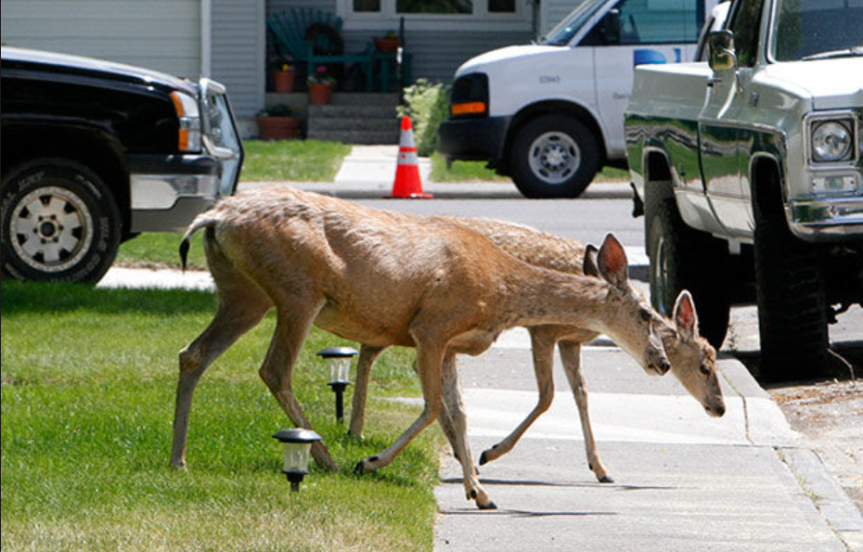
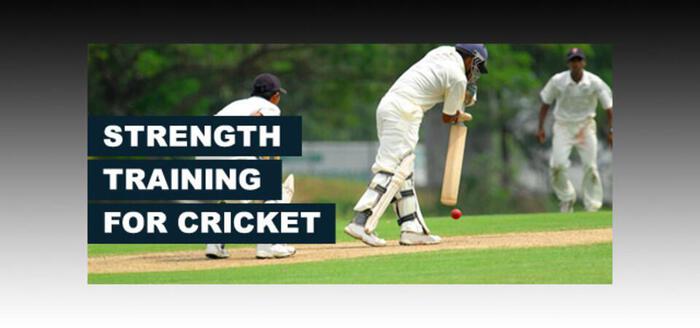


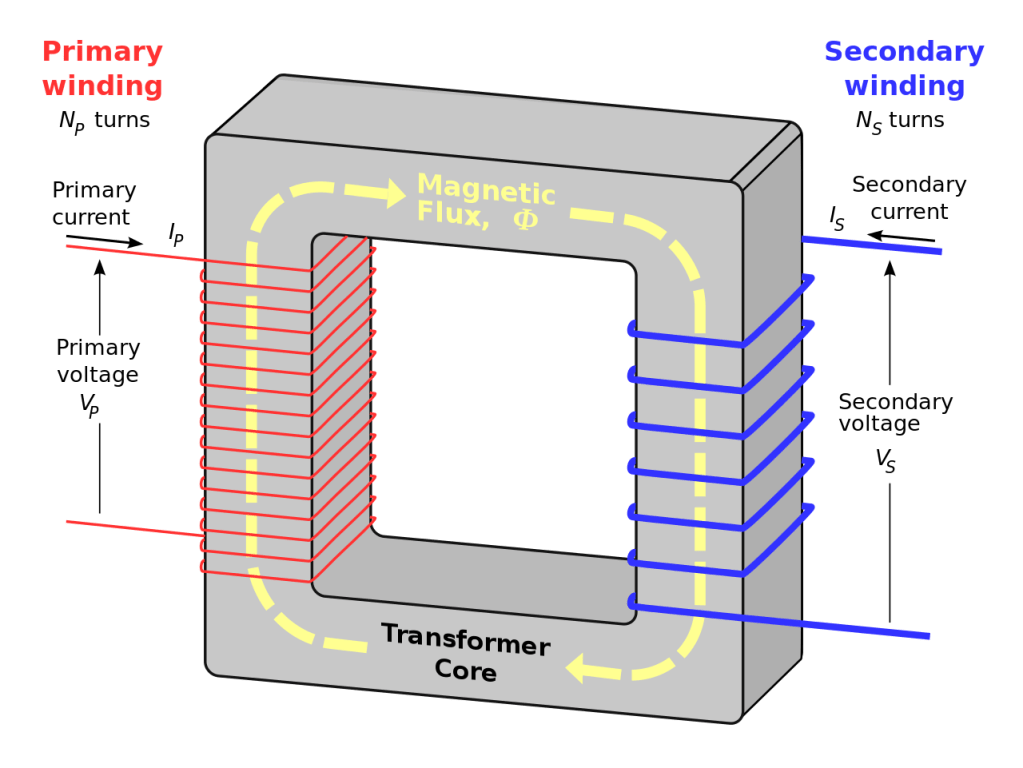
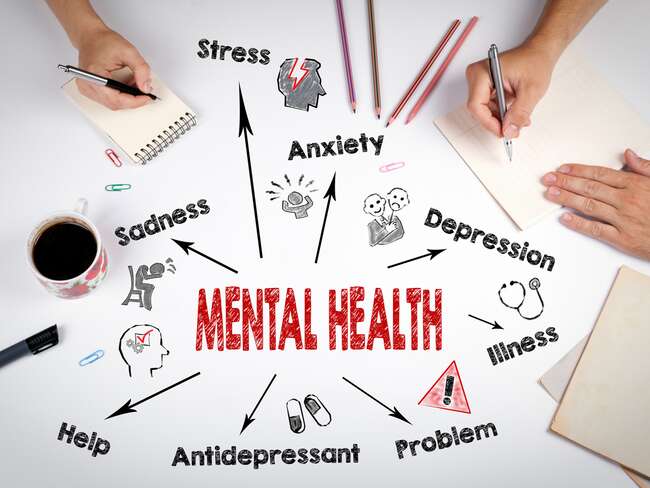
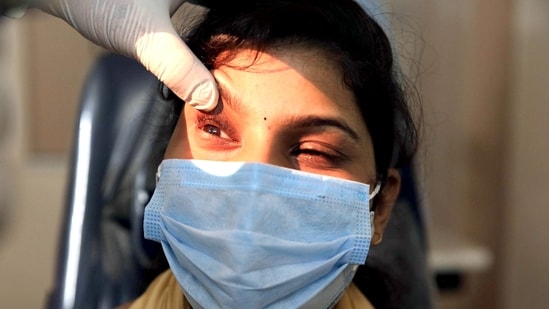
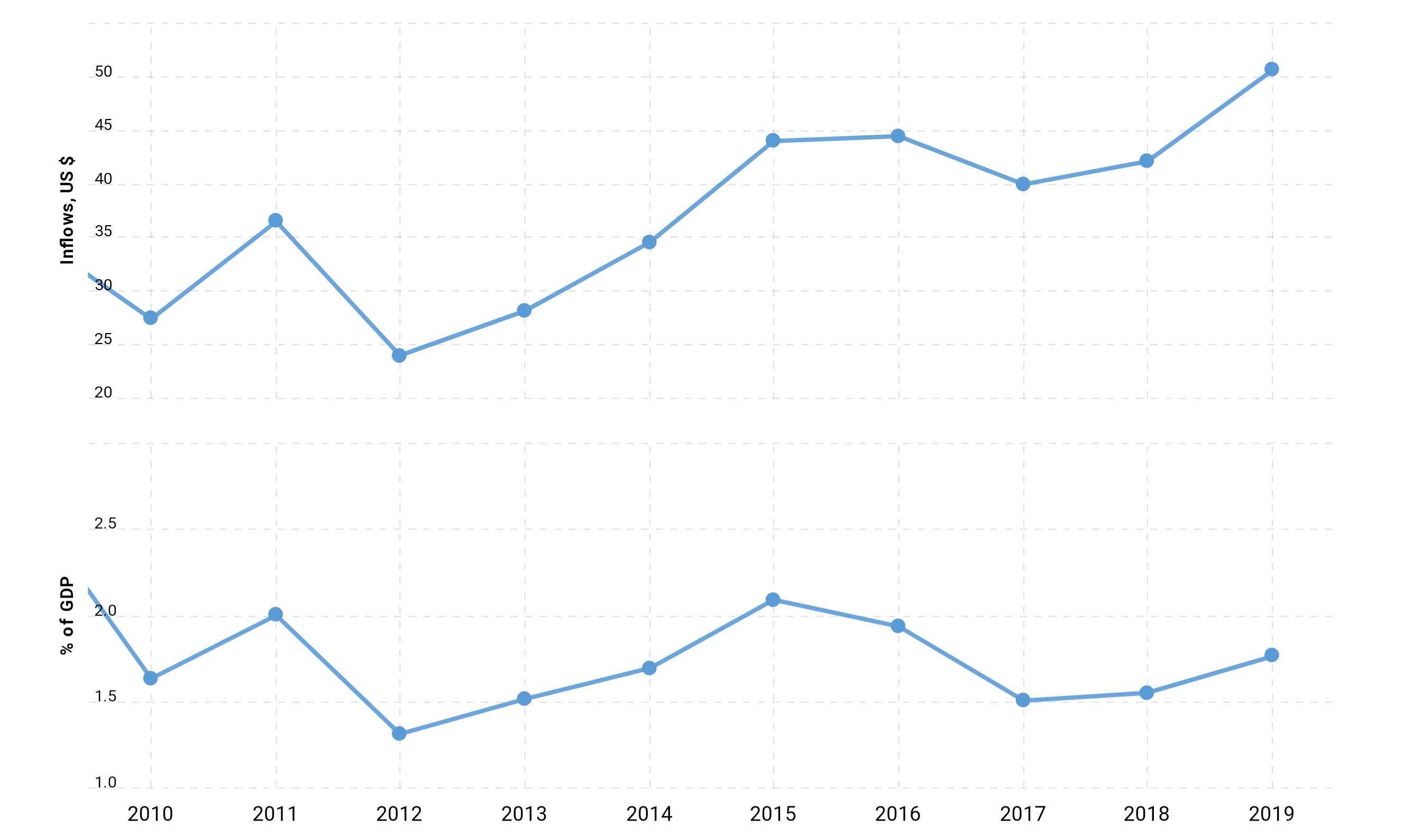






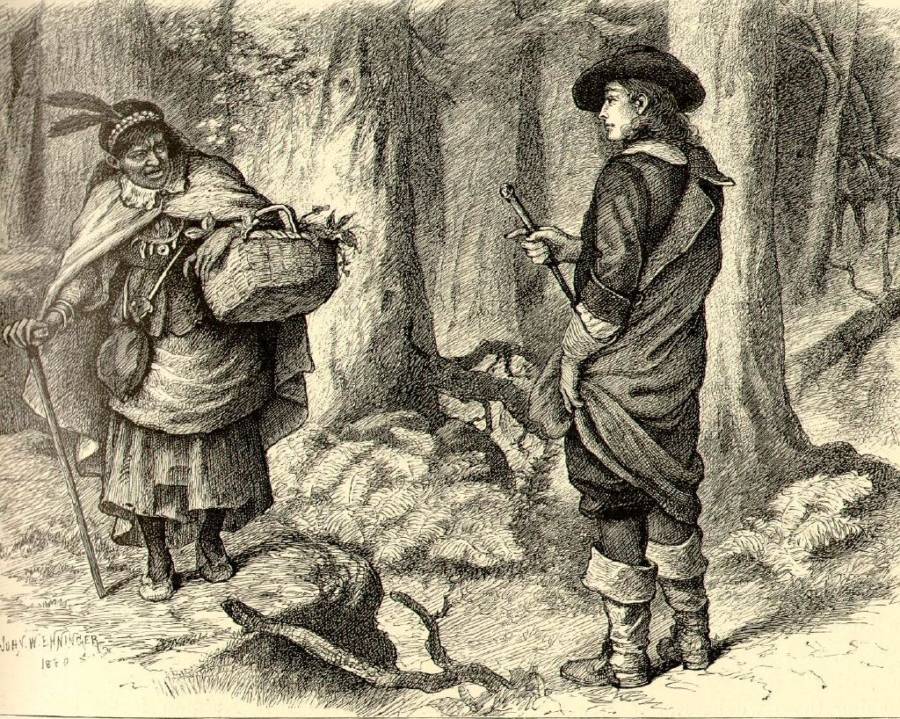

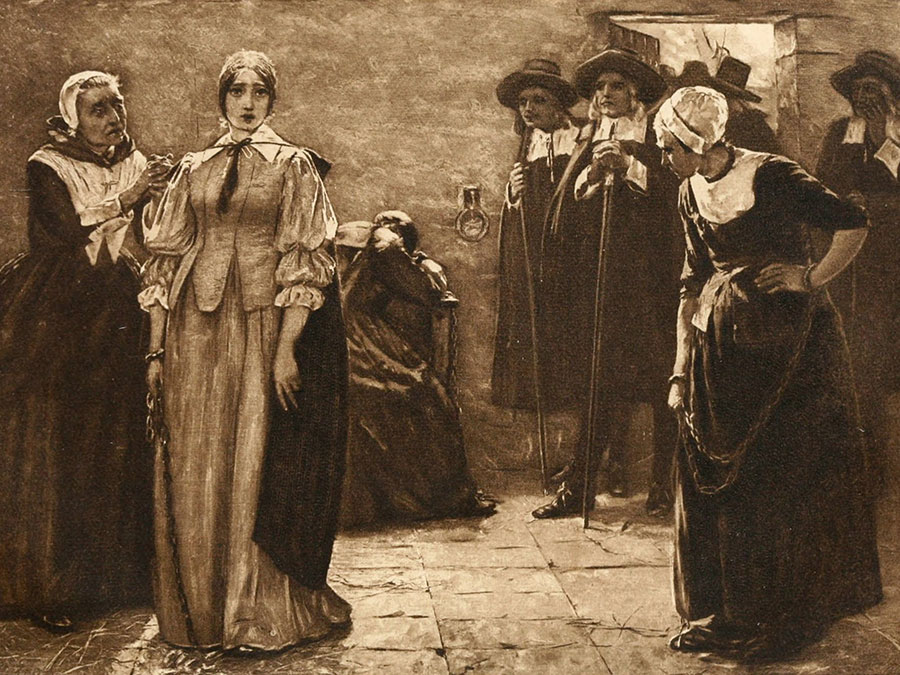




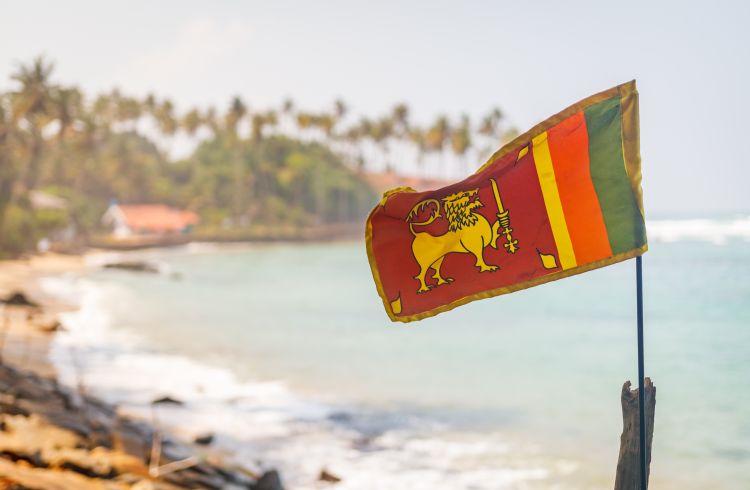
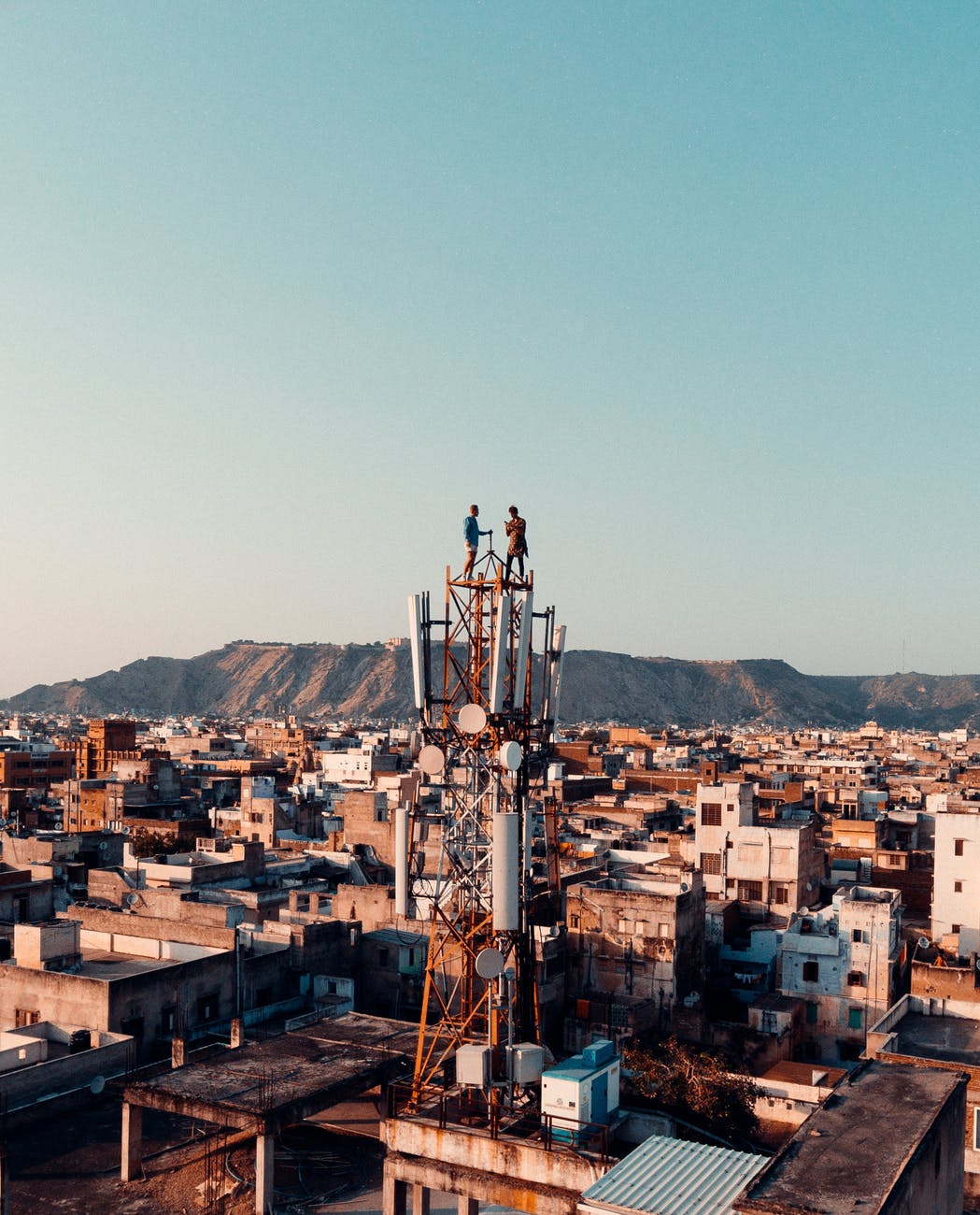
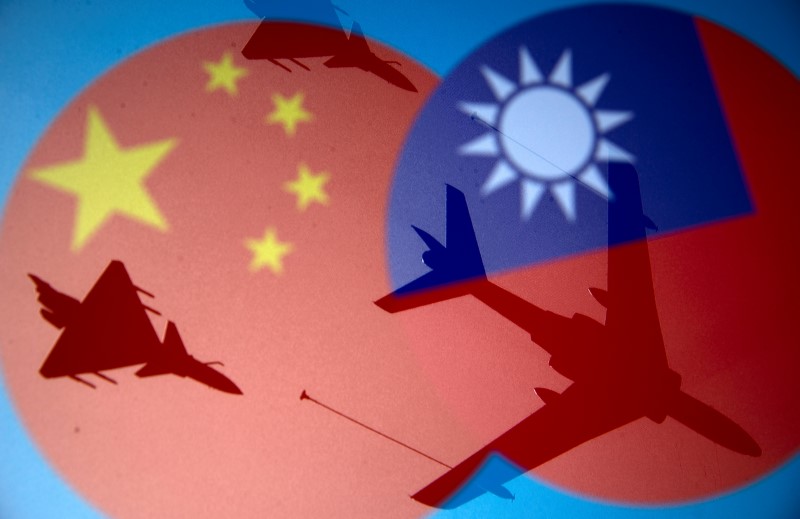


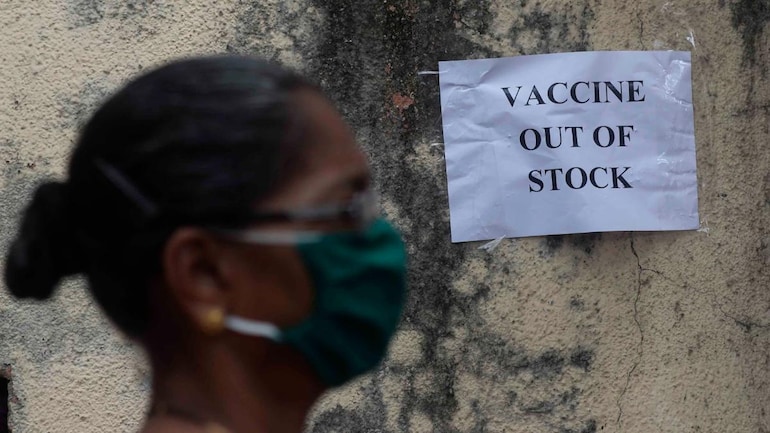









 Track2Training
You must be logged in to post a comment.