
Elegy Written in a Country Churchyard was published in 1751. Thomas Gray began writing this poem in 1742 shortly after the death of his close friend Richard West. This Elegy is noteworthy that it mourns the death not of great or famous people but of common men. It’s Gray’s masterpiece and it’s emotional and philosophical at the same time. The beauty of the poem lies in simplicity. Poet brings out the ultimate truth about life and death.
THEMES OF ELEGY WRITTEN IN A COUNTRY CHURCHYARD
UNIVERSALITY OF DEATH: The central focus of Gray’s elegy is the inevitability of death and how people from different social class are remembered. In this elegy Gray meditates on death as it relates to the rustic commoners who populate the village and the country churchyard. Gray’s opening salvo in this contrast between two vast social classes emphasizes death’s universality; just as the poor and the common people are subjected to death, the paths of the rich and glory lead to grave as well. Death is the ultimate which is blind to mankind’s social class and destruction.
SOCIAL CLASS AND VALUE: Gray’s meditation on how the wealth and the poor are remembered allows him to explore social class and value. The poem suggests that an individual’s value should not be tied to social class. The poem asks whether the rich and the powerful can be brought back to life by “storied urn” or “animated bust” any more effectively than the poor whose graves are marked by “no trophies”.
IMPORTANCE OF LOVE: Despite their humble lives the dead enjoyed simple pleasures in life. One of these is the love of their families and friends. A clear image of children greeting his father when he came home from the fields is shown. The lively picture of family is full of joy. Gray identifies family and friends both simple pleasures as the greatest joy in life
THE QUALITY OF MORTALITY: Within the odes and elegies of gray we find him questioning towards the very concept of morality and what it really means to say when one exists.
Category: College
Social media and academia are often seen as contradictory pulls in the life of a college student

To keep pace with technological advancement, the Hon’ble Supreme Court of India has cited the right to Internet access as a fundamental right under Article 19(1)(a) of the Constitution of India. Since Social media in itself is a potential medium for large-scale dissemination of information, it is pretty obvious that it is necessary to keep abreast of the latest developments and to communicate with an extensively larger populace that makes it fall under the purview of the right to freedom of speech and expression. In 2017, Kerala became the first state to recognize the internet as a basic human right. Keeping this in mind, won’t it be a clear violation of fundamental right if a college student, an individual citizen of India who has attained the age of eighteen, being barred from access to social media?
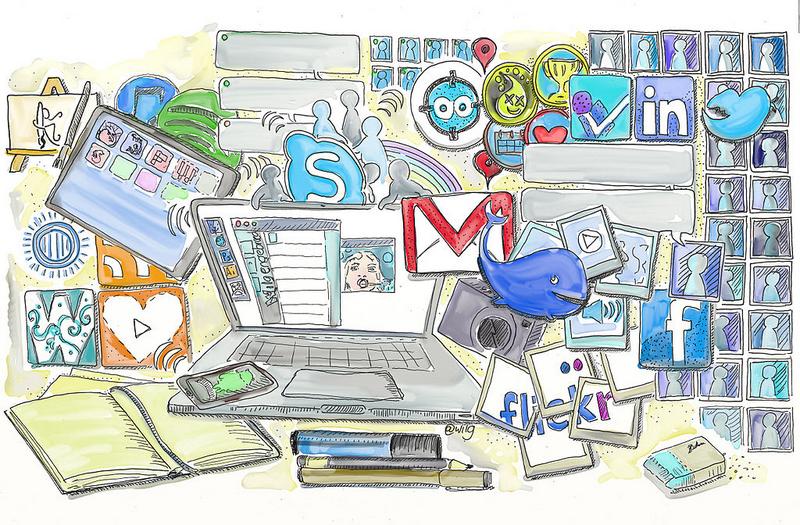
Starting from addiction, the use of social media has a wide range of repercussions on the human body and mind. Addiction becomes a very incarnation of digital neo-colonialism where the physical body, the emotion and the intellection of an individual are being feloniously glued to the cobweb fabricated by social media. However, there are only twelve notches in a regular clock. Spending hours on Facebook and WhatsApp becomes an opportunity cost that has incurred as a result of compromising the time that could’ve been devoted to academic activities. Burning the midnight oil sitting in front of a mobile phone indisputably interrupts the sleeping time of a student that in turn will have adverse implications over his biological self. In addition to that, adolescent fantasizing has emerged as a recent issue that challenges the emotional self of a student, most probably caused due to devoting undue hours on social media and ‘sitting in an armchair with a mobile-phone dreaming up Utopias’, as suggested in a recent study report published by the University of Leeds. This is a situation where an individual fails to differentiate between fantasy and reality. It won’t be a surprise if the life of such individuals ends up in a lunatic asylum.
Similar to the statutory warning printed over a pack of cigarettes, the ill effects of social media are being selectively ignored by college students. This selective amnesia has been legitimized by the digitalization of the education system amidst the pandemic. Every college now has its own social media pages and WhatsApp groups have been legitimized as the “official” medium of dispensing college-related and academic-related information. Classes are being taken through WhatsApp, Facebook, Hangouts, Zoom, inter alia and on one fine day if the phone of a college student goes haywire, his day is irretrievably lost. The suggested books, often published by International universities may not be available in public libraries and in most cases, buying them from the open market would be nothing less than a daylight robbery. This makes college students depend on the digitized version of such books, often made available free of cost, making social media like WhatsApp intrinsic to the education system. Social media, therefore, becomes a potential platform for sharing notes, suggested readings, dissemination of urgent information and repeated timetable alterations and it will continue to be so even after the pandemic. It’s simply similar to the concept of a mixed economy where features of both capitalism and socialism exist side-by-side. This relation with academics makes social media an unfathomable part of college life.
In toto, social media has now become an indispensable part of any college student’s daily life, serving as a virtual encyclopedia and as a potential stress-buster. Aside from the health concerns posed by it, it has been adopted by the current education system and now, debates are even made to make social media an intrinsic part of the right to life and personal liberty. “Social Media: A Boon or a Bane” is one of the evergreen topics that are hotly debated for decades. Be it an English question paper of a 6th Grade student, this topic finds its place even in the UPSC interviews and columns of The Hindu. Whether it is a boon or a bane solely depends on your attitude towards the same. For instance, silkworms were given a boon to form a protective shield around them and it strives for its entire lifetime to create one and once it’s created, it loses its life by dint of its boon. A boon can easily be a bane and a bane can be metamorphosed into a charming boon. Therefore, social media can be a boon to some and bane to others depending on how they use the same. Utilizing social media in adherence to a systematic schedule and demarcating the boundary that separates academia and social media so that none of them hampers the time frame devoted to each other will make one a lucid, levelheaded college student.
VOCATIONAL EDUCATION

What is vocational education?
Vocational Education and Training (VET) is a job-oriented technical training course for students who want to focus on a specific career opportunity. In this, the main focus is on a specific career opportunity. Students are provided training, instructions on a specific course. At the end of the course, they are given a certificate which ensures they are well-trained in their work. This type of education is a great asset to our country. Nowadays vocational schools are opened in which students are provided training according to their courses. Students can join such training in high school or even after their graduation. Here is a small list of vocational training:-
- Architecture
- Science
- Art and craft
- Business administration
- Project management
- Law
- Media studies
- Leadership and management
- Computer science and IT
- Humanities
- Hospitality and travel
There are several other courses available too. After this course, you will have excellent job offers in your field. Several colleges provide vocational training:-
- Jai Hind College
- SNDT Women’s University
- GGSIPU
- Meera Bai Institute of Technology
- IIFA Lancaster Degree College
- Pondicherry University
- ST.Pauls Institute of Communication
- Tata Institute of Social Science
- Frameboxx 2.O Animation and Visual Effects
- George College
- Ambedkar University
- Amity University
Like these, various number of colleges are there with vocational courses.
Top-rated courses which are available in vocational education :
- Integrated B.A+B.Ed
- Bachelor of Physical Education and Sports
- Post Graduate Diploma in Counselling and family therapy
- Bachelor of Education(B.Ed)
- Nursery Teacher Training(NTT)
- Early Childhood care and education
Benefits of vocational education
The most important benefit of vocational education is specialisation. After you complete your course you will walk out as an expert in your field.
You will perform better as you would have excellent knowledge of your work.
As you will be specialized in your work, you will have better chances of employment as compared to other people and also vocational courses may help you in getting higher-paid jobs.
It helps you a lot in your personal development.
vocational courses may help you in getting jobs in foreign countries also.
This is a very good source of earning for school dropouts or for the people who couldn’t attend college.
In vocational courses, a better learning environment is provided to the students. They provide thorough learning of the courses.
In agriculture, the vocational course gives you solid help. Technical training and knowledge of pesticides, seeds, irrigation are very much important. And in the vocational course, you get to know everything in detail about everything related to agriculture.
Historically vocational courses were done in the classrooms only. But in recent years the study has been shifted online also. Professionals provide education through online mode which helps students in remote areas to study at their homes. This became easy too because now anyone can attend their classes anywhere.
This type of education has helped a lot for young people. More people can be employed. More people can become independent. Their confidence builds a lot. Their lifestyle becomes better.
4 Tips for Effective IELTS Preparation

To migrate or study in English speaking nations, one needs to give an IELTS test. The International English Language Testing System (IELTS) assesses the person’s ability to speak, write, listen, and read in English. The test is designed to understand how you will use English in your daily life such as in university, workplace, or other social situations.
Before providing the tips on how to do the preparation, here is the breakdown of the types of IELTS test. There are two types: Academic and General. The IELTS Academic test is for those willing to pursue undergraduate or post-graduation or join a professional organization in an English-speaking nation. Second, the IELTS General Training test is for those who want to train or study at below degree level, to work, or to emigrate.
The formats of these two tests are a bit different, but the test assessment will still be on four skills: Reading, Listening, Writing, and Speaking.
Reading Test: This will include a wide range of reading skills such as attention to detail, a general sense of the passage, meaning derived from it, understanding of writer’s opinions, attitudes, and how will you understand the development of the argument.
Listening Test: It assesses how well you recognize opinions, attitudes, the purpose of the speaker, and also factual information and general ideas.
Writing Test: The Writing test is designed to measure the wide range of writing skills including grammar, vocabulary, how you can write responses, organize ideas, and recognize mistakes.
Speaking Test: The IELTS Speaking Test assesses how fluently and accurately you communicate in English. You can be asked to speak on various topics and express your opinions.
Getting back on how to crack the IELTS exam, just like any other test IELTS to needs some preparation. These four tips can help you ace the IELTS exam.
- First and foremost, Read! Read! Read! Whether it’s a book, newspaper, magazine, or any written material. While reading, always have a credible English-English dictionary with you. This way you will work out the meanings of the new words making sure you don’t translate back to your language. You can also read an English newspaper every morning and listen to English news channels. It will enhance your reading and listening skills as well as keep you updated about the happenings in the world. Sounds good?
- Improve your vocabulary! The more words you are exposed to, better will be your vocabulary. Jot down the words you have heard recently or you don’t know and highlight them with a marker. Check out its meaning in the dictionary and then start putting these words into daily speech. Using new words frequently will help in making your English fluent. As a fact, it takes from 10 to 20 repetitions to make a word part of your daily speech. Do see its pronunciation online if not sure. Speak those words while talking to your parents, friends, or somebody on call. This will increase your confidence and you will be well versed on the day of your exam.
- Listen to English radio, shows, or news channels. After that try to write them down and analyze. Also with that, separately write words or sentences that were appealing to you. Use them while you write essays or speak. Don’t watch videos online since you can pause or rewind them. This won’t help as it will break your flow of listening. Hear it once only. After you are done repeat whatever you recall from the show, use stress and intonation appropriately. Make sure you record it so that you can find out your mistakes and improve accordingly.
- So far whatever words you have learned, phrase them into sentences and then into paragraphs. While writing always set a timer. This will keep you at pace and improve your speed during the exam. Check for comma mistakes, full stop, and grammar. See-through the sample papers and find out what is the word limit given in the writing paper. Accordingly, write if say the set limit is 200 words don’t write just 150 words. This will lead to losing marks. Generally, a person is ok reading, speaking, and listening but they have a hard time writing, in that case, while practicing start with your favorite topic. Start with as basic as possible. Suppose you like chocolate ice cream, write on that. Sooner or later, you will get used to and can start with difficult topics. When you plan your essay, always have some spare time in the end to check your work.
Taking the IELTS test can be stressful so don’t forget to put these helpful tips. It will equip you to be ready for the exam. Commit and practice thoroughly. With this, you’ll feel more confident and be able to tackle the test and get the desired score.
ONLINE LEARNING-PROS V/S CONS
The Majestic year 2020 is marked by two major events.One is the Onset of the worst pandemic that the entire world is reeling under and the other as the title suggests is Online learning!
The Use of Online Learning or E Learning has skyrocketed in the recent times as the only mode of education in a social distancing setup.Indeed it is a necessity as education cannot be put to rest halting the progress of millions of students.As a coin has two sides,similarly online form of education has it’s own perks and drawbacks.So lets find out more!

Online schooling is a popular alternative to attending a brick-and-mortar college or university. Though online students don’t get the face-to-face experiences of a typical on-campus student, there are many benefits and advantages to online learning, also known as distance learning or e-learning.
While not every program or school imaginable has an online option, a large number of them do, and many programs are nationally or regionally accredited. Students can learn through online lectures, projects and discussions. Online degree programs are available at every level, from certificates to doctorates.
Owing to the Covid situation,organisations that used to vouch for traditional methods of education are now radically shifting towards online education because there is no other alternative.Earlier online education used to be an alternative, now it is the only choice for those who want to desperately continue their education.
When Online Education is the new reality,it is very essential to keep in mind it’s advantages and disadvantages to take maximum benefits out of it and also minimize stress levels.
Advantages
-Convenient Learning:It can be undertaken anywhere ranging from a tiny corner in the living room to a study table in the bedroom and without a particular dress code(still modest dressing is expected).
-No Infrastructure:No physical infrastructure such as building,classrooms and benches are required for online education.
-Less Travelling: In Online classes there is no need to undertake strenuous travelling routines as students can attend the classes from the comfort of their homes.
-Recordings:Unlike the Traditional Systems,Online Education system provides an option of class recording and hence students can re watch the class recordings to make concepts clear.
-Virtual Reality(VR):Teachers in the online mode can make use of Virtual Reality Techniques to make students understand complex topics in an interesting way.
disadvantages
-Motivation:The laid back nature of the online classes do not provide much motivation to the students.Students do not take online classes to be as serious as classroom and thus do not pay attention.
-Lack of Concrete Assessments:Online mode of education has so far not been promising for people with theoretical subjects as it is difficult to conduct heavy exams here.
-No practicals:People Who study medicine,chemistry and physics an understand how bad this can be!There are certain subjects which cannot be simply taught,practicals and experiments have to be performed to further the understanding.Online education does not support this.
-Stress on health:The negative impacts of online mode of education on the health of the students is indisputable!Several students have complained of migraines,back aches,eye pain and so forth.Students psychologically too have not been able to cope up with the sudden shift and are suffering.
Thus,Online mode of education is a tricky one and should be suitable for certain conditions,Since it is the only alternative now, educationists and policy makers should study the pros and cons to make amends in the present online education structure to suit the demands of students.We have to always remember that Education is fruitful only when it reaches learners effectively!
If you liked the article,do give it a like.
Thankyou!
Stay Knowledgeable!
Bulimia-An Eating Disorder
In today’s instagram world,People especially adolescents are getting image and body conscious.They look at the perfect bodies of celebrities and aspire to be like them.In this aspiration,they are psychologically and physically wounded.Most of such people experience eating disorders where in they undergo extreme changes in their eating and exercise habits.Ultimately they damage themselves.
So,in today’s blog lets look at one of the eating disorders called Bulimia Nervosa,it’s causes and it’s impacts.Let’s get started.

Bulimia nervosa is an eating disorder characterized by episodes of binge eating—consuming a lot of food quickly—followed by compensatory behavior, most commonly vomiting or “purging.” People who are bulimic often feel a lack of control over their eating. A bulimic can consume as many as 3,400 calories in little more than an hour and as many as 20,000 calories in eight hours.
People with bulimia often know they have a problem and are afraid of their inability to stop eating. Bingeing is then followed by purging — namely, self-induced vomiting or the abuse of diuretics or laxatives. Bingeing and purging are often performed in secret, with feelings of shame alternating with relief.
The bingeing and purging cycle is usually repeated several times a week. As with anorexia, people with bulimia often have coexisting psychological illnesses, such as depression, anxiety, and substance abuse problems. Many physical dysfunctions result from the purging, including electrolyte imbalances, gastrointestinal troubles, and dental problems.
An estimated one to four percent of females have bulimia nervosa during their lifetime. The prevalence in males is unknown, but bulimia nervosa is far less common in males than females. Most cases begin in the late teens and early 20s, but can go undetected until the 30s or 40s.
SYMPTOMS
Bulimia signs and symptoms may include:
- Being preoccupied with your body shape and weight
- Living in fear of gaining weight
- Repeated episodes of eating abnormally large amounts of food in one sitting
- Feeling a loss of control during bingeing — like you can’t stop eating or can’t control what you eat
- Forcing yourself to vomit or exercising too much to keep from gaining weight after bingeing
- Using laxatives, diuretics or enemas after eating when they’re not needed
- Fasting, restricting calories or avoiding certain foods between binges
- Using dietary supplements or herbal products excessively for weight loss
CAUSES
Exact causes are not completely known and are believed to complex.Hence there is no single known cause of bulimia, but there are some factors that may play a part,such as:
- Culture:As in strict body expectations:Slim and trim girls wanted for marriage in India.
- Families:Constant pressure and criticism from parents on looks of children
- Life changes or stressful events: can trigger bulimia.
- Personality traits: Those with bulimia may have low self-esteem and feel hopeless.
- Biology.:Genes, hormones, and other biological factors may contribute to development of bulimia.
Impact
Bulimia has a great impact on the individual and can lead to following complications:
- Negative self-esteem and problems with relationships and social functioning
- Dehydration leading to kidney failure
- Heart problems
- Severe tooth decay and gum disease
- Absent or irregular periods in females
- Digestive problems
- Anxiety, depression, personality disorders or bipolar disorder
- Misuse of alcohol or drugs
- Self-injury and suicidal thoughts.
Management
If left untreated,bulimia can create major complications in life as mentioned above.Hence if you see your loved ones experiencing symptoms of bulimia,support them and console them.If the symptoms are unbearable,immediately consult a doctor and psychologist who will be able to help the patient successfully.
Please spread empathy and kindness.Acceptance and kindness can prevent bulimia in such insecure people.Every difficulty can be defeated with empathy,patience and willingness to improve and come out.
If you all found the article useful,do give it a like.
Thankyou!
Stay Kind!
Motivation:The background force
Why have i written this blog?why are you reading this blog?Why do you eat?Why do you love?
The answer to all of these actions is MOTIVATION!Motivation is the process that initiates, guides, and maintains goal-oriented behaviors. It is what causes you to act, whether it is reading this article, getting a glass of water to reduce thirst or reading a book to gain knowledge.So this blog will critically analyse the concept of motivation and help all of you to understand the reasons behind your actions.So lets get started!
Motivation describes the wants or needs that direct behavior toward a goal. It is an urge to behave or act in a way that will satisfy certain conditions, such as wishes, desires, or goals. Older theories of motivation stated that rational thought and reason were the guiding factors in human motivation; however, psychologists now believe that motivation may be rooted in basic impulses to optimize well-being, minimize physical pain, and maximize pleasure.
Motivation involves the biological, emotional, social, and cognitive forces that activate behavior. In everyday usage, the term “motivation” is frequently used to describe why a person does something. It is the driving force behind human actions.
So lets analyse the mechanism of motivation
Drives and motives
Motivations are commonly separated into drives and motives.
Drives are primarily biological, like thirst, hunger, sleepiness, and the need to reproduce—all of which lead us to seek out and take part in certain activities. Drives are believed to originate within a person and may not require external stimuli to encourage behavior.
Motives, on the other hand, are primarily driven by social and psychological mechanisms, such as work, family, and relationships. They include factors like praise and approval.
INtrinsic and extrinsic motivation
Motivation can be intrinsic (arising from internal factors) or extrinsic (arising from external factors).
Intrinsic:arise from within the individual, such as doing a complicated crossword puzzle purely for the personal gratification of solving a problem.
Extrinsic:arise from outside of the individual and often involve rewards such as trophies, money, social recognition, or praise.
In reality, our motivations are often a mix of both intrinsic and extrinsic factors, and the nature of the mix can change over time.Sometimes, intrinsic motivation can diminish when extrinsic motivation is given—a process known as the overjustification effect. This can lead to extinguishing the intrinsic motivation and creating a dependence on extrinsic rewards for continued performance.
Motivation v/s emotion
While motivation and emotion can be intricately linked, they are two fundamentally different things. Motivation describes the wants or needs that direct behavior toward a goal; in contrast, an emotion is a subjective state of being that we often describe as a feeling. Emotion and motivation are linked in several ways: both influence behavior and can lead us to take action, and emotion itself can act as a motivator.
The need to understand motivation
So at the end of this article,lets see what is the use of understanding the concept of motivation.Understanding motivation can:
- Help improve the efficiency of people as they work toward goals
- Help people take action
- Encourage people to engage in health-oriented behaviors
- Help people avoid unhealthy or maladaptive behaviors such as risk-taking and addiction
- Help people feel more in control of their lives
- Improve overall well-being and happiness
If you all liked this article,please do like it!
Thankyou!
NEW AGE OF ONLINE LEARNING

Getting educated has never been this easy. Putting the relevance of colleges under the spotlight.
A few decades back, not everyone had the liberty and the opportunity to go to college. The huge numbers of people joining colleges rather than the workforce was not the thing back then.
The expensive college system paved the way for such a trend, which was also aided by the lack of infrastructure and other opportunities in most sectors which are quite relevant now.
The brick and motor system of people finishing school and then going to college to get a job has been changing slowly but significantly for the past few years. Lesser and lesser people have been seen shutting the eye towards getting a college degree to have a guaranteed successful career across the industries.
The current pandemic status quo is sure to have put a dent to this trend on a larger scale. With the ever fluctuations in the job market and the downward scaling of businesses, employees in most industries are scrambling to make sure that they will have a living by the end of the pandemic.
Making the fear of the pandemic second to the fear of having a job to hold on to sustain a living. The hardships of having a job did not seen this hard in a while.
The upscaling of technology has certainly impacted the education system the most. With the widespread of internet and other gadgets, it has allowed people to even resort to remote learning; from upskilling to even pursuing degrees these days.
Aiding schools and universities to function on with their course structures to an extend.
It has also paved the path for people building up and pursuing shorter courses, which helps in building up certain skills and foundations in almost all the sectors of business. Contributing to a more conscious and productive workforce yet to have hit the floors.
People now have the liberty to sit from the comfort of their homes and with a few clicks be able to start doing a course to up skill their own person. Making the opportunities to learn a plenty and the easiest it has ever been.
The pandemic and shifts in the education system has promised that the system is never going to be the same again.
With people resorting to digital measures to eliminate their shortcomings of knowledge regarding different spectrums, it has started giving major companies sound grounds to even consider candidates without a proper degree for various job opportunities.
With the ability to receive information and answers regarding almost everything with just a click of a few buttons, has shown that the people are going the extra mile to incorporate additional skills that might help them become more educated to handle the tasks at work and also developing as professionals. Paying homage to the age old saying, “with great powers, comes great responsibilities.”
These all have made the jobs of the recruiters much easier, by letting them have the freedom to have a chance to hire people with the right skillsets, which would let them employ the workers without further training or other actions. Making the pace of the workplace faster than ever.
Music Therapy
Did you ever feel that therapy involves talk by a psychologist and nothing else could come under the domain of therapy?If your answer is yes,Then you are wrong!!Well times have changed my reader~
Therapies have come a long way to incorporate other clinically approved methods such as animal assisted therapy,food therapy,aroma therapy etc.Music Therapy is one clinically developed program by psychologists to assist speedy healing of their clients.In this blog,the readers would be introduced to the world of Music therapy.So lets get started!

WHAT IS MUSIC THERAPY?
Music Therapy is the clinical and evidence-based use of music interventions to accomplish individualized goals within a therapeutic relationship by a credentialed professional who has completed an approved music therapy program.It is is an established health profession in which music is used within a therapeutic relationship to address physical, emotional, cognitive, and social needs of individuals. After assessing the strengths and needs of each client, the qualified music therapist provides the indicated treatment including creating, singing, moving to, and/or listening to music.
Through musical involvement in the therapeutic context, clients’ abilities are strengthened and transferred to other areas of their lives.This therapy also provides avenues for communication that can be helpful to those who find it difficult to express themselves in words. Research in music therapy supports its effectiveness in many areas especially emotional rehabilitation.
history
You all will be shocked to know that both world wars were the trigger that initiated the development of this therapy.During and after both World Wars, doctors and clinicians began to realize the powerful effects that music has on the healing process and requested that professional musicians be hired by the hospitals.This therapy first got officially recognized in the Michigan state university of the United States of America.Ultimately,The American Music Therapy Association (AMTA) was formed which focuses on creating more awareness about this wonderful therapy.
BENEFITS
Music therapy can benefit many individuals. The diverse nature of music means it can be applied in the treatment of concerns both physical and psychological.Since music can evoke positive emotions and improve brain health,Music therapy is said to manage and alleviate symptoms of mental health concern such as Depression, Mood issues,Anxiety,Schizophrenia,Substance abuse,Autism,Personality issues,Insomnia,Dementia etc.
In addition,Music therapy can improve the social,cognitive,emotional and motor functioning.This therapy was also effective in controlling patient’s situation in Alzheimer’s,Cancer and Hypertension.
Music therapy is frequently administered to reduce stress levels and pain perception of females in labor.This novel therapy has also been linked with improvements in self-esteem, self-concept, verbal communication, prosocial behavior, socialization skills, group cohesion, and coping skills.
Limitations
Even the most beautiful things have flaws,and so has music therapy.One of the major drawback is that this therapy cannot be used as a stand-alone therapy.The music therapy is also known as music assisted therapy implying it’s sole purpose is to assist the main therapy applied by the clinician on the client to produce fast results and relief.
Also,the music therapy like all other therapies is individualized.This is not a major drawback but should be kept in mind before going in for this option.All individuals are unique and so is their taste in music.Thus the therapist has to do additional tests to see which type of music and musical instrument works better for the client.
ALWAYS REMEMBER,WHERE WORDS FAIL,MUSIC SPEAKS…..
Thus in short we need to know that music therapy is a wonderful form of therapy which strengthens an individual and increases his/her quality of life.Choose Music for a better Life!
Do give a like,if you all found this article to be Interesting!
Thankyou!
Stay Knowledgeable!
Non Conventional Careers-Science Stream
Medical and Engineering are most sought after courses after 12th Science in India.Parents and the society are the major contributors to this mentality in our country. Thousands of students flock examination centers to write prestigious NEET/JEE irrespective of whether they are interested or not.
Does this mean these are the only options available to students choosing the Science Stream?The Answer is NO.In Today’s advanced world there are plethora of career and course options for students to pursue and achieve success.In this blog we look at some of the prominent and promising non conventional career options in science stream.Lets get started!

1)PSYCHOLOGY
Psychologists study the complex ways that people think, behave, feel, communicate, and perceive the world around them. Some psychologists focus on clinical work with patients, while others devote themselves to researching the nuances of psychological behavior; in any case, psychology is a vast discipline, with numerous career options to choose from. Students who complete graduate-level psychology degrees have great job opportunities. An MSc degree may lead to jobs as research and clinical assistants, while a doctorate is a necessity for those who wants to work with patients in a clinical setting and also to move into a research or an academic position. Many degree programs allow students to focus on a specialty area, including child development, abnormal psychology, counseling, social psychology, and cognition.The opportunities in research under this field are limitless.Psychology is a hot subject in developed nations like The United States and The United Kingdom where this course is sought after and valued.
2)FORENSIC SCIENCE
Forensic science is the application of scientific knowledge and methodology to criminal investigations and legal problems. Forensic Science is a multidisciplinary subject, it encompasses various fields of science such as chemistry, biology, physics, geology, psychology, social science, engineering, etc.Forensic science is used every around the world to protect public and society, to enforce criminal laws and regulations and to resolve civil problems.Various universities in India offer certificate, bachelor and master courses in Forensic Science. After the master degree is successfully completed , then the student can even go for a Doctoral Degree course in Forensic Sciences.Jobs are offered in government as well as private sectors.
3)Agricultural SCIENCES
Agriculture as a field is not just about the traditional aspects related to farming and irrigation. The focus is now shifted to various other dimensions like Horticulture, Poultry Farming, Pisciculture, Dairy Farming, Agricultural Biotechnology,Agronomy etc. Agriculture is also being commercialized as proper attention is being paid to the marketing, distribution, and packaging of its output. It’s possible to pursue a postgraduate degree programme in agriculture related subject which will broaden the scope such as specializing in agronomy, soil sciences, horticulture, plant breeding and genetics, entomology, plant pathology, animal sciences, plant biochemistry, agriculture economics, biotechnology etc. Masters in various above listed Agriculture programs is a 2-year course.This course can be taken up by a candidate who holds a BSc degree in agriculture/ horticulture/ forestry from a recognized university with some qualifying marks.Job opportunities are available both in Government as well as Private Sectors.
4)Aviation industry
The aviation sector is one of the most attractive and best-paid sectors in the economy. In India, The civil aviation industry is a larges domestic market in the economy.The commercial pilot is one the most glamorous and most rewarding job in the Aviation industry. Apart from the theoretical knowledge, a candidate must have practical knowledge to become a commercial pilot. A Commercial pilot must train to get a Commercial Pilot license in order to secure a job in the aviation sector. A commercial pilot or Ferry Pilot will have many chances of getting placed in both Governments and Private Airlines & chattered flights.The interested candidate must be fluent in English,medically fit and must have learnt Maths and Physics in High School.
5)Visual communication
Visual Communication is a combination of illustration and graphic design from a marketing perspective with great emphasis on screen-based workmanship.It involves digital marketing and business identity design , logos, animation, photography, web design, illustration, packaging design, art direction, and most degrees will also have a theory dissertation. It contains all the information to help one become a Graphic Designer, with a scope that allows to to specialize with more flexibility than a degree in design.In short, visual communication is an amazing field with unlimited growth potential. They get hefty pay.Further, with experience, your earnings are bound to increase.
These are just a few options listed from a sea of options.The aim of this blog is to make readers aware that the bucks do not stop at Engineering or Medicine.There are umpty number of career options to choose from and succeed.Everyone can not find happiness within the conventional options imposed by the society.Times are changing and so should our mentality.Students should be encouraged to follow their passion and pursue courses they want.Sky is the limit!
Do like the blog,if you all found it to be useful!
Thankyou!
Stay Happy~
BOULEVARD OF BROKEN DREAMS

A world that nurtures minds rather than butchers them still seems like a distant dream. A world which nurtures minds and teaches them how to dream seems like a wicked fantasy compared to the reality!
Growing up, people have this very false apprehension that kids have it easy, maybe they do know how it’s like, for they’ve also been young! Maybe they’ve been amended by the harsh reality; which our soul more often than not tries to run away from. Seeking refuge in some surreal vision.
Rather than striving to bring about a change, we the people often approach ripe minds with queries which should be not more than questions of sheer enlightenment but rather we do the complete opposite, a far more severe manifestation of the same, which is more or less like a violent blow to the gut.
The promises of tomorrow are often bombarded by bizarre questions like, “ what will you do in some years down the line?”, “what are your dreams?”, “Don’t you have any dreams boy?” and many more such obscene verbal inquires, without paying much heed into the aftermath.
The careless wandering souls would care less about the whole essence of such moments and will carry on with their endeavor, but the poor innocent ones are the ones that often fall prey to such thoughtless stunts, crippling their innocent little minds till they get redemption on their own. Setting their tiny minds into a frenzy, making them hesitant to settle about and making them flying into the unknown like a broken kite without direction.
What people often fail to realise is the simplicity of the reality, that a nudge or two by such people to young minds could do wonders, unaware and unwilling to accept the bitter truth and shying away from doing the needful.
“To err is to human but to forgive is divine” , but yet people have been consistently failing to bring about changes in this aspect of life. Frowning upon the ones learning from their mishaps and setting forth doing the same errors over and again.
We are who we are, our actions speaks for itself, we are the end-stories of our endeavors. We as a people, rather than setting forth to blame the rest have to realize that blaming one or the other ain’t the need of the hour. We indubitably own it to ourselves to seize the day and bring about the change much needed.
We owe it to them, then ones who have brought upon a change. The ones who have paved the way for generations and more untiringly erecting a different world. A world that brings hope and one which promises us a better dawn to look forward to. These alleged misfits who trembled upon the road less taken to pave the way for the rest, clearly depicts a key lesson, that Change is inevitable and that change is necessary. For Revolution is impersonal!
A world which nurtures minds rather than butchers them may seem like a distant dream. A world which nurtures minds and teaches them how to dream can be our wicked reality!
Personality Theories
According to the American Psychological Association,Personality refers to an individual differences in characteristic patterns of thinking, feeling and behaving. The study of personality focuses on two broad areas: One is understanding individual differences in particular personality characteristics, such as sociability or irritability. The other is understanding how the various parts of a person come together as a whole.
So this blog will introduce the readers to some important theories used to describe personality.Let’s get started!
1) FREUD PSYCHOANALYTICAL PERSPECTIVE:
According to Sigmund Freud Father of Psychoanalysis, an adult personality generally has three determinants: Id, Ego and Super Ego.The outcome of the combination of all the three determinants shapes an adult personality. Freud believed than an individual’s personality has three parts and thus is often called as tripartite personality.
- Id:Irrational demands and urge.
- Ego:Helps in fulfillment of Id after taking into consideration the reality.
- Superego:Moral constraints of the individual.
Defense mechanisms play an important role in pushing unrealistic thoughts out of awareness. Stressful thoughts which are threatening to an individual’s survival should be pushed into unconscious mind to reduce anxiety through them.
2)ERIK ERIKSON:PSYCHOSOCIAL DEVELOPMENT THEORY:-
Erikson believes there are 8 stages in a person’s life and to enter into the next stage,a virtue has to be learnt from the previous stage and this leads to personality development.He focuses on different identity crisis in a person’s lifespan.As in
STAGE 1:Trust v/s Mistrust;Virtue:Hope
STAGE 2:Autonomy v/s Doubt;Virtue:Will
STAGE 3:Initiative v/s Guilt;Virtue:Sense of Purpose.
STAGE 4:Industriousness v/s Inferiorty;Virtue:Competence
STAGE 5:Identity cohesion v/s Role confusion;Virtue:Fidelity
STAGE 6:Intimacy v/s Isolation;Virtue:Love
STAGE 7:Generativity v/s Stagnation;Virtue:Care
STAGE 8:Ego Integrity v/s Despair;Virtue:Wisdom
3)CARL JUNG:INTOVERSION V/S EXTRAVERSION
Carl Jung established a theory, which saw universal types in human personality. The types categorized by Carl Jung are present in all of us. But, certain types are predominant over the normal mode of organizing our experience.Carl Jung also developed a theory of personality. His theory is one of the type theories of personality, as it involved typology of introversion and extraversion.There are 4 functions :Sensing,intuiting,thinking and feeling.
4)JULIAN ROTTER-LOCUS OF CONTROL
“Locus of Control.” For many people, their only exposure to the ideas of Julian B. Rotter is his concept of generalized expectancies for control of reinforcement, more commonly known as locus of control. Locus of control refers to people’s very general, cross-situational beliefs about what determines whether or not they get reinforced in life. People can be classified along a continuum from very internal to very external.
People with a strong internal locus of control believe that the responsibility for whether or not they get reinforced ultimately lies with themselves. Internals believe that success or failure is due to their own efforts. In contrast, externals believe that the reinforcers in life are controlled by luck, chance, or powerful others. Therefore, they see little impact of their own efforts on the amount of reinforcement they receive.
Thus we come to the end of the blog.This blog is aimed at introducing the readers to the world of personality analysis.However one must remember that human beings are complex and not one theory explains all the human behavior.The readers are requested to read more articles about the same and fill themselves with knowledge.
Give a like,if you all felt this article was informative and interesting.
Thankyou!
Thinking through Act
“Acting is behaving truthfully under imaginary circumstances.”
Acting is basically an art of imitation or reflection or representation. It is the quality of utilizing your own spirit body and mind in being someone else. Actors on the stage do not show themselves up there, but they show the character they get into to people.” Acting is equivalent to forgetting the original self.

Acting is not about being someone different. It’s finding the similarity in what is apparently different, then finding myself in there.
Benefits of acting
There are many benefits of acting :
- It is a self-cleansing art.
- It helps us to forget ourselves, our worries, or goals, our life pressure, etc for the same time.
- It helps us to “be present”. Through acting, we enjoy “the moment”. We are at “the moment”.
- It helps us to understand the small little worlds as well as the big worlds of various people around us.
- Every act gives us a different perception that adds to build our character.
Methods of acting
- Stanislavski/Strasberg/Method: It uses affective memory considering our past. We need to relate to our past events. It draws situations from real life and there is an “emotional recall” as we get in touch with your emotional self.
- Meisner Method: It is the method based on the usage of imagination only. We need to enforce us to ask questions to ourselves. We ask the questions “what if”. We need time to contemplate under what situation will I be like this and considers the hypothetical future.
Voice Acting
Our emotions come out of our voices. Talking to a person over a voice call, we can immediately interpret if he is happy, sad, angry, guilty, lonely, or anything else. The Voice of a person gives a strong sense of the feelings of a person. Therefore, in addition to bringing the character by our body movements, we also need to bring out the character through our voice. Indeed, the voice acting is so powerful that it has opened up a separate domain for artists. Voice acting by podcasts are becoming popular day by day. It is easy to access and very interesting helping listeners to create a world of their own by listening to the voice artists. In addition, in these difficult times of pandemic, where shooting is difficult due to the rules of social distancing, podcasts are the way for artists.

Irrespective of the form of acting, the main trick is to make your character your best friend. We need to study up on character traits; read testimonials, interviews, or watch videos. Then, we need to try to bring the traits through voice. Traits, in general, depending on age, geographical location, any distinct characteristic, or disability. There is a need to develops a culture of responsive acting. It is also important to tackles self-consciousness. It is an effective way of creating the world around us. An actor is an energy bank, always excited about his character and his story.
“Acting is a sport. On stage you must be ready to move like a tennis player on his toes. Your concentration must be keen, your reflexes sharp; your body and mind are in top gear, the chase is on. Acting is energy. In the theatre people pay to see energy.”
International Friendship Day
“True freinds are never apart, may be in distance but never in heart.”
International Friendship Day is a day in several countries for celebrating friendship. It is celebrated on July 30 every year across the globe. The day is celebrated to mark the importance of friendships and friends in promoting peace in various cultures across the globe, to cherish friendship and value the people in our lives.

The idea of World Friendship Day was first proposed by Dr. Ramon Artemio Bracho in 1958 in Paraguay. He coined this term when he was having dinner with his friends in Puerto Pinasco. The dinner hosted by Dr. Ramon Artemio Bracho gave rise to the World Friendship Crusade, which is a foundation that encourages friendships across the world irrespective of race, color, religion, and ethnicity. In 2011, the Friendship Crusade, on April 27, 2011, the General Assembly of the United Nations declared July 30 as official International Friendship Day. It was initially promoted by the greeting cards’ industry, evidence from social networking sites shows a revival of interest in the holiday that may have grown with the spread of the Internet, particularly in India, Bangladesh, and Malaysia. Mobile phones, digital communication, and social media have contributed to popularize the custom. It is also celebrated by exchanging gifts and planning outings with friends. In India, people celebrate this day by giving colorful friendship bands and flowers to each other.
Those who promote the holiday in South Asia attribute the tradition of dedicating a day in the honor of friends to have originated in the United States in 1935 but it actually dates back to 1919. The exchange of Friendship Day gifts like flowers, cards, and wrist bands is a popular tradition on this occasion.
Friendship Day celebrations occur on different dates in different countries. The first World Friendship Day was proposed for 30 July in 1958, by the World Friendship Crusade. On 27 April 2011, the General Assembly of the United Nations declared 30 July as official International Friendship Day with the idea that friendship between peoples, countries, cultures, and individuals can inspire peace efforts and build bridges between communities. However, several countries celebrate friendship day in before and after the UN-designated date. In India, Friendship Day is celebrated on the first Sunday of every August. In Nepal, Friendship day is celebrated on 30 July each year. In Oberlin, Ohio, Friendship Day is celebrated on 9 April each year.
“Friendship is the base of every relation. It is the golden thread that ties the heart of all the world.”
According to the United Nations’ website, “Through friendship — by accumulating bonds of camaraderie and developing strong ties of trust — we can contribute to the fundamental shifts that are urgently needed to achieve lasting stability, weave a safety net that will protect us all, and generate passion for a better world where all are united for the greater good.” The UN resolution places emphasis on involving young people, as future leaders, in community activities that include different cultures and promote international understanding and respect for diversity. To mark the International Day of Friendship the UN encourages governments, international organizations, and civil society groups to hold events, activities, and initiatives that contribute to the efforts of the international community towards promoting a dialogue among civilizations, solidarity, mutual understanding, and reconciliation.

“Freindship is the only cement that will ever hold the world together.”
National Education Policy after 2020
The Union Cabinet on Wednesday approved the new National Education Policy (NEP) with an aim to introduce several changes in the Indian education system – from the school to college level. A single regulator for higher education institutions, multiple entries and exit options in degree courses, discontinuation of MPhil programs, low stakes board exams, common entrance exams for universities are among the highlights of the policy. Speaking to reporters, Union minister Prakash Javadekar said the changes are important as the policy, which was framed in 1986 and revised in 1992, had not been revised since then.

The NEP 2020 aims at making “India a global knowledge superpower”.The new academic session will begin in September-October – the delay is due to the unprecedented coronavirus disease (Covid-19) outbreak – and the government aims to introduce the policy before the new session kicks in. The committee — which suggested changes in the education system under the NEP — was headed by former ISRO chief K Kasturirangan. The NEP was drafted in 1986 and updated in 1992. The NEP was part of the election manifesto of the ruling Bhartiya Janta Party (BJP) ahead of the 2014 elections.
Either one of the mother tongue or the local/regional language will be the medium of instruction up to Class 5 in all schools, the government said Wednesday while launching the National Education Policy 2020. Among other changes in the revision of the NEP, last done over three decades ago, is the extension of the right to education to cover all children between three and 18 years of age. The policy also proposes vocational education, with internships, for students from Class 6, a change to the 10+2 schooling structure, and a four-year bachelor’s program. NEP 2020 will bring two crores, out-of-school children, back into the mainstream, the government has claimed. Prime Minister Narendra Modi tweeted saying he “wholeheartedly welcomed” the policy, which he called a “long due and much-awaited reform in the education sector”.
In a bid to ramp up digital learning, a National Educational Technology Forum (NETF) would be created. “E-courses will be developed in eight regional languages initially and virtual labs will be developed,” Amit Khare, Higher Education Secretary, said. Top 100 foreign colleges will be allowed to set-up campuses in India. According to the HRD Ministry document, listing salient features of policy, “such (foreign) universities will be given special dispensation regarding regulatory, governance, and content norms on par with other autonomous institutions of India.” Standalone Higher Education Institutes and professional education institutes will be evolved into multi-disciplinary education. “There are over 45,000 affiliated colleges in our country. Under Graded Autonomy, Academic, Administrative and Financial Autonomy will be given to colleges, on the basis of the status of their accreditation,” he further said.

Here are the important points in the National Education Policy 2020:
- The mother tongue or local or regional language is to be the medium of instruction in all schools up to Class 5 (preferably till Class 8 and beyond), according to the policy. Under the NEP 2020, Sanskrit will be offered at all levels and foreign languages from the secondary school level.
- The 10+2 structure has been replaced with 5+3+3+4, consisting of 12 years of school and three of Anganwadi or pre-school. This will be split as follows: a foundational stage (ages three and eight), three years of pre-primary (ages eight to 11), a preparatory stage (ages 11 to 14), and a secondary stage (ages 14 to 18). According to the government, the revised structure will “bring hitherto uncovered age group of three to six years, recognized globally as a crucial stage for the development of mental faculties, under school curriculum”.
- Instead of exams being held every year, school students will sit only for three – at Classes 3, 5, and 8. Assessment in other years will shift to a “regular and formative” style that is more “competency-based, promotes learning and development, and tests higher-order skills, such as analysis, critical thinking and conceptual clarity”.
- Board exams will continue to be held for Classes 10 and 12 but even these will be re-designed with “holistic development” as the aim. Standards for this will be established by a new national assessment center – PARAKH (Performance Assessment, Review, and Analysis of Knowledge for Holistic Development).
- The policy, the government has said, aims at reducing the curriculum load of students and allowing them to become more “multi-disciplinary” and “multi-lingual”. There will be no rigid separation between arts and sciences, between curricular and extra-curricular activities and between vocational and academic stream, the government said.
- To that end, the policy also proposes that higher education institutions like the IITs (Indian Institute of Technology) move towards “holistic education” by 2040 with greater inclusion of arts and humanities subjects for students studying science subjects, and vice versa.
- The NEP 2020 proposes a four-year undergraduate program with multiple exit options to give students flexibility. A multi-disciplinary bachelor’s degree will be awarded after completing four years of study. Students exiting after two years will get a diploma and those leaving after 12 months will have studied a vocational/professional course. MPhil (Master of Philosophy) courses are to be discontinued.
- A Higher Education Council of India (HECI) will be set up to regulate higher education; the focus will be on institutions that have 3,000 or more students. Among the council’s goals is to increase the gross enrolment ratio from 26.3 percent (2018) to 50 percent by 2035. The HECI will not, however, have jurisdiction over legal and medical colleges.
The Cabinet also approved changing the name of the HRD ministry to the education ministry.
The power of “Now”
Life, a very adventurous journey has three divisions, present past and future. We all have only one life and we want to live it to the fullest and make the best out of it. In our life, we have to deal with the present, past, and future. Thus, we are often confused about which moment of life is more important and should be given maximum attention. Let us try to figure this out.

Looking into the past and future
We all tend to be far-sighted, thinking of future plans, future goals, etc. We work for our future, we save for our future, and we plan for our good future. We work hard to achieve our future goals. But, we are uncertain of our future. Yup, are you sure your future will come? No one knows. Thinking of the future and making plans according to is also important, but getting lost in these plans is not the correct way. Working in a way that misses out today and seems promising of a good future is where we are getting ditched because we will be investing in something that does not exist.
Past, on the other hand, is what we already created. It is impossible to change now what we have done 10 years ago. We can only learn from the past to improve our present and future. So, there is no point in living in the past. If we live in the past, we are stuck.
Live in present. But, why?
“If you want to conquer the anxiety of life, live in the moment, live in the breath.”
Think deeply and question again. Are there three divisions of time or is it only one? Are there past, present, and future or is it only present? Confused? It will be clear.
Our present makes our past and our future. How? What we have today will become our past tomorrow. So, by living in the present, we create our past. By making our present beautiful, we create memories and by doing mistakes now, we create lessons to learn. Basically, it is possible to add what we want to add in our past. It is possible to create our past by designing our present in the way we want. We can also make our future in a similar manner. Whatever we do today will be reflected in our future. Whatever we want in the future, wherever we dream to stand in the future, it begins from the present. We have to work today only to reach where we want to be in the future. Our performance today decides what we will get in the future. If we want to get the best out of our life, we need to live in the present and give the best today, there is no other option.
“The present moment is the only moment available to us, and it is the door to all moments.”
“Now” is the happiness
The best and most important moment is now. It is not possible to grab it or hold it. What is possible is to enjoy it, make it the best by giving it the best and staying in that moment. Neither our past is bad, nor our future may be. It’s just certain instances of past that are bad or according to us and an imagined situation of future that may be overwhelming or fearful. But, the most precious moment is now. We enjoy it to the fullest. If we merge with the present we are truly living or we are dead. Living the present is happiness, it is the true pleasure. Make your each second beautiful. Embrace it.

Intellectual Property Rights
What are intellectual Properties?
These are the things that emerge out of human creativity. These are the creation of the mind. Inventions; literary and artistic works; and symbols, names, and images used in commerce fall under this. Intellectual property is divided into two categories: Industrial Property includes patents for inventions, trademarks, industrial designs, and geographical indications. Whereas, literary works (such as novels, poems, and plays), films, music, artistic works (e.g., drawings, paintings, photographs, and sculptures) and architectural design are covered by copyright.
The associated rights:
Intellectual property rights are the rights given to persons over the creations of their minds. They usually give the creator an exclusive right over the use of his/her creation for a certain period of time.
Types:
- Patents – A patent is an exclusive right granted by law to applicants/assignees to make use of and exploit their inventions for a limited period of time. The patent holder has the legal right to exclude others from commercially exploiting his invention for the duration of this period. In return for exclusive rights, the applicant is obliged to disclose the invention to the public in a manner that enables others, skilled in the art, to replicate the invention. A Patent Owner has every right to commercialize his/her/its patent, including buying and selling the patent or granting a license to the invention to any third party under mutually agreed terms. Patents are valid for 20 years from the date of filing an application, subject to an annual renewal fee.

- Trademarks – Trademarks are another familiar type of intellectual property rights protection. A trademark is a distinctive sign which allows consumers to easily identify the particular goods or services that a company provides. Some examples include McDonald’s golden arch, the Facebook logo, and so on. A trademark can come in the form of text, a phrase, symbol, sound, smell, and/or color scheme. Unlike patents, a trademark can protect a set or class of products or services, instead of just one product or process.

- Copyrights – Copyright is the set of exclusive rights granted to the author or creator of original work, including the right to copy, distribute, and adapt the work. Copyright lasts for a certain time period after which the work is said to enter the public domain. Copyright gives protection for the expression of an idea and not for the idea itself. Copyright ensures certain minimum safeguards of the rights of authors over their creations, thereby protecting and rewarding creativity. The copyright owner has the exclusive right to sell, publish, and/or reproduce any literary, musical, dramatic, artistic, or architectural work created by the author.

- Trade secrets – Trade secrets are the secrets of a business. They are proprietary systems, formulas, strategies, or other information that is confidential and is not meant for unauthorized commercial use by others. This is a critical form of protection that can help businesses to gain a competitive advantage.

Why Are Intellectual Property Rights Important?
- Intellectual Property Creates and Supports High-Paying Jobs
- Strong and Enforced Intellectual Property Rights Protect Consumers and Families
- Intellectual Property Drives Economic Growth and Competitiveness
- Intellectual Property Rights Encourage Innovation and Reward Entrepreneurs
- Intellectual Property Helps Generate Breakthrough Solutions to Global Challenges
The practice of gratitude
“Acknowledging the good that you already have in your life is the foundation for all abundance.” – Ekhart Tolle
Gratitude, thankfulness, or gratefulness, is a feeling of appreciation felt by or similar positive response shown by the recipient of kindness, gifts, help, favors, or other types of generosity, towards the giver of such gifts. Gratitude turns what we already have into enough. It gives us a feeling of satisfaction and eternal peace. Gratitude is the best medicine, it heals one’s mind, body, and spirit, and it attracts more things to be grateful for.

Why do we need to practice gratitude?
“The struggle ends where gratitude begins”.
We all are surrounded by beautiful nature, we have our favorite people around us and we have enough food, clothes, and facilities. But, it is quite common that we take these things for granted. When we take things for granted, we are not satisfied with what we have and we strive to get something else, if we get it, then again we want something else, and we are never satisfied. Consider the present situation where we all are sitting at our respective houses. Earlier we could freely roam around, walk-in streets and parks, visit beautiful places, enjoy the fresh air and beauty of nature. But, we used to take all these for granted. We were really not grateful for the places around us, the beauty around us. But, now we realize its importance. The reality is that we always have enough of the resources around us for our survival. But, sadness drives in when we don’t appreciate what we have and take that for granted. Each one of us is living a life that is actually a dream life for a second person. So, just embrace it.
Imagine your life without the people around you, who are always there with you and support you. If you remove them from your life and think deeply, you will realize that they have a big role to play in your life which you never really thought about. The people around you are precious, value them, and be grateful to them that they are with you. Imagine a day without food, clothes, shoes, or air. If you do this exercise, you realize that you have enough of these things. Your desire to eat in a restaurant and to wear stylish clothes was really not that important. You get your food every day, you have clothes and shoes to wear. So, be thankful for what you have. Each and everything we get in our life, each and everything happening to us is very valuable to build us, to build our personality. Everything happens for a good reason. Being thankful for everything we get and for every event we come across gives us a satisfactory feeling, it eliminates negativity and makes our life more pleasurable. Saying thank you to another person pleases them and us too.
What do we get out of it?
A grateful heart is a magnet for miracles. The day you start practicing gratitude, it never ends. The more you express your gratitude for what you have, the more things you will have to express gratitude for. It gives you immense peace, happiness, and satisfaction. It rewires our brain and reduces stress. It boosts our immunity, improves relationships, and makes each day more beautiful. It makes sense of our past, brings peace for today, and creates a vision for tomorrow. Gratitude is the most wonderful feeling. Once you start practicing it, there is no way back.
“Thank You ” is the best prayer anyone could say.

IISERs
Indian Institute of Science Education and Research (IISER) are public research institutes of India. These are the premier institutes of India. The institutes were established by the Government of India through the Ministry of Human Resource Development (MHRD) to provide quality college education in basic sciences coupled with a taste research at the undergraduate level itself. The institutes were formally established by the Parliament of India through the National Institutes of Technology, Science Education and Research (Amendment) Act, 2010 (an amendment to the National Institutes of Technology Act, 2007). Seven IISERs have been established across the country, namely IISER Kolkata in West Bengal, IISER Pune in Maharashtra, IISER Mohali in Punjab, IISER Bhopal in Madhya Pradesh, IISER Thiruvananthapuram in Kerala, IISER Tirupati in Andhra Pradesh, and IISER Berhampur in Odisha. The basic idea behind establishment of IISERs was to promote research-oriented training and to promote basic sciences. Indian Institute of Science, Bangalore and National Institute of Science Education and Research, Bhubaneswar has already been established to promote natural sciences but were not enough for a large country like India with enormous number of students having the potential to go ahead with research. All IISERs were declared as Institutes of National Importance by the Parliament of India in 2012, to promote them as leading institutions in the country in the field of basic sciences along with its sister institutes mentioned above.

The main degree provided by IISERs are BS-MS in any natural science stream. Since the institutes are new in India and so is the degree provided by them, many people in India, even the educated ones are not aware of what does this degree means and often mix it with BSc and Msc. The degree has already been offered in foreign countries like US, Germany, etc but was introduced in India after establishment of IISERs. BS-MS (Bachelor of Science – Master of Science) is a five year dual degree program. The program focuses to train students to pursue a career in academia, R&D institutes and science based industries. They are introduced with the idea of how to carry with the research and build up a career. The motivation is the reason why IISERs are equipped with world-class lab facilities and highly exceptional researches are carried out in these labs.

Besides the BS-MS in natural sciences, as the institute is growing and establishing new departments, some of the IISERs are offering only BS (4 years )as well, not only in natural science stream but in engineering sciences and economics as well. IISER Bhopal is the one offering BS in Engineering Sciences (Computer Science, Electrical Engineering, Chemical Engineerning) and BS in economics. IISERs are said to be on the same level for research as IITs are for engineering. Now, recently, IITs have also started offering BS-MS degrees. IISERs provide a great opportunity for young, innovative and bright minds to excel in science and research. IISERs have collaborated with many foreign universities, research institutes and industries and is rapidly gaining recognition due to the work done by its student members and faculty members. The institute is expected to excel exponentially and become a very great opportunity to students.
Role of Teachers

Teachers play important roles in the students ‘ lives in their classrooms. Teachers are best known for their role in educating the students who are brought into their care. Beyond that, teachers serve a lot of other classroom roles. Teachers set the tone of their classes, creating a comfortable atmosphere, mentoring and encouraging students, becoming role models and listening and watching for signs of trouble. Teachers play an important role in the life of everyone. They not only teach us in classrooms, but we also learn other useful things such as moral principles, social etiquette, how to treat others and be polite to our classmates. Granted that technology has opened the doors to new learning & to have also changed the direction of education. But a decent leader has the ability to change our lives, to set us on fire in the perfect way.

Providing Knowledge
Throughout the classroom, the most important role a teacher performs is to teach the children awareness. Teachers are given a curriculum that meets state guidelines that they must follow. Teachers teach in a range of forms including seminars, small group exercises and hand-on learning.
Creating classroom environment
As for the community, teachers often play an important role in the classroom. Students often mimic actions taken by a teacher. Students are more likely to be successful if the instructor provides a dry, happy atmosphere. Teacher creating an environment may either be positive or negative. If students feel the teacher is angry, students may react negatively to this and learning can be impaired as a result. The teachers in their classrooms are responsible for the social conduct. This conduct is largely a result of the actions of the instructor and of her setting environment.
Ideal Role Models:
Usually, teachers should not think of themselves as role models but they are unwittingly. Students spend a lot of time with their instructor, making the instructor a role model for them. Depending on the teacher, this can be a positive or negative influence. There are educators not only to teach the kids but also to love and care about them. Teachers are usually highly valued in the community by individuals, and thereby are a role model for students and parents.
Tutoring
Teachers take on a natural role of mentoring, whether it is intentional or not. This can have positive or negative effects on kids, again. Mentoring is a way students are motivated to aspire to be the best they can. This involves inspiring learners to enjoy learning too. Part of the mentoring includes listening to the students. Teachers give students a sense of control in the classroom by taking the time to listen to what the students say. This helps build their trust and helps them to wish success.
Signs of Trouble
Another role which teachers play is a role of guardian. Teachers are taught to look to the students for sign of problems. When the characteristics of the students change or physical signs of abuse are noticed, teachers need to look into the problem. Teachers must follow the procedures of the faculty when all signs of trouble are to be followed.
Importance of Soft Skills

Unlike practical skills such as maths, reading, science and social studies, soft skills take priority around communication, relationships with others, and self-discipline. These essential skills are generally learned from their families and peers outside the school environment. Often these skill sets are not taught at all. Ever ask a teenager a question, shooting their hands in their pockets, averting their eyes and mumbling some incoherent answer. It makes you irritated, perhaps even sceptical, but that teen may not have learned the soft skills necessary for child development before you rush to judgement.
Typically these collections of behavioural skills are not learned in classrooms, but studying them in childhood will avoid potential problems.

Have you ever noticed the self-confident class president learnt from his history teacher how to smooth out his path to victory? He learned more than likely from imitating a member of the family or through a mentor. Yet just what exactly are these soft skills?
Inter-Personal Skills
Interpersonal skills may include greeting older people and colleagues and interacting with individuals outside their immediate family, peers and adults.
Good Manners:
Okay, thank you, you’re welcome, yes ma’am, no sir. All interpersonal skills which are usually not addressed in the school curriculum are polite manners. Ever hold someone’s door open? Who showed you how to do it?
Communication:
How to hold a conversation with someone. Clear and precise, with no stammering, no hands over the mouth, or averted eyes and reclined posture to get your point across.
Listening:
Listening is just as critical as talking and for many this soft ability has fallen behind because of our dependence on electronics.
Rapport Building:
Producing mates and mergers. Also, due to our technologies, we rely more on messaging than face to face contact, which is important to establish good relations with others.
Being Empathetic:
To look at things from the shoes of another person. If you are facing a question from another person’s perspective, you are less likely to saunter over this situation without worrying about how the outcome might affect others.
How you can teach soft skills to your children
You showed your kids their ABC’s, how to recognize their address and telephone number, and how to ride a bike and now you have to show them social skills?! Kids learn a lot of interpersonal skills by example before you tear their hair out. Incorporating them into your daily life is easy – in fact you might already do most of them.
Learning Fine Manners:
You don’t need to send your children to the school to learn good manners. Inculcate the learning of fine manners in your kid’s life through the way you go about your life. Always say thank you and please. Hold the door open to people, and use phrases such as ‘excuse me’ and ‘welcome.’ And expect your kids to follow suit.
Communication and building good relations:
Have your children look directly at the person they’re communicating with. Ear buds coming out of ears. Cell phone was tucked away in the pocket. They should concentrate on the individual and listen properly and react properly.
This will help them build good relationships also with people. If they sit in sufficient conversations with adults – with their electronics confiscated – they become aware of the gift and engage in good conversations.
A lesson in the shoes of somebody Else:
Both children will be experiencing a touch of empathy. All too often teens scream ‘get a job’ at a homeless person on the street corner and request other children’s names, without really thinking that there might be a story behind their situation. The girl at the school who stinks can be homeless and without running water. The beggar may be a proud veteran on his luck at the door.
Online Education Vs Traditional Education: Which is Better?

The convenience factor is one of the main attractions of online vs. on-campus education. Simply put, online learning can be done at anytime from anywhere, and is an incredibly efficient option that can easily fit into the busy schedules of the students. Students may “go to class” during their commute, during their break at work, during the weekend, or after their kids go to bed-it is up to them to monitor their class time in a manner that makes sense for them.
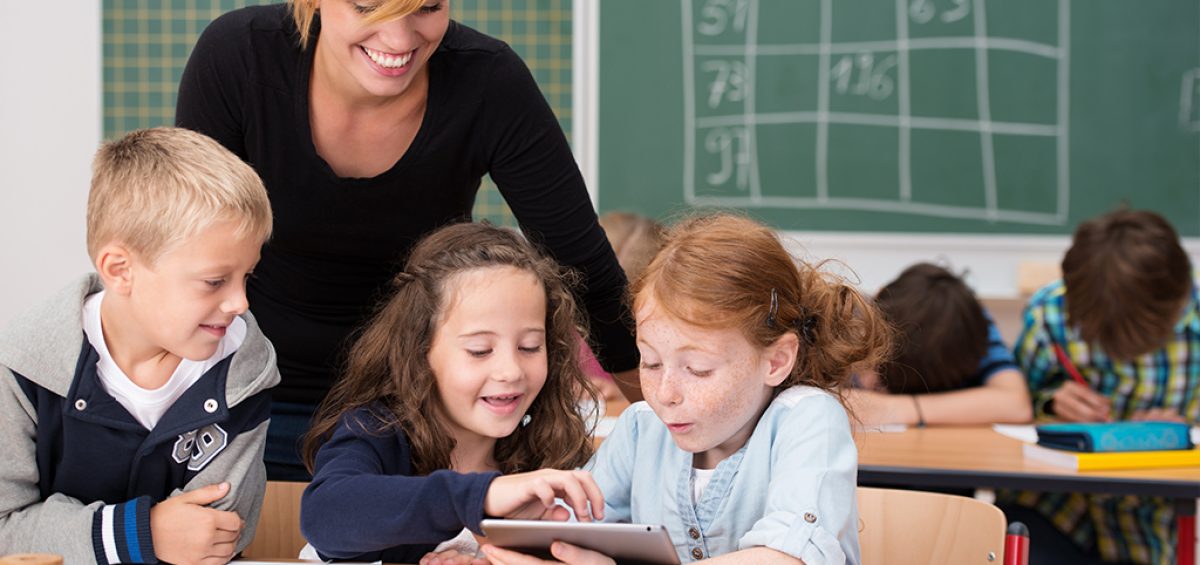
In contrast, on-campus education is a less sustainable choice. While many programs, particularly those aimed at adult learners and working professionals, will have class times during the night to facilitate other obligations of the students, students will still have to take the class at designated times, which may interfere with business hours, parenting commitments, and other routines. Additionally, students should take into account in travel time to and from campus-this may present a severe barrier to those who lack reliable transportation, or to those who lives in rural areas without a college campus near the area.
Another advantage of choosing an online college is that when it comes to degree programs, you can have almost infinite choices. When you participate online classes, you can enrol in any school that offers the program you are interested in, regardless of whether that institution is headquartered across the country in a neighbouring state or in any part of the world. That means you can choose an university course that really fits your objectives, preferences and career trajectory. While migrating is an option, for adult learners, who have developed lives, careers, and relationships, this is often not realistic. For older students who wish to attend on-campus classes, because of geography they only have the choice of a few educational institutions and those schools may or may not offer the program they are interested in.
On-campus education is generally structured in a manner that is very recognizable to the students: classes take place in physical classrooms, teachers give lectures and lead discussions, and students have in-person conversations about course material. This is very analogous to the classroom experiences students could have had in high school, so it’s something that unconsciously attracts adult learners to. On-campus class experiences are built around face-to-face interaction and this is something that many learners thrive on – being in a classroom surrounded by your peers, being able to start conversations, form friendships, asking questions, and set up meetings in person with the teaching staff and support staff as required.
For certain students the perception of online learning may at first feel very unfamiliar and even a little awkward, especially if they are not used to conversing through written work. However, by the end of their first term, most students have absolutely adjusted to this new way of learning, and find that their conversations with professors and classmates come to feel entirely natural, and the same conversations, friendships, questions, and meetings still occur. In addition, some students find the online discussion format more stringent than a conventional teaching experience; Since they need to think more carefully about what they’re saying, and they can’t just put their hands up to answer a question.
To determine the feasibility of their various choices, students can contact the school financial assistance offices they are considering to learn more about the average help packages, their eligibility for student loans and tuition rates, and evaluate the final dollar amounts they will owe each term. They should also carry out a complete analysis of the overall attendance costs for the institutions that they consider. It is necessary to decide whether participants are likely to be paid extra, undisclosed fees for items such as access to distance learning, equipment, online libraries or resources (for an online program) or fees for student participation (for on-campus programmes). They all have to be factored into when measuring the tuition expenses, which can easily add up.
Ultimately, although both in-person and online degrees have their positive and negative aspects, both are decent alternatives, and it is up to each individual student to determine which suits their lifestyle, habits and schedule best.
Performance Marketing
Hello Readers! Let’s understand the concept of “Performance Marketing” in this article in a simplified manner.
Think about how you used to get marks in your school time. The better you write in your exam sheets, the better you scored. The grades are based on your “performance”. From junior school to college to the corporate, people have been judged and have reaped the benefit according to their efforts. In the era of digitization, the concept of “performance based marketing” follows the same pattern.

The world is interconnected and though red market exist for most of the businesses as well as industries, it has become crucial to keep aside the competitiveness and mutually benefit each other. For instance, a website is no more about just themselves but contains various videos, links, advertisements and images for other businesses as well. One way to increase the traffic is about creating back-links and posting the content of another page/site to own page.

Now, here comes the concept of “Performance Marketing” which can be defined as the comprehensive term that refers to online marketing and advertising programs in which advertisers (a.k.a., “retailers” or “merchants”) pay marketing companies (a.k.a, “affiliates” or “publishers”) when a specific action is completed; such as a sale, lead or click. (https://thepma.org/)
The business environment is a very dynamic one and to keep up with the pace, performance marketing helps retailers and affiliates to sustain and grow. It creates a win-win situation for both parties involved: retailers as well as affiliates. You might have come across a page with too many advertisements running along the page. And I am sure you know why it is important for websites to do so.
The performance in this case can be an array of executed desired results, such a completed lead, sale, booking or download. Some believe in “clicks” as the more number of prospects click on the advertisement, the more the affiliate are benefited. There are multiple strategies one follows while designing the affiliate program according to the business. In this data driven marketing world, performance marketing campaigns give one the ability to measure everything from brand reach to conversion rate down to a single ad.
Benefits of running this campaign:
- Easy to track performance
- ROI
- Innovative
- Increase brand visibility
- Networking
- Low Risk
- Scalability
Limitation:
- Some marketing tools need investments to run and analyse about any campaign
- Goals setting must be very specific from the beginning
- Catering to the masses
Performance marketing has evolved over time thanks to new technology and changing consumer behaviors. In today’s performance-driven world, digital marketing is all about “hitting the right people on the right device at the right time.” (utbrain) With performance marketing, only the successful transactions are considered and paid accordingly which reduces the chances of investing and paying for useless campaigns that have no or minimum ROI.

With a great vision, good team and marketing tools, a company can go ahead with launching various performance marketing campaigns and increase their web presence by collaborating with others in the market.

Importance of Agricultural Education

In many schools around the world, STEM (Science, Technology, Engineering and Mathematics) and entrepreneurship teaching methods have seen a nudge but should agricultural education be given more significance? There is no disputing the importance of basic education as it lays the model for the development of a child, but the agricultural education system can also provide real life skills for students that can help them both in their future professional and personal life.
Impacts of climate change and its negative effects on food health and deterioration of the atmosphere are growing. Extreme changes in weather, such as droughts and water scarcity, affect crop production negatively. The United Nations (UN) has advised global hunger is propelled by climate change. The cases of extreme climatic disasters, including extreme heatwaves, droughts, floods, and storms, have more than doubled since the beginning of the 1990s, with a mean of 213 of these happening in a year during the 1990–2016 period. Such disasters are destroying the agricultural output of major crops including wheat , rice and maize, causing increases in food prices and losses in income that reduce people’s access to food, “the UN says.
Reports indicate that increased numbers of firms and investors are buying farmland worldwide as they become progressively valuable resources. Over time, continuing to grow raising livestock animals and aquaculture can become more challenging as drastic weather changes increase the susceptibility of animals to diseases, the UN Food and Agriculture Organization (FAO) notes in a 2016 report among other things. At the same time, the World watch Institute has quoted FAO as saying that climate change will affect the availability and quality of the land, soil, and water resources. These are later reflected in crop output, which is leading to rising prices.
Although agricultural programs are commonly available at tertiary level, they are, depending on your country of residence, much less popular at elementary and secondary education level. Agricultural colleges are available in different countries like the United States, Australia, South Korea and the United Kingdom. They not only prepare students for agricultural careers, in spite of exposing students to field-related topics. Agricultural or farm schools have so much to teach out-of-class children, such as the importance of being responsible and persevering when caring for crops and animals. It can also help them build an affinity for nature and animals, exposing them to potential careers that they might never have considered otherwise.
It is remarkable that even the International Labour Organization (ILO) notes that the agriculture industry offers untapped employment opportunities; although the World Bank points out that farming is key to economic development. These hands-on teaching methods teach students where their food comes from and how it gets to the table. Children that grow up some of their own develop a greater connection to food, according to research; this can prompt them to lead healthier lives, as such children tend to stick to better diets.
The capability and knowledge to grow our own food (i.e. producing plant and caring for livestock) is essential for survival and yet, is an area of study that gains little significance in schools. Paired by the need to meet the growing population of the planet’s future food requirements, agriculture will play an ever more hugely important role in society. Logically, while not all students will harbour ambitions to undertake agricultural careers, foundation experience in the field can still prove to be a pragmatic area of study for their future.
Theory of Mind
The basic principles involved in mind theory are beliefs, desires, and intentions that are used to comprehend why somebody is acting in some way or to predict how somebody is acting. In general, Mind Theory requires identifying the knowledge, beliefs, emotions and intentions of another person and using that understanding to navigate social situations. A commonly used task of measuring theory of mind is a task of false-belief, like this:

Demonstrate the child a Band-Aid box and ask the child what’s inside the box he / she thinks. He or she will probably answer, “Band-Aids.” Open the box and display him / her that within is a toy pig, while saying that there’s really a pig inside and close the box after this.
Now, as you’re bringing into view a toy figurine boy who’s been hidden up to now, the adults say “Scott’s never seen anything inside this Band-Aid box. Now Scott comes here. So, what does Scott think the box contains? Band-Aids or a pig? Children who have established Mind Theory will understand that because he did not see in the box, Scott holds a different understanding than they.
Children who have formed Mind Theory will understand that because he did not see in the box, Scott continues to hold a different understanding than them.
They’ll respond that Scott thinks Band-Aids is in the box. Those who have yet to develop Mind Theory may respond that Scott thinks pigs are in the box, mistakenly thinking that Scott holds the same belief as they do.
Kids are improving on Mind Theory tasks around the age of 4 and are able to fully understand that somebody can act on the basis of a false belief about an object or event. In my own work with pre-schoolers, anecdotally, 3-year-olds tend to understand that Scott didn’t see inside the box, but still react that Scott thinks a pig is in the box.
For children with developmental disabilities, such as those with autism spectrum disorders (ASD), it may take cognitive ability a little longer to develop, and some higher skills may not be attained at all. Youth (ages 5 to 13) with autism received lower scores on measures to understand the beliefs and emotions of others than those typically developed by young people, but there were no differences in understanding others’ intentions possibly since knowing intentions is a less nuanced ability that evolves faster than knowing feelings and beliefs. Mind Theory also predicted ASD diagnosis, so that those with the lowest level of these abilities had more serious diagnoses (i.e. autism with intellectual disability) than those with more advanced Mind Theory (Asperger’s syndrome) diagnoses. Mind theory evidently plays a role in the emergence of delays in development, with discrepancies between those with delays and normally developing adolescents persisting in middle and even adolescence.
By comprehending Mind Theory, we may not only be able to better diagnose those with complications, but also create more effective interventions to encourage and support cognitive development. It is believed that executive function is related to social social skills, so that those with higher levels of cognitive abilities also have greater social skills, with that relationship being partly related. The connection between perceived competence and executive function may be more nuanced and bidrectional, as indicated in some of the literature, but I think it is most important to establish how EF skills contribute to mental theory and social competence in this way. Understanding how the underlying EF(Executive Functioning) process affects one’s social development will help us build new approaches for children. These initiatives could focus on cognitive and EF components which could help develop social skills, making the intervention less anxious and more accessible.
Multicultural Education
Multicultural Education is known as an educational procedure / strategy which fuses the perspectives, writings, values, convictions, and viewpoints of people from distinct social foundations. The primary function of putting it into practice in classrooms is to allow educators to adjust or join exercises to highlight diversity and social pluralism. We will discuss various disadvantages and advantages of educational method. Multicultural education came into the limelight in the early 1970s, following the action plan for change in the education system by the civil rights struggle. The goal was and continues to be to assist, appreciate cultural diversity amongst teachers and students. Multicultural educated students are often best prepared to work in a variety of classroom or commercial establishments and have a strong social intelligence.
Race, ethnic background, nationality, language, religion, class, sexual orientation, etc. are the critical elements involved in multicultural education. Students can be constantly reminded of history, cultures, and the importance of various groups by adapting it in schools and colleges. It also promotes the ideals of inclusion, democracy, diversity, critical thinking, and sense of unity, inquiry, outlook values and many more positive traits. This teaching strategy is seen as profitable in advancing educational achievements among students of foreigners (immigrants), and it is along these lines that it is given credit to be a contributor to the school reform movement.
Many genuinely think that Multigrade or cross-cultural education’s goals and objectives are to safeguard the culture of minority groups by encouraging young people to think broadly and get to know new thoughts and critical thinking. All this quite fundamentally helps students deduct, just as it urges them to have an increasingly open worldview. As a result, students are provided with the knowledge, beliefs, and skills required to engage in social improvements, resulting in equity for ethnic groups previously marginalized and excluded.
Just like every other Multicultural Education system, there are a few benefits and drawbacks to it. The pros and cons are as follows:
Disadvantages of Multicultural Education:
Since children from diverse ethnic, linguistic and social backgrounds study together from the same education system in a multicultural classroom, making it difficult for everyone to understand the subject. There’s a possibility teachers may be struggling to find out how well the students understand the content. As not all students come from the same backgrounds this causes a language barrier. People may be non-confrontational, submissive or otherwise indirect from other cultures.
Teachers in inclusive education must be equipped to manage conflicts and misunderstandings with different values , beliefs, cultures, assertions, patterns of behaviour, etc. that tend to arise among students from different cultures.
Advantages of Multicultural Education:
Multicultural Education exemplifies students to different culture and values, and creates good understanding and acceptance of people’s differences. It instils tolerance and personal acceptance. Since it encourages cultural relevance, anti-bias classroom, challenging students to reflect without jumping to stereotypes, shaping social skills and social action resulting in people engaged in civic engagement. The method encourages students to assimilate while maintaining intact their culture and values, making them feel inclusive. It can help children assimilate without compromising their cultural identity by being culturally conscious teachers, without biasing. It facilitates promoting a community of learning, which helps to preserve a sense of pride which trust in the learning.
Importance of Learning to Code early in life

The World Economic Forum ‘s Future of Jobs Report has forecasted that 65 per cent of children entering primary school today will eventually wind up working in entirely new types of jobs that do not yet occur. The world is changing at such a rapid pace that today’s high-paid jobs didn’t even exist five years ago-and it’s hard to predict what kind of jobs we ‘re going to do in another five years. The reason for that big shift? It is rise of Software industry.

The question here is how we prepare our children for the future, there’s only one solution to this situation: Learning to code. Both parents and teachers believe that programming is a well-structured way of introducing children to logical thinking and problem-solving in a country like India, where the education system struggles with a lack of vision, facilities and outdated curriculum. This also trains them for a data-science and computer science driven job market.
Fewer than 10 percent of schools taught mathematics before the Industrial Revolution, each school introduced mathematics after the turning point, because that was the centre of the revolution. For us now, coding skills are what mathematics was to the Industrial Revolution: underestimated at the time, but extremely valuable generations later.
Now we’re in the middle of the computer revolution, and it’s the same concept: schools need to recognize the benefits of coding as a skill. For Chinese parents, teaching children code is just as important as teaching them math and Chinese. Indeed, even before they enter pre-school many Chinese kids are vulnerable to coding. A lot of Indian parents now also teach pre-school coding to children. A huge number of coding and programming centres in New Delhi, Mumbai, Gurgaon, and Chandigarh serve these needs in India.
Almost all of these places use a shared pool of tools and technologies — such as Code Studio, LightBot, Botley, or MIT’s Scratch — created for a foreign market where coding teaching is already a flourishing industry for children. The aim is to cultivate the ability in a child to develop a meticulous sequence of commands in a language which the computer understands.
In the next 5-10 years, it would not matter what school kids are attending school, but how digitally savvy these kids are, especially with the introduction of 5 G technology that would be paradigm shifting and upend conventional teaching methods. Economists estimated the total economic impact of 5 G on new products and services to reach $12 trillion by 2035 as 5G tries to move mobile technology from connecting with people to people and information, to connecting people to everyone. Hi-tech kids today are learning from the same books I used 10 years ago during my school time. Our school system promotes rote learning, and that promotes conformism in children rather than curiosity. There is a repetitious raj of learning which governs our schools.
If we don’t implement coding in schools then our kids will be in a massive disadvantage and the future will be shaky. In 2017, Delhi-based ed-tech start up Eupheus Learning launched Cubetto which was introduced at about 300 primary schools across India. Cubetto’s innovation is the block-based coding language intended for pre-literate-year children. It is a screen-less coding solution that teaches infants the basics of programming.
Most kids learn to tap and press and hold in the digital age of today before they can speak cohesively or walk. Its wireless pacifiers, friends and entertainers are smartphones and tablets. To do so, children do not need to be qualified in reading or writing because stories and pictures are used to illustrate the concepts.
We can’t rely on the government to formulate policy, top-down approaches are lethargic and bureaucratic that takes a lot of time to implement which our kids don’t have. In the 4th Industrial Revolution, parents and educators would have to take a proactive approach or our children will be left behind.
With economic measures, India turns the tables on China
China’s economy is dealing with many challenges, including from the China-U.S. trade war.
However, options are tilted in China’s favour because the country is far less dependent on India’s market than India is on Chinese imports
India is considering a range of economic measures aimed at Chinese firms amid the border tensions. The move to ban 59 Chinese apps may be just the start, with other measures likely to follow if tensions along the Line of Actual Control (LAC) continue without disengagement.
Following the June 29 ban, Union Minister for Road Transport and Highways Nitin Gadkari announced on July 1 that Chinese companies would not be allowed to take part in road projects.
Reports have said the government is considering trade and procurement curbs targeting China. The government is also increasing scrutiny of Chinese investments in many sectors, and weighing a decision to keep out Chinese companies from 5G trials, in which they are now involved.
The moves could potentially cost Chinese companies billions of dollars in contracts and future earnings. The message from Delhi is it cannot continue trade and investment relations as normal if China does not agree to return to the status quo of April before its incursions along the LAC began.
The Chinese government and State media have hit out at the measures. In separate statements, China’s Foreign Ministry in Beijing and the Chinese Embassy in New Delhi called on India to review the moves. The embassy said the measures “selectively and discriminatorily aims at certain Chinese apps on ambiguous and far-fetched grounds” and “goes against the general trend of international trade and E-commerce, and is not conducive to consumer interests and the market competition in India.”
State media have also widely criticised calls in India to boycott Chinese goods. The Global Times quoted one expert as saying “the sheer irrationality” of the campaign “would only end up dealing a blow to the local people in India”.
China is itself no stranger to such moves, having frequently deployed economic countermeasures, from restricting market access to boycotting goods in the midst of its own disputes with countries ranging from South Korea and Japan to the Philippines and Mongolia.
China’s State media spearheaded a boycott of South Korean goods in 2016 and 2017, when Seoul deployed the U.S. Terminal High-Altitude Area Defense (THAAD) missile system. China then placed curbs on outbound tourism to South Korea, costing the country millions of dollars in tourism revenue. China also used regulatory measures to close almost 90 Korean-owned Lotte Mart stores in the mainland.
In 2010, China began restricting exports of rare earth elements to Japan – a key ingredient for many electronics industries – following a collision near disputed East China Sea islands. Two years later, mass protests were organised by China over the islands issue, which led to boycotts of Japanese brands and, in some instances, violence targeting Japanese branded-cars and stores. With the Philippines, a dispute over the Scarborough Shoal in the South China Sea in 2012 led to China curbing imports on bananas and restricting tourism, costing the country millions of dollars in revenue.
Coercive actions
Economic sanctions have been one of the key tools of Chinese coercion, according to Zhang Ketian, who is writing a book on Chinese coercion and is assistant professor of international security at George Mason University. Based on interviews with Chinese experts and policy documents, Ms. Zhang noted that coercive actions were selective and focused on “targets when economic cost of coercing is low” but the impact is high.
With South Korea, for example, China did not target all sectors. “It left exports of Korean semiconductors, key intermediate goods for Chinese companies, untouched. Seoul relented in October 2017 by issuing a list of assurances meant to clarify to China that Seoul would not expand the scope of THAAD,” said a 2018 report on “China’s use of coercive measures” from the Centre for a New American Security.
The report said China “has punished countries that undermine its territorial claims and foreign policy goals with measures such as restricting trade, encouraging popular boycotts, and cutting off tourism.”
In all those relationships, China had particular leverage that it used to inflict immediate economic pain.
In the India-China economic relationship, where trade is lopsided in China’s favour, both sides have different levers that they could turn to, but the options are tilted in China’s favour because China is far less dependent on India’s market than India is on Chinese imports.
India’s biggest lever is its market, which has emerged as one of the important overseas markets for Chinese companies in the technology space and in telecom. For TikTok, one of the 59 apps banned, India is the biggest overseas market with more than 100 million users according to estimates. While the parent company ByteDance reported modest earnings of $5.8 million in 2018-2019, its first full year in India, company officials said the move could cost billions of dollars in future revenue. A source close to the company told the Chinese finance magazine Caixin that ByteDance “is anticipating a loss of more than $6 billion, most likely more than the combined losses for all the other Chinese companies behind the other 58 apps banned in India.”
A move to restrict Chinese companies from India’s 5G rollout would also have the similar effect of costing hundreds of millions of dollars in potential revenue.
If India does have considerable leverage that could hurt potential revenues of Chinese companies, the problem for Delhi is China could inflict immediate economic pain should it choose to. In 2019-20, India’s imports from China accounted for $65 billion out of two-way trade of $82 billion, and the country relies on China for crucial imports for many of its industries, from auto components to active pharmaceutical ingredients (APIs). Between 70 and 90% of APIs, needed for the pharma industry, come from China.
Industry representatives have in recent days already expressed concern over delays in customs clearances. If China curtailed imports as it did with Japan, even if doing so incurred its companies limited costs, the consequences would be far more serious.
Difficult choices
India faces difficult choices and needs to be selective in its measures, said former Foreign Secretary Shyam Saran. “You have to choose areas where you don’t get hurt more than they do,” he said. “TikTok is a good candidate as India is their largest market. Telecom is another. This is a huge market for Huawei. You may stop them for 5G, but at the same time a large part of the infrastructure you already have in place in the 4G network is all Chinese, so we will still need Chinese maintenance and servicing.”
The problem for India is its overall leverage with China is such that it cannot inflict serious pain on the five-times-larger Chinese economy as a whole, even if it could hurt individual companies. This, while India remains deeply dependent on Chinese goods, whether they are procured from China or elsewhere, although China’s exports to India account for less than 3% of its overall exports. On the investment front, Chinese investment in Indian tech start-ups has crossed $4 billion, according to estimates, spanning major investments in companies including Paytm, Swiggy, Ola and Flipkart.
“What do we do, for example, with Paytm?” asked Mr. Saran. “If we stop these investments, we will pull the rug out of the entire ecosystem. The problem is we are far more dependent on Chinese imports than China is dependent on us as a market. Losing a contract to India may cause some pain to companies, but will have a minimal impact on the scale they are operating. If China stops exporting APIs, there will be major disruptions in our pharma industry since producing APIs locally will take time.”
Whether the targeted economic measures will influence Beijing’s behaviour on the border will ultimately depend on China’s calculus and whether Beijing views any perceived gains from the current border stand-offs as outweighing the not insignificant economic costs of losing a key potential market. Moreover, losing this market would come at a time when the Chinese economy is facing its own challenges in the wake of the pandemic and facing increasing barriers in many Western countries.
Are Smaller Class Sizes Better
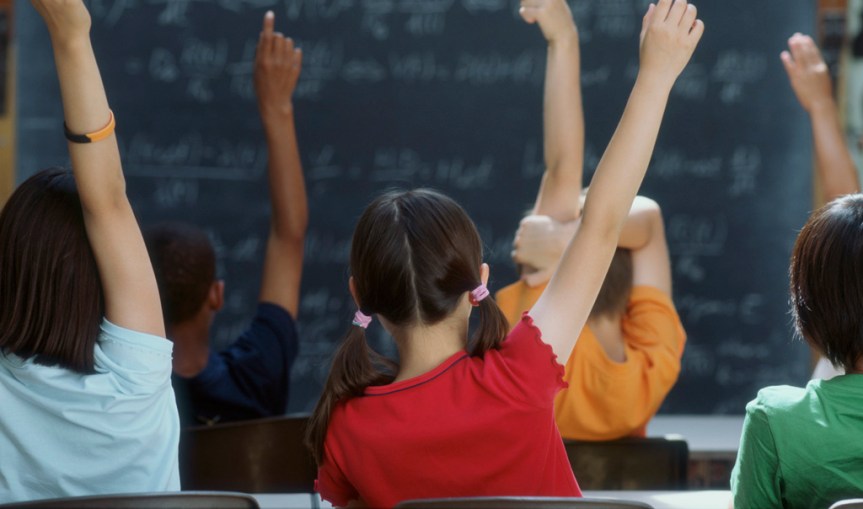
When class sizes are increased, everybody learns of the outrage in an attempt to prevent having to raise the budget substantially to bring a new teacher to a public school system. You’re probably aware that schools with smaller classes are more attractive than schools with big ones; but what exactly is so impressive about small classes? How do you want your child to get this? Smaller classes have several advantages you should consider carefully.
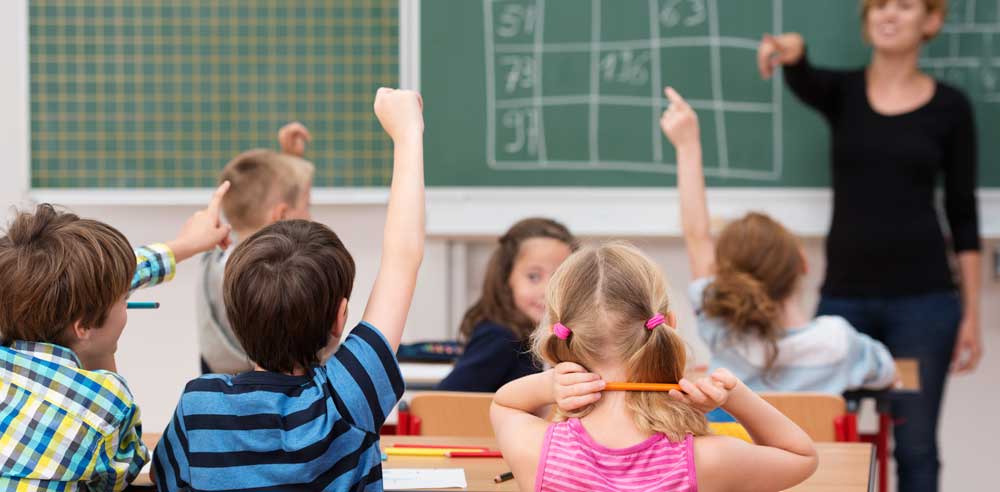
Small class sizes cause the teacher to pay more one-on-one attention. Let’s face it: teachers are overburdened. We are not paid approximately enough for the uncertainty we contend with on a regular basis, so they sometimes end up taking home jobs with them during the form of marking papers or preparing lessons. Instructors have the opportunity to know about each student as an individual thanks to lesser class sizes, continue to work with them to build their strengths and eliminate their weaknesses.
Instead of your student being just another face in a huge crowd, they will have a greater chance of developing deep and lasting interactions with the other students around them. That also has educational benefit: if your student has a schoolwork question, he will have a greater chance of knowing who to call for a quick chat.
Teachers are often said to be teaching to the lower middle of the class. Someone below that point will have to battle for themselves, sometimes left behind in the crowd, and everyone above that spends most of the class time day-dreaming while waiting for everyone else to finish studying a concept that they figured out ten minutes into the lesson. No matter which end of the spectrum your student falls on, the instructor is more likely to be able to customize the lesson so that it remains at their level in a small class.
When there are thirty-five students in the classroom, it does not matter how skilled the teacher is. There will be disruptions. Even the small task of encouraging students to work together on an assignment can lead to confusion as thirty-five voices fill the air and that’s assuming the classroom doesn’t come complete with one or two trouble-shooters. Worse, major, personality differences are more likely to occur in a classroom, and to occur in extremes. Discipline is starting to take up more of the time of class than real teaching. Discipline is expected much less frequently in a lesser student classroom.
The more the number of students in a classroom grows, the more time admin duties need to be used up each day. It becomes a massive undertaking to hand out papers. That’s all apart from the process of assessment, when teachers are less likely to provide individual feedback in a rush to get through a big stack of papers and more likely to give just that grade and a quick statement or two. They are still fairly quiet. Even when all are extremely excellently-behaved in the classroom, thirty-plus bodies in a classroom are noisy. There’s a constant clatter of papers in their seats, sniffing noses, students shifting. For a student with problems of attention, those small disruptions can be the difference between a lesson that is fully understood and one that they do not understand at all.
Can Video Games be beneficial for Education?

In parallel to their entertainment factor, video games have tremendous promising aspects and there has been significant progress when games are
Designed to tackle a particular problem or teach some skill. Video games have grown and developed, and so has our society. Graphics got prettier, stories got richer and more involved. We have slowly got to recognize the true potential for learning and enriching ourselves in virtual worlds. We have also seen the appearance of “Gamification” in many industry sectors with the growth of the video game market; education is at the forefront of this.

Why it is that such a massive industry cannot be used to make the world better? Video games are the bread and butter of recreation for kids. It’s a pastime that incentivizes teamwork, communication skills and also a depth of information depending on the content. We’ve begun to realize that just as people enjoy books and movies and physical media, people also enjoy gambling. And they can use it for more than just discovering fantasy worlds and destroying castles. The core Language skills are a typical example of the educational value video games provide.
This research project of the ESL classroom by the Kanda University of International Studies produced by Jared R. Baierschmidt has a wealth of knowledge on the topic of gaming-learning. Baierschmidt generated and implemented a unique English as a Second Language course with a focus on gaming. He writes that In terms of the activities themselves, approximately 39 percent of respondents found the multiplayer cooperative activity to be most useful for their studies. The stated reasons included the fact that during the activity, the educators were able to use a variety of language skills and the activity encouraged them to actively communicate with their partner.
This means that collaborative, competitive games through meaning, play, and human relationships can help students learn English as a second language. Baierschmidt also writes that according to polls, around 90 % of respondents plan to continue using digital games for language learning even after the [ESL] course has been completed. While researching how gaming helps people learn a second language is still so fresh, this work is a big step in the right direction when it comes to understanding the effect and intersection between playing. It turns out that breaking down activities into challenges and awarding accomplishments (just as video games do) is a smart idea.
Cosmetics, tools to create their own games, and a lot of competition and motivation from the staff and facility all act as opportunities for successful work. By motivating students to see failure as an opportunity to improve, they excel rather than as a sign of something lacking in the student. It’s this idea of failure is just a loss, not a catastrophe, which helps children to succeed and really enjoy learning and developing, just as a character in a video game is progressing on their path. There seems to be a dominant view that education isn’t congruent with fun, and when placed in the same realm as learning, happiness should take a back seat. But why?
Education should be able to educate, direct and nurture young people as effectively as possible, even if it means changing the system. Even on the side-lines, video games can still provide excellent educational opportunities. We need to teach kids how to learn in order to drive education forward. And learning by play is a great way to get children interested in awareness, their future, and scholastic subjects.
How Is Covid-19 Changing Prospective Students’ Plans?

Everyone considers Covid-19 to derail the plans of possible future college students in this spring of jaw-clenching uncertainty. However, one major question is: How many people will be affected?
Multitudes of them, suggests the results of a new survey. One in six senior citizens in high school who anticipated full time attendance at a four-year college before the novel coronavirus outbreak now believe they will choose a different path this fall. Three out of five students are interested in the ability to attend their first-choice college although they still intend to enrol in a bachelor’s degree programme. These revelations come from a survey conducted by the Art & Science Group, a higher-education consulting company, of 487 prospective college students. The outcomes provide an early look at how the epidemic affects college expectations for teenagers and how their plans for the near future could change.
These results are very solid, said the Art & Science Group’s principal. And they might inadequately-represent the future impact of what Covid-19 would once and for all be said and done this fall. Sure, you have seen the recent footage of college students setting out on spring-break beaches, ignoring recommendations for social distance practice. You’ve heard the argument that adolescents and 20-somethings aren’t worried enough about the global pandemic.
But aspiring undergraduate students worry a lot about how their college options could be influenced by coronavirus, the survey indicates. Almost all respondents (90 percent) said they consume information about the ongoing pandemic at least once a day, with 10 percent of the survey takers doing so hourly. Most high school seniors are radically changing their immediate plans despite school delays and lockdowns, the survey showed. Of the 17% of participants who did not think they would end up enrolling full time at a four-year college, a majority expected either to take a gap year (35%) or to participate part time in a bachelor’s program (35%). Seven percent said they would attend a college in the city and 6 percent said they would work a full time job.
Only 20 per cent of students were convinced they would attend their college of first choice. Survey participants who said they weren’t optimistic of choosing the college at the top of their list (63 per cent) identified different concerns. The most prevalent was cost: Twenty-one percent of those students said that because of the coronavirus their first-choice school may no longer be cost effective to my family. And 12 percent said either they or a member of their family had health concerns which required them to change their plan.
The Art & Science Group found that many other coronavirus-related fluctuations had prompted students to reassess their college choices: “I was unable to stay overnight at my first-choice school” (15 percent).Visits to the campus play an important role in the college choices of many students. Those meetings are an important measurement for enrolment managers of who is likely to enrol. Yet the spread of coronavirus forced schools everywhere to cancel innumerable on-campus programs scheduled for March and April (58 percent of students surveyed said they had encountered these cancellations, or expected them to experience them). That means that a lot of players must do without valuable information in the process.
The Art & Science Group also asked students how Covid-19 could have affected their thinking on the qualities that they pursue in a college. Thirty-five per cent of students said that “closer to home” colleges are now a more practical alternative than their college of first choice. Some said they were contemplating a less costly organization (32%), with a more familiar social network (22%), more rural (12%), smaller (15%), or “localized in a safer region” (10%).
Should schools switch to eBooks?
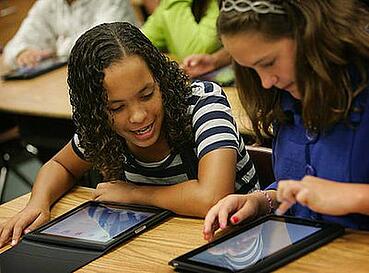
Having brought modern technologies to classrooms has had a positive impact on the quality of the delivered education. Universally the students and teachers agree on the benefits of using eBooks in education.
The aim of eBooks is to simplify and improve the overall learning experience. Digital Books make the learning process more interesting and engaging. Students can now regularly participate in the learning process rather than listening to one person talking constantly. The integration of eBooks into teaching in classrooms makes learning a fun and engaging experience. Gone are the days when students were expected to carry a bag full of books to classrooms and back home every day. With eBooks joining the educational domain one machine is sufficient to include the syllabus of the whole year. Students at a very early age will be exposed to these electronic books, right from kindergarten to university level, ensuring that learning never becomes routine.

A successful learning program must ensure that the learning process includes the students actively. The eBooks also launched an educational innovation that lets students learn better and faster. Some of the benefits of introducing eBooks into education are listed below:
1. Study anyplace anytime:
Simple to bring an eBook around. It’s easier to move a mobile device that supports eBooks, instead of carrying a bag full of books. Most of the students already carry a mobile device these days. It might be a smartphone, a tablet, a laptop. An eBook’s portability allows students to refer whenever they want to their notes and course materials. The students will now have everything within one location instead of bringing several books.
2. Offline eBook Access:
More than 50 per cent of the world’s population has Internet connectivity. Yet we all have networking and network problems often in trouble. To ensure that the internet connection doesn’t hamper the mobile devices learning cycle, provides offline services these days. Students can now install and save any content they want on their device, and then go through it at their comfort later.
3. Interactive Multiple Functions:
Not only are eBooks basic reading materials, they also have all the required resources to help students make notes and illustrate content. EBook readers have many interactive features, such as annotations, pen tools, page zoom, and much more. Due to the ability to find words and topics in an instant, the search tool is the most favoured instrument.
The search tool tries to avoid the time-consuming process of turning pages after pages in order to find a specific topic or sentence. They can also bookmark chapters and pages. The Online Dictionary helps them find word definitions easily. Additionally, the user can also change the font size and style, and adjust the device’s brightness to suit their eyes. An eBook is an all-in-one device that gives students a wholesome learning experience.
They need to just point the image or object to their AR-enabled device, and a computer-generated visual will pop up on their screen. This 3D image helps provide a convincing and immersive learning experience for the students. Those improved visuals would be more interesting for students over flat diagrams. It may also have links to relevant external sites, where more information about the projected image can be found.
Why Students Struggle with Math
Many children have mathematical problems but some students find it much harder than others. These may otherwise be bright children who have a great understanding of logic and reasoning but still fail spectacularly on homework, tests, and quizzes. Over time, repeated mathematical poor performance can cause a student to become disheartened and believe that he or she is “dumb” or not good at the specific topic. Furthermore, as math is cumulative, falling back might mean that a learner forgets much of what is taught. It’s important to have basic math skills, no matter what profession an person chooses to pursue. This is why recognizing problems early on is important. With the right balance of classroom accommodation and learning strategies, each student will reach their full potential in mathematics.

There are several reasons why a child may have math difficulties at home, ranging from low motivation due to academic stress to a shallow grasp of how to apply and perform numerical computations. But sometimes the root cause of poor performance is something else, like a disparity in learning or a difficulty in motor skills.
Dyscalculia is the most frequently detected condition in which individuals struggle to perform simple arithmetic and have trouble attempting to manipulate numbers in the same way as their peers. Nonetheless, students with dyslexia may also have trouble with reading numbers and having to follow word problems with math at school. When doing paper work, they may rearrange digits, or correctly solve problems, but record their responses in the wrong way.
Children with ADD / ADHD have the capability to rush ahead and skip a step or struggle to focus and be unable to check their work once a problem is over. Students with dysgraphia and dyspraxia, who are having difficult time trying to write by hand, may become so overwhelmed by number formation that they make silly mistakes or get the steps in the wrong order in an equation. Finally, children with visual processing disorders may lack the visual-spatial learning ability necessary to align numbers, read graphs and perform basic geometric operations.
Math is one of the topics that both children and adults have little understanding of. This is because while pre-school maths are about realistic problem solving, patterns being observed, shapes being recognized in your environment and learning to count, secondary and high school math teaching is more abstracted. It often concentrates on rotary learning and solving equations in books – think arithmetic and time tables – that can turn off students and make them believe that math skills are not relevant to their daily lives.
Indeed, many students lament that math is boring. At school, they might not see the point of learning algebra, geometry or calculus. Or they may question why they need to be able to do basic arithmetic’s such as adding, subtracting, multiplying and dividing by hand when they can easily find answers using a calculator or a computer.
The answer to this last point is multi-fold. One, you might not always have a calculator at your disposal; two, even if you do, trying to understand how and why to do it for yourself provides a stronger basis for future learning, and three, doing arithmetic is a mental form of exercise that strengthens your working memory.
Math is much more than arithmetical, though. Much of what goes into solving multi-step word problems is identifying the problem, choosing a suitable approach to solving it (there may be more than one), and following the correct operation order.
Some Valuable Suggestions:
Motivating and inspiring learners by demonstrating them real-world situations involving the use of math outside classrooms. Explain how math works, try and convince learners that it’s not all about arithmetic, and get them excited to give it a go and feel comfortable trying out different methodologies to problem-solving, even if that means they don’t always get the right answer.
The teacher gives visual explanations, demonstrates research on the wall, and uses physical objects that students can reach and push around, where possible. Multi-sensory feedback can improve learning by making it easier for students to interact with a lesson, and can also enhance memory content. It is extremely important to promote understanding of a subject that can be very abstract.
It can be daunting for the students to write down information and process it at the same time. It may also be that copying from the board can cause numbers to be transposed or recorded in a manner that makes no sense for the work any longer. It can help encourage a child to use a computer to take notes, or to pair them with a note-taking buddy.
Does Education ever stop?

There is no doubt that education is among the most significant factors that have rocketed mankind to where it is now. Today, detestable things such as slavery, honour killings, and many others have been eliminated and replaced with right to free speech, gender equality, and education for women, infrastructural development, technological breakthroughs, and many more. Looking back at how rituals were performed by our predecessors and many other controversial acts, we realize that we have admittedly come a long way from where we started.

You immediately picture a conventional classroom, a stack of textbooks, and a strict teacher when you hear the word ‘education’. Yet is our education confined to a school’s threshold, or do we take it much further? Education can be understood as the practice that allows us to acquire knowledge, values, and competences. There’s no timeline or age limit for that cycle. There are two fronts where we can continue our education. It is to educate ourselves to improve professionally, and the other is to continue the education to ensure that we are individually continuously evolving.
Education is an endless continual journey. Education doesn’t just take place in the classroom. We must continue trying to educate professional practitioners and the general public. Educational opportunities have a long conventional tune in sociological research on inequalities and many sociologists have concluded that education is a central variable in today’s society when it comes to studying stratification. Over the last generations, modern societies have continued to evolve into knowledge-based economies where the role of education and the organization of academic institutions in all phases of the course has become significant. More than in the past, education today is a lifelong process where individuals acquire informal and non-formal learning skills and competencies throughout life. Most empirical education research is still based on observational studies, and does not analyse education as a process that is highly time-dependent, incremental, and quantifiable.
Education helps in Professional Development:
We’re engrossed in a mad rat race where there’s soaring competition and the only way to stay ahead is to learn and grow continually. Organizations and businesses today understand that employees need to procure knowledge and new skills. A survey showed that over 70 percent of adults believe they are lifelong learners, while almost 90 percent of millennials are open to the possibility of spending money in future training. There are several ways you can educate yourself and have a professional development.
Using Learning Applications:
The app world is starting to open up a whole new way to educate yourself. There’s plenty to discover, from simple language learning apps to apps specifically designed for a specific field.
Educational YouTube Channels:
YouTube is a terrific educational source. You will find channels dedicated to the knowledge-driven content production. You can find content according to your profession. It could be business or finance associated, or even something imaginative like graphic design.
Conclusion:
Does education ever stop or it continues throughout one’s entire life, to point out the obvious, education is a continuum thing, it basically has no end. Education needs to be something that will help you develop, whether professional or personal. In fact, the process shouldn’t be punishing but just the opposite. Learn things you think are interesting, everything you learn will prove beneficial for you. So keep learning, and continue to rise!
Studying Abroad

Usually, the term “studying abroad” refers to a program operated by an academic institution, such as a university, that allows a student to live in a foreign country while studying at a foreign place of learning. The periods of study may be as brief as a single semester, or as large as one year or more. As well as learning from their curriculum, the student often learns by soaking themselves in the local culture and environment which were initially foreign.

Education is an essential thing in everybody’s life. Hundreds and thousands of young adults leave their families every year to study in a foreign country like the United States, Canada, United Kingdom and Australia. Lots of folks today are worried about going overseas to study. However, there appears to be a glamour element involved. Studying abroad has the main benefits of using advanced learning methods. The idea of studying abroad may seem like a magnificent opportunity, but there are also many potential downsides: practical, psychological, and financial. On the contrary, there are more advantages of studying abroad than just that.
Let’s look at the pros, first. Living in some other country means choosing to leave all the comforts of home behind, and having to do all by yourself. You could have better opportunities for learning abroad than you do at home. You will be doing activities you’ve probably never done in your home country. These include cooking, cleaning, shopping for food, washing clothes, figuring out transport services and exploring options for living. A lot of students go home proud of having become much more independent individuals. Another benefit of studying abroad is when traveling, you move to new places. Attaining all of this also increases self-esteem and develops character strength. You’ll grow more confident than ever before.
Studying abroad also means having to speak foreign languages even more than you are used to doing. If you are going to study at a place where they speak different languages to your native one, you may experience language problems. You’ll be subjected to the language everywhere you turn – on the sidewalks, in the retail outlets, on campus – you can’t get away from it. Besides writing and reading the language on campus, you will be required to interact with the local people there in English. The big positive here is that you’ll develop your English language skills by leaps and bounds. The best way to learn or improve upon a language is to use it daily.
Studying abroad has its inconveniences too. Don’t take steps toward foreign studies if you don’t have enough economic means. There’s a certain homesickness experienced by almost everyone. You’re probably going to miss your family, friends, food and all the familiar stuff. Besides that, there is a culture shock experienced by students going abroad for the first time. You’ll need to get used to change in attitudes and new ways of living.
The major drawback of studying abroad is the altering culture. By comparison, living in a different community makes you understand that there are different ways to do things. Which is also a contribution to improving cultural awareness for students. You’ll also discover we’re all human with the same emotional reactions at the end of the day.
Conclusion:
To sum up, it all comes with pros and cons. Despite the inconvenience of going overseas to study, the overall result is positive. When studying abroad not many people can survive because of the disadvantages they may experience throughout their stay. However, what one can gain from this experience far outweighs the negative as there is no price for personal growth and fulfilment.
Role of Higher Education in Society

Higher education could offer numerous advantages, including job stability and economic freedom. Education plays an even bigger role in many facets of your life throughout the 21st century. Achieving a higher education will improve your chances and boost overall standard of living.
Today, more Americans see a college education’s relevance and role in providing better employment opportunities and a luxurious retirement. Yes, about 84 percent of Americans say a higher education is very important (47 percent) or highly necessary (37 percent) to get ahead in the world. Among those American citizens, 66 percent of those who have not graduated from college say they wish they had, and 62 percent make it sound that going to college would have significantly improved their current standard of living.
Higher Education provides more opportunities:
Being a graduate of high school does not open new gates to many successful careers, as it has done in past centuries. Today, the U.S. has turned from a manufacturing-based economy to a knowledge-based economy, and today’s impact of higher education can be compared to what it provided 40 years ago with a high school education: more opportunities and better professional opportunities.
For many, if not for all, people the surest way to a successful life is to go to college and get an university education. After graduating from college, you may not know exactly what you want to do, but at least you know that you want a professional life that is more satisfying, pays well, and is something you feel safe and secure and contented with. These considerations are why a lot of people participate both with their money and time in college. You are trained in your chosen field by a higher education, but it also teaches you to comprehend complex subjects, think critically and express your ideas appropriately. You also learn many skills like organizational, self-discipline, and how to see a task from beginning to end. A higher education makes you become more qualified and provides you with other skills relevant to the job.
Because you are studying a wide variety of skills, you might end up in an area for which you didn’t originally prepare. It will open up fresh and exciting possibilities that you would not have had you not received a higher education. Today, career options in our economy are dwindling for those who have not continued their after high school education. Many high school grads who don’t go on to university end up working in the service field with low paying jobs offering hardly any opportunities for advancement. Naturally that’s not always the case. There are a lot of high school graduates who have become very successful.
Staying Competitive:
Higher education represents a strategic edge in the job market, also. We all know that finding employment isn’t certain in the difficult times we live in today. The number of unemployed persons is still fairly high, and the amount of new employment openings is not nearly enough to bring the people they are looking for into work. As a job seeker, you compete with a large number of experienced workers who have been out of the workforce for some time and who are also looking for work.
If you do have a higher education, however, it usually equips you for better job security. Generally speaking, employers tend to appreciate those who have finished university relative to those who have just completed high school and are more likely to replace those who have not attained higher education. In addition, some companies even go so far as to pay for your tuition because they consider a trained employee to be of value to their organization. A college degree is an opportunity that doesn’t only give you tremendous rewards. It benefits the hiring company too.
Conclusion:
Remember, higher education doesn’t necessarily imply you a great life and financial stability. But, there are substantial facts and figures, some of which we’ve discussed above, which suggest that when people go beyond high school, they continue to dramatically boost their work likelihood, increase their income potential and protect their lifestyle. It may also create opportunities for your kids too.
Risk of Student Loans

Student loans have an overwhelming advantage: if money is limited, student loans enable you to go to school and get the diploma you need to make your career progress. But risks also arise when a student loan is taken, some apparent, some less apparent. The most real threat is that you won’t finish the degree program you ‘re taking the credit line for, and then you decide to leave school without showing anything except some disconcertingly large debts. An even worse risk, entirely understandable, is that you take the loan, complete the degree program, but then have a degree that is not commercially successful, that doesn’t get you the type of work you want, and that doesn’t increase your remuneration enough to compensate the debt you now have to pay off.
The way of reducing both of these risks is to do your homework before participating in a degree program, ensuring that students attending the program have a good success rate in actually completing it, and also ensuring that students who complete it have better job prospects at the end. According to a recent study the tuition fees in certain universities can alone cost anywhere around $51,000.Remember that lodging, food , transportation and other housing expenses are not included in those numbers. So your college loans might also have to cover living expenses if being a full-time student prevents you from grabbing the kind of job that would normally allow you to cover them.

Consequently, if student loan debt may be an issue for you, choosing a school with low tuition costs is best and helps you to live in a neighbourhood where the cost of living is low. Even with taking a student loan comes less apparent risks. There’s an old proverb that says “the debtor is the lender’s slave.” Debt will transform you into a banks slave that loans your student loan. Many students taking out loans for education are inexperienced and have never had any major debts. Taking a student loan changes all that every month, removing a sizeable chunk from your pay check once you have to start paying off the loan.
The average student loan in the United States, across all age groups, is now (in 2014) around $25,000 and that number is increasing. The average student loan for the 2013 graduating American students is over $35,000 (ref). That’s not really a home mortgage, but it’s nevertheless a sizeable debt. The impressive sounding word “non-dischargeable” is another less obvious risk you face in taking out a college loan. Let’s say you’re overwhelmed by debt. One way out of this is to claim personal insolvency, which nullifies the debts. But a non-dischargeable debt is one you will never ever get rid of, not by filing bankruptcy, not by doing anything but to pay it off or to drop dead (literally).
The fine print on student loans commits you to pay back the debts irrespective of the hardships that you face in life. Student loans are financially unsustainable. Users can’t rid themselves of those debts. They’ll follow you all the way through your life till the time you pay them off.
It is worth stepping back and asking why student loans have become such a major issue for students and a concern. Believe it or not, back in the 1960s, students were not unusual to work during the summer and earn enough to cover a large proportion of their school expenses during the year. Much of this shifted with the 1965 Higher Education Act (re-authorized many times since). By permitting students to take out massive loans, they encouraged schools to raise their tuition rates (after all, students could now pay for the increase). This led to a negative spiral in which schools continued to raise their prices and the government continued to raise the amount of money it would lend to the students.
Conclusion:
You want to consider taking out a student loan very meticulously. Please ensure the expected return on schooling, and the degree the loan is supposed to secure is large enough. Not only does it need to cover the debt but it also needs to improve your career and life considerably. You buy an education by taking out a student loan. Make sure that you do get a good deal.
Balancing Academics and Extra Curricular Activities

What does “research” mean about the implications of extracurricular activities on the academic performance of students? The U.S. Department of Education study says students who pursue extra-curricular activities get better grades than students who are not interested in extra-curricular activities. The same research also indicates that any individual could achieve better grades in his studies when he takes place in numerous co-curricular activities, independent of the backgrounds from which they come. Extra-curricular activities come in different forms, such as participation in athletics, music, painting, drama, and other school and college social events.

In addition to better exam grades, the activities also have a good impact on the students’ personalities, shaping their behaviour and attitudes towards life. Extra-curricular activities normally take place in groups that allow the students to develop their competitive nature, encouraging them to conduct themselves better in a community. Extra-curricular activities are the only activities that improve the learner’s leadership skills. When he participates in such activities, the student would shine in a career, while retaining his usual interest in his study.
A student seeks a balance between extra-curricular activities and his academic interests, which will positively contribute to his learning development and future plans. Let’s know some of the ways that will help to build a better balance between academics and extra-curricular activities.
Choosing Specific Extra Curricular Activities:
Can a student get better at any type of extracurricular activity? Surely in such activities he or she should develop participatory spirit. But allocating significant amount of time to the activities is important and choosing the best specific activities for participation. When the stress to bring better grades in the studies for various subjects continues to grow, it would not be possible to take up every available activity in the colleges and schools in extra-curricular programmes.
With this, it is crucial that the student chooses one or two activities, and he needs to have a fundamental interest in that specific activity. If the student is interested in engaging in debates and writing essays, choosing each of these interests and creating a plan to enhance these activities would become suitable for him. The student must devote a set time during a specific day to the practice of writing debates and essays at home or in the hostel.
Creating a Time Table to strike a balance:
Some students build their time-table to learn subjects such as physics, chemistry, mathematics, etc. But they neglect that maintaining a regular schedule for the practice of extracurricular activities in both things could create balance. As with regular reading of books for various topics, extracurricular activities require daily practice.
It keeps interest alive in activities such as devoting time to the students and finding ways to excel in these activities. For example, if a student is interested in playing Cricket, daily practice of the sport gives him the opportunity to play better and free from mental stress. The student could set a certain amount of time per day for daily practice and during this, he could refine his bowling, batting, or fielding skills, which are important parts of the game.
Leadership is Key:
Leadership is the first mandatory requirement in every sort of extracurricular activity. If the student displays leadership in these events, it demonstrates that his or her acts in academics and extracurricular stuff have been well balanced. Once again it shows that the student has the right level of investment in both the valuable aspects of his personality and career development overall. Extra-curricular activities give the opportunities to grow skills and the student could meet the desired goal for his career with leadership initiatives.
Research has shown us that extra-curricular activities build interest in the students and motivate them to engage more in academic research. Such exercises are only instrumental in keeping everything integrated for better accomplishment. An asset to the community is a well-balanced student between academics and extra-curricular activities.
Importance of Critical Thinking
Education had for some decades been more focused on pointless mechanical learning and only the ability to repeat and remember knowledge provided in the books. Problem-solving abilities were limited to mathematics and only a few experiments were carried out in the science labs. Today, however, as time is changing learning, more emphasis is given to improving essential skills and thinking that will prepare students for real-world navigation after school.
In past several years, rote memorization and the helps to sustain and repeat information have been the aim of education. Problem-solving was constrained to mathematics, and experimental research occurred in the scientific laboratory. Today, learning is progressing towards building skills that will prepare young people to experience in and beyond the real world.
Expert in critical thinking: G. Randy Kasten claims that lifelong learners can benefit from the opportunity to think critically. It is one skill that separates innovators and followers. The interpretation of critical thinking is not unanimously understood, but Kasten says It’s just the capacity to recognize why things are the way they are, and the possible repercussions of actions. Today’s students have been under a consistent onslaught of information , especially from sources on the internet, friends, parents, and mainstream press, and it quickly becomes clear that they need to learn how to analyse what they see and hear every day, so that they can recognise false ideas and look further than superficial appearances.
According to Lee Watanabe-Crockett on the Global Digital Citizen Foundation blog, critical thinking isn’t always about thinking clearly or coherently — it’s about thinking independently. He says Critical thinking about something implies trying to formulate your own viewpoints and sketching your own inferences, irrespective of outside influence. It’s about analytical discipline, and seeing the links between concepts. For teachers a methodology recommended by Watanabe-Crockett is plainly to start with a question. The problem has to be one that promotes brainstorming and discussion. The solution would include analysis and problem-solving, all of which are closely related to critical thinking.
Knowing what additional data to discard and what to pursue involves mastering the correct use of information, or fluency in information. That is not enough to acquire knowledge. Students must evaluate it to help decide whether or not it is valid, and then apply the data to the question or issue. Another approach Watanabe-Crockett advocates is the use of peer groups. Colleagues can be a great source of knowledge and students can learn problem-solving strategies while working in conjunction. Role play is a technique that can be used by students to practice analytical thinking. Watanabe-Crockett says, Pair students and make them investigate a historical controversy. Ideally, it will include an encounter between two prominent historical figures, and then direct them to determine which character they will want to play. In this dispute, they should each have opposing viewpoints. Their hardest task will be to each propose a solution. Having to study carefully to consider the point of view of both their adversary and their own helps them understand and justify their decisions.
Getting students to think critically particularly considering them set goals. Dividing the process into three parts can be helpful: planning a task, monitoring and reviewing the task, and doing a post-task assessment and reflection.
Remedies for Emotional Exhaustion

Detection is important and once you know what is wrong with you, you can seek ways to treat and help yourself. First and foremost, it is important to accept that you are not in your best condition to work and go on with your life. Physical ailments are easier to detect but that’s not the case with mental ailments like emotional exhaustion. Emotional exhaustion is the state of complete hopelessness and emotional detachment. It is not something that can be overlooked and needs to be treated for an individual to continue to be efficient in whatever he does.
Read: 9 Signs of Emotional Exhaustion
A person can get emotionally exhausted due to an array of reasons, some of which are relationship troubles, demise of a loved one, job related and financial problems. In the current pandemic situation, everyone – from front-line healthcare workers to people who are working from home – must have felt a wave of exhaustion due to the uncertainty and new working conditions at some point. Some people must have rebounded without any efforts and the good news for those who didn’t is, the condition can be reversed with some efforts.
Here is a list of things that you can do for mental and emotional replenishment:
- Exercise and eat healthy
A healthy being can overcome anything. Exercising not only distracts you but the physical stress leads to release of happy hormones that elevate your mood. The pandemic might not allow you to hit the gym but you can still workout at home.
Read: 5 Ways to Stay Fit During Quarantine
Indigestion is a sign of emotional exhaustion and even if you feel like eating a lot or eating nothing at all, try and stick to a healthy, nutritious diet as it will not only energise you and make your gut happy but also help with your sleeping schedule and workout routine. Staying hydrated is also a must for a healthy body.
- Indulge in calming activities
Meditation and Yoga are a few activities that lead to peace of mind. They are also effective in helping with the blood pressure and heart rate which are associated with stress. There are a lot of breathing exercises in Yoga Asanas that can help the erratic breathing associated with panic attacks and just hyperventilation,
A diary can become an outlet for everything that you are feeling and going through and you won’t have to worry about what it would think about you.
- Distract yourself
Everything and everyone comes after your own well being. Take a break and do what makes you happy. If you think, nothing makes you happy, think again! Do something different, learn something new. Hang out with your friends and talk to them about their life. Knowing that other people have it rough too and what they do to fix their situation can not only make you feel that you are not the only one but also give you ideas. Maybe, what you need is a solo trip. Try out everything that can help openly.
- Actively seek help
Talk to someone – be it a therapist or a close friend. Sometimes you just want to feel validated and empathised with. The person may not advise you anything but having someone to talk to about and someone who would listen to your pain and agony will definitely help you feel better.
Favouritism in Schools

The children consider their schools their second home and teachers to be regarded to be part of the next parenting phase. We eloquently believe the phase of schooling tries to teach us many essential things. We come across various subjects and information, fitness, grooming, contact, principles and other characteristics important to live a productive life. In essence, teachers encourage students to face hurdles and tackle any situation in life. Although they teach us all of these values, there is one aspect unknowingly practiced by some schools — prejudice and preferential treatment to some students as teachers have their favourites.
A fortunate few students—those sweet, intelligent, smart, and well-behaved ones—are accustomed to their teachers’ wide smiles and open praises. Yet it’s a half-hearted greeting for some, just barely a glimpse. When asked, teachers will never confess to playing games except to themselves. While plainly obvious to students to see, teachers still conceal favouritism beneath a cloak of justifications such as “I don’t play favourites,” and “I just admire those of positive behaviour, so that others can imitate.”

Have we not learnt in educational institutions that everyone is equivalent and that everyone should be treated the same way? But the worldview is not sometimes taken up in the classroom. Some teachers pay extra attention and consideration to those students they admire, so they don’t want to acknowledge certain students or cultivate their natural abilities. Most students love to take part in contests, shows, etc., but teachers repetitively select students who are excellent and confident to win, after all, winning is a prestige issue. They fail to provide other so-called ‘ordinary’ students an opportunity to interact, communicate or highlight their secret talents. Every teachers must be aware that each and every student deserves a chance and should be assessed without any favouritism. Students may not win and may fail but they should be motivated by a teacher to try and help them try again until they excel.
You can train and mentor the not-so-brilliant students to take their performance results to the next level. It will take persistence and time but a satisfying path to see a student succeed would be the speed of progress. While passively passing comments and elevating smart students will demoralize other students, which will lower their self-esteem and denying them the incentive to do better.
Favouritism can lead somebody to question their capabilities and relevance. If somebody starts feeling inferior, he or she might begin to doubt his or her self-worth. Often picking the clever ones is never a positive deed and if they just put their sights on the fast learners, then can a instructor pull out the best from other pupils. Teachers should seek to comprehend each student, rather than just favour a few, and help them further. The extreme bias of teachers is one of the main reason why some students cook up some excuse not to go to school or to leave the school.
If teachers are open-minded, acknowledge and respect the views of their students, the students would be better off. It is natural that teachers should be attracted towards certain pupils, but a teacher must be smart enough to understand those feelings and be clever and patient enough not to reveal their interests to any student in some particular way. As long as a teacher has strong communication skills in the classroom giving priority to each student, no harm is done. The educational objective is to bring out the best in each student. Although it is not as straightforward as it appears at first, teachers must listen to the needs of all their students. After all, instructors are seen as the second parent; affection and attention of parents must be equally distributed among their children — regardless of the child’s characteristics.
Teachers are the truly revolutionary catalyst. It will help to mold a productive, effective and efficient person by treating students fairly and constantly to boost their confidence. Educating children is a teacher’s role: make sure you do it right.
9 Signs of Emotional Exhaustion

Have you ever felt like nothing is ever going to get better? Emotional and mental exhaustion happens when the stressors from professional life or personal life or both manage to wear you out and drain you until nothing feels right.
We are all familiar with the state of physical exhaustion, when our body gets so tired that it cannot bear any more physical activity unless it gets re-energised. Physical exhaustion can be easily recognized and reversed by resting and eating energising food. The same is not the case with mental exhaustion as most people don’t realise it is happening and continue with their lives without doing anything about it. Their efficiency reduces gradually until they can’t keep going on anymore.
Here 9 warning signs to check if you are mentally and emotionally exhausted:
- Irritability
You get worked up from really small things like spilled coffee or a person’s comment even if it doesn’t pertain to you. Frustration can be accompanied by sweating, hyperventilating, racing heart, anger and confusion.
- Lack of motivation
You don’t feel like doing anything. Even when you do something like studying or just doing the work that is assigned to you, you are forcing yourself to do it and you would not do it if you could help it. You are not even motivated to do things that used to make you happy.
- Anxiety
Everything, be it leaving your house or asking for help, makes you fearful and nervous. In severe cases, one might even experience panic attacks in seemingly harmless situations in which the fear takes over completely and you feel like you are having a heart attack.
- Sleeping troubles
Your sleeping schedule is utterly ruined. Every night, it is difficult for you to fall asleep and when you do, it is so light that you wake up from even slight disturbance. You become sleep deprived eventually and physical exhaustion follows.
- Impatience
When you are impatient, you are unable to wait for something or someone and you openly show your discomfort caused by a delay. Depending on the temper, you can either get angry or simply upset. Impatience can make you take impulsive and irrational decisions that can hurt your well being.
- Indigestion
Mental discomfort can also lead to tummy troubles. Loss of appetite is very commonly associated with stress. You are never hungry and you don’t even feel like eating your favorite foods. Brain controls all the bodily functions and so mental exhaustion can lead to digestion system dysfunction, the symptoms of the same are bloating, inflammation and cramps.
- Sudden breakdowns
You unexpectedly burst into tears for no apparent reason. Crying is just an outlet of the emotions that have built up inside you and you haven’t paid any attention to them or you didn’t realise they were there in the first place. These emotions can be of loneliness, insecurity, dejection and what-not, depending on the person.
- Disconnection from reality
You start doubting everything and everyone because it all seems fake to you. It’s like you are not even connected to your own body and you are a complete outsider. Nothing makes you emotionally connect with your surroundings and you keep going on with your days without any feeling of connection.
- Emptiness
The feeling of having no purpose in life and it makes you want to give up everything. You are void of emotions and nothing seems to affect you, be it success or failure. You feel bored and you feel like you are all alone. Life seems meaningless.
Future of Education System in India

The country’s educational System has undergone numerous improvements since independence, and started to advance. The Government is putting in place new policies and rules to enhance the quality of education. A comprehensive education forms the future of the infant, which helps create a healthier quality of life. Although there has been a great deal of positive change in the system, taking into consideration the number of children trying to move abroad to study it still needs to go a long way. According to the 2016 Open Door statistics, the percentage of Indian students moving to higher studies abroad has increased by 25%.

Indian students who look up to study at leading universities abroad work tirelessly to seek admittance to their dream universities despite the immigration laws. The transition that needs to take place in order to create a holistic education system in the country is to dwell not only on the academic growth but also on the children’s all-round development. The core system of teaching is about ‘what to learn’ rather than ‘how to learn.’ This is important to experiment with the teaching process, and to integrate more engaging methods into the present program. A few institutional improvements will also be made to strengthen the education system:
The first move is to adopt an educational model based primarily on the learners. A holistic approach that aims at learning by engaging, skill-based approaches will prove to be helpful. The educational system can also include experiential learning activities and methods such as blended learning to provide a better learning experience for the children. Another very important view that needs to change among Indians is that no topic is an alternative topic. Every subject, which include sports and arts, is a mainstream career opportunity and parents should encourage their children to choose a non-conventional career if they decide to.
The teachers being recruited must be able to sign up; they would have passed certain assessments and have to go through proper training sessions. A trained staff and an untrained instructor will often make a clear difference in the process. It is critical that teachers held accountable for shaping the future of the child have to be competent and well prepared. Expanding the infrastructure is another important area for the Indian Education Sector to develop. A school’s infrastructure should be student friendly and accommodating. The classrooms have to be configured with interactive boards, and they should be easily customizable.
The testing regime should be well-founded in order to provide practical world training for the children and not just deliver theoretical knowledge. Children must be conscious of the pragmatism of life in today’s day and age; this is something that no book can convey. The training program must therefore be designed to prepare them for the outside world. Management plays a key role in all sectors including the education sector. For smooth running any educational institution must be well structured and well handled. If the Department of Management and Administration operates without any hurdles, the Institute can function effectively. India’s educational institutes need to expand the curriculum, as career opportunities are literally boundless. Extra-curricular activities should be included in the course, and students should be encouraged to participate in many of these. The students’ possibilities of growth and overall progress should not be limited; they should be inspired to try new material. Such activities will develop the child’s self-confidence, and a positive mind-set towards the future. We must also introduce the psychometric analysis in order to find the premature trend of potential successful careers for children in the future. Ideally, that test should be included from standard eight onwards. This will give the children, teachers, and parents a clear path for the future and serve the country in accordance with their competence & design and not by default.
One thing about the established education system that is praiseworthy though is building a strong foundation for the children. If this is interlinked with the necessary changes, in the coming years India’s Education System can become one of the best systems globally.
Flaws in the Indian Education System
The Indian schooling system includes many noticeable deficiencies and shortcomings. Ratcheting up into this rabbit hole only accentuates and exemplifies the more sophisticated nooks and crannies in this sector. The most crucial component of the Indian education system is its teachers, who have the power to make or break, including the future of a student and his or her outlook on other subjects. The dilemma here is how often the teachers are to be blamed for the many shortcomings in the country’s educational scenario. As such an indispensable part of the system the teachers have little to do with the system’s weaknesses. They are obligated, after all, by a set of syllabus guidelines and rules, and by the ministry of education. They just can do very little about it. Nevertheless, they are completely open to the way they teach a subject and involve the pupils.

If the teaching methodology and pedagogy is inefficient and uninteresting, the students lose interest in a subject. So, the instructors have a big part to play in that regard. In several cases educators are not educated enough to be able to teach at a school or college, especially in rural India. Also, most teachers use the chalk and talk, or traditional teaching methods. One of the biggest challenges facing India’s education sector is the lack of use and application of technology in classrooms. Some would contend that computers and other technical advancements in schools and educational institutions might prove to be a huge distraction; on the contrary, if used with proper rules and regulations, technology will create a whole new environment for Indian students. Not only will they be able to actually apply information but they will also be able to navigate a physically inaccessible universe.
It is absolutely essential to have practical skills and to apply what they learn within the strictures of a classroom, it’s yet another factor that is overlooked in the education system. For assessments, most students are still unable to process and understand the concept of what is being taught in class and resort to rote memorization. They cannot retain what they’re learning and apply it to everyday life. They lack the ability to critically analyse a situation or issue, and often find it hard to form their own opinions. We are not encouraged to challenge anything, and are pushed into a static structure to conform.
For comparison, there is also a serious dearth in courses such as essential life skills, behavioural health, financial awareness, and sexual education. It is absolutely essential to discuss these topics even at the most basic levels, especially in countries like India where there are so many norms, stigmas and stereotypes connected to these topics. Such problems are swept under the carpet and then as they get older students are unable to comprehend these concepts. In classrooms, even subjects such as gender sensitisation were not addressed, making the children extremely ignorant. This normalizes problems in their daily lives such as misogyny, bigotry, hate speech and even racism.
Another big deficit in the Indian education system is how it puts unhealthy emphasis on marks and grades. Both schools and administrators believe the students are flourishing under pressure. They crack under pressure in most cases however. The burden of having to live up to unnecessarily high expectations is having a toll on the students ‘ mental health. Even as their mental health deteriorates, their parents refuse to recognize it and brush it away as an anxiety for adolescents. This has in many cases contributed to increasingly dramatic actions being taken by students, especially adolescents. The rapidly increasing number of suicides among the students is a result of high school pressure. Even in schools, counselling is only presented as a formality and when it comes to school counsellors there is also a severe lack of transparency and secrecy. When parents see a drop in the grades of their child, they are quick to place them in private tuitions and institutes of mentoring rather than getting to the root of the problem. The truth, however, is that unhealthy competition is seriously damaging to the mind of the child, because there is simply no growth or advancement. This crushes whatever ambitions they may have, dreams or aspirations. These problems are particularly valid and relevant in rural areas where resources are seriously lacking.
Stuff like encouraging unfair rivalry among students, placing undue pressure on them and completely ignoring their mental wellbeing fully demonstrate that the Indian education system has a long way to go in terms of reaching students. Furthermore, the funds dedicated to the education sector must be raised, and the RTE must be enforced gradually.
For the Love Of Lingo !
Haruki Murakami, the renowned Japanese author quoted “Learning another language is like becoming another person”. The journey of learning a second language is indeed a beautiful one. For a language carries within itself the ethos of an age old civilization, its traditions and the glorious tales of its evolution. It is rightly said, ‘To learn a new language is to posses a second soul ’.
Sounds fascinating right? From the groovy Spanish number “Despacito” to watching Korean TV series or going gaga over the K-pop band BTS , we’re are all in awe of these rich languages. Sometimes that fascination of ours leads to learning. Yes, you guessed it right; we embark on the journey to learn that language. And if you haven’t considered learning a new language until now ,then let me introduce you to the benefits learning the lingo!!
· Travel: Are you a wander who loves to explore new places and cultures? Travelling across lands is one to the most enriching experience if done right. By right I mean immersing oneself into the local culture of the place, far away from the luxury hotels. Interacting heart to heart with the locals. That’s where knowing the language comes into play. Who knows what hidden gems, tales you might discover besides making memories of a lifetime. Hey you!! Do add a language holiday to your bucket list for a cherishing experience.
· Friends, Family and Culture : With new language comes new friends and the world feels like a family. Exchange of ideas, coming together of speakers of different languages inculcates a sense of mutual respect, empathy and admiration towards other traditions. Imagine going to Brazil and cheering your favorite football team or appreciating the all time classic French movies in their original form. From deciphering the Arabic scripts on the Islamic tombs or the new found confidence within you on being able to read those complicated street signs in Chinese script. It’s no less of euphoria than the “Eureka moment “, right?
· Food for the Brain: Here comes the good news! Did you know learning a new language not only boosts your brain power but also enhances your memory? Studies prove that multilingual people have an edge at multitasking and decision-making skills compared to their monolingual counterparts. Also, learning the lingo keeps Alzheimer’s at bay.
· Career Boost and CV skills: Having a second language on your CV is like cherry on the cake. It gives you an upper hand over others, opening new career avenues. As a student, it increases your chances of selection for Student exchange Programs and being a part of global immersion. On the professional front, one can apply to Embassies, language translator and various other promising profiles.
· Diving into the world of literature : Learning a new language helps one discover the real gems of literature whose essence is lost in translation. Be it the original works of Persian poet Rumi, Les Misérables by Victor Hugo, the heart wrenching tales of Nazi Germany expressed originally in Dutch by Anne Frank in her Diary. They all offer insights into the realities of world ,broaden our perspectives and help us embrace the world with kindness. Romance languages (French, Spanish, Portuguese, Italian and Romanian) have similar roots and knowing either of one makes it quite easy to learn another. Having prior knowledge of Portuguese myself, I found Spanish quite easy to comprehend.
Still wondering when, how and where to start from?
Let me help you with this. The answer is pretty simple.
· When: If not now then when? There’s no better time to learn a language than now. It all starts with a simple step.
Just set aside an hour from your busy schedule everyday and start learning the language you’ve always dreamt of being fluent in.
· How: Here’s an interesting answer. Pick that one language you are passionate about. It could be as simple as impressing your love with French ( most romantic language in the world ) or maybe German cause you want to move there for higher studies . I’m sure you have plenty of reasons to pick your Lingo! ( For me , It was reading the Alchemist by Paulo Coelho in Portuguese )
· Where: Start from the basics, build a strong foundation. There are plenty of online resources available such as Coursera , Duolingo , Memrise along with various podcasts and resources available on the internet . There’s an entire ocean to choose from, you just have to pick your pearls.
Remember, “Change is hard at first, Messy in the middle and gorgeous at the end.” This journey of learning the lingo might be frustrating. There are gonna be times you’d feel frustrated and wanting to giving up. Be consistent because Rome wasn’t built in a day. Eventually, you’ll fall in love with the journey and the language itself.
P.S. Carpe Diem Folks!! (Live the moment, Live the lingo)
Happy learning !
HOW TO REMOVE EXAMINATION STRESS

Any college student can tell you that final exams are stress-inducing. But as you look around a college campus during college exams, you’re likely to see the effects of that stress in action. Even students who previously seemed to be carefree are showing signs of anxiety and sleep deprivation.
Keep your body and mind balanced and ready to tackle those exams with these 5 healthy ways to reduce stress during final exams.
TEMPORARILY SHUT ALL SOCIAL MEDIA PLATFORMS
In an age of social media, it can be extremely difficult to focus on one thing for any length of time. But one major problem with social media is that it’s a significant time drain. You don’t need a scientific study to prove that you lose track of time when scrolling through your newsfeed. You probably experience this daily. Social media is one of the major distractions that tempt us all.
But what you may not realize is that this particular distraction may be adding to your stress level instead of detracting from it. When you think about how likely you are to compare your life with others on social media, it makes perfect sense. But when you’re already feeling anxious, it’s a good idea to remove a potentially stress-inducing distraction.
MANAGE THE TIME EFFECTIVELY
If you’re like most people, your stress levels are closely tied to your perception of time. When your to-do list seems impossible in a given timetable, your stress levels are likely to skyrocket. After all, you seem to be facing impossible odds.
This is where time management comes in. With effective time management skills, you can make the most of whatever time you do have.
Before it’s even time to start studying, create a study timetable. If possible, plan up to a month in advance. This will take all guesswork away.
BETTER SLEEP
Whenever you feel like you’re being pulled in different directions, sleep is usually the first thing to go. Sleep has a very strong relationship with stress, but let’s just say “it’s complicated.” STRESS can lead to insomnia, and lack of sleep increases stress..
The answer is simple in theory, but it can be difficult in practice: Get more sleep to reduce stress.
To ensure your body is primed for sleep, avoid drinking alcohol because Alcohol may help you get to sleep, but you won’t feel as rested in the morning.
Avoid caffeine in the afternoon or evening hours and stay away from “study drugs.” You may think these stimulants give you more time to study, but when you sacrifice sleep, you’ll probably heighten stress.
ALWAYS EXERCISE IN ORDER TO RELAX
You may not have an hour to hit the gym every day, but if you can take a 10-minute walk, you can get some major stress-relieving benefits.
According to the Anxiety and Depression Association of America, a 10-minute walk may relieve as much stress as 45-minutes of rigorous exercise.
A walk may also help you clear your mind and refocus so that you can get a fresh look at the topic at hand.
TALK WITH FRIENDS
If you’re feeling the stress that comes along with final exams, there’s one thing for certain: You are not alone. When you’re feeling like stress is getting the best of you, stop and talk to someone. The odds are good that the chat will help improve your focus. But even if it doesn’t, your mental health is more important than a grade.
Some stress may be unavoidable during finals, but with some healthy methods it can be tackled.
“ALWAYS STAY CALM AND HAPPY”
Government Schools and Private Schools: Which is better

The biggest distinction between Government School and Private School stems from their financing and management. Government schools are managed and sponsored by local, state or national government, as the names indicate, whereas private schools are supported wholly or partially by student tuition and operated by a private organization. Private Schools are largely independent from state intervention. Other significant differences between government schools and private schools can be observed, based on these two key differences.
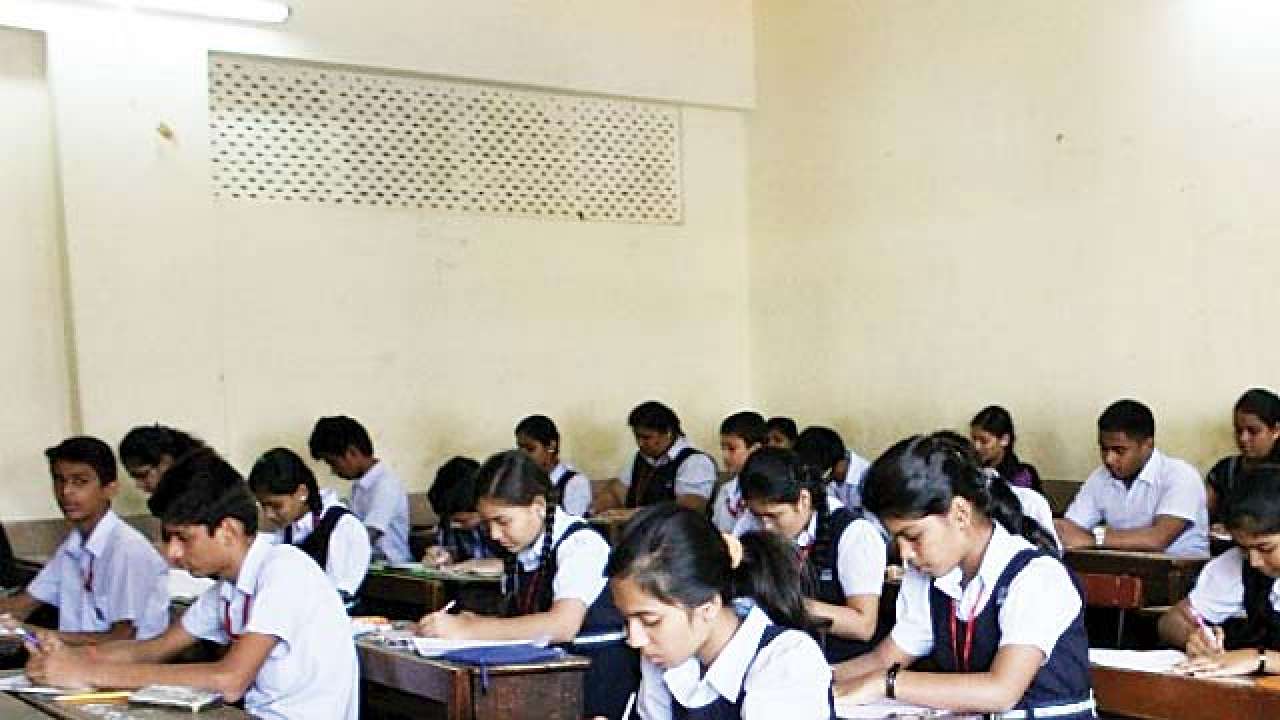
Government Schools:
Government schools are primary or secondary schools that are required or offered at no charge to all children, financed and monitored by local , state or national government. Since they are funded by the government, they are financed in full or in part by taxes. Since the government controls government schools, the syllabus is decided at either state or national level; all government schools follow the same lesson plan. The Government also controls recruitment and research. Admission to state school is determined by the student’s address. The schools are required to include the students belonging to their respective geographical area.
Although the equipment and other facilities differ by school, government schools typically have less amenities than private schools. Government schools have much more students than private students; due to lack of facilities the number of students in a class can also be significantly high. However, it is important to note that extremely competent teachers are always hired by government schools; teachers must fulfil all state-mandated requirements and be skilled at their subject to work in a government school.
Private Schools:
The Government does not finance or operate a private school. They are regulated by a private body and sponsored in part or in full by the school fees of the student. In private schools the fees are generally much higher. Around the same time, as compared with government colleges, private schools typically have better infrastructure resources and the latest technology.
Private schools are following the same curriculum as the Government has decided. The delivery method is decided by the school board though. The school officials also decide on fees and entrance fees. The school has the authority to decide whether or not a student meets the admission standards. The school also decides on staff selection criteria. In this scenario, a private school teacher will not be eligible as a state school teacher. A classroom’s class size is smaller than a government school’s. That is primarily because infrastructure and services are available.
Conclusion:
Better schools are important for a country’s brighter future as they cultivate next-generation torch bearers. A country’s future lies in the schools and universities. In India we have schools owned by both private and government. Private schools are best prepared in terms of security, technology, and infrastructure. They are expensive but also offer quality. To get more admissions, they maintain the quality and good teaching staff. Government schools are run for those unable to pay grandiose fees. There, teachers are of high quality but they are unable to impart knowledge in the best possible way. These schools are not facing any competition from their peers so they don’t care about quality issues. And while many cannot go to private institutes, these educational institutions are very important, learning something is better than doing nothing else. Governments require purpose and commitment to enhance the environment of their schools. That will ensure benefits in the long term.
Private schools are undoubtedly better than government schools as they would provide decent infrastructure, better teacher-to – student ratio, have a tidy & hygienic facility, better ecosystem for students with personality development options and extracurricular. Government schools may not be able to offer all of these features but for those who are unable to afford private schools, getting their children to government schools is better than not having any education.
Decision Making 101: Opportunity Cost

Wherever we are and whatever we are doing currently, is the result of the decisions we have made in the past. You have chosen to read this article and not scroll past it or do something else like watching TV or taking a nap. You have consciously made a choice from an array of options that were in front of you. Opportunity cost is the loss of benefits that could be derived from the next best alternative once a choice has been made. By reading this article, you have forgone the pleasure that could have been derived from watching TV or energy that you’d have got from taking a nap.
People who are doing 9 to 5, 5-days a week jobs face difficulty in realising their opportunity costs because they have a fixed schedule and only do what they are told to. They barely make any decisions on their own and just do what their boss tells them to on a regular basis so when they finally see an opportunity to relax on weekend, they don’t look for alternatives and just go with the flow. In case of freelancers or businessmen, however, these people are much more conscious of what they lose when they decide to spend their limited resources in a particular activity. A tailor can easily sacrifice the amount of business he is sacrificing when he decides to go on a week long vacation.
Opportunity cost is everywhere and in everything we do. When a person with a job decides to party on saturday night and sleep in because it’s sunday, he gives up on the time that he could have spent with his family. When you decide to get an MBA from a named university and pay a hefty tuition fee for the same, you sacrifice not just the money but the time, 2 years in this case, that could have been spent in doing a job or learning a different skill. You still chose to go for an MBA and the reason could be because you can get a much better job that pays better than the one without an MBA. Basically, It is all about weighing your alternatives correctly and carefully.
Decision making process isn’t complicated but two of the most crucial steps are identification of alternatives, followed by thorough examination of each alternative. All the benefits that are derived from all the alternatives need to be compared and the one that seems the most satisfactory should be chosen. One can also weigh his options on the basis of what he would regret sacrificing the most.
Importance of Technology in Education

Technology has become an essential aspect in today’s age we live in. Every day there is some new device or applications which makes life easier and improves on the already existing technologies and processes. However, making life easier isn’t the only part that technology plays in our lives. In education technology plays a significant role. As technology advances, it is employed in the learning process to support students of all ages.
In-class teachers can help students adsorb the material. For example, since some people are visual learners, computer-linked visualization screens may allow students to see their notes rather than just having to listen to a lecturer. People can use software to augment your class curriculum. The programs provide study questions, tasks, and even practice tests for a class which can help students to continue learning process. Technology is also becoming part of many teaching methods, beyond computer and technology classes as well. Students use technology to solve presentations and use the internet to study paper and essay subjects. In computer and tech classes, students also learn to use the technologies available to them.

This guarantees that they will be able to use this information in a workplace environment after graduation, which can give them an advantage of someone in their own school setting who has not had access to a particular technology or software. Students should have more access to educational opportunities like these as technology progresses. Whenever anything new and “better” is revealed, the “older” technology becomes much more affordable, even when schools are on a tight budget, allowing it to be used in educational settings. Technology has already been progressing to support kids before they have begun school.
Educational video games and programs for young children help them train for the school and get a massive advantage on their education in some situations. There are critics who might argue that technology “spoils” youngsters. Rather than, for example, being able to put a long list of numbers in their minds, they switch to a calculator. No matter what such points might be, technology is an integral aspect of the culture today. Students will be better equipped to transition from classroom to workplace by incorporating it into the classroom.
Technology is making the students much more efficient than they had been. As has already been said, technology education is no longer constrained by regional borders or any given time as a result of using it. Due to the introduction of technology, the students now have the means to keep studying independently. This is how the teachers had made the teachers even more successful.
Technologies has helped students to get hold of and watch videos and films about topics they may be going to study about right now. Indeed, a number of schools and colleges are also known to show their students motivational videos on a routine basis. This helps them to be positive in any and every work they do. This will support them both in their academic careers and in their professional careers.
Conclusion:
Much like a coin having two sides, Technology always comes with its adverse effects. Even as technology does have certain benefits, there too are certain disadvantages. Ultimately however, it all depends on the users, or rather how they use the technology. However, there is nothing to deny that there are plenty of benefits to be gained from using technology when used in a positive way. It will may be an absolute blessing for them.
Importance of Practical Knowledge in Today’s World

Knowledge is defined as familiarity with anything that may include certain facts, information about a specific subject area, definitions of the experiment or study, or skills acquired through training or experience. Knowledge can be of two different types:
Theoretical knowledge can be attributed to the theoretical clarification of a specific subject or area in which a person has a clear understanding of the things going around and the theory of their work, but cannot manage things.
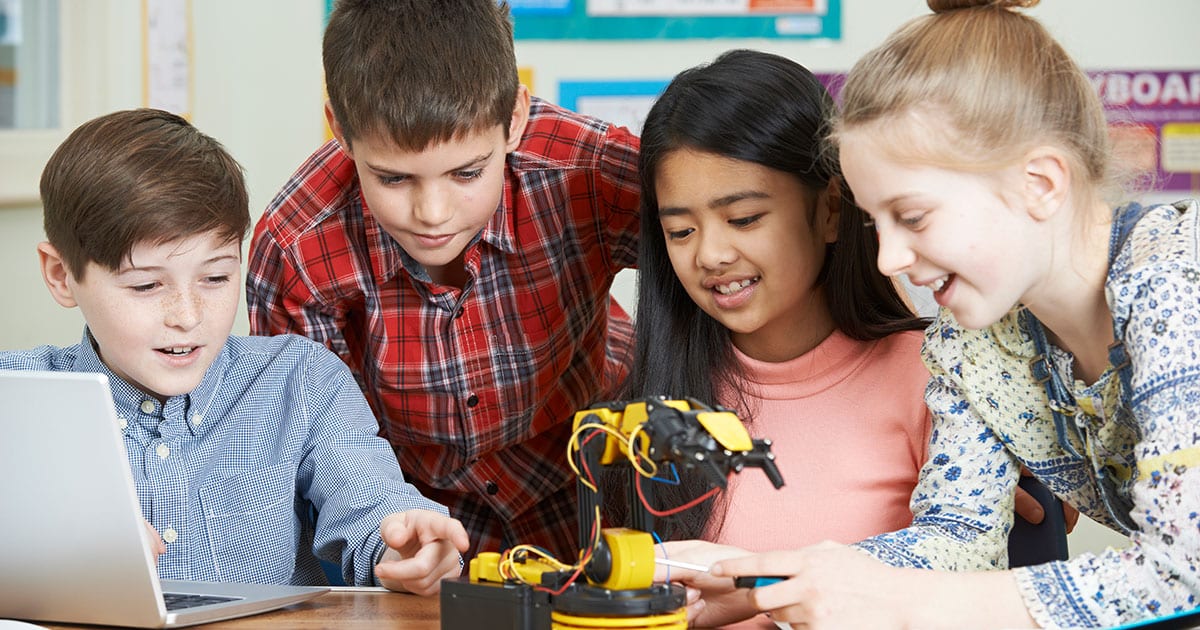
For example, if a person examines a car and its engine parts from manuals and presentation slides in a classroom, he will, of course, have knowledge of what the components of the car are, and what the underlying theory is, but one would lack practical information about it. The utility of the car for him is zero in the absence of this realistic knowledge. Without proper practical knowledge, he cannot drive the vehicle, he cannot repair it in the circumstance of any accident, and he knows nothing about its mechanisms. Theoretical knowledge could be something that can help a person gain a strong grip on practical knowledge. Knowledge is incredibly important to any genetic career and life.
The world is changing day by day, and every day we are becoming more and more advanced which needs a lot of changes from some of the previous traditional techniques that have been adopted. Rapid changes in working life, society and IT have increased the demands of expertise in every field. Today there is a need for qualified experts who are expected to have detailed understanding, excellent social and communication skills and who can use their skills in a constructive way in life.
Importance of Practical Learning:
Can you envision someone teaching you to scuba dive or drive a vehicle, inside four classroom walls? Can’t do it!! You have to get into the water to learn how to swim, and to learn how to drive, you have to be out on the road. Some topics are competency-based and directed to practice. Training will back up abstract experience of skill-based topics. Subjects such as teaching and engineering are based on skills. Practical knowledge is therefore more important in these topics than abstract knowledge. Practical research involves laboratory studies, study trips, tasks, assignments etc. The rewards of practical work are unprecedented. Having abstract knowledge has little meaning unless it is applied to practical purposes by the students.
Practical or informal knowledge is manifested as abilities or “know-how.” Practical knowledge is crucial to understanding how things actually work. It becomes relational and social in nature as it happens and evolves in certain particular contexts where it is practiced, and lets you obtain the basic skills that are the tools of your trade.
Practical understanding by the process of doing and personal experience leads to a much deeper comprehension of a concept. In our real day-to-day job realistic experience is considered to be of considerable value. There are also things that you can only know by seeing and witnessing; no matter how hard you try to understand this by abstract means. For example, if you’re trying to learn how to drive a bicycle for the first time in your life by theoretical means, you ‘re likely to spend your whole life learning, and still can’t ride without proper practical training. Where theoretical knowledge is often learned through the notion of a vacuum, practical knowledge on the other hand is understood by real life experiences. The basic distinction between theoretical understanding and realistic understanding is that theory guides you through the experience of others, whilst you prefer to learn from your own experience of the actual task in reality.
Conclusion:
It’s very important that each individual has enough knowledge to lead his life smartly and successfully. It doesn’t matter if you’re a student, a professional or an entrepreneur. Knowledge in an individual’s life really is something significant. It is important to acquire theoretical knowledge, but it is of no use without practical experience. Practical knowledge encourages an individual to accomplish something he studied about. Not only in professional life, it’s worth noting; you need to have a good, realistic approach for your life in general. Therefore, for growth development and use of your knowledge, it becomes really important that you also have a practical edge, otherwise there is no point in having theoretical knowledge when you cannot apply it in reality as well.
Benefits Of Freelancing

What if you could choose your own office? What if you could change the dim, fluorescent lights from a cubicle, with a large open space. One where the wind would caress your face gingerly, and you could hear the waves breaking at the shore, not too far away. To make this Mediterranean setting complete, what if you could sip on your drink from a coconut while tapping passionately at your keyboard? Sounds highly idyllical, doesn’t it? Not to twist the knife in the wound, but this is more than feasible. By choosing the path of self-employment, you can pick your own place to work from. And this is just one of the many benefits of freelancing.
The workforce emerges in different directions
It’s true, most individuals frown upon the idea of freelancing because aside from the plenty of misconceptions available, it seems to be an unreliable job. Think about it: you are living from paycheck to paycheck, from client to client.
However, it’s highly understandable why most people fear this. After all, freelancing started as an option for income supplementation, and the main idea was not necessarily to find constant projects but to find some when you needed them. Yet in the past years, with millennials entering the workforce, it became a reliable alternative to 9-to-5 jobs. Moreover, because of the traction, it gained in the past years, companies of all sizes – including enterprises are reorienting themselves into hiring freelancers as well, not only full-time employees.
Now, I won’t claim that office jobs will be dead in a certain amount of time, but what I do say instead is that it could be a good option for you to take into the account the idea of going freelance, at some point, especially if you are seeking things such as flexibility, variety, work-life balance and more. Since I do not enjoy making claims without any arguments, here are 5 benefits of freelancing
*) Flexibility
Keeping all the prejudices aside on how millennials do this, do that, “destroy” industries, one of the highest desire of the upcoming generations is flexibility. Whether we talk about having the option of choosing the time to start working or the amount in one day, flexibility is one of the main benefits of freelancing. Aside from this, freelancing gives you the option to work from anywhere – your own home, a café, another city or another country, as long as you have a stable connection to the Internet
*) Thriving on variety
One of the greatest benefits of freelancing is having the opportunity to dip your toes into a pool of possibilities. Usually, freelancers work on a variety of projects, from several industries. It’s not unheard of working only with one, but that’s usually a matter of choice (and of income).
Thus, going freelance will give you the chance to grow, to expand your horizons and to achieve plenty of knowledge and an impressive portfolio. This way, you will be some sort of Jack of all trades (but better than a master of none), in your own field
*) Its a companion
Let’s be honest about something – when having a full-time job, even if you have the chance to work on various projects, choosing which one to work on, is not one of the perks. This way, you might find yourself stuck with a project that goes against your ethical and moral objections, or would stick you in a routine. Even worse, in case your company provides services for other clients, there’s always the option into finding one who is either overly-demanding or aggressive.
On the other hand, one of the benefits of freelancing is this – you get to choose who to work with. If your client comes to you with a project proposal that doesn’t fit you, or his behavior is not one of your likings, you can always refuse. However, if this is the case, you need to have a plan B. Which, usually freelancers do have – and thus we can talk about another benefit
*)financial security
The idea of living from project to project, without knowing if the income will be enough to pay the bills, is indeed scaring. Yet, history has shown us that having a full-time job, doesn’t necessarily reassure you that you will have the financial security you wish for.
Working as a freelancer makes you aware that maybe, not all the gigs you have are 100% certain. In numerous cases, projects can be cut short for a variety of reasons – budget, style, relationship between the client and the provider and more. Because of this, you will always be prepared to have a Plan B, C or Z, and you won’t leave things to fate.
- There is some cost-cutting involved
Maybe this isn’t the main benefit of freelancing, but it’s worth mentioning – working on your own can help you to reduce some of the costs. For instance, if you choose to work from home, you will cut on gas or any other type of commute. Even more, you might have some cost-cuts on food as well, since you can organize your work as you please and you might squiz in some time to cook. However, working from another place, such as a coworking or a café, might increase the costs. But then again, as a freelancer, you can always pick a place closer to your home.
Are You Emotionally Intelligent?

When a person is described with the word ‘intelligent’, what usually comes to our mind is high IQ, ‘he must do well in his subjects’ or ‘he must be good at math. What if I told you that having just a high IQ isn’t enough to become successful? Most people think that people who are good at studies or those who get good grades will do well in life but not every topper has an exceptional career – shining stars of a workplace could be average scoring students. The concept of emotional intelligence or emotional quotient (EQ) is relatively new but very effective for one’s career if he or she is able to master it.
Daniel Goleman popularized the term ‘emotional intelligence’ by authoring a book with the same name in 1996, defined it as ‘the ability to perceive emotions, to access and generate emotions so as to assist thought, to understand emotions and emotional knowledge, and to reflectively regulate emotions so as to promote emotional and intellectual growth.’ The five components of emotional intelligence that an individual should familiarise himself with are self-awareness, self-regulation, motivation, empathy and social skills.
The ability to identify your emotions towards a particular person or a situation is called self-awareness and it forms the basis for the other higher level components. If one can accurately assess what he is feeling, it can be said that he knows himself from inside-out. Such an individual would also know his strengths and weaknesses and his emotional sensitivity towards different topics. Just knowing what you are feeling can help you control your expressions and actions to some extent. For an instance, if you don’t get a promotion you have been waiting for, as an emotionally unaware individual, you could be angry and make an impulsive decision of quitting the job. However, you could have a more positive outlook and try to improve yourself and work on what you are lacking. The latter would certainly be more beneficial for you.
Motivation is the drive that keeps one going and makes efforts to achieve his goals. To remain self-motivated, one must have a burning urge to reach the level of excellence and it should not be driven by mere external rewards like pay rise or promotion but own satisfaction. The goals that one is working towards should not intersect with organisational goals to avoid conflict of interest and inefficiency in turn. To cease every opportunity that one comes across and overcome any obstacle or setback with an optimistic approach are also qualities of self-motivated individuals.
Empathising with someone is the awareness of someone else’s feelings. To understand people and what makes them do what they do, recognizing their emotions is one of the most important and basic things and it even helps a person in regulating his behaviour towards the people that he is trying to understand. It is not easy and it cannot surely be accurate but it is something worth trying. A person can only fulfill the needs of customers and exceed the expectations of people if he is empathetic enough to recognise them.
Social skills, like the name suggests, are the ways in which a person interacts with the people that are surrounding him in both his work and personal life. The kind of relationships that he has with people is only a result of his social skills. Social skills make a person influential and good at communicating his ideas such that an individual can both lead and work as a member of a team effectively. The person is not only able to initiate and drive change if he wants to but also resolve conflict or disagreement that arises due to the change.
ROLE OF SPORTS IN SCHOOL

Importance of sPORTS in lIFE
Sports should be given importance at school level because it gives the base of in cultivating sports activities at school level. Sports activities at school level works towards the child’s overall benefit. If there is some sports activity in students daily activities then it would contribute toward his overall brain development and physical development. Earlier more importance was given to grades rather than any extra curricular activities. But since then education system has been changed and no more focus is given on holistic development of students. To make students all rounders , schools are giving equal importance on sports and academics. Students need to keep a balance between sports and education to excel in both the fields.
Advantages of sports
Social interaction – Playing sports in school and participating in school sport team helps children to socialize and bond with each other. Physical health – playing sports daily will make a student healthy and stress free which in turn will boost his performance in school. Boost confidence- Sports helps students to gain confidence by playing with their classmates and engaging in friendly competition. Leadership skill- Playing in groups require a student to lead his/her team, which not only boosts his confidence but is also a great practice for future. Sports in education helps to develop mental growth and increases the power of reasoning of students. Being actively involved in sports can help students relax from their daily routine of learning syllabus and reduces exam stress. One needs to keep a balance between work and play to keep the body and soul inn sync. Sports not only makes a person strong from outside but also develops a fit and sound body. Qualities which sports can teach us are : Tolerance Patience Handling pressure Team spirit Proficiency to share victory and defeat Obedience Will power Self- confidence The curriculum should include sports for an all round development of a child. A good academic background is important towards pursuing a career in sports as education qualification is necessary in the long run. Sufficient amount of school time should be allotted towards sports and physical training. A good educational backup will help to maintain a good lifestyle beside continuing sports. click here for more courses on sports. Sports are a crucial part of a student’s growth and development. They help in the development of mental health and physical fitness of the body. The school not only aims to improve a student’s physical abilities but also instill a sense of good sportsmanship in them
NEED of sports for children
Taking part in sports is important for children as it reduces stress and enhances their mood. Sports builds healthy bones and muscles, increases fitness, improves sleep, helps them socialize, improves their cooperation skills, boosts self-confidence and lowers the risk of getting obese.
Sports education in school education
*) Can stay healthy: Regular physical activity in the form of sports can help students to stay healthy and avoid unwanted illness. One of the most important benefits is reduced risk of obesity which is otherwise a common problem among today’s kids.
*) Maintain good fitness level: Being involved in sports activities help students to avoid formation of excess fat deposits and thus stay fit and slim. The training activities for the sports help them to develop a good posture which is an important factor of staying fit.
*) Boost in self esteem: Several research studies have noted that playing sports can enhance a child’s self-esteem and self-confidence. Even small gestures such as a handshake from the coach, a pat on the back from their team mate, a high-five from an opponent or praise of words from parents and friends can boost their self esteem as a student.
*) Be more social: Being a part of sports team helps them to interact well with people of all ages. Making friends and respecting diversities with a more open mindset becomes easier.
*) Improved teamwork and cooperation: Sports competitions and matches needs a very good coordination, teamwork and cooperation. These skills will help students when they grow up as tomorrow’s individuals. In addition to participating in individuals sports, team sports improves their role as a team player which helps them a lot when it comes to group projects both in academics and future career.
IMPROVES SOCIAL INTERACTION
Playing in a team helps children to develop many of the social skills they will need for life. Sports teaches them to cooperate, to be less selfish, and to listen to other children. Sports also gives children a sense of belonging. It helps them make new friends and builds their social circle outside school.
SPORT – A TEACHER OF QUALITIES
Discipline. One of the most important things in life is to learn how to train yourself to know your own limits and goals.Respect. Having respect for your coaches in sports helps kids later on in life when dealing with adults or authoritative figures.Friendship. Overcoming AdversityLeadershipResilienceTeamwork.
Sports Education IMPROVES confidence
As your strength, skills, and stamina increase through playing sports, your self-image will improve as well. With the renewed vigor and energy that comes from physical activity, you may be more likely to succeed in tasks off the playing field as well arson it.
HEALTH AND FITNESS
For most people, taking part in sport will improve your general health and well being. Playing sports helps reduce body fat or controls your body weight. Sports allow you will gain the satisfaction of developing your fitness and skills. Sports can help you fight depression and anxiety.
Leadership skills
*) As a leader and authority figure, your fellow team members are likely to follow you down any behavioral path you choose.
*) As a leader and authority figure, your fellow team members are likely to follow you down any behavioral path you choose.
*) As the leader of a team, awareness is key. There’s no absolute method to leadership, and your approach to certain scenarios should be heavily influenced by external factors.
*) Sport is intrinsically passionate. You feel the same set of emotions out on the pitch every weekend: euphoria from victory and disappointment in defeat.
*) Leaders, and in this case particularly coaches, live and die by their decision making. As the creator and implementer of a strategy off the field, or key figure in decision making on it, you need to have the knowledge and ability to stand by the strength of your convictions.
CONCLUSION
Engage yourself in at least one sport because it drives your mind off from everything in the world and makes you more optimistic.
Education as a Human Right

Education has for the past seven decades been a globally acknowledged fundamental human right, thanks to the Universal Declaration of Human Rights asserted by the General Assembly of the United Nations on 10 December 1948.
While this resolution does not mean that every citizen in the world was immediately granted overnight access to a quality education, it has profoundly changed our society for the better. The right to education has since been enshrined in numerous international treaties, national constitutions, development plans and others.
It has become increasingly evident that education is the most effective tool to foster prosperity and equality. Education offers considerable advantages not only to the individuals that receive it — these educated and empowered individuals continue to create ripples of constructive change in their communities, societies, and ultimately the entire world.
Helps in coming out of Poverty:
Quality education is the prime element that inspires people to rise out of poverty as they are empowered with essential skills that are required to find employment. According to the UNESCO Global Education Monitoring Report, every additional school year increases the taxable income of a person by about 10%. In addition, it has been shown that median wage increase by $5 in low-income countries and $2.50 in low-middle – income countries for each $1 invested in additional education. This shows that the most successful way for someone to increase their income and rise above deprivation is to get an education.
As more citizens become educated, national and global economic development is also undergoing a sharp increase. Education increases the labour force’s intellectual resources which allows for increased productivity of labour. The end result is a national economy more comprehensive and prosperous. Quality education has also allowed the exponential rise of new innovations in technology, products and processes. It is no accident that the planet is more educated than ever before, and it also happens that we are progressing exponentially in research and technology in unparalleled ways, which also helps move forward the world economy.
Makes the World a safer place:
Without proper education, many people wind up turning to crime just for getting by. Another research conducted by the Economic Opportunity Institute revealed that missing just one extra year of early childhood education made children 70 per cent more likely to be prosecuted for a crime when they were 18 years old.
Education teaches people right from wrong and helps them to find out how to become a contributing member of society. Therefore, education aims to minimise crime levels in places which focus on providing quality education to the children of their country.
Helps in bringing gender equality:
There is still a long way to go until women in every nation on earth experience equal rights but education is the most sure path to achieve this goal. Education was gradually but steadily narrowing the gap in gender inequality worldwide. Getting more girls to school and having equal access to education leads to countless benefits for the girls as well as their family members, community and nations as a whole.
The beneficial effects catalysed by just educating girls are truly profound. According to statistics collected by Global Partnership for Education (GPE), educating girls ended up avoiding more than 30 million infant deaths under the age of five, and 100 million deaths of adults aged 15 to 60. Providing universal higher schooling could virtually end child marriage practices. If a standard 12-year education was given to every female worldwide, the global lifetime earnings for women will rise by a whopping $15 trillion to $30 trillion USD.
It is plainly obvious that trying to educate girls saves lives, provides economic development, reduces instances of forced marriage, plus countless other great social benefits. At the moment our planet is undergoing a huge challenge with global growth. The number of people has risen sharply and substantially and is causing excessive pressure on the planet
Education is a powerful instrument for moderating the growth of the population. For women, an additional school year reduces the likelihood of motherhood by 7.3 percent. A perfect example can be seen in Bangladesh that demonstrates the impact of schooling in raising the population. Through increasing awareness and support among married women on contraception, fertility declined from an average of 6 children per woman in 1975 to about 3 children today.
Conclusion:
Training is a vital part of the puzzle from empowering women to minimizing violence, to fighting climate change, ensuring our environment continues to grow better and better every day. The beneficial effects of educating the community end up cascading in countless ways across the entire earth.
5 Ways to Stay Fit During Quarantine

Now that you are spending less or no time outside your homes, it’s more important than ever to prioritize your physical health. Staying active can boost your mood and even reduce stress. How can you stay on top of fitness game without going to your local gym, doing weights and following your fitness instructors? Online challenges and videos, home fitness apps, creative at home swaps and the use of the safe outdoors, if available, can help.
Here are some ways to stay active while also staying home:
Switch up your running/walking routines
Whether you’re a runner, jogger or a walker, try and keep your routine fun by setting a schedule and small goals. If you’re a walker, map out a different route of your house for each week of exercise or just stay in one place. If you’re a runner and have access to a terrace or a garden, select a goal such as run a 4 KM and set up a training schedule to achieve your goals, and with time you can increase up a notch and challenge yourself.
Check out this 1 Mile walk at home- https://www.youtube.com/watch?v=njeZ29umqVE
Try a bodyweight workout
You don’t have to grab weights to achieve a good workout. You can still feel the burn if you do a low impact cardio, bodyweight strength or a high intensity interval training circuit.
Check out this 30-minute body weight workout from Greatist- https://greatist.com/fitness/no-gym-bodyweight-workout-infographic#1
Try a fitness challenge on YouTube
Want to build core strength? Tone your abs? Tone your arms? Find a fitness challenge on YouTube that targets the zone you want to work on. You’ll be surprised by how much stronger you can become in a week or more.
Check out these videos out
7 day workout challenge by Carly Rowena: https://www.youtube.com/watch?v=6ixZnsKTErE
6 minute arm workout by The Uma Show: https://www.youtube.com/watch?v=qpLA1tPwjXA
20 Min Total Core Workout (Equipment Free Ab Workout): https://www.youtube.com/watch?v=-b2lNLq3EaA
Try a Fitness Website
Active.com offers 30-day fitness challenges including push-up challenges, ab challenges and more.
Greatist offers many detailed work out blogs- from workout plans for beginners to expert routines. For a start, check these out-
https://greatist.com/health/back-workouts-at-home
https://greatist.com/health/calisthenics
https://greatist.com/fitness/chest-workout-at-home
Follow along with a studio
Many studios offer video easy to follow tutorials, try Zumba tutorials for high energy workouts or go with cardio dance workouts. You can also try free tutorials with simple, at-home equipment swaps like bags of flour or books instead of weights. Although these workouts will be different than the gym sessions that you’re used to, it’s an interesting way to break a sweat and re-connect with your own body.
Check out Keaira LaShae’s dance workouts-
10 Minute Cardio Dance Abs Workout: https://www.youtube.com/watch?v=XTH5saFBDqA
Cardio Fitness Party Workout: https://www.youtube.com/watch?v=fhUP6FQj3t4
Check out the link to read more on at-home equipment swaps-
8 Household Items That Double as Workout Equipment for Your Makeshift Home Gym: https://www.realsimple.com/health/fitness-exercise/fitness-equipment-alternatives-home
Knock knock. Who’s there? Democracy. Democracy who?

Democracy in layman terms is the government of the people, by the people and for the people. Media is being considered as the fourth pillar of democratic society after executive, legislature, and judiciary. One of the crowning glories of the democratic system is the freedom of expression and the space that is provided to views from different sections of the society. The last few years witnessed an enhanced interface between the media and the common man, thanks to social media
The role of Social Networking Sites in Indian politics has risen tremendously in recent years. Different Indian political parties have their websites and some of them also use other social mediums to interact with people. With every party having its website and leaders being active on different media it makes the citizens feel that they are within their reach. It feels like the leaders are a touch away. Mr. Shashi Tharoor of Congress Party was one of the first politicians to start tweeting and has a separate fan base for his tweets now. Through social media, politicians now constantly display their message through endless campaigns, see direct responses to their actions via Facebook or Twitter, and connect with the public. One of the most recent example is Bharatiya Janata Party’s ‘Main Bhi Chowkidar’ campaign with Prime Minister Narendra Modi and other BJP leaders, where an auto-generated response was sent to all those who tweeted to the PM, giving the illusion that they were contributing to something large.
It is important to note that political engagement through social media is not limited to adults, but young potential voters increasingly use social media for online political participation. Especially younger people are using social networking platforms such as Twitter to develop an individualised form of activism that they connect to most. Unlike Mainstream media where narratives are indirectly controlled, influenced and favoured by the business houses and political parties that are funding the channel, Social media is comparatively a less regulated space.
Ravish Kumar on his Prime Time show on NDTV urged everyone to stop watching television back in March 2019. Why would someone who earns his living through mainstream television media tell you to do that? This shows how grave the situation was and still is. Public issues have disappeared from the channels, when Indian states were reeling under floods, the channels were still flooded by anti- Pakistan narratives, tukde-tukde gang narratives and the never-ending glorification of the honourable PM. Is TRP more important than highlighting important issues? Is selling news more important than upholding the fourth pillar? If we see the current media scenario then the answer to the latter question seems too easy.
Wouldn’t you agree if I said that the watchdog, or in other words the press and the media have a significant influence on society? Then is it fair to have corporate houses and political parties with vested interests invest in the media?
India News is owned by Karthikeya Sharma, son of a Congress leader. News 24 is controlled by Rajeev Shukla, a Congress leader and his wife Anuradha Prasad who is the sister of BJP leader, Ravi Shankar Prasad. Times Group is owned by Bennet & Coleman. The Italian, Robertio Mindo who has a share in the group is a close relative of Sonia Gandhi. CNN- News 18 is owned by Mukesh Ambani. Republic TV is owned by ARG Outlier Media Pvt Ltd and one of its biggest investors is Rajeev Chandrasekhar, a BJP leader- These are just a few examples out of the many news channels.
Editors are pulled up for putting their opinion, journalists are asked to toe the line, and media houses align themselves with different political ideologies and the interests of the owners and sponsors. Is it really possible to have a free and a fair media with this direct hold?
‘Freedom of the press is not just important to democracy, it is democracy.’
Walter Cronkite
India is the world’s largest democracy, and the media mustn’t be controlled by any political party, big corporate houses or any other sector. The Press and the media is the voice of the voiceless and should promote the rights of not just the majority but also the minority; it is the duty of the press of any country to ensure that the government is functioning properly and no section of the society is left behind.
Sources-
- Role of media in Indian democracy https://shodhganga.inflibnet.ac.in/bitstream/10603/203650/11/11_chapter5.pdf
- https://www.thenewsminute.com/article/critic-inside-ravish-kumar-speaks-tnm-state-indian-journalism-109378
- Participatory Politics: New Media and Youth Political Action- University of Chicago
- Who owns your media?- https://www.newslaundry.com/2014/02/05/who-owns-your-media-4https://cablequest.org/index.php/news/channels-owned-by-polticians
7 STRATEGIES TO BUILD A SUCCESSFUL CAREER

In order to build a successful career, you have to plan first. It’s not a one time thing that you do in your school and college and then leave it, and move onward towards your job and career. In fact, Planning must be done on a daily basis, no matter “What platform you are at”; and at “What position”.
Before structuring a successful career for yourself, the utmost thing is to evaluate yourself and have a clear focused mind; stating “What’s your Goal in life?” ‘Or’ “Which career path do you want to choose?” A positive methodology towards your goal will make your life better in all phases, as it offers you a feeling of sanctuary and triumph.
The following SEVEN Approaches will give you enough boosts to improve your career and be successful:-
*) Know your Goal – “What’s your Ultimate Goal?” This is an imperative question to ask yourself before you start your journey. You must know your goal in life. Many people today, are just drifting with the trend. They do not follow their dreams; even if they don’t like what they are doing. Hence, it is imperative that you set your priorities and act accordingly.
*) Update your resume – Your resume speaks for you. It tells who you are, what have you done, and how useful can you be for the company. That’s why you should create a professional and neat resume, and be ready when the next opportunity knocks at your door.
*) Develop your skills – There is no doubt that skilled candidates are being searched, and hired by all organizations. Hence it is important to give equal importance to both Soft and Technical skills. Its best to keep updating your knowledge, attend seminars, conferences and read books.
*) Increase your Network – Networking is all about making connections. When you meet new people, you fundamentally get a chance to learn, interact and enhance your skills. Successful people always make networks and create long lasting relationships.
*) Be Socially Active – Create your social media profiles on LinkedIn, Twitter, and Facebook. These three networks will be your best bet; and you will get lots of opportunities and career choices along the way. Be sure to be updated on them.
*) Believe in Yourself – Your objective in an interview is to go in there, and convince the assessors that you’re more than capable of doing the job, and that you’re the top candidate for the position. Be Confident!
*) Stay positive always – Whatever may be the situation , always stay positive and wait for your time to come and when it comes you’ll succeed.
CONCLUSION:
Take your time and decide your career because it will not only gives you money but also job satisfaction also. So decide well.
Brain Drain

Together under traditional human capital paradigm, the movement of highly trained or highly skilled professionals is considered a zero-sum game as host countries attract an inflow of human capital from home countries , increasing the competitiveness of developed countries generally referred to as “brain gain” at the cost of home countries called brain drain. Brain drain affects the regions concerned socioeconomically. Flight of human capital, more widely known as brain drain, is a challenge that many parts of Europe face. It is characterized by the emigration to other countries of highly skilled factory workers

The phenomenon of brain drain is particularly noticed in EU countries such as Romania, Poland, Italy and Portugal, while other countries such as Sweden, Ireland, Estonia and Denmark notice the opposite effect, namely brain gain. The principal effect is brain waste. This happens when highly skilled workers migrate to a region with insufficient or one-sided labour / skill demand information and end up unemployed or working in a job that does not need their high skills. However, a burgeoning approach claims that brain drain is actually creating an opportunity for brain circulation and brain linkage in a global market economy.
First, the movement of highly skilled professionals from developing countries promotes opportunities to build transnational social capital that links members from various countries and leads to the transfer of expertise from developed countries (“expertise remittances”). Furthermore, it helps create ties with the development centre and facilitates convergence with benefits such as increased exports, capital flows, and transfer of technology into the global value chains. With these kind of benefits, economic and social ties can create a win-win, positive-sum situation for both home and host countries among trained professionals.
Fears associated with Brain Drain:
The development community has stepped up its emphasis on higher education over the last two decades, realizing that it can improve a country’s capacity to compete in an increasingly knowledge-based global economy and stimulate economic growth. Organization for Economic Co-operation and Development (OECD) countries’ official development assistance towards higher education has more than doubled, from $1.7 billion in 2002 to $3.9 billion in 2016.The added value to economies expected from higher education includes advances in technology, innovation research and innovation, enhanced entrepreneurial spirit, job growth, and greater productivity among others. However, specialists and decision makers are concerned that investing in higher education in less developed countries may lead to a “brain drain” where highly educated students and professionals leave their homelands and never return home.
Kauffman’s 2016 report on international science, technology, engineering, and math students in the US showed that 48 percent of a representative sample of 2,322 foreign doctoral students surveyed preferred to stay in the US after graduating from college while only 12 percent intended to leave and 40 percent were indecisive. Because students usually move to study from developing countries to developed ones, brain drain is more troublesome for developing countries. The negative effect of brain drain could be further exacerbated given the increased flows of talent across the world and the growing incorporation of less developed countries into global value chains.
Brain Drain Scenario in India:
India has witnessed a brain drain over the past several decades, as there has been a substantial growth in the number of students studying internationally, particularly in the USA. In 2015–2016, after the People’s Republic of China, India was the second-largest provider of overseas students to the US. More than one million professionals born in India started working in the US, mostly in information technology, management, business and finance. By the late 1990s, Indians made up 28 percent of the software and engineering talent of Silicon Valley and were originators of iconic firms such as Sun Microsystems, Cirrus Logic, and Hotmail.
As the Indian economy began to expand, policy initiatives such as the development of India’s Software and Technology Parks (e.g., in Bangalore) and waves of economic liberalization helped foster brain migration. Many studies have documented Indian returnees’ significant role in building the IT industry that has started since the 1990s. Many from the US have returned to India to start IT research and innovation laboratories, oversee U.S. investment and outsourcing contracts, and recruit and monitor Indian professionals to U.S. efficiency and standards. Many American-educated Indian engineers with Silicon Valley companies even moved part of their operations to Bangalore or started software services businesses in Bangalore.
Conclusion:
Certainly developed nations are at risk of brain loss as their skills go abroad. Yet developing countries have been found not to be afraid to lose their talent. Keeping talent back from studying or working abroad may lead to developing nations isolating themselves from the international economy. More developed countries frequently lack not only human resources but links to the centre of global economic activity as well. The crucial question for developing countries is how to translate a potential brain drain into brain circulation and brain connection.
It can be achieved by developing programs of temporarily or permanently return, along with financial and other opportunities, to make the journey home enticing and worthwhile. Another choice is through diaspora engagement policies, particularly in a global context where skills mobility is growing.
Decoding the Indian Programmer

In India, the new millennium began to fundamentally change every aspect of the country with much media frenzy around the prospect of information technology. As a result, most college-going student’s ‘well-meaning’ parents compelled their children to undertake computer science and related study fields, independent of their interest.
With technological advancement foraying into our economic, political and social lives, demand for such graduates is substantial around the world. An estimated half a million jobs will be developed in this field over the coming decade, and by 2024, nearly three-quarters of the science, technology, engineering and math (STEM) positions will be over computer-related occupations, predict reports. More than half of the world’s STEM graduates are produced by China, India, the United States and Russia and so most computer science students are coming from those countries.

There has also been a significant rise in student enrolment in computer science graduate programs in recent years, tripling in some of these countries. Do these growing numbers, however, also turn at the end of the program into quality graduates?
Talent shortages are extreme in India’s IT and data science environment with a survey reporting that 95 per cent of the country’s engineers are not qualified to take on software development jobs. According to a report by Aspiring Minds employability Survey Company, only 4.77 percent of applicants can write the required logic for a program — a minimum criteria for any programming work.

More than 36,000 engineering students from IT-related divisions of over 500 colleges took Automata — a software development skills examination focused on Machine Learning — as well as more than two-thirds could not even write a piece of code that compiles. The study further noted that while more than 60% of candidates can’t even write compiling code, only 1.4% can write technically correct and usable code.
The disparity in employability can be due to alternating learning-based methods rather than designing programs for different problems on a computer. There is also a shortage of good programming teachers, as most good programmers are getting jobs at good salaries in industry, the study reported.
Furthermore, programming skills for Tier III colleges are five times lower than those of Tier 1 colleges. According to a report, Sixty-nine per cent of the top 100 university candidates are able to write a compilable code versus the rest of the colleges where only 31 per cent can write a compilable code, the report said.
Debate about the standard of Indian student programmers is a never-ending one. Most developers worldwide are said to start coding at a shockingly young age. However, many will be surprised to know that in India only one in ten begins coding before age 15. Elsewhere the number is three out of ten.
When too many books are offered to a student to read but not enough time to engage in practical practice, then what will he learn?
In addition, students are often required to take assessments demonstrating only their memory skills and not their real skill or information. The amount of new technical data is said to be doubling every 2 years. But most educational institutions are still teaching Java, Turbo C++, and C++ pre-standardized. So, for students starting a 4-year engineering degree, their third year of college outdates half of what they learn in their first year.
What can be done to resolve the problem?
Social networking site LinkedIn recently said that in the coming years, skills such as web creation and user experience design will be highly in demand. It is therefore necessary to design an academic curriculum tailored to meet the needs of the generation to come and to make them IT fluent.
To this end, educators use different techniques to combine education with technology, and programming can be considered as one of the finest ways of doing this.
Early technology exposure has reshaped how children interact, socialize, develop, and know. Such digital natives think and process knowledge differently, due to increased engagement with technology. Today it is extremely important that every child transitions from engaging with technology to being an active co-creator.
Computational learning incorporates mathematics, logic, and algorithms, and introduces innovative solutions to problems for youngsters. Computational reasoning shows us how to deal with big problems by splitting us into a series of smaller, more manageable issues. This approach’s applications go beyond composing code and structured programming. The analytical method is used in areas as diverse as biology, archaeology and music.
Hence, it has become extremely crucial to instill knowledge about Computer Programming from a very young age in the children of our country. Because, only then we can dream of leaving the mark of our nation in renowned global competitions like The ACM-ICPC (International Collegiate Programming Contest).
Impact of Covid-19 Lockdown on Students
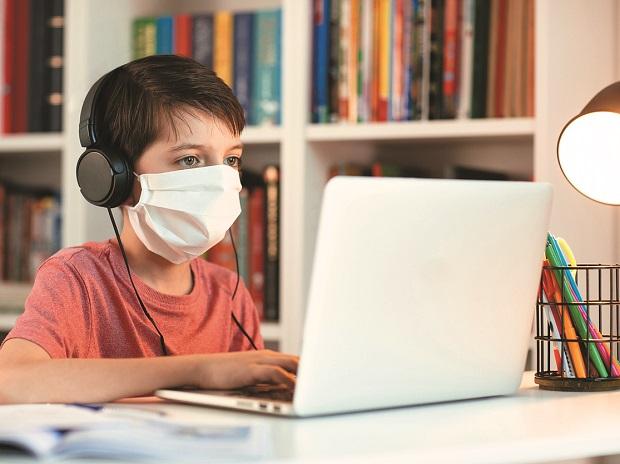
Covid- 19 pandemic sparked widespread realization that our way of thinking is not working. It has shattered our understanding of what culture as we know it is natural and deconstructed. Education is one of those crucial fields, where the need for improvement has become apparent. The coronavirus’ consequences, and thus its preventive interventions, have turned the lives of students, parents, and teachers upside down. The clear imbalance in the ‘normal’ workings of education has put emphasis on many questions that were previously asked and left unanswered afterwards. So, what might the actual effects of this global pandemic mean for the education future?
While coronavirus keeps spreading throughout the entire planet, many countries have decided to close educational institutions as part of a policy of social distancing to slow transmission of the virus. However, this closure of schools, due to the coronavirus (COVID-19) pandemic, has affected the learning of more than 1.5 billion children and youth globally. It should be acknowledged that school closures are likely to widen the learning gap between the lower-income and higher-income families among children. Although many parents who have access to technology and the internet are gradually turning to online education technologies to keep their children studying at home while others may not be able to. In a survey conducted by India Welfare Trust, it has shed some light on how children endure the disproportionate burden of the astonishing outbreak According to the survey, 89 per cent of respondents believe that the delay in lifting the coronavirus lockdown will affect their children’s learning.

Rapid Online Perception study investigates the impact of Covid-19 on Children. During the survey, 1,102 respondents from 23 states and territories of the Union were interviewed. “While children have not been in the face of this pandemic as they have been mostly shielded from Covid-19’s direct health effects so far, results from the study suggest that they have been among its biggest casualties with numerous side effects on their physical and psycho-social well-being,” said CRY chief executive Puja Marwaha.
“More than half of the parents reported their child became more flustered and apprehensive during the lockdown,” the report said, adding, and “37 percent of respondents confirmed that the child’s mental well-being and happiness had been affected by the lockdown. In addition, 88 percent of respondents said that their children’s exposure to screens increased during the lockdown, with 45 percent reporting the increase “to a large extent” and only 43 percent of parents/primary caregivers said they were always supervising the child when it was online.
The things we can keep in mind while opening educational institutions post lockdown are:
Changing the way of Learning:
The teaching method and the way syllabuses are taught can change. Aspects once deemed fundamental to education can be revised to cater the life skills of the future in large measure. Not only careers but also future residents will need skills such as resilience, versatility, collaboration, communication, compassion and understanding, originality and emotional maturity. School learning will have a new purpose, and that will be a major departure from today’s details-focused education.
Implementing innovative methods in education system:
Aside from the upheaval faced by the novel coronavirus, there have been some major changes in schooling in our developing nations. Yet, even in the face of rapid innovation, the way we deliver education still needs to be shifted. Learning is knowledge acquisition, but it doesn’t have to occur primarily through age-old methods that don’t leverage the highest brain potential. Can students get an experience that shapes their learning, rather than being taught? Approaches such as integrated learning and experiential learning, with greater digital transformation, will fuel the future of school education.
Strengthening the bond with technology:
New technologies such as Zoom and Google Meet have been identified as a prominent life-saver in the face of a crippling pandemic. Communication is crucial to our interconnected existence, and the driving force that maintains our connections is technology. For education, that means creating content and delivery systems that make full use of and harness technology. Maybe education can become more flexible and accessible, giving up on its excessive-reliance on rigid structures that we consider necessary at the moment. They are generations identified by their use of technology; it has become an extension of their consciousness and without it, they don’t know a planet.
The future of education should find no room to ignore the use of technology as it can very well be the best platform for empowering learning in an age which integrates technology as a way of life. Such generations will have an effect on the evolution of education because they are the ones most impacted by the pandemic and are in the best place to learn from it and evolve from it.
 Track2Training
You must be logged in to post a comment.