Plastic Ban: An Initiative Towards Better Results!

Reducing Millions of Tons of CO2: EU Single-Use Plastic Ban

Plastic bags are a major cause of environmental pollution. Plastic as a substance is non-biodegradable and thus plastic bags remain in the environment for hundreds of years polluting it immensely. It has become very essential to ban plastic bags before they ruin our planet completely. Many countries around the globe have either put a ban on the plastic bag or imposed tax on it. However, the problem hasn’t been solved completely because the implementation of these measures hasn’t been as successful as expected.

People are more aware of the fact that plastic is harmful to the environment and if we keep increasing the use of plastic it is possible that we are creating a more harmful environment sooner than later. In this aticle on should plastic be banned it is important to understand that plastic in itself is not harmful when used, or recycled and reused, it is rather the littering of plastic on the streets, on land and water bodies, and the single-use plastic bags which are disposed in the same manner and cannot be recycled. Plastic is a non-biodegradable matter and takes lots of efforts to get decomposed so it is only natural that when such matter is only increasing then the threat to nature also rises.

Many countries like Italy, Bangladesh, China, and Kenya have taken the initiative to ban the use of plastic and are not given any to the public at any check out counter. However, there are many countries that have not adopted this, as it is also difficult to find an alternative to plastic that is easily decomposable and safer for the environment. So, rather than completely banning the use of plastic, we must find ways of recycling and reusing the plastic so that the dumping of plastic does not deteriorate the natural environment.

Important Reasons to Ban Plastic Usage:-

  1. Plastic can endure every climate and when littered travels through wind or water and reaches ocean bodies or gets stuck on lands and trees and harms these environments as it is non-biodegradable since it is made of non-renewable materials.
  2. The energy required to drive a car for 1 kilometre is used to make 9 plastic bags and this ratio is irrational as the plastic bag used is rather useful for only 11 minutes to carry materials and then discarded.
  3. An Environment Health Perspective reports that the components of plastic mimic hormones like estrogen and this causes severe damage to our health as it disrupts the natural hormonal balance in our body.
  4. It is a threat to wildlife who in negligence sometimes consume plastic which is littered along with their food. Many aquatic animals like turtles suffer a great deal as their digestive system is entangled in plastic and die.
  5. Plastic bags are not easy to recycle as the recycling rate by the recycling facilities is only 5% so it is tedious work.

Some Major Problems caused due to Plastics:-

  1. They are Non-Biodegradable

Plastic bags are made up of elements that are extremely hard to be degraded by the microbes in the environment. They take hundreds of years to be completely decomposed, which essentially means that almost all of the plastic ever made still exists in the environment causing pollution! In fact, plastic bags are a major source of pollution of land and water presently across the world. 

2. Effect of Plastic on Human Health

Due to the excessive use of plastics, there are a number of ways in which plastic finds its way into our food chain. Accumulation of nano plastics over a long period of time can cause organ failure, intoxication and respiratory and gastrointestinal distress. Burning of plastics also produces harmful smoke that can cause poisoning in humans. 

3. Harmful for Animals

Animals, both terrestrial and aquatic, consume a lot of plastic wastes unknowingly. Consuming large chunks of plastic often cause blockage in their respiratory tract. This may result in respiratory failure due to choking. After consuming plastic bag, an animal is not able to digest it and it stays inside its intestine causing complications and ultimately, untimely death.

4. Clogged Sewage

Another major problem of plastic bags is that it accumulates in waterways and clogs drains and sewages. This can result in overflowing drains which can then breed various vectors of diseases. Afterwards, from this accumulation of plastic bags oxygen supply to the water is reduced and aquatic animals die due to the lack of oxygen as well.

Conclusion:-

Although plastic is becoming a big threat for all of us, still this problem has often been overlooked and underestimated. This is because people do not look at the long term effect of these small, easy to carry bags they use in their everyday life. Besides all of these people keep using bags due to their convenience. But now everyone has to completely stop using the plastic bag to save our environment and earth.

It is safe to say that like any global problems affecting the environment and the people all over it is not easy to find a particular solution so we can only trust time to see what works and what doesn’t and in the meantime find alternatives which are biodegradable and instead of dumping reuse and recycle and spread awareness about its importance, in this way you can contribute to maintaining nature’s sanctity.

IS RECONSTRUCTING OUR PAST MORE IMPORTANT THAN BUILDING OUR FUTURE?

“There are times in our lives when we have to realize our past is precisely what it is, and we cannot change it. But we can change the story we tell ourselves about it, and by doing that, we can change the future.”
― Eleanor Brown

We often hear that ‘the past is past, don’t bother about it’. But actually, the past is not only the past, but also it is the foundation of our future. Every moment is going to be past. It is the only reality that we can know. Future and present are related. Everything is being examined on the basis of past, future and present. Past is a set of experiences, events and beliefs that someone or something confronted with. Everything has a past and that past constitutes the essence of its present and future. It can be said that history is the collection of recorded past events in the form of written documents, monuments, oral discourses etc. But the past is beyond these historical remains.

The things and deeds we did in past are now to give us fruit in present and also in the future. And our present which is going to be our past will give us its fruit in the future. Some think it is essential to study history in order to make their future bright but some think past has no concern with the future. Other thinks that future is related to present, the things they have in present remain same as in future. Different people have different believe on the same the topic. Why is it so? Due to the different experiences, they have in their past life. In some way or another experience is second name of past.

What actually affect the future?

Experience affects the future. Future can never be predicted but we can strive to make it better by mean of the past experiences. Without knowing the past, we repeat mistakes made in the past, and destroy our future.

We can’t say that we are guessing future upon the past, but in some way, we can perk up our future by relating it to the events take place in past, and work to make it enhanced. No one knows what will happen in the future but the past lends us a hand and lead us to our destiny.

There must be some reasons why past contribute a lot in building future. It is vitally important to study history and keeping the past in mind to avoid repeating the mistakes of the past and understand why things are as they are!

We study history to learn where we were in the past and where we are now, to learn what worked for people in the past. We study history to know what is the right thing to do and what is wrong so that we can understand what to do in life and how the wrong things happen and how we can be prevented.

New thoughts and systems cannot be formed overnight. It is subject to change and reconstruction over the centuries and generations. We cannot say that the past is always constructive and beneficial. Progress is being made by identifying faulty systems. Many things that were once considered right and socially good are now considered as reactionary and unprogressively.

For example, once untouchability was a prevailing practice in our society which was considered as a normal thing. But later, the practice of untouchability is abolished and now we know how ridiculous it is. This realization is the product of reconstruction. This sort of change can be seen in all areas of life such as culture, cinema, environment, caste, religion, gender, language etc. What we firmly believe to be right and wrong today may not be like that tomorrow. Reconstruction aims at deconstruction also.

Future is created through rectifying the mistakes of our past by maintaining its positive aspects. It is determined by the realizations gained through the past experiences. Therefore, it is essential to have a proper sense of past and history.

Here lies the relevance of the reconstruction of the past. The future can only be built by a proper understanding of the past. We must be able to embrace what is progressive and reject what is irrational and biased. Thus, it would be better to say that reconstructing our past is the foundation for building our future instead of reconstructing our past is more important than building our future.

Yes, the past is past, but it continues.

Interesting facts about our Planet Earth

Our planet Earth, which is also known as the Blue planet because 75% of this planet is covered in the ocean and also it has pleasant humanity surviving on this planet. As we know this is the only planet where we are aware of life existence since the very beginning and is currently the only place where we can live in this Universe. There are interesting facts about our mother earth that we dint know about, and that is:- 

Moon is probably a part of the Earth

According to the scientist, approximately 4 billion years ago earth dint has a moon at that point until a big space rock probably the size of Mars collided with our planet which resulted in a big part of the earth broke away and later formed into Moon which we see today in the night time.  

Our planet’s days are increasing 

When our planet was formed approximately 4.6 billion years ago, the day was roughly about 6 hours long buy by 620 million years ago it had increased to 21.9 hours long. Today, the average period of a day is 24 hours long but the time is increasing by 1.7 milliseconds every century. The reason may be the moon is slowing down the earth’s rotation through the tides. The spin of our planet results in a position of tidal ocean bulges to be pulled a little ahead of the Moon and earth axis, which makes a twisting force that slows down the Earth’s rotation.

Exploding lakes

Well on the border of the Democratic Republic of the Congo and Rwanda as well as in Cameroon there are three deadly explosive lakes Nyos, Lake Monoun and Lake Kivu are crater Lakes that are located over volcanic Earth this means that magma lurking below the surface emits carbon dioxide into the waters of the lake this carbon dioxide builds up in a thick layer at the bottom of the lakes until pressure gives way and it’s released in an explosion. It doesn’t happen often but if anyone is unlucky enough to be passing by at that moment they’ll be asphyxiated with the gas.

The Earth’s changing magnetic field 

Our planet has a very strong magnetic field because of two reasons first is Nickel – Iron core and a pretty fast axial rotation, the magnetic field is significant for earth since it protects the planet from the solar winds. We think about our plant’s magnetic field as something constant and stable but the fact is it’s changing. According to some researches, they say that since the 19th century the northern magnetic pole has shifted approximately 685 miles moving towards North West across the Canadian arctic. The southern magnetic pole is also continuously roaming, scientists have known about the migration of the poles for a long time. James Ross an explorer and British naval officer pinpointed the northern magnetic pole for the first time in 1831 he discovered it during his exhausting voyage to the Arctic where his ship got trapped in the ice forcing the crew to spend a harsh 4 years after that nobody went back to that place until the next century in 1904 Roald Amundsen a polar regions Explorer from Norway reached the North Magnetic Pole again and was surprised to find that it had shifted 31 miles since Ross’s discovery. 

Gravity is not the same everywhere

Despite our common belief, our planet isn’t perfectly round it’s more like a sphere, for example how a human head is shaped. So its mass is irregular and differs in various places which causes wobbles of gravity in different areas of the planet one of these gravitational anomalies is found in Canada’s Hudson Bay where the gravity is much weaker than anywhere else on the planet. A 2007 study found the reason for such a phenomenon is melted glaciers that area was once covered with a thick layer of ice when that ice later melted the imprint of this glacier partially pushed aside some of the Earth’s mass in that region is exactly this slight deformation of the crust that can explain the 25 to 45 per cent weaker gravity. Perhaps it’s somehow connected with the movement of magma in the planets mantle, what researchers have predicted in a science journal.

Earth may have a second moon

According to some scientists, they believe that our planet used to have an additional satellite. According to their research, a smaller celestial body about 750 miles wide orbited the earth just like a second moon it most likely crashed into our main satellite later on such a collision could explain why the two sides of the moon look so different from each other one being heavily cratered in ruff scientists also don’t rule out the probability that one day earth will get another satellite. Even today there are tons of celestial bodies that follow the planet they’re mostly temporary companions though but scientists believe that the gravitational field of our planet occasionally captures even quite big asteroids that spin around the earth for several months or about three rotations after that they move on in their journey across the expanses of the cosmos.

GREY ROT- BOTRYTIS CINEREA

BY- DAKSHITA NAITHANI

ABSTRACT

Botrytis cinerea is responsible for significant losses in more than two hundred crop species throughout the world. This fungus is very harmful to grapes. In most cases, it causes bunch rot, also known as grey rot. It also provides favourable circumstances for the growth of other organisms which support spoilage. 

It is most damaging on dicotyledonous hosts’ mature tissues, but it generally obtains access to such tissues much earlier in the plant development and remains latent for a long period of time before destroying tissues when the environment is favourable and the physiology of the host changes.

As a result, significant harm occurs after harvesting seemingly healthy crops and transporting them to distant markets, where the losses become apparent. On the other hand, it causes large losses in several field and greenhouse-grown crops prior to harvest, and in some hosts, even at the seedling stage.

 INTRODUCTION

Botrytis blight, is a disease which infects a variety of herbaceous annual and perennial plants. Blights can be caused by a number of different fungal species. Infections thrive in cold, wet spring and summer weather, with temperatures hovering around 15°C. It’s especially dangerous when the wet, dreary weather lasts for several days. It is capable of infecting a wide range of ornamental plants. Two more harmful blights have specific host preferences: B. paeoniae infects peonies, and B. tulipae infects tulips, producing tulip fire. Over thirty species of the genus have been discovered so far. Most of them have only been found to infect a few hosts, with others exclusively infecting certain hosts.

NOBLE ROT

Blights aren’t necessarily a bad thing. In viticulture, for example, when ripe grapes get diseased, the skin becomes more porous, allowing more water to escape from the crop. Noble rot enhances the sugar level of the wine and results in a more flavourful wine. To manufacture some of the greatest wine, the grapes are literally hand-picked one by one to ensure that only those grapes afflicted with the parasitic mould are chosen. Horticulturists may find it beneficial in various circumstances. Moulds are unquestionably beneficial in nature. It is also responsible for the effective tidying up of all the leaves that fall from the trees in October. As a result, the cycle of life can begin again. While noble rot may be quite beneficial in terms of concentrating sugars in the winemaker’s grapes, it all depends on the grape type.

SYMPTOMS AND SIGNS

 Grey mould’s most prevalent symptoms are grey-brown lesions, as the name implies. Lesions are found on various parts of the plant. Small spherical specks, known as ‘pocks,’ appear initially on flowers. These may develop into bigger ones. Symptoms on various sections of potted plants are sometimes only evident during and after storage in cold. Grey mould is a component of the foot rot complex in lettuce, which causes rotting of the foot and plant mortality.  These lesions can surround the stem, causing the plant to wilt and die. Grey mould wreaks havoc on produce. Carry-over infection from infected parent plants kills cuttings in potted plants. It can attack at any point throughout the growth of a plant. Early Botrytis Detection-While various plants will exhibit somewhat different symptoms, water-soaked patches on the leaves are one of the first indicators present. These might be off-white or white in appearance. These patches will eventually become brown. They’ll ultimately wilt the leaf because they’ll cover the majority of it.

LATER BOTRYTIS PROGRESSION

When leaves begin to brown, it’s easy to confuse the rot with other fungal infections. However, when the humidity level rises, spore patches that are greyish and rough in nature will develop. Botrytis cinerea is at its most hazardous at this point, as it can now easily distribute spores. Even a small wind, a spray of water or even trimming damaged leaves can spread spores to neighbouring plants. These spores are easily dispersed, and they may appear as a dust on severely diseased plant material. Sclerotia, or black resting formations, are formed by some species and can be seen on dead plant tissues in late summer. 

Fruit will decay while hanging long , and your blooms will turn grey. The plant will eventually wilt and perish, succumbing to the mould. Even after harvesting, the plants are susceptible to it. If the crop is stored in a place with suitable conditions, the spores can germinate and turn it into a watery mush, thus destroying it.

CONTROL METHODS

DURING CULTIVATION

It’s critical to remove any infected plant components as soon as possible. The contaminated pieces should be transferred in a plastic bag as soon as possible. If the entire plant needs to be removed, follow these steps: To begin, place a bag over the plant, next pull the entire plant, including the roots, out of the ground.

Remove both of them from the place after that. Wash your hands and change your clothes before returning to the same area the infected plant or portions of the plant should never be allowed to come into proximity with other plants, since even the tiniest contact will release clouds of grey spores into the air. The spores will then settle on healthy plants, infecting them. To keep the humidity surrounding the leaves and flowers at a lower level, good ventilation is required. When rain is predicted, it is best to cover outside crops with a plastic shelter such as a poly-tunnel.

 BIOLOGICAL CONTROL

Several microbes have been shown to be effective in preventing grey rot in a range of crops.  Because of its capacity to inhibit the development of spores, Clonostachys rosea is utilised to combat and prevent its assaults. It is not the only species that fights; various species of nematode have also been employed to effectively reduce grey mould.

 A few trains of Trichoderma harzianum have an antagonistic effect on the development of several  crops, and the genus Bacillus have been identified as being capable of producing compounds that inhibit its progress, which can be used to prevent damping off in infected flowers and fruits.

FUNGICIDES BASED ON NATURAL EXTRACTS

Plant extract treatments are sold particularly to prevent infection and development. Extracts of citrus seed, thyme, mint, garlic, and pepper, to mention a few, have shown satisfactory effects. The components may vary, but many of them work by blocking mycelium growth.

BIOTECHNOLOGICAL IMPROVEMENTS

In the lab, scientists have succeeded in creating transgenic plants that are unaffected by the introduction of a resistance gene. A kind of inhibitory protein is encoded by this resistance gene. Plants are more resistant to fungal assault when they are inhibited.

WHAT TO DO WHEN PREVENTION FAILS

One of the most challenging aspects is that it has a proclivity for adapting to various fungicidal treatments. It has the ability to build resistance to frequently utilised techniques. One will also need to change their treatment techniques from time to time to make it more difficult for the fungus to acquire that immunity. A smart approach to accomplish this is to alternate your treatments between organic and microbiological techniques. Foliar sprays can protect your plants and stop development before it starts. Adding soil microbial treatments adds additional safeguards to the soil, which are beneficial.

 ORGANIC TREATMENTS

If the plant is sprayed with Neem oil on a regular basis, it can help to prevent fungal development. It can also help to keep pests at bay. Liquid copper fungicides have been shown to help reduce spore infection in plants. To safeguard your plants, use this fungicide every seven to ten days from the start of blooming till harvest.

Potassium bicarbonate works well as well. Green Cure Fungicide is one type that is widely used in organic farming. Usually combined with water, this powdered solution may be sprayed on a daily basis to minimise fungal development. 

BACTERIAL TREATMENTS

Alternately employ a Bacillus subtilis-based solution to stop fungal disease growing resistant to other organic fungicides. This helps in preventing various types of fungal growth.

Foliar spraying – Infuse the soil with beneficial microbes to keep the soil and plants well-defended. It helps avoid infections, but they will also make it easier for the plant’s roots to absorb nutrients.

IS IT DANGEROUS TO HUMANS-

While the majority of people are unaffected, it can induce an allergic response. This is a kind of hypersensitive pneumonitis also known as “winegrower’s lung.” It is seldom fatal, but is quite painful and needs medical attention. They can cause lung inflammation if inhaled in large amounts.

While it can be caused by a number of factors such as different moulds it is best to avoid this by removing any mould before it spreads all over.

CONCLUSION

Botrytis cinerea is a grey fungal mould that costs billions in crop losses each year across the world. It’s also the most frequent microbe responsible for fruit and vegetable post-harvest deterioration, especially towards the conclusion of the blooming phase, and mostly in outdoor crops exposed to rain and humidity. In most cases, it’s a horrible situation. It wreaks havoc on many kinds of fruit crops, including strawberries, raspberries, tomatoes and various others. It can, however, be extremely beneficial to a limited number of people. Late season grapes have shown that this mould causes their grapes’ sugars to concentrate. This gives the finished wine a considerably more strong flavour, as well as honeysuckle-like flavour notes. The availability of the sequence has sparked the generation of high functional analysis to unravel the processes behind this species’ wide range.

The Life of John McAfee

shouldn’t your life goal be to have a meaningful life ? Unknown, mysterious and thrilling ?” John McAfee once asked.

His life which ended in a Spanish prison was all of those 3 things . 

McAfree grew up in Roanoke, Virginia ; his father was abusive and an alcoholic , and killed himself when McAfee was 15. McAfee started drinking while a student at Roanoke college.  After graduating, he began a phd in math , but was kicked out for sleeping with one of his students. 

Mcafee got fired from his next job for buying weed . Then , he settled into a position using computers to schedule trains. He would take LSD in the morning before work. One day , he tried a dose of DMT , considered the strongest psychedelic , but felt nothing. So he snorted a whole bag. 

“ within an hour my mind was shattered ,” McAfee said in an interview, and he never fully healed. For years part of him thought his life was a hallucination he’d eventually snap out of. He became an alcoholic and a drug addict; his wife left him. 

“ my life was total hell,” he said. 

In 1983, a therapist pointed him to Alcoholics Anonymous , and he claimed to have been sober ever since. He started working as a coder at Lockheed, a defense contractor. In 1986, while McAfee was at lockheed, 2 brothers in Pakistan launched the world’s first PC computer virus. 

McAfee launched McAfee associates to create software to protect computers from it. He was successful and decided to make the program available free online. By 1990, millions of computers were relying on it , with companies paying $5M+ annually to license it.

McAfee became a tech celebrity.In the years that followed, he became a fixture in the media , hyping up the threat of computer viruses. Demand for his product soared through the roof . McAfee associates IPO’d in 1992 ,and he was worth $80M.

Free from work , he became an adrenaline junkie and then a yogi , setting up a yoga institute in Colorado.Next he created an adventure sports resort in New Mexico.  He snapped up cars and properties around the world, living out his life as a tech mogul.Then abruptly ,in 2008, facing multiple lawsuits and claiming to have hit hard during recession , he sold everything. 

He decided to start again, away from America. In April , he moved to Belize , where the most mysterious part of his life was about to begin. 

In Belize, he set up cigar manufacturing, coffee distribution , and water taxi companies. He also launched a company with Harvard biologist he had met who was searching for rainforest plants to use as antibiotics , building her a lab in the jungle. 

Soon after , he fell in love with gun-toting 16 year old named Amy Emshviller.

Emshwiller told McAfee horror stories about crime and gangs in the village , which he came to call the “ most corrupt village on the planet .” Locals said the village was nothing like the drug trafficking center McAfee believed, but he became increasingly paranoid.

He thought the gangs and the police were hunting him; he thought pharna companies were spying on his antibiotic lab. So he hired security guards and acquired arsenal. The police started showing up at his house believing he was selling drugs.

McAfee fled to Mexico and eventually Guatemala, where a vice reporter accidentally shared his location, resulting in his arrest.McAfee was deported to Belize  but not charged , and then largely fell off the public’s radar. 

He was arrested in the US for a DUI in 2015 , then for high caliber weapon possession in the Dominican Republic. He made money promoting crypto currencies on Twitter and through speaking engagements.

In October, 2020, McAfee was arrested in Spain while boarding a flight to Turkey.The US charged him with a number of crimes including tax evasion. 

On 23rd June 2021 , Spain agreed to extradite him to the US. Within hours , he was found dead by an apparent suicide.  The life of John McAfee has ended , but it’s mystique has not. 

How to Work From Home: Tips for Working From Home Effectively

As you read this article, many of your employers have made it necessary for you to work from home and here at Society Mutter, we have come up with some tips on ‘how to do it better’. “Disruption isn’t about what happens to you, it’s about how you respond to what happens to you”, the quote by the renowned American author Jay Samit, is what I believe, sums up, the human-life. Since the past few weeks, the novel coronavirus has raised havoc leading to the disruptions in everyone’s’ life across the planet. While the idea of work from home has already appealed many, when it comes to adapt the option as a necessity rather than choice, we always seem to be double-minded about taking it up.

As the coronavirus has led to the global shutdown of the industries in all the fields, still some of the sectors need to function to keep the world accessible and convenient in this modern age of internet era. The real concept being nowhere close to the lyrics of the hit song by the Fifth Harmony, it can be made more structured, productive and relaxing.

While work for home is a need in today’s time, it can provoke different reactions. Some people might like it because it saves their time of commute and waking up early morning to prepare the meal. On the other hand, some people might not be fascinated with the idea as they thrive on socializing. But today, like the people on the front line dealing with corona, the work from homers contribution counts too to keep the world running virtually.

And hence we have come up with the tips below to make this space of assistance to you. We, humans, thrive on compartmentalization, which helps us to give a structure to our routine and make us adapted to the ongoing processes of life.

Time Management

As said by the innovator of the light bulb, Mr. Thomas Edison, “Time is the only capital that any human being has and the only thing he can’t afford to lose”, which I believe to only light up our brains more, is the lesson to cherish and abide by.

It is important to give ourselves a schedule and time mindedness which will help us to get a structure to work in. So, set yourselves an alarm, do that morning routine and set yourselves goals and this will provide you with the very important boost of motivation to start your day.

And keep in mind to stick to the schedule, it is not college anymore.

Get out of those Pyjamas

I know you want to save that suit and tie for the best day but this is work and every day got to be your best self. So, the pressure is on and get out of those pajamas and wear those formals and get ready to conquer the world of “vitality”.

Wearing the clothes meant for office work will only help you to be more prepared mentally to be in the work space-like environment.

Dedicate a Workspace

Since you are at home, you are in the cocoon of comfort, making your mind and body lazy and snobby. Hence, set up a corner only dedicated to your work at home, maybe as far from the tempting bed of yours as possible. Keep your files and documents handy, clean the desk and set the chair to get the posture right and start the job.

 Home is family and pets and noise but you have to formulate the environment for work and therefore explain to your family to give you space for work and some silence and lock that door.

Advertisements

Boundaries are important

When you go to the office, there is a clear-cut proportion of time dedicated to your work-life and your personal life. Staying at home for work can lead to the mingling of the two and this can be quite confusing and exhausting. And we will advise you to set clear boundaries.

Explain to your family and house partners to act as if you are off to work and hence you will no longer are in the distracting atmosphere.

Have that Coffee

One best thing about this style of work is that now you can take those much-needed breaks and have fresh coffee not from the vending machine of the office but your very fresh kitchen. Take this opportunity to get some fresh dose of caffeine and wake up your mind now and then.

Working from home also helps you to prepare that nutritious meal and get the much necessary dose of minerals and also saves a fortune spent on having lunch at restaurants. So, we will advise you to take that lunch break for a little bit longer than usual and cook a delicious le déjeuner.

Get back to the desk after a short nap and hit the table with much-enhanced yield.

The Power of TO-DO

How does it feel checking off the list of items on the grocery list while out and about in the supermarket? Yes! That satisfaction is nothing less than the motivation you need to complete today’s assignment.

Make a list of small subtasks to be achieved under the greater umbrella of the larger project and as you complete it, strike the agendas off the list and enjoy some much-needed approval.

Keep in touch

One of the best things about those office hours is colleagues. For social butterflies, interactions are the key to survival. So, don’t make your house a cave. This is the twenty-first century, so use those video calling apps and get in touch with your contemporaries and discuss it over a coffee cause the little conversation with the friends are nothing less than therapy.

This will help you to be on the same page and get some healthy competition on the desk, cause let’s not forget “We mean business” *wink wink*

These are difficult times and we get it, sometimes you are all alone and with all the negative news around, life can get difficult. So, don’t give up. Call your relatives and friends, read that book, take those hot showers, do the exercise and don’t forget “This too shall pass”.

Advertisements

Is there a 3rd wave of Covid-19 on the way?

by Yogiraj Sadaphal

Don’t lose hope. When the sun goes down, the stars come out.

Officials and Health Authorities are now constantly alerting people about the likelihood of a third wave of Coronavirus infections, after failing to sufficiently prepare for the second wave whereas Principal Scientific Advisor K Vijay Raghavan calling the third wave “inevitable”.

What exactly is a wave?

There is no textbook definition of what comprises a wave. The phrase is used in a broad sense to describe the rising and falling variations in infection rates throughout time. The growth curve has the appearance of a wave. Historically, the term “wave” was used to describe the disease’s periodicity.

Covid-19 has been running nonstop for the past year and a half, but there have been periods of rise followed by a relative slowdown in every location. So far in India, there have been two different phases of growth, each separated by a long severe recession. For example, Delhi has been hit by four waves so far. Even before the current wave, its development curve featured three clear peaks, whereas growth curves other states like Rajasthan and Madhya Pradesh were considerably more diffused until February, without a sharp apex. In such a case, identifying different waves would be challenging.

So, if a 3rd  wave occurs, how would one recognize it?

The third wave, which is now being discussed, relates to a prospective increase in national cases. After peaking on May 6, the national curve presently appears to be on a downward trend. The daily case count has declined to around 2.6 lakh from a high of 4.14 lakh in the last two weeks, while the number of active cases has dropped to 32.25 lakh from a high of 37.45 lakh. If there is a huge influx after that, it will be considered as the third wave if it lasts for a few weeks or months.

Will the 3rd Wave be Stronger?

There has been rumors that the third wave will be even more powerful than the second. This, on the other hand, isn’t something that can be expected. Every new wave is typically predicted to be weaker than the previous one. This is because the virus has a relatively free run once it arises, given that the entire population is vulnerable. There would be significantly less vulnerable people in future instances since some of them would have developed immunity.

Only a small percentage of the population had been infected when the number of infections began to decline in India after mid-September last year. Given that such a high fraction of the population was still susceptible, there was no reason for the disease’s spread to have slowed. The causes for the five-month continuous decrease in occurrences in India are yet unknown.

Because the second wave was predicted to be weaker than the first, many people believed the pandemic was coming to an end. With the hard lessons learned, there are now predictions that the third wave will be even more powerful. That, however, may not be the case. During the second wave of infection, substantially more persons were infected than during the first wave. The unconfirmed illnesses — those who were never tested — are projected to be enormous, with the positivity rate nearly four times that of the first wave. Vaccination would also provide immunity to a substantial percentage of the population.

Is it Unavoidable?

The chance of a third wave exists. It will almost certainly happen, however neither the scope nor the date can be foreseen. However, it is not unavoidable. It’s also likely that the new wave will be significantly smaller than the previous one, causing less suffering and allowing for more efficient management.

Dowry system

In ancient time parents used to give some important things to his daughter at the time of marriage for their future use. At that time it is called as a gift. But after passing some years this gift system changes. At that time parents gave these thing with their own happiness but now the situation is completely changed. Now the groom’s father directly asked the girl’s father to gave the thing. This custom have turned into malpractices.

This system destroyed the whole society. Society in which the birth of girl called them that Laxmi is birth in our house but now when the girl birth the family started thinking about her marriage not only the family the whole society started talking about. If a girl born in poor family then our society started to talking that how they marriage their daughter they never thought that only few hours passed to get the birth of that child.

If the parents are not able to pay the money to groom’s family then the girl is harasses the whole life by the groom’s family. The girl’s parents saving the money from the birth of the girl. The reason behind them is that if they not full fill the condition of groom’s patients then her daughter never be happy. They do all this thing only for her daughter happiness. Even doing all these things their daughter not live happily in his law house. Sometimes if parents are not capable to complete the all conditions at the time of marriage then they get insulted between the whole society and their daughter is tauchered. Some times the girl take wrong decision or some times the groom’s family do wrong thing with the girl.

The boy who earned more money they are more cleaver. In our society boys are sailer. The boy is more educated her price is more.

Some laws are made against this system but none of them is followed by the people some action is taken against this and this is very useful. It save the life of girl not completely but around 25 % it save the life of girl.

Dowry is not a good thing because it take someone’s life.

TIME KNOWS THE VALUE OF LOVE.

Hi everyone,

Today I am gonna start my writing, with a story.

“Once upon a time, in an island there lived six feelings and emotions: Happiness, Knowledge, Love, Sadness, Richness, and Vanity. One day they discovered that the island began sinking! So all of them built boats and canoes and left, one by one. Except for Love. Love wanted to delay abandoning her beloved island as long as possible.

When the island had almost sunk, Love decided to ask for help.
Richness was passing by Love in a boat. Love asked, “Richness, can you take me with you?”

Richness answered, “Sorry, Love, I can’t. There is a lot of gold and silver in my boat, so there is no place here for you. With both of us in here, we will sink for sure.”

Love next asked Vanity who was also sailing by, but Vanity offered the same answer.
“I can’t help you, Love. You are all wet and might damage my boat,” Vanity answered.

Sadness was close by, so Love asked, “Sadness, take me along with you.”
“Oh . . . Love, I am so sad that I need to be by myself!”, sadness said in a gloomy voice.

Happiness passed by Love, too, but she was so preoccupied with her happiness that she did not even hear when Love called her.

Suddenly, there was a voice, “Come, Love, I will take you.”

It was an elder with a tattered head scarf. An overjoyed Love jumped into the boat. When they arrived at a dry land, the elder went her own way.
Love looked around and saw the Knowledge who was the first to have landed there a while ago.

“Who Helped me?” Love asked.
“It was Time,” Knowledge answered.
“Time? Why time?” Love was surprised.

“Because only Time is capable of understanding how valuable Love is.” The Knowledge smiled.”

Yes, time alone knows the value of love. ‘Many a times we used to take love and care for granted’. But when time comes we all are longing for love and care.. Never ever take love, care and trust of a person for granted because one day life will bring you to that point, where you will be longing for love, care and trust of a person.

Let us, stop to take anything for granted. Let us be sincere. Because we get what we give.
Think about it.

As usual decision is Yours “whether you gonna take it for granted or being sincere”. The choice is left to you. Choose wisely.

Have a wonderful day.

Keep smiling ❣️

The link for the above story: https://www-purposefairy-com.cdn.ampproject.org/v/s/www.purposefairy.com/68443/because-only-time-is-capable-of-understanding-how-valuable-love-is/amp/?amp_js_v=a6&amp_gsa=1&usqp=mq331AQKKAFQArABIIACAw%3D%3D#aoh=16288732677701&amp_ct=1628873301888&referrer=https%3A%2F%2Fwww.google.com&amp_tf=From%20%251%24s&ampshare=https%3A%2F%2Fwww.purposefairy.com%2F68443%2Fbecause-only-time-is-capable-of-understanding-how-valuable-love-is%2F

HOW TO MAKE BETTER NOTES IN CLASS

“The more content you try to capture during a lecture or a meeting, the less you’re thinking about what’s being said. You burn through most of your attention parroting the source.”

Do you sometimes struggle to determine what to write down during lectures? Have you ever found yourself wishing you could take better or more effective notes? Whether you are sitting in a lecture hall or watching a lecture online, note-taking in class can be intimidating, but with a few strategic practices, anyone can take clear, effective notes. This handout will discuss the importance of note-taking, qualities of good notes, and tips for becoming a better note-taker.

In-class benefits

Taking good notes in class is an important part of academic success in college. Actively taking notes during class can help you focus and better understand main concepts. In many classes, you may be asked to watch an instructional video before a class discussion. Good note-taking will improve your active listening, comprehension of material, and retention. Taking notes on both synchronous and asynchronous material will help you better remember what you hear and see.

Post-class benefits

After class, good notes are crucial for reviewing and studying class material so that you better understand it and can prepare appropriately for exams. Efficient and concise notes can save you time, energy, and confusion that often results from trying to make sense of disorganized, overwhelming, insufficient, or wordy notes. When watching a video, taking good notes can save you from the hassle of pausing, rewinding, and re watching large chunks of a lecture. Good notes can provide a great resource for creating outlines and studying.

  1. Gather your note-taking materials. It may sound pretty basic, but it’s important to have all of your note-taking materials organized and ready to go before the start of any class, meeting or lecture.
  2. Come prepared. Before you come to a class, lecture, or meeting, make sure to review your notes from the last time round. This will bring you fully up to speed and ready to pick up where you left off.
  3. Be an active listener. When note-taking, many people make the mistake of mindlessly taking down every word, without really comprehending what is being said. Instead, make an effort to understand the topic while you’re in class. Focus on what’s really being said, then ask questions if you don’t understand
  4. Take notes by hand. Although taking notes on your laptop is convenient, research shows note takers actually retain information better when they take notes by hand. This may be because people typing on a laptop tend to transcribe every word without understanding the meaning, while people writing by hand are forced to pick out relevant information in order to keep up
  5. Don’t be afraid to ask questions. When you come across something you don’t understand, don’t just jot it down and tell yourself that you’ll worry about it later — ask the teacher/lecturer for clarification.

FINALLY

Follow up after class

Part of good note-taking includes revisiting your notes a day or so after class. During this time, check for clarity, fill in definitions of key terms, organize, and figure out any concepts you may have missed or not fully understood in class. Figure out what may be missing and what you may need to add or even ask about. If your lecture is recorded, you may be able to take advantage of the captions to review.

REFERENCES

https://learningcenter.unc.edu/tips-and-tools/effective-note-taking-in-classes

https://www.wikihow.com/Take-Better-Notes

Why are cats amazing…

Cats are awesome pets. Although some people disagree with this, I am not backing off with my opinion. I am very much eligible to talk about why cats are the best because I have come across and lived with 9 different cats throughout my life. Each cat had something to teach me and gave something for me to miss about. I have decided to not have cats anymore because of the abundant love I have for them and because I lost many precious ones. I don’t think I can bear that pain.

Cats love you

Cats can seem to be mean at times. Sometimes, they ARE mean and that is the most attractive trait in a cat. But they love their owners abundantly and they have different ways to show it. Only people who can understand cat language can feel their love. Cats are loyal too. Cats are lovable too.

They live in their world

If you have lived with cats, you will know that they live in their worlds. They sleep and eat when you feed them. Sits on your lap and purrs for hours. Their lives are very simple. They may seem like they don’t show as much attention to you as much as dogs do. But no matter where you are they will search for you just to sit on your lap and sleep.

They are the cutest

You can simply adore them for the way they are, physically as well as mentally. Like I said before, you can simply watch a cat roaming around or playing or sleeping or just living in their cute little world. You can watch that all day and never get bored.

As I write this I am getting tons of memories about my cats flashing before my eyes and filling my eyes with tears. Losing a cat is the worst thing that could happen to a cat lover.

Before you judge me based on this article that I have only encountered with sweet cute cats I would like to stop you. I have an experience with an evil cat, like Mr. kat. I still couldn’t figure out what the cat’s mentality was but he doesn’t want to be touched. When I did he would scratch me and leave me bleeding. Yet I could never stop loving him and tried showing how much I loved him. He will catch my leg and scratch it even if I just walk past him. Not all cats are cute and silent. They all have their personalities and I have learned that we should respect that. That cat needed a trained professional who could handle him. Sadly I couldn’t handle him that well. We gave him away.

Another encounter is the complete opposite. I had this cutest and the smartest cat. She was potty trained and she knows her name too. She was the best cat I would say. One day at night during a power cut she ran away and we couldn’t find her. She left a big scar on my heart. Losing her is the worst thing that happened in my life.

I still love cats. I am just not ready to raise another cat on my own. Cats are beautiful inside out if we can understand them well. If you ever get a chance to provide a home to a cat, please do 🙂

Television and Video Games are Corrupting the Minds of Youngs.

Mankind has a great history of inventions, and one of it’s greatest inventions were ‘Television’. This word is well known to us. Entertainment was the major reason for the invention of television, but it’s said “Every coin has two sides” even television has its demerits.

Viewing television has become a popular culture and every one enjoys it. One of the most used technological commodity ,has become a threatening problem for the today’s youth. It is Corrupting the young minds and leading them to dark future. The young mind’s are not able to sense the negative impact of this entertainment gadget.

Watching television is waste of time. Youth’s are not able to distinguish between good and bad content for their minds. Most of the programmes casted on the television illustrates distruction, violence, sex , bullying and many other negative things. Young minds are brainstormed in such a way that they try to implement the depicted things in their real life.

Watching crime shows influence the young mind in a negative way as they are not able to pick up the positive aspects of it. Psychologically the wrongdoer is shown in a good light and this in turn encourages the youth to get inspired from them lead them to actually becoming a criminal.

Now days television shows comes with variations like drama, comedy, suspense and many other. The show producers are minting money out of the illogical shows and destroying the young minds imagination. They are detached from the reality and are made to believe and imagine what they show is correct, superstition are also encouraged. Gradually the people get addictive to this type of content and the imaginative power, IQ level is reduced to nothing. Hence Roald Dahl has rightly said,” It clots the child’s mind, it makes the mind as soft as cheese.”

Television are not the only component that corrupts the youth’s mind but video games are one of them. In this modern generation not only an adult but also children know how to used different electronic devices. Video games are basically a person’s imagination which they make them into reality through technology. These games make a person’s mind habitual to play it. Their minds are completely focused in this unreal world that they forget they have a real world, which in turn make them less social and creates a lonely environment. They lose their interest in other important things like studying, etc.

Author John Leo has explained that ” Children who are heavy viewers of television are more aggressive”. Watching television and playing video games makes a person prone to obesity and mental disorders and affects their personality. So we should take care before it’s too late , as they say “Prevention is better than cure.”

FALUN – DAFA

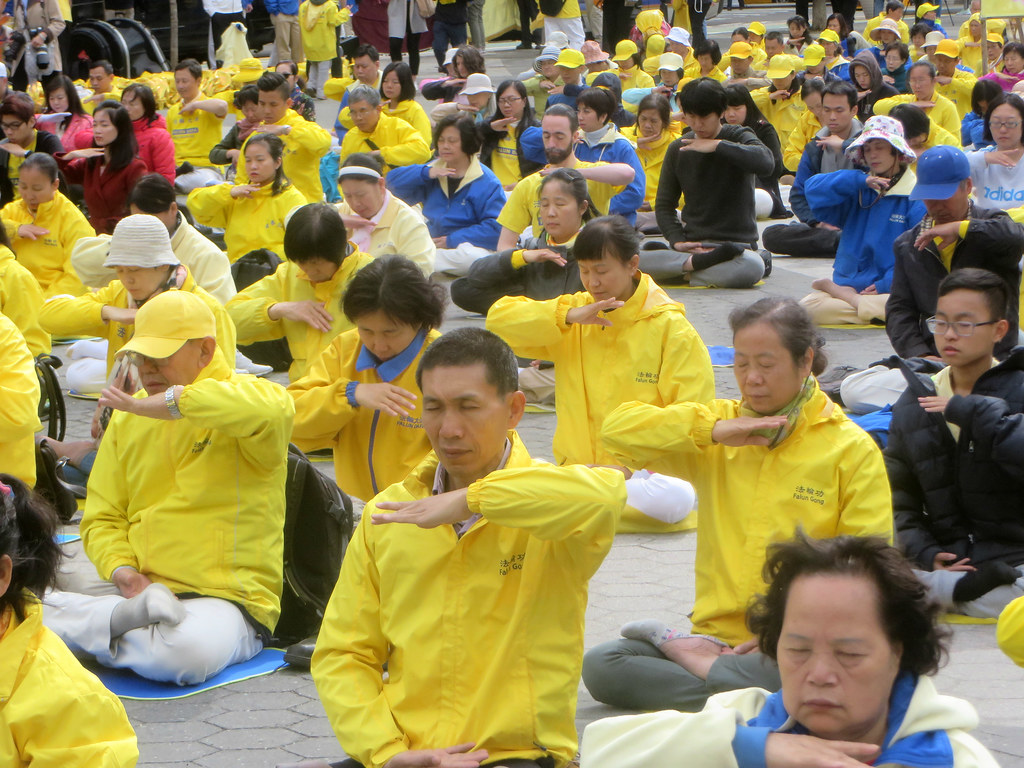
Falun Gong is a new religious movement. Falun Gong was founded by its leader Li Hongzhi in China in the early 1990s. Falun Gong has its global headquarters in Dragon Springs, a 400-acre (160 ha) compound around Cuddebackville  in Deerpark, New York, near the current residence of Li Hongzhi. Falun Gong’s performance arts extension, Shen Yun (“Divine Rhythm”) and two closely connected schools, Fei Tian (“Flying Sky-Being”) College and Fei Tian Academy of the Arts, also operate in and around Dragon Springs.

Falun Dafa/Falun Gong Practitioners

Central Teachings

Falun Gong aspires to enable the practitioner to ascend spiritually through moral rectitude and the practice of a set of exercises and meditation. The three stated tenets of the belief are Truthfulness (真, Zhēn), Compassion (善, Shàn), and Forbearance (忍, Rěn). These principles have been repeated by Falun Gong members to outsiders as a tactic for evading deeper inquiry, and followers have been instructed by Li to lie about the practice.Together these principles are regarded as the fundamental nature of the cosmos, the criteria for differentiating right from wrong, and are held to be the highest manifestations of the Tao, or Buddhist Dharma.

Falun Gong Practitioners in China

Demography

Most Falun Gong estimates in the same period placed the total number of practitioners in China at 70 to 80 million. Other sources have estimated the Falun Gong population in China to have peaked between 10 and 70 million practitioners. The number of Falun Gong practitioners still practicing in China today is difficult to confirm, though some sources estimate that tens of millions continue to practice privately.

Demographic surveys conducted in China in 1998 found a population that was mostly female and elderly. Of 34,351 Falun Gong practitioners surveyed, 27% were male and 73% female. Only 38% were under 50 years old. Falun Gong attracted a range of other individuals, from young college students to bureaucrats, intellectuals and Party officials. Surveys in China from the 1990s found that between 23 and 40% of practitioners held university degrees at the college or graduate level—several times higher than the general population.

Falun Gong is practiced by tens, and possibly hundreds of thousands outside China, with the largest communities found in Taiwan and North American cities with large Chinese populations, such as New York and Toronto.

Persecution in China

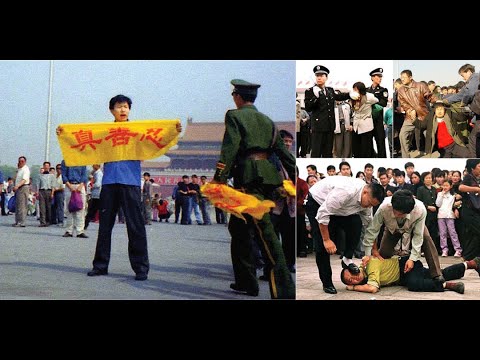
On 20 July 1999, security forces abducted and detained thousands of Falun Gong practitioners who they identified as leaders. Two days later, on 22 July, the PRC Ministry of Civil Affairs outlawed the Falun Dafa Research Society as an illegal organization that was “engaged in illegal activities, advocating superstition and spreading fallacies, hoodwinking people, inciting and creating disturbances, and jeopardizing social stability”. The same day, the Ministry of Public Security issued a circular forbidding citizens from practicing Falun Gong in groups, possessing Falun Gong’s teachings, displaying Falun Gong banners or symbols, or protesting against the ban.

The aim of the ensuing campaign was to “eradicate” the group through a combination of means which included the publication and distribution of propaganda which denounced it and the imprisonment and coercive thought reform of its practitioners, sometimes resulting in deaths. In October 1999, four months after the imposition of the ban, legislation was passed in order to outlaw “heterodox religions” and sentence Falun Gong devotees to prison terms.

Hundreds of thousands of Falun Gong practitioners are estimated to have been extrajudicially imprisoned, and practitioners who are currently in detention are reportedly subjected to forced labor, psychiatric abuse, torture, and other coercive methods of thought reform at the hands of Chinese authorities. The U.S. Department of State and Congressional-Executive Commission on China cite estimates that as much as half of China’s reeducation-through-labor camp population is made up of Falun Gong practitioners.  Researcher Ethan Gutmann estimates that Falun Gong practitioners represent an average of 15 to 20 percent of the total “laogai” population, a population which includes practitioners who are currently being held in re-education through labor camps as well as practitioners who are currently being held in prisons and other forms of administrative detention.  Former detainees of the labor camp system have reported that Falun Gong practitioners comprise one of the largest groups of prisoners; in some labor camp and prison facilities, they comprise the majority of the detainees, and they are often said to receive the longest sentences and the worst treatment.  A 2013 report on labor reeducation camps by Amnesty International found that in some cases, Falun Gong practitioners “constituted on average from one third to 100 per cent of the total population” of certain camps.

According to Johnson, the campaign against Falun Gong extends to many aspects of society, including the media apparatus, the police force, the military, the education system, and workplaces. An extra-constitutional body, the “610 Office” was created to “oversee” the effort. Human Rights Watch (2002) commented that families and workplace employees were urged to cooperate with the government.

Persecution of Chinese Falun Dafa In China

Causes

Observers have attempted to explain the Party’s rationale for banning Falun Gong as stemming from a variety of factors. Many of these explanations centre on institutional causes, such as Falun Gong’s size and popularity, its independence from the state, and internal politics within the Chinese Communist Party. Other scholars have noted that Chinese authorities were troubled by Falun Gong’s moral and spiritual content, which put it at odds with aspects of the official Marxist ideology. Still others have pointed to China’s history of bloody sectarian revolts as a possible factor leading to the crackdown.

SOURCES

https://en.wikipedia.org/wiki/Falun_Gong

Interesting facts about colour

  1. Yellow and red together make you hungry:

Fast food chain figured this out year ago and use this color combination over and combination over and over in branding, advertising and restaurant decor.

2. World blue is the most common favorite color:

studies conducted by various global marketing firms show that blue is the most common favorite color world wide followed.

3. Pink soothes the nervous and is often used for anger management:

pink has been known to suppress anger and anxiety and have an overall calming effect.

It is often used in mental health care institutions and even prison to help create a sense of calm.

4. The color wheel was invented by Isaac Newton:

Around 16655 issac newton used a prism to turn white light into a rainbow and identified seven colors.

He felt the last color, indigo, was a recurrence of the first color, red and decided to arrange the color in a circle

5. Red is the first color a baby sees.

Red has the longest wavelength of the color and scientists speculate this makes it easier to process in developing receptors and nerves in a baby’s eye

6. Color has a big impact on a first impression:

62-90% if a first impression is based on how someone is Recognizing color in the situation.

For those who want to make a strong first impression avoid neutral heading out on a first date? Add a pop of bring color to be more memorable.

7. People are more likely to forget something when it’s in black and white:

A black and white movie, or photographs is often not as easy to recall as a color image scientists believe this may be because color has a stronger appeal to the sense and as a result makes a more lasting impression on the memory.

ENVIRONMENTAL DISASTERS

An environmental disaster  is defined as a catastrophic event regarding the natural environment that is due to human activity . This point distinguishes environmental disasters from other disturbances such as natural disasters and intentional acts of war such as nuclear bombings. Environmental disasters show how the impact of humans’ alteration of the land has led to widespread and/or long-lasting consequences.

These disasters have included deaths of wildlife, humans and plants, or severe disruption of human life or health, possibly requiring migration .Environmental disasters historically have affected agriculture, biodiversity  including wildlife, the economy and human health. The most common causes include pollution that seeps into groundwater or a body of water , emissions into the atmosphere and depletion of natural resources, industrial activity or agricultural practices.

Environmental disasters have a severely detrimental effect on ecosystems. These catastrophes are often short in duration, but have a lasting impact on the animals and plants that live in the affected habitat. Occasionally, environmental catastrophes change the physical environment so much that the damage to the ecosystem is irreversible. In other cases, environmental damage can be contained and the habitat rehabilitated.

Photo by Luciann Photography on Pexels.com

Environmental disasters fall into two general categories. Some disasters are caused by natural climate or weather events. These include wild fires, landslides, floods, earthquakes, droughts, tornadoes, tsunamis, and volcanic eruptions. Although the causes of these natural environmental disasters do not involve human activities, in some cases the effects are worsened by the influence of people. For example, the environments that suffered the most damage during the Indian Ocean tsunami of 2004 were those where urban development and construction had damaged coral reefs. In places where coral reefs were healthy, the reef acted like a buffer, deflecting the power of the giant wave.

A second category of environmental disasters includes those caused by human activities. Examples of human-induced environmental disasters include oil spills, chemical spills, and nuclear incidents. In addition, wars and terrorist activities can be disastrous to ecosystems. In many cases, environmental disasters caused by humans have longer lasting effects on the environment than catastrophes brought on by natural events. For example, the enormous oil spill that occurred when the Exxon Valdez supertanker ran aground in Prince William Sound in 1989 continues to have major environmental repercussions. Twelve years after the oil spill, significant deposits of oil, which is toxic to many species, persisted throughout the affected area. In 2002, the population size of at least eight species of fish and mammals was still severely impacted from the oil spill.

Although environmental disasters take a terrible toll on ecosystems, they can bring increased attention to threatened habitats. In some cases, the increased oversight by governmental, intergovernmental, and non-governmental agencies results in legislation, which reduces the impact of future environmental disasters. For example, the Exxon Valdez oil spill led to much stronger regulation of the oil shipping industry. Also, additional funds were allocated for cleaning up oil spills, should they occur again. In the wake of the 2004 tsunami, the United Nations began organizing an Indian Ocean Tsunami warning system to alert citizens when another gigantic wave is heading to shore.

Humans have long believed that their scientific creativity could meet the challenges of natural forces. However, as Earth’s resources continue to be eroded by the growing population and its demand for natural resources, it is ever more likely that environmental disasters will increase both in number and intensity. It delves into the effects that these catastrophes have taken on the environment and on the human communities involved.

IMMUNITY – A WAY OF DEFENCE!

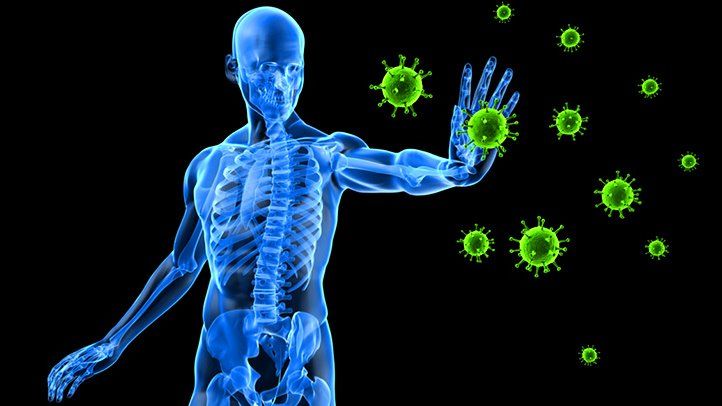
Our human body is continuously exposed to microorganisms that may or may not be infectious. Millions of microorganisms exist in our body that includes our mouth, eyes, ears, and the other various part of our body.
But in the same way, our body is also exposed to disease-causing microorganisms such as viruses, bacteria, fungi, protozoans, etc. So in order to keep us healthy, there is a certain process that our body undergoes in order to defend ourselves from such microorganisms, this is done by our immune system. The branch of science that deals with the components of the immune system are called Immunology.

NOW, WHAT EXACTLY IS IMMUNITY?

It is the ability of an organism to fight against disease-causing agents.
It is further divided into two categories :

  1. Innate immunity.
  2. Acquired immunity.

INNATE IMMUNITY :

It is a non-specific type of immunity that includes all the defense elements with which an individual is born. It is present at the time of birth and is genetic i.e, it is passed down genetically from parents to children.
This includes skin, mucous membranes, and blood cells along with the white blood cell which forms an important component of innate immunity.

The different types of barriers to innate immunity are :

1) Physical barrier: This includes skin and mucous membrane

2) Physiological barrier: This comprises hydrochloric acid, bile, cerum, lysozyme, and our body temperature.

3) Cellular barrier: Certain types of cells called leucocytes(WBC), neutrophils and monocytes, natural killer cells (lymphocyte) as well as macrophages constitutes this barrier.

4) Cytokine barrier: There are certain cells which once infected by a virus, release a glycoprotein called interferons (IFNs). This causes the nearby cell to get alert, as it is a signal which basically says pathogens have been entered and have infected it.

5) Inflammatory barrier: This is a type of barrier that causes redness, swelling, pain, and the production of heat from the infected tissue.

ACQUIRED IMMUNITY :

This type of immunity is found only in vertebrates. It is also called adaptive or specific immunity. It enhances the protection of the innate immunity as it is generated in response to the exposure of pathogens.

These are further divided into two groups:

1) Active immunity.

2) Passive immunity.

ACTIVE IMMUNITY :

It involves the active functioning of an individual’s own immune system, which leads to the synthesis of antibodies.

Types of active immunity:

1) Natural active immunity: Natural infection by a pathogen generates antibodies and specialized lymphocytes.

2) Artificial active immunity: Vaccines are administrated to the body which generates antibodies.

PASSIVE IMMUNITY :

In this case of immunity, the antibodies from one individual are passed into another individual. It also gives immediate protection. But this type of immunity is short-lived, generally lasts for only a few weeks.

Types of passive immunity:

1) Natural passive immunity: It is gained naturally, for example, antibodies from a mother can cross the placenta and enter her foetus.

2) Artificial passive immunity: Here the antibodies formed in one individual are extracted and are then injected into the blood of another individual.

CONCLUSION :


We have an immune system in our body that help us fight against the disease-causing microorganisms or pathogen. Some Immunity may be passed to us during our birth and can also be passed to our next generation, this type of immunity is called innate immunity. While the immunity that is acquired after birth that has the ability to recognize and selectively eliminate a certain specific type of pathogens is called Acquired immunity.

Benefits of Reading Books

Books play a very important role in everyone’s life, especially in a students’ life. They are our best friends because they inspire us to do great things in life and overcome our failures. We learn a lot of things from them. Books are our best companions as they provide us knowledge unconditionally without asking anything in return.

Friendship with good books makes you a good person. In case when there is no one for your help, only these will become your companion in life. Books will always be there for you in your adverse times and bring positive value to our life.

“A room without books is like a body without a soul.”

They have always benefit to the reader.

1. Tell us about the History

In modern times, books are the only medium through which we can know about History. These tell us what all happened in the past. Books like “A Brief History of Time” by Stephens Hawking and “The Sixth Extinction” by Elizabeth Kolbert, etc. are some of the major books that tell us about the natural History of pastime.

2. Teach Positive values, Spirituality and Love

Books bring a realization of the values contained in our hearts. With the help of good story books, one can learn moral values, ethics in life, and become a good human being. It is necessary to gain some positive values in life which reflect the individual character as well as spirituality.

3. Make us Intelligent

Reading good books like autobiographies of many prominent personalities, philosophers and authors inspire us to become or to achieve something great like them. It also makes us intelligent as we gain a lot of knowledge by reading books.

4. Increase Self Confidence, Boost Memory and Imagination Power

Reading books and novels can also improve our memory, reduce stress, and increase mental power as well as knowledge. They also help us to improve vocabulary, concentration power & make our thinking skills stronger.

5. These are also the library of information

Books are considered as a “store of information” using which we can gain information by reading at any time. Reading is something that will always increase knowledge. Whether we study or teach anyone, knowledge goes on increasing with time.

Conclusion

Books are amazing things that can be both entertaining and beneficial to your health. They are almost like tools to a healthy lifestyle. Those who don’t read can’t understand the love for reading, but those who read on a daily basis know the importance of diving into a good book. The books that you choose to read is your preference. Often, people will read magazine articles or even textbooks if that is what they enjoy reading. Whatever you choose to read, you can count on the multiple benefits of reading to help both your mind and body.

Teacher’s Day

Teachers are one of the most important pillars of society; they spend their entire lives enabling students to learn and explore. A teacher is a friend and a philosopher who guides us jn understanding the world around us. From academic knowledge to moral knowledge, a teacher is a treasure trove. A teacher’s contribution to the world is priceless because of the fact that they educate men and women of tomorrow.

Furthermore, teachers also help to increase literary rates in a country, thereby enabling opportunities and jobs that will help students to secure their lives. Almost every country in the world dedicates a day to celebrate and honour teachers. In India, teacher’s day is celebrated on 5th September, while the World Teacher’s Day is celebrated on 5th October, every year. However, various countries have their own specific dates for honoring their teachers.

Teacher’s Day is celebrated to honour teachers and celebrate their contribution to a particular field or the community in general. The idea of celebrating the profession of a teacher is not new, it can be traced back to the 19th century. During those times, a local teacher’s contribution is celebrated or a specific achievement in education. This is one of the reasons why the world celebrates Teacher’s Day on different dates. For instance, India celebrates Teacher’s Day on 5th September, commemorating the birth of the second president of India, Dr. Sarvepalli Radhakrishnan. While other countries celebrate World Teacher’s Day on 5th October, as established by UNESCO.

Teacher’s Day in India

Guru Purnima is an Indian festival dedicated to honouring academic and spiritual teachers. It historically marks the birth of Ved Vyasa, the author of the Mahabharata, Vedas and the Puranas. The festival traditionally celebrated by the Jains and Buddhists to honour teachers who enlighten others with no monetary expectation in return. It is traditionally celebrated during the full moon day of the Hindu calendar month of Ashada. This corresponds to June and July of the Gregorian calendar.

The birth of the Second President of India, Dr. Sarvepalli Radhakrishnan, on 5th September, is celebrated as Teacher’s Day. When he became President of India, some of his students and friends requested him to celebrate his birthday on 5th September. He had replied that he would be honoured if the contribution of all teachers would be observed on that particular date, instead of celebrating his birthday. And ever since, 5th September every year has been celebrated as Teacher’s Day.

In India, teachers and students report to class as usual on Teacher’s Day. However, classes and lectures are replaced by celebrations and remembrances. Students and teachers also take part in many activities and mini-games. It is also common for students and their parents to present gifts to the teachers. Many students also organize plays and dance performances on this particular day.

Conclusion

Teacher’s Day is celebrated to honour the contribution of teachers to the society. In India, Teacher’s Day is officially celebrated on 5th September, while most other countries celebrate it on 5th October. Regardless of the date, a teacher’s contribution is priceless, hence it is celebrated with zeal and great enthusiasm.

What Is Affiliate Marketing ?

Affiliate marketing is an online marketing advertising channel that puts merchants in charge of an online marketing sales force. In simple words, affiliate marketing involves referring a product or service by sharing it on a blog, social media platforms, or website. The affiliate earns a commission each time someone makes a purchase through the unique link associated with their recommendation.

Affiliate Marketing

Roles in Affiliate Marketing

  • Merchants (Advertiser)

If you have a company and website, and you sell a product or service, you are a merchant. The merchants are the companies that sell a product and/or service, and they are the ones that pay affiliates for their marketing campaigns.

  • Affiliates (Publisher)

Affiliates are the website owners who allow a merchant to advertise on their site or blogs, respectively. They are the one who get paid whenever an ad performs, so it is in their best interest to have merchants with which they have an affiliate partnership.

  • The Affiliate Network

An Affiliate Network handles all tracking, reporting and payment to affiliates. It allows affiliates to find merchants which are suitable for their site.

It is a win-win situation for both affiliates and merchants.

Affiliate Marketing Process

Affiliate marketing is a transaction on a commission basis.

  • A website owner (e.g. a blogger) provides advertising space on his website (website owner: PUBLISHER/AFFILIATE).
  • The website owner offers this space to a company (or an organization) who wants to sell products or services (company: MERCHANT/ADVERTISER).
  • By placing the links of the partners on their webpages they pass on the traffic to the advertiser‘s webpage.

Some companies have a huge affiliate network at their disposal which guarantees them a constant flow of traffic.

How Does Affiliate Marketing Works?

  • Find and join an affiliate program
  • Choose which offers to promote
  • Obtain a unique affiliate link for each offer
  • Share those links on your blogs, social media platforms, or website
  • Collect a commission anytime someone uses your links to make a purchase.

Pros of the Affiliate Marketing

  • Zero/Minimal Investment – You can run your business almost with free of cost using different blogging sites. You just need to promote products.
  • Learning through earning – Affiliate marketing also can generate relatively passive income through commission, the ideal money-making scenario. Though initially you’ll have to invest time creating traffic sources, your affiliate links can continue to deliver a steady paycheck.
  • Work From Anywhere – One of the reason why affiliating marketing is booming on the internet is because you can run your business from anywhere in the world. You just need to have a laptop and internet connection to run your business.

Cons of Affiliating Marketing

  • Commission Based Payment – Companies largely paid the cost per click (traffic) on banner advertisements. As technology evolved, the focus turned to commissions on actual sales or qualified leads. Though there are still ads for the visitors to click on, affiliate programs usually only pay when a purchase takes place.
  • The early affiliate marketing programs were vulnerable to fraud because clicks could be generated by software, as could impressions.
  • No Guarantee of Revenue – Pay-per-performance can be a tremendous opportunity as well as a significant risk. No one promises that working as an affiliate marketer will be easy and that you are going to earn the expected revenue right away. It’s a challenge you have to face and put all your efforts into maximizing the opportunity, but all in all, it’s difficult to predict how much money you will make on it in the end.

The legend of ‘kamikaze’

The literal meaning of ‘kamikaze’ is ‘divine wind’. The relation with the Sung China that had been established in the Heian period was still prospering during the beginning of the Kamakura period. But this relationship started to deplete when China was conquered by the Mongols.

The Mongols first conquered China and then Korea and after conquering the two it laid eyes on the Japanese empire to conquer it and make it a part of the vast Mongolian empire. The most epoch-making event during the Kamakura period was the supposed try of the Mongolian conqueror Kublai Khan to capture Japan and make it a part of the expanding Mongolian empire.

The first attempt to invasion by the Mongols took place in 1274 in northern Kyushu but even before their attempt to attack they were allegedly hit by a typhoon that destroyed a large portion of their army and forced them to return back to China, according to the tales of the warriors. There were about 500 to 900 fleet of ships that were carrying around 40,000 Mongolian soldiers to attack Japan but while they were at the sea a typhoon hit the fleet leading to drowning of several of the Mongolian soldiers and many of the ships sank. But, a lot of scholars at this day believe that they were not struck by any typhoon at least not on their first attempt at invasion of Japan.

Photo by Pixabay on Pexels.com

After this first attempt of invasion by the mongols, the Japanese built about 2mt high walls along the beaches to protect themselves from future invasions. After seven years of waiting the Mongols returned once again to try their hand in invading Japan but to no avail were able to do that. This time as the Japanese had built walls on their shores the Mongols were unable to find an area to land. After spending months on the sea they were destroyed by a great typhoon. The second fleet was larger, consisting of two forces with 4400 ships.

On the second attempt by Mongols at invasion of Japan, the Mongols again attacked northern Kyushu in 1281 with an army of 140,000 warriors, outnumbering Japanese soldiers, but, they were again forced to turn back to China after a battle of seven weeks with the Japanese soldiers and then struck by an actual typhoon. The typhoon led to death of half their soldiers and a few ships. After the storm the surviving Mongolian soldiers were killed by the Japanese soldiers. After this mongols never tried to invade Japan ever again. This typhoon is believed to be an interference of the deities to protect Japan from foreign invasion and was then referred to as ‘kamikaze’ or the ‘divine winds’. It is believed that it was god ‘Raijin’ was the one who turned these storms against the Mongols. 

Source: Mikiso Hane

Problems under Taika reforms

to know what are Taika reforms read my last post.

In Taika reforms the official posts were given only to men but they were not completely based on just their abilities and education but also on their social standing. High level positions were still reserved for the men belonging to the esteemed families. There were government colleges but they were only meant for the kids with a good family lineage and were not open to all. But then also even if a person had got the necessary education they were only entitled to high government positions by their family background. Higher the background, higher the position. The positions of the people at the higher ranks were inherited by their children. Thus these families never lost their status even after the implementation of the Taika reforms.

The main objective of bringing the Taika reforms was to restate the imperial authority by reorganizing the government and abolishing the title system called Kabane, which was being followed. The capital was set in Nara and land tax, military service and labor compulsions were introduced on the subjects, and also all the private weaponry was taken in the imperial armory. Even an exam system was established but unlike in China, the exam system was only meant for the noble families in Japan.

These reforms did mean the non- existence of women in the government offices. Before these reforms were implemented women used to work in the imperial courts, basically, as managers. Now the women were more restricted and much more in official platforms in japan just like in China.

Photo by Evgeny Tchebotarev on Pexels.com

In the Taika reforms only men were allowed to serve in the government as women were considered to be very emotional and not able to be practical when need be. The women could still very well inherit the property but they could not anymore increase their estate by the way of political authority as they were completely removed from possessing any political position.

Many social practices were ended to bring the Japanese society more closely to the Chinese practices. But still the powerful clans enjoyed their authority in the imperial court as well as the regional governments.

In the start of the 8th century, the officials that were seated at the higher ranks of bureaucracy were no more than 125 men. These were the men that had the highest offices as were positioned as the governors of the major provinces. At the top most level there were at least ten court aristocrats who were the key decision makers. They were considered to be politically, socially, and culturally the most elite of all. This led to the widening of gap between the common people and the aristocrats and it was further increased as the aristocrats were not willing to leave the capital and serve in the countryside.

The Taika reforms shortened the independence of the local officials and placed the power in the hands of the imperial court which ultimately became the place for the place of appeal or complaint for the people.

Photo by Evgeny Tchebotarev on Pexels.com

Why were they rejected

The Taika reforms were introduced in Japan because the Han and the T’ang dynasties in China both used these reforms and were extremely successful, but unfortunately these reforms were rejected by the Buddhist monks and even the aristocrats because they wanted to brace Japan’s own culture and not become like the Chinese and follow their ideologies and cultural tradition. The Taika reforms were meant to be better adjusted to the Japanese political system but it did not please the aristocrats that were already inside the system. There was confrontation from the Japanese aristocrats as well as the Buddhist monks, they were against the Taika reforms. Rather than the imperial court the regional lords had more power. The aristocrats and the Buddhist monks slowly started to gain a lot of support from the Japanese people and were then able to prohibit the Taika reforms that were implemented. Hence the Taika reforms failed to influence the people of japan and Japanese society. Japan shifted from the imperial system to a regionalized government.

Source: Mikiso Hane

BIZARRE LAWS , AROUND THE WORLD

Law and order is important for every country . It is what helps countries be in discipline , lower crime rates , help the country develop and be a safe place for it’s citizens to live in . But there are some countries with really weird laws that will surely surprise you :

SWITZERLAND – This is by far the weirdest law I have heard . Switzerland has a curfew on flushing toilets after 10 pm at night. Though you won’t be put in jail for doing so , you sure would be yelled at . It is consider courteous if you abide by this .

AUSTRALIA – In Australia , it is completely prohibited for a person to disturb weddings and funeral services . If someone does so , they will be banned from attending any such events completely , and be fined with the hefty sum of $10,000 and could also be put in jail for upto 2 years

EGYPT – There are really some tight laws regarding voting in Egypt . It is mandatory for citizens who are eligible to vote , to give their votes , if not they can be charged with heavy fines , and even a prison sentence .

JAPAN – In Japan there are really strict postal laws that protect all postal properties . Putting an ice cream in a mail box is seriously punishable , as people can be heavily fined or put in jail to serve a sentence lasting upto 5 years . Putting ice cream in a mail box might be a funny prank , but not in Japan .

Taika Reforms

The introduction of Taika reforms in japan

The Taika reforms were brought by emperor Kotoku in 645. They were a set of doctrines written after death of Prince Shotoku, and they united Japan.

Emperor Kotoku was the 36th emperor of japan and his ruled from 645 to 654, until his death in 654. He enacted the Taika reforms and the Hasshou kyakkan during his reign as an emperor.

Before the Taika era began, japan was under the Soga clan which united the nation and they also dominated to court for 50 years.

The characteristic features of taika reforms

The T’ang dynasty’s political model and practices were implemented but not in their complete entirety, but with changes to suit the Japanese society. The first step taken towards the implementations of the reforms was to establish the ultimate supremacy of the imperial court. Then the reorganization of the central government took place along with the abolishment of the offices of Omi and Muraji and in their place the minister of right, left and center took charge. The minister of the center was the most important and the personal advisor of the emperor.

Taika reforms were a set of political and social innovations that were implemented after the defeat of the Soga clan. They were an imitation of the Chinese system of a centralized government. The Chinese tradition of naming the eras of an emperor’s reign was being followed by emperor Kotoku and so he, for his reign took the name “Taika” meaning “Great Reform” as the name of the era in which he reigned. More specifically, his rule is identified into more than one era, namely, ‘Taika’ from 645 to 650 and ‘Hakuchi’ from 650 to 655.

Japan imitated the centralized government system of political development from the Chinese T’ang Dynasty, and these reforms were a bit more practical in Japan than in China because Japan was a small island country but China was very big in size and different tribal and ethenic groups also posed as serious problem for the Chinese government to implement them. Plus quarrelsome neighbors also made it difficult for the Chinese government to retain proper and strict order in the country.

The Taika reforms were based on the ideas of Confucianism and on the political philosophies that came from China.

Photo by Ryutaro Tsukata on Pexels.com

According to the Taika reforms the ruler was now the emperor and not just a clan leader, who exercised absolute authority.

The Taika reforms firstly abolished any private ownership of land and established a feudal system. That is all of the land belonged to the emperor ultimately although the lords could exercise some power in their respective land, but still all the land was under the emperor who enjoyed absolute authority.

Secondly, the freedom of the regional officials was reduced and a centralized administration was established which was run by educated bureaucrats. The new military organizations and administrations that were answerable to the emperor were established in capital as well as all the provinces.

Thirdly, the construction of a road network began, even a survey was conducted regarding the population density and about the use of land and productivity of the land for fair distribution of the land. The main idea about the redistribution of land was to cut short the land holdings of the clan leaders, to shrink the number of people under them so as to reduce their power and authority. Because of this the land and the clan heads were now under the direct control of the imperial government.

But this idea of fully nationalizing the land was not completely implemented as some important clansmen were given some freedom to hold certain amount of land as per their ranks. And as a special advantage to the aristocrats some estates were made tax- free.

The land that was nationalized was redistributed among the people. Everyone was given smaller allotments of the land except the salves that were given nothing. But the imperial family and the nobles were given huge land holdings; from 16 to 160 acres depending upon the rank and the positions held by them. Every 6 years the redistribution of land took place.

Lastly, the fair redistribution of land lead to a new and equitable system of taxation according to the reform. A tax of 2- 3 percent on the harvest was levied. The burden of the land tax was fairly lesser but the burden of other forms of taxation was nearly exhausting for the people. Each person had to perform unpaid labor as a form of tax for the use of land. The labor performed by the people was to be minimum for 10 days but it could be extended to forty more days. But if the person was not able to perform labor he had to pay the taxes in the form of produce. All the male had to provide gods such as silk and hemp fabrics as a part of taxation. The estates under the monasteries and shrines were however exempted from paying any taxes. The authority to levy taxes lied in the hands of the provincial governors. But the term of the provincial governors on the office was only up to 6 years unlike that of the county heads who had lifetime tenures and after then their sons used to inherit the authority.

Finally, students were also sent to china to learn everything about their culture. From their reading and writing system to the eating habits of the people. The students learned about the Chinese literature, the religion followed, as well as the architecture. The impact of these Chinese social practices can still be seen in Japanese culture till date.

There was also a military code as well. About one- third of all the males, ranging from 20 years old to 60 years old were required to serve in the army, and the person who will be enlisted in the army was selected by the respective families for a period of one to three years.

The nation was again organized into 66 imperial provinces and 592 counties and these counties were further broken down into townships having 50 households in each township. Governors were appointed to and they were given the task of enquiring and preparing the data about all the land holdings and which clan was the land under, who held the ownership of the land.

But this did not mean the end of authority of the clan heads in any way. The clan heads were appointed as the governors of the provinces.

Source: Mikiso Hane

Why can I survive without all my organs?

It is a no-brainer that you need your brain and your heart, hurtand you wouldn’t last long if your liver failed.

But the lungs and Kidneys come in pairs, so you could survive if one of them failed. People who have lost their spleens in accidents have gone on to live healthy lives. The tonsils and appendix, meanwhile, are practically useless and are routinely removed when they become inflamed.

Why are some body parts pointless?

Called “vestigial” organs, this useless body parts are leftovers from our evolutionary ancestors, who actually needed them. Take your wisdom teeth, for example.Today crowd our mouth and often need to get yanked by the dentist, but our primate ancestors had larger jaws and needed the extra choppers in case some rotted away in the days before tartar-control toothpaste. Our tailbone – or coccyx – is a leftover from animals that needed tails for balance or grasping branches.

Why do we have eyebrows?

Humans have evolved to become less hairy in the past six million years or so, but we still have those clumps of fur above our eyes.Beyond their role in facial expressions, eyebrows act like natural sweatbands, preventing rain and sweat from running directly into our eyes.

Why do we have nipples?

They were there even before you were even born. Human embryos in the womb develop according to a blueprint that’s design for males and females. Eventually, the embryo begin to take on features specific to their gender, but not until after they have already developed nipples. Later in life, chemicals called hormones trigger changes in females so that they can nurse their young. Males don’t have those hormones, so they are stuck with nipples that are nothing more than chest accessories. Other than a few exceptions ( mice, platypuses, stallions), most male mammals have nipples. Nipples don’t cause males any harm, which is probably why evolution hasn’t given them the ol’ heave – ho.

Why do people get goosebumps?

Like youryou are wisdom teeth and your tailbone, goose bumps serve no purpose in modern humans. They are created by itty-bitty muscles in our hair follicles, which raise the bumps as a reflex reaction sudden drop in temperature or feelings of panic, or anger, or extreme fear. Goosebumps fluffed up the body hair of our much furrier ancestors to help trap heat or make them look larger to threatening animals. Today, goose bumps just make you look like you need to borrow a sweater.

Why do we have a belly button?

For the same reason dolphinsthe same reason dolphins, cats, dogs, bats, and other “placental mammals ” – animals nourished inside their mothers before birth – have navels. In other words, you can thank your mother for that link connector on your stomach. Before you were born, when you were still developing in the womb, you were hooked up to your life – support system through a special code that plugged into your navel. Through this “umbilical cord “, you received food and oxygen and passed waste. The day you were born, you let out a cry and began breathing on your own. That let the doctor know he or she could cut off the umbilical cord, leaving you with a belly button as a souvenir. Whether it’s an “innie” or an “outie,” we all have one !

References :

WHY – Answers to everything, Impulse publications.

IMPORTANCE OF ORGAN DONATION

Long back our scriptures used to say feed a hungry man is the most sacred thing a person can do.

But now in this modern world the above epithets has been changed. Many people all over the world are suffering from various ailments which leads to the disfunctioning of their organs and slowly leads to death. How to save these unlucky patients from death is big question mark. The growth of medical science has helped a man to save the patients from the deaths. Medical science has developed to such an extent that almost all the organs of a body can be substituted. But how to get these substitutes. Here comes the importance of organ donation.

Every year August 13 Organ Donation Day is celebrated.The requirement for organ donators has been rising essentially throughout the long term. This developing need is because of the way that the quantity of individuals with end-stage organ disappointment has been expanding and, with propels in transplantation, a more prominent extent of these individuals are qualified for organ transplantation.

Organ donation is a chance to help other people. Individuals who are on an organ holding up list ordinarily have end-stage organ illness that fundamentally impacts their personal satisfaction and might be close to the furthest limit of their life. Getting an organ can turn into a groundbreaking occasion for these individuals. It can likewise help a family work through the lamenting cycle and manage their misfortune by realizing their adored one is helping save the existences of others.

The organ waiting list is always long. Every day, there are approximately 2,00,000 people on the waiting list nationally for an organ.

Individuals are kicking the bucket while waiting for an organ. Every day so many individuals around the world kick the bucket waiting for a organ. Organ gift can be a fulfilling and positive experience. Not only that but we get the satisfaction of helping others.

Countries that haven’t reported a Single case of Covid-19.

Most of the world has been struggling to contain COVID-19. The disease which was first reported in China, has become a global pandemic that many countries are still trying to get under control. But a hand full of nation have not reported a single case of COVID-19 to the World Health Organization (WHO).

Most are in southern and central area of Pacific ocean.

  1. Federated States of Micronesia
  2. The Marshall Islands
  3. Naru
  4. The Solomon Islands
  5. Vanuatu
  6. Tuvalu
  7. Kiribati
  8. Samoa
  9. Niue
  10. Tonga
  11. The Cook Islands
  12. Palau

These small islands are all technically Covid-19 free. Health experts these 12 countries escaped the pandemic because of a combination of remoteness, small number of people as their combined population adds up to just 1.6 million and because they closed borders when the Corona virus that causes Covid-19 began to spread widely. But just because they haven’t reported any Corona virus cases, does not mean these nations have entirely dodged the effect of the pandemic.

Tourism plays a major role in the economics of most of these countries. And as in many around the world, a lack of visitors has left hotels and restaurants struggling. The owner of the hotel says since March 2020 they have lost their whole business and have zero income.

Palau is one of the island nation feeling the economic pain of Covid-19. Streets that are normally bustling with visitors from abroad have been all but empty for months. With no guests, hotel in the country have also had to make serious cuts. A hotel owner says

No one in our hotel is making their full salary. Most people are 50% or below. Everybody is feeling the pain as thers is no economic opportunity left.

The Palau government recognized early on the economic toll of shutting it’s borders to foreigners. He says

Our capacity, our reality a situation here its that you’re better of with prevention than trying to do something about it later on. So, it became a question of economics or people’s lives, and the right thing to do for anybody in this world is to consider people’s lives.

The Government provided generous subsidies of up to US $10,000 for local people and a few hundred dollars for foreign workers affected by the halt in tourism. Not all Pacific countries rely on tourism as a main driver for their economies.

Countries like Marshall Islands and Federated States of Micronesia rely on fishing and farming and financial aid from the US. But with limited health care facilities and population spread across many islands, the nation’s priority has been keeping COVID-19 from their shores and educating citizens about thorough handwashing, social distancing and other precautionary measures.

Other than Island Nations

In addition to these tiny island nations, there are other countries that haven’t reported a single case of COVID-19 to the WHO: North Korea and Turkmenistan.

North Korea closed its borders in January 2020 and it’s leader Kim Jung-un has repeatedly said the disease is a “potential” threat. He even put the town of Kaesong, which borders South Korea, under lockdown in July 2020. But many observers are are sceptical about the country’s official statistics. They say North Korea’s weak healthcare system may not be able to confirm Corona virus infections, or that the ruling party may simply not be very transparent about whether there are any cases.

Health experts are also wary of Turkmenistan’s claim to be COVID-19 free. It is among the hardest countries in the world for foreigners to enter, and it also closes its borders early on in the pandemic. The authorities government in Turkmenistan also says there are no people in the country living with HIV or Aids, a claim most scientists say is just not plausible.

Back in Paula, where people are doing their best to ride out the economic toll of the pandemic, hotel owner have a bleak prediction about the future. They’re predicting how long will they continue to lose money before suspending more operations or total operations and just wait for the whole world to settle down? Because it’s a financial question arises, we’re willing to lose money, but how much money are we willing to lose?

So while border control, good hygiene and social distancing seem to have effectively kept the disease away from these places, there is no defence against the economic devastation caused by the global pandemic.

SAVE WATER SAVE LIFE

Water is one of the qualities valuable gifts to humankind. All living things comprise for the most part of water eg. the human body is of 66% of water. It is clear, dreary fluid that seems blue when seen through a thickness of 20 ft. The tone reflects from actual causes as well as from suspended pollutions. The edge of freezing over of water is 0 degree centigrade and its limit is 100 degree centigrade.

Water is the most fundamental part of life and is imperative for food. The significance of water in our eating routine is obvious as it assists the body with performing explicit metabolic errands and manages our internal heat level, additionally water is interesting as it’s thickness is like that of cell cellular material. There is no question that water is all over and our Earth and the life occupying it. Water contains no calories and is a huge factor in getting in shape. It is the vital segment in deciding the nature of our lives and is a widespread dissolvable.

We should encourage youngsters to wind down spigots firmly after use, change sprinklers to water your grass. Plant in the fall when conditions are cooler and gather water utilized for flushing leafy foods to water house plants, wash your pets outside in a space of your yard that requirements water and fix spilling pipes, reap downpour water. Individuals go through our planets new water quicker than it can normally be renewed in this way, save water for the Earth, family and local area. Social perspectives on water depend on predominant strict perspectives, similar to the Ganges stream in Hinduism. Water is known as the solution of life. So Conserve water to save life.

Digital Detox in 10 Steps

Digital Detoxification is a practice to limit the use of technology.  Digital Detox helps us to enhance the quality of our lives. It is a way to stop the constant urge to use social media. 

Do we really need Digital detox?

Our lives are filled with technology. According to a study we give about 2.5 hours daily on social media. But some take it too further than this.

Here is the list to check if you need a Digital Detox.

Do you:

  • Use social media late night instead of sleeping;
  • Get stressed, anxious, and irritated without social media;
  • Think about social media even after using cell phone;
  • Check likes, shares, comments constantly.

If yes, then you need Digital Detox.

Benefits of Digital Detox 

1. Keep your life balanced. 

According to Ayurveda a balanced mind, body, and life is key to all round health. 

2. Sleep benefits

The health of a person can be judged by his sleeping pattern. If you have irregular sleep and insomnia then your body might have some underlying problems. Using digital detox helps you sleep peacefully.

3. Time for Family and friends

Time spent with family and friends boost your Psychological health. Digital detox helps you to focus on your life. This gives you emotional wellbeing.

4. Embracing reality

The contemporary world is virtually oriented. People spend time getting perfect selfies, try to maintain a hectic online presence, and feel insecure about themselves. Same cycle again and again. 

Digital detox will give you inspiration, boost your creativity, and give you true values of life.

5. Look younger

A study shows that people who spend more time on screen age faster than others. Looking at the screen gives your skin wrinkles and lines. Digital detox helps you look fresh and young.

Check out this infographics for quick ways to detox:

How to Digital Detox

Here are 10 useful tips that you can do to Detox digitally:

1. Keep away from your cell phone for a minimum of 5 hours. You can increase as you like.

2. Keep away from distractions such as Netflix, gaming, other digital products.

3. Read a book during disconnection. Write a journal about how you feel during this time. You will be amazed that in a month your health has progressed.

4. Go out. Embrace nature. Do some activity that connects you to nature such as gardening, walking on beaches, swimming, or cycling in the morning. 

5. Play with your pets. This is the best time to bond with your pets.

6. Do volunteering. Give your hand to a person in need. Everything that goes around comes around.

7. Spend time with your family. 

8. Declutter your house.

9. Use cell phones ONLY when necessary. If you really need your cell phone, you may use it. Make sure you don’t exceed your time limit.

10. Practice your hobby and master it. Remove negative self with Digital Detox. 

Do these 10 simple Digital Detox techniques every week. You will be surprised with the productivity and efficiency you see in your life and work.

Here are 5 famous motivational quotes to inspire you while you Digitally Detox.

The body achieves what the mind believes.

Be patient with yourself. Nothing in nature blooms all year.

Your life only gets better when you do. Work on yourself and the rest will follow.

Nurturing yourself is not selfish—it’s essential to your survival and your well–being.

It is health that is real wealth and not pieces of gold and silver.

Confucianism

Confucianism was founded by Confucius or King Fu-Tzu, who was also a Chinese scholar. It is a system of ethics and stresses over loyalty, correct behavior and obedience to hierarchy. The concept of Confucianism was developed in China but then found its way to Korea and then to Japan. Confucianism is a practical and moral philosophy that is mainly concerned with society and government and having the main agenda to maintain social order and to have affective governance. Confucianism lays emphasis on three things:

  • the mandate of heaven
  • great Maine
  • words of Sages

The concept of ‘Mandate of Heaven’ refers to the order from above, that is, influential people in society influence other people and those people follow the ways of those influential people.

The Great Maine is the one who is supreme so that all the other people could accept his words without any questions and doubts. If the person is morally incapable or unfit they cannot be a ruler as he won’t be able to maintain order. Only a person who is morally and ethically fit is capable of being a ruler as according to Confucianism a ruler needed to be a paragon of virtues.

He should have a respectable attitude towards heaven and the sages. He is also expected to acquire the virtues of benevolence, righteousness, wisdom and propriety.

Confucius taught the principle of cardinal relationships. He emphasized on the importance to preserve the order in the society was based on these five relationships:-

  • between Lord and his Subject
  • between Father and Son
  • between Husband and Wife
  • between Brothers
  • between Friends

There must be loyalty between lord and his subject. Respect and love between father & son and husband & wife, as well as between brothers and friends must have mutual trust.

In all the above relationships except that of friends all involve authority of one over another. This power or authority belongs to the one who is superior among the two. Among the five mentioned relationships above, three of them are family relations.

Confucius emphasized that if the relations between families are good then the order of the society will be maintained as families form the base of an empire. So it is necessary to have ideal relationships.

please do your research I am just a student myself.

Taoism

‘Taoism’ or ‘Daoism’ is a fundamental idea, a philosophical tradition of Chinese origin. Taoism dates back to 4th century BC. ‘Tao (道)’ is a Chinese word meaning ‘way’ or ‘path’. Tao is said to be a cosmic force that flows through all the things and binds them together. It emphasizes on doing what is natural and going with the flow; to live in harmony with Tao. Taoism was the first religion/idea to enter into Japan followed by Confucianism and then Buddhism. It is believed that everything that is in existence is governed by Tao and that it is the way of ‘nature’. It does not have any rigid rituals and practices but it rather believes in achieving perfection by becoming one with nature. There are three essential elements of Tao- Naturalness, Simplicity & Spontaneity.

The concept of Tao is very rich and complex. The ‘Way to Tao’ is considered to be ‘Way of Water course’. Just as a river has no pre-planned idea where it would flow and just follows the nature, that is; if nature wants it to turn left, it turns left and if the nature wants it to take a right turn, it turns right. Taoism believes we should be just like that river, we should also flow freely and let the nature decide our course and destination. Taoism teaches us to be neutral in nature or so to say conduct ourselves according to the altering cycles of nature because “NOTHING LASTS FOREVER”.

Taoism, Shintoism or Confucianism for that matter does not answer the big questions-

  • Who we are?
  • Is there any meaning in life?
  • What is reality?
  • What happens after we die?

Laotzu, is the founder of Taoism and was an ancient Chinese philosopher who wrote the ‘Tao Te Ching’, which is the religious text of Taoism.

Photo by zhang kaiyv on Pexels.com

In the religious text, Tao Te Ching, Laotzu wrote about the essential elements of Taoism, which were as follows:-

  1. Following the course of nature and living in harmony with it- Taoism stresses on doing what is natural and just going with the flow. To leave everything to nature and to just follow its course freely and everything eventually will fall in its place.
  • Spontaneity- as Taoism emphasizes on going with the flow of nature it also means not setting any plan beforehand so spontaneity becomes a part of it. When we have a habit of pre-planning everything a small roadblock in our plans stresses us out but if we leave everything to the natural flow then even if there is a slight change in the direction it doesn’t affect us and we become quick on our feet and spontaneous in our approach which ultimately boosts our confidence and make us quick thinkers.
  • Rejection of rules and regulations- similar to Shintoism and Confucianism, Taoism does not have any defined set of rules and regulations and also because Taoism does not believe in following any pre-plans course of action but to change oneself according to the changes in our surrounding so it is rather meaningless as well to have any defined set of rules.
  • Emphasis on intuition over reaction or intellect- Our conscious mind is where our sense of reason and intellect resides and guides us to the choices that we ‘think’ we want or what we ‘think’ is correct. But in our subconscious mind, where our ‘intuition’ resides, always shows us the path that that we ‘believe’ to be correct and what we ‘feel’ that we ‘need’ in actuality. Intuition is more powerful and accurate than reason and intellect because it makes us follow the path that we believe in deep inside.

By ethical point of view, Taoism is ‘action without action’. It means that if we keep doing something repeatedly it becomes natural for us and we stop identifying it as it just comes to us naturally and we let the nature to take over ourselves and our actions.

I am just a student learning about these things. please do your own research.

Digital Education in India.

With the world getting a virtual transformation during the ongoing pandemic, the open digital education has become the need of the hour to assist the students with bridging the gap between time and knowledge. As Covid-19 gripped the world with its microscopic spikes and brought the entire world to the standstill, several sectors of the economy and market took a hit and had to be shut till they could be operated without risking the lives of their foot soldiers on duty.

Lockdowns were imposed all over the world and with that came the need to keep the world running and the virtual world came to the rescue. In India, lockdown started from 21st March 2020 and is expected to last till 14th April 7, 2020, however, given the rapid spread of coronavirus in the community, the decision of uplifting the lockdown remains much anticipated.

One of the major schedule and lifestyle change occurred in the life of students all across the country as the schools and colleges were shut down immediately under the protocol of lockdown to safeguard the future generations. Nevertheless, with the termination of the lockdown still being the topic of debate it is not known for sure when the classes could be resumed and hence many universities have now opted for the digital education as a step forward to help the students stay focused on education.

What is Digital Education?

The term digital education refers to the innovative use of digital tools to deliver learning through teaching using effective modern day technological tools. Learning services could be in the form of face to face, blended or fully online courses. This provided the benefit of accessing the content at a convenient time and location to the learner thus resulting in a more personalized learning experience.

Besides that, this new tool is known to improve the interaction between the educator and learner, and the ability to provide the teachers with better feedback which further helps to enhance the quality of teaching.

A lawyer can provide advice and assistance as needed throughout the individualized education program (IEP) process while you do most of the work, or a lawyer can be directly involved as your formal representative. You can find special education Lawyer near me.

Digital initiatives in Higher Education by Indian Government

To ensure the smooth learning process during the lockdown and for students to avail the full benefit of e-learning, Indian HRD ministry has launched various digital initiatives which will allow them to participate in online classes as they would do it physically in colleges, and also utilize the study material to its full potential.

We provide you below with the list of digital platforms curated by various branches of HRD ministry.

Audio-video e-content

This initiative by the human resource department ministry provides the e-Learning platform for all the courses from class 9 to post graduation. Courses are hosted in four quadrants:

  • Video learning
  • Reading serial material
  • Self assessment test
  • Online discussion portal

The learning is provided free of cost but to avail the certification an amount has to be made to the department.

SWAYAMPRABHA

As described by the ministry, The SWAYAMPRABHA is a group OF 32DTH channels devoted to telecasting of high quality education programmed on 24*7 basis using the GSAT-15 satellite. Every day, there will be new content for atleast (4) hours which would be repeated 5more times in a day, allowing the students to choose the time of their convenience. The channels are uplinked from BISAG, Gandhinagar.”

The content includes

  • Curriculum based course content for University students
  • Curriculum based course content for students from class 9 to 12
  • Curriculum based courses that can meet the need of life for Indian citizens
  • Competitive exams preparation sets

Access Journals and E-books

National Digital Library

This initiative has led to the excess of free educational material to all, ranging from primary to post graduate level. It is believed to be extremely beneficial to all kinds of learners, students, teachers, lecturers, professors, research scholars etc. The material is available in more than 70 languages and extremely free of cost.

e-PG Pathshala

This is the platform providing e-Learning facilities to the postgraduate courses and it works through the following three verticals

1. e-Adhyayan

This platform provides video content and 700 + eBooks for various post graduate level courses

2. UGC MOOCS

UGC is one of the national level coordinator of SWAYAM and works on producing Postgraduate e-learning courses on SWAYAM.

3. e-Pathya

This is the vertical particularly created for the offline access of the e-learning material for the postgraduate students.

SHODHGANGA

Shodhganga is the platform that allows the Ph.D. scholars in all the streams deposit and publish their theses for access to the upcoming professional in their respective fields. Till now 250000 theses have been published on the esteemed site.

E – SHODHSINDHU

As stated on their respective website, e- Shodhsindhu aims to provide access to more than 15000 journals and a number of bibliographic and factual databases in a wide range of disciplines at a lower cost to educational institutions.

Accelerated hands on learning

1. e-Yantra

e- yantra is the platform founded by the IIT Bombay to train the engineers to solve the practical problems with practical solutions utilizing their engineering skillset.

It has divided its aim by inculcating various branches to look after the respective issues. Some of the initiatives are

  • e- yantra robotics competition
  • e- yantra ideas competition
  • e- yantra lab setup initiative
  • e-yantra symposium
  • e-yantra resource development canter

FOSSEE  (Free and Open Source Software for Education)  

This platform promotes the use of FLOSS(FireEye Labs Obfuscated String Solver)tools in academia and research.

Spoken tutorial

The aim of spoken tutorial is to popularize software learning. It provides wide range of subject learning for the utilization by school level to the university students especially addressing the Math and Science as areas of interest. The contents are available in multiple languages thus making it further accessible to our multilingual population.

Track your progress

VIDWAN

VIDWAN consists of database of profiles of research scholars, scientists and faculty members of leading academic institutions. It provides important information about their background, contact details, skills, accomplishments etc. This information is maintained by information and library network center and is very essential for the selection of various task force meant for different evaluation purposes in the country.

Shodh Shuddhi

Under this scheme, plagiarism detecting software, URKUND a Web Based Plagiarism Detection Software system, is provided to the thousand plus registered institutions across the country.

Advertisements

Basic concepts of Income tax Act, 1961

Income Tax is a form of direct tax. Income tax has to be paid by entitled whose taxable income exceeds certain amount fixed by the government.

Assesment year:

assessment year refer to the period of 12 months commencing on the 1st day of April every year. For the year 19-20 the assessment year would be 2020-2021.

Previous year:

The previous year is the year I which the income us earned. The income earned in the previous year is taxed in the assessment year. The previous year us the financial year preceding the assessment year. For the assessment year 2020-2021, the previous year is 19-20.

Assessee:

Assessee means a person by whom any tax Or any other sum of money id payable under this Act and includes:

  1. Every person in respect of whom any proceedings under this act have been initiated for the assessment of this income or the income of any other person in respect of whom he is assessable Or loss sustained by him or by such other person or of the amount of refund due to him or to other such person.
  2. Every person who is deemed to be an assessee under any provision of this act
  3. Every person who is deemed to be an assessee in default under any provision of this act.

Person:

  1. An individual
  2. A hindu undivided family
  3. A company
  4. A form
  5. An association of person or body of individual
  6. A local authority
  7. Every artificial juridical person .

FEMALE EDUCATION

Education is a critical aspect of one’s life. It boosts your self-confidence, acquires skills and knowledge, and shows your capabilities. Female education continues being a trending topic since many years. There is consistently a notion created that girls are born to do household chores, get married, and look after their families. Is this why women are born? Education is medium to take wise decisions and have great control in life and women have the ability to do so.

EQUAL RIGHTS TO QUALITY EDUACTION IS IMPORTANT.

Women encounter multiple barriers when they are on a journey of gaining education. The pressure of their families and society restrict them from doing so. 

When women have the ability to look after their families and perform household chores, aren’t they capable enough to educate themselves? Why is there discrimination between men and women in this field? As the Indian Constitution says ALL HAVE EQUAL RIGHTS TO QUALITY EDUCATION, why isn’t no one following it? Our nation is in a development phase in all the fields. No doubt we are gaining our motive, but once give a thought, if women involve in this movement what would the success rate be? Women should have the rights to contribute their ideas, articulate their thoughts to the world.

IMPORTANCE OF FEMALE EDUCATION

  • If females are provided with education, the poverty in our nation will gradually decrease.
  • According to UNESCO, if all females in developing countries completed primary education then child mortality would drop by a sixth, saving nearly one million lives annually. 
  • Girls are definitely the future of our nation. Girls who receive an education will undoubtedly make it a priority for their children.
  • By educating women, they can uplift their families, support them financially.
  • Educating females can reduce the chances of child marriage as this can deliver a negative impact on female education.

PROMOTION OF FEMALE EDUCATION

  •  The awareness of female education should start from rural areas. 
  • Schools should be constructed in villages so that women can feel safe to attend.
  • Security should be provided to women so that they don’t hesitate to come out of their house to attend schools.
  • Stern actions should be initiated for any crime against women.
  • Abortion of female feticide should be banned and if it is practiced, punishment should be given.
  • Beti Bachao Beti Padhao campaigns should frequently be conducted to bring awareness about the importance of education in a woman’s life.

Women shouldn’t hold themselves back assuming what people will think about them. They should do what their heart says. In today’s world, people do believe female education is important. Frequent encouragement is needed to completely stop this act. When women can look after her family, why can’t she look after her nation? Women can inevitably cause a change in society, if she is given a chance. She doesn’t expect much from her family and close ones. She merely wants them to support her decisions and help her achieve success.

 It is important for women to voice out their thoughts, ideas and decisions. They should reveal  to the world that they are capable enough to balance both their personal and professional life. That day is not too far when all the women in this world would be happily attending schools and colleges and gaining abundance of knowledge.

Effects of Globalisation on Indian society

Globalization -A process of the “reconfiguration of geography, so that social space is no longer wholly mapped in terms of territorial places, territorial distances and territorial borders.”

Globalization is a process of interaction and integration among the people, organizations, and governments of different nations, a process driven by international trade and investment and aided by information technology.

It includes the creation of networks and pursuits transforming social, economical, and geographical barriers. Globalisation tries to build links in such a way that the events in India can be determined by the events happening distances away.To put it in other words, globalisation is the method of interaction and union among people, corporations, and governments universally.

Effects of Globalisation in India

India is one of the countries that succeeded significantly after the initiation and implementation of globalisation. The growth of foreign investment in the field of corporate, retail, and the scientific sector is enormous in the country.

It also had a tremendous impact on the social, monetary, cultural, and political areas. In recent years, globalisation has increased due to improvements in transportation and information technology. With the improved global synergies, comes the growth of global trade, doctrines, and culture.

Globalization in the Indian economy

Indian society is changing drastically after urbanisation and globalisation. The economic policies have had a direct influence in forming the basic framework of the economy.

Economic policies established and administered by the government also performed an essential role in planning levels of savings, employment, income, and investments in the society.

Cross country culture is one of the critical impacts of globalisation on Indian society. It has significantly changed several aspects of the country, including cultural, social, political, and economical.

However, economic unification is the main factor that contributes maximum to a country’s economy into an international economy.

What are the factors aiding globalization ?

1) TECHNOLOGY :- has reduced the speed of communication manifolds. The phenomenon of social media in the recent world has made distance insignificant.

The integration of technology in India has transformed jobs which required specialized skills and lacked decision-making skills to extensively-defined jobs with higher accountability that require new skills, such as numerical, analytical, communication and interactive skills. As a result of this, more job opportunities are created for people.

2) LPG REFORM :- The 1991 reforms in India have led to greater economic liberalisation which has in turn increased India’s interaction with the rest of the world.

3) FASTER TRANSPORTATION :- Improved transport, making global travel easier. For example, there has been a rapid growth in air-travel, enabling greater movement of people and goods across the globe.

4) RISE OF WTO :- The formation of WTO in 1994 led to reduction in tariffs and non-tariff barriers across the world. It also led to the increase in the free trade agreements among various countries.

5) IMPROVED MOBILITY OF CAPITAL:- In the past few decades there has been a general reduction in capital barriers, making it easier for capital to flow between different economies. This has increased the ability for firms to receive finance. It has also increased the global interconnectedness of global financial markets.

6) RISE OF MNCs: Multinational corporations operating in different geographies have led to a diffusion of best practices. MNCs source resources from around the globe and sell their products in global markets leading to greater local interaction.These factors have helped in economic liberalization and globalization and have facilitated the world in becoming a “global village”. Increasing interaction between people of different countries has led to internationalization of food habits, dress habits, lifestyle and views.

Impact of Globalisation

Outsourcing: This is one of the principal results of the globalisation method. In outsourcing, a company recruits regular service from the outside sources, often from other nations, that was earlier implemented internally or from within the nation (like computer service, legal advice, security, each presented by individual departments of the corporation, and advertisement).

As a kind of economic venture, outsourcing has increased, in recent times, because of the increase in quick methods of communication, especially the growth of information technology (IT).Many of the services such as voice-based business processes (commonly known as BPS, BPO, or call centres), accountancy, record keeping, music recording, banking services, book transcription, film editing, clinical advice, or teachers are being outsourced by the companies from the advanced countries to India.

Conclusion

At last we can conclude that Globalization and marginalization go hand in hand in India. With millions of poor farmers, rural laborers, urban unemployed, slum-dwellers, 3 million refugees, 100 million street children, and the millions displaced by ‘the development’ projects, poverty in this era of globalization has assumed new dimensions. The question of “are the poor getting poorer?” related to inequality both nationally and internationally. It is apparent that in order to ensure that the potential gains from globalization are shared among all groups (rich and poor countries and between groups within a country) major reforms may be needed. As Amartya Sen states, “Even if the poor were to get just a little richer, this would not necessarily imply that the poor were getting a fair share of the potentially vast benefits of global economic interrelations.”

Women Empowerment

Nowadays Women Empowerment is one of the most important topic to discuss. In this modern era womens needs to become empower. Todays women can do every job which a men can do.

Definition of Women Empowerment

Women empowerment is often defined in some ways; it means accepting and allowing womens to take their decision, giving them education, and empower them to fly them as much as they can fly towards success.

It is the process that makes power in individuals womens. over their own lives, society, and in their communities. People are empowered once they are ready to access the opportunities available to them without limitations and restrictions like in education, profession, and lifestyle.

Feeling entitled to form your own decisions creates a way of empowerment. Women empowerment includes the action of raising the status of girls through education, raising awareness, literacy, and training.

Women empowerment is all about equipping and allowing women to form life-determining decisions through the various problems in society.

Economic Women Empowerment

Economic women empowerment increases women’s agency, access to formal government programs, mobility outside the house, financial independence, and buying power. Policymakers are suggested to support job training to assist in entrance within the legal markets.

One recommendation is to supply more formal education opportunities for ladies that might leave higher bargaining power within the home. They might have more access to higher wages outside the house; and, as a result, make it easier for ladies to urge employment within the market.

Strengthening women’s access to property inheritance and land rights is another method wont to empower women economically. This can allow them better means of asset accumulation, capital, and bargaining power needed to deal with gender inequalities.

Often, women in developing and underdeveloped countries are legally restricted from their land on the only basis of gender.

Having a right to their property gives women a kind of bargaining power that they would not usually have; successively, they gain more opportunities for economic independence and formal financial institutions.

Microfinance institutions aim for women empowerment in their community by giving them access to loans that have low-interest rates without the need for collateral. More specifically, the microfinance institutions aim to offer micro-credit to women who want to be entrepreneurs.

Some critiques claim that microcredit alone doesn’t guarantee women have control over the way the loan is employed. Microfinance doesn’t relieve women of household obligations, and albeit women have credit, they do not have the time to be as active within the market as men.

Political Women Empowerment

Political empowerment supports creating policies that might best support gender equality and agency for ladies in both the general public and personal spheres.

Popular methods that are suggested are to make social action policies that have a quota for the number of girls in politics and parliament positions.

As of 2017, the worldwide average of girls who hold lower and single house parliament positions is 23.6 percent. Further recommendations are to extend women’s rights to vote, voice opinions, and, therefore, the ability to run an office with a good chance of being elected.


Nowadays Women Empowerment is one of the most important topic to discuss. In this modern era womens needs to become empower. Todays women can do every job which a men can do.

Definition of Women Empowerment

Women empowerment is often defined in some ways; it means accepting and allowing womens to take their decision, giving them education, and empower them to fly them as much as they can fly towards success.

It is the process that makes power in individuals womens. over their own lives, society, and in their communities. People are empowered once they are ready to access the opportunities available to them without limitations and restrictions like in education, profession, and lifestyle.

Feeling entitled to form your own decisions creates a way of empowerment. Women empowerment includes the action of raising the status of girls through education, raising awareness, literacy, and training.

Women empowerment is all about equipping and allowing women to form life-determining decisions through the various problems in society.

Economic Women Empowerment

Economic women empowerment increases women’s agency, access to formal government programs, mobility outside the house, financial independence, and buying power. Policymakers are suggested to support job training to assist in entrance within the legal markets.

One recommendation is to supply more formal education opportunities for ladies that might leave higher bargaining power within the home. They might have more access to higher wages outside the house; and, as a result, make it easier for ladies to urge employment within the market.

Strengthening women’s access to property inheritance and land rights is another method wont to empower women economically. This can allow them better means of asset accumulation, capital, and bargaining power needed to deal with gender inequalities.

Often, women in developing and underdeveloped countries are legally restricted from their land on the only basis of gender.

Having a right to their property gives women a kind of bargaining power that they would not usually have; successively, they gain more opportunities for economic independence and formal financial institutions.

Microfinance institutions aim for women empowerment in their community by giving them access to loans that have low-interest rates without the need for collateral. More specifically, the microfinance institutions aim to offer micro-credit to women who want to be entrepreneurs.

Some critiques claim that microcredit alone doesn’t guarantee women have control over the way the loan is employed. Microfinance doesn’t relieve women of household obligations, and albeit women have credit, they do not have the time to be as active within the market as men.

Political Women Empowerment

Political empowerment supports creating policies that might best support gender equality and agency for ladies in both the general public and personal spheres.

Popular methods that are suggested are to make social action policies that have a quota for the number of girls in politics and parliament positions.

As of 2017, the worldwide average of girls who hold lower and single house parliament positions is 23.6 percent. Further recommendations are to extend women’s rights to vote, voice opinions, and, therefore, the ability to run an office with a good chance of being elected.Because women are typically related to child care and domestic responsibilities within the home, they need less time dedicated to entering the labor market and running their business.

Policies that increase their bargaining power within the household would come with policies that account for cases of divorce, policies for better welfare for ladies, and policies that give women control over resources (such as property rights).

However, participation isn’t limited to the realm of politics. It can include participation within the household, in schools, and, therefore, the ability to form choices for oneself.

Some theorists believe that bargaining power and agency within the home must be achieved before one can move onto broader political participation.

Barriers of Women Empowerment

Many ladies feel these pressures, while others became familiar with being treated inferior to men. Albeit legislators, NGOs, etc. are conscious of the Women empowerment.

Participation can have, many are frightened of disrupting the status of the ladies and still let societal norms get within the way of development.

Research shows that increasing access to the web also can end in the increased exploitation of girls. Releasing personal information on websites has put some women’s safety in danger.

In 2010, Working to Halt Online Abuse stated that 73% of girls were victimized through such sites. Sorts of victimization include cyber stalking, harassment, online pornography, and flaming. Harassment especially can be a significant barrier for ladies within the workplace.

It appears in most industries but is most notable within the following: business, trade, banking and finance, sales and marketing, hospitality, government officials, and education, lecturing, and teaching. This is a manifestation of unequal power relations between men and ladies.

Furthermore, the UN Convention on the Elimination of All sorts of Discrimination Against Women (CEDAW) is urging for increased measures of protection for ladies against harassment and violence within the workplace. 54% (272) had experienced some sort of workplace harassment. Recent studies also show that ladies face more barriers within the workplace than do men.

When taking the median earnings of men and ladies who worked full-time, year-round, government data from 2014 showed that ladies made $0.79 for each dollar a person earned. The typical earnings for working mothers came bent even less—$0.71 for each dollar a father made, consistent with a 2014 study conducted by the National Partnership for ladies and youngsters.

While much of the general public discussion of the “wage gap” has focused around women getting equal buy an equivalent work as their male peers, many ladies struggle with what’s called the “pregnancy penalty.”

The most problem is that it’s challenging to live, but some experts say that the likelihood of getting a baby is often enough for employers to push women back from their line. Therefore, women are put during a position where they have to form the choice of whether to take care of within the workforce or have children. This problem has sparked the talk over maternity leave within us and lots of other countries within the world.

Role of Education in Empowering Women

It is said that education increases “people’s self confidence and also enable them to seek out better jobs and that they can work shoulder to shoulder with men.” They engage in debate and demand for social security, health care, and other entitlements to the government. Especially, education empowers women to form choices that improve their children’s health, their well-being, and their chances of survival. Education informs others of preventing and containing the disease, and it’s an essential element of efforts to scale back malnutrition. Furthermore, it empowers women to form choices that will improve their welfare, including marrying beyond childhood and having fewer children. Crucially, education can increase women’s awareness of their rights, boost their self-esteem, and supply them the chance to say their rights.

Despite significant improvements in recent decades, education isn’t universally available, and gender inequalities persist. A serious concern in many countries isn’t only the limited numbers of women getting to school but also the limited educational pathways for people who step into the classroom.

More specifically, there should be more efforts to deal with the lower participation and learning achievement of women in science, technology, engineering, and arithmetic (STEM) education.

Internet and Women Empowerment


The growing access of the online within the late 20th century has allowed women to empower themselves by using various tools on the web.

With the introduction of the planet Wide Web, women have begun to use social networking sites like Facebook and Twitter for online activism. In recent years, blogging has also become a strong tool for the tutorial empowerment of girls.

Consistent with a study done by the University of California, l. a. , medical patients who read and write on their disease are often during a much happier mood and more knowledgeable than those that don’t.

With the straightforward accessibility and affordability of e-learning (electronic learning), women can now study from the comfort of their homes. By learning to educate themselves through new technologies like e-learning, women also are learning new skills that will be handy in today’s advancing globalized world.

Ongoing Projects for Empowering Women

The UN came out with a group of goals called the Sustainable Development Goals, or SDGs, to assist make the planet a far better place. Of the 17, the fourth goal works to permit access to education for all people alike. An outsized effort has been made to incorporate women in schools to raise their education.

Similarly, the fifth goal focuses on empowering women and girls to realize gender equality through equal access to varied sorts of opportunities (health care, education, work, etc.).

Conclusion

After reading this article we can conclude that without women empowerment no nation can become succesful and development. Also it is the right of every women to live their life in their own way.

Women empowerment also helps womens to learn more and more things from society and to become strong in her life. It helps here in every steps of her life like study, career, marriage, as a mother and more.


Business Communication:

Definition and Meaning:

The word “Communication” has come from the Latin word “communis”, which means common. Thus, communication signifies sharing of ideas in common. The dictionary meaning of communication is to convey or exchange information and share ideas.

It is a process through which two or more persons transmit or exchange thoughts and ideas among themselves. According to W. H. Newman and C. F. Summer, “Communication is an exchange of facts, ideas, opinions or emotions by two or more persons.”

Communication is the process of transmitting information and understanding from one person to another or from one unit to other unit with a view to getting the desired response from the receiver. Through this process two or more persons exchange ideas and understanding among themselves to achieve the desired effect in the behaviour of another person.

It is a two-way channel for transmitting ideas, feelings, plans, commands, instructions, reports and suggestions that influence the attitude towards an organisation’s objectives. The communicator’s goal is to convey the meanings or ideas without distortion. Success of the leader and the enterprise depends upon adequacy of communication.

It is the responsibility of the managers to establish and maintain the channels whereby they can convey their own thinking and policies to the subordinates, and can receive their reactions and an account of their problems.

Elements of Business Communication:

1. Message:

This is the subject-matter which is transmitted or passed by the sender to the other party or group of persons. This might be opinion, order, suggestion, attitude, feeling, view, etc.

2. Sender:

He/she is the person who intends to make contact for passing information and understanding to other person.

3. Receiver:

The person to whom the message is meant for is known as receiver or communicate.

4. Channels:

Information is transmitted through certain channels (e.g., radio, television, telephone, letter, e-mail, etc.). The media is selected by the sender considering various factors.

5. Symbols:

These are the words, actions and signs which are passed on by the sender while communicating with the receiver.

6. Feedback:

When the receiver acknowledges the message of the sender and responds back to him/her, feedback takes place. Without feedback communication is incomplete.

Features of Business Communication:

1. Practical:

Effective business communication deals with the practical aspect of the information explaining why, how, when and the like queries. It avoids impractical, imaginary, unnecessary or repetitive information to eliminate waste of time. It conveys important information to the receiver.

2. Factual:

In general a business message contains facts and figures in place of overall idea. Important date, place, time, etc. should be clearly mentioned in a business communication.

3. Clear and Brief:

The language used in business communication should be simple, clear, brief and without ambiguity. Sometimes charts, photographs, diagrams, etc. are used to condense or clarify the information.

4. Target-Oriented:

A business communication must have a specific objective and must be planned properly so that the objective can be achieved.

5. Persuasive:

Business communication often plays a persuasive role. It persuades an employee to perform his/her duties, a customer to buy a product or service etc. The basic characteristics mentioned above are related to the message or information of the communication.

International left handers day August 13.

International Left Handers Day is an international day observed annually on August 13 to celebrate the uniqueness and differences of left-handed individuals. … It celebrates left-handed people’s uniqueness and differences, a subset of humanity comprising seven to ten percent of the world’s population.

August 13th is a chance to tell your family and friends how proud you are of being left-handed, and also raise awareness of the everyday issues that lefties face as we live in a world designed for right-handers.

Narendra Modi

The Prime Minister of the largest democracy in the world, India, Narendra Modi is a left-hander according to the Indian left-handers’ club.

Bill Gates

Founder of Microsoft and a tech Mogul Bill Gates needs no introduction. Left-handed Gates is the fourth most wealthy person in the world, as per Forbes’ real-time billionaires’ list

Sachin Tendulkar

Master Blaster Sachin Tendulkar, who is also known as the “God of Cricket,” celebrates his left-handedness. Once he tweeted in a light mood, “I may be left-handed but I am always right.”

Barack Obama

The two-time President of the United States, Barack Obama is left-handed. Interestingly, the US has a long list of left-handed presidents including James Garfield, Herbert Hoover, Harry Truman, Gerald Ford, Ronald Reagan, George H.W. Bush and Bill Clinton.

Left handed bollywood people:

  • Abhishek Bachchan. Abhishek Bachchan, or Abhishek Srivastava, is a very well known famous celebrity in the Indian film industry.
  • Karan Johar, Amitabh Bachchan.Sonakshi Sinha, Sunny Leone, Aditya Roy Kapur and Kapil Sharma.

Advantages:

  • They are more likely to pass a driving test.
  • They can make more money.
  • They are faster typists.
  • They have better problem-solving skills.
  • They are better at some sports.
  • They spend less time standing in lines.
  • They are more likely to excel in creative and visual arts.

Disadvantages:

  • Lefties are more worried about making mistakes, more sensitive to criticism and are easily embarrassed.
  • Lefties are quick to anger.
  • Left-handed people have a higher risk of brain disorders like schizophrenia, dyslexia or hyperactivity disorders.
  • Due to cultural and social pressures, many left-handed children were forced to write and perform other activities with their right hands.
  • This conversion can cause multiple problems in the developing left-handed child, including learning disorders, dyslexia, stuttering and other speech disorders.

Independence Day (15 August)

Independence day is the most valuable day for all persons in our country. It is celebrated as a national holiday by the people of India, To mark the 15th August 1947, as the anniversary of India’s national independence from the British.

15th August has a very significant day in Indian history and it is celebrated by persons of all religions, traditions, and cultures with great joy and happiness.

On this day, the Indian people are paying healthy tribute to the great leaders for whom India is becoming independent forever. our leaders such as Bhagat Singh, P.t Nehru, Mahatma Gandhi, Sardar Valla Bhai Patel, and many others sacrifice their lives to let people enjoy being independent in our nation

To Commemorates this day, people listen to music in schools, watch patriotic movies, many children take part in a competition and contest, and go to view various live performances about the meaning of the Day.

After the freedom of India, Jawahar Lal Nehru was the first P.M of our nation. on 15th August 1947, he raised the flag at Red Fort (Delhi) and given a speech. This marveled is trailed by the other resulting P.M of India.

Where banner lifting functions, parades, marches, salutes by the 21 guns, and many more other cultural events are organized.

Our Prime Minister P.t Nehru hoisted the national flag at Red Fort and after it reciting the national anthem. At 12 pm on the 15th of August 1947, P.t Nehru declared the freedom of India by pursuing out his speech on “Truth With Destiny”.

He said that it is time to pledge after long years of slavery and let our nation succeed.

India is a country where a large number of persons live together whether they have a place with different religions, traditions, or societies.

Similar to an Indian on this day, we will make a promise to be steadfast and energetic in saving our motherland.

Why We Celebrate Our Independence Day On The 15th of August?

India was colonized for over 200 years and the people of India demanded complete Independence. the proposed date for independence was 26th January 1930. On, July 18, 1947, the law was passed, stating that India would become an independent country on 15th Aug 1947.

The last viceroy and India’s first governor-general select the day since August 15th also commemorates Japan’s second anniversary of surrender to the Allied forces. Thus, 15th August is celebrated as Independence day in India.Independence day is celebrated in remembrance of the sacrifices our leaders made so that we could live as free citizens.

What is the History of India’s Journey Towards Independence?

In the 1600s, the British came to India basically for trading and were granted trading rights by the Indian emperor, Jahangir.

At the time, India was ruled by the Mughal who was too powerful for the British. when the Mughal empire disintegrated, the British begun to conquer small parts of India.

Starting with the battle of Plassey in 1857, the British began expanding rapidly throughout India till 1857.

In 1857, there was a massive uprising throughout northern India, where Indian leaders fought against the British.

The freedom struggle led by Mahatma Gandhi was so successful that the British were forced to grants Indians numerous rights.

It means It included voting rights, with several Indian-led governments in 1937, though they were externally controlled by the British, In 1945, the British economy was destroyed due to world war 2nd.

So, Mainly they decided to leave India peacefully. However, this day also marks the tragic partition of India.

Historical Background For Independent of India

Many incidents take place for the Independent of India. From (1885 – 1947) the journey of Independence of India is given, which helps to understand our historical background deeply for Independence.

How India got Independent

  • In 1885 Congress was formed
  • In 1905 Partition of Bengal
  • In 1907 Surat split
  • In 1909 ‘Minto Morley Reform’

 The journey of Mahatma Gandhi in India

  • In 1916, Congress Lucknow Session
  • In 1917, Champaran Satyagrah
  • In 1919, Montague Chelmsford Reforms
  • In 1919, the Rowlatt Act
  • In 1919, Jalianwala Bagh Massacre
  • In 1920, the Non-Cooperation Movement

Revolutionary Phase in Indian History

  • In 1922, Chauri Chaura Incident
  • In 1925, Kakori Incident
  • In 1924, the Swaraj Party
  • In 1927, the Simon Commission
  • In 1928, the Nehru Report
  • In 1929, Lahore Session (Poorna Swaraj)
  • In 1930, Civil Disobedience Movement
  • In 1930, Dandi March
  • In 1930, First Round Table Conference

Formation Of Government

  • In 1931, Gandhi Irwin Pact
  • In 1931, Second Round Table Conference
  • In 1932, Communal Award
  • In 1932, Third Round Table Conference
  • In 1935, the Government of India Act
  • In 1940, Pakistan Resolution

Azadi

  • In 1939, World War 2
  • In 1942, Cripps Mission
  • In 1942, the Quit India Movement
  • In 1946, Cabinet Mission Plan
  • In 1947, Mountbatten Plan
    • On 15th Aug 1947, India became Independent

7+ Interesting Facts About Indian Independence Day

  1. At the time of Independent, the value of Indian 1 rupees = 1 $ (U.S) but at now 2020, 1 $ (U.S) = Approx 77 rupees.
  2. Mahatma Gandhi is the Chief Architect of Independence.
  3. In India, only Karnataka (Karnataka Khadi Gramodyoga Samyukta Sangha) KKGSS have licensed for flag production.
  4. Indian flag is made from khadi, the making of the flag from other material is a punishable offense. so, that according to the law they were imprisoned for 3 years and a fine.
  5. In 1950, National Anthem (Jana Gana Mana, written by Rabindranath Tagore, 1911) was officially adopted.
  6. Britishers declared Independent of India with 565 princely states as an independent state. Sardar Vallabh Bhai Patel our first home minister has united the Princely states with India and so, he was known as “Iron Man of India”.
  7. Bahrain, North Korea, Congo, Liechtenstein, and South Korea also share the same date for Independence on the 15th of August.
  8. Our official Independence day celebrated by the Indian Government at Red Fort (New Delhi).

How are we, humans causing endangered species and how can we overcome it by wildlife conservation.

Wildlife conservation
Are we aware of the amount of deaths and the amount of endangered species around us? And of course, the answer would be an absolute NO. I would not like to include all single human beings, as there are organisations trying to help the species and working on conserving them, but I don’t think they can do it all alone. They need our help. The animals NEED our help.

How are we, humans, causing extinct species?
One of the main reason for extinction is habitat destruction. Humans destroy the habitats of species which cause them to die or suffer.The second main reason would be the diseases causing species to die because of us, example : taking pictures, polluting the area, hunting, deforestation and ect. These activities can be the major reasons for species extinction.

What are the well known critically endangered species? and why?
Amur leopards – being hunted for their fur for coating. it is also said that their habitat are continuously being destroyed – ( human causing )
Black rhino – their horns are being hunted for medicines. – ( human causing )
Hawksbill sea turtle – is being hunted for their shell and also for meat. the jelly fishes, water animals and also the Hawksbill sea turtle are being affected by the plastic covers being thrown on seas – ( human causing )
Mountain gorillas – being extinct due to deforestation also causes to destroy the trees which can be the food for animals – ( human causing )
pangolin – scales of the pangolin are believed that they are used for medical problems.
polar bear – global warming issues – ( human causing )
plants – yes! I would also like to include plants in endangered species. We all know humans are the main reasons for the dying of plants. plants are being dead by deforestation, cutting trees – for wood and paper, and pollution ( water, air, water)
What is India doing?
“India will work with Coalition countries to adopt cleaner energy sustainable production and consumption patterns and environment-friendly transport, agriculture, industry and waste management to promote clean air,” Minister Javadekar said. The central government gives all types of financial literacy and conserving and protecting the wildlife. National ban was imposed on tiger hunting in 1970 and the Wildlife Protection Act became effective in 1972.
countries that are helping the endangered species
The Philippines and Malaysia are trying to shield the animals. Individual European nations are taking actions to help and support their animals.

let’s do it together!
Nothing is impossible!All of us can do it together! There are a lot of tips for us to follow for conserving wildlife. If we follow them continuously we can achieve! The animals can achieve!
Join in organisations or wildlife agencies.
donate and volunteer
Learn about species and animals ( birds ) – increasing our knowledge.
Let’s raise awareness
Recycle
Build a wildlife garden
let’s stop using products made from animals
Let’s not eat meat or nonveg – try eating a low impact diet.
save energy, save water, save the environment
Avoid plastic
What are we supposed to do? Just… save the animals. save the planet!

The relevance of yoga and meditation in the modern lives

We are living in a complex world, it’s a changing world, nothing is permanent, traditions and values are changing everything seems to be in the state of flux. In today’s world the majority of the people are suffering from mental and physical illness.What we can do to overcome them. The simple answer to the question is that follow the path that is showed by our sages and great gurus and that is the path of yoga and meditation, the modern life is full of confusion people are generally seen obsessed with materialistic things, consideration a good house , big bank balance are the three virtues of successful modern life according to today’s man,but do they lead to real peace? Do money and modern items make happier human beings perhaps not here comes the relevance of yoga and meditation. They are the creative processes ,the discipline in our minds as well as the body, the great extra energy and power yoga exercises help us with many elements and prevent many diseases . Meditation helps our mind . to neglect other thoughts and make us feel positive .It also makes us confident and morally strong . Yoga and meditation are necessary for students too, they are generally engaged in online work be it online studying or any other business work in which there is no physical movement ,but yogic exercise and meditation can help them restore their reserves of their lost energy and power that can help them in concentration and remove tiredness too.

Some of the types of Yoga are which help are useful are:-

(1).Mountain Pose (Tadasana)

The heels root down, the muscles of the legs are engaged, the bones are stacked with the shoulders directly over the hips, the shoulder blades slump the rear , and therefore the crown of the top rises. do not forget to breathe.

(2).Garland Pose (Malasana)

Photo by Marta Wave on Pexels.com

Move your feet, bend the sides of your mat and bend your knees, coming into a squat. The toes may end up if necessary. If your heels don’t reach the ground , you’ll sit on two stacked blocks. This modification makes the pose more accessible for several people.This is an edge that’s quite natural for youngsters , but we lose the knack for it as adults. It’s great for the hips and to counteract the consequences of an excessive amount of sitting in chairs and riding in cars.

What is meditation?

Meditation refers to the practice of focusing attention on breath or on an object or thought or a mantra. Here attention is focused.

Some of the types of meditation are :-

(1) Vipasana meditation

It is also known as mindfulness-based meditation, there is no fixed object or thought to hold the attention. The person passively observes the various bodily sensations and thoughts that are passing through in her or his awareness.

(2) Kundalini Yoga

It is taught within the USA and has been found to be effective in treatment of mental disorders. The Institute for Nonlinear Science, University of California, San Diego, USA has found that Kundalini Yoga is effective within the treatment of obsessive compulsive disorder. Kundalini Yoga is a mixture or combination of pranayama or breathing techniques with chanting of mantras. Prevention of repeated episodes of depression could also be helped by mindfulness based meditation or Vipasana. This meditation would help the patients to process emotional stimuli better and hence prevent biases within the processing of those stimuli.

5 BEST THRILLER NOVELS OF ALL TIME!

Are you someone who loves thrillers? Be it a book or a movie, nothing can win against the feel of watching and reading a gripping story. Here are the top 5 books to blow your mind.

AND THEN THERE WERE NONE BY AGATHA CHRISTIE

Agatha Christie is the Queen of mystery for a reason. Her books have unexpected twists. And Then There Were None starts with Ten starters getting an invite to stay in the more solid island from Mr Owen. The host is someone unfamiliar yet they all are ready to travel to the island. Once they reach, all 10 of them are being allotted to their rooms. They notice a rhyme;

“Ten Little Soldier Boys went out to Dine, one choked his little self and then there were nine.
…….
…….
One  Little Soldier Boy left all alone; He went and hanged himself and then there were none.”

 The creepiest of all is the ten strangers die one by one as stated in the rhyme. Who is behind this? This is a must read classic!!

BUY NOW.

BEFORE I GO TO SLEEP BY S J WATSON.

Before I Go To Sleep is a gripping, psychological thriller. “What are we, If not an accumulation of our memories?”

This book will keep us hooked till the end. All the while you will be rooting for Christine to remember her past. Losing our memory is tragic. It isn’t easy, we can’t trust what people say about our past. Our memory is the only evidence, if that is removed, life will be a huge mess.

Christine wakes up every morning with zero memory about who she is and whom she is with. She loses her memory every time she sleeps, when she wakes up, there is a man next to her calling himself her husband. Christine keeps a journal to keep her reminded of her past. She attempts to put the pieces together to remember her past. What she learns is frightening!

BUY NOW.

THE SILENT PATIENT BY ALEX MICHAELIDES.

“She tied her husband to a chair and shot him multiple times. She slit her wrist and waited for the police to arrive.”

An accused murder refuses to speak about the incident. Is she guilty? Or is she hiding the truth?

Theo Faber, a renowned psychotherapist takes up a job in Grove. He tries to talk to Alicia, treat her and reveal the mystery behind the murder of her husband. We follow his investigation and the story is narrated from his perspective. This is a true page-turner. The ending was mind-numbing.

BUY NOW.

BEHIND CLOSED DOORS BY B.A. PARIS.

Jack is a lawyer who meets Grace, he was genuine to her sister, Millie. Most guys back off when they get to know Millie has down syndrome. Jack is different, he takes care of her. She saw him as a dream guy and they got married. Jack has a strong reputation among his friends and colleagues. Grace has zero friends but Jack and Grace are never apart. They are living their best life, meeting a few of Jack’s friends once in a while.

All dog lovers stay strong while reading this book. It is a hair-raising, unsettling read. I couldn’t stop thinking about Grace after completing the novel. I was so invested in the story. It is a bit of an intense read. A highly recommended read!!

BUY NOW.

SHUTTER ISLAND BY DENNIS LEHANE

Last but not least, this psychological thriller would numb us. There is a movie based on the book, read and then watch. The best thriller! It will make our jaw drop.

Teddy and his partner, Chuck, have come to shutter island, home for criminally insane. He is there to find the murderess but as the investigation deepens. Startling truth comes out of the dark.

I would highly recommend it! Do give it a read before watching the movie. As the movie might spoil the thrill of the book. Nevertheless, the movie is identical to the book. You won’t be disappointed if you love a satisfactory psychological thriller.

BUY NOW.

Let me know if you have read any of the above-mentioned books. If you have more recs feel free to recommend me some. Reading a nail-biting thriller is my most favourite part of reading. I can assure you that you will definitely enjoy “And Then There Were None” “Shutter Island” and “Behind Closed Doors”.

Have a good day!

Ritesh agarwal- famous entrepreneur

Ritesh agarwal, founder of OYO rooms in 2015

He was the recipient if he Time Lumis entrepreneur excellence awards (2014), become the first Asian to won ’20 under 20′ theil fellowship (2013), was named one of the top 50 entrepreneur by TATA first dot award (2013), and because the world’s youngest CEO at the age of 17.

Ritesh agarwal, an orissa boy coming from a business- oriented family went to kota to become an engineer. But unlike other JEE aspirants, his passion caught hold of him and he did not take JEE preparation seriously.

instead, he wrote a book called ” Indian engineering colleges: A complete encyclopedia of top 100 college’; the book become immensely popular on Flipkart.

He was just 16 when he was selected for the Asian science camp help at the tata institute of fundamental research.

with a penchant for travelling and having lived in tons of hotels, ritesh observed a common problem at the place he stayed- the exorbitant price of the hotel room was not proportional to the facilities provided.

He felt that majority of the hotel in India couldn’t satisfy the basic needs of a traveler on budget

thus, ge started oravel stays his first venture in 2012. He improved his business model ond re- launched oravel as ‘You which is short for ‘ OB YOUR OWN’.

3 Must-learn programming languages for developers in 2021

Photo by Kevin Ku on Pexels.com

Amidst the pandemic, it is essential to understand the major skills and a quick peep into the most in demand tech jobs that may help professionals to grow and explore various career prospects.

Especially with the evolving technology, which is offering innumerable job opportunities, for fresh graduates and even experienced programmers who are willing to learn the innovative trends that are emerging into the world of programming.

For a few the chances might be minimum in the growing tech market due to skills being mismatched. Therefore, to supersede this obstacle, we tailored 3 top programming skills which have high demand in the tech world today:

1. C++
The post-pandemic work that has forced people to work from home has seen an enormous rise in demand for cloud adoption. Various problems of data breaches have forced companies to come up with a greater budget for security purposes. The day-to-day cybersecurity threat is getting worse. So, if one wants to prosper in the said field, should be highly fascinated with IT not just that, sometimes it is even required more than that. Having command over various programming languages like C++ will make it easier. The demand for cybersecurity professionals with C++ skills has been rising especially with the rising cybersecurity cases globally.

2. Python
AI and ML are rising unexpectedly, mostly during pandemic times as businesses have been stuck in the digital world having no other way out than opting for AI and ML. For an AI engineer, it requires both the knowledge of technical and non-technical skills. A fastest-growing industry like this needs an ample amount of people with proper skills and knowledge. Well, Python is considered by experts the most suitable programming language for Machine Learning, Artificial Intelligence, and Natural Language Processing.

3. Rust
If one is starting a career in the world of programming they should be highly equipped with the knowledge of Python and JavaScript which forms the very base of it the reason being as they have a wide number of applications and have been used for many years. However, 2021, which is full of different things has something new to offer for people who aspire to be a programmer. In a survey, it was found that Rust was the most loved programming language which has been gaining prominence for the past few years.

Acting as an alternative for C++. Useful mostly for people who are looking for problem-solving techniques when they are working on large-scale applications. Offering a new atmosphere to programmers is highly functional helping developers remove bugs caused by C++.

Various courses are available with projects for hands-on experience.

Programming Languages: Choose Wisely?

languages cybersecurity

We’ve got decades of experience in programming and language adoption under our belt at this point, and there are a few things we can say definitively that developers in general (and DevOps engineers specifically) should be aware of.

First, it doesn’t matter as much as you think. It really doesn’t. Most developers don’t choose programming languages based on important things like optimization or general applicability. They choose a language based on ease of use, availability of third-party libraries and simplification of things like UI. Open source version availability helps, but only insofar as it spawns more third-party libraries. So, use the language that works best for the project, and don’t get too hung up on whether or not it’s the newest shiny one.

Second, the changes in use and adoption that matter–the top five to 10 languages that make up the vast majority of all professional programming activity–don’t happen overnight. Both JavaScript and Python are considered “rapid ascent” in terms of uptake when they took off … but both were around for years before that spike in adoption occurred. So, learning any of the top few languages is a far better long-term investment than learning the hottest new language.

Third, those top languages actually don’t change much. They were written to fulfill a need, and that doesn’t change much over time. Indeed, the only language I can think of that has fundamentally changed in its lifetime is C++, which seems to want to keep up with the times rather than keep serving its original niche. Python? Java? Still pretty much the same as when they became popular back in the day. And that’s a good thing. But that means if you want to try something new and engaging, you need to look to up-and-coming languages. At the time of this writing, specialist languages like R and Kafka are having their day, and that’s a good thing. After all, we know that different applications have different needs and different platforms have different needs–and have been trying to address that second one forever, currently with languages like Flutter. All of these will offer new ways of doing things, which is good exposure.

Fourth, (though we briefly toyed with eliminating this one) organizations do determine the pool of available languages. Frankly, allowing each team to build a separate architecture was never a good idea from a long-term maintenance point of view … but a fairly large number of organizations played with the idea and learned the lessons about technical debt all over again. Now we’re back to “We use these languages, pick one,” which is better than “We’re an X shop,” and offers maintainability over time without burning a ton of man-hours.

And finally, you can do anything with those languages your organization makes available. I’ve seen object-oriented assembler, I’ve seen entire websites served in C; the list goes on. The language you choose makes certain things easier or harder, but if you need to get it done, you’ll either get an exception to the language list, or you’ll figure out how to get it done with what’s available. But you can … But as my father used to love to say, “Just because you can, doesn’t mean you should.” He had nothing to do with programming and as little as possible to do with computers, but his logic still applies perfectly.

So, grab an approved language, and crank out solutions. Just keep driving it home; you’re rocking it. Don’t stop, and don’t worry too much about which language you’re using, just focus on the language and do what needs doing–like you’ve done all along.  And spin us up even more cool apps.

Advantages of Digital India

The Government of India began the Digital India initiative to ensure that residents can access government services electronically through enhanced online infrastructure and increased Internet connectivity, or by making the country digitally empowered in the field of technology. Rural communities will be connected to high-speed internet networks as part of the effort. The construction of a safe and robust digital infrastructure, the delivery of government services online, and universal digital literacy are the three main components of Digital India. BharatNet, Make in India, Startup India, and Standup India, industrial corridors, Bharatmala, Sagarmala, dedicated freight corridors, UDAN-RCS, and E-Kranti were all launched on July 1, 2015, by Indian Prime Minister Narendra Modi.

In this article, let’s see the advantages of the Digital India Campaign.

Benefits of Digital India

  • Removal of the black economy all internet transactions can be easily monitored, and every payment made by a customer to any business will be logged, ensuring that no unlawful transactions occur and that people cannot hide their money. The government can effectively evict the underground economy by prohibiting cash-based transactions and requiring solely digital payments.
  • Payment without cash you won’t need to hold cash if you use cashless payment. Cash theft will be reduced, and when you make an online payment, all of your payments will be saved in the Record Bank. Customers can still get discounts on cashless payments and cashback through apps like Paytm, Phone Pe, and Freecharge. There are also shopping websites such as Flipkart and Amazon that offer discounts when making online bank payments.
  • Revenues Increasing another significant benefit of digital India is that as transactions become more digitized, monitoring sales and taxes becomes much easier. Because transactions are recorded, customers will now receive a bill for each purchase they make, and merchants will no longer be able to avoid paying tax to the government, resulting in increased government revenue – and thus growth of the economy.
  • The Economy has improved Digital India has made the most significant contribution to India’s Internet connectivity. The cashless economy is completely reliant on the Internet, allowing all types of information to be received solely through the Internet; the Digital India program will also considerably boost the country’s economy.
  • New jobs are being created there have been several ways to expand job opportunities in new markets as well as increase employment prospects in existing markets as a result of the Digital India program. New markets have begun hiring individuals, thereby raising the employment rate.
  • Establishes a foundation for e-governance. E-government is a great advantage for all citizens since it is easier, faster, and safer than traditional governance. With e-governance, you can now receive anything from a birth certificate to a death certificate in seconds, making it handy for individuals to get the information they need on the go.
  • People’s empowerment is a term used to describe the process of empowering people. One of the most significant benefits of Digital India is that it empowers citizens. When payments go digital, everyone will need a bank account, a phone, and other electronic devices. The government may quickly send subsidies to people’s Aadhaar-linked bank accounts in this way. In other words, people no longer have to wait for the government to provide them with the incentives and subsidies that they are entitled to. In most cities, this feature is already in place. The government provides LPG subsidies to the general public as an example of this feature. These days, the payment of the subsidy is done through bank transfers.

INTRODUCTION TO THE KNEE DISORDERS

When there are some imbalances within the knee then it can lead to disorders which can be indicated by deviation of the knee in terms of function. Most of these disorders occur due to some conditions imposed onto the structures present inside the knee.

BURSITIS: – inflammation (burning sensation) of the bursa causes pain.

(TIP- a word ending with itis refers to inflammation)

FAT PAD IMPINGEMENT: – the fat pad gets swollen heavily and can burst due to over-expansion.

TENDINITIS: – inflammation of a tendon

TORN MENISCUS: – a sudden twist of the knee can tear the rubbery cartilage leading to serious issues.

FRACTURE: – the bones surrounding the joint may get broken especially the patella is viable to damage in the case of accidents.

DISLOCATION: – the knee bone slips and comes out from its original location leading to excruciating pain.

ACL AND PCL INJURY: – the anterior and posterior cruciate ligament gets torn which may occur when there are a lot of instantaneous turns. However, this occurs rarely since these are very strong ligaments naturally. 

OSGOOD-SCHLATTER DISEASE: – this is the swelling of the tendon between the tibia and patellar muscles.

STRAIN AND SPRAIN: – both are injuries but strain occurs in ligaments whereas sprain occurs in tendons.

These are some of the common disorders occurring to the knee. All of these disorders have something in common….PAIN but the intensity can vary based on time and severity of the disorder

ARTHRITIS                                                      

Arthritis is a commonly used word referring to the inflammation of joints. In fact, many people have an intuition that severe pain in the knee corresponds to arthritis mainly in old age groups. This is potentially a dreadful disease and can mainly affect the old aged. Most arthritis occurs over time but some can occur suddenly. Old-aged persons are more prone to this disease. This disease is likely to affect all age groups. This disease is more prevalent in women rather than men since their joints are weaker and more susceptible to motion when compared to men.

differences between normal and arthritic knee joint


In the case of arthritis, the bones start to wear down, the ligaments can tear, inflammation and swelling can occur, and also lead to internal bleeding (hematoma). There are about 100+ types of arthritis with different causes and symptoms.

comparisons between some of the arthritis

The different types of arthritis have symptoms different from each other. But arthritis, in general, shows some symptoms irrespective of the type.

Joint pain, stiffness in joints, red swollen mass, deranged and irregular motion is some of the common symptoms exhibited during arthritis. These symptoms are easy to identify by a common man and hence one can consult a medical practitioner known as a rheumatologist. The study of joints is known as arthrology and it is recommended to consult such a person.

As mentioned earlier cartilage is the one that protects the bones and also acts as a shock absorber. In the case of Osteoarthritis, this cartilage starts to vanish slowly. In the case of rheumatoid arthritis, the synovial fluid gets attacked by its own antibodies!!! This phenomenon in medicine is known as autoimmune disease and occurs due to error in the programming of these cells leading to the attack on their own cells.

In the case of gouty arthritis, there is a deposition of sodium urate crystals in the joints. It can lead to redness, pain, and heat around the joint. Uric acid which is generated in our body gets converted to purines (an essential component in DNA). Increased uric acid levels can lead to its deposition in the form of crystals. The best way is to remove the synovial fluid.

So these are the different types of disorders that can be seen in the knee. Proper diet and exercise and a healthy lifestyle can prevent most of them. So it is essential to be healthy to prevent the occurrence of these diseases.

HAPPY READING!!

INTRODUCTION TO THE KNEE DISORDERS

When there are some imbalances within the knee then it can lead to disorders which can be indicated by deviation of the knee in terms of function. Most of these disorders occur due to some conditions imposed onto the structures present inside the knee.

BURSITIS: – inflammation (burning sensation) of the bursa causes pain.

(TIP- a word ending with itis refers to inflammation)

FAT PAD IMPINGEMENT: – the fat pad gets swollen heavily and can burst due to over-expansion.

TENDINITIS: – inflammation of a tendon

TORN MENISCUS: – a sudden twist of the knee can tear the rubbery cartilage leading to serious issues.

FRACTURE: – the bones surrounding the joint may get broken especially the patella is viable to damage in the case of accidents.

DISLOCATION: – the knee bone slips and comes out from its original location leading to excruciating pain.

ACL AND PCL INJURY: – the anterior and posterior cruciate ligament gets torn which may occur when there are a lot of instantaneous turns. However, this occurs rarely since these are very strong ligaments naturally. 

OSGOOD-SCHLATTER DISEASE: – this is the swelling of the tendon between the tibia and patellar muscles.

STRAIN AND SPRAIN: – both are injuries but strain occurs in ligaments whereas sprain occurs in tendons.

These are some of the common disorders occurring to the knee. All of these disorders have something in common….PAIN but the intensity can vary based on time and severity of the disorder

ARTHRITIS                                                      

Arthritis is a commonly used word referring to the inflammation of joints. In fact, many people have an intuition that severe pain in the knee corresponds to arthritis mainly in old age groups. This is potentially a dreadful disease and can mainly affect the old aged. Most arthritis occurs over time but some can occur suddenly. Old-aged persons are more prone to this disease. This disease is likely to affect all age groups. This disease is more prevalent in women rather than men since their joints are weaker and more susceptible to motion when compared to men.

differences between normal and arthritic knee joint


In the case of arthritis, the bones start to wear down, the ligaments can tear, inflammation and swelling can occur, and also lead to internal bleeding (hematoma). There are about 100+ types of arthritis with different causes and symptoms.

comparisons between some of the arthritis

The different types of arthritis have symptoms different from each other. But arthritis, in general, shows some symptoms irrespective of the type.

Joint pain, stiffness in joints, red swollen mass, deranged and irregular motion is some of the common symptoms exhibited during arthritis. These symptoms are easy to identify by a common man and hence one can consult a medical practitioner known as a rheumatologist. The study of joints is known as arthrology and it is recommended to consult such a person.

As mentioned earlier cartilage is the one that protects the bones and also acts as a shock absorber. In the case of Osteoarthritis, this cartilage starts to vanish slowly. In the case of rheumatoid arthritis, the synovial fluid gets attacked by its own antibodies!!! This phenomenon in medicine is known as autoimmune disease and occurs due to error in the programming of these cells leading to the attack on their own cells.

In the case of gouty arthritis, there is a deposition of sodium urate crystals in the joints. It can lead to redness, pain, and heat around the joint. Uric acid which is generated in our body gets converted to purines (an essential component in DNA). Increased uric acid levels can lead to its deposition in the form of crystals. The best way is to remove the synovial fluid.

So these are the different types of disorders that can be seen in the knee. Proper diet and exercise and a healthy lifestyle can prevent most of them. So it is essential to be healthy to prevent the occurrence of these diseases.

HAPPY READING!!

GLOBAL WARMING- CAUSES, IMPACTS, CONTROL

GLOBAL WARMING:

           Global warming is the phenomenon of the increase of certain gas levels in the atmosphere due to the increase in the earth’s temperature. The temperature rise is due to the greenhouse effect caused by the increased levels of carbon dioxide (CO2), Chlorofluorocarbons (CFCs), and other pollutants. This term has been observed over the past 2 or 3 centuries. The rise in global warming has brought changes in climatic patterns. Many scientists have warned that a temperature rise may bring significant social, ecological, and economic damage to society. Such damage also includes the extinction of some flora and fauna species.

CAUSES OF GLOBAL WARMING:

          The causes of global warming may be natural or artificial (man-made). The following are the major causes of global warming:

  • DEFORESTATION: The cutting of trees over a large area will result in deforestation. The loss of trees will gradually increase the level of carbon dioxide in the atmosphere since the plants are the main source to intake CO2 and release Oxygen (O2). This in turn results in economic imbalance and increases global warming.
  • INDUSTRIALIZATION AND POPULATION GROWTH: With the advent of industrial development, there is a rapid rise in the earth’s temperature. The release of harmful pollutants into the atmosphere results in global warming. The increase in population increases the level of CO2 in the atmosphere since they exhale CO2.
  • GASES PRODUCED IN AGRICULTURE: Various farming activities produce carbon dioxide, methane, and nitrous oxide. Methane is released by various resources like rice paddies, fossil fuels, cow dung. By adding the fertilizers to the land, it increases the level of nitrous oxide in the atmosphere. This leads to a rise in the earth’s temperature.
  • VOLCANIC ERUPTION AND FOREST FIRE: The ash and smoke emitted during the volcanic eruption and forest fire will drastically increase the level of CO2, which in turn increases global warming.

IMPACTS OF GLOBAL WARMING ON EARTH

  • MELTING OF GLACIERS: Global warming has led to the temperature rise which may bring several disadvantages to the earth. This in turn increases the melting of glaciers and thus increases sea level.
  • ECOLOGICAL IMBALANCE: Increase in global warming results has affected the coral reefs that may lead to the extinction of some flora and fauna species. This creates an ecological imbalance.
  • CLIMATIC CHANGES: Global warming has brought changes in climatic patterns. The monsoon failure, drought, acid rain, tsunami, floods due to heavy rainfall are some of the results of climatic changes. This will have a drastic impact on the living species of earth. The marine ecosystem is greatly affected by global warming.
  • ARRIVAL OF NEW DISEASES: The patterns of heat and humidity have been greatly affected by global warming. This results in the mutation of several microbes and that mutation maybe sometimes dangerous and will result in severe diseases. The increase in temperature affects the normal healthy lifestyle of humans.
  • LOSS OF HABITAT: Global warming will result in the loss of habitat for several flora and fauna species. Some of the animals have to migrate from their natural habitats or some become endangered species and indirectly it brings drastic effects on biodiversity.

HOW TO STOP GLOBAL WARMING?

            Follow 3R’s Reduce, Reuse, and Recycle. Reduce the usage of devices that emits CFCs and CO2 to the atmosphere. Plant more saplings to decrease the level of carbon dioxide and thus helps in maintaining the ecological balance. Conduct many awareness programs about global warming and its impact so that people can understand. Avoid the usage of plastic bags and canes. Use energy-efficient products to save energy. So, let’ protect our earth by following these steps.

Coordination & Cooperation: The Essential Tools in Management!

Difference Between Coordination and Cooperation (with Comparison Chart) -  Key Differences

Cooperation is not always an easy thing to achieve in the workplace, but the effort is worth it because it leads to a harmonious and productive space. Cooperation can make the difference between success and failure for many businesses. When employees dedicate more time to their duties in a cooperative workplace, they are more productive and things get done more quickly and efficiently. Valuable time is not lost resolving bickering and conflict between employees and management when there is cooperation at the workplace. Teamwork is a mark of cooperation at the workplace. ‘Teamwork makes the dream work” says author John C. Maxwell. In a cooperation-rich workplace, individuals will voluntarily engage in open discussion. Management and employees work together and try to keep arguments to a minimum.

It takes empathy and skill, to bring a group of employees to cooperate and come together as a team. The basic role of a leader is to inspire. If you are a leader, in any sense, never forget the influence you have on others. As a boss, supervisor or leader, your attitude affects your employees and co-workers. Remember, that as your attitude affects your employees, in turn their attitudes affect your customers. And, as we all know, your customers are the lifeblood of your business.

A lot of people don’t know how to build a highly effective team. It is cooperation which is the pillar of teamwork. It has to be a part of any team that hopes to be successful. So what does it mean? And how do you get it? Cooperation means a group of employees working together for everyone’s benefit.

Techniques of Co-Ordination (How to Achieve Co-Ordination?):

(i) Clearly Defined Goals:

The goals of the enterprise should be laid down clearly. Every individual in the enterprise should understand the overall objectives and the contribution of his job to these objectives.

(ii) Precise and Comprehensive Programmes and Policies:

Laying down well defined programmes and policies is another measure for achieving effective coordination. This brings uniformity of action because everybody understands the programmes and policies which act as guides for taking decisions.

(iii) Clear Lines of Authority and Responsibility:

An enterprise is composed of several vertical and horizontal authority relationships. Authority flows from top through various positions down to the level of operative workers. There is a line of authority in every enterprise which indicates that who is accountable to whom. This line of authority and responsibility should be clearly defined to achieve co­ordination.

(iv) Effective Communication:

Effective communication is key to proper coordination. The channel of communication used in the enterprise should be reliable so that they are able to create proper understanding in the mind of the receiver. As advised by Mary Follett, personal contacts should be encouraged as it is the most effective means of communications for achieving coordination.

(v) Effective Leadership and Supervision:

Management can achieve better coordination through effective leadership and supervision. Effective leadership ensures coordination both at the planning and the implementing stage. Effective supervision is also necessary to guide the activities of individuals in the proper direction. This will bring unity of action which is essential to co-ordination.

Ways to Gain Cooperation and Increase Engagement

If you want to increase your employees’ engagement and commitment and encourage teamwork there are a few things you can do to make them feel valuable which will lead to committed employees.

It is easy for workers to feel like cogs in a big machine and having no real impact when they are not shown recognition. In cooperative workplaces, where employees are treated like a valuable part of the organization, management commonly reaches out to lower-leval employees seeking their input as to what should be done or how a task should be completed.

Engaging Your Employees

If you want employee engagement you have to find a way to make them part of the process. There is a difference between commitment and compliance. Compliant employees do what is required and no more. Committed employees become part of a team, looking for ways to benefit the company with their expertise, their ideas and their energy. Employees buy in to what they help to create. Once you have built a platform of trust with them, you can go to the next level and get their active participation.
Showing Respect

If you ever had a boss who did not show much respect, but, now being on the other side of the fence, perhaps you do understand that leaders get tired of employee complaints, and frequently talk about how drama in the workplace hampers productivity. As a leader, you must set the tone of how complaints are registered, and you must develop the wisdom to respond appropriately instead of reacting to an employee’s negativity.

Listening to your Employees

The worst thing that a manager can do when an employee comes to him/her with a problem is to criticize or ignore. Do not make your employee feel insignificant. Pretending to listen or be sympathetic is even worse. Even if you hear what is being said, if you are distracted by checking e-mail, or looking at a message on your phone, you are unintentionally communicating that the person in front of you is not important enough to give your full attention.

Magnifying the Strengths-

The benefits of developing existing staff more than outweigh the cost of the time and money required to find new workers.  The best companies make their employees even better and the least of them become better than what they thought they would ever be! In today’s competitive business economy, Managers are pushed towards minimizing labour costs rather than developing the long terms goal of increasing employees’ potential.

Conclusion:-

Co-ordination results in creation of a true whole that is larger than the sum total of its parts. The analogy of the conductor of a symphony orchestra is appropriate here. The conductor by his coordinating skills of vision, leadership and simultaneous attention to totality of the orchestra group and its individual instrument players, creates a living musical performance and not mere noise.

In any case, management has no alternative but to perform mediating, moderating and motivating roles in securing coordinated action. Mediation with external environment, moderation while controlling internal environment and motivation of individual organisational members are integral coordinating functions of management.

INTRODUCTION TO THE BONES AND JOINTS

Our human body can be compared to a machine in terms of its functioning, but the magnanimous human can perform extremely better than a machine. As there are many nuts and bolts to connect many parts in a machine, there are too some bolts and nuts in our body which join several parts of the body like arms and legs. The so-called nuts and bolts of the human body are known as JOINTS. A joint in general is the articulation that is present in between two bones. This sounds a bit complex. So joint in the English language refers to the association. So the joints in the human body associate something. The something defined previously is bones. In order to understand this, we have to know about the structure of bone in detail.

Fig 1.1- structure of a bone 


The above image depicts the structure of a bone in general. Important information to be known is that the unit of a bone is called an osteon. Many osteons combine together to form a bone. Bone-destroying cells are known as osteoclasts and bone-forming cells are known as osteoblasts. The external structure of a bone has two parts namely epiphysis and diaphysis. Physis refers to the growing plate. An increase in the bone’s height corresponding to bone growth. Epi means above and dia means through. Hence diaphysis is found in between two epiphysis which acts as the head and tail to the bone. The point of attachment of muscle in this bone is known as the trochanter. Everything present in the human body has some kind of protection. In the case of bone, that protection is offered by the periosteum. The inner layers can be visualized by peeling off those previous layers hindering them. Next, we have the cartilage which is a rubbery kind of protection to the bone. Hyaline cartilage present in bone is rather glassy in nature. The bone also has nerves and blood vessels since the bone requires nourishment and a proper message for its functioning. Bone marrow is the spongy tissue inside the bones. It contains stem cells. The stem cells can develop into the red blood cells that carry oxygen through your body, the white blood cells that fight infections, and the platelets that help with blood clotting. Bone marrow can be considered the mother of blood cells. This table provides insights on the types.

Type namePrevalenceContent
RedChildrenBlood
YellowAdultsFat

So now we move onto how a joint connects two bones. Consider this situation where there are two pipes and we want to connect them. The best way to connect so as to minimize their loss is by using a junction. There may be other options also, but there is no need to make a fuss about it.

Fig 1.2- the structure of a healthy joint

Hence from all these, we can come to an understanding of the importance of joints in the human body. To be short, the human body is meaningless and fragmented as the face, trunk, hands, and legs are separated without the joints.

HAPPY READING!!

INTRODUCTION TO THE BONES AND JOINTS

Our human body can be compared to a machine in terms of its functioning, but the magnanimous human can perform extremely better than a machine. As there are many nuts and bolts to connect many parts in a machine, there are too some bolts and nuts in our body which join several parts of the body like arms and legs. The so-called nuts and bolts of the human body are known as JOINTS. A joint in general is the articulation that is present in between two bones. This sounds a bit complex. So joint in the English language refers to the association. So the joints in the human body associate something. The something defined previously is bones. In order to understand this, we have to know about the structure of bone in detail.


Fig 1.1- structure of a bone 


The above image depicts the structure of a bone in general. Important information to be known is that the unit of a bone is called an osteon. Many osteons combine together to form a bone. Bone-destroying cells are known as osteoclasts and bone-forming cells are known as osteoblasts. The external structure of a bone has two parts namely epiphysis and diaphysis. Physis refers to the growing plate. An increase in the bone’s height corresponding to bone growth. Epi means above and dia means through. Hence diaphysis is found in between two epiphysis which acts as the head and tail to the bone. The point of attachment of muscle in this bone is known as the trochanter. Everything present in the human body has some kind of protection. In the case of bone, that protection is offered by the periosteum. The inner layers can be visualized by peeling off those previous layers hindering them. Next, we have the cartilage which is a rubbery kind of protection to the bone. Hyaline cartilage present in bone is rather glassy in nature. The bone also has nerves and blood vessels since the bone requires nourishment and a proper message for its functioning. Bone marrow is the spongy tissue inside the bones. It contains stem cells. The stem cells can develop into the red blood cells that carry oxygen through your body, the white blood cells that fight infections, and the platelets that help with blood clotting. Bone marrow can be considered the mother of blood cells. This table provides insights on the types.

Type namePrevalenceContent
RedChildrenBlood
YellowAdultsFat

So now we move onto how a joint connects two bones. Consider this situation where there are two pipes and we want to connect them. The best way to connect so as to minimize their loss is by using a junction. There may be other options also, but there is no need to make a fuss about it.

Fig 1.2- the structure of a healthy joint

Hence from all these, we can come to an understanding of the importance of joints in the human body. To be short, the human body is meaningless and fragmented as the face, trunk, hands, and legs are separated without the joints.

HAPPY READING!!

“Post – Covid Hair Fall”

We all know the famous quote, “ LET YOUR HAIR DO THE TALKING!” But, this coronavirus has not only destroyed our families and health but also destroyed our hair too! Hair being the superpower of all the girls has now become the major problem of our daily lives nowadays. Many people who have recovered from COVID-19 have experienced massive hair fall since then. Post- Covid hair fall has become a major problem for most of the people out there, and each one of them is experiencing a major hair loss. Bald patches are being noticed in most people’s heads. According to the medical experts, hair loss has been a significant post Covid-19 complication reported by numerous people. Post- Covid hair fall is legit. Covid has taken many people’s lives , and has destroyed many families, which has already worsened the mental health of the people, and having more and more stress leads to more and more hair fall. Problems like shortness of breath, fatigue, dry skin, allergies, and weakness are some of the prominent problems that most of the people are facing in their lives but major hair loss problems are also being reported by the people. Dr Stuti Khare Shukla, MD dermatologist, says that it is extremely common to face hair fall issues after Covid. “In fact, 70 to 80 percent of patients will definitely face the issue after they have been infected. Usually, it takes 2-4 months to settle, and this type of hair fall is called ‘ ‘telogen effluvium’ ” Covid causes a lot of acute stress, which leads to significant hair loss. Usually, our hair cycle has various phases and when our body undergoes some stress mechanism, our hair ends up in the resting stage and eventually after 2 to 3 months, it starts shedding off. This is the mechanism of telogen effluvium, and patients can suffer up to 4 months of hair loss. Since everyone is experiencing this hair loss, this is completely normal. Through some home remedies & precautions you can get your hair back!

HOME REMEDIES FOR HAIR LOSS:

Nutritional Deficiencies

Since nutrients play a very prominent role in our lives to be healthy and strong. Nutritional deficiencies can cause various problems and one of them is hair loss. So, it could be possible that essential nutrients may be missing from your diets resulting in hair loss problems. Iron, copper, zinc and proteins are some of the major nutrients that we need to keep our hair shiny, voluminous and healthy and deficiency of one of these nutrients can cause major problems to our hair. Deficiency of Vitamin D can also cause major hair loss. In order to avoid this, make sure to get some sunlight.

2. Hormonal Imbalances

After the age of 30, women can experience hormonal imbalance which can cause hair loss. This is usually caused by excessive dihydrotestosterone (DHT) conversion. Even though estrogen is the main hormone that women produce, testosterone and other androgens such as DHEA also occur in the female body. As women reach a certain age, they may begin to convert these androgens to DHT.

3. Egg mask

Eggs are rich in sulphur, phosphorus, selenium, iodine, zinc and protein, which together help promote hair growth.

To prepare the mask:

Separate one egg white in a bowl and add a teaspoon each of olive oil and honey.

Beat to make a paste and apply it all over from root to tips.

After 20 minutes, rinse with a mild shampoo.

4. Coconut Milk

The protein and essential fats in it promote hair growth and prevent hair loss.

To prepare the milk:

Grate a medium-sized coconut and simmer it in a pan for five minutes.

Strain and cool.

Then add one tablespoon of each crushed black pepper and fenugreek seeds to the milk.

Apply on your scalp and hair.

After 20 minutes, rinse with a shampoo.

5. Beet root Juice

Beetroot is rich in vitamins C and B6, folate, manganese, betaine and potassium, all of which are essential for healthy hair growth. Besides, it acts as a detoxification agent by helping keep the scalp clean.

Boil 7-8 beetroot leaves and grind along with 5-6 henna leaves.

Apply this paste on your scalp and leave for 15-20 minutes before rinsing with warm water.

6. Greek Yoghurt and Honey

1. Mix 2 tablespoons of yoghurt with 1 tablespoon of honey and lemon in a bowl.

2. Using a dye brush, apply this paste to the scalp and roots.

3. Leave it on for 30 minutes before rinsing with cold water.

4. Apply this paste once a week.

To all the people out there, especially girls, try these home remedies at home, and get back your shiny & healthy hair. Say no to STRESS! Try these home remedies and remember to flip your hair and enjoy your life!

-SUKHMANI PANESAR

“Life without a Father”

The title itself is horrible to even think about. ’Father’- this 6- word letter has a lot of emotions vested in it. Losing a father is something tremendous which happens to the child, no matter what the age is, losing a father breaks you in pieces” It is an indescribable experience, it permanently alters children of any age. Nothing is the same, you start a new life without your well- wisher, it is a whole transformative event for a child. Since we all know that death is inevitable, no one can stop that, but this doesn’t minimize the grief, the pain that a child experiences after losing a parent. The two main persons of our life to whom we call -“ mumma and papa” even thinking about a life without them gives goosebumps. For me, it is something from which I will never move on, I mean, how could I move on? He was the person who made me, who gave me a life, how can I forget him? Daddies & daughters have a very precious bond that nobody can ever replace. I lost him at the age of 20, where he was supposed to guide me, to cheer me up,  to enjoy my earnings, but everything went upside down. That night has taught me everything, for which I wasn’t ready at all. I didn’t even know that I could write down my feelings,  but since I lost him, writing my feelings on a piece of paper has become my go – to best friend. The realisation that I keep getting is that I will not be able to see him or hear his voice for the rest of my life, I will not ever see him or talk to him again” which always breaks me whenever I think of this, this is something dreadful. We are never really ready to lose a loved one no matter how ill they are. They had made our heart, they made us and now there is a hole where they once were and nothing can fill it in or cover it. I am the daughter who lost her father too soon, too much to process. Writing my feelings is my way of missing him, other than I can do nothing,  nobody can ease my pain or can understand through which I’m going, this is something so excruciating, that I am unable to even write. 

Father- the most powerful word connected with millions of sentiments. Nobody can ever replace those laughs, smiles, those secrets between a father and a daughter, it’s something so precious that I wish I could make a montage from my head to see those moments again and cherish them once again. I wish I could relive those moments, to see him once again, to laugh with him, to do every possible thing that I’ve missed. The man behind me is no more, and it breaks me to pieces, and I am left with zero energy to even pick those pieces to make it again. It shatters me whenever I think of those last moments of him taking his last breath beside me. I wish I could take all of his pain….I wish…..

-SUKHMANI PANESAR

PERSONAL DEVELOPMENT: A journey to discover yourself!

As the word says- Personal Development undoubtedly arises a way of improving yourself to achieve your desired goal in life. It’s a way of recognizing your strengths and how to work better on them. It not only allows you to achieve your goals but also encourages you to carefully search for many of your skills and interests to make yourself better. Of course, it’s not a short process. Improving yourself and rising to greater heights isn’t a cup of tea. As learning has no end, developing yourself too doesn’t have.

PERSONAL GROWTH IS ESSENTIAL.

Personal growth is a way of informing that Yes! You are upgrading yourself day by day. Even if they continue to be small steps, that doesn’t matter. You are at a satisfaction that you have started achieving your key objective. Let’s take an example to see how you tend to find new skills and interests in you. Imagine you are visiting the place, say Delhi. After exploring every place, you feel to go to Agra to witness one of the Seven Wonders of the World-TAJ MAHAL. Therefore, isn’t there an interest coming within you to visit many in and around places to gain certain experiences that probably you may not get? Clearly, you won’t allow it to go. You take advantage of the decision and the rare opportunity you have. Similarly, you are on a journey to discover your skills and how to mold them well. At this point, you might find something very different and engrossing and you end up willing to attempt it. It’s basically to make you understand that you have so much to learn in your life. You have to take an advantage of it and use the chance to your fullest.

THREE FEATURES OF PERSONAL DEVELOPMENT:

1. SELF-INTROSPECTION

  • Calmly sit down and find out what are your strengths, weaknesses.
  • Don’t ever forget to remember your success and failure because these two can totally change the whole dynamics of development.
  • Success makes you realize you are learning different qualities and actions. It inspires you to learn more and strive for bigger success.
  • Once a failure doesn’t always indicate a failure. You learn from your mistakes and warn your inner self to not repeat them.
  • Certain minor changes encourage you to shape your personal growth better day by day.
  • There is no person in this world who hasn’t faced a failure. It is evident that when you are on a tour of accomplishing something extremely big, you fall. But at the same time, you should rise like the sun.

2. BUILDING YOUR OWN IDENTITY

  • It’s very essential to note no one knows you better than you. Think what makes you, YOU.
  • Identity is all about questioning you on what you are.
  • Your identity shouldn’t be defined by others, because you live for yourself.
  • It is also important you don’t go and ask others to tell you how you are. You will undoubtedly be lost in a place where maybe it’s difficult to come back. You are transforming yourself for your good.
  • In the same time, when you are socializing with people, you find certain qualities interesting, you should give a try to inculcate them.
  • Construct your own identity. Let people know you are unique.

3. DEVELOPING YOUR TALENTS

  • Each person is god-gifted with a bunch of talents.
  • Try to improve on those rather than jumping directly into discovering others.
  • Just because you like other’s talent doesn’t mean you forget yours and put a lot of time into it.
  • When you find others talent very eye-catching, include that in your personal growth.

WAYS TO IMPROVE PERSONAL DEVELOPMENT

  1. COMMUNICATION: This helps you pour out the feelings in you and helps you share your thoughts. This in return builds confidence in you.
  2. SOCIALIZING WITH PEOPLE: Build connections with people, try to understand how they are. Find out what skills and qualities you can acquire.
  3. PROBLEM SOLVING: Help people with their issues by providing solutions to them. This encourages you to indulge yourself more in it and causes you to realize what you are good at.
  4. ADAPTING: Wherever you go you should be in a stage of adjusting yourself there. It’s not you stay in the same place surrounded by the same people.

IMPORTANCE OF PERSONAL DEVELOPMENT

  1. SELF- MOTIVATION: Motivate yourself to strive hard to achieve your goal.
  2. BIGGER ACHIEVEMENTS: Success and failures teach you and show your capabilities on how potential you are to achieve something bigger.

Never stop yourself from accomplishing something you desire for just because others don’t like it. Remember, it’s personal development. You are living and improving for yourself. Many people come your way to either stop you or push you forward. Take it positively and step forward.

HUGE SUCCESS

Amazon’s top man – Jeff Bezos

Introduction

Jeff Bezos is one of the most successful technology tycoons in the world currently. He’s the founder and CEO of amazon.com, which is the largest retailer on the World Wide Web. The company has become a role model to every online retailer in the world. Standing on the fifth spot on the Fobers list of billionaires of the world Jeff Bezos is simply unstoppable.

Childhood

Bezos was born on 12th January 1964 in New Mexico. His father and mother got separated after his birth and her mother married to another man. He adopted Bezos as his legal son.

Education

Bezos did his graduation from Princeton University in computer science and electrical engineering in 1986. He had an early love of computers and he was eager to know how these things work.

Success Story

Amazon.com today has a market capital of over 295 billion dollars. It was started out of Jeff’s garage 30 years ago. The year was 1994 and Jeff was working diligently on wall street.

Internet

At 30 year old he began to see the Internet revolution take place and made the decision to quit his job and start an internet company. A wake up call found these startling statistics, that web usage in the spring 1994 was growing 2300 percent a year. After making a list of top 20 products that he could potentially sell on the internet.

Book

He put more concentration on books, because of low cost and universal demand. It provided him a huge success in his initial stage of his start-up. It turns out it was just the beginning of a bright and an everlasting future.The initial start-up capital came from his parent’s personal savings. They invested a large fraction of their life savings and became amazon.com after getting an immense amount of transactions from the customer’s. Amazon raised a series of funding of eight million dollars in 1995. In 1997 Amazon went public to raise additional capital, within two months after the funding Amazon fields were out to $20,000 a week. However the company has continued to plough the revenue back into the ground but profit remaining nearly zero dollar’s or below and revenue just kept rising.

Further expansion

Post the success of amazon.com Jeff Bezos expanded his business to several other verticals and many other products were added to amazon.com through retail joint ventures. Growing from strength to strength amazon.com launched Kenya which is a digital book with multiple features. Later he launched the Amazon web series, which is not the envy of all tech giant companies. Jeff’s visionary abilities to make correct decisions made him this position today. Amazon web services will remain unchallenged in the near future.

Present Day

Now what started as a small venture and Jeff Bezos is now a symbol of Internet’s sake, he will rightly be called a pioneer in econ at amazon.com which derives its name from south American river Amazon completely justifies the stator of the company. Jeff Bezos is not a businessman but he’s a true leader and an inspiration for many young entrepreneurs across the world.

BURHANPUR THE HISTORICAL CITY

Burhanpur, the historical city, southwestern Madhya Pradesh state, focal India. It lies only north of the Tapti River, around 35 miles (55 km) south of Khandwa.

Burhanpur was established in 1399 by Naṣīr Khan, the principal autonomous ruler of the Fārūqī line of Khandesh, and it was attached by the Mughal sovereign Akbar in 1601. The city, with its divider and monstrous doors, filled in as the Deccan base camp of the Mughals until Aurangzeb moved the money to Aurangabad in 1636. Burhanpur was for a long time the location of struggles between the Marathas and Mughals and was seized in 1803 by Major General Arthur Wellesley, later first duke of Wellington. It was reestablished to the Sindhias in 1805 and surrendered to the British in 1861.

Burhanpur fostered a broad exchange muslin, gold and silver brocade, and ribbon, which declined during the eighteenth century, however such ventures actually progress forward a limited scale. Presently a significant rail intersection, it is additionally a focal point of cotton material assembling and of exchange. Structures of notable interest incorporate the demolished fortification and castle Bādshāhī Qalʿah (c. 1400), the Mosque of the Lady (c. 1585), and the Jāmiʿ Masjid, or Great Mosque (1588). Close by focal points incorporate the notable Asirgarh post toward the upper east and the Yawal Wildlife Sanctuary toward the west.

WANDERLUST

In this pandemic, what is the thing that we miss the most? Afcourse, it’s getting out of our homes and socializing. Travel! Who doesn’t like traveling? Exploring new places, getting to know new people and their culture sounds pretty exciting to me! It’s fascinating to watch their lifestyle and understand it during the time of staying.

LIVE IN THE MOMENT!

I, myself, have traveled a lot of places during my summer breaks and have learnt a great amount during those travel. Traveling isn’t just always about the fun elements, but also studies have shown that exploring new places can do wonders for both physical and mental health.

HOW DOES TRAVELLING BOOST OUR MENTAL HEALTH?

  • IT’S SUCH A STRESS BUSTER :

From working at home and working at the office to students focusing on their studies, can create a lot of tension and stress.

Doing workouts might be one of the best ways for stress release, but I’m sure most of us are either just too tired or lazy to do so! So what’s the best alternative? Just pull out your car or bike and go out for a long drive! Traveling need not mean going on international trips or vacations, but sometimes, going to your favorite place or spot can help a great deal too!

  • A NEW WAY TO REINVENT YOURSELF :

People talk about new starts and beginnings and everyone likes to be independent but honestly it’s easy to love others but harder to love yourself. You might be surprised when you travel to a new destination and find out what might be your insecurity is just a way of living of people there.

These days many of us have become so subconscious regarding all the diet and fitness. They calculate the amount of calorie intake and avoid oily foods, but I remember when I traveled to Punjab, India, and their people eating oily foods and never insecure about gaining weight and just enjoying their life, so apparently when you travel north, the temperature drops, and you need to have more calorie in order to have a normal body temperature and sustain. Traveling widens your horizons of possibilities of life.

  • A SOURCE OF GREAT HAPPINESS :

What is better than traveling with your friends and family? It gives us so much joy and excitement. We forget all about our personal life and drama, and just live in the moment!

Your emotions are directly or indirectly linked with the people you are close with. So when you travel with them your mental state elevates and you feel a great amount of love and happiness. Emotions are a very powerful thing. Once under its influence, you do things that you normally would never dream of. Happiness is one such emotion, it can give you a great deal of self-confidence.

  • IT MAKES YOU RESILIENT :

Every one of us likes to be in our comfort zone, and keep things under control, so when faced with some strange and peculiar situations, we tend to panic and lose control!

With traveling to new places, where you know nothing about the people or their culture, basically diving into an unfamiliar place will help you get resistance to panic and once you master your emotion and become confident, you also try to push yourself out of your comfort zone. So believe me when I say ‘Normal is Boring‘! Be creative and push your limits, it’s never too late to learn new things!

Why schools should not be reopened?

SHOULD SCHOOLS BE REOPENED?

Some says they shouldn’t others says they should. Some states have already reopened in India this includes Punjab, Uttrakhand, Haryana, Madhya pradesh, Himachal pradesh, Chhattisgarh, and Gujarat, and most of these states schools have been reopened for selective classes mostly senior classes grade 9 and above. In Himachal pradesh for example, schools have reopened for classes 10 to 12. But in most Indian states schools are still closed and they have been closed for more than 500 days now.

The Wuhan virus was declared a pandemic 17 months ago in March 2020. In March 2020 over 250 million primary school and middle school children have not stepped into their classrooms. This is a situation in India and all of these numbers are true. By these numbers they do not necessarily translate into a safety certificate for schools. They do not mean reopening schools are now safe.

Those arguing of reopening site instances of bars and shopping malls, even marriage halls, they’re all open. They’ve all opened why not schools they say. Well for one, schools are for children and children are not been vaccinated most of them are below 18 years of age. In India children are not qualified for Wuhan virus vaccination. So sending them to school unvaccinated which mean their lives exposing them to the virus. Will parents be ok with that? Won’t it be better to wait it out and make sure that their kids will be safe at school and right now they won’t be.

The pandemic has not gone away. There are cases arising in many countries and in India third wave is on the horizon.

One may say this from a privileged position as some children have access to digital learning i.e., they can afford to attend classes from home but many others can’t. Many students and teacher in India can’t afford a smartphone, a laptop or a computer. Many schools lack basic infrastructure required for conducting online classes. For example computers, the following is showing the statistical data of computer facilities present in different states of India:-

The above data shows Assam and Madhya pradesh with 13%, Bihar and West Bengal with 14 %, Tripura with 15% and Uttarpradesh with 18% of schools with computer facilities.

How are schools Managing to conduct classes in the middle of the pandemic?

Oxfam India carried out a survey in 2020 interviewing nearly 1200 parents and 500 teachers. They were all from the Indian states of Odisha, Bihar, jharkhand, Chhattisgarh and U.P.

–> 80% parents said that children have not received any education during the pandemic.

–> 4 out 5 students had not received new textbooks for the academic year.

–> Teachers fears that 30% of students might not return to schools when reopens

Therefore, there is not doubt that school closure is taking a toll on education, it is also threatening to undo the gains made in the education sector in general. The facilities deficit in government-funded schools does not help.

According to the educational Ministry,

–> At least a 113 Million students attends government schools in India.

–> 65% from 20 states are enrolled in them.

–> Only 30% of these schools have functional computers.

The Education Ministry data also says that in the run-up to the pandemic less than 12% of India’s government have internet facilities. Also only three states of India have internet facilities in majority of their school which are Kerala, Delhi, Gujarat.

It is not wrong to believe that schools should reopen that every child should be able to access learning. After all education is every child’s right and the pandemic should not be allowed to snatch away that right, so yes they should go back to school but there is a problem our children would not be safe not yet. We may convince ourselves that worth the risk but our trust with that pandemic shows us that nothing is worth risking the Wuhan virus.

The last one year has been a grand experiment, we have tried alternate day work from home, we have tried alternate seatings at restaurants, movie halls, alternate flight of escalated. We have tried all kinds of things but, we should leave children out of these grand experiment.

Endless Celebration – Christmas

Christmas is a well-known Christian holiday set in December, celebrated the world over and famed for its decorations and Santa Clause. The Christmas means “Feast day of Christ”.It is a yearly celebration marking Jesus Christ’s birth; it is observed on the 25th of December as a cultural and religious celebration among a lot of people all over the world. Christmas is celebrated in all Christian countries but there are differences in the way each nation celebrates this date.

History Behind Christmas

The history of Christmas is one that dates back to a very long time; the first Christmas was celebrated in 336 A.D. in Rome. It played a very important role during the famed Arian controversy that took place in the 300s. During the early years of the middle age, epiphany overshadowed it.

Christmas was brought back to limelight around 800 A.D. when the emperor Charlemagne received the crown on Christmas day. During the 17th century, the Puritans had Christmas banned because it was associated with drunkenness and different other misbehavior.

It was made a proper holiday around 1660 but was still quite disreputable. Around the early 1900s, the Oxford movement of the Anglican Communion church started and this led to the revival of Christmas.

Preparations for Christmas

Christmas is a cultural festivity that entails a lot of preparations. It is a public holiday and so people get a Christmas break to celebrate it.

Preparations for Christmas start early for most people so that celebrations begin on the eve of Christmas. Preparations for Christmas involves a lot of activities. People usually buy decorations, food, and gifts mostly for children in the family and friends. Some families shop for matching Christmas outfits for everyone.

The common preparations include decorations of the place with Christmas trees, lighting. Before decorations begin, the house must be deep cleaned. The Christmas tree brings the Christmas spirit in homes.

Presents are placed under the Christmas tree in wrapped gift boxes and are not to be opened until Christmas day. The church is also decorated for the special event. Thorough cleaning of the churches is also done to usher in Christmas. Songs and skits to be performed on Christmas day.

People usually spend a lot on Christmas and so saving money for these plans should be the earliest preparation among all these. Families also plan to travel to stay together during this celebration period. Traditionally turkey is the common meal across the world in this day. Cards are also written to friends and family to wish them a happy holiday and to show love.

Christmas Day Celebration

Christmas carols are played on radios and televisions to mark the day. Most families start by going to church where performances and songs are done. Then later, they join their families to exchange gifts and celebrate with food and music. Happiness during Christmas is like no other.

Homemade traditional plum cakes, cupcakes, and muffins are the special treats on Christmas. Kids are showered with lots of presents and new dresses. They also get to meet the ‘Santa Claus’, dressed in a fluffy red and white costume, who greets them with hugs and gifts.

Conclusion:

Christmas reminds us of the importance of giving and sharing with friends and family. Through Christmas, we know that Jesus birth is the beginning of great things in the world. It is generally an opportunity to think about nature and the reason for our existence. Christmas is such a festival which people from all religions and faith celebrate worldwide despite it being a Christian festival. It is the essence of this festival which unites the people so much.

What is Christmas?It is tenderness for the past, courage for the present,hope for the future.

—AGNES M. PAHRO