Education is the process of facilitating learning, or the acquisition of knowledge, skills, values, beliefs, and habits. Educational methods include teaching, training, storytelling, discussion and directed research
Everyone gets 24 hours a day but those who have ability to get maximum out of these 24 hours are classified as successful. Time management is the key to convert 24 hours into 25 hours. In simple words time management is process of organizing and dividing your time into various activities.
It’s about simplifying how you work and getting things done better and faster. It’s about working smarter. It is a game of choices. You have to make a choice about how you want to use your precious time. So if you are interested in improving your time management skills, check out these cool techniques.
Eat that frog
Brian Tracy says “You cannot eat every tadpole and frog in the pond. But you can eat the biggest and ugliest one, and that will be enough, at least for the time being.”
Identify your most important task of the day, this is your frog. It is the most impactful task of your day so begin your day by tackling this frog. Start this work and do this without any interruptions. This will bring an early win in your day which will build the momentum and sense of accomplishment.
But what if you have multiple frogs? Eat the biggest frog first. So instead of doing easy tasks first, do the difficult ones.
The Pomodoro technique
It is one of the most simple yet effective time management technique. This technique forces you to do single task so that your brain can focus on only one thing at a time as switching between tasks reduces productivity.
According to this technique turn off all distractions and set a timer for 25 minutes. During that time you will only focus on that work. After 25 minutes take a break of 5 minutes. After repeating this process for 4 times, take a long break.
The reason why it is successful is that it creates a sense of urgency as you have only 25 minutes to make as much progress as you can. Also it forces you to take a break which keeps you fresh throughout the day.
The Eisenhower Matrix
Prioritizing your tasks is a crucial part of time management as you may be spending hours doing useless things. The Eisenhower Matrix( urgent-important matrix) helps you in discovering your important tasks.
This matrix divides all your tasks into 4 quadrants:
Urgent and important: These are the most important tasks of your day. You have to do these tasks at any cost. This quadrant include crisis and deadline driven tasks.
Not urgent and important: These are important tasks but can be delegated like business planning, building relationships. As these tasks are not urgent you can schedule them in near future.
Urgent and not important: These are tasks like interruptions, non important email etc. As these tasks are not important delegate them instead of completing them now.
Non important and non urgent: These tasks are distractions and time wasters like playing video games. Just eliminate these tasks and focus on important ones.
To make this matrix, write down all your task and insert each task in respective quadrant. To be more productive spend more time on Not urgent but important activities as these tasks are meaningful to you but not urgent.
So these are some time management techniques, try to implement them every morning and get the best out of your precious time.
We all in need some form of motivation in our lives to keep on living to our fullest and ensure that we make sure that we do our best all the time. We wake up everyday with a motivation in our mind to seize the day.Ranging from the desire to finish a project on time, to wanting to shed those extra pounds, motivation is quite essential for us so that we remain consistent in our efforts to achieve our dreams and make them a reality. However, sometimes we may not feel good or may not able to perform to the maximum of our potential. We may sometimes slack off or laze out our days instead of getting that project finished before the deadline or study for that important text that may define our grades. In such cases, we really need that extra dose of motivation to get the task done smoothly and efficiently.
If you too are feeling low on motivation, try some of the tips discussed below that may help you to get it back so that you can do your best and follow your goals. They are as follows:-
#1 PLAN OUT YOUR SCHEDULE
If we want to achieve a goal smoothly, we need to make consistent efforts to ensure it. In such cases, spontaneous bursts of energy may be quite useful but they do not work out in the longer run. Here comes the importance of planning; organising and making map of your entire game plan before beginning with the preparation may be extremely useful and make our work a lot easier. This ensures that we know exactly what we are doing and that in the end, we don’t get loaded with all the pending work. Furthermore, we get time on our hands so that we can remain calm and collected instead of panicking at the last second.
#2 MAKE GROUPS
Becoming a part of study groups online or offline, can really help you to be consistent. This is due to the fact that these groups are highly motivating and influential in a way that they hold us accountable for our progress and we also get platform where we can talk about certain blocks we might be facing and even get solutions to any problems we may face.
#3 TAKE BREAKS
One of the major reasons why people back-out from things is simple: burnout, due to excessive work load. People often tend to over work themselves and get exhausted, losing any further willingness to complete their task. In such situations, it is advisable to take break and chill out, instead of going on-and-on with your work. Not only this, it may also help improve our productivity to a higher level. We may not feel tired from our work and perform to our maximum potential if we give ourselves time to rest and recover. Often, consistent efforts are required rather that doing all hr work at once and then not proceeding with it at all.
So, make sure to take care of yourself and work smarter not harder!
The previous article was about the padding, stride, and parameters of CNN. This article is about the pooling and the procedure to build an image classifier.
Pooling
This is another aspect of CNN. There are different types of pooling like min pooling, max pooling, avg pooling, etc. the process is the same as before i.e. the kernel vector slides over the input vector and does computations on the dot product. If a 3*3 kernel is considered then it is applied over a 3*3 region inside the vector, it finds the dot product in the case of convolution. The same in pooling finds a particular value and substitutes that value in the output vector. The kernel value decides the type of pooling. The following table shows the operation done by the pooling.
Type of pooling
The value seen in the output layer
Max pooling
Maximum of all considered cells
Min pooling
Minimum of all considered cells
Avg pooling
Average of all considered cells
The considered cells are bounded within the kernel dimensions.
The pictorial representation of average pooling is shown above. The number of parameters in pooling is zero.
Convolution and pooling are the basis for feature extraction. The vector obtained from this step is fed into an FFN which then does the required task on the image.
Features of CNN
Sparse connectivity
Weight sharing.
Feature extraction-CNN classifier-FNN
In general, CNN is first then FFN is later. But the order or number or types of convolution and pooling can vary based on the complexity and choice of the user.
Already there are a lot of models like VGGNet, AlexNet, GoogleNet, and ResNet. These models are made standard and their architecture has been already defined by researchers. We have to reshape our images in accordance with the dimensions of the model.
General procedure to build an image classifier using CNN
Obtain the data in the form of image datasets.
Set the output classes for the model to perform the classification on.
Transform or in specific reshape the dimension of the images compatible to the model. The image size maybe 20*20 but the model accepts only 200*200 images; then we must reshape them to that size.
Split the given data into training data and evaluation data. This is done by creating new datasets for both training and validation. More images are required for training.
Define the model used for this task.
Roughly sketch the architecture of the network.
Determine the number of convolutions, pooling etc. and their order
Determine the dimensions for the first layer, padding, stride, number of filters and dimensions of filter.
Apply the formula and find the output dimensions for the next layer.
Repeat 5d till the last layer in CNN.
Determine the number of layers and number of neurons per layer and parameters in FNN.
Sketch the architecture with the parameters and dimension.
Incorporate these details into the machine.
Or import a predefined model. In that case the classes in the last layer in the FNN must be replaced with ‘1’ for binary classification or with the number of classes. This is known as transfer learning.
Train the model using the training dataset and calculate the loss function for periodic steps in the training.
Check if the machine has performed correctly by comparing the true output with model prediction and hence compute the training accuracy.
Test the machine with the evaluation data and verify the performance on that data and compute the validation accuracy.
If both the accuracies are satisfactory then the machine is complete.
The previous article was about the process of convolution and its implementation. This article is about the padding, stride and the parameters involved in a CNN.
We have seen that there is a reduction of dimension in the output vector. A technique known as padding is done to preserve the original dimensions in the output vector. The only change in this process is that we add a boundary of ‘0s’ over the input vector and then do the convolution process.
Procedure to implement padding
To get n*n output use a (n+2*n+2) input
To get 7*7 output use 9*9 input
In that 9*9 input fill the first row, first column, last row and last column with zero.
Now do the convolution operation on it using a filter.
Observe that the output has the same dimensions as of the input.
Zero is used since it is insignificant so as to keep the output dimension without affecting the results
Here all the elements in the input vector have been transferred to the output. Hence using padding we can preserve the originality of the input. Padding is denoted using P. If P=1 then one layer of zeroes is added and so on.
It is not necessary that the filter or kernel must be applied to all the cells. The pattern of applying the kernel onto the input vector is determined using the stride. It determines the shift or gaps in the cells where the filter has to be applied.-
S=1 means no gap is created. The filter is applied to all the cells.
S=2 means gap of 1. The filter is applied to alternative cells. This halves the dimensions on the output vector.
This diagram shows the movement of filter on a vector with stride of 1 and 2. With a stride of 2; alternative columns are accessed and hence the number of computations per row decreases by 2. Hence the output dimensions reduce while use stride.
The padding and stride are some features used in CNN.
Parameters in a convolution layer
The following are the terms needed for calculating the parameter for a convolution layer.
Input layer
Width Wi – width of input image
Height Hi – height of input image
Depth Di – 3 since they follow RGB
We saw that 7*7 inputs without padding and stride along with 3*3 kernels gave a 5*5 output. It can be verified using this calculation.
The role of padding can also be verified using this calculation.
The f is known as filter size. It can be a 1*1, 3*3 and so on. It is a 1-D value so the first value is taken. There is another term K which refers to the number of kernels used. This value is fixed by user.
These values are similar to those of w and b. The machine learns the ideal value for these parameters for high efficiency. The significance of partial connection or CNN can be easily understood through the parameters.
Consider the same example of (30*30*3) vector. The parameter for CNN by using 10 kernels will be 2.7 million. This is a large number. But if the same is done using FNN then the parameters will be at least 100 million. This is almost 50 times that of before. This is significantly larger than CNN. The reason for this large number is due to the full connectivity.
Amidst our daily lives filled with activities throughout our entire day from the crack of dawn to dusk, we often find ourselves multi-tasking with little to no time for our own wellness. Our constant need for checking social media instead for trying to gather more knowledge and trying to learn new things has not helped much in improving the situation at all. When was the last time you picked up a book and were actually able to finish it? Certainly we may not always have time to read books in our busy schedules. However, trying does not hurt at all. Reading is an activity that might have picked up ever since we were kinds. It is actually a privilege; being able to read and write is a privilege in itself. But sometimes we severely fail to acknowledge this.
Reading comes with a variety of benefits. Some of them are discussed as follows:-
#1 HELPS IMPROVE CONCENTRATION AND FOCUS
As multi-task away our days into oblivion, when we actually nothing getting done at times, it can be quite frustrating when we are just trying to do our best. We might get distracted by that twitter notification or that whatsapp message from the friend’s group planning a reunion.This results us in losing our focus and make us completely forget what we were actually doing in the first place. However, reading can really help us solve this issue at hand. A number of studies have shown that reading around 15-20 minutes a day can significantly improve your focus and concentration levels to a maximum.
So, read a book to focus on your everyday tasks better!
#2 MAKES US EMPATHETIC
Reading a book about the experiences of everyday racism tolerate by African-american people may help us understand the major problem of the world that affects these innocent souls at a massive scale. Certainly, in such cases, books may help us to become more empathetic towards the way we observe and perceive things in our life. We may become kinder and compassionate to our fellow beings, all thanks to our books.
So, make the world a better place by initiating a change and start reading!
#3 MAKES US BETTER AT COMMUNICATION
Readings book can actually make us a better communicator. This is evident through the fact that a we read books, knowing about stories, differing point of views, they offer us common ground for analysing the various side of arguments. This may help us in our everyday conversations as we are often able to understand the situations in better manner, keeping in mind not only our requirements but that of the other parties as well. This helps us communicate without any chances of misunderstandings and makes sure that the conversation is fruitful and productive.
Furthermore, reading also makes us an interesting person too. People would often prefer and like to interact with the ones that have knowledge about what they are saying and actually understand the depth of their words.
In conclusion, we can say that reading may be life-changing for the ones who try it. So,try reading to understand people and even yourself better!
Did you ever Sleep walked? Here’s what I came to know that every 1 out of 3 kids aged between 4 to 8, sleep walk. And that’s a lot by the way.
Sleep walking formally known as Somnambulish is a strange phenomena where people get up and do things in their sleep, sometimes more than just walking and when they wake up they don’t have any recollection of what they were doing. Moreover, if they find way back to their bed they may not ever know that they were sleep walking.
Sleep walking is nothing about embarrassed about though or terrified for that matter, it’s relatively common. In a recent study Stanford found that 1 out of 3 people sleep walk at some point of their lives. It is specially common among children, between the age of 4 and 8. So what happened when we sleep walk.
Reasons
A leading theory about why we sleep walk is:-
In normal sleep cycle, your brains motor system continues to issue physical commands to the body.
Whereas those who sleep walks are suppressed by sleep chemical called GABA.
GABA access act as a break in your brain, it brings your mind and body down to rest by neutralizing Glutamate a chemical that causes excitement.
In sleep walkers there’s a glitch in the process that suppresses your boby from moving around namely that you don’t produce GABA.
So that’s why you are moving around when you’re still asleep. There are few causes of GABA deficient in the body:-
Genetic sleepwalking :- when sleepwalking runs in the family
Underdeveloped system:- when the boby simply hasn’t matured enough to produce the proper amount. That’s why it is more common amongst kids.
Depression:- Those who suffer from depression are three times as likely to sleep walk.
Myths
You would have probably heard about the myth that you shouldn’t wake a sleepwalker because they’re going through a psychotic rage that could even kill you. But these are myths, if you see anyone sleepwalking, you are asked to wake them up gently, especially if they are in the kitchen or holding a knife.
Recently there was a story about a lady who drove 190 miles in her sleep without hurting or killing herself or anyone. She should be definitely called lucky.
Southeast Asia is comprised of ten countries namely Burma, Brunei, Cambodia, Indonesia, Laos, Malaysia, the Philippines, Singapore, Thailand and Vietnam. All these countries are members of Association of South East Asian Nations (ASEAN). Burma (Myanmar) shares a contiguous land and sea frontier with India while Thailand, Indonesia and other countries in the region share common maritime frontiers. Needless to say, that they are India’s close neighbors, with whom its relations date back to time immemorial. The history of the ancient Southeast Asian Kingdoms, i.e. Funan, Champa, Cambodge, Pagan, Dwarabati, Srivijaya and Majapahit indicate India’s intimate cultural ties. The art, architecture, epic and language have had similarities and their origin and growth cannot be understood in proper perspective without understanding their Indian counterparts. Ashoka the Great, had sent his emissaries, Sona and Uttara to spread the gospel of Buddhism in the region of Burma, Thailand, Laos and Cambodia. These nations declared Buddhism as their state religion. The impact of Hinduism still remains as part of their indigenous culture and religion. The ethnic Malays accepted Islam as their religion but the Muslims in Java have not yet disowned their Hindu traditions. Some of them still believe in animism and worship many spirits in different names. Bali remains a Hindu dominated society, and adherents of Buddhism can be found in all parts of the Southeast Asia.
Malacca, Sunda and Lombok are the important sea-lanes linking East Asia with the rest of the world. Singapore, Malaysia and Thailand are industrially advanced. Singapore has an effective service sector in the field of finance, airlines, computers and shipping. Mainland Southeast Asia has diverse mountain ranges and rivers running from North to South, and most of them originate in Tibet. The main rivers are Mekong passing through Laos, Thailand, Cambodia and Vietnam. Other rivers are Irrawadi, Chindawin and Salween in Burma, Menam Chao Phraya in Thailand, Song Koi (Red River) and Song Bo (Black Rivers) in Vietnam. These rivers bring rich alluvial deposits regularly to make the land fertile. Most fertile areas created by these rivers are lower Burma, Central Thailand, Tongking and Mekong deltas. Thailand and Vietnam are the largest rice exporting countries in the world. This unit examines various aspects of socio-economic-political features of South-East Asian countries. India’s relations with ASEAN countries are analysed in this Unit. India attaches great importance towards pursuing good neighbourly relations with the countries in Southeast Asia. The policy of “Look East” is the strategy of the Indian diplomacy ever since 1991 and its major thrust has been to improve India’s existing ties with the ASEAN region, and promote trade, investment, tourism, science and technology relations. Indian policies are endeavored to resurrect close historical and cultural ties, which were marred during the colonial period. The Cold War paradigm in the past prevented India to attend various issues in its bilateral relations but the situation changed only after the end of the Cold War. Various initiatives have been taken to rejuvenate our economic, cultural and strategic connections. Total bilateral trade with ASEAN countries has shown increasing trends from 5.98 billion in 1998-99 to 7.98 billion in 2002-03.
ASEAN investments which were dismal during the Cold War period, started coming and confidence was displayed on both sides. Various packages for the promotion of tourism were mooted and now it is not limited only to visit Buddhist sites in Bodh Gaya. India is willing to attract investments from the ASEAN region and they have been advocating liberalisation and free trade. ASEAN is trying to reciprocate the Indian gestures. They recognise the importance of India as a great market where they find the existence of middle class people in millions. Besides, they have common historical, religious and security interests. Both of them support the policy of democratisation, liberalisation and free trade. Both are opposed to the rise of fundamentalism and terrorism and both are supporting human rights to be universally respected.
The previous article was about the procedure to develop a deep learning network and introduction to CNN. This article concentrates on the process of convolution which is the process of taking in two images and doing a transformation to produce an output image. This process is common in mathematics and signals analysis also. The CNN’s are mainly used to work with images.
In the CNN partial connection is observed. Hence all the neurons are not connected to those in the next layer. So the number of parameters reduces leading to lesser computations.
Sample connection is seen in CNN.
Convolution in mathematics refers to the process of combining two different functions. With respect to CNN, convolution occurs between the image and the filter or kernel. Convolution itself is one of the processes done on the image.
Here also the operation is mathematical. It is a kind of operation on two vectors. The input image gets converted into a vector-based on color and dimension. The kernel or filter is a predefined vector with fixed values to perform various functions onto the image.
Process of convolution
The kernel or filter is chosen in order of 1*1, 3*3, 5*5, 7*7, and so on. The given filter vector slides over the image and performs dot product over the image vector and produces an output vector with the result of each 3*3 dot product over the 7*7 vector.
A 3*3 kernel slides over the 7*7 input vector to produce a 5*5 output image vector. The reason for the reduction in the dimension is that the kernel has to do dot product operation on the input vector-only with the same dimension. I.e. the kernel slides for every three rows in the seven rows. The kernel must perfectly fit into the input vector. All the cells in the kernel must superimpose onto the vector. No cells must be left open. There are only 5 ways to keep a 3-row filter in a 7-row vector.
This pictorial representation can help to understand even better. These colors might seem confusing, but follow these steps to analyze them.
View at the first row.
Analyse and number the different colours used in that row
Each colour represents a 3*3 kernel.
In the first row the different colours are red, orange, light green, dark green and blue.
They count up to five.
Hence there are five ways to keep a 3 row filter over a 7 row vector.
Repeat this analysis for all rows
35 different colours will be used. The math is that in each row there will be 5 combinations. For 7 rows there will be 35 combinations.
The colour does not go beyond the 7 rows signifying that kernel cannot go beyond the dimension of input vector.
These are the 35 different ways to keep a 3*3 filter over a 7*7 image vector. From this diagram, we can analyse each row has five different colours. All the nine cells in the kernel must fit inside the vector. This is the reason for the reduction in the dimension of output vector.
Procedure to implement convolution
Take the input image with given dimensions.
Flatten it into 1-D vector. This is the input vector whose values represent the colour of a pixel in the image.
Decide the dimension, quantity and values for filter. The value in a filter is based on the function needed like blurring, fadening, sharpening etc. the quantity and dimension is determined by the user.
Take the filter and keep it over the input vector from the first cell. Assume a 3*3 filter kept over a 7*7 vector.
Perform the following computations on them.
5a. take the values in the first cell of the filter and the vector.
5b. multiply them.
5c. take the values in the second cell of the filter and the vector.
5d. multiply them.
5e. repeat the procedure till the last cell.
5f. take the sum for all the nine values.
Place this value in the output vector.
Using the formula mentioned later, find the dimensions of the output vector.
The previous article was on algorithm and hyper-parameter tuning. This article is about the general steps for building a deep learning model and also the steps to improve its accuracy along with the second type of network known as CNN.
General procedure to build an AI machine
Obtain the data in the form of excel sheets, csv (comma separated variables) or image datasets.
Perform some pre-processing onto the data like normalisation, binarisation etc. (apply principles of statistics)
Split the given data into training data and testing data. Give more preference to training data since more training can give better accuracy. Standard train test split ratio is 75:25.
Define the class for the model. Class includes the initialisation, network architecture, regularisation, activation functions, loss function, learning algorithm and prediction.
Plot the loss function and interpret the results.
Compute the accuracy for both training and testing data and check onto the steps to improve it.
Steps to improve the accuracy
Increase the training and testing data. More data can increase the accuracy since the machine learns better.
Reduce the learning rate. High learning rate often affects the loss plot and accuracy.
Increase the number of iterations (epochs). Training for more epochs can increase the accuracy
Hyper parameter tuning. One of the efficient methods to improve the accuracy.
Pre-processing of data. It becomes hard for the machine to work on data with different ranges. Hence it is recommended to standardise the data within a range of 0 to 1 for easy working.
These are some of the processes used to construct a network. Only basics have been provided on the concepts and it is recommended to learn more about these concepts.
Implementation of FFN in detecting OSTEOARTHRITIS (OA)
Advancements in the detection of OA have occurred through AI. Technology has developed where machines are created to detect OA using the X-ray images from the patient. Since the input given is in the form of images, optimum performance can be obtained using CNN’s. Since the output is binary, the task is binary classification. A combination of CNN and FFN is used. CNN handles feature extraction i.e. converting the image into a form that is accepted by the FFN without changing the values. FFN is used to classify the image into two classes.
CNN-convolutional neural network
The convolutional neural network mainly works on image data. It is used for feature extraction from the image. This is a partially connected neural network. Image can be interpreted by us but not by machines. Hence they interpret images as a vector whose values represent the color intensity of the image. Every color can be expressed as a vector of 3-D known as RGB- Red Green Blue. The size of the vector is equal to the dimensions of the image.
This type of input is fed into the CNN. There are several processing done to the image before classifying it. The combination of CNN and FNN serves a purpose for image classification.
Problems are seen in using FFN for image
We have seen earlier that the gradients are chain rule of gradient at different layers. For image data, large number of layers in order of thousands may require. It can result in millions of parameters. It is very tedious to find the gradient for the millions of these parameters.
Using FFN for image data can often overfit the data. This may be due to the large layers and large number of parameters.
The previous article was on algorithm and hyper-parameter tuning. This article is about the general steps for building a deep learning model and also the steps to improve its accuracy along with the second type of network known as CNN.
General procedure to build an AI machine
Obtain the data in the form of excel sheets, csv (comma separated variables) or image datasets.
Perform some pre-processing onto the data like normalisation, binarisation etc. (apply principles of statistics)
Split the given data into training data and testing data. Give more preference to training data since more training can give better accuracy. Standard train test split ratio is 75:25.
Define the class for the model. Class includes the initialisation, network architecture, regularisation, activation functions, loss function, learning algorithm and prediction.
Plot the loss function and interpret the results.
Compute the accuracy for both training and testing data and check onto the steps to improve it.
Steps to improve the accuracy
Increase the training and testing data. More data can increase the accuracy since the machine learns better.
Reduce the learning rate. High learning rate often affects the loss plot and accuracy.
Increase the number of iterations (epochs). Training for more epochs can increase the accuracy
Hyper parameter tuning. One of the efficient methods to improve the accuracy.
Pre-processing of data. It becomes hard for the machine to work on data with different ranges. Hence it is recommended to standardise the data within a range of 0 to 1 for easy working.
These are some of the processes used to construct a network. Only basics have been provided on the concepts and it is recommended to learn more about these concepts.
Implementation of FFN in detecting OSTEOARTHRITIS (OA)
Advancements in the detection of OA have occurred through AI. Technology has developed where machines are created to detect OA using the X-ray images from the patient. Since the input given is in the form of images, optimum performance can be obtained using CNN’s. Since the output is binary, the task is binary classification. A combination of CNN and FFN is used. CNN handles feature extraction i.e. converting the image into a form that is accepted by the FFN without changing the values. FFN is used to classify the image into two classes.
CNN-convolutional neural network
The convolutional neural network mainly works on image data. It is used for feature extraction from the image. This is a partially connected neural network. Image can be interpreted by us but not by machines. Hence they interpret images as a vector whose values represent the color intensity of the image. Every color can be expressed as a vector of 3-D known as RGB- Red Green Blue. The size of the vector is equal to the dimensions of the image.
This type of input is fed into the CNN. There are several processing done to the image before classifying it. The combination of CNN and FNN serves a purpose for image classification.
Problems are seen in using FFN for image
We have seen earlier that the gradients are chain rule of gradient at different layers. For image data, large number of layers in order of thousands may require. It can result in millions of parameters. It is very tedious to find the gradient for the millions of these parameters.
Using FFN for image data can often overfit the data. This may be due to the large layers and large number of parameters.
Few days back i saw a question on a site asking “I want to put my phone aside and study, but i’m not able to do it? Is there any I can get rid of it?”
Well we can say that we all faced this phase where we get too much addicted to Mobile phone and couldn’t keep it aside and focus on other works. A research recently released the details of a study which told us where in the world was the biggest Smartphone penetration:-
South Korea
Australia
Israel
U.S
Spain
U.K
But this doesn’t mean that people in this countries are using mobile phones all the time. Based on a 2016 study led by Statistica, it does look like people in those countries might fall into the category of smartphone zombies. The study also said that
Brazilian spend the most hours on average connected to a smartphone as 4 hr 48 mins per day.
Chinese spend the most hours on average 3 hours 3 mins
Followed by U.S 2 hours 37 mins
Italy 2 hours 34 mins
Spain 2 hours 11 mins
South Korea 2 hours 10 mins
One thing range true for all countries in the study, and that was the fact time spent on a smartphone for the average person was up quite a lot from 2012 to 2016.
It’s not totally people’s fault that we are addicted to the smartphones. We have this exciting thing in our pocket that flashes, beeps and invites us to use it. NPR in 2018 talked about this manipulative object we carry around with us, that is just so irresistible. The story mentions Russian psychologist Ivan Pavlov, and what we know as Pavlov’s dog. The psychologist one day realised that when his dog heard a bell or a buzzer, he knew it was feeding time, thereby associate with a sound to eating, which led to the dog drooling and looking excited.
Modern psychologist tells us this is what is happening to us when we hear a beep or a ding inside our pocket; we become excitable, like Pavlov’s dog. Our reward is coming, and we get a hit of dopamine and we want more. We check our phone on average every 15 mins and that make the tech use psychological tricks to keep us checking in.
All the time spent checking in may affect our sleep, our relationship, our work, or even all the creative things we might do to have a flourishing existence. Psychologist tend to agree we should be checking in less, and tech producers need to start thinking about creating less powerful digital drugs. But that isn’t easy because as most people now need those beeps and likes, and need to feel that they are not missing out on something.
Experts even states that putting your phone down, you may experience withdrawal symptoms, such as craving, restlessness, irritability or difficulty in concentrating. So from now on you might turn off notifications, have a plan for the day and stick to it, take off the apps you really don’t need as that might lead to a kind of app surfing. In general, not many people are against these technologies, but we should be focusing on what we might call device quality time, educating ourselves and being productive and creative.
Most people are aware of the whales that can grow up to a massive 98 feet in length but did you know that just a few million years ago they only grew to about 32 feet. There are lots of different species of whales out there in today’s time approximately over 80 and some of the popular whales are the killer whale, the humpback whale, the beluga whale, the grey whale, the sperm whale and the blue whales. They are somewhat different in colour and shape but one common thing is that they’re all pretty impressive in size. For example, the sperm whale is the largest toothed predator on earth and the blue whale is the largest animal ever they are even larger than a dinosaur, woolly mammoth or any other living creature we know of that has ever lived on our planet.
Nearly 50 million years ago, Whales first came into existence and they looked nothing like they do today in fact they didn’t even live underwater. The first whale was Pakicetus, this was a four-footed land mammal and is known as the first whale and it was about the size of a wolf and was a carnivore.
According to the American Museum of Natural History fossils found in Pakistan back in 1983 revealed that these mammals lived on land by shallow waters. Some scientists believe that Pakicetus was a land dweller who is forced to swim in the ocean due to a lack of food on land or warm temperatures as they spent more and more time in the water the animal evolved into a creature that lived in the sea over the years this evolution helped the whales to develop features like fins instead of legs so that they could adapt to living in the water.
Pakicetus displayed whale-like characteristics like a long skull paleontologists also had a unique ear bone something that’s distinctive. They evolved thanks to our environmental changes over time that influenced the animal’s habitat diet and behaviour. The Natural History Museum in London explains that one of the first evolved mammals to come from Pakicetus was a species known as Ambulocetus, who lived near an estuary between 50 to 48 million years ago. Similar to Pakicetus this species of early whale had four feet however its hind legs were shorter and resembled flippers they also formed a special tail for swimming using these to swim faster in the water.
Over a period of about 37 million years, Pakicetus gradually evolved into over 80 different species of whales you heard that right it took 37 million years for this evolution to take place that’s why 27 and a half million years ago one of the first whales was significantly smaller than they are today this particular species of whale was just 18 feet long and had baleen instead of teeth. For some who don’t know baleen then, Baleen is a filtration system that whales have that pushes the water out of their mouths keeping animals like krill which are small shrimp-like crustaceans in their mouths for them to eat the bristles of baleen are comprised of keratin the same keratin that humans have in their fingernails and hair today about a dozen existing whale species have baleen the rest have teeth but these teeth are different than the ones humans have.
Since they’re designed to catch prey rather than chew it whales definitely didn’t start out as the Titans of the sea they are today as their smaller size made them easy prey for predators like hungry sharks it wasn’t until three million years ago if things started to shift in the whales favor this time was known as the Ice Age as temperatures in the water began to drop whales instinctively needed to pack on extra pounds of blubber to keep them warm they are warm-blooded mammals after all thanks to shifting currents and temperature changes in the water the ocean floor grew rich with plankton and with this plankton came hungry krill to sate whales were well fed at this time was an understatement whales everywhere filled their tummies with scrumptious krill and they grew larger and larger the whales that had developed baleen instead of teeth took full advantage of this never-ending feast since they were better equipped to swallow up dense patches of food thanks to their growing size they were able to swim longer distances to look for even more food and reach warmer waters which encouraged even more growth.
Today’s humpback whales can travel over 5000 miles each year that’s one of the largest migrations of any animal on earth whales are consistently the biggest animal on our planet. For example, the blue whale weighs more than a Boeing 757 passengers and its belly buttons are the size of a dinner plate. The blue whale is currently so massive that if you were to take all its blood vessels and form them into a continuous line. Today’s whales are fully evolved from Pakicetus you can still see a glimpse of their ancestors not just with the naked eye of course some whales still have remnants of what used to be a bone for a hind leg in their skeleton it just doesn’t show outside the skin. While science has proven that whales have evolved from Pakicetus they have another possible relative that still lives on earth with us today. The study conducted at the University of Calgary in 2009 Hippopotamus is believed to be the closest living relative to the whale based on fossil evidence in DNA data there seems to be a strong relationship between whales and Hippopotamus. Many scientists believe that the hippopotamus also descended from Pakicetus. Today’s Hippopotamus like whales spend tons of time in the water and are also mammals.
However, before this study was conducted many scientists argued that hippopotamuses were more closely related to pigs cows sheep and even giraffes. It’s still argued in different circles whether hippopotamus are more closely related to whales or pigs but as more and more studies are conducted many scientists are leaning toward calling hippopotamus and whales cousins no matter which mammals whales are most closely related to there’s no denying that when it comes to size they’re truly one of a kind.
Many scientists believe that whales have hit their capacity for growth once they measure 109 feet that’s because at 110 feet a whale can’t physically close their mouth within 10 seconds before its prey escapes if it took any longer they wouldn’t be able to eat which would lead to their death. A whale of 109 feet can consume enough water to fill up a large living room and that’s every time it opens its mouth to feed.
The meaning of education is to educate. The education is the smallest unit of development of that child in which they have interest. Education developed healthy mind in healthy body. Education is the development of internal power of people.
Meaning of education
Narrow meaning of education :- In this education given inside the four walls of school. Broad meaning of education :- In this whole world comes through which every day children learn new skills or news words. There is no definite place to get education.
Aim of education
Three things are important for education
Why education? :- In this what is aim of education is decided.
How education? :- In this the process of education is to be decided.
What education? :- In this syllabus is to be decided.
Need of education
It gives the path.
It gives the idea to do any work.
Education gives the confidence.
It makes selfsupporting.
Factors that determine the purpose of education
Place and time
Need and problems of society
Political ideology
Social ideology
Cultural ideology
All these factors is responsible for education. Also all of these are interlinked to each other. For example a political ideology wants that child learn only that thing, a cultural ideology wants that child learn only the culture of different places.
Hence for this a child can get all types of education through different different people or place.
The previous article dealt with the networks and the backpropagation algorithm. This article is about the mathematical implementation of the algorithm in FFN followed by an important concept called hyper-parameter tuning.
In this FFN we apply the backpropagation to find the partial derivative of the loss function with respect to w1 so as to update w1.
Hence using backpropagation the algorithm determines the update required in the parameters so as to match the predicted output with the true output. The algorithm which performs this is known as Vanilla Gradient Descent.
The way of reading the input is determined using the strategy.
Strategy
Meaning
Stochastic
One by one
Batch
Splitting entire input into batches
Mini-batch
Splitting batch into batches
The sigmoid here is one of the types of the activation function. It is defined as the function pertaining to the transformation of input to output in a particular neuron. Differentiating the activation function gives the respective terms in the gradients.
There are two common phenomena seen in training networks. They are
Under fitting
Over fitting
If the model is too simple to learn the data then the model can underfit the data. In that case, complex models and algorithms must be used.
If the model is too complex to learn the data then the model can overfit the data. This can be visualized by seeing the differences in the training and testing loss function curves. The method adopted to change this is known as regularisation. Overfit and underfit can be visualized by plotting the graph of testing and training accuracies over the iterations. Perfect fit represents the overlapping of both curves.
Regularisation is the procedure to prevent the overfitting of data. Indirectly, it helps in increasing the accuracy of the model. It is either done by
Adding noises to input to affect and reduce the output.
To find the optimum iterations by early stopping
By normalising the data (applying normal distribution to input)
By forming subsets of a network and training them using dropout.
So far we have seen a lot of examples for a lot of procedures. There will be confusion arising at this point on what combination of items to use in the network for maximum optimization. There is a process known as hyper-parameter tuning. With the help of this, we can find the combination of items for maximum efficiency. The following items can be selected using this method.
Network architecture
Number of layers
Number of neurons in each layer
Learning algorithm
Vanilla Gradient Descent
Momentum based GD
Nesterov accelerated gradient
AdaGrad
RMSProp
Adam
Initialisation
Zero
He
Xavier
Activation functions
Sigmoid
Tanh
Relu
Leaky relu
Softmax
Strategy
Batch
Mini-batch
Stochastic
Regularisation
L2 norm
Early stopping
Addition of noise
Normalisation
Drop-out
All these six categories are essential in building a network and improving its accuracy. Hyperparameter tuning can be done in two ways
Based on the knowledge of task
Random combination
The first method involves determining the items based on the knowledge of the task to be performed. For example, if classification is considered then
Activation function- softmax in o/p and sigmoid for rest
Initialisation- zero or Xavier
Strategy- stochastic
Algorithm- vanilla GD
The second method involves the random combination of these items and finding the best combination for which the loss function is minimum and accuracy is high.
Hyperparameter tuning would already be done by researchers who finally report the correct combination of items for maximum accuracy.
The previous article gave some introduction to the networks used in deep learning. This article provides more information on the different types of neural networks.
In a feed-forward neural network (FFN) all the neurons in one layer are connected to the next layer. The advantage is that all the information processed from the previous neurons is fed to the next layer hence getting clarity in the process. But the number of weights and biases significantly increases when there is a large number of input. This method is best used for text data.
In a convolutional neural network (CNN), some of the neurons are only connected to the next layer i.e. connection is partial. Batch-wise information is fed into the next layer. The advantage is that the number of parameters significantly reduces when compared to FFN. This method is best used for image data since there will be thousands of inputs.
In recurrent neural networks, the output of one neuron is fed back as an input to the neuron in the previous layer. A feed-forward and a feedback connection are established between the neurons. The advantage is that the neuron in the previous layer can perform efficiently and can update based on the output from the next neuron. This concept is similar to reinforcement learning in the brain. The brain learns an action based on punishment or reward given as feedback to the neuron corresponding to that action.
Once the final output is computed by the network, it is then compared with the original value, and their difference is taken in different forms like the difference of squares, etc. this term is known as loss function.
It will be better to explain the role of the learning algorithms here. The learning algorithm is the one that tries to find the relation between the input and output. In the case of neural networks, the output is indirectly related to input since there are some hidden layers in between them. This learning algorithm works in such a way so as to find the optimum w and b values for the loss function is minimum or ideally zero.
The algorithm in neural networks do this using a method called backpropagation. In this method, the algorithm starts tracing from the output. It then computes the values for the parameters corresponding to the neuron in that layer. It then goes back to the previous layer does the computations for the parameters of the neurons in that layer. This procedure is done till it encounters the inputs. In this way, we can find the optimum values for the parameters.
The computations made by the algorithm are based on the type of the algorithm. Most of the algorithms find the derivative of a parameter in one layer with respect to the loss function using backpropagation. This derivative is then subtracted from the original value.
Where lr is the learning rate; provided by the user. The lesser the learning rate, the better will be the results but more the time is taken. The starting value for w and b is determined using the initialization.
Method
Meaning
Zero
W and b are set to zero
Xavier
w and b indirectly proportional to root n
He
w and b indirectly proportional to root n/2
Where n; refers to the number of neurons in a layer. These depend on the activation function used.
The derivative of the loss function determines the updating of the parameters.
Value of derivative
Consequence
-ve
Increases
0
No change
+ve
Decreases
The derivative of the loss function with respect to the weight or bias in a particular layer can be determined using the chain rule used in calculus.
You probably have seen in movies and shows about these supernatural creatures such as Vampires, Werewolves, Witches, Wizards, etc. But did you ever thought from where did we got these idea? Do the supernatural creatures really exist. Let’s learn about vampires first.
Think about the features that a vampire have. What’s the first thing you thought? Shape teeths to suck blood may be? Glowing eyes? What if I tell you some people with these features exist.
There is a Vampire Disorder in which people suffering from this condition frequently have pointed teeth like carnivore animals. This disorders also has a difficult scientific name Hypohydrotic EctodermalDysplasia. Therefore, they look similar to the legendary blood feeding creatures from movies.
Symptoms
People with more prominent symptoms of this illness are
Extremely thin and pale
Eyes are outlined with dark circles
Teeths are typically pointed
Hair is absent
Also they don’t like stakes not actually the beef kind
Problems
The biggest problem for such patients is not mistaken for considered as vampire but something else.
They always have to check their temperature.
Have to stay away from the sunlight
Have to strictly avoid hot weather
They don’t have sweat glands and as you know these glands serve as a thermal regulating mechanism of our body. Imagine what could happen if it is broken. And above all this is the most typical syndrome of this disorder.
For example, Actor Michael Berryman, who suffered from this disease made a career playing horror movie characters.
So now you’ve probably figured out vampires exist or not.
Secrets revealed by famous billionaires being successful in this or that way is what we all want to achieve from Mark Zuckerberg to Elon Musk following their simple success principles is guaranteed to change your life.
Find your goal and formulate it correctly
Steve Jobs did not want to release a phone his goal is a phone that could function as a computer but was easy to use your goal should be specific. For Example, you like to bake cakes and you would like to do it more often and give some profit out of it I want to bake cakes for money is an incorrect way to formulate your goal the right goal would be to open a bakery where my cakes will be sold if you dream of a world tour it will be wrong to set a goal I want to travel the world it’s a wish not a goal the right formulation would be I want to earn twenty thousand dollars for my travels.
Make a plan and follow it
Hypothetically if we explain the situation then it should be, How are you going to travel around the world what kind of Transportation are you going to use what will be your route when are you going to start planning short term and long term goals to help to identify weaknesses and major tasks that need to be focused on perhaps after drawing up the plan you will understand that your goal is not to earn twenty thousand dollars for a trip on a liner but to find like-minded people for hitchhiking around the world Elon Musk wants to colonize Mars having drawn up the plan he concluded that the main obstacle was the high cost of flying to the Red Planet now Elon is busy developing more economical space transport.
Don’t hold yourself back
You’ve probably heard about such a thing as emotional intelligence it is the ability not to suppress but to manage your emotions and display them where it’s appropriate also suppressed emotions are worse than physical well-being therefore do not be shy to show you true feelings and emotions at least for visiting doctors less often look at Oprah Winfrey for example that strong powerful woman always speaks up and shows how she truly feels about something that matters to her.
Love what you do
Truly loving what you do and believing in its importance if you are not obsessed with your own business or the goal you are aiming at the path to success will be long and most likely endless if you’re not in love with your job it’s difficult to change your attitude towards it if you cannot quit trying to consider your current position as a tool to achieve your goal. For example, Once Mark Zuckerberg shared his favourite story that in 1962 John Kennedy visited the NASA Space Center in one of the offices he noticed the cleaner who was so engrossed in sweeping the floor that he did not even notice him, “Hi I’m John Kennedy what are you doing here” Kennedy addressed him then the janitor answered, “I’m working so that humanity could go to the moon Mr. president”.
Do what feels right to you
There will always be people giving you advice and offering you once-in-a-lifetime opportunities they might be indeed doing it trying to help you however taking the decision only out of fear that the opportunity will be lost is wrong let your personal beliefs and inspiration move you not fear only do what feels right to you and when it feels right to you follow Warren Buffett’s advice “you don’t have to swing at everything you can wait for your pitch”.
Spent money consciously
If you are obsessed with your goal then the refusal of a dress or any other impulse purchase will be an easy task for you. For Example, If you need to buy another dress go ahead but before you do it consider how much closer this dress will bring you to your goal Steve Jobs used to say spending a dollar wisely is more difficult than earning it that’s very wise weren’t you going to travel around the world maybe it’s better to buy sneakers in which it will be more comfortable to hitchhike or to take a foreign language course without which it will be difficult to organize a budget trip
Use your time wisely
Time is a valuable resource and one should also approach it in a conscious way just like spending money Mark Zuckerberg is positive that you can’t succeed if you spend your energy on stupid and frivolous things so he is trying to cleanse his life from things that don’t have any sense choosing clothes is one of those things according to him no surprise we see him in the same great t-shirt every day we all have more significant time consumers than choosing clothes, For Example, the inability to say no to gossip social media the wish to do several tasks simultaneously and then stop halfway all these things consume the time that would be better invested in yourself just like other resources.
Set priorities
It is impossible to be successful in everything. For Example, Elon Musk believes in solar systems but understands that he doesn’t have enough strength for everything that’s why he dedicated himself to Tesla and SpaceX and the Solar City project is managed by other specialists the habit of prioritizing is useful not only in work but also in other aspects of life if you decided to spend an evening with your family do not get distracted by work and friends the desire to succeed in everything will not only lead to failure but will also consume your energy.
Say no to Stereotypes
Many of you have heard these things from other people that, “woman’s place is in the kitchen”, “real men don’t cry”, “we need children to have someone taking care of us when we are old” how often do you hear those stereotypes distort our perception of reality and also prevent us from having a good life achieving our goals and being happy it was the desire to be different from others that helped many billionaires become what they are today. Steve Jobs knew what he was talking about your time is limited that’s why you shouldn’t lose it by living other people’s lives do not fall into the trap of dogma do not let the noise of other people’s opinions beat your inner voice.
Live not only for yourself
For modern billionaires philanthropy is a spiritual priority many of them spend money to support the needy to develop art education and medicine Bill Gates and Warren Buffett started them The Giving Pledge campaign the idea of which is donating 50% of their income to charity there are more than 150 participants in this campaign including Mark Zuckerberg, George Lucas, Victor Pinchuk, and Vladimir Putin in giving someone your time attention and energy means investing in them prioritizing correctly is important children in orphanages or animals and shelters need your time.
The principles described above won’t make your billionaire overnight but success doesn’t always mean money it’s also about doing what you love and feeling happy.
Children learn early on that there are different expectations of boys and girls. Cross-cultural studies show that children get aware of gender roles by the age of two or three. By four or five years of age, most children are firmly embedded in the culturally appropriate gender roles. Children acquire these roles through socialization, a process in which people learn to behave in certain ways dictated by society’s values, beliefs, and attitudes. For example, society often views motorcycling as a male activity and therefore sees it as a part of the male gender role. Attitudes like this are usually based on stereotypes, oversimplified ideas about group members. Gender stereotypes involve an over-generalization of the attitudes, characteristics, or behavior patterns of women or men. For example, women may be thought of as too timid or weak to ride a motorcycle.
Gender stereotypes form the basis of sexism; Sexism refers to biased beliefs that place one gender over another; varies in severity; In parts of the world where women are severely undervalued, girls may not have equal access to food. They will also grow up believing that they deserve to be treated differently from boys. While it is illegal as discrimination in the United States, inequality of women continues to permeate social life. It should be noted that gender discrimination occurs at both micro and macro levels. Many sociologists focus on the discrimination that is built into the social fabric. This type of discrimination is known as institutional discrimination. Gender socialization occurs through four main agents in socialization: family, education, peers, and media. Each agent reinforces gender roles by creating and maintaining normative expectations for gender-specific behavior. Exposure also comes from secondary agents such as religion and the workplace. Repeated exposure to these agents over time leads men and women to mislead them into thinking that they are acting naturally rather than following a socially constructed role.
Family is the first agent of socialization. There is considerable evidence that parents socialize sons and daughters differently. Generally speaking, girls are given more latitude to step outside of their prescribed gender role. However, differential socialization typically results in greater privileges afforded to sons. For instance, boys are allowed more autonomy and independence at an earlier age than daughters. They may be given fewer restrictions on appropriate clothing, dating habits, or curfew. Sons are also often free from performing domestic duties such as cleaning or cooking and other household tasks that are considered feminine. Daughters are limited by their expectation to be passive and nurturing, generally obedient, and to assume many of the domestic responsibilities.
The strengthening of gender roles and stereotypes will continue till the child has reached school age. Until recently, schools made an explicit effort to stratify boys and girls. The first step in stratification was segregation. The girls were encouraged to take courses in home economics or the humanities. Studies suggest that gender socialization in schools is still happening today, possibly in a less overt way. Teachers may not even realize that they are acting to reproduce separated gender behavioral patterns. Ask students to arrange their seats or to align by gender, teachers may indicate that boys and girls should be treated differently.
Imitating the actions of other important people is the first step in developing separate sense of self. Like adults, children become agents who actively promote normative gender expectations and apply them to their surroundings. When children do not conform to the appropriate gender role, they may face negative sanctions such as being criticized or marginalized by their peers. Though many of these sanctions are informal, they can be quite severe. For example, a girl who wishes to take karate lessons instead of dance lessons may be referred to as a “tomboy” and has difficulty gaining acceptance from male and female peer groups. Children in particular are severely ridiculed because of gender mismatches.
Mass media serves as another significant agent of gender socialization. In television and films, women tend to play a less important role and are often portrayed as wives or mothers. When women are given a lead role, it often falls at one of the two extremes: a healthy and holy figure or a malicious hypersexual figure. The same inequality is widespread in children’s films.
Aryabhatta (476–550 CE) was the first of the major mathematician-astronomers from the classical age of Indian mathematics and Indian astronomy. His works include the Aryabhattya (499 CE, when he was 23 years old) and the Arya-siddhanta.
Time and place of birth
Aryabhatta mentions in the Aryabhatiya that it was composed 3,600 years into the Kali Yuga, when he was 23 years old. This corresponds to 499 CE, and implies that he was born in 476.
Aryabhatta provides no information about his place of birth. The only information comes from Bhaskara I, who describes Aryabhatta as asmakiya, “one belonging to the Asmaka country.” During the Buddha’s time, a branch of the Asmaka people settled in the region between the Narmada and Godavari rivers in central India; Aryabhatta is believed to have been born there.
Education
Education
It is fairly certain that, at some point, he went to Kusumapura for advanced studies and lived there for some time. Both Hindu and Buddhist tradition, as well as Bhaskara I (CE 629), identify Kusumapura as Pa?aliputra, modern Patna. A verse mentions that Aryabhatta was the head of an institution (kulapa) at Kusumapura, and, because the university of Nalanda was in Pataliputra at the time and had an astronomical observatory, it is speculated that Aryabhatta might have been the head of the Nalanda university as well.Aryabhatta is also reputed to have set up an observatory at the Sun temple in Taregana, Bihar
Works
Aryabhatta is the author of several treatises on mathematics and astronomy, some of which are lost. His major work, Aryabhatiya, a compendium of mathematics and astronomy, was extensively referred to in the Indian mathematical literature and has survived to modern times. The mathematical part of the Aryabhatiya covers arithmetic, algebra, plane trigonometry, and spherical trigonometry. It also contains continued fractions, quadratic equations, sums-of-power series, and a table of sines.
“Exams and grades are temporary, but education is permanent.” Education is an important medium for the development of any country. India being a part of it is moving forward towards globalization, which has proved to have a positive effect on the education system, in a way making it simpler and easier. The advent of technology has steadily digitized all services and offerings, taking them to the online platform and examination has been no exception. Is it better to test it on bamboo paper or a digital page? In my opinion, the benefits of e-examinations exceed their drawbacks.
It’s all about Exams…!!!
Why is it beneficial?
The traditional pen-and-paper exams not only affect the surroundings but also come at a high cost as far as institutions are concerned. The climate change crisis being the foremost priority forces an individual to make efforts for the reduction of natural resources. The adverse environmental impact of mercilessly cutting down trees for paper is evident. However, as far as administrative costs are concerned, it proves to be an economical way to conduct examinations on a large scale. For instance, there is no need to have spacious classrooms to fit in students, the flexibility of time and checking without glitches impels efficiency for examiners as well as examinees. Altogether, it helps education centers to go paper-free and eliminate expensive processes.
Don’t strive for high grades,
But always for higher learning.
Motivation hard work always leads to success.
A secured, simple, and auto-graded system has been possible, due to the advancements in technology. It has enhanced the privacy of students, reducing the risk of any malicious activities such as cheating or paper leaks. Further, the ease of setting up questionnaires, procedures, and access proves it to be reliable. Also, the automatic scoring by computers mandates flawless marking, decreases teacher’s burden, saves time, and ensures fairness. According to a survey was done by A.P Barkley, the potential for student learning is growing because of frequent assessment and reduced plagiarism. Overall, it builds mutual trust between the two, providing transparency and bias-free results.
Let’s look at it’s demerits
When looking at the other side of the coin, we come across a few disadvantages as well. Firstly, poor internet connection can hamper the student’s possibility to attempt the examination and in turn the grades. Secondly, it does not accommodate all exam modes like long answers, letters, essays, etc. Teachers have to stick to either multiple choice or short answer questions. On the whole, two of them have to compromise their comforts.
In conclusion, online exams have it’s own strengths and flaws, meanwhile, the pros outshine the cons. In an ever-changing world, online tests and e-assessment are at the center of it. It can be a powerful tool to educate students from diverse backgrounds and places.
Note: students often get nervous and it, in turn, affects their results. Here are some tips to remember before appearing a test.
Have a thorough revision of the syllabus.
Take a five-minute break in between every hour and refresh yourself with some fun activity.
A healthy diet and sleep are necessary one day before an examination. It helps maintain the metabolism.
The last day should not be stressful but carefree.
Recheck the materials before going to the assessment hall.
Last but not least, believe in yourself and tick the answers in God’s name!!
The iPhone vs. Android debate rages on, especially as Apple and Google prepare for another big annual release with iOS 15 and Android12, respectively. While you can turn to a number of companies to buy one of the best phones, whatever you get is guaranteed to be running one of the two prominent mobile OSs: iOS (if you pick an iPhone) or Android (if you opt for anything else).
Both platforms are quite mature at this stage, having existed for more than a decade. That means both have amassed comprehensive feature sets, and there’s very little one can do that the other cannot. Still, however, each has its advantages, and there are reasons you might want to choose one over the other.
iPhone vs Android: Why iPhone is better
This might seem like a shallow reason, but Apple obviously makes a wide breadth of tech products, and if you already own a Mac, iPad or Apple Watch, getting an iPhone makes a lot of sense.
Apple has designed a multitude of continuity features that allow you to carry over work and data from one of its devices to another, and these features can certainly save you time. Take Handoff, for example, where calls on your iPhone and web pages in Safari can move seamlessly between iOS and macOS. Universal Clipboard makes text copied on one platform usable on the other. Another one of our favorites is Continuity Camera, which allows you to take pictures and scan documents using your iPhone’s camera, and then view and edit them on your Mac. You can even complete purchases on your Mac by using biometric authentication features on your iPhone via Apple Pay.
Only a handful of Android phone makers have hardware ecosystems that approach Apple’s, and even for some that come close, like Samsung, you won’t get the depth of integration possible between the iPhone and other Apple-built devices. Microsoft is helping Google close the gap somewhat with its new Your Phone app for Windows, which allows Android users to respond to texts and notifications on their PCs, though the experience is a little clunky and there is still work to be done.
There are many other great examples of continuity across iOS, iPadOS, watchOS and macOS — and the iPhone is a critical component in that puzzle, especially now that iPhone apps can be seamlessly ported to macOS. Power users already immersed in Apple’s ecosystem can stand to gain a lot by adding an iPhone to their repertoire. And that’s to say nothing of friends and family members who prefer to use iMessage and FaceTime to keep in touch.
Additionally, Apple has added yet another opportunity for lock-in with the new iPhone 12 and iPhone12 Pro: MagSafe accessories. These magnet-based chargers, cases and products will work only with the latest iPhones, so if you invest in the platform, it’s going to cause some friction should you try to leave.
The third-party apps are just better.
This one is definitely down to personal preference, but as someone who has jumpedback and forth between iOS and Android as long as both platforms have existed, I’ve been consistently blown away by thequality of apps built by iOS developers, and mostly disappointed in their Android counterparts.
Don’t get me wrong — there’s great software and developers on Android, but they’re harder to find, in my experience. One of our favorite Twitter apps, Tweetbot 5, is an iOS exclusive, for example; by contrast, one of the best third-party Twitter apps we’ve encountered on Android, Fenix 2, strongly pales in comparison. One of our staff members, Henry T. Casey, loves using Bear to compose blog posts on his Mac and iPhone, but we’ve struggled to find a note-taking app on Android as comprehensive and slick. However, I have a markdown editor on Android that I prefer to anything on iOS.
You may even find that apps from established companies, ranging from banks to airlines, are a bit smoother and cleaner on iOS than Android, with better integration with the phone’s core services, like Wallet. (Google Pay is only now starting to catch on with many airlines.) And don’t even get me started on how slow and buggy Snapchat is on Android.
There’s a bigger selection of accessories.
Walk into any Best Buy or Target, and you’ll find aisles of cases for every iPhone that Apple makes — something that certainly cannot be said for the Android contingent outside of flagship devices from the biggest companies. Once you get past the semi-healthy selection of products made for the latest Galaxy S device, you’re out of luck. Don’t bother expecting a choice of accessories for your new Pixel or LG handset at any brick-and-mortar retailer. Sure, you could go online and snag a $4 case off of Amazon, but then you’re guaranteed to get what you pay for.
The selection and availability of iPhone cases, screen protectors, car mounts and other goodies is simply far greater than you’ll find for any other phone, and that’s more important than most people realize. Recently, I used a Pixel 3 and then Pixel 4 as my daily driver. As someone who likes to regularly switch up my phone’s case to keep it feeling fresh, I’ve been extremely disappointed with the lack of options for Google’s handsets. iPhone owners will never have that problem.
After World War -II, as the Indian Army returned to barracks and took stock of the new situations, the Indian polity and its people strived hard for independence. Various meetings were held between the British Government in India and political leaders, and plans were chalked out for not just independence but also for the division of the sub continent on communal lines into two distinct countries – India and Pakistan. This theory did not have many takers, especially amongst those people likely to be displaced. As a result, during 1946-47 communal riots and violence of unprecedented proportions swept throughout India.
The partition came into effect on 15 August 1947, when India gained independence. Pakistan declared independence a day earlier. At the time of independence the old Indian Army stood divided between Pakistan and India. The active strength of the Army along with countrywide movable and immovable assets was shared under a complicated scheme, supervised by a British presence in the form of a Supreme Headquarters.Instead of large scale celebrations, riots and mass killing between Hindus and Muslims in Punjab and Bengal intensified. It also led to acute suffering and misery of the displaced people, apart from colossal loss of precious human lives and destruction of property due to communal riots and retribution. The level of violence had reached civil war proportions and had to be contained rapidly. It was a grave price to pay for India’s independence, although the Armed Forces of both India and Pakistan provided yeoman service in arresting further bloodshed and ensuring smooth exchange of service personnel opting for either India or Pakistan.The Punjab Boundary Force came into being for this thankless task. It had elements of the Armies of both countries spread thinly on the ground, and was hard put to contain the increasing levels of violence. This was to be the last time that the old Indian Army deployed jointly as one body. After six weeks of continuous violence, peace gradually returned.While consolidating the loosely federated Princely States and Indian Provinces into one homogeneous entity, some initial difficulties were encountered. Except for three, most of the 566 odd Princely States merged with India in accordance to the laid down directives.The three troublesome states were Junagadh (now in Gujarat), Hyderabad (now in Andhra Pradesh) and Jammu and Kashmir. While Junagarh remained indecisive, Hyderabad and Jammu and Kashmir bought time to merge with India by signing a ‘Standstill Agreement’ valid for one year.To quell internal strife and facilitate smooth merger the Indian Army and police forces had to be employed in Junagadh and subsequently in Hyderabad, but much before Jammu and Kashmir could exercise its option, armed Pakistani frontier tribesmen along with Pakistan’s regular troops invaded the State in October 1947 with a view to annex it.Pakistani troops soon crossed over into Kashmir to precipitate an undeclared war with India. Before describing the war an understanding of the topography of the state may be necessary.
The provincial subdivision of Kashmir followed geographical features. The lofty Pir Panjal range, running roughly east to west with heights varying from 2500 to 4500 meters, divides the valley from Jammu region. Further towards the east, running from north to south, lies the Great Himalayan Range comprising heights above 5000 meters, which divides Ladakh from both the Valley and Jammu region.
North of the Valley and Ladakh lies Gilgit, Hunza and Baltistan, also known as the Northern Territories. Mainland India was linked to the Valley by a fair-weather road from Pathankot, across the 2,700 meter high Banihal Pass to Srinagar. A mountainous trade route also existed between Manali (in present-day Himachal) and Leh, the district headquarters of Ladakh. Other major routes into the Valley as well as to the northern areas run through what is now Pakistan.
The strategy employed by Pakistan to annex the state was ingenious. It was expected that before India reacted, possession of Jammu and Kashmir would constitute law. In this game plan Pakistan came within a whisker of success. With the Northern Territories overrun by 30 July 1947, by 26 October elements of the main columns were at Baramulla, 50 kilometers from Srinagar, raping and looting along the way.
This point lay beyond the Shyok valley and rested on the lower slopes of Saltoro range, an offshoot of Karakoram Range. It was added that the Line thereafter ran northwards towards the glaciers, of which there existed a surfeit. Here lay the seeds of a future conflict between India and Pakistan, the battleground being the highest glacier region in the world.This war along with its political fallout holds enormous importance for Indian Army and the nation as a whole. Despite the accession of the state, a part of Kashmir, known as Pakistan Occupied Kashmir, remains under the illegal control of Pakistan, and this has remained a contentious issue for India ever since, affecting subsequent Indo Pak relations. That apart, the Kashmir war gave the Indian Army its first experience of high altitude operations amidst snow, ice and extreme cold conditions.
Jana Gana Manais the national anthem of India. It was originally composed as Bharoto Bhagyo Bidhata in Bengali by polymath Rabindranath Tagore.The first stanza of the song Bharoto Bhagyo Bidhata was adopted by the Constituent Assembly of India as the National Anthem on 24 January 1950. A formal rendition of the national anthem takes approximately 52 seconds. A shortened version consisting of the first and last lines (and taking about 20 seconds to play) is also staged occasionally. It was first publicly sung on 27 December 1911 at the Calcutta Session of the Indian National Congress.
The poem was first publicly recited on the second day of the annual session of the Indian National Congress in Calcutta (now Kolkata) on 27 December 1911. Then, it was followed in January 1912 at the annual event of the Adi Brahmo Samaj, however, it was largely unknown except to the readers of the Adi Brahmo Samaj journal, Tattwabodhini Patrika. The poem was published in January 1912, under the title Bharat Bhagya Bidhata in the Tatwabodhini Patrika, which was the official publication of the Brahmo Samaj with Tagore then the Editor. In 1912, the song was performed by Sarala Devi Chaudhurani, Tagore’s niece, along with the group of school students, in front of prominent Congress members like Bishan Narayan Dhar, Indian National Congress President, and Ambika Charan Majumdar . Outside of Calcutta, the song was first sung by the bard himself at a session in Besant Theosophical College in Madanapalle, Andhra Pradesh on 28 February 1919 when Tagore visited the college and sung the song. The song enthralled the college students while Margaret Cousins, then vice-principal of the college (also an expert in European music and wife of Irish poet James Cousins), both requested Tagore to create an English translation of the song and set down the musical notation to the national anthem, which is followed only when the song is sung in the original slow rendition style. Tagore translated the work into English while at the college on 28 February 1919, titled The Morning Song of India – via Wikisource. The college adopted Tagore’s translation of the song as their prayer song which is sung till today.
How – and Why – ‘Jana Gana Mana’ Became India’s National Anthem
In Berlin, during the autumn of 1941, just a few months after his dramatic escape, Subhas Chandra Bose had recruited a team of enthusiastic Indians to launch a fresh fight against the British Empire.It included young men like Abid Hasan, N.G. Swamy and M.R. Vyas, along with veterans like A.C.N. Nambiar, Girija Mookerjee, and N.G. Ganpuley.Detailed discussions and analysis were carried out. Years later, Ganpuley recalled how Bose was ‘very vigilant and was a master of details,’ and Hasan added, ‘He used to throw ideas around and provoked thinking and discussion’.Soon, supported by diplomatic recognition from the German foreign ministry, the Free India Center was established. And, at the inaugural session of the Center on November 2, 1941 the ‘Azad Hind’ team formally decided that Tagore’s ‘Jana Gana Mana’ will be the national anthem and ‘Jai Hind’ will be the national greeting.The historic significance of these decisions is evident to all of us today. In his memoirs, Ganpuley wrote, ‘It was cogently and very enthusiastically argued at that meeting in Berlin that ‘Jana Gana Mana’ which defined India as the union of all provinces, languages and religions was most suited for being a national anthem’.Hasan remembered that he had opposed the ‘Bande Mataram’ because, ‘How many ordinary people can understand?….A man like myself with no familiarity with music and with a husky voice, should also be able to sing it.’ Bose himself was certainly interested in the ‘Jana Gana Mana’ . Capt. Lakshmi Swaminathan would recall him saying, ‘This is a truly representative national song’. Also, Bose would have recalled how he and other members of the Congress Working Committee had sought the advice of Rabindranath Tagore to resolve the ‘Bande Mataram controversy’ in 1937.And so, he summoned B.L. Mukherjee, who worked at the Institute for Fashion Textile Researches in Berlin and was also a regular vocalist at the Berlin Official Radio, and Ambik Mazumdar, who was a doctorate in Music from the Quinsbeck University to prepare the notation and other musical details.Several months later, on September 11, 1942, Bose inaugurated the German-Indian Society at Hamburg. It was a grand occasion and the existing video shows several German officials and foreign diplomats (including Amin al-Husseini, the Grand Mufti of Jerusalem) were present.
It was here that Netaji officially introduced the 55-second song that was destined to become India’s national anthem. ‘The function concluded with the playing of the Indian and German national anthems, the Band was the Chamber Orchestra of Radio Hamburg.’
Ganpuley, a lifelong activist, managed to preserve what was perhaps the only surviving tape-record of the orchestra that evening. In the late 1970s, after a thorough research, Chitra Narain of the All India Radio received access to it.
But that was not all for the anthem.
Among the other resolutions passed at Free India Center was that Hindustani – the mingling of Hindi and Urdu that was the lingua franca of the masses of north India – would be the national language. While clearly supporting ‘cultural autonomy for the different linguistic areas’, Bose – certainly influenced by Kemal Ataturk’s reforms in Turkey – also wanted a common language and script. He had spoken about it even at his presidential address at the 1938-Haripura session.
But the ‘Jana Gana Mana’ is in literary Bengali. So, next year, when Netaji travelled to South East Asia, Hasan (who had been his co-passenger in the U-boat) and Mumtaz Hussain of the Azad Hind Radio were instructed to prepare a simple Hindustani translation of the anthem.
The result was the ‘Sabh Sukh Chain ki Barkha‘. Formally known as the Quami Tarana, it was set to music by Captain Ram Singh Thakur.
As Hasan summed it up, ‘We had our different private faiths and we had our different languages, but in our purpose and in our political belief we were a well-knit, determined and indivisible whole.’
Dhyan Chand was born in Allahabad on 29 August 1905 in a Rajput family.He was the elder brother of another hockey player Roop Singh, and the son of Sharadha Singh and Sameshwar Singh.Dhyan Chand’s father was enlisted in the British Indian Army, and he played hockey for the army. Dhyan Chand had two brothers – Mool Singh and Roop Singh. Because of his father’s numerous army transfers, the family had to move to different cities and as such Chand had to terminate his education after only six years of schooling. The family finally settled in Jhansi, Uttar Pradesh, India.
Chand graduated from Victoria College, Gwalior in 1932. Being in the military, his father got a small piece of land for a house.
Young Chand had no serious inclination towards sports though he loved wrestling. He stated that he did not remember whether he played any hockey worth mentioning before he joined the Army, though he said that he occasionally indulged in casual games in Jhansi with his friends.
career start
Major Dhyan Chand (29 August 1905 – 3 December 1979) was an Indian field hockey player widely regarded as one of the greatest in the history of the sport.He was known for his extraordinary goal-scoring feats, in addition to earning three Olympic gold medals, in 1928, 1932 and 1936, during an era where India dominated field hockey. His influence extended beyond these victories, as India won the field hockey event in seven out of eight Olympics from 1928 to 1964 .
On 29 August 1922 – his 17th birthday – Chand enlisted in the 1st Brahmans of the British Indian Army as a sepoy (private).A reorganisation of the army that year resulted in the 1st Brahmans becoming the 1/1stPunjab Regiment. Between 1922 and 1926, Chand exclusively played army hockey tournaments and regimental games. Chand was ultimately selected for the Indian Army team which was to tour New Zealand.
The team won 18 matches, drew 2 and lost only 1, receiving praise from all spectators. Following this, in the two Test matches against the New Zealand squad, the team won the first and narrowly lost the second. Returning to India, Chand was promoted to LanceNaik in 1927.
After successfully lobbying for reintroducing field hockey in the Olympics, the newly formed Indian Hockey Federation (IHF) made preparations to send its best possible team for the 1928 Amsterdam Olympics. In 1925, an Inter-Provincial Tournament was held to select the team members. Five teams participated in the inaugural nationals – UnitedProvinces (UP), Punjab, Bengal, Rajputana and Central Provinces. Chand got permission from the Army to play for the United Provinces team.
In its first game in the tournament, Dhyan Chand as the centre-forward, and Marthins, their inside-right, performed very well together. Chand attracted much attention by his clever stick-work. His penetrating runs and judicious passes seemed to assure for him a position in the team that is to take part in the Olympic Games. Early in the game, it became evident that Chand was at his best. In combination with Marthins he took the ball away to the right and Marthins did well to give him a good pass. Quick as lightning, Dhyan Chand shot a goal. The ball struck one of the defenders’ stick and went into the net, giving goalkeeper Collie no chance. A goal within 3 minutes of the start was more than what the most optimistic of the UP supporters could expect. At the interval, UP led by three goals to nil.
On their part, Rajputana put every ounce of their efforts to score. The UP goal had more than one narrow escape, but were the winners of a fine exhibition match (3–1).
Buoyed by the success of the Tournament, it was decided that it would be held every two years. After two more trial matches between various hopefuls, the Olympic team (including Chand as center-forward) was announced and assembled in Bombay. Center-half Broome Eric Pinniger was selected as the captain. The IHF was initially low on funds since the provinces of Bombay, Madras and Burma had turned a deaf ear to their financial appeal, but they managed to scrape enough money. The Olympic team then played a match against the Bombay XI, and amazingly lost 3–2, even though Singh scored both his team’s goals. With a quiet send-off, the team left for England on 10 March, to play 11 matches against local sides as well in the London Folkestone Festival in 1927, winning all. It was also said that Great Britain did not send a team in 1928 to the Amsterdam Olympics after their national team was defeated by the Indian team at Folkestone. This is best cited in Kapur’s book Romance of Hockey where a despatch of H. Sutherland Stark, London representative of “Sports”, a magazine of Lahore, tells the story better than any other comment : “For reasons it is difficult to understand the English Hockey Association have taken up a very stiff attitude towards Indian Hockey in recent years and have repeatedly been twitted about it by even their own supporters. The Editor of a leading sports newspaper described them to me as an intensely conservative body, but there seems to be something more than conservative behind their unwillingness apparently ever to meet India in a full international encounter”.Finally, on 24 April, the team arrived in Amsterdam to embark on a tour of the Low Countries. In all the pre-Olympic matches against local Dutch, German and Belgian teams, the Indian team won by large margins.
In the 1928 Amsterdam Summer Olympics, the Indian team was put in the division A table, with Austria, Belgium, Denmark and Switzerland . On 17 May the Indian national hockey team made its Olympic debut against Austria, winning 6–0, with Chand scoring 3 goals. The next day India defeated Belgium 9–0; however Chand only scored once. On 20 May, Denmark lost to India 5–0, with Chand netting 3. Two days later, he scored 4 goals when India defeated Switzerland 6–0.
The final match took place on 26 May, with India facing the home team of the Netherlands. The Indian team’s better players Feroze Khan, Ali Shaukat and Kher Singh were on the sick list and Chand himself was ill. However, even with a skeletal side, India managed to defeat the hosts 3–0 (with Singh scoring 2), and the Indian team won its country’s first Olympic gold medal. Chand was the top scorer of the tournament, with 14 goals in 5 matches. A newspaper report about India’s triumph said,
This is not a game of hockey, but magic. Dhyan Chand is in fact the magician of hockey.
On returning to India, the team was received by thousands of people at the Bombay harbour, compared to the three people who had seen them off.
Posted in Waziristan in the North-West Frontier Province (now in Pakistan) with his new 2/14 Punjab Regiment, Chand, by now a naik (corporal) was cut off from the IHF, which was by now controlled by civilians.
The Inter-Provincial Tournament was being held to select the new Olympic team; the IHF wrote to the Army Sports Control Board to grant Singh leaves to participate in the nationals. His platoon refused. Chand received news that he had been selected by the IHF for the Olympic team without any formalities. The rest of his teammates however, had to prove their skills in the Inter-Provincial Tournament, which was won by Punjab. As such, seven players from Punjab were selected for the Olympic team. Apart from Chand, Broome Eric Pinnigar, Leslie Hammond and Richard Allen were the other 1928 Olympians retained in the team. Chand’s brother Roop Singh was also included in the squad as a left-in. Lal Shah Bokhari was selected as captain.
The Olympic team then played practice matches in India before heading for Colombo. In two matches in Ceylon, the Olympic team beat the All Ceylon XI 20–0 and 10–0. Wrote one newspaper on the first match,
“Perfection is perilous, for it tempts the gods. For once, this was proved wrong for even the god of weather paid tribute to the genius of the Indian players. Rain clouds, which had threatened to ruin the game, vanished into the blue, and thousands of spectators spent a happy hour marveling at the incomparable artistry of the Indian team.”
The India team set sail for San Francisco on 30 May, and arrived on 6 July. They reached Los Angeles three weeks before the opening ceremony of the Olympics, which took place on 30 July. On 4 August 1932, India played its first match against Japan and won 11–1. Chand, Roop Singh, Gurmit Singh each scored thrice, and Dickie Carr once. In the final on 11 August, India played against hosts USA. India won 24–1, a world record at that time (until it was broken in 2003), and once again clinched the gold medal. Chand scored 8 times, Roop Singh 10, Gurmit Singh 5 and Pinniger once. In fact, Chand along with his brother Roop, scored 25 out of the 35 goals scored by India . This led to them being dubbed the ‘hockey twins’.
One Los Angeles newspaper wrote, “The All-India field hockey team which G. D. Sondhi brought to Los Angeles to defend their 1928 Olympic title, was like a typhoon out of the east. They trampled under their feet and all but shoved out of the Olympic stadium the eleven players representing the United States.”
The team then embarked on a tour of the United States. They played a match on 20 August against a United States XI, almost the same team that they had faced in Los Angeles. Even after loaning its second keeper Arthur Hind, for a half, the team won 24–1.
After setting sail from New York, the team arrived in England. The then embarked on a hectic tour, playing nine matches in various countries in a fortnight, commencing on 2 September. They played four internationals-against the Netherlands, Germany, Czechoslovakia and Hungary. The team then reached Sri Lanka and India, playing a number of matches to pay for their expenses. At the end of the tour, India had played 37 matches, winning 34, drawing 2, with one abandoned. Chand scored 133 of the 338 Indian goals.
In India he is often referred to as Hockey ka Jaadugar which translates to “Magician of the game of Hockey”.
The most basic difference between both is that a housewife is dependent on her family members generally for taking her to places,shopping,movies and many more. Apparently if we see the case of a working women, she is independent at first,can perform all her jobs, earn, can take care of her family and be with the time.
Her Own Decision
Firstly we need to understand that it’s completely the decision of your partner, whether she want to work after marriage or not. You can’t force her to be housewife or to be a working women.
Now coming back to our topic, what are the major difference in roles and lives of housewife and working women are listed below:
Time for Family
OK, the first thing that we will compare is how much time both spend with their family. If we talk about housewife, she will spend a lot of time with her family. She will be available for them anytime her family needs her. But if we talk about a working women, she won’t be there at that time. First she would have to ask her boss for holiday or leave. Only then she can be with her family. In emergencies, housewife can easily manager her time with her family.
But a working women can’t. A housewife can attend all the family functions very easily, but a working women can’t.If her family is planning for a holiday, a housewife can easily go with them and enjoy the holidays. She will not be having any kind of work stress in her mind. But it will be very difficult for working women to get holidays. Thus it will be difficult for her to spend holidays with her family. Even if she will get holidays, she will have work stress in her mind. So she will not enjoy those holidays as expected.
Self-Dependence
A housewife is always dependent on her husband for any type of financial capability. Whenever she wants to buy something or have to do some financial transactions, she have to ask her husband for money. Whereas a working women have her own savings and money. So she can make any type of financial decisions on her own. She don’t need any kind of permission from his husband.
Emotionally Strong
Working women are always emotionally strong as compared to housewife. As housewife spends a lot of time with her family, so she get more emotional. Whereas working women have to deal with so many type of clients. And as per business rules, there is no emotion in business. That is why she is emotionally strong as compare to housewife.
Emotionally StrongWorking women are always emotionally strong as compared to housewife. As housewife spends a lot of time with her family, so she get more emotional. Whereas working women have to deal with so many type of clients. And as per business rules, there is no emotion in business. That is why she is emotionally strong as compare to housewife.
Supporting RoleHousewife
are truly supporting their husbands. Because a man works hard with full focus on work if he is sure that his wife will handle the house. Whereas a husband having working wife is always full of tension that after going home, he would have to do household routine work with his wife.
Pursue Own Interest
A housewife can pursue her interest like painting, stitching etc. but it’s very difficult for a working women to do so. As it will be really difficult for her to get time to do such things.
It’s normal to feel anxious about moving to a new place, starting a new job, or taking a test. This type of anxiety is unpleasant, but it may motivate you to work harder and to do a better job. Ordinary anxiety is a feeling that comes and goes, but does not interfere with your everyday life.
Anxiety is a feeling of nervousness, unease, or worry that typically occurs in the absence of an imminent threat. It differs from fear, which is the body’s natural response to immediate danger.
Anxiety is part of the body’s natural reaction to stress, so it can be helpful at times, making you more alert and ready for action.
Anxiety disorders and normal feelings of anxiousness are two different things. Many of us get anxious when faced with particular situations we find stressful, but if those feelings don’t subside, the anxiety could be more chronic. When feelings of fear or nervousness become excessive, difficult to control, or interfere with daily life, an anxiety disorder may be present. Anxiety disorders are among the most common mental disorders.
Signs and Symptoms
Your heart beats fast, and your breathing speeds up. Your chest may feel tight, and you might start to sweat. If you’ve ever felt it, you know that anxiety is just as much a physical state as a mental state. That’s because there’s a very strong biological chain reaction that occurs when we encounter a stressful event or begin to worry about potential stressors or dangers in the future. Other physical symptoms include headaches and insomnia. Psychological symptoms may include feeling restless or tense, having a feeling of dread, or experiencing ruminative or obsessive thoughts.
Some of the most common symptoms of anxiety disorders include:
Feelings of apprehension
Anticipating the worst
Irritability
Tremors or twitches
Frequent urination or diarrhea
Nausea or upset stomach
Duration of Anxiety
It is possible to get rid of anxiety with therapy or medication, or through a combination of therapy and medication. It may also take changing your mind a bit about the power your mind has over you.
According to Health Care Experts, “You might start to consider your emotions as changing experiences that are always fluctuating. When we feel distressed, it can seem like the distress is going to go on and on forever until we emotionally combust. But instead, emotions act more like a wave, at times increasing and becoming more intense. But inevitably they’ll reach a plateau, subsiding and finally passing.”
5 Ways to Ease Anxiety and Feel Calmer
Take some deep breaths
When anxious, our breath becomes rapid and shallow. Deep belly breathing helps decrease anxiety by stimulating the body’s relaxation response, lowering our heart rate and blood pressure. It’s a powerful technique that works because you can’t breathe deeply and be anxious at the same time. There are many variations to try, including this simple exercise: Inhale deeply for a count of 4, hold your breath for a count of 4, exhale for a count of 4. Repeat several times.
Go for a walk
Exercise is one of the best anxiety remedies, immediately and long term. Going for a walk creates a diversion from your worries and releases muscle tension. Grab your headphones or earbuds on your way out; studies show that listening to music brings its own calming effects.
Long term, regular exercise triggers the release of feel-good neurochemicals in the brain, building up resilience against stormy emotions. It boosts your confidence and your mood, and you don’t need to run a marathon to feel the benefits. Washing your car, hiking, gardening, a pick-up game — anything that gets you moving counts. Thirty minutes, 3 to 5 days a week can help to significantly improve anxiety symptoms, but even 10 minutes can make a difference.
Try a mini-meditation from Headspace
No matter what’s causing your anxiety, take a pause and try this 3-minute meditation to anchor your mind and body in the present.
Sitting down, take a few deep breaths, in through the nose, and out through the mouth, feeling the breath move through the body, the rising sensation as you breathe in, the falling sensation as you breathe out. Do this a few times, then allow the breath to return to its natural rhythm.
Begin to focus your attention on the physical sensations, either of the weight of the body on the seat beneath you, or the feet on the floor. That’s your anchor, something that doesn’t change, no matter how many thoughts come and go. The moment you realize you’re caught up in thought, come back to that sensation, that feeling of being grounded. It’s as though you’re stepping out of all the business of the mind, and just being present in the body.
Sip some herbal, chamomile, or green tea
If you’re feeling jittery, pour a cup of chamomile or green tea. Known as a sleep aid, chamomile contains a compound called Matricaria recutita, which binds to the same brain receptors as drugs like Valium. Chamomile’s sedative effects may also come from the flavonoid apigenin. In one study at the University of Pennsylvania Medical Center in Philadelphia, patients with generalized anxiety disorder (GAD) who took chamomile supplements (1.2 % apigenin) for 8 weeks showed a significant decrease in anxiety symptoms compared with patients taking placebo. (Despite improved quality control, herbal supplements aren’t regulated by the FDA the way medications are, so before taking any supplement, check with your doctor.)
Green tea, long used in Chinese medicine to treat depression, contains the amino acid L-theanine, which relieves stress, and reduces blood pressure and muscle tension. Nuts, whole grains, and broccoli are also rich in L-theanine.
Distract yourself
If you’re feeling anxious, try a distraction technique — anything that redirects your attention away from distressing thoughts or emotions. Run your fingers around the edge of your phone, put your hands under running cold water, color, or draw on a piece of paper. Distractions work because your brain can’t be in two places at once, and shifting your attention to any activity will interrupt a string of racing thoughts.
On 5th August 2019, President of India in the exercise of the powers conferred by Clause (1) of Article 370 of the Constitution had issued the Constitution (Application to Jammu and Kashmir) Order, 2019. Through this, Government of India has made modifications in Article 370 itself (not revoked it).With this, the Government of India has dramatically altered the relationship between the state of Jammu and Kashmir and the Indian Union.BackgroundOn October 17, 1949, Article 370 was added to the Indian constitution, as a ‘temporary provision’, which exempted Jammu & Kashmir, permitting it to draft its own Constitution and restricting the Indian Parliament’s legislative powers in the state.It was introduced into the draft constitution by N Gopalaswami Ayyangar as Article 306 A.Under Article 370: The Constituent Assembly of Jammu & Kashmir was empowered to recommend which articles of the Indian Constitution should apply to the state,The J&K Constituent Assembly was dissolved after it drafted the state’s constitution. Clause 3 of the article 370 gives the President of India the power to amend its provisions and scope.Article 35A stems from Article 370 and was introduced through a Presidential Order in 1954, on the recommendation of the J&K Constituent Assembly.Article 35A empowers the Jammu & Kashmir legislature to define the permanent residents of the state, and their special rights and privileges.It appears in Appendix I of the Constitution.Key ChangesThe Constitution (Application to Jammu and Kashmir) Order, 2019 has replaced Presidential Order of 1954.Subsequently, the Jammu and Kashmir Reorganisation Bill, 2019, passed by Parliament divides the state of Jammu and Kashmir into two new Union Territories (UTs): Jammu & Kashmir, and Ladakh.This is the first time that a state has been converted into a UT.Of the six Lok Sabha seats currently with the state of Jammu and Kashmir, five will remain with the union territory of Jammu and Kashmir, while one will be allotted to Ladakh.The UT of Jammu and Kashmir will have an Assembly, like in Delhi and Puducherry.Instead of 29, India will now have 28 states. Kashmir will no longer have a Governor, rather a Lieutenant Governor like in Delhi or Puducherry.Status of J&K Union TerritoryJ&K Assembly will have a five-year term, not six, as was the earlier case.Section 32 of the J&K 2019 Bill proposes that the Assembly can make laws on any subjects in the State and Concurrent lists except on state subjects relating to “public order” and “police”.This is similar to Article 239 A of the Constitution that is applicable to Union Territories of Puducherry and Delhi.However, by insertion of Article 239AA and by virtue of the 69th Constitutional Amendment, the Delhi Assembly cannot legislate on matters in entry 18 of the State List, i.e. land.In the case of J&K, the Assembly can make laws on land.The special status provided to J&K under Article 370 will be abolished.Jammu & Kashmir will no longer have the separate constitution, flag or anthem.The citizens of Jammu and Kashmir will not have dual citizenship.As the new union territory of Jammu and Kashmir will be subject to the Indian Constitution, its citizens will now have the Fundamental Rights enshrined in the Indian constitution.Article 360, which can be used to declare a Financial Emergency, will now also be applicable.All laws passed by Parliament will be applicable in Jammu and Kashmir, including the Right to Information Act and the Right to Education Act.The Indian Penal Code will replace the Ranbir Penal Code of Jammu and Kashmir.Article 35A, which originates from the provisions of Article 370 stands null and void.Since Presidential Order has extended all provisions of the Constitution to Jammu and Kashmir, including the chapter on Fundamental Rights, the discriminatory provisions under Article 35A will now be unconstitutional.The Need for ChangesArticle 370 was added in the Indian constitution to provide autonomy to J&K.However, it failed to address the well-being of Kashmiris who have now endured two generations of insurgency and violence.It contributed to the gap between Kashmir and the rest of the nation.International eventsThe situation emerging in the western neighbourhood and the possible re-ascendance of the Taliban in Afghanistan call for greater attention and care.More so, the emerging geopolitical dynamics in Afghanistan and the resultant United States-Pakistan rapprochement could have potentially led to more heat on the Kashmir situation in the months ahead.ChallengesConstitutional challengesPresidential order that sought to abrogate of Jammu and Kashmir’s special status, according to Article 370 (3) the President would require the recommendation of the constituent assembly of Jammu and Kashmir to make such a change.However, the 2019 Presidential order adds a sub-clause to Article 367, replacing the terms:“Constituent Assembly of Jammu and Kashmir” to mean “legislative Assembly of Jammu and Kashmir”.“Government of Jammu and Kashmir” to mean “Governor of Jammu and Kashmir acting on the aid and advice of the council of ministers”.The government sought to dilute the autonomy under Article 370 without bringing a Constitutional Amendment that would require a two-thirds majority in the Parliament.This provision is currently under challenge in the Supreme Court on the ground that it added article 35A in the Indian Constitution only through a Presidential Order.Conversion of Jammu and Kashmir into a Union Territory is in violation of Article 3, as the Bill was not referred to the President by the State Assembly.In the reorganisation of the state, the Presidential order also requires the concurrence of the government of the state. However, since Jammu & Kashmir is currently under Governor’s rule, the Governor’s concurrence is deemed to be the government’s concurrence.Federalism issue:The Instrument of Accession was like a treaty between two sovereign countries that had decided to work together.The maxim of pacta sunt servanda in international law, which governs contracts or treaties between states, asks that promises must be honoured.In Santosh Kumar v. State of J&K & ors (2017), the SC said that due to historical reasons, Jammu and Kashmir had a special status.In SBI v Zaffar Ullah Nehru (2016), the SC held that Article 370 cannot be repealed without the concurrence of the Constituent Assembly of Jammu and Kashmir.Possible ConsequencesRise in Militancy: Article 370 was seen by Kashmiris as a marker of their separate identity and autonomy.There is a possibility of widespread protests and violence as a reaction to the dilution of Article 370.Terror elements in Pakistan would find Kashmir to be the most fertile ground for breeding terrorism.The unrest can affect the democratic progress that has been made so far.Out-maneuvering Pakistan: Pakistan used 370 to wage a proxy war, internationalise Kashmir, supporting terrorism, all that is gone now.Way ForwardA 10-year strategy for education, employment and employability should be deployed for uplifting Kashmir.The Gandhian path of non-violence and peace should be adopted to solve the legitimacy crisis in Kashmir.The government can mitigate the challenges emanating out of Action on article 370 by launching a comprehensive outreach programme to all Kashmiris.In this context, Atal Bihari Vajpayee’s version of Kashmiriyat, Insaniyat, Jamhooriyat (inclusivity culture of Kashmir, humanitarianism and democracy) for Kashmir solution, should become a cornerstone of the forces of reconciliation in the State.
The previous article gave a brief introduction to deep learning. This article deals with the networks used in deep learning. This network is known as a neural network. As the name suggests the network is made up of neurons
The networks used in artificial intelligence are a combination of blocks arranged in layers. These blocks are called an artificial neurons. They mimic the properties of a natural neuron. One of the neurons is the sigmoid neuron.
This is in general the formula for the sigmoid function. Every neural network consists of weights and biases.
Weights- The scalar quantities which get multiplied to the input
Biases- the threshold quantity above which a neuron fires
Notation
Meaning
X
Input
Y
Output
W
Weight
B
Bias
Working of a neuron
This is the simple representation of a neuron. This is similar to the biological neuron. In this neuron, the inputs are given along with some priority known as weights. The higher the value of the weights, the more prioritized is that input. This is the reason for our brain to choose one activity over the other. Activity is done only if the neuron fires. A similar situation is seen here. The particular activity is forwarded to the next layer only if this particular neuron fires. That is the output must be produced from the neuron.
Condition for the neuron to fire
The neuron will produce an output only if the inputs follow the condition.
As mentioned before, the bias is the threshold value and the neuron will fire only when the value crosses this bias. Thus the weighted sum for all the inputs must be greater than the bias in order to produce an output.
Classification of networks
Every neural network consists of three layers majorly: –
Input layer
Hidden layer
Output layer
Input layer
The input layer consists of inputs in the form of vectors. Images are converted into 1-D vectors. Input can be of any form like audio, text, video, image, etc. which get converted into vectors.
Hidden layer
This is the layer in which all the computations occur. This is generally not visible to the user hence termed as a hidden layer. This layer may be single or multiple based on the complexity of the task to be performed. Each layer processes a part of the task and it is sent to the next layer. Vectors get multiplied with the weight matrix of correct dimensions and this vector gets passed onto the next layer.
Output layer
The output layer gets information from the last layer of the hidden layer. This is the last stage in the network. This stage depends upon the task given by the user. The output will be a 1-D vector. In the case of classification, the vector will have a value high for a particular class. In the case of regression, the output vector will have numbers representing the answer to those questions posed by the user.
The next article is about the feed-forward neural network.
Have you ever wondered how the brain works? One way of understanding it is by cutting open the brain and analyzing the structures present inside it. This however can be done by researchers and doctors. Another method is by using electricity to stimulate several regions of the brain. But what if I say that it is possible to analyze and mimic the brain in our computers? Sounds quite interesting right! This particular technology is known as deep learning.
Deep learning is the technique of producing networks that process unstructured data and gives output. With the help of deep learning, it is possible to produce and use brain-like networks for various tasks in our systems. It is like using the brain without taking it out. Deep learning is advanced than machine learning and imitates the brain better than machine learning and also the networks built using deep learning consists of parts known as neurons which is similar to biological neurons. Artificial intelligence has attracted researchers in every domain for the past two decades especially in the medical field; AI is used to detect several diseases in healthcare.
Sl.no
Name
Description
Examples
1
Data
Type of data provided to input
Binary(0,1) Real
2
Task
The operation required to do on the input
Classification(binary or multi) Regression(prediction)
3
Model
The mathematical relation between input and output. This varies based on the task and complexity
MP neuron(Y=x+b) Perceptron(Y=wx+b) Sigmoid or logistic(Y=1/1+exp(wx+b)) *w and b are parameters corresponding to the model
4
Loss function
Kind of a compiler that finds errors between the output and input (how much the o/p leads or lags the i/p).
Square error= square of the difference between the predicted and actual output.
5
Algorithm
A kind of learning procedure that tries to reduce the error computed before
Gradient descent NAG AdaGrad Adam RMSProp
6
Evaluation
Finding how good the model has performed
Accuracy Mean accuracy
Every model in this deep learning can be easily understood through these six domains. Or in other words, these six domains play an important role in the construction of any model. As we require cement, sand, pebbles, and bricks to construct a house we require these six domains to construct a network.
Now it will be more understandable to tell about the general procedure for networks.
Take in the data (inputs and their corresponding outputs) from the user.
Perform the task as mentioned by the user.
Apply the specific relation to the input to compute the predicted output as declared by the user in the form of model by assigning values to parameters in the model.
Find the loss the model has made through computing the difference between the predicted and actual output.
Use a suitable learning algorithm so as to minimize the loss by finding the optimum value for parameters in the network
Run the model and evaluate its performance in order to find its efficiency and enhance it if found less.
By following these steps correctly, one can develop their own machine. In order to learn better on this, pursuing AI either through courses or opting as a major is highly recommended. The reason is that understanding those concepts requires various divisions in mathematics like statistics, probability, calculus, vectors and matrices apart from programming.
Plastic surgery – the name implies an artificial substance – but it is derived from the Greek word “Plastikos” which means to mold or to give form. An important specialty has been taking shape, one that reshapes the lives of patients. So who was the first plastic surgeon?
John Staige Davis was the first plastic surgeon. He played an important role not only at his council group in Hopkins but also in the United States in the plastic surgery. He limited his practice in the field of plastic surgery in those times. He was the only plastic surgeon who was there when World War I took place.
Dr. John Staige Davis
In 1991, Dr. Davis published the first English language textbook of plastic surgery and it is still used today. He sends copies to medical school founder, doctors and at that time no one acknowledged receiving it. And though plastic surgery at Hopkins would not gain the standard they deserved until the next century, Dr. Davis was helping to build the foundation for the entire discipline of plastic surgery in America.
He used to pioneer the transferring tissue techniques known as “Z- plasty” and the use of small deep grafts to heal chronic wounds. He was the founding member of The American Board of Surgery and The American Board of Plastic surgery. Dr. Davis’s work and reputation starts Hopkins on its way to becoming a crossroad and destination for the country’s best plastic surgeons.
In 1942, John Staige Davis was part-time faculty member and was running a plastic clinic even though he was in his 70s by then and beyond his retirement age, two years from then a forth year medical student at Hopkins had the chance observe the master surgeon doing a cleft lip repair.
His successor Dr. Edgerton graduates and proceeds to work by joining the army and was serving at Valley Forge General Hospital in Pennsylvania. He was one of the few surgeon treating thousands of men coming back from combat with disfiguring wounds and burns needing plastic surgery. This horrendous war injuries united skill surgeon in their desire to heal wounded soldiers. This dynamic gave raise to a new and important speciality in medicine.
Dr. Edgerton
With the scientific foundation and tissue regeneration, transplantation, and stem cell biology plastic surgery is uniquely poised to make the next major advance in medicine. By regenerating or replacing missing body parts, plastic surgery can transform patients life in ways that could not have been imagined only recently.
John Staige Davis didn’t lived to see plastic surgery receive the recognition and support if required and deserved in the world. But his path-breaking work and clear vision allowed a greater dream to be realized.
Feminism, one of the most influential ideologies, seeks to analyze the social position of women and lays the foundations for the reform and advancement of women in all areas of society.
This struggle for power, like class and race struggles, is potentially revolutionary. In fact, it is the oldest power struggle, the least public in its manifestations of conflict, and the most fundamental in its impact on society. In the Middle Ages or even ancient times, it makes more sense to start our studies at the end of the 18th century and the French Revolution. The Enlightenment and Revolution influenced women in France and other parts of Europe with the prospect of freedom and revolution. Mary Wollstonecraft is a leading early “feminist” writer and in her book “An Indication of the Rights of Woman (1792)”she says that women should have the same legal rights as men on the basis of equality of humanity, moral worth, rationality and freedom; It was wrong that women were defined by gender as denying their educational, legal, economic and political rights. She declared that there will be a beneficial revolution in the relationship between men and women.
As sensitive as these views appear today, they challenged the male-dominated power structures that ruled all levels of society in the 19th century. With men being liberated, women hoped their interests could be promoted through voting and parliament.
Three “waves” of feminism can be seen: the first between 1830 and 1930, focused mainly on legal and political rights; The second, in the 1960s and 1970s, focused on much more basic personal and relationship issues. The third over the past decade has also been essentially a reflection and re-evaluation of what has been accomplished.
Before answering the question, let’s deeply understand what equality of opportunity means.
Peter Westen, a renowned philosopher shows that an opportunity is a ternary relationship between a person, some obstacles, and the desired goal; however, a person only has an opportunity if he has a probability to achieve that goal. When you encounter insurmountable obstacles, you will have no chance. This makes it impossible to achieve a goal. For instance, one cannot have an opportunity to become the president of India if he is not a natural-born citizen. Many people, therefore, have no opportunity to become president of India. A person can have an opportunity even in the face of many, quite critical and severe, obstacles. So, a natural-born Indian citizen has the opportunity to become president, but he faces serious obstacles, such as accumulating the relevant number and distribution of votes, social obstructions, and gender obstructions.
For the opportunities to be equivalent within a group, each member of that group must confront obstacles that are not insurmountable. In our example, all Indian-born citizens have equal opportunities, when alterable obstacles such as race, gender, and religion are removed and when main barriers remain, such as getting democratically elected. One exception to alterable obstacles is that of biology. One can put a limit on sociological factors like racism, sexism, and casteism but not on the biological ones. Biology is the reason why men are preferred over women to form an army. The same reason goes for women as nurses are mostly women. You still can give equal opportunity to women to apply in the army but you can’t guarantee the equal outcome as a woman biologically has less stamina, power, and aggression than a man which are imperative to be a part of an army.
Now coming back to the question. No, I do not believe that only certain groups of people should be allowed to have an access to certain opportunities and rights. The real evaluation should be on the main obstacle. We should ultimately try to contain the alterable obstacles like racism, sexism, casteism etcetera. If we are able to minimize these obstacles, it will bring us quite close to achieve equality for opportunity.
The reason why discrimination is being practiced is because the alterable obstacles aren’t getting minimized as the sociological impact of flawed mentality taken from the society and the liberal provisions in the country are letting the young minds get corrupted.
They are taught from starting that, girls are only for household purposes and girls aren’t capable work outside the house.
They are also told that one cast is higher than another or one race is greater than another or one religion is purer than another. This impact does make the upcoming generation susceptible to becoming sexist and racist.
Education is very important for the betterment of everyone’s life and as such, we all should understand the importance of education in our lives. It enables us and prepares us for all aspects of life.
Even after several educational awareness campaigns by the government in underdeveloped areas of the country, where the education system is still weak.
People living in these areas are very poor and spend their entire day just to meet some basic needs.
Therefore, extensive efforts of all are needed to create the possibilities of a proper education system in all corners of the country.
EQUALITY:
We need the active participation of all to promote the level of the education system in our country.
School and college authorities must set some main objectives for education, to raise interest and curiosity in their students for education.
The fee structure should also be discussed at a wider level because of the high fees, many students are not able to continue their education which leads people to inequality in every aspect of life.
Education is the major and compulsory right of man, so everyone must get equality in education.
WISDOM IS THE BEST WEALTH:
Knowledge is the best wealth. All happiness is attained by learning, by virtue, by mercy, by merit, by wealth and by religion.
Our intelligence is also sharpened by the knowledge gained from learning.
We have to balance the convenience of education for all, to bring equality between people and equal personal development across the country.
Education helps everyone in society to transform themselves into positive things by interfering with the things around them.
It promotes the necessary advancement in the technology of education besides maintaining balance in our body, mind and inner body.
IMPORTANCE OF EDUCATION IN LIFE:
Home is the first place in our lives and parents are the first teachers of their children.
Every child learns to speak to his mother tongue first. Parents are the ones who teach us the right importance of education.
We study slowly and climb the steps one by one to complete our studies until the tenth. But to get more knowledge and technical knowledge in life, it is very important to get a higher education.
Educated girls have made a positive impact on Indian society by contributing to various fields like medicine, defence services, science and technology.
Today’s girls have also contributed well to the field of business and have handled both their home and office very well. Also, read an essay on education conclusion.
PRIVATE EFFORTS FOR EDUCATION IN BACKWARD AREAS:
People living in backward areas are not receiving the proper benefits of a good education because they lack funds and other means.
However, some new and effective strategies have been planned and implemented by the government to solve this problem in these areas.
Education has improved the mental state and changed the way people think. It brings confidence to transform and achieve success and experience and transforms thinking into action.
Without education, life becomes goalless and difficult. Therefore we should understand the importance of education and its necessity in daily life.
We should encourage it, by telling people about the importance of education in backward areas.
Disabled and poor persons also have the same need for education and equal rights to achieve global development like rich and ordinary people.
All of us should do our best to be educated at the highest level, as well as to make it possible for everyone to have access to education.
In which all poor and disabled persons can participate on a global basis.
Some people live very sad lives by remaining completely illiterate due to lack of knowledge and skills.
Specific people are educated but due to lack of a proper education system in backward areas, they are not skilled enough in earning for their daily work.
Thus, we should try to give equal opportunities for everyone to get a good education system, whether it is poor or rich.
CONCLUSION:
A country cannot develop without individual development and growth of citizens.
Thus, the comprehensive development of a country depends on the prevailing education system available to citizens in that country.
The common goal of providing a good and proper education system to the citizens in every region in the country should be set.
Effort should be made to make the path of education easy and accessible because only by this our country may lead to all-round development.
Starting from Darwin’s theory of survival of the fittest proves to be true even today, as everyone is striving to live. An individual tries to apply his consciousness to prepare plans for the future. One wants to move things as he wishes to regardless of the consequences. The never-ending desires keep adding up to the list and lead the being into the vicious cycle. While philosophy is an attempt to satisfy these reasonable desires. It is not an amenity but a necessity. In a broad sense, it means “love of knowledge “and tries to understand things that remotely concern man.
Several fields deal with different questions regarding the universe and man. The two broad branches were divided based on the belief of Vedas. Those who believed in it were termed as orthodox and the others as heterodox. Every book tried to solve the questions in their way. However, Bhagavad Gita made an effort to bring the direction towards an end of desire.
The meaning of Bhagavad Gita is 'Lord's song.' The words which were spoken by Krishna to Arjuna on the battlefield of Kurukshetra later got written down in the form of this pious book.

It begins with teaching  Arjuna regarding the duty of the Prince to fight against evil. It gives a synthesis of the three paths of knowledge, action, and devotion. The fundamental focus is on the path of Nishkaam karma.

A middle way between pravriti and nivriti proves to be the ethical doctrine. Pravriti refers to the actions which one does to get the fruits in return. While, nivriti is the giving up of all the materialistic things and responsibilities to achieve a life of sanyasi. Therefore, nishkaam karma avoids the extremes and accepts the necessities of both the karma. It depicts that one should do work without any expectation of getting the same in return. A sense of detachment and duty should arise.

A person needs to have a mental state of equanimity. The actions should be done either for humanity or the devotion towards God.
Happiness is the only key to live a happy and healthy life. However, it is disrupted by the expectations raise due to the unfulfillment of desires. When a person starts following this journey of Nishkaam karma, it does not only benefit him but also the society. And in turn the struggle becomes saral.
To whom the pleasure and pain are the same, is fit for attaining immortality.
English is not an obsession; it is a door to better opportunities”. One cannot overstate the importance of English language in India. As a student, you might have faced embarrassment due to poor English skills at least once in your lifetime. Hence, you understand how important it is today to have knowledge of English.
However, you’re not the only one here to suffer the consequences of poor English skills! A 2016 survey by a Delhi-based employment solutions company found that barely 7% of engineering graduates were fit for core engineering jobs. Poor English skills were one of the prime reasons. Surprising, yet true! (source)
English in India is taught as the second language at every level of education. We have also accepted it as the main medium of learning and instruction in higher education. But why, despite Hindi being the mother tongue, it is so important for Indians to learn English? What is the importance of English language in India? (source)
Before we delve into the importance of English language in India, let us first take a brief look at the history of English in India.
English India – History
It was not before the 17th century when English traders landed India as ‘The East India Company’ in the lure of trading with Indians. Hence, it’d be apt to say that India’s first brush up with English started with the arrival of the East India Company.
Gradually, the trading company involved themselves in local politics and expanded industries over the next centuries. With the greed to expand their rule in India, they started looking for Indian mediators who could play administrative roles under the reign of British officials. Soon, they turned to high-class Indians, like Brahmins to work for them. The primary agenda of the British was to create a class of Indians who could think and work like the British. This is when they realized the importance of English language in India for the purpose of education. To achieve this, they established several universities based on British models with emphasis on the English language.
English in India – During the 18th Century
It was not just the British. Many Christian missionaries during 1813 also opened several primary schools for Indians to study and learn English. It was after 1857 that English became the first language in Indian education. Many modern leaders of that period also supported English language and considered it to be the key to success. Soon, everybody began considering English as an elite symbol for Indians and divided the entire nation into classes – the Elite class, the middle class and the low or poor class. Ever wondered how a language could divide an entire nation and become a status symbol for people? English had a powerful impact on Indians that it remained the main language of India even after our independence.Today, English has become an integral part of our education system from literature to science and technology, arts and sports.s symbol for people? English had a powerful impact on Indians that it remained the main language of India even after our independence.
Importance of English Language in India Today
While the British motive behind introducing English to Indians was not fair, it has turned out to be a gift for our country. With English as a common language of communication, India has made its way out in the world setting benchmarks in various fields.
Today, English is the only language favoured by different industries including legal and banking systems, defence, industrial houses and trade and commerce. Moreover, it is still the medium of instruction at many post-graduate institutions. It’s a common belief these days that the English language shapes the way people see the world. Having knowledge of more than one language is a gift that makes an individual more efficient and skilful in various ways. It is for this reason that even many Indian freedom fighters adopted English as a language to communicate with masses both inside and outside the country. English also helped in bridging the gap between states and regions when the linguistic diversity in India was extremely sharp. Because of all the roles that English played for the nation, our constitution gave it the status of official language in India.
There is no doubt that English is here to stay for long in the country. Since we truly embrace it along with Hindi and other regional languages, English is sure to hold the future as well. Everybody now understands the importance of English in modern India. Hence, it is necessary to foster English learning among children and youngsters at various levels of education. Further, it is important to safeguard the role of English as a “library language” even where the medium of instruction is a non-English language
Why Spoken English is important in India?
There are several reasons that make English a global language. These reasons play an important role in proving its importance in the advancement of our nation, as well.
.Importance of English language in India
Learning English has never been so important for Indian students. Almost every institute in India has adopted English as the medium of imparting knowledge. From admission forms to textbooks, every resource is available mostly in English these days.
Whatever stream you belong to, you might need the help of research papers during your graduation. Today most of the research and academic papers that were previously written in native languages are also written in English languages. For instance, the ratio of papers written in English to that in Dutch is 40:1.
Indian aspirants who dream of going abroad for jobs or studies must also know English. Getting admission in foreign universities is tough for those who lack communication skills. Since English is a globally accepted language, students must have proficiency in verbal and written English to apply and get selected in their dream institute. Also, many countries ask students to clear an English proficiency test- IELTS, for instance- before applying for a Visa. It helps them know if they are welcoming the right talent to their country. To sum up, it is important to learn English for students, because:
Almost all books are available in the English language.
The vocabulary and terminology in any field like science, economics, technology, medicine, Space, etc. are available only in English.
All competitive exams for higher studies are written in English.
English enjoys the status of official language by UNO. (Source)
Students who wish to travel abroad for higher studies have
Indian aspirants who dream of going abroad for jobs or studies must also know English. Getting admission in foreign universities is tough for those who lack communication skills. Since English is a globally accepted language, students must have proficiency in verbal and written English to apply and get selected in their dream institute. Also, many countries ask students to clear an English proficiency test- IELTS, for instance- before applying for a Visa. It helps them know if they are welcoming the right talent to their country. To sum up, it is important to learn English for students, because:
Almost all books are available in the English language. The vocabulary and terminology in any field like science, economics, technology, medicine, Space, etc. are available only in English. All competitive exams for higher studies are written in English. English enjoys the status of official language by UNO. Students who wish to travel abroad for higher studies have to clear competitive exams in the English language.
clear competitive exams in the English language.
Importance of English Language In India – The Final Say
There is no denying people have been increasingly realizing the importance of English language in India. By getting mastery over English, one can share their thoughts, knowledge, gather information, etc and grow with the challenging world.
If you too are looking to learn or improve your English communication skills, get in touch with Mindmine Global. We at Mindmine Global understand how important it is to have proficiency in English, especially for the students. Hence, we provide students with the necessary learning to be able to communicate with people and achieve their dreams with confidence.
At Mindmine Global, we use an array of resources and practice materials to help students enhance their learning skills. We also offer IELTS consultancy to students aspiring to travel abroad for higher studies and job opportunities. Contact us and we can help you forge a better career path for you.
Join Mindmine Global for exams preparation
Our goal is to make you stand out from others in terms of communication skills. We have several courses like Business Communication, Spoken English, Voice and Accent training, and English communication skills to make your English fluent like a native speaker. If you want to study abroad, we can help you gain a good score in various examinations such as IELTS, TOEFL, GMAT, Duolingo, PTE, and OET. More than 2,500 students learned from us, and now they’re studying or working abroad.
Whether to choose a government job that offers stability or a private job that opens avenues of opportunities is a question that most young graduates ask themselves. Government jobs or the public sector is one of the largest employers in our country with over 17.61 million Indians employed and over 12 million employed in the private sector. In order to help you solve this dilemma, in this blog we bring you the comparison of government jobs against private jobs and enlist various parameters one must consider when looking for a job. So, let’s see which is better in Government Jobs vs Private Jobs.THIS BLOG INCLUDES:
Government Jobs vs Private Jobs: Job security
If you are seeking john security from your work, then government jobs might be the best fit. Government jobs are steady even in the face of market variations. A bad job market can leave industries like textile manufacturing to the ever-popular Indian IT industry in a turmoil leaving the public sector devoid of any casualties. On the contrary, terminations are extremely frequent in private jobs where employees can be laid off for numerous reasons such as bad performance, bad job -markets or even based on gender, race , caste or bad terms with employers. In case of a government job, it becomes mandatory to show valid cause of conduct violation in order for a termination to be executed and the employers are bound by employee protection.
Government Jobs vs Private Jobs: Job Growth
Even though government jobs have security, they can be notorious when it comes to job growth. Because government jobs are inherently bureaucratic in nature, they can leave very little room for rewarding individual professional initiatives. This could be stunting to the career growth of the employees. In case of government jobs, promotions are time based and dependent on vacancies. Private job on the contrary, provides a vast scope for growth and climbing up the ladder. Even though senior most positions in government jobs can be very powerful, they only come after years of patience, waiting for people to retire before their seats can be replaced.
Government Jobs vs Private Jobs: Job benefits
Another massive advantage of procuring a government job is the retirement benefits including solid pension plans. Recently the security has been replaced by the New Pension Scheme where the pension funds are invested in stock markets. However the government contributes an amount in favor of the employee which goes into the National Securities Depository Limited. Private companies on the other hand are not liable to invest in an employee’s pension plans leaving employees to manage their funds all by themselves. Additionally the government employees are also endowed with various kinds of benefits such as loan schemes, travel perks, and also housing allowances that private employees may or may not receive.
JobOpportunity
There is a general consensus among people that landing a government job is far more difficult than landing a private job. In order to receive a government job, the employees must first appear for a nation-wide entrance test, competing with a large pool of candidates. There are other factors such as age limits, availability etc. in comparison, recruitment for private jobs happen all year long and are filled based on demand. Petitions can also be filled via campus recruitment, referral recruitment, online recruitment and through other streamlined and straightforward processes.
Government Jobs vs Private Jobs: Work-life balance
The work culture in a private job might entail longer working hours, extremely competitive settings, deadlines and a very stressful environment. In a private job, job performance is directly related to growth, the work environment is bound to create competition, to keep the pace. On the contrary government jobs are relaxed and help you maintain a healthy work-life balance. The work environment is extremely laxed however there is a possibility of transfer in government jobs which can be life altering.
In conclusion, either choice, government or private has its own pros and cons. Therefore your decision to choose a job depends on what aspects are important to you and what you want from it. We hope you find this blog aids you in making the right choice. For more interesting content subscribe to LeverageEdu.
The previous article was all about the process of inflammation. This article is about vaccines.
The vaccines fall under the type of artificial active acquired immunity. This is artificial because we are giving the vaccine externally and this is active because the body is generating the antibodies/response and it is acquired because we are getting the immunity and it is not present by birth. You must have known what immunity is at least by now.
A vaccine is a biological preparation that provides active acquired immunity to a particular infectious disease. A vaccine typically contains an agent that resembles a disease-causing microorganism and is often made from weakened or killed forms of the microbe, its toxins, or one of its surface proteins (antigens). So these vaccines are nothing but the pathogen itself but it cannot cause any disease, instead, it triggers the immune system.
This is a quick recap of the principle of working on vaccines. The vaccine contains the pathogens as a whole or the surface antigens only. These antigens stimulate the immune system. If the immune system had a memory about this antigen, then it would immediately produce an antibody, and phagocytosis of the antigen occurs by the macrophage aided by the antibody. In this scenario, the antigen is new and there is no memory, therefore the immune system struggles and takes time to produce the antibody.
So the antigen reign over the body and this can lead to inflammation. As a result, some of the symptoms of inflammation like fever, heat, pain in the area of application, and swelling may appear. The chances of them are rare and also severity is less (last for a few hours/days) since the pathogen is attenuated.
Once the immune system produces the correct antibody, phagocytosis of the antigen occurs and hence the causative agent is eliminated from the body (primary response). So if the same or similar pathogen which has disease-causing ability enters into the body, the memory triggers the immune system to produce the correct antibody. So a heightened and rapid response is generated in order to kick away the pathogen quickly (secondary response).
There are three types of vaccines:-
Live- infection is caused without any harm – measles & polio
Dead- doesn’t last long, requires booster dose- cholera
Microbial products- involves non-infectious pathogen, capsule and toxoid- anthrax, diptheria
Hence using the vaccine as a stimulus, the body is able to generate a response that is stored and can be useful for preventing the disease caused by the pathogen.
There might be an idea to generate vaccines for all diseases so that all humans are protected. But there are some difficulties in this which are listed below:-
There are new microbes being discovered every day and no one knows which microbe can cause disease. There can be multiple microbes causing the same or similar disease. So being immune to one microbe doesn’t mean being immune to the disease
The disease-causing microbe can undergo mutation meaning that there can be changes in the genetic material and hence the antigen can change. In this case, the antibody which was stimulated by the vaccine won’t work. A suitable example is a common cold, it is impossible to produce a vaccine that covers all mutants of viruses
The pathogen has to be genetically modified so as to remove its disease-causing ability which is easy to say but difficult to implement
Also, it is important that the antigen chose for the vaccine must be close to that of the original causative agent of the disease. If the original pathogen is not so close to that of the vaccine, then it will not work
Hence all these above points explain the difficulties in producing a vaccine. Despite these many research organizations in many countries have produced vaccines especially for the pandemic and dreadful diseases like the COVID-19, hepatitis, polio, etc. in which some vaccines provide lifetime immunity to some of the diseases. We must take a minute to appreciate those who have done immense work and their contribution is stopping some of the dreadful diseases.
With this, we come to the end of the series. I hope that all the concepts explained in this were simple and clear and also would have inculcated an interest in immunology. By now, it would be clear how the immune system protects us from several microbes and diseases.
The previous article dealt with the types and functions of immunoglobulin. This article provides a complete explanation of the process of inflammation.
Inflammation is the process of protection which was seen as one of the six mechanisms of innate immunity.
Inflammation is one of the body’s responses to the invasion of foreign particles. This is an important process in the human body that occurs to drive away from the pathogen. Inflammation is one of the stages seen in healing. Some of the changes that can be seen in the target site are:-
Changes in blood flow (mostly blood loss)
Increase in platelets (to plug the damaged vessel)
Increase in immune cells
Supply of nutrients
The word inflammation refers to a burning sensation. Hence there are five cardinal signs in inflammation namely:-
Rubor (redness)
Tumor (swelling)
Calor (heat)
Dolor (pain)
Functioleasia (loss of function)
These cardinal signs as well as the changes occur due to some mediators which are basically chemicals and also due to the action of various immune cells.
Mediator name
It’s effect
Bradykinin, histamine, serotonin
Increase permeability
Prostaglandin
Decreases blood pressure
Cytokines
Produce fever
Toxic metabolites
Damage tissue
This inflammation can be either acute or chronic. As seen earlier, acute stays for a shorter time but produces more vigorous pain whereas chronic stays for a longer time with less vigorous pain. If the causative agent has been driven away then healing occurs either by complete restoration or scar formation. There are chances that the acute inflammation can become chronic which can be worse. It can lead to several diseases and complications.
The pathogen in order to establish its supremacy in the human body, it has to pass through the epidermis which is the outermost layer of the human body. This is known as SALT skin-associated lymphoid tissues. Hence T and B lymphocytes are prominent in the skin. Most of the pathogens get destroyed in this stage. Let us assume that our pathogen is strong and it had passed through it. The next layer it encounters is the dermis. As we go deep inside the skin, more and more immune cells get involved. In the dermis the following immune cells are seen:-
immunity in the skin
Macrophage
NK cells
Mast cell – produce histamine and serotonin
T helper cells – it provides help to other immune cells
The next stage is the hypodermis which has a large number of macrophages and neutrophils that phagocytosis the pathogen. Hence these following processes help in defending against the pathogens.
When a particular pathogen say a virus enters the cell, the immune system will get alerted through signals and they immediately send the correct immune cell to the target site. This occurs since either the immune system gets information naturally or artificially through previous infection or vaccine. This leads to the classification of immunity in humans.
So now we will consider a new and strong pathogen that has not been recognized by the immune system and has dodged those barriers and has entered inside the skin. Now it multiplies at a rapid rate and colonizes that particular area. Hence the cells in that area start to die and they release several signals like TNF, cytokines, interleukins. This gets combined with other signals like histamine, serotonin released from immune cells. Some of these signals produce direct effects on the target site as seen in the table.
An array of these signals triggers the immune system and it, in turn, starts the inflammation process and the cardinal signs are observed. This process lasts for some time and as it occurs; the pathogens decrease in number through phagocytosis and subsequently vanishes from the body. This can be observed by a decrease in the signs. After this process, the targeted site starts to heal and the immune system learns how to defend the pathogen when it enters the next time.
Now the damage caused by the pathogen has to be repaired by the process of healing.
Haemostasis
Inflammation
Proliferation
Maturation/Remodelling
The pathogen will rupture and damage the outer layer of blood vessels known as endothelium resulting in blood loss. Hence the blood vessels start to contract to prevent further loss. Also, a plug is formed at the site of leakage by the platelets. Then the process of inflammation occurs; clearing out the dead cells and the pathogen. In the proliferative stage, new blood cells are formed by a process known as neovascularisation and the new epithelium is formed. In the last phase, the newly formed cells become stronger and flexible. Hence the combination of these steps brings the affected area back to normal.
Hence the inflammation is an essential process in the immune system and it has to occur to prevent the conspiracy of the microbes. The next article is about vaccines and their principle of working.
Ever thought why do we get attract to someone? Well everyone has different answer to it. For some it can be the way one look, smiled, walk or may be their was an unusual aura around that one.
What is attraction?
Attraction, especially in a romantic way, is a complex process that take place in our brains, and has had it’s roots since it’s beginning of the humankind. It’s our minds way of telling us who has the potential to be our partner, our friend, or even our soulmate, and is based on a complex blend of our interest, values, experience, and desire. Physical and romantic attraction, which are often focused on, are only small facets of a much larger equation.
Psychologist look at the ingredients of attraction is in a form of pyramid, split into 4 different sections.
The base of the pyramid is made up of health and status:-
Status – 1. internal (confidence, self set, beliefs) 2. External (person’s job, possession and appearance.
Health – Physical attributes, smell, basic level of intelligence.
If the potential partners passes these initial requirements then we move to the center of the pyramid, which are the emotional factors:- includes
trust comfort someone wants,
their emotions intelligence, and
unique characteristics.
The final portion of the pyramid is “Logic”.This is the part that differentiate us from other animals, and is the part where our brains seriously
considers whether we are totally compatible for that person.
It ensure that the other person is aligned with us in term of what they want – things such as marriage, children, even the city they want to live.
According to this model, the more alignment there is, the more attraction there is, but it doesn’t always have to follow from bottom to top – like online dating.
What makes someone Attractive?
The answer to this questions make come to our mind is physical traits. Due to the influence of media, we tend to favor women who is younger, and more feminine features, in men on the other side, qualities such as broad shoulders, a deep voice, and strong jawline are highly upon.
Scientists suggest that, these also have an evolutionary origin because these traits are associated with a higher chance of producing health offspring and passing of good genes. Also, values, culture, and the environment, that we grow in also plays an important role.
Hence, attractiveness is complex, there’s a number of different perspective to consider, and at the end of the day, there’s very little we can choosing who we are attracted to. As each person looks for unique set of traits and, while physical traits are often focused there are far more factors that come into play. A person’s upbringing, behavior and even lifestyle have major influence. The most important thing to remember is to be happy and make the most of it.
Hey yah!!!!! People how are you all …I hope all are doing great.
So people today I am here with an amazing lesson of life about how to build trust and lead life
Once upon a time, A successful business man presented his son with a set of three small dolls as he above to handle the reins of his successful company to the young man. Confused, the son asked his father, “Am I a girl that you are giving me this dolls to play with?” Calmly, the father replied, “This is the gift for a future business genius. Have a look at the dolls son, said the father. You’ll see a hole in each ear of each of the three dolls. Then the business man gave a string and asked him to pass it through the ear holes of each of the dolls .
Intrigued the young man picked up the first doll and put the string into the ear, it came out from the other ear. “This is one type of person,” said the father.
TYPE 1: Whatever is heard through ones ear comes out of the other. He cannot retain any thing.
When the man put the string into the ear hole of the second doll, it came out from the mouth. “And this is the second type of person,” said the businessman.
TYPE 2: Whatever is heard through the ears comes out of the mouth.
As the son picked up the third doll and repeated the process, the string just didn’t come out, “This is the third type of person,” said the father.
TYPE 3: Whatever is heard through the ears is locked up and never comes out. Amused the son asked his father, “Which one of the three is the best, dad?” As an answer to that question, the businessman handed him the fourth doll, When the young man put string into the ear hole of the doll, it came out from the other ear, Do it again, said the father.
This time, the string came out of the mouth. When he put the string in the third time, it did not come out at all. “This is the person you must look for as your confident,” said the business man.
“To be trust worthy a man should know when not to listen, letting the information pass from one ear and out of the other.”
“He should always know when to speak up and when to remain silent and should also never share what’s gone in.”
Ladies and gentlemen, whether in our personal or professional dealings, if we can practice these three principles and also find those who do, “the level of trust goes up and interpersonal dealings, can be enhanced.”
The subject matter of economics has been divided into two parts Microeconomics and Macroeconomics. These terms were first coined and used by Ragnar Frisch and have now been adopted by the economists all over the world. Nowadays one can hardly come across a text book on modern economic analysis which does not divide its analysis into two parts, one dealing with microeconomics and the other with macroeconomics.
The term microeconomics is derived from the Greek word mikros meaning “small” and the term macroeconomics is derived from the Greek word makros meaning “largo.” Thus, microeconomies deals with the analysis of small individual units of the economy such as individual firms and small aggregates or groups of individual units such as various industries and markets.
On the other hand, macroeconomics concerns itself with the analysis of the economy as a whole and its large aggregates such as total national output and income, total employment, total consumption, aggregate investment. Thus, according to K E Boulding, “Microeconomics is the study of particular fums, particular households, individual prices, wages, Incomes, individual industries, particular commodities.”
About macroeconomics he remarles, “Macroeconomics deals not with individual quantities as such but with aggregates of these quantities, not with individual incomes but with the national Income; not with individual prices but with the price level; not with individual outputs but with the national output “.
MICROECONOMICS
As stated above, microeconomics studies the economic actions and behaviour of individual units and small groups of individual units. In microeconomic theory we discuss how the various cells of economic organism, that is, the various units of the economy such as thousands of consumers, thousands of producers or firms, thousands of workers and resource suppliers in the economy do their economic activities and reach their equilibrium states. In other words, in microeconomics we make a microscope study of the economy.
But it should be remembered that microeconomics does not study the economy in Its totality. Instead, in microeconomics we discuss equilibrium of innumerable units of the economy piecemeal and their interrelationship to each other.
” For instance, in microeconomic analysis we study the demand of an individual consumer for a good and from there go on to derive the market demand for the good (that is, demand of a group of individuals consuming a particular group).
Examples of Microeconomic variables: Demand of a commodity, Supply of a commodity, Income of a consumer, Price of the commodity etc.
Examples of Microeconomic theories/study: Law of demand, Law of supply, Determination of consumer equilibrium, Determination of producer equilibrium etc.
-> Importance of Micro Economics
I. Price Determination:
Micro economics helps in elucidation how the prices of diverse commodities are determined. It also explicates how the prices of various aspects of production such as rent for land, wages for labour, interest for capital and profits for entrepreneur are decided in the commodity and factor market.
II. Working of a Free Market Economy:
Free market economy is the economy where the economic pronouncements regarding production of goods such as ‘What to produce, How much to produce, How to produce etc.’ are taken by private individuals. These verdicts are based on the inclination of the consumer or demand for the product. Micro economics theory helps in grasping the working of the free market economy.
III. International Trade & Public Finance:
Micro economics helps to elucidate many international trade facets like impacts of tariff, determination of exchange rates, advantages from international trade etc. It is also beneficial in public finance to analyse both, the occurrences as well as effect of a specific tax.
IV. Utilization of Resources:
Micro economics helps in elucidating how the scarce resources can be effectually and efficiently utilized by the producers in order to achieve highest output.
V. Model Building:
Micro economics helps in grasping various complex economic situations with its modest models. It has made an imperative contribution to the science of economics by the development of numerous terms, concepts, terminologies, tools of economic evaluation etc.
VI. Helps in Taking Business Decisions:
Micro economic theories are beneficial to businessmen for taking decisive business decisions. These decisions comprise the cost of production, values, maximum output, consumer’s preferences, demand and supply of the product etc.
VII. Useful to Government:
Micro economics is that subdivision of economics which is related with the study of economic behaviour of individual economic units. It is beneficial in building economic policies such as taxation policy, public expenditure policy, price policy etc. These policies aid the government to reach its goal of efficient distribution of resources and promoting economic wellbeing of the society.
VIII. Basis of Welfare Economics:
Micro economics endorses economic and social welfare by making finest utilization of the resources, thereby evading wastage.
MACROECONOMICS
Macroeconomics is a Study of Aggregates. We now turn to explain the approach and content of macroeconomics. ‘As said above, word macro is derived from the Greek word ‘makros’ meaning large and therefore macroeconomics is concerned with the economic activity in the large.
Macroeconomic analyses the behaviour of the whole economic system in totality or entirety. In other words, macroeconomic studies the behaviour of the large aggregates such as total employment, the national product or income, the general price level of the economy. Therefore, macroeconomics is also known as aggregative economics. Macroeconomics analyses and establishes the functional relationship between these large aggregates. Thus Professor Boulding says, “Macroeconomics deals not with individual quantities as such but with the aggregates of these quantities; not with individual incomes but with the national income, not with individual prices but with the price level; not with individual output but with the national output.
“Macroeconomics, then, is that part of the subject which deals with large aggregates and averages of the system rather than with particular items in it and attempts to define these aggregates in a useful manner and to examine their relationships. ” Professor Gardner Ackley makes the distinction between the two types more clear and specific when he writes, macroeconomics concerns itself with such variables as the aggregate volume of output in an economy, with the extent to which its resources are employed, with the size of the national income, with the general price level”. Microeconomics, on the other hand, deals with the division of total output among industries, products and firms and the allocation of resources among competing uses. It considers problems of income distribution. Its interest is in relative prices of particular goods and services.
Examples of Macroeconomic variables : Aggregate supply, Aggregate demand, National income, Total output etc.
Examples of Macroeconomic studies/theories : Determination of equilibrium level of income, Determination of foreign exchange rate, Determination of govt. budget etc.
-> Importance of macroeconomics
Macroeconomics is a vibrant concept that studies the whole nation and works for the welfare of the economy. It is beneficial for the timing of economic variations to prevent or be prepared for any financial crisis or any long – term adverse situations. The system of fiscal and monetary policies rest on entirely on the examination of the widely held macroeconomic situations in the nation. Macroeconomics mainly purposes to help the Government and the financial bodies to fix economic stability in the country. This course of economics gives a broader viewpoint of social or national issues. The ones who want to provide to the welfare of society need to study macroeconomics. It guarantees or keeps a check over the appropriate functioning of the country’s economy and real position. The analysis of macroeconomics concepts and issues helps the economists to understand the causes and possible explanations of such macro-level problems. Dealing with numerous economic situations through the use of macro-economic data unlocks the door for development in the country.
Learning a new language often considered as really tough task, but is it true? Maybe for some, but the real truth is if followed right resources and direction is definitely an task to do so. So for this here are some tips that might help you.
1) Know about the language that you are going to learn
By writing this I mean one should know what language is he or she going to learn. If you have clear idea of what actually you are going to learn will help you to set almost perfect goals which will ultimately help you to do what you want.
2) Set goals
Setting goals to learn a new language will help you to go far and keep yourself ahead. Goal setting should be done after being familiar by the subject.
3) Set small goals
Setting small goals will help you to complete your work on given time. Setting small goals will also help you to analyse yourself and keep your records on track.
4) Analyse yourself
Analysing is an art if done properly will take you way to far. Whenever do things do them on time and analyse what mistakes you make or what are the problem that you have encountered.
5) Challenge yourself
This part will help you to grow. grow beyond your limits. But one thing to keep in mind while doing so is do not challenge yourself more than what will harm you. Doing this in moderation will definitely help but if done excessive will also harm.
6) Use the language as frequently as you can
If you do so it will help you to retain things faster. It will also help you to clear your vocabulary and pronunciation and also will help you to keep everything you learn stored in your brain for a long time.
7) Test yourself
At the end complete your learning and test your self this will help you to know how much you have learn about the language.
Hope you will like my blog follow the steps and go ahead. Happy learning!
The previous article dealt in detail with immunoglobulin and how they help in phagocytosis. This article is about the types of immunoglobulins, their functions.
The types of immunoglobulins are based on the types of light and heavy chains. There are two types of light chains namely the kappa and the lambda. An immunoglobulin contains either kappa (K-K) or lambda (L-L) but does not have a mixture of both (K-L not possible). About 60% of the immunoglobulins in humans have kappa chains.
So, the classes of immunoglobulins are based on the heavy chain. So based on this condition, there are five classes of immunoglobulins namely:-
Immunoglobulin G (IgG) – gamma
Immunoglobulin M (IgM) – mu
Immunoglobulin A (IgA) – alpha
Immunoglobulin D (IgD) – delta
Immunoglobulin E (IgE) – epsilon
These immunoglobulins have certain configurations and play different roles in the human body. The immunoglobulin G is present the most. It constitutes about 80% of the total immunoglobulin. These are mostly present in the blood, plasma, and other body fluids. This immunoglobulin has the lowest carbohydrate content when compared to the rest. This immunoglobulin has a half-life of 23 days which is the longest of all. Some of the unique features and functions of this immunoglobulin:-
This is the only immunoglobulin which can cross the placenta (this is a unique feature because this immunoglobulin provides immunity to the foetus inside the womb and also after birth for some months. Presence of others may indicate infection)
This helps in killing bacteria and viruses by opsonisation (the process of covering the pathogen with a protein coat such that the pathogens become more presentable to the immune cells)
Neutralize toxins
Activate complement by classical pathway (The complement system, also known as complement cascade, is a part of the immune system that enhances the ability of antibodies and phagocytic cells to clear microbes and damaged cells from an organism, promote inflammation, and attack the pathogen’s cell membrane)
Unique catabolism (breaking down of molecules) based on concentration
There are four sub classes (G1, G2, G3 and G4) out of which 1,3 and 4 cross the placenta and offer immunity
Also involves in the Rh immunization (there are two types’ Rh+ve and Rh-ve based on the presence of Rh factor in blood). The mother being Rh+ve and child the opposite is not a problem in the first pregnancy but can be fatal in second, killing the foetus.
The immunoglobulin M constitutes about 5-10% of total proteins. This is a pentamer structure with a J chain. This weighs about 900000-1000000 and is the heaviest of all. They have 5 days of half-life. Some of its features-
Presence in newborn indicate congenital infection as they don’t cross placenta
Short lived, so their presence indicates recent infection
First Ig to participate in primary response
Opsonisation
classical pathway
bacteria agglutination
Play an important role in ABO blood grouping (discovered by Landsteiner). There are 8 types of blood groups based on antigen, antibody and Rh factor
Immunoglobulin A is also known as the secretory immunoglobulin and is mostly present in body secretions (tear, saliva, sebum, mucous, and milk) in which they are dimer and are monomer in blood. They constitute 10-15% of the proteins. They also have a J chain and secretory piece. Their half-life is 6-8 days.
The secretory piece protects the Ig from enzymes and juices
Complement activation by alternate pathway
Promote phagocytosis
Intracellular microorganism killing
First line of defense against some microbes
Immunoglobulin E is a dimer similar to IgG. This is present in low concentrations (about 0.3) and has the weight of about 1,90,000. These have a half-life of about 2 days and can become inactivated at 56 C.
Present extra-cellularly
Associated with allergic reactions like asthma, hay fever and anaphylactic shock
Bind with the Fc of mast cells and basophils resulting in degranulation and release histamine which causes allergy
Mediate the some immunity reactions
No complement activation
Provide immunity against helminthes
The last is immunoglobulin D. It is present in low concentrations and on the surface of B lymphocytes. They constitute 0.2% of proteins. They have a half-life of 3 days. The IgM and IgD bind on the B lymphocyte to help in antigen identification.
Hence these were the different types of immunoglobulins and the mechanisms by which they help with immunity. The next article is about the process of inflammation.
The previous article was about the different types of immune cells. This article is about a special molecule in immunity known as immunoglobulin.
There might be a question that what is so special about this immunoglobulin. There is a reason for this. These molecules play an important and inevitable role in the phagocytosis of pathogens. To understand this, it is essential to know about immunoglobulins.
The immunoglobulin is a gamma globulin, a specialized group of proteins (glycoprotein) produced in response to pathogens. It is produced by the plasma cells (a globulin protein present in the plasma). These constitute 25-30% of the blood proteins.
There are two important terms that are more commonly known by the most, they are the antigen and the antibody. The antigen is the molecule present on the surface of the pathogen and can stimulate an immune response. There is a small part of the antigen called the epitope which interacts with the antibody. The epitope is known as the antigen determinant site. An antigen can have unlimited epitopes.
On the contrary, the antibody is the molecule produced in response to the antigen in order to kick it away. The part of the antibody which interacts with the antigen is called a paratope. An antibody must have at least 2 paratopes. These antibodies belong to the immunoglobulins. All antibodies are immunoglobulins but not immunoglobulins are antibodies. To understand how the antibody helps in immunity, it is essential to understand the structure of an antibody/immunoglobulin. The image below shows the general structure of an immunoglobulin:-
There are two chains in an immunoglobulin namely the light chain and heavy chain. The light chain has 212 amino acids (the building block of protein) and the heavy chain has 450 amino acids. Each chain has two types namely the constant and variable. These regions are based on the amino acid sequences. Half of the light chain (1 out of 2) is constant and the rest is variable. A quarter of the heavy chain (1 out of 4) is variable and the rest is constant. These are linked by two types of sulfide bonds namely the intra (H-H AND L-L) and inter (H-L). These molecules contain carbohydrates (CHO) hence these are called as glycoproteins.
The tip of the variable regions of the heavy and light chain is hypervariable in nature and these constitute the antigen-binding site (Fab). These are hyper-variable because they have to produce amino acid sequences complementary to that of the antigen so that they can interact together. The other site is called a crystallizable region (Fc).
Having known all this, now it will be convenient to explain the process by which the antibody plays in the prevention of infections.
There are millions of substances that pass through the blood every day. So there must be a criterion/substance to identify them whether they are pathogenic. This is where antigen comes to play. These antigens present on the surface of the pathogens alert the immune system which then identifies this as a pathogen. So in response to the antigen, a suitable antibody is secreted and deployed to the target site. On reaching the antigen, the Fab region binds with the antigen.
The ultimate aim of the immune system is to abolish the pathogen and one way is by phagocytosing them. This is done by the macrophages. But it is essential for them to identify the substance before engulfing it. This is where the antibody comes to play. The Fc region of the antibody combines with the receptor of the macrophage. This facilitates the process of phagocytosis.
Hence the antibody acts like a bridge between the source (antigen) and the destination (macrophage) aiding in phagocytosis. This is essential because in most of the cases the macrophages, it is difficult to identify the non-self-objects and this is where antibody helps.
In the case of the new pathogen, the antigen is new, and therefore their might not be a suitable antibody. In that case, the macrophage cannot phagocytocise the pathogen and it reigns in the body causing infection and disease.
The next article is about the types of immunoglobulins.
Looking for resources to read eBooks during this lock down period? Here are some great open libraries you can find online for free books to read.
Reading is definitely one of the greatest pleasures of life. Online libraries are currently attracting a lot of eyes, especially with most of the countries under lock down because of a massive outbreak of a deadly virus, which is affecting more and more people with each passing day. Ever wondered how these online libraries work? It is pretty simple and not so different from traditional libraries. These online libraries have a collection of books and reading materials from different publications in electronic formats, which can be accessed easily. Most of these open online libraries require you to sign up, look for the desired book or source or material and lets you download it or read it online.
To help you curb your boredom and get access to books from the comforts of your home, during this lock down period, we have a list of our top picks for online libraries that you can access with a simple click.
Project Gutenburg
A volunteer effort to preserve and archive important cultural works and digitize them for being available online, Project Gutenburg works for encouraging the preservation, creation and also, distribution of eBooks on an online platform. Majority of the sources that you will find here in the collection are complete texts from public domain books. Now offering more than 59,000 eBooks online for free, Project Gutenburg can be used and accessed from any of your devices.
Questia
Questia is a great source of research and paper writing projects which is available online. It has helped many students with citation from high standard scholarly articles and research paper to use for their own research. You can find a wide of range of papers on subjects related to humanities and social sciences and it provides you with the complete sources and resources you need to fulfill your coursework or project.
Read Print
Read Print is another online open library which provides thousands of eBooks archives for reading enthusiasts, students, teachers and everyone else. It enables the readers and users to choose from a collection of over 8000 books and also lets the readers make their own bookshelves with their personal ratings and reviews and also form reading groups with people having interests similar to theirs. It was also on the list of TIME Magazine’s 50 best websites in the year 2010.
Open Library
Open Library is an online project that intends to create a web page for every book that was ever published, giving the readers access to several public domains and many out of print books. Their main aim is to let people have access to all the published works of people available to anyone and everyone around the world. It is an initiative by Internet Archive, a non profit organization, which is also #7 on our list of top open libraries online.
Classic Reader
From Shakespeare to Austen and Dickens to Edgar Allen Poe, Classic Reader online library offers you with a wide range of thousands of classics of literature including poems, plays, dramas and short stories. You can not only find and read your favourite classics and short stories, but also you can add your own annotations to the books available online on classicreader.com.
The Literature Network
The Literature Network, as the name suggests, provides students as well as other reading enthusiasts with a range of 3500 literature books available online. To start finding the piece of literature you want, you can begin to search through the author index. They also have a large collection of short stories at your disposal, a quiz system featuring more than 300 quizzes and database of quotes and quotations which has about 9000 quote available. You can also join Literature forums and ask questions, which can be answered by anyone from the thousands of members who are part of this network.
Internet Archive
Internet Archive is a non profit organization, which is available for free of cost and provides the readers and users with an extensive range of much more beyond just books. You can find music, movies, sources, websites, software and much more. It provides people with access to a massive database of free information that is available online by catering to millions of people every day and is also considered to be one of the top 300 websites around the world.
The Online Books Page
The Online Books Page, as the name, is a website that gives the readers access to a variety of books that are available to be read freely, on the internet. It focuses on developing eBooks and online reading resources for the benefit of all people. Their long list of available resources and books is completely free and can be used for non commercial purposes. It has a collection of over 2 million sources and works, available to the readers in various media formats.
Classic Bookshelf
With a simple web page format and a reading app, Classic Bookshelf brings to you a collection of hundreds of classics and timeless wonders of literature across decades, available online with easy access. You can also take reference from its ratings and reviews to find the most popular books at regular intervals.
Chest of Books
The Chest of Books website has put in great effort in converting texts into eBooks and carefully proofreading and scanning them for the benefit and pleasure of the readers and the website users. It presents you with a variety of online books available from different fields or topics such as Art, Finance, Health, Business and many more.
We hope that this list of our top picks come handy to all reading enthusiasts and help their life in this lock down a little better. Do let us know if we missed out any online libraries from the list, or if you would like to review any of these that you may have used before!
I would venture to guess that Anon, who wrote so many poems without signing them, was often a woman.
Virginia Woolf
In the vast spectrum of literature, women have bestowed eminently, despite earlier, being often left out of the said spectrum and forced to put on a veil of anonymity and nom de plumes.
Female authors have time and again braved all odds and given us some of the most cherished literary jewels of all time.
Today as female authors write and thrive we look at 5 of the some of the must read female authors of all time.
1. Jane Austen (1775-1817)
One of the most cherished authors of all time, Jane Austen was born December 16, 1775 at Steventon, Hampshire, England and published 4 novels during her lifetime, some of her other works were later published posthumously.
Pride and Prejudice is notably regarded as her best novel. Her other novels including Mansfield park, Sense and Sensibility, Emma, The Northanger Abbey and Persuasion are also extremely popular.
Austen’s novels are seen as a close representation of her own self, though not married Austen’s novels highlighted the themes of marriage, love , courting and the life of women with enticing wit.
she passed away at the age of 41 on July 18, 1817 and was buried in Winchester Cathedral. She left a legacy of great literature behind.
“The person, be it gentleman or lady, who has not pleasure in a good novel, must be intolerably stupid.”
Jane Austen, Northanger Abbey
2. Mary Shelly (1797-1851)
English novelist Mary Wollstonecraft Shelly was born August 30, 1797, in London, England and is best known for her horror novel “Frankenstein, or the Modern Prometheus.” Married to poet Percy Bysshe Shelly, she was regarded as the mother of science fiction.
The main themes she highlighted in Frankenstein included nature, man’s quest for power and other intense emotions.
She wrote several other books, including Valperga (1823), The Last Man (1826), the autobiographical Lodore (1835) and the posthumously published Mathilde.
Shelley died of brain cancer on February 1, 1851, at age 53, in London, England. She was buried at St. Peter’s Church in Bournemouth.
“The very winds whispered in soothing accents, and maternal Nature bade me weep no more.”
Mary Shelly
3. Charlotte Bronte(1816-1855)
Charlotte Brontë was an English 19th-century novelist born on April 21, 1816, in Thornton, Yorkshire, England. Brontë published her first novel, Jane Eyre, in 1847 under the manly alias Currer Bell. She followed it with Shirley in 1848 and then Villette in 1853.
She highlighted themes like death, religion, grief, search for meaning and a sense of belonging.
She died during her pregnancy, on March 31, 1855, in Yorkshire, England.
“I am no bird; and no net ensnares me: I am a free human being with an independent will.”
Charlotte Bronte, Jane Eyre
4. Emily Bronte (1818-1848)
Emily Brontë famous author of the novel ‘Wuthering Heights’ was born on July 30, 1818, in Thornton, Yorkshire, England and was the sister of Charlotte and Anne Brontë.
Publishing under the alias Ellis Bell, Brontë published her defining work, Wuthering Heights, in December 1847.
Wuthering heights was weaved around the themes of family, revenge, betrayal, society and class and had a supernatural tinge to it as well.
She died of tuberculosis on December 19, 1848.
“If all else perished, and he remained, I should still continue to be; and if all else remained, and he were annihilated, the universe would turn to a mighty stranger.”
Emily Jane Brontë , Wuthering Heights
5. Virginia Woolf (1882-1941)
English author Virginia Woolf was born in an influential English household on January 25, 1882.
She wrote feminist centred classics like ‘Mrs. Dalloway’, ‘To the Lighthouse,’ as well as , ‘A Room of One’s Own’ and ‘Three Guineas’.
Her works explored the themes of flawed marriages, ambition, success, failure, children etc.
She suffered from constant bouts of depression and fell prey to it on March 28, 1941 when she committed suicide by drowning herself into the River Ouse.
“As a woman I have no country. As a woman I want no country. As a woman, my country is the whole world.”
The previous article was about the acquired immunity. This article is all about the immune cells, the warriors of the human body.
These cells play a major role in protecting the body from infections. Some of them contribute directly and some contribute indirectly. Despite the methods, all of them are required in optimum amounts so as to live a healthy life.
All of these cells are derived from a specific type of cell found in the blood. The blood is a freely flowing interstitial fluid that transports oxygen, nutrients, etc. to the cells of the body. There are two components in the blood in which the first one is called plasma. The plasma is the liquid carrying water, salts, enzymes, and proteins. There are three specialized proteins in the plasma-
Albumin- to maintain water balance
Globulin- for immunity (it is a part of immunoglobulin)
Fibrinogen- for clotting
Hence the plasma also contributes to immunity. This plasma constitutes about 55% of the blood. The rest 45% of the blood is constituted by the formed elements or corpuscles. There are three elements in it namely-
Erythrocyte or Red Blood Corpuscle- transport of oxygen
Leucocyte or White Blood Corpuscle- fight infections
Thrombocyte or platelets- for clotting
Out of these, the WBC is the one primarily contributing to immunity. A healthy person must have a WBC count from 4000-11000. Count less than 4000 means leukopenia meaning that the immune system is weak. If the count is more than 11000 then it means the condition of autoimmunity known as leucocytosis. There are some further classifications in the WBC which are displayed through the flowchart below.
There are two types of cells in the WBC namely the granulocytes and agranulocytes.
The granulocytes, as the name specifies have granules in their cytoplasm. There are three different cells in this.
The neutrophil constitutes to about 55-70% of the total WBC and they are ones involved in most of the fights against the infections. These defend against bacterial and fungal infections. These cells are mostly found in the epidermal regions and are in the first line of defense. These cells engulf the pathogens by the process of phagocytosis. These cells have multiple nuclei hence these are also known as PMN (Poly Morpho Neutrophils). Neutrophils help prevent infections by blocking, disabling, and digesting off invading particles and microorganisms. They also communicate with other cells to help them repair cells and mount a proper immune response. The death of these cells often results in the formation of pus (suppuration).
neutrophil
The eosinophil constitutes about 2-4% of the total WBC. These cells are very little in the body but can increase in the case of allergic reactions, parasite infection, and so on. The functions of the eosinophil include movement to inflamed areas, trapping substances, killing cells, anti-parasitic and bactericidal activity, participating in immediate allergic reactions, and modulating inflammatory responses.
eosinophil
The basophil is present in the least concentration of all (0.2%) in total WBC. These cells play an important role in allergic reactions in which their count can increase. The basophil contains inflammatory mediators like histamine and heparin. The release of the compounds results in dilation of the blood vessels. Hence these cells regulate the inflammation process.
The agranulocytes are those which lack granules in their cytoplasm. There are two types in this. The lymphocyte can be called as the memory of the immune system. There are two types of lymphocytes namely T and B lymphocytes. These lymphocytes recognize the incoming pathogens and based on their memory it produces a suitable response in a short amount of time. These cells are involved in the secondary response in the acquired immunity.
B cells make antibodies that can bind to pathogens, block pathogen invasion, activate the complement system, and enhance pathogen destruction. The T cells mostly known as CD4+ T helper cells produce the cytokines (proteins in cell signaling) and coordinate with the immune system. There is another form called CD8+ cytotoxic T cells which is opposite to the previous type, they help in the destruction of tumors and pathogens.
The monocyte is the largest of all the cells in WBC. They function similarly to that of the neutrophils (phagocytosis of the pathogens). These cells present the pathogen to the memory cells upon which a response is generated. Once they leave the blood, they turn into macrophages which help in clearing cell debris and killing pathogens. These are known as the vacuum cleaners of immunity.
Hence all these cells work in different mechanisms and they coordinate together to make sure that we do not fall prey to the disease-causing microorganisms.
The previous article was about the acquired immunity. This article is all about the immune cells, the warriors of the human body.
These cells play a major role in protecting the body from infections. Some of them contribute directly and some contribute indirectly. Despite the methods, all of them are required in optimum amounts so as to live a healthy life.
All of these cells are derived from a specific type of cell found in the blood. The blood is a freely flowing interstitial fluid that transports oxygen, nutrients, etc. to the cells of the body. There are two components in the blood in which the first one is called plasma. The plasma is the liquid carrying water, salts, enzymes, and proteins. There are three specialized proteins in the plasma-
Albumin- to maintain water balance
Globulin- for immunity (it is a part of immunoglobulin)
Fibrinogen- for clotting
Hence the plasma also contributes to immunity. This plasma constitutes about 55% of the blood. The rest 45% of the blood is constituted by the formed elements or corpuscles. There are three elements in it namely-
Erythrocyte or Red Blood Corpuscle- transport of oxygen
Leucocyte or White Blood Corpuscle- fight infections
Thrombocyte or platelets- for clotting
Out of these, the WBC is the one primarily contributing to immunity. A healthy person must have a WBC count from 4000-11000. Count less than 4000 means leukopenia meaning that the immune system is weak. If the count is more than 11000 then it means the condition of autoimmunity known as leucocytosis. There are some further classifications in the WBC which are displayed through the flowchart below.
There are two types of cells in the WBC namely the granulocytes and agranulocytes.
The granulocytes, as the name specifies have granules in their cytoplasm. There are three different cells in this.
The neutrophil constitutes to about 55-70% of the total WBC and they are ones involved in most of the fights against the infections. These defend against bacterial and fungal infections. These cells are mostly found in the epidermal regions and are in the first line of defense. These cells engulf the pathogens by the process of phagocytosis. These cells have multiple nuclei hence these are also known as PMN (Poly Morpho Neutrophils). Neutrophils help prevent infections by blocking, disabling, and digesting off invading particles and microorganisms. They also communicate with other cells to help them repair cells and mount a proper immune response. The death of these cells often results in the formation of pus (suppuration).
neutrophil
The eosinophil constitutes about 2-4% of the total WBC. These cells are very little in the body but can increase in the case of allergic reactions, parasite infection, and so on. The functions of the eosinophil include movement to inflamed areas, trapping substances, killing cells, anti-parasitic and bactericidal activity, participating in immediate allergic reactions, and modulating inflammatory responses.
eosinophil
The basophil is present in the least concentration of all (0.2%) in total WBC. These cells play an important role in allergic reactions in which their count can increase. The basophil contains inflammatory mediators like histamine and heparin. The release of the compounds results in dilation of the blood vessels. Hence these cells regulate the inflammation process.
The agranulocytes are those which lack granules in their cytoplasm. There are two types in this. The lymphocyte can be called as the memory of the immune system. There are two types of lymphocytes namely T and B lymphocytes. These lymphocytes recognize the incoming pathogens and based on their memory it produces a suitable response in a short amount of time. These cells are involved in the secondary response in the acquired immunity.
B cells make antibodies that can bind to pathogens, block pathogen invasion, activate the complement system, and enhance pathogen destruction. The T cells mostly known as CD4+ T helper cells produce the cytokines (proteins in cell signaling) and coordinate with the immune system. There is another form called CD8+ cytotoxic T cells which is opposite to the previous type, they help in the destruction of tumors and pathogens.
The monocyte is the largest of all the cells in WBC. They function similarly to that of the neutrophils (phagocytosis of the pathogens). These cells present the pathogen to the memory cells upon which a response is generated. Once they leave the blood, they turn into macrophages which help in clearing cell debris and killing pathogens. These are known as the vacuum cleaners of immunity.
Hence all these cells work in different mechanisms and they coordinate together to make sure that we do not fall prey to the disease-causing microorganisms.
This article deals with some of the concepts related to the progression of osteoarthritis. These statements were given by prominent researchers and resulted in a debate between two prominent groups of researchers against each other. All of these took place actively in the 19th century where the publications of research scholars were opposed to that of the scholars in the other group.
William Bauer told that mechanical trauma can result in OA directly or indirectly. By the 20th century ideologies were majorly split into two ‘inflammation’ and ‘no inflammation’. Henry Fuller and Robert Todd suggested that OA occurred due to disruption to nutrients required for knee development and doesn’t occur through inflammation. On the other hand, Garrod and others stated that OA is partly degenerative and partly inflammative. Hence the study for OA continued under these two domains and each group of scientists trying to prove the other is false. But this situation can be compared to two sides of a coin where both the situations cannot be neglected. Hence both the domains of OA cannot be neglected.
Some others say that OA is a neurogenic immune homeostatic disorder. Garrod in 1988 stated that OA is associated with lesions in CNS in a peculiar manner. CNS refers to the central nervous system which constitutes the brain and spinal cord. The brain is the mastermind of the body which generates electrochemical signals to simulate several neurons in the body. The spinal cord is known as a warehouse of reflexes. Reflex is an involuntary (cannot be controlled by conscience) rapid sequence of actions. Reflex can be best explained by several experiments.
When someone comes to hit you; you will either duck or catch his hand spontaneously and this is known as a reflex and the spinal cord or vertebral column is responsible for this.
The reflex of the knee is tested by the doctor who takes a rubber mallet and taps it on the knee and what interestingly happens is that the knee starts to retract and the patient can feel the pain. In case of OA or any knee-related diseases, the patient cannot experience any pain and hence the doctor understands that there is some abnormality in the knee. Hence we can understand that there is a connection between the knee’s ability and CNS and an interruption in this connection can lead to knee diseases.
We have to understand that this is a basic relation and there are other complex associations between them and require more complex methods like electrophysiology and pharmacology to understand them. Later it was proposed that changes in the sympathetic nervous system can also lead to OA.
The sympathetic nervous system is a part of the autonomic nervous system. This can be correlated to the word ‘increase’. The sympathetic nervous system works in response to stimuli like emotions and increases some parameters of the human body like heart rate, eye dilation, blood sugar, blood pressure, etc. this proposal paved the way for using micro-circuitry to correct it.
There is also another field on which the world is divided into two namely ‘nociceptive’ and ‘neuropathic’ where nociceptive refers to pain resulted due to receptors. These are present at target and send signals to the brain via the spine more or less like the reflex. On the other hand neuropathic refers to the condition where pain occurs due to nerves. The following table shows the difference between these two.
Nociceptive
Neuropathic
Receptor-mediated pain
Nerve mediated pain
Doesn’t affect nerves
Affects the nerves
Due to painful stimuli
Due to inflammation
However, some of the debate topics have not been resolved even till now but a lot of research articles about the progression of the disease and its underlying phenomena have been published. This is one of the cases in which a debate has done some good to the field of science!
YouTube’s popularity continues to grow, the reputation of its content creators grows with it. In August 2018, the status of its top stars reached a new high when KSI and Logan Paul faced off in a boxing match that generated around $13 million in pay-per-view revenue. Starting your own channel from scratch and growing it into something special isn’t just a pipe dream. Many YouTubers have done it and more will do it again in the future. One of those YouTubers could be you.
Make A Plan: How often do I want to upload videos? This is also very important because the more videos you want to upload, the harder it will be to create fresh content and keep up with your schedule. As a kid, you probably have school to take into consideration and other after school activities.]
Follow your passion: It is almost impossible to create a really engaging video without having a genuine passion for what you’re doing. If you pretend to be interested, it won’t be long before you get called out in the comments section! Passion is infectious. That’s why even potentially boring topics can prove to be extremely successful on YouTube.
Make Your Content: Once you’ve decided what you want to create videos about, start thinking of how you can develop personal branding around that. Look for a unique selling point that’s related to the niche you’ve chosen and start owning it.
Choose your target audience: Just like you would if you were running an ad campaign, consider which demographic group your content would be most suited to. Think about factors like age, gender, and occupation when making your decision. It’s often best to target an audience that’s the same age and gender as you, as it’s easier to relate to them. Ask your friends what they’d be interested in watching and their answers could give you an insight into what your peers would like.
A ‘YouTube Influencer’ makes their money through sponsorships and ad revenue from other companies and brands as well as YouTube itself (if you become a ‘big’ YouTube influencer).
To monetize off of your YouTube channel you have to have at least 1,000 genuine (not bought or spam) subscribers and 4,000 watch hours in a year.
SEO: SEO is something that not everyone on YouTube will be doing, so it could be the secret weapon in your quest to become a top YouTuber. If you’re not familiar with it, it stands for search engine optimization and refers to the methods by which content is optimized to rank higher when someone searches for it. If you optimize your channels, videos, and playlists correctly, you’ll have a much better chance of being found on YouTube. The search ranking algorithm on YouTube will take into account how well your content, titles and video description matches the search intent of a viewer. If your content isn’t relevant, it won’t rank.
Once you’ve made it in, you can start making money from ads. The types of ads are: display ads, overlay ads, sponsored cards, skippable video ads and non-skippable video ads. Display ads appear to the right of your video, above suggestions, while overlay ads are semi-transparent and appear on the lower part of your video. The other ads appear at various points before, during, and after your video.
The Corona virus pandemic has swept over the planet and with it has brought about concepts like quarantine and social distancing which were earlier seen only in films. The lockdown that is widely being followed all over the world has not been the easiest time for people. With no provision to step out of the house, markets aren’t functioning and economies are crashing. A common man would wonder, ‘How am I supposed to help out, when I am locked inside my own house?’
Your miniscule contributions to the society, can massively assist the authorities and the paramedical staff in this time of need. A major step you can take during this quarantine period is to ensure that the waste produced in your home is minimized. In India alone, 21 million tonnes of food is wasted every year. This wasted food is often treated with plastic waste leading to emission of methane gas in a large quantity. While a life-threatening disease is upon the earth, one must not forget another crisis that is underway, that of global warming. Dealing with the COVID-19 gives us no excuse to forget caring for nature. The small roles we play at our house can make a huge impact outside.
How has Pandemic increased Waste Production?
The Corona Virus has forced the government to take some drastic measures. The shutting up of all non-essential shops across the country was the first of many shocks. People were advised to reduce their trips to the market in order to encourage social-distancing. Lots of families misunderstood this message and hoarded up on supplies to minimize their trips to the market. This uncalculated decision made by the people has led to the wastage of food on a large scale. The pandemic has led to the limitation of a few commodities and we cannot afford to waste even the slightest of food.
1. Buying Smart
The first step in moving towards a zero-waste lifestyle is to by only the amount of food you will require. Hoarding should be thoroughly discouraged as it is the main cause of waste production. The limited number of supplies means that the food you waste could have actually filled the stomach of a person in need.
2. Proper Storage
Advertisements
In these testing times, you never know, when even a single loaf of bread could be useful. Hopefully, the situation won’t get to such an extremity but storing items should still be a priority. Keep food items in cool and covered places to ensure that they are not spoiled. This could immensely reduce the amount of waste being produced at your place.
3. Use Items before they Expire
About 40% of the food produced in the country is thrown into the trash, uneaten. During the lockdown period, try and have a basic idea of the expiry dates all food items in your home. It is essential to make sure that no sort of canned or packaged food is kept win your house past its expiry date. Make sure that you have completely finished an item before going out to buy more. An interesting fact about packaged food is that some of it is safe to consume even after its ‘best before’ date. Check on the internet to find out if the can in your store room is still safe to consume. If not make sure it is disposed off correctly. Separate the food item from its packaging before throwing it away in two separate bins.
4. Utilize the Leftovers
The most important aspect of living a zero-waste life is to ensure that your leftovers are put to good use. Segregation into two different bins is an ideal way to dispose off leftover food. The only problem lying with this situation is that many garbage trucks and cleaners just pile all the garbage into one huge bag regardless of its recycling and ecological properties. The perfect way to deal with this problem would be to use the leftover food as compost.
People often avoid using compost as it is a long and slightly difficult process. The quarantine makes it a perfect time to finally do something good for the environment. Before creating compost make sure that you are doing it right. There are a lot of factors that need to be considered before generating a manure in your kitchen. Use proper tips and techniques from professionals for optimal results.
5. Mini Farming
Now that you have composed manure just from your wasted food, it is time to put that compost to good use. Indoor farming is not easy and it requires care and time but it is not necessary for you to own a huge balcony or a garden. You can grow vegetables even in the small terrace of your house. There are families around India who have become completely self-sufficient. Shilpa and Nitin, a couple based in the traffic heavy Bengaluru, grow more than 50 vegetables in their small balcony. Just one small pot for each type of vegetable is enough to sustain a family of four. The food they consume is from their own balcony and the waste produced in their home is used as manure to grow more vegetables. This ecological cycle can have a huge positive impact on the environment.
6. Eat Healthy
Perhaps the most underestimated way to reduce food wastage is to eat healthy. Junk food, has a much faster rate of decay when compared to fresh vegetables and fruits. Having a balanced and planned diet can help you minimize the amount of waste you generate. If you do not have the provision to create compost and farm in your balcony, you can start by eating healthy.
The COVID-19 pandemic has not been an easy time of us. Para medical staff and nurses are working overtime to ensure that we are safe the least we can do is reduce the burden on the planet. Correct utilization of leftovers and controlled generation of waste will make sure that the country has ample supply of food for the poor and needy. Play your part in the quarantine by changing to a zero-waste lifestyle.
Do you know people who are too shy to interact or speak up, who prefer their own company and actually enjoy it? It often leaves people with personality traits different than that of introverts, befuddled to see introverts having the time of their lives- alone!
Here is a write up to help you understand more about introverted people.
“Telling an introvert to go to a party is like telling a saint to go to Hell.”
-Criss Jami, Killosophy
Introduction to Introverts
Merriam Webster defines introversion as the state of or tendency toward being predominantly concerned with and obtaining gratification from one’s own mental life.
Introvert is one of the, basic personality types according to the theories of the 20th-century Swiss psychiatrist Carl Jung. According to these theories, an introvert is a person whose interest is generally directed inward toward his own feelings and thoughts.
The typical introvert is shy, contemplative, and reserved and tends to have difficulty adjusting to social situations. Excessive daydreaming and introspection, careful balancing of considerations before reaching decisions, and withdrawal under stress are also typical of the introverted personality.
Takeaway:
In simpler words, introversion is the state of being shy and quiet, and preferring to be alone than in company of people.
Introverts are people whose character traits are marked by signs of introversion. These are the quiet, observant wallflowers who stick to the corners than the limelight.
Fun Fact:
Scientifically, introverts are highly sensitive to dopamine (feel good hormone) and large quantities of it can make them overstimulated as opposed to extraverts.
Signs of Introversion
They prefer to be alone than seek company.
Too much socializing often drains them of their energy.
They may prefer writing over vocalising things. They are often not great talkers.
“Writing is something you do alone. Its a profession for introverts who want to tell you a story but don’t want to make eye contact while doing it.”
John Green
They may fear social confrontations and speaking in large groups due to a fear of humiliation.
They usually have a public and private self.
They tend have impeccable ability of concentration and can concentrate for long periods of time.
They usually have a small circle of friends.
They tend to need time for decision making and are likely to struggle with overthinking.
They mentally rehearse before speaking.
They are in constant need of privacy
They tend to be observant and pick up things by observing them.
Some people enjoy their own company, some people are apprehensive in sharing everything about themselves, some people prefer solicitude, some people prefer to speak less, some people don’t open up to others or take time.
Prodding people to come out of a place that you deem lonely might not always be the brightest idea. Don’t become energy vampires, draining people of their energy.
Give introverts the berth they need to thrive and grow.
Osteoarthritis can be mainly classified into two. They are primary and secondary. The criterion for this classification is based on the different types of risk factors. Primary OA is mainly due to age where the reason for cartilage breakdown is not known or maybe due to genetics. Secondary OA is due to direct injury through sports or trauma, stress, inflammation, or other metabolic diseases. In this case, the cause may localize.
OA grading
Grading is the process of classifying the disease based on its extent or severity. OA has been graded into 5 from grade 0 to grade 4
Stage number
Condition
0
Normal
1
Minor
2
Mild
3
Moderate
4
Severe
This was proposed by Kellgren and Lawrence and it is known as KL grading. The five grades have been proposed based on radiographic analysis of subjects. This was accepted as a standard measure by WHO in 1961. The grading has been done based on the narrowing of joint space and the formation of osteophytes.
grade 0 (normal): no changes in knee x-ray
grade 1 (minor): minimalistic joint space narrowing with possible osteophyte lipping
grade 2 (mild): definite osteophytes and joint space narrowing
grade 3 (moderate): multiple osteophytes, definite narrowing of joint space and some sclerosis and possible deformity of bone ends
grade 4 (severe): large osteophytes, marked narrowing of joint space, severe sclerosis and definite deformity of bone ends
Grade 0
Grade 0 is considered normal. The subject will not exhibit any features for OA. The x-ray image from this grade is taken as a standard and the other grades are compared with this grade.
Grade 1 is known as the minor. It can be considered as the initial grade. The joint space has just started to decrease. Osteophyte refers to excess bone growth. It is also known as bone spurs since spur refers to kind to sharp material. This bone growth can be observed as sharp spikes. Here there is very minimal growth of excess bone. Bone spurs occur only at the bones adjacent to the joint. There will be very minor loss of cartilage but this does not contribute to the narrowing of the joint space. Subject in this stage is not confirmed with osteoarthritis. However, subjects having any of the risk factors become more prone to the disease
Grade 2
Grade 2 is known as mild. In this grade, the narrowing of the joint space is more and is visible through the x-ray. There will be also more formation of osteophytes. This grade can be considered as the precursor to many complications like bone dislocation and rubbing. None of these complications are seen in this grade but these complications are soon to occur. The subject in this grade is confirmed with osteoarthritis. Special care has to be taken by those in this grade and through proper medications, they can prevent those further complications.
Grade 3
Grade 3 is known as moderate. Obvious damage occurs to the cartilage and the joint space narrows even at a faster rate. Swelling of the joints starts to occur in this stage. Erosion of cartilage becomes prominent in this stage. The joints become rougher due to spurs leading to stiffness. Inflammation occurs at regular intervals. Subjects can experience popping sounds from the knee.
Grade 4
Grade 4 is known as severe. It is the worst and highest grade of all. The changes become prominent and occur at larger scales. There will be no gap literally meaning the joint is absent. The bones start to rub over each other causing pain. The joint becomes stiff like a rock. The cartilage wears down and maximum growth of osteophyte is seen. Various cytokines are released at cartilage resulting in further death. Life would be dreadful for those in this grade. The arrow in the given X-ray indicates the bones are touching each other and there is no gap in between them.
Grade 4 osteoarthritis Courtesy: – James Heilman, MD Osteoarthritis of the left knee. Note the osteophytes, narrowing of the joint space (arrow), and increased subchondral bone density (arrow). the joint space (arrow), and increased subchondral bone density (arrow). Creative Commons Attribution-Share Alike 3.0
Osteoarthritis is the most well-known type of joint pain, influencing a huge number of individuals in the world. It occurs as a result of the wearing down of the cartilage that cushions the ends of your bone over time. It is a complex disease that integrates biomechanics and biochemistry associated with the knee. This is the standard way of defining OA which will be difficult to understand. Hence let us try to understand what OA is. The best way is by splitting the word and analyzing it part by part
Osteo- bone
Arth- joint
It is- inflammation
x-ray of the osteoarthritic knee joint
As mentioned earlier, the unit of bone is called osteon and any word ending with itis refers to inflammation. Also, arthro term refers to joints in general. Hence the combination of the terms corresponds to inflammation of bones in the joint. This rather sounds simplified. The previous definition had complex terms like biomechanics and biochemistry. Biomechanics refers to the study of movement in living beings. Biochemistry refers to the study of the reactions occurring in living things. So in short, osteoarthritis is such a disease that results in inflammation of joints that occur due to wearing down of the bones surrounding the joint hence affecting the movement and chemical reactions which used to occur properly during normal conditions.
Osteoarthritis can occur in any joint in the human body like elbows, hips, knees, etc. Since our primary focus is on the knee, we will take a deep dive into it. In view of its expectancy and the tolerance that goes with sickness in the knee osteoarthritis represents more prevalence with daily activities like climbing steps and walking when compared to other diseases. Osteoarthritis is the most standardized reason for total knee replacement. As a result of the frequency of this disease especially in middle-aged people, osteoarthritis can act as an extensive barrier towards work and can lead to early retirement.
Coining of OA
Many say that the term osteoarthritis was coined by the British physician John Kent Spender but it was Richard Von Volkmann who tried to separate it from rheumatoid arthritis. The other names which were offered to this disease were ‘chronical rheumatism’
‘senile arthritis’
‘hypertrophic arthritis’
‘arthritis deformans’.
Effect of age
Osteoarthritis can affect people of any age group but it majorly affects old age people. National Library of Medicine suggests that people with an age greater than 70 have more risk to get osteoarthritis. The reason lies in the definition of osteoarthritis. The definition says that disease occurs due to the wearing down of bones. So the bones don’t get worn down the next instant a baby is born. Every process requires time to occur. A mother has to wait for a minimum of 9 months to give birth to a healthy baby. A student must wait for 4 years to get a degree from college. Similarly, it takes time for the bones in the knee to get worn down.
This disease has always troubled old aged people in their lives. Living with osteoarthritis is dreadful. Even climbing the stairs will be a difficult task for them. Hence it is worth knowing about the disease.
Identity politics is a term that describes a political approach wherein people of a particular religion, race, social background, class or other identifying factor develop political agendas and organize based upon the interlocking systems of oppression that may affect their lives and come from their various identities. Identity politics centers the lived experiences of those facing various systems of oppression to better understand the ways in which racial, economic, sex-based, gender-based, and other forms of oppression are linked and to ensure that political agendas and political actions arising out of identity politics leave no one behind.
There is a very positive element to identity politics, that identity politics can be a great source of strength and unity to minority communities: they help them feel psychologically safe and secure especially when coping with life in the West. Language, culture and religion are the ways in which people also cope with the psychological stress of trauma or rapid change — refugees and migrants will band together in ethnic communities in new countries in order to stay connected to what they have lost or left behind. More and more people join the social groups which results in more authority and power. And as it is said, power corrupts and absolute power corrupts absolutely. The social groups formed on the basis of their particular identity now starts to diminish, cancel and supress any valid argument made against them. Now that the majority of people are on the side of these social groups related to Feminism, Gay right activism, anti-racism etc, a person having an opposing but a valid strong argument can’t place it without being called as anti-feminist, homophobic, and racist. In most cases it leads to their career being destroyed.
This whole mob mentality which evolutionized from a primary cause to help the oppressed groups, class is because of the absolute power it gets on the later stages. They think that everything they do is correct and which is horribly wrong. This whole thing of identity politics has a bad effect on the society. Forget forgiveness, something said mistakenly isn’t tolerated at all and the criticism, hate and abuse the person has to suffer is immense and eventually leaves a mark for the rest of his life.
Political Correctness
Political correctness is a term used to describe language, policies, or measures that are intended to avoid offense or disadvantage to members of particular groups in society. The term has been used to describe a preference for inclusive language and avoidance of language or behaviour that can be seen as excluding, marginalizing, or insulting to groups of people disadvantaged or discriminated against, particularly groups defined by ethnicity, sex, or gender.
Political correctness makes sure we remain within societal boundaries that have been previously established. This helps us maintain the previous progress we have made regarding acceptance, equality and inclusivity. By directing people to be careful in their speech we help prevent negative polarisation and the acceptance of prejudices. This way we do not lose progress in tolerance and equality. The spread of hate crimes, extreme nationalism and prejudices can also be attributed to from lack of political correctness in politics. When people with a platform say bigoted things, the wider population sees these views as legitimate.
Political correctness restricts public debates and thinking in society and in mainstream media. This results in ‘touchy’ issues not being discussed efficiently. There is no flexibility with social boundaries. Political correctness is a form of social engineering used to silence people with ‘controversial’ ideas. Political correctness is not fixed, so what is unacceptable changes. But who gets to decide what qualifies as unacceptable? Politicians who condemn others citing political correctness (excluding ‘hate speech’ or clear examples of discrimination) are going against the principles of freedom of speech. They are silencing people according to their own standards. Some people think political correctness is a leftist plot that silences the right and removes ‘alternative politicians’ from mainstream media. Because much of the world’s views are not strictly ‘politically correct’, they are not represented. Others think that ‘The whole political correctness movement was invented by the Far Right to inhibit any meaningful discussion of diversity issues in order to keep racial, gender, and other barriers in place.
Education is provided everywhere in today’s world but the concept of value education is not provided. No one feels the need of providing value education to the students, no one teaches that. The institutions and schools only provide education to their students, how to learn and write, but no one gives the knowledge of values to them. There is no stress in the educational institutions to uplift the students morally, spiritually and physically. The need of the hour is to impart value based education. Morals, ethical values, performance of duty, regard and consideration for fellow human beings, sympathy and compassion seem to have gone with the wind in this modern, complex and fast competitive era. We should realise the real aim of education, which is to provide moral values, to follow the concept of value education in every small and large educational institution.
Modern education simply prepare students to acquire degrees or diplomas in general or specialized fields but value education helps for the all round development, inculcate moral values. It teaches a person to handle their responsibilities well, be compassionate and a decent human being. It makes a person sacrificing and empathetic in nature which can decrease the crime rate and all the social evils happening in our society. The students must be learned to keep values as top priority.
WHAT IS SOCIAL EVIL?
Social evil is any pain or suffering brought by the evil intentions or actions of many individuals. It harms a person and even toxics their life to death. Common social evils include- caste system, poverty, dowry system, domestic violence, no education for girls, illiteracy etc. These are happening from a very long time and if no value education is provided within a right time, these evils continue to happen.
ROLE OF EDUCATION IN PREVENTING SOCIAL EVILS-
Education enables people to distinguish good and bad and become a good person in the society. Value education provides the overall learning to the people. It makes them go through the various areas of knowledge, the individual becomes able to distinguish good from the evil and right from the wrong. It helps the students to become more sensible and responsible towards their work. It generates a feeling of compassion to other human beings and develop a sense of belongingness in them. It makes a person helping in nature and they try to help people and not to harm them in any way. It helps them to understand the perspective of life in a better way and lead a successful life. They become a responsible citizen of the country and make their country secure from any social evil. It also help students to develop a strong relationship with family and friends. Education also empowers women to fight for their rights and challenge inequality. It gives them learning about their various rights and duties and how should they exercise it. Value education can cure economic inequality and poverty, racism and sexism. It can make the life and future of a person better and act as backbone in society. It develops the character of a person and improves the inner personality. If it is rightly exercised in every institution, then the social evils will come to an end.
CONCLUSION-
Our education should lay stress on cultivating human values. A really educated person has the capacity of self-sacrifice. A dedicated individual is a boon to the society and the nation. In fact value education can help in removing all social and cultural evils. We need vigilant men and women to help India march forward. Thus, it is very important to include the concept of value education to remove all the social evils happening in our country.
” The aim of education is the knowledge not of facts but of values.”- William Ralph Inge
We can define poverty as the condition where the basic needs of a family, like food, shelter, clothing, and education are not fulfilled. It can lead to other problems like poor literacy, unemployment, malnutrition, etc. A poor person is not able to get education due to lack of money and therefore remains unemployed. An unemployed person is not able to buy enough & nutritious food for his family and their health decline. A weak person lacks the energy required for the job. A jobless person remains poor only. Thus we can say that poverty is the root cause of other problems.
How Poverty is Measured?
For measuring poverty United nations have devised two measures of poverty – Absolute & relative poverty. Absolute poverty is used to measure poverty in developing countries like India. Relative poverty is used to measure poverty in developed countries like the USA. In absolute poverty, a line based on the minimum level of income has been created & is called a poverty line. If per day income of a family is below this level, then it is poor or below the poverty line. If per day income of a family is above this level, then it is non-poor or above the poverty line. In India, the new poverty line is Rs 32 in rural areas and Rs 47 in urban areas.
Causes of Poverty
According to the Noble prize winner South African leader, Nelson Mandela – “Poverty is not natural, it is manmade”. The above statement is true as the causes of poverty are generally man-made. There are various causes of poverty but the most important is population. Rising population is putting the burden on the resources & budget of countries. Governments are finding difficult to provide food, shelter & employment to the rising population.
The other causes are- lack of education, war, natural disaster, lack of employment, lack of infrastructure, political instability, etc. For instance- lack of employment opportunities makes a person jobless & he is not able to earn enough to fulfill the basic necessities of his family & becomes poor. Lack of education compels a person for less paying jobs & it makes him poorer. Lack of infrastructure means there are no industries, banks, etc. in a country resulting in lack of employment opportunities. Natural disasters like flood, earthquake also contribute to poverty.
In some countries, especially African countries like Somalia, a long period of civil war has made poverty widespread. This is because all the resources & money is being spent in war instead of public welfare. Countries like India, Pakistan, Bangladesh, etc. are prone to natural disasters like cyclone, etc. These disasters occur every year causing poverty to rise.
Ill Effects of Poverty
Poverty affects the life of a poor family. A poor person is not able to take proper food & nutrition &his capacity to work reduces. Reduced capacity to work further reduces his income, making him poorer. Children from poor family never get proper schooling & proper nutrition. They have to work to support their family & this destroys their childhood. Some of them may also involve in crimes like theft, murder, robbery, etc. A poor person remains uneducated & is forced to live under unhygienic conditions in slums. There are no proper sanitation & drinking water facility in slums & he falls ill often & his health deteriorates. A poor person generally dies an early death. So, all social evils are related to poverty.
Government Schemes to Remove Poverty
The government of India also took several measures to eradicate poverty from India. Some of them are – creating employment opportunities, controlling population, etc. In India, about 60% of the population is still dependent on agriculture for its livelihood. Government has taken certain measures to promote agriculture in India. The government constructed certain dams & canals in our country to provide easy availability of water for irrigation. Government has also taken steps for the cheap availability of seeds & farming equipment to promote agriculture. Government is also promoting farming of cash crops like cotton, instead of food crops. In cities, the government is promoting industrialization to create more jobs. Government has also opened ‘Ration shops’. Other measures include providing free & compulsory education for children up to 14 years of age, scholarship to deserving students from a poor background, providing subsidized houses to poor people, etc.
Poverty is a social evil, we can also contribute to control it. For example- we can simply donate old clothes to poor people, we can also sponsor the education of a poor child or we can utilize our free time by teaching poor students. Remember before wasting food, somebody is still sleeping hungry.
Overcoming poverty is not a gesture of charity. It is an act of justice.
Unemployment is a serious issue. There are many factors which are responsible for this. Some of these include lack of proper education, lack of good skills and skills, inability to perform, lack of good employment opportunities and rapidly growing population. A look at unemployment stability, unemployment consequences and measures taken by the government to control it further.
Unemployment related statistics in India
The Ministry of Labor and Employment in India maintains unemployment records in the country. Unemployment figures are calculated based on the number of people who had no work for a substantial period of time during the 365 days prior to the date the figures were matched and are still seeking employment.
From 1983 to 2013, the unemployment rate in India was the highest at 9.40% with an average of 7.32 percent and in 2013 it was a record of 4.90%. In the year 2015-16, the unemployment rate was 8.7% for women and 4.3 percent for men.
Result of unemployment
There are serious socio-economic issues due to unemployment. This affects not only one person but the whole society. Some of the major consequences of unemployment are explained below:
Rise in poverty
This statement is absolutely true that the increase in the unemployment rate has increased the poverty rate in the country. Unemployment is mainly responsible for inhibiting the economic development of the country.
Crime rate increase
Unemployed unable to find a suitable job usually takes the path of crime as it is an easy way to make money. Unemployment is one of the main causes of the rapidly increasing cases of theft, robbery and other heinous crimes.
Exploitation of labour
Employees generally take advantage of the lack of jobs in the market by offering lower wages. People unable to find a job linked to their skills usually settle for a low-paid job. Employees are also forced to work for a specified number of hours each day.
political instability
Lack of employment opportunities results in a lack of trust in the government and this situation often leads to political instability.
mental health
The level of dissatisfaction increases among unemployed people, which gradually leads to anxiety, depression and other mental health problems.
Loss of skill
Staying out of a job for a long period of time leads to dull life and loss of skills. This reduces a person’s confidence to a great extent.
Government initiative to reduce unemployment
The Government of India has started several programs to reduce the problem of unemployment as well as to help the unemployed in the country. Some of these include Integrated Rural Development Program (IRDP), Jawahar Rozgar Yojana, Drought Prone Areas Program (DPAP), Training for Self-Employment, Nehru Rozgar Yojana (NRY), Employment Assurance Scheme, Prime Minister’s Integrated Urban Poverty Alleviation Program (PMIUPEP), employment offices, employment in foreign countries, development of small and cottage industries, employment guarantee scheme and Jawahar Gram Samridhi Yojana etc. Not.
Apart from providing employment opportunities through these programs, the government is also sensing the importance of education and providing skill training to unemployed people.
Self-employment training
The program, started in 1979, was called the National Scheme of Training of Rural Youth for Self Employment (TRYSEM). It aims to reduce unemployment among youth in rural areas.
Integrated Rural Development Program (IRDP)
To ensure full employment opportunities in rural areas in the year 1978-79, the Government of India launched the Integrated Rural Development Program. 312 crores were spent on this program and 182 lakh families benefited from it.
Employment in foreign countries
The government helps people in getting employment in foreign companies. Special agencies have been set up in other countries to hire people.
Small and cottage industries
In an effort to reduce the issue of unemployment, the government has also developed small and cottage industries. Many people are earning their living with this initiative.
Golden jubilee employment scheme
The program aims to provide self-employment and wage-employment opportunities to the urban population. It consists of two schemes:
Urban self-employment program
Urban wage employment program
Employment assurance scheme
This program was started in 1994 for 1752 backward classes in the country. Poor unemployed people living in rural areas were provided unskilled manual work for 100 days under this scheme.
Drought prone area program (DPAP)
The program was launched in 13 states and covered 70 drought-prone districts with the aim of eliminating seasonal unemployment. The government spent Rs 474 crore in its seventh plan.
Jawahar Rozgar Yojana
The program, launched in April 1989, was intended to provide at least one member in each poor rural family with the employment of fifty to one hundred days for a year. Employment opportunities are provided in the vicinity of the individual and 30% of these opportunities are reserved for women.
Nehru Rozgar Yojana (NRY)
There are a total of three schemes under this program. Under the first scheme, the urban poor is subsidized to set up micro-enterprises. Under the second scheme, wage-employment is arranged for labourers in cities with a population of less than 10 lakh. Under the third scheme, the urban poor in cities is given employment opportunities matching their skills.
Employment guarantee scheme
The unemployed people are provided financial assistance under this scheme. It has been started in many states including Kerala, Maharashtra, Rajasthan etc.
Apart from this, several other programs have been launched by the government to reduce unemployment.
Unemployment in India can be divided into several categories:
Hidden unemployment
When people more than required is hired for a job. This condition is called as the hidden unemployment as removing these people will not affect the work.
sessional Unemployment
As the name suggests this type of Unemployment is only in a specific season of the year. Usually works related to agriculture, Ice factory, resorts and sports industries are affected by this.
Open Unemployment
This means when labour in large number is not able to get a job which provides them with regular income. This situation arises when physical labour increases more as compared to the economy
Technical Unemployment
This situation arises due to the increasing technical machines and instrument to replace human work.
Structural Unemployment
This type of unemployment occurs due to a major change in the economic structure of the country. It is the result of technological advancement and economic development.
cyclical unemployment
A decrease in the overall level of business activity leads to cyclical unemployment. However, this incident is only for a short time.
Educated unemployment
Inability to find a suitable job, lack of employable skills and faulty education system are some of the reasons that educated unemployed remain.
Contract unemployment
In this type of unemployment, people either work on a part-time basis or do the kind of work for which they are more qualified.
Preventive unemployment
This occurs when the demand for the labour force and its supply are not properly coordinated.
Long term unemployment
Long term unemployment is one that continues in the country due to rapid growth in population and low level of economic growth.
Sudden unemployment
Such unemployment occurs due to a sudden drop in demand, short term contracts or shortage of raw materials.
Factors that can increase unemployment in India
Increase in population
The rapid increase in the country’s population is one of the major causes of unemployment.
Manda Economic Development
The slow economic growth of the country results in fewer employment opportunities for people, leading to unemployment.
Seasonal business
A large part of the country’s population is involved in agriculture. Being a seasonal business it only provides work opportunities for a certain time of the year.
The slow growth of the industrial sector
The growth of the industrial sector in the country is very slow. Thus employment opportunities in this sector are limited.
The decline in cottage industry
Production in the cottage industry has fallen drastically and due to this many artisans have become unemployed.
Possible solutions to end unemployment
Population control
This is the right time when the Indian government takes drastic steps to control the population of the country.
Education system
The education system in India focuses on theoretical aspects rather than skill development. The system has to be improved to generate skilled manpower.
Industrialization
The government should take steps to promote the industrial sector to create more employment opportunities for people.
foreign companies
The government should encourage foreign companies to open their units in the country to create more employment opportunities.
Job opportunities
Employment opportunities should be created in rural areas for those who remain unemployed for the rest of the time by working at a certain time.
Conclusion
Unemployment is the root cause of various problems in society. Although the government has taken the initiative to reduce this problem, the measures taken are not effective enough. Due to this problem, various factors need to be studied thoroughly to see effective and integrated solutions. It is time that the government should recognize the sensitivity of the matter and take some serious steps to reduce it.
Digital Detoxification is a practice to limit the use of technology. Digital Detox helps us to enhance the quality of our lives. It is a way to stop the constant urge to use social media.
Do we really need Digital detox?
Our lives are filled with technology. According to a study we give about 2.5 hours daily on social media. But some take it too further than this.
Here is the list to check if you need a Digital Detox.
Do you:
Use social media late night instead of sleeping;
Get stressed, anxious, and irritated without social media;
Think about social media even after using cell phone;
Check likes, shares, comments constantly.
If yes, then you need Digital Detox.
Benefits of Digital Detox
1. Keep your life balanced.
According to Ayurveda a balanced mind, body, and life is key to all round health.
2. Sleep benefits
The health of a person can be judged by his sleeping pattern. If you have irregular sleep and insomnia then your body might have some underlying problems. Using digital detox helps you sleep peacefully.
3. Time for Family and friends
Time spent with family and friends boost your Psychological health. Digital detox helps you to focus on your life. This gives you emotional wellbeing.
4. Embracing reality
The contemporary world is virtually oriented. People spend time getting perfect selfies, try to maintain a hectic online presence, and feel insecure about themselves. Same cycle again and again.
Digital detox will give you inspiration, boost your creativity, and give you true values of life.
5. Look younger
A study shows that people who spend more time on screen age faster than others. Looking at the screen gives your skin wrinkles and lines. Digital detox helps you look fresh and young.
Check out this infographics for quick ways to detox:
Here are 10 useful tips that you can do to Detox digitally:
1. Keep away from your cell phone for a minimum of 5 hours. You can increase as you like.
2. Keep away from distractions such as Netflix, gaming, other digital products.
3. Read a book during disconnection. Write a journal about how you feel during this time. You will be amazed that in a month your health has progressed.
4. Go out. Embrace nature. Do some activity that connects you to nature such as gardening, walking on beaches, swimming, or cycling in the morning.
5. Play with your pets. This is the best time to bond with your pets.
6. Do volunteering. Give your hand to a person in need. Everything that goes around comes around.
7. Spend time with your family.
8. Declutter your house.
9. Use cell phones ONLY when necessary. If you really need your cell phone, you may use it. Make sure you don’t exceed your time limit.
10. Practice your hobby and master it. Remove negative self with Digital Detox.
Do these 10 simple Digital Detox techniques every week. You will be surprised with the productivity and efficiency you see in your life and work.
Here are 5 famous motivational quotes to inspire you while you Digitally Detox.
The body achieves what the mind believes.
Be patient with yourself. Nothing in nature blooms all year.
Your life only gets better when you do. Work on yourself and the rest will follow.
Nurturing yourself is not selfish—it’s essential to your survival and your well–being.
It is health that is real wealth and not pieces of gold and silver.
With the world getting a virtual transformation during the ongoing pandemic, the open digital education has become the need of the hour to assist the students with bridging the gap between time and knowledge. As Covid-19 gripped the world with its microscopic spikes and brought the entire world to the standstill, several sectors of the economy and market took a hit and had to be shut till they could be operated without risking the lives of their foot soldiers on duty.
Lockdowns were imposed all over the world and with that came the need to keep the world running and the virtual world came to the rescue. In India, lockdown started from 21st March 2020 and is expected to last till 14th April 7, 2020, however, given the rapid spread of coronavirus in the community, the decision of uplifting the lockdown remains much anticipated.
One of the major schedule and lifestyle change occurred in the life of students all across the country as the schools and colleges were shut down immediately under the protocol of lockdown to safeguard the future generations. Nevertheless, with the termination of the lockdown still being the topic of debate it is not known for sure when the classes could be resumed and hence many universities have now opted for the digital education as a step forward to help the students stay focused on education.
What is Digital Education?
The term digital education refers to the innovative use of digital tools to deliver learning through teaching using effective modern day technological tools. Learning services could be in the form of face to face, blended or fully online courses. This provided the benefit of accessing the content at a convenient time and location to the learner thus resulting in a more personalized learning experience.
Besides that, this new tool is known to improve the interaction between the educator and learner, and the ability to provide the teachers with better feedback which further helps to enhance the quality of teaching.
A lawyer can provide advice and assistance as needed throughout the individualized education program (IEP) process while you do most of the work, or a lawyer can be directly involved as your formal representative. You can find special education Lawyer near me.
Digital initiatives in Higher Education by Indian Government
To ensure the smooth learning process during the lockdown and for students to avail the full benefit of e-learning, Indian HRD ministry has launched various digital initiatives which will allow them to participate in online classes as they would do it physically in colleges, and also utilize the study material to its full potential.
We provide you below with the list of digital platforms curated by various branches of HRD ministry.
Audio-video e-content
This initiative by the human resource department ministry provides the e-Learning platform for all the courses from class 9 to post graduation. Courses are hosted in four quadrants:
Video learning
Reading serial material
Self assessment test
Online discussion portal
The learning is provided free of cost but to avail the certification an amount has to be made to the department.
SWAYAMPRABHA
As described by the ministry, The SWAYAMPRABHA is a group OF 32DTH channels devoted to telecasting of high quality education programmed on 24*7 basis using the GSAT-15 satellite. Every day, there will be new content for atleast (4) hours which would be repeated 5more times in a day, allowing the students to choose the time of their convenience. The channels are uplinked from BISAG, Gandhinagar.”
The content includes
Curriculum based course content for University students
Curriculum based course content for students from class 9 to 12
Curriculum based courses that can meet the need of life for Indian citizens
Competitive exams preparation sets
Access Journals and E-books
National Digital Library
This initiative has led to the excess of free educational material to all, ranging from primary to post graduate level. It is believed to be extremely beneficial to all kinds of learners, students, teachers, lecturers, professors, research scholars etc. The material is available in more than 70 languages and extremely free of cost.
e-PG Pathshala
This is the platform providing e-Learning facilities to the postgraduate courses and it works through the following three verticals
1. e-Adhyayan
This platform provides video content and 700 + eBooks for various post graduate level courses
2. UGC MOOCS
UGC is one of the national level coordinator of SWAYAM and works on producing Postgraduate e-learning courses on SWAYAM.
3. e-Pathya
This is the vertical particularly created for the offline access of the e-learning material for the postgraduate students.
SHODHGANGA
Shodhganga is the platform that allows the Ph.D. scholars in all the streams deposit and publish their theses for access to the upcoming professional in their respective fields. Till now 250000 theses have been published on the esteemed site.
E – SHODHSINDHU
As stated on their respective website, e- Shodhsindhu aims to provide access to more than 15000 journals and a number of bibliographic and factual databases in a wide range of disciplines at a lower cost to educational institutions.
Accelerated hands on learning
1. e-Yantra
e- yantra is the platform founded by the IIT Bombay to train the engineers to solve the practical problems with practical solutions utilizing their engineering skillset.
It has divided its aim by inculcating various branches to look after the respective issues. Some of the initiatives are
e- yantra robotics competition
e- yantra ideas competition
e- yantra lab setup initiative
e-yantra symposium
e-yantra resource development canter
FOSSEE (Free and Open Source Software for Education)
This platform promotes the use of FLOSS(FireEye Labs Obfuscated String Solver)tools in academia and research.
Spoken tutorial
The aim of spoken tutorial is to popularize software learning. It provides wide range of subject learning for the utilization by school level to the university students especially addressing the Math and Science as areas of interest. The contents are available in multiple languages thus making it further accessible to our multilingual population.
Track your progress
VIDWAN
VIDWAN consists of database of profiles of research scholars, scientists and faculty members of leading academic institutions. It provides important information about their background, contact details, skills, accomplishments etc. This information is maintained by information and library network center and is very essential for the selection of various task force meant for different evaluation purposes in the country.
Shodh Shuddhi
Under this scheme, plagiarism detecting software, URKUND a Web Based Plagiarism Detection Software system, is provided to the thousand plus registered institutions across the country.
Independence day is the most valuable day for all persons in our country. It is celebrated as a national holiday by the people of India, To mark the 15th August 1947, as the anniversary of India’s national independence from the British.
15th August has a very significant day in Indian history and it is celebrated by persons of all religions, traditions, and cultures with great joy and happiness.
On this day, the Indian people are paying healthy tribute to the great leaders for whom India is becoming independent forever. our leaders such as Bhagat Singh, P.t Nehru, Mahatma Gandhi, Sardar Valla Bhai Patel, and many others sacrifice their lives to let people enjoy being independent in our nation
To Commemorates this day, people listen to music in schools, watch patriotic movies, many children take part in a competition and contest, and go to view various live performances about the meaning of the Day.
After the freedom of India, Jawahar Lal Nehru was the first P.M of our nation. on 15th August 1947, he raised the flag at Red Fort (Delhi) and given a speech. This marveled is trailed by the other resulting P.M of India.
Where banner lifting functions, parades, marches, salutes by the 21 guns, and many more other cultural events are organized.
Our Prime Minister P.t Nehru hoisted the national flag at Red Fort and after it reciting the national anthem. At 12 pm on the 15th of August 1947, P.t Nehru declared the freedom of India by pursuing out his speech on “Truth With Destiny”.
He said that it is time to pledge after long years of slavery and let our nation succeed.
India is a country where a large number of persons live together whether they have a place with different religions, traditions, or societies.
Similar to an Indian on this day, we will make a promise to be steadfast and energetic in saving our motherland.
Why We Celebrate Our Independence Day On The 15th of August?
India was colonized for over 200 years and the people of India demanded complete Independence. the proposed date for independence was 26th January 1930. On, July 18, 1947, the law was passed, stating that India would become an independent country on 15th Aug 1947.
The last viceroy and India’s first governor-general select the day since August 15th also commemorates Japan’s second anniversary of surrender to the Allied forces. Thus, 15th August is celebrated as Independence day in India.Independence day is celebrated in remembrance of the sacrifices our leaders made so that we could live as free citizens.
What is the History of India’s Journey Towards Independence?
In the 1600s, the British came to India basically for trading and were granted trading rights by the Indian emperor, Jahangir.
At the time, India was ruled by the Mughal who was too powerful for the British. when the Mughal empire disintegrated, the British begun to conquer small parts of India.
Starting with the battle of Plassey in 1857, the British began expanding rapidly throughout India till 1857.
In 1857, there was a massive uprising throughout northern India, where Indian leaders fought against the British.
The freedom struggle led by Mahatma Gandhi was so successful that the British were forced to grants Indians numerous rights.
It means It included voting rights, with several Indian-led governments in 1937, though they were externally controlled by the British, In 1945, the British economy was destroyed due to world war 2nd.
So, Mainly they decided to leave India peacefully. However, this day also marks the tragic partition of India.
Historical Background For Independent of India
Many incidents take place for the Independent of India. From (1885 – 1947) the journey of Independence of India is given, which helps to understand our historical background deeply for Independence.
How India got Independent
In 1885 Congress was formed
In 1905 Partition of Bengal
In 1907 Surat split
In 1909 ‘Minto Morley Reform’
The journey of Mahatma Gandhi in India
In 1916, Congress Lucknow Session
In 1917, Champaran Satyagrah
In 1919, Montague Chelmsford Reforms
In 1919, the Rowlatt Act
In 1919, Jalianwala Bagh Massacre
In 1920, the Non-Cooperation Movement
Revolutionary Phase in Indian History
In 1922, Chauri Chaura Incident
In 1925, Kakori Incident
In 1924, the Swaraj Party
In 1927, the Simon Commission
In 1928, the Nehru Report
In 1929, Lahore Session (Poorna Swaraj)
In 1930, Civil Disobedience Movement
In 1930, Dandi March
In 1930, First Round Table Conference
Formation Of Government
In 1931, Gandhi Irwin Pact
In 1931, Second Round Table Conference
In 1932, Communal Award
In 1932, Third Round Table Conference
In 1935, the Government of India Act
In 1940, Pakistan Resolution
Azadi
In 1939, World War 2
In 1942, Cripps Mission
In 1942, the Quit India Movement
In 1946, Cabinet Mission Plan
In 1947, Mountbatten Plan
On 15th Aug 1947, India became Independent
7+ Interesting Facts About Indian Independence Day
At the time of Independent, the value of Indian 1 rupees = 1 $ (U.S) but at now 2020, 1 $ (U.S) = Approx 77 rupees.
Mahatma Gandhi is the Chief Architect of Independence.
In India, only Karnataka (Karnataka Khadi Gramodyoga Samyukta Sangha) KKGSS have licensed for flag production.
Indian flag is made from khadi, the making of the flag from other material is a punishable offense. so, that according to the law they were imprisoned for 3 years and a fine.
In 1950, National Anthem (Jana Gana Mana, written by Rabindranath Tagore, 1911) was officially adopted.
Britishers declared Independent of India with 565 princely states as an independent state. Sardar Vallabh Bhai Patel our first home minister has united the Princely states with India and so, he was known as “Iron Man of India”.
Bahrain, North Korea, Congo, Liechtenstein, and South Korea also share the same date for Independence on the 15th of August.
Our official Independence day celebrated by the Indian Government at Red Fort (New Delhi).












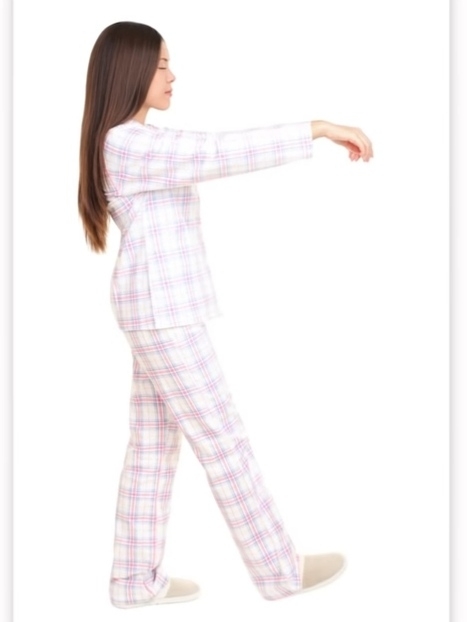





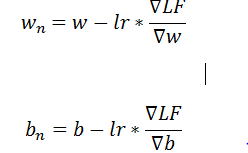


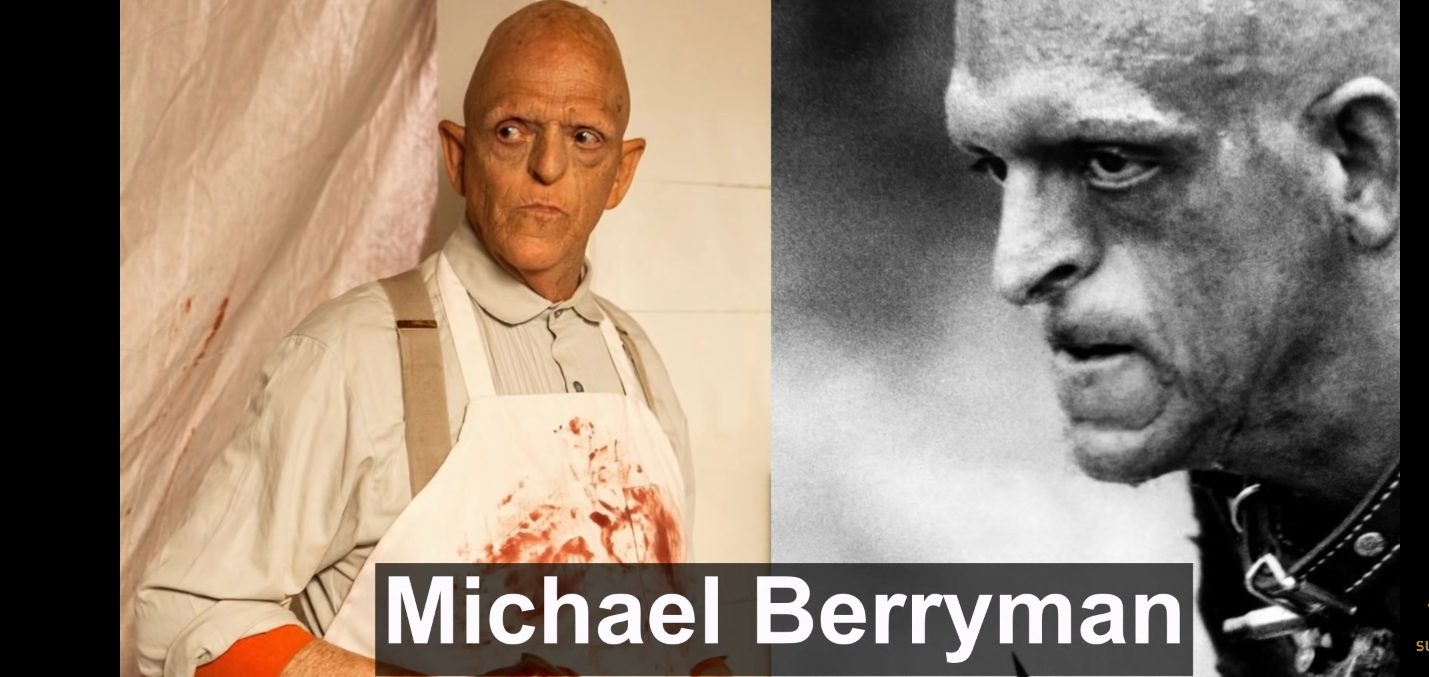

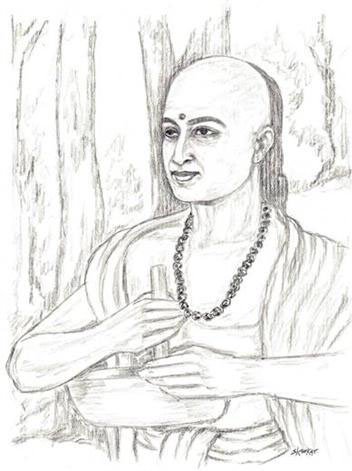



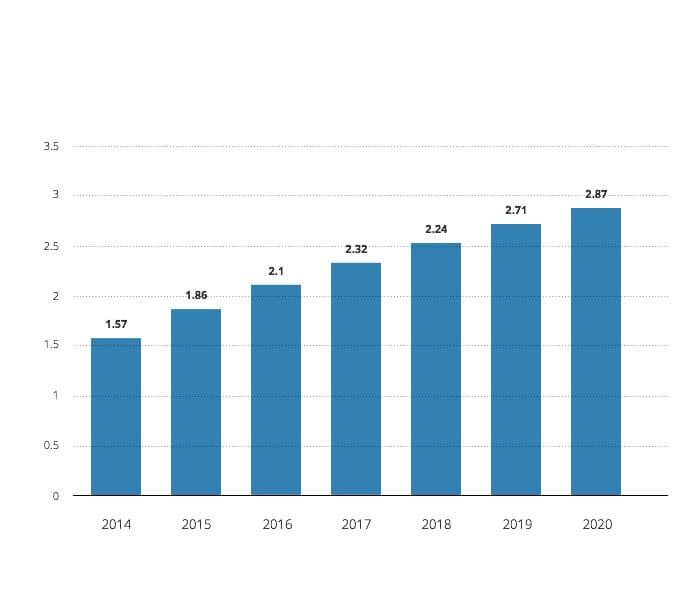
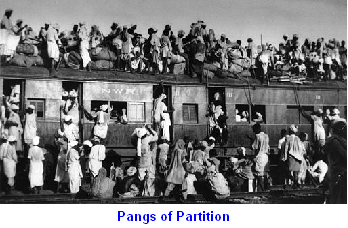
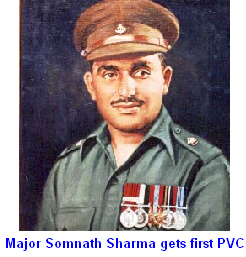




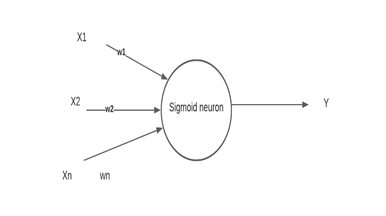


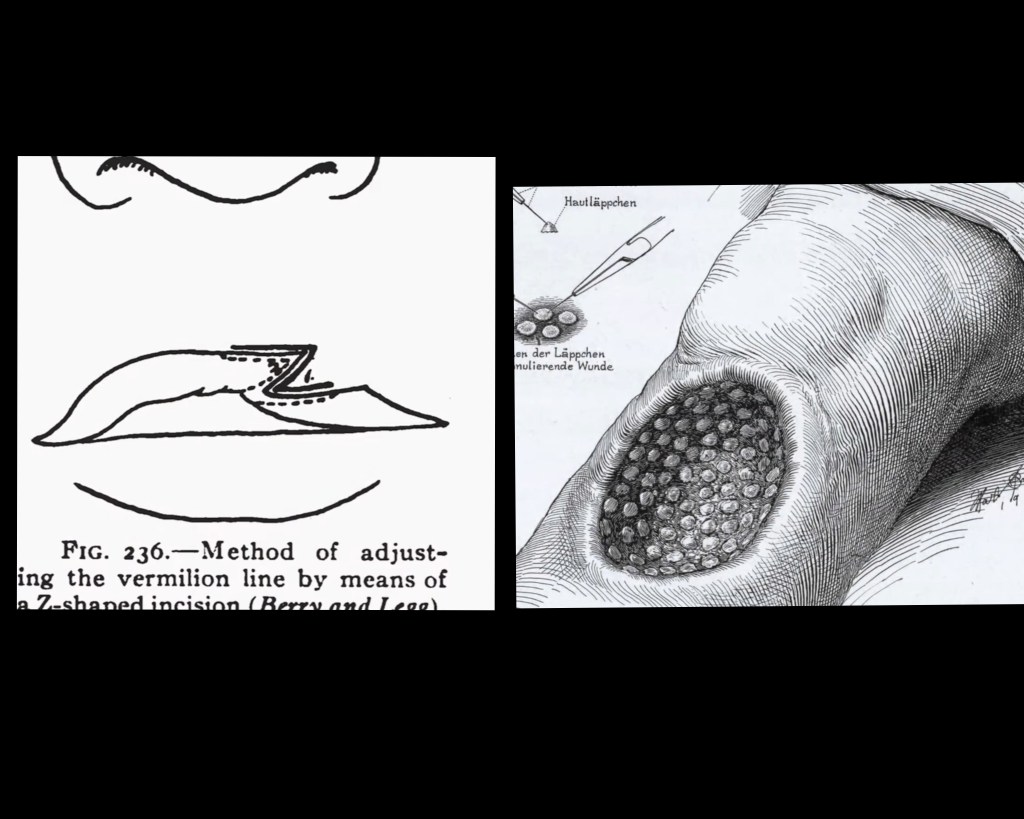


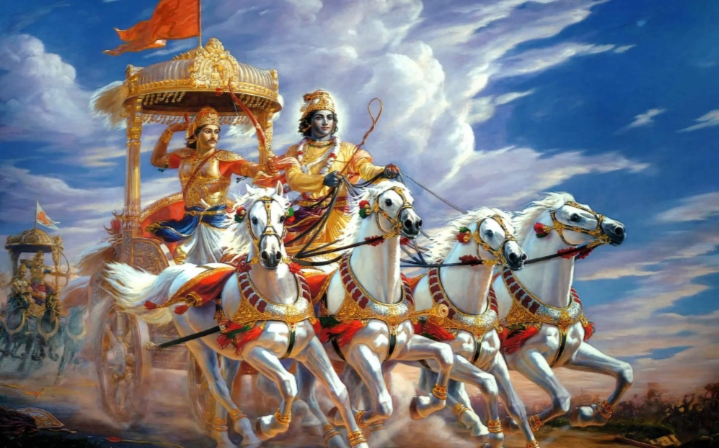





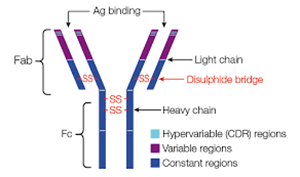

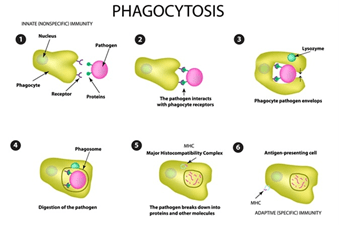


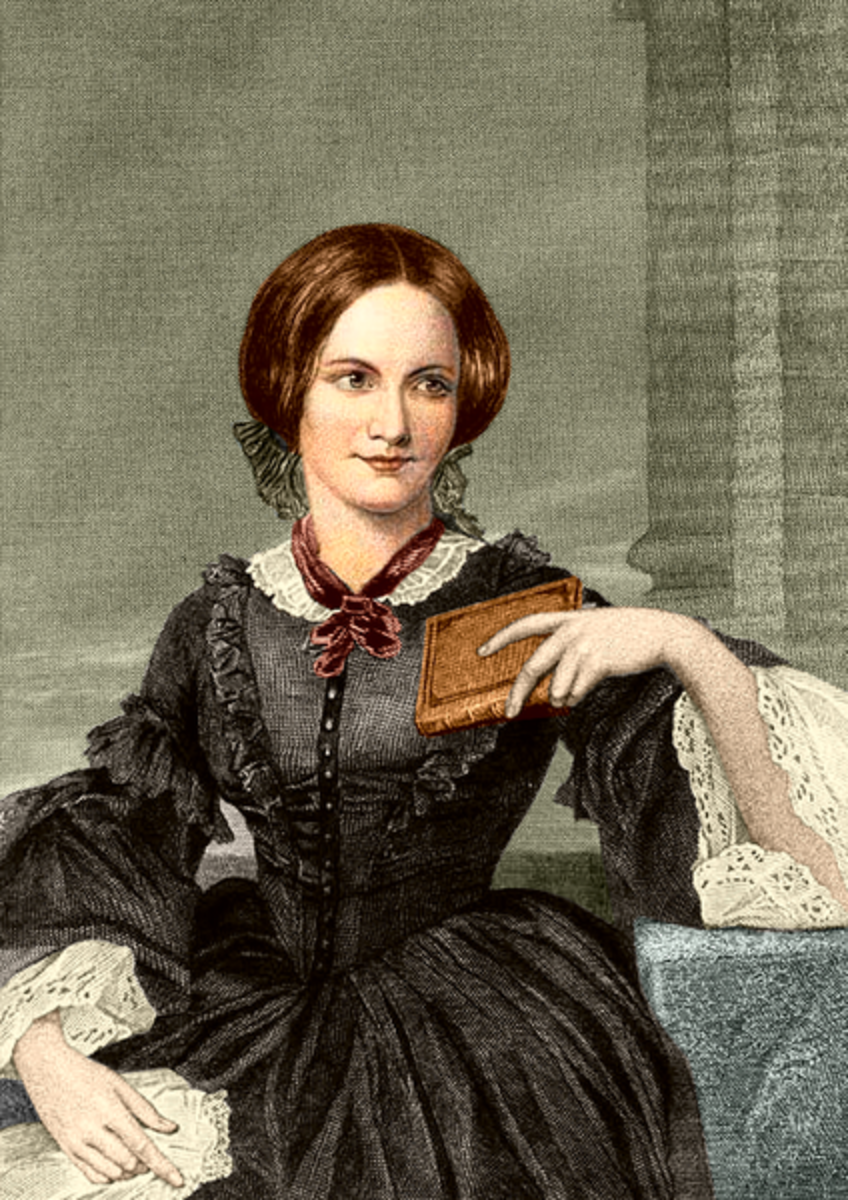


























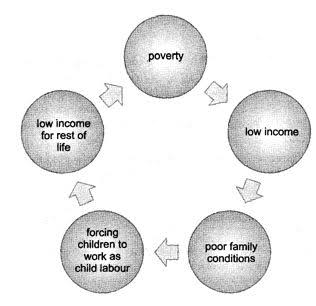







 Track2Training
You must be logged in to post a comment.