Japanese aesthetics

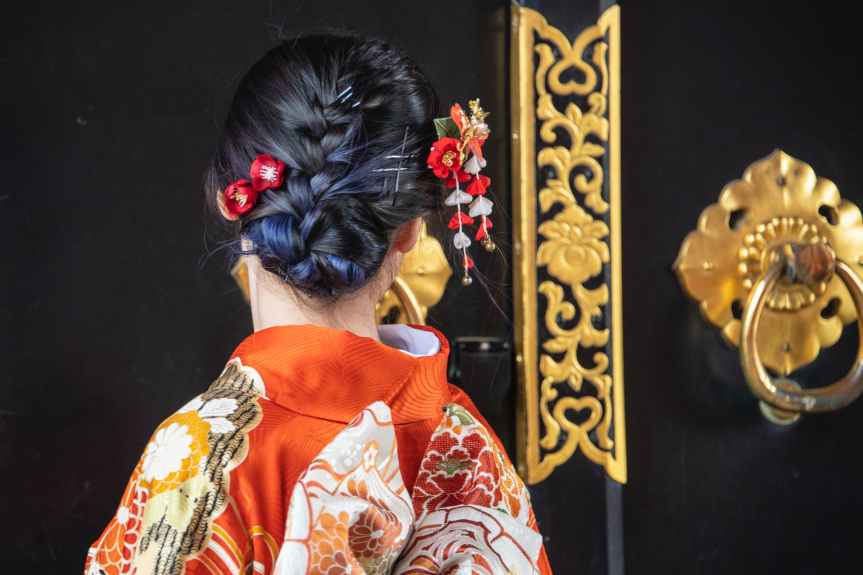
The Japanese aesthetics are a set of ideals followed since the olden days including Miyabi, yuugen, mono no aware, wabi and sabi. These ideas showcase was is considered to be beautiful in Japanese culture and aesthetic norms. The aesthetic norms in japan are considered to be an indispensable part of Japanese people everyday life.

Miyabi is one of the oldest Japanese aesthetic ideal. It is the norm to polish ones manners and to eradicate any kind of roughness and crudility in order to achieve the highest level of grace. The term miyabi can be translated as ‘elegance’. It requires the removal of any vulgar actions. It is also closely related to mono no aware.

Wabi and sabi entails that one should have a mindful approach in everyday life. According to this aesthetic ideal the true beauty of things lie in their impermanent and imperfect nature. It looks at the notion that the things that are in their full glory at the moment will eventually fade or decay. That beauty lies in the fact that things come and go and nothing stays permanently. In this way we can find beauty in the most simplest and ordinary things.

According to the zen philosophy there are 7 principles for achieving wabi and sabi.

Kanso or simplicity, yugen or grace, fukinsei or irregularity, shizen or natural, koko or basic, datsuzoku or to be free and seijaku or silence are the 7 principles of wabi sabi.

Each of these are found in nature and are the virtues of human character.

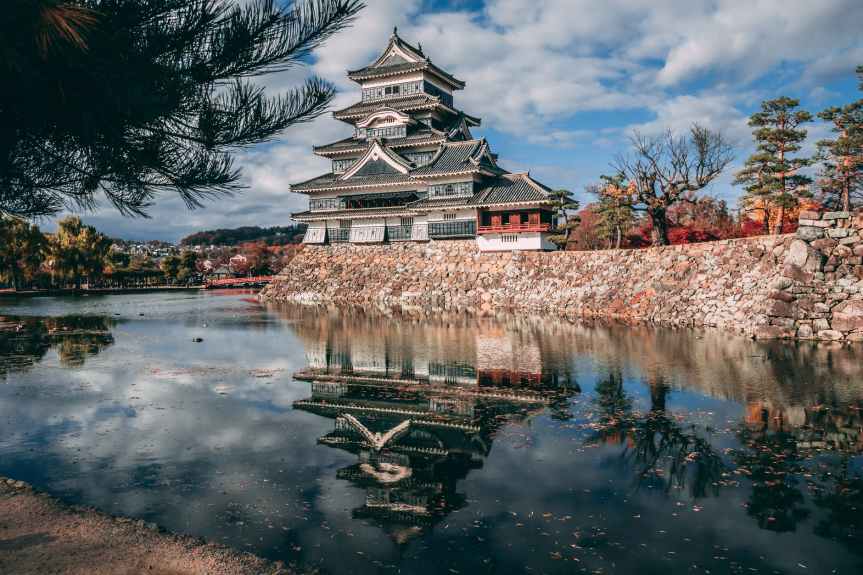
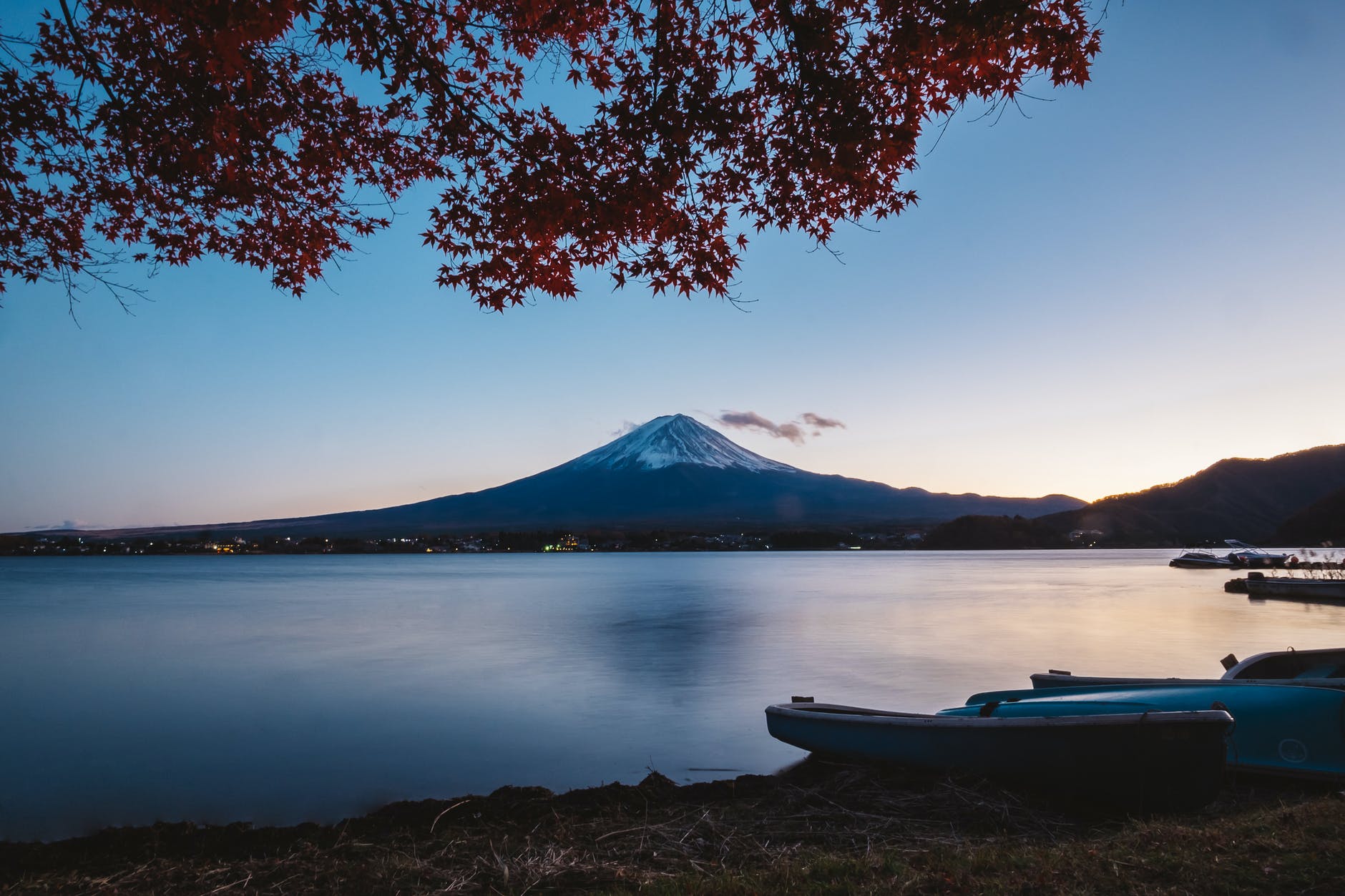
Photo by eberhard grossgasteiger on Pexels.com

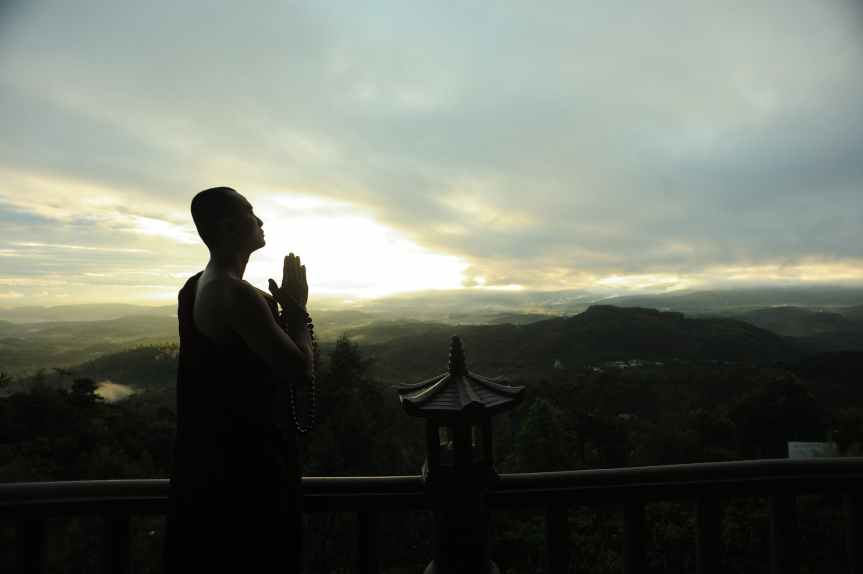
Yuugen is one of the most important of the Japanese aesthetics.  Yugen implies to be having a deep awareness of the universe. It is one of the deep rooted idea in the Japanese Buddhism.

Yugen refers to looking at the world that we live in deeply and becoming aware of the virtues and the true beauty lying within.

The meaning of mono no aware has been complex and ever changing but the deep rooted meaning remains the same, it refers to the pathos of things deriving from their transcience.

In the classic anthology of Japanese poetry from the eighth century the feeling of aware is typically triggered by the plaintive calls of birds or other animals. It also played an important role in the world’s first novel, Murasaki Shikibu’s ‘The Tale of Genji’, in the early eleventh century clearly show impermanence as the basis for the feeling of mono no aware.

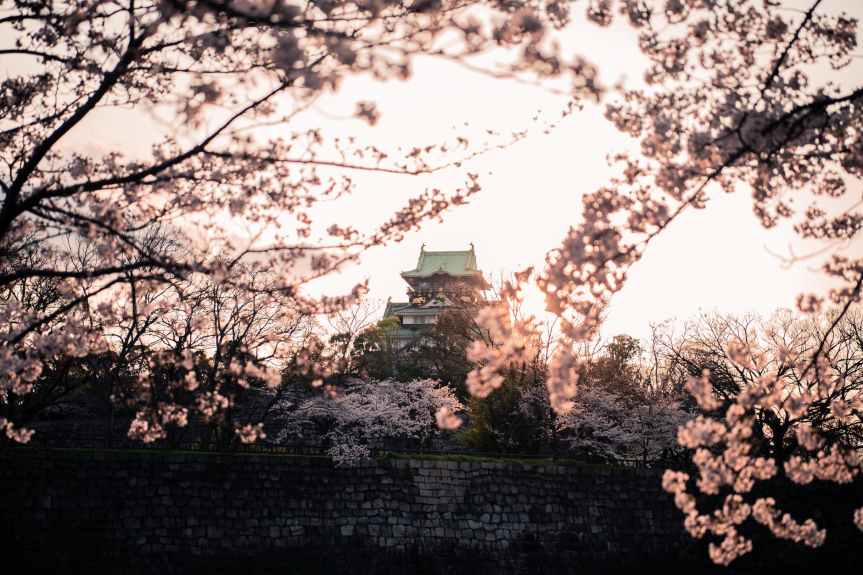
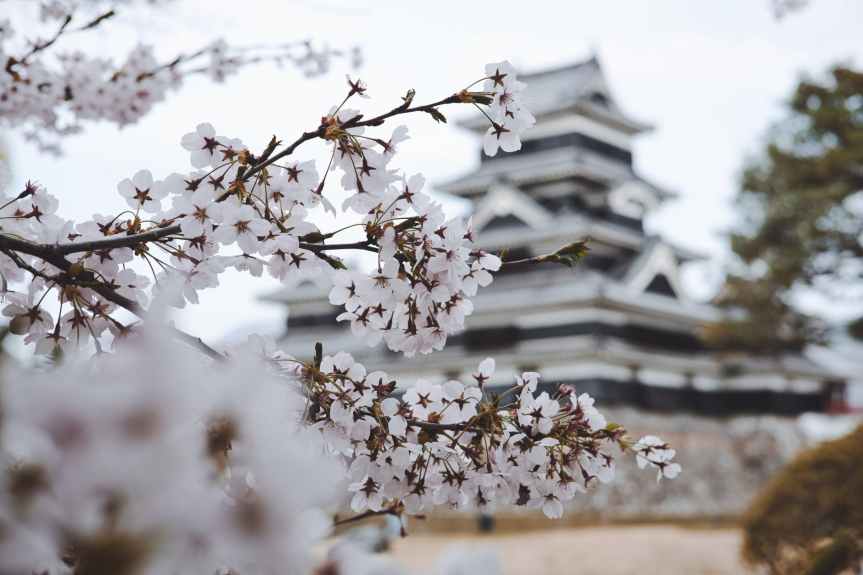
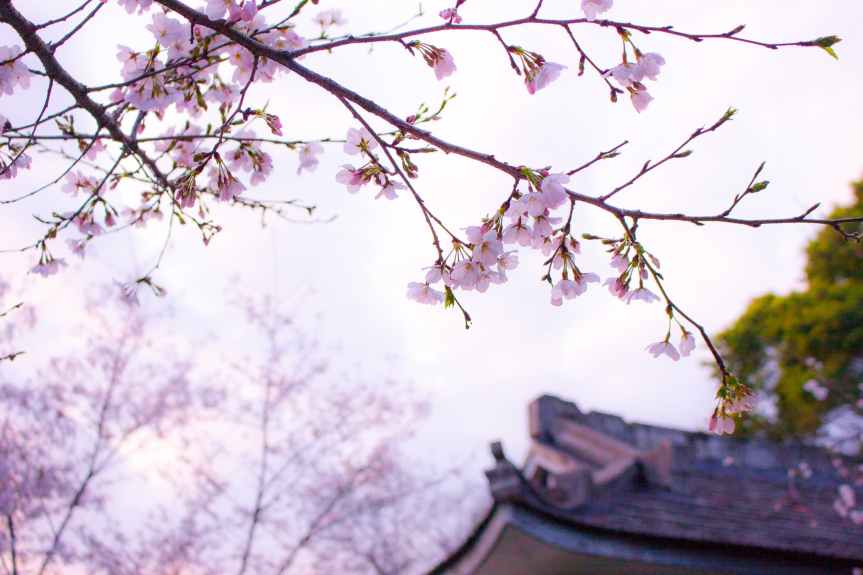
Nowadays mono no aware can be seen in the love of Japanese people for cherry blosoms. Huge crowds of people go to view cherry blossoms every year.

The blossoms of the Japanese cherry trees are more beautiful than those apple tree because of their transience, as they begin to fall within a week of their first appearing. It is precisely the evanescence of their beauty that evokes the wistful feeling of mono no aware in the viewer.

source: https://en.wikipedia.org/wiki/Japanese_aesthetics

INTERESTING FACTS ABOUT INDIA

 Indian Culture
Indian Culture
  • India never invaded any country in her last 100000 years of history.
  • When many cultures were only nomadic forest dwellers over 5000 years ago, Indians established Harappan culture in Sindhu Valley (Indus Valley Civilization)
Indus Valley Civilization
  • The name ‘India’ derived from the River Indus, the valleys around which were the home of the early settlers. The Aryan worshippers referred to the river Indus as the Sindhu.
  • Chess- invented in India.
  • Algebra, Trigonometry, and Calculus are the studies, which originated in India.
  • The ‘Place Value System’ and the ‘Decimal System’, were developed in India in 100 B.C.
Brihadeswara Temple
Brihadeswara Temple
  • The World’s First Granite Temple is the Brihadeswara Temple at Tanjavur, Tamil Nadu. The shikhara of the temple is made from a single 80-tonne piece of granite. This magnificent temple was built in just five years, (between 1004 AD and 1009 AD) during the reign of Rajaraja Chola.
  • India has the largest democracy in the world, the 7th largest country in the world, and one of the most ancient civilizations.
  • The game of Snakes & Ladders was created by the 13th-century poet saint Gyandev. It was originally called ‘Mokshapat’. The ladders in the game represented virtues and the snakes indicated vices, that is good deeds take people to heaven and evil to a cycle of re-births.
  • The world’s highest cricket ground is in Chail, Himachal Pradesh. Built-in 1893 after leveling a hilltop, this cricket pitch is 2444 meters above sea level.
  • India has the largest number of Post Offices in the world.
  • The largest employer in India is the Indian Railways, employing over a million people.
University of Nalanda
  • The world’s first university was established in Takshila in 700 BC. More than 10,500 students from all over the world studied more than 60 subjects. The University of Nalanda built in the 4th century was one of the greatest achievements of ancient India in the field of education.
  • Ayurveda is the earliest school of medicine known to mankind. The Father of Medicine, Charaka, consolidated Ayurveda 2500 years ago.
  • India was one of the richest countries till the time of British rule in the early 17th Century. Christopher Columbus, attracted by India’s wealth, had come looking for a sea route to India when he discovered America by mistake.
  • The Art of Navigation & Navigating was born in the river Sindh over 6000 years ago. 
  • Bhaskaracharya rightly calculated the time taken by the earth to orbit the Sun hundreds of years before the astronomer Smart. According to his calculation, the time taken by the Earth to orbit the Sun was 365.258756484 days.
  • The value of “pi” was first calculated by the Indian Mathematician Budhayana, and he explained the concept of what is known as the Pythagorean Theorem. He discovered this in the 6th century, long before the European mathematicians.
  • Until 1896, India was the only source of diamonds in the world(Source: Gemological Institute of America).
Baily Bridge
Baily Bridge
  • The Baily Bridge is the highest in the world. It is located in the Ladakh valley between the Dras and Suru rivers in the Himalayan mountains. 
  • Sushruta is regarded as the Father of Surgery. Over 2600 years ago Sushrata & his team conducted complicated surgeries like cataracts, artificial limbs, cesareans, fractures, urinary stones, plastic surgery, and brain surgeries.
  • The four religions born in India – Hinduism, Buddhism, Jainism, and Sikhism, are followed by 25% of the world’s population.
  • Jainism and Buddhism were founded in India in 600 B.C. and 500 B.C. respectively.
  • Islam is India’s and the world’s second-largest religion.
  • Jews and Christians have lived continuously in India since 200 B.C. and 52 A.D. respectively.
  • The largest religious building in the world is Angkor Wat, a Hindu Temple in Cambodia built at the end of the 11th century.
  • Sikhism originated in the Holy city of Amritsar in Punjab. Famous for housing the Golden Temple, the city was founded in 1577.
Varanasi
Varanasi
  • Varanasi, also known as Benaras, was called “the Ancient City” when Lord Buddha visited it in 500 B.C. and is the oldest, continuously inhabited city in the world today.
  • Martial Arts were first created in India and later spread to Asia by Buddhist missionaries.
  • Yoga has its origins in India and has existed for over 5,000 years.

For further more facts refer to:

https://knowindia.gov.in/my-india-my-pride/interesting-facts-about-india.php

Films – Which Will Change Your Perception Towards Life!

I have seen many motivational movies both in Bollywood and Hollywood. But Bollywood movies are very special as they contain emotional content and beautiful songs. There are many people who think Bollywood only produce entertaining movies which I don’t think is a fact. Cinema is the reflection of society and vice-versa. However, a society has its own deep rooted beliefs and perceptions which trickle down through the ages and become a reference point for generations to come. In such a scenario, is it possible for a piece of art to come and impact your perceptions in a way that you see something in a whole new light?

I have collected a list of Bollywood movies that I have watched and I suggest you to watch if you’re free this weekend..Here is the list!

Swades (2004)

11 Dialogues From Swades About India, Patriotism & Change

We all want to secure good marks in college, get a high-paying job, if possible settle abroad and live our lives comfortably ever after. However, how many of us can leave this settled life behind and devote it to the upliftment and betterment of the lives of our rural brethren. Swades is a story of self-less devotion to the country and bringing development at the grass-root level. A must-watch for all who want to contribute to their motherland in their own little way.

Taare Zameen Par (2007)

Taare Zameen Par Cast and Crew List | MetaReel.com

Have we ever wondered why a glass appears half empty to some of us while it looks half full to others? It’s just a matter of perception, we say. Taare Zameen Par breaks the stigma attached with the differently-abled children and leads us to give them a fair chance. Such movies leave a lasting impact on our psyche and help us immensely in bettering our judgement towards life. And in case, you forgot the message of the movie, repeat it with us, every child is special.

Luck By Chance (2009)

Luck by Chance: Some Thoughts | Close-Up

Luck by Chance brings the struggles and cynicism of the film industry to the fore like never before. Most of us are dreamy eyed about the glamour world and think of it as ‘the life’ to have. Here’s where Zoya Akhtar’s LBC comes in and takes you to a walk through the backstage of Bollywood. It introduces you to the personalities you never imagined existed and tells you the level of stakes involved in the business, through the eyes of an aspiring actor Vikram (Farhan Akhtar). Consider this your Bible if you see your future in the showbiz.

Rocket Singh (2009)

Rocket Singh - Salesman of the Year Movie - Video Songs, Movie Trailer,  Cast & Crew Details | YRF

Admit it! We have all given up on some life-changing idea at least once in our lives because we lacked the courage to make the actual plunge. No wonder we move on with a familiar remorse in our hearts. Rocket Singh teaches us an amazing lesson about self-worth which stresses on the fact that an organisation is only as good as its employees and that taking risks in life is not as bad as it seems initially.

Lakshya (2004)

Farhan Akhtar: 'Lakshya' Has Always Been More Than A Film

Being aimless in life and careless about career is a phase everyone goes through. Having a quarter-life crisis is not so bad either. However, the magic lies in waking up at the right time. Forget everyone else, the real deal is to surprise yourself with your own capabilities and to do something that you yourself never expected to do. After all, this is what Lakshya taught us. To leave one life and live the other!

Rang De Basanti (2006)

Fifty shades of cinema

Anyone who watches this movie will feel a connect, especially the youth. Aren’t our adrenaline levels always pumping and haven’t we all discussed the flaws of the system over a cup of steaming chai ? But what have we actually done to fix it? Nothing. Rang De Basanti tries to create an environment of increased activism on matters of public interest and throws open a debate: do we want to take matters into our hands or keep crying foul about the inefficiencies of the society?

Paan Singh Tomar (2010)

Paan Singh Tomar full hindi film hd | Irrfan khan - YouTube

While biopics of legendary people always inspire viewers, it takes a movie like Paan Singh Tomar to shake them up to the conditions and tragedies of these stalwarts post their prime. PST is the story of a real-life athlete Paan Singh Tomar, a gold medalist who went onto becoming a dacoit, after the world around him refused to acknowledge him for his accomplishments and kept pushing him down. The USP of the movie lies in the stirring tragedy of PST’s life which drives him to seek revenge from the system, for his lost career and life. This one is history in motion.

A Wednesday (2008)

A Wednesday Unknown Facts

In these times of increased violence and hatred towards each other, aren’t we all living an uncertain life which might just end today, at this very moment? But we, the common people, sit quietly like always while our safety becomes a game of ping-pong between terrorists and our government. This film stresses on the importance of a wake-up call to our government to act towards the safety of its citizens. A Wednesday is a stirring message to all common men like me and you to not play vulnerable all the time and come together and ask our system to be accountable to us.

Dil Chahta Hai (2001)

Is Movie 'Dil Chahta Hai 2001' streaming on Netflix?

There are times when you want the clock to stop. There are times when you don’t want to leave a place. There are times when everything just feels right about the company that you have. Such is the gravity of friendship in youth. You don’t want to grow old. But unfortunately, time waits for no one and one has to move on in life and live one’s own story. Dil Chahta Hai is a coming-of-age story which remains an essential part of everyone’s life, simply because it holds true no matter how many times we watch it.

Udaan (2010)

Movie Recommendation: Udaan (2010) | The Tanejamainhoon Page

Easily the most relatable, easily the most convincing. That’s why Udaan works and changes your deep rooted perceptions towards a very tender phase of a child’s life, teenage. The movie tracks the journey of Rohan, who returns to his home after 8 years of boarding school, only to be welcomed by a disciplinarian father and a half brother.  The beauty of Udaan lies in the way Rohan fights and aims for his dreams rather than being tied down by his father. The movie sends a strong message which says we can become whatever we want in life, all we need to do is give our dreams a little flight.

The Sabyasachi X H&M collection – H&M Launches Collaboration “Wanderlust” With Iconic Indian Designer Sabyasachi

East meets west with this global collaboration between high street style giant H&M and India’s biggest name in fashion Sabyasachi Mukherjee.The collaboration is also hugely symbolic in another way, it’s a platforming of Indian design on a global scale.

H&M is a Swedish multinational clothing-retail company known for its fast growing fashion clothing for men, women and children. As of November 2019, H&M operates in 74 countries with over 5,000 stores under the various company brands. It is the second-largest global clothing retailer, behind Spain-based  Inditex  (parent company of Zara).The company makes its online shopping available in 33 countries.

Sabyasachi Mukherjee is an Indian fashion designer, jewellery designer, retailer and couturier from Kolkata, India. Since 1999. For over two decades, “Sabyasachi” has been a household name in the realms of high fashion with his signature extravagant Indian bridal wear that have been worn by the riches of India’s high society to Bollywood superstars such as Deepika Padukone, Priyanka Chopra, and Anushka Sharma.

It is a truly proud moment for Indian fashion, for the first-time ever fashion giant H&M collaborates with an Indian label to create a capsule collection for its customers across the globe. The Sabyasachi H&M collaboration-themed “Wanderlust” will present rich textiles in modern as well as classic Indian silhouettes that resonate with the modern global nomad mindset. “I’ve done many collaborations and each one is diverse, but what I try to do with every collaboration is further the India story, take it forward; if I cannot have an Indian narrative, I don’t want to do it. With H&M it was such a proud moment, it’s like a lifetime achievement award when it comes to recognition of one’s work. It’s only when your label has a strong voice that it can traverse the mind space of many countries,” says the designer.

Designer Sabyasachi Mukherjee says “What you seek is seeking you” for his latest collaboration with H&M. The international fashion giant was looking for a partner to carry their voice in India and carry the Indian sensibility internationally, who better than the iconic label Sabyasachi to take the India narrative forward.

H&M, we are thrilled to be able to announce the new date for our collaboration with iconic Indian designer Sabyasachi. At a time like this, we believe people value the use of homegrown crafts and textiles more than ever and that’s something no one can do better than Sabyasachi. We look forward to taking this stunning collection to as many people across the global as we can,” states Maria Gemzell, Head of New Development, H&M.

The Sabyasachi H&M collection will offer a complete fashion wardrobe for both ladies and men, including accessories, jewelry, footwear, sunglasses all at accessible price points. Some highlight pieces include long flowy dresses, tunics, blouses, breezy shirts, wide pants and more. It will also offer a first of its kind collaboration saree which is exclusively designed for customers in India The collection is amazing, and it really shows the aesthetics of Sabyasachi– its electric, fluid, decorated; it has all the elements all fashion lovers across the globe love.

H&M has always collaborated with the biggest names across the globe, so it should come as no surprise then that Sabyasachi was their pick, as Gemzell adds, “H&M’s iconic collaborations cater to a global audience. We want to collaborate with partners who share are values and progress. Fashion is not only about clothes, but also about giving dreams and hopes to people, and so we choose talent and values which resonate this. It’s important to give something more to our customers all over the world and that’s why this collaboration was important to us.” “Collaborations create emotions and fashion is both global and local at the same time. India is a super important market for H&M and it’s a privilege to work with a talent and creative designer like Sabysachi,” asserts Gemzell.

Comparison of the two Authors: Murasaki Shikibu and Sei Shounagon

Murasaki Shikibu who wrote ‘The tale of Genji’ and Sei Shounagon who wrote ‘The Pillow Book.

It is not easy or possible to compare the two books because they are both of two completely different genres. The Tale of Genji is a psychological work of fiction that captures the climate in the court during the Heian period, whereas in the Pillow Book, the author writes about her own real-life experiences in the form of narratives, poems and essays. Both the books have shown two completely different background of the Heian period. But the aspects of the Heian court depicted by the author, Sei Shounagon in her book ‘The Pillow Book’ showed the reality of the Heian era. In the Pillow Book, the author showed us the court and her experiences while working in the court through the perception of a gentlewoman, whereas the author of ‘The Tale of Genji’ majorly focused on nothing but nobility.

Their books may be world apart, but both these authors had a lot in common. They both served in the imperial court; they were both ladies-in-waiting. Both showed their love for nature and very highly intelligent and witty. They were very knowledgeable, and both had learnt the kanji writhing system but hid it well. But Murasaki Shikibu’s view of the world was completely different from how Sei Shounagon viewed the world.

From her novel ‘The Pillow Book’, the author, Sei Shounagon appears to be a very outgoing and witty person with a powerful personality and a good sense of humour. She can be mean, prideful but is an utterly compassionate person.

On the other hand, Murasaki Shikibu appears to be very sensitive person who thinks about things very deeply and in all seriousness. She added a few funny scenes as well in her novel but on the overall scale the tone of her book, The Tale of Genji, was dejected and dark.

source: http://thelittlewhiteattic.blogspot.com/2020/07/the-pillow-book-heian-literature-and.html

Pillow Book (Makura no Soushi)

‘Makura no Soushi’ or ‘The Pillow Book’ is a book written by Sei Shounagon in the year 1002 while she was serving the empress consort Teishi. The book comprised of poems, essays anecdotes and her personal thoughts and experiences while working in the court during the Heian period. The passages she wrote had very miniscule relation with one another, they were basically her ideas and the experiences she had in her daily life. It consisted all her personal thoughts her opinions on her fellows, poetry and all the interesting things that happened in the court. Although what she wrote were just her personal experiences and her feelings, the book turned out to be an important piece of literature of the Heian era. The book ‘The Pillow Book’ was originally meant for her eyes only, it was accidently revealed in the court. She wrote the book for her own amusement and enjoyment for herself, it was like her personal diary wherein she wrote her thoughts and feelings, a place where she could express her thoughts and emotions that she could not share with anyone, or the things she couldn’t say out loud in the open due her lower status in the court.

The work that was meant for her eyes only and not for an audience was revealed by accident is now one of the national gems for the nation, a great piece of literature.

In ‘The Pillow Book’ the author Sei Shounagan also wrote how she had to turn the courtier away due to his lack of writing skills.

The Pillow Book’s genre is called ‘Zuihitsu’; this genre writing consists of one’s personal essays and ideas and not tales or lore’s, therefore, The Pillow Book comprises of three different types of writings: the events that she experienced while her time in the court, her thoughts on various subjects going on in the court or in general regarding any issue, and the things that made her upset happy; she wrote all her emotions in one book.

source: https://en.wikipedia.org/wiki/The_Pillow_Book

https://www.britannica.com/topic/Pillow-Book

Summary of the Tale of Genji

In ‘The Tale of Genji’ our hero or the main character of the story, Genji, is the son of the emperor and his most beloved concubine of his, Kiritsubo. Genji’s future was predicted to be brilliant but his mother died after suffering the envy of her rivals in court, which led to her sickness and then eventually she died. The emperor then finds himself another concubine, Fujitsubo, who reminds him of his erstwhile lover. After his mother’s death, as Genji did not have much of a standing in the court the emperor reduces his status to a commoner and designate him to the membership of the non-royal Genji clan. After reducing his status to that of a mere commoner the eldest son of the emperor with lady Kokiden was that announced as the crown prince of the nation.
Genji was a very striking young man with inept skills who was loved by all but was also dreaded by none other than lady Kokiden and her family.
At the very beginning of the story, the author talks about Genji’s ardent adventures with diverse group of women and talks about his friendship with To No Chujo. The author then talks about his marriage to To No Chujo’s sister, Aoi and the birth of their son. After that the author talks about his blooming relation with Murasaki, his wife later in the story.
During this time, while Genji got married and had a son, the old emperor died and was then superseded by his and lady Kokiden’s son. Meanwhile, Genji’s amorous trysts started to cause troubles in the court, and he was exacted to leave the capital and forced to stay in Suma for the years to come, until the time period of his sentence was up.
In the next chapter of his tale, Genji met with the Ex- governor along with his daughter ‘The Akashi Lady’. After this as his time away from the capital is up, he returns the then emperor renounces his throne in favor of Fujitaubo’s and Genji’s son. This makes Genji to reinstate his position at the court while he and the Akashi Lady welcomed a daughter. After he returned to the capital, he settles down with Murasaki and several other women of his in his Rokujo mansion. As he was reinstated in his position at the court his authority in the court increases with many of his children and grandchildren were started to be appointed in the court. He then visits the Sumiyoshi Shrine to give his utmost
respect to the deity for his protection while he was stuck in a storm at Suma. Later, Genji is convinced to marry the third princess who then gives birth to a young boy but soon after renounces herself becoming a Buddhist nun.
In the last chapters of his story, the author then shows the adventures of Genji’s son and grandson in the background of the mountain area of Uji, Kaoru and Niou, who are best of friends but are also vying the attention of the same lady. This intriguing plot circles around the daughters of the eighth prince and Genji’ half-brother and the impulsive Ukifune.

source: http://www.taleofgenji.org/

The Tale of Genji (Genji Monogatari)

The Genji Monogatari or the Tale of Genji, a masterpiece of Japanese literature and is also contemplated as the world’s first novel and the first psychological novel ever written. It was one of the most popular stories written in the Heian period. It was written at the beginning of the 11th century by a great author of that time Murasaki Shikibu, as the many women in the Heian period the real name of the author is unknown. This story written around a thousand years back in history, serves as the kind of a travel guide helping us to make our way through the Heian period and the world of Genji, seeing his journey and story through our own eyes.

The book puts light on the culture of aristocracy in the early Heian period- like the dressing practices, what kind of entertainment did people enjoy, the daily lifestyle of the people and its moral codes and customs being followed. The author introduces us to Genji, whose character is portrayed as handsome, friendly and sensitive, a consummate courtier, a trusted friend and an excellent lover. The major portion of the story revolves around the lovers of Genji, and how each and every lover of his is evocatively depicted. The story is a beautiful journey of human emotions and displays the nature in its glory, but as the story progresses it take is a dark U-turn and starts to reflect the Buddhist persuasion of the world’s impermanence.

Murasaki Shikibu, wrote The Tale of Genji, while she was working as a lady in the Japanese court. At the time Japanese literary works mostly consisted the collections of poems written in the language of Tang, the kanji script that was appropriated from China. Therefore, during her time in the court, the court’s official and scholarly works were written in Chinese rather that in Japanese, as the literary works written in prose, usually by the women of court, were taken not so seriously and were not viewed as the literary work as equal of poetry. Proses written during the Heian period were restricted to fairy tales and only very few chronicles were written in the new phonetic language, Kana. Murasaki Shikibu was the first lady to write a complete convoluted novel, along with lots of plot twists and turns though out the narration of the tale. However as for The Tale of Genji, it was perceived as a refined work of imagination with a comprehensive knowledge of both Japanese and Chinese poetry. It constitutes of about 800 wakas, which tells the story of that one character and his legacy through a whole of 54 chapters.

Background of the Tale of Genji

In the Heian period, the community that is delineated is that of the cream of the society or so to say the aristocrats, who are unconcerned with anything but themselves, their own amusement and entertainment, and the emperor is at the center of their universe. These people are preoccupied with the ranks and the rearing. But the find grace in nature and enjoy the raptures of music, calligraphy, poetry and the way of dressing in fine clothes. The courtiers in the Heian period were more or less unaware of the outside world and could care less about it, they did not travel and considered people lower than the as less human. The highest three ranks were the high court nobles known as the ‘Kugyo’ and the ranks below that, meaning the fourth and the fifth ranks were the provincial governor class that was frequently looked down upon because of its low rank. Our author, Murasaki Shikibu, herself was the daughter of the governor of Echizen, a Fujiwara.

During the Heian period the women of the family were to stay hidden from any man who was not her father or husband, so these women mostly spent their time indoors hidden behind screen doors, the only escape for these house- bound ladies were these tales. And ‘The Tale of Genji’ provided them with all of it- Romance, drama, the supernatural and the perfect hero. The women who entered the courts as lady-in-waiting to become an empress or a royal concubine were free to seek associations with the gentlemen in the court, this also provided a background for the setting of the first part of the novel.

The men were more interested in women of good breeding who had an interest in poetry and calligraphy. The sense of style and fashion of a woman was what attracted the men to them. The men in the Heian period were unable to see women’s physical beauty so the only physical attribute they were attracted to in a woman were her hair. The thicker and longer a women’s hair were the more beautiful she was. This was also the reason why our main character Genji, did not let his wife in the story to have a tonsure whilst she was sick.

During the Heian period Buddhism had already started to affect the way of thinking for the aristocratic class, it was only obvious that it will also have an influence on the literary works of the writers of the era. Buddhist concepts ran deep in the literary works of this period, and the concepts of Buddhism and the practices that were followed in it found its way into the novel, the Tale of Genji, as well as it was shown by the author that all the characters in the story had the concept of Karma was always evidently present in the minds of all the central characters.

In the early adventures of our hero, Genji, he was rather hard- headed and egocentric, but after the development of his character in the story he was later portrayed as a gallant man who took care of women even after he lost interest in them. He mostly spent time boating on lakes while listening to flute and Koto music.

source: http://www.taleofgenji.org/

https://www.britannica.com/topic/The-Tale-of-Genji

Waka during the Heian period

In the Nara and early Heian period, the Chinese style poetry known as ‘Kanshi’ and the waka poetry form ran out of favour officially in courts. But then in the 9th century the official representatives that were being sent to China were no longer being sent, worsening ties with the Tang dynasty and leading to the isolation of the country from the rest of the world. But this led to the court to encourage and foster new and native talent and harmonize Chinese poetic style and technique as per the local traditions. This was the time when the waka form of poetry started to gain popularity during the rule of emperor Daigo, who arranged for compiling the waka of poets into an anthology which came to be known as ‘Kokin Wakashuu’ meaning ‘’collection of ancient and modern Japanese poems’’. It was the first anthology that was issued by the imperial court to be issued, after that the tradition to issue these anthologies under the imperial court continued till Muromachi period.

The first three anthologies issued by the imperial court were Kokin Wakashuu, Gosen Wakashuu and Shuui Wakashuu. Kokin Wakashuu was compiled by Ki no Tsurayuki, Ki no Tomonori, Mibu no Tadamine and Oushikouchi no Mitsune on command of emperor Daigo in the year 905.

Gosen Wakashuu was commanded by emperor Murakami in 951 and Shuui Wakashuu was commanded by emperor Ichijou in 1005.

After these three anthologies another five anthologies known as the ‘Collection of Eight Ages’ or ‘Hachidai shuu’ was compiled during the Heian era.

Waka can be first traced back to the 8th century in the ‘Kojiki’ and ‘Manyoushuu’ but as time passed it came under the influence of other types of poetry and stories such as ‘The Tale of Genji’ it broadened its view and expressions.

source: https://en.wikipedia.org/wiki/Waka_(poetry)

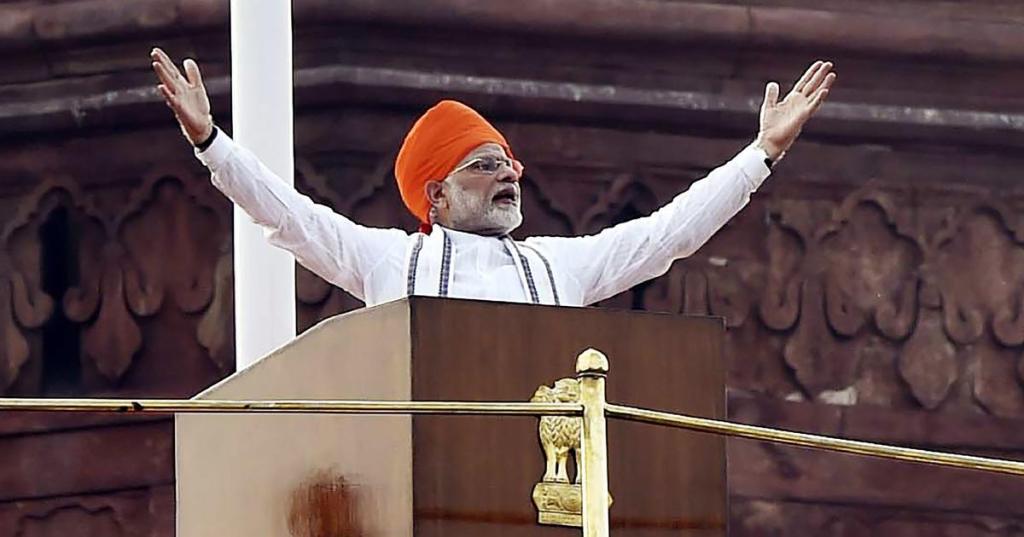
August 14 will be observed as Partition Horrors Remembrance Day: Says Modi

A day before 74th Independence Day our prime minister Narendra Modi made a big announcement through his twitter channel, he announced a new day on 14th August , Prime minister Modi said segment and the savagery that followed it was an awful piece of history. Dislodging of millions, killing and assaults during the segment are as yet clear and noticing this day is an acknowledgment of their penances.

A day before he tends to the country from the defenses of the Red Fort on India’s Independence Day, Prime Minister Narendra Modi pronounced that August 14 will be seen as Partition Horrors Remembrance Day. Pakistan observes August 14 as its Independence Day.

“Partition’s torments can never be neglected. A huge number of our sisters and siblings were uprooted and many lost their lives because of careless disdain and viciousness. In memory of the battles and forfeits of our kin, fourteenth August will be seen as Partition Horrors Remembrance Day,” Modi tweeted.

In a resulting tweet, he said exercises ought to be drawn from the savagery that ejected during Partition to additional improve amicability and human strengthening. “May the #PartitionHorrorsRemembranceDay continue to help us to remember the need to eliminate the toxin of social divisions, disharmony and further fortify the soul of unity, social agreement and human strengthening.”

Commenting on the choice to notice August 14 as Partition Horrors Remembrance Day, Vijay Chauthaiwale, accountable for the international concerns branch of the decision Bharatiya Janata Party (BJP), said the time has come to recognize the revulsions of Partition and the savagery that followed after India and Pakistan were cut out as two nations in 1947.

“This is a long-late acknowledgment that Partition brought about viciousness, dislodging of millions of individuals, episodes of killing and assault of the individuals who came from the present-day Pakistan. The narratives are as yet distinctive and noticing this day is an acknowledgment of their penances. Segment was a heart-breaking piece of history and the brutality that followed it too. PM Modi has shown gigantic fortitude by recognizing something very similar,” Chauthaiwale said.

The Rashtriya Swayamsevak Sangh, the philosophical tutor of the BJP, has been noticing August 14 as the Akhand Bharat Divas or Unified India Day. On a few events, its top chiefs have presented a defense for the reunification of Akhand Bharat, including parts that got isolated from India, for example, Afghanistan and Pakistan yet not through intimidation.

Waka

Nowadays, the people all around the world are the most familiar with the Japanese poetry style known as the ‘Haiku’. Haiku is a 17-syllable poem and gained popularity in the 17th century. Whereas, on the other hand there is another type of poetic form that was developed thousands of years before the haiku, known as ‘Waka’. Waka (和歌) is a form of classical Japanese poetry and the word ‘Waka’ translates to ‘’Japanese Poem’’. Haiku was extracted from the Waka style of poetry.

Waka is a type of short poem with a specific structure, it has 31-syllables and is perfectly arranged in five lines in the form of 5-7-5-7-7 respective words in each line. Waka can be divided into two verses; it has an ‘upper verse’ that refers to the first three lines and then there is the ‘lower verse’ referring to the last two lines of the waka.  Waka is written to convey our heart’s feelings. Waka’s both form and influence differs from the form and influence that our own traditional poetry has. Waka is written to encapsulate a person’s emotions and feeling rather than elucidating or explicating their emotions.

There are different forms of waka namely, the major forms being ‘Tanka’ (the short poem) and the ‘Chouka’ (the long poem), the other types of waka also include ‘Bussokusekika’, ‘Sedouka and ‘Katauta’, but these other types of forms were discontinued at the very beginning of the Heian period, now only ‘Tanka’ is the only waka that has remained till this age and when someone mentions waka it refers to tanka only.

Photo by Evgeny Tchebotarev on Pexels.com

In the Heian period, waka was the most major or the most important form of communication among lovers. Not only that but a person’s ability or skills in poetry was a dominant basis for ascertaining a person’s social and political standing in the society.

During the Heian period a renowned poet, Ki no Tsurayuki wrote the following about Japanese poetry:

“The poetry of Japan has its roots in the human heart and flourishes in the countless leaves of words. Because human beings possess interests of so many kinds it is in poetry that they give expression to the meditations of their hearts in terms of the sights appearing before their eyes and the sounds coming to their ears. Hearing the warbler sing among the blossoms and the frog in his fresh waters — is there any living being not given to song!”

The ‘song’ he mentioned in the lines above is nothing but a ‘Waka’.

source: http://afe.easia.columbia.edu/special/japan_600ce_waka.htm

mikiso hane

Literature in Heian period

In the Heian period a lot of importance was placed on art and literature. The aristocracy paid a lot of heed to developing a refined taste in literature and developed strong customs and behavioural conduct.  During this period the nobles of the court known as ‘kuge’ accentuated on appearance and decorum and dictated rules for every aspect of life. Art, literature and poetry were an essential part of the imperial court. All the people working in the imperial court were expected to have a good education in writing and poetry. One’s writing skills were the parameter for earning a good reputation and position within the court.

Heian period was very rich period in development of Japanese culture because Japan was heavily influenced by the Chinese society and their culture, but it was in this period that japan started to keep clear of the Chinese influence on their way of lifestyle and their own traditions and practices.

Photo by Henry & Co. on Pexels.com

In the Heian period, only men used to write works in kanji (the writing system that was borrowed by China) but they mostly or only wrote poems, and historical documents and not fiction. Whereas the women, although were not versed in kanji writing system but still wrote in kana. Men used to write in the Chinese script as it was believed that it was of higher social status. Ironically, the women of this period were the one who developed Japanese writing method and played a key role in the rise of Japanese vernacular literature. Female authors in Japan were more popular than the male because they wrote in an accessible language, the language of the common people, ‘kana’. The women wrote tales and fictional stories, the kinds that men usually shied away from. 

Photo by Ryutaro Tsukata on Pexels.com

The new writing system, Hiragana, was used by women to write their tales that gave them more freedom to express their emotions freely. Use of hiragana empowered women to be able to be able to write about their thought, feelings and their everyday hardships and lifestyle in the nation that they lived in. For the author Shounagon, she spent years in mastering kanji writing system so she could display her level of intelligence in the society dominated by men, and she often used kanjis in their writings. The most cardinal works of literature were written by women in the Heian period, the most notable work being ‘The Tale of Genji’ and ‘The Pillow Book’. Both books are considered to be masterpieces and very important work of literature of that time even today. Both books documented the important aspects of lifestyle of people during the Heian era.

source: Mikiso Hane

Best Places to visit in Prayagraj (Allahabad) – India

Allahabad is one of the oldest cities in India. It is also known as Prayagraj, Diversities glorify India. When you visit India, you get to explore different places. The glorious city is popular due to its cultural heritage. Not only this, you cannot ignore the friendly people of this place. Moreover, the world-famous Kumbh Mela takes place here. It has a deep connection with Indian history. Besides, this city holds great religious values and traditions. Thus, Allahabad offers many famous places to visit. As a result, many tourists from all over the world flock to the city every year.

Top 10 Famous Places, You can visit

Triveni Sangam

Outlook India Photo Gallery - Triveni Sangam Prayagraj

One of the holiest places in Central India, Triveni Sangam is located about 7 kilometres away from Civil Lines in Allahabad (Prayagraj). It is the meeting point of three rivers – Ganga, Yamuna, and Saraswati (which is a mythical river, supposed to have dried up more than 4,000 years ago). All three rivers Ganga, Yamuna, and Saraswati are highly revered rivers in Indian mythology, and hence the confluence point of these rivers hold tremendous religious importance. According to Hindu mythology, taking a bath in the holy Triveni Sangam is supposed to flush away all the sins and free you from the cycle of rebirth. Moreover, the Sangam itself is a beautiful and peaceful place to visit. The brownish Ganga meeting the slightly greenish Yamuna is indeed a sight to behold.

If you take a boat ride to the gently flowing waters of Ganga and Yamuna, you’ll be able to make out the difference in colours of water from the two rivers. There are also makeshift wooden banks made at the Sangam. Hence, devotees who want can take a bath right at the confluence point. The water is clean enough at the Triveni Sangam for a bath, especially during the winters; and also not very deep, so it is fun to take a dip in the water here.

Allahabad Fort

Allahabad Fort - Wikipedia

Allahabad Fort is a splendid work of architecture that was built during the reign of Akbar, the Mughal Emperor in 1583. The marvellous structure is located on the banks of the confluence of the Rivers Ganga and Yamuna and is well-known for being the largest fort ever built by Akbar. This famous attraction draws thousands of tourists from all over the world not only for its historical importance but also for its architectural magnificence. Tourists are allowed inside only during the Kumbh Mela, which is held once every 12 years. Nevertheless, the glorious architecture and the massive build of the monument as it stands strong on the banks of the confluence of the two rivers is a sight to behold!

The Allahabad Fort holds a huge significance and is managed by the Archaeological Survey of India. The fort is also quite well known for its Akshayavat Tree (Banyan Tree) which, according to a legend, was used by the locals to commit suicide to attain salvation. For those who wish to see the Akshayavat Tree, entry is allowed through a small gate to only the area that is occupied by the magnificent tree. Allahabad Fort is also home to the Patalpuri Temple, which is said to be home all the gates of hell.

Chandra Shekhar Azad Park (Alfred Park)

Alfred Park, Allahabad, Uttar Pradesh — Google Arts & Culture

Formerly Alfred Park, Chandrasekhar Azad Park is more a monument than a conventional garden. Famous Indian revolutionary Chandrasekhar Azad sacrificed his life here and the park was renamed after him in later years. Azad was no less than an enigma and mystery for the British government due to his mastery over disguise and combat skills. He was known for his vow to never get arrested and remain free for life. In fact the word Azad (free in Urdu) stuck to his name after due to his freedom clamour! In his brief life span of 24 years, he made his presence felt in such a manner that the British rulers wanted him behind the bars or dead at any cost. So when the police got information that the iconic rebel was in Allahabad and meeting fellow revolutionary Sukhdev in the then Alfred Park in 27th February, 1931, they surrounded the park with over 40 policemen. A gun battle followed where Azad killed three policemen with his pistol and facilitate the escape of Sukhdev. He fought the police force for over 30 minutes alone and when he was left with only one bullet, he decided to turn it on himself honouring his pledge not to get caught or killed by the British oppressors. Azad Park today is a tribute to that great man with a memorial in place.

The tree under which he sacrificed his life for his motherland is also preserved. Allahabad Museum, that is also in the park premises has Azad’s pistol in show. Be there and pay homage to a brave man who was unlike any other 24 year old!

Khusro Bagh

Khusro Bagh | District Prayagraj, Government of Uttar Pradesh | India

This is one of the major attractions in the city, even though the crowd here is much less compared to other places in Allahabad. It is a beautiful garden with high walls surrounding it and has four tombs inside.

The garden was built as a pleasure garden for Prince Salim, who was the son of the Mughal Emperor Akbar and rebelled against his father. Well, he grew up to become Emperor Jahangir. History repeated itself and there arose a discord between Jahangir and his eldest son Khusrau. Despaired by the sad turn of events, Shah Begum, Khusrau’s mother, committed suicide and was buried in the park. She was a Rajput princess and the first tomb here was built in memory of Shah Begum in 1606.

Jawahar Planetarium (Anand Bhawan)

jawahar planetarium allahabad - Maharajas Express Blog

Anand Bhawan, the home of the Nehru family in Allahabad, was handed over to the Fund by Shrimati Indira Gandhi in November 1970. This is in keeping with a similar gesture made by her illustrious grandfather when he donated Swaraj Bhawan to the nation. Anand Bhawan is intimately connected with India’s struggle for freedom. Some of the rooms in the building which are redolent with history have been either preserved or recreated. A comprehensive exhibition of the Nehru family’s role in the country’s struggle for freedom has also been arranged. The electrical wiring and fittings of Anand Bhawan building have been completely replaced and upgraded by German ERCO light fittings in 2014.

The Library at Anand Bhawan consisting of nearly 7500 books has been catalogued. The National Museum and the Allahabad Museum have rendered valuable assistance to the Fund in the preservation of books, records and relic articles in Anand Bhawan. Several lakhs of visitors from all over the country and abroad come and visit this ancestral home of Nehrus. Memorial functions and an annual lecture are also a part of the Anand Bhavan’s annual programme.

All Saints Cathedral

All Saints Cathedral, Prayagraj (Allahabad): How To Reach, Best Time &

Built in the late 19th century, All Saints Cathedral or Patthar Girja is a spectacular Anglican Christian Church on M G Marg, Allahabad. One of the beautiful churches in the state, it is thronged by tourists and pilgrims alike. All known as the “Church of Stone”, All Saints Cathedral was formerly founded in 1871 by Lady Muir Elizabeth Huntly Wemyss. Post its consecration in 1887, the church was further completed in 1891. Constructed in gothic-styled architecture, the church hosts carved glass panels and marble-finished sanctuaries. It is one of the significant remnants of colonial design in the country. This church also houses the iconic ‘jaali’ work expressed throughout its arched windows. The light sandalwood tinted walls of the All Saints Cathedral was built with Sandstone from Chunar in UP. 

Alopi Devi Temple

Alopi Devi Mandir, Allahabad - Tripadvisor

Located at Alopibagh, near the holy Sangam (confluence of Ganga, Yamuna and Saraswati) in Allahabad, Alopi Devi Mandir is an unconventional temple revered by Hindu faith. The Alopi Devi Mandir does not have any presiding deity but a wooden chariot called a doliê which is mostly worshipped by the devotees of Lord Shiva. Housing the last of Goddess Sati’s body parts, the Alopi Devi Mandir counts among the Shakti Peethas of the country. Tuesdays are a busy day at this temple. This holy site attracts vast crowds of devotees during the Hindu festival of Navratri.

New Yamuna Bridge

The New Yamuna Bridge | District Prayagraj, Government of Uttar Pradesh |  India

The New Yamuna Bridge is like a new feather in Prayagraj’s cap. The images speak about the stupendous architecture of the New Yamuna Bridge. The view of the bridge during dawn and dusk is mesmerizing. Also known as the Naini Bridge, the New Yamuna Bridge is among India’s longest cable-stayed bridges. It runs across the Yamuna River in the North-South direction, connecting Prayagraj to Naini. It was constructed in the year 2004 to minimize the traffic congestions over the old Naini Bridge. The construction of the bridge was a joint responsibility of the Hindustan Construction Company and Hyundai Engineering and Construction.

The New Yamuna Bridge is also the first six-lane bridge in India built with modern design and structure. It has two pylons, made up of concrete material, that provide support to the major part of the deck of the bridge held together by steel cables. The bridge also acts as a road link between Prayagraj and NH-27 stretching across for 370 meters. The modern technology combined with environmental compatibility and excellent quality make for some of the features of this bridge that offer great benefits. India has a stupendous network of bridges and this bridge is a fine example of the country’s tremendous growth in infrastructure.

Allahabad Museum

How Allahabad Museum got hold of gifts and artefacts from Nehru

The Allahabad Museum is centrally located in the Civil Lines area of the city in a lush green garden at Chandrashekhar Azad Park, popularly known as Company Bagh. In 1863, the Board of Revenue requested the Government of North- Western Provinces for the establishment of a public library and a museum. With donations from the provincial government, the famous Orientalist Sir William Muir and the Maharaja of Vijaynagaram, a superintendent of the library and museum was appointed and an ornate building was inaugurated in 1878 to house the collection. For unforeseen reasons or due to paucity of fund the museum was closed down in 1881. With the initiative of Pandit Jawaharlal Nehru, the President of the Allahabad Municipal Board and Pt. Brijmohan Vyas in the 1923-24 efforts were made to establish a new museum in the city. It was under the operational direction of Pandit Brij Mohan Vyas, the executive officer of the board, a museum was opened in the Municipal Building in 1931.

Bade Hunauman Temple

Allahabad High Court Big Decision World Famous Hanuman Temple Case - विश्व  प्रसिद्ध बड़े हनुमान मंदिर मामले में हाईकोर्ट का बड़ा फैसला ,महंत ने कहा  सुप्रीमकोर्ट में ...

This famous temple of Lord Hanuman, one of the most worshipped god of India is a must visit place in Allahabad or Prayagraj It is located very close to Sangam and so most of the devotees visiting Prayagraj will not consider their visit complete unless they have darshan of Hanumanji at this temple. Here Hanumanji is in lying position instead of being in sitting or standing form as is common in thousands of other Hanuman temples in India. There are a few sweet shops selling prasad and the whole temple complex is well maintained.

The legend of ‘kamikaze’

The literal meaning of ‘kamikaze’ is ‘divine wind’. The relation with the Sung China that had been established in the Heian period was still prospering during the beginning of the Kamakura period. But this relationship started to deplete when China was conquered by the Mongols.

The Mongols first conquered China and then Korea and after conquering the two it laid eyes on the Japanese empire to conquer it and make it a part of the vast Mongolian empire. The most epoch-making event during the Kamakura period was the supposed try of the Mongolian conqueror Kublai Khan to capture Japan and make it a part of the expanding Mongolian empire.

The first attempt to invasion by the Mongols took place in 1274 in northern Kyushu but even before their attempt to attack they were allegedly hit by a typhoon that destroyed a large portion of their army and forced them to return back to China, according to the tales of the warriors. There were about 500 to 900 fleet of ships that were carrying around 40,000 Mongolian soldiers to attack Japan but while they were at the sea a typhoon hit the fleet leading to drowning of several of the Mongolian soldiers and many of the ships sank. But, a lot of scholars at this day believe that they were not struck by any typhoon at least not on their first attempt at invasion of Japan.

Photo by Pixabay on Pexels.com

After this first attempt of invasion by the mongols, the Japanese built about 2mt high walls along the beaches to protect themselves from future invasions. After seven years of waiting the Mongols returned once again to try their hand in invading Japan but to no avail were able to do that. This time as the Japanese had built walls on their shores the Mongols were unable to find an area to land. After spending months on the sea they were destroyed by a great typhoon. The second fleet was larger, consisting of two forces with 4400 ships.

On the second attempt by Mongols at invasion of Japan, the Mongols again attacked northern Kyushu in 1281 with an army of 140,000 warriors, outnumbering Japanese soldiers, but, they were again forced to turn back to China after a battle of seven weeks with the Japanese soldiers and then struck by an actual typhoon. The typhoon led to death of half their soldiers and a few ships. After the storm the surviving Mongolian soldiers were killed by the Japanese soldiers. After this mongols never tried to invade Japan ever again. This typhoon is believed to be an interference of the deities to protect Japan from foreign invasion and was then referred to as ‘kamikaze’ or the ‘divine winds’. It is believed that it was god ‘Raijin’ was the one who turned these storms against the Mongols. 

Source: Mikiso Hane

Problems under Taika reforms

to know what are Taika reforms read my last post.

In Taika reforms the official posts were given only to men but they were not completely based on just their abilities and education but also on their social standing. High level positions were still reserved for the men belonging to the esteemed families. There were government colleges but they were only meant for the kids with a good family lineage and were not open to all. But then also even if a person had got the necessary education they were only entitled to high government positions by their family background. Higher the background, higher the position. The positions of the people at the higher ranks were inherited by their children. Thus these families never lost their status even after the implementation of the Taika reforms.

The main objective of bringing the Taika reforms was to restate the imperial authority by reorganizing the government and abolishing the title system called Kabane, which was being followed. The capital was set in Nara and land tax, military service and labor compulsions were introduced on the subjects, and also all the private weaponry was taken in the imperial armory. Even an exam system was established but unlike in China, the exam system was only meant for the noble families in Japan.

These reforms did mean the non- existence of women in the government offices. Before these reforms were implemented women used to work in the imperial courts, basically, as managers. Now the women were more restricted and much more in official platforms in japan just like in China.

Photo by Evgeny Tchebotarev on Pexels.com

In the Taika reforms only men were allowed to serve in the government as women were considered to be very emotional and not able to be practical when need be. The women could still very well inherit the property but they could not anymore increase their estate by the way of political authority as they were completely removed from possessing any political position.

Many social practices were ended to bring the Japanese society more closely to the Chinese practices. But still the powerful clans enjoyed their authority in the imperial court as well as the regional governments.

In the start of the 8th century, the officials that were seated at the higher ranks of bureaucracy were no more than 125 men. These were the men that had the highest offices as were positioned as the governors of the major provinces. At the top most level there were at least ten court aristocrats who were the key decision makers. They were considered to be politically, socially, and culturally the most elite of all. This led to the widening of gap between the common people and the aristocrats and it was further increased as the aristocrats were not willing to leave the capital and serve in the countryside.

The Taika reforms shortened the independence of the local officials and placed the power in the hands of the imperial court which ultimately became the place for the place of appeal or complaint for the people.

Photo by Evgeny Tchebotarev on Pexels.com

Why were they rejected

The Taika reforms were introduced in Japan because the Han and the T’ang dynasties in China both used these reforms and were extremely successful, but unfortunately these reforms were rejected by the Buddhist monks and even the aristocrats because they wanted to brace Japan’s own culture and not become like the Chinese and follow their ideologies and cultural tradition. The Taika reforms were meant to be better adjusted to the Japanese political system but it did not please the aristocrats that were already inside the system. There was confrontation from the Japanese aristocrats as well as the Buddhist monks, they were against the Taika reforms. Rather than the imperial court the regional lords had more power. The aristocrats and the Buddhist monks slowly started to gain a lot of support from the Japanese people and were then able to prohibit the Taika reforms that were implemented. Hence the Taika reforms failed to influence the people of japan and Japanese society. Japan shifted from the imperial system to a regionalized government.

Source: Mikiso Hane

Tendai Sect of Buddhism

After emperor Kammu moved the capital from Nara to Kyoto, he started to encourage the growth and formation of new Buddhist sects. For doing that a new Buddhist movement was headed by two leaders, Saicho and Kukai, who were also known as the ‘Kobo Daishi’. Saicho went to China in 804 to study Buddhism and was influences by Tien Tai and Ch’an who were zen Buddhists. And then upon returning to Japan he founded the Tendai sect of Buddhism.

The teachings of the Tendai sect are based on the lotus sutra, as the sect asserted the belief the lotus sutra was identical to the living Buddha. As a supporter of Mahayana Buddhism, Saicho worked towards laying the foundation and spreading its beliefs countrywide. He claimed that the doctrines were based on the actual words of Buddha and so claimed the precedence of the Tendai sect. they believed that Buddha nature is present in all of the living beings and that everyone can find their road to salvation. They addressed that the path of salvation is contemplation and moral perfection.

Photo by Julia Volk on Pexels.com

The Tendai sect was also somewhat related with esoteric practices. The ‘Tendai Esotericism’ was known as the Taimitsu. The esoteric rituals were given equivalent prevalence to the exoteric teachings of lotus sutra in the Taimitsu doctrine. Just like the belief in Shigon sect, in Tendai sect it was also believed that performing mudras, reciting mantras and doing meditation will help attain or connect with our inner Buddha nature. In Tendai sect much like Shigon sect, the doctrine enabled the Buddhists to reconcile Buddhism and Shintoism. But according to Buddhism, a person should be free from all of the worldly attachments, including activities like poetry and literature were to be scraped as well in order to attain enlightenment. Unlike other sects the Tendai sect believed in contemplation, so they believed that the contemplation of poetry and literature could also lead to enlightenment. Tendai sect played a major role in spreading Buddhism in japan through their schools, as some of their schools are still going on.

Shingon Sect of Buddhism

A new Buddhist movement was headed by two leaders, Saicho and Kukai, who were also known as the ‘Kobo Daishi’. Saicho went to China in 804 and upon returning to Japan he founded the Tendai sect of Buddhism. Like Saicho, Kukai also went to China and studied there for three years.

Kukai was was a Japanese Buddhist monk, poet, scholar and a calligrapher. During the duration of his stay in China he came under the influence of esoteric Buddhism. Later when he returned to Japan he founded the Shingon sect or the True Word sect of Japanese Buddhism. With the help of several emperors, Kukai was able to preach shingon teachings and establish shingon temples.

Kukai is also very well known for his artistic and linguistic achievements. He was an outstanding calligrapher and is also credited with the invention of the kana syllabary but this is not completely authenticated. 

Kūkai, considered the protection of Japan is one of the central functions of Buddhism. Kūkai, in order to serve his nation established his Shingon center on Mt. Koya, south of the capital in 819.

Photo by Jonathan Borba on Pexels.com

  Dainichi Nyorai, also known as the ‘Maha Vairocana’ or the Great Illuminator was the chief or principal deity in Shingon sect. ‘Maha Vairocana was the primal form of Buddha from whom all the other forms of buddha emerged. These form not only included the deities but also the demons, saints and goblins, were said to have been emerged from The Great Illuminator alike. According to Kukai teachings, the Maha Vairocana, had its prensence in all things the universe holds, the body, speech and the thought of Maha Vairocana, is what constitutes the life of the universe.

The Shingon sect of Buddhism aimed at eliciting the vitality of the ‘three mysteries’ in the bodies, speech and thought in each and every individual. The Great Illuminator is present in each and every being present in this universe, all of the beings have the mystical bodies of the Great Illuminator, the voice is his mystical mouth and the thoughts are his mystical mind. All of this is beyond the comprehension of an ordinary persons mind, hence they are but mysteries to our senses. According to the teachings of Esoteric Buddhism, the body, mouth and mind is united with the Great Illuminator by practicing mudras for the body, reciting mantras for the mouth and performing meditation for the mind, this enables the person to connect to the Buddha. After one connected to the Buddha they will find the road to their salvation.

Photo by Alex Azabache on Pexels.com

Shingon sect also played the role of reuniting or reconciling Buddhism with Shinto. The shigon sect proposed the idea that all the gods and goddesses in Shintoism are the manifestations of the great Buddha. During the end if the Heian period they were successful in the reconciliation of Shinto and Buddhism and it came to be known as ‘Dual Shinto’.

Taoism

‘Taoism’ or ‘Daoism’ is a fundamental idea, a philosophical tradition of Chinese origin. Taoism dates back to 4th century BC. ‘Tao (道)’ is a Chinese word meaning ‘way’ or ‘path’. Tao is said to be a cosmic force that flows through all the things and binds them together. It emphasizes on doing what is natural and going with the flow; to live in harmony with Tao. Taoism was the first religion/idea to enter into Japan followed by Confucianism and then Buddhism. It is believed that everything that is in existence is governed by Tao and that it is the way of ‘nature’. It does not have any rigid rituals and practices but it rather believes in achieving perfection by becoming one with nature. There are three essential elements of Tao- Naturalness, Simplicity & Spontaneity.

The concept of Tao is very rich and complex. The ‘Way to Tao’ is considered to be ‘Way of Water course’. Just as a river has no pre-planned idea where it would flow and just follows the nature, that is; if nature wants it to turn left, it turns left and if the nature wants it to take a right turn, it turns right. Taoism believes we should be just like that river, we should also flow freely and let the nature decide our course and destination. Taoism teaches us to be neutral in nature or so to say conduct ourselves according to the altering cycles of nature because “NOTHING LASTS FOREVER”.

Taoism, Shintoism or Confucianism for that matter does not answer the big questions-

  • Who we are?
  • Is there any meaning in life?
  • What is reality?
  • What happens after we die?

Laotzu, is the founder of Taoism and was an ancient Chinese philosopher who wrote the ‘Tao Te Ching’, which is the religious text of Taoism.

Photo by zhang kaiyv on Pexels.com

In the religious text, Tao Te Ching, Laotzu wrote about the essential elements of Taoism, which were as follows:-

  1. Following the course of nature and living in harmony with it- Taoism stresses on doing what is natural and just going with the flow. To leave everything to nature and to just follow its course freely and everything eventually will fall in its place.
  • Spontaneity- as Taoism emphasizes on going with the flow of nature it also means not setting any plan beforehand so spontaneity becomes a part of it. When we have a habit of pre-planning everything a small roadblock in our plans stresses us out but if we leave everything to the natural flow then even if there is a slight change in the direction it doesn’t affect us and we become quick on our feet and spontaneous in our approach which ultimately boosts our confidence and make us quick thinkers.
  • Rejection of rules and regulations- similar to Shintoism and Confucianism, Taoism does not have any defined set of rules and regulations and also because Taoism does not believe in following any pre-plans course of action but to change oneself according to the changes in our surrounding so it is rather meaningless as well to have any defined set of rules.
  • Emphasis on intuition over reaction or intellect- Our conscious mind is where our sense of reason and intellect resides and guides us to the choices that we ‘think’ we want or what we ‘think’ is correct. But in our subconscious mind, where our ‘intuition’ resides, always shows us the path that that we ‘believe’ to be correct and what we ‘feel’ that we ‘need’ in actuality. Intuition is more powerful and accurate than reason and intellect because it makes us follow the path that we believe in deep inside.

By ethical point of view, Taoism is ‘action without action’. It means that if we keep doing something repeatedly it becomes natural for us and we stop identifying it as it just comes to us naturally and we let the nature to take over ourselves and our actions.

I am just a student learning about these things. please do your own research.

How To Become a Reader

“I declare after all there is no enjoyment like reading! How much sooner one tires of any thing than of a book! When I have a house of my own, I shall be miserable if I have not an excellent library.”

-jane Austen, Pride and prejudice

Reading has to be one of the most cherished and enjoyable pastime of all times. It is said that, a person who reads leads a thousand lives. True to these words ,reading can literally sweep you off your feet into a wondrous realm and bewitch your senses to escape the mundane.

Reading books benefits both your physical and mental health, and those benefits can last a lifetime. They begin in early childhood and continue through the senior years. 

Reading strengthens the brain, increases empathy, builds vocabulary, prevents cognitive decline, reduces stress, alleviates depression, aids sleep etc.

Do you also love reading? in 2021 | Book aesthetic, Brown aesthetic, Cozy  aesthetic

Lamentably, some people find reading to be extremely arduous and therefore miss out on this wholesome joy of life.

I often feel sorry for people who don’t read books; they are missing a chance to live an extra life.

Scott Corbett

For people who want make up the time they lost not reading, here is series of things that might help you read better and more.

1. Explore:

Explore what you would like to read and warm up to your preferences.

The trope that classics are for everyone or everyone would love a good mystery is outdated. People are not coerced into reading like that anymore. Reading requires much more than just picking up a random book, there are such diverse genera to choose from that it leaves you befuddled. Before traipsing into the world of books, you should divest some to explore the genera you’d like to read or the much hyped, ‘To read’ lists according to your liking, available on the internet.

Exploring the reading content would not only help you find your perfect book, it would also ultimately pique your interest in reading and help you go a long way.

Pin by Monika Lewandowska on • Book Worm • | Books, Book lovers, Books to  read

2. Take your time:

Remember, there is no rush to finish a book in a days time or a week. Everyone reads at their own pace. Books are meant to be savored not read in a rush just for the sake of finishing them. You can go at your pace or read in intervals, whatever suits you and your schedule.

Enjoy the process of going through a book, a new journey. Do not mar your experience because of some imprudent judgement on your part.

The aesthetic charm of reading {photography}

3. Opinions:

It is absolutely alright to not like a certain book that the entire world raves about. It is better to read a ‘bad’ book than read a ‘good’ book in heedless adoration. one of the purposes of reading is to expand our cognitive horizons, to help aid our thought process, forming opinions even unpopular ones are fine and you shouldn’t let anyone tell you otherwise.

getanchored... #getanchored #aesthetic #book #good #read #time #take #time # read #good #book #to #aTake time t… | Book aesthetic, Aesthetic books, Book  photography

4. Start Easy:

You might want to begin reading with books that do not make your head go in circles. Collections of short stories, fiction books, with relatively lucid plots and engaging story lines or Non-fiction books, like short biographies would be a perfect place to start.

Reading magazines and newspapers that are readily available may help.

Check out:Easy Reads: Summer Edition

Pin by Atice Zulfi on Reading time | Coffee and books, Cozy aesthetic,  Candles photography

5. Set Your priorities:

In order to be able to inculcate a healthy habit of reading, you need to sort through your priorities and set them straight. Minimize your time on your social media and invest that into reading. Prioritize reading over other menial things or better yet wasting your time.

As such, always keep a book handy, get into discussions with readers, find out more about what your reading to make the experience fun.

Books Everyone Should Read Before They Die | Reader's Digest

6. Join a Reading Group:

Getting together with like minded individuals is a leap in the positive direction that may help you alleviate your reading habit. Discussions and talks on subjects of common interest would be essentially beneficial.

You might join a physical or a virtual reading group. Participate in book talks, explore and have a blast.

Introducing Poetry To Your Reading Group! – Reading Group Choices

Reading is Dreaming Quote - Books - Plants - 8x10 or 11x14 | Book quotes,  Library quotes, Reading quotes

citation(s): https://www.healthline.com/health/benefits-of-reading-books

Mysterious Facts About Jagannath Temple

Iconic Temple

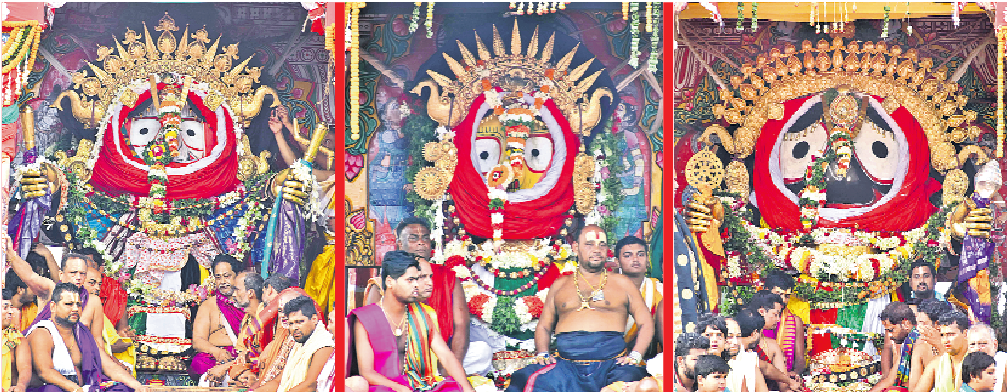
Odisha is a state of art and culture in the East India region. Among 30 districts in Odisha, Puri district is especially famous for Lord Jagannath all over the world. Jagannath is a blend of two Sanskrit words Jagat meaning universe and Nath meaning Lord. Jagannath temple is the pride of every Indian. This temple is a symbol of the greatest architecture of all time. Lord Jagannath’s Ratha Yatra is world-famous, it is held once a year. To see the Lord outside the temple large number of devotees are coming to watch this magnificent car festival. It’s a Hindu temple, expect them no one can enter this temple as per tradition. Originally Lord Jagannath was worshiped as Lord Neela Madhava by a tribal king named Viswabasu.In Hindu tradition, we know about Char Dham, among from all Puri Dham is a most excellent and divine place. In the 12 century, the Jagannath temple was constructed by king Anantavarman Chodaganga. The temple has its significance and is full of mystry.No one can tell the truth behind the mystery of Jagannath temple.

Let us know about some exciting stories of Jagannath Temple.

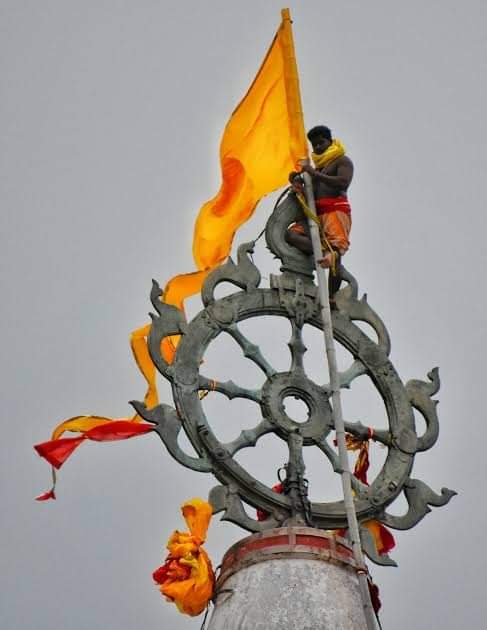
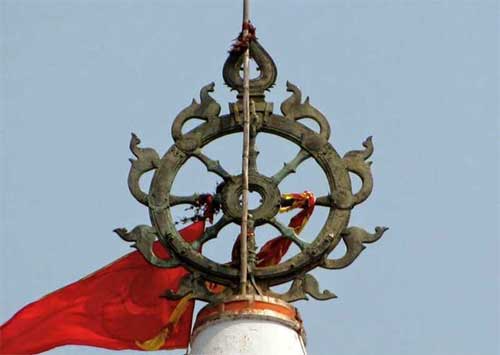
Climb To Neela chakra

We can see the temple top with the flying flag of different colors. Every day someone has to climb this 65 meters temple to change the flag. It is a daily ritual for many decades. This process will be done without any safety harness and with bare hands. History says if this ritual will be skipped one day in the calendar, the temple will be closed for 18 years.

Crimson Of Chaturdha Murti

The avatars are covered from 14 to 18 years, many hidden rituals performed by Daitas(Jagannaths Sevayats during his crimson) in a dark environment with no devotees and no cameras. New Murtis were replaced by those old wooden neem Murtis of Lord Jagannath, Balabhdra, Subhadra, and Sudarshana. It is automatically decaying in soil.

Opposite blow of air

Astonishingly, in the daytime, the light air blows from the land to the sea and the opposite happens in the evening. It only occurs in Jagannath temple Puri.

Never Wasted Mahaprasad

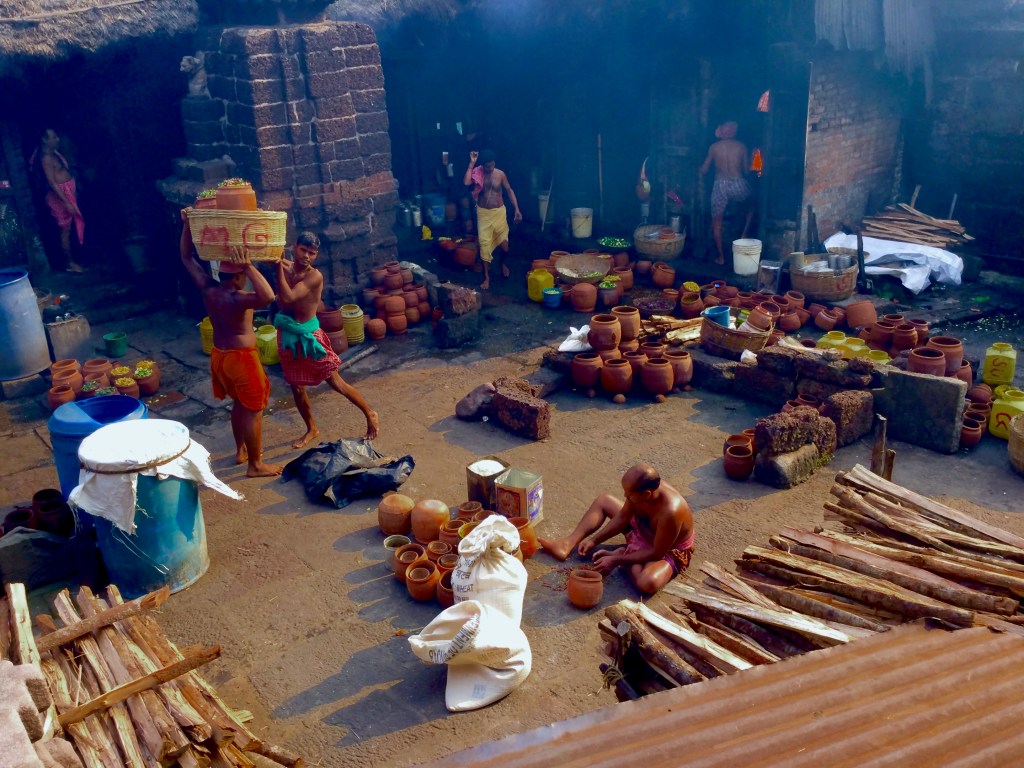
Every day around 2000 to 2,000,00 devotees are coming to Jagannath temple and feel blessed by eating Mahaprasad. But you will be surprised to know that the process of making Mahaprasad is a non-organized way.No one measures the amount of food they will cook for devotees. Supernaturally, the prepared food will never waste, not even a bite. 

Flag Against Wind

Jagannath temple’s flag at the top flew against the opposite direction of the wind as it is against science.No scientist can reveal the truth of this phenomenon. 

Magic Structcture of Neela chakra

The Neela Chakra is built with hard metal weighing about a tonne. We are amazed how our ancestors got up there without any machinery. The design is unique, that when you look at the Neela Chakra, its appearance is the same in every direction. Is it not a miracle? 

Soundless Temple

The sea sound was never audible within the temple premises. But when you step out from the temple, the sea sound comes again. This effect is rare and makes this phenomenon noticeable among scientists.

No Birds In the sky

We see the birds in the sky. The sky is the permanent address of birds. But unfortunately, no birds fly above the temple dome. No airplane can glide above the Neela Chakara.

Unusual Method Of Cooking

In Jagannath temple, their priest cooks all the food items. It is called Mahaprasad. They usually use seven pots for cooking. The process is like seven pots mounted one above the other. When the cooking is over, the topmost pot is cooked first. It is the magic of Lord Jagannath.

Ratha Yatra

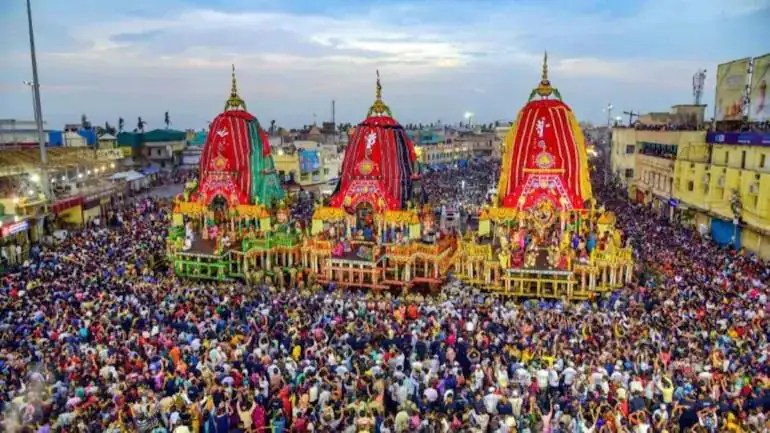
In Rath Yatra, Lord Jagannath and his brother Lora Balbhadra and his sister Lora Subhadra came outside the temple to enjoy their vacation time by traveling to their motherland called Gundicha Mandir. Surprisingly these massive three Chariot built within sixty days with no engineers. Car painters are the architect of these 3 Chariots. Behind every design and architecture, there will be a great story. Nothing is without a purpose.

No Shadow

When some stand in front of sunlight, a shadow creates. But you never see a shadow of Shree Mandir at any time of the day and any direction also.

The scientist is still researching to know about the mystery behind the Jagannath temple.

The law of attraction

It is a philosophy that suggests that positive thoughts bring positivity and negative thoughts bring negativity to your life. It is basically a belief that when we tell the universe what we want in life, it delivers it to us. The positive energy from us attracts success in all aspects of our life like health, relationships, career, etc.


The theory was put forth by a book “The Secret”. But there is no scientific evidence for the claims. Many people in the world follow the law and claim that it is actually true.

How does this actually work?

It suggests that if we focus on positive things in our life it will attract it, likewise, if we focus on negative things, negative situations will be attracted towards us. So basically we must focus on what we want and not on what we don’t want.Another law suggests that if we ignore the negative thoughts, we give more space to positivity in our lives, which gets delivered in our day-to-day lives.

How can I implement this?

You can practice the law of attraction every second of your life by following a few things. Let me creates scenarios for better understanding.

One day, you are getting up from bed in a bad mood. You have lots of work on that day so you are a little frustrated with it. The first thing you can do there is, before doing anything, tell yourself that the day is going to be awesome and you will complete all your work by the end of the day. This simple thought will motivate you and make you feel positive right after you get up. People believe that a positive start to a day will give you the strength to survive the day no matter what comes in your way. Now, let us create another scenario.

You want to buy something, let’s say a bicycle. This law suggests that you should push yourself into thinking about how it will feel when you possess it and how you will enjoy it. Feel like you already own it. Focus your mind completely on it. Wake up to it. The universe will make ways for you to get it. But again, you also have to work to get it. Just simple thoughts cannot bring it to you. It is just a way of motivating you and making you believe that you can own it, everything I said now is about the positivity you are creating. This is one of the theories of the laws of attraction.

In another scenario, let’s say you are about to attend an interview and you are nervous about it. Instead of thinking “I hope I don’t mess this up”, you can think “I hope I do well in this interview”. This is basically an example of using positive affirmations. Again, this is one of the ways you can ignore negative thinking.

To conclude I would say, the law of attraction is not the only solution for all your life problems but it is definitely going to create a different perspective for you if you practice it daily. It is all about perspective and whatever we do is for our happiness so why not start it with a happy note?

SHINTO SHRINES

Shinto is a religion of shrines, festivals, and rituals. Large, medium, and small Shinto shrines with their torii gates are found all across Japan. Shrines are considered to be the homes of kami and are located around scenic natural surroundings, near banks of rivers or at the foot of a mountain. Many of the sites of the older shrines were considered to be sacred spaces long before the erection of any structure. Japanese considered Shinto to be an optimistic and happy religion and can be found in everyday practices or lifestyle of people.

Photo by Stephan Streuders on Pexels.com

Children are christened at shrines and many couples have Shinto weddings. Shinto-related festivities take place during rice planting and harvesting cycles. Millions of Japanese visit Shinto shrines on New Year’s Day. Some shrines do a small business all around the year by selling good-luck charms for granting various prayers. A large number of Shinto shrines hold annual matsuri, or festivals, where people carry large portable shrines to transport the local kami all around shrine.

Photo by cottonbro on Pexels.com

Individuals or groups who visit shrines to worship complete three processes: purification, making an offering, and praying or making a request of the local kami. Before entering the shrine, the people use water to wash one’s hands or wash out one’s mouth to purify themselves. Then an offering is presented to the kami, followed by the prayer.

Photo by Ryutaro Tsukata on Pexels.com

Values common to most Japanese people today, originated from early religious practices including love for bathing and deep respect for nature.

To pay respects at a Shinto shrine, stand in front of the cashbox and the long ropes dangling from a gong. The shrine may contain offerings of food and sake that are placed in front of the kami. People toss a coin in the box, sound the gong a couple of times, bow deeply twice, clap hands twice, bow once deeply, once lightly and then back away politely and avoid turning their back to the shrine.

                      History is the future!


We have always been cramming the dates, years of the major events that have happened in the past or the main points of the revolution that happened. Those sure were the pain in the brain, the main reason of this beautiful subject being boring. What would have happened if we did put more emphasis on pondering over the ideas that triggered all those wars and revolutions?

It would have been better in my opinion that rather than making students cram the date of the attack on Bastille, the idea behind the attack was targeted, making students think whether it was the right way to do it? It would have better if the philosophy of Jean-Jacques Rousseau and Maximilian Robespierre was earmarked, and the opinion was taken of each student on that, training their brain on HOW TO THINK rather than WHAT TO THINK.

How does it affect the future? You know the basic problem in India is we feed students; we do not make them search for the food. There must be a reason why we are a hub of cheap labour in the world but not of high skilled labour and leaders. The root cause of this is the blocked vision and the one-dimensional brain that is the result of constant feeding without thinking. A labourer won’t question your ideas, but a thinker would dare to question the thinking and could even change it and that’s where the creative thinking comes from, expanding your horizons, increasing your dimensions. You can see the world with the eyes of Albert Einstein or Max Weber by not merely reading their ideas but to think over it.

We all have read about Hitler, and we have crammed what he did. If we had been more possessive about his thinking itself, we must have known how one man can control the peoples’ mind. He was one of the powerful orator the world has ever seen, flowing peoples’ mind with hatred against one race and then controlling the stuff that their mind should feed through media, newspaper and other magazines, eliminating the THINKERS and the people he felt weren’t suitable by his standards or were opposing his draconian actions. In the end, the majority of the people left were his followers and the next thing we know was the start of WW2.

Now see your country’s leader, are there any similarities? If there are and there isn’t a big opposition against him, people must have learnt History from a wrong way, now tell me how cramming the date of Hitler’s birth would have helped us?

Let’s take another example, we all are aware of the India-China standoff that occurred recently. It wasn’t the first time China has done that. China’s shenanigans commenced from blunders that Pt Jawaharlal Nehru made in the 1950s which also were the great catalysts in India losing the 1962 war.

India happily ignored Chinese claims until the early 1950s. Maps released by Beijing in 1954 showed the north-eastern edge of Jammu and Kashmir (Aksai Chin region) as the territory of the Chinese, which triggered the alarm. Instead of vigorously addressing the issue with China and trusting the country, the Jawaharlal Nehru government decided to remain silent. The obvious way out was to sit across the table and solve the problem. A diplomatic solution was possible, this was the moment. The controversial borders were not delimited, only delimited. (Singh, 2019)

The sheer cowardice of Nehru has been haunting us ever since. One can’t change the historical mistakes but we sure can learn from them.

History should be treated as a subject that imparts important modern competencies like writing, critical thinking, reasoning and decision making. This makes the matter more relatable, beneficial, engaging and in the long term, helpful for the country.

Art in paleolithic age


-Aastha Joshi

Upper paleolithic art was first discovered in the last quarter of 19 century. In 1879 Don Marcelino de sautuola found paintings on the roof of cave in Altamira. He examined the painting carefully and suggested that they were made by early stone age people. Panting were so brilliantly executed and the style of the paintings appeared to be very modern. The realistic manner in which painters depicted the animals in motion was considered beyond the capacity of Paleolithic people. Henri Breuil who did pioneering research on the upper paleolithic found nearly 200 paleolithic caves which contain paintings and engravings on the wall, apart from it another upper paleolithic cave has been situated at Lascaux in France.

Cave paintings were not the only source of art present at that particular point of time, objects like statuette, tools and clay figures, these objects depict animals and geometrical figures. The clay figure portray the human female body. While paintings were restricted to western Europe the other objects were widespread.

AURIGNACIAN CULTURE- They contained the evidences of first extensive evidence of upper paleolithic art. There were no paintings but beautifully carved ivory beads used for ornamentation, they made animal figures using bone and ivory and also made a flute like instrument from boneSOLUTREAN CULTURE- cave paintings emerged as a main form of art in them. Early painting were roughly outlined but later the lines become graceful and filled with details, the painting were also coloured with natural pigments, they were also expert in carving figures at the walls of the caves. This technique was called bas-relief where the figures are slightly raised on the surface of the wall.

MAGDALENIAN CULTURE-cave paintings were fully developed by this culture. V. Gordon Childe refer it as the most brilliant culture created by the hunter gatherers. 80% of upper paleolithic cave paintings were from these sites and they had a perfect technique of painting deep inside the caves. Lamps containing animal fat were used up for lighting the caves while the painters were working so it tells that painting demanded lots and lots of precision, skill and was a difficult job. There are scenes depicting human engaged in hunting.

Their were lots of debates on the art some felt that art is merely for arts sake were as some saw great in-depth meaning in the art and paintings,

these people attained advance level artistic sophistication which reveal their high level of thinking process.

Reinach had studied the paintings made by Australian aboriginal hunters I found that painting were ritual intended to improve chances of successful hunts, most of the animals painted were intended for hunts.

Breuil argued that upper paleolithic paintings were magicalin nature, by the term magic they meant ritual practices which intend to exert control over some objects.

Magical rituals marked the beginning of religious beliefs, the purpose of ritual was to give hunters greater control over animals which they hunted and so bison, deer and horses were predominant in their paintings

Andre Leroi-Gourhan- He tried placing animals,certain groups of animals are uniformly depicted in certain parts of caves. Bison and horse are invariably depicted deep inside the caves, while deer were always drawn near the entrance of caves. He classified a division of male and female nature. Some forces like horse, stag were representative of maleness while the female animals like ox and bison.

Count Begouen’s- his views on rituals were act of drawing itself and suggested two significant features of paintings, first is in many cases figures are drawn repeatedly on the spot in respective caves, second that majority of the paintings are located in the dark parts of the caves.

The rituals which reflect shared beliefs, gave rise to the cave paintings of the periods. Paintings were an important source of knowledge which help us to know significant facts about paleolithic age

Shinto characteristics

What makes shinto different from other religions? if wanna know then read on. But first you should know what is shinto. To learn what is shinto read my last blog.

There are five characteristic features of Shinto

  • ANIMISM

The belief that everything has a life of its own. All the objects, places and creatures all possess a distinct spiritual essence. The wind, rain, rivers, mountains, trees everything that is important for life are worshipped as kami. As Shinto developed, not only spirits living in nature but also ancestors’ spirits were enshrined as gods. After death, ancestors’ spirits were believed to become guardian gods, watching over and protecting their living descendants. The main theme in the Shinto religion is love for nature and all living beings. So a waterfall or a special rock might come to be regarded as a spirit (kami) of that place; so might abstract things like growth and fertility. Sacred objects, such as rocks or trees, can be recognized by the special ropes (shimenawa) and they have white paper strips attached to them.

Photo by Ryutaro Tsukata on Pexels.com
  • POLYTHEISM

Shintoism is a polytheistic religion. Polytheism is the belief or worshipping more than one god. Shinto gods are basically spirits that are everywhere in nature and also in men, hence the assumption of many gods. The Japanese feared the natural forces and believed those forces came from the power of spirits living in various natural entities. In Shinto, the subjects of worship are not visible idols but spirits that are believed to have supernatural power. Both malevolent and benevolent spirits are called ‘Kami’ in singular and ‘Kamigami’ (神々) in plural. The arrival of Buddhism, however, brought with it stylistic carved figural icons, an art form that influenced images of gods in Shinto , and as Shinto-Buddhism started to merge together, many Shinto shrines and their deities were combined with Buddhist temples and figures. 

  • EMPHASIS ON PURITY AND POLLUTION

The central aspect of Shinto ritual is purification. Shinto ceremonies are designed to appeal to the kami for benevolent treatment and protection and consist of abstinence (imi), offerings, prayers and purification.

Purification has two forms ‘Misogi’ and ‘Harae’.

Misogi, the purification from contact with sullying elements such as disease and death. Misogi is said to have originated from the myth of ‘Izanagi no Mikoto’ who followed ‘Izanami no Mikoto’ to the ‘Yomi no Kuni’ only to find her in the state of decomposition. After returning to the world cleans himself in a stream. The purification of his left eye leads to the appearance of the solar divinity Amaterasu Omikami. The purification of his right eye leads to the appearance of the lunar divinity Tsukuyomi no Mikoto. The purification of his nose leads to the appearance of the storm divinity Susanoo no Mikoto.

Harae, the restoration of proper relationships after wrongdoings, through the offering of compensation. The second type of purification, harae, has been derived from the myth of Susanoo no Mikoto, after he rampaged through the palace of his sister Amaterasu. And then he is compelled to make recompose by offering up a great quantity of goods and having his beard cut and nails pulled off.

Photo by Liger Pham on Pexels.com
  • INDIGENOUS RELIGIOUS PRACTICE

There is no outer influence of any kind in Shinto rituals and practices. Shinto has no founders, no official sacred scriptures and no fixed creeds but it has preserved its main beliefs and rituals throughout the ages. When the Japanese people and Japanese culture became aware of themselves, Shinto was already there.

When Buddhism entered Japan in 552 AD (officially) and Shinto kami were made equivalent to ‘Deva’ (Buddhist term for gods) and in the late 8th century kami were being considered as the incarnations of Buddha and bodhisattvas; bodhisattvas names were given to kami and Buddhist statues were placed even in the inner sanctuaries of the Shinto shrines. But there were always attempts to separate Buddhism from Shintoism. Several attempts were made to make Shintoism pure again far from any Buddhist influence so that there was no outer influence on Shintoism of any kind.

  • LACKS PHILOSOPHY OR ANY MORAL INJUNCTIONS

There are no absolute right or wrongs in Shintoism. Shinto has no moral absolutes and assesses the good or bad of an action or thought in the context in which it occurs: circumstances, intention, purpose, time, location, are all relevant in assessing whether an action is bad. Specifically Shinto ethics are not based on a set of commandments or laws that tell the faithful how to behave, but on following the will of the kami. Shinto ethics start from the basic idea that human beings are good, and that the world is good. Evil enters the world from outside, that is, it is brought by evil spirits. These affect human beings in a similar way to disease, and reduce their ability to resist temptation. When human beings act wrongly, they bring pollution and sin upon themselves, which obstructs the flow of life and blessing from the kami. Because Shinto coexists with Buddhism and Confucianism and their ethical values, it’s hard, and not very useful, to isolate the distinctly Shinto elements in Japanese ethics.

again not a historian but a student.

Sayounara.

Shintoism

In my last blog I talked about the creation myth of Japan, which is a part of Japanese mythology; their religion. Then let’s delve deeper into Shintoism, the indigenous religion of Japan.

What is shinto?

The word Shinto is made up of two Chinese characters ‘Shin’ and ‘to’. ‘Shin’ meaning ‘Kami’ (神) and ‘To’ meaning ‘Michi’ (道). Together it forms ‘Kami no Michi’ or ‘The way of Gods’. It is the indigenous faith of the Japanese people; the indigenous religion of Japan. The word ‘Shinto’ first appeared in the ‘Nihon Shoki’ (日本事紀) that came into existence in 720 A.D. It is the second oldest book of classical Japanese history.

Shinto came about as a religion in the 6th century CE. Worship of ‘Kami’ emerged. ‘Shinto Gods’ are called ‘Kami’ (神). Kami are sacred spirits which take the form of things and concepts important to life, such as wind, trees, rain, mountains, rivers and fertility. Each Kami has an efficient force called ‘Tama’, that is, object of religious activity. The Tama can either be positive and peaceful, that is, Nigimitama and negative and violent, that is, Ara-mitama. Tama resides in beings as ‘Tamashii’ and leaves at the time of death. Humans become kami after they die and are revered by their families as ‘Ancestral Kami’. The Sun Goddess ‘Amaterasu’ is considered Shinto’s most important kami.

In contrast to many other religions, there are no absolute right and wrongs; no distinction between good and bad. The main purpose of most Shinto rituals is to keep the evil spirits away by purification, prayers and offerings to the kami.

Shinto is involved in every aspect of Japanese culture: It touches ethics, politics, family life and social structures, artistic life and sporting life, as well as spiritual life.

And there was an interaction of Shinto with Buddhism and Confucianism.

Photo by DSD on Pexels.com

Shintoism and Buddhism

Buddhism was introduced into Japan in either 538 CE or 552 CE (traditional date) from the Korean kingdom of Baekje.

Shinto, especially, with its emphasis on the here and now and this life, left a significant gap regarding what happens after death and here Buddhism was able to complete the religious picture for most people. As a consequence, both religions co-existed, many people practiced both, and even temples of both faiths existed together on the same site. Many Buddhist deities and figures from Indian mythology were readily incorporated into Shinto. At the same time Shinto gods acquired Buddhist names, for example, the sun goddess Amaterasu was considered an avatar of Dainichi; and Hachiman, the god of war and culture, was the avatar of the Amida Buddha. 

As death is still considered to be impure so it is left to Buddhism. The afterlife, and belief, are not major concerns in Shinto; the emphasis is on fitting into this world instead of preparing for the next, and on ritual and observance rather than on faith. While weddings are often Shinto or Christian ceremonies, funerals (soshiki) are almost always Buddhist. The body is cleaned, dressed in white robes.

At the funeral the next day, mourners gather at a photograph of the person who has passed on to the next life and priest from any local temple recites sutras.

Photo by David Bartus on Pexels.com

Again pointing out to the fact that I am not a historian but just a student who wants to share her knowledge about the country she loves so much.

Sayounara.

Creation Myth of Japan

Let’s get a bit studious. Today I’ll be telling you about the first thing that we learnt in our class about Japan ‘The creation myth of Japan’. The tale is a simple one according to the ancient text of Japan ‘Kojiki’ and ‘Nihon Shoki’, Japan was created by god Izanagi-no-Mikoto and goddess Izanami-no-Mikoto. The myth goes like this; ‘One day, god Izanagi-no-Mikoto and goddess Izamani-no-Mikoto were walking along the floating bridge up in the skies while looking down towards the ocean, wondering what lied beneath it.

Giving into their curiosity to learn about what lies in the ocean, god Izanagi-no-Mikoto thrust his staff into the waters. After pulling it out of the waters, he saw mud dripping from his staff and falling onto the ocean. The mud that was dripping hardened and grew and became the islands of Japan.

Then god Izanagi-no-Mikoto and goddess Izanami-no-Mikoto descended to these islands and began to explore them. They both went in different directions, and wherever they went while exploring they created or gave life to all kinds of plants, rivers, mountains, valleys and all of Japan’s flora and fauna. This is how Japan was formed.

Photo by James Wheeler on Pexels.com

Now let me tell you another tale about how major deities of Japanese mythology came into being. Goddess Izanami-no-Mikoto ended up in ‘yomi no kuni’ or ‘the land of the demons’ or you can say the netherworld. In shinto, netherworld is an unclean place, it is the land of the dead. God Izanagi-no-Mikoto followed her to the netherworld only to find her in a state of decomposition. This meant that she will not be able to return back to the other realm now, but god Izanagi-no-mikoto had to leave the netherworld and her behind.

After returning to the other realm Izanagi-no-Mikoto had to purify himself from the miasma of the netherworld. So he started to clean himself in the stream. While cleaning the purification of his left eye, gave existence to the sun goddess, Amaterasu Omikami; purification of his right eye gave existence to the moon god, Tsukuyomi-no-Mikoto; and the purification of his nose gave existence to the god of wind, Susanoo-no-Mikoto.

Photo by Lana Lobayashi on Pexels.com

I am always very curious to learn about myths and legends, they always fascinate me. So you should know I myself am a learner, a student and not a historian. I shared with you what I have learnt, I am not that well versed in shinto as a religion, so this is just the story that I was told. If you interested in learning more about mythology, you should surely do your research.

Sayounara.

Greatest Hindi Novels – You Must Read!

Literature has never failed to amaze us and to top it Hindi literature goes way beyond our imagination and there are many Hindi novels you must read. If you are bored of watching digital content in this lockdown and are planning to read books, and if you haven’t read Hindi literature, this is the time you should totally give it a try. Hindi language has all kinds of stories and has a very rich literary heritage. From the classic literature by Munshi Premchand to the heart-touching poems of Dr. Harivansh Rai Bachchan, many amazing Hindi novels touched the core of Indian culture and development. Here is a list of such amazing Hindi novels that will not fail to touch your hearts.

It is a difficult task to put together the best Hindi novels of all times, but somehow I manage to provide you the list of Best Hindi Novels by Indian Authors that everyone should read with our best of knowledge.

Godaan (Munshi Premchand)

Godaan is a beautifully described novel by Munshi Premchand that touches the subject of rural communities of India. It was published in 1936. It has been revered as one of the greatest Hindi novels of the Indian literature. The main theme of the novel was based on Indian peasantry. The theme includes: Socio-economic deprivation, Exploitation of rural people, Caste segregation, varied concept of dharma as held by different people. Impact of industrialization on the various sections of Indian community.vi condition of women in society child marriage and dowry. Godan is an epic of Indian peasant Hari and his wife Dhania who were cheated by the landlords money lenders priests and colonial bureaucrats. They formed a network of oppression robbed their land and converted them to landless Labourers. In the end the couple died with dignity.

Madhushala (Harivansh Rai Bachchan)

Madhushala is a beautifully written novel by Dr Harivansh Rai Bachchan. It is a series of poems that describe the complexity of life with comparisons to four Instruments which come almost in every verse: Madhu (wine), saaki (server), pyaala (cup) and madhushala (bar). It is applicable even in today’s life as we are experiencing religious discord. This book inspires brotherhood and harmony and gives hope to people who are trapped in religious disputes. A very famous and one other to the list of Hindi novels you must read.

Gunaho Ka Devta (Dharamvir Bharati)

Buy GUNAHO KA DEVTA Book Online at Low Prices in India | GUNAHO KA DEVTA  Reviews & Ratings - Amazon.in

Gunaho Ka Devta is a love story that revolves around a student, Chander, who falls in love with Sudha, the daughter of his college professor Dr. Shukla. This story also talks about caste discrimination in our society. The beautiful description of love, angst and confusion makes the book amazing.There is a television adaptation of the novel titled Ek Tha Chander Ek Thi Sudha which aired on Life OK.

Chandrakanta (Devki Nandan Khatri)

चंद्रकान्ता - देवकीनन्दन खत्री Chandrakanta - Hindi book by - Devkinandan  Khatri

This book written by Devaki Nandan Khatri is a romantic fantasy that tells the story of two lovers from rival kingdoms. There is a TV serial based on this novel as well. The princess Chandrakanta of Vijaygarh and the prince Virendra Singh of Naugarh go through a series of obstacles to be together and fulfil their love lives. The writing style of the book takes you in the world of “aiyars” and “tilism”. This is one of the best Hindi novels you must read if you like love stories with various challenges.

Rashmirathi (Ramdhari Singh Dinkar)

रश्मिरथी by Ramdhari Singh 'Dinkar'

This book is written by the well known Hindi Novelist, Ramdhari Singh ‘Dinkar’.

It lies in the top 10 in the list of best Hindi novels that one must-read. This book is about Kunti’s firstborn child, Karna and his life as he grows up to become a violent soldier although being raised in a very humble family. This book has various emotions including pride, courage, power, and honour. It is a beautifully written poem that explores various parts of Karna’s life.

Gaban (Mushi Premchand)

Gaban is also one of Munshi Premchand’s best Hindi novels. It is a typical middle-class love story with big desires and dreams. It is about a charming guy named Ramanath. He is not financially sound but he loves his wife too much and gifts her precious things which he cannot afford. Things hit the rock when he is bound with debts and the story gets interesting. Let’s see if he will make it through this crisis morally or will he commit any crime to cover his debts.

Maila Aanchal (Phanishwar Nath Renu)

मैला आंचल -फणीश्वरनाथ रेणु - भारतकोश, ज्ञान का हिन्दी महासागर

This book by Phanishwar Renu lies next in line with Munshi Premchand’s Godan. It is a very well-appreciated and touching story. It is set in the 90s during the Quit India Movement as the states experience a series of trails and rituals in the villages of North-East Bihar. It was the first novel by Phanishwar Nath Renu after which he gained popularity which gave rise to a series of other such books. It is quite often found in the Hindi curriculum of schools.

Volga Se Ganga (Rahul Sankrityayan)

Best Hindi Novels That Everyone Should Read : Volga Se Ganga

This book by Rahul Sankrityayan is a historical fiction that marks the entry of Aryans into the Volga from the steppes of Eurasia. A journey from the Volga to the Ganges contains 20 different short stories that are part fiction and explains the migration of Aryans to River Volga. The author’s influence from Marxist ideas is visible in his last three stories. If you like reading about history then you must add this book to your library.

Kamayani (Jaishankar Prasad)

Buy Kamayani Book Online at Low Prices in India | Kamayani Reviews &  Ratings - Amazon.in

Kamayani is considered to be one of the greatest written Hindi literature by Jaishankar Prasad. It is an epic poem that perceives the effects of human emotions, thoughts, and actions with the help of relevant metaphors. It was quite popular in the eighteenth century. It takes reference from mythology to try and explain human behaviour concerning human emotions. Another gem to the list of hindi novels you must read.

Need Ka Nirman Phir (Harivansh Rai Bachchan)

नीड़ का निर्माण फिर - हरिवंशराय बच्चन Neer Ka Nirman Phir - Hindi book by -  Harivansh Rai Bachchan

Need Ka Nirman Phir is a beautifully written poem by Harivansh Rai Bachchan. It is about his life and how he overcomes the challenges in his life. The book is full of examples that depict hope. No one should give up because, after every night, the sun comes and brings light into lives. It also has a part where his wife died but he still hoping for a better tomorrow.

If you don’t like to read, you haven’t found the right book.

J.K. Rowling

Man of Comedy and Tragedy

What is history without literature? What is art with the words of an author? When we think of words, poems, stories, of plays, the only name that comes as a flashcard in our head is Shakespeare. William Shakespeare, a magnificent author, poet, known for his famous plays all over the world but what do we know of his life? 

William Shakespeare was born in the year 1564, in the Elizabethan era, to John Shakespeare and Mary Arden Shakespeare and was the third child out of his eight siblings. Seeing the proof of his extraordinary work, Shakespeare was an enthusiast for reading, writing, and even acting. Literature had played an important role in his life, from the very first of his learnings. Latin was the language that used to go around in those times and William being a curious student learned Latin and hence most of his texts, plays and other writings are in Latin and then have been translated into English. Eventually, he started writing in English as he was fluent in the historic native English that he spoke in his everyday life. 

William Shakespeare got married when he was 18 years old to Anne Hathaway who was 26-year-old at that time. Soon after they were blessed with a daughter named Susanna in 1583. After another two years, Anne Hathaway gave birth to twins, Hamnet and Judith. Unfortunately, Shakespeare’s son Hamnet died when he was 11 years old due to an unknown illness. 

William Shakespeare lived a life filled with astonishing wordplay and interesting theories about life in a tragedy which he depicted in his writing, leaving a trace for upcoming authors, writers, poets to continue a dramatic course of literature around the world. His work was indeed a work of art. Writing plays about kings and queens, about betrayal, about revenge were his best works till today. Writing plays like Romeo and Juliet, which became a world classic story of romance in the Elizabethan era, made him the most astounding writer globally. 

Hamlet, one of his longest plays, has been his most famous after Romeo and Juliet. William Shakespeare found humor in most of his writings. He wrote plays like Twelfth Night and A Midsummer Night’s Dream to imbibe the role of tragic comedy in society giving a new view and perspective to the world and encouraging by implying that there is nothing wrong in finding humor in difficult times, just like in his plays. 

William Shakespeare was an inspiration for many forthcoming writers and even today he has been inspiring young authors and poets to write something that is out of this world. Shakespeare gave words meaning and gave people hope to write imaginary stories and make a new world of fiction through words, whether fantasy or just politically strong made-up scenarios. To all the book lovers, to all the blooming writers, to all the daydreamers, there is a place that can make you feel like the main character and that place is not a place but it is in the plays written by William Shakespeare. As T.S. Elliot rightfully said, “The purpose of literature is to turn blood into ink”

“HELL IS EMPTY AND ALL THE DEVILS ARE HERE”

-WILLIAM SHAKESPEARE.

VEGANISM AND IT’S IMPORTANCE

What is Veganism?

Veganism is perhaps the best manners by which you can uphold basic entitlements, secure the planet, work on your wellbeing, and live without moral tradeoffs. An ever-increasing number of individuals are going veggie lover consistently, and on the off chance that you do focus on this way of life, you likely will not discover it as hard to follow as you might suspect.

While a few groups accept that veganism is unfortunate, unnatural, or outlandish, these thoughts are essentially bogus. Indeed, going veggie lover can really make you better and work on your relationship with the normal world and your body’s requirements. Besides, in the event that you believe it’s outlandish, perhaps you should give yourself more credit.

“Veganism is a philosophy that is against the mercilessness, abuse, and enduring of creatures. As a way of life, it is rejecting the utilization of creatures, regardless of whether in food, dress, amusement, or items tried on creatures.”

Why Veganism is important?

Mankind is draining the planet’s limited assets at a quick rate, the climate is going through uncommon, pointless and capricious changes, and individuals experience the ill effects of heap sicknesses connected to their eating regimens. You can’t fix all that by accepting veganism, yet you can be one piece of the arrangement.

Individuals will in general follow those they appreciate. In the event that you conclude that veganism is for you, your companions, relatives, and partners may follow after accordingly because of your model. In addition, when you quit eating meat, dairy, and eggs you are utilizing your wallet to take up arms. Organizations that sell meat and creature results just do as such in light of the fact that it makes them cash. At the point when their benefits begin to evaporate, they will think about alternate methods of working together.

Why go vegan?

  • Put Your Health First

It’s not difficult to snatch a supper at a drive-thru eatery — a hamburger and French fries or a meat taco — or to toss a couple of chicken bosoms in the stove when you return home from work. In any case, how are those propensities doing your wellbeing?

Vegetables and Fruit Heart Shaped

The facts really confirm that creature tissue and side-effects feed our bodies, yet they can likewise add to illness and different issues, which are talked about beneath. In the event that you ask any nutritionist what individuals should zero in on in their eating regimens, the person will say “foods grown from the ground.” That’s in every case highest in the brain of any expert who makes dietary suggestions. No nutritionist would say “steak and seared chicken,” for a valid justification — those are considerably more prone to shape part of an unfortunate eating regimen. In case you’re battling to get thinner or drag out your life expectancy, veganism might be the best initial step on your way.

  • Save the Environment

Processing plant cultivating contributes vigorously to natural issues from one side of the planet to the other. Contemplate the quantity of creatures that are butchered each day to fill grocery stores with stock. Those creatures must be taken care of, watered, and housed before they are annihilated. Deforestation across the world is driven by the avarices for more pastureland and creature feed, though taking care of the world with plant-based food sources would require just a negligible portion of that land.

Creatures in the horticulture business add to the pollution of the water table through fecal spillover. They devour huge loads of water and grain, which should be cultivated utilizing yet more water. Pesticides are added to creature feed crops, and the actual creatures are infused with unfortunate chemicals. It’s an endless loop that debases our environment.

We’re not simply discussing salmonella and E. coli here, however those are unquestionably hazardous. Foodborne disease can likewise result from the defilement of meat: dung, bug eggs, and different things you presumably don’t need in your mouth — not to mention your gut.

  •  Conserve Natural Resources

We also have to think about the natural resources that factory farming and crop raising deplete. Factory farms have to be powered, so they consume fossil fuels, and in general the more finite resources we use, the less will be left over for our children.

The crucial point here is the long production chain of factory farming — you need to put resources into growing the food for the animals, then growing the animals themselves, and then “processing” (just a pretty word for slaughtering) the animals. By contrast, the plant-based food chain is much shorter and requires fewer natural resources.

  • Creatures Die in Efforts to Prevent Predation

What many individuals don’t understand is that veganism adds to saving lives other than those of cows or chickens. These animals have regular hunters, and ranchers utilize savage techniques to trap and kill those hunters. As could be, it’s tied in with safeguarding the wellspring of their pay. Coyotes, wolves, and different hunters stall out in traps constantly. So do animals who don’t go after cultivated creatures, for example, birds who accidentally fly into these snares.

  • Diminish the Risk of Foodborne Illness

Identified with this are ailments that are not actually foodborne, however result from the escalated processing plant cultivating rehearses that are expected to transform creatures into human food. You might have known about bird influenza and pig influenza — they are called that since they in all likelihood began in chicken industrial facilities and hoard ranches. Microbes circling in industrial facility cultivating are one of the best and most squeezing dangers that humankind faces.

  • Further develop Digestion and Build More Lean Muscle

Processing is a confounded theme. It’s additionally tricky for some individuals. An ever-increasing number of purchasers are standing up against ulcerative colitis and IBS, two stomach related problems that have their underlying foundations in irritation of the stomach related parcel.

Plant-based eating regimens are wealthy in fiber, which helps processing. Furthermore, all that rich sustenance will help you assemble slender muscle and break up fat. Many individuals expect that they’ll battle to acquire muscle subsequent to going to veganism, however the inverse is frequently obvious. However long you keep on working out and devour adequate calories, you can prepare just as — or far better than — you could before veganism.

–        Improve Your Concentration

Similarly, you might discover that you can concentrate for longer periods of time after you take up veganism. You might also find that you get better performance reviews from your boss as a result. It’s amazing what eliminating meat and animal by-products from your diet can do for you.

  • You Might Live Longer

Specialists haven’t yet concurred about whether veganism prompts life span, yet there are a couple of new wellsprings of data to recommend that veggie lovers live more. One investigation recommends that, paying little heed to carb admission, individuals who eat plant-based eating regimens have diminished death rates. Curiously, the investigation likewise proposes that plant-based food turns out to be much more significant when lessening utilization of carbs — so in case you are doing keto or paleo diets and eating creatures, you might be all the more altogether shortening your future.

What next?

Veganism is an extraordinary method to save aware animals from hurt as well as to work on your life. Try not to sit around idly. Begin to make the change now.

Indeed, you may battle to discover great cafés right away, and discover a few difficulties in your shopping for food, however you’ll improve at it the more you’re vegetarian. It resembles any way of life change. It may not feel like it fits from the outset, however you steadily warm to it. Or then again perhaps like many, you rapidly understand that you’ve at long last settled on the most ideal decision and it feels totally right and regular all along.

Solitude- A Joyful Pill

A warm breeze brushing your cheeks when you are sitting idly on a swing on your lawn, the sun rays glazing up your skin while the wind just caressing your hair. Doesn’t it sound delightful? The time you are giving to yourself keeping aside those hectic and materialistic things and just wondering about the galaxies far greater than any of this.

Solitude is my best friend which nurtures me and rejuvenates energy to thrive in the fast-moving world. It gives me an opportunity to introspect and help me find who I am. A time in a day or week where I am free to ponder on anything, I don’t have to force myself to stress about my future, my relationships and I could be myself having to worry about no one. I feel connected to every fragment of my body and I can talk to my soul.

Away from the hustle-bustle of eager beavers and loving myself without worrying about judgements is Solitude for me. Solitude makes me see across the shiny and gigantic buildings to catch a glimpse of rainbows and blissful skies, I could smell the earth and dance with flying leaves. The joy of watching the sun rise from east filling the starry sky with golden beams or enjoying it setting down leaving crimson waves on the horizon.

Solitude is not loneliness, it is an important vitamin to boost my soul and heal me without hefty gadgets. It is like walking on an empty road where you travel alone and it will take you home to yourself, at a place where your soul can breathe.

GLOCALIZATION-AN OVERVIEW

GLOCALIZATION

        The combination of globalization and localization gives rise to the new term known as glocalization. The term refers to the product or service which is distributed at the global level is adjusted to be useful for the local users or consumers. Adopting glocalization can bring several advantages in expanding business. Some of the examples in various fields are listed below: 

IN ORGANIZATIONS: There are plenty of benefits to glocalization. A lot of research tells the importance of incorporating the local tastes, preferences, cultural differences in terms of dealing with external consumers and addressing the competition. In the working environment, people have to adapt to the norms and practices of the organization. This leads to much more employment opportunities. Also, it arouses a sense of respect in other cultures as global companies try to learn about our ethnic cultures. Glocalization leads to decentralization of powers in Multinational companies as a major power is transferred to the business heads in the target market country while introducing a glocal product as an indigenous team is required to understand the market aspects of the place and work accordingly. This would reduce the migration of talented people to other countries in search of better appraisal. Hence glocalization is a welcome change for creating a unified world.

IN MUSIC: Music taste varies from each country. We take their form of music and convert it according to our feasibility and we enjoy it. We also practice the art of mashups by blending two or more pre-recorded songs and new compositions from the existing ones. This makes the song more popular as it had been made into our kind of music taste. There is also a lot of scope in doing mashups.

IN DRESSING STYLES: Our culture defines and frames our dressing style. But as time goes on our lifestyle changes and we started to adapt according to our comfortability and feasibility. We started to adapt their sense of style by making some modifications according to our convenience which is becoming more popular than our form of dresses.

IN communication: Across the globe, domestic and international communication has expanded, and that’s the reason why there is a need for a global language English which has become the lingua franca in major parts of the world. In every field of work, English has become a dominating language. Glocalization would mean giving more importance to global languages like English.

IN MANUFACTURING INDUSTRIES: In manufacturing industries, glocalization boosts productivity and sales. A common example would be cars. If an American car company wants to sell their cars in India, they have to meet the local customs. For example, in India, the steering wheel will be placed on the right-hand side of the car.

IN ARTS AND CULTURE: Another example of glocalization in my mind is Semi Classical Dance. Bharatanatyam is an Indian classical dance that originated in Tamil Nadu. In the olden days, Bharathanatyam has been a solo dance exclusively performed by women. But nowadays many people dance Bharatnatyam in a western style. And this dance has increasingly become famous and liked by many people all over the world. A local culture that became glocal is our way of greeting others: Tamilians greet each other with the word “vanakkam” by joining their hands in a praying position and bowing the head a bit. Whereas the English people used to greet others by shaking hands. But after the spread of the Coronavirus, all people around the world used to greet others like Tamilians style.

        Thus in the modern world, glocalization has become a trending topic and it has been adopted by many Multi-National Companies(MNCs).

Woman of steel

India in the early 1800s was a place of riot, extortion and was trapped under the unsympathetic British rule. Being one of the richest country for spices and hard earned labour, the Indians not living under royalty were suppressed under the British rulers, even leading to the death of many. In times that hold importance of freedom, a young woman in her teens made a decision to change the world from wrong doings and eradicate the biased rule of another country over India. Rani Lakshmi Bai, a soul filled with patriotism and love for the country, stood up and fought with all her will to sustain a free Hindustan.

The Queen of Jhansi was born on 18th November 1828 in Varanasi. Since her childhood she was trained and taught to be a warrior and an independent woman to live on freely and to dream of an ‘Azaad’ Bharat. She was educated not only in her native languages but in English as a foreign language. Her maiden name was Manikarnika, which later after her marriage was known as Rani Lakshmi Bai. Manikarnika lost her mother at a young age and her responsibility entirely fell upon her Father, Moropant Tambe. He trained her for becoming the best version of herself by teaching her the importance of martial arts, horse riding, sword fighting, as well as shooting.

In the year 1842, Manikarnika married the King of Jhansi, Raja Gangadhar Rao Newalkar. On getting married into Jhansi, she was given the title of Rani Lakshmi Bai as a token of respect and honour to the new Queen of Jhansi. Being the Queen of Jhansi, Rani Lakshmi Bai couldn’t tolerate the cruelty of the British on poor Indians and setting them under their foot, to make a division between the elite and the common people of Jhansi. Crime and injustice against the people of Jhansi increased day by day, with the growth in death, either due to murder or suicide.

In the year 1851, Rani Lakshmi Bai gave birth to her son but within the period of four months, she lost him to illness. Thereafter, along with her husband, she decided to adopt a son for the future of Jhansi, for an heir to follow his father’s footsteps as Raja Gangadhar Rao was falling sick by every increasing day. Leading to this, in the year 1853, the Raja and Rani adopted a boy, Damodar Rao. Later in the year, Raja Gangadhar Rao Newalkar passed away and set the journey for Rani Lakshmi Bai to sit in his throne and lead Jhansi to its glorious future.

The British wanted Jhansi under their rule completely, and a woman ruling the kingdom only boosted their ego and insecurities. Rani Lakshmi Bai got a notice by one of the British officer, Major Ellis to evacuate and handover Jhansi to the British. Infuriated by this act, Rani Lakshmi Bai said her famous words, “Meri Jhansi Nahi Dungi.” With this spirit, she fought for the freedom of Jhansi and ripped it off of the British rule.

The battle for freedom and survival started three years after with a huge massacre on the palace of Jhansi in the midst of the night, in order to capture the Queen as commanded by Sir Hugh Rose. Lakshmi Bai and her soldiers fought bravely against the surprised attack. As Jhansi was attacked terribly, the Queen of Jhansi, tied her son to her back and rode on a horse till she reached Kelpi. The Peshwa understood the situation and helped her with an army of her own. This was a stepping stone for all the woman inspired and taught by Rani Lakshmi Bai for a better world and a brighter future. With the upcoming war, woman were made warriors to fight against the injustice caused by the British.

On the day of the battle, Rani Lakshmi Bai fought with fire in her veins and courage in her blood. She fought till her last breath and created history by burning herself on the battle field so no Englishmen could touch her even after death. Rani Lakshmi Bai, a true warrior Queen inspired millions across the country and even today she lights the hearts of every woman who have to fight their own battles of bravery and sacrifice. As it is rightfully said, “Khoob ladi Mardani, Jhansi ki Rani”.

BOOK REVIEW : Jessica Barry’s Freefall

JESSICA BARRY
  • About the author :

Jessica Barry is a pseudonym for an American author who grew up in a small town in Massachusetts was raised on a steady diet of library books and PBS.

She attended Boston University , where she majored in English and Art History , before moving to London in 2004 to pursue an MA from University College London.

  • Preface of the Novel ” Freefall” :

Freefall by Jessica Barry is published by HarperCollins on 8 January in U.S and wii be released by Penguin on 7 March in the U.K.

This book is a thriller about a plane that crashes amidst the Rocky Mountains and the woman who is the sole survivor and has a reason much bigger than herself to stay alive.

  • Summary of Freefall :

Maggie Carpenter’s world is shattered when she learns that her 31-year old daughter, Allison , has been in a plane crash over the Colorado Rockies and is presumed dead. Maggie and Ally haven’t spoken since Maggie’s husband , Charlie , died of cancer two years ago , and Maggie blames herself for that.

The reason for the disconnect is heartbreaking , but Maggie didn’t realize that her heart could be broken even more. It turns out that Ally was in a private plane with fiancé , pharma CEO Ben Gardner, and although Ben’s body has been recovered, Ally’s has not, which kindles a small flame of hope in Maggie’s heart. However, that hope dies when an explosion consumes the plane, leaving no doubt, at least in the minds of authorities, that both passengers of that plane didn’t survive.
However, in her wildest dreams, Maggie could never have imagined what really happened when that plane crashed. Ally survived, and getting out of the unforgiving woods is her first order of business. Once Ally gets free of the wreckage after realizing she’s the sole survivor, she assesses her physical state.

Things could be better, but Ally is, as readers will discover, a survivor, and she has a reason much bigger than herself to get out of those woods.

As the neighbors start sending casseroles to Maggie’s front door (Owl’s Creek, Maine is nothing if not insular), Maggie is climbing the walls. Her Allison was strong. Her Allison is a survivor. But one thing is blindingly true: Maggie didn’t really know Allison anymore, not since she moved to San Diego after her dad’s death. To cope, Maggie sets out to find out who Allison was.
By all appearances, Allison was living a glittering life with the handsome, ridiculously wealthy Ben Gardner, but all that glitters is certainly not gold. As Allison reveals, her life before meeting Ben was grim: waitressing at a club that catered to rich and powerful men yielded plenty of cash, but self-respect was collateral damage, and it becomes obvious in her telling that Ben saw Allison as a beautiful doll meant to be on his arm, charm his friends, and fulfill his every fantasy. It’s an empty existence that the formerly vibrant Ally chafes against, even as she tries to convince herself that she truly loves Ben. However, that love is called into question when a man approaches her with explosive information on Ben’s company. He claims that a drug meant to help women with postpartum depression is causing alarming (to say the least) side effects and that Ben and his cronies are covering it up. It’s unconscionable, and the old Ally never would have stood for it, but can she break free from the life she’s fallen into?
As thriller readers know, large sums of money tend to attract really bad people, and they are determined to keep their dirty secrets under wraps. Ally certainly isn’t safe, and neither are the people she loves, especially Maggie. Luckily, Maggie, a retired librarian, has some skills of her own up her sleeve, and she’s determined to find out what really happened to Ally, at any cost.
Readers that are looking for a lightning-paced read, with a mother/daughter relationship at the core, will find a lot to like. Maggie and Ally’s alternating chapters create urgency, and Barry does a particularly great job with Maggie, a woman who is suffering debilitating grief, but finds strength and purpose in finding the truth. This one will keep readers turning the pages, and there’s even a nifty twist in the final act.

!! HAPPY READING !!

THE HISTORIC FRAMEWORK OF INDIAN TRADITION

Tradition is a custom or belief passed from past generation to present generation. India has a continuous history covering a long period. By following the Indologist, DR.A.L.Basham’s analysis, the Indian heritage can be best appreciated with different historical periods. This period is broadly discussed as follows:

BEFORE 1500 BC: PRE-VEDIC CULTURE OF THE INDUS VALLEY:

This culture came to light through excavations at Mohenjodaro (in Sind) and Harappa (Punjab) – both now in Pakistan, Harappa/Kalibangan (Rajasthan), Lothal (Gulf of Cambay)(Gujarat) and Surkotada (Gujarat). The Indus Valley finds reveal a great civilization that flourished in the dim, distant past. The civilization – the material aspects of life or the external features of living – was marked by: streets and lanes laid out according to a set plan; houses built of bricks; public tanks; places of worship; granaries for storing grain; fortifications. The people occupied themselves in agriculture, made use of pottery, and sculpted on metal. It was the Age of Bronze – objects made of the bronze-like knife – blades, saws, sickles, chisels, celts, razors, pins, tweezers, fishhooks were used in households. Spears, arrowheads, and short swords made of bronze were used for defense.

1500 BC – 1000 BC: EARLY VEDIC AGE:

The Vedic hymns which are chanted even today, the personal rituals that are practiced, The patriarchal and patrilineal family system are some of the legacies from this period.

1000 BC – 600 BC: LATER VEDIC TIMES:

To this period we owe the passion for speculation on ultimate causes (as reflected in the Upanishads), the quest for the Absolute (the concept of Brahman), the doctrine of transmigration and rebirth (the idea of Karma and consequences of good and bad acts), the concept of a release from a cycle of births and deaths ( the goal of Liberation or Moksha) and the glory of mysticism. This period saw the crystallization of the four classes (‘Varnas’, a social order originally conceived as a functional division of labor, which has turned out to be a mixed blessing though corruption); the introduction of iron; the domestication of the elephant; and the development of kingdoms out of tribal chieftainships.

600 BC – 320 BC: THE EMERGENCE OF BUDDHISM

Siddhartha Gotama, known as the Buddha, is the founder of Buddhism. The four main principles taught by Buddha are life is suffering, craving causes suffering, suffering can be overcome, following noble 8-fold paths to end suffering.

320 BC – 185 BC: THE MAURYAN EMPIRE:

We have inherited from this period: the Indian idea of statecraft as embodied in Arthasastra of the Mauryan Minister, Kautilya, also known as Chanakya; the earliest surviving sculpture of India (the Ashoka Pillar at Sarnath); the oldest artificial caves ( Lomas Rishi Caves, Barabar Hills, Bihar) and the most ancient Buddhist stupas (Sanchi). The national symbol of the Ashoka Chakra is taken from the Ashoka Pillar at Sarnath with its Lion Capital. The Dharma Chakra represents the dharma or the Law of the Buddha, and the lions the temporal power of the emperor who has dedicated all his resources to the victory of dharma (dharma Vijaya). “The symbolism of Indian art attained its highest expression in the Sarnath capital, which is as much Buddhist as Vedic in the significance of its several parts”.

184 BC-AD 320: THE PERIOD BETWEEN THE MAURYAS AND THE GUPTAS:

New forms of devotional religion, with Shiva and Vishnu as the central deities, emerged. The Mahabaratha and The Ramayana were edited. Sanskrit literature, consisting of drama and poetry, developed. Philosophical schools characterized by logical reasoning emerged.

AD 320 – AD 647: THE PERIOD BETWEEN THE RISE OF THE GUPTAS AND THE DEATH OF HARSHAVARDHANA:

This is the classical period of Indian civilization from which we have inherited the works of Kalidasa (Sanskrit drama and poetry); the paintings of Ajanta; the place notation of numerals (with nine digits and zero); The Puranas (legends illustrating the Vedic religious conceptions and philosophical doctrines). Stone-built temples appeared throughout the land. Worship of the deity as Mother Goddess came into vogue.

AD 647 – AD 1200: THE PERIOD OF BHAKTI SCHOOLS AND THE PHILOSOPHICAL SYSTEMS OF SRI SANKARA AND   SRIRAMANUJA:

The devotional hymns of the Alwars and the Nayanmars of the South gave an impetus to the bhakti movement in the country. To this period belong the imposing temple structures of the South and the bronze images of various gods.

AD 1192 – AD 1526: THE SULTANATE PERIOD (MUSLIM RULE):

The new style of architecture with the dome and the arch made its appearance. Vernacular literature appeared instead of Sanskrit which was the main vehicle of literary expression till then.

AD 1526 – AD 1707: THE MUGHAL EMPIRE:

Imposing edifices like the Taj Mahal belong to this period. Sikhism belongs to this period – ‘born as a small devotional sect and reborn, when the period concluded, as a martial brotherhood’.

18TH, 19TH, AND 20TH CENTURIES: THE DOMINANCE OF THE ENGLISH:

After a period of stagnation in the 18thcentury, India began to feel the impact of the West. The study of the English language was made compulsory and the English system of administration was introduced. As a reaction, the modern Indian renaissance, which included a revival of ancient learning and reform of Hindu social customs and practices, began with Raja Rammohan Roy is in the lead. Sri Ramakrishna, Swami Vivekananda, Dayananda Saraswati, Sri Aurobindo, among others, held up the glories of our religious and philosophical heritage, by precept and example. Mahatma Gandhi emerged as the Father of the Nation delivering the people from bondage into freedom. The subcontinent was divided into India and Pakistan and both countries attained complete independence from foreign rule. India became the Sovereign Democratic Republic on January 26th, 1950 with freedom and dignity assured to every individual citizen under the country’s new Constitution.

THE LIFE OF A INDIAN WOMAN

Women play a prime role in everyone’s life. Either a men or a women’s life, it always has something to do with a woman. The life of a successful woman involves a man and, the life of a successful man includes a woman. It is always one way or another. Let’s talk about the life of a woman in India.

Women in India are said to be dependable on a man. That is, a daughter has to depend on her father till she gets married. Then she has to rely on her husband by being his support. At last, if she has a son, then she has to rely on his son for her needs. Everyone can think this is some old story that is not happening everywhere. Yes, it is not the case in all places, but it’s just our misconception.

Life of a women
Life of a women

Yes, We all think independent women are still there even after their marriage. But think about reality, in a relationship, either one has to sacrifice for their happiness and, in most cases, a woman is doing it. Yes, even an independent woman sacrifices something at some point for their family’s happiness. In some cases, men did it. But when it comes to the majority, it’s always women. 

A painting of young indian girl cooking

So, the majority of the women are sacrificing something they need for their family(including parents, brother, husband, and children). I’m not bragging about it, but all I need to ask is, ‘Is a women’s sacrifice worth those?’ or ‘Why a woman always does it willingly?’. There’s no answer for those questions when asked to a woman in India. It’s not like they are not able to answer, it’s just, they are tired of explaining things to this Indian society.

A painting of a women holding her child

Most of the girls in India are taught to serve a man from the start of their life. And a boy is not taught to do his chores. And unfortunately, it’s not because of a man it’s because of a woman who believes the old myth she was told by. In India, “Woman has to be like gold, She has to melt herself to fit in the form the society expects, her value is high, but her voice is not respected”. 

But, we women believe everything changes in the future with our broad mindset!

Romeo Juliet – Love Retold

Fanfiction of Romeo and Juliet by wordsoflavanya

On the way to the castle

“Take your hand inside sweetheart, you’ll catch a cold,” said the nurse. The coldness of the night and the beauty of the moon can’t stop Julia from peeping out. She wrapped her warm arms around and lost herself in the view. She was distracted by the sudden fire and cries of the people. 

“Nurse, the carriages are set on fire by the Montagues” a stammered and broken voice was heard. 

“Julia, come here dear. We’ll be okay” comforted the nurse. 

A man who hid in his clothes pulled Julian’s hand. “Dare to harm my child!” the nurse shouted in anger. 

“What are you doing…we aren’t here for this” he took his hands off her. 

“But these people…they…”

“Romeo…let’s move. They’re here”, Benvolio shouted at the top of his voice. 

But they were already lost in their sight. They couldn’t take their eyes off each other but were forced to move. 

Tybalt and the Capulet men rushed to the scene and found the carriages and their commodities set on fire. Tybalt took off his sword and tried to tear their face cover. Within a strike of lightning, the men in the black horses disappeared. And Julian was finally able to hear the nurse’s voice.

“Are you okay dear…Speak something?” she asked. “Yeah…I…I’m okay…” she replied.

“Calm and cold was the night

Until the lovers were made to meet

The dreamers had their first dream

Romeo and Juliet – destiny they called

The moon smirked behind the clouds

As if it already knew their fate.”

That night neither the two eyes had a wink of sleep. Both had a question linger in their mind, “Are we meant to be?”

Capulet’s castle

“We are having a ball in a fortnight and Montague is trying to trigger us into a fight,” said Lady Capulet.

“Calm down. We must not react as we shall meet Count Paris anytime” advised the Lord. 

“You have promised Julian to me, Uncle,” Tybalt interrupted. 

“You are unable to save the people and my Julia…how can I promise my child to you and the connections are more important to us than your feelings” replied Lord Capulet and left the room hastily.

“Prepare the ball and let the Montagues be invited as it is a social gathering” ordered Lady to the servants. 

Juliet’s room

“Nurse, I think I’m in love. I couldn’t think of anything else since I met him” she told the nurse. 

“Julia, who are you talking about?” asked the nurse with a smile. 

“The man we met last night…Romeo”

 “Have you lost your mind? This can’t happen. Your father is going to announce your engagement in a fortnight. Better forget him dear” she advised her. 

“Why can’t you understand nurse, Count Paris isn’t a good man…” 

“But that’s what the Lord wants my child” she replied. Julia sighed and went outside the room to watch the stars or it was the silly reason she gave herself to get lost in Romeo’s thoughts. 

“Oh, Romeo! Thou art a Montague?

You and I are foes but I love you

I don’t care about the rest if I have you

Will I ever hear a word from you?”

She questioned looking at the sky. 

“Juliet, Oh my love!

And a sudden yet familiar voice hit her ears. 

Will you be my bride?

Our name is the pain

Our love is the cure”

“I recognize your voice, Romeo?” “How did you come here?” she asked. 

“Didn’t you want me here, Julia?” Romeo jumped into her balcony from the dark.  

“Your eyes are the lanterns of my night sky. I would get lost in the depth of your eyes and never wake up. You are the sun that lights up my world and the serene moon which makes me calm. You’re my life, my love!” 

“Don’t you feel the same, Juliet? 

“I do, my love”. Her eyes gleamed in the moonlight. 

“Come inside Juliet” her nurse called. 

“Go. Otherwise, they’ll find you Romeo” “Let’s meet at the square tomorrow at noon. I’ll wait for you,” she said, holding his hands unwilling to let go. 

“I’ll wait for you there…come soon. Good night love. Let’s meet in our dreams” he kissed her forehead. It’s been a perfect night for the lovers, the nightingale sang their love story and the sky blushed. 

“Where have you been my dear friend, I find something mysterious in you…?” 

“Mercutio, I met the most beautiful woman in the world. Her eyes teach me new words and I wish to be hers’ forever. I’m in love with her, my friend” 

“I’m in love with Juliet Capulet”

“So, Romeo Montague is in love with Capulet” “But do you know that Count Paris is suited to Juliet?” Mercutio asked.

“It doesn’t matter when love is the only language we know” he smiled and took his departure. 

At the Square

It has been their longest wait. They craved to see each other, hold hands, and to get lost in their world. Julia was on the way riding a black horse to meet the love of her life.

“You look more beautiful in the day than at night,” he said, resisting himself to adore her. 

“Finally, I see your hair color,” she said smiling.

A week passed in a fraction of a second. Their love grew stronger and greater as days passed by. They lived an eternity every time they met. They decided to marry in the presence of Friar Lawrence as they knew it would be impossible to convince their parents.

Two days before the ball

On a bright sunny day, at the holy church, the lovers exchanged their marriage vows. Their meeting wasn’t an accident. Their paths are meant to be crossed and now they are two bodies and a soul. It was the happiest moment for the lovers. They weren’t lovers anymore. After spending the entire day together, they had their goodbye kiss as husband and wife. 

“I’ll sort everything out very soon. Don’t you worry my wife” he said.

“We will,” she said. 

Some stories last for a lifetime

Some are just made to cross paths

But there are some which are

meant to be – the eternal one

Romeo and Juliet.

At the ball

The Capulets, the Montagues, the King and the Prince all were gathered for the ceremony. Lord Capulet was very eager to inform his daughter’s engagement with Count Prince. Tybalt was filled with anger. Romeo and Juliet were in mixed emotions. It is the last opportunity to expose their relationship to their family. 

“You’re beautiful Juliet Capulet, my wife,” said Count Prince.

“I’m a loyal wife of Romeo and I have the same second name as him” she confronted everyone in the hall. 

Everyone in the ceremony was speechless. Lord Capulet and Montague started to argue. Tybalt, who was full of anger, took out his sword and tried to attack Romeo. But he wasn’t ready to fight as Tybalt is his family now. Mercutio tried to convince Tybalt but was triggered by his anger. He took out his sword and started fighting. Within a moment, Mercutio was hurt. There was blood and he was on his verge of death. Romeo was crying beside him, unable to control his emotions.

“You must live, my friend. Violence won’t end violence; only love will. My love wasn’t meant to be and I want you to live. I want your love to end this war” he said. He smiled at a woman in the crowd. He knew she was the only one who could give him peace even in the pain. 

Mercutio died. 

The Prince lost his temper. He ordered Tybalt to leave the country. He also ordered the Capulets and the Montagues to accept Romeo and Juliet. Juliet was crying. Romeo consoled her. 

“We won’t accept you,” said Lord Capulet.

“Neither will we,” said Montague.

But the lovers were sure. It’s them or nothing. They started their life hoping it will grow beautiful someday. 

Ten years later

“Wake up kids. We need to pay a visit to your grandparents” Jula said to Catherine and Harry. 

Romeo entered the room.

“You’re beautiful my love” he kissed her. 

Julia held his hands and smiled at him. 

On a beautiful morning
At our home filled with
our children’s laughter
With you by my side
I would still tell,
“You’re beautiful”
And you’ll smile back at me.



F.R.I.E.N.D.S – The learning

How many of you have watched the series “F.R.I.E.N.D.S”? If you haven’t and if you are above 18, go watch it right now. I am a diehard friends fan. I can watch the series all day. I can watch from the middle, I can directly watch the last season and the 6 of them never fail to make me the happiest. I am sure there are haters and the main reason for hating the show is because of the on and off relationships or some meaningless dates. Yeah, some things don’t make sense to me too but there are so many other things that I could learn from the show.

I’ll be there for you

Each and every character in the show is well created with perfect personalities and with perfect balance. If I was asked to choose between any 2 of them it would be so difficult because everyone is balanced. The show never failed to make me cry. There are so many emotional moments that make the viewers cry. I can write whole another article to show my love towards the show but I am now here to list out things that I have learned from the show (list down reasons for you to watch the show)

It is never too late

I learned that it is never too late to get back on your feet, never too late to follow your passion.

Rachel Green

Be it Rachel Green, the spoiled little girl who was going to get married, who then realized that that is not what she wants in her life. That one thought can change everything. She started as a waitress. Later she found a job for her passion (fashion). She escalated step by step, at the end she was capable enough to get a job in Paris. The way she gets hold of her life and works towards her passion will never fail to inspire others.

Chandler Bing

On the other hand, we have Chandler Bing, the king of sarcasm. Chandler was in this job statistical analysis and data reconfiguration the whole time. When he realized that this job is not what he really likes, he quits. In an episode he says that he hates his job whereas everyone else says that they love their job. In another episode when he can’t be with his wife on Christmas, he quits the job without a second thought. He finds his passion and gets a job as a writer.

These two people showed that it is never too late to follow your passion and you can change you fate and career whenever you want if you work hard.

Never care about what others think

Phoebe Buffay

Who comes to your mind when you read this? Of course Phoebe Buffay. I absolutely adore her for her attitude towards her surroundings, her confidence, her weirdness. She simply does whatever she wants to do without even thinking about what others will think of her. But she doesn’t forget to check on her friends or take care of them because friends are very important to phoebe. She managed to keep herself happy even though she had a terrible childhood. She plays guitar for herself and only for her happiness despite the negative comments she have got. She did not have long term relationships, because she did not want to get to attached to some random dating guy. Whenever she did, she was left hurt. Except for when she found the love of her life Mike. The package of Phoebe Buffay’s personality amuses me and I can aww about it all day. I simply love her.

She has taught me that you can change your traumatic day-to-day life to a fun filled beautiful life if you have the right attitude and mindset. She doesn’t speak much about her bad experiences form childhood and that is why she has always been a mystery.

You can always be nice

Ross Geller

The nicest person in the show would be Ross Geller. He doesn’t hold grudges and he has a pure heart. There are many situations where Ross could have simply walked away but he chose to be nice. Be it the time he helped Rachel get ready even though he had a big thing going on in his life (He was going to get featured in discovery channel, poor Ross). His friend seemed very important to him. The way he supports his sister’s life decisions and takes care of her. He has always been a great buddy to Chandler and Joey. How he supports Rachel with the whole pregnancy thing. He struggles to make her stay by getting her job back at Ralph Lauren but when he realizes that moving to Paris will make Rachel happy. He genuinely accepts that.

I will not forget to mention the time when he got Phoebe her first bike. That is the nicest thing someone could do. It takes very small things to be nice to others but we fail to understand the importance of that.

Cherish the people around you

Monica Geller

This would definitely be Monica Geller. I mean, as chandler said “She is a mother without a child”. That is one of those emotional moments that made me cry. Monica has always been the hostess. Taking care of others made her happy. What more can you learn from a person. The utmost generosity is taught to us by Monica. Right from season 1 to season 10.

All 6 of them hang out in Monica’s apartment and she never really thought bad about it. She wanted them to be around her. As she did not have many friends when she was young, she loved to keep the closest people and take care of them no matter what. She let Rachel stay with her without any second thought. She let Joey take food from her fridge whenever he wants. She hosted thanksgiving dinner every single year and made everyone so happy and so full. She is definitely a mother without a child.

Bring humor out of every problem

You are right, this is Chandler Bing. He taught us that no problem is bigger than you happiness. You don’t have to feel down because of the problems. You can still make fun of them and face them with humor. Something that is very difficult to do but Chandler Bing is very smooth with that. His humor is one of the best things in the show or should I say that he is the king of sarcasm.

He too had a terrible childhood, he dealt with parent’s divorce. That is when he found sarcasm to deal with all this. He waited for the right girl and when he found Monica he grew into whole other person who is mature, responsible and who no longer has commitment issues. Seeing chandler grow is one of the best parts of the show.

Keep following your passion

Joey Tribbiani

Joey is an actor in the entire show. He doesn’t get any big breaks. He doesn’t get so many opportunities but he kept trying and staying in the same field just because he loves it. No matter what others comment about his acting skills, he kept doing it. That is the kind of confidence that we all should have.

To conclude I would say, hold on to people who care about you. Take care of them, be supportive and be nice. Being nice takes nothing but gives you happiness that anything could ever give. Chandler selflessly took care of Joey like his kid. Only real friends can do such selfless act. Personally I am not very fond of friends (I’m an introvert), but I do believe in people who genuinely cares. Even if they are not nice to you, you can still be nice. Be the bigger person. But don’t please anyone.

BLACKPINK

“Blackpink in your area!” is the first word that comes to the mind of blinks.

Check out to know more about ‘Blackpink’ and the power of these women hold, who proved girls are no more weak than boys in the world of music industry.

Blackpink during their debut,2016.

Blackpink

Blackpink is the most popular k-pop girl group in the world. Blackpink is a South Korean girl group formed by YG Entertainment consisting of Kim Jennie, Lalalisa Manoban, Kim Jisoo, and Roseanne Park. The first girl group to debut under YG Entertainment in seven years, Blackpink released their debut single album, Square One, which featured “Whistle” and “Boombayah” in August 2016. Later released their second single album, Square Two, consisting of tracks “Playing with Fire” and “Stay” in November 2016. Then the group began their promotions, and with their commercial success, they earned many rookie awards. Additionally, Billboard named them as one of the best new k-pop groups of 2016.

In 2017, Blackpink revealed their fan club name as ‘Blinks’ and later released a standalone digital single, “As if it’s your last” a mixed genre of music which was a change of sound from their previous songs. The group made its Japanese debut in August 2017 with the release of a self-titled Japanese extended play that included Japanese versions of their previous singles.

On January 6, 2018, Blackpink released the first episode of their first reality show Blackpink House, which comprised 12 episodes released throughout 2018 following the four members spending 100 days of vacation as they moved into their new dorm, via their official V Live and Youtube channels. In June 2018, the group released their first Korean-language EP, titled Square Up with, the lead single, “Ddu-Du Ddu-Du” which was with a total of 36.2 million views within 24 hours after its release on YouTube, making it the most-viewed online video in the first 24 hours by a Korean act and the second most-watched music video of all time in first 24 hours of release at that time, while “Forever Young” peaked at number two. And in 2018, Blackpink started their first Blackpink Arena Tour, Osaka, Japan, and held their first concert in Seoul, which continued throughout 2019 and early 2020 in North America, Europe, Oceania, and Asia. The tour ultimately became the highest-grossing tour by a Korean girl group by the end of its run.

Blackpink at Coachella,2019.

Blackpink’s third extended play “Kill This Love” was released in April 2019 which has over 20 million likes now. Blackpink performed at the 2019 Coachella Festival, making them the first female K-pop group to do so.

In June 2020, Blackpink released “How you like that” music video, which broke several YouTube records, including for the most-watched premiere, the most views within 24 hours for a music video—accumulating 86.3 million views in that time—and for the fastest to surpass 100 million, 200 million and 500 million views. It also became one of the most-liked videos on YouTube, with over 21 million likes.

Blackpink released their first Korean studio album, The Album, in October 2020, with “Lovesick Girls” as its third and main single. The group’s first documentary film, Blackpink: Light Up the Sky, premiered on Netflix on October 14, 2020, and covered the four years since the group’s debut in 2016. 

Blackpink announced its collaboration with YouTube Music for its first live stream concert, ‘The Show’. They also made collaboration with famous artists like Dua Lipa (“Kiss and make up“), Lady Gaga(“Sour Candy“), Selena Gomez(“Ice Cream“), and Cardi B(“Bet you wanna“).

Blackpink at 'The Show'
Blackpink at ‘The Show’

Blackpink’s accolades include three People’s Choice Awards, a Teen Choice Award, an MTV Video Music Award, nine Gaon Chart Music Awards, six Golden Disc Awards, five Melon Music Awards, eight Mnet Asian Music Awards, two Seoul Music Awards, and six Guinness World Records. Also, Blackpink was the first group to win the Inkigayo award after 14 days of their debut. They are also the first k-pop girl group to have over 63 million subscribers on YouTube and 20 million followers on Spotify.

KIM JENNIE

Kim Jennie
Kim Jennie

Jennie was the first member of the group to be revealed, was a trainee at YG from 2010. She was the first member to make her solo debut with the song “SOLO” in November 2018. She is 25 years old (January 16, 1996)and ambassador of Chanel. She is the main rapper and a vocalist in the group.

LALALISA MANOBAN

Lalalisa Manoban
Lalalisa Manoban

Lisa was the second member of the group to be revealed, was a trainee at YG from 2010. She is from Thailand and is 24 years old (March 27, 1997)and ambassador of Celine. YG announced Lisa is preparing for her debut in 2021. She is the main dancer and a rapper in the group.

KIM JISOO

Kim Jisoo
Kim Jisoo

Jisoo was the third member of the group to be revealed, was a trainee at YG from 2011. She is 26 years old (January 3, 1995)and ambassador of Dior. YG announced Actress Jisoo will soon make her female lead in the upcoming drama “The Snowdrop”, 2021. She is the main visual and a vocalist in the group.

ROSEANNE PARK

Roseanne Park
Rosé (Korean name: Park Chaeyoung)

Rosé was the fourth member of the group to be revealed, was a trainee at YG from 2012. She is the second member of the group to release her solo album ‘R’ featuring “On the ground” and “Gone“. She is 24 years old(11 February 1997)and ambassador of Saint Laurent. She is the main vocalist and a dancer in the group.

ADHIYOGI : The source of yoga

” Adiyogi is here to liberate you from disease, discomfort, and poverty – above all, from the very process of life and death. “

SADHGURU

OVERVIEW :-

Over 15,000 years ago, predating all religion, Adiyogi, the first yogi , transmitted the science of Yoga to his seven disciples , the saptarishis. He expounded 112 ways through which human beings can transcend their limitations and reach their ultimate potential.

On the auspicious night of Mahashivaratri at Isha Yoga Centre , an iconic face of “Adiyogi – the Source of Yoga” was unveiled by the honorable Prime Minister Narendra Modi. Recognised as the world’s largest bust sculpture by the Guinness World Records, the face of Adiyogi is 112 feet high , representing the 112 ways he offered for one to attain to wellbeing and one’s ultimate nature.

  • Location : Isha Yoga Centre , Coimbatore , Tamil Nadu , India.
  • Designer : Sadhguru Jaggi Vasudev.
  • Width : 548
  • Height : 34 m ( 112 ft )
  • Completion date : 24 February 2017
  • Dedicated to : Lord Shiva as Adiyogi.

Adiyogi Shiva statue in Tamil Nadu declared largest bust by Guinness World Records.

  • SET THE RECORD : The 112 feet tall bust of “Adiyogi” Lord Shiva at the Isha Yoga Foundation has been declared the world’s largest bust by Guinness Book of World Records. The Guinness has made the announcement in its website.
  • ATTRACTS THOUSANDS OF PEOPLE : The face of Adiyogi , set up the Isha Foundation led by spiritual guru Jaggi Vasudev , attracts thousands of people every day , a press released said.
  • PM MODI UNVEILS THE BUST RECENTLY : The bust at the Isha Yoga Foundation on the outskirts of Coimbatore in Tamil Nadu was unveiled by Prime Minister Narendra Modi on February 24 this year.
  • IN FUTURE : Isha Foundation plans to set up three more statues of similar height across the country. This is the second time the foundation had accomplished a Guinness record. On October 17, 2006 , the foundation had entered the Guinness Book of World Records for planting 8.52 lakh saplings, the released added.

PM Modi advises heads of Indian missions to guarantee “local goes global”

PM Narendra Modi said that the festival of the 75th Independence Day is a chance to construct an unmistakable vision and guide for India that incorporates the nation’s fare desires. PM Narendra Modi on Friday said the public authority’s choice to dispose of review tax assessment mirrors India’s obligation to follow through on guarantees and sends an unmistakable message to all financial backers about the opening up of additional opportunities.

Tending to a virtual gathering with heads of Indian missions and different partners from the exchange and business area, Modi asked authorities to make the most of new freedoms made by changes in worldwide stockpile chains in the post-Covid-19 time.

The gathering, the first of its sort, was joined by trade serve Piyush Goyal and outer undertakings serve S Jaishankar. The topic for the gathering, as illustrated by Modi, was “local goes global  – Make in India for the world”.

Alluding to the significance of security in working together, he said the choice by India to dispose of review tax collection shows the public authority’s responsibility and consistency in strategies. “It sends an unmistakable message to all financial backers that, pushing ahead, India isn’t just opening ways to additional opportunities however the conclusive legislature of India has the will to satisfy its guarantees,” he said.

The public authority on Thursday presented a Bill in Lok Sabha to forestall the personal expense division from raising assessment requests reflectively, a move that endeavours to end long-forthcoming debates with unfamiliar firms, for example, Vodafone Plc and Cairn Energy Plc that together include an amount of more than ₹20,000 crore.
The move was viewed as financial backer agreeable, and tries to finish chaotic prosecution and discretion, particularly with Cairn, which has brought about the organization marking guarantee to India’s abroad resources.

Modi said that the festival of the 75th Independence Day is a chance to assemble a reasonable vision and guide for India that incorporates the nation’s fare desires. As the world psychologists because of physical, mechanical and monetary availability, additional opportunities are being made for the extension of India’s fares. Modi focused on the significance of reinforcing fares to recapture India’s old portion of the worldwide economy.

He asked partners to zero in on making the most of new freedoms made by changes in the worldwide production network following the pandemic. As the nation moves towards “Atmanirbhar Bharat”, one of its objectives is to build sends out complex by getting to the worldwide inventory network. “While empowering rivalry and greatness, we need to get ready worldwide heroes in each area,” he added.

Modi recorded four factors that are critical for expanding trades. Assembling has expanded and must be subjectively cutthroat, while the issues of transport and coordinations ought to be taken out mutually by the Center, states and private partners. The public authority should work with exporters, and the global market for Indian items must be extended.

He focused on the job of states in accomplishing trade targets, carrying out changes, drawing in speculations, guaranteeing simplicity of working together and making last mile framework. The focal government is working intimately with states to limit the administrative weight to build fare and venture, he added.

Fare targets can be accomplished distinctly through an all-encompassing activity plan. With practically 50% of India’s fares going to just four significant objections and designing merchandise, diamonds and gems, petrol and synthetic items and drugs representing 60% of fares, there is a need to discover new objections and new fare items, he said.

The occasion was likewise joined by secretaries of in excess of 20 offices, state government authorities, and individuals from send out advancement gatherings and offices of business.

WHAT IF?….

Check out what if the whole world has only one language! Everything will become simple. The world of history, technology, medicine, business, and so on might get affected if it happens.

World
World

JOB & BUSINESS:

 Every talented person can get a good job everywhere. Everyone can crack their interview. Everyone can apply for jobs anywhere and have tons of job opportunities. Everyone can deal with the clients effortlessly and can do the projects efficiently. 

Many entrepreneurs can evolve, which creates economic competition between countries. World trade will become easy.

EDUCATION: 

Every child will get an excellent understanding of their studies. Students have vast opportunities to study anywhere. It is easy for the students to discover their talents. Students will be free from academic pressure. The way of education might get changed. Learning new things will become handy for students.

HELP:

 Anyone can help anyone during the emergency times (like accidents). People will become kind-hearted to help a needy person.

There will be no chance of fraud or scandals. Suicides may become less.

Terrorism might get abolished. Medicine for deadly diseases might get founded earlier. People can easily define between good and evil, which might create a massive impact on future generations.

World map
World map

LIFE: 

Men and women can come to a better understanding of each other. No one can use bad words in public. Everyone can express their problem to their government so that the whole world can support them. People can know many events happening in the world. There will be no language division within the country. 

HISTORY:

There’s a chance of many events happening and not. Also, some historical monuments have no chance to exist. Maybe some other historical moments would occur. New inventions might get founded during the early days itself. The world would become more technological than now. Some cultures might get destroyed and, some may be in trend even now.

It all comes down to who’s by your side.

Fifty-seven-year-old London Carter takes us back to his teenage life in North Carolina, where he still lives. He is a son of a Congressman and a complete stranger to his father. Jamie Sullivan, daughter of Hegbert Sullivan, is misunderstood by all the kids of her age. Fate brings them together through unexpected turns and events. The religious fanatic falls for the young naughty Landon and changes him. Eventually, they promise to accompany each other in life’s walk. Nicholas Sparks does not fail to make the readers cry. Jamie Sullivan is found to be ill. Did death steal her else did a miracle save her? Either way, their walk is to be remembered forever…

“First you will smile, and then you will cry — don’t say you haven’t been warned.”

– Nicholas Sparks, A Walk to Remember

Youth is never fun without mistakes, but there comes a time when incidents strike your heart so hard and make you feel regret. Nicholas Sparks does magic through his words and takes the readers forty years back through Landon’s voice. By this, the readers get to see the development of Landon over the years and his eventful seventeenth year in North Carolina, “one of the beautiful places in the world.” A Walk to Remember is not just a book about love. It is a story about growth and forgiveness in which the protagonist undergoes a massive change after a turbulent youth. Jamie Sullivan is boring and seem to have an uneventful life. As the plot progresses, her real character is revealed, her interests make the readers develop respect for her.

When the universe decides to make hearts collide, there is not a single thing that could stop it. In such a way, Landon and Jamie are thrown together and made to take chances. Even the smallest of the incidents in one’s life make way for a change and how one reacts to the changes is all about growth. Decision-making plays a role in shaping the future. The author reminds the readers that one must listen to his heart while making decisions. Life’s surprises make the heart suffer and heal, but importantly it makes you believe. Love makes one grow a belief in his soulmate, his friends, his family, and himself. The themes, logic, and love must not be missed out while analyzing the text. Landon always tells himself that Jamie is just a religious fanatic. Yet he finds her strangely attractive and, it is all the heart takes to fall in love defying logic. A walk to remember makes the readers smile, love, and weep at the same time.


“I’m sorry she never got her miracle. She did get her miracle, Landon, her miracle, was you.”

– Nicholas Sparks, A Walk to Remember.

A Walk to Remember revolves around love and friendship. This book will strangely attract anyone irrespective of age and specific genre reader. Readers will want to finish the book in a single sitting and get lost in the pages to find themselves. It might be a bittersweet love story, but you will definitely fall in love with the book. I would strongly recommend anyone to read Nicholas Sparks, A Walk to Remember and never forget. Happy remembering!

YOGA AND ITS IMPORTANCE

ESSENCE OF YOGA IN TODAY’S WORLD:

Today the lifestyle of people has changed drastically. In the olden days, people have done more physical works which made them stay healthier for a longer time. With the advancement in technology, man has invented several things to complete the work easily without any physical effort. So the man in the modern world depends on machines to complete their work rather than by physical effort and thus results in an unhealthy lifestyle of humans. In ancient days, there is a saying in Tamil that goes, “Unave Marunthu” which means that the food which we eat is the medicine. But nowadays, due to the over usage of pesticides and chemicals, the food becomes unhealthy to the person. The habits of over-eating and eating many junk foods has caused many side effects to people. A couple of generations ago, people worked physically to get their chores done whereas in the modern world everything is done by just clicking the button. A thirty minutes walk per day increases the overall health of your body. Currently, people use escalators/elevators even for a short distance instead of taking a staircase. According to World Health Organization(WHO), insufficient physical works can lead to many health problems includes cardiovascular problems, diabetes, cancer, etc, Thus we should keep our body parts active by doing physical works which leads to a healthy life. Yoga is a valuable gift of India’s ancient tradition. The art of practicing yoga helps in increasing the healthy lifestyle of people.

BENEFITS OF YOGA:

  1. Improves healthy lifestyle: The greatest wealth is health. Good physical and mental health is important for the person to achieve their life goals. Studies have proven that one’s physical and mental health is improved by practicing yoga.
  2. Maintains inner peace: Yoga is a powerful way to attain inner peace. Meditation helps in achieving inner peace and thereby eliminating pressure and tension.
  3. Increases energy: Yoga helps in maintaining the metabolism and thus produces energy in the body. So the person can be active and energetic throughout the day.
  4. Better flexibility and posture: Regular practice of yoga helps in maintaining the flexibility of the body parts and improves the posture when you stand, sit, sleep or walk.
  5. Manage stress: Continuous practice of yoga helps to get rid of stress and anxiety. Pranayama is the best exercise to keep your mind calm.
  6. Helps in weight loss: Surya namaskar (sun salutation) is the best way for weight loss.
  7. Helps to sleep better: Regular exercise and meditation help to treat insomnia.
  8. Reduces breathing troubles: The regular practicing of yoga helps in increasing lung capacity and oxygen intake. So, it reduces respiratory problems.
  9. Good for your heart: Yoga helps to maintain proper blood pressure and thereby reducing cardiovascular problems.
  10. Increases blood flow: Yoga increases the levels of hemoglobin in the blood and maintains proper blood circulation. It also reduces the chances of heart attacks and stroke.
  11. Increase your intuition: Most of us suffer from low self-esteem. We may think negatively even before we start it. But by continuous practice of yoga, we can positively start the work.

The nature of yoga is to shine the light of awareness into the darkest corners of the body”

                                                                                                                         -Jason Crandell


Top 10 Indian (Hindi) Sports Drama : You Must Not Miss!

We Indians are fond of all things bright and extravagant, then may it be in terms of our festivals or food or celebrations or for that matter movies. Cinema has been the one binding force that possesses the power to unite nations through the guise of entertainment. It holds the string to weave stories and urge emotions and stir in us the latent passion we all possess for sports. Over the past decade, Indian cinema has shrugged off its cape of focusing on cricket and donned that of other, lesser-known sports. The driving force in the cinema of the past decade when it came to sports-centric movies has largely been athlete-driven with biographies and historically relevant sporting achievements being the order of the last ten years.

The Indian Film Industry, better known as Bollywood occupies probably the second spot in the list of most loved things by us Hindustanis. If ever it receives any competition, it is only by another one of the favorites, sports. While cricket is lives in every Indian’s heart, most them have their heart, body and soul dedicated to this game, there are also other games like hockey, tennis, football which an average Indian takes interest in. What happens when these two favorite meet together? Fireworks! Here’s a list of few of the best sports films in India which have enthralled and entertained audiences and made them hoot like crazy or cry with cry with sheer pleasure.

#10 – Mary Kom (2014)

IMDb – 6.8

The film follows the inspiring journey of Mangte Chungeijang as she struggles through the pressure of belonging to the marginalised Manipur state. When Priyanka Chopra donned the gloves to play the role of 6-time World Champion and 2012 London Summer Olympics bronze medalist, Mary Kom, the response was overwhelming. The film follows the inspiring journey of Mangte Chungeijang as she struggles through the pressure of belonging to the marginalised Manipur state. Her struggles are wonderfully portrayed by Chopra and even earned her a nomination for Filmfare Award for Best Actress. Kom’s story is powerful and emotionally poignant, making it an easy winner for the National Film Award for Best Popular Film Providing Wholesome Entertainment.

#9 – Iqbal (2005)

IMDb – 8.1

Iqbal is a 2005 Indian coming-of-age sports drama film written and directed by Nagesh Kukunoor. Produced by Subhash Ghai, under “Mukta Searchlight Films”, the story follows a cricket-obsessed deaf and mute boy from a remote Indian village as he aims to overcomes difficulties to become a cricketer and fulfill his dream of playing for the Indian national cricket team. The film received the National Film Award for Best Film on Other Social Issues. The film was screened retrospective on 18 August 2016 at the Independence Day Film Festival jointly presented by the Indian Directorate of Film Festivals and Ministry of Defense, commemorating 70th Indian Independence Day.

#8 – Dhan Dhana Dhan Goal (2007)

IMDb – 5

Directed by Vivek Agnihotri, this movie released in 2007 and had a star cast of John Abraham, Bipasha Basu and Arshad Warsi. The story was more on patriotic lines, it was about this football club in England which every other British rival club disliked. In spite of in numerous prejudices and other things working against them, this club still managed to win the match as well as hearts of people.

#7 – Lagaan – Once Upon a Time in India (2001)

IMDb – 8.1

This movie which released in 2001 and was directed by Ashutosh Gowariker with Aamir Khan and Gracy Singh as protagonists captured the hearts of one and all. This film is about a drought ridden village which has been suppressed under the burden of land tax for a long time, when one lad comes to the forefront and asks for the waiver of the same. He challenges the British to a game of Cricket which incidentally none of his villagers including him, know how to play. For many this movie brought back memories of the freedom struggle and its underlying plots were received with much acclamation and applaud from all.

#6 – Mukkabbaaz (2017)

IMDb – 8

The film chronicles the story of a boxer, who falls in love with a Brahmin girl. The film then sets out on the journey of the underdog who fights the corrupt system, deep-rooted casteism and societal pressure for his boxing dreams and love. The film chronicles the story of a boxer, who falls in love with a Brahmin girl. Things take a turn when he lands a punch to the head of the boxing federation and politician-gangster, Bhagwan Das.

#5 – Dangal (2016)

IMDb – 8.4

The story of Dangal focusses on the life of Mahavir Singh Phogat, who goes on to break social stigmas to train his girls, more famously, the Phogat sisters for the Commonwealth Games. The Aamir Khan blockbuster film sets a new bar for sports-centered movies in the country owing to the power-packed performance by Khan assisted by a supremely dedicated ensemble cast. The story of Dangal focusses on the life of Mahavir Singh Phogat, who goes on to break social stigmas to train his girls, more famously, the Phogat sisters for the Commonwealth Games. The film discusses important social issues whilst using the backdrop of sports and the politics and stigmas attached to it. Once again, Dangal is a movie that inspires with its sheer power of performance and will inevitably make you feel patriotic by the end of it.

– Paan Singh Tomar (2010)

IMDb – 8.2

Dhulia’s movie was a sleeper hit which also had Nawauddin Siddiqui playing a key role as a police informer. Made on a shoestring budget, Paan Singh Tomar saw Irrfan Khan playing the biographical role of the Army man who won the steeplechase event seven times in a row at the Indian National Games. Gifted in athletics but tormented by circumstances, Tomar resorts to being a dacoit and murdering people for the sake of revenge. Opening to critical acclaim, Dhulia’s movie was a sleeper hit which also had Nawauddin Siddiqui playing a key role as a police informer.

#3 – M.S. Dhoni: The Untold Story (2016)

IMDb – 7.9

Through a series of obstacles that befell the highly successful Indian captain’s way, both in his own life and in his cricketing career, make for a true tale of grit and passion that continues to inspire us with every watch. Arguably the ‘coolest’ Captain that the Indian cricket team could have been gifted with, the story of M. S. Dhoni is magnetically powerful. Through a series of obstacles that befell the highly successful Indian captain’s way, both in his own life and in his cricketing career, make for a true tale of grit and passion that continues to inspire us with every watch. Sushant Singh Rajput does a commendable job in portraying the role of the Ranchi lad nursing the dilemma of being a Train Ticket Examiner for his father’s sake or chasing the big dreams of letting his talent unfurl. Gripping and emotional, M. S. Dhoni instills in us the desire to dream and to chase them too.

– Bhaag Milkha Bhaag (2013)

IMDb – 8.2

While the initial part of the movie is set in the backdrop of the Indian Partition, it soon takes off to follow the tracks of Singh as he goes to become a legend of Indian athletics. Power-packed performances, a dramatic plot and the perfect lightning pace – all of this stitch together the biographical film on Milkha Singh. Opening to an uproarious response, the Farhan Akhtar-spearheaded film showcases the journey of Milkha Singh from being just another ordinary army recruit to being the ‘Flying Sikh’ at the Olympics. While the initial part of the movie is set in the backdrop of the Indian Partition, it soon takes off to follow the tracks of Singh as he goes to become a legend of Indian athletics.

– Chak De! India (2007)

IMDb – 8.2

Shah Rukh Khan starrer Chak De India’ is undoubtedly one of the best sports film in Bollywood. The film which released in 2007 went on to become the biggest blockbuster of the year, directed by Shimit Amin. The time this movie was released was when India as country could barely remember the fact that it used to be the top hockey-team, which was its national sport. This story is about a tainted former hockey player who becomes the coach of the national women’s hockey team. Kabir Khan (Shah Rukh Khan) related to the team a lot because they are treated with the same disrespect, indifference and ignorance as him. The story of their victory not only made every Indian fall in love with hockey again but also brought back the feeling of Indian-ness amongst all. The 70 minute speech of Shah Rukh Khan before the world championship game is still drawn inspiration from.

Places to visit in Uttarakhand

Uttarakhand, a state in northern India crossed by Himalayas , is known for its Hindu pilgrimage sites. The state is popularly known as the “Devbhumi” known as “Land of Gods”. It is divided into two regions—Garhwal in the north, and Kumaon in the south. Each of these offers plenty of opportunities for adventure, sightseeing, wildlife and tourism.

Rishikesh, a major centre for yoga study, was made famous by the Beatles’ 1968 visit. The city hosts the evening Ganga Aarti, a spiritual gathering on the sacred Ganges River. The state’s forested Jim Corbett National Park shelters Bengal tigers and other native wildlife.

For those who seek adventure tourism, Uttarakhand offers some incredible trekking and mountain climbing opportunities. Here are six places to visit in Uttarakhand if by any chance you are in mood of taking your mind off and just want to enjoy the nature.

  • Haridwar

It is situated on the right bank of the holy Ganga and is regarded among the seven sacred cities of India. Haridwar is also, the gateway to the four major pilgrimages – the Char Dham – Kedarnath, Badrinath, Gangotri, and Yamunotri. It’s particularly popular with Hindu pilgrims who come to take a dip in the holy waters of the Ganga River and wash away their sins.

  • Rishikesh

Rishikesh, not located far from Haridwar, is also known as the “Yoga Capital of the World” because of the large number of ashrams teaching meditation and yoga. For the adventurous, Rishikesh is the place for starting their trekking expeditions and excursions towards the Himalayan peaks.

  • Nainital

Nainital is one of the most popular hill stations in India, located in the Kumaon foothills of the outer Himalayas. It is surrounded by seven hills and snow-capped peaks. Nainital is an all-year destination but the weather is best between March and June.

  • Dehradun

Dehradun also spelled Dera Doon, is the capital of Uttarakhand and a lively city surrounded by charming views of the mountains of Mussoorie. It is primarily known for the number of elite boarding schools it has like Doon School and the Indian Military Academy. March to June is the best time to visit and to beat the summer heat as the weather is pleasant.

  • Mussoorie

Mussoorie, known as the Queen of the Hills, and famous for its scenic beauty, is located 34 km from Dehradun. Mussoorie gets its name from the Mussoorie plant that grows in abundance here. It is famous for its scenic beauty and superb view of the Himalayas. If you want to see snowfall, you can visit during the winter months.

  • Jim Corbett National Park

One of India’s most popular national parks, Jim Corbett National Parks is named after hunter-turned-conservationist Jim Corbett. Located at the Himalayas foothills, near the popular hill station of Nainital, is famous for being home to a large number of tigers. The park is explored by jeep safaris. It offers the best chance of animal sightings. And if you are lucky, you might spot a tiger.

There are many other places to visit such as Almora, Auli, Chopta, Munsiyari, Kausani etc.

How Should a Fresher Prepare for a Job Interview? Basic Tip!

As a fresher, when you step outside and have no idea, how to prepare and how to prepare for Interviews, Then this article is for you.

I am 24 years old, working with an NGO, still a fresher, but I have fought a lot to get off-campus placement. So I will tell you some basic steps as a fresher, how you should proceed to prepare for the interviews. I am assuming, you know the basic tips before your job interview

Be Confident

Be confident, you have prepared well and this should show in your confidence level in the interview.

Try to appear your best at the Interview

Your appearance should convey that you have taken the interview seriously.   Do not try to turn up in the interview in a manner that does not suit you.   Some basics in grooming will help.

a.       Well Groomed Hair
b.      Well Pressed Shirt
c.       Polished Shoes

Know about the company/organization

You should learn as much as you can about the company.  A good place to start is the company’s website.  If you have been referred through a friend also have a frank discussion with him or her.  Also, do a google search  on the company to understand what others are saying about the company.

Be prepared with questions for the Interviewer

Most interviewers will give you a chance to ask questions.  Use this opportunity to show your knowledge and interest in the company.  Also this is a good opportunity to clear any doubts that you have.

Address the Interviewer politely

It is always polite to refer to the Interviewer as SIR or Ma’am.  You can also address them their Surname (Mr. XXX or Mrs. XXX).  Do not use terms such as Honey, Girl, Dude, Yaar etc.

Do not be argumentative

Present your viewpoint and be professional.  If you do not agree with something the Interviewer has said do not spurn it as invalid.  Learn to understand their point of view even if it clashed with your own.  This does not mean that you need to accept their point of view.

Answer clearly and directly

Spell out your ideas as clearly as you can.  Also try to substantiate your ideas with examples.  Don’t be overly wordy and try to keep your answers to the point.  Do not try to deviate too much from the question.

Experience is not what happens to a man.
It is what a man does with what happens to him

Aldous Huxley

GO and Get that JOB!  Good Luck!

Mahatma Gandhi Jayanti – International Day of Non-Violence

  • Gandhi Jayanti is celebrated on the 2nd October year on the birthday of Mahatma Gandhi (Mohandas Karamchand Gandhi). The great freedom fighter of India is regarded as the ‘Father of the Nation’. Mahatma Gandhi is popularly known as ‘GandhiJi’ and ‘BapuJi’ in India and the world.
  • He was born on 2 Oct 1869 to his Hindu parents named Karamchand Gandhi and Putlibai in Porbandar, Gujarat. This day is observed as national holiday across all the states and territories of Republic of India. It is also one of 3 official national holidays of India which are 26 January (Republic Day) and 15 August (Independence Day) declared as public holidays.
  • On this national day, all the Govt. offices, banking, and postal services (excluding the emerging services) are normally closed to remember the great the son of Mother India. Private companies mark as holiday with opening of emergency services like medical, health care, and transport service for urgent needs of the public. However, most of the school, college, university and education institutes organise essay completion, quiz, public debate related on life and history of Mahatma Gandhi. There are cultural functions from the Govt. and private organizations, TV Channels and media circles to celebrate the learning and quotes by Gandhiji.

International Day of Non-Violence by the United Nations

Vande Mataram, Jai Hind and Satyamev Jayate’ 

On 15 June 2007, the United Nations General Assembly announced by adopted a resolution which declared that 2 October will be observed as the International Day of Non-Violence in the world. On this day, there are so many public debates arranged by the United Nations offices in various cities of the world.

In India, Gandhi Jayanti official celebration starts with a prayer services at Raj Ghat, Gandhi’s memorial (his cremated place) in New Delhi. National slogans like ‘Vande Mataram, Jai Hind and Satyamev Jayate’ are given with prayer meetings, commemorative ceremonies in different cities by local government institutions and educational institutions and political parties. Favourite painting competitions are conducted among the children with prizes given for projects in schools for peace, non-violence. A Hindu devotional song “Raghupathi Raghava Rajaram” is usually sung in his memory which Gandhi’s favourite Bhajan of spiritual.

People lighting candles and offering flowers on Gandhi’s statue or photo in all parts of India. Remembering his patriotic and philosophy which inspires all the Indian freedom for Independence of India from the British. Awards are given to important personalities for glorifying non-violence and peace of Gandhi’s ideology. There are 3 most important places of Mahatma Gandhi. Please travel the following historical places which explore you more about the life of Mahatma Gandhi.

  • Sabarmati Asharm – The place of the Gandhi’s most of the life living.
    Martyr’s Column at Gandhi Smriti in Delhi – Here Gandhi was shot down.
    Raj Ghat on banks of river Yamuna in Delhi – The place of his cremation.

GREDA LENER

-Aastha Joshi

Gerda Lerner was bornin 30 April 1920 in Austria. She was Austrian born American historian and a women’s history author. Apart from scholarly publication she wrote numerous poems, fiction, screenplays, theater pieces and an autobiography. She also served as the president of organization of American historians from 1980 to 1981. She was also appointed as the history professor of Robinson Edward in Wisconsin until retiring. She was the founder of women’s history and in 1963 while she was still an undergraduate she taught “Great women’s in American history” which is considered as the first regular course for women in the field of women’s history. She played a key role in development of the curricula of the women’s history and formation of degree programs in women’s history at sarah Lawrence college and Wisconsin university were she also launched PH.D programe. Gerda Lerner was the first child of her parents and she had younger sister. She mentioned that as a child she has strained relationships. In 1938 at the time of anti-Nazi resistance Gerda got involved in it, because of which she and her mother were behind the bars and occupied the cell for 6weeks.In 1939 she immigrated to America on scholarship of bobby Jensen, her socialist fiance. Her marriage with Jensen did not work efficiently after she met carl Lerner who was a theater director. In 1951, Gerda Lerner collaborated with poet Eve Merriam on a musical, The Singing of Women. Her novel No Farewell was published in 1955. In the early 1960s, Lerner and her husband co authored the screenplay of the film Black Like Me, based on the book by white journalist John Howard Griffin. In 1966, Lerner became a founding member of National Organisation for Women.

In the 1960s and 1970s, Lerner published scholarly books and articles that helped establish women’s history as a recognized field of study. Her 1969article “The Lady and the Mill Girl: Changes in the Status of Women in the Age of Jackson”, published in the journal American studies, was an early and influential example of class analysis in women’s history. She was among the first to bring a consciously feminist notion to the study of history. In 1979, Lerner chaired The Women’s History Institute,

a fifteen-day conference at sarah college. It was attended by leaders of national organizations for women and girls

IMPORTANT WORKS

1. Black Women in White America,documentary

2. The Female Experience

3. Creation of patriarchy

4. Fireweed: A political autobiography

5. Creation of feminist consciousness

She died on January 2 2013 in Wisconsin at the age of 92.

LOSS OF BIODIVERSITY


-Aastha Joshi

The last 50 years have seen rapid growth in population, urbanization and human Consumption resulting in usage of most of the earth’s resources to an extreme level. A recent report by WWF states that the population size of mammals, reptiles, fishes, birds and amphibians have decreased by 68 percent on a average from 1970 to 2016, which makes us astonished about the biodiversity we have lost. The report pinpoint’s this biodiversity loss to a variety of factors, but mainly land-use change,particularly the conversion of habitats, like forests, grasslands and mangroves, into agricultural systems. Animals like sharks and seahorses are significantly affected by the illegal wildlife trade, and pangolins are critically endangered because of it. It has been found that the sixth mass extinction of wildlife on Earth is accelerating. More than 500 species of land animals are on the brink of extinction and are likely to be lost within 20 years. The species that are endangered will go extinct whereas the species that are readily available will fall into endangered category. Without such harsh actions of humans on the environment this loss of biodiversity would have taken thousands of years. The living planet report 2020 shows that population sizes in Latin America and the Caribbean have experienced the highest decline, at 94%, while globally, freshwater species have been disproportionately impacted, declining 84% of average. Humans have been openly criticised for using up the earths resources and not giving them time to replenish. Since the industrial revolution, human activities have increasingly destroyed and degraded forests, grasslands, wetlands and other important ecosystems. local varieties and breeds of domesticated plants and animals are disappearing. The best example to it is crows and pigeons, early generations have seen the being on their rooftops but now days we can hardly find some around us. Several wildlife conservation techniques have now been adapted by the mankind to tackle this loss of biodiversity and maintain an ecological balance. Many wildlife centuries and biosphere reserves have been made to provide a natural habitat to these endangered species as the loss of natural habitat has been reported one of the major reasons for the loss of these species. The alarming ratios of decrease in the species has made the people around globe a little more concerned. Several projects have been initiated by the counties and also at the global level to converse these species and stop them from getting extinct. Harsh treatment to animals have strongly been prohibited, also hunting has now came in the negative light and strict actions are taken upon people practicing it without the permission of government. All on the world Biosphere reserves have been created to promote the well being of these animals and providing them a secured environment as well as a habitat that is originally meant for them. Humans have created a ruckus all over the earth disturbing the balance around and lifestyle of the species. If optimal measures are not taken at the right time these acts of humans can have a disastrous impact on them itself.

Sati Pratha

Hinduism, being the oldest religion, has many rituals in it. Sati, burning a woman alive with her husband’s dead body, is the most influential and controversial ritual. Many other religions had similar ill practices in the past such as witch-hunting (women were hanged to death for being suspicious of witches), and female genital mutilation. It was declared illegal in 1829 but even today we see women committing it, which might be voluntarily or forcefully.

If it was a voluntary act, then it was considered to be the greatest form of devotion of a wife toward her husband. As time passed sati became a forced practice.

Origin Of Sati Pratha

We have read about sati pratha and how it was abolished in our history books but do you know how it was originated in the first place.

As per mythology, Sati was the name of the wife of lord shiva. Sati was the daughter of Daksha who was the son of Brahma. Her father never respected shiva and often despised him. So to protest against the hatred that her father held for her husband she burnt herself. While she was burning she prayed to be reborn as shiva’s wife again. Thus this did happen and her new incarnation was called Parvati.

There is no mention of sati pratha in any ancient Indian scriptures like  The Valmiki Ramayana and Vedas. In Mahabharata, Madhuri the second wife of Pandu, burned herself to death after her husband died. She considered herself responsible for his death as she could not save her husband from the poison. Her sacrifice was not the result of any sati pratha but sheer love toward her husband.

If you look in Ramayana and Mahabharata you can see many women who lost their husbands did not perform sati. In Ramayana, Sita had to undergo fire to prove her chastity. But there is no correlation cause sati happens when the husband dies but Ram or Shiva never dies in those stories.

There is a resemblance between sati and jauhar (another form of sati performed by Rajput women). Jauhar was a mass suicide performed by women to avoid capture by Muslim invaders. Sati on other hand is performed by a widow.

Spread of Sati Pratha

This tradition has been followed since ancient times in India. Sati was considered as a dignified sacrifice, a way to clean the sins of the spouse and his family but some considered it as a private matter of spouses who follow his/her loved one into death, and with time it became public. Initially, the practice of sati was confined to the rural families of Kshetriya cast and only later spread to the lower caste becoming widely practiced among all social classes. The window of royal families prefers dying rather than being captivated by the soldiers who defeated their king in the war.

Abolition of Sati

Many Hindu scholars and poets have condemned the sati tradition. The first ones who tried to put a stop to this inhuman tradition were the Muslim rulers of India, namely the Mughals and Nizams. But the attempt was unsuccessful as they were criticized by many people. However, in the 19th century, during British rule in India, Sati was abolished by the governor of India at that time, William Bentick.

ISIS -THE EGYPTIAN GODDESS

Egyptian goddess


-Aastha Joshi


Isis is an Egyptian goddess who lacked her own dedicated temples but grew as one of the most important deities of ancient Egypt. Her cult subsequently spread throughout the Roman Empire, and Isis was worshipped from England to Afghanistan. She is still revered by pagans today. she was most often represented as a beautiful woman wearing a sheath dress and either the hieroglyphic sign of the throne or a solar disk and cow’s horns on her head. she was a principal deity in rites connected with the dead; as magical healer, she cured the sick and brought the deceased to life; and as mother, she was a role model for all women. Occasionally she was represented as a scorpion, a bird, a sow, or a cow. she is mentioned many times in the Pyramid Text, in which she offers assistance to the dead king. The priests of Heliopolis, followers of the son god re, developed the myth of Isis. This told that Isis was the daughter of the earth god Geb and the sky goddess Nut and the sister of the deities Osiris, Seth, and Nephthys. Married to Osiris, king of Egypt, Isis was a good queen who supported her husband and taught the women of Egypt how to weave, bake, and brew beer. But Seth was jealous, and he hatched a plot to kill his brother. Seth trapped Osiris in a decorated wooden chest, which he coated in lead and threw into the Nile. With his brother vanished, Seth became king of Egypt. But Isis could not forget her husband, and she searched everywhere for him until she eventually discovered Osiris, still trapped in his chest. She brought his body back to Egypt, where Seth discovered the chest and hacked his brother into pieces, which he scattered far and wide. Transforming into a bird, and helped by her sister, Nephthys, Isis was able to discover and reunite the parts of her dead husband’s body-only his penis was missing. Using her magical powers, she was able to make Osiris whole; bandaged, neither living nor dead, Osiris had become a mummy. Nine months later Isis bore him a son, Horus. Osiris was then forced to retreat to the underworld, where he became king of the dead. Using her magical powers, she was able to make Osiris whole; bandaged, neither living nor dead, Osiris had become a mummy. Using her magical powers, she was able to make Osiris whole; bandaged, neither living nor dead, Osiris had become a mummy. Nine months later Isis bore him a son,Horus, Osiris was then forced to retreat to the underworld, where he became king of the dead. Isis hid with Horus in the marshes of the Nile delta until her son was fully grown and could avenge his father and claim his throne. She defended the child against attacks from snakes and scorpions. But because Isis was also Seth’s sister, she wavered during the eventual battle between Horus and Seth. In one episode Isis took pity on Seth and was in consequence beheaded by Horus. Eventually she and Horus were reconciled, and Horus was able to take the throne of Egypt. Isis was the perfect traditional Egyptian wife and mother-content to stay in the background while things went well, but able to use her wits to guard her husband and son should the need arise. The shelter she afforded her child gave her the character of a goddess of protection. Several narratives tell of her magical process, far stronger than the powers of Osiris and Re. Isis became associated with various other goddesses, including Bastet, Nut, and Hathor, and thus her nature and her powers became increasingly diverse. Isis became known, like other fierce goddesses in the Egyptian pantheon, as the “Eye of Re” and was equated with the Dog Star, Sothis. The first major temple dedicated to Isis was built by the Late Period king Nectanebo II at Behbeit el-Hagar, in the central Nile delta. Other important temples, including the island temple of Philae, were built during Greco-Roman times when Isis was dominant among Egyptian goddesses. Several temples were dedicated to her in Alexandria, where she became the patroness of seafarers. From Alexandria her cult spread to Greece and Rome. Images of Isis nursing the baby Horus may have influenced the early Christian artists who depicted the Virgin Mary with the baby Jesus. In many spells in the Pyramid Texts, Isis and Nephthys help the deceased king reach the afterlife. In the Coffin Texts from the Middle Kingdom, Isis appears still more frequently, though in these texts Osiris is credited with reviving the dead more often than she is. New Kingdom sources such as the Book of the Dead describe Isis as protecting deceased souls as they face the dangers in the Duat. They also describe Isis as a member of the divine councils that judge souls’ moral righteousness before admitting them into the afterlife, and she appears in vignettes standing beside Osiris as he presides over this tribunal. Late funerary texts prominently featured her mourning for Osiris, and one such text, one of the Books of Breathing, was said to have been written by her for Osiris’s benefit. [117] In Nubian funerary religion, Isis was regarded as more significant than her husband, because she was the active partner while he only passivelyreceived the offerings she made to sustain him in the afterlife. Isis continues to appear in modern esoteric and pagan belief systems. The concept of a single goddess incarnating all feminine divine powers, partly inspired by Apuleius, became a widespread theme in literature of the nineteenth and early twentieth centuries. Influential groups and figures in esotericism, such as the Hermetic Order of the Golden Dawn in the late nineteenth century and Dion Fortune in the 1930s, adopted this all-encompassing goddess into their belief systems and called her Isis. This conception of Isis influenced the Great Goddess found in many forms of contemporary witchcraft. Today, reconstructions of ancient Egyptian religion, such as Kemetic Orthodoxy or the Church of the Eternal Source, include Isis among the deities they revere.

GILGAMESH

-Aastha Joshi

Gilgamesh was a major hero in ancient Mesopotamian mythology and the protagonist of the Epic of Gilgamesh, an epic poem written in Akkadian during the late 2nd millennium BC. He was likely a historical king of the Sumerian city-state of Uruk, who was posthumously deified. His rule probably would have taken place sometime in the beginning of the Early Dynastic Period. Though he became a major figure in Sumerian legend during the Third Dynasty of Ur. Tales of Gilgamesh’s legendary exploits are narrated in five surviving Sumerian poems. The earliest of these is likely “Gilgamesh, Enkidu, and the Netherworld”, in which Gilgamesh comes to the aid of the goddess Inanna and drives away the creatures infesting her huluppu tree. She gives him two unknown objects, a mikku and a pikku, which he loses. After Enkidu’s death, his shade tells Gilgamesh about the bleak conditions in the Underworld. The poem “Gilgamesh and Agga” describes Gilgamesh’s revolt against his overlord King Agga. Other Sumerian poems relate Gilgamesh’s defeat of the giant Huwawa and the Bull of Heaven, while a fifth, poorly preserved poem relates the account of his death and funeral. In later Babylonian times, these stories were woven into a connected narrative. The standard Akkadian Epic of Gilgamesh was composed by a scribe named Sin-lēqi-unninni, probably during the Middle Babylonian Period based on much older source material. In the epic, Gilgamesh is a demigod of superhuman strength who befriends the wild man Enkidu. Together, they embark on many journeys, most famously defeating Humbaba and the Bull of Heaven, who is sent to attack them by Ishtar after Gilgamesh rejects her offer for him to become her consort. After Enkidu dies of a disease sent as punishment from the gods, Gilgamesh becomes afraid of his own death, and visits the sage Utnapishtim, the survivor of the Great Flood, hoping to find immortality. Gilgamesh repeatedly fails the trials set before him and returns home to Uruk, realizing that immortality is beyond his reach. Most classical historians agree the Epic ofGilgamesh exerted substantial influence on both the Iliad and the Odyssey. two epic poems written in ancient Greek during the 8th century BC. The story of Gilgamesh’s birth is described in an anecdote from On the Nature of Animals by the Greek writer Aelian. Aelian relates that Gilgamesh’s grandfather kept his mother under guard to prevent her from becoming pregnant, because an oracle had told him that his grandson would overthrow him. She became pregnant and the guards threw the child off a tower, but an eagle rescued him mid-fall and delivered him safely to an orchard, where the gardener raised him. The Epic of Gilgamesh was rediscovered in the Library of Ashurbanipal in 1849. After being translated in the early 1870s, it caused widespread controversy due to similarities between portions of it and the Hebrew Bible. Gilgamesh remained mostly obscure until the mid-20th century, but, since the late 20th century, he has become an increasingly prominent figure in modern culture. Stephanie. Dalley, a scholar of the ancient Near East, states that “precise dates cannot be given for the lifetime of Gilgamesh, but they are generally agreed to lie between 2800 and 2500 BC” By the Old Babylonian Period stories of Gilgamesh’s legendary exploits had been woven into one or several long epics. The Epic of Gilgamesh, the most complete account of Gilgamesh’s adventures, was composed in Akkadian during the Middle Babylonian Period by a scribe named Sin-leqi-unninni The most complete surviving version of the Epic of Gilgamesh is recorded on a set of twelve clay tablets dating to the seventh century BC, found in the Library of Ashurbanipal in the Assyrian capital of Nineveh. The epic survives only in a fragmentary form, with many pieces of it missing or damaged. Some scholars and translators choose to supplement the missing parts of the epic with material from the earlier Sumerian poems or from other versions of the Epic of Gilgamesh found at other sites throughout the Near East An inscription possibly belonging to a contemporary official under Gilgamesh was discovered in the archaic texts at Ur; his name reads: “Gilgameš is the one whom Utu has selected”. Aside from this the Tummal Inscription, a thirty four-line historiographic text written during the reign of Ishbi-Erra also mentions him. The inscription credits Gilgamesh with building the walls of Uruk. Gilgamesh is also connected to King Enmebaragesi of Kish, a known historical figure who may have lived near Gilgamesh’s lifetime. Furthermore,he is listed as one of the kings of Uruk by the Sumerian King List Fragments of an epic text found in Mê-Turan relate that at the end of his life Gilgamesh was buried under the river bed. The people of Uruk diverted the flow of the Euphrates passing Uruk for the purpose of burying the dead king within the river bed. In the epic, Gilgamesh is introduced as “two thirds divine and one third mortal.” At the beginning of the poem, Gilgamesh is described as a brutal, oppressive ruler. This is usually interpreted to mean either that he compels all his subjects to engage in forced laboror that he sexually oppresses all his subjects. As punishment for Gilgamesh’s cruelty, the god Anu creates the wild man Enkidu. After being tamed by a prostitute named Shamhat, Enkidu travels to Uruk to confront Gilgamesh. In the second tablet, the two men wrestle and, although Gilgamesh wins the match in the end, he is so impressed by his opponent’s strength and tenacity that they become close friends. In the earlier Sumerian tAlthough stories about Gilgamesh were wildly popular throughout ancient Mesopotamia,. authentic representations of him in ancient art are uncommon Popular works often identify depictions of a hero with long hair, containing four or six curls, as representations of Gilgamesh, but this identification is known to be incorrect. A few genuine ancient Mesopotamian representations of Gilgamesh do exist, however. These representations are mostly found on clay plaques and cylinder seals. Generally, it is only possible to identify a figure shown in art as Gilgamesh if the artistic work in question clearly depicts a scene from the Epic of Gilgamesh itself One set of representations of Gilgamesh is found in scenes of two heroes fighting a demonic giant, certainly Humbaba. Another set is found in scenes showing a similar pair of heroes confronting a giant, winged bull, certainly the Bull of Heaven.exts, Enkidu is Gilgamesh’s servant, but, in the Epic of Gilgamesh, they are companions of equal standing. Starting in the late twentieth century, the Epic of Gilgamesh began to be read again in Iraq. Saddam Hussein, the former president of Iraq had a lifelong fascination with Gilgamesh Hussein’s first. novel Zabibah and the King (2000) is an allegory for the Gulf War set in ancient Assyria that blends elements of the Epic of Gilgamesh and the One Thousand and One Nights Like Gilgamesh, the king at the beginning of the novel is a brutal tyrant who misuses his power and oppresses his people,but, through the aid of a commoner woman named Zabibah, he grows into a more just ruler When the United States pressured Hussein to step down in February 2003, Hussein gave a speech to a group of his generals posing the idea in a positive light by comparing himself to the epic hero. In 2000, a modern statue of Gilgamesh by the Assyrian sculptor Lewis Batros was unveiled at the University of Sydney in Australia.

Advantages of Speaking English – Reason Why?

There are more than 6,500 languages around the world spoken by billions of people. Why close yourself off from the rest of the world by only sticking with your native language? If you don’t know which language to start with, you can’t go wrong with English. Spoken in many countries across the globe, English allows you to communicate with a large number of people.

One of the most useful languages to learn is English. 1.5 billion people are speaking English today. Across the world, English is the default choice of countries and major industries. You might even be surprised some of the countries that become more accessible to you just for learning the language. The benefits of learning English are immense and vast.

Today, we’ll explore some of the fantastic benefits you could acquire from learning English. Some might even surprise you!

English makes travel easier

English is the most generally communicated in language from one side of the planet to the other. That’s a big advantage unless your goal in life is to remain within 40 kilometers of where you were born throughout your life.

English skills get more respect

It is weird but true. We in India give more respect to those who speak in English. I don’t know the reason and I don’t like this but that’s not important. Judge people on their inner worth, not the language they speak. But, till the time everyone begins doing it, learn English so that you are not judged unfairly.

Biggest movies and books are in English

Hollywood is the biggest movie industry. Almost all prominent books in the world are either written or translated into English. English language music is huge.

Why would you want to miss out on such a huge body of fun and mind expanding stuff?

English helps the world know our culture

This is important. The world today is not about forcing people, it’s about convincing them. It’s called soft power. With our 5,000 year old culture, why should we be defensive and behave like frogs in a well? Why not study the culture and present it in front of the world in the best possible way? Didn’t Vivekanand do that? Didn’t he do it in English? Isn’t he one of the brightest torch bearers of our glorious culture?

English skills are our national advantage

Yes, and that’s no exaggeration. One of the very few areas where India beats China is the number of English speaking people. Major advantage and we don’t want to surrender it to our friends from Shaolin.

English communication gives power & influence

Knowledge is in English, knowledge is power and you need power to fight for yourself. Most of the modern day knowledge and communication tools work in English:

  • Courts, law books, websites – most of them work in English.
  • Social media works in English.
  • Mainstream media has a majorly influential English segment.

If you don’t know the language, you are denying yourself more than half the weapons.

I was trying to learn English and I was very worried about my accent. I’m sure I’ll always have it but I remember Tom Hanks said to me, “Don’t lose the accent. If you do, you’re lost.”

Antonio Banderas

Being able to speak English as a second language is a very positive addition to a person’s skill set as many careers are opened up to people who know another language, in particular, English.

Why do girls hate boys?

Find out the secret reason!

Not all girls are the same

Okay, Not all girls are the same also not everyone is the same. Only some girls find boys annoying. Generally, Girls growing in a male dominant family hate every boy. This is because they can’t do anything they wish and they were supposed to obey every order of their male dominant in their family.

Girls hate for boys start from their home

Why?

Generally, girls love to share their emotions with their family but they are prohibited to show their feelings. This is because of some rude male in their family. They lose love for their family because their family failed to show they believe their girl. 

There’s also a chance because of their toxic relationship or the worst experience they had with their believable male friends. Maybe the wrong guidance of understanding the male community. All this is because an important male in their life failed to believe, show love, give freedom and teach about the good male community.

What happens next?

This leads girls to hate all men in the world. They stop believing that one day a man can change their life. They believe all men are born to submissive women in their life. They hate speaking with men. They believe there’s no good man on this planet. 

No, these girls are not feminists. They just want freedom from the male-dominant male dominant in their life.

Why girls hate boys?

A Man’s duty 

When it comes to understanding only men can educate clearly about their community. It comes like a dad to daughter, brother to sister, husband to wife, duty to teach them. They have to explain clearly the difference between good boys and bad boys, good relationships and toxic relationships.

 This can only be done by a man raised by a good mother. So, it’s not only a man’s duty also a women’s.

Conclusion

Remember when a girl hates boys, she needs the right education about the world, men’s community, and true love. She needs to socialize with everyone to overcome her hate.

Hey Guys, I tried my best to help you. If you ever come across a girl like this, Try to help them out.

The Kargil War

Here’s what happened between India and Pakistan!

The Genesis:

Twenty-two years ago, on JULY 26, the Indian Army with armed forces recaptured all posts in Kargil, Jammu and Kashmir which were captured by Pakistan’s Army. Since then it is a day to commemorate the victory of the Indian Army over Pakistan’s Army. This is called the ‘Kargil war’ or ‘Kargil conflict’. The Kargil war became the first ‘live’ war in South Asia and it was given such detailed media coverage all over the world.

India
India

The War

It was an armed conflict fought between India and Pakistan from May to July 1999 in the Kargil district of Kashmir(now Ladakh). In India, they referred to it as “Operation Vijay”. The war took place between 3 May -26 July 1999 which was exactly two months, three weeks, and two days.

Cause of War

It began with the infiltration of both regular Pakistani troops and terrorists into Indian territory. The intruders positioned themselves in key locations that gave them a strategic advantage during the start of the conflict. They disguised themselves as Kashmiri militants on the Indian side of LOC.

The Indian Army 

The Indian Army was lead by Gen.Ved Prakash Malik of Indian ground troop and ACM Anil Yashwant Tipnis of Indian Air Force. In India, the operation was given the codename “Operation Safed Sagar”.

The Indian Army, supported by The Indian Air Force recaptured the majority of the positions in the Indian side of the LOC. The Indian Army had a strength of about 30,000 which was strong enough to win Pakistan Troops.

The Cost of War

The victory came at a high price. The official death toll on the Indian side was 527 and 1623 wounded, while that on the Pakistani side was between 357-453 and 1000+ wounded. But also for India, it created a good impact on the stock hike by 30% from the end of the Kargil war to February 2000.

The Indian Army after victory at Kargil

Kargil Vijay Diwas

The Indian Army declared the mission successful on July 26, 1999. Since then the day has been celebrated annually as Kargil Vijay Diwas.

Yoga

The word yoga first appeared in the oldest sacred texts, the Rig Veda( one of the oldest Veda) and is derived from the Sanskrit word ‘yug’ which means ‘to unite or integrate’. Yoga is all about uniting body, mind and spirit.

There are many paths to divine and so there are many types of yoga.

Four main paths of yoga

1. Karma Yoga – Path of Action

It is a service that you do selflessly and enjoy while doing it without worrying about the consequences. We learn kindness and forgiveness in this process of serving people knowing the fact of gaining nothing but filling your heart with love and letting go of our ego.

Karma yoga is the spiritual practice of “selfless action performed for the benefit of others”.  It is the path to reach moksh through work.

– Lord Krishna in Bhagavad Gita

Some of the great people who have chosen this path are Mahatma Gandhi, Mother Teresa and Swami Vivekananda.

2. Bhakti Yoga – Path of Devotion

The term Bhakti originates from the Sanskrit word “Bhag” which means love, faith, devotion and attachment.

It focuses on devoting yourself to worship of the divine through singing, dancing , chanting, and celebrating. It is selfless love that you feel when you are devoted to god , to your parent or nation. It is always something higher. It takes our mind, emotion and heart to get back to the soul and unite as one. It’s the universal love that is making us feel the sense of gratitude of what we have received from the moment of birth to death.

Four types of men begin to render devotional service unto me (God) — the distressed, the inquisitive, the seeker of material wealth, and the one who has already realized knowledge of the Absolute

– Bhagwat Gita

3. Jnana Yoga – Path of Knowledge and Wisdom

The term Jnana means knowledge in Sanskrit. It’s a path which encourages people to study observation and personal spiritual experience, intuition, self realization , service to God, and ancient scriptures such as The Upanishad.

Steps that will help to know when the knowledge you have acquired is transferred into your experience –

  • Sharvana – To read and study the Upanishads and achieve a deep understanding of the concepts of Atman and Brahman.
  • Madana – Thinking and apply it in your life.
  • Ninidhyasana – Through focus and repeating Sharvana and Madana you can achieve wisdom.

Jnana Yoga, or the science of the Self, is not a subject that can be understood and realized through mere intellectual study, reasoning, discussion or arguments. It is the most difficult of all sciences.


– Swami Sivananda

4. Raja Yoga –

In Sanskrit, raja means ‘king” or ‘royal,” referring to the status of Raja yoga as a “royal path”’ or principal form of yoga.

Raja yoga involves an individuals physical, mental and spiritual state and enables practitioners to achieve balance and harmony on all of these levels.

Raja Yoga is the yoga of mind and body and focuses on cultivating self discipline. It is also known as Ashtanga Yoga (Eight steps of yoga)

The eight limbs of Raja yoga are :

  • Yama – Self-control
  • Asana – Yoga postures.
  • Niyamas – Discipline
  • Pranayama – Breathing techniques as a means of controlling prana.
  • Pratyahara – Withdrawal of the senses.
  • Dharana – Concentration.
  • Dhyana – Meditation.
  • Samadhi – Enlightenment or bliss.

The relevance of Wordsworth in the contemporary world.

Poet William Wordsworth was born on April 7, 1770, in Cockermouth, Cumberland, England. In 1795, Wordsworth received an inheritance that allowed him to live with his younger sister, Dorothy. That same year, Wordsworth met Samuel Taylor Coleridge. They became friends, and together worked on Lyrical Ballads (1798). The volume contained poems such as Coleridge’s “Rime of the Ancient Mariner” and Wordsworth’s “Tintern Abbey”. Their writing helped Romanticism take hold in English poetry. Wordsworth began writing ‘The Prelude’ 1798 itself. He produced other poetry, “Lucy” and wrote a preface for the second edition of “Lyrical Ballads”. Indirectly the work describes the principles of Romanticism.

Before Wordsworth started writing, poetry had a different strata of theme and language. The genre was believed to belong to the aristocratic class, the themes were didactic and the language used was ornate and elevating. French Revolution gave voice to commoners and the work Lyrical Ballads brought a radical change in English Poetry, by making the world of common man ,the subject or theme of the poem and using common English as its medium.

This work, Lyrical Ballads was the beginning of Romantic Age in England. This age was marked by spontaneity of emotions, free verse, freedom of expression, beauty in the minutest things, significance of Nature as the creator of the world, imagination etc. It won’t be wrong to say that Wordsworth was the pioneer who was influenced by French Revolution and brought Romance into English Literature and his contributions has relevance in today’s context also.

Malayalam Literature and it’s Origin

Malayalam is one of the Dravidian languages. It originated as a split from Tamil and by 9th century AD it became an independent language. It is the major language of Kerala and Lakshadweep. Literary texts written in Malayalam language comes under Malayalam literature.

Malayalam poetry starts from the 12th century and it has a history of nearly eight hundred years. Rama Charitham was the earliest poetic work in Malayalam (12th century AD). It was written in a near Tamil language or in Malayalam which was under the influence of Tamil and in a lyrical meter named ‘Pattu’. The ‘Manipravalam’ poetry (combination of native tongue and Sanskrit) also flourished in this period. Manipravalam style gained more currency and Malayalam showed a tendency to stay more closer with Sanskrit. A wave of folk songs appeared with Manipravalam movement. These songs reflected the life of peasants, laborer’s etc. These songs gained power and started adopting mythological stories. Cherusseri’s Krishnagadha is an example. It is the story of Lord Krishna taken from Bhagavatha and composed in a song meter called Manjari. After Krishnagadha Sanskrit domination regained it’s power over Malayalam through ‘Champus'(works of deep Sanskrit scholars). The Manipravalam poets got encouragement from royal courts and they write to praise their benefactors. So we can’t find contemporary issues in those works and they believed in “Poetry for poetry’s sake”.

The modern period was heralded by Tunchath Ramanujan Ezhuthachan. He is credited with ushering in the modern Malayalam period by fusing Pattu and Manipravalam in to a single language pattern of the Modern Malayalam. He acted as a poet and a philosopher and initiated Bhakthy movement and Modern Malayalam Movement. He introduced a new lyrical meter Kilipattu -the bird’s song- and it helps fascinating common people. He was best known for his Ramayana and Mahabharata. After Ezhuthachan the period focused on Kathakali- a combination of dance, music and literature. But it shows a world far from contemporary issues and it flourished under the shade of royal families. Kunchan Nambiar- the famous critic of that period adapted ‘thullal’ form in his poems. He indirectly criticised the evil things of society through his writing by using mythological contexts and characters. Kerala Varma, A R Rajaraja Varma were also the notable poets of that period.

Kumaran Assan, Ullur S Parameshwara Iyyer and Vallathol Narayana Menon formed a trio in the Romantic Age. Some of the main characteristics of Romantic literature include a focus on the writer or narrator’s emotions and inner world; celebration of nature, beauty, and imagination; rejection of industrialization, organized religion, rationalism, and social convention; idealization of women, children, and rural life; inclusion of supernatural or mythological elements; interest in the past; frequent use of personification. There may be variations on these characteristics. They supported personal freedom much. The waves of French Revolution influenced Malayalam literature too.

NOVELS OF MARQUEZ

The Colombian Nobel Prize winner Gabriel Garca Marquez tells the story of a plague of insomnia that afflicted the Buendia family in the town of Macondo in his novel One Hundred Years of Solitude (1967). As time passed, all family members lost their memories and lost track of their identities, but they were able to recollect their stories as told by a Gypsy who came to town once. Garcia Marquez shows how storytelling in our collective memories serves the foundations of our human nature in this novel. The vast literature about plagues, pestilences, and pandemics shows that we are inextricably linked to one another, to life in general, and to the natural world’s wild powers. “All that was needed was shrewd questioning… to conclude once again that the symptoms of love were the same as those of cholera.

The reader will feel both at home and far away in Garcia Marquez’s world. It is influenced by the Cuban Revolution on the one hand, but it is also focused on the turn of the century. On the one hand, Garcia Marquez’s tale adheres to the stylistic standards of “high art,” but it is influenced by a variety of elements from popular culture. It restores literature’s time-honored mission of entertaining through the simple act of narrating, implying that the texture in which the real and the imaginary, the autobiographical and the collective, are intermingled and has no justification other than the revival of the forgotten art of story-telling. No other book exemplifies this more vividly than Love in the Time of Cholera, because it is immediately apparent in this novel how the author reworks romantic clichés in an extraordinarily unique approach. In reality, the novel might be viewed as a kind of frieze depicting all stages of love, from adolescence to old age, Platonic and erotic, lawful and illicit, transitory and everlasting, childish yet profound.

Gabriel Garca Márquez’s novel Love in the Time of Cholera was set during the sixth cholera pandemic, which lasted from 1899 to 1923 and was published in 1985 as El amor en los tiempos del cólera. The novel, which deals with themes of love, ageing, and death, takes place in a South American community ravaged by wars and cholera outbreaks between the late 1870s and the early 1930s. The tale is set in the Colombian walled city of Cartagena, and it revolves around Florentino Ariza, who falls in love at first sight with Fermina Daza, who marries her father’s preference, Dr. Juvenal Urbino. When the doctor passes away, Florentino resumes his courtship of Fermina. Ironically, their spirit of unwavering devotion contrasts with the surrounding corporeal decay.

Florentino Ariza, a young telegraph operator in a Caribbean port city in the late 1800s, falls madly in love with Fermina Daza, a beautiful student. They keep their romance hidden through letters and telegrams because she is so sheltered. When Fermina Daza’s father learns of her suitor, he takes her on a trip to help her forget about it. Lorenza Daza has far higher aspirations for his daughter than Florentino does. Her anguish at being separated from her lover is palpable, but when she returns, she ends the relationship, claiming all that has happened between them to be a figment of her imagination. Instead, she marries Dr. Juvenal, an elegant, educated, and wealthy man. She would deem herself the happiest woman on the planet for being his wife. Florentino Ariza, despite being devastated by her rejection, is unmoved. He has proclaimed his everlasting love for Fermina and is eager to obtain the fame and wealth he deserves in order to regain her. Florentino Ariza addresses Fermina again at her husband’s funeral, 51 years, 9 months, and 4 days after her husband’s death. There have been hundreds of other partnerships, but none of them have had the same effect on him as Fermina. One of his lovers says, “He is ugly and sad, but he is all love.” Garca Márquez beautifully and unflinchingly examines the essence of love in all its forms, small and big, passionate and serene, in this magnificent romance novel. Love can strike these characters like a plague, but it can also survive harsh decades of war and cholera, as well as the effects of time itself.