Where There Is a Will, There Is a Way

Where there is a will there is a way in one of the most widely used proverbs to date. This proverb means a lot when we think about it. Its important meaning is that if you set your mind to do something, you can easily do it. In other words, it shows us the importance of the power of the will and how it can bring about change in one’s life. The power of will is the desire to achieve something. If you have the will to do something, then nothing can stop you from doing it. This proverb is applicable in almost every aspect of life. Similarly, it is very important in a variety of ways.

The Importance of the Proverbs – Where There Is a Will, There Is a Way
This proverb is very important in helping people to push their boundaries and achieve their goals more easily. It makes them more determined and focused on achieving their goal. Moreover, this proverb emphasizes the value of hard work and energy.

In other words, people who are willing to take risks, no matter how much they cost, will achieve their goals. If you dream and dream about something and do nothing to achieve it, you may fail and be incompetent. On the other hand, if you work hard to achieve your goals, you can find a way.

So, where there is a book there is a way we teach that we are more focused and work harder. Moreover, it shows us how people who follow this proverb have reached the heights of their lives.

Real-life examples
History proves that humans who had great power would accomplish much good. It stands as proof that no matter how difficult things may have been, these people have not stopped finding their way.

First, we take the example of the father of the nation, Mahatma Gandhi. This famous figure is a good example of this proverb. Gandhiji was determined to free India from the shackles of British rule, and he did. What made this possible? His will is always strong and diligent. He was very weak physically but his power of will was not there. He chose the path of nonviolence and was able to contribute to the liberation of India. Like him there were many freedom fighters ftom whom you can take inspiration and are a true examplw of this proverb.

Next, we see the same will for iron in Martin Luther King. This man was responsible for bringing civil rights to the black American people. His will and determination to eradicate prejudice have paid off. It taught us that even in prison, he never gave up. He continually fought to achieve his dream.

In short, where there is a will there is a way to teach us a lot about hard work and resilience. If we all follow this saying in our lives and make it our motto, nothing can stop it. It will make us better people and more successful in life.

Climate Change

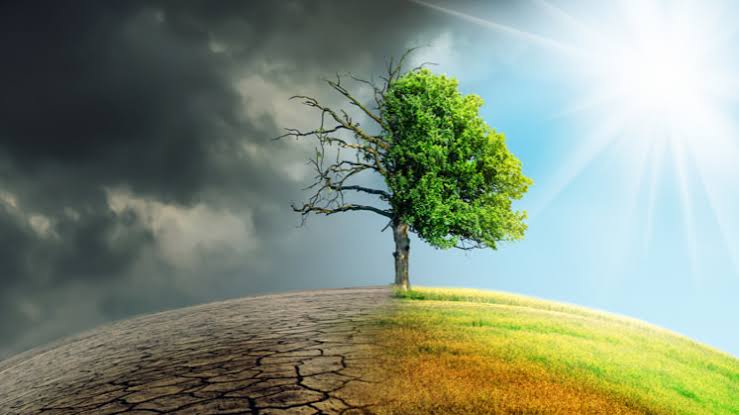
Climate change refers to the changing global environment. Climate change has become a global concern in the last few decades. Besides, these climate changes are affecting life on earth in a variety of ways. These climate changes have various impacts on the ecosystem and the environment. As a result of this change, many species of plants and animals have become extinct.

When Did It Start?
The climate began to change long ago due to human activities but we finally learned about it a century ago. During the last century, we began to see climate change and its effect on human life. We started researching climate change and finally realized that global temperatures are rising due to the so-called greenhouse effect. Global warming is causing more ozone depletion, affecting agriculture, water supply, transportation, and a host of other problems.

The Reason for Climate Change
Although there are hundreds of reasons for climate change we will discuss natural and man-made (human) causes.

Natural Causes
These include volcanic eruptions, sunlight, tectonic plate movements, orbital diversity. As a result of these activities, the environment becomes very dangerous to life for survival. Also, these activities increase global warming to a great extent causing inequality in the environment.

Personal Reasons
Man because of his need and selfishness has done many works that harm not only the environment but also himself. Many species of plants and animals are disappearing as a result of human activity. Harmful human activities include deforestation, the use of fuel, industrial waste, various forms of pollution, and more. All of these factors adversely affect the climate and the environment. And many species of animals and birds became extinct or almost extinct as a result of hunting.

The Effects of Climate Change
These climate changes are having a devastating effect on the environment. Sea level rises, glaciers melt, CO2 emissions increase, forest and wildlife declines, and water quality is also disrupted by climate change. Besides, it is calculated that if these changes continue, many species of plants and animals will die out. And there will be significant environmental losses.

What will the future hold?
If we do nothing and things continue to go on right now then the day will come when people will be wiped off the face of the earth. But instead of ignoring these problems we start working so we can save the world and our future.

Although human error has caused much damage to the climate and the environment. However, it is not too late to start over and try to fix what we have done so far to harm the environment. And if everyone begins to contribute to the environment then we can be confident of our future existence.

Conclusion

Climate change poses a major and growing challenge in the Arctic and around the world. While these emerging concerns are important now, their effects are particularly significant for future generations who will inherit current actions or inefficiencies. Strong immediate action is needed to reduce pollution in order to change the future of human temperature. Action is needed to begin to adapt to the already warming and ongoing warmth. The findings of this preliminary study of the impact of climate on the Arctic provide a scientific basis on which decision makers can look at, make, and apply appropriate measures to respond to this important and broader challenge.

DALHOUSIE AND UTILITARIANISM

Lord Dalhousie was the one who introduced railways, electric telegraph and uniform postage in India. Born and brought up in an age which ideologically belonged to Bentham and his followers,9 it was indeed difficult for Dalhousie, though essentially a conservative, to escape their influence. Dalhousie gave first proof of his utilitarianism when in I845 he joined Peel Cabinet, which had succeeded Melbourne, as President of the Board of Trade. Dalhousie laid before Peel “a sound and statesman like scheme” for placing British railways under the direct control of the state. Dalhousie scheme was not accepted, for in those days Parliament looked coldly upon any scheme which savoured of state interference with individual or class interests. But what Dalhousie could not achieve in England, he achieved in India.Bentham thought that an absolute authority would be the best machine to produce the greatest happiness to the greatest number of people and the British colonies like India appeared to the philosopher as the best fields for experimentation in reforms. It is true that Dalhousie was not the only Governor-General to wield absolute powers in India; his predecessors also did the same. But what is interesting to note here is that, unlike his predecessors, Dalhousie actually looked upon himself as an Oriental monarch, the source of all power and dispenser of all favour. Dalhousie’s modus operandi was basically the same as that of an authoritarian reformer. While in India, he acquainted himself ‘thoroughly with the system of Government and its administration, with the condition, the resources and the wants of the country’. He made a clear distinction between those functions which must be carried out by an authoritarian government and those which were to be executed by a third party. While education, the electric telegraph and the uniform postage came under the first category, railways came under the second. The first group consisted of ‘works which affect the general wellbeing of the community … and which, producing no immediate return must be executed by the Government if they are to be formed at all’. Since the second group, such as the introduction of railways, would bring immense profits to some commercial groups in England, they must be executed by them.Dalhousie approached the problems of infanticide, female education and the remarriage of Hindu Widows with the spirit of a Bentham. In the connation his appointment of the Commissioners of the Post Office to investigate the abuses of the postal system is one of the most direct proofs of his utilitarianism during his stay in India. Indeed, the way in which he sought to execute his social measures for the material improvement of the people owes much to Bentham’s ideas. In India the origin of the departments of railways, electric telegraph and post office may be traced to the same influences which were at work in Dalhousie’s mind. ‘My own opinion’, he wrote on 30 June 1854, ‘has long been decidedly in favour of placing a single authority at the head of every public department. In that form only can sustained promptitude of action be maintained and real responsibility enforced.’In the utilitarian philosophy of an authoritarian government, unity of authority is as essential as uniformity of management. Dalhousie accepted this principle and he was always careful that his social measures should be uniform, in other words, systematic. He insisted that the railway codes in one Presidency should not vary from those in another. Since the railways were an all-India enterprise, the codes to govern them should be uniform. Local Government could modify them to suit local conditions but the basic codes must be the same for the three Presidencies. It must, however, be remembered that Dalhousie never gave explicit expression to his beliefs in utilitarian principles. The classic example among some of Dalhousie’s predecessors who had accepted utilitarian-ism as their second faith was provided by Bentinck. In a farewell dinner at Grote’s house, just on the eve of his departure for India as its Governor-General, in December i827, Bentinck had said to James Mill; ‘I am going to British India; but I shall not be Governor- General. It is you that will be Governor-General.’ Viewed as a whole, Dalhousie’s regime contributed greatly to the transformation of Oriental India into Western India. The series of Western innovations he had introduced and the reforms he had carried out, Dalhousie thought, would strengthen the grip of the British Raj over India. It was perhaps the greatest limitation of Dalhousie that he failed to see the future that a modern country would give birth to a modern nation. In history things often happen which their authors do not intend to happen, and after they have happened they make them famous.

In India today, Dalhousie is remembered more as a catalyst in the growth of Indian nationalism than as a torch-bearer of British imperialism or as the man at the root of the mutiny which swept the Indian sky in I857.

unemployment

Unemployment, also referred to as joblessness, occurs when people are without work and actively seeking employment. During periods of recession, an economy usually experiences high unemployment rates. There are many proposed causes, consequences, and solutions for unemployment.

TYPES OF UNEMPLOYMENT

  1. CLASSICAL-Occurs when real wages for jobs are set above the market clearing level. It causes the number of job seekers to be higher than the number of vacancies.
  2. CYCLICAL-Occurs when there is not enough aggregate demand in the economy to provide jobs for everyone who wants to work. Demand for goods and services decreases, less production is needed, and fewer workers are needed.
  3. STRUCTURAL-Occurs when the labor market is not able to provide jobs for everyone who wants to work. There is a mismatch between the skills of the unemployed workers and the skills needed for available jobs. It differs from frictional unemployment because it lasts longer.
  4. FRICTIONAL-The time period between jobs when a worker is searching for work or transitioning from one job to another.
  5. HIDDEN-The unemployment of potential workers that is not taken into account in official unemployment statistics because of how the data is collected. Foe example, workers are only considered unemployed if they are looking for work so those without jobs who have stopped looking are no longer considered unemployed.
  6. LONG TERM-Usually defined as unemployment lasting longer than one year.

MEASURING UNEMPLOYMENT-Unemployment is calculated as a percentage by divided the number of unemployed individuals by the number of all individuals currently employed in the workplace. The final measurement is called the rate of unemployment.

EFFECTS OF UNEMPLOYMENT-When unemployment rates are high and steady, there are negative impacts on the long run economic growth. Unemployment wastes resources, generates redistributive pressures and distortions, increases poverty, limits labor mobility, and promotes social unrest and conflict. The effects of unemployment can be broken down into three types:

  1. INDIVIDUAL-People who are unemployed cannot earn money to meet their financial obligations. Unemployment can lead to homelessness, illness, and mental stress. It can also cause underemployment where workers take on jobs that are below their skill level.
  2. SOCIAL-An economy that has high unemployment is not using all of its resources efficiently, specifically labor. When individuals accept employment below their skill level the economies efficiently is reduced further. Workers lose skills which causes a loss of human capital.
  3. SOCIO-POLITICAL-High unemployment rates can cause civil unrest in a country.

REDUCING UNEMPLOYMENT-There are numerous solutions that can help reduce the amount of unemployment:

  1. DEMAND SIDE SOLUTIONS-Many countries are unemployed worker through social welfare programs. Individuals receive unemployment benefits include insurance, compensation, welfare, and subsidies to aid in retraining. An example of a demand side solution is government funded employment of the able-bodied poor.
  2. SUPPLY SIDE SOLUTIONS-The labor market is not 100% efficient. Supply side solutions remove the minimum wage and reduce the power of unions. The policies are designed to make the market more flexible in an attempt to increase long run economic growth. Examples of supply side solutions include cutting taxes on businesses, reducing regulation, and increasing education.

FULL EMPLOYMENT-Full employment is the level of employment rates where there is no cyclical or deficient demand unemployment. Mainstream economists define full employment as an acceptable level of unemployment somewhere above 0%. Full employment represents a range of possible unemployment rates based on the country, time period, and political basis.

IDEAL UNEMPLOYMENT-Full employment is often seen as an “ideal” unemployment rate. Ideal unemployment excludes types of unemployment where labor market inefficiency is reflected. Only some frictional and unemployment exists, where workers are temporarily searching for new jobs. This classifies the unemployed individuals as being without a job voluntarily. Ideal unemployment promotes the efficiency of the economy. Lord William Beveridge defined “full employment” as the situation where the number of unemployed workers equaled the number of job vacancies available. He preferred that the economy be kept above the full employment level to allow for maximum economic production.

NON-ACCELERATING INFLATION RATE OF UNEMPLOYMENT(NAIRU)-The full employment unemployment rate is also referred to as “natural” unemployment. In an effort to avoid this normative connotation, James Tobin introduced the term “Non-Accelerating Inflation Rate of Unemployment” also known as the NAIRU. It corresponds to the level of unemployment when the real GDP equals potential output. The NAIRU has been called the “inflation threshold”. The NAIRU states the inflation does not rise or fall when unemployment equals the natural rate. As an example, the United States is committed to full employment. The “Full Employment Act” was passed in 1946 and revised in 1978. It states that full employment in the United States is no more than 3% unemployment for persons 20 and older, and 4% for persons aged 16 and over.

CREDIT CREATION

Bank Building Vector Illustration.

Credit creation is one of the important functions of a commercial bank.

“A commercial bank is one that accepts deposits and lend loans and earns an income with the difference.”

Commercial banks expand the money supply in the economy through the form of credit creation. The banking structure is based on credit. Credit basically means getting the purchasing power now and promising to pay at some time in the future. Bank credit means bank loans and advances. Banks generally accept deposits but do not give the whole as loans. The banks keep a minimum reserve of the deposits for the demand of depositors and provides the remaining as loans. The deposits are generally ‘demand deposits’ which can be repayable on demand.

When providing a loan, the bank does not provide it as cash but opens a secondary depository account in the name of the borrower. Now, let us see what is primary and secondary deposits.

Primary deposits are deposits from a customer to a bank which forms the basis of credit. Secondary deposits are loans provided by bank to the borrower. The bank opens an account in the name of the borrower. In credit creation, every loan transaction happens only by opening a secondary depository account.

Let us understand the process of credit creation through the table below

This image has an empty alt attribute; its file name is CCr1.jpg

The table above explains the process of credit creation by a single bank. In the table, the cash reserves are kept so that the bank can meet depositor’s needs and lends the rest of the deposits. In this bank, the cash reserves are kept at 20% of the total deposits. Now, a person A deposits an amount say Rs.1000. Person A’s deposits are the initial primary deposits. Of this 20%, that is, Rs.200 is taken for cash reserves and the remaining Rs.800 is taken for lending. Another person, say person B borrows an amount of Rs.800. This money is neither given in form of cash nor straightly to his bank account. The money is given in the form of secondary deposits. This marks the Round 1 of credit creation. Since the money is given in secondary deposits, for the bank, it considers it to be a new deposit because cash at bank increases by Rs800 and by charging 20% cash reserves and give the remaining amount of Rs.640 to lending to say, person C. This process continues for several rounds until the deposits become zero. At the end of the process, the bank has managed to multiply the amount of money supply which is circulating in the economy. As of the above example, the initial deposit amount was Rs.1000 but in the end, through the Multiplier Effect the money created is Rs.5000. Multiplier Effect refers to the ability of the bank to increase money supply through the process of borrowing and lending.

MULTIPLIER EFFECT = 1/CRR = 1/20% = 5 times

where CRR is the Cash Reserve Ratio

We can see observe from the table that the deposits have been multiplied by 5 times by the bank.

Relevant links:https://www.slideshare.net/ramusakha/credit-creation-28701684

https://byjus.com/commerce/credit-creation-by-commercial-bank/

Why do we look different in photos?

No wonder we always experience that how hard we try to click a good photo for our profile picture, it is so hard for all of us to get a decent photo.

Also, when we look ourselves in the mirror we look just fine! Then why exactly we look good in mirror but bad in photos?

Reality is we do not really know how we look. The mirror gives us a reflection and the camera does not show us our accurate face.

The mirror we look in all day during brushing or combing or before going out, makes us believe that this is how we look. We are so accustomed to see ourselves in mirror that when we see ourselves in a picture we are unable to recognize ourselves.

Mirror shows us the enantiomorph version of our face in simpler terms when we see in a mirror the right becomes left and the left becomes right, and so unless you have a 100% symmetrical face, you will always find slight change in the mirror image of you and photo clicked image of you.

Scientist call this familiarity MERE EXPOSURE. This mere exposure makes us favorable to things which are familiar and unfavorable to things which are unfamiliar. Henceforth, we are more inclined towards our mirror image than the camera clicked image. We somehow find that the mirror image is good looking than the camera image.

Also, the camera pictures we see are not true image. Camera clicks 2D images and thus it somehow distorts our real look.

Putting in a nutshell, we do not really know how we look and honestly it does not even matter how we look as Margaret Hungerford says beauty lies in the eye of the beholder.

Biography – Sarojini Naidu

Early Life and Childhood

Sarojini Naidu was born on February 13, 1879 in Hyderabad, India. She was a civil activist, feminist, poet, and the first Indian woman to be president of the Indian National Congress and to be appointed an Indian state governor. She was also identified as “Nightingale of India”

Sarojini was the first daughter of Aghorenath Chattopadhyay, a Bengali Brahman. He was principal of the Nizam’s College, Hyderabad. She took admission in the University of Madras at the age of 12 and studied at King’s College, London, and later at Girton College, Cambridge.

Work

After gaining some knowledge in the suffragist campaign in England, she was pulled towards India’s Congress movement and to Mahatma Gandhi’s Non-cooperation Movement. In 1924 she moved to Eastern Africa and South Africa in the attention of Indians there She became the first Indian woman president of the National Congress in 1925 —having been headed eight years earlier by the English feminist Annie Besant. She visited North America to give lecture on the Congress movement, in 1928–29. Back in India her anti-British activity caused a number of prison sentences in her name (1930, 1932, and 1942–43). She escorted Gandhi to London for the indecisive second session of the Round Table Conference for Indian–British cooperation (1931). Upon the outburst of World War II she supported the Congress Party’s policies, first of coldness, then of affirmed interference to the Allied cause. In 1947 she became governor of the United Provinces (now Uttar Pradesh), a post she preserved until her death. Sarojini Naidu was the first women Governor of Uttar Pradesh.

Sarojini Naidu also led a functioning literary life and attracted prominent Indian intellectuals to her famous salon in Bombay. Her first volume of poetry, The Golden Threshold (1905), was admired by The Bird of Time (1912), and in 1914 she was elected a member of the Royal Society of Literature. Her collected poems, all of which she wrote in English, have been published under the titles The Sceptred Flute (1928) and The Feather of the Dawn (1961).

Death

On 2nd March 1949, Sarojini Naidu passed away at Lucknow, Uttar Pradesh. She lived her wonderful life by her own words, “As long as I have life, as long as blood flows through this arm of mine, I shall not leave the cause of freedom…I am only a woman, only a poet. But as a woman, I give to you the weapons of faith and courage and the shield of fortitude. And as a poet, I fling out the banner of song and sound, the bugle call to battle. How shall I kindle the flame which shall waken you men from slavery…” Her childhood residence at Nampally was given to the University of Hyderabad by her family and it was named as ‘The Golden Threshold’ after her 1905 publication. The University retitled its School of Fine Arts and Communication as ‘Sarojini Naidu School of Arts and Communication’ to honour the Nightingale of India.

Jamhuriyat and Kashmiriyat back on track

Photo by Gandhar Thakur on Pexels.com

The scenic beauty of the Kashmir valley Inspired many generations of artists. The northernmost territory of India lies in the lap of the Himalayas. It has a long history. The land saw the rule of many kings belonging to different religious sects. The colonial rule was another chapter. Post-independence the state was captured by Pakistan that became a bone of contention between the two neighbours. The Chinese interests in the region is another facet of the outstanding issues. It is a contested region and border issues with Pakistan and China Invariably made headlines after independence in 1947. The latest development took place in 2019 with the abrogation of special powers of Jammu and Kashmir (under article 370 and article 35A of the constitution of India). The presidential order brought these changes and the world saw a mix of reactions. The newly constituted union territory of Jammu and Kashmir lost its special powers and became strongly integrated with the rest of the country.

Recently it was in the news because the centre conducted an outreach program in Jammu and Kashmir. Prime Minister Narendra Modi chaired an all-party meeting on June 24th in New Delhi. 14 political leaders were invited including four former chief ministers. It will be the first such gathering after the abrogation of special powers and article 370 from the constitution of India.

The meeting was a step towards strengthening the democratic structure of the region. The biggest achievement was that the government was vindicated of repealing the special status of the former state. The presence of the opposition in the meeting was a testament to this fact. Experts are sanguine about the new developments that will follow the meet. The most noticeable demand of the opposition parties was that statehood of Jammu and Kashmir should be restored. To this government has shown affirmation that statehood will be restored at some point in time in future giving assurance to the leaders and the people.

Another mooted topic about Jammu and Kashmir is the issue of migrants. In this context, Jammu is very important. Most of the migrants that left the violent stricken Kashmir valley moved to Jammu and settled there. Kashmiri pandits are one amongst them. Many Muslims also moved to this area in search of a peaceful living away from violence. Hence Jammu was able to absorb an enormous burden of migration. Till now the discussions were revolving around Kashmir. However, the new developments focus on Jammu and give a much-needed break to Kashmir centrism.

Delimitation of Jammu and Kashmir is underway. The administration is working on it. This exercise will strengthen the democratic system of the region. The voting rights will extend to the migrants who left the state but are willing to move back. The centre and the opposition needed to break the ice on matters of the restoration of Jammu and Kashmir cadre of the all India services which was merged with Arunachal, Goa, Mizoram and union territories cadre.

The meeting is a good initiative by the centre but it is a beginning. More changes are yet to come and the opinion of the opposition can help smoothen the process of transition.

Essential oils: The by-products of plant metabolism

“It doesn’t get much greener than essential oils: when used correctly, they are among Mother Nature’s most potent remedies.” ― Amy Leigh Mercree, Essential Oils Handbook: Recipes for Natural

Essential oils are also known as Volatile oils or Ethereal oils are basically plant-based aromatic components that are made up of various chemically complex mixtures of organic compounds. The chemical nature of essential oils can be extremely intricate. Generally, these are a mixture of terpenes, phenolics, and alcohol. They also include oxygenated derivatives of hydrocarbon terpenes such as aldehydes, ketones, alcohols, esters, etc. Most of the essential oils are insoluble in water but Rose and Kewra are a few of the exceptions which are soluble in water.

How are Essential oils different from regular Fatty oils?

Essential oils volatilize when in contact with air at room temperature and possess a strong pleasant aroma and taste. While fatty oil, on the other hand, does not volatilize and lacks the strong taste and aroma of essential oils.

Since these are volatile, when put on paper essential oils do not leave a greasy stain. However, fatty oil leaves a greasy mark on the paper.

 Essential oils do not become rancid like the fatty oils but some have been observed to polymerize and deposit little solid matters such as resins and gums. Fatty oils become rancid on long exposure to air.

Essential oils can be distilled without getting decomposed. Fatty oils get decomposed when distilled. 


All distinctly aromatic plants are known to contain some type of essential oils. They occur in more than 60 families of plants particularly Myrtaceae, Apiaceae, Lauraceae, and Lamiaceae. Essential oils are mostly secreted in internal secretory glands /ducts or cells lining the glandular hairs. 

Essential oils can either be produced throughout the plant or may be restricted to specific organs for example, in plants like Rose, Jasmine, and Lavender, the oils are produced in the flowers. Similarly, in plants like Mint, Sage, Thyme, and Basil, the oils are present in the leaves.

Applications of Essential oils

Various types of essential oils are of great importance. Some of the major applications of essential oils are in pest control products, cleaning products, medications, and personal care products such as cosmetics and bathing products. Essential oils have several benefits when it comes to wound healing, rejuvenation, and relaxation. 

Health issues, such as migraines and nausea are cured of the essential oils. It is also as preservatives foodborne pathogens against in the food industries is also used in the food industries.

Essential oil such as rose oil is largely used in perfumes, scenting soaps, flavouring soft drinks, and liqueurs. It is also used extensively in making desserts globally. Rose jam is made from flowers. A preserve called gulkand is made in India. Used as a tonic and laxative.

Essential oil from Eucalyptus is used as an antiseptic, deodorant, and in mosquito and vermin repellent preparations. To relieve cough in chronic bronchitis and asthma the vapour of essential oils is inhaled. The oil used in the refinement of mineral oils by floatation method. It is also used to manufacture thymol and menthol.


Conclusion

Essential oils are naturally produced compounds with loveable aroma which are isolated mostly through a method of hydro-distillation which is easier to carry out the process. This process of hydro-distillation utilizes whole parts of the plants for extraction. Essential oils have medicinal benefits and are used in the treatment of different diseases like cough and cold, depression, migraine, anxiety, fungal and microbial infections, and wound healing. They are also used in the cosmetics and perfume industries.


References

https://www.intechopen.com/books/essential-oils-oils-of-nature/biological-importance-of-essential-oils

https://www.verywellhealth.com/what-are-essential-oils-88807

Dried Fruit: Good or Bad?

Information about dried fruit is very conflicting.

    Some say it is a nutritious, healthy snack, while others claim it is no better than candy.

WHAT IS DRIED FRUIT?

Dried fruit is fruit that has had almost all of the water content removed through drying methods.

The fruit shrinks during this process, leaving a small, energy-dense dried fruit.

Raisins are the most common type, followed by dates, prunes, figs and apricots.

Other varieties of dried fruit are also available, sometimes in candied form (sugar coated). These include mangoes, pineapples, cranberries, bananas and apples.

Dried fruit can be preserved for much longer than fresh fruit and can be a handy snack, particularly on long trips where refrigeration is not available.

Dried Fruit is Loaded With Micronutrients, Fiber and Antioxidants 

Dried fruit is highly nutritious.

One piece of dried fruit contains about the same amount of nutrients as the fresh fruit, but condensed in a much smaller package.

By weight, dried fruit contains up to 3.5 times the fiber, vitamins and minerals of fresh fruit.

Therefore, one serving can provide a large percentage of the daily recommended intake of many vitamins and minerals, such as folate .

However, there are some exceptions. For example, the vitamin C content is significantly reduced when the fruit is dried.

Dried fruit generally contains a lot of fiber and is a great source of antioxidants, especially polyphenols .

Raisins May Reduce the Risk of Certain Diseases 

Raisins are dried grapes.

They are packed with fiber, potassium and various health-promoting plant compounds.

Prunes are Natural Laxatives and May Help Fight Diseases

Prunes are dried plums.

They are highly nutritious, being rich in fiber, potassium, beta-carotene (vitamin A) and vitamin K.

They are known for their natural laxative effects.

This is caused by their high content of fiber and a sugar alcohol called sorbitol, which is found naturally in some fruit.

Eating prunes has been shown to help improve stool frequency and consistency. Prunes are considered to be even more effective at relieving constipation than psyllium, which is another common remedy.

Dried Fruit is High in Natural Sugar and Calories 

Fruit tend to contain significant amounts of natural sugars.Because the water has been removed from dried fruit, this concentrates all the sugar and calories in a much smaller package.For this reason, dried fruit is very high in calories and sugar, including both glucose and fructose.below are some examples of the natural sugar content of dried fruit.

Avoid Dried Fruit with Added Sugar (Candied Fruit) .

To make some dried fruit even more sweet and appealing, they are coated with added sugar or syrup before being dried.

Dried fruit with added sugar are also referred to as “candied” fruit.

Added sugar has repeatedly been shown to have harmful effects on health, increasing the risk of obesity, heart disease and even cancer.

To avoid dried fruit that contains added sugar, it is very important to read the ingredients and nutrition information found on the package.

Sulfites are added to some dried fruit to preserve color, which may cause adverse effects in sensitive individuals. Dried fruit that is improperly stored and handled may also be contaminated with fungi and toxins.

Vesicular Arbuscular Mycorrhiza and its Role in Plant Nutrition

The term mycorrhiza comes from a Greek word that means the root of a fungus. It is a symbiotic association between higher plants and certain higher fungi. In a natural ecosystem, it is very common to find mycorrhizal associations. The fungi in mycorrhizae are associated with 80% of vascular plants which includes Angiosperms, Gymnosperm, Pteridophytes, and some Bryophytes.

In mycorrhizae, the fungi provide mineral nutrients to the plants from the soil through the absorption process to the higher plants. The fungus in return gets the sugars produced by the plants. This colonization is restricted to the root cortex of the higher plants and does not enter into the vascular cylinder.

Vesicular-Arbuscular Mycorrhiza (VAM) is a type of mycorrhiza which is also called Endomycorrhiza. Endomycorrhiza is the most common type of mycorrhizal association found in a natural ecosystem. Root of some of the major crops, tropical and temperate tree species like wheat, maize, potato, tomato, soybean, apple, orange, mango, etc. are associated with fungus. The Fungus in this symbiotic association belongs to a new phyletic group Glomeromycota. These are Glomus, Gigaspora, Archaeospora, etc. There is no morphological variation observed in the roots associated with VAM from the normal root system. There is no external sheath around the root, only inter and intracellular fungal hyphae are present within the root. In the cortical region of the root VAM form two special structures which are Arbuscules and Vesicles.

Role of Mycorrhiza in plant nutrition

Several factors are responsible for plant nutrition and its yield. Other than the plant genome itself, various environmental factors such as nutrient availability in the growing media, water availability and uptake, and the ability of the plant to properly utilize what is available in the soil all play an integral part in plant growth.

The importance of mycorrhizal colonization in higher plants has long been considered for the uptake of mineral nutrition from the soil. Among several roles of mycorrhizae in nutrition uptake, most of the studies are with phosphorous, since this element normally exists in the form of insoluble calcium phosphate or organic phosphate in soil and is therefore unavailable to plant roots.

The mycorrhizal association is also known to improve the uptake of nitrogen in plants. This happens due to the ability to transfer immobile ammonium from the soil to plant roots due to the increased absorption surface of VAM fungal hyphae. This association is even known to enhance fixation rates of nitrogen-fixing bacterial association of legumes. Therefore, symbiosis of leguminous plants with Rhizobium and VAM fungi helps the plant to acquire two vital elements-nitrogen and phosphorus.

Arbuscular Mycorrhiza develops structures called vesicles. These vesicles perform the function of storage sites within the plant roots and store the absorbed minerals and lipids. These stored nutrients act as reserves of food material and become accessible by the host plant when their supply is limited.

Mycorrhizae are known to provide other types of benefits also to the plants and the environment like:

  1. Increase plant establishment and survival at seeding or transplantation. 

  2. Increase yields and crop quality

  3. Improve drought tolerance

  4. Enhance flowering and fruiting

  5. Optimize fertilizers use, especially phosphorus

  6. Increase tolerance to soil salinity 

  7. Reduce disease occurrence

  8. Contribute to maintaining soil quality and nutrient cycling

Mycorrhiza is a truly beneficial relationship for the plant and the environment. This association not only helps in increasing water absorption, uptake of nutrients, availability of nutrients that are unavailable to the plant’s roots but also protects the plant from excess salts or harmful minerals.


References

https://gpnmag.com/article/the-role-of-arbuscular-mycorrhizal-fungi-in-plant-nutrition/

https://lupinepublishers.com/agriculture-journal/fulltext/mycorrhizaes-role-in-plant-nutrition-and-protection-from-pathogens.ID.000277.php


THE HEALING POWER OF MUSIC

Music as therapy has shown positive and beneficial effects in managing a host of medical conditions, like high blood pressure, as well as an effective treatment for some mental health conditions. Usually part of a multi-pronged approach to care, music therapists work with doctors, nurses, social workers, and other practitioners to alleviate depression, trauma, schizophrenia, and more. 

ANCIENT ORIGINS

While modern music therapy may be a 20th-century “invention,” it is by no means a new concept. Ancient Greek philosophers used music therapeutically, playing tranquil flute melodies to manic patients; while people with depression were treated to the soothing sounds of a dulcimer (an instrument similar to a zither).

Physicians and musicians were housed in holy healing shrines—further cementing the intertwined relationship that music and healing had in Ancient Greece. Early Ancient Egyptian medical papyrus texts describe chant-like incantations for healing the sick. And within Chinese medicine, a tradition with an ancient lineage, music is seen to correspond to the five different organ and meridian systems, which can be used to promote healing.

Music is one of the most important boons of God for all living beings. Music is the subject that classifies all the rhythmic sounds into a system and anyone may learn and practice it. Not only that but also the plants, animals can enjoy the harmony, pleasant rhythm of the musical sounds.

DIFFERENT STYLES OF THE MUSIC

The style of music has changed dramatically throughout the various ages of the time period. Mainly there are six eras in music history. These are the Middle Ages, Renaissance, Baroque, Classical, Romantic, and Twentieth Century. Music has been and always will be a popular form of entertainment for many of us.

The dictionary defines the music as an art of sound in time which expresses ideas and emotions both significantly through the elements of rhythm, melody, and harmony.

MUSIC HAS THE POWER TO HEAL

Music is a form of a melody that soothes into our body and helping us to feel refreshed and relaxed. It helps us to get rid of the anxiety and stress of our everyday life. Music is undoubtedly a great way of healing the pain. It makes us forget about unpleasant and disturbing thoughts by taking us in the world of melody.

Music can bring the back old memories in our present time. Music therapy restores us from several problems and emotions in our daily life. When we attend music therapy it helps our brain functioning quicker and helps us keep calm.

THE MEDICINAL EFFECT OF MUSIC

Whatever problems we may have, that will flow out of our brain. Even it also helps the doctor and psychologist to identify the state of our brain and behaviors. Well, according to researchers and practitioners of music therapy is a big tool for all of us.

Indeed, music can heal people in many difficult situations. Music can make a big difference to people with brain injuries and it can activate the brain in alternative ways. It helps often bypassing the damaged areas, allowing people to regain movement as well as speech.

Therefore, music actually changes the structure of the brain, giving people new chances to move and speak. Also, various studies have shown that music therapy can regularize the heart and breathing rates. Even it can help cancer patients. In the field of psychology, music is very useful to help people suffering from depression and sadness. Also, children with developmental disabilities may get support from music in many ways.

CONCLUSION

In the end, I will say that being skilled in any component of music is a gift of God. I salute the great musicians who pacify me during my low times and let me celebrate my good times. Music as a hobby is the best alternative indeed.

Music is an effective way of healing the stress of anyone of any age. It is highly effective and supportive to relieve the person from any kind of mental or physical problem. So, we all be always live with music.

Thanks!


HOW DOES WATER AFFECT OUR LIVES?

Water is life, as the saying goes. We rely on water for our food, our health, our livelihoods, and for fun and leisure. But water can also take away life. And the absence of water can be even worse. Currently, 700 million people live in water-stressed areas. By 2025, this number is expected to grow 1.8 billion — about 25% of the world population.

As Number 6 on the UN’s Sustainable Development Goals, “Clean Water and Sanitation For All” is currently struggling. If we want to meet this goal by the deadline of 2030, the UN says we’ll need to double our current rate of progress. Only then can we ensure that there’s universal access to safe and affordable drinking water, adequate sanitation and hygiene resources, improved water quality, and restored water-related ecosystems. Here are 5 ways that water use affects our lives — and what we’re doing to help make clean water and sanitation for all a reality.

1. WATER PUTS FOOD ON THE TABLE AND MONEY IN THE BANK

According to the UN’s Food and Agriculture Organization, roughly 60–80% of severely food-insecure people rely on agriculture for their livelihoods (and their own nutrition). This includes farming of crops and raising livestock, as well as fishing. In Africa, where over half of Concern’s country programs are located, 95% of crops are rain-fed. This means that water shortages have a compound effect: As we’ve seen in areas like Somalia, just one drought can spell disaster for an entire harvest.

Concern has found solutions for many farming communities. In one Ethiopian community, for example, we provided the expertise and money needed to help build a 10-mile system of irrigation channels and reservoirs, bringing water from a nearby river across 200 acres to 140 farming families. That means bigger harvests to keep families fed — and incomes stable.

When lakes and rivers dry up, families are often forced to walk hundreds of miles to find water for their animals to drink. Or, they may lose their (literal) cash cows. A drought in the Turkana region of Kenya, that has now lasted for nearly 4 years, has meant that pastoralists like Ng’ikario Ekiru, a 37-year–old mother of 6, have gone from herds of 100 down to 5 (Ng’ikario, her family, and the flock all rely on the same source of food — a wild fruit that grows in the bush). Concern can’t refill dry rivers, but we can (and do!) truck water to the families and livestock that need it most.

2. WATER CAN HELP KILL GERMS — AND CURB PANDEMICS

Washing your hands doesn’t just get them clean — it can also save your life. In fact, the Centers for Disease Control and Prevention say that good hygiene is the best way to prevent infections and diarrheal diseases. As we’re currently seeing with the ongoing COVID-19 pandemic, handwashing is also one of the best things we can all do to curb the spread of a global health crisis.

In many of the countries where Concern works, these infections are a leading cause of illness and death. But a lot of the diseases and infections that affect the communities we work with are 100% preventable, and a little bit of soap and water go a long way towards that prevention. As part of Concern’s water, sanitation, and hygiene programming (WASH) we help provide clean water and teach people good habits so they can stay healthy.

3. WATER ISN’T ALWAYS THERE

Sometimes the biggest problem water poses is when it’s not accessible. For example, drought across much of East Africa has further complicated a large-scale hunger crisis in the region, further exacerbated by conflict. In some cases, water access can even lead to conflict.

Even in peaceful countries, water that is too far away can be damaging for families. Daily water-gathering is usually the responsibility of women and girls. When rivers, lakes, and reservoirs dry up, they must travel increasingly long distances to find water. This can keep girls out of school, and keep women away from taking care of their families or earning income. In fact, collectively, women and girls spend 200 million hours fetching water every day.


If I ruled the World

If I ruled the world … It’s actually quite and interesting concept. What would I do if I ruled the world. At first when I read this prompt I thought ‘Yeah, I know what I’d do … It’s obvious’, but then I realised what would I do?

      You cannot just say … oh, um, I would start world peace and uh stop poverty, because what good will that do … how will change be made? Nothing can just stop .. it has to gradually change and for it change there needs to be people willing to help make the change. Also before I begin I would like to add that this speech is purposefully idealistic, the reason why is because in order to make the solution to these problems a reality we need to make an awareness of them.

If I ruled the world … everyone would have a home and feel safe living their own lives, no one would be forced to flee from their own country in search of refuge, sacrificing every single one of life’s joys such as freedom and family in search of survival … whilst other slept easy in their beds knowing that nothing was going to happen to them as they are not part of the problem.

Well, those people sleeping in their beds may not be part of the initial problem but they are part of the resounding problem. Without taking action they are ensuring that those affected are helpless, without voice and without the right of choice and no-one would wish that upon themselves.

If I ruled the world … I would make sure that that young girl in the corner, standing all alone by herself would not be teased or spoken about as if she were something to examine, but supported and understood. I would make her worries my worries, I would do my best to see through her eyes, experience her life in her shoes and then help her to make others understand as well. I would encourage everyone not to hide from who they are … whether that’s because of sexuality, gender, body insecurity, or race .

If I were to rule the world …. bullying and discrimination would be a thing of the past. Because let’s face it picking on others is plain cowardice and living your life in insecurity is not fair.

If I ruled the world … education would be a right not a probability, children and adults all around the world would be educated in order to feel and become independent, strong minded and self sufficient. Education would be available to each and everyone and by having an education a child is encouraged to grow into a strong individual.

If I ruled the world … education would be stronger than ever.

And finally,

If I ruled the world … I would not rule the world alone. Everyone is born the same, we all have organs and senses and feelings. It’s just some are more lucky when it comes to the lottery of life than others.

If were to rule the world … everyone would have a voice as we are all equal and deserve the right to make a change.

If I ruled the world … the world would be an opportunity for everyone to make the best of.

If I were to rule the world … YOU would rule it too.

COPYWRITING VS CONTENT WRITING

When companies need written material, they typically use either a copywriter or a content writer. These types of writers specialize in creating marketing content for business. Understanding the difference between the two roles can help your company decide which one they need for your written content.

WHAT IS COPYWRITING?

Copywriting is the creation of text for the advertisement or marketing of one specific company. It aim to raise brand awareness and persuade an audience to take a particular action, such as purchase an item. To do this, copywriters make their content interesting and memorable. Copywriting highlighting a product’s features by structuring it in the best possible perspective through brainstorming creative ideas. Some forms of copywriting include brochures, billboards, email campaigns, taglines, magazine advertisements, press releases, etc. The common job responsibilities of a copywriter is writing copy to follow the brand’s voice and style, collaborating with public relations team and other professionals on marketing projects, editing and proofreading copy to ensure accuracy and speaking with stakeholders to determine their content needs and requirements.

WHAT IS CONTENT WRITING?

Content writing is the production of written materials to inform reader. These professionals strive to generate web traffic, using search engine optimization(SEO). Content writer also try to increase customer engagement with persuasive language and relevant content. They generate specialized materials for websites and other digital medium. During the process, content writers often research their topics to provide necessary facts for readers to understand topics fully and provide credibility. Some forms of content writing include blogs, newspaper articles, webpages, email newsletters, magazine feature, etc. The common job responsibility of a content writer is conducting research on industry related topics to create content, editing and proofreading content to improve readability for viewers, researching keywords and using SEO practices to improve web traffic to the company’s website, generating interesting headlines to attract readers and completing projects within designated deadlines.

COPYWRITING VS CONTENT WRITING

  1. OVERALL GOAL- A copywriter creates content to persuade their readers, whereas a content writer produces content to inform their readers. Since copywriters are trying to sell a product or service, their copy ends with a call to action. Content writers have a more subtle goal of encouraging brand loyalty through writing articles that educate and entertain.
  2. LENGTH OF CONTENT- Typically, a copywriter writes short form copy and a content writers long form. Copywriters keep their text brief to engage their readers. However, content writers often write more in depth explaining a process or topic.
  3. ROLE WITHIN A COMPANY- A copywriter is a professional whose primary job is to create copy. Content writer often have other roles beyond writing. They may be an author, blogger, executive, software engineer or other individuals.
  4. TONE OF WRITING- Copywriters use a conversational tone when speaking to their viewers. Because content writers are more informative, their tone is often more formal.
  5. DEADLINES- Copywriters work on strict deadlines to meet their client’s requests. Since copywriters write longer content, their deadlines are usually more flexible to allow time for research.
  6. WORK ENVIRONMENT- Copywriters typically work for an advertising agency marketing for a company. Content writers work for a variety of companies from various industries. copywriters often work directly with a company, whereas content writers work through a third party.

SKILLS FOR COPYWRITING-

  • Copywriters work for a variety of sectors, making it helpful to have experience writing for different fields, such as healthcare or technology.
  • To attract users, copywriters are empathetic in their writing to make their audience feel good.
  • Since copywriters work closely with marketing teams, it’s helpful for them to be a team player and work well with others.

SKILLS FOR CONTENT WRITING-

  • Since content writers are trying to generate traffic to a business’s website, they use SEO and keywords to direct users.
  • To generate informative copy, content writers conduct research from other sources to back up their claims and facts.
  • In order to attract readers, content writers produce captivating headlines that make viewers want to read their articles.

A COLONIAL READING OF Things Fall Apart

This writeup focuses on the boundaries set by the European colonists on the culture and  tradition of ‘pure’ Africans- resulting in confusion among people to choose what is ‘their own’. I will be dealing with Chinua Achebe’s first novel, Things Fall Apart – how things fall apart before  and after the arrival of missionaries, and how their ‘civilising’ mission works on the natives. They  imposed restrictions, which put forth the implications of a closed system and lack of liberty to  choose the linguistic features one wishes to inculcate in their literary work. Achebe also highlights  the oral tradition by using narrative proverbs in the structuring of the action of the novel. Achebe refuses to completely step into the refined space as imposed by the Westerners. He  chose to stick to ‘his’ culture which gave him comfort and stability. The Europeans inflicted a sense  of inferiority by setting margins, which implied that the native’s actions were wrong, and it would  only get better if they followed what had been told to do. It is nothing but the psychological impact  of colonial education. Though we believe that Achebe gave more importance to his culture, we  also cannot deny that he did get influenced by the Westerners. Elements of double consciousness  in Things Fall Apart often lead to the Identity crisis of his characters which is stemmed from the  hybrid nature of the Author himself. 

The Igbo patriarchal community always placed men on a pedestal seat. They considered women as ‘second sex’ and used them as objects for male satisfaction. ‘She’ wasn’t ‘aware’ of ‘the being oppressed process’ because of the influence of patriarchy. Inequality, lack of inheritance for  female children, women beating and feminine abuse were appreciated to a certain extent and  treated as ‘normal’. Igbo women lived their lives to deliver kids and to do domestic chores. Females  are in an inferior position throughout the novel and the idea of masculinity erased them from the  political, economical and judicial strata of the society. Women weren’t allowed to identify their  true character and the dominance above her gender and race indirectly forced her to obey the ‘male  rules’ without any objection. This suppression of the female by the male, in the Igbo tribe is similar to the oppression faced by the colonised under the coloniser. Igbo men inflicted ‘subaltern’  treatment on his family. 

The protagonist Okonkwo wishes his eldest son Nwoye to behave like a ‘real’ man – he  wanted to completely erase Nwoye’s ‘motherly’ side. Okonkwo was a man of strength and was  afraid to be called weak or a woman. He was ashamed of his father Unoka, who was a ‘coward’  and a ‘spendthrift’, by the standards of the clan. Okonkwo tried to hate everything his father had  loved but still the memories of Unoka haunted him in a very uncomfortable way. In other words,  Unoka is a representation of the past; a past that belonged to the traditional Igbo community. He  must have inherited most of the cultural traits and beliefs of their culture. Differing from the ‘real  man’ concept doesn’t mean that Unoka is an outcast of Igbo tribe. So hating Unoka signifies  that Okonkwo is not fully immersed in traditions. One of his sides always rejected Igbo traditions  while the other side always accepted them. The violence, intolerance and the passion for becoming  a respectable leader- which are the characteristic features of missionaries – clearly shows that  Okankwo is different from his peace- loving tribe. When the oldest man of the clan, Ogbuefi  Ezeudu asked Okonkwo not to kill his son-like Ikemefuna, he never listened. He did kill him with  full remorse and regret. In a sense, Okonkwo was respecting the order of Oracle, but also  disrespecting the words of a ‘living tradition’. 

Okonkwo accidentally kills Ezeudu’s son with a gun at his funeral. The old man’s death  creates a vacuum in their heritage. His son’s death is a complete wipe out of his essence with a  ‘modernised European concept’, gun. It gives a picture of a confused individual trying to erase his  ‘own’ people using the ‘european brain’. This confusion clearly states Okonkwo’s mixed nature,  which leads to his death. 

Nwoye is the binary opposite of Okonkwo. He seems more like Unoka and has an  attachment towards his mother. He tries not to be like ‘himself’ for making his father happy. He  was unable to express his true self since childhood. This traumatic experience leads to his  conversion. He is neither Igbo nor Christian; he has double identities but not even sure about who  he really is. His jumping consciousness creates nothing but confusion. 

Enoch is a character who is similar to Okonkwo in many ways. Their personalities are  comparable, they both have issues with their fathers, and they consider themselves to be above  their peers, but their belief systems are quite different from each other. He passionately accepted  Christianity without any hesitation and cut his Igbo roots by killing one of the ancestral spirits by  unmasking an egwugwu. When Mr. Brown becomes ill and is replaced by a zealot named  Reverend Smith, he uses Enoch’s ‘grown up’ fanaticism to turn against a race which once belonged  to him. The fact that Enoch is not killed for his action highlights an acceptance of colonial rule  from the local rulers and traditional elite. Mimicry appears here, when Enoch imitates the  colonised culture and makes the environment unstable. Literally speaking, he is a combination of  Okonkwo and Nwoye. 

Ikemefuna’s death signifies the eradication of a minor culture from a major culture. He  reached Umuofia as a part of sacrifice. Willingly he adjusted with the clan’s customs; but the  memories of his family is a reminder that he hasn’t fully adapted in the new world. He tried to  believe that the new clan is his family, but his beliefs end with his death. Also Okonkwo is  questioning the identity of his eldest daughter Ezinma. He wishes that she had been born a son.

Throughout the novel, we come to know how important farming is to the Igbo tribe. We  see an instance where Okonkwo plants yam seeds in his farm, given to him by Okoye. Okoye does  not belong to his family, implying that he is the ‘other’. However it does not work out due to the  drought and heavy rains. This incident can be seen as symbolic of the seeds of western ideologies  that have been planted in the natives’ mind. Thus, causing an instability in his mind, resulting in a  state of confusion. The relationship between farmer and farming is that of the coloniser planting  seeds of ideologies into the mind of the colonised.  The impact on natives due to this colonisation gives rise to the double consciousness in the  characters. They are torn between the constant dilemma to know where they belong, which culture  to follow. This dilemma is rooted from the childhood days of the author. The author, being under colonial rule himself, was influenced by the westerners. The very notion of authorisation is a  western concept, in contrast to the oral tradition, where the importance is given to the reader. The  reader is free to interpret and retell it in his/her own way. While the same cannot be implicated in  the case of an authorized text. Therefore, we can conclude that he does not fully follow the  traditions. This feature is also seen in the protagonist of his novel. Okonkwo does not fully follow  his own tribal instinct, nor does he welcome the whites. In the end, Okonkwo commits suicide,  even though he knows that it is against his own tribe. The reason for his action is his intolerance  towards the arrival of the whites. Hence, his suicide can be seen as a protest. 

World Asteroid Day 2021

Asteroid to Make Closest Flyby in History

Of late, there have been several stories about asteroids hurtling past Earth; let us first understand what asteroids are in mere words. Asteroids are the little rocky remains that orbit around the Sun. Chiefly, they are among the orbits of Mars and Jupiter, except some have more unconventional orbits. Therefore, we can tell that asteroids are rocky-metallic celestial objects which extend in size from approximately the extent of pebbles to about 600 miles across. They are small; therefore, we do not acknowledge them as planets, yet they revolve around Sun. Asteroids are also known as the remaining material of the Solar System. Do you know that numerous hundred thousand asteroids are known to endure in our Solar System, plus multiple of them are yet to get found? Some asteroids are so tiny that they are hard to detect. In December 2016, the United Nations General Assembly took a resolution to observe 30 June as world asteroid day every year; it might seem that this day does not hold much significance, yet, the roots of the history behind this day lie in great depth. Through this article, let us try to understand its importance in mere words. 30 June marks the centennial of the Tunguska impact; it was a cumbersome explosion near the Podkamennaya Tunguska River. According to NASA’s estimations that the asteroid penetrated the Earth’s atmosphere at a pace of roughly 33,500 miles per ampere-hour. This event is considered the world’s most massive asteroid impact on the Earth in recorded history. The aim behind this was to raise awareness about the consequences of Asteroids at an international level. As aimed, the organizations worked promoted awareness and provided knowledge to the general public about the importance of asteroids in the universe and the role they play in our solar system today. There is an organization called B612 that strives towards shielding the Earth from asteroid collisions, acquainting and advancing extensive decision-making on worldly defense issues. Every year, multiple performances are arranged all across the world. These functions are at NASA and other space bureau facilities, libraries, planetariums, multiversities, and many more. This year it is going to celebrate digitally. The previous year many people got to know some mind-blowing facts about our universe during the webinar. In brief, International Asteroid Day World Asteroid Day dignifies consciousness regarding the devasting impression of an asteroid meanwhile it crashes to the Earth. How the supplies can get utilized in the future, how asteroids provide the means for future investigation, and how we can preserve our planet from the consequences of asteroids. It is essential to note asteroids’ uncertain impacts. So, World Asteroid Day is observed over the globe to teach people about asteroids and their results. Make sure you discuss our solar system with your teachers and parents. You will get to know many facts about the asteroids and many other celestial bodies. It will give you immense pleasure to learn these facts and would make your day productive. If you go through social media, you would come across some interactive webinars taking place.

Communication

Definition: The communication is a dynamic process that begins with the conceptualizing of ideas by the sender who then transmits the message through a channel to the receiver, who in turn gives the feedback in the form of some message or signal within the given time frame.

Communication is a process which involves transmission of information from one point to another through a succession of processes. Effective communication is when the message conveyed by the sender is understood by the receiver in exactly the same way as it was intended. There are basically two modes of communication:

  • Point-to-Point: A point-to-point connection refers to a communications connection between two communication endpoints or nodes. An example is a telephone call, in which one telephone is connected with one other, and what is said by one caller can only be heard by the other.
  • Broadcasting: A broadcast communication network is a communication network which uses broadcasting for communication between its nodes. They take messages from a single sender and transmit to all endpoints on the network. For example, Radio, Television, etc.

There are three basic element of communication system namely transmitter, channel and reciever. The simple block diagram for communication system is given below:

Block Diagram of Communication System

Different blocks in block diagram of communication system are discussed below:

  • Sender: The sender or the communicator is the person who initiates the conversation and has conceptualized the idea that he intends to convey it to others.
  • Encoding: The sender begins with the encoding process wherein he uses certain words or non-verbal methods such as symbols, signs, body gestures, etc. to translate the information into a message. The sender’s knowledge, skills, perception, background, competencies, etc. has a great impact on the success of the message.
  • Message: Once the encoding is finished, the sender gets the message that he intends to convey. The message can be written, oral, symbolic or non-verbal such as body gestures, silence, sounds, etc. or any other signal that triggers the response of a receiver.
  • Communication Channel: The Sender chooses the medium through which he wants to convey his message to the recipient. It must be selected carefully in order to make the message effective and correctly interpreted by the recipient. The choice of medium depends on the interpersonal relationships between the sender and the receiver and also on the urgency of the message being sent. Oral, virtual, written, sound, gesture, etc. are some of the commonly used communication mediums.
  • Receiver: The receiver is the person for whom the message is intended or targeted. He tries to comprehend it in the best possible manner such that the communication objective is attained. The degree to which the receiver decodes the message depends on his knowledge of the subject matter, experience, trust and relationship with the sender.
  • Decoding: Here, the receiver interprets the sender’s message and tries to understand it in the best possible manner. An effective communication occurs only if the receiver understands the message in exactly the same way as it was intended by the sender.
  • Feedback: The Feedback is the final step of the process that ensures the receiver has received the message and interpreted it correctly as it was intended by the sender. It increases the effectiveness of the communication as it permits the sender to know the efficacy of his message. The response of the receiver can be verbal or non-verbal.
  • Noise: Noise is the unwanted disturbance present in communication which deteriorate’s the quality of message signal sent and decreases the quality of communication process. Noise can be present at any stage of communication processes.

CAG

• CAG and the Indian Audit and Accounts Department
(IAAD) – Supreme Audit Institution of India.

• Articles 148-151 of the Constitution deals with CAG.

• Article 148: There shall be a CAG of India who shall be appointed by the President by warrant under his hand and seal.

• Independent and unbiased nature CA is ensured by:
 Appointed by the President of India.
 Security of tenure: special procedure for removal,
like a Supreme Court Judge.
 Salary and expenses of CAG – charged (not voted) from the Consolidated Fund of India.

 Disallowed from holding any other Govt office after his/her term expires.

Duties of the CAG :-

• Under Article 149, Parliament had enacted the CAG’s Duties, Powers and Conditions Act in 1971.

• Article 150: the accounts of the Union and of the States shall be kept in such form as the President may prescribe.
 Shall be based on the advice of CAG.

• Reports of the CAG – submitted to the President/Governor – Union/State respectively.
 They table the report before the Parliament/State legislature.
 Permanently referred to the Central and State Standing Committees on Public Accounts and Public Undertakings.

• Types of CAG reports:

 Compliance and performance audit reports –
covers revenue collection and expenditure of
Gov.
 Separate audit reports on the functioning of certain autonomous bodies.

 Reports on the financial position of Central and State Governments.
 Reports on the adherence to the Appropriation Acts passed by Parliament and Legislatures.
 Certified annual accounts of the States to the State Legislatures: the Finance and
Appropriation Accounts.

• Types of audits done by CAG: Compliance Audit, Financial Attest Audit and Performance Audit.

Effective tips for buying Twitch views and followers

Streaming things could be a hobby and an open door for opportunities. It began as a fun pastime for most and has quickly grown into a main entertainment channel for millions of people. Different platforms stream  different contents. Game streaming on Twitch is considered as the most popular one. It is a  website where PPL from all over the world can broadcast themselves or a video game that they are playing on the platform.

Setting your stream goal has primary importance. People are protective of their followers and they are not going to follow unless you have a channel that they actually want to come back to. To grow followers you need to make the channel interesting enough that people want to come back to it over and over. It is important to be respectful of your viewers’ time and attention. Instead of calling up the lurker’s name , a polite address might be enough. Telling your viewers about your goals would make them feel inspired to achieve them. Talk about the things you are going to do after you get partnered. It is necessary to motivate the viewers to take action while focusing on increasing followers. Say the exact things without the essence of artificiality. Asking for followers while you go live has a huge impact. Tell them how you want to be supported by playing on their belief system and identity. Write down a plan before you go live- like the stories  you are going to tell and the games you are going to play. It is important to make sure that you have lots of things to talk about even if your chat isn’t interactive. Get partnered and try to go full-time sometimes by streaming more and consistently on discoverable platforms. Watch other streamers and try to compare it with your style. It would be better if you are aware of different methods used by others. After your stream, spend some time to highlight the best bits. Asking other streamers for some constructive criticism on your stream helps  to get feedback from the same industry. Requesting some of your regular viewers if they want to be moderators is a great idea to make your platform active.

Social media acts as a great help for the self promotion of your stream without financial barriers. Go ahead with platforms like Facebook, Instagram, Twitter etc. and share your stream and be active. There would be more people to check out your activities. As a growing community, discord servers help in self promotion by giving a high reach to the stream. YouTube is also useful in showing off your skills by helping people to learn. Focus on learning and becoming a better streamer rather than criticizing or blaming yourself. Don’t go spending more money on your streaming setup when you are brand new. Those investments can come later on if things go well. Instead start a stable live stream and have a stream schedule. Make use of the tags when you settle your title and game for your livestream on Twitch. Be patient, confident and productive.

Bismillah Khan- Shehnai God

Bismillah Khan - Wikipedia

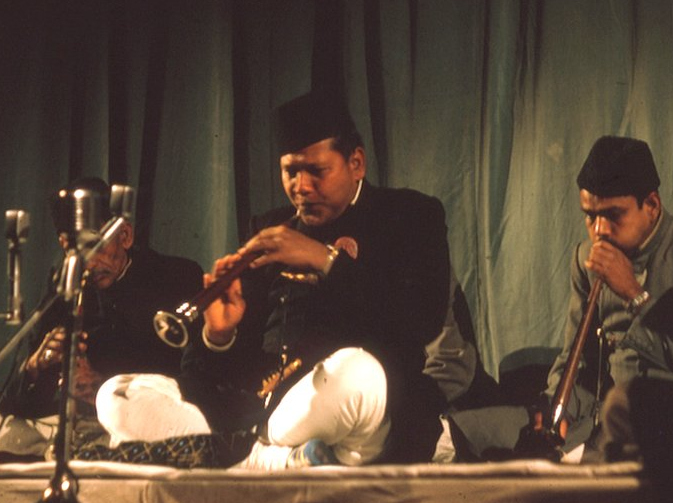
Ustad Bismillah Khan- came into the world on March 21, 1916, in the Dumraon region as the second next son of father Paigambar Khan and mother Matthan. He was initially called Qamaruddin to rhyme with Shamsuddin, his brother. His ancestor, Rasool Baksh Khan- pronounced “Bismillah later gazing at the newborn. Therefore, he was called Bismillah Khan. His forefathers were official musicians and handled to play in Naqqar khana in the regal regions of Bhojpur, presently in Bihar. His dad was a shehnai professional in Maharaja Keshav Prasad Singh from Dumraon Estate. Despite his popularity, Khan’s life grasped its traditional Benaras charm. His main mode of transportation remained the cycle rickshaw. A fellow of tenderness, he supposed in remaining private; and that players are supposed to be heard and not seen. He was a pious Shi’a Muslim and, like many Indian musicians notwithstanding of faith, a follower of Mother Saraswati. He oftentimes performed at various temples and on the shores of the river Ganga near Varanasi, besides operating outside the great Vishwanath temple in Varanasi. He endured his training supporting his uncle, the late Ali Baksh, a shehnai player connected to Varanasi’s Vishwanath Temple. Khan signified perhaps single-handedly accountable for making the shehnai a well-known classical apparatus. He induced the shehnai to the core stage of Indian musicology with his performance at the Calcutta All India Music Conference in 1937. People started to consider Bismillah and the shehnai are nearly synonyms.
Khan is one of the best musicians and one of the best representatives of Hindu-Muslim unity in India. His theory of music was exquisite, and his foresight, excellent. He formerly remarked, “Even if the universe ceases, the melody will yet persist, and he often said, the art of music has neither caste nor religion. He has played in Afghanistan, Iran, Europe, Bangladesh, Iraq, Iran, Canada, West Africa, the USA, USSR, Japan, Hong Kong in nearly every capital town over the world.
Khan had the unique honor of performing at Delhi’s Red Fort on the night of India’s Independence in 1947. He also played the song Raga Kafi from the Red Fort at India’s first Republic Day ceremony on January 26, 1950. His recital had almost become a cultural part of the Independence Day Celebrations telecast on Doordarshan every year on Independence day. On August 17, 2006, Khan got ill and got admitted to the Heritage Hospital in Varanasi. He expired after four heydays on August 21, 2006, owing to a cardiac arrest. He was ninety years old. The Government of India announced one day of public mourning for his loss. His body was concealed on Fatemain’s funeral ground of gray Varanasi below a neem tree including a 21-gun tribute from the Indian Army. His life story inspires each person to make efforts and spend his life relishing their hard work. Bismillah Khan taught us that art and tradition have no boundaries; it acts as a binder to unite the different commodities and spread love. Khan’s demise was a shock to every person, but his story would always live in our hearts.

ROLE OF TEACHERS: SECOND PARENTS

Mother, Father, Teacher and God. This is the phrase we would have heard so many times.

Next to family, it is the teacher whom the kids look up to. There are many children who talk to teachers more freely than they do with their own parents. Teachers play an important role in shaping the life of the students under them. Students spend 6+ hours minimum daily in the school and it is the teachers who take care of them. It is more than the time they spend with their family, in fact.

So we can understand that the children look and learn not only education but how to be a better human being from a teacher. Many teachers dedicate their lives to teach through their heart and soul to the students so they would understand. Many go an extra mile and come up with many innovative way of learning.

Photo by Pavel Danilyuk on Pexels.com

From kindergarten to high school, every child is made to believe that education is an important for their life in order to be happy. There are children who fare well and bring laurels to their alma mater. But there are also some students who find it hard to concentrate, to sit at one place and study continuously. They may have other interests like sports or art. So are we to leave behind these students?

The responsibilities falls in the hands of the teachers to find the interests of the students, the hidden talents and hone them into their dream. There are many children who are shy to come out and do something they are good at. It is the teacher who supports them to come forward in front of others. But there are also some teachers who favor one student over others. But most of them are not like that.

It is sad to see violence against teachers by students because they corrected them from straying from the righteous path. Parents, too, if they don’t find their wards scoring well, they blame the teachers. Even the pay for the teachers is so low compared to the hard work they put in. imagine taking care of one or two children at home. It is hard enough. Imagine having 50 and more children in one room, minding them, and teaching them on top of it.

Especially with the current technological advancements, children have so much exposure to all the things around the world, and there is not filter on what they can or cannot see. The only time they have a quality learning time is when they come to school and depend on someone human to gain knowledge. Even with homework, some find shortcuts by copying from the internet.

The state of teachers is pathetic, especially now since the online classes, teachers have no control on children on whether they study or not. It is impossible for teachers to ensure that they grasp the concepts or not. It is easier to stay at home, yes, but the actual concept of learning is tough when we are far apart. In spite of all these difficulties, teachers are trying their level best to reach out to students.

article 21

The Constitution speaks that no person of the state shall be destitute of the right to life and personal library. The right to life was protected by the law under the fundamental right. No restrictions were on the citizen of the country, everyone has the right to life under the Constitution. The human rights provided people’s good life under the right to life and personal library. If was restricted to enjoy his freedom by some unlawful action of government the he have rights to investigate against the action.

The most important part of the constitution was fundamental rights and in it elaborates exploitation of human rights as written in the other constitution of the world. The provision constitution provided a broad declaration of fundamental rights which is necessary for the full development of personality of individual. The aimed of these fundamental rights is to establish such law to welfare of the citizen. The purpose of establishing the fundamental rights is to protect the rights and liberties of the peoples. Human development is moral basic principles that explain the standard of human and it protect their natural and legal rights.

 Article 21 [1]now safeguard the right to life and personal liberty of citizens and not only from managerial action but from the parliamentary action also.

If two conditions compiled then a person can be deprived of his life and personal liberty:-

  1. There must be a law.
  2. There must be a procedure prescribed by law, provided that the procedure is just fair and reasonable.    

Article 21[2] held to the heart of the constitution. It’s give a different way of protecting the fundamental right of life. Without the fundamental right to life we cannot live as human being and included all those aspects of life. The rights of life makes the life meaningful, complete, and worth living. The right to life and personal liberty makes the citizens life to live freely without any interference of the government. There are many fundamental rights which was making to the development or to increasing the living standard of citizens. This right was not conflict to the fullest things of humans but with the judicial action.

 In the place of the rule of man, a human being has established the rule of law of constitution to protect the right of life and liberty of citizens. The state has been very inception to protect and safeguard of such fundamental rights. These rights was accepted and adopted by the citizen of the state for development of their living life. The right to life and liberty find its place in Article 3[3] of human right that speaks “everyone has the right to life, liberty, and security of person”.

Under Article 21 of the constitution of India interoperated the right to life and personal liberty of citizens in Maneka Gandhi’s[4] case has explain all the perception of the right to life.

For the development of human personality it is necessary to benefit the right to life and liberty. In the democratic state it id the basic human right. The right to life and personal liberty of citizen is a back-bone of the human rights. Every citizen has a right to live freely and enjoy their freedom as there fundamental right. In the state without the laws and legal rights person cannot enjoy their freedom because in the modern era the humans was not honor each other’s action and interfere in there human rights and violate them.

So to get the solution of this problems man established some certain law which was found in the constitution. The right to life and personal liberty was the most precious fundamental right among all the human rights. The reason for this when the peoples attentive towards their right to life then there life become meaningful.


[1]Protection of life and personal liberty No person shall be deprived of his life or personal liberty except according to procedure established by law.


Article Three of the United States Constitution establishes the judicial branch of the federal government. Under Article Three, the judicial branch consists of the Supreme Court of the United States, as well as lower courts created by Congress.

[4]1978 AIR 597, 1978 SCR (2) 621

ARE WE READY TO ADOPT THE UNIFORM CIVIL CODE?

See the source image

The Uniform Civil Code is encoded in the Article 44 of the Directive Principles of State Policy. The Article expects state to implement a common set of rules and regulations which will replace the personal laws based on the scriptures and the customs of every religion. Recently, the subjects like marriage, divorce, inheritance come under the realms of the Personal law. If we talk about the whole, the Hindus, Sikhs, Jains and the Buddhists which were governed by the Hindu personal laws has already codified by the government ages ago, in 1956. On the other hand, the personal laws of the Muslim, Christians and the Jews are still in unmodified and traditional approach. The concept of equality which was raised by various learned persons must have led to such conditions. Or could it be the orthodox of the Muslim community? In a secular country like India, there was always a need for a common code but it was only because of few Politicians and religious scholars that every attempt for such has been in vain. The reason behind this was the majority of vote bank. And the major community who will be affected by the code is the Muslim community. This is because the Hindu code was already modified and that was well adopted by the community. The right to practice religion becomes a controversial topic in Indian politics during the controversial Shah Bano case of 1985. The predictable challenges and questions that will be raised are, it will be declared unconstitutional. This is because; Freedom of religion gets into question with the right to equality. Article 14 and Article 15 will be raised as defense. “The right to conserve distinctive culture will be infringed”, Article 29. The Indian Constitution has provided he Indian citizens all the liberty that could be exercised not infringing others’ rights. This is why the people have right to religion and no one can interfere in their personal matters. In 2018, Law Commission of India stated that the UCC was “neither necessary nor desirable at this stage”. But every coin has two sides. The government must emulate Gaon practice of common civil code; they have been living under a uniform law since ages. The concept must not be understood as a common law instead it can be a uniform law which has a modified version of personal laws. For this people should not misinterpret it and not make rumors disgracing the country and the Government of India.

India is a continuously developing country and has adopted many changes in the constitution before. There have been many changes and amendments in the constitution that the country has adapted even before. Changes are necessary for the development of the nation and they are the signs of a healthy democracy. The people objecting the civil code may say that the country is trying to impose the Hindu code over all the community but it isn’t imposing it. The Hindu community has long ago gone through this phase of changing the personal laws. There were some objections but gradually the community has adopted it. So it can be said that the Hindus will not be affected by the change. Many can argue that the Indian territory consist of many religions so copying the west positivism centered legal trajectory would not be right but in order to unify the whole nation and stop the mishaps we will have to adopt the civil code. It can be argued that personal law system violates the principle of equality of the constitution because by having different personal laws for different religions, we are going against secularism and equality. But UCC would promote equality and unity as it will implement similar laws for all citizens.[1]

The time for establishment of the UCC might have come as it may help the Muslim community to break the taboos.[2]. It would be a strong step towards gender equality and gender justice. It is a mandatory provision of the constitution and if we are not ready for it after more than 70 years of independence, how much more time the people would seek?

It has been rightly pointed that UCC will not violate the Article 25 and 26 and it will help in attaining secularism and Article 44. Further, it can be argued that marriage, succession etc. are secular matters and law can regulate them. Implementing UCC will promote monogamy. It will promote a sense of equality among the citizens and betterment of the position of women in India. It will help to remove the prejudices against women regarding personal laws on marriage and maintenance.

Though, witnessing the large amount of protests against the CAA it can be concluded that the country is in a phase of sensitive minds. The people instead of thinking about the goods peacefully prefer the violent methods. Though, it can be a healthy sign of a democracy.                Even if the Uniform Civil Code cannot be implemented the government has always been implementing the laws in public interest. Gradually the people will start adapting to the codes and thus we will adapt to the Uniform Civil Code. Although, the majority government has worked wonders and taken decisions that were almost impossible. We can never guess what could be the next step taken by the government, and that too when it was mentioned in the manifesto.


[1]Nithya NR, Uniform Civil Code for India: Prospects and Constraints, Global Research Analysis Journal Vol.2

[2]Seshadri Chari RSS

MG Motor

MG Motor UK Limited (MG Motor) is a British automotive company headquartered in London, United Kingdom,and a subsidiary of SAIC Motor UK, which in turn is owned by the Shanghai-based Chinese state-owned company SAIC Motor. MG Motor designs, develops and markets cars sold under the MG marque while vehicle manufacturing takes place at its factories in China and Thailand. MG Motor is the largest importer of Chinese made cars into the United Kingdom.MG Motor UK Limited New mg

#MGmotors

logo.pngTypeSubsidiaryIndustryAutomotiveFounded12 April 2006; 15 years ago Head quarters Maryle bone, London, United Kingdom Key people William Wang (managing director)Products Automobiles Brands MG (Introduced 1923)Operating income£15.7 million (2012)[1]Net income−£4 million (2012) Owner SAIC Motor Number of employees Approx. 100ParentSAIC Motor UKWebsitemg.co.uk

History:

Following the collapse of MG Rover in 2005, the Chinese automaker Nanjing Automobile acquired the Longbridge plant and the MG marque for £53 million ($97 million). Nanjing Automobile formally established NAC MG UK Limited as a holding company for the plant and marque on 12 April 2006. In March 2007, Nanjing Automobile unveiled the first MG vehicles manufactured in China, the MG TF, MG 3 and MG 7.Assembly of cars restarted at Longbridge in August 2007, with production of the MG TF LE500.In 2007, Nanjing Automobile was acquired by SAIC Motor,and in early 2009 NAC MG UK Limited was renamed MG Motor UK Limited.The first all-new MG-branded model for 16 years, the MG 6, was officially launched on 26 June 2011 during a visit to MG Motor’s Longbridge plant by Chinese premier Wen Jiabao.By March 2012, SAIC had invested a total of £450 million in MG Motor. Sales in the UK totalled 782 vehicles in 2012.The MG3 went on sale in the United Kingdom in September 2013.MG Motor was voted third place for the ‘Best Manufacturer’ category in the Auto Express 2014 Driver Power survey. 2014 also saw MG Motor celebrate the MG brand’s 90th birthday.

They enjoyed further celebrations with a record-breaking year that saw the company lead UK car industry growth in 2014. The brand’s sales rose by 361% during 2014 part thanks to the introduction of the MG3 to the product range, with a total of 2,326 cars sold in the UK.During 2014, MG was the fastest-growing brand in Britain as shown by official figures issued by the Society of Motor Manufacturers and Traders. Currently, MG Motor has the fastest-growing network of dealers in the UK.On 23 September 2016 MG Motor announced that all car production had ceased at Longbridge and henceforth MG vehicles would be imported into the UK.in 2018, SAIC Design opened a new advanced design studio in London, which deals with the advanced design of MG and Roewe vehicles.In May 2019, the company unveiled a badge engineered version of Baojun 530 SUV as MG Hector

Deep thoughts

Even if there is none to come far
Even if the night misses the moon
You nurtured a flower
Yearning for someone’s arrival
Like an anonymous flower immersed
In the fog of memories
Did you wake up to a dawn filled with golden rays?
Did it see the tears rolling down your cheeks
Without caressing you
On that path
Did it go far away?
Did it go far away?
Neither in your thoughts, nor in your dreams
Were visited
By the lonely butterfly
Did you spend sleepless nights
Swimming in an ocean of darkness
Without anyone’s notice?
Those long shadows dominated
The valley of sorrows
Dreams got melted down
Like a burning candle
The petals started falling again
And the breeze wandered aimlessly
As the moments flew by without promising a return
Are we left without any chance to meet again?

Butterfly

It took me a lot of trouble to become such beautiful!! Wear your pain as your pride!! – Butterfly

Never stop dreaming, Never stop chasing your dreams. Remember you are a treasure and one can never find a treasure that easily. Find yourself, Love yourself cause self is the one wolf that is not cunning in this world. Never show your pain to this world, Wear the pain as your Pride just like a butterfly.. Fly high and lead a colourful life!!

Supremacy of English

In India, English is considered to be the language which gives your intelligence a justification. People should learn the language because of their interest, not because the verification you get from the society. The language is accepted world wide and have become very popular. The mother language of India is Hindi. It is a matter of great pride and honor of having our mother tongue language as in Hindi. Due to the influence of international culture, People of India tries to adapt their way of lifestyle. The languages are made to make the communication easier in between different people. It creates a connection and makes communication smoother.

Supremacy of English is reaching to its peak. People judge others from the accent they talk in, whether they do any grammatical mistake while speaking or they are fluent in speaking the language or not. The parameters to judge any individual on the basis of any language is not appropriate. Their Intelligence Quotient (IQ) level depends upon their brain and memory power. Society has set some of their own rules which are not accepted by everyone in it. It will be hard to remove the hypocrisy of the society. It is your personal life; you can decide whether you want to learn the language or not. Life will take lots of up and down but the flow should never break it.


Article by UNNATI ANAND

HOW TO ENJOY QUARANTINE

UNNATI ANAND

The present scenario, across the globe, is not at all appeasing. All of us are going through the most unexpected phases of our lives due to this global pandemic (COVID-19). Everyone is bound to stay in self quarantine in order to fight this situation and eradicate the virus. All the news channels and social media are consistently putting forward the updates of COVID-19 and hence we all are well acquainted with the statistics of positive cases of corona and deaths caused by it all over the world. There is indeed an universal widespread pessimism and hence there is necessity to spread pragmatic vibes. So, instead of getting caught by boredom and frustration we should think forward to utilize and enjoy this quarantine and make count. And hence, there is just need to emphasize on the second side of the coin.

In the midst of all these chaos, there are also some useful and incredible opportunities. These are; to look inwards and connect with ourselves, to discover some hidden aspects of our lives, to spend time with our families, and to do those things which we were unable to do earlier because of various reasons and mostly because of our busy lifestyles. If we will think positively, there are many ways by which we can make our quarantine interesting. Among several ways to enjoy this quarantine, the first and foremost is to relax as much as we can. During the engrossment in our daily lives, we urged to relax, but we were unable; hence this is the time when we can completely rest and set our mind free from all sorts of worries. We can fulfill all our left over hobbies; be it singing, dancing, painting, cooking, sewing, knitting, writing, reading, gardening, playing indoor games, learning instruments and many more which usually used to get neglected due to lack of pertinent time. So, this is the chance when we can do yoga and exercises, follow a balanced diet and stick to a perfectly healthy routine. The students have got a splendid opportunity to focus on their studies and gain more and more knowledge so as to leave their competitors behind. All the working people have got a golden chance to spend maximum time with their family members and relax. For all the senior citizens, it is a good time as they can cherish the company of their younger generations which used to be very rare in usual days.

And the most important fact is that in this era of social media, how can our lives get boring and futile? We can either silently enjoy things over there or we can even be a part of that. To site an example, I’m mentioning, nowadays different types of challenges and tasks are being viral on Instagram and Facebook, also many creative videos related to various aspects are being uploaded. Hence, social sites are the best cure to boredom and as well as can prove to be an auspicious platform for innovative and creative minds. People, these days, are creating their pages on social networking sites and gaining benefits by fulfilling their creative hobbies there; such as making memes and jokes, sharing new recipes and displaying other types of art and crafts and talents. If I talk about myself, I remain busy in this quarantine too. What I personally think is a person can do uncountable stuffs to keep oneself engaged. These days my family has chosen one of the best ways of recreation i.e. indoor games like cards’ game and board games (ludo, chess, carrom). And thus we don’t get time to get bored. We have also tried some activities which we never thought we could do; like I became my mother’s beautician and my brother performed barber’s job for my father. These are some of those rare memories which we will cherish forever. If a person opts to do all his/her desirable works then definitely 24 hours will also seems to be very less.

Of course, this situation is not favorable but it’s not worst as well. Although people are getting infected, losing lives, confined in their houses; the whole nation is locked down and daily lives has come to a standstill but still there should be a constant ray of hope for betterment. And the best we can do is to be sanguine and spread optimism. Because this mayhem is somehow the period where we can nourish our relationships with love and warmth, charge our mind and soul and gain more enlightenment. This is the time to grasp many lessons of life and gain enough strength and patience to deal with hardships. We should try to spend our quarantine in such manner that once it’s over we could be able to restart our normal lives with new zeal filled with heartening vibrance.

Here and now conclude my views by appealing to all that, stay home stay safe, spread love and happiness, be positive and make your quarantine interesting and worth; because maybe someday in future we gonna miss these days. So, make this nothingness productive and memorable.

Why do people have so much aggression?

  • We all act aggressively from time to time—say while sitting in traffic or in the midst of an argument—but some are more aggressive than others.
  • There are several reasons we engage in aggressive behavior, which also help to explain why some people display aggression more often.
  • These causes include instinct, hormonal imbalance, genetics, temperament, nurture, and stress.
  • If there are excessively aggressive people in your life, like a loved one or coworker, you can learn to cope or deal with their behavior effectively.
  • First, try keeping your cool, empathizing, and expressing your concern—these actions should help you to navigate the interaction and make it more pleasant.
  • If these strategies don’t prove effective, consider distancing yourself from the overly aggressive person; your wellbeing should be your priority.

Aggression is hostile or violent behavior. It’s a woman yelling at her son for spilling his milk on the carpet. It’s a child pushing his friend down on the playground because she was playing with his favorite toy. It’s a girl snapping at her boyfriend because he didn’t invite her out with the guys.

As you can see (and probably know from personal experience), aggression can take many forms. We all act aggressively at some point or another in our lives, whether it’s yelling at the black Sudan that cut us off or getting into it with family or friends. But some are more aggressive than others—quick to react or engage in hostile behavior. Which begs an important question: why

What Causes Aggression? 6 Origins

Sure, traffic can spur aggression, as can a disagreement with a coworker. But what’s the psychology behind this behavior? There are actually a few reasons we become aggressive, which also help to explain why some people are more aggressive than others:

1. Instinct: Aggression is one of our many survival instincts. According to Sigmund Freud, aggression continuously builds up until it releases as aggressive behavior, at some point or another. Some individuals can suppress this aggression and use other survival instincts instead, but others simply react and release.

2. Hormonal imbalance: A hormonal imbalance in an individual can certainly contribute to aggressive behavior. For example, high levels of testosterone contribute to high levels of aggression. This explains why males are characteristically more aggressive than females.

3. Genetics: Aggression can also be passed down genetically. Children are at a greater risk of adapting aggressive tendencies if they have a biological background for it. Time and time again, father and son both display aggressive behavior.

4. Physiological illness and temperament: Serious illness can have a major effect on an individual’s mood and behavior, as the stress and other mental effects may bring about greater aggression. Additionally, one’s temperament can play a role in aggression. People with bad tempers typically become aggressive more quickly than calmer individuals.

5. Social learning: Aggression can be learned. Some become more aggressive due to personal experiences or observational learning. For example, children are always looking for cues on how to act, as illustrated by the Bobo doll experiment. They learn to act aggressively when they watch someone else commit violent acts like in movies or video games.

6. Psychological frustrations: It’s human nature to become frustrated when life just doesn’t seem to be going so well. This frustration may involve work or love, for example, and can lead to an all-around feeling of negativity. This negativity then represents a threat, which can lead to aggression

How to Cope with an Aggressive Individual

Dealing with someone who constantly lashes out in hostile or violent behavior is tough—especially when it’s someone you’re close to like your boyfriend or mother, or someone you can’t get away from, like a coworker. In any case, the following can help you deal with the aggressive people in your life more effectively:

  • Keep your cool. The last thing that will alleviate this situation is another aggressive individual. Maintain your composure and use your better judgment to handle the situation. Aggressive people often seek to intimidate and upset others. You have to ensure this doesn’t happen and instead of reacting with rage like they want you to, take a moment to count to ten and think of a better way to deal with the situation at hand.
  • Put yourself in their shoes. Even if the aggression seems unwarranted, take a moment to imagine yourself in their position. Maybe they grew up in an overly aggressive household. Or, maybe they have a lot on their plate and they’re reacting to the stress with aggression. This will help calm your own negative feelings down and empathize with the individual. Then, maybe you can turn the aggressive attack into a productive conversation.
  • Express your concern. Maybe there isn’t an obvious, underlying cause of the individual’s aggression. Once you’ve taken a step away and you’re both calm, express your concern for them. They may not realize the severity of their aggression or its effect on those around them. It could take someone like you bringing it to light for them to make that realization and make a change.
  • Distance yourself. Sometimes, these aggressive individuals are just not worth it and don’t deserve a place in your life. You have to prioritize your wellbeing and if that means cutting them out of your lives, then so be it. And if cutting them completely out of your life isn’t very realistic (think, an aggressive aunt or uncle that’s at every family reunion or your coworker who doesn’t look to be going anywhere anytime soon), then just distance yourself as best you can. Avoid them.

Ultimately, you have to decide if it’s worth dealing with the aggressive individual. If you decide that it’s not, kick them to the curb and distance yourself from them. But if you decide that this individual is worth it and could maybe use your help, do your best to sympathize with them and determine the underlying cause of the aggression. This will help you both moving forward

Exceptionally Private enterprise Is More at Risk Than Ever!

The book Capitalism at Risk previously showed up in 2011. The issues it related to social disparity, worldwide exchange hardship, and natural debasement have just sped up by 2020. The new version of Capitalism at Risk, captioned How Business Can Lead, is extended with three extra sections refreshing the 10 troublesome powers distinguished in the primary release, showing how supervisors can address these difficulties, and depicting how open trust in the market framework could be reconstructed. The overhauled release incorporates instances of private area authority by American and worldwide organizations. 

The book had its starting points in the arrangements for praising the Centennial of HBS in 2008. The School was established in light of the fact that significant Harvard graduated class talked about with President Eliot their perception that another class of chiefs who oversaw colossal endeavors however didn’t claim them had arisen. With regards to the monetary unrest at the turn of the twentieth century, the graduated class found out if Harvard may foster a school to teach proficient directors who might improve the quality and honesty of the administrative class, much as the graduate school and clinical school had accomplished for those callings. 

The three of us imagined that with regards to the monetary and social issues at the turn of the 21st century—not COVID-19 but rather a lot of different concerns—it is intriguing to amass gatherings of remarkable business pioneers to realize what future issues they figured HBS should zero in on as the School arranged for the following century. We gathered gatherings of at least twelve chiefs in Europe, East Asia, Latin America, and the US, gave them a bundle of realistic projections of the worldwide economy in 2030, and went through an evening and a long daytime examining these estimates with them. The book depends on those estimates, the features of their perceptions, and prescriptive considerations dependent on our examination of their thoughts.

The leaders construed, also, that public governments and worldwide establishments would demonstrate too feeble to even think about managing these powers. On the positive side, large numbers of the pioneers we talked with saw business as a component of the arrangement: Companies could help improve the powers in the event that they moved toward them as an essential chance. We had trusted that by causing to notice these possibly problematic powers and to the essential chance they addressed, we could motivate business pioneers to act before it was past the point of no return.  This new version was set off by the way that following 10 years, those troublesome powers had bloomed into considerable issues. And surprisingly however the issues have deteriorated, scarcely any organizations have ventured up to address them. We had examined various firms that had effectively evolved productive organizations that had relieving impacts. However, very few. The new version is an endeavor to clarify what’s going on—kind of a fire ringer in the evening—and give a guide and extra models for organizations to follow.

Thinking like a startup aids the Governments to decipher more problems.

Weiss clarifies in nine parts how business visionaries both inside and outside of government can handle issues by review them as promising circumstances, attempting novel thoughts, increasing them, and improving public life.”I’m not saying we should take every one of the practices of business visionaries and import them into government. Be that as it may, we ought to adjust the abilities and practices of business for the public area,” he says. Prior to joining the HBS personnel and making the MBA course Public Entrepreneurship, Weiss was head of staff to Boston Mayor Thomas Menino. In 2010, Weiss helped to establish the Mayor’s Office of New Urban Mechanics, one of the primary huge city development workplaces in the United States. 

In April 2013, he helped guide the city hall leader’s office’s reaction to the assaults on the Boston Marathon. At HBS, he has helped construct the Young American Leaders Program and is a consultant to the Bloomberg Harvard City Leadership Initiative.One thing he has picked up during his years in broad daylight administration: Officials don’t release projects when they are coming up short, nor do they scale projects when they are succeeding.”Anybody who has at any point been near the public area will perceive this issue of pilots that are left to wait,” Weiss says. So it’s fundamental for us to attempt new things in fast and productive manners and continue forward from them, in the end, if the first thought doesn’t demonstrate productive.

Probability government is the quest for novel projects and administrations by open authorities and their external private accomplices that, by ethicalness of their curiosity, are simply conceivably liable to work, which implies they most likely will not work. This is as opposed to likelihood government, which is the quest for projects and administrations that “work” yet regularly accomplish mediocre results. Likelihood government is the thing that we have more often than not in many spots, and probability government is the thing that we need a greater amount of in the event that we will really take care of public issues anyplace. In the event that there were ever a period for it, this is it. Given the deficiency of confidence in governments all throughout the planet, we need another methodology. Also, given advances in innovation, there are openings for us to attempt to utilize them in suitable and accommodating manners now. There’s the blend of a not insignificant rundown of issues, expected arrangements, potential arrangement suppliers among business visionaries in and outside of government that is a source of inspiration. What we’ve seen in the course of the several years is individuals turning on one another, and I figure probability may bear the cost of a route for them to really cooperate and take care of issues.

This is as of now occurring, with pockets of public business venture from one side of the planet to the other. In the US, there are stunning public business people in certain spots. What’s more, it is additionally evident somewhere else. We would all be shrewd to think about the thing they are doing. At the point when I am with chairmen across the globe through our Bloomberg Harvard City Leadership Initiative, I have met unimaginably inventive pioneers whom a portion of my American partners and partners could gain from. Indeed, even where we ought not repeat definitely what they do in various nations and systems, we do have to up our desire to move quickly, and a piece of that is seeing and gaining from what others are doing.

POVERTY

Poverty is a state of living wherein a person or a group of people lack access to financial services to have a minimum standard of living and lack of basic facilities like food, clothing and shelter. The word poverty comes from French word “poverté” which means poor. Poverty is not the same in every country and are not used everywhere in the same context because it may have occurred due to social or economic or political factors. Now let us discuss the three main types of poverty:

ABSOLUTE POVERTY: Absolute poverty is a situation in which a household has a very meagre income that they cannot afford to have access to basic facilities like food, shelter, housing, education, sanitation and health etc.

RELATIVE POVERTY: This type of poverty generally comes as a comparison of social status. This type of poverty arises with the inability to buy or upgrade the luxurious goods. Relative poverty can be seen generally in developed countries like the Unites States.

CHRONIC POVERTY: This type of poverty can be experienced by people for very long period of time or even their whole life. Chronic poverty is one that can sometimes be prevailing on for generations.

POVERTY MEASUREMENT:

Various tools have come into use to estimate the poverty in a country.

In India, poverty line, income and consumptions are the indicators of measuring poverty. Poverty line refers to the amount of expenditure incurred for purchasing consumer commodities. In India, the poverty line is defined on the basis of calorie intake.

AREASCALORIE INTAKE
URBAN AREAS2,400
RURAL AREAS2,100

Now comes the question, why is urban calorie intake lower than rural areas?

It is a known fact that the main occupation in rural areas is agriculture and thus due to a comparatively high physical activity, there is also an equivalent high calorie intake by rural people than urban people.

In 2017, an estimated 9.2 percent of the global population still lived below the international poverty line of $1.90 a day, which is based on poverty lines in some of the poorest economies in the world. Due to the current coronavirus pandemic, there is an increase in the number of poor worldwide by 120 million and is expected to increase further by the end of the pandemic.

IMPORTANCE OF POVERTY MEASUREMENT: Poverty measurement is very important mainly for the government to understand if the benefits reach the poor and to allocate funds, formulate strategies and policies to improve their standard of living.

CAUSES OF POVERTY:

Though there are many causes to poverty, some are listed below:

  • UNEMPLOYMENT- Poverty and unemployment are interrelated. Poverty leads to unemployment and vice versa. Due to lack of financial resources the bread winner of the family is not able to support his family even with basic facilities.
  • CLIMATIC CHANGES- As per the World Bank, the climatic change has the power to impoverish about 100 million in the next decade. Nothing can stand nature’s fury and natural disasters like floods, drought, tsunamic etc. can pull down a country’s economy making many people poor and famished.
  • WAR SITUATIONS- Political conditions like pre and post war situations can also poverty. The country’s income would be mostly spent on the weapons to safeguard the country and people but people cannot escape the inside war (hunger) as the Gross Domestic Product (GDP) of the country suffers.
  • LACK OF ACCESS TO CLEAN WATER AND SANITATION- Currently, almost 2 billion people don’t have access to clean water. Contaminated water can lead to water borne diseases which can be chronic and life threatening.
  • LACK OF EDUCATION- Another reason for poverty is lack of education. Education helps people in getting out of poverty by getting a job. As the flow of income increase, it slowly increases the standard of living of the household and jumps out of poverty.

Relevant links: https://www.sas.upenn.edu/~dludden/Mowafi_Poverty_Measurement_Debate.pdf

https://www.britannica.com/topic/poverty

THE 2020 CRISIS

WHY IS 2020 THE WORST YEAR IN HISTORY?

BECAUSE WHO MADE CORONA, IS STILL A MYSTERY

WAS IT THE CHINESE AND THEIR UNWASHED PLATES?

OR THE AMERICANS MEETING THEIR LONG- FORGOTTEN FATES.

JUST WHEN WE THOUGHT WE’VE HAD ENOUGH

THE EARTH STARTED PROVING THAT IT’S TOUGH

AND CAME 5 QUAKES ALL IN A SINGLE DAY

ALONG WITH MANIFOLD CYCLONES FROM EVERY BAY.

OH! BUT WHAT WAS THE FAULT OF 8,000 KOALAS

OR THE POOR HALF A MILLION LITTLE FELLAS,

WHO PERISHED BECAUSE OF GLOBAL WARMING

AND SADLY WERE’NT GIVEN ANY WARNING

AND IF THIS ISN’T SAD ENOUGH NEWS FOR US,

A VACCINE IS NOT EXPECTED BEFORE CHRISTMAS

AND WORSE, THE ECONOMY HAS ALMOST COLLAPSED,

BUT ALL THE PM HAS TO SAY, IS LET’S GO OUT AND CLAP!!

THE AIR IS FILLED WITH LOCUSTS, THE FORESTS WITH FIRE

THE SEA IS ALMOST EMPTIED, TO GOD KNOWS WHO’S DESIRE,

YOU STAY IN , AND YOU’LL GET EARTH-QUAKED,

YOU GO OUT, AND WILL LEARN NEVER AGAIN TO MAKE THAT MISTAKE.

CALLING 2020 THE WORST YEAR WOULD’NT BE AN UNDERSTATEMENT

BECAUSE MOST OF US HAVE ALREADY FILED OUR LAST WILL AND TESTAMENT,

  AND WHO WILL REPAY FOR WHAT HAPPENED TO KOBE,

OR THE GEORGE FLOYD PROTESTS ALL ROUND THE GLOBE.


OLD MAN IN OLD AGE HOME

An Initiative for Training and Skill Development

Old age is an integral part of human life. It’s the evening of life. It’s an unavoidable, undesirable, unwelcome, and problem-ridden face of life. An old man is full of experiences and even though his experiences are of immense help to the younger generation is taken as an unwanted burden. He caught in a terrible feeling of redundancy. Thinking of old age visions of loneliness, and neglect emerge in the mind. The picture becomes all the more awesome with the failing health and illness. A sense of despair blooms over all his pleasant feelings. An old man for his every work, he needs someone to help. He becomes dependent on others largely due to his physical infirmity. He is filled with a feeling of emotional insecurity. He wants someone to take care of his needs and share his feelings. But in this materialistic society, everybody is short of time. Nobody has enough time for him. Even his children, to whom he dedicates, his life and his earnings do not find time for him. Debilitating body and failing health make things worst. Having rendered service for a lifetime, the body parts appear to have become tired and weak. He becomes highly vulnerable to ailments-minor or major. Diseases both minor and major always follow them and their waking hours are preoccupied with symptoms and fill, diets and therapies. Regular medical aid and assistance become routine at this stage of life. Besides, social security and emotional support are needed. A feeling of loneliness adversely affects their mental health which shows through some physical problems. The problem of loneliness and isolation is the gift of modern society. Society forces an old person to live like an island. Often he faces the loss of his spouse and own friends. In fact, during old age one is faced with multi-dimensional problems. One of the major problems is the financial constraint which is more.

A YOUNG MAN IS A THEORY, AN OLD IS A FACT.

Maroju Sanjana.

Fact-file: Antarctica

Photo by Pixabay on Pexels.com

A beautiful land wearing white garb with nothing but snow is the identity of picturesque Antarctica. If we look close enough we will find that the southernmost point of the Earth, despite being a cold desert, has a unique biodiversity. Also, the South Pole hides many resources underneath the ice sheets. This region is a muse for many explorers, scientists, geographers and environmentalists.


The 5th largest continent is an uninhabited piece of land that is administered by a treaty. On 23rd June this year, Antarctica treaty celebrated its 60th anniversary. In 1959 the momentous document was signed between 12 countries in Washington amid the Cold War. It is the sole treaty that defines the rule based international order for the continent. India became a member of this treaty in 1983 and currently, there are 54 parties. The 14 articles of the treaty include provision for promoting freedom of scientific research, the use of the continent only for peaceful purposes and the prohibition of military activities, nuclear test and the disposal of radioactive waste. Article IV of the treaty neutralizes territorial sovereignty in Antarctica. Hence, The treaty prohibits the claim or enlargement of an existing claim over the land. The uninhabited continent is a treasure trove of many minerals. Hence the bordering countries have been interested in exploring the region and economize the resources.


India has also shown a keen interest in scientific research and exploration in the region. National Center for Antarctic and ocean research (NCAOR) was established in 1998. In 1981 the first Indian expedition to Antarctica took place. Few research bases were stationed in the cold desert including Dakshin Gangotri, Maitri, Bharti and Sagar Nidhi.

Threats to Antarctica

Climate change has not left any corner of the globe untouched. An alarming increase of 3°C in air temperature was recorded in the Antarctic peninsula. The upper ocean temperatures rose over 1°C. All this impacted the wildlife adversely. Penguin colonies and their distribution is changing drastically. Usually in cold desert plants are not able to grow due to the harsh climate and extreme temperatures. However, the temperature rise has made the environment conducive for plant growth. Antarctic krill found in the Southern Ocean have reduced in number. Glaciers are melting at unprecedented rates and ice shelves are retreating. Antarctic Thwaites glacier popularly known as the doomsday glacier is melting and is contributing to global sea level rise. Thus the ripples of the Antarctic are not limited to the South Pole. They will have far and wide ranging effects on coastal cities, wildlife across borders and humans themselves.


Humans are at the centre of this large scale destruction of the Antarctic ecosystem. To undo few of the mistakes that brought doom at the doors of Antarctic, a few agreements were signed. They include the 1972 convention for the conservation of the Antarctic seals, the 1980 convention on the conservation of Antarctic marine living resources and the 1991 protocol on Environmental Protection to the Antarctic treaty.


Since it a global common, the onus of protecting the ecosystem and henceforth the interests of humans themselves lies on everybody, more so for the developed countries that became prosperous by unsustainable means. A strong commitment is required by all to reverse the follies of the past.

REASONS TO GO ON A DIET

In a world full of foodies, some people also spread awareness about the importance of going on a diet. Diet, though in modern days is used as a tool for weight loss, is not a new thing ancient India. In ancient days or even now, many people go on a fasting. Many state that to be on religious grounds. Many also state it the other way. Fasting was a little different from diet. Fasting was either no consumption for a day or two or just consumption of liquids. Many say there is a scientific reason behind fasting because many say that being on a fast on a regular basis is healthy as it gives some rest to the digestive organs in the body that are continuously indulged in the process of breaking down food. As people are more emotionally attached to food, they over indulge in the process of eating which is not good for a healthy state of the body. Though it might be nutritious, there would be no pattern of eating. Thus, diet brings a pattern and regularisation in quantity and quality of eating. Most of the people believe that the only reason for people to go on a diet is for weight loss which is actually a myth. Though it is one of the reasons but there are many other reasons too!!

REASONS TO GO ON A DIET:

  • WEIGHT LOSS-This is the reason mostly people undergo a diet regime. Due to the accumulation of toxins by eating a lot of processed foods and increase body mass index. Thus, people to reduce to their former size, go through diet. But the diet they follow may not be always right or suitable for their body. A healthy diet includes consumption of fruits, vegetables and protein rich pulses.
  • WEIGHT GAIN– There are also very skinny people, though eat a normal diet do not fit into the normal Body Mass Index (BMI). There are also people who lost huge weight due to some illness. Diet helps these people to gain weight.
  • REDUCES RISK OF CANCER– Excessive consumption of alcohol, eating packed and processed food are associated with risk of some forms of cancer. Following a healthy diet refreshes your body and maintains it healthy.
  • DECREASES GLUCOSE LEVEL IN BLOOD STREAM– This is related to weight loss. By way of diet for weight loss, one can also lower their blood glucose levels according to the “Diabetes care” 2011.
  • HEALTHIER SKIN AND HAIR– A healthy diet keeps your skin soft and supple. It keeps aging at bay. It also improves your hair condition and keeps it soft and shiny.
  • BETTER DIGESTION– While on a diet, you can control the quantity of each nutrient going to your body. An increase in consumption of fibres in diet can improve your digestion.
  • IMPROVES MOOD– Diet not only make you look better, you also feel better. Your body feels light and healthy which has a direct impact on the mind. A healthy body promotes a healthy mind.

STAY HEALTHY! STAY HAPPY!!

Relevant links: https://www.idodeclaire.com/2021/06/why-you-should-focus-on-your-diet.html

https://www.health.harvard.edu/blog/what-is-a-plant-based-diet-and-why-should-you-try-it-2018092614760

Janmashtami

Hindus celebrate Janmashtami with the birth of Sri Krishna. The festival usually takes place in August. In addition, Hindus celebrate the festival at the Ashtami of Krishna Paksha. In addition, Lord Krishna is the most powerful person of Lord Vishnu. It is a happy Hindu festival. In addition, Hindus practice various rituals to please King Krishna. This is one of the most exciting festivals for Hindus.

Lord Krishna
Lord Krishna was born on the 8th day of the Dark Ages in the month of Badon. Badon is a moon in the Hindu calendar. In addition, he was born about 5,200 years ago. He was an incarnation of Lord Vishnu, who was born with a purpose to defeat the evil.

As a result, he played an important role in the Mahabharata text. Also, Lord Krishna preached with good karma and the teachings of Bhakti.

Lord Krishna was born in prison. He was on the ropes when Kansa. But his father Vasudev gave it to his friend Nand to save him. Because he knew that Cancer had a bad heart. Moreover after the rescue the upbringing of Sri Krishna belonged to the Gokul family. Sri Krishna later became powerful. As a result, he managed to kill Kansa.

As a child I used to watch many shows of Sri Krishna. As a result, I know a lot about him. He was very fond of eating Makhan. As a result, he often stole from his mother’s kitchen. So his name was ‘Natkahat Nand Lal’. Sri Krishna was black. So she was always worried about her color. In addition, Sri Krishna had a friend named Radha. Radha was very important to Krishna. So he spent time with her. Radha was very good and unjust so King Krishna always felt difficult with color.

How is Janmashtami celebrated?
People celebrated Janmashtami at midnight. Because Lord Krishna was born in darkness. As Sri Krishna loved to eat the people of Makhan played this game.

According to the game, they tied a clay pot (matki). The match judge tied the mattress very high from the ground. In addition, one fills Makhan into cans. Also, what people do is build a human pyramid to break the matki. Since the matki is very high they have to build a tall pyramid. As a result, more people should participate in sports. In addition, there are other groups and they prevent them from breaking the matki. Equal opportunities exist for both parties. Each team gets a chance for some time. If a team can’t do it while the other team is trying. This is an exciting game that many people gather to watch this game.

In addition, the celebration is done in homes. People decorate their houses outside with lamps. Moreover, the temples are full of people. They perform various rituals inside the temple. As a result, we hear the sound of bells and mantras throughout the day.

In addition, people dance in a variety of religious songs. In the end, it is one of the most exciting festivals in the Hindu religion.

References:

https://en.m.wikipedia.org/wiki/Krishna_Janmashtami

https://www.britannica.com/topic/Janmashtami

Christmas

Christmas is a Christian holiday known in December, celebrated all over the world and known for its decorations and Santa Clause. Christmas means “the feast day of Christ”. An annual celebration that marks the birth of Jesus Christ; it is considered December 25 as a cultural and religious festival among many people around the world. Christmas is celebrated in all Christian lands, but there are differences in the way each nation celebrates it.

History After Christmas
The history of Christmas is one that goes back a long way; The first Christmas was celebrated in 336 A.D. in Rome. It played a very important role during the famous Arian controversies that took place in the 300s. During the early years of the Middle Ages, epiphany covered us.

Christmas was restored to light in about 800 AD when Emperor Charlemagne received a crown on Christmas day. During the 17th century, Puritans were not allowed to celebrate Christmas because it was associated with drunkenness and other immorality.

A suitable holiday was held around the year 1660 but was unpopular. About the early 1900’s, the Anglican Church of Oxford organized the Anglican Church, and this led to the revival of Christmas.

Christmas preparations
Christmas is a celebration of many traditions. It is a public holiday so people get a Christmas break to celebrate.

Christmas preparations begin early for many people so that the festivities begin on Christmas Eve. Christmas preparations involve many activities. People often buy ornaments, food, and gifts, especially from children of family and friends. Some families purchase matching Christmas costumes for everyone.

Typical arrangements include decorating the area with Christmas trees, lighting. Before the decorations begin, the house should be thoroughly cleaned. The Christmas tree brings the Christmas spirit home.

Gifts are placed under the Christmas tree in wrapped gift boxes and should not be opened until Christmas Day. The church is also decorated with this special event. A thorough cleaning of the churches was also done to bring in Christmas. Songs and drawings to be made on Christmas day.

People often spend a lot of money on Christmas so saving money for these programs should be the first preparation for all these things. Families also plan to travel to stay together during the festive season. Traditionally turkey is the most common meal in the world on this day. Cards are also written to friends and family to wish them a happy holiday and to show their love.

Celebrating Christmas Day
Christmas carols are played on radio and television to celebrate the day. Most families start by going to a church where songs and hymns are performed. Then, later, they join their families in exchanging gifts and celebrating with food and music. Merry Christmas is a wonderful time.

Traditional homemade cakes, cakes, and muffins are the special Christmas items. Children are given lots of presents and new clothes. They also meet ‘Santa Claus’, who is dressed in a bright red and white costume, who greets them with kisses and presents.

Conclusion:
At Christmastime, we know that the birth of Jesus is the beginning of great things on earth. It is often an opportunity to reflect on nature and the reason for our existence. Christmas is such a celebration that people of all religions and denominations celebrate the world despite the Christian celebration. The theme of this very unifying ceremony.

References:

https://www.britannica.com/topic/Christmas

https://www.google.com/amp/s/www.history.com/.amp/topics/christmas/history-of-christmas

ONLINE SCHOOLING: THE FUTURE OF EDUCATION?

The pandemic has brought an evolution in every field. With the development of information and communication technology the world has witnessed increasing acceptance of online education over a period of time. Even before the covid-19 pandemic, individuals were involved in several e learning platforms to enhance their skills and employability. However, this schooling was limited to the classroom. But due to the sudden outbreak of covid-19, they had to adapt to the online mode of teaching in very short period of time. Online schooling has now became a new normal situation for the students as well as the teachers. It is seen as a more convenient but less interactive medium of teaching.

The current situations make it clear that the online mode of schooling is going to be the future of education. Along with the health sector education sector is the most affected area, about 1.2 billion of students around the world have been out of their classrooms and adapting to the new online mode of education. Continuous attempt has been made in research and development design new tools and software to simplify the process of online teaching. Even the government have been running several streaming platforms to provide students with lectures and digital content so they can learn conveniently.
Under the online mode of teaching, the classes are conducted in two methods where they can be delivered through online video streaming for live lectures. At times, the students are also provided by pre recorded lectures or or the recordings of the lectures conducted are also provided for future revision.

SCOPE OF ONLINE SCHOOLING IN INDIA

Based upon the analysis, India has nearly 1.5 million schools teaching around 260 million students daily. The school system of India is second largest in the world. It is expected that the online schooling in India will grow magnificently within the next three years. As per the experts the education involving primary secondary as well as higher education will be increasing to nearly 735 million users by the year 2021. This will create a conducive conditions for online schooling and also provide a boost to the other factors such as:

  • Rising digitalization in India, with increasing internet availability and usage online mode of education is certainly going to get a boost. With the improvement in technology internet speeds are also going to be upgraded with coming of optical fiber internet service in urban areas and the governments target of connecting the entire rural areas still the panchayat level through its Bharat net program. This will increase the accessibility to internet service for each individual which will allow them to easily assess the online schooling.
  • Various government policies and schemes, government is aiming to improve the role of online education in India. Along with the announcement of new education policy 2020 the government aims to create a separate unit in the ministry of human resources and development that will take care and focus upon and answering the capacity building to look after education of both school and the higher education. Beside this various other programs such as National digital library, SWAYAM, E-yantra, etc. the purpose of these programs is to provide good quality content to the students in the digital mode to keep them engaging and increase their interest in education.
  • Learning beyond the school, this new age of education the is not limited to the four walls of classroom. Children are not only dependent on the schools for learning they can enhance their knowledge with the use of new tools and techniques that are easily available online.
  • Minimization in the cost of education, online schooling also have some economical or financial advantages. The cost of education has been increasing sharply over the past few years. Schooling can be a great alternative to the traditional mode and also proved to be cost-effective. A particular setup with some specific device can enable the people to avail the facility of education and it also helps the students who were earlier not able to go to school due to the the distance differences and financial incapability. It can be observed that online classes require one time investment in digital devices such as laptop, smartphones, computers, etc.
  • Personalized and flexible, online schooling is more flexible as compared to the classroom classes which has a fixed time of teaching. It provides the liberty to the students to plan their day accordingly and as per themselves. There is enough scope to digest engage practice and learn at their own pace. Students have not to face any peer pressure and are able to study in a comfortable environment. Therefore, online schooling is more personalized that fields for build for the individual themselves.

LIMITATIONS OF ONLINE SCHOOLING

Struggling Student with ADHD: Online Learning Help

Along with the the potential advantages, schooling is also characterized by certain limitations. Below are some limitations that prevents the successful implementation of online schooling:

  • Lack of internet connectivity, internet is now declared as a fundamental right for the individual. But yet coronavirus of children in India are unable to avail the internet facilities. The backward areas are yet deprived of a fast internet on mobile service. Slow internet or absence of such services becomes an hindrance in application of the online schooling.
  • Lack of digital devices, online schooling requires some devices such as laptops computers tablets or mobile Phones. India is marked by poverty and illiteracy, many people in country are unable to afford these devices or do not have the knowledge to operate them. This is a setback for the nation.
  • Lack of personal interaction, online education reduces face to face as well as social interaction between the students and teachers. It also hinders the development of interpersonal communication and social skills among the students. It establishes a sort of informal environment which we motivate or discourage the students to to study. This results and many types of disorders that can be physical as well as mental in young children.
  • No practical knowledge, online schooling deprive students from enjoying the physical infrastructural facilities. The students are unable to attend the lab dot carryout practical as they are unable to do that at their homes. Practical is also found an essential part of the curriculum of schooling that teaches the application of knowledge.

WAY FORWARD
It is clear that the pandemic period has disrupted the education system that was prevailing in the form of traditional methods. However under the current circumstances it has also acted as a bridge to encourage the digitalization of education full stop institutions need to be better equipped digitally as well as students need to learn digital skills for the betterment and improving quality of the learning. It can be concluded that the application of online education need to be accompanied with the changes in curriculum test books teacher training examinations etc. The scope and reach of energy education is greater than imagined. There is a need to evaluate both the pros and cons of online schooling and prepare for the challenges as per.

Importance Of Morality in Education

In this modern era of cut- throat competition, everyone wants to acquire skills which would help them to earn more in life. For this, people can even indulge themselves in any kind of illegal and immoral activities.

It is therefore crucial to inculcate moral values in life so that they become the guiding and sustaining force in life. Moral values are an important set of standards of human behaviour.

Morality becomes the guiding force which in turn helps to give positive solutions to any kind of problem.

It is a key feature in personality development and shapes the direction of the way of life. It will infuse harmony and ultimate peace.

Khushi Agarwal

The Role Of Arts and Culture in Today’s World

In the modern age of globalization and advancement in technology, the establishment of art and culture also has undergone transformation. Every civilization is marked by unique contributions of art and culture, brilliant ideas, magnificent monuments and other distinguished advancement and noteworthy milestones which become the ultimate hallmark of that specific period. Art and Culture is considered as a reflection of the emotions, artistic endeavours, personal struggle, architectural brilliance and the ground breaking events of a modern society.

The modern civilization is experiencing a fusion of varied forms of art and culture. Civilization and culture are deeply connected with each other.

The paintings of ancient time become an evidence of our culture. Civilization evolve with time and this reflects in its modern art and culture. At the same time, art helps to bring about revolution in social ideas and cultural norms of society.

Art and Culture are the true reflections of civilization and at the same time they make us what we are now.

Khushi Agarwal

Greed Cause Of Unhappiness in Life

Excessive desire to have everything can lead to greed and result in suffering. Every person has some desires to have a better life like good education, money, comfort, respect in society and happy family life. One can avail anything he desires by working in an ethical way, but when anything becomes everything, it becomes greed and causes trouble.
Greed is the uncompromised desire to possess enormous wealth, power, ambition, etc, which brings tension and obvious unhappiness. Our desire is not generally bad but when it is based on selfish motives it becomes greed.

Greedy people are not satisfied with what they have got but instead they want to grab more. They go to any extent to achieve the infinite desire resulting later on to severe frustrations and trauma.

So, we can say that greed leads to dishonesty and dishonesty leads to disaster.

Khushi Agarwal

Anorexia nervosa

Anorexia nervosa is a dietary problem set apart by weight reduction (or an absence of legitimate weight acquire in developing youngsters), trouble keeping a solid body weight for one’s tallness, age, and height, and, as a rule, a mutilated self-perception. Anorexics ordinarily limit their calorie consumption and such food varieties they devour. A few patients with the ailment likewise pig out, practice fanatically, and cleanse through regurgitating and diuretics.

Anorexia nervosa definition

Anorexia nervosa (an-o-REK-see-uh) nervosa is a eating disorder portrayed by a strangely low body weight, a solid dread of putting on weight, and a slanted feeling of weight. Anorexics place a high need on keeping up their weight and shape, and they will try really hard to accomplish it, regardless of whether it implies disturbing their lives.

Anorexia nervosa most usually shows in an individual’s teen or early grown-up years, however it can likewise show in the juvenile years or sometime down the road.

Anorexia nervosa symptoms

Anorexia nervosa patients lose weight and maintain their extremely low weight in a variety of methods. While some people restrict their calorie intake severely, others engage in excessive activity.

Physical symptoms

  1. Excessive weight loss or failure to meet developmental weight goals
  2. Abnormal blood counts and a thin look
  3. Fatigue\sInsomnia
  4. a feeling of dizziness or fainting
  5. Fingers have a bluish discoloration.
  6. Hair that is thinned, broken, or falling out
  7. The body is covered in soft, downy hair.
  8. Menstruation is not occurring.
  9. Constipation and stomach ache
  10. Skin that is dry or yellowish
  11. Cold intolerance is a condition in which a person is unable to tolerate cold

Emotional and behavioral symptoms

  1. Food obsession, which might include preparing extravagant meals for others but not consuming them.
  2. Skipping meals or refusing to eat on a regular basis
  3. Making reasons for not eating or denying hunger
  4. Eating only a few “safe” foods, which are usually low in fat and calories
  5. Strict meal or eating routines, such as throwing out food after chewing
  6. Not wanting to eat in front of others
  7. Lying about the amount of food consumed
  8. Fear of gaining weight, which may include weighing or measuring the body repeatedly.
  9. Checking in the mirror for perceived imperfections on a regular basis
  10. Complaining about being overweight or having fat regions of the body
  11. Putting on layers of clothing to keep warm
  12. Mood is dull (lack of emotion)

Anorexia nervosa treatment

Perceiving that you need assistance is perhaps the most troublesome parts of anorexia nervosa treatment. Numerous individuals who experience the ill effects of anorexia nervosa are ignorant that they have an issue. This makes treatment seriously testing.

Among the procedures are:

  1. CBT (psychological conduct treatment), which can help an individual discover better approaches for speculation, acting, and overseeing pressure;
  2. family and individual guiding, depending on the situation;
  3. nourishing treatment, which shows individuals how to utilize food to assemble and look after wellbeing;
  4. prescription to treat discouragement and nervousness;
  5. dietary supplementation to address wholesome lacks

Complications

Every bodily system can be affected by complications, and they can be severe.They include issues such as:

  1. the circulatory system
  2. a low white or red blood cell count in the blood
  3. the gastrointestinal tract
  4. Bone strength is affected by hormonal abnormalities in the kidneys.

Summary

Anorexia nervosa is a significant emotional well-being ailment just as a dietary issue. It involves restricting one’s food utilization, which may bring about genuine nourishing shortages. Anorexia nervosa has dangerous results, in spite of the fact that it tends to be treated with advising, medication, and treatment for basic emotional wellness concerns.

Great Barrier Reef listed ‘in danger’-UNESCO

The Great Barrier Reef (GBR) of Australia is wonder filled with diverse marine life from corals to whales. It is 2300 Km long and extends across 346000 sq.km area. It was included in the world heritage site in 1981. The great barrier reef can be seen from outer space and is the single structure made by living organisms.

The reef system faces several environmental challenges and the key threat is climate change which has led to big events of coral bleaching in 2016, 2017 and 2020. A finding reaffirmed by a 2020 study states that half of the coral reef cover to have been lost between 1995 and 2017 along with widespread effect of 2020 bleaching. UNESCO’s move to list GBR as ‘in danger’ because drastic coral decline has brought pressure on Australian government to review its record on climate change.

Bleaching takes place when change in temperature of the ocean stress healthy corals, causing them to expel algae living in their tissues – draining them of their vibrant color.

In December International Union for Conservation of Nature said Climate change has become the biggest threat to UN listed natural world heritage sites and pushed the reef into critical condition.


Reference: The Hindu, NDTV

All You Need to Know About Hibiscus

       Hibiscus plants are known for their large, colorful flowers. These blossoms can make a decorative addition to a home or garden, but they also have medicinal uses. The flowers and leaves can be made into teas and liquid extracts that can help treat a variety of conditions.

Read on to find out how hibiscus can help with weight loss and cancer, and how it can also help relieve conditions that include:

*upset stomach

*high blood pressure

*bacterial infections

*fever

Hibiscus flowers come in many colors. They can be red, yellow, white, or peach-colored, and can be as big as 6 inches wide. The most popular variety is Hibiscus sabdariffa. The red flowers of this variety are most commonly cultivated for medical purposes, and are available as dietary supplements.

Hibiscus tea, also called sour tea because of its tart taste, is made from a mixture of dried hibiscus flowers, leaves, and dark red calyces (the cup-shaped centers of the flowers). After the flower finishes blooming, the petals fall off and the calyces turn into pods. These hold the plant’s seeds. Calyces are often the main ingredients in herbal drinks containing hibiscus.

Hibiscus has been used by different cultures as a remedy for several conditions. Egyptians used hibiscus tea to lower body temperature, treat heart and nerve diseases, and as a diuretic to increase urine production.

In Africa, tea was used to treat constipation, cancer, liver disease, and cold symptoms. Pulp made from the leaves was applied to the skin to heal wounds.

In Iran, drinking sour tea is still a common treatment for high blood pressure.

Today, hibiscus is popular for its potential to reduce high blood pressure. Modern studies show promise for both the tea and hibiscus plant extract to lower blood pressure and cholesterol levels. Although more research is still needed, this could be good news for the future of heart disease treatment.

Hibiscus shows potential for cancer treatment and as a weight loss aid, along with other uses. There aren’t many studies in these areas, but some researchTrusted Source suggests that anthocyanins may hold the key to hibiscus’ anticancer properties.

Another recent studyTrusted Source found that hibiscus extract might have an effect on metabolism, preventing obesity and fat buildup in the liver. The tropical plant has even been used successfullyTrusted Source as part of an herbal extract mixture to treat head lice.

Hibiscus tea and extract can be purchased at health food stores as dietary supplements. There is no recommended dose because this depends on the product you purchase and why you’re using it. The typical amount of calyx in one serving of tea is 1.5 grams, but studies have used as much as 10 grams of dried calyx, and extracts containing as much as 250 milligrams of anthocyanins.

When used as a tea, hibiscus is generally considered safe. But more research is needed to determine a safe dosage for pregnant or breastfeeding women, children, and people with liver or kidney disease.

Hibiscus tea is very tart and might be more so to sensitive tissues. Listen to your body and if it makes you feel ill, discontinue use. Some research also suggests that hibiscus may affect the way the body processes acetaminophen (Tylenol), but this effect is likely very minimal.


The Circumzenithal Arc

The circumzenithal arc is upside down rainbow which is also called circumsenith arc. This upside down rainbow and the Bravias arc is an optical phenomenon which is similar to the appearance of the rainbow but this circumzenith arc belongs to the family Halos which arise from the refraction of the sunlight through ice crystals, generally in citrus or cirrostratus clouds.

The circumzenithal arc is located above the noticed sun and forms a quarter of a circle which is an arc in the centered position on the zenith. The circumzenith is one of the brightest and colourful members of the family of the halos.  It is much purer than the rainbow as it has much less overlap in their formation proccess and it’s colours starts from violet at the top and red at the bottom. When the sun observed the CZA is the brightest as ever.

The circumzenithal arc’s intensity distribution requires several affects such as

  • Frensel’s reflection and transmission amplitude.
  • Atmospheric attention
  • Azimuthal angular dispersion
  • Geometrical constraints
  • Chromatic dispersion

Contrarily to the public awareness this Circumzenithal arc is not a rare phenomenon and it appears so far overhead so, the people are not aware of this phenomenon.

The light which forms the circumzenithal arc enters the ice crystal through its flat top face and it comes out from a side face of the prism.

The circle colour separation and the purity of colour is due to the refraction of the parallel sun through a 90° prism. The circumzenithal arc is brightest when the sun is at 22° above the horizon which causes the sunlight to enter in and out of the crystal at the minimum deviation angle this has 22° in radius and 3° in width.

The radius of the circumzenithal arc varies between 32.2° and 0° depending on the solar attitude. When the sun is observed above 32.2° the light comes through bottom face of the crystals which leads to almost colourless parhelic circle. The ice crystals also requires that it have a common orientation it occurs only when there is no significant up-or downraft and also in the absence of turbulence.

Like all the halos the circumzenithal arc occurs in both sun and moon and the one which occurs with the moon is called lunar circumzenithal arc. This lunar circumzenithal arc is a rarest circumzenithal which occurs only when the moon is brightest which refers to only the case around full moon.

We can make an artificial circumzenithal arc by a water glass experiment. Under the shallow angle illuminating the top air-water interface of a completely water-filled cylindrical glass which refracts the light into the water and the second refraction in the cylinders side face is called Skew- ray refraction.

Then the overall refraction turns out to be a equivalent to the refraction through an upright hexagonal plate crystal when the rotational averaging is taken into account. Then the colourful artificial circumzenithal arc will appear on the floor.

Is exercise necessary for weight loss?

See the source image

Exercising is a great way to be healthy and maintain your weight. It makes our body flexible, improves our metabolism and also helps with stress and depression. Many people suggests exercising for weight loss, but the question is if it is really an essential to loose weight?

We have been conditioned to believe that exercise is an essential ingredient to loose weight but according to science, it might not be that important of a factor to loose some pounds. A very uncommon fact about exercising is that it amounts to a very small calorie expenditure of your daily life. Obesity researcher Alexxai Kravitz suggests that there are three main components of calorie expenditure : 1) basal metabolic rate, or the energy used for basic functioning when the body is at rest; 2) the energy used to break down food; and 3) the energy used in physical activity.

According to Kravitz, basal metabolic rate amounts to about 70% of energy expenditure and we have no control over the same. Energy spent in digesting food amounts to about 10%. All of this included, it leaves only about 20% room for physical exercise along with daily activities like walking, carrying weight,etc. What I am trying to imply is that food we consume actually amounts to 100% of calories/energy that goes inside our body while exercising only amount to about 10-30% of expenditure. This basically shows that erasing all the fat on your tummy is not as dependable on exercise as your gym membership shows.

It is difficult to create a calorie-deficit only through exercising. To explain it in easier words, “If a hypothetical 90-kg man added 60 minutes of medium-intensity running four days per week while keeping his calorie intake the same, and he did this for 30 days, he’d lose 3 kgs.” And to compensate the exercise, if the man adds food and rest in his daily routine his weight loss will be even less significant. So for an overweight person to loose weight solely by exercise, it will take him a lot of time to reach his goal.

Studies say that generally people who exercise may consume more than on a daily basis believing they lost a lot of calories or simply because they were hungrier. “You work hard on that machine for an hour, and that work can be erased with five minutes of eating afterward,” Hall explained. It is suggested that reducing calorie intake and replacing high calorie food with low calorie ones are more helpful on your way to effective weight loss. Exercising boosts weight loss in other subtle ways but depending wholly on it may not be the best idea. We need to change the way we look at exercising, it is immensely helpful for preventing diseases and living a healthier life but it may not be the best way to lose weight. Also, it has been said many times that exercise helps in building muscles, more than losing weight. In order to lose weight there should be a balance of physical activity and calorie intake.

Animal Awareness

Animal rights are the concept in which some, or all animals are permitted to have control of their own being and that their most essential interests. Like, those people want to keep away from suffering should afforded the equal consideration as akin activities of human beings.

It was a lengthy journey to make the world like we know now. The established movement for animal protection started in the late 18th and early 19th centuries. Bills against animal cruelty were approved in England and several American states. In the mid-1800s the Society for the Prevention of Cruelty to Animals formed, and anti-vivisection (animal research) movements appeared.

In the UK, the first legal code ‘Martin’s Act’ for the protection of animals which was mainly for cattle and horses was passed in 1822. Two years later, in 1824, the Society for the Prevention of Cruelty to Animals was started. The society focused mainly on implementation of the law, with trials where appropriate. In 1835, the Act was altered to protect domestic animals, such as dogs and cats, against cruelty.

Now most popular organization for animal rights and wellbeing is PETA. People for the Ethical Treatment of Animals is an American animal rights organization based in Norfolk, Virginia, and led by Ingrid Newkirk, PETA shut down Taiwan’s drowning tanks, which were used to kill stray and unwanted dogs. The country also amended its first-ever law against cruelty to animals. All car-crash tests on animals stopped globally following PETA’s campaign. They are now trying to draft a bill for animals who are used for scientific exploration, and hopefully, they do those campaigns globally.

India is home to various holy traditions encouraging non-violence and kindness towards animals and has amended several animal welfare reforms since 1960. In India, animals are used for food, dairy products, clothes, etc.  So, government amended the 1960 Prevention of Cruelty to Animals Act which is the legal basis of animal protection in India. After that, you can’t harm or treat any animal without any sensible reason. Afterwards, Ingrid Newkirk started PETA India. PETA India functions under the simple principle that animals are not ours to eat, wear, experiment on or use for entertainment.

Traditionally, charities have worked on reducing the suffering of different animals that happens when they are thinking of as lesser beings who can and should be controlled. Recently, Gauri Maulekhi is a popular animal rights activist in India. She is a co-opted member of the Animal Welfare Board of India (AWBI) and a trustee in Maneka Gandhi’s People for Animals.

There will be continuously suffering as long as any group is defined as reachable to be overlooked and controlled. The nonhuman rights advocate does not disregard people’s concerns about suffering. Those worries are valid. But the concept of animal rights involved working at the main motive of the problem. Lastly, we need to aware; we need to know these rights. We need to be concerned about animals well being.

CHILDHOOD MEMORIES

Sweet memories:

Childhood memory refers to memories formed during childhood. Among its other roles, memory functions direct current performance and predict future results. Childhood memory varies in size and quantity from memories formed and recovered from youth to adulthood. A study of children’s memory has recently taken place in relation to the study of other types of cognitive processes that support performance. Understanding the ways in which coded memories can be coded has important consequences in many areas. Research on childhood memory includes topics such as childhood memory formation and retrieval strategies for those of adults, issues surrounding infantile amnesia and the fact that adults have worse childhood memories, ways in which school and family environment influence memory, and ways memory can be improved in childhood. school performance, and well-being, childhood and adulthood.

Best memories:

Childhood is the happiest and most memorable time in anyone’s life. It is the first phase of life that we enjoy in any way we like. Besides, this is the time that builds the future. Parents love and care for their children and children alike
QUOTE:

It is never too late to have a happy childhood.


For children, it is not important but if you ask an adult it is very important. Moreover, it is a time of moral and ethical development for children. At this stage in life, we can easily adjust someone’s thinking.

https://www.track2training.net/?p=3200&preview=true


Newspaper

.  Newspaper

The Newspaper has created a positive impact on society .it helps people become aware of current affairs and stay curious about them . newspaper provide people with every detail no Matter how small.


Important of news in our daily life

Mainly to inform the public about events that are around them and may affect them . often newsies for entertainment purposes too,to provide a distraction of information about other place people are unable to get to or have title influence over .News can make people feel connected too.

Important to students

Reading newspaper in daily basis is really important for students .this provides them high general knowledge . critical understand of students also get enhanced by the habit of newspaper reading .it increases the stock of words in them

Newspaper are rich source of information .lot of people rely on newspaper for learning current affairs and world happening  newspaper reading habit is good for everyone.

PROCRASTINATION: THE MONSTER

Procrastination is really a monster. The idea of having leisure in the current moment overrides the thought of completing the actual task. There are many reasons for procrastination. Maybe we have a more important task to do, or we are just tired. But let us accept it, we are most of the time lazy to do the work.

The funny part is when someone chastises us, we get angry when it is our job to do the said work. Students especially procrastinate so much, with homework, studying, completing the project. That is the root of the habit. Trust me, it feels so good to just watch another episode in Netflix, or just go outside and play instead of sitting inside and studying.

There are many of us who watches on how to avoid procrastinating while actually procrastinating. Being an adult doesn’t make procrastinating a small thing. It can lead to some grave results. So they don’t tend to procrastinate much. It is always the students who face the results of their errors in the hard way.

There are many ways in which procrastination can be avoided. I know the tips on the internet about the to-do list, the Pomodoro method of studying works but do we actually follow it sincerely? At the end of the day, it is our will power that helps us go through the tasks for the day. Sometimes we think of doing something, but since the situation is not helpful, we tell ourselves we would do it later, but we forget it.

The solution for this can be having a handy notebook in our person. Whatever task it is can be noted down in the notebook, so when we are free and have time, we can remember it and do it. I know it is not possible to carry a notebook always, so use the notes app in your phone. Create a list that you can cut off after you complete the work. The satisfaction of crossing off the list will motivate enough for us to do more work.

But that us until we find loopholes like writing down tasks like getting up, brushing teeth, and eating in the list just for the sake of crossing it out. Be true to yourself. If you are not really the type of person who writes things down constantly, write a list for yourself in the morning, just one time in the day and stick it the place where you would look constantly. Maybe it is your homework you have to submit by the end of the week, and it is only Monday. Seeing the task constantly will push you to do it and be free for the rest of the week.

During exams there would be many distractions to keep us from studying, but it is really who give in to those temptations. We need to prioritize what is for our good, instead of what makes and feels us good. Remember, the roots of education may be bitter, but the fruits are sweet. So stop procrastinating and start working!

Farmers stage

farmers organisations and trade unions staged demonstrations in Tiruchi and neighbouring districts on Saturday demanding the repeal of the three new farm laws and expressing solidarity with the farmers protesting in New Delhi.

A group of farmers owing allegiance to the Desiya Thennidiya Nadigal Inaippu Vivasayigal Sangam led by P. Ayyakannu staged a demonstration in front of the Collector’s office to press the demand by lying down on the road. They condemned the Centre for failing to respect the sentiments of farmers protesting in Delhi for over seven months. They also sought permission to stage a protest in Delhi against Karnataka’s move construct a dam across the Cauvery river at Mekedatu. District Collector S. Sivarasu heard their grievances and received a representation from Mr. Ayyakannu At a protest organised on behalf of All India Kisan Sangharsh Coordination Committee, a group of farmers and trade union members staged a dharna in front of the Bharat Sanchar Nigam Limited’s office near the Cantonment in the city. They demanded the repeal of the new farm laws and the labour codes of the Union government.A group of CITU members also staged a demonstration at Chathram Bus Stand demanding the repeal of new farm laws, four labour codes and sanction of ₹7,500 for all unorganised sector labourers.

The All India Kisan Sangarsh Coordination Committee Thanjavur district unit, organised demonstrations at three places in the district on Saturday. The demonstrators shouted slogans urging the Central government to withdraw the laws. Led by the Thanjavur district coordinator, N.V. Kannan, the demonstrators in Thanjavur also demanded that the Electricity Amendment Bill be withdrawn in the interest of farmers. Similar demonstrations were held at Kumbakonam and Pattukottai. And than the Coimbatore: Farmers here on Saturday expressed solidarity with their counterparts protesting against three farm Acts passed by Parliament.Members of All India Farmers Union staged a protest in front of the collector’s office in the city on Saturday.The Union government has passed Farmers’ Produce Trade and Commerce (Promotion and Facilitation) Act, 2020, Farmers (Empowerment and Protection) Agreement on Price Assurance and Farm Services Act, 2020 and Essential Commodities  Act 2020, which the protesters consider as anti-farmer. “We want the government to immediately withdraw these Acts,” said Su Palanisamy, district coordinator of the union. “We urge the government not to cancel free electricity provided  To farmers and withdraw all cases filed against the protesting farmers.”another protest was held in front of Tirupur corporation office. Members of Left parties and trade unions also participated in it along with farmers and than the farmers stage .

CRITICISM

Meaning:

Criticism is the practice of judging the good and the bad of something.

The judge is called a critic.
Participating in the spelling of criticism (in English – see American and British spelling differences.)
One specific form of criticism is called criticism or criticism.
Criticism is a test or corrective action that can take place in any area of ​​a person’s life. Criticism can therefore take many different forms (see below). How people go about being critical, can be very different. In some areas of human endeavor, the type of criticism can be very special and professional; often requires technical knowledge to inform criticism. For details on the topic, see Types of Criticism Page.

Criticism does not mean “finding fault”, but the word is often taken to mean a simple expression of something that opposes discrimination, whether good or bad. Criticism often involves practical disagreements, but it can also mean “taking sides”. Constructive criticism will include an examination of the various aspects of the issue.

Criticism is often presented as unpleasant, but there are friendly criticisms, which are discussed peacefully, and some people find great pleasure in criticism (“keeping people sharp”, “providing a sensitive edge”). The Pulitzer Prize for Criticism Award has been presented since 1970 to a journalist who has shown ‘outstanding criticism’.

study:

When criticism involves dialogue of some kind, direct or indirect, it is the responsibility of the inner community.

Criticism is also the study, exploration, and interpretation of literature, art work, film, and social media (see links to the article below) The goal is to understand the possible meanings of cultural contexts, and the context in which they occur. In doing so, it is often considered how cultural products are related to other cultural products, and where their place is in a particular type, or culture.


https://www.track2training.net/?

p=3191&preview=true


UFO: Flying saucers seen in America? The Pentagon has not solved the mystery

#UFO

The Pentagon has set up a task force to unravel the mystery of these events in the sky.PHOTO SOURCE,GETTY IMAGESThe U.S. government says more than a dozen flying saucers seen by U.S. military pilots over time have yet to unravel the mystery of the UFO.There have been a total of 144 records of pilots seeing such vessels from time to time since 2004. The Pentagon released a report on Friday (June 25). A Pentagon report states that all but one of the cases remain a mystery.The report does not rule out the possibility that the object may be extraterrestrial or extraterrestrial.The U.S. military has said it has seen a number of unidentified objects flying in the sky.

The US Congress has since demanded a report on the matter.Proceed from the YouTube post, 1Video caption,Caution: External text may contain some adsYouTube post ends, 1In August 2020, the Pentagon set up an “Unidentified Aerial Phenomena Task Force” to investigate the record of all these incidents.The group worked to investigate and classify these incidents. The Pentagon also said it was trying to find out more about UFOs – Unidentified Flying Objects and their origins.Did anything new come out of this report?An interim report was released on Friday. Most of the 144 incidents of strangers appearing in the sky are recorded in the last 2 years.

These entries are made after the U.S. Navy devised a specific method for recording such incidents or scenes.In 143 of the 144 incidents, “we do not have enough information to link or elaborate on what these incidents are,” the report said.However, the report does not rule out the possibility that the report may have any connection to the planet.”There may be no uniform explanation for these phenomena. It could be technology from other countries, such as Russia or China, or natural phenomena like ice crystals appearing on radar systems. It could also be experiments or secret schemes run by US organizations or individuals,” the report said.The subject of UFOs has always been a subject of curiosity for Americans.

The subject of UFOs has always been a subject of curiosity for Americans.”We can say for sure about one of these incidents,” the report said. It was a large, airtight balloon, the report said.The report added that the incident was “a threat to air travel and a threat to US national security.”The task force said it was now looking into ways to gather more information about such incidents. It is also said that if more funds are available for this, more in-depth study can be done.What is the evidence?In April 2020, the U.S. Department of Defense released some videos of these events in the sky. He asserted that his confession had been obtained through torture.Two former Navy pilots participated in a 60-minute program on the US CBS News Channel. He said that while flying over the Pacific Ocean, he saw an object moving in the same direction as his movements.One of the pilots said that this small object looked like a tick-tack bullet.Video caption,The Pentagon says the video was released to dispel public confusion.”The object was exactly the same, only it was moving very fast, crazy, and we couldn’t predict exactly which way it would turn. We didn’t even know exactly how the object was being controlled, how it was moving forward,” the U.S. Navy said. Alex Dietrich, a former pilot and witness to the incident, told the BBC.”There was no smoke coming from behind the object or a propeller that would push the object forward – that is, no fan. There were no controls or direction-shifting mechanisms on its surface.”

OLYMPICS 2021

OLYMPICS 2021:

The Tokyo Olympics will kick off on Friday, July 23, with the opening ceremony at the Tokyo Olympic Stadium.

The opening event will be at 8 p.m. local time in Japan, which will be 7 a.m. ET in the United States. NBC will broadcast the entire live opening event, which will be broadcast from 6:55 a.m. ET.

Will there be public at the Olympics:

At this point, it seems impossible.

Olympic organizers announced this spring that international fans would not be allowed to attend the Tokyo Games this summer, while leaving open the possibility that more Japanese spectators could still come. But given the situation with COVID-19 in Japan, organizers may decide to hold the Olympics in secret.

An official decision by local fans is expected in June.

“There are a lot of people who say that at the Olympic Games we have to run away from the audience, even though some games are open to spectators,” said Seiko Hashimoto, president of the Tokyo 2020 organizing committee.

“So we need to keep this in mind. We need to avoid having local medical services affected. We need to look at those things before agreeing on the number of spectators.”

SCHEDULED:

Most summer Olympics will cover 17 days, from the opening ceremony on July 23 to the closing ceremony on Sunday, August 8. (A number of baseball, softball and soccer games are expected to be held on July 21 and July 22.)

In total, the Tokyo Games will have 339 events in all 33 matches.

Some of the most popular events will open the competition just after the opening event. Swimming races will run from July 24 to August 1. The finals of the Gymnastics team will be on July 26 (men) and July 27 (women), with the surrounding competitions and each subsequent events. And the track and field competition will begin on July 30.

https://www.track2training.net/?p=3193&preview=true


Welfare work

Of late we hear many folks saying that they’re doing welfare or social work. What exactly does this mean? What reasonably welfare work is needed and desirable? Is it not the duty of the government to require care of the wants of those citizens? If so, is there needing for a few individuals and organizations to enter this field? In every democracy, and particularly in an exceedingly socialistic democracy, there’s a good responsibility on the government to supply social facilities and make sure of the final welfare of its citizens. In our country, our government is additionally taking care of a variety of welfare activities. It provides education and treatment. The welfare of the downtrodden and also the handicapped is additionally taken care of. These activities can’t be termed welfare work because the government is doing these as a component of its welfare program. Therefore welfare work shall mean something else, which is undertaken either by a person or by a company. Service may be that which is rendered for a few payments. But welfare work is that which is completed voluntarily, without expecting any reward or payment or recognition. Any help rendered on these lines by a person or organization to the needy might be termed welfare work. for instance, Teresa had started her mission of service to require the care of orphan children. The Andhra Mahila sabha is rendering invaluable services to women. These can be termed as samples of social work. We have negative side effects also. Some interested and self-seeking gentleman and ladies, who are rich and who could afford to spend, start institutions of varied kinds within the name of work. That’s a move to induce social recognition and respect from the general public. In many such cases, they’re individual-based, they begin work for a purpose, and after their purpose is served they either close it up or start exploitation. There are reputed organizations, who do valuable service to society within the name of work. Service to mankind is equal to service god. Hence selfless service to humanity at large could also be termed as actual welfare work. A program called N.S.S. (National Social Service) is there in colleges and universities involving all young boys and girls. These people attend the village to assist the agricultural folk within the fields of education, construction of roads and tanks, and to show them hygienic methods. There are still many areas where individuals can do lots of welfare work by simply appealing to the minds of individuals. they’re (1) Prohibition (2) anti-dowry system (3) eradication of illiteracy, (4) Village sanitation, (5) rural upliftment (6) medical aid, etc. in villages. We find many foreigners undertaking social work programs within the fields of treatment, education, and welfare of the handicapped. We now need to decide on how long we’ve to rely on foreigners for solving our problems. It’s time that we learn to serve our brethren without reckoning on foreign funds or foreign personnel. We should always inspire our youth to dedicate themselves to the service of the state. Deliberately spread more love and humanity rather than negative talks. Be the person for someone who is smiling today because the world needed it the most and help the people with the things you can afford.
We, humans, are divided in race, religions, castes so and so, and yet we all take hands to unite together to the welfare of society in this great battle of covid-19 by showing humanity from the soft corner of billions of people’s heart.

Photosynthesis Process

Photosynthesis is a biochemical phenomenon that occurs in plants, algae, and some bacteria. Through photosynthesis, these organisms use the energy of light to convert carbon dioxide gas into an organic substance such as carbon dioxide, which they need.

The pigment green in plants often helps. Through photosynthesis, plants, algae, and cyanobacteria convert carbon dioxide gas, water, and light energy into carbohydrates, releasing oxygen (or oxygen) as waste. This photosynthesis is one of the most basic events for the survival of the world as oxygen is released as a result of photosynthesis.

The energy captured by photosynthesis is estimated to be very large: approximately 100 tera watts per year. This is approximately seven times the amount of total energy used by people worldwide each year.

Photosynthesis in plants takes place in the thylacoid meniscus at the base of the hymen. There are two modules in Immensev. Each has its own attack center. At the center of the attack is chlorophyll a, the primary photosynthetic pigment of plants. Two photosynthesis participates in the photosynthesis of plants.

Although these are named light volumes I and II in the order in which they were discovered, photovoltaics two are the first to act on the photovoltaic process.  It is called P680 because it absorbs light at a wavelength of 680 nm. It is called the P700 because it absorbs light at a wavelength I 700 nm.

Photovoltaic II effects:

The onset of electron beam in light is in photovoltaic II. The chlorophyll b (chlorophyll b) and carotene imitations in light group II absorb light at different wavelengths and transmit it to the affected chlorophyll a molecule. Absorption of this photon causes the electron in the chlorophyll molecule at the center of the attack to be emitted and expelled. This substance is transported to a molecule called a phytophyte.

The electron is then transported to the plastoquinone molecule. Plasto quinine uses the energy of this plant to pump H + ions into the granule inside the pancreas. Thus increasing the H + ion concentration within the granule. Electron emission causes a shortage of electrons in chlorophyll (chlorophyll a). Electrons of hydrogen atoms in the water molecule are used to overcome this constraint. When water is thus oxidized, oxygen and H + ions appear as side effects. Thus there is the problem of creating oxygen (an enzyme) in conjunction with photosynthesis II to oxidize water.

Thus the concentration of H + ions is higher on one side of the thylakoid membrane. The enzyme ATP synthase in the thylacoid membrane synthesizes ATP energy molecules using the photosynthesis of water and the H + ion concentration readings produced by the bumblebee of plastokuinine.

Photovoltaic I Impacts:

In photovoltaic I, light is emitted from the green at the center of impact. The resulting charge is compensated by the electron emitted from Volume II. The electron emitted from photosynthesis I reaches NADP + lowering enzyme via protoxin. Where H +, electron, and NADP + combine to form NADPH. The NADPH will then work through the hydrogen and down to the dark.

Three main factors influence the rate of photosynthesis:

  •  Light intensity and wavelength of light
  •  Concentration of carbon dioxide
  •  Temperature
  •  Edit luminance and temperature

The intensity and temperature of one are the photosynthetic factors that control the effect of the other. This phenomenon was observed by Frederick Blackman. This appearance confirmed that there are two levels in the photocell. Temperature affects the education circle of the photovoltaic and the luminosity of the photovoltaic.

Concentration of carbon dioxide:

A certain concentration of carbon dioxide is required within the leaf for photosynthesis to take place efficiently. When the concentration of carbon dioxide drops excessively (this takes place at higher temperatures.

At higher temperatures the follicles close to reduce evaporation so that carbon dioxide cannot enter the leaf) and a process called photosynthesis, which adversely affects photosynthesis, takes place. RuBisCO enzyme used in the education circle is susceptible to both CO2 and O2.

Carbon dioxide converts carbon dioxide into carbon dioxide, which is formed by exposure to oxygen in less time. Therefore high oxygen concentration and low carbon dioxide concentration adversely affect photosynthesis. Therefore, some tropical plants, such as corn, use C4 photosynthesis as a means of reducing respiration.

Water cycle

The water cycle is the process by which water moves continuously above and below the earth’s surface. Hydraulic cycle The water cycle is also known as the hydraulic cycle. The amount of water on Earth remains constant over time. But sharing it in major reservoirs such as ice, freshwater, salt water and stratospheric water depends on a wide range of climatic variations.

As water evaporates from the earth’s surface, air carries seawater from the ground to the sky, increasing the amount of fresh water on land. The vapour is converted into clouds and brings fresh water to the land in the form of rain, snow and hail.The water that falls precipitously on the ground changes its nature according to the geographical environment of the place where it fell. Energy transfer occurs during the water cycle. Thus causing temperature changes. When water evaporates it takes heat energy from its surroundings and cools the environment.

During the evaporation phase of the cycle the water is purified and brought back to land freshwater and replenished. Minerals are transported around the world as liquid water and ice run through the soil. It is also involved in changing the geographical features of the earth. The circulation of water is essential for the life and environmental maintenance of most of the life on earth.

Cyclical events:

The vapour in the sky cools and most of it reaches the Earth’s surface as rain. Water also reaches Earth in the form of ice, hail, hail, fog, and drip. The amount of rainwater that falls on land is 107,000 km³(26,000 cubic miles) per year. The amount of snowfall is only 1,000 km³.About 78% of the world’s rainfall falls over the oceans.

Poetry Interruption:

Rainfall, which is interrupted by overgrown plant leaves instead of falling to the ground, eventually evaporates back into the atmosphere without falling to the ground.

Ice melting:

Ice melting also causes flooding and water runoff.

Route Edit:

Water seeps underground even though water flows through the surface and through canals in a variety of ways. Evaporates in air. Stored in lakes and reservoirs. Extracted for agriculture and human consumption.

Navigation Edit

Water that seeps into the ground from the ground becomes soil moisture or groundwater. However, recent global studies using water-based isotopes have shown that not all soil moisture is equally available for groundwater recharge or vegetation depletion.

Surface flooding:

Floodwaters that flow underground through unsaturated zones and aquifers return to the earth’s surface through a fountain or pipe and then into the ocean. Water penetrated by gravity or gravity is pushed back to the surface through a lower elevation.

Evaporation:

Evaporation is the conversion of water from aqueous to gaseous. Water in surface aquifers. Groundwater. Water in the atmosphere evaporates. About 86% of the world’s volatile water occurs in the oceans.

Sublimation:

Sublimation is the direct transfer of water from the aqueous state to the vapour state.

Compression:

When vapour in the atmosphere condenses, it evaporates into water droplets and transforms into fog and clouds.

Overflow:

Gravity causes groundwater to escape vertically from soil and rocks.

Groundwater has accumulated under the soil for 10,000 years before leaving the earth. Such old groundwater is called fossil water. The water stored in the soil will remain there for a short time as it spreads as a thin layer on the earth. It settles through rapid evaporation, evaporation, stream flow, and groundwater soaking.

In hydraulics, the storage time is estimated in two ways. The most common method is multiplication of the relevance immortality protocol. In this method, the storage time is calculated by dividing the volume of the reservoir by the rate at which water enters the reservoir or exits the reservoir.

Theoretically, the stagnation is equal to the time it takes to fill completely from the void when the water does not come out, or the time when the stagnant water fills up completely when the water does not enter.

Solar energy is used for the hydraulic cycle. 86% of global evaporation occurs in the oceans. The use of aquifers also increases the water content of the aquifer, which is discharged to extract fossil fuels. This raises seawater levels.

COUNTRIES WITH THE MOST SUCCESSFUL STARTUPS.

United States

The US boasts the world’s largest GDP (around $20 trillion), low unemployment rates, and top-ranked entrepreneurial infrastructures. With that in mind, the US market is extremely diverse, offering adequate buying power, and government support for local venture funding has been at an all-time high. The American culture has globally influenced many nations and has become the top spot for new startups in 2020.

United Kingdom

Brexit might have scared off some investors, but the UK holds a reliable and extremely well-governed economy. Local authorities have improved taxation policies, seeing a rise in investor profiles, business incorporations, and currently stands at a 0.7% inflation rate as of 2019. Entrepreneurial infrastructure falls close behind the US, and being the country with the lowest corporation tax from all G20 countries, the UK is a great choice to consider.

Germany

As Europe’s biggest economic powerhouse, Germany holds a great and extremely well-educated workforce. The nation has been one of the most attractive startup destinations for years, offering business owners and entrepreneurs an opportunity to use the well-funded European markets. As a key member of the EU, Germany sits on a $3.6 trillion GDP as of 2017.

Singapore

The Eastern Hemisphere has become a popular choice for prominent business investors and, recently, startups. A wealthy nation with high levels of education and political stability, Singapore offers easier market access and free trade agreements. It’s a melting pot of cultures, and their local economy has seen a 2% growth each year.

New Zealand

A different choice from Europe or North America, the island nation has seen a booming economic influx, with more skilled workers, affordable wages, and simple startup procedures. The country has a 0.6% inflation rate, a 3.6% GDP growth, low-interest rates, and local government has become more business-friendly, with easier access to local statistics.