“Online Education and Digital Divide”


Recently our Union minister Prakash Javadekar said in the Lok Sabha, “No child was deprived of online education during the pandemic as the government had taken several steps in that direction.” Such a statement is nothing but a mere lie when we encounter reality.

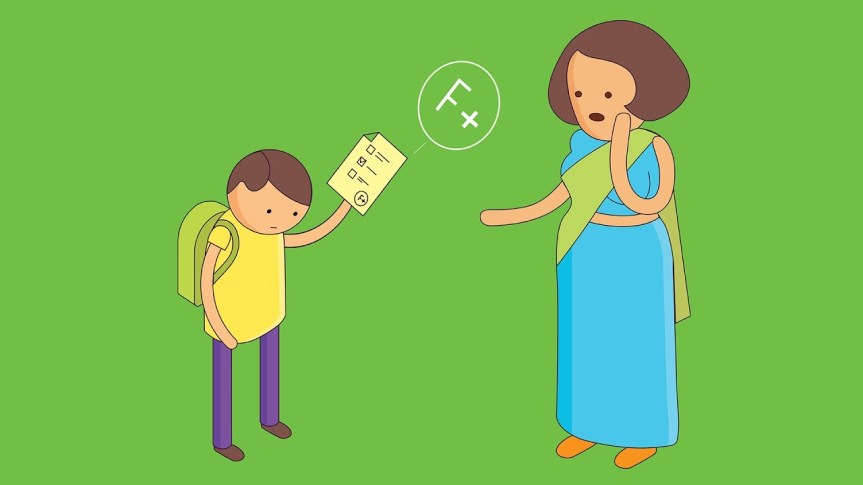
A majority of Indian school students do not have the means or privilege for online education. Some face network and technical glitches. Some face electricity problem. The non-availability of gadgets is another problem. Accessible and compulsory education has always been a challenge in India. Right to education is something that is written merely on paper not exist in the real world. The pandemic broadened the pre-existing gap making online education a commodity of sheer privilege. During the lockdown, thousands of students have suffered due to the digital divide. Taking the example of the Indian state with the highest literacy rate, Kerala witnessed numerous cases where students took away their lives due to a lack of accessibility to digital tools. sometimes Internet accessibility act as a hindrance.

 the obvious failure of the system and concerned authorities witnessed from the devastating act of suicide by the students. Not just that; for powering devices, access to electricity is crucial for digital education. Some states such as Bihar and Uttar Pradesh have a severe problem with electricity.

In the rural area, the houses received electricity for less than 12 hours a day. most of India’s population lives in villages where only 15% of rural households have access to internet services. Whereas in urban areas, it’s 42%. Moreover, India witnessed a spike in unemployment during the lockdown affecting the livelihood of millions.

Especially compulsion of electronic gadgets for online education became a severe problem as in rural areas subsistence is very difficult. Not every rural person could afford expensive gadgets. In most households with a meager income, eating three meals a day was not guaranteed, purchasing costly internet plans or devices cost them a fortune. From mortgaging assets to cutting off on essential household expenses, families have done it all to make online education a possibility when the government schemes failed to reach the neediest. 

Although several NGOs, social groups, and individuals rose to link this digital gap by sponsoring smartphones and laptops, the negligence by the authorities can’t be overlooked. An ordinary Indian citizen expects its government is to at least acknowledge the problem. After all, how will one solve the problem if one does not acknowledge it!

Nepotism in today’s Bollywood

we are living in a feudal society, but still, nepotism permeates everyone. however, the film industry is trapped in nepotism.
Nepotism can be defined as an act of using power or position in an unethical manner to get the dear ones in the same field. It not only exists in business but also in the Bollywood industry. this topic has been raised many times in the Bollywood industry and unfortunately having a negative impact rather than a positive impact on the lives of celebrities. Before the incident of Sushant Singh Rajput, this topic was not discussed seriously. But after his death, Bollywood was trapped in nepotism and many celebrities were interrogated. many celebrities talked about nepotism openly. Some talked positively and some in a negative manner.
Kangana Ranaut came into the industry in 2006 with the movie Gangster. She was the one to raise this topic negatively as she labelled filmmaker Karan Johar as the flag bearer of nepotism in the show Koffee with Karan. Due to this, she gained prominence. She also called Tapsee Panu and Swara Bhaser outsider. After Sushant Singh Rajput death many actors were trolled and questioned on nepotism . Because of this, many celebrities also lost fan following.
We often say that some star kids are excellent actors and done their work very well. But we said some not all because some star kids don’t take their work seriously and due to the lack of seriousness films get flopped. Nothing is wrong with exercising power based on one’s family background/star kids, but at least chance should be given to the newcomers or outsiders and even to those who don’t have any connections or godfather in Bollywood. So, they can make their names and show their talent to the public.

Real Happiness

Today in this consumerist world, the actual meaning and definition of happiness got changed. Earlier the happiness lies within the relations between the people. But growing industrialization and materialistic nature. Change the meaning of happiness for common people. today’s happiness is not the smile of the people. But the luxury became the source of joy and happiness. Social media and the internet managed to make human beings individualistic. Relation and ties among the masses are just a matter of messages. The real happiness now lies in materials and luxuries. Humans want more and more. The never-ending demand and grief of the human have wiped the concept of the real happiness. It changed its meaning. It alters its values. The early tradition, rituals, and get together don’t matter anymore. Today rituals are just a matter of fun. People don’t believe in meeting with each other. Humans today happy in the isolation. With all the materialistic objects and comfort. But if material and luxury are not happiness. Then what is happiness? It is something that we get after seeing someone happy. It is something we get after helping someone else. By looking after anyone else than yourself. It means keeping aside the greed and doing generous work. It means sidelining your sorrow, ego for someone else happiness. The sad fact is that today humans do not look after happiness. Now the happiness doesn’t matter to humans. Human is lost somewhere in the consumerist world. And so human happiness also lost.
The need of the time is to look for the real happiness. To realize that real happiness comes when you do something for someone else. Materialistic things can give you comfort and luxurious life. But it can’t give you that warmth that happiness that feeling that a real human being can give you. Human being need to understand his/her role as a human And need to look after other people to there dearest one. So that along with happiness ,humanity can be saved.

Biden Rules begins

President Joe Biden has baited office in a country looking prominently different than it did on his forefather’s inauguration Day.Covid19 has killed more than 4,00,000 Americans, with a big part of socio-economic toll impute to federal Mismanagement, The US has also renounced its role as leader of the free world, squabbled with democratic allies while keeping authority populist’s everywhere, snicker at its post-truth misadventures. This month’s attack on the capital represented the domestic broadcast has poisoned the polity. In the short, the new administration has its work cut out invent correctives at multiple levels. It is a mighty challenge. But democracy is hypothetical on elections making a difference.

The promise of a new dawn is both powerful and credible. The diversity, temperance, and experience of the incoming cabinet strongly suggest that they have a good measure of the problems at hand, and the ambition to attempt solutions one clear aspirational target is 100 million doses of covid19 vaccines n the first 100 days. Then, Janet L Yellen, who will be the new treasury secretary and America’s top economic diplomat, has verbalized as priorities both addressing the economic damage of the pandemic at home and repairing relationships with various allies abroad to take on china’s (illegal, unfair and abusive practices) collectively.
After the vain of institutions and Clutter or flailing seen in the Trump years, it will indeed take solid international cooperation to revitalize the global rules-based order. The incoming secretary of state Antony Blinking has shown a welcome so be saying,(We’ll engage the world, not as it was, but as it is)Pragmatically speaking, rebukes on human rights issues for India may be part and parcel of Washington’ liberal festival alongside the many Indian and American in the Biden Team.

Women empowerment

Amongst covid-19 pandemic, 2021 budget has potential to increase women labor force participation up to 2 percent this year.

Nirmala Sitaraman, Minister of finance, the government of

India shared that budget 2021 has the potential to increase the employment of

women. COVID-19 pandemic had disproportionately impacted women

forcing them to drop out of the workforce. The women labor force participation according to the center comes down from 25 percent to 21 percent, due to job loss by women. In urban India only 12 out of every 100 still employed are women, a shocking

statistic, down from the already low 18. No doubt the covid 19 pandemics have resulted in many challenges such as pay disparities and expensive child care is an economic downturn that hit women workers measurably harder than men. Whenever the economy shrinks people lose jobs, then look for another job but women aren’t sitting it out so much as being pushed out by disproportionate job loss, 

lack of child care, pay disparities, and lack of public policy to support working women. women with children are much more likely to report that working from home has hurt their productivity and affected their careers  .there are three drivers of increased women labor force participation 1.Jobs that exist in locations where the woman has family support.2) Contemporary and new skilling (like digital marketing, for instance) that allows for marketability3) A government mandate that enables small businesses to be rewarded for hiring more women. The allowance of women to work in all shifts is a move towards reducing the gender divide brought in by COVID-19. This will help industries such as IT and BPO in Special Economic Zone’s, manufacturing companies in sectors such as Textiles, Pharma- as well as large organizations with a national presence. The textile industry, one of India’s ancient industries that employ the largest numbers of women has received a big stimulus with the announcement of seven Textile Parks. The third aspect which would allow small businesses to be rewarded for hiring women has not seen any pull in any of the budgets presented in the few last years. Large organizations in metropolitan cities have already bought the business case for both genders that led to women’s employment being enhanced. It is the 2 and 3 level metropolitan cities and towns that need the influence of involvement. And this is where there is a large population of women – educated, career-seeking, and yet unable to earn

reasonable money due to the non-availability of jobs matching their aspirations. As per data, young women in the age group of 20-24 across urban locales, are more interested in being employed than similar-aged women in rural India. As such, this is a very important talent pool, waiting to be engaged. The BPO and micro-enterprises in these locations will require a stimulus to engage women more proactively. Had the budget addressed this, by providing a bit small, yet encouraging a sum of money to employers of women, India would have seen a jump in women’s job creation to almost double-digit increases, which will have a multiplier effect on the economy.

WhatsApp’s new privacy policy.

Identifiable living individual and includes names, email Ids, ID
card numbers, physical and IP addresses. Data is the large
collection of information that is stored in a computer or on a
network. Data is collected and handled by entities called data
fiduciaries. The processing of this data has become an
important source of profits for big corporations. Companies,
governments, and political parties find it valuable because
they can use it to find the most convincing ways to advertise
online. The physical attributes of data where data is stored,
where it is sent, where it is turned into something useful are
called data flows.

WhatsApp’s decision to delay the update of its privacy policy,
following a backlash from its users, is an implicit
acknowledgement of the increasing role played by
perceptions about privacy in the continued well-being of a
popular service. Problems for the Facebook-owned app
started earlier this January when it announced an update to
its terms of service and privacy policy, according to which users would no longer be able to opt out of sharing data with
Facebook.

February 8 was kept as the deadline for the new terms to be
accepted. This triggered a mass withdrawal from WhatsApp,
the likes of which it has never encountered, not even in the
aftermath of the Cambridge Analytical scandal, which did
bring a lot of bad press to its parent, or when the messaging
app’s co-founders called it quits a few years ago. The
WhatsApp policy update has clearly spooked many users,
who, concerned about their privacy getting compromised,
have shifted to alternative platforms such as Signal and
Telegram. WhatsApp has asked for data which contains your account
information such as Phone number, the name attached to
the account, the profile photo you currently have for
WhatsApp, the device you are using, the time when you have
been online, all your contacts, all group names of which you
are a part of, the device type, the IP address, device build
number, device manufacturer, details of the web/desktop
version and the platform which is used for WhatsApp Web,
your Status.

It also has the exact time when you set the
current profile photo and the current status message. The list
includes all contacts with whom you would have chatted on
WhatsApp, and only the mobile phone numbers are
mentioned. It also has your settings for the app, including the
privacy settings for Last Seen, Profile Photo, About Privacy

and Status Privacy. It also includes a list of the all numbers
you have blocked and whether you have Read Receipt on or
off. The issue has once again raised questions about what
constitutes legitimate uses of data and how businesses,
governments and political parties can and cannot use data .A
White Paper produced by a government-appointed
committee, headed by retired judge B.N. Srikrishna , which is
formulating a national data protection law for India and its people to safeguard there interest.

Media mere puppet for politicians and giant corporations.

Media, the fourth pillar of democracy act like a puppet in front of politicians lately. With many toolkits, cases highlight. Excessive paid news reporting during Election. Exhibits how media is governed by political parties. Today massive advertisement by the political parties shows the nexus between media and political parties. Showcase their close economic connections. Media also alleged for running agenda and propaganda for their allied politician during elections. Which hampered the credibility of the media. Many journalists appear to favor their alleged political parties openly in their text, report, and debate. Even the questions asked in interviews are biased one sustaining only one side or party. Its been observed during elections, this funding increase manifold. To dominate media investment partnership, toolkit, gifts, privileges are some tactics that political parties used without coming into suspicion. Such malpractice is performed by political parties to bribe the Media. To use it as a weapon during election campaigns. witnessed in the way media seems divided in their message. They showcase only the positive side of their party, their positive work shaping the idea and ideology of the common people. Media runs agenda and propaganda to deviate audience from the basic problem of the society and shift towards the direction their funders want. media propagates only those messages there supportive parties want. Maximum paid news reports are linked with political parties. Many politician leaders names are highlighted and summoned by the election campaign. But lack of proof and unwillingness lead to no fruitful result. And no severe action was taken place. Now media listen and write only what there investor wants. The incomplete, partial and biased information shared by the news channel became a hindrance for the sovereignty of the country. Severe actions and identification of the political parties became the necessity of time. the large number of manipulation on the part of the media shows that it has lost the credibility and trust that people have in them prior. Passive audience are consuming the biased or manufactured message that can hamper the autonomy and sovereignty of the country. Nowadays, Beside politicians many private institutions and cooperate giants seem to invest their large chunks in the media .For example, Mukesh Ambani, his family and friends owned INX Media recently. That show media became a puppet now.

LEGISLATIVE AND JUDICIAL ATTEMPTS TO BURY THE BASIC STRUCTURE DOCTRINE

Introduction:

The doctrine of basic structure is not defined in the constitution of India. The term has evolved as a result of various judicial decisions by the years. The Basic Structure Doctrine of Constitution of India states that the parliament can neither destroy nor alter the basic structure of the Indian constitution. The doctrine is applicable only to the constitutional amendments.

The basic features of the Constitution are:

  1. Supremacy of the constitution.
  2. Republican and democratic form of government.
  3. Secular character of the constitution.
  4. Federal character of the constitution.
  5. Separation of power.
  6. Unity and Sovereignty of India.
  7. Individual freedom.

                                                                                                                                                      Within their respective jurisdictions, the Parliament and the state legislatures are entitled to make suitable laws for the sake of people. The Bills regarding amendment of Constitution can only be passed by the Parliament itself. But the power is absolute and limited to some aspect. The Supreme Court of India holds the power to declare any law which it considers inconsistent with the Constitution invalid. In other words if any bill is passed by the Parliament which does not follows the ideals of the Constitution will be held invalid and void by the Supreme court. This doctrine has been laid by the Supreme Court to ensure and preserve the will of the Constitution and the ideology behind it. Hence, the Parliament cannot destroy or alter the basic structure of the Constitution. 

Evolution of the Basic Structure Doctrine:

The term Basic structure Doctrine has evolved through various decisions of the Supreme Court on the powers of parliament and judiciary. There was a dilemma between Article 13 and Article 368, the question raised was which of the Article had an overriding effect on the other.

Shankari Prasad vs. Union of India[1] (1951)

In this case, the First amendment was challenged on the ground that it is in violation to the Part-III of the constitution. Therefore, it was suggested that it should be considered invalid and void. The Supreme Court held that the Article 368 of the Constitution states, ‘the Parliament has the power to amend any part of the constitution including fundamental rights.’

In Sajjan Singh Vs State of Rajasthan[2] case in 1965 the Court gave the same ruling.

Golak Nath vs State of Punjab[3]

In this case in 1967, the Supreme Court held that the Parliament is not empowered to amend Part III of the constitution as the fundamental rights are immutable. The Supreme Court overruled its earlier decision.  According to the Supreme Court ruling, Article 368 lays down the procedure to amend the constitution, that does not give absolute powers to the parliament and to amend any part of the constitution.

The 24th Constitution Amendment Act

In 1971, the Parliament passed the 24th Constitution amendment act. The act gave absolute power to the parliament, in order to make any changes in the constitution and also the fundamental rights. It also made it obligatory for the President to give his assent on all the Constitution Amendment bills sent to him. This move was executed evidently in the favor of Smt. Indira Gandhi and her government.

Kesavananda Bharti vs. State of Kerala[4]

In this case, the Supreme Court upheld the validity of the 24th Constitution Amendment Act and reviewed its decision in the Golaknath case. The Supreme Court held that the Parliament has power to amend any provision of the constitution but the basic structure of the constitution is to be maintained as it is. But the Apex Court has not provided any clear definition for the term basic structure. It held that the “basic structure of the Constitution could not be abrogated even by a constitutional amendment”.

Attempts to bury the Basic Structure Doctrine:   Many politicians, experts and ministers were against the basic structure defined by the earlier cases. This led to challenges against the verdict of the court. In 1975, the Supreme Court reaffirmed the concept of Basic Structure Doctrine. This happened when the victory of Prime Minister Indira Gandhi in the elections was upheld by the Allahabad High Court on the grounds of electoral malpractice. Justice Krishna Iyer granted a stay allowing Indira Gandhi to work as the Prime Minister on the condition that she would not draw salary and speak or vote until the case was decided. But, while the court was hearing the case, the parliament passed the Thirty- ninth amendment o the constitution. This amendment removed the authority of the Supreme Court to handle cases with regard to elections of President, Prime Minister and the speaker of Lok Sabha.  Instead a body will be constituted for resolving such disputes. The aim of the bill was evidently to benefit Smt. Indira Gandhi. Some amendments were also made to the Representation of Peoples Acts of 1951 and 1974 and placed in the Ninth Schedule along with

the Election Laws Amendment Act, 1975. The mala fide intention of the government to save the face of Indira Gandhi in case the Court passed a verdict against them was proved by the hurry in which the Thirty-ninth amendment was passed. The bill was introduced on 7th of August, passed by the Lok Sabha the same day, and Rajya Sabha the next day, the President passed it giving his assent 2 days later and it was gazetted on 10th August. The counsel for the opposing party challenging Indira Gandhi argued that the amendment violated the basic structure of Constitution and hence should be held unconstitutional.  It affected the power of judicial review and the basic features including conducting of free and fair elections. They also argued that the Parliament is not empowered to decide if the election were valid or not stating the incompetency to use its constituent power to hold an election that was declared void by the High court. The court upheld the amended laws, striking down the law which restricted the power of judiciary to adjudicate the situation. The judges grudgingly accepted the Parliaments power to pass overriding laws.

Within three days of the decision of the election case, C.J. Ray convened to review the Keshavanandan Bharti case verdict with regard to a number of land ceiling petitions. The opposing party’s counsel argued that it was an unnecessary move. The bench dissolved soon after it and people doubted the government’s indirect involvement in the issue. The National emergency was declared in 1975. Soon after the Congress party constituted a committee with Sardar Swaran Singh its chairman to review the question of amending the Constitution. Through the 42nd amendment several changes were incorporated which also included that any amendments by the Parliament in the past or in future in the constitution cannot be questioned by the court.

Minerva Mills and the Waman Rao cases[5]

In this case the owners of Minerva mills challenged the 42nd amendment in the Supreme Court. Mr. N.A. Palkhivala from the side of petitioners decided not to challenge the government’s action instead he framed the challenge to Parliament’s power to amend the Constitution. He argued that the section 55 of the amendment provided unlimited power to the Parliament. He added that Article 31 C violated the Preamble and the basic structure doctrine, hence should be declared unconstitutional. It also took away the power of judicial review.

The majority judgment (4:1) held the amendment to Article 31C unconstitutional.’ It destroyed the harmony and balance between fundamental rights and directive principles which is an essential or basic feature of the Constitution.’ In another case relating to a similar dispute involving agricultural property the apex court, held that all constitutional amendments made after the date of the Kesavananda Bharati are subject to judicial review as the same procedure as prior to the 42nd amendment.


[1] AIR. 1951 SC 458

[2] AIR 1954 Raj 301

[3] 1967 AIR 1643, 1967 SCR (2) 762

[4] 1973 4 SCC 225

[5] 1980 AIR 1789

“Born To Fly”

Without faith, you are as a crow who has forgotten his ability to fly; you peck at the dark, muddy earth when the bright mountains lie before you.

– Seth Adam Smith

We are born to fly, don’t forget your ability and qualities. You are strong enough to change the world. You can fight your battle alone and defy everyone. If you’re gonna think yourself weak, then you will be weak but if you’re gonna think yourself strong, you will definitely be strong, it’s just a matter of thinking.

If you are not gonna trust yourself, nobody will ever trust you. Yes, you are born to fly high in the sky.
Have you listed the song “Toota Toota Ek Parinda”, it motivates me to try hard to achieve my goals because always remember one thing – if you are gonna try, then you will be broken, you will learn, you will accept your failure but if you are gonna try, then you will never be able to change you and your destiny.

We watch motivated videos but don’t you think we should watch failure one rather that? Failure one teaches us about those mistakes what we shouldn’t do.
So everyone is “BORN TO FLY” in their own field and has their own capabilities and abilities.

Are we getting right education?

Are we getting right education or we are just mugging up things for exams? Because as far as I see, we are just mugging up for exams. Do you really feel that it will be helpful for us in our future life? Do you really feel that you can keep you report card all the time with you where you got 9 CGPA?
I think the answer should be NO, because it’s just a matter of our critical thinking and knowledge for sure irrespective of the marks what we got in our exams.
Now a days I have seen a lot of kids does only learn the questions and answers section of the particular chapter, even I used to do the same when I was too young. Everyone talks only about exams and all but they never ask – do you really learn anything from this? Because each and every student including their parents wants their children to be a topper. Do you really feel is it possible for every children to be a topper?
I think NOT AT ALL. What I have learnt in my life is don’t do that thing if you don’t wanna do that. Don’t compare yourself to anyone. Try to understand the meaning of each single word you are reading, because of this habit you will forget to mug up and learn new things each single day.
Marks doesn’t matter, so don’t compare your talent to your marks because marks has given only on the basis of the answers you have answered, it’s really not a test of your whole talent.
But yes, it’s doesn’t mean that marks are not important. See we need marks for choosing any stream in 11th class then we need to get very good marks in our 12th boards as well for taking admission in the college after that if you wanna pursue Masters, you will need good marks in your graduation too.
It’s also true that average marks it not enough, for taking admission we need high marks. So yes marks are very very important, but focus on your critical thinking and learning process as well.

Online vs Offline learning

During this pandemic online learning is becoming more and more popular which provide us an opportunity to dream different skills from home.

Online Education – Online Education is a very flexible learning system that allows students to study solely via the internet on their own computer at home, or whatever they see fit.
Basically, student – teacher face to face meetings are not required, allowing students to study anywhere in the world.

Offline Education – Also referred to as traditional training. Offline Education means a student needs to go in a classroom, and attend a class face to face with a teacher.

Difference between Online & Offline Study

• With offline learning, participants are required to travel to the training location, typically a lecture hall, college or classroom. With online learning, on the other hand, the training can be conduct from practically anywhere in the world.

• Online learning usually has a more flexible timescale carried out between office hours and doesn’t offer as much flexibility to the learner or the trainer.

Although online learning has become the preferred method for the majority of learners, it’s important not to dismiss the benefits of offline training too.

With offline learning, it’s easier to ensure attendees are paying attention to the training. Some learners also find it easier to retain the knowledge and skills they have learnt through offline training than they do with online training.

Sometimes it’s better to be quite

It is better to remain silent at the risk of being thought a fool, than to talk and remove all doubt of it.” ….

Sometimes it’s better to be quite and alone with yourself despite being frustrated with someone. In every phase of life, we have to suffer from different kinds of situation.  These situation makes us stronger and mature day by day.
At some stage of life we have to face that types of people, where often we lose our patience level too but you need to understand that sometimes you should be quite inspite of questioning and answering them.
An important thing which I noticed about matured person is that a mature one would never speak between them who think themselves right, that only they know everything and who are egoistic.
Maturity comes from the hardest situation what we have faced in our lives. Situation teaches us the difference between to be happy alone or to be sad with someone.
It’s your life, your decision, you can choose what makes you happy irrespective of everything.

A meaningful SILENCE is always better than a meaningless WORDS

Dream College = Hindu

Hindu College is a constituent college of the University of Delhi in New Delhi, India. It offers undergraduate and postgraduate programmes in sciences, humanities, social sciences and commerce. In 2020, it is ranked 3rd nationally by NIRF under Ministry of Human Resource Development (Government of India). The college has produced many notable alumni in the field of Laws, Economy, Science, Psychology, Business, Philosophy, Literature, Media, Cinema, Military, Sports and Politics. Notwithstanding its name, students from all religions are admitted to Hindu college.

Societies

Every department has it’s own society which is tasked with organising the department specific co-curricular activities.

Ibtida is the dramatics society of Hindu College which performs both stage and street plays.

The women’s development cell of the college has been very active in gender sensitisation and after the scrapping of section 377 successfully led pride parades to create awareness about LGBTQ+ rights.

The Indian music society, Alankar, holds its annual festival Harmony every year.

The English debating society, popularly known as the Desboc, is representative of an inquiring and active intellectual life on campus. Debsoc is the only debating society in Delhi University to organise four major debates in an academic year.

Other societies include Abhyas– The Internship Cell; The Finance & Investment Cell; Abhirang, the Hindi Dramatic Society; Adhrita, The Indian Dance Society, that works to maintain culture and heritage and conduct the only dance fest of DU; Abstraction, the Fine Arts Society; Aria, the Western Music Society; Manthan, the Quiz Society; Srijya, the Contemporary Dance Society; Scribe: The Literary Society ; Masque, The English Dramatic Society; Vagmi, the Hindi Debating Society; and Vivre, The Film and Photography Society

Online Learning

“Live as if you were to die tomorrow. Learn as if you were to live forever” – Mahatma Gandhi

ONLINE LEARNING
Lockdown is not meant to countdown days. Staying indoors can never stop someone from learning what they need. Learning a skill can help an individual to achieve his/her dreams. There are too many online platforms that can help one to master a skill of their choice. Owning a skill which can help you in taking higher levels in career is better than wasting time and making minds idle. As the proverb goes “an idle mind is a devils workshop”, it’s better to learn something which can build you stronger than what you are now. Online classes are now more interesting and interactive. In this rapid advancement of technology, online learning is a part of many institutions.it also offers the perks of attending classes from one’s dream university in abroad. One can even socialize with even in this social distancing and curfew through online mode. Live face to face interactive sessions are really interesting that it helps an individual to be more attentive in the class than the lecture hours. Taking an online learning program one will be an officially registered student in the institution and have access to the same resources such as an on-campus student like digital library and student union membership etc. As a ship without a captain is like a bird without wings, there are captains and mentors to guide students in online learning. An essential way observing a large amount of information in a relatively short amount of time, lectures are a staple of online and computer based learning, one can attend lecture from any place. As online student one can choose to access any course information and complete the assignments anytime. This allows a student to fit study time in and around his/ her work, family and other commitments. This also helps students who wish to work while continue studying need mot put their careers on hold and get the best of both student and employee worlds.

Five Examinations that a Humanities Student Cannot Miss

If you’re a student of Humanities/Arts stream and completed/ going to complete your +2 from any recognized Board and you are aspiring to kickstart your career from a reputed University, give this article a read and you’ll be familiarized with five All-India competitive examinations you can attempt to secure Higher Education from reputed Central Universities in Arts stream. 

Firstly, let me familiarize you with IIT-HSEE. IIT-HSEE is an annual entrance exam conducted by the Humanities and Social Science Department of IIT Madras. On clearing this examination, you’ll be selected on a merit basis for pursuing a five-year integrated program in Developmental Studies or English. However, what makes it competitive is that thousands of students attempt it every year and only 58 aspirants can clear the same. One has to attempt two papers, the first being subjective and the second, objective. Paper one consists of thirty-six questions from English and comprehension skill, thirty-six questions from analytical and quantitative ability and eighteen questions each from Economy, Society, World Affairs and Ecology. Paper two will require you to write an essay for thirty marks on a general topic within thirty minutes. Hence, the total time for completing the examination of 174 marks is 180 minutes. 

Secondly, one of the most sought-after examinations after class 12th for any candidate aspiring to pursue higher studies in Social Sciences is DUET-NTA. Clearing DUET will land you up at the University of Delhi. The examination is conducted primarily for two courses: Humanities and Social Sciences and Economics. This exam will be of two-hour duration with a hundred objective questions that carry four marks each. One mark will be deducted for each incorrect answer. The questions will be primarily from General Awareness, Current Affairs, Communication Skills, Logical Reasoning and Analytical Ability. 

Thirdly, I’ll introduce you to TISS-BAT. This examination is similar to IIT-HSEE but the examination will be for 100 marks. Similar to IIT-HSEE, the examination will be conducted in two parts- the first part carrying 60 objective-type questions of one mark each that has to be completed within an hour. The second part is subjective comprising two descriptive questions carrying twenty marks each that has to be answered in forty minutes. On qualifying the same, you’ll be granted admission to BA Social Sciences or BA Social Work at Tata Institute of Social Sciences. 

Fourthly, I’ll introduce you to CUCET or Central Universities Common Entrance Test that is conducted annually for admission into various courses in eighteen central universities. The question paper will consist of a hundred objective type questions carrying one mark each where 0.25 marks will be deducted for each incorrect answer. The questions will be divided into three categories with Part A being General Awareness of 25 marks followed by Part B comprising questions from Teaching Aptitude. Part C shall consist of four sub-parts from which the candidate can attempt any one from Social sciences, Language, Physical Sciences and Mathematics and Life Sciences. 
Finally, I’ll introduce you to the SET or Symbiosis University Entrance Test. There will be three categories of this test: Symbiosis Law, Symbiosis General and Symbiosis Engineering. Here, I’m interested in Symbiosis General. The test will have seventy-five objective questions with a written ability test. The former will be of seventy-five marks with four sections viz. English, Quantitative Aptitude, General Awareness and Logical Reasoning. The latter shall be of twenty-five marks. The entire examination shall be of 105 minutes duration.

VOCATIONAL EDUCATION

What is vocational education?

Vocational Education and Training (VET) is a job-oriented technical training course for students who want to focus on a specific career opportunity. In this, the main focus is on a specific career opportunity. Students are provided training, instructions on a specific course. At the end of the course, they are given a certificate which ensures they are well-trained in their work. This type of education is a great asset to our country. Nowadays vocational schools are opened in which students are provided training according to their courses. Students can join such training in high school or even after their graduation. Here is a small list of vocational training:-

  • Architecture
  • Science
  • Art and craft
  • Business administration
  • Project management
  • Law 
  • Media studies
  • Leadership and management
  • Computer science and IT
  • Humanities
  • Hospitality and travel

There are several other courses available too. After this course, you will have excellent job offers in your field. Several colleges provide vocational training:-

  • Jai Hind College
  • SNDT Women’s University
  • GGSIPU
  • Meera Bai Institute of Technology
  • IIFA Lancaster Degree College
  • Pondicherry University
  • ST.Pauls Institute of Communication
  • Tata Institute of Social Science
  • Frameboxx 2.O Animation and Visual Effects
  • George College
  • Ambedkar University
  • Amity University

Like these, various number of colleges are there with vocational courses.

Top-rated courses which are available in vocational education :

  • Integrated B.A+B.Ed
  • Bachelor of Physical Education and Sports
  • Post Graduate Diploma in Counselling and family therapy
  • Bachelor of Education(B.Ed)
  • Nursery Teacher Training(NTT)
  • Early Childhood care and education

Benefits of vocational education

The most important benefit of vocational education is specialisation. After you complete your course you will walk out as an expert in your field.

You will perform better as you would have excellent knowledge of your work.

As you will be specialized in your work, you will have better chances of employment as compared to other people and also vocational courses may help you in getting higher-paid jobs.

It helps you a lot in your personal development.

vocational courses may help you in getting jobs in foreign countries also.

This is a very good source of earning for school dropouts or for the people who couldn’t attend college.

In vocational courses, a better learning environment is provided to the students. They provide thorough learning of the courses.

In agriculture, the vocational course gives you solid help. Technical training and knowledge of pesticides, seeds, irrigation are very much important. And in the vocational course, you get to know everything in detail about everything related to agriculture.

Historically vocational courses were done in the classrooms only. But in recent years the study has been shifted online also. Professionals provide education through online mode which helps students in remote areas to study at their homes. This became easy too because now anyone can attend their classes anywhere.

This type of education has helped a lot for young people. More people can be employed. More people can become independent. Their confidence builds a lot. Their lifestyle becomes better. 

Are online classes being able to replace traditional classrooms?

With the rise of the pandemic and the extended lockdown, educational institutions have been prompted to shift towards online teaching. While initially digital classrooms seem to be a great alternative, whether it can successfully replace traditional classroom teaching is a question yet to be answered. Online teaching has also posed a threat to students belonging to the economically backward sections of the society. In a country like India, a great percentage of students do not have the access to such means or find it difficult to avail those options.

Photo by August de Richelieu on Pexels.com

According to survey findings there is a noticeable change in behavior and habits following the forced lockdown among the school goers. The sleep cycle and sleeping pattern of nearly 50 per cent children have been disturbed. It also indicates that 13 per cent of children have no regular pattern of sleeping. As a result, 67 per cent of parents think that their child’s screen time has gone up by at least 50 per cent during the lockdown. Increased screen time is known to severely affect concentration levels and leading to insomnia and other sleep disorders. The fear of pandemic has affected children in the worst way, nearly 40 per cent of the children who were surveyed, have been known to have mental health and unaddressed anxiety issues.

Schools and Colleges have set timetable in such a way so that there are breaks in between classes but because of network connectivity issues, students have started logging in earlier, which have lessened the break times. A teacher said in an interview, “In the first month, things were fine but with time students are losing interest and a kind of boredom is setting in even for the bright kids. For students in senior classes or those who will appear for board exams there is pressure from teachers and parents which is taxing.” After attending classes online, many students are also sitting for online tuition or extracurricular activity classes.

Photo by Andrea Piacquadio on Pexels.com

Teachers of many schools have reported that students have become “more subdued” in class and their energy levels have decreased than before. According to psychiatrists and teachers, months of being inside and attending classes from within the screen has made students “fatigued” and “demotivated.” Even students who are academically strong have not been responding in class like before, teachers said. They have observed that the “naughty and mischievous” ones who would always be up to some mischief in classrooms have become “quiet and subdued” during online classes.

Psychiatrist Jai Ranjan Ram said to a newspaper, “Teachers are trying but online classes are not the same as what school was for children. No wonder they are feeling demotivated and fatigued. They have to attend continuous classes on the screen, at times not on laptops but on phones. All this while there is monotony of the same environment. It’s difficult to maintain a sense of well-being. In an online class the nuances of non-verbal communication are completely lost.”

Photo by energepic.com on Pexels.com

Sneha Priya S, Co-Founder & CEO of SP Robotic Works, has said, “Covid has proven to be the turnstile for education in India. The current situation has unearthed the immense potential of platforms with experiential and interactive learning which engage children in practical tasks and logical reasoning.”

In a physical classroom, students and teachers would even discuss things not related to academics and eagerly share their experiences. While there are downsides, there are also some positive aspects to it. Educational institutions have been closed for months at a stretch. With online classes there is the possibility to catch up with studies. Many students feel that at least in an online mode there is some form of interaction which helps them in these trying times. Online classes have made possible for students and teachers to get back to their routines within safe conditions. They also provide students with something to look forward to everyday. But amidst the current social conditions, students long to go back to their campuses. As we adjust to the ‘new normal’ many young people who are at the beginning of their career are also uncertain of what challenges they might face in the future.

Final Year Exams: Supreme Court to Announce Its Verdict Tomorrow

University Grants Commission’s (UGC) had passed on a circular on July 6, regarding the conduction of the final term university examinations during the novel covid 19 pandemic. The Supreme Court will pronounce its verdict on the pleas challenging the UGC circular.

UGC had earlier approached universities to view and get the status about the exams. It received responses from about 818 universities (121 deemed universities, 291 private universities, 51 central universities, and 355 state universities). Out of the 818 universities, 603 have either conducted the examination or are planning to conduct it in some time. While 209 others have already conducted examination on either on-line or off-line mode and 394 are planning to conduct examination in on-line or off-line or in a blended hybrid mode towards August or September.

Photo by Burst on Pexels.com

A bench headed by Justice Ashok Bhushan, R Subshash Reddy and MR Shah, had reserved its judgment for the matter on August 18. They will be pronouncing their judgement after a detailed hearing continuing for 2 days.

Last week, four states and Union territories – Maharashtra, Delhi, West Bengal and Odisha – had urged the apex court to give directions to the UGC to not impose examinations on lakhs of final year university students during the present condition. The court had concluded the hearing but deferred a judgement on the issue. Some states said they were not consulted before taking the decision regarding examinations and selecting the UGC guidelines. They have also said that the state governments have the power to take health related decisions in the interest of the people. The UGC Guidelines did not make sure of this and the opinion of the states were not taken into consideration while the guidelines were constructed.

A group of as many as 31 students from different universities across the country had approached the Supreme court and opposed the UGC circular dated 6 July. In that plea, the students have opposed the direction given to all universities in the country to finish taking the final year examinations before 30 September. The students have made a petition and requested for the examinations to be cancelled. They have suggested that the results of students could be calculated on the basis of their internal assessment or mid-term exams and past performance in previous years/semesters. In the petition it was requested that mark sheets of students should be issued before July 31. The petition was filed by students from across 13 states and one union territory. One of the students, among the 31 petitioners, who had tested positive for coronavirus have asked for directions from the UGC about the examinations. He has asked the UGC to adopt the CBSE model and conduct an examination at a later date. This is specially for the students who are not satisfied with their marks and the assessment of the papers. The plea suggested that previously planned examinations should be cancelled, keeping in mind the interests and health of the students in such a situation of the country, when the number of cases were rising every day. All educational educations across India were closed for the past few months due to the pandemic situation and the lockdowns. Most institutions have however started taking classes for intermediate students in the form of online classes/ lectures.

The Supreme Court will give its judgement and provide a verdict for the students, in a batch of petitions submitted for challenging the revised guidelines of the University Grants Commission (UGC) to conduct final year exams by September 30 of this year.

4 Tips for Effective IELTS Preparation

To migrate or study in English speaking nations, one needs to give an IELTS test. The International English Language Testing System (IELTS) assesses the person’s ability to speak, write, listen, and read in English. The test is designed to understand how you will use English in your daily life such as in university, workplace, or other social situations.

Before providing the tips on how to do the preparation, here is the breakdown of the types of IELTS test. There are two types: Academic and General. The IELTS Academic test is for those willing to pursue undergraduate or post-graduation or join a professional organization in an English-speaking nation. Second, the IELTS General Training test is for those who want to train or study at below degree level, to work, or to emigrate.

The formats of these two tests are a bit different, but the test assessment will still be on four skills: Reading, Listening, Writing, and Speaking.

Reading Test: This will include a wide range of reading skills such as attention to detail, a general sense of the passage, meaning derived from it, understanding of writer’s opinions, attitudes, and how will you understand the development of the argument.

Listening Test: It assesses how well you recognize opinions, attitudes, the purpose of the speaker, and also factual information and general ideas.

Writing Test: The Writing test is designed to measure the wide range of writing skills including grammar, vocabulary, how you can write responses, organize ideas, and recognize mistakes.

Speaking Test: The IELTS Speaking Test assesses how fluently and accurately you communicate in English. You can be asked to speak on various topics and express your opinions.

Getting back on how to crack the IELTS exam, just like any other test IELTS to needs some preparation. These four tips can help you ace the IELTS exam.

  • First and foremost, Read! Read! Read! Whether it’s a book, newspaper, magazine, or any written material. While reading, always have a credible English-English dictionary with you. This way you will work out the meanings of the new words making sure you don’t translate back to your language. You can also read an English newspaper every morning and listen to English news channels. It will enhance your reading and listening skills as well as keep you updated about the happenings in the world. Sounds good?
  • Improve your vocabulary! The more words you are exposed to, better will be your vocabulary. Jot down the words you have heard recently or you don’t know and highlight them with a marker. Check out its meaning in the dictionary and then start putting these words into daily speech. Using new words frequently will help in making your English fluent. As a fact, it takes from 10 to 20 repetitions to make a word part of your daily speech. Do see its pronunciation online if not sure. Speak those words while talking to your parents, friends, or somebody on call. This will increase your confidence and you will be well versed on the day of your exam.
  • Listen to English radio, shows, or news channels. After that try to write them down and analyze. Also with that, separately write words or sentences that were appealing to you. Use them while you write essays or speak. Don’t watch videos online since you can pause or rewind them. This won’t help as it will break your flow of listening. Hear it once only. After you are done repeat whatever you recall from the show, use stress and intonation appropriately. Make sure you record it so that you can find out your mistakes and improve accordingly.
  • So far whatever words you have learned, phrase them into sentences and then into paragraphs. While writing always set a timer. This will keep you at pace and improve your speed during the exam. Check for comma mistakes, full stop, and grammar. See-through the sample papers and find out what is the word limit given in the writing paper. Accordingly, write if say the set limit is 200 words don’t write just 150 words. This will lead to losing marks. Generally, a person is ok reading, speaking, and listening but they have a hard time writing, in that case, while practicing start with your favorite topic. Start with as basic as possible. Suppose you like chocolate ice cream, write on that. Sooner or later, you will get used to and can start with difficult topics. When you plan your essay, always have some spare time in the end to check your work.

Taking the IELTS test can be stressful so don’t forget to put these helpful tips. It will equip you to be ready for the exam. Commit and practice thoroughly. With this, you’ll feel more confident and be able to tackle the test and get the desired score.


College and University Admissions 2020

Students are very worried about their careers as all admission procedures have been delayed due to the Coronavirus pandemic. Many have expressed concerns over the delay and cancellation of exams for they might lose an academic year. Final year students are suffering the worst. Many students of intermediate years in have started their classes in online mode for now.  

Delhi University has scheduled its entrance tests for admission to 10 undergraduate and 86 masters and MPhil/PhD programmes from the 6th of September. The exams will be computer based and will be conducted by the National Testing Agency. They will take place from September 6 to 11 in three slots from 8 am. There will be 24 centers across the country. 1.47 lakh students have applied to the masters courses, and 21,699 students have applied for MPhil and PhD programmes. The undergraduate course entrance tests will be held for 3 management courses, journalism, education and a few specialised disciplines. 

Students are also worried about sitting for exams in this condition. There is the issue of social distancing and also wearing a mask, gloves and shield for 2 hours while appearing for an exam is quite taxing. The centres are located in specific cities so there is also an issue about travel restrictions and hotel accomodation. Some exam dates have also coincided with others as DU’s joint admission test for management courses and Common Law Admission Test (CLAT) is supposed to take place on the same day that is September 7. There is another problem about the masters aspirants as most of them have still not finished with their final year exams and yet to receive the degree. Students are waiting for the University to make an announcement and provide some clarification regarding the issue. JNUSU president Aishee Ghosh has expressed concern over the issue of students who are badly affected by floods and the pandemic. Many of them might not be in a position to appear for these exams in a specific centre.  

Jamia Milia Islamia has extended the dates of application for admission. The last date to fill the online application form has been extended to September 14. Students seeking admissions in any undergraduate course at the university can apply at the official website, jmi.ac.in or jmicoe.in.  

The applications for admissions under the sports category will end on September 16. This is applicable for students who play aports at the national, state, regional or university levels. Under the sports quota, students will be enrolled in both undergraduate and postgraduate courses. Sports including boxing, badminton, athletics, cricket, hockey, shooting, football, tennis, table tennis, volleyball, and wrestling will be accepted for the courses. 

The Jamia Milia Islamia University has been ranked amonf the top universities across india. Over 21,000 students are enrolled across 270 programmes in Jamia. This year, it has introduced 19 new courses including two MTech programmes, two MSc, and one MLib course. Among the undergraduate courses BSc aeronautics, four BVov courses, diploma in hospitality management, and three postgraduate diploma courses including entrepreneurship, innovation and design thinking.  

New sessions across colleges and universities have all been postponed due to the pandemic. The application deadline has been extended for almost all courses including free UPSC tutoring classes that are made to support candidates belonging to minorities, SC, ST community, and women as well as NRI admissions.  

NEW AGE OF ONLINE LEARNING

Getting educated has never been this easy. Putting the relevance of colleges under the spotlight.

A few decades back, not everyone had the liberty and the opportunity to go to college. The huge numbers of people joining colleges rather than the workforce was not the thing back then. 

The expensive college system paved the way for such a trend, which was also aided by the lack of infrastructure and other opportunities in most sectors which are quite relevant now.

The brick and motor system of people finishing school and then going to college to get a job has been changing slowly but significantly for the past few years. Lesser and lesser people have been seen shutting the eye towards getting a college degree to have a guaranteed successful career across the industries.

The current pandemic status quo is sure to have put a dent to this trend on a larger scale. With the ever fluctuations in the job market and the downward scaling of businesses, employees in most industries are scrambling to make sure that they will have a living by the end of the pandemic. 

Making the fear of the pandemic second to the fear of having a job to hold on to sustain a living. The hardships of having a job did not seen this hard in a while.

The upscaling of technology has certainly impacted the education system the most. With the widespread of internet and other gadgets, it has allowed people to even resort to remote learning; from upskilling to even pursuing degrees these days.

Aiding schools and universities to function on with their course structures to an extend.

It has also paved the path for people building up and pursuing shorter courses, which helps in building up certain skills and foundations in almost all the sectors of business. Contributing to a more conscious and productive workforce yet to have hit the floors.

People now have the liberty to sit from the comfort of their homes and with a few clicks be able to start doing a course to up skill their own person. Making the opportunities to learn a plenty and the easiest it has ever been.

The pandemic and shifts in the education system has promised that the system is never going to be the same again.

With people resorting to digital measures to eliminate their shortcomings of knowledge regarding different spectrums, it has started giving major companies sound grounds to even consider candidates without a proper degree for various job opportunities.

With the ability to receive information and answers regarding almost everything with just a click of a few buttons, has shown that the people are going the extra mile to incorporate additional skills that might help them become more educated to handle the tasks at work and also developing as professionals. Paying homage to the age old saying, “with great powers, comes great responsibilities.”

These all have made the jobs of the recruiters much easier, by letting them have the freedom to have a chance to hire people with the right skillsets, which would let them employ the workers without further training or other actions. Making the pace of the workplace faster than ever.

No Promotion For MBBS Students Without Exams: Medical Council of India

The Board of Governors of the Medical Council of India (MCI), medical education regulator, said in an advisory that no batch should be permitted to move to the next level of the MBBS course without an examination.

New Delhi:

The Board of Governors of the Medical Council of India (MCI), medical education regulator, said in an advisory that no batch should be permitted to move to the next level of the MBBS Course without an examination. The Board in supersession of MCI, after considering various representations received from students, colleges and universities raising various queries about reopening of medical colleges and conduct of university examination, has released an advisory today after a meeting through video conference held last month.

The advisory also said the colleges should aim to complete the first MBBS course (including practicals, lab, demonstrations etc.) within two months of reopening of the colleges as and when permitted by the government, and, thereafter, the first MBBS university exams should be completed as soon as possible, preferably within a month.

The pending supplementary examinations for final year MBBS students which were scheduled during the first half of 2020 should be conducted as soon as possible, as the students are waiting to appear for the examinations having completed the course once already and need not have to wait for the formal reopening of the colleges, the advisory said.

Such students will be joining the medical colleges or hospitals for doing internship just after passing final exams, it added.

“Regarding the conduct of 2nd/3rd (Part 1) and Final year MBBS examination for 2020, the time required for completion of the course would depend on the timing of the re-opening of the medical colleges,” it said.

The Board of Governors anticipated that as for the first year MBBS students, these students would also need about two months to complete the remaining course curriculum and training.

“Consequently, the University exams for 2nd and 3rd (Part 1) MBBS students may have to be delayed by two to three months beyond their scheduled dates,” it said.

It also advised that relaxations provided for the conduct of final year postgraduate examination in terms of the appointment of examiners and the exam patterns, would also be applicable for the conduct of MBBS University examinations.

National Education Policy after 2020

The Union Cabinet on Wednesday approved the new National Education Policy (NEP) with an aim to introduce several changes in the Indian education system – from the school to college level. A single regulator for higher education institutions, multiple entries and exit options in degree courses, discontinuation of MPhil programs, low stakes board exams, common entrance exams for universities are among the highlights of the policy.  Speaking to reporters, Union minister Prakash Javadekar said the changes are important as the policy, which was framed in 1986 and revised in 1992, had not been revised since then.

thequint_2020-07_31e799a0-8295-47a7-a8eb-2f70f2753373_nep

The NEP 2020 aims at making “India a global knowledge superpower”.The new academic session will begin in September-October – the delay is due to the unprecedented coronavirus disease (Covid-19) outbreak – and the government aims to introduce the policy before the new session kicks in. The committee — which suggested changes in the education system under the NEP — was headed by former ISRO chief K Kasturirangan. The NEP was drafted in 1986 and updated in 1992. The NEP was part of the election manifesto of the ruling Bhartiya Janta Party (BJP) ahead of the 2014 elections.

Either one of the mother tongue or the local/regional language will be the medium of instruction up to Class 5 in all schools, the government said Wednesday while launching the National Education Policy 2020. Among other changes in the revision of the NEP, last done over three decades ago, is the extension of the right to education to cover all children between three and 18 years of age. The policy also proposes vocational education, with internships, for students from Class 6, a change to the 10+2 schooling structure, and a four-year bachelor’s program. NEP 2020 will bring two crores, out-of-school children, back into the mainstream, the government has claimed. Prime Minister Narendra Modi tweeted saying he “wholeheartedly welcomed” the policy, which he called a “long due and much-awaited reform in the education sector”.

In a bid to ramp up digital learning, a National Educational Technology Forum (NETF) would be created. “E-courses will be developed in eight regional languages initially and virtual labs will be developed,” Amit Khare, Higher Education Secretary, said. Top 100 foreign colleges will be allowed to set-up campuses in India. According to the HRD Ministry document, listing salient features of policy, “such (foreign) universities will be given special dispensation regarding regulatory, governance, and content norms on par with other autonomous institutions of India.” Standalone Higher Education Institutes and professional education institutes will be evolved into multi-disciplinary education. “There are over 45,000 affiliated colleges in our country. Under Graded Autonomy, Academic, Administrative and Financial Autonomy will be given to colleges, on the basis of the status of their accreditation,” he further said.

download (1)

Here are the important points in the National Education Policy 2020:

  1. The mother tongue or local or regional language is to be the medium of instruction in all schools up to Class 5 (preferably till Class 8 and beyond), according to the policy. Under the NEP 2020, Sanskrit will be offered at all levels and foreign languages from the secondary school level.
  2. The 10+2 structure has been replaced with 5+3+3+4, consisting of 12 years of school and three of Anganwadi or pre-school. This will be split as follows: a foundational stage (ages three and eight), three years of pre-primary (ages eight to 11), a preparatory stage (ages 11 to 14), and a secondary stage (ages 14 to 18). According to the government, the revised structure will “bring hitherto uncovered age group of three to six years, recognized globally as a crucial stage for the development of mental faculties, under school curriculum”.
  3. Instead of exams being held every year, school students will sit only for three – at Classes 3, 5, and 8. Assessment in other years will shift to a “regular and formative” style that is more “competency-based, promotes learning and development, and tests higher-order skills, such as analysis, critical thinking and conceptual clarity”.
  4. Board exams will continue to be held for Classes 10 and 12 but even these will be re-designed with “holistic development” as the aim. Standards for this will be established by a new national assessment center – PARAKH (Performance Assessment, Review, and Analysis of Knowledge for Holistic Development).
  5. The policy, the government has said, aims at reducing the curriculum load of students and allowing them to become more “multi-disciplinary” and “multi-lingual”. There will be no rigid separation between arts and sciences, between curricular and extra-curricular activities and between vocational and academic stream, the government said.
  6. To that end, the policy also proposes that higher education institutions like the IITs (Indian Institute of Technology) move towards “holistic education” by 2040 with greater inclusion of arts and humanities subjects for students studying science subjects, and vice versa.
  7. The NEP 2020 proposes a four-year undergraduate program with multiple exit options to give students flexibility. A multi-disciplinary bachelor’s degree will be awarded after completing four years of study. Students exiting after two years will get a diploma and those leaving after 12 months will have studied a vocational/professional course. MPhil (Master of Philosophy) courses are to be discontinued.
  8. A Higher Education Council of India (HECI) will be set up to regulate higher education; the focus will be on institutions that have 3,000 or more students. Among the council’s goals is to increase the gross enrolment ratio from 26.3 percent (2018) to 50 percent by 2035. The HECI will not, however, have jurisdiction over legal and medical colleges.

The Cabinet also approved changing the name of the HRD ministry to the education ministry.

Online Classes During Pandemic

COVID-19 began in the month of December in 2019 and soon it grew into a pandemic, leading to several losses of lives and locking down of many cities. Social distancing became the key to escape out of this problem. But, with this solution came other problems. We are able to follow social distancing by keeping us locked in our houses but this stopped students’ education too. But we can’t just stop everything due to this COVID thing. We need to find an effective solution to continue the education of students. We need to continue the functioning of schools and colleges.

Online Classes

In the times of the internet, the one and the only solution are online classes. The online way to share knowledge and information now is the internet. It has proved to be a real miracle these days, connecting millions and making information access fast and easy. Be it school, college, tuition, or coaching classes, knowledge is now being delivered to students who are sitting at their home and can learn things sitting there only. Students now need a mobile or desktop and fast internet connection to attend their online classes and learn things. It is not possible for a pandemic to stop students from learning.

download

How it is a different experience?

This way of learning is totally new to everyone, be it students, be it teachers or be it parents. We were already involved in some small ways of e-learning but a complete shift towards this type of mode is  something new and challenging to everyone. Teachers are continuously involved in finding new ways to make e-learning more interactive and interseting for students. They are continuously evolving their way of teaching and trying to give them a class-type of feeling. Teachers are also learning to adapt with new softwares and explore things. Students are learning how to deal with online homework submissions, doubt-sessions and examinations. But, the problem is that the medium of interaction is always an electronic device. Hence, students are subjected to fatigue and mental stress. They seem irritated and develop body pain sitting still at a particular position holding their phones or laptops. Students are also developing stress on eyes. It is quite difficult for them to adjust with all of these. It seems that this way of teaching costs their health, both mental and physical. Besides this, internet is not available to all the areas of the country and to all the students. Poor students can’t afford high speed data. This method of teaching, is thus, a barrier between poor students and education. It is a harsh truth that they are left behind. We need to work together towards this to make education available to underprivileged students also.

newslaundry_2020-06_aec18d7f-f6b0-4edd-bee2-a94995674237_onlineeducation__1_


Intellectual Property Rights

What are intellectual Properties?

These are the things that emerge out of human creativity. These are the creation of the mind. Inventions; literary and artistic works; and symbols, names, and images used in commerce fall under this. Intellectual property is divided into two categories: Industrial Property includes patents for inventions, trademarks, industrial designs, and geographical indications. Whereas, literary works (such as novels, poems, and plays), films, music, artistic works (e.g., drawings, paintings, photographs, and sculptures) and architectural design are covered by copyright.

The associated rights:

Intellectual property rights are the rights given to persons over the creations of their minds. They usually give the creator an exclusive right over the use of his/her creation for a certain period of time.

Types:

  1. Patents – A patent is an exclusive right granted by law to applicants/assignees to make use of and exploit their inventions for a limited period of time. The patent holder has the legal right to exclude others from commercially exploiting his invention for the duration of this period. In return for exclusive rights, the applicant is obliged to disclose the invention to the public in a manner that enables others, skilled in the art, to replicate the invention. A Patent Owner has every right to commercialize his/her/its patent, including buying and selling the patent or granting a license to the invention to any third party under mutually agreed terms. Patents are valid for 20 years from the date of filing an application, subject to an annual renewal fee.unnamed
  2. Trademarks – Trademarks are another familiar type of intellectual property rights protection.  A trademark is a distinctive sign which allows consumers to easily identify the particular goods or services that a company provides. Some examples include McDonald’s golden arch, the Facebook logo, and so on. A trademark can come in the form of text, a phrase, symbol, sound, smell, and/or color scheme. Unlike patents, a trademark can protect a set or class of products or services, instead of just one product or process. Picture1
  3. Copyrights – Copyright is the set of exclusive rights granted to the author or creator of original work, including the right to copy, distribute, and adapt the work. Copyright lasts for a certain time period after which the work is said to enter the public domain. Copyright gives protection for the expression of an idea and not for the idea itself. Copyright ensures certain minimum safeguards of the rights of authors over their creations, thereby protecting and rewarding creativity. The copyright owner has the exclusive right to sell, publish, and/or reproduce any literary, musical, dramatic, artistic, or architectural work created by the author.download
  4. Trade secrets – Trade secrets are the secrets of a business. They are proprietary systems, formulas, strategies, or other information that is confidential and is not meant for unauthorized commercial use by others. This is a critical form of protection that can help businesses to gain a competitive advantage. Trade-Secrets

Why Are Intellectual Property Rights Important?

  1. Intellectual Property Creates and Supports High-Paying Jobs
  2. Strong and Enforced Intellectual Property Rights Protect Consumers and Families
  3. Intellectual Property Drives Economic Growth and Competitiveness
  4. Intellectual Property Rights Encourage Innovation and Reward Entrepreneurs
  5. Intellectual Property Helps Generate Breakthrough Solutions to Global Challenges

Email Etiquettes For Students

Simple rules to send a respectful email that won’t get you on your professor’s bad side. 

Rule 1 – Answer swiftly

 Anyone who sends you an email they’ll want quick responses. The golden rule for email is to reply within 24 hours, and preferably within the same day itself. If your response email is complicated, just send an email confirming receipt and letting them know that you will get back to them. This will ease the senders mind! 

Rule 2 – Use a meaningful subject line

 When filling the subject line, make sure that you mention what the email is for or in regards to. You don’t want it to seem like a randomly generated subject and end up in your professor’s spam folder. It also makes it easier to search for old emails when the subject line is relevant and specific to the content of the email. 

Rule 3 – Read your email before you send it 

Prior to sending your email, be sure that you proofread your message. You shouldn’t write your email as though you are texting your friend. Make sure it’s got full sentences, proper grammar, and real spelling. Look out for potential misunderstandings, the tone, and inappropriate comments. 

Rule 4 – Abbreviations & emoticons 

Be careful using email abbreviations such as BTW (by the way) and LOL (laugh out loud) in formal emails. Even today, some people still don’t know what they mean, so it’s better to drop them. 

Rule 5 – Be concise

 Be succinct and keep your message short and to the point. Your professor is going to have probably hundreds of email messages to wade through each day. Just get to the point and politely, respectfully, ask your request.  If it has to be long, consider including a synopsis at the top of the email. Make sure you are as clear as possible about what it is you need to ask of your professor without writing a novel. 

Rule 6 – Do not write in CAPITALS 

IF YOU WRITE IN CAPITALS IT SEEMS AS IF YOU ARE SHOUTING!! Therefore, try not to send email text in capitals. 

Rule 7 – Use a professional email address

 This marks the message as legitimate and not spam. You should always have an email address that conveys your name so that the professor an idea of who’s sending the message. Never use email addresses, perhaps remnants of your grade-school days, that are not appropriate for use in a formal setting, such as “supergirlrocks@…” or “pizzalover@…”.

Rule 8 – Use professional salutations 

Don’t use laid-back, colloquial expressions like, ‘Hi’ or ‘Yo’. Address your professor directly; don’t just launch straight into a request. Examples: ‘Respected Dr. Kapoor’, ‘Dear, Ms. Gupta’, ‘Dr. Sharma, I hope this email finds you well…’. 

Rule 9 – Be polite

Don’t make demands, don’t accuse, remember to write please and thank you. Close your email with something polite like ‘Thanks’, ‘Thanks for your time’, ‘See you in class Wednesday’, ‘regards’, etc. Then re-type your first name 

Role of Teachers

Teachers play important roles in the students ‘ lives in their classrooms. Teachers are best known for their role in educating the students who are brought into their care. Beyond that, teachers serve a lot of other classroom roles. Teachers set the tone of their classes, creating a comfortable atmosphere, mentoring and encouraging students, becoming role models and listening and watching for signs of trouble. Teachers play an important role in the life of everyone. They not only teach us in classrooms, but we also learn other useful things such as moral principles, social etiquette, how to treat others and be polite to our classmates. Granted that technology has opened the doors to new learning & to have also changed the direction of education. But a decent leader has the ability to change our lives, to set us on fire in the perfect way.

Importance of Teachers in Our Society | Why are teachers so important?

Providing Knowledge

Throughout the classroom, the most important role a teacher performs is to teach the children awareness. Teachers are given a curriculum that meets state guidelines that they must follow. Teachers teach in a range of forms including seminars, small group exercises and hand-on learning.

Creating classroom environment

As for the community, teachers often play an important role in the classroom. Students often mimic actions taken by a teacher. Students are more likely to be successful if the instructor provides a dry, happy atmosphere. Teacher creating an environment may either be positive or negative. If students feel the teacher is angry, students may react negatively to this and learning can be impaired as a result. The teachers in their classrooms are responsible for the social conduct. This conduct is largely a result of the actions of the instructor and of her setting environment.

Ideal Role Models:

Usually, teachers should not think of themselves as role models but they are unwittingly. Students spend a lot of time with their instructor, making the instructor a role model for them. Depending on the teacher, this can be a positive or negative influence.   There are educators not only to teach the kids but also to love and care about them. Teachers are usually highly valued in the community by individuals, and thereby are a role model for students and parents.

Tutoring

Teachers take on a natural role of mentoring, whether it is intentional or not. This can have positive or negative effects on kids, again. Mentoring is a way students are motivated to aspire to be the best they can. This involves inspiring learners to enjoy learning too. Part of the mentoring includes listening to the students. Teachers give students a sense of control in the classroom by taking the time to listen to what the students say. This helps build their trust and helps them to wish success.

Signs of Trouble

Another role which teachers play is a role of guardian. Teachers are taught to look to the students for sign of problems. When the characteristics of the students change or physical signs of abuse are noticed, teachers need to look into the problem. Teachers must follow the procedures of the faculty when all signs of trouble are to be followed.

Things I Wish Someone Told Me Before Graduating School

It’s again the time to apply for colleges while you’re just out of school. This stage in life always involves uncertainty and stress, and in addition COVID-19 has made it even more challenging for students. Here are some things I wish I knew before I got out of school-

It’s okay to not have everything figured out just yet

I’m sure you have heard all types of questions about your future- ranging from which college would you like to get into to what do you want to major in, from what type of career do you want after college to what’s your plan-B. If you know the answer to such questions then, congratulations you’re the lucky one. But It’s okay if you don’t know the answers to these right now. Most people don’t have their entire life figured out at age of 17/18. You’ll get there eventually. Try exploring one question at a time instead of stressing about all of these at once. Small steps, remember?

Don’t be afraid to get out of your comfort zone

This is probably one of the biggest things I had to learn after getting out of school. It’s so important that you learn to step out of your comfort zone while you’re in school. School offers you a very sheltered environment, but college doesn’t. You’ll have to make ways to achieve things you want and even go and extra mile for them. Inculcating this habit will benefit you in the long run. You surely don’t want to miss out on opportunities in college simply because you were afraid to take a risk.

You and your friends might grow apart

I was fortunate enough to experience my school friendships grow even stronger after leaving school. But this wan’t the case with most of the friend groups in my school batch. It is something that happens when you all jet off to different cities, when you meet new people who you connect with better or when you see that people who you were close to in school aren’t making as much effort to communicate as you are, which happens a lot. It’s highly unlikely for your entire friend group to end up in the same university or college after graduation or for them to make the same efforts they were making when you all were meeting each day. Either way, don’t be discouraged if you realise you’re not as close as you were in school.

ask for help

Don’t be afraid to ask for help. Whether it’s your pride or your fear holding you back, try and get over it. You don’t have to force yourself to struggle when you can ask the ones you trust for help. Whether it’s related to academics or your personal struggle adjusting to a new environment, reach out for help. Looking back you will wish you had asked for help when you had the chance to. This will make your life a lot more easier.

PRIORITIzE your health, physical and mental

Learn to prioritize your health and pay attention to what your body needs from you. Pulling all nighters day after day after day will destroy you and your focus. And No, you can’t survive the whole day at college on a diet of lays and coke forever. Don’t skip your meals. Your health is very important.

You don’t have to be the same person you were in high school

College is the perfect time to reinvent yourself. It’s the perfect time to unlearn concepts and opinions that you no longer agree with. It’s the perfect time to to better yourself educating yourself with issues that are revenant around you. University offers you an environment suitable to reinvent yourself, it offers you the space to give educated opinions and to find like minded people who you willingly want to interact with online school where you had to interact with your classmates only. If you were the brainiac that always had a secret passion for art, then join your college’s art club. If in school you were into sports but always appreciated and enjoyed debating, then join the debate club while participate in the sports activities of your choice. You don’t have to stay the same and that’s the beauty of it.

Importance of Soft Skills

Unlike practical skills such as maths, reading, science and social studies, soft skills take priority around communication, relationships with others, and self-discipline. These essential skills are generally learned from their families and peers outside the school environment. Often these skill sets are not taught at all. Ever ask a teenager a question, shooting their hands in their pockets, averting their eyes and mumbling some incoherent answer. It makes you irritated, perhaps even sceptical, but that teen may not have learned the soft skills necessary for child development before you rush to judgement.

Typically these collections of behavioural skills are not learned in classrooms, but studying them in childhood will avoid potential problems.

Soft skills: The importance of and the existing situation in VET ...

Have you ever noticed the self-confident class president learnt from his history teacher how to smooth out his path to victory? He learned more than likely from imitating a member of the family or through a mentor. Yet just what exactly are these soft skills?

Inter-Personal Skills

Interpersonal skills may include greeting older people and colleagues and interacting with individuals outside their immediate family, peers and adults.

Good Manners:

Okay, thank you, you’re welcome, yes ma’am, no sir. All interpersonal skills which are usually not addressed in the school curriculum are polite manners. Ever hold someone’s door open? Who showed you how to do it?

Communication:

How to hold a conversation with someone. Clear and precise, with no stammering, no hands over the mouth, or averted eyes and reclined posture to get your point across.

Listening:

Listening is just as critical as talking and for many this soft ability has fallen behind because of our dependence on electronics.

Rapport Building:

Producing mates and mergers. Also, due to our technologies, we rely more on messaging than face to face contact, which is important to establish good relations with others.

Being Empathetic:

To look at things from the shoes of another person. If you are facing a question from another person’s perspective, you are less likely to saunter over this situation without worrying about how the outcome might affect others.

How you can teach soft skills to your children

You showed your kids their ABC’s, how to recognize their address and telephone number, and how to ride a bike and now you have to show them social skills?! Kids learn a lot of interpersonal skills by example before you tear their hair out. Incorporating them into your daily life is easy – in fact you might already do most of them.

Learning Fine Manners:

You don’t need to send your children to the school to learn good manners. Inculcate the learning of fine manners in your kid’s life through the way you go about your life. Always say thank you and please. Hold the door open to people, and use phrases such as ‘excuse me’ and ‘welcome.’ And expect your kids to follow suit.

Communication and building good relations:

Have your children look directly at the person they’re communicating with. Ear buds coming out of ears. Cell phone was tucked away in the pocket. They should concentrate on the individual and listen properly and react properly.

This will help them build good relationships also with people. If they sit in sufficient conversations with adults – with their electronics confiscated – they become aware of the gift and engage in good conversations.

A lesson in the shoes of somebody Else:

Both children will be experiencing a touch of empathy. All too often teens scream ‘get a job’ at a homeless person on the street corner and request other children’s names, without really thinking that there might be a story behind their situation. The girl at the school who stinks can be homeless and without running water. The beggar may be a proud veteran on his luck at the door.

Online Education Vs Traditional Education: Which is Better?

The convenience factor is one of the main attractions of online vs. on-campus education. Simply put, online learning can be done at anytime from anywhere, and is an incredibly efficient option that can easily fit into the busy schedules of the students. Students may “go to class” during their commute, during their break at work, during the weekend, or after their kids go to bed-it is up to them to monitor their class time in a manner that makes sense for them.

Is Online Education Better than Traditional Education? - Kitaboo

In contrast, on-campus education is a less sustainable choice. While many programs, particularly those aimed at adult learners and working professionals, will have class times during the night to facilitate other obligations of the students, students will still have to take the class at designated times, which may interfere with business hours, parenting commitments, and other routines. Additionally, students should take into account in travel time to and from campus-this may present a severe barrier to those who lack reliable transportation, or to those who lives in rural areas without a college campus near the area.

Another advantage of choosing an online college is that when it comes to degree programs, you can have almost infinite choices. When you participate online classes, you can enrol in any school that offers the program you are interested in, regardless of whether that institution is headquartered across the country in a neighbouring state or in any part of the world. That means you can choose an university course that really fits your objectives, preferences and career trajectory. While migrating is an option, for adult learners, who have developed lives, careers, and relationships, this is often not realistic. For older students who wish to attend on-campus classes, because of geography they only have the choice of a few educational institutions and those schools may or may not offer the program they are interested in.

On-campus education is generally structured in a manner that is very recognizable to the students: classes take place in physical classrooms, teachers give lectures and lead discussions, and students have in-person conversations about course material. This is very analogous to the classroom experiences students could have had in high school, so it’s something that unconsciously attracts adult learners to. On-campus class experiences are built around face-to-face interaction and this is something that many learners thrive on – being in a classroom surrounded by your peers, being able to start conversations, form friendships, asking questions, and set up meetings in person with the teaching staff and support staff as required.

For certain students the perception of online learning may at first feel very unfamiliar and even a little awkward, especially if they are not used to conversing through written work. However, by the end of their first term, most students have absolutely adjusted to this new way of learning, and find that their conversations with professors and classmates come to feel entirely natural, and the same conversations, friendships, questions, and meetings still occur. In addition, some students find the online discussion format more stringent than a conventional teaching experience; Since they need to think more carefully about what they’re saying, and they can’t just put their hands up to answer a question.

To determine the feasibility of their various choices, students can contact the school financial assistance offices they are considering to learn more about the average help packages, their eligibility for student loans and tuition rates, and evaluate the final dollar amounts they will owe each term. They should also carry out a complete analysis of the overall attendance costs for the institutions that they consider. It is necessary to decide whether participants are likely to be paid extra, undisclosed fees for items such as access to distance learning, equipment, online libraries or resources (for an online program) or fees for student participation (for on-campus programmes). They all have to be factored into when measuring the tuition expenses, which can easily add up.

Ultimately, although both in-person and online degrees have their positive and negative aspects, both are decent alternatives, and it is up to each individual student to determine which suits their lifestyle, habits and schedule best.

Marketing Keywords

Hey Readers! Hope you are doing well. Here are some terms related to the field of “Marketing” that are not much popular but everyone should be aware of them. Let’s try to know about them in a simplified manner.

3510fde9ffb75ed4c651ee5e26988614

  • Bottom of the funnel

The funnel approach determines the customer journey with the company. It begins from awareness when customers start knowing about the product or service and then move to other stages and finally making a purchase. At the bottom stage, the leads are finally ready to try the product/service.

How the Marketing Funnel Works From Top to Bottom

  • Business-to-Business (B2B)

B2B is a transaction between businesses where both parties are involved in some agreement for benefiting each other and fuel the business growth of their company with the deal.

  • Business-to-Customer (B2C)

B2C, as the name suggest, involves transaction and communications that take place between a company and an individual (customer).

  • Churn Rate

Sometimes, individuals leave the usage of product or service in the middle and churn rate measures the number of such individuals who stop subscribing to a service or a product in a specific time duration.

  • Cold Calling

This term is quite common and used a lot when it comes to sales department. The main objective if any business is that their product or service should reach out to the masses and for that the concept of cold calling comes into picture. It means reaching out to potential customers who have never been contacted before and telling them about the product or service.

Cold Calling Techniques: Are you doing these 10 things to improve ...

  • Comparative Advertising

Some days before, I wrote a blog on “reverse comparative marketing”. Comparative Advertising is one of the advertising method where companies make direct comparison with their competitors.

  • Corporate Identity

Just like your identity is defined by various parameters, a company has its own logo, vision, mission, symbols etc. that form the “corporate identity”.

  • Dark

Well, now that “Dark” has taken the internet by storm and people are loving the series, “dark” in case of marketing refers to the person who is not more responding to notifications and has left probably due to his/her own reasons.

  • Demographics

This term is also used in various circumstances to get the basic information about the person such as their age, gender, occupation, income, family class etc. In the field of marketing, demographics help in segmenting people into various groups that can be used for strategizing and implementing innovative campaigns.

  • Discovery Call

This refers to the first call that the person makes to any prospect in order to get information about the person, “to discover about them”.

  • Engagement

After people have joined the service, it is very important to design campaigns to maintain their interest and keep them “engaged”. Social media is a boon and helps in customer engagement with various activities such as comments, asking questions, creating a poll, live streaming about something, resharing the content, viral marketing and real time advertisements etc.

What is digital engagement? | The Digital Engagement Guide

  • Forecasting

It refers to the process of predicting the future with past data and other analyses and help in getting more insights of marketing and sales trends.


I am now making a prediction that you will have gone through these keywords and must have learnt something new. Don’t go in the “dark” as there will be more articles coming with more such interesting keywords.


Till then, keep reading, liking and sharing.


Performance Marketing

Hello Readers! Let’s understand the concept of “Performance Marketing” in this article in a simplified manner.

Think about how you used to get marks in your school time. The better you write in your exam sheets, the better you scored. The grades are based on your “performance”. From junior school to college to the corporate, people have been judged and have reaped the benefit according to their efforts. In the era of digitization, the concept of  “performance based marketing” follows the same pattern.

pm

The world is interconnected and though red market exist for most of the businesses as well as industries, it has become crucial to keep aside the competitiveness and mutually benefit each other. For instance, a website is no more about just themselves but contains various videos, links, advertisements and images for other businesses as well. One way to increase the traffic is about creating back-links and posting the content of another page/site to own page.

What Is Performance Marketing and How Does It Work?

Now, here comes the concept of “Performance Marketing” which can be defined as the comprehensive term that refers to online marketing and advertising programs in which advertisers (a.k.a., “retailers” or “merchants”) pay marketing companies (a.k.a, “affiliates” or “publishers”) when a specific action is completed; such as a sale, lead or click. (https://thepma.org/)

The business environment is a very dynamic one and to keep up with the pace, performance marketing helps retailers and affiliates to sustain and grow. It creates a win-win situation for both parties involved: retailers as well as affiliates. You might have come across a page with too many advertisements running along the page. And I am sure you know why it is important for websites to do so.

The performance in this case can be an array of executed desired results, such a completed lead, sale, booking or download. Some believe in “clicks” as the more number of prospects click on the advertisement, the more the affiliate are benefited. There are multiple strategies one follows while designing the affiliate program according to the  business.  In this data driven marketing world, performance marketing campaigns give one the ability to measure everything from brand reach to conversion rate down to a single ad.

Benefits of running this campaign:

  • Easy to track performance
  • ROI
  • Innovative
  • Increase brand visibility
  • Networking
  • Low Risk
  • Scalability

Limitation:

  • Some marketing tools need investments to run and analyse about any campaign
  • Goals setting must be very specific from the beginning
  • Catering to the masses

Performance marketing has evolved over time thanks to new technology and changing consumer behaviors. In today’s performance-driven world, digital marketing is all about “hitting the right people on the right device at the right time.” (utbrain) With performance marketing, only the successful transactions are considered and paid accordingly which reduces the chances of investing and paying for useless campaigns that have no or minimum ROI.

What Is Performance Marketing In The Singapore Context?

With a great vision, good team and marketing tools, a company can go ahead with launching various performance marketing campaigns and increase their web presence by collaborating with others in the market.


Importance of Agricultural Education

In many schools around the world, STEM (Science, Technology, Engineering and Mathematics) and entrepreneurship teaching methods have seen a nudge but should agricultural education be given more significance? There is no disputing the importance of basic education as it lays the model for the development of a child, but the agricultural education system can also provide real life skills for students that can help them both in their future professional and personal life.

Impacts of climate change and its negative effects on food health and deterioration of the atmosphere are growing. Extreme changes in weather, such as droughts and water scarcity, affect crop production negatively. The United Nations (UN) has advised global hunger is propelled by climate change. The cases of extreme climatic disasters, including extreme heatwaves, droughts, floods, and storms, have more than doubled since the beginning of the 1990s, with a mean of 213 of these happening in a year during the 1990–2016 period. Such disasters are destroying the agricultural output of major crops including wheat , rice and maize, causing increases in food prices and losses in income that reduce people’s access to food, “the UN says.

Reports indicate that increased numbers of firms and investors are buying farmland worldwide as they become progressively valuable resources. Over time, continuing to grow raising livestock animals and aquaculture can become more challenging as drastic weather changes increase the susceptibility of animals to diseases, the UN Food and Agriculture Organization (FAO) notes in a 2016 report among other things. At the same time, the World watch Institute has quoted FAO as saying that climate change will affect the availability and quality of the land, soil, and water resources. These are later reflected in crop output, which is leading to rising prices.

Although agricultural programs are commonly available at tertiary level, they are, depending on your country of residence, much less popular at elementary and secondary education level. Agricultural colleges are available in different countries like the United States, Australia, South Korea and the United Kingdom. They not only prepare students for agricultural careers, in spite of exposing students to field-related topics. Agricultural or farm schools have so much to teach out-of-class children, such as the importance of being responsible and persevering when caring for crops and animals. It can also help them build an affinity for nature and animals, exposing them to potential careers that they might never have considered otherwise.

It is remarkable that even the International Labour Organization (ILO) notes that the agriculture industry offers untapped employment opportunities; although the World Bank points out that farming is key to economic development. These hands-on teaching methods teach students where their food comes from and how it gets to the table. Children that grow up some of their own develop a greater connection to food, according to research; this can prompt them to lead healthier lives, as such children tend to stick to better diets.

The capability and knowledge to grow our own food (i.e. producing plant and caring for livestock) is essential for survival and yet, is an area of study that gains little significance in schools. Paired by the need to meet the growing population of the planet’s future food requirements, agriculture will play an ever more hugely important role in society. Logically, while not all students will harbour ambitions to undertake agricultural careers, foundation experience in the field can still prove to be a pragmatic area of study for their future.

7 Types of People you should surround yourself with

Photos - Group of friends enjoying on their holiday - YouWorkForThem

The people that we are close to – the ones that we confide in about almost everything and care about, play a vital role in our lives. Friends are our chosen family. We may not realise but they shape our personality and have the ability to change our whole outlook on life. We become similar to them as time passes by and they influence us in ways no one else can. They literally grow on us. It is also well-known that bad company can destroy a person so picking our friends wisely becomes even more critical. 

Here’s a list of 7 types of people you should be with regardless of whether you are at school, university or work:

  1. Dreamers

People who are ambitious and passionate and want to reach at some place or accomplish something in life. These people don’t see any limits to what they can achieve and their goals motivate them so much that whatever they do in life, they always have the big picture in the back of their head. Their dreams and goals might seem unreal but to them nothing is impossible.

  1. Doers

Not only do these people have goals and things to accomplish but they have deliberately calculated each step that they need to take in order to reach the high ground. They will do whatever it takes while also keeping a track of their progress. The milestones that they make for themselves, mean a lot to them and when they surely celebrate the small victories.

  1. Realists

The people are practical and grounded to reality. They openly criticize and argue if something or some idea seems to deviate from what is possible. They are very analytical and try to determine the pros and cons of the idea that is presented to them. They keep the people around them grounded as well and keep giving them reality checks.

  1. Hard workers

People who are persistent with their efforts and don’t feel overworked too quickly. When you look at them, you see an energetic and self-driven individual who could even be working restlessly to complete the task at hand. Just watching them makes you introspect and question what you are doing with life and makes you want to be like them.

  1. Listeners

People who are capable of listening to stories and rants and even empathise with the one who tells them. Not everyone is a good listener because most people listen to respond. A good listener listens to understand the other person and they do it with interest and not by forcing themselves to hear the other person out. 

  1. Optimists

Positivity radiates from this type of people and they make the people around them look at the positive side of every situation. They create a feeling of hopefulness even in situations that have the potential to break a person down. Going to an optimistic friend in difficult times will definitely help in raising your spirit.

  1. Problem solvers

Some people are born to solve problems and overcome obstacles that come in their way. Their thinking power is higher and when they hear about the problem, their mind generates ways in which the problem can be solved. Being a problem solver is very advantageous as you always have your way around and nothing can stop you.

Multicultural Education

Multicultural Education is known as an educational procedure / strategy which fuses the perspectives, writings, values, convictions, and viewpoints of people from distinct social foundations. The primary function of putting it into practice in classrooms is to allow educators to adjust or join exercises to highlight diversity and social pluralism. We will discuss various disadvantages and advantages of educational method. Multicultural education came into the limelight in the early 1970s, following the action plan for change in the education system by the civil rights struggle. The goal was and continues to be to assist, appreciate cultural diversity amongst teachers and students. Multicultural educated students are often best prepared to work in a variety of classroom or commercial establishments and have a strong social intelligence.   

How multiculturalism helps school education | Op-eds – Gulf News

Race, ethnic background, nationality, language, religion, class, sexual orientation, etc. are the critical elements involved in multicultural education. Students can be constantly reminded of history, cultures, and the importance of various groups by adapting it in schools and colleges. It also promotes the ideals of inclusion, democracy, diversity, critical thinking, and sense of unity, inquiry, outlook values and many more positive traits. This teaching strategy is seen as profitable in advancing educational achievements among students of foreigners (immigrants), and it is along these lines that it is given credit to be a contributor to the school reform movement.

Many genuinely think that Multigrade or cross-cultural education’s goals and objectives are to safeguard the culture of minority groups by encouraging young people to think broadly and get to know new thoughts and critical thinking. All this quite fundamentally helps students deduct, just as it urges them to have an increasingly open worldview. As a result, students are provided with the knowledge, beliefs, and skills required to engage in social improvements, resulting in equity for ethnic groups previously marginalized and excluded.

Just like every other Multicultural Education system, there are a few benefits and drawbacks to it. The pros and cons are as follows:

Disadvantages of Multicultural Education:

Since children from diverse ethnic, linguistic and social backgrounds study together from the same education system in a multicultural classroom, making it difficult for everyone to understand the subject. There’s a possibility teachers may be struggling to find out how well the students understand the content. As not all students come from the same backgrounds this causes a language barrier. People may be non-confrontational, submissive or otherwise indirect from other cultures.

Teachers in inclusive education must be equipped to manage conflicts and misunderstandings with different values , beliefs, cultures, assertions, patterns of behaviour, etc. that tend to arise among students from different cultures.

Advantages of Multicultural Education:

Multicultural Education exemplifies students to different culture and values, and creates good understanding and acceptance of people’s differences. It instils tolerance and personal acceptance. Since it encourages cultural relevance, anti-bias classroom, challenging students to reflect without jumping to stereotypes, shaping social skills and social action resulting in people engaged in civic engagement. The method encourages students to assimilate while maintaining intact their culture and values, making them feel inclusive. It can help children assimilate without compromising their cultural identity by being culturally conscious teachers, without biasing. It facilitates promoting a community of learning, which helps to preserve a sense of pride which trust in the learning.

Importance of Learning to Code early in life

The World Economic Forum ‘s Future of Jobs Report has forecasted that 65 per cent of children entering primary school today will eventually wind up working in entirely new types of jobs that do not yet occur. The world is changing at such a rapid pace that today’s high-paid jobs didn’t even exist five years ago-and it’s hard to predict what kind of jobs we ‘re going to do in another five years. The reason for that big shift? It is rise of Software industry.

8 reasons why every child should learn to code - Teach Your Kids Code

The question here is how we prepare our children for the future, there’s only one solution to this situation: Learning to code. Both parents and teachers believe that programming is a well-structured way of introducing children to logical thinking and problem-solving in a country like India, where the education system struggles with a lack of vision, facilities and outdated curriculum. This also trains them for a data-science and computer science driven job market.

Fewer than 10 percent of schools taught mathematics before the Industrial Revolution, each school introduced mathematics after the turning point, because that was the centre of the revolution. For us now, coding skills are what mathematics was to the Industrial Revolution: underestimated at the time, but extremely valuable generations later.

Now we’re in the middle of the computer revolution, and it’s the same concept: schools need to recognize the benefits of coding as a skill. For Chinese parents, teaching children code is just as important as teaching them math and Chinese. Indeed, even before they enter pre-school many Chinese kids are vulnerable to coding. A lot of Indian parents now also teach pre-school coding to children. A huge number of coding and programming centres in New Delhi, Mumbai, Gurgaon, and Chandigarh serve these needs in India.

Almost all of these places use a shared pool of tools and technologies — such as Code Studio, LightBot, Botley, or MIT’s Scratch — created for a foreign market where coding teaching is already a flourishing industry for children. The aim is to cultivate the ability in a child to develop a meticulous sequence of commands in a language which the computer understands.

In the next 5-10 years, it would not matter what school kids are attending school, but how digitally savvy these kids are, especially with the introduction of 5 G technology that would be paradigm shifting and upend conventional teaching methods. Economists estimated the total economic impact of 5 G on new products and services to reach $12 trillion by 2035 as 5G tries to move mobile technology from connecting with people to people and information, to connecting people to everyone. Hi-tech kids today are learning from the same books I used 10 years ago during my school time. Our school system promotes rote learning, and that promotes conformism in children rather than curiosity. There is a repetitious raj of learning which governs our schools.

If we don’t implement coding in schools then our kids will be in a massive disadvantage and the future will be shaky. In 2017, Delhi-based ed-tech start up Eupheus Learning launched Cubetto which was introduced at about 300 primary schools across India. Cubetto’s innovation is the block-based coding language intended for pre-literate-year children. It is a screen-less coding solution that teaches infants the basics of programming.

Most kids learn to tap and press and hold in the digital age of today before they can speak cohesively or walk. Its wireless pacifiers, friends and entertainers are smartphones and tablets. To do so, children do not need to be qualified in reading or writing because stories and pictures are used to illustrate the concepts.

We can’t rely on the government to formulate policy, top-down approaches are lethargic and bureaucratic that takes a lot of time to implement which our kids don’t have. In the 4th Industrial Revolution, parents and educators would have to take a proactive approach or our children will be left behind.

With economic measures, India turns the tables on China

China’s economy is dealing with many challenges, including from the China-U.S. trade war.

However, options are tilted in China’s favour because the country is far less dependent on India’s market than India is on Chinese imports

India is considering a range of economic measures aimed at Chinese firms amid the border tensions. The move to ban 59 Chinese apps may be just the start, with other measures likely to follow if tensions along the Line of Actual Control (LAC) continue without disengagement.

Following the June 29 ban, Union Minister for Road Transport and Highways Nitin Gadkari announced on July 1 that Chinese companies would not be allowed to take part in road projects.

Reports have said the government is considering trade and procurement curbs targeting China. The government is also increasing scrutiny of Chinese investments in many sectors, and weighing a decision to keep out Chinese companies from 5G trials, in which they are now involved.

The moves could potentially cost Chinese companies billions of dollars in contracts and future earnings. The message from Delhi is it cannot continue trade and investment relations as normal if China does not agree to return to the status quo of April before its incursions along the LAC began.

The Chinese government and State media have hit out at the measures. In separate statements, China’s Foreign Ministry in Beijing and the Chinese Embassy in New Delhi called on India to review the moves. The embassy said the measures “selectively and discriminatorily aims at certain Chinese apps on ambiguous and far-fetched grounds” and “goes against the general trend of international trade and E-commerce, and is not conducive to consumer interests and the market competition in India.”

State media have also widely criticised calls in India to boycott Chinese goods. The Global Times quoted one expert as saying “the sheer irrationality” of the campaign “would only end up dealing a blow to the local people in India”.

China is itself no stranger to such moves, having frequently deployed economic countermeasures, from restricting market access to boycotting goods in the midst of its own disputes with countries ranging from South Korea and Japan to the Philippines and Mongolia.

China’s State media spearheaded a boycott of South Korean goods in 2016 and 2017, when Seoul deployed the U.S. Terminal High-Altitude Area Defense (THAAD) missile system. China then placed curbs on outbound tourism to South Korea, costing the country millions of dollars in tourism revenue. China also used regulatory measures to close almost 90 Korean-owned Lotte Mart stores in the mainland.

In 2010, China began restricting exports of rare earth elements to Japan – a key ingredient for many electronics industries – following a collision near disputed East China Sea islands. Two years later, mass protests were organised by China over the islands issue, which led to boycotts of Japanese brands and, in some instances, violence targeting Japanese branded-cars and stores. With the Philippines, a dispute over the Scarborough Shoal in the South China Sea in 2012 led to China curbing imports on bananas and restricting tourism, costing the country millions of dollars in revenue.

Coercive actions

Economic sanctions have been one of the key tools of Chinese coercion, according to Zhang Ketian, who is writing a book on Chinese coercion and is assistant professor of international security at George Mason University. Based on interviews with Chinese experts and policy documents, Ms. Zhang noted that coercive actions were selective and focused on “targets when economic cost of coercing is low” but the impact is high.

With South Korea, for example, China did not target all sectors. “It left exports of Korean semiconductors, key intermediate goods for Chinese companies, untouched. Seoul relented in October 2017 by issuing a list of assurances meant to clarify to China that Seoul would not expand the scope of THAAD,” said a 2018 report on “China’s use of coercive measures” from the Centre for a New American Security.

The report said China “has punished countries that undermine its territorial claims and foreign policy goals with measures such as restricting trade, encouraging popular boycotts, and cutting off tourism.”

In all those relationships, China had particular leverage that it used to inflict immediate economic pain.

In the India-China economic relationship, where trade is lopsided in China’s favour, both sides have different levers that they could turn to, but the options are tilted in China’s favour because China is far less dependent on India’s market than India is on Chinese imports.

India’s biggest lever is its market, which has emerged as one of the important overseas markets for Chinese companies in the technology space and in telecom. For TikTok, one of the 59 apps banned, India is the biggest overseas market with more than 100 million users according to estimates. While the parent company ByteDance reported modest earnings of $5.8 million in 2018-2019, its first full year in India, company officials said the move could cost billions of dollars in future revenue. A source close to the company told the Chinese finance magazine Caixin that ByteDance “is anticipating a loss of more than $6 billion, most likely more than the combined losses for all the other Chinese companies behind the other 58 apps banned in India.”

A move to restrict Chinese companies from India’s 5G rollout would also have the similar effect of costing hundreds of millions of dollars in potential revenue.

If India does have considerable leverage that could hurt potential revenues of Chinese companies, the problem for Delhi is China could inflict immediate economic pain should it choose to. In 2019-20, India’s imports from China accounted for $65 billion out of two-way trade of $82 billion, and the country relies on China for crucial imports for many of its industries, from auto components to active pharmaceutical ingredients (APIs). Between 70 and 90% of APIs, needed for the pharma industry, come from China.

Industry representatives have in recent days already expressed concern over delays in customs clearances. If China curtailed imports as it did with Japan, even if doing so incurred its companies limited costs, the consequences would be far more serious.

Difficult choices

India faces difficult choices and needs to be selective in its measures, said former Foreign Secretary Shyam Saran. “You have to choose areas where you don’t get hurt more than they do,” he said. “TikTok is a good candidate as India is their largest market. Telecom is another. This is a huge market for Huawei. You may stop them for 5G, but at the same time a large part of the infrastructure you already have in place in the 4G network is all Chinese, so we will still need Chinese maintenance and servicing.”

The problem for India is its overall leverage with China is such that it cannot inflict serious pain on the five-times-larger Chinese economy as a whole, even if it could hurt individual companies. This, while India remains deeply dependent on Chinese goods, whether they are procured from China or elsewhere, although China’s exports to India account for less than 3% of its overall exports. On the investment front, Chinese investment in Indian tech start-ups has crossed $4 billion, according to estimates, spanning major investments in companies including Paytm, Swiggy, Ola and Flipkart.

“What do we do, for example, with Paytm?” asked Mr. Saran. “If we stop these investments, we will pull the rug out of the entire ecosystem. The problem is we are far more dependent on Chinese imports than China is dependent on us as a market. Losing a contract to India may cause some pain to companies, but will have a minimal impact on the scale they are operating. If China stops exporting APIs, there will be major disruptions in our pharma industry since producing APIs locally will take time.”

Whether the targeted economic measures will influence Beijing’s behaviour on the border will ultimately depend on China’s calculus and whether Beijing views any perceived gains from the current border stand-offs as outweighing the not insignificant economic costs of losing a key potential market. Moreover, losing this market would come at a time when the Chinese economy is facing its own challenges in the wake of the pandemic and facing increasing barriers in many Western countries.

Are Smaller Class Sizes Better

When class sizes are increased, everybody learns of the outrage in an attempt to prevent having to raise the budget substantially to bring a new teacher to a public school system. You’re probably aware that schools with smaller classes are more attractive than schools with big ones; but what exactly is so impressive about small classes? How do you want your child to get this? Smaller classes have several advantages you should consider carefully.

Do smaller class sizes really improve student outcomes? - EdBlogs ...

Small class sizes cause the teacher to pay more one-on-one attention. Let’s face it: teachers are overburdened. We are not paid approximately enough for the uncertainty we contend with on a regular basis, so they sometimes end up taking home jobs with them during the form of marking papers or preparing lessons. Instructors have the opportunity to know about each student as an individual thanks to lesser class sizes, continue to work with them to build their strengths and eliminate their weaknesses.

Instead of your student being just another face in a huge crowd, they will have a greater chance of developing deep and lasting interactions with the other students around them. That also has educational benefit: if your student has a schoolwork question, he will have a greater chance of knowing who to call for a quick chat.

Teachers are often said to be teaching to the lower middle of the class. Someone below that point will have to battle for themselves, sometimes left behind in the crowd, and everyone above that spends most of the class time day-dreaming while waiting for everyone else to finish studying a concept that they figured out ten minutes into the lesson. No matter which end of the spectrum your student falls on, the instructor is more likely to be able to customize the lesson so that it remains at their level in a small class.

When there are thirty-five students in the classroom, it does not matter how skilled the teacher is. There will be disruptions. Even the small task of encouraging students to work together on an assignment can lead to confusion as thirty-five voices fill the air and that’s assuming the classroom doesn’t come complete with one or two trouble-shooters. Worse, major, personality differences are more likely to occur in a classroom, and to occur in extremes. Discipline is starting to take up more of the time of class than real teaching. Discipline is expected much less frequently in a lesser student classroom.

The more the number of students in a classroom grows, the more time admin duties need to be used up each day. It becomes a massive undertaking to hand out papers. That’s all apart from the process of assessment, when teachers are less likely to provide individual feedback in a rush to get through a big stack of papers and more likely to give just that grade and a quick statement or two. They are still fairly quiet. Even when all are extremely excellently-behaved in the classroom, thirty-plus bodies in a classroom are noisy. There’s a constant clatter of papers in their seats, sniffing noses, students shifting. For a student with problems of attention, those small disruptions can be the difference between a lesson that is fully understood and one that they do not understand at all.

Can Video Games be beneficial for Education?

In parallel to their entertainment factor, video games have tremendous promising aspects and there has been significant progress when games are

Designed to tackle a particular problem or teach some skill. Video games have grown and developed, and so has our society. Graphics got prettier, stories got richer and more involved. We have slowly got to recognize the true potential for learning and enriching ourselves in virtual worlds. We have also seen the appearance of “Gamification” in many industry sectors with the growth of the video game market; education is at the forefront of this.

9 Benefits of Video Games for Your Child | Parents

Why it is that such a massive industry cannot be used to make the world better? Video games are the bread and butter of recreation for kids. It’s a pastime that incentivizes teamwork, communication skills and also a depth of information depending on the content. We’ve begun to realize that just as people enjoy books and movies and physical media, people also enjoy gambling. And they can use it for more than just discovering fantasy worlds and destroying castles. The core Language skills are a typical example of the educational value video games provide.

This research project of the ESL classroom by the Kanda University of International Studies produced by Jared R. Baierschmidt has a wealth of knowledge on the topic of gaming-learning. Baierschmidt generated and implemented a unique English as a Second Language course with a focus on gaming. He writes that In terms of the activities themselves, approximately 39 percent of respondents found the multiplayer cooperative activity to be most useful for their studies. The stated reasons included the fact that during the activity, the educators were able to use a variety of language skills and the activity encouraged them to actively communicate with their partner.

This means that collaborative, competitive games through meaning, play, and human relationships can help students learn English as a second language. Baierschmidt also writes that according to polls, around 90 % of respondents plan to continue using digital games for language learning even after the [ESL] course has been completed. While researching how gaming helps people learn a second language is still so fresh, this work is a big step in the right direction when it comes to understanding the effect and intersection between playing. It turns out that breaking down activities into challenges and awarding accomplishments (just as video games do) is a smart idea.

Cosmetics, tools to create their own games, and a lot of competition and motivation from the staff and facility all act as opportunities for successful work. By motivating students to see failure as an opportunity to improve, they excel rather than as a sign of something lacking in the student. It’s this idea of failure is just a loss, not a catastrophe, which helps children to succeed and really enjoy learning and developing, just as a character in a video game is progressing on their path. There seems to be a dominant view that education isn’t congruent with fun, and when placed in the same realm as learning, happiness should take a back seat. But why?

Education should be able to educate, direct and nurture young people as effectively as possible, even if it means changing the system. Even on the side-lines, video games can still provide excellent educational opportunities. We need to teach kids how to learn in order to drive education forward. And learning by play is a great way to get children interested in awareness, their future, and scholastic subjects.

How Is Covid-19 Changing Prospective Students’ Plans?

Everyone considers Covid-19 to derail the plans of possible future college students in this spring of jaw-clenching uncertainty. However, one major question is: How many people will be affected?

Multitudes of them, suggests the results of a new survey. One in six senior citizens in high school who anticipated full time attendance at a four-year college before the novel coronavirus outbreak now believe they will choose a different path this fall. Three out of five students are interested in the ability to attend their first-choice college although they still intend to enrol in a bachelor’s degree programme. These revelations come from a survey conducted by the Art & Science Group, a higher-education consulting company, of 487 prospective college students. The outcomes provide an early look at how the epidemic affects college expectations for teenagers and how their plans for the near future could change.

Universities Changing Tuition Fees in Response to Coronavirus ...

These results are very solid, said the Art & Science Group’s principal. And they might inadequately-represent the future impact of what Covid-19 would once and for all be said and done this fall. Sure, you have seen the recent footage of college students setting out on spring-break beaches, ignoring recommendations for social distance practice. You’ve heard the argument that adolescents and 20-somethings aren’t worried enough about the global pandemic.

But aspiring undergraduate students worry a lot about how their college options could be influenced by coronavirus, the survey indicates. Almost all respondents (90 percent) said they consume information about the ongoing pandemic at least once a day, with 10 percent of the survey takers doing so hourly. Most high school seniors are radically changing their immediate plans despite school delays and lockdowns, the survey showed. Of the 17% of participants who did not think they would end up enrolling full time at a four-year college, a majority expected either to take a gap year (35%) or to participate part time in a bachelor’s program (35%). Seven percent said they would attend a college in the city and 6 percent said they would work a full time job.

Only 20 per cent of students were convinced they would attend their college of first choice. Survey participants who said they weren’t optimistic of choosing the college at the top of their list (63 per cent) identified different concerns. The most prevalent was cost: Twenty-one percent of those students said that because of the coronavirus their first-choice school may no longer be cost effective to my family. And 12 percent said either they or a member of their family had health concerns which required them to change their plan.

The Art & Science Group found that many other coronavirus-related fluctuations had prompted students to reassess their college choices: “I was unable to stay overnight at my first-choice school” (15 percent).Visits to the campus play an important role in the college choices of many students. Those meetings are an important measurement for enrolment managers of who is likely to enrol. Yet the spread of coronavirus forced schools everywhere to cancel innumerable on-campus programs scheduled for March and April (58 percent of students surveyed said they had encountered these cancellations, or expected them to experience them). That means that a lot of players must do without valuable information in the process.

The Art & Science Group also asked students how Covid-19 could have affected their thinking on the qualities that they pursue in a college. Thirty-five per cent of students said that “closer to home” colleges are now a more practical alternative than their college of first choice. Some said they were contemplating a less costly organization (32%), with a more familiar social network (22%), more rural (12%), smaller (15%), or “localized in a safer region” (10%).

Telematics

Hello Reader, Lets dive into a new concept that is changing the way one can be benefited when it comes to vehicles and their operations. Broadly speaking, telematics is the combination of two sciences—telecommunications and informatics. Telecommunication include phone lines, wires, cables, GPS systems, navigation systems etc. and informatics is related with computing systems. It has developed and progressed with the advancement and changes in technology and various new concepts such as big data are elevating the usage of this concept.

Telematics enables wireless data communication through the use of high end technology and opens up a huge range of possibilities. It can enable one to have wireless television and internet on your vehicle. Since the world is focusing more on analytics, the most essential thing is “data”. Telematics is essentially a range of different features, options and devices that are brought together by a single principle – data and communication. Though the concept was there in the industry from a long time, it is getting evolved with each day.

According to Gartner, wireless telematics devices and “black box” technologies collect and transmit data on vehicle use, maintenance requirements and automotive servicing.  Today, a vehicle can have various things connected to it at the same time such as asset tracking, rear camera, GPS, driving behaviour, front cameras, special gears etc.

From the business perspective, the value comes from data transformation. Telematics has changed how various industries used to work earlier, transforming them in construction, transfer and site excavation. Telematics can be used in a wide range of vehicles from cargo vans/pickup trucks to smaller cars, buses and specialist vehicles.

Working of Telematics

The working of telematics includes a GPS system data gathering system and sensor and vehicle data to provide fleet operations. The data that is fetched from various systems is temporarily stored in a telematics device that in installed in each vehicle, and is then transmitted over private cellular networks to secure servers. It is like a centralized controlled system, the central data hub that enables fleet management system to provide easy-to-understand visualizations that help fleet managers optimize their operation.

Fleet management programs now enable firms to manage fleets of all sizes – from a handful of vehicles to hundreds – and help deliver major improvements across the board. Telematics has now developed to the point where it goes well beyond mere asset tracking to incorporate vehicle and driver performance as well as maintenance management.  (https://www.teletracnavman.com/resources/resource-library/faqs/what-is-telematics)

Telematics in Business:

Telematics can greatly streamline communication, job dispatch and routing, and also record and transmit information on whether individual vehicles are in motion or stationary, their engine performance (including power-up, shutdown, idling or malfunctions), vehicle speed, driver conduct and more besides. It benefits in improving service, lower the administrative costs and help in improving the safety via location tracking and other features.

Telematics has changed the way businesses used to work specially in managing fleet of vehicles and is already delivering major improvements to safety, productivity and ultimately profitability, and it is only likely grow in the coming times. The businesses that have integrated and implemented this across the world into their operations can actually expect to continue to reap significant rewards.


Why Students Struggle with Math

Many children have mathematical problems but some students find it much harder than others. These may otherwise be bright children who have a great understanding of logic and reasoning but still fail spectacularly on homework, tests, and quizzes. Over time, repeated mathematical poor performance can cause a student to become disheartened and believe that he or she is “dumb” or not good at the specific topic. Furthermore, as math is cumulative, falling back might mean that a learner forgets much of what is taught. It’s important to have basic math skills, no matter what profession an person chooses to pursue. This is why recognizing problems early on is important. With the right balance of classroom accommodation and learning strategies, each student will reach their full potential in mathematics.

Reason Your Student Struggles with Math | Miami Beach Math Tutor

There are several reasons why a child may have math difficulties at home, ranging from low motivation due to academic stress to a shallow grasp of how to apply and perform numerical computations. But sometimes the root cause of poor performance is something else, like a disparity in learning or a difficulty in motor skills.

Dyscalculia is the most frequently detected condition in which individuals struggle to perform simple arithmetic and have trouble attempting to manipulate numbers in the same way as their peers. Nonetheless, students with dyslexia may also have trouble with reading numbers and having to follow word problems with math at school. When doing paper work, they may rearrange digits, or correctly solve problems, but record their responses in the wrong way.

Children with ADD / ADHD have the capability to rush ahead and skip a step or struggle to focus and be unable to check their work once a problem is over. Students with dysgraphia and dyspraxia, who are having difficult time trying to write by hand, may become so overwhelmed by number formation that they make silly mistakes or get the steps in the wrong order in an equation. Finally, children with visual processing disorders may lack the visual-spatial learning ability necessary to align numbers, read graphs and perform basic geometric operations.

Math is one of the topics that both children and adults have little understanding of. This is because while pre-school maths are about realistic problem solving, patterns being observed, shapes being recognized in your environment and learning to count, secondary and high school math teaching is more abstracted. It often concentrates on rotary learning and solving equations in books – think arithmetic and time tables – that can turn off students and make them believe that math skills are not relevant to their daily lives.

Indeed, many students lament that math is boring. At school, they might not see the point of learning algebra, geometry or calculus. Or they may question why they need to be able to do basic arithmetic’s such as adding, subtracting, multiplying and dividing by hand when they can easily find answers using a calculator or a computer.

The answer to this last point is multi-fold. One, you might not always have a calculator at your disposal; two, even if you do, trying to understand how and why to do it for yourself provides a stronger basis for future learning, and three, doing arithmetic is a mental form of exercise that strengthens your working memory.

Math is much more than arithmetical, though. Much of what goes into solving multi-step word problems is identifying the problem, choosing a suitable approach to solving it (there may be more than one), and following the correct operation order.

Some Valuable Suggestions:

Motivating and inspiring learners by demonstrating them real-world situations involving the use of math outside classrooms. Explain how math works, try and convince learners that it’s not all about arithmetic, and get them excited to give it a go and feel comfortable trying out different methodologies to problem-solving, even if that means they don’t always get the right answer.

The teacher gives visual explanations, demonstrates research on the wall, and uses physical objects that students can reach and push around, where possible. Multi-sensory feedback can improve learning by making it easier for students to interact with a lesson, and can also enhance memory content. It is extremely important to promote understanding of a subject that can be very abstract.

It can be daunting for the students to write down information and process it at the same time. It may also be that copying from the board can cause numbers to be transposed or recorded in a manner that makes no sense for the work any longer. It can help encourage a child to use a computer to take notes, or to pair them with a note-taking buddy.

Does Education ever stop?

There is no doubt that education is among the most significant factors that have rocketed mankind to where it is now. Today, detestable things such as slavery, honour killings, and many others have been eliminated and replaced with right to free speech, gender equality, and education for women, infrastructural development, technological breakthroughs, and many more. Looking back at how rituals were performed by our predecessors and many other controversial acts, we realize that we have admittedly come a long way from where we started.

Never, Ever Stop Learning — Wilson Growth Partners

You immediately picture a conventional classroom, a stack of textbooks, and a strict teacher when you hear the word ‘education’. Yet is our education confined to a school’s threshold, or do we take it much further? Education can be understood as the practice that allows us to acquire knowledge, values, and competences. There’s no timeline or age limit for that cycle. There are two fronts where we can continue our education. It is to educate ourselves to improve professionally, and the other is to continue the education to ensure that we are individually continuously evolving.

Education is an endless continual journey. Education doesn’t just take place in the classroom. We must continue trying to educate professional practitioners and the general public. Educational opportunities have a long conventional tune in sociological research on inequalities and many sociologists have concluded that education is a central variable in today’s society when it comes to studying stratification. Over the last generations, modern societies have continued to evolve into knowledge-based economies where the role of education and the organization of academic institutions in all phases of the course has become significant. More than in the past, education today is a lifelong process where individuals acquire informal and non-formal learning skills and competencies throughout life. Most empirical education research is still based on observational studies, and does not analyse education as a process that is highly time-dependent, incremental, and quantifiable.

Education helps in Professional Development:

We’re engrossed in a mad rat race where there’s soaring competition and the only way to stay ahead is to learn and grow continually. Organizations and businesses today understand that employees need to procure knowledge and new skills. A survey showed that over 70 percent of adults believe they are lifelong learners, while almost 90 percent of millennials are open to the possibility of spending money in future training. There are several ways you can educate yourself and have a professional development.

Using Learning Applications:

The app world is starting to open up a whole new way to educate yourself. There’s plenty to discover, from simple language learning apps to apps specifically designed for a specific field.

Educational YouTube Channels:

YouTube is a terrific educational source. You will find channels dedicated to the knowledge-driven content production. You can find content according to your profession. It could be business or finance associated, or even something imaginative like graphic design.

Conclusion:

Does education ever stop or it continues throughout one’s entire life, to point out the obvious, education is a continuum thing, it basically has no end. Education needs to be something that will help you develop, whether professional or personal. In fact, the process shouldn’t be punishing but just the opposite. Learn things you think are interesting, everything you learn will prove beneficial for you. So keep learning, and continue to rise!

Studying Abroad

Usually, the term “studying abroad” refers to a program operated by an academic institution, such as a university, that allows a student to live in a foreign country while studying at a foreign place of learning. The periods of study may be as brief as a single semester, or as large as one year or more. As well as learning from their curriculum, the student often learns by soaking themselves in the local culture and environment which were initially foreign.

Study abroad overseas in Europe or Asia and save money on tuition ...

Education is an essential thing in everybody’s life. Hundreds and thousands of young adults leave their families every year to study in a foreign country like the United States, Canada, United Kingdom and Australia. Lots of folks today are worried about going overseas to study. However, there appears to be a glamour element involved. Studying abroad has the main benefits of using advanced learning methods. The idea of studying abroad may seem like a magnificent opportunity, but there are also many potential downsides: practical, psychological, and financial. On the contrary, there are more advantages of studying abroad than just that.

Let’s look at the pros, first. Living in some other country means choosing to leave all the comforts of home behind, and having to do all by yourself. You could have better opportunities for learning abroad than you do at home. You will be doing activities you’ve probably never done in your home country. These include cooking, cleaning, shopping for food, washing clothes, figuring out transport services and exploring options for living. A lot of students go home proud of having become much more independent individuals. Another benefit of studying abroad is when traveling, you move to new places. Attaining all of this also increases self-esteem and develops character strength. You’ll grow more confident than ever before.

Studying abroad also means having to speak foreign languages even more than you are used to doing. If you are going to study at a place where they speak different languages to your native one, you may experience language problems. You’ll be subjected to the language everywhere you turn – on the sidewalks, in the retail outlets, on campus – you can’t get away from it. Besides writing and reading the language on campus, you will be required to interact with the local people there in English. The big positive here is that you’ll develop your English language skills by leaps and bounds. The best way to learn or improve upon a language is to use it daily.

Studying abroad has its inconveniences too. Don’t take steps toward foreign studies if you don’t have enough economic means. There’s a certain homesickness experienced by almost everyone. You’re probably going to miss your family, friends, food and all the familiar stuff. Besides that, there is a culture shock experienced by students going abroad for the first time. You’ll need to get used to change in attitudes and new ways of living.

The major drawback of studying abroad is the altering culture. By comparison, living in a different community makes you understand that there are different ways to do things. Which is also a contribution to improving cultural awareness for students. You’ll also discover we’re all human with the same emotional reactions at the end of the day.

Conclusion:

To sum up, it all comes with pros and cons. Despite the inconvenience of going overseas to study, the overall result is positive. When studying abroad not many people can survive because of the disadvantages they may experience throughout their stay. However, what one can gain from this experience far outweighs the negative as there is no price for personal growth and fulfilment.

Women in Indian Society

Through mythology and religious texts

Patriarchy is a social system in which the role of male as the primary authority is central. It refers to a system where men have authority over women, children and property. As an institution of male rule and privilege, patriarchy is dependent on female subordination. Historically, it has manifested itself in the social, legal, political, and economic institutions of different cultures. Literally meaning ‘rule of fathers’(Ferguson, 1048), the term ‘patriarchy’ was initially used to refer to autocratic rule by the male head of a family. However, in modem times, it more generally refers to social system in which power is primarily held by adult men. 

Majority of religions have contributed their bit to perpetuate patriarchal norms. With such beliefs instilled into cultural mindset, women scarcely stand a chance of gaining strength in this male-dominated world. Patriarchy is also manifest in family traditions and gets reinforced through practices such as women adopting the surname of their husbands and children too carrying their father’s last name. 

There is considerable ambiguity about the status of women in Indian society. Some sacred texts accord them an exalted status by stating that gods live where women are worshipped. In her various manifestations as Mother Goddess, namely Durga, Kali, Chandi, woman is believed to represent power or Shakti, and evoke both fear and reverence. She can protect and at the same time can also wreak vengeance. If pleased, she can fulfil every wish, but when annoyed, she can unleash unimaginable terror. Male gods at times find themselves helpless before her and cannot dare to intervene especially when she has decided to act as power incarnate. Most of her attributes are believed to be embedded in every woman. However, there is yet another profile of woman established by religious writings and folklore wherein she is believed to be fickle and fragile. She is represented as sensuous, tempting, given to falsehood, folly, greed, impurity, and also thoughtless action. She is also regarded as the root of all evil. It is because of her supposedly inconsistent character that she has to be kept under strict control. Being fragile, she needs protection at all stages of her life, for instance, in childhood by her father, in youth by her husband, and in old age, after the husband’s death, by her sons. As evident, these two images are contradictory. 

The patrilineal Hindu society expects a woman to have certain virtues, chastity being one of them. Before marriage, a woman is not allowed to think of any man in sexual terms. Secondly, she has to be a devout wife—the notion of Pati-Parmeshwar or ‘husband as God’ reigning supreme in the popular mindset. Women observe several fasts to ensure that they get the same husband life after life. Such fasts also include prayers for the long life of the husband, so that the wife does not have to undergo the ‘sufferings’ of widowhood. The infertility of a woman is considered a curse as in patrilineal groups she is expected to produce a son to continue the patriarchal lineage. 

Rammohan Roy stands out as the figure who took a firm stand against the practice of Sati. Sati was the custom through which a woman was condemned and pressurised by society to sacrifice her life by dying alongside her husband on his funeral pyre. Lata Mani in her book ‘Contentious Traditions- The Debate on Sati in Colonial India’, highlights that sati was not about whether the Vedic scriptures prescribed such self-immolation nor was it about the individual women’s wishes and desires. Rather, it was a part of the traditional behaviour that Indian women had internalised within themselves. Many of them saw it as an essential part of the ‘·’duty” expected from them as a good wife – to sacrifice her life in order that her husband could gain ultimate salvation. 

According to Hindu mythology, the Manusmriti is the word of Brahma, and it is classified as the most authoritative statement on Dharma. Manusmriti is considered as the divine code of conduct. Laws of Manu insist that since women by their very nature are disloyal they should be made dependent on men. The husband should be constantly worshipped as a God, which symbolized that man is a lord, master, owner, or provider and women were the subordinates. It legitimizes that a woman should never be made independent, as a daughter she should be under the surveillance of her father, as a wife of her husband and as a widow of her son (Chakravarti, 2006). While defending Manusmiriti, apologists often quote the verse: “yatr naryasto pojyantay, ramantay tatr devta”  that is “where women are provided place of honor, gods are pleased and reside there in that household”, but they deliberately forget the verses that are full of prejudice and hatred against women. 

These texts justify a woman’s inferior status in society. Each of these verses shows how the Brahmanical ideology reduces the character of a woman to the number of sexual partners she has, and her purpose as child-bearers. The obsession with knowing the lineage of offspring, virginity and the narrow definition of character led to the imposition of restrictions on women and artificially stunted their status. And much of this continues till today.

We celebrate Dussehra to mark the victory of ‘Good over Evil’, Navratri in the honour of nine Goddesses, Durga’s victory over the buffalo demon and worshiping Lakshmi on Diwali, we are decked up in festivities and celebrations. But do we really celebrate them? To find the answer to that question, you need to look no further than mythology and religious scriptures. It’s a clear indicator of what the fabric of society, its structure and norms would be like.  

The implementation of patriarchal norms and values depend to a great extent on the strength and weakness of control mechanisms. For instance, articulation of patriarchal values and the prescription of norms through religious texts command natural observance. At times, family honour is protected by wife-beating. It is all too visible in the lower classes, but also persists in upper strata of society. Even after six decades of independence, one frequently reads of bride burning and dowry deaths. Other forms of violence are: heaping indignities on the wife and her relations by the in-laws, making her do physical work beyond her capacity, failing to provide her adequate nutrition, and even torturing her mentally on several pretexts. Even highly educated and well-placed women are amenable to such maltreatment. 

Role of Higher Education in Society

Higher education could offer numerous advantages, including job stability and economic freedom. Education plays an even bigger role in many facets of your life throughout the 21st century. Achieving a higher education will improve your chances and boost overall standard of living.

Higher education - Eduvoice | The Voice of Education Industry

Today, more Americans see a college education’s relevance and role in providing better employment opportunities and a luxurious retirement. Yes, about 84 percent of Americans say a higher education is very important (47 percent) or highly necessary (37 percent) to get ahead in the world. Among those American citizens, 66 percent of those who have not graduated from college say they wish they had, and 62 percent make it sound that going to college would have significantly improved their current standard of living.

Higher Education provides more opportunities:

Being a graduate of high school does not open new gates to many successful careers, as it has done in past centuries. Today, the U.S. has turned from a manufacturing-based economy to a knowledge-based economy, and today’s impact of higher education can be compared to what it provided 40 years ago with a high school education: more opportunities and better professional opportunities.

For many, if not for all, people the surest way to a successful life is to go to college and get an university education. After graduating from college, you may not know exactly what you want to do, but at least you know that you want a professional life that is more satisfying, pays well, and is something you feel safe and secure and contented with. These considerations are why a lot of people participate both with their money and time in college. You are trained in your chosen field by a higher education, but it also teaches you to comprehend complex subjects, think critically and express your ideas appropriately. You also learn many skills like organizational, self-discipline, and how to see a task from beginning to end. A higher education makes you become more qualified and provides you with other skills relevant to the job.

Because you are studying a wide variety of skills, you might end up in an area for which you didn’t originally prepare. It will open up fresh and exciting possibilities that you would not have had you not received a higher education. Today, career options in our economy are dwindling for those who have not continued their after high school education. Many high school grads who don’t go on to university end up working in the service field with low paying jobs offering hardly any opportunities for advancement. Naturally that’s not always the case. There are a lot of high school graduates who have become very successful.

Staying Competitive:

Higher education represents a strategic edge in the job market, also. We all know that finding employment isn’t certain in the difficult times we live in today. The number of unemployed persons is still fairly high, and the amount of new employment openings is not nearly enough to bring the people they are looking for into work. As a job seeker, you compete with a large number of experienced workers who have been out of the workforce for some time and who are also looking for work.

If you do have a higher education, however, it usually equips you for better job security. Generally speaking, employers tend to appreciate those who have finished university relative to those who have just completed high school and are more likely to replace those who have not attained higher education. In addition, some companies even go so far as to pay for your tuition because they consider a trained employee to be of value to their organization. A college degree is an opportunity that doesn’t only give you tremendous rewards. It benefits the hiring company too.

Conclusion:

Remember, higher education doesn’t necessarily imply you a great life and financial stability. But, there are substantial facts and figures, some of which we’ve discussed above, which suggest that when people go beyond high school, they continue to dramatically boost their work likelihood, increase their income potential and protect their lifestyle. It may also create opportunities for your kids too.

Risk of Student Loans

Student loans have an overwhelming advantage: if money is limited, student loans enable you to go to school and get the diploma you need to make your career progress. But risks also arise when a student loan is taken, some apparent, some less apparent. The most real threat is that you won’t finish the degree program you ‘re taking the credit line for, and then you decide to leave school without showing anything except some disconcertingly large debts. An even worse risk, entirely understandable, is that you take the loan, complete the degree program, but then have a degree that is not commercially successful, that doesn’t get you the type of work you want, and that doesn’t increase your remuneration enough to compensate the debt you now have to pay off.

The way of reducing both of these risks is to do your homework before participating in a degree program, ensuring that students attending the program have a good success rate in actually completing it, and also ensuring that students who complete it have better job prospects at the end. According to a recent study the tuition fees in certain universities can alone cost  anywhere around $51,000.Remember that lodging, food , transportation and other housing expenses are not included in those numbers. So your college loans might also have to cover living expenses if being a full-time student prevents you from grabbing the kind of job that would normally allow you to cover them.

Not Paying Your Student Loans? Consider The Risks - Self.

Consequently, if student loan debt may be an issue for you, choosing a school with low tuition costs is best and helps you to live in a neighbourhood where the cost of living is low. Even with taking a student loan comes less apparent risks. There’s an old proverb that says “the debtor is the lender’s slave.” Debt will transform you into a banks slave that loans your student loan. Many students taking out loans for education are inexperienced and have never had any major debts. Taking a student loan changes all that every month, removing a sizeable chunk from your pay check once you have to start paying off the loan.

The average student loan in the United States, across all age groups, is now (in 2014) around $25,000 and that number is increasing. The average student loan for the 2013 graduating American students is over $35,000 (ref). That’s not really a home mortgage, but it’s nevertheless a sizeable debt. The impressive sounding word “non-dischargeable” is another less obvious risk you face in taking out a college loan. Let’s say you’re overwhelmed by debt. One way out of this is to claim personal insolvency, which nullifies the debts. But a non-dischargeable debt is one you will never ever get rid of, not by filing bankruptcy, not by doing anything but to pay it off or to drop dead (literally).

The fine print on student loans commits you to pay back the debts irrespective of the hardships that you face in life. Student loans are financially unsustainable. Users can’t rid themselves of those debts. They’ll follow you all the way through your life till the time you pay them off.

It is worth stepping back and asking why student loans have become such a major issue for students and a concern. Believe it or not, back in the 1960s, students were not unusual to work during the summer and earn enough to cover a large proportion of their school expenses during the year. Much of this shifted with the 1965 Higher Education Act (re-authorized many times since). By permitting students to take out massive loans, they encouraged schools to raise their tuition rates (after all, students could now pay for the increase). This led to a negative spiral in which schools continued to raise their prices and the government continued to raise the amount of money it would lend to the students.

Conclusion:

You want to consider taking out a student loan very meticulously. Please ensure the expected return on schooling, and the degree the loan is supposed to secure is large enough. Not only does it need to cover the debt but it also needs to improve your career and life considerably. You buy an education by taking out a student loan. Make sure that you do get a good deal.

Balancing Academics and Extra Curricular Activities

What does “research” mean about the implications of extracurricular activities on the academic performance of students? The U.S. Department of Education study says students who pursue extra-curricular activities get better grades than students who are not interested in extra-curricular activities. The same research also indicates that any individual could achieve better grades in his studies when he takes place in numerous co-curricular activities, independent of the backgrounds from which they come. Extra-curricular activities come in different forms, such as participation in athletics, music, painting, drama, and other school and college social events.

Importance of balancing sports and academics: Difficult but doable ...

In addition to better exam grades, the activities also have a good impact on the students’ personalities, shaping their behaviour and attitudes towards life. Extra-curricular activities normally take place in groups that allow the students to develop their competitive nature, encouraging them to conduct themselves better in a community. Extra-curricular activities are the only activities that improve the learner’s leadership skills. When he participates in such activities, the student would shine in a career, while retaining his usual interest in his study.

A student seeks a balance between extra-curricular activities and his academic interests, which will positively contribute to his learning development and future plans. Let’s know some of the ways that will help to build a better balance between academics and extra-curricular activities.

Choosing Specific Extra Curricular Activities:

Can a student get better at any type of extracurricular activity? Surely in such activities he or she should develop participatory spirit. But allocating significant amount of time to the activities is important and choosing the best specific activities for participation. When the stress to bring better grades in the studies for various subjects continues to grow, it would not be possible to take up every available activity in the colleges and schools in extra-curricular programmes.

With this, it is crucial that the student chooses one or two activities, and he needs to have a fundamental interest in that specific activity. If the student is interested in engaging in debates and writing essays, choosing each of these interests and creating a plan to enhance these activities would become suitable for him. The student must devote a set time during a specific day to the practice of writing debates and essays at home or in the hostel.

Creating a Time Table to strike a balance:

Some students build their time-table to learn subjects such as physics, chemistry, mathematics, etc. But they neglect that maintaining a regular schedule for the practice of extracurricular activities in both things could create balance. As with regular reading of books for various topics, extracurricular activities require daily practice.

It keeps interest alive in activities such as devoting time to the students and finding ways to excel in these activities. For example, if a student is interested in playing Cricket, daily practice of the sport gives him the opportunity to play better and free from mental stress. The student could set a certain amount of time per day for daily practice and during this, he could refine his bowling, batting, or fielding skills, which are important parts of the game.

Leadership is Key:

Leadership is the first mandatory requirement in every sort of extracurricular activity. If the student displays leadership in these events, it demonstrates that his or her acts in academics and extracurricular stuff have been well balanced. Once again it shows that the student has the right level of investment in both the valuable aspects of his personality and career development overall. Extra-curricular activities give the opportunities to grow skills and the student could meet the desired goal for his career with leadership initiatives.

Research has shown us that extra-curricular activities build interest in the students and motivate them to engage more in academic research. Such exercises are only instrumental in keeping everything integrated for better accomplishment. An asset to the community is a well-balanced student between academics and extra-curricular activities.

Importance of Critical Thinking

Education had for some decades been more focused on pointless mechanical learning and only the ability to repeat and remember knowledge provided in the books. Problem-solving abilities were limited to mathematics and only a few experiments were carried out in the science labs. Today, however, as time is changing learning, more emphasis is given to improving essential skills and thinking that will prepare students for real-world navigation after school.

In past several years, rote memorization and the helps to sustain and repeat information have been the aim of education. Problem-solving was constrained to mathematics, and experimental research occurred in the scientific laboratory. Today, learning is progressing towards building skills that will prepare young people to experience in and beyond the real world.

Critical Thinking in ELT | ETp

Expert in critical thinking: G. Randy Kasten claims that lifelong learners can benefit from the opportunity to think critically. It is one skill that separates innovators and followers. The interpretation of critical thinking is not unanimously understood, but Kasten says It’s just the capacity to recognize why things are the way they are, and the possible repercussions of actions. Today’s students have been under a consistent onslaught of information , especially from sources on the internet, friends, parents, and mainstream press, and it quickly becomes clear that they need to learn how to analyse what they see and hear every day, so that they can recognise false ideas and look further than superficial appearances.

According to Lee Watanabe-Crockett on the Global Digital Citizen Foundation blog, critical thinking isn’t always about thinking clearly or coherently — it’s about thinking independently. He says Critical thinking about something implies trying to formulate your own viewpoints and sketching your own inferences, irrespective of outside influence. It’s about analytical discipline, and seeing the links between concepts. For teachers a methodology recommended by Watanabe-Crockett is plainly to start with a question. The problem has to be one that promotes brainstorming and discussion. The solution would include analysis and problem-solving, all of which are closely related to critical thinking.

Knowing what additional data to discard and what to pursue involves mastering the correct use of information, or fluency in information. That is not enough to acquire knowledge. Students must evaluate it to help decide whether or not it is valid, and then apply the data to the question or issue. Another approach Watanabe-Crockett advocates is the use of peer groups. Colleagues can be a great source of knowledge and students can learn problem-solving strategies while working in conjunction. Role play is a technique that can be used by students to practice analytical thinking. Watanabe-Crockett says, Pair students and make them investigate a historical controversy. Ideally, it will include an encounter between two prominent historical figures, and then direct them to determine which character they will want to play. In this dispute, they should each have opposing viewpoints. Their hardest task will be to each propose a solution. Having to study carefully to consider the point of view of both their adversary and their own helps them understand and justify their decisions.

Getting students to think critically particularly considering them set goals. Dividing the process into three parts can be helpful: planning a task, monitoring and reviewing the task, and doing a post-task assessment and reflection.

The Changing Landscape of Education During COVID-19

illustration by Sara Gironi Carnevale

Learn about the impact on children due to COVID-19 that has forced the schools to adapt with online education.

Imparting online education to children amid the COVID-19 crises has emerged as the go-to solution for schools looking to resume the classes amid the need to continue social distancing till a vaccine for the pandemic is found. Conducting online classes is helping education institutions across the world to beat the coronavirus lockdown and push ahead with the academic calendar. 

However, this trend has raised numerous concerns among the educational experts, at the United Nations Children’s Emergency Funds (UNICEF) and the United Nations Educational, Scientific and Cultural Organisation (UNESCO). While some of them have expressed alarm about the potential dangers of internet exposure for young kids, others say they are scared that this digital shift may alienate the economically disadvantaged students who lack access to the technology needed to attend the digitally conducted classes. 

The internet exposure puts children at high risk of online sexual exploitation and grooming, as predators look to exploit the coronavirus pandemic. Online grooming is a worrying product of the internet and social media age, in which predatory adults builds online relationships with gullible children and trick or pressure them into sexual behaviour. 

Moreover, under the shadow of COVID-19, millions of children’s lives have temporarily shrunk to just their homes and screens of devices. It is high time we should adapt ourselves with the current situation and help our children to navigate this new reality. 

According to a report issued by the UNESCO, ‘Half of the total number of learners, about 826 million students kept out of the classroom by the pandemic, don’t have access to a household computer or a smartphone device. While 43 percent have no internet at home when the online based distance education is being opted by the schools and educational institutions to ensure continuity of academic year for students in different countries of the world.’ 

Challenges of Online Education 

There are many challenges when it comes to imparting the online education: 

Students who reside in small towns and villages struggle to get a good internet connection speed and mostly are unable to attend the online classes. This will especially prove disadvantage during the exam time as half the students will fail for sure because they will not to connect due to bad internet connection. 

Many of the students don’t have the devices, smartphones and laptops or money to keep the internet connection while also paying the school fees. These are the real challenges which hinder the process of the online learning. 

Not just students, some school teachers and educators are also struggling to get a hang of the technology. The school wants them to make PowerPoint Presentations (PPTs), record the video lectures, and take online classes through different apps and online platforms, but they aren’t instructed clearly as to how this should be done. This is more common among adults of 60 years and above who find the online medium to impart education quite challenging due to lack of hands-on experience with the latest technology.

The lack of real-world interaction among the students and teachers is another challenging factor that could have a negative impact on their relationships compared to regular classes. 

A New Reality

 As the security concerns of the video conferencing apps such as Zoom emerged in the early days of lockdown with regards to conducting online lessons, meetings and private appointments, most schools have started searching for alternatives to keep the academic year 2020-21 going and not suffer much with disruption owing to coronavirus pandemic. 

The COVID-19 has spawned up an unprecedented dependence on technology that keep up the operations running across different sectors and its potential long-term impact on the economy and lives of people across the world. Studies are been conducted on the increasing dependency on the gadgets among the children and adults to monitor its impact on mental health. 

Now it is more vital to provide child protection services to ensure they remain open and active throughout the pandemic, by ensuring that the devices they use have the latest software updates and antivirus programs for precautions against cyber attacks and threats. 

Additionally, UNESCO has advised the use of television and radio broadcasts as an alternative to reduce the already existing inequalities among students seeking to continue their education with the online classes.

Favouritism in Schools

The children consider their schools their second home and teachers to be regarded to be part of the next parenting phase. We eloquently believe the phase of schooling tries to teach us many essential things. We come across various subjects and information, fitness, grooming, contact, principles and other characteristics important to live a productive life. In essence, teachers encourage students to face hurdles and tackle any situation in life. Although they teach us all of these values, there is one aspect unknowingly practiced by some schools — prejudice and preferential treatment to some students as teachers have their favourites.

A fortunate few students—those sweet, intelligent, smart, and well-behaved ones—are accustomed to their teachers’ wide smiles and open praises. Yet it’s a half-hearted greeting for some, just barely a glimpse. When asked, teachers will never confess to playing games except to themselves. While plainly obvious to students to see, teachers still conceal favouritism beneath a cloak of justifications such as “I don’t play favourites,” and “I just admire those of positive behaviour, so that others can imitate.”

5 Reasons Why Teachers Shouldn't Play Favourites | The Teachers Digest

Have we not learnt in educational institutions that everyone is equivalent and that everyone should be treated the same way? But the worldview is not sometimes taken up in the classroom. Some teachers pay extra attention and consideration to those students they admire, so they don’t want to acknowledge certain students or cultivate their natural abilities. Most students love to take part in contests, shows, etc., but teachers repetitively select students who are excellent and confident to win, after all, winning is a prestige issue. They fail to provide other so-called ‘ordinary’ students an opportunity to interact, communicate or highlight their secret talents. Every teachers must be aware that each and every student deserves a chance and should be assessed without any favouritism. Students may not win and may fail but they should be motivated by a teacher to try and help them try again until they excel.

You can train and mentor the not-so-brilliant students to take their performance results to the next level. It will take persistence and time but a satisfying path to see a student succeed would be the speed of progress. While passively passing comments and elevating smart students will demoralize other students, which will lower their self-esteem and denying them the incentive to do better.

Favouritism can lead somebody to question their capabilities and relevance. If somebody starts feeling inferior, he or she might begin to doubt his or her self-worth. Often picking the clever ones is never a positive deed and if they just put their sights on the fast learners, then can a instructor pull out the best from other pupils. Teachers should seek to comprehend each student, rather than just favour a few, and help them further. The extreme bias of teachers is one of the main reason why some students cook up some excuse not to go to school or to leave the school.

If teachers are open-minded, acknowledge and respect the views of their students, the students would be better off. It is natural that teachers should be attracted towards certain pupils, but a teacher must be smart enough to understand those feelings and be clever and patient enough not to reveal their interests to any student in some particular way. As long as a teacher has strong communication skills in the classroom giving priority to each student, no harm is done. The educational objective is to bring out the best in each student. Although it is not as straightforward as it appears at first, teachers must listen to the needs of all their students. After all, instructors are seen as the second parent; affection and attention of parents must be equally distributed among their children — regardless of the child’s characteristics.

Teachers are the truly revolutionary catalyst. It will help to mold a productive, effective and efficient person by treating students fairly and constantly to boost their confidence. Educating children is a teacher’s role: make sure you do it right.

Three Ways To Prevent Virtual Communication Fatigue While Successfully Working From Home

During the coronavirus-led lockdown, the concept of ‘workplace burnout’ has taken an all-new meaning, with employees having to deal with virtual communication fatigue. 

While working from home has been a sought-after perk for some employees, we have entered a new reality of frequent online meetings and an inability to disconnect from the job, which has created a new stressor, known as communication fatigue. With the coronavirus pandemic, companies across the globe opted for the work from home model to ensure the safety of their employees, and to follow the social distancing guidelines. 

As time went by, several organisations realised the benefits that work-from-home provides both for businesses as well as their employees. Many large organisations such as Facebook are considering permanent work from home policy for their employees. Twitter has already implemented work-from-home measures during the lockdown and declared it a success. 

In this context, the concept of ‘workplace burnout’ has taken an all-new meaning, with employees having to deal with virtual communication fatigue. Today, with the array of communication and conferencing platforms available, employees are continuously connected virtually with their colleagues, seniors, clients and more. 

This communication overload is resulting in employees feeling drained at the end of the day with virtual communication fatigue being one of the most talked-about topics today. With this perspective in mind, below are four ways to identify and prevent virtual communication fatigue: 

  1. Virtual time off 

As the work-from-home trend continues, many people within the workforce are noticing the blurred lines between work and home since they both are part of the same space today. It can be tempting for employees to schedule back-to-back meetings to get through the day quicker, but doing so can cause signs of fatigue to appear earlier than expected. While most of us take the support of caffeine to look and sound fresh, it can only do so much when up against consistent virtual meetings. To combat virtual communication fatigue that comes with a busy virtual meeting schedule, the cure is as simple as scheduling breaks during the day. Taking breaks at regular intervals will help you to recharge before the next call appointment and allow for extra planning so the next interaction goes as effortlessly as the last one. And your break doesn’t have to involve sitting at your home workstation. An effective break should include moving around to get your blood flowing and introduce a change of scenery. Talk to your family members, quickly whip up a salad or just take a power nap. 

  • Set a deadline and create an itinerary for every video call 

We’ve all been there before: one co-worker begins the meeting by asking how everyone is doing, what’s their current favourite thing to do and before you know it, half an hour is gone by without any discussion of the true topic at hand. As much as everyone loves to hear all about each other’s lockdown life; too much talk can cause meetings to go longer than planned. To prevent this, create an itinerary ahead of time. By scheduling minutes and other talking points, your meetings will run effortlessly while also limiting everyone’s virtual time to prevent communication fatigue. 

  • Block your front camera view 

One of the biggest contributors to video call fatigue is keeping the self-view feature open during meetings – no matter how wonderful your look turned out. As humans, we’re not used to staring at ourselves constantly. Regardless of how you feel about your quarantine look, self-view induces a feeling of anxiety; worried about how we look, sound, or what’s going on with the lighting and background. To prevent any sort of communication fatigue from view yourself, simply turn off the camera feature whenever you’re not presenting or not expected to talk. If you’re worried about how you’ll look on camera, open up your camera app before a meeting to make any last-minute adjustments, test the lighting, or make a quick location change. If closing the self-view isn’t possible on the platform you’re using, you can block it off by taping a piece of paper.

Future of Education System in India

The country’s educational System has undergone numerous improvements since independence, and started to advance. The Government is putting in place new policies and rules to enhance the quality of education. A comprehensive education forms the future of the infant, which helps create a healthier quality of life. Although there has been a great deal of positive change in the system, taking into consideration the number of children trying to move abroad to study it still needs to go a long way. According to the 2016 Open Door statistics, the percentage of Indian students moving to higher studies abroad has increased by 25%.

Online education in India | Future of e-Learning in India

Indian students who look up to study at leading universities abroad work tirelessly to seek admittance to their dream universities despite the immigration laws. The transition that needs to take place in order to create a holistic education system in the country is to dwell not only on the academic growth but also on the children’s all-round development. The core system of teaching is about ‘what to learn’ rather than ‘how to learn.’ This is important to experiment with the teaching process, and to integrate more engaging methods into the present program. A few institutional improvements will also be made to strengthen the education system:

The first move is to adopt an educational model based primarily on the learners. A holistic approach that aims at learning by engaging, skill-based approaches will prove to be helpful. The educational system can also include experiential learning activities and methods such as blended learning to provide a better learning experience for the children. Another very important view that needs to change among Indians is that no topic is an alternative topic. Every subject, which include sports and arts, is a mainstream career opportunity and parents should encourage their children to choose a non-conventional career if they decide to.

The teachers being recruited must be able to sign up; they would have passed certain assessments and have to go through proper training sessions. A trained staff and an untrained instructor will often make a clear difference in the process. It is critical that teachers held accountable for shaping the future of the child have to be competent and well prepared. Expanding the infrastructure is another important area for the Indian Education Sector to develop. A school’s infrastructure should be student friendly and accommodating. The classrooms have to be configured with interactive boards, and they should be easily customizable.

The testing regime should be well-founded in order to provide practical world training for the children and not just deliver theoretical knowledge. Children must be conscious of the pragmatism of life in today’s day and age; this is something that no book can convey. The training program must therefore be designed to prepare them for the outside world. Management plays a key role in all sectors including the education sector. For smooth running any educational institution must be well structured and well handled. If the Department of Management and Administration operates without any hurdles, the Institute can function effectively. India’s educational institutes need to expand the curriculum, as career opportunities are literally boundless. Extra-curricular activities should be included in the course, and students should be encouraged to participate in many of these. The students’ possibilities of growth and overall progress should not be limited; they should be inspired to try new material. Such activities will develop the child’s self-confidence, and a positive mind-set towards the future. We must also introduce the psychometric analysis in order to find the premature trend of potential successful careers for children in the future. Ideally, that test should be included from standard eight onwards. This will give the children, teachers, and parents a clear path for the future and serve the country in accordance with their competence & design and not by default.

One thing about the established education system that is praiseworthy though is building a strong foundation for the children. If this is interlinked with the necessary changes, in the coming years India’s Education System can become one of the best systems globally.

Flaws in the Indian Education System

The Indian schooling system includes many noticeable deficiencies and shortcomings. Ratcheting up into this rabbit hole only accentuates and exemplifies the more sophisticated nooks and crannies in this sector. The most crucial component of the Indian education system is its teachers, who have the power to make or break, including the future of a student and his or her outlook on other subjects. The dilemma here is how often the teachers are to be blamed for the many shortcomings in the country’s educational scenario. As such an indispensable part of the system the teachers have little to do with the system’s weaknesses. They are obligated, after all, by a set of syllabus guidelines and rules, and by the ministry of education. They just can do very little about it. Nevertheless, they are completely open to the way they teach a subject and involve the pupils.

Petition · Smirti Irani: Flaws in 'The Indian Education System ...

If the teaching methodology and pedagogy is inefficient and uninteresting, the students lose interest in a subject. So, the instructors have a big part to play in that regard. In several cases educators are not educated enough to be able to teach at a school or college, especially in rural India. Also, most teachers use the chalk and talk, or traditional teaching methods. One of the biggest challenges facing India’s education sector is the lack of use and application of technology in classrooms. Some would contend that computers and other technical advancements in schools and educational institutions might prove to be a huge distraction; on the contrary, if used with proper rules and regulations, technology will create a whole new environment for Indian students. Not only will they be able to actually apply information but they will also be able to navigate a physically inaccessible universe.

It is absolutely essential to have practical skills and to apply what they learn within the strictures of a classroom, it’s yet another factor that is overlooked in the education system. For assessments, most students are still unable to process and understand the concept of what is being taught in class and resort to rote memorization. They cannot retain what they’re learning and apply it to everyday life. They lack the ability to critically analyse a situation or issue, and often find it hard to form their own opinions. We are not encouraged to challenge anything, and are pushed into a static structure to conform.

For comparison, there is also a serious dearth in courses such as essential life skills, behavioural health, financial awareness, and sexual education. It is absolutely essential to discuss these topics even at the most basic levels, especially in countries like India where there are so many norms, stigmas and stereotypes connected to these topics. Such problems are swept under the carpet and then as they get older students are unable to comprehend these concepts. In classrooms, even subjects such as gender sensitisation were not addressed, making the children extremely ignorant. This normalizes problems in their daily lives such as misogyny, bigotry, hate speech and even racism.

Another big deficit in the Indian education system is how it puts unhealthy emphasis on marks and grades. Both schools and administrators believe the students are flourishing under pressure. They crack under pressure in most cases however. The burden of having to live up to unnecessarily high expectations is having a toll on the students ‘ mental health. Even as their mental health deteriorates, their parents refuse to recognize it and brush it away as an anxiety for adolescents. This has in many cases contributed to increasingly dramatic actions being taken by students, especially adolescents. The rapidly increasing number of suicides among the students is a result of high school pressure. Even in schools, counselling is only presented as a formality and when it comes to school counsellors there is also a severe lack of transparency and secrecy. When parents see a drop in the grades of their child, they are quick to place them in private tuitions and institutes of mentoring rather than getting to the root of the problem. The truth, however, is that unhealthy competition is seriously damaging to the mind of the child, because there is simply no growth or advancement. This crushes whatever ambitions they may have, dreams or aspirations. These problems are particularly valid and relevant in rural areas where resources are seriously lacking.

Stuff like encouraging unfair rivalry among students, placing undue pressure on them and completely ignoring their mental wellbeing fully demonstrate that the Indian education system has a long way to go in terms of reaching students. Furthermore, the funds dedicated to the education sector must be raised, and the RTE must be enforced gradually.

Coronavirus: How fashion and lifestyle influencers are rethinking their content strategy

Amidst the lockdown to curb coronavirus, fashion and lifestyle influencers are trying to creatively reform their content strategies to stay relevant.

The lockdown has had a range of implications, and all of us are trying to make through in the best way possible. It has altered how we go about our work and personal lives. Following suit, fashion and lifestyle influencers can be seen creatively reforming their content strategies.

These are people who give us a piece of the enviable, designer lives set behind perfect lighting and breathtaking locations. But, fashion and lifestyle content meets a slight amount of inconvenience when there is a nationwide lockdown.

Fashion and lifestyle influencers are now social distancing at home, dressing up for no one but themselves, spending their time not in exotic locations, but on their couches. This has pushed many of them to restructure their content during work from home. 

Fresh, alternate mediums for videography

Fashion influencers are deprived of professional photographers. Hence, fashion content is currently experiencing the epitome of creativity as far as content creation goes. One can see many of them brushing up their skills, trying to master video techniques. They can be seen making the most of their smartphones. Many influencers are now exploring non-conventional resources like Skype, Facetime, etc. This not only helps you to create Instagram-worthy content by themselves, but it also helps to create relatable content. How? Such content displayed in the format of everyday applications uses images in the content, which thus helps them to reach out to a bigger audience.

New genres of content

As technology and skill affect the glamour and finesse of fashion and lifestyle content, the lockdown has also reformed their content typology. Many influencer accounts can be seen creating relatable content at home. Since you cannot travel to exotic locations, or for that matter even the local cafe, during the lockdown, it might be a good idea to engage with your audience beyond your professional conduct. They are opening up online, bringing forward their informal side while they share their talents, hobbies, recipes etc.

Influencers are also extending their online presence to TikTok, which is now a growing trend. These are just a few of the ways to help your followers know the real you, which will again help you garner their trust and engage better with them.

Use your platform responsibly

It is refreshing to see how many lifestyle influencers are creating sensitive and responsible content that is helping people get through this time. As an influencer, you have a following, and the power of influencing them. Hence, there are a number of ways you can respond to this pandemic. Go all out by sharing the latest news and local resources that could help those affected harshly by the lockdown, or try to share the troubles and stress of your audience with a bit of humour.

A few examples can be light-hearted humour about having to stay at home, informative content to stay safe, etc. Many popular lifestyle bloggers can be seen occasionally opening up about stay-at-home struggles that all of us are facing while we try to stay safe.

Branded content with a twist

With the tsunami of sponsored, branded content, social media was flooded with similar-looking content, especially in the fashion content industry. But now each influencer is coming up with raw and creative ways to respond to branded content – live sessions, new video formats, and innovative photoshoots.

With the lockdown affecting the whole of the industry, many brands are now open to innovative, raw, and personal ways of content creation. Even the Vogue magazine had a work from home edition! Use your creative cells and create meaningful and fun branded content with whatever you have at hand.

Once the lockdown relaxes, maybe the raw and honest elements from influencer content will also go away. But, they are currently going deeper than they usually would, to engage with their followers. This might bring a shift towards betterment in influencer marketing trends, making it more curated and engaging.

Importance of Technology in Education

Technology has become an essential aspect in today’s age we live in. Every day there is some new device or applications which makes life easier and improves on the already existing technologies and processes. However, making life easier isn’t the only part that technology plays in our lives. In education technology plays a significant role. As technology advances, it is employed in the learning process to support students of all ages.

In-class teachers can help students adsorb the material. For example, since some people are visual learners, computer-linked visualization screens may allow students to see their notes rather than just having to listen to a lecturer. People can use software to augment your class curriculum. The programs provide study questions, tasks, and even practice tests for a class which can help students to continue learning process. Technology is also becoming part of many teaching methods, beyond computer and technology classes as well. Students use technology to solve presentations and use the internet to study paper and essay subjects. In computer and tech classes, students also learn to use the technologies available to them.

Importance of Technology in Education | onlinebusinessschool.com

This guarantees that they will be able to use this information in a workplace environment after graduation, which can give them an advantage of someone in their own school setting who has not had access to a particular technology or software. Students should have more access to educational opportunities like these as technology progresses. Whenever anything new and “better” is revealed, the “older” technology becomes much more affordable, even when schools are on a tight budget, allowing it to be used in educational settings. Technology has already been progressing to support kids before they have begun school.

Educational video games and programs for young children help them train for the school and get a massive advantage on their education in some situations. There are critics who might argue that technology “spoils” youngsters. Rather than, for example, being able to put a long list of numbers in their minds, they switch to a calculator. No matter what such points might be, technology is an integral aspect of the culture today. Students will be better equipped to transition from classroom to workplace by incorporating it into the classroom.

Technology is making the students much more efficient than they had been. As has already been said, technology education is no longer constrained by regional borders or any given time as a result of using it. Due to the introduction of technology, the students now have the means to keep studying independently. This is how the teachers had made the teachers even more successful.

Technologies has helped students to get hold of and watch videos and films about topics they may be going to study about right now. Indeed, a number of schools and colleges are also known to show their students motivational videos on a routine basis. This helps them to be positive in any and every work they do. This will support them both in their academic careers and in their professional careers.

Conclusion:

Much like a coin having two sides, Technology always comes with its adverse effects. Even as technology does have certain benefits, there too are certain disadvantages. Ultimately however, it all depends on the users, or rather how they use the technology. However, there is nothing to deny that there are plenty of benefits to be gained from using technology when used in a positive way. It will may be an absolute blessing for them.

Importance of Practical Knowledge in Today’s World

Knowledge is defined as familiarity with anything that may include certain facts, information about a specific subject area, definitions of the experiment or study, or skills acquired through training or experience. Knowledge can be of two different types:

Theoretical knowledge can be attributed to the theoretical clarification of a specific subject or area in which a person has a clear understanding of the things going around and the theory of their work, but cannot manage things.

Benefits of Science Education in School – Connections Publishing

For example, if a person examines a car and its engine parts from manuals and presentation slides in a classroom, he will, of course, have knowledge of what the components of the car are, and what the underlying theory is, but one would lack practical information about it. The utility of the car for him is zero in the absence of this realistic knowledge. Without proper practical knowledge, he cannot drive the vehicle, he cannot repair it in the circumstance of any accident, and he knows nothing about its mechanisms. Theoretical knowledge could be something that can help a person gain a strong grip on practical knowledge. Knowledge is incredibly important to any genetic career and life.

The world is changing day by day, and every day we are becoming more and more advanced which needs a lot of changes from some of the previous traditional techniques that have been adopted. Rapid changes in working life, society and IT have increased the demands of expertise in every field. Today there is a need for qualified experts who are expected to have detailed understanding, excellent social and communication skills and who can use their skills in a constructive way in life.

Importance of Practical Learning:

Can you envision someone teaching you to scuba dive or drive a vehicle, inside four classroom walls? Can’t do it!! You have to get into the water to learn how to swim, and to learn how to drive, you have to be out on the road. Some topics are competency-based and directed to practice. Training will back up abstract experience of skill-based topics. Subjects such as teaching and engineering are based on skills. Practical knowledge is therefore more important in these topics than abstract knowledge. Practical research involves laboratory studies, study trips, tasks, assignments etc. The rewards of practical work are unprecedented. Having abstract knowledge has little meaning unless it is applied to practical purposes by the students.

Practical or informal knowledge is manifested as abilities or “know-how.” Practical knowledge is crucial to understanding how things actually work. It becomes relational and social in nature as it happens and evolves in certain particular contexts where it is practiced, and lets you obtain the basic skills that are the tools of your trade.

Practical understanding by the process of doing and personal experience leads to a much deeper comprehension of a concept. In our real day-to-day job realistic experience is considered to be of considerable value. There are also things that you can only know by seeing and witnessing; no matter how hard you try to understand this by abstract means. For example, if you’re trying to learn how to drive a bicycle for the first time in your life  by theoretical means, you ‘re likely to spend your whole life learning, and still can’t ride without proper practical training. Where theoretical knowledge is often learned through the notion of a vacuum, practical knowledge on the other hand is understood by real life experiences. The basic distinction between theoretical understanding and realistic understanding is that theory guides you through the experience of others, whilst you prefer to learn from your own experience of the actual task in reality. 

Conclusion:

It’s very important that each individual has enough knowledge to lead his life smartly and successfully. It doesn’t matter if you’re a student, a professional or an entrepreneur. Knowledge in an individual’s life really is something significant. It is important to acquire theoretical knowledge, but it is of no use without practical experience. Practical knowledge encourages an individual to accomplish something he studied about. Not only in professional life, it’s worth noting; you need to have a good, realistic approach for your life in general. Therefore, for growth development and use of your knowledge, it becomes really important that you also have a practical edge, otherwise there is no point in having theoretical knowledge when you cannot apply it in reality as well.

The New Watchdog

Mainstream media to new media- how has the shift affected political reporting

Politics is undoubtedly a game for supremacy solely played in the name of the people for evoking national interest. Fred Fedler was right then he said “journalism is built on reporting government”. The idea of ‘the watchdog’ means that the journalist, as an independent observer without any vested interest in any side of the controversy, can inform the public about what is going on, particularly if the government is corrupt or even incompetent. However, the political journalists do not play this role flawlessly. 

There is a paucity of good political reporting in India- reporting with an insight, reporting that captures in action the trouper of the political field, reporting that exposes the petty politics and the never ending hypocrisies of political parties and the conspiracies of those in power.

The grave situation that the Indian democracy is in, is that it is they who guide and shape the destiny of some 135 crore people. Lacking ideas, bereft of intelligence and character, they exploit religion and caste to stay in power. 

Most political commentators and reporters on traditional medias like mainstream news channels and newspapers have glorified politicians and never truthfully presented their failures as much as their achievements. Programmes of political parties are rarely critically evaluated by reporters of most traditional media and their flaws are never commented upon so that the people are carried away by their rhetoric or patriotic postures. The Inadequate political coverage, not judged by the quantity of the news brought in or reported but by the quality of it, brings down the credibility of the traditional media. 

The mediatization of the political news necessitates that media content is governed by media logic rather than political logic, and can be indicated by media interventionism where the journalists are in control of news making. (Esser, 2008, Strömbäck and Dimitrova, 2011, Zeh and Hopmann, 2013). 

The way we use social media today impacts what we read and how we read or listen to news. Consider politics for that matter- Political parties bank on news channels, such as ZEE News or NDTV to get their updates on how the election campaign is going. Unbeknownst to many, both of these news outlets are on opposite sides of the political spectrum. If you tune into Zee News, you will get a completely different view of any candidate than you would on NDTV and viseversa. This type of controlling what people read and hear causes a lot of misinterpretation. This is where political reporting in new media comes into, where you not just read what the journalist has to say but also what others think about it and more importantly why they think the way they do. Unlike the traditional media, you don’t hear one side of the story, on new media platforms you can view multitude versions of the same story. With the advent of political reporting via social media and news portals, journalists who act like the watchdogs are now backed up, not only by their organisation, but also by their viewers, readers and followers who make an informed choice. 

At the same time, the new media has initiated trends time and again. exposed how the traditional political reporters undercut the ideal aims of a free democratic press. The watchdog role is now played by the new media which had previously only been performed by trained political journalists who even under the worst of circumstances focused on uncovering the facts surrounding serious political wrongdoings.

Education as a Human Right

Education has for the past seven decades been a globally acknowledged fundamental human right, thanks to the Universal Declaration of Human Rights asserted by the General Assembly of the United Nations on 10 December 1948.

While this resolution does not mean that every citizen in the world was immediately granted overnight access to a quality education, it has profoundly changed our society for the better. The right to education has since been enshrined in numerous international treaties, national constitutions, development plans and others.

An Introduction to Human Rights | Australian Human Rights Commission

It has become increasingly evident that education is the most effective tool to foster prosperity and equality. Education offers considerable advantages not only to the individuals that receive it — these educated and empowered individuals continue to create ripples of constructive change in their communities, societies, and ultimately the entire world.

Helps in coming out of Poverty:

Quality education is the prime element that inspires people to rise out of poverty as they are empowered with essential skills that are required to find employment. According to the UNESCO Global Education Monitoring Report, every additional school year increases the taxable income of a person by about 10%. In addition, it has been shown that median wage increase by $5 in low-income countries and $2.50 in low-middle – income countries for each $1 invested in additional education. This shows that the most successful way for someone to increase their income and rise above deprivation is to get an education.

As more citizens become educated, national and global economic development is also undergoing a sharp increase. Education increases the labour force’s intellectual resources which allows for increased productivity of labour. The end result is a national economy more comprehensive and prosperous. Quality education has also allowed the exponential rise of new innovations in technology, products and processes. It is no accident that the planet is more educated than ever before, and it also happens that we are progressing exponentially in research and technology in unparalleled ways, which also helps move forward the world economy.

Makes the World a safer place:

Without proper education, many people wind up turning to crime just for getting by. Another research conducted by the Economic Opportunity Institute revealed that missing just one extra year of early childhood education made children 70 per cent more likely to be prosecuted for a crime when they were 18 years old.

Education teaches people right from wrong and helps them to find out how to become a contributing member of society. Therefore, education aims to minimise crime levels in places which focus on providing quality education to the children of their country.

Helps in bringing gender equality:

There is still a long way to go until women in every nation on earth experience equal rights but education is the most sure path to achieve this goal. Education was gradually but steadily narrowing the gap in gender inequality worldwide. Getting more girls to school and having equal access to education leads to countless benefits for the girls as well as their family members, community and nations as a whole.

The beneficial effects catalysed by just educating girls are truly profound. According to statistics collected by Global Partnership for Education (GPE), educating girls ended up avoiding more than 30 million infant deaths under the age of five, and 100 million deaths of adults aged 15 to 60. Providing universal higher schooling could virtually end child marriage practices. If a standard 12-year education was given to every female worldwide, the global lifetime earnings for women will rise by a whopping $15 trillion to $30 trillion USD.

It is plainly obvious that trying to educate girls saves lives, provides economic development, reduces instances of forced marriage, plus countless other great social benefits. At the moment our planet is undergoing a huge challenge with global growth. The number of people has risen sharply and substantially and is causing excessive pressure on the planet

Education is a powerful instrument for moderating the growth of the population. For women, an additional school year reduces the likelihood of motherhood by 7.3 percent. A perfect example can be seen in Bangladesh that demonstrates the impact of schooling in raising the population. Through increasing awareness and support among married women on contraception, fertility declined from an average of 6 children per woman in 1975 to about 3 children today.

Conclusion:

Training is a vital part of the puzzle from empowering women to minimizing violence, to fighting climate change, ensuring our environment continues to grow better and better every day. The beneficial effects of educating the community end up cascading in countless ways across the entire earth.

5 Ways to Stay Fit During Quarantine

Now that you are spending less or no time outside your homes, it’s more important than ever to prioritize your physical health. Staying active can boost your mood and even reduce stress. How can you stay on top of fitness game without going to your local gym, doing weights and following your fitness instructors? Online challenges and videos, home fitness apps, creative at home swaps and the use of the safe outdoors, if available, can help.

Here are some ways to stay active while also staying home: 

Switch up your running/walking routines

Whether you’re a runner, jogger or a walker, try and keep your routine fun by setting a schedule and small goals. If you’re a walker, map out a different route of your house for each week of exercise or just stay in one place. If you’re a runner and have access to a terrace or a garden, select a goal such as run a 4 KM and set up a training schedule to achieve your goals, and with time you can increase up a notch and challenge yourself.

Check out this 1 Mile walk at home- https://www.youtube.com/watch?v=njeZ29umqVE

Try a bodyweight workout

You don’t have to grab weights to achieve a good workout. You can still feel the burn if you do a low impact cardio, bodyweight strength or a high intensity interval training circuit. 

Check out this 30-minute body weight workout from Greatist- https://greatist.com/fitness/no-gym-bodyweight-workout-infographic#1

Try a fitness challenge on YouTube

Want to build core strength? Tone your abs? Tone your arms? Find a fitness challenge on YouTube that targets the zone you want to work on. You’ll be surprised by how much stronger you can become in a week or more.

Check out these videos out

7 day workout challenge by Carly Rowena: https://www.youtube.com/watch?v=6ixZnsKTErE
6 minute arm workout by The Uma Show: https://www.youtube.com/watch?v=qpLA1tPwjXA

20 Min Total Core Workout (Equipment Free Ab Workout): https://www.youtube.com/watch?v=-b2lNLq3EaA

Try a Fitness Website

Active.com offers 30-day fitness challenges including push-up challenges, ab challenges and more.

Greatist offers many detailed work out blogs- from workout plans for beginners to expert routines. For a start, check these out- 

https://greatist.com/health/back-workouts-at-home

https://greatist.com/health/calisthenics

https://greatist.com/fitness/chest-workout-at-home

Follow along with a studio

Many studios offer video easy to follow tutorials, try Zumba tutorials for high energy workouts or go with cardio dance workouts. You can also try free tutorials with simple, at-home equipment swaps like bags of flour or books instead of weights. Although these workouts will be different than the gym sessions that you’re used to, it’s an interesting way to break a sweat and re-connect with your own body.

Check out Keaira LaShae’s  dance workouts-

10 Minute Cardio Dance Abs Workout: https://www.youtube.com/watch?v=XTH5saFBDqA

Cardio Fitness Party Workout: https://www.youtube.com/watch?v=fhUP6FQj3t4

Check out the link to read more on at-home equipment swaps-

8 Household Items That Double as Workout Equipment for Your Makeshift Home Gym: https://www.realsimple.com/health/fitness-exercise/fitness-equipment-alternatives-home