The abnormal growth of cells anywhere in the body causes cancer. These cells are called cancer cells. These cells destroy the normal tissues in the body. Normal body cells grow, divide and die in an orderly way whereas cancer cells continue to grow and divide in a disorderly fashion and these cells do not die. These cells form a tumor. But, not all cancer cells form tumors. Cancer can occur at any age but 67% of cancer deaths occur in people who are 65 years. There are two types of tumors. Malignant tumors and benign tumors. Malignant tumors spread to other parts of the body at a rapid speed. It spreads to other parts through the bloodstream and lymphatic system. Whereas benign tumors stay in one place and start to grow slowly and expand in the same tissue. Although cancer is common, 5-10% of it can be hereditary, i.e they are inherited from their parents. The inherited cells undergo mutation and cause cancer.
CAUSES OF CANCER:
There are several causes of cancer. The substance that causes cancer is known as a carcinogen. This carcinogen affects the normal growth of cells.
Lifestyle factors: Smoking, drinking alcohol and drugs high fat-diet, and working with some toxic chemicals are the risk factors that may cause cancer in adults.
Inheritance: Cancer cells can also be inherited from our past generation to the present generation in some cases. It may be caused by a genetic mutation, exposure to chemicals in the living residence, or a combination of these factors.
Genetic disorders: Some syndromes like Wiskott-Aldrich and Beckwith-Wiedemann syndromes are responsible for altering the immune system. The immune system helps to fight back against diseases and infections. Sometimes the stem cells in the bone marrow become damaged and when they reproduce, it results in the growth of cancer cells. The stem cells are damaged by some inherited genetic defects.
Environmental exposure: The use of pesticides and fertilizers in the growth of food plants have a direct link to childhood cancers. There is also evidence of cancer occurring in a child who lives in a polluted environment.
TYPES OF CANCER:
Cancers are classified into four types based on where it is found.
Carcinomas: This type of cancer appears in the epithelial tissues of the skin or some inner tissues of the internal organs. Carcinomas may spread to other parts of the body or it may develop in the same tissues where it was provided. The risk of carcinoma increases with age, alcohol consumption, tobacco use, exposure to ultraviolet rays. Examples of carcinomas include breast cancer, lung cancer, liver cancer, colorectal cancer, and prostate cancer.
Sarcomas: Sarcomas appears in the tissues that support and connect the body. Sarcomas can develop in fat, joints, blood vessels, muscles, nerves, lymph vessels, bones, cartilages. Example: Bone cancer (osteosarcoma), liposarcoma in fat, and rhabdomyosarcoma in muscles. Sarcoma occurs in both children and adults.
Leukemia: Cancer that occurs in the blood is known as leukemia. Leukemia involves white blood cells (WBCs). WBCs are responsible for fighting against infection and diseases. Normally they grow in an orderly fashion. But in the case of leukemia, the bone marrow produces more amount of WBCs, and those cells do not function properly. Example: Blood cancer.
Lymphomas: It begins from the lymphatic system. The lymphatic system consists of vessels and glands that help in fighting against infection. The most common types of lymphomas are Hodgkin lymphoma and non-Hodgkin lymphoma.
TREATMENT:
Some of the cancers will have only one treatment. But most of the cancers have combinations of treatment such as radiotherapy, chemotherapy, and surgery.
Chemotherapy: In this treatment, drugs are used to kill the cancer cells. The disadvantage is that it may also affect the normal cells and bone marrow and causes loss of hair and loss of weight and it reduces the immune responses.
Radiotherapy: In this treatment, high-energy rays are used to kill the cancer cells. These rays stop the growth and division of cancer cells. Some of the side effects are skin rashes, lowers WBCS count, and loss of appetite.
Surgery: In this treatment, the person has to undergo the surgery to remove the entire mass of cancer cells i.e, tumors in a particular area. In some cases, the only way to know if the person has cancer or what kind of cancer he has is by removing small tissue from the tumor and testing it.
PREVENTION:
Always eat healthy foods.
Consume more vegetables and fruits.
Exercise regularly to keep your body fit and free from diseases.
Don’t smoke and don’t drink alcohol.
Minimize your exposure to harmful rays and chemicals.
Avoid usage of tobacco. Reduce your exposure to the sun.
Consume nuts reduces the risk of cancer
We should follow preventive measures to avoid cancer. If already cancer has occurred, one has to undergo proper treatment.
Dolphins are known for being smart, playful creatures that can learn to perform impressive tricks. But you might not know that dolphins are also champion nappers who have helped the U.S. Navy protect nuclear warheads.
DOLPHINS ARE EXCELLENT NAPPERS.
Since dolphins can’t breathe underwater, they need to swim up to the ocean’s surface to get air. So how do they sleep without drowning? Essentially, dolphins are champion power nappers. Rather than sleep for several hours at a time, they rest one hemisphere of their brain for 15 to 20 minutes at a time, and they take these “naps” several times each day. By resting one hemisphere of their brain at a time, dolphins can continue swimming, breathing, and watching for predators 24/7.
DOLPHINS COMMUNICATE WITH CLICKS AND WHISTLES
Dolphins communicate with one another underwater by making a variety of vocalizations. To find prey and navigate the ocean, they make clicking sounds, and they “speak” to other dolphins by whistling. Dolphins also produce loud burst-pulse sounds when they feel excited or aggressive, such as when they need to scare off a nearby shark. Some female dolphins also produce a burst-pulse to reprimand their offspring, called calves, for bad behavior.
BUT DOLPHIN LANGUAGE REMAINS A MYSTERY.
Although marine scientists have studied and recorded dolphin vocalizations for decades, many aspects of the animals’ language and how they communicate are still unknown. Scientists have not yet broken down the individual units of dolphin sounds, and they’re still searching for a Rosetta Stone that links the animals’ vocalizations to their behavior. By using new technologies—including algorithms and high-frequency recorders that work underwater—scientists hope to finally unlock the mystery of the dolphin language.
DOLPHINS USE ECHOLOCATION TO NAVIGATE.
To know where they are in relation to other objects and animals, dolphins use echolocation (a.k.a. biological sonar). After emitting a series of high-pitched clicks, they listen for the echoes to bounce off their surroundings. Based on these echoes, dolphins can judge where they are in space and determine the size and shape of nearby objects. Besides helping dolphins evade predators, echolocation allows them to trap, catch, and eat fish and squid.
DOLPHINS MAKE FRIENDS WITH OTHER DOLPHINS.
Dolphins are highly social, and scientists are still discovering fascinating details about how the aquatic mammals socialize with one another. In 2015, scientists at Florida Atlantic University’s Harbor Branch Oceanographic Institute published research in the Marine Mammal Science journal about the social networks of dolphins. After spending over six years tracking 200 bottlenose dolphins in Florida’s Indian River Lagoon, the scientists discovered that dolphins have friends. Instead of spending equal time with the dolphins around them, the animals actually segregate themselves into friend groups. Just like humans, dolphins seem to prefer the company of certain peers more than others.
EACH DOLPHIN RESPONDS TO ITS OWN NAME.
Dolphins aren’t swimming around with name tags, but every dolphin has its own unique whistle. Scientists believe that dolphins use these signature whistles for life, and female dolphins may even teach their calves their whistles before they’re born. Dolphins use their signature whistles to call out to one another and may be able to remember other dolphins’ whistles after decades apart.
THERE ARE 44 DIFFERENT DOLPHIN SPECIES.
Although bottlenose dolphins are the most well-known and recognizable, there are 43 other dolphin species. Most species live in temperate and tropical oceans, but a few live in colder oceans or rivers. Depending on their species, dolphins can vary considerably in their physical attributes and behavior. For example, the largest dolphin species, the Orca (also called Killer Whale), can be 30 feet long—10 times longer than the smallest dolphins.
DOLPHINS DON’T USE THEIR TEETH TO CHEW FOOD.
Dolphins have teeth, but they don’t use their chompers to chew food. Instead, dolphins use their teeth to catch prey (fish, crustaceans, and squid) and swallow it whole. Since they forgo-chewing , digestion occurs in their stomach—or, more precisely, in part of their stomach. Dolphins have multiple stomach chambers, one of which is devoted to digestion, while the other chambers store food before it’s digested.
DOLPHINS TYPICALLY GIVE BIRTH TO JUST ONE CALF.
Depending on their species, most female dolphins (called cows) carry their babies for nine to 17 months before giving birth to a calf. Interestingly, calves are born tail first, rather than head first, so they don’t drown during the birthing process. After nursing for one to two years, a calf typically stays with its mother for the next one to seven years, before mating and having its own calves.
A DOLPHIN’S SKIN CAN BE REGENERATED EVERY TWO HOURS.
If you’ve ever swum with dolphins, you know their skin looks and feels super smooth and sleek. There’s a reason for that—a dolphin’s epidermis (outer layer of skin) can be sloughed off and replaced with new skin cells as often as every two hours. Because their skin regenerates so often, it stays smooth and, as most scientists believe, reduces drag as they swim.
DOLPHINS ARE NOT THE SAME AS PORPOISES.
To the untrained eye, dolphins and porpoises look nearly identical, and many people mistakenly think that porpoises are a type of dolphin. But the two species belong to completely different families and differ in their physical attributes. So how can you tell them apart? Dolphins, which are usually bigger than porpoises, typically have longer breaks and curved dorsal fins. Porpoises, on the other hand, have more triangular dorsal fins as well as spade-shaped (rather than conical) teeth.
HUNTING, OVERFISHING, AND RISING OCEAN TEMPERATURES THREATEN DOLPHINS.
Some dolphin species are endangered or functionally extinct (like China’s baijidolphin) due to hunting, overfishing, and pollution. Although dolphin meat is high in mercury, the animals are still hunted for their meat and eaten in parts of Japan and the Faroe Islands of Denmark. Overfishing means that dolphins’ food sources are shrinking, and some dolphins get caught up in fishing nets and die. Additionally, climate change and rising ocean temperatures are driving some fish and squid away from their natural habitats, putting dolphins’ main food source at risk.
A SUPERPOD CAN CONSIST OF MORE THAN 1000 DOLPHINS.
Dolphins live in groups, called pods, that typically contain dozens or hundreds of dolphins. By swimming in a pod, dolphins work together to hunt prey, evade predators, and care for sick or injured members. But different pods can also merge, forming a superpod of more than 1000 dolphins. Superpods are typically temporary and occur in parts of the ocean with plentiful food (and less competition for tasty squid).
THE OLDEST DOLPHIN IN CAPTIVITY LIVED TO THE AGE OF 61.
Dolphin lifespan varies greatly by species. Most dolphins in the wild live for a few decades, while those in captivity have a drastically reduced lifespan and may live for only a few years. So it’s all the more shocking that the oldest dolphin in captivity lived to be a sexagenarian. Nellie, a bottlenose dolphin who lived in a marine entertainment park in Florida, was born in 1953. She appeared on TV shows and commercials and performed tricks for the park’s attendees before passing away in 2014.
India because of its geological area, local foes, vote based nation and culture will confront expanded radicalisation and will be the ideal objective of fear alongside the US, Europe and Australia.
US President Joe Biden has waded into controversy with dread when he asserted job well done in his August 20 discourse subsequent to assuming praise for the obliteration of al Qaeda in Afghanistan and 2011 balance of Osama canister Laden in Pakistan. The pusillanimous retreat of the US powers from Afghanistan, abandoning the two weapons and men, is out and out a servile acquiescence on account of shalwar-kameez-shoe wearing AK-47 rifle-hauling Sunni Islamic local army. The tragic part is that the Taliban didn’t convey a take out punch, the US powers just decided to flee from the war zone. The deficiency of the US validity all around the world on the guidance of its second-division partner UK with the Pakistan armed force, of the multitude of individuals, going about as a merchant in the awful arrangement with the Taliban, will work out in the coming decade with blameless people addressing the cost of fear.
While al Qaeda might not have the hierarchical design of the earlier decade in Afghanistan, the Salafi association with its philosophical sibling, Lashkar-e-Taiba in Pakistan, is particularly alive in the Af-Pak locale. So is the Islamic State of Khorasan Province. The Taliban alongside Haqqani Network and Jaish-e-Mohammed (JeM) share a similar Deobandi philosophical stage, which gets enlivened from Wahhabism. Also, the point of every one of these young men, as the hallucinating UK head of protection staff Nick Carter characterized the Taliban, is the foundation of the Islamic Caliphate and worldwide jihad.
With the Taliban presently involving 652,000 square kilometers of Afghanistan Emirates an area notwithstanding Panjshir Valley, the worldwide jihad currently has a location in Kandahar with a display area in Kabul. This second is much the same as the Islamic State catching Mosul in Iraq in 2014 and the world particularly the Yazidis Shias actually have bad dreams of those fierce days.
While the US might have washed its hands off playing the worldwide cop and offered need to sexual orientation legislative issues, Afghanistan under the Taliban will be the signal of jihad and will turn into the electrifying power for other firearm carrying non-state entertainers to take on their administrations especially in Africa and Asia. A feeble Taliban might drive duplicate the clout of its tutor Pakistan yet a solid Taliban will press for Pashtun rights far past the Durand Line and destabilize Islamabad. A comparative gradually expanding influence will likewise be found in the Middle East with increment Islamic radicalisation from one side of the planet to the other.
Despite the fact that the US and the UK accept the Taliban account that they won’t trade fear to a third country for acknowledgment and assets, Afghanistan will turn into the new dread industrial facility with in excess of 40 dread gatherings in Pakistan sending their framework for graduation with best in class US weapons, specialized gadgets, robots and helicopters. With Baloch agitators and Tehreek-e-Taliban Pakistan previously focusing on the Chinese specialists chipping away at the CPEC project, there is no Xinjiang protection strategy for Beijing as well. Shia Iran will be protected till such time it makes a move with the Taliban and permits entry to Sunni jihadists as it did previously. As Islamic gatherings are known to go through transformation, it is very clear that new psychological militant gatherings, replacements of Harkat-ul-Ansar and HUJI during the 1990s, will bring forth from Afghanistan under the watch of the Taliban. India by its topographical area, territorial enemies, vote based nation, and culture will be the initial ones to get hit. The world has abruptly lost craving for Rambo and US Seal Hollywood films.
Holding on to anger is like grasping a hot coal with the intent of throwing it at someone else; you are the one who gets burned.
– Buddha
Introduction
Anger refers to a feeling of annoyance, vexation, or hostility that sprouts due to some apparent provocation. Anger is actually one of the elemental feelings that a human being experiences. According to Psychology Today, “Anger is one of the basic human emotions, as elemental as happiness, sadness, anxiety, or disgust.”
Further,” Anger too easily or frequently mobilized can undermine relationships or damage physical health in the long term. Prolonged release of the stress hormones that accompany anger can destroy neurons in areas of the brain associated with judgment and short-term memory, and weaken the immune system.”
Anger can obviously have series of serious ramifications. Uncontrolled outbursts can affect the overall well being of an individual seriously, including physically, mentally and socially.
Anger can be a serious character flaw on part an individual, reflecting upon a person’s personality.
Anger may be chronic or fleeting. People with chronic anger obviously require thorough medical intervention but people who suffer anger outbursts in bouts also need proper consultation and treatment to overcome it.
Although, anger is an elemental emotion and very common in people, frequent and severe outbursts or chronic anger symptoms are obvious causes for concern.
Anger has various ramifications and effects on the body.
Health Effects of Anger
System/ Function
Response of the body
Long term effects
Circulatory system
Increases constriction rate and output
Hardening of arteries, elevated blood pressure, heart damage
Digestive system
Decreases digestion
Ulcers and cancer
Endocrine system
Release of norepinephrine, cortisol and adrenaline
Damage to liver, kidneys, adrenal glands
Immune system
suppressed
Lower protection from cancer and infections
Energy
Increased release of glucose/ fat into the blood
Damage to artery walls, liver and kidneys
Nervous system
Changes in focus, attention
Anxiety, depression
Causes of Anger
Anger can be triggered due to different causes in different individuals. Usually a series of internal and external factors play out together to cause an anger outburst. Provocations lead to angry thoughts and angry actions which burst forth in a fierce manner of ‘rage’.
Some common provocative triggers are:
Internal or External events (triggering):
Some events bring forth a huge outpour of anger. Such events are associated with some sort of trigger that provokes a person’s mind.
These events could be simple everyday events and people in your life. You could be angry at a co- worker or miss a flight or a traffic jam can bring your blood to boil. These might even seem unreasonable or petty to other people but are a huge bottleneck towards your social well being.
Incomplete Goals:
Since humans have different and numerous goals, and desires and work in different capacities to fulfil them, prevention or incomplete attaining of goals can be a significant external trigger for some people. The anger and loathing borne of incomplete goals and desires could last a very very long period of time and can dampen an individual’s future accomplishments.
Past Hurts and Guilts:
Overthinking over past heartaches and mistakes can be an active trigger for anxiety as well as anger. Traumatic events leave behind indelible scars that have to be tended throughout life. Anger, in such cases, is a means of expressing what breaks one on the inside.
Demands and Expectations:
Unreasonable or sometimes even reasonable expectations leave our brain in a jumbled mess. Dealing with burdens of expectation can be hard. Sometimes, meeting even the everyday demands and expectations that are required of us leave us simmering, this may lead to an outburst.
Physical and Mental attacks:
Physical and mental derogatory jibes may one of the most common trigger for anger, Getting angry in face of such a situation, for once, is perhaps even justified. Humans are beings of sentiments, anger is one of the most pronounced sentiment. Undue hate or disrespect may lead to seething anger.
Anger Management
It is extremely important to seek professional help for uncontrolled anger. According to Mayo Clinic anger management involves:
Journal, a record of the official statement or the record of the personal activity of the day or the entry of business details for the transaction or the news sheet according to the 17th century.
Even though most of us think that keeping a record of something you do every day is a lot to do, many of us by adapting this method have found out the secret it holds.
Journaling is something quite creative and yet it is so basic of whatever you are thinking, you are doing or you want to do.
Writing a journal is all about finding the right motivation and the push so that whatever you are writing you are enjoying as the journal is not about the diary or not about the decoration though it may act as a plus, it is surely all about the thought and facts you are choosing to write down or the information you are mentioning about each passing day or yours or anything else.
Journaling is the habit that can make you just believe more in whatever you trust on it is the drive that can keep you up when you are down in the driving force of life.
But it is not that easy to keep writing or recording the day-to-day deed so to tip it off for you guys this article is here.
A few minutes a day
We think writing and organizing your though in a particular format and manner is going to take a lot of time from your busy schedule right?
But, no it won’t as even when you are riding in the bus or switching the train with few hour gaps in between or stuck in the subway you just have to scribble the keyword which can sum up that particular day’s activity and for that, you don’t even need to have the journal paper even your mobile’s note will do and yup you did it and when you will be looking back then you will understand what and why you wrote it that way which is a helpful tool in making and tracking some of your important decision of life.
Not a pressure
Writing a journal seems like pressure to you? Then don’t as it’s not important to write it if you don’t find peace with it.
Writing a journal is a way for some of us to cope with our thought storms resulting in way out of control Hollywood 2012’s conclusion.
So. yeah write it when you want it but again some of us dodge this writing down process just because we think we going to write everything correctly if we are recording it but whom do you need to show for it to be all perfect?
No one right? As journaling is for you to track every day of your life not for others to get more reasons to judge you based on your thought process.
Conclusion
Concluding my article with saying that the importance of journaling is well explained by the Mystic Falls squad which is based on journaling only even though the entire thing has nothing to do with the reality it still is a fun way of getting inspired and bangs, writing everything out.
You have a bright idea hidden somewhere in the back of your mind that you just can’t wait to test out. The question is, do you really want to bring it out into the light? What could motivate you to churn your creative, inspiring juices to their utmost flavor?
Did you know that it always helps to set a time limit to your personal goals? Set yourself up so you can accomplish the most tasks in record time. For example, mowing the lawn in an hour before the big game on TV. A correct and positive attitude in whatever you do will make things easier, and even enjoyable.
It’s simple. If you begin to allow yourself a bit of positive thinking then you will begin to realize things that you never thought possible. Thinking big is indeed the American Way and that what made our country prosperous. You can follow other great Americans who tapped into their creative mind and began to thing big..
Discover some tips to make it through your first week of possibility thinking even if you’re just sitting in your favorite couch. Your mind is constantly at work for you. Tap into it’s great resource while doing everyday activities.
1. Act. You must take passionate action towards living your life by design. Talk is cheap. Action = deposits in the bank of a passionately authentic future. My mother (probably quoting someone else) always said, “Action speaks louder than words”. Without action, passion is void.
Dreams become reality when you simply start by tinkering with your mind, then with your hands. And if the idea weakens or falters you can always go back to it later until you finish it. Thomas Edison and his Dream Team had to go back to the idea of a light bulb and recalculate it over 1,000 times before the first working light bulb begin to light the world.
2. Love. Commit to yourself. Then commit to those you love to powerfully create a life you can love. Instead of reacting, commit to creating from your heart and soul, out of love rather than fear. The American Dream will always be there, but a dream will still be a dream without motion. Be amazed as the transformation begins.
3. Live. Embrace moments and opportunities. Recognize and embrace the thought that each moment is perfect regardless of its outcome. Every time you hit on something that may appear too extreme why not give it a shot anyway. See if it will work. You may be surprised with the results. If you are not then decide to use that moment to learn from it and make the appropriate shift. Learning and growing from mistakes and failures is a part of living.
4. Be grateful. Dwell completely in a place of gratitude. Learn to utilize what you have in your hands and make use of it in the most constructive way. Necessity is the mother of invention. Have you ever been stuck without something you needed and had to make do with something else? (MacGyver,from the famous tv show, was famous for that!) How grateful were you that you had the means to solve your situation? Slipping into neediness will become less of a habit when you repeatedly shift towards gratitude and away from poverty consciousness.
5. Be Passionate. Use a Passion Formula of Recognize/Reevaluate/Restore in place of the Shoulda/Woulda/Coulda whirlwind. The former is based on increased knowledge and abundance while the latter focuses on scarcity and lack. As you face people or tasks that may seem harder than scaling the summit of the Himalayas, allow yourself to realize that the task is just as important as giving out orders to your subordinates. You would rather be richly passionate!
6. Laugh. Keep humor at the forefront of thought, laughing at and with yourself whenever possible. You may find yourself quite entertaining when you loosen up! I have yet to see a comedian ever go hungry even though his jokes are as ‘old as great-grandma’. Life has too much to offer to allow yourself to mope around in self pity. Humor is very attractive, very passionate: life-giving.
7. Discover Your Purpose. Believe that you are the architect of your destiny. Realizing how you wish to be remembered when you pass from this life is a truly driving force. Your purpose for being can be a seemingly simple as being a great parent to as elaborate as discovering miraculous cures.
When you have a strong purpose no one can take your passionate future from you except for you! Truly, as long as there’s still breath in your body, there is no end to how much you can accomplish in a lifetime. Discovering and following your purpose will enable you to enjoy your work. Celebrate in the discovery that acting on your creative mind’s thoughts is fulfilling your purpose. Watch everything flow into place with perfect, passionate precision.
Activate your positive thinking. Stretch your imagination. Think bigger than you feel comfortable. Act on your thoughts. The number one tip here is action. You want to start practicing these steps.
Think about this: It is unfortunate that so many people still do not use a computer because it appears too complicated to begin using. Or maybe they just keep putting it off till a more convenient time. These are just a couple of limitations one can set up for themselves. Limitations and failure to act on ideas and opportunities leave many as a dim bulb in a dark corner.
Alert! You are not doomed to darkness. You are interested in living a life of purpose and love. The wonderful, creative idea in you is about to be released. You are interested in doing this because you are reading this article. Fortunately if you truly desire something, the will to attain it will open your creative mind to find a way.
Now you need only to begin to act on your desire to create. Act now! Make your path to creativity and follow your purpose. Take your first step today with a positive attitude.
Question of the Day – Are you ready for Monday? How was your week?
“Books are uniquely portable magic.”
Special occasions are named special as it means something to us, makes us happy, and feel blessed. On such special occasions, we gift our close ones to show our love. Who doesn’t love gifts!?
“There are exactly as many special occasions in life as we choose to celebrate.”
Gifts make us burst in joy. When gifted we feel important, valued, remembered and happy. It strengthens the bond between people. Here is a list of items that can make a bookworm the happiest
Books! Of course, you can gift books any day, anytime. Books are the top best gift for booklovers. You must know their favourite genre, author and their book collection. If not, I have a backup plan. You can gift them the below items.
MUGS AND CUPS
GLASS MASON JAR.
Mason jars can be used for domestic purposes too. They are used to drink hot water, juices, smoothies, and milkshakes. If you feel the toxic elements in plastics are dangerous in the long run, you can choose mason jars.
I have posted an article about kindles, do check it out for more information. You can gift them either a kindle device or pay for a kindle unlimited subscription. Kindles are a travel-friendly e-reader.
The pencils are made of recycled paper. They are special as it contains seed to plant. The notepad is made of handmade paper. We can bring a smile to their face and protect our environment.
As per your friend’s book collection, you can get them a bookshelf. They are spacious and large. Most of the book lovers dreams are to get a huge bookshelf and turn our home into a library.
While travelling readers use to carry books with them. Just in case, we need an escape from reality. Book sleeves are used to avoid book damages. They protect the book’s edges from creasing. Book sleeves have pretty prints on them which makes them look elegant. Some sleeves are made of gorgeous printed cloths.
Why not make our books personalized? Book stamps are the best way to personalise books. They can be customised, affordable and adorable. Stamp studio. co is one of the Instagram pages which sells customizable stamps.
How many of us have read a book just for the cover? There are stunning covers of books a reader would like to keep close. These cute little posters can be a great decor piece. Rad house posters is an Instagram page that helps us decorate our dream reading corner by selling these posters. They are customizable!
Now, go get your reader-friend a cute gift for their special days. I believe then they would love you a little extra. Let me know in the comments you’re favourite bookish merchandise.
Disclaimer – Picture credits go to the respective owners.
This is the second time I’ve read this book. The first was a copy I borrowed a few years ago, and now I’ve purchased one for my own library. I try to collect good books I really loved reading, and “War an peace” easily falls into this category.
It is an epic novel in the truest sense of “epic”. Stretching over a period of several decades, it masterfully describes the history of Russia from the end of the 18th century and into the first third of the 1800s. At more than 1600 pages, it is definitely one of the longest novels out there, but unlike many much shorter books, its length is well justified. I can barely count on the fingers of one hand the amount of times I felt some section is too long. Although Tolstoy is very thorough, his writing is easily readable and the pages just fly.
The books focuses on two main topics. One is the Russian-French wars of 1805 and 1812. Tolstoy describes the wars, and in particular the battles of Austerlitz (1805) and Borodino (1812) in vivid detail and apparently very accurately from a historic point of view. The characters of Napoleon and Kutuzov (the Russian army leader) take active part in the narration, with the lesser leaders (Bagration, de Tolli, Davoux) also getting enough attention to build a complete and interesting story. Specific events of the war are highlighted with the participation of the book’s main characters, like Andrey Bolkonsky, Nikolay Rostov and Pierre Bezoukhov.
The other is the high Russian society of that time. The book provides a very interesting and in-depth glimpse into this unusual society by today’s standards, somewhat modeled after, and thus similar to, other European societies (French, British, etc.). Tolstoy also presents the life in rural Russia a little, and the interrelations between the rich and the serfs, although he doesn’t spend on this topic nearly as much as in Anna Karenina.
The characters in the book are various and present the different ideas Tolstoy tries to infuse into his narration. They are all, without exception, extremely believable and well developed. I can’t think of many authors who know how to present and develop their characters as well as Tolstoy.
Additionally, the book presents plenty of interesting philosophical and scientific (“science of history”) ideas. The chief one is undoubtedly the question “What causes and shapes historical events?”. Contrary to the popular dogma that historical events are the result of actions of single notable persons (such as Napoleon or king Alexander), Tolstoy believes that such persons don’t really cause events, but rather can only affect them in some ways once they are already in existence. He claims that what really changes history is the amalgam of human actions, built from thousands, nay, millions of small decisions, desires and ambitions of the people. A historical version of chaos theory.
Well, this review can be arbitrarily long, and I have to wrap up at some point. I just want to address one important issue – the book’s name. In Russian, the book’s name is “Voina i mir”, which may mean “War and peace” but may also mean “War and society”, since “peace” and “society” are homonyms in Russian. There are differences of opinion as to which Tolstoy actually meant when he authored the book, as you can read here or more at length here (Russian). Personally, I firmly believe that the “War and society” translation is more correct. It is very obvious that Tolstoy places a lot of emphasis on society in the book. Pierre compares his experiences in the society with his war adventures to form philosophical opinions. The same for Andrey. I can barely see any mention of peace in its “non-war” sense in the book.
There are times when you feel like doing nothing. You just want to sit there and stare at the wall. It feels like the time stopped flying. When you encounter such situations where you literally have nothing to do but you want to actually do something, there are certain things you can try to pass the time. I will give some ideas on how you can utilize that time to spend it in a better way.
Journaling
Journaling is the act of writing about you or anything you like. It is used to express your thoughts or get your negative thoughts out on a diary. Journaling is a habit that we will pick up at some point in our life. I would say it is a great practice that one should do whenever they get time. It helps you clear your mind, a piece of paper will act as your friend to whom you can express everything, pour everything and clear your mind. If you are stuck without knowing what to do, go and take a notebook or paper and start writing about your life or about how you feel at the moment. Writing organizes your thoughts and paves way to new thoughts in your mind.
Plan/organize
You ever think that you don’t have time to organize your work or plan your schedule beforehand? This free time is what will help you with your plan. Whenever you find yourself bored, make a todo list and plan your schedule. Plan the next day and organize your work. This is a great use of time and you are also being ready for your upcoming works.
Learn something new
Learning or picking up a new habit when you are free is going to help you for a long time. It can be very small thing or it can be a long time thing to do whenever you are bored. Learning language will make you exercise your brain. Your knowledge in language expands, which will help you somewhere in future. Apps like Duolingo works best for learning short phrases and words. It will also help you pass time without getting bored.
One more tip I would give is that when you are busy and something pops in your head. Let’s say you are watching a series and you want to know the meaning of some word or phrase, quickly note it in a paper or mobile notes. You can utilize this free time to go through that work. It can be anything little that you postpone to do later, you simply note it down and do it when you are free.
Workout
What could be the best time to start working out than when you are extremely bored and looking for doing something interesting. Grab this time to start your workout and make it a habit. It is a really healthy habit and you are not wasting any time there.
Explore
Explore your hobbies. There may be hobbies that you left at some point of your life and you may want to pick it up. Start exploring your interests and start doing them when you are free. They are like helping hands when you are bored. Start exploring new things too and pick up new habits.
Conclusion
This is a simple article to give you ideas on the opportunities that are around you to learn because it is never over, we keep learning every single day. Using our time to do something useful gives immense happiness because of the fact that we are not simply sitting. Being productive every single day is a key to happiness and feeling good about yourself.
With the advent of Ola Electric scooter which has garnered over 1 lakh registrations in just one day ,makes us ponder upon of the most important questions – Has the change from fossil fuels to electric vehicles begun in India or is it just a fluke?
EV or electric vehicles are gaining popularity and market share everyday. Companies such as Tesla are now one of the largest automobile companies in the world. The west has started to shift to EV at a faster pace with some European countries having highest per capita EVs. But has the time come for India too? Granted EVs have their own set of problems which can be anything from range to charge time but with petrol prices touching Rs 110/L one can easily forgo the charge time.
EV industry is looking towards a brighter future in India as many Indian companies such as Tata Motors have launched their own vehicles and have received amazing sales. The global giant Tesla will soon be arriving in India as well with its most popular Model 3. But are only cars enough? India needs to do more. What India can triumph at is the electric two-wheeler industry as two-wheelers are still one the most popular means of travel in India and one of the major contributors to air pollution in our country.
India being one the most polluted countries need to change its outlook and start taking matters of vehicle pollution seriously. With 2/3rd of air pollution being done by two-wheelers , a shift in EVs can bring this down dramatically. This is when companies like Ather Energy ,Ola Electric ,Bajaj and TVS are coming into play with each company producing its own two-wheeler EV with Ola receiving more than 1 lakh registrations for its EV.
EV infrastructure- Infrastructure is one the most important aspects when we talk about growth of EVs as charging stations are not a common thing in India but are crucial to EVs. Without them one can say goodbye to long distance travels as EVs need to be charged before their battery runs out and you don’t want to be stuck in the middle of nowhere. We are making progress in this arena with govt. giving various incentives for charging stations and we are seeing emergence of various networks such as Ola Hypercharging stations for its two-wheeler market.
Last but not the least EVs are still very expensive even after being in the market for so many years. Just for instance the cheapest Tesla car , the Model 3 is expected to be priced around Rs 60 lakhs in India making it still unaffordable for most people. Same thing can be said about the two-wheelers with EVs being about twice as expensive as their gas counterparts.
But there is always a silver-lining that despite huge prices EVs are picking up in India , slowly but constantly and with more and more competition we can surely say that EVs have a bright future and we are on the right path.
It is just a thread, but it can hold so many emotions and feelings representing the unbreakable bond of sister and brother. The ancient root of this festival is deeply rooted in the idea of the all-life protection of sisters from every evil out there by their brothers. The tying thread on the wrist of the brother is the symbol of his blessing and a promise which they service throughout their lives in every up and down of the sister’s life.
As the auspicious day of Rakhi is celebrated today on this very day of Purnima, let’s find out its importance and a glance at its past.
History
The history of any festival is very enriched and secures great importance in today’s life. As we are pacing fast with the changing time, we are somewhere just enjoying the festival. We are so not into why and when of their origins.
But don’t worry with few incidents which can show how important the tying of the thread is in our culture I have written them in this article.
Draupadi:
Once when Krishna Ji was using his Sudarshan Chakra on the King Shisupala, during the time he injured his finger which Draupadi Ji tried to treat by wrapping the piece of her cloth around Krishna Ji’s finger and that time Krishna Ji vowed to always protect Draupadi from all the evil.
That is the importance of tying thread around the wrist on the festival of Rakshabandhan nowadays.
A Peace Offering
During the time of the Britishers, they believed in the rule and divide policy which did have many severe effects on the relationship of the mostly Hindu and Muslims,
To overcome this difference between themselves our freedom fighters tried to mend the relationship between the two by saying we are brother and sister of the same mother nation and that is why many women of both sides at the time tied the Raksha thread to ensure and again build the trust and love of brotherhood and sisterhood between two different mindsets.
“The best thing about having a sister was that I always had a friend”
– Cali Rae Turner.
Raksha Bandhan is not just a festival to tie a Rakhi on a brother’s hand, it is bond to show love between a Brother and a Sister & a Promise to be with her at any circumstances in life.
History:
The history of Raksha Bandhan dates back to Hindu mythology. The origins of Raksha Bandhan can be traced back to the day Lord Krishna wounded his finger with the Sudarshan Chakra. Draupadi, the Pandavas’ wife, was in terrible pain when she saw him in distress, so she tore a piece of her vastra and tied it to Lord Krishna’s bleeding finger to relieve his pain and stop the blood from flowing. Lord Krishna was extremely touched by her gesture and promised to protect her from all the world’s evils in exchange. He called it the Raksha Sutra and, as we all know, when the Kauravas attempted to disrobe her in court, Lord Krishna blessed his sister and ensured that the sari she was wearing grew limitless in length. As he had promised, her brother saved her from the evils in this manner.
Importance:
The festival’s significance can be understood from the fact that it deepens the bond between a brother and sister, which is a defining characteristic of Indian civilization. It is reported that queens used to gift Rakhi to their neighbors as a symbol of brotherhood in ancient times.
The significance of this event is so high that the postal service provides low-cost special envelopes in which Rakhis can be sent even farther brothers. Special trains are run by Indian Railways to commemorate the significance of this celebration.
Even though tying a Rakhi only takes a few minutes, the preparations are done weeks in advance. Sisters select unique Rakhis for their brothers well in advance of the event. In any case, a brother gets to reach his sister in time for the moment when his sister will tie the “holy thread” with an empty stomach.
Every member of the family gets up early to participate in the morning routines. For the pooja ritual, a special thali is prepared, which is elegantly decorated with ‘roli,’ rice grains, ‘diya,’ sweets, and rakhis. This festival also emphasizes the value of siblings growing up together.
Celebration in India:
A girl or a woman applies a tilak on her brother’s forehead and ties a rakhi around his wrist in a ritual that reaffirms her brother’s bond and support. She receives a present from her brother and entrusts them with the task of looking after her.
The roles can be reversed in a modern interpretation of this rite. For a day, the focus turns away from the religious side and toward a more playful sharing of presents as well as a mutual understanding of love!
If a child does not have an older brother, rakhis are occasionally attached to friends and distant relatives, especially in the case of single children. The essence of the rakhi remains the same, regardless of how it is carried out: it is related to someone who has been kind and nurturing towards you, constantly looking out for you; gender and relationships are secondary.
In folklore, a mermaid is an aquatic creature with the head and upper body of a female human and the tail of a fish. Mermaids appear in the folklore of many cultures worldwide, including Europe, Asia, and Africa.
In ancient Assyria, the goddess Atargatis transformed herself into a mermaid out of shame for accidentally killing her human lover. Mermaids are sometimes associated with perilous events such as floods, storms, shipwrecks, and drownings. In other folk traditions (or sometimes within the same traditions), they can be benevolent or beneficent, bestowing boons or falling in love with humans.
The male equivalent of the mermaid is the merman, also a familiar figure in folklore and heraldry. Although traditions about and sightings of mermen are less common than those of mermaids, they are generally assumed to co-exist with their female counterparts. The male and the female collectively are sometimes referred to as merfolk or merpeople.The conception of mermaids in the West may have been influenced by the Sirens of Greek mythology, which were originally half-birdlike, but came to be pictured as half-fishlike in the Christian era. Historical accounts of mermaids, such as those reported by Christopher Columbus during his exploration of the Caribbean, may have been sightings of manatees or similar aquatic mammals. While there is no evidence that mermaids exist outside folklore, reports of mermaid sightings continue to the present day.Mermaids have been a popular subject of art and literature in recent centuries, such as in Hans Christian Andersen’s literary fairy tale “The Little Mermaid” (1836). They have subsequently been depicted in operas, paintings, books, comics, animation, and live action films.
How are mermaids born..?
Mermaids would most likely have babies not by laying eggs, but by life-bearing them in the ocean similar to dolphins. This means mermaids would carry their babies in their wombs for 9-12 months and then give birth to them from the bottom side of their tails.
what is the legend of mermaids..?
Mermaids are mythological creatures, appearing in folklore across the globe for thousands of years. One of the oldest and most well-known myths comes from Ancient Greece. A popular legend claimed that Alexander the Great’s sister, Thessalonike, turned into a mermaid upon her death and lived in the
Who was the first person to see a mermaid..?
On this day in 1493, Italian explorer Christopher Columbus, sailing near the Dominican Republic, sees three “mermaids”–in reality manatees–and describes them as “not half as beautiful as they are painted.” Six months earlier, Columbus (1451-1506) set off from Spain across the Atlantic Ocean with the Nina, Pinta and Santa Maria, hoping to find a western trade route to Asia. Instead, his voyage, the first of four he would make, led him to the Americas, or “New World.” Mermaids, mythical half-female, half-fish creatures, have existed in seafaring cultures at least since the time of the ancient Greeks. Typically depicted as having a woman’s head and torso, a fishtail instead of legs and holding a mirror and comb, mermaids live in the ocean and, according to some legends, can take on a human shape and marry mortal men. Mermaids are closely linked to sirens, another folkloric figure, part-woman, part-bird, who live on islands and sing seductive songs to lure sailors to their deaths. Mermaid sightings by sailors, when they weren’t made up, were most likely manatees, dugongs or Steller’s sea cows (which became extinct by the 1760s due to over-hunting). Manatees are slow-moving aquatic mammals with human-like eyes, bulbous faces and paddle-like tails. It is likely that manatees evolved from an ancestor they share with the elephant. The three species of manatee (West Indian, West African and Amazonian) and one species of dugong belong to the Sirenia order. As adults, they’re typically 10 to 12 feet long and weigh 800 to 1,200 pounds. They’re plant-eaters, have a slow metabolism and can only survive in warm water. Manatees live an average of 50 to 60 years in the wild and have no natural predators. However, they are an endangered species.
This is the last article in this series. This article is about another pre-trained CNN known as the ResNet along with an output visualization parameter known as the confusion matrix.
ResNet
This is also known as a residual network. It has three variations 51,101,151. They used a simple technique to achieve this high number of layers.
The problem in using many layers is that the input information gets changed in accordance with each layer and subsequently, the information will become completely morphed. So to prevent this, the input information is sent in again like a recurrent for every two steps so that the layers don’t forget the original information. Using this simple technique they achieved about 100+ layers.
ResNet these are the three fundamentals used throughout the network.
There are many bottlenecks like these throughout the network. Hence by this, the ResNet is able to perform well and produce good accuracy. As a matter of fact, the ResNet is the model which won the ImageNet task competition.
There are 4 layers in this architecture. Each layer has a bottleneck which comprises convolution followed by relu activation function. There are 46 convolutions, 2 pooling, 2 FC layers.
There is a particular aspect apart from the accuracy which is used to evaluate the model, especially in research papers. That method is known as the confusion matrix. It is seen in a lot of places and in the medical field it can be seen in test results. The terms used in the confusion matrix have become popularized in the anti-PCR test for COVID.
The four terms used in a confusion matrix are True Positive, True Negative, and False positive, and false negative. This is known as the confusion matrix.
True positive- both the truth and prediction are positive
True negative- both the truth and prediction are negative
False-positive- the truth is negative but the prediction is positive
False-negative- the truth is positive but the prediction is false
Out of these the false positive is dangerous and has to be ensured that this value is minimal.
We have now come to the end of the series. Hope that you have got some knowledge in this field of science. Deep learning is a very interesting field since we can do a variety of projects using the artificial brain which we have with ourselves. Also, the technology present nowadays makes these implementations so easy. So I recommend all to study and do projects using these concepts. Till then,
This is the last article in this series. This article is about another pre-trained CNN known as the ResNet along with an output visualization parameter known as the confusion matrix.
ResNet
This is also known as a residual network. It has three variations 51,101,151. They used a simple technique to achieve this high number of layers.
The problem in using many layers is that the input information gets changed in accordance with each layer and subsequently, the information will become completely morphed. So to prevent this, the input information is sent in again like a recurrent for every two steps so that the layers don’t forget the original information. Using this simple technique they achieved about 100+ layers.
ResNet these are the three fundamentals used throughout the network.
There are many bottlenecks like these throughout the network. Hence by this, the ResNet is able to perform well and produce good accuracy. As a matter of fact, the ResNet is the model which won the ImageNet task competition.
There are 4 layers in this architecture. Each layer has a bottleneck which comprises convolution followed by relu activation function. There are 46 convolutions, 2 pooling, 2 FC layers.
There is a particular aspect apart from the accuracy which is used to evaluate the model, especially in research papers. That method is known as the confusion matrix. It is seen in a lot of places and in the medical field it can be seen in test results. The terms used in the confusion matrix have become popularized in the anti-PCR test for COVID.
The four terms used in a confusion matrix are True Positive, True Negative, and False positive, and false negative. This is known as the confusion matrix.
True positive- both the truth and prediction are positive
True negative- both the truth and prediction are negative
False-positive- the truth is negative but the prediction is positive
False-negative- the truth is positive but the prediction is false
Out of these the false positive is dangerous and has to be ensured that this value is minimal.
We have now come to the end of the series. Hope that you have got some knowledge in this field of science. Deep learning is a very interesting field since we can do a variety of projects using the artificial brain which we have with ourselves. Also, the technology present nowadays makes these implementations so easy. So I recommend all to study and do projects using these concepts. Till then,
This article is about one of the pre-trained CNN models known as the VGG-16. The process of using a pretrained CNN is known as transfer learning. In this case, we need not build a CNN instead we can use this with a modification. The modifications are:-
Removing the top (input) and bottom (output) layers
Adding input layer with size equal to the dimension of the image
Adding output layer with size equal to number of classes
Adding additional layers (if needed)
The pre-trained model explained in this article is called the VGGNet. This model was developed by the Oxford University researchers as a solution to the ImageNet task. The ImageNet data consists of 10 classes with 1000 images each leading to 10000 images in total.
This is the architecture for VGGNet. This has been found for the CIFAR-10 dataset, a standard dataset containing 1000 classes. This was used for multiclass classification. Some modifications are made before using it for detecting OA. The output dimension is changed into 1*1*2 and the given images must be reshaped to 224*224 since this dimension is compatible with VGGNet. The dimensions and other terms like padding, stride, number of filters, dimension of filter are chosen by researchers and found optimal. In general, any number can be used in this place.
The numbers given below the figure correspond to the layer number. So the VGGNet is 13 layered and is CNN till layer 10 and the rest are FNN.
Colour index
Name
Grey
Convolution
Red
Pooling
Blue
FFN
Computations and parameters for each layer
Input
224*224 images are converted into a vector whose dimension is 224*224*3 based on the RGB value.
Layer 1-C1
This is the first convolutional layer. Here 64 filters are used.
Wi =224, P=1, S=1, K=64, f=3*3
Wo =224 (this is the input Wi for the next layer)
Dim= 224*224*64
Parameter= 64*3*3= 576
Layer 2-P1
This is the first pooling layer
Wi =224, S=2, P=1, f=3
Wo=112 (this is the input Wi for the next layer)
Dim= 112*112*3
Parameter= 0
Layer 3-C2C3
Here two convolutions are applied. 128 filters are used.
Wi =112, P=1, S=1, K=64, f=3
Wo=112 (this is the input Wi for the next layer)
Dim= 112*112*128
Parameter= 128*3*3=1152
Layer 4- P2
Second pooling layer
Wi =112, P=1, S=2, f=3*3
Wo =56 (this is the input Wi for the next layer)
Dim= 56*56*3
Parameter= 0
Layer 5- C4C5C6
Combination of three convolutions
Wi =56, P=1, S=1, K=256, f=3*3
Wo = 56 (this is the input Wi for the next layer)
Dim= 224*224*64
Parameter= 64*3*3= 576
Layer 6-P3
Third pooling layer
Wi =56, P=1, S=2, f=3*3
Wo =28 (this is the input Wi for the next layer)
Dim= 28*28*3
Parameter= 0
Layer 7-C7C8C9
Combination of three convolutions
Wi =28, P=1, S=1, K=512, f=3*3
Wo =28 (this is the input Wi for the next layer)
Dim= 28*28*512
Parameter= 512*3*3= 4608
Layer 8-P4
Fourth pooling layer
Wi =28, P=1, S=2, f=3*3
Wo =14 (this is the input Wi for the next layer)
Dim= 14*14*3
Parameter= 0
Layer 9-C10C11C12
Last convolution layer, Combination of three convolutions
Wi =14, P=1, S=1, K=512, f=3*3
Wo =14 (this is the input Wi for the next layer)
Dim= 14*14*512
Parameter= 512*3*3= 4608
Layer 10-P5
Last pooling layer and last layer in CNN
Wi =14, P=1, S=2, f=3*3
Wo =7 (this is the input Wi for the next layer)
Dim= 7*7*3
Parameter= 512*3*3= 4608
With here the CNN gets over. So a complex 224*224*3 boil down to 7*7*3
Trends in CNN
As the layer number increases,
The dimension decreases.
The filter number increases.
Filter dimension is constant.
In convolution
Padding of 1 and stride of 1 to transfer original dimensions to output
In pooling
Padding of 1 and stride of 2 are used in order to half the dimensions.
Layer 11- FF1
4096 neurons
Parameter= 512*7*7*4096=102M
Wo= 4096
Layer 12- FF2
4096 neurons
Wo= 4096
Parameter= 4096*4096= 16M
Output layer
2 classes
non-osteoarthritic
osteoarthritic
Parameter= 4096*2= 8192
Parameters
Layer
Value of parameters
Convolution
16M
FF1
102M
FF2
16M
Total
134M
It takes a very large amount of time nearly hours for a machine on CPU to learn all the parameters. Hence they came with speed enhancers like faster processors known as GPU Graphic Processing Unit which may finish the work up to 85% faster than CPU.
This article is about one of the pre-trained CNN models known as the VGG-16. The process of using a pretrained CNN is known as transfer learning. In this case, we need not build a CNN instead we can use this with a modification. The modifications are:-
Removing the top (input) and bottom (output) layers
Adding input layer with size equal to the dimension of the image
Adding output layer with size equal to number of classes
Adding additional layers (if needed)
The pre-trained model explained in this article is called the VGGNet. This model was developed by the Oxford University researchers as a solution to the ImageNet task. The ImageNet data consists of 10 classes with 1000 images each leading to 10000 images in total.
This is the architecture for VGGNet. This has been found for the CIFAR-10 dataset, a standard dataset containing 1000 classes. This was used for multiclass classification. Some modifications are made before using it for detecting OA. The output dimension is changed into 1*1*2 and the given images must be reshaped to 224*224 since this dimension is compatible with VGGNet. The dimensions and other terms like padding, stride, number of filters, dimension of filter are chosen by researchers and found optimal. In general, any number can be used in this place.
The numbers given below the figure correspond to the layer number. So the VGGNet is 13 layered and is CNN till layer 10 and the rest are FNN.
Colour index
Name
Grey
Convolution
Red
Pooling
Blue
FFN
Computations and parameters for each layer
Input
224*224 images are converted into a vector whose dimension is 224*224*3 based on the RGB value.
Layer 1-C1
This is the first convolutional layer. Here 64 filters are used.
Wi =224, P=1, S=1, K=64, f=3*3
Wo =224 (this is the input Wi for the next layer)
Dim= 224*224*64
Parameter= 64*3*3= 576
Layer 2-P1
This is the first pooling layer
Wi =224, S=2, P=1, f=3
Wo=112 (this is the input Wi for the next layer)
Dim= 112*112*3
Parameter= 0
Layer 3-C2C3
Here two convolutions are applied. 128 filters are used.
Wi =112, P=1, S=1, K=64, f=3
Wo=112 (this is the input Wi for the next layer)
Dim= 112*112*128
Parameter= 128*3*3=1152
Layer 4- P2
Second pooling layer
Wi =112, P=1, S=2, f=3*3
Wo =56 (this is the input Wi for the next layer)
Dim= 56*56*3
Parameter= 0
Layer 5- C4C5C6
Combination of three convolutions
Wi =56, P=1, S=1, K=256, f=3*3
Wo = 56 (this is the input Wi for the next layer)
Dim= 224*224*64
Parameter= 64*3*3= 576
Layer 6-P3
Third pooling layer
Wi =56, P=1, S=2, f=3*3
Wo =28 (this is the input Wi for the next layer)
Dim= 28*28*3
Parameter= 0
Layer 7-C7C8C9
Combination of three convolutions
Wi =28, P=1, S=1, K=512, f=3*3
Wo =28 (this is the input Wi for the next layer)
Dim= 28*28*512
Parameter= 512*3*3= 4608
Layer 8-P4
Fourth pooling layer
Wi =28, P=1, S=2, f=3*3
Wo =14 (this is the input Wi for the next layer)
Dim= 14*14*3
Parameter= 0
Layer 9-C10C11C12
Last convolution layer, Combination of three convolutions
Wi =14, P=1, S=1, K=512, f=3*3
Wo =14 (this is the input Wi for the next layer)
Dim= 14*14*512
Parameter= 512*3*3= 4608
Layer 10-P5
Last pooling layer and last layer in CNN
Wi =14, P=1, S=2, f=3*3
Wo =7 (this is the input Wi for the next layer)
Dim= 7*7*3
Parameter= 512*3*3= 4608
With here the CNN gets over. So a complex 224*224*3 boil down to 7*7*3
Trends in CNN
As the layer number increases,
The dimension decreases.
The filter number increases.
Filter dimension is constant.
In convolution
Padding of 1 and stride of 1 to transfer original dimensions to output
In pooling
Padding of 1 and stride of 2 are used in order to half the dimensions.
Layer 11- FF1
4096 neurons
Parameter= 512*7*7*4096=102M
Wo= 4096
Layer 12- FF2
4096 neurons
Wo= 4096
Parameter= 4096*4096= 16M
Output layer
2 classes
non-osteoarthritic
osteoarthritic
Parameter= 4096*2= 8192
Parameters
Layer
Value of parameters
Convolution
16M
FF1
102M
FF2
16M
Total
134M
It takes a very large amount of time nearly hours for a machine on CPU to learn all the parameters. Hence they came with speed enhancers like faster processors known as GPU Graphic Processing Unit which may finish the work up to 85% faster than CPU.
If you find insectivorous plants strange and fascinating then this blog is for you.
What are insectivorous plants?
Insectivorous plants are those plants that derive some nutrients by trapping and consuming animals, mainly insects.
Categories of being insectivorous
There are essential two things that a plant has to do to be considered insectivorous:-
Ability to take nutrients from dead prey:- a plant should have the ability to trap the prey and absorb nutrients from it. Those prey is usually insects or small vertebrates like, salamanders. It is not enough for the plant just to have defenses that can kill an animal that’s trying to snack on it. It also has to get it’s animal’s nutrients.
At least have one adaption:- the plant need to have one adaption that actively lures in, catches, or digests it’s prey.
Doing at least one of these things and absorbing the nutrients for it’s benefit make it a insectivorous plant.
Plant traps
Over millions of years and across hundreds of species, plants have developed five different types of traps, most of them are from different times. And traps can be passive, if prey just fall into them and can’t escape, or active, if plant actually moves to catch its prey.
Pitcher plant:- pitfall traps are the standard and passive trap used by plants like pitcher plants. Prey lands on the plants slippery surface and slides down into a pool of digestive juices.
Sundews:- these are flypaper traps in which the prey become stuck in a sticky substance that is produced by the plant leaves. These traps can be passive as well as active. Sundews have sticky moving tentacles that react to contract with prey.
Venus fly trap:- these are snap traps which are active, using rapid modified leave
Bladderworts: they have bladder-suction. This creates little negative pressure vacuum inside their traps, which, when triggered by prey, pop open and suck the victim inside before snapping close.
Lobster-pot trap:- they passive traps that force prey to move towards the plant’s digestive organ by having little inward pointing hairs that keep prey from moving backward out of the trap.
All of these unrelated plants have not only developed the same kinds of traps but it looks like they have also developed that same molecular mechanism for digesting their prey.
Reason of existence
It goes back to idea of convergent evolution. All these different insectivorous plants are responding to similar environmental pressure:-
Found in open sunny places that have moist but nutrients – poor – acidic soil. Many of them live in bogs and fens.
In these kind of habitat where nitrogen and phosphorus is not present in the soil, the plant tend to developed two kinds of leaves one for normal photosynthesis and one that are modified onto their particular type of trap.
This results them to invest more in modified leaves than normal photosynthesis leaves as they have to live in a place with enough sunlight as well as to trap preys
Insectivorous plants can stop paying carnivorous temporally once they’re put in nutrients rich soil and if they don’t get enough sunlight and water.
Insectivorous plants are pretty rare and they are only found in certain kinds of habitats, they are just less likely to fossilize than other kinds of plants that are more widespread.
The Call of the Wild, novel by Jack London, published serially by The Saturday Evening Post in 1903 and then as a single-volume book by Macmillan & Co. the same year. It is often considered to be his masterpiece and is the most widely read of all his publications.
The story follows Buck—a mix of St. Bernard and Scotch collie—throughout his journey as a sled dog. Buck’s story begins at the house of Judge Miller in Santa Clara, California. Here, Buck is a beloved domesticated pet, living comfortably. However, after gold is discovered in the Yukon territory of Canada, Buck is stolen by one of Miller’s gardeners as the demand for sled dogs increases. The gardener sells Buck to dog traders and makes a profit, and Buck is soon shipped north, abused and beaten as he goes. Along with a sweet, unassuming dog named Curly, Buck is sold to two government couriers, François and Perrault, who put him to work as a sled dog. Buck is soon overwhelmed by his surroundings, particularly when he sees a group of huskies attack and kill Curly.
As Buck is forced to adapt to the wild, his primitive instincts begin to surface. It is during this time that he makes an enemy of the lead sled dog, Spitz. The two fight a number of times, and Buck consistently undermines him in the hopes of diminishing his authority. After a final, decisive battle, Buck kills Spitz and appoints himself as the new lead dog—something he convinces his owners to go along with through his sheer stubbornness. With Buck as lead dog, the team begins making trips in record time. The team, along with Buck, is eventually sold to a mail carrier who forces the dogs to carry arduously heavy loads. This work results in the death of one of the dogs.
The team is sold again, this time to American gold hunters named Hal, Charles, and Mercedes. The three are wildly inexperienced: they overload the sled, and they beat the dogs unnecessarily. Halfway through a long journey, they begin to run out of food, causing more than half of the dogs to die of starvation. Along their journey, and still with a long way to go, they happen upon the camp of a man named John Thornton.
Thornton warns them that the ice they are about to cross is thinning and that it is not safe to cross. The Americans disregard him and attempt to leave. The other dogs obey, but Buck refuses to move onto the ice. Hal beats him viciously until Thornton steps in and cuts Buck free. The Americans continue without Buck, only to fall through the thinning ice and perish alongside the remainder of their dogs.
Buck becomes devoted to Thornton, and he even saves Thornton from drowning. One day, Thornton brags that Buck can pull a thousand-pound load and bets more than a thousand dollars on him. After some struggle, Buck is able to do so, and his master uses the money to search for a hidden mine deep in the Canadian wilderness. Buck’s love for Thornton becomes challenged by his growing desire for the wild. He begins to disappear into the forest for longer intervals of time, but he always returns to Thornton. During these excursions, Buck hunts bears and moose and even befriends a wolf. One day Buck returns to find Thornton and his crew killed by Native Americans the novel calls Yeehats. Angry beyond comprehension, Buck attacks and kills several Yeehats and scatters the rest. Buck then ventures into the forest and becomes the leader of a wolf pack. He becomes known by the Yeehats as Ghost Dog; because of his swiftness, his shadow is all they can glimpse. Despite being fully wild now, Buck still returns to the place of Thornton’s death each year to mourn the loss of his best friend.
A very much known form of energy nowadays. Today’s article is about solar energy and it’s science and technology. As we all know the fact that Sun is the ultimate source of energy for every organism present on Earth. Sun provides the required energy to all and nourish them in the form of sunlight rays radiated on the Earth. For the balance of life, to make it happen sunlight is the most important part in the ecosystem.
The concept of solar energy evolves around trapping the light and utilising it in the form of energy that can be used by the people. Earth is blessed with biodiversity and the main sources are sun, air and water of this system. To live life every organism need these sources. Energy can be renewable and non renewable. Sunlight is such an example of renewable energy resource.
In context to India we see that India is a country where there is ultimate sunlight present. For understanding this, think on the facts that are as follows – We know that North India receives maximum sunlight in the month of April to June whereas Southern part of India receives sunlight all throughout the year, the desert areas are also an source to this. The conversion of sunlight into the form of electricity will be useful to the population of India as the demand of electricity is increasing day by day and will not harm the environment or increase the global warming.
For this government and environmental activists have given suggestions and a way to generate solar electricity by installing solar panels on the rooftop or on the land wherever they are comfortable with. It not only reduces the cost and demand of electricity but also creates a source of income for them. The implementation of this scheme will create new job opportunities also.
This concept has also been discussed at national and international conferences and many have supported it. By 2024 we’ll be generating solar energy at huge level. Solar energy is the future in the upcoming years and many have already started working on it. So what are you waiting for ,just try to get acknowledged with the facts and do it once, it will be a long term benefit. It can be proved as a major transformation in the field of science and technology.
Living in a world where we are continuously striving to achieve materialistic things. Working late at night, eating junk food, binge-watching, and being lazy are only deteriorating your healthy lifestyle. You won’t notice this in the early stage but sooner or later symptoms will start showing up and then it will be too late.
As the saying goes “A healthy mind lives in a healthy body”. Researchers from the University of Gothenburg in Sweden have revealed that regular exercise boosts the brainpower of young adults. It improves blood flow to the brain that could help build new brain cells.
Here are some mistakes that one should be avoiding for living a healthy lifestyle –
Unhealthy Eating Habits
In this new era of fast food, people are ordering junk food like pizza and burgers. From a convenience point of view, it is okay although it isn’t a healthy option. Consuming high calories foods but lacking essential healthy nutrients causes severe digestive problems in the long run. It leads to unhealthy weight gain and an increased risk of many chronic diseases.
Drinking less water
For proper functioning of the body, you have to keep your body dehydrated. Drinking 3-4 liters a day will keep much illness away and gives you clear and healthy skin.
Stressful life
Nowadays people feel overwhelmed because of the pressure that they face. There are many reasons for stressful life such as trying to do too much, not prioritizing your needs, and constantly being connected (social media). So to improve your lifestyle, unplug from being constantly connected, prioritize your needs and eat healthily and work out regularly.
Not making to-do list
Make your to-do list before going to bed. This will help you to manage your day without wasting your morning time figuring out what to do. Sometimes you take much time and you end up doing nothing.
Being lazy
Laziness is one of the biggest modern-day problems. Not only will it affect your physical health, but it will also have a great impact on your mental health. Laziness in itself has enough potential to weaken your cognitive abilities and discourage you from eating and drinking healthy.
Avoiding deep and meaningful conversations
Human experience is about connecting with other people. Connection is what provides value and meaning to our lives. For example, people with strong social ties were found to be healthier and have a lower risk of death. Additionally, it was found that as age increases, the people with stronger social ties tend to live longer. And it seems that friendships can even help you find cancer.
Spending all day indoors
Explore the world around you whether that means traveling to faraway lands or hiking. This will freshen your mind and provides a wide range of mental and physical benefits.
Binge-watching for long hours
It’s good to binge watch for entertainment but it also has its side effects. It may increase anxiety, depression, and loneliness. Binge-watching for long hours may lead to insomnia and will make you less physically active.
Ok ,I know what you’ll say – a country of 1.38 billion people and less than 4 percent of the population have brokerage accounts a significant portion of that don’t actively invest but can it be that it is a starting of growth of investor population in India? Well recent data suggests says so.
India’s top stock brokers such as Zerodha and Upstox have seen a tremendous growth in demat account openings with total account numbers rising from 1.6 Million pre-lockdown to more than 6 Million and the numbers are on the rise as we speak.
Both discount brokers (private brokers) as well as full-fledged brokers have seen a rise in demat account openings with data showing that millennials are ahead of all with the highest share of accounts. This is an extremely reassuring news that more youngsters have given financial learning a priority and many are eager to secure financial freedom.
India’s technological boom ,rise in number of internet users and motivated mindset have all the credit for this. When we look at data for all the states the state with most brokerage accounts in Maharashtra – which is topping the chart for many years now with more than 1.49 crore accounts with Gujarat coming in second which has more than 85 lakh accounts and Uttar Pradesh coming in third with more than 52 lakh accounts followed by Karnataka and Madhya Pradesh with more than 42 lakh and 25 lakh accounts respectively. Again when we look at the bottom of the list we have Lakshadweep with a meagre 480 accounts followed by Mizoram with 5900 accounts and Andaman & Nicobar Islands with 9700 accounts.
The covid-19 pandemic was the tipping point for this with major rise in account opening seen after the lockdown and the trend has not settled since.
But there are shades of grey in this as well as a greater share of these accounts are dormant and don’t trade or invest. Many in the wish for gaining profits quickly end up losing money and get disheartened and don’t try again. This has also led to the rise of dormant accounts. This indicates that financial literacy has not kept up with the pace of incoming individuals in this field and has resulted in fear ,uncertainty ,doubt.
Which prompts us to ask another question – Will this lead to a downfall in the number of people who invest in stock market? Well ,the answer is NO. Financial literacy has started to pick up amongst youngsters. Daily we can see a large number of Instagram accounts ,YouTube channels and websites spreading knowledge about stock market – granted not all of them are legit but those who really are have a good follower base and are constantly expanding day-by-day.
This will lead to a rise in informed and learned trader/investor who has practical knowledge about the market and is not afraid to take decision but is also cautious while doing it.
All in all one can say that road ahead for stock market investors in India looks bullish.
Hi all, In my last Content “THINK DIFFERENT” I wrote different ways to ask/say, 1. Good morning. 2. How are you?. 3. I am fine. 4. What are you doing?.
And my today’s content is Contiunity of my previous content. Today I am going to share different ways to say, 1. Thank you. 2. Sorry. 3. Something is easy. 4. Sometimes is difficult.
*Ways to say “THANKYOU”. 1. I owe you one. 2. I appreciate what you did. 3. Gracias 4. Thanks a bunch. 5. Thanks a million.
*Ways to say ” SORRY”. 1. I take full responsibility. 2. My apologies 3. My fault/My mistake. 4. Please don’t be mad at me. 5. I bed your pardon. 6. I owe you an apology. 7. I truly regret. 8. I won’t do it again. 9. I hope you can forgive me.
* Ways to say “SOMETHING IS EASY”. 1. It’s a snap. 2. It’s a piece of cake. 3. Anyone can do it. 4. It’s easy as pie/ easy as a,b,c. 5. It’s a doddle. 6. Easy peasy. 7. It’s a breeze. 8. It’s childsplay. 9. It’s a walk in the park. 10. I can do this in the dark.
*Ways to say “SOMETHING IS DIFFICULT”. 1. It’s a difficult task. 2. It’s not so easy. 3. It’s a bit tricky. 4. It’s very hard. 5. It’s a very tough task. 6. It is not so simple. 7. It’s quite hard going.
And now include the above ways in your conversation. Anything can be remembered only if it is practiced, inorder to remember, try to use these ways in your day to day conversation. Hope so, it is useful.
In this digital world, programming is a common thing in our daily life. We can see it everywhere, from the medical store to your grocery store. In this automated world, the interaction between machines and human beings is gradually increasing. Programming and coding help this interaction so smoothly. We can regularly use bar code scanners, word processors, websites, and apps every minute in our life.
Programming enhances our brain function. It helped our analytical brain to develop logic. It also improves our IQ. But it is a bit confusing to learn such programming languages as there are many programming languages discovered till now. It’s a general question among students, What programming languages they should learn and practice to get a job in 2021.
Below is the list of programming languages that are trendy now. It is popular due to its flexibility and frameworks. Let us discuss some languages.
1.Python
Python is in demand now for the crucial role of data in business. Its various tools, frameworks, a vast collection of libraries, and readability are the prime factors for beginners to learn easily, and within less time. Python is mainly used in web and mobile apps development, server-side development, machine learning app development, data science, artificial intelligence, and many more. User-friendly data structures, easy integrations with web apps and GUI-based desktop application makes it more famous in 2021.
It is an open-source language. It is best for developing 2D imaging and 3D animation packages. Many popular video games like Vegas Trike, Toontown are developed using Python. By learning this, you can earn up to $72,500 annually. Youtube, Instagram, and Quora are the platforms developed in Python.
2.Java Script
It is famous for its widely used frameworks like Node.Js, Angular Js, and Vue Js. It is a server-side scripting language.JavaScript is used for backend and frontend development like web development, mobile apps development, and developing video games. It is mostly used in creating a dynamic web page and add special effects to web pages. It helps for validation while developing websites.
It is a simple language embedded in languages like HTML, CSS, and Java. In India, an average JavaScript developer earns approximately Rs.338,078 annually. Facebook, Google use Javascript in their frontend also.
3.Java
Java is an ever-green and most secure programming language. It is developed by Oracle Corporation. It listed the second rank in the PYPL(PopularitY Of Programming Language) index in Aug 2021. It is a multi-platform and old object-oriented language. It supports all platforms like Mac, Windows, Android, and IOS. Its robust memory allocation, APIs, vast libraries, scalability make it the top-most programming language in the data world.
It is mainly used for Software, Finance and e-commerce, web development, android app development, and big data. Its frameworks are so popular like Struts, Spring and Hibernate, etc. Today almost 3 billion devices running on apps that are using Java. It is also the backbone of many popular sites like Amazon and Twitter. A senior Java developer earns up to Rs.839,714 per annum.
4.C#
It is an object-oriented language developed by Microsoft. It is a dynamic language integrated with the .Net framework. C Sharp is similar to C & C++.C# is mostly used in web development, mobile apps development, 2D and 3D gaming application development. etc.
It depends on the Visual Basic editor for the developing process. C# is open-source, updateable, fast, interoperable with other codes and simple language. It is used as backend language for many known websites like Dell, Bing and MarketWatch, and many more.C# Devlopers salary is around $65,000 per annum. It is the 4th popular language on the PYPL list.
5.PHP
80% of websites on the internet are built-in using PHP. It is introduced in 1990 by Rasmus Lerdorf. It is an open-source, server-side scripting language. It is used to develop desktop applications. It is relatively easier to learn as compared to other languages. It is a cross-platform language with 5th position in the PYPL list.
It is very popular among web devlopers.Php is a cost-effective and flexible language in today’s market. It offers various frameworks like Laravel, Codeigniter etc.Php is adaptable with database connectivity. It is mainly used for back-end development. One can earn up to $81,500 per annum as an intermediate Php developer.
If you are interested in coding or programming, you must have pick one language from the above list and learn. Within some years, you will achieve your dream job as a developer in MNCs.
It is very common for us to overlook the little details and features the things that we use everyday have , and hence never actually understand how to fully utilise something . Be it clothes , furniture or any other device , here are some of the things that have hidden features you didn’t know of ,
METAL RIVETS – You must certainly think these rivets are just to up the fashion game , but you are completely wrong , because these metal rivets are a very crucial component of jeans . When jeans became a staple wear among framers , miners and other working class labours , these rivets were added to jeans to increase its longevity . Rivets are secured at the seem of jeans so as to protect it from ripping apart .
RIDGES ON COIN – You definitely must have wondered as to why are there ridges in some coins ? Well , in the 1800s in Colonial America , people would shave off of edges of coin that were made of silver and gold and would in turn sell those shavings to earn money . Hence these ridges were created to prevent counterfeiting as people would able to identify whether a coin had been shaven or not .
SAMPLE FABRICS THAT COME WITH CLOTHES – You must have definitely noticed a zip lock bag with a tiny piece of the fabric and a button when you buy new clothes , and must think the fabric is used for sewing shut a hole that might be in the clothes , but no thats not its actual purpose . The sample fabric is supposed to be used for testing on cleaning products to unsure you do not ruin your clothing by using the wrong products .
PLASTIC CUPS WITH LIDS – For having a go to coffee or any beverage of your choice you use these cups with lids to carry your beverage around . While the lid is on the cup to prevent the beverage from spilling obviously , it certainly has another purpose . The lids can also be used as coaster , to protect the surface of the table where you might place your cup.
DETACHABLE HEADRESTS – The headrest in our cars our detachable , so that we can adjust it according to our level of comfort , but it has a more important purpose than that . If ever , you find yourself in a situation where you are stuck in your car , you can completely detach the headrest and use its ends that are long metal bars to break the windows and escape . Ingenious !
Everyone gets 24 hours a day but those who have ability to get maximum out of these 24 hours are classified as successful. Time management is the key to convert 24 hours into 25 hours. In simple words time management is process of organizing and dividing your time into various activities.
It’s about simplifying how you work and getting things done better and faster. It’s about working smarter. It is a game of choices. You have to make a choice about how you want to use your precious time. So if you are interested in improving your time management skills, check out these cool techniques.
Eat that frog
Brian Tracy says “You cannot eat every tadpole and frog in the pond. But you can eat the biggest and ugliest one, and that will be enough, at least for the time being.”
Identify your most important task of the day, this is your frog. It is the most impactful task of your day so begin your day by tackling this frog. Start this work and do this without any interruptions. This will bring an early win in your day which will build the momentum and sense of accomplishment.
But what if you have multiple frogs? Eat the biggest frog first. So instead of doing easy tasks first, do the difficult ones.
The Pomodoro technique
It is one of the most simple yet effective time management technique. This technique forces you to do single task so that your brain can focus on only one thing at a time as switching between tasks reduces productivity.
According to this technique turn off all distractions and set a timer for 25 minutes. During that time you will only focus on that work. After 25 minutes take a break of 5 minutes. After repeating this process for 4 times, take a long break.
The reason why it is successful is that it creates a sense of urgency as you have only 25 minutes to make as much progress as you can. Also it forces you to take a break which keeps you fresh throughout the day.
The Eisenhower Matrix
Prioritizing your tasks is a crucial part of time management as you may be spending hours doing useless things. The Eisenhower Matrix( urgent-important matrix) helps you in discovering your important tasks.
This matrix divides all your tasks into 4 quadrants:
Urgent and important: These are the most important tasks of your day. You have to do these tasks at any cost. This quadrant include crisis and deadline driven tasks.
Not urgent and important: These are important tasks but can be delegated like business planning, building relationships. As these tasks are not urgent you can schedule them in near future.
Urgent and not important: These are tasks like interruptions, non important email etc. As these tasks are not important delegate them instead of completing them now.
Non important and non urgent: These tasks are distractions and time wasters like playing video games. Just eliminate these tasks and focus on important ones.
To make this matrix, write down all your task and insert each task in respective quadrant. To be more productive spend more time on Not urgent but important activities as these tasks are meaningful to you but not urgent.
So these are some time management techniques, try to implement them every morning and get the best out of your precious time.
Elizabethan age can be rightly said as the ‘period of patriarchy ‘which can be approximately marked between 1558 and 1603 where women were not allowed to choose their life partner nor they could deny the parents choice if they try to do so then they were tortured and beaten up badly it was clearly stated by professor(historian) trevelyan’s – ‘History of England’ which Virginia woolf was going through ,such denial of choice shows that women in that time were having no agency. Women were not allowed to learn grammar, logic ,English grammar and poetry; they were recommended or were made only for men. They were always reminded to focus their attention on household chores and on family.In the Elizabethan age, the role of women was very limited in society. Men were expected to be breadwinners and women to be housewives and do household chores. Women were considered as inferiors and were not given the right to education. They were also denied the right of expressing themselves through writing. Taking the example of Judith Shakespeare, she was as talented and imaginative as her brother but she was not allowed to learn and study more and she was married forcefully. When she wanted to become an actor, everybody made fun of her and discouraged her. Women could not own property of their own. This is one of the reasons Queen Elizabeth never married- she did not want to give up her power to a man.Gender was considered more important than skill.The sister of Shakespeare who was imagined by Virginia woolf was an example of such case , In the story she (Judith)desired to become an actor but everyone in the society made fun of her and discourage her but the theatre manager took advantage of this weakness he cheated her by trapping her in his false love and the innocent girl couldn’t found that,now it was too late to identify the trap and which resulted in her pregnancy, all she was going through now was mental, emotional and social trauma which made her to take a wrong step that is to end her life by committing suicide .This incident help us to understand how man of that time only took woman for granted more or less as a ‘toy’ , whatever could be said to them ,and done to them no one took care and society In such acts they just keep silence,Woman were deprived to pursue their interest there was many instances even in the 19th century that woman writers were forced to use male pen names to hide their identity because women were not supposed to popular and were supposed to be working by using mail pen names their work gets someone else identity.As in the initial part of the answer we talked about a play i.e.” MERCHANT OF VENICE “where• Portia was the women protagonist and a clear representation of Shakespeare’s heroine where she had her agency to choose her husband and she had devised a kind of lottery for the purpose to choose her husband. Which gave potential suitors from all over the world the chance to choose among the three caskets and whoever chooses the right one is set to marry PortiaWhereas Elizabethan women for decades were not allowed to choose their life partner nor they could deny the choice of partner if they tried to do so they were badly beaten.•Her(Portia) famous “Quality of Mercy” speech is proof of her compassionate nature. She is well known for her quality of mercy speech given in the trial room. This speech depicts mercy as a sublime quality which is twice blest: it blesseth him that gives, and him that takes. Mercy, she says, is an attribute to God Himself.Although Portia is a woman with a powerful intellect and extraordinary powers of reasoning Whereas Elizabethan women were not having speech rights , forbidden from acting on public stages ,restrained from giving their opinions,less personal freedom as well as they were restricted from studying logic,law ,science etc.There lies the various differences between actual 16th-century women and Shakespeare heroines.
1)Cleopatra: She was the all-powerful queen of Egypt, everyone under her was loyal. She is the best in diplomacy and strikes personal relationships as a powerful diplomatic tool. She also demonstrated that she can speak as eloquently, intelligently, and on equal par with some of the greatest male figures in history: Julius Caesar, Marc Antony, and Octavius Caesar.On the other hand, Elizabethan age women had almost no individual identity and the mere adventure they would have done is marrying to a household in a distant land. The real women were uneducated and hence were unrepresented
2)Juliet: Her romantic story with Romeo is a worthy resemblance of what any modern urban romantic story would be like. The difference is the timeline. Juliet seems far more of a distinct identity, who somehow decided for her future, decisions, or even her love partner.While Elizabethan women were betrothed to any man at a young age that too as decided by her parents.
3) Viola: She is a bold girl. She goes on to disguise herself as a young man to find work, and charms a young woman, Olivia, with her frank wit and honesty, but even in disguise, she demonstrates the capacity for female fellowship. She Demonstrates how Shakespeare values mutual dependence in relationships between men and women.And obviously, the real Elizabethan era women had no part in any such mutual dependence concept. Women were only subject to social expectations of the household and childbearing, along with the prevalent right of men to beat their women.
Anna was a 9-year-old girl from the small village. She finished attending elementary school till 4th grade at her village. For the 5th grade onwards, she will have to get an admission in a school at a city nearby. She got very happy knowing that she was accepted in a very reputed school in a city. Today was the first day of her school and she was waiting for her school bus. Once the bus came, she got in it quickly. She was very excited.
Once the bus reached to her school, all students started going to their classes. Anna also made it to her classroom after asking fellow students for direction. Upon seeing her simple clothing and knowing she is from a small village, other students started making fun of her. The teacher soon arrived and she asked everyone to keep quiet. She introduced Anna to the class and told that she will be studying with them only from today.
Then the teacher told the students to be ready for the surprise test now! She told everyone to write down the 7 wonders of the world. Everyone started writing the answer quickly. Anna started to write the answer slowly.
When everyone except Anna had submitted their answer paper, the teacher came and asked Anna, “What happened Dear? Don’t worry, Just write what you know as other students have learned about it just a couple of days back”.
Anna replied, “I was thinking that there are so many things, which 7 I can pick to write!” And, then she handed her answer paper to the teacher. The teacher started reading everyone’s answers and the majority had answered them correctly such as The Great Wall of China, Colosseum, Stonehedge, Great Pyramid of Giza, Leaning Tower of Pisa, Tajmahal, Hanging Gardens of Babylon etc.
The teacher was happy as students had remembered what she had taught them. At last the teacher picked up Anna’s answer paper and started reading.
“The 7 Wonders are – To be able to See, To be able to Hear, To be able to Feel, To Laugh, To Think, To be Kind, To Love!”
The teacher stood stunned and the whole class was speechless. Today, a girl from the small village reminded them about the precious gifts that god has given us, which are truly a wonder.
Moral: Value what you have, use what you have, trust what you have. You don’t always have to look away to find an inspiration. God has given you all the strength to reach your goals.
A description of a sequence of events or a situation;
Some interpretation of the significance of these events or situation, whether solely your own analysis or informed by the views of others, always carefully refer
An evaluation of the facts or the results of your research
Discussion of the likely outcomes of future courses of action
Whether you’re a businessman looking for a new technology for your startup or business idea or a tech enthusiast looking for a new tech skill to learn to give your career a boost in 2021, you’re at the right place. Here you’ll learn about the top 10 fast-growing technologies in 2021.
2020 has taught us many things. One of these things is that technology, if used right, can help improve our lives in numerous ways.
When banks, offices, and practically everything else was shut down due to the pandemic, it was the technology that saved us from going insane.
We managed to survive the worst with the help of video calls, group meetings, digital money transfer, video streaming, and other tech solutions. And now when the worst is over, it’s time to upgrade ourselves to include the newest technologies in both our work and our life.
So, what are the new and upcoming technologies that are worth considering for those looking to create next-gen solutions as well as for those looking to upgrade their career skills?
Let’s find out.
HIGHLIGHTS
Block chain & DeFi
2. Artificial Intelligence
3. Virtual Reality and Augmented Reality(AR&VR)
4. Cyber Security
5. 5G Network
6. IOT (Internet of Things)
7. Machine Learning(ML)
8. Fintech
9. Cloud Computing
10. Voice Assistaance
11. Conclusion
Top 10 Emerging Technologies To Learn & Adopt In 2021
Emerging technology is something that has great future potential but is still vastly unexplored in terms of practical applications.
For instance, blockchain is a life-changing technology that can effectively disrupt not just finance but any industry that deals with digital transactions and security.
Even though people are aware of the potential of blockchain, it’s applications are yet to be realized, which makes it a wonderful technology for anyone looking to learn to upgrade their skills or planning to create a futuristic application.
So, here are the top 10 futuristic technologies with high potential that anyone can consider adopting for their next tech venture.
1. Blockchain & DeFi
Blockchain is probably one of the dearest technologies of today. After all, we badly need a system that is free of middlemen and intermediaries and is fully transparent. And blockchain offers exactly that.
Blockchain is a digital ecosystem that is managed solely by its users. There are no owners or intermediaries in a blockchain network.
It’s a distributed, decentralized network that consists of thousands of nodes (computers) that are interconnected.
Each transaction in a blockchain network is processed through and verified by all the nodes in the network, which means the probability of failure or human error is nil.
Also, the blockchain network is public and, therefore, fully transparent. It’s not governed or managed by any single/centralized entity.
Blockchain technology has potential applications in a variety of sectors, including finance, digital security, voting, cloud computing, medicine, cross-border payments, identity security, cryptocurrency exchange, security tokenization, and more.
Along with blockchain, another system or technology that has emerged as a winner in the modern times is DeFi, or Decentralized Finance, which refers to the use of decentralized technology such as blockchain in the finance market.
Possible Defi applications include peer-to-peer lending and borrowing, p2p investments, p2p shopping, and others.
Turn your blockchain idea into a successful app with our expert blockchain development services & solutions made to fit everyone’s budget.
2. Artificial Intelligence (AI)
Artificial Intelligence is one of the technologies that we have all been hearing about for a decade or so, but even this technology has not been fully explored yet. There is so much you can do or create using AI.
Artificial Intelligence refers to the integration of intelligence (or the power to think) in machines. In other words, it’s the process of teaching machines to think and act like humans.
AI is going to be at the forefront of tech evolutions in the coming years. Experts estimate the AI market value to cross $400 billion by the next few years. AI can present itself as useful in a number of industries.
For instance, we have already been seeing mobile/smartphone devices inspired by AI that can learn from the user experience and adapt their offerings accordingly.
You can create your mobile app on Artificial Intelligence, build a next-gen, AI-based trading & investment system, or create an AI-powdered trading platform. The opportunities are truly unlimited.
3. Virtual Reality & Augmented Reality (AR & VR)
AR & VR when first introduced about a decade back were expected to be game-changing innovation in the technology field.
Sadly, we are still very far away from seeing mass application or utilization of these futuristic technologies.
As of now, Virtual Reality & Augmented Reality are mostly used in the fields of education and training (presentation), gaming, entertainment, among others.
AR or Augmented Reality refers to the integration of real-world objects into the digital world for the better conveyance of information through text, graphics, audio, and other virtual enhancements.
VR, on the other hand, refers to the creation of a computer-generated artificial three-dimensional environment, with which a user can interact using electronic devices.
We are already seeing the use of AR & VR in the gaming, education, and entertainment industries.
There are now available VR devices from leading companies like Google and Apple. There are games being developed using AR and VR technologies, and it’s only the start.
4. Cyber Security
As the growth of the internet is apparent, so is the probability of cyber threats. Cyber Security is the technology aspect that deals with the security of users and data from a range of internet threats such as hacking, malware, phishing, DoS attack, and others.
Cybersecurity is as important, or maybe more, as the internet itself. In the last decade or so, we have come across many cases of cybercrimes.
There are even designated police to handle such crimes related to cybersecurity. So, the need for cybersecurity is apparent and so is the need for applications and platforms that deal with cybersecurity.
Whether you are looking to build your business on next-gen technology or planning to learn new technology to upgrade your career, Cyber Security is one of the best options today.
5. 5G Network
5G, which stands for the 5th Generation mobile network technology, is an upcoming technology that will offer the internet at a faster speed with the ability to connect multiple devices at the same time with a single hub.
The 5G technology is almost here, which makes it the best time to start creating applications or next-gen solutions on 5G.
The 5G technology when combined with other state-of-the-art techs such as robotics and IoT can present numerous business opportunities.
It will boost the performance of IoT networks by providing a more stable and high-performance internet connection.
Other possible use cases include 5G cloud robotics, machine remote control, autonomous vehicles, industrial automation, and more.
Depending on your particular expertise or industry, you can start building 5G applications to help your customers and boost your business growth.
6. IoT (Internet Of Things)
Internet of Things (IoT) is a term coined first in 1999, which refers to a network consisting of a variety of physical objects.
In the modern world, that network is often referred to as the internet that connects multiple devices and, therefore, allows different devices in the same network to communicate (for the purpose of exchanging data) with each other.
The best modern example of IoT would be Smart Homes, where multiple objects or devices such as TV, refrigerator, smartphone, AC, etc.
Are connected through the home network (internet) and can be controlled using a common interface, both through physical means and voice guidance.
IoT is one of the biggest technology revolutions of our time. It has numerous applications in a variety of niches. If realized properly, it can make processes more effective and cost-efficient.
Build your next application or business on IoT using our expert IoT development services.
7. Machine Learning (ML)
Machine Learning is similar to AI. However, instead of focusing on developing smart machines (with the ability to think), ML deals with creating the ability for machines to learn from past data.
In other words, it allows machines to automatically learn new things and adapt themselves using past data and/or experiences.
Machine Learning has huge scope in a range of sectors, including medical, finance, image recognition, speed recognition, education, classification, traffic prediction, product recommendation based on purchase history, e-commerce, pattern recognition, data analytics, and others.
For instance, a machine or program can be developed that can provide product recommendations to the user based on his/her past purchase history.
Machine Learning isn’t the future, it’s now! Build successful ML applications and products with SAGIPL.
8. Fintech
Fintech is another revolutionary technology that we were blessed to know about in the past decade.
The term ‘Fintech’ is an amalgam of the words Finance and Technology, and it refers to the use of the latest technologies to improve the way financial transactions are performed and/or managed.
The latest and most common applications/examples of Fintech include cryptocurrency (digital currency), global payment transfer (PayPal, etc.), UPI, internet banking, etc.
All these applications deal with the use of technologies like blockchain and UPI to make digital payments faster, more affordable, and secure.
The good thing is that there is still a lot more to achieve in the Fintech industry, and the opportunities to build new solutions and apps inspired by Fintech are numerous.
For instance, you can create a digital payments app like PayPal but using cryptocurrencies as the default way of payment.
9. Cloud Computing
Cloud Computing is rather old technology and has been around for some years now, yet we decided to include it in our list of the top 10 high-potential technologies for 2021 because we believe cloud computing is a futuristic technology and still has miles to go.
Cloud Computing refers to the availability and use of computer resources over the internet (cloud).
It allows users to access and use state-of-the-art computing facilities without the hassle of managing them. It’s like renting the computer power on the cloud for a fee.
Besides data storage, cloud computing can be used for a range of purposes, including easy & secure communication, team meetings, live training, distance learning, real-time collaboration, social marketing, and more.
If you have an idea for a business that can run on the internet and will benefit from secure, low-cost cloud computing or storage, Cloud Computing is for you.
10. Voice Assistance
Voice assistance software and platforms are highly popular these days. With big companies like Amazon (Alexa), Microsoft (Cortana), Apple (Siri), and Google having their own Voice Assistant programs, people using all these platforms now have the ability to send commands using voice.
Voice-based commands are easier and faster to execute. Now, you can make a search on Google using your voice, ask Alexa to play a particular song for you, and much more. Basically, it’s a revolutionary technology with huge opportunities for everyone involved.
AI-driven voice assistance can also be used for analyzing user experience and providing personalized services accordingly.
So, there is huge scope for companies and entrepreneurs that want to build their next applications on Voice Assistance. Also, it’s a cool enough technology for tech-enthusiasts to learn for career-upgrade in 2021.
Conclusion
I hope you like our list of the top 10 fastest-growing technologies for 2021 & beyond. The technology paradigm is shifting very fast, and if you want to keep up with it, make sure that your business is utilizing the latest and the best of modern technologies.
Technology has always been an integral part of our lives, and its role in our overall growth is only going to increase in the coming future.
It is only by accepting the new technology evolutions and adapting ourselves and our business processes according to them can we ensure optimal future growth.
Luis Guzman came into this world on 28th August, 1956. He was born in Cayey, Puerto Rico. He was nurtured in New York’s Greenwich Village. His Family consisted of his mother Rosa who worked in a hospital, his stepfather Benjamin Cardona who used to work as a TV serviceman. Presently he lives in Vermont, US with his wife Angelita Galarza-Guzman, and five children Cemi, Yemaya, Yoruba, Margarita, and Luna. He completed his graduation from The American University. Just after which he started his career as a social worker. Currently Luis works as an Actor in the Hollywood Film Industry. Some of his greatest work include the HBO’s Original series ‘How to make it in America’ and one of the most popular Netflix’s series ‘Narcos’. He is frequently and usually casted by two directors Steven Soderbergh, and Paul Thomas Anderson. Some of his other works are in 2003 Luis briefly owned a TV series at Fox called Luis, Short Eyes in 1977, No Picnic in 1986, Q&A in 1990, McBain in 1991, Journey 2: The Mysterious Island in 2021, Ana Maria in Novela Land in 2015, The Birthday Cake in 2021, and many more. He has also been a part of some popular TV shows such as The Equalizer released in 1985, Hunter released in 1990, House of Buggin’ released in 1995, Roadies released in 2016, and many more. He is available on social media but doesn’t seem to be that active.
diameter: 1,390,000 km. mass: 1.989e30 kg temperature: 5800 K (surface) 15,600,000 K (core)
HISTORY OF THE SUN
The Sun is by far the largest object in the solar system. It contains more than 99.8% of the total mass of the Solar System (Jupiter contains most of the rest).
It is often said that the Sun is an “ordinary” star. That’s true in the sense that there are many others similar to it. But there are many more smaller stars than larger ones; the Sun is in the top 10% by mass. The median size of stars in our galaxy is probably less than half the mass of the Sun.
The Sun is personified in many mythologies: the Greeks called it Helios and the Romans called it Sol.
The Sun is, at present, about 70% hydrogen and 28% helium by mass everything else (“metals”) amounts to less than 2%. This changes slowly over time as the Sun converts hydrogen to helium in its core.
The outer layers of the Sun exhibit differential rotation: at the equator the surface rotates once every 25.4 days; near the poles it’s as much as 36 days. This odd behavior is due to the fact that the Sun is not a solid body like the Earth. Similar effects are seen in the gas planets. The differential rotation extends considerably down into the interior of the Sun but the core of the Sun rotates as a solid body.
Conditions at the Sun’s core (approximately the inner 25% of its radius) are extreme. The temperature is 15.6 million Kelvin and the pressure is 250 billion atmospheres. At the center of the core the Sun’s density is more than 150 times that of water.
The Sun’s power (about 386 billion billion mega Watts) is produced by nuclear fusion reactions. Each second about 700,000,000 tons of hydrogen are converted to about 695,000,000 tons of helium and 5,000,000 tons (=3.86e33 ergs) of energy in the form of gamma rays. As it travels out toward the surface, the energy is continuously absorbed and re-emitted at lower and lower temperatures so that by the time it reaches the surface, it is primarily visible light. For the last 20% of the way to the surface the energy is carried more by convection than by radiation.
The Sun’s output is not entirely constant. Nor is the amount of sunspot activity. There was a period of very low sunspot activity in the latter half of the 17th century called the Maunder Minimum. It coincides with an abnormally cold period in northern Europe sometimes known as the Little Ice Age. Since the formation of the solar system the Sun’s output has increased by about 40%.
The Sun is about 4.5 billion years old. Since its birth it has used up about half of the hydrogen in its core. It will continue to radiate “peacefully” for another 5 billion years or so (although its luminosity will approximately double in that time). But eventually it will run out of hydrogen fuel. It will then be forced into radical changes which, though commonplace by stellar standards, will result in the total destruction of the Earth (and probably the creation of a planetary nebula).
THE SUN’S SATELLITES
There are eight planets and a large number of smaller objects orbiting the Sun. (Exactly which bodies should be classified as planets and which as “smaller objects” has been the source of some controversy, but in the end it is really only a matter of definition. Pluto is no longer officially a planet but we’ll keep it here for history’s sake.)
INTERESTING FACTS ABOUT THE SUN
*The Sun is one of the millions of stars in the solar system. It is, however, larger than most (although not the biggest) and a very special star to us. Without the Sun there would be absolutely no life on Earth. *The Sun is 870,000 miles (1.4 million kilometers) across. This is so big it is hard to imagine, but it would take more than one million Earths to fill the size of the Sun! *The Sun is so big it takes up 99% of the matter in our solar system. The 1% left over is taken up by planets, asteroids, moons and other matter.
*The Sun is about 4.5 billion years old. It is thought to be halfway through its lifetime. Stars get bigger as they get older. *As the Sun ages, it will get bigger. When this happens, it will consume some of the things close to it, and this includes Mercury, Venus and maybe even Earth and Mars. Luckily this is billions of years in the future. *The Sun is the centre of the solar system. *The Sun is 92.96 million miles (149.6 kilometers) away from Earth. *The Sun is made of a ball of burning gases. These gases are 92.1% hydrogen and 7.8% helium.
*The Sun’s core is extremely hot! An unthinkable 13,600,000 degrees Celcius! *The Sun has a very big magnetic field. It is the most powerful magnetic field in the whole solar system. This field is regenerating itself, but scientists are unsure how.
Vitamins are complex organic compounds, whose presence in trace amount in the food is essential for growth and other physiological activities. Vitamins do not have any energy value. However they are essential for controlling energy yielding processes. The identified Vitamins are classified as A,B,C,D,E and K. Of these, Vitamins B and C are water soluble in nature. Vegetables and fruits containing these Vitamins it washed in water as cut pieces would loose them easily. Vitamins A,D,E and K,if consumed beyond required level may cause defects, commonly referred to as vitaminosis .
Of the various vitamins, vitamin D or calciferol on exposure to sunlight can be synthesised by our body through the lipid compound called ergosterol,found below our skin. Hence it is known as ‘sunshine vitamin’.
The most functions of vitamins include
Physiological processes
Vitamin A plays a very important role in visual perception. Vitamin E might ensure fertility in animals. The clotting of blood is aided by Vitamin K. Vitamin C provides Immunity against infections and it may also support processes of growth.
Maintenance of body tissues
The epithelial tissue of the body are maintained by vitamin A and B2. The growth of bones is ensured by vitaminD. Vitamin E plays a role in the rejuvenation of tissues. Nourishment to nerve cells is provided by vitamin B1. The process of maturation of erythrocytes is due to vitamin B12.
Metabolic processes
The process of calcium and phosphorus metabolism happens due to the presence of vitamin D. Vitamin E is an antioxidant. Vitamin B1 remains as a co-enzyme in tissue metabolism and it is found useful in the process of oxidation of glucose in CNS. Vitamin B2 is essential for carbohydrate metabolism. Niacin ( vitamin B) plays a role as a co-enzyme and is essential for oxidation-reduction reactions. Normal metabolism of amino acids and fat are due to vitamin B6. Biotin (vitamin B) serves as a co-enzyme and co-factor in oxidative metabolism. Vitamin C activates certain intra-cellular enzymes.
Vitamin Deficiency Ailments
Vitamin A
1. Atrophy of lacrymal glands of the eye and reduction in tear secretion.
2. Corneal epithilium becomes red and dry (xerosis). It may also become wrinkled and keratinised ( xeropthalmia). Appearance of Bitot’s spot in the cornea might happen.
Vitamin D
Defective calcification of bone,deficiency of vitamins-D,causes rickets in growing children and osteomalacia in adults.
Vitamin E
Rare in human, sterility in experimental animals.
Vitamin K
1. Lack of vitamin K leads to defect in blood coagulation.
2. In humans,vitamin-K deficiency leads to haemorrhagic manifestations.
Vitamin B1
Gross deficiency of vitamins B1,leads to a condition known as beri beri. Beriberi affects nervous and cardiovascular systems. In children and infants the onset is acute.
Vitamin B2
Loss of appetite and other gastro-intestinal symptoms, soreness and burning of lips,mouth and tongue. Fissures appear at edges of the mouth.
Vitamin Niacin
Its deficiency leads to pellagra. The principal symptoms of pellagra include mental changes, (dementia) dermatitis and stomatitis. The tongue becomes smooth, red and painful.
Vitamin C
Its deficiency in the body leads to scurvy, a disease charaterised by bleeding gums,loosening and falling out of teeth and intra muscular haemorrages. In the absence of this vitamin the collagen and connective tissue proteins are not synthesised properly.
The Reserve Bank of India (RBI) is stubborn about its amended rules on the information stockpiling strategy. The RBI has dismissed the proposition made by installment door organizations as to the new guideline that may kick in from January of 2022. The modified guidelines forestall installment aggregators and vendors like Amazon, Flipkart and Netflix from putting away the data of a client’s card on their workers or information bases. The bank goes about as a significant contact between the client and the aggregators. The new change additionally implies that clients with charge cards or Mastercards should punch in their 16-digit card number each time they continue to make an exchange. This will dial back the accommodation, all things considered, yet the point of this change was to get the card data and ensure that installment administrators are not putting away the information on the framework.
Why you Should Memorize those 16 digits on your Credit/Debit Card?
The progressions happen from January 2022 as is normal, then, at that point clients should enter their 16-digit card number, alongside the expiry date and the CVC for every single exchange. This will apply whether you are doing it on a shipper site or online business stage. This will be particularly unwieldy to the clients who have more than one card or have different running memberships, yet toward the day’s end, the fact is wellbeing and information security. That being said, it would work well for you to retain those 16 numbers to streamline the interaction however much as could reasonably be expected.
Try not to Expect Any Rewards Anytime Soon:
The aggregate of the internet business installment model deals with information that is put away; these organizations utilize this information to showcase new things to client socioeconomics dependent on the data they have. This prohibition of information stockpiling will make it harder for them to focus on their clients with explicit arrangements or offers. Tokenisation is one potential arrangement that these players may execute however that would mean concealing the card subtleties with codes.
Going to UPI:
With greater security protracting the course of checkout or exchange, UPI may turn into the more preferred technique for installment. Lately UPI installment strategies have gotten extremely mainstream for their fast and simple installment frameworks. Clients with charge cards may think that it is a lot simpler to utilize UPI for paying on dealer stages.
What Changed?
As the new standards have not come into full impact yet, dealer destinations and instalment doors permit cardholders to store their information on their data sets with just a slim layer of safety to check. Typically, this is finished with the CVV (card check esteem) and a one-time secret phrase (OTP). The RBI dismissed this and the interest for an annulment in the new rules. The peak bank needed to acquire the new rules in July itself however needed to delay it by a half year because of banks not being prepared for it yet. The RBI has done an amazing job to guarantee undeniable degrees of client security as the new principle will keep instalment aggregators from putting away client card subtleties on their foundation that are gotten to by shippers.
When the new rules become effective, even approved card administrators cannot get to information for smooth preparing of chargebacks, complaints, and settling issues. Despite the fact that the speedy and simple cycle is to some degree upset, it guarantees the security of the information, which is at last the best norm of tasks.
Mental health includes psychological, emotional and social well-being. It affects the way we act, think, feel and react to certain things. It helps us to assess how we take decisions, handle stressful situations and make choices. It is an important element of human life which matters throughout the entire life of a person, not at just some particular point of time.
Today, almost everyone leads a competitive life with busy schedules Everyone is in such a hurry that we often tend to forget to keep check on our mental state. And this is not a healthy habit. Just as our physical health, our mental health is also very important, and one should not ignore it.
Determinants of mental health
Multiple psychological, social and biological factors determine the level of the mental health of a person. For instance, person who lives in a stressful or disturbing environment is at higher risk of having poor mental health. Similarly, poor physical health, unhealthy lifestyle and biological factors genetics can also be reason of one’s bad mental health.
Hey, y’all! Do you read books? If so, do you recommend books to your niece and nephew? Here are few books for 11 children.
I started to read pretty late in life. I do regret not getting into the world of books early but better late than never right!? The books for kids and children are adventurous, colourful, exciting and thrilling.
Roald Dahl is a fabulous author whose books are fun to read. The writing style is easy, understandable and simple. Who doesn’t like chocolate!? The book gives us a joyous experience. The children would fall in love with Willy Wonka’s Factory. The characters are vivid and we kids can imagine the story completely.
Sudha Murthy is one of the best authors for children. Her stories are simple yet unique and absorbing. This book has a remarkable character Gopi – a dog, the story is said from his perspective. We can see the world through his eyes which is amusing. Children will learn kindness, compassion for animals through this. They also understand the dog’s needs. The illustrations are super cute.
The cover is pretty isn’t it? An adventurous story about a boy who is fated to live forever. Alfie Monk can tell us what it is like to live forever. This is a child-friendly novel that would make the child think. The children can imagine and be spellbound by this beauty. You will never guess what’s coming in this one.
The Little Prince is not just for children but also adults. The story deals with friendship, loss, loneliness, and childhood. The illustrations are charming and one can’t put this book down. It teaches philosophy in simple words. We can learn a few things from this beautiful book. Every child should read it.
The edition is stunning! The story is pure fantasy and Dorothy stays with us every after the adventure ends. She feels like she is lost but she embraces the situation to take a thrilling journey. The magical land of Oz is mesmerizing.
Do you know that “The Wizard of Oz” was banned from libraries? It was, as it provides no values. I think books are not always meant to teach us something. Books are different so are we. It can be a reason to smile, live, dance, and it can also teach us values.
I feel in today’s time, you are truly successful if a meme is based on you.
brainyquote.com
Made this meme as soon as I decided to write on this topic.
What is a meme?
The word meme is the short form of greek word mīmēma which means ‘imitated thing’. According to Wikipedia, a humorous image, video or text that is copied and rapidly spread by the internet users. It has become a lifestyle through which people give out their creativity. The reason it has become so popular is the connection viewers feel between them and the events portrayed. With the rise in meme culture, meme makers that are known as memers have increased incredibly since, its not a tough task to make a meme, but being consistent and up to date is an important and must to have skill. With the decline in humour of COMEDY industry memes have come as life saviors.
How it came into existence
Memes have literally evolved with the internet and they became a thing in the mid 1990s. Memes in the form of short clips were shared by peope in usenet forums. People put their humor into the right place or as we see a right template. Earlier they were shared via mails, messages or even newspapers and as the electronics took over social media became a meme hub. It has become an important aspect of marketing strategy. Whenever a movie is about to be released, memes related to it are all over the internet, a very smart move by the marketing people because what’s better than meme when you want your stuff to be known by the audience.
Pros of meme
Meme shared by Dominos_india on twitter.
Gives us a reason to SMILE: Feeling bored? Scroll through social media memes. Sad? Obviously memes!! Sometimes we are feeling down and really have someone to talk to, thats when people start looking for relatable things and memes provide them the feeling of satisfaction that there are others just like us, who go through similar things. They are meant to be funny even with the darkest of humor.
A source of income: Big brands like Domino’s, IPL, are hiring professionals memers for their marketing. It helps them in popularity and also gives their fans a chance to interact with them via internet. Not only brand but celebrities share memes nowadays. Big meme pages get paid promotions regularly. Meme accounts, which these people started a few years ago have become a good source of income for them.
A link between friends: You can’t talk to your friends everyday but you can share memes. Sharing memes has become a trend. There are groups for this single purpose where this small happiness is shared everyday and people connect to each other without having a proper conversation.
Free of cost! This is the best thing about memes. You can get them anywhere and anytime without spending a single penny. Who doesn’t like to get things free?
pic courtesy: pinterest
According to psychologist paul Thagard in a 2013 web article, memes are not a good way to express extreme thoughts.
Cons of memes
Offensive: memes that are funny to some might be offensive to others. With time they have become controversial, though hurting other’s sentiments should be avoided but you never know what can hurt people. This offensive side of meme culture gets unnoticed. People don’t understand the depth of it.
Negativity: lately everything that goes viral becomes a meme and with it goes hate. People hate on others who they dislike or disagree with. For example, few days ago a lady was seen slapping a guy and soon as the matter was discovered, people got their fresh meme material much of which was funny but a small portion if it was purely bad taste. Abusing or hating should never be considered right in memes.
Short lived: memes get famous for a short period of time and are replaces by others as soon as something new comes in market. They are forgotten easily and sometimes you just get bored of them because there are so many similar memes they don’t appeal to us the same way others do.
Conclusion
Despite the pros and cons, it’s important for the public especially youngsters to understand that memes are just a means of making people laugh but within the limits. We need to understand that mocking others or using the memes to laugh on sensitive topics should be avoided. There have been many incidents in the past where people have made meme without acknowledging the seriousness of the matter. Just yesterday I saw a meme on people who got killed by clinging to the plane in Afghanistan. On the other hand there have been cases where memes have saved people in their gloomy days. And they have also been helpful in spreading information on a wide scale. We get the news of an earthquake from meme fater than the media. Funny but true. Meme culture can have repercussions on our mental well being, it affects the way we see our society and sometimes stops us from changing by approving our toxic traits.
Let’s not make this world a meme and keep it real. Laugh at funny but be serious when required. Laughing about negative aspects of human life is not ok. Making memes on suicide, depression and other such matters is not ok. Turning these serious matters into trivial ones is not ok!! Let’s enjoy memes that are really funny and within the limits.
Technology has played an important role in responding to the novel coronavirus and subsequent COVID-19 pandemic. Microsoft perspective and illustrate how technology has helped transform the public health landscape with new and refined capabilities – the efficacy and impact of which will be determined by history. Technologies like chatbot and virtualized patient care offer a mechanism to triage and distribute care at scale. Artificial intelligence and high-performance computing have accelerated research into understanding the virus and developing targeted therapeutics to treat infection and prevent transmission. New mobile contact tracing protocols that preserve patient privacy and civil liberties were developed in response to public concerns, creating new opportunities for privacy-sensitive technologies that aid efforts to prevent and control outbreaks. While much progress is still needed, the COVID-19 pandemic has highlighted technology’s importance to public health security and pandemic preparedness. Future multi-stakeholder collaborations, including those with technology organizations, are needed to facilitate progress in overcoming the current pandemic, setting the stage for improved pandemic preparedness in the future. As lessons are assessed from the current pandemic, public officials should consider technology’s role and continue to seek opportunities to supplement and improve on traditional approaches.
A tech-enabled education system will be a pandemic-proof solution, that can also be something that can continue after the pandemic. It’ll only allow the schools and colleges to widen their outreach and reach thousands of students, by simply adapting to a digital curriculum. One might wonder how online and offline curriculums will ever be able to match each other, but that is where one should realize that they are not too different, to begin with! Similar to that of a physical classroom, a student follows a time-table for their virtual classrooms, teachers switch lessons, students get breaks, they take assessments designed for an online mode, and to top it all off, all this happens while being at the comfort of their rooms/homes.
pls Don’t force your parents to buy this or that because in this pandemic situation they already facing lots of financial problems . Help them by doing small paid internship or else work from home jobs . Make your parents proud help them whatever you can do but please don’t ask any finance from them at this situation because they may face lots of stress & health issues . UNDERSTAND THEM .
“You must learn to let go. Release the stress. You were never in control anyway.”
-Steve maraboli
Introduction
Stress can be best defined as the body’s coping response to emotional burdens and demands. Surprisingly, stress is very essential in several conditions. For example, according to Health Guide, When working properly, stress helps you stay focused, energetic, and alert. In emergency situations, stress can save your life—giving you extra strength to defend yourself, for example, or spurring you to slam on the brakes to avoid a car accident.
The real issue, however, that needs to be dealt with is chronic stress. Chronic stress disrupts nearly every system in your body. It can suppress your immune system, upset your digestive and reproductive systems, increase the risk of heart attack and stroke, and speed up the aging process. It can even rewire the brain, leaving you more vulnerable to anxiety, depression, and other mental health problems.
The causes or situations that trigger stress are known as stressors. Several situations in life can induce lasting stress that is detrimental to the overall wellbeing of a individual. These are the several major stressors in adults and children.
Work Pressure or Job Loss:
Work pressure may account for an enormous amount of stress in a large number of individuals. It might just be one of the leading causes of stress among the adult population. In today’s day and age, excessive competition and a never ending demand for services has rendered people incapable of doing anything except work. Added to all these are the poor working conditions and over- exceeding expectations that curate up an insane amount of stress.
Job loss is an exceedingly conducive factor to the ever surmounting stress load. In today’s capital world, losing a job is like losing a limb and an obvious cause for distress.
Death of Close People:
Passing away of a loved one can be an exceptionally huge factor for stress.
As already stated that stress is a kind of coping mechanism that evokes a sort of fight or flight reaction when required, loss of a person close to you may be an incentive enough for the body to evoke stress which can last for a long period of time.
Relationship Challenges:
Alternating curves on the relationship graph add to stress exponentially. No human is perfect and therefore no relation that he forges is. Relationships are full of ups and downs, which added with other social stressors can affect an individual badly.
Among other things compatibility might be one of the added causes of stress, no human can be 100% compatible with another, everyone needs their own space, even people in committed relationships.
Money Worries:
In a capital world like ours, money is the Ambrosia.
People hanker after money like anything. There is such a cut-throat competition to be at the helm of money matters that it has rendered us all anxious. Money worries is one of the biggest causes of stress nowadays.
Other major causes of stress include:
Social pressure such as bullying
Parental divorce
studying for exams, choosing a career etc.
Simple Stress Management:
Although chronic stress requires proper medical intervention, some self care, meditation and heedfulness works wonders. Here are some things that can help reduce stress.
thedoctorweighsin.com
Spending time in nature
Saying your prayers and connecting with spirituality
Practicing yoga
Spending time with friends and family
Writing in a diary
Doing your exercises
Practicing art
Reading books
Sleeping well
Eating well
Prioritizing tasks
Picking up a new hobby
Taking up therapy if needed
Thinking positive
“Convince yourself everyday that you are worthy of a good life. Let go of stress, breathe. Stay positive, all is well.”
Hard work can be simply defined as putting in strenuous hours for doing a certain task or tasks. Smart work refers to find effective and efficient ways to complete one or multiple tasks while also managing time and quality both.
The difference between hard work and smart work:
It is based on how I approach my task. Hard work would mean spending long hours to complete my work without any shortcuts. It definitely ensures results but the process is long and stressful. Smart work would be aiming for the same results but with planning and prioritisation of tasks. In College/Law School, the trend of examination questions was repetitive. The questions asked in the last few years would be asked again. I realised this after my first semester. Since then, for the examinations.
Story:
One day two woodcutters have argued, which of them will cut more wood during a day.In the morning two men took up their positions. First they worked at one speed. But in an hour one of them has heard, that the other one stopped cutting trees. Realizing that this was his chance, the first woodcutter started to cut trees with double efforts.Ten minutes passed, and he heard that the second woodcutter started to work again. They were working almost synchronously, when the first woodcutter heard that his opponent has stopped again. The first woodcutter continued working, feeling the smell of victory.This lasted all day long. Each hour one of the woodcutters stopped for ten minutes and the other one continued to work. When time expired, the first woodcutter, who worked without any stopping, was absolutely sure that he won the prize.He was very surprised to know that was mistaken.— How did that happen? — He asked his partner. — Each hour I heard that you have stopped the work for ten minutes. How could you cut more trees than I? It’s impossible!— It is very simple, in fact, — answered the second woodcutter. — Each hour I stopped the work for ten minutes. And when you were cutting the trees, I sharpened the axe.
don’t believe in luck or in hard work without the so called “work smart”. …“You ain’t get nothing for staying low, lazy. …“Hard work pays off and pays the bills. …“Nothing in this world is handed to you. …“Successful people are not gifted; they just work hard, then succeed on purpose.
We all in need some form of motivation in our lives to keep on living to our fullest and ensure that we make sure that we do our best all the time. We wake up everyday with a motivation in our mind to seize the day.Ranging from the desire to finish a project on time, to wanting to shed those extra pounds, motivation is quite essential for us so that we remain consistent in our efforts to achieve our dreams and make them a reality. However, sometimes we may not feel good or may not able to perform to the maximum of our potential. We may sometimes slack off or laze out our days instead of getting that project finished before the deadline or study for that important text that may define our grades. In such cases, we really need that extra dose of motivation to get the task done smoothly and efficiently.
If you too are feeling low on motivation, try some of the tips discussed below that may help you to get it back so that you can do your best and follow your goals. They are as follows:-
#1 PLAN OUT YOUR SCHEDULE
If we want to achieve a goal smoothly, we need to make consistent efforts to ensure it. In such cases, spontaneous bursts of energy may be quite useful but they do not work out in the longer run. Here comes the importance of planning; organising and making map of your entire game plan before beginning with the preparation may be extremely useful and make our work a lot easier. This ensures that we know exactly what we are doing and that in the end, we don’t get loaded with all the pending work. Furthermore, we get time on our hands so that we can remain calm and collected instead of panicking at the last second.
#2 MAKE GROUPS
Becoming a part of study groups online or offline, can really help you to be consistent. This is due to the fact that these groups are highly motivating and influential in a way that they hold us accountable for our progress and we also get platform where we can talk about certain blocks we might be facing and even get solutions to any problems we may face.
#3 TAKE BREAKS
One of the major reasons why people back-out from things is simple: burnout, due to excessive work load. People often tend to over work themselves and get exhausted, losing any further willingness to complete their task. In such situations, it is advisable to take break and chill out, instead of going on-and-on with your work. Not only this, it may also help improve our productivity to a higher level. We may not feel tired from our work and perform to our maximum potential if we give ourselves time to rest and recover. Often, consistent efforts are required rather that doing all hr work at once and then not proceeding with it at all.
So, make sure to take care of yourself and work smarter not harder!
Internship is an opportunity for you to get real time experience in a field that you are interested in. It is a program that helps you improve in a particular field. Internships are short-term jobs. Internships are mostly done before securing a permanent job or done by college students to add it as an experience in their resume. Internships can be paid and unpaid. Either way you will work for a particular organization and get experience.
Requirements for an internship
This is just the basic requirements for any internship you get. The particular organization will have particular requirements for the internship anyway. These are the things that you need to have before you apply for an internship
A well built resume. As internship is actually a job that you are going to do, the organization need to know your education details and other interests. So you need to have your resume ready.
Experience. Don’t forget to add your experience details in your resume if you have any, because that acts as one of the factors to hire candidates. Some organizations do not expect any previous experience from you. And some will require work samples related to your work. If you can do your work samples and keep them ready, there are chances to be hired since they can see if you are capable of doing the job or not.
Why should we hire you. This is one important question that requires a neat and precise thoughtful answer. Be prepared for that. Make sure you show your interest towards the work you would be doing as well as towards the organization. Mention your experience in it if you have any.
Research. Research about the organization you are applying for and get to know them. This is not very much necessary but you need to know this in order to know about the company and develop interest. The company most of the time is not going to ask questions about them but it would be good if you mention some of it during interview.
Assessment. Some organizations do not ask for work samples instead they give you assessment to get to know your knowledge in the field. Do the assessment with full dedication and be punctual and submit it before deadline.
Find the internship
Next step is to look for internships. I will list down some internship websites I know.
LinkedIn
Internshala
Glassdoor
Internships.com
Internmatch.com
LetsIntern
InternWorld
HelloIntern
Dedication
Once you get an internship offer, do it with full dedication even if it is unpaid. Make contacts with the employees to increase your professional circle. Some organizations provide letter of recommendation. It will help you in future to get a permanent job.
Conclusion
If you are a college student and have interest in some field with little knowledge in it, go ahead and find an internship to develop it! It will definitely help you to get a job after internship by developing yourself. When you are free and has nothing to do, you can simply join for a 1 month internship to get exposure.
Push-up is a evergreen exercise in the evolving fitness world. Many new exercises emerges and many disappears but push-up is right there enhancing everyone’s gain. Here’s some motivation to include push-ups in your workout routine.
Compound movement
It simply means that they targets activate multiple muscle groups at time instead of targeting muscles in isolation. Like bicep curls target only biceps but push-ups target whole upper body. Push-ups performed with correct technique chest, triceps, core, anterior shoulders etc. It maximizes your training efficiency. If you are skinny guy with ectomorph body type, focus on compound movements like push-ups to stimulate muscle growth.
Measure of cardiovascular health
According to a study by Jama network, men who could complete at least 40 push-ups under 30 seconds were at a significantly lower risk of cardiovascular problems like heart attack and heart failure. It means more push-ups you can do, the more likely your cardiovascular health is good.
Modifiable
If you can’t even do a single traditional push-up, no need to worry as there are many variations of this exercises and you can perform variation which suits your fitness level. Pushups can be modified up to 100 variations. If you are a beginner and find normal push ups very hard, start with wall push ups and than move to tougher variations like decline push up, knee push up and normal push up. Also there are many variations available for pros like one hand push ups.
No equipment needed
Push ups are a great way to challenge yourself without spending a single cent. While many exercises requires equipment like dumbbells and barbells, but that’s not the case with push ups. There’s always a push up variant to challenge your body irrespective of your fitness level. You can do it anytime, anywhere.
Helpful in improving posture
It is a great posture improving exercise. If done with proper form, push ups can help you in getting a proper posture helping in putting us in a good positioning instead of being hunched over or looking down. So to save your back bone, do push ups daily.
Beneficial for core and upper body and bones
Generally push ups are considered as an exercise for our limbs. But many people don’t know that they help in strengthening your core stabilization muscles. These muscles are foundation of any strength work we do and kay factor in getting stronger. They are also a great exercise to improve upper body strength. They will you in getting bigger and stronger chest biceps , triceps , shoulders and upper back. Also few pushups a day will keep your bone doctor away. They build bone density which prevents from osteoporosis specially for women.
They are empowering
As stated earlier push ups help in strengthening upper body. Big and strong upper body will make you feel more strong confident and capable. The fact that you can push your own body weight up off of the ground and hold yourself up is incredible—and something we should all aspire to do!
So next you do a workout, try to include any variation of push ups.
Life on the earth is precious. But life with health is more precious. Life without health is like food without salt. A healthy lifestyle concerns the health and well-being of an individual. In ancient days, health is defined as the absence of disease. But, health is a complete state of physical, mental, and social well-being of an individual nor merely an absence of disease. We have to be responsible for maintaining our health. A healthy lifestyle helps you to live longer with a better and happy life. If you are healthy, you can finish the assigned task at a faster speed. To be healthy, first, identify the unhealthy habits and find new ways to replace them. Change one thing at a time. Because the small changes over a long period will be very helpful. When you live healthily, both your mind and body remain fresh and active, and also helps to prevent you from chronic diseases and long-term diseases. Feeling good about yourself and taking care of your health helps to increase your self-esteem and self-image. Some of the tips that you can follow to lead a healthy lifestyle are listed below:
Maintain a regular exercise routine: Do simple exercises in the home. Walking is also a good exercise. Use steps instead of escalators in case you do not hurry. Doing household chores is also an exercise. Keep your body parts active. Avoid sitting in the same place for a long time. Practice yoga to keep both your body and mind relaxed.
Sleep properly: Go to bed early at night and wake up early in the morning. Avoid usage of mobile phones at least one hour before you go to bed. One should sleep at least eight hours per day to lead a healthy lifestyle. Sleep helps in the healing and repair of your heart and blood vessels. Without enough sleep, the brain cannot be function well. Good periods of sleep also help in improving concentration.
Drink water: On average, an adult’s body is composed of at least 50% of water. Drink 8 glasses of water per day. Water helps to regulate the body temperature. It also helps to carry nutrients and oxygen to cells. Drink 100% fresh fruit juices.
Eat healthy foods: Consume foods that are rich in vitamins and nutrients. Eat fresh fruits and vegetables. Maintaining a balanced diet helps you to maintain the health of your body. Eat foods that contain proteins, minerals, and nutrients. It is best to eat at least 3 meals per day to keep you healthy.
Avoid eating junk foods: Eating junk foods cause several diseases to human. Eating a lot of junk foods will result in obesity. Also, reduce the consumption of fast foods. Recent studies revealed that eating junk foods continuously also affects brain health. So try to avoid eating junk foods.
Avoid smoking, drinking alcohol, and drugs: We all know that smoking causes cancer, and liquor consumption is injurious to health. Smoking not only causes cancer to the one who smokes, but it also affects the health of the persons around him. Drug- addiction causes several problems to the individual.
Avoid stress, anxiety, and depression: Stress hormones affect your heart and brain. Avoid doing stressful works. Do the job that you are interested in. Don’t get angry over small things. Be calm and patient.
Cleanliness: Always keep your surroundings clean. Don’t throw the garbage on the roads. Put them in the garbage can. A dirty environment will cause several health problems. We must maintain the cleanliness of our bodies, homes, surroundings to have good health.
Be kind to everyone: Interact with your families and friends. Share your happiness and sadness with them. Be friendly to everyone. Smile often. It helps to keeps you healthy. There is also a proverb that says “Laughter is the best medicine”.
Listen to Music: Listening to music makes you happier. It also improves your visual and verbal skills. Music boosts your immune system and helps you to free yourself from depression. It helps to reduce blood pressure, pulse rate, and heart rate.
“IT IS HEALTH THAT IS REAL WEALTH AND NOT PIECES OF GOLD AND SILVER”
‘Neighbourhood First’ means improving the state of being connected or interconnected and lessening the gravity of identification with one’s own nation and support for its interests, particularly to the marginalization or detriment of the interests of other nations.
The outlook on ‘Neighbourhood First’ points out:
1) India’s inclination to give political and diplomatic precedence to its immediate neighbors and the Indian Ocean island states, including Central Asia.
2) Providing neighbors with support, as needed, in the form of resources, equipment, and training. For example Development Partnership Administration (DPA) can launch programs like the Indian Technical & Economic Cooperation Programme (ITEC), the Special Commonwealth Assistance for Africa Programme (SCAAP), and the Technical Cooperation Scheme (TCS) of the Colombo Plan schemes.
3) Seeking greater connectivity and integration for bettering the free flow of merchandises, services, human resources, energy means, capital, and information.
4) Promoting a model of India-led regionalism with which its neighbors are comfortable involving humanitarian cooperation, for example, i) counter-piracy mission off the coast of Somalia, ii) humanitarian assistance and disaster relief in cyclone-hit Mozambique and Madagascar (Operation Vanilla).
5) Active role in helping to create a regional security regime and in pushing stability outwards using impressive military and soft-power capabilities, for example, Doklam standoff.
6) Bridging diplomacy and development.
7) Acting East as China rises whether through its optic fiber connecting Nepal across the Himalayas which broke India’s internet monopoly there; 99-year lease of Sri Lanka’s Hambantota port where Sri Lanka faces a record foreign debt repayment of nearly USD 6 billion in 2019; or its shareholding in the Dhaka Stock Exchange by outbidding India.
8) Realizing success in multi-ethnic and religious engagement.
Now from generics to some specifics:
Afghanistan
As Afghanistan moves closer to multi transitions (NATO drawdown, Presidential elections, economic transition) and enters the phase of transformation decade, India’s focus on Afghanistan is becoming sharper in view of the stakes India has in Afghanistan from the perspectives of Its own security and strategic interests. India can ill-afford the return of Taliban. The emergence of a regime in Afghanistan which is a proxy of Pakistan and dominated by Islamic fundamentalists would not be in the interests of India. A stable and peaceful and prosperous Afghanistan is of no use to India if its territories are allowed to be used for the purposes which are inimical to the national interests of India.
Indian policy makers will have to pick up the right option as the security situation evolves; in the event there is no deterioration in the current security situation, India could continue with its policy of commitment to contribute substantially towards reconstruction of Afghanistan and capacity building including training of Afghan Security Forces. [India has invested over $2bn in Afghanistan as development assistance; under its strategic partnership agreement, India is providing training to Afghan Security forces]. It could also adhere to its commitments as Lead Country in Istanbul CBMs. In case Afghanistan returns to chaotic and bloody civil war posing physical threat to Indian personnel’s presence in Afghanistan, India may find it difficult to continue to operate in Afghanistan. At the same time, India’s military intervention in Afghanistan is more or less ruled out.
Sri Lanka:
India’s policy approach towards Sri Lanka is reflected In its response to a Question tabled in the Parliament (Lok Sabha Q. N. 1542 dated 14th August, 2013 ); the Government stated “India has long advocated the creation of an environment in Sri Lanka in which all communities, particularly the Sri Lankan Tamils, are masters of their own destiny within the framework of a united Sri Lanka. Our objective continues to remain the achievement of a future for the Tamil community in Sri Lanka that is marked by equality, dignity, justice and self-respect. In this context, India has been engaged with the Government of Sri Lanka at the highest levels on its stated commitment to implement the 13th amendment to the Sri Lankan Constitution and to go beyond, so as to achieve meaningful devolution of powers.”
India has adopted a multi- pronged approach since the liquidation of the LTTE; this policy has several components: i) India misses no opportunity to impress upon the Sri Lankan Government to abide by its commitments towards Sri Lankan Tamils particularly meaningful devolution of powers and the implementation of the 13th Amendment and beyond in a time bound manner; ii) India reassure as often as possible the Sri Lankan Tamils that it will make every effort to ensure the 13th amendment is not diluted and the future for the community is marked by equality, justice and self-respect; (In June last year “Prime Minister Manmohan Singh was explicit in conveying to the visiting Tamil National Alliance (TNA) delegation from Sri Lanka that he was “dismayed by reports suggesting that the Government of Sri Lanka planned to dilute certain key provisions of the 13th Amendment to the Sri Lankan Constitution ahead of elections to the Northern Provincial Council” [Ministry of External Affairs official statement, New Delhi, June 18, 2013] ; iii) India continues to invest into the reconstruction of Northern Sri Lanka; iv) As far the Tamil leadership in India, the Central Government in New Delhi listen to their demands, accommodates them to the extent feasible but ultimately exercises the prerogative of the Centre in the formulation of foreign policy taking broader national interests into account rather than being pushed by narrow regional priorities; v) India is monitoring carefully the Chinese overtures in Sri Lanka and check the latter’s drift towards China.
China:
The two countries have a long history of civilisational links. Soon after its own independence and the Maoist revolution in China, India went an extra mile to reach out to the communist regime. India was quick in recognising China, and supported its entry into the United Nations; recognized Tibet as an autonomous region of China The 1962 border conflict therefore came as a political shock to India. While Prime Minister Rajiv Gandhi’s landmark visit in 1988 began a phase of improvement in bilateral relations, it is the cumulative outcomes of seven key High Level visits in last 10years which have been transformational for India-China ties. [These were that of Prime Minister Vajpayee [2003], of Premier Wen Jiabao [2005 & 2010], of President Hu Jintao [2006], of Prime Minister Manmohan Singh [2008 and 2013] and of Premier Li Keqiang [2013]. It is noteworthy that more than 60% of the agreements between India and China have been signed during the last decade. As of today, both sides have established 36 dialogue mechanisms covering diverse sectors. Bilateral trade has registered enormous growth reaching $70bn in 2011 (and may touch $100bn by 2015). The year 2014 has been designated as the Year of Friendly Exchanges between India and China. The two sides have established a Strategic and Cooperative Partnership for Peace and Prosperity(2005) The leaders of India and China have also been meeting on the sidelines of regional, plurilateral and multilateral gatherings and conferences.
This is not to suggest that there are no irritants in relations between the two countries; there is always the other side of the coin: the border dispute between India and China remains unresolved; China’s plans to build dams on Brahamaputra or seek access to Indian ocean through Pakistan and Myanmar, “string of pearls” etc are matters of concern. In addition, the rapid economic rise of China and its military strength have given it the audacity to occasionally flex political and military muscles.
Pakistan:
Pakistan is and for foreseeable future will remain a permanent fixture on the agenda of India’s policy makers. The State Relations between India and Pakistan have remained less than normal ever since the partition of India and creation of Pakistan in 1947. Sporadic efforts made by the civilian authorities on the two sides of the divide to provide semblance of normalcy to bilateral relations have often been thwarted by the ISI and Army in Pakistan. History almost repeated itself in the recent past. Pakistani President Nawaz Sharrif made several conciliatory statements during and after his election in May 2013. He was reportedly advised by his Army Chief to go slow and exercise utmost caution while striving to improve relations with India; this was even before Nawaz Sharif was officially sworn in. As the prospects of a possible bilateral meeting between Prime Minister Manmohan Singh and Prime Minister Nawaz Sharif in New York on the side-lines of the UNGA 2013 Session were looking bright and back-channel contacts had began, the ceasefire violations along the LOC accelerated, culminating in to the killing of five Indian soldiers(6th August 2013). India’s response was firm and strong. In a Statement, the Defence Minister of India A.K. Antony said that “It is now clear that the specialist troops of Pakistan Army were involved in this attack when a group from the Pakistan Occupied Kashmir (PoK) side crossed the LC and killed our brave jawans (soldiers) . We all know that nothing happens from Pakistan side of the Line of Control without support, assistance, facilitation and often, direct involvement of the Pakistan Army.”A chain of allegations and counter-allegations followed. In a resolution it adopted on 13th August, the National Assembly of Pakistan accused India of ‘unprovoked aggression by Indian military forces across the LoC”, promptly rejected and deplored by the Indian Parliament through identical resolutions in the two Houses of Parliament (Lok Sabha and Rajya Sabha) reflecting the unity of approach to this issue by the ruling coalition as well as Opposition. Besides refuting the allegation and asserting that “it was the Pakistan Army that was involved in the unprovoked attack on an Indian Army patrol”, it also added “our restraint should not be taken for granted nor should the capacity of our armed forces to ensure the territorial integrity of our nation.” To top it up the Prime Minister Manmohan Singh in his address to the nation on the 67th Independence Day singled out Pakistan by name and said “for relations with Pakistan to improve, it is essential that they prevent the use of their territory and territory under their control for any anti-India activity”.
In my assessment the future of India-Pak dialogue would depend on i) whether or not Prime Minister Nawaz Sharif is able to minimise Army’s influence and control over foreign and security policies ; ii) tangible deliveries from Pakistan on issues of India’s serious concerns particularly arising out of Pak-inspired/sponsored cross-border terrorism against India.
The previous article was about the padding, stride, and parameters of CNN. This article is about the pooling and the procedure to build an image classifier.
Pooling
This is another aspect of CNN. There are different types of pooling like min pooling, max pooling, avg pooling, etc. the process is the same as before i.e. the kernel vector slides over the input vector and does computations on the dot product. If a 3*3 kernel is considered then it is applied over a 3*3 region inside the vector, it finds the dot product in the case of convolution. The same in pooling finds a particular value and substitutes that value in the output vector. The kernel value decides the type of pooling. The following table shows the operation done by the pooling.
Type of pooling
The value seen in the output layer
Max pooling
Maximum of all considered cells
Min pooling
Minimum of all considered cells
Avg pooling
Average of all considered cells
The considered cells are bounded within the kernel dimensions.
The pictorial representation of average pooling is shown above. The number of parameters in pooling is zero.
Convolution and pooling are the basis for feature extraction. The vector obtained from this step is fed into an FFN which then does the required task on the image.
Features of CNN
Sparse connectivity
Weight sharing.
Feature extraction-CNN classifier-FNN
In general, CNN is first then FFN is later. But the order or number or types of convolution and pooling can vary based on the complexity and choice of the user.
Already there are a lot of models like VGGNet, AlexNet, GoogleNet, and ResNet. These models are made standard and their architecture has been already defined by researchers. We have to reshape our images in accordance with the dimensions of the model.
General procedure to build an image classifier using CNN
Obtain the data in the form of image datasets.
Set the output classes for the model to perform the classification on.
Transform or in specific reshape the dimension of the images compatible to the model. The image size maybe 20*20 but the model accepts only 200*200 images; then we must reshape them to that size.
Split the given data into training data and evaluation data. This is done by creating new datasets for both training and validation. More images are required for training.
Define the model used for this task.
Roughly sketch the architecture of the network.
Determine the number of convolutions, pooling etc. and their order
Determine the dimensions for the first layer, padding, stride, number of filters and dimensions of filter.
Apply the formula and find the output dimensions for the next layer.
Repeat 5d till the last layer in CNN.
Determine the number of layers and number of neurons per layer and parameters in FNN.
Sketch the architecture with the parameters and dimension.
Incorporate these details into the machine.
Or import a predefined model. In that case the classes in the last layer in the FNN must be replaced with ‘1’ for binary classification or with the number of classes. This is known as transfer learning.
Train the model using the training dataset and calculate the loss function for periodic steps in the training.
Check if the machine has performed correctly by comparing the true output with model prediction and hence compute the training accuracy.
Test the machine with the evaluation data and verify the performance on that data and compute the validation accuracy.
If both the accuracies are satisfactory then the machine is complete.
The previous article was about the padding, stride, and parameters of CNN. This article is about the pooling and the procedure to build an image classifier.
Pooling
This is another aspect of CNN. There are different types of pooling like min pooling, max pooling, avg pooling, etc. the process is the same as before i.e. the kernel vector slides over the input vector and does computations on the dot product. If a 3*3 kernel is considered then it is applied over a 3*3 region inside the vector, it finds the dot product in the case of convolution. The same in pooling finds a particular value and substitutes that value in the output vector. The kernel value decides the type of pooling. The following table shows the operation done by the pooling.
Type of pooling
The value seen in the output layer
Max pooling
Maximum of all considered cells
Min pooling
Minimum of all considered cells
Avg pooling
Average of all considered cells
The considered cells are bounded within the kernel dimensions.
The pictorial representation of average pooling is shown above. The number of parameters in pooling is zero.
Convolution and pooling are the basis for feature extraction. The vector obtained from this step is fed into an FFN which then does the required task on the image.
Features of CNN
Sparse connectivity
Weight sharing.
Feature extraction-CNN classifier-FNN
In general, CNN is first then FFN is later. But the order or number or types of convolution and pooling can vary based on the complexity and choice of the user.
Already there are a lot of models like VGGNet, AlexNet, GoogleNet, and ResNet. These models are made standard and their architecture has been already defined by researchers. We have to reshape our images in accordance with the dimensions of the model.
General procedure to build an image classifier using CNN
Obtain the data in the form of image datasets.
Set the output classes for the model to perform the classification on.
Transform or in specific reshape the dimension of the images compatible to the model. The image size maybe 20*20 but the model accepts only 200*200 images; then we must reshape them to that size.
Split the given data into training data and evaluation data. This is done by creating new datasets for both training and validation. More images are required for training.
Define the model used for this task.
Roughly sketch the architecture of the network.
Determine the number of convolutions, pooling etc. and their order
Determine the dimensions for the first layer, padding, stride, number of filters and dimensions of filter.
Apply the formula and find the output dimensions for the next layer.
Repeat 5d till the last layer in CNN.
Determine the number of layers and number of neurons per layer and parameters in FNN.
Sketch the architecture with the parameters and dimension.
Incorporate these details into the machine.
Or import a predefined model. In that case the classes in the last layer in the FNN must be replaced with ‘1’ for binary classification or with the number of classes. This is known as transfer learning.
Train the model using the training dataset and calculate the loss function for periodic steps in the training.
Check if the machine has performed correctly by comparing the true output with model prediction and hence compute the training accuracy.
Test the machine with the evaluation data and verify the performance on that data and compute the validation accuracy.
If both the accuracies are satisfactory then the machine is complete.
The previous article was about the process of convolution and its implementation. This article is about the padding, stride and the parameters involved in a CNN.
We have seen that there is a reduction of dimension in the output vector. A technique known as padding is done to preserve the original dimensions in the output vector. The only change in this process is that we add a boundary of ‘0s’ over the input vector and then do the convolution process.
Procedure to implement padding
To get n*n output use a (n+2*n+2) input
To get 7*7 output use 9*9 input
In that 9*9 input fill the first row, first column, last row and last column with zero.
Now do the convolution operation on it using a filter.
Observe that the output has the same dimensions as of the input.
Zero is used since it is insignificant so as to keep the output dimension without affecting the results
Here all the elements in the input vector have been transferred to the output. Hence using padding we can preserve the originality of the input. Padding is denoted using P. If P=1 then one layer of zeroes is added and so on.
It is not necessary that the filter or kernel must be applied to all the cells. The pattern of applying the kernel onto the input vector is determined using the stride. It determines the shift or gaps in the cells where the filter has to be applied.-
S=1 means no gap is created. The filter is applied to all the cells.
S=2 means gap of 1. The filter is applied to alternative cells. This halves the dimensions on the output vector.
This diagram shows the movement of filter on a vector with stride of 1 and 2. With a stride of 2; alternative columns are accessed and hence the number of computations per row decreases by 2. Hence the output dimensions reduce while use stride.
The padding and stride are some features used in CNN.
Parameters in a convolution layer
The following are the terms needed for calculating the parameter for a convolution layer.
Input layer
Width Wi – width of input image
Height Hi – height of input image
Depth Di – 3 since they follow RGB
We saw that 7*7 inputs without padding and stride along with 3*3 kernels gave a 5*5 output. It can be verified using this calculation.
The role of padding can also be verified using this calculation.
The f is known as filter size. It can be a 1*1, 3*3 and so on. It is a 1-D value so the first value is taken. There is another term K which refers to the number of kernels used. This value is fixed by user.
These values are similar to those of w and b. The machine learns the ideal value for these parameters for high efficiency. The significance of partial connection or CNN can be easily understood through the parameters.
Consider the same example of (30*30*3) vector. The parameter for CNN by using 10 kernels will be 2.7 million. This is a large number. But if the same is done using FNN then the parameters will be at least 100 million. This is almost 50 times that of before. This is significantly larger than CNN. The reason for this large number is due to the full connectivity.
The previous article was about the process of convolution and its implementation. This article is about the padding, stride and the parameters involved in a CNN.
We have seen that there is a reduction of dimension in the output vector. A technique known as padding is done to preserve the original dimensions in the output vector. The only change in this process is that we add a boundary of ‘0s’ over the input vector and then do the convolution process.
Procedure to implement padding
To get n*n output use a (n+2*n+2) input
To get 7*7 output use 9*9 input
In that 9*9 input fill the first row, first column, last row and last column with zero.
Now do the convolution operation on it using a filter.
Observe that the output has the same dimensions as of the input.
Zero is used since it is insignificant so as to keep the output dimension without affecting the results
Here all the elements in the input vector have been transferred to the output. Hence using padding we can preserve the originality of the input. Padding is denoted using P. If P=1 then one layer of zeroes is added and so on.
It is not necessary that the filter or kernel must be applied to all the cells. The pattern of applying the kernel onto the input vector is determined using the stride. It determines the shift or gaps in the cells where the filter has to be applied.-
S=1 means no gap is created. The filter is applied to all the cells.
S=2 means gap of 1. The filter is applied to alternative cells. This halves the dimensions on the output vector.
This diagram shows the movement of filter on a vector with stride of 1 and 2. With a stride of 2; alternative columns are accessed and hence the number of computations per row decreases by 2. Hence the output dimensions reduce while use stride.
The padding and stride are some features used in CNN.
Parameters in a convolution layer
The following are the terms needed for calculating the parameter for a convolution layer.
Input layer
Width Wi – width of input image
Height Hi – height of input image
Depth Di – 3 since they follow RGB
We saw that 7*7 inputs without padding and stride along with 3*3 kernels gave a 5*5 output. It can be verified using this calculation.
The role of padding can also be verified using this calculation.
The f is known as filter size. It can be a 1*1, 3*3 and so on. It is a 1-D value so the first value is taken. There is another term K which refers to the number of kernels used. This value is fixed by user.
These values are similar to those of w and b. The machine learns the ideal value for these parameters for high efficiency. The significance of partial connection or CNN can be easily understood through the parameters.
Consider the same example of (30*30*3) vector. The parameter for CNN by using 10 kernels will be 2.7 million. This is a large number. But if the same is done using FNN then the parameters will be at least 100 million. This is almost 50 times that of before. This is significantly larger than CNN. The reason for this large number is due to the full connectivity.
Amidst our daily lives filled with activities throughout our entire day from the crack of dawn to dusk, we often find ourselves multi-tasking with little to no time for our own wellness. Our constant need for checking social media instead for trying to gather more knowledge and trying to learn new things has not helped much in improving the situation at all. When was the last time you picked up a book and were actually able to finish it? Certainly we may not always have time to read books in our busy schedules. However, trying does not hurt at all. Reading is an activity that might have picked up ever since we were kinds. It is actually a privilege; being able to read and write is a privilege in itself. But sometimes we severely fail to acknowledge this.
Reading comes with a variety of benefits. Some of them are discussed as follows:-
#1 HELPS IMPROVE CONCENTRATION AND FOCUS
As multi-task away our days into oblivion, when we actually nothing getting done at times, it can be quite frustrating when we are just trying to do our best. We might get distracted by that twitter notification or that whatsapp message from the friend’s group planning a reunion.This results us in losing our focus and make us completely forget what we were actually doing in the first place. However, reading can really help us solve this issue at hand. A number of studies have shown that reading around 15-20 minutes a day can significantly improve your focus and concentration levels to a maximum.
So, read a book to focus on your everyday tasks better!
#2 MAKES US EMPATHETIC
Reading a book about the experiences of everyday racism tolerate by African-american people may help us understand the major problem of the world that affects these innocent souls at a massive scale. Certainly, in such cases, books may help us to become more empathetic towards the way we observe and perceive things in our life. We may become kinder and compassionate to our fellow beings, all thanks to our books.
So, make the world a better place by initiating a change and start reading!
#3 MAKES US BETTER AT COMMUNICATION
Readings book can actually make us a better communicator. This is evident through the fact that a we read books, knowing about stories, differing point of views, they offer us common ground for analysing the various side of arguments. This may help us in our everyday conversations as we are often able to understand the situations in better manner, keeping in mind not only our requirements but that of the other parties as well. This helps us communicate without any chances of misunderstandings and makes sure that the conversation is fruitful and productive.
Furthermore, reading also makes us an interesting person too. People would often prefer and like to interact with the ones that have knowledge about what they are saying and actually understand the depth of their words.
In conclusion, we can say that reading may be life-changing for the ones who try it. So,try reading to understand people and even yourself better!
Did you ever Sleep walked? Here’s what I came to know that every 1 out of 3 kids aged between 4 to 8, sleep walk. And that’s a lot by the way.
Sleep walking formally known as Somnambulish is a strange phenomena where people get up and do things in their sleep, sometimes more than just walking and when they wake up they don’t have any recollection of what they were doing. Moreover, if they find way back to their bed they may not ever know that they were sleep walking.
Sleep walking is nothing about embarrassed about though or terrified for that matter, it’s relatively common. In a recent study Stanford found that 1 out of 3 people sleep walk at some point of their lives. It is specially common among children, between the age of 4 and 8. So what happened when we sleep walk.
Reasons
A leading theory about why we sleep walk is:-
In normal sleep cycle, your brains motor system continues to issue physical commands to the body.
Whereas those who sleep walks are suppressed by sleep chemical called GABA.
GABA access act as a break in your brain, it brings your mind and body down to rest by neutralizing Glutamate a chemical that causes excitement.
In sleep walkers there’s a glitch in the process that suppresses your boby from moving around namely that you don’t produce GABA.
So that’s why you are moving around when you’re still asleep. There are few causes of GABA deficient in the body:-
Genetic sleepwalking :- when sleepwalking runs in the family
Underdeveloped system:- when the boby simply hasn’t matured enough to produce the proper amount. That’s why it is more common amongst kids.
Depression:- Those who suffer from depression are three times as likely to sleep walk.
Myths
You would have probably heard about the myth that you shouldn’t wake a sleepwalker because they’re going through a psychotic rage that could even kill you. But these are myths, if you see anyone sleepwalking, you are asked to wake them up gently, especially if they are in the kitchen or holding a knife.
Recently there was a story about a lady who drove 190 miles in her sleep without hurting or killing herself or anyone. She should be definitely called lucky.
India is the second most populous country of the world where children constitute about 39% of the population of the country and, since children are the future of the country hence, their education is of primary importance for any every nation. Early childhood days are the major growth years of a child. These are the most critical years in a child’s life. During this time the brain is at its peak development stage and determine a child’s development over the course of their lives. At this time a child develops cognitive, physical, social, and emotional skills. Early childhood education is a basis to define a healthy and a fruitful life to children it also aims to develop basic life skills in children to lay a foundation of lifelong learning and success. It also helps a child to develop efficient motor skills. Team working skill is one of the most important assets of an individual’s holistic development and education teaches a child the value and importance of team work. The skill is useful throughout formal education, in personal relationships, and in the workforce. Hence, it is crucial to ensure that children develop skills early in their childhood. Early childhood education programmes ensure that children develop the curiosity to learn. Sharing with others is the core of any relationship and peaceful society. Early childhood education enables a child to learn how to share their things so they can develop strong friendships with other children. Humans are social beings. They need to develop healthy relationships in order to live a fruitful life. Early childhood education ensures children learn how to socialize with other children of their age, with people outside of their immediate family and develop the skills to successfully socialize with people later on in their lives. More children and adolescents today are enrolled in pre-primary, primary and secondary education than ever before because now the people are much more advanced and aware about the importance of education. Examinations and assignments are encouraged by them as tools to assess the capability of the students. Whether a child was knowledgeable or not depended on the marks he/she scored. There are various reasons behind the improper education to the girl child-like indifference in attitudes and practices against girl child including their health, and well-being, illiterate parents and guardians who have little or no awareness of the importance of education and most importantly financial constraints of various types etc. The importance of the role of women in the society cannot be overlooked but still instead of children going to the schools they are seen instead working as domestic servants or in the factories. There are various NGOs that work for the education of the children likeSave The Children CRY ie. child rights and you. It has undertaken a lot of initiatives to improve the condition of underprivileged children one of them being Mission Education’ to make sure that ‘education is every child’s right and that proper education reaches to more children in every new academic year, Barefoot College India trains local community people into teachers, specialized professionals in other fields and has initiated many educational efforts for children, Pratham comprises of civil servants, PhDs, social workers, educationists and many other educated personnel who are working for a common dream of developing the future of children of the country. With an aim to offer every child their fundamental right to education etc. Education makes us capable of interpreting things, among other things. It is not just about lessons in textbooks. It is about the lessons of life.
India is the second most populous country of the world where children constitute about 39% of the population of the country and, since children are the future of the country hence, their education is of primary importance for any every nation. Early childhood days are the major growth years of a child. These are the most critical years in a child’s life.
During this time the brain is at its peak development stage and determine a child’s development over the course of their lives. At this time a child develops cognitive, physical, social, and emotional skills. Early childhood education is a basis to define a healthy and a fruitful life to children it also aims to develop basic life skills in children to lay a foundation of lifelong learning and success. It also helps a child to develop efficient motor skills. Team working skill is one of the most important assets of an individual’s holistic development and education teaches a child the value and importance of team work. The skill is useful throughout formal education, in personal relationships, and in the workforce. Hence, it is crucial to ensure that children develop skills early in their childhood. Early childhood education programmes ensure that children develop the curiosity to learn. Sharing with others is the core of any relationship and peaceful society. Early childhood education enables a child to learn how to share their things so they can develop strong friendships with other children. Humans are social beings. They need to develop healthy relationships in order to live a fruitful life. Early childhood education ensures children learn how to socialize with other children of their age, with people outside of their immediate family and develop the skills to successfully socialize with people later on in their lives. More children and adolescents today are enrolled in pre-primary, primary and secondary education than ever before because now the people are much more advanced and aware about the importance of education. Examinations and assignments are encouraged by them as tools to assess the capability of the students. Whether a child was knowledgeable or not depended on the marks he/she scored. There are various reasons behind the improper education to the girl child-like indifference in attitudes and practices against girl child including their health, and well-being, illiterate parents and guardians who have little or no awareness of the importance of education and most importantly financial constraints of various types etc. The importance of the role of women in the society cannot be overlooked but still instead of children going to the schools they are seen instead working as domestic servants or in the factories. There are various NGOs that work for the education of the children likeSave The Children CRY ie. child rights and you. It has undertaken a lot of initiatives to improve the condition of underprivileged children one of them being Mission Education’ to make sure that ‘education is every child’s right and that proper education reaches to more children in every new academic year, Barefoot College India trains local community people into teachers, specialized professionals in other fields and has initiated many educational efforts for children, Pratham comprises of civil servants, PhDs, social workers, educationists and many other educated personnel who are working for a common dream of developing the future of children of the country. With an aim to offer every child their fundamental right to education etc. Education makes us capable of interpreting things, among other things. It is not just about lessons in textbooks. It is about the lessons of life.

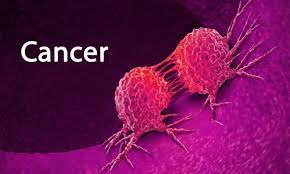
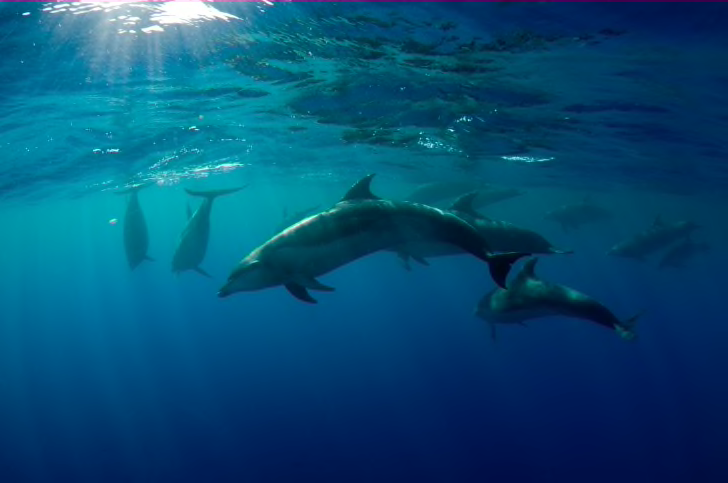
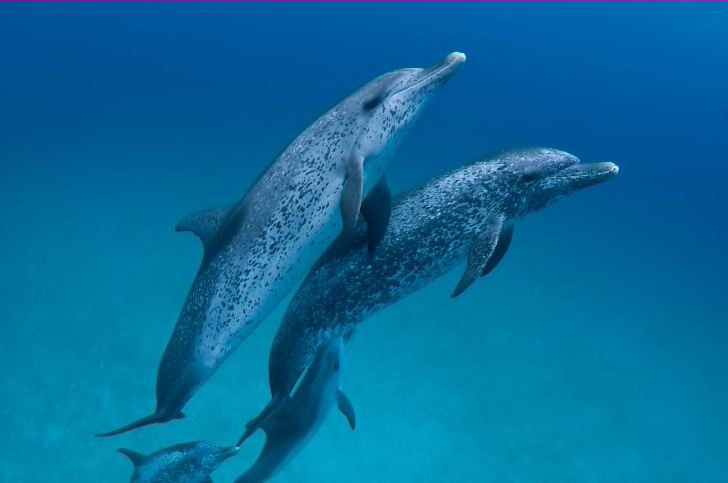
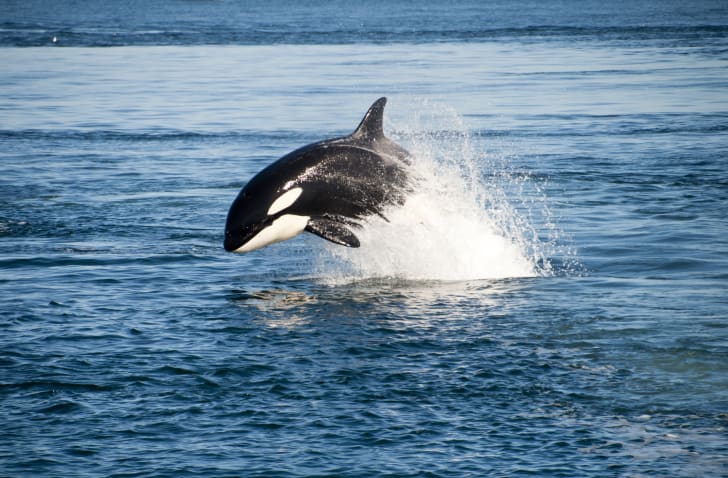
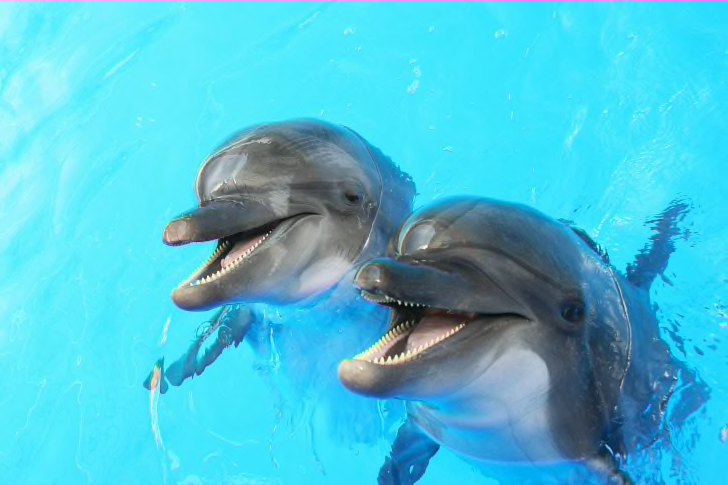
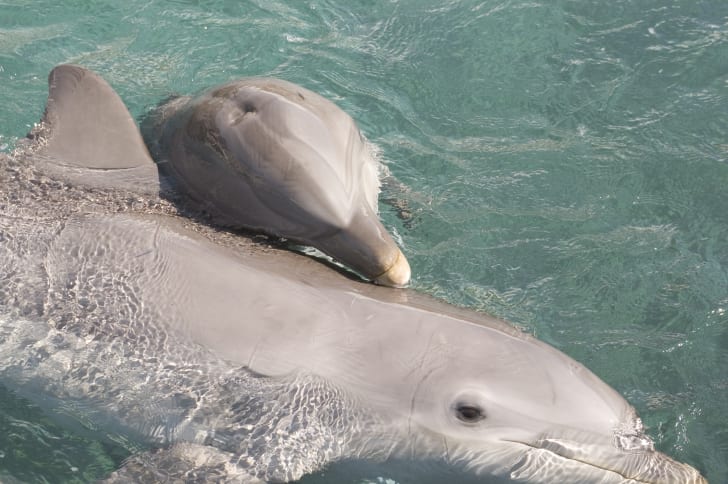
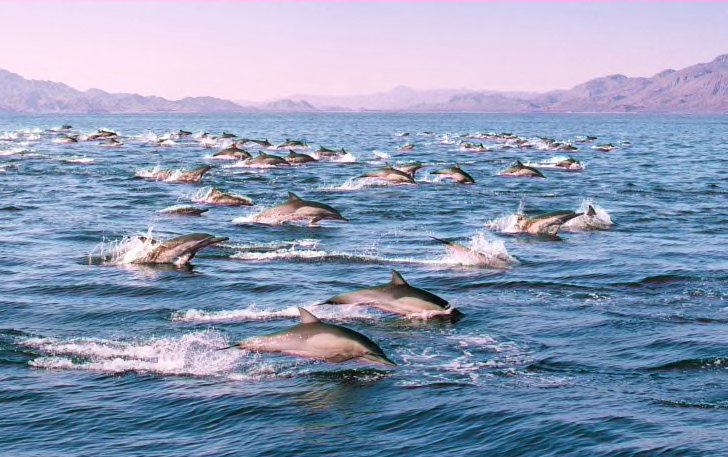




































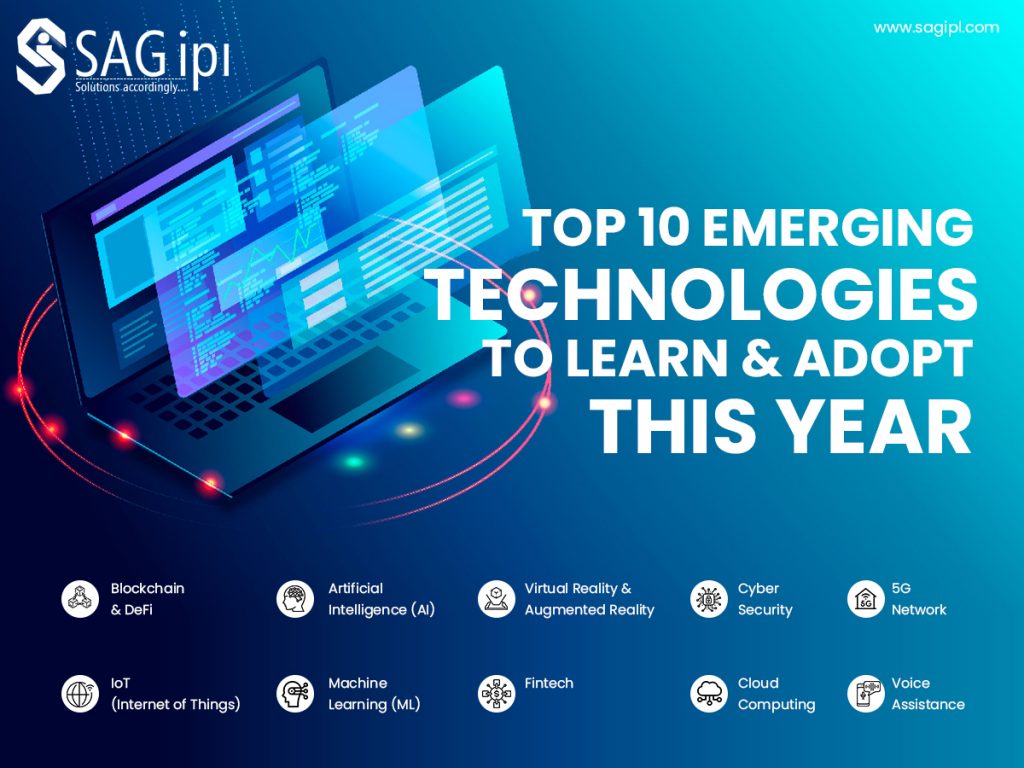


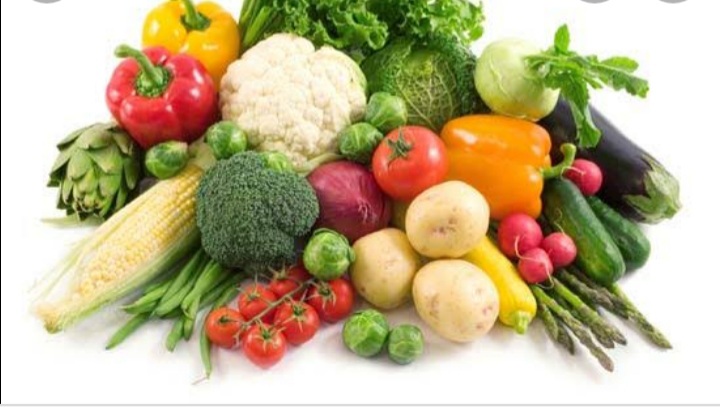
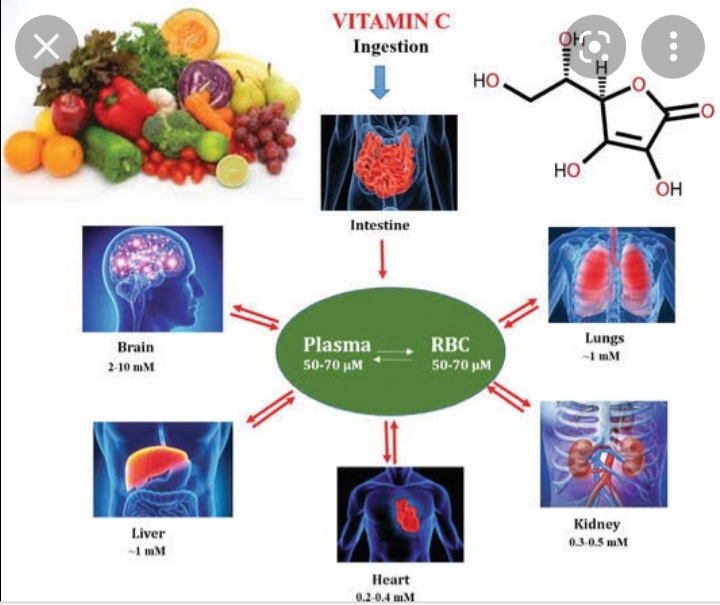






























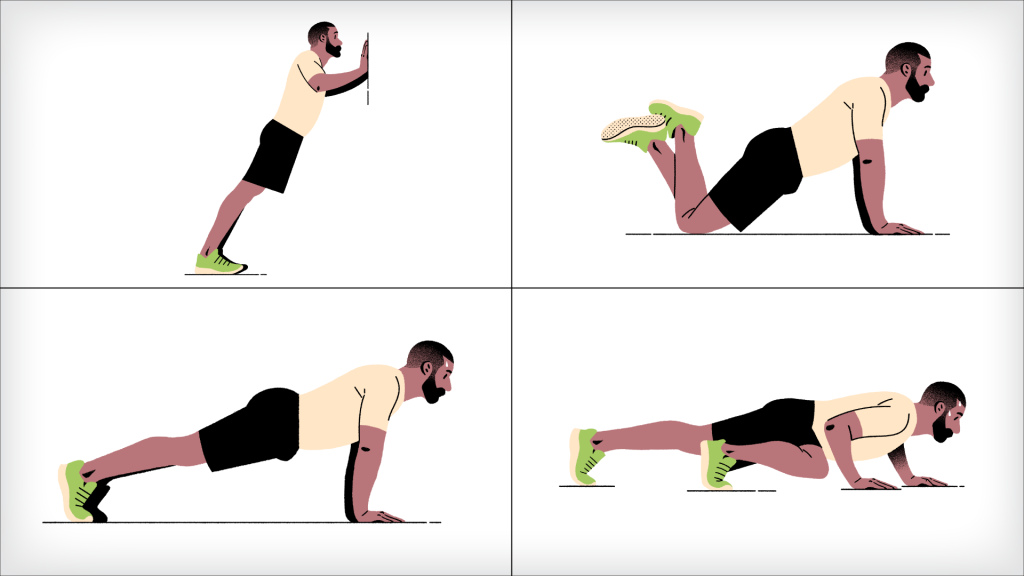







 Track2Training
You must be logged in to post a comment.