HUMAN EYES

Human eye, in humans, specialized sense organ capable of receiving visual images, which are then carried to the brain.

Anatomy of the visual apparatus


Structures auxiliary to the eye


The orbit

The eye is protected from mechanical injury by being enclosed in a socket, or orbit, which is made up of portions of several of the bones of the skull to form a four-sided pyramid, the apex of which points back into the head. Thus, the floor of the orbit is made up of parts of the maxilla, zygomatic, and palatine bones, while the roof is made up of the orbital plate of the frontal bone and, behind this, by the lesser wing of the sphenoid. The optic foramen, the opening through which the optic nerve runs back into the brain and the large ophthalmic artery enters the orbit, is at the nasal side of the apex; the superior orbital fissure is a larger hole through which pass large veins and nerves. These nerves may carry nonvisual sensory messages—e.g., pain—or they may be motor nerves controlling the muscles of the eye. There are other fissures and canals transmitting nerves and blood vessels. The eyeball and its functional muscles are surrounded by a layer of orbital fat that acts much like a cushion, permitting a smooth rotation of the eyeball about a virtually fixed point, the centre of rotation. The protrusion of the eyeballs—proptosis—in exophthalmic goitre is caused by the collection of fluid in the orbital fatty tissue.

The eyelids


It is vitally important that the front surface of the eyeball, the cornea, remain moist. This is achieved by the eyelids, which during waking hours sweep the secretions of the lacrimal apparatus and other glands over the surface at regular intervals and which during sleep cover the eyes and prevent evaporation. The lids have the additional function of preventing injuries from foreign bodies, through the operation of the blink reflex. The lids are essentially folds of tissue covering the front of the orbit and, when the eye is open, leaving an almond-shaped aperture. The points of the almond are called canthi; that nearest the nose is the inner canthus, and the other is the outer canthus. The lid may be divided into four layers: (1) the skin, containing glands that open onto the surface of the lid margin, and the eyelashes; (2) a muscular layer containing principally the orbicularis oculi muscle, responsible for lid closure; (3) a fibrous layer that gives the lid its mechanical stability, its principal portions being the tarsal plates, which border directly upon the opening between the lids, called the palpebral aperture; and. (4) the innermost layer of the lid, a portion of the conjunctiva. The conjunctiva is a mucous membrane that serves to attach the eyeball to the orbit and lids but permits a considerable degree of rotation of the eyeball in the orbit.

The conjunctiva

The conjunctiva lines the lids and then bends back over the surface of the eyeball, constituting an outer covering to the forward part of this and terminating at the transparent region of the eye, the cornea. The portion that lines the lids is called the palpebral portion of the conjunctiva; the portion covering the white of the eyeball is called the bulbar conjunctiva. Between the bulbar and the palpebral conjunctiva there are two loose, redundant portions forming recesses that project back toward the equator of the globe. These recesses are called the upper and lower fornices, or conjunctival sacs; it is the looseness of the conjunctiva at these points that makes movements of lids and eyeball possible.

The fibrous layer


The fibrous layer, which gives the lid its mechanical stability, is made up of the thick, and relatively rigid, tarsal plates, bordering directly on the palpebral aperture, and the much thinner palpebral fascia, or sheet of connective tissue; the two together are called the septum orbitale. When the lids are closed, the whole opening of the orbit is covered by this septum. Two ligaments, the medial and lateral palpebral ligaments, attached to the orbit and to the septum orbitale, stabilize the position of the lids in relation to the globe. The medial ligament is by far the stronger.

The skin


The outermost layer of the lid is the skin, with features not greatly different from skin on the rest of the body, with the possible exception of large pigment cells, which, although found elsewhere, are much more numerous in the skin of the lids. The cells may wander, and it is these movements of the pigment cells that determine the changes in coloration seen in some people with alterations in health. The skin has sweat glands and hairs. As the junction between skin and conjunctiva is approached, the hairs change their character to become eyelashes.

The glandular apparatus


The eye is kept moist by secretions of the lacrimal glands (tear glands). These almond-shaped glands under the upper lids extend inward from the outer corner of each eye. Each gland has two portions. One portion is in a shallow depression in the part of the eye socket formed by the frontal bone. The other portion projects into the back part of the upper lid. The ducts from each gland, three to 12 in number, open into the superior conjunctival fornix, or sac. From the fornix, the tears flow down across the eye and into the puncta lacrimalia, small openings at the margin of each eyelid near its inner corner. The puncta are openings into the lacrimal ducts; these carry the tears into the lacrimal sacs, the dilated upper ends of the nasolacrimal ducts, which carry the tears into the nose.

The evaporation of the tears as they flow across the eye is largely prevented by the secretion of oily and mucous material by other glands. Thus, the meibomian, or tarsal glands, consist of a row of elongated glands extending through the tarsal plates; they secrete an oil that emerges onto the surface of the lid margin and acts as a barrier for the tear fluid, which accumulates in the grooves between the eyeball and the lid barriers.

THE EYE

General description


The eyeball is not a simple sphere but can be viewed as the result of fusing a small portion of a small, strongly curved sphere with a large portion of a large, not so strongly curved sphere. The small piece, occupying about one-sixth of the whole, has a radius of 8 mm (0.3 inch); it is transparent and is called the cornea; the remainder, the scleral segment, is opaque and has a radius of 12 mm (0.5 inch). The ring where the two areas join is called the limbus. Thus, on looking directly into the eye from in front one sees the white sclera surrounding the cornea; because the latter is transparent one sees, instead of the cornea, a ring of tissue lying within the eye, the iris. The iris is the structure that determines the colour of the eye. The centre of this ring is called the pupil. It appears dark because the light passing into the eye is not reflected back to any great extent. By use of an ophthalmoscope, an instrument that permits the observer to illuminate the interior of the eyeball while observing through the pupil, the appearance of the interior lining of the globe can be made out. Called the fundus oculi, it is characterized by the large blood vessels that supply blood to the retina; these are especially distinct as they cross over the pallid optic disk, or papilla, the region where the optic nerve fibres leave the globe.

The dimensions of the eye are reasonably constant, varying among normal individuals by only a millimetre or two; the sagittal (vertical) diameter is about 24 mm (about one inch) and is usually less than the transverse diameter. At birth the sagittal diameter is about 16 to 17 mm (about 0.65 inch), it increases rapidly to about 22.5 to 23 mm (about 0.89 inch) by the age of three years, and between age three and 13 the globe attains its full size. The weight is about 7.5 grams (0.25 ounce) and its volume about 6.5 cm3 (0.4 cubic inch).

The retina


The retina is the part of the eye that receives the light and converts it into chemical energy. The chemical energy activates nerves that conduct the messages out of the eye into the higher regions of the brain. The retina is a complex nervous structure, being, in essence, an outgrowth of the forebrain.

Ten layers of cells in the retina can be seen microscopically. In general, there are four main layers: (1) Next to the choroid is the pigment epithelium, already mentioned. (2) Above the epithelium is the layer of rods and cones, the light-sensitive cells. The changes induced in the rods and cones by light are transmitted to (3) a layer of neurons (nerve cells) called the bipolar cells. These bipolar cells connect with (4) the innermost layer of neurons, the ganglion cells; and the transmitted messages are carried out of the eye along their projections, or axons, which constitute the optic nerve fibres. Thus, the optic nerve is really a central tract, rather than a nerve, connecting two regions of the nervous system, namely, the layer of bipolar cells, and the cells of the lateral geniculate body, the latter being a visual relay station in the diencephalon (the rear portion of the forebrain).

Importance of Eye Care

Your eyesight is one of your most important senses: 80% of what we perceive comes through our sense of sight. By protecting your eyes, you will reduce the odds of blindness and vision loss while also staying on top of any developing eye diseases such as cataracts and glaucoma.

Eye Health = Brain Health


Healthy brain function needs healthy eyesight. The brain is our most vital organ, allowing us to live complex lives. Considering that your optic nerve connects your eyes and your brain, a healthy co-dependent relationship is necessary. By keeping your eyes healthy, you keep your brain healthy – improving your overall quality of life!

Good vision contributes to improved athletic ability, better driving skills, improved learning and comprehension and better quality of life.

Your future can be colorful and full of life just by making sure you see your optometrist as recommended. The experienced eye doctors at Medical Eye Associates in Medford are ready to help you preserve and protect your vision. Contact them today at 800-824-2688 or medicaleycenter.com to schedule an eye exam.
Social media marketing


The term social media marketing refers to the use of social media and social networks to market a company’s products and services. Social media marketing provides companies with a way to engage with existing customers and reach new ones while allowing them to promote their desired culture, mission, or tone. Social media marketing has purpose-built data analytics tools that allow marketers to track the success of their efforts. Sites like Facebook, Twitter, and Instagram are commonly used to execute social media marketing. Social media has changed the way we function as a society, including the way we connect with one another. Social media websites allow marketers to employ a broad range of tactics and strategies to promote content and have people engage with it. Many social networks allow users to provide detailed geographical, demographic, and personal information, which enables marketers to tailor their messages to what is most likely to resonate with users. Social media marketing campaigns have the advantage of appealing to a broad audience at once. Viral marketing seeks to spread information about a product or service from person to person by word of mouth or sharing via the internet or email. The goal of viral marketing is to inspire individuals to share a marketing message to friends, family, and other individuals to create exponential growth in the number of its recipients. Today’s consumers rush to browse social media when they want to know more about an organization or product because that’s where they’ll find others talking about that business. Social media is an ideal place for brands looking to gain insights into their audience’s interests and tastes. The way experts see it, smart companies will continue to invest in social media to achieve sustainable business growth. Whether you want to launch a new product or a business, social media is the perfect launchpad to create a buzz around your initiatives. As we move further into the future of e-commerce, it’s clear that social media marketing isn’t just an option. In an increasingly competitive environment, your business can’t afford to miss out on social media. It’s especially competitive in the social media influencer space, where there are thousands of new influencers starting a brand every day. If you’re trying to build more of an online presence to become a social media influencer, make sure to read our comprehensive guide. A few years ago, the sole purpose of using social media channels was to generate website traffic. Today, it has developed into something more than just a place to broadcast content. Twitter allows companies to promote their products in short messages known as tweets limited to 280 characters which appear on followers Home timelines Tweets can contain text, Hashtag, photo, video, Animated, Emoji, or links to the product’s website and other social media profiles, etc. Twitter is also used by companies to provide customer service. Some companies make support available 24/7 and answer promptly, thus improving brand loyalty and appreciation.Facebook pages are far more detailed than Twitter accounts. They allow a product to provide videos, photos, longer descriptions, and testimonials where followers can comment on the product pages for others to see. Facebook can link back to the product’s Twitter page, as well as send out event reminders. As of May 2015, 93% of businesses marketers use Facebook to promote their brand A study from 2011 attributed 84% of “engagement” or clicks and likes that link back to Facebook advertising. By 2014, Facebook had restricted the content published from business and brand pages. LinkedIn, a professional business-related networking site, allows companies to create professional profiles for themselves as well as their business to network and meet others. Through the use of widgets, members can promote their various social networking activities, such as Twitter stream or blog entries of their product pages, onto their LinkedIn profile page. LinkedIn provides its members the opportunity to generate sales leads and business
partners. Ability WhatsApp was founded by Jan Koum and Brian Acton. Joining Facebook in 2014, WhatsApp continues to operate as a separate app with a laser focus on building a messaging service that works fast and reliably anywhere in the world. Started as an alternative to SMS, WhatsApp now supports sending and receiving a variety of media including text, photos, videos, documents, and location, as well as voice calls. WhatsApp messages and calls are secured with end-to-end encryption, meaning that no third party including WhatsApp can read or listen to them. WhatsApp has a customer base of 1 billion people in over 180 countries. It is used to send personalised promotional messages to individual customers. It has plenty of advantages over SMS that includes to track how Message Broadcast Performs using blue tick option in WhatsApp.Instagram has proven itself a powerful platform for marketers to reach their customers and prospects through sharing pictures and brief messages. According to a study by Simply Measured, 71% of the world’s largest brands are now using Instagram as a marketing channel For companies, Instagram can be used as a tool to connect and communicate with current and potential customers. The company can present a more personal picture of their brand, and by doing so the company conveys a better and true picture of itself. The idea of Instagram pictures lies on on-the-go, a sense that the event is happening right now, and that adds another layer to the personal and accurate picture of the company. In fact, Thomas Rankin, co-founder and CEO of the program Dash Hudson, stated that when he approves a blogger’s Instagram post before it is posted on the behalf of a brand his company represents, his only negative feedback is if it looks too posed. Social media is a reliable asset for the promotion of product.

Capitalism

It is an economic system where the trade and industries are controlled by private owners for profit, rather than by the state. Market economy is the basis of production. Market economy is basically production of goods and services is based on supply and demand in the general market. It also involves free trade as a component. Today, most countries practice a mixed capitalist system that includes some degree of government regulation of business and ownership of select industries. A prominent supporter of capitalist economy is united states of America. Instead of planning economic decisions through centralized political methods, as with socialism or feudalism, economic planning under capitalism occurs via decentralized and voluntary decisions. Capitalism developed historically out of previous systems of feudalism and mercantilism in Europe, and dramatically expanded industrialization and the large-scale availability of mass-market consumer goods. Private property rights are fundamental to capitalism. With a common pool resource, which all people can use, and none can limit access to, all individuals have an incentive to extract as much use value as they can and no incentive to conserve or reinvest in the resource. Privatizing the resource is one possible solution to this problem, along with various voluntary or involuntary collective action approaches. Capitalism has many unique features, some of which include a two-class system, private ownership, a profit motive, minimal government intervention, and competition. In Marxist theory, the class structure of the capitalist mode of production is characterized by the conflict between two main classes: the bourgeoisie, the capitalists who own the means of production and the much larger proletariat who must sell their own labour power. The economy is run by individuals (or corporations) who own and operate companies and make decisions as to the use of resources. But there exists a “division of labor” that allows for specialization, typically occurring through education and training, further breaking down the two class system into sub-classes. Consumer sovereignty is the system in which market is controlled by the demands of the consumer. It regulates the level of production undertaken by the companies, and the consumer is free to decide which products to purchase. Free trade is the system where, the low tariff barriers exist that promote international trade. In a capitalist economy, there is no government interference in the daily activities of the business. The customers and producers are free to make their own decisions regarding any product or service. Flexibility in labour markets in capitalism, there is a flexibility in hiring and firing of the workforce. Freedom of ownership .In thissystem, an individual can accumulate any amount of property and use it according to his will. After his death, the same property is passed on to the successors by the right of inheritance.

Capitalism

Capitalism is an economic system where the trade and industries are controlled by private owners for profit, rather than by the state. Market economy is the basis of production. Market economy is basically production of goods and services is based on supply and demand in the general market. It also involves free trade as a component. Today, most countries practice a mixed capitalist system that includes some degree of government regulation of business and ownership of select industries. A prominent supporter of capitalist economy is united states of America. Instead of planning economic decisions through centralized political methods, as with socialism or feudalism, economic planning under capitalism occurs via decentralized and voluntary decisions. Capitalism developed historically out of previous systems of feudalism and mercantilism in Europe, and dramatically expanded industrialization and the large-scale availability of mass-market consumer goods. Private property rights are fundamental to capitalism. With a common pool resource, which all people can use, and none can limit access to, all individuals have an incentive to extract as much use value as they can and no incentive to conserve or reinvest in the resource. Privatizing the resource is one possible solution to this problem, along with various voluntary or involuntary collective action approaches. Capitalism has many unique features, some of which include a two-class system, private ownership, a profit motive, minimal government intervention, and competition. In Marxist theory, the class structure of the capitalist mode of production is characterized by the conflict between two main classes: the bourgeoisie, the capitalists who own the means of production and the much larger proletariat who must sell their own labour power. The economy is run by individuals (or corporations) who own and operate companies and make decisions as to the use of resources. But there exists a “division of labor” that allows for specialization, typically occurring through education and training, further breaking down the two class system into sub-classes. Consumer sovereignty is the system in which market is controlled by the demands of the consumer. It regulates the level of production undertaken by the companies, and the consumer is free to decide which products to purchase. Free trade is the system where, the low tariff barriers exist that promote international trade. In a capitalist economy, there is no government interference in the daily activities of the business. The customers and producers are free to make their own decisions regarding any product or service. Flexibility in labour markets in capitalism, there is a flexibility in hiring and firing of the workforce. Freedom of ownership: In this system, an individual can accumulate any amount of property and use it according to his will. After his death, the same property is passed on to the successors by the right of inheritance.

5 INCREDIBLE WEEKEND GETAWAYS TO VISIT NEAR DELHI

Delhi is a great place from where you can plan some of the most enthralling weekend trips. The proximity of the national capital to the nearby popular tourist destinations is indeed a blessing for all the travelers.

Here a list of some of the best places to visit in winter near Delhi for a quick refreshing getaway:

1.JAIPUR:

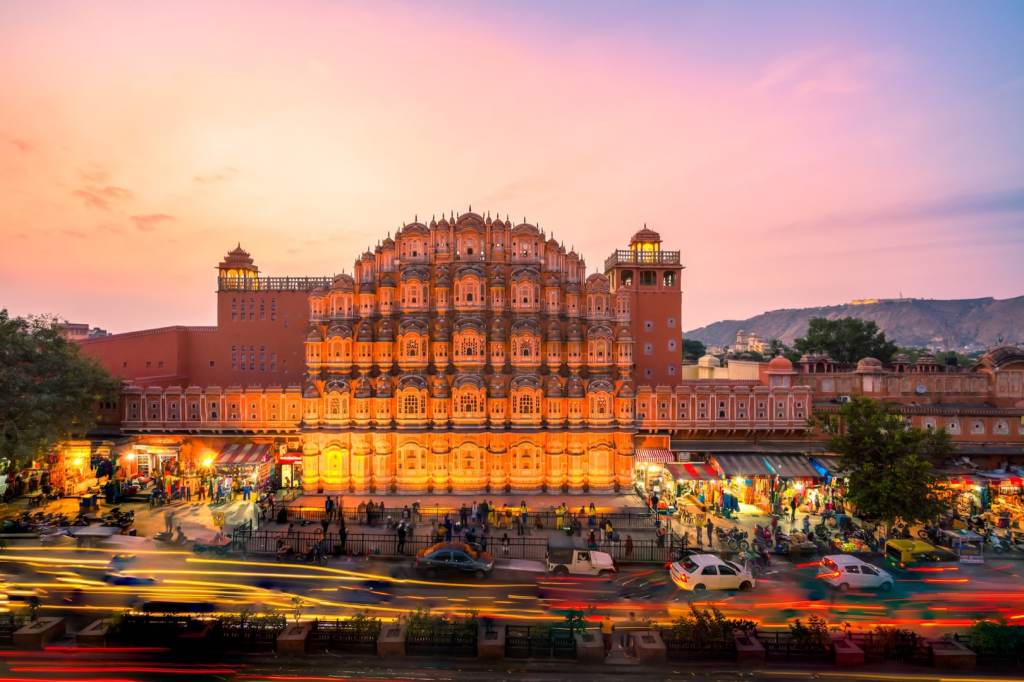
Jaipur is a vibrant amalgamation of the old and the new. Also called the Pink City, the capital of the royal state of Rajasthan, was ruled by the Rajputs for many centuries and developed as a planned city in the 17th century AD. Along with Delhi and Agra, Jaipur forms the Golden Triangle and hails as one of the most famous tourist circuits of the country. From architectural wonders, opulent palaces to ancient forts, Jaipur is one of the most preferred tourist destinations near Delhi. It is even more breathtaking in the winter season. As we mentioned, with a plethora of forts and museums to explore, the pink city (as it is popularly called) gets an influx of visitors during winter. 

         Jaipur is also one of the best places to visit during the New Year with your loved ones to explore the beauty of this city. Some of the popular attractions in Jaipur include City Palace Museum, Jantar Mantar, Amer Fort, Jaigarh Fort, Hawa Mahal, Jal Mahal, Nahargarh Fort, and Lakshmi Narayan Birla Mandir among others.

2. JIM CORBETT NATIONAL PARK:

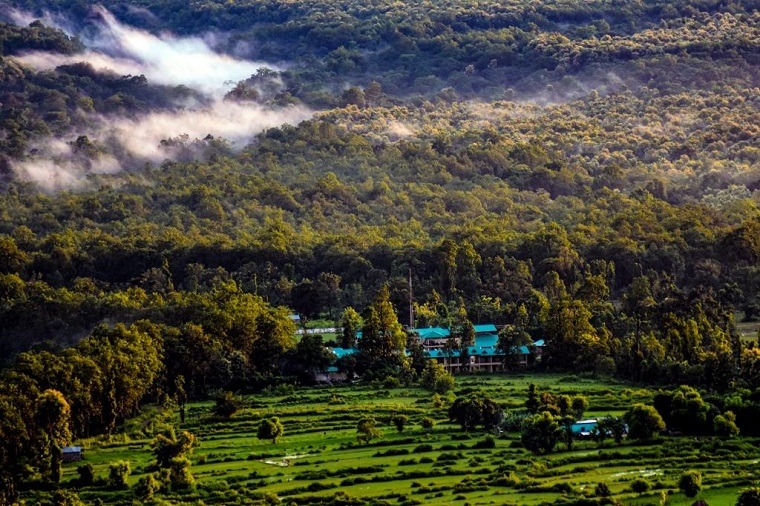
Corbett is one of the popular tourist destinations near the national capital. For nature lovers, this is a go-to place for a fun weekend getaway near Delhi. Jim Corbett National Park is extremely famous for its fun jungle safari.

          Meanwhile even if you are not someone who wishes to go on an adventurous jungle safari, a relaxing stay in the luxury resorts in Jim Corbett Park will rejuvenate you from within. You can also visit Corbett waterfall and Garjiya Devi Temple among others.

Corbett National Park, set amidst the foothills of Himalayas, houses a variety of flora and fauna including rare ones such as tigers and is a treat for wildlife enthusiasts and photographers.

3. RISHIKESH:

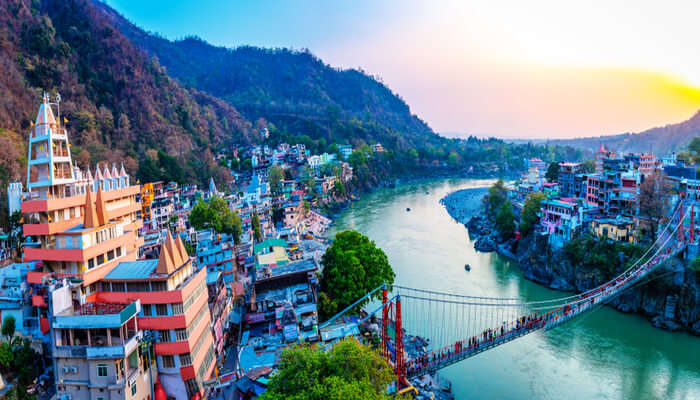
Rishikesh is often touted as the adventure capital of India. It is best visited in the winter months. Rishikesh’s moderate climatic conditions make it easy for the traveler’s to indulge in various adventure activities such as bungee jumping, cliff jumping, flying fox, and river rafting among others. Nights and evenings are however cold, so don’t forget to carry woolens.

In the heart of the state of Uttarakhand lies the destination that is often mistaken to be purely religious. While its Ram Jhula, Laxman Jhula, &  Triveni ghat  provide it every bit of religious touch, many other spiritual & adventurous   places to visit in Rishikesh provide a different angle to the tourism scene of the place. No wonder, the destination has emerged as one of the most popular weekend getaways from Delhi within 300 km.

4. BHARATPUR BIRD SANCTUARY – (A World Heritage Site):

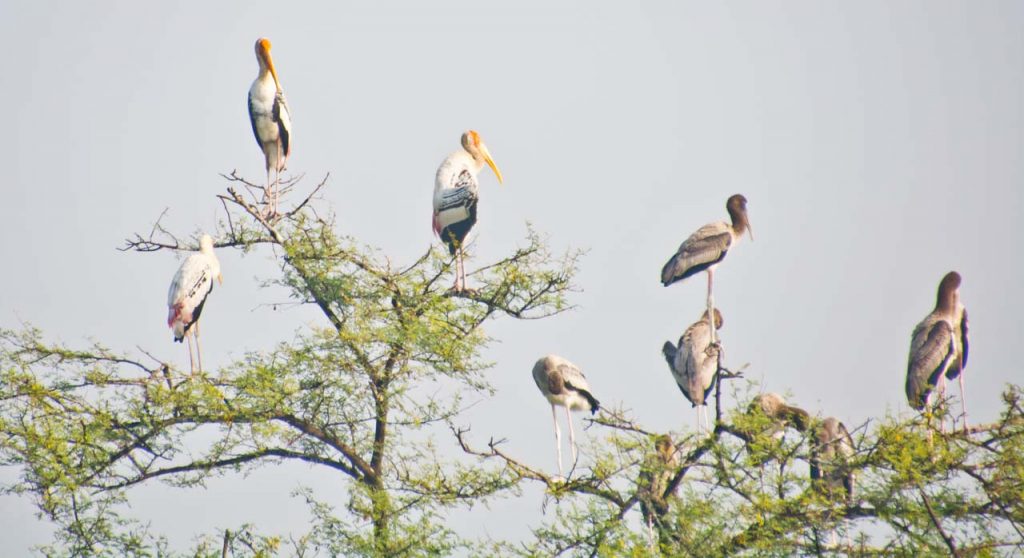
House to over 366 species of birds, 379 species of plants, and 30 mammals, Keoladeo National Park or – as it was formerly called –   Bharatpur Bird Sanctuary is one of the best places near Delhi for the nature lovers. The new name has been derived from the temple of Keoladeo that is dedicated to Lord Shiva. Listed by UNESCO as a World Heritage Site, the national park is an interesting getaway for bird watchers and wildlife photographers.

5. NAINITAL -UTTARAKHAND:

The gem of Uttarakhand – Nainital is a charming hill station that sits prettily at the green foothills of the Kumaon ranges in the Himalayas. Located at an elevation of around 1938 meters, the epicenter of the towns popularity and beauty lies within the gorgeous Naini Lake, after which the town is named. Founded by the British due to its resemblance to the Cumbrian Lake district, Nainital brims with elegant colonial structures that amplify the beauty of this place. It is a perfect weekend getaway from the Indian capital of Delhi.

KANGAROO 🦘

“I love performing for kids, but you can’t play down to them, of course. Then it would be ‘Captain Kangaroo”

~ Rita Moreno

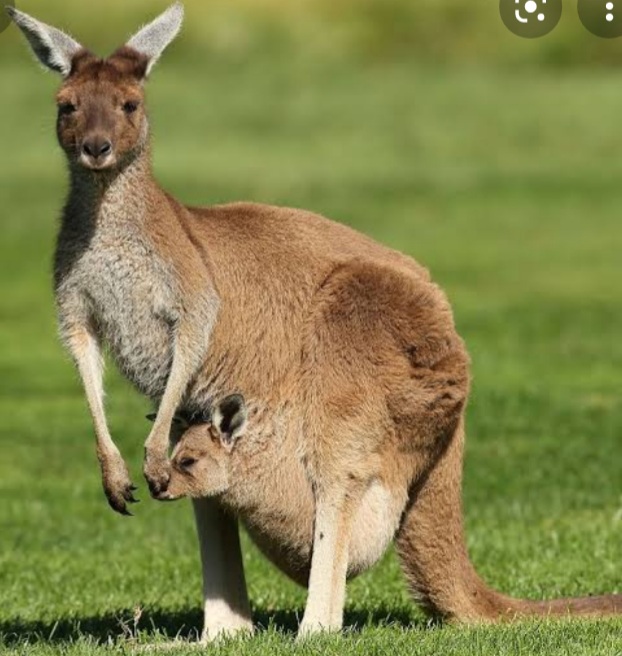
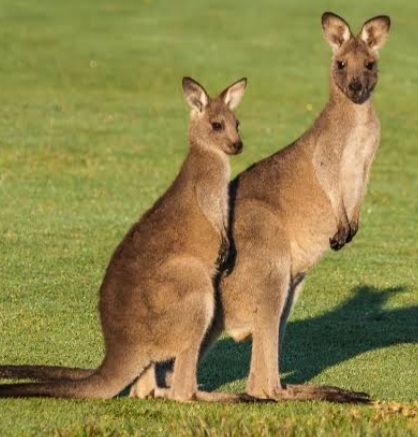
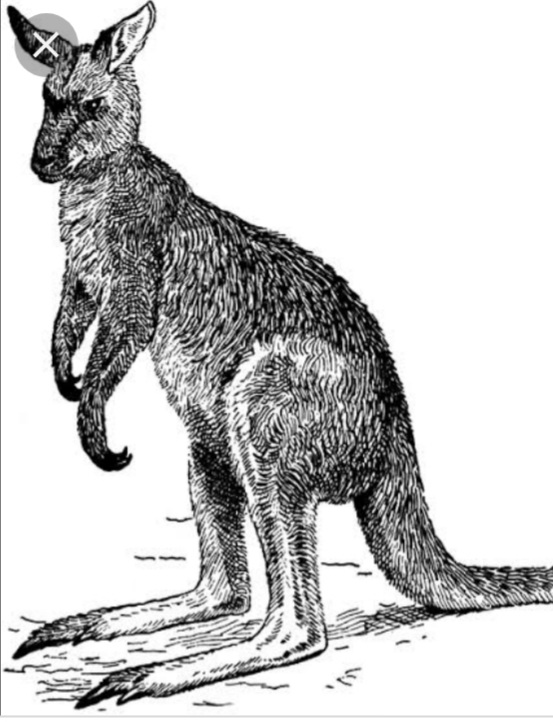
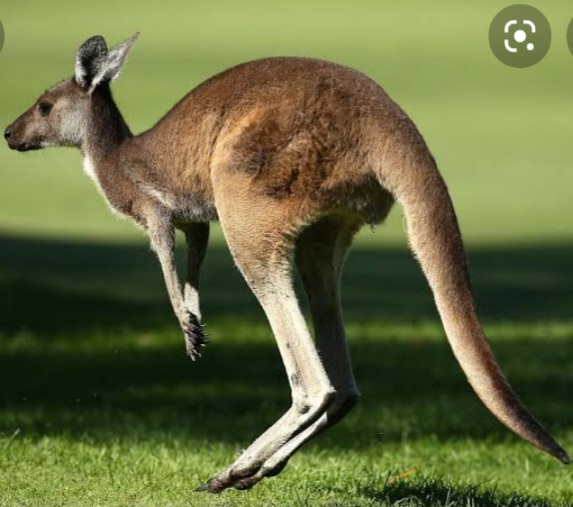
Kangaroos are large marsupials that are found only in Australia. They are identified by their muscular tails, strong back legs, large feet, short fur and long, pointed ears. Like all marsupials, a sub-type of mammal, females have pouches that contain mammary glands, where their young live until they are old enough to emerge.

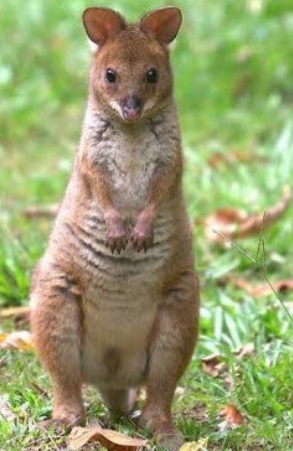
Kangaroos are in the Macropodidae family, which also includes tree-kangaroos, wallabies, wallaroos, quokkas and pademelons. When people think of kangaroos, the four species that typically come to mind are in the genus Macropus: the antilopine kangaroo, the red kangaroo, the western gray kangaroo and the eastern gray kangaroo. They are sometimes referred to as the “great kangaroos” because these species are much larger than other kangaroos. 

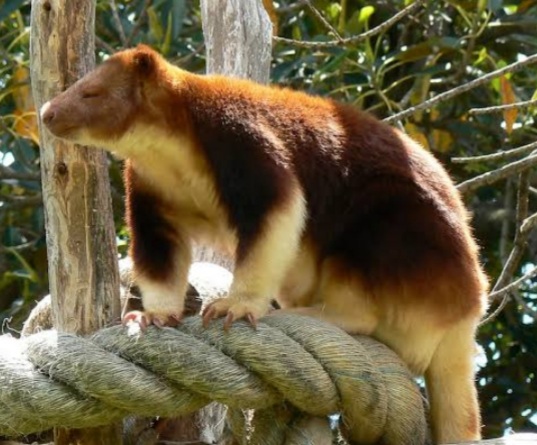
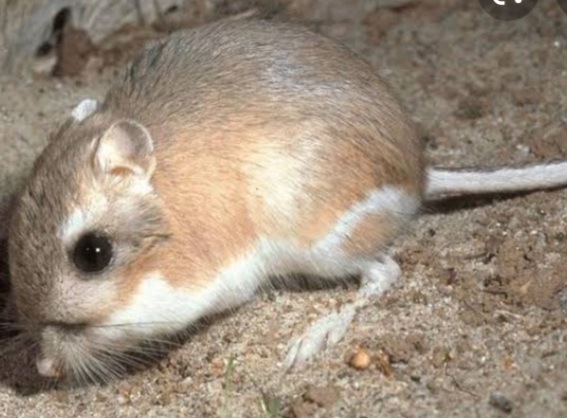
However, there are 12 species of tree-kangaroos in the Dendrolagus  genus, according to the Integrated Taxonomic Information System. And, bettongs, in the Potoridae family, are called rat-kangaroos.  

Size

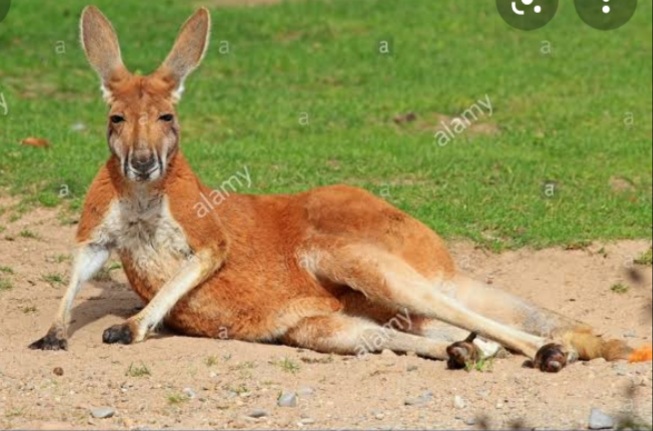
The largest kangaroo, as well as the largest marsupial, is the red kangaroo, according to National Geographic. The length from the red kangaroo’s head to its rump is 3.25 to 5.25 feet (1 to 1.6 meters) long. Its tail adds another 35.5 to 43.5 inches (90 to 110 centimeters) to its length and its entire body weighs around 200 lbs. (90 kilograms).

The smallest kangaroo is the musky rat-kangaroos. It is only 6 to 8 inches (15.24 to 20.32 cm) long and weighs only 12 ounces (340 grams). Its ratlike tail adds another 5 to 6 inches (12.7 to 15.24 cm) to its length.

Habitat

Most kangaroos live on the continent of Australia, though each species has a different place it likes to call home. For example, the musky rat-kangaroo likes to nestle down in little nests on the floor of the rainforests in northeastern Queensland. Gray kangaroos like the forests of Australia and Tasmania, on the other hand. The  antilopine kangaroo  can be found in the monsoonal eucalyptus woodlands of extreme northern Australia. Tree-kangaroos live in the upper branches of trees in the rainforests of Queensland, as well as on the island of New Guinea. 

Habits 

Kangaroos are the only large animals that hop as a primary means of locomotion. Their springy hind legs and feet are much stronger and larger than their arms (or “forelimbs”). According to the San Diego Zoo, kangaroos can cover 15 feet (7 m) in a single hop and can hop as fast as 30 mph (48 kph). Usually, 20 mph (32 kph) is considered their cruising speed. When feeding, kangaroos use a slower, walking movement, and for that they use their muscular tail as a kind of fifth leg, pushing off the ground as they move along.

Kangaroos are social and live in groups called a mob, a herd or a troop. Kangaroos in a mob will groom each other and protect each other from danger. If a kangaroo suspects there is danger in the area, it will stomp its foot on the ground to alert others. If it comes to blows, a kangaroo will box and kick its opponent. 

Diet

Kangaroos are herbivores. They eat grasses, flowers, leaves, ferns, moss and even insects. Like cows, kangaroos regurgitate their food and re-chew it before it is ready to be totally digested. 

Offspring

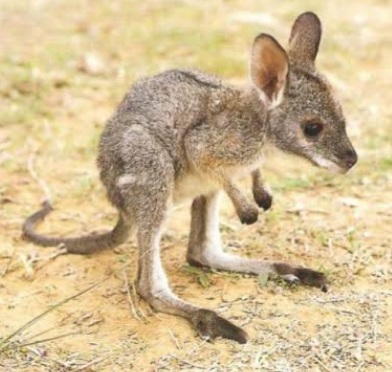
Probably the best-known fact about kangaroos is that they carry their young in a pouch. A female kangaroo is pregnant for 21 to 38 days, and she can give birth to up to four offspring at one time,  though this is unusual. 

At birth, the baby, called a joey, can be as small as a grain of rice, or as big as a bee, at 0.2 to 0.9 inches (5 to 25 millimeters), according to the san Diego zoo. When the joey is born, it is guided safely into the comfy pouch, where it gestates for another 120 to 450 days. 

Inside the pouch, the joey is protected and can feed by nursing from its mother’s nipples. Joeys urinate and defecate in the mother’s pouch. The lining of the pouch absorbs some of the mess, but occasionally the mother will need to clean it out, which she does by inserting her long snout into the pouch and using her tongue to remove the contents. A young joey will remain attached to a nipple while the mother does this, but any older ones will be temporarily kicked out. 

Another interesting fact about the mother kangaroo is that she is able to suckle two joeys at different developmental stages at the same time with milk that has different nutritional content, the New York Times has reported. 

Joeys grow quickly, though, and at 14 to 20 months for females or 2 to 4 years for males, they will be fully matured.

Classification/taxonomy 

The taxonomy of kangaroos, tree-kangaroos and rat-kangaroos, according to ITIS, is:

  • Kingdom: Animalia
  • Subkingdom: Bilateria  
  • Infrakingdom: Deuterostomia  
  • Phylum: Chordata
  • Subphylum: Vertebrata
  • Infraphylum: Gnathostomata  
  • Superclass: Tetrapoda  
  • Class: Mammalia
  • Subclass: Theria
  • Infraclass: Metatheria  
  • Order: Diprotodontia
  • Suborder: Macropodiformes

‘Great kangaroos’

  • Family: Macropodidae
  • Subfamily: Macropodinae
  • Genus & species: Macropus fuliginosus (western gray kangaroo; three subspecies), Macropus giganteus (eastern gray kangaroo; two subspecies), Macropus antilopinus (antilopine kangaroo), Macropus rufus (red kangaroo)

Tree-kangaroos

  • Family: Macropodidae
  • Subfamily: Macropodinae
  • Genus: Dendrolagus
  • Species: 12, including Dendrolagus bennettianus (Bennett’s tree-kangaroo), Dendrolagus goodfellowi (Goodfellow’s tree-kangaroo), Dendrolagus matschiei (Huon tree-kangaroo) and Dendrolagus spadix (Lowlands tree-kangaroo).

Rat-kangaroos

  • Family: Potoridae
  • Genera & species: Aepyprymnus rufescens (Rufous bettong or Rufous rat-kangaroo), Bettongia (four species of bettongs, or short-nosed rat-kangaroos), Caloprymnus campestris (desert rat-kangaroo)

Musky rat-kangaroos

  • Family: Hypsiprymnodontidae
  • Genus & species: Hypsiprymnodon moschatus

Kangaroo ancestors

There is a rich fossil record for kangaroo ancestors and ancient relatives; giant kangaroos plodded through the Pleistocene (2.6 million to 11,700 years ago) and the Pliocene (5.3 million to 2.6 million years ago). And about 20 million years ago, tiny ancestors of modern kangaroos and a related group of kangaroos with fangs scurried through dense forests in northwestern Queensland, Australia, a region that is now arid outback.

In a study published in February 2016, scientists described a new kangaroo genus, Cookeroo, and two new species: Cookeroo bulwidarri, dated to about 23 million years ago, and Cookeroo hortusensis, which lived between 18 million and 20 million years ago. These ancient kangaroos’ bodies probably measured about 17 to 20 inches (42 to 52 centimeters) long. C. bulwidarri and C. hortusensis didn’t hop, navigating their forest home on all fours and sharing it with a diverse collection of animals: marsupial moles, feather-tailed possums, ancient koalas and crocodiles.

Conservation status

According to the IUCN’s Red List of Threatened Species, 16 species of tree-kangaroos and rat-kangaroos are listed as either near threatened, threatened, vulnerable, endangered or critically endangered. The desert rat- kangaroo  and the Nullarbor dwarf bettong are considered extinct. Studies show that global warming could kill off the world’s smallest  kangaroo. The four species of great kangaroos are not endangered.

Time spent in nature is never wasted “

Mauryan Empire

The Mauryan Empire, which formed around 321 B.C.E. and ended in 185 B.C.E. was the first pan-Indian empire, an empire that covered most of the Indian region. The Mauryan Empire’s first leader, Chandragupta Maurya, started consolidating land as Alexander the Great’s power began to wane. After crowning himself king, Chandragupta took additional lands through force and by forming alliances. Chandragupta’s chief minister Kaustalya advised Chandragupta and contributed to the empire’s legacy. Chandragupta’s government closely resembled the government described in the Arthashastra. Bindusara, Chandragupta’s son, assumed the throne around 300 B.C.E. He kept the empire running smoothly while maintaining its lands. Bindusara’s son, Ashoka, was the third leader of the Mauryam Empire. Ashoka left his mark on history by erecting large stone pillars inscribed with edicts that he issued. After the kalinga war Ashoka reevaluated his commitment to expanding the empire and instead turned to Buddhism and its tenet of nonviolence. Many of his edicts encouraged people to give up violence and live in peace with each other-two important Buddhist principals. After Ashoka’s death, his family continued to reign, but the empire began to break apart. Ashoka was followed for 50 years by a succession of weaker kings. He was succeeded by Dasharatha Maurya, who was Ashoka’s grandson. None of Ashoka’s sons could ascend the throne after him. Mahendra, his first born, was on to spread Buddhism in the world. Kunala Maurya was blind hence couldn’t ascend the throne and Tivala, son of Kaurwaki, died even earlier than Ashoka. Another son, Jalauka, does not have much story behind him. The empire lost many territories under Dasharatha, which were later reconquered by Samprati, Kunala’s son. Post Samprati, the Mauryas slowly lost many territories. The last of the Mauryas, Brihadratha, was assassinated by his commander in chief-a man named Pushyamrita who went on to found the Shunga Dynasty-in 185 B.C.E. The Empire was divided into four provinces, with the imperial capital at Pataliputra. From Ashokan edicts, the names of the four provincial capitals are Tosali, Ujjain,Suvarnagiri, and Taxila. The head of the provincial administration was the Kumara who governed the provinces as king’s representative. The kumara was assisted by Mahamatyas and council of ministers. Coins were mostly made of silver and copper. Certain gold coins were in circulation as well. The coins were widely used for trade and commerce. Farmers were freed of tax and crop collection burdens from regional kings, paying instead to a nationally administered and strict-but-fair system of taxation as advised by the principles in the Arthashastra. Chandragupta Maurya established a single currency across India, and a network of regional governors and administrators and a civil service provided justice and security for merchants, farmers and traders. The Mauryan army wiped out many gangs of bandits, regional private armies, and powerful chieftains who sought to impose their own supremacy in small areas. Although regimental in revenue collection, Maurya also sponsored many public works and waterways to enhance productivity, while internal trade in India expanded greatly due to new-found political unity and internal peace. The Mauryan empire was an efficient and highly organized autocracy with a standing army and civil service. The decline of the Maurya Dynasty was rather rapid after the death of Ashoka. One obvious reason for it was the succession of weak kings. Another immediate cause was the partition of the Empire into two. Had not the partition taken place, the Greek invasions could have been held back giving a chance to the Mauryas to re-establish some degree of their previous power.

Secularism in India and western world

Secularism is basically the principle of separation of the state from religious institutions Indian leaders soon after the independence from British and the partition of British India into India and Pakistan while drafting the constitution enshrined the values of secularism saying no religion is supreme. They believed that people of all the religions are equal and that India should be a country which gives supreme status to none and proclaim proclaim inferior to those who follow other religions. They proclaimed that all the people will be treated equally despite their religious affiliation. With the Forty-second Amendment of the Constitution of India enacted in 1976, the Preamble to the Constitution asserted that India is a secular nation. Secularism as practiced in India, with its marked differences with Western practice of secularism, is a controversial topic in itself. Ashoka about 2200 years ago, Harsha about 1400 years ago accepted and patronised different religions. They back then gave people the liberty to follow their customs and traditions. The people in ancient India had freedom of religion, and the state granted citizenship to each individual regardless of whether someone’s religion was Hinduism, Buddhism, Jainism or any other. Ellora cave temples built next to each other between 5th and 10th centuries, for example, shows a coexistence of religions and a spirit of acceptance of different faiths. The colonial administrators did not separate religion from state, but marked the end of equal hierarchy between Islam and Hinduism, and reintroduced the notion of equality before the law for Hindus, Christians and Muslims. Bronze and Iron Age religion in Europe as elsewhere was predominantly polytheistic. During the Early Middle Ages, most of Europe underwent Christianization, a process essentially complete with the Christianization of Scandinavia in the High Middle Ages. The notion of Europe and the western world has been intimately connected with the concept of Christendom, and many even consider Christianity as the unifying belief that created a European identity, especially since Christianity in the Middle East was marginalized by the rise of Islam from the 8th century. Nazis wanted to exterminate the Jews andthat they were able to do so. But their lust for murder didn’t come out of nowhere. The antisemitic Nazi ideology must be considered in the broader context of the age-old hostility towards Jews, modern racism, and nationalism. Jews in Europe have been discriminated against and persecuted for hundreds of years, often for religious reasons. For a start, they were held responsible for the death of Christ. Bosnia and Yugoslavia are also some astonishing examples of killings on the basis of sects where one sect was denied of the rights and was massacred my the other dominant sect. The Bosnian genocide refers to either the Srebrenica massacre or the wider crimes against humanity and ethnic cleansing campaign throughout areas. The ethnic cleansing that took place in VRS-controlled areas targeted Bosniaks and Bosnian Croats. So to concluded India from older times was a nation holding secular notions

Myths of Meditation

With meditation practices on the rise, it makes sense that there is some confusion out there. Myths and misinformation are to be expected — but that doesn’t mean we can’t do our best to set the record straight. Let’s go through the following myths and their conclusions.

¤Myth: You can’t meditate because you think too much.


Everyone thinks too much. But it’s often the people who say they “think too much to meditate” who could really benefit from giving the practice a try. Thinking is a natural and expected part of meditation. Some practices will give you tools for how to redirect your thoughts back to your meditation and others will simply say it’s fine that you’re off thinking. This is all a part of the experience. The practice of meditation is about tuning in — not tuning out.


Some believe that by choosing to redirect your thoughts to a single point of focus you are actually strengthening the muscle that build your brain. This can teach you to react less to stress triggers throughout the day and leave you feeling calmer than before you learned to meditate.

¤Myth: You can’t meditate because you can’t sit still.

For those who struggle with sitting still during meditation, good news! Moving around is totally fine — you can readjust your position,scratch an itch or just stretch your legs out in the middle of your practice. You do not have to be a statue. If you’re in a group class, try to do this quietly so you don’t disrupt other meditators.


For those who need more movement than this, you can try walking meditation. Traditionally, meditation can be practiced in four positions: sitting, standing, walking and lying down. So don’t get down on yourself if you don’t like sitting. Try other methods and find what feels most natural for your body.


We all are busy. If Oprah, Kobe Bryant, Arianna Huffington and Rupert Murdoch have time to meditate, you probably do too. Meditating in the morning makes your whole day go slower and many people say they actually get more done and feel more productive after meditation. Because meditation helps improve focus and lowers stress, you actually can fit more in if you take the time out to practice.


If committing to 20 a day minutes feels daunting, there are many practices that require only five or 10 minutes. The key is to start small and build up so you don’t get discouraged and skip it all together. Even a seasoned meditator knows that some days get away from you and all you can fit in is 5 minutes. This is always better than nothing.

¤Myth: You can’t meditate because you don’t know if you’re doing it right.

The only wrong or bad meditation is the one you don’t do at all. Meditation is pretty simple. You focus on one thing. Depending on the practice, that can be your breath, a mantra, a candle flame or even counting numbers. When you notice that your mind has drifted off, you simply come back to the thing your meditation is focused on.

¤Myth: You’re not supposed to have any thoughts while you meditate.

This idea is simply not true and it can also be a big hindrance to people meditating. If you think you’re doing it wrong, it’s easy to just give up and walk away. Deepak Chopra, a meditation expert and founder of the Chopra Center for Wellbeing, puts it best: “the nature of the mind to move from one thought to another is in fact the very basis of meditation,” he says.


“We don’t eliminate the tendency of the mind to jump from one thought to another. That’s not possible anyway.” Depending on the type of meditation you learn, there are tools for gently bringing your focus back to your meditation practice. Alternatively, some types of meditation actually emphasize being present and mindful to thoughts as they arise as part of the practice.


¤Myth: Meditation has to be religious or spiritual


There is a distinct difference between meditation and religion. While many meditation practices drew it roots from Buddhism and Hinduism, today there are modern forms of meditation that have nothing to do with religion at all. Many religious groups practice meditation, and the intersection between prayer and meditation is quite interesting, but it is not necessary to believe in a god or be affiliated with a religion or spiritual group in order to reap the benefits of meditation.

¤Myth: You must sit in an uncomfortable cross-legged position in order to meditate.

You can sit in any position that is comfortable to you. Most people sit upright in a chair or on a cushion. Some people like to sit in a great big armchair or a sturdy kitchen chair. You can also sit upright in bed with pillows propped at your sides. The possibilities are endless. It is best not to lie down unless you’re doing a body scan meditation or meditation for sleep.

¤Myth: Meditation is only for stressed out people.

While meditation helps lower the presence of coristol, the stress hormone, in our bodies, there are many other benefits of the practice. Meditation helps boost our immune systems, improves concentration, decreases blood pressure, improves sleep, increases our feelings of happiness, and has even helped people with alcohol or smoking addictions. Even for those who don’t have a specific ailment in mind, meditation is wonderful for overall mental and physical health.

¤Myth: Meditation is only for adults.


Adults are not the only ones to experience the negative effects of stress. Children, too, suffer from feeling overwhelmed and meditation is one way parents are helping their kids learn to manage stress. Schools have even started to discuss whether meditation is a life-long skill that should be taught in classrooms. Schools that tried it out found that students were less stressed and performed higher on tests. The overall feeling in classrooms was more positive and teachers reported their own moods improving.

¤Myth: You have to be given a mantra to meditate.

Mantra-based meditation is only one form of meditation. Transcendental Meditation (made popular by people like Oprah, Jerry Seinfeld and Howard Stern) uses a mantra but many mindfulness-based meditation practices don’t. Think of a mantra as just one vehicle or tool people use to get into their meditation practice. There are many other tools like counting, being mindful of what you hear around you and even simply paying attention to your breath.

¤Myth: Meditation is for the rich or the elite.

Meditation is having a moment right now and we love that. But the ancient practice is not only for hip tech CEOs or a pet cause for the wealthy with time to spare. The beauty of meditation is that it’s free and you can do it anywhere, anytime. All you need is your mind.

¤Myth: Meditation takes years to learn.


While the Dalai Lama says that meditation can change your life, he has also been practicing for most of his life. Fear not. You can actually learn in minutes. We don’t deny that like any skill or exercise, the more you do it, the more you learn. But you don’t need months or years to perfect your meditation. The very notion of perfection is counter productive. Here are five different ways you can get started. Pick one (or search the web for many others) and give it a try.


Mountain of light: Kohinoor

Kohinoor, which means mountain of light, is a colourless Diamond which was discovered in the mines of Guntur in Andhra Pradesh somewhere in the 13th century. It was the biggest Diamond ever known to mankind during that time.

Currently, this Diamond is embedded in the Queen’s Mother’s crown. Governments of India, Pakistan, Iran and Afghanistan have all claimed the ownership of this Diamond, but the UK governments has denied it stating that it was obtained legally.

Journey

Kohinoor has rich history behind it, though it is generally believed that this Diamond was discovered in 13th century during the kakatiya dynasty rule. There are scholars who dispute saying that the Diamond was discovered in the 16th century in Golconda. Kohinoor was taken by Alauddin Khilji who’s army defeated the Kakatiya dynasty.

It was with the Mughals most of the time after it’s discovery. However, Mughal lost the battle against Nadirshah in 17th century. It was Nadirshah who took the diamond from the Mughals and named it Kohinoor. After Nadirshah’s death, the diamond was passed on to Ahmad Shah Durrani who was his General.

After that Kohinoor was later gifted to Ranjit Singh by the Durrani dynasty during early 18th century. However, British East India Company defeated Ranjit Singh’s army in mid 18th century and took possession of this Diamond. Kohinoor was later shipped to Britain and the diamond was gifted to Queen Victoria in 1850 and Kohinoor has been in possession of the Royal Family since then.

Cursed?

An ancient Hindu text describe this diamond as

He who owns the diamond will own The World, but will also know all its misfortunes. Only God and women can wear it with impunity.

Well by the consequences that we have seen so far it is quite evident that whoever has owned this diamond we’re either defeated or died.

  • Kakatiya dynasty (original owner) defeated by Alauddin Khilji
  • Alauddin Khilji died shortly after that and the diamond was passed on to Mughals.
  • Mughals lost the war to Nadirshah weakening their army.
  • Nadirshah died while Kohinoor was in his possession.
  • Ahmad Shah Durrani died while Kohinoor was in possession.
  • Ranjit Singh had Kohinoor with him when he lost the war with British.
  • British Empire started losing hold on its colonies including India when they had Kohinoor

This supposedly curse of Kohinoor in Britain. Only the Queen is allowed to wear the Kohinoor diamond. Men are prohibited in using it. With such a history of blood and violence behind it, no wonder this diamond has generated more curiosity in people over a period of time. We might not know if this diamond will come back to India, but the bigger question is will this be a blessing of disguised for India.

DESIGN THINKING

DESIGN THINKING

 A human-centered approach to innovation in which you will transform the products and services based on the customer needs and by thinking creative ideas is known as design thinking. One of the most interesting approaches in developing a product is design thinking. Design thinking is an agile method. In this, we continuously identify the problem and find an appropriate solution that is both innovative and fulfills the customer’s needs. When design thinking is applied while developing a new product, the essence of the product will be valued more. The designers have to think out of the box to produce a good product. Design thinking transforms the focus from a business-centric approach to a customer-centric approach. The design should achieve the purpose and business goals and not just the beauty. Designers have several tools to assist them in conducting research, ideate solutions, and explore use cases to find the best solution to the problem.

IMPORTANCE OF DESIGN THINKING IN BUSINESS

  • All businesses will have never-ending goals. They want to produce new products that attract customers and helps to increase sales. When design thinking is applied, It can save vast amounts of money because it directs the attention to the particular solution the customer expects. The Return on Investment (ROI) of design thinking realizes the immediate cost savings.
  • Most of the software fails due to the following reasons: Not understanding the customer requirements, Lack of communication between customers and developers, and stakeholder policies. Fixing errors at the end of the development of the product will be 1000 times expensive than the cost before development. Design thinking provides a simple way to improve on by looking at what exactly the problems are and provides insights and data that are critical to building appropriate solutions.  
  • The first and foremost step to understand how design thinking is working is by knowing the current challenges faced in the business. Complex problems are broken down into tangible ones that can be analyzed and solved is the biggest advantage in design thinking. Creating cultural change across all projects and initiatives is what it takes.
  • Design is a creative team. The team of artists who create branding elements like logos, emoji, icons, and print advertisements. Design thinking is identified as a competitive advantage in businesses. In business, it helps to identify, understand and address the problems that affect customer relationships. Another big challenge to the organizations is measuring the return on investment (ROI) of design thinking.
  • By applying design thinking to business operations, we can able to see the change in overall performance compared to the previous workflow.
  • Businesses have come to recognize the importance of design thinking. The essence of design thinking in business is demonstrated by some famous organizations like Apple, Microsoft, Disney, Zoho, Infosys, TCS, Cisco, TATA Motors, Hyundai, Maruti, M&M, and IBM.
  • Whether you’re a CEO, a marketer, or a designer, or an engineer, there are some reasons why you should invest in design thinking. By investing in design thinking, it decreases the cost of customer support, a little up-front UX research can save hundreds of engineering hours, and improving your User experience (UX) saves a lot of money.

DESIGN THINKING COURSES

It is originated in Sanford University. Currently, design thinking is one of the sought courses and has its applications in many fields like healthcare, education, agriculture, financial services, environmental sustainability, etc. Nowadays many big software companies have made design thinking to be a mandatory skill for each of the employees. Many leading universities around the world including d.school, Stanford, Harvard, and MIT offer a course on design thinking. A separate master’s degree course on Product Design is offered in IITs and IISc in India. We can get admission for post-graduate studies in the field of technological design by writing CEED (Common Entrance Examination for Design).

HEALTH IS WEALTH !!

A healthy mind lives in healthy body. Mind is rather the battery of the physical mechanism of human beings. It decides all the activities of man good or bad. But it requires healthy adobe. It is only them that fortune smiles at man and fills his coffers with wealth material or spiritual.

Need for healthy state – There is a saying in Ayurveda “it is through his body that man performs all his rightful duties “. He can do it only when the body remains in a perfect healthy state. Thus, for an individual is the real wealth. By this wealth one can achieve anything. This can be noticed after the pandemic also that immunity is the thing which is essential to fight a disease or a virus.

Unhealthy man is like cadaver – An unhealthy man loses all that he possesses. He faces a battery of greedy physician who may be having an eye more on his pocket than in his well being. An unhealthy man grows desperate. His mind too grows sick and he is in the jaws of paralytic attack both materially and mentally. Death alone may bring solace to him make him free from frustrations. A healthy man has a rich orchard of the fruits of hope, peace, satisfaction and prominence -the real wealth.

Man has rationale – Man is a rational animal. His superior mind. In fact, Man has been able to control nature due to his highly developed brain. It is all true but for the development of the intellect, it is necessary that the body too, should be healthy. A sound mind in a sound body is an often quoted saying. So it is apparent that for intellectual development physical exercise is essential.

At last we can understand that healthy body is the key to success . So we should consider health as our first priority and then our work. During the pandemic situation, yoga classes focused on the health conditions of the people and involved them to join for their benefit and better standard of living.

Thank you.. Stay healthy and keep reading..!!

Colgate Palmolive launches first ever recyclable toothpaste tubes in india.

Colgate came to India in 1937. And in 1983 they launched the first Colgate Toothbrush. The brand partnered with the Indian Dental Association(IDA) in 1976, which conveyed the message of oral hygiene. It launched the Oral Health Month(OHM) in 2004, to spread awareness about hygiene.

Toothpastes generally contain the following components: Water (20–40%) Abrasives (50%) including aluminum hydroxide, calcium hydrogen phosphates, calcium carbonate, silica and hydroxyapatite. Fluoride (usually 1450 ppm) mainly in the form of sodium fluoride.

Recyable toothpaste tubes:

• Colgate-Palmolive was the first in the world to introduce a recyclable toothpaste tube and is sharing its technology with the industry to support a shift to a greener and much-needed circular economy.

• Colgate-Palmolive has launched the first-of-its-kind recyclable toothpaste tubes in India that will be available nationally.

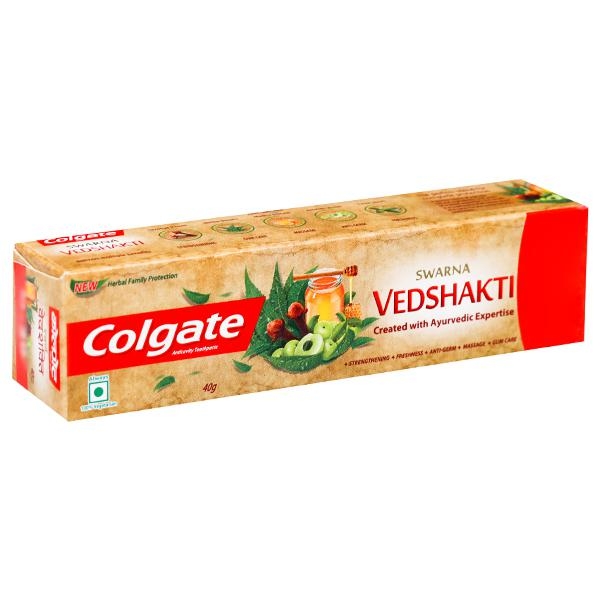
• Launching the initiative in partnership with EPL Limited (Formerly known as Essel Propack Limited), Colgate is manufacturing recyclable tubes for its Colgate Active Salt and Colgate Vedshakti toothpaste portfolio.

• Colgate Active Salt, combines salt with calcium and minerals to make teeth strong and gums healthy.

Benefits of Colgate Active Salt:

Toothpaste Contains Active Salt which fights germs and makes the gums healthy.Whitens teeth.Reduces tooth sensitivity.Keeps the mouth feeling fresh.Prevents bad mouth odour.

Benefits of Colgate Swarna Vedshakti:

Toothpaste Enriched with the goodness of Clove, Neem, Honey, Mint, Tulsi, Amla, Aloe Vera, Cinnamon and Camphor.Makes the gums healthy.Whitens the teeth.Removes dental plaque.Removes germs and prevents cavities and tooth decay.Has a cooling effect and freshens the breath.

Planning For Success

Here are some general start-up tips for a successful home business.

The first tip is a word of caution. It’s easy to think that because your home business can bypass the lease or construction aspects of starting a business, and the overhead costs of furnishing, maintenance, landscaping, utilities and so forth, that you can skip over some other processes to. That attitude, rather than heading someone down the road to a successful home business, could lead to financial business disaster.

An entrepreneurial spirit and a great idea are terrific assets for a successful home business. Other things are important too, however.

Market research and careful planning are of paramount important to the success of a home business, as they are for any business. A business plan is a must. It must include details on the products and services the firm will offer, the type of business equipment and the cost of it that will be needed in the coming five years. It should also include information on the competition in the designated market area. This information should include ways that the new home business will be successful in competing – how it is unique and how it is an improvement over what else is out there in the same industry.

A successful home business is one that is set up as the right legal entity. One of the first things new home based entrepreneurs should do is learn the legal consequences and liabilities of the various business types, as well as the tax consequences of each. A home business might be more successful as a partnership than sole proprietorship, for example, if additional cash flow is needed, or the entrepreneur is deficient in a crucial home business skill such as advertising, marketing or accounting, for example. An accountant can advise on the various options such as limited liability corporations, S corporations, standard corporations, limited partnerships and so forth.

Unless a successful home business is going to include walk in customers homeowner’s or renters insurance should provide adequate financial protection against theft or natural disaster. Of course, as equipment and furnishings are added, the insurance would need to increase. If clients were to come to the home office location, liability insurance would protect the firm from the financial devastating situation of customer injury.

A successful home business is one that is well planned and well funded. There is no such thing as too much preparation.

“What’s discipline? “

By reading the title name you will wonder that such a common topic it is but after reading till the end you will notice that the most common topic is ignored everywhere where it should not. Discipline means orderly life, without discipline we can’t live. We need be guided by rules at certain times. Discipline is the backbone of the nation. Only those nations where people have a discipline prosper in all fields. They even rule other nations. Discipline is a valuable asset at all levels of society.

Discipline and third world countries – Indiscipline has become a trait in the Third World countries like India, Pakistan, most of the African and Latin American countries. In India the indiscipline is seen in the legislative assemblies and parliament during the session. MP’s cross their limits in the parliament sometimes which is very sadful to watch. They are law making bodies but these law making bodies are the most undisciplined bodies. The indiscipline of political leaders is reflected in the whole nation and as a result it doesn’t progress.

Discipline and European countries – Discipline is seen in most of the European countries (and in Japan and Israel). That is why these countries make progress. Discipline is born of a sense of responsibility among the people. The people in developed countries know their obligation to the nation. This results in discipline in every field and the country progresses with the people, for the people .

Need to learn discipline – Discipline has to be learnt at every walk of life. Childhood is the best period for it. The young mind learns things quickly and easily. At school, the students are taught to behave well. They are taught to respect their elders. In sports also we are taught to follow the rules of the it. So the student days are the most formative period in which the value of discipline can be learnt.

In fact, discipline is a good thing. It builds character. It develops strength and unity. It creates sense of cooperation. So discipline must be taught from the very childhood. It is a key to success in life. The higher is the sense of discipline, the better it is for the people and the country. That was all for this article.

Keep reading… Thank you!!

New ‘Drone strategy’ reported; no exceptional status needed before enlistment.

The Center on Thursday declared another robot strategy. Under the Drone Rules 2021, the inclusion of robots expanded from 300 kg to 500 kg, and will incorporate weighty payload-conveying robots and robot taxis.

Furthermore, the new robot rules eliminate trusted status before any enlistment or permit issuance.

In view of the input, the Ministry of Civil Aviation (MoCA) said it chose to annul the UAS Rules, 2021 and supplant something similar with the changed Drone Rules, 2021.

The Aviation service had distributed UAS Rules, 2021 in March.

               Here are 30 vital elements of Drone Rules 2021:

1.According to the Civil Aviation Ministry, a few endorsements annulled: remarkable authorisation number, one of a kind model recognizable proof number, declaration of assembling and airworthiness, testament of conformance, authentication of support, import leeway, acknowledgment of existing robots, administrator grant, authorisation of R&D association, understudy distant pilot permit, far off pilot teacher authorisation, drone port authorisation and so on

2.Number of structures decreased from 25 to 5.

3.Types of expenses diminished from 72 to 4.

4.Quantum of charge diminished to ostensible levels and delinked with size of robot. For example, the charge for a far off pilot permit expense has been diminished from ₹3,000 (for enormous robot) to ₹100 for all classes of robots; and is substantial for a very long time.

5.Digital sky stage will be created as an easy to understand single-window framework, the Civil Aviation Ministry said in an articulation.

6.Interactive airspace map with green, yellow and red zones will be shown on the computerized sky stage inside 30 days of distribution of these standards.

7.No authorization needed for working robots in green zones. Green zone implies the airspace up to an upward distance of 400 feet or 120 meter that has not been assigned as a red zone or yellow zone in the airspace map; and the airspace up to an upward distance of 200 feet or 60 meter over the space situated between a horizontal distance of 8 and 12 kilometer from the border of a functional air terminal.

8.Yellow zone diminished from 45 km to 12 km from the air terminal edge.

9.No far off pilot permit needed for miniature robots (for non-business use) and nano drones.

10.No necessity for exceptional status before issuance of any enrollment or permit.

11.No prerequisite of Type Certificate, novel recognizable proof number and distant pilot permit by R&D elements working robots in own or leased premises, situated in a green zone.

12. No limitation on unfamiliar proprietorship in Indian robot organizations.

13. Import of robots to be controlled by DGFT.

14. Requirement of import freedom from DGCA nullified.

15.Coverage of robots under Drone Rules, 2021 expanded from 300 kg to 500 kg. This will cover drone taxis moreover.

16.DGCA will endorse drone preparing necessities, regulate drone schools and give pilot licenses on the web.

17. Remote pilot permit to be given by DGCA inside 15 days of pilot getting the far off pilot endorsement from the approved robot school through the advanced sky stage.

18.Testing of robots for issuance of Type Certificate to be done by Quality Council of India or approved testing substances.

19. Type Certificate required

20.Nano and model robots (made for examination or amusement intentions) are absolved from type confirmation.

21.Manufacturers and merchants might produce their robots’ extraordinary ID number on the advanced sky stage through the self-accreditation course.

22.Drones present in India at the latest November 30, 2021 will be given an extraordinary ID number through the computerized sky stage gave, they have a DAN, a GST-paid receipt and are essential for the rundown of DGCA-supported robots.

23.Standard working methods (SOP) and preparing strategy manuals (TPM) will be recommended by DGCA on the advanced sky stage for self-observing by clients.

24.. No endorsements required except if there is a huge takeoff from the recommended strategies.

25.Maximum punishment for infringement decreased to Rs1 lakh.

26.Safety and security highlights like ‘No consent – no take-off’ (NPNT), continuous following reference point, geo-fencing and so on to be told in future.

27.A half year lead time will be given to the business to consistence.

28.Drone passages will be created for load conveyances.

29.Drone advancement committee to be set up by Government with cooperation from the scholarly community, new businesses and different partners to work with a development arranged administrative system.

30.There will be insignificant human interface and most consents will act naturally produced, the association flight service added.

Philosophy

Philosophy has been with the mankind for thousands of years. Every civilization has produced many philosophers who have changed the course of history. Those philosophies have dramatically changed not only the people around those philosophers but also the people who lived far away from them. These philosophies have refined the attitudes of the people. If at all there is any refined tendency in our attitude and thinking, that can be attributed to the exposure we are given to those philosophies. After all these attributes, the basic question, “What is Philosophy?” still remains unanswered.

Philosophies vary. Philosophers differ. No one could pinpoint where all these philosophies lead us to. Still Philosophers produce their thinking. Here we have produced few essays which give in-depth analysis of various philosophies. Although philosophies produce different thinking, sometimes totally contradictory thinking, it is ultimately left to the individuals to decide what is best for them. Our needs differ. We are in different environments. We are born with different abilities and mental set-ups. We differ by our visions and ambitions. Of course these differences bring beauty and colors to this mankind. Our uniqueness is in our difference. Similarities fail to add value always.

No two days are same. No two people are same. No two countries are same. So no two philosophies are same. These philosophies help us to understand ourselves in better terms. We are moved to attain self-fulfillment by these philosophies. These philosophies tell us squarely at our face that in spite of our differences we are unique. That strong statement is the backbone of the philosophies. Philosophies are here to accept the differenced among the races and nations. No one is superior to others.Now let us read all these essays on Philosophies listed below. This page “Essays on Philosophy” publishes philosophical papers of quality which the editors believe will make a contribution to the literature on a certain topic. This site holds to no specific school of thought, mode of philosophizing or style of writing. Each essay is devoted to a specific topic. Philosophy is the most beliefs about what is true or real according to individual values (Gutek – 2009). Philosophy is our beliefs that will determine what we do professionally and personally. Not having a philosophy set in place, it will be difficult to make decisions within the classroom, creating curriculum and evaluate progress. Philosophy is the study of examining and thinking about questionable ethical problems and/or generally accepted certainties. Philosophy aims at knowledge that combines a variety of academic fields as well as convictions, prejudices and beliefs.

Before we can consider some of the questions studied by philosophy it makes sense to ask what philosophy is in the first place, although this is itself subject to much debate. In this part of introducing philosophy and philosophical ideas, we begin by looking at the word and some of the historical answers given before moving on to more recent opinions.The word philosophy has meant different things at different times, often reflecting the culture of the day. Usually we understand the term to denote the love of wisdom, from the Greek. In this sense, as it was apparently used by the famous philosopher Socrates, it gives the impression of someone who is seeking wisdom, rather than having found it. We would only call someone a physicist, say, if he or she actually had some knowledge of physics, but we describe as a philosopher someone who is aiming at wisdom without necessarily achieving it. On the other hand, philosophy has also had the negative sense of a subject full of idle speculation, useless to the practical business of finding things out and consisting mostly in irrelevant theorizing.

Key takeaways from PM Modi’s Independence Day speech

Celebrating India’s 75th Independence day, Prime Minister Modi addressed the nation from the iconic Red Fort saying about the achievements of the country and also laid out plans for India at 100 i.e for the next 25 years.

For Farmers:

Emphasising on food security the Prime Minister said that it is high time agricultural sector starts using scientific research and methods for increasing food production and thus increasing food security in India. Also on the topic he said it is high time that the country must increase collective power of small farmers and make them nation’s pride.

The Prime Minister said: “It is time we apply scientific research and suggestions in our agriculture sector. We need to reap all its benefits. It will not just provide food security to the nation, but will also increase food produce.”

New e-commerce platform

Talking about a new e-commerce platform the Prime Minister said that the government will develop an all new e-commerce platform specifically for the products made by rural women self-help groups. Praising women self-help groups, Modi said there are more than eight crore rural women in the villages who associate themselves with these self-help groups.

The new platform will provide for these women as they produce various kinds of products and it will fecilitate for their products to get a big market in India and abroad.

Sabka Saath, Sabka Vikas, Sabka Vishwas, Sabka Prayaas

Giving a new slogan on Independence Day the Prime Minister said “‘Sabka Saath, Sabka Vikas, Sabka Vishwas and Sabka Prayaas’ is very important for the achievement of all our goals.”

“There comes a time in the development journey of every country, when that country redefines itself, moves forward with new resolutions. Today that time has come in India’s development journey…Starting from here, the journey of the next 25 years is the ‘Amrit’ of the creation of a new India. The fulfillment of our resolves in this ‘Amrit Kaal’ will take us till 100 years of independence,” said the Prime Minister.

Fortifies rice to the poor by 2024

In a bid address the problem of malnutrition in the country the Prime Minister on Sunday announced that the rice distributed to the poor will be fortified with the help of various schemes such as Mid-day Meal. “Malnutrition and lack of micro-nutrients are affecting the growth of poor children. Looking at this, it has been decided to fortify the rice given to the poor via different government schemes,” he said.

‘Gati Shakti’- New Infrastructure Plan

Launching a new National Infrastructure Plan, PM Modi launched a program called ‘Gati Shakti’ which is focused boosting infrastructure in India, providing jobs and boosting the economy as well as exports. The budget for this will be about Rs 100 trillion ($1.35 Trillion).

Hand-holding of deprived communities necessary, reservation being ensured

Ensuring reservation for Schedule Castes, Schedule Tribes, Other Backward Classes and General Category poor necessary said the Prime Minister and emphasised that hand holding if the communities is necessary

“We have to bridge the gap between lives in villages and cities,” he said.

Connecting Northeast

In his speech the Prime Minister on sunday said a new history of connectivity is being written in the northeast, while announcing that the work to connect the state capitals in the region with rail services will be completed soon.

During his speech, he said multiple parts of the country — whether its East, Northeast, Jammu and Kashmir, Ladakh including the entire Himalayan region, the coastal belt or the tribal region — will become a big base for India’s development in the future.

On Scientists

Applauding the fantastic work done by our scientists PM Modi said on Sunday it is the result of the strength of our industrialists and scientists, that today India does not need to depend on any other nation for COVID-19 vaccines.

Energy Independency Target – 2047

Prime Minister Narendra Modi set a target of becoming ‘energy independent’ by 2047 through a mix of electric mobility, gas-based economy, doping ethanol in petrol and making the country a hub for hydrogen production. Delivering his Independence Day address from the ramparts of the Red Fort, he said India spends over ₹12 lakh crore on energy imports every year.

“For India to progress, for Atmanirbhar Bharat, energy independence is the call of the hour,” he said. “India has to take a pledge that it will be energy independent by the year we celebrate 100th year of Independence.

Sainik schools now open for girls also

In a historic move Prime Minister Narendra Modi on Sunday announced that all Sainik Schools in the country will now be open for girls also. At present, 33 Sainik schools are operating in the country. During his speech, the Prime Minister said that two-and-a-half years ago, the maiden experiment of admitting girls in Sainik schools was carried out in Mizoram.”Now, the government has decided that all the Sainik schools in the country will also be open for the daughters of the country,” he said.

DEMOCRACY IN INDIA

India has embraced democracy as a type of government. There is no foundation in the country which today isn’t run on democratic standards. Directly from the top to the base each organization and each framework in India is maintained to be controlled by democratic means and techniques.

Sovereignty is an essential component of Indian democracy. Sovereignty alludes to the full force of an administering body over itself without outside impedance. Besides, individuals can practice power in Indian democracy. Generally vital, individuals of India choose their agents. Besides, these agents stay answerable for ordinary citizens.

The democracy in India chips away at the guideline of political fairness. Moreover, it basically implies all residents are equivalent under the watchful eye of the law. Generally vital, there is no separation based on religion, standing, statement of faith, race, order, and so on Subsequently, every Indian resident appreciates equivalent political rights.

The democracy is a gift of the patriotic national leaders to the citizens of India. Generally critical, the residents of this nation should acknowledge and like the extraordinary worth of democracy. The democracy in India is absolutely one of a kind on the planet.

Indian Education System

Nida's avatarTrack2Training

Photo by Pragyan Bezbaruah on Pexels.com

India produces more engineers than the total population of Switzerland, even after that Switzerland is number one when it comes to research and innovation. Since our independence, India has not produced a Nobel laureate in science, whereas the USA has produced a hundred plus. According to the National Employability Report of 2019, 80% of the engineers in India are unemployable. And if we want to look for the root cause of this problem then we have to go back to the time Britishers were ruling us and The East India Company was facing 2 major challenges- 1. Communication with Indians. 2. They needed more workers; then Thomas Babington Macaulay gave us the “English Education Act of 1835”. It fulfilled both their purposes- of finding people who would sit behind desks and work for them without asking questions, and the other was communication in English…

View original post 585 more words

“Titanic”


The word “Titanic” still gives goosebumps, that tragic event that happened back in 1912, still has a mesmerising mystery of getting sinked till now. It all was happened on April 10, 1912; the Titanic was sailing for New York from Southampton. At that time, she was one of the largest ship in the world built in a very unique & special way. So she was regarded as unsinkable and unbreakable. At that moment, the Titanic was sailing across the icy waters of the North Atlantic. She was carrying for approx 1300 passengers and a crew of 900. Four days after setting out, a great disaster happened. At one moment a huge iceberg was spotted very close to the ship. The great ship turned sharply to avoid a collision. Suddenly there was a slight trembling sound from below. The alarm had been given. The captain went down to see what had happened. Five of the ships, sixteen watertight compartments were totally damaged by the collision. So the captain realized to his horror that the Titanic was sinking rapidly.It is simply understandable that, through more communication, increased security procedures, and enhanced structure, the horrifying tragedy of the Titanic could have been prevented from incident altogether. Titanic incident has displayed in countless books, articles, and films, and her story has entered public awareness.

Some facts of TITANIC are-

  1. A specific bacteria is slowly consuming the wreckage. What remains of the Titanic at the bottom of the ocean will eventually be entirely eaten away by a rust-eating bacteria. This microorganism, can adhere to steel surfaces and forms the rusticles.
  2. Some 100,000 people attended the ship’s launch the first time the immense White Star liner made its way into the water was in May 1911. It’s estimated that 100,000 people, or roughly one-third of the population in Belfast watched the just-over-a-minute-long launch.
  3. The ship was just under 900 feet long. The Titanic measured 882 feet and 9 inches in length, making it the biggest vessel of its time. Today, the largest cruise ship is Royal Caribbean’s Symphony of the Seas, clocking in at nearly 1,200 feet long.  
  4. The ship burned an estimated 825 tons of coal per day. The Titanic was far from a light craft, weighing some 46,000 tons. Titanic has burned a reported 825 tons of coal per day in 159 furnaces that heated 29 boilers.  
  5. Only 23 of the 908 crew on board were female. Of the 23 female crew members, only three did not survive the collision. Of the 885 male crew members, a tragic 693 went down with the ship. 
  6. The temperature of the sea water was below freezing when the ship sank. A ship that was near the Titanic when it sank — water temperatures were as cold as 28 degrees Fahrenheit. The human body can survive up to 45 minutes in freezing water.
  7. The Titanic was able to carry 64 lifeboats but only carried 20. Many of the lifeboats that were launched from the Titanic did not pack as many patrons as they could have held. 
  1. Two young brothers survived the ship without a guardian. Edmond and Michel Navratil went down in history as the only children to survive the Titanic without a parent. They were two years apart in age and were nicknamed the “Titanic Orphans.” Their father, Michel Sr., kidnapped them from their mother, whom he was no longer with, and planned to take them to America. The last anyone saw of him was when he put his children in a lifeboat.  

“How Does it feels to be a Single Child”

Childhood is the phase of life where our heart & soul truly resides. The time span of childhood is always precious, indescribable, tension- free and THE BEST. The time we spent in our childhood can never be compared to any phase of our life. Childhood is something which we will cherish for the rest of our life, it is probably the best time we all had in our whole life span. For some children, it might be a scary one also, but the things we learned and did in our childhood are absolutely unforgettable and always has a special place in our heart. Everyone has a different childhood, so I can only relay what it was like for me growing up as a single child. Being a single child consists of mixed emotions,at one point of time you enjoy being a single child, but when you become an adult , when you have so many things going on in your mind, when you literally want your person to listen to your feelings and the things that are going on, it hits you when you realise that you are all alone in this and there’s no one to listen and it literally breaks your heart. It is the only time where every single child might have felt the need of a sibling. Being a single child is never ever easy, spending the childhood all alone has mad a habit of being alone, and to be in your own little world. Having no siblings definitely affects the childhood and the adulthood of the person.

The phase of a childhood – where a small kid needs someone to play with, to share things with, to fight with, to make lifetime memories with, to get clicked doing some stupid stuff and later cherishing them, to care, to fight for the chocolate and what not.. but having no siblings means no one to play with or to do any of these things with, which completely affects the childhood of the person, it made the person to live alone, to entertain himself or herself, to play alone, to eat alone without any fight, to do every thing which developed a habit of being alone. Being alone is something very terrible, but for all the single child out there it has become a part of life for us, where for some children being alone is something very terrible for them, but for us, being lonely, soothes us and has become our comfort zone now. At some point we might have cried for being alone or having no siblings, but later when we learned to live alone, to play alone it become a part of our daily life, a part of our personality. In the adulthood phase, the need of having atleast one sibling hits the most, specially when you have no one to discuss your personal issues, trauma and fears. Though we cannot share everything with our parents. We literally need our person who has the same genes, same thought process. Adulthood is the phase where we face a lot of rejections , heartbreaks, we lose friends, denials and it is the age where we might lose one of our parent, the need of a sibling can be truly felt here only, when there’s no one to discuss your inner feelings or someone to guide you for the future, to atleast gives you a surety that, “everything will be alright”, that ,“I’m here” but then it hits you that you are all alone in this, that only you’ve got some serious responsibilities of your parents of their future and that you are all alone in this, you become hopeless and helpless when there’s no one to share about what’s going inside, what’s eating you. No one who knows you completely, who knows your innermost fear and insecurities. It is the time where you feel the need of having a sibling the most, but all you can do is nothing, you have to be strong in this, you have to feel comfortable in being alone, you have to do all the things alone. This is the time where a person’s heart breaks inside. Being a single child is never too easy, it is something we have to adjust in, to get comfortable in. Afterall, it’s not at all easy to spend your childhood all alone while seeing your friends having fun with their siblings, it something that hits you from inside. Being a single child means being all alone since the day you born without any sibling, being alone is something that made the child a bit mature than when the child is assumed to be.

I learned very early on how to entertain myself.I’m often asked if I was lonely growing up without siblings. I really wasn’t. Without siblings around to play with, I was forced to figure out ways to entertain myself. As a young child I enjoyed building things, usually with LEGOs and many other things like that. I also liked to draw, even though I was never particularly good at it. As I got older, I became very interested in computers, which became something that could infinitely satiate my desire to build and learn.

I was very curious about why I didn’t have a brother or sister. Growing up, all of the kids in my neighborhood had siblings and that confused me. I remember asking my parents why I didn’t have a brother or sister and them more or less saying that the reason I didn’t have a sibling is simply because I just didn’t have a sibling. One time after seeing a TV show about long-lost siblings reunited, I became obsessed with the idea and questioned my mom for a while about the possibility of me having a long-lost twin. At the time, I was confused how she could be so sure that I didn’t.

I never had to fight for my parents’ attention. I never felt like I was competing with anyone or anything for my parents’ attention. Whenever I needed to or wanted to talk about something, I had an attentive parent. As a result, I was always fully supported in my major interests. My mother and father has done their best to make me comfortable of doing everything alone. Instead of a sibling, my father used to eat the food made up of the paper from my kitchen set, he never complained and he literally enjoyed eating paper just for me. Both of them made my childhood easier and funnier, they both has also played the role of a sibling that I always needed.

My parents were often over-protective. From what I’ve observed, later siblings usually get more leeway than older siblings do. Parents, after the first few times around, figure out what children can actually handle at what ages and aren’t as scared to let them make mistakes. My parents weren’t terribly strict, but they often worried about me making mistakes, not because I was irresponsible or untrustworthy, but simply because I was the only child.

I like attention and want my accomplishments to be recognized. Growing up, every little thing I accomplished was celebrated, no matter how trivial. Moreover, I often listened to my parents bragging about how I accomplished this or that or the other thing to anyone who would listen. Now, like a stereotypical only child, I feel a need for my accomplishments to be called out and recognized for their importance.

I grew up always in my head. I had a lot of alone time, which meant I had a lot of time to think about everything, with no one around to distract me from it. I was (and still am) always in my head. I analyzed and over-thought everything. I was often in a state of worry. I had a lot of trouble sleeping as a teenager, because I was unable to turn off my thoughts and get into a restful place.

“BEST OFFLINE FOOTBALL GAMES FOR ANDROID USERS”

Football has always been the go to sport for most of the children’s and even adults. Football itself is an emotion for a lot of people! It is a game which brings everyone together, to play and have fruitful rivalries. Football has larger number of followers as compared to cricket and also it is the most watchable sport. Due to this pandemic, there’s nothing to do in this leisure so, In this post, we are going to introduce the “10 BEST FOOTBALL GAMES” for android users which can be played offline in 2021, the games which will give you the exciting emotion while playing! We will update our content as we see some more exciting and promising games which are not mentioned in our list yet. So, to bring the list of 10 football games, we’ve spent more than 3 hours to bring these thrilling football games for you all!!  And I can bet you’ll undoubtedly love it!

Best Offline Football Games for Android Users-

Here we are mentioning 10 thrilling football games for all the Football Freaks!

  • 1.   WORLD SOCCER LEAGUE


-The first game that is on our list is “The World Soccer League”. It is a 3D soccer game where you play all the players on a team, passing the ball, dribbling, centering to the area, and shooting, the game comes with excellent high-quality graphics. This game has many features, there are a total of 2000 players!! with 60 national teams and 60 clubs. This game also provides 4 modes: Exhibition, Cup, League, and Training, and it also provides a splendid dribble and thrilling shooting! In addition, you can also save and keep all the images or videos of any moment. Achievements and Global Activity are also displayed in this game. It supports 15 different languages, and also can be played on Tablet devices!

  • 2.  FOOTBALL STRIKE: MULTIPLAYER SOCCER


-You’ve never played a football game like this before!! One of the best things about this game is that it provides you a multiplayer ground, in which you can play with your friends on the football ground but through online mode. You can also customize your striker and goalkeeper with tons of unlockable and mind- blowing  items and you can show off your style and jersey’s and can also represent your team’s colors! One of the key features of this game are, you can play multiplayer battles against your friend, this game also provides you a fast gameplay as compared to other football games. So, all the football freaks, without wasting your time download this game through the link given below and start making millions of memories by playing online football matches with your friends!

  • 3. SOCCER! HERO

-This game is available completely free on play store and it is created by Free games private limited. More than 10M people have downloaded this game. One of the best parts of this game is that this game has more than 700 levels and as you will reach higher levels you will achieve a status of a “Pro Player”. You can also customize your player and also increase your rank on the leaderboard if you play well!

Some of the best features of this game are, it has stunning 3d graphics and has more than 700 levels!!  This game is very easy to play but at the same time it is hard to be the master of this game too. You can also take part in regular online events and can win trophies! By connecting with Facebook, you can also connect with your Facebook friends, send them friend requests to play with you and to play a match to remember! 

  • 4. ULTIMATE SOCCER FOOTBALL


-One of the best games which gives you a real feeling of playing football on the ground. The control of this game consists of a joystick as same as in pubg and 2 fire buttons named as pass and goal. The graphics of this game are so realistic and it also provides you a smoother and  faster play. One of the best features of this game is that it provides you with excellent 3D graphics with the best sound effect which makes you feel that you are really playing on the ground! Also, there are many types of modes available such as Career mode, World Cup mode & Friendly mode.

5. REAL FOOTBALL


-This game is designed by the Gameloft company. One of the best parts of this game is it’s only 31 MB in size. It is a free simulation sports game where you’ll be able to win a league or cup or a championship, or to play with the world champions, be it the manager of a fantasy team, and more. The best features of this game includes, 3D stadiums, polished shadows, detailed textures and spectators. This game is specially designed for smart players and for major football freaks so that they can really enjoy the game at its best!

  • 6. SOCCER CUP 2020


-This game is totally awesome. Once you play this game and trust me, you won’t stop, it’s all because of the realistic graphics and sound effects of this game that make you feel like you’re  literally passing a goal! You will not only find soccer games but also many other game modes. There are many football games, but none of them are like this one. Some of the best quality of this game is It comes with different modes: season, tournament, practice and career mode. This game is the most realistic game which provides you a real emotion of being on the ground.

7. SCORE MATCH : PvP SOCCER


-With millions of players worldwide, this game is a unique soccer multiplayer game. You become the caption of your own team on the road to GLORY, recruit your friends and rise to the top in a series of challenging arenas and weekly events. You can play your own way like dribble, tackle, pass and also shoot against opponents in real time online matches against all over the world. Some of the best features of this game are real time fast places 1 on 1 matches against a player from all over the world. This game is addictive, easy and funny at the same time! You can even earn a package to unlock new player types and upgrade players to reach their potential and showcase their skills. You can also take part in regular seasons and events to win unrivaled rewards.

  • 8. DREAM LEAGUE SOCCER 2020
  • Dream League Soccer 2020 puts you in the heart of the action with a fresh look and brand new features! Build your dream team from over 3,500 FIFPro™ licensed players and take to the field against the world’s best soccer clubs! Rise through 8 divisions whilst enjoying full 3D motion-captured player moves, immersive in-game commentary, team customizations, and much more. The beautiful game has never been so good! In this game you can develop your dream team from over 3,500 licensed players. This game is full 3D motion-captured kicks, tackles, celebrations and goalkeeper saves gives unmatched realism. You can Build your soccer empire from your own Stadium to Medical, Commercial and Training facilities and also use Coaches to develop your players technical and physical abilities.
  • 9. FOOTBALL eLEGENDS- DREAM OFF SOCCER!

-Games by Abstron private limited completely entertain you and take the football leagues to the next level. You can find better grounds, players, uniforms, and opponents. This game also gives you the feature of managing your own team. It also provides good controlling options to control your player. This game will also give you 4 modes: Quick Match, International Cup, Penalty Kick, Challenges. The quick match will allow the user to learn the basics of football, International cup winners will go through tough challenges given by 15 other teams. Penalty kicks will test your abilities under high pressure. Challenge mode is the last one and much more difficult than rest all.

10. FINAL KICK: ONLINE FOOTBALL

-Games by Ivanovich Sports limited completely entertain you and take the football leagues to the another level. One of the best parts of this game is that this game charges a penalty for every wrong kick. Some of the pros of this game are real animations, simple game controls, real time multiplayer and also 20 offline tournaments.

Conclusion:

So, you’ve read the 10 best offline football games for android users and I am sure that you’ll pick one of them according to the features that I’ve mentioned above in each game. According to me, I will choose the Soccer cup 2021.

“ Movie Review : SHERSHAAH”

Undoubtedly Shershaah is one of the best patriotic film ever. I watched it about 5-7 days ago and I’m still cannot get over how true, surreal, no unwanted filter, simple and heartfelt this movie is! The efforts, sweats, love for the nation, a surreal cute love story, martyrdom that has been witnessed in this movie is just speechless. It is truly the best ever patriotic film ever, it has portrayed that how the soldiers literally die for our Country ( with a happy smiling face and with no regrets- this is so so so huge), how they protects us from the enemies, how they doesn’t even think about their own families, their parents who gave birth to them and they literally always there,to give their life for the country, for the sake and love for the nation. It’s something indescribable and very very emotional. It is a story about a brave army man whose various sides has been portrayed in this movie.

“Caption Vikram Batra” the person who has won many hearts, who is the inspiration for the youth, who happily gave his life while fighting for the country, who loved a girl truly and completely, who has the passion to serve for the country since his childhood. It’s a blend of two love stories together. The man who has the passion to serve for the country and on the other side the man who truly, completely, undoubtedly love a girl from his college. This movie has showed different sides of caption Vikram Batra which made us love him and to appreciate him even more. This movie is filled with truckloads of emotions. The efforts of the whole team, crew and the cast of this movie are quite evident and completely worth it. It is never easy to portray a real – life hero who has done so much in his personal life and fir his country. Still, the cast and the crew of this movie has made an effort to portray the whole life span of Captain Vikram Batra which is precisely amazing. This movie is a biopic that you will feel with all your heart, PVC awarded captain Vikram Batra, his personality, his bravery, his supreme sacrifice for the country and his never ending love for his girl will surely bring tears from your eyes. Actor Siddharth Malhotra has portrayed the character of the bravest Army man Captain Vikram Batra, and honestly he was commendable, he has given his best ever performance till now in his acting career and this is totally worth watching. He completely lived the character and totally nailed it. Each and every side of the personality was perfectly portrayed by him. Siddharth has played the role with plenty of efforts and has showed us that how Captian Vikram Batra was literally a solid stone. He portrayed the role of the army man correctly, literally no one in the universe would’ve portrayed better than Siddharth Malhotra as Captain Vikram Batra.

He has showed us each and every bit of the life span of Vikram Batra. So truly portrayed the emotions of Captain Vikram Batra that how he was so passionate for fighting for his country, how even for once he didn’t think of sacrificing his life, his girl whom he loved the most and his family just for serving for the country. The famous line that completely give justice about how passionate Captain Vikram Batra was – “ ye dil maange more” this line is enough to not even doubt on his sweat and his supreme sacrifice. “ ye dil maange more” vikram Batra always finds the ways to serve for his country, and so he choose this line to exactly show his emotion for the country and how passionate he was to serve for the country, to fight with each and every terrorist. And on the other side, the story of his love life is truly commendable and surreal. Afterall, it is a real love story. The movie has showed the love story of Captain Vikram Batra who falls in love back in his college with a girl named Dimple Cheema. Siddharth Malhotra with the co- actor Kiara Advani both has portrayed the true love of Captian Vikram Batra and Dimple Cheema, that is truly what love is, both has an amazing chemistry which has made us love them more and the surreal love story. It showed how a simple middle class girl and a boy falls in love, the love which has no boundaries. Sid- kiara chemistry felt almost real and had showed the purity of love between Vikram and dimple. If Siddharth was the soul of the movie, then Kiara is the heart of it! their combo was excellent.

Now coming to the battle scenes, songs, cinematography and sound effects, each and every element of this movie is perfect. From loving songs to the battle scenes everything was perfect. Sounds of bullets and bombs were quite often in the second half of the film, which has honestly made me think that I am literally seeing the soldiers fighting for our country from a little distance. The songs are the only element where the heart of the movie “SHERSHAAH” resides. All the songs of the movie, from the romantic song to the last song of the movie where everyone was giving tribute to the Captain Vikram Batra wrapped in the flag. Every song has its own vibe, it’s own emotion. The dialogues of this film was commendable! My favourite was the one,” ya toh tiranga lehraake aaunga ya tirange me lipat ke aaunga, par aaunga zaroor” this dialogue has won many hearts, this dialogue has showed the utmost love for the nation of Captain Vikram Batra. All over the movie is a must watch because apart from the history of it, this movie is genuinely a good one if I judge it in the category of movies in the cinema. Literally kudos to each ever soldier who has sacrificed his life for the nation. Respect and hats off to every soldier up there.

10 Best Torrent Sites in 2020

The coronavirus pandemic has created a situation wherein people are stuck at home and trying for Torrent for better or worse with nothing much to do in their leisure time. A good way to spend time is by immersing oneself in popular culture- watching television shows, movies, anime, downloading or streaming music online, reading e- books.

Torrent Websites give you the option to access all this without ads and for free! Not everyone can afford to buy a Netflix, HBO or a Hulu connection. Out of the many torrents available on the internet, not all are up to the mark. This article will guide you to the best torrent sites that are reliable and active based on meticulous research and rating from top tech websites.

Top 10 Torrent Sites in 2020

1. The Pirate Bay

One of the most popular torrent sites in the world

Service Provided:

  • Average download speed of 6.3MB per second
  • Immense database
  • Millions of movies, TV shows, foreign language films and songs 
  • Provides trusted user tags
  • Offers millions of categories and genres to choose from
  • Has the all new always online technology
  • Provides support for magnet links                   

Pros:

  • It has managed to stay afloat even after multiple crackdowns
  • In fact, it evades capture
  • Has quick search option
  • One can find both new and old content
  • Has multiple proxies in case of shutdown
  • Is super easy to use

Cons:

  • Stops working occasionally, at random
  • It’s domain name keeps on changing rapidly
  • Is somewhat hard to find since domain name keeps changing

2. Torrentz2

Service Provided:

  • Average download speed of 2 MB per second
  • Has latest as well as old music
  • Provides a vast library of music from a multitude of genres

Pros:

  • Has a good user interface
  • Website is minimalist and non clunky
  • Easy to use
  • Reliable
  • Fulfills all music requirements
  • Search panel is quite thorough

Cons:

  • Low download speed
  • It only has torrents for music and is thus less versatile than the other websites.

3. Torlock

A site which offers anime and e- books on a single platform

Service Provided:

  • Average download speed of 4.4 MB per second
  • Offers a top 10 list of Animes
  • Easy search options
  • Immense variety and database
  • High quality anime and e books, especially helpful with graphics, illustrations and animations

Pros:

  • Can be used even by people who are not comfortable with technology
  • Has a wide and comprehensive collection of animes, e- books and songs
  • Has content which most sites don’t
  • The website has a minimalist aesthetic

Cons:

  • Low download speed
  • Is good for anime, e- books and music but not that good for movies and TV shows

4. RARBG

A torrent site which is known for offering the latest content

Service Provided:

  • Average download speed of 6.1 MB per second
  • Offers good and high quality content
  • Offers a large variety of content for viewers to choose from
  • Updates its site to display ratings such as most popular, most streamed      

Pros: 

  • High quality content
  • Simple user interface, can be used by everyone with ease
  • Has the most popular content
  • Website stays up to date
  • Also has the latest content

Cons:

  • It is not that popular a site, is less known
  • It is a bit hard to find on the internet
  • The site is blocked in several countries- United Kingdom, Portugal, Denmark

5. Zooqle

A site for free download of games

Service Provided:

  • Average download speed of 2.6 MB per second
  • Games as well as TV series and movies are available

Pros:

  • Is a new and updated platform
  • Has a collection of 3.5 million high quality, verified torrents

Cons:

  • Has low download speed, being new the website interface has some minor problems

6. EZTV

Service Provided:

  • Average download speed of 3.2 MB per second
  • Has a vast collection of Television shows- old and new

Pros:

  • Has almost every TV show: comedy shows, talk shows, game shows, reality et al
  • Easy to use

Cons:

  • Has an old and a clunk user interface

7. YTS

Torrent site best known for movie classics. It has everything that a cinephile could ever want.

Service Provided:

  • Average download speed of 3.2 MB per second
  • Offers a single platform for hard to access films

Pros:

  • Good quality content
  • Decent download speed

Cons:

  • A platform only meant for movies, it is less versatile than other platforms.
  • Users have to shift to other platform in order to access TV series, music or anime

8. Torrent Downloads

Best known as the website which has obscure content that no other website has

Service Provided:

  • Average download speed of 2.8 MB per second
  • Offers a large collection of cult classics and non popular content

Pros:

  • A unique platform in terms of content
  • Good user interface

Cons:

  • Is blocked in most countries

9. Lime Torrents

Service Provided: 

  • Average download speed of 3.7 MB per second

Pros:

  • Good user interface, offers services like any other torrent website

Cons:

  • Inconsistent and thus unreliable

10. 1337x

Service Provided:

  • Average download speed of 4.2 MB per second
  • Abundance of choice
  • Detailed browsing categories which enable ease of search
  • TV shows, movies, music and a lot more!

Pros:

  • Extremely user friendly
  • Recently renovated website
  • No security risks
  • Simple and organized website
  • One can easily find what they’re looking for by the virtue of its search tracker

Cons:

  • Google does not display it in its search results and thus it becomes hard to track
  • Download speed is less

Conclusion 

There is no need to get overwhelmed by the sheer amount of torrents available on the internet because we have got you covered. These top ten websites are secure and reliable and the best part is that the readers have a lot to choose from. Need to stream faster?

Use The Pirate Bay, need to watch high quality anime? look for Torlock, want to listen to the latest music? click Torrentz2. Our well researched top 10 torrent compilation will make sure that all your entertainment needs are met. What’s more, if one site is taken down, there are others to choose from. So, sit back, relax, choose from our recommendations and enjoy.

Feminism in India

A feminist is anyone who recognizes the equality and full humanity of women and men.”-Gloria SteinemSo, what is feminism? Feminism is an action of the society to bring rights to women and treat them equally regardless of their gender. Feminism is not something that should be endorsed by a woman only ,it can be carried forward by a man too. As said by G.D Anderson,” Feminism isn’t about making women strong, women are already strong, it’s about changing the way the world perceive that strength.” The fact itself is so confusing to understand the imbalance between two genders despite of any human being who is born with the same type of skin and color of blood. A woman deserves the same respect a man has without facing the question about their gender. Needless to say , patriarchy runs deep in our Indian society . A woman is forced to feel weak and small in front of a man and enforced to stay within a certain boundary. The long injustice in the name of gender has led to the topic of  feminism.
The importance of feminism in India is utmost. History has been an evident of feminism culture and its significance. The first and the foremost reason to bring this revolution is to change the mentality and to achieve a society free from male dominance. It has been a long battle for women to fight for their rights even if it’s about their decision. It is sad that till today a girl has to accept a man as her husband without her consent. A married woman is forced to do the household work and do not have the right to have a job hand in hand. Feminism plays an important part in the society because it demands equality among genders. Every year lakhs of female fetus get buried due to the burden of carrying a responsibility and the fear of giving dowry in marriage. Do you know Indian culture also discriminate working profession in regard of gender? Yes, in the past women could only do a job if that is approved by the male society and not judged by her talent. Feminism helps to remove such inequality. Today because people are giving importance to it, women like Mirabai Chanu and Lovlina Borgohain could outshine in their own field. No doubt with different kind of body framework and organs women have to undergo certain changes to meet the reproductive life. Menstruation is a big taboo, where women are considered impure during period cycle. Also there needs to have a stoppage of peoples hindering nature. Needless to say, women sometimes give rise to the inequality they once suffer from. Her mother-in-law force her to behave in a certain way, to cover her face whole life, to dress decently and ultimately it turns to be a social practice in a community.With change in generation and people advancing mindset things are changing and women are getting their rights. Topics like women empowerment, Beti bachao Beti padhao making people aware of the crucial role of a woman in balancing the atmosphere. Now a days, highly restricted states like Haryana is producing Miss world, wrestler like Geeta Phogat and Nirmala Devi. With the hope that one day the country would be free of gender inequality. Thus, people need to carry this journey forward and bring a change where both men and women could walk in the street without having the fear of getting killed or molested as a girl rather with the feeling safety to chase their dreams.

ReplyForward

Pros and Cons of E-learning

The emergence of E-learning has been attributed to the COVID-19 epidemic. As a result of this predicament, people have been debating whether e-learning is a good substitute for classroom learning. The COVID-19 has caused schools all across the world to close. Over 1.2 billion youngsters are out of school worldwide. As a result, education has undergone significant transformations, with the rise of e-learning, in which instruction is done remotely and via digital platforms. According to research, online learning increases information retention and takes less time, implying that the alterations created by the coronavirus are here to stay.

Pros of E-Learning

  1. Students are unable to attend school or college due to the COVID-19 pandemic. They continued to learn despite the circumstances. Because of the e-learning option, this was achievable.
  2. Due to a lack of facilities, a few girl children and differently abled youngsters do not attend schools or universities. For them, e-learning is a godsend.
  3. E-learning allows us greater flexibility. We can listen to any class that we miss later.
  4. If students don’t comprehend the principles, they can go over the lecture again.
  5. Teachers can use animations or other technologies to illustrate concepts in e-learning so that students grasp them much better.

Cons of E-Learning

  1. Students will not only learn the subject in the classroom, but will also interact with other students and develop friends. The classroom has an impact on pupils’ entire personality development. Students will be robbed of this possibility as a result of e-learning.
  2. Students’ eyes can become strained as a result of having to look at screens all day.
  3. Teachers may not be able to focus on all of the pupils in e-learning, which will be achievable in the classroom. Teachers may not be aware of whether or not students understand the subject.
  4. The classroom setting is vibrant in nature, however listening to classes on a computer or smartphone will be monotonous.
  5. Even in the twenty-first century, some people do not have access to the internet. As a result, e-learning exacerbates the gap between rich and poor people.
  6. E-learning may not instil the same level of seriousness as traditional classroom instruction. As a result, pupils may be unmotivated to pay attention in class.
  7. Not all parents are digitally savvy enough to assist their children in the event of a problem.Students may become sidetracked if the smartphone has other apps installed, such as YouTube. Several students are already addicted to their smartphones. As a result, parents may be hesitant to leave their children unattended.

E-learning is extremely advantageous for both students and teachers, especially in light of the COVID-19 epidemic. However, it cannot be a long-term substitute for traditional classroom instruction. It’s only meant to be used as a supplement. Furthermore, internet connection should be given to all students so that they can take use of this opportunity.

How to prevent third wave in India

There are various theories on when the third wave will strike. Few people believe that India’s third wave has already begun and will climax in a month or two. According to epidemiologists, the third wave may not be as devastating as the second, depending on how people behave and how many strong variants are developed. Corona’s third wave will occur, but how adversely it will harm us is largely down on our actions. The rate of infectivity will determine the formation of variations. The more the virus replicates, the more likely it is for variations to evolve. From the last week, India has seen an increase in instances of 40,000 per day, with the number of cases rising to 1 lakh per day.

What can we do in India to prevent the third Corona wave?

  1. Vaccinate yourself against Covid-19- Only 40% of the population has received the first dose, and only 8% has received both doses. There’s no purpose in delaying your doses unless you’ve been recommended to do so by your doctor. At the very least, one dose of immunisation should be administered, as this provides only half protection. If you are infected with Covid-19 and do not get vaccinated, you are putting yourself at danger in the future. After immunisation, there is a potential of infection, although it will not be serious. Vaccines are the best defence against a Covid-19 infection and will avoid a third wave of Corona in India, despite several arguments that they are not safe and may cause negative effects. The greater the number of persons who get vaccinated, the better the odds of lowering the infectivity rate.
  2. Traveling should be avoided- Traveling raises the risk of contracting an infection. You come into contact with people from outside your home, and there’s a potential you’ll be exposed to droplets. Avoid travelling as much as possible, and stay away from crowded places, both indoors and out. Even after immunisation, there remains a risk of infection, therefore remaining cautious and following safety precautions is critical. Only leave the house if absolutely essential. The fact that the lockdown has been removed does not imply that we are now free to travel.
  3. Make the decision to work from home- Many offices are reopening for working hours now that some restrictions have been eased in some areas. While offices should be well aired, social distance maintained, and management should limit the number of employees who come to work, it should not be mandatory. Working from home should remain an option. Furthermore, businesses should guarantee that all of their personnel are vaccinated and take steps to do so.
  4. Adhere to the Covid-19 code of conduct- Despite the fact that the Covid-19 vaccine protects you from a serious virus, people can still infect others, especially the most vulnerable. Keep the following points in mind:

a. Children above the age of five should be encouraged to wear masks..

b. When outside the home, a six-foot social distance should always be maintained.

c. Hand sanitization should be done every 5-6 hours or whenever one goes out.

d. Masks should be worn outside the house at all times.

e. Used masks should be washed on a regular basis to avoid opportunistic infections.

Remember that the Covid-19 epidemic is still ongoing. Even if a third Corona wave hits India, it will not be the end. Covid-19 can become endemic, which means it might occur in clusters throughout the year. It is critical to use caution. Consult a general physician if you have any signs of the Covid-19 virus to avoid spreading the infection to vulnerable groups.

BOOK REVIEW- “THE ALCHEMIST”- PAULO COELHO

BY DAKSHITA NAITHANI

ABOUT THE BOOK

“Treasure is there where the heart is,” says Paulo Coelho, author of one of the world’s best-selling books, ‘The Alchemist.’ Because of its extremely inspiring, enlightening, and life-changing substance, this book has sold millions of copies.

It was originally written and published in Portuguese in 1988. It is a worldwide best-seller that has been translated into over 70 languages. With only 167 pages, the book is relatively brief.

PLOT

The narrative is about a shepherd kid named Santiago who lives in the desert near Egypt’s pyramids and dreams of a treasure hidden in the midst of the desert. Later, he is compelled by a magician to go in quest of his wealth. He, on the other hand, does not take the advise seriously and begins working at a bakery, where he earns a decent sum of money. He encounters an elderly guy on a daily basis who tells him about the god’s omens.

MAKTUB is a term that meaning “everything is written” in Arabic. It has been used numerous times. Later, with the assistance of the strange old man and the bakery owner, he realises that his treasure is his destiny, so he embarks on a trek through a vast desert to Egypt’s pyramids. He falls in love with a tribal girl while on the voyage, but he needs to leave her in order to continue his quest, but he vows to return. He also encounters a genuine alchemist, who explains the science of alchemy to him. He falls in love with the desert and its enchantment throughout this long trek. 

Santiago travels through the Mediterranean and the Sahara in search of his treasures in Egypt, as well as to fulfil his own legend, which is his life’s mission. The book chronicles his trip and the numerous encounters he had while pursuing his ambition. Santiago meets a lot of new people and faces a lot of challenges along the road, which helps Santiago learn and grow along the way. Is he able to locate the treasures in Egypt’s Pyramids?

For a large number of people, the book has proven to be life-changing. It’s a lot of fun to read since it’s full of action, suspense, and thrills. The quotations strewn throughout the book are also quite enlightening. This book is highly recommended for everyone who wants to make a positive change in their life and is looking for inspiration.

QUOTES FROM THE BOOK

  • “One’s Personal legend(destiny) is what you have always wanted to accomplish. Everyone, when they are young, knows what their Personal Legend is. “At that point in their lives, everything is clear and everything is possible. They are not afraid to dream, and to yearn for everything they would like to see happen to them in their lives. But, as time passes, a mysterious force begins to convince them that it will be impossible for them to realize their Personal Legend….whoever you are, or whatever it is that you do, when you really want something, it’s because that desire originated in the soul of the universe. It’s your mission on earth.” Paulo Coelho, The Alchemist
  • “Tell your heart that the fear of suffering is worse than the suffering itself. And that no heart has ever suffered when it goes in search of its dreams, because every second of the search is a second’s encounter with God and with eternity. ”Paulo Coelho, The Alchemist
  • “If someone isn’t what others want them to be, the others become angry. Everyone seems to have a clear idea of how other people should lead their lives, but none about his or her own.” Paulo Coelho, The Alchemist
  • “Love is not to be found in someone else but in ourselves; we simply awaken it. But in order to do that, we need the other person.” Paulo Coelho, The Alchemist
  • “One is loved because one is loved. No reason is needed for loving.” Paulo Coelho, The Alchemist
  • “You can become blind by seeing each day as a similar one. Each day is a different one, each day brings a miracle of its own. It’s just a matter of paying attention to this miracle.” Paulo Coelho, The Alchemist
  • “It’s the possibility of having a dream come true that makes life interesting.” Paulo Coelho, The Alchemist
  • “There is only one thing that makes a dream impossible to achieve: the fear of failure.” Paulo Coelho, The Alchemist

Public administration

The next article is about public administration. Public administration is the implementation of government policy and also an academic discipline that studies this implementation and prepares civil employees for working in the public service. As a field of inquiry with a diverse scope whose fundamental goal is to advance management and policies so that the government can function.

Public administration is “centrally concerned ” with the organization of government policies and programs as well as the behavior of the officials usually which are non elected formally responsible for their conduct. Many non elected public employees can be considered to be public administrators including heads of country, city ,regional, state and federal departments.

In academia, field of public administration consists of a number of sub fields. Scholars have proposed a number of different sets of sub fields . One of the proposed model uses five pillars. These five pillars are – Organizational theory in public administration, Ethics in public administration, Policy analysis, Public budgeting, and Human resource management.

The goals of the field of public administration are related to democratic values of improving equality, justice, security, efficiency and effectiveness of public services in non profit venue. I hope these facts were beneficial to you all and increased your knowledge.

Thank you…..!!!

DIGITAL INDIA

The world has been moving towards everything digital for quite a while. Be that as it may, the year 2020 put into point of view the desperate need to adjust to digital innovation as quickly as time permits. This variation happened right away with the lockdown becoming effective, particularly for digital installments in India.

The Indian government has been advancing and proliferating on the web installments forcefully, beginning with demonetization back in 2016. ‘Digital India’ had been the directing power of numerous monetary and monetary choices that pushed Indians to change to online installments.

After the dispatch of Cashless India, we at present have ten techniques for digital installment accessible in India. A few techniques have been in need for over 10 years, some have gotten as of late famous, and others are generally new. There are different sorts and methods of digital installments. A portion of these incorporate the utilization of Banking cards, USSD, Aadhaar Enabled Payment System (AEPS), UPI, Mobile Wallets, Bank pre-loaded cards, Internet Banking, Mobile Banking, Bharat Interface for Money (BHIM) application.

LAST DAY OF MY SCHOOL

Have u ever felt anxious about starting a new phase of your life? Leaving the secure portals of your school where you have spent the years of your life? There were your parents, teachers, friends yo have your back , protect your and guide you to tackle your problems; but now you have to leave your comfort zone and venture out in this world to play your part and make a name out of yourself in a play called “LIFE”.

The last day of my school was the last chapter of my memeroable book of my student life, but this time flows away quickly. Let me dedicate a poem(not best, but written with heart) to my school life;

I still remember the last day of my school.

Walking down the memory lane;

My mind was flooded with the departing thoughts,

Constraining back the tear of emotions;

Asking a question why time has to fly?

There was abrupt ache in my heart,

For the longing of the friends I made here.

My ears will be free from this annoying bell!

My school uniform will be kept away,

But still I will miss those wonderful days.

Those days were precious!

The only problem was our homework;

The regular faces which our eyes perceive,

Will be lost in the mist of forthcoming future.

The joy will be gone away with my departing friends.

There will be no argument between the two groups,

My friends will not gather together for a single tiffin.

There will be no discussion at the Rialto.

This valuable moments will be taken away by time.

Cherishing this beautiful moments till my last breath;

The only last wish if I get to make!

To live that dusted away life again.

Preliminary inquiry before FIR?

In India, there is no law which gives the police power to conduct preliminary inquiry but there are certain judgements which have stated that in the case of matrimonial disharmony, police can prefer preliminary inquiry before filing FIR.

But let’s first start first definition of “inquiry”

Section 2(1)(g) of CrPC

” Inquiry” means every inquiry, other than a trial, conducted under this Code by a Magistrate or Court.

Now, whether investigation and inquiry the same?

Manubhai Ratilal Patel vs State of Gujarat:-

Investigation by police is neither inquiry nor trial

Section 157(1) in The Code Of Criminal Procedure, 1973:-

Procedure for investigation preliminary inquiry.

(1) If, from information received or otherwise, an officer in charge of a police station has reason to suspect the commission of an offence which he is empowered under section 156 to investigate, he shall forthwith send a report of the same to a Magistrate empowered to take cognizance of such offence upon a police report and shall proceed in person, or shall depute one of his subordinate officers not being below such rank as the State Government may, by general or special order, prescribe in this behalf, to proceed, to the spot, to investigate the facts and circumstances of the case, and, if necessary, to take measures for the discovery and arrest of the offender; Provided that-

(a) when information as to the commission of any such offence is given against any person by name and the case is not of a serious nature, the officer in charge of a police station need not proceed in person or depute a subordinate officer to make an investigation on the spot;

(b) if it appears to the officer in charge of a police station that there is no sufficient ground for entering on an investigation, he shall not investigate the case.

Police have the authority to not investigate after filing the FIR if the matter is trivial but will have to send the report to the magistrate. Further, on receiving such report, Magistrate may direct an investigation, or, if he thinks fit, at once proceed, or depute any Magistrate according to Section 159 of CrPC.

State of Telengana vs Managipet Reddy

A preliminary enquiry may be conducted pertaining to matrimonial disputes, commercial offences, medical negligence cases, corruption cases etc. The judgement of the court and Lalita Kumari does not state that proceedings cannot be initiated against an accused without conducting a preliminary enquiry. There is no set format or manner in which a preliminary enquiry is to be conducted the objective of the same is only to ensure that a criminal investigation process was not initiated on a frivolous and untenable complaints.

Preeti gupta vs State of Jharkhand

It is a matter of common experience that most of these complaints under Section 498a IPC are filed in the heat of the moment over trivial issues without proper deliberation. A large number of such complaints which are not even bona fide and are filled with oblique motive at the same time Rapid increase in the number of judgement cases of dowry harassment are also a matter of serious concern and it is imperative for the legislature to take into consideration the informed public opinion and the pragmatic realities into consideration and make necessary changes in the relevant provisions of law.

273rd Law commission of India report

Misuse of Section 498-A in many cases has been judicially noticed by the apex court as well as various High Courts. This has also been taken note of by Parliamentary Committee on Petitions (Rajya Sabha). However, misuse (the extent of which is not established by any empirical study) by itself is not a ground to abolish S,498-A. The law on the question whether registration of FIR could be postponed for a reasonable time is in a state of uncertainty. Some High Courts have been directing that FIR shall not be registered under S, 498A (except in cases of visible violence, and the like) till the preliminary investigation is done and reconciliation process is completed. The issue has been referred to a larger Bench of Supreme Court recently. In this regard, the police have to follow the law laid down by the jurisdictional High Court until the Supreme Court decides the matter.

Lalita Kumari vs State of UP

If the inquiry discloses the commission of cognizable offence, FIR must be filed. Scope of preliminary enquiry is not to verify the veracity of or otherwise of the information received but only to a certain whether the information reveals any cognizable offence. A preliminary enquiry should be made time bound and, in any case, it should not exceed 7 days.

Therefore, police can conduct a preliminary inquiry before filing the FIR in matrimonial disharmony cases which relate to Section 498a of IPC as misuse of Section 498-A in many cases has been judicially noticed by the apex court as well as various High Courts. If the inquiry discloses the commission of cognizable offence, FIR must be filed.

SPOILAGE OF VEGETABLES

BY DAKSHITA NAITHANI

INTRODUCTION

Vegetables are an important element of the diet since they include a variety of essential nutrients such as carbohydrates, minerals, vitamins, roughage, and so on. Microbial deterioration causes around 20% of vegetables produced for human use to be wasted.

Spoilage is defined as any alteration in food that renders it unfit for human consumption.

REASONS FOR SPOILAGE

Vegetables, because of their high nutritional content, can promote the growth of moulds, yeasts, and bacteria, and thus can be ruined by any or all of these microorganisms. The presence of more water in vegetables encourages the growth of spoilage bacteria, and the low carbohydrate and fat content implies that much of this water is in useful form. Furthermore, vegetables’ tissues have a higher pH than fruits, making them more sensitive to bacterial invitation.

Vegetables’ relatively have strong oxidation-reduction potential and lack of significant poising capacity which indicates that aerobic and facultative anaerobic types are more essential than anaerobes.

In terms of frozen vegetable products, the total numbers of bacteria on frozen vegetables tend to be lower than on non- frozen products. This occurs primarily due to:

  • Blanching of products prior to freezing them.
  • Selection of higher quality products for freezing.
  • Some bacteria dying in the frozen state.

HOW DO MICROBES INVADE VEGETABLES?

Vegetables being a part of fresh produce contain high moisture which makes them highly perishable and hence more prone to spoilage.

Microbes gain entry into vegetables from various sources. These include:

  1. Soil
  2. Water
  3. Diseased plant
  4. Harvesting and processing equipments
  5. Handlers
  6. Packaging and packing material
  7. Contact with spoiled vegetables
  8. Freshly picked vegetables contain a natural surface flora, which includes pectinolytic bacteria in low quantities. The plant’s intact healthy tissue may also include a small number of live bacteria. The interplay between physiological changes in the tissues after harvest and changes in microbial activity will determine the start and pace of deterioration. The act of harvesting causes physiological stress, mostly due to water loss and wilting, and damaged surfaces may release nutrients for microbial development. This stress may also allow the endophytic flora to flourish, which would otherwise be dormant.
  9. The softening of tissue caused by bacteria’ pectinolytic activity is the most common type of deterioration. Pectin, a key component of the intermediate lamella between the cells, is involved in the microorganisms’ breakdown process.

BACTERIAL AGENTS

  1. Pectinolytic species of the Gram-negative genera-
  2. Pectinobacterium
  3. Pseudomonas
  4. Xanthomonas

These microbes are considered important in the spoilage of potatoes, under some circumstances.

  • Non- sporing Gram-positive organism Corynebacterium sepedonicum causes a ring rot of potatoes.

The bacteria most commonly associated with the soft rotting of carrots are Pectobaterium spp. Such as:

  • P.carotovorum subsp. carotovorum
  • P.carotovorum subsp. odoriferum

FUNGAL AGENTS

Spoilage conditions in vegetables are usually initiated pre-harvest and sometimes post-harvest.

Botrytis cinerea causes grey mould rot in a variety of vegetables such as:

  • Asparagus
  • Lettuce
  • Onions
  • Cabbage
  • Garlic
  • Celery

In this disease, the casual fungus grows on decayed areas in the form of prominent grey mould. Rhizopus soft rot, caused by the fungi Rhizopus stolonifer is responsible for turning vegetables soft and mushy. Among those affected are beans, carrots, sweet potatoes and tomatoes.

Blue mould rot is a post-harvest disease of apples and pears, caused by Penicillum enpansum.

CONSEQUENCES OF SPOILAGE

Vegetables are not usually a cause of public health concern but transmission of enteric pathogens such as:

  • Salmonella
  • Shigella
  • VTEC

Direct contamination from farmworkers and animal excrement, the use of manure or sewage sludge as fertiliser, or the use of polluted irrigation water are all possibilities.

  1. Celery, watercress, lettuce, cabbage and beansprouts have all been associated with Salmonella infections, including typhoid and paratyphoid fevers. Moreover, an outbreak of Shigellosis gas has been traced to commercial shredded lettuce.
  2. Not all pathogens are necessarily transmitted to vegetables by direct or indirect fecal contamination. Organisms such as Clostridium botulinum have a natural reservoir in the soil and any products contaminated with soil can be assumed to be contaminated with soil can be assumed to be contaminated with spores possibly in very low numbers.
  3. Psychrotrophic species Listeria monocytogenes caused an outbreak of listeriosis in USA (1979) and can easily grow on shredded cabbage and salad vegetables at temperatures as low as 50C and modified- atmospheres have no effect on this organism.

Value of games and sports

Today’s topic is the value of games and sports in current world. You all have heard the popular saying all work and no play makes Jack a dull boy. There are different kinds of games like indoor and outdoor games. Games and sports are very important in regular life. They give a kind of exercise to the body.

Games and sports are very useful for students. A person becomes active through games and sports. Interest and care is developed through games and sports. Students generally live and work in a same room and do mental labour. Physical activities are very necessary for the proper growth of the body. They make us active and healthy.

In this age of smart phones and gadgets, everybody is busy playing games on them but this is not good for physical and mental health. People work hard during the day time. They get tired and feel dullness. Games and sports give them relief and pleasures after work. Playing games on devices is much better than playing games in the ground.

Games and sports make us discipline. Players have to follow certain rules in all games and sports. The referee’s decision is final on the playground. Rules make the game more interesting and competitive. It has a healthy impact on the team. Team work is important and is the duty of each player to support and cooperate with each other.

In a game, the whole team plays likes a single man. The success of players is the success of the whole team. They forget their personal gain. So, Games and sports make the players good citizens. It is important to participate in the games. And you can understand the importance of games and sports in world level games like championships, Olympics and many more.

Hope you will like reading it… Thank you!!

How valuable you are?

Good evening people how are you all; I hope all are doing great. 🙂 So without wasting your precious time let me start my today’s content. Today’s content is all about to make you all understand about how valuable you are. So let’s begin it with a small story.

  • A man once called his son and told him that he would give him something extraordinary, something extremely valuable, from within a safety vault he pulled out a red velvet box and gently opened it. Inside the box was an old watch. As he handed the watch over to his son, the man said, “This watch is very special” it has come down to us over 3 generations and is at least over 200years old. “You can use it; you can keep it as a memoir or just sell it, and get money to buy whatever you like.” A little disappointed, the young son looked at his father and said, “Dad, this watch is so outdated. I don’t think I can wear it. And it is so old, I am not even sure if it could be sold.”  The man took his son to a watchmaker’s shop nearby to show him how valuable that watch was. The watchmaker examined the watch carefully and said, “Since the watch is so old, all I can give is for this is $5.” The young man turned to his father with an expression on his face which was like, I told you right? The father than took a son to pawn shop where they offer you a loan for personal items kept as collateral. The owner of the pawn shop looked at the watch for a while and turned to the man and said “you expect money for this piece of scrap? All we would do with this is we would throw it to the rubbish bin. Sorry, we cannot offer anything for this. ”Relentless, the man now took his son to a museum they went to see the chief of the museum who was an expert in finding the worth of the old things, when the chief saw the watch, he exclaimed, “Incredible, so well crafted! Such precision in its design! Look at the quality of the materials; a watch like this is priceless. But we can offer you a million dollars for it. “Thank you  for choosing to come to us with this watch,” The young man stood there gob smacked with eyes wide open, not even blinking at his father, the proud owner of the watch, very happily accepted the deal. And sold the antique piece for a million dollars. As they both walk back home the father said: “Always know this one thing son. Like the watch, “YOU WILL ONLY BE VALUED IF YOU ARE IN THE RIGHT PLACE” Watch makers repair watches, their eyes can see tiny screws in watch parts, but a wrong place for an antique piece like this, Pawn shops use them as collaterals, they can only see everything based on their current market value, Wrong place for an antique piece like this. But at a museum which displays ancient valuable, antiques, and experts can see beyond watch parts, beyond the current market rates of the watches. They can see the actual value of the object, absolutely the right place for an antique piece like this. So sons “if you find yourself not being valued, don’t get angry or frustrated! Know that you are probably in the wrong place” being judged by the people who see tiny parts of you, tiny parts of your life, not the whole you or being judged by people who see you for how much is your net worth, how much is your current market value. They see you for what you have not for who you are, “seek for those who can see your real value beyond all the externals” who have the expert vision to see the true you beyond all your short comings and all your faults. Those who can see your true value, your true potential, they will inspire you to do well. To live well, to love, to grow and to rise in life. Friends isn’t it true that “every individual has a special sense of worth” All we need is someone who can see that worth in us. And make us see that worth in our self as well. There is a beautiful Sanskrit verse which says,
  • “amantram aksharam naasti”: There is no akshar or letter that cannot be turned into a mantra.
  •  “naasti mulam anaushadham”: There’s no plant \root\herb that is not medicinal.
  • “ayogyam purusho naasti” There’s no person who is unworthy.

You know friends what’s lacking?

  • “yojakas tatra durlabha”: What’s lacking is an expert who can see the values, the worth in us and encourage us on our path!

So my lovely readers the moral of the story is know your worth, love yourself, endure yourself, and make yourself a better person everyday.

And here the story ends I hope, you all would have got a new thought and lesson from my today’s content

#inspiredbygaurgopaldas #spread positivity #keep smiling #stay safe.:)

Unicorn Startups – A goal or a mere status

Every founder while founding a startup has a dream in his mind that one day they think will be achieved. Most founders see this happen when their startups achieve the acclaimed unicorn status. What is a unicorn status you ask , well any startup whose valuation crosses the $1 billion mark is given unicorn status. But is just being a unicorn sufficient for a company to survive? Let’s find out.

By unicorn one is simply referring to the valuation of the company and nothing else – not the revenue , not the profits just the valuation. There are several instances where an extremely high loss making company can be a unicorn and profit making company is not but that’s just how it works. Now, don’t forget that these valuations don’t mean that your company is failure proof; a unicorn has just as high chance of failure than a non-unicorn company. Hence the question – is it a mere status?

Well we can’t just differentiate it as black and white, we have to look between the colors here. Let us start with an example – a case of a well funded startup which became a unicorn quickly and a bootstrapped startup.

Quibi a streaming startup founded in August 2018 by renowned Hollywood producers Jeffery Katzenberg and Meg Whitman as a platform to launch short-form content for mobile services. One of the fastest startups to become a unicorn, Quibi quickly generated a funding of $1.75 Billion and launched its streaming service by April 2020. Do you know what is the situation of Quibi right now – DEFUNCT. Yes, one of the fastest startups to become unicorn is now defunct and was shutdown within six months of its launch.

Now let’s talk about another startup, this time an Indian bootstrapped startup { bootstrapped – run by founders own money without any external funding} called Zerodha. Zerodha a stock broking company which was launched in 2010 by the then unknowns Nikhil and Nithin Kamath provided stock-broking services online anywhere in India. Situation of Zerodha you ask right now – It is one the most successful Indian startups and the most used stock-broker in India as of now with more than 5+ million users as of 2020. Although launched in 2010 Zerodha only became a unicorn in June 2020 with a self-assessed valuation of over $1 Billion.

The lesson from the above story – being a unicorn doesn’t guarantee success. If you have the right product and the right mindset you can bootstrap your way to success and if you don’t have the right idea you can receive all the funding in the world but still won’t be able to make it.

Another Me

Photo by Frank Cone on Pexels.com

Have you ever thought like me that what if there is another me out there somewhere who might be designing the dress like a designer that I always wanted to choose in this timeline?

We always think of many outcomes when we are going to make a choice or select any path but what if the choices we are not choosing are still being lived through by many of me or you’s out there in the multiverse?

The idea of this phenomenon’s mere possibility has left us humans amazed every time we think of it, isn’t it?

Many researchers and scientists have buckled up their sacks to go to the point of its truth but even though merrier the number we are still lacking in the reality of its virtue.

Are we living in our universe bubble, which could be just a part of many more bubbles out there?

Universe, if we are talking just about 1 universe and even in that to it will contain hundreds or thousands of billions, millions galaxy, can you imagine the element space we are referring to here?

If not then come along with us and explore this unimaginably big of our universe we call home.

The Real from Reel

The idea of the multiverse and the idea of living the life of our infinite number of possibilities have always inspired people to merge all in the fantasy to let our hero be the one and all for us girls to swoon over right.

Aside from the reel, our scientists have always supported this fact that might be not close but far away somewhere where we are not able to reach yet can be the same world like ours sustaining the life and being the odd one out in that universe.

From the highlights of the Big Bang Theory and  String Theory, we have found that the universe was never constant as you can’t tell about its actual size from one static point as it is always expanding.

The universe where we are resing today is the result of the explosion of matter in every direction where when the expansion stopped then the flood of matter and waves of radiation started the formation of our present-looking universe.

The process of inflammation suggests that when the expansion stopped in the verse of this universe another started as we don’t know the end of the limits of the Big Bang explosion.

The very same starting of another verse could be our clue that there might be another universe and us out in the multiverse.

Inflammation and Mirror World

Think of the inflammation as the ball which is rolling from the top of the hill but as the ball keeps on expanding and running down the hill, the energy it has stored to even let the event occur on the top of the hill then as it precedes to come down then we can say at one point if it reaches the flat surface then it would have stopped the expansion and it will be static and we can say there will be yet another ball rolling down the hill to show the process of inflammation for another Mirror universe.

COTTON

Cotton is a staple textile of the fashion industry. Every closet probably houses a large percentage of cotton items, be it plain cotton, dyed cotton, or cotton mix. Cotton is a natural fiber derived from cotton plants whose use dates back to the fifth millennium B.C.

What Is Cotton?

Cotton is a staple fiber, which means it is composed of different, varying lengths of fibers. Cotton is made from the natural fibers of cotton plants, which are from the genus Gossypium.

Cotton is primarily composed of cellulose, an insoluble organic compound crucial to plant structure, and is a soft and fluffy material. The cotton plant needs lots of sun, a long period without frost, and a good amount of rain.

The term “cotton” refers to the part of the cotton plant that grows in the boll—the encasing for the fluffy cotton fibers. Cotton is spun into yarn that is then woven to create a soft, durable fabric.

Where Did Cotton Originate?

The word cotton comes from the Arabic word “quton.” The earliest production of cotton was in India, where the material dates back to the fifth millennium B.C.

The first cotton gin, which is a tool that separates the cotton fluff from the plant seeds, was invented in India in the thirteenth century. The cotton gin made the production of cotton much easier and faster, helping the fiber spread as a widely-used textile.

During the Industrial Revolution, with the invention of new technologies like the spinning jenny, spinning frame, and spinning mule, Britain became one of the leading cotton producers. All of these spinning machines allowed manufacturers to spin cotton at increased rates.

However, it was the American Eli Whitney’s invention of the mechanical cotton gin which led to increased production of the material in the United States and Europe. This new tool, which separated the seeds from the cotton quickly and efficiently using machine power, cut down the hours of manual labor needed to produce a bale of cotton from 600 hours to just 12. Around the same time, America, particularly the Southern states, began producing more high-quality cotton, as the fibers were slightly longer and stronger.

With a few occasional falls in production, such as during the Civil War, the United States is still one of the leading producers of cotton in the world, falling just behind China and India.

Where Does Cotton Grow?

Cotton grows in nearly all tropical and subtropical regions around the world, including the U.S., China, India, Uzbekistan, Pakistan, Brazil, and Turkey.

In the United States, Texas is the largest cotton producer, and the South Plains region in the northern part of the state is the largest contiguous cotton-growing area in the world.

How Is Cotton Processed?

Cotton production is a very involved process, from planting cotton seeds to picking the cotton crop to the processing it in a cotton gin.

  • While cotton was picked and separated by hand in the early days, today, most cotton production starts with a cotton picker (which picks the entire plant) or a cotton stripper, with strips the boll off the plant.
  • After the cotton is picked, it baled and stored in the fields before it is sent to the gins.
  • At the gins, the cotton bales are cleaned and fluffed to separate the material from dirt, seeds, and lint.
  • After the cotton has gone through the gins and is completely separated from the seeds, the raw cotton is compressed and stored, ready to ship off to textile mills for further production.
  • The cleaned and fluffed cotton is put through a carding machine, which further cleans the material and forms the short fibers into a long untwisted rope that is then ready for spinning and weaving.

Different Types of Cotton

There are four different types of cotton, each with its own characteristics.

  1. Pima cotton. Considered the finest type of cotton in the world, pima cotton’s fibers are extra soft and extra long. The cotton is native to South America and the American Southwest. Pima cotton fabric is very highly-sought after, as it is resistant to fading, tearing, and wrinkling.
  2. Egyptian cotton. Egyption cotton is very similar to pima cotton. The two are even in the same scientific class: gossypium barbadense. It has the same resistant qualities, but it is grown in the Nile River Valley in Egypt.
  3. Upland cotton. Upland cotton has very short fibers and makes up about 90% of the world’s total cotton production. The crop is native to and grown in Central America, Mexico, the Caribbean, and southern Florida.
  4. Organic cotton. Organic cotton is any type of cotton that is grown without chemicals and from plants that are not genetically engineered.

What Are the Characteristics of Cotton?

Cotton has a number of distinguishing characteristics that make it such a popular fiber in the textile industry.

  • Softness. The cotton plant is soft and fluffy and results in a fabric often retains that soft feel.
  • Durability. The cotton plant’s cellular structure is strong, creating a tough and wear-and-tear resistant fabric.
  • Absorbency. Cotton fabric is very absorbent fabric because there is a lot of space between the cotton fibers.
  • Holds dye well. Due to its absorbent nature, cotton takes dye very easily and can be made into a wide variety of colors.
  • Breathability. The fiber structure of cotton makes it more breathable than synthetic fibers.
  • No static cling. Cotton does not conduct electricity, therefore static is not an issue with cotton.

6 Common Uses for Cotton

Cotton has many uses, across a number of different industries.

  1. Woven fabrics. Cotton is used to make a variety of woven fabrics, including canvas, denim, damask, flannel, and more.
  2. Clothing. Cotton is a fixture of the textile industry as a result of its mass production, soft feel, durability, and absorbency. Cotton is frequently used for T-shirts, blue jeans, dresses, sweats, and so much more.
  3. Bed sheets and towels. Since cotton is extremely soft and absorbent, it is an ideal fabric for bedroom linens and towels needed to sop up moisture.
  4. Underwear. For the same reasons, cotton makes comfortable and durable undergarments.
  5. Home decor. Cotton is also used throughout the home for upholstery, curtains, rugs, pillows.
  6. Cottonseed oil. Cottonseed is a byproduct of the cotton production process, and the seeds are used to manufacture cottonseed oil, which is used for salad dressing and margarine. It can also be used in makeup, soap, candles and more.

TEXTING SHORT FORMS.

Hi all,
   Today I am going to share an interesting and useful information. Yes, today I am going to share some short forms that being used while texting.

1.RN – Right now.
2.LMK Let me know.
3.NVM – Never mind.
4.IMO – In my opinion.
5.TBF To be frank.
6.TBH – To be honest.
7.IDK – I don’t know.
8.TTYL Talk to you later.
9.?4U I have a question for you.
10.<3 – sideways heart.
11.2N8 – Tonight.
12.2M2H – Too much to handle.
13.^5 – High-five.
14.AFAP – As far as possible.
15.ASAP As soon as possible.
16.B4 – Before
17.BTW – By the way.
18.CYA See ya.
19.JK Just kidding.
20.OTOH – On the other hand.
21.OMW – On my way.
22.FYI – For you information.
23.POMS – parent over my shoulder.
24.PAW – parents are watching.
25.PBB – parent behind back.
26.WYWH – Wish you were here.
27.POV – Point of view.
28.SRSLY – Seriously.
29.WUZUP – What’s up.
30.W8 – Wait.
31.RUOK – Are you ok.
32.CYT – See you tomorrow.
33.TIA – Thanks in advance.
34.BRB – Be right back.
35.2MORO – Tomorrow.

Now, try to use these short forms and have fun.
Hope so it was useful.

Have a cool day

Keep smiling ❣️❣️❣️

STOLEN PAINTINGS

There are a lot of painting by famous painters that were stolen and never found , till date . Here are a list of a few stolen paintings ,

HARLEQUIN HEAD – This abstract painting was made by the Spanish painter Pablo Picasso . The painting was stolen in the year 2012 from Kunsthal Museum in Rotterdam .

THE CONCERT – “The concert ” was painted by the famous Dutch Baroque painter Johannes Vermeer . It was stolen from Isabella Stewart Garner Museum located in Boston in 1990 .

POPPY FLOWERS – This magnificent painting was made by Vincent Van Gogh . It was stolen from the Cairo Mohamed Mahmoud Khalil Museum situated in Cairo , not once but twice . The painting was retrieved back , only to be stolen again in August of 2010.

LANDSCAPE WITH COTTAGES – This painting was made by the Dutch painter , Rembrandt Van Rijn . It was stolen from the Montreal Museum of Fine Arts in 1972.

Eating Disorders

Eating disorder are severe mental illness, not lifestyle choices.

DEmi lovato
See the source image

Introduction

Eating disorder is a product of mental turbulence that manifests itself in the eating habits of people, affecting them negatively. It is a serious condition that can have a lasting impact in various spheres of a person’s life. Eating disorders usually sprout from body insecurities and an untameable urge to lose weight quickly.

According to Mayo Clinic, Most eating disorders involve focusing too much on your weight, body shape and food, leading to dangerous eating behaviours. These behaviours can significantly impact your body’s ability to get appropriate nutrition. Eating disorders can harm the heart, digestive system, bones, and teeth and mouth, and lead to other diseases.

See the source image

Although these disorders can take root at any age teenagers and adolescents might be more prone to such disorders.

Eating disorders can impact the body in a detrimental manner. Eating disorders, often obviously lead to lack of nutrition that becomes the underlying cause of a number of diseases, that eventually end up affecting all the functioning systems of the body.

Symptoms

Image result for eating disorder symptoms cartoon
  1. Drastic weight change
  2. Obsessive preoccupation with food
  3. Excessive exercise
  4. Binge eating or purging
  5. Vomiting
  6. Avoiding meals
  7. Binge eating
  8. Fear of fat
  9. Tooth decay
  10. Swollen glands, dry calluses on fingers
  11. Dry, yellowish skin
  12. Thinning bones
  13. Feeling tired
  14. Mild anaemia
  15. Depression
  16. Constipation
  17. Irregular menstrual cycles
  18. Low blood pressure
  19. Growth of hair on body
  20. Excessive mood swings
  21. Using laxatives etc

Types of Eating Disorders

Eating disorders are not just limited to less eating or not eating at all, several other type of disorders include binge eating as well. Listed below are three of the most common eating disorders.

Anorexia Nervosa:

One of the most commonly known disorder, anorexia is often characterised by low weight and a distorted body image. According to statistics;

  • Anorexia is the 3rd most common chronic illness among adolescents
  • 95% of those who have eating disorders are between the ages of 12 and 25
  • 50% of girls between the ages of 11 and 13 see themselves as overweight
  • 80% of 13-year-olds have attempted to lose weight

Patients with this disorder, often underweight limit their food intake to a dangerous extent. It involves a characteristic fear of eating, unhealthy desire for weight loss and often includes excessive exercise.

People with this disorder are severely malnourished and often never satisfied with their weight loss aiming for a ‘perfect’ size zero.

Bulimia Nervosa:

See the source image

This eating disorder is characterised by eating in large amounts (binge eating) and then purging or forcing vomit to rid of the excess calories and guilt of food. It is a potentially life threatening disorder.

To get rid of calories and prevent weight gain, people with bulimia may use different methods. For example, you may regularly self-induce vomiting or misuse laxatives, weight-loss supplements, diuretics or enemas after bingeing. Or you may use other ways to rid yourself of calories and prevent weight gain, such as fasting, strict dieting or excessive exercise.

Binge-eating Disorder:

Image result for binge eating disorder cartoon

Patients with this disorder eat unusually large amounts of food almost everyday compulsively. Patients may be embarrassed of their eating regimen and may decide to work on some change but the urge to eat overpowers all.

This binging is different from festive binging or one in a blue moon movie night binge eating.

People with this disorder may be obese or overweight.

Citation(s): https://www.mayoclinic.org/

DIVISIONS OF INDIAN CLASSICAL MUSIC

MUSIC IN INDIA

Music is one of the most popular art forms of India. The earliest tradition of music is traced to Sama Veda. The six chapters on music are exclusively dealt with in Bharata’s Natyashastra which is compiled between the 2nd century BC and 2nd century AD. The ragas were first discussed in Brihaddesiwritten by Matanga compiled between the 8th and 9th century AD. 264 ragas were mentioned in the Sangeet Ratnakara written by Sarangadeva in the 13th century. Several musical instruments were introduced over some time. Music was patronized by many rulers such as Samudragupta, King Bhoja of Dhara, and King Someshavra of Kalyana, and Samudra Gupta, monarch of Gupta. Music has also been associated with the worship of gods and goddesses. Jayadeva of Orissa composed a raga named Gita Govinda which composed the love of Radha and Krishna. Abhinavabharati written by Abhinavagupta (993-1055) gives more insights into music. In Tamil, the Nyanmanrs and Alvars have composed several poems to the music. Kabir, Mirabai, Tulsidas, Vidyapati are those who are closely associated with music. Kitab-e-Navras was written by Adil Shah 2 in the 17th century in which he praised both the Hind gods and Muslim saints. Tansen and Baiju Bawa were two great musicians during the period of Akbar. Mirabai, Tulsidas, and Surdas sang various devotional songs of Hindustani music.

DIVISIONS OF INDIAN CLASSICAL MUSIC

Indian classic music was broadly classified on two traditions during the medieval period. They are Hindustani Classical Music in North India and Carnatic music in South India,

HINDUSTANI CLASSICAL MUSIC

Hindustani classical music is the classical music of Northern India. During this period, the musical performance was enriched with several instruments. Dhrupad, Dhamar, Thumri, Khayal, and Tappa were the different styles of Hindustani music. Tansen’s music had the effect of magic and with his ‘Megh Rag’, he even caused the rainfall. Even today, his melodious songs are sung in every part of India. Baiju Bawra, Surdas was the musicians patronized by Akbar. Bahar, , Darbari, Desh , Bhairavi, Sindhu Bhairavi, Bhim Palasi, Hamsadhwani, Jai Jayanti, Megha Malhar, Todi, Yaman, Pilu, were the most popular ragas.

India has a variety of musical instruments of different types. Sitar, sarod, santoor and sarangi. Pakhawaj, tabla, and Mridangam are the most famous stringed instruments. The chief wind instruments are shehnai, nadaswaram, and flute. Gharana, a particular style of music is mostly preferred in Hindustani classical music. The gharanas function in gurushishya parampara i.e, the guru will teach his musical knowledge and style to his disciples. Gwalior gharana, Kirana gharana, and Jaipur gharana were some famous gharanas.

CARNATIC MUSIC

The compositions in Carnatic music were mostly composed by three people namely Shyam Shastri, Thyagaraja, and Mutthuswami Dikshitar between AD 1700 AND 1850. Another important composer of Carnatic music was Purandardasa. Thyagaraja is a saint as well as an artist who plays an important role in the essence of classical music. The main composition of classical music is known as Kriti. They were devotional. Patnam Subrahmanya Ayyar (l854-1902), Ramnad Srinivasa Iyengar (1860-1919), and Maha Vaidyanath Ayyar (1844-1893) were the notable musicians of this period. Some of the instruments used to accompany Carnatic music were flute, veena, nadaswaram, mridangam, and ghatam. Although there are different features in Hindustani music and classical music, there are some similar features. For example, to Alap in Hindustani classical music is similar to the Carnatic alapanaTarana in Hindustani resembles the Tilana in Carnatic music. Both pieces of music have Thalam.

MODERN INDIAN MUSIC

Western music has reached India through British rule. To meet the demand for Indian music, Indians have adopted some of their instruments such as violin and clarinet. Another important development in the music era was the Orchestration of music on stage. In the olden days, the performance of the orchestra was limited and can’t be heard by many people. But now, the orchestra has been recorded and posted to the public. Now, these orchestras were heard by people all over the world. Nowadays many musical institutions are established where we can learn music. . Baba Allauddin Khan, Pt. Ravi Shankar, Ustad Bismillah Khan, Ustad Alla Rakkha Khan, Ustad Zakir Hussain are some of the famous Musicians.

FOLK MUSIC

In today’s world, India has a rich legacy of folk music. Folk music represents the emotions of several groups of people. Many news songs are composed for celebrating the events. Some of the songs like Mand in Rajasthan and Bhatiali of Bengal were popular all over India. In Haryana, Ragini is a popular form of folk music. Folk songs have their way of conveying information. Muslims sing Sojkhwani (mournful songs) during Muharram. Christians sing some carols and choral music on festival occasions.

FOREST

A forest is an area of land dominated by trees. Hundreds of definitions of forest are used throughout the world, incorporating factors such as tree density, tree height, land use, legal standing and ecological function.The Food and Agriculture Organization defines a forest as land spanning more than 0.5 hectares with trees higher than 5 meters and a canopy cover of more than 10 percent, or trees able to reach these thresholds in situ. It does not include land that is predominantly under agricultural or urban land use.Using this definition FRA 2020 found that forests covered 4.06 billion hectares or approximately 31 percent of the global land area in 2020.

Forests are the predominant terrestrial ecosystem of Earth, and are distributed around the globe. More than half of the world’s forests are found in only five countries (Brazil, Canada, China, Russian Federation and United States of America). The largest part of the forest (45 percent) is found in the tropical domain (Tropical forests), followed by the boreal, temperate and subtropical domains.

Forests account for 75% of the gross primary production of the Earth’s biosphere, and contain 80% of the Earth’s plant biomass. Net primary production is estimated at 21.9 gigatonnes carbon per year for tropical forests, 8.1 for temperate forests, and 2.6 for boreal forests.

FOREST TYPES

1.Equatorial Moist Evergreen or Rainforest:

Location:

This evergreen hardwood forest is the natural vegetation of low-latitude high precipitation zone. This vegetation generally occur in between 10° N. and S. of equator where annual rainfall is very high and distributed equitably throughout the year. The total extent of tropical rainforest was 714 million hectares in 1990, which is half of the world’s forest cover.

Spatially, this forest is distributed in three separate regions:

(a) South American Amazonia basin:

This region is confined between Amazon River in the east to the foothills of the Andes in the west and Orinoco river basin in the north to Mardira River in the south.

(b) Equatorial Africa:

Mostly occur in Equatorial Africa including Zaire and Congo.

(c) Asia:Some parts of Western India and Sri Lanka

(d) South-East Asia:

Found in Indonesia, Malaysia, and Philippines etc.

The uses of forest resources in different economic activities are:

A. Teak and Mahogany are widely used in furniture industry.

B. Wood collected from forest is used as fuel.

C. (a) Brazil nut is rich in protein.

(b) Tagua nut is used for button-making.

(c) Barasu is an important raw material to produce soap and margarin.

(d) The milky juice of zopota tree is chickle which is converted to chewing gum.

(e) Wild rubber can be collected from rubber trees.

(f) Balata gathered from this forest is used for cable-making and other industrial purpose.

(g) Babassu palm nut is used in paint industry.

(h) Cohune nuts for perfume manufacturing,

(i) Toquilla palm for hat making.

2.Tropical Deciduous Forest:

Location:

In tropical monsoon region where rainfall is seasonal and a definite dry season exists, this deciduous and semi-evergreen forests are prevalent. Unlike Equatorial region, here variation of trees in different regions are much more.

This type of vegetation occurs in:

(a) India, Myanmar (Burma), Indonesia, Thailand, Laos, Cambodia, South China, Phil­ippines etc.

(b) Northern Australia.

(c) Margins of tropical rainforest in Africa.

(d) Central South America.

Characteristics of Vegetation:

(i) Most of the tress are broadleaved and provide hardwood variety.

(ii) Trees are so heavy that in most cases they do not float in water.

(iii) Several layers are visible in forest, according to height of the trees. Trees with height of 50 meters to 10 meters are common.

(iv) Wide variety of climbers, creepers, parasites, epiphytes and saprophytes are com­mon.

(v) No dominance of single species — as trees are intermingled with one another.

(vi) Thick undergrowth of shrubs, bushes and bamboos are common.

(vii) Swampy, marshy areas exhibit mangrove forests, e.g. Sundarban in West Bengal.

3.Mediterranean Forests:

Location:

Primarily found in the Mediterranean climate within 35°-45° North and South of the equator.

It is a peculiar climo-floral development found in several areas:

(a) Adjacent regions of Mediterranean coast, extending east-west over 2,500 kms cov­ering countries like Portugal, Spain, France, Italy, Albania, Greece, Turkey etc.

(b) California in U.S.A. of N. America.

(c) Central Chile of S. America.

(d) S-E and southern parts of Australia.

(e) Cape region of South Africa.

Important among these are:

1. Trees are covered by hairs, e.g. Olive trees.

2. Leaves are very thick and skin-like, e.g. Bolen trees.

3. Some trees may adopt wax layers in the leaves.

4. Barks are very thick, e.g. cork and oak.

5. Roots are very long, e.g. grapes.

Beside these characteristics, some trees like lavender, rose-merry etc.. are orchids and dis­tinctly different from others.

Economic Importance:

1. Large trees are rare. Trees are isolated. So lumbering industry is limited.

2. The barks of cork and oak are used to produce caps of the bottles.

3. Lavender and rose-merry trees produce perfumes.

4. Olive oil is extracted from olive trees.

5. Wine is produced from grapes.

4.Temperate Broad-leaved Deciduous and Mixed Forest:

Location:

In the eastern side of the continents, in warm temperate region, this forest is located in:

(i) South China.

(ii) South Japan.

(iii) South Africa.

(iv) South-East Australia.

(v) South Brazil.

Climatic Characteristics:

1. Rainfall all the year, minimum annual temperature over 10°C.

2. Due to heavy rainfall, evenly distributed throughout the year, trees are evergreen, broad-leaved and hard-wood type.

Major Species:

1. Koebrack in South-East Brazil.

2. Deodar.

3. Eucalyptus.

5.Warm Temperate Broad-leaved Deciduous Forest:

Location:

In warm temperate region, where temperature remains above 6°C at least 6 months of the year. This forest developed in central and north-west China, Korea, Japan, New Zealand and Tasmania.

Characteristics:

1. Trees shed their leaves during spring.

2. No layer in the leaves.

Major Species:

Elm, Beach, Maple, Walnut etc.

Uses:

1. As same type of trees are concentrated in different regions, wood collection is easier.

2. Wood transportation is also easier.

3. As there is very little undergrowth, collection of forest product is much easier.

IMPORTANT OF FOREST

1.They let us breathe!

2.They cool the Earth

3.They keep people cool too

4.Forests can make it rain

5.They block wind

6.Forests clean the air

7.They fight erosion

8.They provide medicine

9.They provide food

10.Forests create jobs

World water week 2021.

● The World Water Week is an annual event organized by Stockholm International Water Institute (SIWI) since 1991 to address the global water issues and related concerns of international development.

● The World Water Week 2021 has been organised from 23-27 August, in entirely digital format.

● The theme for World Water Week 2021 is ‘Building Resilience Faster’.

The world is changing and so are we. World Water Week 2021 will have a new, digital format to meet people where they are – both physically and mentally – and find better ways to bring about the transformation we all know is desperately needed. “Given the ongoing global pandemic, this was a natural decision. No one knows what the world will look like in August 2021, but one thing you can count on – World Water Week is happening, no matter what. For us, it is important to be able to promise that,” says Torgny Holmgren, Executive Director of Stockholm International Water Institute.

Over 3300 participants attended the conference in 2017.The week feature experts and representatives from business, governments, water management and science sectors, intergovernmental and non governmental organisations, research and training organisations, and United Nations agencies. The conference features plenary sessions and panel debates, scientific workshops, poster exhibitions, side events and seminars. In 2017, 380 organisations from 138 countries all over the world participated in World Water Week.

Functioning as an open and dynamic platform, World Water Week aims to link practice, science, policy and decision-making. It enables participants to exchange views and experiences, form partnerships and shape joint solutions to global water challenges. During the week, the Stockholm Water Prize, the Stockholm Junior Water Prize, and the Stockholm Industry Water Award are given out at their respective award ceremonies.

Why is world water day celebrated?

The World Water Week in Stockholm originally began as the Stockholm Water Symposium in 1991 and has been convened annually ever since. In 2001, the official name became World Water Week in Stockholm. SIWI identifies a conference theme to place a specific focus on one aspect of the world’s escalating water crisis. Initially, one theme was promoted for 4–5 years. Since 2008, a different theme has been selected for each year.

Hosted and organized by SIWI, World Water Week is the leading annual global event for concretely addressing the planet’s major water issues. In 2021, World Water Week 2021 will be held entirely online, 23-27 August, with the theme Building Resilience Faster.

Volcanoes have kept Earth’s surface temperatures balanced out

The specialists, working alongside others at the University of Sydney, Australian National University (ANU), University of Ottawa and the University of Leeds, investigated the consolidated effect of cycles in the strong Earth, seas and air in the course of the last 400 million years.

The normal separate and disintegration of rocks at Earth’s surface is called substance enduring. It is basically significant on the grounds that the results of enduring (components like calcium and magnesium) are flushed by means of waterways to the seas, where they structure minerals that lock up CO2.

This input system controls barometrical CO2 levels, and thusly worldwide environment, throughout geographical time, a news discharge clarifies.

“In this regard, enduring of the Earth’s surface fills in as a geographical indoor regulator,” Tom Gernon, academic partner in geology at the University of Southampton, and an individual of the Turing Institute clarifies in the delivery.

“In any case, the hidden controls have demonstrated hard to decide because of the intricacy of the Earth framework,” added Gernon, who is additionally the lead creator of the investigation.

“Many Earth measures are interlinked, and there are some significant delays among measures and their belongings,” Eelco Rohling, teacher in sea and environmental change at ANU and the investigation’s co-creator clarifies. “Understanding the general impact of explicit cycles inside the Earth framework reaction has in this manner been a recalcitrant issue,” Rohling adds.

To comprehend the intricacy, the group developed a book “Earth organization”, fusing AI calculations and plate structural recreations. This empowered the specialists to distinguish the predominant communications inside the Earth framework, and how they advanced through time, the delivery clarifies.

The group tracked down that mainland volcanic bends were the main driver of enduring force in the course of the last 400 million years. Today, mainland circular segments involve chains of volcanoes in, for instance, the Andes in South America, and the Cascades in the US. These volcanoes are probably the most elevated and quickest dissolving highlights on Earth. Since the volcanic rocks are divided and artificially receptive, they are quickly endured and flushed into the seas.

Martin Palmer, educator of geochemistry at the University of Southampton and a co-creator of the examination said: “It’s a difficult exercise. On one hand, these volcanoes siphoned out a lot of CO2 that expanded barometrical CO2 levels. Then again, these equivalent volcanoes helped eliminate that carbon by means of fast enduring responses.”

The examination additionally provides reason to feel ambiguous about a since a long time ago held idea that Earth’s environment dependability more than tens to countless years mirrors a harmony between enduring of the ocean bottom and mainland insides. “The possibility of a particularly geographical back-and-forth between the landmasses and the ocean bottom as a prevailing driver of Earth surface enduring isn’t upheld by the information,” Gernon clarifies in the delivery. “Lamentably, the outcomes don’t imply that nature will save us from environmental change,” Gernon adds.

Today, air CO2 levels are higher than whenever in the previous 3 million years, and human-driven emanations are multiple times bigger than volcanic CO2 discharges,” clarifies Gernon. “The mainland circular segments that seem to have saved the planet in the profound past are just not present at the scale expected to assist with balancing present-day CO2 discharges.”

In any case, the group’s discoveries actually gave basic bits of knowledge into how society may deal with the current environment emergency.

Self Help In Anxiety

Making the decision to get some help can be intimidating for many people. How do we know who to trust when it comes to our problems? For many people, the idea of trust is such a problem that they avoid getting help at all. Typically, their problems in their lives only worsen as a result of avoiding the help they need and they eventually find themselves in a desperate situation. Once you are desperate, you will accept help from anyone and you won’t have the luxury of choosing where to go. That’s why it’s important to be sensible and seek out help early before your problems get too bad. This will help you to avoid any serious problems and make the solution to the problem much quicker and easier.

Anxiety typically comes about because of a lack of trust in the people around us. Although we can certainly say that there are a lot of trouble makers out there, it is also the rule that people typically exacerbate a problem when they become afraid and what might have been resolved quite easily becomes a very big ordeal. If you have a problem in your personal life and you need to get some help, ask around and get some references from other people who you already know. Many people are familiar with various counselors or therapists who they have had some kind of experience with or whom they know someone else has received excellent treatment. Many of the twelve step groups are also very helpful and it can be a lot easier to attend your first meeting if you go along with someone you have already met who can show you the ropes the first few times.

If you still feel afraid to reach out and find some help, there are a few basic tips that you can use to maintain a sense of security as you journey out into this new world of self help. First, think about the questions you may have before you go out and meet a new counselor or group of people. Write down the things you want to ask them ahead of time so that you will keep a clear sense of your purpose for going there. This will also make it easier to remember your questions if you get into a state of anxiety along the way. Second, remember that it is ok just to listen and to allow the other person to do most of the talking the first time. You can tell them that you feel a bit “new” to all of this so you were planning on just listening on your first visit. Although you may have a few questions, you would prefer hearing everything they have to say about the process first and ask your questions later.

When attending your first 12 step group, you can expect to be greeted by one or two people when you arrive but it is also quite normal for others to leave you alone when you first sit down. If someone introduces themselves, just be friendly and introduce yourself as well. Tell them this is your first night so you were going to just listen. If they offer to show you the ropes, be open to anything they wish to tell you and listen to their suggestions. Most people at a twelve step group simply want to help because they have found that it benefits them in their own life when they reach out to others and try to lend a helping hand. You may be surprised to find that the person who first frightened you at your first meeting turned out to be one of the most helpful people you ever met!

After you get up the courage to try out a new place or a new person who can help you, make sure and congratulate yourself for facing one of your biggest fears in life. It is a very common fear among people seeking out help to be absolutely terrified about what the others in the room are going to “think” about them. Surprisingly, however, newcomers to the world of self help discover that the other people they meet have already seen hundreds of people like them before. Your problems are far from being as “unique” and “different” in the self help circle as you may think. You aren’t the center of the universe and most people will only be slightly interested to see you anyway. After a few visits, you will find that you feel a lot more comfortable and your problems weren’t nearly as scary as you thought.

Why India can’t have an Official Language

Our Home Minister Amit Shah mentioned about promoting one nation, one language in one of his tweets in 2019. He also added that it should not be done at the cost of other languages. Some of us might know that 14th September is celebrated as Hindi Diwas in our country. So why can’t we have Hindi as an official language?

Critics

After Amit Shah statement, critics said that if Hindi becomes the official language, then other languages like malayalam, tamil, telugu and more, will lost their importance. South Congress leader Jairam Ramesh also said “this one nation, one language will never be a reality” because it will never be easy to have a common language in India.

Also in the New Education Policy (NEP) draft in the year 2019, Hindi was asked to make mandatory in every state. This was also criticized by the South Indian governments and they refused to dilute the state’s two language formula. This resulted in changing the draft and not to have Hindi as an official language.

Steps taken

India is a big nation, so there should be a language that will represent India on world stage. Talking about Hindi, it is spoken in India, Fiji, Suriname, Mauritius, Trinidad, Tabogo and Guyana. So India is working actively to have Hindi recognised as an official language of the UN.

Advantage of having an official language

A Chinese research concluded that

  1. When we have an official language, it can even help to eliminating poverty. As China have experience in fight poverty so we can also learn the power of having an official language.
  2. China also mentioned that an official language also helps in having communicate without any language barrier.
  3. Official language also help to built unity among the citizens
  4. Also helps when people migrate from one city to another, as they can communicate in the same language.

Disadvantage of having an official language

According to the 2001 Census, 41% of India population are native speaker of Hindi dialect. But what about 59% of the population who are non – Hindi speakers? Politician Shashi Tharur said

India should not even try to add Hindi to the list of official language of UN because what if in future our PM is from South part of India and does not speak Hindi, then how will he give speech in Hindi on behalf of India.

But apart from all these we still agree that there should be an official language for a country to function.

As per as official language is concerned,

  1. English is also been promoted in India. Promoting English can result in heavy school fees, as we’ll have to teach the whole population to speak English.
  2. Enough English teacher will also be required and if not then it won’t be successfully become the official language.
  3. This will also result in neglecting the weaker section of the society who won’t be able to speak English and their career opportunity will get affected.

Eventually we need to figure out to take a right decision about official language and keeping in mind of the consequences that could possibly be in long terms situations.

Know Everything about the Intel Vpro Technology

What is VPro technology?

You can find the Intel VPro technology in many devices. VPro technology is a platform that has both the hardware and firmware. VPro can be found in laptops and mobile workstations. VPro is available in the CPU of a device or in its wireless chip. In April 2019, Intel launched the latest vPro which is the 8th Generation Intel Core series. The latest version is around 60 percent better than its previous counterparts. It has around ten to eleven hours of battery.

Also, it supports Wi-Fi that will allow fast internet connectivity. A vPro needs to have a Trusted Platform Module, cryptoprocessor and wireless/ wired internet speed. To most people still confused about what is vPro technology and the features it offers, Intel support will answer all your queries.

Contents of Intel VPro Technology

  1. They will include a multi core and multi thread XEON or Core processors
  2. Intel AMT which is a set of features that help remote access enabling for PCs
  3. Most people opt for VPro due to this AMT technology that help enterprises seek help remotely.
  4. Wired or a wireless internet connectivity.
  5. Intel TXT that will verify the launch environment. It  is a computer hardware technology whose primary goals are: Attestation of the authenticity of a platform and its operating system.
  6. Intel vPro provides support for IEEE 802.1X, Cisco Self Defending Network and Microsoft NAP(Network Access Protector).
  7. Intel VT-x for CPU and memory. The Intel VT-x extensions are probably the best recognized extensions, adding migration, priority and memory handling capabilities to a wide range of Intel processors.
  8. Intel VT-d for I/O to support remote environment.Intel VT-d is the latest part of the Intel Virtualization Technology hardware architecture. VT-d helps the VMM better utilize hardware by improving application compatibility and reliability, and providing additional levels of manageability, security, isolation, and I/O performance.
  9. Intel VT-x will help to accelerate hardware virtualization.The Intel VT-x extensions are probably the best recognized extensions, adding migration, priority and memory handling capabilities to a wide range of Intel processors.

VPro was initially installed to help IT departments streamline the procedure to turn on and off enterprise desktop computers.To remotely manage an AMT device, it has to be configured and communication needs to be established over the corporate network. It must have an AMT Master password for admin assigned and the local network connection information applied to the firmware. No matter what the AMT type is, it has to be configured and set up for use by following Intel’s setup and configuration manual. For all those who are still seeking answers to What is intel vPro technology and if their business needs one.

How does VPro Function?

A pre-existing software is used to manage all intel vPro technology features. Microsoft SCCM is a commonly used console client. 90 % of IT departments manage remote activities with SCCM

What are the Intel vPro technology advanced management features?

  1. VPro technology manages, scans and updates PC remotely
  2. VPro is a go to platform when a person who is away from the IT team required help in their device
  3. For eg. incase of a virus attack while working remotely, the IT professionals can update and reset your device using VPro instead of physically visiting the device location
  4. In cases of  mass updating or installation for the whole company, the IT team can easily access all the devices remotely. This includes updating OS, BIOS or any other software. This will ensure all are using the same software and updated version
  5. An Intel Pro SSD hard drive can be erased easily while using Intel’s VPro system.
  6. The remote erase helps a lot especially if a PC is stolen or when an employee leaves the organization.

VPro Secure?

With a large number of devices connected over a large network, managing and protecting data is a very crucial task. Intel Authenticate (IA) has helped Intel update the security for vPro. IA has helped secure devices by locking them for use by only one user . The authentication is done using fingerprint or password protected PIN.Intel vPro technology advanced management features also offers Intel’s Software Guard Extensions (SGX), which provide secure enclaves for application developers. Those enclaves are safe, protected spaces for programs to be developed without entailing security risks, including data loss or disclosure.

Who can use Intel vPro technology features?

VPro is not designed for common man’s use. Activating VPro requires one to use an enterprise OS and an administrator console. A user would need significant IT expertise to understand the terms, conditions and how it functions. Also, VPro is used to make the job easier for IT professionals functioning remotely. Businesses that have more than 1000 employees can use VPro.Also, for organizations with lesser employees VPro will help organize and manage access levels across different roles. Also, for those organizations that have a large number of employees working remotely; IT department can easily manage the software and IT processes using VPro.

Business Benefits of the Intel vPro Platform

  • Intel VPro Platform will ensure to provide highest performing Core i5 and i7 that can support and enhance employee’s productivity and performance
  • It has in built security features that will protect and keep OS secure
  • Virtual management of systems that are not present on the premise.
  • Verified platform that integrate latest technologies available for the PC

Intel VPro technology is mostly mistaken to be a tool used to enable remote access. However, apart from remote access that is enabled through AMT; vPro includes innumerable other security benefits. Intel is constantly upgrading its vPro version enhanced with more exciting features and safeguarded with more security.

Advertisements
Advertisements

BOOKS FOR CHILDREN PART 2

Hi! If you have missed part 1 here is the link. CHECK IT OUT!

TIME TRAVELLING WITH A HAMSTER
BY ROSS WELFORD.

PRODUCT DETAILS

  • Published – 2016.
  • Genre – Science fiction.
  • Pages – 400.
  • Age – 10+
  • BUY NOW!

The concept of time travel is fascinating in itself. Right from the beginning, the novel hooks us up with the plot. On Al Chaudhury’s birthday, he receives a letter from his grandfather. The letter is from his late father. It has a mission to travel back to 1984 in a secret time machine to save his father’s life. The story uncovers the meaning of friendship and emotion. It is an unputdownable book.

REAL FRIENDS BY SHANNON HALE
AND LEUYEN PHAM.

PRODUCT DETAILS

  • Published – 2017
  • Genre – Memoir
  • Pages – 224
  • Age – 9+
  • BUY NOW!

Real friends is a middle-grade graphic novel about making friends. It is a memoir, following Shannon’s life from Kindergarten to Fifth grade. It is a roller coaster of emotions. The struggle of trying to stay in “the group” was portrayed without a filter. Who are real friends? Are they worth the journey? Do we need real friends? The book will answer such questions.

THE GIRL WHO DRANK THE MOON
BY KELLY BARNHILL.

PRODUCT DETAILS

  • Published – 2017
  • Genre – Fantasy fiction
  • Pages – 416
  • Age – 9+
  • BUY NOW!

To forget about reality, this book is perfect for children and adults too. The people of the town leave a baby in the forest, as an offering to the witches. But the witch is a good one, who lives with a swamp monster. Luna is the baby, due to an accident she gets extraordinary magic. The Multiple points of view make the story intriguing. Children who love magic and witches must read this book. The cover looks so pretty, we can give it a read just for the cover.

THE ONE AND ONLY IVAN
BY KATHERINE APPLEGATE.

PRODUCT DETAILS

  • Published – 2015
  • Genre – Children’s Literature
  • Pages – 256
  • Age – 8+
  • BUY NOW!

A beautifully written story about Ivan, a gorilla. He has spent his life in Exit 8 shopping mall. He rarely thinks about his life in the forest until Ruby, a baby elephant arrives which changes his perspective. A book that deals with kindness, friendship, freedom and humour. This book must be on your children’s bookshelf. The characters will stay in our heart.

THE WILD ROBOT BY PETER BROWN.

PRODUCT DETAILS

  • Published – 2018
  • Genre – Fiction, Adventure
  • Pages – 288
  • Age – 9+
  • BUY NOW!

Roz the robot finds itself on an isolated island. She has zero ideas about her purpose. To survive, she must adapt to her new environment. It is a unique, surprising read for young readers. The language is simple and easy to follow. A touching book with interesting plot.

THE INDIAN IN THE CUPBOARD
BY LYNNE REID BANKS.

PRODUCT DETAILS

  • Published – 2016
  • Genre – Adventure, Fantasy, Fiction
  • Pages – 240
  • Age – 8+
  • BUY NOW!

If your child likes Toy story movie, this is a must-read. The American-Indian toy in the cupboard gets life. It is a dream for Omri, he feels excited. He faces a life-changing decision. It is a gripping tale of a toy that has a life. As a kid, we all imagined a toy being alive and what it would be like?

Hope this helps, Thank you!

KNOWLEDGE MATRIX:

knowledge matrix is were an organisations maybe bulit up with information they might be gather a lot and lot of knowledge from the peer companies and even the huge companies to get developed through the following steps:

Photo by George Milton on Pexels.com

sense:

Here sense maybe refer to source . As a person everyone might collect source of knowledge from each and every person we met by observe, gather and hypothesize. Observation gives more concentration on our work . When the organisation starts it they might gather some knowledge for later uses too.

organize:

when the company gathers the information or knowledge they needed to be organized

  • Contextualize
  • Categorise
  • Map

when knowledge has been categrize for the future purpose it will be helpful for coming generation .

Example: as per this centuries there are number of companies and industries were taken places so when industrial explosion happened it needed to be recorded so then it will be helpful to avoid those disasters in futures. So the generation gain knowledge about it.

socialize:

socialize may everyone know about it. It’s sharing, disseminate and simulate. Sharing is the thing which make an individual to know more . Whether it is correct or not . It gives benefits for individual as well as the company.

Internalize:

Photo by August de Richelieu on Pexels.com

here is last step internalize its just apply, decide and act. Just apply your knowledge on your work and gain more and more benefits for you and your business.

How To Prepare For “GPAT”?

Let’s talk about the GPAT exam that is given by most pharmacy students after their graduation. This entrance exam is for post-graduation courses.

Let’s talk in much more detail about the exam and how to do the preparation?

Preface :-

The full form of GPAT is, “Graduate Pharmacy Aptitude Test “. It is a National Level Entrance Examination for entry into M. Pharma Programme. The GPAT is an annual entrance exam conducted by “National Testing Agency”(NTA). It is a computer-based online exam. The syllabus and the pattern of the question paper remain the same under NTA. The syllabus of this comprises all of the subjects included in all years of the B. Pharm course.

The results are also used to determine the eligibility of students for scholarships.

When do we have to start our preparation for GPAT?

We all know that the GPAT entrance exam is very important for pharmacy students. To achieve a good score in GPAT, we have to start the preparation along with our daily college lectures. I think the best time to start our preparation is from the 3rd semester or 4th semester of B pharmacy.

How to start GPAT preparation along with college:-

we have to do a study of the regular semester plus the earlier semester, in this, we should have to cover hard subjects of the previous semester, note down the notes and solve the MCQ as much as possible.

The one essential thing I have to tell you is that, do a study from the best reference publications books📚 and then note down the notes, which will be very useful for us before the exam to revise the specific subject or topic. And the one important sign of this is, our preparation for the university theory exam is also done from this.

Make a study timetable to do the preparation, in which we should have to include the subject of the previous semester + regular semester, and give time to a specific subject as per your desire.

I think that we can use holidays to cover the hard subject or topics of the previous semester. The best will be to give Saturday and Sunday to prepare those subjects or topics along with the to make written notes and MCQ solving.

If you live in a metro city, then try to join the coaching centre for the preparation. If it is not possible then you can use various online platforms which give coaching on GPAT preparation. Use study materials provided by coaching classes and also you can search them online on various websites.

Set a target of daily work that we have to do, like take one subject give a specific time to that subject and makes notes & solve MCQ. Don’t take a break until our task is not finalized. If you set a daily target and can complete it, then you can move forward with the best strategy for GPAT preparation.

Do Group Study:- This is the most important strategy used by many of the toppers or good rank holders of GPAT. Compel the group of friends, that are interested to prepare for GPAT and do study together. Take small tasks customary group-wise, understand them, solve the MCQs and discuss the difficult questions or topics in the group. The most important vital sign of these is everyone will share the knowledge differently, some new points are also added to our understanding and we can understand that topic completely and perfectly.👍💯

The most important advantage of group study is we can distribute the topic among the group members, it will be helpful to cover our topic immediately or skillfully.

If any subjects have more than one standard book, then try to use a minimum of 2 standard books for that respective subject. Because the two standard books may differ in content for the various topics of that subject.

Clear the doubts:– During the study or MCQ solving various doubts are arises, so try to write that concept or doubt and ask teachers or you can find the correct answer by researching that particular topic. Try to make a notebook to write the answers to the doubts. And just revise it every day or just overlook it, this will help you to memorise the topic perfectly.

🌟The GPAT is not a much tough exam, the cutoff of this exam is around 40-45℅ marks. If you start preparation from semester 3 or 4, it will be much easier to qualify with a good score 👍

Try to cover core subjects:- Core subjects means important subjects which have high weightage in GPAT. Those subjects include, “Pharmaceutics, Pharmacology, Pharmacognosy, Medicinal chemistry”. Around 70-80℅ questions are on these subjects and the remaining 20℅ questions are on other subjects.

Try to give test series:- If possible, then try to give various test series on GPAT. This will be helpful for the understanding of MCQ questions and simultaneously improve our confidence.

Reference Books for GPAT:-

Let’s talk about some subjects and their best standard reference books, which I know.

Subject NameTextbook Name
Anatomy & physiology GERARD J. TORTORA – PRINCIPLES OF
ANATOMY & PHYSIOLOGY,

ROSS & WILSON – ANATOMY & PHYSIOLOGY
Biochemistry U. SATYANARAYANA & U. CHAKRAPANI –
BIOCHEMISTRY,

M.N.CHATTERJEE & RANA SHINDE – TEXTBOOK
OF MEDICAL BIOCHEMISTRY
MicrobiologyASHUTOSH KAR – PHARMACEUTICAL MICROBIOLOGY,

ANANTHANARAYAN & PANIKER’S – TEXTBOOK OF MICROBIOLOGY
Pharmaceutical Analysis VOGEL’S – TEXTBOOK OF QUANTITATIVE CHEMICAL ANALYSIS

Pharmaceutics ANSEL’S – PHARMACEUTICAL DOSAGE FORMS &
DRUG DELIVERY SYSTEMS,

AULTON’S PHARMACEUTICS – THE DESIGN AND
MANUFACTURE OF MEDICINES
PharmacognosyASHUTOSH KAR – PHARMACOGNOSY &
PHARMACOBIOTECHNOLOGY,

BIREN.N. SHAH & A.K. SETH – TEXTBOOK OF
PHARMACOGNOSY & PHYTOCHEMISTRY
Pharmacology ARTHUR – PRINCIPLES OF CLINICAL
PHARMACOLOGY

CHARLES R. CRAIG & ROBERT E. STITZEL –
MODERN PHARMACOLOGY WITH CLINICAL
APPLICATIONS

These are some references books for the above subject, other subjects are also present, but I share the reference books name for specific subjects which I know.

You can ask your teachers or go to the college library to find other subjects best references books📚 other than these. As per your specific semester subject, try to use a reference book to study that subject, which will be very useful for us.

Pattern Of GPAT Exam :-

Name of examinationGraduate Pharmacy Aptitude Test
popularly known as GPAT
FrequencyOnce a year
Examination Mode Online
Total number of questions 125
Type of questions Multiple Choice questions(MCQ)
Total Duration3 hours (180 min.)
Total Marks500

Marking Scheme:- Every correct answer is awarded 4 marks. Thus, the total maximum possible score in GPAT  is 500.

For every incorrect answer in GPAT, 1 mark is deducted.

An unanswered question or not attempting a question does not attract any negative marking in GPAT.

Importance Of Coaching Class In GPAT Preparation:-

Experience of Teachers:- The teachers of coaching classes have a lot of experience, which will give the best guidance of GPAT preparation. The teachers know which subjects have more weightage in exams, according to it they will provide notes, study material & tutoring to us.

🌟The question paper of GPAT is prepared from different universities every year like M.S.University, B.H.U. etc.

Benefits of Test series & DPP’s:- The coaching classes provide test series and take weekly tests. They give DPP’s (Daily Practice Paper) to us, which contains questions related to the topic that was covered on that day, which makes our topic perfect with MCQ practice.

From the above information, you understand all the knowledge about GPAT. In short, we can say that :-

GPAT Play a Very Important Role in our CARRIER and is Important For CARRIER GROWTH.

I am starting my preparation for the GPAT from the 3rd semester.

what about you? When you will start your preparation?

“My advice is, never do tomorrow what you can do today. Procrastination is the thief of time.”

!!Thank you!!

Investment model

Before we begin to describe the various types of investment models in existence, one must understand the basic definition of investment and the factors that govern it.

In simpler terms investment means exchange of money for a profit yielding asset. The same profit earned is used to invest in other assets as well. As far as the economic well being of the country is concerned, investment is important as it contributes to growth and development.

When the government invests in business, agriculture, manufacturing or supporting industries it can generate employment opportunities for its population. But a robust investment scenario is when the government and the private sector join hands to create investment opportunities.

Also keep in mind that the following factors come into play when making an investment and by proxy, choosing an investment model:

— Savings Rate.

— Tax Rate in the country. (Net income available after tax).

— Inflation.

— Rate of Interest in Banks.

— Possible Rate of Return on Capital.

— Availability of other factors of production – cheap land, labour etc and supporting infrastructure – transport, energy and communication.

— Market size and stability.

Three major investment model:

Public investment model : For a government to invest, it needs revenue (mainly tax revenue), but the present tax revenues of India are not sufficient enough to meet the budgetary expenditure of India. So India cannot move ahead in the path of growth without private individuals; even for government to have a share in the investment, they need tax revenue from the private investors.

Private investment model : The private investment can come from India or abroad. If it’s from abroad – they can be as FDI or FPI. (Details will be discussed later.) As India’s Current Account Deficit is widening due to increased Oil Import, in this age of globalization, we cannot say NO to FDI or FPI. Why private investment in India: For a country to grow and increase its income, the production has to be increased. More goods and services has to be produced. Infrastructure to support production – transport, energy and communication – should also be developed. But how can a nation with near 30% of population below poverty line, invest in production or infrastructure? Who has money to invest? Government?

Public private partnership model : PPP means combining the best benefit from both public and private investments. Some of the Project Finance Schemes are as below:1. BOT (build–operate–transfer).2. BOOT (build–own–operate–transfer).3. BOO (build–own–operate).4. BLT (build–lease–transfer).5. DBFO (design–build–finance–operate).6. DBOT (design–build–operate–transfer).7. DCMF (design–construct–manage–finance).

Investment Models in Relation With India

Hope it’s clear by now that capital formation is necessary for any country to grow. But the process is not easy. The savings rate in India is now near 30%. Percapita Income of Indians is very low and hence the capital available for investing too is low. Investments should be studied from three angles – Households, Corporates and Government. Investments expect a return – be it from Government side or Private side. Though the return on investment in terms of profit or margin is the main motive behind investments, its effect on the welfare side and development should not be neglected.

WHO CAN DO YOGA?

Yoga has a Sanskrit root, meaning ‘to unite.’ Yoga is a body and mind practise that includes yoga asanas, breathing exercises, and meditation. It is an ancient practice that originated in India. As per the scriptures, Lord Shiva is said to be the father of Yoga.

STATUE OF SHIVA IN PADMASANA.

ADVANTAGES OF YOGA

  • Improves flexibility.
  • Manage stress.
  • Helps to sleep better.
  • Mental health.
  • Refresh our minds.
  • Builds muscles strength.
  • Increases blood flow.
  • Boost Metabolism.
  • Unite mind and body.

  • Helps to relieve back pain.
  • Helps in digestion.

There can be another list for the use of yoga. Yoga won’t just help you lose fat but also builds flexibility and manage stress by refreshing your mind. After a hectic day, try practising yoga for an hour. You can notice changes.

YOGA FOR KIDS

When can kids start yoga? They could start if they can understand the instructions. Kids usually are active. They tend to do yoga in a hurry, it’s our responsibility to make sure they follow the instructions properly.

Kids of age 4 and above can start practising yoga. Do not introduce all yoga asanas to kids. Start with breathing, meditation, and simple asanas. Yoga improved balance, strength, concentration, memory, focus, self-esteem and it can help with anxiety for children.

Studies and research have found out that children who practice yoga can see various improvements. The instructions should be fun to follow to induce the interest of kids.

WHO CAN DO YOGA? DO’S AND DON’TS

Almost anyone can do it regardless of age. It is powerful as it can unite body and mind. Yoga should not be done in rush. Consult a health expert before starting your practice.

  • It should be done slowly.
  • Try to do it early in the morning.
  • Try to do it in an open space, with fresh air and sunlight.
  • Sweating, urge to urinate is normal after doing yoga. Don’t suppress urine for a long time.
  • Try yoga on an empty stomach, if you feel dehydrated sip a little amount of water or drink lukewarm water with honey.
  • Breathing exercises are beneficial especially during covid period.
  • Do not do yoga in hurry.
  • Avoid yoga if you are sick.
  • Can avoid during periods.
  • Do not eat or drink for 30 mins after doing yoga.
  • Do not hold stiffen your body.
  • Don’t skip meditation and breathing exercises. Yoga sessions should end with those.

After having your meal wait for an hour to start your practice. After your yoga session wait for half an hour to shower, eat, and drink.

Yoga is vital for individuals addiction recovery. As meditation and yoga focus on uniting body and mind, they can help us focus on the addiction. However, for addiction recovery yoga is not the only solution.

COVID AND YOGA

Covid-19 was is a huge crisis. People lost their job, family, friends, and close ones. Livelihood is not the same anymore. It takes time for us to be stable again. One of the things that help us maintain our health can be yoga.

Yoga can be highly effective considering the advantages. Immunity is vital to fight covid. Yoga helps as an immunity booster, relatively better mental health and well-being. Since covid affects the lungs, breathing exercises are crucial to strengthen the lungs.

“Yoga is the journey of the self,

through the self, to the self.”

Let’s discuss the asanas in yoga and asanas for kids, in part 2.

Thank you!

Importance of Meditation

When we hear the word meditation, we feel like we have to get immersed in a deep concentration. We feel like we have some magical powers for the same. But today I am here to brief you about what meditation is. It is a calm and lovable state of mind. It is a journey of slowing your thinking process and also a path towards positive thinking. So, meditation is a state of mind which should incorporated in your life. In times of crisis, where the pandemic has significantly affected our mental health ,we should spare at least 5 mins wherein we could sit in peace, let the thoughts and emotions flow. 

Photo by Prasanth Inturi on Pexels.com

So yes , it is rightly said that we thrive every moment to turn our lives into a positive direction. 
But only a calm, relaxed and blissful mind can pave the way for a successful and well lived experience on this planet. To do so , we have to acknowledge and adopt meditation in our culture.

Now let’s take a look at some benefits of meditation 1- regular meditation helps in coping with anxiety attacks- practicing meditation decreases grey matter in the areas of the brain associated with fear and anxiety, and increases grey matters in areas where compassion and love exist. 

2- helps in getting rid of unwanted/ negative thoughts- As an idol is created after removing unwanted stones, in the same way, meditation helps you to remove unwanted thoughts and a beautiful personality comes before everyone. 

3-Meditation improves concentration and memory- the calmer the mind is , the more you can focus on things and see them clearly ; which also makes it easier to remember. 

4- increases your productivity- when you’re in a peaceful state of mind , you would be able to determine which tasks are most important and which aren’t urgent.

To conclude, when we start meditating we start seeing significant changes in our life. Therefore, start meditating today to live a stress free , productive life.

SPOILAGE OF MEAT

BY DAKSHITA NAITHANI

INTRODUCTION

Food spoiling is described as any alteration that the customer finds objectionable. Spoilage happens at any given point of time in the food chain. Insect damage, physical damage, indigenous enzyme activity in animal or plant tissue, and microbial infections can all contribute to spoilage. The majority of natural products have a definite shelf life. 

Meat and its derivatives are nutrient-dense foods that are devoured by people all over the world.

Meat deteriorates biologically and chemically from the time it is slaughtered until it is consumed. Microbial spoilage may occur in meat and its products such as ham, sausages, cooked meat, dried meats, minced meat, and so on.

Contamination source and causes

Natural processes such as oxidation or autolytic activity in the muscle following slaughtering can cause meat decomposition. Microbial contamination of meat is caused by a number of variables, including the animal’s microflora, the type of container used, and how the meat is handled and stored. Knives, utensils, hands, and workers’ clothes, among other things

Numbers of microbes of microbes resides on the meat and their products. Some of important are listed below:

 Brochothrix thermosphacta

It can grow in both aerobic and anaerobic environments, and meat is a niche for it. This microorganism is frequently found in irradiated meat and poultry and is responsible for the bad odour of meat.

Carnobacterium

Carnobacterium is a gram-positive bacterium with nine different species. C. divergens has been demonstrated to show green discoloration of ham as a result of H2O2 generation.

Clostridium tetani

Clostridium creates a huge quantity of gas in packed meat, which, when combined with bad smells, causes the container to blow open.

Enterobacteriaceae

These bacteria can act as facultative anaerobes, oxidase-negative glucose fermenters, and nitrate suppressants, and they can influence to the rotting of meat.

Leuconostoc

D-lactate and ethanol are produced by Leuconostoc, a lactic acid generating bacterium. The discolouration, gas generation, and buttery odour of rotting meat are aided by these bacteria.

Pseudomonas

Pseudomonas has been identified as the most common bacterium found in rotting meat. Pseudomonas is widely recognised for successfully exploiting meat as a niche due to its capacity to break down glucose and amino acids under aerobic and cold conditions.

The spoilage of different types of meat are :

Spoilage of fresh meat

The enzymes and microbial activity in fresh meat causes it to decay. Proteolytic effects on muscle and connective tissue, as well as fat hydrolysis, are caused by autolysis alterations. Salmonella, E.coli, Listeria and other microbial diseases have been identified in fresh meat.

Spoilage of meat

Rotting of meat is caused by three fundamental mechanisms: microbial growth, oxidation, and enzymatic autolysis. Meat is a great substrate for microbial development due to its nutritional makeup, high water content, and mild pH. Staphylococcus, Streptococcus, Clostridium, and Salmonella are among the bacteria found in an animal’s lymph nodes, which might influence meat.

Spoilage of refrigerated meat

Fresh meat may be present in good condition for 5-7 days when refrigerated at 4°C. The development of psychrophilic microbes is favoured by a cool environment over time. Contamination of meat by rotting and dangerous bacteria can occur due to poor hygiene. B. thermosphacta and lactic acid bacteria are the microbes that cause refrigerated meat deterioration in general.

Factors spoilage of meat and meat products

Buffer capacity and pH

Muscle pH drops to 5.4-5.8 after slaughtering, however meat from stressed animals and cooked products, such as sliced ham, have pH levels greater than 6. The presence of tissue and a high pH in meat results in a faster deterioration process owing to microbial growth and nutritional absorption.

Water activity

The quantity of water in a meal that is available for the growth of microorganisms, including diseases, is measured by water activity (aw). Raw meat has a value of 0.98-0.99, while cooked meat has a value of 0.94; these values enable most bacteria to thrive. Pathogens cannot develop or produce toxins if the water activity is less than 0.85.

Packaging and gaseous atmosphere

The constitution of rotting flora is heavily influenced by packaging circumstances and the gaseous content of the environment surrounding the meat. Aerobic conditions favour the development of Pseudomonads over everything else. Lactic acid bacteria are the most prevalent microbes in vacuum or CO2-modified environment packed goods, and they are the bacteria that cause the most deterioration.

Storage temperature

The duration of the lag phase, the maximum specific growth rate, and the ultimate cell number are all affected by temperature. Lower temperatures inhibit microbial contamination and alter the microbiota makeup of meat. The dominance of lactic acid bacteria in sealed beef products is likewise maintained in cold circumstances. In sealed refrigerated beef, psychrophilic Clostridium spp. were found. The growth of Enterobacteriaceae, Pseudomonas spp., and Acinetobacter spp. is influenced by abuse of temperature.

General types of Spoilage of meats and meat Products.

Spoilage under Aerobic condition

The spoilage of meats and meat products due bacterial in aerobic conditions are:

 Surface slime: Surface slime generated by Pseudomonas, Acinetobacter, Micrococcus, Streptococcus, Leuconostoc, and Bacillus results in spoilage. Lactobacillus species have also been shown to generate slime. Microbes are benefited from the thin layer development on meat because it delivers nutrients from the substrate.

Changes in colour of meat pigments: As a result of bacteria producing oxidising chemicals such as Peroxides or Hydrogen Sulphide, the red colour of meat, known as its “bloom,” might change to green, brown, or grey. Greening of sausage has been linked to Lactobacillus which is mainly hetero fermentative and Leuconostoc species.

Changes in fats: The oxidation of lipids in meat occurs chemically in the presence of oxygen and can be accelerated by light and copper. Lipolytic bacteria can induce some lipolysis as well as speed up the oxidation of lipids. Fat rancidity can be induced by lipolytic Pseudomonas and Achromobacter species.

Phosphorescence: Luminous bacteria, such as Photobacterium spp., develop on the surface of the flesh and create this rare abnormality. Other bacteria that generate red pigments might be responsible for the red spot.

Off odours and off tastes: Unpleasant odours and taste develop in meat as a result of bacteria growing on the surface. They emerge before other symptoms of deterioration. Meat sourness can be induced by volatile acids such as formic, acetic, butyric, and propionic acids, as well as yeast proliferation.

Spoilage due to moulds in aerobic condition

Moulds are actively involved the spoilage meat in aerobic conditions. Common types of spoilage are listed below.

Stickiness: Stickiness is caused by fungus bud development, which makes the surface of the flesh sticky to the touch. As a result of this form of deterioration, flesh takes on an odd look.

Whiskers: In the absence of sporulation, a little amount of mycelial development can occur resulting in whisker growth. Moulds such as Thamnidium elegans, Mucor mucedo, M. lusitanicus, or M. racemosus, Rhizopus, and others can create this sort of fuzzy growth.

Black spot and White spot: Cladosporium herbarum is the most prevalent source of this sort of spot, although other moulds with dark colours might also be to fault. White spot is most frequently reported by Sporotrichum carnis, although it can also be caused by any mould with moist, yeast-like colonies, such as Geotrichum.

Green patches:  Species of Penicillium such as P. expansum, P. asperulum, and P. oxalicum are responsible for the green patches on meat.

Decomposition of fats:  The oxidation of fats is caused by the hydrolysis of fats caused by lipase produced by moulds.

Spots on surface: Yeast and mould spoilage is generally confined to a large extent and may be cut away without harming the remainder of the meat.

Spoilage under Anaerobic Conditions

Facultative and anaerobic bacteria are able to grow within the meat under anaerobic conditions and cause spoilage. Few are listed below:

Souring: It can be generated by the meat’s natural enzymes during age or ripening, bacterial synthesis of fatty acids or lactic acid, or proteolysis without putrefaction induced by facultative or anaerobic bacteria and frequently referred to as “stinking sour fermentation.” Clostridium species and fecal coliform feed on carbohydrates and produce acid and gas. The development of lactic acid bacteria is prevalent in vacuum sealed meats, especially in gastight wrappers.

 Putrefaction: Putrefaction is the disintegration of protein caused by anaerobic bacteria producing foul-smelling chemicals including hydrogen sulphide, indole, skatole, ammonia, and amines. In most cases, Clostridium spp. are to blame, however facultative bacteria can also cause or contribute to putrefaction. Clostridia-induced putrefaction is frequently accompanied by gas production.

Taint:  Having a foul odour and a poor taste. Temperature, in addition to air, has a significant impact on meat decomposition. Many microbes, including Pseudomonas, Lactobacillus, Leuconostoc, Streptococcus, and Flavobacterium species, generate slimes, discoloration, and growth patches on the surface and can induce sourness.