Ever since the Taliban has taken control over Afghanistan there is a big threat to the rights of afghan women & girls. Three Afghan women who worked at a media company were gunned down in Jalalabad in early March[1]. In January, unidentified gunmen killed two female Supreme Court judges in Kabul[2]. These are just some of the victims of the long list of assassinations of female activists and political leaders in Afghanistan. These assassinations have increased since the government of Afghanistan established connections with the Taliban.
The period of 1996-2001 when the Taliban ruled the country was the darkest time for afghan women. after Independence from the Taliban in 2001, Afghanistan had grown up a lot in terms of supporting women, educating them, and making them stand up for their feet. We have the famous women activists Sima Samar, Aryana Sayeed, and Roqia Abubakr all of who contributed a lot to the growth of Afghanistan. Today women compose around 27% of the Afghan Parliament, one of the highest rates of women’s political representation in the region[3].
Presently, as the Taliban have taken control over the country once again these women are at a worry for their safety and peace accord with the Taliban extremists. The oppressive rules of the Taliban for women make it their darkest times. Women are not being allowed to appear in the streets without a blood relative or without wearing a burqa, not allowing women’s to wear heels, not allowing women’s to speak or make any sound from their footsteps, depriving the right to education for women, these rules under the Sheria law are just too tyrannical. The fight with the Taliban is not just about women’s rights but about the basic rights that every human being needs which the afghan women are being disadvantaged under the rule of the Taliban. It is a platitude to say that, as the Taliban were expanding their territory in Afghanistan on 15th August 2021 afghan women were facing an uncertain future. On 16th August 2021, this uncertainty was replaced by fear and despair as President Ashraf Ghani fled the country, leaving the country in control of the Taliban[4]. Taliban, coming into power once again would lead to Afghanistan being 200 years back.
Afghan women now find themselves in the untenable position of looking for help from the international community. Today, the whole world is following the turbulent scenario in Afghanistan with a heavy heart and deep disquiet about what lies ahead. There is a need for the global call on this issue. Now is the time to stand as one, it is a call on all the international communities to use all available tools to uphold human rights in Afghanistan.
To Kill a Mockingbird, novel by Harper Lee, published in 1960. Enormously popular, it was translated into some 40 languages and sold more than 30 million copies worldwide. In 1961 it won a Pulitzer Prize. The novel was praised for its sensitive treatment of a child’s awakening to racism and prejudice in the American South.
To Kill a Mockingbird takes place in the fictional town of Maycomb, Alabama, during the Great Depression. The protagonist is Jean Louise (“Scout”) Finch, an intelligent though unconventional girl who ages from six to nine years old during the course of the novel. She is raised with her brother, Jeremy Atticus (“Jem”), by their widowed father, Atticus Finch. He is a prominent lawyer who encourages his children to be empathetic and just. He notably tells them that it is “a sin to kill a mockingbird,” alluding to the fact that the birds are innocent and harmless.
When Tom Robinson, one of the town’s Black residents, is falsely accused of raping Mayella Ewell, a white woman, Atticus agrees to defend him despite threats from the community. At one point he faces a mob intent on lynching his client but refuses to abandon him. Scout unwittingly diffuses the situation. Although Atticus presents a defense that gives a more plausible interpretation of the evidence—that Mayella was attacked by her father, Bob Ewell—Tom is convicted, and he is later killed while trying to escape custody. A character compares his death to “the senseless slaughter of songbirds.”
The children, meanwhile, play out their own miniaturized drama of prejudice and superstition as they become interested in Arthur (“Boo”) Radley, a reclusive neighbour who is a local legend. They have their own ideas about him and cannot resist the allure of trespassing on the Radley property. Their speculations thrive on the dehumanization perpetuated by their elders. Atticus, however, reprimands them and tries to encourage a more sensitive attitude. Boo makes his presence felt indirectly through a series of benevolent acts, finally intervening when Bob Ewell attacks Jem and Scout. Boo kills Ewell, but Heck Tate, the sheriff, believes it is better to say that Ewell’s death occurred when he fell on his own knife, sparing the shy Boo from unwanted attention. Scout agrees, noting that to do otherwise would be “sort of like shootin’ a mockingbird.”
These are factors that exist as part of the food product itself. For example, fish have certain characteristics that may promote the growth of microorganism. The common intrinsic factors that affect the growth and multiplication of microorganisms in foods are: pH, water activity, oxidation reduction potential, nutrient content, antimicrobial contents, biological structure.
(b). Extrinsic Factor
This are factors in the environment external to the food, which affect both the microorganisms and the food itself during processing and storage. Extrinsic factors include temperature, humidity and gases.
Extrinsic Factor
Temperature
• The growth of microorganisms is affected by the environmental temperatures.
• Various microorganisms are able to grow at certain temperatures and not others.
• Bacteria can therefore be divided into the following groups depending upon their optimum temperature of growth includes: Psychrophilic, Mesophilic, Thermophilic bacteria.
1. Psychrophilic Bacteria
These are microorganisms that grow at low temperatures (0-20°C), 15°C optimum. Example; Bacillus Pschrophilus etc. psychrophiles are the major course of refrigerated food spoilage.
2. Mesophilic Bacteria
They grow best at room temperature. They have optima around 20- 45°C and often have a temperature minimum of 15 to 20°C and a maximum of about 45°C. Most human pathogens fall under this group because of the normal 37°C body temperature.
3. Thermophilic Bacteria
They grow at high temperatures (Between 55°C and 85°C), optima between 55°C and 66°C. Hyperthermophiles are those organisms that usually have optima between 85°C and about 113°C. Temperature is of paramount importance in food safety because if the growth temperature ranges for dangerous microorganisms are known, it helps in employing appropriate production temperature and time for foods that require heating. It also aids in selecting the proper temperature for food storage to make them less able to grow and reproduce.
Gases
Some microorganisms require oxygen in order to grow and multiply. Such organisms are called aerobic microorganisms. An example is Escherichia coli; On the other hand, there are some microorganisms that grow without oxygen, called anaerobic microorganisms. For example Clostridium botulinum, this bacterium causes botulism in very low oxygen environments as is in canned foods. Obligate aerobe: are those that completely depends on atmospheric oxygen for growth e.g. protists and fungi.
Organisms can be classified based on oxygen requirements as follows;
Facultative anaerobe: are those that do not require oxygen for growth but grows better in its presence e.g. Escherichia, Enterococcus.
Aerotolerant anaerobe: grow equally well in the presence of oxygen e.g. Streptococcus pyogenes.
Obligate anaerobe: does not tolerate oxygen and dies in its presence e.g. Clostridium, Bacteroides
Obligate aerobe: grow only in the presence of oxygen.
Microaerophile: requires oxygen level between 2 10% for growth and is damage by atmospheric oxygen levels (20%) e.g. Campylobacter, Spirillum volutans.
Humidity
An important factor for the growth of microorganisms at the food surfaces is the humidity of the storage environment. Dry conditions are devoid of water for microbial activities referred to as water activity and thus better for food storage than moist conditions. Foods stored in a dry atmosphere, therefore, have a longer shelf life than foods stored in a humid environment. For example, dry grains stored in an environment with high humidity will take up water and undergo mould spoilage.
Hi beautiful’ s , Another day and another content. Today my day went well, hope so Yours too went well. If not,‘THAT’S OKAY’, today you did a great job and you gave your best. So, stop stressing yourself. You know what, the word “that’s okay” Do have a great Power.
Whenever your mom feels down and depressed, just go to her and say “That’s okay mom, you are the best, you are doing great, you are really giving your best.” Cheerio!!. This word from you will definitely put a smile on her face and you are giving her the strength to face the tough.
Whenever your dad feels stressed with too many commitments just go to him and say “That’s okay dad, you are the best, you are doing great, you are really giving your best.” Cheerio!!. For sure, you will bring a smile on his face and you are automatically boosting his strength.
Whenever your sibling’s feels stressed or very low or lost just go to him/her and say “That’s okay, you are the best, you are doing great, you are really giving your best.” Cheerio!!. After all a supportive and sweet word from a sibling will give great comfort.
Whenever your friend is upset and broken just go to him/her and say “That’s okay, you are the best, you are doing great, you are really giving your best.” Cheerio!!. And we know how much a friend’s word can boost us. So, by saying this you can bring them back.
Not only to Known person, you can even say this word “that’s okay” To your neighbour, colleague, other family members too.
After all, don’t forget to say these words to your own self. As, not everyday goes well, you will be in need of these words, so keep on saying these words.
In life, some days may be difficult, hard to handle, even you might feel suffocated, but do remember one thing, so far you did great and you are doing good, for sure you can overcome this too. So, stop worrying and keep going.
Words can change a person’s life. So, try to pour sweet and tendering words.
The invention of mobile phones is one of the greatest achievement of humankind. The first mobile phone service was started in Japan in 1979 and within 42 years it has revolutionized the lives of people. Mobile phones usage is growing at a rapid rate, today the world is unimaginable without mobile phones.
Mobile phones is one of the quickest means of communication device. A person can communicate with their friends or family who lives miles apart. It has eradicated the olden system of letter delivery. In morden generation assess to internet has acted as miracle to many tech company to accumulate wealth for their companies. We can take phones in our pocket and roam anywhere. By use of mobile phones life has become more comfortable also phones now do the work of laptop’s; we can do NetBanking, send our important documents to the required place through email and many more.
Parent’s encourage their children to use mobile phones as it promotes learning. People can assess to google or youtube for educational purposes. In the current pandemic situation the world has shifted to virtual meating and imparting knowledge as socializing is prohibited in peron/groups. Parents also encourage their children to use mobile phones as it has GPS system so that they are assured of their child safety when they venture out in the world alone. Phones also serves as an entertainment purposes. People can assess to different apps for movies and shows to keep themselves busy. People can save their money due to introduction of eBooks. Many important date can be stored in our phone which out mind can’t remember. It’s helps a person to captured their sweetest memory for them to cherish.
Mobile phones has connected the world digitally through internet. People can know what is happening around the world through news. The current scenario has changed a lot now the world is leading itself to globalization. Branding and advertising are done through online platform it’s has made growth in many different industries. Different countries set their own cyber security so that there is no breach of people’s privacy. Many tech company hires professional hackers for their companies digital data so that no one can hack into their companies system.
“Mobile phones are neither good or bad it depends on the individual how they use “.
Tea might be native to China , but the entire world relishes this beverage . Each country has its unique way of preparing and consuming tea. Here is how tea is consumed around the globe ,
CHINA – China is the country who introduced tea to the world . It is believed that Chinese emperor Shennong when consuming hot water noticed that dried leaf had fell from a plant and his water tasted really good , and that is how tea was discovered . China has a wide variety of tea leaves from which they make their tea.
TAIWAN – People in Taiwan enjoy bubble tea , which is a fairly modern innovation . It is an iced tea served with tapioca pearls . Bubble tea sure has a lot of calories , but it is worth the calorie gain.
JAPAN – Matcha tea is the most popular form of tea in Japan . This tea became very popular back in the 11th century when Zen buddhist monks had to stay awake all night .
MOROCCO – Touareg or mint tea is the most popular type of tea that is consumed in Morocco . It is made with steeping tea and spearmint leaves . Moroccan tea is served in a tall glass , usually over three servings .
Robotics is a combination of the two academic disciplines which are computer science and engineering. Robotics field includes design, construction and operation of robots. Robots are designed for particular purposes and they are programmed with necessary requirements to do the given work. The ultimate motive of robotics is to create machines that can perform humanly activities and assist humans. Despite of these two academic disciplines, robotics combines many fields of engineering like computer engineering, mechanical engineering, electrical engineering, information engineering, software engineering mathematics etc.
They are mainly used in manufacturing industries to do repetitive activities. They are also used in dangerous environments nowadays such as bomb detection, bomb deactivation etc.
Applications
Initially robots were designed to do a particular work which was hard for humans to do. But as of now there are many industries that make use of robots for various types of work where one kind of robot is particularly designed do that particular work and not anything else. So this can be classified into many sectors. They are,
Military robots – These robots are used for many military applications. Some applications are detection of explosive materials, Sniper detection, surveillance etc.
Industrial robots – These robots are used in industries with manufacturing works where the machine would do repetitive human tasks. They also reduce the use of labors in the factory. Robots are increasingly used in this field.
Agricultural robots – These robots are deployed for the purpose of agriculture. In this field also, robots replace humans by doing their tasks like seeding, harvesting, soil analysis. Initially, agricultural robots were invented with the motive for deploying it in the harvesting stage.
Medical robots – It is a risky field to deploy robots to perform medical tasks.
The da Vinci Surgical Robot – There has been many deaths in the US due to surgical errors. In order to avoid it, surgical robots are used. The da Vinci surgical robot is a multiarmed robot used during surgeries. The arms of the robot is nothing but various tiny, accurate precision instruments that can be used during surgeries in order to decrease surgical error deaths. Surgeons make use of this multiarmed robot, move the hands and perform surgery. It also has great range of motion.
The Xenex Germ-Zapping Robot – This is another robot that is used in hospitals. Hospital acquired infections has became a thing now, and it requires a proper solution to avoid it. This robot is used to clean and disinfect the hospital rooms by using pulsed, full spectrum UV rays. The Xenex germ-zapping robot is as important and useful as the da Vinci surgical robot. These are just two examples but there are many other robots that are used in the medical field.
Domestic robots – As the name suggests domestic robots are robots designed for domestic purposes to perform simple household activities. Some examples are ironing robots, robotic vacuum cleaner, robotic lawn mower. These are not those kind of robots used for sensitive and dangerous situations but simple robots that just replaces humans with household works.
Advantages
Robots are meant to replace humans but it not just replace humans but does the work better and faster than humans.
They are predictable as they don’t have emotions. They are programmed to behave in a certain way so we know what we can expect while humans on the other hand are complex creatures.
They don’t take rest. As long as the power source for the robot is available, the robot can’t refuse to do a certain work.
Disadvantages
The advantages may turn as a disadvantage at times, robots work without taking rest as long as it has it’s power source. But what if there is not power, that is when we become helpless, without it the robot is just a machine that does nothing.
They are programmed in a certain way and that is a disadvantage too. Because the robot can’t behave beyond what is programmed, it sticks to it’s job which may lead to failures when the situation becomes way different than what is programmed.
They are expensive. There is a lot of work done behind a robot and it is way more expensive than we think. If it was cheap we would be having robots all over the world.
Another much needed and the topic to be discussed -the power of meditation. To lead a stable and peaceful life mediation is important. Meditation enhances our ability to understand and think deeper. Meditation involves focusing. It can be anything a thought or an activity but the main aim is to focus on to focus on yourself.
Meditation is a boon for us and is practiced since old times. A tradition which was present yet lost. Meditation is a practice where an individual uses a technique – such as mindfulness, or focusing the mind of a particular object, thought or activity- to train attention and awareness ,to achieve a mentally clear and emotionally calm and stable state. It can also be called as “healing process ” which relaxes and calms the soul of an individual.
These days, with greater need to reduce stress in the midst of our busy schedules and demanding lives, meditation is increasing in popularity. Although there isn’t a right or wrong way to meditate, it’s important to find a practice that meets your needs and complements your personality. There are several types of meditation. Some of them are – Mindfulness meditation, spiritual meditation, focused meditation, mantra meditation, visualized meditation and movement meditation.
Meditation is proved to be a stress buster in our complicated lives. Where there is pressure everywhere, by the practice of meditation we can achieve inner peace and relaxation of mind. This practice increases our ability to think, understand and remember things for future. It also lowers blood pressure, reduces anxiety, decreases pain, ease of symptoms of depression and improve sleep. It is scientifically proven that meditation is beneficial to an individual.
Richard Branson on July 11 , Jeff Bezos today , what do these 15 minutes trip to space tell us? Is it the of start space tourism which is anticipated to be worth more than $100 Billion?
The world’s richest are making rockets and flying on it to space for 10-15 minutes to establish global dominance in space tourism and making a live example out of themselves to further boost their companies position in the race – Virgin Galactic , Blue Origin to name a few. This can be marked as the start of space tourism with recent data suggesting that over 39% of the world rich would take a space flight and spend over $250,000 for a trip to space.
But this space race has one major problem – CLIMATE IMPACT. Let’s be serious , we all know that carbon emission nowadays are breaking records and major climate change impacts can be in various parts of the world which can be anything from heat wave in Canada killing more than 500 people or the floods in Germany displacing entire towns – you name it! Just as the world is trying to find ways to curb the emissions – literally finding any area that can be utilized to fight climate change do we really need rockets which produce more carbon-dioxide per capita than any other thing and/or product there is.
Look , I am not saying space travel is bad , it is literally one of the first thing most of us as kids imagine doing in the future and we should reach for the stars but let’s be realistic and face the reality – Earth is not getting better with average global temperatures rising , ice-sheets melting , oceans on fire due to oil leaks so it is about time global companies came up and started taking responsibilities for their actions and act in a manner that good for not just the society but also for the planet as well.
Wealthy showing off their wealth just to go 100 kilometers above the surface of the Earth is really the last thing we need right now if we are talking about saving the planet. It is anticipated that Virgin Galactic is planning more than 400 space flights each year , each of those flights will produce , more than 4-5 times nitrogen oxides than the largest thermal powerplant in UK – Drax and more than 50-100 CO2 emissions than an average long-haul flight. Multiply that with 400 and you will get yearly data for these emissions which needless to say is a lot , and that’s just one company. We already have three companies fighting for space tourism industry , 300-400 flights each year by all the companies , one can only imagine the impact on the climate and that too just for one year. Imagine 10 years of continuous flights – where would it lead us?
In the end I can only say that either we need find an alternate mode of fuel for these rockets – nuclear maybe or we need to ponder upon and think about our future course of action and where would it lead us and this planet as a whole.
Today’s article discusses about the evils of terrorism. Terrorism is a world wide problem. A terrorist is a person who tries to create fear and panic among the people to gain his own ends. Their aim is to frighten the people and the government. In order to create panic they explode bombs and spread rumours. Terrorists change their hideouts. Sometimes the hard-core terrorists commit suicide or kill their associates when arrested.
Terrorists are usually young and the old behind them. They coordinate and guide the terrorists activities. Terrorists are extremists who act with great zeal. But they are misguided people who sometimes do not know what they are really acting for. Sometimes terrorists are helped by some foreign agencies in order to create disorder inside the country. In such cases, they are trained in the use of sophisticated weapons. They are also supplied with money and arms by agencies.
Terrorism is threatening peace and security all over the world. Many countries in the world have been hit by the cult of violence. As terrorism is an international problem, we can solve it by with the help of international cooperation. The countries of the world should not allow terrorists activity against another country. Terrorists have no religion and no faith in human values. Their only philosophy is bloodshed for political gains.
The genuine grievance of the people must be redressed and justice should be done to all. Terrorism has crossed borders and he developed into a global issue. We hope we could fight the evils and come back with peace and harmony in the near future. Today’s generation don’t want such sort of fear in their minds and want to lead a stable and happy life. It’s the responsibility of the organizations of WHO, UNSC to maintain peace all over the world.
Follow this To identify your strength and weakness.
listen to feedback.
Consider your passions.
Pay attention to when you are most productive.
Seek out new experiences.
Listen to Feedback
You can develop a more accurate self-perception by listening to what others have to say about you and your work. One of the most reliable sources for what you do best is the opinions of people who work with you regularly. Pay attention when coworkers mention your positive traits and give you feedback about your work performance. Think about what aspects of your work receive the most compliments and determine which personality traits or skills allow you to complete those tasks.
Seek out new experience
Fostering self-awareness is based heavily on your life experiences, so trying new skills, hobbies and activities is essential for identifying your strengths. Regularly seek out professional development opportunities and take risks by asking to collaborate on projects outside of your usual skill set. You can seek out new experiences by taking classes, asking coworkers if you can shadow them, learning new technical skills and taking on leadership roles in new areas. You may be surprised at what strengths you discover by taking the risk of trying something new in the workplace.
Consider your passion.
When you enjoy doing something, it is often easier to hone your skills in that area and develop them into some of your key strengths. Think about what you most enjoy doing and spend time practicing those activities, paying extra attention to the broad skills that you use during each activity. While some people are naturally talented in certain areas, anyone can grow their strengths with time. Understanding your natural talents and passions can help you determine where you are most willing to put in the work to become an expert.
Pay attention
While you may be able to get a good idea of your strengths by paying close attention to feedback, asking your friends or colleagues about your strengths can give you additional insights that you may not have noticed otherwise. Seek out opinions from a variety of different sources, such as a manager, a coworker or even someone you supervise. People who work with you in different capacities will be able to point out your strengths and give concrete examples with valuable context.Consider asking others to write a list of your key strengths in the workplace, then looking for commonalities on those lists to identify your most prominent workplace strengthself-perception by listening to what others have to say about you.
Throughout your day-to-day activities, make note of how long different tasks take and how productive you are during that time. If it feels like time is passing quickly and you accomplish a lot in a short period of time, you are likely using some of your biggest strengths. Make a list of when you feel the most focused, and consider what characteristics motivate you during those times. Conversely, if you notice that time drags on during certain tasks, think about what makes you feel less motivated so that you can either avoid those situations or actively try to grow those skills.
India is a country with an ancient clothing design tradition, yet an rising fashion industry. Fashion are often stylish , trendy or classic but never stagnant. It’s ever evolving, ever changing to give us a glimpse of what’s occurring within the world in and around us.
Fashion doesn’t exist independently. It’s history is entwined with art, culture, industrial and social modification of that decade. Whether it’s a shift in social and political scenarios or emergence of art movements, pop-culture or technological innovations, fashion has continuously emerged as a storyteller of that time.
“India”, a land so known for amalgamation of cultures, has always been an inspiration to textile and fashion designers in our country. Right from the fascinating kanjeevaram silks from Kanchipuram, the brilliant brocades from Banaras, the intricately woven Patolas of Patan, the colourful tie-dyes and leheriyas of Rajasthan to the gorgeous Kalamkari paintings from Andhra Pradesh, designers have gone back to take inspiration from these ancient craft forms. India accounts for approximately 95% of the world’s handmade textiles, heartening statistics indeed considering that our ancient heritage craft, weave and a textile particular to each region.
STREETSTYLE DRESSING:
Archana Rao:
Archana Rao played with silhouettes, colours and embroideries in her collection ( The Wildflower). Featuring flirty and fun tulle ruffle skirts, edgy Khaki trench coats, dainty sarees and elegant tea-length dresses with a corset, the entire collection was handmade from recycled and upcycled fabrics.
Gauri and Nainika collection:
Free-spirited and utterly feminine, Gauri and Nainika collection included a wide range of wartime inspired demure pencil dresses, wrap dresses with polka dots and shirt dresses. Vintage colour palette of scarlet red, bottle green and classic black took centre-stage to build the visual narrative.
READY TO WEAR DRESSING:
Anita Dongre is a well known indian fashion designer.Her signature style showed an affinity for indigenous craft tradition, coupled with a modern aesthetic that soon made Anita Dongre one of India’s leading fashion designers. Anita Dongre believes that fashion plays a defining role in enhancing a person’s confidence and sense of self.
This vibrant summer kurta with a delicate keyhole neckline is the ideal balance of style and comfort.
An alluring kurta set with bright color inspired by ornate floral inlays. A notched neckline, wrist-length sleeves, flowing pants and a light organza dupatta make the regal look complete.
INDIAN BRIDAL WEAR:
India is a land of festivities, weddings and celebrations, you would want to keep a close watch on the trends in the traditional Indian bridal wear.
Falguni and Shane Peacock:
Mermaid gowns featuring Indian chikankari and other embroideries done of delicate fabrics, in case you were looking for a dramatic gown for your wedding, Falguni and Shane Peacock is your label. And that’s not it, from rhinestones to feathers, there is nothing that is out of bounds for the duo.
Sabyasachi Mukherjee:
A global luxury designer label that seamlessly blends traditional techniques with modern designs.Bridal designer Sabyasachi Mukherjee celebrated plus – size fashion in his spring/summer 2020 collection campaign making it a part of the wider movement in Indian fashion in order to make it more inclusive in terms of size and skin tone.
Hot pink lehenga with all-over floral motif resham, sequin work. Comes with fabric blouse & embroidered dupatta.
JAYANTI REDDY:
For the wedding, Mira Rajput wore a stunning purple lehenga that featured an intricate gold floral embroidery all over and a scalloped-edged blouse with a front tie-up detail. The heavy-duty wedding look by Jayanti Reddy is a masterpiece on its own.
Manish Malhotra:
is a former Indian fashion designer turned costume designer and stylist, widely known for his works in Bollywood, Telugu cinema, Tamil cinema, Hollywood, and television. In 1998, he ventured into modelling and runway fashion designing with his couture Reverie-Manish Malhotra.
Celebrating the occasion called “Life” Manish Malhotra’s latest collection “Ruhaniyat” was the designer’s tribute to artisans and craftsmen as his association with the Mijwan Foundation completed 10 years.
Inspired by the historical cultures of Punjab and Awadh, his collection showcased the opulence of Mughal Era through the vibrant hued kalidar kurtas, flared ghararas, diaphanous dupattas detailed with minute beaded motifs and decorative thread work.
Masoom Minawala’s latest appearance at the 2021 Cannes Film Festival got everyone talking. The content creator made India proud when she walked the red carpet looking beautiful in a Manish Malhotra sari.
Ridhi Mehra:
Drawing inspiration from Kutch and its royal heritage, Ridhi Mehra’s latest collection ‘Reflection’ blends the traditional mirror work, bohemian embellishments along with a riot of colours. She has mixed elements of Gota Patti and zari on the silks as well as the prints that highlight the fabrics like chiffon and organza.
The tickling of the clock always says about the nearing of the time either away from something or close to something, but the same ticking can also show you the whole timeline graph of the past and future just with the perfect tool in hand.
So to tackle the navigation problem of many light-years from our home earth in the web of space a new technology has been introduced and to name it we call it Deep Space Atomic Clock, a new navigation device which can help us in exploring many untouched parts of the space with quick and precise calculations.
The error percentage of this atomic clock is just 1sec in a span of 100 million years and that’s what makes it the best in the whole of human civilization.
But to know what and why makes it this strong of the contender in the game of at least time calculations we need to know everything about it, so to know it let’s get this reading on with the whoop.
Working
To know any device and its diversity among the unity with another we need to know how does it work.
The working of this clock is based on the time it takes for a resonating frequency of atoms to keep up with the higher and extreme frequency by noticing the time it will take in changing the energy level of the atoms present.
It is the same as when a spacecraft is situated somewhere outside the earth in space we just going the send the radiation or the signal with the speed of the light which can make a two-way journey from the earth to that spacecraft and then we can calculate the distance with speed and the time taken by the wave to return to us.
Now repeat this same process we can locate the whole trajectory of the object with the knowledge of where it is going and from where it might come.
Yes, we get it but the connection between the atom and clock?
The connection, and how the concept explained above could make this atomic watch worthwhile?
If you have the same wondering questions then I guess we need to find the missing dots and try once again to catch the concept.
Our clock uses the quartz crystal to measure the accurate time from our wrist band to the clock on the satellites by counting the number of the vibration they make in the unit of time because the quartz can vibrate at the precise frequency when given the required volt of energy.
The vibration of the quartz shows the lapse of the time but to calculate the exact location of the spacecraft we need something which can count even the zillionth fraction of the time and does producing the error of just 1 sec in the large period.
The clock need for this purpose should be consistent and stable as if measured over the long span of different timelines it should not show any difference.
Conclusion
Nasa has yet again found something which we can use to be more correct about the upcoming threats to the earth and its whole surrounding.
Mystery creates wonder and wonder is the basis of man’s desire to understand.
-neil armstrong
Mystery literally refers to something, that is difficult or impossible to understand or explain. It is a fiction genre in which an event such as a crime or a murder keeps unfolding without much revelation till the end of the book. Mystery books are the kind of reads that keep readers hooked and on the edge of their seats. Mysteries are a joy to read with unanticipated plot twists and turn-outs that it blows ones mind. Mystery is one of the widely read genre with many prolific writers.
Below is a list of five must read mystery fictions.
1. And Then There Were None:
One of the most prolific writers in the genre Agatha Christie, describes this book as one of the most difficult to write. Following a group of people onto Indian Island, this story explores crime and murder. The ten people on the island including a former governess, an adventurer, an ex-detective, each think they have been hired to do some particular job not knowing the mysterious labyrinth on the island that consequently traps all ten people on the island. With each death the story is thrown into a deeper mysterious aura, leaving the reader befuddled with thoughts and guesses.
A brilliant mystery and an absolute must read!
2. The Guest List
Lucy Foley’s, ‘The Guest List’ is a mystery set amidst a wedding. A happy couple joining in matrimony is faced with a gruesome wedding surprise- a dead body!
A wedding planned right down to the last detail of a T.V star and a magazine editor was bound to catch eyes and garner attention but it might all just shift focus.
A series of guests all dresses to the nines, a volley of drinking groomsmen, expensive champagne and awkward speeches later does a mystery unfold involving all the guests on the list. Loads of suspects with killer motives all enclosed in a big wedding.
3. The Last of the Moon Girls
Barbara Davis’s ‘The Last of the Moon Girls’, revolves around Lizzy Moon, a girl who wants nothing to do with Moon Girl Farm, which is passed down in their family and has evoked questions and rumours about their strange legacy. Tragedy struck! Lizzy’s beloved Grandmother Althea dies, taking the severe accusation of killings to her grave, Lizzy must do everything to clear her Grandmother’s name and her family legacy. With Andrew Greyson, one of the few in town believing in Althea’s innocence, Lizzy is determined to et things right.
A gorgeously artful story-telling with tints of magic and craft.
4.The Secrets of Lost Stones
Melissa Payne’s book, ‘ The Secrets of Lost Stones’ tells the story of a 32 year old woman Jess Abbot who has loses everything from her home to her job and her eight year old son Chance, to a tragic accident. Unable to cope with the humongous loss, Jess bundles up what’s left and leaves for the small mountain town of Pine Lake, where she gets a place as caregiver to strange old woman.
Surrounded by numerous rumours, Lucy is a strange old woman who has taken in several other people besides Jess including a Star, a teenager on the run with a painful secret and a little boy with heart-shaped stones. Jess soon learns the extent of pain and loss in the world and discovers above her suffering, grief like no other. Perhaps it was fate.
5. Where the Forest Meets the Stars
Glendy Vanderah’s ‘Where the Forest Meets the Stars’, is a story of Joanna Teale, who, after overcoming her mother’s demise and battling breast cancer, determined to prove that she has not given up, throws herself into her work, researching on nesting birds in rural Illinois that is until a mysterious child shows up at her cabin door, barefoot and in a ragged condition. The girl, Ursa, claims to be sent from the stars to witness five miracles. Joanna concerned about the girls home, reluctantly takes her in. Jo seeks help from her aloof neighbour, Gabriel Nash, to find out more about Ursa.
What follows is a series of unexpected events and beautiful bonds.
Indian cuisine consists of a variety of regional and traditional cuisines native to the Indian landmass. Given the diversity in soil, climate, culture, ethnic groups, and occupations, these cuisines vary considerably and use domestically offered spices, herbs, vegetables and fruits.
Indian food is world renowned thanks to its simplicity, appetizing and mouth-watering dishes.
Indian cuisine is regularly placed on foodie lists over the globe.
Simple food that packs a tasteful punch is the defining feature of Indian cuisine from region to region. That theme is knowing by religion, population, and geography, though interpretations on the correct way to cook something varies wildly even between neighbors.
There is countless amount of Indian dishes available but a few of most popular are mentioned below
The best prime ten Indian food dishes are as follows:
1.Dosa:
A traditional southern Indian dish referred to as masala dosa is popular throughout the country, With its huge popularity, there are also some variations of the dish ,like mysore masala dosa, rava masala dosa, onion masala dosa, and butter masala dosa. It is usually consumed as a quick snack or as a part of any meal of the day.
It is usually made from a batter of soaked rice and lentils that’s baked into a thin pancake and frequently stuffed with potatoes, onions, and mustard seeds. The dish is often garnished with grated coconut and chopped coriander chutney.
2.chaat:
Chaat is the commonest street food in New Delhi and Uttar Pradesh.
Chaat is a term signifying a variety of Indian street foods which usually combine salty, spicy, sweet, and sour flavors. The name chaat comes from a Hindi verb “chaatna” – meaning to lick, possibly concerning to the finger-licking good quality of the dishes.
chaat will be found at street vendors, serving numerous dishes, from stuffed bread to deep-fried pastries with accompanying dipping sauces.
3.Hyderabadi biryani:
Hyderabadi biryani is world famous because of its lip smacking taste and flavor.
Hyderabadi biryani is a South Indian dish consisting of basmati rice, goat, mutton, or chicken meat, lemon, yogurt, onions, and saffron. It is said that Hyderabadi biryani’s richness of flavor is due to the distinctive way of cooking raw rice and raw meat together with exotic spices, unlike other places where meat and rice are cooked separately.
4. Panipuri:
Panipuri is a street snack that is extremely popular in India. Little in size, it consists of a hollow puri that is fried until crispy, then stuffed with a combination of flavored water known as pani, tamarind chutney, chaat masala, potatoes, onions, hot chilies, and chickpeas.
In North India, panipuri is known as golgappa, gol concerning the crispy shell, and gappa concerning the eating process, since these small snacks are typically eaten one at a time. It is believed that panipuri originated in Uttar Pradesh and gradually spread in popularity throughout the country and outside of it.
5. Samosa:
Due to their crips texture and a wide variety of flavors, samosas provide an ideal introduction to the world of Indian cuisine for newcomers. These deep-fried, triangular pastries are filled with a variety of ingredients ranging from vegetables to meat, such as onions, potatoes, peas, or ground meat.
These samosas are typically served hot with chopped onions, yogurt, or fresh homemade Indian chutneys made with a variety of ingredients such as mint, coriander or tamarind.
6. Gulab Jamun:
The name of the dish comes from two words: gulab, that means rose, and jamun, concerning the purple-colored jamun berry fruit. Gulab jamun is a dessert based on milk solids that are kneaded into a dough, shaped into balls, and deep-fried in ghee. The balls then get soaked in a sugared concoction seasoned with saffron, cardamom, and rose water. When served, gulab jamun is usually garnished with dried nuts to additionally enhance its flavors.
7. Palak Paneer (spinach and cottage cheese):
One of the foremost standard paneer recipes at Indian restaurants is palak paneer, a mildly flavored dish made with spinach and cottage cheese (the paneer), along with the typical Indian spices. It is an extremely nutritious meal which will be consumed either for breakfast, lunch or dinner accompanied by rice or Indian flatbreads such as naan and roti.
8. Butter Chicken (Murgh Makhani):
Butter chicken is one among the highest orders at any Indian restaurant in the West and for good reason—it is delicious. This sultry poultry dish tastes great with kaali daal (black lentils), naan, and a green salad. Butter chicken is mouth-watering, tender chicken, cooked in a spiced tomato sauce. Firstly make the gravy by first cooking fresh tomato, garlic, and cardamom down into a bright red pulp. This pulp is then pureed after cooling. Then, the chef adds butter, various spices, and Khoya (dried whole milk).
9. Dhokla:
Originating from the Indian state of Gujarat, dhokla is a snack consisting of soured chickpea batter and rice. Spices such as chili and ginger are added to the batter so as to enhance the flavor of the dish. Once baked, dhokla is usually garnished with coriander or coconut, and it is typically served with besan chutney.
Because it is a popular dish and a favorite vegetarian snack, dhokla has many variations, such as semolina, rice powder, or cheese dhokla. Fluffy, low in calories, and full of protein.
10. Masala chai:
The beverage has gained worldwide popularity, becoming a feature in several coffee and teahouses.
Indians create masala chai by brewing black tea with a combination of aromatic spices and herbs. Traditionally, the chai recipe involves green cardamom pods, cinnamon sticks, ground cloves, ground ginger, black peppercorn, and black tea leaves. But once combined with steaming hot milk (or your favorite non-dairy milk!), it’s delicious all around.
Football world cup will be organized in 2022 in Qatar. When FIFA announced Qatar as host of 2022 world cup, questions started rising on suitability of Qatar as host country. Many media outlets, sports experts and human rights groups criticized FIFA for this decision and even alleged of them being bribed. Former UEFA president was also arrested in 2019 in relation to bribing case.
In addition of bribing scandal there are several reasons why world at Qatar is a disgrace. Let’s discuss them one by one:
Human rights
FILE PHOTO: Soccer Football – World Cup Qualifiers Europe – Group J – Germany v Iceland – MSV-Arena, Duisburg, Germany – March 25, 2021 Germany players pose for a photo displaying a Human Rights message on their t-shirts before the match Pool via REUTERS/Tobias Schwarz/File Photo
Violation of human rights is the biggest criticism of Qatar as world cup host. Treatment of workers hired to build infrastructure like stadium, hotels etc. was miserable. Kafala system left migrant workers vulnerable to systemic abuse. Workers may not change their job or even leave country. They were literally used as slaves in the process of building infrastructure. In 2013, Amnesty international reported serious exploitation of labors.
Due to heavy criticism, Qatar govt. stepped up and promised reforms in labor laws in 2014, But a little progress was made. The Nepalese ambassador to Qatar said that Qatar had become an open jail for migrant workers of south Asia. Companies forced workers to stay and work in poor conditions by denying them promised salaries and withholding worker ID permits. They faced exploitation to extent of modern day slavery. The Guardian did a investigation and found out horrible situations. Labors were forced to live in unsanitary conditions. Workers told the guardian that they were promised higher wages but their contracts were destroyed upon their arrival in Qatar. Some were not paid from months. They described having to beg for food and being beaten. Minimum monthly wage system was announced in 2020 , 10 years after announcement of hosting world cup. But this was also not sufficient to meet needs of workers as standard of living in Qatar is high.
Another problem is legal status of homosexuality in Qatar. Homosexuality is banned in Qatar with offenders facing fines and 7 years of imprisonment. LGBT fans may face problems. Many LGBT activists asked FIFA to cancel world cup but FIFA ensured that everyone will have right to watch the game in stadiums.
Climate
In addition to human rights violation climate is also a major problem as the world cup usually occurs during the northern hemisphere’s summer. Summer in Qatar sometimes become unbearable as temperature reaches 50 degree Celsius. It will affect the performance level of footballers and they will also need longer recovery time. Also lots of money will be required to create infrastructure of stadiums with cooling system
Solution of this problem is winter world world cup which is also a problem itself. World cup can’t be staged in January and February as it will clash with winter Olympics. Staging it in November December is also not feasible as it might clash with Christmas season. The Premier league also raised issues over moving world cup to winter as it will interfere with European domestic leagues and players from all over the world participates in these leagues. Broadcasters also raised voice as clash of world cup with major European leagues will be not profitable for them.
There are also some minor problems like transpiration, ban on use of alcohol in Qatar, huge cost etc. Qatar govt. is also taking some steps but they are not enough. So Qatar as a world cup hosting nation is a disgrace to football.
water, a substance composed of the chemical elements hydrogen and oxygen and existing in gaseous, liquid, and solid states. It is one of the most plentiful and essential of compounds. A tasteless and odourless liquid at room temperature, it has the important ability to dissolve many other substances. Indeed, the versatility of water as a solvent is essential to living organisms. Life is believed to have originated in the aqueous solutions of the world’s oceans, and living organisms depend on aqueous solutions, such as blood and digestive juices, for biological processes. Water also exists on other planets and moons both within and beyond the solar system. In small quantities water appears colourless, but water actually has an intrinsic blue colour caused by slight absorption of light at red wavelengths.
Although the molecules of water are simple in structure (H2O), the physical and chemical properties of the compound are extraordinarily complicated, and they are not typical of most substances found on Earth. For example, although the sight of ice cubes floating in a glass of ice water is commonplace, such behaviour is unusual for chemical entities. For almost every other compound, the solid state is denser than the liquid state; thus, the solid would sink to the bottom of the liquid. The fact that ice floats on water is exceedingly important in the natural world, because the ice that forms on ponds and lakes in cold areas of the world acts as an insulating barrier that protects the aquatic life below. If ice were denser than liquid water, ice forming on a pond would sink, thereby exposing more water to the cold temperature. Thus, the pond would eventually freeze throughout, killing all the life-forms present.
Water occurs as a liquid on the surface of Earth under normal conditions, which makes it invaluable for transportation, for recreation, and as a habitat for a myriad of plants and animals. The fact that water is readily changed to a vapour (gas) allows it to be transported through the atmosphere from the oceans to inland areas where it condenses and, as rain, nourishes plant and animal life. (See hydrosphere: The hydrologic cycle for a description of the cycle by which water is transferred over Earth.)
The water on the surface of Earth is found mainly in its oceans (97.25 percent) and polar ice caps and glaciers (2.05 percent), with the balance in freshwater lakes, rivers, and groundwater. As Earth’s population grows and the demand for fresh water increases, water purification and recycling become increasingly important. Interestingly, the purity requirements of water for industrial use often exceed those for human consumption. For example, the water used in high-pressure boilers must be at least 99.999998 percent pure. Because seawater contains large quantities of dissolved salts, it must be desalinated for most uses, including human consumption.
This article describes the molecular structure of water as well as its physical and chemical properties. For other major treatments of water, see climate; environmental works; hydrosphere; ice; and pollution.
STRUCTURE OF THE WATER
The water molecule is composed of two hydrogen atoms, each linked by a single chemical bond to an oxygen atom. Most hydrogen atoms have a nucleus consisting solely of a proton. Two isotopic forms, deuterium and tritium, in which the atomic nuclei also contain one and two neutrons, respectively, are found to a small degree in water. Deuterium oxide (D2O), called heavy water, is important in chemical research and is also used as a neutron moderator in some nuclear reactors.
Although its formula (H2O) seems simple, water exhibits very complex chemical and physical properties. For example, its melting point, 0 °C (32 °F), and boiling point, 100 °C (212 °F), are much higher than would be expected by comparison with analogous compounds, such as hydrogen sulfide and ammonia. In its solid form, ice, water is less dense than when it is liquid, another unusual property. The root of these anomalies lies in the electronic structure of the water molecule.
The water molecule is not linear but bent in a special way. The two hydrogen atoms are bound to the oxygen atom at an angle of 104.5°. structure of the water molecule showing the two hydrogen atoms bound to the oxygen atom at an angle of 104.5 degrees.
The O―H distance (bond length) is 95.7 picometres (9.57 × 10⁻¹¹ metres, or 3.77 × 10⁻⁹ inches). Because an oxygen atom has a greater electronegativity than a hydrogen atom, the O―H bonds in the water molecule are polar, with the oxygen bearing a partial negative charge (δ−) and the hydrogens having a partial positive charge (δ+).
The electron arrangement in the water molecule can be represented as follows. structure of the water molecule showing the electron arrangement
Each pair of dots represents a pair of unshared electrons (i.e., the electrons reside on only the oxygen atom). This situation can also be depicted by placing the water molecule in a cube.
Each ↑↓ symbol represents a pair of unshared electrons. This electronic structure leads to hydrogen bonding.
SINGNIFICANCE OF THE STRUCTURE OF LIQUID WATER
The liquid state of water has a very complex structure, which undoubtedly involves considerable association of the molecules. The extensive hydrogen bonding among the molecules in liquid water produces much larger values for properties such as viscosity, surface tension, and boiling point than are expected for a typical liquid containing small molecules. For example, based on the size of its molecules, water would be expected to have a boiling point nearly 200 °C (360 °F) lower than its observed boiling point. In contrast to the condensed states (solid and liquid) of water, which exhibit extensive association among the water molecules, its gaseous (vapour) phase contains relatively independent water molecules at large distances from each other.
The polarity of the water molecule plays a major part in the dissolution of ionic compounds during the formation of aqueous solutions. Earth’s oceans contain vast amounts of dissolved salts, which provide a great natural resource. In addition, the hundreds of chemical reactions that occur every instant to keep organisms alive all take place in aqueous fluids. Also, the ability of foods to be flavoured as they are cooked is made possible by the solubility in water of such substances as sugar and salt. Although the solubility of substances in water is an extremely complex process, the interaction between the polar water molecules and the solute (i.e., the substance being dissolved) plays a major role. When an ionic solid dissolves in water, the positive ends of the water molecules are attracted to the anions, while their negative ends are attracted to the cations. This process is called hydration. The hydration of its ions tends to cause a salt to break apart (dissolve) in the water. In the dissolving process the strong forces present between the positive and negative ions of the solid are replaced by strong water-ion interactions.
When ionic substances dissolve in water, they break apart into individual cations and anions. For instance, when sodium chloride (NaCl) dissolves in water, the resulting solution contains separated Na+ and Cl− ions.
Generally speaking, the greater the charge density (the ratio of charge to surface area) of an ion, the larger the hydration number will be. As a rule, negative ions have smaller hydration numbers than positive ions because of the greater crowding that occurs when the hydrogen atoms of the water molecules are oriented toward the anion.
Many nonionic compounds are also soluble in water. For example, ethanol (C2H5OH), the alcoholic component of wine, beer, and distilled spirits, is highly soluble in water. These beverages contain varying percentages of ethanol in aqueous solution with other substances. Ethanol is so soluble in water because of the structure of the alcohol molecule. The molecule contains a polar O―H bond like those in water, which allows it to interact effectively with water.
PHYSICAL PROPERTIES
Water has several important physical properties. Although these properties are familiar because of the omnipresence of water, most of the physical properties of water are quite atypical. Given the low molar mass of its constituent molecules, water has unusually large values of viscosity, surface tension, heat of vaporization, and entropy of vaporization, all of which can be ascribed to the extensive hydrogen bonding interactions present in liquid water. The open structure of ice that allows for maximum hydrogen bonding explains why solid water is less dense than liquid water—a highly unusual situation among common substances.
In our everyday life, we study and see that new innovation is arising step by step. The degree of reasoning had changed. Our researchers have made a few exceptional things. Not many of them are identified with our knowledge. Presently we see that programmed machines, robots, satellites and our cell phones all are instances of man-made brainpower.
At all intricate terms, Artificial Intelligence suggests developing the ability to think and grasp and make decisions in a machine. Man-made thinking is seen as the most reformist kind of programming, and it makes a mind where the PC frontal cortex can think like individuals.
What is Artificial Intelligence?
Man-made mental ability (AI) or “man-made thinking” is a piece of computer programming, which is making machines that can think and work like individuals.
Not many models for this are: acknowledgment of sound or voice, issue dealing with and settling, educating, learning and arranging. It is the information displayed by machines as opposed to the ordinary understanding displayed by individuals and animals.
It expects to make a PC controlled robot or programming that can think likewise as the human mind thinks. Electronic thinking is persistently being set up to make it extraordinary.
In its planning, it is shown understanding from machines, is set up to keep awake with new information sources and perform human-like tasks.
Thusly, by the use of Artificial Intelligence, such a machine is being made. This can team up with its condition and work cautiously on the data got.
In the event that the AI idea, later on, is more grounded, by then, it will take after our partner. In the event that you get an issue by then, you will educate yourself for it.
History of Artificial Intelligence
1950 was in like manner the year when fake knowledge research started. Assessment in AI began with the improvement of electronic PCs and set aside program PCs.
A lot after this, for quite a while, an association couldn’t interface a PC to think or behave like a human mind. Thereafter, an exposure that extraordinarily revived the early headway of AI was made by Norbert Wiener.
He has showed that all innovative lead of people is the outcome of the reaction segment. Another movement toward present-day AI was when Logic Theorist was made. Organized by Newell and Simon in 1955, it is seen as the chief AI program
Father of Artificial Intelligence
After numerous investigations, the person who set up the structure for counterfeit knowledge was the father of AI, John McCarthy, an American analyst. In 1956, he made a get-together “The Dartmouth Summer Research Project on Artificial Intelligence” to furthermore develop the field of AI.
In which every last one of those people who were enthused about machine understanding could participate. The inspiration driving this social affair was to attract the capacity and authority of captivated people to help McCarthy in regards to this task.
In later years the AI Research Center was outlined at Carnegie Mellon University similarly as the Massachusetts Institute of Technology. Close by this, AI moreover went up against numerous hardships. The essential test they faced was to make a system that could deal with an issue gainfully with practically no investigation.
The ensuing test is building a structure that can get to know a task with nobody else. The chief forward jump in man-made cognizance came when a Novel program called General Problem Solver (G.P.S) was made by Newell and Simon in 1957.
Kinds of Artificial Intelligence
Man-made reasoning is assembled into four kinds, Arend Hintze thought about this course of action; the classes are according to the accompanying –
Responsive machines – These machines can react to conditions. A prominent model could be Deep Blue, the IBM chess program. Exceptional, the chess program was won against the notable chess legend Garry Kasparov.
Additionally, such machines need memory. These machines totally can’t use past experiences to teach future people. It separates every single under the sun decision and picks the best.
Confined Memory – These AI structures are good for using past experiences to enlighten future people. Rather than responsive machines, it can make future assumptions subject to encounter. Self-driving or programmed vehicles are an illustration of Artificial Intelligence.
The speculation of the cerebrum – You ought to be stunned to understand that it suggests getting others. It infers that others have their feelings, objectives, needs, and sentiments; this sort of AI doesn’t yet exist.
Care – This is the most raised and most complex level of Artificial Intelligence. Such systems have a sensation of self; likewise, they have care, mindfulness and sentiments. This strategy doesn’t exist yet. This Technique will be a commotion.
Benefits of Artificial Intelligence
Mechanized thinking benefits researchers in monetary angles and law, yet moreover in particular educating, for instance, validness, security, check, and control.
A couple of cases of development, for instance, organization assist with diminishing disease and hardship, making AI the most critical and most conspicuous creation in mankind’s set of experiences. Some critical benefits of AI are according to the accompanying –
Mechanized Assistance – Organizations with an impelled gathering use machines in light of a legitimate concern for individuals to connect with their customers as an assistance gathering or arrangements bunch.
Clinical Applications of AI – One of the main central marks of AI is that it is used in prescription, utilization of man-made cognizance called “radio a medical procedure”. It is correct now used by gigantic clinical relationship in the recuperating movement of “growths”.
Abatement of Errors – Another unbelievable bit of space of Artificial Intelligence is that it can reduce slip-ups and increase the probability of showing up at higher precision.
Conclusion
It is concluded that artificial intelligence is an essential invention of human development. It depends upon the correct usage.
If we use it rightfully for the sake of humanity and development, then it will be a boon for us. We should not use it for losing any other. Our motto should be clear in using artificial intelligence.
Must share your thoughts regarding artificial intelligence below in the comment section. Hope you liked this essay on artificial intelligence.
“Each new generation born is in effect an invasion of civilization by little barbarians, who must be civilized before it is too late”.
– Thomas Sowell.
Definition of Generation Gaps.
The word “generation gap” refers to the age difference between two groups of people: young people and their seniors, particularly children and their parents. Everything changes with the flow of time, including age, culture, mannerism, and morality. This transformation has an impact on everyone. The generational divide is a never-ending social phenomena. Every generation lives at a specific period and in specific circumstances. As a result, each generation has its unique set of values and perspectives. Every generation aspires to uphold the values that they truly believe. This is an issue that has existed for a long time.
Past Generation Gaps:
The sociological hypothesis of a generation gap first surfaced in the 1960s, when the younger generation appeared to contradict everything their parents had previously thought in terms of music, values, governmental and political beliefs, and cultural interests.
The “generation gap” is now referred to as “institutional age segregation” by sociologists. Individual members of any of these age groups are usually physically isolated from persons of other generations when they are engaged in their primary activity, with little interaction across generational lines save at the nuclear family level.
What are the Cause of it?
No one is to blame for the generation gap. It’s a natural part of social change. Change is the ongoing disruption and resetting of the terms of everyone’s existence throughout their lives.
When parents identify with the old, similar, familiar, conventional, and known, their teenager (at a later period) becomes attracted and influenced by the new, different, unfamiliar, experimental, and unknown, cultural contrasts between generations are emphasized.
Obviously, there is little generation gap in socially uncomplicated, stable, low-change cultures where the children identify with parental positions they expect to copy and fill when they grow up. Consider growing up in a complex, fast changing culture where the parent’s old world and the adolescent’s world are vastly different.
What Impact does the Generation Gap have on Parent-Child Relationships?
To the extent that parents can bridge the generational gap by exhibiting an interest in the new, the gap’s potentially alienating influence can be reduced.
For example, if they approach their adolescent as a “expert” and themselves as “unknowing,” or if they treat their adolescent as a teacher and themselves as pupils, they might create a very strong and esteem-endowing power reversal in their connection.
What should a Teen do if they believe their Parents don’t get them?
Around the ages of 9 to 13, children begin to separate from childhood and begin redefining themselves on the path to young adulthood. The one detaches from childhood and family for greater action and independence, while the other distinguishes from childhood and parents for greater personal expression and individuality.
Young people might take the initiative when they believe their parents do not understand and would like them to. They can be brave and tell their parents, “There’s something about my upbringing that I believe you don’t understand, and I’d like you to appreciate.” Could you please just listen while I try to explain, and then we can talk about it?”
Is There a Way to Reduce the Impact of the Generation Gap?
1. Communicate:
Making time to connect with your parents on a daily basis is crucial. The simple act of asking each other about their day at the end of the day can help you get to know each other better and make it easier to speak freely around each other.
2. Compromise:
No matter how close two people are, they can differ on certain issues. Parents and children are no exception; but, rather than forcing them to accept your point of view or to do what you want them to do when they don’t want to, learn to compromise whenever feasible.
3. Love:
When love is acted upon, it has a way of crossing barriers and bringing people together. As a result, show your children how much you care about them. This unconditional love and support they receive from you is incredibly motivating, and it encourages youngsters to reciprocate with the same love and compassion.
4. Understand:
Listening leads to comprehension, which requires you to learn to put yourself in your child’s position and try to comprehend how they feel and what they want based on what they say. You will be able to close the generation gap to some extent if you can understand where your child is coming from.
India is a democratic country and in this system, power confers with the people. The power is exercised through its designated representatives who have the command to manage them for particular period. The civil services by quality of its knowledge, experience and understanding of public affairs support the chosen representatives to device effectual policy and have great responsibility to implement these policies for the welfare of society and enhancement of nation. Parliamentary democracies are generally pigeonholed by a permanent civil service which helps the political policymakers and political executives. India is a constitutional fairness and its operations are usually depends upon four supports that include Legislature, Executive, Judiciary, and Free Press. Each one of these has been assigned its role in democratic establishment. First pillar is associated with the governance of the State. Effective and efficient institutions form the strength of an efficacious development and governance process.
Democracy is an egalitarian principle in which the governed elect the people who govern over them. There are three pillars of modern democracy:
Legislature
Executive
Judiciary
The civil services form a part of the executive. While the ministers, who are part of the executive, are temporary and are reelected or replaced by the people by their will (through elections), the civil servants are the permanent part of the executive.
–The civil servants are accountable to the political executive, the ministers. The civil services are thus, a subdivision under the government.
— The officers in the civil services form the permanent staff of the various governmental departments.
— are basically expert administrators.
They are sometimes referred to as the bureaucracy or also the public service
Importance of the Civil Services
1. The civil service is present all over India and it thus has a strong binding character.
2. It plays a vital role in effective policy-making and regulation.
3. It offers non-partisan advice to the political leadership of the country, even in the midst of political instability.
4. The service gives effective coordination between the various institutions of governance, and also between different departments, bodies, etc.
5. It offers service delivery and leadership at different levels of administration.
Functions of Civil Services
Basis of Government: There can be no government without administrative machinery.
Implementing Laws & Policies: Civil services are responsible for implementing laws and executing policies framed by the government .
Policy Formulation: The civil service is chiefly responsible for policy formulation as well. The civil service officers advise ministers in this regard and also provides them with facts and ideas.
Stabilising Force: Amidst political instability, the civil service offers stability and permanence. While governments and ministers can come and go, the civil services is a permanent fixture giving the administrative set up a sense of stability and continuity.
Instruments of Social Change & Economic Development: Successful policy implementation will lead to positive changes in the lives of ordinary people. It is only when the promised goods and services reach the intended beneficiaries, a government can call any scheme successful. The task of actualising schemes and policies fall with the officers of the civil services.
Welfare Services: The services offer a variety of welfare schemes such as providing social security, the welfare of weaker and vulnerable sections of society, old-age pensions, poverty alleviation, etc.
Developmental Functions: The services perform a variety of developmental functions like promoting modern techniques in agriculture, promoting the industry, trade, banking functions, bridging the digital divide etc.
Administrative Adjudication: The civil services also perform quasi-judicial services by settling disputes between the State and the citizens, in the form of tribunals, etc.
Problems Affecting Civil Services Today
— Lack of professionalism and poor capacity building.
— An ineffective incentive system that does not reward the meritorious and upright civil servants .
— Rigid and outmoded rules and procedures that do not allow civil servants to exercise individual judgement and perform efficiently.
— Lack of accountability and transparency procedure, with no adequate protection for whistle-blowers.
— Political interference causing arbitrary transfers, and insecurity in tenures.
— An erosion in ethics and values, which has caused rampant corruption and nepotism.
— Patrimonialism (a form of governance in which all power flows directly from the leader).
— Resistance to change from the civil servants themselves.
Key Facts about Democracy in India:
— Democracy in India federal republic.
— Democracy in India is headed by the President as the head of the state and Prime Minister as the head of the government.
— There is a parliamentary form of government at the central level.
Literatures is a piece of writings that are valued as a word of art. The literature works maybe novels, plays, or poems, fiction or non-fiction that have long-lasting importance. It is also known as the preserved writings of a certain language or people. It is used to describe anything from the creative works including any technical works, scientific works. Fictional literature includes plays, poems, short stories, and songs. The non-fictional literature includes biographies, autobiographies, essays, newspapers, journals, essays, and diaries. The four Dravidian languages in India had developed their works of literature. These Dravidian languages are Tamil, Telugu, Malayalam, and Kannada.
TAMIL LITERATURE
Tamil, being the oldest language among these developed the Sangam literature. Sangama literature is the oldest literature in Tamil. Tamil as a written language came into light during the Christian era. The literature of the Tamil language was compiled together in 600 AD. The poets in the assemblies who helped in gathering the Sangam literature over 3 to 4 centuries were patronized by the kings and chieftains. Poets from various parts of south India gathered in Madurai and these assemblies are known as sangams and the literature produced in these assemblies is known as “Sangama literature”. The Sangam literature was the collection of poems and songs written by different poets praising the heroes and heroines. This literature was unique and high in quality. Three sangams were held. The literature collected in the first Sangam was lost. About 2000 poems with more than 30000 lines of poetry have been found in the second Sangam.
There were two main groups. They are Pathinenkilkanaku and Pathinenmelkanaku. The eight anthologies named Ettuthogai and the ten songs named Patthupaatu come under Pathinenmelkanaku. Pathinenkilkanaku has eighteen works about ethics and morals. The most important work among these is Thirukural written by Tiruvalluvar. Thirukural is divided into three parts. The first part deals with epics, the second part deals with polity and government, and the last part deals with love. Besides this Sangam literature, there is a work named Tholkaapiam which deals with grammar and poetry. Around the 6th century, there were two famous epics namely Silapathikkaram and Manimegalai. During the 6th to 12th century, Tamil devotional poems written by Alwars and Nayanmaars impacts the Bhakti movement. Kambaramayanam and Periya puraanam were two literaaly classic works.
TELUGU LITERATURE
The golden age of Telugu literature was the Vijayanagara period. Uttaraharivamsam, a literary work was produced by the court poet, Nachana Somanatha. Krishnadevaraya (1509-1529), wrote an excellent prabandha named Amukta Malyada. Ashtadiggajas, eight Telugu literature were popular works in his court. Among them, literature named Manucharitram, by Allasani Peddana was the greatest. He was known as Andhra kavitapitamaha. Some of the author’s and their literature in Telugu are listed below:
Dhurjati – Kalahasteeswara Mahatmayam and Kalahasteeswara Satakam
Pingali Surana – Raghavapandaviyam and Kalapuranodayam
Ramakrishna – Panduranga Mahatmayam
Ramarajabhushana – Vasucharitram, Narasabhupaliyam and Harishchandra Nalopakhyanam.
Madayagari Mallana – Rajashekharacharitra
Ayyalaraju Ramabhadra – Ramabhyudayam and Sakalakathasara Sangraham.
KANNADA LITERATURE
Apart from Telugu, Vijayanagaras’s extended their patronage over Kannada and Sanskrit writers. Kannada literature was contributed by many Jain scholars. After the 10th century AD, the Kannada language was developed. The Kannada literatures in this period are Dharmanathapurana by Madhava, Dharma Parikshe by Uritta Vilasa, Kavirajamang by Rashtrakuta king, Nripatunga Amoghavarsha, Adi Purana and Vïkramarjiva Vijaya by Pampa, Shanti Purana by Ponna, and Ajitanatha Purano by Ranna. The title of Ratnatraya was given to Pampa, Ponna, and Ranna.
During the 13th century, many literary works were developed in Kannada. Some of them are Harishchandra Kavya and Somanatha Charita by Harishvara, Harivamshabhyudaya and Jiva Sambodhana by Bandhuvarma, Jagannathavijaya by Rudra Bhata, Madana Vijaya by Andayya, and Suktisudharnava by Mallikarjuna. The first Rama Katha in Kannada composed based on Valmiki’s Ramayana named Tarave Ramayana was written by Narahari. Sarvajna’s aphoristic tripadi (three-lined) compositions serve as a source of wisdom and ethics. Honnamma was the first outstanding poetess in Kannada. She wrote Hadibadeya Dharma (Duty of a Devout Wife).
MALAYALAM LITERATURE
The people of Kerala and the surrounded areas speak Malayalam. The language of Malayalam emerged in the 11th century AD and become an independent language in the 15th century. A commentary on Arthashastra and Kokasandisan are two great works written by Bhasa Kautilya. Rama Panikkar and Ramanuj were two great authors of Kannada literature. Malayalam has a powerful form of expression even though it has emerged lately. People always enjoy writing in their mother tongue. Nowadays, many newspapers and magazines are published in the magazine.
In the world that we live in today, we are always surrounded by music everywhere. From slow to fast, calm to upbeat, from rock to hip-hop to metal and country, people all over the world appreciate the music in all its different forms, style and distinctiveness. Music connects people all over the world, whatever language or genre that it may have. It carries a universal message of love and togetherness that unites people from different parts of the globe, as they find a common hobby to bond over amidst all the differences and diversity they may have among themselves. We do not overexaggerate when people claim that “Music has saved them”. It is like a boat in the middle of the storm of life that helps them sail through the difficult time with ease and offers them a place to relax and unwind, allowing them time to reflect and introspect to understand themselves a little better. Music is a remedy for all of us and it accepts us with open arms wherever we go.
Some of the ways in which music is beneficial are mentioned below. They are as follows:-
#1 IT HELPS YOU CALM DOWN
Amidst the race and chaos we call life, we may not always get the time to relax and take out time for ourselves. In such situations, music can be our savior. A number of studies have suggested that listening to slow music for a minimum of 15 minutes a day can really help us ease down a bit, allowing our bodies to relax and live in the moment.
So, whenever you feel stressed, make sure to put your favorite tunes on and just relax!
#2 MUSIC MAY HELP YOU IMPROVE YOUR PERFORMANCE WHILE EXERCISING
Often, people prefer listening to upbeat and groovy music while trying to get in a workout. This is highly beneficial as it can truly help us stay motivated to give our best while doing exercise and may help us improve our daily performance. Many researches have shown that listening to happy and motivational music may help us get motivated to run even faster while running as well as help build our strength and stamina.
#3 MUSIC CAN HELP ELEVATE YOUR MOOD
Scientific studies have shown that music can actually help release dopamine, a feel good hormone, in our body and improve our mood a lot. Henceforth, listening to music about 30 minutes a day can make us significantly happier and elevate our mood!
#4 MUSIC IS GOOD FOR YOUR HEART
A number of scholars and professionals have stated that while music does make US happy, it also makes our heart happy too. This evident through the fact that listening to music helps the blood in our body to flow more easily and efficiently, while at the same time, it lowers our blood pressure as well. Not only this, listening to music can also help in lowering the cortisol levels in our body as well as increase the production of serotonin in our lood stream, making us less stressed and happier.
So, listen to music everyday while enjoying the journey of life!
Gooseberry (Ribes spp.) scientifically known as Phyllanthus emblica is a small spiny bush in the family Rosaceae which is grown for its edible fruit of the same name. It is also known as “fayberries” because of the ancient belief that fairies used bushes of gooseberry to hide from danger. The plant is native to Nepal, India and Sri Lanka, throughout South-East Asia to southern China. Apart from gooseberry it is also known as Amla, Emblic, Indian Gooseberry, Malacca Tree and Myrobalan. The bush begins fruiting 2-3 years after plantation. One gooseberry bush produces 8 to 10 pounds of fruit per season. Gooseberry can produce fruit and survive at least 20 years in the wild. Fredonia, Pixwell, Downing and Poorman are few of the popular varieties of Gooseberry.
Gooseberry Quick Facts
Name : Gooseberry
Scientific Name: phyllanthus emblica
Origin : Nepal, India and Sri Lanka, throughout South-East Asia to southern China.
Colors : Pale green changing to yellow when mature
Shapes : Depressed globose drupe 2–4 cm in diameter, with six vertical striations
Taste : Sweet, slightly tart taste
Calories : 66 Kcal./cup
Major nutrients : Vitamin C (46.22%) Total dietary Fiber (16.84%) Carbohydrate (11.75%) Copper (11.67%) Manganese (9.39%)
Health benefits : Cancer, Improving Appetite, Diarrhea and Dysentery, Infection, Brain health,Heart Disease, Digestion, Diuretic Activity, Diabetes, Menstrual Cramps, Metabolic Activity, Aging, Calcium Absorption, Eye Care, Hair care
Plant
Gooseberry is a fast growing, small to medium-sized, low, deciduous tree, 5–25 m tall; trunk often crooked and gnarled, up to 35 cm in diameter; bark thin, smooth, grey, peeling in patches, with numerous knobs, main branches angular and densely pubescent. The plant has sharp thorns all along its woody branches. It is normally found growing in tropical and subtropical regions from near sea-level. It grows equally well in arid and wet or humid conditions. It is light demanding plant, common in grassy areas, brush and village groves. The plant is not fastidious of soil type and grows on a wide range of soil types ranging from sandy loam to clay, light or heavy, and slightly acidic to slightly alkaline. It flourishes in deep, fertile soil. It is moderately drought resistant but some cultivars may be sensitive to drought and frost. It is fire-resistant and is one of the first trees to recover after a fire. Branchlets are glabrous or finely pubescent, 10–20 cm long, usually deciduous.
Leaves
The buds perk up early in the spring, dotting the stems with green when most other plants are still tawny. Leaves are alternate, single, deeply lobed, and glossy dark green (European types), or pale to gray-green and sometimes finely pubescent (American types). The stems are thin, becoming woody, with a large thorn at each axil. American gooseberry stems are densely bristly, with one or more additional thorns at each axil. Leaf size and number are reduced under heat or light stress, and are easily burned by intense sunlight. Plants that have been subject to drought may make a new growth flush after deep irrigation. If the roots are lost, regrowth will wait until the following spring.
Flowers
Flowers are greenish-yellow, fascicled in axils of leaves or fallen leaves, unisexual. The male flowers are numerous at base of young twigs, the female flowers solitary and higher up the twig. Male flowers are shortly pedicellate, with six pale green perianth lobes 1.5–2.5 mm long and three entirely connate stamens, six disk glands alternating with the perianth lobes; female flowers sessile, with six somewhat larger perianth lobes, a cup-like six-angular disk, and a superior three celled, glabrous ovary crowned by three styles, connate for more than half of their length and deeply bifid at apex. The flowers are self-fertile and pollinated by wind and insects, including bees. Each flower bud opens to yield from one to four flowers, depending on cultivar.
Fruit
Fruit, borne singly or in pairs at the axils, is a berry with many minute seeds at the center. A gooseberry is depressed globose drupe 2–4 cm in diameter; with six vertical striations. The color of the berries is usually green, but there are red (to purple), yellow, and white variants. (Ribes hirtellum fruit can be green or dark purple to black. Fruits of the European gooseberry may be very large, like a small plum, but are usually 1 inch long, less in width. American gooseberry fruits are smaller (to 1/2 inch), perfectly round, all becoming pink to wine-red at maturity. In general, the berries weigh about 4 g to 10 g. The fruit skin is thin, translucent and adherent to the very crisp, juicy, concolorous flesh. Inside, a berry may hold 15-30 tiny edible seeds. Skin color is most intense in full sunlight. Berries generally drop when overripe. The fruit has a flavor all its own, the best dessert cultivars as luscious as the best apple, strawberry or grape.
History
Phyllanthus emblica commonly known as gooseberry is considered to have originated in Nepal, India and Sri Lanka, throughout South-East Asia to southern China. It is widely cultivated for its fruits throughout its natural area of distribution, particularly in India, and also in the Mascarene Islands (Réunion, Mauritius), the West Indies (Cuba, Trinidad), Central America (Honduras, Costa Rica), and the West Indies and Japan. Formerly it was cultivated in Madagascar. It is commonly cultivated in home gardens in India, Malaysia, Singapore and southern China. Nowadays because of its wonderful taste and health promoting benefits it is grown throughout the world.
Nutritional value
Apart from their sweet, slightly tart taste, gooseberry is a good source of nutrients, vitamins and minerals. Consuming 150 gram of gooseberry offers 41.6 mg of Vitamin C, 6.4 g of Total dietary Fiber, 15.27 g of Carbohydrate, 0.105 mg of Copper, 0.216 mg of Manganese, 0.12 mg of Vitamin B6, 0.429 mg of Vitamin B5, 297 mg of Potassium, 0.46 mg of Iron and 40 mg of Phosphorus.
Health benefits of Gooseberry
The gooseberry features a higher nutrient content and is also obtainable in white-colored, green, or even red types. One fourth of the everyday requisite of vitamin C is available in the average offering of gooseberries. Gooseberries usually have an acidic sour taste to them, yet recently, new versions have been discovered to become fairly sweet. These types of berries are generally utilized whilst producing jams, jellies as well as puddings.
Gooseberries are not typically the most popular of fruits, and lots of individuals don’t have any idea exactly what a gooseberry is, however this unusual, somewhat sour fruit has numerous health advantages. From assisting in avoiding ageing to maintaining the body powerful from problems, this particular remarkable gooseberry has numerous healthy and balanced advantages!
Some of the reasons to eat Gooseberry are listed below-
1. Eye Care
Regular consumption of Gooseberry juice along with honey is quite beneficial for improving eyesight, and research has shown it to improve nearsightedness and cataracts, while decreasing intra-ocular tension. This is mainly due to its remarkable content of carotene, which has long been known for their powerful effect on vision-related disorders, including those that stem from free radical activity. Vitamin A and carotenes reduce macular degeneration, night blindness, and strengthen your vision before the age-related degeneration from free radicals can occur
2. Digestion
Just like most of the fruits, gooseberry is very high in fiber. Fiber helps to add bulk to the stool and helps food move through the bowels and keeps bowel movements regular. This reduces the chances of constipation, and fiber bulk up loose stools and decrease diarrhea. Fiber also encourages the secretion of gastric and digestive juices, hence food is digested efficiently, nutrients are absorbed in an optimal way, and you feel lighter and healthier.
Reducing constipation can also help protect your from several gastrointestinal disorders, even colorectal cancer!
3. Diabetes
Gooseberry consists of chromium, which has a therapeutic value for diabetic patients. Indian Gooseberry encourages the isolated group of cells that secrete the hormone insulin, thus decreasing blood sugar in diabetic patients and keeping their body balanced as well as healthy. When blood sugar is reduced, it means that glucose is also being used by the cells as functional energy, thus the metabolism is stronger and you have more energy, without the plunges and spikes in blood sugar that are so dangerous for diabetic patients. Chromium also improves the effect of beta blockers, which are used for heart health, by decreasing the LDL cholesterol content of the body.
4. Calcium Absorption
Gooseberry helps the body absorb calcium in a positive way. Calcium is a crucial component of our bones, teeth, and nails, and also ensures that we have attractive lustrous hair. Thus, regular consumption of vitamin C-rich fruit like Indian gooseberries is a wonderful way to keep the body looking and feeling great!
5. Cancer
Gooseberry is a rich source of antioxidants which is effective to prevent DNA cell damage from free radicals. Similarly due to its high Oxidative Radiance Activity Capacity (ORAC) it protects cell damage from oxidative stress. The Best part of Gooseberry is that it doesn’t lose it nutrients value even in powered form. During research it was found that Gooseberry has tremendous effect on multiple cancers.
First, it slows down the growth of cancer. Later it starts killing the cancer cells. After complete slow down, it also starts to kill the cancer cells. Also, the major part is that it didn’t harm any healthy cells. It shows beneficial in preventing and protecting from cancer. It is effective to prevent growth and spread of cancer cell. It is effective to prevent tumor cell growth.
6. Menstrual Cramps
Gooseberry consists of huge variety of minerals and vitamins which is quite useful in the treatment of menstrual cramps. Since it takes a while for the necessary elements to accumulate in the body, it is better to consume gooseberry on a regular basis so it is always in the system and menstrual cramps can be prevented every month for women.
7. Brain health
Gooseberry consists of huge amount of vitamin and minerals that helps to improve brain health. Due to the high iron in the blood, it offers oxygen to the brain. Also, it improves memory.
Apart from that it contains a high amount of antioxidants; it is effective to prevent degeneration of brain caused due to oxygen free radicals. Therefore, it provides complete health benefits to the brain.
Additionally Gooseberry is effective to protect from Alzheimer’s disease but not to cure it.
8. Aging
Aging is common with the increase in age. But the process of aging is totally changed. Skin starts to show sign of aging at an early age.
These early signs of aging are due to unhealthy diet, pollution, stress and much more.
Gooseberry helps you fight the problem of aging due to its high antioxidants content. Oxidative Radiance Activity Capacity (ORAC) value is 3387 micromole per 100 g. Free radicals are known to damage healthy cells. They damage the healthy skin and accelerate the process of aging. But antioxidants fight these free radicals and slow down the process of aging.
9. Diarrhea and Dysentery
Due to its strong cooling and laxative properties, Gooseberry is a wonderful component in remedies for diarrhea and dysentery. It offers great relief for gastric syndrome as well as hyperchlorhydria (burning sensation in the abdomen). As a laxative, it helps flush out toxins or harmful substances you may have eaten that are causing your discomfort or illness, thus removing it from your system so the healing process can begin, and cooling the burning and discomfort often felt when diarrhea occurs.
10. Hair care
Gooseberry is used in several hair tonics because it enhances hair growth and hair pigmentation. It fortifies the roots of hair, maintains color, and improves luster. Regular consumption of fresh gooseberry or applying its paste on hair roots improves hair growth and color. Gooseberry oil is quite popular in India because it has been shown to decrease the chances of hair loss and baldness. This quality is due to the carotene content of gooseberry, as well as its iron content and general antioxidant capacity, which reduces hair loss by not allowing free radicals to damage hair follicles or impact the hormones that can cause premature hair loss.
11. Improving Appetite
Regular consumption of Gooseberry powder with butter and honey before a meal improves appetite. It also helps to balance nitrogen levels, thus increasing weight in a healthy ways.
12. Heart Disease
Gooseberry helps to strengthen the heart muscles, so the heart pumps blood effortlessly throughout the body. By decreasing excess cholesterol buildup, the chromium can reduce the chances of atherosclerosis, or plaque buildup in the vessels and arteries. This reduces the chances of strokes and heart attacks. The iron content encourages the creation of new red blood cells, increasing circulation and the oxygenation of organs and cells to maximize growth and regeneration of tissue, while keeping the blood vessels and arteries clean.
13. Diuretic Activity
Besides being a fruit that is very high in water, Gooseberry is slightly diuretic in nature. This means that it increases the frequency as well as volume of urination. Urination helps to eliminate unwanted toxins and excess levels of water, salts, and uric acid from the body. Additionally, it can help you lose weight, since up to 4% of urine is actually composed of fat. Thus, a diuretic substance is always essential for keeping our kidneys healthy, and also preventing urinary infections and uterine infections. Gooseberry is a great way to do this.
14. Infection
Gooseberries have antibacterial and astringent attributes; so it protects the body against infection and improves the body’s immune response. They are also a very good source of vitamin C, which is eminent for its impressive antioxidant abilities and its stimulation of the immune system. It increases the white blood cell count in the body, which is the main line of defense for the immune system, since white blood cells attack and remove foreign toxins and substances in the bloodstream and throughout the body.
15. Metabolic Activity
Regular consumption of protein rich foods is one of the most significant ways to stay healthy, since proteins are an essential part of our body’s metabolic activities. Our enzymes can breakdown plant proteins into amino acids and reunite them into usable proteins for our body. Protein is essential for cellular growth; muscle development, organ health, and a wide range of other metabolic activities that we need to remain healthy and happy!
How to Eat
Emblic fruit is extremely rich in vitamin C and edible fresh, cooked, dried or pickled.
Fruit is cooked in various cuisines in a dhal (lentil) preparation and in a sweet dish amle ka murabbah indigenous to the northern part of India (wherein the berries are soaked in sugar syrup for a long time) which is traditionally consumed after meals in Andra Pradesh.
Fresh fruits are also baked in tarts.
It is a common practice for Indian housewives to cook the fruits with sugar and saffron and give one or two to a child every morning.
Fruit is used to as sour seasoning in sambal and sayor in place of tamarind pulp in Indonesia and Malaysia.
Ripe or half-ripe fruits are used to make sweetmeats, jams, jellies, “emblic myrobalan” fruit preserves, candies, emblic powder, chutney, pickles and relishes.
Emblic preserves are manufactured and marketed in large quantities in India.
Preserved amblics are available in enameled cans or crystallized as a confection.
Emblic flesh can be dried and made into chips.
Fruit juice is used to flavor vinegar.
Fruit is extensively used by local Thais to quench the thirst when walking in the forest in Thailand.
Phyllanthus drink prepared from fruit extract is commonly known, and wine made from fruit extract is sold in the market in China.
Tart, astringent quality berries are favored in fish, poultry, and meat dishes.
Berries are also used in muffins, pie-fillings, and ice creams.
They are also used to flavor beverages such as sodas, flavored waters, or milk, and can be made into fruit wines and teas.
Gooseberries can be preserved in the form of jams, dried fruit, or as the primary or a secondary ingredient in pickling, or stored in sugar syrup.
Every years, many thousands receives the gift of life, a life saving transplant of Heart, Kidney, Liver, Lungs, Pancreas and Interesting. And thousands more people receive Corneas and other tissues that restore sight and health. Organ transplantation is one of the medicals advances of our time.
How does it work?
It all starts when someone’s organ begins to fail and that person will need a transplant to survive. The steps are as folllow:-
A through evaluation is conducted at a transplant centre and the person is a good candidate for transplant, he or she will be put into the National Transplant Waiting List.
Once a person is on the waiting list, the wait for organ begins.
A national system matches people on the waiting list with donors. That factors matching donors to recipient includes
Blood type
Body size
How sick the patient is
Distance from donor
Tissue type
Time on list
What isn’t taken into account, organs are never matched based on
Race
Gender
Income
Celebrity
Social status
There is no telling how long the wait will take. Infact, some people don’t receive an organ in time, because the Waiting List is really long and there aren’t enough donors available. That’s why an average of 20 people on the Waiting List died each day. Imagine how many could we save if we all were donors.
Becoming a donors
Most of organs transplant comes a deceived donors. For example, a person comes to the hospital with a life threatening brain injury, such as from an accident, stroke, our lack of oxygen. The doctors work hard to save them patients life but sometimes nothing can be done. There’s a complete, irreversible loss of brain function. The patient is clinically and legally dead.
Thats when being a donor can turn a time of loss into a time of hope. Because machines have blood containing and oxygen flowing into the organs, they can be passed along. One person can give life to as many as eight people through organ donation, and enhance the lives of fifty people or more with eye and tissue donation. But now minutes matter, matches must be found and transplants must happen quickly.
Organ Procurement organization
The hospital contracts an Organ Procurement Organization (OPO), it manages the recovery process. The OPO checks the state of organ donor registry, if the person is already registered as a donor they inform the family, if not they’ll ask the family to authorise donation.
A medical examination is taken place. They check the medical and social history and the person is eligible to be an organ donor, the computer begins to search on the National Waiting List for well matched patients The best matched patients are contracted by the transplant team. This is the call that every person on the Waiting List was waiting for.
The Transplant
A surgical team recovers the organs, then Corneas and other tissues. The organs are sent to the transplant hospital where patients and transplant teams are waiting and the life saving transplant takes place. It will take health living and medication to keep the organ working well in its new home.
You too could make the decision today, sign up on your state registry as an organ, eye and tissues donor, any age is the right age, Young or old, any day is the right day to sign up as a donor. You can register through your drivers license or you can register online. Remember to tell your family so that they can support your wishes. More than 1r5 million people have already registered, and we all need to save kore lives. So let’s share the gift of life.
An internship is important because it can present you with new skills and opportunities that you would not receive otherwise. Interns not only gain technical knowledge within the industry of their choice, but they also learn how to interact with professionals in a workplace setting, and develop essential soft skills like time management, organization, adaptability, problem-solving and teamwork.
The main reasons why Internship is important is Tests industry knowledge, Helps you figure out your interests, Creates new interests, Connects you to industry professionals, Allows you to learn in a safe environment, allows you to get paid to learn, Provides possible credit for your college degree, Allows you to potentially gain more internship opportunities, Creates a unique travel experience, Inspires you to learn more about an industry, Teaches you about the importance of work-life balance, Introduces you to office politics.
College is one of the most important phases in any person’s life. There are some who enjoy these days by going to parties and watching movies and simply enjoy themselves, there are others who have to work and provide for to a family at the same time. This period, like any other period, in a person’s life goes through in phases and with each phase comes an increasing level of stress. Some stress is good and is necessary, it is termed as Eustress. It is the minimum level of stress that keeps us motivated to do our best and thus is positive in nature. Some stress is negative and its constancy can cause us much harm, this kind of stress is known as Distress.
The first change that occurs with college is the absolute freedom we receive, and we are not always use to it and get carried away in the process. Important decisions are to be made, like what courses to choose and what career to follow? Whether to live at home or in a hostel? Students have to develop an ethical value system that is best suited to them. Once the courses are chosen, the most common reason for stress is grades. The students put themselves under a lot of pressure to perform better, the professors often tend to side
the ones who score high marks rather than focusing on how much the students learn, the pressure to perform together with the pressure to impress could lead to a lot of stress. Students who enter college on scholarship programs or those from low socio economic status who have the responsibility of caring and providing for the family, suffer the most. Some of them even take up part time jobs that leave them no time to relax.
Next in line are friends. Friends are the most important part of any ones life. Friends give our life meaning and to some extent help us find our inner self. Making new friends and adjusting with their lifestyles is never easy. Sometimes it may lead to change in the value system. In the shoes of a non-smoker, “Do I really need to smoke to fit in the group?” Sometimes individuals change their entire perspective on life. Deciding on giving in to peer pressure or to stick with your own values and judgments often lead to conflict and stress.
Love is another important change in an adolescent’s life. There are different kinds of lovers. There are some who feel love is a game. Some feel it is something which would make them cool. Some are just flirting and then there are those who think love is eternal and forever. With these different perspectives sometimes different kinds of lovers get together. This could lead to a lot of stress. From one of my heart broken friends I got this, “My boyfriend
thinks love is just another game in life. If you are strong enough you will win the game or else you are a looser. Sex is just another parameter just like cloths or shoes in life.” Many times sex is misunderstood and misused as love. Sometimes girls feel pressurized into being physical on the demand of their boyfriends. Sometimes it can lead to date rape or sexual harassment also. Most girls get too embarrassed to talk about it or seek much needed help; this resistance is very harmful to their mental and physical health.
With love and relationships come break-ups. Breakups are never easy. It can lead to self doubt, feeling depressed, and can sometimes also lead to a negative and poor self image. By the age of 17, most of the college students have had their heart broken and fallen in love all over again. By the time they are 18, they face different kind of stressors. Now they are official adults and have far more responsibilities. There is a conflict inside of them, as they
are not children and not totally adults. They have to find socially accepted ways to express themselves.
This is a period where adolescents usually face identity confusion. They are in the process of making an individual identity based on their on values. Sometimes these values go against the values of their parents and family systems. In a typical Indian society, there are a lot of gender related stressors. Adolescent girls are under the pressure of getting married, and many times against their will. She is expected to perform all the house hold functions
and duties and has to manage her education and homely duties which can be very stressful. She is expected to be humble and respectful and is many times not allowed to speak her mind. She is dominated by the wishes of her father and is given very little freedom. On the other hand the male child is encouraged to go out, and make a living. They are given more freedom than women.
These are few stressors that my surveys conclusively indicated. There are far too many that are faced by the adolescents of today. The stressors faces by adolescents today are far more different from the ones faces by their parents or even their elder siblings. The adolescents in our modern world are aware and willing to make a difference.
Herpes is a generic word for a group of viral diseases that cause painful, fluid-filled sores or blisters in and around the mouth or genital area. Also known as herpes simplex, it is of two types:
Genital herpes is a prevalent sexually transmitted disease (STD) characterised by genital blisters and ulcers. Herpes simplex virus type 2 infection is the most common cause of genital herpes (HSV-2). According to the CDC, one out of every six persons aged 14 – 49 faces this condition.
Herpes simplex virus type 1 (HSV-1), which is more commonly associated with oral herpes, can also cause genital herpes.
Oral herpes causes tiny cold sores and fever blisters in the mouth, lips, and gums. HSV-1 is the most common cause of oral herpes, however HSV-2 may also be to blame in rare situations.
SYMPTOMS
It’s crucial to remember that an infection might exist even if there are no apparent symptoms. They might potentially spread the infection to others. Blistering sores (in the mouth or on the genitals), discomfort while urinating and itching are some of the symptoms linked with this virus.
Symptoms that are comparable to the flu may also occur. Fever, enlarged lymph nodes, headaches, exhaustion, and a loss of appetite are some of the symptoms. Herpes keratitis is a disease caused by HSV spreading to the eyes. Symptoms include eye discomfort, drainage, and a gritty sensation in the eyes.
DIAGNOSIS
Doctors can diagnose a herpes infection by examining at the skin and/or swabbing the sores for evidence if signs of HSV type 1 or 2 are present. A blood test can assist establish whether or not you have an infection if you don’t have any visible symptoms.
Viral culture: This test entails obtaining a tissue sample or scraping the lesions for analysis.
PCR test: Even if there are no symptoms, a PCR test can determine if someone has genital herpes. In a sample collected from fluids from the urinary system, the PCR test looks for fragments of the virus’s DNA. This is an extremely accurate and widely used test.
Cell culture: During the checkup, the doctor might collect a sample of cells from a sore and examine them under a microscope for HSV.
If the lesions have started to heal or have been infected recently, a cell culture or PCR test may produce a false-negative result.
Blood test: To diagnose a previous herpes infection, this test examines a sample of blood for the presence of antibodies.
Antibodies against a herpes virus are detected in type-specific herpes blood tests, which also determine if the antibodies are against HSV-1 or HSV-2. Type-specific testing is unable to pinpoint the exact location of the infection in the body. Antibodies to any kind of herpes are detected in general herpes blood tests, but they do not indicate for which type the antibodies are present for.
After being infected, it generally takes two weeks for symptoms to develop. If you do not have any lesions that can be tested, it’s a good idea to wait at least a month or two after a possible exposure before obtaining a test. This is due to the fact that the body takes time to produce antibodies that may be detected in the blood, without these antibodies a false-negative test may occur.
TREATMENT
Prescription antiviral medicines may: Aid in the healing of sores following a first outbreak In repeated outbreaks, reduce the severity and duration of symptoms. Recurrence frequency is also reduced. It also reduces the risk of spreading the herpes virus to others.
Antiviral medications used for genital herpes include:
The challenges that would occur in the Indian education system – from school to college to work – were examined by a panel of experts chaired by former ISRO chairman K Kasturirangan.
NEP- National Education Policy
The “New Education Policy 2020-2021” was recently adopted by the Central Government Cabinet Committee. 2 crore schoolchildren would be reintegrated into the mainstream under the NEP 2020. With 12 years of schooling and 3 years of Anganwadi/Preschool, a new 5 + 3 + 3 + 4 curriculum was launched.
Anganwadi will provide pre-school education to children for the first three years. The students will then be educated in first and second grades for the following two years. First five years of study will be completed by a new curriculum which will be developed. Activity-based learning will be the main focus. It will be available to youngsters aged three to eight.
Preparatory stage – Classes three through five will be covered at this time. Children will be taught science, mathematics, the arts, and other subjects through experiments during this period. Children between the ages of 8 to 11 will be covered.
Middle Stage – These subject-based workshops will include grades 6-8, as well as students aged 11-14. Courses in skill development will begin in sixth grade.
The secondary stage- From ninth through twelfth grade, students will be divided into two groups for intense study of the topics. There will also be the option of picking and choosing subjects. Previously, this system did not exist in government pre-schools. From first grade through tenth grade, there was a general education programme.
With no clear distinction between academic streams, schools will focus a greater emphasis on extracurricular activities, professional development, reading, and numeracy. In accordance with the new policy 2020, vocational education will begin in the sixth grade. It will be mandatory to teach in the mother tongue / regional language till the fifth grade. Improvement of evaluation and tracking progress of students to accomplish learning goals, among other things, is covered with a full 360-degree progress card.
Other important changes in school education – Salient Features of #NEP2020
According to Dr. Kasturirangan, vocational education, led the committee created to approve the new education policy, and now the kid will get vocational education and skills beginning in the sixth grade. Internships will be available on a local level as well. Vocational education and skill development will be prioritised.
There will be no job losses as a result of the new education approach. The youngsters will receive the essential education in school for professional environment. The 10th and 12th grade Board examinations will be straightforward. The Board examinations for classes 10th and 12th will undergo modifications.
Exams conducted by the council will be undervalued. There are a lot of good ideas in this article. Exams, for example, should be given twice a year and divided into two portions, one objective and the other explanatory. When it comes to council examinations, students are always under pressure and rely on training to improve their grades. According to the education strategy, various councils will create a realistic model for board exams in the near future. Exams and units at the yearly and quarterly levels, for instance.
Changes will be made to children’s report cards, which will be used to evaluate their school achievement and performance. They will be graded on three different levels. The first will be a student, the second will be a classmate, and the third will be his teacher.
In 2019, the rough draft of NEP was introduced, and it received much praise as well as harsh criticism. The idea to declare Hindi one of the essential languages was quickly shot down. After that, the document was made public, and individuals and other stakeholders were asked to submit policy ideas for improvement.
Changes Made in Higher Education
50% Increase in GER
By 2035, the NEP intends to raise the existing GER (Gross Enrolment Ratio) from 26.3 – 50 percent. 3.5 Crore additional places in higher education would be added.
Interdisciplinary general education
The strategy aims to provide a complete, multidisciplinary, and broad-based college education with flexible plans, additional topic options, a greater emphasis on vocational education, and the ability to enrol and exit the programme with a recognised degree. For example, Certificate after 1 year, Advanced Diploma after 2 years, Degree after 3 years, License for research after 4 years.
India’s educational system is at a critical crossroads. On the one hand, it is expected to replace an out-of-date paradigm with the NEP 2020. New digital learning platforms and creative teaching approaches, on the other hand, are driving it to global standards and setting new milestones.
Any country’s education is judged by the quality of its human capital. A well-educated population with a high literacy rate is better prepared to take on social, economic, and political responsibilities responsibly while maintaining a broad understanding of global concerns. This is the goal embodied in the NEP 2020, which, if implemented well, would make education more comprehensive and enjoyable.
With the announcement to qualitatively improve 15,000 schools across India to adopt NEP in the Union Budget 2021-22 and these will act as role models for other schools to emulate. To maximise the benefits of the NEP, the education sector must harness the powers of technology in the future. This will result in a rising curve in the standard of education in India.
As we emerge from the coronavirus epidemic and begin a new academic year, it is critical to recognise the potential for change in Indian education as a consequence of these 3 forces: the National Education Policy (NEP) and the accompanying new platforms and teaching and learning methodologies.
Owing the advent of Covid-19 pandemic last year, the entire world has turned upside—down. Almost everyone has been impacted by the pandemic after being forced to isolate and pursue their lives within the four walls of their house, till this trouble dies.
Unfortunately, not everyone has been able to deal with these times of crises in a healthy manner. With the entire foundation of everyone’s lives being shaken, the structure has collapsed; the routines have been destroyed. There is constant state of confusion that prevails in the minds of people as they have to constantly worry about what to do next, while trying to stay as productive as possible and not waste away their days.
Here comes the role of routines; as humans thrive off of routines, forming an easy-to-follow routine can really help those feeling miserable in such confusing times.
Routines can be efficiently incorporated in our lives in pandemic in a number of ways:-
#1 CREATE A LIST
As our lives have been frazzled with a constant need to answer the question: “what to do next?” , forming a list of goals that can be achieved smoothly in a day helps us feel more fulfilled and productive. This ensures that when we go to bed at night, we sleep with a feeling of accomplishment.
#2 STAY HEALTHY
Whether it is to lose weight or a means of escapism from being cooped up within your house, exercising can provide us ease and peace as exercising produces endorphins or the ‘happy hormones’ in your body. Also, try to have meals 3 times a day in order to prevent binging on unhealthy snacks.
#3 EXPAND YOUR HORIZONS
With a major portion of our commute time to work/school being cut down, we surprisingly have a lot of time on our hands. Instead of wasting away the precious time, try to learn something new. It can be anything; picking up your once favourite past time of playing piano or learning a new language that could really help develop your CV.
#4 GET ADEQUATE SLEEP
A healthy sleep of 7 to 8 hours is necessary for our bodies to perform our best in our routinely tasks and stay on top of our game. However, with the beginning of the pandemic, people have really messed up their sleep schedules, which is quite unhealthy for them in the long run.
Hence, make sure to go to bed at the same time every night and get a good night’s rest to stay refreshed.
#5 TAKE BREAKS
While we set targets that have to be achieved everyday in order to be as active as possible, it quite essential to take short breaks between work. Play with your dog or try to make a cup of coffee for yourself. These breaks ensure a higher productivity in the various tasks that we execute throughout the day and at the same time, really enjoy the things that we do so life does not appear monotonous to us.
So, make sure to stay active but at the same time, take care of yourself!
India is a land of festivals and fairs. Virtually celebrating each day of the year, there are more festivals celebrated in India than anywhere else in the world. Each festival pertains to different occasions, some welcome the seasons of the year, the harvest, the rains, or the full moon. Others celebrate religious occasions, the birthdays of divine beings and saints, or the advent of the New Year. A number of these festivals are common to most parts of India. However, they may be called by different names in various parts of the country or may be celebrated in a different fashion. Some of the festivals celebrated all over India are Diwali, Id-ul-Zuha, Guru Nanak Jayanti, Ramnavami, Christmas. India is a multi-cultural country, and it is reflected in the Festivals of India: Festivals of India is about various social, religious, and national festivals celebrated in different parts of India. India has been rightly described as a sub-continent and of its major festivals, many are region-specific festivals too. There are many festivals which are celebrated as national festivals; while a number of them are celebrated by members of particular religious or social groups. India is a land of festivals. These Indian festivals bind all Indians together of different castes, religions, etc there is no discrimination while celebration. When there is no discrimination then it is called INDIA.
The Association of South East Asian Nations (ASEAN) was born in 1967 and was aimed at promoting regional trade, investment and joint ventures. It proved to be the nucleus of regional cooperation, was booming and looking for new markets and investment opportunities. It found India and Vietnam complementary, now attracting investment opportunities. It also perceived India and Vietnam complementary for strengthening regional political and security profile. Vietnam had started the process of Doi Moi (Renovation) aimed at liberalisation, privatisation and globalisation. India on the other hand, adopted the policy of economic liberalisation under the stewardship of P V Narasimha Rao and Manmohan Singh, prime minister and finance minister respectively, in 1991. The new government in India also started initiating the process of liberalisation, privatisation and globalisation. India too announced tax-free incentives for foreign investors. These policies encouraged the ASEAN for further consolidation of its co-operation with India. ASEAN offered sectoral dialogue partnership to India in 1992. Accordingly, four core sectors of co-operation were recognised, namely trade, investment, tourism, science and technology. Sectoral partnership was instrumental in establishing the institutional linkage between India and ASEAN and the partnership proved so useful that the ASEAN upgraded it within two years to full dialogue partnership in 1995. This facilitated the growth of relationship in different areas with economic, security and political implications. India was invited to participate in the post-ministerial conferences of the ASEAN and also in ASEAN Regional Forum (ARF), the security forum of ASEAN. Subsequently, both India and ASEAN began to talk of a common vision and a shared destiny. ASEAN-India co-operation committee was established to function as a key institutional mechanism to provide substantive content to different sectors of co-operation. ASEAN-India working group was also established to find out the areas for co-operation in science and technology, trade and investment, human resource development and culture. The Joint co-operation committee recognised the Indian expertise in the field of science and technology, especially in biotechnology and IT (Information Technology). Proposals were given to co-operate in food processing, health care, agriculture, engineering, electronics, communication and service sectors. The meeting of the ASEAN-India co-operation committee decided to set up the India- ASEAN fund to develop co-operation in trade, investment, tourism, computer technology, solar energy and environmental protection. This fund was placed at the disposal of ASEAN Secretariat and administered by a joint management committee. Joint co-operation committee also agreed to set up an ASEAN-New Delhi committee consisting of the heads of diplomatic missions of the ASEAN countries. The then Indian foreign secretary J.N. Dixit announced the scheme of scholarship and said that each side could offer six post-doctoral fellowships upto six months in the area of science and technology. India and the ASEAN region also started ASEAN lecture series from eminent persons under which prominent ASEAN leaders and intellectuals delivered their lectures in India and vice versa. This has proved useful in the confidence building and objective understanding of the issues in the foreign policy and diplomacy of the ASEAN vis-a-vis dialogue partners.
BIMSTEC
BIMSTEC is a sub-regional economic grouping involving Bangladesh, India, Myanmar, Sri Lanka and Thailand. This is the first grouping of its kind in which two ASEAN partners have come together with three South Asian Countries for economic cooperation. Established in 1998, this grouping has already identified important areas for cooperation such as communications, infrastructure, energy, trade and investment, tourism and fisheries. Each country has assumed a specific responsibility for coordination and important projects under consideration of the forum have been Asian Highway Link, Asian Railway Network and a Natural Gas Pipeline Grid. Constituted on the Bay of Bengal Rim, BIMSTEC aims at tapping the vast potential of resources, both natural and human in this sub region. BIMSTEC (Bangladesh, India, Myanmar, Sri Lanka, and Thailand Economic Cooperation) is endeavoured to provide an economic forum with both private and public sector participation from member countries to promote a high level exchange of views relating to trade, investment and economic cooperation. The primary emphasis is on the exchange of views on sectors such as textiles and clothing, drugs and pharmaceuticals, gems and jewelleries, horticultural and floricultural products and information technology. Economic and Social Commission for Asia- Politic (ESCAP) hosted an expert group meeting in March 1998 at Bangkok to promote private sector participation in the BIMSTEC process. There were more than 80 participants at the meeting from all five countries. The meeting urged the private sector to play a key role in enhancing economic cooperation and concluded with a series of general and specific recommendations. A BIMSTEC chamber of commerce and industry was established and decided that there would be annual meetings of BIMSTEC Economic and Trade ministers to follow up on the implementation of economic cooperation initiatives. A BIMSTEC Senior Economic Officials Committee (SEOC) was also established. The responsibilities for the various sectors identified for cooperation were delegated amongst the five countries, as follows: Bangladesh – Trade and investment India – Technology Thailand – Transport and Communication Myanmar – Energy Sri Lanka – Tourism and Fisheries. It is remarkable that the economic ministers agreed that BIMSTEC should aim and strive to develop into a free trade arrangement. The new sub-sectors were added to the aforementioned five sectors for future cooperation and they were the following: i) Commodities such as rubber, tea, coffee, coconut and spices. ii) Automotive industries and parts thereof. iii) Processed food. BIMSTEC Ministerial meeting in Dacca on 19 December 1998 stated: “We emphasise the need for establishing a BIMSTEC economic forum which will work as an important engine of greater economic cooperation and progress within the BIMSTEC sub-region. We reiterate our resolve to take all necessary steps to making the BIMSTEC economic forum operational for convening at the next ministerial meeting”. It stated further that, “conscious of the important role that can be played by transport and communication linkages in enhancing commercial, industrial, cultural and social interaction and tourism, we reiterate the emphasis that we place on developing rail, road, multi-modal transport, shipping and air-linkages. This would reinforce complementarities arising out of the Bay of Bengal rim identity of BIMSTEC”. The BIMSTEC meeting in Myanmar in December 2001 emphasised the desirability of strengthening linkages among the think tanks of the member countries. They also agreed to explore external financing of Mekong-Ganga Co-operation (MGC), a programme of action involving India and Indo-China states. It was hoped that the flexible nature of the co-operation agenda, ranging from culture and tourism to transport and communication could enable speedy progress. MGC involves India with five ASEAN countries, namely Cambodia, Laos, Myanmar, Vietnam and Thailand. It is endeavoured to build a road linking Thailand to India through Myanmar. MGC wants to go a long way in developing the infrastructure for transnational trade involving India’s northeast border, Myanmar, Mekong region and beyond. Located between India and China, Mekong region is very important for India’s security, peace and trading with East Asian countries. The first India-ASEAN Summit, which took place at Phnom Penh in November 2002, had focused attention on relations with the countries in the Mekong region. Prime Minister A.B. Vajpayee on this occasion spoke about the common visions and designs with the ASEAN. India extended $ 10 million credit to Cambodia and signed three agreements in the areas of trade, technical education and maintenance of the 1000-year-old Tam Pram Temple. India also accorded/ granted greater tariff concessions to Myanmar, Laos, Vietnam and Cambodia. It was considered as an important gesture towards the ASEAN.
Answering the question, “What is photography?” is kind of like trying to answer the question, “What’s the meaning of life?”
That’s because photography is incredibly complex. It has many facets and types. There are technical aspects to photography as well as creative ones. The manner in which photography is used is even different, often from one person to the next.
Moreover, there is an unlimited variety in the quality of photos. In that regard, trying to explain the difference between an ordinary snapshot and a work of art is a very difficult job. You can tell by looking at two photographs which one is which, but conveying how to get from being an amateur to a pro is not an easy task.
But, you have to start somewhere, so in this guide, I offer a few foundational ideas that will help you answer the question, “What is photography?”
Photography Defined
When trying to quantify what is photography, it’s important to first start with a photography definition.
In layman’s terms, photography is quite simply the process of capturing light with a camera to create an image.
This was done for the first time in 1826, when Joseph Nicéphore Niépce took a photo out of his window. The image, shown above, was entitled View from the Window at Le Gras.
In terms of subject matter, the photo isn’t all that impressive. However, as the oldest surviving photograph, it is nonetheless an important part of photography.
As simple as this image is, it demonstrates the technical process of photography perfectly.
To process the image captured by his camera, Niépce used a process of his invention called heliography.
A Brief Timeline of Photography
After Joseph Nicéphore Niépce successfully created the first permanent photograph, there were many other turning points in photography that got us to where we are today.
The Basics of Photography
For all you beginner photographers out there, photography is built on light, and as such, you have to learn how to control it.
There are three camera settings that comprise the very basics of photography, and that each independently control light in a different way. Yet, these three settings are used together to create an exposure.
Sure, you can shoot in full auto mode and let the camera determine the exposure. In many cases, it works okay. But we’re here to learn, right? So, here’s a quick overview of the exposure triangle – aperture, shutter speed, and ISO.
Types of Photography
Just like there are all sorts of things to learn when you’re studying photography, there are all sorts of types of photography you can explore.
You can learn about the most popular types of photography in our detailed guide, but for our purposes in this article, here’s a quick run-down of some of the possibilities you can try:
Again, this isn’t a complete list of the types of photography, but it’ll get you started. And as you explore and learn more about photography, you’ll likely find that the answer to our original question – What is photography? – is much deeper and broader than we’ve covered here.
More than the technical and artistic elements that comprise it, photography is about feelings, emotions, and making connections with people and places.
So, what is photography? It’s an incredibly personal experience, that’s what!
What photography is to me is probably very similar to what it is for you, but at the end of the day, our own experiences, opinions, biases, beliefs, and so forth influence what photography means. That’s part of what makes photography so great; it can bring us together thanks to the power of the lens, yet at the same time, we can enjoy it as a highly personal experience.
After reading the title you must be laughing at it but it the story of an entrepreneur or I could say a success entrepreneur who was struggling with himself and came up with this idea which proved a billion dollar deal to him. I know you would be interested to know the name and his journey but she journey is not always easy. Like there is a saying that life is not a bed of roses and that is applied here.
As I was going with my YouTube videos I saw a video of Prafull Billore yeah that’s the name and the thing which attracted me was the name MBA Chaiwala. It’s sound very funny but when I watched the video and the journey of him I was inspired. Like what a deal and what an inspiration one could get from him.
He was planning and decided to MBA like any other individual would go with giving the entrance exams and clearing it with good marks. But the idea was struck into his mind if starting his own business and then opened a roadside thela in Ahemdabad along with the utensils of chai that he bought in 45 days. He dropped from his college and started his business with his job also. He worked at a restaurant where he served burgers and that’s where he got the inspiration of his own food business.
The name was thought to be unique as in India customers come if the name is unique only. So it was named as Mr Billore A’bad Chaiwala. At chai point customers come ,have a cup of tea and forgets about their worries for sometime. Chai is a stress buster for us indeed.
Now he is well known name for the people and the network has become stronger . I’m sure that after reading the story of this startup you must also be thinking about it. Hope you will like reading it and I will try to bring more stories like this for my readers. Have a great day.
Today I thought of sharing a, lovely story, “I CAN’T BELIEVE YOU’RE MINE” written by Aknier.
It was a glorious,colorful autumn.
We’d just left the coffee shop. When we walked by, she had giggled and pulled me inside, saying, “c’mon, let’s be basic white girls and get some pumpkin spice!”.
I don’t like coffee. I never had. But when she handed me my cup and looked into my eyes while I tried it, it was the best thing I’d ever tasted.
My hand still tingled where she grabbed it.
As we walked through the park with our drinks, a light drizzle began to fall. She pulled out an umbrella from her bag, I pulled up my hood and hunched my shoulders.
Don’t be silly, “giggled, pulling me under the umbrella with her. I couldn’t help out but laugh too, her laugh is infectious.
As the sun started to shine again, she pulled me down to sit on a bench. She beamed down at me, and I could only gaze back adoringly.
“So Ava…” She began. I knew this time of voice, it’s dangerous.
“Who do you like?” She whispered, and I looked away. I wanted to say, ‘ you, you, a thousand times you. You’re the only one I can ever think about. You’re gorgeous and sweet and funny and..’
Instead, I shrugged my shoulders and looked down at my cup.
She looked at me with a cautious smile. “If I tell you mine, will you tell me yours?”
“Okay.” I said.
“The person I like …is YOU.”
I drop my drink.
“I’ve been wanting to tell you for a while though. I know you’re not interested in me, but I–“ I put my hand over her mouth.
She looks at me in surprise. I take a deep breath. “Nancy, I -“ My voice catches in my throat.
She removes my hand from her mouth, leans in a tiny bit closer. “What is it?’ she asks, looking concerned.
Because I can’t seem to form the words, I tell her how I feel the only way I can.
Before I can lose my courage, I lean forward, pressing my lips to hers.
I think, ” I can’t believe this is happening.”
Finally getting courage, I grab her hands, pulling her to her feet. “Nancy, “I say. “Will you be my girlfriend?”.
She squeals, jumping up and down in that way that I always thought was simply adorable but we never able to tell her. So I tell her now. “You’re adorable.”
I’ve never seen Nancy blush before, either, but she does. She pulls me into a hug, and I rest my head on her shoulder.
“So, is that a yes?” I whisper against her skin and she giggles, grabbing my hands and spinning me around. “Of course that’s a yes, silly!” She laughs.
“Good.” I say. “Because now I can do this again.” Finally I can’t believe she became mine.
SEO (Search Engine Optimization) is a process of optimizing web pages and sites to get more traffic and make them search engine friendly, thus getting a higher ranking in search results.
Here are step by step processes if you want your website to rank higher in search engines like google :
Find keywords
Keywords are fundamentals to the search process but they should be relevant to the context. Using long-tail keywords is a great strategy. It consists of three to five words and is more specific. They are less competitive than common keywords which tend to attract more traffic to your website.
Creating good content
If you want your website to get a good ranking, to get popularity then start creating good and engaging content. One of the reasons why most of the websites don’t get ranking is because the contents don’t get shared or linked to. To get someone to link or share your website, you need to create unique content which
Publish in-depth and engaging content so that the reader gets want he wants to know without getting bored might lead to sharing your content or even gain links.
Adding hooks to your content will help you get more links. It can be anything such as statistics or an interview which can be used to engage your website visitors and guide them to take actions you want them to take next.
Keyword optimize your content
Keyword optimization is to make sure that chosen keywords are effective and map your targeted keywords in a few important places on your page. This will help search engines to understand better what your page is all about the targeted terms. You should decide where to use each keyword depending on the content of each page on the site. Key areas on your website are the title tag, image alt text, H1 heading, H2 and H3 subheaders, and so on. Using LSI keywords will help search engines to know what your content is about. LSI keywords are terms closely related to the keywords you are targeting.
Optimize your content for users
To boost your website rank higher in the search engine you have to optimize your content such that the user remains engaged with the content for a longer period otherwise they will leave your page and will eventually lead to a lower rank in the search engine.
Structure your content by giving a short introduction about what the topic is all about. This will grab the reader’s attention and then start with the topics covered in the post. Add come relevant images to make your website look clean and easy to read.
Build backlinks
Backlinks help to promote your site just by being hyperlinks to you from another source. Search engines aggregate the volume and relevance of all of the pages linking to your site which impacts your page rank.
There are many ways to build backlinks and one of them is broken link building. When a site has been taken down entirely, existing backlinks on the other site will result in a 404 error. These are called broken links. Find resource page and check for broken links and this is done by using a browser extension like Check My Links. Broken links will be highlighted in red, making them easy for us to find at a glance. Find a good replacement on your site and send the resource site owner an email asking him to swap the dead link for a link to your content.
There are too many websites that are clustered with the same stock photos. The more original images you will put on your website, the better experience for the user and the better your odds are of ranking on search engines.
Having hobbies is not just a fun past time but it can be very beneficial for personal growth . Here are reasons why developing and inculcating hobbies is good for you ,
MITIGATES STRESS – Life can be pretty stressful and challenging and dealing with stress can be overwhelming , but having a hobby can help you with that . Having a hobby can help you uncoil your stress and channelise it in a healthy way .
EXTRA INCOME – You can monetise your hobbies to earn extra income . It is not a compulsion though , but it is a great form of a passive income .
BENEFICIAL FOR MENTAL HEALTH – If you practice your hobbies it can help in producing chemical reactions that can be beneficial for your mental health . It also helps in improving your self esteem .
KEEPS YOU ACTIVE AND FIT – Having a hobby actually helps you in being fit and active as you are constantly keeping your brain active .
IMPROVES CAREER – Having hobbies helps you in improving your skills that can in turn for your job and career .
Calcium is a nutrient that all living organisms need, including humans. It is the most abundant mineral in the body, and it is vital for bone health.
Getting enough calcium is a good idea, since women are far more likely than men to develop osteoporosis — a condition of weak and fragile bones that makes you prone to fractures.
It’s important to protect your bone strength and guard against fractures as you age, but taking a supplement isn’t the best way to do that, says an expert.
Women already have lesser bone tissue than men to begin with, but this reduction in absorption of calcium only gets more accelerated, as we approach menopause due to the dramatic change in estrogen levels. What’s more, those women who have hormonal issues such as thyroid might find themselves even more susceptible to bone issues.
While taking calcium supplements may produce unwanted side effects, meeting your calcium needs through your diet is safe. “Most people can get adequate calcium through their diet if they make an effort.”
Women ages 19 to 50 should consume 1,000 milligrams of calcium a day, and the target for women over 50 is 1,200 milligrams per day.
Good dietary sources of calcium include:
Almonds.
Soybeans.
Low-fat dairy such as milk and yogurt.
Leafy green vegetables such as kale and spinach.
Seeds mix.
Lentils.
Fish, especially salmon.
So, up your intake of these foods to keep your bones healthy. At the same time, remember to get more vitamin D from the sun and also from your diet, because calcium can’t be digested as efficiently by your body without the help of the sunshine vitamin.
Although this may make you look a little crazy, give it a go! You will be surprised how much more you can remember when you’ve said it out loud.
2.Creative Mental Associations:
The ability to make connections is not only an easier way to remember information, but it’s the fuel of creativity and intelligence. f Steve Jobs famously said “Creativity is just connecting things. When you ask creative people how they did something, they feel a little guilty because they didn’t really do it, they just saw something”.
3.Mind Maps:
Mind maps are an easy way to connect ideas by creating a visual overview of different connections.
4.Walk Before an Exam:
It’s been proven that exercise can boost your memory and brain power. Research conducted by Dr. Chuck Hillman of the University of Illinois provides evidence that about 20 minutes’ exercise before an exam can improve performance.
5.Draw Diagrams:
Drawing diagrams will help you to visualize information which would be hard to describe. This creates a visual memory in your mind which can be recalled in an exam.
6.Watch a Documentary on the Topic:
Documentaries are an entertaining way of compacting an entire story into a short timeframe. This will help you remember key details from a story plus you may even get extra credit for mentioning that you took the initiative and watched a film about the topic.
7.Google It like a Pro:
Save time when researching sources online by mastering the biggest search engine in the world; Google.
8.Take Study Breaks:
When your brain is working, you need to take regular study breaks to help your brain absorb more information but also to keep you motivated and focused when you are working. Take a short break after 45-50 minutes’ study as your focus and concentration will become impaired after this period, anything new after 1 hour 30 minutes does not get assimilated.
9.Meditation:
Meditation is one of the study methods that can help students stay focused when studying. Not only will meditation help you concentrate when studying but it will help reduce pre-exam stress as it improves both mental and physical health.
10.Make Your Study Space Portable:
We may be creatures of habit with favorite seats in the library but information retention actually improves when you vary the places where you study.
11.Practice, Practice, Practice:
Practice makes you perfect. Practicing sample answers to past exam questions can help train your brain to retrieve information. Create realistic, exam-like condition and test your understanding.
12.Don’t Stay Up All Night Before an Exam:
Make sure to get adequate rest the nights leading up to your exams. When you sleep, your brain assimilates the information you have learned when studying so getting a good night’s sleep will help you remember.
13.Discover News Ways to Learn:
Trying new study methods can help you find what really works for you. Use technology to your advantage by watching educational TED Talks or downloading useful dictionary applications.
14.Group study:
Studying in a group can help you collect new insights to enhance your learning experience. Our Groups study helps you share resources, discuss ideas and interact with members of your team or group project.
15.Use Scents or Gum to Jog Your Memory:
This may seem a bit random but spraying an unfamiliar scent while you’re studying is one of the study methods that can help jog your memory when you spray it again just before an exam. Chewing a strange kind of gum will work the same way.
Market and marketing these two words revolve around in our daily life. A product without marketing is nothing. From a needle to an airplane everything needs marketing. As we all know, consumers and the market are directly proportional to each other. Both are dependent upon each other. Digital marketing is a far better thing than traditional marketing such as magazine ads, television, direct mail, and billboards. Now in the 21st century, everything is online and connected to the digital world. In recent times, digital marketing is an essential platform to establish any product or anything in front of consumers. Through this platform, you can reach more global customers.
What is digital marketing?
Digital marketing is also known as online marketing. It is a path of promoting brands or products to connect with valuable customers using the internet or any kind of digital media like the computer, mobile, or tablet. In simple words, the marketing which performs on a digital platform is called digital marketing. Mobile, internet, email, and social media are the mediums where digital communication takes place. So, we can say the digital strategy helps to reach customers in a timely, relevant, and cost-effective manner.
Types of digital marketing
There are many ways to promote your brands and product online. Below, we are discussing the many different ways of digital marketing.
1.Social Media Marketing
Facebook, Instagram, Twitter, Linkedin, and Youtube are the most popular social media marketing platform. In those platforms, the customers are always active. It is a trouble-free way to attract consumers. Social media marketing helps to know how well you connected with your consumers through the built-in engagement metrics. Many brands use social media marketing to communicate with audiences. The number of shares, comments, likes or total clicks to your website is the measuring factor of social media marketing. Social media marketing not only attracts consumers also creates brand awareness through online discussion.
2.Affiliate Marketing
By promoting another person’s business is the prime thing in affiliate marketing. You can earn money in this way. It is a revenue share model. You get a commission whenever a customer buys something that you will promote for that merchant. In every single item sale, you earn money according to this.
3.Search Engine Optimization
SEO is a marketing tool that helps to optimize the web page. Optimizing the web pages is based on some key points.
Level of user engagement
Mobile-friendliness
Number and quality of inbound links
Quality content
SEO helps for ranking a web page on Google. It’s a non-predictable thing that you are never 100 percent sure about your web page ranking. It’s due to the frequent changes of the algorithm by Google. You have to work on your website accordingly.
4.Content Marketing
Valuable, creative, and relevant content are the prime things to a target audience.SEO played a vital role in content marketing. We read about the product like its origin, its features, its price, its merits, and many more. When a consumer buys a product, they are willing to know the details. In traditional marketing, some salespersons are there to describe that product or brand. But in content marketing, content is the vital thing between the consumer and the product. If the content is not genuine and well written, then the customer may not buy that product.
According to a survey
92% of marketers think content is an important asset for their company
62% company have 5000 content writers for publishing the content daily
84% audience expect helpful and relevant content from the company on online platform before purchase
Innovative and unique content can rank high your website on the Google platform.
5.Marketing Automation
Marketing automation is applied to automate sales to increase revenue and maximize efficiency. Frequently it is used by marketing and sales departments. It also helps to automate online marketing campaigns. It has the power to accelerate sales by 14.5% and can also lower marketing overhead by 12.2%. By selecting the appropriate automation software, you can automate digital marketing.
6.Pay-per-Click Marketing
It’s a complex process when and how people see your ad. Search Engine Results Page fills the spot based on what is necessarily an immediate auction. It is an internet advertising model used for manages traffic to websites. In this marketing, when a user clicks on online ads, advertisers pay for that. An algorithm is used for ranking the ads based on certain aspects.
Bid amount
Ad quality
Keyword relevance
Landing page quality
Usually, businesses should pay $1 to $2 per click. By research, a small or medium-size industry spends approximately $108,000 to $120,000 per year. The competitive market is the main thing for the expensive cost of Google’s PPC advertising program.
7.Native Advertising
The sponsored posts on the news website are the best example of native advertising. Its other name is sponsored content. Native ads are listed as digital ads. The message podcast and GE, Taco Bell and Snap chat, Patron Tequila, and Twitter are examples of native advertising.
Sleep is an important body function required for mental and physical well-being. The amount of sleep required changes with age in an inverse manner. For example, an infant may sleep up to 18-20 hours, whereas someone more than 80 years may need only a few hours of sleep. Lack of recommended 7 to 8 hours (for an adult).
The long-term effects of sleep deprivation can drain mental abilities and affect physical health, varying from weight gain to a weakened immune system. Long-term sleep deprivation also increases the risk for chronic conditions, such as diabetes mellitus, stroke, and heart disease.
Lack of sleep affects the two types of hormones one is leptin and the other is ghrelin. Talking about Leptin which tells the brain that you’ve had enough to eat. Due to not getting proper sleep your brain reduces leptin and raises ghrelin, which is an appetite stimulant.
It is also found that sleep deprivation can lowers the body’s tolerance for glucose and is associated with insulin resistance, which can control feelings of hunger and fullness. Also, these disruptions can lead to diabetes mellitus and obesity.
Causes of sleep deprivation:
Disturbances in physical or mental health can cause sleep problems. Also, unsuitable bedroom environments like the extremes of temperature, noise level, or improper lighting can contribute to sleep deprivation.
Drinking an excessive amount of caffeine, stimulant medication, smoking and alcohol can adversely impact sleep.
Certain mental health conditions like anxiety disorder, depression, substance misuse can cause insomnia.
A night-time breathing disorder called obstructive sleep apnoea (OSA) can interrupt sleep and lower the quality of sleep. It is a common condition mainly seen in obese people. Common symptom is of loud snoring and excessive daytime sleepiness.
Consequences of Sleep Deprivation:
The effects of sleep deprivation and sleep deficiency can be serious and far-reaching.
Diabetes: Insufficient sleep appears to affect the body’s ability to regulate blood sugar, increasing the risk of metabolic conditions like diabetes.
Obesity: Research has found that people tend to consume more calories and carbohydrates. when they don’t get enough sleep, which is just one of several ways that poor sleep may be tied to obesity and problems maintaining a healthy weight.
Immunodeficiency: Sleep deficiency has been shown to lead to worsened immune function, including a poorer response to vaccines.
Mental health disorders: Sleep and mental health are closely intertwined, and poor sleep has strong assoiations with conditions like depression, anxiety, and bipolar disorder.
Symptoms and signs:
irritability, lack of concentration
daytime fatigue
increased accidents
excessive daytime sleepiness
frequent yawning
Treatment:
The asleep study is a useful diagnostic tool performed at home to aid the exact cause of sleep problems. The treatment will depend on the cause. Sleep hygiene is an important aspect of the treatment and most of these are simple, yet very effective self-help measures.
Maintain bedtime routine by sleeping and waking at the same time
Ensure that the room environment is conducive to sleep
Stick to your bedtime routine during weekends and holidays
Avoid daytime naps
Say no to caffeine past 4 pm
Avoiding heavy meals within a few hours before bedtime
Avoid using electronic devices at least 2 hours before bedtime
Exercise regularly, but not 3 hours before bedtime
Reduce alcohol intake
If the above measures fail to improve the sleep problem, then a combination of psychological counselling using cognitive behavior therapy (CBT) and a short course of medication is recommended. The choice of medication will depend on the underlying cause of sleep deprivation. Long-term sleeping pills or sedatives have a negative impact on sleep which may lead to further mental health complications.
The day which revives the language Sanskrit. Today is World Sanskrit day which is also known as vishwa sanskrita dinam. Sanskrit is not only just a language but a tradition of India. It is the oldest languages in the world. The mother to all languages which lost its importance in this modern world. Sanskrit language is the soul of India and considered as one of the most sacred language.This year the event is celebrated on August 22, 2021.
Sanskrit is not only the language to be spoken but it has a religious importance too. The Vedas has Sanskrit shlok, epic books such as the Ramayan and the Mahabharata are written and scripted in Sanskrit. Most of the puranas of Hindu tradition are having detail written in Sanskrit language. Hinduism contains majority shlok in Sanskrit language only which have a perfect and divine meaning. It is celebrated on the shravani purnima in the month of shravan according to Hindu calendar. Sanskrit language is considered to be the language of gods and sages.
It is the official language of Uttrakhand and different programs are being organised to promote the language. It involves lectures which must be included in the normal lives to be connected with the nature. Sanskrit week is celebrated at national level to know and revive our mother language. Different types of competition like kavi sammelan, debates, poetry are performed in Sanskrit.
Not only at national but the day is celebrated internationally also and people are recognising the concept and tradition of Sanskrit in modern life. It also emproves the pronouncing ability of the individual. In yoga Sanskrit shloks are recited so as to understand the concept and connect with the power of it. Even Sanskrit teachers are hired at higher posts to teach Sanskrit as a language to their kids.
As an Indian we should try to know and promote it to our future generations too. The language can be tough yet beautiful.The language is spoken by not reading the words but by learning and understanding it by heart. I hope this information was useful for you.
The abnormal growth of cells anywhere in the body causes cancer. These cells are called cancer cells. These cells destroy the normal tissues in the body. Normal body cells grow, divide and die in an orderly way whereas cancer cells continue to grow and divide in a disorderly fashion and these cells do not die. These cells form a tumor. But, not all cancer cells form tumors. Cancer can occur at any age but 67% of cancer deaths occur in people who are 65 years. There are two types of tumors. Malignant tumors and benign tumors. Malignant tumors spread to other parts of the body at a rapid speed. It spreads to other parts through the bloodstream and lymphatic system. Whereas benign tumors stay in one place and start to grow slowly and expand in the same tissue. Although cancer is common, 5-10% of it can be hereditary, i.e they are inherited from their parents. The inherited cells undergo mutation and cause cancer.
CAUSES OF CANCER:
There are several causes of cancer. The substance that causes cancer is known as a carcinogen. This carcinogen affects the normal growth of cells.
Lifestyle factors: Smoking, drinking alcohol and drugs high fat-diet, and working with some toxic chemicals are the risk factors that may cause cancer in adults.
Inheritance: Cancer cells can also be inherited from our past generation to the present generation in some cases. It may be caused by a genetic mutation, exposure to chemicals in the living residence, or a combination of these factors.
Genetic disorders: Some syndromes like Wiskott-Aldrich and Beckwith-Wiedemann syndromes are responsible for altering the immune system. The immune system helps to fight back against diseases and infections. Sometimes the stem cells in the bone marrow become damaged and when they reproduce, it results in the growth of cancer cells. The stem cells are damaged by some inherited genetic defects.
Environmental exposure: The use of pesticides and fertilizers in the growth of food plants have a direct link to childhood cancers. There is also evidence of cancer occurring in a child who lives in a polluted environment.
TYPES OF CANCER:
Cancers are classified into four types based on where it is found.
Carcinomas: This type of cancer appears in the epithelial tissues of the skin or some inner tissues of the internal organs. Carcinomas may spread to other parts of the body or it may develop in the same tissues where it was provided. The risk of carcinoma increases with age, alcohol consumption, tobacco use, exposure to ultraviolet rays. Examples of carcinomas include breast cancer, lung cancer, liver cancer, colorectal cancer, and prostate cancer.
Sarcomas: Sarcomas appears in the tissues that support and connect the body. Sarcomas can develop in fat, joints, blood vessels, muscles, nerves, lymph vessels, bones, cartilages. Example: Bone cancer (osteosarcoma), liposarcoma in fat, and rhabdomyosarcoma in muscles. Sarcoma occurs in both children and adults.
Leukemia: Cancer that occurs in the blood is known as leukemia. Leukemia involves white blood cells (WBCs). WBCs are responsible for fighting against infection and diseases. Normally they grow in an orderly fashion. But in the case of leukemia, the bone marrow produces more amount of WBCs, and those cells do not function properly. Example: Blood cancer.
Lymphomas: It begins from the lymphatic system. The lymphatic system consists of vessels and glands that help in fighting against infection. The most common types of lymphomas are Hodgkin lymphoma and non-Hodgkin lymphoma.
TREATMENT:
Some of the cancers will have only one treatment. But most of the cancers have combinations of treatment such as radiotherapy, chemotherapy, and surgery.
Chemotherapy: In this treatment, drugs are used to kill the cancer cells. The disadvantage is that it may also affect the normal cells and bone marrow and causes loss of hair and loss of weight and it reduces the immune responses.
Radiotherapy: In this treatment, high-energy rays are used to kill the cancer cells. These rays stop the growth and division of cancer cells. Some of the side effects are skin rashes, lowers WBCS count, and loss of appetite.
Surgery: In this treatment, the person has to undergo the surgery to remove the entire mass of cancer cells i.e, tumors in a particular area. In some cases, the only way to know if the person has cancer or what kind of cancer he has is by removing small tissue from the tumor and testing it.
PREVENTION:
Always eat healthy foods.
Consume more vegetables and fruits.
Exercise regularly to keep your body fit and free from diseases.
Don’t smoke and don’t drink alcohol.
Minimize your exposure to harmful rays and chemicals.
Avoid usage of tobacco. Reduce your exposure to the sun.
Consume nuts reduces the risk of cancer
We should follow preventive measures to avoid cancer. If already cancer has occurred, one has to undergo proper treatment.
Dolphins are known for being smart, playful creatures that can learn to perform impressive tricks. But you might not know that dolphins are also champion nappers who have helped the U.S. Navy protect nuclear warheads.
DOLPHINS ARE EXCELLENT NAPPERS.
Since dolphins can’t breathe underwater, they need to swim up to the ocean’s surface to get air. So how do they sleep without drowning? Essentially, dolphins are champion power nappers. Rather than sleep for several hours at a time, they rest one hemisphere of their brain for 15 to 20 minutes at a time, and they take these “naps” several times each day. By resting one hemisphere of their brain at a time, dolphins can continue swimming, breathing, and watching for predators 24/7.
DOLPHINS COMMUNICATE WITH CLICKS AND WHISTLES
Dolphins communicate with one another underwater by making a variety of vocalizations. To find prey and navigate the ocean, they make clicking sounds, and they “speak” to other dolphins by whistling. Dolphins also produce loud burst-pulse sounds when they feel excited or aggressive, such as when they need to scare off a nearby shark. Some female dolphins also produce a burst-pulse to reprimand their offspring, called calves, for bad behavior.
BUT DOLPHIN LANGUAGE REMAINS A MYSTERY.
Although marine scientists have studied and recorded dolphin vocalizations for decades, many aspects of the animals’ language and how they communicate are still unknown. Scientists have not yet broken down the individual units of dolphin sounds, and they’re still searching for a Rosetta Stone that links the animals’ vocalizations to their behavior. By using new technologies—including algorithms and high-frequency recorders that work underwater—scientists hope to finally unlock the mystery of the dolphin language.
DOLPHINS USE ECHOLOCATION TO NAVIGATE.
To know where they are in relation to other objects and animals, dolphins use echolocation (a.k.a. biological sonar). After emitting a series of high-pitched clicks, they listen for the echoes to bounce off their surroundings. Based on these echoes, dolphins can judge where they are in space and determine the size and shape of nearby objects. Besides helping dolphins evade predators, echolocation allows them to trap, catch, and eat fish and squid.
DOLPHINS MAKE FRIENDS WITH OTHER DOLPHINS.
Dolphins are highly social, and scientists are still discovering fascinating details about how the aquatic mammals socialize with one another. In 2015, scientists at Florida Atlantic University’s Harbor Branch Oceanographic Institute published research in the Marine Mammal Science journal about the social networks of dolphins. After spending over six years tracking 200 bottlenose dolphins in Florida’s Indian River Lagoon, the scientists discovered that dolphins have friends. Instead of spending equal time with the dolphins around them, the animals actually segregate themselves into friend groups. Just like humans, dolphins seem to prefer the company of certain peers more than others.
EACH DOLPHIN RESPONDS TO ITS OWN NAME.
Dolphins aren’t swimming around with name tags, but every dolphin has its own unique whistle. Scientists believe that dolphins use these signature whistles for life, and female dolphins may even teach their calves their whistles before they’re born. Dolphins use their signature whistles to call out to one another and may be able to remember other dolphins’ whistles after decades apart.
THERE ARE 44 DIFFERENT DOLPHIN SPECIES.
Although bottlenose dolphins are the most well-known and recognizable, there are 43 other dolphin species. Most species live in temperate and tropical oceans, but a few live in colder oceans or rivers. Depending on their species, dolphins can vary considerably in their physical attributes and behavior. For example, the largest dolphin species, the Orca (also called Killer Whale), can be 30 feet long—10 times longer than the smallest dolphins.
DOLPHINS DON’T USE THEIR TEETH TO CHEW FOOD.
Dolphins have teeth, but they don’t use their chompers to chew food. Instead, dolphins use their teeth to catch prey (fish, crustaceans, and squid) and swallow it whole. Since they forgo-chewing , digestion occurs in their stomach—or, more precisely, in part of their stomach. Dolphins have multiple stomach chambers, one of which is devoted to digestion, while the other chambers store food before it’s digested.
DOLPHINS TYPICALLY GIVE BIRTH TO JUST ONE CALF.
Depending on their species, most female dolphins (called cows) carry their babies for nine to 17 months before giving birth to a calf. Interestingly, calves are born tail first, rather than head first, so they don’t drown during the birthing process. After nursing for one to two years, a calf typically stays with its mother for the next one to seven years, before mating and having its own calves.
A DOLPHIN’S SKIN CAN BE REGENERATED EVERY TWO HOURS.
If you’ve ever swum with dolphins, you know their skin looks and feels super smooth and sleek. There’s a reason for that—a dolphin’s epidermis (outer layer of skin) can be sloughed off and replaced with new skin cells as often as every two hours. Because their skin regenerates so often, it stays smooth and, as most scientists believe, reduces drag as they swim.
DOLPHINS ARE NOT THE SAME AS PORPOISES.
To the untrained eye, dolphins and porpoises look nearly identical, and many people mistakenly think that porpoises are a type of dolphin. But the two species belong to completely different families and differ in their physical attributes. So how can you tell them apart? Dolphins, which are usually bigger than porpoises, typically have longer breaks and curved dorsal fins. Porpoises, on the other hand, have more triangular dorsal fins as well as spade-shaped (rather than conical) teeth.
HUNTING, OVERFISHING, AND RISING OCEAN TEMPERATURES THREATEN DOLPHINS.
Some dolphin species are endangered or functionally extinct (like China’s baijidolphin) due to hunting, overfishing, and pollution. Although dolphin meat is high in mercury, the animals are still hunted for their meat and eaten in parts of Japan and the Faroe Islands of Denmark. Overfishing means that dolphins’ food sources are shrinking, and some dolphins get caught up in fishing nets and die. Additionally, climate change and rising ocean temperatures are driving some fish and squid away from their natural habitats, putting dolphins’ main food source at risk.
A SUPERPOD CAN CONSIST OF MORE THAN 1000 DOLPHINS.
Dolphins live in groups, called pods, that typically contain dozens or hundreds of dolphins. By swimming in a pod, dolphins work together to hunt prey, evade predators, and care for sick or injured members. But different pods can also merge, forming a superpod of more than 1000 dolphins. Superpods are typically temporary and occur in parts of the ocean with plentiful food (and less competition for tasty squid).
THE OLDEST DOLPHIN IN CAPTIVITY LIVED TO THE AGE OF 61.
Dolphin lifespan varies greatly by species. Most dolphins in the wild live for a few decades, while those in captivity have a drastically reduced lifespan and may live for only a few years. So it’s all the more shocking that the oldest dolphin in captivity lived to be a sexagenarian. Nellie, a bottlenose dolphin who lived in a marine entertainment park in Florida, was born in 1953. She appeared on TV shows and commercials and performed tricks for the park’s attendees before passing away in 2014.
India because of its geological area, local foes, vote based nation and culture will confront expanded radicalisation and will be the ideal objective of fear alongside the US, Europe and Australia.
US President Joe Biden has waded into controversy with dread when he asserted job well done in his August 20 discourse subsequent to assuming praise for the obliteration of al Qaeda in Afghanistan and 2011 balance of Osama canister Laden in Pakistan. The pusillanimous retreat of the US powers from Afghanistan, abandoning the two weapons and men, is out and out a servile acquiescence on account of shalwar-kameez-shoe wearing AK-47 rifle-hauling Sunni Islamic local army. The tragic part is that the Taliban didn’t convey a take out punch, the US powers just decided to flee from the war zone. The deficiency of the US validity all around the world on the guidance of its second-division partner UK with the Pakistan armed force, of the multitude of individuals, going about as a merchant in the awful arrangement with the Taliban, will work out in the coming decade with blameless people addressing the cost of fear.
While al Qaeda might not have the hierarchical design of the earlier decade in Afghanistan, the Salafi association with its philosophical sibling, Lashkar-e-Taiba in Pakistan, is particularly alive in the Af-Pak locale. So is the Islamic State of Khorasan Province. The Taliban alongside Haqqani Network and Jaish-e-Mohammed (JeM) share a similar Deobandi philosophical stage, which gets enlivened from Wahhabism. Also, the point of every one of these young men, as the hallucinating UK head of protection staff Nick Carter characterized the Taliban, is the foundation of the Islamic Caliphate and worldwide jihad.
With the Taliban presently involving 652,000 square kilometers of Afghanistan Emirates an area notwithstanding Panjshir Valley, the worldwide jihad currently has a location in Kandahar with a display area in Kabul. This second is much the same as the Islamic State catching Mosul in Iraq in 2014 and the world particularly the Yazidis Shias actually have bad dreams of those fierce days.
While the US might have washed its hands off playing the worldwide cop and offered need to sexual orientation legislative issues, Afghanistan under the Taliban will be the signal of jihad and will turn into the electrifying power for other firearm carrying non-state entertainers to take on their administrations especially in Africa and Asia. A feeble Taliban might drive duplicate the clout of its tutor Pakistan yet a solid Taliban will press for Pashtun rights far past the Durand Line and destabilize Islamabad. A comparative gradually expanding influence will likewise be found in the Middle East with increment Islamic radicalisation from one side of the planet to the other.
Despite the fact that the US and the UK accept the Taliban account that they won’t trade fear to a third country for acknowledgment and assets, Afghanistan will turn into the new dread industrial facility with in excess of 40 dread gatherings in Pakistan sending their framework for graduation with best in class US weapons, specialized gadgets, robots and helicopters. With Baloch agitators and Tehreek-e-Taliban Pakistan previously focusing on the Chinese specialists chipping away at the CPEC project, there is no Xinjiang protection strategy for Beijing as well. Shia Iran will be protected till such time it makes a move with the Taliban and permits entry to Sunni jihadists as it did previously. As Islamic gatherings are known to go through transformation, it is very clear that new psychological militant gatherings, replacements of Harkat-ul-Ansar and HUJI during the 1990s, will bring forth from Afghanistan under the watch of the Taliban. India by its topographical area, territorial enemies, vote based nation, and culture will be the initial ones to get hit. The world has abruptly lost craving for Rambo and US Seal Hollywood films.
Holding on to anger is like grasping a hot coal with the intent of throwing it at someone else; you are the one who gets burned.
– Buddha
Introduction
Anger refers to a feeling of annoyance, vexation, or hostility that sprouts due to some apparent provocation. Anger is actually one of the elemental feelings that a human being experiences. According to Psychology Today, “Anger is one of the basic human emotions, as elemental as happiness, sadness, anxiety, or disgust.”
Further,” Anger too easily or frequently mobilized can undermine relationships or damage physical health in the long term. Prolonged release of the stress hormones that accompany anger can destroy neurons in areas of the brain associated with judgment and short-term memory, and weaken the immune system.”
Anger can obviously have series of serious ramifications. Uncontrolled outbursts can affect the overall well being of an individual seriously, including physically, mentally and socially.
Anger can be a serious character flaw on part an individual, reflecting upon a person’s personality.
Anger may be chronic or fleeting. People with chronic anger obviously require thorough medical intervention but people who suffer anger outbursts in bouts also need proper consultation and treatment to overcome it.
Although, anger is an elemental emotion and very common in people, frequent and severe outbursts or chronic anger symptoms are obvious causes for concern.
Anger has various ramifications and effects on the body.
Health Effects of Anger
System/ Function
Response of the body
Long term effects
Circulatory system
Increases constriction rate and output
Hardening of arteries, elevated blood pressure, heart damage
Digestive system
Decreases digestion
Ulcers and cancer
Endocrine system
Release of norepinephrine, cortisol and adrenaline
Damage to liver, kidneys, adrenal glands
Immune system
suppressed
Lower protection from cancer and infections
Energy
Increased release of glucose/ fat into the blood
Damage to artery walls, liver and kidneys
Nervous system
Changes in focus, attention
Anxiety, depression
Causes of Anger
Anger can be triggered due to different causes in different individuals. Usually a series of internal and external factors play out together to cause an anger outburst. Provocations lead to angry thoughts and angry actions which burst forth in a fierce manner of ‘rage’.
Some common provocative triggers are:
Internal or External events (triggering):
Some events bring forth a huge outpour of anger. Such events are associated with some sort of trigger that provokes a person’s mind.
These events could be simple everyday events and people in your life. You could be angry at a co- worker or miss a flight or a traffic jam can bring your blood to boil. These might even seem unreasonable or petty to other people but are a huge bottleneck towards your social well being.
Incomplete Goals:
Since humans have different and numerous goals, and desires and work in different capacities to fulfil them, prevention or incomplete attaining of goals can be a significant external trigger for some people. The anger and loathing borne of incomplete goals and desires could last a very very long period of time and can dampen an individual’s future accomplishments.
Past Hurts and Guilts:
Overthinking over past heartaches and mistakes can be an active trigger for anxiety as well as anger. Traumatic events leave behind indelible scars that have to be tended throughout life. Anger, in such cases, is a means of expressing what breaks one on the inside.
Demands and Expectations:
Unreasonable or sometimes even reasonable expectations leave our brain in a jumbled mess. Dealing with burdens of expectation can be hard. Sometimes, meeting even the everyday demands and expectations that are required of us leave us simmering, this may lead to an outburst.
Physical and Mental attacks:
Physical and mental derogatory jibes may one of the most common trigger for anger, Getting angry in face of such a situation, for once, is perhaps even justified. Humans are beings of sentiments, anger is one of the most pronounced sentiment. Undue hate or disrespect may lead to seething anger.
Anger Management
It is extremely important to seek professional help for uncontrolled anger. According to Mayo Clinic anger management involves:
Journal, a record of the official statement or the record of the personal activity of the day or the entry of business details for the transaction or the news sheet according to the 17th century.
Even though most of us think that keeping a record of something you do every day is a lot to do, many of us by adapting this method have found out the secret it holds.
Journaling is something quite creative and yet it is so basic of whatever you are thinking, you are doing or you want to do.
Writing a journal is all about finding the right motivation and the push so that whatever you are writing you are enjoying as the journal is not about the diary or not about the decoration though it may act as a plus, it is surely all about the thought and facts you are choosing to write down or the information you are mentioning about each passing day or yours or anything else.
Journaling is the habit that can make you just believe more in whatever you trust on it is the drive that can keep you up when you are down in the driving force of life.
But it is not that easy to keep writing or recording the day-to-day deed so to tip it off for you guys this article is here.
A few minutes a day
We think writing and organizing your though in a particular format and manner is going to take a lot of time from your busy schedule right?
But, no it won’t as even when you are riding in the bus or switching the train with few hour gaps in between or stuck in the subway you just have to scribble the keyword which can sum up that particular day’s activity and for that, you don’t even need to have the journal paper even your mobile’s note will do and yup you did it and when you will be looking back then you will understand what and why you wrote it that way which is a helpful tool in making and tracking some of your important decision of life.
Not a pressure
Writing a journal seems like pressure to you? Then don’t as it’s not important to write it if you don’t find peace with it.
Writing a journal is a way for some of us to cope with our thought storms resulting in way out of control Hollywood 2012’s conclusion.
So. yeah write it when you want it but again some of us dodge this writing down process just because we think we going to write everything correctly if we are recording it but whom do you need to show for it to be all perfect?
No one right? As journaling is for you to track every day of your life not for others to get more reasons to judge you based on your thought process.
Conclusion
Concluding my article with saying that the importance of journaling is well explained by the Mystic Falls squad which is based on journaling only even though the entire thing has nothing to do with the reality it still is a fun way of getting inspired and bangs, writing everything out.
You have a bright idea hidden somewhere in the back of your mind that you just can’t wait to test out. The question is, do you really want to bring it out into the light? What could motivate you to churn your creative, inspiring juices to their utmost flavor?
Did you know that it always helps to set a time limit to your personal goals? Set yourself up so you can accomplish the most tasks in record time. For example, mowing the lawn in an hour before the big game on TV. A correct and positive attitude in whatever you do will make things easier, and even enjoyable.
It’s simple. If you begin to allow yourself a bit of positive thinking then you will begin to realize things that you never thought possible. Thinking big is indeed the American Way and that what made our country prosperous. You can follow other great Americans who tapped into their creative mind and began to thing big..
Discover some tips to make it through your first week of possibility thinking even if you’re just sitting in your favorite couch. Your mind is constantly at work for you. Tap into it’s great resource while doing everyday activities.
1. Act. You must take passionate action towards living your life by design. Talk is cheap. Action = deposits in the bank of a passionately authentic future. My mother (probably quoting someone else) always said, “Action speaks louder than words”. Without action, passion is void.
Dreams become reality when you simply start by tinkering with your mind, then with your hands. And if the idea weakens or falters you can always go back to it later until you finish it. Thomas Edison and his Dream Team had to go back to the idea of a light bulb and recalculate it over 1,000 times before the first working light bulb begin to light the world.
2. Love. Commit to yourself. Then commit to those you love to powerfully create a life you can love. Instead of reacting, commit to creating from your heart and soul, out of love rather than fear. The American Dream will always be there, but a dream will still be a dream without motion. Be amazed as the transformation begins.
3. Live. Embrace moments and opportunities. Recognize and embrace the thought that each moment is perfect regardless of its outcome. Every time you hit on something that may appear too extreme why not give it a shot anyway. See if it will work. You may be surprised with the results. If you are not then decide to use that moment to learn from it and make the appropriate shift. Learning and growing from mistakes and failures is a part of living.
4. Be grateful. Dwell completely in a place of gratitude. Learn to utilize what you have in your hands and make use of it in the most constructive way. Necessity is the mother of invention. Have you ever been stuck without something you needed and had to make do with something else? (MacGyver,from the famous tv show, was famous for that!) How grateful were you that you had the means to solve your situation? Slipping into neediness will become less of a habit when you repeatedly shift towards gratitude and away from poverty consciousness.
5. Be Passionate. Use a Passion Formula of Recognize/Reevaluate/Restore in place of the Shoulda/Woulda/Coulda whirlwind. The former is based on increased knowledge and abundance while the latter focuses on scarcity and lack. As you face people or tasks that may seem harder than scaling the summit of the Himalayas, allow yourself to realize that the task is just as important as giving out orders to your subordinates. You would rather be richly passionate!
6. Laugh. Keep humor at the forefront of thought, laughing at and with yourself whenever possible. You may find yourself quite entertaining when you loosen up! I have yet to see a comedian ever go hungry even though his jokes are as ‘old as great-grandma’. Life has too much to offer to allow yourself to mope around in self pity. Humor is very attractive, very passionate: life-giving.
7. Discover Your Purpose. Believe that you are the architect of your destiny. Realizing how you wish to be remembered when you pass from this life is a truly driving force. Your purpose for being can be a seemingly simple as being a great parent to as elaborate as discovering miraculous cures.
When you have a strong purpose no one can take your passionate future from you except for you! Truly, as long as there’s still breath in your body, there is no end to how much you can accomplish in a lifetime. Discovering and following your purpose will enable you to enjoy your work. Celebrate in the discovery that acting on your creative mind’s thoughts is fulfilling your purpose. Watch everything flow into place with perfect, passionate precision.
Activate your positive thinking. Stretch your imagination. Think bigger than you feel comfortable. Act on your thoughts. The number one tip here is action. You want to start practicing these steps.
Think about this: It is unfortunate that so many people still do not use a computer because it appears too complicated to begin using. Or maybe they just keep putting it off till a more convenient time. These are just a couple of limitations one can set up for themselves. Limitations and failure to act on ideas and opportunities leave many as a dim bulb in a dark corner.
Alert! You are not doomed to darkness. You are interested in living a life of purpose and love. The wonderful, creative idea in you is about to be released. You are interested in doing this because you are reading this article. Fortunately if you truly desire something, the will to attain it will open your creative mind to find a way.
Now you need only to begin to act on your desire to create. Act now! Make your path to creativity and follow your purpose. Take your first step today with a positive attitude.
Question of the Day – Are you ready for Monday? How was your week?
“Books are uniquely portable magic.”
Special occasions are named special as it means something to us, makes us happy, and feel blessed. On such special occasions, we gift our close ones to show our love. Who doesn’t love gifts!?
“There are exactly as many special occasions in life as we choose to celebrate.”
Gifts make us burst in joy. When gifted we feel important, valued, remembered and happy. It strengthens the bond between people. Here is a list of items that can make a bookworm the happiest
Books! Of course, you can gift books any day, anytime. Books are the top best gift for booklovers. You must know their favourite genre, author and their book collection. If not, I have a backup plan. You can gift them the below items.
MUGS AND CUPS
GLASS MASON JAR.
Mason jars can be used for domestic purposes too. They are used to drink hot water, juices, smoothies, and milkshakes. If you feel the toxic elements in plastics are dangerous in the long run, you can choose mason jars.
I have posted an article about kindles, do check it out for more information. You can gift them either a kindle device or pay for a kindle unlimited subscription. Kindles are a travel-friendly e-reader.
The pencils are made of recycled paper. They are special as it contains seed to plant. The notepad is made of handmade paper. We can bring a smile to their face and protect our environment.
As per your friend’s book collection, you can get them a bookshelf. They are spacious and large. Most of the book lovers dreams are to get a huge bookshelf and turn our home into a library.
While travelling readers use to carry books with them. Just in case, we need an escape from reality. Book sleeves are used to avoid book damages. They protect the book’s edges from creasing. Book sleeves have pretty prints on them which makes them look elegant. Some sleeves are made of gorgeous printed cloths.
Why not make our books personalized? Book stamps are the best way to personalise books. They can be customised, affordable and adorable. Stamp studio. co is one of the Instagram pages which sells customizable stamps.
How many of us have read a book just for the cover? There are stunning covers of books a reader would like to keep close. These cute little posters can be a great decor piece. Rad house posters is an Instagram page that helps us decorate our dream reading corner by selling these posters. They are customizable!
Now, go get your reader-friend a cute gift for their special days. I believe then they would love you a little extra. Let me know in the comments you’re favourite bookish merchandise.
Disclaimer – Picture credits go to the respective owners.
This is the second time I’ve read this book. The first was a copy I borrowed a few years ago, and now I’ve purchased one for my own library. I try to collect good books I really loved reading, and “War an peace” easily falls into this category.
It is an epic novel in the truest sense of “epic”. Stretching over a period of several decades, it masterfully describes the history of Russia from the end of the 18th century and into the first third of the 1800s. At more than 1600 pages, it is definitely one of the longest novels out there, but unlike many much shorter books, its length is well justified. I can barely count on the fingers of one hand the amount of times I felt some section is too long. Although Tolstoy is very thorough, his writing is easily readable and the pages just fly.
The books focuses on two main topics. One is the Russian-French wars of 1805 and 1812. Tolstoy describes the wars, and in particular the battles of Austerlitz (1805) and Borodino (1812) in vivid detail and apparently very accurately from a historic point of view. The characters of Napoleon and Kutuzov (the Russian army leader) take active part in the narration, with the lesser leaders (Bagration, de Tolli, Davoux) also getting enough attention to build a complete and interesting story. Specific events of the war are highlighted with the participation of the book’s main characters, like Andrey Bolkonsky, Nikolay Rostov and Pierre Bezoukhov.
The other is the high Russian society of that time. The book provides a very interesting and in-depth glimpse into this unusual society by today’s standards, somewhat modeled after, and thus similar to, other European societies (French, British, etc.). Tolstoy also presents the life in rural Russia a little, and the interrelations between the rich and the serfs, although he doesn’t spend on this topic nearly as much as in Anna Karenina.
The characters in the book are various and present the different ideas Tolstoy tries to infuse into his narration. They are all, without exception, extremely believable and well developed. I can’t think of many authors who know how to present and develop their characters as well as Tolstoy.
Additionally, the book presents plenty of interesting philosophical and scientific (“science of history”) ideas. The chief one is undoubtedly the question “What causes and shapes historical events?”. Contrary to the popular dogma that historical events are the result of actions of single notable persons (such as Napoleon or king Alexander), Tolstoy believes that such persons don’t really cause events, but rather can only affect them in some ways once they are already in existence. He claims that what really changes history is the amalgam of human actions, built from thousands, nay, millions of small decisions, desires and ambitions of the people. A historical version of chaos theory.
Well, this review can be arbitrarily long, and I have to wrap up at some point. I just want to address one important issue – the book’s name. In Russian, the book’s name is “Voina i mir”, which may mean “War and peace” but may also mean “War and society”, since “peace” and “society” are homonyms in Russian. There are differences of opinion as to which Tolstoy actually meant when he authored the book, as you can read here or more at length here (Russian). Personally, I firmly believe that the “War and society” translation is more correct. It is very obvious that Tolstoy places a lot of emphasis on society in the book. Pierre compares his experiences in the society with his war adventures to form philosophical opinions. The same for Andrey. I can barely see any mention of peace in its “non-war” sense in the book.
There are times when you feel like doing nothing. You just want to sit there and stare at the wall. It feels like the time stopped flying. When you encounter such situations where you literally have nothing to do but you want to actually do something, there are certain things you can try to pass the time. I will give some ideas on how you can utilize that time to spend it in a better way.
Journaling
Journaling is the act of writing about you or anything you like. It is used to express your thoughts or get your negative thoughts out on a diary. Journaling is a habit that we will pick up at some point in our life. I would say it is a great practice that one should do whenever they get time. It helps you clear your mind, a piece of paper will act as your friend to whom you can express everything, pour everything and clear your mind. If you are stuck without knowing what to do, go and take a notebook or paper and start writing about your life or about how you feel at the moment. Writing organizes your thoughts and paves way to new thoughts in your mind.
Plan/organize
You ever think that you don’t have time to organize your work or plan your schedule beforehand? This free time is what will help you with your plan. Whenever you find yourself bored, make a todo list and plan your schedule. Plan the next day and organize your work. This is a great use of time and you are also being ready for your upcoming works.
Learn something new
Learning or picking up a new habit when you are free is going to help you for a long time. It can be very small thing or it can be a long time thing to do whenever you are bored. Learning language will make you exercise your brain. Your knowledge in language expands, which will help you somewhere in future. Apps like Duolingo works best for learning short phrases and words. It will also help you pass time without getting bored.
One more tip I would give is that when you are busy and something pops in your head. Let’s say you are watching a series and you want to know the meaning of some word or phrase, quickly note it in a paper or mobile notes. You can utilize this free time to go through that work. It can be anything little that you postpone to do later, you simply note it down and do it when you are free.
Workout
What could be the best time to start working out than when you are extremely bored and looking for doing something interesting. Grab this time to start your workout and make it a habit. It is a really healthy habit and you are not wasting any time there.
Explore
Explore your hobbies. There may be hobbies that you left at some point of your life and you may want to pick it up. Start exploring your interests and start doing them when you are free. They are like helping hands when you are bored. Start exploring new things too and pick up new habits.
Conclusion
This is a simple article to give you ideas on the opportunities that are around you to learn because it is never over, we keep learning every single day. Using our time to do something useful gives immense happiness because of the fact that we are not simply sitting. Being productive every single day is a key to happiness and feeling good about yourself.
With the advent of Ola Electric scooter which has garnered over 1 lakh registrations in just one day ,makes us ponder upon of the most important questions – Has the change from fossil fuels to electric vehicles begun in India or is it just a fluke?
EV or electric vehicles are gaining popularity and market share everyday. Companies such as Tesla are now one of the largest automobile companies in the world. The west has started to shift to EV at a faster pace with some European countries having highest per capita EVs. But has the time come for India too? Granted EVs have their own set of problems which can be anything from range to charge time but with petrol prices touching Rs 110/L one can easily forgo the charge time.
EV industry is looking towards a brighter future in India as many Indian companies such as Tata Motors have launched their own vehicles and have received amazing sales. The global giant Tesla will soon be arriving in India as well with its most popular Model 3. But are only cars enough? India needs to do more. What India can triumph at is the electric two-wheeler industry as two-wheelers are still one the most popular means of travel in India and one of the major contributors to air pollution in our country.
India being one the most polluted countries need to change its outlook and start taking matters of vehicle pollution seriously. With 2/3rd of air pollution being done by two-wheelers , a shift in EVs can bring this down dramatically. This is when companies like Ather Energy ,Ola Electric ,Bajaj and TVS are coming into play with each company producing its own two-wheeler EV with Ola receiving more than 1 lakh registrations for its EV.
EV infrastructure- Infrastructure is one the most important aspects when we talk about growth of EVs as charging stations are not a common thing in India but are crucial to EVs. Without them one can say goodbye to long distance travels as EVs need to be charged before their battery runs out and you don’t want to be stuck in the middle of nowhere. We are making progress in this arena with govt. giving various incentives for charging stations and we are seeing emergence of various networks such as Ola Hypercharging stations for its two-wheeler market.
Last but not the least EVs are still very expensive even after being in the market for so many years. Just for instance the cheapest Tesla car , the Model 3 is expected to be priced around Rs 60 lakhs in India making it still unaffordable for most people. Same thing can be said about the two-wheelers with EVs being about twice as expensive as their gas counterparts.
But there is always a silver-lining that despite huge prices EVs are picking up in India , slowly but constantly and with more and more competition we can surely say that EVs have a bright future and we are on the right path.
It is just a thread, but it can hold so many emotions and feelings representing the unbreakable bond of sister and brother. The ancient root of this festival is deeply rooted in the idea of the all-life protection of sisters from every evil out there by their brothers. The tying thread on the wrist of the brother is the symbol of his blessing and a promise which they service throughout their lives in every up and down of the sister’s life.
As the auspicious day of Rakhi is celebrated today on this very day of Purnima, let’s find out its importance and a glance at its past.
History
The history of any festival is very enriched and secures great importance in today’s life. As we are pacing fast with the changing time, we are somewhere just enjoying the festival. We are so not into why and when of their origins.
But don’t worry with few incidents which can show how important the tying of the thread is in our culture I have written them in this article.
Draupadi:
Once when Krishna Ji was using his Sudarshan Chakra on the King Shisupala, during the time he injured his finger which Draupadi Ji tried to treat by wrapping the piece of her cloth around Krishna Ji’s finger and that time Krishna Ji vowed to always protect Draupadi from all the evil.
That is the importance of tying thread around the wrist on the festival of Rakshabandhan nowadays.
A Peace Offering
During the time of the Britishers, they believed in the rule and divide policy which did have many severe effects on the relationship of the mostly Hindu and Muslims,
To overcome this difference between themselves our freedom fighters tried to mend the relationship between the two by saying we are brother and sister of the same mother nation and that is why many women of both sides at the time tied the Raksha thread to ensure and again build the trust and love of brotherhood and sisterhood between two different mindsets.
“The best thing about having a sister was that I always had a friend”
– Cali Rae Turner.
Raksha Bandhan is not just a festival to tie a Rakhi on a brother’s hand, it is bond to show love between a Brother and a Sister & a Promise to be with her at any circumstances in life.
History:
The history of Raksha Bandhan dates back to Hindu mythology. The origins of Raksha Bandhan can be traced back to the day Lord Krishna wounded his finger with the Sudarshan Chakra. Draupadi, the Pandavas’ wife, was in terrible pain when she saw him in distress, so she tore a piece of her vastra and tied it to Lord Krishna’s bleeding finger to relieve his pain and stop the blood from flowing. Lord Krishna was extremely touched by her gesture and promised to protect her from all the world’s evils in exchange. He called it the Raksha Sutra and, as we all know, when the Kauravas attempted to disrobe her in court, Lord Krishna blessed his sister and ensured that the sari she was wearing grew limitless in length. As he had promised, her brother saved her from the evils in this manner.
Importance:
The festival’s significance can be understood from the fact that it deepens the bond between a brother and sister, which is a defining characteristic of Indian civilization. It is reported that queens used to gift Rakhi to their neighbors as a symbol of brotherhood in ancient times.
The significance of this event is so high that the postal service provides low-cost special envelopes in which Rakhis can be sent even farther brothers. Special trains are run by Indian Railways to commemorate the significance of this celebration.
Even though tying a Rakhi only takes a few minutes, the preparations are done weeks in advance. Sisters select unique Rakhis for their brothers well in advance of the event. In any case, a brother gets to reach his sister in time for the moment when his sister will tie the “holy thread” with an empty stomach.
Every member of the family gets up early to participate in the morning routines. For the pooja ritual, a special thali is prepared, which is elegantly decorated with ‘roli,’ rice grains, ‘diya,’ sweets, and rakhis. This festival also emphasizes the value of siblings growing up together.
Celebration in India:
A girl or a woman applies a tilak on her brother’s forehead and ties a rakhi around his wrist in a ritual that reaffirms her brother’s bond and support. She receives a present from her brother and entrusts them with the task of looking after her.
The roles can be reversed in a modern interpretation of this rite. For a day, the focus turns away from the religious side and toward a more playful sharing of presents as well as a mutual understanding of love!
If a child does not have an older brother, rakhis are occasionally attached to friends and distant relatives, especially in the case of single children. The essence of the rakhi remains the same, regardless of how it is carried out: it is related to someone who has been kind and nurturing towards you, constantly looking out for you; gender and relationships are secondary.
In folklore, a mermaid is an aquatic creature with the head and upper body of a female human and the tail of a fish. Mermaids appear in the folklore of many cultures worldwide, including Europe, Asia, and Africa.
In ancient Assyria, the goddess Atargatis transformed herself into a mermaid out of shame for accidentally killing her human lover. Mermaids are sometimes associated with perilous events such as floods, storms, shipwrecks, and drownings. In other folk traditions (or sometimes within the same traditions), they can be benevolent or beneficent, bestowing boons or falling in love with humans.
The male equivalent of the mermaid is the merman, also a familiar figure in folklore and heraldry. Although traditions about and sightings of mermen are less common than those of mermaids, they are generally assumed to co-exist with their female counterparts. The male and the female collectively are sometimes referred to as merfolk or merpeople.The conception of mermaids in the West may have been influenced by the Sirens of Greek mythology, which were originally half-birdlike, but came to be pictured as half-fishlike in the Christian era. Historical accounts of mermaids, such as those reported by Christopher Columbus during his exploration of the Caribbean, may have been sightings of manatees or similar aquatic mammals. While there is no evidence that mermaids exist outside folklore, reports of mermaid sightings continue to the present day.Mermaids have been a popular subject of art and literature in recent centuries, such as in Hans Christian Andersen’s literary fairy tale “The Little Mermaid” (1836). They have subsequently been depicted in operas, paintings, books, comics, animation, and live action films.
How are mermaids born..?
Mermaids would most likely have babies not by laying eggs, but by life-bearing them in the ocean similar to dolphins. This means mermaids would carry their babies in their wombs for 9-12 months and then give birth to them from the bottom side of their tails.
what is the legend of mermaids..?
Mermaids are mythological creatures, appearing in folklore across the globe for thousands of years. One of the oldest and most well-known myths comes from Ancient Greece. A popular legend claimed that Alexander the Great’s sister, Thessalonike, turned into a mermaid upon her death and lived in the
Who was the first person to see a mermaid..?
On this day in 1493, Italian explorer Christopher Columbus, sailing near the Dominican Republic, sees three “mermaids”–in reality manatees–and describes them as “not half as beautiful as they are painted.” Six months earlier, Columbus (1451-1506) set off from Spain across the Atlantic Ocean with the Nina, Pinta and Santa Maria, hoping to find a western trade route to Asia. Instead, his voyage, the first of four he would make, led him to the Americas, or “New World.” Mermaids, mythical half-female, half-fish creatures, have existed in seafaring cultures at least since the time of the ancient Greeks. Typically depicted as having a woman’s head and torso, a fishtail instead of legs and holding a mirror and comb, mermaids live in the ocean and, according to some legends, can take on a human shape and marry mortal men. Mermaids are closely linked to sirens, another folkloric figure, part-woman, part-bird, who live on islands and sing seductive songs to lure sailors to their deaths. Mermaid sightings by sailors, when they weren’t made up, were most likely manatees, dugongs or Steller’s sea cows (which became extinct by the 1760s due to over-hunting). Manatees are slow-moving aquatic mammals with human-like eyes, bulbous faces and paddle-like tails. It is likely that manatees evolved from an ancestor they share with the elephant. The three species of manatee (West Indian, West African and Amazonian) and one species of dugong belong to the Sirenia order. As adults, they’re typically 10 to 12 feet long and weigh 800 to 1,200 pounds. They’re plant-eaters, have a slow metabolism and can only survive in warm water. Manatees live an average of 50 to 60 years in the wild and have no natural predators. However, they are an endangered species.
This is the last article in this series. This article is about another pre-trained CNN known as the ResNet along with an output visualization parameter known as the confusion matrix.
ResNet
This is also known as a residual network. It has three variations 51,101,151. They used a simple technique to achieve this high number of layers.
The problem in using many layers is that the input information gets changed in accordance with each layer and subsequently, the information will become completely morphed. So to prevent this, the input information is sent in again like a recurrent for every two steps so that the layers don’t forget the original information. Using this simple technique they achieved about 100+ layers.
ResNet these are the three fundamentals used throughout the network.
There are many bottlenecks like these throughout the network. Hence by this, the ResNet is able to perform well and produce good accuracy. As a matter of fact, the ResNet is the model which won the ImageNet task competition.
There are 4 layers in this architecture. Each layer has a bottleneck which comprises convolution followed by relu activation function. There are 46 convolutions, 2 pooling, 2 FC layers.
There is a particular aspect apart from the accuracy which is used to evaluate the model, especially in research papers. That method is known as the confusion matrix. It is seen in a lot of places and in the medical field it can be seen in test results. The terms used in the confusion matrix have become popularized in the anti-PCR test for COVID.
The four terms used in a confusion matrix are True Positive, True Negative, and False positive, and false negative. This is known as the confusion matrix.
True positive- both the truth and prediction are positive
True negative- both the truth and prediction are negative
False-positive- the truth is negative but the prediction is positive
False-negative- the truth is positive but the prediction is false
Out of these the false positive is dangerous and has to be ensured that this value is minimal.
We have now come to the end of the series. Hope that you have got some knowledge in this field of science. Deep learning is a very interesting field since we can do a variety of projects using the artificial brain which we have with ourselves. Also, the technology present nowadays makes these implementations so easy. So I recommend all to study and do projects using these concepts. Till then,
This is the last article in this series. This article is about another pre-trained CNN known as the ResNet along with an output visualization parameter known as the confusion matrix.
ResNet
This is also known as a residual network. It has three variations 51,101,151. They used a simple technique to achieve this high number of layers.
The problem in using many layers is that the input information gets changed in accordance with each layer and subsequently, the information will become completely morphed. So to prevent this, the input information is sent in again like a recurrent for every two steps so that the layers don’t forget the original information. Using this simple technique they achieved about 100+ layers.
ResNet these are the three fundamentals used throughout the network.
There are many bottlenecks like these throughout the network. Hence by this, the ResNet is able to perform well and produce good accuracy. As a matter of fact, the ResNet is the model which won the ImageNet task competition.
There are 4 layers in this architecture. Each layer has a bottleneck which comprises convolution followed by relu activation function. There are 46 convolutions, 2 pooling, 2 FC layers.
There is a particular aspect apart from the accuracy which is used to evaluate the model, especially in research papers. That method is known as the confusion matrix. It is seen in a lot of places and in the medical field it can be seen in test results. The terms used in the confusion matrix have become popularized in the anti-PCR test for COVID.
The four terms used in a confusion matrix are True Positive, True Negative, and False positive, and false negative. This is known as the confusion matrix.
True positive- both the truth and prediction are positive
True negative- both the truth and prediction are negative
False-positive- the truth is negative but the prediction is positive
False-negative- the truth is positive but the prediction is false
Out of these the false positive is dangerous and has to be ensured that this value is minimal.
We have now come to the end of the series. Hope that you have got some knowledge in this field of science. Deep learning is a very interesting field since we can do a variety of projects using the artificial brain which we have with ourselves. Also, the technology present nowadays makes these implementations so easy. So I recommend all to study and do projects using these concepts. Till then,
This article is about one of the pre-trained CNN models known as the VGG-16. The process of using a pretrained CNN is known as transfer learning. In this case, we need not build a CNN instead we can use this with a modification. The modifications are:-
Removing the top (input) and bottom (output) layers
Adding input layer with size equal to the dimension of the image
Adding output layer with size equal to number of classes
Adding additional layers (if needed)
The pre-trained model explained in this article is called the VGGNet. This model was developed by the Oxford University researchers as a solution to the ImageNet task. The ImageNet data consists of 10 classes with 1000 images each leading to 10000 images in total.
This is the architecture for VGGNet. This has been found for the CIFAR-10 dataset, a standard dataset containing 1000 classes. This was used for multiclass classification. Some modifications are made before using it for detecting OA. The output dimension is changed into 1*1*2 and the given images must be reshaped to 224*224 since this dimension is compatible with VGGNet. The dimensions and other terms like padding, stride, number of filters, dimension of filter are chosen by researchers and found optimal. In general, any number can be used in this place.
The numbers given below the figure correspond to the layer number. So the VGGNet is 13 layered and is CNN till layer 10 and the rest are FNN.
Colour index
Name
Grey
Convolution
Red
Pooling
Blue
FFN
Computations and parameters for each layer
Input
224*224 images are converted into a vector whose dimension is 224*224*3 based on the RGB value.
Layer 1-C1
This is the first convolutional layer. Here 64 filters are used.
Wi =224, P=1, S=1, K=64, f=3*3
Wo =224 (this is the input Wi for the next layer)
Dim= 224*224*64
Parameter= 64*3*3= 576
Layer 2-P1
This is the first pooling layer
Wi =224, S=2, P=1, f=3
Wo=112 (this is the input Wi for the next layer)
Dim= 112*112*3
Parameter= 0
Layer 3-C2C3
Here two convolutions are applied. 128 filters are used.
Wi =112, P=1, S=1, K=64, f=3
Wo=112 (this is the input Wi for the next layer)
Dim= 112*112*128
Parameter= 128*3*3=1152
Layer 4- P2
Second pooling layer
Wi =112, P=1, S=2, f=3*3
Wo =56 (this is the input Wi for the next layer)
Dim= 56*56*3
Parameter= 0
Layer 5- C4C5C6
Combination of three convolutions
Wi =56, P=1, S=1, K=256, f=3*3
Wo = 56 (this is the input Wi for the next layer)
Dim= 224*224*64
Parameter= 64*3*3= 576
Layer 6-P3
Third pooling layer
Wi =56, P=1, S=2, f=3*3
Wo =28 (this is the input Wi for the next layer)
Dim= 28*28*3
Parameter= 0
Layer 7-C7C8C9
Combination of three convolutions
Wi =28, P=1, S=1, K=512, f=3*3
Wo =28 (this is the input Wi for the next layer)
Dim= 28*28*512
Parameter= 512*3*3= 4608
Layer 8-P4
Fourth pooling layer
Wi =28, P=1, S=2, f=3*3
Wo =14 (this is the input Wi for the next layer)
Dim= 14*14*3
Parameter= 0
Layer 9-C10C11C12
Last convolution layer, Combination of three convolutions
Wi =14, P=1, S=1, K=512, f=3*3
Wo =14 (this is the input Wi for the next layer)
Dim= 14*14*512
Parameter= 512*3*3= 4608
Layer 10-P5
Last pooling layer and last layer in CNN
Wi =14, P=1, S=2, f=3*3
Wo =7 (this is the input Wi for the next layer)
Dim= 7*7*3
Parameter= 512*3*3= 4608
With here the CNN gets over. So a complex 224*224*3 boil down to 7*7*3
Trends in CNN
As the layer number increases,
The dimension decreases.
The filter number increases.
Filter dimension is constant.
In convolution
Padding of 1 and stride of 1 to transfer original dimensions to output
In pooling
Padding of 1 and stride of 2 are used in order to half the dimensions.
Layer 11- FF1
4096 neurons
Parameter= 512*7*7*4096=102M
Wo= 4096
Layer 12- FF2
4096 neurons
Wo= 4096
Parameter= 4096*4096= 16M
Output layer
2 classes
non-osteoarthritic
osteoarthritic
Parameter= 4096*2= 8192
Parameters
Layer
Value of parameters
Convolution
16M
FF1
102M
FF2
16M
Total
134M
It takes a very large amount of time nearly hours for a machine on CPU to learn all the parameters. Hence they came with speed enhancers like faster processors known as GPU Graphic Processing Unit which may finish the work up to 85% faster than CPU.
This article is about one of the pre-trained CNN models known as the VGG-16. The process of using a pretrained CNN is known as transfer learning. In this case, we need not build a CNN instead we can use this with a modification. The modifications are:-
Removing the top (input) and bottom (output) layers
Adding input layer with size equal to the dimension of the image
Adding output layer with size equal to number of classes
Adding additional layers (if needed)
The pre-trained model explained in this article is called the VGGNet. This model was developed by the Oxford University researchers as a solution to the ImageNet task. The ImageNet data consists of 10 classes with 1000 images each leading to 10000 images in total.
This is the architecture for VGGNet. This has been found for the CIFAR-10 dataset, a standard dataset containing 1000 classes. This was used for multiclass classification. Some modifications are made before using it for detecting OA. The output dimension is changed into 1*1*2 and the given images must be reshaped to 224*224 since this dimension is compatible with VGGNet. The dimensions and other terms like padding, stride, number of filters, dimension of filter are chosen by researchers and found optimal. In general, any number can be used in this place.
The numbers given below the figure correspond to the layer number. So the VGGNet is 13 layered and is CNN till layer 10 and the rest are FNN.
Colour index
Name
Grey
Convolution
Red
Pooling
Blue
FFN
Computations and parameters for each layer
Input
224*224 images are converted into a vector whose dimension is 224*224*3 based on the RGB value.
Layer 1-C1
This is the first convolutional layer. Here 64 filters are used.
Wi =224, P=1, S=1, K=64, f=3*3
Wo =224 (this is the input Wi for the next layer)
Dim= 224*224*64
Parameter= 64*3*3= 576
Layer 2-P1
This is the first pooling layer
Wi =224, S=2, P=1, f=3
Wo=112 (this is the input Wi for the next layer)
Dim= 112*112*3
Parameter= 0
Layer 3-C2C3
Here two convolutions are applied. 128 filters are used.
Wi =112, P=1, S=1, K=64, f=3
Wo=112 (this is the input Wi for the next layer)
Dim= 112*112*128
Parameter= 128*3*3=1152
Layer 4- P2
Second pooling layer
Wi =112, P=1, S=2, f=3*3
Wo =56 (this is the input Wi for the next layer)
Dim= 56*56*3
Parameter= 0
Layer 5- C4C5C6
Combination of three convolutions
Wi =56, P=1, S=1, K=256, f=3*3
Wo = 56 (this is the input Wi for the next layer)
Dim= 224*224*64
Parameter= 64*3*3= 576
Layer 6-P3
Third pooling layer
Wi =56, P=1, S=2, f=3*3
Wo =28 (this is the input Wi for the next layer)
Dim= 28*28*3
Parameter= 0
Layer 7-C7C8C9
Combination of three convolutions
Wi =28, P=1, S=1, K=512, f=3*3
Wo =28 (this is the input Wi for the next layer)
Dim= 28*28*512
Parameter= 512*3*3= 4608
Layer 8-P4
Fourth pooling layer
Wi =28, P=1, S=2, f=3*3
Wo =14 (this is the input Wi for the next layer)
Dim= 14*14*3
Parameter= 0
Layer 9-C10C11C12
Last convolution layer, Combination of three convolutions
Wi =14, P=1, S=1, K=512, f=3*3
Wo =14 (this is the input Wi for the next layer)
Dim= 14*14*512
Parameter= 512*3*3= 4608
Layer 10-P5
Last pooling layer and last layer in CNN
Wi =14, P=1, S=2, f=3*3
Wo =7 (this is the input Wi for the next layer)
Dim= 7*7*3
Parameter= 512*3*3= 4608
With here the CNN gets over. So a complex 224*224*3 boil down to 7*7*3
Trends in CNN
As the layer number increases,
The dimension decreases.
The filter number increases.
Filter dimension is constant.
In convolution
Padding of 1 and stride of 1 to transfer original dimensions to output
In pooling
Padding of 1 and stride of 2 are used in order to half the dimensions.
Layer 11- FF1
4096 neurons
Parameter= 512*7*7*4096=102M
Wo= 4096
Layer 12- FF2
4096 neurons
Wo= 4096
Parameter= 4096*4096= 16M
Output layer
2 classes
non-osteoarthritic
osteoarthritic
Parameter= 4096*2= 8192
Parameters
Layer
Value of parameters
Convolution
16M
FF1
102M
FF2
16M
Total
134M
It takes a very large amount of time nearly hours for a machine on CPU to learn all the parameters. Hence they came with speed enhancers like faster processors known as GPU Graphic Processing Unit which may finish the work up to 85% faster than CPU.
If you find insectivorous plants strange and fascinating then this blog is for you.
What are insectivorous plants?
Insectivorous plants are those plants that derive some nutrients by trapping and consuming animals, mainly insects.
Categories of being insectivorous
There are essential two things that a plant has to do to be considered insectivorous:-
Ability to take nutrients from dead prey:- a plant should have the ability to trap the prey and absorb nutrients from it. Those prey is usually insects or small vertebrates like, salamanders. It is not enough for the plant just to have defenses that can kill an animal that’s trying to snack on it. It also has to get it’s animal’s nutrients.
At least have one adaption:- the plant need to have one adaption that actively lures in, catches, or digests it’s prey.
Doing at least one of these things and absorbing the nutrients for it’s benefit make it a insectivorous plant.
Plant traps
Over millions of years and across hundreds of species, plants have developed five different types of traps, most of them are from different times. And traps can be passive, if prey just fall into them and can’t escape, or active, if plant actually moves to catch its prey.
Pitcher plant:- pitfall traps are the standard and passive trap used by plants like pitcher plants. Prey lands on the plants slippery surface and slides down into a pool of digestive juices.
Sundews:- these are flypaper traps in which the prey become stuck in a sticky substance that is produced by the plant leaves. These traps can be passive as well as active. Sundews have sticky moving tentacles that react to contract with prey.
Venus fly trap:- these are snap traps which are active, using rapid modified leave
Bladderworts: they have bladder-suction. This creates little negative pressure vacuum inside their traps, which, when triggered by prey, pop open and suck the victim inside before snapping close.
Lobster-pot trap:- they passive traps that force prey to move towards the plant’s digestive organ by having little inward pointing hairs that keep prey from moving backward out of the trap.
All of these unrelated plants have not only developed the same kinds of traps but it looks like they have also developed that same molecular mechanism for digesting their prey.
Reason of existence
It goes back to idea of convergent evolution. All these different insectivorous plants are responding to similar environmental pressure:-
Found in open sunny places that have moist but nutrients – poor – acidic soil. Many of them live in bogs and fens.
In these kind of habitat where nitrogen and phosphorus is not present in the soil, the plant tend to developed two kinds of leaves one for normal photosynthesis and one that are modified onto their particular type of trap.
This results them to invest more in modified leaves than normal photosynthesis leaves as they have to live in a place with enough sunlight as well as to trap preys
Insectivorous plants can stop paying carnivorous temporally once they’re put in nutrients rich soil and if they don’t get enough sunlight and water.
Insectivorous plants are pretty rare and they are only found in certain kinds of habitats, they are just less likely to fossilize than other kinds of plants that are more widespread.


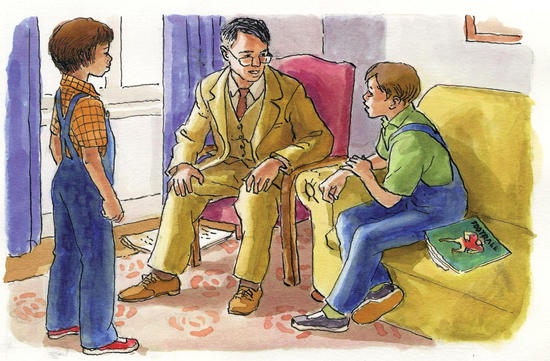



















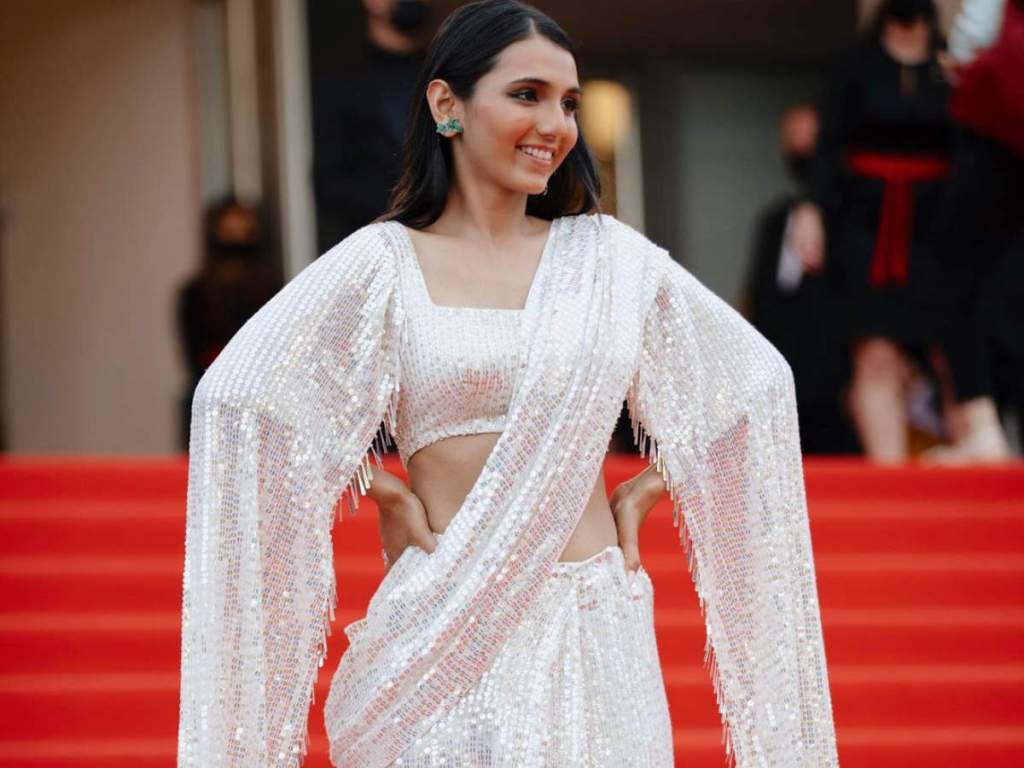







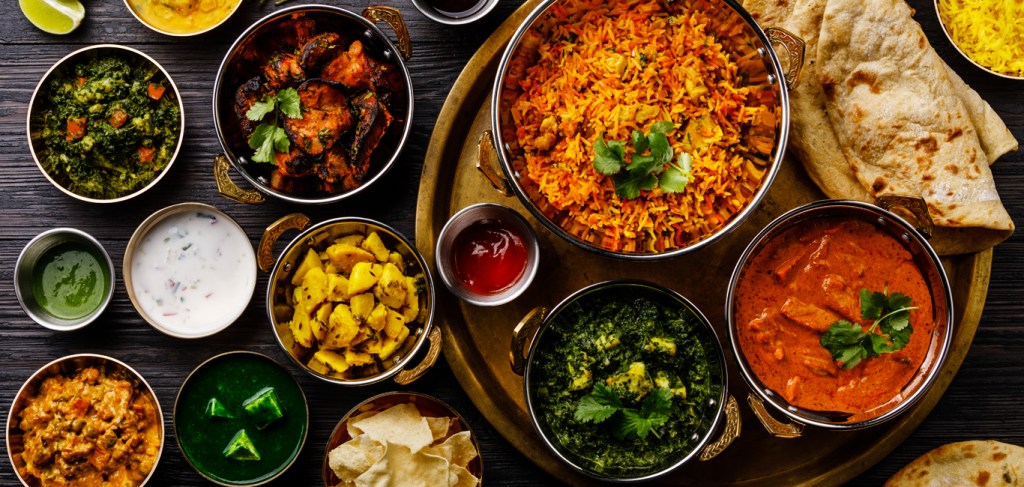


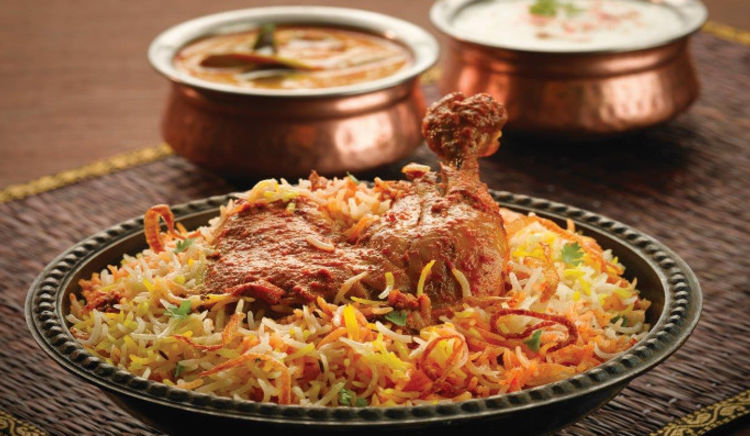
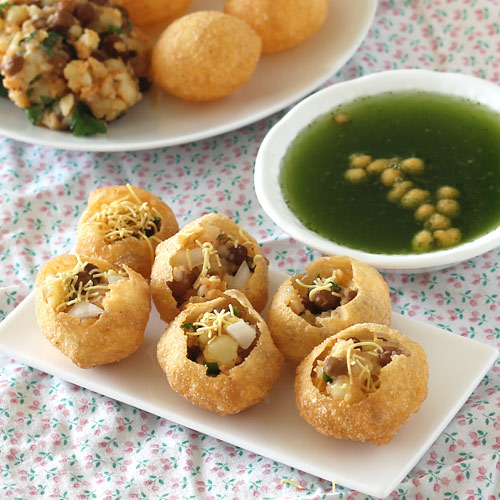

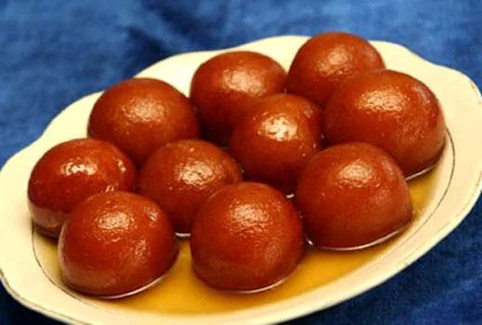
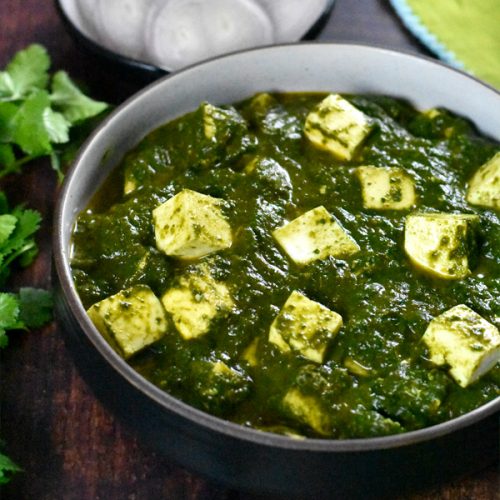

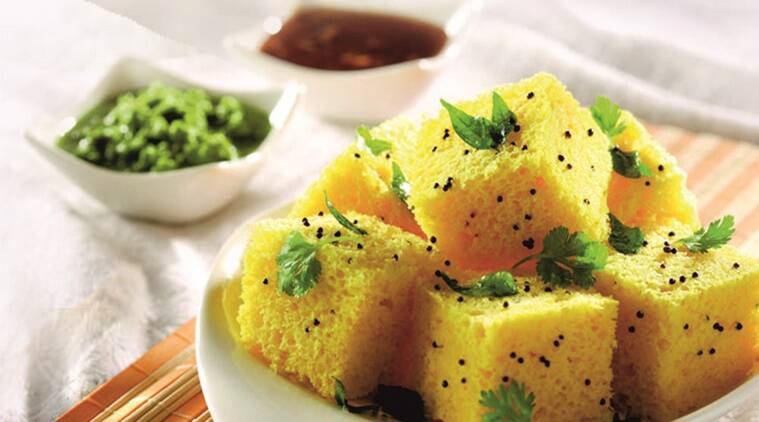
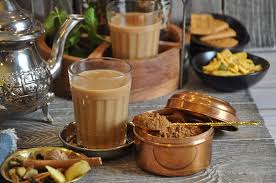










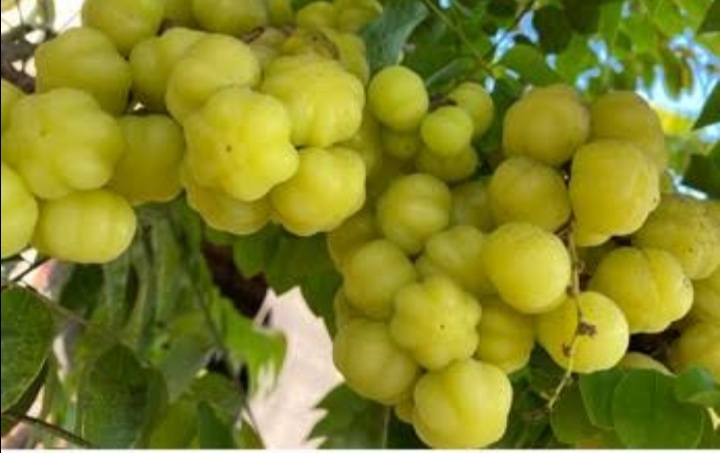

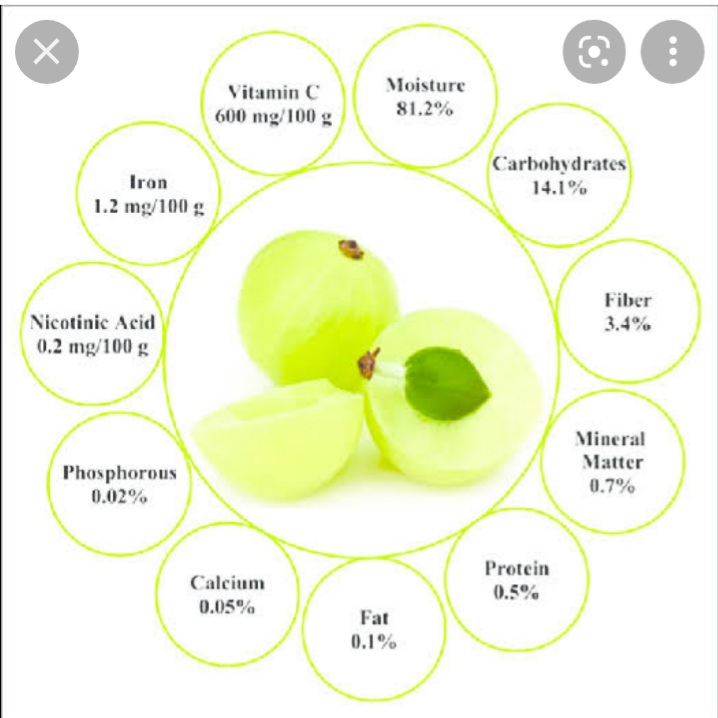






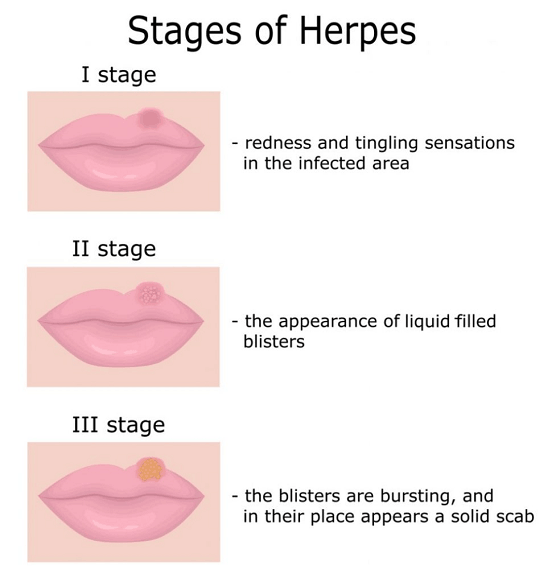
















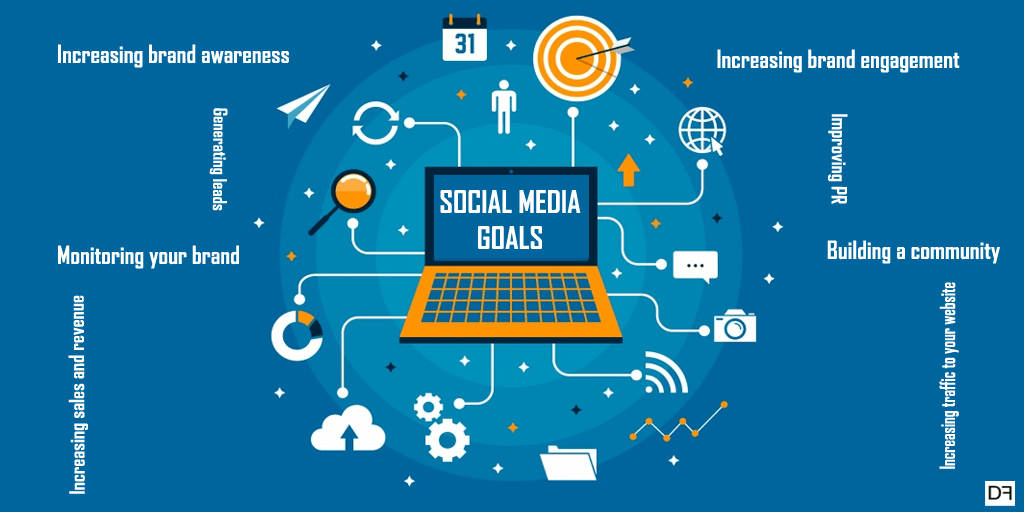


































You must be logged in to post a comment.