Feminism in India

A feminist is anyone who recognizes the equality and full humanity of women and men.”-Gloria SteinemSo, what is feminism? Feminism is an action of the society to bring rights to women and treat them equally regardless of their gender. Feminism is not something that should be endorsed by a woman only ,it can be carried forward by a man too. As said by G.D Anderson,” Feminism isn’t about making women strong, women are already strong, it’s about changing the way the world perceive that strength.” The fact itself is so confusing to understand the imbalance between two genders despite of any human being who is born with the same type of skin and color of blood. A woman deserves the same respect a man has without facing the question about their gender. Needless to say , patriarchy runs deep in our Indian society . A woman is forced to feel weak and small in front of a man and enforced to stay within a certain boundary. The long injustice in the name of gender has led to the topic of  feminism.
The importance of feminism in India is utmost. History has been an evident of feminism culture and its significance. The first and the foremost reason to bring this revolution is to change the mentality and to achieve a society free from male dominance. It has been a long battle for women to fight for their rights even if it’s about their decision. It is sad that till today a girl has to accept a man as her husband without her consent. A married woman is forced to do the household work and do not have the right to have a job hand in hand. Feminism plays an important part in the society because it demands equality among genders. Every year lakhs of female fetus get buried due to the burden of carrying a responsibility and the fear of giving dowry in marriage. Do you know Indian culture also discriminate working profession in regard of gender? Yes, in the past women could only do a job if that is approved by the male society and not judged by her talent. Feminism helps to remove such inequality. Today because people are giving importance to it, women like Mirabai Chanu and Lovlina Borgohain could outshine in their own field. No doubt with different kind of body framework and organs women have to undergo certain changes to meet the reproductive life. Menstruation is a big taboo, where women are considered impure during period cycle. Also there needs to have a stoppage of peoples hindering nature. Needless to say, women sometimes give rise to the inequality they once suffer from. Her mother-in-law force her to behave in a certain way, to cover her face whole life, to dress decently and ultimately it turns to be a social practice in a community.With change in generation and people advancing mindset things are changing and women are getting their rights. Topics like women empowerment, Beti bachao Beti padhao making people aware of the crucial role of a woman in balancing the atmosphere. Now a days, highly restricted states like Haryana is producing Miss world, wrestler like Geeta Phogat and Nirmala Devi. With the hope that one day the country would be free of gender inequality. Thus, people need to carry this journey forward and bring a change where both men and women could walk in the street without having the fear of getting killed or molested as a girl rather with the feeling safety to chase their dreams.

ReplyForward

DIGITAL INDIA

The world has been moving towards everything digital for quite a while. Be that as it may, the year 2020 put into point of view the desperate need to adjust to digital innovation as quickly as time permits. This variation happened right away with the lockdown becoming effective, particularly for digital installments in India.

The Indian government has been advancing and proliferating on the web installments forcefully, beginning with demonetization back in 2016. ‘Digital India’ had been the directing power of numerous monetary and monetary choices that pushed Indians to change to online installments.

After the dispatch of Cashless India, we at present have ten techniques for digital installment accessible in India. A few techniques have been in need for over 10 years, some have gotten as of late famous, and others are generally new. There are different sorts and methods of digital installments. A portion of these incorporate the utilization of Banking cards, USSD, Aadhaar Enabled Payment System (AEPS), UPI, Mobile Wallets, Bank pre-loaded cards, Internet Banking, Mobile Banking, Bharat Interface for Money (BHIM) application.

LAST DAY OF MY SCHOOL

Have u ever felt anxious about starting a new phase of your life? Leaving the secure portals of your school where you have spent the years of your life? There were your parents, teachers, friends yo have your back , protect your and guide you to tackle your problems; but now you have to leave your comfort zone and venture out in this world to play your part and make a name out of yourself in a play called “LIFE”.

The last day of my school was the last chapter of my memeroable book of my student life, but this time flows away quickly. Let me dedicate a poem(not best, but written with heart) to my school life;

I still remember the last day of my school.

Walking down the memory lane;

My mind was flooded with the departing thoughts,

Constraining back the tear of emotions;

Asking a question why time has to fly?

There was abrupt ache in my heart,

For the longing of the friends I made here.

My ears will be free from this annoying bell!

My school uniform will be kept away,

But still I will miss those wonderful days.

Those days were precious!

The only problem was our homework;

The regular faces which our eyes perceive,

Will be lost in the mist of forthcoming future.

The joy will be gone away with my departing friends.

There will be no argument between the two groups,

My friends will not gather together for a single tiffin.

There will be no discussion at the Rialto.

This valuable moments will be taken away by time.

Cherishing this beautiful moments till my last breath;

The only last wish if I get to make!

To live that dusted away life again.

SPOILAGE OF VEGETABLES

BY DAKSHITA NAITHANI

INTRODUCTION

Vegetables are an important element of the diet since they include a variety of essential nutrients such as carbohydrates, minerals, vitamins, roughage, and so on. Microbial deterioration causes around 20% of vegetables produced for human use to be wasted.

Spoilage is defined as any alteration in food that renders it unfit for human consumption.

REASONS FOR SPOILAGE

Vegetables, because of their high nutritional content, can promote the growth of moulds, yeasts, and bacteria, and thus can be ruined by any or all of these microorganisms. The presence of more water in vegetables encourages the growth of spoilage bacteria, and the low carbohydrate and fat content implies that much of this water is in useful form. Furthermore, vegetables’ tissues have a higher pH than fruits, making them more sensitive to bacterial invitation.

Vegetables’ relatively have strong oxidation-reduction potential and lack of significant poising capacity which indicates that aerobic and facultative anaerobic types are more essential than anaerobes.

In terms of frozen vegetable products, the total numbers of bacteria on frozen vegetables tend to be lower than on non- frozen products. This occurs primarily due to:

  • Blanching of products prior to freezing them.
  • Selection of higher quality products for freezing.
  • Some bacteria dying in the frozen state.

HOW DO MICROBES INVADE VEGETABLES?

Vegetables being a part of fresh produce contain high moisture which makes them highly perishable and hence more prone to spoilage.

Microbes gain entry into vegetables from various sources. These include:

  1. Soil
  2. Water
  3. Diseased plant
  4. Harvesting and processing equipments
  5. Handlers
  6. Packaging and packing material
  7. Contact with spoiled vegetables
  8. Freshly picked vegetables contain a natural surface flora, which includes pectinolytic bacteria in low quantities. The plant’s intact healthy tissue may also include a small number of live bacteria. The interplay between physiological changes in the tissues after harvest and changes in microbial activity will determine the start and pace of deterioration. The act of harvesting causes physiological stress, mostly due to water loss and wilting, and damaged surfaces may release nutrients for microbial development. This stress may also allow the endophytic flora to flourish, which would otherwise be dormant.
  9. The softening of tissue caused by bacteria’ pectinolytic activity is the most common type of deterioration. Pectin, a key component of the intermediate lamella between the cells, is involved in the microorganisms’ breakdown process.

BACTERIAL AGENTS

  1. Pectinolytic species of the Gram-negative genera-
  2. Pectinobacterium
  3. Pseudomonas
  4. Xanthomonas

These microbes are considered important in the spoilage of potatoes, under some circumstances.

  • Non- sporing Gram-positive organism Corynebacterium sepedonicum causes a ring rot of potatoes.

The bacteria most commonly associated with the soft rotting of carrots are Pectobaterium spp. Such as:

  • P.carotovorum subsp. carotovorum
  • P.carotovorum subsp. odoriferum

FUNGAL AGENTS

Spoilage conditions in vegetables are usually initiated pre-harvest and sometimes post-harvest.

Botrytis cinerea causes grey mould rot in a variety of vegetables such as:

  • Asparagus
  • Lettuce
  • Onions
  • Cabbage
  • Garlic
  • Celery

In this disease, the casual fungus grows on decayed areas in the form of prominent grey mould. Rhizopus soft rot, caused by the fungi Rhizopus stolonifer is responsible for turning vegetables soft and mushy. Among those affected are beans, carrots, sweet potatoes and tomatoes.

Blue mould rot is a post-harvest disease of apples and pears, caused by Penicillum enpansum.

CONSEQUENCES OF SPOILAGE

Vegetables are not usually a cause of public health concern but transmission of enteric pathogens such as:

  • Salmonella
  • Shigella
  • VTEC

Direct contamination from farmworkers and animal excrement, the use of manure or sewage sludge as fertiliser, or the use of polluted irrigation water are all possibilities.

  1. Celery, watercress, lettuce, cabbage and beansprouts have all been associated with Salmonella infections, including typhoid and paratyphoid fevers. Moreover, an outbreak of Shigellosis gas has been traced to commercial shredded lettuce.
  2. Not all pathogens are necessarily transmitted to vegetables by direct or indirect fecal contamination. Organisms such as Clostridium botulinum have a natural reservoir in the soil and any products contaminated with soil can be assumed to be contaminated with soil can be assumed to be contaminated with spores possibly in very low numbers.
  3. Psychrotrophic species Listeria monocytogenes caused an outbreak of listeriosis in USA (1979) and can easily grow on shredded cabbage and salad vegetables at temperatures as low as 50C and modified- atmospheres have no effect on this organism.

How valuable you are?

Good evening people how are you all; I hope all are doing great. 🙂 So without wasting your precious time let me start my today’s content. Today’s content is all about to make you all understand about how valuable you are. So let’s begin it with a small story.

  • A man once called his son and told him that he would give him something extraordinary, something extremely valuable, from within a safety vault he pulled out a red velvet box and gently opened it. Inside the box was an old watch. As he handed the watch over to his son, the man said, “This watch is very special” it has come down to us over 3 generations and is at least over 200years old. “You can use it; you can keep it as a memoir or just sell it, and get money to buy whatever you like.” A little disappointed, the young son looked at his father and said, “Dad, this watch is so outdated. I don’t think I can wear it. And it is so old, I am not even sure if it could be sold.”  The man took his son to a watchmaker’s shop nearby to show him how valuable that watch was. The watchmaker examined the watch carefully and said, “Since the watch is so old, all I can give is for this is $5.” The young man turned to his father with an expression on his face which was like, I told you right? The father than took a son to pawn shop where they offer you a loan for personal items kept as collateral. The owner of the pawn shop looked at the watch for a while and turned to the man and said “you expect money for this piece of scrap? All we would do with this is we would throw it to the rubbish bin. Sorry, we cannot offer anything for this. ”Relentless, the man now took his son to a museum they went to see the chief of the museum who was an expert in finding the worth of the old things, when the chief saw the watch, he exclaimed, “Incredible, so well crafted! Such precision in its design! Look at the quality of the materials; a watch like this is priceless. But we can offer you a million dollars for it. “Thank you  for choosing to come to us with this watch,” The young man stood there gob smacked with eyes wide open, not even blinking at his father, the proud owner of the watch, very happily accepted the deal. And sold the antique piece for a million dollars. As they both walk back home the father said: “Always know this one thing son. Like the watch, “YOU WILL ONLY BE VALUED IF YOU ARE IN THE RIGHT PLACE” Watch makers repair watches, their eyes can see tiny screws in watch parts, but a wrong place for an antique piece like this, Pawn shops use them as collaterals, they can only see everything based on their current market value, Wrong place for an antique piece like this. But at a museum which displays ancient valuable, antiques, and experts can see beyond watch parts, beyond the current market rates of the watches. They can see the actual value of the object, absolutely the right place for an antique piece like this. So sons “if you find yourself not being valued, don’t get angry or frustrated! Know that you are probably in the wrong place” being judged by the people who see tiny parts of you, tiny parts of your life, not the whole you or being judged by people who see you for how much is your net worth, how much is your current market value. They see you for what you have not for who you are, “seek for those who can see your real value beyond all the externals” who have the expert vision to see the true you beyond all your short comings and all your faults. Those who can see your true value, your true potential, they will inspire you to do well. To live well, to love, to grow and to rise in life. Friends isn’t it true that “every individual has a special sense of worth” All we need is someone who can see that worth in us. And make us see that worth in our self as well. There is a beautiful Sanskrit verse which says,
  • “amantram aksharam naasti”: There is no akshar or letter that cannot be turned into a mantra.
  •  “naasti mulam anaushadham”: There’s no plant \root\herb that is not medicinal.
  • “ayogyam purusho naasti” There’s no person who is unworthy.

You know friends what’s lacking?

  • “yojakas tatra durlabha”: What’s lacking is an expert who can see the values, the worth in us and encourage us on our path!

So my lovely readers the moral of the story is know your worth, love yourself, endure yourself, and make yourself a better person everyday.

And here the story ends I hope, you all would have got a new thought and lesson from my today’s content

#inspiredbygaurgopaldas #spread positivity #keep smiling #stay safe.:)

Unicorn Startups – A goal or a mere status

Every founder while founding a startup has a dream in his mind that one day they think will be achieved. Most founders see this happen when their startups achieve the acclaimed unicorn status. What is a unicorn status you ask , well any startup whose valuation crosses the $1 billion mark is given unicorn status. But is just being a unicorn sufficient for a company to survive? Let’s find out.

By unicorn one is simply referring to the valuation of the company and nothing else – not the revenue , not the profits just the valuation. There are several instances where an extremely high loss making company can be a unicorn and profit making company is not but that’s just how it works. Now, don’t forget that these valuations don’t mean that your company is failure proof; a unicorn has just as high chance of failure than a non-unicorn company. Hence the question – is it a mere status?

Well we can’t just differentiate it as black and white, we have to look between the colors here. Let us start with an example – a case of a well funded startup which became a unicorn quickly and a bootstrapped startup.

Quibi a streaming startup founded in August 2018 by renowned Hollywood producers Jeffery Katzenberg and Meg Whitman as a platform to launch short-form content for mobile services. One of the fastest startups to become a unicorn, Quibi quickly generated a funding of $1.75 Billion and launched its streaming service by April 2020. Do you know what is the situation of Quibi right now – DEFUNCT. Yes, one of the fastest startups to become unicorn is now defunct and was shutdown within six months of its launch.

Now let’s talk about another startup, this time an Indian bootstrapped startup { bootstrapped – run by founders own money without any external funding} called Zerodha. Zerodha a stock broking company which was launched in 2010 by the then unknowns Nikhil and Nithin Kamath provided stock-broking services online anywhere in India. Situation of Zerodha you ask right now – It is one the most successful Indian startups and the most used stock-broker in India as of now with more than 5+ million users as of 2020. Although launched in 2010 Zerodha only became a unicorn in June 2020 with a self-assessed valuation of over $1 Billion.

The lesson from the above story – being a unicorn doesn’t guarantee success. If you have the right product and the right mindset you can bootstrap your way to success and if you don’t have the right idea you can receive all the funding in the world but still won’t be able to make it.

TEXTING SHORT FORMS.

Hi all,
   Today I am going to share an interesting and useful information. Yes, today I am going to share some short forms that being used while texting.

1.RN – Right now.
2.LMK Let me know.
3.NVM – Never mind.
4.IMO – In my opinion.
5.TBF To be frank.
6.TBH – To be honest.
7.IDK – I don’t know.
8.TTYL Talk to you later.
9.?4U I have a question for you.
10.<3 – sideways heart.
11.2N8 – Tonight.
12.2M2H – Too much to handle.
13.^5 – High-five.
14.AFAP – As far as possible.
15.ASAP As soon as possible.
16.B4 – Before
17.BTW – By the way.
18.CYA See ya.
19.JK Just kidding.
20.OTOH – On the other hand.
21.OMW – On my way.
22.FYI – For you information.
23.POMS – parent over my shoulder.
24.PAW – parents are watching.
25.PBB – parent behind back.
26.WYWH – Wish you were here.
27.POV – Point of view.
28.SRSLY – Seriously.
29.WUZUP – What’s up.
30.W8 – Wait.
31.RUOK – Are you ok.
32.CYT – See you tomorrow.
33.TIA – Thanks in advance.
34.BRB – Be right back.
35.2MORO – Tomorrow.

Now, try to use these short forms and have fun.
Hope so it was useful.

Have a cool day

Keep smiling ❣️❣️❣️

STOLEN PAINTINGS

There are a lot of painting by famous painters that were stolen and never found , till date . Here are a list of a few stolen paintings ,

HARLEQUIN HEAD – This abstract painting was made by the Spanish painter Pablo Picasso . The painting was stolen in the year 2012 from Kunsthal Museum in Rotterdam .

THE CONCERT – “The concert ” was painted by the famous Dutch Baroque painter Johannes Vermeer . It was stolen from Isabella Stewart Garner Museum located in Boston in 1990 .

POPPY FLOWERS – This magnificent painting was made by Vincent Van Gogh . It was stolen from the Cairo Mohamed Mahmoud Khalil Museum situated in Cairo , not once but twice . The painting was retrieved back , only to be stolen again in August of 2010.

LANDSCAPE WITH COTTAGES – This painting was made by the Dutch painter , Rembrandt Van Rijn . It was stolen from the Montreal Museum of Fine Arts in 1972.

Eating Disorders

Eating disorder are severe mental illness, not lifestyle choices.

DEmi lovato
See the source image

Introduction

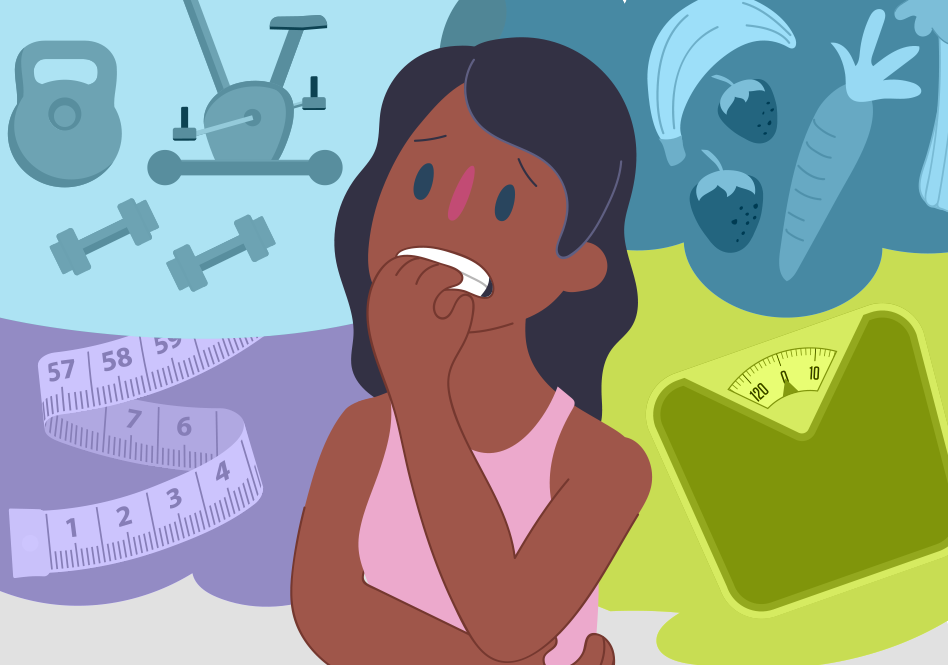
Eating disorder is a product of mental turbulence that manifests itself in the eating habits of people, affecting them negatively. It is a serious condition that can have a lasting impact in various spheres of a person’s life. Eating disorders usually sprout from body insecurities and an untameable urge to lose weight quickly.

According to Mayo Clinic, Most eating disorders involve focusing too much on your weight, body shape and food, leading to dangerous eating behaviours. These behaviours can significantly impact your body’s ability to get appropriate nutrition. Eating disorders can harm the heart, digestive system, bones, and teeth and mouth, and lead to other diseases.

See the source image

Although these disorders can take root at any age teenagers and adolescents might be more prone to such disorders.

Eating disorders can impact the body in a detrimental manner. Eating disorders, often obviously lead to lack of nutrition that becomes the underlying cause of a number of diseases, that eventually end up affecting all the functioning systems of the body.

Symptoms

Image result for eating disorder symptoms cartoon
  1. Drastic weight change
  2. Obsessive preoccupation with food
  3. Excessive exercise
  4. Binge eating or purging
  5. Vomiting
  6. Avoiding meals
  7. Binge eating
  8. Fear of fat
  9. Tooth decay
  10. Swollen glands, dry calluses on fingers
  11. Dry, yellowish skin
  12. Thinning bones
  13. Feeling tired
  14. Mild anaemia
  15. Depression
  16. Constipation
  17. Irregular menstrual cycles
  18. Low blood pressure
  19. Growth of hair on body
  20. Excessive mood swings
  21. Using laxatives etc

Types of Eating Disorders

Eating disorders are not just limited to less eating or not eating at all, several other type of disorders include binge eating as well. Listed below are three of the most common eating disorders.

Anorexia Nervosa:

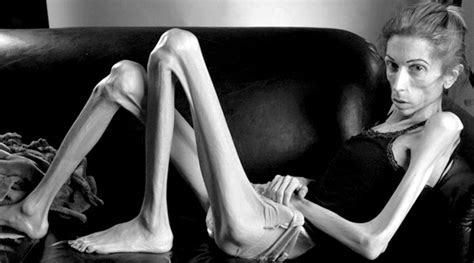
One of the most commonly known disorder, anorexia is often characterised by low weight and a distorted body image. According to statistics;

  • Anorexia is the 3rd most common chronic illness among adolescents
  • 95% of those who have eating disorders are between the ages of 12 and 25
  • 50% of girls between the ages of 11 and 13 see themselves as overweight
  • 80% of 13-year-olds have attempted to lose weight

Patients with this disorder, often underweight limit their food intake to a dangerous extent. It involves a characteristic fear of eating, unhealthy desire for weight loss and often includes excessive exercise.

People with this disorder are severely malnourished and often never satisfied with their weight loss aiming for a ‘perfect’ size zero.

Bulimia Nervosa:

See the source image

This eating disorder is characterised by eating in large amounts (binge eating) and then purging or forcing vomit to rid of the excess calories and guilt of food. It is a potentially life threatening disorder.

To get rid of calories and prevent weight gain, people with bulimia may use different methods. For example, you may regularly self-induce vomiting or misuse laxatives, weight-loss supplements, diuretics or enemas after bingeing. Or you may use other ways to rid yourself of calories and prevent weight gain, such as fasting, strict dieting or excessive exercise.

Binge-eating Disorder:

Image result for binge eating disorder cartoon

Patients with this disorder eat unusually large amounts of food almost everyday compulsively. Patients may be embarrassed of their eating regimen and may decide to work on some change but the urge to eat overpowers all.

This binging is different from festive binging or one in a blue moon movie night binge eating.

People with this disorder may be obese or overweight.

Citation(s): https://www.mayoclinic.org/

FOREST

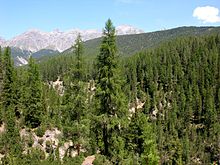
A forest is an area of land dominated by trees. Hundreds of definitions of forest are used throughout the world, incorporating factors such as tree density, tree height, land use, legal standing and ecological function.The Food and Agriculture Organization defines a forest as land spanning more than 0.5 hectares with trees higher than 5 meters and a canopy cover of more than 10 percent, or trees able to reach these thresholds in situ. It does not include land that is predominantly under agricultural or urban land use.Using this definition FRA 2020 found that forests covered 4.06 billion hectares or approximately 31 percent of the global land area in 2020.

Forests are the predominant terrestrial ecosystem of Earth, and are distributed around the globe. More than half of the world’s forests are found in only five countries (Brazil, Canada, China, Russian Federation and United States of America). The largest part of the forest (45 percent) is found in the tropical domain (Tropical forests), followed by the boreal, temperate and subtropical domains.

Forests account for 75% of the gross primary production of the Earth’s biosphere, and contain 80% of the Earth’s plant biomass. Net primary production is estimated at 21.9 gigatonnes carbon per year for tropical forests, 8.1 for temperate forests, and 2.6 for boreal forests.

FOREST TYPES

1.Equatorial Moist Evergreen or Rainforest:

Location:

This evergreen hardwood forest is the natural vegetation of low-latitude high precipitation zone. This vegetation generally occur in between 10° N. and S. of equator where annual rainfall is very high and distributed equitably throughout the year. The total extent of tropical rainforest was 714 million hectares in 1990, which is half of the world’s forest cover.

Spatially, this forest is distributed in three separate regions:

(a) South American Amazonia basin:

This region is confined between Amazon River in the east to the foothills of the Andes in the west and Orinoco river basin in the north to Mardira River in the south.

(b) Equatorial Africa:

Mostly occur in Equatorial Africa including Zaire and Congo.

(c) Asia:Some parts of Western India and Sri Lanka

(d) South-East Asia:

Found in Indonesia, Malaysia, and Philippines etc.

The uses of forest resources in different economic activities are:

A. Teak and Mahogany are widely used in furniture industry.

B. Wood collected from forest is used as fuel.

C. (a) Brazil nut is rich in protein.

(b) Tagua nut is used for button-making.

(c) Barasu is an important raw material to produce soap and margarin.

(d) The milky juice of zopota tree is chickle which is converted to chewing gum.

(e) Wild rubber can be collected from rubber trees.

(f) Balata gathered from this forest is used for cable-making and other industrial purpose.

(g) Babassu palm nut is used in paint industry.

(h) Cohune nuts for perfume manufacturing,

(i) Toquilla palm for hat making.

2.Tropical Deciduous Forest:

Location:

In tropical monsoon region where rainfall is seasonal and a definite dry season exists, this deciduous and semi-evergreen forests are prevalent. Unlike Equatorial region, here variation of trees in different regions are much more.

This type of vegetation occurs in:

(a) India, Myanmar (Burma), Indonesia, Thailand, Laos, Cambodia, South China, Phil­ippines etc.

(b) Northern Australia.

(c) Margins of tropical rainforest in Africa.

(d) Central South America.

Characteristics of Vegetation:

(i) Most of the tress are broadleaved and provide hardwood variety.

(ii) Trees are so heavy that in most cases they do not float in water.

(iii) Several layers are visible in forest, according to height of the trees. Trees with height of 50 meters to 10 meters are common.

(iv) Wide variety of climbers, creepers, parasites, epiphytes and saprophytes are com­mon.

(v) No dominance of single species — as trees are intermingled with one another.

(vi) Thick undergrowth of shrubs, bushes and bamboos are common.

(vii) Swampy, marshy areas exhibit mangrove forests, e.g. Sundarban in West Bengal.

3.Mediterranean Forests:

Location:

Primarily found in the Mediterranean climate within 35°-45° North and South of the equator.

It is a peculiar climo-floral development found in several areas:

(a) Adjacent regions of Mediterranean coast, extending east-west over 2,500 kms cov­ering countries like Portugal, Spain, France, Italy, Albania, Greece, Turkey etc.

(b) California in U.S.A. of N. America.

(c) Central Chile of S. America.

(d) S-E and southern parts of Australia.

(e) Cape region of South Africa.

Important among these are:

1. Trees are covered by hairs, e.g. Olive trees.

2. Leaves are very thick and skin-like, e.g. Bolen trees.

3. Some trees may adopt wax layers in the leaves.

4. Barks are very thick, e.g. cork and oak.

5. Roots are very long, e.g. grapes.

Beside these characteristics, some trees like lavender, rose-merry etc.. are orchids and dis­tinctly different from others.

Economic Importance:

1. Large trees are rare. Trees are isolated. So lumbering industry is limited.

2. The barks of cork and oak are used to produce caps of the bottles.

3. Lavender and rose-merry trees produce perfumes.

4. Olive oil is extracted from olive trees.

5. Wine is produced from grapes.

4.Temperate Broad-leaved Deciduous and Mixed Forest:

Location:

In the eastern side of the continents, in warm temperate region, this forest is located in:

(i) South China.

(ii) South Japan.

(iii) South Africa.

(iv) South-East Australia.

(v) South Brazil.

Climatic Characteristics:

1. Rainfall all the year, minimum annual temperature over 10°C.

2. Due to heavy rainfall, evenly distributed throughout the year, trees are evergreen, broad-leaved and hard-wood type.

Major Species:

1. Koebrack in South-East Brazil.

2. Deodar.

3. Eucalyptus.

5.Warm Temperate Broad-leaved Deciduous Forest:

Location:

In warm temperate region, where temperature remains above 6°C at least 6 months of the year. This forest developed in central and north-west China, Korea, Japan, New Zealand and Tasmania.

Characteristics:

1. Trees shed their leaves during spring.

2. No layer in the leaves.

Major Species:

Elm, Beach, Maple, Walnut etc.

Uses:

1. As same type of trees are concentrated in different regions, wood collection is easier.

2. Wood transportation is also easier.

3. As there is very little undergrowth, collection of forest product is much easier.

IMPORTANT OF FOREST

1.They let us breathe!

2.They cool the Earth

3.They keep people cool too

4.Forests can make it rain

5.They block wind

6.Forests clean the air

7.They fight erosion

8.They provide medicine

9.They provide food

10.Forests create jobs

World water week 2021.

● The World Water Week is an annual event organized by Stockholm International Water Institute (SIWI) since 1991 to address the global water issues and related concerns of international development.

● The World Water Week 2021 has been organised from 23-27 August, in entirely digital format.

● The theme for World Water Week 2021 is ‘Building Resilience Faster’.

The world is changing and so are we. World Water Week 2021 will have a new, digital format to meet people where they are – both physically and mentally – and find better ways to bring about the transformation we all know is desperately needed. “Given the ongoing global pandemic, this was a natural decision. No one knows what the world will look like in August 2021, but one thing you can count on – World Water Week is happening, no matter what. For us, it is important to be able to promise that,” says Torgny Holmgren, Executive Director of Stockholm International Water Institute.

Over 3300 participants attended the conference in 2017.The week feature experts and representatives from business, governments, water management and science sectors, intergovernmental and non governmental organisations, research and training organisations, and United Nations agencies. The conference features plenary sessions and panel debates, scientific workshops, poster exhibitions, side events and seminars. In 2017, 380 organisations from 138 countries all over the world participated in World Water Week.

Functioning as an open and dynamic platform, World Water Week aims to link practice, science, policy and decision-making. It enables participants to exchange views and experiences, form partnerships and shape joint solutions to global water challenges. During the week, the Stockholm Water Prize, the Stockholm Junior Water Prize, and the Stockholm Industry Water Award are given out at their respective award ceremonies.

Why is world water day celebrated?

The World Water Week in Stockholm originally began as the Stockholm Water Symposium in 1991 and has been convened annually ever since. In 2001, the official name became World Water Week in Stockholm. SIWI identifies a conference theme to place a specific focus on one aspect of the world’s escalating water crisis. Initially, one theme was promoted for 4–5 years. Since 2008, a different theme has been selected for each year.

Hosted and organized by SIWI, World Water Week is the leading annual global event for concretely addressing the planet’s major water issues. In 2021, World Water Week 2021 will be held entirely online, 23-27 August, with the theme Building Resilience Faster.

Volcanoes have kept Earth’s surface temperatures balanced out

The specialists, working alongside others at the University of Sydney, Australian National University (ANU), University of Ottawa and the University of Leeds, investigated the consolidated effect of cycles in the strong Earth, seas and air in the course of the last 400 million years.

The normal separate and disintegration of rocks at Earth’s surface is called substance enduring. It is basically significant on the grounds that the results of enduring (components like calcium and magnesium) are flushed by means of waterways to the seas, where they structure minerals that lock up CO2.

This input system controls barometrical CO2 levels, and thusly worldwide environment, throughout geographical time, a news discharge clarifies.

“In this regard, enduring of the Earth’s surface fills in as a geographical indoor regulator,” Tom Gernon, academic partner in geology at the University of Southampton, and an individual of the Turing Institute clarifies in the delivery.

“In any case, the hidden controls have demonstrated hard to decide because of the intricacy of the Earth framework,” added Gernon, who is additionally the lead creator of the investigation.

“Many Earth measures are interlinked, and there are some significant delays among measures and their belongings,” Eelco Rohling, teacher in sea and environmental change at ANU and the investigation’s co-creator clarifies. “Understanding the general impact of explicit cycles inside the Earth framework reaction has in this manner been a recalcitrant issue,” Rohling adds.

To comprehend the intricacy, the group developed a book “Earth organization”, fusing AI calculations and plate structural recreations. This empowered the specialists to distinguish the predominant communications inside the Earth framework, and how they advanced through time, the delivery clarifies.

The group tracked down that mainland volcanic bends were the main driver of enduring force in the course of the last 400 million years. Today, mainland circular segments involve chains of volcanoes in, for instance, the Andes in South America, and the Cascades in the US. These volcanoes are probably the most elevated and quickest dissolving highlights on Earth. Since the volcanic rocks are divided and artificially receptive, they are quickly endured and flushed into the seas.

Martin Palmer, educator of geochemistry at the University of Southampton and a co-creator of the examination said: “It’s a difficult exercise. On one hand, these volcanoes siphoned out a lot of CO2 that expanded barometrical CO2 levels. Then again, these equivalent volcanoes helped eliminate that carbon by means of fast enduring responses.”

The examination additionally provides reason to feel ambiguous about a since a long time ago held idea that Earth’s environment dependability more than tens to countless years mirrors a harmony between enduring of the ocean bottom and mainland insides. “The possibility of a particularly geographical back-and-forth between the landmasses and the ocean bottom as a prevailing driver of Earth surface enduring isn’t upheld by the information,” Gernon clarifies in the delivery. “Lamentably, the outcomes don’t imply that nature will save us from environmental change,” Gernon adds.

Today, air CO2 levels are higher than whenever in the previous 3 million years, and human-driven emanations are multiple times bigger than volcanic CO2 discharges,” clarifies Gernon. “The mainland circular segments that seem to have saved the planet in the profound past are just not present at the scale expected to assist with balancing present-day CO2 discharges.”

In any case, the group’s discoveries actually gave basic bits of knowledge into how society may deal with the current environment emergency.

Why India can’t have an Official Language

Our Home Minister Amit Shah mentioned about promoting one nation, one language in one of his tweets in 2019. He also added that it should not be done at the cost of other languages. Some of us might know that 14th September is celebrated as Hindi Diwas in our country. So why can’t we have Hindi as an official language?

Critics

After Amit Shah statement, critics said that if Hindi becomes the official language, then other languages like malayalam, tamil, telugu and more, will lost their importance. South Congress leader Jairam Ramesh also said “this one nation, one language will never be a reality” because it will never be easy to have a common language in India.

Also in the New Education Policy (NEP) draft in the year 2019, Hindi was asked to make mandatory in every state. This was also criticized by the South Indian governments and they refused to dilute the state’s two language formula. This resulted in changing the draft and not to have Hindi as an official language.

Steps taken

India is a big nation, so there should be a language that will represent India on world stage. Talking about Hindi, it is spoken in India, Fiji, Suriname, Mauritius, Trinidad, Tabogo and Guyana. So India is working actively to have Hindi recognised as an official language of the UN.

Advantage of having an official language

A Chinese research concluded that

  1. When we have an official language, it can even help to eliminating poverty. As China have experience in fight poverty so we can also learn the power of having an official language.
  2. China also mentioned that an official language also helps in having communicate without any language barrier.
  3. Official language also help to built unity among the citizens
  4. Also helps when people migrate from one city to another, as they can communicate in the same language.

Disadvantage of having an official language

According to the 2001 Census, 41% of India population are native speaker of Hindi dialect. But what about 59% of the population who are non – Hindi speakers? Politician Shashi Tharur said

India should not even try to add Hindi to the list of official language of UN because what if in future our PM is from South part of India and does not speak Hindi, then how will he give speech in Hindi on behalf of India.

But apart from all these we still agree that there should be an official language for a country to function.

As per as official language is concerned,

  1. English is also been promoted in India. Promoting English can result in heavy school fees, as we’ll have to teach the whole population to speak English.
  2. Enough English teacher will also be required and if not then it won’t be successfully become the official language.
  3. This will also result in neglecting the weaker section of the society who won’t be able to speak English and their career opportunity will get affected.

Eventually we need to figure out to take a right decision about official language and keeping in mind of the consequences that could possibly be in long terms situations.

Know Everything about the Intel Vpro Technology

What is VPro technology?

You can find the Intel VPro technology in many devices. VPro technology is a platform that has both the hardware and firmware. VPro can be found in laptops and mobile workstations. VPro is available in the CPU of a device or in its wireless chip. In April 2019, Intel launched the latest vPro which is the 8th Generation Intel Core series. The latest version is around 60 percent better than its previous counterparts. It has around ten to eleven hours of battery.

Also, it supports Wi-Fi that will allow fast internet connectivity. A vPro needs to have a Trusted Platform Module, cryptoprocessor and wireless/ wired internet speed. To most people still confused about what is vPro technology and the features it offers, Intel support will answer all your queries.

Contents of Intel VPro Technology

  1. They will include a multi core and multi thread XEON or Core processors
  2. Intel AMT which is a set of features that help remote access enabling for PCs
  3. Most people opt for VPro due to this AMT technology that help enterprises seek help remotely.
  4. Wired or a wireless internet connectivity.
  5. Intel TXT that will verify the launch environment. It  is a computer hardware technology whose primary goals are: Attestation of the authenticity of a platform and its operating system.
  6. Intel vPro provides support for IEEE 802.1X, Cisco Self Defending Network and Microsoft NAP(Network Access Protector).
  7. Intel VT-x for CPU and memory. The Intel VT-x extensions are probably the best recognized extensions, adding migration, priority and memory handling capabilities to a wide range of Intel processors.
  8. Intel VT-d for I/O to support remote environment.Intel VT-d is the latest part of the Intel Virtualization Technology hardware architecture. VT-d helps the VMM better utilize hardware by improving application compatibility and reliability, and providing additional levels of manageability, security, isolation, and I/O performance.
  9. Intel VT-x will help to accelerate hardware virtualization.The Intel VT-x extensions are probably the best recognized extensions, adding migration, priority and memory handling capabilities to a wide range of Intel processors.

VPro was initially installed to help IT departments streamline the procedure to turn on and off enterprise desktop computers.To remotely manage an AMT device, it has to be configured and communication needs to be established over the corporate network. It must have an AMT Master password for admin assigned and the local network connection information applied to the firmware. No matter what the AMT type is, it has to be configured and set up for use by following Intel’s setup and configuration manual. For all those who are still seeking answers to What is intel vPro technology and if their business needs one.

How does VPro Function?

A pre-existing software is used to manage all intel vPro technology features. Microsoft SCCM is a commonly used console client. 90 % of IT departments manage remote activities with SCCM

What are the Intel vPro technology advanced management features?

  1. VPro technology manages, scans and updates PC remotely
  2. VPro is a go to platform when a person who is away from the IT team required help in their device
  3. For eg. incase of a virus attack while working remotely, the IT professionals can update and reset your device using VPro instead of physically visiting the device location
  4. In cases of  mass updating or installation for the whole company, the IT team can easily access all the devices remotely. This includes updating OS, BIOS or any other software. This will ensure all are using the same software and updated version
  5. An Intel Pro SSD hard drive can be erased easily while using Intel’s VPro system.
  6. The remote erase helps a lot especially if a PC is stolen or when an employee leaves the organization.

VPro Secure?

With a large number of devices connected over a large network, managing and protecting data is a very crucial task. Intel Authenticate (IA) has helped Intel update the security for vPro. IA has helped secure devices by locking them for use by only one user . The authentication is done using fingerprint or password protected PIN.Intel vPro technology advanced management features also offers Intel’s Software Guard Extensions (SGX), which provide secure enclaves for application developers. Those enclaves are safe, protected spaces for programs to be developed without entailing security risks, including data loss or disclosure.

Who can use Intel vPro technology features?

VPro is not designed for common man’s use. Activating VPro requires one to use an enterprise OS and an administrator console. A user would need significant IT expertise to understand the terms, conditions and how it functions. Also, VPro is used to make the job easier for IT professionals functioning remotely. Businesses that have more than 1000 employees can use VPro.Also, for organizations with lesser employees VPro will help organize and manage access levels across different roles. Also, for those organizations that have a large number of employees working remotely; IT department can easily manage the software and IT processes using VPro.

Business Benefits of the Intel vPro Platform

  • Intel VPro Platform will ensure to provide highest performing Core i5 and i7 that can support and enhance employee’s productivity and performance
  • It has in built security features that will protect and keep OS secure
  • Virtual management of systems that are not present on the premise.
  • Verified platform that integrate latest technologies available for the PC

Intel VPro technology is mostly mistaken to be a tool used to enable remote access. However, apart from remote access that is enabled through AMT; vPro includes innumerable other security benefits. Intel is constantly upgrading its vPro version enhanced with more exciting features and safeguarded with more security.

Advertisements
Advertisements

BOOKS FOR CHILDREN PART 2

Hi! If you have missed part 1 here is the link. CHECK IT OUT!

TIME TRAVELLING WITH A HAMSTER
BY ROSS WELFORD.

PRODUCT DETAILS

  • Published – 2016.
  • Genre – Science fiction.
  • Pages – 400.
  • Age – 10+
  • BUY NOW!

The concept of time travel is fascinating in itself. Right from the beginning, the novel hooks us up with the plot. On Al Chaudhury’s birthday, he receives a letter from his grandfather. The letter is from his late father. It has a mission to travel back to 1984 in a secret time machine to save his father’s life. The story uncovers the meaning of friendship and emotion. It is an unputdownable book.

REAL FRIENDS BY SHANNON HALE
AND LEUYEN PHAM.

PRODUCT DETAILS

  • Published – 2017
  • Genre – Memoir
  • Pages – 224
  • Age – 9+
  • BUY NOW!

Real friends is a middle-grade graphic novel about making friends. It is a memoir, following Shannon’s life from Kindergarten to Fifth grade. It is a roller coaster of emotions. The struggle of trying to stay in “the group” was portrayed without a filter. Who are real friends? Are they worth the journey? Do we need real friends? The book will answer such questions.

THE GIRL WHO DRANK THE MOON
BY KELLY BARNHILL.

PRODUCT DETAILS

  • Published – 2017
  • Genre – Fantasy fiction
  • Pages – 416
  • Age – 9+
  • BUY NOW!

To forget about reality, this book is perfect for children and adults too. The people of the town leave a baby in the forest, as an offering to the witches. But the witch is a good one, who lives with a swamp monster. Luna is the baby, due to an accident she gets extraordinary magic. The Multiple points of view make the story intriguing. Children who love magic and witches must read this book. The cover looks so pretty, we can give it a read just for the cover.

THE ONE AND ONLY IVAN
BY KATHERINE APPLEGATE.

PRODUCT DETAILS

  • Published – 2015
  • Genre – Children’s Literature
  • Pages – 256
  • Age – 8+
  • BUY NOW!

A beautifully written story about Ivan, a gorilla. He has spent his life in Exit 8 shopping mall. He rarely thinks about his life in the forest until Ruby, a baby elephant arrives which changes his perspective. A book that deals with kindness, friendship, freedom and humour. This book must be on your children’s bookshelf. The characters will stay in our heart.

THE WILD ROBOT BY PETER BROWN.

PRODUCT DETAILS

  • Published – 2018
  • Genre – Fiction, Adventure
  • Pages – 288
  • Age – 9+
  • BUY NOW!

Roz the robot finds itself on an isolated island. She has zero ideas about her purpose. To survive, she must adapt to her new environment. It is a unique, surprising read for young readers. The language is simple and easy to follow. A touching book with interesting plot.

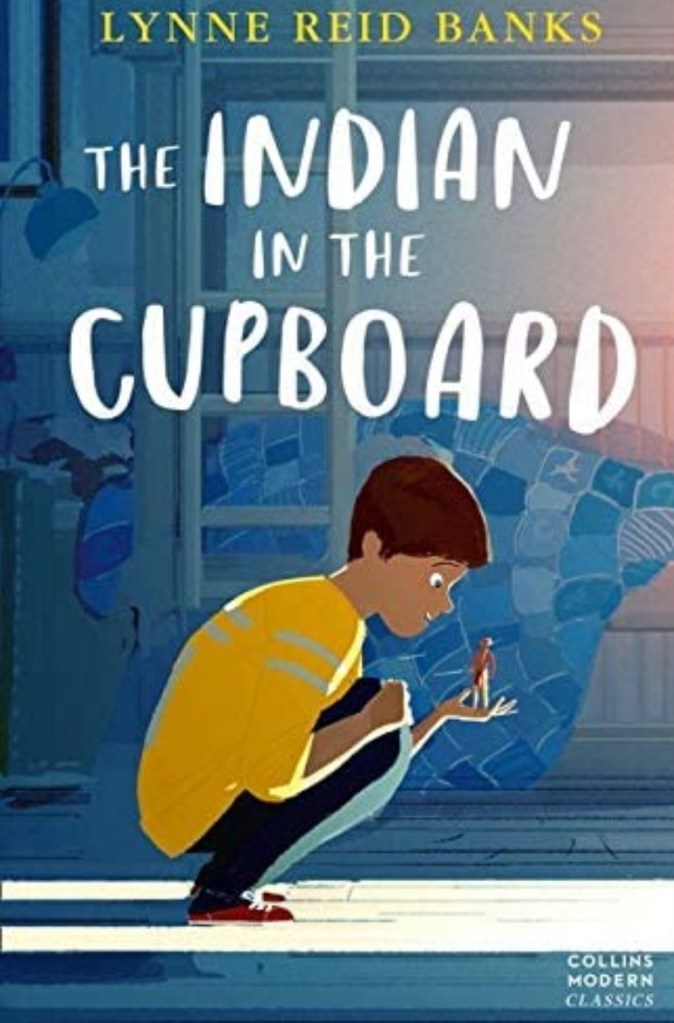
THE INDIAN IN THE CUPBOARD
BY LYNNE REID BANKS.

PRODUCT DETAILS

  • Published – 2016
  • Genre – Adventure, Fantasy, Fiction
  • Pages – 240
  • Age – 8+
  • BUY NOW!

If your child likes Toy story movie, this is a must-read. The American-Indian toy in the cupboard gets life. It is a dream for Omri, he feels excited. He faces a life-changing decision. It is a gripping tale of a toy that has a life. As a kid, we all imagined a toy being alive and what it would be like?

Hope this helps, Thank you!

How To Prepare For “GPAT”?

Let’s talk about the GPAT exam that is given by most pharmacy students after their graduation. This entrance exam is for post-graduation courses.

Let’s talk in much more detail about the exam and how to do the preparation?

Preface :-

The full form of GPAT is, “Graduate Pharmacy Aptitude Test “. It is a National Level Entrance Examination for entry into M. Pharma Programme. The GPAT is an annual entrance exam conducted by “National Testing Agency”(NTA). It is a computer-based online exam. The syllabus and the pattern of the question paper remain the same under NTA. The syllabus of this comprises all of the subjects included in all years of the B. Pharm course.

The results are also used to determine the eligibility of students for scholarships.

When do we have to start our preparation for GPAT?

We all know that the GPAT entrance exam is very important for pharmacy students. To achieve a good score in GPAT, we have to start the preparation along with our daily college lectures. I think the best time to start our preparation is from the 3rd semester or 4th semester of B pharmacy.

How to start GPAT preparation along with college:-

we have to do a study of the regular semester plus the earlier semester, in this, we should have to cover hard subjects of the previous semester, note down the notes and solve the MCQ as much as possible.

The one essential thing I have to tell you is that, do a study from the best reference publications books📚 and then note down the notes, which will be very useful for us before the exam to revise the specific subject or topic. And the one important sign of this is, our preparation for the university theory exam is also done from this.

Make a study timetable to do the preparation, in which we should have to include the subject of the previous semester + regular semester, and give time to a specific subject as per your desire.

I think that we can use holidays to cover the hard subject or topics of the previous semester. The best will be to give Saturday and Sunday to prepare those subjects or topics along with the to make written notes and MCQ solving.

If you live in a metro city, then try to join the coaching centre for the preparation. If it is not possible then you can use various online platforms which give coaching on GPAT preparation. Use study materials provided by coaching classes and also you can search them online on various websites.

Set a target of daily work that we have to do, like take one subject give a specific time to that subject and makes notes & solve MCQ. Don’t take a break until our task is not finalized. If you set a daily target and can complete it, then you can move forward with the best strategy for GPAT preparation.

Do Group Study:- This is the most important strategy used by many of the toppers or good rank holders of GPAT. Compel the group of friends, that are interested to prepare for GPAT and do study together. Take small tasks customary group-wise, understand them, solve the MCQs and discuss the difficult questions or topics in the group. The most important vital sign of these is everyone will share the knowledge differently, some new points are also added to our understanding and we can understand that topic completely and perfectly.👍💯

The most important advantage of group study is we can distribute the topic among the group members, it will be helpful to cover our topic immediately or skillfully.

If any subjects have more than one standard book, then try to use a minimum of 2 standard books for that respective subject. Because the two standard books may differ in content for the various topics of that subject.

Clear the doubts:– During the study or MCQ solving various doubts are arises, so try to write that concept or doubt and ask teachers or you can find the correct answer by researching that particular topic. Try to make a notebook to write the answers to the doubts. And just revise it every day or just overlook it, this will help you to memorise the topic perfectly.

🌟The GPAT is not a much tough exam, the cutoff of this exam is around 40-45℅ marks. If you start preparation from semester 3 or 4, it will be much easier to qualify with a good score 👍

Try to cover core subjects:- Core subjects means important subjects which have high weightage in GPAT. Those subjects include, “Pharmaceutics, Pharmacology, Pharmacognosy, Medicinal chemistry”. Around 70-80℅ questions are on these subjects and the remaining 20℅ questions are on other subjects.

Try to give test series:- If possible, then try to give various test series on GPAT. This will be helpful for the understanding of MCQ questions and simultaneously improve our confidence.

Reference Books for GPAT:-

Let’s talk about some subjects and their best standard reference books, which I know.

Subject NameTextbook Name
Anatomy & physiology GERARD J. TORTORA – PRINCIPLES OF
ANATOMY & PHYSIOLOGY,

ROSS & WILSON – ANATOMY & PHYSIOLOGY
Biochemistry U. SATYANARAYANA & U. CHAKRAPANI –
BIOCHEMISTRY,

M.N.CHATTERJEE & RANA SHINDE – TEXTBOOK
OF MEDICAL BIOCHEMISTRY
MicrobiologyASHUTOSH KAR – PHARMACEUTICAL MICROBIOLOGY,

ANANTHANARAYAN & PANIKER’S – TEXTBOOK OF MICROBIOLOGY
Pharmaceutical Analysis VOGEL’S – TEXTBOOK OF QUANTITATIVE CHEMICAL ANALYSIS

Pharmaceutics ANSEL’S – PHARMACEUTICAL DOSAGE FORMS &
DRUG DELIVERY SYSTEMS,

AULTON’S PHARMACEUTICS – THE DESIGN AND
MANUFACTURE OF MEDICINES
PharmacognosyASHUTOSH KAR – PHARMACOGNOSY &
PHARMACOBIOTECHNOLOGY,

BIREN.N. SHAH & A.K. SETH – TEXTBOOK OF
PHARMACOGNOSY & PHYTOCHEMISTRY
Pharmacology ARTHUR – PRINCIPLES OF CLINICAL
PHARMACOLOGY

CHARLES R. CRAIG & ROBERT E. STITZEL –
MODERN PHARMACOLOGY WITH CLINICAL
APPLICATIONS

These are some references books for the above subject, other subjects are also present, but I share the reference books name for specific subjects which I know.

You can ask your teachers or go to the college library to find other subjects best references books📚 other than these. As per your specific semester subject, try to use a reference book to study that subject, which will be very useful for us.

Pattern Of GPAT Exam :-

Name of examinationGraduate Pharmacy Aptitude Test
popularly known as GPAT
FrequencyOnce a year
Examination Mode Online
Total number of questions 125
Type of questions Multiple Choice questions(MCQ)
Total Duration3 hours (180 min.)
Total Marks500

Marking Scheme:- Every correct answer is awarded 4 marks. Thus, the total maximum possible score in GPAT  is 500.

For every incorrect answer in GPAT, 1 mark is deducted.

An unanswered question or not attempting a question does not attract any negative marking in GPAT.

Importance Of Coaching Class In GPAT Preparation:-

Experience of Teachers:- The teachers of coaching classes have a lot of experience, which will give the best guidance of GPAT preparation. The teachers know which subjects have more weightage in exams, according to it they will provide notes, study material & tutoring to us.

🌟The question paper of GPAT is prepared from different universities every year like M.S.University, B.H.U. etc.

Benefits of Test series & DPP’s:- The coaching classes provide test series and take weekly tests. They give DPP’s (Daily Practice Paper) to us, which contains questions related to the topic that was covered on that day, which makes our topic perfect with MCQ practice.

From the above information, you understand all the knowledge about GPAT. In short, we can say that :-

GPAT Play a Very Important Role in our CARRIER and is Important For CARRIER GROWTH.

I am starting my preparation for the GPAT from the 3rd semester.

what about you? When you will start your preparation?

“My advice is, never do tomorrow what you can do today. Procrastination is the thief of time.”

!!Thank you!!

Investment model

Before we begin to describe the various types of investment models in existence, one must understand the basic definition of investment and the factors that govern it.

In simpler terms investment means exchange of money for a profit yielding asset. The same profit earned is used to invest in other assets as well. As far as the economic well being of the country is concerned, investment is important as it contributes to growth and development.

When the government invests in business, agriculture, manufacturing or supporting industries it can generate employment opportunities for its population. But a robust investment scenario is when the government and the private sector join hands to create investment opportunities.

Also keep in mind that the following factors come into play when making an investment and by proxy, choosing an investment model:

— Savings Rate.

— Tax Rate in the country. (Net income available after tax).

— Inflation.

— Rate of Interest in Banks.

— Possible Rate of Return on Capital.

— Availability of other factors of production – cheap land, labour etc and supporting infrastructure – transport, energy and communication.

— Market size and stability.

Three major investment model:

Public investment model : For a government to invest, it needs revenue (mainly tax revenue), but the present tax revenues of India are not sufficient enough to meet the budgetary expenditure of India. So India cannot move ahead in the path of growth without private individuals; even for government to have a share in the investment, they need tax revenue from the private investors.

Private investment model : The private investment can come from India or abroad. If it’s from abroad – they can be as FDI or FPI. (Details will be discussed later.) As India’s Current Account Deficit is widening due to increased Oil Import, in this age of globalization, we cannot say NO to FDI or FPI. Why private investment in India: For a country to grow and increase its income, the production has to be increased. More goods and services has to be produced. Infrastructure to support production – transport, energy and communication – should also be developed. But how can a nation with near 30% of population below poverty line, invest in production or infrastructure? Who has money to invest? Government?

Public private partnership model : PPP means combining the best benefit from both public and private investments. Some of the Project Finance Schemes are as below:1. BOT (build–operate–transfer).2. BOOT (build–own–operate–transfer).3. BOO (build–own–operate).4. BLT (build–lease–transfer).5. DBFO (design–build–finance–operate).6. DBOT (design–build–operate–transfer).7. DCMF (design–construct–manage–finance).

Investment Models in Relation With India

Hope it’s clear by now that capital formation is necessary for any country to grow. But the process is not easy. The savings rate in India is now near 30%. Percapita Income of Indians is very low and hence the capital available for investing too is low. Investments should be studied from three angles – Households, Corporates and Government. Investments expect a return – be it from Government side or Private side. Though the return on investment in terms of profit or margin is the main motive behind investments, its effect on the welfare side and development should not be neglected.

SPOILAGE OF MEAT

BY DAKSHITA NAITHANI

INTRODUCTION

Food spoiling is described as any alteration that the customer finds objectionable. Spoilage happens at any given point of time in the food chain. Insect damage, physical damage, indigenous enzyme activity in animal or plant tissue, and microbial infections can all contribute to spoilage. The majority of natural products have a definite shelf life. 

Meat and its derivatives are nutrient-dense foods that are devoured by people all over the world.

Meat deteriorates biologically and chemically from the time it is slaughtered until it is consumed. Microbial spoilage may occur in meat and its products such as ham, sausages, cooked meat, dried meats, minced meat, and so on.

Contamination source and causes

Natural processes such as oxidation or autolytic activity in the muscle following slaughtering can cause meat decomposition. Microbial contamination of meat is caused by a number of variables, including the animal’s microflora, the type of container used, and how the meat is handled and stored. Knives, utensils, hands, and workers’ clothes, among other things

Numbers of microbes of microbes resides on the meat and their products. Some of important are listed below:

 Brochothrix thermosphacta

It can grow in both aerobic and anaerobic environments, and meat is a niche for it. This microorganism is frequently found in irradiated meat and poultry and is responsible for the bad odour of meat.

Carnobacterium

Carnobacterium is a gram-positive bacterium with nine different species. C. divergens has been demonstrated to show green discoloration of ham as a result of H2O2 generation.

Clostridium tetani

Clostridium creates a huge quantity of gas in packed meat, which, when combined with bad smells, causes the container to blow open.

Enterobacteriaceae

These bacteria can act as facultative anaerobes, oxidase-negative glucose fermenters, and nitrate suppressants, and they can influence to the rotting of meat.

Leuconostoc

D-lactate and ethanol are produced by Leuconostoc, a lactic acid generating bacterium. The discolouration, gas generation, and buttery odour of rotting meat are aided by these bacteria.

Pseudomonas

Pseudomonas has been identified as the most common bacterium found in rotting meat. Pseudomonas is widely recognised for successfully exploiting meat as a niche due to its capacity to break down glucose and amino acids under aerobic and cold conditions.

The spoilage of different types of meat are :

Spoilage of fresh meat

The enzymes and microbial activity in fresh meat causes it to decay. Proteolytic effects on muscle and connective tissue, as well as fat hydrolysis, are caused by autolysis alterations. Salmonella, E.coli, Listeria and other microbial diseases have been identified in fresh meat.

Spoilage of meat

Rotting of meat is caused by three fundamental mechanisms: microbial growth, oxidation, and enzymatic autolysis. Meat is a great substrate for microbial development due to its nutritional makeup, high water content, and mild pH. Staphylococcus, Streptococcus, Clostridium, and Salmonella are among the bacteria found in an animal’s lymph nodes, which might influence meat.

Spoilage of refrigerated meat

Fresh meat may be present in good condition for 5-7 days when refrigerated at 4°C. The development of psychrophilic microbes is favoured by a cool environment over time. Contamination of meat by rotting and dangerous bacteria can occur due to poor hygiene. B. thermosphacta and lactic acid bacteria are the microbes that cause refrigerated meat deterioration in general.

Factors spoilage of meat and meat products

Buffer capacity and pH

Muscle pH drops to 5.4-5.8 after slaughtering, however meat from stressed animals and cooked products, such as sliced ham, have pH levels greater than 6. The presence of tissue and a high pH in meat results in a faster deterioration process owing to microbial growth and nutritional absorption.

Water activity

The quantity of water in a meal that is available for the growth of microorganisms, including diseases, is measured by water activity (aw). Raw meat has a value of 0.98-0.99, while cooked meat has a value of 0.94; these values enable most bacteria to thrive. Pathogens cannot develop or produce toxins if the water activity is less than 0.85.

Packaging and gaseous atmosphere

The constitution of rotting flora is heavily influenced by packaging circumstances and the gaseous content of the environment surrounding the meat. Aerobic conditions favour the development of Pseudomonads over everything else. Lactic acid bacteria are the most prevalent microbes in vacuum or CO2-modified environment packed goods, and they are the bacteria that cause the most deterioration.

Storage temperature

The duration of the lag phase, the maximum specific growth rate, and the ultimate cell number are all affected by temperature. Lower temperatures inhibit microbial contamination and alter the microbiota makeup of meat. The dominance of lactic acid bacteria in sealed beef products is likewise maintained in cold circumstances. In sealed refrigerated beef, psychrophilic Clostridium spp. were found. The growth of Enterobacteriaceae, Pseudomonas spp., and Acinetobacter spp. is influenced by abuse of temperature.

General types of Spoilage of meats and meat Products.

Spoilage under Aerobic condition

The spoilage of meats and meat products due bacterial in aerobic conditions are:

 Surface slime: Surface slime generated by Pseudomonas, Acinetobacter, Micrococcus, Streptococcus, Leuconostoc, and Bacillus results in spoilage. Lactobacillus species have also been shown to generate slime. Microbes are benefited from the thin layer development on meat because it delivers nutrients from the substrate.

Changes in colour of meat pigments: As a result of bacteria producing oxidising chemicals such as Peroxides or Hydrogen Sulphide, the red colour of meat, known as its “bloom,” might change to green, brown, or grey. Greening of sausage has been linked to Lactobacillus which is mainly hetero fermentative and Leuconostoc species.

Changes in fats: The oxidation of lipids in meat occurs chemically in the presence of oxygen and can be accelerated by light and copper. Lipolytic bacteria can induce some lipolysis as well as speed up the oxidation of lipids. Fat rancidity can be induced by lipolytic Pseudomonas and Achromobacter species.

Phosphorescence: Luminous bacteria, such as Photobacterium spp., develop on the surface of the flesh and create this rare abnormality. Other bacteria that generate red pigments might be responsible for the red spot.

Off odours and off tastes: Unpleasant odours and taste develop in meat as a result of bacteria growing on the surface. They emerge before other symptoms of deterioration. Meat sourness can be induced by volatile acids such as formic, acetic, butyric, and propionic acids, as well as yeast proliferation.

Spoilage due to moulds in aerobic condition

Moulds are actively involved the spoilage meat in aerobic conditions. Common types of spoilage are listed below.

Stickiness: Stickiness is caused by fungus bud development, which makes the surface of the flesh sticky to the touch. As a result of this form of deterioration, flesh takes on an odd look.

Whiskers: In the absence of sporulation, a little amount of mycelial development can occur resulting in whisker growth. Moulds such as Thamnidium elegans, Mucor mucedo, M. lusitanicus, or M. racemosus, Rhizopus, and others can create this sort of fuzzy growth.

Black spot and White spot: Cladosporium herbarum is the most prevalent source of this sort of spot, although other moulds with dark colours might also be to fault. White spot is most frequently reported by Sporotrichum carnis, although it can also be caused by any mould with moist, yeast-like colonies, such as Geotrichum.

Green patches:  Species of Penicillium such as P. expansum, P. asperulum, and P. oxalicum are responsible for the green patches on meat.

Decomposition of fats:  The oxidation of fats is caused by the hydrolysis of fats caused by lipase produced by moulds.

Spots on surface: Yeast and mould spoilage is generally confined to a large extent and may be cut away without harming the remainder of the meat.

Spoilage under Anaerobic Conditions

Facultative and anaerobic bacteria are able to grow within the meat under anaerobic conditions and cause spoilage. Few are listed below:

Souring: It can be generated by the meat’s natural enzymes during age or ripening, bacterial synthesis of fatty acids or lactic acid, or proteolysis without putrefaction induced by facultative or anaerobic bacteria and frequently referred to as “stinking sour fermentation.” Clostridium species and fecal coliform feed on carbohydrates and produce acid and gas. The development of lactic acid bacteria is prevalent in vacuum sealed meats, especially in gastight wrappers.

 Putrefaction: Putrefaction is the disintegration of protein caused by anaerobic bacteria producing foul-smelling chemicals including hydrogen sulphide, indole, skatole, ammonia, and amines. In most cases, Clostridium spp. are to blame, however facultative bacteria can also cause or contribute to putrefaction. Clostridia-induced putrefaction is frequently accompanied by gas production.

Taint:  Having a foul odour and a poor taste. Temperature, in addition to air, has a significant impact on meat decomposition. Many microbes, including Pseudomonas, Lactobacillus, Leuconostoc, Streptococcus, and Flavobacterium species, generate slimes, discoloration, and growth patches on the surface and can induce sourness.

Artificial Intelligence

Artificial Intelligence is a computer system able to perform tasks that ordinarily require human intelligence. It is the study of ideas that enables computers to do the things that make people seem intelligent.

The art of creating machines that perform functions that require intelligence when performed by people” – Kurzweil

Some examples of AI are self-driving cars, Netflix’s recommendations, conversational bots, smart assistances such as Siri and Alexa.

Basically, there are two types of AI – 

  • Artificial Narrow Intelligence

Artificial Narrow Intelligence (ANI) also known as “Weak” AI, exists in our world today. Narrow AI is goal-oriented and programmed to perform a single task. i.e. facial recognition, google searching, smart assistance, being able to play games. For example, AI systems today are used in medicine to diagnose cancer and other diseases with extreme accuracy through replication of human cognition and reasoning.

Artificial intelligence is a set of algorithms and intelligence to try to mimic human intelligence. Machine learning is one of them, and deep learning is one of those machine learning techniques.”

  • Artificial General Intelligence

Artificial general intelligence (AGI), also known as strong AI, is the concept of a machine with general intelligence that mimics human intelligence and behaviors, with the ability to learn and apply its intelligence to solve any problem as humans do in any given situation. It is expected to be able to solve problems and be innovative, imaginative, and creative. 

Applications of AI –

  • Finance

AI has encompassed from chatbot assistants to fraud detection and task automation. Banks use artificial intelligence systems to organize operations, invest in stocks and manage properties. 

  • Social Sites

AI helps social sites to analyze data to find out what’s trending, different hashtags, and patterns. For example, Facebook uses machine learning and AI for serving you interesting content, recognizes your face, and many other tasks.

  • Healthcare

Doctors assess the patient’s health-related data and intimate the risk factors to the customers via the health care devices with the help of artificial machine intelligence. AI has also applications in fields of cardiology (CRG), neurology (MRI), embryology (sonography), complex operations of internal organs, etc.

  • Robotics

AI in robotics helps robots perform crucial tasks with a human-like vision to detect or recognize various objects. The AI in robotics not only helps to learn the model to perform certain tasks but also makes machines more intelligent to act in different scenarios. There are various functions integrated into robots like computer vision, motion control, grasping the objects, and training data to understand physical and logistical data patterns and act accordingly.

  • Heavy Industries

Huge machines involve risk in their manual maintenance and working. So it becomes a necessary part to have an automated AI agent in their operation. Robots have proven effective in jobs that are repetitive.

  • Gaming

AI has also been applied to video games, for example, video game bots, which are designed to stand in as opponents.

There are many applications of AI such as self-driving cars, smart assistance, google maps, and many more. Future applications are expected to bring about enormous changes.

Motivation

Motivation is the process in which learner’s energies or needs are directed towards various good objects in his environment.

Kinds of motivation

Positive motivation :- In this child do the work from itself and they fill Happy while doing the work. Teachers organise different types of events which gives some positive motivation to the children.

Negative motivation :- children do not do the work from itself but they can do the work by some external efforts or when someone tell them to do work. And this type of motivation comes when we compare the students with each other.

We should always try that positive motivation give the childrens because if the children do the work by some external efforts then they have no any interest towards the work and they use wrong path for completing the work.

Positive motivation increases the confidence of children towards the situation. They will easily handle the situation by positively. Good thoughts comes in mind. Children have interest for doings the work. They do not do any compilation with each other.

COLORS.

Hi everyone,
        Today I am going to share about colours and their meanings.
Actually there are 11basic colours.
1.Black
2.White
3 Red
4 Green
5.Yellow
6.Blue
7.Pink
8.Gray
9.Brown
10.Orange
11 Purple
The rest are just combinations of these colours.

Now, let’s see what are the 3 categories that define colours.
       * Warm colors
       * cool colors
       * Neutral colors

WARM COLORS:
     This includes red, yellow and orange, and variations like pink. These colors evoke warmth due to their brightness and link to the sun.

COOL COLORS:
       These include green, blue, purple, and their variations like violet. These colors are considered cool as they are colors commonly found in nature and are known for their calming effect.

NEUTRAL COLORS:
       These include brown, black and white, as well as variations like gray. They’re often paired with warm or cool colors but are sophisticated on their own.

Colors & their meaning:

1.BLACK:
       Black stands for power, strength, elegance, luxury, sophistication, and formality. It’s bold, classic, and serious. But it can also represent death, evil, and mystery.

2.WHITE:
       White represents purity, simplicity, innocence, and perfection.

3.RED:
      Red Symbolizes fire, heat, and passion. It can signify love but also anger.

4.GREEN:
         Green signifies growth, renewal, freshness, abundance, balance, harmony, and new beginnings. 

5.YELLOW:
        Yellow signifies bright, vibrant, youthful, energetic, sunshine, hope, intellect, happiness.

6.BLUE:
       Blue, the color of the ocean and the sky, represents calm, peace, stability, and responsibility. It’s also associated with spirituality and religion.

7.PINK:
      Pink represents feminine, Romance, sweet and happiness.

8.BROWN:
      Brown represents wholesomeness, reliability, and dependability.

9.ORANGE:
      Orange conveys excitement and encouragement.

10.PURPLE:
      Purple symbolizes royalty, nobility, luxury, magic, mystery, creativity, and spirituality.

11.GRAY:
       Gray is a cool, neutral, and balanced color. The color gray is an emotionless, moody color that is typically associated with meanings of dull, dirty, and dingy, as well as formal, conservative, and sophisticated.

Now, Know what your favorite color means.
Hope so it was useful.

Have a nice day.

Keep smiling ❣️❣️❣️

CLASSICAL LITERATURE BOOKS

Here are a list of classic literature books that you will appreciate reading !!!!!

THE GREAT GATSBY – This novel was written by F.Scott Fitzgerald in 1952. It is a Tragic/historical novel that is worth reading .

THE PICTURE OF DORIAN GRAY – This novel was written by Oscar Wilde and was published in 1890 , however a longer version of the novel was published in 1891. It is basically a philosophical fiction.

LITTLE WOMEN – Little woman was written by Louisa May Alcott , and was published in 1896 . It is a fiction novel with. comical aspects .

NINETEEN EIGHTY FOUR – This novel was written by the English novelist George Orwell , and was published in 1949. Nineteen Eighty Four is an amalgamation of social science fiction and dystopia .

Must Reads (General Fiction)

“Fiction reveals truth that reality obscures.

– Ralph Waldo Emerson

Introduction

According to the dictionary, fiction refers to a type of literature in the form of prose that describes imaginary events and people. Fiction is the genre, in which the author whips up imaginary characters and plot and weaves a tale around them. Though untrue and fabricated fiction might be used to relay information and express thoughts on a number of issues that are realistic and often worth highlighting.

Fiction is a very diverse genre of the equally diverse literary canyon. Fiction writing often requires ingenuity and thinking out of the box. Fiction is easily one of the highly read genera in the world. There is such incredible work in the fiction genre that it leaves a reader to browse through a plethora of amazing plots and characters. Several fictitious characters such as Jane Austen’s, ‘Mr. Darcy’ and ‘Elizabeth Bennet‘ or Bam Stoker’s, ‘Dracula‘ have gone down in history as some of the most cherished and timeless characters

Below is a list of four must read fiction books.

1. The Time Traveler’s Wife

Image result for The Time Traveler's Wife book

‘The Time Traveler’s Wife’, is American author Audrey Niffengger’s debut novel. This story revolves around Clare, an artist by profession, who meets her husband Henry under strange circumstances. Henry, afflicted by a genetic disorder is a time traveler of sorts with no control over it. Struggling to control his impromptu trips to strange places and times, naked as the day he was born, Henry finds acceptance and love in Clare. What follows is an enthralling journey full of time spins, confusions , heart-breaks, beginnings and endings.

Time Traveler’s Wife is an absolute must read, with its gripping plot and engaging romance. Full of love and longing, this book is bound to make you burst into guffaws and ugly cry.

2.The Silent Patient

Image result for The Silent Patient

‘The Silent Patient’, by Alex Michaelides is a psychological thriller that tells the tale of Alicia Berenson, a successful painter, who leads a lavish life with her husband ,Gabriel, an extremely sought after fashion photographer. One evening Gabriel returns home only to be met with five bullets to the face by his wife. What follows is a tale filled with gripping mystery as Alicia refuses to utter even a word or offer something in order of explanation. Now, enshrouded in disrepute, Alicia initiates a cycle of speculations by the public that transmutes her into a public mystery.

Theo Faber, a criminal psychotherapist is obsessed with Alicia’s case and wants to get her talking. The quest to solve this mystery leads him down a risky path…

3.Beautiful Disaster

Image result for jamie mcguire beautiful disaster goodreads

Jamie McGuire’s, ‘ Beautiful Disaster’, is a new adult book sporting the cliched, good girl- bad boy plot. Abby Abernathy, the good girl. Travis Maddox, the absolute bad boy. As these two collide in college and interact over a bet that can make Maddox go abstinent for a month or can get Abby stuck in Maddox’s apartment for that equal period of time.

Abby might end up winning more than just the bet!

4. In an Instant

See the source image

Suzanne Redfearn’s, ‘In an Instant’, is a tale of hard life or death decisions made about in an instant. sixteen-year-old Finn Miller meets with a horrible car accident that causes her and ten others to fall off a mountain. It is a tale of love, family and guilt that makes us introspect over the humane in us and accentuates the ramifications of decisions.

ALICE IN WONDERLAND FILM REVIEW.

What will be your response if your dreams become your reality? Wouldn’t you be delighted to live your alternate reality! What it’s a goofy fantasy? Let me take you all in the world of fantasy; Alice in Wonderland is a movie directed by Tim Burton, is a 3-D blend of live action and animation of Lewis Carroll novel Alice in Wonderland.

SYNOPSIS

The story starts with a girl named Alice who has a reoccurring dreams since her childhood. She has turned 19 year old mourning over the death of her father. She is attending a garden party at Lord Ascot’s estate, she is confronted into an unwanted marriage relation with Ascot’s son. Taking some time to take a decision she in haste follows a rabbit to a rabbit hole under a tree, unintentionally falling into it. The story takes a drastic turn by that incident and opens a portal to her recurring dream world from where she begins her journey to the Wonderland and also finding her true self. On her journey she meets the different characters of wonderland ; the Caterpillar (played by Alan Rickman), Mad Hatter (played by Johnny Depp), White Rabbit (played by Michael Sheen), Red Queen (played by Helena Bonham Carter), White Queen (played by Anne Hathaway) and many more. The destiny unfolds the secret of her presence in Wonderland. She was brought her to fulfill the pronounced Oracle. This adventure helps Alice to overcome her fears, insecurities and emerge as victorious. The adventure helps Alice to realise her potential and follow her own will and doesn’t get lost in the society rituals or let them decide your potential and future.

Overall the movie is pretty good, it’s a bit intense and scary at times for younger children who could not understand the film depictions just because of the scary secens. As it’s the Lewis Carroll bizzare imagination not many can match that level of fantasy creativity. The cast was great, everyone perfectly fits into their allotted characters. Their costumes, the makeup, the dialogue delivery everything was perfectly done. My personal favourite would definitely be The Red Queen I feel her presence on screen always keep’s the audience jolly and entertained. Her carzy acting her weird dressing sense everything just speaks confidence it just creates a feeling of nostalgia. I love everything about her in my opinion well sorry on advance for being baised! I feel the cinematography was substantial thr visual effects makes a person experience the scenes. According to me the story unfolds quite briskly. The direction was great but the writer could have added more parts of the actual novel, the film can be more descriptive. But what can we say after all it’s Tim Burton film who is unique in his work. So it’s a must watch movie .

Day Trading – How tough can it be?

When an outsider looks at the stocks and sees how different stocks move each day one would initially assess that making money through day trading should be easy , after all you have to do is follow the momentum – but is it really that easy? Let’s find out.

Day trading if done judiciously and with discipline can give a significant amount of income maybe even replace your job but if done carelessly can turn into a nightmare. Sometimes even professional traders get beaten by the market so for newcomers it is extremely hard to stay in the market because of one golden rule in the market – everyone loses money – there is not a single trader/investor who hasn’t lost money in the market. Many people who think that can make a quick buck in the market end up losing most of their money and end up leaving the market and professional traders profit most from these kind of traders.

When trading in the market there are some extremely important rules everyone needs to follow if they want to make money i.e. target and stop-loss. Trading without target and stop-loss is like driving a vehicle without brakes , an accident just waiting to happen. Target is the target price you want the stock to reach before exiting whether it is shorting or going long and stop-loss is the price at which you would exit the trade if you the stock has performed reverse of your expectations , either way both exit points should be clearly identified and practiced with discipline. What most traders who suffer loss do is let there losers run and give themselves a bigger loss or exit a winning too early again giving them a loss. Discipline in such cases is one of the trademarks of a good trader.

Now we talk about the strategy. A strategy is what one uses to execute his/her trade. By merely looking at the charts one cannot assume about the direction the stock will go in thus the requirement of a solid backtested strategy which would work in all kinds of market. Developing a strategy is one of the hardest tasks while dealing with the matters of day-trading – one that creating it is extremely difficult and sometimes even a good backtested strategy can fail.

Next thing is practice. They say when you start trading that the first five years are just trial and error. The real trading starts after five years when you are finally trained in the ways of trading , when you have seen and made every profit and loss . After such time it is crucial that one always remains humble about their strategies and keep back-testing them time and again so it gives you an edge in the market.

Lastly the non-technical part of trading – keep your emotions out of the room while trading. Greed and fear in such cases can lead to extreme losses and keep you away from making a good trade.

AIR

The term “air” refers generally to gas, but exactly which gas depends on the context in which the term is used. Let’s learn about the modern definition of air in scientific disciplines and the earlier definition of the term.

MODERN AIR DIFINITION

Air is the general name for the mixture of gases that makes up the Earth’s atmosphere. This gas is primarily nitrogen (78%), mixed with oxygen (21%), water vapor (variable), argon (0.9%), carbon dioxide (0.04%), and trace gases. Pure air has no discernible scent and no color. Air typically contains dust, pollen, and spores; other contaminants are referred to as “air pollution.” On another planet—Mars, for example—the so-called air would have a different composition since there is technically no air in space.

OLDER AIR DIFINITION

Air is also an early chemical term for a type of gas. In the older definition, many individual types of so-called air made up the air we breathe: Vital air was later determined to be oxygen; what was called phlogisticated air turned out to be nitrogen. An alchemist might refer to any gas released by a chemical reaction as its “air.”

AIR MASS TYPES

Air masses are classified into groups depending on their basic temperature and humidity characteristics.

There are six main types of air masses that affect the British Isles. We classify these air masses primarily by the area in which they originate.

They are classified as continental or maritime – dependent on whether they originate over land or sea – and arctic or antarctic, equatorial, tropical, or polar, depending on the particular region in which they form.

There are a total of six air masses that affect the British Isles, they are classified as follows:

Tropical continental


This air mass originates over North Africa and the Sahara (a warm source region). It is most common during the summer months June, July and August, although it can occur at other times of the year.

Our highest temperatures usually occur under the influence of tropical continental air (over 30 °C by day and around 15 to 20 °C at night).

Visibility is usually moderate or poor due to the air picking up pollutants during its passage over Europe and from sand particles blown into the air from Saharan dust storms. Occasionally, the Saharan dust is washed out in showers producing coloured rain and leaving cars covered in a thin layer of orange dust.

Tropical maritime


The source region for this air mass is warm waters of the Atlantic Ocean between the Azores and Bermuda. The predominant wind direction across the British Isles, in a tropical maritime air mass, is south-westerly.

Tropical maritime air is warm and moist in its lowest layers and, although unstable over its source region, during its passage over cooler waters becomes stable and the air becomes saturated. Consequently when a tropical maritime air mass reaches the British Isles it brings with it low cloud and drizzle, perhaps also fog around windward coasts and across hills. To the lee of high ground though, the cloud my break up and here the weather, particularly in the summer months, can be fine and sunny.

This is a mild air stream and during the winter month in particular, can raise the air temperature several degrees above the average.

Polar continental


This air mass has its origins over the snow fields of Eastern Europe and Russia and is only considered a winter (November to April) phenomena.

The weather characteristics of this air mass depend on the length of the sea track during its passage from Europe to the British Isles: this air is inherently very cold and dry and if it reaches southern Britain with a short sea track over the English Channel, the weather is characterised by clear skies and severe frosts. With a longer sea track over the North Sea, the air becomes unstable and moisture is added giving rise to showers of rain or snow, especially near the east coast of Britain.

The lowest temperatures across the British Isles usually occur in this air mass, lower than -10 °C at night, and sometimes remaining below freezing all day.

Polar maritime


This air mass has its origins over northern Canada and Greenland and reaches the British Isles on a north-westerly air stream.

This air mass is characterised by frequent showers at any time of the year. In the winter months when instability (convection) is most vigorous over the sea, hail and thunder are common across much of the western and northern side of the British Isles. However, eastern Britain may see fewer showers as here the surface heating is reduced. During the summer, the reverse is true, land temperatures are higher than sea temperatures and the heaviest showers occur over eastern England.

Arctic maritime


An arctic maritime air mass has similar characteristics to a polar maritime air mass, but because of the shorter sea track the air is colder and less moist.

Arctic air is uncommon during the summer, but when it does occur it may bring heavy showers or thunderstorms and unseasonably low temperature.

An arctic maritime air mass has its origins over the North Pole and the Arctic Ocean.

Polar low-pressure systems forming in this air mass can sometimes lead to widespread and heavy snowfall, but otherwise inland areas remain free of cloud in the winter months. In northern Scotland, arctic maritime is usually the coldest air mass, but over the rest of Britain, this air mass is not as cold as polar continental.

Returning polar maritime


Returning polar maritime is another version of polar maritime, but this time with a longer sea track which takes the air first southwards over the North-Atlantic, the north-eastwards across the British isles.

During its passage south, the air becomes unstable and moist but on moving north-east it passes over cooler water making it stable in its lowest layers.

Although the weather across the British Isles in this air mass is largely dry, there can be extensive cloud cover.

IMPORTANT USES OF AIR

Air is a natural resource and is available abundantly. It is an essential element of nature that support life on earth. Air is equally important for living organisms for their survival just like water. Air is very useful and has many applications. Uses of air are as follows:

* Sustain life and growth
* Combustion
* Maintaining Temperature
* Supplier of Energy
* Photosynthesis

Sustain Life and Growth


Oxygen present in the air is one of the main life-sustaining gas. All living things breathe in and breathe out the air in the form of oxygen and carbon dioxide. Nitrogen and Carbon dioxide are vital for plants and their growth.

Combustion


Another use of air is that it supports burning or combustion. The oxygen present in air help in the burning of the fuels leads to carry out activities like cooking food, running industries, and vehicles as well as generating heat and electricity.

Temperature Control


Air helps in maintaining the temperature on the earth’s surface by circulating hot and cold air. Air acts as a conductor of heat. The phenomena of the water cycle are also dependent on air.

Supplier of Energy


Air which consists of energy is one of the main suppliers of energy. Living things are made up of cells and these cells extract oxygen within the blood to produce energy in the form of ATP. The generation of ATP which is biochemical in nature is essential to maintain life on the Earth.

Photosynthesis


Carbon dioxide which is also a component of air is used by plants during the process of photosynthesis and oxygen, water vapor is released by plants as a by-product.

Apart from these gases, other gases are also useful such as nitrogen is used in the production of ammonia.

LITERATURE AND LANGUAGE OF NORTHERN INDIA

The languages were evolved at two levels namely the spoken and the written language. The old Brahmi script of Ashoka has uneven letter size by the period of Harsha, the size of letters become even and regular. By comparing the scripts of Hindi, Gujarati, and Punjabi, we can easily discover the changes of how they slowly developed over a long period. About 200 languages are prevailing for spoken languages in India. But some of the languages are spoken in only particular regions. Out of these only 22 languages have been recognized by our constitution. Hindi is spoken by different people in different forms. Rajasthani, which is a language spoken in Rajasthan is another variant of Hindi. This classification is based on the literature written by several poets over years. The Hindi that is spoken now is called Khadi Boli. In the 13th century, Khusrau has used Khadi Bholi in his compositions. But the extensive use of Hindi has started in the 19th century and also it shows some influences of Urdu.

PERSIAN AND URDU:

By the end of the 14th century AD, Urdu emerged as an independent language. By the existence of Turks and Mongols in India, Arabic and Persian were introduced. Urdu was served as an interaction between Hindi and Persian since Persian served as a court language for many centuries. After the conquest of Delhi (1192), the Turkish people acquired this region and slowly Urdu has become a formal language. As time passes, many people around Hindi started speaking Urdu. It became more popular in the early 18th century. Poetry in Urdu is also written by some Mughal emperors.

Khusrau(1253-325) is the earliest known Urdu poet. He was a follower of Nizam ud-din Auliya and he was a poet in the court of Sultan Balban. About 99 works have been completed by him. Laila Majnun and Ayina- I-Sikandari dedicated to Alau-din-Khalji was the most popular works written by him. Ghalib, Zauq, and Iqbal were the other well-known poets in that period. Iqbal’s “SareJahann se achcha Hindostan Hamara” is sung in many national celebrations of India. The Nawabs of Lucknow patronized the Urdu language and slowly it reached its height and now it has been adopted by the Pakistanis as their state language.

Most of the literature was written in Persian since Persian was the language of court during that period. Amir Khusrau and Amir Hasan Dehelvi wrote poetries in Persian. The account of kings, important political events, and incidents during that period was written in Persian by the historians like Minhas-us-Siraj and Zia Barani, and Ibn Batuta. The tuzuk(autobiography) of Babar is originally written in Turkish by him. But later it was translated to Persian by his grandson Akbar. He patronized many scholars and got Mahabharata translated to Persian. Another unique piece of literature in Persian is Jahangir’s autobiography (Tuzuk-i-Jahangiri). The history of Akbar is dealt in it. Abul Fazl’s Akbarnamah and Ain-e-Akbari. Another good piece of poetry was written by Faizi. The Shahjahan’s days were written by Chandra Bhan. By the 20th century, Iqbal wrote some good poetry. All of these have become a part of Indian culture.

HINDI LANGUAGE:

During this time, there was growth in many regional languages like Hindi, Bengali, Assamese, Oriya, Marathi, and Gujarati. The 1st book in Hindi was Prithviraj Raso. It dealt with the exploits of Prithviraj Chauhan. The language has undergone several changes as the area where it was originally spoken expands. Many Hindi writers had looked to Sanskrit classics for guidance while writing literature. Due to the influence of the Bhakti movement in southern India, many poetries and prose written in Hindi were affected. Between the 7th and 8th centuries AD, the Hindi language has evolved during the Apabhramsa stage. This was characterized as Veergatha Kala (early period). Many Rajput rulers have patronized the poetry written in this period. Kabir and Tulsidas were the famous figures of this period. Surdas wrote Sur Sagar in which he talks about Lord Krishna as an infant. The festivals of Rama and Krishna are still celebrated grandly. Another important poet in this period was Nandadasa. Rahim and Bhushan wrote spiritual stories. In the 17th century, Bihari wrote Satsai which talks about shringar(love).   

Many writers have contributed to the development of modern Indian literature over the last 150 years. And in 1913, Rabindranath Tagore Tagore became the first Indian to win the Nobel Prize for literature (Geetanjali). Hindi prose came into its own during the 19th century. Bharatendu Harishchandra and Mahavir Prasad Dwivedi translated the works in Hindi from Sanskrit and other languages. Vande Mataram, a patriotic song in Sanskrit was composed by Bankim Chandra Chatterji (l 838-94). IT was later translated to Hindi and became very popular. Swami Dayananda has also contributed to the growth of the Hindi language. His SatyarthaPrakash was the important literature. Mahadevi Verma was awarded Padma Vibhushanis the first woman writer in Hindi to highlight issues related to women. Maithili Sharan Gupt is another important name. Jaishankar Prasad wrote beautiful dramas.

HINDI LANGUAGE MAKES PROGRESS IN MODERN PERIOD:

By the end of the 18th century, the development of modern language was started. The main writers of this period were Sadasukh Lal, Inshallah Khan, and Bhartendu Harishchandra. Shakuntala is translated to Hindi by Raja Lakshman Singh. Many proses of Hindi literature were written by Bhartendu Harish Chandra, Mahavira Prasad Dwivedi, Ramchandra Shukla, and Shyam Sunder Das. A great contribution to the development of Hindi poetry was given by many poets like Jai Shanker Prasad, Maithalisharan Gupta, Sumitranandan Pant, Suryakant Tripathi ‘Nirala’, Mahadevi Verma, Ramdhari Singh ‘Dinkar’ and Haribans Rai ‘Bacchan’ made a great contribution to the development of Hindi poetry. Prem Chand, Vrindavan Lal Verma, and Ellachandra Joshi were great novel writers of Hindi. 

Land reforms in India

Land reforms aim at redistributing ownership holding from the viewpoint of social justice, and reorganizing operational holdings from the view point of optimum utilisation of land. These aims at providing security of tenure, fixation of rents, conferment of ownership, etc..

The entire concept of land reforms aims at the abolition of intermediaries and bringing the actual cultivator in direct contact with the state. The scope of land reforms, therefore, includes: (i) abolition of intermediaries, (ii) tenancy reforms, i.e., regulation of rent, security of tenure for tenants and conferment of ownership on them; (iii) ceiling on land holdings and distribution of surplus land to landless agricultural labourers and small farmers; (iv) agrarian reorganisation including consolidation of holdings and prevention of sub-division and fragmentation; (v) organization of co-operative farms; and (vi) improvement in the system of record keeping.

Due to Zamindari Abolition, about 30 lakh tenants and share croppers acquired ownership rights over a total cultivated area of 25 lakh hectares throughout the country. Further, it led to the abolition of about 260,000 Zamindars and intermediaries and acquisition of large amount of forested, barren and waste land by the Government. It also led to the emergence of a middle class of peasantry which is playing a pivotal role in agricultural development.

Land reforms in India had envisaged that beyond a certain specified limit, all lands belonging to the landlords would be taken over by the State and allotted to small proprietors to make their holdings economic or to landless laborers to meet their demand for land. Ceiling on landholdings is, therefore, an effective measure for redistribution of land and achieving the goal of social justice.

Need of land reforms:

The land reforms were needed to change all the systems or institutional factors, which were responsible for the low productivity of agriculture and poverty among the rural poor. At the time of independence the agrarian society was divided into four classes landlords or big farmers, the intermediaries-cum- cultivating holders, the tenants the actual cultivators and agricultural labourers.

There was unjust and defective land tenure system which deprives a large number of cultivators the ownership rights and to make any decisions about the land they hold and cultivate. The system of land tenure is still oppressive.

Out of 100 people engaged in agriculture, only 10% are the big land owners who owns enough land, the rest 90% whether small cultivators, marginal cultivators or landless labourers have not all the facilities held by the big landowners and as a result they cannot do full just with the agricultural activities

Measures adopted under land reforms:

Under land reforms various institutional measures have been adopted to improve agricultural productivity and the status of the actual tillers by the central and state government from time to time. The government abolished the zamindari system. It was the curse of the Indian agriculture that those who cultivated land were not its owners. Land was owned by zamindars. They performed no economic activities but devoured large part of the production.

The tillers who cultivated the land were poorly paid. With the removal of zamindari system and intermediaries about 20 million tenants were given the occupancy rights. Tenancy reforms have provided security of the tenure to tenants, regulated rent and conferred ownership rights on tenants. This was the second steps taken by the government.

The third measure taken was the consolidation of scattered and small land holdings. Consolidation of holdings means allocation of compact plot of land in exchange for the several small plots held by the owner of the land to make them economically viable. The government of India has passed laws for compulsory consolidation of holdings. The step to solve the problem of fragmentation of land was co-operative farming.

Under this system, a large tract of land owned by different house-holds may be jointly cultivated by them. The constant updating and maintenance of land records was also undertaken. The chakbandi system was also one of the measures taken under land reforms.

Land ceiling was another steps taken under land reforms, ceiling on holding means a prescribed area of land left with the zamindars after the abolition of Zamindari System. The surplus land is taken from the zamindars and distributed among the tillers of land and weaker sections of society; Laws regarding ceiling limit which was 30 acres have been passed by the government and about 3 million hectare of land has been declared as surplus. But, it is not sufficient.

Success and failure of land reforms:

The objectives of land reforms were to bring about economic efficiency and social justice. Efforts have been made to improve the condition of labourers through the abolition of Zamindari system, ceiling acts, redistribution of land and minimum wages acts etc. still their condition is deplorable. The implementation of the land reforms programme in India failed in its endeavour.

A majority of the agricultural labourers continued to be confronted with socio-economic difficulties and could not benefit from the land reforms measures. The progress of consolidation of land holdings is not satisfactory only 1/4 of the land has been consolidated and this has been completed only in Punjab, Haryana and Western U.P. The distribution of surplus land is also not satisfactory.

Conclusion:

In some of the states like Keraia, political will and intervention has led to the success of land reforms. All states except Nagaland and Meghalaya have passed ceiling acts. The five-year plans propose to lessen the sufferings of the landless people. With the removal of intermediaries, the cultivators came in direct contact with the government. A considerable area of cultivable waste land and private forest-land which came under the hand of the government was distributed among the landless and agricultural labourers.

In the ninth-five-year plan, it had been pointed out that rural poverty is largely among the landless and the marginal farmers. The plan proposed redistribution of surplus land, tenancy reforms for recording rights of tenants, consolidation of holdings etc. The tenth five-year plan also carries further the reforms in the agricultural sector which were earlier neglected.

It can be said that if land reform measures are effectively and whole-heartedly implemented it would be successful in lessening the problems of rural people. With the Green Revolution land reforms have been also contributed in increasing agricultural production and somewhat improving the condition of the rural people.

Dreams : Types & Facts

Dreams are stories and images that our minds create while we sleep. They can be entertaining, fun, romantic, disturbing, frightening, and sometimes bizarre.

Although it is hard to define what a dream is, for the purpose of this article, we will define dreams as our thoughts during sleep that we recall when we wake up. So, sleeping dreams are not the same as “daydreaming.” Dreams are mostly visual (made up of scenes and faces; sound, taste, and smell are rare in dreams). Dreams can range from truly strange to rather boring, snapshots from a recent event.

Facts on Dreams

  • We may not remember dreaming, but everyone is thought to dream between 3 and 6 times per night.
  • Dreams improve creativity and problem solving.
  • It is thought that each dream lasts between 5 to 20 minutes.
  • Dreams regulate our moods and emotions.
  • Around 95 percent of dreams are forgotten by the time a person gets out of bed.
  • Dreaming can help you learn and develop long-term memories.
  • Blind people dream more with other sensory components compared with sighted people.
  • Dreams support memories.

Types of Dreams

There are 5 main types of dreams : 

1. Normal Dreams

Common dreams about people and experiences that we can sometimes forget.

2. Day Dreams

When we escape from reality and visualise the past, present & future throughout the day.

3. Lucid Dreams

Being completely aware and in control of dream the dream you are having while you sleep.

4. False Awakening Dreams

A vivid type of dream that feels like you have woken up but you are actually still asleep.

5. Nightmares

The least favourite type of dream. Nightmares are disturbing and scary dreams that can feel realistic.

Whether you remember your dreams or not, most people dream every night during REM sleep. REM stands for rapid eye movements, which happen during this stage of sleep. During REM sleep, muscle and brain activity also differ from other sleep stages. Characteristics of dreams tend to be different for each of these sleep stages.

Conclusion

There are different ways scientists measure dreams from asking questions to using MRI. These studies show us that activity in the brain while we sleep gives us the interesting dreams we recall when we wake up. These dreams help us remember things, be more creative, and process our emotions.

We know most kids do not get enough sleep. Some diseases (like Alzheimer’s disease) also make people sleep less, while others (like REM sleep behaviour disorder and mood disorders) affect dreams directly. It is important to study sleep and dreams to understand what happens when we do not get enough sleep and how we can treat people with these diseases.

Places to visit in Kumaon region of Uttarakhand

Almora district is a district in the Kumaon division of Uttarakhand state, India. The town of Almora is surrounded by Pithoragarh district to the east, Garhwal region to the west, Bageshwar district to the north, and Nainital district to the south. The landscape of Almora attracts tourists each year for its views of the Himalayas, cultural heritage, handicrafts, and cuisine, and is a business hub for the Kumaon region. 

Almora has attracted several eminent people through the ages, including Swami Vivekananda, Rabindranath Tagore, Uday Shankar, and his troupe, and Ravi Shankar, who contributed to the cultural enrichment of the town. Govind Ballabh Pant noted freedom fighter was born in Almora. Former Indian Captain and ace cricketer Mahendra Singh Dhoni has ancestral roots in Lwali village in Almora. The town also serves as the starting point for many treks like Jageshwar, Pindari, Mornaula, Mukteshwar, Binsar, and Ranikhet among others.

The place owes its name to “Kilmore” a tiny plant found in the nearby regions, used for washing utensils of Katarmal sun temple. The people who used to bring the plant were referred to as Kilmore or Almora. Hence, the town came to be known as Almora or Almoda. 

Almora

Places to visit –

  1. Chitai Golu Devta Temple

Presided by the deity of Golu Ji, an incarnation of Lord Shiva in the form of Gaur Bhairav, the Chitai Temple is recognized by the number of copper bells hung in its premises. Although there are many temples of Golu Devta in Almora the Chitai Golu Devta Temple is the most sacred one.

Chitai Golu Devta Temple

  • Kasar Devi

Kasar Devi is a village near Almora, Uttarakhand. It is known for the Kasar Devi temple, a Devi temple, dedicated to Kasar Devi, after whom the place is also named. The Kasar Devi temple offers a pleasant view of the Almora city and Hawabagh Valley. In the 1890s Swami Vivekanand came to this temple for meditation.

Kasar Devi Temple

  • Dunagiri

Dunagiri temple is located 14 km far from Dwarahat. The temple is dedicated to the goddess Durga. It is believed that when Hanuman Ji was carrying the mountain with ‘Sanjiwani buti’ for Laxman, a piece of it fell here and since that day this place is known as ‘Doonagiri’ (‘giri’ meaning fell).

Dunagiri Temple

  • Jageshwar

One of the finest examples of architecture in Uttarakhand, Jageshwar Dham is a group of temples dedicated to Lord Shiva. The Jageshwar temple site attracts many pilgrims and visitors every day. Many complete a part of the post-cremation last rites after the death of a loved one at the Jageshwar temple site. 

Jageshwar Temple

  • Binsar

Binsar is a small town adorned on the hills of Kumaon. Binsar is known for offering spell-binding views of the majestic Himalayan peaks such as Chaukhamba, Nanda Devi, Nanda Kot, Panchauali, and Kedarnath. This compact hill town is encircled by the Binsar Wildlife Sanctuary which serves as a habitat for the rare animals, birds, and flower species. It is the best place for experiencing adventurous hiking and camping.

Binsar

  • Katarmal Sun Temple

Katarmal Sun Temple is considered the second most important sun temple in India after Konark Sun Temple (Orissa). It is believed to be the only sun temple located in the hills. The Katarmal Sun temple is a unique cluster of temples that is the tallest temple in the Kumaon region. Inside the main temple along with the statue of Vraddhaditya, other deities are also present. The locals believe that this shrine is significant for two reasons. One, this is the only Sun temple in the hills, and second, in February and November, the sun rays fall directly on the deity making it an extraordinary sight.

Katarmal Sun Temple

SOCIAL MEDIA AND YOUTH

Social Media is quite possibly the most quickly developing stages in our period. We can speak with others effectively by utilizing social media. Social media has empowered us to stay in contact with our companions who don’t live near us. We are additionally ready to know the news in different pieces of the world much effectively by utilizing social media. We can make a gathering of many individuals together in social media to examine about a specific issue. We can see the assortment of assessments which emerges by examining and bantering about a specific subject or episode.

Some little individuals whose voice was not heard before can voice their perspectives through social media. They can draw out reality to people in general. We are likewise ready to share recordings, pictures and so on with only a single navigate social media. We can assemble better associations with our companions. Subsequently, we can say social media is exceptionally valuable for a person from various perspectives. Social media likewise has a hurtful impact in case it isn’t utilized carefully or reasonably. A few group get dependent on social media like instagram, facebook, whatsapp and so on this prompts a lessening in their usefulness, in actuality. Individuals are snared on their telephones and up close and personal gatherings have become extremely unprecedented in light of social media.

Individuals are doing extremely less exercise nowadays and are fascinated in social media. It makes them unhealthy. Abusing of social media will prompt numerous eyeproblems for the client due to stressing their eyes on the contraption can prompt eye issue. Individuals are currently exceptionally enthusiastic just contemplating new posts, new warnings and so forth In this way, social media has an adverse consequence to on the existence of a person.

Gender Neutrality in Rape laws in India

In a society where patriarchy rules, men and women are differentiated on all levels of life. Men are allowed to study, go out of house, move to different cities looking for job, coming late at night, wearing any kind of clothing and many more. However, the same privileges are not granted to women. Men in our society have been groomed as strong and emotionless cause showing emotions would make them a “woman”. There have been many instances in all of our lives where someone told a boy not to cry by saying “are you a girl that you are crying?” Our society focuses too much on keeping women safe by keeping them locked at home rather than improving their physical strength and the environment in which they live.

Due to women not being physically stronger, they were suppressed by the society. History is our witness and evidence which shows different ways our society suppressed women. Amongst the various restrictions put on women, one of them was to be careful in regards with their womanhood. Women were and are still told to safeguard their womanhood until they get married, yet the same is not said to the men in the society. This in itself disturbs the balance between men and women and can be said to be discriminatory. When men weren’t stopped from exploring and satisfying their manhood and pleasure, the evil amongst them took advantage of it. Sexual assault and misconduct became a part of the society and the solution for it was to keep girls inside and to ask them to wear “proper clothing.” However, this did not stop those evil men from creating havoc to the body and mind of the woman.

Over the years, laws were introduced for safeguarding the rights of the citizens and amongst the plethora of laws, there was the rape law. It was channel of justice for women to throw the rapists behind the bars. The law should have been enough to scare the evil men of the consequences which would be brought upon them if they committed such heinous crime of women. However, the law also could not stop them. According to a survey conducted by the NCRB i.e., National Crime Records Bureau, on an average 88 women were raped daily in 2019. Apart from the daily rape cases, the spectrum of women is quite wide in terms of being a victim to the hands of these evil men. From a three-month-old baby to orphan girls to young girls being raped in the crematory to Nirbhaya, Hathras and many more. These are just the cases the few cases which were reported and highlighted in the media. There are so many unreported rape cases where a woman or a man has been raped and they could not come up and speak. Yes, men are also a victim to the evil hands of the society. The very same society would mock a man on being raped. The society would question a man’s character and his manliness because he was raped or was sexually assaulted.

We all know the heinous crimes committed on women in India, but are we aware of the atrocities which happen to men? P Jayaraj and J Fenix, a father-son duo in Tamil Nadu died due to police brutality which also included being sodomized. There were friends and families who reported that both the father and son were excessively bleeding from their rectum. Now in such a case, where can the man go and seek justice for himself? The man cannot do so as the society we live in, will belittle him for something so horrible. There have been research conducted wherein it was pointed out that a woman in very rare cases could be the perpetrator in terms of penetrative rape. Few instances where the woman can be the perpetrator are – using her power of position and coercing the man into having sexual intercourse with her without his consent or intoxicate the man without his knowledge and have sexual intercourse with him without consent. In both the instances, the man is being sexually assaulted yet he has no legal remedy for himself. According to a survey conducted by Centre for Civil society, 18 percent of men were forced or coerced into having sexual intercourse, yet those victims of rape could not seek justice as they were not protected under the rape law.

Countries such as Australia, United Kingdom and Denmark  have already accepted gender neutral laws. That’s a change which is required for our society to make it into a better living environment for all the citizens i.e., men, women, transgender, etc. The laws in India should be made gender neutral in order to preserve the true essence of Article 14 of Indian constitution i.e., Right to equality , Article 15 of Indian constitution I.e., prohibition discrimination on grounds of sex and Article 21 i.e., right to life where both the genders can live a life with dignity. The law is not the only thing which needs to be amended, but the mindset of the society also needs to be changed. The society should be made aware of the statistics of men being raped and sexually assaulted in India and why they also need to be protected by the law. Hence, the rape laws should be gender neutral.

References

  1. https://www.cambridge.org/core/journals/asian-journal-of-comparative-law/article/beyond-the-binary-rethinking-gender-neutrality-in-indian-rape-law/9BC983FB009B7BBDEB78CED0BC5144C0
  2. https://ccs.in/indias-law-should-recognise-men-can-be-raped-too
  3. https://blog.ipleaders.in/need-know-gender-inequality-rape-laws/

Ways to Stop Procrastination

One of the common things human beings are suffering from is procrastination. It is the act of delaying or putting things off for a later time. Even a person who is well-organized and disciplined tends to fall into this well of procrastination. Believing that repeated minor delays will not hurt you in a long run is nothing but a form of procrastination. If you are delaying the task, having trouble acting on them, or are unable to manage distractions then you are procrastinating.

Procrastination can lead to –

  • Ruining your career
  • Wasting your precious time
  • Making poor decision
  • Ruining your relationships
  • Resentment from family and co-workers
  • Making poor decisions
  • Lower self-esteem
  • Stress on your health

“Success is not a place at which one arrives but rather the spirit with which one undertakes and continues the journey.”

– Alfred Nobel

But this needs to stop right now otherwise you will be in great trouble. Here are some ways that will help you to overcome procrastination

  • Manage your environment

Working in a space where you are surrounded by positive energy will enhance your ability to do the work efficiently.

  • Take baby steps

Break down the items on your list into small, manageable steps so that your tasks don’t seem so overwhelming.

  • Make a to-do list

This will help you to keep track of things you would be doing the following day. By this, you don’t have to waste time in the morning. You know what are your plans for the day and you will start your day with a clear picture.

  • Eliminate distractions

Eliminate the distractions that force you to procrastinate. If you are distracted by social media so deactivate it for a short period of time. Turn off your notifications and focus on what you are doing.

  • Start today

Once you’ve figured out what is the task for the day, you must take immediate action. Muster the courage and give it a start with a positive note of completing the task without any distraction.

  • Hang out with people who don’t procrastinate

Hang out with people who inspire you. They’ll infuse some of their drive and spirit into your work ethic.

  • Reward yourself

When we tell ourselves something like, “I’ll do it first thing tomorrow morning,” that provides another reward in the form of positive emotions. You see, when we imagine ourselves engaged in some future action that we perceive as beneficial, we feel good about ourselves.

  • Increase self confidence

Students who believe that they won’t be successful at the task at hand are more likely to procrastinate. One way to increase their confidence is to highlight how others who have been in a similar position have been successful.

  • Perfectionism

Don’t strive for perfectionism. It is better to do something 80% than having done nothing. As the saying goes “Well done is better than well said“.

  • When your plan is failing, RE-PLAN

Some goals weren’t meant to be achieved then take a step back and decide what it is exactly that you want to achieve and what steps you should take to get there.

Banned cartoons and their reasons

You may have came across the word “ban” Or “censored’ used in movies, but do you know these terms are also used for some cartoons in some countries which are liked by other countries. Let’s have a look at some popular cartoons which are banned in some countries and their reasons.

1. SpongeBob SquarePants

This is the longest running Nickelodeon show ever. It got banned because of violence and foul language which are used in this show. Countries like Russia, America and 120 others have banned this show from watching.

2. The Simpsons

This is America’s most popular cartoon show till now. This show had scenes where public figures like Donald Trump, were insulted. This show also promoted disorderly behavior which were totally misleading for kids. After sometime, the show is now available to watch, but there has been argument going on this show as countries like US have censored this cartoon show.

3. Mickey Mouse

This is world’s first cartoon show which had voice, and the first word that Mickey Mouse said was “Hot Dogs”. This cartoon show got banned in 1930s in the Romanian region because Romania government stated that big Mouse in this cartoon will scare the kids rather than making them laugh.

4. Doremon

This is a Japanese cartoon show which is ban in more than 50 countries because of the character Nobita. The Nobita character is a lazy character who always depends upon the character Doremon for helping gadgets. An argument concluded that the Nobita character was promoting laziness, procrastinating, etc, which resulted in banning.

Cartoon shows should be developed keeping kids as their main audience. It should have the simplicity and cleanness that attract audience and also focusing on the impact and effect that it’ll leave mainly on audience. That’s why shows that promotes foul language can always make a big effect on kids. This makes banning a healthy and better option.

To Kill A Mocking Bird

To Kill a Mockingbird, novel by Harper Lee, published in 1960. Enormously popular, it was translated into some 40 languages and sold more than 30 million copies worldwide. In 1961 it won a Pulitzer Prize. The novel was praised for its sensitive treatment of a child’s awakening to racism and prejudice in the American South.

To Kill a mocking bird

Summary

To Kill a Mockingbird takes place in the fictional town of Maycomb, Alabama, during the Great Depression. The protagonist is Jean Louise (“Scout”) Finch, an intelligent though unconventional girl who ages from six to nine years old during the course of the novel. She is raised with her brother, Jeremy Atticus (“Jem”), by their widowed father, Atticus Finch. He is a prominent lawyer who encourages his children to be empathetic and just. He notably tells them that it is “a sin to kill a mockingbird,” alluding to the fact that the birds are innocent and harmless.

When Tom Robinson, one of the town’s Black residents, is falsely accused of raping Mayella Ewell, a white woman, Atticus agrees to defend him despite threats from the community. At one point he faces a mob intent on lynching his client but refuses to abandon him. Scout unwittingly diffuses the situation. Although Atticus presents a defense that gives a more plausible interpretation of the evidence—that Mayella was attacked by her father, Bob Ewell—Tom is convicted, and he is later killed while trying to escape custody. A character compares his death to “the senseless slaughter of songbirds.”

The trial

The children, meanwhile, play out their own miniaturized drama of prejudice and superstition as they become interested in Arthur (“Boo”) Radley, a reclusive neighbour who is a local legend. They have their own ideas about him and cannot resist the allure of trespassing on the Radley property. Their speculations thrive on the dehumanization perpetuated by their elders. Atticus, however, reprimands them and tries to encourage a more sensitive attitude. Boo makes his presence felt indirectly through a series of benevolent acts, finally intervening when Bob Ewell attacks Jem and Scout. Boo kills Ewell, but Heck Tate, the sheriff, believes it is better to say that Ewell’s death occurred when he fell on his own knife, sparing the shy Boo from unwanted attention. Scout agrees, noting that to do otherwise would be “sort of like shootin’ a mockingbird.”

SOURCES

https://www.britannica.com/topic/To-Kill-a-Mockingbird

FACTORS AFFECTING MICROBIAL GROWTH IN FOOD PRODUCTS

BY DAKSHITA NAITHANI

Introduction

Factors Affecting Microbial Growth in Food:

(a). Intrinsic Factor

These are factors that exist as part of the food product itself. For example, fish have certain characteristics that may promote the growth of microorganism. The common intrinsic factors that affect the growth and multiplication of microorganisms in foods are: pH, water activity, oxidation reduction potential, nutrient content, antimicrobial contents, biological structure.

(b). Extrinsic Factor

This are factors in the environment external to the food, which affect both the microorganisms and the food itself during processing and storage. Extrinsic factors include temperature, humidity and gases.

Extrinsic Factor

Temperature

• The growth of microorganisms is affected by the environmental temperatures.

• Various microorganisms are able to grow at certain temperatures and not others.

• Bacteria can therefore be divided into the following groups depending upon their optimum temperature of growth includes: Psychrophilic, Mesophilic, Thermophilic bacteria.

1. Psychrophilic Bacteria

These are microorganisms that grow at low temperatures (0-20°C), 15°C optimum. Example; Bacillus Pschrophilus etc. psychrophiles are the major course of refrigerated food spoilage.

2. Mesophilic Bacteria

They grow best at room temperature. They have optima around 20- 45°C and often have a temperature minimum of 15 to 20°C and a maximum of about 45°C. Most human pathogens fall under this group because of the normal 37°C body temperature.

3. Thermophilic Bacteria

They grow at high temperatures (Between 55°C and 85°C), optima between 55°C and 66°C. Hyperthermophiles are those organisms that usually have optima between 85°C and about 113°C. Temperature is of paramount importance in food safety because if the growth temperature ranges for dangerous microorganisms are known, it helps in employing appropriate production temperature and time for foods that require heating. It also aids in selecting the proper temperature for food storage to make them less able to grow and reproduce.

Gases

Some microorganisms require oxygen in order to grow and multiply. Such organisms are called aerobic microorganisms. An example is Escherichia coli; On the other hand, there are some microorganisms that grow without oxygen, called anaerobic microorganisms. For example Clostridium botulinum, this bacterium causes botulism in very low oxygen environments as is in canned foods. Obligate aerobe: are those that completely depends on atmospheric oxygen for growth e.g. protists and fungi.

Organisms can be classified based on oxygen requirements as follows;

Facultative anaerobe: are those that do not require oxygen for growth but grows better in its presence e.g. Escherichia, Enterococcus.

Aerotolerant anaerobe: grow equally well in the presence of oxygen e.g. Streptococcus pyogenes.

Obligate anaerobe: does not tolerate oxygen and dies in its presence e.g. Clostridium, Bacteroides

Obligate aerobe: grow only in the presence of oxygen.

Microaerophile: requires oxygen level between 2 10% for growth and is damage by atmospheric oxygen levels (20%) e.g. Campylobacter, Spirillum volutans.

Humidity

An important factor for the growth of microorganisms at the food surfaces is the humidity of the storage environment. Dry conditions are devoid of water for microbial activities referred to as water activity and thus better for food storage than moist conditions. Foods stored in a dry atmosphere, therefore, have a longer shelf life than foods stored in a humid environment. For example, dry grains stored in an environment with high humidity will take up water and undergo mould spoilage.

THAT’S OKAY, YOU ARE DOING GREAT.

Hi beautiful’ s ,
Another day and another content. Today my day went well, hope so Yours too went well. If not,‘THAT’S OKAY’, today you did a great job and you gave your best. So, stop stressing yourself.
You know what, the word “that’s okay” Do have a great Power.

Whenever your mom feels down and depressed, just go to her and say “That’s okay mom, you are the best, you are doing great, you are really giving your best.” Cheerio!!. This word from you will definitely put a smile on her face and you are giving her the strength to face the tough.

Whenever your dad feels stressed with too many commitments just go to him and say “That’s okay dad, you are the best, you are doing great, you are really giving your best.” Cheerio!!. For sure, you will bring a smile on his face and you are automatically boosting his strength.

Whenever your sibling’s feels stressed or very low or lost just go to him/her and say “That’s okay, you are the best, you are doing great, you are really giving your best.” Cheerio!!. After all a supportive and sweet word from a sibling will give great comfort.

Whenever your friend is upset and broken just go to him/her and say “That’s okay, you are the best, you are doing great, you are really giving your best.” Cheerio!!. And we know how much a friend’s word can boost us. So, by saying this you can bring them back.

Not only to Known person, you can even say this word “that’s okay” To your neighbour, colleague, other family members too.

After all, don’t forget to say these words to your own self. As, not everyday goes well, you will be in need of these words, so keep on saying these words.

In life, some days may be difficult, hard to handle, even you might feel suffocated, but do remember one thing, so far you did great and you are doing good, for sure you can overcome this too. So, stop worrying and keep going.

Words can change a person’s life. So, try to pour sweet and tendering words.

Have a sweet day.

Keep smiling ❣️❣️❣️

THE USE OF MOBILE PHONES.

The invention of mobile phones is one of the greatest achievement of humankind. The first mobile phone service was started in Japan in 1979 and within 42 years it has revolutionized the lives of people. Mobile phones usage is growing at a rapid rate, today the world is unimaginable without mobile phones.

Mobile phones is one of the quickest means of communication device. A person can communicate with their friends or family who lives miles apart. It has eradicated the olden system of letter delivery. In morden generation assess to internet has acted as miracle to many tech company to accumulate wealth for their companies. We can take phones in our pocket and roam anywhere. By use of mobile phones life has become more comfortable also phones now do the work of laptop’s; we can do NetBanking, send our important documents to the required place through email and many more.

Parent’s encourage their children to use mobile phones as it promotes learning. People can assess to google or youtube for educational purposes. In the current pandemic situation the world has shifted to virtual meating and imparting knowledge as socializing is prohibited in peron/groups. Parents also encourage their children to use mobile phones as it has GPS system so that they are assured of their child safety when they venture out in the world alone. Phones also serves as an entertainment purposes. People can assess to different apps for movies and shows to keep themselves busy. People can save their money due to introduction of eBooks. Many important date can be stored in our phone which out mind can’t remember. It’s helps a person to captured their sweetest memory for them to cherish.

Mobile phones has connected the world digitally through internet. People can know what is happening around the world through news. The current scenario has changed a lot now the world is leading itself to globalization. Branding and advertising are done through online platform it’s has made growth in many different industries. Different countries set their own cyber security so that there is no breach of people’s privacy. Many tech company hires professional hackers for their companies digital data so that no one can hack into their companies system.

“Mobile phones are neither good or bad it depends on the individual how they use “.

TEA, AROUND THE GLOBE

Tea might be native to China , but the entire world relishes this beverage . Each country has its unique way of preparing and consuming tea. Here is how tea is consumed around the globe ,

CHINA – China is the country who introduced tea to the world . It is believed that Chinese emperor Shennong when consuming hot water noticed that dried leaf had fell from a plant and his water tasted really good , and that is how tea was discovered . China has a wide variety of tea leaves from which they make their tea.

TAIWAN – People in Taiwan enjoy bubble tea , which is a fairly modern innovation . It is an iced tea served with tapioca pearls . Bubble tea sure has a lot of calories , but it is worth the calorie gain.

JAPAN – Matcha tea is the most popular form of tea in Japan . This tea became very popular back in the 11th century when Zen buddhist monks had to stay awake all night .

MOROCCO – Touareg or mint tea is the most popular type of tea that is consumed in Morocco . It is made with steeping tea and spearmint leaves . Moroccan tea is served in a tall glass , usually over three servings .

Robots – Basic research

Robotics is a combination of the two academic disciplines which are computer science and engineering. Robotics field includes design, construction and operation of robots. Robots are designed for particular purposes and they are programmed with necessary requirements to do the given work. The ultimate motive of robotics is to create machines that can perform humanly activities and assist humans. Despite of these two academic disciplines, robotics combines many fields of engineering like computer engineering, mechanical engineering, electrical engineering, information engineering, software engineering mathematics etc.

They are mainly used in manufacturing industries to do repetitive activities. They are also used in dangerous environments nowadays such as bomb detection, bomb deactivation etc.

Applications

Initially robots were designed to do a particular work which was hard for humans to do. But as of now there are many industries that make use of robots for various types of work where one kind of robot is particularly designed do that particular work and not anything else. So this can be classified into many sectors. They are,

  • Military robots – These robots are used for many military applications. Some applications are detection of explosive materials, Sniper detection, surveillance etc.
  • Industrial robots – These robots are used in industries with manufacturing works where the machine would do repetitive human tasks. They also reduce the use of labors in the factory. Robots are increasingly used in this field.
  • Agricultural robots – These robots are deployed for the purpose of agriculture. In this field also, robots replace humans by doing their tasks like seeding, harvesting, soil analysis. Initially, agricultural robots were invented with the motive for deploying it in the harvesting stage.
  • Medical robots – It is a risky field to deploy robots to perform medical tasks.
    •  The da Vinci Surgical Robot – There has been many deaths in the US due to surgical errors. In order to avoid it, surgical robots are used. The da Vinci surgical robot is a multiarmed robot used during surgeries. The arms of the robot is nothing but various tiny, accurate precision instruments that can be used during surgeries in order to decrease surgical error deaths. Surgeons make use of this multiarmed robot, move the hands and perform surgery. It also has great range of motion.
    • The Xenex Germ-Zapping Robot – This is another robot that is used in hospitals. Hospital acquired infections has became a thing now, and it requires a proper solution to avoid it. This robot is used to clean and disinfect the hospital rooms by using pulsed, full spectrum UV rays. The Xenex germ-zapping robot is as important and useful as the da Vinci surgical robot. These are just two examples but there are many other robots that are used in the medical field.
  • Domestic robots – As the name suggests domestic robots are robots designed for domestic purposes to perform simple household activities. Some examples are ironing robots, robotic vacuum cleaner, robotic lawn mower. These are not those kind of robots used for sensitive and dangerous situations but simple robots that just replaces humans with household works.

Advantages

  • Robots are meant to replace humans but it not just replace humans but does the work better and faster than humans.
  • They are predictable as they don’t have emotions. They are programmed to behave in a certain way so we know what we can expect while humans on the other hand are complex creatures.
  • They don’t take rest. As long as the power source for the robot is available, the robot can’t refuse to do a certain work.

Disadvantages

  • The advantages may turn as a disadvantage at times, robots work without taking rest as long as it has it’s power source. But what if there is not power, that is when we become helpless, without it the robot is just a machine that does nothing.
  • They are programmed in a certain way and that is a disadvantage too. Because the robot can’t behave beyond what is programmed, it sticks to it’s job which may lead to failures when the situation becomes way different than what is programmed.
  • They are expensive. There is a lot of work done behind a robot and it is way more expensive than we think. If it was cheap we would be having robots all over the world.

What does billionaire space race tells us?

Richard Branson on July 11 , Jeff Bezos today , what do these 15 minutes trip to space tell us? Is it the of start space tourism which is anticipated to be worth more than $100 Billion?

The world’s richest are making rockets and flying on it to space for 10-15 minutes to establish global dominance in space tourism and making a live example out of themselves to further boost their companies position in the race – Virgin Galactic , Blue Origin to name a few. This can be marked as the start of space tourism with recent data suggesting that over 39% of the world rich would take a space flight and spend over $250,000 for a trip to space.

But this space race has one major problem – CLIMATE IMPACT. Let’s be serious , we all know that carbon emission nowadays are breaking records and major climate change impacts can be in various parts of the world which can be anything from heat wave in Canada killing more than 500 people or the floods in Germany displacing entire towns – you name it! Just as the world is trying to find ways to curb the emissions – literally finding any area that can be utilized to fight climate change do we really need rockets which produce more carbon-dioxide per capita than any other thing and/or product there is.

Look , I am not saying space travel is bad , it is literally one of the first thing most of us as kids imagine doing in the future and we should reach for the stars but let’s be realistic and face the reality – Earth is not getting better with average global temperatures rising , ice-sheets melting , oceans on fire due to oil leaks so it is about time global companies came up and started taking responsibilities for their actions and act in a manner that good for not just the society but also for the planet as well.

Wealthy showing off their wealth just to go 100 kilometers above the surface of the Earth is really the last thing we need right now if we are talking about saving the planet. It is anticipated that Virgin Galactic is planning more than 400 space flights each year , each of those flights will produce , more than 4-5 times nitrogen oxides than the largest thermal powerplant in UK – Drax and more than 50-100 CO2 emissions than an average long-haul flight. Multiply that with 400 and you will get yearly data for these emissions which needless to say is a lot , and that’s just one company. We already have three companies fighting for space tourism industry , 300-400 flights each year by all the companies , one can only imagine the impact on the climate and that too just for one year. Imagine 10 years of continuous flights – where would it lead us?

In the end I can only say that either we need find an alternate mode of fuel for these rockets – nuclear maybe or we need to ponder upon and think about our future course of action and where would it lead us and this planet as a whole.

Strengths and weaknesses.

Follow this To identify your strength and weakness.

  • listen to feedback.
  • Consider your passions.
  • Pay attention to when you are most productive.
  • Seek out new experiences.

Listen to Feedback

You can develop a more accurate self-perception by listening to what others have to say about you and your work. One of the most reliable sources for what you do best is the opinions of people who work with you regularly. Pay attention when coworkers mention your positive traits and give you feedback about your work performance. Think about what aspects of your work receive the most compliments and determine which personality traits or skills allow you to complete those tasks.

Seek out new experience

Fostering self-awareness is based heavily on your life experiences, so trying new skills, hobbies and activities is essential for identifying your strengths. Regularly seek out professional development opportunities and take risks by asking to collaborate on projects outside of your usual skill set. You can seek out new experiences by taking classes, asking coworkers if you can shadow them, learning new technical skills and taking on leadership roles in new areas. You may be surprised at what strengths you discover by taking the risk of trying something new in the workplace.

Consider your passion.

When you enjoy doing something, it is often easier to hone your skills in that area and develop them into some of your key strengths. Think about what you most enjoy doing and spend time practicing those activities, paying extra attention to the broad skills that you use during each activity. While some people are naturally talented in certain areas, anyone can grow their strengths with time. Understanding your natural talents and passions can help you determine where you are most willing to put in the work to become an expert.

Pay attention

While you may be able to get a good idea of your strengths by paying close attention to feedback, asking your friends or colleagues about your strengths can give you additional insights that you may not have noticed otherwise. Seek out opinions from a variety of different sources, such as a manager, a coworker or even someone you supervise. People who work with you in different capacities will be able to point out your strengths and give concrete examples with valuable context.Consider asking others to write a list of your key strengths in the workplace, then looking for commonalities on those lists to identify your most prominent workplace strengthself-perception by listening to what others have to say about you.

Throughout your day-to-day activities, make note of how long different tasks take and how productive you are during that time. If it feels like time is passing quickly and you accomplish a lot in a short period of time, you are likely using some of your biggest strengths. Make a list of when you feel the most focused, and consider what characteristics motivate you during those times. Conversely, if you notice that time drags on during certain tasks, think about what makes you feel less motivated so that you can either avoid those situations or actively try to grow those skills.

Must Reads (Mystery)

Image result for  mystery

Mystery creates wonder and wonder is the basis of man’s desire to understand.

-neil armstrong

Mystery literally refers to something, that is difficult or impossible to understand or explain. It is a fiction genre in which an event such as a crime or a murder keeps unfolding without much revelation till the end of the book. Mystery books are the kind of reads that keep readers hooked and on the edge of their seats. Mysteries are a joy to read with unanticipated plot twists and turn-outs that it blows ones mind. Mystery is one of the widely read genre with many prolific writers.

Below is a list of five must read mystery fictions.

1. And Then There Were None:

Image result for And Then There Were None summary

One of the most prolific writers in the genre Agatha Christie, describes this book as one of the most difficult to write. Following a group of people onto Indian Island, this story explores crime and murder. The ten people on the island including a former governess, an adventurer, an ex-detective, each think they have been hired to do some particular job not knowing the mysterious labyrinth on the island that consequently traps all ten people on the island. With each death the story is thrown into a deeper mysterious aura, leaving the reader befuddled with thoughts and guesses.

A brilliant mystery and an absolute must read!

2. The Guest List

Lucy Foley’s, ‘The Guest List’ is a mystery set amidst a wedding. A happy couple joining in matrimony is faced with a gruesome wedding surprise- a dead body!

A wedding planned right down to the last detail of a T.V star and a magazine editor was bound to catch eyes and garner attention but it might all just shift focus.

A series of guests all dresses to the nines, a volley of drinking groomsmen, expensive champagne and awkward speeches later does a mystery unfold involving all the guests on the list. Loads of suspects with killer motives all enclosed in a big wedding.

3. The Last of the Moon Girls

Image result for The Last of the Moon Girls

Barbara Davis’s ‘The Last of the Moon Girls’, revolves around Lizzy Moon, a girl who wants nothing to do with Moon Girl Farm, which is passed down in their family and has evoked questions and rumours about their strange legacy. Tragedy struck! Lizzy’s beloved Grandmother Althea dies, taking the severe accusation of killings to her grave, Lizzy must do everything to clear her Grandmother’s name and her family legacy. With Andrew Greyson, one of the few in town believing in Althea’s innocence, Lizzy is determined to et things right.

A gorgeously artful story-telling with tints of magic and craft.

4.The Secrets of Lost Stones

Image result for The Secrets of Lost Stones

Melissa Payne’s book, ‘ The Secrets of Lost Stones’ tells the story of a 32 year old woman  Jess Abbot who has loses everything from her home to her job and her eight year old son  Chance, to a tragic accident. Unable to cope with the humongous loss,  Jess bundles up what’s left and leaves for the small mountain town of Pine Lake, where she gets a place as caregiver to strange old woman.

Surrounded by numerous rumours, Lucy is a strange old woman who has taken in several other people besides Jess including a Star, a teenager on the run with a painful secret and a little boy with heart-shaped stones. Jess soon learns the extent of pain and loss in the world and discovers above her suffering, grief like no other. Perhaps it was fate.

5. Where the Forest Meets the Stars

Glendy Vanderah’s ‘Where the Forest Meets the Stars’, is a story of Joanna Teale, who, after overcoming her mother’s demise and battling breast cancer, determined to prove that she has not given up, throws herself into her work, researching on nesting birds in rural Illinois that is until a mysterious child shows up at her cabin door, barefoot and in a ragged condition. The girl, Ursa, claims to be sent from the stars to witness five miracles. Joanna concerned about the girls home, reluctantly takes her in. Jo seeks help from her aloof neighbour, Gabriel Nash, to find out more about Ursa.

What follows is a series of unexpected events and beautiful bonds.

WATER

water, a substance composed of the chemical elements hydrogen and oxygen and existing in gaseous, liquid, and solid states. It is one of the most plentiful and essential of compounds. A tasteless and odourless liquid at room temperature, it has the important ability to dissolve many other substances. Indeed, the versatility of water as a solvent is essential to living organisms. Life is believed to have originated in the aqueous solutions of the world’s oceans, and living organisms depend on aqueous solutions, such as blood and digestive juices, for biological processes. Water also exists on other planets and moons both within and beyond the solar system. In small quantities water appears colourless, but water actually has an intrinsic blue colour caused by slight absorption of light at red wavelengths.

Although the molecules of water are simple in structure (H2O), the physical and chemical properties of the compound are extraordinarily complicated, and they are not typical of most substances found on Earth. For example, although the sight of ice cubes floating in a glass of ice water is commonplace, such behaviour is unusual for chemical entities. For almost every other compound, the solid state is denser than the liquid state; thus, the solid would sink to the bottom of the liquid. The fact that ice floats on water is exceedingly important in the natural world, because the ice that forms on ponds and lakes in cold areas of the world acts as an insulating barrier that protects the aquatic life below. If ice were denser than liquid water, ice forming on a pond would sink, thereby exposing more water to the cold temperature. Thus, the pond would eventually freeze throughout, killing all the life-forms present.

Water occurs as a liquid on the surface of Earth under normal conditions, which makes it invaluable for transportation, for recreation, and as a habitat for a myriad of plants and animals. The fact that water is readily changed to a vapour (gas) allows it to be transported through the atmosphere from the oceans to inland areas where it condenses and, as rain, nourishes plant and animal life. (See hydrosphere: The hydrologic cycle for a description of the cycle by which water is transferred over Earth.)

The water on the surface of Earth is found mainly in its oceans (97.25 percent) and polar ice caps and glaciers (2.05 percent), with the balance in freshwater lakes, rivers, and groundwater. As Earth’s population grows and the demand for fresh water increases, water purification and recycling become increasingly important. Interestingly, the purity requirements of water for industrial use often exceed those for human consumption. For example, the water used in high-pressure boilers must be at least 99.999998 percent pure. Because seawater contains large quantities of dissolved salts, it must be desalinated for most uses, including human consumption.

This article describes the molecular structure of water as well as its physical and chemical properties. For other major treatments of water, see climate; environmental works; hydrosphere; ice; and pollution.

STRUCTURE OF THE WATER

The water molecule is composed of two hydrogen atoms, each linked by a single chemical bond to an oxygen atom. Most hydrogen atoms have a nucleus consisting solely of a proton. Two isotopic forms, deuterium and tritium, in which the atomic nuclei also contain one and two neutrons, respectively, are found to a small degree in water. Deuterium oxide (D2O), called heavy water, is important in chemical research and is also used as a neutron moderator in some nuclear reactors.

Although its formula (H2O) seems simple, water exhibits very complex chemical and physical properties. For example, its melting point, 0 °C (32 °F), and boiling point, 100 °C (212 °F), are much higher than would be expected by comparison with analogous compounds, such as hydrogen sulfide and ammonia. In its solid form, ice, water is less dense than when it is liquid, another unusual property. The root of these anomalies lies in the electronic structure of the water molecule.

The water molecule is not linear but bent in a special way. The two hydrogen atoms are bound to the oxygen atom at an angle of 104.5°.
structure of the water molecule showing the two hydrogen atoms bound to the oxygen atom at an angle of 104.5 degrees.

The O―H distance (bond length) is 95.7 picometres (9.57 × 10⁻¹¹ metres, or 3.77 × 10⁻⁹ inches). Because an oxygen atom has a greater electronegativity than a hydrogen atom, the O―H bonds in the water molecule are polar, with the oxygen bearing a partial negative charge (δ−) and the hydrogens having a partial positive charge (δ+).

The electron arrangement in the water molecule can be represented as follows.
structure of the water molecule showing the electron arrangement

Each pair of dots represents a pair of unshared electrons (i.e., the electrons reside on only the oxygen atom). This situation can also be depicted by placing the water molecule in a cube.

Each ↑↓ symbol represents a pair of unshared electrons. This electronic structure leads to hydrogen bonding.

SINGNIFICANCE OF THE STRUCTURE OF LIQUID WATER

The liquid state of water has a very complex structure, which undoubtedly involves considerable association of the molecules. The extensive hydrogen bonding among the molecules in liquid water produces much larger values for properties such as viscosity, surface tension, and boiling point than are expected for a typical liquid containing small molecules. For example, based on the size of its molecules, water would be expected to have a boiling point nearly 200 °C (360 °F) lower than its observed boiling point. In contrast to the condensed states (solid and liquid) of water, which exhibit extensive association among the water molecules, its gaseous (vapour) phase contains relatively independent water molecules at large distances from each other.

The polarity of the water molecule plays a major part in the dissolution of ionic compounds during the formation of aqueous solutions. Earth’s oceans contain vast amounts of dissolved salts, which provide a great natural resource. In addition, the hundreds of chemical reactions that occur every instant to keep organisms alive all take place in aqueous fluids. Also, the ability of foods to be flavoured as they are cooked is made possible by the solubility in water of such substances as sugar and salt. Although the solubility of substances in water is an extremely complex process, the interaction between the polar water molecules and the solute (i.e., the substance being dissolved) plays a major role. When an ionic solid dissolves in water, the positive ends of the water molecules are attracted to the anions, while their negative ends are attracted to the cations. This process is called hydration. The hydration of its ions tends to cause a salt to break apart (dissolve) in the water. In the dissolving process the strong forces present between the positive and negative ions of the solid are replaced by strong water-ion interactions.

When ionic substances dissolve in water, they break apart into individual cations and anions. For instance, when sodium chloride (NaCl) dissolves in water, the resulting solution contains separated Na+ and Cl− ions.

Generally speaking, the greater the charge density (the ratio of charge to surface area) of an ion, the larger the hydration number will be. As a rule, negative ions have smaller hydration numbers than positive ions because of the greater crowding that occurs when the hydrogen atoms of the water molecules are oriented toward the anion.

Many nonionic compounds are also soluble in water. For example, ethanol (C2H5OH), the alcoholic component of wine, beer, and distilled spirits, is highly soluble in water. These beverages contain varying percentages of ethanol in aqueous solution with other substances. Ethanol is so soluble in water because of the structure of the alcohol molecule. The molecule contains a polar O―H bond like those in water, which allows it to interact effectively with water.

PHYSICAL PROPERTIES

Water has several important physical properties. Although these properties are familiar because of the omnipresence of water, most of the physical properties of water are quite atypical. Given the low molar mass of its constituent molecules, water has unusually large values of viscosity, surface tension, heat of vaporization, and entropy of vaporization, all of which can be ascribed to the extensive hydrogen bonding interactions present in liquid water. The open structure of ice that allows for maximum hydrogen bonding explains why solid water is less dense than liquid water—a highly unusual situation among common substances.

ARTIFICIAL INTELLIGENCE

In our everyday life, we study and see that new innovation is arising step by step. The degree of reasoning had changed. Our researchers have made a few exceptional things. Not many of them are identified with our knowledge. Presently we see that programmed machines, robots, satellites and our cell phones all are instances of man-made brainpower.

At all intricate terms, Artificial Intelligence suggests developing the ability to think and grasp and make decisions in a machine. Man-made thinking is seen as the most reformist kind of programming, and it makes a mind where the PC frontal cortex can think like individuals.

What is Artificial Intelligence?

Man-made mental ability (AI) or “man-made thinking” is a piece of computer programming, which is making machines that can think and work like individuals.

Not many models for this are: acknowledgment of sound or voice, issue dealing with and settling, educating, learning and arranging. It is the information displayed by machines as opposed to the ordinary understanding displayed by individuals and animals.

It expects to make a PC controlled robot or programming that can think likewise as the human mind thinks. Electronic thinking is persistently being set up to make it extraordinary.

In its planning, it is shown understanding from machines, is set up to keep awake with new information sources and perform human-like tasks.

Thusly, by the use of Artificial Intelligence, such a machine is being made. This can team up with its condition and work cautiously on the data got.

In the event that the AI idea, later on, is more grounded, by then, it will take after our partner. In the event that you get an issue by then, you will educate yourself for it.

History of Artificial Intelligence

1950 was in like manner the year when fake knowledge research started. Assessment in AI began with the improvement of electronic PCs and set aside program PCs.

A lot after this, for quite a while, an association couldn’t interface a PC to think or behave like a human mind. Thereafter, an exposure that extraordinarily revived the early headway of AI was made by Norbert Wiener.

He has showed that all innovative lead of people is the outcome of the reaction segment. Another movement toward present-day AI was when Logic Theorist was made. Organized by Newell and Simon in 1955, it is seen as the chief AI program

Father of Artificial Intelligence

After numerous investigations, the person who set up the structure for counterfeit knowledge was the father of AI, John McCarthy, an American analyst. In 1956, he made a get-together “The Dartmouth Summer Research Project on Artificial Intelligence” to furthermore develop the field of AI.

In which every last one of those people who were enthused about machine understanding could participate. The inspiration driving this social affair was to attract the capacity and authority of captivated people to help McCarthy in regards to this task.

In later years the AI Research Center was outlined at Carnegie Mellon University similarly as the Massachusetts Institute of Technology. Close by this, AI moreover went up against numerous hardships. The essential test they faced was to make a system that could deal with an issue gainfully with practically no investigation.

The ensuing test is building a structure that can get to know a task with nobody else. The chief forward jump in man-made cognizance came when a Novel program called General Problem Solver (G.P.S) was made by Newell and Simon in 1957.

Kinds of Artificial Intelligence

Man-made reasoning is assembled into four kinds, Arend Hintze thought about this course of action; the classes are according to the accompanying –

Responsive machines – These machines can react to conditions. A prominent model could be Deep Blue, the IBM chess program. Exceptional, the chess program was won against the notable chess legend Garry Kasparov.

Additionally, such machines need memory. These machines totally can’t use past experiences to teach future people. It separates every single under the sun decision and picks the best.

Confined Memory – These AI structures are good for using past experiences to enlighten future people. Rather than responsive machines, it can make future assumptions subject to encounter. Self-driving or programmed vehicles are an illustration of Artificial Intelligence.

The speculation of the cerebrum – You ought to be stunned to understand that it suggests getting others. It infers that others have their feelings, objectives, needs, and sentiments; this sort of AI doesn’t yet exist.

Care – This is the most raised and most complex level of Artificial Intelligence. Such systems have a sensation of self; likewise, they have care, mindfulness and sentiments. This strategy doesn’t exist yet. This Technique will be a commotion.

Benefits of Artificial Intelligence

Mechanized thinking benefits researchers in monetary angles and law, yet moreover in particular educating, for instance, validness, security, check, and control.

A couple of cases of development, for instance, organization assist with diminishing disease and hardship, making AI the most critical and most conspicuous creation in mankind’s set of experiences. Some critical benefits of AI are according to the accompanying –

Mechanized Assistance – Organizations with an impelled gathering use machines in light of a legitimate concern for individuals to connect with their customers as an assistance gathering or arrangements bunch.

Clinical Applications of AI – One of the main central marks of AI is that it is used in prescription, utilization of man-made cognizance called “radio a medical procedure”. It is correct now used by gigantic clinical relationship in the recuperating movement of “growths”.

Abatement of Errors – Another unbelievable bit of space of Artificial Intelligence is that it can reduce slip-ups and increase the probability of showing up at higher precision.

Conclusion

It is concluded that artificial intelligence is an essential invention of human development. It depends upon the correct usage.

If we use it rightfully for the sake of humanity and development, then it will be a boon for us. We should not use it for losing any other. Our motto should be clear in using artificial intelligence.

Must share your thoughts regarding artificial intelligence below in the comment section. Hope you liked this essay on artificial intelligence.

Generation gap between Parents and Children.

by Yogiraj Sadaphal.

“Each new generation born is in effect an invasion of civilization by little barbarians, who must be civilized before it is too late”.

– Thomas Sowell.

Definition of Generation Gaps.

The word “generation gap” refers to the age difference between two groups of people: young people and their seniors, particularly children and their parents. Everything changes with the flow of time, including age, culture, mannerism, and morality. This transformation has an impact on everyone. The generational divide is a never-ending social phenomena. Every generation lives at a specific period and in specific circumstances. As a result, each generation has its unique set of values and perspectives. Every generation aspires to uphold the values that they truly believe. This is an issue that has existed for a long time.

Past Generation Gaps:

The sociological hypothesis of a generation gap first surfaced in the 1960s, when the younger generation appeared to contradict everything their parents had previously thought in terms of music, values, governmental and political beliefs, and cultural interests.

The “generation gap” is now referred to as “institutional age segregation” by sociologists. Individual members of any of these age groups are usually physically isolated from persons of other generations when they are engaged in their primary activity, with little interaction across generational lines save at the nuclear family level.

What are the Cause of it?

No one is to blame for the generation gap. It’s a natural part of social change. Change is the ongoing disruption and resetting of the terms of everyone’s existence throughout their lives.

When parents identify with the old, similar, familiar, conventional, and known, their teenager (at a later period) becomes attracted and influenced by the new, different, unfamiliar, experimental, and unknown, cultural contrasts between generations are emphasized.

Obviously, there is little generation gap in socially uncomplicated, stable, low-change cultures where the children identify with parental positions they expect to copy and fill when they grow up. Consider growing up in a complex, fast changing culture where the parent’s old world and the adolescent’s world are vastly different.

What Impact does the Generation Gap have on Parent-Child Relationships?

To the extent that parents can bridge the generational gap by exhibiting an interest in the new, the gap’s potentially alienating influence can be reduced.

For example, if they approach their adolescent as a “expert” and themselves as “unknowing,” or if they treat their adolescent as a teacher and themselves as pupils, they might create a very strong and esteem-endowing power reversal in their connection.

What should a Teen do if they believe their Parents don’t get them?

Around the ages of 9 to 13, children begin to separate from childhood and begin redefining themselves on the path to young adulthood. The one detaches from childhood and family for greater action and independence, while the other distinguishes from childhood and parents for greater personal expression and individuality.

Young people might take the initiative when they believe their parents do not understand and would like them to. They can be brave and tell their parents, “There’s something about my upbringing that I believe you don’t understand, and I’d like you to appreciate.” Could you please just listen while I try to explain, and then we can talk about it?”

Is There a Way to Reduce the Impact of the Generation Gap?

1. Communicate:

Making time to connect with your parents on a daily basis is crucial. The simple act of asking each other about their day at the end of the day can help you get to know each other better and make it easier to speak freely around each other.

2. Compromise:

No matter how close two people are, they can differ on certain issues. Parents and children are no exception; but, rather than forcing them to accept your point of view or to do what you want them to do when they don’t want to, learn to compromise whenever feasible.

3. Love:

When love is acted upon, it has a way of crossing barriers and bringing people together. As a result, show your children how much you care about them. This unconditional love and support they receive from you is incredibly motivating, and it encourages youngsters to reciprocate with the same love and compassion.

4. Understand:

Listening leads to comprehension, which requires you to learn to put yourself in your child’s position and try to comprehend how they feel and what they want based on what they say. You will be able to close the generation gap to some extent if you can understand where your child is coming from.

Role of civil services in Indian democracy

India is a democratic country and in this system, power confers with the people. The power is exercised through its designated representatives who have the command to manage them for particular period. The civil services by quality of its knowledge, experience and understanding of public affairs support the chosen representatives to device effectual policy and have great responsibility to implement these policies for the welfare of society and enhancement of nation. Parliamentary democracies are generally pigeonholed by a permanent civil service which helps the political policymakers and political executives. India is a constitutional fairness and its operations are usually depends upon four supports that include Legislature, Executive, Judiciary, and Free Press. Each one of these has been assigned its role in democratic establishment. First pillar is associated with the governance of the State. Effective and efficient institutions form the strength of an efficacious development and governance process.

Democracy is an egalitarian principle in which the governed elect the people who govern over them. There are three pillars of modern democracy:

Legislature

Executive

Judiciary

The civil services form a part of the executive. While the ministers, who are part of the executive, are temporary and are reelected or replaced by the people by their will (through elections), the civil servants are the permanent part of the executive.

–The civil servants are accountable to the political executive, the ministers. The civil services are thus, a subdivision under the government.

— The officers in the civil services form the permanent staff of the various governmental departments.

— are basically expert administrators.

They are sometimes referred to as the bureaucracy or also the public service

Importance of the Civil Services

1. The civil service is present all over India and it thus has a strong binding character.

2. It plays a vital role in effective policy-making and regulation.

3. It offers non-partisan advice to the political leadership of the country, even in the midst of political instability.

4. The service gives effective coordination between the various institutions of governance, and also between different departments, bodies, etc.

5. It offers service delivery and leadership at different levels of administration.

Functions of Civil Services

Basis of Government: There can be no government without administrative machinery.

Implementing Laws & Policies: Civil services are responsible for implementing laws and executing policies framed by the government .

Policy Formulation: The civil service is chiefly responsible for policy formulation as well. The civil service officers advise ministers in this regard and also provides them with facts and ideas.

Stabilising Force: Amidst political instability, the civil service offers stability and permanence. While governments and ministers can come and go, the civil services is a permanent fixture giving the administrative set up a sense of stability and continuity.

Instruments of Social Change & Economic Development: Successful policy implementation will lead to positive changes in the lives of ordinary people. It is only when the promised goods and services reach the intended beneficiaries, a government can call any scheme successful. The task of actualising schemes and policies fall with the officers of the civil services.

Welfare Services: The services offer a variety of welfare schemes such as providing social security, the welfare of weaker and vulnerable sections of society, old-age pensions, poverty alleviation, etc.

Developmental Functions: The services perform a variety of developmental functions like promoting modern techniques in agriculture, promoting the industry, trade, banking functions, bridging the digital divide etc.

Administrative Adjudication: The civil services also perform quasi-judicial services by settling disputes between the State and the citizens, in the form of tribunals, etc.

Problems Affecting Civil Services Today

— Lack of professionalism and poor capacity building.

— An ineffective incentive system that does not reward the meritorious and upright civil servants .

— Rigid and outmoded rules and procedures that do not allow civil servants to exercise individual judgement and perform efficiently.

— Lack of accountability and transparency procedure, with no adequate protection for whistle-blowers.

— Political interference causing arbitrary transfers, and insecurity in tenures.

— An erosion in ethics and values, which has caused rampant corruption and nepotism.

— Patrimonialism (a form of governance in which all power flows directly from the leader).

— Resistance to change from the civil servants themselves.

Key Facts about Democracy in India:

— Democracy in India federal republic.

— Democracy in India is headed by the President as the head of the state and Prime Minister as the head of the government.

— There is a parliamentary form of government at the central level.

— There is a universal adult franchise.

LITERATURES OF SOUTH INDIA

LITERATURE

     Literatures is a piece of writings that are valued as a word of art. The literature works maybe novels, plays, or poems, fiction or non-fiction that have long-lasting importance. It is also known as the preserved writings of a certain language or people. It is used to describe anything from the creative works including any technical works, scientific works. Fictional literature includes plays, poems, short stories, and songs. The non-fictional literature includes biographies, autobiographies, essays, newspapers, journals, essays, and diaries. The four Dravidian languages in India had developed their works of literature. These Dravidian languages are Tamil, Telugu, Malayalam, and Kannada.

TAMIL LITERATURE

     Tamil, being the oldest language among these developed the Sangam literature. Sangama literature is the oldest literature in Tamil. Tamil as a written language came into light during the Christian era. The literature of the Tamil language was compiled together in 600 AD. The poets in the assemblies who helped in gathering the Sangam literature over 3 to 4 centuries were patronized by the kings and chieftains. Poets from various parts of south India gathered in Madurai and these assemblies are known as sangams and the literature produced in these assemblies is known as “Sangama literature”. The Sangam literature was the collection of poems and songs written by different poets praising the heroes and heroines. This literature was unique and high in quality. Three sangams were held. The literature collected in the first Sangam was lost. About 2000 poems with more than 30000 lines of poetry have been found in the second Sangam.

     There were two main groups. They are Pathinenkilkanaku and Pathinenmelkanaku. The eight anthologies named Ettuthogai and the ten songs named Patthupaatu come under Pathinenmelkanaku. Pathinenkilkanaku has eighteen works about ethics and morals. The most important work among these is Thirukural written by Tiruvalluvar. Thirukural is divided into three parts. The first part deals with epics, the second part deals with polity and government, and the last part deals with love. Besides this Sangam literature, there is a work named Tholkaapiam which deals with grammar and poetry. Around the 6th century, there were two famous epics namely Silapathikkaram and Manimegalai. During the 6th to 12th century, Tamil devotional poems written by Alwars and Nayanmaars impacts the Bhakti movement. Kambaramayanam and Periya puraanam were two literaaly classic works.

TELUGU LITERATURE

     The golden age of Telugu literature was the Vijayanagara period. Uttaraharivamsam, a literary work was produced by the court poet, Nachana Somanatha. Krishnadevaraya (1509-1529), wrote an excellent prabandha named Amukta Malyada. Ashtadiggajas, eight Telugu literature were popular works in his court. Among them, literature named Manucharitram, by Allasani Peddana was the greatest. He was known as Andhra kavitapitamaha. Some of the author’s and their literature in Telugu are listed below:

  • Dhurjati – Kalahasteeswara Mahatmayam and Kalahasteeswara Satakam
  • Pingali Surana – Raghavapandaviyam and Kalapuranodayam
  • Ramakrishna – Panduranga Mahatmayam
  • Ramarajabhushana – Vasucharitram, Narasabhupaliyam and Harishchandra Nalopakhyanam.
  • Madayagari Mallana – Rajashekharacharitra
  • Ayyalaraju Ramabhadra – Ramabhyudayam and Sakalakathasara Sangraham.

KANNADA LITERATURE

       Apart from Telugu, Vijayanagaras’s extended their patronage over Kannada and Sanskrit writers. Kannada literature was contributed by many Jain scholars. After the 10th century AD, the Kannada language was developed. The Kannada literatures in this period are Dharmanathapurana by Madhava, Dharma Parikshe by Uritta Vilasa, Kavirajamang by Rashtrakuta king, Nripatunga Amoghavarsha, Adi Purana and Vïkramarjiva Vijaya by Pampa, Shanti Purana by Ponna, and Ajitanatha Purano by Ranna. The title of Ratnatraya was given to Pampa, Ponna, and Ranna.

       During the 13th century, many literary works were developed in Kannada. Some of them are Harishchandra Kavya and Somanatha Charita by Harishvara, Harivamshabhyudaya and Jiva Sambodhana by Bandhuvarma, Jagannathavijaya by Rudra Bhata, Madana Vijaya by Andayya, and Suktisudharnava by Mallikarjuna. The first Rama Katha in Kannada composed based on Valmiki’s Ramayana named Tarave Ramayana was written by Narahari. Sarvajna’s aphoristic tripadi (three-lined) compositions serve as a source of wisdom and ethics. Honnamma was the first outstanding poetess in Kannada. She wrote Hadibadeya Dharma (Duty of a Devout Wife).

MALAYALAM LITERATURE

       The people of Kerala and the surrounded areas speak Malayalam. The language of Malayalam emerged in the 11th century AD and become an independent language in the 15th century. A commentary on Arthashastra and Kokasandisan are two great works written by Bhasa Kautilya. Rama Panikkar and Ramanuj were two great authors of Kannada literature. Malayalam has a powerful form of expression even though it has emerged lately. People always enjoy writing in their mother tongue. Nowadays, many newspapers and magazines are published in the magazine.

IMPORTANCE OF INTERNSHIP FOR STUDENT

An internship is important because it can present you with new skills and opportunities that you would not receive otherwise. Interns not only gain technical knowledge within the industry of their choice, but they also learn how to interact with professionals in a workplace setting, and develop essential soft skills like time management, organization, adaptability, problem-solving and teamwork.

The main reasons why Internship is important is Tests industry knowledge, Helps you figure out your interests, Creates new interests, Connects you to industry professionals, Allows you to learn in a safe environment, allows you to get paid to learn, Provides possible credit for your college degree, Allows you to potentially gain more internship opportunities, Creates a unique travel experience, Inspires you to learn more about an industry, Teaches you about the importance of work-life balance, Introduces you to office politics.

HERPES SIMPLEX- CAUSES, DIAGNOSIS, SYMPTOMS, TREATMENT

BY- DAKSHITA NAITHANI

INTRODUCTION AND CAUSATIVE AGENT

Herpes is a generic word for a group of viral diseases that cause painful, fluid-filled sores or blisters in and around the mouth or genital area. Also known as herpes simplex, it is of two types:

Genital herpes is a prevalent sexually transmitted disease (STD) characterised by genital blisters and ulcers. Herpes simplex virus type 2 infection is the most common cause of genital herpes (HSV-2). According to the CDC, one out of every six persons aged 14 – 49 faces this condition.

Herpes simplex virus type 1 (HSV-1), which is more commonly associated with oral herpes, can also cause genital herpes.

Oral herpes causes tiny cold sores and fever blisters in the mouth, lips, and gums. HSV-1 is the most common cause of oral herpes, however HSV-2 may also be to blame in rare situations.

SYMPTOMS

It’s crucial to remember that an infection might exist even if there are no apparent symptoms. They might potentially spread the infection to others. Blistering sores (in the mouth or on the genitals), discomfort while urinating and itching are some of the symptoms linked with this virus.

Symptoms that are comparable to the flu may also occur. Fever, enlarged lymph nodes, headaches, exhaustion, and a loss of appetite are some of the symptoms. Herpes keratitis is a disease caused by HSV spreading to the eyes. Symptoms include eye discomfort, drainage, and a gritty sensation in the eyes.

DIAGNOSIS

Doctors can diagnose a herpes infection by examining at the skin and/or swabbing the sores for evidence if signs of HSV type 1 or 2 are present. A blood test can assist establish whether or not you have an infection if you don’t have any visible symptoms.

Viral culture: This test entails obtaining a tissue sample or scraping the lesions for analysis.

PCR test: Even if there are no symptoms, a PCR test can determine if someone has genital herpes. In a sample collected from fluids from the urinary system, the PCR test looks for fragments of the virus’s DNA. This is an extremely accurate and widely used test.

Cell culture: During the checkup, the doctor might collect a sample of cells from a sore and examine them under a microscope for HSV.

If the lesions have started to heal or have been infected recently, a cell culture or PCR test may produce a false-negative result.

Blood test: To diagnose a previous herpes infection, this test examines a sample of blood for the presence of antibodies.

Antibodies against a herpes virus are detected in type-specific herpes blood tests, which also determine if the antibodies are against HSV-1 or HSV-2. Type-specific testing is unable to pinpoint the exact location of the infection in the body. Antibodies to any kind of herpes are detected in general herpes blood tests, but they do not indicate for which type the antibodies are present for.

After being infected, it generally takes two weeks for symptoms to develop. If you do not have any lesions that can be tested, it’s a good idea to wait at least a month or two after a possible exposure before obtaining a test. This is due to the fact that the body takes time to produce antibodies that may be detected in the blood, without these antibodies a false-negative test may occur.

TREATMENT

Prescription antiviral medicines may: Aid in the healing of sores following a first outbreak In repeated outbreaks, reduce the severity and duration of symptoms. Recurrence frequency is also reduced. It also reduces the risk of spreading the herpes virus to others.

Antiviral medications used for genital herpes include:

Acyclovir (Zovirax)

Valacyclovir (Valtrex)

INDIA THE COUNTRY OF FESTIVALS

India is a land of festivals and fairs. Virtually celebrating each day of the year, there are more festivals celebrated in India than anywhere else in the world. Each festival pertains to different occasions, some welcome the seasons of the year, the harvest, the rains, or the full moon. Others celebrate religious occasions, the birthdays of divine beings and saints, or the advent of the New Year. A number of these festivals are common to most parts of India. However, they may be called by different names in various parts of the country or may be celebrated in a different fashion. Some of the festivals celebrated all over India are Diwali, Id-ul-Zuha, Guru Nanak Jayanti, Ramnavami, Christmas. India is a multi-cultural country, and it is reflected in the Festivals of India: Festivals of India is about various social, religious, and national festivals celebrated in different parts of India. India has been rightly described as a sub-continent and of its major festivals, many are region-specific festivals too. There are many festivals which are celebrated as national festivals; while a number of them are celebrated by members of particular religious or social groups. India is a land of festivals. These Indian festivals bind all Indians together of different castes, religions, etc there is no discrimination while celebration. When there is no discrimination then it is called INDIA.

PHOTOGRAPHY

What is Photography?

Answering the question, “What is photography?” is kind of like trying to answer the question, “What’s the meaning of life?”

That’s because photography is incredibly complex. It has many facets and types. There are technical aspects to photography as well as creative ones. The manner in which photography is used is even different, often from one person to the next.

Moreover, there is an unlimited variety in the quality of photos. In that regard, trying to explain the difference between an ordinary snapshot and a work of art is a very difficult job. You can tell by looking at two photographs which one is which, but conveying how to get from being an amateur to a pro is not an easy task.

But, you have to start somewhere, so in this guide, I offer a few foundational ideas that will help you answer the question, “What is photography?”

Photography Defined

When trying to quantify what is photography, it’s important to first start with a photography definition.

In layman’s terms, photography is quite simply the process of capturing light with a camera to create an image.

This was done for the first time in 1826, when Joseph Nicéphore Niépce took a photo out of his window. The image, shown above, was entitled View from the Window at Le Gras.

In terms of subject matter, the photo isn’t all that impressive. However, as the oldest surviving photograph, it is nonetheless an important part of photography.

As simple as this image is, it demonstrates the technical process of photography perfectly.

To process the image captured by his camera, Niépce used a process of his invention called heliography.

A Brief Timeline of Photography

After Joseph Nicéphore Niépce successfully created the first permanent photograph, there were many other turning points in photography that got us to where we are today.

The Basics of Photography

For all you beginner photographers out there, photography is built on light, and as such, you have to learn how to control it.

There are three camera settings that comprise the very basics of photography, and that each independently control light in a different way. Yet, these three settings are used together to create an exposure.

Sure, you can shoot in full auto mode and let the camera determine the exposure. In many cases, it works okay. But we’re here to learn, right? So, here’s a quick overview of the exposure triangle – aperture, shutter speed, and ISO.

Types of Photography

Just like there are all sorts of things to learn when you’re studying photography, there are all sorts of types of photography you can explore.

You can learn about the most popular types of photography in our detailed guide, but for our purposes in this article, here’s a quick run-down of some of the possibilities you can try:

* Landscape photography
* Portrait photography
* Wildlife photography
* Travel photography
* Street photography
* Newborn photography
* Macro photography

Again, this isn’t a complete list of the types of photography, but it’ll get you started. And as you explore and learn more about photography, you’ll likely find that the answer to our original question – What is photography? – is much deeper and broader than we’ve covered here.

More than the technical and artistic elements that comprise it, photography is about feelings, emotions, and making connections with people and places.

So, what is photography? It’s an incredibly personal experience, that’s what!

What photography is to me is probably very similar to what it is for you, but at the end of the day, our own experiences, opinions, biases, beliefs, and so forth influence what photography means. That’s part of what makes photography so great; it can bring us together thanks to the power of the lens, yet at the same time, we can enjoy it as a highly personal experience.

“WILL YOU BE MY GIRLFRIEND.”

Hi all,

Today I thought of sharing a, lovely story, “I CAN’T BELIEVE YOU’RE MINE” written by Aknier.

It was a glorious,colorful autumn.

We’d just left the coffee shop. When we walked by, she had giggled and pulled me inside, saying, “c’mon, let’s be basic white girls and get some pumpkin spice!”.

I don’t like coffee. I never had. But when she handed me my cup and looked into my eyes while I tried it, it was the best thing I’d ever tasted.

My hand still tingled where she grabbed it.

As we walked through the park with our drinks, a light drizzle began to fall. She pulled out an umbrella from her bag, I pulled up my hood and hunched my shoulders.

Don’t be silly, “giggled, pulling me under the umbrella with her. I couldn’t help out but laugh too, her laugh is infectious.

As the sun started to shine again, she pulled me down to sit on a bench. She beamed down at me, and I could only gaze back adoringly.

“So Ava…” She began. I knew this time of voice, it’s dangerous.

“Who do you like?” She whispered, and I looked away. I wanted to say,
‘ you, you, a thousand times you. You’re the only one I can ever think about. You’re gorgeous and sweet and funny and..’

Instead, I shrugged my shoulders and looked down at my cup.

She looked at me with a cautious smile.
“If I tell you mine, will you tell me yours?”

“Okay.” I said.

“The person I like …is YOU.”

I drop my drink.

“I’ve been wanting to tell you for a while though. I know you’re not interested in me, but I–“
I put my hand over her mouth.

She looks at me in surprise. I take a deep breath.
“Nancy, I -“
My voice catches in my throat.

She removes my hand from her mouth, leans in a tiny bit closer. “What is it?’ she asks, looking concerned.

Because I can’t seem to form the words, I tell her how I feel the only way I can.

Before I can lose my courage, I lean forward, pressing my lips to hers.

I think, ” I can’t believe this is happening.”

Finally getting courage, I grab her hands, pulling her to her feet.
“Nancy, “I say.
“Will you be my girlfriend?”.

She squeals, jumping up and down in that way that I always thought was simply adorable but we never able to tell her.
So I tell her now.
“You’re adorable.”

I’ve never seen Nancy blush before, either, but she does. She pulls me into a hug, and I rest my head on her shoulder.

“So, is that a yes?” I whisper against her skin and she giggles, grabbing my hands and spinning me around.
“Of course that’s a yes, silly!”
She laughs.

“Good.” I say.
“Because now I can do this again.”
Finally I can’t believe she became mine.

Hope so, you enjoyed reading this story.

Have a lovely day.

Keep Smiling ❣️❣️❣️

The link for the above story: https://commaful.com/play/aknier/i-cant-believe-youre-mine/

Search Engine Optimization

SEO (Search Engine Optimization) is a process of optimizing web pages and sites to get more traffic and make them search engine friendly, thus getting a higher ranking in search results. 

Here are step by step processes if you want your website to rank higher in search engines like google :

  • Find keywords

Keywords are fundamentals to the search process but they should be relevant to the context. Using long-tail keywords is a great strategy. It consists of three to five words and is more specific. They are less competitive than common keywords which tend to attract more traffic to your website.

  • Creating good content

If you want your website to get a good ranking, to get popularity then start creating good and engaging content. One of the reasons why most of the websites don’t get ranking is because the contents don’t get shared or linked to. To get someone to link or share your website, you need to create unique content which

  1. Publish in-depth and engaging content so that the reader gets want he wants to know without getting bored might lead to sharing your content or even gain links.
  2. Adding hooks to your content will help you get more links. It can be anything such as statistics or an interview which can be used to engage your website visitors and guide them to take actions you want them to take next.  

  • Keyword optimize your content

Keyword optimization is to make sure that chosen keywords are effective and map your targeted keywords in a few important places on your page. This will help search engines to understand better what your page is all about the targeted terms. You should decide where to use each keyword depending on the content of each page on the site. Key areas on your website are the title tag, image alt text, H1 heading, H2 and H3 subheaders, and so on. Using LSI keywords will help search engines to know what your content is about. LSI keywords are terms closely related to the keywords you are targeting.

  • Optimize your content for users

To boost your website rank higher in the search engine you have to optimize your content such that the user remains engaged with the content for a longer period otherwise they will leave your page and will eventually lead to a lower rank in the search engine. 

Structure your content by giving a short introduction about what the topic is all about. This will grab the reader’s attention and then start with the topics covered in the post. Add come relevant images to make your website look clean and easy to read.

  • Build backlinks

Backlinks help to promote your site just by being hyperlinks to you from another source. Search engines aggregate the volume and relevance of all of the pages linking to your site which impacts your page rank.

There are many ways to build backlinks and one of them is broken link building. When a site has been taken down entirely, existing backlinks on the other site will result in a 404 error. These are called broken links. Find resource page and check for broken links and this is done by using a browser extension like Check My Links. Broken links will be highlighted in red, making them easy for us to find at a glance. Find a good replacement on your site and send the resource site owner an email asking him to swap the dead link for a link to your content.

There are too many websites that are clustered with the same stock photos. The more original images you will put on your website, the better experience for the user and the better your odds are of ranking on search engines.

IMPORTANCE OF HAVING HOBBIES

Having hobbies is not just a fun past time but it can be very beneficial for personal growth . Here are reasons why developing and inculcating hobbies is good for you ,

MITIGATES STRESS – Life can be pretty stressful and challenging and dealing with stress can be overwhelming , but having a hobby can help you with that . Having a hobby can help you uncoil your stress and channelise it in a healthy way .

EXTRA INCOME – You can monetise your hobbies to earn extra income . It is not a compulsion though , but it is a great form of a passive income .

BENEFICIAL FOR MENTAL HEALTH – If you practice your hobbies it can help in producing chemical reactions that can be beneficial for your mental health . It also helps in improving your self esteem .

KEEPS YOU ACTIVE AND FIT – Having a hobby actually helps you in being fit and active as you are constantly keeping your brain active .

IMPROVES CAREER – Having hobbies helps you in improving your skills that can in turn for your job and career .

15 Hacks To Prepare For Exams

1.Read Loudly Instead of Simply Reading:

Although this may make you look a little crazy, give it a go! You will be surprised how much more you can remember when you’ve said it out loud. 

2.Creative Mental Associations:

The ability to make connections is not only an easier way to remember information, but it’s the fuel of creativity and intelligence. f Steve Jobs famously said “Creativity is just connecting things. When you ask creative people how they did something, they feel a little guilty because they didn’t really do it, they just saw something”.

3. Mind Maps:

Mind maps are an easy way to connect ideas by creating a visual overview of different connections.

4.Walk Before an Exam:

It’s been proven that exercise can boost your memory and brain power. Research conducted by Dr. Chuck Hillman of the University of Illinois provides evidence that about 20 minutes’ exercise before an exam can improve performance.

5.Draw Diagrams:

Drawing diagrams will help you to visualize information which would be hard to describe. This creates a visual memory in your mind which can be recalled in an exam.

6.Watch a Documentary on the Topic:

Documentaries are an entertaining way of compacting an entire story into a short timeframe. This will help you remember key details from a story plus you may even get extra credit for mentioning that you took the initiative and watched a film about the topic.

7.Google It like a Pro:

Save time when researching sources online by mastering the biggest search engine in the world; Google.

8.Take Study Breaks:

When your brain is working, you need to take regular study breaks to help your brain absorb more information but also to keep you motivated and focused when you are working. Take a short break after 45-50 minutes’ study as your focus and concentration will become impaired after this period, anything new after 1 hour 30 minutes does not get assimilated.

9.Meditation:

Meditation is one of the study methods that can help students stay focused when studying. Not only will meditation help you concentrate when studying but it will help reduce pre-exam stress as it improves both mental and physical health.

10.Make Your Study Space Portable:

We may be creatures of habit with favorite seats in the library but information retention actually improves when you vary the places where you study.

11.Practice, Practice, Practice:

Practice makes you perfect. Practicing sample answers to past exam questions can help train your brain to retrieve information. Create realistic, exam-like condition and test your understanding.

12.Don’t Stay Up All Night Before an Exam:

Make sure to get adequate rest the nights leading up to your exams. When you sleep, your brain assimilates the information you have learned when studying so getting a good night’s sleep will help you remember.

13.Discover News Ways to Learn:

Trying new study methods can help you find what really works for you. Use technology to your advantage by watching educational TED Talks or downloading useful dictionary applications.

14.Group study:

Studying in a group can help you collect new insights to enhance your learning experience. Our Groups study helps you share resources, discuss ideas and interact with members of your team or group project. 

15.Use Scents or Gum to Jog Your Memory:

This may seem a bit random but spraying an unfamiliar scent while you’re studying is one of the study methods that can help jog your memory when you spray it again just before an exam. Chewing a strange kind of gum will work the same way.