Education is the process of facilitating learning, or the acquisition of knowledge, skills, values, beliefs, and habits. Educational methods include teaching, training, storytelling, discussion and directed research
Indigenous peoples, also referred to as first people, aboriginal people, native people, or autochthonous people, are culturally distinct ethnic groups who are native to a place which has been colonised and settled by another ethnic group.
The term indigenous was first, in its modern context, used by Europeans, who used it to differentiate the indigenous peoples of the Americas from black people who were brought to the Americas as slaves from Africa. It may have first been used in this context by Sir Thomas Browne in 1646, who stated “and although in many parts thereof there be at present swarms of Negroes serving under the Spaniard, yet were they all transported from Africa, since the discovery of Columbus; and are not indigenous or proper natives of America.”
● United Nations observes the International Day of the World’s Indigenous Peoples on 9th August every year.
● The day is being observed to protect the rights of the world’s indigenous population and recognise the achievements and contributions that indigenous people make to improve world issues such as environmental protection.
● The theme for 2021 is ‘Leaving no one behind: Indigenous peoples and the call for a new social contract.
● The day was recognised by the General Assembly of the United Nations in December 1994.
● The date marks the day of the inaugural session of the Working Group on Indigenous Populations at the United Nations in 1982.
They have distinct social, economic or political systems. They have a distinct language, culture and beliefs. They are marginalised and discriminated against by the state. They maintain and develop their ancestral environments and systems as distinct peoples.
The term ‘indigenous peoples’ refers to culturally distinct groups affected by colonization. As a reference to a group of people, the term indigenous first came into use by Europeans who used it to differentiate the indigenous peoples of the Americas from enslaved Africans.
Public managers carry out the managerial operations of public organizations. In practice, public management is meant to improve the quality and efficiency of services delivered by public organizations. Managers interpret the public policy to implement public services in ways that are expected to achieve the most desirable outcomes for the interests they serve.
Public managers can operate in two different areas: the internal and external management of public organizations.
Internally, public managers must understand how to manage risk and change within their respective organizations. This demands that they stay informed of societal conditions that may impact their organizations’ ability to function optimally. By acknowledging those risks, managers can act accordingly, taking preemptive measures to diminish identified risks and prepare their staff to adapt to the instability those adverse conditions may have on the organization. Externally, public management entails leading efforts to collaborate with private groups to support the adoption of public policy. In this capacity, public managers work with private citizens and other public organizations to keep public programs running smoothly. To do this, managers perform tasks such as coordinating public human resources to assist with specific projects or helping certain communities secure the necessary financing to implement public programs.
Types of Public Administration Theory
Public Administration Theory recently has been divided into three branches. The three branches are, Classical Public Administration Theory, New Public Management Theory and Postmodern Public Administration Theory. Each of these three branches study Public Administration from a different perspective. These types of theories are some of the ways which an administrator can understand and exercise their duties as a public administrator.
Classical Public Administration Theory
Classical Public Administration is often associated with Woodrow and Max Weber . In the United States, Woodrow Wilson is known as ‘The Father of Public Administration’ , have written “The Study of Administration” in 1887, in which he argued that a bureaucracy should be run like a business. Wilson promoted ideas like merit-based promotions, professionalization, and a non-political system. Sympathy can lead to downfall in an administration, means there should be pragmatism in bureaucracy.
New Public Management Theory
New Public Management a set of administrative practices, a consulting fad, and a body of theory that interprets recent developments in public administration. Many scholars argue persuasively that scholars should pay more attention to New Public management as a theory than as a fad. New public management is part and parcel of the massive intrusion of freemarket values into public space, which threatens to drive out political values altogether. In this sense, new public management is the radical opposite of the notion of migrating political values into “private” space in the interest of further democratizing society. However, new public management theory fails to addresses political questions in a meaningful way. This theory looks at public administration from its roots of capitalism, and goes on through the perspective of global capitalism. Intentional or not, new public management has served the interests of elites, particularly corporate elites, has degraded the ability of governments to address the public interest, and has served as a vehicle for elevating the apolitical governance of free trade and other supranational organizations, which have fully embraced the political philosophy of economic rationalism and new managerialism.
Career Outlook for Public Administration and Public Management
Because the fields of public management and public administration are closely linked, many universities roll public management coursework into their Master of Public Administration programs. Public management concepts taught in such programs (e.g. public human resource management or financial management in government) are often built into the curriculum for public administration. This gives graduates the opportunity to develop the practical knowledge they need to excel at management or administrative positions in government or nonprofit organizations. Upon graduation, educated public administrators may join the ranks of political scientists, public administrators, city managers, and similar professionals who impact public policy in modern societies.
In practice, there is no conflict pitting public administration vs. public management; rather, it’s about the partnership of public administration and public management. The success of the public policy depends on the effective application of both disciplines by public organizations and dedicated professionals. A Master of Public Administration program usually offers coursework in both public administration and public management, empowering students to develop the multifaceted public leadership expertise valued by forward-thinking employers in the public sector.
The previous article gave a brief introduction to immunity, the internal force protecting us from several hazards. This article will be on the classification of immunity.
This is the classification chart for immunity. Immunity can be briefly classified as two, innate immunity and the acquired immunity. Innate immunity also known as natural immunity and native immunity is the one that has been bestowed to us. This type of immunity is present from birth till death. The following are the other names of innate immunity:-
Natural immunity
Native immunity
Non-specific immunity
Innate immunity is the resistance to infections which an individual possesses due to their genetics. Also, there are other factors that can decide native immunity.
Species- the native immunity which is present within everyone is species-specific. The meaning is that humans have resistance to a specific set of infections and the plants have resistance to another specific set of infections. This is the reason for which humans do not get affected by plant diseases and vice versa.
Race- race refers to the group of people from several parts of the world. People in one part of the world may be resistant to a particular disease when compared to others. This can also depend on the environmental conditions and other factors in which people reside. A suitable example for this is a study that shows that the Negroid species (of African origin) in the US are more resistant to tuberculosis when compared to the Caucasian species (European origin).
Individual- people having a similar genetic constitution may have the same resistance/non-resistance to infections. A study shows that twins have the same level of resistance and non-resistance to several diseases.
The innate immunity is long-lasting, non-specific, and has a good memory. The term memory will be explained while introducing the immune cells. Innate immunity forms the first line of defence in our body. This immunity primarily focuses on providing a barrier to the body and destroying the microbes and pathogens, irrespective of their type. Hence the innate immunity is known as non-specific immunity. There are specified cells that perform this activity and the process is known as phagocytosis. More details will be provided in the next article.
The innate immunity can be comprised of four namely. These can be known as the barriers of innate immunity:-
Physical
Physiological
Cellular
Cytokine
The physical type includes the mechanical barriers mostly present in the openings of the body (eye, nose, mouth, ears, genitals, and skin) which prevent the entry of microbes through several mechanisms.
The physiologic type includes the secretions of which help in kicking out the pathogens. These include sweat, highly acidic stomach acid, saliva, sebaceous glands, earwax, and mucus, and so on. These secretions mostly trap the pathogens and prevent them from reaching inside.
The cellular type includes some arrangements made to prevent microbe entry. For example, the wall of the blood vessels is tightly attached with each other ensuring that there is no gap hence preventing the entry of microbes.
The last type includes cytokines. The cytokines are a broad group of signaling proteins that take an important part in immunity. These molecules help in regulating the immune response.
The next article deals with the 6 mechanisms of innate immunity. Till that
A Thousand Splendid Suns is a fiction novel by Afghan-American novelist Khaled Hosseini. The novel is set in the backdrop of the Afghanistan turbulence 1960 onward. Capturing martial elements from Soviet union to the authoritarian Taliban, the author has weaved a portentous tale of two women, Mariam and Laila. Separated by decades of age, these women are conjoined by an exceptional bond which later blossoms into a beautiful friendship.
The novel follows Mariam, an illegitimate child of a rich Herat merchant, who though loves her but is equally ashamed of her. Following her mother’s death, Mariam goes on to live with her father, his three legitimate wives and nine children, all of whom are unknown to Mariam.
Here the novel draws attention to the class disparities. Mariam, being an illegitimate child through their housekeeper is made to slave in her father’s household , bereft of education or love, by his wives while his legitimate children lead glamorous lives. Wishing to rid themselves of Mariam who is now about 15, her father’s wives arrange a marriage for her to Rasheed,a Pashtun shoemaker from Kabul who who is about two decades older than her.
At first Rasheed appears as an indifferent yet a person of clement disposition, helping Mariam settle in the new city. The persona soon, however crumbles as Rasheed begins forcing Mariam to fulfill her so called obligations towards him. Following Mariam’s miscarriage, Rasheed turns out to be a hypocritical, bitter man pressuring and muscling Mariam every step of the way.
About a decade later in the novel does Laila’s story begin. The daughter of a teacher, Laila is loved immensely by her father, while her mother constantly mourns the death of her two elder brothers, who were killed seven years ago, fighting alongside Ahmad Shah Massoud. The author has drawn a sharp parallel between the two women. Laila is portrayed as the face of an emerging Afghanistan for women, pursuing education and strong willed, Laila falls in love with her best friend Tariq, who loses his leg to the ongoing Afghan turbulence. In a drastic spur of events Laila loses her parents and is separated from Tariq. Desperate for a shelter and to protect a secret she’s nurturing, Laila marries Rasheed. What follows is a tale of everlasting friendship, heart wrenching sorrow and the purest form of love.
Book Review:
A Thousand Splendid suns is a book so finely written that it makes your heart ache. The bond between Laila and Mariam is as beautiful as a full bloomed rose, the color of blood. The story, particularly of Mariam is written with such a palpable feeling of sorrow and hopelessness that it feels extremely personal.On the other hand, Laila’s coming of age has been described as an experience full of aspirations and hope. Laila and Tariq’s chemistry is an exceptional blend of sweet and fiery.
There are a myriad of symbols and metaphors used in the book that make the entire thing full of allusions.
The author has unraveled themes of women, femininity, marriage and war in the book as an astounding whole.
The cultural aspects of Afghanistan have been richly used and amazingly described which amalgamate to give this book a perfect finish.
The book also divests into several explicit issues such as racism, sexual content, religious ideals etc.
This book is a suitable read for people above 13 years of age.
All in all, this book is bound to be a a roller coaster ride of emotions for the reader. It is an absolute must read and sure to make your eyes spill tears of distress.
TIME management is the process of organizing and planning how to divide your time between specific activities. Good time management enables you to work smarter -not Harper so that you get more done in less time, even when time is right and pressure ate high.
5 elementst of time management:
be intentional:keep a to do list.
be priorities: rank your tasks.
be fosced: manage distraction
be structure: time block your work
be self-esteem aware: track your time.
5 tips to better your time management:
set reminder for all your tasks. The key to time management success is to know your deadlines and set reminder.
create a daily planner.
give each task a time limits.
block out distraction
establish routine.
imporatants of time management:
one of the biggest advantage of time management is that it allows of time management is that it allows us to more efficient by being in control of how we spend our time. We can focus better on important tasks, and better leads to better efficient.
methods of time management:
next you can identify bad habits and then you can learn the tools to change these habits. Here are a few tips and technique you can apply to get more done and feel more productive:planning, prioritizing and performing.
Example of time management tools:
calendar, note-taking software , time tracker, specialized time management apps and so on.
key to time management:
remember what’s really important to you and prepare your inwardly to meet whatever the day brings.
Social media is a computer-based technology that facilitates the sharing of ideas, thoughts, and information through the building of virtual networks and communities. By design, social media is Internet-based and gives users quick electronic communication of content. Content includes personal information, documents, videos, and photos. Users engage with social media via a computer, tablet, or smartphone via web-based software or applications.
While social media is ubiquitous in America and Europe, Asian countries like Indonesia lead the list of social media usage.1 More than 3.8 billion people use social media.2Social media is a computer-based technology that facilitates the sharing of ideas, thoughts, and information through the building of virtual networks and communities.
The largest social media networks include Facebook, Instagram, Social media typically features user-generated content and personalized profiles. By 2023, the number of social media users in the United States is forecast to increase to approximately 257 million.
Types of Social Media
Social media may take the form of a variety of tech-enabled activities. These activities include photo sharing, blogging, social gaming, social networks, video sharing, business networks, virtual worlds, reviews, and much more. Even governments and politicians utilize social media to engage with constituents and voters.
For individuals, social media is used to keep in touch with friends and extended family. Some people will use various social media applications to network career opportunities, find people across the globe with like-minded interests, and share their thoughts, feelings, insights, and emotions. Those who engage in these activities are part of a virtual social network. For businesses, social media is an indispensable tool. Companies use the platform to find and engage with customers, drive sales through advertising and promotion, gauge consumer trends, and offering customer service or support.
Examples of Social Media
Facebook is the largest social media platform in the world, with a clear advantage over other social media, though it has similar audience to others like Twitter and Instagram. The figures for the most popular social media websites as of January 2021 are as follows:Facebook (2.74 billion users)
YouTube (2.29 billion users)
WhatsApp (2 billion users)
Facebook Messenger (1.3 billion users)
Instagram (1.22 billion users)
Whatsapp (1.21 billion users)TikTok (689 million users)
TikTok (689 million users)
Benefits of Social Media
Social media has changed the way that we all interact with each other online. It’s given us the ability to discover what’s happening in the world in real-time, to connect with each other and stay in touch with long-distance friends, and in order to have access to endless amounts of information at your fingertips. In many senses, social media has helped many individuals find common ground with others online, making the world seem more approachable.
Disadvantages of Social Media
Despite having such unique advantages, social media is considered to be one of the most harmful elements of society. If the use of social media is not monitored, it can lead to grave consequences. It is harmful because it invades your privacy like never before. The oversharing happening on social media makes children a target for predators and hackers. It also leads to cyberbullying which affects any person significantly.
Thus, the sharing on social media especially by children must be monitored at all times. Next up is the addition of social media which is quite common amongst the youth. This addiction hampers with the academic performance of a student as they waste their time on social media instead of studying. Social media also creates communal rifts. Fake news is spread with the use of it, which poisons the mind of peace-loving citizens.
In short, surely social media has both advantages and disadvantages. But, it all depends on the user at the end. The youth must particularly create a balance between their academic performances, physical activities, and social media. Excess use of anything is harmful and the same thing applies to social media. Therefore, we must strive to live a satisfying life with the right balance.
Automation is defined as the technique that makes a product or process by automatically using technology. It reduces the human input in the process. Automation has brought wide changes in the world. Starting from morning to evening, our works are automated in one way or another. For example, purified water by purifiers, food cooked in Microwave oven, washing clothes in the washing machine, automated vacuum cleaner, robots for work field, etc. We can say that most things are automated in the work field. Automation has been used in several fields including manufacturing, transport, defense, operations, and Information Technology. Automation plays a major role in IT optimization and digital transformation. Consequently, the automated systems have become more sophisticated. In the 21st century, we are mostly dependent on automation. Although it has several advantages, eventually it possesses some disadvantages. So, let’s discuss whether automation is a bane or boon?
AUTOMATION- BOON
From the simplest to complex things, Automation has integrated with every part of our lives. With the help of automation, every work has been easily completed and it saves a lot of time.
Automation in the home: Using the combination of hardware and software components, home appliances are made. Starting from the purifier, washing machine, refrigerator, microwave oven, vacuum cleaner, etc…. most of the home appliances are automated which saves more time and energy.
Network Automation: By using software, the configuration, management, and operations of computer networks are automated. Network automation has become significant to manage the complexities of modern dynamic networks. It helps to reduce human errors in network management and operations.
Automation in the office: More organizations are using automation in the workplace to improve productivity and lower costs. The office automation system consists of both hardware and software solutions to transfer the data between systems without human interventions. Office automation brings broad changes of benefits to include improved accuracy, cost and time reduction, storing and managing the data in an efficient manner, facility management, and several administrative works.
Security automation: The use of technologies to integrate security processes, applications, and infrastructure with reduced human assistance is known as security automation. Fast threat detection can reduce the impact of data loss.
Help to Disables: With the advancement in technology, automation helped disabled people to overcome their disabilities and by providing proper care independence, they can work like normal people.
AUTOMATION – BANE
Increases unemployment rates: Low-skill workers can be replaced. But nowadays, even the highly skilled workers are replaced by automated machines. Recent advancements in robotics and Artificial Intelligence (AI) reduced human works in the working environment.
Health issues: Most of the children in this 21st century are addicted to the video game. They prefer online and computer games rather than outdoor games. It makes people lazy and weak. This may be the cause for many health issues like eye problems, back pain, etc.
Machines are sensitive: Automation to some extent can be good but when more control is given to them, it may lead to some disasters Machines can never act like humans and they will be programmed without knowing the sensitivity of the issue.
Hackers: Technology can be hacked by hackers. Sometimes, it may lead to wide disaster to a country by other countries. Our private details can be stolen by some hackers and they may demand several things to compromise them.
Loss of human interaction: Dealing with computers and machines can reduce the interactions between people.
Overall, Automation is very essential for the growth and development of a country. Automation ensures the utilization of resources in various fields include healthcare, sports, energy, and technology. Without automation, we will spend more time finishing the task and thus delivery will be done very late. The economic imbalance will be increased. In short term, automation will cause unemployment and may bring some disadvantages. But in the long term effect, Automation will be needed for the better development of the nation.
“Most things don’t go as we planned it to be, but it’s within our hands to make the best out of all the situations that we face!” It’s the most common dilemma when you are a 12th-grade student and start dreaming of a particular kind of future for yourself, but then you end up in a strange and unfamiliar place. But that may turn out to be better than what you had planned earlier, or, maybe not, you never know until it happens!
Speaking from my own experience, I was purely a NEET aspirant, dreamt of being a doctor from a very young age, but ended up in the field of engineering, in which neither I had any interest nor did I possess such good skills. I was completely unfamiliar with the setting and felt like an alien here. I remember feeling so strange yet somehow welcoming.
In the beginning, I thought I would regret joining this field, because it’s the era of technology and clever people, and I felt so inferior because firstly, I had zero knowledge of coding, and, secondly I was pretty weak at math. Also, it was hard to understand all the basics, without any foundation.
But over the period of one year, not just the field of computer science but also people who I fondly call my good friends now grew over me! They became my strength, lifted me up when I thought about quitting. They encouraged me to great lengths. “Finding good friends is hard but finding true friends is rare like a diamond!” At least I was lucky in that department!
What would you do when things go out of hand?
When you accept the situation and fight for, rather than against it, you can see the change in yourself. When you embrace your flaws and work towards them, is the time when you actually grow as a person! So rather than running away, Why not stick around and fight for it? You may find that the end result is much better than what to had earlier planned.
Do not regret any of your choices, you only get one life to live, so why live in regret? When you can go with the flow and see what life has in store for you!
Give your best, in the end, it’s your happiness that matters the most. Who would have thought I, who loved biology with all my heart would end up in computer science engineering and actually fall for it too? Never restrict yourself, explore what you can have and maybe it grows on you too!
Always remember it’s these backlashes that make you stronger, braver and boosts your confidence. Just like antibodies, as it stands upright with full arm force, if the disease-causing pathogen that once caused havoc in your body dares to enter again, it’s the antibodies who will be the first to strike this time! Why? because it is prepared for what’s to happen next! and it wins!
So failures, small backlashes are all but a part of life, and know that, everything that happens is for a reason, that is to prepare you for the worst because the next time you will be expecting it and it will be you, who will be the first to strike!
There are about 1 trillion microbial species which constitutes about only 0.0001% of the entire species. One trillion itself is a huge number and they constitute the number of identified species only. Most of the microbes are packed inside the glaciers and is said that global warming which melts the glaciers can release them! The microbes can be broadly classified into 6:-
Bacteria
Archaea
Fungi
Protozoa
Virus
Algae
some shapes and forms of the microbes
An important thing is that even though there are these many species of microbes, we do not get infected by them so often. To understand this it is trivial to know about the infection. Infection is defined as the invasion of the host’s body tissues by disease-causing microorganisms followed by their multiplication, colonization, reaction with the host, and release of toxic product metabolites. Infection is a complex process in which the harmful organisms enter into the host, finds a suitable and weak target place, establishes themselves well, multiples themselves, react with body cells, and release bad substances. The series of these events constitutes the prevalence of several diseases. The word ‘target site’ is very important since the microbe cannot establish themselves in any place in the human body. A clear-cut idea of this concept will be given in the next article.
Infection by a microbe can be best understood through relationships. A relationship is always exhibited between two organisms. There are three different kinds of relationships namely parasitism, commensalism, and symbiosis.
Commensalism– the relationship in which one of the organisms is benefitted and the other is neutral (neither harmed nor benefitted)
Symbiosis/mutualism– the relationship in which both the organisms help out with each other so that both are benefited
Parasitism– the relationship in which one organism is benefitted and the other is harmed. In this scenario, the harmed one is known as the host and the one causing the harm is the parasite.
Credit- differencebetween.net
The reason for which that all microbes don’t cause disease might be that some of them are cannot cause infection meaning that they are not parasitic. Under those circumstances, there are about 1500+ kinds of microorganisms that particularly target and infect human beings. If so, then we would have got around 1500+ diseases and that is not the case. So there is some inner force that protects/guards us against these microbes. This protective force present in our body is known as immunity.
Immunity is defined as the response generated by the local mammalian in response to the infection caused by the pathogenic microbes and their products (toxins).
As mentioned earlier, the microbe has to enter into the body in order to establish itself. In fact, this is the hardest part for the microorganisms and most of them fail to cross this stage. It is this immunity that prevents most of the microbes to enter the body and cause infections. The immunity identifies and destroys these microbes and prevents their infections.
The first step is known as recognition which is an important characteristic of the immune system. It is the ability that the immune system destroys the objects which are foreign or not present in the body (non-self) and do not affect the body cells (self). An error occurs in this and as a result, the immune system is unable to differentiate both and starts to destroy their own body cells. This condition is known as autoimmunity.
A brief introduction to immunity has been provided, the next article discusses the classification of immunity.
The meaning of spirituality has developed and expanded over time, and various connotations can be found alongside each other. Traditionally, spirituality referred to a religious process of re-formation which “aims to recover the original shape of man”, oriented at “the image of God as exemplified by the founders and sacred texts of the religions of the world. The term was used within early Christianity to refer to a life oriented toward the Holy Spirit and broadened during the Late Middle Ages to include mental aspects of life. In modern times, the term both spread to other religious traditions and broadened to refer to a wider range of experiences, including a range of esoteric traditions and religious traditions. Modern usages tend to refer to a subjective experience of a sacred dimension and the “deepest values and meanings by which people live”, often in a context separate from organized religious institutions.
In the present age, we see that the whole of humanity is in disharmony owing to religious differences. This means that the present-day religious theologies and practices have outlived their spiritual efficacy to bring about peace and spiritual evolvement to humanity. It is for India to take up a leadership role in the spiritual renewal of humanity. Although it may be unconvincing to many, the reality is that India is the mother of spirituality, the inheritor of an ancient most spiritual culture.
As the global community becomes increasingly capitalistic, the quest for spirituality grows in urgency. India, its people, its infrastructure, and indeed its very soil, encourage and breed Spiritualism, allowing religions to thrive, flourish and prosper.
India boasts the presence of every major religion in the world, as well many of their off-shoots and facets, all being supported, nourished, and living in comparative harmony. Many of these religions were conceived in India, and others have come to India seeking a haven from persecution after being created in their lands. The age-old environment has always supported such freedom of belief.
Spirituality and mystical charm have always drawn people from all over the world to India. As the world becomes increasingly capitalistic and materialist, the quest and urgency for spirituality grow more and more. The traditional Indian way of life has helped in the evolution and growth of Spiritualism. Numerous cultures and religions have thrived and flourished together for ages and resulted in the unique Indian way of life.
At different points in the history of our civilization, numerous spiritual leaders and saints have delivered the message of peace, brotherhood and co-existence that is so very well rooted in our culture. Arts like Yoga and Ayurveda coupled with religion have played an important role in the evolution and existence of spirituality in India.
Thus, Indian spirituality is all about showing respect to all living beings-animals trees, rocks and even water and lead a positive and healthy life. It is believed that the supreme Creator has put each one of us in this world for a purpose and that purpose is to be compassionate, caring and loving to one another. As mentioned earlier, the great Indian spiritual personalities and gurus have played an important role in spreading the message of love, care and the need for positive living all over the world. The presence of God as the supreme power, the concept of “Omnipresence of the Omnipotent” therefore finds a divine dimension amidst the concept of Indian philosophy. Indian philosophy suggests that all that exists in this universe is the ultimate manifestation of God. The words of Krishna further support this. As Krishna says:
“I am the original fragrance of earth and the heat of the fire. I am the life of all that lives and I am the penance of all seekers. I am the consciousness of all who have developed their consciousness. I am the splendor of all which is fine.”
This is the part where Indian philosophy ultimately offers a definite contour to the term “Spirituality”. This is when finally the emergence of that Ultimate Consciousness of the Greatest Knowledge happens which leads one towards felicity and towards that eternal bliss. This is the very halo of spiritualism in Indian philosophy, which finally binds the religiosity and the phantasmal elements with that sheer thread of tenet and feelings. Indian philosophy is therefore a religious tradition. The pride of the Indian philosophy again lies in that magical blend of the concept of reality or in that absolute reality with that of the existence of personal God which ultimately leads to a meaningful life. This immense fusion further crafts Indian philosophy as the most tolerant religion.
I would like to end these thoughts with a quote from the Gita: “Work done with anxiety about results is far inferior to work done without such anxiety, in the calm of self-surrender. Seek refuge in the knowledge of Brahma. They who work selfishly for results are miserable.”
Many bad decisions can be remedied, however, the more people the decision impacts, the more difficult it will be to remedy the situation. When making a decision, determine how your choice will impact your life and as well as the lives of others, and respond accordingly.Problem Solving is the capacity and the ability to evaluateinformation and to accurately predict future outcomes. The ability to seek out logical solutions to complex problems. The ability to calmly and systematically solve problems without making things worse.
Every problem can be solved, you just have to learn how to solve it. There is a process to problem solving, but you also need skills, knowledge and information in order to be a good problem solver. Problem solving skills are the most important skills to have. They are the most widely used skills in every human’s life. The majority of our lives are spent solving problems. Most problems are easy to solve and take very little time, while other problems could take hours, days, weeks, months and even years to solve. But if you don’t start, you will never finish, and the problem will never go away. So if you don’t learn how to solve problems, then you will always have problems. Never underestimate the importance of learning. The benefits from learning are endless.
Important to solve a problem and make decision Don’t Afraid
The ability to solve problems and make decisions gives a person confidence. If you’re always struggling with what you should do and how and when you should do it, you’re languishing in a state of uncertainty.
Although it is important to solve a problem, it is far more important to avoid potential problems altogether, if at all possible. When you can make decisions to avert a situation right away, you can save yourself from going down a path of no return. That goal is achieved by having the ability to make concise decisions and avoid problems altogether. Developing that skill will save you tons of problems in your life.
Why is it important to solve a problem and make a decision?
If you’re faced with a problem and it’s impeding you and you feel uncomfortable because of it, then solving it means reducing the things that makes it a problem, which then makes the environment comfortable again.
If you like being uncomfortable, or the threshold of comfort hasn’t been crossed, you don’t really have to solve it, I suppose, and it’s “not that big” of a problem, but it can become one if left unattended and it gets worse.
Making a decision is a process of your brain where you try to incorporate all of the information you’ve acquired over the years and try to implement the best scenario option. So, technically, you’re not making decisions, you’re just following along the path best theorized based on your information. You just did science. Science is very important in solving problems because we’re able to recognize something as a problem using science.
Let’s begin with a quick experiment. You’ll soon find that we, as educators and researchers, have a fondness for experiments. We encourage you to try these simple exercises whenever they appear. You’ll learn more quickly the general principles we’re trying to convey. More important, you’ll learn about yourself and how you make decisions. Armed with that knowledge, you can better choose whether to replace your habitual approach to decision-making.
Imagine you have in front of you two coins. Both are biased: coin #1 has a 55 percent probability of turning up heads; coin #2, a 45 percent probability of yielding heads. The coin you select will be flipped only once. If the head appears, you get $10,000 tax-free. If the tail turns up, you get nothing.
Coin #1: 55% chance of heads Coin #2: 45% chance of heads
Playing the odds, you choose coin #1. It’s flipped… and lands tails up. You get no money. Curious to see what would have happened with the second coin, you flip it. It lands heads up.
“Always remember that those with very important paths to fulfill will always be forced by life into the fear of the very things that their true paths consist of, in order to prevent the destiny from ever happening. Or perhaps, in order to strengthen the courage of the heart, because courage is to look into a direction, make a choice and to actually do that which you are afraid of, and what is destiny if it is not fulfilled by a heart full of courage and brawn.
The four categories of decision making:
1] Making routine choices and judgments. When you go shopping in a supermarket or a department store, you typically pick from the products before you. Those items, perhaps a jug of milk or a jar of jam, are what they are. You have no ability to improve them. Control is low. Moreover, you make the choice that suits you best—it doesn’t matter what anyone else is buying. Performance is absolute. The same goes for most personal investment decisions. You may be able to decide which company’s shares to buy, but you can’t improve their performance after you buy them. You want high returns but aren’t trying to do better than others. The goal is to do well, not to finish first in a competition.
2] Influencing outcomes. Many decisions involve more than selecting among options we cannot improve or making judgments about things we cannot influence. In so much of life, we use our energy and talents to make things happen. Imagine that the task at hand is to determine how long we will need to complete a project. That’s a judgment we can control; indeed, it’s up to us to get the project done. Here, positive thinking matters. By believing we can do well, perhaps even holding a level of confidence that is by some definitions a bit excessive, we can often improve performance. Optimism isn’t useful in picking stocks whose performance we cannot change, but in the second field, where we have the ability to influence outcomes, it can be very important.
3] Placing competitive bets. The third category introduces a competitive dimension. Success is no longer a matter of absolute performance but depends on how well you do relative to others. The best decisions must anticipate the moves of rivals. That’s the essence of strategic thinking, which Princeton professor Avinash Dixit and Yale professor Barry Nalebuff define as “the art of outdoing an adversary, knowing that the adversary is trying to do the same to you.” Investments in stocks are typically first-field decisions, but if you’re taking part in a contest where the investor with the highest return takes the prize, you’re in the third field. Now you need to make decisions with an eye to what your rivals will do, anticipating their likely moves so that you can have the best chance of winning.
4] Making strategic decisions. In this fourth category of decision making, we can actively influence outcomes and success means doing better than rivals. Here we find the essence of strategic management. Business executives aren’t like shoppers picking a product or investors choosing a stock, simply making a choice that leads to one outcome or another. By the way they lead and communicate, and through their ability to inspire and encourage, executives can influence outcomes. That’s the definition of “management.” Moreover, they are in charge of organizations that compete vigorously with others; doing better than rivals is vital. That’s where strategy comes in.
Transgender is a term used to describe the people whose gender identity and expression does not match the sex determined at birth. A transgender woman lives as a woman today, but was thought to be male when she was born. A transgender man lives as a man today, but was thought to be female when he was born.
Historically, transgenders were based in Hinduism and they performed solely for Hindus but they were not all Hindu themselves. Many of them were were Muslims and a few were Christians too. In fact, some transgenders followed the beliefs and practices of both Hinduism and Islam. Just as they were not limited by binary views of gender, some were not limited by a single religious tradition.
They were expected to perform dances, songs, and blessings at both births and weddings of Hindus. To many Hindus, a transgender’s blessings of a baby would confer fertility, prosperity, and long life on the child. One to two days after a marriage ceremony—transgenders would perform to bless the couple for fertility. They could also curse a family if they were disrespectful or refused to pay for the blessings. Many Hindus and the transgenders themselves, took these blessings and curses very seriously.
While transgenders were often invited to perform these rituals, they would also attend births and marriages unannounced claiming their right to attend as their sacred religious duty. Fearful of receiving a curse from transgenders, Hindu families often welcomed them in and paid them for their services even when uninvited. However, sometimes Hindu families refused them entry or refused to pay, even went as far as calling the police. Still the cultural authority of the hijra was so powerful that the police would often do nothing to remove them. Transgenders were treated with both respect and fear.
Under the Mughal rule, transgenders were called Khawjasaras which was a designation of respect and dignity. Transgenders were employed as security officials in charge of female quarters. This role was assigned to transgenders in imitation of their historic role in holy cities where they served as facilitators between men and women performing prayers and pilgrimage. In most parts of the Muslim world, transgenders commanded respect and were considered holy and special in the eyes of God.
They served as courtiers and councils, giving advice to princes and princesses. They were familiar with court etiquettes and knew the secret workings of Mughal households. They were domestic insiders. Having the controls of intelligence officers and the prestige of royal confidantes, transgenders enjoyed special powers and privileges unavailable even to the most powerful wazirs (ministers) of the kingdom. They were educated in statecraft and nuances of religion. This treatment and elevation in the Mughal courts provided a great incentive for non-Muslim transgenders to accept Islam.
The spirituality of transgenders was considered as authentic as that of men and women. The Prophet of Islam treated transgenders with respect, prohibited their ill-treatment and had good things to say about spiritually-inclined transgenders. Believing that transgenders are dearer to God, some Muslim rulers appointed them as intercessors in royal palaces.
In the beginning of the British period in Indian subcontinent, hijra used to accept protections and benefits by some Indian states through entry into the hijra community. Furthermore, the benefits incorporated the provision of land, rights of food and smaller amount of money from agricultural households in exact area were ultimately removed through British legislation because the land was not inherited through blood relations.
Through the onset of colonial rule from the 18th century onwards, the situation changed drastically. Accounts of early European travelers showed that they were repulsed by the sight of Hijras and could not comprehend why they were given so much respect in the royal courts and other institutions.
In the second half of the 19th century, the British colonial administration vigorously sought to criminalize the hijra community and to deny them the civil rights. This was on the basis of Christian beliefs on gender. Ethnocentrism is very much visible in this context. Hijras were considered to be separate caste or tribe in different parts of India by the colonial administration. The Criminal Tribes Act of 1871, instructed colonial authorities to arrest all hijra who were concerned in kidnapping, castrating children and dressed like women to dance in public places. The punishment for such activities was up to two years imprisonment and a fine or both. This pre-partition history influences the vulnerable circumstances of hijra in this contemporary India.
The word “olympics” itself is an emotion. The international sports festival which held in every 4 years in about 206 countries of the world. It is the worlds foremost athletic competition among the most promising & commendable citizens of the respective 206 countries. Olympics gives the opportunity to the citizens to showcase their aptitude and ability in every sport despite of any sense of discrimination among them. Olympics gives a friendly nature, a sense of peace and prosperity among the countries. It’s an international level sport which gives justice to each and every citizen to showcase their talent and their earnest nature in the name of their country, showcasing your country on an international level is something beyond reproach, it’s indescribable.
“Olympics Logo”
THE 5 RINGS OF OLYMPICS.
The five rings represent the five continents of the world that participate in “the fruitful rivalries” Of the Olympics games. The colors – blue, yellow, black, green and red – stand out against the white background which shows the sense of unity and togetherness of every colour under the white background despite of measuring the wavelength, tone and frequency in all the 5 colours, which represents that each and every citizen of every country can represent their nation without any sense of discrimination under the same sky.The six colors can be combined in any number of ways to reproduce the flag of every country without exception. It gives the opportunity to the citizens to showcase themselves in the name of their respective nations in different sports without any kind of inequity and bias among them.
IMPORTANCE OF OLYMPICS IN THE MODERN WORLD
As with the changing times, the youth of the world has become more generous and they have the sense of being vocal about their thoughts and their abilities which gives an ever-growing impression in the world. With the modern world, the youth has all the elements to showcase their respective interest in different fields. Since olympics gives an opportunity to the youth to represent their desire and talent in their respective best sport they are in, it gives a learning atmosphere for the youth to inspire and learn through a sport. Representing your culture, your country on a global level gives an indescribable emotion from which the youth seeks the importance of culture, its meaning. Young athletes exhibiting their respective countries in 100’s of different sports in an international level competition and earns medals through their hard work, desire and generosity. It’s an unimaginable moment for the athlete who wins on a global level among 206 countries, Olympics truly gives so many of opportunities to the citizens, to earn through their hard work and desire without getting judged or discriminated in any form.
“HISTORY OF OLYMPICS”
The Olympic Games, which originated in ancient Greece, 3,000 years ago, were revived in the late 19th century and have become the world’s prominent sporting competition. From the 8th century B.C. to the 4th century A.D., the Games were held every four years in Olympia, located in the western Peloponnese peninsula, in honor of the god Zeus. The first modern Olympics took place in 1896 in Athens, and featured 280 participants from 12 nations, competing in 43 events. Since 1994, the Summer and Winter Olympic Games have been held separately and have alternated every two years. The 2020 Summer Olympics, delayed one year because of the COVID-19 pandemic, will be held from July 23 to August 8, 2021 in Tokyo, Japan.
INDIA IN OLYMPICS
India has been participating in Olympics since 1900. Being the most diversified and culturally active country, it has been the most commendable and honoured country in the platform of Olympics as well. No doubt, India in the race of Olympics is not so graceful as compared to other countries, but India being the 2nd most populated country gives cultural competition to many other countries, it has gained prosperity in each and every sector, but in Olympics, India has a little disgraceful exhibition among the several countries.
WHERE INDIA LACKS?
Excess importance to cricket
We, as a country, are obsessed with a singular sport and that is cricket. It is only during major events like Olympics when other sports are given a part of the limelight and fan cheering. For the rest of the year, we stay ignorant of who’s who of other sports. They are promoted less, there are fewer sponsors for the other sports, there are even less fans hooting and cheering them to do better and then we go about complaining and trolling athletes when we do not get enough medals.
Lack of encouragement
The foremost factor right from the very beginning, youth in India are discouraged from pursuing a career in sports. Our parents are obsessed with the likes of medical and engineering. And for girls, the scenario is even worse with list of drawbacks and hindrances they have to face before they could persuade their parents to allow them to play. Most of them are forced to quit sports in order to do something that would give them better job security. Our success as an academically-oriented people proves that we are excellent at pursuing something that pays well, so does India’s obsession with cricket.
Poor administration
There is no proper governing of Administrative issues is the prime concern with Indian sports. Non-Involvement of ex-sportsman in administrative staff is also a major reason why India lacks in this sector. Our economy has been prospering and allotment of funds to different fields of development has been improvising with each year’s budget. However, there is still relatively very less allotment of funds for sports given the sheer number of youths who are willing to take up sports seriously. Enough of IITs and IIMs, when will we get a dedicated sports university?
IMPROVEMENTS TO BE DONE
Khelo India Youth Games
Khelo India Youth Games, held annually in January or February, are the national level multidisciplinary grassroot games in India held for two categories, namely under-17 years school students and under-21 college students. Every year best 1000 kids will be given an annual scholarship of 5 lakh for 8 years to prepare them for the international sporting events. This is a great initiative by the Govt of India.
Collective efforts
India being a developing country cannot invest a major part of it’s economy for sports. India has a huge number of industrialist and business men who can easily take up responsibilities to encourage these talented athletes and collectively make the necessary arrangements. Instead of giving them crores of rupees as rewards after winning, we should focus on giving them basic amenities for developing them as a good sports person.
Too much criticism
There is a lot of criticism about the performance of Indian athletes over the years. This decreases their morale. The point is, if you can’t support them, don’t, but please don’t criticize them. You don’t know their stories, their food facility, coaching, support, Money, still they made it to Olympics to compete with the ones who were trained, supported and recognized well by their respective country or govt or organization.
Impartial
We might have a lot of Dhonis but it’s difficult to find more Mary Koms and Sania Nehwals owing to the gender discrimination that has paved its way into sports. Sports and women are the two opposite ends of a pole. The society does not encourage girls to be an active part of sports, moreover they are considered to be delicate creatures and their potential in sports is questioned. This should be stopped. There should be special policies to encourage the participation of women in sports.
Transparency in the system
Selection process of players and board members needs more transparency. Sports-governing body heads should be an ex-sportsman. This will create job opportunities for sportsmen as well. Players should be only judged upon their performance and not any other factors.
British ruled over India for almost 200 years. India witnessed an array of events before attaining independence in the year 1947. The freedom struggle not only liberated us but also proved to be a significant step in the making of the nation. The Indian freedom struggle was beautified by the sweat and blood of various freedom fighters.
East India Company started dominating India in the 18th and 19th centuries. East India Company entered into India as a trading company but gradually it started influencing the political affairs of India as the East India Company got itself involved in the politics. It marked the beginning of the British Raj in India.
First War of Independence
The First War of Independence is also known as the Revolt of 1857 or Sepoy Mutiny. It all started in Barrackpore when sepoys were asked to bite the cover of the cartridges from their rifles to remove it. They realized that the cover was greased with beef and pork. One person who stood out of the crowd during the revolt of 1857 was Mangal Pandey who shot his sergeant. Later on, when he was arrested and hanged, the soldiers boycotted the new rifles and marched towards Delhi. They declared the then Mughal emperor, Bahadur Shah Zafar II, the true emperor of India.
The Domino Effect of the Movement
Rani Lakshmibai of Jhansi, fought against the British because they didn’t allow her to proclaim her adopted son, Damodar Rao as the heir of the kingdom and wanted to seize the state of Jhansi. The Britishers refused to accept him as the heir under the Doctrine of Lapse which stated that an adopted son could not be declared as the heir to the throne.
Tantia Tope helped Rani Lakshmi Bai to run away to Gwalior where she died while fighting and Tantia Tope was also hanged eventually.
Kuwar Singh led the revolt in Bihar and died eventually.
Begum Hazrat Mahal also led the revolt but ran away to Nepal later on.
Effects of Revolt of 1857
The rule of the East India Company ended in India and India was put under the direct rule of the British crown.
Indian National Congress was formed by A.O. Hume in and Womesh Chandra Banerjee was declared the first president of INC.
The biggest province of British India, Bengal, was portioned by Lord Curzon in 1905. It was done to apply the formula of divide and rule and create a rift between Hindus and Muslims.
A lot of other freedom fighters started participating in the freedom struggle – Swami Dayanand Saraswati, Ajit Singh, Bal Gangadhar Tilak, to name a few. All of them played a vital role in the freedom struggle. Swami Dayanand Saraswasti formed the Arya Samaj.
Moderates and Extremists – There were moderates and extremists. Moderates wanted nominal British rule. They wanted the British people to understand the plight of the Indian mass and consider Indian people and work in favor of the local people. The Extremists on the other hand wanted complete independence. They demanded ‘Purna Swaraj’ and opted for methods such as the boycott of foreign goods. Their approach was more radical.
Moderates comprised of people like Dadabai Naorojia and Gopal Krishna Gokhale. Lala Lajpat Rai, Bal Gangadhar Tilak, and Bipin Chandra were together known as ‘Lal-Bal-Pal’ and they were the extremists.
Formation of the Muslim League – Muslims demanded a separate platform and hence, Muslim League was formed in 1906 at Dacca.
The Lucknow Pact – Congress and the Muslim League signed the Lucknow Pact in December 1916 to work together for Indian Independence.
Jallianwala Bagh Massacre
British introduced the Rowlatt Act that curbed the basic fundamental rights of the Indian people and allowed the police to use their strengths devilishly. On April 13, 1919, thousands of people gathered in the Jalliawalan Bagh at Amritsar. It was a peaceful gathering to oppose this law.
British troops and General Dyer marched to the park. General Dyer commanded the troops to open fire on thousands of innocent people gathered at the park that included women and children too. There was no way for them to escape and many of them jumped into the well.
This whole incident made the Indian citizens furious and gave birth to the Non-cooperation movement, also called the Civil Disobedience Movement.
Non-Cooperation Movement, 1920
Non-Cooperation Movement was introduced in 1920. During this movement, the foreign cloth was burnt and honorary titles given by the British were surrendered. Several students left government colleges and schools and lawyers also stopped their practices. People boycotted elections.
In February 1922, at Chauri Chaura, Uttar Pradesh, twenty-two policemen were killed when the enraged peasants burned off a police station. The non-cooperation movement was called off after the Chauri Chaura Incident.
Simon Commission
In 1927, a commission was sent to India by the British Government in England to bring about some political reforms. It was headed by John Simon and all the members of the commission were British. It had no Indian representative. This enraged the Indian Citizens and created a widespread revolt. The commission was met with the slogans like “Simon, Go back” on their arrival.
HSRA
Hindustan Socialist Republican Association was founded in 1928 at Ferozshah Kotla in Delhi. It was founded by Bhagat Singh, Chandra Shekar Azad, Sukhdev, and other people who wanted to end British rule.
On 17 December 1928, Bhagat Singh, Azad, and Rajguru killed the police officer who was responsible for the lathi charge that resulted in the death of Lala Lajpat Rai.
On 8 April 1929, Bhagat Singh and Batukeshwar Dutt threw a bomb in the Central Legislative Assembly. The bomb was harmless because they did not intend to hurt anyone but “to make the deaf hear”.
Their slogan ‘Inquilab Zindabad’ became very famous. Unfortunately, Bhagat Singh, Sukhdev, and Rajguru were hanged to death on 23rd March 1931.
Dandi March
To break the Salt Law, Gandhiji started a salt march of 375 Km from Sabarmati Ashram to Dandi.
It was utterly wrong to tax salt since it is the most basic and essential ingredient of our food. This march took 26 days and Gandhiji broke the salt law at the end of this march by collecting and boiling the salt found on the seashore of Dandi.
Gandhi Irwin Pact of March 1931
An agreement was made between Mahatma Gandhi and Lord Irwin. The terms of the agreement included the release of political prisoners except for those who were involved in violent acts, permission to collect and manufacture salt and return the confiscated lands and properties.
Government of India Act, 1935
In August 1935, The Government of India Act was passed for the establishment of an all-Indian federation where it was allowed to make relatively independent decisions while remaining within a federation.
The government was allowed to conduct elections for the provisional legislatures and these elections were held in 11 provinces. Congress won the elections of 7 out of 11 provinces.
Bose and INA – Subas Chandra Bose, played a major in the Indian freedom struggle. He raised the Azad Hind Fauj, also popular by the name of the Indian National Army. This army aimed to free India from colonial rule. He also tried to get the support of Adolf Hitler but died under mysterious circumstances.
The Quit India Movement
In 1942, The Quit India Movement was launched at the Bombay session of the All India National Congress. Gandhiji asked people to ‘Do or Die’ to end the British Raj in India. He said, “We shall either free India or die in the attempt. We shall not live to see the perpetuation f our slavery”.
The British responded repressively and all the prominent leaders were arrested. But the rebellion brought the British rule to an end.
Muslim League was adamant about wanting a separate nation from the Hindus as they feared that Muslims might go unrepresented. Hence, they announced 16th August 1947 as ‘Direct Action Day’. This resulted in riots. Thousands of people were killed in these riots. The partition caused violence and many people were forced to leave their homes and run for their lives.
Partition took place and a new nation was born – Pakistan. We got independence. Our nation was finally free and the British rule had ended.
This historic event will always remain bittersweet for us. Yes, we got freedom and that is why this struggle was important. A lot of sacrifices were made. People suffered, people left their homes and some even watched their close ones leaving them behind. We celebrate Independence Day on 15th August every year. We fly kites and celebrate the freedom we are entitled to today. We also remember those sacrifices and feel proud.
From district of Sonipat to Tokyo it was a dream for a son of small farmer who used to travel 8 to 10 KM daily to Chhatrasal stadium to deliver fresh milk and fruits but through his dedication and years of hard work became 5th wrestler to have won a medal in the Olympics
Ravi who successfully made it to the finals but could not get a gold medal for India in the Tokyo after a defeat at finals from Russia’s Zavur Uguev who also defeated him earlier in world wrestling championship and Ravi was made to settle for a silver.
Ravi who could have made history by getting India’s first gold medal in wrestling at Olympics just missed the opportunity but any how he made India proud at international level through his silver medal.
Ravi also recieved prizes like :-
₹50 lakh (US$70,000) from the Government of India.
₹4 crore (US$560,000) from the Government of Haryana.
₹50 lakh (US$70,000) from the Board of Control for Cricket in India
₹40 lakh (US$56,000) from the Indian Olympic Association.
We as a nation are very proud of our hero Ravi Kumar Dahiya ❤
Overthinking is thinking about something continuously until you get a proper reason. A person ponders over a particular event wishing that he/she had acted differently until they find a solution and at times they may even think about it after solving it.
You can’t stop worrying.
Worry is a very normal emotion bet it is not too normal when a person exhibits it on a very frequent basis. You may find your self continuously being worried about trivial things one after the other. This is a very basic sign that you are overthinking about an issue.
You constantly think about your mistakes.
Constantly thinking about the mistakes you have committed in the near of far past is another sign. You may tend to keep on thinking about the mistake and wish that you could correct it.
On recalling conversation, you wish that you shouldn’t have said somethings.
A very common thing we all do is regret a few words or conversations we had. Well, that’s quite normal but when you regret something you said which isn’t really a sensitive topic or if you feel bad for a small joke, they you are overthinking.
You dwell on the way someone spoke or acted.
Not all people can act and speak according to our perceptions and likings and thus, these are things to either confront in a polite manner or just ignore. Without doing either of them, if you keep on thinking about what happened and feeling that the person dislikes you, then you have spotted an over thinker.
You face difficulty in falling asleep.
Your mind may be rethinking over actions or encounters you had on the day and it may give you confused or conflicted feelings making you ponder on them. Your brain becomes active and prevents you from being relaxed.
You think about hidden meanings behind people’s actions and words.
Spending your free time thinking about the assumed hidden meanings behind the way a person acted towards you or rather the words a person spoke to you is definitely a sign that you are an over thinker.
You feel worried about your future.
Being constantly sorrowful or fearful about something you cannot control is another sign.
You feel trapped in problems.
You are constantly moving from one issue to another. You continuously keep on tackling issues and once an issue is solved, you seem to find another issue lined up for you to tackle again.
You dread a vague or one word reply.
You may write in a big essay about something and get a ‘kay’, ‘k’ or ‘okay’ as reply, this would make your head go in turns and find theories after theories figuring out a possibly non existent issue.
You are too self conscious.
You are always conscious about what you speak, the way you act, the replies you give etc. You feel that everyone would judge you for what you say and making a mistake probably isn’t even in your dictionary.
You expect the worst out of situations.
You overthink about situations and feel that the possible outcome of it will be against you. You get filled up with negative emotions like fear and anxiety.
You love to ask ‘why’.
Your favorite question is often ‘why’ because you tend to keep on thinking about reasons for certain actions or situations. You feel much more relaxed and calm once you know the reason.
One fact which no person or group can not deny is that resources are limited on this planet. All these resources have got unlimited uses.
In simple words resources are scars.
So it has to be used to satisfy the unlimited wants and desires of human beings. There is an utmost need to divide the system so Earth resources can grow in the best possible way for using present resources. Humans need a system that ensures the usage of resources without depletion.
Certain strategies like
The balance between conservation and development- Development should not be at the cost of the environment we should have a mutual Outlook for both.
Satisfaction of basic human needs-Sources unlimited but wants are unlimited people have Max with them for newborns but not for the greed Mahatma Gandhi
Social justice-Sources should be allocated not according to the financial status of a country but according to the needs and requirements of each nation.
Maintenance of ecological integrity-Human intervention should be sustained so the ecosystem can maintain itself naturally
.These things can play important role in the development of a system, certainly, if human beings get success in building such a system this will get sustainable development.
Sustainable Development refers to development that meets the requirements of the present generation without compromising the ability to fulfill the requirements of the future generations.
Principles of the development Optimum utilization of natural resources-There are 195 countries in the world and resources are unevenly divided between them. So the use of resources to their full is important.
Effective water management 70% of the earth is covered with water but only 2.5% of water is fresh. That is the reason why world Bank estimate 21% of disease in India are linked to unsafe water.
Intergenerational equity -There is a generation to come in the future which serves a share in the offerings of mother earth. So there should be a just between them.
Holistic Approach-It means it takes different objects as a whole, not in isolation.
Sadly this Subject of sustainable development have several issues like in India there are some key issues to reach to a state of a full sustain economy Few such issues are:-
Climate change
Week laws
Globalization limitations
Human Greed
Deforestation
Lack of knowledge
Acid rainEtc.
In
nutshell sustainable development is certainly not an easy goal to achieve.It’s a long process that can be fulfilled if we as a society give more importance to the user than to meet self-greed. The world can be better placed if most intelligent species i.e humans take charge and work together in its direction.So basic principle to be learned is the usage of resources should be strictly for the betterment of all life on earth and for generations to come.
The combination of globalization and localization gives rise to the new term known as glocalization. The term refers to the product or service which is distributed at the global level is adjusted to be useful for the local users or consumers. Adopting glocalization can bring several advantages in expanding business. Some of the examples in various fields are listed below:
IN ORGANIZATIONS: There are plenty of benefits to glocalization. A lot of research tells the importance of incorporating the local tastes, preferences, cultural differences in terms of dealing with external consumers and addressing the competition. In the working environment, people have to adapt to the norms and practices of the organization. This leads to much more employment opportunities. Also, it arouses a sense of respect in other cultures as global companies try to learn about our ethnic cultures. Glocalization leads to decentralization of powers in Multinational companies as a major power is transferred to the business heads in the target market country while introducing a glocal product as an indigenous team is required to understand the market aspects of the place and work accordingly. This would reduce the migration of talented people to other countries in search of better appraisal. Hence glocalization is a welcome change for creating a unified world.
IN MUSIC: Music taste varies from each country. We take their form of music and convert it according to our feasibility and we enjoy it. We also practice the art of mashups by blending two or more pre-recorded songs and new compositions from the existing ones. This makes the song more popular as it had been made into our kind of music taste. There is also a lot of scope in doing mashups.
IN DRESSING STYLES: Our culture defines and frames our dressing style. But as time goes on our lifestyle changes and we started to adapt according to our comfortability and feasibility. We started to adapt their sense of style by making some modifications according to our convenience which is becoming more popular than our form of dresses.
IN communication: Across the globe, domestic and international communication has expanded, and that’s the reason why there is a need for a global language English which has become the lingua franca in major parts of the world. In every field of work, English has become a dominating language. Glocalization would mean giving more importance to global languages like English.
IN MANUFACTURING INDUSTRIES: In manufacturing industries, glocalization boosts productivity and sales. A common example would be cars. If an American car company wants to sell their cars in India, they have to meet the local customs. For example, in India, the steering wheel will be placed on the right-hand side of the car.
IN ARTS AND CULTURE: Another example of glocalization in my mind is Semi Classical Dance. Bharatanatyam is an Indian classical dance that originated in Tamil Nadu. In the olden days, Bharathanatyam has been a solo dance exclusively performed by women. But nowadays many people dance Bharatnatyam in a western style. And this dance has increasingly become famous and liked by many people all over the world. A local culture that became glocal is our way of greeting others: Tamilians greet each other with the word “vanakkam” by joining their hands in a praying position and bowing the head a bit. Whereas the English people used to greet others by shaking hands. But after the spread of the Coronavirus, all people around the world used to greet others like Tamilians style.
Thus in the modern world, glocalization has become a trending topic and it has been adopted by many Multi-National Companies(MNCs).
India in the early 1800s was a place of riot, extortion and was trapped under the unsympathetic British rule. Being one of the richest country for spices and hard earned labour, the Indians not living under royalty were suppressed under the British rulers, even leading to the death of many. In times that hold importance of freedom, a young woman in her teens made a decision to change the world from wrong doings and eradicate the biased rule of another country over India. Rani Lakshmi Bai, a soul filled with patriotism and love for the country, stood up and fought with all her will to sustain a free Hindustan.
The Queen of Jhansi was born on 18th November 1828 in Varanasi. Since her childhood she was trained and taught to be a warrior and an independent woman to live on freely and to dream of an ‘Azaad’ Bharat. She was educated not only in her native languages but in English as a foreign language. Her maiden name was Manikarnika, which later after her marriage was known as Rani Lakshmi Bai. Manikarnika lost her mother at a young age and her responsibility entirely fell upon her Father, Moropant Tambe. He trained her for becoming the best version of herself by teaching her the importance of martial arts, horse riding, sword fighting, as well as shooting.
In the year 1842, Manikarnika married the King of Jhansi, Raja Gangadhar Rao Newalkar. On getting married into Jhansi, she was given the title of Rani Lakshmi Bai as a token of respect and honour to the new Queen of Jhansi. Being the Queen of Jhansi, Rani Lakshmi Bai couldn’t tolerate the cruelty of the British on poor Indians and setting them under their foot, to make a division between the elite and the common people of Jhansi. Crime and injustice against the people of Jhansi increased day by day, with the growth in death, either due to murder or suicide.
In the year 1851, Rani Lakshmi Bai gave birth to her son but within the period of four months, she lost him to illness. Thereafter, along with her husband, she decided to adopt a son for the future of Jhansi, for an heir to follow his father’s footsteps as Raja Gangadhar Rao was falling sick by every increasing day. Leading to this, in the year 1853, the Raja and Rani adopted a boy, Damodar Rao. Later in the year, Raja Gangadhar Rao Newalkar passed away and set the journey for Rani Lakshmi Bai to sit in his throne and lead Jhansi to its glorious future.
The British wanted Jhansi under their rule completely, and a woman ruling the kingdom only boosted their ego and insecurities. Rani Lakshmi Bai got a notice by one of the British officer, Major Ellis to evacuate and handover Jhansi to the British. Infuriated by this act, Rani Lakshmi Bai said her famous words, “Meri Jhansi Nahi Dungi.” With this spirit, she fought for the freedom of Jhansi and ripped it off of the British rule.
The battle for freedom and survival started three years after with a huge massacre on the palace of Jhansi in the midst of the night, in order to capture the Queen as commanded by Sir Hugh Rose. Lakshmi Bai and her soldiers fought bravely against the surprised attack. As Jhansi was attacked terribly, the Queen of Jhansi, tied her son to her back and rode on a horse till she reached Kelpi. The Peshwa understood the situation and helped her with an army of her own. This was a stepping stone for all the woman inspired and taught by Rani Lakshmi Bai for a better world and a brighter future. With the upcoming war, woman were made warriors to fight against the injustice caused by the British.
On the day of the battle, Rani Lakshmi Bai fought with fire in her veins and courage in her blood. She fought till her last breath and created history by burning herself on the battle field so no Englishmen could touch her even after death. Rani Lakshmi Bai, a true warrior Queen inspired millions across the country and even today she lights the hearts of every woman who have to fight their own battles of bravery and sacrifice. As it is rightfully said, “Khoob ladi Mardani, Jhansi ki Rani”.
Online classes, no doubt, provide students to catch up on the classes lost due to the prolonged lockdown as a result of the COVID-19 pandemic. Attending classes online without a break is said to be causing problems like dry eye syndrome, burning sensation of eyes, and ear problems.
Educationists and doctors have their own reservations on online classes for primary classes. Doctors suggest use of laptops and external speakers, instead of earphones, to avoid eye and ear problems.
Doctors are reporting many cases of eyestrain among children after online classes started in the state. “Cases are definitely rising and some are even detected with computer vision syndrome. Last week alone, I have seen around 5-10 cases of children with issues of blurring of vision, dry eyes, and headache. Most of the time, we find kids keeping the gadgets close to their eyes. This is bad for their eye muscles and when they put excessive effort, it causes blurring of vision,” said Dr Sanitha Sathyan, paediatric ophthalmologist at Chaitanya Eye Institute, Kochi.
The long hours children spend on computers and smart phones for online classes as schools remain shut due to the Covid-19 pandemic is beginning to bother parents as complaints of headaches, eye problems and stress surface, it has been learnt.
Time spent on screens not just for studies but for other activities as well is increasing, says a city-based psychiatrist, who, worryingly feels it’s turning out to be “worse than cannabis addition.”
The ministry of human resource development (MHRD) recommended just 30 hours of screen time for pre-primary students, two classes of 45 minutes each for classes 1 to 8 and four classes of 45 minutes each for classes 9 to 12, but that’s not working, parents allege. Many schools are not following the directions, which anyway are not binding.
Often times the classes are extended till evening in addition to coaching and extra classes which is an extra stress for out senses like eyes and ears. This explains the recent spike in the number of patients of all age groups.
Doctors pointed out that all these complaints are directly linked to extensive use of headphones at higher volume, mobile and laptops.
Doctors have warned that this could lead to hearing and eye difficulties among those who failed to curb the use of earphones, mobile phones and laptops.
ENT Specialist said, “Multiple people are working for more than eight hours wearing headphones and in front of laptops. This is putting a lot of stress on their ears and unsterilised earbuds or ear-plugs could spread infection.”
Hence, doctors advise removing the earphones from time-to-time in order to allow fresh air to go inside the ears. And also advise school children should not be using headphones at all. If they are attending classes on a laptop or personal computers, then the device volume is sufficient.
Feeling alone at parties or having nothing to do on weekends. Having no one to hang out with on your worst days or no close friends to remember your birthdays. Having none to talk about life… we all would have faced these kinds of situations at least once in our lifetime. Some people have these feelings as a routine, but they do not cry else express their loneliness on social media. They are productive and happy. Why is that so? What do those people have which we do not? Why are they at peace even in loneliness when we are depressed about being alone? Well, the reason is, to them being happy is a choice. Those people just realized that being alone is different from loneliness. It might not be possible at first but, it becomes a habit. This pandemic might have curbed our limitations where we can’t breathe. Still, we have been used to it and, we do try to stay happy.
Being alone is not always being lonely. It means that you have fewer people to argue with, you have more “me-time” and a lot more time for self-realization. Take time to think about the boundaries of the universe and the creations of life. Try to understand the stories behind every face and the hidden mysteries about every object. Travel into the pages of your favorite book or sink into your favorite cup of tea. On average, nine out of ten people see loneliness as a monster. This pandemic might have taken lives but, it has also given people chances to think about themselves. Partying at the weekends or being the center of attention at school, workplaces do not work anymore. We have been forced to give a hand to ourselves. Giving this a thought being in a bubble is far better than being with a bunch of people with whom you have to wear a mask all time. Somehow we all have been accustomed to this new normal. Loneliness seems less lonely if you keep your mind healthy.
To all those who still see loneliness as a monster, let me help you make up with loneliness:
Start your day by making your bed. When you make your bed, you take care of yourself. The self-satisfaction you gain in the first hour of your day will last till dusk.
Cook your favorite food or cup of coffee.
Grab a book. Let your mind explore the world between the pages. Romanticize every word. Smile at the little moments and memories through those words of the author.
Create a to-do list.
Go for a walk or exercise. Keeping your body healthy is as much important as keeping your mind healthy.
Take a nap. According to a study, nap time increases your psychological health.
Keep track of your journal. Writing helps one to self realize one’s actions. Write things that you feel grateful for, even if you have nothing to thank, thank yourself for surviving the day.
Listen to music. Music is the best companion.
These new beginnings might seem difficult at first. Eventually, you get used to them. We all grow up and develop ourselves. That is how things work in this world. You will have to find peace in your loneliness. Go find and embrace yourself!
If we look at the history of physical education in India, before 1900 A.D., there were very few opportunities for a career in physical education. Most of the physical education teachers in schools were used to be retired persons from the army. During this era, physical education was not considered a profession. In fact, during this period there were very few institutions of physical education. But after 1950, this situation changed up to some extent. Several institutions of physical education were established, and proper stress was laid down on physical education.
These numerous career opportunities in physical education are a result of various factors, such as the desire to be fit, awareness of health benefits, increased interest in competitive sports and finally, the increase in depth and breadth of knowledge in physical education had led to the future development and expanded career opportunities as physiotherapists, sports psychologists, sports photographer, and sports journalists, etc.
Teaching Career
Individuals who opt for a career as physical education teachers make a good contribution to society and create awareness in students of all age groups. There are many opportunities of jobs to teach physical education not only in high schools and secondary schools but also in colleges and universities. Some professional courses in physical education in several colleges are –
Diploma Course in Physical Education
Certificate Course in Yoga
Certificate Course in Physical Education
B.Sc in Physical Education and Master’s Degree in Physical Education
Health Related Career
Nowadays, people have become more health-conscious. They want to keep away from various diseases, such as hypertension, heart diseases, and disorders like obesity and diabetes. Everyone wants to lead a healthy lifestyle. That is why health-related career opportunities in the field of physical education have been expanded in recent years. Candidates who complete the diploma or bachelor’s degree in physical education are also eligible to work as fitness trainers, Gym trainers, Yoga, and Health trainer in private and Government institutions.
Careers in Communication Media
The communication media, i.e., television, radio, newspaper, and magazines, etc., have contributed to the enhancement of various career opportunities in sports communication. Some career-related opportunities in communication media are –
Sports Journalism
Book Writing
Sports Photography
Book Publishing
Sports Broadcasting
Administrative Related Careers
A physical education student is also eligible for administrative jobs like sports administration, management of sports clubs, sports marketing and promotion, etc. They are also eligible to work in the International and National championships as an official like Commonwealth, Asian Games, World cup, and other international tournaments.
As Player
Many jobs are available for skilled sportspersons in govt. and private sectors such as defense services, banks, railways, etc. Nowadays, amateur sports transform into commercialized games, many sports offer Professional leagues in particular games i.e. IPL, ISL, BPL, WKL, etc. Sportspersons also earn good money by professionally participating in the above leagues. Martina Navratilova (tennis) gets two million dollars per year through commercial advertisements.
Various careers can be created in the fields of physical education, such as sports biomechanics, sports nutrition, sports sociology, sports history, sports psychology, and many more.
Jessica Barry is a pseudonym for an American author who grew up in a small town in Massachusetts was raised on a steady diet of library books and PBS.
She attended Boston University , where she majored in English and Art History , before moving to London in 2004 to pursue an MA from University College London.
Preface of the Novel ” Freefall” :
Freefall by Jessica Barry is published by HarperCollins on 8 January in U.S and wii be released by Penguin on 7 March in the U.K.
This book is a thriller about a plane that crashes amidst the Rocky Mountains and the woman who is the sole survivor and has a reason much bigger than herself to stay alive.
Summary of Freefall :
Maggie Carpenter’s world is shattered when she learns that her 31-year old daughter, Allison , has been in a plane crash over the Colorado Rockies and is presumed dead. Maggie and Ally haven’t spoken since Maggie’s husband , Charlie , died of cancer two years ago , and Maggie blames herself for that.
The reason for the disconnect is heartbreaking , but Maggie didn’t realize that her heart could be broken even more. It turns out that Ally was in a private plane with fiancé , pharma CEO Ben Gardner, and although Ben’s body has been recovered, Ally’s has not, which kindles a small flame of hope in Maggie’s heart. However, that hope dies when an explosion consumes the plane, leaving no doubt, at least in the minds of authorities, that both passengers of that plane didn’t survive. However, in her wildest dreams, Maggie could never have imagined what really happened when that plane crashed. Ally survived, and getting out of the unforgiving woods is her first order of business. Once Ally gets free of the wreckage after realizing she’s the sole survivor, she assesses her physical state.
Things could be better, but Ally is, as readers will discover, a survivor, and she has a reason much bigger than herself to get out of those woods.
As the neighbors start sending casseroles to Maggie’s front door (Owl’s Creek, Maine is nothing if not insular), Maggie is climbing the walls. Her Allison was strong. Her Allison is a survivor. But one thing is blindingly true: Maggie didn’t really know Allison anymore, not since she moved to San Diego after her dad’s death. To cope, Maggie sets out to find out who Allison was. By all appearances, Allison was living a glittering life with the handsome, ridiculously wealthy Ben Gardner, but all that glitters is certainly not gold. As Allison reveals, her life before meeting Ben was grim: waitressing at a club that catered to rich and powerful men yielded plenty of cash, but self-respect was collateral damage, and it becomes obvious in her telling that Ben saw Allison as a beautiful doll meant to be on his arm, charm his friends, and fulfill his every fantasy. It’s an empty existence that the formerly vibrant Ally chafes against, even as she tries to convince herself that she truly loves Ben. However, that love is called into question when a man approaches her with explosive information on Ben’s company. He claims that a drug meant to help women with postpartum depression is causing alarming (to say the least) side effects and that Ben and his cronies are covering it up. It’s unconscionable, and the old Ally never would have stood for it, but can she break free from the life she’s fallen into? As thriller readers know, large sums of money tend to attract really bad people, and they are determined to keep their dirty secrets under wraps. Ally certainly isn’t safe, and neither are the people she loves, especially Maggie. Luckily, Maggie, a retired librarian, has some skills of her own up her sleeve, and she’s determined to find out what really happened to Ally, at any cost. Readers that are looking for a lightning-paced read, with a mother/daughter relationship at the core, will find a lot to like. Maggie and Ally’s alternating chapters create urgency, and Barry does a particularly great job with Maggie, a woman who is suffering debilitating grief, but finds strength and purpose in finding the truth. This one will keep readers turning the pages, and there’s even a nifty twist in the final act.
Ending your day by binge watching your favourite tv show is a great way to relax . If you are confused what tv show to watch next , no worries , here is a list of my top picks .
GILMORE GIRLS – This show about mother – daughter bond is one of American’s classic shows . It is funny , emotional , inspiring and it is guaranteed to become your favourite. This show is about friendships , life , career and finding ways to always enjoy life . It has 6 seasons and is available on Netflix.
F.R.I.E.N.D.S.- I am pretty sure there won’t be anyone who doesn’t know about this show . But if you haven’t , then you should . This sitcom is another American classic that will surely entertain you . It is about a group of friends living together in NEW YORK CITY!!! Now if this isn’t enough to tempt you to watch it then , i don’t know what it . It has 10 seasons and is available on Netflix.
THE CROWN – If you love knowing about the British Monarchy , you will most definitely love this show . This historical drama is about the reign of Queen Elizabeth II . It is available on Netflix.
SIX FEET UNDER – This show has a unique and different plot , it is revolves around a family that owns a funeral home business . It might sound morbid , but this show is funny , emotional and inspiring . It is a must watch . Six feet under is available on hotstar and has 6 seasons.
The term ‘globalisation’ means integration of economies and societies through cross country flow of information, ideas, technologies, goods, services, capital, finance and the people. The essence of globalisation in a broad sense is connectivity in all aspects of human life. Although economic forces are an integral part of globalisation, it would be wrong to suggest that they alone produced it. It has been driven forward above all by the development of information and communication technologies that have intensified the scope and speed of interaction between the people all over the world.
The British colonial rule had destroyed the self-sufficient agrarian economy. The then Prime Minister of India Jawaharlal Nehru preferred mixed economy for planned economic development of the country. As a result of this, public sectors were set up along with a number of private enterprises, but like the socialistic model of economy, the mixed economy of India has not produced profitable results. A number of public sectors became sick and the growth rates of production began to fall. While the poverty of the people continued to grow at an alarming rate, there was an acute balance of payment crisis and due to low domestic savings, there was no adequate capital for investment.
impact of globalization
TYPES OF GLOBALIZATION
Economic globalization: is the development of trade systems within transnational actors such as corporations or NGOs;
Financial globalization: can be linked with the rise of a global financial system with international financial exchanges and monetary exchanges. Stock markets, for instance, are a great example of the financially connected global world since when one stock market has a decline, it affects other markets negatively as well as the economy as a whole.
Cultural globalization: refers to the interpenetration of cultures which, as a consequence, means nations adopt principles, beliefs, and costumes of other nations, losing their unique culture to a unique, globalized supra-culture;
Political globalization: the development and growing influence of international organizations such as the UN or WHO means governmental action takes place at an international level. There are other bodies operating a global level such as NGOs like Doctors without borders or oxfam.
Social Globalization: People move all the time too, mixing and integrating different societies;
Technological globalization: the phenomenon by which millions of people are interconnected thanks to the power of the digital world via platforms such as Facebook, Instagram, Skype or Youtube.
Geographic globalization: is the new organization and hierarchy of different regions of the world that is constantly changing. Moreover, with transportation and flying made so easy and affordable, apart from a few countries with demanding visas, it is possible to travel the world without barely any restrictions;
Ecological globalization: accounts for the idea of considering planet Earth as a single global entity – a common good all societies should protect since the weather affects everyone and we are all protected by the same atmosphere. To this regard, it is often said that the poorest countries that have been polluting the least will suffer the most from climate change.
Types of Globalization.
Globalisation has undermined the traditional role of women in homemaking, farming, handicrafts, handlooms etc., and resulted in a relatively better environment for women. Today, women are working in all spheres of Indian economy and are enjoying the fruits of “empowerment process” brought in by globalisation. At the same time, their security has become a major issue in this changing scenario and they are bearing the double burden of family as well as that of the job because the role of men in India have not changed much. People today, especially the young, developed an identity that gives them a sense of belonging to a worldwide culture, which includes an awareness of events, practices, styles and information that are a part of the global culture. There is the development of a bicultural identity or a hybrid identity, which means that part of one’s identity is rooted in the local culture while another part stems from an awareness of one’s relation to the global world.
We cannot say that the impact of globalisation has been totally positive or negative. It has been both. However, it becomes a point of concern when, an overwhelming impact of globalisation can be observed on the Indian culture. Every educated Indian seems to believe that nothing Indian is to be approved unless recognised and recommended by an appropriate authority in the West. This should be checked in order to preserve the rich cultural diversity of India and to ensure the fulfillment of the principle of self-sufficiency.
“Continuous effort — not strength or intelligence — is the key to unlocking our potential”.
– Liane Cardes
Playing sports can help children develop strong bones, cardiovascular systems, and lungs. Athletes for youngsters also develop motor skills and cognitive abilities. According to the United Nations, being physically active as a child makes adult sports more likely to support lifelong health.
Following points will help you to understand why sports are important for a healthy life.
1. Decreasing Hypertension.
Hypertension, often known as high blood pressure, is a major health concern for people all over the world. Hypertension can lead to a stroke or other serious health problems. Regular exercise and physical activity can help maintain healthy blood pressure level. Sports give you with all of the necessary stretching, jogging, and exercise. As a result, participating in sports can be a beneficial approach to manage high blood pressure.
2.Helps to Reduce Cholesterol Level.
Exercise contributes in the maintenance of a healthy cholesterol level. Multiple studies have shown that those who engage in a high amount of physical exercise had lower cholesterol levels than those who have an unhealthy lifestyle. Maintaining a healthy cholesterol level necessitates regular physical activity.
3. Getting Perfectly Shaped Body.
Obesity affects millions of people all over the world. Obesity raises the risk of hypertension and cardiovascular disease. Participating in sports is one of the most effective strategies to lose weight. The majority of sports are high-intensity physical exercises that quickly and effectively burn calories. Participating in sports is an excellent approach to lose weight and get your desired body shape.
4. Helps to improve blood circulation.
Running or participating in other physical activity keeps the body well-oxygenated. As a result, you’ll be healthier and more active. Being physically active may also help to raise hemoglobin levels and blood volume. When you play, your heart begins to beat quicker, putting an additional strain on your heart muscles. This additional strain strengthens your cardiac muscles, which improves blood flow overall.
P. V Sindhu
5.Helps to Gain Strong and Toned Muscles.
You tone your muscles and train them to work together when you participate in sports. It’s referred to as neuromuscular programming. As you play, your muscles become far more powerful. Playing sports allows you to increase lean muscle mass even while burning fat. If you want a perfectly lean body with shredded six-packs and muscles, this field might prove to be more helpful than the gym.
6.Strengthen your Immunity.
Many diseases become resistant to your body. The rate of flow of white blood cells is greatly increased by exercise. Toxins are removed from your body when you sweat while participating in sports. Bacterial growth is also inhibited by a rise in body temperature. As a result, your immunity will improve.
7. Strengthen bones.
Participating in sports strengthens not only your muscles but also your bones. High-power, high-strength motions impose stress on your bones during sports; this, in turn, promotes bone density, resulting in stronger bones. Running while playing, for example, places an increased strain or stress on your bones compared to usual walking. The bones adjust by becoming denser in order to handle the higher loading stress. Because of the constant stress, if you continue to participate in sports, your bones will become stronger and denser.
8. Sharpening and Strengthening your Mind.
Sports are enjoyable to participate in and provide mental stimulation. Being successful in athletics makes you feel good about yourself and gives you a sense of accomplishment. Playing team sports also improves your ability to strategize. You learn to make rapid and spontaneous decisions through athletics. This ability to make quick decisions is extremely useful in everyday life. Sports also educate you to be calm and think clearly. They teach you how to make decisions under pressure without panicking or becoming anxious.
Different Sports have Different Benefits :-
Some sports have been related to particular health benefits. For example, Bowling can aid in the development of bone density due to the regular heavy lifting. Volleyball players had better hand-eye coordination and flexibility than non-players. Ping-pong also helps players increase hand-eye coordination, while also promoting better brain health because of the fast thinking involved.
It is not a secret, how people were judged back in the day, based on their skin color. How cruel could your minds be to make some feel like they ruined their own life by, discriminating and being extremely hateful about something they cant change? How dare you make your own kind, feel inferior and treat them as untouchables? Saddest part of it all, is that it still happens to this day. We put labels and call words to each other, better than before but we still got a long way to go. When will this all end? Will this cruel cruel world ever, look at Hearts instead of Appearance? Smile’s instead of Status? Will we ever love each other as human beings without divisions of any sort and come together to make this world a better place?
CORRECTING STEREOTYPES OF A FEW RACES/ETHNICITIES
No, Indians do not smell like curry and we don’t travel on horses and donkeys(would’ve been nice to horse ride back and forth on them though)
2. Asians see just fine with their BEAUTIFUL eyes, and there are different types of Asians such as Japanese, Chinese, Korean and no they don’t all look the same.
3.African Americans/Africans/dark skinned people are all beautiful and it is NOT OKAY to label them as criminals and robbers because of their skin color. Black lives matter!
4. NEVER EVER label all Muslims or Brown skinned Hindustani’s /Pakistani’s as “Terrorist’s” for it is completely false and absolutely disrespectful.
Sadly there are many more stereotypes these and many more races/ethnicities face on a Daily basis. It is our time to educate others and together, let us all learn to love each other.
Haven’t we learned better from our mother, than to judge by their color?
We came into this world the same way, all of us! Through our mothers while she was in pain, hoping we would be okay, in this world that was made. We breath the same air, We speak the same words. We participate in activities that are part of Human Nature. We are all the same but unique and we should be united by that factor, yet we are so far away from that destination. The times have changed, and the environment is healthier than it was before, but its still not adequate enough until everyone standing has the Magnificent Mindset that is necessary to bring the immaculate change that is required. We caused this separation amongst ourselves so we have the power to break this barrier. So together let us educate those who have have been/got Lost in Translation.
The shell should’nt be deceiving
This picture itself speaks a million words, but all I want to say be kind to everyone, we are all living beings and we are in no position or power to punish people, make them think poorly of themselves and shut them down for having a unique skin color. We are all beautiful creations of the Universe. You are One of a Kind and you matter.
The word communication has originated from a Latin word ‘communis or communicare’ which means ‘to share, impart, participate, exchange, transmit or to make common’.
In general, communication refers to the process of sharing information, ideas and thoughts between individual.
It is the process of imparting or exchanging of information, ideas, facts, opinions, beliefs, feelings through verbal or nonverbal means between two people or within a group of people, usually with the intent to motivate or influence behavior.
The means of transferring the information from the sender to the receiver so that it is understood in the right context.
Types of Communication
Formal Communication
Formal communication refers to the official communication which takes place following the chain of command in the organisation. There are four directions of formal communication i.e. Downward, Upward, Horizontal, and Diagonal
Advantages of Formal Communication
Orderly flow of Information
Identified Sources
Authentic Information
Justification of Authority
Answerability for actions
Control
Disdvantages of Formal Communication
Time Consuming
Lack of Personal Touch
Distortion
Expensive
Communication Networks:
Represents the pattern of contacts among the members of an organization.
Chain Network: Chain network follows a formal chain of command where information flows vertically upwards or downwards. A superior and subordinate communicate with each other through vertical chain of command, both upwards and downwards. Information distortion is not likely to take place but communication system becomes time consuming.
Y Network: Here C is the central person who communicates with A, B, D and E. It follows the formal chain of command where upward and downward communication takes place in the organizational hierarchy.
Wheel Network: All messages flow through A, who is at the centre of the wheel. He communicates with other members of the group, while members cannot communicate with each other. This communication network is found in highly formal organization structures where task-oriented approach to leadership is preferred over employee-oriented approach.
All Channel/Open/ Star Network: All the members in this network communicate with each other freely and regularly. It follows the informal channel of communication and provides maximum satisfaction to members. Information flows fast, though there may be problem of coordination.
Circle Network: This network is similar to chain network except that information flows in a circular direction rather than vertical direction. A can communicate simultaneously with two persons, B and E but to communicate with D, he has to pass the messages through E or B and C
Informal Communication / Grapevine
Communication between individuals and groups which are not officially recognized is known as informal communication. It is also known as Grapevine.
The network or pathway of informal communication is known as grapevine.
Features
It transmits information in every direction throughout the organization
Transmits information rapidly.
Grapevine is selective with regard to the person who receives the information
Types of Grapevine chains / Informal Communication
Single Strand Network: Under this communication pattern, the information flows from one person to the next person in the network. Such as, one person will give information to another person who will communicate it to the next person and similarly the third person will also communicate the same message to the next person in the network and so on. This type of chain is less reliable and accurate to pass on the message. Here, the communication process is linear.
Gossip Chain Network: In the gossip chain network, there is an individual who tells the message to all other members in the network directly. He is generally the central person who seeks out and transmit information to all that he has obtained. Here, every person in the network communicates with each other informally. This network is often used when the subject matter is unrelated to the nature of the job.
Probability Chain Network: Under this communication pattern the information passes randomly from persons to persons. Such as, there is an individual who acts as a source of message selects any person randomly in his network to communicate the message. That second person will again, select another person randomly and passes on the message to him, likewise the communication flows to different people chosen randomly. Here, the source of information for each member of the network is different. This communication pattern is used when the information is interesting, but not significant.
Cluster Chain Network: In the cluster chain network, there is an individual who, acts as a source of a message, transmits information to the pre-selected group of individuals out of whom few individuals again tell the same message to other selected group of individuals. Likewise, the chain continues, and the message reaches to all in the networks.
Long gone are the days when you had to venture through 7-8 shops before buying a desirable mobile or shoes. It didn’t take long to get all of those suitable things you crave to be present on your few clicks which was quite unimaginable back in a decade or so.
The growth of E-Commerce escalated with double or even triple digit annually around mid-1990s and this escalation was a result of the launch of the first web browser, aptly named “World Wide Web”. Also, the sheer development of internet and its usage was a major catalyst in the E-Commerce boom. By the end of 2020, 60-70% of the world has connected to internet. Amazon, eBay emerged as the major dominators in the world of E-Commerce with Amazon still keeping up its level till date.
The development and evolution of e-commerce has made our life easier and less hectic. One can give countless advantages of it like convenience, security etc. but what about the benefits which get cloak under the blanket of the obviously known advantages?
Advantages
1) Economy – The Indian E-commerce market is likely to grow to US$ 200 billion by 2026 from US$ 38.5 billion as of 2017. Much of the progress for the industry has been prompted by an upsurge in internet and smartphone penetration
On October 23, 2020, Flipkart acquired a 7.8% stake in Aditya Birla Fashion and Retail, a subsidiary of the Aditya Birla Group, for Rs. 1,500 crore (US$ 203.8 million). (IBEF, 2021)
In October 2020, Amazon India collaborated with the Indian Railway Catering and Tourism Corporation (IRCTC) to enable users to book and reserve train tickets on Amazon. (IBEF, 2021)
In October 2020, Flipkart acquired a 140-acre land at Rs. 432 crore (US$ 58.87 million) to establish their largest fulfilling center in Asia, in Manesar, Gurgaon, in a bid to scale their fulfilment infrastructure to cater to increased demand post COVID-19. (IBEF, 2021)
In October 2020, Amazon India invested over Rs. 700 crore (US$ 95.40 million) into its payment unit, Amazon Pay. (IBEF, 2021)
2) Cost reduction – E-commerce is affordable and requires less investment when compared with a physical store. This is also a good opportunity for an individual and a new seller who wants to earn an income but doesn’t have the required capital to run his business. Sellers also don’t have to spend a lot of money to promote their product. The world of e-commerce has several affordable and quick ways to advertise a product. E-commerce is a virtual channel and sellers can easily show off their products. In e-commerce sellers can compare the products on their own by using different tools. This gives them a good idea of product alternatives available, the standard rates, if a product need is fulfilled. This one is more benefit for the customers too so the people are more confident about the product they are buying. (Amazon, 2020)
3) Boon in the current COVID situation – World wouldn’t have asked a better boon than getting your essentials and suitable needs at home without going out in this deadly pandemic which has been haunting the world now for more than a year. This doesn’t only keep you safe but also keeps the fatal infection from contracting.
By now, we all have at least got an idea that internet has become an amazingly powerful tool to conduct business electronically. Many companies have jumped into e-commerce realm after seeing its potential and profit margin. Now here kicks in the concerns related to e-commerce business. Increasing relevance of this field also increases privacy concerns. The dearth of consumer protection legislations also starts lurking around. Indeed, the dark side of e-commerce is not short listed.
Disadvantages
1) Security – One of the biggest drawbacks to ecommerce can be the lack of reliability and security due to poor implementation. Online transactions are mainly processed via debit card, credit card and internet banking and in very few cases via the “cash on delivery” option. Website owners try to take all available precautions to protect card details. However, what if the website is hacked by cyber criminals? This is a harsh reality with ecommerce websites. It is important to remain vigilant and proactive in protecting the website and, primarily, customer-related information. Security has been an issue from the start and is considered to be one of the main disadvantages of e-commerce.
2) Lack of Privacy – The privacy invasion problem is a serious drawback of e-commerce. A customer must provide their personal information before purchasing. Some websites do not have advanced encryption technology that can protect their personal information from hackers, and this is very important. The leakage of this confidential information can create many problems for a consumer.
3) Huge technological cost – E-commerce requires advanced platforms to improve performance. If you run into issues in the form of software, network, or domain issues, you will not be able to offer smooth transactions. The right technical infrastructure is expensive and requires large investments. It also needs to be updated regularly to accommodate changing times. The cost of running a successful business is a disadvantage of the e-commerce portal.
Conclusion
E-commerce is generally defined as the automation of routine business processes and operations and their transfer into virtual space. This process significantly increases business efficiency and simplifies daily routine work. Recent research has shown that businesses are moving quickly between local businesses. Many companies are using the internet and e-commerce in more convenient ways to market their products in the local market. Most of the online retailers are cheaper than the same products they sell, which is the main reason why today’s online stores are gaining market share. Some online stores have exceptional terms where you don’t have to pay for a certain amount for home delivery. For e-commerce sales as the reports are automated. It is convenient for small businesses to go online as they can easily compete with the larger ones. In addition, online sales save costs, there is no need to rent an in-store point of sale, and storage is not always required. It is much easier to access overseas markets through the internet. The biggest shortcoming of online stores is that they cannot display a product before buying it.
Alcohol, Is it not so exciting? Yes, of course in today’s generation, it is our youth’s favorite pain killer. Any depression comes in front of our youth, they blindly choose Alcohol. It’s a common practice for our Indian Youth. According to research, over 88 percent of Indians age under 25 purchase or consume alcoholic beverages. This is a bad habit, which our youth gradually add to their daily routine. In our youth dictionary, certain words are common like breakups, frustration, depression, anxiety, demotivation, and many more. Those words do not only affect our youth’s career growth also reduce their life span and are the root cause of increases in many diseases and alcoholic youth.
Teenagers are also not excluded from this alcohol consumption list. They are experimenting with alcohol nowadays. Curiosity and to feel old is the principal cause of that growing popularity of alcohol in teenager community. About 80 percent of school students have tried alcohol.
Adult & Alcohol
There is a scale of use among those who consume alcohol, which can range from one-time use, occasional use, regular use, perilous use, harmful use to dependence. But we only talk about the regular use community.
Influence Of Alcohol In Our Lifeand Body
It hampers our central nervous system and decreased our thinking ability. More alcohol leads to intoxication, cirrhosis in the liver, heart disease, diabetes, reduction in fertility, skin problems, memory problems, reduce immunity.
After consumed alcoholic substances, we have no control over our body language and our behavior, sometimes due to this, we are offended in our society. It also creates a bad impression among our family members, friends, and relatives.
Alcohol is closely linked with fights and cruelty, road accidents, intimidating sexual activity, and vulnerable sex, domestic violence, legal and financial difficulties. Minorities, economically and socially poverty-stricken communities are often victims of the dangerous effect of alcohol.
It affects depends on many internal and external control. At the community level, availability, accessibility, affordability, and adaptability directly impact the growth of alcohol usage.
Body Reaction After Drink
An average of 22 percentage of people (18-29 Years) in India are youth, which exceeds 261 million people and it’s larger than the population of Pakistan. But unfortunately, they are moving toward toxic India as per statics says. So we have to stop those steps of our youth towards destruction by focusing on certain areas. Not only domestically but also our cities and states are directly responsible for the growth in alcoholic youth. Our government should take certain steps, implement certain strategy and plan, which controls our youth mentality to win over the alcohol.
What Can Be Done?
Increase in taxation on alcoholic beverages
Minimum legal purchasing or drinking age
Restriction on sales
Prohibition or ban on alcohol
Regulating alcohol production and distribution
Advertising restriction
Promoting community action
Mass media campaigns
Educating school children and college students
Provision of alternative recreational facilities
Role of the family
Cooperation between stakeholders
Establishment of a national alcohol control authority or a similar agency
give time and act like friends
Parents do not have time for their children’s, there are many examples when an adult going through certain personal issues but he/she can not explain them to others, at this stage if parents are not talking to them, they are no options for their mental stability or mental pressure and prefer alcohol. So, discuss their problems with friendly manners keep away them from alcohol.
Our government also take initiative for this by certain rules and regulations. In India, certain states have already applied some strategies to reduce the level of alcohol consumption, and it works.
Socially and Domestically we can help our young masses from the consequences of alcohol. If we focus on the above key points then we can definitely extract our youth from this alcoholic world.
We all want to learn something in our life. It can be a language or a skill or a technology, it can be anything. There are some steps that we need to follow in order to learn it because we can’t simply sit and wait for a miracle to happen. So, I am going to help you all with what I know on how to learn something.
First of all, keep the habit of writing down things, I don’t know who needs to hear this but writing things down will really helps us to organize our thoughts and helps us figure out what we are going to do with it.
Next step is to write down what you already know about it or what you can do in order to learn it. If you don’t know that you might want to do some research and put things down on a paper or a document. Writing things down simply helps us to collect our thoughts and remember them in a text format, so that you don’t miss out on anything. For example, If you want to learn French, you can write things like “I want to learn the French language. I have learnt the basics of it. I can recall them from ABC website. I will register a language course on ABC website and start learning it.“
The next step is the most important while learning something. Make sure you schedule your timing for learning the particular skill. Start off at a slower pace like an hour a day and then slowly increase it as you get used to the study time. Put the timing down on a piece of paper and stick it to your study table so that you don’t forget.
Be serious about it. Even if it is a very small thing, it is you who wanted to learn it. It will give you happiness when you achieve it. So don’t skip it thinking that it is not required, unless you have some other important work to do.
Set a daily goal for yourself. Setting goals will push you to learn more. You will tend to see yourself actively learning without getting bored. I would say keep a check list for every day. Wake up early and write down a to-do list and make sure you check all of them by the end of the day.
Setting bigger goals sometimes can be overwhelming and suffocating so keep your goals smaller and achievable. You will see yourself progressing in learning the particular thing.
Practical knowledge is very important when you learn something. You can see yourself making very little progress when you just attend courses and take notes. you need to apply it somewhere and practice. That is why they say “Practice makes a man perfect“. Best example for this is learning a new language, only if you practice it by speaking in that language with someone you will get good at it. Otherwise by time, you will forget the things that you have learnt.
Have you experienced pain in you legs and hands after a good session of deep sea diving? This blog explains about this particular problem which is experienced by most of the deep sea divers. A particular aspect of this problem is based on the affinity for the nitrogen by the fatty tissues. It is recommended to read the previous blog (CRACKING OF FINGERS-GOOD OR NOT) to get a clear idea on the affinity of nitrogen by the fatty tissues.
The particular problem which can affect the deep sea divers is known as decompression sickness. It can be classified as one of the forms of embolism. Embolism refers to the obstruction caused by any mass carried in the circulation. The human body is known to have a closed system of vascular system unlike cockroaches which have open type where the fluids freely flow throughout the body.
the representation of closed system of vasculation in the human body
In the case of human beings, there are vessels which carry the blood throughout the body. They can be broadly classified as three namely the arteries (carry oxygenated blood), the veins (carry deoxygenated blood) and capillaries (the mix of two). A vessel is like a cylindrical tube and there are high chances for it to be obstructed. This is known as embolism and the substance causing it is known as emboli. The following list shows the various possible emboli:-
Thromboemboli
Tumour cell
Athermatous plaque (fat)
Tissue fragments
Parasites
Foreign bodies
Amniotic fluid
Bone marrow
Air/gases
an example of fat emboli which obstructs the artery
As a result, these substances which initially obstruct the blood vessel; slowing cover the blood vessel and finally block them. So the oxygen and nutrient rich blood cannot be delivered to the target which leads to the death of cells from lack of oxygen and nutrients (infarction in medical terminologies)
The primary concern for us is the gas/air. Air or gas embolism can occur when the air or gas is introduced into the vasculature. Air emboli is seen in common while using invasive biomedical equipment (invasive refers to penetration into the body). This can be seen while using injections, IV supplementation, catheter usage etc.
If gases enter into the body and cause embolism then it is known as gas embolism. The particular concern for the divers is decompression sickness. The decompression sickness or generalised barotrauma (baro- pressure trauma-sickness) is a medical condition which results in injuries due to release of several gas bubbles as a result of rapid decrease in the pressure in the surroundings.
The rapid decrease can occur in two cases. The first case is descending from higher altitude to normal altitude and the second case is descending from normal altitude to lower altitude. In both these cases, there is a rapid decline in the atmospheric pressure. There are two situations to analyse right here.
credit-facebook
Situation-1
This occurs during the descent. As we go deep into the ocean, the pressure increases. So the gases that are present in the ocean diffuses into the blood and tissues. The primary gases which diffuse are nitrogen, oxygen and carbon-di-oxide.
Situation-2
This occurs when returning to original (ascent) quickly. As we go towards the surface of the ocean, the pressure decreases. So the gases which got diffused into blood, form bubbles and they are released from the blood. We already know that the fatty tissues have great affinity for nitrogen and hence they accept them. If the level of absorbed nitrogen is too much, then it can cause severe pain in the muscles and joints. Also these bubbles can block the blood vessels in any part of the body and can be fatal in areas like lung, brain etc.
The following are the consequences of the decompression sickness:-
Bends– acute pain in the skeletal muscles, joints and ligaments due to the accumulation of nitrogen bubbles
Chokes– accumulation of nitrogen bubbles in the lungs causing shortness of breath
Cerebral effects– stroke, vertigo, coma and even death
The severity of the consequences of decompression sickness depends on the following factors:-
Depth reached
Duration under the deep sea
Rate of ascent/descent (quick ascent after long descent can lead to this problem)
Condition of the individual
The chronic condition is known to as Caisson’s disease which can lead to the formation of gas emboli in the head of several bones like the tibia, femur and humerus and so on. The disease is named because it was seen primarily in deep sea divers who drill underwater tunnels. They are referred to as caissons (diving bell).
the condition of bends seen in a peruvian diver suffering with decompression sickness
Hence it is important to understand that the decompression sickness is mostly rare but dangerous. It can become fatal if not treated soon. It is trivial that the condition arises with a quick ascent after a deep descent. The following are some of the steps that can be followed to prevent decompression sickness:-
Take a safety stop or pauses in the ascent; this is done to make sure that there are gradual changes in the pressure
Drinking lots of water
Spending less time under the sea, this can reduce the concentration of nitrogen
Avoiding air travel after diving
keep nitroglycerin sublingual doses it can immediately cure the bends
Scuba and deep sea diving are indeed fun and interesting activities. It is recommended to enjoy and experience them at least once in a lifetime. But be aware of this problem that can occur while diving and take the precautionary measures responsively!!
Fibre, which can seemingly be perhaps the most missed fixings in our eating regimen, has benefits galore. While it keeps up with typical assimilation, it additionally assists us with remaining fuller for more by affecting the retention of supplements in the body. To know more, we need to see how fibre functions.
Dietary fibre is a kind of starch, clarifies master nutritionist Sparkly Surendran, and in authoritative terms it tends to be known as the consumable parts of plant food varieties that are not processed in people which is vital for assimilation of supplements. It adds mass to the eating regimen, impacts satiety, adds mass to stool and advances routineness. It is for the most part named dissolvable and insoluble dietary fibre premise their water solvency.
Dissolvable filaments are found in food sources like apples, beans, oats, citrus organic products, psyllium and so on Insoluble filaments are found in grains like entire wheat, wheat grain, vegetables like cauliflower, green beans, and so on
Multigrain atta is another acceptable wellspring of fibre. It is made of an assortment of grains that are normal wellsprings of fibre like wheat, oats, psyllium husk, chana, maize, soya and so forth It gives the upside of giving supplements and fibre advantage of various grains. These aides help assimilation and can altogether add to the fibre necessity of one’s every day diet.
Drink satisfactory measure of water and remember fibre for your eating regimen progressively to keep up with great assimilation.
Dietary fibre is the palatable part of plant food varieties that are impervious to absorption in small digestive tract. It is arranged into dissolvable and insoluble dietary fibre. It is a significant segment of our fair eating regimen and has numerous helpful properties. Utilization of dietary fibre keeps up with stomach related framework.
Our Indian eating regimen for the most part comprises of numerous normal wellsprings of dietary fibre, similar to oats like entire wheat, grain and ragi. Stringy vegetables like carrots, beets, cabbage, peas, broccoli and beans, just as natural products like apples, oranges, guava, are different wellsprings of fibre. Nuts and seeds including almonds, raisins, figs, pecans, groundnuts, flax seeds and so forth additionally contain fibre. Multi grains are additionally a decent wellspring of dietary fibre as they are a blend of assortment of entire grains.
The Indian Chamber of Clinical Exploration suggests that 40g of dietary fibre (in light of 2000 Kcal diet) is viewed as safe for every day admission Utilization of entire grains or multigrain items alongside at least 5 servings of vegetables and one serving of organic product is useful and altogether contribute towards the day-by-day necessity of dietary fibre.
As per prominent nutritionist Glossy Surendran, adding fibre to your eating routine, with careful dinner arranging helps absorption. There are numerous approaches to increase fibre admission. Adding 2 chapatis produced using atta with multigrain to a dinner with a little bit of rice and a mixture of vegetables is a decent beginning. Chapatis themselves can be made with ground carrot or beets, or even whitened spinach, and eaten with curd. Different changes to mainstream arrangements incorporate making kootu with chayote, plantain stem, spinach or keerai.
Multigrain Atta is one of the great wellsprings of dietary fibre. It is a blend of fluctuated entire grains like entire wheat, psyllium, soy bean, oats, corn, Bengal gram and so forth as each grain has its own wholesome profile, devouring multigrain helps to the upside of acquiring the nourishing profit with a combination of grains as various oats source various kinds of dietary fibre.
The dietary fibre in 3 chapatis made out of multigrain flour is comparable to the dietary fibre in 4 beetroots or 6 carrots and help add to ~1/fourth of day-by-day dietary fibre prerequisite. Adding 2 chapatis produced using atta with multigrain to a feast with a little part of rice and a mixture of vegetables is a decent beginning. A straightforward green serving of mixed greens can be given surface and fibre by throwing in some hacked apples, nuts or seeds.
So, you must have got It how important role does fibre plays in our diet. So, we should start including it in our daily diet which will definitely help us to build a healthy and fit physique both from inside and outside.
A leader is important because he/she can inspire others in a group or organization to achiever more and be better. A leader must have certain qualities that can turn her/him into a role model for others to follow and be respected. The different attributes can be learned through training and dedication.
Being the most significant characteristic that defines leadership, positive attitude is essential energy that a leader must have. Attitude is what shapes a leader. It’s not necessary that each member of a team will have the same approach, but imbibing a positive attitude in each of them can put an idea to life, regardless of the difficulty. Taking your group on an outing, offering snacks at work and appreciating each one without bias will keep them on track.
2. Accountability
Passing the buck on to others in situations challenged by failure is easy. But taking the responsibility of it and being accountable is what separates an employee from a leader. Accountability and Transparency go hand-in-hand. Larry Robins, a hedge fund maverick, once wrote an apology letter to his investors explaining about his failure to turn their funds into profit. Then, he started another hedge fund company without charging any brokerage free to his beloved investors to is what defines accountability.
3. Communication
Communication, as the definition goes, is the process of disseminating information from one party to another. A leader must have the ability to communicate the vision in mind to his/her team members in a more definite and precise manner. Even a small amount of gap in communication can lead to chaos. Hence, the communication of a leader must be clear and crisp so that the entire team shares the same vision and goals.
4. Focus
The more a leader is focused, the better the outcome of his/her engagement with the team. The subordinates will typically follow the point of discussion set forth by the leader. ‘Focus is a trait that defines the pace of productivity and commitment to the team towards work. Therefore, it is important for the leader to ensure that the focus is crystal-clear and priorities for the team are set early on. Distraction from focus will eventually lead to poor productivity and hindrance in triumphing the goals set to be accomplished.
5. Responsibility
A good leader is never afraid to take responsibility. Inculcating this value will not only show that you are accountable and transparent but also will inspire others to take responsibility for their share of actions. While parents have a responsibility to nurture their child and educate them, a politician should give good governance to people of his/her country. While a teacher has a responsibility to inspire learning, a CEO has the responsibility to lead and execute a company’s strategies, and achieve the long-term goals.
The universal myth that leaders are born and not made is no more accurate, given the examples of several great leaders we have today. There is no denying that everybody can become a leader, but it is true that not every leader can be significant. A leader is one who takes up those and completes in collaboration with his team. Hence success and real leadership are synonymous.
We often hear that so and so is an entrepreneur who has started his or her own business. It is also the case that when we hear the term entrepreneur, we tend to associate it with a person who has or is starting their own ventures or in other words, striking it on their own. This is indeed the case as the formal definition of Entrepreneurship is that it is the process of starting a business or an organization for profit or for social needs. We have used the phrase for profit or for social needs to delineate and separate the commercial entrepreneurship from social and charitable entrepreneurship. After defining entrepreneurship, it is now time to define who an entrepreneur is and what he or she does.
An entrepreneur is someone who develops a business model, acquires the necessary physical and human capital to start a new venture, and operationalizes it and is responsible for its success or failure. Note the emphasis of the phrase responsible for success or failure as the entrepreneur is distinct from the professional manager in the sense that the former either invests his or her own resources or raises capital from external sources and thus takes the blame for the failure as well as reaps the rewards in case of success whereas the latter or the professional manager does the job and the work assigned to him or her for a monetary consideration. In other words, the entrepreneur is the risk taker and an innovator in addition to being a creator of new enterprises whereas the professional manager is simply the executor.
Attributes of Entrepreneurs
Moving to the skills and capabilities that an entrepreneur needs to have, first and foremost, he or she has to be an innovator who has a game changing idea or a potentially new concept that can succeed in the crowded marketplace. Note that investors usually tend to invest in ideas and concepts which they feel would generate adequate returns for their capital and investments and hence, the entrepreneur needs to have a truly innovative idea for a new venture.
Leadership Qualities Apart from this, the entrepreneur needs to have excellent organizational and people management skills as he or she has to build the organization or the venture from scratch and has to bond with his or her employees as well as vibe well with the other stakeholders to ensure success of the venture.
Further, the entrepreneur needs to be a leader who can inspire his or her employees as well as be a visionary and a person with a sense of mission as it is important that the entrepreneur motivates and drives the venture. This means that leadership, values, team building skills, and managerial abilities are the key skills and attributes that an entrepreneur needs to have.
Creative Destruction and Entrepreneurship
We often hear the term creative destruction being spoken about when talking about how some companies fade away whereas others succeed as well as maintain their leadership position in the marketplace. Creative destruction refers to the replacement of inferior products and companies by more efficient, innovative, and creative ones wherein the capitalist market based ecosystem ensures that only the best and brightest survive whereas others are blown away by the gales of creative destruction. In other words, entrepreneurs with game changing ideas and the skills and attributes that are needed to succeed ensure that their products, brands, and ventures take market share away from existing companies that are either not creating values or are simply inefficient and stuck in a time warp wherein they are unable to see the writing on the wall. Therefore, this process of destroying the old and the inefficient through newer and creative ideas is referred to as creative destruction which is often what the entrepreneur does when he or she launches a new venture.
Some Famous Entrepreneurs
Given this basic introduction to entrepreneurship, we can now turn to some famous examples of entrepreneurs who have succeeded despite heavy odds because they had game changing ideas and more importantly, they also had the necessary traits and skills that would make them legendary. For instance, both the founder of Microsoft, Bill Gates, and the late Steve Jobs, the founder of Apple, were college dropouts though their eventual success meant that they had not only truly innovative ideas, but they were also ready to strike it out for the longer term and hang on when the going got tough. Even the founder of Facebook, Mark Zuckerberg, as well as Google’s Larry Paige and Sergey Brian can be considered as truly revolutionary entrepreneurs. What all these legends have in common is that they had the vision and the sense of mission that they were going to change the world and with hard work, perseverance, and a nurturing ecosystem, they were able to self actualizes themselves.
General mental ability (GMA) tests are one of the most valid construct-based predictors of job performance and training success.
Thousands of validity studies and many meta-analyses have shown that they are excellent predictors of different organizational criteria, such as supervisory ratings, work sample tests, job knowledge acquisition, grades, production records, instructor ratings, promotions, sales, and wages, and that the correlation between GMA and performance appears to be similar across jobs that differ considerably in content (Schmidt and Hunter, 1998; Murphy, 2002; Ones et al., 2012; Schmitt, 2014; Salgado, 2017a; Berges et al., 2018; Rodríguez and López-Basterra, 2018).
Influences of mental ability
The influence of general mental ability, self-esteem and family socioeconomic status on leadership role occupancy and leader advancement as well as the moderating role of gender in these relationships.
The influence of general mental ability on the two leadership variables was not significant for either males or females, but the difference in its effect on the initial status of supervisory scope for males and females was significant. These results suggest that self-esteem plays an important role in leadership role occupancy and leader advancement and that the influence of family socioeconomic status on leader advancement is contingent on gender.
Let’s talk about the General mental ability in children
General mental ability in School Children has been a concern for researchers for a long time now. This is mainly because of its relationship with academic success in school. If a child has the right mental ability, then he or she can excel in academic subjects like History, Math, Science, Language Arts, and Mathematics.
The main purpose of the present research concerning general mental ability was to determine the various types of non-verbal problem-solving abilities among elementary school children. The test had two types-non-verbal, each having five subtests-parallel reasoning, naming the objects, pattern-building, association-making, and counting.
The number of children’s test will depend on the age of the children and the length of time they have been in school. For example, a sample of children from six months to eight years old and one sample of children from ten to twelve years old are given a test. The number of children who show average scores of about 60 percent and above in both kinds of tests is known as ‘average intelligence’. However, the results do not mean that all of them have the same intelligence level. This means that it is not possible for children to be classified as having average intelligence based on these general mental ability studies alone.
Generally, if a child has good results in these general mental ability tests, he or she will become successful in his or her life. The child will also have many friends who will listen to him or her talk about his or her experiences in school. and his or her school performance. He or she will be seen by many people as a bright and successful child.
Adolecense mental ability
Adolescence is a crucial period for developing and maintaining social and emotional habits important for mental well-being. These include adopting healthy sleep patterns; taking regular exercise; developing coping, problem-solving, and interpersonal skills; and learning to manage emotions. Supportive environments in the family, at school and in the wider community are also important. An estimated 10-20% of adolescents globally experience mental health conditions, yet these remain underdiagnosed and undertreated(1).
Some adolescents are at greater risk of mental health conditions due to their living conditions, stigma, discrimination or exclusion, or lack of access to quality support and services. These include adolescents living in humanitarian and fragile settings; adolescents with chronic illness, autism spectrum disorder, an intellectual disability or other neurological condition; pregnant adolescents, adolescent parents, or those in early and/or forced marriages; orphans; and adolescents from minority ethnic or sexual backgrounds or other discriminated groups.
Emotional disorders
Emotional disorders commonly emerge during adolescence. In addition to depression or anxiety, adolescents with emotional disorders can also experience excessive irritability, frustration or anger.
Suicide and self-harm
An estimated 62 000 adolescents died in 2016 as a result of self-harm. Suicide is the third leading cause of death in older adolescents (15-19 years). Nearly 90% of the world’s adolescents live in low-or middle-income countries and more than 90% of adolescent suicides are among adolescents living in those countries. Risk factors for suicide are multifaceted, including harmful use of alcohol, abuse in childhood, stigma against help-seeking, barriers to accessing care and access to means. Communication through digital media about suicidal behaviour is an emerging concern for this age group.
Risk-taking behaviour
Many risk-taking behaviours for health, such as substance use or sexual risk taking, start during adolescence.
Risk-taking behaviours can be both an unhelpful strategy to cope with poor mental health and can severely impact an adolescent’s mental and physical well-being.Worldwide, the prevalence of heavy episodic drinking among adolescents aged 15-19 years was 13.6% in 2016, with males most at risk
Conclusion
The aims of this study were to identify and evaluate the types of mental health self-care support used by, and available to, CYP and their parents, and to establish how such support interfaces with statutory and non-statutory service provision. Through two inter-related systematic reviews, a mapping exercise and a case study, we are confident that we have achieved these aims. Moreover, in doing so, we have developed a model of self-care support that can help policy-makers and practitioners make decisions about the organisation and delivery of mental health self-care support for CYP and their families, and help researchers identify gaps in the knowledge base that might be resolved with future research in this area.
E-commerce (electronic commerce) is the buying and selling of goods and services, or the transmitting of funds or data, over an electronic network, primarily the internet. These business transactions occur either as business-to-business (B2B), business-to-consumer (B2C), consumer-to-consumer or consumer-to-business. The terms e-commerce and e-business are often used interchangeably. The term e-tail is also sometimes used in reference to the transactional processes that make up online retail shopping.
Types of e-commerce
Business-to-business (B2B) e-commerce refers to the electronic exchange of products, services or information between businesses rather than between businesses and consumers. Examples include online directories and product and supply exchange websites that allow businesses to search for products, services and information and to initiate transactions through e-procurement interfaces.
Business-to-consumer (B2C) is the retail part of e-commerce on the internet. It is when businesses sell products, services or information directly to consumers. The term was popular during the dot-com boom of the late 1990s, when online retailers and sellers of goods were a novelty.
Consumer-to-consumer (C2C) is a type of e-commerce in which consumers trade products, services and information with each other online. These transactions are generally conducted through a third party that provides an online platform on which the transactions are carried out.
Online auctions and classified advertisements are two examples of C2C platforms, with eBay and Craigslist being two of the most popular of these platforms. Because eBay is a business, this form of e-commerce could also be called C2B2C — consumer-to-business-to-consumer.
Consumer-to-business (C2B) is a type of e-commerce in which consumers make their products and services available online for companies to bid on and purchase. This is the opposite of the traditional commerce model of B2C.
Business-to-administration (B2A) refers to transactions conducted online between companies and public administration or government bodies. Many branches of government are dependent on e-services or products in one way or another, especially when it comes to legal documents, registers, social security, fiscals and employment. Businesses can supply these electronically. B2A services have grown considerably in recent years as investments have been made in e-government capabilities.
Consumer-to-administration (C2A) refers to transactions conducted online between individual consumers and public administration or government bodies. The government rarely buys products or services from citizens, but individuals frequently use electronic means in the following areas:
Education. Disseminating information, distance learning/online lectures, etc.
Social security. Distributing information, making payments, etc.
Mobile e-commerce (M-commerce) is a type of e-commerce on the rise that features online sales transactions made using mobile devices, such as smartphones and tablets. M-commerce includes mobile shopping, mobile banking and mobile payments. Mobile chatbots also provide e-commerce opportunities to businesses, allowing consumers to complete transactions with companies via voice or text conversations.
Advantages and disadvantages of e-commerce
Benefits of e-commerce include its around-the-clock availability, the speed of access, the wide availability of goods and services for the consumer, easy accessibility and international reach.
Availability. Aside from outages or scheduled maintenance, allowing visitors to browse and shop at any time. Brick-and-mortar businesses tend to open for a fixed number of hours and may even close entirely on certain days.
Speed of access. While shoppers in a physical store can be slowed by crowds, e-commerce sites run quickly, which is determined by compute and bandwidth considerations on both consumer device and e-commerce site. Product pages and shopping cart pages load in a few seconds or less. An e-commerce transaction can comprise a few clicks and take less than five minutes.
The perceived disadvantages of e-commerce include sometimes limited customer service, consumers not being able to see or touch a product prior to purchase and the wait time for product shipping.
*Limited customer service: If a customer has a question or issue in a physical store, he or she can see a clerk, cashier or store manager for help. In an e-commerce store, customer service may be limited: The site may only provide support during certain hours of the day, or a call to a customer service phone number may keep the customer on hold.
*Not being able to touch or see:While images on a webpage can provide a good sense about a product, it’s different from experiencing it “directly,” such as playing music on speakers, assessing the picture quality of a television or trying on a shirt or dress. E-commerce can lead consumers to receive products that differ from their expectations, which leads to returns. In some scenarios, the customer bears the burden for the cost of shipping the returned item to the retailer.
E-commerce still represents one of the business methods that take advantage if done the right way, even if the stock market and commodities fell, but E-Commerce still able to survive and receive high transaction. E-commerce has a tremendous opportunity in the course of or business in Malaysia. In addition, it is also to introducing new techniques and styles in a transaction. Use the extensive E-Commerce in the Internet world is actually much better to bring the goodness of the individual or the state.
E-Commerce has undeniably become an important part of our society. The successful companies of the future will be those that take E-Commerce seriously, dedicating sufficient resources to its development. E-Commerce is not an IT issue but a whole business undertaking. Companies that use it as a reason for completely re-designing their business processes are likely to reap the greatest benefits. Moreover, E-Commerce is a helpful technology that gives the consumer access to business and companies all over the world.
When studying human behaviour based on a factor or event, the researcher observes the characteristics, behaviour, and reaction, then use if to conclude. A company willing to sell to its target market needs to first study the behaviour of the market
Descriptive research aims to accurately and systematically describe a population, situation or phenomenon. It can answer what, where, when and how questions, but not why questions. A descriptive research design can use a wide variety of research methods to investigate one or more variables
General science or science is one of the most important channels of knowledge and plays a vital role in the preparation of competitive examinations. Studying subjects like Physics, Chemistry & Biology is important for the general understanding of things around us.
Here, we have compiled all three Subjects in detail with proper study notes under the “General Science” Section.
General Science, Life Science, and Earth and Space Science Standards
The standards for generalal science, life science, and earth and space science describe the subject matter of science using three widely accepted divisions of the domain of science. Science subject matter focuses on the science facts, concepts, principles, theories, and models that are important for all students to know, understand,
Science in Personal and Social Perspectives Standards:
An important purpose of science education is to give students a means to understand and act on personal and social issues. The science in personal and social perspectives
Criteria for the Content Standards
Three criteria influence the selection of science content. The first is an obligation to the domain of science. The subject matter in the General, physical, life, and earth and space science standards is central to science education and must be accurate. The presentation in national standards also must accommodate the needs of many individuals who will implement the standards in school science programs. The standards represent science.
Occasionally:
there are advances in science and technology that have important and long-lasting effects on science and society. Examples of such advances include the following
Copernican revolution
Newtonian mechanics
Relativity
Geologic time scale
Plate tectonics
Atomic theory
Nuclear physics
Biological evolution
Germ theory
Industrial revolution
Molecular biology
Information and communication
Quantum theory
Galactic universe
Medical and health technology
The historical perspective of scientific explanations demonstrates how scientific knowledge changes by evolving over time, almost always building on earlier knowledge.
Social anxiety disorder (SAD) more commonly referred to as social anxiety or social phobia is an inherent mental health issue characterizedby senselessanxiety dueto socialinteractions.
According to a research paper drafted by Phillip Jefferies and Michael Ungar, Social anxiety occurs when individuals fear social situations in which they anticipate negative evaluations by others or perceive that their presence will make others feel uncomfortable. (cited:
It is an intense persistent fear of being watched and judged by others. This fear can affect work, school and other day-to-day activities. It can even make it hard to keep friends. (cited:
According to some rough SAD statistics, this disorder affects about 7.1 percent of the population, 8 percent of women and 6.1 percent of men.
Though SAD can affect people regardless of age or gender, research points towards a general early (teenage) onset of social anxiety due to reasons unknown or some underlying trauma.
Causes of SAD
Social anxiety may have a plethora of underlying causes yet in some cases the disorder might be sudden and unexplained.
Ever since it was officially recognized as a disorder in 1980 by the American Psychiatric Association, scientists all over the world have been trying to identify and understand the causes of social anxietydisorder (SAD).
Like for most psychological conditions, the majority of contemporary professionals agree upon the idea that SAD is caused by a combination of genetics as well as environmental and socioeconomic factors.
What this means is that there is hardly one specific root cause of socialanxiety, but rather a variety of factors that can lead to a certain vulnerability that favours its development. (Cited:
Social anxiety may also be directly linked to low confidence and constant self blame.
social anxiety disorder likely arises from a complex interaction of biological and environmental factors. Possible causes include:
Inherited traits. Anxiety disorders tend to run in families. However, it isn’t entirely clear how much of this may be due to genetics and how much is due to learned behaviour.
Brain structure. A structure in the brain called the amygdala (uh-MIG-duh-luh) may play a role in controlling the fear response. People who have an overactive amygdala may have a heightened fear response, causing increased anxiety in social situations.
Environment. Social anxiety disorder may be a learned behaviour — some people may develop significant anxiety after an unpleasant or embarrassing social situation. Also, there may be an association between social anxiety disorder and parents who either model anxious behaviour in social situations or are more controlling or overprotective of their children. (cited:
Symptoms of SAD include physical, behavioural or cognitive changes that are often dead giveaways of some underlying issue.
Emotional and Behavioural Signs:
The following emotional and behavioural symptoms may show up in people with social anxiety:
Fearing situations where you might be judged
Fear of showing physical symptoms such as blushing, trembling, sweating, or an unsteady voice
Worrying you will embarrass or humiliate yourself
Intense fear of interacting with strangers
Avoiding any situation in which you will being the centre of attention
Getting anxiety in anticipation of an activity or event
Avoiding going places or speaking to people out of fear of embarrassment
Fearing people will notice your anxiety
Spending significant time analysing and critiquing the way you acted in a social situation
Expecting the worst outcomes from a negative social experience
For children, emotional and behavioural signs may include:
Crying
Throwing temper tantrums (outbursts of crying and anger)
Clinging to parents or guardians
Refusing to speak to people
Physical Signs:
Some of the external signs of social anxiety disorder include:
Blushing
Rapid heartbeat
Sweating
Difficulty catching your breath
Shaking
Nausea or upset stomach
Light-headedness or dizziness
Tight muscles
Social Signs:
One of the main signs of social anxiety is avoiding social situations. Someone with this disorder may avoid or find difficulty being in the following situations:
Interacting with new people
Going to social gatherings
Going to school or work
Dating
Starting a conversation
Eating in front of people
Walking into a room where people are already seated
As established SAD is a disorder that requires thorough medical attention, which may include therapy, meditation, courses for instilling confidence etc.
Psychotherapy. Psychotherapy improves symptoms in most people with social anxiety disorder.
First choices in medications. Though several types of medications are available, selective serotonin reuptake inhibitors (SSRIs) are often the first type of drug tried for persistent symptoms of social anxiety.
Other medications. Other antidepressants. You may have to try several different antidepressants to find one that’s the most effective for you with the fewest side effects.
Stick with it. Don’t give up if treatment doesn’t work quickly. You can continue to make strides in psychotherapy over several weeks or months.
When we’re in a social situation with a group of people, our focus of attention becomes totally caught up in our own thoughts and feelings. We see everyone around us, but all we can think about is how they might be thinking critically about us! The adrenaline response of anxiety makes us feel terrible too, so we’re thinking about how horrible that is, and how we just want to escape the situation.
It is very helpful to learn how to change our focus of attention and take more control over how we react to thoughts. We can learn to just notice the thoughts, acknowledge them, then let them pass. Notice the Mind Bully and let it go – turn your focus of attention to something else. First of all, you might learn to focus on your breathing.
In conclusion, social anxiety is the third most common disorder worldwide that affects millions of unsuspecting individuals every year throughout the world. It is high time that we treat social anxiety patients with respect and consideration and give this disorder its due attention without tiptoeing around it.
It is also absolutely essential for people suffering with SAD to seek medical help(easier said than done) but one has to start somewhere.
Lastly, there should be no embarrassment in seeking professional help and it should be absolutely normalised.
A strong will to overcome anxiety, is the guaranteed first step in the long overdue chain of recovery.
The Quit India Movement (translated into several Indian languages as the Leave India Movement), also known as the August movement, was a movement launched at the Bombay session of the All India Congress Committee by Mahatma Gandhi on 8 August 1942, during World War II, demanding an end to British rule in India.
Who is the father of quit india Movement day ?
Today is the 79th anniversary of Quit India movement. On this day in 1942, father of the nation Mahatma Gandhi gave the clarion call of Do or Die to all Indians to drive away Britishers from the country. The movement had begun from Gawalia Tank in Mumbai.
The movement demanded an end to British rule in India. Since the protest was held in August, it also went on to be known as August Kranti or August Movement. Every year, the day is celebrated by paying tribute to freedom fighters who laid their lives for the country.
The Quit India Movement also known as India August Movement or Bharat Chodo Andolan was launched at the Bombay session of the All India Congress Committee (AICC) by Mahatma Gandhi on August 8, 1942.
However, almost the entire Congress leadership, and not merely at the national level, was put into confinement less than twenty-four hours after Gandhi’s speech, and the greater number of the Congress leaders were to spend the rest of the war in jail. Gandhi made this speech to help India gain independence.
CM Gehlot has given signals for opening of the coachings in Rajasthan. In his prior meetings, UDH minister Shanti dhariwal advocated the importance of issue and dependence of students career , Gehlot said Coachings likely to open by August on several laid conditions.
Demand of OFFLINE CLASSES-
Covid 19 pandemic had brought our students future to a back foot. Online education though has open wings for new doors and opportunities but also could not be counted as substitute of offline education yet. Students from all over the nation are looking forward for offline classes. Kota being the one of the biggest coaching hub of India also withholds the future of future engineers, doctors and officers.
PANDEMIC AND SITUATION
States all over the India are one by one coming forward with way out and opening of various services. Bihar, Tamil nadu , and Uttar pradesh government has given nod to the decision.
With upsurge of 3rd wave , the condition around is still doubtful. Increased vaccination though has upraised the chances to make things work out. Second round of dosage is began acorss the nation and soon vaccination to be announced for age group of 12-18.
About 1.5 to 2 lakh JEE and NEET aspirants prepare from Kota, which has success rate around 20- 30% . Kota gives 100% accordingly environment to grown and learn and high competitive atmosphere. Since past few years , students consider Kota as their best place for preparation and also results have been great.
Life and dependence on coaching institutes
Kota has a big hand in running of economy of Rajasthan also it has been opportunity for different classes to get employment. Since this pandemic scenario and people losing there main source of income, unemployed has increased severely which has a retarded effect on the lifestyle.
Lower income groups such as street vendors, book stores, stationer, greengrocer etc. whose main buyer were students of kota , have lost their jobs which hits them hard in the situation.
Seeking solutions
With strict rules laid down as per the safety of students as well as citizens there could be space for opening of “education hub”.
Proper Vaccination and mask compulsion for citizens as well as students.
Institutes can run with 50% of attendance alternately.
Online and offline both mode could work hand in hand.
Proper sanitization of the place and following the rules of distance maintenance.
It is around summer, and you have come home from an intense gym session/casual cricket match with your friends. You take a bottle of ice-cold water or any chilled beverage from the refrigerator and chug it at once. You can feel the immense amount of pleasure you get from this just by reading this. But what if I say that your body hates this even though you like it? This article brings upon the ill-effects of drinking ice water and a sustainable solution/alternative to that.
Ice water has some of its own benefits like ice water stimulates thirst enabling further consumption of water. Hence ice water can keep you hydrated. Also, ice water can keep one mentally active and awake. Research says that athletes who consume cold water are able to exercise or perform longer.
However, the benefits of ice water are countable and limited. On the other hand, there are many ill-effects of consuming ice water. Consumption of ice water and any chilled products can lead to “brain freeze”- an intense headache that is seen within few seconds of consumption of a chilled product. It is a principle that cold produces vasoconstriction (contraction of blood vessels) and this sudden experience of cold can make the blood vessels in the brain contract.
cartoonic representation of brain freeze
Hence there is limited blood and oxygen supply to the brain. This in medical conditions is known as shock. So in order to balance this more blood is supplied to the brain and hence the vessels swell. This can be considered as a mechanism of the brain in order to avoid consuming the cold substance. Hence this can be the reason for children not eating the ice cream after getting brain freeze. It is a natural defensive process and is not dangerous when it goes away within seconds but can be detrimental if prolonged. Repeated consumption can lead to migraines (heavy headache accompanied by nausea).
Also, ice water can disrupt the process of digestion. According to Ayurveda, there is a fire (jatharagni) inside us that helps in the process of digestion. This can be compared to the digestive enzymes and juices which aid in digestion. There must be an appropriate temperature for the digestive organs to work. This has also been proven scientifically which says that a minimum of 38’C of core body temperature is required. The ice water can disrupt the internal heat environment and can prolong digestion. This is not advisable in the long run.
a pictorial representation of inner fire- jatharagni
The entire process of digestion is prolonged especially in the regions of the stomach and intestine. Ice water can affect the absorption of nutrients in the small intestine. The intestine contract as a result and there can be chances that the stool becomes too hard. So it can lead to constipation. The worst time to drink ice water is after a meal. The reason is that the body raises the core temperature so as to start the process of digestion and ice can disrupt it. There are even more ill effects like a decrease in heart rate, improper fat metabolism, and throat irritation, and so on.
So a solution to all these problems is to avoid drinking ice cold water. But if we do so, we cannot rejoice in the pleasure we get from it. So we have to find an alternative method/source of ice water which is healthy for us. The answer lies with our ancestors. Years ago, there were no refrigerators then how was it possible for them to have cold water? They used earthen pots to get chilled water.
Earthen pots or Matka have been used for many years. They produce chilled water by the process of evaporative cooling. The pores present in the pot release the heat out by capillary action hence making the water ‘cool’. It is important to understand that the water is cool and is not cold.
This water provides the benefits of refrigerated ice water and rules out all its ill effects. The pot water does not only affects digestion problems but also enhances digestion. The minerals that are present in the water help in digestion and create a balance in the Ph. The minerals in pot water make it alkaline which balances the acidic Ph of the stomach. This can prevent a lot of digestive problems which can be caused due to excess acidic Ph.
Pot water does not irritate the throat and does not cause sore throat. Also, it refreshes the body with mineral-rich water and prevents dehydration and sunstroke in summer. The pot water also boosts metabolism. The earthen pots act as natural filters and remove the toxins. Apart from that, earthen pots are sustainable, eco-friendly, and also cheap to use. The fridges release chlorofluorocarbons (CFC) which is an important cause of ozone depletion. No such problems are seen in earthen pots.
earthen pots with water kept during summer to quench the thirst of several passerby’s source- twitter
On the whole, the earthen pots have produced the benefits of refrigerated water and on the contrary, they have no ill effects as compared to refrigerated water. And the important point is that we can get these benefits at minimal cost and do not harm Mother Nature. So from here afterward, chug upon a pot full of Matka water after an intense gym session or long and tiring sports match. This time, your body also enjoys the water along with you.
but are you sure? That the question is easy. Because for me it’s a very very hard question more than what I should wear at party tonight 🤣 but it’s fact though.
Love for is a transaction. You can turn it on and off, Easy ain’t it. Nope.
People says love is selfless but in my perspective till date, I think love is selfish, full of selfish. People become toxic in love, hurt those who use to once means world to them, accepting rebellious actions. People become south to north for those who they love. A disaster out of box.
its said we should always cherish the love when we get so that we won’t regret not accepting with full arms. It’s true though. Isn’t it? Yeah. Love is hard to get to one who craves the most. A beautiful feeling who should be able to embrace but at this point of human beings action, love is hard to get. Same as searching needle out of thousands pins in a box.
Love for me selfish as said because I love myself the most. I priority my own happiness foremost instead of others because if you won’t be happy you can’t share word of happiness with others or spread love. If you love yourself enough you will eventually bring to love others.
hence, before searching like a bee for honey. Learn to love yourself first and than you can successfully love others and share with others.
sorry for crappy post just wanted to share my opinions.
The cracking of the joints is often a common habit seen in a lot of people. This is especially seen in the joints of the fingers in the hand and legs (medically known as phalanges). Many people say that this is a very bad habit and can degrade your joints. However, to confirm this, it is essential to find the reason for the sound. Then, based on the cause we can come to a conclusion that whether the habit is good or not. This would be an appropriate and better approach.
In order to understand the noise, it is essential to understand joints. Joints can be called the nuts and bolts of the body. The joints are a medium of connection between several bones. There are about 360 joints and all of them fall into three main categories and have some subcategories. The table below well represents the classification.
Type
Other names
Mobility
Constituent
Example
Fibrous
Synarthroses
Immovable
Hyaline(denser)
Skull
Cartilaginous
Synchondrosis
Slightly movable
Hyaline cartilage
Sternum
Synovial
Diarthroses
Movable
Articular cartilage covered with synovial membrane
Knee
Out of these the synovial joints are of our importance. The prominent examples of a synovial joint include the knee, the hip and the forearms. There are six types of synovial joints which are tabulated below:-
Type
description/analogy
Example
Ball and socket
The tail of bone attached to the head of other bone
Shoulder
Hinge
Hinge present between the door
Knee
Pivot
Action of turning
Neck
Condyloid
Two plane motion
Wrist
Saddle
Looks like a seat in horse
Thumb
Gliding
Bones pass over each other
Wrist
pictorial representation of different synovial joints in human body
Hence it is to be understood that the freely moving joints (synovial joints) are those which are capable of producing the cracking sound. Also, not all of them can do so, it is the phalanges of the hands and legs, the elbow, the neck, and sometimes the knee which can produce the cracking sounds.
The important characteristic of synovial joints is the presence of synovial fluid and a fatty layer. There are two specific functions for the fat layer. An important feature of fat is that it has the highest affinity for nitrogen. Affinity can be known as “chemical love”. Like it can be considered that nitrogen is a drug for the fat in our joints which has an irresistible addiction towards it (just for analogy, please don’t even think about drugs….).
i) To provide protection from mechanical damage; For instance, banging the fingers/knee onto a wall
ii) To trap the heat; heat is required for internal mechanisms to occur, so it is essential that fat (adipose tissue) encapsulates the heat
There are two important facts that have to be known relevant to this phenomenon. The first is the atmosphere; it is a collection of enormous amounts of gases, liquids, and lots more. What is trivial is that nitrogen constitutes about 78% of the total atmosphere. Phew! That is indeed huge. Another aspect is the process of diffusion. Diffusion is a passive method of gas transportation that moves from a higher concentration to a lower concentration.
a visualisation of diffusion between oxygen and hydrogen molecules
So what happens is that the nitrogen diffuses from the atmosphere (high concentration) to the fat present in the joint (low concentration). As a result of this process, nitrogen bubbles get accumulated in the gaps in the synovial fluid. As we press the joints or do any movements, the bubbles inside the gaps are forced to be released out. This process is known as capitation and as a result, a popping/cracking sound is developed.
To conclude, the release of the nitrogen bubbles are the ones responsible for the popping sound and this activity has nothing related to the health of the joints. You can pop the joints and this is not a bad habit (in the sense of health). Make sure that you don’t disturb others in the process!!
Avul Pakir Jainulabdeen Abdul Kalam was born on 15 October 1931 to a Tamil Muslim family in the pilgrimage centre of Rameswaram on Pamban Island, then in the Madras Presidency and now in the State of Tamil Nadu. His father Jainulabdeen was a boat owner and imam of a local mosque; his mother Ashiamma was a housewife.His father owned a ferry that took Hindu pilgrims back and forth between Rameswaram and the now uninhabited Dhanushkodi.Kalam was the youngest of four brothers and one sister in his family.His ancestors had been wealthy traders and landowners, with numerous properties and large tracts of land. Their business had involved trading groceries between the mainland and the island and to and from Sri Lanka, as well as ferrying pilgrims between the mainland and Pamban. As a result, the family acquired the title of “Mara Kalam Iyakkivar” (wooden boat steerers), which over the years became shortened to “Marakier.” With the opening of the Pamban Bridge to the mainland in 1914, however, the businesses failed and the family fortune and properties were lost over time, apart from the ancestral home.By his early childhood, Kalam’s family had become poor; at an early age, he sold newspapers to supplement his family’s income.
In his school years, Kalam had average grades but was described as a bright and hardworking student who had a strong desire to learn. He spent hours on his studies, especially mathematics.After completing his education at the Schwartz Higher Secondary School, Ramanathapuram, Kalam went on to attend Saint Joseph’s College, Tiruchirapalli, then affiliated with the University of Madras, from where he graduated in physics in 1954.He moved to Madras in 1955 to study aerospace engineering in Madras Institute of Technology.While Kalam was working on a senior class project, the Dean was dissatisfied with his lack of progress and threatened to revoke his scholarship unless the project was finished within the next three days. Kalam met the deadline, impressing the Dean, who later said to him, “I was putting you under stress and asking you to meet a difficult deadline”.He narrowly missed achieving his dream of becoming a fighter pilot, as he placed ninth in qualifiers, and only eight positions were available in the IAF.
Career as a scientist; After graduating from the Madras Institute of Technology in 1960, Kalam joined the Aeronautical Development Establishment of the Defence Research and Development Organisation (by Press Information Bureau, Government of India) as a scientist after becoming a member of the Defence Research & Development Service (DRDS). He started his career by designing a small hovercraft, but remained unconvinced by his choice of a job at DRDO.Kalam was also part of the INCOSPAR committee working under Vikram Sarabhai, the renowned space scientist.In 1969, Kalam was transferred to the Indian Space Research Organisation (ISRO) where he was the project director of India’s first Satellite Launch Vehicle (SLV-III) which successfully deployed the Rohini satellite in near-earth orbit in July 1980; Kalam had first started work on an expandable rocket project independently at DRDO in 1965.In 1969, Kalam received the government’s approval and expanded the programme to include more engineers.After graduating from the Madras Institute of Technology in 1960, Kalam joined the Aeronautical Development Establishment of the Defence Research and Development Organisation (by Press Information Bureau, Government of India) as a scientist after becoming a member of the Defence Research & Development Service (DRDS). He started his career by designing a small hovercraft, but remained unconvinced by his choice of a job at DRDO.Kalam was also part of the INCOSPAR committee working under Vikram Sarabhai, the renowned space scientist.In 1969, Kalam was transferred to the Indian Space Research Organisation (ISRO) where he was the project director of India’s first Satellite Launch Vehicle (SLV-III) which successfully deployed the Rohini satellite in near-earth orbit in July 1980; Kalam had first started work on an expandable rocket project independently at DRDO in 1965.In 1969, Kalam received the government’s approval and expanded the programme to include more engineers.
Presidency; Kalam served as the 11th President of India, succeeding K. R. Narayanan. He won the 2002 presidential election with an electoral vote of 922,884, surpassing the 107,366 votes won by Lakshmi Sahgal. His term lasted from 25 July 2002 to 25 July 2007.During his term as president, he was affectionately known as the People’s President.
Death On 27 July 2015, Kalam travelled to Shillong to deliver a lecture on “Creating a Livable Planet Earth” at the Indian Institute of Management Shillong. While climbing a flight of stairs, he experienced some discomfort, but was able to enter the auditorium after a brief rest.At around 6:35 p.m. IST, only five minutes into his lecture, he collapsed.He was rushed to the nearby Bethany Hospital in a critical condition; upon arrival, he lacked a pulse or any other signs of life.Despite being placed in the intensive care unit, Kalam was confirmed dead of a sudden cardiac arrest at 7:45 p.m IST.
Feminism is not especially for women but it’s about all genders having equal rights and opportunities. A lot of people think that women’s rights has already been accomplished but at the same time there are so many forces against women’s rights like reproductive rights and having same pay as men in the same position but people make excuses for the earning gap. There are still some people with stereotypes thinking women should stay home for work and take care of their children’s and the most important thing for many women is still to please her men. When the women work outside the home, she still does more housework, and when men do it, things get postponed. Feminism put an end to sexism and to achieve full gender equality. There have been some extraordinary women who contribute in the history of the feminism. In many societies, women were traditionally locked in their homes as daughters, wives and mothers, and often we only know about women in history because of their relationships with famous men. Of course, many women throughout history played an important role in cultural and political life, but they are often invisible. The organized women’s movement dates back to the 19th century, although feminists and the struggle for equality have always been part of every human society. Women and scholars have divided the history of this organization into three “waves”. The first wave focuses mainly on the movement of suffrage women of the nineteenth and early twentieth centuries (especially with regard to women’s right to vote). The second wave refers to the ideas and actions associated with the women’s liberation movement that began in the 1960’s (which campaigned for women’s legal and social rights). The third wave refers to the continuous, apparent failure of the second wave of feminism, since the 1990s. first wave of feminism refers to the extended period of women’s labor between the nineteenth and early twentieth centuries in the United Kingdom and the United States. Initially it focused on the promotion of a contract equal to women’s property rights and the opposition to the patent marriage and ownership of married women (and their children) by their husbands. By the end of the nineteenth century, however, activism was focused on gaining political power, especially women’s rights. In 1854, Florence Nightingale established female nurses as military officers The second wave of feminism refers to the period of labor in the early 1960s and lasted until the late 1980s. The second wave femininity has continued to exist since then and is associated with the so-called third wave femininity. S. Post-feminism describes a range of feminine points. Although they are not “anti-feminist,” women who follow feminism believe that women have reached the second level of waves while criticizing women’s third goals. The term was first used in the 1980s to describe attacks caused by the second wave. It is now a label for a variety of ideas that take critical steps in previous women’s discourses and incorporate the challenges of second wave ideas. Some feminists claim that feminism no longer applies to modern society. Amelia Jones wrote that the post-feminist writings that appeared in the 1980s and 1990s portrayed feminism circulating a second time as a monolithic organization and criticized it using common elements. Feminism has transformed the most important ideas in various areas of Western society, from culture to law. Women’s activists campaign for women’s legal rights (contract rights, property rights, voting rights); women’s rights to dignity and independence, abortion rights, and reproductive rights (including access to contraception and quality prenatal care); to protect women and girls from domestic violence, sexual assault and rape, to obtain employment rights, including maternity leave and equal pay; against misconduct; and other forms of gender-based discrimination.
Sunil Bharti Mittal is the Founder and Chairman of Bharti Enterprises which is one of India’s leading conglomerates with heterogeneous work in telecom, real estate, agricultural field etc. Bharti Airtel Limited is the forerunner company of Bharti Enterprises, it has stepped into being one of the world’s largest telecommunications companies,as it has established operations in 18 countries across Asia and Africa. It’s base of operations is in New Delhi, India. The company ranks in top 3 mobile service providers worldwide. Bharti Airtel provides 2G, 3G, 4G and wireless services and mobile commerce.
Sunil Bharti’s Journey
He grew up in Ludhiana, a large city in North Delhi, graduating from Panjab University at the age of 19, he and a friend started a small bicycle-parts manufacturing business. “My mind was always in business development, sales, and closing deals,” says Mittal, widened the field of work from bicycle parts to wool blankets then stainless steel surgical equipment. Eventually Mittal moved to Bombay, which increased his resourcesand reach, Mittal began to focus on importing goods.“There were three fat books of Indian import policies, and I knew them backwards and forwards,” recalls Mittal, sitting in his office at the New Delhi headquarters of Bharti Enterprises, the multinational conglomerate he has built over the past 40 years. By the age of 24, Mittal became India’s largest importer of portable generators. In 1982, however, the government banned importation of “gen sets,” a move that would have ruined a less ambitious entrepreneur. Mittal easily parlayed his knowledge and drive into his next opportunity. On a business trip to Taipei, he had seen electronic push-button phones and soon began introducing them in India, which eventually led to his rise in the telecommunications business. While others ignored him, Mittal installed fiber-optic cables throughout India. By the time anyone noticed, it was too late. Bharti’s flagship Airtel is now the third-largest telecommunications company in the world. Mittal and his wife of 33 years, Nyna, are the proud parents of three grown children and have been thrilled to welcome their two grandchildren over the last few years. While none of his offspring is part of Bharti Enterprises, Mittal works closely with his two brothers. Rajan Mittal, who followed his brother’s lead and attended HBS’s OPM Program, serves as vice chairman of the company, and Rakesh Mittal oversees various emerging businesses as well as the Bharti Foundation.
Bharti’s Accomplishments
Bharti Airtel Limited
Bharti Enterprises is one of India’s most successful companies, with more than 30,000 employees. In addition to Airtel, its diverse concerns include realty, financial services, and an agri- and food business. One of the keys to Bharti’s growth is Mittal’s remarkable talent for partnering with others, including IBM, Ericsson, and Del Monte. He is also known for his creative problem solving. Instead of working against his rivals and duplicating efforts, he creates win-win opportunities.
Bharti’s Ethics and Work towards betterment of country
A brainchild of Sunil Mittal, the foundation works to improve rural education and has launched 254 schools throughout the country, serving 70,000 underprivileged children, who otherwise would not have access to education. “These children are going to change the lives of many,” says Mittal. Sunil Bharti Mittal’s life story is partially based on an ability to find new ways when encountering an obstacle and on realizing dreams that others see as farfetched. One of his current dreams is to see a student from the Bharti Foundation attend Harvard. Looking at the determined and hopeful faces of these promising children, it seems like it is only a matter of time.
The boundary dispute between Assam and Mizoram dates back nearly a century and a half. While there have been several showdowns arising out of inter-state disputes between various states of the Northeast, the dispute between Assam and Mizoram has rarely culminated in violence. Yet, it escalated to unprecedented levels over the past week, as firing on the inter-state boundary left at least six Assam policemen dead and over 50 individuals injured.
Mizoram borders Assam’s Barak Valley, and both border Bangladesh. The boundary between the two states, which runs 165 km today, has a history dating back to the time when Mizoram was a district of Assam and known as Lushai Hills. Boundary demarcations in 1875 and 1933, particularly the second one, are at the heart of the dispute. The 1875 demarcation, notified on August 20 that year, derived from the Bengal Eastern Frontier Regulation (BEFR) Act, 1873. It differentiated Lushai Hills from the plains of Cachar in Assam’s Barak Valley. This was done in consultation with Mizo chiefs, and it became the basis for the Inner Line Reserve Forest demarcation in the Gazette two years later. The 1933 demarcation marks a boundary between Lushai Hills and Manipur, beginning at the tri-junction of Lushai Hills, Cachar district and Manipur. The Mizos do not accept this demarcation on the ground that their chiefs were not consulted at that time.
Places of tension between Assam & Mizoram
Which is boundary does Mizoram find acceptable?
According to Mizo leaders, the only acceptable boundary is the Inner Line of 1875 on the southern frontier of Cachar, notified as per the BEFR Act. (This was subsequently revised in 1878 as it sought to demarcate the Lushai Hills frontier from the plains of Assam). The Mizo leaders and a joint action committee on border issues submitted a memorandum to the PM claiming that the present demarcation between states is unacceptable because they were not consulted during the process.
The dispute has been simmering since Mizoram became a Union Territory in 1972 and then a state in the 1980s. The two states signed an agreement that the status quo should be maintained at no man’s land set up in the boundaries. While alleged transgressions have often happened over the decades, skirmishes have happened very frequently in recent months. Both the states claim that the other transgressed into their territory, and thereby triggering the violence.
Assam-Mizoram dispute: what led to such violence?
A team of around 200 Assam Police led by the IGP, Assam Police, and the DC, SP and DFO of Cachar travelled to the Vairengte autorickshaw stand on Monday. While Assam has reasoned that they went to “resolve matters”, Mizoram has said they “forced their way in”, overrunning security posts.
The Assam Home Minister, for his part, issued a statement: “In another breach of existing agreements and the existing status quo, Mizoram began constructing a road towards Rengti Basti in Assam, destroying the Inner Line Reserve Forest in Lailapur area. Simultaneously, the Mizoram side also set up a new armed camp on a hillock next to the camp of the neutral force, CRPF, in the same vicinity. A team of Assam officials including an IGP, DIG, DC Cachar, SP Cachar and DFO Cachar went to the area this morning to request the Mizoram side not to disturb the status quo.”
What are the other border disputes in the region?
Assam, which shares its boundary with all other Northeast states, has been involved in disputes with several of its neighbours. Assam and Nagaland share has a 500-km boundary. Violent conflicts, some leading to deaths, have taken place in several phases since 1965.
With Arunachal Pradesh, Assam shares an around 800-km boundary. Here, the first clashes were reported in 1992. Each state has accused the other of boundary transgressions and illegal encroachment. These issues are now being heard in the Supreme Court.
With Meghalaya, Assam shares a boundary of 884 km. There has been a series of recent flare-ups here, too. The Meghalaya government claims it has 12 areas of disputes with Assam.
Where is this headed?
Following the intervention of Union Home Minister Amit Shah, who held closed-door meetings with the Northeast CMs in Shillong and discussed inter-state disputes and other issues — both sides have now retracted their forces.
In its statement, Mizoram has said it wants “that the inter-state border issue with Assam is resolved in an atmosphere of peace and understanding”. It has also called upon Assam to create a “congenial environment” for peaceful resolution of the dispute. Assam has asked Mizoram to “restrain its people and police personnel from indulging in wanton violence and work towards restoring peace”. It alleged that the fact that there was no casualty on Mizoram side was proof that Assam authorities had shown restraint. Assam Chief Minister Himanta Biswa Sarma and Mizoram Chief Minister Zoramthanga tagged each other in their tweets while calling for peace.
The Chief Ministers of these states had previously held talks in February this year and agreed on the need to maintain the status quo and peace.
In this article, we will see how mobile phones, which are an integral part of everyday life have evolved over decades. How computing devices which once took a room space to operate, now can be operated in the hands. So before we go into the concept of mobile computing, let’s see what is computing. In simple terms, if I have to say, computing is any algorithm, which takes some input, performs processing on that input, and gives the craved output.
Mobile Computing
Computers and Computing have a very wide application. Everyone uses computing whether it is for personal purposes or business purposes. All the businesses who want to scale, diversify or become efficient are becoming more and more automated by using computing technologies. We can see revolutionary change, in the way various business sectors work, which has happened in the last couple of years. For example In the industries like banking, financial, education, entertainment, and hospital. There are many more applications. But in earlier times, computers that were used to do computing were quite big. They used to be fixed at some particular place and if anyone has to do some computational work then, a person would need to visit that place to work on a specific computer. But as the time passed, the size of computers decreased, decreased to such smaller size that computers with a good amount of processing capability were made portable and therefore this made possible that computing can be done from anywhere, anytime. So doing this computing from anywhere due to available portable devices is what mobile computing is. Basically, you can do computing while being mobile.
Benefits of Mobile Computing
In general, Mobile Computing is a dynamic technology that increases flow of information and its quality. More specifically, it leads to a range of benefits. Some benefits are provided below.
(1) Mobile computing has enabled users to work from anywhere as long as they are connected to a network. Employees have access to the organization’s database from remote locations. This has provided flexibility in working – for example, enabling home working, or working while traveling. Some companies like Facebook, Twitter, and Shopify have even allowed some of their employees to work from home permanently.
(2) Mobile computing has reduced the traveling time. Now employees don’t need to go their office place for every task they need to carry.
(3) Employees’ productivity has also been enhanced due to the fact that employees can now work in an environment in which they feel comfortable and productive.
(4) Management also has increased the flow of information. This improves management effectiveness, as information processing is key to any business success factor.
Problems with Mobile Computing
But of course, nothing is perfect altogether. So yes there are some problems that are associated with mobile computing.
(1) Insufficient Bandwidth: Mobile internet is slower than using direct cables connections. However better using better networks like 4g or in the future, 5g can help to overcome this problem to a certain extent.
(2) Security: Mobile computing has weak security, since data travels through the spectrum in the air, there is the risk of data being hacked. This can be solved if there is the careful use of VPN i.e. Virtual Private Networks.
(3) Power: Mobile devices also have to rely on battery power. If the power source is not available, then the battery can only work for a limited amount of time.
(4) Health hazards: There are cases where people have been distracted while driving and using mobile phones. There are also serious allegations on mobile devices having harmful effects on health.
Conclusion
And lastly to summarize and conclude, mobile computer is nothing but one network that is not limited to the fixed location. Though it has some disadvantages, but as the technology is advancing, we are overcoming those problems and mobile computing is the future technology as it allows constant contact with the internet and data that needs sharing. The mobile world ensures that we are all connected at the touch of a button. The industry associated with mobile computing is worth more than a trillion dollars and being smartphones available at such low prices is beneficial as it ensures that nearly everyone has access to at least “basic computer” at all the times. What are your thoughts on this?
DU was established in 1922 and has the motto of “Nishtha Dhriti Satyam” that means “dedication, steadfastness and truth“. Since then it has been home to many students. Starting from 750 students at its foundation to above 2 Lakhs in the current enrollment of the Undergraduate and Postgraduate courses.
The university gave orders in the first quarter of the year 2019 to close its colleges due to the rise of Covid-19 pandemic. Since the closure of colleges it had been following an online procedure to conduct the lectures, assignments and exams for the students who were enrolled in every stream i.e Science, Commerce and Arts for both undergraduation and postgraduation level courses through ABE (Assignment Based Evaluation) and OBE (Open Book Examination).
But in the month of December, 2020 when Delhi saw the lowest record of cases, students started to demand the Re-opening of colleges. As the students believed that they were not able to learn well through online classes, they urged the Delhi Government to reopen colleges.
In an unexpected manner the covid cases regained the pace. And the 2nd wave came out as more dangerous and fatal to the people. And the DU students had to leave the hope of colleges reopening.
On 05/08/2021 Delhi University issued an order to conduct physical mode classes and practical/ project work of Undergraduate and Postgraduate programmes of Science Stream with effect from 16th August, 2021 observing the decline in Covid cases in Delhi.
06 – August, 2021 – Office Order : Deferment of classes for UG & PG to be conducted from 16.08.2021 as per Office Order No. No. Estab.II(i)/330/COVID-19/M/2020/1654 dated 05.08.2021(http://www.du.ac.in/uploads/new-web/06082021_Office-Order.pdf)
Source : Delhi University
On 06/08/2021 Delhi University issued another order to defer (i.e postpone) the continuation of classes in physical mode of any stream. And further stated that the other guidelines remain the same.
For further notice and updates the students are advised to be in contact with the Delhi University website. As for now, the colleges are still closed and online classes are continued.
It has been history changing olympics for India. All the Indian players gave their best and bagged medals for India.
Medals recieved by india –
Neeraj Chopra – javelin throw – Gold Medal ( History created — india recieved its first athletic gold medal and recieved second olympic gold after 13 years.)
Mirabai Chanu – Weight Lifting – silver medal
Ravi Kumar Dahiya – Wrestling – Silver Medal
PV Sindhu – women’s singles in badminton – Bronze medal
Lovlina Borgohain – Women’s Welterweight Boxing – Bronze Medal
At the beginning of 2021, a report says that there are 2,755 billionaires in the whole world, with a net worth of 13 trillion. Here, we will talk about the 10 top billionaires according to the Forbes world’s billionaires list. 1. Jeff Bezos is aged 57. He resides in Seattle and is the founder and executive chairperson of Amazon with a net worth of $1.77 billion. In 1994 Jeff Bezos founded and started Amazon.com from the garage and started selling books, shortly after their resignation from his previous company. He did pitch his ideas to his ex-boss David. E. Shaw but he wasn’t interested. Amazon slowly changed from one image to another by taking gradual steps. It is known as ‘Earth’s most customer-centric company. It is evident of the expansion of Amazon through various things like acquiring whole food in 2017 and launching its d. Bezos other projects include aerosol company Blue origin, the Washington Post which is purchased in 2013, and 10,000 years old clock which is also known as long now.
2. Elon Musk is aged 50 and has achieved a lot in few years. He resides in Austin, Texas with a net worth of $151 billion. You’ll know Elon Musk has introduced us to brand new Tesla which he has ake ownership of 20%. He had his hand on many different companies and originally applied for Stanford University. But he deferred his attendance due to the introduction and launch of zip2, a portion from reinvested to make x.com, an online payment system which is later known as Paypal. Musk has maintained his position as CEO and lead designer of his third project, ‘Space Exploration Technology’. In 2004, Elon Musk became the biggest funder of Tesla which led him to become the CEO of an electronic vehicle company. Tesla also produced energy storage devices, automobile accessories through its solar City in 2016.
3. Bill Gates is aged 65, with the highest assets and the worlds known richest person. The net worth is around $124 billion has a 1.3% ownership stake. He has attended Harvard University in 1975, and alongside, he used to work with his friend Paul Allen to make new software for microcomputers. This project gained a success to Bill Gates so he dropped out of the university in his junior year itself and searched for Microsoft with his friend Paul. Microsoft is the largest company in the world, Microsoft also produces its line of computers, books through Microsoft press and sells video game systems. Gates has two big foundations named the William H gates foundation and the Gates learning foundation respectively, which were merged and became Bill and Melinda Gates Foundation. Melinda Gates is a Co-founder of this foundation. who is soon to be his ex-wife. This foundation has done wonders for Polio and malaria patients and has spent billions.
4. Mark Zuckerberg is aged 37 and is a billionaire at this age. He is the co-founder, chairman, CEO of the famous social media site Facebook. He developed Facebook alongside attending Harvard with his students Eduardo Saverin, Dustin Moskovitz, and Chris Hughes in 2004. As Facebook started getting famous and was used by other universities he dropped out of Harvard to focus entirely on his ongoing growing business. Facebook enables large of users to make profiles, connect with a bunch of people from worldwide, connecting families, create groups, it also hosts other brands like photo-sharing apps, Instagram which was introduced in 2012. Facebook earns most of it through advertisements. There are monthly 2.8 billion users, 2021 research says. Zuckerberg and his wife found a foundation named Chan Zuckerberg in 2015 with the initiative of fixing societal ills, like improving the quality of education, refining both the criminal justice system and US immigration system, and improving housing affordability, etc.
Poverty has many faces , which have been changing from place to place and across time , and has been described in many ways. Most offen , poverty is a situation that people want to escape .
While addressing the constituent Assembly in 1947 , Jawaharlal Nehru had said, ” This achievement (Independence) is but a step , an opening of opportunity , to the great triumphs and achievements that awaits us… the ending of poverty and ignorance and disease and inequality of opportunity .
Catergorizing Poverty :
For the purpose of defining poverty They divided people into two categories; the poor and the non-poor and the poverty line separates the two. However, there are many kinds of poor; the absolutely poor, the very poor and the poor.
Similarly there are various kinds of non-poor; the middle class, the upper middle class , the rich, the very rich and the absolutely rich . Think of this as a line or continue from the very poor to the absolutely rich with the poverty line dividing the poor from the non-poor.
“Overcoming poverty is not a gesture of charity. It is an act of justice. It is the protection of a fundamental human right , the right to dignity and a decent life” ____ Nelson Mandela
Main causes of poverty in india:
Rapidly rising population:– The population during the 45 years has increased at the rate of 2.2% per annum. On average 17 million people are added every year to its population which raises the demand for consumption goods considerably.
Low productivity in agriculture:- The level of productivity in agriculture is low due to subdivided and fragmented holding, lack of capital , use of traditional methods of cultivation , illiteracy etc. This is the main cause of poverty in india.
Under utilised resources :- The extences of under employment disguise unemployment of human resources has resulted in low production in agricultural sector . This brought a down fall in their standard of living.
Low rate of economic development:- The rate of economic development in india has been below the required level. Therefore , there persist a gap between level of availability and requirements of goods and services . The net result is poverty .
conclusion
Food insecurity and hunger have been constants throughout history. During times such as the Great Depression, the government has stepped up in an effort to help those suffering.
Today, there are still many in similar situations, although the problem of hunger has become invisible. The government is still making efforts to aid those in need, and thanks to research and media coverage, the issue of food insecurity is becoming more transparent. Communities and colleges are also battling social stigmas and lending a hand to those suffering from hunger.
Lord Dalhousie was an able administrator, though forceful and tough. His contribution in the development of communication-railways, roads, postal and telegraph services-contiributed to the modernization and unity of India. His notable achievement was the creation of modern, centralized states.
Other measures with the same object were carried out in the Company’s own territories. Bengal, long ruled by the Governor-General or his delegate, was placed under its own Lieutenant-Governor in May 1854.
A department of public works was in each presidency, and engineering colleges were provided. An imperial system of telegraphs followed. The first link of railway communication was completed in 1855.
The construction of massive irrigation works such as the 350-mile Ganges Canal, which contains thousands of miles of distributaries, was a substantial project that was particularly beneficial for the largely agricultural India.
He created an imperial system of post-offices, reducing the rates of carrying letters and introducing postage stamps. He created the department of public instruction; he improved the system of inspection of goals, abolishing the practice of branding convicts; freed converts to other religions from the loss of their civil rights; inaugurated the system of administrative reports; and enlarged the Legislative Council of India
.
To the civil service he gave improved leave and pension rules, while he purified its moral by forbidding all share in trading concerns, by vigorously punishing insolvents, and by his personal example of careful selection in the matter of patronage.
Another consequential set of reforms, were those aimed at modernizing the land tenure and revenue system.
” A river seems a magic thing. A magic, moving, living part of the very earth itself “.
– Laura Gilpin
Water makes up 60-75 percent of a person’s weight. Dehydration can occur with a loss of merely 4% of total body water, and a loss of 15% can be fatal. Similarly, a human may go a month without eating but not more than three days without water.
Reasons of drink water are :-
1. It keeps your body temperature in check.
It’s critical to stay hydrated in order to keep your body temperature stable. During physical exercise and in heated situations, your body loses water through sweat. Sweat keeps your body cool, but if you don’t replace the water you lose, your body temperature will rise.
2. It helps excrete waste through perspiration, urination, and defecation.
To have good bowel and avoid constipation, you also need enough water in your system. Your kidneys are also responsible for removing waste from your body through urination. Adequate water intake aids in the proper functioning of your kidneys and the prevention of kidney stones.
3. It helps maximize physical performance.
During physical activity, it is important to drink plenty of water. During physical activity, athletes can sweat up to 6% to 10% of their body weight Trusted Source. Your strength, power, and endurance are all affected by hydration. Exercise in the heat without adequate hydration can result in dangerous medical issues such as low blood pressure and hyperthermia.
4. It helps in digestion.
Experts affirm that drinking water before, during, and after a meal will assist your body break down the food you eat more easily. The body adapts to variations in the consistency of food and stomach contents, whether they are more solid or liquid.
A Glass Of Water
5. It aids in the absorption of nutrients.
Water not only aids in the digestion of food, but it also aids in the dissolution of vitamins, minerals, and other nutrients. The vitamin components are subsequently delivered to the rest of your body for usage.
6. It helps you lose weight.
Drinking water has been connected to body fat decrease and weight loss in both overweight girls as well as boys. While dieting and exercising, drinking more water may help you shed some pounds.
7. It enhances the flow of oxygen in the blood.
Water transports essential nutrients and oxygen throughout the body. Maintaining your daily water requirements will improve your circulation and benefit your overall health.
8. It makes you feel better.
Water deficiency can also have a negative impact on your mood. Dehydration can cause fatigue, confusion, and even anxiety.
Here are some steps that will help to overcome anxiety –
Just Breathe
One way to reconnect the mind to the body is breathing. Deep breathing helps you calm down and put your mind at ease. Take a slow breath in through the nose, hold it for 1 or 2 seconds and then exhale slowly through your mouth. Wait a few seconds before taking another breath. About 6-8 breathing cycles per minute is often helpful to decrease anxiety. As clinical psychologist Ryan Howes, Ph.D., “A big struggle right now is that with all the emotions people are feeling, it can be hard to tease out and identify what’s going on.”
Writing Down Your Thoughts
Writing down your thoughts, positive or negative, helps you gain perspective and feel better. It is one of the effective ways to monitor and control your anxiety is to keep track of your symptoms and the techniques that help you control them.
“You cannot always control what goes on outside, but you can always control what goes on inside.”
– Wayne Dyer
Get Quality Sleep
Anxiety is directly connected to sleeping problems. Excess worry and fear make it harder to fall asleep. Sleep is the time when your body gets time to recharge. Trying relaxation techniques or breathing techniques can help you to fall asleep quickly. Try to get at least 7-8 hours of sleep each night.
Exercise Regularly
Exercise not only helps to prevent anxiety but also improves several mental health-related problems including depression, anxiety, and panic attacks. Regular exercise helps you take your mind off worries and releases feel-good endorphins that can enhance your sense of well-being.
Positive Thinking and Self-Talk
Positive thinking doesn’t mean that you keep your head in the sand and ignore life’s less pleasant situations. Positive thinking just means that you approach unpleasantness more positively and productively. You think the best is going to happen, not the worst. Positive thinking often starts with self-talk. Self-talk is the endless stream of unspoken thoughts that run through your head. These thoughts can be positive or negative. This enables you to cope better with stressful situations.
Work-Life Balance
Work-life balance is adjusting your day-to-day activities to achieve a sense of balance between work life and personal life. Balancing the demands of a busy lifestyle is not an easy thing to do, but is best managed by regularly reviewing and assessing your priorities. Anxiety can develop if an individual is unable to achieve a healthy work-life balance.
Positive Affirmations
Positive affirmations can change your negative thoughts to a positive ones. If you start focusing on what can be done rather than what can’t and begin to focus more on solutions than problems, then this can lower your stress levels by helping you feel more in control. Surrounding yourself with positive people who love you and believe in you.
Adjust Your Diet
There aren’t any diet changes that can cure anxiety. Try these steps –
Drink plenty of water
Limit or avoid alcohol
Limit or avoid caffeine
Eat complex carbohydrates
Eat lots of fresh fruits and vegetables, and don’t overeat
Today I came up with a very familiar topic. And my topic is about “FEAR”. Fear – being afraid to do or speak out something. Everyone is having their own fear. -Fear of starting, something fresh or new -Fear to speak out i.e., to share views. -Fear of losing our loved ones -Fear to face the failure -Fear to face the truth and so on. Because of our fear we are really losing so many of our opportunities, chances and happy moments.
Let me share a story. There once was this criminal who had committed a crime. Anyway, he was sent to the king for his punishment. The king told him he had a choice of two punishments.
He could be hung by a rope.Or take what’s behind the big, dark, scary, mysterious iron door.
The criminal quickly decided on the rope.
As the noose was being slipped on him, he turned to the king and asked:
“By the way, out of curiosity, what’s behind that door?”
The king laughed and said:
“You know, it’s funny, I offer everyone the same choice, and nearly everyone picks the rope.”
“So,” said the criminal, “Tell me. What’s behind the door? I mean, obviously, I won’t tell anyone,” he said, pointing to the noose around his neck.
The king paused then answered: “Freedom, but it seems most people are so afraid of the unknown that they immediately take the rope.”
Like those criminals who missed their chance of escaping (or getting released) because of their fear, we missed many things because of our fear. But sometimes we even get feared, because of doing something unfair, as our conscience pricks us, for doing so.
Whatever it may be, let’s us take a STEP forward to Overcome our fear. And let’s us not do anything against our conscience. That’s ok, what is going to happen. -We may Get scoldings -We may Face failures -We may Lose someone (for speaking out/correcting a person)
That’s completely ok, As I said, in my previous content,’ living peacefullywithoutany fears do mattersthananything’.
Asusual at the end of the day everything is your choice “Whether you gonna stay with fear or gonna leave your fear, decision is with you”.

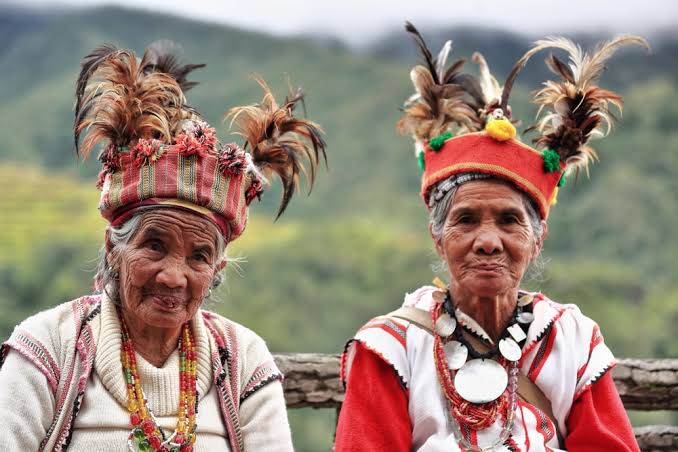

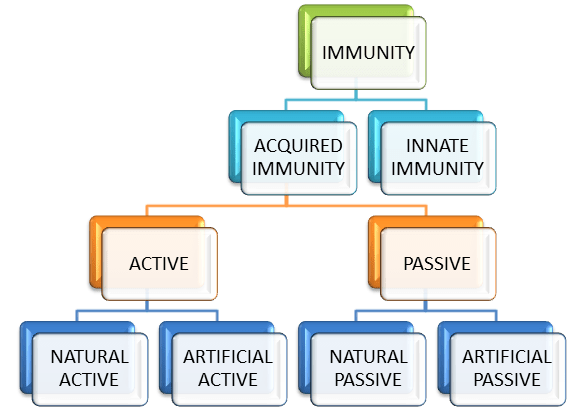








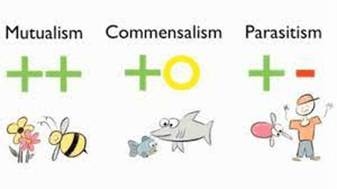





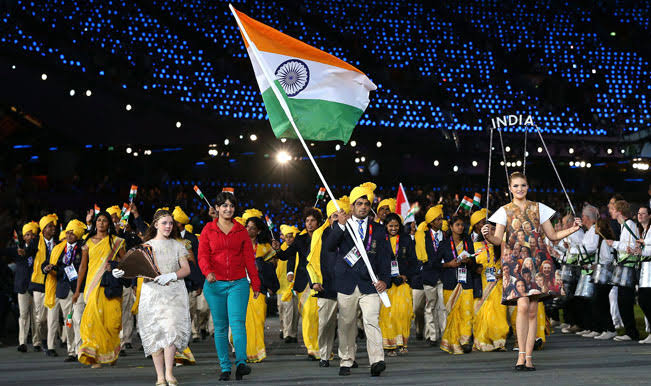
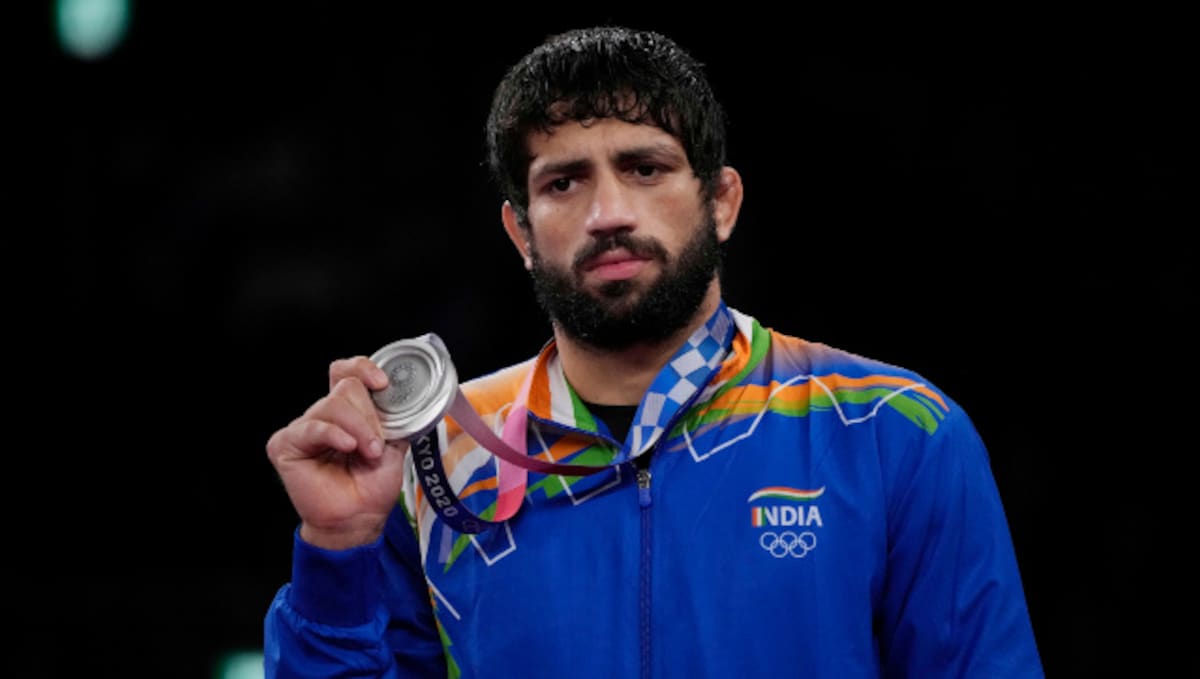















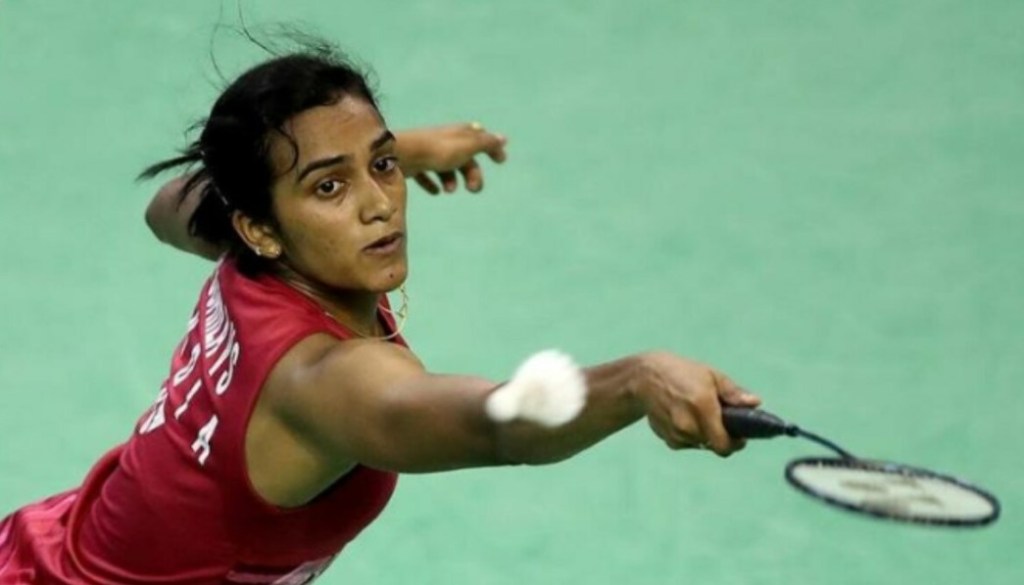









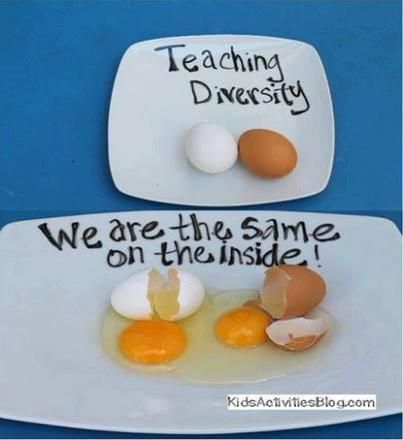


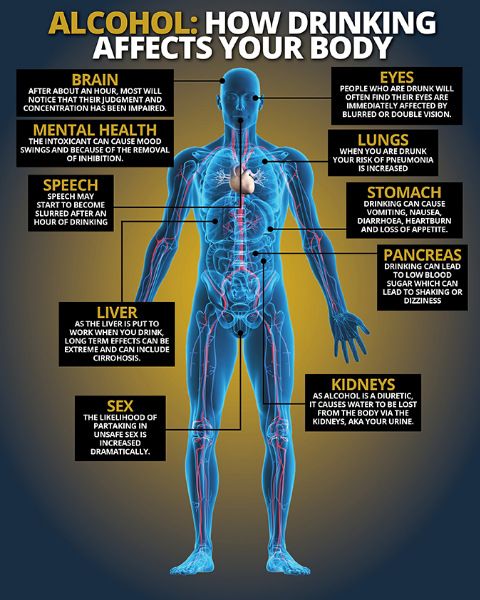





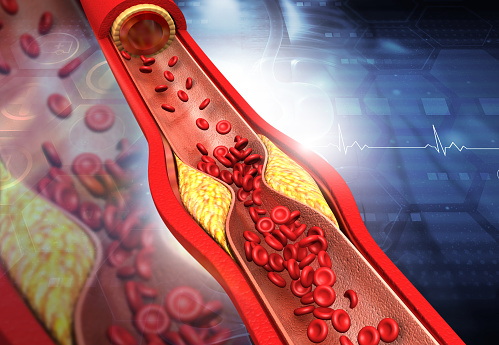




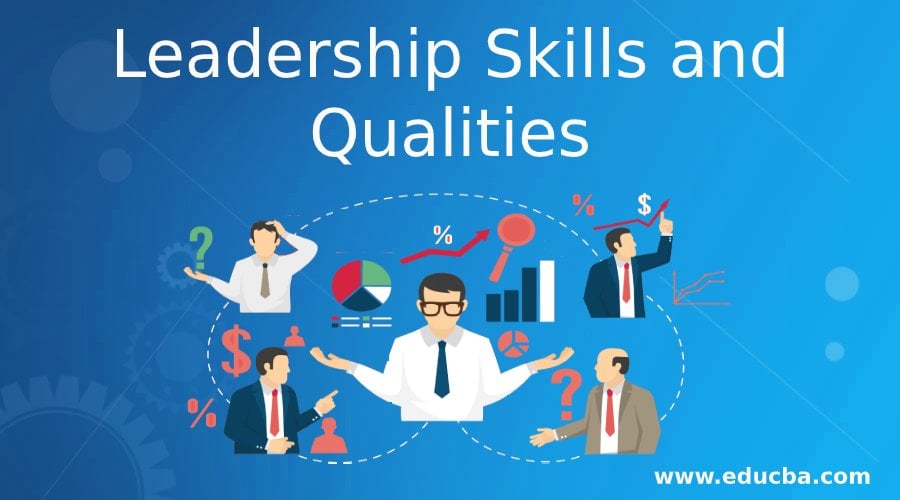






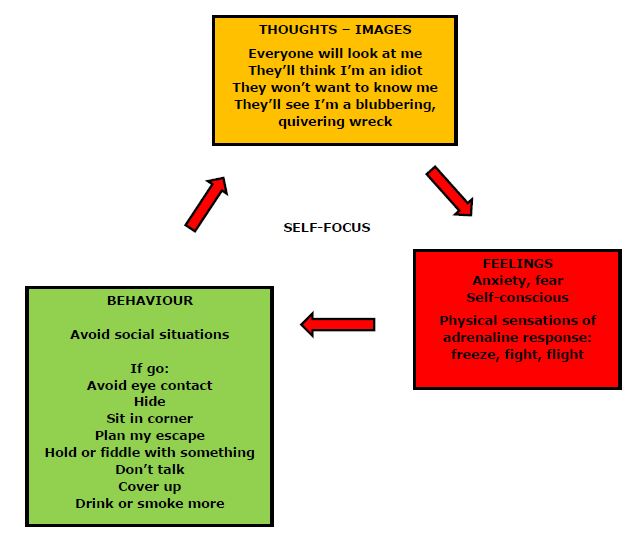

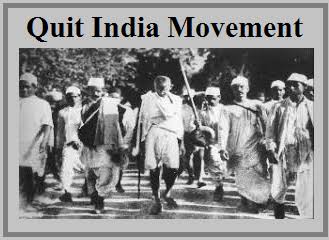


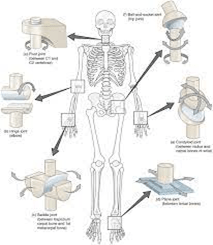



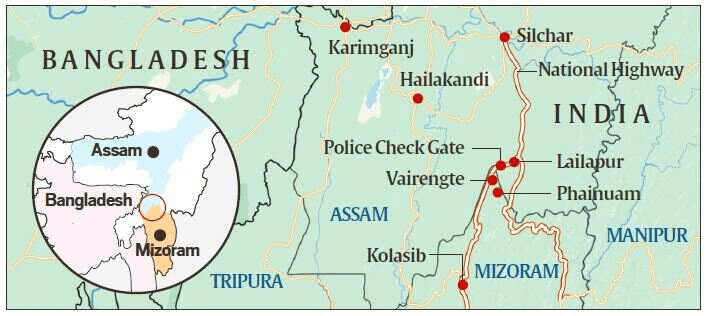















 Track2Training

You must be logged in to post a comment.