A test or examination is an assessment intended to measure a test-taker’s knowledge, skill, aptitude, physical fitness, or classification in many other topics. A test may be administered verbally, on paper, on a computer, or in a predetermined area that requires a test taker to demonstrate or perform a set of skills.
The basic definition of FOMO is – “Anxiety that an exciting or interesting event may currently be happening elsewhere, often aroused by posts seen on social media.”
The most important element in FOMO is the word “fear,” It makes us to do things even when we necessarily don’t want to. It’s logic versus emotion: When a compelling option is presented to us, we feel like an outsider if we say “no” to that. We may even fear that we’ll miss the opportunity of a lifetime if we say “no.”
At the same time, we know that we probably shouldn’t say ‘yes’ because we may be spreading ourselves too thin. Also, there are going to be plenty of other opportunities out there, so missing this one probably won’t make a difference after all.
When you are a victim of the fear of missing out, you are going to experience at least one of the following:
Procrastinating — Being Unfocused and Stressed
It’s obvious that when the temptation to say “yes” to a request is too big, you accept yet another task or project.
In practice, you are spreading yourself too thin. Not only are you stressed out by too many activities in your life, but it increases the likelihood for procrastination. This is because you cannot keep up with your schedule and you start finding excuses for not doing something you promised.
Losing Money
Sometimes you don’t want to feel like being an outsider in a group by making different decisions than the rest of the people, so you start spending money on the things you don’t even want because you don’t want to feel left out or miss out on anything which could have been “fun”.
Feeling Overwhelmed
Being overwhelmed is one of the symptoms of fear of missing out. When you are unable to say “no,” feeling overwhelmed is destined to happen at some point.
There are certain things you can do when you experience FOMO.
1. Be Aware of It
The first thing is to be aware of the feeling. Stop for a moment and acknowledge when you are having a feeling of FOMO.
Understand that this is a natural (although undesirable) way of reacting in a certain situation. We all wish we could say “yes” all the time, but we’re only human.
2. Be Honest With Yourself and Others
Honesty is one of the best ways to deal with the situation.
First, you have to be honest to yourself: If you say “yes,” you have to understand that you may be spreading yourself too thin.
Second, it is also important to be honest with others, too. They have to be aware that you may not be 100% committed to their requests if you have plenty of action going on at the same time.
3. Make a Quick Decision Regarding the Situation
One of the worst things you can do is be on the fence. As long as something is left undecided, it is using your brain capacity for nothing.
That’s why it is imperative to say “no” to an opportunity as quickly as possible if you feel you are unable to commit to it 100%.
When you say “no,” you may even regret your decision at first. On the other hand, if you are meant to experience the opportunity at all, it will come available to you at a later time.
4. Change Your Perspective
Lastly, one step in defeating the FOMO is to see if a situation or event supports your short or long term goals.If it doesn’t, it’s likely better for you to get off social media sites that can increase FOMO and say no. Instead, focus on everything you have to be grateful for in life at this moment. Try spending time with friends and family and improve the important relationships in your life. These are the things that you’ll really regret missing out on and what will ultimately improve your life satisfaction.
FOMO can lead you to distraction and can push you to do things you really don’t care about. However, there is a way to overcome the fear. Once you learn to handle it, you will feel better and will feel ready to take on more things that add genuine fulfillment to your life.
The obvious and rational equation is that being trustworthy plus being transparent will lead you to be trusted. Verification of trustworthiness should lead to trust.
This makes sense. Being trustworthy (acting in a way that’s worthy of trust) plus being transparent so that people can see your trustworthiness—this should be sufficient.
How then, do we explain that brands like Coke and Google are trusted? The recipe is secret, the algorithm is secret, and competitors like DuckDuckGo certainly act in a more trustworthy way.
In fact, trust often comes from something very different. It’s mostly about symbols, expectations and mystery.
Consider the relationship you might enter into if you need surgery. You trust this woman to cut you open, you’re putting your life in her hands… without the transparency of seeing all of her surgical statistics, interviewing all previous patients, evaluating her board scores.
Instead, we leap into surgery on the basis of the recommendation from one doctor, on how the office feels, on a few minutes of bedside manner. We walk away from surgery because of a surly receptionist, or a cold demeanor.
The same is true for just about all the food we eat. Not only don’t we visit the slaughterhouse or the restaurant kitchen, we make an effort to avoid imagining that they even exist.
In most commercial and organizational engagements, trust is something we want and something we seek out, but we use the most basic semiotics and personal interactions to choose where to place our trust. And once the trust is broken, there’s almost no amount of transparency that will help us change our mind.
This is trust from ten thousand years ago, a hangover from a far less complex age when statistical data hadn’t been conceived of, when unearthing history was unheard of. But that’s now hard-wired into how we judge and are judged.
Quick test: Consider how much you trust Trump, or Clinton, Cruz or Sanders, Scalia or RBG. Is that trust based on transparency? On a rational analysis of public statements and private acts? Or is it more hunch-filled than that? What are the signals and tropes you rely on? Tone of voice? Posture? Appearance? Would more transparency change your mind about someone you trust? What about someone you don’t? (Here’s a fascinating story on that topic, reconstructed and revealed).
It turns out that we grab trust when we need it, and that rebuilding trust after it’s been torn is really quite difficult. Because our expectations (which weren’t based on actual data) were shown to be false.
Real trust (even in our modern culture) doesn’t always come from divulging, from providing more transparency, but from the actions that people take (or that we think they take) before our eyes. It comes from people who show up before they have to, who help us when they think no one is watching. It comes from people and organizations that play a role that we need them to play.
Being 2nd in terms of the population can seem a curse to our country especially in terms of employment. The competition that youngsters face these days is because of this population. Even those who get a job didn’t get the desired salary. Most employees are not paid in proportion to the work that we put in. What’s more, this is not a new problem or one that has been created by a single government. In our country, low monthly incomes are a norm – across all states, and as a consequence, wage inequality remains high. Wage growth significantly trails economic growth in the country. The sluggish growth of our GDP has led to a rise in inequality and widened the economic divide between rural and urban India.
The sad part is that India’s unemployed are mostly the higher educated and the young. And those who have jobs are not satisfied enough. If you believe that only a few people at the top are getting huge paychecks, think again. Because data suggest that we aren’t creating too many high-paying jobs either. And even though labor productivity has risen in India, growth in remuneration has remained slow. The sad part is statistic, graphs of unemployment are still the same. The new jobs and opportunities are nothing in front of our population. This problem needs to review and can be to some extent need to be solved through bargaining power. Skilling, sometimes, multi-skilling at all levels is the most effective way to fight the wage crisis and the coming job crisis -the crucial designation before talent can be matched with demand. If the skilling exception isn’t corrected, job seekers will end up in the bad job trap. Skills produce productivity, and productivity brings with it higher pay.
The problem is that the business power of workers in India is low and getting more worse. Wage changes are also a result of changes in the way of production. Throughout the last few years, production has become more capital intensive or less dependent on labor in nearly every manufacturing industry in the organized and unorganized sectors. This is true, if to a lesser extent, for agriculture and services as well. While technical know-how and increased use of machinery is a change that needs to be welcomed since it translates to increased productivity, in labor surplus economies like India, the enhanced productivity does not automatically translate to higher wages for employees. Therefore need of the time is to cope up with the desired need of the institutes and became more high tech by learning more digital skills.
Covid19 binds us to our shelters, and study remains restricted to computer screens. In one way or another way, covid19 does impact the life of the people. So to the final year students. Due to covid19 outbreak and lockdown, many students did not receive their job letters those who received them faced delaying joining dates even after getting hired. some students did not get a call back from the employer regarding their status of employment. Along with elders, students were hoping too for things to get back to normal But the second wave of the virus crushed all the hopes of the students. Students will have to set in the new normal of digitization.
Firms have changed their hiring process also from full-time to unpaid or stipend-based internships, to cut costs. Companies are even reducing the number of hiring employees and are also offering comparatively lower compensation packages. Only a few companies have joined so far for placement in the but only with minimal vacancies. besides affecting the health sector, Covid19 has also posed major setbacks for small businesses and it’s going to affect freshers.
Marginal or no placements have hugely affected students. There’s a persistent fear of remaining unemployed even after college ends. Sadly, the institutions no longer take the responsibility of getting their students placed and ensuring their economic and financial safety.Also, there’s a lack of strategy behind planning placement drives. Government should interrupt to negotiate between the colleges and companies for the interest of the students.. The government has to put in extra effort to ensure that unemployment levels among the youth do not increase further. A lot of people lost their jobs during the pandemic. Now, the challenge in front of freshers is to compete with those who are experienced enough but unemployed. Our state should look into this matter and try to create job opportunities for the youth so that the number of unemployed population could be declined.
Online assessments have gotten something beyond a pattern in India. The remarkable ascent in internet learning has made online tests an important asset for instructive organizations and corporates. While understudies pick serious tests like Feline, JEE, Door, etc, working experts select tests like UPSC, GMAT, Bank PO, or CAT. The shared factor here is online assessments.
Pen and paper tests are as of now being enhanced or rather subbed by online evaluation stages, because of quick digitalization. An investigation by KPMG states that the online assessment industry is required to develop into an amazing USD 11 billion market by 2021. Appropriately so, since it is the second-biggest e-learning market after the US.
Let us look at the disadvantages of an online examination system:
Challenges in Technology Adoption
Infrastructural Barriers
Difficulty in Grading Long-answer Type
Susceptible to Cheating
Transitioning to Open-Book Exams
challenges in technology adaptation
Executing another framework may make a minor interruption and require time of acclimation by the clients. Any change from conventional procedure to the online mode will require some speculation from instructive establishments to update the frameworks. Nonetheless, acclimating the two understudies and educators with the progress is the ideal route forward. Such preparation would instruct understudies and educators about the new highlights and advantages of an online assessment framework.
infrastructural barriers
One of the significant weaknesses of the online assessment framework surfaces in distant areas where admittance to power stable web association and other fundamental framework prerequisites are hard to meet. Such boundaries obstruct online tests. Along these lines, while moving to the online mode, establishments should consider whether everything understudies can show up for the test and what plans can be made to guarantee something very similar.
difficulty in grading long-type answers
Despite the fact that online assessments have facilitated the invigilators’ work, the issue emerges generally with long answer-type questions. Abstract answers require manual reviewing, for which inspectors need to contribute extra time. This is the place where the cutting-edge framework covers with the customary one. As innovation in the instruction area keeps on advancing, the reviewing of emotional answers would get simpler.
suspectable to cheating
One of the significant impediments of an online assessment framework is cheating. Particularly in high-stakes tests, understudies regularly resort to pantomime, making colleges speculate test-takers’ character. Understudies may likewise get outer assistance through cell phones or smartwatches. The frameworks utilized by up-and-comers likewise offer various bamboozling openings, for example, interfacing outer capacity gadgets, screen sharing, and so forth.
transtioning to open-book exams
Normally, the configuration of online tests is seen as much the same as open-book tests. Dissimilar to a customary test setting where outer materials are not allowed inside the test corridor, there is no such arrangement in the advanced organization. Truth be told, it is hard to prevent understudies from alluding to their investigation materials during an online evaluation. Also, there is an absence of oversight during the test meeting, which risks the validity of these tests.
Right to education a right that is just on the paper. The pandemic situation makes access to education more challenging. The expensive fees of institutes, colleges, and tuition teachers along with the cost of digital gadgets. Make it a dream for the unprivileged child. Along with expensive gadgets, the additional cost of the internet is a matter of concern. This all thing make together cost of education very expensive. That is not affordable for all. The Pandemic hit makes our environment full of grief. Many lost their loved ones as well as earning hands. The question is in that situation how an innocent child pays for the education expenses. the answer is simple. The unprivileged child eventually drops out of school. People have to deal with financial pressure and subsequent anxiety. The pandemic has financially impacted the Indian middle and upper-middle class. Also many lost their jobs during the covid19 hit. The savings are diverted towards the needs. The reduction in earnings with the additional monthly cost of electricity, rent, and other bills make education cost impracticable.
Even during this time that certain private colleges are charging mercilessly an expensive amount of fees. This has put enormous pressure on families that sometimes have only one earning member per family. OR those who lost only earning members of the family. They have continued with their regular scheme of fees without issuing even the slightest bit of deduction. Even the government is not supporting the pitty family; Even though government gives the judgment that Colleges should not charge more than the students’ tuition fees because they practically have online-only classes. Many students think it is not justified to charge students for the facilities they are no costs such as the library, sports grounds, canteen, etc. Some colleges have given ridiculous explanations about electricity bills, infrastructural cost and maintenance fees. But on the ground private institution didn’t care about this judgment and continue to charge whole fees from the students. The colleges even ruthlessly pressuring the students and the parents to pay the semester fees on time, which would result in serious consequences if not paid. Private colleges are still looking at their profit margin even during a pandemic. The second wave hit more badly than the first wave. half of the population is covid positive. and admitted to the hospital looking for the medicine, oxygen cylinder, and ICU wards. The grief situation as well as the financial expense in the medical treatment. Given the scarcity of beds, private hospitals are charging a huge amount to the patients’ families. They have no option but to comply. The medical expenses are an additional burden that they have to bear. The bills keep adding and resulted in borrowing .and then never adding a circle of depth began. In such a sad situation how can a student pay his fees?
The students not only have to give compulsory examinations but they also have to pay with the financial expenses. Owing to this expense, students in the middle and lower strata of society are thinking to drop out the college. They are taking up whatever odd jobs they can get with little pay to support their family. Many of them had plans to pursue degrees post-graduation, but they have no option but to give up given the circumstances. In certain families with more than two children, it is becoming an increasing burden for the earning member to keep up with the rising expenses.
Lack of income source, lack of money, and diversion of savings towards basic needs as well as medical expenditures are some of the reasons stated by students facing such a crisis. Even authorities are not assisting the common people. Government is silent on this issue. That’s the reason many students give theatre life as being hopeless by committing suicide. Students want the college to either waive off the fees or provide them with some aid or assistance. The absolute lack of understanding for students has been reflected by these colleges. The mental fatigue and pain caused by this constant pressure are harmful to the well-being of students and parents as well. It is unfair on the part of private colleges to seek their profits during the pandemic situation. Instead of charging such a high amount, they should either waive it off for students going through a financial crisis or charge them just the tuition fee. The students are already facing mental pressure and anxiety. There is a lack of accessibility to online education existing already. Some have had to purchase laptops, good mobile sets, and costly data packs to attend classes. To assume that everyone’s financial condition will remain unaffected because they belong to a privileged background is wrong and fallacious. Some colleges are giving excuses that they have to pay to there teachers. Therefore they have to ask for money. But it is not convincing enough for the students who have time and again asked for a breakup of the fee structure. The students are helpless at this point. Even after approaching multiple authorities, they have not received a helpful solution. We can help these needy students through our small contribution. We common people should assist those who are in need.
Youth is the future of the country. if this statement is true. Then why our country is not able to eradicate the sin of child labor? we encounter the term child labor every time. and take it very casually. That’s the reason it still prevails within our society. we can find children doing work in
Every city, lane, and corner of society. We have been taught since our childhood that child labor is wrong. the future is in the hand of the young fellow who is making their livelihoods in factories, big industries, and local vendors and shops working endlessly.
Why this young fellow has to deprived of their education? why their childhood is stolen from them? why do they bear to do the work from such a young age? While other children are enjoying their childhood.Why some unprivileged kids have to work with heavy machinery and weapons under a huge risk to their health, just to earn a two-figure income to afford a single meal. children have to resort to working and earning, instead of learning. who is responsible for their worst situation? The ones who should be earning are the young and unemployed youth, who are sitting at home without any scope for jobs. who will take responsibility for them? The need of the hour is to provide these children education They are the future of India, and they deserve an education.
Child labor means exploitation of children through any work that deprives them of their childhood, interferes with their ability to attend regular school, and is mentally, physically, socially, or morally harmful. The practice of child labor is a crime ad people employing it people are the biggest criminals of Indian society. Another reason why child labor is wrong is that by making a child work, we are decreasing the quality of our education system and spoiling the innocent life of that child.
These children are suffering in the dark world of mental and physical pressure. by allowing these children to work in our houses and societies, as by employing them we are spoiling their future and career.
child labor is the evil part of society and needs to be eliminated.
By taking the labor of children we are spoiling the life of an innocent child for their cheap labor and our selfish motives. If we want to maintain the quality of the education system, we have to educate children, especially those from rural areas who are deprived of education, basic amenities, and other advancement opportunities.
For the progress of society and our economy, this evil practice needs to be removed. so that our economy will be balanced so flawlessly that there will be no cases of poverty and child labor in the upcoming years. We should not forget that child labor arises from poverty, so we need to eradicate their poverty level through the power of education leading them towards their career goals.
The lack of knowledge and skill leads to child labor. Therefore the need for time is to increase the accessibility of education to everyone. we need to start moe initiatives like mid-day meal. to increase the reach of students to education.
Covid19 expanded the digital divide. And shows the disparities within the society between the rural and urban, rich and poor. Lockdown compelled the shift to the virtual model. some of the students managed to receive an education without any obstacles. but many unprivileged students have been deprived of it. resulted in drop out of college and institutes due to the financial crisis of lockdown. Before the pandemic differences prevail in access to education but corona widened the gap. Rural areas have severe internet connectivity problems but Half of India’s population is living in rural parts of the country.
India is the second-largest populated country in the world. But it is a developing country. to maintain education for all during the lockdown when the schools are shut is quite challenging. the digital divide between the government and private institutes can be witnessed. Virtual learning wasn’t much challenging for private school students. Unlike the students of the government schools, who didn’t have access to the digital equipment. the Unprivileged children can’t afford access to quality internet and gadgets. Thus being deprived of education. The right to education is meaningless in the covid scenario. The government needs to bridge the digital divide to ensure students’ education. Some students are ahead of others. As many students drop out of school due to financial problems.
Access to the internet on their mobile phones is a matter of concern as well. The need of the time is to provide digital infrastructure and tools access to unprivileged ones to access online classes. The digital divide has led to incidences of student suicides. many students committed suicide after drop out. Even in urban areas, disparities prevail. those living in slumps and downtrodden areas can’t afford education.
The government needs to focus on technology and extending the vision of digital India.
Those who have access to education face many hurdles such as in assembling notes, in paying attention due to bad network coverage. Getting time to do self-study is also difficult. preparation of online tests is another problem. seeking notes from some of the online sources is also difficult because some websites charge for the subscription which is not possible for everyone. students have to sit in front of the computer screen for many hours and Practical knowledge is not possible during the pandemic because it is hard for the students to perform practical virtually. even for teachers, it is difficult to prepare presentations for the students.
pandemic hit increases our dependence on technology. The focus had always been on practical knowledge and skills. we are being actively tested for our knowledge without any proper structure of assessment. Most importantly, not all teachers are not good at technical stuff to manage classes or material distribution.
. COVID-19 also raised prominent questions about the need, significance, and value of virtual learning platforms. The majority of the students have been affected negatively and therefore the government should come up with such education policies that would benefit all the students. Common people also need to volunteer to lead a hand to needy people.
“Now what?”This question every student encounter in life after completing school. A career plan is the most significant and difficult question of life. Our whole life depends on this small question. Sometimes we choose our path and sometimes our society decides for us.
The question “What do I want to do in life?” is hard to answer.
It is tough for a school student to find their path at such a young age, because of the complicated model of ‘streams’. Studying science means you are limited to the medical and the engineering line. Studying commerce means being captured in chartered accountancy, banking, and finance and learning humanities imply that I must choose to become a lawyer or journalist.
The problem is the high competition within society The tragic fact is that we can never come back from this model of education, studies, and streams. we don’t have the right to choose subjects that are a combination of different streams. The reason streams are a challenge for us is that they directly affect our careers. Choosing a career is choosing life. As a career is related to financial independence. The question became more significant. every parent expects from there child to pursue a career that has the reputation, high earning prospect, and quite popular in society. Boys, in particular, are supposed to choose a career that can support their families financially one day. Today passion and happiness don’t matter when it comes to a career. The thing that matters for society is the reputation of the career. For society, boys should not go for teaching jobs, fashion designing and cooking are something that society doesn’t consider ideal jobs. some jobs are called ‘feminine jobs’ not meant for boys. Like cooking is related to females. Some jobs get undermined like fashion designing is compared to tailoring.
Students’ choices are also impacted badly by the stereotypes and repercussions. and they have to choose paths unwillingly as per society’s concern. Even though we are heading towards an impartial society, such differences prevail in our society. The ‘pay scale’ affects the choice of career. Women are still paid less and the gender pay gap continues to widen.
Lack of awareness of new opportunities is a major challenge that school students face. We are not aware of the options beyond the ‘visible careers’. Visible careers are those careers that we see in everyday life, such as doctors, teachers, engineers, journalists, politicians, and businessmen. We lack knowledge about other options we have. There is a world beyond these visible careers: such as being a therapist, an urban planner, a singer, a beautician, a blogger.
so many jobs are available now because of the internet. such jobs can provide a great opportunity to the newcomer. Like social media marketing, a YouTuber, a blogger, a digital marketer. But the problem is students don’t have access to and knowledge of this career.
Your career should be based on your strengths. The best choice of career comes from one’s passions and hobbies. Your career should inspire you and be the reason for your existence. It is you who can decide your career, not others. and being yourself and the following passion makes you happier.
Covid Pandemic left many Indians unemployed. While unemployment has always been a cause of attention for India. But mandatory experience and training made it more worse and challenging. the lack of practical skills holds us back. The recent unemployment numbers among educated youth show the drawback of India’s faulty education system and the lack of the right learning opportunities for young professionals.
The government of India wanted to create a workforce of skilled professionals but the coronavirus pandemic made the situation drastic and critical. There was a time when a degree could help a person getting a desired job. But with more competition., a degree is not sufficient itself. The biggest issue is practical knowledge with theoretical knowledge. Classroom learning is more focused on theory. When students step into the professional world, they find themselves not capable enough to handle the work because of the drawbacks of our education system. Our country has educated unemployed people. Shows the inadequacies in our education system.
companies want educated fellows with practical skills. That our education system is unable to give. Because it is limited to academics. Youth lack new-age skills that companies need from their employees. With limited online and offline courses for industry-specific training such as engineering, IT, etc., Most young professionals lack confidence while dealing with problems at their workplace. Moreover, since schools, colleges and universities are following the traditional system of education. it acts as a hurdle when professionals come to face real-life circumstances.
Students need to develop new skills. So that student can learn something above education and makes students ready to be professionals. India has the potential to be a preferred destination for global sourcing. Skill development can bring this to reality by instilling more confidence in young professionals. As their skill increases their employability will increase, and ultimately lead to the nation’s financial growth.
The government needs to assist India’s workforce informally trained. With immediate competition, we need to adopt better strategies too. we need to improve standards of education and adopt newer methods. The higher the standards of training and skill development, the better our workforce can be. The country National Skill Development Corporation (NSDC) can also contribute to solving the problem by creating more awareness and come up with suitable programs that can help professionals.
Transformation can only come with the government. The education system, industries, and students collectively understand and recognized the significance of skill improvement.
As per the Ministry of Electronics & Information Technology (MEITy), social media platforms like Facebook, WhatsApp, Twitter, and Instagram have to follow the new Guidelines of government failing which can lead to a ban. guidelines were issued in February 2021, and social media platforms had around 3 months to acquire these guidelines. The companies are yet to respond to the Intermediary Guidelines. The decision taken due to the fake headlines do nothing but spread fear among people.
According to the constitution, India is a democracy at least on pen and paper. However, certain powerful people in the Central Government, to strengthen power, are now trying to silence free speech on social media. Free speech is a right granted to all human beings globally. The Universal Declaration of Human Rights (UDHR) recognizes it as a fundamental right. India happens to be one having this right. This means, Indian citizens should have access to this right, and it’s the government’s responsibility to see that this right is being protected.
Yet, these powerful individuals within the Central Government, have time and again gone to unbelievable measures to control this right.
. The disappointed young people of today turn to social media to express their objections about everything they found mistaken or unsuitable. Be it a person of any class, culture, community, and religion. everyone turns to the internet. And the only way to check these critics would be by introducing “Agreement Officers”.That is exactly what the government has done through its intermediary guidelines to check who’s saying what on the internet.
If this guideline came into being. There exists no mechanism for the common mass to raise their voices. The only time when the masses get to raise their voice is during the elections. But then again, it’s the media that controls the elections these days. Unfortunately, reporting is done in such a way that we’re persuaded in support of a particular political party. This plan, if achieved, will badly affect the very foundation of our democracy.
Criticism makes democracy strong. But these guidelines go against it.
Maybe government believes that criticism isn’t important anymore and hence has concluded that the internet should be controlled. It’s dishonest of this country to say that other countries are trying to crush free speech.
The government needs to come into a discussion with the social media companies and the common people. But the government didn’t give a single thought to it. It is nothing but censorship in disguise.
Denial of granting protection to a couple who are in a live-in relationship only because it is socially and morally unacceptable. is it justified on the part of Punjab and Haryana High Court? The boy and the girl had been in a living relationship that goes against the girl’s parents will.
The couple asked for protection from the court for their life and liberty after being frightened by their families. Unfortunately, they were denied protection. the denial of their right under Article 21, in this case, is inappropriate. The judgment by the court seizes their identity as per Article 21 as well as the right to “life or liberty”.Article 21 declares that every individual has the right to their life or personal liberty. Therefore to secure their right the couple moved before the Punjab and Haryana High Court for the protection under Article 21, which is dismissed by the court on the ground of social and moral unacceptability. while rejecting the petition, the high court interpreted that the term “person” means those who are recognized by law as being capable of having legal rights and being bound by legal duties, not a couple. After getting married, a man and woman are considered capable of having legal rights and duties known as rights in the institution of marriage. But only when the marriage has been done as per their respective marriage laws in force in India.
The denial of the right to life and liberty is completely inappropriate in the law. Since no law in India criminalizes pre-marriage, it would be more like legislation by the judiciary to hold pre-marriage illegal based on social morals. There is no force of law in an opinion that has been embraced by the conservative majoritarian masses of India who find it illegitimate. The decision rendered by the Punjab and Haryana High court erred in ascertaining the aforesaid point. In place of assistance, the couple became the subject of discrimination held by the conservative majoritarian masses.
Asbestos is a natural mineral constituted of soft and flexible fibers that are resistant to heat, electricity, and corrosion. These characteristics make the mineral valuable, but also make its exposure highly toxic. Asbestos removal is indispensable because it causes severe health problems such as cancer. Also some fatal issues, including asbestosis, mesothelioma. The most critical part of it is that some don’t reveal immediately but remain in your system for a longer period, sometimes years later. If high levels of asbestos exist in the house then its inhaling can lead to severe health problems such as mesothelioma, a form of lung cancer that can cause respiratory problems, ranging from a simple cough, allergies, and pneumonia. If you breathe asbestos fibers, this can get trapped in your lungs and can damage your lungs very severely if not removed properly. It may not even be possible to breathe because it will make you cough. The dust is terrible too because it can enter your lungs and get trapped in them. Some cases have shown that asbestos particles can go up to the lungs.
Even if someone does not get lung cancer due to their exposure to it, they will still experience many other health hazards. Direct contact with asbestos materials can easily penetrate your skin or you could suffer from skin irritation. Asbestos is not easily noticeable, but it may be everywhere. A toxin that’s slowly wreaking havoc on your health. accompanying health problems, it can decrease your property value also. Chances are you could lose a potential buyer if asbestos is not properly removed from your house. Asbestos Poses Environmental Dangers as its materials are not easily separable and fibers are microscopic. its removal requires special equipment. With the smallest cracks or gaps in your walls or floors, you can easily be exposed to high quantities of asbestos. That makes quick treatment of asbestos even more indispensable.
In today’s digital era, competitiveness rise seriously. To be effective as an employee we need practical assistance and training. The practical experience and training not only help us to be productive but helps in magnifying our skills. Every time we learn a new skill it added to our personality development. Now companies are looking for a well-groomed personality. Internships are good means to enhance our knowledge, skills and to learn something effectively and practically. For the right utilization of the spare time, Internships are good means. Also, it is added to our resume and curriculum vitae. which increases the possibilities of selection during the placement. Internship and training are of different varieties. Some are in the workplace and some are work from home. Both means are useful in their way. Through the workplace internship, you can get practical experience and more chances of interaction with new people. Possibly you will find a great mentor in that way for your career guidance. And through work from home, you can save your time and devote it to learning something else. Every year, Government invests a big chunk in the training of the students. Because training increases the productivity of human capital. That will help in the long run students. For professional courses such as business and management. It is advisable to have prior experience. So that you became proficient enough to answer the practical solution of the problems. When you involve in training and internship you learn how to manage the work at the basic level. That will enhance your problem-solving and analytical skills.
Even our finance minister Nirmala Sitaram begin her work being a salesgirl. Ambani the leading and renounced groups come into existence after continuous years of hard work. Most intellectuals and psychologists recommend students to go for the internship because it will increase their knowledge, confidence to face the problem during work. Just as the college experience helps in dealing with the office environment. Similarly, internships help the student to identify the problems that they can deal with during work, with the identification of problem. students can look for the possible solution at the bottom level. Such experience helps students in the long run. So students should look for the internship. A career such as marketing, business, management is something that can be handled only when you exercise them on daily basis. So internship helps you in getting practical knowledge. In addition to it, things like content writing can be learned only by practice. For the practice, you can opt the internship. That will invest your time properly that you can waste here and there in other activities. Especially during summer vacations, you can utilize your time through involving in any internship.
Research shows that those students who indulge in internships are more productive and good at problem-solving than those who are much in academics. Academic knowledge is vital to understand the problem But if you want solutions, you should go for the practical experience that only training and internship can give you. In fact placement cells in the colleges also look for students who have practical experience. During the internship, you will learn some vital skills as well like confidence and body language. Internships and training also make your financial security. Some internship provides stipend also for the work. Also, expertise in work during the internship can lead you to get a permanent job. As some agencies provide regular or permanent jobs to their best employers during the work. Many students receive jobs while doing the internship. Especially look at the intens for hire. Therefore internship and training have a significant place in a student’s life. Even Doctors and Engineers have to go through technical training before beginning their work.
Mental Illness during Pandemic. Covid19 pandemic hit the masses most severely mentally. The trauma from looking for the medicine, hospital beds to dealing with the mass of dead bodies, from being left jobless to mass migration and suffering. These all circumstances severely impacted our mental state. A tremendous number of people have lost their dear ones. And some are fighting for their life. While their loved ones and family are busy in the constant search of medicines and oxygen cylinders. Those who are safe are also suffering from mental illness by looking at their environment. Full of grief, devastation. This time is very hard. And financial crisis makes this problem. So many families especially of the lower class. Left without money and aid. Those who earn daily and labor are struggling a lot. These financial bottlenecks resulted in mental illness. Especially those students who are handling the digital divide. Faces stress and mental illness. All students couldn’t afford online education due to a lack of digital gadgets. That acts as a hindrance to the growth and education of unprivileged students. The cost of academic education and institution creates a financial burden for the students and the family. some can deal with it. But those who couldn’t eventually end up dropping out there college and institute. That leads to mental stress among the students. Recently, the cases of suicide by students increase manifold. That shows how mentally covid have impacted the students. Therefore cases of suicides are reported manifold. Students who are privilege enough. Also facing mental trauma. Online education also created an additional problem, technical glitches, electricity problems, access to devices, are major problems related to online education. That cause mental stress, headache as well as eyesight problems. This problem can be overcome through everyone’s participation. All need to contribute. By providing financial aid to the needy. And by including in the conversation as much as possible with our friends and family in this hard time. Chatting with each other acts as a medicine to cure the ailment of mental stress.
The covid pandemic not only impacted adults but students also. At one place the children lost their childhood and on the other hand, students are concerned about their career, future that seem bleak to them due to covid devastating impact on the economy.
one of the most significant reasons is finance and the need for funds. Students are concerned because the global pandemic has created havoc in the employment sector. This resulted in many job losses in the informal sector. As the country is closed so those earning money daily and business have to suffer. The question of school, college, and tuition fees is another issue. This, in turn, has been magnified in the lives of the students and the youth of the country. The financial crisis within the family has bothered almost the majority of the population, especially the students.
The very first concern is the digital divide. Accessibility of digital gadgets especially among the lower economic classes. Eventually, which means withdrawing from school to some students. Being already distorted by financial emergencies, the necessity of digital devices acts as a hindrance in the way of student learning. leading to many students dropping out from formal courses and institutes. increasingly pitted against the highly competitive labor market with most being trapped in the vicious cycle of underpaid labor or disguised unemployment.
The government too is not in a position to solve this problem of digital devices because of treatment and aid expenses.
this economic crisis has an unfortunate effect on the mind of the students. The financial dependence on the family, often severe, mostly reduces them as isolated victims. It also hinders the access to academic opportunities of the student. . Many family members getting affected and the huge expense occurs on treatment, amidst the acute scarcity of oxygen cylinders and other medical pieces of equipment.
The students are facing the problem of academic costs at the same time when a lump sum amount is required for admission failing which the seat might get canceled.
Further, the debt trap will lead to a greater burden in the future for repayment with interest, leading to more psychological suffering. The hostility between maintaining academic costs as well as fending for health expenditure has had severe effects on the young minds, putting their future and aspirations at stake. In this situation, a and well-planned approach is needed to address the issue of financial crisis which can be aided by the government.
The Year 2021, this year seems like giant waves of oceans going down and down. Our country gets badly downtrodden due to the social, political, and economic issues that continue to prevail, due to an invisible enemy in the form of the deadly virus.
This virus shows no mercy to anyone doesn’t matter which class, culture, and religion person belongs to; it spares no one. As the cases went up, so did the false WhatsApp forwards, chaos, panic-buying, and fear among people. The increased cases and dilemma is frightful people. As people taking hurt over their mental health, too.
From the news of unknown viruses to fearing even a slight increase in body temperature, to look for medicines and oxygen cylinders, people have experienced it all. In the beginning. To ‘deal with a spontaneous and devastating situation the Indian government announced an out-and-out 40-day lockdown. Everything came to a standstill—except divisive journalism and discrimination.
While most people don’t have the privilege and luxury to stay home, quarantine isn’t a blessing for many. it lead rise in mental illness since the coronavirus outbreak. The level of stress and anxiety has heightened.
The apprehension about job security, draining of savings, or unavailability of basic things for survival, ambiguity. People who were already suffering from mental illnesses looked upon engaging themselves in outdoor activities and meeting their dear ones as the only coping mechanism. Now they have no option but to dive into the same misery they were battling. along with that crimes such as theft, murder, extortion, molestation, etc., are increasing at an unpredicted rate
COVID-19 is just not another death-dealing health hazard. It has more profound implications that society would have to bear post lockdown too.
The radio, newspaper, and TV. All are mediums of communication. They all were invented to enlighten human beings. Every creation has its purpose So they have. It’s true that for daily information we depend on this medium but does this products assisting us. Or it’s just deception. The reality is they are a tool in hands of cooperation to earn profit. And increase their business. Providing information is just a business. we get only that much information that cooperates giants want. As half of the media is dominated by politicians and giant cooperates. That influences their credibility. Hard to believe but this is a bitter truth. this invention acts like a tool in those hand who have money. consumerism is created intentionally through media in the form of advertisement. Advertisement creates a desire in human beings. This desire resulted in more consumption thus adding profit to the big giants. That shows how people are betrayed. Today content is created in such a way that doesn’t make a person intellectual. But merely a passive consumer. In this gamble and deception, along with corporate giants, politicians are also involved. They use the mediums to propagate their message. Thus people consider the propagated message as truth. Start believing it and thus there ideology and perspective got to change. These tactics can be a hindrance to the democracy and sovereignty of the country. The enlightenment that media promise somehow vanishes because of the huge enrollment of money. People themself need to enlighten. By becoming the active audience by actively analyzing, understanding every message. We can be saved from this mass deception through the mass medium. Just we need to be vigilant in our approach whenever we encounter a media product. we need to understand the hidden motive behind that content. We need to know who is the creator of the content. And what purpose the content fulfills for the creator. Thus content by media or medium of communication needs to be observed. To better understand them. To save ourselves from enlightenment as mass deception.
Recently our Union minister Prakash Javadekar said in the Lok Sabha, “No child was deprived of online education during the pandemic as the government had taken several steps in that direction.” Such a statement is nothing but a mere lie when we encounter reality.
A majority of Indian school students do not have the means or privilege for online education. Some face network and technical glitches. Some face electricity problem. The non-availability of gadgets is another problem. Accessible and compulsory education has always been a challenge in India. Right to education is something that is written merely on paper not exist in the real world. The pandemic broadened the pre-existing gap making online education a commodity of sheer privilege. During the lockdown, thousands of students have suffered due to the digital divide. Taking the example of the Indian state with the highest literacy rate, Kerala witnessed numerous cases where students took away their lives due to a lack of accessibility to digital tools. sometimes Internet accessibility act as a hindrance.
the obvious failure of the system and concerned authorities witnessed from the devastating act of suicide by the students. Not just that; for powering devices, access to electricity is crucial for digital education. Some states such as Bihar and Uttar Pradesh have a severe problem with electricity.
In the rural area, the houses received electricity for less than 12 hours a day. most of India’s population lives in villages where only 15% of rural households have access to internet services. Whereas in urban areas, it’s 42%. Moreover, India witnessed a spike in unemployment during the lockdown affecting the livelihood of millions.
Especially compulsion of electronic gadgets for online education became a severe problem as in rural areas subsistence is very difficult. Not every rural person could afford expensive gadgets. In most households with a meager income, eating three meals a day was not guaranteed, purchasing costly internet plans or devices cost them a fortune. From mortgaging assets to cutting off on essential household expenses, families have done it all to make online education a possibility when the government schemes failed to reach the neediest.
Although several NGOs, social groups, and individuals rose to link this digital gap by sponsoring smartphones and laptops, the negligence by the authorities can’t be overlooked. An ordinary Indian citizen expects its government is to at least acknowledge the problem. After all, how will one solve the problem if one does not acknowledge it!
we are living in a feudal society, but still, nepotism permeates everyone. however, the film industry is trapped in nepotism. Nepotism can be defined as an act of using power or position in an unethical manner to get the dear ones in the same field. It not only exists in business but also in the Bollywood industry. this topic has been raised many times in the Bollywood industry and unfortunately having a negative impact rather than a positive impact on the lives of celebrities. Before the incident of Sushant Singh Rajput, this topic was not discussed seriously. But after his death, Bollywood was trapped in nepotism and many celebrities were interrogated. many celebrities talked about nepotism openly. Some talked positively and some in a negative manner. Kangana Ranaut came into the industry in 2006 with the movie Gangster. She was the one to raise this topic negatively as she labelled filmmaker Karan Johar as the flag bearer of nepotism in the show Koffee with Karan. Due to this, she gained prominence. She also called Tapsee Panu and Swara Bhaser outsider. After Sushant Singh Rajput death many actors were trolled and questioned on nepotism . Because of this, many celebrities also lost fan following. We often say that some star kids are excellent actors and done their work very well. But we said some not all because some star kids don’t take their work seriously and due to the lack of seriousness films get flopped. Nothing is wrong with exercising power based on one’s family background/star kids, but at least chance should be given to the newcomers or outsiders and even to those who don’t have any connections or godfather in Bollywood. So, they can make their names and show their talent to the public.
Today in this consumerist world, the actual meaning and definition of happiness got changed. Earlier the happiness lies within the relations between the people. But growing industrialization and materialistic nature. Change the meaning of happiness for common people. today’s happiness is not the smile of the people. But the luxury became the source of joy and happiness. Social media and the internet managed to make human beings individualistic. Relation and ties among the masses are just a matter of messages. The real happiness now lies in materials and luxuries. Humans want more and more. The never-ending demand and grief of the human have wiped the concept of the real happiness. It changed its meaning. It alters its values. The early tradition, rituals, and get together don’t matter anymore. Today rituals are just a matter of fun. People don’t believe in meeting with each other. Humans today happy in the isolation. With all the materialistic objects and comfort. But if material and luxury are not happiness. Then what is happiness? It is something that we get after seeing someone happy. It is something we get after helping someone else. By looking after anyone else than yourself. It means keeping aside the greed and doing generous work. It means sidelining your sorrow, ego for someone else happiness. The sad fact is that today humans do not look after happiness. Now the happiness doesn’t matter to humans. Human is lost somewhere in the consumerist world. And so human happiness also lost. The need of the time is to look for the real happiness. To realize that real happiness comes when you do something for someone else. Materialistic things can give you comfort and luxurious life. But it can’t give you that warmth that happiness that feeling that a real human being can give you. Human being need to understand his/her role as a human And need to look after other people to there dearest one. So that along with happiness ,humanity can be saved.
President Joe Biden has baited office in a country looking prominently different than it did on his forefather’s inauguration Day.Covid19 has killed more than 4,00,000 Americans, with a big part of socio-economic toll impute to federal Mismanagement, The US has also renounced its role as leader of the free world, squabbled with democratic allies while keeping authority populist’s everywhere, snicker at its post-truth misadventures. This month’s attack on the capital represented the domestic broadcast has poisoned the polity. In the short, the new administration has its work cut out invent correctives at multiple levels. It is a mighty challenge. But democracy is hypothetical on elections making a difference.
The promise of a new dawn is both powerful and credible. The diversity, temperance, and experience of the incoming cabinet strongly suggest that they have a good measure of the problems at hand, and the ambition to attempt solutions one clear aspirational target is 100 million doses of covid19 vaccines n the first 100 days. Then, Janet L Yellen, who will be the new treasury secretary and America’s top economic diplomat, has verbalized as priorities both addressing the economic damage of the pandemic at home and repairing relationships with various allies abroad to take on china’s (illegal, unfair and abusive practices) collectively. After the vain of institutions and Clutter or flailing seen in the Trump years, it will indeed take solid international cooperation to revitalize the global rules-based order. The incoming secretary of state Antony Blinking has shown a welcome so be saying,(We’ll engage the world, not as it was, but as it is)Pragmatically speaking, rebukes on human rights issues for India may be part and parcel of Washington’ liberal festival alongside the many Indian and American in the Biden Team.
Amongst covid-19 pandemic, 2021 budget has potential to increase women labor force participation up to 2 percent this year.
Nirmala Sitaraman, Minister of finance, the government of
India shared that budget 2021 has the potential to increase the employment of
women. COVID-19 pandemic had disproportionately impacted women
forcing them to drop out of the workforce. The women labor force participation according to the center comes down from 25 percent to 21 percent, due to job loss by women. Inurban India only 12 out of every 100 still employed are women, a shocking
statistic, down from the already low 18. No doubt the covid 19 pandemics have resulted in many challenges such as pay disparities and expensive child care is an economic downturn that hit women workers measurably harder than men. Whenever the economy shrinks people lose jobs, then look for another job but women aren’t sitting it out so much as being pushed out by disproportionate job loss,
lack of child care, pay disparities, and lack of public policy to support working women. women with children are much more likely to report that working from home has hurt their productivity and affected their careers .there are three drivers of increased women labor force participation 1.Jobs that exist in locations where the woman has family support.2) Contemporary and new skilling (like digital marketing, for instance) that allows for marketability3) A government mandate that enables small businesses to be rewarded for hiring more women. The allowance of women to work in all shifts is a move towards reducing the gender divide brought in by COVID-19. This will help industries such as IT and BPO in Special Economic Zone’s, manufacturing companies in sectors such as Textiles, Pharma- as well as large organizations with a national presence. The textile industry, one of India’s ancient industries that employ the largest numbers of women has received a big stimulus with the announcement of seven Textile Parks. The third aspect which would allow small businesses to be rewarded for hiring women has not seen any pull in any of the budgets presented in the few last years. Large organizations in metropolitan cities have already bought the business case for both genders that led to women’s employment being enhanced. It is the 2 and 3 level metropolitan citiesand towns that need the influence of involvement. And this is where there is alarge population of women – educated, career-seeking, and yet unable to earn
reasonable money due to the non-availability of jobs matching their aspirations. As per data, young women in the age group of 20-24 across urban locales, are more interested in being employed than similar-aged women in rural India. As such, this is a very important talent pool, waiting to be engaged. The BPO and micro-enterprises in these locations will require a stimulus to engage women more proactively. Had the budget addressed this, by providing a bit small, yet encouraging a sum of money to employers of women, India would have seen a jump in women’s job creation to almost double-digit increases, which will have a multiplier effect on the economy.
Identifiable living individual and includes names, email Ids, ID card numbers, physical and IP addresses. Data is the large collection of information that is stored in a computer or on a network. Data is collected and handled by entities called data fiduciaries. The processing of this data has become an important source of profits for big corporations. Companies, governments, and political parties find it valuable because they can use it to find the most convincing ways to advertise online. The physical attributes of data where data is stored, where it is sent, where it is turned into something useful are called data flows.
WhatsApp’s decision to delay the update of its privacy policy, following a backlash from its users, is an implicit acknowledgement of the increasing role played by perceptions about privacy in the continued well-being of a popular service. Problems for the Facebook-owned app started earlier this January when it announced an update to its terms of service and privacy policy, according to which users would no longer be able to opt out of sharing data with Facebook.
February 8 was kept as the deadline for the new terms to be accepted. This triggered a mass withdrawal from WhatsApp, the likes of which it has never encountered, not even in the aftermath of the Cambridge Analytical scandal, which did bring a lot of bad press to its parent, or when the messaging app’s co-founders called it quits a few years ago. The WhatsApp policy update has clearly spooked many users, who, concerned about their privacy getting compromised, have shifted to alternative platforms such as Signal and Telegram. WhatsApp has asked for data which contains your account information such as Phone number, the name attached to the account, the profile photo you currently have for WhatsApp, the device you are using, the time when you have been online, all your contacts, all group names of which you are a part of, the device type, the IP address, device build number, device manufacturer, details of the web/desktop version and the platform which is used for WhatsApp Web, your Status.
It also has the exact time when you set the current profile photo and the current status message. The list includes all contacts with whom you would have chatted on WhatsApp, and only the mobile phone numbers are mentioned. It also has your settings for the app, including the privacy settings for Last Seen, Profile Photo, About Privacy
and Status Privacy. It also includes a list of the all numbers you have blocked and whether you have Read Receipt on or off. The issue has once again raised questions about what constitutes legitimate uses of data and how businesses, governments and political parties can and cannot use data .A White Paper produced by a government-appointed committee, headed by retired judge B.N. Srikrishna , which is formulating a national data protection law for India and its people to safeguard there interest.
Media, the fourth pillar of democracy act like a puppet in front of politicians lately. With many toolkits, cases highlight. Excessive paid news reporting during Election. Exhibits how media is governed by political parties. Today massive advertisement by the political parties shows the nexus between media and political parties. Showcase their close economic connections. Media also alleged for running agenda and propaganda for their allied politician during elections. Which hampered the credibility of the media. Many journalists appear to favor their alleged political parties openly in their text, report, and debate. Even the questions asked in interviews are biased one sustaining only one side or party. Its been observed during elections, this funding increase manifold. To dominate media investment partnership, toolkit, gifts, privileges are some tactics that political parties used without coming into suspicion. Such malpractice is performed by political parties to bribe the Media. To use it as a weapon during election campaigns. witnessed in the way media seems divided in their message. They showcase only the positive side of their party, their positive work shaping the idea and ideology of the common people. Media runs agenda and propaganda to deviate audience from the basic problem of the society and shift towards the direction their funders want. media propagates only those messages there supportive parties want. Maximum paid news reports are linked with political parties. Many politician leaders names are highlighted and summoned by the election campaign. But lack of proof and unwillingness lead to no fruitful result. And no severe action was taken place. Now media listen and write only what there investor wants. The incomplete, partial and biased information shared by the news channel became a hindrance for the sovereignty of the country. Severe actions and identification of the political parties became the necessity of time. the large number of manipulation on the part of the media shows that it has lost the credibility and trust that people have in them prior. Passive audience are consuming the biased or manufactured message that can hamper the autonomy and sovereignty of the country. Nowadays, Beside politicians many private institutions and cooperate giants seem to invest their large chunks in the media .For example, Mukesh Ambani, his family and friends owned INX Media recently. That show media became a puppet now.
Criminal law relates to the offences that negatively affect society as a whole, rather than just one person. Criminal laws are put in place by Parliament to prevent breaches of conduct which they deem as harmful towards the whole of society. If a person breaches criminal law, then they will face criminal prosecution by the state. Criminal proceedings are brought by the Crown Prosecution Service and will be heard in Magistrates’ Court or the Crown Court. If you are then convicted, you may receive a prison sentence or a community order. The standard of proof for criminal law cases is “beyond a reasonable doubt” or “certain so you can be sure.” These both mean the same thing.
Examples of criminal offences include:
Murder, Manslaughter, Fraud, Assault, Sexual Offences, Burglary, etc.
What is Civil Law?
Civil law is more concerned with cases between individual people where one person commits an offence which is harmful towards another person, their rights or their property. Civil law also settles disputes between individuals and organisations. If you are convicted of a civil offence, you are not likely to be sent to prison, but most often will become liable for compensation. The standard of proof for civil law cases is “the balance of probabilities.” However, certain civil offences such as disciplinary proceedings for solicitor misconduct can use the higher standard of “beyond reasonable doubt.”
Examples of civil offences include:
Personal injury, Breaches of contract, Employment tribunals, Negligence, etc.
Civil Law
Criminal Law
Civil Law is a general law which deals with disputes between organizations or individuals or between the two. The wrongdoer, as per the civil law will has to compensate the affected party.
Criminal Law deals with crimes and offences that are committed against the society. It deals with crime and legal punishment of offences.
Civil Law is generally initiated by the aggrieved individual or organisation or also known as ‘plaintiff.’
The Government files the petition in case of criminal law.
In case of Civil Law, to start a case, the aggrieved party needs to file a case in the Court or Tribunal
As per Criminal Law, to start a case, a petition cannot be filed directly in a court, rather the complaint should be first registered with the police, and the crime needs to be investigated by the Police. Thereafter a case can be filed in the court.
The objective of Civil Law is to protect the rights of an individual or organization and make sure that he or the concerned organization receives the compensation for the wrongs that they have suffered.
The purpose of Criminal Law is to maintain law and order and protect society by punishing the wrongdoer.
In Civil Law, the wrongdoer gets sued by the complainant or the aggrieved party.
In Criminal Law, the accused person will be prosecuted in the court of law.
In the case of Civil Law, there is no punishment like Criminal Law, but the aggrieved party receives the compensation and the dispute gets settled.
In the case of Criminal Law, punishment is meted out as per the seriousness of the criminal offence committed or a fine could be imposed.
In the case of Civil Law, the power of the court is to pass judgement or injunction to compensate for damages caused to the aggrieved party.
In the case of Criminal Law, the powers of the court are charging a fine, imprisonment to the guilty of a crime, or discharge of the defendant.
In Civil Law cases, the defendant is considered to be either liable or not liable.
In Criminal cases, the defendant is considered either guilty or not guilty by the court.
Like Mahabharata, the story of the board exam for the students of CBSE class 12 had been going on for what seems like a whole Yug. Then finally, one fine day, on 1st June, it was announced by our Hon’ble Prime Minister that the exams are cancelled in the interest of the students. Whether the students heaved a sigh of relief, it was really the parents who swiped the sweat off their foreheads, because let’s face it, everyone is worried about their health amidst this pandemic.
Last year, too, though the exams had started in most part of the country, that was the time the first wave started getting worse, so, the exams were postponed. Half the students had completed their exams, some had one or two exams left, and some hadn’t even started. That is the pattern of CBSE. So it was really a headache on how to conduct the exams. Then since the situation got worse, the exams were cancelled. The marks were declared with the aggregate of the pre-board exams conducted. This year though, it is not an option, because, the students from the beginning had not attended face-to-face class. So, it is now in the hands of the teachers and authorities to brainstorm a way to grade the students that meets everyone’s satisfaction.
The last years grading system was that the students had attended some of the exams. The aggregate of those subjects was taken and the mark was given to the remaining subjects. For the students who hadn’t written a single subject the marks from their pre-boards were taken and according to that they were graded for their board exams.
But this year that would not be the case because from the beginning the students had been attending the online classes so the assessments were all conducted online and let’s be honest, it would have been easy for students. So now if the authorities plan on marking the students according to the internal marks everybody is in a win-win situation. There is also another method that the board is considering. That is grading the students according to their 10th marks.
Since the board has yet to submit their report to Supreme Court, the marking pattern of the papers is not yet finalized. Either way, the one worry of whether the exams are going to be conducted or not has been served but since keeping in mind that the 12th marks are the base for that students career, the decision regarding its marking scheme is crucial and if the board and the Government does not satisfy most of the parents and students, there might be a major negotiation between the two parties and by the time the final decision is taking the students should have been through another Kalyug in Mahabharat.
The option to write the exam after the situation gets conducive for the students willing to write the exam, is just doubtful. We have to keep in mind that this situation is tough for everyone and the government is doing whatever it can but since we have to believe “to each his own”, it is tough to meet everybody’s set expectations and especially since the population of the students and their families constitute a fair share of the population. The Government really needs to think and take a decision that would not only satisfy the current needs of the students but also their dreams they want to follow after their higher secondary.
Getting into iit is considered to be “the job” to be done. As they say, ‘the best time to start preparing for jee is when you were born”, quite funny and hypothetical but the problem with views and opinion like these which keep floating around in our society and neighborhood is that even though they are obnoxious in certain way but everyone knows that they form a certain basis in reality. Why is it so hard? or is it really that hard?
Not because the portion is vast or questions are hard or competition is vast or anything like that, it is just that there is so much clutter and complexity around the whole preparation journey and methodology that it becomes extremely difficult for one to find a way around it whole and reach the set target. There are too many loops and strings to deal with when going through the standard methodized way at least for a normal person. So, what must be our take on it from the beginning or even from the midst, what must be our attitude and mindset regarding the whole thing. Well this article will help you get clarity about the whole picture as a part of personal experience and as a perspective to view it in a more rationalist and realist point of view so at least there will be a new approach to try out to make a difference.
So here is a comprehensive guide:____
Just stop the rush towards fancy books
It is seen that whenever a new book comes out in the market or a popular new book whose name comes out of a popular youtuber, students rush for it. And then everybody has it and then it just sits on the rack and it is never opened again for the rest of the years after the initial day’s energy and excitement vanishes. Really there is no need to pay attention to these kinds of fancy books or materials or notes. Just stick to what you have. Nobody is distributing extra marks for buying new books.
Stick to what you have till end
At times there is an overwhelming feeling that what we carry is not as good as what the topper is carrying or it is not the best out there but one must understand that it simply doesn’t have to be. It is good enough and even if it is not, changing it or replacing it constantly or rarely would not help either, beat it. We don’t have to change it, we have to improve it, have trust in them, revise them and keep improving them. Using that same notebook, seeing that same handwriting over and over day in and day out and then adding things to it as our knowledge grows is the right way to go.
Implementation is all that matters
It doesn’t matter what you learned in the fanciest coaching of India, neither does it make much of a difference how much literature, theories, formulas or examples you have stored in your mind. What matters is the implementation, practice and application in the real world.
Practising questions over and over and over is what gives you mastery of any topic or chapter. From fluid motion to elasticity to rotation , from linear equation to calculus , form atomic structures to coordinate bonds, everything can become as easy as solving newton’s laws of linear motion question , but they need to be practised in real time on notebook. They need to be written and practised over and over until it becomes second nature and that is when that chapter or topic can be left for end revisions.
Revision and keeping up with what is going on in formal syllabus
Keep doing the revision of the topics which are finished in the past. Two months old or a year old, revise them to keep grip on them or else you will lose the grip over them. And it would be even harder to make a grasp on future topics. And also never fall back behind the formal syllabus pace. Keeping up with the syllabus should be the first priority. That said, there are a lot more things to it but these above mentioned are the ones that needs to be taken care of most, rest falls in its place with time as your understanding grows.
Everything is theoretically impossible, until it is done !
~ Robert A Heinlein
A hormone is the signaling molecule fabricated by discrete glands in multi- celled organisms. In order to reach the aloof organs, it agents through the circulatory system. This in turn model the attitude and physiology. Neurotransmitters like hormones are agile. In myriad (several) processes. In- spite of hormones makes one way through the blood stream, it impacts only undeniable for some tissues and organs. The hormones are generally grouped into three types:
amines (molecules)
amino acids (peptides + proteins)
cholesterol (steroids)
How to harmonize the pH of the hormone stock solution? Which is amenable for thyroid disease?
By filter sterilization, most hormones are added to the medium. Iodine is necessary for the fabrication of thyroxine hormone by thyroid gland. The inadequacy of iodine in the diet will materialize less thyroxine hormone. This in turn evoke into goiter (swelling of neck). Some of the hormones that cascade out in an adolescent brain are stress hormone, sex hormone, and growth hormone. These all in turn are responsible for the development of the brain growth. The mood swings that they experience with is because of undulation in estrogen, testosterone, and progesterone. The teen brain will be able to learn and adapt for all the things that they face. Since the brain of the teenagers are flexible in nature, it could be able to swap, adapt and retort to the surroundings. Some exigent activities, exercises could help the brain to get matured and get mastered by learning.
What are the changes that are notified in an individual when there’s an insufficient supply to teenage hormone?
More prone to sensitivity, often bowel movements, dry skin, weight loss, weakness of the muscle, frequent urination. But the teenage hormones balance out between the ages 8 – 14.
Whether the brain continues to mature even after it is done growing?
Despite of being developed completely in its size, the brain’s growth will not stop and i will continue to grow until the mid or late twenties. The prefrontal cortex gets matured at-last in the teenagers’ brain and it’s responsible for skills like planning/ taking a decision, prioritizing something by comparing, and controlling impulses. Despite the potential of the decision they are taking, they would have a risky behaviors. Many cognitive abilities like even controlling for the attention, reply on the proper functioning of a part of the brain called the pre- frontal cortex. But the pre- frontal cortex undergoes massive structural changes during adolescence, and it’s one of the last brain areas to get matured completely.
Is the teen brains may or may not be vulnerable to stress?
Compared to adults, the teens are more vulnerable towards stress due to the progression of brain development. These stress conditions may lead to depression, mental disorders, anxiety, etc. Being in the cognizance state, the teenagers could overcome the stress and get cope in their personal and professional life. During the adolescence stage only, many of the mental disorders start to appear. These alternatives happening inside the brain, not only affects the emotions, but also the physical and social changes of the individual in the society. This may also accompany with health related issues.
“When you’re in your twenties, your brain hasn’t even finished baking, and your hormones are giving you all kinds of direction of which ways to go.”
Almost in every competitive exam, there is a section for Reading Comprehension. What is it? Why is it important? What are the common errors done by everyone? Just as the term says, Reading Comprehension refers to our ability to read and understand the context of the given text. This test evaluates our grammatical knowledge, vocabulary, ability to draw inferences and contextual knowledge.
Most of the questions in this section follow either of these types – simple comprehension or inferential comprehension. The former involves reading the passage and finding answers explicitly. The second type is the one which students find challenging because it isn’t a skill to be improved overnight. This type involves interpreting the given text and drawing inferences from it. Constant reading and practice is necessary to improve vocabulary and interpretation skills. Firstly, the exam takers should find if the passage is objective or subjective. If subjective, they should try to know the purpose of the writer – whether he wants to promote, criticize, defend and so on.
Also, the prose passage can take one of these following forms – narration, description, exposition, and argumentation. If it is a narration, then it recalls an event or something that has happened. Description gives a word picture of what a person, a place or an object is. Exposition aims to inform, reason or clarify. Argumentation gives different opinions and opposition on the concerned matter. It tries to argue from a certain point of view, either for or against.
After reading the passage thoroughly, we ought to answer the questions. The questions can be asked in
True or False format.
Multiple choice format.
Completion format and
Short answer format.
In true or false format, the exam takers are asked to decide whether the statement given in connection to the passage is true or false. Multiple choice question format is the most common type followed in most of the competitive exams. The exam takers are to choose the best option out of all the choices given. Only one option is correct and all others are used to trick the exam takers. So, the exam takers should be careful in such cases. Completion format involves filling out the blank spaces or finding the missing letters of a word. The short answer format expects the exam taker to answer in one or two sentences.
The common errors done by the exam takers involve misunderstanding the context of the passage and making wrong conclusions. When the exam takers interpret the passage from their point of view, they misinterpret the writer’s intentions and opinions. Sometimes, they may not understand the figurative language used like metaphors, allusions, similes and so on. They may not comprehend the relation between various ideas of the passage. Also, they may not be able to identify the main idea of the passage at times.
Reading comprehension requires the readers’ concentration and understanding skills. The exam takers need to work everyday on their language and comprehensive ability to be able to answer the questions quickly. A daily read of 30 minutes may help this purpose. The book referred to the purpose of the article is ‘English for Competitive Examinations’ by R P Bhatnagar.
Are we getting right education or we are just mugging up things for exams? Because as far as I see, we are just mugging up for exams. Do you really feel that it will be helpful for us in our future life? Do you really feel that you can keep you report card all the time with you where you got 9 CGPA? I think the answer should be NO, because it’s just a matter of our critical thinking and knowledge for sure irrespective of the marks what we got in our exams. Now a days I have seen a lot of kids does only learn the questions and answers section of the particular chapter, even I used to do the same when I was too young. Everyone talks only about exams and all but they never ask – do you really learn anything from this? Because each and every student including their parents wants their children to be a topper. Do you really feel is it possible for every children to be a topper? I think NOT AT ALL. What I have learnt in my life is don’t do that thing if you don’t wanna do that. Don’t compare yourself to anyone. Try to understand the meaning of each single word you are reading, because of this habit you will forget to mug up and learn new things each single day. Marks doesn’t matter, so don’t compare your talent to your marks because marks has given only on the basis of the answers you have answered, it’s really not a test of your whole talent. But yes, it’s doesn’t mean that marks are not important. See we need marks for choosing any stream in 11th class then we need to get very good marks in our 12th boards as well for taking admission in the college after that if you wanna pursue Masters, you will need good marks in your graduation too. It’s also true that average marks it not enough, for taking admission we need high marks. So yes marks are very very important, but focus on your critical thinking and learning process as well.
Life used to be very easy when we were a child because we used to do three important things only – Eat, Play and Sleep. From school to college days, each and everyone suggest us to score high in exams but they forget to tell us that first we need to understand and marks shouldn’t be priority. I know that we are in the 21st century and there are a lot competition among young generation, but do we need to study just for marks so that we can compete with them? Absolutely not,we should study to understand that particular thing and try ti connect it with the contemporary situation. We are losing our young generation just for not getting high scores and a lot of pressure on their small shoulders by their parents. The NCRB data shows that 10,159 students died by suicide in 2018. Every hour one student commits suicide in India, with about 28 such suicides reported every day. Can’t we make our parents understand that everyone has their own quality and a field of interest? Can’t we make them understand that everybody is not born to be an engineer or a doctor? Can’t we confess them that no, I’m not for this? Can’t we be friendly to them, so that we can share our stress our with them? I’m not saying that it’s only the mistake of our parents. Not at all, nobody is responsible here, it’s just a matter of radical view and ideology. One should try to make their parents understand that they have their own quality and seriously telling you that “Marks – Really doesn’t describe your ability” because you cannot keep your report card all the time with you. Your behavior, Your Maturity and Your Atticates says a lot about you
“Victory comes from finding opportunities in problems.”
Do you prefer to study at home? We millennials have an inherent ability to sneakily use social media during classes, whether in the classroom or online. During our lectures, we know how to eat, sleep, and chat, and that tradition will continue online as well.
But, by the end of the day, don’t we get to do anything useful? It may be navigating congested roads in the rain, maintaining positive social relationships, or engaging in practical learning. During this online process, we will miss out on all of that. So, in such a situation, how does one become productive? It all comes down to self-control, in my opinion. Nobody is pressuring us to read, study, or do something productive; there is no pressure, and we have complete control of how we spend our time.
Which is better: online or in a classroom? Since it is much more receptive and engrossing, the solution is a classroom environment. Learning online, on the other hand, has its advantages. With more spare time on our side, we become more productive time managers. Having said that, I am aware that most of us fall victim to the vicious cycle of procrastination, and to combat this, I have begun to use the Pomodoro technique, which appears to be successful. It divides work into 25-minute chunks, with a 5-minute leisure break in between and a 20-minute reward break after 2 hours or so. It assists me in maintaining a healthy work-life balance. Nobody knows how our educational environment can shift in the coming months, so we must make the most of the time we have and learn some useful skills while we’re at it.
If you’re a student of Humanities/Arts stream and completed/ going to complete your +2 from any recognized Board and you are aspiring to kickstart your career from a reputed University, give this article a read and you’ll be familiarized with five All-India competitive examinations you can attempt to secure Higher Education from reputed Central Universities in Arts stream.
Firstly, let me familiarize you with IIT-HSEE. IIT-HSEE is an annual entrance exam conducted by the Humanities and Social Science Department of IIT Madras. On clearing this examination, you’ll be selected on a merit basis for pursuing a five-year integrated program in Developmental Studies or English. However, what makes it competitive is that thousands of students attempt it every year and only 58 aspirants can clear the same. One has to attempt two papers, the first being subjective and the second, objective. Paper one consists of thirty-six questions from English and comprehension skill, thirty-six questions from analytical and quantitative ability and eighteen questions each from Economy, Society, World Affairs and Ecology. Paper two will require you to write an essay for thirty marks on a general topic within thirty minutes. Hence, the total time for completing the examination of 174 marks is 180 minutes.
Secondly, one of the most sought-after examinations after class 12th for any candidate aspiring to pursue higher studies in Social Sciences is DUET-NTA. Clearing DUET will land you up at the University of Delhi. The examination is conducted primarily for two courses: Humanities and Social Sciences and Economics. This exam will be of two-hour duration with a hundred objective questions that carry four marks each. One mark will be deducted for each incorrect answer. The questions will be primarily from General Awareness, Current Affairs, Communication Skills, Logical Reasoning and Analytical Ability.
Thirdly, I’ll introduce you to TISS-BAT. This examination is similar to IIT-HSEE but the examination will be for 100 marks. Similar to IIT-HSEE, the examination will be conducted in two parts- the first part carrying 60 objective-type questions of one mark each that has to be completed within an hour. The second part is subjective comprising two descriptive questions carrying twenty marks each that has to be answered in forty minutes. On qualifying the same, you’ll be granted admission to BA Social Sciences or BA Social Work at Tata Institute of Social Sciences.
Fourthly, I’ll introduce you to CUCET or Central Universities Common Entrance Test that is conducted annually for admission into various courses in eighteen central universities. The question paper will consist of a hundred objective type questions carrying one mark each where 0.25 marks will be deducted for each incorrect answer. The questions will be divided into three categories with Part A being General Awareness of 25 marks followed by Part B comprising questions from Teaching Aptitude. Part C shall consist of four sub-parts from which the candidate can attempt any one from Social sciences, Language, Physical Sciences and Mathematics and Life Sciences. Finally, I’ll introduce you to the SET or Symbiosis University Entrance Test. There will be three categories of this test: Symbiosis Law, Symbiosis General and Symbiosis Engineering. Here, I’m interested in Symbiosis General. The test will have seventy-five objective questions with a written ability test. The former will be of seventy-five marks with four sections viz. English, Quantitative Aptitude, General Awareness and Logical Reasoning. The latter shall be of twenty-five marks. The entire examination shall be of 105 minutes duration.
Master Box Office Week 1: Thalapathy Viay starrer and Lokesh Kanagaraj-directorial has crossed the big benchmark of Rs 200 crore worldwide. Smashing records everyday
Thalapathy Vijay and Vijay Sethupathy starrer Master has taken over the Box Office with an unprecedented collection. The film has set the reviving tone at the ticket window and has already crossed the big benchmark of Rs 200 crore worldwide. After its one week’s collection, the Lokesh Kanagaraj-directorial is the fourth Vijay starrer to have reached Rs 200 crore at the worldwide Box Office after Mersal, Sarkar, and Bigil. Check out the worldwide Box Office breakup of Vijay’s films: Also Read – Master Box Office Day 7: Thalapathy Vijay, Vijay Sethupathi’s Film is Set to Cross Rs 100 Crore Mark in Tamil Nadu
Masterhas registered a fabulous Rs 200 crore at worldwide Box Office within eight-day of its release. The film has crossed Rs 100 crore benchmark in Tamil Nadu alone
Master has been an achiever in every sense at the Box Office. It has just not brought back the audience to the theatres but has also created hopes for filmmakers and exhibitors for the revival of cinema on the big screen. Apart from the ardent Vijay fans, it has invited the family audience to the theatres and that’s one of the biggest achievements of Master.
The film ended up beating Hollywood biggies Wonder Woman 1984, and Tenet within three days of its release in the UAE. With back-to-back records it’s making at the Box Office, Master has emerged as the biggest pandemic release in the world so far.
Watch out this space for all the Box Office latest updates on Master!
Olympiad exams are different from regular school examinations. Every student should participate in Olympiads but most parents and students do not know the importance of these examinations.
What are Olympiad Exams?
Olympiad exams are competitive exams conducted by various organizations across India and abroad. These examinations are conducted on the basis of the school curriculum of CBSE, ICSE, and other major state boards. These exams help to compare student’s performance with their peers across the country and also around the world. The question paper for these exams is objective-type with multiple-choice questions. There may be negative marking for wrong answers. There may be 50 to 100 questions in an examination and a strict time limit. Olympiad exams focus on concept-based learning and logical thinking. This in turn enhances the abilities of the student which is an important tool to face the future competition coming in their lives.
What is the importance of Olympiad Exams?
Olympiad exams evaluate the conceptual learning and strengthen the reasoning, analytical and problem solving skills of a student from an early age. This way the student becomes ready for the upcoming challenges of the competitive world. Many people feel that competition at such an early age will not be beneficial for students, but these examinations build a strong base for students. Hence it is necessary for a student to take part in these examinations.
Main benefits of Olympiad exams
They are perfect to test a student’s conceptual understanding of the subject.
Improves the student’s problem solving ability and challenges them to think analytically.
Prepares them for future competitive exams by testing a student’s aptitude as well as the knowledge of a particular subject.
Provides exposure to students at the national as well as international platforms.
Instills the quality of hard work in the students by pushing them to prepare hard for the exam and improve their result.
Students’ performance in school is also improved as Olympiads sharpen their thinking and learning process which helps them to grasp the concepts taught in schools better.
Who conducts Olympiad exams?
There are independent private organizations who conduct the Olympiad Exams. Some of the major Olympiad Exam conducting bodies are as follows:
SOF (Science Olympiad Foundation), CREST Olympiads (Online Olympiad Exams), Unicus Olympiads (Summer Olympiad Exams), Educational Initiatives (ASSET), Indian Talent Olympiad, Humming Bird Education, Eduheal Foundation, Silver Zone Foundation, Unified Council
Almost all the Olympiads consider participation from school only. Only CREST Olympiads and NSTSE (organized by Unified Council) accept individual registrations.
Subjects
Subjects in which these examinations are conducted:
Mathematics, Science, English, Cyber, General Knowledge, French, Reasoning and Spell Bee.
Preparation for Olympiad exams
Most of the Olympiad exams are conducted on the similar syllabus that is taught at school. No additional reference books are required for the preparation of these exams. But still, there are some special books and guides to prepare for Olympiads. Students are only required to be clear with all the concepts and basics. The questions asked in the Olympiad exams are quite different from what kids learn in the school. Questions are trickier and conceptual which require the students to have a wide thought process to solve the variety of problems based on logics and concepts.
University Grants Commission’s (UGC) had passed on a circular on July 6, regarding the conduction of the final term university examinations during the novel covid 19 pandemic. The Supreme Court will pronounce its verdict on the pleas challenging the UGC circular.
UGC had earlier approached universities to view and get the status about the exams. It received responses from about 818 universities (121 deemed universities, 291 private universities, 51 central universities, and 355 state universities). Out of the 818 universities, 603 have either conducted the examination or are planning to conduct it in some time. While 209 others have already conducted examination on either on-line or off-line mode and 394 are planning to conduct examination in on-line or off-line or in a blended hybrid mode towards August or September.
A bench headed by Justice Ashok Bhushan, R Subshash Reddy and MR Shah, had reserved its judgment for the matter on August 18. They will be pronouncing their judgement after a detailed hearing continuing for 2 days.
Last week, four states and Union territories – Maharashtra, Delhi, West Bengal and Odisha – had urged the apex court to give directions to the UGC to not impose examinations on lakhs of final year university students during the present condition. The court had concluded the hearing but deferred a judgement on the issue. Some states said they were not consulted before taking the decision regarding examinations and selecting the UGC guidelines. They have also said that the state governments have the power to take health related decisions in the interest of the people. The UGC Guidelines did not make sure of this and the opinion of the states were not taken into consideration while the guidelines were constructed.
A group of as many as 31 students from different universities across the country had approached the Supreme court and opposed the UGC circular dated 6 July. In that plea, the students have opposed the direction given to all universities in the country to finish taking the final year examinations before 30 September. The students have made a petition and requested for the examinations to be cancelled. They have suggested that the results of students could be calculated on the basis of their internal assessment or mid-term exams and past performance in previous years/semesters. In the petition it was requested that mark sheets of students should be issued before July 31. The petition was filed by students from across 13 states and one union territory. One of the students, among the 31 petitioners, who had tested positive for coronavirus have asked for directions from the UGC about the examinations. He has asked the UGC to adopt the CBSE model and conduct an examination at a later date. This is specially for the students who are not satisfied with their marks and the assessment of the papers. The plea suggested that previously planned examinations should be cancelled, keeping in mind the interests and health of the students in such a situation of the country, when the number of cases were rising every day. All educational educations across India were closed for the past few months due to the pandemic situation and the lockdowns. Most institutions have however started taking classes for intermediate students in the form of online classes/ lectures.
The Supreme Court will give its judgement and provide a verdict for the students, in a batch of petitions submitted for challenging the revised guidelines of the University Grants Commission (UGC) to conduct final year exams by September 30 of this year.
Students are very worried about their careers as all admission procedures have been delayed due to the Coronavirus pandemic. Many have expressed concerns over the delay and cancellation of exams for they might lose an academic year. Final year students are suffering the worst. Many students of intermediate years in have started their classes in online mode for now.
Delhi University has scheduled its entrance tests for admission to 10 undergraduate and 86 masters and MPhil/PhD programmes from the 6th of September. The exams will be computer based and will be conducted by the National Testing Agency. They will take place from September 6 to 11 in three slots from 8 am. There will be 24 centers across the country. 1.47 lakh students have applied to the masters courses, and 21,699 students have applied for MPhil and PhD programmes. The undergraduate course entrance tests will be held for 3 management courses, journalism, education and a few specialised disciplines.
Students are also worried about sitting for exams in this condition. There is the issue of social distancing and also wearing a mask, gloves and shield for 2 hours while appearing for an exam is quite taxing. The centres are located in specific cities so there is also an issue about travel restrictions and hotel accomodation. Some exam dates have also coincided with others as DU’s joint admission test for management courses and Common Law Admission Test (CLAT) is supposed to take place on the same day that is September 7. There is another problem about the masters aspirants as most of them have still not finished with their final year exams and yet to receive the degree. Students are waiting for the University to make an announcement and provide some clarification regarding the issue. JNUSU president Aishee Ghosh has expressed concern over the issue of students who are badly affected by floods and the pandemic. Many of them might not be in a position to appear for these exams in a specific centre.
Jamia Milia Islamia has extended the dates of application for admission. The last date to fill the online application form has been extended to September 14. Students seeking admissions in any undergraduate course at the university can apply at the official website, jmi.ac.in or jmicoe.in.
The applications for admissions under the sports category will end on September 16. This is applicable for students who play aports at the national, state, regional or university levels. Under the sports quota, students will be enrolled in both undergraduate and postgraduate courses. Sports including boxing, badminton, athletics, cricket, hockey, shooting, football, tennis, table tennis, volleyball, and wrestling will be accepted for the courses.
The Jamia Milia Islamia University has been ranked amonf the top universities across india. Over 21,000 students are enrolled across 270 programmes in Jamia. This year, it has introduced 19 new courses including two MTech programmes, two MSc, and one MLib course. Among the undergraduate courses BSc aeronautics, four BVov courses, diploma in hospitality management, and three postgraduate diploma courses including entrepreneurship, innovation and design thinking.
New sessions across colleges and universities have all been postponed due to the pandemic. The application deadline has been extended for almost all courses including free UPSC tutoring classes that are made to support candidates belonging to minorities, SC, ST community, and women as well as NRI admissions.
Standardised testing. A serial dream killer. Hope undermining, man-made catastrophe.
The need for an absolute overhaul is inevitable for the sake of sanities of many. A change in the thought processes of the society would be the apt stepping stone for such a revolution.
As we approach the third decade of the twenty-first century, I guess it’s time to do away the standardised testing as a measure to test the overall capacity of an individual. Following such ancient methods of evaluating young minds in such a fast paced world is absolutely bonkers, we, should know better.
Experts across the fields have endorsed the need for knowledge based learning over memory based learning. But still many are capitalising on the status quo. With millions at the receiving end having it for the worse.
We all have at least appeared for one or the other such tests in our lives. There’s no denying that, the education system is wired in such a manner that there’s no other way around it. Best to succumb to it and make it out in one piece.
It’s saddening to the very least to admit to the fact that many of our dreams were often short-lived by courtesy of such devious measures. Figuring out one’s capacity to follow up his dreams and aspirations over memory based evaluations. Preposterous.
We all have friends and acquaintances who were not able to tread upon a path close to their hearts due to their inability to mug up and show up for standardised tests.
We might even know significant numbers of people, who could’ve been significant figures in their respective favourite fields if they haven’t had fallen prey to the societal norms and ambit of such tests to pursue mainstream degrees and careers.
If you’re somebody who has not been shot down by such a measure, count your blessings. You’re indeed one of the rarest of the rare.
With every passing year, millions of students are pushed into the rat race of such tests by the pressure implied by their guardians, mostly. The crazy obsession over a few courses and institutions in lieu of a trend that has long passed, but is still not accepted by the masses. People are suckers for a safe and secure career that is entirely overrated.
With the passing of each year, new and newer coaching centres for prepping the kids for such exams are coming up in every nook and corner of our societies. Coaching centres are definitely and will be the black for a while.
Another number synonymous with the pass numbers of such institutions are the suicide rates among the ones that go there. With the crammed up schedules to only learn and nothing else, millions of kids are traumatised by the agony inflicted upon them.
The only good, such institutions do are their unbridled role over building smaller economies. Pressured with the need to cater to the high numbers of students joining such institutions, they’re forced to establish bigger institutions to accommodate the same.
Hence, they resort to remoter areas where land is cheap and set up shop there. With more and more families trying to put their kids through such a process, they move closer to such institutions and play their part in fuelling the growth of such rural economies. A blessing in disguise for many.
We live in a country where the education policies are over three decades old. Since then we’ve liberalised the markets, had massive growth of population and numerous other socioeconomic changes, but this sector falls short to such changes.
With every passing year, education becomes more political than the year before. Higher passing percentages are a matter of concern for political parties to market false bravado. Unaware of the millions who fall prey to such a process.
Rewarding students based on their abilities to rot learn and awarding them with grace marks for selfish reasons might seem reasonable in the short term. But in the long run, bringing out generations of students proficient, theoretically, would just drag this great nation to the dirt.
“A stitch in time saves 9”, better act up before it’s too late.
In today’s instagram world,People especially adolescents are getting image and body conscious.They look at the perfect bodies of celebrities and aspire to be like them.In this aspiration,they are psychologically and physically wounded.Most of such people experience eating disorders where in they undergo extreme changes in their eating and exercise habits.Ultimately they damage themselves.
So,in today’s blog lets look at one of the eating disorders called Bulimia Nervosa,it’s causes and it’s impacts.Let’s get started.
Bulimia nervosa is an eating disorder characterized by episodes of binge eating—consuming a lot of food quickly—followed by compensatory behavior, most commonly vomiting or “purging.” People who are bulimic often feel a lack of control over their eating. A bulimic can consume as many as 3,400 calories in little more than an hour and as many as 20,000 calories in eight hours.
People with bulimia often know they have a problem and are afraid of their inability to stop eating. Bingeing is then followed by purging — namely, self-induced vomiting or the abuse of diuretics or laxatives. Bingeing and purging are often performed in secret, with feelings of shame alternating with relief.
The bingeing and purging cycle is usually repeated several times a week. As with anorexia, people with bulimia often have coexisting psychological illnesses, such as depression, anxiety, and substance abuse problems. Many physical dysfunctions result from the purging, including electrolyte imbalances, gastrointestinal troubles, and dental problems.
An estimated one to four percent of females have bulimia nervosa during their lifetime. The prevalence in males is unknown, but bulimia nervosa is far less common in males than females. Most cases begin in the late teens and early 20s, but can go undetected until the 30s or 40s.
SYMPTOMS
Bulimia signs and symptoms may include:
Being preoccupied with your body shape and weight
Living in fear of gaining weight
Repeated episodes of eating abnormally large amounts of food in one sitting
Feeling a loss of control during bingeing — like you can’t stop eating or can’t control what you eat
Forcing yourself to vomit or exercising too much to keep from gaining weight after bingeing
Using laxatives, diuretics or enemas after eating when they’re not needed
Fasting, restricting calories or avoiding certain foods between binges
Using dietary supplements or herbal products excessively for weight loss
CAUSES
Exact causes are not completely known and are believed to complex.Hence there is no single known cause of bulimia, but there are some factors that may play a part,such as:
Culture:As in strict body expectations:Slim and trim girls wanted for marriage in India.
Families:Constant pressure and criticism from parents on looks of children
Life changes or stressful events: can trigger bulimia.
Personality traits: Those with bulimia may have low self-esteem and feel hopeless.
Biology.:Genes, hormones, and other biological factors may contribute to development of bulimia.
Impact
Bulimia has a great impact on the individual and can lead to following complications:
Negative self-esteem and problems with relationships and social functioning
Dehydration leading to kidney failure
Heart problems
Severe tooth decay and gum disease
Absent or irregular periods in females
Digestive problems
Anxiety, depression, personality disorders or bipolar disorder
Misuse of alcohol or drugs
Self-injury and suicidal thoughts.
Management
If left untreated,bulimia can create major complications in life as mentioned above.Hence if you see your loved ones experiencing symptoms of bulimia,support them and console them.If the symptoms are unbearable,immediately consult a doctor and psychologist who will be able to help the patient successfully.
Please spread empathy and kindness.Acceptance and kindness can prevent bulimia in such insecure people.Every difficulty can be defeated with empathy,patience and willingness to improve and come out.
If you all found the article useful,do give it a like.
The Board of Governors of the Medical Council of India (MCI), medical education regulator, said in an advisory that no batch should be permitted to move to the next level of the MBBS course without an examination.
New Delhi:
The Board of Governors of the Medical Council of India (MCI), medical education regulator, said in an advisory that no batch should be permitted to move to the next level of the MBBS Course without an examination. The Board in supersession of MCI, after considering various representations received from students, colleges and universities raising various queries about reopening of medical colleges and conduct of university examination, has released an advisory today after a meeting through video conference held last month.
The advisory also said the colleges should aim to complete the first MBBS course (including practicals, lab, demonstrations etc.) within two months of reopening of the colleges as and when permitted by the government, and, thereafter, the first MBBS university exams should be completed as soon as possible, preferably within a month.
The pending supplementary examinations for final year MBBS students which were scheduled during the first half of 2020 should be conducted as soon as possible, as the students are waiting to appear for the examinations having completed the course once already and need not have to wait for the formal reopening of the colleges, the advisory said.
Such students will be joining the medical colleges or hospitals for doing internship just after passing final exams, it added.
“Regarding the conduct of 2nd/3rd (Part 1) and Final year MBBS examination for 2020, the time required for completion of the course would depend on the timing of the re-opening of the medical colleges,” it said.
The Board of Governors anticipated that as for the first year MBBS students, these students would also need about two months to complete the remaining course curriculum and training.
“Consequently, the University exams for 2nd and 3rd (Part 1) MBBS students may have to be delayed by two to three months beyond their scheduled dates,” it said.
It also advised that relaxations provided for the conduct of final year postgraduate examination in terms of the appointment of examiners and the exam patterns, would also be applicable for the conduct of MBBS University examinations.
All of us have been taught since childhood about the importance of a 9am to 5pm corporate job.No one really speaks about research as a lucrative career.Research as a career is really very important.At one place we are delving deep into the realms of unknown findings and that too of our passion.On the other hand we could go on to add something new for our society.One also comes to know a whole lot of new things of their domain too.In addition,There are immense jobs for research fellows out there!
This Blog would unable the readers to understand what is research along with it’s Pros and Cons as a career choice.Lets get started!
Research is a process of self learning and exploring. It depends on to what extent one is involved or interested in any sort of research. Research can be done at various levels and can even be pursued as a career option. It has a very tremendous scope provided the research is an unique one and can definitely benefit the society. Research is a science in itself. It is a process which makes you learn a new thing at every stage. As your research progresses, it shapes you and your mentality in a very positive way. There are many difficulties that one faces. But ultimately with constant efforts and the optimistic approach it definitely ends with good results. As Every coin has two sides,a career option also has its pros and cons.Now lets critically analyse the field-
PROS
1.You have Freedom/Independence:One of the most cited reasons for choosing a research career is freedom and independence.Usually,Researchers at universities and institutes have more opportunities to design their own research, to choose their own hours, and to focus their work.This a convenient way of working.
2. You can focus on your interests:Because these research positions offer more freedom and independence, chances are your research concentrate on your areas of interest.Particularly if you are able to secure third-party funding (that is, funding awarded directly to the researcher as opposed to a university or department), you can organize your own working schedule and priorities, and choose the topics of research which are of most pressing interest to you.
3.Tenure offers stability And good compensation:Although it starts slow,Research Career is quite lucrative and stable.Senior academicians can make wages comparable to their counterparts in industry, and there are plenty of opportunities for advancement into administration and other areas.
4.You get to build a network of international relations:Researchers might work as a team within their department, or across several disciplines. Academic positions also offer a lot of opportunities for international cooperation – whether it’s through conferences, researcher-in-residence programs, or guest positions, you’ll find many reasons to travel and meet with others in your field as well as other fields
5.Contribution to the society:The contribution of researchers is the base of every industry and thus research as a field contributes immensely to the society.
CONS
1.Comparatively less pay in the beginning:As a senior tenured professor at a well-respected institution ,the research scholar will have both good job security and monetary compensation, but reaching that level can take a long time.Initially the pay might be definitely less than corporate people.
2.Pressure and competition:There’s a saying in the Research world: “publish or perish.” Although research fellows have a lot of freedom within their research fields, there is a lot of pressure both to produce publishable results and to bring in the grant money. Research might seem like a haven for intellectuals, but the reality is that researchers spend a lot of time working towards and publishing their results. This can also lead to a lot of competition between research fellows which isn’t always healthy or welcoming.Such a tedious life would require a lot of patience and balance.
3.Plagiarism:If the research articles is found to be plagiarized,it can completely destroy the academician’s reputations.In Addition,there can be legal and monetary repercussions too.
The above mentioned points under pros and cons are added to provide clear picture of the research field so that they equip themselves prior to entering this magical field.Every career has it’s own flaws and perks.Research is no different from that.Research as a career should be encouraged since childhood.Research is the base for each and every branch of study that exists and it’s career prospects should be promoted.
Do give a like,if y’all found it to be informative.
Medical and Engineering are most sought after courses after 12th Science in India.Parents and the society are the major contributors to this mentality in our country. Thousands of students flock examination centers to write prestigious NEET/JEE irrespective of whether they are interested or not.
Does this mean these are the only options available to students choosing the Science Stream?The Answer is NO.In Today’s advanced world there are plethora of career and course options for students to pursue and achieve success.In this blog we look at some of the prominent and promising non conventional career options in science stream.Lets get started!
Psychologists study the complex ways that people think, behave, feel, communicate, and perceive the world around them. Some psychologists focus on clinical work with patients, while others devote themselves to researching the nuances of psychological behavior; in any case, psychology is a vast discipline, with numerous career options to choose from. Students who complete graduate-level psychology degrees have great job opportunities. An MSc degree may lead to jobs as research and clinical assistants, while a doctorate is a necessity for those who wants to work with patients in a clinical setting and also to move into a research or an academic position. Many degree programs allow students to focus on a specialty area, including child development, abnormal psychology, counseling, social psychology, and cognition.The opportunities in research under this field are limitless.Psychology is a hot subject in developed nations like The United States and The United Kingdom where this course is sought after and valued.
2)FORENSIC SCIENCE
Forensic science is the application of scientific knowledge and methodology to criminal investigations and legal problems. Forensic Science is a multidisciplinary subject, it encompasses various fields of science such as chemistry, biology, physics, geology, psychology, social science, engineering, etc.Forensic science is used every around the world to protect public and society, to enforce criminal laws and regulations and to resolve civil problems.Various universities in India offer certificate, bachelor and master courses in Forensic Science. After the master degree is successfully completed , then the student can even go for a Doctoral Degree course in Forensic Sciences.Jobs are offered in government as well as private sectors.
3)Agricultural SCIENCES
Agriculture as a field is not just about the traditional aspects related to farming and irrigation. The focus is now shifted to various other dimensions like Horticulture, Poultry Farming, Pisciculture, Dairy Farming, Agricultural Biotechnology,Agronomy etc. Agriculture is also being commercialized as proper attention is being paid to the marketing, distribution, and packaging of its output. It’s possible to pursue a postgraduate degree programme in agriculture related subject which will broaden the scope such as specializing in agronomy, soil sciences, horticulture, plant breeding and genetics, entomology, plant pathology, animal sciences, plant biochemistry, agriculture economics, biotechnology etc. Masters in various above listed Agriculture programs is a 2-year course.This course can be taken up by a candidate who holds a BSc degree in agriculture/ horticulture/ forestry from a recognized university with some qualifying marks.Job opportunities are available both in Government as well as Private Sectors.
4)Aviation industry
The aviation sector is one of the most attractive and best-paid sectors in the economy. In India, The civil aviation industry is a larges domestic market in the economy.The commercial pilot is one the most glamorous and most rewarding job in the Aviation industry. Apart from the theoretical knowledge, a candidate must have practical knowledge to become a commercial pilot. A Commercial pilot must train to get a Commercial Pilot license in order to secure a job in the aviation sector. A commercial pilot or Ferry Pilot will have many chances of getting placed in both Governments and Private Airlines & chattered flights.The interested candidate must be fluent in English,medically fit and must have learnt Maths and Physics in High School.
5)Visual communication
Visual Communication is a combination of illustration and graphic design from a marketing perspective with great emphasis on screen-based workmanship.It involves digital marketing and business identity design , logos, animation, photography, web design, illustration, packaging design, art direction, and most degrees will also have a theory dissertation. It contains all the information to help one become a Graphic Designer, with a scope that allows to to specialize with more flexibility than a degree in design.In short, visual communication is an amazing field with unlimited growth potential. They get hefty pay.Further, with experience, your earnings are bound to increase.
These are just a few options listed from a sea of options.The aim of this blog is to make readers aware that the bucks do not stop at Engineering or Medicine.There are umpty number of career options to choose from and succeed.Everyone can not find happiness within the conventional options imposed by the society.Times are changing and so should our mentality.Students should be encouraged to follow their passion and pursue courses they want.Sky is the limit!
Do like the blog,if you all found it to be useful!
“Acknowledging the good that you already have in your life is the foundation for all abundance.” – Ekhart Tolle
Gratitude, thankfulness, or gratefulness, is a feeling of appreciation felt by or similar positive response shown by the recipient of kindness, gifts, help, favors, or other types of generosity, towards the giver of such gifts. Gratitude turns what we already have into enough. It gives us a feeling of satisfaction and eternal peace. Gratitude is the best medicine, it heals one’s mind, body, and spirit, and it attracts more things to be grateful for.
Why do we need to practice gratitude?
“The struggle ends where gratitude begins”.
We all are surrounded by beautiful nature, we have our favorite people around us and we have enough food, clothes, and facilities. But, it is quite common that we take these things for granted. When we take things for granted, we are not satisfied with what we have and we strive to get something else, if we get it, then again we want something else, and we are never satisfied. Consider the present situation where we all are sitting at our respective houses. Earlier we could freely roam around, walk-in streets and parks, visit beautiful places, enjoy the fresh air and beauty of nature. But, we used to take all these for granted. We were really not grateful for the places around us, the beauty around us. But, now we realize its importance. The reality is that we always have enough of the resources around us for our survival. But, sadness drives in when we don’t appreciate what we have and take that for granted. Each one of us is living a life that is actually a dream life for a second person. So, just embrace it.
Imagine your life without the people around you, who are always there with you and support you. If you remove them from your life and think deeply, you will realize that they have a big role to play in your life which you never really thought about. The people around you are precious, value them, and be grateful to them that they are with you. Imagine a day without food, clothes, shoes, or air. If you do this exercise, you realize that you have enough of these things. Your desire to eat in a restaurant and to wear stylish clothes was really not that important. You get your food every day, you have clothes and shoes to wear. So, be thankful for what you have. Each and everything we get in our life, each and everything happening to us is very valuable to build us, to build our personality. Everything happens for a good reason. Being thankful for everything we get and for every event we come across gives us a satisfactory feeling, it eliminates negativity and makes our life more pleasurable. Saying thank you to another person pleases them and us too.
What do we get out of it?
A grateful heart is a magnet for miracles. The day you start practicing gratitude, it never ends. The more you express your gratitude for what you have, the more things you will have to express gratitude for. It gives you immense peace, happiness, and satisfaction. It rewires our brain and reduces stress. It boosts our immunity, improves relationships, and makes each day more beautiful. It makes sense of our past, brings peace for today, and creates a vision for tomorrow. Gratitude is the most wonderful feeling. Once you start practicing it, there is no way back.
Pandemic has led to “CHANGE”. Change in how people used to live their normal lives, communicate, attend function, travel places, meet people as well as their behaviour towards anything significant. Considering the business perspective, it has changed the way brands used to advertise and strategize. It has somewhere led to an inclusive environment where brands are not focussing on “them” or “us” but are going with the specific keyword “we”. They want to depict the fact that we are in this together and the sense of accomplishment can also be done without being competitive, at least from outside.
The coronavirus has reached India some time back and the cases are increasing at a much higher rate. The novel coronavirus has inadvertently lent a premise to various brands to advertise their goods and services. Many brands are using this as an opportunity to establish their effectiveness and value over their counterparts with respect to the outbreak. Initially, when the virus was on the rise, Indians started looking for health care measures for preventing themselves from the virus and there was a surge in the sales of hand wash, face masks and sanitizers.
The best example for this is the “Lifebuoy Ad” where they didn’t use the concept of comparative advertisement where one brand is shown inferior to others. Instead, they chose the other strategy of inclusiveness to create awareness among the masses. In the advertisement, they asked people to use any liquid or any soap that they fight convenient and hence gained popularity by not attacking any rival brand.
In India, people are going for year-old traditional food, dishes and drinks to boost their immune systems. The use of “kaada”, a warm drink made up of various healthy ingredients to cure cold and cough has become a household entity and people are using it on a daily basis.
Businesses have to keep a level of competitiveness to increase their presence but sometimes it is also possible to keep aside the differences and come out together to fight a battle. Coronavirus has changed and is still changing the way we as a human think, believe, expect and follow up. Reimagining the core benefits and core values to the customers that combines usefulness and interactivity is needed. This can help in strengthening of a brand’s innate immunity through this crisis.
Brands need to change their focus that was traditionally aimed at increasing their ‘Share of Voice’ to increase ‘Share of Empathy.’ They will need to create few micro experiential campaigns on social media and other platforms where people will feel more inclusive towards the brands as well as human race as a whole. With social solidarity and a sense of community growing, consumers will naturally look to brands that embrace such values and stand for a higher purpose. Together, everyone is fighting their own battles and it is not the right time to focus on profit, though that will always be the first priority for any businesses but it is time to couple it with empathy and strategize accordingly.
Every brand should keep in mind that: “We are in this together”
Detection is important and once you know what is wrong with you, you can seek ways to treat and help yourself. First and foremost, it is important to accept that you are not in your best condition to work and go on with your life. Physical ailments are easier to detect but that’s not the case with mental ailments like emotional exhaustion. Emotional exhaustion is the state of complete hopelessness and emotional detachment. It is not something that can be overlooked and needs to be treated for an individual to continue to be efficient in whatever he does.
A person can get emotionally exhausted due to an array of reasons, some of which are relationship troubles, demise of a loved one, job related and financial problems. In the current pandemic situation, everyone – from front-line healthcare workers to people who are working from home – must have felt a wave of exhaustion due to the uncertainty and new working conditions at some point. Some people must have rebounded without any efforts and the good news for those who didn’t is, the condition can be reversed with some efforts.
Here is a list of things that you can do for mental and emotional replenishment:
Exercise and eat healthy
A healthy being can overcome anything. Exercising not only distracts you but the physical stress leads to release of happy hormones that elevate your mood. The pandemic might not allow you to hit the gym but you can still workout at home.
Indigestion is a sign of emotional exhaustion and even if you feel like eating a lot or eating nothing at all, try and stick to a healthy, nutritious diet as it will not only energise you and make your gut happy but also help with your sleeping schedule and workout routine. Staying hydrated is also a must for a healthy body.
Indulge in calming activities
Meditation and Yoga are a few activities that lead to peace of mind. They are also effective in helping with the blood pressure and heart rate which are associated with stress. There are a lot of breathing exercises in Yoga Asanas that can help the erratic breathing associated with panic attacks and just hyperventilation,
A diary can become an outlet for everything that you are feeling and going through and you won’t have to worry about what it would think about you.
Distract yourself
Everything and everyone comes after your own well being. Take a break and do what makes you happy. If you think, nothing makes you happy, think again! Do something different, learn something new. Hang out with your friends and talk to them about their life. Knowing that other people have it rough too and what they do to fix their situation can not only make you feel that you are not the only one but also give you ideas. Maybe, what you need is a solo trip. Try out everything that can help openly.
Actively seek help
Talk to someone – be it a therapist or a close friend. Sometimes you just want to feel validated and empathised with. The person may not advise you anything but having someone to talk to about and someone who would listen to your pain and agony will definitely help you feel better.
Any college student can tell you that final exams are stress-inducing. But as you look around a college campus during college exams, you’re likely to see the effects of that stress in action. Even students who previously seemed to be carefree are showing signs of anxiety and sleep deprivation.
Keep your body and mind balanced and ready to tackle those exams with these 5 healthy ways to reduce stress during final exams.
TEMPORARILY SHUT ALL SOCIAL MEDIA PLATFORMS
In an age of social media, it can be extremely difficult to focus on one thing for any length of time. But one major problem with social media is that it’s a significant time drain. You don’t need a scientific study to prove that you lose track of time when scrolling through your newsfeed. You probably experience this daily. Social media is one of the major distractions that tempt us all.
But what you may not realize is that this particular distraction may be adding to your stress level instead of detracting from it. When you think about how likely you are to compare your life with others on social media, it makes perfect sense. But when you’re already feeling anxious, it’s a good idea to remove a potentially stress-inducing distraction.
MANAGE THE TIME EFFECTIVELY
If you’re like most people, your stress levels are closely tied to your perception of time. When your to-do list seems impossible in a given timetable, your stress levels are likely to skyrocket. After all, you seem to be facing impossible odds.
This is where time management comes in. With effective time management skills, you can make the most of whatever time you do have.
Before it’s even time to start studying, create a study timetable. If possible, plan up to a month in advance. This will take all guesswork away.
BETTER SLEEP
Whenever you feel like you’re being pulled in different directions, sleep is usually the first thing to go. Sleep has a very strong relationship with stress, but let’s just say “it’s complicated.” STRESS can lead to insomnia, and lack of sleep increases stress..
The answer is simple in theory, but it can be difficult in practice: Get more sleep to reduce stress.
To ensure your body is primed for sleep, avoid drinking alcohol because Alcohol may help you get to sleep, but you won’t feel as rested in the morning.
Avoid caffeine in the afternoon or evening hours and stay away from “study drugs.” You may think these stimulants give you more time to study, but when you sacrifice sleep, you’ll probably heighten stress.
ALWAYS EXERCISE IN ORDER TO RELAX
You may not have an hour to hit the gym every day, but if you can take a 10-minute walk, you can get some major stress-relieving benefits.
According to the Anxiety and Depression Association of America, a 10-minute walk may relieve as much stress as 45-minutes of rigorous exercise.
A walk may also help you clear your mind and refocus so that you can get a fresh look at the topic at hand.
TALK WITH FRIENDS
If you’re feeling the stress that comes along with final exams, there’s one thing for certain: You are not alone. When you’re feeling like stress is getting the best of you, stop and talk to someone. The odds are good that the chat will help improve your focus. But even if it doesn’t, your mental health is more important than a grade.
Some stress may be unavoidable during finals, but with some healthy methods it can be tackled.
What if you could choose your own office? What if you could change the dim, fluorescent lights from a cubicle, with a large open space. One where the wind would caress your face gingerly, and you could hear the waves breaking at the shore, not too far away. To make this Mediterranean setting complete, what if you could sip on your drink from a coconut while tapping passionately at your keyboard? Sounds highly idyllical, doesn’t it? Not to twist the knife in the wound, but this is more than feasible. By choosing the path of self-employment, you can pick your own place to work from. And this is just one of the many benefits of freelancing.
The workforce emerges in different directions
It’s true, most individuals frown upon the idea of freelancing because aside from the plenty of misconceptions available, it seems to be an unreliable job. Think about it: you are living from paycheck to paycheck, from client to client.
However, it’s highly understandable why most people fear this. After all, freelancing started as an option for income supplementation, and the main idea was not necessarily to find constant projects but to find some when you needed them. Yet in the past years, with millennials entering the workforce, it became a reliable alternative to 9-to-5 jobs. Moreover, because of the traction, it gained in the past years, companies of all sizes – including enterprises are reorienting themselves into hiring freelancers as well, not only full-time employees.
Now, I won’t claim that office jobs will be dead in a certain amount of time, but what I do say instead is that it could be a good option for you to take into the account the idea of going freelance, at some point, especially if you are seeking things such as flexibility, variety, work-life balance and more. Since I do not enjoy making claims without any arguments, here are 5 benefits of freelancing
*) Flexibility
Keeping all the prejudices aside on how millennials do this, do that, “destroy” industries, one of the highest desire of the upcoming generations is flexibility. Whether we talk about having the option of choosing the time to start working or the amount in one day, flexibility is one of the main benefits of freelancing. Aside from this, freelancing gives you the option to work from anywhere – your own home, a café, another city or another country, as long as you have a stable connection to the Internet
*) Thriving on variety
One of the greatest benefits of freelancing is having the opportunity to dip your toes into a pool of possibilities. Usually, freelancers work on a variety of projects, from several industries. It’s not unheard of working only with one, but that’s usually a matter of choice (and of income).
Thus, going freelance will give you the chance to grow, to expand your horizons and to achieve plenty of knowledge and an impressive portfolio. This way, you will be some sort of Jack of all trades (but better than a master of none), in your own field
*) Its a companion
Let’s be honest about something – when having a full-time job, even if you have the chance to work on various projects, choosing which one to work on, is not one of the perks. This way, you might find yourself stuck with a project that goes against your ethical and moral objections, or would stick you in a routine. Even worse, in case your company provides services for other clients, there’s always the option into finding one who is either overly-demanding or aggressive.
On the other hand, one of the benefits of freelancing is this – you get to choose who to work with. If your client comes to you with a project proposal that doesn’t fit you, or his behavior is not one of your likings, you can always refuse. However, if this is the case, you need to have a plan B. Which, usually freelancers do have – and thus we can talk about another benefit
*)financial security
The idea of living from project to project, without knowing if the income will be enough to pay the bills, is indeed scaring. Yet, history has shown us that having a full-time job, doesn’t necessarily reassure you that you will have the financial security you wish for.
Working as a freelancer makes you aware that maybe, not all the gigs you have are 100% certain. In numerous cases, projects can be cut short for a variety of reasons – budget, style, relationship between the client and the provider and more. Because of this, you will always be prepared to have a Plan B, C or Z, and you won’t leave things to fate.
There is some cost-cutting involved
Maybe this isn’t the main benefit of freelancing, but it’s worth mentioning – working on your own can help you to reduce some of the costs. For instance, if you choose to work from home, you will cut on gas or any other type of commute. Even more, you might have some cost-cuts on food as well, since you can organize your work as you please and you might squiz in some time to cook. However, working from another place, such as a coworking or a café, might increase the costs. But then again, as a freelancer, you can always pick a place closer to your home.
Mainstream media to new media- how has the shift affected political reporting
Politics is undoubtedly a game for supremacy solely played in the name of the people for evoking national interest. Fred Fedler was right then he said “journalism is built on reporting government”. The idea of ‘the watchdog’ means that the journalist, as an independent observer without any vested interest in any side of the controversy, can inform the public about what is going on, particularly if the government is corrupt or even incompetent. However, the political journalists do not play this role flawlessly.
There is a paucity of good political reporting in India- reporting with an insight, reporting that captures in action the trouper of the political field, reporting that exposes the petty politics and the never ending hypocrisies of political parties and the conspiracies of those in power.
The grave situation that the Indian democracy is in, is that it is they who guide and shape the destiny of some 135 crore people. Lacking ideas, bereft of intelligence and character, they exploit religion and caste to stay in power.
Most political commentators and reporters on traditional medias like mainstream news channels and newspapers have glorified politicians and never truthfully presented their failures as much as their achievements. Programmes of political parties are rarely critically evaluated by reporters of most traditional media and their flaws are never commented upon so that the people are carried away by their rhetoric or patriotic postures. The Inadequate political coverage, not judged by the quantity of the news brought in or reported but by the quality of it, brings down the credibility of the traditional media.
The mediatization of the political news necessitates that media content is governed by media logic rather than political logic, and can be indicated by media interventionism where the journalists are in control of news making. (Esser, 2008, Strömbäck and Dimitrova, 2011, Zeh and Hopmann, 2013).
The way we use social media today impacts what we read and how we read or listen to news. Consider politics for that matter- Political parties bank on news channels, such as ZEE News or NDTV to get their updates on how the election campaign is going. Unbeknownst to many, both of these news outlets are on opposite sides of the political spectrum. If you tune into Zee News, you will get a completely different view of any candidate than you would on NDTV and viseversa. This type of controlling what people read and hear causes a lot of misinterpretation. This is where political reporting in new media comes into, where you not just read what the journalist has to say but also what others think about it and more importantly why they think the way they do. Unlike the traditional media, you don’t hear one side of the story, on new media platforms you can view multitude versions of the same story. With the advent of political reporting via social media and news portals, journalists who act like the watchdogs are now backed up, not only by their organisation, but also by their viewers, readers and followers who make an informed choice.
At the same time, the new media has initiated trends time and again. exposed how the traditional political reporters undercut the ideal aims of a free democratic press. The watchdog role is now played by the new media which had previously only been performed by trained political journalists who even under the worst of circumstances focused on uncovering the facts surrounding serious political wrongdoings.
Exams are the way to test our knowledge. Without conducting the exams and test students don’t concentrate in their studies and learn their lessons properly. Exams are necessary in schools and colleges to find out the real skills, talents and knowledge of the students.
All students are studying their lesson properly to get good marks in the test and exams, each and every student is interested in getting good marks in the exam and study hard to achieve it, without exam there is no chance to express about our knowledge, skills as well as our studying activity.
Exams are the way to test our knowledge. Without conducting the exams and test students don’t concentrate in their studies and learn their lessons properly. Exams are necessary in schools and colleges to find out the real skills, talents and knowledge of the students.
All students are studying their lesson properly to get good marks in the test and exams, each and every student is interested in getting good marks in the exam and study hard to achieve it, without exam there is no chance to express about our knowledge, skills as well as our studying activity.
Some people may thought that exams are not necessary for school and college students, but this kind of attitude is wrong. Without exams students will be tension free, they don’t concentrate in their studies and lessons. Some students don’t go to the school or college, if the examination system is cancelled from school/college.
Students will get motivation towards their studies to achieve in their examination. In this ways exams are very important for the studies, every person wish to get highest mark in the class and study hard to achieve their dream. This kind of attitude gives competition among the students and they study hard for achieving a good result in exam.
Exam is the way to express our real knowledge and ability in the written form.
Exams teach us lot of things and give training to various things like punctuality, writing skills, timing sense, expressing our thoughts and opinions and so on. Without exam it is very hard to find out the real knowledge of an individual student as well as students will lost their motivation with their studies. With this examination method, students will get fear about their exams and study their lessons properly to increase their knowledge as well as getting highest marks in their class.
Exams are very important. Many students are studying because exams. Through exam, students can know their knowledge. It evaluates student’s skills and enables them to overcome their nerves. It is an efficient way to measure the knowledge. And also helps to measure how much they have learned. Actually it promotes competition among students. It helps in developing one’s personality and confidence. And exams have the major role in providing necessary qualities in life such as hard work, patience, creativeness and leadership. Thismakes them able to overcome their weakness in order to be successful in life. Therefore exams should be compulsory. It judges us how much we have understood and how much we are capable. It also helps to improve the memory power of a person. It allows the students to convey their understandings. It not only helps to polish the writing skills, but also helps one to improve their analytic skills and expand the outlook they have on the world. Hence an exam should be a tool of improving ones career. It helps us to think for ourselves. Hence these it is necessary to take exams.
Exams are an important part in our education. It is the way by which our knowledge is tested. If exams and tests are not conducted in schools and colleges, then the students may not learn the lessons properly on time and will lose their concentration in studies.
Exams ensures that the students are learning their lessons time to time properly. Also, examinations builds up competition among the students. Everyone will want to score high ranks in the examination. This will lead the students to study more.
Without examinations, students will not concentrate in their lessons. So, conducting examinations are very necessary.
The world Examination is noun of the word ‘examine’. It means to test in order to verify, to judge and to certify, certain facts. Examination is a very wide word, which is used in all spheres of life. The learned examiner does not want that sense of examination to be discussed. He has in his mind the University Examination and he wants to know whether the institution of Examination should continue or should be abolished.
Some persons are of opinion that examination is not the sure test of the ability of a candidate. The present examination system is based on cramming and to pass the examination has become more a matter of chance than that of ability. Again, the present system of examination promotes other evils such as copying and even corruption.
The violent accidents in the examination halls strengthen this claim. Even today we are told that a third-year student in one of the centers in Delhi gave a sound beating to an invigilator who objected that the candidate should not copy. The pity of the incident is that a police constable was in league with that candidate and he brought the material for him to be copied. Again, how can, the ability of a student be checked by a few questions? The answer to it is certainly in the negative. Thus, there is a strong case that it should be abolished.
There are others who think that examination is a must. How can we do without an examination? Life in itself is a big examination. At every footstep we have to face certain tests. The success is always marked with dignity and honor in all the examinations of life. Examinations add to our ability, power of toleration, perseverance and other good qualities. They think that examination is not only necessary but it is also a blessing.
Everybody has been afraid of examinations. Even Lord Christ once uttered, “May God not put anybody to test”. Teachers, students, examiners and examinees, all think that examination is a curse, a horror and a terror. Most of the mental diseases among the students are the outcome of the examination and cramming.
Inspite of all this, there must be something to mark the standards and to judge the ability of the candidates. The students are being led astray. They only study because they fear examinations. If this institution is abolished, it is certain they will not study even a word.
Thus, we must assume that the system of examination should not be abolished, but it should be reformed so that it should be of a great advantage both to the student community and the society. The examination is an evil but it is necessary, therefore, it cannot be abolished. We cannot do without examinations, but the system needs a total reform. We should not follow the old orthodox methods, but the scientific change should be brought in the system of examinations.
Sports should be given importance at school level because it gives the base of in cultivating sports activities at school level. Sports activities at school level works towards the child’s overall benefit. If there is some sports activity in students daily activities then it would contribute toward his overall brain development and physical development. Earlier more importance was given to grades rather than any extra curricular activities. But since then education system has been changed and no more focus is given on holistic development of students. To make students all rounders , schools are giving equal importance on sports and academics. Students need to keep a balance between sports and education to excel in both the fields.
Advantages of sports
Social interaction – Playing sports in school and participating in school sport team helps children to socialize and bond with each other. Physical health – playing sports daily will make a student healthy and stress free which in turn will boost his performance in school. Boost confidence- Sports helps students to gain confidence by playing with their classmates and engaging in friendly competition. Leadership skill- Playing in groups require a student to lead his/her team, which not only boosts his confidence but is also a great practice for future. Sports in education helps to develop mental growth and increases the power of reasoning of students. Being actively involved in sports can help students relax from their daily routine of learning syllabus and reduces exam stress. One needs to keep a balance between work and play to keep the body and soul inn sync. Sports not only makes a person strong from outside but also develops a fit and sound body. Qualities which sports can teach us are : Tolerance Patience Handling pressure Team spirit Proficiency to share victory and defeat Obedience Will power Self- confidence The curriculum should include sports for an all round development of a child. A good academic background is important towards pursuing a career in sports as education qualification is necessary in the long run. Sufficient amount of school time should be allotted towards sports and physical training. A good educational backup will help to maintain a good lifestyle beside continuing sports. click here for more courses on sports. Sports are a crucial part of a student’s growth and development. They help in the development of mental health and physical fitness of the body. The school not only aims to improve a student’s physical abilities but also instill a sense of good sportsmanship in them
NEED of sports for children
Taking part in sports is important for children as it reduces stress and enhances their mood. Sports builds healthy bones and muscles, increases fitness, improves sleep, helps them socialize, improves their cooperation skills, boosts self-confidence and lowers the risk of getting obese.
Sports education in school education
*) Can stay healthy: Regular physical activity in the form of sports can help students to stay healthy and avoid unwanted illness. One of the most important benefits is reduced risk of obesity which is otherwise a common problem among today’s kids.
*) Maintain good fitness level: Being involved in sports activities help students to avoid formation of excess fat deposits and thus stay fit and slim. The training activities for the sports help them to develop a good posture which is an important factor of staying fit.
*) Boost in self esteem: Several research studies have noted that playing sports can enhance a child’s self-esteem and self-confidence. Even small gestures such as a handshake from the coach, a pat on the back from their team mate, a high-five from an opponent or praise of words from parents and friends can boost their self esteem as a student.
*) Be more social: Being a part of sports team helps them to interact well with people of all ages. Making friends and respecting diversities with a more open mindset becomes easier.
*) Improved teamwork and cooperation: Sports competitions and matches needs a very good coordination, teamwork and cooperation. These skills will help students when they grow up as tomorrow’s individuals. In addition to participating in individuals sports, team sports improves their role as a team player which helps them a lot when it comes to group projects both in academics and future career.
IMPROVES SOCIAL INTERACTION
Playing in a team helps children to develop many of the social skills they will need for life. Sports teaches them to cooperate, to be less selfish, and to listen to other children. Sports also gives children a sense of belonging. It helps them make new friends and builds their social circle outside school.
SPORT – A TEACHER OF QUALITIES
Discipline. One of the most important things in life is to learn how to train yourself to know your own limits and goals.Respect. Having respect for your coaches in sports helps kids later on in life when dealing with adults or authoritative figures.Friendship. Overcoming AdversityLeadershipResilienceTeamwork.
Sports Education IMPROVES confidence
As your strength, skills, and stamina increase through playing sports, your self-image will improve as well. With the renewed vigor and energy that comes from physical activity, you may be more likely to succeed in tasks off the playing field as well arson it.
HEALTH AND FITNESS
For most people, taking part in sport will improve your general health and well being. Playing sports helps reduce body fat or controls your body weight. Sports allow you will gain the satisfaction of developing your fitness and skills. Sports can help you fight depression and anxiety.
Leadership skills
*) As a leader and authority figure, your fellow team members are likely to follow you down any behavioral path you choose.
*) As a leader and authority figure, your fellow team members are likely to follow you down any behavioral path you choose.
*) As the leader of a team, awareness is key. There’s no absolute method to leadership, and your approach to certain scenarios should be heavily influenced by external factors.
*) Sport is intrinsically passionate. You feel the same set of emotions out on the pitch every weekend: euphoria from victory and disappointment in defeat.
*) Leaders, and in this case particularly coaches, live and die by their decision making. As the creator and implementer of a strategy off the field, or key figure in decision making on it, you need to have the knowledge and ability to stand by the strength of your convictions.
CONCLUSION
Engage yourself in at least one sport because it drives your mind off from everything in the world and makes you more optimistic.
The season of competitive exams is around the corner and we know you are doing all you can to crack these exams. These exams are designed to check your knowledge in particular sections. In this post we have tried to give you some important tips to crack any competitive exam, be it SSC, IBPS, Insurance, NDA, etc.
SMARTLY PLAN YOUR WORK
Once you have made up your mind to prepare for a competitive exam or to enter a particular sector, the most important thing is to plan your way. Get a rough idea when these exams are conducted in a given year and calculate how much time is with you for your preparation.
In all the competitive exam what is required essentially is your presence of mind. Studying till the last moment will only lead to stress and exhaustion. Before formulating your preparation strategy, chalk out the syllabus and measure your comfort level in individual section. Suppose you feel you are not good in reasoning or essay writing, divide your time table according to it and give extra time to these.
LIST PREPARATION
Once you have a sense of the syllabus, make a list of the books or study material you would be requiring for the exam. Study material for the areas like Verbal Abilities, Math and English should be collected.
BALANCE YOUR TIME
Make a daily time table and do not forget to include your recreational activities in it. Also try to shuffle the subjects so that you do not get bored. You should try studying for at least 4 hours a day. Take time out for reading newspaper daily. 30 minutes for this would be sufficient, this will certainly help you prepare for your general awareness section.
PREPARE YOUR OWN NOTES
Whatever you study, try maintaining a notebook for it. Go through this notebook at the time of revision.
PLAN YOUR DESTINY
Set a finish date on your mobile, calendar or put it on your table. By this date you should finish learning new concepts. It is important that you stick to this date. After this you can start applying what you have learnt and see your performance by giving mock tests, practice previous year papers etc.
PREPARE FOR QUANTITATIVE APTITUDE
Quantitative Aptitude should be given utmost importance at the time of preparation. Try practicing questions daily. Go through the concepts first and then solve problems. Make a note of important formulas, theories and corollaries. You should be thorough with tables, square roots and cube roots to do calculations quickly. Quantitative questions are not difficult to solve, all you need is practice and speed to excel in this section.
DEVELOPING VOCABULARY
Improving your vocabulary will help you a great deal in your English section. Questions on Synonyms, Antonyms and One word substitution will become an easy nut to crack. This is the part which is not given due importance by students. Having a good vocabulary will do you no harm instead it will also help you in your Group Discussion and Interview round ( only if you wish to sweep others by your command on language and some flowery words
REASONING
Practice questions on age, direction and distance, seating arrangement and Venn diagram. They are almost asked in every competitive exam. You should also work on your speed. Try learning or making your own short cuts to solved a particular set of question. This is the part where you cannot cram anything. All you need to do is to apply your brain and get done with the question and that isn’t a difficult task.
Examinations are important but increase the stress level of students, this is further compounded by parental and teachers expectations. Examinations are a necessary evil, with Examination fever, being a reality. Examinations confine teachers and students to the syllabus defined at the beginning of the year.
Teachers are under compulsion to complete the same timely and for students the syllabus is the goal for doing well in the examination. They determine whether a student is fit for promotion to the next class or not.
Students are thus under a lot of stress to perform well in examinations.
Stress increases because of parental expectations, too. Every parent wants his child to be the best and ignores the fact that each child is born with different abilities. Some students with high intelligence are able to comprehend and remember things faster than those whose level of intelligence is less. But parents and teachers fail to accept this and put a lot of pressure on the child to be at the top of the class.
The tendency to compare one’s child with the children of relatives, friends, and neighbors also adds to this pressure.Close to examinations, most children are stressed out as they are trying to meet the aspirations of their parents and teachers.
The fear of failure and poor performance gives them nightmares. They are afraid of the wrath of their parents and humiliation which they may have to face if performance is not up to the mark. Failure has become a social stigma for students and parents, alike.
It would not be wrong to say that examinations are a hurdy in making a child actualize his true potential. They are rightly denounced as a system which encourages only rote memory and are not a true test of ones knowledge, potential and ability.
A child, who may be good in music, may not be able to devote enough time to excel in it as he is always under the pressure of studying so that he can perform well in the examination; the result is that talent is nipped in the bud.
The examination is a part of excelling in the academic process. It is the way which helps in the evaluation and assessment of the students’ progression. It brings along with it stress, anxiety, and fear in the students. The major reason for the stress of the examination is because of the notion that attaining good marks is the only way to judge the students. In order to beat the stress of the examination, the student needs to be prepared for it from beforehand. The student must take the examination as a process of evaluating himself and not as a burden.
In recent weeks, students across high school and university classrooms have been breathing sighs of relief. Exams are officially over, and celebrations have begun.
For many students, exams seem a necessary evil. Time-consuming yet inevitable. But are exams really necessary? And are they evil?
In 2011, Macquarie University was the first Australian university to debate the abolition of exams. No exams in any subject, at any year level. At the time it was suggested that exams fail to develop “questioning, self sufficient learners”. Critics also often argue that exams promote a superficial understanding of topics, and that they are inauthentic: that is, they fail to represent the kinds of things students will be asked to do “in the real world”.
However, this is taking a narrow view of the benefits of exams. Exams include many of the aspects we want from assessment.
What do we want from assessment?
Good assessment programs aim to provide a balanced, fair evaluation of each student. They achieve this in two ways. First, they use of a variety of strategies and tasks. This gives students multiple opportunities, in varying contexts, to demonstrate what they know and can do. It also enables teachers to be confident in the accuracy of their judgements about each student.
Second, tasks must be “fit for purpose”. Assuming a subject has a number of goals (knowledge to learn, skills to acquire), each task should be appropriate to the specific goal or goals it is assessing. This means that a task assessing base knowledge will look different to one assessing creativity.
Rather than abolishing exams, we should instead be asking what mix of assessment tasks is most appropriate for each subject. Where might exams fit? And what are their benefits?
Exams focus on breadth
In most disciplines, there are specific bodies of knowledge that students are expected to learn. Physics students might learn about thermodynamics, while history students might learn about the cold war. Exams enable us to accurately test students’ breadth of understanding of these topics.
Critics of exams often instead promote “deep”, “rich”, and “authentic” assessment tasks. These are typically project-based tasks that draw on students’ creativity and interest. For example, history students might be asked to choose and research a historical character in depth. Business studies students might be asked to design the pitch for a new business seeking venture capital.
These tasks develop several important higher-order thinking skills, such as analysis and decision-making. However, they’re not alternatives to exams. They do different things. And this is exactly what we want: multiple, different tasks to maximise students’ opportunities to demonstrate what they know and can do.
We also want fit-for-purpose. Where breadth of knowledge is important, we want assessment tasks that target this breadth. We want our future doctors to know of the entire human body. We want our future teachers to know a full repertoire of teaching and learning approaches. Exams can help achieve this.
Exams are harder to cheat on
Exams are also useful for a very different reason: they are harder than essays to cheat on. In light of the recent “MyMaster” ghost-writing scandal, it is clear that plagiarism is a serious problem for universities.
Drawing on our characteristics of good assessment, it is impossible to provide a balanced, fair evaluation of a student’s performance if the student has paid someone else to complete their work for them.
Are we being defeatist in suggesting exams as a solution to plagiarism? Perhaps. We would like our schools and universities to be about discovery and exploration: not compliance. To date, however, essay mills have consistently remained one step ahead of academia.
While creative tasks may be one alternative solution, ghostwriter Dave Tomar writes in his book, The Shadow Scholar, that all sorts of tasks are ghost-written. More difficult tasks simply cost more. Tasks that cannot be purchased or copy-and-pasted must be integrated into the mix.
Exams do enhance learning
Finally, and on a more positive note, there is evidence that both studying for and sitting exams deepens learning.
Studying is like exercising. When one exercises, the muscles in use grow stronger. Likewise, the process of searching through ones memory and retrieving the relevant information strengthens that memory pathway for future uses. This means that when newly qualified teachers, doctors, lawyers, or accountants come to retrieve information they need, it is – as a consequence of having been practised previously – now easier to access.
So, how can we best make use of this “practice effect” for memory? Research tells us that learning is particularly strong when students self-test. Rather than passively reading and remembering by rote, we want our students to study by forming appropriate questions, searching memory for relevant responses, and knitting this information together into an appropriate answer.
We think this third benefit of exams is the most exciting. Exams don’t just provide a targeted, fit-for-purpose opportunity for students to demonstrate what they know: they also have the power to enhance what students know.
Now that you are spending less or no time outside your homes, it’s more important than ever to prioritize your physical health. Staying active can boost your mood and even reduce stress. How can you stay on top of fitness game without going to your local gym, doing weights and following your fitness instructors? Online challenges and videos, home fitness apps, creative at home swaps and the use of the safe outdoors, if available, can help.
Here are some ways to stay active while also staying home:
Switch up your running/walking routines
Whether you’re a runner, jogger or a walker, try and keep your routine fun by setting a schedule and small goals. If you’re a walker, map out a different route of your house for each week of exercise or just stay in one place. If you’re a runner and have access to a terrace or a garden, select a goal such as run a 4 KM and set up a training schedule to achieve your goals, and with time you can increase up a notch and challenge yourself.
You don’t have to grab weights to achieve a good workout. You can still feel the burn if you do a low impact cardio, bodyweight strength or a high intensity interval training circuit.
Want to build core strength? Tone your abs? Tone your arms? Find a fitness challenge on YouTube that targets the zone you want to work on. You’ll be surprised by how much stronger you can become in a week or more.
Many studios offer video easy to follow tutorials, try Zumba tutorials for high energy workouts or go with cardio dance workouts. You can also try free tutorials with simple, at-home equipment swaps like bags of flour or books instead of weights. Although these workouts will be different than the gym sessions that you’re used to, it’s an interesting way to break a sweat and re-connect with your own body.
The global impact of Corona virus is immense as educational institutes all over the world – from Harvard to the IITs – are closed. Covid-19 has thrown education all over the world in a loop. Here are the major problems.Schools are shut, and students are stranded at home, with extremely limited contact with friends and virtually no physical activity, thanks to the Covid-19 pandemic raging across the world. IB, A Levels, ICSE, CBSE all known and recognized boards have postponed or cancelled examinations. Likewise, top colleges like MIT, Harvard, Princeton have closed.
Closer home, institutions like IITs and IIMs have all closed their campuses and moved classes online. Even standardized tests like GMAT, GRE, SATs, ACT remain suspended and the future of many students hangs in balance!
Clearly, there is panic all around and educators and students alike are confused as to next steps and continuity with respect to educational objectives.
STUDENTS CAUGHT IN MIDDLE OF THE PANDEMIC
These are those students who are caught in the limbo on account of education outcomes being withheld due to the Covid-19 pandemic. Some of them do not have a result because exams either did not happen or were left in the middle.
Many of them face uncertainty as to their future because their next steps further education or careers are dependent upon them clearing their school or college leaving exams.
We believe that these students, while may face a degree of uncertainty with respect to future, are not facing a very difficult problem.
The only challenge is when they would start their next innings?
Hence, they should patiently wait while staying in touch with their prospective universities.
Any clarity as to the decision-making process and entry factors would come as soon as the Covid-19 pandemic impact recedes and life returns to normalcy.
Be on the lookout for new information and make sure that you are able to position yourself very quickly in line with that so that you don’t lose out when things start to move.
STUDENTS ONE YEAR AWAY FROM INSTUTION LEAVING EXAMS
These students are in a bigger quandary because of the Covid-19 pandemic because not only their education process is disrupted, but they also face a big challenge of proving themselves for their next journey.
In the absence of hard academic indicators such as grades and marks, many of these students find themselves in a situation where they are unable to differentiate themselves and lack a cohesive framework to get themselves ready for the jobs and education tasks they face next.
DISRUPTION OF THE EDUCATION
All other students who are away from such outcome-dependent situations such as above also face severe education disruption.
In response to the Covid-19 scare, many schools have moved online and parents seem to have assumed the role of teachers and are fast becoming savvy with resources created for home-schoolers to cause minimal disruption to their children’s education.
Again, while there are a ton of fantastic resources which are available, there are not too many resources which mimic the school that is, provide for multidisciplinary learning, encourage connections across different domains and inspire ideas which help a child develop 21st century skills and prepare themselves for the jobs of the future.
Eduindex News is a next-generation global news publishing company that helps scholars get the free access to educational contents and news at one place. Our digital products, services, and engineering are built on years of innovation, with a world-renowned management philosophy, a strong culture of invention and risk-taking, and a relentless focus on customer relationships.
EDUindex News is a division subsidiary company of Edupedia Publications Pvt Ltd created with a vision to provide educational contents & educational news at one place. With our brands like IJR, EduPub, Pen2Print and Eduindex, we are serving the humanity and helping scholars around the world.
Joining the Eduindex News team give you an opportunity to work on different fields of content writing, editorial works, digital marketing, publishing, audio visual communication and public relation building aspects of the media publication work.



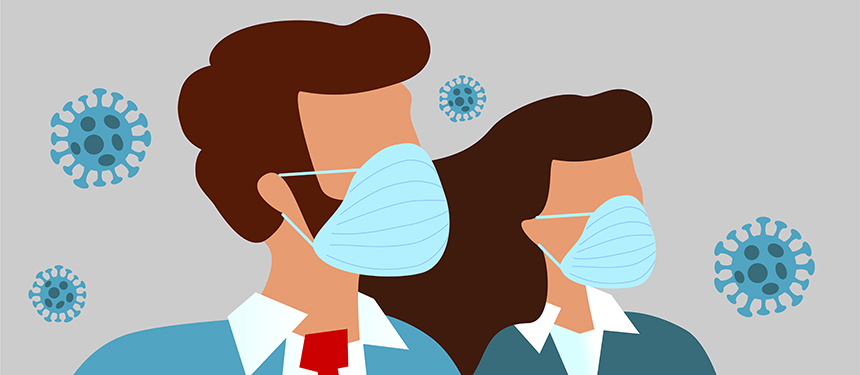










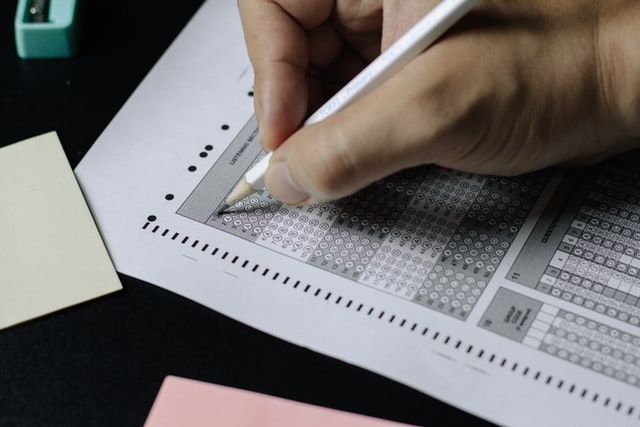
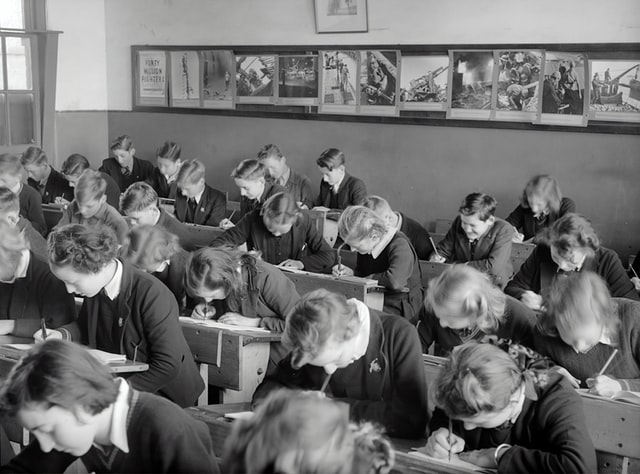

















 Track2Training
You must be logged in to post a comment.