TIPS TO MANAGE YOUR TIME

TIME MANAGEMENT:

  The process of organizing and planning over the amount of time spent on specific activities is known as time management. Good time management will be useful for decreasing work pressure. Time is a special resource because you cannot store or save it for later use. Wise time management helps you to find time for what you desire to do. You can schedule your priorities by managing time. Time management will help you to make conscious choices so that you can spend your valuable time on important work. It keeps you healthy and free from stress. One has to maintain the right balance wheel of life. He/she should balance health, family, finance, and work to balance your life. So, time plays an important role in achieving this. It is a fact that time is a non-renewable resource. Once it is gone, we cannot get it back. You will never be able to see this moment again. Every second is important. We have to spend every second effectively and productively. 

TIME-SAVING TECHNIQUES:

  1. Write things down: Write down your important schedules and prioritize the events according to their importance. This will be more helpful than using your memory to keep track of too many things.
  2. Prioritize your lists: Prioritizing your to-do list will help you to spend more time on the important task. Rate your tasks according to their priority.
  3. Plan your week: Spend some time at the beginning of each week to plan the schedule for that week. This will help balance the time taken for long-term projects and urgent tasks. All you have to do is spend 15 to 30 minutes planning the week.
  4. Continuously improve yourself: While doing these tasks, try to improve your natural skills and abilities. For example, reading books. Continuously improving yourself will be a key factor to achieve financial independence.
  5. Use a time management system: By using a time management system, one can keep track of every work, organize them and efficiently complete the work.
  6. Identify bad habits: List the bad habits that are stealing your time, breaking your goals, and success. After doing this, try to eliminate these habits from your lifestyle. For eliminating bad habits, you can replace them with better habits.
  7. Don’t do other people’s work: Don’t try to do other’s work. This will take your precious time. Instead, you can teach them how to the work.
  8. Utilize productive procrastination: Procrastinating the less important tasks is not a bad thing. (Sometimes, there is no need for work). Wait until for the tasks to become important enough to deserve your attention.
  9. Ask yourself: Whenever you are confused about what to do next, just ask yourself by doing which things will be more useful in managing the time.
  10. Clean your desk: When you have so many things on your desk, you may get distracted. So, always clean the desk and only the necessary things.
  11. Learn to relax: Working hard is important but you also need time to enjoy and relax. This will help eliminate stress.
  12. Don’t overschedule: Scheduling too many things to complete is not a good way. Because, while seeing this, you may feel burdened. So, always schedule the things that you can be complete in time.

GET TO KNOW MORE ABOUT HONEY!

Honey is a sweet substance made by honey bees.

EXPIRY DATES FOR HONEY

Honey doesn’t have an expiry date, it goes through natural changes. Natural, properly stored honey won’t get expired. Honey may get dark and lose its aroma in the long run. The reason for the magical longevity of honey lies in its biological makeup. Organisms that spoils food won’t be able to do have fun when it comes to honey.

FACTS ABOUT HONEY

  1. Honey is 80% sugar and 20% water.
  2. It is the only food that includes all the substance necessary for life including water.
  3. There are different flavors and colors of honey.
  4. Not all bees makes honey.
  5. Not all honey are made by bees, some are made by wasps.
  6. Honey is a versatile food.

BENEFITS OF HONEY

Honey is used as medicine and food. It is healthy in many aspects.

  • Honey has antioxidants which is linked to reduce risk of heart attack.
  • Less bad than sugar for diabetes.
  • Lower blood pleasure.
  • Honey can help you improve colastrol level.
  • Honey is also an effective treatment for diabetic foot ulcers.
  • It can help in burn and wound healing.
  • Honey can help to suppress cough for children.
  • Honey is sometimes used to treat digestive issues.
  • Medicine for sour throat treatment.

Can honey be consumed daily? No. However beneficial it is. Too much of anything is good for nothing. As the tamil saying goes ‘அளவுக்கு மீறினால் அமிர்தமும் நஞ்சு.’

Phytonutrients are compounds found in plants that help protect the plant from harm. The phytonutrients in honey are responsible for its antioxidant properties, as well as thought to be the reason raw honey has shown immune-boosting and anticancer benefits.

TYPES OF HONEY

There are vast variety of honey with different flavor, taste and smell. There are more than 200 variety of honey it depends upon the flower source. Few of those are avocado, ironbark, jarrah, clover, linden, Heather, Basswood, Beechwood, Bluckwheat etc.

WHITE HONEY

White honey doesn’t have to be white. It generally have milder flavor compared to darker ones. Lighter honey gives light taste and sweetness. White honey also contains such antioxidants. Antioxidants help to protect your body from cell damage due to free radicals. Free radicals contribute to the aging process.

WHY WOODEN DIPPER HAVE GROOVES?

A honey dipper is an utensil, made of wood that consist of equally spaced groove(the spiral is called as groove). It is often made of turned wood. The tool is used by dipping the grooved end in honey, then slowly twirl. The tool is sometimes made of plastics and glass too.

The groove allows the honey to be pulled in while they are horizontal but flow out when vertical. Why wood? The metal and plastic degrade slightly while in honey. Wood lasts longer and will take on the flavor of honey.

It is also because it resembles beehive. The shape is to provide a larger surface area for the volume. This traps more of the liquid in the slow-flowing boundary layer.It holds more honey in one dip. Easy to drizzle over pancakes and bread.

OLYMPICS GAME

The modern Olympic Games or Olympics (French: Jeux olympiques)are leading international sporting events featuring summer and winter sports competitions in which thousands of athletes from around the world participate in a variety of competitions. The Olympic Games are considered the world’s foremost sports competition with more than 200 nations participating.The Olympic Games are normally held every four years, alternating between the Summer and Winter Olympics every two years in the four-year period.


Their creation was inspired by the ancient Olympic Games (Ancient Greek: Ὀλυμπιακοί Ἀγῶνες), held in Olympia, Greece from the 8th century BC to the 4th century AD. Baron Pierre de Coubertin founded the International Olympic Committee (IOC) in 1894, leading to the first modern Games in Athens in 1896. The IOC is the governing body of the Olympic Movement,[definition needed] with the Olympic Charter defining its structure and authority.

The evolution of the Olympic Movement during the 20th and 21st centuries has resulted in several changes to the Olympic Games. Some of these adjustments include the creation of the Winter Olympic Games for snow and ice sports, the Paralympic Games for athletes with disabilities, the Youth Olympic Games for athletes aged 14 to 18, the five Continental games (Pan American, African, Asian, European, and Pacific), and the World Games for sports that are not contested in the Olympic Games. The IOC also endorses the Deaflympics and the Special Olympics. The IOC has needed to adapt to a variety of economic, political, and technological advancements. The abuse of amateur rules by the Eastern Bloc nations prompted the IOC to shift away from pure amateurism, as envisioned by Coubertin, to the acceptance of professional athletes participating at the Games. The growing importance of mass media has created the issue of corporate sponsorship and general commercialisation of the Games. World wars led to the cancellation of the 1916, 1940, and 1944 Olympics; large-scale boycotts during the Cold War limited participation in the 1980 and 1984 Olympics; and the 2020 Olympics were postponed until 2021 as a result of the COVID-19 pandemic.

The Olympic Movement consists of international sports federations (IFs), National Olympic Committees (NOCs), and organising committees for each specific Olympic Games. As the decision-making body, the IOC is responsible for choosing the host city for each Games, and organises and funds the Games according to the Olympic Charter. The IOC also determines the Olympic programme, consisting of the sports to be contested at the Games. There are several Olympic rituals and symbols, such as the Olympic flag and torch, as well as the opening and closing ceremonies. Over 14,000 athletes competed at the 2016 Summer Olympics and 2018 Winter Olympics combined, in 35 different sports and over 400 events.The first, second, and third-place finishers in each event receive Olympic medals: gold, silver, and bronze, respectively.

The Games have grown so much that nearly every nation is now represented. This growth has created numerous challenges and controversies, including boycotts, doping, bribery, and a terrorist attack in 1972. Every two years the Olympics and its media exposure provide athletes with the chance to attain national and sometimes international fame. The Games also provide an opportunity for the host city and country to showcase themselves to the world

Symbols

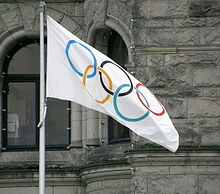
The Olympic Movement uses symbols to represent the ideals embodied in the Olympic Charter. The Olympic symbol, better known as the Olympic rings, consists of five intertwined rings and represents the unity of the five inhabited continents (Africa, The Americas (is considered one continent), Asia, Europe, and Oceania). The coloured version of the rings—blue, yellow, black, green, and red—over a white field forms the Olympic flag. These colours were chosen because every nation had at least one of them on its national flag. The flag was adopted in 1914 but flown for the first time only at the 1920 Summer Olympics in Antwerp, Belgium. It has since been hoisted during each celebration of the Games.

The Olympic motto, Citius, Altius, Fortius, a Latin expression meaning “Faster, Higher, Stronger” was proposed by Pierre de Coubertin in 1894 and has been official since 1924. The motto was coined by Coubertin’s friend, the Dominican priest Henri Didon OP, for a Paris youth gathering of 1891.[143]

Coubertin’s Olympic ideals are expressed in the Olympic creed:

The most important thing in the Olympic Games is not to win but to take part, just as the most important thing in life is not the triumph but the struggle. The essential thing is not to have conquered but to have fought well.

Months before each Games, the Olympic Flame is lit at the Temple of Hera in Olympia in a ceremony that reflects ancient Greek rituals. A female performer, acting as a priestess joined by ten female performers as Vestal Virgins, ignites a torch by placing it inside a parabolic mirror which focuses the sun’s rays; she then lights the torch of the first relay bearer, thus initiating the Olympic torch relay that will carry the flame to the host city’s Olympic stadium, where it plays an important role in the opening ceremony.[144] Though the flame has been an Olympic symbol since 1928, the torch relay was only introduced at the 1936 Summer Games to promote the Third Reich.

The Olympic mascot, an animal or human figure representing the cultural heritage of the host country, was introduced in 1968. It has played an important part of the Games’ identity promotion since the 1980 Summer Olympics, when the Soviet bear cub Misha reached international stardom. The mascot of the Summer Olympics in London was named Wenlock after the town of Much Wenlock in Shropshire. Much Wenlock still hosts the Wenlock Olympian Games, which were an inspiration to Pierre de Coubertin for the Olympic Games.

The Ancient Olympic Games

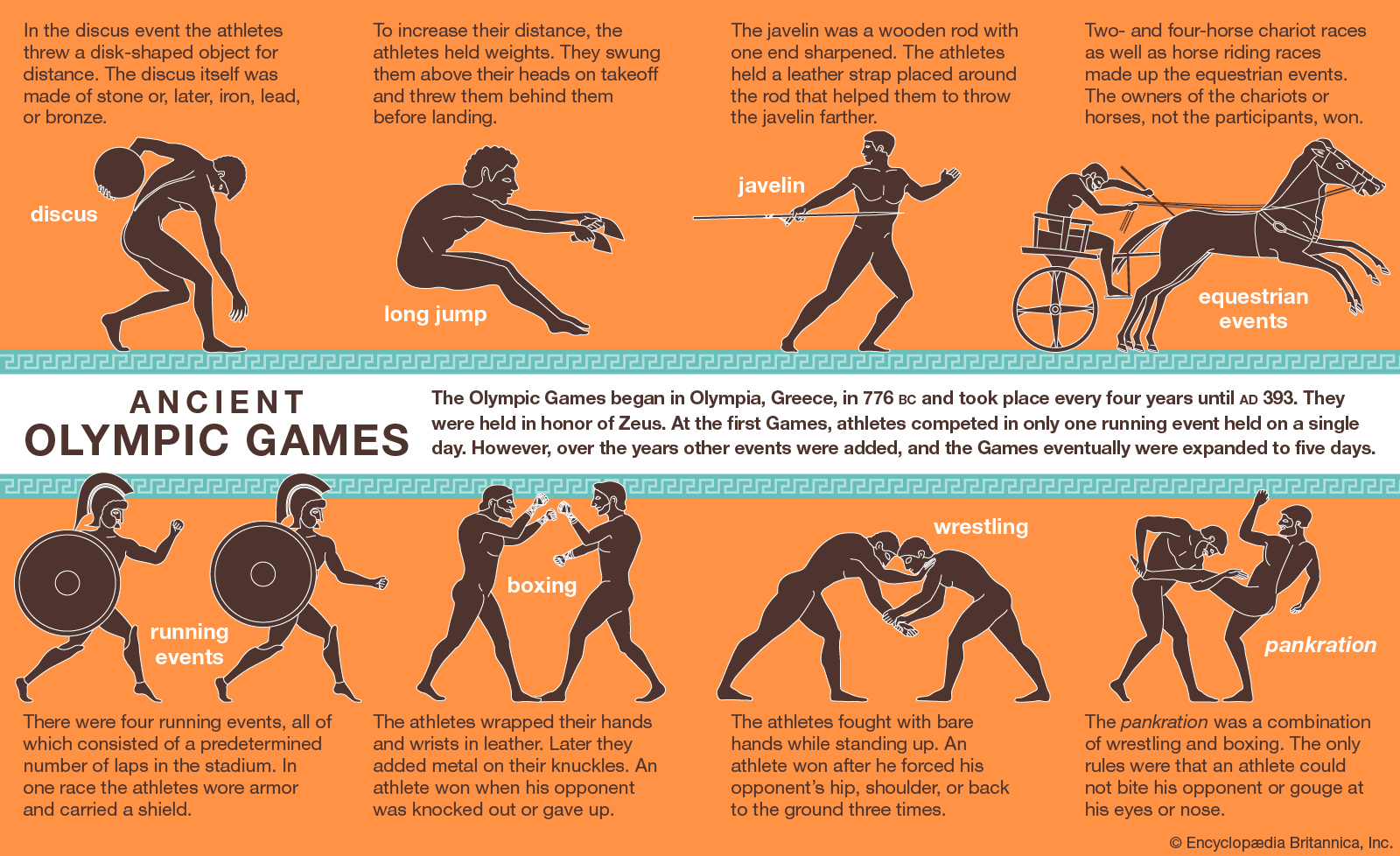
The history of the Olympics began some 2,300 years ago. Their origin lays in the Olympian Games, which were held in the Olympia area of ancient Greece. Although there are some theories on its initial purposes, the Games have been said to have started as a festival of art and sport, to worship gods. The ancient Olympic Games, however, ended in 393 because of the outbreaks of wars in the region in which they were held.

The Modern Olympic Games

After a 1,500 year absence of the ancient Olympic Games, the event was resumed in the late nineteenth century, thanks to the efforts of Baron Pierre de Coubertin, a French educator. In 1894, his proposal to revive the Olympic Games was unanimously approved at the International Congress in Paris, and the first Olympic Games were held in Athens, Greece, two years later. He also devised the five-ring emblem that is familiar to most people as the Games’ symbol, which represents the unity of the five continents.

The Olympic Games in Japan

The “Father of the Olympic Movement” in Japan is Jigoro Kano – a man who also contributed to the propagation of judo – who was the president of the Tokyo Higher Normal School (the present day University of Tsukuba). In 1909, he was appointed a member of the International Olympic Committee for the first time as an Asian and established the Japan Amateur Athletic Association (today’s Japan Sports Association) to realize the participation of Japanese athletes in the Olympics. The selection of athletes for the Olympics was carried out in 1911, when Yahiko Mishima, a track athlete, and Shiso Kanaguri, a marathon runner, were chosen to represent Japan. Japanese athletes participated in the Olympic Games (the V Olympic Games) for the first time in Stockholm, Sweden in 1912.

Things we shouldn’t do abroad!

Are you planning for an abroad trip? If yes, get to know things you shouldn’t do abroad. We travel to abroad for various reasons, to study, work, try new things, to disconnect and reconnect.

Travelling makes us happier. It can also boost your creativity. Creates a space for us to get to know and learn about new cultures. The feel of travelling to a new place and returning to your comfort zone is fascinating. Hodophile is the word for “one who loves to travel.”

TRAVELLING NEED OR WANT?

Travelling is not a need. It is just an option, few love to travel while others don’t. Travelling doesn’t necessarily mean luxurious and lavishly spending. It helps us to broaden our horizons. Being exposed to new people, environment, and forces us to get out of our comfort zone.

THINGS WE SHOULD KNOW

FOOD HABITS

In India, we believe in eating the food using hands as its part of our culture. Using your left hand to eat is not appreciated unless you are left-hander. It might sound bizarre for tourists. What is considered as a custom in a country need not be universal.

We use cutlery, such as fork, spoon, knife but in Thailand, it is rude to use a fork to eat. Do you find slurping annoying? Well, it is considered a good gesture in Japan. Making that sound while having noodles is not weird. It conveys that you are enjoying the food and complimenting the cook.

In some countries, leaving the plate empty is considered a good gesture but China thinks the opposite. People assume when the plate is empty you are hungry and in need of more food. In China, flipping the fish when served is assumed bad luck.

Italy is known for their love for food. There, adding cheese to seafood is not admired. In South Korea, the eldest at the table takes the first bite. Also leaving chopstick upright in the bowl and waving chopstick around considered rude in China.

British is known for their love for tea. While stirring the spoon shouldn’t touch the sides of the cup. Neither should we leave the spoon in cup. It must be placed on the saucer.

TRAFFIC RULES

In Thailand, even if it’s hot people have to keep their shirts on. Another strange traffic rule is, in Phillipine, people can’t drive in certain areas based upon what day of the week it is and the last digit on their license plate. The driver can be fined if found driving. New Jersey also has a strange law where residents are required by law to honk prior to passing, which will be so confusing.

In Russia, driving a dirty car would end up in fine. It doesn’t matter whether the car is dirty inside or outside. Anyone requiring vision-correcting glasses in order to drive the streets of Spain must keep a spare set in their car at all times

THINGS WE SHOULD AVOID

In Japan, don’t leave tips. They believe that you are already paying for a good service, so there is no need for extra. You can instead just thank the waiter and waitress. I find is reasonable and fascinating.

In Ukraine, avoid giving even number of flowers. Even number of flowers are given for funeral. In some countries, yellow flower is a sign of betrayal.

In China, avoid presenting umbrella and clock as gifts. It is considered bad omen, as it indicates attending a funeral ritual. The Chinese word for umbrella sounds like breaking up.

In Germany don’t congratulate before the birthday. Wishing someone early brings bad luck. It is strange to know that it also indicates arrogance as the person will live till the birthday. Life is uncertain! Yes. But thus is weird.

There are more such facts and beliefs. It is fascinating to know about countries and their culture.

Volcanic emissions may have made oxygen in climate

During a new investigation of 2.5-billion-year-old Australian rocks, scientists have tracked down those volcanic emissions may have animated populace floods of marine microorganisms, making the initial puffs of oxygen into the air.

This would change existing accounts of Earth’s initial environment, which expected that most changes in the early climate were constrained by geologic or substance measures. The discoveries of the investigation were distributed in the diary ‘Procedures of the National Academy of Sciences’

However, centered around Earth’s initial history, the exploration additionally has suggestions for extra-earthbound life and even environmental change. The investigation was driven by the University of Washington, the University of Michigan and different establishments.

“What has begun to end up being undeniable in the previous few decades is there really are a lot of associations between the strong, non-living Earth and the development of life,” said first creator Jana Meixnerova, a UW doctoral understudy in Earth and space sciences. “However, what are the particular associations that worked with the development of life on Earth as far as we might be concerned, addressed Meixnerova.

In its most punctual days, Earth had no oxygen in its air and scarcely any, oxygen breathing lifeforms. Earth’s air turned out to be for all time oxygen-rich with regards to 2.4 billion years prior, likely after a blast of lifeforms that photosynthesise, changing carbon dioxide and water into oxygen. In any case, in 2007, co-creator Ariel Anbar at Arizona State University dissected rocks from the

Mount McRae Shale in Western Australia, detailing a transient whiff of oxygen around 50 to 100 million years before it turned into a super durable installation in the climate. Later examination has affirmed other, prior, transient oxygen spikes, yet hasn’t clarified their ascent and fall.

In the new investigation, specialists at the University of Michigan, driven by co-relating creator Joel Blum, broke down similar old rocks for the focus and number of neutrons in the component mercury, radiated by volcanic ejections Large volcanic emissions impact mercury gas into the upper climate, where today it circles for a little while prior to pouring out onto Earth’s surface.

The new investigation showed a spike in mercury two or three million years before the brief ascent in oxygen “adequately sure, in the stone beneath the transient spike in oxygen, we discovered proof of mercury, both in its bounty and isotopes, that would most sensibly be clarified by volcanic ejections into the environment,” said co-creator Roger Buick, a UW teacher of Earth and Space Sciences.

Where there were volcanic outflows, the creators contemplated, there probably been Laval and volcanic debris fields. Also, those supplement rich rocks would have endured in the breeze and downpour, delivering phosphorus into streams that could treat close by seaside regions, permitting oxygen creating cyanobacteria and other single-celled lifeforms to prosper. “There are different supplements that tweak natural action on short timescales, however phosphorus is the one that is generally significant on long timescales, Meixnerova said. Today, phosphorus is abundant in natural materials and in horticultural manure. However, in extremely old occasions, enduring of volcanic rocks would have been the primary hotspot for this scant asset.

“During enduring under the Archaean air, the new basaltic stone would have gradually disintegrated, delivering the fundamental full scale supplement phosphorus into the streams, Meixnerova added.

“That would have taken care of organisms that were living in the shallow seaside zones and set off expanded natural usefulness that would have made, as a result, and oxygen spike, Meixnerova clarified.

The exact area of those volcanoes and magma fields is obscure, however huge magma fields of about the right age exist in cutting edge India, Canada and somewhere else, Buick said “Our examination proposes that for these transient whiffs of oxygen, the prompt trigger was an expansion in oxygen creation, as opposed to an abatement in oxygen utilization by rocks or other non-living cycles,” Buick said “It’s significant on the grounds that the presence of oxygen in the climate is key – it’s the greatest driver for the advancement of huge, complex life,” Buick added.

Eventually, analysts said the investigation proposes what a planet’s geography may mean for any life developing on its surface, an agreement that guides in recognizing liveable exoplanets, or planets outside our close planetary system, in the quest for life in the universe.

Cryptocurrency and India

Finance minister Nirmala Sitharaman recently asserted that the cryptocurrency bill is before the Union Cabinet and it is likely to take decision soon.

The bill was supposed to be presented in the parliament during monsoon session but did not happen due to varying circumstances. The bill proposed that all private crypto currencies except any and every digital currency issued by the state. But crypto experts are hoping for the best.

Edul Patel, CEO & Co-founder of crypto trading platform Mudrex, says, “We could expect an accommodative and progressive stance by the government towards cryptocurrencies. The government is expected to evaluate all possible aspects. All these events transpire to positive expectations from the cryptocurrency bill.”

In its report an inter-ministerial panel on cryptocurrency under secretary (economic affairs) had studies issues around virtual currencies and proposed specific actions.

Looking at the growing opportunities in this space, Siddharth Menon, COO of cryptocurrency exchange WazirX, says calibrated regulations that encourage the industry and safeguard consumers will help the ecosystem grow. “We don’t know the details but we expect it to be positive. Once we have more details, we will comment. Else it will be purely speculative,” Menon adds.

Looking at the growing opportunities in this space, Siddharth Menon, COO of cryptocurrency exchange WazirX, says calibrated regulations that encourage the industry and safeguard consumers will help the ecosystem grow. “We don’t know the details but we expect it to be positive. Once we have more details, we will comment. Else it will be purely speculative,” Menon adds.

Some experts say India cannot be as a laggard when the world is rapidly moving ahead with blockchain technology. This has led to reports that crypto as an asset class might be allowed in India but the government will not accept it as legal tender as yet.

Crypto enthusiasts are betting on analyst views that say there might not be a blanket ban on cryptocurrencies. Menon is among those who does not think a blanket ban is possible. The government has understood crypto assets are not a threat to national currency. “Also, this is a new and growing global fintech industry. India cannot stay behind,” he adds.

Banning cryptocurrency would severely affect a lot of people in India as there are several startups revolving around cryptocurrencies and more than 15 million people invest in crypto in India.

History of twitter

Twitter is an American social networking and microblogging service. Twitter users interact with small messages called, “tweets”. Currently twitter has more than 330 million monthly active users. It is in the league of big social media platforms like Facebook, Instagram etc. It was created by Jack Dorsey, Noah Glass, Biz Stone and Even Williams in March. In this article I will take you through the journey of creation and rise of twitter.

Initial history

In 2006, Jack was an undergraduate student at New York University. He came up with an idea of an SMS service to communicate with small group. He shared his idea with board members of a podcasting members Odeo. Williams was also part of board members. He later ascribed the idea to Noah. They decided to name this project twttr as domain twitter.com was already in use. Later they bought the domain name and changed the name of service to twitter. Twitter spun off its own company in 2007.

Work on the project started on March 21, 2006 and full version was publicly in july 2006.

The first breakthrough moment for twitter came in 2007 through South by Southwest Interactive conference. During the event, twitter engagement increased from 20000 tweets par day to 60000. They placed two 60 inch plasma screens in the conference hallways. These screens were used to stream twitter messages.

This conference helped twitter in rapid initial growth. Almost 400k tweets were being posted on twitter per quarter in 2007. This increased to 100 million tweet per quarter in 2008. By 2010, company recorded over 70000 registered applications. In march 2021 it became third highest ranking social site. Prominent events like football world cup, NBA finals etc. helped twitter in growing quickly. When Michael Jackson died on 25th June 2009, twitter severs crashed as users were tweeting at the rate 100k tweets per hour.

Emergence of “New Twitter”

After gaining popularity, twitter started revamping it’s service. Initial changes included the ability to see pictures and videos without leaving twitter by clicking on link given in individual tweets of various sites like YouTube.

On 5 April 2011 , twitter released a new home page but due to some glitch it was relaunched on 20th April 2011. On 8th December 2011, twitter added a new feature to its website named “FLY”. In addition to home tab, the connect and discover were also introduced. On 21 March 2012, twitter celebrated its birthday and also announced that they have 140 million active users.

In 2012 twitter expanded at a fast rate. They opened an office in Detroit to work with automobile brands. In june 2012, logo of twitter was modified to bird symbol. Throughout next couple of years twitter acquired several companies like Vine, Crashlytics, Trendrr etc.

In 2014, twitter underwent a redesign which significantly changes its interface. Some of major changes included profile picture and biography in a column left to the timeline, and a full-width header image. Twitter acquired many different type of companies onwards 2014 like Namo Media ( a native advertising company) in 2014, Mitro( a password-security startup) on 31st july 2014, Niche(an advertising network) on February 2015 etc.

Twitter took an significant step in 2020 and started marking tweets which contain misleading information.

Twitter kept expanding its business and was announced to be the 10th most downloaded mobile app in 2019.

History of Dentistry

From brushing and flossing to straightening and whitening, people today put a lot of work into maintaining a health and appearance to their smile. The current trend is for straight, pearly white teeth. But history of dental care stretches all the way back to the beginning of human society.

Ancient ways of cleaning teeth

Prehistoric humans who lived before the advert of oral care actually had very few dental problems. Scientists believe this is on account of their diet, which consisted of unprocessed fibrous foods that help clean their teeth while they ate. However as human evolved, so did the food on menu. Overtime, people found if they didn’t take care of their teeth, they developed dental problems.

Archaeology found evidence that early humans cleaned their teeth by picking at them with things like porcupine quills, animal bones, and tree twigs.

In earlier 3,500 BCE, Mesopotamians were using chew sticks to clean their teeth. Egyptian and Chinese have known to use them as well.

Tooth Decay

Ancient people were always aware of the tooth decay. But the first known scientific theory about its causes dates back at least 5,000 years, to Ancient Sumeria. The theory was that cavities were caused by a creature known as the tooth worm, which they believed would wore holes in teeth.

Cavities can actually resemble the kinds of holes that the worms bore through other materials, like wood. The Sumerians, Greeks, Egyptian, Chinese, Japanese, and Indian people all believed in the tooth worm. Some European doctors were still warning people that worms were the cause of their tooth decay as late as the 14th century.

First Toothbrush

Though no one knows exactly when people started brushing their teeth, archeologists believed the practice originated somewhere in the neighborhood of 3,000 BCE. The Babylonians and the Egyptians were the first cultures we know of to fashion rudimentary toothbrushes, which were made mostly from twigs.

The first used bristle toothbrush was created in China sometime during the Tang dynasty, between the 7tg and 10th centuries. It was made from hog bristles which would have been attached to a handle carved from bone or bamboo.

Explorers eventually brought these to the West. And in the 17th century, they began to be adopted in Europe.

New trend

In modern times, the dental ideal is considered to be a bright smile with straight white teeth. People will wear braces, use whiteners, to achieve the look. But most didn’t realise, its a relatively new fashion.

The popularity of look really only goes back to the 20th century and was greatly created by Hollywood movies. The trend, arguably, began their veneers, created by cosmetic dentist named Marcus Pincus in the 1940s. It was spotted by movie stars, like Shirley Temple and Judy Garland, who became famous for perfect smiles.

Judy Garland

While mass market teeth whitening products didn’t became a thing until the 1980s, teeth whitening itself is nothing new.

ZyCoV-D : India’s first and the world’s first DNA based covid vaccine

The Drug Controller General of India on 20th August gave approval to  Zydus Cadilla for Emergency Use Authorization for its covid vaccine ZyCoV-D, touted to be the world’s first and India’s first covid 19 vaccine which based on DNA and can be administered to all humans above 12 years of age.

The world’s first plasmid covid vaccine India’s second indigenous vaccine after Covaxin had earlier received recommendation by the Subjects Expert Committee (SEC) of the Central Drugs Standard Control Organization (CDSCO) which cleared a major hurdle in the vaccines’s emergency use.

Safety and efficacy

In the adaptive PhaseI/II clinical trials the ZyCoV—D demonstrated a robust immunogenicity and tolerance and safety profile said Zydus. The interim analysis of the symptomatic RT-PCR cases showed that ZyCoV-d had an efficacy of 66.6 percent for the three doses (2mg per dose).

No severe cases of Covid or deaths due to covid were found due to Covid-19 after the second dose was successfully administered said Zydus. After successfully administering the third dose no moderate case of covid-19 was observed in the covid arm implicating an efficacy of 100 percent in moderate cases.

If a rash appear after administering the vaccine then it s called a covid arm. More than 28000 volunteers volunteered to have phase -III trials conducted on them in more than 50clinical sites scattered across the country that too during the peak of the second wave of covid-19 in India which reassures the vaccine’s effectiveness against the new Delta variant – the new and the most dangerous strain of covid-19. Another big breakthrough of the company is that ZyCoV-D is safe for children that belong in the age group of 12-18 years. 

Needle-less vaccine

Another breakthrough of this vaccine is that it is needle-less and is transferres via an applicator called PharmaJet to ensure painless intradermal vaccine delivery. PharmaJet was also developed in India and in a record time.

Capacity

Zydus said it can produce 10-15 million doses of ZyCoV-D per month. The company said it can produce 3-5 crore vaccines by December. The capacity numbers suggest that Covishield and, to some extent, Covaxin will remain as the major workhorses for the government’s vaccination drive for some more time.

Evaluating two-dose regimen

Zydus said it has also submitted data for a two-dose regimen for ZyCoV-D, using a 3 mg dose per visit and the immunogenicity results had been found to be equivalent to the current three-dose regimen. The company said this would help in reducing the full-course duration of vaccination while maintaining a high safety profile in the future.

Children & adolescents

Zydus has submitted applications for EUA for children in the 12-18 year age group.

Novel approach

Zydus Cadilla has taken a novel approach for its potential COVID-19 vaccine. Called plasmid DNA, the vaccine consists of genetic material of SARS-CoV-2 proteins, which instruct human cells to make the SARS-CoV2 antigen, eliciting an immune response.

The company says that this approach is easily replicable and scalable, requiring just Biosafety Level (BSL)-1. The vaccine can be stored at 2-8 degrees temperature, making it conducive for Indian cold-chain conditions. The vaccine is delivered through the intradermal route (between the layers of the skin), which makes its administration much easier. DNA vaccines are also theoretically easy to redesign quickly against a mutating virus.

Challenges

Firstly, the platform is novel. Not a single human vaccine using this platform has been approved anywhere in the world. The other big challenge is that the vaccine has to be administered in three doses – the first dose, and the other doses after 28 and 56 days. Being a three-dose vaccine adds an additional layer of distribution and administration complexity, possibly raising the cost of the vaccine. While the company has promised to ensure that the vaccine is affordable, it has also sought approval for a two-dose vaccine.


PERMACULTURE-ETHICS,PRINCIPLES,METHODS

BY DAKSHITA NAITHANI

INTRODUCTION TO PERMACULTURE:

Permaculture is a method of design in agriculture that emphasises whole-systems thinking and the use of or stimulation of natural patterns.

Bill Mollison, a senior lecturer in Environmental Psychology at the University of Tasmania, and David Holmgren, a graduate student in the Department of Environmental Design at the Tasmanian College of Advanced Education, coined the term.

These principles are being applied in a growing variety of industries.

HISTORY:

Permaculture as we know it now was created in the 1970s t happened approximately a decade after the world became aware of the risks of pesticides like DDT and the damage they represented to humanity and the environment.

Because it was created for the development of long – term (in other words, permanent) systems, the phrase was coined from a combination of the words “permanent” and “agricultural.”

It was one of the first agricultural systems to recognise that local actions might have drastic implications.

 Holmgren is credited for popularising permaculture but it’s worth mentioning that various books on topics like agroforestry and forest farming have been around since the 1930s or earlier.

3 ETHICS:

Permaculture has 3 core tenants:

•             Care for the earth. To put it another way, assist all living systems in continuing to exist and multiply. But a healthy world is required for existence, it is important to understand the principles of nature and how it functions.

•             Care for the people. Allow people to have access to the resources they require to live. Members of the community who are in need of assistance are supported by the community (e.g. after someone dies, help build homes).

•             Fair share. We should take only what we require and reinvest any excess. Any surplus can be used to assist satisfy the other two basic tenets. This involves reintroducing waste products into the system so that they can be reused.

PRINCIPLES:

All sustainable community design initiatives should use Permaculture concepts.

They are the most important rules for putting it into practise. They may aid in improving and protecting the land, ecosystem, and people, as well as maximising efficiency and productivity.

These principles promote innovation while maximising outcomes. Every location, every circumstance, and every family is unique. As a result, each project’s plans, procedures, plants, animals, and building materials may differ. Even yet, the same principles apply to any location and endeavour, big or little.

1. Observe and Interact

2. Catch and Store Energy

3. Obtain a Yield

4. Apply Self-regulation and Accept Feedback

5. Use and Value Renewable Resources and Services

6. Produce No Waste

7. Design From Patterns to Details

8. Integrate Rather Than Segregate

9. Use Small and Slow Solutions

10. Use and Value Diversity

11. Use Edges and Value The Marginal

12. Creatively Use and Respond to Change

BENEFITS OF PERMACULTURE:

Reduced water usage

Wastewater and rainfall are used in permaculture. This is useful for homes, but for farms with larger areas, it becomes a more cost effective and efficient means of watering the produce.

Reduced waste

Nothing is thrown away. Garden waste, leaves, table scraps, and other waste products are composted or fed to animals as food. Some people go beyond and utilise compost toilets to fully live a zero-waste lifestyle. Permaculture is only sustainable if it makes use of leftovers.

Economically feasible

It is cost effective since pesticides are not required, and most systems require minimal upkeep. All you have to do is water the plants and mulch them once in a while.

Less pollution

Permaculture is a more natural manner of growing food, tractors and other powered agricultural equipment are rarely used.

Improved values

You’ll automatically acquire more ethical and good principles like consuming little, just using what you need, minimising pollution, and helping others if you practise.

More self-sufficiency

A farmer or gardener who practises permaculture may grow a broader range of crops on their property. It allows you to be self-sufficient by allowing you to grow whatever you desire or need to eat.

Applicable to existing systems

 Agricultural systems and lands that already exist can be converted to principles. Permaculture may be practised on a big or small scale wherever that you can normally grow food.

COMMON METHODS OF PERMACULTURE:

1) Agroforestry

Agroforestry is a technique that incorporates trees, shrubs, animals, and crops. The term is derived from a blend of agriculture and forestry. These two apparently disparate professions collaborate to produce systems that are more resilient, healthy, lucrative, and productive. Forestry farming, which is a permaculture technique also falls under the category of agroforestry. However, the main concept is to construct your food forest using a seven-layered method. A canopy layer, a low tree layer, a shrub layer, a herbaceous layer, a rhizosphere, a ground cover layer, and a vertical layer are all included. Silvopastoral and silvoarable are two other agroforestry systems.

2) Hügelkultur

Hügelkultur is a German word that means “hill culture.” It’s a method of burying huge volumes of wood in order to increase the soil’s ability to retain water. This rotting wood behaves like an absorbent, soaking up water from the ground.  Plant materials which behave as a compost are usually placed on top of the mound and decomposed into the soil. A Hügelkultur mound generally lasts 5 to 6 years until the wood rots completely and the procedure must be repeated.

3) Harvesting Rainwater and Grey water

Instead of letting rainwater wash from the property, you may collect it and store it for later use. Roofs gather the majority of rainwater. Eaves troughs, which collect and transport water away from buildings, are likely already installed on your farm’s homes, barns, and other structures. To collect rainwater, just connect a big tank to your downspout and catch the water rather than having it seep into the ground and go to waste. Storm water harvesting is another way to collect water. It is distinct from rainwater harvesting in that it collects runoff from creeks, drains, and other waterways rather than from rooftops. Grey water is a last source of reusable water on the farm. This is water that is used in the house or on the farm for things like bathing and doing laundry.  Because grey water includes detergents, it cannot be used for drinking, but it may be utilised for irrigation purposes and other reasons.

4) Cell Grazing

Grazing is commonly seen as a negative activity that, if not carried out appropriately, has the potential to harm the ecosystem in various ways. Allowing animals to overgraze a region can have severe repercussions, and this is true. Cell grazing is the favoured approach in permaculture. This entails moving herds of animals between fields, pastures, or woodlands on a regular basis. The disruptions created by grazing animals, when done correctly, can actually improve the ecosystem and allow plants to recover more quickly. It also keeps an eye on how animals interact with the land. Plants require appropriate time to rest between each grazing and therefore it’s critical that a region receives a rest time after being grazed.

5) Sheet Mulching

Mulching is simply any protective layer placed on top of the soil to retain water and prevent weed development and is used by many farmers and gardeners. A variety of materials such as wood chips, cardboard, plastic, stones, and are frequently employed. Sheet mulching is an organic no-dig technique that aims to imitate natural soil building in forests, namely how leaves cover the ground. Sheet mulching is most often done with alternating layers of “green” and “brown” materials. Fallen leaves, shredded paper and cardboard, pine needles, wood chips, and straw are examples of brown materials. Manure, grass clippings, worm casings, vegetable scraps, hay, coffee grounds, and compost are examples of green materials. It’s possible to utilise 5 to 10 layers of materials. Sheet mulching adds nutrients and minerals to the soil, inhibits weed development, regulates weather and protects against frost, reduces erosion and evaporation, and absorbs rainwater.

6) Natural Building

Natural building is a more environmentally friendly alternative to purchasing materials from your local hardware shop or lumber yard. You should try to employ as much recycled materials as possible in a system. There are a lot of renewable resources on the land that you may employ in your next construction project. Most people ignore clay, pebbles, wood, reeds, straw, and sand, which are all easily available materials. Tires, which are less natural, can also be utilised for building. This is a fantastic method to recycle old tyres that would otherwise be thrown away or burned. Similarly, instead of purchasing new windows, discarded glass windows are frequently repurposed.

7) No-Till or Minimum-Till Farming

The goal of no-till farming is to leave the soil untouched. The soil is left undisturbed rather than being broken up before planting. This helps to keep water in the soil, keeps carbon from leaving the soil, increases soil quality, and lowers the quantity of weed seeds that are brought closer to the surface to germinate. The soil is disturbed by conventional agriculture methods. This allows carbon dioxide to enter the atmosphere while also over oxygenating the soil. Loosening the soil in this way can cause erosion and nutrient runoff, as well as obliterate important fungal networks. Tilling can be reduced or even removed altogether for some systems with the right approaches.

8) Intercropping and Companion Planting

Intercropping is the planting of more than one two plant species in the same region that mutually benefit one another. Companion planting, for example, involves growing strong-scented plants and herbs such as basil, oregano alongside primary. Many of these companion plants with powerful smells are repulsive to pests. Not only that, but some of them really help the plants they’re partnered with to grow and taste better. Others help to loosen the soil or provide additional advantages. While many plants get along well when grown together, there are some who don’t because they demand the same nutrients or for other reasons.

9) Market Gardening

Market gardening is an intriguing shift away from conventional style of agriculture, which is carried out on huge swaths of land far out in the nation, to smaller plots of land, even in metropolitan areas sometimes. Market gardeners, as the name implies, sell their vegetables at farmer’s markets, however some may also supply restaurants and grocery shops directly.

Cash crops are aggressively produced on a small scale in market gardening (usually less than an acre of land.) While cultivating on as little as a quarter acre of land, a market gardener may earn up to $100,000 each year.

KALA AZAR (visceral leishmaniasis)

BY DAKSHITA NAITHANI

INTRODUCTION

After moving to internal organs such as the liver, spleen, and bone marrow, a parasite causes illness. If not treated, it nearly invariably leads to death.

People get this condition by sandfly bites, which contracted the parasite after consuming the blood of a parasite-infected person. There are more than 20 distinct Leishmania parasites that cause the illness around the globe, and 90 different sandfly species that carry the infection.

However, in India, there is just one parasitic species, Leishmania donovani, and only one sandfly species, Phlebotomus argentipes, that spreads the illness.

Visceral leishmaniasis, commonly known as kala-azar, is marked by recurrent bouts of fever, significant weight loss, spleen and liver enlargement, and anaemia (which may be serious).

In underdeveloped nations, if the illness is not treated, the mortality rate can reach 100% in as little as two years.

SYMPTOMS

When people develop visceral leishmaniasis, the most typical symptoms are

 FEVER

 ENLARGEMENT OF SPLEEN AND LIVER

Misdiagnosis is critical, because kala-azar has a near-100 percent death rate if not treated properly. It does not always leave its hosts unmarked, even after restoration. A secondary form of the illness called post kala-azar dermal leishmaniasis, or PKDL, may develop after effective treatment—usually a few months after kala-azar, but as long as many years with the Indian strain. This illness begins with tiny, measles-like skin lesions on the face that grow in size and spread throughout the body.

In individuals who have recovered from the illness , it is characterised by a hypopigmented macular, maculopapular, and nodular rash and  generally emerges 6 months to a year or more after the disease appears to be cured, although it can happen sooner or even simultaneously.

It is thought to have a crucial role in the disease’s maintenance and transmission, notably by functioning as a parasite reservoir. The lesions may eventually consolidate into disfiguring, bloated formations that resemble leprosy, causing blindness in certain cases if they extend to the eyes.

The visceral type of Leishmania is caused by two different species of Leishmania. L. donovani is the species found in East Africa and the Indian subcontinent, whereas L. infantum, also known as L. chagasi, is found in Europe, North Africa, and Latin America.

LIFE CYCLE

 Life cycle is completed in two hosts: humans and sandflies. The adult female sandfly feeds at night and is a bloodsucker. When a Leishmania-infected person is bitten by a fly, the parasite is consumed along with the blood.

The protozoan is an amastigote, which is spherical, non-motile, and just 3–7 micrometres in diameter. The amastigotes inside the sandfly’s stomach soon change into the promastigotes, which are elongated and motile forms. It is spindle-shaped and thrice the size of the amastigote, and has a single flagellum that allows it to move. They live extra cellularly in the alimentary canal reproducing asexually and migrating to the proximal end of the gut where they become ready for a transmission.

The promastigotes are introduced after being released locally at the biting site as the fly bites. Promastigotes infect macrophages once inside the human host. They revert to their tiny amastigote form inside the cells.

In macrophage cells, amastigotes reproduce. They tear down their host cell by sheer mass pressure after repeated replication, although there is also new hypothesis that they are able to exit the cell via activating the macrophage’s exocytosis response.

The protozoans in the daughter cells then move to new hosts in fresh cells or through the circulation. The infection progresses and affects the spleen and liver in particular. Sandflies eat the liberated amastigotes in peripheral tissues, which starts a new phase.

TREATMENT

The traditional treatment is with

  • Sodium stibogluconate 
  • Meglumine antimoniate

Resilience is increasingly prevalent in India, with resistance rates as high as 60% in some regions of Bihar. Amphotericin B in its many liposomal formulations is now the treatment of choice for visceral leishmaniasis acquired in India. The first oral therapy for this illness was miltefosine. Miltefosine had a cure rate of 95% in Phase III clinical studies.

The medicine is typically well tolerated compared to other medications. Gastrointestinal disruption on the first or second day of therapy (a 28-day course of treatment) is the most common adverse effect, but it has no influence on effectiveness. Miltefosine is a medication of choice since it is accessible as an oral formulation, which eliminates the cost and inconvenience of hospitalisation and allows for outpatient delivery of the drug.

The drawbacks include that after a decade of usage, there is evidence of decreased effectiveness. It is teratogenic and should not be used by women who are planning to have children. Sodium stibogluconate (Pentostam) and meglumine antimoniate have been used to treat kala-azar (Glucantime). Only injections can be used to deliver these medications. They are poisonous, have several adverse effects, and are administered over a 30-day period.

Do Vampires Exist?

Hey! Are you a Vampire Diaries fan? Well, I’m. After watching Vampire Diaries I became curious to know whether vampires exist. Vampires are said to be undead creatures from folklore. It is fascinating to discuss vampires.

VAMPIRE DIARIES

Vampire in popular legend is a creature, often fanged, that preys upon humans, generally by consuming their blood. Vampires have been featured in folklore and fiction of various cultures for hundreds of years, predominantly in Europe, although belief in them has waned in modern times.

The belief is that Vampires feed on blood. Almost every nation has a blood drinker in its mythology. Vetalas in India are beings that inhabit corpses. In Persian, Lilith was considered a demon who drinks the blood of babies.

WHERE IT ALL STARTED?

DRACULA

Vampires Legacy didn’t start with Dracula by Bram Stoker. In Eastern Europe, tales from the 17th and 18th centuries formed the basic vampire legacy. Later it got popularised. The exact way of origin of legacy is unclear.

MYTHS ABOUT VAMPIRES

Drinking blood is the most spoken myth about being a vampire. We have seen movies and series where vampires drink blood by biting the victim. Vampire bat is the only species of mammal that feeds exclusively on blood. They prey on warm-blooded animals.

Vampires are often considered immortal, there are few animals that possess the same quality. The immortal jellyfish is one of those species.

IMMORTAL JELLYFISH

Vampires are often depicted with heightened senses such as vision and hearing.

THEN WHO ARE VAMPIRES?

Vampires are just people who suffer from Porphyria. It is a disorder resulting from build-up of certain chemicals related to red blood cell, which means your skin is sensitive to the sun. That explains why the myth says vampires get burned in daylight. It is called as the vampire disease.

vampires drink blood. Because porphyria can result in brow urine, this may have led to the (false) belief that individuals who demonstrated this symptom had been drinking blood.

There are people out there who consume animal and human blood that doesn’t make them a vampire. Haematomania is the condition if craving blood. Even though we have scientific reasons behind these vampire myths. The question about vampires still goes around.

They exist. They are one of us. Vampires are not the same old mythical creatures. They are very much human, I would like to think they are not immortal. The real-life disease like Porphyria, Rabies, and Tuberculosis influenced vampire folklore. Maybe as there was a lack of awareness about the medical conditions.

In the 1800s, it wouldn’t have been too big a stretch of the imagination to think that people who were dying of tuberculosis were having the life sucked out of them by a supernatural creature. People suffering from (untreated) tuberculosis lose weight, become physically weak, have fevers, and cough up blood. In addition, tuberculosis spreads from person to person via the air.

With that said, I still feel like there might be chances of these folklores being real. Even with scientific evidence and research, we can’t erase the myth of vampires from our hearts. Let me know in the comments whether you believe in vampires.

Check out the Interview with a real-life vampire.

DBMS-AN OVERVIEW

DATABASE MANAGEMENT SYSTEM

   The collection of inter-related data and several programs that are used to handle the data is known as Database Management System (DBMS). The main aim of DBMS is to store and efficiently retrieve the data from the database. To manage the data in the database, define the structure for storage of information and provide a proper mechanism for manipulation of information. The database system must also ensure the safety of the information that is stored.

DATABASE SYSTEM APPLICATIONS

    Several applications use a database system. Some of the applications are listed below:

  • Accounting: To maintain the data of employees, salaries, and payroll taxes in the company, students in schools, patients in hospitals, database systems are used.
  • Manufacturing: In factories, database systems are used to manage the supply chain and tracking the production of items.
  • In shopping marts: For maintaining customer, product, and purchase information of items, databases are used.
  • Banking: The database systems are useful in maintaining the customer’s account information, loan details and for maintaining the transactions of credit card history.
  • Universities: DBMS is quite useful in maintaining the student details, course details, and accounting in universities.
  • Reservation systems: To maintain the reservation and schedule information, database systems are used in airways and railways reservation systems
  • Telecommunication: For maintaining the records of the call made and generating the bills, DBMS is useful.

PURPOSE OF DATABASE SYSTEMS

  Earlier database systems are created to manage the commercial data. Data are stored in files. For adding new data or updating the data or deleting the data, various programs are written. Separate applications have to be written for the addition of new data. As time evolves, more files and more applications are required by the system. This typical file processing system is supported by an Operating system. In this system, the data is permanently stored in files. It requires different application programs for extracting or adding new information. Before the introduction of the Database Management System (DBMS), the file processing system was in use.

CHARACTERISTICS OF DATABASE SYSTEMS

  • It represents the aspects of real-world applications.
  • For managing the information systematically.
  • Multiple views for representing the data.
  • Operations such as insertion, deletion, and updating can be done efficiently.
  • A logical relationship between records and data is maintained.

ADVANTAGES OF DATABASE SYSTEMS

  • The data redundancy is removed i.e, there is no duplication of data in DBMS.
  • DBMS allows you to retrieve the desired data in an efficient way.
  • Data isolation can be done in separate tables for convenient usage.
  • A simple query language can be used to access the data.
  • In DBMS, the data integrity is maintained.
  • If some operation is performed on the particular data in one table, then the changes will be reflected on the entire database. So, the atomicity of data is maintained in DBMS.
  • Concurrent access to multiple users is possible in database systems.
  • In DBMS, we can also make the user access only the desired part of the data by restricting the access.

DISADVANTAGES OF DATABASE SYSTEMS                              

  • The complexity of database design is high. And it is also time-consuming.
  • If some failure has occurred in either software or hardware, a large amount of investment is needed to repair it.
  • The entire database may get affected if one part of the database gets affected.
  • For converting the file from a conventional file system to a database system, a large investment is needed to buy the required tools and adopting different techniques.
  • More training is needed for the people who design and maintain the database system.

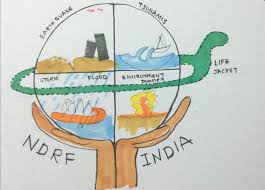
Disaster management

Disaster is a very common phenomenon to the human society. It has been experienced by them since time immemorial. Though its form may be varied, it has been a challenge for society across castes, creeds, communities and countries. The latest development which has been discovered in the World Disaster Reports recently is that the disasters have increased in frequency and intensity.

People are becoming more and more vulnerable to disasters of all types, including earthquake, flood, cyclones, landslides, droughts, accidents, plane crash, forests fire, etc. With the technological advancements and progress, the force of disasters is also changing. When they occur they surpass all preparedness and eagerness of society and pose bigger challenge to them. This is quite true in case of both developed and developing countries. The floods in UK, France, and heat wave in Europe, particularly in France in 2003, claimed more than 35000 lives. In the year 2006, America had to face bigger disaster in the form of tornadoes and other cyclones. They caused great loss of lives and property. All these are sufficient to prove that technological mechanisms are inadequate.

There is a direct correlation between higher human development and higher preparedness. The countries which have lesser human development are more vulnerable to risks of disasters and damage. Of all the disasters, floods are the most common followed by wind storms, droughts and earthquakes. But the drought is the deadliest disaster which accounts for 48 per cent of all deaths from natural disasters. The highest numbers of people die from disasters in Asia. India, China and Bangladesh are the worst affected countries by flood. Besides the natural disasters, transport accidents and technological disasters are also faced by the developing countries.

India, due to its geographical locations and geological formations, is a highly disaster prone country. Its long coastline, snowclad high peaks, high mountain ranges, the perennial rivers in the north all combine to add to this problem. India, which has only two per cent the total geographical area, has to support 16 per cent of total world population. Naturally, there is a tremendous pressure on the natural resources, which directly or indirectly lead to the occurrence of disasters, namely floods, droughts, landslides, earthquakes, etc.

Like human population, India has to support large cattle population, which also heavily depends on biomass and graze into forest area. The forest cover with more than 0.4 densities is 12 per cent of the land area, though forest, at present, is 23 per cent. Due to overgrazing the quality of soil is also degrading resulting in soil erosion, silting of rivers, and removal of fertile soil and heavy silting of cultivable land. We see heavy rainfall during the monsoon, sometimes 100 cm rain in 36 hours or getting the whole monsoon rain two to three days like the ones in Maharashtra, Gujarat, and Kolkata. From the region wise analysis, it is clear that northern region of India is faced with problems of avalanches, landslides, floods, drought and earthquakes because this region fall under the seismic zones III to V.

The Eastern region is confronted with the heavy floods in the perennial rivers of Brahmaputra, Ganga, etc. Drought, heat wave, hailstorm, cyclone, heavy wind and earthquake are also common in this region. The Northeastern region faces the natural disaster in the form of flood, landslides, wind outrage, earthquake as most of this part of the country comes under the seismic zones IV and V.

The Western region is widely known for severe drought, wind erosion of land and soil, flood and cyclone. This area is also prone to earthquakes. The Southern region, particularly the coastal region is vulnerable to cyclones, sea erosion, tsunami, landslides. The islands of Andaman & Nicobar and Lakshadweep are confronted with the problems of sea erosion and tsunami. Indian coastal areas faced some of the severest cyclones both in Eastern coast and Western coast. One of the natural disasters, namely the volcanoes is in the barren island in Andaman group of islands which periodically become active.

In recent times, it was active in 2005. Among all the disasters, tsunami is the latest phenomena, which was never seen or heard earlier. Due to having no adequate warning system, it devastated a large portion of coastal region of Tamil Nadu, Kerala and Andhra Pradesh besides Andaman & Nicobar Islands and claimed a large number of innocent lives and destroyed property worth crores of rupees.

India has faced a number of disasters, ranging from flood, earthquakes, cyclones, tsunami, drought, landslides. A few recent disasters faced by India include Uttar Kasha earthquake in UP in 1991, Later earthquake in Maharashtra in 1993, Chama earthquake in Gujarat, super cyclone in Orissa in 1999, Buhl earthquake in Gujarat in 2001, Tsunami in 2004 and Mumbai-Gujarat flood in 2005. Besides, India has a bad experience of technology-related tragedy in the form of gas tragedy in Bhopal in 1984. India also faced the problem of Plague in Gujarat.

The direct or indirect impacts of disasters, either natural or technological, are always damage, destruction and death. They cause loss of life of both men and animals and properties as well. At the occurrence of disaster, everything goes haywire in view of the destruction of lifeline support systems, namely communication, power supply, water supply, drainage, etc. In this situation the health care and hospitals are also put under severe stress. Commercial and economic activities are badly affected. Life almost comes to a standstill.

The impact is almost same, in case of man-made disasters like riots. The worst affected group is the poor sections of society, who are daily wage-earner. They are the most vulnerable and they suffer the loss of their livelihood. The psychological traumas caused by the disasters are sometimes so severe that they span the whole of life of the victim. Besides other rehabilitation works, psychological rehabilitation is of great importance.In some natural disasters like cyclones, tsunami and earthquake, it is the building structure which becomes the cause of destruction and death. It is due to this fact that in building construction, building codes are not followed property. In developing countries only 30 per cent of built infrastructures are constructed as per the building codes, while semi-permanent and other buildings do not follow the plan. Besides, the low quality of building material, liberal flouting and lack of master plan are some of the major constraints in this regard.

Rehabilitation is an integral part of disaster management. When disasters occur administrative measures are terribly inadequate and perhaps this is the most difficult period for a victim. The role of administration does not end with end of disasters. In fact its effort and commitment get more complex. It requires proper coordination among various agencies. In this context it is very important to note that disasters are non-routine events that require non-routine response. Government cannot rely on normal procedures to implement appropriate responses- the rescue teams require learning special skills, technologies and attitudes in dealing with disasters.

Disaster Management has assumed great importance in recent times. To handle the situation efficiently, we need to be well-equipped with latest technologies. It cannot avert the situation, but can mitigate its impacts.

Advertisements

“Facts of india” part-1

1. Cows are considered sacred.

If hamburgers are a regular part of your diet, you’ll need to make some adjustments before visiting India! Cows are protected by their own set of rules in the Constitution, making killing a cow a crime. Even on crowded city streets, cows have the liberty to roam where they please without fear of being harassed by humans.

2. India is the wettest inhabited place on Earth.

Meghalaya village has won the Guinness world record title for the wettest place on Earth, with about 11,873 milli liter of rain annually. The monsoon season lasts six months, so make sure you pack an umbrella!

3. India has over 300,000 mosques and over 2 million Hindu temples.

Get ready to be awed and amazed by all the stunning architecture India has to offer. About 15% of India’s population is Muslim. The mosques across the country range from small village buildings to immense famous ones, like the Mecca Masjid in Hyderabad or the Jama Masjid in New Delhi.The same can be said about India’s Hindu temples, which surpass two million to serve the 79.8% of India’s Hindu population.

Just the holy city of Varanasi has over 23,000 temples. It is safe to say India is the land of temples!

4.Rajasthan has a Temple of RatsThe animal wonders of India continue.

Although rats might not be the first species you think of to worship, there is a temple in Rajasthan dedicated to rats.Thousands of rats call the temple home, making it one of the country’s most unique attractions. Many pilgrims visit the temple every year on their own religious journeys, so make sure to be respectful of local customs when visiting.

5.The popular game “Snakes and Ladders” originated in IndiaNow sold across the world (sometimes adapted to “shoots and ladders”), this board game traces its roots back to India. It was first created to teach morals and lessons about karma in a way that young children would understand and remember.

6.India has 22 recognized languagesThe numerous languages spoken across India include Santali, Kashmiri, Bengali, Tamil, and Urdu. However, the official languages are English and Hindi.India also has the world’s second-largest population of English speakers (first is the United States), since most Indians speak their own regional language as well as English for easier communication.Sanskrit is considered the oldest language in the world, the “mother of all languages.” Every Hindu book is written in Sanskrit, and it is said that Sanskrit is the language of the demi-Gods.India also has the world’s second-largest population of English speakers (first is the United States), since most Indians speak their own regional language as well as English for easier communication.Sanskrit is considered the oldest language in the world, the “mother of all languages.” Every Hindu book is written in Sanskrit, and it is said that Sanskrit is the language of the demi-Gods.

Economic and social development

Economic development

In the economic study of the public sector, economic and social development is the process by which the economic well-being and quality of life of a nation, region, local community, or an individual are improved according to targeted goals and objectives.

The term has been used frequently in the 20th and 21st centuries, but the concept has existed in the West for far longer. “Modernization”, “Westernization”, and especially “industrialization” are other terms often used while discussing economic development. Historically, economic development policies focused on industrialization and infrastructure, but since the 1960s, it has increasingly focused on poverty reduction.

[1]Whereas economic development is a policy intervention aiming to improve the well-being of people, economic growth is a phenomenon of market productivity and increases in GDP; economist Amartya Sen describes economic growth as but “one aspect of the process of economic development”. Economists primarily focus on the growth aspect and the economy at large, whereas researchers of community economic development concern themselves with socioeconomic development as well.

Many institutions of higher education offer economic development as an area of study and research such as McGill University, London School of Economics, International Institute of Social Studies, Balsillie School of International Affairs, and the Norman Paterson School of International Affairs.

economic development goals

The development of a country has been associated with different concepts but generally encompasses economic growth through higher productivity, political systems that represent as accurately as possible the preferences of its citizens,the extension of rights to all social groups and the opportunities to get them and the proper functionality of institutions and organizations that are able to attend more technically and logistically complex tasks (i.e. raise taxes and deliver public services) These processes describe the State’s capabilities to manage its economy, polity, society and public administration. Generally, economic development policies attempt to solve issues in these topics.

With this in mind, economic development is typically associated with improvements in a variety of areas or indicators (such as literacy rates, life expectancy, and poverty rates), that may be causes of economic development rather than consequences of specific economic development programs. For example, health and education improvements have been closely related to economic growth, but the causality with economic development may not be obvious. In any case, it is important to not expect that particular economic development programs be able to fix many problems at once as that would be establishing unsurmountable goals for them that are highly unlikely they can achieve. Any development policy should set limited goals and a gradual approach to avoid falling victim to something Prittchet, Woolcock and Andrews call ‘premature load bearing’.

Many times the economic development goals of specific countries cannot be reached because they lack the State’s capabilities to do so. For example, if a nation has little capacity to carry out basic functions like security and policing or core service delivery it is unlikely that a program that wants to foster a free-trade zone (special economic zones) or distribute vaccinations to vulnerable populations can accomplish their goals. This has been something overlooked by multiple international organizations, aid programs and even participating governments who attempt to carry out ‘best practices’ from other places in a carbon-copy manner with little success. This isomorphic mimicry –adopting organizational forms that have been successful elsewhere but that only hide institutional dysfunction without solving it on the home country –can contribute to getting countries stuck in ‘capability traps’ where the country does not advance in its development goals.

social development

Social development is about improving the well-being of every individual in society so they can reach their full potential. The success of society is linked to the well-being of each and every citizen.Social development means investing in people. It requires the removal of barriers so that all citizens can journey toward their dreams with confidence and dignity. It is about refusing to accept that people who live in poverty will always be poor. It is about helping people so they can move forward on their path to self-sufficiency.

Every New Brunswicker must have the opportunity to grow, develop their own skills and contribute to their families and communities in a meaningful way. If they are healthy, well educated and trained to enter the workforce and are able to make a decent wage they are better equipped to meet their basic needs and be successful. Their families will also do well and the whole of society will benefit.

Learning must start early in life. By investing in early learning initiatives, we can ensure a greater degree of success amongst our citizens. Making sure that children get a good start in their education goes a long way to increasing their success later in life.

An affordable, high quality child care system is also needed for society to succeed. When people know that their children are being well taken care of, they can be more productive in their jobs. When employers have good employees their business is more likely to succeed. When businesses succeed, the economic situation of a community is improved. An investment today in good child care programs can provide many long term economic benefits for society.

In addition, a safe affordable place to live is very important in helping people achieve self-sufficiency. It is the focus of family life; where families can live safely, nurture their children, build community relationships and care for aging parents. Without a decent place to live, it is difficult to function as a productive member of society .Other investments in people that contribute to the economic prosperity of society include youth programs and services, post-secondary education, job creation, promotion of healthy, active living and safe and secure communities.

To reduce poverty we need to take a social development approach and invest in our people. By investing in people we can reduce poverty. We need to go beyond looking at government to find ways to develop our most valuable resources, our people. We need to share responsibility with community organizations, businesses, universities and municipalities in the task of improving the well-being of all New Brunswickers and preventing and reducing poverty.

Advertisements

Inflation and its impact on different asset class.

Consumer or producers or policymakers or central banks have one characteristic feature common in them – They are all affected by inflation which is a critical and cyclical macro indicator. With repsect to change in different time periods the capital markets also have to be adjusted to the far reaching implications of inflation. Almost everything is affected by inflation even something as basic as investment returns. Putting forward the theory of real returns which is nominal return less inflation is important for all investors to succeed in real life.

For example, we can look for ourselves how inflation is a silent money killer – for normal savings bank account return of 4% the customer is actually making a loss if we factor in the 12 month inflation value of 6%.
With that understanding now in place, let us look at how inflation impacts multiple asset classes.

Fixed Income
Inflation having an inverse relationship with interest rates impacts fixed income investments the most. With each point increase in inflation each investor alson wants to increase their return on investment so that they could beat inflation. Investors will usually shift to high yielding products than current ,ower yielding ones as interest rates on debt instruments are fixed over term. Debt investments dut to their characteristic fixed rates tend to lose the most in a rising inflation environment.In such kind of situations, the central bank usually takes actions around monetary policy and systemic liquidityto manage interest rates or yield or debt products but fundamentals catch up ultimately. In such cases people look for Infaltion Prtected Securities – a bond that adjusts yield to inflation and floating rate bonds.

Equity
The case of inflation surrounding equities is a little volatile and could shift depending upon the level of inflation, nature – transient or persistent, the external macro environment, corporate sector exposure, balance sheet structure and pricing power. An inflation rate of around 2-6% is generally considered good for equities while a rate of 10-14% is considered extremely high and bad for equities. Corporates in such cases increase the price of the final product in accordance with the rate of inflation due to the rising prices of raw materials and at last the consumer has to suffer the wrath of inflation while the companies  maintains its tradebook. This generally leads to a better revenue for the company and the reults are reflected in the stock price of the company But if the demand is suppressed due to weaker consumer sentiments, high unemployment, sector disruption or any other reason, then corporates would find it difficult to pass on the raw material price rise to final product price hikes. This will again be reflected in the stock prices of the companies.

Commodities
The real, physical assets that act a hedge against inflation act and their prices define current inflation levels are called commodities. Inflation levels are indicated by their prices. Inflation is a weighted index of prices of different goods and services – raw materials (wholesale inflation) and final products (consumer inflation) – combined in a basket. Different government agencies determine the ratio of theses items in the basket. Naturally, commodities (metals, agricultural produce) tend to do extremely well in a scenario of rising inflation.

Gold
The same relationship will hold true for gold as well because at the end of the a commodity after all. For countries like India gold is a preffered choice of investment in times of inflation as it acts as a hedgeGnd hence it is also called a ‘premium store of value’. Unsuprisingly this is not always the case as and when central bank take inflationary measures and raise the interest rates, gold becomes the lesser option for investors. The reason people tend to prefer gold over other assets is due to its various underlying characteristics such as return generating ability over a oeriod of time which has been tried and tested and a significantly low correlation among other asset class in both expansionary and recession periods.Investors also look at gold as an ‘alternative currency’ or ‘currency of last resort’ especially in countries where local currency is  is losing value.

Real Estate
Inflation has a direct relation with property prices which tend to increase with rise in inflation rates as landlords and home-owners demand higher rent or home prices to offset high consumption costs. In such cases real state also becomes an asset with positively high correlation with inflation. Investors in such cases invest in exchange traded funds for real estate which give better return in this class rather than owning something physical such as real pieces of land or industrial property.

JELLYFISH

Jellyfish and sea jellies are the informal common names given to the medusa-phase of certain gelatinous members of the subphylum Medusozoa, a major part of the phylum Cnidaria. Jellyfish are mainly free-swimming marine animals with umbrella-shaped bells and trailing tentacles, although a few are anchored to the seabed by stalks rather than being mobile. The bell can pulsate to provide propulsion for highly efficient locomotion. The tentacles are armed with stinging cells and may be used to capture prey and defend against predators. Jellyfish have a complex life cycle; the medusa is normally the sexual phase, which produces planula larva that disperse widely and enter a sedentary polyp phase before reaching sexual maturity.

Scientific classification

Kingdom : Animalia
Phylum : Cnidaria
Subphylum : Medusozoa

Groups included

*Acraspeda
Cubozoa—box jellyfish
Scyphozoa—true jellyfish
Staurozoa—stalked jellyfish
*some Hydrozoa—small jellyfish

Cladistically included but traditionally excluded taxa

* some Hydrozoa, such as Hydra

Jellyfish are found all over the world, from surface waters to the deep sea. Scyphozoans (the “true jellyfish”) are exclusively marine, but some hydrozoans with a similar appearance live in freshwater. Large, often colorful, jellyfish are common in coastal zones worldwide. The medusae of most species are fast-growing, and mature within a few months then die soon after breeding, but the polyp stage, attached to the seabed, may be much more long-lived. Jellyfish have been in existence for at least 500 million years,and possibly 700 million years or more, making them the oldest multi-organ animal group.

Jellyfish are eaten by humans in certain cultures. They are considered a delicacy in some Asian countries, where species in the Rhizostomae order are pressed and salted to remove excess water. Australian researchers have described them as a “perfect food”, sustainable, and protein-rich but relatively low in food energy.

They are also used in research, where the green fluorescent protein used by some species to cause bioluminescence has been adapted as a fluorescent marker for genes inserted into other cells or organisms.

The stinging cells used by jellyfish to subdue their prey can injure humans. Many thousands of swimmers are stung every year, with effects ranging from mild discomfort to serious injury or even death; small box jellyfish are responsible for many of these deaths. When conditions are favourable, jellyfish can form vast swarms, which can be responsible for damage to fishing gear by filling fishing nets, and sometimes clog the cooling systems of power and desalination plants which draw their water from the sea.

Names

The name jellyfish, in use since 1796, has traditionally been applied to medusae and all similar animals including the comb jellies (ctenophores, another phylum).The term jellies or sea jellies is more recent, having been introduced by public aquaria in an effort to avoid use of the word “fish” with its modern connotation of an animal with a backbone, though shellfish, cuttlefish and starfish are not vertebrates either. In scientific literature, “jelly” and “jellyfish” have been used interchangeably.Many sources refer to only scyphozoans as “true jellyfish”.

A group of jellyfish is called a “smack”.

Facts

* Some jellyfish can glow in the dark.

* Jellyfish are the oldest multi-organ animal.

* Jellyfish don’t have brains.

* Jellyfish are found all over the world.

* Some jellyfish are immortal.

* Not all jellyfish have tentacles.

* There’s a giant jellyfish called the hair jelly.

* Jellyfish stings can be deadly.

* 150 million people are stung by jellyfish each year.

* Jellyfish have many predators.

TYPE OF JELLYFISHS

1.Crystal Jellyfish

Coming in at number one is the Crystal jellyfish. Located in the waters around North America’s coast, this jellyfish species is actually completely colorless, hence its name! This beautiful specimen has around 150 tentacles lining its glass-like bell and in the daylight looks crystal clear. Although, this transparency belies a brighter side.

2.Bloodybelly Comb Jellyfish

Ranking high in the charts for the coolest and beautiful jelly-fish, is our next contender, the Bloodybelly Comb jellies, which, technically speaking are comb jellies and are only very distantly related to the jellyfish. This one doesn’t have the famous jellyfish stinging tentacles that others possess, and it is actually a harmless Comb jelly to humans.

Red looks very much like black in the depths of the ocean and specifically, the red belly of this Bloodybelly comb also helps to mask the bioluminescence glow of its prey and keeps it extra safe from the attention of its predators.

3.Cauliflower Jellyfish

Getting its name from the wart-like projections this type has on its bell resembling that of a vegetable, we give you the Cauliflower jellyfish also referred to as the Crown jellyfish! While this jelly may not sound the prettiest of its species, it is still a truly beautiful species of jellyfish.

Very much like its vegetable nickname, this kind is often also found on dinner plates! Mostly in China and Japan where the species is considered to be a delicacy and is also known to be used for medicinal purposes within these locations.

4. White-spotted Jellyfish

At number four on, we have the White-spotted jellyfish. These jellies have very mild venom and therefore any jellyfish stings from its stinging cells are harmless to us humans. In fact, the white-spotted jelly doesn’t generally even use their venom to catch food at all!

5. Black Sea Nettle Jellyfish

Next, one of the largest jellyfish (the largest jellyfish is the Lion Mane jellyfish) is the Black Sea Nettles jellyfish! This particular species can be found in the deep sea Pacific waters around Southern California.

The bell of the Black Sea Nettles can reach up to three-foot across, its long tentacles reach up to 20 feet in length, and its stinging tentacles 25 feet long. Without saying, it would be pretty damn scary if you caught yourself in the middle of a bloom of these giants while in the water, but don’t worry too much as they are not that common to a lot of ocean waters.

To Read List (Romance)

“Love recognizes no barriers. It jumps hurdles, leaps fences, penetrates walls to arrive at its destination full of hope.”

Maya Angelou

Introduction

Romance is a widely celebrated literary genre that primarily revolves around the romantic aspects of relationship between two individuals. Romantic books are very popular among people of all ages. Romance is a genre that can be amalgamated with any other genre to add some spice to the tale. Romance genre incorporates everything from historical to contemporary love equations. Romance novels may be driven driven by cliché and far fetched tropes such as ‘love at first sight’ etc.

The romance industry is a big shot economically,  worth almost $1.08 billion dollars a year in the U.S alone.

Danielle Steel, Nora Roberts, Nicholas Sparks, and Robyn Carr are among some of the romance genre popular authors.

Today, we look at some of the romance must reads.

1. See Me

24820165

Nicholas Spark is one of the most prolific authors of the romance genre. His novel ‘See Me’ tells the story of two people in constant battle with the demons of their past and trying against al odds to come together as one.

Colin Hancock has a history of violence and an ever looming threat of prison. Haven been given a second chance, he’s trying to make the most of it, putting everything he has in his teaching degree. With constant reminders of his past shortcomings, the last thing on Colin’s mi d is love.

Maria Sanchez, a hardworking professional at a prestigious firm in Wilmington. A dark-haired natural beauty with an impeccable work record, Maria has a dark past that forced her back home.

A chance encounter between these two lost souls leaves in its wake thousands of unanswered questions and a deep yearning to be together. As love takes root, the demons from their past threaten to surface, destroying almost about everything.

2. The Bride Test

Image result for the bride test

Helen Hoang’s, ‘The Bride Test’, tells the story of Khai Diep, an autistic person who thinks that he cannot ever feel anything. As he stays miles away from any potential relationship, his mother decides to take matters in her own hands and travels to Vietnam to find a perfect bride for him.

Esme Tran is a mixed- race girl living in the slums of Ho Chi Minh City. When she gets the opportunity to go to America for a potential marriage, she’s more than ready to do it to get out of her penury.

Esme had her mind made up about seducing Khai but ends up falling hopelessly in love with him, while Khai remain unfeeling and hard-hearted. As Esme gets close to leaving States, Khai gets closer to the answers he had always been seeking.

3. The Soulmate Equation

The Soulmate Equation

Christina Lauren’s, ‘The Soulmate Equation’, is a story of Jess Davis, a single mother and a statistics wiz who is trying hard to make ends meet while her grandparents, who raised her, help her raise her seven year old daughter, Juno.

Having been let down too many times in her past relationships- by her father, mother and her ex, Jess is extremely sceptical and absolutely unwilling to traipse back into the dating world.

Then, one fateful day, Jess comes across a matchmaking company, GeneticAlly that offers DNA-based matchmaking. When Jess’s tests show 98% compatibility with another person, Jess is astounded and the person is none other than Dr River Pena, GeneticAlly’s founder. Having known him earlier, Jess is certain about him not being he soulmate. But as the company offers to pay her for going out with Pena, Jess cannot refuse anymore.
As these two get swept in the genetic dating league, they discover things about each other that might just change their perspective about everything.

India Inc. back to pre-pandemic levels?

After the second wave India Inc. should be expecting a faster than expected recovery as the economic news coming out is encouraging. The pace of business resumption crossed a milestone in mid-august, tracked by Nomura India Business, rising above 100 – the pre-pandemic level for the first time since the covid struck last year. Although the news is encouraging we won’t be seeing swifter than expected rebound in jobs.

Pandemic affect on jobs?
There is an absence of timely jobs data due to which getting the exact scenario of the employment situation in India is difficult. But from an outside look one can give an analysis that workers in India have suffered an uneven hit because of covid.  

The covid 19 pandemic’s impact was disproportionate in jobs market just as it was on growth. The drastic shift to work-from-home depended upon sector-to-sector where shifting to wfh was easier in IT, software and finance related jobs it was difficult in more contact-intensive jobs and nigh impossible in jobs such as manufacturing, construction, restaurant etc.
Starting from informal sector the most adversely affected people are self-employed and daily wage workers and have been hit worst. Moving on to the the sector which employs the most the micro, small and medium enterprises (MSME) have been hit harder than big firms. Such kind of impact is called a K-shaped impact.
The slack in the labor market is often used to measure unemployment in the labor market. This is measured by the Centre for Monitoring Indian economy (CMIE). The rate which stood at 8% mid-August which was a slight bit higher than pre-pandemic level of 7.8% in February 2020. Although this may as well be an understatement .

A decrease of 6 million workers was seen, data reveals as total employment was 406 mn back in February 2020 which is currently down to 399.4 mn in July 2021.Data is much more saddening when we talk number of workers who dropped out of workforce a staggering 10.9 mn and are no longer actively seeking work and those who had jobs had to take wage cuts, work less hours or are on indefinite leave. Disguised unemployment has also risen with mostly migrant workers returning back to their villages and working on their farms.

Future of jobs in India.

One can take a breath of fresh air as data suggests that the imoact of second wave has declines and the economy has rebounded. As the rate of vaccination is progressing and people have started to adapt the most affected contact-intensive sectors such as resteraunts, construction etc.

Job market recovery will have to be a slow and a gradual process due to two underlying reasons.Vaccinating majority of population is going to take a lot of time and will not happen atleast till end of 2021 and second as when the market recovers the firms would want to analyse the strength of demand before hiring and starting full scale production .

Obviously the pace at which different sectors come back will differ drastically and will depend upon worker-to-worker. The formal sector will have an advantage in this case as it is expected to bounce back faster than the informal sector. Starting with formal sectors the sectors with great demand will bounce back faster such as IT, software and pharma whereas more traditional sectors such as infrastructure, hospitality, real estate, media and entertainment may be slower to recover.
As with informal sector workers, it will take much longer than anticipated due to worker hesitancy of leaving homes due to the whole migrant worker fiasco and although this may subside over time the small industry that shut down aren’t likely to open up making such kind of  jobs gone forever.

Long term affect

Looking beyond the here and now, the pandemic may leave behind other long-lasting effects, while presenting both challenges and opportunities.
For example, the pandemic has accelerated the pre-existing trend towards digitization and e-commerce. Video conferencing is now widely accepted. Telemedicine, delivery and fintech are a few examples of sectors that have witnessed fast-paced growth during the pandemic. Supply chain relocations as firms adopt a China plus one strategy have opened up a new vista of opportunities for India to integrate into global value chains and to create new manufacturing jobs.
In contrast, business travel will likely decrease in a post-pandemic world. Meetings, incentives, conferencing, exhibitions (MICE) type of tourism will likely decline. Demand for commercial office space may be lower. Automation may reduce employment intensity of manufacturing, hurting low-skilled workers. The pandemic has resulted in more market concentration, as big firms become even bigger, while small firms are squeezed, which could hurt job creation.

In contrast, business travel will likely decrease in a post-pandemic world. Meetings, incentives, conferencing, exhibitions (MICE) type of tourism will likely decline. Demand for commercial office space may be lower. Automation may reduce employment intensity of manufacturing, hurting low-skilled workers. The pandemic has resulted in more market concentration, as big firms become even bigger, while small firms are squeezed, which could hurt job creation.

Required policy toolkit
These longer-term shifts will require an active policy response. Workers will need both reskilling and upskilling. We need an ecosystem for MSMEs to thrive. This includes less regulatory compliance costs, lower funding costs and ability to scale. More jobs will need to be created in the infrastructure and construction sectors. An ecosystem for startups to gainfully employ India’s youth is needed. Many other such new sectors that can create jobs have to be explored.

In short, reversing the pandemic hit to jobs is only a first step. The real jobs challenge still lies ahead.

Best Camera and Gaming Phones under 20,000

Gaming Phone has been a dream for every teenager and chances are you’ve heard the shouts of “Revive me!” or “Flat spin!” consistently, especially in schools and colleges. With heavy games like PUBG Mobile, Asphalt 9, Garena, etc. carving a niche of relatability with the youth, rarely will you find someone’s phone with not even one such heavy game.

But then comes the problem gamers hate – lags and glitches. “I need gloves to play PUBG man!”, said one of my gamer friends. Confused, I enquired why. “Old phone, old processor, man! The phone’s heating will burn my hands one day!”, he replied. While his words were a definite exaggeration, it is a well-known fact that it’s not every other phone that will let you play heavy games – only a select few that will allow that.

The best one would clearly be – Samsung Galaxy S20 ultra. Go ahead, it costs only INR 92,999. For those of you who agree with that ‘only’, you can buy the phone. Those of you whose eyes – like mine – widened to the size of saucers, don’t worry. To make life easier for you, we’re here with a list of Best Gaming Phone under 20,000 in India. You can find answers such as which is the Best Gaming Phone under 20,000 in 2020 or Best Gaming Phone under 20,000 8gb RAM or Best Samsung Gaming Phone under 20,000 or Best Camera and Gaming Phone under 20,000 and more with the help of our carefully curated list of the Best Gaming Phone under 20,000 in 2020.

Best Camera and Gaming Phone Under 20,000

Realme X2

The Realme X2 features a 6.4-inch Super AMOLED Full HD+ display with a 1080 x 2340 display resolution and a Snapdragon 730G SoC inside, making it a perfect device for gaming. It has small bezels, and a screen-to-body ratio of 91.9% and contains a 19.5:9 ratio.

It comes with Corning Gorilla Glass 5 protection and has an in-display fingerprint scanner.  It also has a sports a 64MP + 8MP + 2MP + 2MP quad rear camera setup and contains a 32MP selfie shooter. Moreover, it packs a 4000mAh battery that supports 30W fast charging. Realme X2 is obtainable with up to 8GB RAM. Games especially run quite well on this device and you’ll be able to expect high graphics from the smartphone. All these features make it arguably the Best Gaming Phone under 20,000 in 2020.

Poco X2

The Poco X2 offers good value for money, with specifications and capabilities that few other companies can match within the sub-Rs. 20,000 market. The design, with its attention-grabbing circular patch on the rear and bright gradient finishes, maybe a touch polarizing but Poco have used Gorilla Glass 5 on the front and back for durability. You get an oversized 6.67-inch screen with dual front cameras embedded with a fine-finished cutout within the top-right corner. The display is bright and supports a 120Hz refresh rate.  

Performance is extremely good due to the Snapdragon 730G processor, and the phone is a steal under 20,000 with 8GB RAM and up to 256GB of storage. This phone also boasts of a 64-megapixel primary rear camera and it took superb daytime stills. The night mode also helped low-light photos look good. Daytime videos looked good, but quality suffered plenty at the hours of darkness, especially when recording at 4K. Battery life was also quite good, but not spectacular.

Redmi Note 9 Pro Max

The Redmi Note 9 Pro is now the starting variant of the Note series with the Note 9 Pro Max getting most of the eye. ‘Max’ variant has the extra horsepower to tide you through difficult times. The Note 9 Pro Max gets a bigger 64MP camera sensor at the rear, a bigger 32MP selfie camera, and a faster 33W out-of-the-box charger. Most other hardware specs are the same as the Note 9 pro.

The Note 9 Pro Max offers a 6.7-inch LCD display with a punch-hole camera. It’s powered by the Snapdragon 720G together with 6GB RAM and 64GB storage within the entry variant under Rs 15,000. The phone also offers a 64MP quad-camera setup. There’s also another 8MP ultrawide lens, a 5MP macro lens, and another 2MP depth sensor. On the front, you get a 16MP front camera. The Note 9 Pro also comes with a 5020mAh battery with 33W fast charging and Corning Gorilla Glass 5 covering the front.

Redmi Note 8 Pro

The Note 8 Pro is on the market well under Rs 20,000. The new MediaTek processor blows the Snapdragon 712 out of water in gaming and artificial benchmarks. And if you thought that the 48MP camera on the Note 7 Pro wasn’t good, Xiaomi has upped the sport with a stupendous 64MP camera now. Other specs like the large battery, enough RAM, and ample storage make it a perfect budget phone. The Redmi Note 8 Pro can support PUBG at Ultra-high graphics and could be a competent alternative to Snapdragon 730G. Other perks include HDR display, 4500mAh battery, and a capable set of quad-cameras.

Vivo U20

The Vivo U20 might not be the best in-range as per the market, but it is a consistent performer. The Snapdragon 675 could be a capable processor offering good gaming capabilities, while an enormous 5000mAh battery with 18W fast charging ensures you stay connected. There’s also an oversized IPS LCD display and a triple camera setup at the rear including a well-optimized 16MP primary camera, another 8MP wide-angle camera, and a 2MP macro lens. What more could you want, right?

Realme XT   

The Realme XT was the primary commercial launch with a 64MP sensor on the rear at the time of its launch. That, together with the opposite 3 cameras on the rear and that we can safely assume that the camera department is all covered up. Other specs are Snapdragon 712, octa-core up to 8GB RAM and 128 GB of storage, in-screen fingerprint sensor, fast charging, and a decently large battery. it’s fueled by a 4,000mAh battery. You can install as many games on a 64GB/128GB inbuilt storage (expandable up to 256GB).

The handset retails in 4GB, 6GB, and 8GB RAM options. The gaming experience with this phone is probably going to be enhanced by the Oppo’s Hyper Boost technology. Flip to the rear and you get a quad-camera setup including 64MP +8MP +2MP + 2 MP Dual camera arrangement.

Xiaomi Redmi K20

Xiaomi Redmi K20 is another exciting gaming phone under the 20K price range. It’s powered Snapdragon 730 which contains a 35% performance boost over Snapdragon 710. It features a 6.39-inch Super AMOLED display with a 1080 x 2340-pixel resolution at 403 PPI. It comes with up to 8GB RAM and up to 256GB of internal storage. The K20 looks stunning with a flaming gradient finish and a bezel-less edge-to-edge display. At the rear, you will find be a triple-camera setup which will take some sharp photos both during the day and night. After the recent price-cutting, the Redmi K20 is a great budget buy under Rs 20,000

Realme 6 Pro

The phone is based on the proven performer Qualcomm Snapdragon 720G. It features a 6.6-inch LCD display, which produces good colors and brightness. there is no in-display fingerprint sensor so Realme has used a capacitive one within the power button. There’s face unlock too, which works all right. Realme has used a modern-looking, punch-hole cutout within the display for the 2 front cameras. The phone is on the market with variants of 8GB of RAM and 128GB of storage.

The latter is expandable. App and gaming performances are extremely good and users reported no issue with heating either. The 4,300mAh battery easily lasts for a day and a half and there is 30W fast charging too. Due to the power-efficient chipset, the 4300mAh battery lasts really long and therefore the 25MP selfie camera is an additional bonus.

Samsung Galaxy M40

Inarguably the Best Samsung Gaming Phone under 20,000, this phone makes it to the list of the Best Gaming Phone under 20,000 in India on the back of strong user reviews and product reliability. This is Samsung’s first Snapdragon 675 based phone in the market and the chipset is apt enough to handle every game out there. Although there could be slight heating issues, users noted its nothing extreme.

The phone features a 6.3-inch full HD+ well-calibrated screen with Corning Gorilla Glass on top. The phone is obtainable in 6GB RAM and 128GB storage option only. Samsung’s new OneUI also includes a stimulating game mode which will make it possible to avoid interruptions while gaming. It boasts of many segment-firsts like a hole-punch display and a vibrating screen for an earpiece.

It features a bright and vibrant 6.3-inch full-HD+PLS TFT LCD display, which has good viewing angles but there’s also a gentle vignette around the edges, which may be distracting. The body is slim and lightweight but the plastic back attracts scuff marks pretty easily. So like all Samsung products, use a tampered glass and cover – Samsung phones are seldom made for rough handling.  

There’s just one variant, which comes with 6GB of RAM and 128GB of storage. The latter is expandable but it is a hybrid slot so you cannot have two SIMs and a microSD card. OneUI runs well and is tested to run smoothly on Android 9 Pie.

Realme X

Realme X is another affordable phone that provides good value-for-money and interesting gaming features. It ticks the majority of boxes that a budget gamer requires. The performance part is handled by Snapdragon 710 CPU that integrates Adreno 616GPU. It comes with a 6.5-inch AMOLED display which also contributes to the immersive gaming experience. The FHD+ resolution screen is notch-free and is surrounded by really narrow bezels. It also includes 3,765mAh battery with 20W VOOC 3.0 fast charging – which is to mention that you just can engage in extended gaming sessions without fear about the battery.

That concludes our list of the Best Gaming Phone under 20,000 in India. Do you think your favorite Best Gaming Phone under 20,000 in 2020 is missing? Or one of the mentioned phones is not really the Best Camera and Gaming Phone under 20,000 and worth the money? Have reviews to give to our readers about any of these phones? Head down to the comments section and speak your mind!

Advertisements

Heath Benefits Of Cycling 15 Minutes A Day

When done properly, cycling is an effective and enjoyable form of aerobic exercise. Cycling can reduce the risk of heart disease, high blood pressure, obesity and diabetes according to a report by Kelley GA. Effects of Aerobic exercise in normotensive adults, 1995. It can reduce your ‘real age’, lowering it more than a decade lower than your chronological age.

The indirect health benefits include reducing serious injuries caused by falls in older people, osteoporosis, and hip fractures.

Statistics show that cyclists, even those who only travel short distances can reduce the risk of death by 22 per cent.

Optimum results are achieved when cyclists are breathing heavily, but are not out of breath. Exercise has been shown to increase HDL (“good” cholesterol) and reduce the amount of triglycerides in the blood. Again, this means improved cardiovascular health. This leads to a reduced chance of heart blockage and reduces the risk of stroke. There are some reports that link exercise to a lowered risk of developing some cancer, like colon cancer.

Cycling burns the calories in a chocolate bar or a couple of alcoholic drinks in one hour, 300 calories. Translated into modern lifestyle terms, a fifteen-minute bike ride, five times a week, burns off 11 pounds of fat a year and meets the requirements for reducing heath risks.

There is a trick to exercising. Running a nine-minute-mile burns 11 calories a minute. Walking at 18 minutes per mile burns five. Faster exercise burns more calories.

Exercise continues to burn fat after the workout ends. Once the sweating stops the body’s metabolisms remains high. You can you increase the post-exercise burn?

A few scientific studies suggest that exercising for 20 minutes at 35 to 55% of aerobic capacity, as in riding briskly, elevated metabolism for 20 minutes after stopping. That means that a 20 minute, brisk bike ride burns fat for 40 minutes.

Cycling has been proven to reduce stress and depression and relieve symptoms of premenstrual syndrome.

The Department of Transport reports that ‘even a small amount of cycling can lead to significant gains in fitness’. The study reveals that aerobic fitness was boosted by 11 per cent after six weeks of cycling ‘short distances’ four times a week and cycling four miles a day the aerobic benefit increased to 17 per cent.

The Fentem PH. ABC of sports medicine report, Benefits of exercise in health and disease, 1994 concludes that cycling is ‘one of the few physical activities which can be undertaken by the majority of the population as part of a daily routine’.

The choice of bike is a personal thing.

Most people never cycle more than five miles, so choosing an expensive bike designed to challenge the most adventurous dare devils. Instead, choose a bike that will manage the local terrain, comfortably.

Equipment needs will also vary. Older people should consider elbow and knee guards. These will help prevent debilitating joint injuries that can seriously limit your mobility. A helmet is not optional.

Do not buy a helmet from a local hardware store. Get one from a bicycle specialty store. The selection is larger, and the quality better. Shopping at an online store can also save money.

Once introduced into the bicyle riding community, you’ll soon set out on your daily cycle for the joy of it. Health benefits will be secondary

Why Take Health Insurance Plans in Difficult Times?

With all these healthy routines they are missing one of the most important steps that play a very important role in one’s health and treatment that is to secure their future health expenses by taking a liable health insurance plan. Health insurance equipped the person to take all the treatment and hospitalisation at a reasonable rate.

Currently, the world is dealing with the deadly coronavirus which was originated as the very new virus in late December 2019 in the city of Wuhan, Hubei, China. Even at the time, its name was not known than the situation gain international media’s coverage when virus cases started reporting from other countries as well along with a sharp increase in the death rate due to the coronavirus. The WHO declared it as the global pandemic in March 2020, with about 118,000 confirm cases with 4921 deaths in 114 countries.

The superpower of the world, the United States of America become the worst affected country in the world. Till now the USA has recorded 4.9 million confirmed cases with about 160 thousand deaths has been registered so far. In this dangerous and high-risk time of the pandemic, health-conscious Americans are taking all the necessary precautions to keep themselves fit and healthy. From following a healthy diet to regular exercising, they are doing almost everything to keep themselves away from the virus and other contagious diseases.

Importance of Health Insurance Plan

About 30 million workers living in America lost their jobs so does their health insurance plan during the outbreak of COVID 19 pandemic. Thus, along with the financial burden the Americans has to face the health crises and expenses also. As coronavirus treatment is the costliest so the necessity of a good health insurance plan for American citizens is enormous.

  • As the virus is new and unknown to scientists and doctors so the much study and research are not done on it as well as its vaccine formation time is still not confirmed so the treatment of virus is very expensive in different parts of the world. In America, thousands of dollars are required for the treatment of the corona patient. Because of these reasons, the need for good health insurance is essential.
  • As not only coronavirus but various other deadly viruses like Ebola, Zika and other dangerous diseases surrounds us and requires a lot of dollars for testing and treatment of the disease, so it is very beneficial to equip with the best health insurance policy to ensure the proper treatment and care by the health official at a very minimal rate which was already given to the health insurance company.
  • Health insurance also helps to maintain mental health along with the treatment of physical ailment. As the burden of disease and health problem is already on the mind of the patient so health insurance plan helps to detect financial burden from the mind and to maintain mental health.

As nothing is predictable in life, any unintended accidents can occur at any time of life. During these times health insurance plays a very vital role in saving our and our loves life. 

As corona is also one disease which can enter in our lives at any moment of our life, so advance maintenance and preparations are very essential especially in American cities like New York where there is a large spread of the disease. The first step in the preparation is to avail the honest and liable health insurance plan. 

Thus, along with following all the safety and hygiene protocols of Corona Virus, the person should also ensure the health insurance plan for themselves and their families. The Cities of New York and Boston are the worst affected so proper health insurance for its citizens is very essential.

Best Health Insurance Plan in New York

As the coronavirus claim a lot of deaths, some because of the lack of immunity while others due to the lack of money. The treatment and testing of Corona Virus are too expensive in New York city of America, the health insurance plays a vital role in ensuring treatment from the best doctors and the in the most renowned hospitals. The best insurance plans in New York health come under four categories.

Advertisements

These are bronze plan, silver, gold and platinum health insurance plans, all vary in its prices. There is government sponsor health insurance plan Medicare that comes at $ 1,005 for the single person, and for married couples, it can be bought at $ 1,354 under its qualified beneficiary plan. Medicare provides four types of the best insurance plan in New York health.

There is also Medicaid health insurance plan for poor families that cannot afford other health insurance plans. About 6% of New York residents are uninsured that compels officials to make some more good policies.

Best Health Insurance Plans in Boston

The Boston city in the United States is also one of the worst affected city that provides some of the most renowned health insurance plans. The best health insurance plans in Boston includes a basic life insurance plan that can be brought at $ 5,000 but its amount may variant with the age of the person. The Medicare Retiree Health insurance plan allows the usage of coverage even after the retirement.

There are many more such health insurance schemes offers both by the government officials as well as the private insurance companies. The Obamacare Health plan that is giving benefits to many Americans, is providing a lot of health insurance plans in different parts of America. These are some of the best health insurance plans in Boston that are making the lives of many citizens easy.

Advertisements

Conclusion

The Corona Virus Pandemic has put a halt to many things but it also brings the real condition of the health structure of many powerful countries. Even the most powerful and renowned country of the world, the United States of America is not able to control the virus initially that results in the thousands of deaths and millions of active cases. As well as millions of people lost their jobs and become unemployed.

In such a drastic and dangerous situation, the person’s health protector is a health insurance plan that protects the future of the person and makes it financially secured when such a disease or accident takes place. The Americans are looking for the best insurance plans that give them the most benefits of treatment and testing of the disease and by taking one of the health insurance plans our mind become peaceful without any worry of unpredictable tragedies of life.

It’s All About “NIPER”!

In this, we see the information about the NIPER JEE entrance exam. Please read my previous content i.e.on GPAT exam preparation, which helps you to understand it easily.

Prelude:-

National Institute Of Pharmaceutical Education & Research, conducts a joint entrance examination (NIPER JEE) every year for admission to doctoral and Masters level courses in the pharmacy field.

The Courses like M.Pharm, M.S.Pharm, M.Tech (Pharm.), MBA ( Pharm.) and PhD courses are open for admission through NIPER- JEE.

NIPER JEE examination pattern is designed and implemented by the National Institute of Pharmaceutical Sciences or NIPER.

🌟Only “GPAT” qualified candidates can give NIPER JEE Exam.

Highlights:-

Name of Exam National Institute of Pharmaceutical Education and Research Joint Entrance Exam
Conducting Body National Institute of Pharmaceutical Education and Research
Commonly Known as NIPER JEE
Mode of examination Online
Duration Of Exam 120 minutes(2hrs.)
Total no. of Questions 200 MCQs
Total Marks 200
Negative marking Yes, 0.25 for every wrong answer

Campus:-

we will talk about the different campuses or colleges of NIPER, based on their priorities.

No.NIPER INSTITUTE
1SAS NAGAR, MOHALI
2HYDERABAD
3Ahmedabad
4GUWAHATI
5RAEBARELI
6KOLKATA
7HAJIPUR

NIPER institute, Mohali is at the top position, because after graduation from this institute the students get the job with a high package. (Around 7-9 L.P.A.) Or we can say that placement in NIPER Mohali is greater as compared to other universities.

COURSES OFFERED BY NIPER INSTITUTE & THEIR BRANCHES:-

M.S. (Pharm.)Medicinal chemistry

Natural Products

Traditional Medicine

Pharmaceutical Analysis

Pharmacology & Toxicology

Regulatory Toxicology

Pharmaceutics

Pharmacoinformatics

Biotechnology
M.Pharm Pharmacy practice

Clinical Research

Pharmaceutical Technology (Formulation)
M.Tech (Pharm.)Pharmaceutical Technology (Process Chemistry)

Pharmaceutical Technology (Biotechnology)
M.B.A. (Pharm)Pharmaceutical Management

🌟The branches of these courses, vary as per the institute.

If you have to take admission for M.B.A. then you have to give a Group discussion.

🌟For the M.S., M.Pharm & M.Tech there will be a stipend or Scholarship for students but in the case of Pharm MBA, we don’t get any stipend or scholarship.

Eligibility Criteria for NIPER:-

Before filling the application form, all candidates are must be aware of the eligibility criteria for the NIPER entrance exam.

  1. GPAT Score:- Candidates must have a valid GPAT (Graduate Pharmacy Aptitude Test) Score.
  2. Qualifying Degree:- Candidates must possess a B.Pharm degree from a recognised university. Final year B. Pharm students are also eligible for the NIPER exam.
  3. Academic Qualification:– To apply for the NIPER JEE exam, candidates must have passed the qualifying degree with a minimum of 60℅ marks. The qualifying marks may vary with category.

Syllabus:-

There is no official syllabus prescribed for the NIPER JEE exam.

we have to understand the previous 10-15 years questions format and then study further.

The syllabus is just like the GPAT entrance exam but more specifically in basic chemistry instead of medical chemistry and many more subjects.

The syllabus of NIPER JEE is broadly based on the qualifying exam curriculum. The NIPER JEE syllabus includes questions mainly from the Core subject i.e. Chemistry, Pharmacology, Biotechnology & Pharmaceutical analysis and other subjects questions also asked.

Let’s have a look at the syllabus for various courses in NIPER JEE:-

  1. For PhD Courses:– Questions will be of M.S.Pharm, M.Pharm.
  2. For M.Pharm /M.S. Courses:– For admission to master level courses the question will be from B.Pharm.

How to do preparation:-

Till now we will talk about the general basic information related to NIPER JEE. Now, endures some tips about how to do preparation.

The preparation strategy is the same as that of GPAT Preparation.

Just focus on the core subjects, solve the previous year question papers and solve MCQs as much as possible.

Focus on the hard subject, try to clear doubt and do group studies, make study timetable etc.

This is all basic knowledge about the NIPER JEE entrance examination, all fresher students should know this basic knowledge.

!!Thank You!!

ASPERGILLOSIS

BY DAKSHITA NAITHANI

INTRODUCTION

Pier Antonio Micheli, a priest and scientist, named Aspergillus while documenting moulds in 1729. The mould looked like an aspergillum, which is a type of holy water sprinkler. Physician Georg W. Fresenius described the species fumigatus for the first time in 1863.

 Apergillus spp., found in abundance of nature, can be found in soil, decomposing materials, water sources, and air particle. Aspergillus-related disease is uncommon, although it has a significant death rate. The majority of people are exposed to spores (conidia) during their lives, although illness development occurs mostly in people with compromised immune systems, as well as during construction and yard activities. In patients with leukaemia, asthma, cystic fibrosis, and hematopoietic stem cell transplant recipients, A.fumigatus is the most frequent invasive mould infection, with death rates exceeding 50 percent in these high-risk populations.

Around the apex, the stipes are grey in colour. They feature a slick finish. Their globule is tiny and columnar. The conidia’s texture is either smooth or spinose.

WHERE IT CAN BE FOUND?

Aspergillus is commonly found in rotting plant matter. After considerable environmental exposure to Aspergillus spores, such as when handling tree-bark chipping, Aspergillosis can develop in healthy hosts.

Aspergillus can be found in soil, compost piles, and damp grain in outdoor settings. Aspergillus may be found within buildings in wet insulation, fireproofing material, beds , behind couches, in damp rooms’ corners, dust, and air conditioning systems. In the Northern Hemisphere, most research studying seasonal changes in fungal exposure show an increase in airborne Aspergillus throughout the cold season.

TYPES OF ASPERGILLOSIS

Allergic bronchopulmonary aspergillosis (ABPA) is a multifaceted hypersensitivity reaction to inhaled Aspergillus fumigatus. Although it produces lung irritation and allergy symptoms, it does not cause infection. Aspergillus sinusitis is caused by an allergic reaction to the fungus Aspergillus, which produces inflammation in the sinuses and the symptoms of a sinus infection but does not cause an infection. A fungus ball is also known as an Aspergilloma. It forms in the lungs or sinuses but seldom spreads to other regions of the body, as the name implies.

Aspergillosis of the lungs (chronic pulmonary aspergillosis) Aspergilloma, chronic cavitary pulmonary aspergillosis (CCPA), chronic fibrosing pulmonary aspergillosis (CFPA), and Aspergillus nodules are all illnesses classified as chronic pulmonary aspergillosis (CPA). CPA is a lung infection that develops over time.

INVASIVE PULMONARY ASPERGILLOSIS

Inhaled conidia are removed by epithelial cells and alveolar macrophages in normal host lungs. Aspergillus becomes invasive when conidia escape these host defences and develop into branching filaments called hyphae. Alveolar macrophages generate inflammatory mediators, which attract neutrophils, which can destroy the hyphae.

CUTANEOUS SKIN ASPERGILLOS

Aspergillus comes in contact through a breach in the skin (for example, after surgery or a burn wound) and infects persons with weaker immune systems. Cutaneous Aspergillosis can also develop if invasive Aspergillosis moves from another part of the body, such as the lungs, to the skin.

LIFE CYCLE

Aspergillus begins its infectious life cycle by producing conidia (asexual spores) that are easily transported into the atmosphere, ensuring its ubiquity in both habitats. Inhalation of these conidia is the most common way to become infected, followed by conidial deposition in the bronchiole spaces. The phagocytosis and destruction of Aspergillus conidia is largely carried out by macrophages. The danger of infection stems largely from a breakdown in these host defences, as well as fungal characteristics that allow A. fumigatus to survive and flourish in this pulmonary habitat.

SYMPTOMS

The symptoms of Aspergillosis are:

  • Wheezing, chest pain
  • Shortness of breath, stuffiness, runny nose and reduced ability to smell
  • Cough (sometimes blood)
  • Fever (in rare cases), headache, fatigue
  •        Weight loss

•             The length of time that an illness lasts depends on the underlying health concerns, the intensity or location of infection, and the kind of sickness.

•             Allergic forms, may require steroid and antifungal treatment for a few months, possibly longer sometimes.       

•             Invasive pulmonary Aspergillosis may need at least 6 to 12 weeks of antifungal therapy. Severe cases may need therapy for lifetime and monitoring to keep the illness under control. 

•             If the infection spreads from the lungs to other areas of the body, additional symptoms may appear.

•             Red to purple plaques or papules are common symptoms of cutaneous Aspergillosis.

DIAGONOSIS    

Because the symptoms of Aspergillosis might be confused with those of other lung diseases, diagnosing it can be challenging. In order to make a diagnosis, your healthcare practitioner will look at your medical history, risk factors, symptoms, physical examinations, and lab testing.

An Aspergilloma, a fungal tumour, or the symptoms of invasive Aspergillosis and ABPA can be found on a chest X-Ray or a chest CT scan.

•             A sample of your sputum is stained with a dye and examined for the presence of Aspergillus filaments in a respiratory secretion (sputum) test.

•             Tissue and blood testing may be used to confirm the presence of ABPA.

•             To confirm invasive aspergillosis, a biopsy of tissues from your lungs or sinuses is performed, as well as blood testing.

TREATMENT

In addition to early diagnosis, early treatment is critical in managing aspergillosis. Depending on the type of disease, one may have the following treatments:

•             Observation- If you have a single aspergilloma, you may not need treatment; instead, you may be monitored with regular chest X-rays or CT scans. The doctor may prescribe antifungal medication if your disease worsens.

•             Antifungal medicines may be used in combination with corticosteroids to reduce the need of steroids, improve lung function, and prevent existing asthma or cystic fibrosis from deteriorating. Some examples are prednisone (Deltasone), prednisolone (Orapred), and methylprednisolone (Medrol).

•               Invasive pulmonary aspergillosis is treated with antifungal medications. Voriconazole (VFEND) and amphotericin B are two of these drugs (Amphocin, Fungizone).

•             Surgery- as antifungal medicines have a hard time penetrating an aspergilloma, surgery may be required to remove the fungal mass if the aspergilloma causes pulmonary haemorrhage.

Embolization of the Arteries -This technique can be used to temporarily halt aspergilloma-related bleeding.  A radiologist uses a catheter to inject a substance into an artery supplying a lung cavity where an aspergilloma is causing blood loss. The injected substance solidifies, cutting off the area’s blood supply and halting the bleeding. This therapy works for a while, but the bleeding will most likely return.

BLASTOMYCOSIS

BY DAKSHITA NAITHANI

INTRODUCTION

The fungus Blastomyces causes blastomycosis and the fungus can be found in nature, especially in damp soil and decomposing organic materials like wood and leaves. It is found mostly in the midwestern, south-central, and southern regions of the United States, notably in locations near the Ohio and Mississippi River basins, the Great Lakes, and the Saint Lawrence River. The fungus can also be found in Canada, and there have been a few instances of blastomycosis documented in Africa and India.

People can get blastomycosis by inhaling tiny fungus spores in the air, which frequently occurs after engaging in activities that disrupt the soil. Although the majority of individuals who inhale the spores do not become ill, some will have symptoms such as fever and cough. The infection can be serious in certain people, such as those with weaker immune systems, especially if it spreads from the lungs to other organs.

SYMPTOMS

Blastomycosis is characterised by a high fever.

About half of those infected with the fungus Blastomyces will have symptoms. Blastomycosis symptoms are frequently comparable to those of other lung infections, and include the following:

•             Fever

•             Cough

•             Night sweats

•             Muscle aches or joint pain

•             Weight loss

•             Chest pain

•             Fatigue (extreme tiredness)

Blastomycosis symptoms generally develop 3 weeks to 3 months after a person inhales the fungus spores.

Severe blastomycosis

Blastomycosis can spread from the lungs to other parts of the body, including the skin, bones and joints, and the central nervous system, in some people, especially those with weakened immune systems (the brain and spinal cord).

WHO IS AT RISK

Anyone who has been in an area where Blastomyces is present in the environment can acquire blastomycosis. People who engage in outdoor activities in these locations that expose them to forested areas (such as forestry labour, hunting, and camping) may be more susceptible. People with compromised immune systems are more prone than those who are otherwise healthy to acquire severe blastomycosis.

PREVENTION

There is no vaccination to prevent blastomycosis, and it may not be feasible to avoid being exposed to the fungus that causes the disease in regions where it is prevalent. People with weaker immune systems should avoid activities in these areas that require disturbing the soil.

LIFE CYCLE

Blastomyces is a mould that generates fungal spores that thrives in the environment. The spores are too tiny to see with naked eyes. People and animals who inhale the spores are at danger of contracting blastomycosis. The body temperature permits the spores to convert into yeast when they enter the lungs. The yeast can remain in the lungs or spread to other areas of the body via the circulation, including the skin, bones and joints, organs, and the central nervous system.

DIAGONOSIS

Blastomycosis is diagnosed using your medical and travel history, symptoms, physical examinations, and laboratory testing. A doctor will most likely test for blastomycosis by sending a sample of blood or urine to a laboratory.

Imaging studies, such as chest X-Rays or CT scans of your lungs may be performed by your healthcare practitioner. They may also take a sample of fluid from your lungs or perform a tissue biopsy, which involves taking a tiny sample of damaged tissue from your body and examining it under a microscope. Laboratories may also examine it may grow in bodily fluids or tissues (this is called a culture).

TREATMENT

The majority of patients with blastomycosis will require antifungal therapy. Itraconazole is an antifungal drug that is commonly used to treat blastomycosis in mild to moderate cases. For severe blastomycosis in the lungs or infections that have spread to other areas of the body, amphotericin B is generally used. Treatment might last anywhere from six months to a year, depending on the severity of the illness and the person’s immunological condition.

VIDEO MARKETING.

Hello everyone,
Just spare few minutes in reading this context, for sure you are going to take something with you.
Today I chose an interesting topic which is a growing trend in advertising method. Definitely today’s topic will help you, to get to know about  video marketing and why it is important.
As it is an era of digital marketing, every small to big business people are advertising their commodities through online, which became very common.
Generally online advertisements are done either by Posters or by videos. And most of the company will have their own websites.
Each and Everyone of us would have come across with various posters in Instagram, Facebook and in their websites.
For example:50%off on so and so products, combo offer etc.

Then, what is video marketing/ advertising?
In simple terms, video marketing is all about advertising a company’s product through an attractive and beautiful video.
Some of the examples are lactocalamine, purple (beauty products), lucious, Spotify, bitcoins etc..
We would have seen these companies, advertising their products through videos, which will pop-up in between the YouTube videos, hotstar and all other applications which are used for watching programs.
Video marketing is now even used by various gaming industries and also by matrimonies.
For example:Tamil matrimony and such other matrimonies and for games decorate your home, MPL, rummy circle. Com etc.
But have we ever thought, why they are advertising through videos.
what is the purpose/importance of Video marketing while advertising online ?

Here’s the reason, ‌
‌1. Videos and pictures are more attractive than words. Currently, most of the skills and lessons are learned by watching videos, because things which we see, will automatically get registered in our mind at times even it convinces us to go for it.

‌2.If that’s the case video advertisement will attract a huge group of people, irrespective of age difference.

‌3. Also It Breaks language barriers, as the video does have the capacity of explaining the details by itself .

‌4. Also, it is an easy way of approaching consumer.

‌5.Also, it act as a stimuli, it stimulates consumer to go for the product, whether they need that particular product or not, by continuous video advertisement a seller can convince a consumer , as the advertising video pops up nearly 3-4 times while watching a single video, whereas it is not possible with pamphlet, flex and other advertising methods.

‌6.Also,the seller can easily reach out consumer from all over the world, as the video is uploaded to most commonly used Portals/applications.

‌7.video marketing is considered as an effective way of advertising also it is a smart way of selling a commodity, as online. shopping becoming trend. 

Video marketing is generally done to make consumer to feel easier and comfortable because through videos consumer will come to know most of the availing features of the products, which will convince them for purchasing it.
The above points are the reason why video marketing is important in digital marketing.

So, all the budding business people and all growing business tycoons make use of this Video marketing in a beautiful and effective way were you can accomplish your target sooner. But don’t forget to add your own ideas and surprises.

My suggestion, if  a seller brings 3D effect in video advertising ,it will help him/her to attract much more consumer.
And I am pretty sure that each and every one of us would have purchased at least one product after watching the video Advertisement.

And yes, I am among them.

As everything is getting Digitalised, adopting to innovative digital marketing is necessary.

As we are getting adopted to it, we also want to use it properly and effectively .

Thanks for spending your time in reading this context, hope so it was useful.

Soon will catch you up with another interesting topic.

Have a nice day.

Keep smiling ❣️❣️❣️

SAY NO TO CHILD LABOUR

CHILD LABOUR

Child labor refers to the employment of a child in any work. This deprives the children of their childhood. It is physically, socially, mentally harmful to children. The education of children is drastically affected by child labor. Currently, the number of child labor has increased by 8.4 million in the last 4 years. There is a myth that most child laborers are orphans. But the truth is that only 3 out of 1000 are orphans. According to the International Labour Organization, currently, more than 168 million people between 5 and 14 are working. In India, according to the data collected from census 2011, it is estimated that there are about 10.1 million child laborers.

CAUSES OF CHILD LABOUR

PRIMARY CAUSES: The International Labour Organization suggests that poverty is the simplest reason behind child labor. For many poor families, the children have to work to fulfill their basic needs. Income from this child may be low but it contributes between 25  to 40% of the household income.

CULTURAL CAUSES: In European history, certain cultural beliefs have rationalized child labor and therefore encouraged child labor. Some people think that doing work is good for character building and skill development of children. In many cultures, children have to take over their parent’s businesses. Also, in many cultures, the education of girls is valued. They think that there is no need for educating the girl children. And these girls are pushed into child labor such as doing household services.

MACROECONOMIC CAUSES: The growth of poverty and unavailability of good schools lies on the supply side of child labor. The growth of low paying informal economy rather than the higher paying formal economy is the cause for the demand side of child labor. Other scholars suggest that the size of the informal economy, inflexible labor market, and lack of modern manufacturing techniques are some of the macroeconomic causes for child labor.

SOME ACTS THAT PROHIBITS THE CHILD LABOUR:

  • The Factories Act of 1984: This act prohibits the working of children below the age of 14 years in any factories. The law also includes rules that how long pre-adults aged 15 to 18 years to be employed in any factory.
  • The Mines Act of 1952: This act prohibits children under 18 years working in the mine.
  • The Child Labour (Prohibition and Regulation) Act of 1986: This law prohibits the working of children (under 14 years) in hazardous places listed by the law.
  • The Juvenile Justice (Care and Protection) of Children Act of 2000: This law states that anyone who employs children in hazardous places will be punishable with prison term.
  • The Right of Children to Free and Compulsory Education Act of 2009: The law provides mandatory education to all children aged between 6 to 14 years. This law also states that 25% of seats in every primary school must be allocated to children from disadvantaged groups and physically challenged children.
  • In addition to this, many Non-governmental Organizations (NGOs) like Bachpan Bachao Andolan, CARE India, Child Rights, and You, RIDE India are working to eradicate child labor in India.

Despite these laws and prohibition acts in India, there are still millions of children are employed in homes, roadside restaurants, and factories across the country. Every year June 12 is observed as the anti-child labor day. As the citizens of India, we all should be united to eradicate child labor in our country. Donate funds to the NGOs and make awareness programs in rural areas. Start some small campaigns against child labor. Child labor can be eradicated if government performs effectively with public support.

To Read List (Sci-fi)

“Looking at these stars suddenly dwarfed my own troubles and all gravities of terrestrial life.”

-H.g Wells
See the source image

Introduction

Sci-fi is perhaps one of the coolest literary genre, that is widely read. Scientific fiction encompasses the vast abyss of human imagination that manifests itself in an astounding blend of creativity and literature. Sci-fi stories have a wide variety of themes, they can be based on absolute facts or be a figment of someone’s imagination as well. Fictitious sci-fi stories can include aliens, a world based in space, time travel, strange inventions and weird creatures as well.

Sci-fi might be hard or soft. Hard sci-fi is based on the real world with less novel elements. Soft sci-fi, however, includes far fetched scientific technology.

Sci-fi requires ingenuity on part of writers and proper assimilation of the readers part. Sci-fi is probably one of the most interesting of the genera of the great literary canyon.

Curated below is a list of 4 interesting Sci-fi books that you can check out.

1. The Time Machine

2493

H.G Wells, renowned as ‘The Father of Sci-fi’, wrote ‘The Time Machine’, in 1895. In this extremely enthralling book, the protagonist goes on a time safari 800,000 years beyond his time. He is transported to an era of devastation and utter destruction of Earth, there he discovers two strange races ,the ethereal Eloi and the subterranean Morlocks that manifest the terrifying future occupants of the planet and describe the dying humane in humanity.

An absolutely enthralling read, that has gripped readers throughout years.

2. Snow Crash

40651883. sy475

Neal Stephenson’s, ‘Snow Crash’, is a riveting book that describes the parallel life of Hiro Protagonist in the real world and the Metaverse. Delivering pizzas for  Uncle Enzo’s CosoNostra Pizza Inc. in the ordinary world, a warrior prince in the Metaverse. The story takes pace as he crusades through a volley of mysterious computer viruses. He strives to prevent utter destruction by bringing down the ultimate virtual villains.

The story meanders through technical know how of computers and is an absolutely thrilling read.

3. To Sleep in a Sea of Stars

53523108. sy475

Christopher Paolini’s, ‘ To Sleep in a Sea of Stars ‘, revolves around Kira Navárez, who dreams of life beyond the scape of Earth, in new unchartered worlds. When during a survey mission on a planet, Kira stumbles across an alien relic, although thrilled at first, Kira soon comes to dread her discovery as the ancient relic begins to move around her.

With Earth in great jeopardy and a war brimming amongst the stars, Kira experiences a life altering journey. With her being the ultimate hope, Kira must brave against all odds and delve into the expanse of the universe to bring about order.

4. Cinder

36381037

Marissa Meyer’s, ‘Cinder’, is a riveting tale of a girl Lihn Cinder, a mechanic in New Beijing, the capital of the Eastern Commonwealth, s, who is a cyborg i.e. she is half mechanical, has prosthetic limbs and a complex wiring of internal organs. New Beijing is a place that faces consistent scourge of plagues. In this retelling of Cinderella, humans and androids coexist. When the heir to the throne of the Commonwealth, Prince Kai requires Kai’s help to fix his android, their lives take a thrilling turn. With her mysterious past and a strange Lunar people waiting for ambush from the space, Cinder must traverse through several trials to save the fate of her people and perhaps even the entire world.

A sci-fi twist to the classic Cinderella.

Climate change and biodiversity

In the atmosphere, gases such as water vapour, carbon dioxide, ozone, and methane act like the glass roof of a greenhouse by trapping heat and warming the planet. These gases are called greenhouse gases. The natural levels of these gases are being supplemented by emissions resulting from human activities, such as the burning of fossil fuels, farming activities and land-use changes. As a result, the Earth’s surface and lower atmosphere are warming, and this rise in temperature is accompanied by many other changes.Rising levels of greenhouse gases are already changing the climate.

According to the Intergovernmental Panel on Climate Change (IPCC) Working Group I (WGI) Fourth Assessment Report, from 1850 to 2005, the average global temperature increased by about 0.76ºC and global mean sea level rose by 12 to 22 cm during the last century. These changes are affecting the entire world, from low-lying islands in the tropics to the vast polar regions.Climate change predictions are not encouraging; according to the IPCC WGI Fourth Assessment Report, a further increase in temperatures of 1.4°C to 5.8°C by 2100 is projected. Predicted impacts associated with such temperature increase include: a further rise in global mean sea level, changes in precipitation patterns, and more people at risk from dangerous “vector-borne diseases” such as malaria.

Vulnerability of biodiversity to the impacts of climate change

The present global biota has been affected by fluctuating Pleistocene (last 1.8 million years) concentrations of atmospheric carbon dioxide, temperature, precipitation, and has coped through evolutionary changes, and the adoption of natural adaptive strategies. Such climate changes, however, occurred over an extended period of time in a landscape that was not as fragmented as it is today and with little or no additional pressure from human activities. Habitat fragmentation has confined many species to relatively small areas within their previous ranges, resulting in reduced genetic variability. Warming beyond the ceiling of temperatures reached during the Pleistocene will stress ecosystems and their biodiversity far beyond the levels imposed by the global climatic change that occurred in the recent evolutionary past.Current rates and magnitude of species extinction far exceed normal background rates. Human activities have already resulted in the loss of biodiversity and thus may have affected goods and services crucial for human well-being. The rate and magnitude of climate change induced by increased greenhouse gases emissions has and will continue to affect biodiversity either directly or in combination with other drivers of change.

Links between biodiversity and climate change

There is ample evidence that climate change affects biodiversity. According to the Millennium Ecosystem Assessment, climate change is likely to become one of the most significant drivers of biodiversity loss by the end of the century. Climate change is already forcing biodiversity to adapt either through shifting habitat, changing life cycles, or the development of new physical traits.Conserving natural terrestrial, freshwater and marine ecosystems and restoring degraded ecosystems (including their genetic and species diversity) is essential for the overall goals of both the Convention on Biological Diversity and the United Nations Framework Convention on Climate Change because ecosystems play a key role in the global carbon cycle and in adapting to climate change, while also providing a wide range of ecosystem services that are essential for human well-being and the achievement of the Millennium Development Goals.Biodiversity can support efforts to reduce the negative effects of climate change. Conserved or restored habitats can remove carbon dioxide from the atmosphere, thus helping to address climate change by storing carbon (for example, reducing emissions from deforestation and forest degradation). Moreover, conserving in-tact ecosystems, such as mangroves, for example, can help reduce the disastrous impacts of climate change such as flooding and storm surges.

Ecosystem-based Adaptation

Ecosystem-based adaptation, which integrates the use of biodiversity and ecosystem services into an overall adaptation strategy, can be cost-effective and generate social, economic and cultural co-benefits and contribute to the conservation of biodiversity.Conservation and management strategies that maintain and restore biodiversity can be expected to reduce some of the negative impacts from climate change; however, there are rates and magnitude of climate change for which natural adaptation will become increasingly difficult. Options to increase the adaptive capacity of species and ecosystems in the face of accelerating climate change include:

  • Reducing non-climatic stresses, such as pollution, over-exploitation, habitat loss and fragmentation and invasive alien species.
  • Wider adoption of conservation and sustainable use practices including through the strengthening of protected area networks.
  • Facilitating adaptive management through strengthening monitoring and evaluation systems.

Ecosystem-based adaptation uses biodiversity and ecosystem services in an overall adaptation strategy. It includes the sustainable management, conservation and restoration of ecosystems to provide services that help people adapt to the adverse effects of climate change. Examples of ecosystem-based adaptation activities include:

  • Coastal defence through the maintenance and/or restoration of mangroves and other coastal wetlands to reduce coastal flooding and coastal erosion.
  • Sustainable management of upland wetlands and floodplains for maintenance of water flow and quality.
  • Conservation and restoration of forests to stabilize land slopes and regulate water flows.
  • Establishment of diverse agroforestry systems to cope with increased risk from changed climatic conditions.
  • Conservation of agrobiodiversity to provide specific gene pools for crop and livestock adaptation to climate change
Advertisements

Billionaires Morning Habits


Habit makes a person perfect. We can distinguish a person from their habits. Good habits make a positive effect on life and bad habits developed negative thinking and many more. We have seen many examples in our surroundings that are always concerned about their habits.

A day starts with a good habit always boosts your productivity throughout the day and also leads to a better time management schedule. So it is important that what you will do after you get up in the morning. Now a day’s most students and young people are always dreamed about the luxurious lifestyle of billionaires. It is possible when they include some habits in their daily routine. We are discussing some of the billionaire’s morning habits.

Let’s scroll your mouse down to know the secret of these billionaires.

Jeff Bezos

We all know Amazon. Jeff is the founder of this big e-commerce company. He always cares about his sleep. Jeff does not set an alarm to get up in the morning. He solved his critical task and high IQ meetings before lunch, approx. 10 am.

Elon Musk

Mad genius Elon musk is a workaholic in nature. He always loves to work. He works like hell and works insanely to achieve the goal. He works up to 120 hours a week. But apart from this entire busy schedule, he always wakes up at 7 am. After that, he will be busy reading some critical emails and answering those emails. He loves to drink coffee while doing all this stuff. Breakfast time is too short for Elon. Then he drops his five sons at school and is ready to showers. After, he drives to work.

Jack Dorsey

Twitter is a popular social media platform introduced by this big man Jack Dorsey. It is a part of our daily life nowadays. Jack gets out of bed at 5 am. He loves to meditate for 30minutes and then worked out for half an hour. Next, he drinks coffee and prepared it for his office.

Warren Buffett

He got up at 6:45 am after 8 hours of sleep. He loves to read newspapers like Wall Street Journal and USA Today in the morning hours before his daily routine.

Oprah

Though she had a struggling career but never give up on anything, which she was passionate about. She is very punctual and starts her morning routine by taking her five dogs for a walk. Then she reads a card from her’365 Gathered Truths Box’. After, she checks her mobile to read her daily Bowl of Saki. She always worked out in her backyard for an hour and meditates for few minutes.

Mark Zuckerberg

The Facebook man always starts his morning by checking his mobile, browsing Facebook, and read messages in messenger and WhatsApp on the bed. He does not care about his daily dressing style. He never wastes his time on taking a small decision like what he will wear in the morning. So you will always see him in the same outfit.

Bill Gates

Microsoft founder Gates loves to cardio after he wakes up in the early morning. He is watching educational DVDs while on the treadmill for about an hour. He always skips his breakfast. He also enjoys Cocoa Puffs cereal.

Anastasia Soare

The famous makeup brand Anastasia Beverly Hills founder Soare wakes up at 7 am and first jumps into her phone to check Instagram. She loves to drink two cups of black coffee while answering her emails. She worked out for an hour and ate her breakfast before going outside.

Hope you will know some absorbing morning habits of some billionaires.

Read more about those above person’s life and apply some of the habits in your routine.

No doubt you will be there on the list within some years.

Introducing Skateboarding in Olympics

In recent history, skateboarding has become a pop culture phenomenon. We see it in everything, from T.V advertisements to fashion shows. And for the first time ever, skateboarding will be introduced in the 2020 summer Olympics. But, skateboarding hasn’t always had the mass appeal we see today.

Brief history

Sometime in the late 1940s or early 1950s, skateboarding was born out of the boredom of surfers when the waves were no good. They would remove the wheels from the roller skates and attach them to a piece of wood to create a skateboard.

By the 1960s, skateboarding’s popularity has grown with rise of surf culture. Contest were held all over and the first sponsored skateboarders were beginning to emerge. However, the popularity of skating in the 60’s dropped just as fast as it rose.

The 1970’s brought along one with the most important changes to the skateboarding world, the advent of the Urethane wheel, which allows skaters to ride faster are over rougher types of ground than ever before.

In 1976, a horrible drought in southern California forced most homeowners with backyard swimming pools to drain them, giving way to birthplace of pool skating. This was the first major shift in how people rode there skateboards. No longer were they limited to the abysmal, flat grounds of parking lots and sidewalks.

The 1980s were a time of Renaissance in skateboarding. People were constantly inventing new tricks, pros were earning unheard of amounts if money, and skateboarder-own companies were thriving.

The vert

The favourable terrain for most of this era was vert. And even though there was a high level of progression occurring, to the untrained eye, skateboarding had gone stale and the popularity once again fell flat.

This lull in skateboarding led to the introduction of street skating which brings us into the 1990s. Skating during the era was at its most raw. Skaters took to the streets, to find new terrain, abandoning traditional skaters parks for something that felt more natural and could be done anywhere, by anyone.

Popularity

Skating things that occur almost anywhere, like sets of stairs, handrails, benches, curbs, and just about anywhere four wheels can roll. From there, skateboarding has been a nonstop, uphill climb to what it is today.

At its core, skateboarding has traditionally been for the underdogs, the outcasts, the misfits, and in result has been thought of negatively by a large major of its existence. But now, with generation of young adults who grew up with skateboarding and the exposure at an all-time high, the future of skateboarding is looking bright.

MOON

The Moon is Earth’s only natural satellite. At about one-quarter the diameter of Earth (comparable to the width of Australia),[15] it is the largest natural satellite in the Solar System relative to the size of its planet,[f] the fifth largest satellite in the Solar System overall, and is larger than any known dwarf planet. Orbiting Earth at an average distance of 384,400 km (238,900 mi),[16] or about 30 times Earth’s diameter, its gravitational influence slightly lengthens Earth’s day and is the main driver of Earth’s tides. The Moon is classified as a planetary-mass object and a differentiated rocky body, and lacks any significant atmosphere, hydrosphere, or magnetic field. Its surface gravity is about one-sixth of Earth’s (0.1654 g); Jupiter’s moon Io is the only satellite in the Solar System known to have a higher surface gravity and density.

Designations

Designation – Earth I
Alternative names – LunaSelene (poetic)

Cynthia(poetic)

Adjectives – Lunar

Selenian (poetic)

Cynthian (poetic)

Moonly (poetic)

Orbital characteristics

Perigee 362600 km
(356400–370400 km)

Apogee 405400 km
(404000–406700 km)

Semi-major axis 384399 km (1.28 ls, 0.00257 AU)

Eccentricity 0.059

Orbital period 27.321661 d
(27 d 7 h 43 min 11.5 s[1])

Synodic period 29.530589 d
(29 d 12 h 44 min 2.9 s)

Average orbital speed 1.022 km/s

Longitude of Regressing by one revolution in

ascending node 18.61 years

Satellite of Earth

Physical characteristics

Mean radius 1737.4 km
(0.2727 of Earth’s)

Equatorial radius 1738.1 km
(0.2725 of Earth’s)

Polar radius 1736.0 km
(0.2731 of Earth’s)

Flattening 0.0012

Circumference 10921 km (equatorial)

Surface area 3.793×10⁷ km2
(0.074 of Earth’s)

Volume 2.1958×10¹⁰ km3
(0.020 of Earth’s)

Mass 7.342×10²² kg
(0.012300 of Earth’s)

Surface gravity 1.62 m/s2

Atmosphere

Surface pressure 10−7 Pa (1 picobar) (day)
10−10 Pa (1 femtobar) (night)

Composition by volume He,Ar,Ne,Na,K,Hi,Rn

The Moon’s orbit around Earth has a sidereal period of 27.3 days. During each synodic period of 29.5 days, the amount of visible surface illuminated by the Sun varies from none up to 100%, resulting in lunar phases that form the basis for the months of a lunar calendar. The Moon is tidally locked to Earth, which means that the length of a full rotation of the Moon on its own axis causes its same side (the near side) to always face Earth, and the somewhat longer lunar day is the same as the synodic period. That said, 59% of the total lunar surface can be seen from Earth through shifts in perspective due to libration

The most widely accepted origin explanation posits that the Moon formed about 4.51 billion years ago, not long after Earth, out of the debris from a giant impact between the planet and a hypothesized Mars-sized body called Theia. It then receded to a wider orbit because of tidal interaction with the Earth. The near side of the Moon is marked by dark volcanic maria (“seas”), which fill the spaces between bright ancient crustal highlands and prominent impact craters. Most of the large impact basins and mare surfaces were in place by the end of the Imbrian period, some three billion years ago. The lunar surface is relatively non-reflective, with a reflectance just slightly brighter than that of worn asphalt. However, because it has a large angular diameter, the full moon is the brightest celestial object in the night sky. The Moon’s apparent size is nearly the same as that of the Sun, allowing it to cover the Sun almost completely during a total solar eclipse.

Both the Moon’s prominence in the earthly sky and its regular cycle of phases have provided cultural references and influences for human societies throughout history. Such influences can be found in language, calendar systems, art, and mythology. The first artificial object to reach the Moon was the Soviet Union’s Luna 2 uncrewed spacecraft in 1959; this was followed by the first successful soft landing by Luna 9 in 1966. The only human lunar missions to date have been those of the United States’ Apollo program, which landed twelve men on the surface between 1969 and 1972. These and later uncrewed missions returned lunar rocks that have been used to develop a detailed geological understanding of the Moon’s origins, internal structure, and subsequent history.

FACTS

1. The Moon is Earth’s only permanent natural satellite

It is the fifth-largest natural satellite in the Solar System, and the largest among planetary satellites relative to the size of the planet that it orbits.

2. The Moon is the second-densest satellite

Among those whose densities are known anyway. The first densest is Jupiter’s satellite Io.

3. The Moon always shows Earth the same face

The Moon is in synchronous rotation with Earth. Its near side is marked by large dark plains (volcanic ‘maria’) that fill the spaces between the bright ancient crustal highlands and the prominent impact craters.

4. The Moon’s surface is actually dark

Although compared to the night sky it appears very bright, with a reflectance just slightly higher than that of worn asphalt. Its gravitational influence produces the ocean tides, body tides, and the slight lengthening of the day.

5. The Sun and the Moon are not the same size

From Earth, both the Sun and the Moon look about same size. This is because, the Moon is 400 times smaller than the Sun, but also 400 times closer to Earth.

6. The Moon is drifting away from the Earth

The Moon is moving approximately 3.8 cm away from our planet every year.
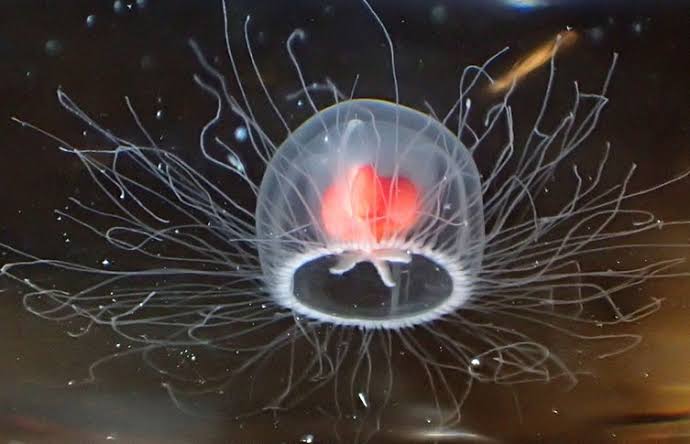
7. The Moon was made when a rock smashed into Earth

The most widely-accepted explanation is that the Moon was created when a rock the size of Mars slammed into Earth, shortly after the solar system began forming about 4.5 billion years ago.

8. The Moon makes the Earth move as well as the tides

Everyone knows that the Moon is partly responsible for causing the tides of our oceans and seas on Earth, with the Sun also having an effect. However, as the Moon orbits the Earth it also causes a tide of rock to rise and fall in the same way as it does with the water. The effect is not as dramatic as with the oceans but nevertheless, it is a measurable effect, with the solid surface of the Earth moving by several centimetres with each tide.

9. The Moon has quakes too

They’re not called earthquakes but moonquakes. They are caused by the gravitational influence of the Earth. Unlike quakes on Earth that last only a few minutes at most, moonquakes can last up to half an hour. They are much weaker than earthquakes though.

10. There is water on the Moon!

This is in the form of ice trapped within dust and minerals on and under the surface. It has been detected on areas of the lunar surface that are in permanent shadow and are therefore very cold, enabling the ice to survive. The water on the Moon was likely delivered to the surface by comets.

Do Hamsters live Together?

The most frequently and general questions asked by the owners/animal lover who raises Hamster in their household. Can hamster live together?

The answer is very simple. Most of hamsters breed can live together but important point is you must know that which bread of hamster is yours. There are two types of hamsters breed in general; Syrian hamsters and dwarf hamsters whether your hamster is Syrian breed or dwarf hamsters one or another one.

Syrian hamsters generally are very territorial of their space, they doesn’t share their space, they normally grows up to 8inches in length when they are fully grown whereas, the dwarf hamsters normally maximum growths hardly nearly 4inches; mostly are of 2 to 3inches. Syrian hamsters will be not familiar in sharing their space as they enjoy company of their family members not even from their same bread. Syrian hamsters are very active and curious in general. They enjoy interaction with their family only. Even though they look very similar as one but the Syrian hamster tends to have more rounder and larger eyes compare to dwarfs hamsters. Hence, questing still linger, Can hamster live together. Yes, Hamsters can live together but Syrian hamster doesn’t live together with another hamster.

It is known that Syrian hamsters normally can’t share their cage with other species of hamsters whereas; dwarf hamsters on the hand are fairly sociable pets. Dwarf hamsters are able to live in a cage with other hamsters without any circumstance. They are tending to be way more active, tiny and fast. Unlike Syrian hamsters dwarfs will run and hide when a human tries to handle or pet them in general. They rather prefer to enjoy company alone or with other dwarf hamsters. So, Can hamster live together. Yes, Dwarf hamsters are very much live together with other hamsters.

For the owners who want to keep two or more hamsters together, dwarf hamsters are recommended. They can live happily live together in pairs and groups as long as they are given their adequate space.

Even after that if you’re still planning to keep different breads of hamsters together. There are few general tricks through which you can try keeping multiple hamsters in one cage or their space.

  1. Provide big space

It is one of the foremost important tricks; first is to provide enough big space for them to have their own friendly open area instead of putting them together in a small cage. In big space, they will be able to play around separately. And gradually, will be able to play, interact and live together in one space.

  1. Introduce them.

Even though different bread of hamsters doesn’t get along at first, you (owner) must introduce them especially if they are bought in at same period of time, it will be a lot easier for them to share a space. Hamsters’ nature of territory is same as other animals. If another one is brought after period gap of first one, previous one tends to be very protective about their space which leads to un-healthy environment for the second hamsters and will lead to fights among them which is why it is very important to introduce them first thing after putting them in their space to live them together.

  1. Prepare separate feeding area

One most vital area to avoid fights is to provide each hamster with their own food bowl and water bottle. This will genuinely lead to reduction for causing fights as hamsters will always eat elsewhere if the dominant hamster is feeling protective of his or her food.

  1. Keep update on their behavior

Even if at first your hamsters have been getting well but suddenly hamsters starts attacking each other. To prevent you must monitor their behavior time to time. If one act violently towards other one. They must be separated for time being. After weeks, try to put the hamster in main cage and reintroduce them to have a neutral ground. If its work, its best hamster, they can live together again but if they start getting irritable with each other. It is best to separate them permanently as it is what’s best for your pets mentally and physically.

  1. Gender

Before adopting the hamster, you must have knowledge which gender that you want to pet because it is not reliable to put male and female hamsters in one space instead putting same gender of hamsters can live together.

Even after all mentioned method one might still wonder; can hamster live together. They can if you provide enough time and attention to opt the tricks handsomely. Hamsters in general are very territory species of pet. It is important to get them along in order to able live them together in one space.  

Additional vital point is that if can hamster live together. If you want your hamster to live together with another hamster, take the breads of hamster which can be able to share their space as dwarf hamsters or one must try four elements of tricks which can help in keeping different breads of hamster in one space.

How To Be More Creative And Enhance Your Creativity

Disaster and disaster management

If we look at the disasters that have taken place earlier, we can easily say that nature is not merely responsible for them to happen. They happen due to other reasons too. This is why we have classified them in different categories. First comes the natural disasters which are caused by natural processes. They are the most dangerous disaster to happen which causes loss of life and damage to the earth. Some of the deadliest natural disasters are earthquakes, floods, volcanic eruptions, hurricanes, and more.

Furthermore, we have man-made disasters. They are the results of technological hazards or man’s carelessness. Some of the man-made disasters include fires, nuclear explosions or radiations, oil spills, transport accidents, terrorist attacks and more. Nature has little or no role to play in these types of disasters.

As no country is spared from any kind of disasters, India also falls in the same category. In fact, the geographical location of India makes it a very disaster-prone country. Each year, India faces a number of disasters like floods, earthquakes, tsunami, landslides, cyclones, droughts and more. When we look at the man-made disasters, India suffered the Bhopal Gas Tragedy as well as the plague in Gujarat. To stop these incidents from happening again, we need to strengthen our disaster management techniques to prevent destructive damage .

Disaster management:

Disaster management refers to the efficient management of resources and responsibilities that will help in lessening the impact of the disaster. It involves a well-planned plan of action so we can make effective efforts to reduce the dangers caused by the disaster to a minimum.

Most importantly, one must understand that disaster management does not necessarily eliminate the threat completely but it decreases the impact of the disaster. It focuses on formulating specific plans to do so. The National Disaster Management Authority (NDMA) in India is responsible for monitoring the disasters of the country. This organization runs a number of programs to mitigate the risks and increase the responsiveness.

Proper disaster management can be done when we make the citizens aware of the precautionary measures to take when they face emergency situations. For instance, everyone must know we should hide under a bed or table whenever there is an earthquake. Thus, the NDMA needs to take more organized efforts to decrease the damage that disasters are causing. If all the citizens learn the basic ways to save themselves and if the government takes more responsive measures, we can surely save a lot of life and vegetation.

Let’s look at some of the major natural disasters of recent years in India. These natural disasters were so severe that they affected thousands of people.

1999 – Orissa CycloneIn

1999, a super cyclone struck the coast of the Indian state of Orissa, killing several people and leaving thousands homeless. The loss of public and private properties was in millions.

2001 – Bhuj Earthquake in Gujarat

A trembling earth hit the serious condition of the West on India in Gujarat, which was the one of the main quake land registered on the richter scale in the history of the country.

2004 – Tsunami

The states of southern India have faced waves of high-intensity tsunami sweeping the entire coastal region. The tsunami has also severely affected other South Asian countries, leaving thousands of people dead and billions of dollars worth of public and private property damaged and lost.

The National Disaster Management Authority (NDMA) was created by the Indian National Government to respond quickly to disasters caused by nature or otherwise. The National Disaster Management Academy has been equipped with all the tools and training needed to provide disaster relief.

For many years, the National Disaster Management Authority has dealt with natural disasters, but it needs to be regularly updated with modern equipment to handle disaster situations much more effectively.

Yadadri Temple – More expensive than Ram Mandir

The centuries-old temple on Yadagirigutta, renamed now as Yadadri, was initially confined to just 2,500 square yards of area. Currently, the temple complex encompasses over 14.5 acres.

Telangana chief minister K Chandrasekhar Rao’s dream was to build a magnificent temple in the state that matches Tirumala, India’s richest temple in the neighbouring Andhra Pradesh, and it is now a realty.

The ancient cave shrine of Lord Lakshmi Narasimha Swamy on the picturesque hills of Yadagirigutta, about 70-km away from Hyderabad, is getting ready for inauguration with a complete makeover at cost of nearly ₹1,000 crore.

Hundreds of workers have sweated day and night to make this mission successful and gave final touches to the magnificient 1000 year old temple. Not single brick has been used while constructing the temple. The temple was built entirely using ‘Krishnasila’ or black granite. They were brought from Prakasam district in Andhra Pradesh. Civil engineers and civic officials have raced against the time to complete the necessary civic infrastructure to provide all amenities for the pilgrims.

The temple has more than 100 ‘Yali Pillars’ — as prominently seen in South India’s temples. According to Hindu mythology, Yali is a creature which is part lion, part elephant and part horse. It is sculpted on the pillars.A sprawling 14.5-acre temple complex consists of seven temple domes, including a 100-foot main dome. Chief Architect of the Temple (Sthapathy Advisor) Velu Anandachari said the special mortar and granite would maintain temperature inside the temple according to the seasons. In summers the temple would be cool, in winters warm.Architects said aloe vera was primarily used as an adhesive in the mortar mix, and the inknut would ward off insects — drawn because of the jaggery.At least 3,000 tonnes of mortar were used for the temple. The mix was set aside for a month before being applied. This gave a better finish, architects said.

Similarly, works on pushkarni (tank where devotees take a holy dip before having darshan), Kalyana Katta (tonsuring hall), circular road and queue lines, prasadam complex, works on various other developmental works in the pilgrim town including provision of tourist facilities comprising cottages, multilevel parking and housing for the temple priests in a total area of 1,400 acres have been completed have been completed by March end and temple has been inaugurated in May.

The total cost of the Yadadri project is around ₹1,800 crore

The centuries-old temple on Yadagirigutta, renamed now as Yadadri, was originally confined to just 2,500 square yards of area. Now, the temple complex is spread over 14.5 acres. The main hillock where the cave temple is located and eight other hills and lush green forests adjacent to it are being developed into a beautiful temple town.

The temple has been redeveloped according to the ancient Agama shastra (scriptures dealing with construction of temples) and other Vedic scriptures and is going to be the center of pilgrimage in Telangana.

International dogs day August 26.

● International Dog Day is observed every year on August 26 to raise awareness about dog adoption and the importance of providing rescue dogs with a safe and loving environment.

● The day was started as National Dog Day in the US in 2004 by pet & family lifestyle expert, animal rescue advocate, conservationist and dog trainer Colleen Paige.

● August 26 was chosen as on this day, Paige’s family had adopted their first dog ‘Sheltie’ from an animal shelter when she was just 10 years old.

Dogs are the most beautiful soul in this world,There are so much people spreading their love towards dog, even I too. Dogs are born to be affectionate and dogs knew how to care very well more than a person. Dogs are gifted souls from the Almighty, even it has only five senses, but dog know how to treat and behave with people’s. If we gave our love and affection towards dog then it will give us the happiness of life in double without any depression, distress and tensed. we can have a peaceful life by seeing dog face and their cute gestures.

There is no medicine to heel grief more than a dog🐶🐕.

And you know one thing dogs are the best one to show how to be perfect. Like we learn from people there are certain things to learn from dogs too. If we teach them to do their routine works in particular place itself…, then it will continue doing that everyday. That’s a great thing about pets ❤

Happy to have this international day to celebrate and embrace dog. As if you are a dog lover you doesn’t take only this day to recognise your loved pet. Because Dog lovers did not live without thinking, feeling, remembering about dog🐕.

This day is not only for the domestic pets but also for all the dogs in the world. So being remembering this day please have a look and takecare your street dogs as well. Because there is no difference between domestic dogs and Street dogs… Simply they are all dogs and has a feelings too ❤.

Don’t be crucial on pets…, if we show our love on them why would they change? All the changes is in our one step.

Believing you to be kindness…,

Can we really ignore climate change now?

When talking about climate change one would think that the end of the world would be enough to get us scared. We have always been an exceedingly risk-averse species—which is also one of the reasons we survived as a species. If there are lions on one part of the savannah, we go to another. If crocodiles keep coming out of the river, we fish somewhere else. So why is it that when it comes to take action to prevent the loss of life on the entire planet we don’t do anything at all.

This behaviour is on display again, in the wake of an announcement by United Nations Inter-governmental panel on climate change, that a catastrophe is near—and the distant future of an Earth ravaged by floods, droughts, wildfires, earthquakes and cyclones isn’t far anymore, but as close as mere 12 years away. According to the report if we don’t act fast the temperatures are expected to rise by a staggering 1.5 C above the average pre-industrial era – and has been touted as a tipping point for a calamity. Hearing this there has been a wide uproar amongst the members of the public and people have started to take action against climate change, big oil companies have started to commit to prevent climate change and….we wish all of it were true. As always the public reaction towards the climate change has been – meh.

Why are we like this? Research published over the decaes have shown us that we are masters at miscalculating risk – over prepare for things that are low in imminent danger and ignoring things that are. Climate change represents everything that is wrong with our thinking towards the planet and calls of environmental scientists and policy makers to wake people from the perils we are going to face are getting ignored. For starters, it lacks the absolutely critical component—the “me” component. “Nobody wakes up in the morning and looks at the longterm climate forecast,” says David Ropeik, an international consultant on risk perception and communication, formerly with the Harvard School of Public Health. “They ask what the weather is today, where I live, and how it’s going to affect me.”

That’s sensible as far as it goes. One of the main reasons behind this is the way humans think- immediate concerns will always trump eventual concerns. Even if try to think about climate change, we will not be able to see changes right away – not in a day, in a week, in a month or even a year. Change comes gradually and if one thing that past has shown us, is that humans lack one thing called as ‘patience’. Also to change the things in the future we would need to sacrifice a lot in the present which most countries aren’t willing to do so.

Advancements in technologies have become so fast that our comfort levels have risen dramatically and today comfort has become a paramount wall between us and a greener Earth. Paul Slovic, Psychologist – University of Oregon said, “When it comes to acting on problems, the lure of our current comforts and conveniences will often cause us to act contrary to our values. If we think the consequences are far in the future, we tend to discount the risk. People just aren’t going to inconvenience themselves unless they’re forced to.”

Indeed, even when the risk is not far in the future—when, say, a hurricane is cannonballing toward the coast and the government orders an evacuation—plenty of people still don’t budge. Here, what’s known as the optimism bias is at work. Other people may need to make tracks, but your storm windows are top-of-the-line or your house is on slightly higher ground, so why get off the couch? If we find it so easy to talk ourselves out of acting in the face of a storm that’s just days away, a disaster that’s many years away doesn’t stand a chance.

We establish that kind of distance from risk not just temporally but geographically and culturally. If you live in an inland region, well, the floods are going to inundate the suckers on the coast, not you. If you live on the coast, it’s the south coast that’s going to get hit and you live north. And developed nations like the U.S. are typically going to be able to deal with climate instability better than developing ones, which allows us to conclude that while disasters happen elsewhere they don’t happen here.

“The question is often, ‘Do I feel vulnerable?’” says Slovic. “For the most part we don’t and that shapes our behavior.”

Even when we do try to personalize things, we have a hard time doing it. We can picture what it would be like to get eaten by a shark, Ropeik says, or die in a mass shooting or an airplane crash. That leads us to over-prepare for those risks—arming teachers, avoiding the beach, driving instead of flying even though driving is manifestly more dangerous.

“But if you ask even the most devout climate change believers how they think it’s going to affect them, they often can’t quite describe it,” he says. If it’s hard to picture, it’s easy to ignore.

Finally, there’s a sense of futility—the inefficacy factor, as risk experts put it. Climate change is a huge problem—arguably the biggest of all problems—and that makes individual action seem awfully pointless. “We reason that we can curtail things we want to do—like driving or flying,” says Slovic, “but if other people aren’t going to do it, it’s not going to make any difference.”

Of course, every great human enterprise has called on people not to do things they want to do or to do things they don’t—paying taxes, volunteering for military service, tolerating rationing in time of war. None of it is fun, none of it is easy, but all of it has helped ensure the success of the larger human project and the survival of the next generations. If we can’t bestir ourselves now, in the face of yet another alarming report from the climate change scientists, we’re going to owe those generations an explanation—and an apology.
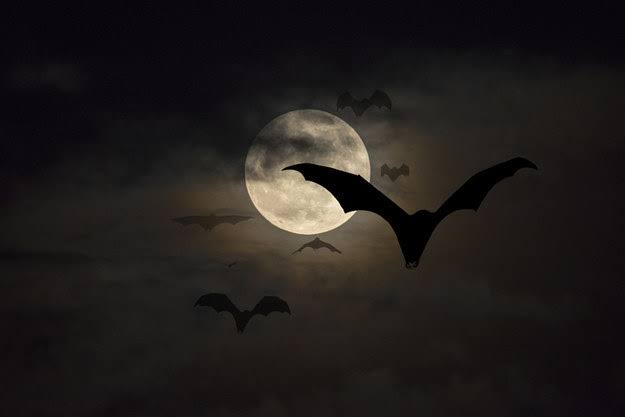
HISTOPLASMOSIS-SYMPTOMS,TREATMENT, DIAGNOSIS

BY DAKSHITA NAITHANI

INTRODUCTION

Histoplasmosis is a fungal infection caused by Histoplasma capsulatum, a fungus. Spores suspended in the air by birds and bats are frequently the source of this illness. If the infection is limited to the lungs, it is not dangerous. It might be deadly if it spreads across the entire body. This condition mostly affects immune-compromised people, most of who are suffering from AIDS.

Histoplasma capsulatum is a soil microorganism that is frequently linked with decomposing sediments. Infectious elements are frequently released by disrupted soil particles, which are breathed by humans and settle into their lungs.

Histoplasmosis is often known as the Darlings’ disease, after Samuel Darling, who first found the virus in Panama.

SYMPTOMS

Histoplasmosis is characterised by a high fever. The fungus Histoplasma causes no symptoms in the majority of persons who are exposed to it. Others may experience symptoms that subside on their own.   Coughing: Fatigue (severe exhaustion): Chills: Headache: Body aches: Chest pain Histoplasmosis symptoms might emerge anywhere from 3-17 days after a person inhales the fungus spores. These symptoms usually fade away in a few weeks to a month for most people. However, some people’s symptoms might persist much longer, particularly if the condition is acute. Histoplasmosis can cause a long-term infection in certain individuals, especially those with compromised immune systems, or it can move from the lungs to other regions of the body, such as the central nervous system.
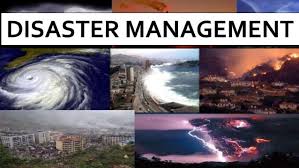
RISK AND PREVENTION

If you’ve been in a region where Histoplasma is present in the environment, you can acquire Histoplasmosis. It I s frequently linked to soil disturbance, specifically soil containing bird and bat droppings. Certain persons are more likely to acquire severe types than others:

People who have weakened immune systems, for example, people who:

  • Are patients of HIV/AIDS
  • Had an organ transplant
  • Are taking medications such as corticosteroids or TNF-inhibitors
  • Infants
  • Adults aged 55 and older

Histoplasmosis cannot be transmitted from one person to another or between humans and animals through the lungs. The illness can, however, be transferred through a transplant with an affected organ in exceedingly rare circumstances.

In regions where it is prevalent, it might be difficult to avoid breathing it in. People with compromised immune systems should avoid undertaking behaviours that are known to be linked with Histoplasmosis in locations where it is present, such as:

  • Disturbing material where there are bird and bat droppings
  • Cleaning chicken coops
  • Exploring caves
  • Cleaning, remodelling, and  tearing down old buildings

Professional firms that specialise in the cleaning of hazardous material should clear up large volumes of bird and bat droppings.

TREATMENT AND DIAGONOSIS

Although direct diagnosis of Histoplasmosis (HP), one of the most common endemic mycoses in the world, is achieved by micro as well as macroscopic observation of Histoplasma capsulatum, serologic indication of this infection is important because etiologic agent isolation is time-consuming and unresponsive. To identify specific antibodies to H. capsulatum, a number of immunoassays have been utilised. Immuno-diffusion is the most often used technique for antibody detection, with a sensitivity of 70 -100 percent depending on the clinical form.

The complement fixation test, which was formerly widely employed, is less specific (60 – 90 percent). Immunoassays for detecting fungal antigens are particularly useful in patients with low immunity, with positive predicted results of 96–98%. The majority of modern diagnostic tests still use unpurified antigenic complexes derived from entire fungal cells or their culture filtrates. Clinical immunoassays employing highly pure and well-characterized antigens, including recombinant antigens, are now the focus.

For diagnosis doctors use your medical and travel history, symptoms, physical examinations, and laboratory testing. Taking a blood sample or a urine sample and submitting it to a facility is the most frequent way that healthcare practitioners test for Histoplasmosis.

Imaging studies, such as chest X-Rays or CT scans of lungs may be performed by your healthcare professional. A sample of fluid from your lungs is used or a tissue biopsy is performed, which involves taking a tiny sample of damaged tissue from your body and examining it under a microscope. Research facilities may also examine if Histoplasma may develop in bodily fluids or tissues.

 Symptoms may go away without therapy in some persons. To treat severe infection in the lungs, persistent Histoplasmosis, and infections that have moved from the lungs to other areas of the body, prescription antifungal medicine is required. Antifungal medications like Itraconazole are widely used to treat Histoplasmosis.  If you have a minor case treatment is typically not required. However, if your symptoms are severe, or if you have the chronic or disseminated type of the condition, you’ll almost certainly need antifungal medication. You may need to take medicines for three months to a year if you have a severe version of the condition.

HISTORICAL MYSTERIOUS THAT MIGHT NEVER BE SOLVED .

A part of existing on this planet is being surrounded with hundreds of mysterious that are far from being solved . Here are a few mysterious that have not being solved , and probably never will.

HANGING GARDENS OF BABYLONIA – Hanging gardens of Babylonia were allegedly the seven wonders of the world, but its pretty much unclear whether it existed in the first place or not . It is believed that the hanging gardens of Babylonia was constricted at the city of Babylonia , present day Iraq . Archeologists have been able to excavate Babylonia , but they could not find the garden , which brought up the simple question – did the hanging gardens of Babylonia actually exist?

CLEOPATRA’S TOMB – There were several ancient writers who firmly stated that Cleopatra the VIII th was buried with her lover, Anthony and writer Plutarch claimed that their tombs were located near a temple of Egyptian Goddess Isis . But till date there are no leads to their tombs .

CITY OF ATLANTIS – The famous Greek philosopher Plato had written about a fictitious city named Atlantis , which was was situated in the Atlantic ocean . Plato , in his story had written that in a conflict between Athenians and Atlantis , the Athenians had struck back , which resulted in Atlantis disappearing .

OAK ISLAND – It is believed that there is a money pit buried in the oak island . The oak island is located off Nova Scotia , Canada . It is believed that the money was left by a pirate named Captain William Kid .There have been several expeditions to find the hidden money , but all in vain .

To Read List (Chick-Lit)

I would love it if my book was considered chick-lit or a beach read. That would be great. People would buy my book.

emily gould
See the source image

Introduction

Chick lit was a genre widely popular in the 90s and early 2000s, referred to books usually written by women for women and about women. These books centred in on a female protagonist and the plot usually revolved around some cliché themes or highlight some important themes doused with humour and good natured drama. Though bashed by several authors as sexist, chick- lit continues to be one of the favourite genera of all times.

Chick Lit uses humour to reflect life back to us. It’s a very comforting genre, and it’s the first time our generation has had a voice. It’s a very important genre for all of those reasons.

Marian Keyes

Chick Lit is a sub genre of women- fiction and caters mainly to its women target audience.

Curated below is a list of 4 Chick Lits that you absolutely need to check out.

1. After I Do

18775359. sy475

‘After I do’, is a book by the notable author of ‘ The seven Husbands of Emily Hugo’, Taylor Jenkin Reid. This book revolves around a marriage traipsing on the edge of collapse and the lengths people involved go to to save it.

Lauren and Ryan’s marriage is on the verge of falling apart, when, in order to save their marriage they devise a plan and decide to take a year apart to rediscover themselves and find their love again. There’s a rule though, they can’t contact each other for the entire time spent apart.

This book delves into simple yet notably important things that are generally overlooked in the everyday life. This is perfect light read for the weekend that makes us question the nuances of love and marriage.

2.The Hating Game

25883848. sy475

Sally Thorne’s, ‘The Hating Game’ follows a enemies to something more kind of trope. Lucy Hutton, the smart, charming, professional, good girl. Joshua Templeman, dressed to the nines, cold , stoic and efficient. These two manifest the definition of nemesis like no one else. Stuck in the same office at Bexley & Gamin for long periods together, they have got going a series of strange games of outfoxing each other. With a significant promotion coming up that can land Lucy as Templeman’s boss, Lucy is all in for the real game, however, she is utterly unrehearsed for the strange feelings rooting in for her arch-nemesis.

This is the kind of book that everyone loves, sharp and sweeping.

3. Miss Makeover

36335536. sy475

Claire Betita de Guzman’s, ‘Miss Makeover’, revolves around Mara Francisco, a fashion writer, who gets a major makeover ends up receiving attention from the ever charming  Markus. When things do not go as she anticipated and to escape her insecurities she rushes off to a to a remote town in the Philippines to attend a beauty boot camp that does not allow makeup for the participants through the entire six day program.

Not armed with makeup for the first time since forever, Mara will have to meander her way through her insecurities. Throw in an old high school crush and an elusively cold local in the mix and you have a tale worth remembering!

The kind of book that almost everyone can relate to.

4. Manhunting

33737

Jennifer Cruise’s, ‘Manhunting’, is centred around Kate Svenson, a suave woman with an equally strong foothold on the corporate ladder. The only glitch in her life is her terrible love life. After three broken engagements, Kate decides to go all out in search of her perfect match.

A swarm of eligible bachelors in the Cabins resort, wrong perceptions and several troubles later Kate and the ever indifferent Jake Templeton stagger for a footing on the ladder of love.

A hilarious and sizzling romance.

EMOTIONAL INTELLIGENCE

The term emotional intelligence was termed by Michel Beldoch in 1964. The term means “it’s the capacity and ability to understand and manage your own emotions in a positive manner. People with high emotional intelligence are well adjusted individual as their emotions are in tune, they can co-up with their stress and panic and are able to handle the situation in an appropriate way. As a result they are able to com up with proper solution in a crucial situation.

Emotional intelligence have five components;

1) Self awareness: It’s an ability to perceive and understand your own emotions. A well adjusted individual is aware of their emotions; like their strength and weakness?

2) Self regulation: It’s controlling the expression of our emotions, an ability to express ourselves appropriately at right place and time; like controlling your laughter when some one can feel bad at.

3) Self motivation: It’s one’s motivation to change , you are setting an aim to achieve it and u are determined to do it; liked getting succeed in your career.

4) Empathy: It’s an emotion of putting yourself into someone’s else shoes. Understanding their situation and their point of view and feeling their pain; like helping a helpless person keeping your biases aside?

5) Social skills: It’s an ability to interact well with others which includes active communication, leadership skills and many more.

HUMAN EYES

Human eye, in humans, specialized sense organ capable of receiving visual images, which are then carried to the brain.

Anatomy of the visual apparatus


Structures auxiliary to the eye


The orbit

The eye is protected from mechanical injury by being enclosed in a socket, or orbit, which is made up of portions of several of the bones of the skull to form a four-sided pyramid, the apex of which points back into the head. Thus, the floor of the orbit is made up of parts of the maxilla, zygomatic, and palatine bones, while the roof is made up of the orbital plate of the frontal bone and, behind this, by the lesser wing of the sphenoid. The optic foramen, the opening through which the optic nerve runs back into the brain and the large ophthalmic artery enters the orbit, is at the nasal side of the apex; the superior orbital fissure is a larger hole through which pass large veins and nerves. These nerves may carry nonvisual sensory messages—e.g., pain—or they may be motor nerves controlling the muscles of the eye. There are other fissures and canals transmitting nerves and blood vessels. The eyeball and its functional muscles are surrounded by a layer of orbital fat that acts much like a cushion, permitting a smooth rotation of the eyeball about a virtually fixed point, the centre of rotation. The protrusion of the eyeballs—proptosis—in exophthalmic goitre is caused by the collection of fluid in the orbital fatty tissue.

The eyelids


It is vitally important that the front surface of the eyeball, the cornea, remain moist. This is achieved by the eyelids, which during waking hours sweep the secretions of the lacrimal apparatus and other glands over the surface at regular intervals and which during sleep cover the eyes and prevent evaporation. The lids have the additional function of preventing injuries from foreign bodies, through the operation of the blink reflex. The lids are essentially folds of tissue covering the front of the orbit and, when the eye is open, leaving an almond-shaped aperture. The points of the almond are called canthi; that nearest the nose is the inner canthus, and the other is the outer canthus. The lid may be divided into four layers: (1) the skin, containing glands that open onto the surface of the lid margin, and the eyelashes; (2) a muscular layer containing principally the orbicularis oculi muscle, responsible for lid closure; (3) a fibrous layer that gives the lid its mechanical stability, its principal portions being the tarsal plates, which border directly upon the opening between the lids, called the palpebral aperture; and. (4) the innermost layer of the lid, a portion of the conjunctiva. The conjunctiva is a mucous membrane that serves to attach the eyeball to the orbit and lids but permits a considerable degree of rotation of the eyeball in the orbit.

The conjunctiva

The conjunctiva lines the lids and then bends back over the surface of the eyeball, constituting an outer covering to the forward part of this and terminating at the transparent region of the eye, the cornea. The portion that lines the lids is called the palpebral portion of the conjunctiva; the portion covering the white of the eyeball is called the bulbar conjunctiva. Between the bulbar and the palpebral conjunctiva there are two loose, redundant portions forming recesses that project back toward the equator of the globe. These recesses are called the upper and lower fornices, or conjunctival sacs; it is the looseness of the conjunctiva at these points that makes movements of lids and eyeball possible.

The fibrous layer


The fibrous layer, which gives the lid its mechanical stability, is made up of the thick, and relatively rigid, tarsal plates, bordering directly on the palpebral aperture, and the much thinner palpebral fascia, or sheet of connective tissue; the two together are called the septum orbitale. When the lids are closed, the whole opening of the orbit is covered by this septum. Two ligaments, the medial and lateral palpebral ligaments, attached to the orbit and to the septum orbitale, stabilize the position of the lids in relation to the globe. The medial ligament is by far the stronger.

The skin


The outermost layer of the lid is the skin, with features not greatly different from skin on the rest of the body, with the possible exception of large pigment cells, which, although found elsewhere, are much more numerous in the skin of the lids. The cells may wander, and it is these movements of the pigment cells that determine the changes in coloration seen in some people with alterations in health. The skin has sweat glands and hairs. As the junction between skin and conjunctiva is approached, the hairs change their character to become eyelashes.

The glandular apparatus


The eye is kept moist by secretions of the lacrimal glands (tear glands). These almond-shaped glands under the upper lids extend inward from the outer corner of each eye. Each gland has two portions. One portion is in a shallow depression in the part of the eye socket formed by the frontal bone. The other portion projects into the back part of the upper lid. The ducts from each gland, three to 12 in number, open into the superior conjunctival fornix, or sac. From the fornix, the tears flow down across the eye and into the puncta lacrimalia, small openings at the margin of each eyelid near its inner corner. The puncta are openings into the lacrimal ducts; these carry the tears into the lacrimal sacs, the dilated upper ends of the nasolacrimal ducts, which carry the tears into the nose.

The evaporation of the tears as they flow across the eye is largely prevented by the secretion of oily and mucous material by other glands. Thus, the meibomian, or tarsal glands, consist of a row of elongated glands extending through the tarsal plates; they secrete an oil that emerges onto the surface of the lid margin and acts as a barrier for the tear fluid, which accumulates in the grooves between the eyeball and the lid barriers.

THE EYE

General description


The eyeball is not a simple sphere but can be viewed as the result of fusing a small portion of a small, strongly curved sphere with a large portion of a large, not so strongly curved sphere. The small piece, occupying about one-sixth of the whole, has a radius of 8 mm (0.3 inch); it is transparent and is called the cornea; the remainder, the scleral segment, is opaque and has a radius of 12 mm (0.5 inch). The ring where the two areas join is called the limbus. Thus, on looking directly into the eye from in front one sees the white sclera surrounding the cornea; because the latter is transparent one sees, instead of the cornea, a ring of tissue lying within the eye, the iris. The iris is the structure that determines the colour of the eye. The centre of this ring is called the pupil. It appears dark because the light passing into the eye is not reflected back to any great extent. By use of an ophthalmoscope, an instrument that permits the observer to illuminate the interior of the eyeball while observing through the pupil, the appearance of the interior lining of the globe can be made out. Called the fundus oculi, it is characterized by the large blood vessels that supply blood to the retina; these are especially distinct as they cross over the pallid optic disk, or papilla, the region where the optic nerve fibres leave the globe.

The dimensions of the eye are reasonably constant, varying among normal individuals by only a millimetre or two; the sagittal (vertical) diameter is about 24 mm (about one inch) and is usually less than the transverse diameter. At birth the sagittal diameter is about 16 to 17 mm (about 0.65 inch), it increases rapidly to about 22.5 to 23 mm (about 0.89 inch) by the age of three years, and between age three and 13 the globe attains its full size. The weight is about 7.5 grams (0.25 ounce) and its volume about 6.5 cm3 (0.4 cubic inch).

The retina


The retina is the part of the eye that receives the light and converts it into chemical energy. The chemical energy activates nerves that conduct the messages out of the eye into the higher regions of the brain. The retina is a complex nervous structure, being, in essence, an outgrowth of the forebrain.

Ten layers of cells in the retina can be seen microscopically. In general, there are four main layers: (1) Next to the choroid is the pigment epithelium, already mentioned. (2) Above the epithelium is the layer of rods and cones, the light-sensitive cells. The changes induced in the rods and cones by light are transmitted to (3) a layer of neurons (nerve cells) called the bipolar cells. These bipolar cells connect with (4) the innermost layer of neurons, the ganglion cells; and the transmitted messages are carried out of the eye along their projections, or axons, which constitute the optic nerve fibres. Thus, the optic nerve is really a central tract, rather than a nerve, connecting two regions of the nervous system, namely, the layer of bipolar cells, and the cells of the lateral geniculate body, the latter being a visual relay station in the diencephalon (the rear portion of the forebrain).

Importance of Eye Care

Your eyesight is one of your most important senses: 80% of what we perceive comes through our sense of sight. By protecting your eyes, you will reduce the odds of blindness and vision loss while also staying on top of any developing eye diseases such as cataracts and glaucoma.

Eye Health = Brain Health


Healthy brain function needs healthy eyesight. The brain is our most vital organ, allowing us to live complex lives. Considering that your optic nerve connects your eyes and your brain, a healthy co-dependent relationship is necessary. By keeping your eyes healthy, you keep your brain healthy – improving your overall quality of life!

Good vision contributes to improved athletic ability, better driving skills, improved learning and comprehension and better quality of life.

Your future can be colorful and full of life just by making sure you see your optometrist as recommended. The experienced eye doctors at Medical Eye Associates in Medford are ready to help you preserve and protect your vision. Contact them today at 800-824-2688 or medicaleycenter.com to schedule an eye exam.

Social media marketing


The term social media marketing refers to the use of social media and social networks to market a company’s products and services. Social media marketing provides companies with a way to engage with existing customers and reach new ones while allowing them to promote their desired culture, mission, or tone. Social media marketing has purpose-built data analytics tools that allow marketers to track the success of their efforts. Sites like Facebook, Twitter, and Instagram are commonly used to execute social media marketing. Social media has changed the way we function as a society, including the way we connect with one another. Social media websites allow marketers to employ a broad range of tactics and strategies to promote content and have people engage with it. Many social networks allow users to provide detailed geographical, demographic, and personal information, which enables marketers to tailor their messages to what is most likely to resonate with users. Social media marketing campaigns have the advantage of appealing to a broad audience at once. Viral marketing seeks to spread information about a product or service from person to person by word of mouth or sharing via the internet or email. The goal of viral marketing is to inspire individuals to share a marketing message to friends, family, and other individuals to create exponential growth in the number of its recipients. Today’s consumers rush to browse social media when they want to know more about an organization or product because that’s where they’ll find others talking about that business. Social media is an ideal place for brands looking to gain insights into their audience’s interests and tastes. The way experts see it, smart companies will continue to invest in social media to achieve sustainable business growth. Whether you want to launch a new product or a business, social media is the perfect launchpad to create a buzz around your initiatives. As we move further into the future of e-commerce, it’s clear that social media marketing isn’t just an option. In an increasingly competitive environment, your business can’t afford to miss out on social media. It’s especially competitive in the social media influencer space, where there are thousands of new influencers starting a brand every day. If you’re trying to build more of an online presence to become a social media influencer, make sure to read our comprehensive guide. A few years ago, the sole purpose of using social media channels was to generate website traffic. Today, it has developed into something more than just a place to broadcast content. Twitter allows companies to promote their products in short messages known as tweets limited to 280 characters which appear on followers Home timelines Tweets can contain text, Hashtag, photo, video, Animated, Emoji, or links to the product’s website and other social media profiles, etc. Twitter is also used by companies to provide customer service. Some companies make support available 24/7 and answer promptly, thus improving brand loyalty and appreciation.Facebook pages are far more detailed than Twitter accounts. They allow a product to provide videos, photos, longer descriptions, and testimonials where followers can comment on the product pages for others to see. Facebook can link back to the product’s Twitter page, as well as send out event reminders. As of May 2015, 93% of businesses marketers use Facebook to promote their brand A study from 2011 attributed 84% of “engagement” or clicks and likes that link back to Facebook advertising. By 2014, Facebook had restricted the content published from business and brand pages. LinkedIn, a professional business-related networking site, allows companies to create professional profiles for themselves as well as their business to network and meet others. Through the use of widgets, members can promote their various social networking activities, such as Twitter stream or blog entries of their product pages, onto their LinkedIn profile page. LinkedIn provides its members the opportunity to generate sales leads and business
partners. Ability WhatsApp was founded by Jan Koum and Brian Acton. Joining Facebook in 2014, WhatsApp continues to operate as a separate app with a laser focus on building a messaging service that works fast and reliably anywhere in the world. Started as an alternative to SMS, WhatsApp now supports sending and receiving a variety of media including text, photos, videos, documents, and location, as well as voice calls. WhatsApp messages and calls are secured with end-to-end encryption, meaning that no third party including WhatsApp can read or listen to them. WhatsApp has a customer base of 1 billion people in over 180 countries. It is used to send personalised promotional messages to individual customers. It has plenty of advantages over SMS that includes to track how Message Broadcast Performs using blue tick option in WhatsApp.Instagram has proven itself a powerful platform for marketers to reach their customers and prospects through sharing pictures and brief messages. According to a study by Simply Measured, 71% of the world’s largest brands are now using Instagram as a marketing channel For companies, Instagram can be used as a tool to connect and communicate with current and potential customers. The company can present a more personal picture of their brand, and by doing so the company conveys a better and true picture of itself. The idea of Instagram pictures lies on on-the-go, a sense that the event is happening right now, and that adds another layer to the personal and accurate picture of the company. In fact, Thomas Rankin, co-founder and CEO of the program Dash Hudson, stated that when he approves a blogger’s Instagram post before it is posted on the behalf of a brand his company represents, his only negative feedback is if it looks too posed. Social media is a reliable asset for the promotion of product.

Capitalism

It is an economic system where the trade and industries are controlled by private owners for profit, rather than by the state. Market economy is the basis of production. Market economy is basically production of goods and services is based on supply and demand in the general market. It also involves free trade as a component. Today, most countries practice a mixed capitalist system that includes some degree of government regulation of business and ownership of select industries. A prominent supporter of capitalist economy is united states of America. Instead of planning economic decisions through centralized political methods, as with socialism or feudalism, economic planning under capitalism occurs via decentralized and voluntary decisions. Capitalism developed historically out of previous systems of feudalism and mercantilism in Europe, and dramatically expanded industrialization and the large-scale availability of mass-market consumer goods. Private property rights are fundamental to capitalism. With a common pool resource, which all people can use, and none can limit access to, all individuals have an incentive to extract as much use value as they can and no incentive to conserve or reinvest in the resource. Privatizing the resource is one possible solution to this problem, along with various voluntary or involuntary collective action approaches. Capitalism has many unique features, some of which include a two-class system, private ownership, a profit motive, minimal government intervention, and competition. In Marxist theory, the class structure of the capitalist mode of production is characterized by the conflict between two main classes: the bourgeoisie, the capitalists who own the means of production and the much larger proletariat who must sell their own labour power. The economy is run by individuals (or corporations) who own and operate companies and make decisions as to the use of resources. But there exists a “division of labor” that allows for specialization, typically occurring through education and training, further breaking down the two class system into sub-classes. Consumer sovereignty is the system in which market is controlled by the demands of the consumer. It regulates the level of production undertaken by the companies, and the consumer is free to decide which products to purchase. Free trade is the system where, the low tariff barriers exist that promote international trade. In a capitalist economy, there is no government interference in the daily activities of the business. The customers and producers are free to make their own decisions regarding any product or service. Flexibility in labour markets in capitalism, there is a flexibility in hiring and firing of the workforce. Freedom of ownership .In thissystem, an individual can accumulate any amount of property and use it according to his will. After his death, the same property is passed on to the successors by the right of inheritance.

Capitalism

Capitalism is an economic system where the trade and industries are controlled by private owners for profit, rather than by the state. Market economy is the basis of production. Market economy is basically production of goods and services is based on supply and demand in the general market. It also involves free trade as a component. Today, most countries practice a mixed capitalist system that includes some degree of government regulation of business and ownership of select industries. A prominent supporter of capitalist economy is united states of America. Instead of planning economic decisions through centralized political methods, as with socialism or feudalism, economic planning under capitalism occurs via decentralized and voluntary decisions. Capitalism developed historically out of previous systems of feudalism and mercantilism in Europe, and dramatically expanded industrialization and the large-scale availability of mass-market consumer goods. Private property rights are fundamental to capitalism. With a common pool resource, which all people can use, and none can limit access to, all individuals have an incentive to extract as much use value as they can and no incentive to conserve or reinvest in the resource. Privatizing the resource is one possible solution to this problem, along with various voluntary or involuntary collective action approaches. Capitalism has many unique features, some of which include a two-class system, private ownership, a profit motive, minimal government intervention, and competition. In Marxist theory, the class structure of the capitalist mode of production is characterized by the conflict between two main classes: the bourgeoisie, the capitalists who own the means of production and the much larger proletariat who must sell their own labour power. The economy is run by individuals (or corporations) who own and operate companies and make decisions as to the use of resources. But there exists a “division of labor” that allows for specialization, typically occurring through education and training, further breaking down the two class system into sub-classes. Consumer sovereignty is the system in which market is controlled by the demands of the consumer. It regulates the level of production undertaken by the companies, and the consumer is free to decide which products to purchase. Free trade is the system where, the low tariff barriers exist that promote international trade. In a capitalist economy, there is no government interference in the daily activities of the business. The customers and producers are free to make their own decisions regarding any product or service. Flexibility in labour markets in capitalism, there is a flexibility in hiring and firing of the workforce. Freedom of ownership: In this system, an individual can accumulate any amount of property and use it according to his will. After his death, the same property is passed on to the successors by the right of inheritance.

Mauryan Empire

The Mauryan Empire, which formed around 321 B.C.E. and ended in 185 B.C.E. was the first pan-Indian empire, an empire that covered most of the Indian region. The Mauryan Empire’s first leader, Chandragupta Maurya, started consolidating land as Alexander the Great’s power began to wane. After crowning himself king, Chandragupta took additional lands through force and by forming alliances. Chandragupta’s chief minister Kaustalya advised Chandragupta and contributed to the empire’s legacy. Chandragupta’s government closely resembled the government described in the Arthashastra. Bindusara, Chandragupta’s son, assumed the throne around 300 B.C.E. He kept the empire running smoothly while maintaining its lands. Bindusara’s son, Ashoka, was the third leader of the Mauryam Empire. Ashoka left his mark on history by erecting large stone pillars inscribed with edicts that he issued. After the kalinga war Ashoka reevaluated his commitment to expanding the empire and instead turned to Buddhism and its tenet of nonviolence. Many of his edicts encouraged people to give up violence and live in peace with each other-two important Buddhist principals. After Ashoka’s death, his family continued to reign, but the empire began to break apart. Ashoka was followed for 50 years by a succession of weaker kings. He was succeeded by Dasharatha Maurya, who was Ashoka’s grandson. None of Ashoka’s sons could ascend the throne after him. Mahendra, his first born, was on to spread Buddhism in the world. Kunala Maurya was blind hence couldn’t ascend the throne and Tivala, son of Kaurwaki, died even earlier than Ashoka. Another son, Jalauka, does not have much story behind him. The empire lost many territories under Dasharatha, which were later reconquered by Samprati, Kunala’s son. Post Samprati, the Mauryas slowly lost many territories. The last of the Mauryas, Brihadratha, was assassinated by his commander in chief-a man named Pushyamrita who went on to found the Shunga Dynasty-in 185 B.C.E. The Empire was divided into four provinces, with the imperial capital at Pataliputra. From Ashokan edicts, the names of the four provincial capitals are Tosali, Ujjain,Suvarnagiri, and Taxila. The head of the provincial administration was the Kumara who governed the provinces as king’s representative. The kumara was assisted by Mahamatyas and council of ministers. Coins were mostly made of silver and copper. Certain gold coins were in circulation as well. The coins were widely used for trade and commerce. Farmers were freed of tax and crop collection burdens from regional kings, paying instead to a nationally administered and strict-but-fair system of taxation as advised by the principles in the Arthashastra. Chandragupta Maurya established a single currency across India, and a network of regional governors and administrators and a civil service provided justice and security for merchants, farmers and traders. The Mauryan army wiped out many gangs of bandits, regional private armies, and powerful chieftains who sought to impose their own supremacy in small areas. Although regimental in revenue collection, Maurya also sponsored many public works and waterways to enhance productivity, while internal trade in India expanded greatly due to new-found political unity and internal peace. The Mauryan empire was an efficient and highly organized autocracy with a standing army and civil service. The decline of the Maurya Dynasty was rather rapid after the death of Ashoka. One obvious reason for it was the succession of weak kings. Another immediate cause was the partition of the Empire into two. Had not the partition taken place, the Greek invasions could have been held back giving a chance to the Mauryas to re-establish some degree of their previous power.

Secularism in India and western world

Secularism is basically the principle of separation of the state from religious institutions Indian leaders soon after the independence from British and the partition of British India into India and Pakistan while drafting the constitution enshrined the values of secularism saying no religion is supreme. They believed that people of all the religions are equal and that India should be a country which gives supreme status to none and proclaim proclaim inferior to those who follow other religions. They proclaimed that all the people will be treated equally despite their religious affiliation. With the Forty-second Amendment of the Constitution of India enacted in 1976, the Preamble to the Constitution asserted that India is a secular nation. Secularism as practiced in India, with its marked differences with Western practice of secularism, is a controversial topic in itself. Ashoka about 2200 years ago, Harsha about 1400 years ago accepted and patronised different religions. They back then gave people the liberty to follow their customs and traditions. The people in ancient India had freedom of religion, and the state granted citizenship to each individual regardless of whether someone’s religion was Hinduism, Buddhism, Jainism or any other. Ellora cave temples built next to each other between 5th and 10th centuries, for example, shows a coexistence of religions and a spirit of acceptance of different faiths. The colonial administrators did not separate religion from state, but marked the end of equal hierarchy between Islam and Hinduism, and reintroduced the notion of equality before the law for Hindus, Christians and Muslims. Bronze and Iron Age religion in Europe as elsewhere was predominantly polytheistic. During the Early Middle Ages, most of Europe underwent Christianization, a process essentially complete with the Christianization of Scandinavia in the High Middle Ages. The notion of Europe and the western world has been intimately connected with the concept of Christendom, and many even consider Christianity as the unifying belief that created a European identity, especially since Christianity in the Middle East was marginalized by the rise of Islam from the 8th century. Nazis wanted to exterminate the Jews andthat they were able to do so. But their lust for murder didn’t come out of nowhere. The antisemitic Nazi ideology must be considered in the broader context of the age-old hostility towards Jews, modern racism, and nationalism. Jews in Europe have been discriminated against and persecuted for hundreds of years, often for religious reasons. For a start, they were held responsible for the death of Christ. Bosnia and Yugoslavia are also some astonishing examples of killings on the basis of sects where one sect was denied of the rights and was massacred my the other dominant sect. The Bosnian genocide refers to either the Srebrenica massacre or the wider crimes against humanity and ethnic cleansing campaign throughout areas. The ethnic cleansing that took place in VRS-controlled areas targeted Bosniaks and Bosnian Croats. So to concluded India from older times was a nation holding secular notions

Mountain of light: Kohinoor

Kohinoor, which means mountain of light, is a colourless Diamond which was discovered in the mines of Guntur in Andhra Pradesh somewhere in the 13th century. It was the biggest Diamond ever known to mankind during that time.

Currently, this Diamond is embedded in the Queen’s Mother’s crown. Governments of India, Pakistan, Iran and Afghanistan have all claimed the ownership of this Diamond, but the UK governments has denied it stating that it was obtained legally.

Journey

Kohinoor has rich history behind it, though it is generally believed that this Diamond was discovered in 13th century during the kakatiya dynasty rule. There are scholars who dispute saying that the Diamond was discovered in the 16th century in Golconda. Kohinoor was taken by Alauddin Khilji who’s army defeated the Kakatiya dynasty.

It was with the Mughals most of the time after it’s discovery. However, Mughal lost the battle against Nadirshah in 17th century. It was Nadirshah who took the diamond from the Mughals and named it Kohinoor. After Nadirshah’s death, the diamond was passed on to Ahmad Shah Durrani who was his General.

After that Kohinoor was later gifted to Ranjit Singh by the Durrani dynasty during early 18th century. However, British East India Company defeated Ranjit Singh’s army in mid 18th century and took possession of this Diamond. Kohinoor was later shipped to Britain and the diamond was gifted to Queen Victoria in 1850 and Kohinoor has been in possession of the Royal Family since then.

Cursed?

An ancient Hindu text describe this diamond as

He who owns the diamond will own The World, but will also know all its misfortunes. Only God and women can wear it with impunity.

Well by the consequences that we have seen so far it is quite evident that whoever has owned this diamond we’re either defeated or died.

  • Kakatiya dynasty (original owner) defeated by Alauddin Khilji
  • Alauddin Khilji died shortly after that and the diamond was passed on to Mughals.
  • Mughals lost the war to Nadirshah weakening their army.
  • Nadirshah died while Kohinoor was in his possession.
  • Ahmad Shah Durrani died while Kohinoor was in possession.
  • Ranjit Singh had Kohinoor with him when he lost the war with British.
  • British Empire started losing hold on its colonies including India when they had Kohinoor

This supposedly curse of Kohinoor in Britain. Only the Queen is allowed to wear the Kohinoor diamond. Men are prohibited in using it. With such a history of blood and violence behind it, no wonder this diamond has generated more curiosity in people over a period of time. We might not know if this diamond will come back to India, but the bigger question is will this be a blessing of disguised for India.

DESIGN THINKING

DESIGN THINKING

 A human-centered approach to innovation in which you will transform the products and services based on the customer needs and by thinking creative ideas is known as design thinking. One of the most interesting approaches in developing a product is design thinking. Design thinking is an agile method. In this, we continuously identify the problem and find an appropriate solution that is both innovative and fulfills the customer’s needs. When design thinking is applied while developing a new product, the essence of the product will be valued more. The designers have to think out of the box to produce a good product. Design thinking transforms the focus from a business-centric approach to a customer-centric approach. The design should achieve the purpose and business goals and not just the beauty. Designers have several tools to assist them in conducting research, ideate solutions, and explore use cases to find the best solution to the problem.

IMPORTANCE OF DESIGN THINKING IN BUSINESS

  • All businesses will have never-ending goals. They want to produce new products that attract customers and helps to increase sales. When design thinking is applied, It can save vast amounts of money because it directs the attention to the particular solution the customer expects. The Return on Investment (ROI) of design thinking realizes the immediate cost savings.
  • Most of the software fails due to the following reasons: Not understanding the customer requirements, Lack of communication between customers and developers, and stakeholder policies. Fixing errors at the end of the development of the product will be 1000 times expensive than the cost before development. Design thinking provides a simple way to improve on by looking at what exactly the problems are and provides insights and data that are critical to building appropriate solutions.  
  • The first and foremost step to understand how design thinking is working is by knowing the current challenges faced in the business. Complex problems are broken down into tangible ones that can be analyzed and solved is the biggest advantage in design thinking. Creating cultural change across all projects and initiatives is what it takes.
  • Design is a creative team. The team of artists who create branding elements like logos, emoji, icons, and print advertisements. Design thinking is identified as a competitive advantage in businesses. In business, it helps to identify, understand and address the problems that affect customer relationships. Another big challenge to the organizations is measuring the return on investment (ROI) of design thinking.
  • By applying design thinking to business operations, we can able to see the change in overall performance compared to the previous workflow.
  • Businesses have come to recognize the importance of design thinking. The essence of design thinking in business is demonstrated by some famous organizations like Apple, Microsoft, Disney, Zoho, Infosys, TCS, Cisco, TATA Motors, Hyundai, Maruti, M&M, and IBM.
  • Whether you’re a CEO, a marketer, or a designer, or an engineer, there are some reasons why you should invest in design thinking. By investing in design thinking, it decreases the cost of customer support, a little up-front UX research can save hundreds of engineering hours, and improving your User experience (UX) saves a lot of money.

DESIGN THINKING COURSES

It is originated in Sanford University. Currently, design thinking is one of the sought courses and has its applications in many fields like healthcare, education, agriculture, financial services, environmental sustainability, etc. Nowadays many big software companies have made design thinking to be a mandatory skill for each of the employees. Many leading universities around the world including d.school, Stanford, Harvard, and MIT offer a course on design thinking. A separate master’s degree course on Product Design is offered in IITs and IISc in India. We can get admission for post-graduate studies in the field of technological design by writing CEED (Common Entrance Examination for Design).

Colgate Palmolive launches first ever recyclable toothpaste tubes in india.

Colgate came to India in 1937. And in 1983 they launched the first Colgate Toothbrush. The brand partnered with the Indian Dental Association(IDA) in 1976, which conveyed the message of oral hygiene. It launched the Oral Health Month(OHM) in 2004, to spread awareness about hygiene.

Toothpastes generally contain the following components: Water (20–40%) Abrasives (50%) including aluminum hydroxide, calcium hydrogen phosphates, calcium carbonate, silica and hydroxyapatite. Fluoride (usually 1450 ppm) mainly in the form of sodium fluoride.

Recyable toothpaste tubes:

• Colgate-Palmolive was the first in the world to introduce a recyclable toothpaste tube and is sharing its technology with the industry to support a shift to a greener and much-needed circular economy.

• Colgate-Palmolive has launched the first-of-its-kind recyclable toothpaste tubes in India that will be available nationally.

• Launching the initiative in partnership with EPL Limited (Formerly known as Essel Propack Limited), Colgate is manufacturing recyclable tubes for its Colgate Active Salt and Colgate Vedshakti toothpaste portfolio.

• Colgate Active Salt, combines salt with calcium and minerals to make teeth strong and gums healthy.

Benefits of Colgate Active Salt:

Toothpaste Contains Active Salt which fights germs and makes the gums healthy.Whitens teeth.Reduces tooth sensitivity.Keeps the mouth feeling fresh.Prevents bad mouth odour.

Benefits of Colgate Swarna Vedshakti:

Toothpaste Enriched with the goodness of Clove, Neem, Honey, Mint, Tulsi, Amla, Aloe Vera, Cinnamon and Camphor.Makes the gums healthy.Whitens the teeth.Removes dental plaque.Removes germs and prevents cavities and tooth decay.Has a cooling effect and freshens the breath.

Planning For Success

Here are some general start-up tips for a successful home business.

The first tip is a word of caution. It’s easy to think that because your home business can bypass the lease or construction aspects of starting a business, and the overhead costs of furnishing, maintenance, landscaping, utilities and so forth, that you can skip over some other processes to. That attitude, rather than heading someone down the road to a successful home business, could lead to financial business disaster.

An entrepreneurial spirit and a great idea are terrific assets for a successful home business. Other things are important too, however.

Market research and careful planning are of paramount important to the success of a home business, as they are for any business. A business plan is a must. It must include details on the products and services the firm will offer, the type of business equipment and the cost of it that will be needed in the coming five years. It should also include information on the competition in the designated market area. This information should include ways that the new home business will be successful in competing – how it is unique and how it is an improvement over what else is out there in the same industry.

A successful home business is one that is set up as the right legal entity. One of the first things new home based entrepreneurs should do is learn the legal consequences and liabilities of the various business types, as well as the tax consequences of each. A home business might be more successful as a partnership than sole proprietorship, for example, if additional cash flow is needed, or the entrepreneur is deficient in a crucial home business skill such as advertising, marketing or accounting, for example. An accountant can advise on the various options such as limited liability corporations, S corporations, standard corporations, limited partnerships and so forth.

Unless a successful home business is going to include walk in customers homeowner’s or renters insurance should provide adequate financial protection against theft or natural disaster. Of course, as equipment and furnishings are added, the insurance would need to increase. If clients were to come to the home office location, liability insurance would protect the firm from the financial devastating situation of customer injury.

A successful home business is one that is well planned and well funded. There is no such thing as too much preparation.

New ‘Drone strategy’ reported; no exceptional status needed before enlistment.

The Center on Thursday declared another robot strategy. Under the Drone Rules 2021, the inclusion of robots expanded from 300 kg to 500 kg, and will incorporate weighty payload-conveying robots and robot taxis.

Furthermore, the new robot rules eliminate trusted status before any enlistment or permit issuance.

In view of the input, the Ministry of Civil Aviation (MoCA) said it chose to annul the UAS Rules, 2021 and supplant something similar with the changed Drone Rules, 2021.

The Aviation service had distributed UAS Rules, 2021 in March.

               Here are 30 vital elements of Drone Rules 2021:

1.According to the Civil Aviation Ministry, a few endorsements annulled: remarkable authorisation number, one of a kind model recognizable proof number, declaration of assembling and airworthiness, testament of conformance, authentication of support, import leeway, acknowledgment of existing robots, administrator grant, authorisation of R&D association, understudy distant pilot permit, far off pilot teacher authorisation, drone port authorisation and so on

2.Number of structures decreased from 25 to 5.

3.Types of expenses diminished from 72 to 4.

4.Quantum of charge diminished to ostensible levels and delinked with size of robot. For example, the charge for a far off pilot permit expense has been diminished from ₹3,000 (for enormous robot) to ₹100 for all classes of robots; and is substantial for a very long time.

5.Digital sky stage will be created as an easy to understand single-window framework, the Civil Aviation Ministry said in an articulation.

6.Interactive airspace map with green, yellow and red zones will be shown on the computerized sky stage inside 30 days of distribution of these standards.

7.No authorization needed for working robots in green zones. Green zone implies the airspace up to an upward distance of 400 feet or 120 meter that has not been assigned as a red zone or yellow zone in the airspace map; and the airspace up to an upward distance of 200 feet or 60 meter over the space situated between a horizontal distance of 8 and 12 kilometer from the border of a functional air terminal.

8.Yellow zone diminished from 45 km to 12 km from the air terminal edge.

9.No far off pilot permit needed for miniature robots (for non-business use) and nano drones.

10.No necessity for exceptional status before issuance of any enrollment or permit.

11.No prerequisite of Type Certificate, novel recognizable proof number and distant pilot permit by R&D elements working robots in own or leased premises, situated in a green zone.

12. No limitation on unfamiliar proprietorship in Indian robot organizations.

13. Import of robots to be controlled by DGFT.

14. Requirement of import freedom from DGCA nullified.

15.Coverage of robots under Drone Rules, 2021 expanded from 300 kg to 500 kg. This will cover drone taxis moreover.

16.DGCA will endorse drone preparing necessities, regulate drone schools and give pilot licenses on the web.

17. Remote pilot permit to be given by DGCA inside 15 days of pilot getting the far off pilot endorsement from the approved robot school through the advanced sky stage.

18.Testing of robots for issuance of Type Certificate to be done by Quality Council of India or approved testing substances.

19. Type Certificate required

20.Nano and model robots (made for examination or amusement intentions) are absolved from type confirmation.

21.Manufacturers and merchants might produce their robots’ extraordinary ID number on the advanced sky stage through the self-accreditation course.

22.Drones present in India at the latest November 30, 2021 will be given an extraordinary ID number through the computerized sky stage gave, they have a DAN, a GST-paid receipt and are essential for the rundown of DGCA-supported robots.

23.Standard working methods (SOP) and preparing strategy manuals (TPM) will be recommended by DGCA on the advanced sky stage for self-observing by clients.

24.. No endorsements required except if there is a huge takeoff from the recommended strategies.

25.Maximum punishment for infringement decreased to Rs1 lakh.

26.Safety and security highlights like ‘No consent – no take-off’ (NPNT), continuous following reference point, geo-fencing and so on to be told in future.

27.A half year lead time will be given to the business to consistence.

28.Drone passages will be created for load conveyances.

29.Drone advancement committee to be set up by Government with cooperation from the scholarly community, new businesses and different partners to work with a development arranged administrative system.

30.There will be insignificant human interface and most consents will act naturally produced, the association flight service added.

Philosophy

Philosophy has been with the mankind for thousands of years. Every civilization has produced many philosophers who have changed the course of history. Those philosophies have dramatically changed not only the people around those philosophers but also the people who lived far away from them. These philosophies have refined the attitudes of the people. If at all there is any refined tendency in our attitude and thinking, that can be attributed to the exposure we are given to those philosophies. After all these attributes, the basic question, “What is Philosophy?” still remains unanswered.

Philosophies vary. Philosophers differ. No one could pinpoint where all these philosophies lead us to. Still Philosophers produce their thinking. Here we have produced few essays which give in-depth analysis of various philosophies. Although philosophies produce different thinking, sometimes totally contradictory thinking, it is ultimately left to the individuals to decide what is best for them. Our needs differ. We are in different environments. We are born with different abilities and mental set-ups. We differ by our visions and ambitions. Of course these differences bring beauty and colors to this mankind. Our uniqueness is in our difference. Similarities fail to add value always.

No two days are same. No two people are same. No two countries are same. So no two philosophies are same. These philosophies help us to understand ourselves in better terms. We are moved to attain self-fulfillment by these philosophies. These philosophies tell us squarely at our face that in spite of our differences we are unique. That strong statement is the backbone of the philosophies. Philosophies are here to accept the differenced among the races and nations. No one is superior to others.Now let us read all these essays on Philosophies listed below. This page “Essays on Philosophy” publishes philosophical papers of quality which the editors believe will make a contribution to the literature on a certain topic. This site holds to no specific school of thought, mode of philosophizing or style of writing. Each essay is devoted to a specific topic. Philosophy is the most beliefs about what is true or real according to individual values (Gutek – 2009). Philosophy is our beliefs that will determine what we do professionally and personally. Not having a philosophy set in place, it will be difficult to make decisions within the classroom, creating curriculum and evaluate progress. Philosophy is the study of examining and thinking about questionable ethical problems and/or generally accepted certainties. Philosophy aims at knowledge that combines a variety of academic fields as well as convictions, prejudices and beliefs.

Before we can consider some of the questions studied by philosophy it makes sense to ask what philosophy is in the first place, although this is itself subject to much debate. In this part of introducing philosophy and philosophical ideas, we begin by looking at the word and some of the historical answers given before moving on to more recent opinions.The word philosophy has meant different things at different times, often reflecting the culture of the day. Usually we understand the term to denote the love of wisdom, from the Greek. In this sense, as it was apparently used by the famous philosopher Socrates, it gives the impression of someone who is seeking wisdom, rather than having found it. We would only call someone a physicist, say, if he or she actually had some knowledge of physics, but we describe as a philosopher someone who is aiming at wisdom without necessarily achieving it. On the other hand, philosophy has also had the negative sense of a subject full of idle speculation, useless to the practical business of finding things out and consisting mostly in irrelevant theorizing.

Key takeaways from PM Modi’s Independence Day speech

Celebrating India’s 75th Independence day, Prime Minister Modi addressed the nation from the iconic Red Fort saying about the achievements of the country and also laid out plans for India at 100 i.e for the next 25 years.

For Farmers:

Emphasising on food security the Prime Minister said that it is high time agricultural sector starts using scientific research and methods for increasing food production and thus increasing food security in India. Also on the topic he said it is high time that the country must increase collective power of small farmers and make them nation’s pride.

The Prime Minister said: “It is time we apply scientific research and suggestions in our agriculture sector. We need to reap all its benefits. It will not just provide food security to the nation, but will also increase food produce.”

New e-commerce platform

Talking about a new e-commerce platform the Prime Minister said that the government will develop an all new e-commerce platform specifically for the products made by rural women self-help groups. Praising women self-help groups, Modi said there are more than eight crore rural women in the villages who associate themselves with these self-help groups.

The new platform will provide for these women as they produce various kinds of products and it will fecilitate for their products to get a big market in India and abroad.

Sabka Saath, Sabka Vikas, Sabka Vishwas, Sabka Prayaas

Giving a new slogan on Independence Day the Prime Minister said “‘Sabka Saath, Sabka Vikas, Sabka Vishwas and Sabka Prayaas’ is very important for the achievement of all our goals.”

“There comes a time in the development journey of every country, when that country redefines itself, moves forward with new resolutions. Today that time has come in India’s development journey…Starting from here, the journey of the next 25 years is the ‘Amrit’ of the creation of a new India. The fulfillment of our resolves in this ‘Amrit Kaal’ will take us till 100 years of independence,” said the Prime Minister.

Fortifies rice to the poor by 2024

In a bid address the problem of malnutrition in the country the Prime Minister on Sunday announced that the rice distributed to the poor will be fortified with the help of various schemes such as Mid-day Meal. “Malnutrition and lack of micro-nutrients are affecting the growth of poor children. Looking at this, it has been decided to fortify the rice given to the poor via different government schemes,” he said.

‘Gati Shakti’- New Infrastructure Plan

Launching a new National Infrastructure Plan, PM Modi launched a program called ‘Gati Shakti’ which is focused boosting infrastructure in India, providing jobs and boosting the economy as well as exports. The budget for this will be about Rs 100 trillion ($1.35 Trillion).

Hand-holding of deprived communities necessary, reservation being ensured

Ensuring reservation for Schedule Castes, Schedule Tribes, Other Backward Classes and General Category poor necessary said the Prime Minister and emphasised that hand holding if the communities is necessary

“We have to bridge the gap between lives in villages and cities,” he said.

Connecting Northeast

In his speech the Prime Minister on sunday said a new history of connectivity is being written in the northeast, while announcing that the work to connect the state capitals in the region with rail services will be completed soon.

During his speech, he said multiple parts of the country — whether its East, Northeast, Jammu and Kashmir, Ladakh including the entire Himalayan region, the coastal belt or the tribal region — will become a big base for India’s development in the future.

On Scientists

Applauding the fantastic work done by our scientists PM Modi said on Sunday it is the result of the strength of our industrialists and scientists, that today India does not need to depend on any other nation for COVID-19 vaccines.

Energy Independency Target – 2047

Prime Minister Narendra Modi set a target of becoming ‘energy independent’ by 2047 through a mix of electric mobility, gas-based economy, doping ethanol in petrol and making the country a hub for hydrogen production. Delivering his Independence Day address from the ramparts of the Red Fort, he said India spends over ₹12 lakh crore on energy imports every year.
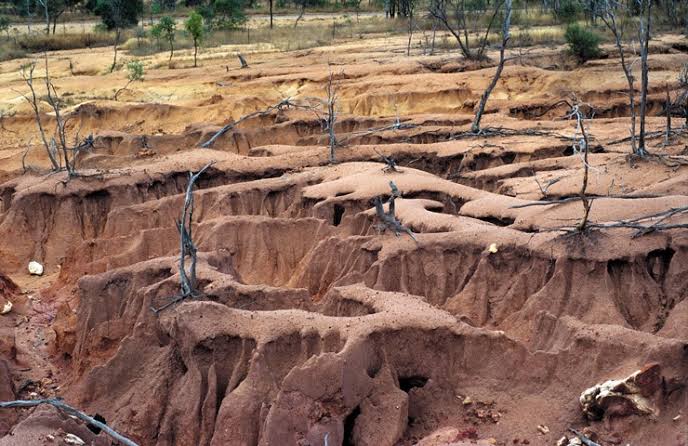
“For India to progress, for Atmanirbhar Bharat, energy independence is the call of the hour,” he said. “India has to take a pledge that it will be energy independent by the year we celebrate 100th year of Independence.

Sainik schools now open for girls also

In a historic move Prime Minister Narendra Modi on Sunday announced that all Sainik Schools in the country will now be open for girls also. At present, 33 Sainik schools are operating in the country. During his speech, the Prime Minister said that two-and-a-half years ago, the maiden experiment of admitting girls in Sainik schools was carried out in Mizoram.”Now, the government has decided that all the Sainik schools in the country will also be open for the daughters of the country,” he said.

DEMOCRACY IN INDIA

India has embraced democracy as a type of government. There is no foundation in the country which today isn’t run on democratic standards. Directly from the top to the base each organization and each framework in India is maintained to be controlled by democratic means and techniques.

Sovereignty is an essential component of Indian democracy. Sovereignty alludes to the full force of an administering body over itself without outside impedance. Besides, individuals can practice power in Indian democracy. Generally vital, individuals of India choose their agents. Besides, these agents stay answerable for ordinary citizens.

The democracy in India chips away at the guideline of political fairness. Moreover, it basically implies all residents are equivalent under the watchful eye of the law. Generally vital, there is no separation based on religion, standing, statement of faith, race, order, and so on Subsequently, every Indian resident appreciates equivalent political rights.

The democracy is a gift of the patriotic national leaders to the citizens of India. Generally critical, the residents of this nation should acknowledge and like the extraordinary worth of democracy. The democracy in India is absolutely one of a kind on the planet.

10 Best Torrent Sites in 2020

The coronavirus pandemic has created a situation wherein people are stuck at home and trying for Torrent for better or worse with nothing much to do in their leisure time. A good way to spend time is by immersing oneself in popular culture- watching television shows, movies, anime, downloading or streaming music online, reading e- books.

Torrent Websites give you the option to access all this without ads and for free! Not everyone can afford to buy a Netflix, HBO or a Hulu connection. Out of the many torrents available on the internet, not all are up to the mark. This article will guide you to the best torrent sites that are reliable and active based on meticulous research and rating from top tech websites.

Top 10 Torrent Sites in 2020

1. The Pirate Bay

One of the most popular torrent sites in the world

Service Provided:

  • Average download speed of 6.3MB per second
  • Immense database
  • Millions of movies, TV shows, foreign language films and songs 
  • Provides trusted user tags
  • Offers millions of categories and genres to choose from
  • Has the all new always online technology
  • Provides support for magnet links                   

Pros:

  • It has managed to stay afloat even after multiple crackdowns
  • In fact, it evades capture
  • Has quick search option
  • One can find both new and old content
  • Has multiple proxies in case of shutdown
  • Is super easy to use

Cons:

  • Stops working occasionally, at random
  • It’s domain name keeps on changing rapidly
  • Is somewhat hard to find since domain name keeps changing

2. Torrentz2

Service Provided:

  • Average download speed of 2 MB per second
  • Has latest as well as old music
  • Provides a vast library of music from a multitude of genres

Pros:

  • Has a good user interface
  • Website is minimalist and non clunky
  • Easy to use
  • Reliable
  • Fulfills all music requirements
  • Search panel is quite thorough

Cons:

  • Low download speed
  • It only has torrents for music and is thus less versatile than the other websites.

3. Torlock

A site which offers anime and e- books on a single platform

Service Provided:

  • Average download speed of 4.4 MB per second
  • Offers a top 10 list of Animes
  • Easy search options
  • Immense variety and database
  • High quality anime and e books, especially helpful with graphics, illustrations and animations

Pros:

  • Can be used even by people who are not comfortable with technology
  • Has a wide and comprehensive collection of animes, e- books and songs
  • Has content which most sites don’t
  • The website has a minimalist aesthetic

Cons:

  • Low download speed
  • Is good for anime, e- books and music but not that good for movies and TV shows

4. RARBG

A torrent site which is known for offering the latest content

Service Provided:

  • Average download speed of 6.1 MB per second
  • Offers good and high quality content
  • Offers a large variety of content for viewers to choose from
  • Updates its site to display ratings such as most popular, most streamed      

Pros: 

  • High quality content
  • Simple user interface, can be used by everyone with ease
  • Has the most popular content
  • Website stays up to date
  • Also has the latest content

Cons:

  • It is not that popular a site, is less known
  • It is a bit hard to find on the internet
  • The site is blocked in several countries- United Kingdom, Portugal, Denmark

5. Zooqle

A site for free download of games

Service Provided:

  • Average download speed of 2.6 MB per second
  • Games as well as TV series and movies are available

Pros:

  • Is a new and updated platform
  • Has a collection of 3.5 million high quality, verified torrents

Cons:

  • Has low download speed, being new the website interface has some minor problems

6. EZTV

Service Provided:

  • Average download speed of 3.2 MB per second
  • Has a vast collection of Television shows- old and new

Pros:

  • Has almost every TV show: comedy shows, talk shows, game shows, reality et al
  • Easy to use

Cons:

  • Has an old and a clunk user interface

7. YTS

Torrent site best known for movie classics. It has everything that a cinephile could ever want.

Service Provided:

  • Average download speed of 3.2 MB per second
  • Offers a single platform for hard to access films

Pros:

  • Good quality content
  • Decent download speed

Cons:

  • A platform only meant for movies, it is less versatile than other platforms.
  • Users have to shift to other platform in order to access TV series, music or anime

8. Torrent Downloads

Best known as the website which has obscure content that no other website has

Service Provided:

  • Average download speed of 2.8 MB per second
  • Offers a large collection of cult classics and non popular content

Pros:

  • A unique platform in terms of content
  • Good user interface

Cons:

  • Is blocked in most countries

9. Lime Torrents

Service Provided: 

  • Average download speed of 3.7 MB per second

Pros:

  • Good user interface, offers services like any other torrent website

Cons:

  • Inconsistent and thus unreliable

10. 1337x

Service Provided:

  • Average download speed of 4.2 MB per second
  • Abundance of choice
  • Detailed browsing categories which enable ease of search
  • TV shows, movies, music and a lot more!

Pros:

  • Extremely user friendly
  • Recently renovated website
  • No security risks
  • Simple and organized website
  • One can easily find what they’re looking for by the virtue of its search tracker

Cons:

  • Google does not display it in its search results and thus it becomes hard to track
  • Download speed is less

Conclusion 

There is no need to get overwhelmed by the sheer amount of torrents available on the internet because we have got you covered. These top ten websites are secure and reliable and the best part is that the readers have a lot to choose from. Need to stream faster?

Use The Pirate Bay, need to watch high quality anime? look for Torlock, want to listen to the latest music? click Torrentz2. Our well researched top 10 torrent compilation will make sure that all your entertainment needs are met. What’s more, if one site is taken down, there are others to choose from. So, sit back, relax, choose from our recommendations and enjoy.