Education is the process of facilitating learning, or the acquisition of knowledge, skills, values, beliefs, and habits. Educational methods include teaching, training, storytelling, discussion and directed research
It is one of the most popular undergraduate programmes. As the name suggests it’s a mixture of Biology and Technology. It basically helps to improve human and plant life.
. SCOPE
Many companies hires graduate with biotechnology degree. It opens doors in paramaceuticals industry, healthcare sector, genetics, clinical research and many more
. SALARY
An average salary of a biotechnologist is 4.5L to 5.0L per annum.
. BSC PSYCHOLOGY
It’s a three years undergraduate programme. It provides in-depth knowledge of human behaviour and captures all the information about the human brain and it’s emotions. The program involves both theoretical and practical knowledge
. SCOPE
A graduate can seek job opportunities at research labs, welfare organisation, rehabs, counselor, psychologist, etc
. SALARY
An average salary of a psychology graduate can be 4.10L or more per annum.
. FOOD SCIENCE
It involves a throughout understanding of biological and chemical procedures affecting plants, dairy and food. The techniques involves production, processing, preservation, packaging, labeling, quality management and distribution of food products.
. SCOPE
A graduate can take up food technology jobs in food processing companies, quality control organization and many more.
. SALARY
The average salary of a graduate in food technology science can be 4.12L to 5.0L per annum.
. ZOOLOGY
It’s a branch of biology that deals with the study of animal kingdom. They study animal behaviour, genetics, biodiversity and many more things.
. SCOPE
A graduate can look for job opportunities in public and private sectors as a wildlife biologist, zoo curator, zoology faculty and many more.
Sometimes dust, flakes of dead skin, pollution, microbes, or your own booger build up from a cold find their way into your nose’s passages. When mucous membranes in the lining of your nose detect this intruders, they sent an urgent message to your brain : Unleash a sneeze !
How do we sneeze?
You don’t have to do anything.react Sneezing is a lightning-fast-involuntary reaction, in which your chest,stomach, throat, and face muscles work together to blast particles from your nasal passages. The whole process last less than 3 secondsprofiles The whole process last less than three seconds, and it propels spit, boogers, chewed food, and other particles from your nose and mouth at nearly 100 miles per hour or 161 kph.
Why do we upchuck when we get sick?
If you catch a stomach flu ( usually a virus in your guts ), swallow food spoiled by bacteria, or simply pig out your body rebels, your stomach will kick into reverse to eject whatever’s causing the trouble. Your guts churn, your head spins, and your throat begins to burn.Before you know it, blaaargh! You have launched your lunch !Clammy skin, waves of uneasiness, and a queasy feeling known as nausea usually precede puking, giving you a heads-up to hang your head over the toilet. Motion sickness – a condition brought on by winding roads, rocking boats,or back to back rides on the Tilt-a-Whirl – can lead to hurling, too.
Why does throw – up burn my throat?
Your stomach contains powerful acids that help break down food, and some of this sour-tasting gastric juice get pumped up and away when you puke. Although a wave of spit and mucus helps protect your throat and mouth when you vomit, you will still feel the burn. Particularly forceful barfing sessions will propel puke into your sinuses and out your nose, producing an eye-watering sting. Nasty !
Why hasn’t medical science found a cure for the common cold?
You’d think curing a case of the sniffles would be a cinch for the scientists who invented artificial hearts and defeated lethal diseases like smallpox and polio. But eliminating the common cold is tricky because it is actually caused by more than 200 evolving viruses that all produce the same symptoms ( whereas smallpox was caused by just one virus).
Why does my nose run when we get a cold?
Your nasal membranes make mucus – aka snot – and this sticky substance serves as security against germs, dust, and pollen particles that would make breathing difficult if they reached our lungs. Moved along by tiny nostril hairs called cilia, snot pummels and pushes invading particles toword the exit – your nostrils – or dumps them down your throat. Your body produces nearly wo gallons (7.6 L) of mucus each week. You usually swallow all that snot without giving it a second thought. Catch a cold virus or come under an allergy attack, however, and the membranes pump up the volume. Your nose turns into a leaky snot faucet. You start coughing up globes of phlegm – a type of mucus produced in your throat and lungs. A hacking cough and runny nose are your body’s ways of flushing all the bad stuff.
Where do boogers come from?
Snot is sticky for a reason – it collects all the crud that get up your nose. Once snot reaches the nostrils, it dries into crumbly little boogers for easy disposal. Polite people blow them into tissues ; everyone else engages in rhinotellexis. The technical term for nose -picking.
How can we avoid germs?
Wash your hands with soap and water for at least 20 seconds after you touch any potentially infected surface or person.
Don’t touch your face after touching an infected surface. It’s a sure fire way to get sick !
Get vaccinations for all the major germ based illness from your doctor. Vaccine contains trace amounts of ( or weakened )microbes that trigger your body into making antibodies to fight against specific diseases, making you immune to them.
Be careful about sharing food or drinks with sick friends.
If you get sick, remember : the inside of your elbow makes a great sneeze shield. You might coat your arm in snot, but at least you will avoid infecting everyone in your launch zone.
How are germs spread?
Every time an infected person coughs or sneezes, he or she spreads sickness. One sneeze alone can launch thousands of germ-jammed droplets nearly 20 feet (6m), potentially infecting anyone in the blast radius. Bacteria and some viruses can survive for a short time on door handles, bathroom counter, and other surfaces.
Ladies in India, today, are turning into the most weak segment all things considered. Ladies are the best strength of our general public and it is so debilitating to see that they are getting risky step by step as the quantity of violations against them are expanding. As indicated by a survey by Reuters, India has been positioned the most perilous country out of the world’s 10 most noticeably awful nations for ladies. At the point when we turn the pages of a paper, we go over many title texts revealing instances of attack, badgering, dealing, abuse of ladies in houses, brutality against ladies in distant regions and so forth Ladies feel risky and unstable and feel that their opportunity and freedom are open to hazard. It is excruciating to envision the predicament of ladies who are victims of such violations. It is a shake on the certainty of the ladies of the general public and on our legal framework.
As indicated by the National Crimes Records Bureau(NCRB), India recorded 88 assault cases each day in 2019 and wrongdoings against ladies expanded by 63.3% in the initial a half year of 2021. NCRB report features that assault weakness of a young lady or lady has expanded up to 44% over the most recent 10 years. According to the most recent NCRB information, KOLKATA dominates the competition in security, for ladies, however generally speaking also. To shield ladies from aggressive behavior at home THE PARLIAMENT OF INDIA passed ‘The Protection of Women from Domestic Violence Act 2005’.
Significance OF WOMEN SAFETY-
Security of ladies is vital in this pitiless and fiendish society. As the quantity of bodies of evidence are emerging against ladies, practice the laws and get the criminal captured and rebuffed straightaway. It assists ladies with being more settled, comprehension and they feel ensured. They will trust the public authority if the criminal gets required discipline on schedule. It will foster body and psyche control in them. They will take dynamic part in all things if appropriate wellbeing is guaranteed to them. There are laws yet there ought to be appropriate wellbeing estimates which we need to follow rigorously to shield the ladies from savagery.
We for the most part look for someone else to take the blame for any such occurrence and henceforth have not prevailed to arrive at the underlying driver of this issue. A successful execution of misfortune ensuring ladies’ privileges is the initial phase toward this path. There ought to be rigid misfortune and the crooks of such wrongdoing ought to be seriously rebuffed.
Violations AGAINST WOMEN-
In India, lewd behavior, assaults, aggressive behavior at home, settlement cases and murder are normal types of brutality against ladies. It is found in certain spots that even today, there is a practice of taking share from the young lady’s family and the dad forfeits and loses everything to pay it. Abusive behavior at home is likewise expanding seriously where one accomplice or a man mishandles another accomplice or a young lady in a relationship. It prompts discouragement and suicides. It’s anything but an immediate homicide yet it is the reason for homicide without a doubt. Cheating in a relationship and giving separation is likewise a wrongdoing against ladies which annihilates the entire existence of a ladies and the man effectively tracks down another young lady and weds her. Corrosive tossing is viewed as the most horrifying wrongdoing against ladies which ruins the excellent young lady’s life and left her in a condition of shock.
HOW Might WE SAFEGUARD WOMEN OF OUR SOCIETY?
We likewise need to make social mindfulness about these issues and exclude the individuals who carry out such wrongdoings and not the people in question. Ladies security is a vital worry in India and a great deal of associations began chipping away at it after Nirbhaya’s case. Ladies ought to be shown some self-preservation tips and deceives in schools, universities, workplaces and private provinces, so that in the event that anybody attempts to hurt them, they can apply these stunts to ensure them and hurt the individual attempting to assault her. Likewise, different recordings of self-protection methods are transferred on the web, on different online media stages for instructing ladies’ wellbeing. Ladies should consistently put some cold powder, ginger-garlic glue or some hurting materials while going out to hurt the assailant. To guarantee the security of the ladies in the country, the whole populace ought to be knowledgeable and the laws ought to be exceptionally extreme against each sort of wrongdoing. Both the people of the general public ought to be engaged with appropriate schooling and pay so they can battle against any mischief to them. There are likewise different helpline numbers for guaranteeing ladies security in India. Just when these actions are taken, India can turn into a lighthearted and charming spot for ladies when they can go any place they like to with no dread of being gazed at, attacked or segregated.
Hi! Today we will be talking about an interesting topic. Mythology. I always am ready to listen to folklore, myths and tales. Simply because find Myths to be striking. Mythologies are a collection of myths of particular cultures and religions. Myths we’re recorded as human beings started to have manuscripts.
Myths and legends were created as humans mastered the way of writing. Myths mostly discuss the relationship between God and humans. It dealt with questions like who are deities? How the world was created? The righteousness and the unethical aspects.
Hindu Mythology is also cited as Hindu Mythology. Indian mythology includes Buddhist, Sikhism, Jainism, etc… Mythology plays an important role as it is the core of culture and religion. Another reason is the battle of good and evil, which helps us to learn, discover and comprehend the way of living.
When we discuss Hindu Mythology, the popular tales are of Ramayana and Mahabaratha. Apart from that, we have tons of myths. Hindus worship numerous deities. Authors are retelling the myths in a fascinating, thought-provoking way.
Top Indian Authors who write with Modern Ingredients
Kavita Kane
Chitra Banerjee Divakaruni
Amish Tripathi
Dr Devdutt Pattanaik
Aditi Banerjee
Top 5 Indian Mythology Books to Read
AHALYA’S AWAKENING BY KAVITA KANÉ
“You know you are very beautiful.” ‘But where is my achievement in that?’ Ahalya asked, with genuine puzzlement. “It’s not my talent; it’s God’s gift.”
Kavita Kane is known for her modern twist. Ahalya is a character in the epic Ramayana, we don’t get to see much about her. A sheltered princess then a loving wife of Rishi Gautam. Her tale is the play of destiny and fate. It retells the patriarchal society which exist even today.
“A leader must love his country more than he loves his own soul.“
Amish Tripathi is famous for his remarkable detailing of characters in his book. The characteristics of his works are written from outstanding perspectives. Sita was known to be a woman who suffered in silence but here she is portrayed as fierce, strong administrator and warrior.
The light has been shed on Ravana too. In his work, he gives voice to Ravana’s aspect. He is someone who will kill without guilt. Is he a villain?
THE FOREST OF ENCHANTMENT by CHITRA BANERJEE DIVAKARUNI
“I couldn’t control what was done to me. But my response to it was in my control.”
I would say it’s a masterpiece and a must-read. We get to know Sita’s POV, it’s a delightful piece of work. Sita is stated to be the epitome of values and a warrior. The cover looks stunning!
The values of Ramayana are infused in our lives. This book will mould our perspective.
“Refusal to accept the flow of the world is the root of all misery.”
A compelling retelling of the epic Mahabharata. The doorkeeper of Vaikuntha is a twin Jaya and Vijaya. The difference between them is what we need to solve the mystery of the epic. The tale is said with simplicity and clarity.
The book is a retelling of Gandhari’s fate. We get to see the tale through Gandhari’s eyes. It is a fascinating story about how she shaped the epic. Her dedication towards her vow is striking. After being married to a blind prince, she stayed blindfolded for life. Most stories haven’t described her in detail, unlike this one.
These are the books I would say one must read to re-shape their perspectives if required. The stories are captivating. Let me know in the comments if you have any recommendations.
Failure! The devastating word in the dictionary. Our society only respects those who are successful. We don’t have an option for failure. From childhood to old, if we fail in something, the people of our surrounding criticizes us. It is not only applicable for outsiders only, someday it belongs to our family members too. Failure is the word, which is responsible for many suicide and death. At the same time, failure is the key to success for many ones. But it is also indirectly connected to the people in our society and their frivolous mentality.
Every person who is never criticized and failed in their life cannot be successful. According to them, the test of failure is so sweet. We see, in this universe, a successful person was the biggest failure also. It is better to be treated as a fighter rather than a loser. In this world, among many failures, let us discuss some richest failures.
1.Michale Jordan
He is the greatest basketball player ever in history. He was failed to be a part of his school’s basketball team and was out from his team. This failure will turn this guy into a legend, and today’s world is well known about this Hall of Famer athlete and treated as The God Of Basketball.
“I have missed more than 9,000 shots in my career. I have lost almost 300 games. On 26 occasions I have been entrusted to take the game-winning shot, and I missed. I have failed over and over and over again in my life. And that is why I succeed.”
2.Steve Jobs
Steve was fired from his own company Apple. After that, he founded and started two anther companies Lisa Computer and NeXT Computer, but unfortunately, he again failed. He was never ashamed about what he did in his life and never demotivated by others’ opinions. One day, Apple requested Steve to rejoin his company. And after that, he never looks back and made Apple is the leading and most profitable IT company in the US.
“Don’t let the noise of others’ opinions drown out your own inner voice.”
3.Elon Musk
One of the mad geniuses of all time. He is a workaholic person. His failure list is too long from being debearded from Paypal while on a honeymoon, cut from his company Zip2, not selected for a job in Netscape, Russian rejected his request to sell him rockets,3times rocket lunch and failed missions, bankrupt due to SpaceX and Tesla and many more. Apart from all this, he is the top-five richest person in the world.
“If something is important enough, even if the odds are against you, you should still do it.”
4.J.k. Rowling
Her first book Harry Potter was rejected by many publishers the first book. She was bankrupt and divorced at that time. One publisher said to her that she has to focus on finding a job rather than published her book about the children’s stories. She is one of the leading writers later. Rowling books not only sold millions copy also turns into Hollywood movies.
“But it is impossible to live without failing at something unless you live so cautiously that you might as well not have lived at all—in which case, you fail by default.”
5.Sylvester Stallone
With his droopy left eyelid, he always wanted to be an actor. After many struggles, he approached many producers with his own written story in which he wanted him as the lead character as an underdog boxer Rocky Balboa. But all are refused. He was not disappointed and never give up on that. Finally, the film won the best picture. He is the director of the four sequels among seven sequels later. He is one of the highest-paid actors in Hollywood nowadays.
“Every time I’ve failed, people had me out for the count, but I always come back.”
Do not ever frustrate by someone’s opinion about you, do your work which you will be passionate about, whatever the situation comes in front of you, never threatened, believe in yourself, and work insane towards that. Failure is a path, not destiny.
We don’t realize the importance of time when we are passing it. It all strikes only when everything becomes the past. This article is to make you realize that every single second matters and sometimes it feels okay to waste our time and do nothing but it is us who will regret it later. Let us not do that mistake anymore. Things will come into place when we start realizing that time is the most important thing in anyone’s life!
Reasons why time is precious
Time is precious because we cannot get it back. Once it is gone, nothing can be done.
If you keep running at the same pace of time, you will feel a lot better. Of course you can take small breaks, but never let time outrun you. Make use of every second in improving yourself and nourishing yourself.
Time is precious because it has the power to make you a better person if you use it.
The best proverb that says perfectly about time is “Time and tide wait for none“.
What can I do to not waste time?
You can do literally anything instead of wasting time. I sometimes find myself doing useless things like simply scrolling Instagram feed with no motivation. I could have done a lot more in that time right? It is okay to take breaks but if you find yourself taking that break very often, you need to come back on feet.
If you are a student, it all feels right when we sit and do nothing but believe me, we will regret it in future. For students, time management is very importance and if we don’t realize and act accordingly, it tends to lead to failure. So instead you can do SOMETHING. You can watch a useful video. You can do something that you love. You can even watch series or movies! as long as it has something to teach you of course. You can even play for sometime to develop your gaming skills.
In a day, if you want to make the best use of the next 24 hours, plan your day first thing in the morning and go with that flow. It will help you get your work done, will make you productive, will make you feel good about yourself. What else do we want?
When we have the good health and better energy, it is best if we use it right now. When we become old even if we want to go out and play it will eventually become difficult. Work on improving yourself.
Time is the biggest gift of all, try to spend time with your family and friends too! We don’t know what the next sec is going to bring us so instead of wondering about it we can live in the present and spend our time happily.
Conclusion
I am not insisting you to spend time on learning or improving alone, but of course to make yourself happy. Spend every sec of your life happily. After all, time spent on enjoying is not a waste.
Mariana Trench is the deepest underwater trench on Earth , and is located in the western pacific ocean .It is about 36,037 feet deep , and its deepest point is called the challenger deep. The dept of this trench makes it mysterious , scary and alluring as well . The deeper you dive in this trench , the more you are surrounded by darkness . This trench is home to unique and creepy species , that will surely terrify you .
DEEP SEA ANGLER FISH – The sight of this fish is enough to terrorise humans . The angler fish is carnivorous in nature and has an evidently large head , and have sharp – razorlike teeth that are angled inward for grabbing their prey . But these fishes aren’t big , their lengths vary between 2-18 cm . Creatures that reside in dark regions of the oceans evolve in unique ways to help them catch their prey and survive , so does the angler fish . They have a protrusion from their forehead , a luminescent organ that allures their prey .
DUMBO OCTOPUS – They might look adorable , but don’t let their appearance fool you . It is the only species of octopus that resides in the deepest part of the ocean , and is a very rare species . The dumbo octopus was named after Disney’ s cartoon character – Dumbo the elephant . They are umbrella octopuses , and have webbed tentacles that make them look like umbrellas . They do not have any ink sacs like other octopuses and instead of chewing and grinding their food , they swallow their prey completely .
GOBLIN SHARK – Goblin sharks are a rare species of deep sea sharks . They have a protruding snout that looks like a sword , and makes this shark look really creepy . They are also called living fossil , have a droopy body and small fins and are usually inactive in nature . Goblin sharks have a whitish – pink skin colour due to their translucent skin , which makes the blood in their body visible .
BENTHOCODON – Benthocodon is a unique and unusual type of jellyfish , and can be found near the sea floor in the Pacific ocean . They are really small in size , just upto 2 cm and have a rounded top which is called the bell . Their “bell” is opaque and red in colour .
Computer hardware engineers design, develop, test, and assist in the manufacture of computer components, products, and systems, such as chips and device controllers. Computer hardware engineers often work together with software engineers, since both are often connected to the development of certain products. For example, developing a mobile phone requires both hardware and software engineering skills.
They plan the systems concepts and the hardware needs for a particular computer product by analyzing the market requirement and prepare a forecast which defines specification, the technology to be used, and the method by which the product could be made economical and market-friendly. They fabricate and test theoretical models of computer products and build working prototypes of the computer equipment.
The Indian brain behind the Pentium Processor
Vinod Dham is known as ‘Father of the Pentium Chip’ for his contribution to the development of Intel’s Pentium micro-processor.
Vinod Dham
After his bachelor’s degree in Electrical Engineering from the Delhi College of Engineering in 1971, Dham wanted to go abroad and study microelectronics. However, his parents wanted him to be with them in Delhi.
At that time he was not career-minded so he took up a job in Delhi. Yet, he was lucky to be 10 minutes away from a forward-looking entrepreneur, Gurpreet Singh of Continental Devices, who wanted to run a world-class semiconductor company in the outskirts of Delhi. It was he who introduced Dham to conductors.
Dham was fascinated and wanted to know what went on inside the devices. He decided to go abroad and learn more. And so, after a lot of convincing, his parents agreed and he went to Cincinnati in 1975 to do an MSEE in Solid-State Sciences.
He was working in EPROMs (Erasable Programmable Read-Only Memory). He was asked by his college to present his work at an IEEE conference in Monterrey, California. The Intel people were also there presenting their work and they asked him to join them.
He had read about Gordon Moore and Robert Noyce, the co-founder of Intel but it wasn’t easy at the interview as they were asking questions like “how Ph. Ds would run a business”. Of course, they absorbed him as a lowly engineer.
He worked on EPROMS for seven years. However, Dham wanted more action and started looking around for more projects. He soon found one to beat the 486 processor.
His task was not simple as he had thought it would be. His team was frustrated as it was consuming a lot of time and errors kept on occurring.
As the deadline was nearing, Dham decided to set things right. He and his team worked day and night trying to figure out ways and means to beat the predecessor. They experimented and tried several permutations and combinations. Finally, they decided to use a new type of memory system and it worked wonderfully. He built a new type of processor and when it came to be named they couldn’t use 586, as numbers couldn’t be patented on technology products. So, they called it Pentium.
The sweet and fleshy product of a tree or other plant that contains seed and can be eaten as food.
A fruit is the part of a plant that has seeds and flesh (edible covering). A fruit is normally sweet (or sometimes sour) and can be eaten in its raw (uncooked) state. Fruit are the way plants disseminate their seeds.
CLASSIFICATION OF FRUITS
There are two criteria for the classification of fruits:
* Whether the carpels present in gynoecium are free or in a fused state. * One or more flower takes part in the formation of fruit.
TYPE OF FRUITS
*Simple *Aggregate *Composite
Simple fruits
These fruits develop from the monocarpellary ovary or multicarpellary syncarpous ovary. Only one fruit is formed by the gynoecium. Simple fruits are of two types
• Fleshy Fruits: In fleshy fruits, the fruit wall is differentiated into epicarp, mesocarp, and endocarp. These fruits develop from superior or inferior syncarpous gynoecium. • Dry Fruits: The pericarp of simple dry fruits is usually quite dry and hard. It is not differentiated into the three layers of epicarp, mesocarp and endocarp. In some dry fruits, this pericarp is broken down and the seeds are scattered or dispersed. These fruits are dehiscent fruits.
In some fruits, the pericarp is further arranged into one or more seeded segments. Such fruits are schizocarpic fruits. In some fruits, the pericarp is not observed to be dehisced even after maturing/ripening. Such fruits are indehiscent Fruits.
Aggregate fruits
These are the fruits that develop from the multicarpellary apocarpous ovary. It becomes a fruitlet because each carpel is separated from one another in the apocarpous ovary. These fruits make a bunch of fruitlets which is known as etaerio.
* Etaerio of follicles: Each fruit or etaerio is a follicle. Eg. Calotropis, Catharanthus, Magnolia -e. In calotropis, the stigma is fused or joined in carpellary ovary and ovaries of ovules are separated. It means only two follicles are present in etaerio.
* Etaerio of achenes: In this aggregate fruit, each fruit is an achene. Eg. Ranunculus, Strawberry, Rose, Lotus. In lotus, the thalamus becomes spongy and some achenes are embedded in it. In strawberry, the thalamus is fleshy and we can find small achenes on its surface.
* Etaerio of berries: It is an aggregate of small berries. Eg. Polyalthia, Annona squamosa (Custard-apple). In the etaerio of Annona, all the berries are arranged densely on the thalamus.
* Etaerio of drupes: In this type of fruit, many small drupes develop from different carpels. Eg. Raspberry. In this type carpel of apocarpous ovary form drupe fruit.
Composite fruits
All composite fruits are false fruits. In these fruits, generally, there are many ovaries and other floral parts combining to form the fruit. These are of two types:
*Sorosis: These fruits develop from spike, spadix or catkin inflorescence. Examples inJackfruit fruit, Kevda (screwpine). In jackfruit (Kathal) pistillate flowers are developed around the peduncle. In fruit formation, the pericarp becomes spongy and fused. *Sycosis: These fruits develop from hypanthodium inflorescence. Receptacle becomes hollow and has a pore. Numerous small scales surround the pore. Eg. Ficus species Peepal
BENEFITS OF FRUITS
* Most fruits are naturally low in fat, sodium, and calories. … * Fruits are sources of many essential nutrients that many people don’t get enough of, including potassium, dietary fiber, vitamin C, and folate. * Diets rich in potassium may help to maintain healthy blood pressure.
Education is very important for the betterment of everyone’s life and as such, we all should understand the importance of education in our lives. It enables us and prepares us for all aspects of life.
Even after several educational awareness campaigns by the government in underdeveloped areas of the country, where the education system is still weak.
People living in these areas are very poor and spend their entire day just to meet some basic needs.
Therefore, extensive efforts of all are needed to create the possibilities of a proper education system in all corners of the country.
EQUALITY:
We need the active participation of all to promote the level of the education system in our country.
School and college authorities must set some main objectives for education, to raise interest and curiosity in their students for education.
The fee structure should also be discussed at a wider level because of the high fees, many students are not able to continue their education which leads people to inequality in every aspect of life.
Education is the major and compulsory right of man, so everyone must get equality in education.
WISDOM IS THE BEST WEALTH:
Knowledge is the best wealth. All happiness is attained by learning, by virtue, by mercy, by merit, by wealth and by religion.
Our intelligence is also sharpened by the knowledge gained from learning.
We have to balance the convenience of education for all, to bring equality between people and equal personal development across the country.
Education helps everyone in society to transform themselves into positive things by interfering with the things around them.
It promotes the necessary advancement in the technology of education besides maintaining balance in our body, mind and inner body.
IMPORTANCE OF EDUCATION IN LIFE:
Home is the first place in our lives and parents are the first teachers of their children.
Every child learns to speak to his mother tongue first. Parents are the ones who teach us the right importance of education.
We study slowly and climb the steps one by one to complete our studies until the tenth. But to get more knowledge and technical knowledge in life, it is very important to get a higher education.
Educated girls have made a positive impact on Indian society by contributing to various fields like medicine, defence services, science and technology.
Today’s girls have also contributed well to the field of business and have handled both their home and office very well. Also, read an essay on education conclusion.
PRIVATE EFFORTS FOR EDUCATION IN BACKWARD AREAS:
People living in backward areas are not receiving the proper benefits of a good education because they lack funds and other means.
However, some new and effective strategies have been planned and implemented by the government to solve this problem in these areas.
Education has improved the mental state and changed the way people think. It brings confidence to transform and achieve success and experience and transforms thinking into action.
Without education, life becomes goalless and difficult. Therefore we should understand the importance of education and its necessity in daily life.
We should encourage it, by telling people about the importance of education in backward areas.
Disabled and poor persons also have the same need for education and equal rights to achieve global development like rich and ordinary people.
All of us should do our best to be educated at the highest level, as well as to make it possible for everyone to have access to education.
In which all poor and disabled persons can participate on a global basis.
Some people live very sad lives by remaining completely illiterate due to lack of knowledge and skills.
Specific people are educated but due to lack of a proper education system in backward areas, they are not skilled enough in earning for their daily work.
Thus, we should try to give equal opportunities for everyone to get a good education system, whether it is poor or rich.
CONCLUSION:
A country cannot develop without individual development and growth of citizens.
Thus, the comprehensive development of a country depends on the prevailing education system available to citizens in that country.
The common goal of providing a good and proper education system to the citizens in every region in the country should be set.
Effort should be made to make the path of education easy and accessible because only by this our country may lead to all-round development.
Lack of interest can be caused by difficultly concentrating, family problems, emotional difficulties, learning disabilities, and many other factors. Sometimes it’s just plain boredom – not everything is about fun all the time. Even the bubbling hormones running through the teenagers’ bodies can cause difficulty to concentrate on anything other than the schoolmate in the nearest chair.
It is often observed that students who have a keen interest in reading, develop a love for learning too because they are want to explore endless possibilities and opportunities. Reading not only helps them to develop a rich vocabulary, but it also helps them to process formal communication and concepts. Reading to the child frequently and having them read aloud will create an atmosphere for reading at home as well as in school. Let children pick their own book and make it fun for them instead of compulsion.
2. Encourage Different Types Of Learning Styles:
Every child has a different style of learning and there is no right or wrong style. Whichever technique the child is comfortable in learning should be encouraged. There are seven fundamental styles of learning, such as Visual, Audio, Verbal, Physical, Mathematical, Social and Solitary.
3. Share Your Enthusiasm For Learning:
When it comes to learning new things, enthusiasm definitely rubs off. Children definitely get inspired by you and if he/she sees that parents/teachers are enthusiastic about learning, they follow the same trait. Always tell the child that learning is a journey of exciting new discoveries. Take every opportunity and discover new information and see the child follow your footsteps.
4. Game-Based Learning Is The Key:
Game-based learning provides opportunities for deeper learning and development of cognitive skills. It motivates the children to learn more. When a child is engaged in a game, their mind experiences the pleasure of learning something new. This is the biggest factor in team-based learning. We often see the competitive spirit of the child come out in games and them wat to win it for themselves or the team. They want to perform at a higher level and outshine everyone. It’s a great way to introduce new ideas, concepts, and knowledge which motivates the children to learn.
Helping the child to remain organized will definitely go a long way in making him feel motivated to learn. Children at a young age are a bit disorganized which leads to being frustrated and worried when they cannot finish their assignment or project on time. When a child is organized, they feel in control, less overwhelmed and are motivated to learn.
6. Celebrate Achievements:
Celebrating and recognizing their achievements, no matter if they are big or small goes a long way in boosting their morale. It builds a positive environment and keeps them motivated to learn and challenge themselves to do better. It could be as small as getting ice cream or appreciating them in front of the whole class.
7. Make Every Day A Learning Day:
Turning every day into a learning day will help the child develop the internal motivation to learn something new(no matter how small or simple) in the classroom, at home or wherever he may be.
Conclusion:
So try these simple but effective ways to engage the Student in their learning process and make it a pleasant experience for them too. Student who take charge of their learning, become responsible and are driven to learn and explore new things.
A Midsummer Night’s Dream is a comedy written by William Shakespeare c. 1595 or 1596. The play is set in Athens, and consists of several subplots that revolve around the marriage of Theseus and Hippolyta. One subplot involves a conflict between four Athenian lovers. Another follows a group of six amateur actors rehearsing the play which they are to perform before the wedding. Both groups find themselves in a forest inhabited by fairies who manipulate the humans and are engaged in their own domestic intrigue. The play is one of Shakespeare’s most popular and is widely performed.
The play consists of five interconnecting plots, connected by a celebration of the wedding of Duke Theseus of Athens and the Amazon queen, Hippolyta, which are set simultaneously in the woodland and in the realm of Fairyland, under the light of the moon.
The play opens with Hermia who is in love with Lysander, resistant to her father Egeus’s demand that she wed Demetrius, whom he has arranged for her to marry. Helena, Hermia’s best friend, pines unrequitedly for Demetrius, who broke up with her to be with Hermia. Enraged, Egeus invokes an ancient Athenian law before Duke Theseus, whereby a daughter needs to marry a suitor chosen by her father, or else face death.
Peter Quince and his fellow players Nick Bottom, Francis Flute, Robin Starveling, Tom Snout and Snug plan to put on a play for the wedding of the Duke and the Queen, “the most lamentable comedy and most cruel death of Pyramus and Thisbe”. lion is “nothing but roaring.” Quince then ends the meeting telling his actors “at the Duke’s oak we meet”.
In a parallel plot line, Oberon, king of the fairies, and Titania, his queen, have come to the forest outside Athens. Titania tells Oberon that she plans to stay there until she has attended Theseus and Hippolyta’s wedding. Oberon and Titania are estranged because Titania refuses to give her Indian changeling to Oberon. Oberon seeks to punish Titania’s disobedience. He calls upon Robin “Puck” , to help him concoct a magical juice derived from a flower called “love-in-idleness”. When the concoction is applied to the eyelids of a sleeping person, that person, upon waking, falls in love with the first living thing they perceive.
Hermia and Lysander have escaped to the same forest in hopes of running away from Theseus. Helena, desperate to reclaim Demetrius’s love, tells Demetrius about the plan and he follows them in hopes of finding Hermia. Puck mistakes Lysander for Demetrius, not having actually seen either before, and administers the juice to the sleeping Lysander. Helena, coming across him, wakes him while attempting to determine whether he is dead or asleep. Upon this happening, Lysander immediately falls in love with Helena.
Helena, thinking Lysander is playing a trick on her, runs away with Lysander following her. Oberon sends Puck to get Helena while he charms Demetrius’ eyes. Upon waking up, he sees Helena. Now, both men are in love with Helena. Hermia accuses Helena of stealing Lysander away from her .Lysander and Demetrius decide to seek a place to duel to prove whose love for Helena is the greater. Oberon orders Puck to keep Lysander and Demetrius from catching up with one another and to remove the charm from Lysander so Lysander can return to love Hermia, while Demetrius continues to love Helena with none of them having any memory of what happened, as if it were a dream.
Titania, having received the love-potion, is awakened by Bottom’s singing and immediately falls in love with him. She lavishes him with the attention of her and her fairies, and while she is in this state of devotion, Oberon takes the changeling boy. Having achieved his goals, Oberon releases Titania, orders Puck to remove the donkey’s head from Bottom, and arranges everything so Helena, Hermia, Demetrius and Lysander will all believe they have been dreaming when they awaken. Puck distracts them and eventually all four find themselves separately falling asleep in the glade.
The fairies then disappear, and Theseus and Hippolyta arrive on the scene, during an early morning hunt. They wake up the lovers and, since Demetrius no longer loves Hermia, Theseus over-rules Egeus’s demands . The lovers decide that the night’s events must have been a dream. After they exit, Bottom awakes, and he too decides that he must have experienced a dream “past the wit of man”.
In Athens, Theseus, Hippolyta and the lovers watch the six workmen perform Pyramus and Thisbe. The performers are so terrible playing their roles that the guests laugh as if it were meant to be a comedy, and everyone retires to bed. After all the other characters leave, Puck “restores amends” and suggests that what the audience experienced might just be a dream.
Women of Revolutionary Movement in British India: Rani Gaidinliu
Rani Gaidinliu(1915-1993) was a Naga tribal and political leader who organized a rebellion to overthrow British from Manipur.
At the age of 13 she joined her cousin, Haipou Jadonang, who had led the Heraka Movement. This movement was for the revival of the Naga Tribal religion. She led this movement when she was 17, which resulted in her arrest. She was then sent for a fourteen year long imprisonment.
Her forces had started to engage in armed rebellion against the British in Cachar Hills(February 1932) and the Hangrum village(March 1932).
Known for the armed resistance against the British Raj, she was given the title “Rani of Nagas”.
Women of Revolutionary Movement in British India: Pritilata Waddedar
Pritilata Waddedar(1911-1932) was a Bengali revolutionary nationalist who was influential in the Indian independence movement.
After completing her education in Chittagong and Dhaka, she attended Bethune College in Kolkata. She graduated in philosophy with a distinction and became a school teacher.
During the Chittagong Armory Raid of 1930, 20 year-old Waddedar, along with Surya Sen, Ganesh Ghosh, Lokenath Bal, Ambika Chakrabarty, among others in a group of at least 65 people, devised plans to raid the armory of the British forces.
She is known for leading fifteen revolutionaries in 1932 armed attack on the Pahartali European Club, during which one was killed and eleven others injured. The revolutionaries torched the club and were later caught by the police. In those circumstances, she consumed potassium cyanide to evade arrest and ended her life. Waddedar was only 21.
India is a land of many religions and cultures, each one known for its unique living style, culinary habitat, folklore, etc. What India is also known for is the 1000 types of sweets and junk food and roadside snacks that you will rarely find in another country, especially outside Asia. With these foods is also a matter of grave concern – the quality and composition of these foods, coupled with the sedentary lifestyle of individuals poses a high risk of obesity.
Given the situation, we are here to guide you with a diet plan for weight loss. This Indian diet chart for weight loss in 7 days is customized to suit a typical Indian’s need and is based on the Indian diet chart for weight loss.
Advertisements
Science Behind Weight Loss
Before we go through the essentials of the diet plan for weight loss, we must understand the science behind weight loss. The loss and gain of weight are directly proportional to the intake of your calories in the diet. Logically speaking, when you shed more calories than you eat every day, your body balances it by shedding calories. Calories are nothing but carbs – layers of fat.
So, calories burnt is equal to weight shed. However, a diet plan for weight loss cannot help if you stop consuming calories altogether – your body needs its nutrition, and this nutrition must be all around with a proper ratio of carbohydrates, proteins and starch.
So, in order to make the diet plan for weight loss success, one must also focus on burning calories through exercises like walking, running, jogging, swimming, etc. Now that it is clear that we must reduce calorie intake as well as burn calories, let us delve into the Indian diet chart for weight loss. This chart is cumulated with a lot of effort and research to make sure that it can be the best Indian diet chart for weight loss in 7 days.
Sample Diet Plan for Beginners
Please note that the following plan, the Indian diet chart for weight loss in 7 days is done through research and must be followed only under the supervision of a registered nutritionist or dietician.
Day 1:
Breakfast – 2 brown rice idlis with sambar
Lunch – Consume only vegetables and meals cooked from olive oil. 2 whole-grain Rotis with mixed-vegetable curry with one dal.
Eat a bowl of fruits, or yogurt, and dry fruits (1 glass) if you work out and feel de-energized post-workout. Drink a glass of warm lemonade pre-workout to maintain your stamina.
Advertisements
Day 2:
Breakfast – Paneer sandwich with mint chutney (made using wheat bread)
Lunch – Chickpea curry with brown rice (For non-vegetarians) / Brown rice with dal (for vegetarians)
Snacks – 1 glass masala buttermilk
Dinner – 2 bowls of brown rice with dal and non-green vegetables.
Eat a bowl of fruits, or yogurt, and dry fruits (1 glass) if you work out and feel de-energized post-workout. Drink a glass of warm lemonade pre-workout to maintain your stamina.
Day 3:
Breakfast – ½ bowl of sliced muskmelon, 4 pieces of non-salted cashew nuts.
Lunch – Whole-grain rotis (2) with any green leafy vegetable of your choice.
Snacks – 1 cup of watermelon/few assorted berries
Dinner – salad, 2 chapatis with one vegetable. Keep away from bananas the entire day.
Eat a bowl of fruits, or yogurt, and dry fruits (1 glass) if you work out and feel de-energized post-workout. Drink a glass of warm lemonade pre-workout to maintain your stamina.
Day 4:
Breakfast – Oats with milk (No added sugar or any other sweetener)
Lunch – 1 Whole-grain roti with vegetable sabzi/ Dal with veg or non-veg sabzi and brown rice
Snacks – 1 banana
Dinner – ½ cup sautéed vegetables with 1 bowl of brown rice
Eat a bowl of fruits, or yogurt, and dry fruits (1 glass) if you work out and feel de-energized post-workout. Drink a glass of warm lemonade pre-workout to maintain your stamina.
Day 5:
Breakfast – 1 pear or guava
Lunch – 2 whole-grain Rotis with mixed-vegetable curry with one dal.
Snacks – 1 banana
Dinner – 2 chapatis with any homecooked pulses
Eat a bowl of fruits, or yogurt, and dry fruits (1 glass) if you work out and feel de-energized post-workout. Drink a glass of warm lemonade pre-workout to maintain your stamina.
Day 6:
Breakfast – 2 tomatoes and 1 glass of milk
Lunch – one pear and one apple
Snacks – yogurt with dry fruits
Dinner – brown rice with dal (1 bowl)
Eat a bowl of fruits, or yogurt, and dry fruits (1 glass) if you work out and feel de-energized post-workout. Drink a glass of warm lemonade pre-workout to maintain your stamina.
Give yourself a pat on the back if you’ve followed this for six days, there’s just one more day to go and you will officially be in the dieting regime for a whole week! Moving to the diet plan for weight loss for the last day of the week, now.
Advertisements
Day 7:
Breakfast – one glass of carrot or beetroot juice
Lunch – Milkshake (2 bananas + 1 glass of milk + a dash of cocoa powder)
Snacks – 1 glass buttermilk
Dinner – salad, 2 chapatis with one vegetable. Keep away from rice the entire day.
Eat a bowl of fruits, or yogurt, and dry fruits (1 glass) if you work out and feel de-energized post-workout. Drink a glass of warm lemonade pre-workout to maintain your stamina.
That concludes your diet plan for weight loss. But remember: dieting takes time and dedication; be patient and you will see the results. Do you think this is helpful? Do you think there can be some changes to this Indian diet chart for weight loss in 7 days? If so, do let us know down below in the comments section.
Individuals are social animals. We need the friendship of others to flourish throughout everyday life, and the strength of our associations massively affects our emotional wellness and satisfaction. Being socially associated with others can ease pressure, nervousness, and wretchedness, support self-esteem, give solace and happiness, forestall dejection, and even add a long time to your life. On the other side, lacking solid social associations can represent a genuine danger to your psychological and passionate wellbeing.
In this day and age, a large number of us depend via web-based media stages like Facebook, Twitter, Snapchat, YouTube, and Instagram to discover and associate with one another. While each has its advantages, recollect that online media can never be a substitution for certifiable human association. It needs face to face contact with others to trigger the chemicals that reduce pressure and cause you to feel more joyful, better, and more good. Amusingly for an innovation that is intended to unite individuals, investing an excess of energy drawing in with online media can really cause you to feel all the more desolate and detached—and intensify emotional wellness issues like uneasiness and despondency.
In case you’re investing an unnecessary measure of energy in web-based media and sensations of bitterness, disappointment, dissatisfaction, or dejection are affecting your life, it could be an ideal opportunity to rethink your online propensities and track down a better equilibrium.
The positive parts of web-based media – While virtual cooperation via online media doesn’t have similar mental advantages as vis-à-vis contact, there are as yet numerous positive manners by which it can help you stay associated and support your prosperity. Web-based media empowers you to: – Impart and keep awake to date with loved ones all throughout the planet. – Discover new companions and networks; network with others who share comparative interests or aspirations. – Join or advance advantageous aims; bring issues to light on significant issues. – – Look for or offer enthusiastic help during difficult stretches. – Discover fundamental social association in the event that you live in a far off region, for instance, or have restricted freedom, social uneasiness, or are essential for a minimized gathering. – Discover a source for your imagination and self-articulation. – Find (with care) wellsprings of important data and learning.
The negative parts of web-based media
Since it’s a somewhat new innovation, there’s little examination to set up the drawn out results, positive or negative, of online media use. In any case, different examinations have tracked down a solid connection between substantial online media and an expanded danger for gloom, tension, dejection, self-hurt, and surprisingly self-destructive musings.
Online media might advance negative encounters, for example,
Insufficiency about your life or appearance. Regardless of whether you realize that pictures you’re seeing via online media are controlled, they can in any case cause you to feel unreliable about what you look like for sure’s going on in your own life. Additionally, we’re all mindful that others will in general share simply the features of their lives, infrequently the depressed spots that everybody encounters. In any case, that doesn’t decrease those sensations of jealousy and disappointment when you’re looking through a companion’s artificially glamorized photographs of their tropical sea shore occasion or finding out about their intriguing new advancement at work.
Dread of passing up a major opportunity (FOMO). While FOMO has been around far longer than online media, destinations, for example, Facebook and Instagram appear to intensify sentiments that others are having a good time or carrying on with preferable lives over you are. The possibility that you’re passing up specific things can affect your confidence, trigger nervousness, and fuel much more prominent web-based media use. FOMO can force you to get your telephone like clockwork to check for refreshes, or urgently react to every single caution—regardless of whether that implies facing challenges while you’re driving, passing up rest around evening time, or focusing via web-based media communication over certifiable connections.
Separation. An examination at the University of Pennsylvania tracked down that high utilization of Facebook, Snapchat, and Instagram increments rather diminishes sensations of dejection. Then again, the investigation found that decreasing web-based media use can really cause you to feel less desolate and separated and work on your general prosperity.
Melancholy and nervousness. Individuals need vis-à-vis contact to be intellectually solid. Nothing lessens pressure and lifts your mind-set quicker or more viably than eye-to-eye to eye connection with somebody who thinks often about you. The more you focus via online media communication over in-person connections, the more you’re in danger of creating or compounding state of mind issues like tension and gloom.
Cyberbullying. Around 10% of youngsters report being harassed via web-based media and numerous different clients are exposed to hostile remarks. Web-based media stages, for example, Twitter can be focal points for spreading terrible bits of gossip, lies, and misuse that can leave enduring enthusiastic scars.
Self-retention. Sharing unending selfies and all your deepest contemplations via web-based media can make an unfortunate narcissism and distance you from genuine associations.
Signs that web-based media is affecting your psychological well-being Everybody is unique and there is no particular measure of time spent via web-based media, or the recurrence you check for refreshes, or the quantity of posts you make that demonstrates your utilization is becoming unfortunate. Maybe, it has to do with the effect time spent via web-based media has on your disposition and different parts of your life, alongside your inspirations for utilizing it. For instance, your web-based media use might be risky in the event that it makes you disregard eye to eye connections, diverts you from work or school, or leaves you feeling jealous, furious, or discouraged. Essentially, in case you’re spurred to utilize web-based media since you’re exhausted or forlorn, or need to present something on make others envious or upset, it very well might be an ideal opportunity to rethink your online media propensities.
Pointers that online media might be antagonistically influencing your emotional well-being include:
Investing more energy in web-based media than with true companions. Utilizing web-based media has gotten a substitute for a ton of your disconnected social communication. Regardless of whether you’re out with companions, you actually want to continually check web-based media, regularly determined by sentiments that others might be having some good times than you.
Contrasting yourself horribly and others via web-based media. You have low confidence or negative self-perception. You might even have examples of disarranged eating.
Encountering cyberbullying. Or then again you stress that you have no power over the things individuals post about you.
Being occupied at school or work. You feel strain to post customary substance about yourself, get remarks or likes on your posts, or react rapidly and energetically to companions’ posts.
Lacking the capacity to deal with self-reflection. Each extra second is filled by drawing in with online media, leaving you or no an ideal opportunity for pondering what your identity is, your opinion, or why you act the way that you do—the things that permit you to develop personally.
Participating in hazardous conduct to acquire preferences, offers, or positive responses via online media. You play risky tricks, post humiliating material, cyberbully others, or access your telephone while driving or in other perilous circumstances.
Experiencing rest issues. Do you check web-based media last thing around evening time, before anything else, or in any event, when you awaken in the evening? The light from telephones and different gadgets can disturb your rest, which thusly can truly affect your psychological well-being.
Deteriorating side effects of uneasiness or melancholy. Maybe than assisting with reducing negative sentiments and lift your state of mind, you feel more restless, discouraged, or desolate in the wake of utilizing online media.
What is an internship? An internship is a period of work experience offered by an organization for a limited period of time. They are typically undertaken by students and graduates looking to gain relevant skills and experience in a particular field. An internship consists of an exchange of services for experience between the intern and the organization. Internships are used to determine whether the intern still has an interest in that field after the real-life experience. Internships provide current college students with the ability to participate in a field of their choice to receive hands-on learning about a particular future career, preparing them for full-time work following graduation.
Internships are usually short-term. They’re smaller investments in time and energy than full-time jobs. But they are certainly without a doubt a great investment of your time. Consequently, they’re perfect opportunities to explore your options. You deserve work that’s fulfilling. If necessary, you can sign up for a different but related internship role elsewhere to see if you’re happier there.
Your internship is going to shape the course of your career. It’ll assist you in acquiring the skills you need to perform up-to-par when you’re hired full-time. It’s essential you use your internship as the training opportunity it represents.
You’re sure to have a bright future if you work hard, build positive relationships, and use the skills you develop in your internship to your advantage.
Who is an intern?
An intern is a trainee who has signed on with an organisation for a brief period. An intern’s goal is to gain work experience, occasionally some university credit, and always an overall feel for the industry they’re interning in.
An intern is primarily a support role at least in the beginning. When you join up, your main job will be to assist, learn, and grow. After you’ve settled in, you’ll be expected to pull your own weight.
What does an intern do?
So, what does an intern do exactly? That depends on the industry in question and the kind of internship you’ve signed up for.
Here’s a general overview of the work you can expect to do as an intern:
1. Assist and contribute to the team
In the beginning of your internship, you may your time simply trying to learn how the company works. You may shadow an employee to get an understanding of their role. After few days of learning the ins-and-outs of the company, you’ll start to assist and contribute more to the team.
Here are some day-to-day intern roles and their responsibilities :
Performing clerical duties
Managing social media and emails
Event handling
Research
2. Learn and gain experience
You’ll be expected to learn as much as you possibly can while you work, regardless of the kind of internship you’ve signed up for.
What kind of learning will you be doing? It can be broken down into two main areas :
Picking up hard skills : Hard skills are the technical skills you need to carry out your intern responsibilities, and eventually job duties, successfully.
Brushing up on your soft skills : Soft skills are as important as hard skills. Soft skills are all about your ability to relate to people and building mutually-beneficial relationships.
3. Job shadow
Job shadowing has become the norm recently. As the name suggests, the practice involves “shadowing” someone as they perform their daily duties, observing their activities, and learning what the role entails via indirect experience.
How does this work exactly? When you join the organisation, you may be assigned a mentor. The first few weeks, you may be tasked with following them around. Once you’ve shadowed for a while, you may be asked to help your mentor on projects or eventually take over some of their tasks.
4. Take on an increasing amount of responsibility
As time goes by, expect to shoulder an increasing amount of responsibility. Initially, they’ll gauge your current skill set and reliability with your initial workload. As you prove yourself to your colleagues and bosses, you’ll be entrusted with more crucial tasks. The better you perform, the more the responsibilities you’ll be given. Employers prefer quality over quantity – don’t afraid to ask for help if you need it.
5. Make a career call
Finally, usually at the tail-end of your internship, you have to make a career-defining decision: continue in the field you interned in or try your hand at something else entirely. You got a taste of what working in your industry full-time would be like. That’s the beauty of an internship you can always go into another field you would like.
Why internships are beneficial?
Here are some reasons that expand on why an internship is essential to your personal and professional development:
Tests industry knowledge
Helps you figure out your interests
Creates new interests
Connects you to industry professionals
Allows you to learn in a safe environment
allows you to get paid to learn
Provides possible credit for your college degree
Allows you to potentially gain more internship opportunities
Creates a unique travel experience
Inspires you to learn more about an industry
Teaches you about the importance of work-life balance
Women of Revolutionary Movement in British India: Nanibala Devi
Nanibala Devi(1898-1977) a women from Bengal was an active worker of Jugantar group, an extremist organization from Bengal led by Amarendranath Chattopadhyay.
She was arrested for transporting weapons and ammunition.
She was the first and only woman to be tortured by the police under Regulation III of 1818.
English is not an obsession; it is a door to better opportunities”. One cannot overstate the importance of English language in India. As a student, you might have faced embarrassment due to poor English skills at least once in your lifetime. Hence, you understand how important it is today to have knowledge of English.
However, you’re not the only one here to suffer the consequences of poor English skills! A 2016 survey by a Delhi-based employment solutions company found that barely 7% of engineering graduates were fit for core engineering jobs. Poor English skills were one of the prime reasons. Surprising, yet true! (source)
English in India is taught as the second language at every level of education. We have also accepted it as the main medium of learning and instruction in higher education. But why, despite Hindi being the mother tongue, it is so important for Indians to learn English? What is the importance of English language in India? (source)
Before we delve into the importance of English language in India, let us first take a brief look at the history of English in India.
English India – History
It was not before the 17th century when English traders landed India as ‘The East India Company’ in the lure of trading with Indians. Hence, it’d be apt to say that India’s first brush up with English started with the arrival of the East India Company.
Gradually, the trading company involved themselves in local politics and expanded industries over the next centuries. With the greed to expand their rule in India, they started looking for Indian mediators who could play administrative roles under the reign of British officials. Soon, they turned to high-class Indians, like Brahmins to work for them. The primary agenda of the British was to create a class of Indians who could think and work like the British. This is when they realized the importance of English language in India for the purpose of education. To achieve this, they established several universities based on British models with emphasis on the English language.
English in India – During the 18th Century
It was not just the British. Many Christian missionaries during 1813 also opened several primary schools for Indians to study and learn English. It was after 1857 that English became the first language in Indian education. Many modern leaders of that period also supported English language and considered it to be the key to success. Soon, everybody began considering English as an elite symbol for Indians and divided the entire nation into classes – the Elite class, the middle class and the low or poor class. Ever wondered how a language could divide an entire nation and become a status symbol for people? English had a powerful impact on Indians that it remained the main language of India even after our independence.Today, English has become an integral part of our education system from literature to science and technology, arts and sports.s symbol for people? English had a powerful impact on Indians that it remained the main language of India even after our independence.
Importance of English Language in India Today
While the British motive behind introducing English to Indians was not fair, it has turned out to be a gift for our country. With English as a common language of communication, India has made its way out in the world setting benchmarks in various fields.
Today, English is the only language favoured by different industries including legal and banking systems, defence, industrial houses and trade and commerce. Moreover, it is still the medium of instruction at many post-graduate institutions. It’s a common belief these days that the English language shapes the way people see the world. Having knowledge of more than one language is a gift that makes an individual more efficient and skilful in various ways. It is for this reason that even many Indian freedom fighters adopted English as a language to communicate with masses both inside and outside the country. English also helped in bridging the gap between states and regions when the linguistic diversity in India was extremely sharp. Because of all the roles that English played for the nation, our constitution gave it the status of official language in India.
There is no doubt that English is here to stay for long in the country. Since we truly embrace it along with Hindi and other regional languages, English is sure to hold the future as well. Everybody now understands the importance of English in modern India. Hence, it is necessary to foster English learning among children and youngsters at various levels of education. Further, it is important to safeguard the role of English as a “library language” even where the medium of instruction is a non-English language
Why Spoken English is important in India?
There are several reasons that make English a global language. These reasons play an important role in proving its importance in the advancement of our nation, as well.
.Importance of English language in India
Learning English has never been so important for Indian students. Almost every institute in India has adopted English as the medium of imparting knowledge. From admission forms to textbooks, every resource is available mostly in English these days.
Whatever stream you belong to, you might need the help of research papers during your graduation. Today most of the research and academic papers that were previously written in native languages are also written in English languages. For instance, the ratio of papers written in English to that in Dutch is 40:1.
Indian aspirants who dream of going abroad for jobs or studies must also know English. Getting admission in foreign universities is tough for those who lack communication skills. Since English is a globally accepted language, students must have proficiency in verbal and written English to apply and get selected in their dream institute. Also, many countries ask students to clear an English proficiency test- IELTS, for instance- before applying for a Visa. It helps them know if they are welcoming the right talent to their country. To sum up, it is important to learn English for students, because:
Almost all books are available in the English language.
The vocabulary and terminology in any field like science, economics, technology, medicine, Space, etc. are available only in English.
All competitive exams for higher studies are written in English.
English enjoys the status of official language by UNO. (Source)
Students who wish to travel abroad for higher studies have
Indian aspirants who dream of going abroad for jobs or studies must also know English. Getting admission in foreign universities is tough for those who lack communication skills. Since English is a globally accepted language, students must have proficiency in verbal and written English to apply and get selected in their dream institute. Also, many countries ask students to clear an English proficiency test- IELTS, for instance- before applying for a Visa. It helps them know if they are welcoming the right talent to their country. To sum up, it is important to learn English for students, because:
Almost all books are available in the English language. The vocabulary and terminology in any field like science, economics, technology, medicine, Space, etc. are available only in English. All competitive exams for higher studies are written in English. English enjoys the status of official language by UNO. Students who wish to travel abroad for higher studies have to clear competitive exams in the English language.
clear competitive exams in the English language.
Importance of English Language In India – The Final Say
There is no denying people have been increasingly realizing the importance of English language in India. By getting mastery over English, one can share their thoughts, knowledge, gather information, etc and grow with the challenging world.
If you too are looking to learn or improve your English communication skills, get in touch with Mindmine Global. We at Mindmine Global understand how important it is to have proficiency in English, especially for the students. Hence, we provide students with the necessary learning to be able to communicate with people and achieve their dreams with confidence.
At Mindmine Global, we use an array of resources and practice materials to help students enhance their learning skills. We also offer IELTS consultancy to students aspiring to travel abroad for higher studies and job opportunities. Contact us and we can help you forge a better career path for you.
Join Mindmine Global for exams preparation
Our goal is to make you stand out from others in terms of communication skills. We have several courses like Business Communication, Spoken English, Voice and Accent training, and English communication skills to make your English fluent like a native speaker. If you want to study abroad, we can help you gain a good score in various examinations such as IELTS, TOEFL, GMAT, Duolingo, PTE, and OET. More than 2,500 students learned from us, and now they’re studying or working abroad.
In a small, white-washed house in Porbandar, on the coast of Kathiawad in western India, Mohandas Gandhi was born on October 2, 1869. His parents were Karamchand Gandhi and Putlibai. He was small and dark, and looked no different from the millions of other children born in India. Yet this was no ordinary child. He was to fight and overcome a great empire and, without taking to arms, set his country free. He was to be called the Mahatma, the Great Soul. Having led his people to freedom, he was to lay down his life for their sake.Porbandar is an old sea-port, overlooked by the distant Barda Hills. Even in ancient days ships from far off lands went there to trade. It was the ancestral home of the Gandhi’s. The grandfather and father of Mohandas were famous for their ability and for their upright character.Grandfather Uttamchand Gandhi, who belonged to a humble family of merchants, become the Dewan of Porbandar. He was succeeded by his son, Karamchand Gandhi popularly known as a Kaba Gandhi. Karamchand had very little formal education, but his knowledge and experience made him a good administrator. He was brave and generous. He had, however, one fault a bad temper.Putlibai, Karamchand Gandhi’s wife, was deeply religious. Every day she worshipped at the temple. She was a lovable and strong willed woman, widely respected for her wisdom and good sense. People often sought her advice on various matters.Mohandas was the youngest of the six children of Kaba Gandhi. He was the favourite child of the family and was called ‘Moniya’ by his fond parents and their friends. Moniya adored his mother. He loved his father too, but he was a little afraid of him.
As a child, Moniya seldom liked to stay at home. He would go home for his meals and then run away again to play outside. If one of his brothers teased him or playfully pulled his ears he would run home to complain to his mother. ‘Why didn’t you hit him? She would ask.’How can you teach me to hit people, mother? Why should I hit my brother? Why should I hit anyone? ‘Would be Moniya’s prompt reply.Gandhi at the age of 7Mohandas at the age of SevenHis mother wondered where her little son got such ideas. Moniya was just seven years old when father left Porbandar to become the Dewan of Rajkot. Moniya missed Porbandar, and he missed the blue sea and the ships in the harbour.At Rajkot he was sent to a primary school. He was shy and did not mix easily with the other children. Every morning he went to school in time, and ran back home as soon as school was over. His books were his sole companions and he spent all his free time alone reading.He had one friend, however, a boy named Uka. Uka was a sweeper-boy and an untouchable. One day Moniya was given some sweets. He ran at once to Uka to share them with him.’Don’t come near me little master,’ said Uka.’Why not?’ asked Moniya, greatly surprised. ‘Why can’t I come near you?”I am an untouchable master,’ Uka replied.Moniya took hold of Uka’s hands and filed them with sweets. His mother saw this from a window, and she ordered Moniya to comer in at once.’Don’t you know that high caste Hindu should never touch an untouchable? She asked sternly.’But why not, mother?’ asked Moniya.’Because our Hindu custom forbids it,’ she said.’I don’t agree with you, mother. I find nothing wrong in touching Uka. He is not different from me, is he?His mother had no answer. She angrily told him to go and have a bath and say his prayers.Karamchand Gandhi loved all his sons, but he was specially fond of the youngest. He often said to him: ‘You must go to high school and college and take up a profession.’Moniya worked hard, and did his lessons carefully. But he did not learning by heart and was therefore weak in Sanskrit. Geometry he liked best because it involved reasoning.Once Moniya happened to read the story of Shravana. Shravana’s parents were old and blind, and he always carried them with him in two baskets slung on a yoke. Moniya was deeply touched by Shravana’s devotion to his old parents. ‘I must be like Shravana,’ he resolved.At about this time he also saw a play about Harishchandra, a King who was famous for his love of truth.’Why shouldn’t we all be truthful like Harishchandra?’ he constantly asked himself.Mohandas was only thirteen when he was told that he was soon to be married. His parent has already chosen his bride. She lived in Porbandar and her name was kasturbai. She and Mohandas were about the same age.The wedding day approached. Mohandas was dressed in new clothes. Everyone was gaily dressed and the house was decked with flowers and banana leaves. The bridegroom, accompanied by the wedding party, left for Porbandar.In the Bribe’s home it was a day of great celebration. There was singing and dancing and music. At the auspicious hour the bridegroom and party arrived.Kasturbai, dressed in red and wearing elegant jewellery, was shy but attractive. Amidst great rejoicing, Mohandas was married to Kasturbai.The celebrations lasted a whole week and then the bride left her home in Porbandar and went with her husband to Rajkot.Kasturbai was a pretty and lively girl. Mohandas and she often played together. Mohandas and she often played together. Some times Mohandas tried to teach his young wife, but she could never concentrate on books, though she was quick to learn the household work.One day Mohandas met Sheik Mehtab, a friend of his elder brother. Sheik had a bad reputation. Mohandas knew this, yet he was much impressed by Sheik because he was strong and tall.Karamchand Gandhi, father of Mahatma GandhiHis father, Karamchand GandhiSheik was a meat-eater and he often told Mohandas that if he ate meat he would also grow tall and strong.There was also at that time a reform movement for a change in the orthodox ways of life. Mohandas himself had heard that many well-to-do people had started eating meat, so he tried meat. He did not like the taste of meat but as time went on h e started to like meat curries.Whenever Mohandas had a meat meal outside, he had to give his a mother some excuse for not eating his dinner. He knew that his parents would not forgive him if they knew he had eaten meat. He was not against eating meat then, but he was against telling a lie to his mother. This feeling was gnawing at his heart and finally he decided not to touch meat again.Mohandas has also taken to smoking with Sheik, his brother, and another relative. He had to pilfer small amounts of money here and there with which to buy cigarettes.One day, in order to pay off a debt which his brother had incurred, Mohandas stole a piece of gold. Stealing was a great sin. He knew that he had committed a great crime. He resolved never in his life to steal again. He wrote down a confession of his crime and handed the paper to his ailing father.Karamchand Gandhi read the confession. He tore up the paper without saying a word. The bits of paper fell to the floor. He sank back on his bed with a sigh. Mohandas left the room, tears streaming down his face.From that day, Mohandas loved his father more and more. Everyday he hurried home from school to wait on him.
His father’s condition grew worse and at length he died. The house was filled with sorrow.Mohandas was only sixteen when his father died.
India’s history tells right about its agricultural efficiency, excellent climatic conditions, and natural-resource availability. India (that utilises extensive parts of its land for cultivation of wheat, rice, cotton) is also a leading producer of spices, pulses, and milk in the international market.A few decades ago, the agriculture sector added 75% to India’s GDP, which has reduced to 14% (the current). However, India was the second-largest producer ($ 367 billion) after China ($ 1,005 billion) among four more countries that held 42% of the global agricultural output – $ 4,771 billion, According to the World Factbook 2014 of the CIA. SourceIn a nutshell, India is an influential agricultural powerhouse worldwide, having farmers and all related workers as its backbone. Like many other sectors, the agricultural landscape also faces decades-long problems and unexpected challenges that are crucial to rectify. Let’s discuss some of the main issues farmers face in India and the best possible solutions.
Main Problems often faced by Indian Farmers
Insufficient Water Supply
Water availability in India is more than sufficient to irrigate all cultivation areas; the problem is that we still have to find cheap and suitable solutions to utilise such enormous water supplies. Due to several reasons, farmers either don’t receive the appropriate amount of water or don’t get the supply on time; many farmers rely on rainwater for irrigation.
Less Use of Modern Farming Equipment
In most areas, to date, farmers follow primitive cultivation methods; traditionally-used plough and relevant native accessories continue to be farmers’ preference. Despite no shortage of efficient equipment and machinery, there’s very little use of modern equipment, majorly because most farmers don’t have lands huge enough to use advanced instruments, heavy machinery.
Over Dependence on Traditional Crops
Indian farmers are growing rice and wheat for centuries now in several regions. The excessive production of the two grains, many times lead to the storage, sale problems and shortage of other farm products.
“India is heading toward a fourth record wheat harvest and near-record rice production for 2020-21” – the US Department of Agriculture. Source
Many farmers depending upon only these traditional crops indicates a lack of an effective, nation-wide agriculture plan.
Poor Storage Facilities
In rural areas, storage facilities are either insufficient or completely absent. In such a situation, farmers usually have no other option than selling their produce immediately once it’s ready, at market prices that are often very low. They are far away from a legitimate income.
Transportation
Lack of cheap, efficient means of transportation is a big problem widely seen in the Indian agriculture sector; small farmers still rely on bullock-carts for transporting their produce. Moreover, lakhs of villages are connected with highways and market centres with temporary (kutcha) roads that become muddy and useless in rains. Consequently, farmers cannot deliver their produce to the central market and helplessly sell it in the local market at low costs.
The Taliban, which means “students” in the Pashto language, emerged in 1994 around the southern Afghan city of Kandahar. It was one of the factions fighting a civil war for control of the country following the withdrawal of the Soviet Union and subsequent collapse of the government.
It originally drew members from so-called “mujahideen” fighters who, with support from the United States, repelled Soviet forces in the 1980s.
Within the space of two years, the Taliban had gained sole control over most of the country, proclaiming an Islamic emirate in 1996 with a harsh interpretation of Islamic law. Other mujahideen groups retreated to the north of the country.
Following the Sept 11, 2001 attacks in the United States by Al-Qaeda, US-backed forces in the north swept into Kabul in November under the cover of heavy US airstrikes.Also read |46 years ago, another US exit and fall of Saigon
The Taliban melted away into remote areas, where it began a 20-year-long insurgency against the Afghan government and its Western allies.
During its five years in power, the Taliban enforced a strict version of sharia law. Women were predominantly barred from working or studying, and were confined to their homes unless accompanied by a male guardian.Express in Kabul |Hours before fall, women plead: ‘Don’t want to go back to that horrible era’
Public executions and floggings were common, Western films and books were banned, and cultural artefacts seen as blasphemous under Islam were destroyed. Opponents and Western countries accuse the Taliban of wanting to return to this style of governance in the areas it already controls – a claim the group denies.The Taliban flag flies at the Ghazni provincial governor’s house, in Ghazni, southeastern, Afghanistan, Sunday, Aug. 15, 2021. (AP Photo: Gulabuddin Amiri)
The Taliban said earlier this year it wanted a “genuine Islamic system” for Afghanistan that would make provisions for women’s and minority rights, in line with cultural traditions and religious rules.
The Taliban: International recognition
Only four countries, including neighbour Pakistan, recognised the Taliban government when it was in power. The vast majority of other countries, along with the United Nations, instead recognised a group holding provinces to the north of Kabul as the rightful government-in-waiting.
The United States and the United Nations imposed sanctions on the Taliban, and most countries show little sign it will recognise the group diplomatically.
US Secretary of State Antony Blinken said earlier this month Afghanistan risks becoming a pariah state if the Taliban takes power and commits atrocities.
Other countries such as China have begun cautiously signalling they may recognise the Taliban as a legitimate regime.
Whether to choose a government job that offers stability or a private job that opens avenues of opportunities is a question that most young graduates ask themselves. Government jobs or the public sector is one of the largest employers in our country with over 17.61 million Indians employed and over 12 million employed in the private sector. In order to help you solve this dilemma, in this blog we bring you the comparison of government jobs against private jobs and enlist various parameters one must consider when looking for a job. So, let’s see which is better in Government Jobs vs Private Jobs.THIS BLOG INCLUDES:
Government Jobs vs Private Jobs: Job security
If you are seeking john security from your work, then government jobs might be the best fit. Government jobs are steady even in the face of market variations. A bad job market can leave industries like textile manufacturing to the ever-popular Indian IT industry in a turmoil leaving the public sector devoid of any casualties. On the contrary, terminations are extremely frequent in private jobs where employees can be laid off for numerous reasons such as bad performance, bad job -markets or even based on gender, race , caste or bad terms with employers. In case of a government job, it becomes mandatory to show valid cause of conduct violation in order for a termination to be executed and the employers are bound by employee protection.
Government Jobs vs Private Jobs: Job Growth
Even though government jobs have security, they can be notorious when it comes to job growth. Because government jobs are inherently bureaucratic in nature, they can leave very little room for rewarding individual professional initiatives. This could be stunting to the career growth of the employees. In case of government jobs, promotions are time based and dependent on vacancies. Private job on the contrary, provides a vast scope for growth and climbing up the ladder. Even though senior most positions in government jobs can be very powerful, they only come after years of patience, waiting for people to retire before their seats can be replaced.
Government Jobs vs Private Jobs: Job benefits
Another massive advantage of procuring a government job is the retirement benefits including solid pension plans. Recently the security has been replaced by the New Pension Scheme where the pension funds are invested in stock markets. However the government contributes an amount in favor of the employee which goes into the National Securities Depository Limited. Private companies on the other hand are not liable to invest in an employee’s pension plans leaving employees to manage their funds all by themselves. Additionally the government employees are also endowed with various kinds of benefits such as loan schemes, travel perks, and also housing allowances that private employees may or may not receive.
JobOpportunity
There is a general consensus among people that landing a government job is far more difficult than landing a private job. In order to receive a government job, the employees must first appear for a nation-wide entrance test, competing with a large pool of candidates. There are other factors such as age limits, availability etc. in comparison, recruitment for private jobs happen all year long and are filled based on demand. Petitions can also be filled via campus recruitment, referral recruitment, online recruitment and through other streamlined and straightforward processes.
Government Jobs vs Private Jobs: Work-life balance
The work culture in a private job might entail longer working hours, extremely competitive settings, deadlines and a very stressful environment. In a private job, job performance is directly related to growth, the work environment is bound to create competition, to keep the pace. On the contrary government jobs are relaxed and help you maintain a healthy work-life balance. The work environment is extremely laxed however there is a possibility of transfer in government jobs which can be life altering.
In conclusion, either choice, government or private has its own pros and cons. Therefore your decision to choose a job depends on what aspects are important to you and what you want from it. We hope you find this blog aids you in making the right choice. For more interesting content subscribe to LeverageEdu.
It is known that good decision making and problem solving skills are essential for effective managers in today’s competitive environment. As managers make decisions every day, they are responsible for the successful achievement of the major organizational goals. Most managers believe that “to the extent their decisions are rational they contribute directly to the objectives of the organization.”Of course, all managers should take into consideration the fact that it is very important to know appropriate decision making and problem solving strategies which will help to find the right way out of this or that situation and to achieve positive outcomes.
Moreover, it is found that those managers who understand the importance of decision making is business will agree that decision making influences every aspect of business, including the employees’ retention, customers’ satisfaction, the reputation of the company in the market and managerial job security. Decision making process is closely connected with problem solving process; that is why it is the major task of any effective manager to develop good decision making and problem solving skills.
My goal in this paper is to discuss the importance of decision making and problem solving in management. In order to achieve this goal it is necessary to review the appropriate literature which will give an opportunity to analyze the above mentioned issues in a proper way. This topic is an interesting one as it gives an opportunity to understand that it is necessary to develop decision making and problem solving skills in today’s managers. Moreover, this topic is both personally and professionally rewarding and helps to find answers about the problems at work and to provide managers with a vehicle for professional advancement.
The importance of problem solving skills development
Today many managers are aware of the importance of development of problem solving skills to succeed in the competitive market. The development of these skills can be performed through learning process as well as through reflection of certain problems that occur in the development phases of business process. Moreover, problem solving skills can help to identify the most powerful influences on the managers’ perceptions of problems.
Problem solving skills should include intuition to solve some critical problems, learning, or the managers’ ability to improve past mistakes, and emotional response to problem solving. Giroux states that emotions play a significant role in “shaping how each person perceives, approaches and solves a problem.”In addition, it is found that luck and destiny also influence the managers’ ability to successfully deal with critical problems in business. Many respondents who took part in the survey used the words luck and destiny when they described the situations in which they tried to resolve critical problems. One more component of problem solving skills is self-efficacy and determination which can help managers to achieve positive outcomes in complex business situations.
Role of creativity in problem solving
It is known that creativity plays an important role in today’s management. The growth of creativity of human potential leads to successful development of our society and economy. Today companies face different problems including simple and complicated ones, absolutely new and routine ones. In most cases, they lead to “blind and automatic decisions.” The common problems most companies face in today’s business environment include development of new effective policies, implementation of changes in the workplace, creation of new products and services, and improvements of existing ones, development and implementation of more effective advertising concepts and so on. Creativity is one of the most important components in problem solving. According to the research conducted by the Institute of Prospective Technology, about 70-80% of competitiveness of business organizations are always based on new technologies and new knowledge.
Ways to speed decision making process
Today most managers understand the importance of speedy decisions in the workplace. It is known that in many cases, the organization’s decisions are moved through several organizational levels.
In order to speed decision making process, managers should eliminate the need to approve decisions by means of elimination of the layers of management. In many cases, it is very important to eliminate unnecessary paper work. Moreover, it is recommended to simplify decision making process in management because “simplification provides another route to speeding up decision making.”
Healthy decision making process involves not only creating the process and consensus building by means of inclusive discussion and critical thinking model, but also feedback from the staff members who can point out where “the successes and failures have occurred.”
Conclusion
In conclusion, it is necessary to say that decision making and problem solving are important components of managerial functions. I consider that intuitive decision making that is considered to be a bridge between unconscious and conscious decision making can help to see possible changes, identify current and future problems, manage information in a proper, and deal with conflict situations. That is why I recommend developing intuitive skills in management. It is necessary to learn to trust intuition. My personal experience proves the fact that good decision making and problem solving skills can help managers to find appropriate strategies for this or that business environment. Moreover, I am sure that in order to speed decision making process, it is necessary to eliminate unnecessary paper work and approvals, to simplify decision making process and to combine skills and knowledge of operational staff. Special attention should be paid to creativity in problem solving as creative managers are always ready to cope with any difficult situation and to achieve positive outcomes in today’s competitive business environment. I will use the information represented in this research project for both my personal and professional development.
Indian Constitution is well known for the social designing of a conventional society, to change it from the customary progressive request into a cutting-edge libertarian country, where positive segregation in the blessing of least advantaged areas of the general public, is looked as a system for advancement and development. Indeed, Right to Equality cherished in Article 15 and Article 16 plans to appear the longing of Constitution producers of India to carry thorough development to individuals of India. One of the systems to guarantee equity is the possibility of reservation in training in the state-run establishment just as work in the public authority and public area. As to Schedule Castes and Schedule Tribes instance of the booking is quite clear. Be that as it may, the account of reservation has seen many good and bad times on account of the Other Backward Communities.
In India, there has been a background marked by the backwardness of networks outside of the pale of timetable positions and clans. Rank System in our nation is a perplexing snare of social association where standing personalities advise person’s position in the customary social request. Notwithstanding, the issue with the standing framework is that for the sake of societal position it has prompted the double-dealing and inside and out torment of the lower stations throughout the long term, justifying the sear of pioneers like Baba Sahib Ambedkar, Jyotiba Phule and others. It is to guarantee the comprehensive advancement of individuals from the lower positions under the aegis of the Indian government assistance state, reservation is given. Truly, OBCs are those networks which fall in the middle of the least rungs of positions and the higher standings. Their issue is financial backwardness. To survey their backwardness different advisory groups from Kalekar Committee to Mandal Committee were establishes to distinguish the networks which are really in reverse, to bring them under the umbrella of State supported government assistance. It is in this light that the Hundred and Twenty Seventh Constitution Amendment Bill, 2021 should be seen.
127th Constitution Amendment Bill: States right to make Inclusive OBC list
The new revision bill was presented following quite a while of organization of the booking systems for the Obc’s. Starting from the giving the sacred height to the National Commission for the Backward Communities in 2017, the NCBC was made the nodal office to manage the issues in regards to OBCs including a pivotal part of complaint redressal which was being managed by the National Commission for Schedule Castes. The revision gave a solid balance to the OBCs by guaranteeing the institutional component and sacred status. Nonetheless, in ongoing past there have been many issues which have sprung up with respect to consideration/prohibition of networks in the OBC list. One of the significant mixes was brought about by the interest for the OBC status to Maratha people group in Maharashtra. This interest has seen cases and counter cases in different echelons of Judiciary. Yet, the Hon’ble Supreme Court judgment of 2021 completely made Central Government the watchman of OBC list. It put the Center in an off-kilter position since it has been the states which are principally liable for the government assistance of their residence. Additionally through this judgment, by one assessment, around 671 networks were kept out of the ambit of OBC classification, getting them far from the advantages that this booking involves.
The effectivity of 127th Constitution Amendment Bill 2021 should be surveyed against this foundation. The revision has enabled states to add networks to OBC list. It has enabled NCBC to be counseled by states in the matter concerning OBCs. It is a significant revision for different reasons. First and foremost, this change permits state governments to add networks to the OBC records that they consider fit. This proviso is huge in light of the fact that it permits the advantages of OBC reservation to reach to the grassroot level. Also, it unites the situation of NCBC, by ordering states to hold discussion with this established body in all issue identified with OBCs. Besides, this revision should be found in the light of development of the OBC reservation from advertisement hocism of early days to the more noteworthy organization of components that arrangements with the issues of OBCs, going from established status of NCBC to substantial job for states in keeping up with their OBC records. The greater clearness in this regard is a welcome advance as it will just reinforce the government assistance measures for the more vulnerable areas of our general public as embraced in the Constitution of India.
The ramifications of 127th Constitution Amendment Bill are all over. It’s undeniably true that the social design and chains of importance in India have stayed unaltered even get-togethers given to the more vulnerable networks, the synthesis of the elites in our nation is intensely shifted towards the forward positions. Reservation as a device of positive separation can be utilized to modify the social request to the advantage of the individuals who have been taken advantage of at its hands for millenniums. All the more critically, the equity that laws like this will grant will likewise guarantee social correspondence, and in the end might even modify the structure of the elites in our country. Just before 75th commemoration of India’s Independence, a fortunate advance was taken by noteworthy Prime Minister, Shri Narendra Modi for the advantages of in reverse networks of India. This choice will be an achievement for making another personality of a New India.
Alternately the meaning of this sacred alteration focuses to the more noteworthy need of advancement and development in our general public, a development that would reach to each person of India, so the requirement for reservation will become repetitive. The way that various networks need the front of OBC order is connected with the possibility that there is an immense degree for cultural improvement in India even following 74 years of our autonomy. This is a bleak reality that requirements further reflection and strategy development. Additionally, one worry that ascents from this alteration is the crystallization of rotating entryway strategy as to OBC reservation, as states will be constrained by the neighborhood governmental issues to add more current networks into their individual OBC records. This viewpoint should be remembered, in case we wind up weakening the impacts of this way breaking alteration.
All in all, the Constitution Amendment Bill has acquired sufficient measure of clearness the standard working systems of working of OBC reservation. It additionally has a gigantic potential to enable individuals from in reverse networks, upgrading their societal position through well-rounded schooling and business openings, making ready for comprehensive turn of events. In the hours of COVID-19 and financial difficulties, 127th Constitution Amendment Bill will actually want to connect the broadening bay of dejection and neediness. It will guarantee portrayal and strengthening to the networks that fall in the breaks of advancement talk in our country.
Water is an essential component of our daily life. We drink water every day. More than 50% of the human body is made up of water. Not only humans, but all living organisms starting macro-organisms from plants, animals, reptiles, mushrooms to microorganisms also need water for the survival of life. Water is a chemical compound made up of hydrogen and oxygen. It is made up of several million molecules. About 71% of the earth’s surface is made up of water. And the remaining 29% is continents and islands. 97% of water is salty and only 3% of water is freshwater. An in this 3%, only 1.2% of water is drinkable and the remaining is in the form of glaciers, ice caps, and snow mountains. Water is also known as a universal component because it has the power of dissolving more substances than other liquids. But many people in today’s world are wasting fresh water. This leads to the water scarcity problem.
WATER SCARCITY AND ITS CAUSES
Water scarcity is defined as the insufficient amount of water to meet the demands of water usage within a region. A shortage occurs when there is a rise in demand and not enough supply to meet the demand. Water scarcity occurs because of both natural and human causes. We all know that water is not equally distributed on the earth’s surface, so water scarcity does not occur at the global level but some places are shortage of water. Some of the major causes for water scarcity are listed below:
INCREASE IN POPULATION: The increase in population increases the water demand. Nowadays people are wasting water without knowing the effects that may cause in future generations.
POLLUTION OF WATER: Water pollution is another major cause of water scarcity. Many industries release their wastewater into lakes which are the sources of freshwater. The release of harmful chemicals into the water may have several disadvantages include new diseases, loss of habitat for aquatic animals, etc.,
GLOBAL WARMING: The rise in the earth’s temperature causes global warming. Due to this monsoon failure occurs in some places and those areas suffer from drought which leads to a shortage of water.
GROUNDWATER POLLUTION: Unwanted usage of fertilizers and pesticides in agriculture may cause groundwater pollution. This makes the groundwater polluted and unable to consume it.
DEFORESTATION: The cutting of trees over a large area is known as deforestation. We all know that rainwater is the source of water. Deforestation leads to monsoon failure in some places which in turn causes water scarcity in that area.
HOW TO SAVE WATER?
It is everyone’s responsibility to save water for the present and future generations. Here are some tips to save water:
Recycle the water. Use the domestic wastage of water for watering the plants. This reduces water scarcity.
Create awareness programs among people to understand the importance of fresh water and the ways to save it for the present and future generations.
Improve the irrigation practices in agriculture. Use sprinkler irrigation to reduce the wastage of water wherever possible.
Use organic manure in agricultural lands rather than pesticides and chemical fertilizers. This will not affect the groundwater and hence no water scarcity.
Limit your usage of water in the house. Turn off your water while brushing. Check for the leakage of taps. Avoid usage of the shower.
Practicing rainwater harvesting is the most efficient way to save water. It increases the groundwater level and thus no water shortage.
Solar desalination and smart irrigation system help in sustainable water management.
Invest in new water-conserving technologies in the areas of water scarcity.
web enquiries, email, social media and live chat facility have their place, but the telephone is still the preferred communication tool of choice for na you when it comes to business.
for some reason, phone calls in English are much more difficult than talking to people fave to face. May be it’s because you can’t read the person’s expression or gets cues about their meaning from their gesture.
or may be it’s because you’re already nervous before the call starts. Preparing in advance for a phone call in English is one of the best way to overcome these difficulties. Finally, don’t worry about asking people to repeat themselves or to speak more slowly when you’re on the phone in English.
with this in mind, here are a few tips on telephone conversation.
Answer the call quickly
Answering the phone’ with a smile on your face’
Speak clearly and use professional language
When taking a message check the information your are nothing.
Even if you have no idea what they are talking about remain positive and professional by using’ let me find that out for you and come back to you’re rather then ‘I don’t know’ as it shoes interest and a willingness to help.
If possible give the caller an idea when they can expect a call back. Of your colleagues is in s meeting or out of the office for the afternoon explain it may be the following day that they response and check if some else can help them.
If you have to put people on hold make sure you ho back to update them every few seconds or so and remember to keep offering to have them called back.
ex: Answering the phone;
. Hellow? (Informal)
.thank you for calling speaking. How can I help you?
When talking about India as the nation, the freedom, the existence, the history, the independence, the very first thing that comes to our mind is Mahatma Gandhi. Mahatma Gandhi is the most recognized name around the world. Gandhi Ji, whose full name is Mohandas Karamchand Gandhi was a born-on 2nd October 1869 in Porbandar, Gujarat, India. His Father’s name was Karamchand Gandhi who worked as a dewan in Rajkot. Mother, Putlibai was a religious lady who divided her time mostly between the temple and household work. Gandhi Ji got married at the age of thirteen to Kasturba Gandhi. He was a lawyer, a politician and an Indian activist who was the leader of the Indian independence movement against British rule. Also known as Bapu in India and Gandhi Ji worldwide was a writer as well. Talking about Gandhi Ji’s Educational qualification, he was a very shy and mediocre student. Gandhi Ji was interested in becoming a doctor, but his father wanted him to follow the family legacy of working as a high official in the states of Gujrat. Gandhi Ji who was not very happy with studying at Sambaldas College agreed to take the law as his profession. That would mean jumping from India to England. He too faced a lot of difficulties with language as the main barrier. From Gujarati to the English language was not an easy task, but his determination was what won. He had to struggle with the transition to Western Culture.
Gandhi Ji was not able to find work in India; he signed a one-year contract to perform legal services in South Africa. Once he reached South Africa, he was welcomed by a world full of racism and discrimination by the British. Gandhi Ji was asked to open his turban on the very first day in the Durban Courtroom, which he refused to do and left instead. Gandhiji’s life took a turn when a white man objected his presence in the first-class railway compartment, in spite of Gandhi Ji having his ticket. When he did not agree to move back of the train, he was forcibly thrown off the train at a station in Pietermaritzburg, South Africa. This incident provoked in him a sense of determination to fight against racism and discrimination. From that time onwards, he stood up to fight for the civil rights. Gandhi Ji formed the Natal Indian Congress in 1894 to fight against discrimination. When Gandhi Ji was planning to return to India, he got to know at his farewell that Indians would be deprived of the right to vote. The immigrants then convinced Gandhi Ji to stay and take up the issue and fight against the legislation. Gandhi Ji was not able to succeed in preventing the law passage but definitely drew international attention to the injustice that was being done. He also fought for the right to citizenship in the British Empire. In the year 1906 the first mass civil disobedience campaign was organized which was called “Satyagraha”. Since the South African Government was refusing to recognize Hindu marriages its campaign was carried out. After years of protest, hundreds of Indians were imprisoned, including Gandhi Ji in 1913. The South African government had to compromise, they negotiated and accepted a compromise that gave recognition of Hindu marriages and the abolition of poll tax for Indians. Gandhi Ji then sailed from South Africa to London in the year 1914.
India was still under the British control in the year 1919, Gandhi Jihad called for a satyagraha campaign of protest and strikes in a peaceful manner as the British authorities were imprisoning people without trial of sedation. However, the reverse happened, and violence broke out on April 13th, 1919 in Amritsar. Also known as “The Jallianwala Bagh”, where the British fired machine guns into a crowd of unarmed people and killed nearly four hundred of them.
Gandhi Ji was not able to take it longer, so he returned all the medals he had received from the military service in South Africa and opposed Britain’s mandatory military draft of Indians to serve in World War 1. He had called in for a mass boycott. He urged people to stop working for the British; he asked students not to attend a government school. Soldiers were asked to leave their post and all citizens to stop paying taxes and refrain from purchasing British goods. He made people realize the value of “Charkha” that is the spinning wheel. He used the portable spinning wheel to produce his own cloth, and soon the spinning wheel became the symbol of Indian Independence. Gandhi Ji was the leader of the Indian National Congress. Gandhi Ji returned to active politics in the year 1930 to protest against the British Salt Act.
This Act prohibited Indians from collecting or selling salt, but it imposed a heavy tax. A Dandi March was planned that entailed a 390-kilometer march to the Arabian Sea. There Gandhi Ji would collect salt as a symbol of defense of the government’s monopoly. Wearing a white shawl and sandals and carrying a walking stick, he set out from his religious retreat in Sabarmati on March 12, 1930, with some followers. He reached the coastal town of Dandi after 24 days and broke the law by making salt from evaporated sea water. Gandhi Ji was again imprisoned for the same.
In August 1934, Gandhi Ji left the Indian National Congress, and the leadership was passed on to Jawaharlal Nehru. Gandhi Ji launched a Quit India movement in the year 1942, asking the British to leave the country immediately. Again, he was arrested and put behind bars along with his wife and other leaders. With his health going down Gandhi Ji was released after nineteen months. The negotiations began for an independent India; however, it leads to the partition on Hindus being India and Muslims being Pakistan. Violence had already roared before the Independence. Finally, India became Independent on 15th August 1947. Gandhi Ji still pleaded people to maintain peace and nonviolence.
Weakened from the continuous hunger strikes, the 78-year-old Gandhi with his two grandnieces led from his living quarters in Delhi’s Birla House to a prayer meeting. Where an Activist Named Nathuram Godse was upset with Gandhi Ji over his tolerance with the Muslims shot him three times with a semiautomatic pistol. This act took the life of a nonviolence preacher. Godse and his fellow co-Ordinator was hanged in the year 1949, and the rest of the conspirators were sentenced to life imprisonment.
Gandhi Ji always believed in Simple living. Making his own clothes, to eating vegetarian diets. Keeping fast for self-purification, all these facts show how great a man he was. Satyagraha remains one of his most important philosophy.
Self confidence is an attitude about your skill and abilities. It means you accept and trust yourself and have a sense of control in your life.
steps to build self -confidence:
Look at which you’ve already achieved:
Its easy to lose confidence if you believe you have’ve achieved anything. Make a list, of all the things you’re proud of in your life, whether it’s getting a good mark on an example or learning to surf.
2. Think of thing you’re good at:
everyone has strength and talents. What are yours? Recognising what you’re good at, and trying to build on those things, will help you to build confidence in your own abilities.
3. Set some goals:
set some goals and set out the steps you need to take to achieve them. They don’t have to be big goals, they can even be things like baking a cake or planning a night out with friends. Just aim for some small achievement that you can tick off a list to help you gain confidencein your ability to get stuff done.
4. Talks yourself up:
you’ve never going to feel confidence if you have negative commentary running through your mind telling you that you no good.
5. Get a hobby:
try to find something that you’re really passionate about. It could be photography sport, knitting or anything else! When you’re worked out you passion, commit yourself to giving it a go.
If you’re not feeling better:
sometimes the quick fixes don’t help in the long term. If you’re feeling and things just don’t seem to be improving its is worth talking to someone who knows how to help.professional such as counsellor and psychologists can help you build up your confidence.
There are thousands of diets. Some are for losing weight, while others are for gaining weight, lowering cholesterol, living a long and healthful life, and many other reasons.
A diet is best described as a fixed plan of eating and drinking where the type and amount of food are planned out in order to achieve weight loss or follow a particular lifestyle.
This MNT Knowledge Center article provides details on the most popular diets according to three criteria: the number of articles that cover them, how popular they seem to be, and how often we receive feedback on them.
1). Atkins diet
The Atkins diet, or Atkins nutritional approach, focuses on controlling the levels of insulin in the body through a low-carbohydrate diet. If people consume large amounts of refined carbohydrates, their insulin levels rise and fall rapidly. Rising insulin levels trigger the body to store energy from the food that is consumed, making it less likely that the body will use stored fat as a source of energy. Therefore, people on the Atkins diet avoid carbohydrates but can eat as much protein and fat as they like. Although popular for some time, the Atkins Diet comes with certain risks. Individuals considering the Atkins Diet should speak with their doctor. A detailed look at the Atkins diet here.
2).The Zone Diet
The Zone diet aims for a nutritional balance of 40 percent carbohydrates, 30 percent fats, and 30 percent protein in each meal. The focus is also on controlling insulin levels, which may result in more successful weight loss and body weight control than other approaches. The Zone diet encourages the consumption of high-quality carbohydrates – unrefined carbohydrates, and fats, such as olive oil, avocado, and nuts. A detailed look at Zone diet here.
3). Ketogenic Diet
The ketogenic diet has been used for decades as a treatment for epilepsy and is also being explored for other uses. It involves reducing carbohydrate intake and upping fat intake. It sounds contrary to common sense, but it allows the body to burn fat as a fuel, rather than carbohydrates. Healthy fats, such as those in avocados, coconuts, Brazil nuts, seeds, oily fish, and olive oil are liberally added to the diet to maintain an overall emphasis on fat. The diet causes the break down of fat deposits for fuel and creates substances called ketones through a process called ketosis. This diet has risks including ketoacidosis for people with type 1 diabeties, however, and may result in diabetic coma and death. Although most studies are 2 years or less, there is some promising research in relation to diabetes management, metabolic health, weight loss, and body composition change.A detailed look at the Ketogenic Diet here.
4). Vegetarian Diet
Many people choose a vegetarian diet for ethical reasons, as well as health. There are various types of vegetarian: lacto-vegetarian, fruitarian vegetarian, lacto-ovo vegetarian, living food diet vegetarian, ovo-vegetarian, pesco-vegetarian, and semi-vegetarian. The majority of vegetarians are lacto-ovo vegetarians, in other words, they do not eat animal-based foods, except for eggs, dairy, and honey. Studies over the last few years have shown that vegetarians have a lower body weight, suffer less from diseases, and typically have a longer life expectancy than people who eat meat. A detailed look at vegetarianism here.
5).Vegan Diet
Veganism is more of a way of life and a philosophy than a diet. A vegan does not eat anything that is animal-based, including eggs, dairy, and honey. Vegans do not usually adopt veganism just for health reasons, but also for environmental, ethical, and compassionate reasons. Vegans believe that modern intensive farming methods are bad for our environment and unsustainable in the long-term. If everybody ate plant-based food, the environment would benefit, animals would suffer less, more food would be produced, and people would generally enjoy better physical and mental health, vegans say.A detailed look at veganism here.
6). Weight watchers diet
Weight Watchers focuses on losing weight through diet, exercise, and a support network. Weight Watchers Inc. was started in the 1960s by a homemaker who had lost some weight and was concerned she might put it back on. So, she created a network of friends. Weight Watchers is a huge company, with branches all over the world. Dieters can join either physically and attend regular meetings, or online. In both cases, there is lots of support and education available for the dieter.
7). South Beach Diet
The south beach diet was started by a cardiologist, Dr. Agatston, and a nutritionist, Marie Almon. It focuses on the control of insulin levels, and the benefits of unrefined slow carbohydrates versus fast carbohydrates. Dr. Agatston devised the South Beach diet during the 1990s because he was disappointed with the low-fat, high-carb diet backed by the American Heart Association. He believed that low-fat regimes were not effective over the long-term. A detailed look at South beach diet here.
8). Raw food diet
The raw food diet, or raw foodism, involves consuming foods and drinks that are not processed, are completely plant-based, and ideally organic. Raw foodists believe that at least three-quarters of a person’s food intake should consist of uncooked food. A significant number of raw foodists are also vegans and do not eat or drink anything that is animal based.There are four main types of raw foodists: raw vegetarians, raw vegans, raw omnivores, and raw carnivores. A detailed look at the raw food diet here.
9). Mediterranean Diet
The Mediterranean Southern European, and more specifically focuses on the nutritional habits of the people of Crete, Greece, and southern Italy. Nowadays, Spain, southern France, and Portugal are also included, even though Portugal does not touch the Mediterranean Sea.The emphasis is on lots of plant foods, fresh fruits as dessert, beans, nuts, whole grains, seeds, olive oil as the main source of dietary fats. Cheese and yogurts are the main dairy foods. The diet also includes moderate amounts of fish and poultry, up to about four eggs per week, small amounts of red meat, and low to moderate amounts of wine. Up to one-third of the Mediterranean diet consists of fat, with saturated fats not exceeding 8 percent of calorie intake. The Mediterranean diet is the most extensively studied diet to date, with reliable research supporting its use for improving a person’s quality of life and lowering disease risk . A detailed look at the Mediterraneandiet here.
Western diet : Risks
Doctor Tasnime Akbaraly from Montpellier, France, and team carried out a study that found that the Western style diet, which is high in sweet and fried foods, raises a person’s risk of dying early. They published their findings in the American Journal of Medicine. Akbaraly said “The impact of diet on specific age-related diseases has been studied extensively, but few investigations have adopted a more holistic approach to determine the association of diet with overall health at older ages. We examined whether diet, assessed in midlife, using dietary patterns and adherence to the Alternative Healthy Eating Index (AHEI), is associated with aging phenotypes, identified after a mean 16-year follow-up.” The team found that study participants who strayed from the “Alternative Healthy Eating Index” had a considerably higher risk of cardiovascular and non-cardiovascular death.
Renaissance is a French word meaning “rebirth.” It refers to a period in European civilization that was marked by a revival of Classical learning and wisdom.
The word “Renaissance,” whose literal translation from French into English is “Rebirth,” appears in English writing from the 1830s. The word occurs in Jules Michelet’s 1855 work, Histoire de France.
The word “Renaissance” has also been extended to other historical and cultural movements, such as the Carolingian Renaissance and the Renaissance of the 12th century.
The Renaissance was a period in Europe, from the 14th to the 17th century, regarded as the cultural bridge between the Middle Ages and modern history. It started as a cultural movement in Italy, specifically in Florence, in the late medieval period and later spread to the rest of Europe, marking the beginning of the early modern age.
Beginnings
Various theories have been proposed to account for the origins and characteristics of the Renaissance, focusing on a variety of factors, including the social and civic peculiarities of Florence at the time; its political structure; the patronage of its dominant family, the Medici; and the migration of Greek scholars and texts to Italy following the Fall of Constantinople at the hands of the Ottoman Turks.
Many argue that the ideas characterizing the Renaissance had their origin in late 13th-century Florence, in particular in the writings of Dante Alighieri (1265–1321) and Petrarch (1304–1374), as well as the paintings of Giotto di Bondone (1267–1337).
The Adoration of the Shepherds The Adoration of the Shepherds, center panel of the Portinari Altarpiece, by Hugo van der Goes, c. 1474–76; in the Uffizi Gallery, Florence.
Raphael: Saint Michael Overwhelming the Demon: Saint Michael Overwhelming the Demon (also known as The Small Saint Michael), oil on wood by Raphael, c. 1505; in the Louvre Museum, Paris. 30 × 26 cm.
Cultural, Political, and Intellectual Influences
As a cultural movement, the Renaissance encompassed the innovative flowering of Latin and vernacular literature, beginning with the 14th-century resurgence of learning based on classical sources, which contemporaries credited to Petrarch; the development of linear perspective and other techniques of rendering a more natural reality in painting; and gradual but widespread educational reform.
In politics, the Renaissance contributed the development of the conventions of diplomacy, and in science an increased reliance on observation. Although the Renaissance saw revolutions in many intellectual pursuits, as well as social and political upheaval, it is perhaps best known for its artistic developments and the contributions of such polymaths as Leonardo da Vinci and Michelangelo, who inspired the term “Renaissance man.”
The previous article was all about the process of inflammation. This article is about vaccines.
The vaccines fall under the type of artificial active acquired immunity. This is artificial because we are giving the vaccine externally and this is active because the body is generating the antibodies/response and it is acquired because we are getting the immunity and it is not present by birth. You must have known what immunity is at least by now.
A vaccine is a biological preparation that provides active acquired immunity to a particular infectious disease. A vaccine typically contains an agent that resembles a disease-causing microorganism and is often made from weakened or killed forms of the microbe, its toxins, or one of its surface proteins (antigens). So these vaccines are nothing but the pathogen itself but it cannot cause any disease, instead, it triggers the immune system.
This is a quick recap of the principle of working on vaccines. The vaccine contains the pathogens as a whole or the surface antigens only. These antigens stimulate the immune system. If the immune system had a memory about this antigen, then it would immediately produce an antibody, and phagocytosis of the antigen occurs by the macrophage aided by the antibody. In this scenario, the antigen is new and there is no memory, therefore the immune system struggles and takes time to produce the antibody.
So the antigen reign over the body and this can lead to inflammation. As a result, some of the symptoms of inflammation like fever, heat, pain in the area of application, and swelling may appear. The chances of them are rare and also severity is less (last for a few hours/days) since the pathogen is attenuated.
Once the immune system produces the correct antibody, phagocytosis of the antigen occurs and hence the causative agent is eliminated from the body (primary response). So if the same or similar pathogen which has disease-causing ability enters into the body, the memory triggers the immune system to produce the correct antibody. So a heightened and rapid response is generated in order to kick away the pathogen quickly (secondary response).
There are three types of vaccines:-
Live- infection is caused without any harm – measles & polio
Dead- doesn’t last long, requires booster dose- cholera
Microbial products- involves non-infectious pathogen, capsule and toxoid- anthrax, diptheria
Hence using the vaccine as a stimulus, the body is able to generate a response that is stored and can be useful for preventing the disease caused by the pathogen.
There might be an idea to generate vaccines for all diseases so that all humans are protected. But there are some difficulties in this which are listed below:-
There are new microbes being discovered every day and no one knows which microbe can cause disease. There can be multiple microbes causing the same or similar disease. So being immune to one microbe doesn’t mean being immune to the disease
The disease-causing microbe can undergo mutation meaning that there can be changes in the genetic material and hence the antigen can change. In this case, the antibody which was stimulated by the vaccine won’t work. A suitable example is a common cold, it is impossible to produce a vaccine that covers all mutants of viruses
The pathogen has to be genetically modified so as to remove its disease-causing ability which is easy to say but difficult to implement
Also, it is important that the antigen chose for the vaccine must be close to that of the original causative agent of the disease. If the original pathogen is not so close to that of the vaccine, then it will not work
Hence all these above points explain the difficulties in producing a vaccine. Despite these many research organizations in many countries have produced vaccines especially for the pandemic and dreadful diseases like the COVID-19, hepatitis, polio, etc. in which some vaccines provide lifetime immunity to some of the diseases. We must take a minute to appreciate those who have done immense work and their contribution is stopping some of the dreadful diseases.
With this, we come to the end of the series. I hope that all the concepts explained in this were simple and clear and also would have inculcated an interest in immunology. By now, it would be clear how the immune system protects us from several microbes and diseases.
The previous article was all about the process of inflammation. This article is about vaccines.
The vaccines fall under the type of artificial active acquired immunity. This is artificial because we are giving the vaccine externally and this is active because the body is generating the antibodies/response and it is acquired because we are getting the immunity and it is not present by birth. You must have known what immunity is at least by now.
A vaccine is a biological preparation that provides active acquired immunity to a particular infectious disease. A vaccine typically contains an agent that resembles a disease-causing microorganism and is often made from weakened or killed forms of the microbe, its toxins, or one of its surface proteins (antigens). So these vaccines are nothing but the pathogen itself but it cannot cause any disease, instead, it triggers the immune system.
This is a quick recap of the principle of working on vaccines. The vaccine contains the pathogens as a whole or the surface antigens only. These antigens stimulate the immune system. If the immune system had a memory about this antigen, then it would immediately produce an antibody, and phagocytosis of the antigen occurs by the macrophage aided by the antibody. In this scenario, the antigen is new and there is no memory, therefore the immune system struggles and takes time to produce the antibody.
So the antigen reign over the body and this can lead to inflammation. As a result, some of the symptoms of inflammation like fever, heat, pain in the area of application, and swelling may appear. The chances of them are rare and also severity is less (last for a few hours/days) since the pathogen is attenuated.
Once the immune system produces the correct antibody, phagocytosis of the antigen occurs and hence the causative agent is eliminated from the body (primary response). So if the same or similar pathogen which has disease-causing ability enters into the body, the memory triggers the immune system to produce the correct antibody. So a heightened and rapid response is generated in order to kick away the pathogen quickly (secondary response).
There are three types of vaccines:-
Live- infection is caused without any harm – measles & polio
Dead- doesn’t last long, requires booster dose- cholera
Microbial products- involves non-infectious pathogen, capsule and toxoid- anthrax, diptheria
Hence using the vaccine as a stimulus, the body is able to generate a response that is stored and can be useful for preventing the disease caused by the pathogen.
There might be an idea to generate vaccines for all diseases so that all humans are protected. But there are some difficulties in this which are listed below:-
There are new microbes being discovered every day and no one knows which microbe can cause disease. There can be multiple microbes causing the same or similar disease. So being immune to one microbe doesn’t mean being immune to the disease
The disease-causing microbe can undergo mutation meaning that there can be changes in the genetic material and hence the antigen can change. In this case, the antibody which was stimulated by the vaccine won’t work. A suitable example is a common cold, it is impossible to produce a vaccine that covers all mutants of viruses
The pathogen has to be genetically modified so as to remove its disease-causing ability which is easy to say but difficult to implement
Also, it is important that the antigen chose for the vaccine must be close to that of the original causative agent of the disease. If the original pathogen is not so close to that of the vaccine, then it will not work
Hence all these above points explain the difficulties in producing a vaccine. Despite these many research organizations in many countries have produced vaccines especially for the pandemic and dreadful diseases like the COVID-19, hepatitis, polio, etc. in which some vaccines provide lifetime immunity to some of the diseases. We must take a minute to appreciate those who have done immense work and their contribution is stopping some of the dreadful diseases.
With this, we come to the end of the series. I hope that all the concepts explained in this were simple and clear and also would have inculcated an interest in immunology. By now, it would be clear how the immune system protects us from several microbes and diseases.
The previous article dealt with the types and functions of immunoglobulin. This article provides a complete explanation of the process of inflammation.
Inflammation is the process of protection which was seen as one of the six mechanisms of innate immunity.
Inflammation is one of the body’s responses to the invasion of foreign particles. This is an important process in the human body that occurs to drive away from the pathogen. Inflammation is one of the stages seen in healing. Some of the changes that can be seen in the target site are:-
Changes in blood flow (mostly blood loss)
Increase in platelets (to plug the damaged vessel)
Increase in immune cells
Supply of nutrients
The word inflammation refers to a burning sensation. Hence there are five cardinal signs in inflammation namely:-
Rubor (redness)
Tumor (swelling)
Calor (heat)
Dolor (pain)
Functioleasia (loss of function)
These cardinal signs as well as the changes occur due to some mediators which are basically chemicals and also due to the action of various immune cells.
Mediator name
It’s effect
Bradykinin, histamine, serotonin
Increase permeability
Prostaglandin
Decreases blood pressure
Cytokines
Produce fever
Toxic metabolites
Damage tissue
This inflammation can be either acute or chronic. As seen earlier, acute stays for a shorter time but produces more vigorous pain whereas chronic stays for a longer time with less vigorous pain. If the causative agent has been driven away then healing occurs either by complete restoration or scar formation. There are chances that the acute inflammation can become chronic which can be worse. It can lead to several diseases and complications.
The pathogen in order to establish its supremacy in the human body, it has to pass through the epidermis which is the outermost layer of the human body. This is known as SALT skin-associated lymphoid tissues. Hence T and B lymphocytes are prominent in the skin. Most of the pathogens get destroyed in this stage. Let us assume that our pathogen is strong and it had passed through it. The next layer it encounters is the dermis. As we go deep inside the skin, more and more immune cells get involved. In the dermis the following immune cells are seen:-
immunity in the skin
Macrophage
NK cells
Mast cell – produce histamine and serotonin
T helper cells – it provides help to other immune cells
The next stage is the hypodermis which has a large number of macrophages and neutrophils that phagocytosis the pathogen. Hence these following processes help in defending against the pathogens.
When a particular pathogen say a virus enters the cell, the immune system will get alerted through signals and they immediately send the correct immune cell to the target site. This occurs since either the immune system gets information naturally or artificially through previous infection or vaccine. This leads to the classification of immunity in humans.
So now we will consider a new and strong pathogen that has not been recognized by the immune system and has dodged those barriers and has entered inside the skin. Now it multiplies at a rapid rate and colonizes that particular area. Hence the cells in that area start to die and they release several signals like TNF, cytokines, interleukins. This gets combined with other signals like histamine, serotonin released from immune cells. Some of these signals produce direct effects on the target site as seen in the table.
An array of these signals triggers the immune system and it, in turn, starts the inflammation process and the cardinal signs are observed. This process lasts for some time and as it occurs; the pathogens decrease in number through phagocytosis and subsequently vanishes from the body. This can be observed by a decrease in the signs. After this process, the targeted site starts to heal and the immune system learns how to defend the pathogen when it enters the next time.
Now the damage caused by the pathogen has to be repaired by the process of healing.
Haemostasis
Inflammation
Proliferation
Maturation/Remodelling
The pathogen will rupture and damage the outer layer of blood vessels known as endothelium resulting in blood loss. Hence the blood vessels start to contract to prevent further loss. Also, a plug is formed at the site of leakage by the platelets. Then the process of inflammation occurs; clearing out the dead cells and the pathogen. In the proliferative stage, new blood cells are formed by a process known as neovascularisation and the new epithelium is formed. In the last phase, the newly formed cells become stronger and flexible. Hence the combination of these steps brings the affected area back to normal.
Hence the inflammation is an essential process in the immune system and it has to occur to prevent the conspiracy of the microbes. The next article is about vaccines and their principle of working.
The previous article dealt with the types and functions of immunoglobulin. This article provides a complete explanation of the process of inflammation.
Inflammation is the process of protection which was seen as one of the six mechanisms of innate immunity.
Inflammation is one of the body’s responses to the invasion of foreign particles. This is an important process in the human body that occurs to drive away from the pathogen. Inflammation is one of the stages seen in healing. Some of the changes that can be seen in the target site are:-
Changes in blood flow (mostly blood loss)
Increase in platelets (to plug the damaged vessel)
Increase in immune cells
Supply of nutrients
The word inflammation refers to a burning sensation. Hence there are five cardinal signs in inflammation namely:-
Rubor (redness)
Tumor (swelling)
Calor (heat)
Dolor (pain)
Functioleasia (loss of function)
These cardinal signs as well as the changes occur due to some mediators which are basically chemicals and also due to the action of various immune cells.
Mediator name
It’s effect
Bradykinin, histamine, serotonin
Increase permeability
Prostaglandin
Decreases blood pressure
Cytokines
Produce fever
Toxic metabolites
Damage tissue
This inflammation can be either acute or chronic. As seen earlier, acute stays for a shorter time but produces more vigorous pain whereas chronic stays for a longer time with less vigorous pain. If the causative agent has been driven away then healing occurs either by complete restoration or scar formation. There are chances that the acute inflammation can become chronic which can be worse. It can lead to several diseases and complications.
The pathogen in order to establish its supremacy in the human body, it has to pass through the epidermis which is the outermost layer of the human body. This is known as SALT skin-associated lymphoid tissues. Hence T and B lymphocytes are prominent in the skin. Most of the pathogens get destroyed in this stage. Let us assume that our pathogen is strong and it had passed through it. The next layer it encounters is the dermis. As we go deep inside the skin, more and more immune cells get involved. In the dermis the following immune cells are seen:-
immunity in the skin
Macrophage
NK cells
Mast cell – produce histamine and serotonin
T helper cells – it provides help to other immune cells
The next stage is the hypodermis which has a large number of macrophages and neutrophils that phagocytosis the pathogen. Hence these following processes help in defending against the pathogens.
When a particular pathogen say a virus enters the cell, the immune system will get alerted through signals and they immediately send the correct immune cell to the target site. This occurs since either the immune system gets information naturally or artificially through previous infection or vaccine. This leads to the classification of immunity in humans.
So now we will consider a new and strong pathogen that has not been recognized by the immune system and has dodged those barriers and has entered inside the skin. Now it multiplies at a rapid rate and colonizes that particular area. Hence the cells in that area start to die and they release several signals like TNF, cytokines, interleukins. This gets combined with other signals like histamine, serotonin released from immune cells. Some of these signals produce direct effects on the target site as seen in the table.
An array of these signals triggers the immune system and it, in turn, starts the inflammation process and the cardinal signs are observed. This process lasts for some time and as it occurs; the pathogens decrease in number through phagocytosis and subsequently vanishes from the body. This can be observed by a decrease in the signs. After this process, the targeted site starts to heal and the immune system learns how to defend the pathogen when it enters the next time.
Now the damage caused by the pathogen has to be repaired by the process of healing.
Haemostasis
Inflammation
Proliferation
Maturation/Remodelling
The pathogen will rupture and damage the outer layer of blood vessels known as endothelium resulting in blood loss. Hence the blood vessels start to contract to prevent further loss. Also, a plug is formed at the site of leakage by the platelets. Then the process of inflammation occurs; clearing out the dead cells and the pathogen. In the proliferative stage, new blood cells are formed by a process known as neovascularisation and the new epithelium is formed. In the last phase, the newly formed cells become stronger and flexible. Hence the combination of these steps brings the affected area back to normal.
Hence the inflammation is an essential process in the immune system and it has to occur to prevent the conspiracy of the microbes. The next article is about vaccines and their principle of working.
Now that the US army has pulled out from Afghanistan after spending 20 years there, the Taliban has taken control of almost whole of the country. HISTORY REPEATS ITSELF, and here history is repeating itself for the worst. Politicians have fled from the country leaving their countrymen to die and the civilians are in a state of panic. As Taliban has taken control from all the borders leaving no exit point.
What is Taliban
Taliban is the word for ‘student’ in pashto language. Ironically they have nothing to do with knowledge, at least on humanitarian basis. They emerged from the northern part of Pakistan in the early 1990s, they basically promised peace to the peope an to impose Sharia or islamic law, once in power. In September 1995, they started their rule by capturing Herat and then all the major cities one by one and by 1998, they had captured about 90% of Afghanistan.
They became popular as they finished corruption and lawlessness. They also introduced roads. But at the same time they implemented the Sharia law and gave punishments according to it, like public execution for murderers and adultration, amputating those, who were found guilty of theft. Girls were not allowed to go to school after the age of 10, women had to wear chaadri (burqa, covering whole body) when going out and they had to be accompanied by a man all the time, men too had to grow beard. Cinema, music and television were banned. women were not allowed to work even when their husbands died. Basically all their rights were taken away.
On 11 September, 2001 the world trade center was attacked and Taliban was accused of providing safety to Al Qaeda.
Malala Yousafzai was shot by the talibani terrorists as she refused to leave school and continued to study.
pic courtesy: shutterstock
Disturbing images have been coming in from airport where people were rushing as their last hope of fleeing from there. It’s very saddening to see politicians leaving their people to die on the streets. Even though talibanis have said that the people need not be scared of anything but can we trust them?? Not really. Several videos have been surfacing on the net of dead bodies littered on roads. People are being dragged out of their houses, specifically those who have in any way helped American forces. Residents are trying any possible way to get out of there but unfortunately the only exit left at last, the airport in kabul, has been shut off, shutting their last hope for now.
Well, I hope for now at least the citizens will be safe and peace will be restored soon. The Afghanistan of 1960s-70s, where women enjoyed freedom and the country was progressing will be back. Children will play with toys and not guns, knowledge will be used as weapon and not violence.
Shree Krishna Janmashtami, mostly famous as Janmashtami or Gokulashtami, is a yearly festival of the Hindu, which is celebrated as the birthday of Lord Krishna, the eighth incarnation of Vishnu.
According to the Hindu Luni-Solar calendar, the dark day of Shravan or Bhadrapada (the dark side) is the eighth day (Ashtami) (depending on whether the calendar selects the new moon or full moon day as the last day), which overlaps with the August / September of the Gregorian calendar.
It is a famous festival for the Vaishnavism of Hinduism in particular. According to the Bhagavata Purana (such as Rasa-Lila of Krishna-Lila), Krishna’s dance-drama laws, devotional singing, fasting, night vigil (night Jagran) and a festival (Mahotsav) until the midnight of Shree Krishna’s birth are part of the Janmashtami celebrations.
This festival is celebrated in Mathura and Vrindavan, also with Major Vaishnava and sectarian groups found in other states of India. The festival of Nandotsav takes place after the birth of Krishna Janmashtami, a celebration of the birth of the Nanda Baba community.
Importance of Krishna Janmashtami
Shri Krishna is the son of Devaki and Vasudeva, and Hindus celebrate his birthday as Janmashtami, most notably the Gaudiya Vaishnava tradition as the supreme personality of his god.
According to the Hindu tradition in Mathura, Janmashtami is celebrated when it is believed that Krishna was born, which is the midnight of the eighth day of the Bhadrapada month (which overlaps with August and September 3 in the Gregorian calendar).Krishna was born in a confused region. It was a time when violence was rampant, denial of liberty, evil everywhere, and his life threatened by his uncle, King Kansa. Soon after his birth in Mathura, his father, Vasudeva, adopted Krishna as the father of the Yamuna and his parents in Gokul and named him Nanda and Yashoda.This myth is held fast by the people, singing devotional songs of love towards Lord Krishna and celebrating vigil at night. The devotees break their fast by sharing food and sweets. Women draw small footprints outside the door and kitchen of their home, walking towards their home, symbolising Krishna going into their homes. Celebration of Krishna JanmashtamiMaharashtra Janmashtami FestivalJanmashtami (popularly known as “Gokulashtami” in Maharashtra) is celebrated in cities like Mumbai, Latur, Nagpur, and Pune. Every August / September, the day after Shri Krishna’s birth, Janmashtami is celebrated as Dahi Handi. The word means “crockpot.”The festival derives its name from the legend of Baby Krishna. He would steal and steal dairy products such as yogurt and butter, and people would hide their supplies without making it available to the baby. Krishna tries all kinds of creative ideas, like making human pyramids with his friends to break these high hanging pots.
This story is the theme of many reliefs on Hindu temples across India, and a collection of literature and dance-drama, symbolising the joyful innocence of children, the manifestation of a god in love and life.
In Maharashtra and other western states of India, this Krishna myth is practiced as a community tradition in Janmashtami, where yogurt pots are hung high, sometimes with tall pillars or ropes hanging from the second or third floor of a building.
According to an annual tradition, groups of young men and boys known as “Govindas” roam around these hanging pots; climb over each other to form a human pyramid and then break the pot.
The girls surrounded these boys, cheering and cheering them on while dancing and singing. Spilled things are considered Prasada (ceremony offering). It is welcomed as a public spectacle, enthusiastic, and social event.
There are youth groups from Govinda Pathaks, which compete specifically for prize money on Janmashtami day. These groups are called mandalas, and they roam around the local area, trying to break as many pots as possible every August.
Social celebrities and media attend the celebrations, and corporations sponsor part of the event. Govinda teams are offering cash and gifts, and according to the Times of India, in Mumbai alone in 2014, there were over 4,000 handicap hangings, and many Govinda teams took part.
Gujarat and Rajasthan Janmashtami Festival
The people of Dwarka in Gujarat – who are believed to have established their kingdom – celebrate the festival with a tradition similar to that of Dahi Handi, known as Makhan handi (pot with freshly boiled butter).
Others perform folk dances, sing bhajans, and visit Krishna temples such as the Dwarkadhish Temple. In the Kutch district, farmers decorate their bullock carts and play Krishna ions, with group singing and dancing.
Menu
Essay on Krishna Janmashtami Festival for Students and Children in 1000+ Words
Shree Krishna Janmashtami, mostly famous as Janmashtami or Gokulashtami, is a yearly festival of the Hindu, which is celebrated as the birthday of Lord Krishna, the eighth incarnation of Vishnu.
According to the Hindu Luni-Solar calendar, the dark day of Shravan or Bhadrapada (the dark side) is the eighth day (Ashtami) (depending on whether the calendar selects the new moon or full moon day as the last day), which overlaps with the August / September of the Gregorian calendar.
It is a famous festival for the Vaishnavism of Hinduism in particular. According to the Bhagavata Purana (such as Rasa-Lila of Krishna-Lila), Krishna’s dance-drama laws, devotional singing, fasting, night vigil (night Jagran) and a festival (Mahotsav) until the midnight of Shree Krishna’s birth are part of the Janmashtami celebrations.
This festival is celebrated in Mathura and Vrindavan, also with Major Vaishnava and sectarian groups found in other states of India. The festival of Nandotsav takes place after the birth of Krishna Janmashtami, a celebration of the birth of the Nanda Baba community.
According to the Hindu tradition in Mathura, Janmashtami is celebrated when it is believed that Krishna was born, which is the midnight of the eighth day of the Bhadrapada month (which overlaps with August and September 3 in the Gregorian calendar).
Krishna was born in a confused region. It was a time when violence was rampant, denial of liberty, evil everywhere, and his life threatened by his uncle, King Kansa. Soon after his birth in Mathura, his father, Vasudeva, adopted Krishna as the father of the Yamuna and his parents in Gokul and named him Nanda and Yashoda.
This myth is held fast by the people, singing devotional songs of love towards Lord Krishna and celebrating vigil at night. The devotees break their fast by sharing food and sweets. Women draw small footprints outside the door and kitchen of their home, walking towards their home, symbolising Krishna going into their homes.
Celebration of Krishna Janmashtami
Maharashtra Janmashtami Festival
Janmashtami (popularly known as “Gokulashtami” in Maharashtra) is celebrated in cities like Mumbai, Latur, Nagpur, and Pune. Every August / September, the day after Shri Krishna’s birth, Janmashtami is celebrated as Dahi Handi. The word means “crockpot.”
This story is the theme of many reliefs on Hindu temples across India, and a collection of literature and dance-drama, symbolising the joyful innocence of children, the manifestation of a god in love and life.
In Maharashtra and other western states of India, this Krishna myth is practiced as a community tradition in Janmashtami, where yogurt pots are hung high, sometimes with tall pillars or ropes hanging from the second or third floor of a building.
According to an annual tradition, groups of young men and boys known as “Govindas” roam around these hanging pots; climb over each other to form a human pyramid and then break the pot.
The girls surrounded these boys, cheering and cheering them on while dancing and singing. Spilled things are considered Prasada (ceremony offering). It is welcomed as a public spectacle, enthusiastic, and social event.
The people of Dwarka in Gujarat – who are believed to have established their kingdom – celebrate the festival with a tradition similar to that of Dahi Handi, known as Makhan handi (pot with freshly boiled butter).
The carnival-style and playful poems and writings of Dayaram, a scholar of Vaishnavism’s Puthiya Marg, became popular in Gujarat and Rajasthan.
Celebration of Janmashtami festival in Northern India
Janmashtami is the biggest festival in the Braz region of northern India, in cities like Madura where Krishna was born, and in Vrindavan where he grew up. Janmashtami is celebrated in the northern areas of Uttar Pradesh along with the Vaishnavas and others in the state viz: Rajasthan, Delhi, Haryana, Uttarakhand, and the Himalayas. Krishna temples are decorated and lit. They attract many visitors during the day. Devotees of Krishna perform devotional ceremonies and watch the night.
The festival usually comes as the rainy season in northern India is short, with time to play on crops and in rural areas. In the Northern states, this festival is celebrated with the tradition of Raslila, which means “happiness, essence (rasa) of play (Lila).”
It is expressed as a solo or group dance and drama event in Janmashtami, in which Shri Krishna compositions are sung, along with a musical performance, where actors and audiences share and celebrate the play.
Shri Krishna’s childhood pranks and Radha-Krishna’s love affairs are especially famous. As per the findings of Christian Roy and other scholars, the Radha-Krishna romances are Hindu symbolism of the desire and love of the human soul, which is called Brahman for Divine Principle and Reality.
In Jammu, a part of the celebration of Krishna Janmashtami is flying kites from the rooftops.
Odisha and West Bengal Janamashtami Festival
The festival is also known as Sri Krishna Jayanti or Sri Jayanthi in the eastern state of Odisha, especially around Puri and in Nabadwip in West Bengal. People celebrate birth by fasting and worshiping until midnight. People recite the Bhagavata Purana from the 10th chapter, devoting it to the life of Krishna.
The day after that is called “Nanda Utsav” as Krishna’s adoptive parents Nanda and Yashoda had a joyful celebration. Upon this day, people break their fast and serve different cooked sweets after midnight.
South India Janmashtami Festival
In Tamil Nadu, people decorate the soil with kolam (decorative pattern drawn with rice batter). Gita Govindam and other devotional songs are sung in praise of Krishna. They then draw Krishna’s footprints from the entrance of the house to the pooja room, which depicts Krishna’s entry into the home.
Bhagavad Gita recitation is also a popular technique. The offerings to Krishna include fruits and butter. The delicacies that are considered being Krishna’s favourites are carefully prepared.
The most important of them are Varkadai, Sweet Seed, and Seedai. Janmashtami is celebrated in the evening as Krishna was born at midnight. Many people practice strict fasting this day and eat only after midnight pooja. Even the toddler dressed like Krishna.
Andhra Pradesh
In Andhra Pradesh, recitation of devotional songs and hymns serve as the hallmarks of this festival. Apart from that, another unique feature of this festival is that young children dress like Shri Krishna, and they visit their neighbours and friends.
A variety of fruits and sweets are first served to Shree Krishna, and then they are distributed to the visitors. The people of Andhra Pradesh also fast. They prepare a variety of desserts to help Gokulnandan this day.
Milk and yogurt are edible and digestible for Krishna. Some temples of the state are celebrated with joy. The number of temples dedicated to Lord Krishna is minimal. The reason is that people have taken to worship him through images, not statues.
The famous South Indian temples dedicated to Lord Krishna are devoted to the Rajagopalaswamy Temple in Mannargudi in Thiruvarur district, Pandavapura Temple in Kanchipuram, Sri Krishna Temple in Udupi and Krishna Temple in Guruvayur in memory of Lord Vishnu. It is believed that the idol of Sri Krishna erected in Guruvayur belongs to the Dwarka and is drowned in the sea.
1 – Bacillus anthracisAnhrax, a profoundly irresistible and deadly sickness of dairy cattle, is brought about by a moderately enormous spore-framing rectangular formed bacterium called Bacillus anthracis. Bacillus anthracis causes intense mortality in ruminants. The microbes produce incredibly powerful poisons which are answerable for the evil impacts, causing a high death rate. Indications of the ailment for the most part seem 3 to 7 days after the spores are gulped or breathed in. When signs start in creatures, they generally bite the dust inside two days. Hoofed creatures, like deer, cows, goats, and sheep, are the principle creatures influenced by this sickness. They for the most part get the infection by gulping Bacillus anthracis spores while touching on field tainted (made debased) with Bacillus anthracis spores. Breathing in (taking in) the spores, which are unscented, dull, and boring, may likewise cause disease in creatures and individuals.
Side effects: Unexpected passing (regularly inside 2 or 3 hours of being evidently typical) is by a long shot the most widely recognized sign; Incidentally a few creatures might show shuddering, a high temperature Trouble breathing, breakdown and spasms before death. This generally happens over a time of 24 hours; After death blood, may not cluster, bringing about a modest quantity of ridiculous release from the nose, mouth and different openings
Treatment and control Because of the intense idea of the infection bringing about abrupt demise, therapy is normally impractical in creatures despite the fact that Anthrax bacilli are clines. Treatment is useful in cases showing sub-intense type of the infection. Much of the time, early treatment can fix Bacillus anthracis. The cutaneous (skin) type of Bacillus anthracis can be treated with normal anti-microbials.
Preventive measures: Normal yearly immunization of creatures in endemic regions will keep the illness from happening. Inoculation might be done somewhere around a month preceding expected sickness event in endemic regions. Never open a corpse of a creature suspected to have passed on from Bacillus anthracis. Contact a veterinarian promptly if the accompanying manifestations are seen and look for counsel on control measures to be taken on. Fever (106-108°F), loss of craving, sorrow and bluntness
2 – Dark quarter (dark leg) It is an intense irresistible and profoundly deadly, bacterial sickness of dairy cattle. Bison, sheep and goats are additionally influenced. Youthful cows between 6 two years old enough, in great body condition are for the most part influenced. It is soil-borne contamination which for the most part happens during blustery season. In India, the illness is inconsistent (1-2 creature) in nature. Causal organic entity: it is a bacterial infection brought about by Clostridium chauvoei
Side effects: Fever (106-108°F), Loss of hunger, Depression and bluntness Suspended rumination Quick heartbeat and pulses Troublesome breathing (dyspnoea) Faltering in influenced leg Crepitation expanding over hip, back and shoulder Expanding is hot and difficult in beginning phases though cold and effortless entomb. Supineness (surrender) trailed by death inside 12-48 hrs.
Treatment: Early treatment can be feasible to finish fix of the creature. Talk with veterinarian right away.
3 – Foot and mouth illness The foot-and-mouth illness is an exceptionally transferable sickness influencing cloven-footed creatures. It is described by fever, arrangement of vesicles and rankles in the mouth, udder, nipples and on the skin between the toes or more the feet. Creatures recuperated from the illness present a naturally unpleasant coat and misshapening of the foot. In India, the illness is far reaching and expects a place of significance in animals industry. The sickness spreads by direct contact or by implication through contaminated water, compost, feed and fields. It is additionally passed on by cows specialists. It is known to spread through recuperated creatures, field rodents, porcupines and birds.
Indications fever with 104-105o F lavish salivation – ropes of wiry spit dangles from mouth vesicles show up in mouth and in the entomb advanced space faltering noticed cross reproduced cows are exceptionally vulnerable to it
Safety measures substantial milch creatures and extraordinary types of cows reared for milk ought to be secured consistently. it is fitting to do two immunizations at a time period months followed by a yearly inoculation program. disengagement and isolation of debilitated creatures. It ought to be educated quickly to the veterinary specialist sterilization of creature sheds with blanching powder or phenol chaperons and hardware’s for wiped out creatures ought to be preferably independent the gear’s ought to be altogether disinfected appropriate removal of left over feed by the creature legitimate removal of remains control of flies
4 – Rabies (Mad canine infection) Rabies is an infection of canines, foxes, wolves, hyaenas and in certain spots, it is an illness of bats which feed on blood. The illness is passed to different creatures or to individuals in case they are chomped by a creature with rabies. The germs which cause rabies live in the spit of the debilitated (frenzied) creature. This is an amazing sickness however only one out of every odd canine which nibbles is tainted with rabies. At the point when the out of control creature chomps another creature or human, the germs which live in its salivation pass into the body through the injury brought about by the nibble. The germs venture out along the nerves to the cerebrum. The time between the chomp and the principal appearance of signs that the nibbled creature or human has been tainted can take from 2 to 10 weeks or more. The time taken relies upon the distance of the chomp from the cerebrum. In the event that the nibble is on the face or head, the chomped creature or human will rapidly give indications, yet on the off chance that the nibble is on the leg it will take any longer for signs to create.
General indications of rabies You should initially search for the characteristics of the nibble and find where and when the creature was chomped. All raging creatures give comparable indications in the first place. they change their typical conduct and act unusually. They quit eating or drinking. Male creature will attempt to mate (mount) different creatures. The calm (stupid) type when the creature is tranquil and doesn’t move.
Control of rabies Canines locally can be immunized against rabies. You ought to get some information about immunization against rabies. In case there is a flare-up of rabies, the animals locally can be inoculated as well.
The term Social Media refers to computer and mobile mediated technologies that are designed and developed to help people socialise and connect with one another. It is a platform which is used to share ideas, communicate about daily life, discuss work related topics and so on. Originally the term social media was coined to refer to a person getting socialised with his/her friends and relatives. However, seeing the vast popularity and effectiveness, it was incorporated by the business houses to create mass awareness about their company and products.
Types of Social Media
The term social media is very huge. It can vary between two school friends to large broadcasting houses using to communicate with large public in general. So, I have tried to list down the basic types of social media generally seen – – –
Social networks: this is the most widely used form of social media. The most commonly used platforms are Facebook, Instagram, WhatsApp etc. these were used to send messages and upload pictures and videos. But in recent times, these sites are being used to actively promote businesses and din digital marketing.
Blogs: these are articles and posts that cater to a particular idea/topic. Blogs can be in written form which describes about any topic or it may be in video form which tells us about any topic through the means of videos. Video blogs are called as vlogs.
Forums: these are platforms where people come and brainstorm regarding any issue or trends. These forums are the active sites of social media which remains busy whenever there is any development regarding the socio-economic scenario of a country, or at times when people feel the need to discuss about a law passed.
Enterprise social network: these are the platforms that cater to the image of a company in front of the public. This type of network is developed so that a customer may connect with the company and its products via internet. This type of network handles customer queries, pricing of items, any feedbacks and service complaints.
Importance of Social Media
Social media plays a very vital role in the lives of current generation of people. Everyone from the old to the young can relate to this term. Let’s see how important it is – – –
It serves as a source of great number of information and news. Its now possible to know about even the smallest of details in any nook and corner of the world thanks to the social media. It spreads like wildfire. It truly has made the world global village.
It helps to keep in touch with people and relatives who are far away from us. For officials it’s a great help as they can’t go to their homes every now and then and meet their parents or children. Thus, it helps to bring people closer.
For companies it helps to create a brand name for themselves. They can use the platform to connect with the customers and make their marketing strategy even more profound. Attractive campaigns on social media tend to bring in a lot of people in the shopping outlets and can be seen as beneficial for the company.
Many a times the government is seen using social media to create public awareness regarding sensitive issues prevalent in the society. It helps to find the target audience with much larger ease since there is at least one person from every family who uses social media in the 21st century.
Controversy in using social media
Social media is the site for maximum number of fake news. Once spread, it’s impossible to stop it since everyone is now connected with each other. This fake news has resulted in serious consequences for the victim including death. Innocent people are seen being destroyed with just a stroke of a key in the media.
Many young children have become the victim of cyber bullying. There have been reported cases of threats and kidnaps for the children of famous personalities. Also, many cases of body shaming take place on the internet. These incidents make the person down and makes him/her mentally unstable.
Honey trapping and scandals are common in social media. People with high power and connections are usually targeted to gain an unfair advantage over them. Their competitors may then blackmail them and try to force undue advantages. Many a times girls are used in this business who in turn put the blame of assault and molestation on the victim if their demands are not fulfilled.
Hacking and fishing often takes place on the net. The bank details are stolen and the person is looted. This can be termed as digital robbery. Also, many people may hack the media accounts and upload vulgar/ obscene pictures and videos.
However, the greatest problem of social media is the addiction. Young children are seen getting glued on their mobiles and computers most of the times. These kids forget the interaction with people physically and stop doing physical activities like playing, walking etc. this in turn creates health issues.
Conclusion
Like any scientific invention social media has both good as well as bad effects on the people who uses them. Its like the two sides of the same coins. However, the most important part is the awareness through which a person can utilise it for his/her benefits. Ultimately, it’s up to the social media user who can make or break his image on the platforms. Like I said before people from small areas are connecting towards the people from metro all thanks to the social media. In this way people no longer feel alienated or homesick even though they are far way. Social media has also given rise to many beautiful love stories across countries. So, make the most of it to develop as a much better person and let the world know.
Scheduling priorities in life is a significant task to undertake. Setting priorities helps you to reserve time, carry out logical decisions, and improvise your way of living.
It takes time for you to decide your priorities because it is a decision that is going to be continued for a span of time. Therefore, it is substantial to make an apt choice. You discover many of your interests that you might have left behind someday. It motivates you to have a clear picture of what you are supposed to do.
Way to set priorities in life :
Make a note of your top interests.
Decide on what is important to you.
Think whether the task you are undertaking is indeed worthy to do so. If not, then prioritize accordingly.
After doing so, decide how to approach and complete them.
Do have the ability to compromise. You evidently can’t handle all tasks you decide.
Set proper time and date so that the tasks you do are completed on time.
The most crucial point is to not distract yourself.
The 3’S- Sacrifice, Struggle, and Success make it our way while planning, performing, and achieving them. Let’s have a look at them.
SACRIFICE:
Sacrificing our decision, or plans for something good isn’t bad at all.
If you do it with all love, you will surely be unhurt. Sacrificing for someone shows your love for them.
Sacrificing for one’s happiness shows your true personality. This can change one’s life, may it be a small sacrifice too.
Where are sacrifices done?
Family: Parents sacrifice their comfort, sleep so that their children can leave happily in the future without any problems.
Sleep: You let go of sleep when you have many works to do. If the work you are doing is going to yield you thumbs up and that really costs you your sleep, never step back.
Sacrifices are immeasurable. If your sacrifice is benefitting someone, support them by doing so.
2. STRUGGLE:
Life doesn’t always fall in the way you seek. There are frequent ups and down on your way to reaching your goal.
You work hard to achieve success. Sometimes you achieve and sometimes you don’t. That doesn’t mean you lose hope.
We encounter a lot of barriers that prevent us, distract us and examine our abilities.
Each person’s struggle is clearly different from others. Some of the struggles maybe- Career pressure, Financial crisis, Failure, Arguments.
How to overcome struggle?
Explore the world. Relax your mind and soul.
Don’t hide your difficulties. Share it with your peers so that you feel light.
Stop comparing yourself with others. Comparison lowers one’s self-confidence. You have your identity.
Stay focused on the work you are performing.
Never force yourself to finish the work you aren’t able to. It will absolutely let you down if you can’t accomplish it.
Try being positive even at the worst time so that you’ll at least have a ray of hope in one corner.
3. SUCCESS:
The result of your actions that brings happiness to your face is SUCCESS. Gaining success isn’t that easy. You have to be extremely dedicated, punctual, and determined. When you build interest in the work you do, success is automatically activated to reach your goal.
How to achieve success?
Work hard: Achieving success isn’t easy always. You might feel you are having many works to do, but a dedicated person never thinks about it. So rather than investing time in thinking negatively, work hard.
Push your limits: Always try upgrading your interests. Don’t revolve around the same topics. Go out of your comfort zone and try new things.
Develop ideas: Invest your timing in bringing out the best ideas to implement in your work.
Save time: Don’t waste your time unnecessarily on silly things. Don’t dig up deep into the answers you don’t receive. Relax your mind, understand the topic clearly and then move forward.
Never try getting down your self-esteem. Try hard to achieve your goals. Prioritize your options and work accordingly. Success is always there in everyone. You achieve it when you make a way for it through your actions.
Most of us always wanted to explore the Outer-space to discover various unique planets or Aliens, but have we ever wondered that our planet Earth holds many unexplainable secrets that even scientists couldn’t able to explain. There are many Mysterious places on our planet which we have to still figure out, and those places are:-
Devil’s Kettle Falls
Photo Credit : MN Trips
There is a place in the United States of America called by the name Minnesota which is known for this mysterious waterfall which is known as Devil’s Kettle Falls. This Waterfall has been puzzling the scientist, geologists and Hikers for many decades because as it looks like an average waterfall that drops about 800 feet of water but the interesting part about this waterfall has two different bodies of falling water. One side of the body of waterfalls on Lake Superior and the other one falls straight into a huge natural hole in the ground, where this water lead is still a mystery. Many researchers or curious people who visited this place has poured many items like dye, sticks, ping pong balls and even logs into the kettle but one of them found any trace of a thing in the water or the nearby area.
Stonehenge
Photo Credit : Olympus Europa
It is a unique prehistoric monument on Salisbury Plain located in Wiltshire, England, two miles (3 km) away from the west of Amesbury. It is considered to be one of the architecturally sophisticated and only surviving lintel led stone circles in the world. According to the Encyclopedia Britannica, Stonehenge was constructed in six stages between 3000 and 1520 BCE. Nowadays we have machines that can help us lift heavy materials to build huge buildings and monuments, but back in those days when Stonehenge was built no one had access to this type of technology. Many questions are arising that how can anyone have lifted stones weighing anywhere from four to thirty-seven tons and also that why were they doing this, archaeologists have come up with plenty of theories to explain this phenomenon some guessed that the men who built Stonehenge used a system of sledges rollers and boats others hypothesized that it was built with a weighted levy system well many of these guesses seem to make sense to a certain extent to this day no one has a definitive answer.
The Hessdalen Lights
Photo Credit : Pinterest
This is an unidentified light which are 12 kilometres long located in a Hessdalen valley in rural central Norway. The residents of Hestia land valley Norway have to live with this burning question every single night it has to Lin Valley brightly coloured lights appear in the sky in different colours and shapes for the last four decades and possibly longer. This phenomenon has continued to puzzle scientists, according to some theories these lights could be caused by a nearby radioactive lake emitting particles that light up in the air as they evaporate other scientists think that the base of the valley contains a lot of sulfuric acids when it comes into contact with the water it causes sparks to appear in the sky even though there are many different guesses as to why this town gets their very own light show every night scientists still haven’t come up with a definitive answer.
The Boiling River in the Amazon
Photo Credit : Wonderopolis
In the Amazon forests lies a floating river in the forested region of my Mayantuyacu that boasts temperatures so hot that any person or animal that falls into it boils alive from the inside out. This river runs at an unbelievable 196 degrees Fahrenheit dang that’s hot locals used the water to brew tea and sometimes they cook with it well this river’s high temperature is incredibly intriguing what makes this natural phenomenon a mystery is a fact that no one can figure out what makes the water so hot. According to geophysicist Adres Ruzo, boiling waters are typically attached to an active volcano or magmatic system like the boiling River Trail in Yellowstone National Park in the US but in the town of my Mayantuyacu, there are no active volcanoes within 400 miles. Over the centuries residents of this town believed that the river had magical healing powers and used it spiritually and medicinally. Ruzo guesses that hot geothermal waters pour in from cracks in the earth heating the temperature of the river but this has yet to be scientifically proven.
Movile Cave
Photo Credit : Britannica.
There’s a place on earth with its ecosystem and atmosphere similar to another planet well the name of that place is movile cave which is located in the southeastern part of Romania remain closed in complete darkness for approximately 5.5 million years. It wasn’t until workers discovered the cave when they were looking for a place to build that anyone learned about it scientists carved out an opening to the cave and found that a completely sustained ecosystem was thriving inside as a pathway was carved through the rock past numerous tunnels. Scientists found a lake of sulfuric water that stinks, the air was filled with hydrogen sulfide and had 100 times more carbon dioxide than Earth’s air contains needless to say this air is completely toxic what’s even crazier is that a whole ecosystem has been existing in this cave with 33 species that can’t be found anywhere else on earth this cave gives us a glimpse of what could exist on other planets with completely different atmospheres how it managed to exist on earth all this time is still a question.
Circles of Namibia
Photo Credit : Science
Namibian deserts are full of elephants, snakes, antelope and also hundreds of evenly placed circles which makes the mysterious part of this desert, this brutally hot desert is home to a vast array of wildlife but even more interesting are the fields of grass with evenly spaced holes and now these circles are almost perfect and range anywhere from 10 to 65 feet in diameter many scientists have offered up theories as to why these circles appear instead of other more random shapes. In 2013 environmental scientist Norbert Juergens hypothesized that termites were the cause of these circles but like all the hypotheses that came before his, it was later disproved.
Divorce is the legal dissolution of a man and a woman’s marital union. Divorce is one of life’s most devastating events for any couple. Furthermore, if the divorce is disputed in India, it can be a complicated and expensive process. Even couples who agree to divorce must show that they have been separated for at least a year before the courts would hear their case.
Divorce by Mutual Consent.
The courts will consider a divorce with mutual consent if both the husband and woman agree to divorce. However, in order for the petition to be allowed, the couple must have been separated for at least a year or two years (depending on the relevant laws) and be able to demonstrate that they are unable to live together.
There are three factors where a husband and wife must strike a deal.
One is the issue of alimony or maintenance. According to the law, there is no minimum or maximum maintenance amount. It could be any number or none.
The second factor is the custody of the child. This must be worked out between the parties, as it is inevitably what takes the most time in a divorce where there is no mutual consent. In a mutual consent divorce, child custody might be shared, joint, or exclusive, depending on the spouses’ understanding.
The property is the third factor. The husband and wife must agree on who gets what portion of the property. This refers to both moveable and immovable assets.
What does the Section say?
According to Section 13 B of the Hindu Marriage Act, 1955, and Section 28 of the Special Marriage Act, 1954, the couple must live separately for at least one year before divorce proceedings begin. It’s important to remember that living separately does not always mean living in different places; the couple only needs to prove that they haven’t been living together as husband and wife during this time.
Reason behind Divorce.
1. Adultery.
Adultery is defined as engaging in any type of sexual relationship, including intercourse outside of marriage. Adultery is considered a criminal conduct, and sufficient evidence is required to prove it. One act of adultery is enough for the petitioner to receive a divorce, according to a 1976 revision to the legislation.
2.Cruelty.
When a spouse is subjected to any type of mental or physical injury that puts his or her life, limb, or health in danger, he or she has the right to petition for divorce. The ephemeral acts of cruelty committed by mental torture are determined on a series of events rather than a single act. Certain situations, like as denial of food, chronic ill-treatment and abuses to obtain dowry, weird sexual acts, and so on, are included cruelty.
3. Desertion.
The abandoned spouse can launch a divorce action on the grounds of desertion if one of the spouses intentionally abandons his or her partner for at least two years.
4. Mental Disorder.
Mental disorder can be used as a basis for divorce if the petitioner’s spouse suffers from an incurable mental illness or insanity, making it impossible for the couple to stay together.
5. Leprosy.
The other spouse can bring a petition based on this reason if the other spouse has a ‘virulent and incurable’ form of leprosy.
6. Venereal Disease.
If one of the spouses has a serious disease that is easily transmissible, the other spouse can file for divorce. AIDS and other sexually transmitted diseases are classified as venereal diseases.
7. Renunciation.
If one spouse joins a religious order and renounces all belongings, the other spouse is eligible to divorce.
8. Presumption of Death.
If the spouse has not been heard of as being alive for at least seven years by those who would have heard about him or her if he or she were alive, the spouse who is living can obtain a divorce decision from the court.
My Opinion
Marriage is a lifelong Commitment that is necessary for society’s establishment structure to function. When Children are involved in a divorce, the decision becomes much more difficult, which is why both couples must make restitution. Marriage is a major life decision that should be carefully considered. To make the relationship flourish, more efforts should be taken other than getting divorce.
Women of Revolutionary Movement in British India: Labanya Prabha Ghosh
Not much is known about Ghosh’s early life, but available records do state that she was born in 1987 in Purulia district, West Bengal to Nibaran Chandra Dasgupta, a freedom fighter.
District government records show that she was elected as the representative of the District Congress Committee from Manbhum district in 1926. Purulia was then a part of the Manbhum district.
When Gandhi launched the salt satyagraha in March 1930, Ghosh helped organize similar marches locally, including a flag satyagraha in 1945 in Konapara in Purulia.
She was an active member of “Shilpashram”, an important center of freedom struggle movement of Manbhum region.
Between 1941 and 1947, Ghosh was arrested several times for her revolutionary work, including for organizing protests during the Quit India movement of 1942.
Post independence
Ghosh’s revolutionary work did not stop with India’s independence. She was also prominent in the Bhasha Andolan that emerged following partition and the creation of separate states.
Between 1949 and 1956, Ghosh participated in several protests, including the Tusu Satyagraha, and led marches from Puluria to Calcutta, for which she was arrested.
The protests became impossible for the government authorities to ignore and in November 1956, Puluria was broken away from Bihar and acceded to West Bengal.
Writing is a beautiful hobby one can ever have for which there are best writing apps for writers. It is not easy to find perfect words, perfect phrases that will express your feelings properly. And the one who can put his thoughts on paper most creatively and aptly possible can be considered as a good writer. Though we all will agree that paper and pen are the essential parts of a writer’s life, a modern-day writer will surely not ignore all the technological developments around him. Young and enthusiastic writers of the 21st century have started making effective use of modern technology in their passion for writing, and the technical experts are taking into consideration, the demands of writers.
Also, we must remember that writing includes everything – it includes writing a book, a short story, a novel, a project, or even a news article. And time and space constraints may not allow us to write anytime, anywhere, according to our comfort. To overcome this, there are several online applications, the ‘writing apps’ which provide a supporting hand to all those who want to write something according to their will. In this article, we will be talking about some of the best writing app for writers in 2020.
5. Evernote
Evernote is a quite simple, user-friendly application for taking notes. If you not a techno-savvy person, and prefer a simple, best writing app for your use, then Evernote can be a good choice for you. You can use it for making general notes, or to write something of your choice.
Evernote application is one of the best writing apps for windows, a best writing app for android, and for iOS as well. The cool thing about this app is that it provides more features in its free version in comparison with any other free versions – the free version of Evernote allows you to make separate notebooks, eBooks, or even simple notes. It is a comfortable application for simple writings, which makes it a best app for poetry, and other creative writings. It comes with the feature of ‘dictations to transcribe voice into text’, has an easy-sync across devices, and easily integrates with other supporting applications, which makes it easy to work in collaboration with your team.
Evernote is available in both free and paid versions – Paid version will cost you $ 3.99 per month, or $ 2.99 per month with yearly payment.
4. iA Writer
If you are searching for the best writing app for Mac, and also a best writing app for iPad or iPhone, then iA Writer is a distraction-free writing application that will fulfill your need. Its interesting feature is that it only highlights the text that you are working on/typing, and everything apart from that fades away. It is a simple, easy to use app which comes with a dark mode too, and allows us to focus and concentrate on only the content that we are working on.
The creative writers looking for some good application must give a try to iA writer’s free version, which is available for 14 days trial. It is quite an all-inclusive app that supports/functions on Mac, iOS, Windows, and a free trial is also available for android users – great, isn’t it?
iA Writer paid version for Mac will cost you $ 2.99, and the paid version for Windows comes with a much higher rate – $ 19.99.
3. MS Word
Does this one need an introduction? An all-inclusive software application for writers, considered as the best writing apps for windows. We have been using right from our school projects up to office presentations. It can be used by a beginner who has the most basic knowledge about writing apps, and also by a professional writer to write a whole book or novel using it. Every penny that you spend on the paid version of MS Word is worth it, taking into account the numerous features that this writer’s favorite application provides.
MS Word comes with many features that include text to speech input, voice typing, built-in templates for use, keyboard shortcuts, proofreading, word count, linked notes, spelling and grammar check, and much more. It’s suitable for writing for all age groups, and all types of writings, so if you have MS Word, there’s no need to look for an alternative. Though buying a complete set of MS Office may seem a costly matter, but it will be very useful and again, WORTH IT.
2. Reedsy Book Editor
It’s a free writing application which helps in editing and formatting of your book. It provides professional assistance for the writers who wish to write and publish a book, and are looking for proper guidance. It is probably one of the best writing apps for windows.
Reedsy Book Editor is very helpful for typesetting your work without any complex process. It helps in proper organization of detailed writings, thereby making them interesting and flawless. Its sleek interface and easy-to-navigate formatting options are very useful for the modern writers.
Reedsy also allows writers to export their writings in PDF format, or ePublishing. Also, it helps us in looking for the past edited versions of our document, a feature that is not found in most of the other writing apps. It helps in easy formatting of the front and back pages of your book, so it’s like an all-inclusive writing application for professionals. Buying a paid version will come with more such features and assistance, thus one must give it a try.
1. Google Docs
Google is everywhere – applications and services provide by Google are an inseparable part of our lives, so how is it possible that we will proceed without mentioning the Google Docs in the best writing apps?
Google Docs is available on android as well as Windows. It’s a perfect solution to all the queries of a writer looking for a best writing app for android. Google Docs is available for free, and it can be linked with your Gmail account. It comes with some of the amazing features, which are almost similar to those provided by MS Word.
Also, all the changes that we make in the document are saved automatically, so there’s no fear of losing your progress even if you forget to save the changes. Apart from professional writings, we can use it for creative writing as well, thus its definitely a best writing app for poetry, and a best writing app for writers of the modern world.
Google Docs comes with the option of sharing the document in Word, PDF, or link form. Also, as it is connected with your Gmail account, collaborative working and doing team tasks becomes easy. If you still haven’t tried Google Docs, you must go for it.
To conclude, it can be said that whatever a writer does, it has to come from his heart. His work has to be a wholehearted contribution, otherwise, it will not have any impact on the minds of the readers. The year of 2020 has begun with a difficult challenge for us. During this lockdown period, people have started realizing the need of acquiring technological literacy, and we have to start it from ourselves.
The aim of writing this article was to make writers aware of some of the best writing app for writers in 2020 that are available on the web. There creative thinking and writing can go on, through such application, and they should not stop making their contribution to the society.
Ever wondered what it would be like if you had no permanent residence, no permanent job and you were simply a traveler? That is somewhat how being a Gypsy is. The gypsy lifestyle meaning can be two-fold – one – the Romani tribal people are known as Gypsies and two – in the broader scenario, a Gypsy is one who follows a very different way of living. You could be traveling with a caravan, or with your family to places doing odd jobs to make ends meet and you could be called a Gypsy. Being Gypsy does not mean being homeless, it means not following the idea of one home, one life, one job, one place.
The gypsy lifestyle meaning differs from regionally so the gypsy lifestyle in America would be significantly different from the Gypsy lifestyle in, say, Japan, or Europe. In this article we will share information about the gypsy lifestyle meaning, gypsy lifestyle in the USA, how different is the gypsy lifestyle in America to other places, and give brief insights on the gypsy lifestyle 2018, gypsy lifestyle 2020, gypsy lifestyle today. To understand how to lead a gypsy lifestyle, we must first understand the origins of that word and how those kinds of people – the Romani – lead their life.
Meaning of Gypsy Lifestyle
Let us first understand the gypsy lifestyle meaning. Google defines Gypsy as a nomadic, free-spirited person. ‘Gypsy’ is really a term for Romani individuals—an entirely distinctive culture. Nonetheless, in the event that you have a free soul that needs to investigate the world, meet new individuals, and carry on with an effortless life, a Gypsy way of life is the thing that you need. “Gypsy” as a word originated in the sixteenth century and implied Egyptian since Romanies were at first considered to be from Egypt. A “Gypsy” is regularly viewed as unfavorable because of its use to mean unlawful conduct and a meandering way of life, rather than as an identifier for a specific race of individuals.
“Gyp,” which intends to cheat, is likewise hostile to Romanies on the grounds that the word likely gets from “vagabond” and generalizations each one of those ideas to be “rovers” as swindlers. So, yeah, in case you see a Romani and do not want them to get violent, don’t call them as “Oh, hey Gypsy, I read about you!” To clarify – this article refers to the definition of Gypsy as free-spirited, nomadic people who wish to lead a life on the road and be one with nature.
Gypsy Lifestyle in America
Coming to the gypsy lifestyle in the USA. There is an expected 1 million Roma (Gypsies) living in the United States, showing up to the country from various nations and communicating in various dialects. The U.S. has assumed a role of an oppressor against these people, as certain states have on their books made laws that restricted where Romanies could lease property, where they could work, and what merchandise they could sell. Be that as it may, exact insights about American Romanies are constrained due to:
The absence of studies surveying the financial real factors of American Romani
The nonappearance of Romani data on enumeration returns.
The pattern of some American Romanies to shroud their Romani legacy as a remnant mindset established in the separation their progenitors suffered in Europe.
The absence of mindfulness among certain Americans that the Romani are a real ethnic gathering, not “a Halloween ensemble” or” anecdotal characters with “wagons and ponies and tambourines”.
With an end goal to cure the absence of insights on American Romanies, Harvard University has as of late propelled an investigation to survey the auxiliary, social, and financial status of the American Romani people group. So, if you’re an American, practicing the gypsy lifestyle in America is seen more as a downright inferior thing rather than a choice at leading a unique lifestyle.
How has it changed over the years?
There has been significant growth in the way of life that the gypsies have led in the past few years. The changes have been to an extent that you will find a major difference in the gypsy lifestyle 2018 and the gypsy lifestyle 2020. The gypsy lifestyle today is more about the modern means of earning, realizing the importance of education, etc. The best example of this is 40-year-old Roxy Freeman. She was one of 6 children to her Romani father and an American mother.
The first time she joined college was when she was 22…with no prior schooling. In her blog, she explains how she could cook for a family of 10, light a fire, and bake bread on an open fire by the age of 9. She could even forecast when it would rain by simply smelling the air. When she wrote the blog, she lived in an apartment in London with her boyfriend – and that was almost 11 years ago!
So you would be expected, if you desired to live a gypsy lifestyle today to be modern but mediocre, skillful but humble, and most importantly, minimal but content.
How are the Gypsy and Minimalistic Lifestyles related?
While the two terms may sound different, you must do one if you wish for the other. If you have understood the gypsy lifestyle meaning, you have understood it’s a way of living with no luxurious amenities or extras. You may use technology for working remotely – maybe use a laptop and internet for work from home job, but that does not mean you watching memes on Instagram is okay.
So, say bye to the hundred sets of shoes and satchels that you own! Figure out how to have a basic existence. This doesn’t mean you live in a cavern, wearing dry leaves, however, that you comprehend there’s a whole other world to life than materialistic attractions.
How can one follow the Gypsy Lifestyle?
Recall Esmerelda from Disney’s Hunchback of Notre Dame? Since we saw the excellent rover young lady, with a spiritualist and free soul, we’ve longed for being a tramp, as well. However, there’s much more to being a tramp, obviously. It’s not just about the voyaging, long, flowy garments, astounding gems, and so on. A bit of advice that would surely do you a world of good when you embrace this lifestyle is – find a partner. It’s bad for you to stay single, and not on the grounds that you’ll be forlorn. Unmarried grown-ups are regularly thought to be a little wobbly like possibly you have a few issues you have to work out. Try not to stress however, wedded life will be okay. Ladies are treated as equivalents with men, you simply have various tasks to carry out.
How to earn a buck as a Gypsy?
Begin doing some voice practices now since one way you’ll procure some cash for the family is by singing or recounting stories. In case you’re truly not one for the performing arts you may take up the job of entryway to-entryway sales rep. At last, there are the well-established crafts of fortune-telling and palm reading to acquire a buck or two. With regard to traditions, the Gypsies are extremely severe. To the extent that for your body, the upper portion of you is treated as pure. It’s free of impurities and overall allowable to be shown-off. Everything in the lower half — forget about it.
That half of you is unclean so make certain to keep it hidden, procured under full-worn clothes. You can even defile a male in the event that you let your skirt touch with him openly. In case you’re seen as impure, you may get kicked out of the community. Things you must learn before beginning are – cooking, eating raw food sometimes and adjusting in relation to living in trailers and natural hollows.
These steps aren’t as hard as they sound, and people who have embraced this way of life have been able to create a lot of memories they will cherish for life. So that was all about the gypsy lifestyle meaning, gypsy lifestyle in the USA, along with differences between traditional gypsy lifestyle or say the gypsy lifestyle 2018 compared to the gypsy lifestyle 2020 i.e. the gypsy lifestyle today. If you have new insights of facts to add about this unique way of life, let us know in the comments section down below! Oh, and if you ever plan to embrace this life, don’t forget to tell us your plans!
The term “germ” encompasses an army of tiny terrors, including viruses, fungi, parasites, and bacteria. These “pathogens” all have the ability to spread from victim to victim(called a host). Germs are so small you can see them only through a microscope. They look like spiky blogs, oozing spirals,hairy hotdogs, or other microscopic monsters.
Why are germs bad for us?
These microorganisms hitch a ride into our bodies on the food we eat, in the air we breathe, or through a variety of other methods. Once they have invaded our personal spaces, germs reproduce and create toxic waste, which triggers our body’s most repulsive reactions. They make us sniffle, upchuck, run to the toilet, break out in rashes and fevers, and suffer even more unpleasant symptoms.
How do we get sick from viruses?
Most viruses are frail little things ( unlike bacteria and fungi, viruses are not even alive ) that can multiply only inside a living host ( including animals, plants, and even bacteria). There they spread overwhelming and attacking the host’s immune system and causing all sorts of nasty symptoms. Colds, flus, chicken pox, immune disorders, and measles are caused by viruses. Among the worst is a Ebola, which triggers bleeding and is fatal more than half the people who catch it.
How do we get sick from fungi?
Fungi are microscopic molds, yeasts, and other plant like pathogens that thrive in wet, warm places like our armpits, our belly buttons, and the dank spaces between our toes. They feed on our respect and dead tissues and produce stinky wastes that irritate our skin.
How do we get sick from parasites?
This ghastly germ group includes itty-bitty insect larvae, amoebas, and one celled organisms called Protozoa that live in nasty food, damp soil, or dirty water. Parasites depend on a living host for their survival. They sneak into our bodies in tainted water and food, costing of all sorts of gastrointestinal gripes: diarrhoea, vomiting, upset stomachs, and worse. Malaria – common diseases that causes chills, shaking, and fevers – is spread by a parasite passed in mosquito bites. These life-sucking relationships are often the stuff of nightmares.
How do we get sick from bacteria?
Unlike viruses, bacteria are living single celled organisms that can reproduce both outside and inside the body. Like all living things, bacteria create waste -microscopic poops that can act as a poison inside the host. You can blame sore throat, ear infections and tooth-tartar buildup on bacteria. One of the most famous bacteria is Escherichia coli. This rod shaped micorbe lives deep in your intestines, the body’s busiest bacterial neighborhood. Harmful ones make you puke for days.E.coli strains produce an important vitamin. That’s right – some bacteria are actually good for you!
How many bacteria are inside our body right now?
Your body is built of trillions of itty-bitty living blobs, called cells, that work together to make you you. But for every cell you call your own, ten foreign bacteria cluster around or near it. You are a microbe metropolis! Scientists call these communities of foreign bacteria your body’s “flora”, and no two people host the same mix of microorganisms. In fact, scientists are beginning to think of your flora as just another organ.
Can we see these bacteria?
No, they are microscopic. But you can certainly smell them. Like any living thing, bacteria eat, reproduce,die, and create waste which can make your life stink – literally !(Bacteria are the source of bad breath and body odor.)
Benefits of Bacteria
Your gut reaction might be to wrinkle your nose at the thought of bacteria inside your guts, but it turns out that many so-called good bacteria are essential to your health, the survival of life on Earth, and the making of tasty foods. Behold, the benefits of a microscopic allies…
Health boosting
Your body’s microbes support your immune system, which fights sickness.
Plant feeding
Blue-green algae and other types of bacteria convert the nitrogen in the air into compounds plants can use.
Food processing
Micorbes in our innards play a huge role in the digestive process, helping us absorb nutrients and vitamins from our food.
Food making
Bacteria are a vital ingredient in the process of turning milk into yogurt and tasty cheeses. The holes in Swiss cheese are created by carbon dioxide bubbles exhaled by bacteria during the cheese making process.
Planet Cleaning
Bacteria breakdown dead animals and plants, which “decompose” into nutrients for the living.
We have consistently heard the word ‘wellness’ and ‘wellbeing’. We use it ourselves when we say such expressions like ‘wellness is the key’ and ‘wellbeing is abundance’. The word wellbeing implies ‘being admirably’. At the point when an individual capacities well genuinely just as intellectually, we call that individual sound and fit.
A solid way of life requests ordinary exercise, and it is a fundamental piece of being fit. Many examinations has shown us the different advantages it can have. In addition to the fact that regular exercises assist you with lessening your danger of creating illnesses and deal with your weight, however it can likewise help forestall and treat psychological wellness issues. Exercise is an incredible method to loosen up from the anxieties of life and can support your prosperity and disposition. Regardless one’s age, everybody gets profited with standard exercise.
Exercise helps in the incitement muscles improvement, joints and bones, just as the lungs and heart. It assists youngsters with keeping a consistent sound weight. Day by day practice additionally gives kids the chance to make companions and cooperate with others. Exercise assists youthful with peopling oversee manifestations of wretchedness and nervousness.
“The more that you read, the more things you will know. The more that you learn, the more places you’ll go.”
― Dr. Seuss, I Can Read With My Eyes Shut!
As it is rightly said, “Between the pages of a book, is a lovely place to be.” Books fit all the cliché surrounding them, they put dreams in your eyes and give wings to your dreams. Reading is an exercise like no other. It sweeps you into a magical universe and transmutes your mundane into a bewitching dream.
There is such diverse content available in the literary spectrum today that leaves ones mind in a state of bafflement and awe.
Today we explore some of the genera of the great literary abyss.
1. Mystery
Murder on the Orient express – Agatha Christie
Gone Girl – Gillian Flynn
The Girl on the Train – Paula Hawkins
The Da Vinci Code – Dan Brown
The Murders in the Rue Morgue – Edgar Allan Poe
2. Romance
Pride and Prejudice – Jane Austen
Me before You – Jojo Moyes
Beautiful Disaster – Jamie McGuire
Red , White & Royal Blue – Casey McQuiston
The Time Traveler’s Wife – Audrey Niffenegger
3. Fantasy
A Wrinkle in Time – Madeleine L’Engle
The Golden Compass – Phillip Pullman
Six of Crows – Leigh Bardugo
Or What You Will – Jo Walton
Gardens of the Moon – Steven Erikson
4. Sci-Fi
The Time Machine – H.G Wells
The Long Way to a Small, Angry Planet – Becky Chambers
Nineteen Eighty- Four– George Orwell
To Sleep In a Sea of Stars – Christopher Paolini
Children of Ruin – Adrian Tchaikovsky
5. Non- fiction
The Subtle Art of Not Giving a F*ck- Mark Manson
A Room of One’s Own – Virginia Woolf
Becoming – Michelle Obama
We Should All Be Feminists – Chimamanda Ngozi Adichi
Ghosts Of The Tsunami – Richard Lloyd Parry
“Let’s be reasonable and add an eighth day to the week that is devoted exclusively to reading.”
L.Frank Baum was an American author born on May 15,1856 ChittenangoNew York. He has written 14 novel on Oz, plus 41 on others and many more works.
. SUMMARY
Let’s talk about one of the greatest literary work of L.Frank ‘The Wizard’s of Oz’ which became a classic of children literature. The novel is about a girl named Dorothy, who lives with her uncle Henry and aunt Em with her pet dog Toto in Kansas. A sudden cyclone strikes and swift away Dorothy and Toto along with her uncle’s farmhouse and dumped it in the land of Munchkin of Oz’s, in the process killing the wicked witch of East. Wanting to go back to her homeland the story embarks her journey on the yellow brick road to the emerald City of great wizard of oz. On the way she makes friends with the Scarecrow who wants a brain, the Tin woodmen who wants a heart and a cowardly Lion who wants courage. After many adventures they reach the Emerald City to the great wizard of Oz. The wizard lay’sa condition only if they kill the wicked witch of west the desires will be fulfilled. They commence their journey on killing the witch , after a lot of difficulties they are able to kill the witch. On returning back to the wizard they are left shocked………. Let me leave the summary on this note so the readers curiosity is not killed.
. THEME
The story has many theme ; one must find their strength in oneself and their friendship. The courage to tackle the problems comes from within and the good circle of friends who surrounds them. The grass is not greener on the other side , we should enjoy our present and stay contented from within . It also depicts there no place like home one can not find the happiness of a family to a foreign land but their own land . Life throws you many hurdles but one must fight with it with their full potential and never to lose hope .
He wanted to change the past, but first he would have to alter the future…
A new deadly drug is about to flood the streets of New York City. The police have no leads on who is producing the drug, or where it is coming from. As far as Praveer Rajani, a reckless Interpol agent, is concerned the only way to prevent countless deaths lies in a handful of mysterious photographs.
Within the photographs, Praveer can see images of places he has never known, and people he has long forgotten. But what are the photographs leading him to? Is Praveer being told that his life is spiraling out of control, and he now has one chance to put things right?
Or are the photographs related to a murder that Praveer is desperate to solve? Perhaps they are showing the love that his brother, Jayendra, let slip away or even the family that his sister, Nisha, wants back?
The mystery will finally be solved in this exciting romantic thriller from Campfire.
Review
“This is a highly recommended comic-book thriller with a well-paced, well-produced, and well-characterised plot that keeps you guessing until the very end. The artwork by Sachin Nagar is fantastic, and the book is well-made… Campfire is a new to me Indian-based publisher with a terrific selection of original graphic novels and classic adaptations. If this is representative of their work, anyone looking to expand their graphic book library should look into them.”
Rahul Kumar (Rahul Kumar) (student)
“Campfire’s comics come highly recommended. They accomplish their goals and do it in a way that piques children’s interest in classic literature.”
Author Information
Lewis Helfand was born in Philadelphia on April 27, 1978. Lewis’ first comic book, Wasted Minute, was written with a political science degree and a passion for comic books. It told the storey of a world without crime where superheroes are forced to work regular jobs. Following the success of the first issue, he began collaborating with other artists and issued four further issues over the next few years. Lewis is still a freelance writer and reporter for several national print and internet magazines.
Quality will always be a concern in all stages of planning and execution. Software quality is defined as the functionality of a product that satisfies the user or customer requirements. To achieve quality, check characteristics that define the quality of a product. For each characteristic of quality, set standards. Find out the reason that is affecting the software quality and rectify it.
IMPORTANCE OF SOFTWARE QUALITY:
INCREASING CRITICALITY OF SOFTWARE: The end-user of the software product will always have a concern about the quality of the software product. For example, in aircraft systems, the customers are concern about the quality of the product. Any software failure in this may lead to dangerous accidents.
ACCUMULATING ERRORS DURING SOFTWARE DEVELOPMENT: A software product undergoes several stages to get it finished as a deliverable product. If the error in the initial stage is not identified, then it may get increased in the further stages causing disasters like the failure of the product. If the error is found at the later stages, then it will be more expensive to solve these errors. The debugging phases will be difficult since the numbers of errors are unknown.
REPUTATION: Some companies have a strong reputation among people because of their quality of production. A good, solid reputation is hard to earn but easy to lose. So the company with a good reputation will have a strong business. The loss of quality in their product will not only bury their reputation but also affects sales and marketing.
SOFTWARE QUALITY ATTRIBUTES:
Software quality is groped into three sets namely product operation qualities, product revision qualities, and project revision techniques.
PROJECT OPERATION TECHNIQUES
CORRECTNESS: It is the agreement of program code with specifications. The product should be independent of the actual application of the software system. It is the extent to which the software satisfies the user requirements and specifications.
RELIABILITY: Reliability of software is defined as the level of the system that fulfills the qualities under specific input trials in a specific period. The software will be seen as reliable if it has a low number of errors. The sub characteristics of reliability are maturity, fault tolerance, and recoverability.
EFFICIENCY: The ability of a product can perform its function with the best possible utilization of time and space. A product that works with high speed and low space and memory will be more efficient.
INTEGRITY: Software integrity is the process of maintaining the safety and security of the code. Analytics will be clear and accessible. It prevents the product from cyber threats.
USABILITY: It is the user’s experience of using the product. The product should attain the user’s satisfaction. The sub characteristics of usability are understandability, learnability, and operability.
PROJECT REVISION TECHNIQUES
MAINTAINABILITY: It is the suitability for debugging and modification of an application. Readability, extensibility, and testability are the qualities that maintainability relies on.
FLEXIBILITY: The ability of the software to be flexible to external environmental and user’s requirements.
TESTABILITY: The ability of software to undergo debugging. The software should have to meet the user’s conditions and produce the best product.
PROJECT TRANSITION TECHNIQUES
PORTABILITY: The ability of software to work in other environments than the place where it was originally designed. The portability of the software depends on the hardware independence, the language of implementation, and hardware properties.
REUSABILITY: It is the ability of software to be reused in different environments. It is achieved by software metric techniques.
INTEROPERABILITY: It is defined as the ability of different software that facilitates the effective exchange and process of information with one another. Interoperability testing methodology follows the PCDA (Plan, Do, Check, Act) Cycle.
Ever thought why do we get attract to someone? Well everyone has different answer to it. For some it can be the way one look, smiled, walk or may be their was an unusual aura around that one.
What is attraction?
Attraction, especially in a romantic way, is a complex process that take place in our brains, and has had it’s roots since it’s beginning of the humankind. It’s our minds way of telling us who has the potential to be our partner, our friend, or even our soulmate, and is based on a complex blend of our interest, values, experience, and desire. Physical and romantic attraction, which are often focused on, are only small facets of a much larger equation.
Psychologist look at the ingredients of attraction is in a form of pyramid, split into 4 different sections.
The base of the pyramid is made up of health and status:-
Status – 1. internal (confidence, self set, beliefs) 2. External (person’s job, possession and appearance.
Health – Physical attributes, smell, basic level of intelligence.
If the potential partners passes these initial requirements then we move to the center of the pyramid, which are the emotional factors:- includes
trust comfort someone wants,
their emotions intelligence, and
unique characteristics.
The final portion of the pyramid is “Logic”.This is the part that differentiate us from other animals, and is the part where our brains seriously
considers whether we are totally compatible for that person.
It ensure that the other person is aligned with us in term of what they want – things such as marriage, children, even the city they want to live.
According to this model, the more alignment there is, the more attraction there is, but it doesn’t always have to follow from bottom to top – like online dating.
What makes someone Attractive?
The answer to this questions make come to our mind is physical traits. Due to the influence of media, we tend to favor women who is younger, and more feminine features, in men on the other side, qualities such as broad shoulders, a deep voice, and strong jawline are highly upon.
Scientists suggest that, these also have an evolutionary origin because these traits are associated with a higher chance of producing health offspring and passing of good genes. Also, values, culture, and the environment, that we grow in also plays an important role.
Hence, attractiveness is complex, there’s a number of different perspective to consider, and at the end of the day, there’s very little we can choosing who we are attracted to. As each person looks for unique set of traits and, while physical traits are often focused there are far more factors that come into play. A person’s upbringing, behavior and even lifestyle have major influence. The most important thing to remember is to be happy and make the most of it.
Earth is the third planet from the Sun and the only astronomical object known to harbor and support life. About 29.2% of Earth’s surface is land consisting of continents and islands. The remaining 70.8% is covered with water, mostly by oceans, seas, gulfs, and other salt-water bodies, but also by lakes, rivers, and other freshwater, which together constitute the hydrosphere. Much of Earth’s polar regions are covered in ice. Earth’s outer layer is divided into several rigid tectonic plates that migrate across the surface over many millions of years, while its interior remains active with a solid iron inner core, a liquid outer core that generates Earth’s magnetic field, and a convective mantle that drives plate tectonics
WORLD MAP
A world map is a map of most or all of the surface of Earth. World maps, because of their scale, must deal with the problem of projection. Maps rendered in two dimensions by necessity distort the display of the three-dimensional surface of the earth. Many techniques have been developed to present world maps that address diverse technical and aesthetic goals.[
Charting a world map requires global knowledge of the earth, its oceans, and its continents. From prehistory through the Middle ages, creating an accurate world map would have been impossible because less than half of Earth’s coastlines and only a small fraction of its continental interiors were known to any culture.
Maps of the world generally focus either on political features or on physical features. Political maps emphasize territorial boundaries and human settlement.
WORLD RELIGIONS
The world religions paradigm was developed in the United Kingdom in the 1960s, where it was pioneered by phenomenological scholars like Ninian Smart. It was designed to broaden the study of religion away from its heavy focus on Christianity by taking into account other large religious traditions around the world. The paradigm is often used by lecturers instructing undergraduate students in the study of religion and is also the framework used by school teachers in the UK and other countries.
Since the late twentieth century, the paradigm has faced critique by scholars of religion like Jonathan Z. Smith, some of whom have argued for its abandonment. Critics have argued that the world religions paradigm is inappropriate because it takes the Protestant variant of Christianity as the model for what constitutes religion; that it is tied up with discourses of modernity, including modern power relations; that it encourages an uncritical understanding of religion; and that it makes a value judgement as to what religions should be considered “major”. Others have argued that it remains useful in the classroom, so long as students are made aware that it is a socially constructed category.
WORLD LANGUAGES
In sociolinguistics, a world language is a language that is geographically widespread and makes it possible for members of different language communities to communicate. The term may also be used to refer to constructed international auxiliary languages such as Esperanto.
English is the foremost—and by some accounts only—world language. Beyond that, there is no academic consensus about which languages qualify; Arabic, French, Russian, and Spanish are other possible world languages. Some authors consider Latin to have formerly been a world language.
WORLD HISTORY
World history or global history as a field of historical study examines history from a global perspective. It emerged centuries ago; leading practitioners have included Voltaire (1694-1778), Hegel (1770-1831), (1818-1883) and Arnold J. Toynbee (1889-1975). The field became much more active (in terms of university teaching, text books, scholarly journals, and academic associations) in the late 20th century.
It is not to be confused with comparative history, which, like world history, deals with the history of multiple cultures and nations, but does not do so on a global scale. World history looks for common patterns that emerge across all cultures. World historians use a thematic approach, with two major focal points: integration (how processes of world history have drawn people of the world together) and difference (how patterns of world history reveal the diversity of the human experience).
Swami Vivekananda’s inspiring personality was well known both in India and in America during the last decade of the nineteenth century and the first decade of the twentieth. The unknown monk of India suddenly leapt into fame at the Parliament of Religions held in Chicago in 1893, at which he represented Hinduism. His vast knowledge of Eastern and Western culture as well as his deep spiritual insight, fervid eloquence, brilliant conversation, broad human sympathy, colourful personality, and handsome figure made an irresistible appeal to the many types of Americans who came in contact with him. People who saw or heard Vivekananda even once still cherish his memory after a lapse of more than half a century.
The Swami’s mission was both national and international. A lover of mankind, he strove to promote peace and human brotherhood on the spiritual foundation of the Vedantic Oneness of existence. A mystic of the highest order, Vivekananda had a direct and intuitive experience of Reality. He derived his ideas from that unfailing source of wisdom and often presented them in the soulstirring language of poetry.
Quotes
Arise,awake and donot stop until the goal is reached.You cannot believe in God until you believe in yourself.You have to grow from the inside out. None can teach you, none can make you spiritual. There is no other teacher but your own soul.We are what our thoughts have made us; so take care about what you think. Words are secondary. Thoughts live; they travel far.All the powers in the universe are already ours. It is we who have put our hands before our eyes and cry that it is dark.
Powder eyeshadows are hands down the most common type of eyeshadow that you will come across. And if you are an beginner, this is the best eyeshadow for you. Pressed powder eyeshadows are the easiest to blend.
Cream Eyeshadow
If bold, striking colours and an intensely pigmented colour payoff is what you are after, cream eyeshadow is the right one for you. Available in pots, tubes, and stick formats, creamy eyeshadows are pigmented yet super-blendable. The only downside of cream eyeshadows is that they tend to crease easily, so avoid wearing these eyeshadows in humid weather or if you have extremely oily eyelids.
Loose Glitter Eyeshadow
Loose glitter eyeshadow are finely milled eyeshadows that are highly pigmented and are the best eyeshadows for you if you want to go the extra mile and create dramatic and glam eye makeup looks. To work with loose eyeshadows, you need to first lay down an eye primer on your eyelids, so the glitter has a tacky base to adhere
A great majority of the engineers that are produced in the country today are unemployable. All of these cumulatively hint at the fact that there is indeed something that is wrong with the Indian education system. This article throws light at some of the ways in which we can bring about a change by improving the education system.
Education is not preparation for Life, its Life itself.
We have progressed with time; however, we still have not been able to move away from rote learning. The schools must be encouraged to introduce conceptual learning which avoids students to mug up what they are being taught. While this will help students to understand the concepts better, they will also be able to retain and apply them better.
2. Evaluation system
Marks still continue to play the most important card in deciding the future of children and this often comes down upon students as a burdening factor. The pressure of marks often makes students underperform.
Instead of focusing the evaluation on a three-hour exam, the focus of evaluation should be classroom participation by a student, projects, communication and leadership skills and extra-curricular activities.
Only then will the students give their best and be evaluated at their best.
3. Better training of educators
Teachers play the most important role in schools and hence, they should be given the best of class training. After all, they are shaping the future of the nation, the children. Teachers are often considered as second parents.
Thus, they should be imparted their training in a way that they can act as parents to the children away from their homes.
4. Technology
Students must be taught about technology right from the early years of their education so that it does not come like an alien thing in their later times.
Indian schools must embrace technology and education with an open heart and propagate the same to the students as it is there, where their future lies.
5. Equal respect to all the subjects
We continue to survive in the education system where science stream topples the stream hierarchy. Students are pushed to become a machine which only goes for high-profile subjects and subjects like languages, communications, arts are looked down and are not considered high-profile.
Students should rather be pushed to pursue the subject that they like instead of creating a differentiation between subjects.
The Indian education system must change for the better. It must give the students equal opportunities to shine better in the future. We need to let go of the old and traditional ways and enhance the teaching standards so our youth can get create a better world.
Women of Revolutionary Movement in British India: Bhikaji Cama
Bhikaji Cama(1861-1936) was a strong-minded lady who played an important role in India’s early years of freedom struggle.
Born on September 24, 1861 in Mumbai(then Bombay) she always had a flair for diligence and languages.
She unfurled the first Indian tricolor on foreign land i.e., Germany. This flag was a modification of the ‘Calcutta flag’ designed by Madame Cama and Shyamji Krishna Varma. This flag became one of the models out of which the present Indian National Flag was designed.
While staying in London she became acquainted with Dadabhai Naoroji and joined the Indian National Congress.
Fearing deportation, she moved from London to Paris and helped revolutionary activities from there.
She helped publish the newspaper, Bande Mataram, copies of which were smuggled back to India.
She was finally allowed to return to India in 1935. And she died one year post returning her homeland.
Bachelor of Arts (B.A) English. It is an undergraduate degree for three years. The course would focus on the main aspects of the language and it will help us develop creative and independent thinking. The course helps us to enhance our communication skills.
Why English Literature?
English Literature introduces us to a world of creativity. You would get a chance to discover poems, novels and plays. You get to read incredible novels as per your prescribed syllabus. You get the knowledge of the history of literature. You will be able to think without confinement. There are no particular reasons but;
If you are drawn to literature.
If you are interested in the language.
If you love reading books.
If you want to make a career based on this course
If you would love to learn about the wide range of cultures.
It will help you broaden your boundary.
The actual answer lies in your perspective and interest.
B.A English Literature Subjects
Literature students will have major, allied and core subjects. The subjects may differ in correspondence to where you are studying. The subjects are as interesting as it sounds. We will get the flavour of distinct eras. The subjects will pull out the self-reliant sense.
History of English Literature.
American Literature.
Victorian Literature.
Feminism.
Women’s Writing.
Linguistics.
Indian writing.
Poetry and
Literary Criticism.
Best College to Study Literature
Loyola College.
Stella Maris College.
Madras Christian College.
Ethiraj College for Women.
Meenakshi College for Women.
Women’s Christian College.
Patrician College of Arts and Science.
When it comes to college, we have a few things to consider. The accommodation, fees structure, reputation of the institution, etc. In that case, I have listed out colleges in Tamil Nadu, Chennai. The chrome will help you sort out colleges in your location.
Job Opportunities After B.A. English Literature.
Content writer.
Educator.
Editor.
Writer.
Journalist.
Public relations.
Blogging.
Creative writing.
Language translator.
Media and advertising, etc…
The career opportunities are impressive and you can be a freelancer too. Although, many prefer to do Masters in Literature. There are alternatives.
Books for Literature Students
The books may vary according to the syllabus prescribed. Classics to add to your never-ending reading list are;
Pride and Prejudice by Jane Austen.
Jane Austen’s works.
Shakespeare’s works.
A Tale Of Two Cities by Charles Dickens.
Uncle Tom’s Cabin by Harriet Beecher Stowe.
Animal Farm by George Orwell.
Wuthering Heights by Emily Brontë.
The Scarlet Letter by Nathaniel Hawthorne, etc.
As literature students, we might have the self-expectation of reading a particular genre. You need not read only classics to be acknowledged as a literature student. Try to savour the stories.
To know the history of English literature, you can refer to;
1. An Outline History of English Literature by William Henry Hudson.
I’m no expert, but I do have few ideas. Book lovers know the pain of having N number of books on their wishlist and not being able to get them all. Well, with side hustles we will be able to squeeze in extra books while buying.
Content Writing.
Freelancing.
Book logging & Bookstagram.
Bootubing (although the channel will take some time to get monetized.)
Copywriting.
Proofreading.
Affiliate Marketing.
Social Media Marketing.
However, the above-stated side hustles won’t make you rich but will be more like pocket money. There are plenty of internships that will pay you with a certificate.
For clear ideas, consult your counsellor, teachers and mentors. Is Literature tough? No, it is neither easy nor difficult. Unlike the olden days, we have technology and the internet facility. Literature is a wonderful way to know history.
“When in doubt, go to the library.”
Harry Potter and The Chamber of Secrets, J.K. Rowling.
Language is a very basic and important medium of communication . Different countries have a different and unique language which has its own rich heritage . But there are several languages have been forgotten about and nobody speaks it anymore , even though people still learn about it . Here are a few forgotten languages :
COPTIC – This was an Afro-Asiatic language which was spoken in Egypt from the 2nd century c.e . Coptic was used by Ptolemaic rulers after the spread of Greek culture . This language was divided into six dialects out of that, four were spoken in upper Egypt and two in lower Egypt . Coptic now exists in the liturgy of Coptic church in Egypt
SUMERIAN LANGUAGE – Sumerian is the language of ancient Sumer . Sumerians were well known for being the civilization to invent a system of writing . It was spoken in ancient Mesopotamia . As the Sumerian empire was on the brink of declining , citizens moved to north in search of fertile land and a better place to settle in . They merged with the Akkadians and so did their culture and language .
AKKADIAN – This language was spoken in ancient Mesopotamia from 3rd to the 1st millenium BCE .It was spoken in a vast area that stretched from the mediterranean sea to the Persian gulf This language could not stand the test of time either .
LATIN – Latin is an Indo-European language in the Italic group and is the most well known forgotten language . It is also the ancestor language of modern Roman languages . Latin was spoken by people living along the lower Tibet river . The Roman empire was the reason why the geographical areas that used Latin grew vast .Even though Latin is not spoken anymore , it sure has been assimilated in other languages like French , Spanish , Portuguese , Romanian and Italian .
Liquid foundation is one of the most popular options for foundation, liquid foundation, is just what it sounds like—foundation that has a liquid formula. In liquid foundations there’s are different skines shades like oily,dry etc
Cream foundation.
This type of foundation has a creamier, thicker consistency. It’s also usually a great option for those with dry skin
Powder foundation.
If you have oily skin, you may find yourself turning to a powder formula. While you can layer on the powder formula, they generally offer lighter coverage
. Serum foundation
A trendy foundation type, serum foundation is a variation of your standard liquid foundation. Its formula contains a serum, making it a skin care and makeup hybrid.
Water-based foundation.
Those with acne-prone skin may find themselves turning to a water-based foundation. Another liquid foundation option, this foundation includes water as its main ingredient and is generally free of oils.


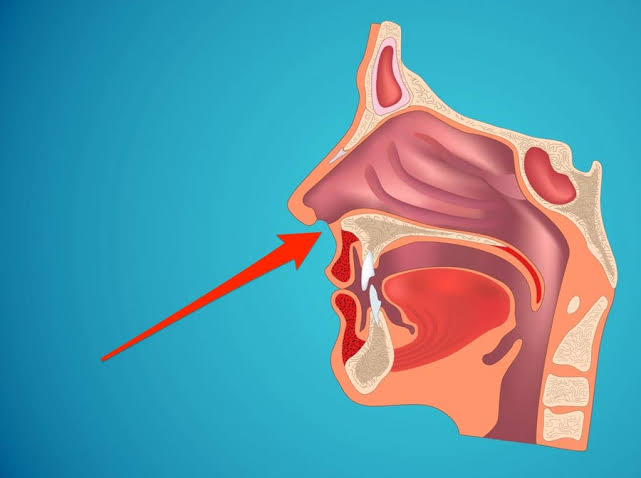


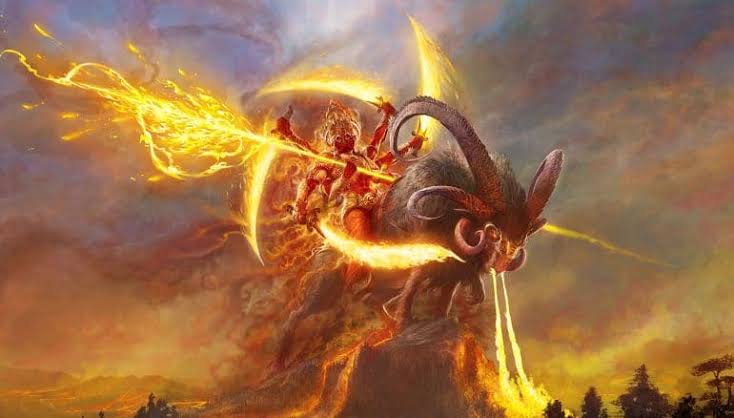


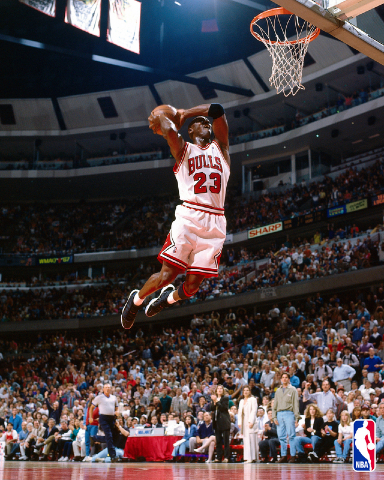


















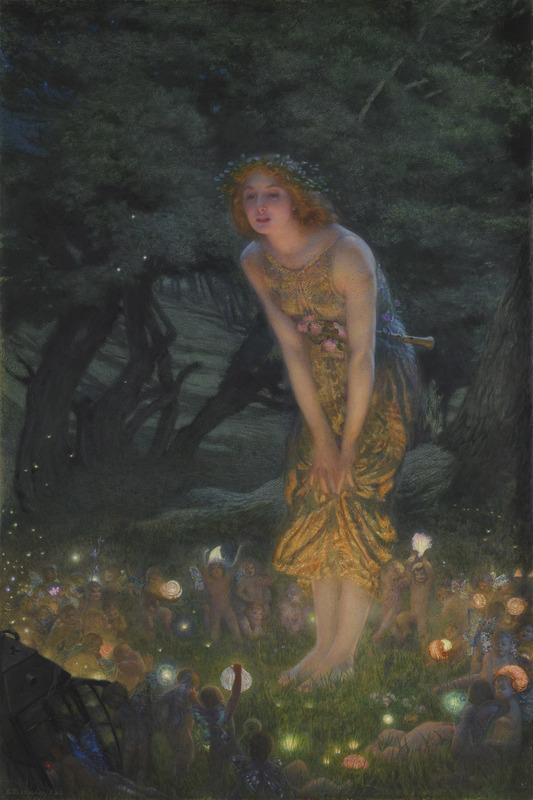









 The Taliban flag flies at the Ghazni provincial governor’s house, in Ghazni, southeastern, Afghanistan, Sunday, Aug. 15, 2021. (AP Photo: Gulabuddin Amiri)


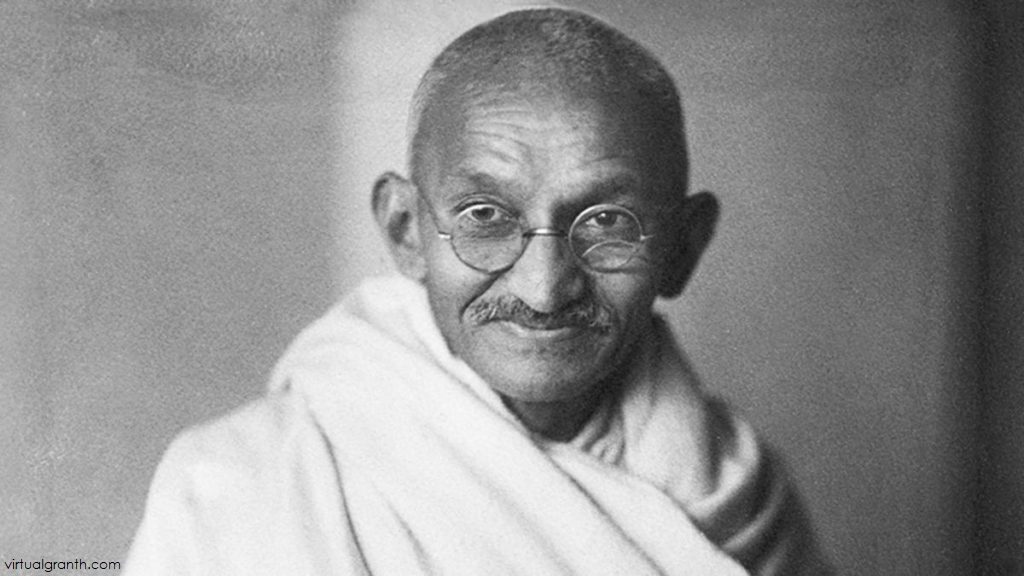


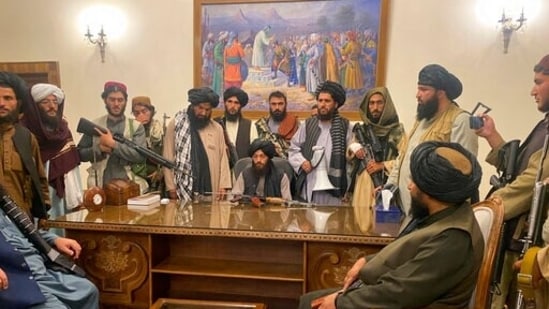



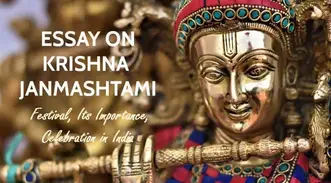





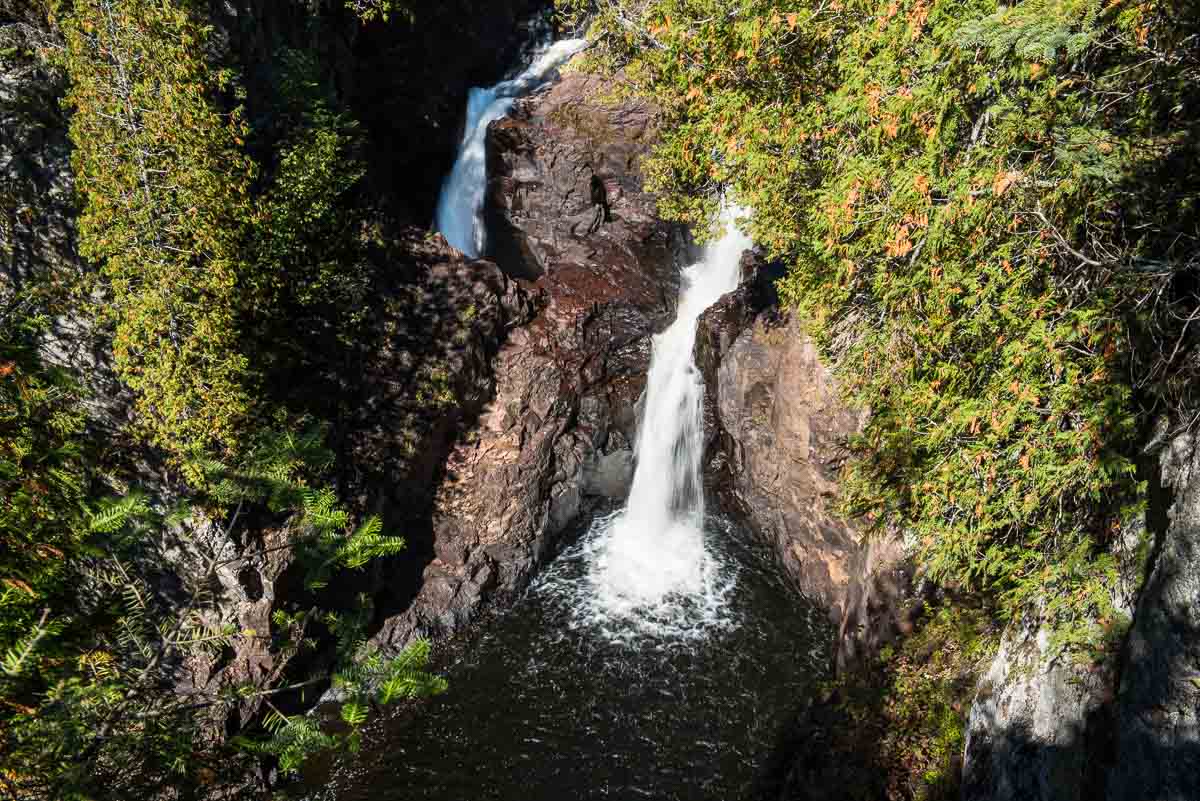
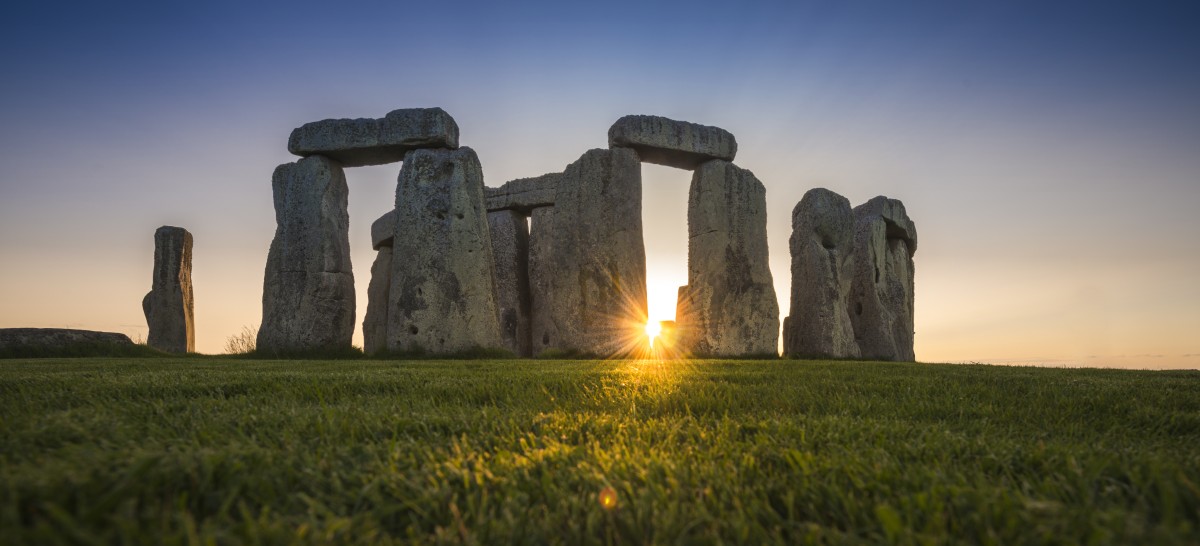















:max_bytes(150000):strip_icc()/orient-595fdf385f9b583f180a5e08.jpg)










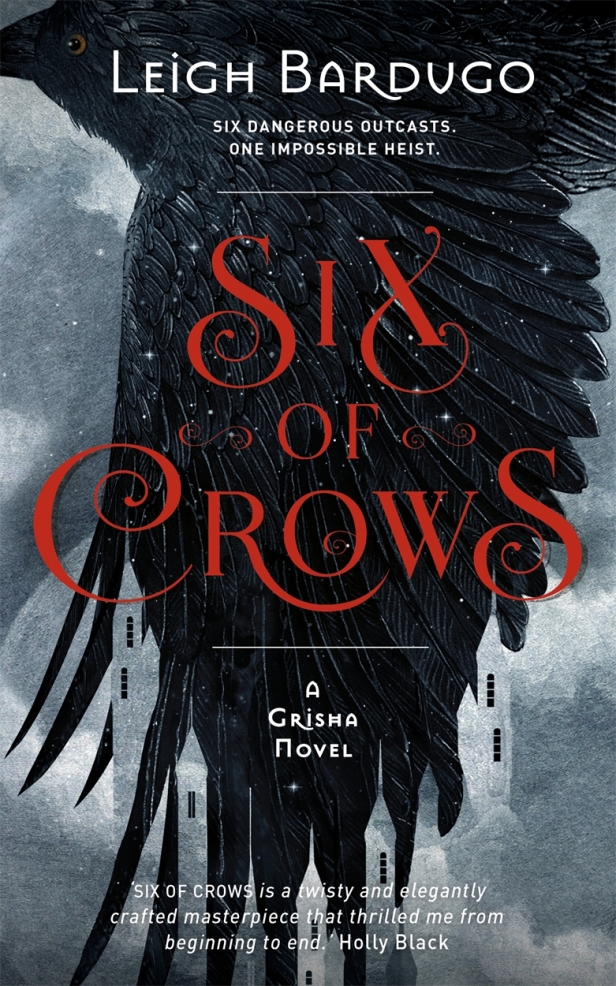








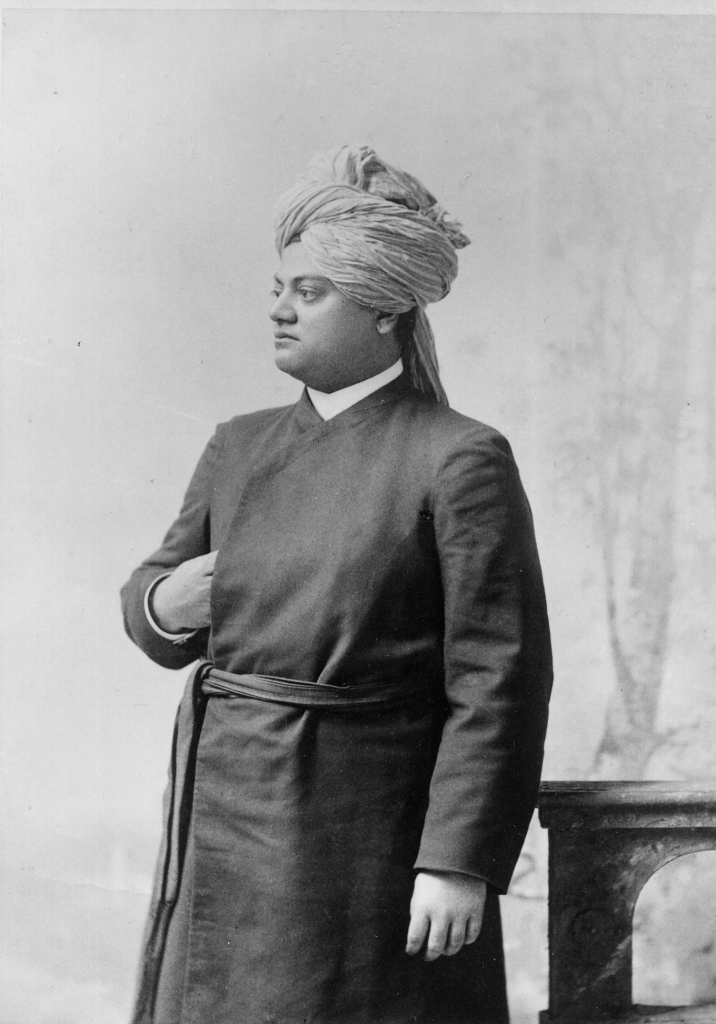





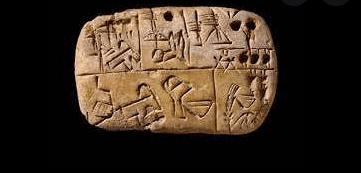







 Track2Training
You must be logged in to post a comment.