Organ Donation: Myths and facts

Every years, many thousands receives the gift of life, a life saving transplant of Heart, Kidney, Liver, Lungs, Pancreas and Interesting. And thousands more people receive Corneas and other tissues that restore sight and health. Organ transplantation is one of the medicals advances of our time.
How does it work?

It all starts when someone’s organ begins to fail and that person will need a transplant to survive. The steps are as folllow:-

  1. A through evaluation is conducted at a transplant centre and the person is a good candidate for transplant, he or she will be put into the National Transplant Waiting List.
  2. Once a person is on the waiting list, the wait for organ begins.
  3. A national system matches people on the waiting list with donors. That factors matching donors to recipient includes
    • Blood type
    • Body size
    • How sick the patient is
    • Distance from donor
    • Tissue type
    • Time on list

What isn’t taken into account, organs are never matched based on

  • Race
  • Gender
  • Income
  • Celebrity
  • Social status

There is no telling how long the wait will take. Infact, some people don’t receive an organ in time, because the Waiting List is really long and there aren’t enough donors available. That’s why an average of 20 people on the Waiting List died each day. Imagine how many could we save if we all were donors.

Becoming a donors

Most of organs transplant comes a deceived donors. For example, a person comes to the hospital with a life threatening brain injury, such as from an accident, stroke, our lack of oxygen. The doctors work hard to save them patients life but sometimes nothing can be done. There’s a complete, irreversible loss of brain function. The patient is clinically and legally dead.

Thats when being a donor can turn a time of loss into a time of hope. Because machines have blood containing and oxygen flowing into the organs, they can be passed along. One person can give life to as many as eight people through organ donation, and enhance the lives of fifty people or more with eye and tissue donation. But now minutes matter, matches must be found and transplants must happen quickly.

Organ Procurement organization

The hospital contracts an Organ Procurement Organization (OPO), it manages the recovery process. The OPO checks the state of organ donor registry, if the person is already registered as a donor they inform the family, if not they’ll ask the family to authorise donation.

A medical examination is taken place. They check the medical and social history and the person is eligible to be an organ donor, the computer begins to search on the National Waiting List for well matched patients The best matched patients are contracted by the transplant team. This is the call that every person on the Waiting List was waiting for.

The Transplant

A surgical team recovers the organs, then Corneas and other tissues. The organs are sent to the transplant hospital where patients and transplant teams are waiting and the life saving transplant takes place. It will take health living and medication to keep the organ working well in its new home.

You too could make the decision today, sign up on your state registry as an organ, eye and tissues donor, any age is the right age, Young or old, any day is the right day to sign up as a donor. You can register through your drivers license or you can register online. Remember to tell your family so that they can support your wishes. More than 1r5 million people have already registered, and we all need to save kore lives. So let’s share the gift of life.

DEEP LEARNING SERIES- PART 10

This is the last article in this series. This article is about another pre-trained CNN known as the ResNet along with an output visualization parameter known as the confusion matrix.

ResNet

This is also known as a residual network. It has three variations 51,101,151. They used a simple technique to achieve this high number of layers.

Credit – Xiaozhu0429/ Wikimedia Commons / CC-BY-SA-4.0

The problem in using many layers is that the input information gets changed in accordance with each layer and subsequently, the information will become completely morphed. So to prevent this, the input information is sent in again like a recurrent for every two steps so that the layers don’t forget the original information. Using this simple technique they achieved about 100+ layers.

ResNet these are the three fundamentals used throughout the network.

  (conv1): Conv2d (3, 64, kernel_size= (7, 7), stride= (2, 2), padding= (3, 3))

  (relu): ReLU

  (maxpool): MaxPool2d(kernel_size=3, stride=2, padding=1)

These are the layers found within a single bottleneck of the ResNet.

    (0): Bottleneck

  1    (conv1): Conv2d(64, 64, kernel_size=(1, 1), stride=(1, 1))

  2    (conv2): Conv2d(64, 64, kernel_size=(3, 3), stride=(1, 1), padding=(1, 1))     

  3    (conv3): Conv2d(64, 256, kernel_size=(1, 1), stride=(1, 1))    

      (relu): ReLU(inplace=True)

   Down sampling   

   Conv2d(64, 256, kernel_size=(1, 1), stride=(1, 1))

    (1): Bottleneck

  4    (conv1): Conv2d(256, 64, kernel_size=(1, 1), stride=(1, 1))

  5    (conv2): Conv2d(64, 64, kernel_size=(3, 3), stride=(1, 1), padding=(1, 1))     

  6   (conv3): Conv2d(64, 256, kernel_size=(1, 1), stride=(1, 1))     

      (relu): ReLU(inplace=True)

    )

    (2): Bottleneck

  7    (conv1): Conv2d(256, 64, kernel_size=(1, 1), stride=(1, 1))

  8    (conv2): Conv2d(64, 64, kernel_size=(3, 3), stride=(1, 1), padding=(1, 1))

  9   (conv3): Conv2d(64, 256, kernel_size=(1, 1), stride=(1, 1))

   (relu): ReLU

There are many bottlenecks like these throughout the network. Hence by this, the ResNet is able to perform well and produce good accuracy. As a matter of fact, the ResNet is the model which won the ImageNet task competition.

There are 4 layers in this architecture. Each layer has a bottleneck which comprises convolution followed by relu activation function. There are 46 convolutions, 2 pooling, 2 FC layers.

TypeNo of layers
7*7 convolution1
1*1, k=64 + 3*3, k=64+1*1, k=256 convolution9
1*1, k=128+ 3*3, k=128+1*1, k=512  convolution10
1*1, k=256+ 3*3, k=256 + 1*1, k=1024 convolution16
1 * 1, k=512+3 * 3, k=512+1 * 1, k=2048 convolution9
Pooling and FC4
Total50

There is a particular aspect apart from the accuracy which is used to evaluate the model, especially in research papers. That method is known as the confusion matrix. It is seen in a lot of places and in the medical field it can be seen in test results. The terms used in the confusion matrix have become popularized in the anti-PCR test for COVID.

The four terms used in a confusion matrix are True Positive, True Negative, and False positive, and false negative. This is known as the confusion matrix.

True positive- both the truth and prediction are positive

True negative- both the truth and prediction are negative

False-positive- the truth is negative but the prediction is positive

False-negative- the truth is positive but the prediction is false

Out of these the false positive is dangerous and has to be ensured that this value is minimal.

We have now come to the end of the series. Hope that you have got some knowledge in this field of science. Deep learning is a very interesting field since we can do a variety of projects using the artificial brain which we have with ourselves. Also, the technology present nowadays makes these implementations so easy. So I recommend all to study and do projects using these concepts. Till then,

HAPPY LEARNING!!!

DEEP LEARNING SERIES- PART 9

This article is about one of the pre-trained CNN models known as the VGG-16. The process of using a pretrained CNN is known as transfer learning. In this case, we need not build a CNN instead we can use this with a modification. The modifications are:-

  • Removing the top (input) and bottom (output) layers
  • Adding input layer with size equal to the dimension of the image
  • Adding output layer with size equal to number of classes
  • Adding additional layers (if needed)

The pre-trained model explained in this article is called the VGGNet. This model was developed by the Oxford University researchers as a solution to the ImageNet task. The ImageNet data consists of 10 classes with 1000 images each leading to 10000 images in total.

VGGNet

I/p 1     2   3     4     5        6       7         8      9          10     11            12       13   o/p

Credit: – Nshafiei neural network in Machine learning  Creative Commons Attribution-ShareAlike 4.0 License.

This is the architecture for VGGNet. This has been found for the CIFAR-10 dataset, a standard dataset containing 1000 classes. This was used for multiclass classification. Some modifications are made before using it for detecting OA. The output dimension is changed into 1*1*2 and the given images must be reshaped to 224*224 since this dimension is compatible with VGGNet. The dimensions and other terms like padding, stride, number of filters, dimension of filter are chosen by researchers and found optimal. In general, any number can be used in this place.

The numbers given below the figure correspond to the layer number. So the VGGNet is 13 layered and is CNN till layer 10 and the rest are FNN.

Colour indexName
GreyConvolution
RedPooling
BlueFFN

Computations and parameters for each layer

Input

224*224 images are converted into a vector whose dimension is 224*224*3 based on the RGB value.

Layer 1-C1

This is the first convolutional layer. Here 64 filters are used.

Wi =224, P=1, S=1, K=64, f=3*3

Wo =224 (this is the input Wi for the next layer)

Dim= 224*224*64

Parameter= 64*3*3= 576

Layer 2-P1

This is the first pooling layer

 Wi =224, S=2, P=1, f=3

Wo=112 (this is the input Wi for the next layer)

Dim= 112*112*3

Parameter= 0

Layer 3-C2C3

Here two convolutions are applied. 128 filters are used.

Wi =112, P=1, S=1, K=64, f=3

Wo=112 (this is the input Wi for the next layer)

Dim= 112*112*128

Parameter= 128*3*3=1152

Layer 4- P2

Second pooling layer

Wi =112, P=1, S=2, f=3*3

Wo =56 (this is the input Wi for the next layer)

Dim= 56*56*3

Parameter= 0

Layer 5- C4C5C6

Combination of three convolutions

Wi =56, P=1, S=1, K=256, f=3*3

Wo = 56 (this is the input Wi for the next layer)

Dim= 224*224*64

Parameter= 64*3*3= 576

Layer 6-P3

Third pooling layer

Wi =56, P=1, S=2, f=3*3

Wo =28 (this is the input Wi for the next layer)

Dim= 28*28*3

Parameter= 0

Layer 7-C7C8C9

Combination of three convolutions

Wi =28, P=1, S=1, K=512, f=3*3

Wo =28 (this is the input Wi for the next layer)

Dim= 28*28*512

Parameter= 512*3*3= 4608

Layer 8-P4

Fourth pooling layer

Wi =28, P=1, S=2, f=3*3

Wo =14 (this is the input Wi for the next layer)

Dim= 14*14*3

Parameter= 0

Layer 9-C10C11C12

Last convolution layer, Combination of three convolutions

Wi =14, P=1, S=1, K=512, f=3*3

Wo =14 (this is the input Wi for the next layer)

Dim= 14*14*512

Parameter= 512*3*3= 4608

Layer 10-P5

Last pooling layer and last layer in CNN

Wi =14, P=1, S=2, f=3*3

Wo =7 (this is the input Wi for the next layer)

Dim= 7*7*3

Parameter= 512*3*3= 4608

With here the CNN gets over. So a complex 224*224*3 boil down to 7*7*3

Trends in CNN

As the layer number increases,

  1. The dimension decreases.
  2. The filter number increases.
  3. Filter dimension is constant.

In convolution

Padding of 1 and stride of 1 to transfer original dimensions to output

In pooling

Padding of 1 and stride of 2 are used in order to half the dimensions.

Layer 11- FF1

4096 neurons

Parameter= 512*7*7*4096=102M

Wo= 4096

Layer 12- FF2

4096 neurons

Wo= 4096

Parameter= 4096*4096= 16M

Output layer

2 classes

  • non-osteoarthritic
  • osteoarthritic

Parameter= 4096*2= 8192

Parameters

LayerValue of parameters
Convolution16M
FF1102M
FF216M
Total134M

It takes a very large amount of time nearly hours for a machine on CPU to learn all the parameters. Hence they came with speed enhancers like faster processors known as GPU Graphic Processing Unit which may finish the work up to 85% faster than CPU.

HAPPY LEARNING!!

Why do Insectivorous plants exist?

If you find insectivorous plants strange and fascinating then this blog is for you.

What are insectivorous plants?

Insectivorous plants are those plants that derive some nutrients by trapping and consuming animals, mainly insects.

Categories of being insectivorous

There are essential two things that a plant has to do to be considered insectivorous:-

  1. Ability to take nutrients from dead prey:- a plant should have the ability to trap the prey and absorb nutrients from it. Those prey is usually insects or small vertebrates like, salamanders. It is not enough for the plant just to have defenses that can kill an animal that’s trying to snack on it. It also has to get it’s animal’s nutrients.
  2. At least have one adaption:- the plant need to have one adaption that actively lures in, catches, or digests it’s prey.

Doing at least one of these things and absorbing the nutrients for it’s benefit make it a insectivorous plant.

Plant traps

Over millions of years and across hundreds of species, plants have developed five different types of traps, most of them are from different times. And traps can be passive, if prey just fall into them and can’t escape, or active, if plant actually moves to catch its prey.

  1. Pitcher plant:- pitfall traps are the standard and passive trap used by plants like pitcher plants. Prey lands on the plants slippery surface and slides down into a pool of digestive juices.
  2. Sundews:- these are flypaper traps in which the prey become stuck in a sticky substance that is produced by the plant leaves. These traps can be passive as well as active. Sundews have sticky moving tentacles that react to contract with prey.
  3. Venus fly trap:- these are snap traps which are active, using rapid modified leave
  4. Bladderworts: they have bladder-suction. This creates little negative pressure vacuum inside their traps, which, when triggered by prey, pop open and suck the victim inside before snapping close.
  5. Lobster-pot trap:- they passive traps that force prey to move towards the plant’s digestive organ by having little inward pointing hairs that keep prey from moving backward out of the trap.
Venus fly trap
Lobster-pot trap
Bladderworts
Sundew
Pitcher plant

All of these unrelated plants have not only developed the same kinds of traps but it looks like they have also developed that same molecular mechanism for digesting their prey.

Reason of existence

It goes back to idea of convergent evolution. All these different insectivorous plants are responding to similar environmental pressure:-

  1. Found in open sunny places that have moist but nutrients – poor – acidic soil. Many of them live in bogs and fens.
  2. In these kind of habitat where nitrogen and phosphorus is not present in the soil, the plant tend to developed two kinds of leaves one for normal photosynthesis and one that are modified onto their particular type of trap.
  3. This results them to invest more in modified leaves than normal photosynthesis leaves as they have to live in a place with enough sunlight as well as to trap preys

Insectivorous plants can stop paying carnivorous temporally once they’re put in nutrients rich soil and if they don’t get enough sunlight and water.

Insectivorous plants are pretty rare and they are only found in certain kinds of habitats, they are just less likely to fossilize than other kinds of plants that are more widespread.

DEEP LEARNING SERIES- PART 8

The previous article was about the padding, stride, and parameters of CNN. This article is about the pooling and the procedure to build an image classifier.

Pooling

This is another aspect of CNN. There are different types of pooling like min pooling, max pooling, avg pooling, etc. the process is the same as before i.e. the kernel vector slides over the input vector and does computations on the dot product. If a 3*3 kernel is considered then it is applied over a 3*3 region inside the vector, it finds the dot product in the case of convolution. The same in pooling finds a particular value and substitutes that value in the output vector. The kernel value decides the type of pooling. The following table shows the operation done by the pooling.

Type of poolingThe value seen in the output layer
Max poolingMaximum of all considered cells
Min poolingMinimum of all considered cells
Avg poolingAverage of all considered cells

The considered cells are bounded within the kernel dimensions.

The pictorial representation of average pooling is shown above. The number of parameters in pooling is zero.

Convolution and pooling are the basis for feature extraction. The vector obtained from this step is fed into an FFN which then does the required task on the image.

Features of CNN

  1. Sparse connectivity
  2. Weight sharing.


    Feature extraction-CNN              classifier-FNN

In general, CNN is first then FFN is later. But the order or number or types of convolution and pooling can vary based on the complexity and choice of the user.

Already there are a lot of models like VGGNet, AlexNet, GoogleNet, and ResNet. These models are made standard and their architecture has been already defined by researchers. We have to reshape our images in accordance with the dimensions of the model.

General procedure to build an image classifier using CNN

  1. Obtain the data in the form of image datasets.
  2. Set the output classes for the model to perform the classification on.
  3. Transform or in specific reshape the dimension of the images compatible to the model. The image size maybe 20*20 but the model accepts only 200*200 images; then we must reshape them to that size.
  4. Split the given data into training data and evaluation data. This is done by creating new datasets for both training and validation. More images are required for training.
  5. Define the model used for this task.
  6. Roughly sketch the architecture of the network.
  7. Determine the number of convolutions, pooling etc. and their order
  8. Determine the dimensions for the first layer, padding, stride, number of filters and dimensions of filter.
  9. Apply the formula and find the output dimensions for the next layer.
  10. Repeat 5d till the last layer in CNN.
  11. Determine the number of layers and number of neurons per layer and parameters in FNN.
  12. Sketch the architecture with the parameters and dimension.
  13. Incorporate these details into the machine.
  14. Or import a predefined model.  In that case the classes in the last layer in the FNN must be replaced with ‘1’ for binary classification or with the number of classes. This is known as transfer learning.
  15. Train the model using the training dataset and calculate the loss function for periodic steps in the training.
  16. Check if the machine has performed correctly by comparing the true output with model prediction and hence compute the training accuracy.
  17. Test the machine with the evaluation data and verify the performance on that data and compute the validation accuracy.
  18.   If both the accuracies are satisfactory then the machine is complete.

HAPPY LEARNING!!

DEEP LEARNING SERIES- PART 7

The previous article was about the process of convolution and its implementation. This article is about the padding, stride and the parameters involved in a CNN.

We have seen that there is a reduction of dimension in the output vector. A technique known as padding is done to preserve the original dimensions in the output vector. The only change in this process is that we add a boundary of ‘0s’ over the input vector and then do the convolution process.

Procedure to implement padding

  1. To get n*n output use a (n+2*n+2) input
  2. To get 7*7 output use 9*9 input
  3. In that 9*9 input fill the first row, first column, last row and last column with zero.
  4. Now do the convolution operation on it using a filter.
  5. Observe that the output has the same dimensions as of the input.

Zero is used since it is insignificant so as to keep the output dimension without affecting the results

Here all the elements in the input vector have been transferred to the output. Hence using padding we can preserve the originality of the input. Padding is denoted using P. If P=1 then one layer of zeroes is added and so on.

It is not necessary that the filter or kernel must be applied to all the cells. The pattern of applying the kernel onto the input vector is determined using the stride. It determines the shift or gaps in the cells where the filter has to be applied.-

S=1 means no gap is created. The filter is applied to all the cells.

S=2 means gap of 1. The filter is applied to alternative cells. This halves the dimensions on the output vector.

This diagram shows the movement of filter on a vector with stride of 1 and 2. With a stride of 2; alternative columns are accessed and hence the number of computations per row decreases by 2. Hence the output dimensions reduce while use stride.

The padding and stride are some features used in CNN.

Parameters in a convolution layer

The following are the terms needed for calculating the parameter for a convolution layer.

Input layer

Width Wi – width of input image

Height Hi – height of input image

Depth Di – 3 since they follow RGB

We saw that 7*7 inputs without padding and stride along with 3*3 kernels gave a 5*5 output. It can be verified using this calculation.

The role of padding can also be verified using this calculation.

The f is known as filter size. It can be a 1*1, 3*3 and so on. It is a 1-D value so the first value is taken. There is another term K which refers to the number of kernels used. This value is fixed by user.

These values are similar to those of w and b. The machine learns the ideal value for these parameters for high efficiency. The significance of partial connection or CNN can be easily understood through the parameters.

Consider the same example of (30*30*3) vector. The parameter for CNN by using 10 kernels will be 2.7 million. This is a large number. But if the same is done using FNN then the parameters will be at least 100 million. This is almost 50 times that of before. This is significantly larger than CNN. The reason for this large number is due to the full connectivity. 


Parameter= 30*30*3*3*10= 2.7M

HAPPY READING!!

Sleepwalking

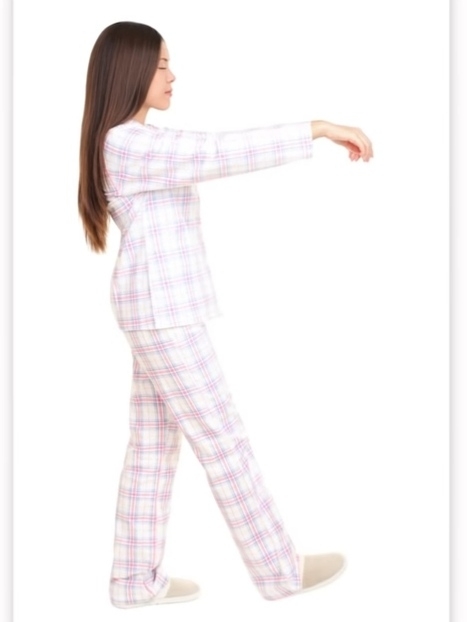
Did you ever Sleep walked? Here’s what I came to know that every 1 out of 3 kids aged between 4 to 8, sleep walk. And that’s a lot by the way.

Sleep walking formally known as Somnambulish is a strange phenomena where people get up and do things in their sleep, sometimes more than just walking and when they wake up they don’t have any recollection of what they were doing. Moreover, if they find way back to their bed they may not ever know that they were sleep walking.

Sleep walking is nothing about embarrassed about though or terrified for that matter, it’s relatively common. In a recent study Stanford found that 1 out of 3 people sleep walk at some point of their lives. It is specially common among children, between the age of 4 and 8. So what happened when we sleep walk.

Reasons

A leading theory about why we sleep walk is:-

  • In normal sleep cycle, your brains motor system continues to issue physical commands to the body.
  • Whereas those who sleep walks are suppressed by sleep chemical called GABA.
  • GABA access act as a break in your brain, it brings your mind and body down to rest by neutralizing Glutamate a chemical that causes excitement.
  • In sleep walkers there’s a glitch in the process that suppresses your boby from moving around namely that you don’t produce GABA.

So that’s why you are moving around when you’re still asleep. There are few causes of GABA deficient in the body:-

  1. Genetic sleepwalking :- when sleepwalking runs in the family
  2. Underdeveloped system:- when the boby simply hasn’t matured enough to produce the proper amount. That’s why it is more common amongst kids.
  3. Depression:- Those who suffer from depression are three times as likely to sleep walk.

Myths

You would have probably heard about the myth that you shouldn’t wake a sleepwalker because they’re going through a psychotic rage that could even kill you. But these are myths, if you see anyone sleepwalking, you are asked to wake them up gently, especially if they are in the kitchen or holding a knife.

Recently there was a story about a lady who drove 190 miles in her sleep without hurting or killing herself or anyone. She should be definitely called lucky.

DEEP LEARNING SERIES- PART 6

The previous article was about the procedure to develop a deep learning network and introduction to CNN. This article concentrates on the process of convolution which is the process of taking in two images and doing a transformation to produce an output image. This process is common in mathematics and signals analysis also. The CNN’s are mainly used to work with images.

In the CNN partial connection is observed. Hence all the neurons are not connected to those in the next layer. So the number of parameters reduces leading to lesser computations.

Sample connection is seen in CNN.

Convolution in mathematics refers to the process of combining two different functions. With respect to CNN, convolution occurs between the image and the filter or kernel. Convolution itself is one of the processes done on the image.

Here also the operation is mathematical. It is a kind of operation on two vectors. The input image gets converted into a vector based on colour and dimension. The kernel or filter is a predefined vector with fixed values to perform various functions onto the image.

Process of convolution

The kernel or filter is chosen in order of 1*1, 3*3, 5*5, 7*7, and so on. The given filter vector slides over the image and performs dot product over the image vector and produces an output vector with the result of each 3*3 dot product over the 7*7 vector.

A 3*3 kernel slides over the 7*7 input vector to produce a 5*5 output image vector. The reason for the reduction in the dimension is that the kernel has to do dot product operation on the input vector-only with the same dimension. I.e. the kernel slides for every three rows in the seven rows. The kernel must perfectly fit into the input vector. All the cells in the kernel must superimpose onto the vector. No cells must be left open. There are only 5 ways to keep a 3-row filter in a 7-row vector.    

This pictorial representation can help to understand even better. These colors might seem confusing, but follow these steps to analyze them.

  1. View at the first row.
  2. Analyse and number the different colours used in that row
  3. Each colour represents a 3*3 kernel.
  4. In the first row the different colours are red, orange, light green, dark green and blue.
  5. They count up to five.
  6. Hence there are five ways to keep a 3 row filter over a 7 row vector.
  7. Repeat this analysis for all rows
  8. 35 different colours will be used. The math is that in each row there will be 5 combinations. For 7 rows there will be 35 combinations.
  9. The colour does not go beyond the 7 rows signifying that kernel cannot go beyond the dimension of input vector.

These are the 35 different ways to keep a 3*3 filter over a 7*7 image vector. From this diagram, we can analyse each row has five different colours. All the nine cells in the kernel must fit inside the vector. This is the reason for the reduction in the dimension of output vector.

Procedure to implement convolution

  1. Take the input image with given dimensions.
  2. Flatten it into 1-D vector. This is the input vector whose values represent the colour of a pixel in the image.
  3. Decide the dimension, quantity and values for filter. The value in a filter is based on the function needed like blurring, fadening, sharpening etc. the quantity and dimension is determined by the user.
  4. Take the filter and keep it over the input vector from the first cell. Assume a 3*3 filter kept over a 7*7 vector.
  5. Perform the following computations on them.

5a. take the values in the first cell of the filter and the vector.

5b. multiply them.

5c. take the values in the second cell of the filter and the vector.

5d. multiply them.

5e. repeat the procedure till the last cell.

5f. take the sum for all the nine values.

  • Place this value in the output vector.
  • Using the formula mentioned later, find the dimensions of the output vector.

HAPPY LEARNING!!

DEEP LEARNING SERIES- PART 5

The previous article was on algorithm and hyper-parameter tuning. This article is about the general steps for building a deep learning model and also the steps to improve its accuracy along with the second type of network known as CNN.

General procedure to build an AI machine

  1. Obtain the data in the form of excel sheets, csv (comma separated variables) or image datasets.
  2. Perform some pre-processing onto the data like normalisation, binarisation etc. (apply principles of statistics)
  3. Split the given data into training data and testing data. Give more preference to training data since more training can give better accuracy. Standard train test split ratio is 75:25.
  4. Define the class for the model. Class includes the initialisation, network architecture, regularisation, activation functions, loss function, learning algorithm and prediction.
  5. Plot the loss function and interpret the results.
  6. Compute the accuracy for both training and testing data and check onto the steps to improve it.

Steps to improve the accuracy

  1. Increase the training and testing data. More data can increase the accuracy since the machine learns better.
  2. Reduce the learning rate. High learning rate often affects the loss plot and accuracy.
  3. Increase the number of iterations (epochs). Training for more epochs can increase the accuracy
  4. Hyper parameter tuning. One of the efficient methods to improve the accuracy.
  5. Pre-processing of data. It becomes hard for the machine to work on data with different ranges. Hence it is recommended to standardise the data within a range of 0 to 1 for easy working.

These are some of the processes used to construct a network. Only basics have been provided on the concepts and it is recommended to learn more about these concepts. 

Implementation of FFN in detecting OSTEOARTHRITIS (OA)

Advancements in the detection of OA have occurred through AI. Technology has developed where machines are created to detect OA using the X-ray images from the patient. Since the input given is in the form of images, optimum performance can be obtained using CNN’s. Since the output is binary, the task is binary classification. A combination of CNN and FFN is used. CNN handles feature extraction i.e. converting the image into a form that is accepted by the FFN without changing the values. FFN is used to classify the image into two classes.

CNN-convolutional neural network

The convolutional neural network mainly works on image data. It is used for feature extraction from the image. This is a partially connected neural network. Image can be interpreted by us but not by machines. Hence they interpret images as a vector whose values represent the color intensity of the image. Every color can be expressed as a vector of 3-D known as RGB- Red Green Blue. The size of the vector is equal to the dimensions of the image.


This type of input is fed into the CNN. There are several processing done to the image before classifying it. The combination of CNN and FNN serves a purpose for image classification.

Problems are seen in using FFN for image

  • We have seen earlier that the gradients are chain rule of gradient at different layers. For image data, large number of layers in order of thousands may require. It can result in millions of parameters. It is very tedious to find the gradient for the millions of these parameters.
  • Using FFN for image data can often overfit the data. This may be due to the large layers and large number of parameters.

The CNN can overcome the problems seen in FFN.

HAPPY LEARNING!!!

DEEP LEARNING SERIES- PART 4

The previous article dealt with the networks and the backpropagation algorithm. This article is about the mathematical implementation of the algorithm in FFN followed by an important concept called hyper-parameter tuning.

In this FFN we apply the backpropagation to find the partial derivative of the loss function with respect to w1 so as to update w1.

Hence using backpropagation the algorithm determines the update required in the parameters so as to match the predicted output with the true output. The algorithm which performs this is known as Vanilla Gradient Descent.

The way of reading the input is determined using the strategy.

StrategyMeaning
StochasticOne by one
BatchSplitting entire input into batches
Mini-batchSplitting batch into batches

The sigmoid here is one of the types of the activation function. It is defined as the function pertaining to the transformation of input to output in a particular neuron. Differentiating the activation function gives the respective terms in the gradients.

There are two common phenomena seen in training networks. They are

  1. Under fitting
  2. Over fitting

If the model is too simple to learn the data then the model can underfit the data. In that case, complex models and algorithms must be used.

If the model is too complex to learn the data then the model can overfit the data. This can be visualized by seeing the differences in the training and testing loss function curves. The method adopted to change this is known as regularisation. Overfit and underfit can be visualized by plotting the graph of testing and training accuracies over the iterations. Perfect fit represents the overlapping of both curves.

Regularisation is the procedure to prevent the overfitting of data. Indirectly, it helps in increasing the accuracy of the model. It is either done by

  1. Adding noises to input to affect and reduce the output.
  2. To find the optimum iterations by early stopping
  3. By normalising the data (applying normal distribution to input)
  4. By forming subsets of a network and training them using dropout.

So far we have seen a lot of examples for a lot of procedures. There will be confusion arising at this point on what combination of items to use in the network for maximum optimization. There is a process known as hyper-parameter tuning. With the help of this, we can find the combination of items for maximum efficiency. The following items can be selected using this method.

  1. Network architecture
  2. Number of layers
  3. Number of neurons in each layer
  4. Learning algorithm
  5. Vanilla Gradient Descent
  6. Momentum based GD
  7. Nesterov accelerated gradient
  8. AdaGrad
  9. RMSProp
  10. Adam
  11. Initialisation
  12. Zero
  13. He
  14. Xavier
  15. Activation functions
  16. Sigmoid
  17. Tanh
  18. Relu
  19. Leaky relu
  20. Softmax
  21. Strategy
  22. Batch
  23. Mini-batch
  24. Stochastic
  25. Regularisation
  26. L2 norm
  27. Early stopping
  28. Addition of noise
  29. Normalisation
  30. Drop-out

 All these six categories are essential in building a network and improving its accuracy. Hyperparameter tuning can be done in two ways

  1. Based on the knowledge of task
  2. Random combination

The first method involves determining the items based on the knowledge of the task to be performed. For example, if classification is considered then

  • Activation function- softmax in o/p and sigmoid for rest
  • Initialisation- zero or Xavier
  • Strategy- stochastic
  • Algorithm- vanilla GD

The second method involves the random combination of these items and finding the best combination for which the loss function is minimum and accuracy is high.

Hyperparameter tuning would already be done by researchers who finally report the correct combination of items for maximum accuracy.

HAPPY READING!!!

DEEP LEARNING SERIES- PART 3

The previous article gave some introduction to the networks used in deep learning. This article provides more information on the different types of neural networks.

In a feed-forward neural network (FFN) all the neurons in one layer are connected to the next layer. The advantage is that all the information processed from the previous neurons is fed to the next layer hence getting clarity in the process. But the number of weights and biases significantly increases when there is a large number of input. This method is best used for text data.

In a convolutional neural network (CNN), some of the neurons are only connected to the next layer i.e. connection is partial. Batch-wise information is fed into the next layer. The advantage is that the number of parameters significantly reduces when compared to FFN. This method is best used for image data since there will be thousands of inputs.

In recurrent neural networks, the output of one neuron is fed back as an input to the neuron in the previous layer. A feed-forward and a feedback connection are established between the neurons. The advantage is that the neuron in the previous layer can perform efficiently and can update based on the output from the next neuron. This concept is similar to reinforcement learning in the brain. The brain learns an action based on punishment or reward given as feedback to the neuron corresponding to that action.

Once the final output is computed by the network, it is then compared with the original value, and their difference is taken in different forms like the difference of squares, etc. this term is known as loss function.

It will be better to explain the role of the learning algorithms here. The learning algorithm is the one that tries to find the relation between the input and output. In the case of neural networks, the output is indirectly related to input since there are some hidden layers in between them. This learning algorithm works in such a way so as to find the optimum w and b values for the loss function is minimum or ideally zero.

The algorithm in neural networks do this using a method called backpropagation. In this method, the algorithm starts tracing from the output. It then computes the values for the parameters corresponding to the neuron in that layer. It then goes back to the previous layer does the computations for the parameters of the neurons in that layer. This procedure is done till it encounters the inputs. In this way, we can find the optimum values for the parameters.

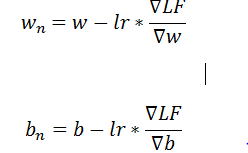
The computations made by the algorithm are based on the type of the algorithm. Most of the algorithms find the derivative of a parameter in one layer with respect to the loss function using backpropagation. This derivative is then subtracted from the original value.

Where lr is the learning rate; provided by the user. The lesser the learning rate, the better will be the results but more the time is taken. The starting value for w and b is determined using the initialization.

MethodMeaning
ZeroW and b are set to zero
Xavierw and b indirectly proportional to root n
He w and b indirectly proportional to root n/2

 Where n; refers to the number of neurons in a layer. These depend on the activation function used.

The derivative of the loss function determines the updating of the parameters.

Value of derivativeConsequence
-veIncreases
0No change
+veDecreases

The derivative of the loss function with respect to the weight or bias in a particular layer can be determined using the chain rule used in calculus.

HAPPY READING!!

DEEP LEARNING- PART 2

This image has an empty alt attribute; its file name is deep-learning-logo-picture-id871793108

The previous article gave a brief introduction to deep learning. This article deals with the networks used in deep learning. This network is known as a neural network. As the name suggests the network is made up of neurons

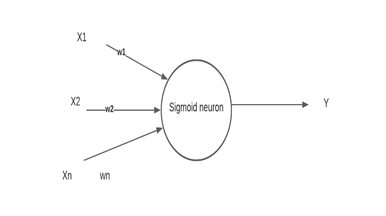
The networks used in artificial intelligence are a combination of blocks arranged in layers. These blocks are called an artificial neurons. They mimic the properties of a natural neuron. One of the neurons is the sigmoid neuron.

This is in general the formula for the sigmoid function. Every neural network consists of weights and biases.

Weights- The scalar quantities which get multiplied to the input

Biases- the threshold quantity above which a neuron fires

NotationMeaning
XInput
YOutput
WWeight
BBias

Working of a neuron

This is the simple representation of a neuron. This is similar to the biological neuron. In this neuron, the inputs are given along with some priority known as weights. The higher the value of the weights, the more prioritized is that input. This is the reason for our brain to choose one activity over the other. Activity is done only if the neuron fires. A similar situation is seen here. The particular activity is forwarded to the next layer only if this particular neuron fires. That is the output must be produced from the neuron.

Condition for the neuron to fire

The neuron will produce an output only if the inputs follow the condition.

As mentioned before, the bias is the threshold value and the neuron will fire only when the value crosses this bias. Thus the weighted sum for all the inputs must be greater than the bias in order to produce an output.

Classification of networks

Every neural network consists of three layers majorly: –

  1. Input layer
    1. Hidden layer
    1. Output layer

Input layer

The input layer consists of inputs in the form of vectors. Images are converted into 1-D vectors. Input can be of any form like audio, text, video, image, etc. which get converted into vectors.

Hidden layer

This is the layer in which all the computations occur. This is generally not visible to the user hence termed as a hidden layer. This layer may be single or multiple based on the complexity of the task to be performed. Each layer processes a part of the task and it is sent to the next layer. Vectors get multiplied with the weight matrix of correct dimensions and this vector gets passed onto the next layer.

Output layer

The output layer gets information from the last layer of the hidden layer. This is the last stage in the network. This stage depends upon the task given by the user. The output will be a 1-D vector. In the case of classification, the vector will have a value high for a particular class. In the case of regression, the output vector will have numbers representing the answer to those questions posed by the user.

The next article is about the feed-forward neural network.

HAPPY LEARNING!!

DEEP LEARNING SERIES- PART 1

Have you ever wondered how the brain works? One way of understanding it is by cutting open the brain and analyzing the structures present inside it. This however can be done by researchers and doctors. Another method is by using electricity to stimulate several regions of the brain. But what if I say that it is possible to analyze and mimic the brain in our computers? Sounds quite interesting right! This particular technology is known as deep learning.

Deep learning is the technique of producing networks that process unstructured data and gives output. With the help of deep learning, it is possible to produce and use brain-like networks for various tasks in our systems. It is like using the brain without taking it out.  Deep learning is advanced than machine learning and imitates the brain better than machine learning and also the networks built using deep learning consists of parts known as neurons which is similar to biological neurons. Artificial intelligence has attracted researchers in every domain for the past two decades especially in the medical field; AI is used to detect several diseases in healthcare.

Sl.noNameDescriptionExamples
1DataType of data provided to inputBinary(0,1) Real
2TaskThe operation required to do on the inputClassification(binary or multi) Regression(prediction)
3ModelThe mathematical relation between input and output. This varies based on the task and complexityMP neuron(Y=x+b) Perceptron(Y=wx+b) Sigmoid or logistic(Y=1/1+exp(wx+b)) *w and b are parameters corresponding to the model
4Loss functionKind of a compiler that finds errors between the output and input (how much the o/p leads or lags the i/p).Square error= square of the difference between the predicted and actual output.  
5AlgorithmA kind of learning procedure that tries to reduce the error computed beforeGradient descent
NAG
AdaGrad
Adam
RMSProp
6EvaluationFinding how good the model has performedAccuracy
Mean accuracy

Every model in this deep learning can be easily understood through these six domains. Or in other words, these six domains play an important role in the construction of any model. As we require cement, sand, pebbles, and bricks to construct a house we require these six domains to construct a network.

 Now it will be more understandable to tell about the general procedure for networks.

  1. Take in the data (inputs and their corresponding outputs) from the user.
  2. Perform the task as mentioned by the user.
  3. Apply the specific relation to the input to compute the predicted output as declared by the user in the form of model by assigning values to parameters in the model.
  4.  Find the loss the model has made through computing the difference between the predicted and actual output.
  5. Use a suitable learning algorithm so as to minimize the loss by finding the optimum value for parameters in the network
  6. Run the model and evaluate its performance in order to find its efficiency and enhance it if found less.

By following these steps correctly, one can develop their own machine. In order to learn better on this, pursuing AI either through courses or opting as a major is highly recommended. The reason is that understanding those concepts requires various divisions in mathematics like statistics, probability, calculus, vectors, and matrices apart from programming. 


HAPPY READING!!

Who was the First Plastic Surgeon?

Plastic surgery – the name implies an artificial substance – but it is derived from the Greek word “Plastikos” which means to mold or to give form. An important specialty has been taking shape, one that reshapes the lives of patients. So who was the first plastic surgeon?

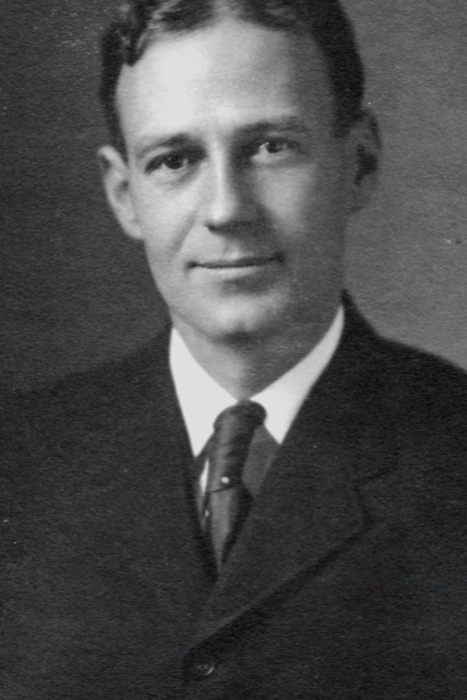
John Staige Davis was the first plastic surgeon. He played an important role not only at his council group in Hopkins but also in the United States in the plastic surgery. He limited his practice in the field of plastic surgery in those times. He was the only plastic surgeon who was there when World War I took place.

Dr. John Staige Davis

In 1991, Dr. Davis published the first English language textbook of plastic surgery and it is still used today. He sends copies to medical school founder, doctors and at that time no one acknowledged receiving it. And though plastic surgery at Hopkins would not gain the standard they deserved until the next century, Dr. Davis was helping to build the foundation for the entire discipline of plastic surgery in America.

He used to pioneer the transferring tissue techniques known as “Z- plasty” and the use of small deep grafts to heal chronic wounds. He was the founding member of The American Board of Surgery and The American Board of Plastic surgery. Dr. Davis’s work and reputation starts Hopkins on its way to becoming a crossroad and destination for the country’s best plastic surgeons.

In 1942, John Staige Davis was part-time faculty member and was running a plastic clinic even though he was in his 70s by then and beyond his retirement age, two years from then a forth year medical student at Hopkins had the chance observe the master surgeon doing a cleft lip repair.

His successor Dr. Edgerton graduates and proceeds to work by joining the army and was serving at Valley Forge General Hospital in Pennsylvania. He was one of the few surgeon treating thousands of men coming back from combat with disfiguring wounds and burns needing plastic surgery. This horrendous war injuries united skill surgeon in their desire to heal wounded soldiers. This dynamic gave raise to a new and important speciality in medicine.

Dr. Edgerton

With the scientific foundation and tissue regeneration, transplantation, and stem cell biology plastic surgery is uniquely poised to make the next major advance in medicine. By regenerating or replacing missing body parts, plastic surgery can transform patients life in ways that could not have been imagined only recently.

John Staige Davis didn’t lived to see plastic surgery receive the recognition and support if required and deserved in the world. But his path-breaking work and clear vision allowed a greater dream to be realized.

Internship & The Role of an Intern

What is an internship? An internship is a period of work experience offered by an organization for a limited period of time. They are typically undertaken by students and graduates looking to gain relevant skills and experience in a particular field. An internship consists of an exchange of services for experience between the intern and the organization. Internships are used to determine whether the intern still has an interest in that field after the real-life experience. Internships provide current college students with the ability to participate in a field of their choice to receive hands-on learning about a particular future career, preparing them for full-time work following graduation.

Internships are usually short-term. They’re smaller investments in time and energy than full-time jobs. But they are certainly without a doubt a great investment of your time. Consequently, they’re perfect opportunities to explore your options. You deserve work that’s fulfilling. If necessary, you can sign up for a different but related internship role elsewhere to see if you’re happier there.

Your internship is going to shape the course of your career. It’ll assist you in acquiring the skills you need to perform up-to-par when you’re hired full-time. It’s essential you use your internship as the training opportunity it represents.

You’re sure to have a bright future if you work hard, build positive relationships, and use the skills you develop in your internship to your advantage.

Who is an intern?

An intern is a trainee who has signed on with an organisation for a brief period. An intern’s goal is to gain work experience, occasionally some university credit, and always an overall feel for the industry they’re interning in.

An intern is primarily a support role at least in the beginning. When you join up, your main job will be to assist, learn, and grow. After you’ve settled in, you’ll be expected to pull your own weight.

What does an intern do?

So, what does an intern do exactly? That depends on the industry in question and the kind of internship you’ve signed up for.

Here’s a general overview of the work you can expect to do as an intern:    

1. Assist and contribute to the team

In the beginning of your internship, you may your time simply trying to learn how the company works. You may shadow an employee to get an understanding of their role. After few days of learning the ins-and-outs of the company, you’ll start to assist and contribute more to the team. 

Here are some day-to-day intern roles and their responsibilities :  

  • Performing clerical duties
  • Managing social media and emails
  • Event handling
  • Research

2. Learn and gain experience

You’ll be expected to learn as much as you possibly can while you work, regardless of the kind of internship you’ve signed up for.

What kind of learning will you be doing? It can be broken down into two main areas :

  • Picking up hard skills : Hard skills are the technical skills you need to carry out your intern responsibilities, and eventually job duties, successfully.
  • Brushing up on your soft skills : Soft skills are as important as hard skills. Soft skills are all about your ability to relate to people and building mutually-beneficial relationships.

3. Job shadow

Job shadowing has become the norm recently. As the name suggests, the practice involves “shadowing” someone as they perform their daily duties, observing their activities, and learning what the role entails via indirect experience.

How does this work exactly? When you join the organisation, you may be assigned a mentor. The first few weeks, you may be tasked with following them around. Once you’ve shadowed for a while, you may be asked to help your mentor on projects or eventually take over some of their tasks.

4. Take on an increasing amount of responsibility

As time goes by, expect to shoulder an increasing amount of responsibility. Initially, they’ll gauge your current skill set and reliability with your initial workload. As you prove yourself to your colleagues and bosses, you’ll be entrusted with more crucial tasks. The better you perform, the more the responsibilities you’ll be given. Employers prefer quality over quantity – don’t afraid to ask for help if you need it. 

5. Make a career call 

Finally, usually at the tail-end of your internship, you have to make a career-defining decision: continue in the field you interned in or try your hand at something else entirely. You got a taste of what working in your industry full-time would be like. That’s the beauty of an internship you can always go into another field you would like. 

Why internships are beneficial?

Here are some reasons that expand on why an internship is essential to your personal and professional development:

  • Tests industry knowledge
  • Helps you figure out your interests
  • Creates new interests
  • Connects you to industry professionals
  • Allows you to learn in a safe environment
  • allows you to get paid to learn
  • Provides possible credit for your college degree
  • Allows you to potentially gain more internship opportunities
  • Creates a unique travel experience
  • Inspires you to learn more about an industry
  • Teaches you about the importance of work-life balance
  • Introduces you to office politics

India’s First Indigenous COVID-19 Vaccine – COVAXIN

A vaccine based on whole inactivated coronavirus has an efficacy rate of 77.8% against symptomatic COVID-19 infections, phase 3 trial data suggest.

Covaxin, also known as BBV152, was authorised for emergency 

COVAXIN, Indias indigenous COVID-19 vaccine by Bharat Biotech is developed in collaboration with the Indian Council of Medical Research (ICMR) – National Institute of Virology (NIV).

The indigenous, inactivated vaccine is developed and manufactured in Bharat Biotech’s BSL-3 (Bio-Safety Level 3) high containment facility.

The vaccine is developed using Whole-Virion Inactivated Vero Cell derived platform technology. Inactivated vaccines do not replicate and are therefore unlikely to revert and cause pathological effects. They contain dead virus, incapable of infecting people but still able to instruct the immune system to mount a defensive reaction against an infection

Covaxin COVID-19 Vaccine To Be Available In First Quarter Of Next Year,  Says Bharat Biotech

.

Bharat Biotech’s Covaxin has demonstrated 77.8 per cent effectiveness against symptomatic Covid and 65.2 per cent protection against the new Delta variant.

The company on Saturday said it concluded the final analysis of Covaxin efficacy from Phase 3 trials.

The efficacy analysis demonstrates Covaxin to be 93.4 per cent effective against severe symptomatic Covid cases while safety analysis shows adverse events reported were similar to placebo, with 12 per cent of subjects experiencing commonly known side-effects and less than 0.5 per cent feeling serious adverse events.

The efficacy data demonstrates 63.6 per cent protection against asymptomatic Covid, a release from the city-based vaccine maker said.

Phase 3 clinical trials of the vaccine was an event-driven analysis of 130 symptomatic Covid cases, reported at least two weeks after the second dose, conducted at 25 sites across India.

The whole virion inactivated vaccine against SARS-CoV2, was developed in partnership with Indian Council of Medical Research and National Institute of Virology in Pune.

Krishna Ella, Chairman and Managing Director of Bharat Biotech, said, “The successful safety and efficacy readouts of Covaxin as a result of conducting the largest ever Covid vaccine’s trials in India establishes the ability of India and developing world countries to focus towards innovation and novel product development. We are proud to state that Innovation from India will now be available to protect global populations.”    

POSITIVE RESULTS

The Phase 3 trial involved 25,800 participants in India aged 18 to 98. Of these, 2,433 were over 60 years old, and 4,500 had pre-existing medical conditions (co-morbidities) such as cardiovascular disease, diabetes or obesity.

The study found that Covaxin had an efficacy of 93.4% against severe COVID-19 disease, and an overall vaccine efficacy of 77.8% against symptomatic infections confirmed by PCR tests. Against asymptomatic COVID-19, the efficacy was 63.6%. The vaccine also conferred 65.2% protection against symptomatic infection with the Delta variant, at least two weeks after the second dose.

As a rough comparison, recent figures from Public Health Scotland suggested that at least two weeks after the second dose, the Pfizer-BioNTech vaccine was 79% effective against the Delta variant, while the Oxford-AstraZeneca was 60% effective. However, different trial methodologies make it impossible to directly compare the relative efficacies of the various vaccines.

The main side effects from Covaxin were pain at the injection site, followed by headache, fatigue and fever. No severe or life-threatening adverse events were reported.

IMMUNOLOGY SERIES- PART 9- VACCINES

The previous article was all about the process of inflammation. This article is about vaccines.

The vaccines fall under the type of artificial active acquired immunity. This is artificial because we are giving the vaccine externally and this is active because the body is generating the antibodies/response and it is acquired because we are getting the immunity and it is not present by birth. You must have known what immunity is at least by now.

A vaccine is a biological preparation that provides active acquired immunity to a particular infectious disease. A vaccine typically contains an agent that resembles a disease-causing microorganism and is often made from weakened or killed forms of the microbe, its toxins, or one of its surface proteins (antigens). So these vaccines are nothing but the pathogen itself but it cannot cause any disease, instead, it triggers the immune system.

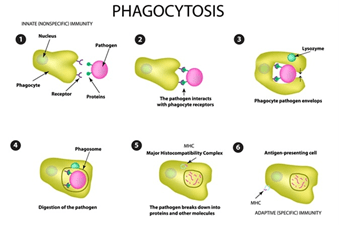
This is a quick recap of the principle of working on vaccines. The vaccine contains the pathogens as a whole or the surface antigens only. These antigens stimulate the immune system. If the immune system had a memory about this antigen, then it would immediately produce an antibody, and phagocytosis of the antigen occurs by the macrophage aided by the antibody. In this scenario, the antigen is new and there is no memory, therefore the immune system struggles and takes time to produce the antibody.

So the antigen reign over the body and this can lead to inflammation. As a result, some of the symptoms of inflammation like fever, heat, pain in the area of application, and swelling may appear. The chances of them are rare and also severity is less (last for a few hours/days) since the pathogen is attenuated.

Once the immune system produces the correct antibody, phagocytosis of the antigen occurs and hence the causative agent is eliminated from the body (primary response). So if the same or similar pathogen which has disease-causing ability enters into the body, the memory triggers the immune system to produce the correct antibody. So a heightened and rapid response is generated in order to kick away the pathogen quickly (secondary response).

There are three types of vaccines:-

Live- infection is caused without any harm – measles & polio

Dead- doesn’t last long, requires booster dose- cholera

Microbial products- involves non-infectious pathogen, capsule and toxoid- anthrax, diptheria

Hence using the vaccine as a stimulus, the body is able to generate a response that is stored and can be useful for preventing the disease caused by the pathogen.

There might be an idea to generate vaccines for all diseases so that all humans are protected. But there are some difficulties in this which are listed below:-

There are new microbes being discovered every day and no one knows which microbe can cause disease. There can be multiple microbes causing the same or similar disease. So being immune to one microbe doesn’t mean being immune to the disease

The disease-causing microbe can undergo mutation meaning that there can be changes in the genetic material and hence the antigen can change. In this case, the antibody which was stimulated by the vaccine won’t work. A suitable example is a common cold, it is impossible to produce a vaccine that covers all mutants of viruses

The pathogen has to be genetically modified so as to remove its disease-causing ability which is easy to say but difficult to implement

Also, it is important that the antigen chose for the vaccine must be close to that of the original causative agent of the disease. If the original pathogen is not so close to that of the vaccine, then it will not work

Hence all these above points explain the difficulties in producing a vaccine. Despite these many research organizations in many countries have produced vaccines especially for the pandemic and dreadful diseases like the COVID-19, hepatitis, polio, etc. in which some vaccines provide lifetime immunity to some of the diseases. We must take a minute to appreciate those who have done immense work and their contribution is stopping some of the dreadful diseases.

With this, we come to the end of the series. I hope that all the concepts explained in this were simple and clear and also would have inculcated an interest in immunology. By now, it would be clear how the immune system protects us from several microbes and diseases.

HAPPY LEARNING!!

IMMUNOLOGY SERIES- PART 8- INFLAMMATION

The previous article dealt with the types and functions of immunoglobulin. This article provides a complete explanation of the process of inflammation.

Inflammation is the process of protection which was seen as one of the six mechanisms of innate immunity.

Inflammation is one of the body’s responses to the invasion of foreign particles. This is an important process in the human body that occurs to drive away from the pathogen. Inflammation is one of the stages seen in healing. Some of the changes that can be seen in the target site are:-

  • Changes in blood flow (mostly blood loss)
  • Increase in platelets (to plug the damaged vessel)
  • Increase in immune cells
  • Supply of nutrients

The word inflammation refers to a burning sensation. Hence there are five cardinal signs in inflammation namely:-

  • Rubor (redness)
  • Tumor (swelling)
  • Calor (heat)
  • Dolor (pain)
  • Functioleasia (loss of function)

These cardinal signs as well as the changes occur due to some mediators which are basically chemicals and also due to the action of various immune cells.

Mediator nameIt’s effect
Bradykinin, histamine, serotoninIncrease permeability
ProstaglandinDecreases blood pressure
CytokinesProduce fever
Toxic metabolitesDamage tissue

This inflammation can be either acute or chronic. As seen earlier, acute stays for a shorter time but produces more vigorous pain whereas chronic stays for a longer time with less vigorous pain. If the causative agent has been driven away then healing occurs either by complete restoration or scar formation. There are chances that the acute inflammation can become chronic which can be worse. It can lead to several diseases and complications.

The pathogen in order to establish its supremacy in the human body, it has to pass through the epidermis which is the outermost layer of the human body. This is known as SALT skin-associated lymphoid tissues. Hence T and B lymphocytes are prominent in the skin. Most of the pathogens get destroyed in this stage. Let us assume that our pathogen is strong and it had passed through it. The next layer it encounters is the dermis. As we go deep inside the skin, more and more immune cells get involved. In the dermis the following immune cells are seen:-

immunity in the skin
  • Macrophage
  • NK cells
  • Mast cell – produce histamine and serotonin
  • T helper cells – it provides help to other immune cells

The next stage is the hypodermis which has a large number of macrophages and neutrophils that phagocytosis the pathogen. Hence these following processes help in defending against the pathogens.

When a particular pathogen say a virus enters the cell, the immune system will get alerted through signals and they immediately send the correct immune cell to the target site. This occurs since either the immune system gets information naturally or artificially through previous infection or vaccine. This leads to the classification of immunity in humans.

So now we will consider a new and strong pathogen that has not been recognized by the immune system and has dodged those barriers and has entered inside the skin. Now it multiplies at a rapid rate and colonizes that particular area. Hence the cells in that area start to die and they release several signals like TNF, cytokines, interleukins. This gets combined with other signals like histamine, serotonin released from immune cells. Some of these signals produce direct effects on the target site as seen in the table.

An array of these signals triggers the immune system and it, in turn, starts the inflammation process and the cardinal signs are observed. This process lasts for some time and as it occurs; the pathogens decrease in number through phagocytosis and subsequently vanishes from the body. This can be observed by a decrease in the signs. After this process, the targeted site starts to heal and the immune system learns how to defend the pathogen when it enters the next time.

Now the damage caused by the pathogen has to be repaired by the process of healing.

  1. Haemostasis
  2. Inflammation
  3. Proliferation
  4. Maturation/Remodelling

The pathogen will rupture and damage the outer layer of blood vessels known as endothelium resulting in blood loss. Hence the blood vessels start to contract to prevent further loss. Also, a plug is formed at the site of leakage by the platelets. Then the process of inflammation occurs; clearing out the dead cells and the pathogen. In the proliferative stage, new blood cells are formed by a process known as neovascularisation and the new epithelium is formed. In the last phase, the newly formed cells become stronger and flexible. Hence the combination of these steps brings the affected area back to normal.

Hence the inflammation is an essential process in the immune system and it has to occur to prevent the conspiracy of the microbes. The next article is about vaccines and their principle of working.

HAPPY READING!!!

Attraction

Ever thought why do we get attract to someone? Well everyone has different answer to it. For some it can be the way one look, smiled, walk or may be their was an unusual aura around that one.

What is attraction?

Attraction, especially in a romantic way, is a complex process that take place in our brains, and has had it’s roots since it’s beginning of the humankind. It’s our minds way of telling us who has the potential to be our partner, our friend, or even our soulmate, and is based on a complex blend of our interest, values, experience, and desire. Physical and romantic attraction, which are often focused on, are only small facets of a much larger equation.

Psychologist look at the ingredients of attraction is in a form of pyramid, split into 4 different sections.

The base of the pyramid is made up of health and status:-

  • Status – 1. internal (confidence, self set, beliefs) 2. External (person’s job, possession and appearance.
  • Health – Physical attributes, smell, basic level of intelligence.

If the potential partners passes these initial requirements then we move to the center of the pyramid, which are the emotional factors:- includes

  • trust comfort someone wants,
  • their emotions intelligence, and
  • unique characteristics.

The final portion of the pyramid is “Logic”.This is the part that differentiate us from other animals, and is the part where our brains seriously

  • considers whether we are totally compatible for that person.
  • It ensure that the other person is aligned with us in term of what they want – things such as marriage, children, even the city they want to live.

According to this model, the more alignment there is, the more attraction there is, but it doesn’t always have to follow from bottom to top – like online dating.

What makes someone Attractive?

The answer to this questions make come to our mind is physical traits. Due to the influence of media, we tend to favor women who is younger, and more feminine features, in men on the other side, qualities such as broad shoulders, a deep voice, and strong jawline are highly upon.

Scientists suggest that, these also have an evolutionary origin because these traits are associated with a higher chance of producing health offspring and passing of good genes. Also, values, culture, and the environment, that we grow in also plays an important role.

Hence, attractiveness is complex, there’s a number of different perspective to consider, and at the end of the day, there’s very little we can choosing who we are attracted to. As each person looks for unique set of traits and, while physical traits are often focused there are far more factors that come into play. A person’s upbringing, behavior and even lifestyle have major influence. The most important thing to remember is to be happy and make the most of it.

ARE COMPUTERS REALLY INTELLIGENT?

When it comes to the possibilities and possible perils of artificial intelligence (AI), learning and reasoning by machines without the intervention of humans, there are lots of opinions out there. Only time will tell which one of these quotes will be the closest to our future reality. Until we get there, it’s interesting to contemplate who might be the one who predicts our reality the best.

“The development of full artificial intelligence could spell the end of the human race. It would take off on its own, and re-design itself at an ever-increasing rate. Humans, who are limited by slow biological evolution, couldn’t compete, and would be superseded.”— Stephen Hawking

Will computers eventually be smarter than humans? 
 
Everyone is talking about artificial intelligence (AI) – in the media, at conferences and in product brochures. Yet the technology is still in its infancy. Applications that would have been dismissed as science fiction not long ago could become reality within a few years. With its specialty materials, the Electronics business sector of Merck is contributing to the development of AI. 

HOW SMART ARE YOU?

Who’s smarter — you, or the computer or mobile device on which you’re reading this article? The answer is increasingly complex, and depends on definitions in flux. Computers are certainly more adept at solving quandaries that benefit from their unique skill set, but humans hold the edge on tasks that machines simply can’t perform. Not yet, anyway.

Computers can take in and process certain kinds of information much faster than we can. They can swirl that data around in their “brains,” made of processors, and perform calculations to conjure multiple scenarios at superhuman speeds. For example, the best chess-trained computers can at this point strategize many moves ahead, problem-solving far more deftly than can the best chess-playing humans. Computers learn much more quickly, too, narrowing complex choices to the most optimal ones. Yes, humans also learn from mistakes, but when it comes to tackling the kinds of puzzles computers excel at, we’re far more fallible.

Computers enjoy other advantages over people. They have better memories, so they can be fed a large amount of information, and can tap into all of it almost instantaneously. Computers don’t require sleep the way humans do, so they can calculate, analyze and perform tasks tirelessly and round the clock. On the other hand, humans are still superior to computers in many ways. We perform tasks, make decisions, and solve problems based not just on our intelligence but on our massively parallel processing wetware — in abstract, what we like to call our instincts, our common sense, and perhaps most importantly, our life experiences. Computers can be programmed with vast libraries of information, but they can’t experience life the way we do.

Some of that’s rethinking how we approach these questions. Rather than obsessing over who’s smarter or irrationally fearing the technology, we need to remember that computers and machines are designed to improve our lives, just as IBM’s Watson computer is helping us in the fight against deadly diseases. The trick, as computers become better and better at these and any number of other tasks, is ensuring that “helping us” remains their prime directive.

The important thing to keep in mind is that it is not man versus machine. “It is not a competition. It is a collaboration.”

IMMUNOLOGY SERIES- PART 7- TYPES OF IMMUNOGLOBULIN

The previous article dealt in detail with immunoglobulin and how they help in phagocytosis. This article is about the types of immunoglobulins, their functions.

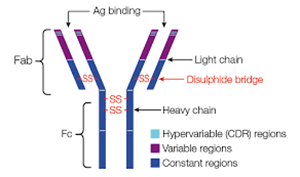
The types of immunoglobulins are based on the types of light and heavy chains. There are two types of light chains namely the kappa and the lambda. An immunoglobulin contains either kappa (K-K) or lambda (L-L) but does not have a mixture of both (K-L not possible). About 60% of the immunoglobulins in humans have kappa chains.

So, the classes of immunoglobulins are based on the heavy chain. So based on this condition, there are five classes of immunoglobulins namely:-

  • Immunoglobulin G (IgG) – gamma
  • Immunoglobulin M (IgM) – mu
  • Immunoglobulin A (IgA) – alpha
  • Immunoglobulin D (IgD) – delta
  • Immunoglobulin E (IgE) – epsilon

These immunoglobulins have certain configurations and play different roles in the human body. The immunoglobulin G is present the most. It constitutes about 80% of the total immunoglobulin. These are mostly present in the blood, plasma, and other body fluids. This immunoglobulin has the lowest carbohydrate content when compared to the rest. This immunoglobulin has a half-life of 23 days which is the longest of all. Some of the unique features and functions of this immunoglobulin:-

  • This is the only immunoglobulin which can cross the placenta (this is a unique feature because this immunoglobulin provides immunity to the foetus inside the womb and also after birth for some months. Presence of others may indicate infection)
  • This helps in killing bacteria and viruses by opsonisation (the process of covering the pathogen with a protein coat such that the pathogens become more presentable to the immune cells)
  • Neutralize toxins
  • Activate complement by classical pathway (The complement system, also known as complement cascade, is a part of the immune system that enhances the ability of antibodies and phagocytic cells to clear microbes and damaged cells from an organism, promote inflammation, and attack the pathogen’s cell membrane)
  • Unique catabolism (breaking down of molecules) based on concentration
  • There are four sub classes (G1, G2, G3 and G4) out of which 1,3 and 4 cross the placenta and offer immunity
  • Also involves in the Rh immunization (there are two types’ Rh+ve and Rh-ve based on the presence of Rh factor in blood). The mother being Rh+ve and child the opposite is not a problem in the first pregnancy but can be fatal in second, killing the foetus.

The immunoglobulin M constitutes about 5-10% of total proteins. This is a pentamer structure with a J chain. This weighs about 900000-1000000 and is the heaviest of all. They have 5 days of half-life. Some of its features-

  • Presence in newborn indicate congenital infection as they don’t cross placenta
  • Short lived, so their presence indicates recent infection
  • First Ig to participate in primary response
  • Opsonisation
  • classical pathway
  • bacteria agglutination
  • Play an important role in ABO blood grouping (discovered by Landsteiner). There are 8 types of blood groups based on antigen, antibody and Rh factor

Immunoglobulin A is also known as the secretory immunoglobulin and is mostly present in body secretions (tear, saliva, sebum, mucous, and milk) in which they are dimer and are monomer in blood. They constitute 10-15% of the proteins. They also have a J chain and secretory piece. Their half-life is 6-8 days.

  • The secretory piece protects the Ig from enzymes and juices
  • Complement activation by alternate pathway
  • Promote phagocytosis
  • Intracellular microorganism killing
  • First line of defense against some microbes

Immunoglobulin E is a dimer similar to IgG. This is present in low concentrations (about 0.3) and has the weight of about 1,90,000. These have a half-life of about 2 days and can become inactivated at 56 C.

  • Present extra-cellularly
  • Associated with allergic reactions like asthma, hay fever and anaphylactic shock
  • Bind with the Fc of mast cells and basophils resulting in degranulation and release histamine which causes allergy
  • Mediate the some immunity reactions
  • No complement activation
  • Provide immunity against helminthes

The last is immunoglobulin D.  It is present in low concentrations and on the surface of B lymphocytes. They constitute 0.2% of proteins. They have a half-life of 3 days. The IgM and IgD bind on the B lymphocyte to help in antigen identification.

Hence these were the different types of immunoglobulins and the mechanisms by which they help with immunity. The next article is about the process of inflammation.

HAPPY READING!!

IMMUNOLOGY SERIES- PART 6- IMMUNOGLOBULIN

The previous article was about the different types of immune cells. This article is about a special molecule in immunity known as immunoglobulin.

There might be a question that what is so special about this immunoglobulin. There is a reason for this. These molecules play an important and inevitable role in the phagocytosis of pathogens. To understand this, it is essential to know about immunoglobulins.

The immunoglobulin is a gamma globulin, a specialized group of proteins (glycoprotein) produced in response to pathogens. It is produced by the plasma cells (a globulin protein present in the plasma). These constitute 25-30% of the blood proteins.

There are two important terms that are more commonly known by the most, they are the antigen and the antibody. The antigen is the molecule present on the surface of the pathogen and can stimulate an immune response. There is a small part of the antigen called the epitope which interacts with the antibody.  The epitope is known as the antigen determinant site. An antigen can have unlimited epitopes.

On the contrary, the antibody is the molecule produced in response to the antigen in order to kick it away. The part of the antibody which interacts with the antigen is called a paratope. An antibody must have at least 2 paratopes. These antibodies belong to the immunoglobulins. All antibodies are immunoglobulins but not immunoglobulins are antibodies. To understand how the antibody helps in immunity, it is essential to understand the structure of an antibody/immunoglobulin. The image below shows the general structure of an immunoglobulin:-

There are two chains in an immunoglobulin namely the light chain and heavy chain. The light chain has 212 amino acids (the building block of protein) and the heavy chain has 450 amino acids. Each chain has two types namely the constant and variable. These regions are based on the amino acid sequences. Half of the light chain (1 out of 2) is constant and the rest is variable. A quarter of the heavy chain (1 out of 4) is variable and the rest is constant. These are linked by two types of sulfide bonds namely the intra (H-H AND L-L) and inter (H-L). These molecules contain carbohydrates (CHO) hence these are called as glycoproteins.

The tip of the variable regions of the heavy and light chain is hypervariable in nature and these constitute the antigen-binding site (Fab). These are hyper-variable because they have to produce amino acid sequences complementary to that of the antigen so that they can interact together. The other site is called a crystallizable region (Fc).

Having known all this, now it will be convenient to explain the process by which the antibody plays in the prevention of infections.

There are millions of substances that pass through the blood every day. So there must be a criterion/substance to identify them whether they are pathogenic. This is where antigen comes to play. These antigens present on the surface of the pathogens alert the immune system which then identifies this as a pathogen. So in response to the antigen, a suitable antibody is secreted and deployed to the target site. On reaching the antigen, the Fab region binds with the antigen.

The ultimate aim of the immune system is to abolish the pathogen and one way is by phagocytosing them. This is done by the macrophages. But it is essential for them to identify the substance before engulfing it. This is where the antibody comes to play. The Fc region of the antibody combines with the receptor of the macrophage. This facilitates the process of phagocytosis.

Hence the antibody acts like a bridge between the source (antigen) and the destination (macrophage) aiding in phagocytosis. This is essential because in most of the cases the macrophages, it is difficult to identify the non-self-objects and this is where antibody helps.

In the case of the new pathogen, the antigen is new, and therefore their might not be a suitable antibody. In that case, the macrophage cannot phagocytocise the pathogen and it reigns in the body causing infection and disease.

The next article is about the types of immunoglobulins.

HAPPY LEARNING!!

Music can change you

These days we hear music all the time, it wakes us up, motivates our workouts, keeps us company on our commutes. It doesn’t matter what kind of music it is, it itself has the ability to affect our moods and our bodies in all sorts of ways. It can give us chills even can make us cry.

Effects on Brain

Music activates every area of the brain that scientists have mapped so far. In fact, there is no area of the brain that music doesn’t touching some ways.

25 years ago there was an idea which said that language is in left side of the brain and music is in right side of the brain but now with better quality tools, higher resolution, neuroimaging and better experimental methods, it is discovered that thats not at all right so how does it effects our brain?

When music enters and then gets shuttled off to different parts of the brain:-

  1. It stops at specialise processing units in auditory cortex, they track loudness, pitch, rhythm, etc.
  2. The visual cortex activates when you’re reading notes as a musician or watching music.
  3. Motor cortex activates when you move or dance or tap your feet, snap fingers, clapping your hands.
  4. The Cerebellum activates and immediate the emotional responses.
  5. The memory system in the Hippocampus will activate and will help you to recognise any familiar music or lines that you listen

Hence, music is going on in both halves of the brain, left and right, the front, back, the inside, and the outside.

How playing Instruments helps?

We can start learning to play instrument at any age. Picking up an instrument can provide some huge benefits for Intelligence, Physical well-being, Brain.

Playing an instrument requires:-

  • Auditory motor
  • Sensory
  • Visual system to work together

This inner system cooperation has some incredible outcomes that can affect many areas of life.
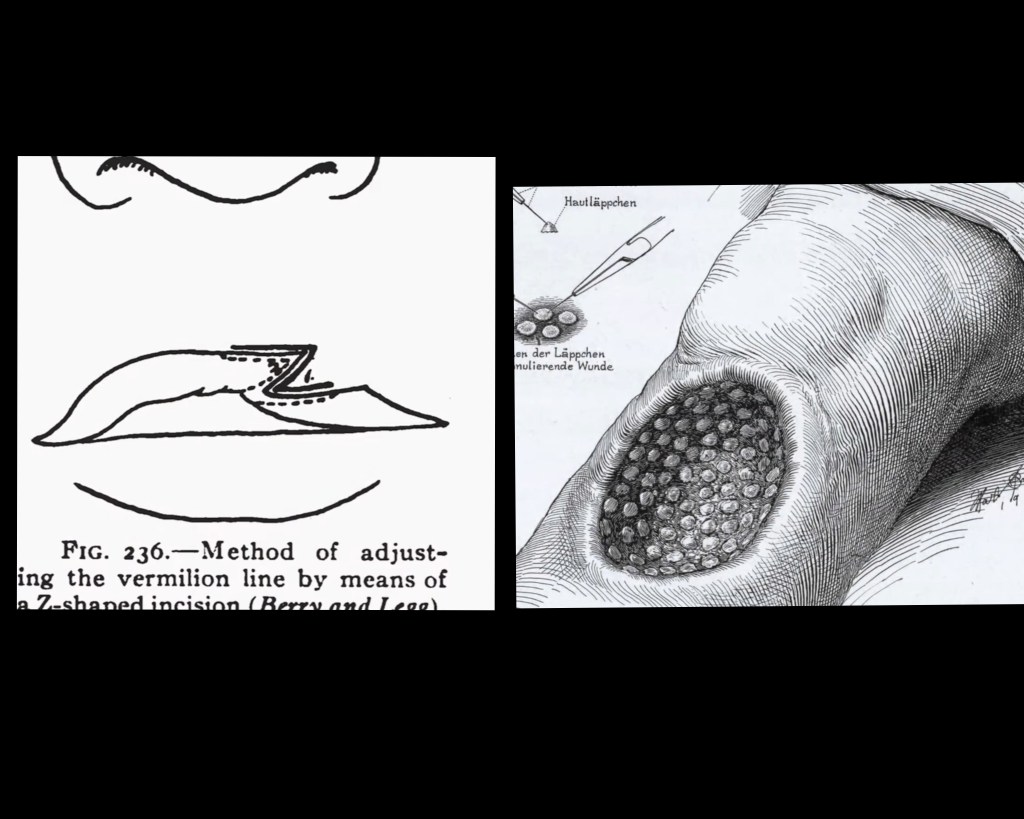
Different intensities of training produce different outcomes, even the most minimal practice can make a difference. Starting to play an instrument just one hour a week for few months can cause growth and increased activity in the parts of the brain responsible for memory, hearing, and motor. Researchers have found that this kind of activities can even increase IQ by 7 point or more.

Its also known that people who play musical instrument are better at other practical things too such as:-

  • Practical emotions
  • Learning new things/tasks
  • Creative problem solving

Musicians brain have better communication between left and right hemisphere which allows for more cooperation and out of the box thinking. Playing an instrument can also has benefits for brain and body.

  • boosting immune system function
  • Increase in resilience to hearing lose
  • Helps stroke patients regain motor skills

It’s been found that just listening to music can prompt the repair and regeneration of damage nerves in the brain.

Music is so much more than notes on a page, it can change the way we think, speak and feel. Music making and listen is really complex it’s not demystified till now it’s more mysterious than ever.

IMMUNOLOGY SERIES-PART 5- INTRODUCTION TO THE IMMUNE CELLS

The previous article was about the acquired immunity. This article is all about the immune cells, the warriors of the human body.

These cells play a major role in protecting the body from infections. Some of them contribute directly and some contribute indirectly. Despite the methods, all of them are required in optimum amounts so as to live a healthy life.

All of these cells are derived from a specific type of cell found in the blood. The blood is a freely flowing interstitial fluid that transports oxygen, nutrients, etc. to the cells of the body. There are two components in the blood in which the first one is called plasma. The plasma is the liquid carrying water, salts, enzymes, and proteins. There are three specialized proteins in the plasma-

Albumin- to maintain water balance

Globulin- for immunity (it is a part of immunoglobulin)

Fibrinogen- for clotting

Hence the plasma also contributes to immunity. This plasma constitutes about 55% of the blood. The rest 45% of the blood is constituted by the formed elements or corpuscles. There are three elements in it namely-

Erythrocyte or Red Blood Corpuscle- transport of oxygen

Leucocyte or White Blood Corpuscle- fight infections

Thrombocyte or platelets- for clotting

Out of these, the WBC is the one primarily contributing to immunity. A healthy person must have a WBC count from 4000-11000. Count less than 4000 means leukopenia meaning that the immune system is weak. If the count is more than 11000 then it means the condition of autoimmunity known as leucocytosis. There are some further classifications in the WBC which are displayed through the flowchart below.

There are two types of cells in the WBC namely the granulocytes and agranulocytes.

The granulocytes, as the name specifies have granules in their cytoplasm. There are three different cells in this.

The neutrophil constitutes to about 55-70% of the total WBC and they are ones involved in most of the fights against the infections. These defend against bacterial and fungal infections. These cells are mostly found in the epidermal regions and are in the first line of defense.  These cells engulf the pathogens by the process of phagocytosis. These cells have multiple nuclei hence these are also known as PMN (Poly Morpho Neutrophils). Neutrophils help prevent infections by blocking, disabling, and digesting off invading particles and microorganisms. They also communicate with other cells to help them repair cells and mount a proper immune response. The death of these cells often results in the formation of pus (suppuration).

neutrophil

The eosinophil constitutes about 2-4% of the total WBC. These cells are very little in the body but can increase in the case of allergic reactions, parasite infection, and so on. The functions of the eosinophil include movement to inflamed areas, trapping substances, killing cells, anti-parasitic and bactericidal activity, participating in immediate allergic reactions, and modulating inflammatory responses.

eosinophil

The basophil is present in the least concentration of all (0.2%) in total WBC. These cells play an important role in allergic reactions in which their count can increase. The basophil contains inflammatory mediators like histamine and heparin. The release of the compounds results in dilation of the blood vessels. Hence these cells regulate the inflammation process.

The agranulocytes are those which lack granules in their cytoplasm. There are two types in this. The lymphocyte can be called as the memory of the immune system. There are two types of lymphocytes namely T and B lymphocytes. These lymphocytes recognize the incoming pathogens and based on their memory it produces a suitable response in a short amount of time. These cells are involved in the secondary response in the acquired immunity.

B cells make antibodies that can bind to pathogens, block pathogen invasion, activate the complement system, and enhance pathogen destruction. The T cells mostly known as CD4+ T helper cells produce the cytokines (proteins in cell signaling) and coordinate with the immune system. There is another form called CD8+ cytotoxic T cells which is opposite to the previous type, they help in the destruction of tumors and pathogens.

The monocyte is the largest of all the cells in WBC. They function similarly to that of the neutrophils (phagocytosis of the pathogens). These cells present the pathogen to the memory cells upon which a response is generated. Once they leave the blood, they turn into macrophages which help in clearing cell debris and killing pathogens. These are known as the vacuum cleaners of immunity.

Hence all these cells work in different mechanisms and they coordinate together to make sure that we do not fall prey to the disease-causing microorganisms.

HAPPY LEARNING!!

DEBATE CONCEPTS IN OSTEOARTHRITIS

This article deals with some of the concepts related to the progression of osteoarthritis. These statements were given by prominent researchers and resulted in a debate between two prominent groups of researchers against each other. All of these took place actively in the 19th century where the publications of research scholars were opposed to that of the scholars in the other group.

William Bauer told that mechanical trauma can result in OA directly or indirectly. By the 20th century ideologies were majorly split into two ‘inflammation’ and ‘no inflammation’. Henry Fuller and Robert Todd suggested that OA occurred due to disruption to nutrients required for knee development and doesn’t occur through inflammation. On the other hand, Garrod and others stated that OA is partly degenerative and partly inflammative. Hence the study for OA continued under these two domains and each group of scientists trying to prove the other is false. But this situation can be compared to two sides of a coin where both the situations cannot be neglected. Hence both the domains of OA cannot be neglected.

Some others say that OA is a neurogenic immune homeostatic disorder. Garrod in 1988 stated that OA is associated with lesions in CNS in a peculiar manner. CNS refers to the central nervous system which constitutes the brain and spinal cord. The brain is the mastermind of the body which generates electrochemical signals to simulate several neurons in the body. The spinal cord is known as a warehouse of reflexes. Reflex is an involuntary (cannot be controlled by conscience) rapid sequence of actions. Reflex can be best explained by several experiments.

When someone comes to hit you; you will either duck or catch his hand spontaneously and this is known as a reflex and the spinal cord or vertebral column is responsible for this.

The reflex of the knee is tested by the doctor who takes a rubber mallet and taps it on the knee and what interestingly happens is that the knee starts to retract and the patient can feel the pain. In case of OA or any knee-related diseases, the patient cannot experience any pain and hence the doctor understands that there is some abnormality in the knee. Hence we can understand that there is a connection between the knee’s ability and CNS and an interruption in this connection can lead to knee diseases.

We have to understand that this is a basic relation and there are other complex associations between them and require more complex methods like electrophysiology and pharmacology to understand them. Later it was proposed that changes in the sympathetic nervous system can also lead to OA.

The sympathetic nervous system is a part of the autonomic nervous system. This can be correlated to the word ‘increase’. The sympathetic nervous system works in response to stimuli like emotions and increases some parameters of the human body like heart rate, eye dilation, blood sugar, blood pressure, etc. this proposal paved the way for using micro-circuitry to correct it.

There is also another field on which the world is divided into two namely ‘nociceptive’ and ‘neuropathic’ where nociceptive refers to pain resulted due to receptors. These are present at target and send signals to the brain via the spine more or less like the reflex. On the other hand neuropathic refers to the condition where pain occurs due to nerves. The following table shows the difference between these two. 

NociceptiveNeuropathic
Receptor-mediated painNerve mediated pain
Doesn’t affect nervesAffects the nerves
Due to painful stimuliDue to inflammation

However, some of the debate topics have not been resolved even till now but a lot of research articles about the progression of the disease and its underlying phenomena have been published. This is one of the cases in which a debate has done some good to the field of science!

HAPPY READING!!

Time Management: Definition and Importance

For busy businesses, time management is critical so that they can prioritize all of their job responsibilities and reach their objectives more quickly. You’ll be able to take on new possibilities and build your business in a sustainable way if you properly manage your time.

In this article, let’s see the definition and importance of Time Management.

What is Time Management?

Time management is the process of planning out your available time and managing the amount of time you spend on various tasks in order to operate more efficiently. Some people find it easier to manage their time than others, but adopting routines can help anyone improve their time management skills. Your work and well-being may suffer as a result of poor time management, which can lead to:

  • Creating low-quality work
  • Failure to meet deadlines
  • Increasing your level of stress
  • Negatively affecting your work-life balance
  • Putting your professional reputation in jeopardy

Importance of Time Management

Time management is vital because it allows you to organize your workday so that you may grow your business while maintaining a healthy work-life balance. Here are seven advantages of effective time management:

1. In less time, accomplish more

One of the most significant benefits of time management is that it enables us to be more productive by allowing us to regulate how we spend our time. We can focus more effectively on vital tasks, resulting in enhanced efficiency. Consider a car being driven slowly by someone who is always staring out the window and talking on the phone. Consider another car being driven by someone who is focused on driving at the best possible speed to get to their destination as quickly as possible. That is what effective time management can accomplish.

2. Improve the quality of your job

You are required to offer work of a specific quality and standard as a dedicated employee. One can easily deliver a higher quality of work by properly utilizing time and prioritizing duties. Prioritization aids in focusing on critical tasks by placing them at the top of the priority list, allowing you to devote your whole attention and focus to them. As a result, the work’s quality has improved.

3. Reduce Your Anxiety

When you have a long list of duties to complete both at work and at home, it’s easy to grow nervous. Good time management may help you prioritize your to-do list and set aside the necessary time for your most important tasks, so you know exactly what you need to get done and how much time you have. Prioritizing your chores and allowing adequate time to complete them will help you feel less stressed.

4. A higher standard of living

Effective time management skills can improve your life outside of the office as well as your working life. When you have your business life under control, you have more time to focus on your personal life and relationships. Knowing that your responsibilities and activities are on schedule will help you relax in your personal life. Your quality of life increases instantly as you feel calmer and less worried.

5. Time to ponder

Time management tactics that work provide you extra time to think and plan. Planning your schedule allows you to devote more time to your most important tasks. You’ll have more time to strategize, which means you’ll have more time to focus on reaching your objectives. You won’t be able to make progress on your most important goals if you don’t manage your time well. It’s just as vital to take time to consider how to go forward with your goals as it is to take action.

Conclusion

Effective time management skills can benefit both your business and your personal life. You enhance your capacity to get things done, make better judgments, and, most importantly, obtain total control of your major priorities when you learn to manage your time on a regular basis.

Strings attached: A new concept

The day I started getting far away from all the strings was the day I found myself caught among those strings. 

These strings were nothing but the relationships I was in, I am friend to few, daughter to two, and sister to one. Sometimes I think if our life was just about us, then why our story isn’t, our story contains all characters which were role-played by thousands of people who led our way to complete our story. These people are like beads on a string some fall off, some stays but everyone had a role.

With time passing by, and we growing up through different age groups have witnessed cutting off of strings leaving behind memories and pain and strings attached from who have decided to stay and support.

Strings hold us both in negative and positive ways. They will be there to share victory with, tears to shed down with and shoulder to lean on and few strings which might weaken you. You have to be cautious while you sort out the various strings. When we were child , our world felt small yet sufficient and our dreams came with no expiry date. Teenage and adulthood are the age of being a rebel. The strings which were shielding us, start feeling like a boundary which is taking away our independence. How are we so sure that are independence lies away from those strings?

We cover miles, all of us travel in our life journey but at the end of day we all come back to our home i.e;to that string in whose embrace we can grow. We all are weird , just in different ways, we want things to get dispatched but are also waiting for a parcel to come up saying “P.S. I love you.” We ain’t sure about the doorway to our life shall be left open to let people walk in or door shall be closed to keep away toxicity. It feels like a lot to decide on, but keeping decisions wait listed has surrounded us with pile around.

When I ponder upon this concept , the string which is connected to me from far away, seems to be more strong as compared to the one who is close by me. Maybe things which are far away are much easier to handle as compared to those we have to come across daily.

What is ‘No strings attached ‘ ? I think whoever have been a part of our life has also got their strings attached but then , it’s there will if they want to be attached or just walk away. Walking away different ways is called ‘ no strings attached .’

Life is too short to mess it up, instead find a way out to strings which will strengthen you more.

How To Become A YouTuber

Photo by Terje Sollie on Pexels.com

YouTube’s popularity continues to grow, the reputation of its content creators grows with it. In August 2018, the status of its top stars reached a new high when KSI and Logan Paul faced off in a boxing match that generated around $13 million in pay-per-view revenue. Starting your own channel from scratch and growing it into something special isn’t just a pipe dream. Many YouTubers have done it and more will do it again in the future. One of those YouTubers could be you.

Make A Plan: How often do I want to upload videos? This is also very important because the more videos you want to upload, the harder it will be to create fresh content and keep up with your schedule. As a kid, you probably have school to take into consideration and other after school activities.]

Follow your passion: It is almost impossible to create a really engaging video without having a genuine passion for what you’re doing. If you pretend to be interested, it won’t be long before you get called out in the comments section! Passion is infectious. That’s why even potentially boring topics can prove to be extremely successful on YouTube.

Make Your Content: Once you’ve decided what you want to create videos about, start thinking of how you can develop personal branding around that. Look for a unique selling point that’s related to the niche you’ve chosen and start owning it.

Choose your target audience: Just like you would if you were running an ad campaign, consider which demographic group your content would be most suited to. Think about factors like age, gender, and occupation when making your decision. It’s often best to target an audience that’s the same age and gender as you, as it’s easier to relate to them. Ask your friends what they’d be interested in watching and their answers could give you an insight into what your peers would like.

A ‘YouTube Influencer’ makes their money through sponsorships and ad revenue from other companies and brands as well as YouTube itself (if you become a ‘big’ YouTube influencer).

To monetize off of your YouTube channel you have to have at least 1,000 genuine (not bought or spam) subscribers and 4,000 watch hours in a year.

SEO: SEO is something that not everyone on YouTube will be doing, so it could be the secret weapon in your quest to become a top YouTuber. If you’re not familiar with it, it stands for search engine optimization and refers to the methods by which content is optimized to rank higher when someone searches for it. If you optimize your channels, videos, and playlists correctly, you’ll have a much better chance of being found on YouTube. The search ranking algorithm on YouTube will take into account how well your content, titles and video description matches the search intent of a viewer. If your content isn’t relevant, it won’t rank.

Once you’ve made it in, you can start making money from ads. The types of ads are: display ads, overlay ads, sponsored cards, skippable video ads and non-skippable video ads. Display ads appear to the right of your video, above suggestions, while overlay ads are semi-transparent and appear on the lower part of your video. The other ads appear at various points before, during, and after your video.

How to become A Leader

Photo by Rebrand Cities on Pexels.com

Transformational leaders are positive, empowering, and inspiring. They value followers and inspire them to perform better. So what can you do to embrace these valued leadership qualities and become a stronger and more effective leader?

Understand Your Leadership Style: Understanding your current leadership style is essential. What are your strengths? Which areas need some improvement? One way to start assessing your skills is to take this leadership style quiz to get a general idea of how you lead.

Once you have completed the quiz, read about the major characteristics of your dominant style. Are these qualities helping or hindering your leadership? Once you’ve determined which areas need some work, you can begin looking for ways to improve your leadership abilities.

Encourage Creativity: One way to foster creativity is to offer challenges to group members, making sure that the goals are within the grasp of their abilities. The purpose of this type of exercise is to get people to stretch their limits but not become discouraged by barriers to success.

Show Passion: You can develop this leadership quality by thinking of different ways that you can express your zeal. Let people know that you care about their progress. When one person shares something with the rest of the group, be sure to tell them how much you appreciate such contributions.

Communicate Effectively: Another important quality of transformational leadership involves a focus on providing one-on-one communication with group members. Transformational leadership is effective when leaders are able to communicate their vision to followers, who then feel inspired and motivated by this vision.

Part of the trust-building process is creating an environment where it’s safe to take risks and allows you and your employees to comfortably exchange candid, honest and direct feedback without the fear of being punished.

It’s important you provide ample channels for two-way communication between employees and managers, and also solicit and reward them for their ideas and contributions. This facilitates progress toward reaching organizational goals. As a leader, you should foster trust and cooperation. Leaders can paint a vision of the future that inspires the team to do whatever it takes to get there.

And as a coach, you have to inspire action that will help execute that goal. Reinforce an honest and candid environment without taking information personally. Equally treat everyone like you would want to be treated.

Give credit where credit is due. Say “thank you,” be encouraging, and try to put yourself in their shoes to better understand their everyday challenges.

You have to support and assist your team. Give them the confidence to take risks and speak up without being punished.

When the mistake is yours, take ownership. Don’t try to blame someone else, the situation or a circumstance.

Be credible – people want to follow an honest leader. Be candid about why things didn’t work out, learn from the mistake and move on. People will trust someone who actively displays honesty. As you work toward developing some of these leadership qualities, don’t forget to look to your followers for feedback and inspiration. Pay attention to the things that have been effective in the past and always be on the lookout for new ways to inspire, motivate, and reward group members.

OSTEOARTHRITIS GRADING SYSTEM

Osteoarthritis can be mainly classified into two. They are primary and secondary. The criterion for this classification is based on the different types of risk factors. Primary OA is mainly due to age where the reason for cartilage breakdown is not known or maybe due to genetics. Secondary OA is due to direct injury through sports or trauma, stress, inflammation, or other metabolic diseases. In this case, the cause may localize.

OA grading

Grading is the process of classifying the disease based on its extent or severity. OA has been graded into 5 from grade 0 to grade 4

Stage numberCondition
 0Normal
1Minor
2Mild
3Moderate
4Severe

This was proposed by Kellgren and Lawrence and it is known as KL grading. The five grades have been proposed based on radiographic analysis of subjects. This was accepted as a standard measure by WHO in 1961. The grading has been done based on the narrowing of joint space and the formation of osteophytes.

  • grade 0 (normal): no changes in knee x-ray
  • grade 1 (minor): minimalistic joint space narrowing with possible osteophyte lipping
  • grade 2 (mild): definite osteophytes and  joint space narrowing
  • grade 3 (moderate): multiple osteophytes, definite narrowing of joint space and some sclerosis and possible deformity of bone ends
  • grade 4 (severe): large osteophytes, marked narrowing of joint space, severe sclerosis and definite deformity of bone ends

Grade 0

Grade 0 is considered normal. The subject will not exhibit any features for OA. The x-ray image from this grade is taken as a standard and the other grades are compared with this grade.

Credit:- Häggström, M (2014). “Medical gallery of Mikael Häggström 2014“. WikiJournal of Medicine 1 (2). doi:10.15347/wjm/2014.008. ISSN 2002-4436. Creative Commons CC0 1.0 Universal Public Domain Dedication
X-ray of a healthy knee 
Credit:- Häggström, M (2014). “Medical gallery of Mikael Häggström 2014“. WikiJournal of Medicine 1 (2). doi:10.15347/wjm/2014.008. ISSN 2002-4436. Creative Commons CC0 1.0 Universal Public Domain Dedication
This is the joint space which is observed in healthy patients.

Grade 1

Grade 1 is known as the minor. It can be considered as the initial grade. The joint space has just started to decrease. Osteophyte refers to excess bone growth. It is also known as bone spurs since spur refers to kind to sharp material. This bone growth can be observed as sharp spikes. Here there is very minimal growth of excess bone. Bone spurs occur only at the bones adjacent to the joint. There will be very minor loss of cartilage but this does not contribute to the narrowing of the joint space. Subject in this stage is not confirmed with osteoarthritis. However, subjects having any of the risk factors become more prone to the disease

Grade 2

Grade 2 is known as mild. In this grade, the narrowing of the joint space is more and is visible through the x-ray. There will be also more formation of osteophytes. This grade can be considered as the precursor to many complications like bone dislocation and rubbing. None of these complications are seen in this grade but these complications are soon to occur. The subject in this grade is confirmed with osteoarthritis. Special care has to be taken by those in this grade and through proper medications, they can prevent those further complications.

Grade 3

Grade 3 is known as moderate. Obvious damage occurs to the cartilage and the joint space narrows even at a faster rate. Swelling of the joints starts to occur in this stage. Erosion of cartilage becomes prominent in this stage. The joints become rougher due to spurs leading to stiffness. Inflammation occurs at regular intervals. Subjects can experience popping sounds from the knee.

Grade 4

Grade 4 is known as severe. It is the worst and highest grade of all. The changes become prominent and occur at larger scales. There will be no gap literally meaning the joint is absent. The bones start to rub over each other causing pain. The joint becomes stiff like a rock. The cartilage wears down and maximum growth of osteophyte is seen. Various cytokines are released at cartilage resulting in further death. Life would be dreadful for those in this grade. The arrow in the given X-ray indicates the bones are touching each other and there is no gap in between them.

Grade 4 osteoarthritis
Courtesy: – James Heilman, MD Osteoarthritis of the left knee. Note the osteophytes, narrowing of
 the joint space (arrow), and increased subchondral bone density (arrow). the joint space (arrow), and increased subchondral bone density (arrow). Creative Commons Attribution-Share Alike 3.0

HAPPY READING!!

THE DREADFUL DISEASE FOR THE AGED- THE OSTEOARTHRITIS

Osteoarthritis is the most well-known type of joint pain, influencing a huge number of individuals in the world. It occurs as a result of the wearing down of the cartilage that cushions the ends of your bone over time. It is a complex disease that integrates biomechanics and biochemistry associated with the knee. This is the standard way of defining OA which will be difficult to understand. Hence let us try to understand what OA is. The best way is by splitting the word and analyzing it part by part

Osteo- bone

Arth- joint                        

It is- inflammation    

Knee, Old, Care, Injury, Pain, Knee Pain
x-ray of the osteoarthritic knee joint


As mentioned earlier, the unit of bone is called osteon and any word ending with itis refers to inflammation. Also, arthro term refers to joints in general. Hence the combination of the terms corresponds to inflammation of bones in the joint. This rather sounds simplified. The previous definition had complex terms like biomechanics and biochemistry. Biomechanics refers to the study of movement in living beings. Biochemistry refers to the study of the reactions occurring in living things. So in short, osteoarthritis is such a disease that results in inflammation of joints that occur due to wearing down of the bones surrounding the joint hence affecting the movement and chemical reactions which used to occur properly during normal conditions.

Osteoarthritis can occur in any joint in the human body like elbows, hips, knees, etc. Since our primary focus is on the knee, we will take a deep dive into it. In view of its expectancy and the tolerance that goes with sickness in the knee osteoarthritis represents more prevalence with daily activities like climbing steps and walking when compared to other diseases. Osteoarthritis is the most standardized reason for total knee replacement. As a result of the frequency of this disease especially in middle-aged people, osteoarthritis can act as an extensive barrier towards work and can lead to early retirement.

Coining of OA

Many say that the term osteoarthritis was coined by the British physician John Kent Spender but it was Richard Von Volkmann who tried to separate it from rheumatoid arthritis. The other names which were offered to this disease were ‘chronical rheumatism’

‘senile arthritis’

‘hypertrophic arthritis’

‘arthritis deformans’.

Effect of age

Osteoarthritis can affect people of any age group but it majorly affects old age people. National Library of Medicine suggests that people with an age greater than 70 have more risk to get osteoarthritis. The reason lies in the definition of osteoarthritis. The definition says that disease occurs due to the wearing down of bones. So the bones don’t get worn down the next instant a baby is born. Every process requires time to occur. A mother has to wait for a minimum of 9 months to give birth to a healthy baby. A student must wait for 4 years to get a degree from college. Similarly, it takes time for the bones in the knee to get worn down.

This disease has always troubled old aged people in their lives. Living with osteoarthritis is dreadful. Even climbing the stairs will be a difficult task for them. Hence it is worth knowing about the disease.

HAPPY READING!!

Tips for Share Market

The potential of large gains from share markets can entice you as an investor. To a novice, the stock market may appear to be a place where you may obtain quick returns on your investments or make millions in a flash. On the other hand, the reality is rather different. It’s difficult to make money in the stock market. You’ll need patience and a long-term investment horizon, as well as a deep understanding of the market. You should only employ share market advice from a professional financial advisor, and your investing ideas should correspond with your financial objectives and risk tolerance.

Different investors have different investment objectives when they enter the stock market. Some investors seek rapid and huge profits, while others seek long-term investments and a well-balanced portfolio. However, to prevent volatility, every investor should follow a few share market guidelines during their trading journey.

Best tips for Share Market

1. Prior to investing, set goals

Goal-based investing can assist you in accomplishing your financial objectives. Determine your financial needs and develop short- and long-term goals to meet them. This will assist you in determining the length of your investment, the amount you want to invest, and the best investment channel for your needs. Let’s say you have a short investing horizon. Then you might try to profit on short-term stock price swings. If you have a longer timeline, on the other hand, you may invest in blue-chip stocks, which are renowned to provide strong long-term returns.

2.  Recognize Your Risk Tolerance

Given the volatility of the stock market, it’s a good idea to figure out your risk tolerance before investing. Risk tolerance is an important part of the investment process, and it varies from investor to investor. It primarily refers to the ability to withstand market fluctuations and their impact on the investment’s value. An investor’s low-risk tolerance is determined by his or her hunger for loss or ability to cope with worry in a highly volatile market. Low-risk investors are more likely to sell their stocks in a panic at the wrong time.

3. Choosing a Stock Broker

One of the most important decisions you’ll have to make early in your trading career is which stockbroker to use. In India, there are a plethora of stock brokers to choose from, making it tough for newcomers to make an informed decision. Consider factors such as the broker’s reputation, trading portal or software, and brokerage while making a decision. Keep an eye on the brokerage because you’ll have to pay it whether you make a profit or a loss on a deal. Brokerage fees can be levied as a flat fee or as a percentage of the trade value. This is especially significant for stock traders because the brokerage fees for repeated trades can soon add up.

4. Learn the fundamentals of the stock market

Learn the fundamentals of the stock market before investing your hard-earned money. Learn how the stock market works, what drives it, how stock prices are influenced, trading and investing tactics, and more. To make informed investments, you’ll also need to get familiar with a variety of technical terms. Those who invest without first learning the basics risk losing their money. Learn about the market before you begin your stock market trip if you desire strong and regular results.

5. Choose companies that are fundamentally sound

Consider investing in companies that have solid fundamentals. These businesses not only deliver better long-term returns to investors but also provide more liquidity. Companies with good fundamentals can also withstand share market volatility and changes. As a result, they are a generally safe investment option. Large-cap mutual funds are another option for mutual fund investors.

Conclusion

The potential of big profits tempts many to invest in the stock market. Keep in mind that markets are volatile, and stock prices can swing dramatically. Experienced investors, on the other hand, do not let these dangers affect their decision-making. Instead, they concentrate on research and analysis to determine whether or not to invest, where to invest, and whether or not to buy, hold, or sell a stock. If you’re just getting started, the above share trading advice can help you get started. Use them to create a successful stock market investment strategy that yields consistent profits.

Writing Good Articles Article Submission Tips And Writing

It is no secret that a good way to gain publicity and visitors for your website is to submit articles on quality sites. At the same time I strongly believe that submitting your articles on sites which share the same niche (or category) as yours is a better way to indicate search engines about the category of your article. For example it does not make a lot of sense to publish an article of travel or tourism on a finance website or a technology blog. The visitors of a travel website are likely to be in a mindset of vacation ideas, hotels, airline deals, events and travel attractions. Now if a visitor comes across your article on a travel site, it not only provides a reference link back to your website but most important the person is actually interested in that niche.

We will briefly put together a few points which one should consider while submitting their articles. We have selected travel niche as an example for these article writing tips.

1. Basic strategy of writing articles:

Your article should be written in simple English and easily understandable my most users. It does not need to be too long but usually recommended no little than 300 words, preferably more around 500 words. Clearly state what the travel article is about, use short paragraphs and bullet points. Always provide true facts, good or bad. Consider using use numbers and figures in the text in your articles wherever applicable.

2. Title:

Always use good attention-grabbing titles which not only contain your main keywords, but also give the brief idea to the users that what your travel article is about.

3. Keyword density:

Well if your article is about New York tourism then we recommended that you should have it in your title and multiple times in the body of your article. There are several free tools available on the internet to evaluate your article’s keyword density.

4. Link to your site:

If you have a website, then you should certainly provide a link back to your site, if this article is about a section inside your site then consider giving the inner link over your homepage.

5. Bookmark your article with Sites: Once submit travel article and it is published you should consider it book marking using Delicious, Reddit, Digg and Stumble upon. Since these are social bookmark sites, this will also deliver significant traffic to your website. Similarly subscribing to the RSS feed using sites like bloglines and netvibes has similar advantages.

6. Write often: People and search engines are always looking for new articles. You will not only have more links pointing back to your site but also real organic traffic.

INTRODUCTION TO THE KNEE DISORDERS

When there are some imbalances within the knee then it can lead to disorders which can be indicated by deviation of the knee in terms of function. Most of these disorders occur due to some conditions imposed onto the structures present inside the knee.

BURSITIS: – inflammation (burning sensation) of the bursa causes pain.

(TIP- a word ending with itis refers to inflammation)

FAT PAD IMPINGEMENT: – the fat pad gets swollen heavily and can burst due to over-expansion.

TENDINITIS: – inflammation of a tendon

TORN MENISCUS: – a sudden twist of the knee can tear the rubbery cartilage leading to serious issues.

FRACTURE: – the bones surrounding the joint may get broken especially the patella is viable to damage in the case of accidents.

DISLOCATION: – the knee bone slips and comes out from its original location leading to excruciating pain.

ACL AND PCL INJURY: – the anterior and posterior cruciate ligament gets torn which may occur when there are a lot of instantaneous turns. However, this occurs rarely since these are very strong ligaments naturally. 

OSGOOD-SCHLATTER DISEASE: – this is the swelling of the tendon between the tibia and patellar muscles.

STRAIN AND SPRAIN: – both are injuries but strain occurs in ligaments whereas sprain occurs in tendons.

These are some of the common disorders occurring to the knee. All of these disorders have something in common….PAIN but the intensity can vary based on time and severity of the disorder

ARTHRITIS                                                      

Arthritis is a commonly used word referring to the inflammation of joints. In fact, many people have an intuition that severe pain in the knee corresponds to arthritis mainly in old age groups. This is potentially a dreadful disease and can mainly affect the old aged. Most arthritis occurs over time but some can occur suddenly. Old-aged persons are more prone to this disease. This disease is likely to affect all age groups. This disease is more prevalent in women rather than men since their joints are weaker and more susceptible to motion when compared to men.

differences between normal and arthritic knee joint


In the case of arthritis, the bones start to wear down, the ligaments can tear, inflammation and swelling can occur, and also lead to internal bleeding (hematoma). There are about 100+ types of arthritis with different causes and symptoms.

comparisons between some of the arthritis

The different types of arthritis have symptoms different from each other. But arthritis, in general, shows some symptoms irrespective of the type.

Joint pain, stiffness in joints, red swollen mass, deranged and irregular motion is some of the common symptoms exhibited during arthritis. These symptoms are easy to identify by a common man and hence one can consult a medical practitioner known as a rheumatologist. The study of joints is known as arthrology and it is recommended to consult such a person.

As mentioned earlier cartilage is the one that protects the bones and also acts as a shock absorber. In the case of Osteoarthritis, this cartilage starts to vanish slowly. In the case of rheumatoid arthritis, the synovial fluid gets attacked by its own antibodies!!! This phenomenon in medicine is known as autoimmune disease and occurs due to error in the programming of these cells leading to the attack on their own cells.

In the case of gouty arthritis, there is a deposition of sodium urate crystals in the joints. It can lead to redness, pain, and heat around the joint. Uric acid which is generated in our body gets converted to purines (an essential component in DNA). Increased uric acid levels can lead to its deposition in the form of crystals. The best way is to remove the synovial fluid.

So these are the different types of disorders that can be seen in the knee. Proper diet and exercise and a healthy lifestyle can prevent most of them. So it is essential to be healthy to prevent the occurrence of these diseases.

HAPPY READING!!

INTRODUCTION TO THE BONES AND JOINTS

Our human body can be compared to a machine in terms of its functioning, but the magnanimous human can perform extremely better than a machine. As there are many nuts and bolts to connect many parts in a machine, there are too some bolts and nuts in our body which join several parts of the body like arms and legs. The so-called nuts and bolts of the human body are known as JOINTS. A joint in general is the articulation that is present in between two bones. This sounds a bit complex. So joint in the English language refers to the association. So the joints in the human body associate something. The something defined previously is bones. In order to understand this, we have to know about the structure of bone in detail.

Fig 1.1- structure of a bone 


The above image depicts the structure of a bone in general. Important information to be known is that the unit of a bone is called an osteon. Many osteons combine together to form a bone. Bone-destroying cells are known as osteoclasts and bone-forming cells are known as osteoblasts. The external structure of a bone has two parts namely epiphysis and diaphysis. Physis refers to the growing plate. An increase in the bone’s height corresponding to bone growth. Epi means above and dia means through. Hence diaphysis is found in between two epiphysis which acts as the head and tail to the bone. The point of attachment of muscle in this bone is known as the trochanter. Everything present in the human body has some kind of protection. In the case of bone, that protection is offered by the periosteum. The inner layers can be visualized by peeling off those previous layers hindering them. Next, we have the cartilage which is a rubbery kind of protection to the bone. Hyaline cartilage present in bone is rather glassy in nature. The bone also has nerves and blood vessels since the bone requires nourishment and a proper message for its functioning. Bone marrow is the spongy tissue inside the bones. It contains stem cells. The stem cells can develop into the red blood cells that carry oxygen through your body, the white blood cells that fight infections, and the platelets that help with blood clotting. Bone marrow can be considered the mother of blood cells. This table provides insights on the types.

Type namePrevalenceContent
RedChildrenBlood
YellowAdultsFat

So now we move onto how a joint connects two bones. Consider this situation where there are two pipes and we want to connect them. The best way to connect so as to minimize their loss is by using a junction. There may be other options also, but there is no need to make a fuss about it.

Fig 1.2- the structure of a healthy joint

Hence from all these, we can come to an understanding of the importance of joints in the human body. To be short, the human body is meaningless and fragmented as the face, trunk, hands, and legs are separated without the joints.

HAPPY READING!!

From Salem to Sydney , Natarajan’s cricketing journey is nothing but full of inspiration

“ If you travel deep inside some 340 +km  from Chennai, you get to see a small village called Chinnappampatti. With barely any transportation available you would only find buses that will take you there. If you happen to visit the place , ask for Natarajan , the whole village loves to talk about their humble chella paiyan, which loosely  translates into  go boy ,” says a local resident .

 And rightly said . Cricket has no limits. It doesn’t have the foggiest idea where and which place you are .  In India , people are so determined  by cricket that each and everyone wants to break into the national  team as if it is super easy and then you will find strict mothers who chase you  for playing the game and breaking the windows. Having said that , nobody believes in you as they do.

 In Tamil Nadu, cricket was never a career option but a pass time . however , with hard work , proper path and determination some do make it . And one of them is  Thangarasu Natarajan .

 Natarajan’s family wasn’t monetarily wealthy. While his dad functioned as a coolie at a railroad station , his mother ran a road side snack stall. being the eldest child  , Natarajan was constantly stressed  about his family , but cricket has been a friend in need for the Natarajan family .

In an interview with Times of India ,the left arm quick recalled his early  days of struggle , “ We didn’t had enough food on the table, it was truly a struggle .”

“ we all studied in a government school and there were no facilities or mentors who could help me with my cricketing ambitions ,”  says Natarajan.

At a time when basic necessities  like food and water were hard to come by  let alone cricket gear , the bowler sharpened his skills  by playing tennis ball cricket .

His fortunes started changing after his breakthrough performances in Tamil Nadu premier league (  TNPL) , first with dindigul dragons and then with lyca kovai kings that caught the attention  of former kings XI Punjab ( now Punjab kings ) coach , Virender Sehwag , and was bought for a Whooping 3 crore,  making  him the highest unpaid Indian uncapped player in the auction .

However , his dream came true when he was selected for the Indian national team , after some stellar performances for the  Sunrisers Hyderabad in the Indian premier league 2020.

The left arm quick picked up two wickets in his ODI debut and three wickets for 30 runs in his T20 Debut , helping the team win on each occasions . Upon his return from Australia , the Yorker king was taken  on a chariot in his village in Salem district of Tamil Nadu.

Natarajan’s cricketing journey is full of inspiration. It teaches us that with hard work and dedication , anything can be accomplished . We , as Indian cricket fans , wish Natarajan carries his good form for  team India in the foreseeable future and keep on making his fans and his loved ones proud .

FIBRE AS A COMPONENT OF BALANCED DIET

Fibre, which can seemingly be perhaps the most missed fixings in our eating regimen, has benefits galore. While it keeps up with typical assimilation, it additionally assists us with remaining fuller for more by affecting the retention of supplements in the body. To know more, we need to see how fibre functions.

Dietary fibre is a kind of starch, clarifies master nutritionist Sparkly Surendran, and in authoritative terms it tends to be known as the consumable parts of plant food varieties that are not processed in people which is vital for assimilation of supplements. It adds mass to the eating regimen, impacts satiety, adds mass to stool and advances routineness. It is for the most part named dissolvable and insoluble dietary fibre premise their water solvency.

Dissolvable filaments are found in food sources like apples, beans, oats, citrus organic products, psyllium and so on Insoluble filaments are found in grains like entire wheat, wheat grain, vegetables like cauliflower, green beans, and so on

Multigrain atta is another acceptable wellspring of fibre. It is made of an assortment of grains that are normal wellsprings of fibre like wheat, oats, psyllium husk, chana, maize, soya and so forth It gives the upside of giving supplements and fibre advantage of various grains. These aides help assimilation and can altogether add to the fibre necessity of one’s every day diet.

Drink satisfactory measure of water and remember fibre for your eating regimen progressively to keep up with great assimilation.

Dietary fibre is the palatable part of plant food varieties that are impervious to absorption in small digestive tract. It is arranged into dissolvable and insoluble dietary fibre. It is a significant segment of our fair eating regimen and has numerous helpful properties. Utilization of dietary fibre keeps up with stomach related framework.

Our Indian eating regimen for the most part comprises of numerous normal wellsprings of dietary fibre, similar to oats like entire wheat, grain and ragi. Stringy vegetables like carrots, beets, cabbage, peas, broccoli and beans, just as natural products like apples, oranges, guava, are different wellsprings of fibre. Nuts and seeds including almonds, raisins, figs, pecans, groundnuts, flax seeds and so forth additionally contain fibre. Multi grains are additionally a decent wellspring of dietary fibre as they are a blend of assortment of entire grains.

The Indian Chamber of Clinical Exploration suggests that 40g of dietary fibre (in light of 2000 Kcal diet) is viewed as safe for every day admission Utilization of entire grains or multigrain items alongside at least 5 servings of vegetables and one serving of organic product is useful and altogether contribute towards the day-by-day necessity of dietary fibre.

As per prominent nutritionist Glossy Surendran, adding fibre to your eating routine, with careful dinner arranging helps absorption. There are numerous approaches to increase fibre admission. Adding 2 chapatis produced using atta with multigrain to a dinner with a little bit of rice and a mixture of vegetables is a decent beginning. Chapatis themselves can be made with ground carrot or beets, or even whitened spinach, and eaten with curd. Different changes to mainstream arrangements incorporate making kootu with chayote, plantain stem, spinach or keerai.

Multigrain Atta is one of the great wellsprings of dietary fibre. It is a blend of fluctuated entire grains like entire wheat, psyllium, soy bean, oats, corn, Bengal gram and so forth as each grain has its own wholesome profile, devouring multigrain helps to the upside of acquiring the nourishing profit with a combination of grains as various oats source various kinds of dietary fibre.

The dietary fibre in 3 chapatis made out of multigrain flour is comparable to the dietary fibre in 4 beetroots or 6 carrots and help add to ~1/fourth of day-by-day dietary fibre prerequisite. Adding 2 chapatis produced using atta with multigrain to a feast with a little part of rice and a mixture of vegetables is a decent beginning. A straightforward green serving of mixed greens can be given surface and fibre by throwing in some hacked apples, nuts or seeds.

So, you must have got It how important role does fibre plays in our diet. So, we should start including it in our daily diet which will definitely help us to build a healthy and fit physique both from inside and outside.

THE PRESENCE OF THE U.S. MILITARY TROOPS IN AFGHANISTAN.

AFGHANISTAN: BACKGROUND AND U.S. POLICY ( in brief )

Afghanistan emerged as a significant U.S. foreign policy concern in 2001, when the United States, in response to the terrorist attacks of September 11, 2001, led a military campaign against Al Qaeda and the Afghan Taliban government that harbored and supported it. in the intervening 19 years, the United States has suffered over 22,000 military casualties in Afghanistan and congress has appropriated approximately $144 billion for reconstruction and security forces there. In that time, an elected Afghan government has replaced the Taliban; improvement in most measures of human development is limited; and future prospects of gains remain mixed.

The United States and its international partners are removing their military forces from Afghanistan as part of a withdrawal announced by President Biden on April 14, 2021, heralding a possible end to the nearly two-decade U.S. military presence in the country. In a February 2020 agreement with the Taliban, the Trump Administration preventing other groups, including Al Qaeda, from using Afghan soil to recruit, train, or fundraise toward activities that threaten the United States or its allies.

INTRODUCTION :-

This report provides background information and analysis on U.S. policy in Afghanistan, with a focus on the ongoing U.S. military withdrawal and its implications for a number of factors, including :

  • security dynamics and the ongoing conflict between the Afghan government and the Taliban.
  • the social and political gains made in Afghanistan since 2001; and
  • intra- Afghan negotiations, which began in Doha, Qatar, in September 2020, but appear tp have since stalled.

The report also provides information on question about the future of U.S. development and security aid to Afghanistan.

BACKGROUND : U.S.- TALIBAN AGREEMENT

After more than a year of negotiations, U.S. and Taliban representatives signed a bilateral agreement on February 29, 2020, agreeing to two “interconnected” guarantees : the withdrawal of all U.S. and international forces by May 2021, and unspecific Taliban action to prevent other groups from using Afghan soil to threaten the United States and its allies.

In the months after the agreement, several U.S. officials asserted that the Taliban were not fulfilling their commitments under the accord, especially with the regard to Al Qaeda. U.S. officials also described increased Taliban violence as “not consistent” with agreement. Although no provisions in the publicly available agreement address Taliban attacks on U.S. forces in non- public annexes accompanying the accord. Some lawmakers have raised questions about the executive branch’s decision to classify these annexes.

Why MS Dhoni is greatest of all time!

Mahendra Singh Dhoni, undoubtedly one of the world’s greatest cricketers and one of the world’s best captains, retired from cricket last year on Independence day (Aug 15). But tales of his adventures are still on the tongue of every cricket lover. He achieved everything that every cricketer dreams in his 16-year career. Apart from being a great wicketkeeper, his captaincy was also excellent. Dhoni played 538 matches for India in his career, in which he scored 17,266 runs with the help of 16 centuries.

‘Mahi’, as Mahendra Singh Dhoni is popularly known, was born on 7th July, 1981 to Pan Singh and Devaki Dev at Ranchi in Bihar (now Jharkhand). Dhoni’s parents had moved to Ranchi from Uttarakhand where his father works in a junior management position in Mecon. He has a sister and a brother.

Lets read why MS Dhoni is the greatest Indian cricketer of all time.

Major ICC Trophies as Captain

MS Dhoni is the only captain in the history of Cricket to win all ICC trophies. Under his captaincy, India won the 2007 ICC World T20, the 2010 and 2016 Asia Cups, the 2011 ICC Cricket World Cup and the 2013 ICC Champions Trophy.

He’s the best captain we’ve had

No cricket captain in the past has been as successful as Dhoni across all formats of cricket. As of today, his captaincy boasts of two world titles in 50-over ODI cricket, one world title in the T20 format besides Champions League and IPL, where he holds two titles in each format. If this isn’t enough for you, remember that it was under Dhoni’s captainship that put us on top of ICC Test Cricket rankings.

He is India’s highest impact ODI player

According to ‘Impactindex’, MS Dhoni is India’s most high impact ODI cricket player, followed by Kapil Dev and Sachin Tendulkar. Purely as a batsman, he stands behind Sachin and Virat. But it’s his varied skill-set that makes him the most impactful player of the lot.

He created the ‘Helicopter shot’

Former India skipper Mahendra Singh Dhoni’s helicopter shot has been emulated a number of times by fans and his teammates as well, whether in the nets or during the match. Dhoni’s helicopter shot became a rage in mid 2000s when he first played during his long hair days. Dhoni’s style and flamboyance gave that shot its name and made it famous more than any other cricketer’s signature shot.

The world’s greatest workload

From 2008 to 2014, Dhoni was the captain-cum-wicket-keeper-cum-attacking-batsman of the Test, ODI, T20 teams of India, whilst leading the IPL team Chennai Super Kings. That’s around 300 matches for India and 100 for CSK. Many international players have wilted with just half of this workload and chosen to retire early in the face of such pressure.

World’s greatest wicket-keeper

An oft-overlooked fact: MS Dhoni has a record of 700 international catches plus stumpings in the three formats and no other Indian wicket-keeper comes close. He is always alert and outwits the batsman by hitting the stumps when he sees a player out of the crease – especially after he has taken a spectacular catch and the umpire doesn’t yield!

Team India’s Phoenix

But more than mere records, it is his influence on Indian cricket that will outlive him. His cool-as-a-cucumber attitude has rubbed off on his team. Ganguly’s aggression followed by Dhoni’s “no fear cricket” (in the words of Aussie legend Ian Chappell) have transformed Indian cricket. When we were eliminated in the 2007 ODI WC, Dhoni took us out of the gloom and won us the T20 WC, which arguably ushered in the T20 revolution. In the 2007 Tests at Lord’s too we were on the verge of losing and Dhoni’s 76 off 159 helped us draw the match with one wicket to spare. We won the series and subsequently became Test No 1. Dhoni is the lone Indian captain who made winning a habit. After the debacle of 0-8, the 2013 ICC Champions Trophy and the 4-0 Australia whitewash (which featured his record double century) he brought back Team India’s winning streak after a dark cricketing period. When the opposition had figured out his attacking game, he transformed it to return to the reckoning. They threw stones at his house (not once, but twice), badgered him as captain, dragged him to court over a magazine cover, but he came out of every storm – dignified and unhurt. Dhoni is the most complex cricketer in the world as also the most thrilling – and inevitably the greatest!

Spectacular things that Legendary Cricketers say about MS Dhoni:

“Dhoni Is The Best Captain I Have Played Under.”

Sachin Tendulkar

“Dhoni Is My Hero. We talk a lot about Sachin Tendulkar, Virender Sehwag, But this boy has as much talent as anyone in the game.”

Kapil Dev

“I Would Go To War With Dhoni By My Side.”

Gary Kirsten

“As Far As One-Day Cricket Is Concerned, Dhoni Is One Of The Greatest Captains Of All Times”

Sourav Ganguly

“I Am Really Gifted To Play Under The Leadership Of MS Dhoni.”

Michael Hussy

“I will pay to watch MS Dhoni Bat. Dhoni is not the next Gilchrist. He’s the first MS Dhoni.”

Adam Gilchrist

“Need A Six In Pressure Situation? Call MS DHONI.”

Ramiz Raja

“If Dhoni plays till the end, one thing is for sure. He will make his team Win.”

Harsha Bhogle

“If 15 Runs Are Needed Off The Last 6 Balls, Pressure Is On The Bowler & Not On MS Dhoni”

Ian Bishop

You can not describe him or cover all his achievements through the words.. He is a Living Legend and you know what is Dhoni’s biggest achievement that even if 37 runs in 6 balls were needed, people used to say “Dhoni Sambhal Lega Yaar!”.

TIPS AND TRICKS TO LEARN A PROGRAMMING LANGUAGE EASILY

Hey, so you are ready to learn a programming language. Find out how you can learn a programming language easily.

Many find learning a programming language difficult and are giving up even before starting their journey of coding. Come on! Nothing comes easy in this world. Every software engineer learns to code before e becomes one. Learning a programming language is not like you think. Nowadays, ads are showing demand for a small child who created an app by learning to code. So, why can’t you? Your learning process needs to be clear and straight.

Coder
Coder

1.First things first

                         Learn the fundamentals proper and clearly. Don’t skip the introduction part, even if you have prior knowledge about it. Learning through youtube videos and online courses are the best options. If you want to learn through text, then check out ‘w3schools.com’. Take a side by side notes while watching videos by hand or using ‘slid for browser.’

It's all about fundamentals
It’s all about fundamentals

2.Learn by doing

                          Try out the codes you’ve learned in the online compilers. Practice more coding exercises in online platforms like GeekforGeeks, HackerRank, etc. Try to solve problems in your courses by yourself is the best way to get more knowledge about the use of your code.

3.Ask for help

                       When you have no idea to solve your problem statement, see the hints, comments, or ask for help. Don’t just copy-paste their code. Try to understand the logic behind their code and try it yourself. Don’t blindly code without understanding.

4.Take breaks

        If you’re stuck with your code for a long time and couldn’t able to find the rabbit hole in your program, then take a short break. Having a short break while debugging your code can help you efficiently.

Take a break.
Take a break

Never give up! Stick to one programming language, which is your cup of tea. The top five easiest programming languages to learn for beginners are HTML, CSS, JavaScript, Python, and Ruby.

How Should a Fresher Prepare for a Job Interview? Basic Tip!

As a fresher, when you step outside and have no idea, how to prepare and how to prepare for Interviews, Then this article is for you.

I am 24 years old, working with an NGO, still a fresher, but I have fought a lot to get off-campus placement. So I will tell you some basic steps as a fresher, how you should proceed to prepare for the interviews. I am assuming, you know the basic tips before your job interview

Be Confident

Be confident, you have prepared well and this should show in your confidence level in the interview.

Try to appear your best at the Interview

Your appearance should convey that you have taken the interview seriously.   Do not try to turn up in the interview in a manner that does not suit you.   Some basics in grooming will help.

a.       Well Groomed Hair
b.      Well Pressed Shirt
c.       Polished Shoes

Know about the company/organization

You should learn as much as you can about the company.  A good place to start is the company’s website.  If you have been referred through a friend also have a frank discussion with him or her.  Also, do a google search  on the company to understand what others are saying about the company.

Be prepared with questions for the Interviewer

Most interviewers will give you a chance to ask questions.  Use this opportunity to show your knowledge and interest in the company.  Also this is a good opportunity to clear any doubts that you have.

Address the Interviewer politely

It is always polite to refer to the Interviewer as SIR or Ma’am.  You can also address them their Surname (Mr. XXX or Mrs. XXX).  Do not use terms such as Honey, Girl, Dude, Yaar etc.

Do not be argumentative

Present your viewpoint and be professional.  If you do not agree with something the Interviewer has said do not spurn it as invalid.  Learn to understand their point of view even if it clashed with your own.  This does not mean that you need to accept their point of view.

Answer clearly and directly

Spell out your ideas as clearly as you can.  Also try to substantiate your ideas with examples.  Don’t be overly wordy and try to keep your answers to the point.  Do not try to deviate too much from the question.

Experience is not what happens to a man.
It is what a man does with what happens to him

Aldous Huxley

GO and Get that JOB!  Good Luck!

Survival Guide For Distance Learning Education

Computers have provided students and teachers with a plethora of new opportunities in recent years. Technology has progressed beyond books and chalkboards. Every day, more computers are being introduced into schools. With the world becoming more computerized, it is more important than ever to teach people how to use technology. Learning for kids is not only more fascinating, but also more enjoyable, thanks to the modern technologies that teachers employ. The Internet has made a huge difference in schooling. We can now take lessons online from hundreds of miles away while yet feeling like we are in the classroom thanks to the Internet.

Learning can be a difficult task for anyone who wishes to broaden their horizons. Learning has entered a new era with the help of online schools, which is quickly expanding. Secondary education is now available online for individuals who wish to earn their degree. For some pupils, this may not be the best schooling, but for others, it is ideal. To maximize the benefits of online college, a student in an online school must learn to apply his or her educational abilities and tools.

Goal-Setting and Goal-Achievement

Creating an action plan is the first step in doing anything significant. This action plan will assist any student in achieving his or her objectives. This strategy is just a set of objectives. Short-term and long-term attainable goals should be established in order to demonstrate the student’s progress. The long-term goal would be considered the action plan’s final result. Although a student may have numerous long-term goals, it is critical that each long-term goal has its own plan. Short-term goals should serve as stepping stones toward the achievement of the major long-term goal. Short-term goals should also be attainable in order to help the student gain confidence and demonstrate progress. Setting and achieving goals will be extremely vital throughout one’s online learning journey.

Retrieval technique

Retrieval technique entails bringing knowledge from memory to mind. Students do this when they take practice tests or quizzes, but it can also happen in other ways. Students can, for example, jot down what they remember on a blank sheet of paper or even sketch ideas. The important thing is that they should recall the knowledge from memory. So, while duplicating one’s notes would be ineffective, attempting to summarize one’s notes from memory would be extremely valuable. Students do not need to recall everything and can use their notes or course materials to fill up any gaps following retrieval.

Using Time Efficiently

Time is a valuable commodity. Each kid has an own learning style. It is critical to understand each student’s personality and learning style in order to maximize each student’s abilities. Participating in Discussion Questions and speaking with one another allows each student to evaluate who is the greatest at learning in each type. People with the personality styles of organizer, adventurer, giver, and thinker fall into this category.

Elaboration

Elaboration entails posing “how” and “why” questions regarding a certain issue and then attempting to find answers. Students understand and learn more when they try to describe and explain how and why things work. Students can also apply the themes to their own life, or compare and contrast two topics to see how they are similar and different. This method can be assigned to a single student or a group of pupils. Students can use elaboration in online discussion boards or virtual groups via video chat in a distance environment.

Improve Your Personal Development Skills – Tips to help you!

Nowadays, merely having a qualification isn’t enough in the job market. To land that dream job, it’s vital that you have specific skills, especially soft skills, for example, being able to communicate well or to work in a team.

Generally speaking, you don’t acquire these skills at university, but you do acquire them in daily working life. But how? Let’s take a look at some useful methods, tips, and examples.

What are skills?

Skill – an ability to perform a specific task or activity to a high level of proficiency

It’s possible to acquire and hone skills to perfection (or near‑perfection) through practice and dedication. Learning and mastering a skill involves far more than just a theoretical understanding of facts or concepts.

Personal development skills can be traits or qualities you already have or ones you can gain through education and training. Individuals will value different personal development skills depending on their goals, but here are some examples of skills people commonly practice to facilitate personal growth.

  • Communication
  • Interpersonal
  • Organization
  • Problem-solving
  • Self-confidence
  • Adaptability
  • Integrity
  • Work ethic
  • Leadership

Communication

Communication includes your ability to speak, write and listen. With these skills, you can understand what others are saying and feeling and also convey your own ideas and feelings. Good communicators can speak clearly and confidently, using a tone that is positive and appropriate for the situation.

Interpersonal

Also called people skills or social skills, interpersonal skills are the verbal and nonverbal behaviors and reactions to interactions with other people. They affect your ability to build relationships and make impressions on others in social situations.

Organization

Organization skills include the tidiness of your physical and digital spaces as well as your ability to plan, schedule and prioritize. Good organization can help save time, prevent miscommunications and improve efficiency.

Problem-solving

Problem-solving is your ability to handle challenging or surprising situations. Good problem-solvers can stay calm when they encounter obstacles and assess all their options to find the best solution.

Self-confidence

Self-confidence is the belief in your abilities, actions and decisions. If you have confidence in yourself, you might be more likely to pursue ambitious goals, try new things and believe you can succeed.

Adaptability

Adaptability is your ability to adjust quickly and easily to new things. People who handle change well often get along with a variety of personalities and thrive in any environment. They can also remain calm in surprising situations.

Integrity

People tend to trust those who are honest and stand by their values. Integrity means doing what is right and telling the truth, even if doing so presents challenges. Having integrity can lead to a good reputation and opportunities for advancement.

Work ethic

Work ethic includes not only hard work but also reliability, responsibility, quality, determination and discipline. People with good work ethic tend to be productive and have a positive attitude.

Leadership

Leadership is the ability to guide people. Good leaders can motivate others and help them reach a shared goal. They build confidence and improve morale.

Between stimulus and response there is a space. In that space is our power to choose our response. In our response lies our growth and our freedom.

Viktor Frankl

Computer literacy is an essential.. find out why?

Computer literacy is the knowledge and ability to use computers and technology efficiently.
Computer literacy can also refer to the comfort level someone has with using computer programs
and other applications that are associated with computers. The precise definition of “computer
literacy” can vary from group to group. However, “computer literate” often connotes little more
that the ability to use several specific applications (such as Microsoft Word and Microsoft
Internet Explorer) for certain very well-defined simple tasks.

The great thing about computer knowledge, though, is that learning begets learning. Once you
figure out how one part works, it gets easier to dive into other parts and figure out how things
work.
And the benefits of having some basic computer knowledge under your belt extend way beyond
just the tech industry, especially in the 21st century. And here’s why:

They Make You a Better Problem-Solver

Problem-solving skills are universal and can be applied to virtually every part of your life, and
work, regardless of industry. From identifying an issue and breaking it down into parts to problems.

They Future-Proof Your Career

Virtually every career and industry is becoming more tech-reliant. From agriculture to education,
all are integrating tech into their day-to-day operations. It’s clear – those who have tech skills and
are comfortable working with technology will have a much easier time adapting to changing
expectations.

They Make You a Better Collaborator

Connecting with others from diverse backgrounds increases the ability to understand multiple
perspectives. Learning from and with others all over the world is possible with digital tools like
Twitter and Skype, to name a few. Students can work beyond their classroom walls to find
answers to real problems. By engaging in this type of collaboration, individuals are even more
prepared to participate successfully in our global economy.

They Make You a Well-Rounded Individual

Having a well-rounded set of skills and knowledge will serve you well, both professionally and
personally. Being able to list basic tech skills on your resume will make you more attractive to
virtually every employer out there, regardless of industry. And as more and more people become
involved in the tech industry, having at least a passing knowledge of what it’s all about can come
in handy when networking personally or professionally.

They Make You a Better Leader

Companies are now reliant on technology and as a manager or CEO, it’s important to be able to work effectively with either a department that handles web development or with an outside
agency that handles the same. And if you don’t know the first thing about the jobs those
departments or agencies do, it makes it a lot harder to work with them in a way that’s both
efficient and productive.

The greatest enemy of knowledge is not ignorance, it is the illusion of knowledge.

Stephen Hawking

Importance of an Internship

Individuals from different sections of the society often see to get confused with their present career interest or worry about their career goals or want to give shape to their career after a gap. For them, internship exposure can be one of the ways to structure their career.

  • A recent college graduate who could not get a job through college placement and whose resume lacks professional experience can start their career with internship.
  • A mother who took a break from her career to take care of her child and want to start her career again, can join any organisation as an intern to update herself about the market.
  • Internship can be a good strategy for an individual who in his late 30s is planning to switch careers to convert his interest as his profession.

4 ways college students benefit from internships

  • 1. Students can apply their classroom learning in professional environments
  • Students can gain exposure to their chosen field
  • Students can establish critical networking connections
  • Students can gain coveted work experience

“Whenever you are asked if you can do a job, tell ‘em, ‘Certainly I can!’ Then get busy and find out how to do it.”

Shah Rukh Khan

Internships are not limited to college students. Anyone seeking a career change will find that internships introduce them to a new career, help them to explore different skills, and prepare them for new experiences. For college students, summertime is an ideal opportunity to explore career interests while still in school but not actively involved with classroom and homework requirements.

Reasons Why An Internship is Important to All Students

  • Application of education and career exploration. Internships are a great way to apply the knowledge from the classroom to real-world experience. Learning is one thing, but taking those skills into the workforce and applying them is a great way to explore different career paths and specializations that suit individual interests.
  • Gain experience and increase marketability. Having an internship gives you experience in the career field you want to pursue. Not only does this give individuals an edge over other candidates when applying for jobs, it also prepares them for what to expect in their field and increases confidence in their work.
  • Learn how a professional workplace operates. Depending on your major, you may read about how organizations thrive and function in textbooks, hear from guest speakers who talk about organizational structures, or dive into case studies about workplace culture, but nothing compares to living the actual experience.
  • Professionalism. Internships can provide students with the soft skills needed in the workplace and in leadership positions. In a LinkedIn Skills Report (2018), 57% of people rated soft skills as being more important than technical skills. Skills, such as communication, leadership, problem-solving, and teamwork can all be learned through an internship and utilized beyond that experience.
  • Build your resume. Most organizations and jobs that you apply to following graduation want employees to have some sort of professional experience, even for entry-level jobs. In the event that you are a finalist for a position and haven’t had an internship experience but the other finalist has, you may lose out on a job opportunity, so make sure you at least have one internship on your resume before leaving college to give you a leg up on the competition.
  • Figure out what you like and don’t like. While everyone probably wants to walk away from an internship feeling excited and passionate about the experience, there’s a silver-lining to be found if you didn’t enjoy the job: you’ll know what you don’t like. According to an article from monster.com, “figuring out what type of job you don’t want while you’re interning can help prevent you from accepting an ill-fitting job when you graduate.”

How to improve your tech skills during college

Listen out! It doesn’t matter whatever stream you’re studying! If you’re interested then it can change your career!

Need for technical skills:

Everyone has an account on social media. Everyone knows about Google and Amazon. At least everyone has a WhatsApp account. We use technologies daily but we’re not interested in how it is built. Nowadays computers and smartphones are the most important source in every industry.

Tech skill
It’s never to late to start!

 So, it gives good opportunity to people who are good at it. Even if it is a small business, its growth depends on its digital marketing, website exposure, database management, new implementation in the latest technologies, and so on. There are so many factors for you to start learning.

Why during college?

If you ever feel like not learned anything useful at college, then start your self-learning journey. It’s the right time to reach your goals. Don’t feel down for your grades, only your skills are going to take you up. Even you’re from different stream technical skills in Web development, Android app development, Artificial intelligence can change your career. 

Tech skill
Get your gang to learn!

 Everything is important during college studies, friends, fest, events, entertainment but skill is something only you can develop for yourself. Don’t get too much diverted!

Where to start?

Just try out everything, but only one at a time. This is can help you to find the domain you’re interested in. Then start developing that skill and become an expert in it. Some tips to learn:

1.If you don’t know where to start. Then start coding! There are emerging programming languages like Python, Java, JavaScript, etc.

2.Do online courses and start earning skills along with certificates! Because, Why not?   

3.Start watching the free tutorial on Youtube.

4.Practise what you learn.

5.Try internships based on your skills.

Demanding technical skill in 2021:

  • Machine learning
  • Deep learning
  • Artificial intelligence
  • Python/Django development
  • Web development
Tech skills
Discover new things!
  • Android app development
  • Cloud computing
  • Salesforce
  • Product management

What’s the benefit?

Learning can never disappoint you. Who knows? You can become a Freelancer, an Entrepreneur, a YouTube teacher, a software engineer, a data analyst and so more. Also, there are so many high-paying jobs for these technical skills all around the world. Everyone knows the software world is changing the world daily. So, for sure your technical skills are going give you a hand till the end. 

Happy Learning!

Self care is not selfish thing

Often times, when we do something for ourselves, it is considered selfish. Growing up it is common to be taught to take care of other people and put others first. However, when it comes to our mental and emotional health, these types of actions of neglecting yourself to put others first can have huge consequences.

Self-care can be confusing and it can make you feel like you are putting too much attention on yourself. But remember, self-care never has and never will be selfish, especially when it comes to mental health.

In order to take care of other people, you must take care of yourself first. 

Why Self-Care is Important

Self-Care is one of the most important things that a person can do for themselves. It is not only vital for your physical health, but also your emotional and mental health as well.

There are many misconceptions around self-care and what exactly it entails. However, self-care is really not that complicated. At the most basic level,

self-care is just doing good things for yourself. This could be anything from working out, to taking an hour every night to journal, anything that makes you feel good.

Self-care requires you to know and understand yourself. You are forced to listen to your body and mind, understand what resources are running low and what you have to do to replenish them. 

There are many benefits that come with performing self-care. Some of them include increased productivity, improved resistance to illnesses & better physical health are just a few. These benefits are just the beginning.  Some of the other, more personal benefits are, enhanced self-esteem, increased self-knowledge, and most importantly, you have more to give to other people.

When you are mindful about reguarily carving out time for yourself and making sure that your physical, emotional, and mental needs are being met, you will feel better in all aspects of your life.

This makes it easier for you to work with and help others in their time of need. Just like when you are on an airplane, you have to take care of yourself before you can help anyone else. 

Stigma Around Self-Care

Self-care can be hard, not only because of the stigma that surrounds it, but because it can be extremely difficult to admit that you need help or to take care of yourself when you are struggling with your own mental health.

Growing up, it is extremely common to hear that you should put others before yourself. Kids are taught that being too vain or thinking about yourself is selfish. When you take time to take care of yourself, friends and family may start to get frustrated or say that you need to spend more time thinking about others and spending time with them.

Read also: We need support, not stigma. How do we end the stigma around mental illness and start talking about it?

However, the worst stigma, is self-stigma. The voice in your head that tells you to stop focusing on yourself, saying that you don’t deserve the time or attention that you are giving yourself.

You start to think about all of the things that you are neglecting and the people who deserve your attention more. However, this self-stigma, and any outside stigma, is far from true.

By taking care of yourself you are making sure that you will be able to help and encourage others.  

How you can Take Care of Yourself 

Self-care can be difficult because of the stigma that comes with it. However, understanding how, and being able to take care of yourself is one of the strongest things that you can do.

It is also important to distinguish between the things that actually make you feel good and things that you think make you feel good, but often have the reverse effect, like drugs & alcohol, over-eating, and taking risks. 

There are many different types of self-care; the most well-known is physical self-care. When people say that they are trying to take care of themselves this is often what they mean.

Physical self-care can be helpful not only for your physical health but also to help you let off steam. This doesn’t have to be going to the gym, it can also mean dancing around the house to your favorite song, doing yoga, or going outside and going for a walk. This could also be taking a nap when you need some extra rest or giving yourself a break when you are down or unwell.

However, while physical health is important and this type of self-care can make a huge difference, it can also be harmful to your mental health if you focus on your physical self too much and too often. Working out and getting the ‘perfect’ body isn’t what self-care is all about.

It is vital to remember the other parts of yourself that need to be taken care of, make sure that you aren’t focusing on the outer-self to avoid taking care of your inner-self. 

Sensory self-care helps to calm the mind. This will help you to live in the moment, focus better, and let go of the past and forget your anxieties.

This type of self-care is all about sight, smell, touch, and sound. This could be considered sitting outside at the beach, enjoying the feeling of the water on your skin from a shower or a bath, or listening to calming music. Anything that helps you feel calm and relaxed. 

Why do people have so much aggression?

  • We all act aggressively from time to time—say while sitting in traffic or in the midst of an argument—but some are more aggressive than others.
  • There are several reasons we engage in aggressive behavior, which also help to explain why some people display aggression more often.
  • These causes include instinct, hormonal imbalance, genetics, temperament, nurture, and stress.
  • If there are excessively aggressive people in your life, like a loved one or coworker, you can learn to cope or deal with their behavior effectively.
  • First, try keeping your cool, empathizing, and expressing your concern—these actions should help you to navigate the interaction and make it more pleasant.
  • If these strategies don’t prove effective, consider distancing yourself from the overly aggressive person; your wellbeing should be your priority.

Aggression is hostile or violent behavior. It’s a woman yelling at her son for spilling his milk on the carpet. It’s a child pushing his friend down on the playground because she was playing with his favorite toy. It’s a girl snapping at her boyfriend because he didn’t invite her out with the guys.

As you can see (and probably know from personal experience), aggression can take many forms. We all act aggressively at some point or another in our lives, whether it’s yelling at the black Sudan that cut us off or getting into it with family or friends. But some are more aggressive than others—quick to react or engage in hostile behavior. Which begs an important question: why

What Causes Aggression? 6 Origins

Sure, traffic can spur aggression, as can a disagreement with a coworker. But what’s the psychology behind this behavior? There are actually a few reasons we become aggressive, which also help to explain why some people are more aggressive than others:

1. Instinct: Aggression is one of our many survival instincts. According to Sigmund Freud, aggression continuously builds up until it releases as aggressive behavior, at some point or another. Some individuals can suppress this aggression and use other survival instincts instead, but others simply react and release.

2. Hormonal imbalance: A hormonal imbalance in an individual can certainly contribute to aggressive behavior. For example, high levels of testosterone contribute to high levels of aggression. This explains why males are characteristically more aggressive than females.

3. Genetics: Aggression can also be passed down genetically. Children are at a greater risk of adapting aggressive tendencies if they have a biological background for it. Time and time again, father and son both display aggressive behavior.

4. Physiological illness and temperament: Serious illness can have a major effect on an individual’s mood and behavior, as the stress and other mental effects may bring about greater aggression. Additionally, one’s temperament can play a role in aggression. People with bad tempers typically become aggressive more quickly than calmer individuals.

5. Social learning: Aggression can be learned. Some become more aggressive due to personal experiences or observational learning. For example, children are always looking for cues on how to act, as illustrated by the Bobo doll experiment. They learn to act aggressively when they watch someone else commit violent acts like in movies or video games.

6. Psychological frustrations: It’s human nature to become frustrated when life just doesn’t seem to be going so well. This frustration may involve work or love, for example, and can lead to an all-around feeling of negativity. This negativity then represents a threat, which can lead to aggression

How to Cope with an Aggressive Individual

Dealing with someone who constantly lashes out in hostile or violent behavior is tough—especially when it’s someone you’re close to like your boyfriend or mother, or someone you can’t get away from, like a coworker. In any case, the following can help you deal with the aggressive people in your life more effectively:

  • Keep your cool. The last thing that will alleviate this situation is another aggressive individual. Maintain your composure and use your better judgment to handle the situation. Aggressive people often seek to intimidate and upset others. You have to ensure this doesn’t happen and instead of reacting with rage like they want you to, take a moment to count to ten and think of a better way to deal with the situation at hand.
  • Put yourself in their shoes. Even if the aggression seems unwarranted, take a moment to imagine yourself in their position. Maybe they grew up in an overly aggressive household. Or, maybe they have a lot on their plate and they’re reacting to the stress with aggression. This will help calm your own negative feelings down and empathize with the individual. Then, maybe you can turn the aggressive attack into a productive conversation.
  • Express your concern. Maybe there isn’t an obvious, underlying cause of the individual’s aggression. Once you’ve taken a step away and you’re both calm, express your concern for them. They may not realize the severity of their aggression or its effect on those around them. It could take someone like you bringing it to light for them to make that realization and make a change.
  • Distance yourself. Sometimes, these aggressive individuals are just not worth it and don’t deserve a place in your life. You have to prioritize your wellbeing and if that means cutting them out of your lives, then so be it. And if cutting them completely out of your life isn’t very realistic (think, an aggressive aunt or uncle that’s at every family reunion or your coworker who doesn’t look to be going anywhere anytime soon), then just distance yourself as best you can. Avoid them.

Ultimately, you have to decide if it’s worth dealing with the aggressive individual. If you decide that it’s not, kick them to the curb and distance yourself from them. But if you decide that this individual is worth it and could maybe use your help, do your best to sympathize with them and determine the underlying cause of the aggression. This will help you both moving forward

Purpose of Education?

“The purpose of education has always been to every one, in
essence, the same—to give the young the things they need in
order to develop in an orderly, sequential way into members of
society. This was the purpose of the education given to a little
aboriginal in the Australian bush before the coming of the white
man. It was the purpose of the education of youth in the golden
age of Athens. It is the purpose of education today, whether
this education goes on in a one-room school in the mountains
of Tennessee or in the most advanced, progressive school in a
radical community. But to develop into a member of society in
the Australian bush had nothing in common with developing into
a member of society in ancient Greece, and still less with what
is needed today. Any education is, in its forms and methods, an
outgrowth of the needs of the society in which it exists.”(1934)

“The function of education is to teach one to think intensively and to think critically. But education which stops with efficiency may prove the greatest menace to society. The most dangerous criminal may be the man gifted with reason but no morals. … We must remember that intelligence is not enough. Intelligence plus character—that is the goal of true education.” (1948)

“The main purpose of the American school is
to provide for the fullest possible development
of each learner for living morally, creatively, and
productively in a democratic society.”(1954)

“[The purpose of education] has changed from that of producing a literate society to that of producing a learning society.”(1961)

“The one continuing purpose of education, since ancient times,
has been to bring people to as full a realization as possible of
what it is to be a human being. Other statements of educational
purpose have also been widely accepted: to develop the intellect,
to serve social needs, to contribute to the economy, to
create an effective work force, to prepare students for a job or
career, to promote a particular social or political system. These
purposes offered are undesirably limited in scope, and in some
instances they conflict with the broad purpose I have indicated;
they imply a distorted human existence. The broader humanistic
purpose includes all of them, and goes beyond them, for it seeks
to encompass all the dimensions of human experience.”(1991)

Unemployment-hindrance to development

Unemployment became a never ending war problem in front of our country .But the outbreak of covid19 make this problem more dense. Now along with the problem of unemployment the problem of disguised employment is in front of us. Unemployment means the numbers of individuals in the state are finding jobs for which they are fit, and they are willing to, but not getting that. Or simply a person is willing for a paid job or searching for one. It is a curse to society and decreases the economic growth of the country. The particular age group of unemployment is adults. The main reason for unemployment is the rapidly increasing population is one of the most affecting factors of unemployment. Slow economic growth, industrial growth is also the main reason for unemployment.
Unemployment leads to an increase in poverty and sets back the economic growth of the country. The women’s unemployment rate is higher in rural areas than in urban sectors of the country. Unemployment also misguides or makes our youth helpless to do criminal activities. The migration of people from rural to urban areas for the search of the job also affects it. As the demand for jobs is high and the number of posts is less. Unemployment is also a reason for our youth is getting addicted to drugs. Due to lack of a job, they get addicted to drugs, alcohol, and may even get into criminal activities. The government, as well as the society or we, should focus on population control and make people aware of its ill effects, long-time advantages, and ways to control which help the government to provide jobs to needy ones if there are some limited members.
Agriculture is the backbone of our economy. Agriculture in India is not developed enough to accommodate all the unemployed youth. Our agriculture is still dependent on old and traditional ways of farming. And our education should also be upgraded as it mainly focuses on practical aspects of learning, should offer the vocational course and with that indirectly it will give the job to teachers.

Mob lynching-to what extent correct?

Mob Lynching is an open punishment applied by a gather that does not have the authority to do so. Most times, lynching occurs when a group believes that a person has committed a crime, even if it has not been trialed or convicted. lynching’s practice may include public hangings, tar, and feathering, or other forms of extreme punishment or execution performed in public. Lynching differs from uncommon types of punishment because the public performs it outside the legal system. This is often handled by a group of people. Lynching is a mob justice in which ordinary people come together to terrorize or punish someone they think violates a legal, moral, and social standard. Today in our society cases of mob-lynching occur in the name of homecoming, love jihad, cow protection, and self-defense camps, the longstanding issues of communalism against the community are being expressed now as violence. The crowd is making a target of people .also many cases recorder where There is an attempt to provoke communities suffering from such attacks. 

The instant “justice” of the crowd also reveals the breaking of people’s confidence in law and order. mass lynching cases are mainly caused by the spread of rumors, suspicions, or religious beliefs. If we understand the events in what order they happened then, we may consider that some were the consequences of caste-based horrors, some were because of religious beliefs, and the rest was because of false news or rumors.

No doubt we should respect religious beliefs, but what if few people kill a person based on suspicion or suspicion? But the main question is that too what extend it is justified to take law in the hands. And to do injustice with someone in the name of the justice. Now need of the time is that government itself investigate the matter and give punishment to those who are culprit.


Evil corruption

Corruption refers to a form of criminal activity or dishonesty. It refers to an evil act by an individual or a group. It includes activities like bribery or embezzlement. Most people in positions of authority are susceptible to Corruption. Corruption certainly reflects greedy and selfish behavior. Bribery is the most common method of Corruption which involves improper use of favors and gifts in exchange for personal gain. the favors include money, gifts, company shares, sexual favors, employment, entertainment, and political benefits. Also, the personal gain can be – giving preferential treatment and overlooking crime.

One important way of preventing Corruption is to give a better salary in a government job. Many government employees receive pretty low salaries. so they resort to bribery to meet their expenses. So, government employees should receive higher salaries. , high salaries would reduce their motivation and resolve to engage in bribery. By Increasing the number of workers we can curb Corruption. In many government offices, the workload is very high. This provides an opportunity to slow down the work of government employees. Consequently, these employees then indulge in bribery in return for faster delivery of work. Hence, this opportunity to bribe can be removed by bringing in more employees in government offices.

Strong laws are very important for stopping Corruption. strict punishments need to be meted out to guilty individuals. Furthermore, there should be an efficient and quick implementation of strict laws. Applying cameras in workplaces is an excellent way to prevent corruption. Above all, many individuals would refrain from indulging in Corruption due to fear of being caught. Furthermore, these individuals would have otherwise engaged in Corruption. Furthermore, the politician supports them due to the benefits they receive. Corruption is a great evil in society. This evil should be quickly eliminated from society. 

Prominence of education

Education is the act of discovering things around us. And so the prominence of the education in a person life. To discover the real meaning of life. We need to educate not ourselves but our environment also. Education helps us to easily recognize and deal with any difficulty and makes balance throughout the whole life in every aspect. Education is the first and foremost right of every human being. And therefore we have the right to education in our constitution. Without education we are incomplete and our lives are useless. Education helps us to set a goal and go ahead by working on that throughout life. It improves our knowledge, skill, confidence level, and personality. It empowers us intellectually to interact with others in our life. Education brings maturity and teaches us to live in a society with changing environment. For adaptability, education is a must. It is the way to social development, economic growth, and technological development. For being a proper social person we need to educate ourselves.
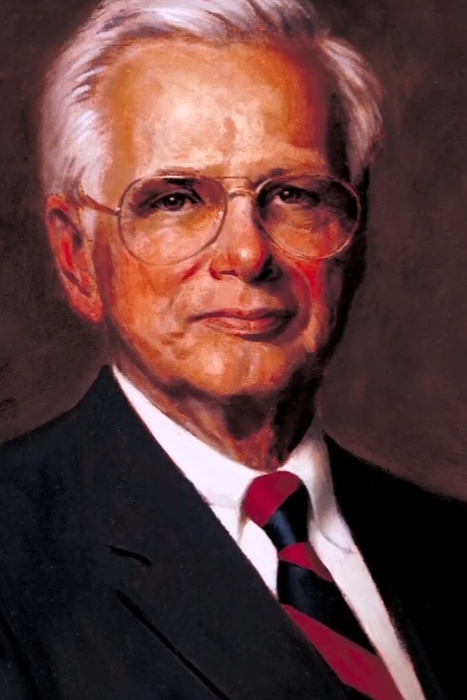
Education plays a great role in everyone’s life by building personality, improving knowledge and skill, and providing a feeling of well-being for a person. Education has been divided into three categories in our country as Primary education, Secondary education, and Higher Secondary education. It develops our analytical skills, character, and overall personality. Education plays a pivotal role in nourishing his present and future by ensuring aim of the life. 

Every child must to go school at his/her appropriate age as everyone has equal rights to education from birth. The growth and development of any country depend on the quality of the education system set for young ones in schools and colleges. However, the education system in every area of the country is not the same so the proper growth and development of the people and society vary according to the weak and strong education system of the particular region. The future of our country is the youth and the more our youth will learn more advanced our nation will become.

Agony of covid19

COVID has not only affected us by entering our bodies but the agony of Losing family members, jobs, income, a completely disrupted education system, and constant fear of what next have severely damaged the peace of people. Even doctors, nurses are under the agony of constant threat and tremendous work pressure. Oxygen plants are being constructed and vaccines are being produced, however, what the mind has been going through cannot be cured by steroids or vaccines.

These are some of the thoughts that haunt many of us who are infected or have lost people close to us due to COVID. Whenever we surf the internet through information pieces or even when we watch the news, we see they offer COVID helpline numbers, hospital details, and other valuable information on how to tackle COVID. In the same way, we can have a COVID Mental Health support helpline, wherein people can interact with therapists or more precisely connect to somebody who can listen and feel empathetically.

At this point advice like yoga, meditation, or “keep yourself engaged” does not work. There has to be sharing, there has to be handholding throughout the process of recovery. To heal completely from COVID or COVID implications the mind needs to be healed as well and we all have to pay attention to this

Mental Sickness

Covid-19 has shaken the entire world. Even though Major Pharma companies have developed vaccines intending to end the pandemic. we are still struggling to find an end to this pandemic. One of the issues that India faces is the delay in immunizing the population again Covid-19. The delay is partly due to overpopulation. And If the vaccines are not effective against the new variant, it needs to be redesigned to combat the new variant, prolonging the pandemic.

Due to covid, our country has to suffer Major economies struggle to cope with the health care burden as millions of infected people need hospitalization for several days, depending on the severity of the disease.

No one knows when lockdown will be enforced again to control the situation. Many are losing their families and not allowed to attend the final rites due to strict quarantine and lockdown measures. Along with these major problems This disease has seriously created mental health issues, and it may take years to recover from such mental health conditions. Governments have to set up a separate budget to manage increasing mental health issues. The freedom to move around has now been crippled by Covid-19, and most people in lockdown are confined in a small space, limiting them to have face-to-face interactions with their dear ones and friends. It has affected people from all walks of life and has led to mental health issues. It is hard to find a common solution to all as mental health issues differ from person to person. Students are the worst affected community as Many schools and colleges have resorted to online teaching, which isn’t as good as a regular session. 

The digital screen has now become our portal to communicate with the outside world. Many children have lost their parents in this second wave in India and have become orphans since then. There were several appeals to the Government of India requesting to support the children who have lost their parents/guardians/adopted parents. In such a drastic situation people are feeling alone. The best thing to overcome negative thoughts is by performing regular meditation and yoga, listen to music, news, recall sweet memories, watch favorite movies, plays, and read books. Only by overcoming our negative thoughts we can overcome mental sickeness.

Strength Training for Cricket Players

keeping fit off the pitch

A cricket player’s fitness and endurance on the pitch are controlled by what they do off the pitch. As a game dependent on quick, amazing developments it is fundamental for fuse strength preparing into your wellness routine to improve your game.

strength training for batsmen

There’s an actual interest in a cricketer’s body that requires the correct reinforcing and molding. As a batsman, you are utilizing your entire body to play out a smooth motion. The portability, strength, and vigorous wellness make up the collection of a batsman. You ought to likewise consider how your solidarity as a batsman is influenced by your stuff, as far as your cushions or the bat you use. Along these lines, you should zeroing in on each of these in your exercise center preparing program.

For batting, you depend upon the muscles in your back, shoulders, and biceps. You’re likewise captivating your center muscles to help turn the body as you swing the bat. Along these lines, your solidarity preparing should zero in on compound developments, for example:

i. Bicep twists
ii. Hammer rows
iii. Close-hold pull-ups
iv. Overhead presses like military presses
x. Hitting the rear arm muscles with plunges and rear arm muscle expansions will assist with fostering that dangerousness expected to present the bat.
xi. Adjust your daily practice with center activities like boards and varieties of crunches.

strength training for bowlers

Bowling is another full-body development yet with more spotlight on the predominant bowling arm. Bowlers by and large notification their bowling arm has more strength and muscle tone because of the tedious development. The abs, obliques, and back muscles additionally advantageous from a fortifying project since they are fundamentally used to turn the body as the bowler runs and deliveries the ball.

It is encouraging zero in on rotator cuff strengthening, rotator strength, and dangerous development. The rotator sleeve contains the tendons that help the arm at the shoulder. In quick bowling, the shoulder inside and remotely turns as the hip and center muscles settle and force the development.

i. Free weight flys.
ii. Link inside and outside turns. Focus on a 10-15 rep range zeroing in on legitimate structure.
iii. For abs, attempt medication ball pummels to help reinforce the settling muscles.

strength training for fielding

Defenders play out a ton of sudden halting and dangerous speed while out on the pitch. Along these lines, zeroing in on lower body strength for speed and deftness and chest and shoulder practices for tossing the ball could profit from your on-pitch performance.

i. To heat up play out a case hop preceding your solidarity preparing exercise. The advantage of a container bounce is that it builds your instability. Begin by performing 3-5 reps at a difficult tallness.
ii. Squats, strolling thrusts, and single-leg deadlifts with a leap enacts those muscles needed for speed, force, and execution.
iii. For shoulder and chest strength, take a gander at joining shoulder presses and lat-pulldowns during your preparation program.
iv. Another incredible exercise for field cricketers is frog squats, as this development can help in handling ground balls. 2 – 4 meetings seven days will assist with reinforcing and condition your entire body.
v. As defenders spend extensive stretches on their feet switching back and forth between stopping and running, make certain to adjust your solidarity program with vigorous preparing like running, paddling, or cycling.

3 essential stretches for cricketers

Batting, bowling, and handling all convey a danger of injury. You’re putting a great deal of weight on the body with dreary development and extensive stretches of play. Extending may appear to be a little piece of your solidarity preparing program however it assumes an imperative part. Attempt these stretches after your solidarity preparing project to forestall injury and keep up on-field execution:

  1. Hip abductor stretch: In a bowing position, bring the correct leg out in front, and push your left hip forward until you feel a stretch in the left hip. Rehash on opposite side.
  2. Pectoral stretch: Standing sideways against a divider with one foot before the other, bring your back arm against the divider behind you, and delicately press the arm against the divider by turning somewhat toward the left.
  3. Side stretch: Remaining with feet shoulder-width separated, bring the arms up to the roof catching the hands together. Gradually twist aside feeling a stretch in the side body. Rehash on the opposite side.

Regardless of what level you’re at as a cricket player, strength preparing will improve your game and by and large execution by expanding deftness and wellness. Cricket is a method-driven game, where strength and molding ought to be custom-made to your particular job in the game. Get more grounded to forestall injury, construct your unstable speed, and increment ideal execution with an extending program.

7 training drills to enhance your football fitness

In the event that you seek to any half-fair degree of football, you’ll need to chip away at your endurance.

The normal expert player currently covers over 10km in an hour and a half match. Nowadays it’s not just about expanding lung limit – the requests of the game have expanded so dramatically that being greater, more remarkable, and touchy is more basic than any time in recent memory.

With that, here’s the football fitness preparing system you need.

be able to run for days

Get yourself on a treadmill or track down any open space fit for running. Span preparing is certainly not a customary endurance developer however it is the thing that you’ll discover most Head Alliance players never helping to improve their VO2 Max (the greatest rate at which somebody’s body can devour oxygen during exercise), hitting greatest running at high beat prior to running and afterward going full scale again, permitting them to assemble the endurance and thrive profound into added time.

The drill: Perform four minutes running and four minutes rhythm run rehashed multiple times. Take a stab at blending footwork around cones in with your running as well.

maximise sprint speed

Customarily, something just wingers had, it’s currently essential for major parts in all situations have run speed. Come the finish of their vocation, even current greats including Rio Ferdinand will admit how hard it tends to be without it.

Boosting your own capability to run quick for more limited blasts will stand you head and shoulders over the rest, so take a stab at utilizing weighted sled pulls and parachute runs, which will help push your legs past their methods.

By developing fortitude in the hamstrings and quadriceps with isometric and whimsical developments under expanded pressing factor, you’ll become a speed trader in the blink of an eye.

The drill: Five rounds of 50m sled pulls, or bungee lines, with 30 seconds rest between.

become more explonsive

Superstars like Eden Hazard appear to be ready to turn a corner and as of now be in one week from now, however while it might look regular, quite a bit of it boils down to difficult work. It’s about unstable force.

Preparing for this isn’t for the fainthearted, and includes most extreme exertion and amazing strategy, anyway with this comes an incredible award, transforming you into a dangerous number 10 with a terrifying turn of speed.

To accomplish this, perform plyometric developments like squat engines, burpees with fold-bounces with any kind of hop squat, including plyometric box hops, and soon adversaries will eat your residue.

The drill: Four arrangements of 10 single-leg boxes hops on each side, expanding the stature of the crate every week.

improve your change of direction

It’s fine and dandy, assuming you’re quick, however in the event that that stops at straight-line speed you’ll be limited to the wings. Each footballer ought to have the option to alter bearing at any second and do so rapidly, without the danger of injury and monitoring the ball well.

Conventional cone drills are a simple method to improve a player’s spryness, including slalom runs and transport runs. Remember the ball, either; the genuine game changer is having the option to run and turn at full bore, yet monitor the ball.

The drill: Gradually slalom through 10-20 cones set in a crisscrossing arrangement, and back once more, speeding up each time, your foot pushing the ball all through.

develop rock solid core stability

When searching for a player who truly boosts each part of their physical make-up for their potential benefit, you’d be unable to look past Lionel Messi. Sidestepping safeguards through amazing equilibrium and speed as they all skip off his small edge, the pintsized playmaker is on another level to the remainder of his opponents.

Not we all are honored with a low focal point of gravity however, so how might you copy that with an additional couple of inches? Try to give yourself an unshakable center.

Yet, before you head off to do sit-ups and crunch, genuine center solidness comes from blending in some unsteady activities to your preparation system. This implies hunching down on a Bosu-ball, utilizing a Ski lift for single-leg Romanian deadlift or getting on a TRX for some board jacks, all of which will test your center and improve your strength when bumping for the ball.

The drill: Any of the above for six reps each, with a three-second break between.

make yourself stronger

Disregard strength preparing at your danger. Advances in sports science have awoken the football world to the beneficial outcomes of orders like weightlifting and general opposition preparing.

Large compound developments like squats, deadlifts, and rushes all have a gigantically constructive outcome with regards to things like unstable force, in general speed, readiness, and – to a certain extent – center security. Notwithstanding, the greatest advantage of solidarity preparing lies in injury counteraction; a strong obstruction program advances strength gains in tendons, ligaments, and the overall skeletal design.

The drill: Five arrangements of six reps of deadlifts, squats, and lurches consistently.

leave time to recover

Given the feverish requests of the cutting-edge game, sandwiching in instructional meeting after instructional course between games, you may envision footballers don’t have a lot of time to recuperate. In the background, notwithstanding, they leave a lot of time for rest. Recuperation ought to be a major piece of your preparation system as well and ensuring you’re doing it appropriately could be halting you hitting your pinnacle wellness.

Preparing to help your body in its recovery is fundamental. Froth moving is particularly useful for forestalling a development of sash and decreasing DOMS (postponed beginning solid irritation). You ought to likewise ensure that your sustenance is right and set aside effort to extend post-match.

Ensure you: Go through in any event 10 minutes after an instructional meeting extending or froth moving your lower body.

Why “INTERNSHIP” is important?

First, we need to be clear about what is an internship. An internship is the position or opportunity for a student or a trainee to work in or for an organisation. The trainee or student is paid or sometimes not paid, but the sure thing is he/she gets the work experience, acquires new skills and establishes connection with a great number of people. And, training is the part of internship in which the trainee gets the teaching to acquire a particular skill.


Now the question is why do we need to do an internship? So, there are many reasons why should you do that. First, you get to apply your knowledge, what all you have learnt in your classroom, there will be a practical implementation of all that in the internship. Doing an internship helps you to gain experience in the market of the career you want to pursue. Despite of gaining experience it provides you an edge over other candidates applying for a job and you also get the confidence to work for that job as you already know what is expected from you in that particular job position as you have already worked for the same in your internship. It also helps in increasing your network. You get to interact with the officials in the field in which you want to pursue your career as well as you form connections with the other people who have same interests as you. And trust me, having connections surely improves your chances of getting selected for a job. You also acquire professionalism in your work. You also acquire skills such as communication, leadership, problem-solving, etc. while working in an internship. You get to know about how organizations work in real, how work is done in reality, how you have to meet up to the expectations of the particular internship by training and developing the required skills. You are aware of the workplace culture which no textbook can help you with unless experienced while working in reality. You get to build your resume. Believe me, your resume will look much stronger if you have done an internship in the field you are applying for a job. You get a professional feedback in the form of certificates and letter of recommendation (LOR) from the employer or organisation you worked under during your internship. You get to learn a lot from others working around you. You can learn from both the positive and negative qualities of the other person. You get to know what you like and what you don’t like to work for before getting a job.


At the end, I will ask you all to do an internship. Do as many internships in different fields which intrigue you. At present you can see almost everyone around you doing some kind of internship or training. You don’t want to fall back and be that person who does not have skills which other people at the same position as yours have. So, the conclusion is train yourselves hard to gain the skills required to stand the competition of the present rapidly growing world.

Why unemployment occurs?

Being 2nd in terms of the population can seem a curse to our country especially in terms of employment. The competition that youngsters face these days is because of this population. Even those who get a job didn’t get the desired salary. Most employees are not paid in proportion to the work that we put in. What’s more, this is not a new problem or one that has been created by a single government. In our country, low monthly incomes are a norm – across all states, and as a consequence, wage inequality remains high. Wage growth significantly trails economic growth in the country. The sluggish growth of our GDP has led to a rise in inequality and widened the economic divide between rural and urban India.

The sad part is that India’s unemployed are mostly the higher educated and the young. And those who have jobs are not satisfied enough. If you believe that only a few people at the top are getting huge paychecks, think again. Because data suggest that we aren’t creating too many high-paying jobs either. And even though labor productivity has risen in India, growth in remuneration has remained slow. The sad part is statistic, graphs of unemployment are still the same. The new jobs and opportunities are nothing in front of our population. This problem needs to review and can be to some extent need to be solved through bargaining power. Skilling, sometimes, multi-skilling at all levels is the most effective way to fight the wage crisis and the coming job crisis -the crucial designation before talent can be matched with demand. If the skilling exception isn’t corrected, job seekers will end up in the bad job trap. Skills produce productivity, and productivity brings with it higher pay.

The problem is that the business power of workers in India is low and getting more worse. Wage changes are also a result of changes in the way of production. Throughout the last few years, production has become more capital intensive or less dependent on labor in nearly every manufacturing industry in the organized and unorganized sectors. This is true, if to a lesser extent, for agriculture and services as well. While technical know-how and increased use of machinery is a change that needs to be welcomed since it translates to increased productivity, in labor surplus economies like India, the enhanced productivity does not automatically translate to higher wages for employees. Therefore need of the time is to cope up with the desired need of the institutes and became more high tech by learning more digital skills.

Pandemic, Placement, and Future of young generation.

Covid19 binds us to our shelters, and study remains restricted to computer screens. In one way or another way, covid19 does impact the life of the people. So to the final year students. Due to covid19 outbreak and lockdown, many students did not receive their job letters those who received them faced delaying joining dates even after getting hired. some students did not get a call back from the employer regarding their status of employment. Along with elders, students were hoping too for things to get back to normal But the second wave of the virus crushed all the hopes of the students. Students will have to set in the new normal of digitization.


Firms have changed their hiring process also from full-time to unpaid or stipend-based internships, to cut costs. Companies are even reducing the number of hiring employees and are also offering comparatively lower compensation packages. Only a few companies have joined so far for placement in the but only with minimal vacancies. besides affecting the health sector, Covid19 has also posed major setbacks for small businesses and it’s going to affect freshers.

Marginal or no placements have hugely affected students. There’s a persistent fear of remaining unemployed even after college ends. Sadly, the institutions no longer take the responsibility of getting their students placed and ensuring their economic and financial safety. Also, there’s a lack of strategy behind planning placement drives. Government should interrupt to negotiate between the colleges and companies for the interest of the students.. The government has to put in extra effort to ensure that unemployment levels among the youth do not increase further. A lot of people lost their jobs during the pandemic. Now, the challenge in front of freshers is to compete with those who are experienced enough but unemployed. Our state should look into this matter and try to create job opportunities for the youth so that the number of unemployed population could be declined.