Hindus celebrate Janmashtami with the birth of Sri Krishna. The festival usually takes place in August. In addition, Hindus celebrate the festival at the Ashtami of Krishna Paksha. In addition, Lord Krishna is the most powerful person of Lord Vishnu. It is a happy Hindu festival. In addition, Hindus practice various rituals to please King Krishna. This is one of the most exciting festivals for Hindus.
Lord Krishna Lord Krishna was born on the 8th day of the Dark Ages in the month of Badon. Badon is a moon in the Hindu calendar. In addition, he was born about 5,200 years ago. He was an incarnation of Lord Vishnu, who was born with a purpose to defeat the evil.
As a result, he played an important role in the Mahabharata text. Also, Lord Krishna preached with good karma and the teachings of Bhakti.
Lord Krishna was born in prison. He was on the ropes when Kansa. But his father Vasudev gave it to his friend Nand to save him. Because he knew that Cancer had a bad heart. Moreover after the rescue the upbringing of Sri Krishna belonged to the Gokul family. Sri Krishna later became powerful. As a result, he managed to kill Kansa.
As a child I used to watch many shows of Sri Krishna. As a result, I know a lot about him. He was very fond of eating Makhan. As a result, he often stole from his mother’s kitchen. So his name was ‘Natkahat Nand Lal’. Sri Krishna was black. So she was always worried about her color. In addition, Sri Krishna had a friend named Radha. Radha was very important to Krishna. So he spent time with her. Radha was very good and unjust so King Krishna always felt difficult with color.
How is Janmashtami celebrated? People celebrated Janmashtami at midnight. Because Lord Krishna was born in darkness. As Sri Krishna loved to eat the people of Makhan played this game.
According to the game, they tied a clay pot (matki). The match judge tied the mattress very high from the ground. In addition, one fills Makhan into cans. Also, what people do is build a human pyramid to break the matki. Since the matki is very high they have to build a tall pyramid. As a result, more people should participate in sports. In addition, there are other groups and they prevent them from breaking the matki. Equal opportunities exist for both parties. Each team gets a chance for some time. If a team can’t do it while the other team is trying. This is an exciting game that many people gather to watch this game.
In addition, the celebration is done in homes. People decorate their houses outside with lamps. Moreover, the temples are full of people. They perform various rituals inside the temple. As a result, we hear the sound of bells and mantras throughout the day.
In addition, people dance in a variety of religious songs. In the end, it is one of the most exciting festivals in the Hindu religion.
Christmas is a Christian holiday known in December, celebrated all over the world and known for its decorations and Santa Clause. Christmas means “the feast day of Christ”. An annual celebration that marks the birth of Jesus Christ; it is considered December 25 as a cultural and religious festival among many people around the world. Christmas is celebrated in all Christian lands, but there are differences in the way each nation celebrates it.
History After Christmas The history of Christmas is one that goes back a long way; The first Christmas was celebrated in 336 A.D. in Rome. It played a very important role during the famous Arian controversies that took place in the 300s. During the early years of the Middle Ages, epiphany covered us.
Christmas was restored to light in about 800 AD when Emperor Charlemagne received a crown on Christmas day. During the 17th century, Puritans were not allowed to celebrate Christmas because it was associated with drunkenness and other immorality.
A suitable holiday was held around the year 1660 but was unpopular. About the early 1900’s, the Anglican Church of Oxford organized the Anglican Church, and this led to the revival of Christmas.
Christmas preparations Christmas is a celebration of many traditions. It is a public holiday so people get a Christmas break to celebrate.
Christmas preparations begin early for many people so that the festivities begin on Christmas Eve. Christmas preparations involve many activities. People often buy ornaments, food, and gifts, especially from children of family and friends. Some families purchase matching Christmas costumes for everyone.
Typical arrangements include decorating the area with Christmas trees, lighting. Before the decorations begin, the house should be thoroughly cleaned. The Christmas tree brings the Christmas spirit home.
Gifts are placed under the Christmas tree in wrapped gift boxes and should not be opened until Christmas Day. The church is also decorated with this special event. A thorough cleaning of the churches was also done to bring in Christmas. Songs and drawings to be made on Christmas day.
People often spend a lot of money on Christmas so saving money for these programs should be the first preparation for all these things. Families also plan to travel to stay together during the festive season. Traditionally turkey is the most common meal in the world on this day. Cards are also written to friends and family to wish them a happy holiday and to show their love.
Celebrating Christmas Day Christmas carols are played on radio and television to celebrate the day. Most families start by going to a church where songs and hymns are performed. Then, later, they join their families in exchanging gifts and celebrating with food and music. Merry Christmas is a wonderful time.
Traditional homemade cakes, cakes, and muffins are the special Christmas items. Children are given lots of presents and new clothes. They also meet ‘Santa Claus’, who is dressed in a bright red and white costume, who greets them with kisses and presents.
Conclusion: At Christmastime, we know that the birth of Jesus is the beginning of great things on earth. It is often an opportunity to reflect on nature and the reason for our existence. Christmas is such a celebration that people of all religions and denominations celebrate the world despite the Christian celebration. The theme of this very unifying ceremony.
Durga Pooja is a Hindu festival celebrating the mother goddess and the victory of the heroic goddess Durga over the demon Mahisasura. The festival represents the power of women as ‘Shakti’ in Space. It’s a Good over Evil Festival. Durga Pooja is one of India’s biggest festivals. In addition to being a Hindu festival, it is also a time of family and friends reunion, as well as a cultural festival.
The Importance of Durga Pooja While the festivals bring a celebration of fasting and devotion for ten days, the last four days of the festival namely Saptami, Ashtami, Navami, and Vijaya-Dashami are celebrated with brilliance and splendor in India, especially in Bengal and overseas.
Durga Pooja festivals vary in location, culture, and beliefs. Things vary so much that in some places the festival lasts for five days, in some places for seven days and in some places for ten full days. The reunion begins with ‘Shashti’ – the sixth day and ends with ‘VijayaDashmi’ – the tenth day.
The goddess Durga was the daughter of Himalayas and Menka. She later became Sati to marry King Shiva. It is believed that the Durga pooja festival dates back to when King Rama worshiped the goddess to gain power over her to kill Ravana.
In some communities, especially in Bangal, the festival is celebrated by decorating the ‘pandand’ in the surrounding regions. On the last day, they go again to immerse the goddess in the sacred river Ganges.
Some believe that another story after the festival was that on this day the goddess Durga defeated the demon Mahisasura. He was called by the Lord of the trinity – Shiva, Brahma, and Vishnu to destroy the demon and save the world at his feet. The battle continued for ten days and finally, on the tenth day, Goddess Durga cast out the demon. We celebrate the tenth day like Dussehra or Vijayadashami.
Traditions Performed During the Durga Pooja Time The festivities date back to the time of the Mahalaya, when devotees asked Goddess Durga to come to earth. On this day, they made eye contact with the statue of the goddess during a beautiful ceremony called Chokkhu Daan. After erecting a statue of the goddess Durga in their place, they performed rituals to enhance her blessed presence in the images at Saptami.
These traditions are called ‘Pran Pratisthan’. It consists of a small banana plant known as Kola Bou (banana bride), which is taken to bathe in a nearby river or lake, wrapped in a sari, and used as a means of carrying the divine power of God.
During the festival, devotees offer prayers to God and worship him in a variety of ways. After the evening ritual of aarti is performed on the eighth day it is a ritual of traditional religious dance performed before the Goddess to please her. The dance is performed to the accompaniment of musical drums while holding a clay pot filled with a cover of a burning coconut and camphor.
On the ninth day, the worship is completed with Maha Aarti. It is a symbol of the end of great rituals and prayers. On the last day of the festival, the goddess Durga returns to her husband’s residence and the orders of the goddess Durga are taken for immersion in the river. Married women donated vermillion red powder to Goddess and tagged themselves with the powder.
The Conclusion Everyone celebrates and enjoys the festival regardless of their age and financial status. Durga Pooja is a major public and theater festival. Dancing and performing rituals are an important part of it. Delicious traditional food is also a big part of the festival. Kolkata Street flourishes with stalls and shops, where locals and foreigners enjoy a mouth-watering meal, including sweets. To celebrate Durga Pooja, all workplaces, educational institutions, and business premises remain closed in West Bengal. Many non-Bengali cultural centers organize Durga Pooja in many parts of the UK, USA, Australia, France and other countries. Therefore, the festival teaches us that good always overcomes evil and therefore we should always follow the right path.
Holi is known as the festival of colors. Holi is celebrated annually with enthusiasm and enthusiasm in March by followers of the Hindu religion. Those who celebrate the festival, look forward to it every year with the desire to play with colors and have beautiful dishes.
The people forget their problems and indulged in this celebration of brotherhood with joy and happiness. In other words, we forget our animosity and get into a festive mood. Holi is called a festival of colors because people play with colors and apply it to each other’s faces to color in the essence of the festival.
Holi’s history Hinduism believes that there was a satanic king named Hiranyakashyap long ago. He had a son named Prahlad who was a great disciple of Lord Vishnu. He also had a sister named Holika who had the blessings that fire could cause no harm to her. It is believed that the satanic king had the blessings of King Brahma. This blessing meant that no one, animal or weapon could kill him. This blessing became a curse to him as he became very proud. He commanded his kingdom to serve him instead of God, not to leave his own son.
After this, all the people began to worship him except his son, Prahlad. Prahlad refused to worship his father instead of God as he truly believed in King Vishnu. Seeing his disobedience, the king of Satan plotted to assassinate Prahlad. She sat him on the fire with her son in her lap, where Holika was burned and Prahlad came out safe. This showed that he was protected by his Master because of his devotion. Therefore, the people began to celebrate Holi as a victory for good over evil.
Holi Celebration People celebrate Holi with great enthusiasm and enthusiasm, especially in North India. The day before the Holi, people performed a ritual called ‘Holika Dahan’. In this tradition, people pile piles of wood in public places to burn them. It shows the burning of evil forces in the review of the story of Holika and King Hiranyakashyap. In addition, they gathered around the Catholic Church to seek blessings and to dedicate themselves to God.
On the next day people celebrate their joy with colours. The people get up early and offer pooja to God. After that, they put on white clothes and played with colors. They pour water on each other. Children run around the water colors using water guns. Likewise, adults also become children on this day. They dye each other’s faces and dip them in water.
In the evening, they bathe and dress appropriately for visiting friends and family. They danced all day and drank a special drink called ‘bhaang’. People of all ages enjoy the special taste of holi ‘gujiya’ vigorously.
In short, Holi spreads love and brotherhood. It brings harmony and happiness to the world. Holi symbolizes the victory of good over evil. This colorful festival unites people and removes all forms of neglect in life.
The Topaz solar farm is located in the north-western part of the Carrisa Plains in San Luis Obispo County, California, US. The 550MW plant was developed by First Solar and later acquired by BHE Renewables in January 2012. Commissioned in 2014, the project covers an area of 4,700 acres and is equipped with more than eight million solar modules. Topaz supplies electricity to approximately 180,000 households in California.
The Desert Sunlight solar farm is located in the Mojave Desert in the Riverside County, California, US. Developed by First Solar, the facility is owned jointly by NextEra Energy Resources, GE Energy Financial Services, and Sumitomo Corporation of America. Commissioned in 2013, the power plant is equipped with eight million panels that generate power enough for 160,000 homes.
Solar Star Projects, US
Solar Star Projects comprises two co-located projects, Solar Star 1 and Solar Star 2, in the Kern and Los Angeles counties, Rosamond, California, US. The two projects have a combined capacity of 579MW and comprise more than 1.7 million solar modules installed on 3,200 acres of land. They were developed by SunPower Corporation and owned by BHE Renewables.
Completed in March 2015, the projects supply electricity to more than 255,000 homes. They are equipped with the SunPower® Oasis® Power Plant technology, which positions the panels to track the sun during the day and increases energy capture by up to 25%.
Kamuthi Solar Power Station, India
The Kamuthi solar facility in Tamil Nadu, India, has a total generation capacity of 648MW. Covering 2,500 acres (10km²) and consisting of 2.5 million solar panels, the site is estimated to supply enough power for 750,000 people.
Enel Villanueva PV Plant, Mexico
Located in the Mexican state of Coahuila, the photovoltaic (PV) facility comprises more than 2.5 million solar panels installed across 2,400ha in the Mexican semi-arid region. The 828MW power plant became fully-operational in September 2018 and has the capacity to produce more than 2,000GWh a year.
The Enel Group invested approximately $710m in the construction of Villanueva. The plant’s initial capacity was 754MW, which was increased to 828MW following a 10% capacity extension option added to the energy sales contracts.
Enel deployed a unique pilot programme using digital technologies and automation for the plant’s construction. The programme included the use of GPS-controlled machines for moving the earth, drones for conducting 3D topography, and robots for automatic installation of panels.
Longyangxia Dam Solar Park, China
The Longyangxia solar park has a capacity of 850MW, sufficient to power 200,000 households. The site sits on the Tibetan Plateau in northwestern China’s Qinghai province and spans 27km². The plant is installed with approximately four million solar panels and is operated by State Power Investment Corporation, one of China’s top five power generators.
Phase one of the power plant was completed in 2013, while phase two was completed in 2015, with a total construction cost of approximately six billion yuan ($920.84m).
The project was developed by Huanghe Hydropower Development and is integrated with the 1,280MW Longyangxia hydroelectric power station.
First of all, to understand that India is a country of festivals. However, none of the festivals is Diwali. It is to be one of the biggest festivals in India. It is likely to be the fairest of them all, the festival of the world. People from different religions celebrate Diwali. The most notable of these is the festival signifies the victory of light over darkness. This also means that it is the triumph of good over evil, and knowledge, than of ignorance and is also known as festival of lights. It is, therefore, a clear light on the whole of the country during Diwali. In the essay on Diwali, you will see that the religious and spiritual significance of Diwali.
The Religious Significance of Diwali The religious significance of this festival is different. It varies from region to region in India. This is a group of many deities, culture, and traditions of Diwali. The reasons for these differences are likely to be for the local harvest festival. So, there was a merger of the harvest festival in one pan-Hindu festival.
As per Ramayna this day is when Lord Rama returned to Ayodhya. The return was made after Rama defeated the demon king, Ravana. In addition, Rama’s brother, Lakshmana, and Hanuman came back to Ayodhya is to prevail in the end.
It is a popular tradition for the sole purpose of Diwali. Here is Lord Vishnu as incarnation of Krishna killed Narakasura. Narakasura was a demon. This victory brought with it the release of 16000 caught up to the girls.
In addition, this victory shows the triumph of good over evil. This is due to the most high, the Lord is good, and the Narakasura’s wrong.
The association of Diwali with Goddess
Lakshmi is the belief of many Hindus. Lakshmi is the wife of Lord Vishnu.
According to the legend, Diwali, it is the night of Lakshmi’s wedding. This is the night that they chose and wed Vishnu. In eastern India, and is Considered to be the associate Diwali with the Goddess Durga, or kali. Some Hindus believe Diwali is the beginning of a new year.
The Spiritual Significance of Diwali Well, first of all, a lot of people are trying to get people to forgive, ” during Diwali. This is definitely a place that people are going to forget that one of the monitors. Therefore, friendships, and relationships are stronger during Diwali. People need to take away all the feelings of hatred from their hearts.
This is a wonderful festival and bring prosperity. The hindu traders to open an account with, this is a book to be discovered. In addition, they are also to pray for happiness and prosperity. People buy new clothes for themselves and for others.
In light of this, the festival will bring peace to the people. It brings the light of peace and love in your heart. Diwali is sure to bring peace of mind to the people. To share the joy and happiness is the spiritual benefit of Diwali. People visit each other’s homes during the festival of lights. And they’re doing it, communications, and eat well, and enjoy the fireworks.
Finally, to sum it up, Diwali, it is a great joy to be at the moment in India. It is one of the happiest and joyful festivals in the world.
We are living in the age of the internet. It is also a very important part of our life that we just can’t live without it. By the way, the internet is an invention of the high-end science and technology. Apart from the fact that we are connected to the internet 24×7. We also have a large and a small size of the messages and data being lost faster than ever before. In this paper, the Internet, and we are going to discuss about several things, when it comes to the internet.
The coverage of the Internet It is very difficult to estimate, the area in which it is included. Also, each and every second, a million people are connected to each other in order to continue to have an issue or a question. Apart from that, as well as all of the things that the internet has had a number of good and bad effect on the lives of people. So, the first thing we need to do is learn about it, the good and the bad effect of internet.
Well, the good effects of the internet is to do all of the things that it is possible to do. Yes, these are the things that will make our lives easier and more reliable.
They are the bad effects of the internet is to do all of the things that we can’t do it, because that’s the internet. Even the things that are causing problems for themselves and for others.
You can also get access to every corner of the globe. It is very easy to use and manage. In today’s world, and we can’t imagine our lives without it.
The Use Of The Internet From that time on, as it were, for the first time in her life, up until now, the internet has been on a long journey. During the trip, the internet has a lot of things, and it was becoming more and more user-friendly and interactive. By the way, all of the big and the little things are available and on the internet, and in the article or material you need, which can be downloaded from the internet.
Tim Berners-Lee, it may be referred to as one of the main father of the internet, which is where he invented/discovered in the World Wide Web (WWW), which will be used at each location. There are millions of pages and websites of the internet like it’s going to take years to go through all of them.
The Internet can be used to show different things that you can learn, to learn, to research, to write, to share, to receive, via e-mail, in order to explore and surf the web on the internet.
The Ease, Thanks To The Internet As a result, the internet, our lives are becoming more and more useful compared to the times when we do not have access to the internet. We have already been in the queue in order to send an e-mail, letter), and, for the record, or by a deposit of money, or to book tickets, etc, etc., but the date of birth of the internet, all of these things are going to be very easy to make. Also, we don’t need to waste precious time standing in long lines.
The Internet has made a great contribution to the environment, and that many of the office buildings (public and private), and the school, and the school has been in the digital sector, as it will save you countless paper.
However, there is no doubt that internet has made our life more comfortable and convenient, but we can’t get away from it, in fact, that it has led to a lot of the major problems in the past. And with the speed we are getting dependent on it, there will come a day when you are going to be one of our basic needs.
The practice of child marriage is common in many parts of the world. As the world is advancing at a rapid pace, there are a number of the region does not seem to be up with the times. What’s sad is the dark reality of being a child of the marriage, it is not to be considered as it is often. The practice of child marriage is, in reality, it is a formal or an informal wedding, a child-with or without their consent, who are not at least 18 years of age. In most cases, it’s a boy or a man who is older than the age of the child. As a child, a marriage, a term paper, we will shed some light on this issue.
The causes and consequences of child marriage The practice of child marriage is not to be less than that of the operation of the act. In almost each room, the child must be at least 18 years of age or older in order to be allowed to marry. So, the marriage, the children prior to the age of the exploitation of their rights.
One of the most common reasons for child marriage is a tradition that has been in practice for a long period of time. In many places, ever since a girl is born, they see her as someone else’s property.
The elders would like to work on their addition to the family, so that they can get married with the young pigeons, to the characterization of their state. And, more importantly, to the poor of the people, and the practice of child marriage, in order to get rid of the loan, the taxes, and, own,, and more.
The consequences of child marriage, it can be life-changing for children, especially little girls. The responsibility is going to fall on the babies. They are not mentally or physically prepared for that, but that’s on them.
So much so that people have come to expect, it is the smaller of the boys to carry the financial responsibility of, the girls are expected to look at the house and the family. The freedom to learn and to play, has been removed.
In addition, their health is also at risk due to the contraction of sexually transmitted diseases such as HIV / aids, and more. Especially the girls who got pregnant at a very young age, it will harm both the mother and the baby.
How To Eliminate The Practice Of Child Marriage Ending the practice of child marriage is the need of the hour. At the end of this social evil in all of us, from individuals to the leaders of the world, and the challenge of traditional norms. In addition, we are in need of some ideas to enhance the girls are less than boys.
We need to ensure that children, especially young girls, to be their own agents of change. In order to achieve this, they should have access to high-quality education, enabling them to take their studies so that they are able to live an independent life later on.
Safe spaces are important for children to be able to express themselves and to let their voices be heard. Therefore, it is of vital importance for the elimination of all forms of discrimination against women, in order to ensure that all have equal value, and protection.
Conclusion In short, this is a wedding should be a sacred union between the adult and it is not a logical approach, and put at risk the future of our children. This issue needs to be addressed at the root level, which begins with an end to poverty and lack of education. In this way, the will of the people is to learn to be better and do better.
This is a word you might have heard of in the news or in the movies. It is a crime in which children are forced to work at a very young age. It is to be expected that the children will be to carry out responsibilities such as working and fending for themselves. There are some guidelines, restrictions, and limitations of the work.
The average age for a child to be appropriate, in the work are considered to be at least fifteen years old or more. Children at this age will not be allowed to enjoy any kind of work is very impressive. Why do we do this? As a child, taking away the children from having a normal childhood, a good education, and the physical and mental well-being. In some countries, it is illegal, but in the end, it’s a long way from being completely wiped out.
Causes of child labour Child labor, for a number of reasons for this. While a few of the reasons as to why this may be used in some countries, there are a number of reasons that are specific to certain regions and territories. However, if we look at the root causes of child labour, and we’re going to be in a position to fight, the better it will be.
First of all, it is the countries with high rates of poverty and unemployment. If a family does not earn enough, and they are the children of the family, so that they do not have enough money to survive. However, as the adults in the family, the unemployed, and the young people who work for them.
In addition, if people do not have access to education, they are going to have on their children to work. The manual only care about the profit, in the short term, and this is the reason why they have to do things so that they are able to survive in them.
In addition, it is save to save the setting out of different industries, which is one of the most important causes of child labour. They are the children, since they are then they will have to pay less for the same work, but as a grown-up. As children, more than adults, and even fewer wages, they prefer children. They can easily influence and manipulate them. They only see their profit and this is the reason why you have to involve the children in the factories.
The abolition of child labour If we want to eradicate child poverty, and we need to make some of the most efficient and effective solutions that will save our kids. It will also help to improve the future of the country are dealing with these social problems. To begin with, there could be a number of trade union organizations, who are working to prevent the occurrence of child labor. This should help a child to engage in this work, the punishment of those who are with them.”
In addition, we need to keep parents in the loop as they learn the importance of education. If we, free of charge to the education, training and awareness, in which we are going to be able to educate more and more children do not have to do with the child. In addition, in order to make the people aware about the harmful effects of the use of child labour, it is a must-have.
In addition, to the family of the control measures that must be taken into account. This will help to lessen the burden so you have fewer mouths to feed, and her parents are going to be enough to get them to work, rather than a child. In fact, each and every family in need of in order to get a promise of a minimum income to the government in order to survive.
In short, the government and the people need to come together. Of the jobs that could be given to those who are in abundance, so that they are able to earn a living, rather than having to put their children to work. The children are the future of our country, and we can’t expect them to be, in order to maintain the economic conditions of their families, instead of having a normal life.
Global warming is a term that we all are aware of. However, the significance of this, it is still not clear to most of us. Let us start with knowing what global warming actually is. Global warming means the increase in the Earth’s temperature gradually because of greenhouse gases. There are a number of different activities, which will increase the temperature gradually. Global warming, melting of ice from glaciers up quickly. This is very damaging to the earth, as a human being. It is very challenging to control global warming, but it’s not going to be a difficult one. The very first step in solving a problem is to identify the root cause of the problem. Therefore, we need to first understand what the root causes of the global warming of the earth, and that will help us to continue to deal with them. In this paper, the global Warming of the planet, we must find the causes and solutions of global Warming in the face of the earth.
The causes of global Warming Global warming has become a serious problem, and needs serious attention. It didn’t matter that may occur as a result of a single cause of action, however there are a number of reasons. For these reasons, both natural and man-made. The natural causes include the release of the greenhouse gases that are not in a position to move away from the earth, causing the temperature to rise.
In addition, the volcanic eruptions were also responsible for the global warming of the earth. That is to say, these eruptions release tons of carbon dioxide, which contributes to the global warming of the earth. Also, methane is also a major concern, and are responsible for the warming of the earth.
After that, the excessive use of cars and burning fossil fuels, which results in an increase in the levels of carbon dioxide. In addition to his activities as a coal mining and cattle-breeding are very harmful to the environment.
So, that is one of the most important sources for the absorption of carbon dioxide into the atmosphere, it’s just going to go away, and it is going to be something to take care of is the gas. Thus, it will result in an overall warming of the earth. These steps need to be taken in order to halt the global warming of the earth, and the earth well.
The Global Warming Solutions As mentioned above, it can be a challenge, but it’s not out of the question. Global warming can be stopped, if there’s a concerted effort. For private persons and the authorities of both the action to be taken in the direction of achieving it. We should take steps to reduce the emission of greenhouse gases in the environment.
In addition, they will monitor the use of the fuel. Switching to a hybrid car, as well as to reduce the emission of carbon dioxide. In addition, people can opt for public transport or a car together. Then you are recycling should be encouraged.
For example, if you are going to buy, carry your own bag. Another step you can take in order to reduce the consumption of electricity, in order to prevent the release of carbon dioxide. For the government to be a part of it, they’re going to be in the control of industrial waste and the emission of harmful gases into the air. Deforestation should be stopped immediately, and the planting of the tree of life, and should be encouraged.
In short, each and every one of us should be aware of the fact that the earth is not a good sign. It’s going to be treated, and we are able to help with the healing. The current generation needs to take responsibility to stop the global warming of the earth, in order to prevent the suffering of future generations. It is, therefore, in every step, no matter how small, is a great deal of weight, and it is very important to stop the warming of the earth.
Education is the act of discovering things around us. And so the prominence of the education in a person life. To discover the real meaning of life. We need to educate not ourselves but our environment also. Education helps us to easily recognize and deal with any difficulty and makes balance throughout the whole life in every aspect. Education is the first and foremost right of every human being. And therefore we have the right to education in our constitution. Without education we are incomplete and our lives are useless. Education helps us to set a goal and go ahead by working on that throughout life. It improves our knowledge, skill, confidence level, and personality. It empowers us intellectually to interact with others in our life. Education brings maturity and teaches us to live in a society with changing environment. For adaptability, education is a must. It is the way to social development, economic growth, and technological development. For being a proper social person we need to educate ourselves.
Education plays a great role in everyone’s life by building personality, improving knowledge and skill, and providing a feeling of well-being for a person. Education has been divided into three categories in our country as Primary education, Secondary education, and Higher Secondary education. It develops our analytical skills, character, and overall personality. Education plays a pivotal role in nourishing his present and future by ensuring aim of the life.
Every child must to go school at his/her appropriate age as everyone has equal rights to education from birth. The growth and development of any country depend on the quality of the education system set for young ones in schools and colleges. However, the education system in every area of the country is not the same so the proper growth and development of the people and society vary according to the weak and strong education system of the particular region. The future of our country is the youth and the more our youth will learn more advanced our nation will become.
Growing up, you may not have heard of the concept of “Health is Wealth”, but in the core it is still not clear to most people. Generally, people get confused in a good health and free from any kind of diseases and illnesses. Even if it is a part of the event, and it is not at all a good health, it’s all about. In other words, it’s hard to live a healthy life, a person needs to be healthy and beautiful, both physically and mentally. For example, if you’re constantly eating junk food, but you don’t have a disease, it does not make you healthy and fit. You do not have the consumption of healthy food, which is, of course, means that you are going to stay fit and to stay alive. Therefore, in order to really live, not just survive, you will need the basic necessities of a healthy lifestyle.
It Is The Most Important Component Of A Healthy Lifestyle: If you would like to obtain a healthy life style, you’re sure to be a few changes in your life. How to maintain a healthy lifestyle requires a consistent practices and a disciplined approach to life. There are lots of habits you might want to take, such as a regular exercise program to maintain your fitness level. It also affects your mental health, and if you are looking to improve your self-confidence, it will automatically be updated.
In addition, it helps in the prevention of obesity, and in order to help you to burn extra fat from your body. After that, it’s a well-balanced diet is of the utmost importance. If you are taking the right amount of food, vitamins, proteins, calories, and much more, your immune system will be strengthened. This, in turn, will help you to fight against the disease, and the strong, resulting in a disease-free life.
In particular, the health and safety standards, which play an important role in the maintenance of a healthy lifestyle. Your well-balanced diet and regular exercise, it will be completely useless if you’re living in an unhealthy environment. You need to always maintain the cleanliness of their surroundings, in order to avoid the risk of contracting an infectious disease.
The Benefits Of Having A Healthy Lifestyle: So it’s clear, now, in good health is a luxury that everyone wants to be, but some of them are not going to be able to afford it. This is the point in and of itself, the member states of the importance of living a healthy lifestyle. If a person leads a healthy lifestyle, he or she will be relieved of the stress of seeking medical attention, and from time to time.
On the contrary, if you are in poor health, most of the time, you are able to spend your time spent in the hospital, and the bills are going to take away your peace of mind. Therefore, having a healthy lifestyle means that you will be able to enjoy your life. Likewise, if you have a relaxed mind all the time, you will be able to keep your loved one happy.
In addition, a healthy lifestyle that will push you to do better in life, and motivate you to achieve higher goals. What usually happens is that people who are very wealthy in terms of money, is in good health. This just proves that all the riches in the world will do you no good, when there is a lack of a healthy lifestyle.
In short, a healthy lifestyle, which is the highest blessing that should not be taken for granted. It is indeed the source of all happiness. Money can buy you all of the luxuries in the world, but it cann
From childhood, we’ve heard that trees are our satisfactory pal however in realistic existence, we didn’t see anyone who treats trees as their pals. Even though they may be the most treasured existence supply on the earth. They benefit each life form in a direct or oblique way. And the earth is connected to them to maintain a herbal balance. In this essay on store trees, we are discussing the reason why our buddies want saving.
They nourish us and defend us in lots of approaches. Additionally, they keep our environment inexperienced and smooth. So, it becomes our duty to pay off them for the matters they do for us by way of saving them. Except, massive timber are extra useful than small ones due to the fact they capture greater carbon, seize greater water, combat the heat, clear out greenhouse gases, offers refuge from warmth and daylight, and so on. So, it may be stated that we depend on them extra in preference to they on us.
Benefits and significance of trees As we have mentioned the advantages of trees in quick however right here we’re going to speak about them in element. Flora and bushes fight the climatic modifications which might be destroying the earth. In addition they clear out the air that we breathe and soak up all the damaging chemical gases and odors from the surroundings. Additionally, they soak up the damaging carbon dioxide and offers out oxygen.
They may be true for the diversity of flora and fauna. They give us meals, safe haven and many more things that we can’t matter. Besides, they in no way demand something from us and also save you soil erosion, water evaporation. Peculiarly, they manage and manipulate the consequences of wind, sun and, rain.
Why should we save trees? The human has turn out to be aware and severe about this problem and started doing the nice they are able to do to store bushes. The woodland departments and authorities have banned the unlawful slicing of trees. And they are going virtual as a way to shop paper for you to reduce the range of trees reduce down for making paper.
Other than that, the wooded area area after reducing of bushes need to be replanted with new ones. Also, we must train our youngsters to plant trees and ask them to pass it on their pals and buddies.
The least that we will do is to plant a few pots in our home rooftops or lawn and ask our neighbor to do the same. Additionally, if we see the removal of a tree then we ought to inform the neighborhood authority approximately it to create consciousness. Specially, strict laws have to be made for people who illegally or without permission reduce those trees for his or her personal blessings.
The numerous existence form is able to live to tell the tale on this planet because of flora. If we dispose of plant life from the earth even for sooner or later then the survival of guy turns into difficult.
Besides, they’re the supply of water and clean oxygen on the planet. Cutting of trees will lead to destroying the human existence on the earth. So, the time has come that we to be aware of the problems we will be facing due to large deforestation and we should start taking preventive measures to stop it.
Have you ever heard of a school which collects plastics as fee?
Here it is, Akshar school at Pamohi village in Guwahati, Assam where students pay plastics as fee and to get education in that school. A polythene bag full of plastic waste is the only form of fee the school accepts.
Akshar is a model school which allows children from economically backward family to get quality education. It was founded in the year 2016 by Parmita Sarma and Mazin Muktar. They initially started free education in the village, but they noticed high use of plastics in the surrounding and villagers had the habit of burning plastics to keep themselves warm during winter. Their classroom also used to be filled with those toxic fumes at times because of smoke from burning plastic. Therefore, they introduced this fee structure where students bring 10 – 20 plastic waste per week to school as fees for learning. The students were taught to effectively recycle the plastic waste, the students learnt to make eco – bricks and have already built plant guarder in their school premises.
They follow different format from system that is followed across India. The have conventional subjects as well as vocational subjects. They teach children how to teach. The students of higher class educate the younger students of the school and they also receive a reward currency like in games which allows them to make purchases from school store. The school has created awareness on hazards of plastic and has also changed mindset of student’s family. Their class division is not age but IQ based where children are taught lessons based on IQ level. They have plans to expand Akshar school across India.
As Cristiano Ronaldo snubbed Coca-Cola at the press conference ahead of Portugal’s Euro 2020 opener, the move had a spiralling effect all across the football fraternity. The move also coincided with the share prices of Coca-Cola dropping down, wiping off about USD 4 billion from their brand value. However, industry experts don’t feel the two incidents were related.
Highlights
Cristiano Ronaldo’s Coca-Cola snub at a Euro 2020 news conference has been a huge topic of discussion
The move also coincided with the brand value of Coke sinking by USD 4 billion
A market expert, however, has brushed aside any connection between the two
Ronaldo wasn’t pleased seeing Coca-Cola bottles placed on the table as he arrived to attend the press conference with Portugal manager Fernando Santos on the eve of the Hungary match. He put the Coke bottles aside and picked up a water bottle saying ‘Agua’, asking people to drink water over soft drinks.
While the move was to promote a healthier lifestyle, the fact that Coca-Cola is an official sponsor of Euro 2020, is bound to leave both the beverage brand and UEFA a little disappointed.
“Coke and UEFA will both be fuming,” sports marketing expert Tim Crow, who worked as an advisor to the beverage-maker for 20 years, was quoted as saying by The Athletic. “The fact is there’s an agreement between them, which all the FAs and players sign up to, and one of the contractual agreements is going to press conferences where you’re surrounded by the sponsors’ branding.”
It’s certainly not ideal that one of the most famous and most followed athletes on the planet makes a gesture like that. The sports marketing community will have raised more than an eyebrow in Ronaldo doing that,” he added.
A day after the incident, reports of Ronaldo’s move hurting Coca-Cola’s stock prices and brand value surfaced but Crow has dismissed any co-relation between the two incidents. Branding it as ‘complete nonsense’, Crow said that the investors in the United States of America are not impacted by what happens in a European football match’s press conference.
American investors are not driven by what happens in a press conference ahead of a European football match. It doesn’t work like that. Tonnes of stocks went down for several reasons but the two things are not related. There are a billion servings of Coke every day. I think they’ll be OK,” he said.
Independence Day which is celebrated on 15th August ecery year is the national holiday of India. India most effective has 3 national gala’s that are celebrated by using the whole state as one. One being the Independence Day (fifteenth august) and the opposite being republic day (twenty sixth january) and gandhi jayanti (2d october). After independence, India became the largest democracy in the international. We fought very difficult to get our independence from the britishers.
History of our Independence Day The Britishets ruled India for around 200 years and the citizen of our country at that time suffered plenty because of these oppressors. British officials deal with us like slaves until we manipulate to combat again against them.
We struggled for our independence tirelessly and selflessly under the steering of our leaders Jawahar Lal Nehru, Subhash Chandra Bose, Mahatma Gandhi, Chandra Shekhar Azad, and Bhagat Singh. Some of those leaders choose the course of violence while some pick non-violence. But the ultimate goal of these was to pressure out the britishers from our country. Another reason is to consider the sacrifices and lives we’ve misplaced in this war. Except, we celebrated it to remind us that this freedom that we revel in is earned the hard manner.
Why do we celebtate Independence Day? Independence Day is celebrated as the matk of independence our country got from the harsh and cruel rule of Btitishers. Our leaders and many people sacrificed their lives fighting for our independence from the rule of Britishers for a period of more than 200 years. Aside from that, the joy and proud wakes up the patriot internal us. Together with celebration, the young generation is acquainted with the struggles of the people who lived at that point.
Activities on Independence Day Schools, offices, societies, and faculties rejoice this present day by using organizing diverse small and big activities. Assemblies are conducted in the school, one day before the Independence Day to celebrate the independence our country got after so many sacrifices and years of struggle. People hoist flags in their societies, home, schools, public places, etc. and sing National Anthem.
Each year on the Red Fort Prime Minister of India host the national flag. In the honor of the event, 21 gunshots are fired. That is the begging of the principle occasion. This event is later on accompanied through an navy parade.
The faculty and schools prepare cultural activities, fancy get dressed competitions, speech, debate, and quiz competition.
Importance of Independence Day Every Indian holds a specific point of view approximately indian independence. For a few, it’s a reminder of the long struggle while for kids it stands for the honour of the country. Exceptionally, we see the feeling of patriotism across the whole country.
The Indian’s rejoice Independence Day with a sense of nationalism and patriotism across. On this day each citizen echoes with festive feeling and pride within the diversity and solidarity of the humans. It’s not simplest a party of independence but also of the cohesion in range of India.
A teacher is someone who acts as a manual and concept to people, be it young or old. He/she is charged with the responsibility of creating focus as well as opening the mind of people through instilling values, morals, and ethics. Instructors efforts are diagnosed during the teacher’s day. They form minds, and we yearly have fun their contribution to the development of society inside the form of teachers’ day the world over. But, we have a good time the worldwide teachers day on october fifth annually.
Teachers’ day in India Teachers are respected and venerated for their important contribution in shaping individuals. Teacher’s Day is celebrated on September 5. This is really the birthday of the former president of india, dr. Sarvepalli radhakrishnan.
Why techers day is celebrated? The contributions and efforts made through teachers in no way go omitted. This brought about the inauguration of the trainer’s day which seeks to celebrate the efforts made by means of the academics. In india, we have fun the trainer’s day on the birthday of dr. Sarvepalli radhakrishnan who become referred to as a man of many splendid traits and attributes.
Teachers play many jobs in universal development consisting of:
They manual children and students to leadership capabilities They instill subject into young people molding them into destiny Also, they offer their college students with religious and emotional steering. Instructors also stumble upon numerous challenges in their everyday activities which include the unappreciative subculture via the community in addition to dealing with disciplinary problems in their students.
What can we do on teachers’ day? A thank-you can pass a long manner. In our busy lives, we’ve got come to forget expressing gratitude. Many studies have come up explaining the blessings that gratitude could have on the only who expresses it and on the one who gets it. We can take this possibility as a day to thank our teachers and explicit our love and take care of them.
We will endorse and provide help with the aid of making use of the skills that we’ve discovered over those years. Additionally, we will supply them a go to on this day and share with them our studies. This could for positive lead them to satisfied and happy with their efforts. We are able to gift a small token of appreciation, something that they could keep as a memory like a pen or a planner or something that would be beneficial for them. We have to also are seeking their advantages and let them realize that we’re continually there for them after they need us. Students can together gift them books and other substances and prepare a get-together specially if the elegance has graduated. Time spent with them and gratitude expressed could be a excellent gesture to make teachers glad and proud. It’s miles very vital to recognize their contribution to molding our personality.
Conclusion Teachers play an vital position within the development of any country. This is why it is critical to set aside an afternoon whilst the academics are given the recognition they deserve. We have a good time instructors’ day to honor the contribution of instructors in our lives. Duties undertaken by using instructors within the upbringing of children is great and for this reason being recognized with instructors’ day is a step in the direction of recognizing the profession and the function they play in society.
With the increase in population through these years in India, the unemployment rate has taken a massive hike. While the government fails to create more and more job opportunities, the talented lot of our country continues to move to foreign countries in search of better job opportunities, a better pay and a better lifestyle overall. But how can we try to fix this problem?
The first field on which we shall focus for more job creations and greater productivity is of course-
1. Awareness. Most of the people in the rural areas have immense talent but these areas lack a medium of awareness. The main source of distribution of the awareness and developement is done through television. But most of the people of the rural areas don’t have TVs at home, so I propose the government does it through pamphlets and banners. The government can also set up a small committee in every district to recruit people from a village who are capable enough to send them for higher education. For this purpose, funds can be raised by the village or by the government. The testing for this would be done by many practical and psychometric tests.
2. Education- The schools and especially government schools should have a curriculum where they focus on practical studies equivalently. They should be given more case studies and be made aware of the upcoming opportunities and internships. The quality and focus of studies in government schools too require a lot of improvement.
3. A lot of India’s best talent is immigrating to countries like the US, UK, etc. because of better pay and lifestyle. Here, I propose the government increase the pay scale for projects and reduce corruption, plus they should also keep a strict check on the project deadline.
4. India should impose stricter laws on multinational companies investing in India so that the unskilled labor force can work there and gain experience without the fear of exploitation.
5. Investment in better technology and infrastructure- Investing in technology is a massive multiplier. It will lead to the creation of many prestigious and well-paying jobs.
6. Encouraging tax free start ups, not just in metros but also in villages can help to a lot of extent. Even farming sector can be “corporatised” with the use of technology in produce , supply chain, research, survey and so on and this needs the effective use of technology.
Whereas, infrastructural reforms will lead to more people being employed in the sector and hence, more job creations. Better infrastructure will also attract more tourists while can serve as a means of a improved lifestyle for geeral shopkeepers.
Personally, I feel that the development of ‘skills’ in the Indian youth can only be engraved through a curriculum that focuses on practice and working of the brains and not only cramming. We need disposable income to spend, for which we need a strong growing economy which is the responsibility of the government. The programs of the government need to include classes on this issue even outside of school (and even online).
INTRODUCTION Menstrual hygiene: A challenging development issue The major reasons behind menstruation still being a taboo in the Indian society are illiteracy, poverty and lack of awareness.
WHAT IS MENSTRUATIONS? The blood coming out from vagina normally occurs as part of a woman’s monthly cycle called menstruation or periods. Every month, our body prepares for pregnancy. The uterus, or womb, sheds its lining in case of no pregnancy . The menstrual blood is partly blood and partly tissue from inside the uterus. We can say that periods are the onset of puberty in girls. During this time a girl goes through several physical and psychological changes in her body. It is associated with bleeding along with stomach ache , nausea as well as mood swings. After the onset of puberty , it brings various rules, restrictions, isolation and changed expectations in the girls life by the society. These changes in attitude towards girls such as restrictions on their self expressions, schooling, mobility and freedom has far reaching consequences on the mindset of women. MENSTRUATION- A TABOO In the Indian society menstruation is still considered as a taboo. Till now, adolescent girls are not given proper information about menstruation. People create major hurdles in educating girls about menstrual hygiene.
Mothers also don’t talk with their daughters about this topic because they feel shy while expressing the terms. Another reason they don’t discuss this topic is because most of them lack scientific knowledge on puberty and menstruation. Most of the people in India, especially the girls are illiterate. This is one of the reasons for which menstruation is still a relevant taboo in our Indian society. The other important reasons are poverty and lack of awareness about menstrual health and hygiene. Very less number (less than 18 percent) of Indian women use sanitary pads.
According to the latest National Family and Health Survey 58 per cent of young Indian women (15-24 years) use a hygienic method of protection (mostly sanitary pads) which is a significant increase from the 12 percent using pads in 2010. This is a consequence of greater attention to menstrual hygiene management over the past few years in India. This not only prevails in the Indian society but is a global issue.
On a global level, at least 500 million women and girls lack adequate facilities for menstrual hygiene management. The lack in appropriate information on sanitation and hygiene facilities, especially in public places like schools, workplaces or health centres can pose a major obstacle to women and girls.
In many families women’s freedom is still in the hands of patriarchal discourse. With the evolution of these cultures, there has not been any significant change in people’s attitudes and mentality towards menstruation.
In some families menstruation is still denoted as an unclean or embarrassing thing. For them even mentioning menstruation in public or private places is embarrassing. Most girls feel embarrassed to go to a medical store to buy sanitary pads for them. There are also many girls who cannot afford to buy the Sanitary Napkins.
Most of the girls in financially unprivileged families drop out of school when they begin to menstruate. More than 77 percent of girls and women in India use an old cloth, which is often reused, ashes, newspapers, dried leaves and husk sand during periods.
During these periods women are not allowed to participate in day-to-day activities. They are not allowed to enter the house or carry in with their household chores. They are even restricted from entering the kitchens. They are restricted from entering the temple. They are not even allowed to any sacred places and also not allowed to perform any rituals. They are restricted from doing all these works because they think that a menstruating woman is impure and everything she touches turns impure or bad. They think after menstruation a woman must be purified before entering the house or other places. While menstruating, a woman goes through several psychological trauma and mood swings . During this time they should be given proper care but instead they are treated poorly by the society.
CONCLUSION To prevent the troubles faced by the menstruating women in our society, we must give them proper education about menstrual health and hygiene, provide financial support or distribute sanitary napkins to the unprivileged women so that they don’t have to suffer the ill fate.
Cellular telephone is often also called “mobile smartphone”. It is a tool especially used for a voice call. Currently technological advancements have made our existence clean. These days, with the assist of a cellular smartphone we can effortlessly talk or video chat with all and sundry throughout the globe by just transferring our fingers. Today cellular phones are available in various shapes and sizes, having extraordinary technical specifications and are used for some of functions like – voice calling, video chatting, textual content messaging or sms, multimedia messaging, internet surfing, e mail, video video games, and images. For this reason it’s miles called a ‘smart smartphone’. Like each device, the cellular cellphone additionally has its pros and cons which we will discuss now.
Benefits of mobile smartphone
1. Now we may be related to our buddies, loved ones at any time we want thru many apps. Now we can communicate video chat with whoever we want, through just working your mobile phone or smartphone. Apart from this cellular also keeps us up to date about the entire world.
2. These days mobiles cellphone has made our life so easy for every day life activities. Today, you can investigate the live site visitors scenario on mobile telephone and take appropriate decisions to reach on time. Together with it the weather updates, reserving a cab and many extra.
3. With the improvement of cellular era, the entire entertainment world is now beneath one roof. Each time we lose interest with habitual paintings or in the course of the breaks, we are able to concentrate to music, watch movies, our favourite indicates or just watch the video of 1’s preferred song.
4. In recent times mobiles are used for lots kinds of legitimate paintings from assembly schedules, sending and receiving documents, giving shows, alarms, job applications, and many others. Cell phones have become an vital device for every running human beings
5. In recent times mobiles are even used as a pockets for making bills. Money will be transferred nearly instantly to buddies, family or others by using cell baking in the phone. Also, you will effortlessly access his/her account details and recognize past transactions. So it saves quite a few time and also trouble-unfastened.
Hazards of cellular telephones
1. Now day’s human beings have come to be hooked on mobiles. Even if we don’t want to cell we surf the net, play games making a actual addict. As cellular phones have become smarter, humans became dumber.
2. Extensive utilization of mobiles has resulted in less meet and talk more. Now human beings don’t meet bodily as a substitute chat or touch upon social media.
3. It is a primary challenge now of losing one’s privacy because of an awful lot cell usage. Today anyone should without problems get entry to the statistics like in which you stay, your pals and own family, what’s your career, in which is your property, etc; by using simply easily browsing via your social media account.
4. Because the usefulness of mobiles has improved so their costing. Nowadays human beings are spending a lot amount of cash on buying smartphones, which can alternatively be spent on more beneficial such things as schooling, or other useful things in our lifestyles.
Conclusion
A cellular telephone ought to each be superb and poor; relying on how a person uses it. As mobiles have become part of our lifestyles so we ought to use it in a right manner, carefully for our better hassle-unfastened life as an alternative using it improperly and making it an endemic in life.
As we look again in our ancient instances we see so much improvement inside the world. The world is complete of devices and machinery. Machinery does everything in our environment. How did it get viable? How did we come to be so modern? It was all viable with the help of technology. Technological know-how has performed a chief role inside the improvement of our society.
As i have mentioned earlier science has got many adjustments in our lives. First of all, transportation is less complicated now. With the help of technological know-how it now less complicated to journey long distances. Moreover, the time of touring is likewise reduced. Various high-pace automobiles are to be had these days. These motors have completely changed. The phase of our society. Technology upgraded steam engines to electric powered engines. In earlier times humans have been touring with cycles. But now all of us travels on motorcycles and cars. This saves time and effort. And that is all possible with the assist of science.
Secondly, technology made us attain to the moon. But we by no means stopped there. It additionally gave us a look at mars. This is one of the finest achievements. This became most effective possible with science. These days scientists make many satellites. Because of which we’re the use of excessive-velocity net. Those satellites revolve around the earth each day and night time. Even with out making us aware of it. Science is the spine of our society: Technology gave us so much in our gift time. Because of this, the instructor in our schools teaches science from an early age.
Technological know-how as a topic Technology taught us approximately our solar system. The solar system includes 9 planets and the sun. Most noteworthy was that it also tells us about the starting place of our planet. Chiefly, we can’t deny that technology facilitates us in shaping our destiny. However now not only it tells us approximately our future, however it also tells us approximately our past.
When the student reaches magnificence 6, science receives divided into 3 extra subcategories. These subcategories had been physics, chemistry, and biology. First of all, physics taught us approximately the machines. Physics is an thrilling concern. It’s miles a logical challenge.
Moreover, the second situation changed into chemistry. Chemistry is a subject that offers with an detail observed inside the earth. Even extra, it enables in making diverse merchandise. Products like medicinal drug and cosmetics etc. Bring about human advantages.
Ultimate however now not least, the problem of biology. Biology tells us about its various elements. Furthermore, it even teaches the scholars about cells. Cells are found in human blood. Technological know-how is so superior that it did let us recognise even that.
Main scientists inside the discipline of science Sooner or later, many scientists like thomas edison, sir isaac newton had been born in this global. They’ve accomplished remarkable innovations. Thomas edison invented the mild bulb. If he did no longer invent that we would live in darkish. Because of this thomas edison’s call marks in records.
Any other famous scientist was sir isaac newton. Sir isaac newton informed us approximately gravity. With the help of this, we were capable of discover many different theories.
In India scientists like A.P.J Abdul Kalam turned was there. He contributed lots towards our area studies and defense forces. He made many advanced missiles. These scientists did super work and we will always do not forget them.
The contemporary-day pc has end up an crucial a part of our day by day existence. Also, their usage has extended tons fold over the last decade. In recent times, they use the pc in each workplace whether or not personal or authorities. Mankind is the use of computers for over many a long time now. Also, they may be used in many fields like agriculture, designing, machinery making, defense and many greater. Certainly, they have got revolutionized the entire international.
Records of computers It is very difficult to locate the precise beginning of computer systems. But in line with some professionals pc exists at the time of world battle-ii. Also, at that time they were used for preserving data. But, it become for most effective government use and not for public use. Principally, in the beginning, the computer changed into a totally large and heavy device.
Working of a pc The computer runs on a three-step cycle specifically enter, manner, and output. Additionally, the laptop follows this cycle in every process it become asked to do. In simple words, the manner can be explained on this manner. The information which we feed into the computer is enter, the paintings cpu do is technique and the end result which the computer give is output.
Additives and varieties of computer The simple pc basically consists of cpu, screen, mouse, and keyboard. Additionally, there are hundreds of different laptop parts that can be connected to it. These other parts consist of a printer, laser pen, scanner, and so forth.
The laptop is labeled into many different sorts like supercomputers, mainframes, non-public computers (computer), pdas, laptop, and so forth. The cellular telephone is also a kind of pc because it fulfills all the standards of being a laptop.
Makes use of of laptop in numerous fields As the use of pc accelerated it have become a need for almost every area to apply computers for their operations. Under we’re mentioning some of the essential fields that use a pc in their daily operation.
Medical field They use computers to diagnose illnesses, run tests and for finding the cure for deadly diseases. Additionally, they’re able to discover a therapy for lots illnesses due to computer systems.
Studies Whether or not it’s medical research, area studies or any social research computers assist in all of them. Additionally, due to them, we’re able to keep a check on the environment, space, and society. Area research helped us to discover the galaxies. While clinical research has helped us to locate sources and various other useful resources from the earth.
Defense For any u . S . A ., his defence is most crucial for the protection and safety of its human beings. Additionally, laptop on this discipline facilitates the united states’s safety organizations to come across a chance which can be harmful in the future. Above all of the protection enterprise use them to preserve surveillance on our enemy.
Threats from a computer Computers have grow to be a need additionally, they have got grow to be a danger too. This is because of hackers who thieve your non-public information and leak them on net. Also, anybody can get admission to this data. Apart from that, there are other threats like viruses, spams, computer virus and plenty of different issues.
The pc is a completely critical system that has emerge as a beneficial part of our lifestyles. Also, the computer systems have dual-faces on one facet it’s a boon and on the opposite side, it’s a bane. Its makes use of completely depend upon you. Aside from that, a day inside the destiny will come whilst human civilization won’t be able to live on with out computers as we rely on them an excessive amount of. Until now it’s far a splendid discovery of mankind that has helped in saving hundreds and tens of millions of lives.
Plastic bags are a main reason of environmental pollutants. Plastic as a substance is non-biodegradable and as a consequence plastic bags continue to be in the environment for hundreds of years polluting it immensely. It has come to be very essential to prohibit plastic baggage before they destroy our planet completely. Many nations around the world have both positioned a ban at the plastic bag or levi tax on it. But, the problem hasn’t been solved completely due to the fact the implementation of those measures hasn’t been as a success.
Issues due to plastic baggage Right here are a number of the troubles as a result of plastic bags:
Non-biodegradable Plastic baggage are non-biodegradable. For that reason, eliminating the plastics is the most important project. T
Deterioration of environment They may be destroying nature because of their dangerous impact. Plastic baggage have grow to be the primary reason of land pollution nowadays. The plastic bags getting into the water bodies are a first-rate cause of water pollutants. Therefore we are able to finish that those are deteriorating our surroundings in every feasible way.
Harmful for animals and marine creatures Animals and marine creatures unknowingly consume plastic debris together with their meals. Research suggests that waste plastic baggage were a major purpose for untimely animal deaths.
Cause of infection in people The production of plastic luggage releases toxic chemical substances. These are the main motive of great contamination. The polluted surroundings is a main reason for diverse diseases which are spreading effortlessly in human beings.
Clogged sewage Waste plastic baggage are the primary motive for trapping the drains and sewers, especially at some stage in rains. This could result in a flood-like scenario and disrupt the regular lifestyles of human beings.
Motives to ban plastic luggage There are numerous reasons why the government of numerous nations has come up with strict measures to limit the use of plastic baggage. Some of those include:
Waste plastic baggage are polluting the land and water immensely. Plastic luggage have end up a threat to the lifestyles of animals dwelling on this planet as well as in water. Chemical substances launched by using waste plastic bags input the soil and make it infertile. Plastic baggage are having a poor impact on human health. Plastic luggage result in the drainage hassle. Public assist for plastic bag ban Despite the fact that the indian authorities has imposed a ban on the use of plastic baggage in many states. However people are still sporting those bags. Shopkeepers forestall providing plastic bags for few days simplest in the starting.
It’s time while we all should contribute our bit to make this ban a fulfillment. As a consequence we the knowledgeable lot of society need to take it as our responsibility to prevent the use of plastic baggage. On this manner, we are able to assist the authorities in this campaign.
Some contributions that may be made through people are as follows:
Maintain a tab That allows you to achieve success on this assignment, we need to hold reminding ourselves approximately the harmful results of the plastic luggage on our nature and preserve a tab on their use. Regularly, we becomes recurring to doing without those bags.
Are seeking for alternatives There are numerous green alternatives to plastic luggage like reusable jute or fabric bag.
Reuse We ought to reuse the plastic baggage we have already got at home as commonly as we can before throwing them away.
Spread cognizance Even as the government is spreading consciousness approximately the harmful effects of plastic luggage, we can also unfold consciousness via word of mouth.
Conclusion Although plastic is becoming a huge danger for absolutely everyone, nonetheless this problem has regularly been neglected and underestimated. This is because humans do not look at the long term effect of these small, easy to hold baggage they use in their everyday lifestyles. Except all of these human beings keep using baggage due to their convenience. But now all people has to absolutely stop the usage of the plastic bag to save our surroundings and earth.
Terrorism is an act finished by means of an man or woman or a set of people to threaten the lives of fellow people. It creates an air of worry and anxiety inside the air as people are continually worried approximately their lives and their cherished ones. The folks that dedicate these acts are called terrorists. They perform many acts like shootings, bombings, kidnapping, murders, and many others.
There are kinds of terrorism. The primary kind of terrorism is political terrorism. You can outline political terrorism as the one that creates a large scale of panic among the people. Another type of terrorism is crook terrorism. It’s far related to while humans are abducted for ransoms.
Political terrorism is a higher diploma of terrorism. The reason for that is that it’s far performed via educated specialists who will visit any extent to carry out the act of terror. It is difficult for the regulation-imposing organizations to arrest and system these terrorists.
Terrorism is not constrained to the countrywide limitations of the u . S . A .. The branches of terrorism extend toward global obstacles as well. Local terrorism is the most dangerous one. Those human beings which are dying are scared, and you’ll go to heaven if you dedicate these acts of terror and die. They’re inclined to do something to go to heaven. One-of-a-kind terror agencies have distinctive ideologies.
Every act of terror has a purpose behind it. There are many reasons of terrorism. One of the main reasons of terrorism is the availability of arms and ammunition in vital characteristics. The supply of weapons of mass-destruction is quite simply available to the terrorist-like atomic bombs, guns, hydrogen bombs, missiles, and so on.
There are numerous motives why humans motel to terrorism. One of the reasons is dissatisfaction with the humans walking the united states, the u . S . A .’s monetary problems, lack of education, racism, monetary inequality, and differences in linguistics. Terrorism is one manner those individuals and corporations try to prove their points and justify the same.
The after-effects of terrorism are massive. One act of terrorism leaves a tremendous effect on an individual on my own, and as a network, the impact is more good sized. It leaves the humans in a consistent kingdom of worry and insecurity. Terrorist attacks take the lives of lots of people, and thousands and thousands of products are destroyed.
Some other great impact of terrorism is that it leads to the disbelief of the people in humanity. While people’s disbelief increases, it leads to extra people believing that violence is the answer to human beings’s troubles.
Terrorist attacks aren’t confined to india, it’s miles some thing that it’s friends and the other international locations across the world face and try and take care of it. One of the most substantial terrorist attacks within the global became in september 2001 on the exchange middle. The terrorist leader answerable for the attack on the world’s maximum effective united states of america became osama bin encumbered. This assault at the tallest building inside the world brought about the loss of life of hundreds of people and tens of millions of causalities.
“Water is everywhere, however not a drop to drink.” you need to have heard this word many times on your existence. Even though there’s water all round us, in earth’s oceans, seas, lakes, rivers, and many others., maximum of it isn’t drinkable water! The oceans cover up extra than 70 percent of all of the earth’s floor, which is why it’s miles very smooth to raise the question – then why will we say that there’s a shortage of water? It is because the water inside the oceans is so salty that it isn’t always secure to drink it.
Thus, we must depend on the alternative sources of water that the earth presents us, from the rivers that come from glaciers. However, we ought to additionally understand that this water is limited, and could exhaust some a long time down the road. Therefore, it’s far very crucial to apply this water responsibly and do the whole lot we are able to to avoid losing it. Whilst there is lots of water now, if we hold on the use of water for pointless things or losing it, there gained’t be an awful lot left round the world.
What if the water inside the international finishes? Aquatic life such as fish, coral reefs, seahorses, and many others. Will not be able to continue to exist, because they will lose their habitats. We people will now not survive due to the fact our our bodies are made from 70% water, and without it, we can’t preserve ourselves. All of the plant life and animals around us will become extinct too. The earth, which is a planet characterized via its capability to residence life, will no longer be what it is now.
There are numerous approaches to save water, and they’re very easy to inculcate in our daily lives. We need to not depart the tap water running while we are setting cleaning soap while washing our fingers. We can use buckets to take a tub in place of use the bathe, no flushing of the toilet unnecessarily, always completing the water in our glasses in place of throwing it away, and so on. There are numerous greater approaches to shop water, too, however those are simply a number of them for us to apprehend the little things that may be carried out.
It is a common pronouncing that there’s electricity in numbers, this means that that if absolutely everyone get collectively and do our small components in saving water, we are able to genuinely be capable of achieve this together. At the same time as individual acts of saving water can do little, if anybody waste much less water, or more judiciously eat water, it’s going to all upload as much as a extra effort.
Hence, water’s importance is worthwhile in our lives and the lives of all of the species that exist on the planet. It’s far our duty to take care of our planet, and saving water in any way that we are able to is one of the high-quality methods to do this. We ought to always remember that the earth is our home, and we ought to always take care of our domestic and maintain it smooth and peaceful to live in.
One must constantly prioritize his or her health. The word health implies the state of being loose from contamination and offers the concept of being properly. Fitness and health each move hand in hand. Being healthful has a number of blessings, and there are ways of being healthy and healthy in simple terms being wholesome and healthy approach taking desirable care of the frame. A healthful mind endures best in a in shape and healthy frame. A glad thoughts and a healthy body assist you preserve the electricity to obtain success in lifestyles. All people ought to purpose excessive to obtain healthful fitness.
We stay in a global in which our life is stressful. We ought to visit faculties, prepare for checks, tuitions, and so forth. And for maintaining this each day ordinary, we want a healthy mind and focused mind. As time is going on, we’ve got modified, our lifestyle has changed, and we are greater prone to eating junk in place of ingesting healthy domestic food.
Dangerous ingesting may be harmful and can lead to special illnesses. We should eat excellent nutritious meals that’s rich in proteins and nutrients. It’ll help in frame boom, give electricity, and enhance our immune system. Healthy food behavior assist in preventing diverse illnesses. Having natural or food containing fiber enables in cleansing the inner body. Pulses, culmination. Veggies need to be a daily food regimen for a healthy frame. Daily sports are also critical. Gambling diverse outdoor games allows the frame to hold health. Normal morning stroll to maintain you fresh as well as suit. Consuming water is likewise an essential a part of having a suit and healthful body.
The general public often make mistakes with the aid of skipping food or by way of doing immoderate exercise if you want to shed pounds. Eating drug treatments, a cup of soup, or just one meal in a day will not help keep a healthy body. It’ll sluggish down your metabolism and lead to gaining more weight, with a view to make you feel tired and pressured. An dangerous and unfit life-style also outcomes in untimely demise. Obesity and absence of physical health set the stage for diabetes, heart disease, and different serious health troubles.
It is very critical to eat right meals at the suitable time. We will even get help from a dietitian or a nutritionist who can help us with the good enough amount of food we need to consumption in our regular routine. They can investigate, diagnose, suggest, and treat various scientific diagnoses and dietary problems by and large on one-on-one. This can assist us to keep our body suit and wholesome.
Green leafy vegetables have to be eaten. A balanced weight loss plan is important. A right amount of fiber, protein, and diet ought to be taken, and we must do normal fitness workout. Everyday sporting activities are critical as it enables to reinforce up your energy to keep running. Suitable wholesome meals and day by day sports will assist you to live healthy and healthful.
We have to maintain being suit as well as having wholesome food. In some unspecified time in the future in time, our schedule or the disturbing lifestyle hampers our food plan and physique. Therefore we ought to locate change ways to hold ourselves healthy. We are able to stroll using stairs rather than lifts or walk to nearby places in place of taking a automobile. Preserving a proper slumbering hour is likewise very vital in forming a wholesome way of life. Faculty-age kids or teenagers must sleep for at the least nine.Five hours, and adults ought to get 7-9 hours of sleep.
But, staying healthy also helps in the usage of our most strength ability. No longer a unmarried day have to be skipped for making efforts to hold bodily and mental fitness. Staying healthy does assist no longer best physically however additionally emotionally. Proper intellectual fitness paperwork while there may be no pressure and right airing of emotion. Folks that are not mentally suit or have issues letting out feelings frequently have an effect on their health, which leads to panic assaults or every other health issues.
Consequently health results in accurate health. A healthy man or woman can triumph over diseases and can result in an energetic and strain-unfastened lifestyle. Therefore we ought to concentrate on our fitness, have accurate nutritious food, sleep well, and workout often.
Pollution is the system in which unwanted toxic contaminants contaminate our environment like air, water, soil, and so forth. It’s far growing unexpected changes within the atmosphere, that is immediately on circuitously leaving detrimental results at the lives of humans, animals, and plants. It creates an imbalance inside the natural machine. Many stuff that are making our lives easy are harmful to the environment. For example, cars leave gases that pollute the air. Industries and family garbage pollute each water and air.
Every residing being in the world depends on air and water. While those matters get polluted, all the lives on earth come at a chance. It’s far visible that urban areas get more polluted than in rural areas. Though rural areas also get polluted through harmful insecticides utilized in farming lands. Due to pollution, many new illnesses appear day by day, which might be extremely risky for the fitness of residing beings. It has now end up a critical hassle globally. Global warming is now the purpose of headaches for all humans international. It’s miles the pollutants this is indirectly affecting the trade inside the climate. This worldwide trouble wishes immediate action. Otherwise, it will likely be difficult to lead a wholesome way of life.
Forms of pollution
There are numerous types of pollution round us. Here, we can speak greater at the forms of pollution.
Air pollution: it’s far every so often visible like we can see polluted air left by using the cars on the street due to its unique colour. In maximum instances, it isn’t always visible. Polluted air especially influences the eyes and lungs of people as well as animals. It may even kill a residing creature within a few minutes. We recognize about many incidents in which dangerous gas leakage has killed humans. Even herbal failures could make the air toxic. Like volcanic eruptions produce harmful gases that affect human health and other natural assets as properly. Vehicles and factories produce dangerous gases that, in reaction to sunlight, creates thick fog. Air pollution additionally contributes to acid rain. It is able to ruin water existence, forests, etc.
Water pollution: identical like water, one sort of water pollutants is seen like muddy water, water with garbage, and so on. On the identical time, a few visibly smooth water can contain chemicals which are dangerous to our health. Drinking polluted water can motive serious health troubles. A number of human beings die global by means of ingesting infected water. It could additionally circuitously have an effect on humans and animals. Like if we consume a fish from a polluted river or sea, we additionally take in the ability pollution. Natural fuel and oil can also make a contribution to the pollution of water. Liquid wastes from factories additionally pollute the water. Strong wastes disturb the drainage gadget. Sewages, agricultural waste, acid rain are important causes of water pollution.
Soil pollution: stable wastes from factories and families pollute the land. Harmful chemical compounds blend inside the soil thru the insecticides used in agriculture. Pollutants from landfills blend inside the ground and pollute it. While we eat flowers that have grown within the polluted land, we not directly eat contaminants harmful to our health.
Noise pollution: whilst the sound turns into illiberal and reason of disturbance, it’s miles noise pollutants. The sounds of cars, mike, loud song, or equipment motive noise pollution. It causes critical fitness problems like migraine, depression, hypertension, aggressive behavior, and so forth. To humans. It additionally immediately impacts the fitness of animals. It every so often becomes the reason for his or her loss of life.
Conclusion
Many people and animals are dropping their lives or experiencing intense fitness troubles due to the extended level of pollutants. This vital problem wishes instantaneous attention. Most of the causes of pollutants are human activities. So, we have to control such sports that contribute to pollutants. It can at the least decrease the severity of its results.
Some of the major changes introduced in the New Education Policy are as follows:
By 2030, one large multidisciplinary college in every district– By 2030, all higher education institutions will become multidisciplinary institutions, and each of them will at least have an enrollment of 3,00 students. By 2030, be at least one large multidisciplinary HEI in or near every district. The aim is to increase the Gross Enrolment Ratio in higher education, including vocational education, from 26.3% (2018) to 50% by 2035.
Music, arts and literature to be taught in all colleges: Departments in Languages, Literature, Music, Philosophy, Indology, Art, Dance, Theatre, Education, Mathematics, Statistics, Pure and Applied Sciences, Sociology, Economics, Sports, Translation, and Interpretation, etc. will be introduced in all higher education institutions.
M.Phil to be discontinued: According to the NEP 2020, M.Phil will be discontinued. The details regarding the same will be released soon.
Sanksrit will be mainstreamed- It is time that Sanskrit will be mainstreamed with a strong offering in schools, and three language formula will be adopted in higher education.
Vocational Skills to be Taught: Every student will be taught a vocational skill of his/ her choice by the time they complete their schooling. Students will also be taught coding from Class VI.
No Rigid Separation Between Arts and Science Curriculum: There will not be a huge difference between the curriculum of these two streams, and all subjects like Music will be taught.
Internships Will be Included from Class VI: From 6th grade, candidates will have to do internships of 10 days with local trades or crafts.
IITs to follow Holistic approach: IITs will have to follow a more holistic approach and multidisciplinary education with more arts and humanities as per the New Education Policy
Academic Bank of Credit to be established: An Academic Bank of Credit (ABC) will be set up to digitally store the academic credits earned. The 4-year course may also lead to a degree ‘with Research’ if the student completes a rigorous research project within the respective time frame.about:blankImageUpload an image file, pick one from your media library, or add one with a URL.UploadSelect ImageInsert from URL
Importance to Practical Assignments, Skill Development: The New Education Policy emphasizes practical knowledge and skill development which will begin from class 6th.
Single Common Entrance Exam for all Colleges: According to the NEP 2020, there will be a single common entrance exam for admission to all higher education institutes, which NTA will hold. The entrance exam will be optional and not mandatory.
New System of Education: The 10+2 system will be divided into 5+3+3+4 format. The New Education Policy has changed the school education system to 5+3+3+4 format. This means the first five years of the school will comprise the foundation stage, including three years of pre-primary school and classes one and class 2. The next three years will be divided into a preparatory stage (classes 3 to 5), three years of middle stage (classes 6 to 8), and four years of secondary stage (classes 9 to 12). Schools will not have any rigid formation of arts, commerce, or science; students can take up whichever courses they want.
Ramp Up Digital Learning: To ramp up Digital Learning, a National Education Technology Forum NETF will be created, and e-courses in 8 regional languages will be uploaded.
Multiple Entry and Exit System: With the help of the academic bank of credits, multiple entries and exit system will be introduced in the higher education sector. This will allow students to take a sabbatical and then join back their studies after some time without losing any credits. Students will also be free to choose major and minor subjects for their degree.
India to be Promoted as Foreign Study Destination: Every institution will have an International Students Office to host foreign students. Colleges will be promoted to provide premium education at affordable costs.
Foreign Colleges Can Set Up Colleges in India: Top 100 Foreign Colleges will set up their campuses in India as per NEP. They will be given special dispensation and regulations to set up the campuses.
Expenditure on Education: The expenditure on education will be changed to 6 percent of the total GDP, as opposed to earlier, which was 4 percent of the GDP. Both State, as well as Central Government, will be working together on the expenditure.
Benefits of New Education Policy 2020
Some of the essential benefits of the New Education Policy 2020 are as follows:
The New Education Policy will give students practical knowledge instead of just pushing them towards rote learning.
It will help students to develop scientific temper from a young age.
The NEP aims to make it easier to set up new quality of higher educational institutes which will be at par with the global standards.
Since NEP will make it easier for foreign colleges to set up their campuses here, many students who cannot go abroad due to multiple reasons will experience it and get global exposure.
Education is a powerful weapon that will help the person to survive the difficulties of life, and to overcome the social stigma such as poverty, fear, and status, in order to be successful. Education is the hope for the development of the Third World, and the world of dominion lands. Compulsory education creates the right conditions for the proper growth and development.
The role of the education system in India
The education sector has the potential to be a revolution for the people, of course, with a skilled and well-educated young people. The nation provides a higher rate of achievement of the objectives of economic growth, and the competition is known as a developed nation. The well-trained people reject all the obstacles that are holding back the growth, and strive hard in order to achieve sustainable development.
The education system in India refers to the process of education, training of human resources in colleges and universities. The government of india reflects some of its economic policies, with an emphasis on the importance of education in India.
The factors that contribute to the significance of education in India:
It is designed to eliminate the volatility of the unemployment rate
An important consequence of the presence is the “unemployment rate”. The unemployment rate is impeding the progress of the nation, which in turn leads to a decrease in the standard of living, and an increase in the crime rate.
In India, it is to be stuck in a critical situation, with almost 58 percent of the jobless graduates, and 77 per cent of the households are deprived of a permanent income tax. About 67% to receive an annual income of about 1.2 lakhs per anum.
In these circumstances people will not be able to afford a good quality of life aand it will take them to a life of poverty and unemployment.
Eliminates Poverty
India is one of the world’s fastest-growing economies in the year 2020, the poverty rate in the country is high and it is one of the greatest evils of illiteracy.
In India, nearly 70.6 million people still live in extreme poverty, and a way to break out of the vicious cycle of poverty is through Education. Education provides high level of skills, resulting in greater access to the labour market, which, in turn, allows for better living.
To eliminate the cabinets
The caste-system is the longest in the social hierarchy in the world and has remained in India. Caste discrimination has been tearing up the path, the path of sustainable development in India. As a company that discriminates on the basis of caste, religion, race, religion, color, continue to be entangled in the bonds of hatred, poverty, and lack of resources.
Education changes a person’s view of caste discrimination. This is what makes it a distinct caste-neutral, with a progressive mindset, which aims to make a constructive contribution to the nation.
Economic stability and growth
Education is an important tool that helps in the achievement of economic growth and stability. Providing education to young people and adults to reveal the hidden potential that could put India on the path of development.
Improvisation is in the health & hygiene
In countries with a high level of illiteracy is associated with poor health and hygiene conditions. India has gone through decades, millions of lives have been lost as a result of diseases caused by a lack of medical supplies and poor sanitation.
In order to improvise, the country’s health-and the health of the sector programmes, such as the “Mission Swah Bharat”, “Rashtriya Bal Swasthya Instagram, etc. are the attraction to the people to be secure under the state university. With the right person, you will get the knowledge about health and hygiene products.
Conclusion Education is very important for every person in the country as it helps them to increase their knowledge and skill and develops their ability to compete with other people. Thus, it helps to provide them with good quality of life and higher standard of living and at a wider scale contributes in the growth and development of the country.
A Foreign Direct Investment (FDI) is a form of investment to get controlling ownership in a business in one country by a business or entity based in another country. Generally, Foreign Direct Investment (FDI) takes place when an investor is establishing business operations or is acquiring assets in a foreign company. The investment can be of two types: 1) Organically- by expanding the operations of the existing business in another country. 2) Inorganically- by buying the company in another or target country. It refers to building a new facility and the investing business or entity should have control over 10 percent or more of the voting rights of the business or firm in which it has invested. However, this definition is flexible, as there are instances where the control can be less than 10 percent of the business or firm’s voting shares. Foreign Direct Investment (FDI) is the summation of the following: 1) Sum of equity capital 2) long-term capital 3) and short-term capital as reflected in the Balance of Payments (BOP).
History of Foreign Direct Investment (FDI)
Three quarters of the new Foreign Direct Investment (FDI) was acquired by the United States during the period of 1945 to 1960. Since then Foreign Direct Investment (FDI) has grown a great importance as a global phenomenon. It no longer remained the exclusive preserve of OECD countries. After 1945, global FDI flows recovered from depression and war, but there was a transformation in the geographical pattern of Foreign Direct Investment (FDI). In 1945-80 most of the investment flow took place within and between the developed countries. Foreign Direct Investment (FDI) has grown its importance in the global economy and it accounts a great share in the global GDP. In the early 1900s two third of the world FDI was flowing into present developed countries (which were developing countries at that time). But now FDI is flowing more in the developing countries. Foreign Direct Investment (FDI) to developing countries in the early twentieth century was mainly for the exploitation of the natural resources present in the host country. But now government is opening up more areas for the private sector for the development of their country. Economic liberalization started in India after the 1991 economic crisis and since then Foreign Direct Investment (FDI) has gradually increased, which subsequently generated more than one crore (10 million) jobs. Since then many changes are made in FDI policies to attract more foreign investors to invest in India. The new FDI policy does not restrict markets.
Foreign Direct Investment (FDI) by direction
Inward FDI Inward Foreign Direct Investment (FDI) is encouraged by different economic factors. These include loans, tax breaks, subsidies and the removal of restrictions and limitations. These factors determine the growth of FDI in the country. Outward FDI The outward Foreign Direct Investment (FDI) is backed by the government for all types of associated risks. This form of Foreign Direct Investment (FDI) involves tax incentives, subsidies and risk coverage provided to the domestic industries.
Foreign Direct Investment (FDI) by target
Greenfield Investment In Greenfield investments a company operates in other countries by investing n sites, plants, offices, etc. and acquires control over its activities. Horizontal FDI It means when a business or fir duplicates its home country based activities at the same value in a host country through Foreign Direct Investment (FDI). Vertical FDI It takes place when a business or firm through Foreign Direct Investment (FDI) moves upstream or downstream in different value chains.
Benefits of Foreign Direct Investment (FDI) Advantages to the investor: 1) Market diversification
The diversification strategies are developed in order to reduce the risks perceived by investors. The investors can diversify their business by investing in various stocks of foreign companies, mergers and acquisitions, investing in already established companies or firms, etc. This helps them to diversify their business and their market in various foreign companies.
2) Tax incentives
Foreign Direct Investment (FDI) provided by the foreign company helps the company which it has invested in to provide them with expertise, technology and products. Therefore, the foreign investor gets tax incentives that are useful for their select area of business.
3) Low labour costs
The foreign investor gets skilled labour in developing countries like India at very cheap rates which results in increasing their profits by cutting down their costs.
Advantages to the host country: 1) FDI leads to economic development
It results in opening of factories and businesses in the host country for which labor and other sources are utilized. It also increases employment rate in the host country because of the large scale employment that takes place in a newly established business or firm.
2) FDI increases employment opportunities
The service and manufacturing sectors of the host country receive a boost which results in a large scale creation of jobs. People are employed for these jobs created and now they have a source of income.
3) FDI helps in development of human resources
The employees are known as human resources. They are provided with adequate training and skills required for the respective jobs, which help to boost their knowledge. As more and more people are trained, they can train others also which will be beneficial for the economy.
4) FDI helps in development of backward areas
Foreign Direct Investment (FDI) enables the transformation of backward areas of the host country into industrial centers. The people employed in the industrial sectors get job which increases their standard of living.
5) FDI leads to creation of a competitive market
Foreign Direct Investment (FDI) creates a competitive environment in the host country for the already existing domestic firms. A healthy competition pushes these domestic industries or firms to continuously enhance their products and services.
Investment Risks
1. Economic Risk
This type of risk refers to the country’s ability to pay back its debts. The economies which are stronger and have stable finances provide more reliability for investments than the economy which is weaker and has unstable finances.
2. Political Risk
This type of risk refers to the political decisions made in a country that might lead to unanticipated loss for the investors. Political risk is associated with the willingness of a country to pay off its debts.
3. Sovereign Risk
This is the risk that a foreign central bank will change its foreign exchange regulations which could result in nullifying or reducing the value of its foreign exchange contracts.
Market Size
According to the Department of Promotion of Industry and International Trade (DPIIT), Foreign Direct Investment (FDI) equity flow in India stood at US$ 521.47 billion between April 2020 and December 2020, which indicates that the government’s efforts to improve the ease of doing business in India and relaxing FDI norms lead to very good results. Foreign Direct Investment (FDI) equity flow in India stood at US$ 521.47 billion in 2020-21 (between April 2020 and December 2020). The data for 2020-21 indicates that the top four sectors which attracted the highest FDI inflows were: • computer hardware and software sector – US$ 24.39 billion • construction (infrastructure activities) – US$ 7.15 billion • Service sector – US$ 3.86 billion • Trading sector – US$ 2.14 billion Highest Foreign Direct Investment (FDI) equity inflows from other countries in India in 2020-21 (between April 2020 and December 2020): • Singapore – US$ 15.72 billion • United States (US) – 12.83 billion • United Arab Emirates (UAE) – US$ 3.92 billion • Mauritius – US$ 3.48 billion • Cayman Islands – US$ 2.53 billion • Netherlands – US$ 2.44 billion • United Kingdom (UK) – US$ 1.83 billion States that received highest Foreign Direct Investment (FDI) equity inflows in 2020-21 (between April 2020 and December 2020): • Gujarat – US$ 21.24 billion • Maharashtra – US$ 13.64 billion • Karnataka – US$ 6.37 billion • Delhi – US$ 4.22 billion
Flow of FDI in India over the years (2010-2019)
From the graph it is visible that the FDI inflows from 2010-2019 kept varying year after year.
• India’s Foreign Direct Investment (FDI) for 2019 was $50.61 billion, a 20.17% increase from 2018. • India’s Foreign Direct Investment (FDI) for 2018 was $42.12 billion, a 5.38% increase from 2017. • India’s Foreign Direct Investment (FDI) for 2017 was $39.97 billion, a 10.01% decline from 2016. • India’s Foreign Direct Investment (FDI) for 2016 was $44.46 billion, a 1.02% increase from 2015.
Conclusion
FDI flow into an economy benefits the economy in terms of investment capital, technology transfer, management skills, and job creation. It also improves the standard of living of the people and encourages domestic firms to improve themselves in product specialization and have the ability to withstand competition from other firms. We have seen in the report that in many sectors flow of FDI has increased over the period of time, but there are still some sectors in which 100% FDI is not allowed. We saw the performance of various sectors over the years. In recent years, FDI inflows have increased in the Education, Non-Conventional Energy, Hospital and Diagnostics sectors. Like them many other sectors are also performing very well. However, Hotel and Tourism, Construction, Drugs and Pharmaceuticals are among the sectors receiving inconsistent FDIs annually. We also saw a consistent increase in annual FDI inflows over the decades. This was only possible because of the measures taken by the government on the fronts of FDI policy reforms, investment facilitation and ease of doing business have resulted in increased FDI inflows into the country over the years due to which India is getting very high FDI inflows as compared to previous years and we hope the same to continue for a long period of time. FDI is not only an alternative to domestic investment, but can also improve the host country’s balance of payments. It is one of the major stimuli to economic development of the developing countries, like India.
The absence of thorough information on all youths makes it hard to exactify the effect these issues have on them. In any case, here are a portion of the immediate outcomes of these issues, among the Indian youth.
The accompanying article stays into the inadequacies that accompany absence of legitimate instruction, and assets, and the ill-advised execution of strategies that could save the future strength of our country.
hiv and other sexually transmitted diseases/infections
There are over 2.3 million individuals more than 15 years with HIV contamination. This is about 31% of the complete populace contaminated with Helps/HIV, in India.
There is almost no mindfulness about safe sexual experiences and the outcome of having unprotected relations with various accomplices.
Just 45% youngsters and 28% young ladies appear to have complete information about HIV/Helps and its anticipation. This is more in urban communities than in rustic zones. Same is the information about HIV/Helps testing offices with just 42% youngsters and 30% young ladies, among the long-term ones, consistently having known about assets to get such a wellbeing registration.
Far more detestable is the condition of anticipation of other physically sent diseases with numbers falling admirably beneath 20% for the two sexes (concentrates by IIPS and Populace Board 2010). 8% of all overview unmarried young ladies are not even mindful of solitary methods for contraception and insurance.
Such high-hazard sexual weakness can be endeavored to be kept away from if schools cling to the Public Guides Anticipation and Control Strategy 2002 which ask the requirement for Helps counteraction and security of the privileges of tainted people through mindfulness and training.
female reproductive health and hygine
The miserable truth of country and a touch of metropolitan India are underage relationships, with little youngsters even under 15 years old being offered to more seasoned men. This achieves a lopsided measure of high-hazard pregnancies among young people with 62% of country ladies mothering at any rate one child when they have scarcely diverted the corner from youth themselves.
This is additionally when they go through different births presenting themselves to a ton of unfavorable medical problems. Maternal mortality is most elevated among long-term ones despite youthful regenerative bodies and poor antenatal consideration.
Far more atrocious is the information on regenerative cycles prompting poor feminine cleanliness and conceptive plot diseases.
Undesirable pregnancies are likewise managed by risky methods in light of the fact that many are ignorant of the dangers of back-rear entryway fetus removals or the way that there are completely legitimate intends to look for early terminations before 20 weeks, for extraordinary conditions.
A lack of information on feminine prosperity is additionally propagated by the hesitance of discussing feminine periods straightforwardly. It is normally covered in mystery, as though it is a wrongdoing to drain and give indications of being alive and well.
At any rate the media is getting on and not staying away behind phrases like “those days consistently”! Also, more young fellows are starting to comprehend the study of the female body, eliminating undesirable interest about something which is basically characteristic.
sexual abuse
Youngsters and ladies are powerless against being disregarded against, particularly on the off chance that they are kept in obscurity about sexuality and its maltreatment because of culprits that are frequently among loved ones.
Almost half of young men and young ladies, each, face sexual maltreatment in their young lives, in India, as per a review by the Service of Ladies and Youngster Improvement. It is the obligation of grown-ups to enable these youngsters with the information to ensure themselves against such maltreatment.
It is likewise contended that such an instruction exhausts the need to carry on sexual desires in a rude way, along these lines decreasing the cases of youths abusing others and developing further criminal conduct attributes.
Consequently, such projects need intercession of mental specialists who can address the social wrongdoings and help track down a compelling method to interpret the requirement for sexual duties.
Law is a continually evolving field and changes according to temporal and societal changes. Law making is an arduous task since it has to ensure the welfare of diverse people and in addition, not affect the rights and liberties of certain sections. The Law Commission of India is, by nature, an executive organization, established by an order of the Government of India. Performing the important functions of reforming laws, it consists of experts, jurists, judges assigned by the Government. The goal of Law Commission of India is to ensure peace, security, and justice by ensuring the laws are fair and just. Also, the Law Commission of India works as an advisory organ to the Ministerial Department of Law and Justice. Every Law Commission lasts for five years. Law commission of India works as think tank and performs the functions of reviewing laws and suggesting recommendations or reforms to be introduced in the existing laws.
Legal reforms, in the past, have been suggested by people like M.C Setalvad, Justice H.R Khanna, Justice Gajendradhakar who have headed the law commission. In India, the Law Commission was set up to examine laws and suggest reforms. It was given the task of legal reform. The formation of this commission ensured that the organs of the government could not pass laws arbitrarily. Laws passed by the Government are scrutinized and checked if it is really beneficial for people or not. It was constituted in the nineteenth century during the colonial government. In independent India, the first law commission was established in the year 1955. Its term was for three years. Twenty two commission have been established after independence.
Composition
The Law Commission of India acts as advisory body to the Government of India, and the Ministry of Law and Justice. The Law Commission of India has no statutory force and legal status. It is usually headed by the retired judge (Supreme Court) or by the Chief Justice of the High Court. It consists of four full time officers. This includes a member secretary and the Chairman. The ex officio members of the Commission are the legal and legislative secretaries of the Ministry of Law and Justice. The Law Commission following the order of the Government of India or by virtue of its own position examines law with regards to its applicability and drawbacks. Then, the commission suggests certain reforms or enactment of a legislation. It undertakes researches related to laws and suggests reforms in the judicial system.
Functions and Powers
The Law Commission of India consists of approximately twelve staffs, who are researchers, possessing adequate experience. The commission organizes meeting regularly to discuss the findings or for the purpose of presentation of reports. The initiation of several projects also takes place in the meetings. The committee then fixes on certain issues and starts working on them. The meeting also results in an outline or framework of research. The proceedings take place according to the framework. The members then unanimously agree on certain aspects and a smooth progress of work is ensured. After this process, the paper is prepared and presented before the members of the committee. The circulation of the prepared paper among the members takes place. The members then submit their opinions, views and comments regarding the paper. The overall view is also assessed through a questionnaire, which is circulated among the members asking their reaction and feedback. It aims to widen the area of feedback and reaction by sending it to certain professionals, academic institutions and other expert for the process of consultation. All this happens prior to submitting the proposals for legal reforms. As an addition, workshops, webinars, seminare are organized for the purpose of knowing the comments of critics and general view about the suggested reforms.
After the process of data collection, the staff members of the Commission involve in the process of evaluation and organization of data. The collected data is organized in a chronological order for the purpose of appropriate introduction in the report. The overall report is prepared by one of the Member Secretary or the Chairman of the Commission or any other members. After the completion of this process, the prepared report is presented for discussion before the meeting and is discussed by all the members of the committee. The findings and summary are analysed. Then, the report is confirmed and a summary is prepared. After the finalisation of the report and summary, the law commission has the option to start working on the preparation of a draft. The draft regarding reforms, amendments or a proposal for a new bill will be attached to the overall report. The finalised report then is sent to the Government of India for approval.
The role of the Law Commission of India is a significant one in the field of legal reform. In the past, it has been led by able personalities like M.C Setalvad, Justice H.R Khanna, and Nani Palkhivala. The commissions headed by these people have submitted suggestions and reforms of great importance. The system of fast track courts, commercial courts expansion, electoral reforms, the introduction of anti-defection law, reforms as to many legal provisions related to criminal and civil law are but a few examples of the achievements of the Law Commission of India in the past. More often than not, the post of the Chairman of the Law Commission is offered to the retired judge of the Supreme Court or the former Chief justice of High Court. The Government of India is responsible for making such decisions. In the past, the governments have been criticised for showing partiality by many people. The government also has been criticised for not implementing the reforms suggested by the law commission, for not granting the commission a statutory status, for not providing a back up research team. Some of these also have contributed in the decreasing quality and less implementation of the reports submitted by the Law Commission of India recently.
The society, over the years, has become more complex. In this complex society, the role and functions of a government have increased manifold. The government has become a positive character to ensure public welfare. This has led to increase in power and responsibility in the hands of the executive organ of the government. As a result of these changes, the relationship and interaction between people and executive organizations has increased and has become complex and complicated. These organizations or bodies have the ability to influence the rights of people. Therefore, there is a need to formulate processes and techniques to deal with the citizens and find appropriate solutions to new problems. Another major concern for administrative law is to monitor the usage of discretionary power by these bodies. These bodies are also more flexible than other organs and their functioning has to be monitored carefully. Time and again, the law commission reports too have talked about the growth and need for administrative law in the current society.
Drawbacks
The work carried out by the Law Commission of India is an important one. It was given a lot of importance by legal experts in the past. However, there are certain drawbacks in the working and the system of the Law Commission. One of a major drawback for the commission is, though it is a national body, it lacks proper composition. Issues like no defined set of eligibility criteria for the posts like chairman, secretary, and other staffs. The commission also has no defined functions, leaving all important appointments and decision to the discretion of the government. The Law Commission’s terms of reference are constituted every time during its appointment. While other commissions are regulated by the Indian Constitution, the Law Commission of India is subjected to casual treatment. Other commissions are regulated by a Charter. It is the central government that decides the appointment of position and generally judges from the Supreme Court and the High Courts are selected for the posts. It is subjected indifferent treatment by the central government. It lacks a statutory status, and needs strict regulations regarding appointment of members and functions of the body. Another problem that the commission faces is lack of finance. The part time staffs of the Law Commission are not paid any salary for their work. The remuneration of other staffs is generally low. The central governments allots the commission less budget, as a result which the commission faces financial issues. It struggles with management due to low funds as the running of the commission requires finance for meeting salary expenses, travel expenses, expenses for research anf other miscellaneous expenses. It requires adequate finance for proper functioning. Another major drawback for the Law Commission of India is the respect the Government pays for the reforms suggested by the body. There are issues regarding the implementation of reforms recommended by the committee. As discussed earlier, the rate of implementation is only forty five percent. The quality of research has increased a lot over the years. The research team of the commission is backed by certain legal centres and educational institutions. The Law Commission of India receives a lot direct and indirect support from these institutions. The commission is let down by the government as the implementation of reforms is poor. There is a strong need for strengthening the Law Commission of India for ensuring better legal reforms.
Remember when “the customer is always right” drove how brands and customers interacted? Then, it was all about customer service, meeting their needs in that particular moment. Well, that was before the internet age. What used to be an effortless interaction that had a beginning, middle, and end, say, in a physical store, is now an open-ended relationship that can happen spontaneously anywhere and anytime—in your product, a brick and mortar store, a mobile app, a web portal, or your contact center. The term for this business-customer ongoing dynamic today is customer experience (CX). But, what is customer experience? CX refers to the ongoing relationship between a customer and your company.
Why Is Customer Experience Important?
Customer experience has been getting so much attention recently that empirical evidence amounts that being customer-centric has very real payoffs.
According to a PwC report, customers are willing to pay a premium of up to 16 percent for a good customer experience. Furthermore, Watermark Consulting reports the companies they identify as the Top 10 Customer Experience Leaders in the U.S. outperform the S&P and have three times higher returns than those they identify as CX laggards.
Customer experience shifts the business perspective from a sole focus on profit to focusing on customer needs, wants, and goals. Making that shift lets you align your investments, products, and services accordingly, ensuring that they solve the correct problems and the ones customers are willing to spend money to get solved.
This, in turn, impacts the following two metrics that are critical for any business wanting to maintain a healthy bottom line.
Improving Customer Retention and Decreasing Churn
Customers are armed with readily available information about their options and have the power to switch providers at the click of a button. This means that having satisfied customers is vital if you want to ensure they keep coming back and buying more from you. A lost customer means a loss of revenue and an increased cost in other areas to compensate for that loss. Research shows it costs five times more to attract a new customer than to retain an existing one.
Decreasing Customer Acquisition Cost
Excellent customer experience also has an impact on how effective your company is in acquiring new customers. A happy customer is more likely to become an advocate and refer you to other customers. And in an age where people no longer trust advertisements and 20–50 percent of all purchasing decisions are based on word-of-mouth (McKinsey), customer advocacy is shown to increase marketing effectiveness by as much as 54 percent and significantly decrease your cost of acquiring new customers.
What Makes a Good Customer Experience?
With more than 80% of companies expecting to compete solely based on CX, ensuring your customers have a great experience is critical if you want to keep your competitive edge. The thing with competing based on CX is that you aren’t just designing an experience that is better than others offering similar products and services; you are also building experiences that are judged (even if only subconsciously) with all the other experiences they have in their daily lives and with companies such as Uber, Amazon, and Airbnb. This “circle of influence” is what ultimately shapes their expectations about what “great” really means.
Make It Effortless
Your customers are impatient, and they expect everything to be easy and “right now.” In fact, Google data shows that searches for “same day shipping” have grown 150% since 2015. So, a great customer experience is all about effortlessness and speed: how easy you make it for customers to do business with you and how quickly you meet their needs or solve their problems.
A great example of effortless done right is Amazon’s 1-click to buy. Amazon took the checkout process, which is the biggest point of friction for customers, and made it just as easy as selecting the item for purchase. As a result, Amazon has been able to massively increase conversions of existing customers and generate billions of dollars of additional revenue. If your goal is to improve customer experience, identify the biggest points of friction in your customer journeys and reduce the effort customers have to expend there.
Make It Consistent
According to Forrester, 95 percent of customers use three or more channels to connect with a company in a single service interaction. This means their experience is shaped, not by their interaction with a single channel, but rather by what McKinsey calls a cluster of interactions that spans multiple channels. And thus, their satisfaction and propensity to buy again from you will be the result of their overall experience across all of them. That is why consistency is so critical.
According to McKinsey, to ensure consistency, you should focus on three main aspects of customer experience:
Customer Journey consistency: Ensuring customers have a good experience that spans all the channels they interact with in their individual journeys.
Emotional consistency: Ensuring you elicit consistency-driven emotional connections with customers.
Communication consistency: Ensuring communications and key messages convey the same values at every interaction point.
A man without education is considered to be an animal, says in Sanskrit. But hundreds and thousands of men and women in developing and underdeveloped countries are still illiterate. They are also living, eating, sleeping, and leading their normal lives. Then “why education” is the question.
To understand the question, one should know the real value and meaning of “education”. The term education is derived from the Latin word “Educate” which means to bring up or bring out. Every man is born with certain inherent talents. These talents are brought out at the right time and place. Then only they shine.
There are two kinds of activities which a man performs, the first thing is to satisfy hunger, thirst, etc., There are certainly other activities that a man performs to satisfy mental desires and social needs. They are to develop reason, imagination, skills, social behavior, moral behavior, curiosity, creativity, adjustment ability, friendship, leadership, working skills, spiritual quest, and finally salvation. The second kind is developed through education. The one who is educated is social, knowledgeable, skillful, and full of confidence.
Education is not only reading about something, writing languages, and learning arithmetic. It has different aims to achieve. The most important ones are, economic, vocational, knowledge, and social.
Economic Bases: A man who is educated should be able to earn his living and should be economically self-sufficient. Education should help the man to achieve this.
Vocational: The second aim is to develop the skill to do a professional job-may be agriculture, carpentry, pottery, or even sophisticated jobs like engineering, teaching, medical practice, etc.
Knowledge: Education helps a man to develop a scientific outlook to learn many things from nature. To be rational in outlook and not to be led away by superstitions and blind beliefs scientific thinking is a must. It is that scientific thinking has helped man to invent electricity, the law of gravity, the law of relativity, laws of motion, etc, and march forward as a scientist and conquer nature. Indispensable and innumerable inventions the scientists have made life more comfortable, worth living, and easy.
Social: Man is gregarious by instinct. He cannot live in isolation. Living in a family and in society is a necessity for him. In order to live peacefully out there in this society, he has to know and keen on certain laws of society. this is possible only through education. Man does not live for worldly comforts alone. He has certain religious and spiritual needs. He can fulfill all his necessities in life by living in this society.
Need for education:
India is a democratic country. Democracy means rules by the people. The majority opinion should be based on scientific reasoning, political maturity, and the welfare of all, if not it will lead to chaos. Every voter should the value of each vote and also their responsibilities and duties towards the state. Therefore the education of every citizen is an inevitable need in a democracy.
Education builds your wealth, it allows you to pursue other ventures but rather find us more peace, which can lead to living a fulfilling life.
Anger is one of the seven universal emotions which arise when we are blocked from pursuing a goal and treated unfairly. At its most extreme, anger can be one of the most dangerous emotions because of its potential connection to violence. Therefore, it is a common emotion to seek help in dealing with.
Feeling anger
The primary message of anger is, “Get out of my way!” and communicates anything from mere dissatisfaction to threats.
When we’re angry, it’s possible to experience other feelings such as fear (of inflicting harm to ourselves or others) or disgust (for the person or thing blocking you from your goal). If you were taught that feeling anger is “bad,” you might even feel embarrassed or shameful for having felt the emotion at all. Furthermore, if you were angry and it leads you to do something you considered to be inappropriate, you may feel regretful.
What makes us angry
We all get angry about some of the same things, but each of us have our own hottest triggers.
Common Anger Triggers:
Interference: if the interference is deliberate, the anger can be more robust and can be felt toward oneself for being unable to remove the obstacle
Injustice
Someone trying to hurt us or a loved one physically or psychologically
Another person’s anger: one of the big problems with anger is that it is difficult not to reciprocate
Betrayal, abandonment, rejection
Observing someone breaking the law or a cultural rule like cutting inline
Physical effects of anger
Anger triggers the body’s ‘fight or flight response. Other emotions that trigger this response include fear, excitement, and anxiety. The adrenal glands flood the body with stress hormones, such as adrenaline and cortisol. The brain shunts blood away from the gut and towards the muscles in preparation for physical exertion. Heart rate, blood pressure, and respiration increase, the body temperature rises, and the skin perspires. The mind is sharpened and focused.
Health problems with anger
The constant flood of stress chemicals and associated metabolic changes that go with ongoing unmanaged anger can eventually cause harm to many different systems of the body.
Some of the short and long-term health problems that have been linked to unmanaged anger include:
Suggestions on how to express your anger in healthy ways include:
If you feel out of control, walk away from the situation temporarily until you cool down.
Recognize and accept the emotion as normal and part of life.
Try to pinpoint the exact reasons why you feel angry.
Once you have identified the problem, consider coming up with different strategies for how to remedy the situation.
Do something physical, such as going for a run or playing sport.
Talk to someone you trust about how you’re feeling.
Unhelpful ways to deal with anger
Many people express their anger in inappropriate and harmful ways, including:
anger explosions – some people have very little control over their anger and tend to explode in rages. Raging anger may lead to physical abuse or violence. A person who doesn’t control their temper can isolate themselves from family and friends. Some people who fly into rages have low self-esteem and use their anger as a way to manipulate others and feel powerful. For more information, see ‘What is violence against women?’ on the White Ribbon Australia website
anger repression – some people consider that anger is an inappropriate or ‘bad’ emotion and choose to suppress it. However, bottled anger often turns into depression and anxiety. Some people vent their bottled anger at innocent parties, such as children or pets.
“When one’s food is pure, one’s being becomes pure” – Chandogya Upanishad
Our eating habits of today have largely been effected by the modern way of life. Eating in the right way has a great effect on one’s feelings, energy, mood and overall health. In this article, let us look at what ayurveda has to say about eating.
Great ideas that have changed the world were born out of observation. People who were great observers of the external world have contributed significantly in all the fields. In a similar manner, Ayurveda is the knowledge given to us by sages who observed the internal world. The perspective of Ayurveda on eating is an interesting one and is based on the observations of the internal body.
According to ayurveda, more than 90% of the diseases arise from the stomach and it suggests certain practices for proper digestion. Ayurveda classifies food into three types based on its qualities – Goodness(fruits and vegetables), passion(foods that are bitter, sour, salty, dry and pungent)and ignorance(meat, processed food). These foods also impact the state of mind. It advises to prefer foods of the quality of goodness. According to ayurveda, the digestive fire called agni is responsible for the process of digestion. The digestive fire is strong when the sun is at its peak. For this reason, it advises to eat like a prince in the morning, like a king in the noon and like a pauper in the evening. It strictly advises to not eat post sunset so that body can focus on healing rather than digesting food. Ayurveda also advises to eat at fixed times so that it becomes a habit and digestion is optimal. It advises a gap of 4 hours between meals and advises against snacking.
Ayurveda also advises against certain food combinations. Milk with other oily foods, fruits and other food items, uncooked and cooked food, milk and vegetables and acidic fruits with alkaline fruits. It advises strictly against consuming fruits, curd, radish and banana post sunset.
As ayurveda believes in the connection between the mind and the gut, it prescribes mindful eating and eating in a pleasant atmosphere. It also advises against overeating as it burdens the digestive system and leads to the build up of toxins. Ayurveda advises to drink warm water. It is beneficial if warm water is consumed upon waking up and quantity of water depends on thirst. It advises not to drink water after meals as water extinguishes the digestive fire(water can be consumed after 1hr of having meals).
Other eating habits prescribed by ayurved include – avoiding eating while standing, avoiding eating while doing other works, to wait for 5 minutes after eating and get up immediately , standing and drinking water, eating slowly and chewing properly. It advises to stop eating after a burp(is seen as a signal from body) and this can be used as a measurement of how much to eat. It advises the inclusion of all 6 tastes for eliminating unwanted cravings and better digestion. Eating processed foods affect the digestion and should be avoided. Ayurveda believes fasting as a highly beneficial habit and can be done occasionally. During fasting the body is detoxified. Following these habits will ensure longevity and quality of life.
Dogecoin is a cryptocurrency which was made with a fun and friendly brand picture that aims to be a supportive introduction to cryptocurrency. Billy Markus, the creator of dogecoin ,an Oregon programmer, who came up with the concept for a kind of “joke” cryptocurrency. Which was to used to be used as a friendly introduction to cryptocurrency to the beginners. And it was not mayn’t to go mainstream as it is going now a days.
He reasoned that a more lighthearted coin, rather than Bitcoin, would have a greater chance of gaining mainstream acceptance. According to google, although Dogecoin is nowhere near the scale of Bitcoin, the ‘joke’ currency’s market cap has risen from more than $1 billion in early January to $47 billion on Saturday of June.
Dogecoin is dubbed as a “meme cryptocurrency.” Dogecoin (DOGE) is an open-source cryptocurrency that is based on a fork of the Litecoin code. As the name implies, it is mainly based on the Doge meme that swept the Internet in 2013.On a year-to-date basis, the token has climbed approximately 7,000 percent. DOGE achieved its all-time high of $0.73 on 8 May 2021, driven by optimistic tweets by Elon Musk.
Exciting Facts About Dogecoin.
1. Dogecoin is an open-source, peer-to-peer digital currency popular among Shiba Inus around the world. “Doge” is our fun and friendly mascot!
2. The Shiba Inu is a Japanese breed of dog that has become popular as an online meme and is associated with Dogecoin.
3. Dogecoin has one of the most active and most prominent communities in the cryptocurrency world. This group has banded together to support a variety of charitable endeavors and other ventures. They were also able to fund a NASCAR race.
4. Unlike Bitcoin, Dogecoin has no upper limit, which means more than 100 billion doge coins in circulation.
The Foundation of all languages is known as “Sanskrit.” The core words are taken from Sanskrit and then later modified accordingly by the people as per their convenience, because of this see a large variety of languages. Still, the abbreviations change; therefore, after every 2-4 km, the same language changes its tone by which it makes challenging for a newbie while communicating with the local people of a particular area.
These are some fundamental building blocks of the Sanskrit language. Combining these alphabets form words that are later combined to form a sentence or many sentences. In Forming sentences, there are some rules in Sanskrit, the law which we commonly called as grammar. The grammar of Sanskrit is a little hard to learn, but after learning, it makes it easy to form sentences and narrate them to anybody.
The primary source of all medical, chemical, and other proven knowledge has come from these scriptures written in Tad Patras, which were more durable than paper and sometimes waterproof. All the knowledge which we know today has come from Vedic Rushes. The Rigveda, Yajurveda, Samaveda, and Atharvaveda are Vedas famous in the Sanskrit language, covering almost all aspects of all subjects.
Sanskrit has the most extensive library of words; every word has a synonym in this language. In the future, NASA will use Sanskrit as their primary coding language because the research has proven that Sanskrit is better to code than in binary. The matter is the village in which the primary language of these local people.
Pollution is the leading cause by which the human is slowing destroying themselves including other living organisms. Because of these different types of pollutions, we are causing damage to all our nearby ones, including ourselves, birds, animals, fishes, and all other living beings. Carbon dioxide is increasing daily, which means the surface temperatures will also grow simultaneously due to excessive use of Refrigerators, TVs, Air Conditioners, Smart Devices, etc. E-Waste is also increasing due to toxic metals like Mercury, Potassium, Sulphur, Lead, and other hazardous chemicals.
Suppose humans created an eco-friendly, biodegradable solution for each polluting product, then there will be plenty of benefits for both environment and humans. The services will be:
1. All our domestic cattle animals, such as cows, buffaloes, bulls, etc., will get safer, and there will be a hazardous item they can consume.
2. All other vehicles, planes, trucks, trains, bikes, boats, etc. We, Will, shift towards the different fuels such as hydrogen, electricity, aluminum fuel cells, etc., which will reduce 1/3 of the pollution then and there itself.
3. All the energy production facilities will only use renewable energy and other respective non-polluting energy sources. This will reduce the number of radioactive particles in the air, and the air quality will be much cleaner.
4. The temperature of the atmosphere will be drastically reduced or will normalize, by this nature will start to heal itself, all the ozone holes will be closed, all the melting icebergs will again begin to freeze, and this will stop increasing sea levels in result the cities located near sea coast will be much safer to live.
5. the essential aspect of this change will be climate change; all the weathers will be stabilized, which will result in reduced deadly storms, no untimely rain, fewer chances of drought, etc.
6. Aquatic life will enhance itself rapidly, there will be less danger to coral riffs present in and out of the seashore, all the fishes will be saved from getting extinct. The remaining things will be stabilized and, in return, will get clean air with no pollutant to inhale.
So what do you think what can happen apart from this……..
Youth is the future of the country. if this statement is true. Then why our country is not able to eradicate the sin of child labor? we encounter the term child labor every time. and take it very casually. That’s the reason it still prevails within our society. we can find children doing work in
Every city, lane, and corner of society. We have been taught since our childhood that child labor is wrong. the future is in the hand of the young fellow who is making their livelihoods in factories, big industries, and local vendors and shops working endlessly.
Why this young fellow has to deprived of their education? why their childhood is stolen from them? why do they bear to do the work from such a young age? While other children are enjoying their childhood.Why some unprivileged kids have to work with heavy machinery and weapons under a huge risk to their health, just to earn a two-figure income to afford a single meal. children have to resort to working and earning, instead of learning. who is responsible for their worst situation? The ones who should be earning are the young and unemployed youth, who are sitting at home without any scope for jobs. who will take responsibility for them? The need of the hour is to provide these children education They are the future of India, and they deserve an education.
Child labor means exploitation of children through any work that deprives them of their childhood, interferes with their ability to attend regular school, and is mentally, physically, socially, or morally harmful. The practice of child labor is a crime ad people employing it people are the biggest criminals of Indian society. Another reason why child labor is wrong is that by making a child work, we are decreasing the quality of our education system and spoiling the innocent life of that child.
These children are suffering in the dark world of mental and physical pressure. by allowing these children to work in our houses and societies, as by employing them we are spoiling their future and career.
child labor is the evil part of society and needs to be eliminated.
By taking the labor of children we are spoiling the life of an innocent child for their cheap labor and our selfish motives. If we want to maintain the quality of the education system, we have to educate children, especially those from rural areas who are deprived of education, basic amenities, and other advancement opportunities.
For the progress of society and our economy, this evil practice needs to be removed. so that our economy will be balanced so flawlessly that there will be no cases of poverty and child labor in the upcoming years. We should not forget that child labor arises from poverty, so we need to eradicate their poverty level through the power of education leading them towards their career goals.
The lack of knowledge and skill leads to child labor. Therefore the need for time is to increase the accessibility of education to everyone. we need to start moe initiatives like mid-day meal. to increase the reach of students to education.
Covid19 expanded the digital divide. And shows the disparities within the society between the rural and urban, rich and poor. Lockdown compelled the shift to the virtual model. some of the students managed to receive an education without any obstacles. but many unprivileged students have been deprived of it. resulted in drop out of college and institutes due to the financial crisis of lockdown. Before the pandemic differences prevail in access to education but corona widened the gap. Rural areas have severe internet connectivity problems but Half of India’s population is living in rural parts of the country.
India is the second-largest populated country in the world. But it is a developing country. to maintain education for all during the lockdown when the schools are shut is quite challenging. the digital divide between the government and private institutes can be witnessed. Virtual learning wasn’t much challenging for private school students. Unlike the students of the government schools, who didn’t have access to the digital equipment. the Unprivileged children can’t afford access to quality internet and gadgets. Thus being deprived of education. The right to education is meaningless in the covid scenario. The government needs to bridge the digital divide to ensure students’ education. Some students are ahead of others. As many students drop out of school due to financial problems.
Access to the internet on their mobile phones is a matter of concern as well. The need of the time is to provide digital infrastructure and tools access to unprivileged ones to access online classes. The digital divide has led to incidences of student suicides. many students committed suicide after drop out. Even in urban areas, disparities prevail. those living in slumps and downtrodden areas can’t afford education.
The government needs to focus on technology and extending the vision of digital India.
Those who have access to education face many hurdles such as in assembling notes, in paying attention due to bad network coverage. Getting time to do self-study is also difficult. preparation of online tests is another problem. seeking notes from some of the online sources is also difficult because some websites charge for the subscription which is not possible for everyone. students have to sit in front of the computer screen for many hours and Practical knowledge is not possible during the pandemic because it is hard for the students to perform practical virtually. even for teachers, it is difficult to prepare presentations for the students.
pandemic hit increases our dependence on technology. The focus had always been on practical knowledge and skills. we are being actively tested for our knowledge without any proper structure of assessment. Most importantly, not all teachers are not good at technical stuff to manage classes or material distribution.
. COVID-19 also raised prominent questions about the need, significance, and value of virtual learning platforms. The majority of the students have been affected negatively and therefore the government should come up with such education policies that would benefit all the students. Common people also need to volunteer to lead a hand to needy people.
“Now what?”This question every student encounter in life after completing school. A career plan is the most significant and difficult question of life. Our whole life depends on this small question. Sometimes we choose our path and sometimes our society decides for us.
The question “What do I want to do in life?” is hard to answer.
It is tough for a school student to find their path at such a young age, because of the complicated model of ‘streams’. Studying science means you are limited to the medical and the engineering line. Studying commerce means being captured in chartered accountancy, banking, and finance and learning humanities imply that I must choose to become a lawyer or journalist.
The problem is the high competition within society The tragic fact is that we can never come back from this model of education, studies, and streams. we don’t have the right to choose subjects that are a combination of different streams. The reason streams are a challenge for us is that they directly affect our careers. Choosing a career is choosing life. As a career is related to financial independence. The question became more significant. every parent expects from there child to pursue a career that has the reputation, high earning prospect, and quite popular in society. Boys, in particular, are supposed to choose a career that can support their families financially one day. Today passion and happiness don’t matter when it comes to a career. The thing that matters for society is the reputation of the career. For society, boys should not go for teaching jobs, fashion designing and cooking are something that society doesn’t consider ideal jobs. some jobs are called ‘feminine jobs’ not meant for boys. Like cooking is related to females. Some jobs get undermined like fashion designing is compared to tailoring.
Students’ choices are also impacted badly by the stereotypes and repercussions. and they have to choose paths unwillingly as per society’s concern. Even though we are heading towards an impartial society, such differences prevail in our society. The ‘pay scale’ affects the choice of career. Women are still paid less and the gender pay gap continues to widen.
Lack of awareness of new opportunities is a major challenge that school students face. We are not aware of the options beyond the ‘visible careers’. Visible careers are those careers that we see in everyday life, such as doctors, teachers, engineers, journalists, politicians, and businessmen. We lack knowledge about other options we have. There is a world beyond these visible careers: such as being a therapist, an urban planner, a singer, a beautician, a blogger.
so many jobs are available now because of the internet. such jobs can provide a great opportunity to the newcomer. Like social media marketing, a YouTuber, a blogger, a digital marketer. But the problem is students don’t have access to and knowledge of this career.
Your career should be based on your strengths. The best choice of career comes from one’s passions and hobbies. Your career should inspire you and be the reason for your existence. It is you who can decide your career, not others. and being yourself and the following passion makes you happier.
Covid Pandemic left many Indians unemployed. While unemployment has always been a cause of attention for India. But mandatory experience and training made it more worse and challenging. the lack of practical skills holds us back. The recent unemployment numbers among educated youth show the drawback of India’s faulty education system and the lack of the right learning opportunities for young professionals.
The government of India wanted to create a workforce of skilled professionals but the coronavirus pandemic made the situation drastic and critical. There was a time when a degree could help a person getting a desired job. But with more competition., a degree is not sufficient itself. The biggest issue is practical knowledge with theoretical knowledge. Classroom learning is more focused on theory. When students step into the professional world, they find themselves not capable enough to handle the work because of the drawbacks of our education system. Our country has educated unemployed people. Shows the inadequacies in our education system.
companies want educated fellows with practical skills. That our education system is unable to give. Because it is limited to academics. Youth lack new-age skills that companies need from their employees. With limited online and offline courses for industry-specific training such as engineering, IT, etc., Most young professionals lack confidence while dealing with problems at their workplace. Moreover, since schools, colleges and universities are following the traditional system of education. it acts as a hurdle when professionals come to face real-life circumstances.
Students need to develop new skills. So that student can learn something above education and makes students ready to be professionals. India has the potential to be a preferred destination for global sourcing. Skill development can bring this to reality by instilling more confidence in young professionals. As their skill increases their employability will increase, and ultimately lead to the nation’s financial growth.
The government needs to assist India’s workforce informally trained. With immediate competition, we need to adopt better strategies too. we need to improve standards of education and adopt newer methods. The higher the standards of training and skill development, the better our workforce can be. The country National Skill Development Corporation (NSDC) can also contribute to solving the problem by creating more awareness and come up with suitable programs that can help professionals.
Transformation can only come with the government. The education system, industries, and students collectively understand and recognized the significance of skill improvement.
In today’s digital era, competitiveness rise seriously. To be effective as an employee we need practical assistance and training. The practical experience and training not only help us to be productive but helps in magnifying our skills. Every time we learn a new skill it added to our personality development. Now companies are looking for a well-groomed personality. Internships are good means to enhance our knowledge, skills and to learn something effectively and practically. For the right utilization of the spare time, Internships are good means. Also, it is added to our resume and curriculum vitae. which increases the possibilities of selection during the placement. Internship and training are of different varieties. Some are in the workplace and some are work from home. Both means are useful in their way. Through the workplace internship, you can get practical experience and more chances of interaction with new people. Possibly you will find a great mentor in that way for your career guidance. And through work from home, you can save your time and devote it to learning something else. Every year, Government invests a big chunk in the training of the students. Because training increases the productivity of human capital. That will help in the long run students. For professional courses such as business and management. It is advisable to have prior experience. So that you became proficient enough to answer the practical solution of the problems. When you involve in training and internship you learn how to manage the work at the basic level. That will enhance your problem-solving and analytical skills.
Even our finance minister Nirmala Sitaram begin her work being a salesgirl. Ambani the leading and renounced groups come into existence after continuous years of hard work. Most intellectuals and psychologists recommend students to go for the internship because it will increase their knowledge, confidence to face the problem during work. Just as the college experience helps in dealing with the office environment. Similarly, internships help the student to identify the problems that they can deal with during work, with the identification of problem. students can look for the possible solution at the bottom level. Such experience helps students in the long run. So students should look for the internship. A career such as marketing, business, management is something that can be handled only when you exercise them on daily basis. So internship helps you in getting practical knowledge. In addition to it, things like content writing can be learned only by practice. For the practice, you can opt the internship. That will invest your time properly that you can waste here and there in other activities. Especially during summer vacations, you can utilize your time through involving in any internship.
Research shows that those students who indulge in internships are more productive and good at problem-solving than those who are much in academics. Academic knowledge is vital to understand the problem But if you want solutions, you should go for the practical experience that only training and internship can give you. In fact placement cells in the colleges also look for students who have practical experience. During the internship, you will learn some vital skills as well like confidence and body language. Internships and training also make your financial security. Some internship provides stipend also for the work. Also, expertise in work during the internship can lead you to get a permanent job. As some agencies provide regular or permanent jobs to their best employers during the work. Many students receive jobs while doing the internship. Especially look at the intens for hire. Therefore internship and training have a significant place in a student’s life. Even Doctors and Engineers have to go through technical training before beginning their work.
The covid pandemic not only impacted adults but students also. At one place the children lost their childhood and on the other hand, students are concerned about their career, future that seem bleak to them due to covid devastating impact on the economy.
one of the most significant reasons is finance and the need for funds. Students are concerned because the global pandemic has created havoc in the employment sector. This resulted in many job losses in the informal sector. As the country is closed so those earning money daily and business have to suffer. The question of school, college, and tuition fees is another issue. This, in turn, has been magnified in the lives of the students and the youth of the country. The financial crisis within the family has bothered almost the majority of the population, especially the students.
The very first concern is the digital divide. Accessibility of digital gadgets especially among the lower economic classes. Eventually, which means withdrawing from school to some students. Being already distorted by financial emergencies, the necessity of digital devices acts as a hindrance in the way of student learning. leading to many students dropping out from formal courses and institutes. increasingly pitted against the highly competitive labor market with most being trapped in the vicious cycle of underpaid labor or disguised unemployment.
The government too is not in a position to solve this problem of digital devices because of treatment and aid expenses.
this economic crisis has an unfortunate effect on the mind of the students. The financial dependence on the family, often severe, mostly reduces them as isolated victims. It also hinders the access to academic opportunities of the student. . Many family members getting affected and the huge expense occurs on treatment, amidst the acute scarcity of oxygen cylinders and other medical pieces of equipment.
The students are facing the problem of academic costs at the same time when a lump sum amount is required for admission failing which the seat might get canceled.
Further, the debt trap will lead to a greater burden in the future for repayment with interest, leading to more psychological suffering. The hostility between maintaining academic costs as well as fending for health expenditure has had severe effects on the young minds, putting their future and aspirations at stake. In this situation, a and well-planned approach is needed to address the issue of financial crisis which can be aided by the government.
The radio, newspaper, and TV. All are mediums of communication. They all were invented to enlighten human beings. Every creation has its purpose So they have. It’s true that for daily information we depend on this medium but does this products assisting us. Or it’s just deception. The reality is they are a tool in hands of cooperation to earn profit. And increase their business. Providing information is just a business. we get only that much information that cooperates giants want. As half of the media is dominated by politicians and giant cooperates. That influences their credibility. Hard to believe but this is a bitter truth. this invention acts like a tool in those hand who have money. consumerism is created intentionally through media in the form of advertisement. Advertisement creates a desire in human beings. This desire resulted in more consumption thus adding profit to the big giants. That shows how people are betrayed. Today content is created in such a way that doesn’t make a person intellectual. But merely a passive consumer. In this gamble and deception, along with corporate giants, politicians are also involved. They use the mediums to propagate their message. Thus people consider the propagated message as truth. Start believing it and thus there ideology and perspective got to change. These tactics can be a hindrance to the democracy and sovereignty of the country. The enlightenment that media promise somehow vanishes because of the huge enrollment of money. People themself need to enlighten. By becoming the active audience by actively analyzing, understanding every message. We can be saved from this mass deception through the mass medium. Just we need to be vigilant in our approach whenever we encounter a media product. we need to understand the hidden motive behind that content. We need to know who is the creator of the content. And what purpose the content fulfills for the creator. Thus content by media or medium of communication needs to be observed. To better understand them. To save ourselves from enlightenment as mass deception.
Recently our Union minister Prakash Javadekar said in the Lok Sabha, “No child was deprived of online education during the pandemic as the government had taken several steps in that direction.” Such a statement is nothing but a mere lie when we encounter reality.
A majority of Indian school students do not have the means or privilege for online education. Some face network and technical glitches. Some face electricity problem. The non-availability of gadgets is another problem. Accessible and compulsory education has always been a challenge in India. Right to education is something that is written merely on paper not exist in the real world. The pandemic broadened the pre-existing gap making online education a commodity of sheer privilege. During the lockdown, thousands of students have suffered due to the digital divide. Taking the example of the Indian state with the highest literacy rate, Kerala witnessed numerous cases where students took away their lives due to a lack of accessibility to digital tools. sometimes Internet accessibility act as a hindrance.
the obvious failure of the system and concerned authorities witnessed from the devastating act of suicide by the students. Not just that; for powering devices, access to electricity is crucial for digital education. Some states such as Bihar and Uttar Pradesh have a severe problem with electricity.
In the rural area, the houses received electricity for less than 12 hours a day. most of India’s population lives in villages where only 15% of rural households have access to internet services. Whereas in urban areas, it’s 42%. Moreover, India witnessed a spike in unemployment during the lockdown affecting the livelihood of millions.
Especially compulsion of electronic gadgets for online education became a severe problem as in rural areas subsistence is very difficult. Not every rural person could afford expensive gadgets. In most households with a meager income, eating three meals a day was not guaranteed, purchasing costly internet plans or devices cost them a fortune. From mortgaging assets to cutting off on essential household expenses, families have done it all to make online education a possibility when the government schemes failed to reach the neediest.
Although several NGOs, social groups, and individuals rose to link this digital gap by sponsoring smartphones and laptops, the negligence by the authorities can’t be overlooked. An ordinary Indian citizen expects its government is to at least acknowledge the problem. After all, how will one solve the problem if one does not acknowledge it!
Amongst the most noteworthy ‘Satyagrahi’, politician turned minister was the “little man” – LAL BAHADUR SHASTRI. Most people associate him as the second Prime Minister of INDIA for a brief period from 9th June 1964 to 11th January 1966 and seldom assess his importance on the basis of his Prime Ministerial period, but very few know about his previous political achievements. Therefore, in order to critically analyse his role in the making of India after independence, one has to consider from the very beginning of his political career.
LAL BAHADUR was born on 2nd October 1904 in Mughalsarai to SHARADA PRASAD and RAMDULARI DEVI. He lost his father when he was barely a year and a half old, for which his maternal grandfather HAZARI LAL took them to his house where Lal spent most of his childhood. He went to Harishchandra High School, it was here that Lal Bahadur’s heart throbbed with patriotism under the guidance of his teacher and mentor, Nishkameshwar Prasad Misra. He listened to Mahatma Gandhi and Lokmanya tilak’s speeches, being spellbound by their charisma, he realized there was no greater force than truth and justice. Thus, when Gandhiji started the Civil Disobedience Movement, Lal Bahadur not only left his school but also actively participated throughout the movement spreading the spirit of patriotism and nationalism. He then joined the Kashi Vidyapeeth – a nationalist school by patriots – where he took his degree in philosophy and came out as Lal Bahadur Shastri in 1926 to take up the responsibility of a nation builder.
He joined the Servants of the People Society founded by Lala Lajpat Rai in 1926 and became its third president after Purushottamdas Tondon. Tondon made him secretary of the District Congress Committee alongside his lifetime membership of the People Society. It was through these positions in Allahabad that Lal Bahadur carried out the first phase of his political career. He himself acknowledged, “ It was due to life membership of the Servants of the People Society that I got an opportunity to serve my country the most. Society has been instrumental in inculcating in me the true meaning of the term ‘servants of people’”. Lal Bahadur caught the attention of the congress “ top brass ” when he was elected in the U.P Assembly and his Land Reform Report became the basis of the Land Reform Legislation in 1937. Even during the Quit India Agitation, where all the congress leaders were arrested, Lal Bahadur kept hiding and continued the congress “underground” work.
Lal Bahadur Shastri
His return from the jail in 1945 and the Independence of India marks the second phase of Lal Bahadur’s political career. Pandit Govind Ballabh Pant appointed Lal Bahadur as one of his parliamentary secretaries. Impressed by his hard work and sincerity, Pant appointed him as the Police and Transport Minister in the Government when the position stood vacant. As the police and transport minister, he sought to bring a better understanding between the people and the Police Force. For this, he injected young men into the police cadre and created the Prantiya Raksha Dal – the second line of defence – which comprised young men from society who instilled a spirit of patriotism and discipline and years later fought the Chinese invaders bravely. He initiated nationalised road transport in UP, which established contact with the hitherto backward areas and brought trade and economic prosperity. He took a socially radical move by opening bus conducting jobs to women and enforced law and order with firmness and impartiality. When Nehru took over Congress Presidentship, he appointed Lal Bahadur as the General Secretary of the Congress Party Headquarters, which the latter accepted and moved to New Delhi in 1951.
Lal Bahadur proved his skills and sincerity for which he was straightway included in the central cabinet as the Railways and Transport Minister. Lal bahadur had to take up “ the triple task of rejuvenating the railway administration and repairing the ravages of partition and providing more amenities to the ever-mounting number of passengers who were outstripping the capacity of the Indian railways.” He rearranged the travelling classes, introduced reserved three and two-tier accommodations, third class air-conditioned chair car and electric fans for the third class compartments and even solved the food problem, thus, bringing extensive relief to middle-class passengers. To improve railway efficiency, an Efficiency Bureau was set up along with a Security Adviser and a Railway Protection Force and was even responsible for the reconstitution of new units such as South-Eastern and Central Railways. He constituted Railway User’s Consultative Committee at every level and in 1954-55, approved the Ganga Bridge Project Administration for the construction of road cum rail bridge across the Ganga. These measures led to the advancement of the previously neglected sphere of Railways and inaugurated the process of making India.
In the 1957 elections, Lal Bahadur was given the Ministry of Transport and Communication for a short period, where he brought some changes in administration in accordance with the then economy. He was then moved to the Ministry of Commerce and Industry. His tenure saw remarkable progress in Commercial and Industrial fields. The Heavy Engineering Corporation was set up with the help of the Soviet Union and Czechoslovakia, Small Scale Enterprises and Industries were supported and Agro-Industries were encouraged. The Automobile Industry saw a boost in its output and these measures sought to eradicate the problem of Agricultural Unemployment and Underemployment. After the death of Home Minister, Pandit Govind Ballabh Pant in April 1961, he was appointed as the Union Minister for Home Affairs. In his new position, he faced the threat of Tara Singh in Punjab and the critical situation of Assam, where the former was a political demand; the latter arose out of language controversy. These turmoils threatened internal peace and order and disrupted the stability of the country.
Lal Bahadur was able to elope the problems and tactfully overcame the challenges. The Shastri formula was somewhat successful in re-establishing communal harmony in Assam, but the language problem was not only the “apple of discord” in Assam, rather generated tensions in other parts of the country, especially between the South and the North. He convened a National Integration Conference in New Delhi, where it was accepted that ultimately Hindi would become the national language but the need for continuation of English till the time Hindi was fully developed was also realised. The Conference set up a Permanent National Integration Council and appointed three committees, the Ashoka Mehta Committee, the Sampurnanand Committee, and the C. P Ramaswamy Aiyar Committee, to lay down the means to implement decisions. Lal Bahadur also devoted to administrative reform to curb corruption and inefficiency in the administration by setting up the Central Bureau of Investigation and appointed the Santhanam Commission. He even established the All India Board to promote the social and economic well-being of the most backward classes of India. In his tenure of the home ministry, he had to face the Chinese crisis and was to handle the state of emergency, where he is said to have played rather a “positive role”. His consequent visit to Nepal and establishing a cordial relation with the country earned him great prestige in the national arena.
Lal Bahadur enjoyed the confidence and support of the majority of the ministers for his gentle personality and his hard work. Even Jawaharlal Nehru relied on Lal Bahadur for his assistance and made him a “Minister without Portfolio” in 1964 when he himself was seriously ill. Thus, when ultimately the “banyan tree” fell, the question “ After Nehru Who and What?” became apparent. Between the two contestants, Morarji Desai and Lal Bahadur, the latter was appointed by the so-called ‘syndicate’ and the chief ministers, as the next Prime Minister of India without any strife. As the Prime Minister of India, Lal Bahadur retained the predecessor’s policy which he said, “ is beneficial to India and will be for the country in the future.” In his short tenure of 19 months of Prime Ministership, he had to face a lot of criticism along with problems. The main problems being Pakistan and Chinese invasions. In his dealings with the Chinese, he made it clear that the Colombo proposals alone could form the basis of talks and said ” we have gone to the utmost limit in accepting them” and there was no going beyond them. He, however, appeared to be more flexible with Pakistan, calling them kin and kith of Indians and believed that the two countries should live together in peace and harmony. His policy towards China and Pakistan was “one of persuasion without abandoning our basic principle.”
His main task as Prime Minister was to form his cabinet, which he did remarkably and brought Indira Gandhi into the cabinet as the Minister for Information and Broadcasting. Although his retention of Foreign Affairs evoked criticism, still he was highly accepted as the Prime Minister because of his “practical and vigorous policy to accelerate the economic growth of the country.” Along with his Prime Ministerial Ship, he inherited a” plateful of unresolved thorny problems.” Since his tenure was the product of the ‘Syndicate’ and some Chief Ministers, he owed to them, who by now acted as “powerful satraps” which ultimately slowed down the decision making and implementation process of the government. His tenure saw the food crisis affecting the economy where the prices increased 22% in 18 months. As an immediate action, he increased food import and spread the Fair Price Programme to the entire country. The Government established a Food Grain Trading Corporation, as an interim measure until the Agriculture Prices Commission took up the charge and an Adhoc Committee was appointed. The legislation was introduced for quality control of improved seeds and Irrigation along with Plant Protection was extended to the entire country. The initiation of the Green Revolution and the White Revolution also contributed to the improvement of the situation. The Prime Minister contributed to the rectification of the country’s development planning which was contributing to the problem of inflation. Even though the government was able to tackle some of the issues, the foreign exchange crisis and the southern language shook the foundation of the Shastri government.
The Kutch Incidents triggered from Jan 1965 between India and Pakistan which came to an end on July 1st with a cease-fire line. Pakistan again on September 1st, invaded Kashmir and war continued for 22 days, ultimately with the joint USA and USSR sponsored Security Council, adopted a resolution of cease-fire line from 22nd Sept. The international compulsion brought both Shastri and Ayub together at Tashkent under soviet premiere Alexie Kosygin. The Tashkent talks resulted in the signing of the famous Tashkent agreement on January 10, 1966, which ensured peace at that moment but failed to provide any permanent solution to the Kashmir issue. The government’s spokesman explained that even though the agreement could not afford any solution to the Kashmir problem, still its significance lies in the fact that both the countries despite differences, pledged to live together in peace and harmony as good neighbours.
Unfortunately, the action that gained him huge popularity and the time which favoured his grip over the Prime Ministerial position came to an end because of his unprecedented death by cardiac arrest the next day, i.e, 11th Jan 1966. Thus came to an end, the brilliant career of an outstanding politician-cum-minister, whose great achievement was to lighten the Indian people’s sinking spirits during the depressing years. Had he lived longer, he could have solved many knotty problems confronted by the country for which he remains to be criticised. The fact remains that during the first years Shastri confronted a series of crises that became the reason for his not getting time to rest back, think and formulate new policies. Thus, when he swam across the ” sea of troubles”, the critics narrated him as “a prisoner of indecision”. But from the start of his political career, his contribution for both the freedom movement and the making of a self-reliant, independent country India, can never be ignored or neglected. And thus, “the little man” from India will continue to be remembered by Indians forever.
NOTES AND REFERENCES:-
MANKEKAR, D. R, ‘Builders of Modern India- Lal Bahadur Sashtri’, Publications Division, Ministry of Information and Broadcasting, Government of India, New Delhi, 1973
Chandra Bipan, Mukherjee Mridula, Mukherjee Aditya, ‘India Since Independence’, Penguin Random House Publishing, Haryana,2008
LOCATING DARA SHUKOH IN INDIA’S COMPOSITE AND MYSTICAL TRADITIONS.
Dara shukoh – emperor Shah Jahan’s favourite son, and heir-apparent to the mughal throne prior to being defeated by Aurangzeb – has sometimes been portrayed as an effete prince, incompetent in military and administrative matters. But the myths and anecdotes surrounding him and his desperate effort and zeal to seek the truth along with his distinctive nature of tolerance toward other faiths, continue to fuel the popular imagination. In this discourse of study, the main objective is to explore and provide an overview of Dara Shukoh’s mystical and philosophical thoughts, rather than discussing his royal credentials, and try to locate him amidst the culturally heterogeneous society of India. He occupies an unique place amongst the Mughal princes for his comparative study of Muslim Mysticism and Classical Hindu philosophy. Being a follower of the Qadiri order of Sufis and a disciple of Miyan Mir, Dara believed that the mystical traditions of both Hinduism and Islam spoke of the same truth. Dara Shukoh greatly contributed to the study of Ancient Indian Spirituality along with Islamic Mystical Traditions by highlighting commonalities between classical Hindu and Islamic Sufi teachings. Like many Muslim Sufis, he belived that their mingling could bring about harmony between the Hindu and the Muslim subjects of Mughal Empire. The Mughal Emperors, in general, were great scholars by themselves and patronized scholarship in all forms, be it worldly science, or the religious and mystical one. Right from Babur to Bahadur Shah Zafar, most of them patronized the learned scholars of both the creeds – Islam and Hinduism.
Mughal Prince Dara Shukoh was the symbol of ‘cultural pluralism’. However, it should be remembered that many liberal thinkers in India before and after him made sincere efforts to promote mutual understanding and dialogue between different communities, which in the words of Prof. Amit Dey, is the “sine qua non” for human progress and peaceful as well as meaningful coexistence based on mutual intimacy and interactions. In respect of ‘Indian Renaissance’, the history of enlightenment in India can be traced back particularly to the sixteenth century, because of Akbar’s experiment, advent of the Naqshbandi Sufis and the Europeans, and the increase in number of ‘Hajis’ (those who have performed the Hajj pilgrimage). One of the manifestations of this Indo- Muslim synthesis in the domain of spirituality was the emergence and popularity of a number of Reformist Religious Trends. These religious reformers called for bringing the Hindus and the Muslim closer to each other by mutual accommodation of each others’ religious teachings. “Instead of promoting the process of Persianization, the leading Sufi Saints in India often encouraged Vernacularization of religious knowledge in order to reach out to the common people.” Like the Sufis the Bhakti Saints also encouraged this Vernacularization process. This linguistic intermingling can be called as “Majma-ul-Zabanat”, that actually preceded Dara’s “Majma-ul-Bahrain” or Intermingling of Two Oceans; Hinduism and Islam. In this way a liberal environment was created in different parts of India and this intermingling and admixture of different traditions characterised Indian Civilization even before Dara Shukoh.
Scholars such as Satish Chandra, Amalendu De and others have pointed out that the spirit of mutual understanding and appreciation was strengthened by the interaction between the Sufi and Bhakti Movements in Indian Subcontinent and that this process started earlier than the age of Dara. Great scholar Al Biruni translated Patanjali’s ‘Yoga Sutra’ into Arabic. Yogis used to visit Sufi ‘Khanqah’ and “Jamat Khanah’s” run by Sufis. In Fact some of them including Shaikh Nizamuddin Auliya adopted some breathing exercises, basically after being influenced by the yogis. The Sufi doctrines of ‘Wahdat-ul-Wajud’ and ‘Hama Ust’ meaning everything is ‘He’ often extended in claiming that “god is also reflected in a Heathen or a Hindu and under such circumstances a Hindu cannot be denounced as a ‘kafir’ or ‘infidel’”. Mirza mazhar Jan-i-Janan, a Naqshbandi Sufi poet, propounded that the vedas were revealed books, like Quran and hence, Hindus could not be identified with the ‘kafirs’. “He even argued that there was little difference between idol worship and ‘tasawwar-i-shaikh’… or concentration on the mental image of the perceptor.” Sultan Zaynul Abidin of Kashmir, Sultan Sikandar Lodi and several other Muslim rulers undertook the task of translating various Sanskrit works into Persian not only “to satisfy their own intellectual curiosity” but also “to increase muslim understanding of hinduism”.
However, it was with the Great Mughal Emperor Akbar (1556- 1605), that the interest in religious matters took a dramatic turn. The Ramayana and Mahabharata were translated into Persian in the ‘Maktab Khana’ set up by Akbar. He came in contact with other religions and was convinced that “all religions contained some truth and that this was not the prerogative of Islam”. Akbar sought to build a bridge between the various composite cultures of his subjects and even introduced a new religion called ‘Din-i-Illahi’ in which he tried to combine the selected elements of a number of religions – Muslim mysticism, Hinduism, Jainism, Zoroaster-ism and others. He claimed to have realized his ‘Rabb-i-Nav’, the enlightened form, residing in the ‘Alam-i-Misal’ (the world of form), resembling the platonic world of ideas as put forward in Shihabuddin Suhrawardi Maqtul’s ‘Ishraqi’ philosophy (illuminationism) which Abul Fazl justifying Akbar’s Mysticism, wrote in Ain-i-Akbari that a just king (Badshah-i-Adil) is illumined by divine light (Farr-i-Izidi) and ‘Kingly Luminescence’ (Kaiwan-Khura). Akbar’s philosophy of ‘Sulh-i-Kul’ (peace with all) also demanded religious tolerance and he, to some extent, was able to establish “Pax – Mughalica” or Mughal Peace. Even his son, Jahangir had liberal views, who had pitted that “the science of Bedant [Vedanta] is the science of Tasawwuf.” Thus, “Dara Shukoh, did not invest this notion, he inherited it; but he wonderfully elaborated it and endeavored to prove it in detail.”
The most prominent representative of these syncretistic religious and philosophical thoughts, in the medieval period, was Dara Shukoh, who by his literary and philosophical works greatly contributed to the spiritual treasure of the subcontinent. Never perhaps, in the history of Mughal Empire, was there an eclectic personality, who could be equated with the Mughal Prince Dara Shukoh in terms of Mystical Chauvinism and “multiculturalism”. Dara shukoh, the eldest son of Mughal Ruler Shah Jahan, born in the suburbs of Sagartal Lake, near Ajmer on 29 Safar, 1024 A.H (Monday, 20th Mar, 1615 A.D), was “a sound scholar, poet and calligrapher with an artistic bent of mind”, having no desire to be another conqueror, rather wanted to be a ‘thinker’. There are not many sources to get to know more about him other than his own works, with exception of Padshanama and Muhammad Salih Kambu’s ‘Amal-i-Salih’ which are some early sources from where we get meagre information about this brilliant personality. Mulla Abdul Latif, teacher of Dara, was responsible for intellectual advancement of the young prince, under whom Dara “studied the Quran and Hadith but with his eyes open and rejected from his childhood, the commentaries of the orthodox school.” Thus from the very childhood, Dara refrained from making a “fetish of the stereotyped dogmas.”
In the beginning, Sufism played an important role in the formation of Dara’s philosophical outlook. In the introduction of his own work, ‘Sirr-i-Akbar’, he himself has mentioned that “his Sufistic Learnings from an early age led him to study the well-known works on Islamic Mysticism”. Highly influenced by Miyan Mir, Dara was initiated to Qadiriya order by Mullah Shah Badakhshi, in 1049 A.H, which provided him a scope for spiritual attainment and opened the door of Mysticism and Self-realization for him. His studies, other than Sufism and Islamism, extended a wide range, starting from Hindu Mythology, Gnosticism, Vedanta Philosophy, the ‘Psalms’, the ‘Gospel’, and Pentateuch to Upanishads, Yoga Vasistha, and Bhagawat Gita, of which he was greatly involved in Persian translations. Also, he patronised learned men from all grounds – Saints, Theologians, Philosophers, Poets and Mystics of every community – Hindus, Muslims, Christians, Jews and so on. Thus, “with an insatiable thirst for knowledge and truth”, gradually Dara’s religious outlook became broadened and he started contributing to Mysticism extensively.
Dara Shukoh, like his Great Grandfather, Akbar, must have also realized the the need of secularism to facilitate a smooth governance in a multicultural country like India, and thus in a composite Indian Culture, his motives may have engaged some political agendas, since he was the would-be ruler of Mughal India. Some scholars try to prove this hypothesis, but B.J. Hasrat, in his work, ‘Dara Shikoh: Life and Works’, has asserted Dara’s approach towards other faiths to be from a different point of view, and that it was not at all politically motivated. According to him, “it was the approach of a seeker of truth, in whose heart was burning passion for knowledge, and who, irrespective of the basis of its source, eagerly sought it whenever he could find it”. He mentions that Dara had a Mystic Enthusiasm and was an ardent advocate of the Unity of God, who tried to establish a sort of ‘rapprochement’ between Islam and Hinduism.
His earlier works were the outcome of his association and respect for Sufis and religious divines. Dara had not only contributed to the Sufi Literature, rather handsomely produced Persian Literature and Prose, and thus has left behind a substantial amount of literary heritage. His early works include ‘Safinat-ul-Auliya’ (The Notebook of the Saints) 1640, ‘Sakinat-ul-Auliya’ (1642-43), and ‘Risala-i-Haq Numa (The ‘Compass of Truth’) 1651-1653. These books are basically about the life and works of Sufi Saints, and revolve around Mysticism, where in his very first work, most significantly, focus on women and female mystics are found. In another work ‘Hasanat-al- Arfeen’ (1652), Dara has collected sayings of the Saints belonging to different orders. “Mukalma-e-Baba Lal w Dara Shikoh” written in 1653 contains Dara’s dialogue with Bhakti leader Baba Lal Das Bairagi. There are several discussions in this book mainly on the subjects of Indian philosophy and mythology. His other early works include ‘Tariqat-ul-Haqiqat’, ‘Hasanut-ul-’Arifin’, and ‘Iksir-i-A’zam’ (Diwan-i-Dara Shikuh).
First published in the Journal of Royal Asian Society of Bengal in 1939, ‘Iksir-i-A’zam’ is very important for the study of the philosophical viewpoint of Dara Shikoh. In this work Dara has explained his Pantheistic world outlook through poetry. In the perception of Dara, the world and nature are parts of God and the emanation of His essence. Therefore, everything that exists in this world carries divine essence. All remaining that does not carry His essence is mirage, and illusion of the man. According to Dara, man himself is not only the creation of God but also the part of His essence, therefore he calls for cognizing oneself in order to know the essence of God. In his poetry he writes that man is like a drop and God is like Ocean. It is characteristic of Pantheism to consider the unity of opposites as the highest substance. God as the highest unity unifying in Him all seem incompatible opposites therefore the most important in Pantheist philosophy is the problem of unity and diversity, immortal and mortal and in ethical context – problem of good and evil. In the works of Dara the image of the highest substance – God is compared with the image of a limitless sea or ocean. And the world, surrounding the human are like the waves, bubbles and drops made by the movements of the God-ocean. By these images Dara Shikoh emphasizes mortality of all existing and immortality of God-ocean, which gives birth to all existing, that will at the end return to Him.
In his epic work, ‘Majma-ul-Bahrain’ (Intermingling of Two Oceans), he brings out the points of agreement between the two schools – ‘Wahdat-al-Wujud’ and the Vedanta philosophy. In this work, Dara has tried to discover the affinities between Vedic and Sufi perceptions of the Ultimate Truth. He desires to establish a fundamental similarity between the Islamic and Hindu doctrines of Unity of God. He identifies three important angels, ‘Jibrail’, ‘Mikail’ and ‘Israfil’ with Brahma, Vishnu and Maheshwara (shiv). “Dara again identifies the angels with Devata, the Absolute and Necessary Being with Nirgun and Nirankar, Allah with Om, Huma (he) with ‘sab’ and ‘Mazhar-i-Atam’ with Awatara (incarnation) and believes incarnation to be the source of the manifestation of His Power (Qudrat). ” It appears from this work that Dara believed in ‘Ijtihad’ (interpreting scriptures according to situation), and put emphasis on ‘Aql’ (reason) rather on ‘Ilm’ (scriptural knowledge in narrow sense) like his forefather Akbar and cultural successor, Raja Ram Mohan Ray. His other works include ‘Mukalama-i-Baba Lal wa Dara Shikuh’ (1062 A.H), Yoga Vasishta (1066 A.H), Bhagavat Gita (1067 A.H) and ‘Sirr-i-Akbar’ (1067 A.H), which were basically the translations from Sanskrit to study Hinduism and its philosophy.
“Dara portrayed himself as a ‘fakir’ endowed with esoteric knowledge (Ilm-i-Batin) with which he aspired to know the tenets of religion of the Indian monotheists”. Dara acquired knowledge about ‘Tawhid’ (monotheism) and ‘Irfan’ (divine knowledge) which enabled him to explore and appreciate Upanishadic monotheism. In 1066 A.H, he got ‘Jug Bashist’ translated into Persian and next he himself translated the Upanishads in Persian Prose (Sirr-i-Akbar).Dara speaks of four planes of existence (awalim) – ‘Alam-i-Nasut’ (world of matter), ‘Alam-i-Malakut’ or ‘Alam-i-Misal’ (world of angels, spirits and forms), ‘Alam-i-Jabarut’ (world of divine attributes) and ultimately ‘Alam-i-Lahut’ (world of ‘huwiyah’ or ‘thatness’ ). Dara believed that the book “which was hidden”, suggested in Quran, ‘Kitab al-Maknun’, symbolises the ‘Upanekhets’ (“secrets to be concealed”) for it is ‘a treasure –house of monotheism’.
In his eclectic mind, Dara had an ambition “to supplant exoteric Islam by Esoteric Mysticism as a living moral force among the Muslim intellectuals.” His ideal was to liberate the true spirit of Islam from the dogmatism of that time. His new formula was to preach the ‘Underlying Unity’ of different religions, for he knew that the conflict between Pandits and Mullas were on grounds of rituals but in spiritual matters they could be easily reconciled. The main doctrines propounded by Dara were ‘tawhid’ (‘He is everything’), ‘huwaiyyat’ (the truth) and ‘ruyat’ (vision of god). He indicates that there is no difference between ‘I’ and ‘Thou’ and has himself said that,
“here is the secret of tawhid, O friend, understand it;
nowhere exists anything but god;
all that you see or know other than him;
verily is separate in name, but in essence one with god.”
According to Dara, the ‘Vision of God’ is common faith of all men and has elaborated five kinds of it.
Dara Shukoh, in his ‘Sirr-i-Akbar’ (the Great Secret), has translated the Upanishad in 1067 A.H, “without any worldly motive”. According to B.J. Hasrat, this work “throws light on Dara Shikuh’s spiritual longings, his thirst for religious investigation and attitude towards Hinduism ”. Because of his advanced liberal personality and their narrow political objectives, the orthodox muslims denounced him to be a ‘heretic, atheist, hypocrite, opportunist and devoid of all religions’ and thus he was beheaded on September 10, 1659 at the age of 44 years, when Aurangzeb won the succession war.
Thus, ended the life of a brilliant being, who was ahead of his time in respect of his thinking and mind. Although he could not succeed in building a bridge between different communities of our multicultural country during his time, his efforts came as an inspiration to every man with a wider outlook, placing religion on a broader foundation, and tended to create a brotherhood between hindus and muslims. Bernier has commented on Dara’s nature that – “born a Muhametan, he continued in the exercise of that religion; but although publicly thus professing his adherence to the faith, Dara Shikuh, was , in private, a Gentile with a Gentile and a Christian with a Christian.”
In Dara Sukhoh, we thus see a rare combination of contradictions. A rational thinker and a practicing Mystic, a Prince by virtue of his birth, a Sufi by temperament….. He wanted to go where the argument led him and was relentless in search of truth. He was aware of harshness that grew around him particularly amongst the ulama group, but he didn’t care – for he wrote – “heaven is where there’s no mullah, nor any desputation, nor noise from the mullah.” Indian traditions remember Dara Shukuh not so much as an Emperor’s son, but as a Mystic Philosopher. The Great dream of his life – a dream shattered by his untimely death – was the brotherhood of all faiths and the unity of mankind. After him the vision of unity was lost in the atmosphere of hatred and rivalry created by the warring sects and religious school. Dara Shukoh should be called “a propounder of the concept of modernism based on universalism”, which was more visible in the ideas and activities of Raja Ram Mohan Ray since the beginning of the 19th c. Rabindranath Tagore, has realized the importance of Dara Shukoh in Indian History, in respect of Hindu-Muslim Unity. In the context of “multiculturalism”, Maulana Abdul Kalam Azad (1888-1958) continued the eclectic thread of Dara and thus the legacy of Eclecticism of Dara continued.
Dara Shukoh’s work on Mystic Islam and Hindu scriptures particularly his translation of the Upanishads into Persian played a very important role in stirring Western academic interest in the wisdom of subcontinent. Later, the Persian translations of Dara’s Upanishads were translated into various European languages. Dara opened the window of Indian Mysticism and philosophy for the intellectual circles of the West. Thus, as an eclectic minded prince, Dara Shukoh remains to be appreciated by academicians and scholars for his masterpiece contributions to the Mystical Traditions in a composite cultural country, for which his stand in Mysticism shall always remain intact.
SOURCES –
Dey Amit, ‘Islam in South Asia’, Parul Prakashani, kolkata, 2016
Dey Amit, ‘Dara Shukoh, Abul Kalam Azad And Eclectic Traditions In India.’
Hasrat BikramaJit, ‘Dara Shikuh: Life and works’, Prabhat Kumar Mukherjee, Viswabharati Publishing Department, 1953.
Latif Shahid and Mushtaq Abdul Qadir, ‘Dara Shukoh: Mystical and Philosophical Discourse’, International Journal of History and Research (IJHR), 2013. [Source: Jstor]
Hussain Tasadduq, ‘The Spiritual journey of Dara Shukoh’, Medieval India, IHC: Proceedings, 61st (Millennium) session, 2001. [Source: Jstor]
Data On Out-Of-School Children To Be Compiled Through Online Module: Education Minister The online module will compile the data of out-of-school children identified by each state and Union Territory and map it with Special Training Centres (STCs) on the PRABANDH Portal of Samagra Shiksha.
An online module to compile out-of school chldren’s data has been developed
New Delhi: The Department of School Education and Literacy has developed an online module to compile out-of school chldren’s data. The online module will compile the data of out-of-school children identified by each state and Union Territory and map it with Special Training Centres (STCs) on the PRABANDH Portal of Samagra Shiksha. This compilation will ensure bringing back out of school children to the schools which are also mandated by the Right to Education Act and emphasised by the new National Education Policy (NEP 2020).
Announcing this the Union Education Minister Ramesh Pokhriyal ‘Nishank’ said: “Taking care of the every student of India is our Government’s top priority. Accordingly, the Department of School Education and Literacy developed an online module for compiling out-of-school children’s data identified by each State/UT and map with Special Training Centres on the PRABANDH portal.”
Taking care of the every student of India is our Government’s top priority. Accordingly, The @DselEduMinistry developed an online module for compiling out-of-school children’s data identified by each State/UT and map with Special Training Centres on the PRABANDH portal. pic.twitter.com/3CaqU6H2uO
— Dr. Ramesh Pokhriyal Nishank (@DrRPNishank) June 11, 2021 The child wise information of the identified out of school children and STCs will be required to be uploaded at block level under the supervision of Block Resource Coordinator of the concerned Block Resource Centre (BRC), an official statement issued in this regard said. For monitoring of the progress of mainstreaming, the quarterly progress report is also to be uploaded on the portal. A password-protected provision is created at the PRABANDH Portal for the District Magistrate or his signatory for every district to view, validate and monitor the information about out of school children, it added.
Reiterating the components of Samagra Shiksha, and the need to develop the online module, the official statement said: “In order to facilitate age-appropriate admission of out of school children in the age group of 6-14 years, in regular schools, financial provisions are made in the scheme for arranging Special Training to bridge their learning gaps and mainstreaming them in schools.”
“For out of school children in 16-18 years of age group and belonging to Socially and Economically Disadvantaged Groups (SEDG), financial assistance has been made available for the first time from the year 2021-22, to continue their education through Open/Distance Learning mode.
Education is the process of facilitating learning, or the acquisition of knowledge, skills, values, morals, beliefs, and habits. Educational methods include teaching, training, storytelling, discussion and directed research. Education frequently takes place under the guidance of educators, however learners can also educate themselves. Education can take place in formal or informal settings and any experience that has a formative effect on the way one thinks, feels, or acts may be considered educational. The methodology of teaching is called pedagogy.
Formal education is commonly divided formally into such stages as preschool or kindergarten, primary school, secondary school and then college, university, or apprenticeship.
Education forms a distinct line of separation between man and other creatures, making man the smartest animal on Earth. It empowers and readies us to face the challenges of life more efficiently. Additionally, Education improves one’s skills, abilities, knowledge, attitude, and personality. Noteworthy, Education narrows down the options of employment, providing an excellent job platform to a highly educated person. Thus, all governments must promote and ensure the spread of Education.
IMPORTANCE OF EDUCATION :
Education is an essential tool that helps one to acquire knowledge and plays a vital role in shaping society.
The ancient Indian education system used Gurukul to teach students. In this system, the students used to learn by residing with the gurus.
Education helps an individual earn his/her livelihood and fight for their fundamental rights. Right to Education Act 2009 is a fundamental right that makes compulsory Education for children aged 6-14 years.
The government provides free education to children up to the secondary level. There are numerous awareness programs to tell people about the importance of Education.
LEVELS OF EDUCATION :
There are three types of Education- Formal Education, which helps one to learn academic skills, Informal Education through life lessons, people, and nature, and Non-formal Education through various community/nation-based programs.
HELP OF EDUCATION :
Education enhances a person more empathetic sensible, helpful, and tolerant through social and moral values.
Education holds great responsibility in providing a person with an enhanced lifestyle. It gives individual diverse career opportunities that increase the quality of life.
The government of India, as a small step towards Education, has launched multiple Education-based initiatives like Udaan, Saksham, Pragati, etc. accessible for children.
Education prepares the children to contribute towards the development and for the future of the country.
KEY POINTS OF EDUCATION :
Education is an essential tool that helps one to acquire knowledge and plays a vital role in shaping society.
The ancient Indian education system used Gurukul to teach students. In this system, the students used to learn by residing with the gurus.
Education helps an individual earn his/her livelihood and fight for their fundamental rights. Right to Education Act 2009 is a fundamental right that makes compulsory Education for children aged 6-14 years.
The government provides free education to children up to the secondary level. There are numerous awareness programs to tell people about the importance of Education.
There are three types of Education- Formal Education, which helps one to learn academic skills, Informal Education through life lessons, people, and nature, and Non-formal Education through various community/nation-based programs.
Education helps an individual to make better decisions using knowledge and understanding, thus, increasing success rates.
Education enhances a person more empathetic sensible, helpful, and tolerant through social and moral values.
Education holds great responsibility in providing a person with an enhanced lifestyle. It gives individual diverse career opportunities that increase the quality of life.
The government of India, as a small step towards Education, has launched multiple Education-based initiatives like Udaan, Saksham, Pragati, etc. accessible for children.
Education prepares the children to contribute towards the development and for the future of the country.
Get set go!! What do you make of that? If you think its competition, you are absolutely right! In Today’s fast moving life,this phrase makes sense most of the time in every field. Yes, competition,the act of trying tobwin or gain something by defeating others, is the policy we bear in mind in completing any task how much ever minute it may be.
One of the main advantages of competition is, it provides purpose and firmness to the mind. It gives us an impetus to pursue our goal, despite the difficulties that comes along the way. Here, ego also plays a major part as losing means one is inferior to the other. This might help in increasing confidence level. If its a challenge, why not gain the pleasure by surmounting it?
Even for a trifle task, one thinks that he must be the first one to finish it, thereby forcing each one to give their level best into it, yielding a better result altogether. This trait can be observed in children too. They try to compete in any task given to them and feel very good about themselves once they finish it. This simple instance shows the infuence of competition.
Now-a-days, children are very witty, which increases the level of competition.With numerous opportunities and resources come greater competition. This can be observed in various competitive exams. The cut off marks are such that, by a point difference people lose.This induces more stress in people which might be positive or negative, depending on each individual and circumtances.
Competition provides the opportunity to select the best among the bests. It is the best way to analyze ourselves and keep a track of where we stand among our peers. It also gives us chance to improve ourselves and achieve better when the next opportunity knocks our doors.
The monthly or annual exams students face is a trailor to the future competitions we might encounter. Many children as well as adults bear the opinion that exams are unnecessary and irrelevant. On the contrary, without a definite reason, it is highly unlikely that people learn what is to be learnt.
The importance of competition is such that we must always engage in improving ourselves to be on par with the bustling world. Only when we compare and compete with people, our areas of strength and weakness is revealed to us. This is help in finding direction to move forward in life.
Coming to the disadvantages, it depends on one’s mentality and view point. If one is pessimistic, the idea of competition might be discouraging to him. Whereas, if he is optimistic and ready to take on challenges, it might actually help in pushing oneself to improvise on all levels. The reality stands that competition is everywhere. One can either moan about or make the best out of it.
In conclusion, one musy always try to have healty competition in mind. Especially in this competitive world, competition is a must and the one conpeting with full determination will be the winner of the competition called life.
Swami Vivekananda was a hindu monk from india. He played a significant role in the growing indian nationalism of 19th and 20th century, reinterpreting and harmonising certain aspects of Hinduism. His philosophy was instrumental in introducing Vedanta and yoga to the west, and is credited with raising awareness, bringing Hinduism to the status of a major world religion during the late 19th century.
According to Vivekananda a country’s future depends on its people, stating that “man making is my mission.” It’s totally correct and obvious if people doesn’t want there country to be wealthiest, educated, and developed their present as well as future will also not be good or happy.
Swami Vivekanand believed in “unity of all religions”. He thinks that all religions are equally important and valueable, but in today’s world debates, fights even wars are common over religions. Religion is the most sensitive issue and although every religion encourages the idea of peace and tolerance, almost no one remains in peace or tolerates anything when it comes to their religion. History is full of relegious wars and some of them have continued for years and killed many.
He also said that “whatever you think, you will be. If you thinks yourselves weak, weak you will be; if you think yourselves strong, strong you will be”. It’s true as it reminds us that we are the incharge of our lives. When you allow negative thoughts about yourself and your life to build up, you start to project these thoughts out into the world.
Vivekananda thaught us that “If you have faith in all the three hundred and thirty million of your mythological gods, and still have no faith in yourselves, there is no salvation for you”. Have faith in yourselves, and stand up on that faith and be strong; that is what we need. There are thousands of example which proves that you can do anything in life if you have faith in yourself and your ability to handle whatever situations are presented to you. You are blessed with freedom from doubt in yourself.
He emphasized that success was an outcome of focused thoughts and actions; in his lectures on Raja yoga he said, “Take up one idea. Make that one idea your life – think of it, dream of it, live on that idea. Let the brain, muscles, nerves, every part of your body, be full of that idea, and just leave every other idea alone. This is the way to success, that is the way great spiritual gaints are produced”.
His teachings mainly focused on human development. He wanted “to set in motion a machinery which will bring noblest ideas to the doorstep of even the poorest and the meanest”.
Vivekananda linked morality with control of the mind, seeing truth, purity and unselfishness as traits which strengthened it. He advised his followers to be holy, unselfish and to have faith. He supported brahmacharya, believing source of his physical and mental stamina and eloquence.
There are many more teaching and philosophy of swami vivekananda. Even the great and successfull businessman Jamsetji TATA follows the preachings of swami vivekananda, he also establish the Indian Institute of Science, one of the best known research universities inspired by Vivekanand.
The Covid-19 pandemic has impacted all the sectors of society, most importantly, the educational institutions. Schools and colleges are closed in most parts of the country and the government has been encouraging online learning as a method to smoothly continue the education of all students. High-end schools and colleges have managed to conduct this transition from offline to online learning very efficiently. However, for many schools and colleges in our country, this still remains a herculean task.
The challenges of online learning are multifaceted. It’s time for the people to understand all the aspects of this new educational change; the good, the bad and the ugly.
The Good
Online learning helps students go beyond the content taught in class, and help access content on all global platforms and learn the niche of the field they are pursuing. This helps students learn at their own pace, time and schedule. Students can learn from the comfort of their homes, and hence no travel issues are faced.
Students also gain access to recorded lectures, which helps them clear their doubts, as they can always re-watch the videos whenever they want. For some others, who find learning in a large classroom intimidating, this helps them to learn in a relaxed manner. However, when online learning goes from being optional to being the standard form all throughout the nation, which is when it becomes a problem.
The bad
For students reading this article, answer this question. How many of you all keep your videos on during the lectures? I am certain that the numbers will be really less. This is one of the major obstacles faced during online learning. No face to face interaction,
The teacher finds it very hard to conduct their lectures, if they are not able to interact and talk to the students. Sometimes, teachers struggle with the technical aspects of online teaching and are not able to teach as well as they could have, if lectures were taking place in the institution itself. The students’ attention span is limited, and they can’t focus for hours on the laptop/phone, listening to the teachers.
Also the fun aspect of education i.e. educational field trips, experiments, interaction with friends, canteen and lunch breaks and basically all school memories cannot be experienced with online learning. Hence, this inhibits the holistic and overall development of the child, and limits the creativity and imagination of the students.
The Ugly
Students have to connect with the teachers through electric devices i.e. phones and laptops. However, this poses as a problem in rural areas where many people don’t own any devices as such.
While India enjoys a wide geographic and cultural diversity, it also suffers from a huge socio-economic divide. Only a small part of the Indian population has access to online education right now. Interrupted power supply, weak or non-existent internet connectivity, and unaffordability to buy necessary devices are major concerns.
That is not all. With limitations of livelihood in a family, the first ones to receive a blow are often girls. In a recent survey of 733 students studying in government schools in Bihar, only 28% of the girls had smartphones in their homes, in contrast to 36% of the boys. These smartphones almost always belonged to male adults, often being lesser accessible to girls than boys, and half of these families could not afford internet data packages.
Hence, immediate measures should be taken to ensure that online learning can be accessed by every single student to ensure that the pandemic does not disrupt the education of the youth.
Gender equality is a human right first and foremost. A woman has the right to live in dignity, free from hunger and fear. Women’s empowerment is also a critical strategy for achieving development and alleviating poverty. Women who are empowered increase the health and productivity of their families and communities, as well as the chances for future generations.
Discrimination against women and girls remains the most pervasive and persistent form of inequality, including gender-based violence, economic discrimination, reproductive health disparities, and harmful traditional practises. During and after humanitarian emergencies, particularly armed conflicts, women and girls face enormous hardship.
They typically have less access to medical care, property ownership, credit, training, and employment than men do. They are far less likely than men to be politically active and far more likely to be victims of domestic violence.
Equality between men and women exists when both sexes are able to share equally in the distribution of power and influence; have equal opportunities for financial independence through work or through setting up businesses; enjoy equal access to education and the opportunity to develop personal ambitions.
The first step towards women empowerment is educating a girl child. It is said that when you educate a woman, you educate the whole society. With good education, girls can get high paying jobs and consequently wage gaps could be lowered. Increased health awareness prevents early pregnancy and malnutrition. When women have more freedom, they can involve in unexplored areas like politics.
The Indian education system is based on elitism, with educational accessibility serving as a major dividing line between various socioeconomic groups of a culture. The hierarchical organization of society based on caste or ‘varna’ – the caste system (‘varna vyavastha’) ascribed a rank to the person that marked virtually every aspect of Hindu social life – was one way in which this inequality manifested itself in ancient society. The caste status of a person dictated their privileges (or lack thereof). Many social, religious, and economic advantages were conferred on the upper-caste ‘brahmins,’ including education, while the lower castes were denied entry. The government of the post-colonial Indian state attempted to resolve and abolish such disparities by enacting the Right to Education Act, which required all children under the age of 14 to attend school, as well as the Reservation Policy. In today’s coronavirus-shaped world, inequality is once again exposed: access to the internet and mobile devices, rather than one’s social status, has become the deciding factor.
The repercussions for the general population were immediate and serious when the Indian government declared a full lockdown on the 24th of March 2020 in the hopes of controlling a COVID-19 outbreak. The lockdown, in addition to triggering its own set of issues, revealed the education system’s existing flaws and deteriorating structure. This population did not include families living in poverty who could barely afford regular meals, let alone technological devices, emphasizing the ever-widening divide between the wealthy and the poor.
Online learning has had a positive effect on the education sector; it has sparked a desire for Open and Distance Learning (ODL), as the curriculum promotes self-learning and customization of the syllabus to the students’ needs. However, since the latter is only reaped by a small percentage of the population, the negative consequences greatly outweigh the positive.
Another effect of the curfew on Indian education has been a dramatic rise in the number of students dropping out. For most poor families, the economic fallout from the lockdown resulted in unemployment and a decline in earning power. Children were forced to drop out of school as a result, forcing them into the job market.
The Mid-Day Meal (MDM) programme, which aimed to provide food for students in government schools, was also lost as a result of the lockdown and subsequent school closure.
Ramesh Nishank, the Union Minister of Human Resource Development, announced an increased allocation of funds of Rs. 1700 crores to ensure the provision of MDMs to students even during the lockdown. During the lockout, however, it was discovered that 40% of the qualifying children did not receive MDMs. On the 1st of February 2021, Finance Minister Nirmala Sitharaman introduced the Union Budget 2021, which outlined the allocation of funds to various sectors. The budgetary allocation for the government’s flagship education programme, Samagra Shiksha Abhyaan, has been reduced from Rs. 38,751 crores to Rs. 31,050 crores for the coming fiscal year. If the government fails to place a high priority on public education, the detrimental consequences will last for generations and decades. Unemployment would eventually rise, affecting almost every part of society and the economy.
Thanks to the lockdown, schooling took on a new structure overnight, requiring students and teachers to navigate a novel system of adjusting to an online education forum. Humans are social animals that rely on face-to-face communication for successful communication, and the educational field is no exception. In the absence of this face-to-face learning, ground-level proficiency is broken, especially for students studying fundamental concepts and skills that they will need during their lives at the elementary level. Furthermore, students’ practical effectiveness in the field of STEM, where conceptual comprehension and practical applications are at the center of learning, has decreased.
The curfew has forever changed the face of Indian education. The advantages of the blended learning system are only available to those in the upper echelons of society, making the rest unprotected. The issue of quality education accessibility has always existed in the Indian system; it is only now that it has been exacerbated in the face of the pandemic and revealed for all to see.
Vocational Education and Training (VET) is a job-oriented technical training course for students who want to focus on a specific career opportunity. In this, the main focus is on a specific career opportunity. Students are provided training, instructions on a specific course. At the end of the course, they are given a certificate which ensures they are well-trained in their work. This type of education is a great asset to our country. Nowadays vocational schools are opened in which students are provided training according to their courses. Students can join such training in high school or even after their graduation. Here is a small list of vocational training:-
Architecture
Science
Art and craft
Business administration
Project management
Law
Media studies
Leadership and management
Computer science and IT
Humanities
Hospitality and travel
There are several other courses available too. After this course, you will have excellent job offers in your field. Several colleges provide vocational training:-
Jai Hind College
SNDT Women’s University
GGSIPU
Meera Bai Institute of Technology
IIFA Lancaster Degree College
Pondicherry University
ST.Pauls Institute of Communication
Tata Institute of Social Science
Frameboxx 2.O Animation and Visual Effects
George College
Ambedkar University
Amity University
Like these, various number of colleges are there with vocational courses.
Top-rated courses which are available in vocational education :
Integrated B.A+B.Ed
Bachelor of Physical Education and Sports
Post Graduate Diploma in Counselling and family therapy
Bachelor of Education(B.Ed)
Nursery Teacher Training(NTT)
Early Childhood care and education
Benefits of vocational education
The most important benefit of vocational education is specialisation. After you complete your course you will walk out as an expert in your field.
You will perform better as you would have excellent knowledge of your work.
As you will be specialized in your work, you will have better chances of employment as compared to other people and also vocational courses may help you in getting higher-paid jobs.
It helps you a lot in your personal development.
vocational courses may help you in getting jobs in foreign countries also.
This is a very good source of earning for school dropouts or for the people who couldn’t attend college.
In vocational courses, a better learning environment is provided to the students. They provide thorough learning of the courses.
In agriculture, the vocational course gives you solid help. Technical training and knowledge of pesticides, seeds, irrigation are very much important. And in the vocational course, you get to know everything in detail about everything related to agriculture.
Historically vocational courses were done in the classrooms only. But in recent years the study has been shifted online also. Professionals provide education through online mode which helps students in remote areas to study at their homes. This became easy too because now anyone can attend their classes anywhere.
This type of education has helped a lot for young people. More people can be employed. More people can become independent. Their confidence builds a lot. Their lifestyle becomes better.
Indian Education System is all about mugging up and children are taught to find a good job with a good salary and do that job forever (till retirement).
World’s best education systems vs Indian education system
There are many good education systems around the world namely, Finland, Denmark, Japan, South Korea. These education systems have their own advantages, disadvantages and specialties. They have understood that students are not machines and they have provided a number of methods to help the students to reach their true potential.
From my point of view, Indian education only focuses on academics and theory. There is no opportunity for any vocational training, sports or hobby development. Due to this, there are many ‘limited’ career options according to the mindset of society – Engineer, Doctor, Lawyer, and any government job. Only some privileged students have an opportunity to follow their dreams.
Indian education focuses more on theory rather than practical. Indian education system doesn’t allow creativity. Whereas in foreign countries; they focus more on practical based learning. And they allow creativity in education. Foreign education curriculum contains everything from arts to sports along with studies. The US has arts, sports, music and theatre in syllabus while Australia focuses more on sports.
Some counties with best education systems
Finland – Each resident of Finland does not go to school until the age of 7. There is no standardizing test in Finland. They don’t get homework by the teachers. Children in Finland spend no more than four hours in school a day, this time also includes a lunch break. Teachers in Finland have to get a master degree. Every Finnish student is taught at least two foreign languages.
Japan – Subjects such as mathematics, science, music, and physical education are taught, but morals is a separate subject complete with textbook and allocated time. This subject focuses on how students would react to a given situation. There are never wrong or right answers, they talk about the black, white, and grey areas in life.
South Korea – Kindergarten is optional in South Korea. However, at age 6 their child must move on to 6 years compulsory elementary education. The main difference between middle and high school in South Korea is the ability of students to choose specializations such as scientific activity, foreign language, art, history etc.
Denmark – Education in Denmark is compulsory for children below the age of 15 or 16, even though it is not compulsory to attend public school. Almost all educational institutes in Denmark are free. Not only are students charged no tuition fees, but all Danish citizens are offered monthly financial aid, known as “SU”.
Norway – Primary and lower secondary education covers children aged 6 to 15. Upper secondary education normally provides three years of general education or four years of vocational training. Tertiary vocational programmes are also there. Higher education is based on general admission, normally completed secondary education. The main structure is a 3+2+3 model.
United Kingdom – Full-time education is compulsory for all children aged 5 to 18. Students can leave school at 16 but must then do one of the following until they are 18:
stay in full-time education, for example at a college.
start an apprenticeship or traineeship.
spend 20 hours or more a week working or volunteering, while in part-time education or training.
Everything is available online nowadays, be it food, clothes or furniture. Everything is just one click away, even education.
We’ve all wished to gain education from the top universities but were unable to do so for unforeseeable reasons. Some found interest in a subject they were completely unaware of. While others just want to gain some extra skills and learn something new.
With the availability of online education, your dream to acquire a degree from top universities has come true. Thousands of courses are available on these websites to choose from and they have flexible hours. So you can complete the course according to your own pace.
Here’s a list of top 5 websites for online courses:
Khan Academy:
Started in 2006 by an educator named Salman Khan, Khan Academy is a non-profit academy. It aims to provide free education to everyone and all around the world.
It is free for both teachers and students. It provides education from the root level, i.e., kindergarten to early college level.
All the subjects are available on Khan Academy. Be it maths, grammar, history, science and even SAT exam preparation.
The lectures are not very long and do not make studying boring or monotonous.
It has some of the most famous partners as its founding partner. Namely, Google, Bill and Melinda Gates Foundation and Reed Hastings.
Coursera:
Coursera is one of the most famous and loved websites by students. It has over 35 million learners and has partnered with 150 top universities from around the world. To name some, Yale, Stanford and the University of Michigan. Talking about the courses available, Coursera has 2700 courses, 250 specializations and four degrees. Some courses also provide certificates on completion.
It is the leading provider of massive open online courses. Some of the courses are free and the paid courses mostly range between $29-$99. But the specializations and degrees have high prices.
Udemy:
Udemy has around 30 million students and 100,000 courses for you to choose from. Courses are taught in over 50 languages. It has some of the most expert faculties. With 42,000 instructors and 22 million minutes of video instruction, Udemy is a widely loved website for online education.
Courses on Udemy are not free but don’t cost much. The price ranges between $9 to $500 depending on the type of course.
It does not partner with universities but it allows independent creators and educators to create courses and teach online in the subject of their specialization.
edX:
A non-profit education platform, established by Harvard and MIT, edX aims to break the three barriers in education: cost, location and access.
It has 20 million learners from all around the world. And provide 2400 courses, the majority of which are provided by top-ranked universities in the world. Some of the courses are free while you may need to pay for some. One of the best things about using edX is that on completion of your course you are rewarded with an official certificate as proof.
Stanford Online:
It offers free online as well as professional certificate, advanced degrees and executive education. Currently, Stanford Online is imparting education to millions of teachers and students.
It offers courses from Stanford Law School, Stanford Business School and Stanford medical school and many others.
Many other websites provide online courses that are free or paid. These were some of the most loved and preferred ones.
Education should be accessible to all and everywhere around the world and that’s exactly what these websites aim for.
They are simple to use websites and accessible to people of all ages because learning has no age.
It will not only help you learn something new but will also add skill to your professional career.
Sex has always been a topic talked about behind the curtains. It is considered a taboo in India even today. People are even afraid to say the word “sex” out loud let alone discuss it. And it is not something to be very proud of because it has resulted in a lack of sex education in people. This illiteracy has caused several problems to arise in the country.
Here in India, people associate sex education with just the act of sexual intercourse but it so much more than that. Sex education as a whole is a vast subject. It is a program which aims to build a strong foundation of one’s sexual well being, including sexuality and contraceptives. It also includes gender identity, consent and awareness about sexual abuse.
From a very young age, children are deprived and kept away from any such means that might expose them to the slightest of intimacy. But isn’t this something everyone is bound to learn about someday in life? People in India are of the view that if children are exposed to sex education, it might corrupt them. Unlike hunger and thirst, sex might not be a necessity but it surely is important for the preservation and continuation of the human race.
This narrow mindedness related to sex has given rise to numerous problems in the country. Like rapes, stalking, eve-teasing and gender discrimination from a very young age. Because adolescents are deprived of the education that is necessary for them, they resort to half and false information available on the internet. This results in an unhealthy sexual life and may also lead to the spread of STDs.
There is very little knowledge that people have about safe sex, the use of contraceptives and the consequences unprotected relations can have.
Not only rapes and eve-teasing has increased in the country because of the lack of sexual education, but other problems come with it. Girls are not taught about female hygiene which results in UTIs and other deadly diseases. Cases of sexual abuse are constantly on a rise in the country. People are educated to satisfy their sexual needs only after marriage and this has led them to find other wrong and illegal ways to satisfy them. Be it women, children, animals or men they are sexually abused.
In schools, girls are embarrassed about their gender and pointed out for provoking the other gender. They are also made to feel ashamed about periods. Pornography is another medium which teenagers resort to for gathering information. It often vilifies sexist remarks against women. It can contain acts and disturbing visuals to such an extent that people try to replicate it in real life. This harms the other gender and themselves. STDs are also spreading on a large scale because of the lack of awareness about the negative consequences of unprotected intercourse.
All these problems would not have existed if sex education was provided from a young age. And when I talk about sex education from a very young age I don’t mean sexual intercourse. What I am referring to here are things like good touch, bad touch and respecting gender differences. Begin with small things that make a big difference. Keeping them away from false and half information is the only situation to these problems. Start teaching them from the right age and break the stereotypes before it causes some even more adverse situations.



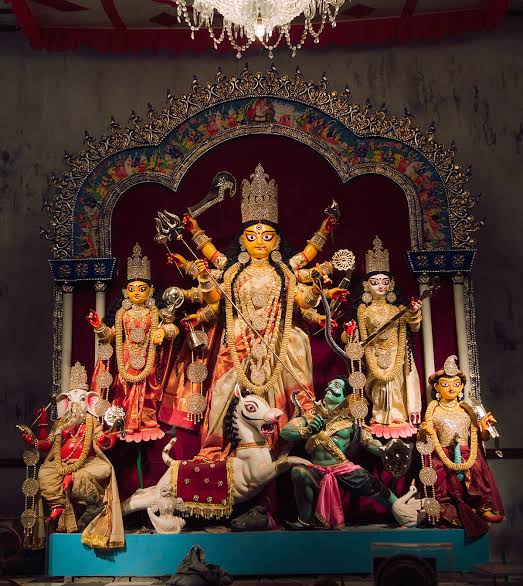

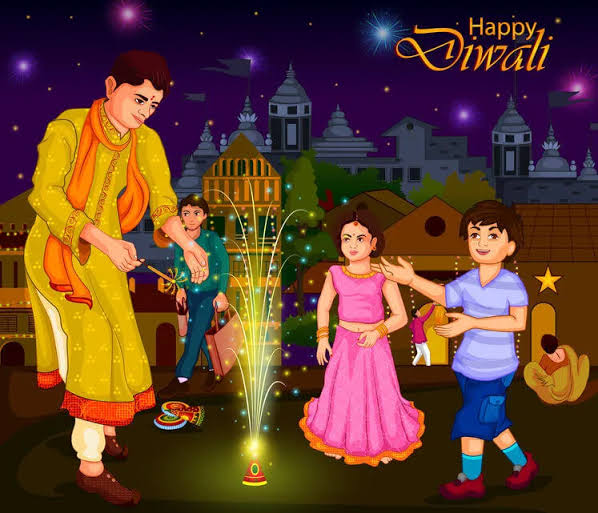


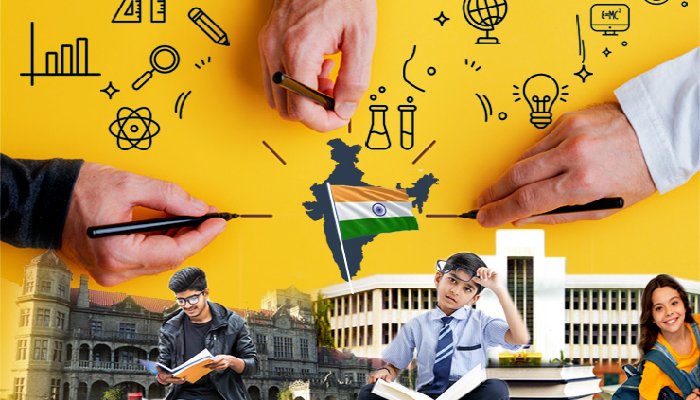


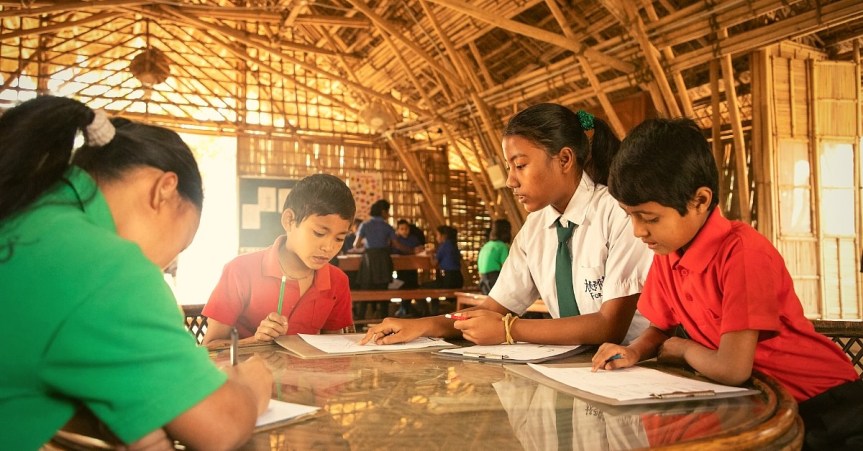
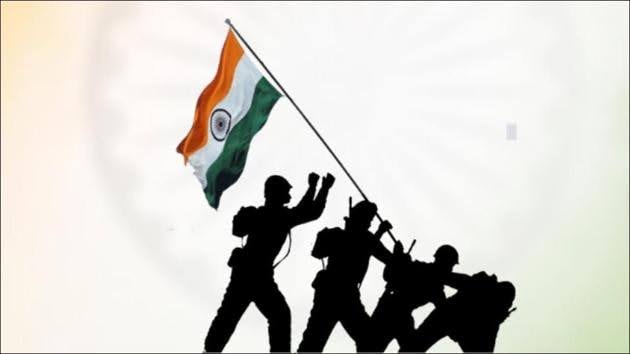







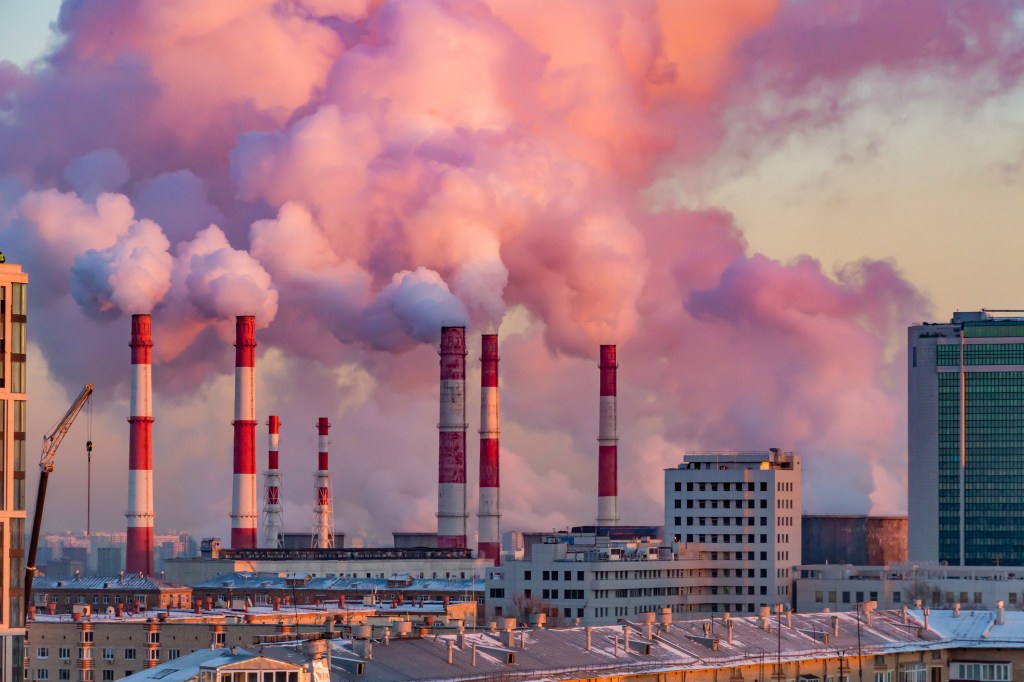

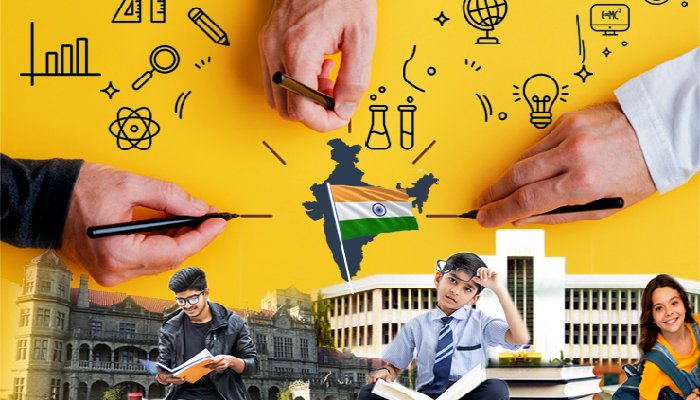
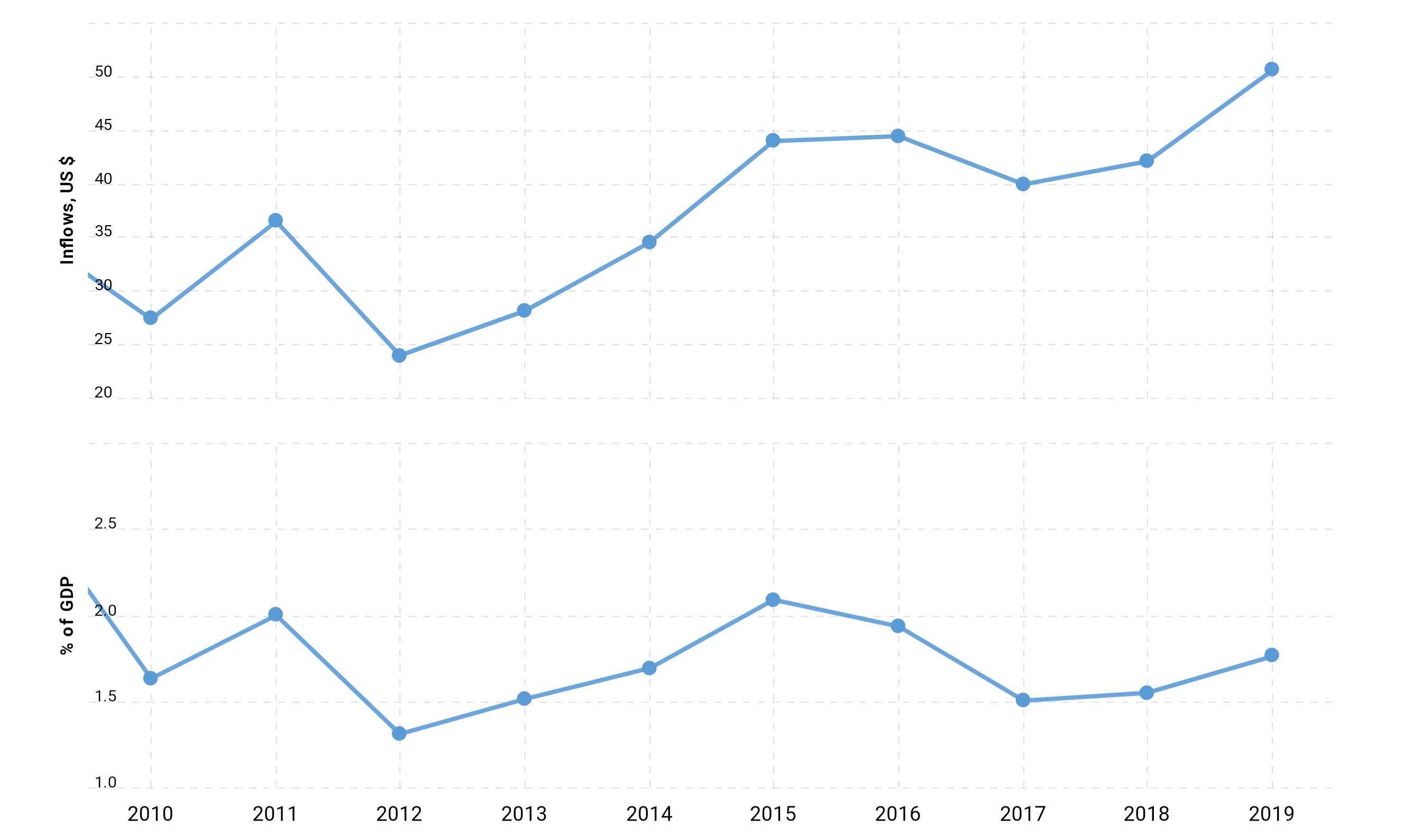





















 Track2Training
You must be logged in to post a comment.