THE YOUTH OPPORTUNITY

BETWEEN THE NECESSITY THERE LIES THE OPPORTUNITY

India is a country where we have nearly 28% of the youth population in contrast to 37 in China and 45 in Western Europe. This says about the enormous growth opportunity that India will have as the highest number of people in the workforce. In some other words, we could say that the India’s non working population would be out numbered by the working population leading to the demographic dividend which is to be in favour.

Climatic effects

The increased use of non-degradable plastics, bio-medical waste have created climatic deterioration. The pandemic had paved the way for the increased use of plastics and also we have no other go to end up without being safe. This effects leads to the increased landfilling which would cost fisheries, tourism and maritime transport and service industries with an additional billion dollars according to the report given by the UN Environmental Program.

The changes

Though the population of youth in India with the high level of unemployment is high, still there is chance of silver line beyond it. By concentrating on the demographic dividend, this leads to the increase in labour force, which in turn leads to the productive outcome. This accelerates the industrial growth. As the purchasing power of the population is high, there is no doubt in the increased domestic growth and increasing opportunities. By analyzing all these factors into the current situation, India will become the third largest country by 2030.

The younger the people the more conscious they are. They are much more of the climatic changes and impact of the land population which affects the sustainability of their growth. The natural disasters and less number of natural resources are even known to the children as it affects climate badly. The UN report also tells us that nearly half a million of the youth generation are taking action against the polluted lands through small initiatives they can make around their schools, colleges, surroundings and other communities.

The future

Sustainable future, socio-economic progress with the flourishing economies need a gradual vibrant to be empowered for the best future of the great version. India’s youth are interested in the green job as they have a great belief that healing the environment is the sustainable way to move forward. India is often in the forefront of bringing the change but there are issues like inequality which still goes in the Environment. Though the Union Government has rolled out various employment schemes, the dominance of the informal economy makes it still difficult to reap the benefits.

The rising youth young population provides India with a great opportunity for growth. The labour intensive sectors needed to more skillful for the better job creation. Ensuring the components of the life skills along with the technical skills makes one to get the better satisfaction in the life.

Women of Revolutionary Movement in British India: Kalpana Dutta

Women of Revolutionary Movement in British India: Kalpana Dutta

Kalpana Dutta was born in 1913.

She joined the Bethune College in 1929 and around the same time she also joined Chatri Sangha.

In September of 1932, she joined the group of almost 65 people which also included Pritilata Waddedar. The group torched the European Club. But Kalpana was arrested one week prior to the attack on the European Club.

While she was imprisoned she came to know about Pritilata Waddedar’s death.

Soon she was released from jail. But in the May of 1933 she was arrested again in the Chittagoan Army Raid and sentenced to life. However she was released in 1939.

In 1940, she joined the Communist Party of India and kept engaging in revolutions against the British Raj.

She married a fellow communist leader Joshi in 1943.

Post Independence

Kalpana migrated to India and retired from active politics.

She passed away in 1995.

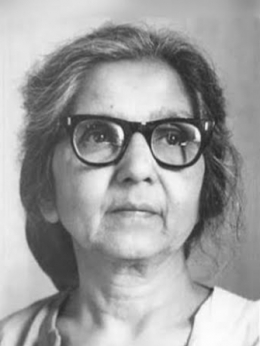
Women of Revolutionary Movement in British India: Aruna Asaf Ali

Women of Revolutionary Movement in British India: Aruna Asaf Ali

Aruna Asaf Ali(1909-1996) was an Indian educator, political activist and publisher who actively participated in Indian Independence Movement.

She was a member of Congress Socialist Party, factions within the Congress Party for activists that had socialist-leaning.

She was jailed for actively engaging in the Salt Satyagraha and remained in jail till 1931. She was imprisoned several times over the course of her lifetime.

Aruna Asaf Ali, popularly known as the ‘Grand Old Lady’ of the Independence Movement, is known for hoisting the Indian flag at Gowalia Tank Maidan in Mumbai during the Quit India Movement.

Post Independence

She served as Delhi’s first Mayor.

Later she left the Congress Socialist Party to join the Communist Party of India(CPI).

Women of Revolutionary Movement in British India: Bina Das

Women of Revolutionary Movement in British India: Bina Das

Bina Das(1911-1986) was an Indian revolutionary and nationalist from West Bengal.

She was a member of the Chatri Sangha revolutionary society, a semi-revolutionary organization for the women in Kolkata.

After 1928 session of the Congress, Bina joined a circle of revolutionaries whose leader was Bhupal Bose.

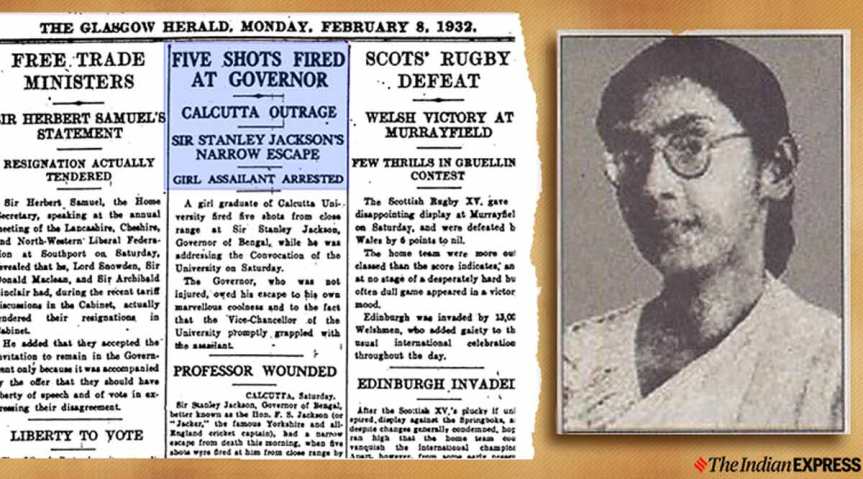
In 1932, she marked herself into history by attempting to shoot the Governor of Bengal, Stanley Jackson, in the Convocation Hall of the University of Calcutta, where she was to receive her degree. She was caught and sentenced to rigorous imprisonment.

After her early release in 1939, Das joined the Congress party.

In 1942, she participated in the Quit India movement and was imprisoned again till 1945.

Later she became the secretary of the South Kolkata Congress Committee.

Post Independence

She won the Padma Shri award in 1960 for her Social work.

Bina wrote two autobiographical accounts in Bengali: Shrinkhal Jhankar and Pitridhan.

Women of Revolutionary Movement in British India: Usha Mehta

Women of Revolutionary Movement in British India: Usha Mehta

Usha Mehta(1920-2000) was a Gandhian and freedom fighter of India.

At the age of 8 years she became an active member of the Indian freedom struggle with her first protest being against the Simon Commission in 1928.

She became even more actively involved when her family shifted to Mumbai in 1932 by distributing clandestine bulletins, publications and carrying messages to jailed leaders.

She was known for broadcasting the Congress Radio (an underground radio station), which functioned for a few months during the Quit India Movement of 1942.

  • The radio broadcasts recorded messages from Gandhi and other prominent leaders of the freedom movement. The messages were played across India by the Congress Radio.
  • The Congress Radio played an important role in the freedom struggle by spreading uncensored news and other information banned by the colonial authorities.

The British eventually found it and all the organizers including Usha were arrested. Usha was held in solitary confinement and offered incentives to betray the movement but she chose to remain silent. For this she was sentenced to four years imprisonment at Yerwada Jail in Pune. She was released in 1946.

Post Independence

Upon India’s independence, Usha Mehta actively spread Gandhian thought and philosophy.

She was conferred the Padma Vibhushan in 1998, second-highest civilian award of India.

Benefits of Love Marriage

Through marriage you enter into a committed relationship with your ‘life partner’, meaning he or she promises to share a life-long bond with you. Hence depending on whether you have made the right or wrong choice, your marriage can make or mar your life. Marriages happen in two ways. In arranged marriages, the family searches for a suitable spouse for the bride or groom. In love marriages, the boy or girl chooses his or her own life partner by entering into a mutual love relationship. While people talk both for and against both these kinds of marriages, here we discuss the benefits of love marriages.

What is love marriage?

Love is not a recent concept in the history of human civilization. Humans are falling in love with their desired partner from unknown times. In fact, love marriage is the natural form of marriage wherein the spontaneous liking for the other person results in a marital union. Comparatively speaking, arranged marriage is a concept that should have developed later with the maturing of human civilizations.

Love marriage lets you choose your own partner

You do not fall in love with all the people you meet. Because someone has impressed you in some ways, you start liking them. This liking turns into love relationship that will eventually mature into marriage if everything goes well. Hence in love marriage you get to marry the person who you like.

Love marriage results in finding a compatible partner

Not all the people who go for arranged marriage are blessed with compatible partners

. We find many people lament that they have made a wrong choice. Hence love marriage is the royal road to choose the best partner who will walk with you for the rest of your life and exhibit a high degree of compatibility and understanding in your married life.

Love marriage paves way to social equality

Love marriage breaks the conventions underlying marriages. It brings together individuals from two different communities, castes or social groups. Hence love marriages give way to realizing social equality.

Love marriage gives rise to new class of people

When two individuals of unrelated communities come together in love marriage, they both give rise to a new class of people when they get their offspring. Experts in biology say this is the best way to procreate since the rare and unusual combinations promoted by love facilitate some excellent genetic codes. Majority of children born out of love marriages are found to be intellectually gifted, immunologically strong and emotionally matured.

Love promotes happy and successful marriages

In love, the common feeling that brings two hearts in the marital union is “I am for you and you are for me”. This mutual love results in a strong relationship. People marrying through love feel they have landed on happy and successful life. Love marriage is often not an easy journey. In many cases, the couple faces trials and tribulations on the way to its union. Hence they are motivated to demonstrate a strong commitment that will put them in a lifelong bond.

Women of Revolutionary Movement in British India: Rani Gaidinliu

Women of Revolutionary Movement in British India: Rani Gaidinliu

Rani Gaidinliu(1915-1993) was a Naga tribal and political leader who organized a rebellion to overthrow British from Manipur.

At the age of 13 she joined her cousin, Haipou Jadonang, who had led the Heraka Movement. This movement was for the revival of the Naga Tribal religion. She led this movement when she was 17, which resulted in her arrest. She was then sent for a fourteen year long imprisonment.

Her forces had started to engage in armed rebellion against the British in Cachar Hills(February 1932) and the Hangrum village(March 1932).

Known for the armed resistance against the British Raj, she was given the title “Rani of Nagas”.

Women of Revolutionary Movement in British India: Nanibala Devi

Women of Revolutionary Movement in British India: Nanibala Devi

Nanibala Devi(1898-1977) a women from Bengal was an active worker of Jugantar group, an extremist organization from Bengal led by Amarendranath Chattopadhyay.

She was arrested for transporting weapons and ammunition.

She was the first and only woman to be tortured by the police under Regulation III of 1818.

Importance of Voting – Why should we vote!

Importance of Voting in India:

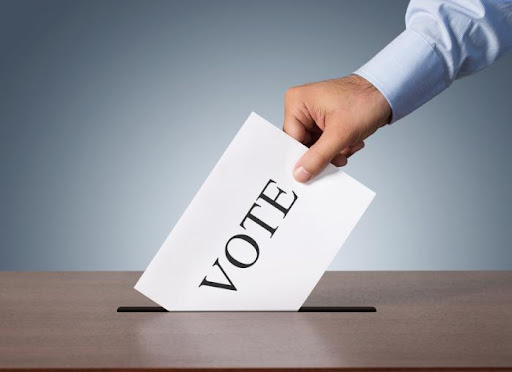
Voting in India is a Constitutional right if one is a citizen over 18 years of age. However, that also makes it optional. It has been a tendency among voters, especially in the urban areas, to treat the voting day as a day of rest. While skipping the vote may not seem to cause any harm,the long-term consequences are disastrous.

What’s the need to vote?

  • We complain that we don’t have proper roads, no regular supply of water, no development, corruption etc. Rather than complaining if we elect a good candidate who will work for the people then that’s what the true power of common man.
  • Voting is not just our RIGHT, it’s also our DUTY.
  • Our country is a republic and its the responsibility of the people to elect the right candidate.
  • A good leader will make sure that the next 5 years will be safe, progressive and pro-development.
  • We should never think that how will it matter if one or two persons don’t vote. Our constitution has given a very important power to us to elect the person who can take forward the country on the right path, so we have to use our power intelligently.
  • We should always remember that we ( as an individual ) should not vote a person based on just caste (thinking that he is of my caste), religion. We should not accept any gifts or monetary benefits from any candidate in exchange for vote.
  • We should check the candidates standing for elections in our constituency and then among them, we have to vote for one candidate.
  • Please take necessary help from the staff in the voting poll centres as the incorrect process will make your vote invalid.
  •  In 2014, the voting percentage of our country was around 66.5%, which can be improved if we all decide to vote and also create awareness of voting among our friends and family.
  • On the voting day it will be a holiday, but don’t go for outing/movie without voting as one day of enjoyment may cost us and our country.
  • Those people who have migrated to different cities due to different reasons and if they have their vote in their native then they need to plan to visit their native and vote as each and every vote matters for electing the right candidate.

It has become a common ritual to talk bitter about any candidate or an elected leader of any legislative assembly or the parliament. The faultfinding then comes down to the ‘System’ and how democracy is not working as it should. However, a very little room has been given to ‘What the people can do’ to strengthen the democratic roots and bring about a change in the system. Just as it is the responsibility of the elected leader to fulfill the well-beings of the voters, the same is the need for the people of India to contribute to choosing the correct leader for their representation.

Democracy has given people a powerful right- that is to VOTE. Voting is the fundamental basis of democracy’s ‘Of the people, for the people, and by the people’ slogan. Therefore, rather than enjoying it as a holiday, one must vote if he truly wants to contribute to the nation-building process and bring about a change. A Citizen should actually not need to find any reason to Vote. It must be done as a compulsive duty although there is no legal obligation to vote.

Every Single Vote Is Significant:

Needless to say, every citizen’s vote is counted in the polling process. If the people are equally divided between two candidates, one single vote can be a game-changer and a decisive factor. We have seen in the past how one vote from an MP can decide the fall of the government. Exactly the same way, a single person’s vote can confirm the win/fall of an aspiring MP or MLA.

Whom to Vote?

  • Check the candidate’s manifesto and his/her background. If he/she is sitting MP then check his/her and his/her party’s work and based on that you can decide.
  •  If you want to vote based on political party’s work then check the party’s last time’s promises and check which all party has fulfilled their promises and compare their work.
  • Think about the country, present and future of our next generations when you vote.

Non-choosers get NOTA:

At times, it is possible that one does not want any single candidate to be elected from all who are contesting. The election commission has made a special provision of NOTA. It stands for None of The Above. Hence if none of the candidates fit into your criteria, just hit the NOTA option and voice the opinion. Introduction of this alternative is believed to play a significant role in the future. In the late future, it may also be possible that the NOTA will decide the re-elections with fresh candidates.

We must honor the right of voting given by the constitution of India. The youngsters are well excited to exercise their right to vote as soon as they turn 18. The feeling after having cast a vote infuses a sense of pride for being a responsible citizen. As can be witnessed from the sharing of the inked finger on social media. The trend is continuing to gain popularity amongst the youngers and the elders as well.

Gone are the days when it was required for people to motivate them to vote. The vote share for the General Election of 2014 was 8% higher than the previous election. Voter turnout in the Lok Sabha Election 2019 was 67%. Voter awareness program has become successful in its mission and the vote share continues to increase till date in many state elections. With this increasing number of voter turnout, we will soon reach the 80-90% golden mark.

“Voting is the expression of our commitment to ourselves, one another, this country, and this world.”

Sharon Salzberg

127th Amendment Bill, 2021: The way to comprehensive turn of events

Indian Constitution is well known for the social designing of a conventional society, to change it from the customary progressive request into a cutting-edge libertarian country, where positive segregation in the blessing of least advantaged areas of the general public, is looked as a system for advancement and development. Indeed, Right to Equality cherished in Article 15 and Article 16 plans to appear the longing of Constitution producers of India to carry thorough development to individuals of India. One of the systems to guarantee equity is the possibility of reservation in training in the state-run establishment just as work in the public authority and public area. As to Schedule Castes and Schedule Tribes instance of the booking is quite clear. Be that as it may, the account of reservation has seen many good and bad times on account of the Other Backward Communities.

In India, there has been a background marked by the backwardness of networks outside of the pale of timetable positions and clans. Rank System in our nation is a perplexing snare of social association where standing personalities advise person’s position in the customary social request. Notwithstanding, the issue with the standing framework is that for the sake of societal position it has prompted the double-dealing and inside and out torment of the lower stations throughout the long term, justifying the sear of pioneers like Baba Sahib Ambedkar, Jyotiba Phule and others. It is to guarantee the comprehensive advancement of individuals from the lower positions under the aegis of the Indian government assistance state, reservation is given. Truly, OBCs are those networks which fall in the middle of the least rungs of positions and the higher standings. Their issue is financial backwardness. To survey their backwardness different advisory groups from Kalekar Committee to Mandal Committee were establishes to distinguish the networks which are really in reverse, to bring them under the umbrella of State supported government assistance. It is in this light that the Hundred and Twenty Seventh Constitution Amendment Bill, 2021 should be seen.

127th Constitution Amendment Bill: States right to make Inclusive OBC list

The new revision bill was presented following quite a while of organization of the booking systems for the Obc’s. Starting from the giving the sacred height to the National Commission for the Backward Communities in 2017, the NCBC was made the nodal office to manage the issues in regards to OBCs including a pivotal part of complaint redressal which was being managed by the National Commission for Schedule Castes. The revision gave a solid balance to the OBCs by guaranteeing the institutional component and sacred status. Nonetheless, in ongoing past there have been many issues which have sprung up with respect to consideration/prohibition of networks in the OBC list. One of the significant mixes was brought about by the interest for the OBC status to Maratha people group in Maharashtra. This interest has seen cases and counter cases in different echelons of Judiciary. Yet, the Hon’ble Supreme Court judgment of 2021 completely made Central Government the watchman of OBC list. It put the Center in an off-kilter position since it has been the states which are principally liable for the government assistance of their residence. Additionally through this judgment, by one assessment, around 671 networks were kept out of the ambit of OBC classification, getting them far from the advantages that this booking involves.

The effectivity of 127th Constitution Amendment Bill 2021 should be surveyed against this foundation. The revision has enabled states to add networks to OBC list. It has enabled NCBC to be counseled by states in the matter concerning OBCs. It is a significant revision for different reasons. First and foremost, this change permits state governments to add networks to the OBC records that they consider fit. This proviso is huge in light of the fact that it permits the advantages of OBC reservation to reach to the grassroot level. Also, it unites the situation of NCBC, by ordering states to hold discussion with this established body in all issue identified with OBCs. Besides, this revision should be found in the light of development of the OBC reservation from advertisement hocism of early days to the more noteworthy organization of components that arrangements with the issues of OBCs, going from established status of NCBC to substantial job for states in keeping up with their OBC records. The greater clearness in this regard is a welcome advance as it will just reinforce the government assistance measures for the more vulnerable areas of our general public as embraced in the Constitution of India.

The ramifications of 127th Constitution Amendment Bill are all over. It’s undeniably true that the social design and chains of importance in India have stayed unaltered even get-togethers given to the more vulnerable networks, the synthesis of the elites in our nation is intensely shifted towards the forward positions. Reservation as a device of positive separation can be utilized to modify the social request to the advantage of the individuals who have been taken advantage of at its hands for millenniums. All the more critically, the equity that laws like this will grant will likewise guarantee social correspondence, and in the end might even modify the structure of the elites in our country. Just before 75th commemoration of India’s Independence, a fortunate advance was taken by noteworthy Prime Minister, Shri Narendra Modi for the advantages of in reverse networks of India. This choice will be an achievement for making another personality of a New India.

Alternately the meaning of this sacred alteration focuses to the more noteworthy need of advancement and development in our general public, a development that would reach to each person of India, so the requirement for reservation will become repetitive. The way that various networks need the front of OBC order is connected with the possibility that there is an immense degree for cultural improvement in India even following 74 years of our autonomy. This is a bleak reality that requirements further reflection and strategy development. Additionally, one worry that ascents from this alteration is the crystallization of rotating entryway strategy as to OBC reservation, as states will be constrained by the neighborhood governmental issues to add more current networks into their individual OBC records. This viewpoint should be remembered, in case we wind up weakening the impacts of this way breaking alteration.

All in all, the Constitution Amendment Bill has acquired sufficient measure of clearness the standard working systems of working of OBC reservation. It additionally has a gigantic potential to enable individuals from in reverse networks, upgrading their societal position through well-rounded schooling and business openings, making ready for comprehensive turn of events. In the hours of COVID-19 and financial difficulties, 127th Constitution Amendment Bill will actually want to connect the broadening bay of dejection and neediness. It will guarantee portrayal and strengthening to the networks that fall in the breaks of advancement talk in our country.

India’s First Indigenous COVID-19 Vaccine – COVAXIN

A vaccine based on whole inactivated coronavirus has an efficacy rate of 77.8% against symptomatic COVID-19 infections, phase 3 trial data suggest.

Covaxin, also known as BBV152, was authorised for emergency 

COVAXIN, Indias indigenous COVID-19 vaccine by Bharat Biotech is developed in collaboration with the Indian Council of Medical Research (ICMR) – National Institute of Virology (NIV).

The indigenous, inactivated vaccine is developed and manufactured in Bharat Biotech’s BSL-3 (Bio-Safety Level 3) high containment facility.

The vaccine is developed using Whole-Virion Inactivated Vero Cell derived platform technology. Inactivated vaccines do not replicate and are therefore unlikely to revert and cause pathological effects. They contain dead virus, incapable of infecting people but still able to instruct the immune system to mount a defensive reaction against an infection

Covaxin COVID-19 Vaccine To Be Available In First Quarter Of Next Year,  Says Bharat Biotech

.

Bharat Biotech’s Covaxin has demonstrated 77.8 per cent effectiveness against symptomatic Covid and 65.2 per cent protection against the new Delta variant.

The company on Saturday said it concluded the final analysis of Covaxin efficacy from Phase 3 trials.

The efficacy analysis demonstrates Covaxin to be 93.4 per cent effective against severe symptomatic Covid cases while safety analysis shows adverse events reported were similar to placebo, with 12 per cent of subjects experiencing commonly known side-effects and less than 0.5 per cent feeling serious adverse events.

The efficacy data demonstrates 63.6 per cent protection against asymptomatic Covid, a release from the city-based vaccine maker said.

Phase 3 clinical trials of the vaccine was an event-driven analysis of 130 symptomatic Covid cases, reported at least two weeks after the second dose, conducted at 25 sites across India.

The whole virion inactivated vaccine against SARS-CoV2, was developed in partnership with Indian Council of Medical Research and National Institute of Virology in Pune.

Krishna Ella, Chairman and Managing Director of Bharat Biotech, said, “The successful safety and efficacy readouts of Covaxin as a result of conducting the largest ever Covid vaccine’s trials in India establishes the ability of India and developing world countries to focus towards innovation and novel product development. We are proud to state that Innovation from India will now be available to protect global populations.”    

POSITIVE RESULTS

The Phase 3 trial involved 25,800 participants in India aged 18 to 98. Of these, 2,433 were over 60 years old, and 4,500 had pre-existing medical conditions (co-morbidities) such as cardiovascular disease, diabetes or obesity.

The study found that Covaxin had an efficacy of 93.4% against severe COVID-19 disease, and an overall vaccine efficacy of 77.8% against symptomatic infections confirmed by PCR tests. Against asymptomatic COVID-19, the efficacy was 63.6%. The vaccine also conferred 65.2% protection against symptomatic infection with the Delta variant, at least two weeks after the second dose.

As a rough comparison, recent figures from Public Health Scotland suggested that at least two weeks after the second dose, the Pfizer-BioNTech vaccine was 79% effective against the Delta variant, while the Oxford-AstraZeneca was 60% effective. However, different trial methodologies make it impossible to directly compare the relative efficacies of the various vaccines.

The main side effects from Covaxin were pain at the injection site, followed by headache, fatigue and fever. No severe or life-threatening adverse events were reported.

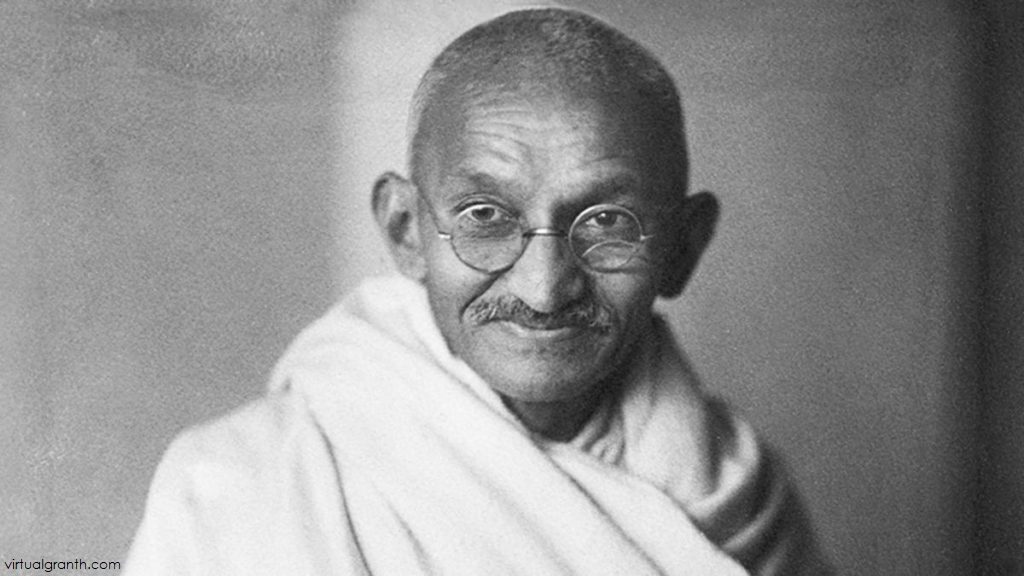
Mahatma Gandhi

When talking about India as the nation, the freedom, the existence, the history, the
independence, the very first thing that comes to our mind is Mahatma Gandhi. Mahatma Gandhi is the most recognized name around the world. Gandhi Ji, whose full name is Mohandas Karamchand Gandhi was a born-on 2nd October 1869 in Porbandar, Gujarat, India. His Father’s name was Karamchand Gandhi who worked as a dewan in Rajkot. Mother, Putlibai was a religious lady who divided her time mostly between the temple and household work. Gandhi Ji got married at the age of thirteen to Kasturba Gandhi. He was a lawyer, a politician and an Indian activist who was the leader of the Indian independence movement against British rule. Also known as Bapu in India and Gandhi Ji worldwide was a writer as well. Talking about Gandhi Ji’s Educational qualification, he was a very shy and mediocre student. Gandhi Ji was interested in becoming a doctor, but his father wanted him to follow the family legacy of working as a high official in the states of Gujrat.
Gandhi Ji who was not very happy with studying at Sambaldas College agreed to take the law as his profession. That would mean jumping from India to England. He too faced a lot of difficulties with language as the main barrier. From Gujarati to the English language was not an easy task, but his determination was what won. He had to struggle with the transition to Western Culture.

Gandhi Ji was not able to find work in India; he signed a one-year contract to perform legal
services in South Africa. Once he reached South Africa, he was welcomed by a world full of
racism and discrimination by the British. Gandhi Ji was asked to open his turban on the very
first day in the Durban Courtroom, which he refused to do and left instead.
Gandhiji’s life took a turn when a white man objected his presence in the first-class railway
compartment, in spite of Gandhi Ji having his ticket. When he did not agree to move back of
the train, he was forcibly thrown off the train at a station in Pietermaritzburg, South Africa.
This incident provoked in him a sense of determination to fight against racism and
discrimination. From that time onwards, he stood up to fight for the civil rights. Gandhi Ji
formed the Natal Indian Congress in 1894 to fight against discrimination.
When Gandhi Ji was planning to return to India, he got to know at his farewell that Indians
would be deprived of the right to vote. The immigrants then convinced Gandhi Ji to stay and
take up the issue and fight against the legislation. Gandhi Ji was not able to succeed in
preventing the law passage but definitely drew international attention to the injustice that
was being done. He also fought for the right to citizenship in the British Empire.
In the year 1906 the first mass civil disobedience campaign was organized which was called
“Satyagraha”. Since the South African Government was refusing to recognize Hindu
marriages its campaign was carried out. After years of protest, hundreds of Indians were
imprisoned, including Gandhi Ji in 1913. The South African government had to compromise,
they negotiated and accepted a compromise that gave recognition of Hindu marriages and the abolition of poll tax for Indians. Gandhi Ji then sailed from South Africa to London in the year 1914.

India was still under the British control in the year 1919, Gandhi Jihad called for a satyagraha
campaign of protest and strikes in a peaceful manner as the British authorities were
imprisoning people without trial of sedation. However, the reverse happened, and violence
broke out on April 13th, 1919 in Amritsar. Also known as “The Jallianwala Bagh”, where the
British fired machine guns into a crowd of unarmed people and killed nearly four hundred of
them.

Gandhi Ji was not able to take it longer, so he returned all the medals he had received from
the military service in South Africa and opposed Britain’s mandatory military draft of Indians
to serve in World War 1. He had called in for a mass boycott. He urged people to stop
working for the British; he asked students not to attend a government school. Soldiers were
asked to leave their post and all citizens to stop paying taxes and refrain from purchasing
British goods. He made people realize the value of “Charkha” that is the spinning wheel. He
used the portable spinning wheel to produce his own cloth, and soon the spinning wheel
became the symbol of Indian Independence. Gandhi Ji was the leader of the Indian National
Congress.  Gandhi Ji returned to active politics in the year 1930 to protest against the British Salt Act.

This Act prohibited Indians from collecting or selling salt, but it imposed a heavy tax. A Dandi March was planned that entailed a 390-kilometer march to the Arabian Sea. There Gandhi Ji
would collect salt as a symbol of defense of the government’s monopoly. Wearing a white
shawl and sandals and carrying a walking stick, he set out from his religious retreat in
Sabarmati on March 12, 1930, with some followers. He reached the coastal town of Dandi
after 24 days and broke the law by making salt from evaporated sea water. Gandhi Ji was
again imprisoned for the same.

In August 1934, Gandhi Ji left the Indian National Congress, and the leadership was passed
on to Jawaharlal Nehru. Gandhi Ji launched a Quit India movement in the year 1942, asking
the British to leave the country immediately. Again, he was arrested and put behind bars
along with his wife and other leaders. With his health going down Gandhi Ji was released
after nineteen months. The negotiations began for an independent India; however, it leads
to the partition on Hindus being India and Muslims being Pakistan. Violence had already
roared before the Independence. Finally, India became Independent on 15th August 1947.
Gandhi Ji still pleaded people to maintain peace and nonviolence.

Weakened from the continuous hunger strikes, the 78-year-old Gandhi with his two
grandnieces led from his living quarters in Delhi’s Birla House to a prayer meeting. Where an
Activist Named Nathuram Godse was upset with Gandhi Ji over his tolerance with the
Muslims shot him three times with a semiautomatic pistol. This act took the life of a
nonviolence preacher. Godse and his fellow co-Ordinator was hanged in the year 1949, and
the rest of the conspirators were sentenced to life imprisonment.

Gandhi Ji always believed in Simple living. Making his own clothes, to eating vegetarian
diets. Keeping fast for self-purification, all these facts show how great a man he was.
Satyagraha remains one of his most important philosophy.

Shree Krishna Janmashtami

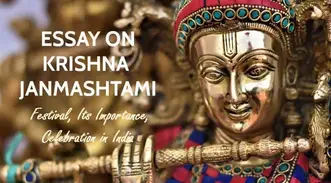
Shree Krishna Janmashtami, mostly famous as Janmashtami or Gokulashtami, is a yearly festival of the Hindu, which is celebrated as the birthday of Lord Krishna, the eighth incarnation of Vishnu.

According to the Hindu Luni-Solar calendar, the dark day of Shravan or Bhadrapada (the dark side) is the eighth day (Ashtami) (depending on whether the calendar selects the new moon or full moon day as the last day), which overlaps with the August / September of the Gregorian calendar.

It is a famous festival for the Vaishnavism of Hinduism in particular. According to the Bhagavata Purana (such as Rasa-Lila of Krishna-Lila), Krishna’s dance-drama laws, devotional singing, fasting, night vigil (night Jagran) and a festival (Mahotsav) until the midnight of Shree Krishna’s birth are part of the Janmashtami celebrations.

This festival is celebrated in Mathura and Vrindavan, also with Major Vaishnava and sectarian groups found in other states of India. The festival of Nandotsav takes place after the birth of Krishna Janmashtami, a celebration of the birth of the Nanda Baba community.

Importance of Krishna Janmashtami

Shri Krishna is the son of Devaki and Vasudeva, and Hindus celebrate his birthday as Janmashtami, most notably the Gaudiya Vaishnava tradition as the supreme personality of his god.

According to the Hindu tradition in Mathura, Janmashtami is celebrated when it is believed that Krishna was born, which is the midnight of the eighth day of the Bhadrapada month (which overlaps with August and September 3 in the Gregorian calendar).Krishna was born in a confused region. It was a time when violence was rampant, denial of liberty, evil everywhere, and his life threatened by his uncle, King Kansa. Soon after his birth in Mathura, his father, Vasudeva, adopted Krishna as the father of the Yamuna and his parents in Gokul and named him Nanda and Yashoda.This myth is held fast by the people, singing devotional songs of love towards Lord Krishna and celebrating vigil at night. The devotees break their fast by sharing food and sweets. Women draw small footprints outside the door and kitchen of their home, walking towards their home, symbolising Krishna going into their homes. Celebration of Krishna JanmashtamiMaharashtra Janmashtami FestivalJanmashtami (popularly known as “Gokulashtami” in Maharashtra) is celebrated in cities like Mumbai, Latur, Nagpur, and Pune. Every August / September, the day after Shri Krishna’s birth, Janmashtami is celebrated as Dahi Handi. The word means “crockpot.”The festival derives its name from the legend of Baby Krishna. He would steal and steal dairy products such as yogurt and butter, and people would hide their supplies without making it available to the baby. Krishna tries all kinds of creative ideas, like making human pyramids with his friends to break these high hanging pots.

This story is the theme of many reliefs on Hindu temples across India, and a collection of literature and dance-drama, symbolising the joyful innocence of children, the manifestation of a god in love and life. 

In Maharashtra and other western states of India, this Krishna myth is practiced as a community tradition in Janmashtami, where yogurt pots are hung high, sometimes with tall pillars or ropes hanging from the second or third floor of a building.

According to an annual tradition, groups of young men and boys known as “Govindas” roam around these hanging pots; climb over each other to form a human pyramid and then break the pot.

The girls surrounded these boys, cheering and cheering them on while dancing and singing. Spilled things are considered Prasada (ceremony offering). It is welcomed as a public spectacle, enthusiastic, and social event. 

There are youth groups from Govinda Pathaks, which compete specifically for prize money on Janmashtami day. These groups are called mandalas, and they roam around the local area, trying to break as many pots as possible every August.

Social celebrities and media attend the celebrations, and corporations sponsor part of the event. Govinda teams are offering cash and gifts, and according to the Times of India, in Mumbai alone in 2014, there were over 4,000 handicap hangings, and many Govinda teams took part. 

Gujarat and Rajasthan Janmashtami Festival

The people of Dwarka in Gujarat – who are believed to have established their kingdom – celebrate the festival with a tradition similar to that of Dahi Handi, known as Makhan handi (pot with freshly boiled butter).

Others perform folk dances, sing bhajans, and visit Krishna temples such as the Dwarkadhish Temple. In the Kutch district, farmers decorate their bullock carts and play Krishna ions, with group singing and dancing.

ReadingJunction

 Menu

Essay on Krishna Janmashtami Festival for Students and Children in 1000+ Words

Essay on Krishna Janmashtami Festival for Students and Children in 1000+ Words

June 7, 2020 by ReadingJunction

In this article, you will read Essay on Krishna Janmashtami Festival for Students and Children. This includes Its information, Importance, Celebration in India.https://296d94cf3baa706586fe813fdb2ee569.safeframe.googlesyndication.com/safeframe/1-0-38/html/container.html

Essay on Krishna Janmashtami Festival for Students and Children in 1000+ Words

Contents [show]

Shree Krishna Janmashtami, mostly famous as Janmashtami or Gokulashtami, is a yearly festival of the Hindu, which is celebrated as the birthday of Lord Krishna, the eighth incarnation of Vishnu.

According to the Hindu Luni-Solar calendar, the dark day of Shravan or Bhadrapada (the dark side) is the eighth day (Ashtami) (depending on whether the calendar selects the new moon or full moon day as the last day), which overlaps with the August / September of the Gregorian calendar.

It is a famous festival for the Vaishnavism of Hinduism in particular. According to the Bhagavata Purana (such as Rasa-Lila of Krishna-Lila), Krishna’s dance-drama laws, devotional singing, fasting, night vigil (night Jagran) and a festival (Mahotsav) until the midnight of Shree Krishna’s birth are part of the Janmashtami celebrations.

This festival is celebrated in Mathura and Vrindavan, also with Major Vaishnava and sectarian groups found in other states of India. The festival of Nandotsav takes place after the birth of Krishna Janmashtami, a celebration of the birth of the Nanda Baba community.

Importance of Krishna Janmashtami

Shri Krishna is the son of Devaki and Vasudeva, and Hindus celebrate his birthday as Janmashtami, most notably the Gaudiya Vaishnava tradition as the supreme personality of his god.https://296d94cf3baa706586fe813fdb2ee569.safeframe.googlesyndication.com/safeframe/1-0-38/html/container.htmlhttps://296d94cf3baa706586fe813fdb2ee569.safeframe.googlesyndication.com/safeframe/1-0-38/html/container.html

According to the Hindu tradition in Mathura, Janmashtami is celebrated when it is believed that Krishna was born, which is the midnight of the eighth day of the Bhadrapada month (which overlaps with August and September 3 in the Gregorian calendar).

Krishna was born in a confused region. It was a time when violence was rampant, denial of liberty, evil everywhere, and his life threatened by his uncle, King Kansa. Soon after his birth in Mathura, his father, Vasudeva, adopted Krishna as the father of the Yamuna and his parents in Gokul and named him Nanda and Yashoda.

This myth is held fast by the people, singing devotional songs of love towards Lord Krishna and celebrating vigil at night. The devotees break their fast by sharing food and sweets. Women draw small footprints outside the door and kitchen of their home, walking towards their home, symbolising Krishna going into their homes. 

Celebration of Krishna Janmashtami

Maharashtra Janmashtami Festival

Janmashtami (popularly known as “Gokulashtami” in Maharashtra) is celebrated in cities like Mumbai, Latur, Nagpur, and Pune. Every August / September, the day after Shri Krishna’s birth, Janmashtami is celebrated as Dahi Handi. The word means “crockpot.”

The festival derives its name from the legend of Baby Krishna. He would steal and steal dairy products such as yogurt and butter, and people would hide their supplies without making it available to the baby. Krishna tries all kinds of creative ideas, like making human pyramids with his friends to break these high hanging pots.https://296d94cf3baa706586fe813fdb2ee569.safeframe.googlesyndication.com/safeframe/1-0-38/html/container.htmlhttps://296d94cf3baa706586fe813fdb2ee569.safeframe.googlesyndication.com/safeframe/1-0-38/html/container.html

This story is the theme of many reliefs on Hindu temples across India, and a collection of literature and dance-drama, symbolising the joyful innocence of children, the manifestation of a god in love and life. 

In Maharashtra and other western states of India, this Krishna myth is practiced as a community tradition in Janmashtami, where yogurt pots are hung high, sometimes with tall pillars or ropes hanging from the second or third floor of a building.

According to an annual tradition, groups of young men and boys known as “Govindas” roam around these hanging pots; climb over each other to form a human pyramid and then break the pot.

The girls surrounded these boys, cheering and cheering them on while dancing and singing. Spilled things are considered Prasada (ceremony offering). It is welcomed as a public spectacle, enthusiastic, and social event. 

There are youth groups from Govinda Pathaks, which compete specifically for prize money on Janmashtami day. These groups are called mandalas, and they roam around the local area, trying to break as many pots as possible every August.https://296d94cf3baa706586fe813fdb2ee569.safeframe.googlesyndication.com/safeframe/1-0-38/html/container.htmlhttps://296d94cf3baa706586fe813fdb2ee569.safeframe.googlesyndication.com/safeframe/1-0-38/html/container.htmlSocial celebrities and media attend the celebrations, and corporations sponsor part of the event. Govinda teams are offering cash and gifts, and according to the Times of India, in Mumbai alone in 2014, there were over 4,000 handicap hangings, and many Govinda teams took part. 

Gujarat and Rajasthan Janmashtami Festival

The people of Dwarka in Gujarat – who are believed to have established their kingdom – celebrate the festival with a tradition similar to that of Dahi Handi, known as Makhan handi (pot with freshly boiled butter).

Others perform folk dances, sing bhajans, and visit Krishna temples such as the Dwarkadhish Temple. In the Kutch district, farmers decorate their bullock carts and play Krishna ions, with group singing and dancing. https://296d94cf3baa706586fe813fdb2ee569.safeframe.googlesyndication.com/safeframe/1-0-38/html/container.html

The carnival-style and playful poems and writings of Dayaram, a scholar of Vaishnavism’s Puthiya Marg, became popular in Gujarat and Rajasthan. 

Celebration of Janmashtami festival in Northern India

Janmashtami is the biggest festival in the Braz region of northern India, in cities like Madura where Krishna was born, and in Vrindavan where he grew up. Janmashtami is celebrated in the northern areas of Uttar Pradesh along with the Vaishnavas and others in the state viz: Rajasthan, Delhi, Haryana, Uttarakhand, and the Himalayas. Krishna temples are decorated and lit. They attract many visitors during the day. Devotees of Krishna perform devotional ceremonies and watch the night. 

The festival usually comes as the rainy season in northern India is short, with time to play on crops and in rural areas. In the Northern states, this festival is celebrated with the tradition of Raslila, which means “happiness, essence (rasa) of play (Lila).”

It is expressed as a solo or group dance and drama event in Janmashtami, in which Shri Krishna compositions are sung, along with a musical performance, where actors and audiences share and celebrate the play.

Shri Krishna’s childhood pranks and Radha-Krishna’s love affairs are especially famous. As per the findings of Christian Roy and other scholars, the Radha-Krishna romances are Hindu symbolism of the desire and love of the human soul, which is called Brahman for Divine Principle and Reality. 

In Jammu, a part of the celebration of Krishna Janmashtami is flying kites from the rooftops. 

Odisha and West Bengal Janamashtami Festival

The festival is also known as Sri Krishna Jayanti or Sri Jayanthi in the eastern state of Odisha, especially around Puri and in Nabadwip in West Bengal. People celebrate birth by fasting and worshiping until midnight. People recite the Bhagavata Purana from the 10th chapter, devoting it to the life of Krishna.

The day after that is called “Nanda Utsav” as Krishna’s adoptive parents Nanda and Yashoda had a joyful celebration. Upon this day, people break their fast and serve different cooked sweets after midnight. 

South India Janmashtami Festival

In Tamil Nadu, people decorate the soil with kolam (decorative pattern drawn with rice batter). Gita Govindam and other devotional songs are sung in praise of Krishna. They then draw Krishna’s footprints from the entrance of the house to the pooja room, which depicts Krishna’s entry into the home.

Bhagavad Gita recitation is also a popular technique. The offerings to Krishna include fruits and butter. The delicacies that are considered being Krishna’s favourites are carefully prepared.

The most important of them are Varkadai, Sweet Seed, and Seedai. Janmashtami is celebrated in the evening as Krishna was born at midnight. Many people practice strict fasting this day and eat only after midnight pooja. Even the toddler dressed like Krishna. 

Andhra Pradesh

In Andhra Pradesh, recitation of devotional songs and hymns serve as the hallmarks of this festival. Apart from that, another unique feature of this festival is that young children dress like Shri Krishna, and they visit their neighbours and friends.

A variety of fruits and sweets are first served to Shree Krishna, and then they are distributed to the visitors. The people of Andhra Pradesh also fast. They prepare a variety of desserts to help Gokulnandan this day.

Milk and yogurt are edible and digestible for Krishna. Some temples of the state are celebrated with joy. The number of temples dedicated to Lord Krishna is minimal. The reason is that people have taken to worship him through images, not statues. 

The famous South Indian temples dedicated to Lord Krishna are devoted to the Rajagopalaswamy Temple in Mannargudi in Thiruvarur district, Pandavapura Temple in Kanchipuram, Sri Krishna Temple in Udupi and Krishna Temple in Guruvayur in memory of Lord Vishnu. It is believed that the idol of Sri Krishna erected in Guruvayur belongs to the Dwarka and is drowned in the sea. 

Women of Revolutionary Movement in British India: Labanya Prabha Ghosh

Women of Revolutionary Movement in British India: Labanya Prabha Ghosh

Not much is known about Ghosh’s early life, but available records do state that she was born in 1987 in Purulia district, West Bengal to Nibaran Chandra Dasgupta, a freedom fighter.

District government records show that she was elected as the representative of the District Congress Committee from Manbhum district in 1926. Purulia was then a part of the Manbhum district.

When Gandhi launched the salt satyagraha in March 1930, Ghosh helped organize similar marches locally, including a flag satyagraha in 1945 in Konapara in Purulia.

She was an active member of “Shilpashram”, an important center of freedom struggle movement of Manbhum region.

Between 1941 and 1947, Ghosh was arrested several times for her revolutionary work, including for organizing protests during the Quit India movement of 1942.

Post independence

Ghosh’s revolutionary work did not stop with India’s independence. She was also prominent in the Bhasha Andolan that emerged following partition and the creation of separate states.

Between 1949 and 1956, Ghosh participated in several protests, including the Tusu Satyagraha, and led marches from Puluria to Calcutta, for which she was arrested.

The protests became impossible for the government authorities to ignore and in November 1956, Puluria was broken away from Bihar and acceded to West Bengal.

Attraction

Ever thought why do we get attract to someone? Well everyone has different answer to it. For some it can be the way one look, smiled, walk or may be their was an unusual aura around that one.

What is attraction?

Attraction, especially in a romantic way, is a complex process that take place in our brains, and has had it’s roots since it’s beginning of the humankind. It’s our minds way of telling us who has the potential to be our partner, our friend, or even our soulmate, and is based on a complex blend of our interest, values, experience, and desire. Physical and romantic attraction, which are often focused on, are only small facets of a much larger equation.

Psychologist look at the ingredients of attraction is in a form of pyramid, split into 4 different sections.

The base of the pyramid is made up of health and status:-

  • Status – 1. internal (confidence, self set, beliefs) 2. External (person’s job, possession and appearance.
  • Health – Physical attributes, smell, basic level of intelligence.

If the potential partners passes these initial requirements then we move to the center of the pyramid, which are the emotional factors:- includes

  • trust comfort someone wants,
  • their emotions intelligence, and
  • unique characteristics.

The final portion of the pyramid is “Logic”.This is the part that differentiate us from other animals, and is the part where our brains seriously

  • considers whether we are totally compatible for that person.
  • It ensure that the other person is aligned with us in term of what they want – things such as marriage, children, even the city they want to live.

According to this model, the more alignment there is, the more attraction there is, but it doesn’t always have to follow from bottom to top – like online dating.

What makes someone Attractive?

The answer to this questions make come to our mind is physical traits. Due to the influence of media, we tend to favor women who is younger, and more feminine features, in men on the other side, qualities such as broad shoulders, a deep voice, and strong jawline are highly upon.

Scientists suggest that, these also have an evolutionary origin because these traits are associated with a higher chance of producing health offspring and passing of good genes. Also, values, culture, and the environment, that we grow in also plays an important role.

Hence, attractiveness is complex, there’s a number of different perspective to consider, and at the end of the day, there’s very little we can choosing who we are attracted to. As each person looks for unique set of traits and, while physical traits are often focused there are far more factors that come into play. A person’s upbringing, behavior and even lifestyle have major influence. The most important thing to remember is to be happy and make the most of it.

Women of Revolutionary Movement in British India: Bhikaji Cama

Women of Revolutionary Movement in British India: Bhikaji Cama

Bhikaji Cama(1861-1936) was a strong-minded lady who played an important role in India’s early years of freedom struggle.

Born on September 24, 1861 in Mumbai(then Bombay) she always had a flair for diligence and languages.

She unfurled the first Indian tricolor on foreign land i.e., Germany. This flag was a modification of the ‘Calcutta flag’ designed by Madame Cama and Shyamji Krishna Varma. This flag became one of the models out of which the present Indian National Flag was designed.

While staying in London she became acquainted with Dadabhai Naoroji and joined the Indian National Congress.

Fearing deportation, she moved from London to Paris and helped revolutionary activities from there.

She helped publish the newspaper, Bande Mataram, copies of which were smuggled back to India.

She was finally allowed to return to India in 1935. And she died one year post returning her homeland.

Six plans which PM Modi needs to arrive by any means, and need for a quantum hop in approach 2024

PM Narendra Modi’s push in his Independence Day discourse for “100% immersion” of government plans includes six key drives, which however have arrived at a huge populace up until now, need a quantum hop in the approach 2024 when Modi would look for a third term in office as PM.

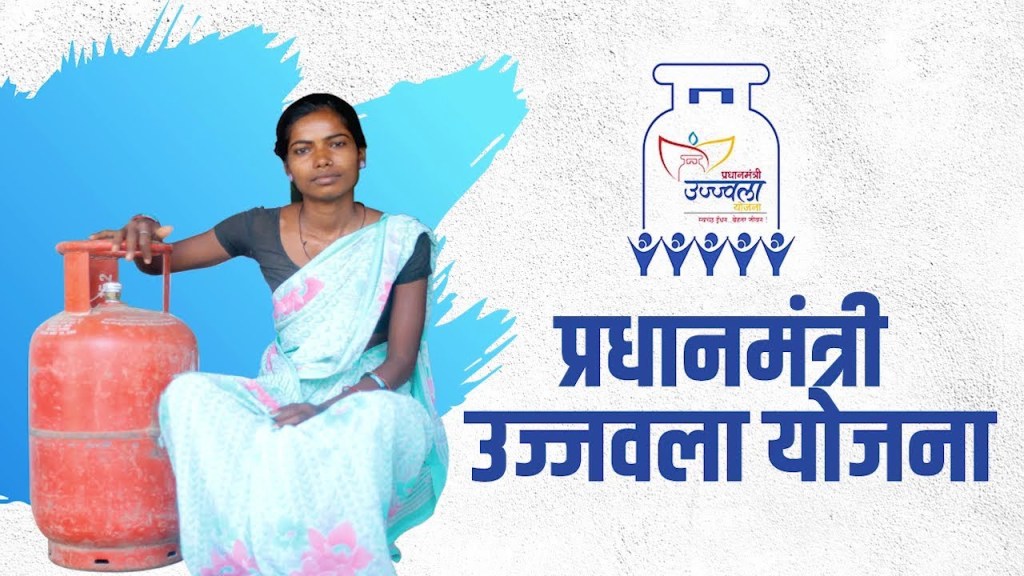
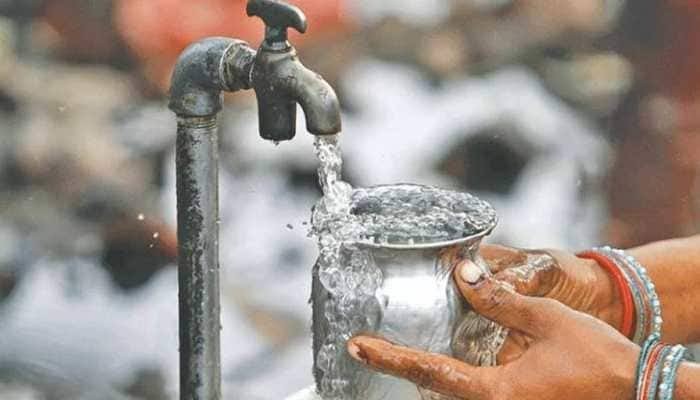
As rattled off by the PM himself, these plans are Ayushman Bharat which offers free clinical protection, Ujjwala Yojana that offers free LPG associations, the twin extra security plans upheld by the public authority, Atal Pension plot, the PM Housing Scheme, and Har Ghar Jal Scheme for drinking water. Four of them carried out in Modi’s initial term and assumed a part in his 2019 success while ‘Ayushman Bharat’ and ‘Har Ghar Jal’ solely affect the ground in Modi’s second term up until now.

“Crores of individuals are getting the advantages of many plans began over the most recent seven years. Today the speed of government plans has expanded and they are accomplishing the ideal objectives. We have advanced a lot quicker than previously. However, it doesn’t end here. We need to accomplish immersion. We need to push forward with an outlook of penny percent accomplishment… for this, we don’t need to keep a far off cut off time. We need to make our goals work out inside a couple of years,” the Prime Minister said from the Red Fort.

Ayushman Bharat – Lot to be finished

Dispatched in late 2018 not long before the Lok Sabha surveys, Ayushman Bharat should give free clinical protection family front of Rs 5 lakh to almost 50 crore individuals in the country. While the plan has no objectives given the idea of the plan includes clinical help, around 10 crore recipients have cards so far to approve their qualification for the plan, suggesting that almost 40 crore recipients are still to get these cards from the Centre. Different states have likewise stretched out the plan to cover 15 crores more individuals and have offered cards to 6 crores of such individuals up until now.

The two greatest states with the most recipients, Uttar Pradesh and Bihar, are slacking on this front of appropriating cards with 1.4 Cr and 70 lakh cards dispersed so far separately however both these states have almost 10 Cr recipients each. Two crore medical clinic confirmations have been accounted for under the plan to date with claims worth Rs 25,000 crore. In any case, UP and Bihar have revealed far less affirmations up until this point, at 7.7 lakh and 2.9 lakh separately, and more modest states have performed better, showing the plan’s mindfulness in UP and Bihar isn’t as wanted up until this point.

Ujjwala Yojana — Best Saturation

The free LPG association plan of Ujjwala was finished in front of the cut-off time in 2019 for eight crore recipients who didn’t have a gas association in the country. This was a distinct advantage conspire for the Modi government in the 2019 races. PM last week dispatched a second form of the plan in which one crore more recipients will get a free LPG association that is relied upon to convert into full LPG entrance in the country. Inside seven days of the dispatch, more than three lakhs of these associations have been given out and the public authority might accomplish its objective in 2021 itself.

Two Life Insurance Schemes — Need a Push

The two disaster protection plans dispatched in Modi’s initial term have seen unassuming improvement and have scope for more inclusion. They are wilful. PM Suraksha Bima Yojana (PMSBY) has 23.6 crore recipients as of date between the age of 18-70 who pay only Rs 12 as an expense in a year to get inadvertent extra security of Rs 2 lakh. The take-up of the PM Jeevan Jyoti Bima Yojana (PMJJBY) is lesser at just 10.5 crore recipients between the age of 18-50 who pay Rs 330 every year for a front of Rs 2 lakh if there should be an occurrence of death.

There are almost 55 crore individuals in the country in the age gathering of 18-50 years and around 65 crores in the age bunch 18-70 years.

Atal Pension Yojana — Big Scheme, Low Uptake

Just 3.13 crore individuals have selected themselves into the Atal Pension Yojana dispatched in PM Modi’s initial term as a feature of an aspiring point of a ‘general government backed retirement framework’. The plan is near the public authority’s heart as it offers a month-to-month annuity of Rs 1000 to Rs 5000 to any individual get-togethers age of 60 years relying upon how much premium he decides to pay, moves the annuity advantage to the companion of the recipient after their demise and moves the whole corpus of benefits abundance till the age of 60 years to the candidate after several passes away. The plan is available to anybody between 18-40 years old to join and this age bunch has more than 45 crore youngsters in the country.

PM Housing Scheme — 2022 point

This is one plan that is doing sensibly well against its aggressive objective of giving each vagrant a house before the finish of 2022. Against a new objective of conveying about 2.67 crore houses before the finish of 2022, 1.53 crore houses (60%) have been finished up until now and another 48 lakhs have been endorsed and are in different phases of development. The public authority is expecting to finish 2.01 crore houses consequently by March 2022 and the remainder of the objective (65 lakh houses) before the finish of 2022. Large states like Maharashtra and Tamil Nadu are anyway battling, covering under half and 40% generally speaking objective of theirs individually up until this point.

Har Ghar Jal — Game-Changer for 2024?

The funnelled drinking water for all plan dispatched in Modi government’s second term on Independence Day in 2019 could be the genuine distinct advantage for the BJP come 2024, as it has an objective for culmination around the same time. Just 17% of the nation’s families, about 3.2 crore, had faucet water associations when the plan started, and this has effectively ascended to 42% as of date with 4.7 crore associations given over the most recent two years. The Center has an aggressive point of going after the plan early in 2023, preceding the overall appointment of 2024. For that to occur, the greatest territory of Uttar Pradesh should beat as it actually has just 17% faucet water immersion with 32 lakhs out of 2.6 crore families covered up until this point. West Bengal, Jharkhand, and Chhattisgarh have under 15% inclusion. Rajasthan is at 20%.

Narendra Modi’s words from Red Fort are a message additionally to focal government divisions running these plans to propel themselves for 100% immersion. “The greatest benefit of this 100% achievement rate is that nobody stays denied of the advantages of the public authority plot. At the point when the public authority works with an objective to contact the individual in the last line, really at that time there is no separation and there is no degree for debasement,” the PM focused from the Red Fort on Sunday.

Tips to learn a new language faster

Learning a new language often considered as really tough task, but is it true? Maybe for some, but the real truth is if followed right resources and direction is definitely an task to do so. So for this here are some tips that might help you.

1) Know about the language that you are going to learn

By writing this I mean one should know what language is he or she going to learn. If you have clear idea of what actually you are going to learn will help you to set almost perfect goals which will ultimately help you to do what you want.

2) Set goals

Setting goals to learn a new language will help you to go far and keep yourself ahead. Goal setting should be done after being familiar by the subject.

3) Set small goals

Setting small goals will help you to complete your work on given time. Setting small goals will also help you to analyse yourself and keep your records on track.

4) Analyse yourself

Analysing is an art if done properly will take you way to far. Whenever do things do them on time and analyse what mistakes you make or what are the problem that you have encountered.

5) Challenge yourself

This part will help you to grow. grow beyond your limits. But one thing to keep in mind while doing so is do not challenge yourself more than what will harm you. Doing this in moderation will definitely help but if done excessive will also harm.

6) Use the language as frequently as you can

If you do so it will help you to retain things faster. It will also help you to clear your vocabulary and pronunciation and also will help you to keep everything you learn stored in your brain for a long time.

7) Test yourself

At the end complete your learning and test your self this will help you to know how much you have learn about the language.

Hope you will like my blog follow the steps and go ahead. Happy learning!

Independent India🇮🇳

Introduction

Sports and India are like the two sides of a coin that can change the angle but can never depart. The nation has always tried to encourage young buds for athletics and games. Cricketers like Sachin Tendulkar, Boxers like Mary Kom, and athletes like Milkha Singh are known for their fury and fervor. However, there is only one winner and after several years of dedication and wait, India finally found its champion.

It was all unplanned

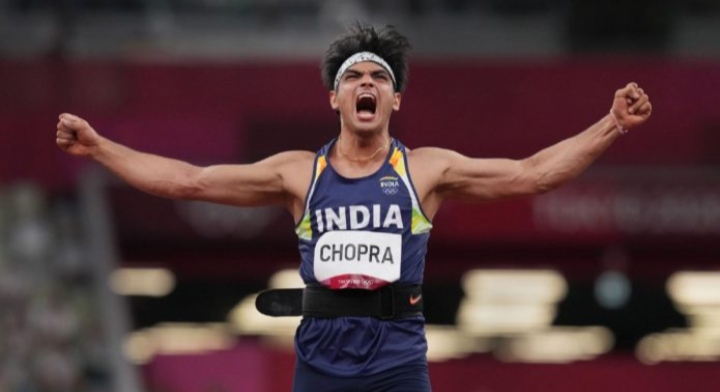
The date of 7th August 2021 will always be memorized for the first win of the Olympic Gold Medal in Athletics. It was no other than Neeraj Chopra who mesmerized the entire stadium with his outstanding throw in Javelin held in Tokyo. Born on 24th December in the house of a farmer at Panipat is now known for his 87.58m throw. He was not a passionate kid who was practicing hard to enter sports. Rather, his heavyweight forced his father to send him stadium for running. This lead to the advent of his inquisitiveness in the field of athletics. After attempting several games, he finally discovered his strength. The more he practiced, the more he loved. Since then, his journey of medals began in Javelin and he made several records at various events.

I made it!!

Record is broken

Neeraj underwent elbow surgery before the game and it was told that he will not be playing. It was that time when his hand was bandaged and it is now when he is holding the gold medal in that same hand. This was a very proud moment for every Indian and the curiousness turned into wishes from renowned personalities and interviews which revealed multiple secrets of his life. The lazy kid has grown into a responsible citizen who wants to work hard for the dignity of the country. His words, “For now I want to focus on my career, marriage will happen at the right time” truly proves that. Like others, he also overcame numerous challenges and gained success. Joining camp was the turning point of his life which gave him the facilities to become the man he is today!

Inspiration of Today

Everything is changing except thinking. Parents have always been skeptical about sending their children into this field where success does not come to everyone. Regardless, experiencing the achievement of a player whose journey was an incident and not a plan will motivate all fresh minds to take a step forward. On this Independence Day let’s celebrate the victory of not only those who gave their beats to save our hearts but also the ones who made their lives black and white to demonstrate India’s flag colorful.

Every passion has a destiny.

Happy Independence Day

Independence day is a meaningful and one of the most important dates in history of our country. After a long and exhausting struggle India got its Independent on 15th August, 1947.

To honor this day today we will talk about some of the facts that every Indian needs to know regarding this occasion.

  1. Indian flag was first hosted in year 1906 in Parsee Bagan Square, Kolkata. It had three horizontal stripes of red, yellow and green. It’s first alteration was designed by Pingali Venkayya in in 1921. It is the same flag we host till date. A saffron white and green strip with 24 spokes Ashok chakra.
  2. Besides India there are five other countries who also celebrate their Independence day today. That include South Korea, North Korea, Bahrain, Republic of Congo and Lichtenstein.
  3. Goa was still under Portugal jurisdiction when the country got its independence. It was annexed to India in 1961 and became the last state to join the Indian territory.
  4. Indian flag is only manufactured and licensed by The Khadi Development Village Industries Commission. The Karnataka Khadi Gramodyog Samyukta Sangha located in Dharwad is the only manufacturer of the flag made with cotton.
  5. Our national song ‘Vande Mataram’ was part of the album ‘Anandmath’ composed by Bankim Chandra Chatterjee in 1880s. It was first sung by Tagore in 1896 and officially became the national song on 24th January, 1950.
  6. Lord Mountbatten was obliged to attend the Independence day of both countries, India and Pakistan and hence why he moved Pakistan’s Independence day to 14th August.
  7. Lord Mountbatten chose 15th August as the Independence day to honor the second anniversary of Japan’s surrender to the allied forces.
  8. Mahatma Gandhi wanted the Congress to be disband after country’s independence as the purpose of the party formation was achieved.
  9. India did not have any structural government after achieving independence. There was no president or prime minister at first. Governor general was the person with most authority at that time.
  10. The name ‘India’ originated from the name of River Indus as it was the place of first inhabitants of India.
  11. Bharat Ganarajya is the name of India in Sanskrit and hence the birth of Bharat in hindi.
  12. India hadn’t invaded any other country in last thousand centuries.
  13. Hindi is not the national language of our country but only the official language. It was declared official on 14th September, 1947 in article 343.
  14. Mahatma Gandhi did not attend the first independence day as he was participating in a hunger strike on the same day.
  15. Cyril John Radcliffe is the man behind the design of borders of Independent India despite never visiting the country once.
  16. Our first Prime minister, Jawaharlal Nehru was quite a fashion icon back in the days even making it in a Vogue issue. Nehru jacket was also named after he made it an iconic fashion piece.
  17. India had 562 princely states or kingdoms when it became independent.

The Indian Tricolour Flag

On August 15, 2021, India will commemorate its 75th anniversary of independence. As we get closer to the big day, it’s only natural to look back at the history of the tricolour, or tiranga. Did you realise that our flag’s colours of saffron, green, and white have no communal significance? In this essay, we’ll look at the history of the tricolour, its evolution, and the meaning of the Chakra and the three colours of the flag to learn more about these facts.

Photo by Still Pixels on Pexels.com

The flag of a country is a sign of its independence. The Indian National Flag in its current form was adopted just days before the country declared independence from British rule on August 15, 1947. The decision was made on July 22, 1947, during a meeting of the Constituent Assembly. Between August 15, 1947, and January 2, 1950, it was the national flag of the Dominion of India, and then the Republic of India.

India’s current tricolour flag was adopted after the country gained independence. The old flag’s colour and meaning were retained, but the Dharma Charkha of Emperor Asoka was replaced as the flag’s insignia in favour of the spinning wheel.

The colours of the Indian flag

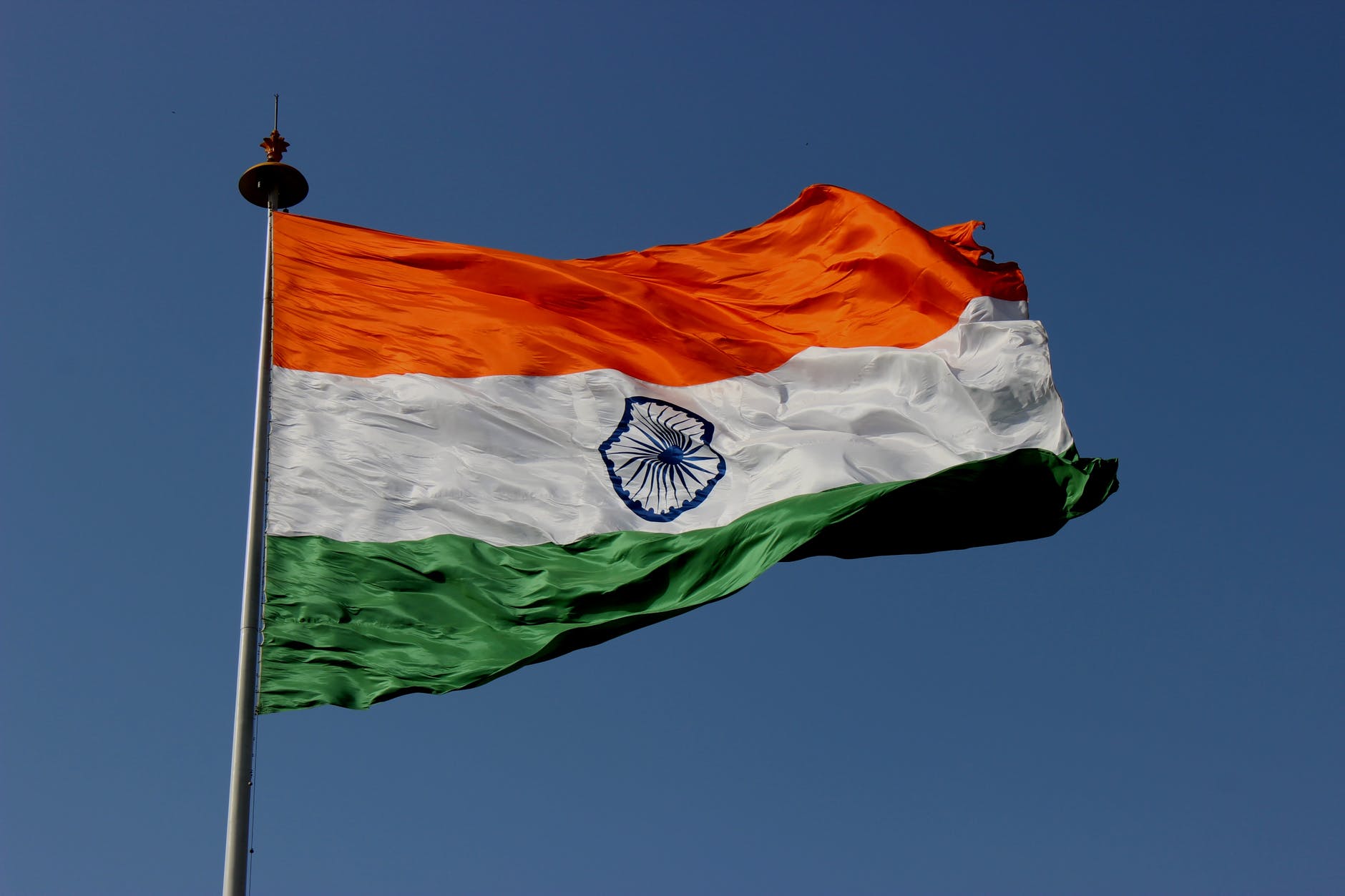
India’s national flag is a horizontal tricolour with a deep saffron top, white in the middle, and dark green at the bottom. The chakra is represented by a navy blue wheel in the midst of the white ring.

The colour saffron represents the country’s power and bravery. The colour white represents peace and truth. Our land’s fertility, growth, and auspiciousness are symbolized by the green belt.

The “wheel of the law” is shown by Dharma Chakra at the Sarnath Lion Capital, which was built by Mauryan Emperor Ashoka in the 3rd century BC. It meant that life is found in movement and death is found in immobility.

Flag Code

The Indian flag code was changed on January 26, 2002, and inhabitants of India were now allowed to hoist the Indian flag above their homes, offices, and factories on any day, not only national holidays, as was previously the case. Indians can now proudly display the national flag anywhere and whenever they want, as long as the Flag Code is rigorously obeyed to avoid any disrespect to the tricolour. The Flag Code of India, 2002, has been broken into three parts for your convenience. The National Flag is described in general in Part I of the Code. The display of the National Flag by members of the public, private organisations, educational institutions, and other entities is addressed in Part II of the Code. The National Flag is displayed by the Central and State governments, as well as their organisations and agencies, according to Part III of the Code.

Based on law passed on January 26, 2002, there are some guidelines for flying the flag. The following are some of them:

Do’s:

– To promote respect for the Flag, the National Flag may be flown in educational institutions (schools, colleges, sports camps, scout camps, and so on). The flag flying in schools now includes an oath of allegiance.

– On all days and occasions, ceremonial or otherwise consistent with the dignity and honour of the National Flag, a member of the public, a private group, or an educational institution may hoist/display the National Flag.

– Section 2 of the new code recognises that all private persons have the right to fly the flag on their property.

Don’ts:

– The flag may not be used for communal purposes, draperies, or clothing. It should be flown as much as possible from sunrise to sunset, regardless of the weather.

– The flag cannot be permitted to contact the ground, the floor, or the water’s surface. Vehicles, trains, boats, and aircraft cannot have it draped over the hood, top, sides, or back.

– There can be no other flag or bunting higher than the flag. Also, no object can be placed on or above the flag, including flowers, garlands, or symbols. A tricolour festoon, rosette, or bunting cannot be used.

Poverty in India

It has been observed that India is a rich country inhabited by the poor. This paradoxical statement underlines the fact that India is very rich, both in material and human resources, which have not been properly used and exploited so far.

Poverty amidst plenty seems to be the main problem of India. The majority of our population lives in rural areas. But following the rapid growth in the number of large cities and towns, there has been migration from rural areas to these cities and urban industrial complexes on an unprecedented scale. It has not helped much in the alleviation of the rural poverty. Obviously, unless our efforts and planning are rural-oriented, nothing appreciable can be achieved. ‘Go rural’ should be our watch­word.

Over 80% of the income of the rural poor is spent on food and the expenditure on shelter is also very high. The urban poor also spend almost the same proportion of their income on these two items. The remainder is too meager to meet their demands of clothing, health, education, and entertainment, etc. The purchasing power of the Indian rural masses is miserably low. They are unable to afford even the basic needs of life. The problem of economic inequality and improper distribution of national income has been a chronic one. Consequently, the rich are becoming richer and the poor more poor. The growth in industry and agriculture in the past few years has further encouraged concentration of wealth and resources in the hands of a few. What is needed are radical changes in our planning and implementation of schemes to remove all these inequalities, distortions and imbalances in the distribution of national income and resources.

We must ensure land- reforms, self-reliance, quick redressal of the grievances of the weaker and vulnerable sections, like landless labourers, scheduled castes and tribes and the womenfolk. We should ensure that these weaker sections of the society are liberated from the vicious grip of the money-lenders, big farmers and landowners. Effective planning is the only way to eradicate poverty. There should be no faltering and hesitation in the implementation of our planning. Soon after our independence, we launched our Five Year Plans, which have yielded good dividends. Consequently, there has been self-sufficiency in food grains.

The Indian farmers are now ready to take risks because they are sure of speedier supply of agricultural inputs, modern irrigation facilities, quicker and easier loan and credit facilities by the government. And yet we cannot rest on our laurels. As far as pulses and oil-seeds are concerned, self-sufficiency is still to be achieved. Moreover, our population is growing very fast. The growth rate in food production has barely kept ahead of the growth of our population. The per capita availability of food grains in India has not risen appreciably. As far as fine and superior varieties of grains like wheat and rice are concerned, our achievement^ have been really laudable. But in coarse grains, like maize, barley, bajra, and jowar, etc., there have been no significant achievements; it only means that the interest of the poor masses has not been adequately served. They mostly consume coarse grains as their purchasing power is very low.

The Community Development Programme, started in 1952, should be further strengthened and expanded. This programme has helped significantly in development of villages. The scheme chiefly aims at providing more employment ,production by the application of latest methods of agriculture, horticulture, animal husbandry, and fisheries, etc., and the establish-mend of subsidiary and cottage industries.

The whole country has been divided into a large number of community development blocks, with each one of these having about a 100 villages under it. Thousands of officials, administrators and gramsevaks have been engaged in the scheme. Consequently, there has been significant improvement but we still have a long way to go.

In a country like India, with a population of more than a billion people and a population growth rate of about 2.2%, the poverty eradication programme is bound to be arduous and long drawn. Over 35% of our population is estimated to be living below the poverty line, in spite of the fact that the main emphasis of our Five Year Plans has been on poverty eradication, modernisation of the economy and industry and self-reliance. For example, the main objectives of the Seventh Plan, beginning in 1985, were growth in food-grain production, increase in employment opportunities and rise in productivity. Obviously, our plans have to play a greater role as an instrument of growth and development in times to come. And this can be done only by greater and enlarged participation of the masses, especially in villages and small towns.

One of the main objectives of our Five Year Plans has been the expansion and creation of more employment opportunities in rural India. To achieve this objective, sufficient funds have been allocated under various employment schemes. For example, under the Jawahar Rozgar Yojna, the various states and Union Territories have been given funds in proportion to the number of people living below the line of poverty. Special consideration has been given to such areas as the hills, deserts and the islands under the scheme.

Further, the devolution of funds to village Panchayats is determined by the proportion of the scheduled castes and tribes and the backwardness of the region. The expenditure under this scheme is to be shared between the Centre and the states, in the ratio of 80: 20. With the involvement of village panchayats in the scheme, wider participation of the rural people is envisaged. Jawahar Rozgar Yojana is the biggest of its kind in the world and a sum of Rs. 2,600 crore was earmarked by the Centre to implement it. The utilization of funds is at the sole discretion of the gram and village panchayats and there will be no state intervention in the matter of selection of projects, etc. Based on decentralised planning, the scheme is bound to help thousands of families living below the poverty line in rural areas. It further shows that democracy is compatible with rural growth and development. In April 1999, a new scheme known as Swaranjayanti Gram Swarozgar Yojana was launched with a plan outlay of Rs. 1000 crore, to eradicate poverty and unemployment.

The economic reform process, now gathering momentum, will further help reduce poverty in villages and towns. The government’s liberalisation policy has helped in rural employment because of the various incentives granted to the industries established in the backward and rural areas of the country. With industrial growth picking up, the picture will be still better. In the long term, the economic and industrial growth will increase the income of the poor substantially. Initially, the results of liberalisation and opening of the Indian economy may not be as appreciable as desired, in terms of poverty eradication and increase in employment for rural people, but ultimately it will result in reduction of poverty. It also ensures reduction in inequalities, because it has been found that distribution of national income and assets under a more open economy is less unequal. Privatisation will also help the government to devote its resources in a better manner to its social obligations.

Therefore, the alleged contradiction between liberalisation, growth and social justice is unfounded. With liberalisation, India is bound to grow rapidly by virtue of its huge natural and human resources. The growth will be marked by improvement in standards of living, removal of poverty to a great extent and emergence of India as a great economic power. Thus, it is clear that eradication of poverty is intimately linked with the raising of productivity and employment, both in agricultural and industrial sectors. As removal of poverty, increase in employment and living standards of the people are our main priorities at this point of time, we shall have to strike a balance between the development of agriculture and industry.

We cannot think of India without villages and agriculture. At the same time, industries cannot be asked to wait. Sometimes it is asked, should we give priority to agriculture over industry, or should industries get priority over agriculture? Perhaps both should go hand in hand in order to make India poverty-free, and an industrial major in the world. Food and agriculture are like the same sides of the coin while industries are the reverse. In the Indian context, both are ultimately interrelated and important. Items produced in mills and factories will be purchased by the masses only when they have enough money to buy them. And our masses in villages depend on agriculture for their livelihood and improvement in their living standards. Consumerism pre-supposes a sound agriculture base and income.

Important Landmarks of Indian Freedom Struggle

A freedom movement is any organized effort within a society to promote, or attain, liberation or independence, based on social, political, economic, religious, or other ideological grounds. The Indian independence movement was a series of historic events with the ultimate aim of ending the British rule in India. The movement spanned from 1857 to 1947. The first nationalistic revolutionary movement for Indian Independence emerged from Bengal.

In ancient times, people from all over the world were keen to come to India. The Persians followed by the Iranians and Parsis immigrated to India. Lastly, the Britishers came and ruled over India for nearly 200 years. After the battle of Plassey in 1757, the British achieved political power in India.

Revolt of 1857

The Revolt of 1857 is also known as The Great Revolt of 1857 or the Sepoy mutiny of 1857. The sepoys of India who were oppressed by the British for a long time revolted. The 1st initiative was taken by sepoy Mangal Pandey . He had shot a British general. The British had ordered to arrest Mangal Pandey but the Indian sepoys did not follow his instructions. Under the leadership of Mangal Pandey on 29 March 1857 the Indian sepoys marched to Delhi and made the nawab of Delhi the emperor of India. After that many revolts broke out in India. But the British had been successful In suppressing all of them. The Bengali middle class people were however apathetic to the revolt of 1857. Even they did not want the revolt to be successful. This was because they feared that if the British would go back then India would return to Its age of darkness again .the little money and status that they had acquired during the British rule would be lost. Although the Revolt of 1857 was unsuccessful It is in some cases identified as the First War of Independence.

Indian National Congress Formed 1885

The Indian National Congress is a broadly based political party in India . Founded in 1885, it was the first modern nationalist movement to emerge in the British Empire in Asia and Africa . From the late 19th century, and especially after 1920, under the leadership of Mahatma Gandhi, Congress became the principal leader of the Indian independence movement. After India’s independence in 1947, Congress formed the central government of India, and many regional state governments. Congress became India’s dominant political party; as of 2015, in the 15 general elections since Independence, it has won an outright majority on six occasions and has led the ruling coalition a further four times, heading the central government for 49 years. There have been seven Congress Prime Ministers, the first being Jawaharlal Nehru (1947–1964), and the most recent Manmohan Singh (2004–2014). Although It did not fare well in the last general elections in India in 2014, it remains one of two major, nationwide, political parties In India, along with the right-wing, Hindu nationalist, Bhartiya Janata Party (BJP).

Partition Of Bengal 1905

Bengal was partitioned in 1905 by Lord Curzon, based on the Riley Report of 1904 which stayed that ‘ Bengal United is a power : Bengal divided will pull in several different ways.’ East Bengal was given to the Muslims and West Bengal to the Hindus. The reason given to the people was that the partition was necessary for administrative convenience. But the real reason was because Bengal was the center of all Revolutionary activity. The Partition of Bengal created widespread education among the people of Bengal. Hindus and Muslims came out Into the street singing Vande Mataram. The movement soon spread to other parts of India. People decided to Boycott foreign goods and Institutions and use Indian goods. Thus the movement came to be called the Swadeshi Movement. The success of the movement led some National leads to advocate ‘revolutionary terrorism’ as a means to end British rule. Bengal was reunited In 1911.

Formation Of Muslim League 1906

After the Revolt of 1857, the British government followed a policy of ‘divide and rule’. In the beginning, Muslims were discriminated against. They were kept out of the army and the services. However, when the nationalist movement started, the policy of the government underwent a change. The government branded the Congress as a Hindu dominated Party and encouraged the upper class Muslims to start their own organization against the Congress. The partition of Bengal led to a united protest movement. At the Calcutta session of the congress in 1906, a large number of Muslim delegates participated. Mohammad Ali Jinnah moved an amendment opposing reservation of seats, which was accepted. Any-how the Influence of the communal elements among Muslims became strong. The Muslim leadership feared that, by opposing the British government, the Muslim middle and upper class’s economic interests would suffer. The encouragement given to upper class’s Muslims led to the formation of the Muslim League. On 30th December 1906, the Muslim League was formed.


The main objects of the Muslim League were :
(I) To create feeling of loyalty to the British government.
(ii) To protect and advance the political rights and interests of the Muslims of India.
(Iii) To prevent the rise among Muslims of India of any feelings of hostility towards other communities.

Split of Congress 1907

The Indian National Congress (INC), which was established in 1885 by A.O Hume, was divided into two groups(in the year 1907) mainly by extremists and moderates at the Surat Session of the Congress. The period of 1885-1905 was known as the period of the moderates as moderates dominated the Indian National Congress. These Moderates used petition, prayers, meetings, leaflets and pamphlets memorandum and delegations to present their demands in front of the British government. Moderates were not able to achieve notable goals other than the expansion of the legislative council by the Indian Council Act of 1892. This created dis-satisfaction among the people. In 1907 the INC meeting was to be held In Nagpur and the extremists wanted Lala Lajpat Rai and Bal Gangadhar Tilak as president. But moderates wanted Rash Bihari Ghosh to be president. Gopal Krishna Gokhale changed the meeting place from Nagpur to Surat fearing that If Nagpur was to be held as meeting place then Bal Gangadhar Tilak would become President. The partition of Bengal became the rise of extremism In INC.

India’s Capital shifted From Kolkata to Delhi  1911

Calcutta (now Kolkata) was the capital of India during the British Raj until December 1911. Calcutta had become the epicenter of the nationalist movements since the late nineteenth century led to the Partition of Bengal by then Viceroy of British India Lord Curzon. This created massive political and religious upsurge Including political assassinations of British officials in Calcutta. The anti-colonial sentiments amongst public leading to complete boycott of British goods forced the colonial government to reunite the Bengal partition and Immediate shift of the capital to New Delhi. 

Delhi-Lahore Conspiracy 1912

The Delhi Conspiracy case, also known as the Delhi-Lahore Conspiracy, refers to a conspiracy in 1912 to assassinate the then Viceroy of India, Lord Hardinge, on the occasion of transferring the capital of British India from Calcutta to New Delhi. Hatched by the Indian revolutionary underground in Bengal and Punjab and headed by Rash Behari Bose, the conspiracy culminated on the attempted assassination on 23 December 1912 when a homemade bomb was thrown into the Viceroy’s Howdah when the ceremonial procession moved through the Chandni Chowk suburb of Delhi. Although injured in the attempt, the Viceroy escaped with flesh wounds, but his Mahout was killed In the attack. Lady Harding was unscathed. Lord Harding himself was injured all over the back, legs, and head by fragments of the bomb, the flesh on his shoulders being torn in strips. In the aftermath of the event, efforts were made to destroy the Bengali and Punjabi revolutionary underground, which came under Intense pressure for some time. Rash Behari successfully evaded capture for nearly three years, becoming Involved in the Ghadir conspiracy before it was uncovered, and fleeing to Japan In 1916.

Formation of Ghadir Party 1913

The Ghadir Movement was an important episode in India’s freedom struggle. A ship named Komagata Maru, filled with Indian immigrants was turned back from Canada. As the ship returned to India several of its passengers were killed or arrested in a clash with the British police. This incident made the Ghadir Party proclaim war and inspired thousands of Indian immigrants to come back and organize an armed rebellion against British Imperialism. However, this movement was crushed. This article deals with the important events of Ghadir Movement. Original name of Ghadir Party was Pacific Coast Hindustan Association. The founding president of Ghadir Party was Sohan Singh Bhakna and Lala Hardayal was the co-founder of this party. Headquarters of the movement were set up at Yugantar Ashram In San Francisco.

Hindu-German Conspiracy 1914-1917

The Hindu–German Conspiracy was a series of plans between 1914 and 1917 by Indian nationalist groups to attempt Pan-Indian rebellion against the British Raj during World War I, formulated between the Indian revolutionary underground and exiled or self-exiled nationalists who formed, in the United States, the Ghadir Party, and in Germany, the Indian independence committee, in the decade preceding the Great War. The conspiracy was drawn up at the beginning of the war, with extensive support from the German Foreign Office, the German consulate in San Francisco, as well as some support from Ottoman Turkey and the Irish republican movement. The most prominent plan attempted to foment unrest and trigger a Pan-Indian mutiny In the British Indian Army from Punjab to Singapore. This plot was planned to be executed in February 1915 with the aim of overthrowing British rule over the Indian subcontinent. The February mutiny was ultimately thwarted when British Intelligence infiltrated the Ghadarite movement and arrested key figures. Mutinies In smaller units and garrisons within India were also crushed.

Rowlett Satyagraha  1919

Rowlett Acts, (February 1919), legislation passed by the Imperial Legislative Council, the legislature of British India. The acts allowed certain political cases to be tried without juries and permitted internment of suspects without trial.
Sedition Act 1870. The Sedition Act, allowed the government to arrest or detain any person without a fair trial In the court who was seen protesting or criticizing the British authority. In 1919 Gandhiji gave a call for a Satyagraha against the Rowlett Act, passed by the British. The Act restricted the freedom of expression and strengthened police powers. Mahatma Gandhi, Mohammad Ali Jinnah and others strongly opposed this Act.

Jallianwala Bagh Massacre 1919

The Jallianwalah Bagh Massacre, also known as the Amritsar Massacre was a massacre that happened in Amritsar, in 1919. It is named after the Jallianwala Bagh [Temple] in the northern Indian city of Amritsar. On April 13, 1919, British Indian Army soldiers started shooting at an unarmed gathering of men, women and children. The person in charge was Brigadier-General Reginald Dyer, the military commander of Amritsar. The shooting lasted about ten minutes. According to official British Raj sources, 379 people were killed. According to other sources, there were over 1,000 deaths, with more than 2,000 wounded, and Civil Surgeon Dr. Smith said that there were 1,526 casualties.

The Khilafat Movement 1919-1924

The Khilafat Movement was organized by the Ali brothers – Mohammed Ali and Shaukat Ali in protest against the injustices done to Turkey (which had fought against Britain) after the First World War. Turkey was important to the Indian Muslims as the Sultan of Turkey was also the ‘Caliph’ (or Khalifa) and was the head of the Muslims throughout the world. The Khilafat leaders put pressure upon the British government to give better treatment to Turkey. Through this demand, Muslims were drawn Into the national movement in large numbers. The movement become a part of the national movement. The Congress leaders joined In the agitation and helped in organizing It throughout the country.

Non-cooperation Movement 1920-1922

In the year 1921 M.K. Gandhi launched the non-cooperation Movement in India. He made an appeal to the Indian people that since the rule of Britishers in India came with the cooperation of Indians, thus, the only way to end the British rule in India is non-cooperation. This movement was launched in different phases. In the first phase, the Indian people who were awarded by the British government In their field began surrendering their titles of honors. The second stage included the boycott of civil services,  congressional assemblies, courts, foreign goods and schools. In the third stage, It was believed that if the administration practiced suppression, a complete civil disobedience drive would be launched by the nationalist leaders.

Chauri Chauri Killing 1922

The Chauri Chauri incident occurred at Chauri Chauri in the Gorakhpur district of the United Province, British India on 4 February 1922, when a large group of protesters, participating in the Non-cooperation movement, clashed with police, who opened fire. In retaliation the demonstrators attacked and set fire to a police station, killing all of Its occupants. The incident led to the deaths of three civilians and 22 or 23 policemen. the Indian National Congress halted the Non-cooperation Movement on the national level as a direct result of this Incident.

Rastriya Swayamsevak Sangh (RSS) was founded 1925

Rastriya Swayamsevak Sangh, abbreviated as RSS “National Volunteer Organisation” or “National Patriotic Organisation”, is an Indian right-wing, Hindu nationalist, paramilitary volunteer organisation that is widely regarded as the parent organisation of the ruling party of India, the Bhartiya Janata Party. The RSS is one of the principal organizations of the Sangh Parivar group. Founded on 27 September 1925, and claiming a commitment to selfless service to India. The organisation Is the world’s largest voluntary missionary organization. The initial impetus was to provide character training through Hindu discipline and to unite the Hindu community to form a Hindu Rashtra (Hindu nation). The organisation promotes the Ideals of upholding Indian culture and the values of a civil society and propagates the ideology of Hindutva, to “strengthen” the majority Hindu community.

Simon Commission 1927

Simon commission is one of the factors leading to the civil disobedience movement. This commission was appointed in November, 1927. It is named after Sir John Simon, who was the chairman of the commission. It was appointed by the British Government to investigate the need for further constitutional reforms. The commission had seven British members but no Indian members. This was seen as a deliberate move to insult the self-respect of Indians ◦In 1927, the Congress decides to boycott the commission ‘at every stage and In every form’. Even the Muslim League agreed to boycott the commission. Next year, an ‘All India Hartal’ was organized by the people. When the commission reached Mumbai, people greeted the commission with slogan “Simon Go Back”. During these protests and hartals. Lala Lajpat Rai was arrested and beaten up. Finally, the commission was sent back with some suggestions and recommendations. 

Declaration of Poorna Swaraj 1929

The Purna Swaraj declaration ( or Declaration of the Independence of India, was promulgated by the Indian National Congress on 19 December 1929, resolving the Congress and Indian nationalists to fight for Purna Swaraj, or complete self-rule independent of the British Empire. ◦The flag of India was hoisted by Jawaharlal Nehru on 31 December 1929 on the banks of Ravi river, In Lahore, modern-day Pakistan. The Congress asked the people of India to observe 26th of January as Independence Day(see Legacy). The flag of India was hoisted publicly across India by Congress volunteers, nationalists and the public. But Bhagat Singh was the first person who gave call to purna swaraj (total Independence).

Beginning of Civil Disobedience Movement 1930

Launched on April 6, 1930, the Civil Disobedience Movement was the most significant movement in the freedom struggle of India. The formation of the Simon Commission, Demand for Dominion Status and Protests against the arrest of social revolutionaries was the three most important causes of this movement. Moreover, the newly introduced salt laws played an important role in launching the Civil Disobedience Movement. According to the new laws the Indian people were required to buy the vital mineral salt, on which the British government was practicing a monopoly. As salt was the basic need for all the sections of the society people under the leadership of M.K. Gandhi launched a March known as the “Dandi March” against the unjust laws of the British government.
This march was joined by thousands of Indians. Therefore, on April 6, 1930, Gandhi formally launched the Civil Disobedience Movement. The main objective of the Civil Disobedience movement Is that the people wanted to break the unjust laws such as the salt tax law. In support of this movement, Indian people continued the production of salt and boycotted foreign clothes and goods. Farmers of India denied paying revenue and Chowkidari taxes. Indian administrators quit their jobs and In many states, tribal people violated forest laws.

The First Round Table Conference was held in London 1930

First Round Table Conference was first among the three such conferences organized between 1930 and 1932 by British government towards constitutional reforms in India. These conferences were conducted as per 1930 report of Simon Commission. First Round Table Conference was held between November 1930and January 1931. It was officially inaugurated on November 12, 1930 at House of Lords at London by the British King (George V) and was chaired by then British Prime Minister, Ramsay MacDonald.

Participants The participants of the First Round Table conference Included :

  1. Total 16 delegates from three British Political Parties
  2. Total 74 delegate from India comprising 3.58 delegates from political parties In India 4.16 delegates from princely states

Second Round Table Conference was held 1931

The second round table conference was held in London (September 1931 – December 1931). Gandhiji represented the Indian National Congress. Gandhiji said that congress alone represented the political India. The untouchable of India are Hindus and does not need label of minorities and there is no need for spate electorate or special safeguard for Muslims or other minorities. This was rejected by other Indian participants. Gandhiji returned back empty handed, disappointed from the proceedings. However, the discussions lead to the passing of Government of India Act, 1935.

The Gandhi-Irwin Pact 1931

After the failure of First Round Table Conference efforts were made by the Government to make an agreement that  the congress  would attend the next Round Table Conference. The Viceroy, Lord Irwin, was authorised to hold talks with Mahatma Gandhi. Finally, Gandhi and Irwin made an agreement on 5 March 1931. The agreement is called Gandhi-Irwin pact. By this pact Government agreed to release most of the civil disobedience volunteers, against whom there was no allegation of violence. The Congress suspended the Civil Disobedience Movement and agreed to participate In the second Round Table Conference.

Poona Pact 1932

The Poona Pact refers to an agreement between B. R. Ambedkar and Mahatma Gandhi on behalf of depressed classes and caste Hindu leaders on the reservation of electoral seats for the depressed classes in the legislature of British India government. Contrary to popular belief, Mahatma Gandhi was not involved in signing the pact. It was made on 24 September 1932 at Yerwada Central Jail in Pune, India. It was signed by B.R Ambedkar on behalf of the depressed classes and Madan Mohan Malviya on behalf of the Caste Hindus as a means to end the fast that Gandhi was undertaking In jail as a protest against the decision by British prime minister Ramsay MacDonald to give separate electorates to depressed classes for the election of members of provincial legislative assemblies In British India. They finally agreed upon 148 electoral seats.

Government of India Act was passed 1935

In August 1935, the British gove3rnment announced the Government of India Act.

The main provisions of this act were :

  1. India was to become a federation if more than 50 per cent of the Princely States decide to join it.
  2. Provincial autonomy was granted. The ministers of provincial government s were to be responsible to the legislature. The power of the legislature was also increased. But the right to vote remained limited (only 14 per cent people had voting rights).
  3. Diarchy was abolished at the provincial level but Introduced at the Centre. The Viceroy became more powerful and was not to be responsible to the legislature.

The Act was rejected by the Congress. It, however, decided to contest the elections of the provincial legislative assemblies In AD 1937. The Muslim League also contested these elections.

Quit India Movement 1942

In August 1942, Gandhiji launched the Quit India Movement (“Bharat Chhodo Andolan”).
A resolution was passed on 8 August 1942 in Bombay by the All India Congress Committee, declaring its demand for an immediate end of British rule. The Congress decided to organize a mass struggle on non-violent lines on the widest possible scale. Gandhiji’s slogan of ‘Do or Die’ (‘Karo ya Maro’) inspired the nation. Every man, women and child began dreaming of a free India. The government’s response to the movement was quick. The Congress was banned and most of its leaders were arrested before they could start mobilizing the people. The people, however, were unstoppable. There were hartals and demonstrations all over the country. The people attacked all symbols of the British government such as railway stations, law courts and police stations. Railway lines were damaged and telegraph lines were cut. In some places, people even set up their Independent government. The movement was most widespread in Uttar Pradesh, Bihar, Bengal, Bombay, Odisha and Andhra Pradesh. Places such as Ballia, Tamluk, Satara, Dharwar, Balasore and Talcher were freed from British rule and the people there formed their own governments. The British responded with terrible brutality. The army was called out to assist the police. There were lathi-charges and firing at the unarmed demonstrators.

Cripps Mission 1942

The Cripps Mission was a failed attempt in late March 1942 by the British government to secure full Indian cooperation and support for their efforts in World War II. The mission was headed by a senior minister Sir Stafford Cripps, Lord Privy Seal and leader of the House of Commons. Cripps belonged to the left-wing Labour Party, traditionally sympathetic to Indian self-rule, but was also a member of the coalition War Cabinet led by the Prime Minister Winston Churchill, who had long been the leader of the movement to block Indian independence. Cripps was sent to negotiate an agreement with the nationalist Congress leaders, who spoke for the majority Indians, and Muhammad Ali Jinnah and the Muslim League, who spoke for the minority Muslim population comprising 35% of the total population. Cripps worked to keep India loyal to the British war effort In exchange for a promise of elections and full self-government (Dominion status) once the war was over. Cripps discussed the proposals, which he had drafted himself, with the Indian leaders and published them. Both the major parties rejected his proposals, and they were also unacceptable to Churchill; no middle way was found and the mission failed. Congress moved towards the Quit India movement whereby it refused to cooperate In the war effort; in response, the British imprisoned practically the entire Congress leadership for the duration of the war. Jinnah and the Muslims, to whom Cripps had offered the right to opt out of a future Union, supported the war effort and gained In status in British eyes. He was surprised to see that the right to opt out of a future Union was Included.

The great Bengal Famine 1943

The Bengal famine of 1943 was a major famine in the Bengal province in British India during World War II. An estimated 2.1–3 million, out of a population of 60.3 million, died of starvation, malaria and other diseases aggravated by malnutrition, population displacement, unsanitary conditions and lack of health care. Millions were Impoverished as the crisis overwhelmed large segments of the economy and social fabric. Historians have frequently characterised the famine as “man-made”, asserting that wartime colonial policies created and then exacerbated the crisis. A minority view holds that the famine arose from natural causes.

India gained its freedom from British rule  1947

India got its freedom from the British Rule on 15th August, 1947. Hence, we celebrate our Independence Day on 15th of August every year. There is national holiday on Independence Day. We all know that Freedom is not free. It took years of efforts, non-violence and other movement by our national freedom fighter to attain Freedom. On 15th of August, 1947, Pandit Jawaharlal Nehru raised the tri-color national flag of India at Red Fort, Delhi. There the National Flag Is hoisted and the National anthem is sung in chorus. Everybody takes a new oath to serve the country and to do everything to uplift her glory. The elders remember the martyrs who sacrificed their lives in the struggle for independence. They pay homage to the great leaders who suffered a lot to win our freedom. This day also Inspires us to follow the teaching of peace and non-violence that was preached by Mahatma Gandhi, the father of our nation.

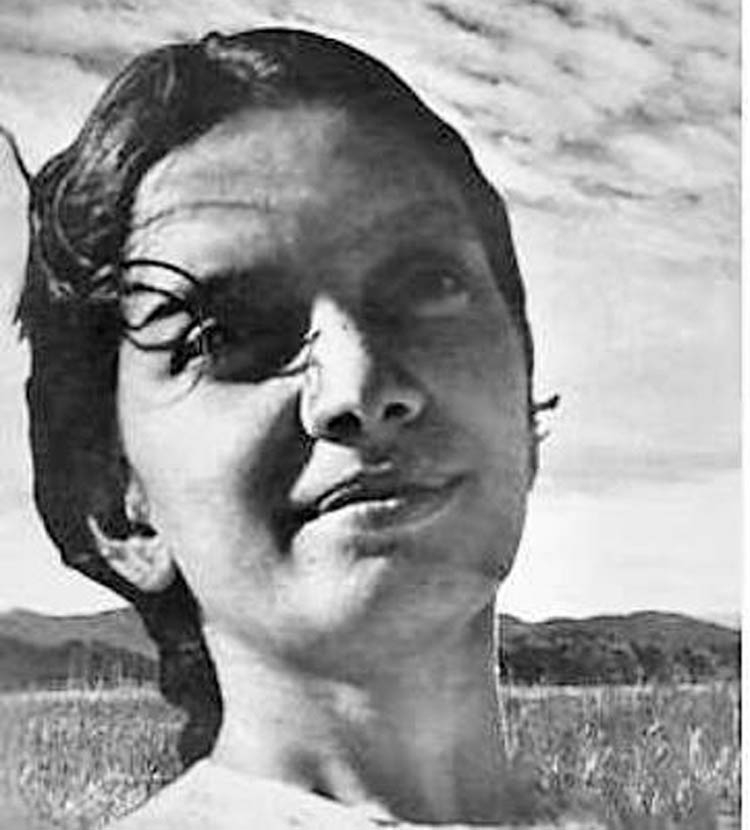
Zero Waste During Lockdown.

The Corona virus pandemic has swept over the planet and with it has brought about concepts like quarantine and social distancing which were earlier seen only in films. The lockdown that is widely being followed all over the world has not been the easiest time for people. With no provision to step out of the house, markets aren’t functioning and economies are crashing. A common man would wonder, ‘How am I supposed to help out, when I am locked inside my own house?’

Your miniscule contributions to the society, can massively assist the authorities and the paramedical staff in this time of need. A major step you can take during this quarantine period is to ensure that the waste produced in your home is minimized. In India alone, 21 million tonnes of food is wasted every year. This wasted food is often treated with plastic waste leading to emission of methane gas in a large quantity. While a life-threatening disease is upon the earth, one must not forget another crisis that is underway, that of global warming. Dealing with the COVID-19 gives us no excuse to forget caring for nature. The small roles we play at our house can make a huge impact outside.

How has Pandemic increased Waste Production?

The Corona Virus has forced the government to take some drastic measures. The shutting up of all non-essential shops across the country was the first of many shocks. People were advised to reduce their trips to the market in order to encourage social-distancing. Lots of families misunderstood this message and hoarded up on supplies to minimize their trips to the market. This uncalculated decision made by the people has led to the wastage of food on a large scale. The pandemic has led to the limitation of a few commodities and we cannot afford to waste even the slightest of food.

1. Buying Smart

The first step in moving towards a zero-waste lifestyle is to by only the amount of food you will require. Hoarding should be thoroughly discouraged as it is the main cause of waste production. The limited number of supplies means that the food you waste could have actually filled the stomach of a person in need.

2. Proper Storage

Advertisements

In these testing times, you never know, when even a single loaf of bread could be useful. Hopefully, the situation won’t get to such an extremity but storing items should still be a priority. Keep food items in cool and covered places to ensure that they are not spoiled. This could immensely reduce the amount of waste being produced at your place.

3. Use Items before they Expire

About 40% of the food produced in the country is thrown into the trash, uneaten. During the lockdown period, try and have a basic idea of the expiry dates all food items in your home. It is essential to make sure that no sort of canned or packaged food is kept win your house past its expiry date. Make sure that you have completely finished an item before going out to buy more. An interesting fact about packaged food is that some of it is safe to consume even after its ‘best before’ date. Check on the internet to find out if the can in your store room is still safe to consume. If not make sure it is disposed off correctly. Separate the food item from its packaging before throwing it away in two separate bins.

4. Utilize the Leftovers

The most important aspect of living a zero-waste life is to ensure that your leftovers are put to good use. Segregation into two different bins is an ideal way to dispose off leftover food. The only problem lying with this situation is that many garbage trucks and cleaners just pile all the garbage into one huge bag regardless of its recycling and ecological properties. The perfect way to deal with this problem would be to use the leftover food as compost.

People often avoid using compost as it is a long and slightly difficult process. The quarantine makes it a perfect time to finally do something good for the environment. Before creating compost make sure that you are doing it right. There are a lot of factors that need to be considered before generating a manure in your kitchen. Use proper tips and techniques from professionals for optimal results.

5Mini Farming

Now that you have composed manure just from your wasted food, it is time to put that compost to good use. Indoor farming is not easy and it requires care and time but it is not necessary for you to own a huge balcony or a garden. You can grow vegetables even in the small terrace of your house. There are families around India who have become completely self-sufficient. Shilpa and Nitin, a couple based in the traffic heavy Bengaluru, grow more than 50 vegetables in their small balcony. Just one small pot for each type of vegetable is enough to sustain a family of four. The food they consume is from their own balcony and the waste produced in their home is used as manure to grow more vegetables. This ecological cycle can have a huge positive impact on the environment.

6. Eat Healthy

Perhaps the most underestimated way to reduce food wastage is to eat healthy. Junk food, has a much faster rate of decay when compared to fresh vegetables and fruits. Having a balanced and planned diet can help you minimize the amount of waste you generate. If you do not have the provision to create compost and farm in your balcony, you can start by eating healthy.

The COVID-19 pandemic has not been an easy time of us. Para medical staff and nurses are working overtime to ensure that we are safe the least we can do is reduce the burden on the planet. Correct utilization of leftovers and controlled generation of waste will make sure that the country has ample supply of food for the poor and needy. Play your part in the quarantine by changing to a zero-waste lifestyle.

Advertisements

Unemployment

Unemployment is a serious issue. There are many factors which are responsible for this. Some of these include lack of proper education, lack of good skills and skills, inability to perform, lack of good employment opportunities and rapidly growing population. A look at unemployment stability, unemployment consequences and measures taken by the government to control it further.

Unemployment related statistics in India

The Ministry of Labor and Employment in India maintains unemployment records in the country. Unemployment figures are calculated based on the number of people who had no work for a substantial period of time during the 365 days prior to the date the figures were matched and are still seeking employment.

From 1983 to 2013, the unemployment rate in India was the highest at 9.40% with an average of 7.32 percent and in 2013 it was a record of 4.90%. In the year 2015-16, the unemployment rate was 8.7% for women and 4.3 percent for men.

Result of unemployment

There are serious socio-economic issues due to unemployment. This affects not only one person but the whole society. Some of the major consequences of unemployment are explained below:

  • Rise in poverty

This statement is absolutely true that the increase in the unemployment rate has increased the poverty rate in the country. Unemployment is mainly responsible for inhibiting the economic development of the country.

  • Crime rate increase

Unemployed unable to find a suitable job usually takes the path of crime as it is an easy way to make money. Unemployment is one of the main causes of the rapidly increasing cases of theft, robbery and other heinous crimes.

  • Exploitation of labour

Employees generally take advantage of the lack of jobs in the market by offering lower wages. People unable to find a job linked to their skills usually settle for a low-paid job. Employees are also forced to work for a specified number of hours each day.

  • political instability

Lack of employment opportunities results in a lack of trust in the government and this situation often leads to political instability.

  • mental health

The level of dissatisfaction increases among unemployed people, which gradually leads to anxiety, depression and other mental health problems.

  • Loss of skill

Staying out of a job for a long period of time leads to dull life and loss of skills. This reduces a person’s confidence to a great extent.

Government initiative to reduce unemployment

The Government of India has started several programs to reduce the problem of unemployment as well as to help the unemployed in the country. Some of these include Integrated Rural Development Program (IRDP), Jawahar Rozgar Yojana, Drought Prone Areas Program (DPAP), Training for Self-Employment, Nehru Rozgar Yojana (NRY), Employment Assurance Scheme, Prime Minister’s Integrated Urban Poverty Alleviation Program (PMIUPEP), employment offices, employment in foreign countries, development of small and cottage industries, employment guarantee scheme and Jawahar Gram Samridhi Yojana etc. Not.

Apart from providing employment opportunities through these programs, the government is also sensing the importance of education and providing skill training to unemployed people.

  • Self-employment training

The program, started in 1979, was called the National Scheme of Training of Rural Youth for Self Employment (TRYSEM). It aims to reduce unemployment among youth in rural areas.

  • Integrated Rural Development Program (IRDP)

To ensure full employment opportunities in rural areas in the year 1978-79, the Government of India launched the Integrated Rural Development Program. 312 crores were spent on this program and 182 lakh families benefited from it.

  • Employment in foreign countries

The government helps people in getting employment in foreign companies. Special agencies have been set up in other countries to hire people.

  • Small and cottage industries

In an effort to reduce the issue of unemployment, the government has also developed small and cottage industries. Many people are earning their living with this initiative.

  • Golden jubilee employment scheme

The program aims to provide self-employment and wage-employment opportunities to the urban population. It consists of two schemes:

  • Urban self-employment program
  • Urban wage employment program
  • Employment assurance scheme

This program was started in 1994 for 1752 backward classes in the country. Poor unemployed people living in rural areas were provided unskilled manual work for 100 days under this scheme.

  • Drought prone area program (DPAP)

The program was launched in 13 states and covered 70 drought-prone districts with the aim of eliminating seasonal unemployment. The government spent Rs 474 crore in its seventh plan.

  • Jawahar Rozgar Yojana

The program, launched in April 1989, was intended to provide at least one member in each poor rural family with the employment of fifty to one hundred days for a year. Employment opportunities are provided in the vicinity of the individual and 30% of these opportunities are reserved for women.

  • Nehru Rozgar Yojana (NRY)

There are a total of three schemes under this program. Under the first scheme, the urban poor is subsidized to set up micro-enterprises. Under the second scheme, wage-employment is arranged for labourers in cities with a population of less than 10 lakh. Under the third scheme, the urban poor in cities is given employment opportunities matching their skills.

  • Employment guarantee scheme

The unemployed people are provided financial assistance under this scheme. It has been started in many states including Kerala, Maharashtra, Rajasthan etc.

Apart from this, several other programs have been launched by the government to reduce unemployment.

Unemployment in India can be divided into several categories:

Hidden unemployment

When people more than required is hired for a job. This condition is called as the hidden unemployment as removing these people will not affect the work. 

sessional Unemployment

As the name suggests this type of Unemployment is only in a specific season of the year. Usually works related to agriculture, Ice factory, resorts and sports industries are affected by this.

Open Unemployment

This means when labour in large number is not able to get a job which provides them with regular income. This situation arises when physical labour increases more as compared to the economy

Technical Unemployment

This situation arises due to the increasing technical machines and instrument to replace human work.

Structural Unemployment

This type of unemployment occurs due to a major change in the economic structure of the country. It is the result of technological advancement and economic development.

cyclical unemployment

A decrease in the overall level of business activity leads to cyclical unemployment. However, this incident is only for a short time.

Educated unemployment

Inability to find a suitable job, lack of employable skills and faulty education system are some of the reasons that educated unemployed remain.

Contract unemployment

In this type of unemployment, people either work on a part-time basis or do the kind of work for which they are more qualified.

Preventive unemployment

This occurs when the demand for the labour force and its supply are not properly coordinated.

Long term unemployment

Long term unemployment is one that continues in the country due to rapid growth in population and low level of economic growth.

Sudden unemployment

Such unemployment occurs due to a sudden drop in demand, short term contracts or shortage of raw materials.

Factors that can increase unemployment in India

  • Increase in population

The rapid increase in the country’s population is one of the major causes of unemployment.

  • Manda Economic Development

The slow economic growth of the country results in fewer employment opportunities for people, leading to unemployment.

  • Seasonal business

A large part of the country’s population is involved in agriculture. Being a seasonal business it only provides work opportunities for a certain time of the year.

  • The slow growth of the industrial sector

The growth of the industrial sector in the country is very slow. Thus employment opportunities in this sector are limited.

  • The decline in cottage industry

Production in the cottage industry has fallen drastically and due to this many artisans have become unemployed.

Possible solutions to end unemployment

  • Population control

This is the right time when the Indian government takes drastic steps to control the population of the country.

  • Education system

The education system in India focuses on theoretical aspects rather than skill development. The system has to be improved to generate skilled manpower.

  • Industrialization

The government should take steps to promote the industrial sector to create more employment opportunities for people.

  • foreign companies

The government should encourage foreign companies to open their units in the country to create more employment opportunities.

  • Job opportunities

Employment opportunities should be created in rural areas for those who remain unemployed for the rest of the time by working at a certain time.

Conclusion

Unemployment is the root cause of various problems in society. Although the government has taken the initiative to reduce this problem, the measures taken are not effective enough. Due to this problem, various factors need to be studied thoroughly to see effective and integrated solutions. It is time that the government should recognize the sensitivity of the matter and take some serious steps to reduce it.

Best Places to visit in Prayagraj (Allahabad) – India

Allahabad is one of the oldest cities in India. It is also known as Prayagraj, Diversities glorify India. When you visit India, you get to explore different places. The glorious city is popular due to its cultural heritage. Not only this, you cannot ignore the friendly people of this place. Moreover, the world-famous Kumbh Mela takes place here. It has a deep connection with Indian history. Besides, this city holds great religious values and traditions. Thus, Allahabad offers many famous places to visit. As a result, many tourists from all over the world flock to the city every year.

Top 10 Famous Places, You can visit

Triveni Sangam

Outlook India Photo Gallery - Triveni Sangam Prayagraj

One of the holiest places in Central India, Triveni Sangam is located about 7 kilometres away from Civil Lines in Allahabad (Prayagraj). It is the meeting point of three rivers – Ganga, Yamuna, and Saraswati (which is a mythical river, supposed to have dried up more than 4,000 years ago). All three rivers Ganga, Yamuna, and Saraswati are highly revered rivers in Indian mythology, and hence the confluence point of these rivers hold tremendous religious importance. According to Hindu mythology, taking a bath in the holy Triveni Sangam is supposed to flush away all the sins and free you from the cycle of rebirth. Moreover, the Sangam itself is a beautiful and peaceful place to visit. The brownish Ganga meeting the slightly greenish Yamuna is indeed a sight to behold.

If you take a boat ride to the gently flowing waters of Ganga and Yamuna, you’ll be able to make out the difference in colours of water from the two rivers. There are also makeshift wooden banks made at the Sangam. Hence, devotees who want can take a bath right at the confluence point. The water is clean enough at the Triveni Sangam for a bath, especially during the winters; and also not very deep, so it is fun to take a dip in the water here.

Allahabad Fort

Allahabad Fort - Wikipedia

Allahabad Fort is a splendid work of architecture that was built during the reign of Akbar, the Mughal Emperor in 1583. The marvellous structure is located on the banks of the confluence of the Rivers Ganga and Yamuna and is well-known for being the largest fort ever built by Akbar. This famous attraction draws thousands of tourists from all over the world not only for its historical importance but also for its architectural magnificence. Tourists are allowed inside only during the Kumbh Mela, which is held once every 12 years. Nevertheless, the glorious architecture and the massive build of the monument as it stands strong on the banks of the confluence of the two rivers is a sight to behold!

The Allahabad Fort holds a huge significance and is managed by the Archaeological Survey of India. The fort is also quite well known for its Akshayavat Tree (Banyan Tree) which, according to a legend, was used by the locals to commit suicide to attain salvation. For those who wish to see the Akshayavat Tree, entry is allowed through a small gate to only the area that is occupied by the magnificent tree. Allahabad Fort is also home to the Patalpuri Temple, which is said to be home all the gates of hell.

Chandra Shekhar Azad Park (Alfred Park)

Alfred Park, Allahabad, Uttar Pradesh — Google Arts & Culture

Formerly Alfred Park, Chandrasekhar Azad Park is more a monument than a conventional garden. Famous Indian revolutionary Chandrasekhar Azad sacrificed his life here and the park was renamed after him in later years. Azad was no less than an enigma and mystery for the British government due to his mastery over disguise and combat skills. He was known for his vow to never get arrested and remain free for life. In fact the word Azad (free in Urdu) stuck to his name after due to his freedom clamour! In his brief life span of 24 years, he made his presence felt in such a manner that the British rulers wanted him behind the bars or dead at any cost. So when the police got information that the iconic rebel was in Allahabad and meeting fellow revolutionary Sukhdev in the then Alfred Park in 27th February, 1931, they surrounded the park with over 40 policemen. A gun battle followed where Azad killed three policemen with his pistol and facilitate the escape of Sukhdev. He fought the police force for over 30 minutes alone and when he was left with only one bullet, he decided to turn it on himself honouring his pledge not to get caught or killed by the British oppressors. Azad Park today is a tribute to that great man with a memorial in place.

The tree under which he sacrificed his life for his motherland is also preserved. Allahabad Museum, that is also in the park premises has Azad’s pistol in show. Be there and pay homage to a brave man who was unlike any other 24 year old!

Khusro Bagh

Khusro Bagh | District Prayagraj, Government of Uttar Pradesh | India

This is one of the major attractions in the city, even though the crowd here is much less compared to other places in Allahabad. It is a beautiful garden with high walls surrounding it and has four tombs inside.

The garden was built as a pleasure garden for Prince Salim, who was the son of the Mughal Emperor Akbar and rebelled against his father. Well, he grew up to become Emperor Jahangir. History repeated itself and there arose a discord between Jahangir and his eldest son Khusrau. Despaired by the sad turn of events, Shah Begum, Khusrau’s mother, committed suicide and was buried in the park. She was a Rajput princess and the first tomb here was built in memory of Shah Begum in 1606.

Jawahar Planetarium (Anand Bhawan)

jawahar planetarium allahabad - Maharajas Express Blog

Anand Bhawan, the home of the Nehru family in Allahabad, was handed over to the Fund by Shrimati Indira Gandhi in November 1970. This is in keeping with a similar gesture made by her illustrious grandfather when he donated Swaraj Bhawan to the nation. Anand Bhawan is intimately connected with India’s struggle for freedom. Some of the rooms in the building which are redolent with history have been either preserved or recreated. A comprehensive exhibition of the Nehru family’s role in the country’s struggle for freedom has also been arranged. The electrical wiring and fittings of Anand Bhawan building have been completely replaced and upgraded by German ERCO light fittings in 2014.

The Library at Anand Bhawan consisting of nearly 7500 books has been catalogued. The National Museum and the Allahabad Museum have rendered valuable assistance to the Fund in the preservation of books, records and relic articles in Anand Bhawan. Several lakhs of visitors from all over the country and abroad come and visit this ancestral home of Nehrus. Memorial functions and an annual lecture are also a part of the Anand Bhavan’s annual programme.

All Saints Cathedral

All Saints Cathedral, Prayagraj (Allahabad): How To Reach, Best Time &

Built in the late 19th century, All Saints Cathedral or Patthar Girja is a spectacular Anglican Christian Church on M G Marg, Allahabad. One of the beautiful churches in the state, it is thronged by tourists and pilgrims alike. All known as the “Church of Stone”, All Saints Cathedral was formerly founded in 1871 by Lady Muir Elizabeth Huntly Wemyss. Post its consecration in 1887, the church was further completed in 1891. Constructed in gothic-styled architecture, the church hosts carved glass panels and marble-finished sanctuaries. It is one of the significant remnants of colonial design in the country. This church also houses the iconic ‘jaali’ work expressed throughout its arched windows. The light sandalwood tinted walls of the All Saints Cathedral was built with Sandstone from Chunar in UP. 

Alopi Devi Temple

Alopi Devi Mandir, Allahabad - Tripadvisor

Located at Alopibagh, near the holy Sangam (confluence of Ganga, Yamuna and Saraswati) in Allahabad, Alopi Devi Mandir is an unconventional temple revered by Hindu faith. The Alopi Devi Mandir does not have any presiding deity but a wooden chariot called a doliê which is mostly worshipped by the devotees of Lord Shiva. Housing the last of Goddess Sati’s body parts, the Alopi Devi Mandir counts among the Shakti Peethas of the country. Tuesdays are a busy day at this temple. This holy site attracts vast crowds of devotees during the Hindu festival of Navratri.

New Yamuna Bridge

The New Yamuna Bridge | District Prayagraj, Government of Uttar Pradesh |  India

The New Yamuna Bridge is like a new feather in Prayagraj’s cap. The images speak about the stupendous architecture of the New Yamuna Bridge. The view of the bridge during dawn and dusk is mesmerizing. Also known as the Naini Bridge, the New Yamuna Bridge is among India’s longest cable-stayed bridges. It runs across the Yamuna River in the North-South direction, connecting Prayagraj to Naini. It was constructed in the year 2004 to minimize the traffic congestions over the old Naini Bridge. The construction of the bridge was a joint responsibility of the Hindustan Construction Company and Hyundai Engineering and Construction.

The New Yamuna Bridge is also the first six-lane bridge in India built with modern design and structure. It has two pylons, made up of concrete material, that provide support to the major part of the deck of the bridge held together by steel cables. The bridge also acts as a road link between Prayagraj and NH-27 stretching across for 370 meters. The modern technology combined with environmental compatibility and excellent quality make for some of the features of this bridge that offer great benefits. India has a stupendous network of bridges and this bridge is a fine example of the country’s tremendous growth in infrastructure.

Allahabad Museum

How Allahabad Museum got hold of gifts and artefacts from Nehru

The Allahabad Museum is centrally located in the Civil Lines area of the city in a lush green garden at Chandrashekhar Azad Park, popularly known as Company Bagh. In 1863, the Board of Revenue requested the Government of North- Western Provinces for the establishment of a public library and a museum. With donations from the provincial government, the famous Orientalist Sir William Muir and the Maharaja of Vijaynagaram, a superintendent of the library and museum was appointed and an ornate building was inaugurated in 1878 to house the collection. For unforeseen reasons or due to paucity of fund the museum was closed down in 1881. With the initiative of Pandit Jawaharlal Nehru, the President of the Allahabad Municipal Board and Pt. Brijmohan Vyas in the 1923-24 efforts were made to establish a new museum in the city. It was under the operational direction of Pandit Brij Mohan Vyas, the executive officer of the board, a museum was opened in the Municipal Building in 1931.

Bade Hunauman Temple

Allahabad High Court Big Decision World Famous Hanuman Temple Case - विश्व  प्रसिद्ध बड़े हनुमान मंदिर मामले में हाईकोर्ट का बड़ा फैसला ,महंत ने कहा  सुप्रीमकोर्ट में ...

This famous temple of Lord Hanuman, one of the most worshipped god of India is a must visit place in Allahabad or Prayagraj It is located very close to Sangam and so most of the devotees visiting Prayagraj will not consider their visit complete unless they have darshan of Hanumanji at this temple. Here Hanumanji is in lying position instead of being in sitting or standing form as is common in thousands of other Hanuman temples in India. There are a few sweet shops selling prasad and the whole temple complex is well maintained.

Countries that haven’t reported a Single case of Covid-19.

Most of the world has been struggling to contain COVID-19. The disease which was first reported in China, has become a global pandemic that many countries are still trying to get under control. But a hand full of nation have not reported a single case of COVID-19 to the World Health Organization (WHO).

Most are in southern and central area of Pacific ocean.

  1. Federated States of Micronesia
  2. The Marshall Islands
  3. Naru
  4. The Solomon Islands
  5. Vanuatu
  6. Tuvalu
  7. Kiribati
  8. Samoa
  9. Niue
  10. Tonga
  11. The Cook Islands
  12. Palau

These small islands are all technically Covid-19 free. Health experts these 12 countries escaped the pandemic because of a combination of remoteness, small number of people as their combined population adds up to just 1.6 million and because they closed borders when the Corona virus that causes Covid-19 began to spread widely. But just because they haven’t reported any Corona virus cases, does not mean these nations have entirely dodged the effect of the pandemic.

Tourism plays a major role in the economics of most of these countries. And as in many around the world, a lack of visitors has left hotels and restaurants struggling. The owner of the hotel says since March 2020 they have lost their whole business and have zero income.

Palau is one of the island nation feeling the economic pain of Covid-19. Streets that are normally bustling with visitors from abroad have been all but empty for months. With no guests, hotel in the country have also had to make serious cuts. A hotel owner says

No one in our hotel is making their full salary. Most people are 50% or below. Everybody is feeling the pain as thers is no economic opportunity left.

The Palau government recognized early on the economic toll of shutting it’s borders to foreigners. He says

Our capacity, our reality a situation here its that you’re better of with prevention than trying to do something about it later on. So, it became a question of economics or people’s lives, and the right thing to do for anybody in this world is to consider people’s lives.

The Government provided generous subsidies of up to US $10,000 for local people and a few hundred dollars for foreign workers affected by the halt in tourism. Not all Pacific countries rely on tourism as a main driver for their economies.

Countries like Marshall Islands and Federated States of Micronesia rely on fishing and farming and financial aid from the US. But with limited health care facilities and population spread across many islands, the nation’s priority has been keeping COVID-19 from their shores and educating citizens about thorough handwashing, social distancing and other precautionary measures.

Other than Island Nations

In addition to these tiny island nations, there are other countries that haven’t reported a single case of COVID-19 to the WHO: North Korea and Turkmenistan.

North Korea closed its borders in January 2020 and it’s leader Kim Jung-un has repeatedly said the disease is a “potential” threat. He even put the town of Kaesong, which borders South Korea, under lockdown in July 2020. But many observers are are sceptical about the country’s official statistics. They say North Korea’s weak healthcare system may not be able to confirm Corona virus infections, or that the ruling party may simply not be very transparent about whether there are any cases.

Health experts are also wary of Turkmenistan’s claim to be COVID-19 free. It is among the hardest countries in the world for foreigners to enter, and it also closes its borders early on in the pandemic. The authorities government in Turkmenistan also says there are no people in the country living with HIV or Aids, a claim most scientists say is just not plausible.

Back in Paula, where people are doing their best to ride out the economic toll of the pandemic, hotel owner have a bleak prediction about the future. They’re predicting how long will they continue to lose money before suspending more operations or total operations and just wait for the whole world to settle down? Because it’s a financial question arises, we’re willing to lose money, but how much money are we willing to lose?

So while border control, good hygiene and social distancing seem to have effectively kept the disease away from these places, there is no defence against the economic devastation caused by the global pandemic.

Independence Day (15 August)

Independence day is the most valuable day for all persons in our country. It is celebrated as a national holiday by the people of India, To mark the 15th August 1947, as the anniversary of India’s national independence from the British.

15th August has a very significant day in Indian history and it is celebrated by persons of all religions, traditions, and cultures with great joy and happiness.

On this day, the Indian people are paying healthy tribute to the great leaders for whom India is becoming independent forever. our leaders such as Bhagat Singh, P.t Nehru, Mahatma Gandhi, Sardar Valla Bhai Patel, and many others sacrifice their lives to let people enjoy being independent in our nation

To Commemorates this day, people listen to music in schools, watch patriotic movies, many children take part in a competition and contest, and go to view various live performances about the meaning of the Day.

After the freedom of India, Jawahar Lal Nehru was the first P.M of our nation. on 15th August 1947, he raised the flag at Red Fort (Delhi) and given a speech. This marveled is trailed by the other resulting P.M of India.
Where banner lifting functions, parades, marches, salutes by the 21 guns, and many more other cultural events are organized.

Our Prime Minister P.t Nehru hoisted the national flag at Red Fort and after it reciting the national anthem. At 12 pm on the 15th of August 1947, P.t Nehru declared the freedom of India by pursuing out his speech on “Truth With Destiny”.

He said that it is time to pledge after long years of slavery and let our nation succeed.

India is a country where a large number of persons live together whether they have a place with different religions, traditions, or societies.

Similar to an Indian on this day, we will make a promise to be steadfast and energetic in saving our motherland.

Why We Celebrate Our Independence Day On The 15th of August?

India was colonized for over 200 years and the people of India demanded complete Independence. the proposed date for independence was 26th January 1930. On, July 18, 1947, the law was passed, stating that India would become an independent country on 15th Aug 1947.

The last viceroy and India’s first governor-general select the day since August 15th also commemorates Japan’s second anniversary of surrender to the Allied forces. Thus, 15th August is celebrated as Independence day in India.Independence day is celebrated in remembrance of the sacrifices our leaders made so that we could live as free citizens.

What is the History of India’s Journey Towards Independence?

In the 1600s, the British came to India basically for trading and were granted trading rights by the Indian emperor, Jahangir.

At the time, India was ruled by the Mughal who was too powerful for the British. when the Mughal empire disintegrated, the British begun to conquer small parts of India.

Starting with the battle of Plassey in 1857, the British began expanding rapidly throughout India till 1857.

In 1857, there was a massive uprising throughout northern India, where Indian leaders fought against the British.

The freedom struggle led by Mahatma Gandhi was so successful that the British were forced to grants Indians numerous rights.

It means It included voting rights, with several Indian-led governments in 1937, though they were externally controlled by the British, In 1945, the British economy was destroyed due to world war 2nd.

So, Mainly they decided to leave India peacefully. However, this day also marks the tragic partition of India.

Historical Background For Independent of India

Many incidents take place for the Independent of India. From (1885 – 1947) the journey of Independence of India is given, which helps to understand our historical background deeply for Independence.

How India got Independent

  • In 1885 Congress was formed
  • In 1905 Partition of Bengal
  • In 1907 Surat split
  • In 1909 ‘Minto Morley Reform’

 The journey of Mahatma Gandhi in India

  • In 1916, Congress Lucknow Session
  • In 1917, Champaran Satyagrah
  • In 1919, Montague Chelmsford Reforms
  • In 1919, the Rowlatt Act
  • In 1919, Jalianwala Bagh Massacre
  • In 1920, the Non-Cooperation Movement

Revolutionary Phase in Indian History

  • In 1922, Chauri Chaura Incident
  • In 1925, Kakori Incident
  • In 1924, the Swaraj Party
  • In 1927, the Simon Commission
  • In 1928, the Nehru Report
  • In 1929, Lahore Session (Poorna Swaraj)
  • In 1930, Civil Disobedience Movement
  • In 1930, Dandi March
  • In 1930, First Round Table Conference

Formation Of Government

  • In 1931, Gandhi Irwin Pact
  • In 1931, Second Round Table Conference
  • In 1932, Communal Award
  • In 1932, Third Round Table Conference
  • In 1935, the Government of India Act
  • In 1940, Pakistan Resolution

Azadi

  • In 1939, World War 2
  • In 1942, Cripps Mission
  • In 1942, the Quit India Movement
  • In 1946, Cabinet Mission Plan
  • In 1947, Mountbatten Plan
    • On 15th Aug 1947, India became Independent

7+ Interesting Facts About Indian Independence Day

  1. At the time of Independent, the value of Indian 1 rupees = 1 $ (U.S) but at now 2020, 1 $ (U.S) = Approx 77 rupees.
  2. Mahatma Gandhi is the Chief Architect of Independence.
  3. In India, only Karnataka (Karnataka Khadi Gramodyoga Samyukta Sangha) KKGSS have licensed for flag production.
  4. Indian flag is made from khadi, the making of the flag from other material is a punishable offense. so, that according to the law they were imprisoned for 3 years and a fine.
  5. In 1950, National Anthem (Jana Gana Mana, written by Rabindranath Tagore, 1911) was officially adopted.
  6. Britishers declared Independent of India with 565 princely states as an independent state. Sardar Vallabh Bhai Patel our first home minister has united the Princely states with India and so, he was known as “Iron Man of India”.
  7. Bahrain, North Korea, Congo, Liechtenstein, and South Korea also share the same date for Independence on the 15th of August.
  8. Our official Independence day celebrated by the Indian Government at Red Fort (New Delhi).

“International Event: OLYMPICS”


The word “olympics” itself is an emotion. The international sports festival which held in every 4 years in about 206 countries of the world. It is the worlds foremost athletic competition among the most promising & commendable citizens of the respective 206 countries. Olympics gives the opportunity to the citizens to showcase their aptitude and ability in every sport despite of any sense of discrimination among them. Olympics gives a friendly nature, a sense of peace and prosperity among the countries. It’s an international level sport which gives justice to each and every citizen to showcase their talent and their earnest nature in the name of their country, showcasing your country on an international level is something beyond reproach, it’s indescribable.

THE 5 RINGS OF OLYMPICS.

The five rings represent the five continents of the world that participate in “the fruitful rivalries” Of the Olympics games. The colors – blue, yellow, black, green and red – stand out against the white background which shows the sense of unity and togetherness of every colour under the white background despite of measuring the wavelength, tone and frequency in all the 5 colours, which represents that each and every citizen of every country can represent their nation without any sense of discrimination under the same sky.The six colors can be combined in any number of ways to reproduce the flag of every country without exception. It gives the opportunity to the citizens to showcase themselves in the name of their respective nations in different sports without any kind of inequity and bias among them.

IMPORTANCE OF OLYMPICS IN THE MODERN WORLD

As with the changing times, the youth of the world has become more generous and they have the sense of being vocal about their thoughts and their abilities which gives an ever-growing impression in the world. With the modern world, the youth has all the elements to showcase their respective interest in different fields. Since olympics gives an opportunity to the youth to represent their desire and talent in their respective best sport they are in, it gives a learning atmosphere for the youth to inspire and learn through a sport. Representing your culture, your country on a global level gives an indescribable emotion from which the youth seeks the importance of culture, its meaning. 

Young athletes exhibiting their respective countries in 100’s of different sports in an international level competition and earns medals through their hard work, desire and generosity. It’s an unimaginable moment for the athlete who wins on a global level among 206 countries, Olympics truly gives so many of opportunities to the citizens, to earn through their hard work and desire without getting judged or discriminated in any form.


“HISTORY OF OLYMPICS”

The Olympic Games, which originated in ancient Greece, 3,000 years ago, were revived in the late 19th century and have become the world’s prominent sporting competition. From the 8th century B.C. to the 4th century A.D., the Games were held every four years in Olympia, located in the western Peloponnese peninsula, in honor of the god Zeus. The first modern Olympics took place in 1896 in Athens, and featured 280 participants from 12 nations, competing in 43 events. Since 1994, the Summer and Winter Olympic Games have been held separately and have alternated every two years. The 2020 Summer Olympics, delayed one year because of the COVID-19 pandemic, will be held from July 23 to August 8, 2021 in Tokyo, Japan.

INDIA IN OLYMPICS

India has been participating in Olympics since 1900. Being the most diversified and culturally active country, it has been the most commendable and honoured country in the platform of Olympics as well. No doubt, India in the race of Olympics is not so graceful as compared to other countries, but India being the 2nd most populated country gives cultural competition to many other countries, it has gained prosperity in each and every sector, but in Olympics, India has a little disgraceful exhibition among the several countries.

WHERE INDIA LACKS?

  • Excess importance to cricket

We, as a country, are obsessed with a singular sport and that is cricket. It is only during major events like Olympics when other sports are given a part of the limelight and fan cheering. For the rest of the year, we stay ignorant of who’s who of other sports. They are promoted less, there are fewer sponsors for the other sports, there are even less fans hooting and cheering them to do better and then we go about complaining and trolling athletes when we do not get enough medals.

  • Lack of encouragement

The foremost factor right from the very beginning, youth in India are discouraged from pursuing a career in sports. Our parents are obsessed with the likes of medical and engineering. And for girls, the scenario is even worse with list of drawbacks and hindrances they have to face before they could persuade their parents to allow them to play. Most of them are forced to quit sports in order to do something that would give them better job security. Our success as an academically-oriented people proves that we are excellent at pursuing something that pays well, so does India’s obsession with cricket.

  • Poor administration

There is no proper governing of Administrative issues is the prime concern with Indian sports. Non-Involvement of ex-sportsman in administrative staff is also a major reason why India lacks in this sector. Our economy has been prospering and allotment of funds to different fields of development has been improvising with each year’s budget. However, there is still relatively very less allotment of funds for sports given the sheer number of youths who are willing to take up sports seriously. Enough of IITs and IIMs, when will we get a dedicated sports university?

-SUKHMANI PANESAR

Why schools should not be reopened?

SHOULD SCHOOLS BE REOPENED?

Some says they shouldn’t others says they should. Some states have already reopened in India this includes Punjab, Uttrakhand, Haryana, Madhya pradesh, Himachal pradesh, Chhattisgarh, and Gujarat, and most of these states schools have been reopened for selective classes mostly senior classes grade 9 and above. In Himachal pradesh for example, schools have reopened for classes 10 to 12. But in most Indian states schools are still closed and they have been closed for more than 500 days now.

The Wuhan virus was declared a pandemic 17 months ago in March 2020. In March 2020 over 250 million primary school and middle school children have not stepped into their classrooms. This is a situation in India and all of these numbers are true. By these numbers they do not necessarily translate into a safety certificate for schools. They do not mean reopening schools are now safe.

Those arguing of reopening site instances of bars and shopping malls, even marriage halls, they’re all open. They’ve all opened why not schools they say. Well for one, schools are for children and children are not been vaccinated most of them are below 18 years of age. In India children are not qualified for Wuhan virus vaccination. So sending them to school unvaccinated which mean their lives exposing them to the virus. Will parents be ok with that? Won’t it be better to wait it out and make sure that their kids will be safe at school and right now they won’t be.

The pandemic has not gone away. There are cases arising in many countries and in India third wave is on the horizon.

One may say this from a privileged position as some children have access to digital learning i.e., they can afford to attend classes from home but many others can’t. Many students and teacher in India can’t afford a smartphone, a laptop or a computer. Many schools lack basic infrastructure required for conducting online classes. For example computers, the following is showing the statistical data of computer facilities present in different states of India:-

The above data shows Assam and Madhya pradesh with 13%, Bihar and West Bengal with 14 %, Tripura with 15% and Uttarpradesh with 18% of schools with computer facilities.

How are schools Managing to conduct classes in the middle of the pandemic?

Oxfam India carried out a survey in 2020 interviewing nearly 1200 parents and 500 teachers. They were all from the Indian states of Odisha, Bihar, jharkhand, Chhattisgarh and U.P.

–> 80% parents said that children have not received any education during the pandemic.

–> 4 out 5 students had not received new textbooks for the academic year.

–> Teachers fears that 30% of students might not return to schools when reopens

Therefore, there is not doubt that school closure is taking a toll on education, it is also threatening to undo the gains made in the education sector in general. The facilities deficit in government-funded schools does not help.

According to the educational Ministry,

–> At least a 113 Million students attends government schools in India.

–> 65% from 20 states are enrolled in them.

–> Only 30% of these schools have functional computers.

The Education Ministry data also says that in the run-up to the pandemic less than 12% of India’s government have internet facilities. Also only three states of India have internet facilities in majority of their school which are Kerala, Delhi, Gujarat.

It is not wrong to believe that schools should reopen that every child should be able to access learning. After all education is every child’s right and the pandemic should not be allowed to snatch away that right, so yes they should go back to school but there is a problem our children would not be safe not yet. We may convince ourselves that worth the risk but our trust with that pandemic shows us that nothing is worth risking the Wuhan virus.

The last one year has been a grand experiment, we have tried alternate day work from home, we have tried alternate seatings at restaurants, movie halls, alternate flight of escalated. We have tried all kinds of things but, we should leave children out of these grand experiment.

                      History is the future!


We have always been cramming the dates, years of the major events that have happened in the past or the main points of the revolution that happened. Those sure were the pain in the brain, the main reason of this beautiful subject being boring. What would have happened if we did put more emphasis on pondering over the ideas that triggered all those wars and revolutions?

It would have been better in my opinion that rather than making students cram the date of the attack on Bastille, the idea behind the attack was targeted, making students think whether it was the right way to do it? It would have better if the philosophy of Jean-Jacques Rousseau and Maximilian Robespierre was earmarked, and the opinion was taken of each student on that, training their brain on HOW TO THINK rather than WHAT TO THINK.

How does it affect the future? You know the basic problem in India is we feed students; we do not make them search for the food. There must be a reason why we are a hub of cheap labour in the world but not of high skilled labour and leaders. The root cause of this is the blocked vision and the one-dimensional brain that is the result of constant feeding without thinking. A labourer won’t question your ideas, but a thinker would dare to question the thinking and could even change it and that’s where the creative thinking comes from, expanding your horizons, increasing your dimensions. You can see the world with the eyes of Albert Einstein or Max Weber by not merely reading their ideas but to think over it.

We all have read about Hitler, and we have crammed what he did. If we had been more possessive about his thinking itself, we must have known how one man can control the peoples’ mind. He was one of the powerful orator the world has ever seen, flowing peoples’ mind with hatred against one race and then controlling the stuff that their mind should feed through media, newspaper and other magazines, eliminating the THINKERS and the people he felt weren’t suitable by his standards or were opposing his draconian actions. In the end, the majority of the people left were his followers and the next thing we know was the start of WW2.

Now see your country’s leader, are there any similarities? If there are and there isn’t a big opposition against him, people must have learnt History from a wrong way, now tell me how cramming the date of Hitler’s birth would have helped us?

Let’s take another example, we all are aware of the India-China standoff that occurred recently. It wasn’t the first time China has done that. China’s shenanigans commenced from blunders that Pt Jawaharlal Nehru made in the 1950s which also were the great catalysts in India losing the 1962 war.

India happily ignored Chinese claims until the early 1950s. Maps released by Beijing in 1954 showed the north-eastern edge of Jammu and Kashmir (Aksai Chin region) as the territory of the Chinese, which triggered the alarm. Instead of vigorously addressing the issue with China and trusting the country, the Jawaharlal Nehru government decided to remain silent. The obvious way out was to sit across the table and solve the problem. A diplomatic solution was possible, this was the moment. The controversial borders were not delimited, only delimited. (Singh, 2019)

The sheer cowardice of Nehru has been haunting us ever since. One can’t change the historical mistakes but we sure can learn from them.

History should be treated as a subject that imparts important modern competencies like writing, critical thinking, reasoning and decision making. This makes the matter more relatable, beneficial, engaging and in the long term, helpful for the country.

Understanding the Fine Line between Seasonal Influenza and COVID-19.

Starting off as a simple virus emerging from Wuhan, China, COVID-19, or the Novel Coronavirus, has brought the entire world to a halt. Be it economic, judicial or educational prospects, there is no clear picture as to what the future holds for us. With the virus currently holding an overall tally of 40,636 deaths and 8,23, 479 positive cases worldwide (as of 31st March, 2020), the pandemic has now become a life-threatening global phenomenon forcing numerous countries to impose lockdowns.

However, in this time when social distancing and hand hygiene play key roles, one more important aspect must be considered- correct information. While we are getting to know about numerous cases, another problem prevalent in most countries is the high number of people flocking to hospitals for testing even when they show flu-like symptoms, like a cold or mild fever. While it is certainly true that there is only a stark contrast between seasonal influenza (flu) and COVID-19, it manages to pose a major problem: it has not only increased traffic in the hospitals but also diverted the attention of hospital staff from cases that require immediate attention.

Thus, here are a few indicators which might be helpful in differentiating between the common flu and the Novel Coronavirus.

1. Difference in Major Symptoms

A COVID-19 patient will typically suffer from a fever; however, it is not necessary that every individual with flu will have a fever, particularly older adults or those with a weak immune system. While nausea and diarrhea are symptoms for both diseases, they are more prevalent in kids suffering from flu.

If the patient shows signs of dry coughing and shortness of breath, that’s more of an inclination towards a case of COVID-19.

2. Difference in Incubation Period

While a COVID-19 patient takes an average of four days between the initiation of the infection and the onset of symptoms, the incubation period ranges between 2 and 14 days. On the other hand, a flu patient’s incubation period ranges between 1 and 4 days, averaging at 2 days.

3. Difference in Period of Contagion

One of the major threats related to COVID-19 is that it can be contagious even if the patient doesn’t show symptoms. On the other hand, flu can be contagious a day before the symptoms appear, and for nearly 5-7 consequent days thereafter.

4. Difference in Severity and Course

The seasonal influenza or common flu usually takes nearly 3-7 days to resolve, with just 1% of the patients ending up in the hospital. The deathly COVID-19, on the other hand, lands nearly 20% of the confirmed cases in the hospital in a critical condition.

5. Effect on the Immune System

Believed to have an animal origin, the COVID-19 is caused by a newly discovered coronavirus called SARS-CoV-2, a novel virus. This signifies that the population doesn’t have pre-existing immunity to it, which makes it more difficult to prevent the disease from becoming fatal.

Seasonal flu, on the other side, is a disease which can recur, with the body developing antibodies each time. This reduces the extent to which the disease can affect the human body. However, for COVID-19, there is no current evidence to prove whether an individual can get it again post-recovery.

6. Difference in Mortality Rate

Based on information collected from different locations and using various population sizes, it has been gathered that 0.25-3% of the total population testing positive for COVID-19 succumbs to it. In the case of seasonal flu, the esteemed mortality rates are a mere 0.1% in comparison.

7. Difference in Rate of Transmission

With COVID-19 cases multiplying rapidly each day, the reproductive number (R0) for the disease appears to be higher than that of the seasonal flu, with the former being 2.2 and the latter, 1.28.

Advertisements

This is a clear indicator that a patient of COVID-19 is more likely to infect more people as compared to an individual suffering from flu.

8. Difference in Developed Vaccines and Medication

As a result of a novel coronavirus, COVID-19 is yet to have a valid vaccine or effective medication available for the general public. In the case of seasonal flu, however, the seasonal flu vaccine proves to be most effective. Antiviral medications also help to an enormous extent.

9. Difference in Target Population at Risk

While both flu and COVID-19 affect similar ranges of the population, especially those already suffering from asthma, chronic lung diseases, diabetes etc., the latter is found to have a more severe effect on the older population. Flu, however, is found to be more dangerous in the case of pregnant women and children under the age of 2 years.

10. Difference in Prevention Methods

Due to the nature of both diseases as well as their high rates of contagiousness, remaining in isolation is recommended, though more in the case of COVID-19. Also, COVID-19 highlights the need to maintain good hand hygiene (regular washing of hands with soap or alcohol-based sanitizer) and social distancing i.e. remaining at home if not in case of emergencies, maintaining a distance of 6 feet from another individual at all times and avoiding crowded places like malls and restaurants with heavy footfall.

In the case of flu, proper medication, rest and good nutrition are recommended to heal. Regular flu shots also play a key role in the prevention and faster cure of the disease.

Although remarkably similar in nature, both COVID-19 and Seasonal Influenza, on the deeper end, vary to a great extent. While COVID-19 has proved to be comparatively fatal and easily transmittable, flu is seen as a recurring phenomenon, largely treatable.

In these trying times, when most of the world is living under self-quarantine and isolation, we must remember that the first and foremost requirement is to bring the COVID-19 outbreak under control. Thus, upon showing any symptoms, we must consult a family doctor before crowding hospitals to get a seasonal flu treatment, which can be done from home!

Advertisements

Coronavirus: Top 10 Popular Coronavirus Myths

Coronavirus has been causing a deadly disease which has taken upon the world within a very short period. This disease caused by Coronavirus has created not only a lot of panic among the public but has also resulted in several rising rumours and myths. At this stage, to curb the disease, it is very important to know everything about it. Here are ten myths which common people have mistaken as facts.

1. “Coronavirus can also be called Chinese disease.”

It’s called COVID 19 and not a Chinese virus. The name of the virus has been divided simply into, CO from corona because the shape of the virus appears to be crown-like, VI stands for the virus, D is for disease and ’19’ symbolizes that it started spreading in the year 2019. Many people are calling it a Chinese virus. Even President Donald Trump recently addressed it as ‘Chinese virus’. It’s not spreading from Chinese, not every Chinese person has it. A girl from Manipur, in India, was called ‘Corona’ by an old man, and he spat ‘paan’ on her face to show his disgrace towards her. North-eastern Indians are facing many racial remarks because of this outbreak. Many Chinese people living abroad have faced similar situations. It’s not just racist but also inhumane. People should address the virus with the correct name and should think twice before making any such insensitive remarks.

2. “Drinking alcohol can kill the virus.”

 False! Alcohol is a disinfectant was thought to be a killing substance of the virus, but it’s not as easy as it sounds. The virus, once inside the human body, cannot be killed by alcohol. Any surface might be disinfected with alcohol, but using alcohol on the skin can cause harmful reactions and consuming excessive alcohol can definitely take a toll on your liver.

3. “Only Old people can die of the virus.” 

Anyone, including a child of one day, or even inside the womb, can catch the virus. Younger people might have higher immunity and may have higher chances of surviving the virus, but it is still deadly for them. The virus is indeed more deadly for old people or people having an underlying health issue such as diabetes, heart problems or asthma, but that does not mean that the younger are safe. Everyone should take precautions.

4. “Stay away from people who are wearing a mask.” 

The virus has infected not everyone who is wearing a mask. They might just be wearing it to protect themselves. Incidents have been reported where people wearing masks in public were harassed. People can wear the mask as a precaution, but it should be noted that even though one is wearing a mask, the chances are that the virus enters through your eyes. Hence, the only solution is to suggest anyone who is coughing, should wear a mask or cough in their shoulder so that no droplets fall around and infect nearby people.

5. “Eating ginger, garlic or lemon will increase your immunity

 People started with their own home-based remedies. Eating healthy may increase immunity but will not create complete protection from the virus. Even drinking cow urine was said to be one of the ways to kill the virus. There was a lot of fake WhatsApp news which were circulated. It was also said that smoking weed could kill the virus. People also said that sitting in the sun or warm climate can kill the virus. People around the globe considered taking a hot bath can kill the virus within their body. The only way to cross-check any such news is to visit the ‘WHO’ site and check if they have published any such news or not. Any news related to the research of coronavirus, be it positive or negative, will be posted on the WHO site.

6.” Only people coming from abroad should get tested and be scared of having it.” 

 It’s highly wrong to think that only those people should be scared who have travelled recently abroad. Anyone who has symptoms of the virus should immediately get checked. Anyone who has a recent travel history should try self-quarantine. One should understand that if the person who recently travelled abroad failed to take any precautions and refused to self-quarantine, he/she might end up spreading it to others. So, you could be infected by a complete stranger in public. Staying at home and getting checked if showed any symptoms, is the only way to fight the spread of the virus.

 7.”It is a city disease.” 

 Most of the labourers are going back to their village or hometown, considering that the virus is only spreading in “cities.” However, they are not taking into account how there is a chance that they might transmit the virus with them to their respective hometown. Going back to your hometown, even with current zero cases of the virus, does not mean that one stops taking precautions to be safe. Under all circumstances, social distancing should be practised.

 8. “Chicken, dogs, and cats are spreading the virus.” 

No! The disease can be transmitted only through human contact. There has been no study which proves that animals can transmit the disease. Animals should not be treated with cruelty on any basis. One should consider the well-being of the street dogs and cats, and should at least feed them during the lockdown. In India, the rate of chicken had seen a drastic fall, especially in the state of Maharashtra, because of the rumour that the disease can be spread via eating chickens. In fact, the truth is that consumption of chicken may help in increasing your immunity and save you from the seasonal flu.

 9.” Coronavirus has a 97% Survival rate; the government is making us panic for nothing.”

To put this in a simple analogy, it’s like if you are given ten apples, and one of them is infected, you probably shouldn’t take the chance to infect yourself by eating any of them. There is a limited supply of healthcare services, and in a country like India, which is highly populated, should not risk the spread of it. If the number of cases keeps going higher, we might fall short on several doctors and nurses present to help the patients. 

10.” Stock as much food as possible.” 

The pandemic created such a panic among the public that on the announcement of the lockdown, people rushed to the stores to buy as much food as possible. In this rush, they forgot how close they were standing to strangers and how the deadly disease could be passed on unintentionally as many failed to wear a mask. Stocking of excess food will also create a shortage for others who are in need. People were found stocking up on basic medicine as well, such as fever and cold. This might have created a deficit for someone who is currently in need of it. The government is taking as many measures as possible to make ends meet. In Maharashtra, grocery shops will be open all day and night to provide essential items to the customers.

Advertisements

By Megha Sharma

Posted in Internship

Rating: 1 out of 5.

“Internships : A Door To Opportunity”

Internships- really being a door to opportunity for so many of us, being the only source for the growing students to learn something new & to explore different work fields in this leisure. Internships are the proven way to gain some knowledge, interest & maintaining a healthy connection with the work fields. This lockdown has taught us the meaning of internship, and to work as an intern in a firm. Since online studies are going on, doing an internship in this leisure is a perfect & productive way to utilise your free time! Internships not only enhance our skills, but also makes us confident, independent and self reliable. Since, adults has nothing to do in this lockdown, internships are way better to do something productive and to invest our time in learning something new. Internship is basically a platform where students puts up their education into practice, and develop relevant personality development and skills as well. For the college going students, internships plays a very important role in their lives. Being indulged in internships not only helps you to know more about the work fields, but also unleashes different side of your personality that you didn’t even know that it existed.

IMPORTANCE OF INTERNSHIPS

Internships plays a very prominent role in a students life, it provides a real life experience of working for the firms & companies for the fresher students! Freshers, who are new to this world, internships provides a platform for them to learn something new apart from their studies, and to enhance relevant interest in different fields. It is an ideal approach to gain understanding of your chosen Industry and field. Providing a platform to maintain a healthy yet professional connection with the work staff, and to learn & explore that how a firm works. It gives you a significant practical experience of working with the firm and also an opportunity to showcase your knowledge of degree program in real- life situations. Internships, based on hard work & stipend gives an opportunity to the students to showcase their hard work and skills on the respective fields and earn a minimal amount based on their skills and performance. It provides students the value of earning money on the basis of their hard work, and to work as an intern for a company.

ADVANTAGES OF INTERNSHIPS

  1. Get Industry Experience

The first and foremost factor of doing an internship is that it provides a platform for the students to explore the working of an industry or a company, and gives relevant workshops to learn that how exactly a company works. Fresher students learns how to work in a company by working as an intern so that they can gain experience of various fields they have chosen to work in. It further helps them to work in different fields , and hence built a significant connection with the workspace and the staff. It provides a practical way of learning and working for a company, and to gain an experience of how a company works and gives an opportunity to the students to put up the knowledge they’ve gained till now in real life situations.

2. Boost the value of your CV

There no task harder for a fresher to build a CV when they have literally no experience. No experience mentioned in the CV is a big turn off for most of the companies, why would a company hire you when you don’t have any work experience? The importance of doing an internship not only gives you opportunity to showcase your knowledge in real life situations, but also enhances your personality development and skills that are vested in your personality. You can easily know about the importance of internships when you will list down the accomplishments on a piece of paper, and that piece of paper literally decides your future. Thus, after completing an internship, you must sit down to contemplate over all the things you got to learn and how they can help you professionally as well as personally. As an intern, you will have to chance to take up new tasks and get an edge over your competitors, thus ensuring that your CV gets more than a casual glance from your potential employer.

3. Facilitates Self Growth

Internships not only help you in developing professionalism but also enhance self-growth. You certainly develop various characteristics like integrity, commitment, and self-motivation. Pursuing an internship, you will get to work on a wide range of tasks that will boost your managerial skills, and working in a team, you can polish your interpersonal and communication skills while learning about the importance of teamwork. Furthermore, you additionally get a chance to investigate the different choices that you have without the obligation of a full-time job. You can do different internships in different enterprises and profiles before you make sense of the best field for yourself. 

4. Learn new Abilities and Aptitude

While an undergraduate program gives you the perfect foundation for your professional journey,  internships add to it by giving you a chance to learn new aptitudes. These new abilities include a mix of both complicated and easy aptitudes. With a temporary position, you get the chance to learn new things, be it a software application or any other skill you wanted to explore. Many companies provide interns with the scope to explore working in different departments and find the best one they like working in. Correspondingly, you get the opportunity to improve your abilities by learning interpersonal and communication skills and how to behave in a workspace. 

In short, Internships plays a very prominent role in a students life it polishes our interpersonal and communication skills at its best! and helps us to explore more about the working sector in a very interesting manner. Apart from this, student also got a performance based stipend, solely based on their hard work and the performance they’ve showed while working as an intern. 

-SUKHMANI PANESAR

Importance of Atmanirbhar Bharat

A nation’s strength ultimately consists in what it can do on its own, and not in what it can borrow from others.” – Indira Gandhi.

Self-Reliance, one thing which is common in all developed nations and a thing that a developing nation wants to achieve. One of those developing nations which are striving to make themselves self-reliant is India. The battle to become self-reliant is not new but started back from the independence itself. At that time, India was the largest economy in South Asia, the self-reliance in the state heavy industries and strategic sectors in the post-independence decades put India before most of the developing world.

However, in the 1970s and 1980s, India did not modernize these industries to move up the technological ladder. Little was done to modernize light industries. The industrial ecosystem was held hostage to the license-permit-quota system that hampered innovation. As a result, self-reliance gave way to corruption and dependence on imports. A major turn came in 1991 after economic liberalization in India was initiated in 1991 by Prime Minister P. V. Narasimha Rao and his then-Finance Minister Dr. Manmohan Singh.

1) Atmanirbhar Bharat and the idea behind it

At a time when the world was plagued by the deadly pandemic, PM Narendra Modi launched a campaign which was meant to convert this crisis into an opportunity and strengthen India’s fight by becoming Aatmanirbhar or self-reliant.

-> There are five pillars of Atmanirbhar Bharat which focus on:

  • Economy
  • Infrastructure
  • System
  • Vibrant Demography and
  • Demand

-> The Five phases of Atmanirbhar Bharat are:

  • Phase-I: Businesses including MSMEs
  • Phase-II: Poor, including migrants and farmers
  • Phase-III: Agriculture
  • Phase-IV: New Horizons of Growth
  • Phase-V: Government Reforms and Enablers

PM Modi emphasized the fact that it is time to voice our local products and make them global. A special economic package was created as part of this campaign. Established by the government, which will benefit various segments including the craft industry, micro, small and medium-sized enterprises (MSMEs), workers, the middle class and industry. The economic package announced by the Prime Minister, along with various packages launched during the lockdown period, amounts to around 20 lakh crore rupees ($ 283.73 billion), which was roughly 10 percent of India’s GDP. It was expected to support and empower different parts of the country and give new impetus to the development of the country in 2020.

In order to express the determination of an independent India, land, labor, liquidity and laws were included in this package. Minister of Finance & Corporate Affairs, Ms. Nirmala Sitharaman, made all the announcements related to several sectors on different days, divided into five tranches, and provided detailed information on the steps the government is taking.

2) Division of package for different sectors in Atmanirbhar Bharat

  • First tranche – Rs 5,94,550 crore

The first aid installment announced by Nirmala Sitharaman focuses on empowering the backbone of the Indian economy: MSMEs, which employ around 11 billion people and have a GDP share of around 29 percent. This included unsecured loans of Rs.3 billion and a capital injection of Rs. 50,000 billion for MSMEs through the funds

  • Second tranche – Rs 3,10,000 crore

Nirmala Sitharaman’s second installment of measures was targeted at migrant workers and street vendors. The minister introduced ‘one nation one ration card’ card so migrant workers can buy ration from any ration depot in the country. Around 50 lakh street vendors will have access to a special credit facility of Rs 5,000 crore within an initial working capital of Rs 10,000. Around 2 lakh crore rupees will be delivered to farmers via kisan credit cards, while 2.5 crore farmers, including fishermen and animal husbandry farmers will be able to attain institutional loans at a preferential rate.

  • Third tranche – Rs 1,50,000 crore

The third tranche worth Rs 1.5 lakh crore aims at agriculture and related sectors, including dairy, livestock and fisheries, as the government proclaimed measures to toughen the broad agricultural sector.

  • Fourth and fifth tranches – Rs 48,100 crore

The fourth installment of the Rs 20 Lakh Crore package included reforms for sectors such as coal, minerals, defense production, airspace management, airports, MRO, UT distributors, space and nuclear energy.

3) Sectors to benefit from Atmanirbhar bharat.

I. MICRO, SMALL, AND MEDIUM ENTERPRISES

Micro, Small, and Medium Enterprises have played a vital role in Indian economy. It has contributed one third to the GDP of India and also provided employment to large sections of society. The sector is source of livelihood to 110 million people. With the current phase of Atmanirbhar Bharat these MSME’s has become more significant to India’s financial and economic sector. Acknowledging the importance of this sector it would contribute to 50 million jobs and half of India’s GDP in the coming five years.

Benefits of MSME’s under Atmanirbhar Bharat:

  • Collateral free loans- The commencement of collateral free automatic loans will assist the existing borrowers and this will also give the fuel restart to the business operation.

Some of the key highlights of this benefits are-

-> According to bank policies, the current borrowers should have the standard ratings and turnover of rs.100 crore.

-> Four years of loan tenure and 12 months on principle payment.

-> No additional collateral is required.

  • Equity Infusion- Government is going to setup a fund for funds of 10,000 crore to overcome this situation of pandemic. FOF will be operated through a Mother fund and few Daughter fund. Through these funds the MSME’s can expand their size and capabilities. This will also encourage MSME’s to get listed on the board of stock exchange.
  • Debt for stressed MSME’s- To support MSME’s the central government will provide Rs. 20,000crore as subordinate debts. The infusion of fresh capital into the business will reduce the burden on MSME’s and will benefit two lakh MSME’s.

II. Agriculture and Fisheries

Agriculture is the most important sector of Indian economy. It contributes to 18% of GDP and provide employment to 50% of countries workforce. Government towards improving this sector has released two major initiatives Pradhan Mantri Kisan Samman Nidhi Yojana (PM-KISAN) and Agriculture Infrastructure Fund this will help to improve the financial and agriculture status of farmer.

Benefits of agriculture under Atmanirbhar Bharat:

  • Pradhan Mantri Kisan Samman Nidhi Yojana (PM-KISAN)- Under this scheme financial benefit of Rs 6,000/- is provided to beneficiary farmers and is payable in three equals that is 4 monthly installments of Rs 2,000/-. However, under this scheme an amount of more than 17,000 crore has been transferred to 8.5 crore beneficiary farmers.
  • Agriculture Infrastructure Fund- The objective of this scheme is to drive investment across the agricultural chain. This scheme will allow farmers to store their produce till they get better price and affordable post-harvest infrastructure. Farmers and other stakeholders will have access to financing 3% interest and credits from governments and this will help them to enhance their product value.

III. Coal Mining Reforms

India being the fourth- largest producer of coal in the world. In the vision to build Atmanirbhar Bharat a reform to promote commercial coal mining in India has been announced. Opening up of these sectors will expand world class production capacity and provide top product services with global supply chain.

Benefits of Coal mining under Atmanirbhar Bharat:

  • Forty-one coal mines are opened for auction and there are no end restrictions on the coal production for these mining. Bidders will not require any previous experience in coal mining they just have to put up sufficient amount of money. Mining plan approval will be provided in 30 days rather than 90 days. Coal mining will be determined through a National Coal Index for different grades of coal.
  • These 41 mines are likely to produce 225 million tones annually and Rs. 33,000 capital expenditure to get these mining going. Additionally, state government will generate more than 20,000 crore per year in royalties from these mining. This will generate direct and in direct jobs for more than 3 lakh employers and is expected to generate fund of Rs. 112 crores for the District Minerals Foundation Fund.

IV. Non-Banking finance (NBFCs), Housing finance companies (HFCs), Microfinance institutions

For the Non-banking finance companies (NBFCs), Housing finance companies (HFCs), Microfinance institutions (MFIs) Ministry of finance has announced following measures:

  • Special liquidity scheme worth Rs. 30,000 crores
  • Partial credit guarantee scheme worth Rs. 45,000 crores

Benefits of these schemes under Atmanirbhar Bharat:

  •  Main objective of Special liquidity scheme is to provide liquidity support to MSMEs that are impacted due to this pandemic. Under this scheme investments will be made both in primary and secondary transactions in investment papers of NBFCs, HFCs, MFIs. These securities will be fully guaranteed by government. This scheme will ensure operational continuity and promote leading MSME sector.
  • Partial credit guarantee scheme is for NBFCs, HFCs, MFIs, having low credit rating and provide liquidity to leading MSMEs and individual and first 20% loan will be given by the government. This also helps the MSMEs to avoid distress sale of their assets for meeting immediate funds.

Conclusion

This campaign can reach its epitome if supported well by the government. Keeping in mind the increasing incursions by China and India’s dependence on it, the success of the campaign is now more in need than ever. If the government is solemn about instigating this economic philosophy, it must clearly list the areas that need improvement to make Indian manufacturing competitive. Only then will entailed policies get outlined and implemented to bring about the change.

THE INDIAN FREEDOM STRUGGLE

British ruled over India for almost 200 years. India witnessed an array of events before attaining independence in the year 1947. The freedom struggle not only liberated us but also proved to be a significant step in the making of the nation. The Indian freedom struggle was beautified by the sweat and blood of various freedom fighters.

East India Company started dominating India in the 18th and 19th centuries. East India Company entered into India as a trading company but gradually it started influencing the political affairs of India as the East India Company got itself involved in the politics. It marked the beginning of the British Raj in India.

First War of Independence

The First War of Independence is also known as the Revolt of 1857 or Sepoy Mutiny. It all started in Barrackpore when sepoys were asked to bite the cover of the cartridges from their rifles to remove it. They realized that the cover was greased with beef and pork. One person who stood out of the crowd during the revolt of 1857 was Mangal Pandey who shot his sergeant. Later on, when he was arrested and hanged, the soldiers boycotted the new rifles and marched towards Delhi. They declared the then Mughal emperor, Bahadur Shah Zafar II, the true emperor of India.

The Domino Effect of the Movement

  • Rani Lakshmibai of Jhansi, fought against the British because they didn’t allow her to proclaim her adopted son, Damodar Rao as the heir of the kingdom and wanted to seize the state of Jhansi. The Britishers refused to accept him as the heir under the Doctrine of Lapse which stated that an adopted son could not be declared as the heir to the throne.
  • Tantia Tope helped Rani Lakshmi Bai to run away to Gwalior where she died while fighting and Tantia Tope was also hanged eventually.
  • Kuwar Singh led the revolt in Bihar and died eventually.
  • Begum Hazrat Mahal also led the revolt but ran away to Nepal later on.

Effects of Revolt of 1857

  • The rule of the East India Company ended in India and India was put under the direct rule of the British crown.
  • Indian National Congress was formed by A.O. Hume in and Womesh Chandra Banerjee was declared the first president of INC.
  • The biggest province of British India, Bengal, was portioned by Lord Curzon in 1905. It was done to apply the formula of divide and rule and create a rift between Hindus and Muslims.

A lot of other freedom fighters started participating in the freedom struggle – Swami Dayanand Saraswati, Ajit Singh, Bal Gangadhar Tilak, to name a few. All of them played a vital role in the freedom struggle. Swami Dayanand Saraswasti formed the Arya Samaj.

Moderates and Extremists – There were moderates and extremists. Moderates wanted nominal British rule. They wanted the British people to understand the plight of the Indian mass and consider Indian people and work in favor of the local people. The Extremists on the other hand wanted complete independence. They demanded ‘Purna Swaraj’ and opted for methods such as the boycott of foreign goods. Their approach was more radical.

Moderates comprised of people like Dadabai Naorojia and Gopal Krishna Gokhale. Lala Lajpat Rai, Bal Gangadhar Tilak, and Bipin Chandra were together known as ‘Lal-Bal-Pal’ and they were the extremists.

Formation of the Muslim League – Muslims demanded a separate platform and hence, Muslim League was formed in 1906 at Dacca.

The Lucknow Pact – Congress and the Muslim League signed the Lucknow Pact in December 1916 to work together for Indian Independence.

Jallianwala Bagh Massacre

British introduced the Rowlatt Act that curbed the basic fundamental rights of the Indian people and allowed the police to use their strengths devilishly. On April 13, 1919, thousands of people gathered in the Jalliawalan Bagh at Amritsar. It was a peaceful gathering to oppose this law.

British troops and General Dyer marched to the park. General Dyer commanded the troops to open fire on thousands of innocent people gathered at the park that included women and children too. There was no way for them to escape and many of them jumped into the well.

This whole incident made the Indian citizens furious and gave birth to the Non-cooperation movement, also called the Civil Disobedience Movement.

Non-Cooperation Movement, 1920

 Non-Cooperation Movement was introduced in 1920. During this movement, the foreign cloth was burnt and honorary titles given by the British were surrendered. Several students left government colleges and schools and lawyers also stopped their practices. People boycotted elections.

In February 1922, at Chauri Chaura, Uttar Pradesh, twenty-two policemen were killed when the enraged peasants burned off a police station. The non-cooperation movement was called off after the Chauri Chaura Incident.

Simon Commission

In 1927, a commission was sent to India by the British Government in England to bring about some political reforms. It was headed by John Simon and all the members of the commission were British. It had no Indian representative. This enraged the Indian Citizens and created a widespread revolt. The commission was met with the slogans like “Simon, Go back” on their arrival.

HSRA

Hindustan Socialist Republican Association was founded in 1928 at Ferozshah Kotla in Delhi. It was founded by Bhagat Singh, Chandra Shekar Azad, Sukhdev, and other people who wanted to end British rule.

On 17 December 1928, Bhagat Singh, Azad, and Rajguru killed the police officer who was responsible for the lathi charge that resulted in the death of Lala Lajpat Rai.

On 8 April 1929, Bhagat Singh and Batukeshwar Dutt threw a bomb in the Central  Legislative Assembly. The bomb was harmless because they did not intend to hurt anyone but “to make the deaf hear”.

Their slogan ‘Inquilab Zindabad’ became very famous. Unfortunately, Bhagat Singh, Sukhdev, and Rajguru were hanged to death on 23rd March 1931.

Dandi March

To break the Salt Law, Gandhiji started a salt march of 375 Km from Sabarmati Ashram to Dandi.

It was utterly wrong to tax salt since it is the most basic and essential ingredient of our food. This march took 26 days and Gandhiji broke the salt law at the end of this march by collecting and boiling the salt found on the seashore of Dandi.

Gandhi Irwin Pact of March 1931

An agreement was made between Mahatma Gandhi and Lord Irwin. The terms of the agreement included the release of political prisoners except for those who were involved in violent acts, permission to collect and manufacture salt and return the confiscated lands and properties.

Government of India Act, 1935

In August 1935, The Government of India Act was passed for the establishment of an all-Indian federation where it was allowed to make relatively independent decisions while remaining within a federation.

The government was allowed to conduct elections for the provisional legislatures and these elections were held in 11 provinces. Congress won the elections of 7 out of 11 provinces.

Bose and INA – Subas Chandra Bose, played a major in the Indian freedom struggle. He raised the Azad Hind Fauj, also popular by the name of the Indian National Army. This army aimed to free India from colonial rule. He also tried to get the support of Adolf Hitler but died under mysterious circumstances.

The Quit India Movement

In 1942, The Quit India Movement was launched at the Bombay session of the All India National Congress. Gandhiji asked people to ‘Do or Die’ to end the British Raj in India. He said, “We shall either free India or die in the attempt. We shall not live to see the perpetuation f our slavery”.

The British responded repressively and all the prominent leaders were arrested.  But the rebellion brought the British rule to an end.

Towards Independence

Photo by Studio Art Smile on Pexels.com

Muslim League was adamant about wanting a separate nation from the Hindus as they feared that Muslims might go unrepresented. Hence, they announced 16th August 1947 as ‘Direct Action Day’. This resulted in riots. Thousands of people were killed in these riots. The partition caused violence and many people were forced to leave their homes and run for their lives.

Partition took place and a new nation was born – Pakistan. We got independence. Our nation was finally free and the British rule had ended.

This historic event will always remain bittersweet for us. Yes, we got freedom and that is why this struggle was important. A lot of sacrifices were made. People suffered, people left their homes and some even watched their close ones leaving them behind. We celebrate Independence Day on 15th August every year. We fly kites and celebrate the freedom we are entitled to today. We also remember those sacrifices and feel proud.

Sources

https://www.britannica.com/topic/East-India-Company

https://en.wikipedia.org/wiki/Indian_Rebellion_of_1857

https://byjus.com/free-ias-prep/ncert-notes-doctrine-of-lapse/

https://en.wikipedia.org/wiki/Lucknow_Pact

https://byjus.com/free-ias-prep/revision-points-moderates/

https://en.wikipedia.org/wiki/Gandhi%E2%80%93Irwin_Pact

DELHI UNIVERSITY REOPENS COLLEGES

Image Source : Wikipedia

DELHI UNIVERSITY

DU was established in 1922 and has the motto of “Nishtha Dhriti Satyam” that means “dedication, steadfastness and truth“. Since then it has been home to many students. Starting from 750 students at its foundation to above 2 Lakhs in the current enrollment of the Undergraduate and Postgraduate courses.

The university gave orders in the first quarter of the year 2019 to close its colleges due to the rise of Covid-19 pandemic. Since the closure of colleges it had been following an online procedure to conduct the lectures, assignments and exams for the students who were enrolled in every stream i.e Science, Commerce and Arts for both undergraduation and postgraduation level courses through ABE (Assignment Based Evaluation) and OBE (Open Book Examination).

But in the month of December, 2020 when Delhi saw the lowest record of cases, students started to demand the Re-opening of colleges. As the students believed that they were not able to learn well through online classes, they urged the Delhi Government to reopen colleges.

In an unexpected manner the covid cases regained the pace. And the 2nd wave came out as more dangerous and fatal to the people. And the DU students had to leave the hope of colleges reopening.

05 – August, 2021 – Office Order : Reopening of Colleges of Delhi University (http://www.du.ac.in/uploads/new-web/05082021-Office%20Order%20-%20Re-opening%20of%20the%20University%20of%20Delhi.pdf)

Source : Delhi University

On 05/08/2021 Delhi University issued an order to conduct physical mode classes and practical/ project work of Undergraduate and Postgraduate programmes of Science Stream with effect from 16th August, 2021 observing the decline in Covid cases in Delhi.

06 – August, 2021 – Office Order : Deferment of classes for UG & PG to be conducted from 16.08.2021 as per Office Order No. No. Estab.II(i)/330/COVID-19/M/2020/1654 dated 05.08.2021 (http://www.du.ac.in/uploads/new-web/06082021_Office-Order.pdf)

Source : Delhi University

On 06/08/2021 Delhi University issued another order to defer (i.e postpone) the continuation of classes in physical mode of any stream. And further stated that the other guidelines remain the same.

For further notice and updates the students are advised to be in contact with the Delhi University website. As for now, the colleges are still closed and online classes are continued.

Diversity of India

Indian Society is a vast social order with multitude of culture, language, religion and caste. It has a very extensive history. Indian society was a layered society from ancient times. Rulers of India belonged from different culture and religion ruled for a long time. “Unity in Diversity” is most frequent feature of our Indian Society. It manifests to unity among individuals who have different culture, ideology, religion, language, ethnicity, etc. Despite the diversity in people, they have the sense of unity. India has different people in every society yet it doesn’t lose their separate identity. People have been living here peacefully for thousands of years.

People have freedom to live their life in their own way. People from different culture and religion interact with each other in many ways which leads to exposure, development of trust, bonding among them, mutual respect for each other, love, etc. Unity in Diversity binds people to maintain peace and harmony and brotherhood. If the people are united like this it will help in the growth and development of country.

History of Indian Society

In ancient Indian history, many races and tribes were involved. The Greek, the Aryans, and many others were living in India. Each and everyone contributed in the development of Indian society, language, art and architecture, and literacy. They blended so perfectible from north to south, east to west.

Significance of history in present

Some people want to rehabilitate the ancient Indian society and culture. This was for the concern of preservation of ancient art and architecture. This advancement cannot be achieved without the clear and accurate understanding of the history. This can’t go along with the achievement of modern science and technology. This will increase social inequalities that can plague India. All these species of the past have to be eradicated from India for the growth of the nation.
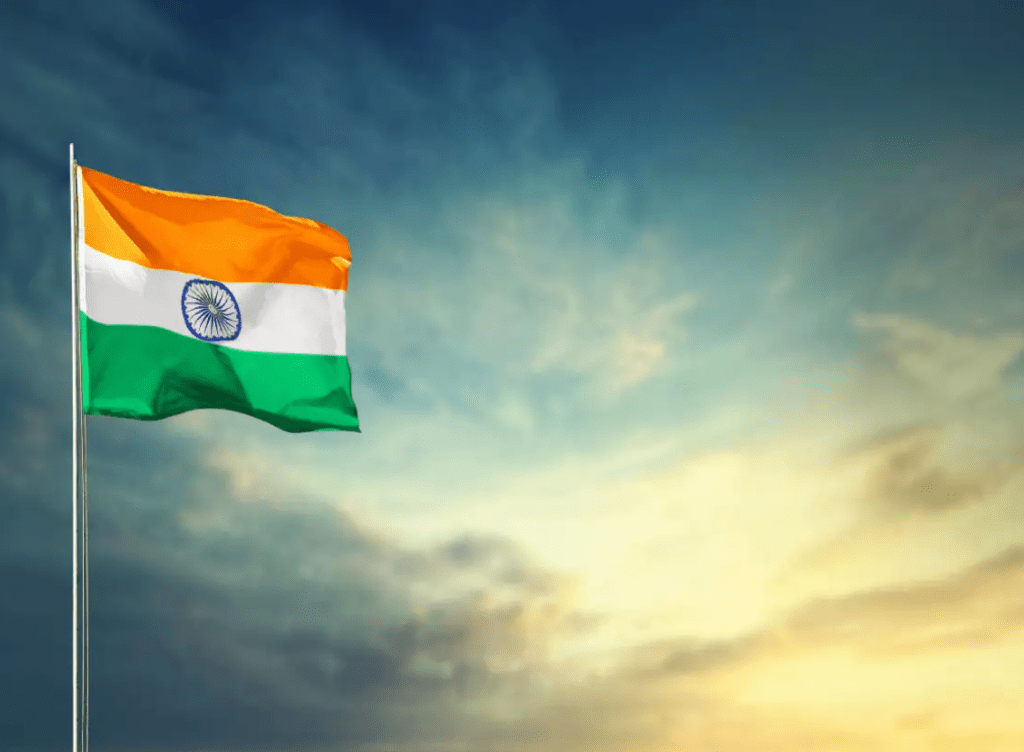
Importance of Unity in Diversity

Unity in Diversity is of much importance in the Development of the country, Global Recognition, National Integration, Peace and Harmony. It is very easy to divide people having different ideology but if the people of India are united it is very tough to break down the nation. Unity between people maintains peace in the nation. If the Indian Society is weak and distributed on different terms, India won’t be able to move on the path of development. India is always appreciated on international platforms for its unity. It is a symbol of Unity for other nations despite their different culture and religion.


Role of Unity in Diversity

In India People from different religion and culture live here. Every state has different beliefs, language, ideas, culture, religion, rituals, etc. People follow religion of their choice as India is Secular country. Yet, they live with the spirit of love and brotherhood. Indian Society learned this all from ancient times. There are about 29 religions and more than 1,000,500 languages are spoken. In spite of such differences Indians have unity among them which threatens global society. “United we stand, divided we fall.”

Our Indian Society taught us caste, religion, language, creed, race cannot divide us. We should always stand united for the improvement of nation. We should always believe in the concept of love, peace and brotherhood. The distinction in culture, religion, language makes us strong and makes India recognizable.

Why MS Dhoni is greatest of all time!

Mahendra Singh Dhoni, undoubtedly one of the world’s greatest cricketers and one of the world’s best captains, retired from cricket last year on Independence day (Aug 15). But tales of his adventures are still on the tongue of every cricket lover. He achieved everything that every cricketer dreams in his 16-year career. Apart from being a great wicketkeeper, his captaincy was also excellent. Dhoni played 538 matches for India in his career, in which he scored 17,266 runs with the help of 16 centuries.

‘Mahi’, as Mahendra Singh Dhoni is popularly known, was born on 7th July, 1981 to Pan Singh and Devaki Dev at Ranchi in Bihar (now Jharkhand). Dhoni’s parents had moved to Ranchi from Uttarakhand where his father works in a junior management position in Mecon. He has a sister and a brother.
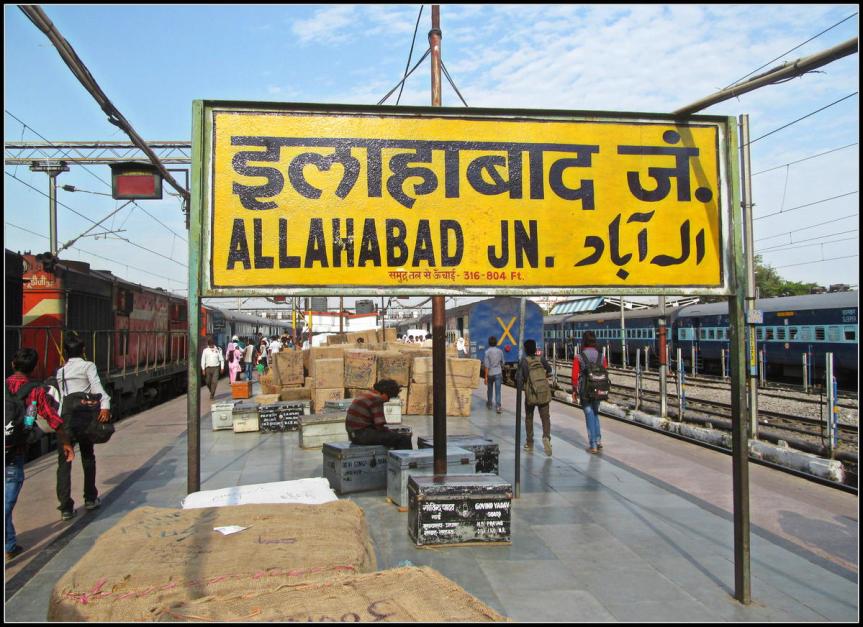
Lets read why MS Dhoni is the greatest Indian cricketer of all time.

Major ICC Trophies as Captain

MS Dhoni is the only captain in the history of Cricket to win all ICC trophies. Under his captaincy, India won the 2007 ICC World T20, the 2010 and 2016 Asia Cups, the 2011 ICC Cricket World Cup and the 2013 ICC Champions Trophy.

He’s the best captain we’ve had

No cricket captain in the past has been as successful as Dhoni across all formats of cricket. As of today, his captaincy boasts of two world titles in 50-over ODI cricket, one world title in the T20 format besides Champions League and IPL, where he holds two titles in each format. If this isn’t enough for you, remember that it was under Dhoni’s captainship that put us on top of ICC Test Cricket rankings.

He is India’s highest impact ODI player

According to ‘Impactindex’, MS Dhoni is India’s most high impact ODI cricket player, followed by Kapil Dev and Sachin Tendulkar. Purely as a batsman, he stands behind Sachin and Virat. But it’s his varied skill-set that makes him the most impactful player of the lot.

He created the ‘Helicopter shot’

Former India skipper Mahendra Singh Dhoni’s helicopter shot has been emulated a number of times by fans and his teammates as well, whether in the nets or during the match. Dhoni’s helicopter shot became a rage in mid 2000s when he first played during his long hair days. Dhoni’s style and flamboyance gave that shot its name and made it famous more than any other cricketer’s signature shot.

The world’s greatest workload

From 2008 to 2014, Dhoni was the captain-cum-wicket-keeper-cum-attacking-batsman of the Test, ODI, T20 teams of India, whilst leading the IPL team Chennai Super Kings. That’s around 300 matches for India and 100 for CSK. Many international players have wilted with just half of this workload and chosen to retire early in the face of such pressure.

World’s greatest wicket-keeper

An oft-overlooked fact: MS Dhoni has a record of 700 international catches plus stumpings in the three formats and no other Indian wicket-keeper comes close. He is always alert and outwits the batsman by hitting the stumps when he sees a player out of the crease – especially after he has taken a spectacular catch and the umpire doesn’t yield!

Team India’s Phoenix

But more than mere records, it is his influence on Indian cricket that will outlive him. His cool-as-a-cucumber attitude has rubbed off on his team. Ganguly’s aggression followed by Dhoni’s “no fear cricket” (in the words of Aussie legend Ian Chappell) have transformed Indian cricket. When we were eliminated in the 2007 ODI WC, Dhoni took us out of the gloom and won us the T20 WC, which arguably ushered in the T20 revolution. In the 2007 Tests at Lord’s too we were on the verge of losing and Dhoni’s 76 off 159 helped us draw the match with one wicket to spare. We won the series and subsequently became Test No 1. Dhoni is the lone Indian captain who made winning a habit. After the debacle of 0-8, the 2013 ICC Champions Trophy and the 4-0 Australia whitewash (which featured his record double century) he brought back Team India’s winning streak after a dark cricketing period. When the opposition had figured out his attacking game, he transformed it to return to the reckoning. They threw stones at his house (not once, but twice), badgered him as captain, dragged him to court over a magazine cover, but he came out of every storm – dignified and unhurt. Dhoni is the most complex cricketer in the world as also the most thrilling – and inevitably the greatest!

Spectacular things that Legendary Cricketers say about MS Dhoni:

“Dhoni Is The Best Captain I Have Played Under.”

Sachin Tendulkar

“Dhoni Is My Hero. We talk a lot about Sachin Tendulkar, Virender Sehwag, But this boy has as much talent as anyone in the game.”

Kapil Dev

“I Would Go To War With Dhoni By My Side.”

Gary Kirsten

“As Far As One-Day Cricket Is Concerned, Dhoni Is One Of The Greatest Captains Of All Times”

Sourav Ganguly

“I Am Really Gifted To Play Under The Leadership Of MS Dhoni.”

Michael Hussy

“I will pay to watch MS Dhoni Bat. Dhoni is not the next Gilchrist. He’s the first MS Dhoni.”

Adam Gilchrist

“Need A Six In Pressure Situation? Call MS DHONI.”

Ramiz Raja

“If Dhoni plays till the end, one thing is for sure. He will make his team Win.”

Harsha Bhogle

“If 15 Runs Are Needed Off The Last 6 Balls, Pressure Is On The Bowler & Not On MS Dhoni”

Ian Bishop

You can not describe him or cover all his achievements through the words.. He is a Living Legend and you know what is Dhoni’s biggest achievement that even if 37 runs in 6 balls were needed, people used to say “Dhoni Sambhal Lega Yaar!”.

INDEPENDENCE DAY, BIRTH OF NEW INDIA

The Independence Day is celebrated on August 15 every year to commemorate India’s freedom from the British rule in 1947.
15 August is a day of her re-birth, a new start. At the midnight of 15 August 1947, the British rulers handed the country back to its Indian leaders, ending a remarkable struggle that lasted years. It was 15 August 1947, the historic date, on which sovereign India’s first Prime Minister Pandit Jawaharlal Nehru unfolded the tricolour flag of the nation on the glorious Red Fort. The day is significant in the history of India as bringing an end to the British colonial rule in India.
But do you know the struggle of independence started long before you might know.
India’s struggle for independence started in 1857 with the Sepoy Mutiny in Meerut and it gained momentum after the First World War. In 20th century, under the leadership of Mahatma Gandhi, the Indian National Congress (INC) and other political organisations launched a countrywide independence movement and revolt against the oppressive British rule.

During the Second World War in 1942, the Indian Congress launched the Quit India Movement demanding an end to the British rule which prompted colonial rulers detaining many campaigners, nationalists, and ministers including Gandhi.
Our first Prime Minister, Jawaharlal Nehru, gave a beautifully worded speech starting with the words, “At the stroke of the midnight hour, when the world sleeps, India will awake to life and freedom.”

Unfortunately as India got independence, it was divided into two countries, India and Pakistan. Pakistan celebrates it’s Independence Day on 14th August rather than 15th August though.

And that led to the birth of new INDIA .

Has Corona Crisis hit the student lives badly?

Covid 19 crisis has ruined most of the people lives in the world. Coming to India has already affected most of the people’s lives which include the careers of students. A student who is pursuing under-graduation and post-graduation thinks to build his career from the college itself. Most of college life helps the student to grow in many ways. It can be personality-wise or physical and mental development and communicating and socializing and part of learning and doing research and developing any skills

Most of the students are facing problems in the following ways:

Listening Online classes

Most part of the education system includes students from rural areas. The students who live in rural areas are not listening to the classes on their mobile or laptop due to network issues. The online way of teaching is not so adaptive making the student just log in for the attendance or leave the class. Students are not able to listen to online classes

Lack of Practical Knowledge

Engineering and medical students are having a problem with practical applications. Field visits and labs are part of engineering and medical courses. The lack of practical applications making the students difficult to relate to the concepts learned in the class. Especially final year students are facing the issue in doing the projects

Events and Workshops

The college curriculum includes events and workshops. The events and tournaments conducted in sports and arts help the students to showcase their talent and also helps them to overcome various fears and improve confidence. The Workshops conducted in colleges help the students to explore various modern technologies and know about them. These all events conducted in college helps the students to grow professionally and personally

Difficulty in learning skills and preparing for competitive exams

The coaching centers for competitive exams and other skills are closed due to corona. Students used to learn skills or prepare for any competitive exams for securing jobs in government and private sectors by attending these coaching centers. The students are facing difficulties in learning online. Lack of personal attention, difficulty in asking doubts to the instructor, subject discussion with other students are some of the issues or difficulties faces.

Delay or cancellation of Abroad studies

Students who wish to go abroad and study there are facing issues of travel. Some countries like China, Britain have imposed travel bans on Indians due to increasing covid cases. Some students who got visas are facing issues with certificates. Students have to submit certificates to get admission to foreign Universities. The delay in the certificate issue is due to the late conduct of the final semester/ final year examinations. Due to this issues, Some students cancel or postpone their plan of studying abroad

College life and Graduation ceremony

Due to the corona crisis, most of the graduation ceremonies are either conducted online or canceled. And most of the college life and memories made during this college life are affected. The enjoyment and enthusiasm are adversely affected. There is also difficulty in communicating with friends online except a 2 or 3 friends whom we talk frequently

Internships and Jobs

Students are unable to get placed or internships. The internships available online are much lesser than the internships available offline. The companies which offer placements are worst hit by the crisis financially. As a result, the placements offered seem to fall

Why Aadhaar Card And Pan Card Are Important Before Starting Your Professional Journey

Aadhaar is a 12-digit exclusive number issued by the “Unique Identification Authority of India” to every resident of India. There are many individual documents in the country like PAN Card, driving licenses, passports, and ration cards. Any resident of India, including minors, is entitled to an Aadhaar card. While the Aadhaar card is for adults, “Baal Aadhaar” is for children below five years.

Pan Card is a 10 digit alphanumeric number issued by the “Income Tax Department”. It holds all the information about a person. PAN Card is issued to human beings, non-resident Indians, companies or anyone who pays taxes in India.

Types of PAN:

I. Individual

II. Company

III. Trusts

IV. Foreigners

V. Society

VI. Firms/Partnerships

VII. HUF-Hindu undivided family

Usage of Aadhaar Card:

Aadhaar card assists with taking out copies under assorted plans and produce generous reserve funds to the public authority exchequer.

The public authority is furnished with exact information on recipients, and the taxpayer supported organization suppliers can oversee and upgrade, in contrast to plans. Additionally, The Aadhaar number is just given to occupants after de-copying their segment and biometric qualities against its information base.

The Aadhar system takes into consideration disconnected/online independence check of occupants the country over. It takes out the problem of oftentimes giving supporting personality reports each time an occupant needs a way into administrations, advantages and appropriations. Aadhaar Card is fundamental for profiting explicit government assistance plans and contributions like lamp oil, LPG, and grants.

Usage of Pan Card:

Opening a bank account:

A PAN card is important to open another financial balance, regardless of whether it is an investment funds or a current record. Regardless of whether private, public or agreeable, all banks require the consistence of a PAN card to open a record with them.

Proof of Identity:

A PAN card is recognized as substantial evidence of personality anyplace in the nation and estimated as verification old enough. It can likewise be used as evidence of character while applying for a citizen ID, driving permit, visa and so on.

Cash Deposits:

In case you are submitting cash over Rs. 60,000 all at once, you should introduce your PAN subtleties to the bank. This is with regards to the RBI approval, which guides banks to report any enormous money stores to the RBI to stay away from tax evasion.

A TREAT OF HEAVEN

ANDAMAN AND NICOBAR ISLAND

In this blog, I am going to take you to the middle of the sea. Wondering where? The island which is very famous because of our freedom fighters where they had to spend years behind the bars. Yes, you are guessing right, I am talking about Andaman and Nicobar Island. This place is heaven on the earth if you haven’t visited yet after reading this blog about Andaman and Nicobar Island, I am sure that you all will be going to book your tickets now! So, let’s start our online trip to Andaman and Nicobar.

I am going to talk about the places where I had visited in Andaman and Nicobar.

  1. Havelock
  2. Neil island
  3. Cellular Jail
  4. Ross Island

Havelock is the spotlight of the Andaman and Nicobar tourism, it is very famous for the beaches and greenery, in short, it is the feast for the eyes. Clyster clear water, white sand will definitely soothe your eyes. In 2018 our prime minister Narendra Modi has changed the name of havelock to swaraj deep. Yes I know you all want to know how to reach there, you have to book ferries and it will take 90 min to reach there. Places to visit in havelock are:

  1. RADHA NAGAR BEACH:

Radha Nagar beach is one of the most well-known beaches in Andaman and Nicobar and  the best beach in Asian  described by the Time magazine. sky blue sea with crystal clear water and white sand where you and enjoy your day you can play in the water you can swim in the water you can also take sun-bath there. There are large numbers of huts, benches and wooden chairs where you can sit and relax there and can enjoy the beauty of nature.

They also provide you with changing rooms where you can change you wet cloths.

  1. ELEPHANT BEACH 

Don’t judge this place by its name, you might be thinking that there must be many elephants but it is not like that. Elephant beach is very famous for water sports, it gives you numerous water activities. Let’s discuss in more details about water sports.

  • SCUBA DIVING : 

In scuba diving, you are taken under-water where you can see the breath-taking view of aquatic life. You can see untouched coral reefs, vibrant fishes, under-water vegetation and under-water ecosystem.

  • SNORKELING :

Snorkelling is little bit same as scuba diving but it doesn’t allow you to go deep inside the water, you can only go to the surface of the water and can see through your goggles, and also can swim.

  • SEA WALKING: 

Yes, you heard right you can walk under the sea, sea walking is most unique and very adventurous. Diving and swimming are okay but have you ever imagined walking under the sea. Once you reached the bottom of the sea you will see that you will get surrounded by hoards of fishes you can actually feed them, isn’t it really exciting?

It is another island full of beaches, this island is for those who want to be far from noise, disturbance as you can find a smaller number of vehicles, market and less population. Here also you can find water sports activities like jet skiing and a glass bottom boat ride. Let me make you more clear about these water sports.

  • JET SKIING:

Jet skiing is one of the most enjoyable water sports activity as it can be enjoyed by anyone and it is available at Bharatpur Beach in Neil. It will give you a unique feeling that you are riding a bike on water. Timing for this activity is from 9AM to 4PM. I personally advise you to book jet ski as it is always available and t is cheaper than other water sports activities.

  • GLASS BOTTOM BOAT RIDE:

this activity is appropriate for those who don’t want to get wet or doesn’t want to go into the water. By the name itself, it is clear that you will be travelling on a boat which will have a see-through glass from which you can see the underwater life, you can see fishes, corals and many more.

Cellular jail is one of the most historic monuments in Andaman and Nicobar, also known as kaala Pani, it will definitely give you goosebumps while exploring the jail. Every wall of the jail will tell you the story of our soldiers. There you will see how much sacrifice has been done by our freedom fighters. Britishers used to send the soldiers in this whenever they try to protest against them. You can visit the jail at 9AM to 12:30PM and 1:00PM to 5PM (except on Mondays and on national holiday)

Cellular jail will provide you light and sound show, in this you will get narrated the whole story of how freedom fighters lived there how they survived there and how has been treated there. It is a must-watch show. The show is in both Hindi language and in the English language. You can enjoy this show at 6PM    (Hindi) and 7:15PM (English).

The one who is a nature lover, Ross island is a perfect place to visit. There you are surrounded by nature. There you can see animals and the best part is that they are not caged they will roam here and there. You will see rabbits, deer, peacocks roaming here and there and you can experience the beauty of the nature. You can sit there for hours in cool breeze and can also enjoy the beach view. In 2018 our Prime Minister Narender Modi has changed the name of Ross Island to Netaji Shubhas Chandra Bose island.

\

Next question you all will get that how one can reach there?

You can get a boat from phoenix bay jetty and it will help you to reach in 15 mins, the people over there will provide you with a life jacket also or else you can choose a helicopter tour. 

Yes, this is the short and adventurous trip of mine to Andaman and Nicobar, I am sure that after reading this you will definitely plan your future trip to Andaman and Nicobar. I personally suggest you to visit Andaman and Nicobar during summer months. 

PUBLIC ADMINISTRATION IN INIDA

Public administration is the implementation of government policy and also an academic discipline that studies this implementation and prepares civil employees for working in the public service. As a “field of inquiry with a diverse scope” whose fundamental goal is to “advance management and policies so that government can function.” Some of the various definitions which have been offered for the term are: “the management of public programs”; the “translation of politics into the reality that citizens see every day”; and “the study of government decision making, the analysis of the policies themselves, the various inputs that have produced them, and the inputs necessary to produce alternative policies.” The word public administration is the combination of two words—public and administration. In every sphere of social, economic and political life there is administration which means that for the proper functioning of the organization or institution it must be properly ruled or managed and from this concept emerges the idea of administration.

Public administration is “centrally concerned with the organization of government policies and programs as well as the behavior of officials (usually non-elected) formally responsible for their conduct”. Many non-elected public employees can be considered to be public administrators, including heads of city, county, regional, state and federal departments such as municipal budget directors, human resources (HR) administrators, city managers, census managers, state mental health directors, and cabinet secretaries. Public administrators are public employees working in public departments and agencies, at all levels of government.

In the United States, civil employees and academics such as Woodrow Wilson promoted civil service reform in the 1880s, moving public administration into academia. However, “until the mid-20th century and the dissemination of the German sociologist Max Weber’s theory of bureaucracy” there was not “much interest in a theory of public administration”. The field is multidisciplinary in character; one of the various proposals for public administration’s sub-fields sets out six pillars, including human resources, organizational theory, policy analysis, statistics, budgeting, and ethics.

In 1947 Paul H. Appleby defined public administration as “public leadership of public affairs directly responsible for executive action”. In a democracy, it has to do with such leadership and executive action in terms that respect and contribute to the dignity, the worth, and the potentials of the citizen. One year later, Gordon Clapp, then Chairman of the Tennessee Valley Authority defined public administration “as a public instrument whereby democratic society may be more completely realized.” This implies that it must “relate itself to concepts of justice, liberty, and fuller economic opportunity for human beings” and is thus “concerned with “people, with ideas, and with things”. According to James D. Carroll & Alfred M. Zuck, the publication by “Woodrow Wilson of his essay, “The Study of Administration” in 1887 is generally regarded as the beginning of public administration as a specific field of study”.

Drawing on the democracy theme and discarding the link to the executive branch, Patricia M. Shields asserts that public administration “deals with the stewardship and implementation of the products of a living democracy”. The key term “product” refers to “those items that are constructed or produced” such as prisons, roads, laws, schools, and security. “As implementers, public managers engage these products.” They participate in the doing and making of the “living” democracy. A living democracy is “an environment that is changing, organic”, imperfect, inconsistent and teaming with values. “Stewardship is emphasized because public administration is concerned “with accountability and effective use of scarce resources and ultimately making the connection between the doing, the making and democratic values”.

History

India in the 600 BCE

Such neat and prosperous civilizations as Harappa and Mohenjo-daaro must have had a disciplined, benevolent and uncorrupt cadre of public servants. In support of this, there are many references to Brihaspati’s works on laws and governance. An interesting extract from Aaine-Akbari [vol.III, tr. by H. S. Barrett, pp217–218] written by Abul Fazl, the famous historian of Akbar’s court, mentions a symposium of philosophers of all faiths held in 1578 at Akbar’s instance. This sounds credible in the context of Akbar’s restless desire to find truth, reflected in his launching a new religion called Din-e-elaahi. The account under advisement is given by the well-known historian Vincent Smith, in his article titled “The Jain Teachers of Akbar”. Some Charvaka thinkers are said to have participated in the symposium. Under the heading “Naastika” Abul Fazl has referred to the good work, judicious administration and welfare schemes that were emphasized by the Charvaka law-makers. Somadeva has also mentioned the Charvaka method of defeating the enemies of the nation. He has referred to thirteen enemies who remain disguised in the kingdom for their selfish interests. They may contain a few relatives of the king and subsidiary rulers, but they should not be spared. They should be rigorously punished like any other such opponent. Kautilya, as already mentioned, has given a detailed scheme to remove the enemies in the garb of friends. The Charvaka stalwart, Brihaspati, is so much more ancient than Kautilya and Somadeva. He appears to be contemporaneous with the Harappa and Mohenjo-daaro culture.
The central point of traditional religious ritual is to earn ready money for its perpetrators. All unproductive, barren rites designed for various moments in human life starting from several months prior to birth and extending over several years beyond death in the form of the annual sraddha, many of which are current even today, are but channels to feed the priests. They are unreal, imagined and wasteful. While they are unreal, imagined and wasteful; the feeding is real.

This cunning paradox was realized by the Charvaka for its real worth. They wanted financial causes to produce financial results. Imagined causes only produced imagined results not real ones.

JOURNALISM IN INDIA

Media interview

Gathering, creating, preparation and distribution of reports of current events based on facts and information is journalism. The term journalism is used for the profession whereas a journalist is a person who is responsible for collecting and presenting the news. 

Journalism is mainly classified into two sections – Print Journalism and Electronic (Audio/Visual) Journalism. Print Journalism involves newspapers, magazines and journals. Different work profiles in Print Journalism includes reporters, editors, correspondents, columnists and many more. Meanwhile, Electronic Journalism is dissemination of news or information through electronic media like radio, television and web. Prominent work profiles in electronic media include anchor, reporter, editor, correspondent etc.

Journalism Courses:

Here is a list of mainstream journalism courses:

  • Bachelor of Mass Media and Journalism (UG, 3 years)
  • Bachelor of Communication and Journalism (UG, 3 years)
  • B.Sc. in Journalism and Mass Communication (UG, 3 years)
  • BA in Media and Communication (UG, 3 years)
  • BA in Journalism (UG, 3 years)
  • BBA in Mass Communication and Journalism (UG, 3 years)
  • MA in Journalism and Mass Communication (PG, 2 years)
  • M.Sc. in Mass Communication (PG, 2 years)

The Scope in Journalism

In the recent years, the communication channels have widened from radio, television to digital and social mediums. India has one of the biggest media industries in the world providing ample number of job opportunities to the suitable candidates. Currently, Journalism has become one of the most prestigious careers in India. Candidates can avail job as a journalist in English, Hindi and many other vernacular languages. Candidates can also avail jobs in different types in different types of journalism mentioned below:

Types of Journalism
Broadcast JournalismCommunications
Fashion JournalismForeign Correspondent
Freelance WritingInvestigative Journalism
Newspaper ReporterPhotojournalism
Social MediaSports Journalism

Print Media

Below are some important job profiles and their roles in print media.

  • Reporter:  The role of a reporter is to gather news and report with accuracy. News sense, objectivity and timeliness are few important qualities, which a reporter should possess.
  • Correspondent: Correspondents are also known as special reporters who are assigned for a particular purpose. Correspondents can be of any beat like politics, sports, crime etc.
  • Feature Writer: The responsibility of a feature writer is to write soft stories with deep research and observations on particular subject.
  • Proof Reader: The role of a proof reader is to assess the edited copy. A proof reader must have good grammatical and punctuation skills.
  • Leader Writer: The role of a leader writer is to write their views on the current topics through editorials.
  • Editor: Editor’s responsibility is to maintain a journal’s reputation. He also ensures that article corresponds with the media in-house style guides.
  • Columnist: The role of a columnist is to write for a specific column in detail in the newspaper or magazine. The column can be related to any topic highlighting his viewpoint on any subject like politics, fashion or films.

Photo Journalists, Cartoonists are some other profiles.

Electronic Media

Here are various job profiles included in electronic media.

  • Researchers: The role of researchers involves deep research on a particular topic. Significant qualities required for this job profile are creativity and excellent research skills.
  • Electronic Media Reporters: An electronic media or broadcast reporter should have good verbal and presentation skills. He should have a news sense.
  • Presenters/Anchors: A presenter should be confident. He must have excellent communication skills, ability to remain balanced in stressful conditions.
  • Freelancers: Apart from the above-mentioned job profiles, freelancers are informal employees who are assigned particular task and are paid according to it.

Areas of work for a journalist

Below are few areas where a journalist can work at different profiles.

Journalists and Their Work Areas
News AgenciesPress Information Bureau
Legal Affairs DepartmentTelevision Industry
NewspapersCirculation and Public Relations
All India RadioJournals
BlogsWebsites

Pay Scale in Journalism:

Most of the aspirants chose journalism due to interest and passion. Check out how well journalists are paid in India.

According to a report in Glassdoor, the annual salary of a journalist at The Times of India ranges from Rs 2.33-9.58 lakh. Meanwhile, the annual salary of a reporter at The Hindu is Rs7.30 lakh.

The pay-scale of a journalist in print, television and radio with similar experiences differ. For example, a senior journalist in electronic media is paid more than a journalist in radio and newspaper with similar experiences. The major difference is because of the higher advertising revenue in television.

Pros and Cons of Journalism:

Journalism is a profession for curious people and like every other profession; journalism too has both pros and cons.

Pros:

  • New opportunities and challenges
  • Opportunity to work with informed people
  • You learn for a living
  • Opportunity to meet people
  • Opportunity to travel
  • A strong sense of achievement
  • You get paid for writing
  • Benefits of a press card

Cons:

  • Not very lucrative
  • Challenging and demanding
  • Long workdays
  • Work pressure
  • Stressful
  • Risk to life

SCHOOL SYSTEM IN INDIA

The Indian education system has made significant progress in recent years to ensure that educational opportunities are available to all segments of society. According to the 2009 Right to Education Act, schooling is free and compulsory for all children from the ages of 6 to 14. However, improvements are slow being implemented and disadvantaged groups may still not have adequate access to education. A high value is placed on education, as it ensures a stable future. All parents want their children to attend the best private English schools, but places are limited. The admission process is therefore highly competitive. Most Indian schools have a strong focus on academic subjects, with little scope for creativity and few or no extra-curricular activities. Traditional schooling methods tend to emphasize rote learning and memorization, rather than encouraging independent or creative thinking. There is a strong focus on examinations from an early age. This makes the atmosphere at Indian schools competitive. Many expats prefer to send their children to international schools. Others choose a more progressive Indian school that is less traditional in its teaching style.

The Education System

The Indian education system is structured as follows:

  • Pre-school: Education at this level is not compulsory. The Montessori system is especially popular at the pre-school level
  • Private playschools: Catering for children between the ages of 18 months and three
  • Kindergarten: This is divided into lower kindergarten (for three- to four-year-olds) and upper kindergarten (for four- to five-year-olds)
  • Primary school: First to fifth standard/class/grade (for six- to ten-year-olds)
  • Middle school: Fifth to eighth standard/class/grade (for 11- to 14-year-olds)
  • Secondary school: Ninth and tenth standard/class/grade (for 14- to 16-year-olds)
  • Higher secondary or pre-university: 11th and 12th standard/class/grade (for 16- to 17-year-olds). This is when students choose an academic area on which to focus
  • Undergraduate: A BA is a three-year degree. Specialised courses such as medicine and engineering can be longer
  • Postgraduate: A one-year course

Types of Schools

  • Public/government schools: Most schools in India are funded and run by the government. However, the public education system faces serious challenges including a lack of adequate infrastructure, insufficient funding, a shortage of staff and scarce facilities
  • Private schools: Since many government schools do not provide adequate education, Indian parents aspire to send their children to a private school. Some expats choose to send their children to private Indian schools
  • International schools: There are international schools in all major cities. They are attended by expat and Indian children
  • National open schools: Provide education up to the higher secondary level for children whose schooling has been interrupted and have been unable to complete formal education
  • Special-needs schools: Provide non-formal education and vocational training to children with disabilities

Curricula Systems

There are different systems depending on which level of government or academic organization sets the curriculum and standards for examinations. Schools are affiliated to one of these “boards”.

  • State government boards: Each state government has a board that sets the syllabus and key examinations
  • Central Board of Secondary Education (CBSE): This is the most common curriculum in secondary schools. Standards are set by the national government for the syllabus and examinations for classes 9 to 12. There is a strong emphasis on math’s and science under this system
  • Council of Indian School Certificate Examination (CISCE): This is more commonly known as the Indian Certificate of Secondary Education (ICSE). The syllabus and exams are set by the CISCE, which is a private body. The subjects are more diverse and equal importance is given to arts, languages and sciences.
  • International Baccalaureate (IB): The curriculum is set by this non-profit educational foundation, which is recognized all over the world. It features a more innovative syllabus that focuses on all-round development rather than just academic subjects. Many international schools follow this curriculum. To find  schools offering the International Baccalaureate curriculum.
  • Cambridge IGCSE: Many international schools also offer the international Cambridge curriculum for 14- to 16-year-olds. The focus is on developing students’ skills in creative thinking and problem solving. For a list of schools in India following the Cambridge curriculum

For more background information, The British Council have published a detailed overview of the Indian School Education System

Fees and Enrolling at a School

As competition for places in good schools is high, parents must start the admission process at least six months prior to the start of the school year in June. An admission interview and/or exam is often required, even at the pre-school level. In addition, some schools admit students based on a list of preferential criteria such as place of residence, a sibling who is already enrolled at the school or a parent who is an alumnus. The documents required for admission include:

  • Application form and fee
  • The child’s birth certificate
  • Proof of residence (utility bill)
  • Report cards of previous school years (if applicable)

Annual fees can vary from Rs25,000 to Rs200,000 at the elite private schools. In addition to fees, a donation to the school is also usually expected, which can range from Rs50,000 to Rs100,000.

The Case for a New Avenger

S.H.I.E.L.D. might have missed assembling team members from India, but it is never too late to correct an oversight. Imagine our larger-than-life superhero, Rajinikanth, partnering with other Avengers in a combined mission to save the planet from dangerous predators with bad intentions. Some aliens, some familiar ones! Yes, India is far from America, and the distance seems to have increased during the pandemic, but Rajinikanth could give some worthy company to Iron Man and perhaps teach him a trick or two, too, through holographic interfaces and augmented reality. Who knows, he could also kill all the mutants of Coronaviruses in this quest!

I wish to present some facts now to give you a background of my strategic human resource and leadership plan for S.H.I.E.L.D. India has one of the largest numbers of gig workers in the world. As per a March 2021 report by consulting firm Boston Consulting Group (BCG) and Michael & Susan Dell Foundation, the gig economy in India is expected to soar to 90 million in approximately a decade from now. Choose any vocation here and you will be spoilt for choices. Almost everyone is an expert on politics, economics, socio-cultural issues, fashion, sports, career, marriage, children, nature, animals, traffic, the dos, and don’ts … the list is endless. People can even advice others on how they should lead their lives. It’s affection, silly!

War for talent? Clearly, recruiters have not been able to explore the depth of this vast pool. To reiterate, India is a land bubbling with high potentials. Now let us go back to the topic of superpowers. There is plan B too. Rajinikanth could have a serious competition in a plain-looking community here. S.H.I.E.L.D. could consider appointing some members from this fraternity too.

You are rolling your eyes? Why? Hear me out. Presenting to you the case of beholders of the mighty pen (over a sword or a gun), and the upholders of fine speech. Their words hit no less than the missiles unleashed by Israel over the Gaza strip. Let me walk you through the innate gifts of a less publicized community with an immensely amoeba-like (plasma membrane) flexibility.

The teachers.

The extremely sturdy ones can stand the whole day, operate (teach) without a table and a chair, or, the basic infrastructure, and sometimes work even at low or no salaries for months. The strengths, struggles and coping mechanism of the privileged ones out of this lot are embedded in different realms. More on that, later! You will be astonished to learn how many hats teachers can don at the same time. They juggle between being a mentor, coach, counsellor, Devil’s advocate, friend, philosopher, or guide. Interestingly, even their DNA personifies versatility. Over the years, the mutations in their genetic material have helped them learn how to make milestones of the stones thrown at them by students unhappy with their marks, and parents unhappy with the teachers for giving those marks! Talk about heightened senses, their eyes can easily observe and sense the intention behind each greeting, smile and calls to the office. They are like Sharma ji ka beta/beti’, always expected to excel at everything and set an ideal example for the others to emulate.

Here, I would take a detour and ask you to recall the violinists who continued to play music for as long as they were alive, just to calm the passengers on the sinking Titanic ship. On similar lines, teachers continued to teach while the pandemic unleashed havoc around the world. The unlearning of years of classroom teaching was replaced by the immediate need to adopt new technological tools and re-learn the art of virtual teaching. The new and changed landscape was no less than the one post Thanos snapping his finger.

Aren’t convinced yet? Go to the polling booths and follow the polio immunization drives, you will know what I mean.

Now the final hook. Except for some teachers working with elite institutions, the rest won’t even charge much for their services. You can simply smile, appreciate their work, show some respect, and boy, see how they melt! Just watch how it lights up their faces. They are so motivated, especially on September 5 every year in India, that even Abraham Maslow bows to them from time to time from his grave. Had told you about their genetic sequencing earlier, remember? I do hope I have presented their (our) case well, S.H.I.E.L.D. Hopefully, you will have a relook at your current team now.

On a sidenote, can I be a contender too? Just saying. I can take it up as a gig assignment during the semester breaks. Imagine the newest Avenger on the block and that too a female from India! It will further boost the diversity and inclusion factors for you. If you can give equitable salary and perks, you could even find yourself on the pages of Harvard cases.

You might want to provide supplements of Vitamin T(eacher) to your team if Rajinikanth’s diary of appointments is full. Professor Hulk would not mind some more erudite company. In return, I vow to start quoting your example in my classes as a great employer brand with an excellent employee value proposition. Who knows, I might even write a research article. Told you, pen and words are the weapons here. Think about it. What say? Are you game?
P.S. I have recently bought a telescope to keep an eye on the stars and planets too. Taking my possible future role tad too seriously, eh?

Why do people have so much aggression?

  • We all act aggressively from time to time—say while sitting in traffic or in the midst of an argument—but some are more aggressive than others.
  • There are several reasons we engage in aggressive behavior, which also help to explain why some people display aggression more often.
  • These causes include instinct, hormonal imbalance, genetics, temperament, nurture, and stress.
  • If there are excessively aggressive people in your life, like a loved one or coworker, you can learn to cope or deal with their behavior effectively.
  • First, try keeping your cool, empathizing, and expressing your concern—these actions should help you to navigate the interaction and make it more pleasant.
  • If these strategies don’t prove effective, consider distancing yourself from the overly aggressive person; your wellbeing should be your priority.

Aggression is hostile or violent behavior. It’s a woman yelling at her son for spilling his milk on the carpet. It’s a child pushing his friend down on the playground because she was playing with his favorite toy. It’s a girl snapping at her boyfriend because he didn’t invite her out with the guys.

As you can see (and probably know from personal experience), aggression can take many forms. We all act aggressively at some point or another in our lives, whether it’s yelling at the black Sudan that cut us off or getting into it with family or friends. But some are more aggressive than others—quick to react or engage in hostile behavior. Which begs an important question: why

What Causes Aggression? 6 Origins

Sure, traffic can spur aggression, as can a disagreement with a coworker. But what’s the psychology behind this behavior? There are actually a few reasons we become aggressive, which also help to explain why some people are more aggressive than others:

1. Instinct: Aggression is one of our many survival instincts. According to Sigmund Freud, aggression continuously builds up until it releases as aggressive behavior, at some point or another. Some individuals can suppress this aggression and use other survival instincts instead, but others simply react and release.

2. Hormonal imbalance: A hormonal imbalance in an individual can certainly contribute to aggressive behavior. For example, high levels of testosterone contribute to high levels of aggression. This explains why males are characteristically more aggressive than females.
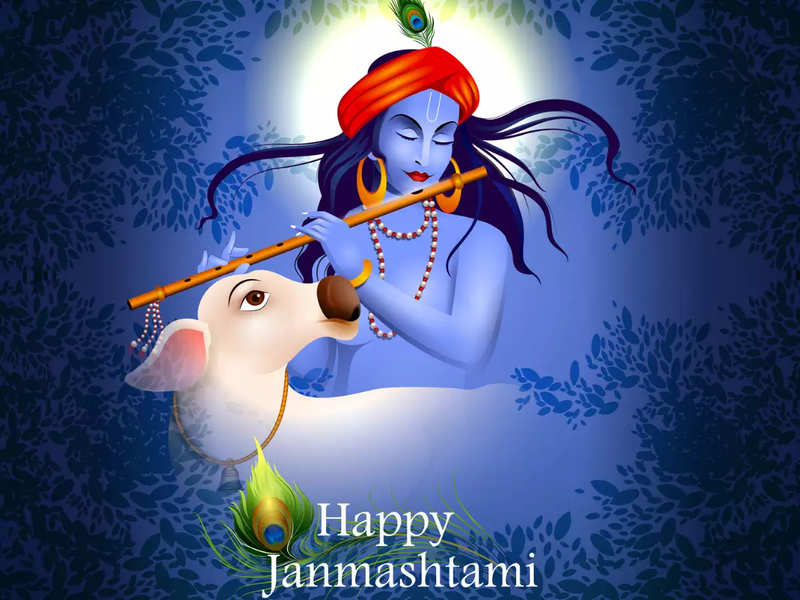
3. Genetics: Aggression can also be passed down genetically. Children are at a greater risk of adapting aggressive tendencies if they have a biological background for it. Time and time again, father and son both display aggressive behavior.

4. Physiological illness and temperament: Serious illness can have a major effect on an individual’s mood and behavior, as the stress and other mental effects may bring about greater aggression. Additionally, one’s temperament can play a role in aggression. People with bad tempers typically become aggressive more quickly than calmer individuals.
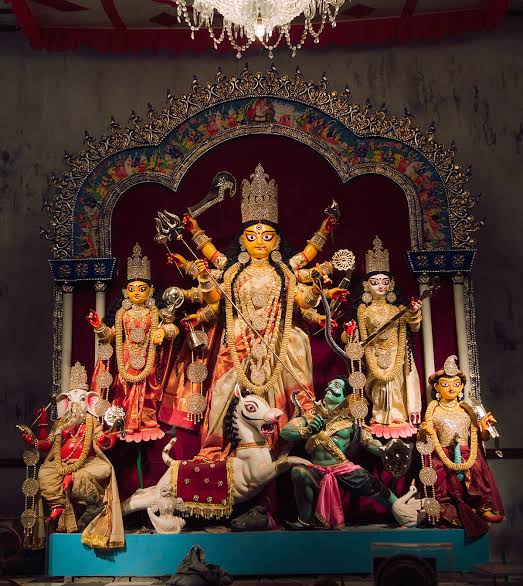
5. Social learning: Aggression can be learned. Some become more aggressive due to personal experiences or observational learning. For example, children are always looking for cues on how to act, as illustrated by the Bobo doll experiment. They learn to act aggressively when they watch someone else commit violent acts like in movies or video games.

6. Psychological frustrations: It’s human nature to become frustrated when life just doesn’t seem to be going so well. This frustration may involve work or love, for example, and can lead to an all-around feeling of negativity. This negativity then represents a threat, which can lead to aggression

How to Cope with an Aggressive Individual

Dealing with someone who constantly lashes out in hostile or violent behavior is tough—especially when it’s someone you’re close to like your boyfriend or mother, or someone you can’t get away from, like a coworker. In any case, the following can help you deal with the aggressive people in your life more effectively:

  • Keep your cool. The last thing that will alleviate this situation is another aggressive individual. Maintain your composure and use your better judgment to handle the situation. Aggressive people often seek to intimidate and upset others. You have to ensure this doesn’t happen and instead of reacting with rage like they want you to, take a moment to count to ten and think of a better way to deal with the situation at hand.
  • Put yourself in their shoes. Even if the aggression seems unwarranted, take a moment to imagine yourself in their position. Maybe they grew up in an overly aggressive household. Or, maybe they have a lot on their plate and they’re reacting to the stress with aggression. This will help calm your own negative feelings down and empathize with the individual. Then, maybe you can turn the aggressive attack into a productive conversation.
  • Express your concern. Maybe there isn’t an obvious, underlying cause of the individual’s aggression. Once you’ve taken a step away and you’re both calm, express your concern for them. They may not realize the severity of their aggression or its effect on those around them. It could take someone like you bringing it to light for them to make that realization and make a change.
  • Distance yourself. Sometimes, these aggressive individuals are just not worth it and don’t deserve a place in your life. You have to prioritize your wellbeing and if that means cutting them out of your lives, then so be it. And if cutting them completely out of your life isn’t very realistic (think, an aggressive aunt or uncle that’s at every family reunion or your coworker who doesn’t look to be going anywhere anytime soon), then just distance yourself as best you can. Avoid them.

Ultimately, you have to decide if it’s worth dealing with the aggressive individual. If you decide that it’s not, kick them to the curb and distance yourself from them. But if you decide that this individual is worth it and could maybe use your help, do your best to sympathize with them and determine the underlying cause of the aggression. This will help you both moving forward

Janmashtami

Hindus celebrate Janmashtami with the birth of Sri Krishna. The festival usually takes place in August. In addition, Hindus celebrate the festival at the Ashtami of Krishna Paksha. In addition, Lord Krishna is the most powerful person of Lord Vishnu. It is a happy Hindu festival. In addition, Hindus practice various rituals to please King Krishna. This is one of the most exciting festivals for Hindus.

Lord Krishna
Lord Krishna was born on the 8th day of the Dark Ages in the month of Badon. Badon is a moon in the Hindu calendar. In addition, he was born about 5,200 years ago. He was an incarnation of Lord Vishnu, who was born with a purpose to defeat the evil.

As a result, he played an important role in the Mahabharata text. Also, Lord Krishna preached with good karma and the teachings of Bhakti.

Lord Krishna was born in prison. He was on the ropes when Kansa. But his father Vasudev gave it to his friend Nand to save him. Because he knew that Cancer had a bad heart. Moreover after the rescue the upbringing of Sri Krishna belonged to the Gokul family. Sri Krishna later became powerful. As a result, he managed to kill Kansa.

As a child I used to watch many shows of Sri Krishna. As a result, I know a lot about him. He was very fond of eating Makhan. As a result, he often stole from his mother’s kitchen. So his name was ‘Natkahat Nand Lal’. Sri Krishna was black. So she was always worried about her color. In addition, Sri Krishna had a friend named Radha. Radha was very important to Krishna. So he spent time with her. Radha was very good and unjust so King Krishna always felt difficult with color.

How is Janmashtami celebrated?
People celebrated Janmashtami at midnight. Because Lord Krishna was born in darkness. As Sri Krishna loved to eat the people of Makhan played this game.

According to the game, they tied a clay pot (matki). The match judge tied the mattress very high from the ground. In addition, one fills Makhan into cans. Also, what people do is build a human pyramid to break the matki. Since the matki is very high they have to build a tall pyramid. As a result, more people should participate in sports. In addition, there are other groups and they prevent them from breaking the matki. Equal opportunities exist for both parties. Each team gets a chance for some time. If a team can’t do it while the other team is trying. This is an exciting game that many people gather to watch this game.

In addition, the celebration is done in homes. People decorate their houses outside with lamps. Moreover, the temples are full of people. They perform various rituals inside the temple. As a result, we hear the sound of bells and mantras throughout the day.

In addition, people dance in a variety of religious songs. In the end, it is one of the most exciting festivals in the Hindu religion.

References:

https://en.m.wikipedia.org/wiki/Krishna_Janmashtami

https://www.britannica.com/topic/Janmashtami

Durga Pooja

Durga Pooja is a Hindu festival celebrating the mother goddess and the victory of the heroic goddess Durga over the demon Mahisasura. The festival represents the power of women as ‘Shakti’ in Space. It’s a Good over Evil Festival. Durga Pooja is one of India’s biggest festivals. In addition to being a Hindu festival, it is also a time of family and friends reunion, as well as a cultural festival.

The Importance of Durga Pooja
While the festivals bring a celebration of fasting and devotion for ten days, the last four days of the festival namely Saptami, Ashtami, Navami, and Vijaya-Dashami are celebrated with brilliance and splendor in India, especially in Bengal and overseas.

Durga Pooja festivals vary in location, culture, and beliefs. Things vary so much that in some places the festival lasts for five days, in some places for seven days and in some places for ten full days. The reunion begins with ‘Shashti’ – the sixth day and ends with ‘VijayaDashmi’ – the tenth day.

The goddess Durga was the daughter of Himalayas and Menka. She later became Sati to marry King Shiva. It is believed that the Durga pooja festival dates back to when King Rama worshiped the goddess to gain power over her to kill Ravana.

In some communities, especially in Bangal, the festival is celebrated by decorating the ‘pandand’ in the surrounding regions. On the last day, they go again to immerse the goddess in the sacred river Ganges.

Some believe that another story after the festival was that on this day the goddess Durga defeated the demon Mahisasura. He was called by the Lord of the trinity – Shiva, Brahma, and Vishnu to destroy the demon and save the world at his feet. The battle continued for ten days and finally, on the tenth day, Goddess Durga cast out the demon. We celebrate the tenth day like Dussehra or Vijayadashami.

Traditions Performed During the Durga Pooja Time
The festivities date back to the time of the Mahalaya, when devotees asked Goddess Durga to come to earth. On this day, they made eye contact with the statue of the goddess during a beautiful ceremony called Chokkhu Daan. After erecting a statue of the goddess Durga in their place, they performed rituals to enhance her blessed presence in the images at Saptami.

These traditions are called ‘Pran Pratisthan’. It consists of a small banana plant known as Kola Bou (banana bride), which is taken to bathe in a nearby river or lake, wrapped in a sari, and used as a means of carrying the divine power of God.

During the festival, devotees offer prayers to God and worship him in a variety of ways. After the evening ritual of aarti is performed on the eighth day it is a ritual of traditional religious dance performed before the Goddess to please her. The dance is performed to the accompaniment of musical drums while holding a clay pot filled with a cover of a burning coconut and camphor.

On the ninth day, the worship is completed with Maha Aarti. It is a symbol of the end of great rituals and prayers. On the last day of the festival, the goddess Durga returns to her husband’s residence and the orders of the goddess Durga are taken for immersion in the river. Married women donated vermillion red powder to Goddess and tagged themselves with the powder.

The Conclusion
Everyone celebrates and enjoys the festival regardless of their age and financial status. Durga Pooja is a major public and theater festival. Dancing and performing rituals are an important part of it. Delicious traditional food is also a big part of the festival. Kolkata Street flourishes with stalls and shops, where locals and foreigners enjoy a mouth-watering meal, including sweets. To celebrate Durga Pooja, all workplaces, educational institutions, and business premises remain closed in West Bengal. Many non-Bengali cultural centers organize Durga Pooja in many parts of the UK, USA, Australia, France and other countries. Therefore, the festival teaches us that good always overcomes evil and therefore we should always follow the right path.

Holi – Festival of colours

Holi is known as the festival of colors. Holi is celebrated annually with enthusiasm and enthusiasm in March by followers of the Hindu religion. Those who celebrate the festival, look forward to it every year with the desire to play with colors and have beautiful dishes.

The people forget their problems and indulged in this celebration of brotherhood with joy and happiness. In other words, we forget our animosity and get into a festive mood. Holi is called a festival of colors because people play with colors and apply it to each other’s faces to color in the essence of the festival.

Holi’s history
Hinduism believes that there was a satanic king named Hiranyakashyap long ago. He had a son named Prahlad who was a great disciple of Lord Vishnu. He also had a sister named Holika who had the blessings that fire could cause no harm to her. It is believed that the satanic king had the blessings of King Brahma. This blessing meant that no one, animal or weapon could kill him. This blessing became a curse to him as he became very proud. He commanded his kingdom to serve him instead of God, not to leave his own son.

After this, all the people began to worship him except his son, Prahlad. Prahlad refused to worship his father instead of God as he truly believed in King Vishnu. Seeing his disobedience, the king of Satan plotted to assassinate Prahlad. She sat him on the fire with her son in her lap, where Holika was burned and Prahlad came out safe. This showed that he was protected by his Master because of his devotion. Therefore, the people began to celebrate Holi as a victory for good over evil.

Holi Celebration
People celebrate Holi with great enthusiasm and enthusiasm, especially in North India. The day before the Holi, people performed a ritual called ‘Holika Dahan’. In this tradition, people pile piles of wood in public places to burn them. It shows the burning of evil forces in the review of the story of Holika and King Hiranyakashyap. In addition, they gathered around the Catholic Church to seek blessings and to dedicate themselves to God.

On the next day people celebrate their joy with colours. The people get up early and offer pooja to God. After that, they put on white clothes and played with colors. They pour water on each other. Children run around the water colors using water guns. Likewise, adults also become children on this day. They dye each other’s faces and dip them in water.

In the evening, they bathe and dress appropriately for visiting friends and family. They danced all day and drank a special drink called ‘bhaang’. People of all ages enjoy the special taste of holi ‘gujiya’ vigorously.

In short, Holi spreads love and brotherhood. It brings harmony and happiness to the world. Holi symbolizes the victory of good over evil. This colorful festival unites people and removes all forms of neglect in life.

Bitcoin in India

Bitcoin which has risen in value to about 1000 times in the last ten years is about to be banned in India . While some countries are making it the national currency of the country India has filed for its ban . One Bitcoin cost around 53 lakhs right now which is a huge sum . It means hat the currency of that particular will change every second . While investors of other countries are making huge sums our country will ban such currency . It is sad for investors .

Kyle Jamieson ” The Game Changer “

The fast bowling all rounder delivered once again and this time at crucial time and at the greatest stage of all The World Test Championship . He took 5 wickets in the first session scored about 20 runs and also took wickets in the second half  enabling New Zealand to defeat India . He played a crucial role by taking key wickets of some prominent names like Virat Kohli , Rishab Pant etc . It will not be wrong to say that without him it would have been difficult to defeat the mighty India .

Kiwis The New Champions

When somebody asks what comeback means show them the New Zealand team . From crying faces in the World ODI Championship 2019 to winning the World Test Championship in 2021 . We saw crying faces of Martin Guptill and the Caption Kane Williamson . The Kiwis have made a massive population of billions of Indians sad still they have no hatreds at all . The nicest guys of cricket have won the tournament . If anytime India fails to win any Tournament the second country which I wish win the tournament is New Zealand .

Illitracy in India

Illiteracy in India is a massive problem in India especially when it comes to facing crisis like the Covid 19 . This crisis has nearly disturbed the lives of a majority of the world population . A group of seen applying cow dung on their body and when they were asked they told the news reporter that cow dung will help them face the crisis . And what happened the next day  is not very happening as one of them died due to Covid 19 . So education plays an important role in facing such crisis . But the problem is levels of education can not be increased over night . Science play an important role in this case .

Diwali – Festival of Lights

First of all, to understand that India is a country of festivals. However, none of the festivals is Diwali. It is to be one of the biggest festivals in India. It is likely to be the fairest of them all, the festival of the world. People from different religions celebrate Diwali. The most notable of these is the festival signifies the victory of light over darkness. This also means that it is the triumph of good over evil, and knowledge, than of ignorance and is also known as festival of lights. It is, therefore, a clear light on the whole of the country during Diwali. In the essay on Diwali, you will see that the religious and spiritual significance of Diwali.

The Religious Significance of Diwali
The religious significance of this festival is different. It varies from region to region in India. This is a group of many deities, culture, and traditions of Diwali. The reasons for these differences are likely to be for the local harvest festival. So, there was a merger of the harvest festival in one pan-Hindu festival.

As per Ramayna this day is when Lord Rama returned to Ayodhya. The return was made after Rama defeated the demon king, Ravana. In addition, Rama’s brother, Lakshmana, and Hanuman came back to Ayodhya is to prevail in the end.

It is a popular tradition for the sole purpose of Diwali. Here is Lord Vishnu as incarnation of Krishna killed Narakasura. Narakasura was a demon. This victory brought with it the release of 16000 caught up to the girls.

In addition, this victory shows the triumph of good over evil. This is due to the most high, the Lord is good, and the Narakasura’s wrong.

The association of Diwali with Goddess

Lakshmi is the belief of many Hindus. Lakshmi is the wife of Lord Vishnu.

According to the legend, Diwali, it is the night of Lakshmi’s wedding. This is the night that they chose and wed Vishnu. In eastern India, and is Considered to be the associate Diwali with the Goddess Durga, or kali. Some Hindus believe Diwali is the beginning of a new year.

The Spiritual Significance of Diwali
Well, first of all, a lot of people are trying to get people to forgive, ” during Diwali. This is definitely a place that people are going to forget that one of the monitors. Therefore, friendships, and relationships are stronger during Diwali. People need to take away all the feelings of hatred from their hearts.

This is a wonderful festival and bring prosperity. The hindu traders to open an account with, this is a book to be discovered. In addition, they are also to pray for happiness and prosperity. People buy new clothes for themselves and for others.

In light of this, the festival will bring peace to the people. It brings the light of peace and love in your heart. Diwali is sure to bring peace of mind to the people. To share the joy and happiness is the spiritual benefit of Diwali. People visit each other’s homes during the festival of lights. And they’re doing it, communications, and eat well, and enjoy the fireworks.

Finally, to sum it up, Diwali, it is a great joy to be at the moment in India. It is one of the happiest and joyful festivals in the world.

B-Schools in India

To convert a premier b-school is a dream of every MBA aspirant . Top business schools not just in India but also all over the globe are always high in demand . In our country also for top schools a long process goes into picture . The Common Admission Test is the most premium exam in which almost 2 to 2.5 lakhs aspirants give exams to get in their dream colleges mostly the Indian Institute of Management . They main reason why people aspire these schools is mostly because they want to have a good career in corporate life . Or some even pursue MBA to change their line of career fro HR to marketing or from Finance to IT and so on . They will never be old school till they continue to provide hefty packages .

INDIAN CULTURE

INDIAN CULTURE 


INTRODUCTION :

India is a country that gloats of a rich culture. The way of life of India alludes to an assortment of minor exceptional societies. The way of life of India involves clothing, celebrations, dialects, religions, music, dance, design, food, and workmanship in India. Generally vital, Indian culture has been affected by a few unfamiliar societies since its commencement. Additionally, the historical backdrop of India’s way of life is a few centuries old.

OBJECTIVES OF INDIAN CULTURE :

  • Culture is the manner in which we treat others, how delicate we react to things, our comprehension of qualities, ethics, standards and convictions.
  • Individuals of more established ages give their societies and convictions to their next ages.
  • Subsequently, every kid here treats others well, as he definitely thought about the way of life of guardians and grandparents.
  • Here we can see culture in everything like dance, design, imaginativeness, music, conduct, accepted practices, food, engineering, dressing sense and so on
  • India is a tremendous mixture with various convictions and practices that brought forth various societies here.
  • The starting points of different religions here are antiquated by around 5,000 years, and it is accepted that Hinduism began from the Vedas.
  • All the Hindu sacred writings are written in the hallowed Sanskrit language; it is likewise accepted that Jainism has old starting points and existed in the Indus Valley.
  • Buddhism is another religion that started in the nation following the lessons of Lord Gautama Buddha.
  • Christianity was subsequently brought here by French and British individuals who controlled for quite a while for just about two centuries.
  • Along these lines, different religions started in old occasions or were some way or another brought into this country.
  • Nonetheless, individuals of each religion live here in harmony without influencing their customs and convictions.
  • The variety of the ages has traveled every which way, however nobody was so amazing as to change the impact of our genuine culture.
  • The way of life of the more youthful age is as yet associated with the more seasoned ages through the umbilical string.
  • Our ethnic culture consistently shows us how to act well, regard seniors, care for defenseless individuals and still assistance penniless and destitute individuals.
  • It is our strict culture to keep quick, love, offer Ganga water, welcome the sun, contact the feet of the seniors in the family, do yoga and contemplation day by day, give food and water to the ravenous and handicapped.

CONCLUSION :

India is a place that is known for rich culture and custom which shows individuals consideration, liberality, and resilience. Indian culture varies from one spot to another as it’s anything but a multilingual, multicultural, and multi-ethnic culture. Indian culture is a novel mix of present day western culture and recorded practices. India is a nation of extraordinary legends where numerous incredible individuals were conceived and recollected perpetually because of their penance for the country. Individuals across the world come to appreciate and feel the way of life and custom of India.


Independence Day

Independence Day which is celebrated on 15th August ecery year is the national holiday of India. India most effective has 3 national gala’s that are celebrated by using the whole state as one. One being the Independence Day (fifteenth august) and the opposite being republic day (twenty sixth january) and gandhi jayanti (2d october). After independence, India became the largest democracy in the international. We fought very difficult to get our independence from the britishers.

History of our Independence Day
The Britishets ruled India for around 200 years and the citizen of our country at that time suffered plenty because of these oppressors. British officials deal with us like slaves until we manipulate to combat again against them.

We struggled for our independence tirelessly and selflessly under the steering of our leaders Jawahar Lal Nehru, Subhash Chandra Bose, Mahatma Gandhi, Chandra Shekhar Azad, and Bhagat Singh. Some of those leaders choose the course of violence while some pick non-violence. But the ultimate goal of these was to pressure out the britishers from our country. Another reason is to consider the sacrifices and lives we’ve misplaced in this war. Except, we celebrated it to remind us that this freedom that we revel in is earned the hard manner.

Why do we celebtate Independence Day?
Independence Day is celebrated as the matk of independence our country got from the harsh and cruel rule of Btitishers. Our leaders and many people sacrificed their lives fighting for our independence from the rule of Britishers for a period of more than 200 years.
Aside from that, the joy and proud wakes up the patriot internal us. Together with celebration, the young generation is acquainted with the struggles of the people who lived at that point.

Activities on Independence Day
Schools, offices, societies, and faculties rejoice this present day by using organizing diverse small and big activities. Assemblies are conducted in the school, one day before the Independence Day to celebrate the independence our country got after so many sacrifices and years of struggle. People hoist flags in their societies, home, schools, public places, etc. and sing National Anthem.

Each year on the Red Fort Prime Minister of India host the national flag. In the honor of the event, 21 gunshots are fired. That is the begging of the principle occasion. This event is later on accompanied through an navy parade.

The faculty and schools prepare cultural activities, fancy get dressed competitions, speech, debate, and quiz competition.

Importance of Independence Day
Every Indian holds a specific point of view approximately indian independence. For a few, it’s a reminder of the long struggle while for kids it stands for the honour of the country. Exceptionally, we see the feeling of patriotism across the whole country.

The Indian’s rejoice Independence Day with a sense of nationalism and patriotism across. On this day each citizen echoes with festive feeling and pride within the diversity and solidarity of the humans. It’s not simplest a party of independence but also of the cohesion in range of India.

How can more job opportunities be created in India?

With the increase in population through these years in India, the unemployment rate has taken a massive hike. While the government fails to create more and more job opportunities, the talented lot of our country continues to move to foreign countries in search of better job opportunities, a better pay and a better lifestyle overall. But how can we try to fix this problem?

The first field on which we shall focus for more job creations and greater productivity is of course-

1. Awareness. Most of the people in the rural areas have immense talent but these areas lack a medium of awareness. The main source of distribution of the awareness and developement is done through television. But most of the people of the rural areas don’t have TVs at home, so I propose the government does it through pamphlets and banners. The government can also set up a small committee in every district to recruit people from a village who are capable enough to send them for higher education. For this purpose, funds can be raised by the village or by the government. The testing for this would be done by many practical and psychometric tests.

2. Education- The schools and especially government schools should have a curriculum where they focus on practical studies equivalently. They should be given more case studies and be made aware of the upcoming opportunities and internships. The quality and focus of studies in government schools too require a lot of improvement.

3. A lot of India’s best talent is immigrating to countries like the US, UK, etc. because of better pay and lifestyle. Here, I propose the government increase the pay scale for projects and reduce corruption, plus they should also keep a strict check on the project deadline.

4. India should impose stricter laws on multinational companies investing in India so that the unskilled labor force can work there and gain experience without the fear of exploitation.

5. Investment in better technology and infrastructure- Investing in technology is a massive multiplier. It will lead to the creation of many prestigious and well-paying jobs.

6. Encouraging tax free start ups, not just in metros but also in villages can help to a lot of extent. Even farming sector can be “corporatised” with the use of technology in produce , supply chain, research, survey and so on and this needs the effective use of technology.

Whereas, infrastructural reforms will lead to more people being employed in the sector and hence, more job creations. Better infrastructure will also attract more tourists while can serve as a means of a improved lifestyle for geeral shopkeepers.

Personally, I feel that the development of ‘skills’ in the Indian youth can only be engraved through a curriculum that focuses on practice and working of the brains and not only cramming. We need disposable income to spend, for which we need a strong growing economy which is the responsibility of the government. The programs of the government need to include classes on this issue even outside of school (and even online).