GLOCALIZATION-AN OVERVIEW

GLOCALIZATION

        The combination of globalization and localization gives rise to the new term known as glocalization. The term refers to the product or service which is distributed at the global level is adjusted to be useful for the local users or consumers. Adopting glocalization can bring several advantages in expanding business. Some of the examples in various fields are listed below: 

IN ORGANIZATIONS: There are plenty of benefits to glocalization. A lot of research tells the importance of incorporating the local tastes, preferences, cultural differences in terms of dealing with external consumers and addressing the competition. In the working environment, people have to adapt to the norms and practices of the organization. This leads to much more employment opportunities. Also, it arouses a sense of respect in other cultures as global companies try to learn about our ethnic cultures. Glocalization leads to decentralization of powers in Multinational companies as a major power is transferred to the business heads in the target market country while introducing a glocal product as an indigenous team is required to understand the market aspects of the place and work accordingly. This would reduce the migration of talented people to other countries in search of better appraisal. Hence glocalization is a welcome change for creating a unified world.

IN MUSIC: Music taste varies from each country. We take their form of music and convert it according to our feasibility and we enjoy it. We also practice the art of mashups by blending two or more pre-recorded songs and new compositions from the existing ones. This makes the song more popular as it had been made into our kind of music taste. There is also a lot of scope in doing mashups.

IN DRESSING STYLES: Our culture defines and frames our dressing style. But as time goes on our lifestyle changes and we started to adapt according to our comfortability and feasibility. We started to adapt their sense of style by making some modifications according to our convenience which is becoming more popular than our form of dresses.

IN communication: Across the globe, domestic and international communication has expanded, and that’s the reason why there is a need for a global language English which has become the lingua franca in major parts of the world. In every field of work, English has become a dominating language. Glocalization would mean giving more importance to global languages like English.

IN MANUFACTURING INDUSTRIES: In manufacturing industries, glocalization boosts productivity and sales. A common example would be cars. If an American car company wants to sell their cars in India, they have to meet the local customs. For example, in India, the steering wheel will be placed on the right-hand side of the car.

IN ARTS AND CULTURE: Another example of glocalization in my mind is Semi Classical Dance. Bharatanatyam is an Indian classical dance that originated in Tamil Nadu. In the olden days, Bharathanatyam has been a solo dance exclusively performed by women. But nowadays many people dance Bharatnatyam in a western style. And this dance has increasingly become famous and liked by many people all over the world. A local culture that became glocal is our way of greeting others: Tamilians greet each other with the word “vanakkam” by joining their hands in a praying position and bowing the head a bit. Whereas the English people used to greet others by shaking hands. But after the spread of the Coronavirus, all people around the world used to greet others like Tamilians style.

        Thus in the modern world, glocalization has become a trending topic and it has been adopted by many Multi-National Companies(MNCs).

Woman of steel

India in the early 1800s was a place of riot, extortion and was trapped under the unsympathetic British rule. Being one of the richest country for spices and hard earned labour, the Indians not living under royalty were suppressed under the British rulers, even leading to the death of many. In times that hold importance of freedom, a young woman in her teens made a decision to change the world from wrong doings and eradicate the biased rule of another country over India. Rani Lakshmi Bai, a soul filled with patriotism and love for the country, stood up and fought with all her will to sustain a free Hindustan.

The Queen of Jhansi was born on 18th November 1828 in Varanasi. Since her childhood she was trained and taught to be a warrior and an independent woman to live on freely and to dream of an ‘Azaad’ Bharat. She was educated not only in her native languages but in English as a foreign language. Her maiden name was Manikarnika, which later after her marriage was known as Rani Lakshmi Bai. Manikarnika lost her mother at a young age and her responsibility entirely fell upon her Father, Moropant Tambe. He trained her for becoming the best version of herself by teaching her the importance of martial arts, horse riding, sword fighting, as well as shooting.

In the year 1842, Manikarnika married the King of Jhansi, Raja Gangadhar Rao Newalkar. On getting married into Jhansi, she was given the title of Rani Lakshmi Bai as a token of respect and honour to the new Queen of Jhansi. Being the Queen of Jhansi, Rani Lakshmi Bai couldn’t tolerate the cruelty of the British on poor Indians and setting them under their foot, to make a division between the elite and the common people of Jhansi. Crime and injustice against the people of Jhansi increased day by day, with the growth in death, either due to murder or suicide.

In the year 1851, Rani Lakshmi Bai gave birth to her son but within the period of four months, she lost him to illness. Thereafter, along with her husband, she decided to adopt a son for the future of Jhansi, for an heir to follow his father’s footsteps as Raja Gangadhar Rao was falling sick by every increasing day. Leading to this, in the year 1853, the Raja and Rani adopted a boy, Damodar Rao. Later in the year, Raja Gangadhar Rao Newalkar passed away and set the journey for Rani Lakshmi Bai to sit in his throne and lead Jhansi to its glorious future.

The British wanted Jhansi under their rule completely, and a woman ruling the kingdom only boosted their ego and insecurities. Rani Lakshmi Bai got a notice by one of the British officer, Major Ellis to evacuate and handover Jhansi to the British. Infuriated by this act, Rani Lakshmi Bai said her famous words, “Meri Jhansi Nahi Dungi.” With this spirit, she fought for the freedom of Jhansi and ripped it off of the British rule.

The battle for freedom and survival started three years after with a huge massacre on the palace of Jhansi in the midst of the night, in order to capture the Queen as commanded by Sir Hugh Rose. Lakshmi Bai and her soldiers fought bravely against the surprised attack. As Jhansi was attacked terribly, the Queen of Jhansi, tied her son to her back and rode on a horse till she reached Kelpi. The Peshwa understood the situation and helped her with an army of her own. This was a stepping stone for all the woman inspired and taught by Rani Lakshmi Bai for a better world and a brighter future. With the upcoming war, woman were made warriors to fight against the injustice caused by the British.

On the day of the battle, Rani Lakshmi Bai fought with fire in her veins and courage in her blood. She fought till her last breath and created history by burning herself on the battle field so no Englishmen could touch her even after death. Rani Lakshmi Bai, a true warrior Queen inspired millions across the country and even today she lights the hearts of every woman who have to fight their own battles of bravery and sacrifice. As it is rightfully said, “Khoob ladi Mardani, Jhansi ki Rani”.

Online classes: The negative impacts on our eyes and ears

Online classes, no doubt, provide students to catch up on the classes lost due to the prolonged lockdown as a result of the COVID-19 pandemic. Attending classes online without a break is said to be causing problems like dry eye syndrome, burning sensation of eyes, and ear problems.

Educationists and doctors have their own reservations on online classes for primary classes. Doctors suggest use of laptops and external speakers, instead of earphones, to avoid eye and ear problems.

Blink your eyes to keep them moist

Doctors are reporting many cases of eyestrain among children after online classes started in the state. “Cases are definitely rising and some are even detected with computer vision syndrome. Last week alone, I have seen around 5-10 cases of children with issues of blurring of vision, dry eyes, and headache. Most of the time, we find kids keeping the gadgets close to their eyes. This is bad for their eye muscles and when they put excessive effort, it causes blurring of vision,” said Dr Sanitha Sathyan, paediatric ophthalmologist at Chaitanya Eye Institute, Kochi.

The long hours children spend on computers and smart phones for online classes as schools remain shut due to the Covid-19 pandemic is beginning to bother parents as complaints of headaches, eye problems and stress surface, it has been learnt.

Time spent on screens not just for studies but for other activities as well is increasing, says a city-based psychiatrist, who, worryingly feels it’s turning out to be “worse than cannabis addition.”

Maintain the flow of air in your ears

The ministry of human resource development (MHRD) recommended just 30 hours of screen time for pre-primary students, two classes of 45 minutes each for classes 1 to 8 and four classes of 45 minutes each for classes 9 to 12, but that’s not working, parents allege. Many schools are not following the directions, which anyway are not binding.

Often times the classes are extended till evening in addition to coaching and extra classes which is an extra stress for out senses like eyes and ears. This explains the recent spike in the number of patients of all age groups.

Doctors pointed out that all these complaints are directly linked to extensive use of headphones at higher volume, mobile and laptops.

Doctors have warned that this could lead to hearing and eye difficulties among those who failed to curb the use of earphones, mobile phones and laptops.

ENT Specialist said, “Multiple people are working for more than eight hours wearing headphones and in front of laptops. This is putting a lot of stress on their ears and unsterilised earbuds or ear-plugs could spread infection.”

Long hours of online classes

Hence, doctors advise removing the earphones from time-to-time in order to allow fresh air to go inside the ears. And also advise school children should not be using headphones at all. If they are attending classes on a laptop or personal computers, then the device volume is sufficient.

SOURCES

https://www.newindianexpress.com/cities/kochi

https://www.hindustantimes.com/chandigarh

Alone and Happy

Feeling alone at parties or having nothing to do on weekends. Having no one to hang out with on your worst days or no close friends to remember your birthdays. Having none to talk about life… we all would have faced these kinds of situations at least once in our lifetime. Some people have these feelings as a routine, but they do not cry else express their loneliness on social media. They are productive and happy. Why is that so? What do those people have which we do not? Why are they at peace even in loneliness when we are depressed about being alone?
Well, the reason is, to them being happy is a choice. Those people just realized that being alone is different from loneliness. It might not be possible at first but, it becomes a habit. This pandemic might have curbed our limitations where we can’t breathe. Still, we have been used to it and, we do try to stay happy.

Being alone is not always being lonely. It means that you have fewer people to argue with, you have more “me-time” and a lot more time for self-realization. Take time to think about the boundaries of the universe and the creations of life. Try to understand the stories behind every face and the hidden mysteries about every object. Travel into the pages of your favorite book or sink into your favorite cup of tea. On average, nine out of ten people see loneliness as a monster. This pandemic might have taken lives but, it has also given people chances to think about themselves. Partying at the weekends or being the center of attention at school, workplaces do not work anymore. We have been forced to give a hand to ourselves. Giving this a thought being in a bubble is far better than being with a bunch of people with whom you have to wear a mask all time. Somehow we all have been accustomed to this new normal. Loneliness seems less lonely if you keep your mind healthy.


To all those who still see loneliness as a monster, let me help you make up with loneliness:

  • Start your day by making your bed. When you make your bed, you take care of yourself. The self-satisfaction you gain in the first hour of your day will last till dusk.
  • Cook your favorite food or cup of coffee.
  • Grab a book. Let your mind explore the world between the pages. Romanticize every word. Smile at the little moments and memories through those words of the author.
  • Create a to-do list.
  • Go for a walk or exercise. Keeping your body healthy is as much important as keeping your mind healthy.
  • Take a nap. According to a study, nap time increases your psychological health.
  • Keep track of your journal. Writing helps one to self realize one’s actions. Write things that you feel grateful for, even if you have nothing to thank, thank yourself for surviving the day.
  • Listen to music. Music is the best companion.

These new beginnings might seem difficult at first. Eventually, you get used to them. We all grow up and develop ourselves. That is how things work in this world. You will have to find peace in your loneliness. Go find and embrace yourself!

FIVE AMAZING SCIENCE FACTS

Check out these five interesting science facts.

1.Babies have around 100 more bones than adults.

Babies have about 300 bones at birth, with cartilage between many of them. This extra flexibility helps them pass through the birth canal and also allows for rapid growth. During growth, they fuse as 206 bones to get an adult form.

Baby
Baby

2.Polar bears are nearly undetectable by infrared cameras.

Thermal cameras detect the heat lost by a subject as infrared, but polar bears are experts at conserving heat. The bears keep warm due to a thick layer of blubber under the skin. Add to this a dense fur coat, and they can endure the chilliest Arctic day. So, they are not detected by infrared cameras.

Polar bear
Polar bear

3.You can’t taste food without saliva.

For food to have taste, chemicals from the food must first dissolve in saliva. It’s only once they’ve been dissolved in a liquid that the chemicals can be detected by receptors on taste buds. You can check this by tasting food after rubbing your tongue with a clean cloth.

Mouth
Mouth

4.Betelgeuse can blow at any time within a couple of thousand years

If Betelgeuse(the second brightest star in constellation Orion) exploded, transitioning from the red supergiant stage to supernova, it would light our sky continuously for two months. It could happen anytime — within a couple of thousand years, tomorrow, or even now.

Betelgeuse
Betelgeuse

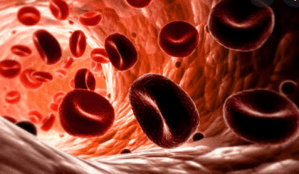
5.An individual blood cell takes about 60 seconds to make a complete circuit of the body.

You have about 5 liters of blood in your body, and the average heart pumps about 70 mL of blood out with each beat. A healthy heart also beats around 70 times a minute. So, if you multiply the amount of blood that the heart can pump by the number of beats in a minute, you get about 4.9 liters of blood pumped per minute, which is almost your whole body’s worth of blood. In just a minute, the heart pumps the entire blood volume around your body.

Blood cells
Blood cells

Career Options in Physical Education

If we look at the history of physical education in India, before 1900 A.D., there were very few opportunities for a career in physical education. Most of the physical education teachers in schools were used to be retired persons from the army. During this era, physical education was not considered a profession. In fact, during this period there were very few institutions of physical education. But after 1950, this situation changed up to some extent. Several institutions of physical education were established, and proper stress was laid down on physical education.

These numerous career opportunities in physical education are a result of various factors, such as the desire to be fit, awareness of health benefits, increased interest in competitive sports and finally, the increase in depth and breadth of knowledge in physical education had led to the future development and expanded career opportunities as physiotherapists, sports psychologists, sports photographer, and sports journalists, etc.

Teaching Career

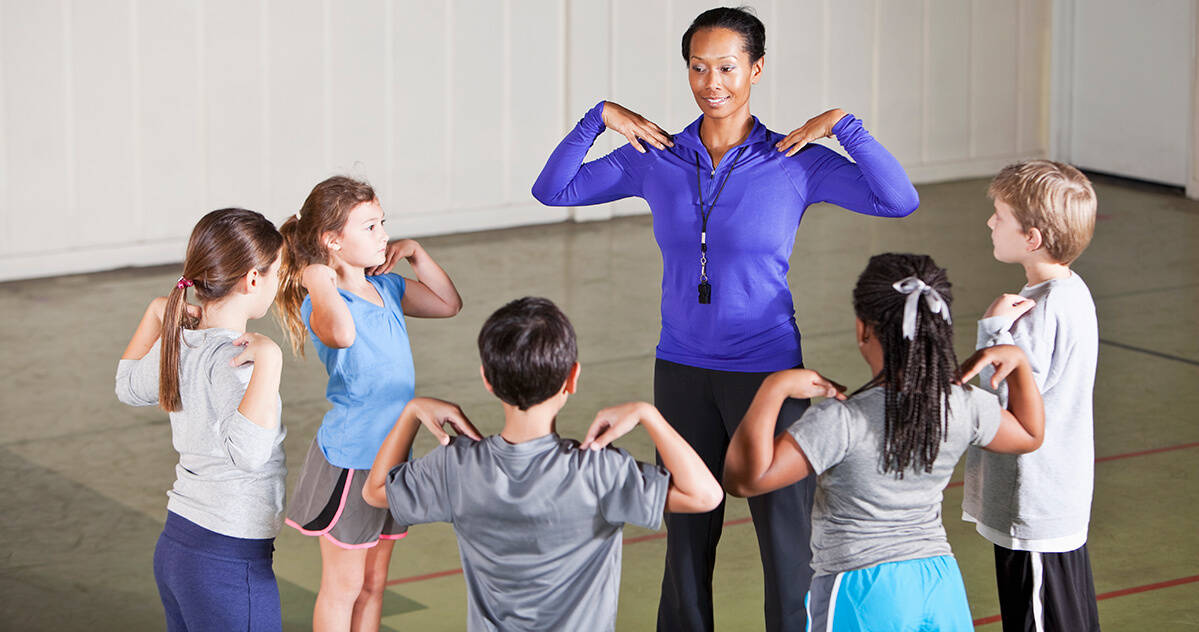
Individuals who opt for a career as physical education teachers make a good contribution to society and create awareness in students of all age groups. There are many opportunities of jobs to teach physical education not only in high schools and secondary schools but also in colleges and universities. Some professional courses in physical education in several colleges are – 

  • Diploma Course in Physical Education 
  • Certificate Course in Yoga
  • Certificate Course in Physical Education
  • B.Sc in Physical Education and Master’s Degree in Physical Education

Health Related Career

Nowadays, people have become more health-conscious. They want to keep away from various diseases, such as hypertension, heart diseases, and disorders like obesity and diabetes. Everyone wants to lead a healthy lifestyle. That is why health-related career opportunities in the field of physical education have been expanded in recent years. Candidates who complete the diploma or bachelor’s degree in physical education are also eligible to work as fitness trainers, Gym trainers, Yoga, and Health trainer in private and Government institutions.

Careers in Communication Media

The communication media, i.e., television, radio, newspaper, and magazines, etc., have contributed to the enhancement of various career opportunities in sports communication. Some career-related opportunities in communication media are –

  1. Sports Journalism
  2. Book Writing
  3. Sports Photography
  4. Book Publishing
  5. Sports Broadcasting

Administrative Related Careers

A physical education student is also eligible for administrative jobs like sports administration, management of sports clubs, sports marketing and promotion, etc. They are also eligible to work in the International and National championships as an official like Commonwealth, Asian Games, World cup, and other international tournaments.

As Player

Many jobs are available for skilled sportspersons in govt. and private sectors such as defense services, banks, railways, etc. Nowadays, amateur sports transform into commercialized games, many sports offer Professional leagues in particular games i.e. IPL, ISL, BPL, WKL, etc. Sportspersons also earn good money by professionally participating in the above leagues. Martina Navratilova (tennis) gets two million dollars per year through commercial advertisements.

Various careers can be created in the fields of physical education, such as sports biomechanics, sports nutrition, sports sociology, sports history, sports psychology, and many more.

BOOK REVIEW : Jessica Barry’s Freefall

JESSICA BARRY
  • About the author :

Jessica Barry is a pseudonym for an American author who grew up in a small town in Massachusetts was raised on a steady diet of library books and PBS.

She attended Boston University , where she majored in English and Art History , before moving to London in 2004 to pursue an MA from University College London.

  • Preface of the Novel ” Freefall” :

Freefall by Jessica Barry is published by HarperCollins on 8 January in U.S and wii be released by Penguin on 7 March in the U.K.

This book is a thriller about a plane that crashes amidst the Rocky Mountains and the woman who is the sole survivor and has a reason much bigger than herself to stay alive.

  • Summary of Freefall :

Maggie Carpenter’s world is shattered when she learns that her 31-year old daughter, Allison , has been in a plane crash over the Colorado Rockies and is presumed dead. Maggie and Ally haven’t spoken since Maggie’s husband , Charlie , died of cancer two years ago , and Maggie blames herself for that.

The reason for the disconnect is heartbreaking , but Maggie didn’t realize that her heart could be broken even more. It turns out that Ally was in a private plane with fiancé , pharma CEO Ben Gardner, and although Ben’s body has been recovered, Ally’s has not, which kindles a small flame of hope in Maggie’s heart. However, that hope dies when an explosion consumes the plane, leaving no doubt, at least in the minds of authorities, that both passengers of that plane didn’t survive.
However, in her wildest dreams, Maggie could never have imagined what really happened when that plane crashed. Ally survived, and getting out of the unforgiving woods is her first order of business. Once Ally gets free of the wreckage after realizing she’s the sole survivor, she assesses her physical state.

Things could be better, but Ally is, as readers will discover, a survivor, and she has a reason much bigger than herself to get out of those woods.

As the neighbors start sending casseroles to Maggie’s front door (Owl’s Creek, Maine is nothing if not insular), Maggie is climbing the walls. Her Allison was strong. Her Allison is a survivor. But one thing is blindingly true: Maggie didn’t really know Allison anymore, not since she moved to San Diego after her dad’s death. To cope, Maggie sets out to find out who Allison was.
By all appearances, Allison was living a glittering life with the handsome, ridiculously wealthy Ben Gardner, but all that glitters is certainly not gold. As Allison reveals, her life before meeting Ben was grim: waitressing at a club that catered to rich and powerful men yielded plenty of cash, but self-respect was collateral damage, and it becomes obvious in her telling that Ben saw Allison as a beautiful doll meant to be on his arm, charm his friends, and fulfill his every fantasy. It’s an empty existence that the formerly vibrant Ally chafes against, even as she tries to convince herself that she truly loves Ben. However, that love is called into question when a man approaches her with explosive information on Ben’s company. He claims that a drug meant to help women with postpartum depression is causing alarming (to say the least) side effects and that Ben and his cronies are covering it up. It’s unconscionable, and the old Ally never would have stood for it, but can she break free from the life she’s fallen into?
As thriller readers know, large sums of money tend to attract really bad people, and they are determined to keep their dirty secrets under wraps. Ally certainly isn’t safe, and neither are the people she loves, especially Maggie. Luckily, Maggie, a retired librarian, has some skills of her own up her sleeve, and she’s determined to find out what really happened to Ally, at any cost.
Readers that are looking for a lightning-paced read, with a mother/daughter relationship at the core, will find a lot to like. Maggie and Ally’s alternating chapters create urgency, and Barry does a particularly great job with Maggie, a woman who is suffering debilitating grief, but finds strength and purpose in finding the truth. This one will keep readers turning the pages, and there’s even a nifty twist in the final act.

!! HAPPY READING !!

TV SHOWS TO BINGE WATCH

Ending your day by binge watching your favourite tv show is a great way to relax . If you are confused what tv show to watch next , no worries , here is a list of my top picks .

GILMORE GIRLS – This show about mother – daughter bond is one of American’s classic shows . It is funny , emotional , inspiring and it is guaranteed to become your favourite. This show is about friendships , life , career and finding ways to always enjoy life . It has 6 seasons and is available on Netflix.

F.R.I.E.N.D.S.- I am pretty sure there won’t be anyone who doesn’t know about this show . But if you haven’t , then you should . This sitcom is another American classic that will surely entertain you . It is about a group of friends living together in NEW YORK CITY!!! Now if this isn’t enough to tempt you to watch it then , i don’t know what it . It has 10 seasons and is available on Netflix.

THE CROWN – If you love knowing about the British Monarchy , you will most definitely love this show . This historical drama is about the reign of Queen Elizabeth II . It is available on Netflix.

SIX FEET UNDER – This show has a unique and different plot , it is revolves around a family that owns a funeral home business . It might sound morbid , but this show is funny , emotional and inspiring . It is a must watch . Six feet under is available on hotstar and has 6 seasons.

Globalisation And Its Imapact On India

by Megha sharma

The term ‘globalisation’ means integration of economies and societies through cross country flow of information, ideas, technologies, goods, services, capital, finance and the people. The essence of globalisation in a broad sense is connectivity in all aspects of human life. Although economic forces are an integral part of globalisation, it would be wrong to suggest that they alone produced it. It has been driven forward above all by the development of information and communication technologies that have intensified the scope and speed of interaction between the people all over the world.

The British colonial rule had destroyed the self-sufficient agrarian economy. The then Prime Minister of India Jawaharlal Nehru preferred mixed economy for planned economic development of the country. As a result of this, public sectors were set up along with a number of private enterprises, but like the socialistic model of economy, the mixed economy of India has not produced profitable results. A number of public sectors became sick and the growth rates of production began to fall. While the poverty of the people continued to grow at an alarming rate, there was an acute balance of payment crisis and due to low domestic savings, there was no adequate capital for investment. 

impact of globalization

TYPES OF GLOBALIZATION

  • Economic globalization: is the development of trade systems within transnational actors such as corporations or NGOs;
  • Financial globalization: can be linked with the rise of a global financial system with international financial exchanges and monetary exchanges. Stock markets, for instance, are a great example of the financially connected global world since when one stock market has a decline, it affects other markets negatively as well as the economy as a whole.
  • Cultural globalization: refers to the interpenetration of cultures which, as a consequence, means nations adopt principles, beliefs, and costumes of other nations, losing their unique culture to a unique, globalized supra-culture;
  • Political globalization: the development and growing influence of international organizations such as the UN or WHO means governmental action takes place at an international level. There are other bodies operating a global level such as NGOs like Doctors without borders or oxfam.
  • Social Globalization: People move all the time too, mixing and integrating different societies;
  • Technological globalization: the phenomenon by which millions of people are interconnected thanks to the power of the digital world via platforms such as Facebook, Instagram, Skype or Youtube.
  • Geographic globalization: is the new organization and hierarchy of different regions of the world that is constantly changing. Moreover, with transportation and flying made so easy and affordable, apart from a few countries with demanding visas, it is possible to travel the world without barely any restrictions;
  • Ecological globalization: accounts for the idea of considering planet Earth as a single global entity – a common good all societies should protect since the weather affects everyone and we are all protected by the same atmosphere. To this regard, it is often said that the poorest countries that have been polluting the least will suffer the most from climate change.
Types of Globalization.

Globalisation has undermined the traditional role of women in homemaking, farming, handicrafts, handlooms etc., and resulted in a relatively better environment for women. Today, women are working in all spheres of Indian economy and are enjoying the fruits of “empowerment process” brought in by globalisation. At the same time, their security has become a major issue in this changing scenario and they are bearing the double burden of family as well as that of the job because the role of men in India have not changed much. People today, especially the young, developed an identity that gives them a sense of belonging to a worldwide culture, which includes an awareness of events, practices, styles and information that are a part of the global culture. There is the development of a bicultural identity or a hybrid identity, which means that part of one’s identity is rooted in the local culture while another part stems from an awareness of one’s relation to the global world.

We cannot say that the impact of globalisation has been totally positive or negative. It has been both. However, it becomes a point of concern when, an overwhelming impact of globalisation can be observed on the Indian culture. Every educated Indian seems to believe that nothing Indian is to be approved unless recognised and recommended by an appropriate authority in the West. This should be checked in order to preserve the rich cultural diversity of India and to ensure the fulfillment of the principle of self-sufficiency.

Rate this

Rating: 0 out of 5.
Advertisements
Advertisements

By Megha Sharma

Posted in Internship

Why Sports are important for our Life.

by Yogiraj Sadaphal

“Continuous effort — not strength or intelligence — is the key to unlocking our potential”.

                      – Liane Cardes

Playing sports can help children develop strong bones, cardiovascular systems, and lungs. Athletes for youngsters also develop motor skills and cognitive abilities. According to the United Nations, being physically active as a child makes adult sports more likely to support lifelong health.

Following points will help you to understand why sports are important for a healthy life.

1. Decreasing Hypertension.

Hypertension, often known as high blood pressure, is a major health concern for people all over the world. Hypertension can lead to a stroke or other serious health problems. Regular exercise and physical activity can help maintain healthy blood pressure level. Sports give you with all of the necessary stretching, jogging, and exercise. As a result, participating in sports can be a beneficial approach to manage high blood pressure.

2. Helps to Reduce Cholesterol Level.

Exercise contributes in the maintenance of a healthy cholesterol level. Multiple studies have shown that those who engage in a high amount of physical exercise had lower cholesterol levels than those who have an unhealthy lifestyle. Maintaining a healthy cholesterol level necessitates regular physical activity.

3. Getting Perfectly Shaped Body.

Obesity affects millions of people all over the world. Obesity raises the risk of hypertension and cardiovascular disease. Participating in sports is one of the most effective strategies to lose weight. The majority of sports are high-intensity physical exercises that quickly and effectively burn calories. Participating in sports is an excellent approach to lose weight and get your desired body shape.

4. Helps to improve blood circulation.

Running or participating in other physical activity keeps the body well-oxygenated. As a result, you’ll be healthier and more active. Being physically active may also help to raise hemoglobin levels and blood volume. When you play, your heart begins to beat quicker, putting an additional strain on your heart muscles. This additional strain strengthens your cardiac muscles, which improves blood flow overall.

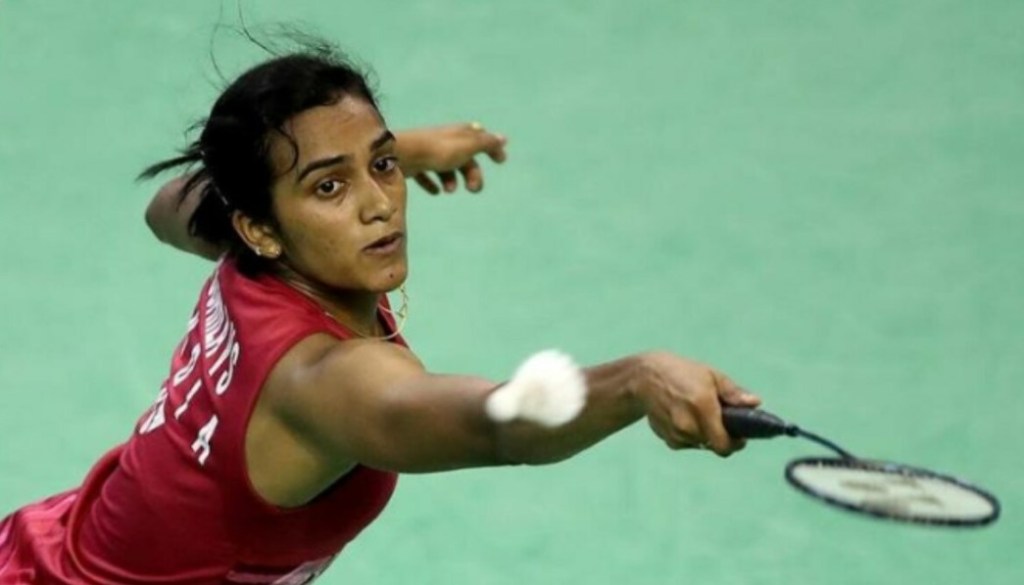
P. V Sindhu

5. Helps to Gain Strong and Toned Muscles.

You tone your muscles and train them to work together when you participate in sports. It’s referred to as neuromuscular programming. As you play, your muscles become far more powerful. Playing sports allows you to increase lean muscle mass even while burning fat. If you want a perfectly lean body with shredded six-packs and muscles, this field might prove to be more helpful than the gym.

6. Strengthen your Immunity.

Many diseases become resistant to your body. The rate of flow of white blood cells is greatly increased by exercise. Toxins are removed from your body when you sweat while participating in sports. Bacterial growth is also inhibited by a rise in body temperature. As a result, your immunity will improve.

7. Strengthen bones.

Participating in sports strengthens not only your muscles but also your bones. High-power, high-strength motions impose stress on your bones during sports; this, in turn, promotes bone density, resulting in stronger bones. Running while playing, for example, places an increased strain or stress on your bones compared to usual walking. The bones adjust by becoming denser in order to handle the higher loading stress. Because of the constant stress, if you continue to participate in sports, your bones will become stronger and denser.

8. Sharpening and Strengthening your Mind.

Sports are enjoyable to participate in and provide mental stimulation. Being successful in athletics makes you feel good about yourself and gives you a sense of accomplishment. Playing team sports also improves your ability to strategize. You learn to make rapid and spontaneous decisions through athletics. This ability to make quick decisions is extremely useful in everyday life. Sports also educate you to be calm and think clearly. They teach you how to make decisions under pressure without panicking or becoming anxious.

Different Sports have Different Benefits :-

Some sports have been related to particular health benefits. For example, Bowling can aid in the development of bone density due to the regular heavy lifting. Volleyball players had better hand-eye coordination and flexibility than non-players. Ping-pong also helps players increase hand-eye coordination, while also promoting better brain health because of the fast thinking involved.

Why does our race decide where we Place?

It is not a secret, how people were judged back in the day, based on their skin color. How cruel could your minds be to make some feel like they ruined their own life by, discriminating and being extremely hateful about something they cant change? How dare you make your own kind, feel inferior and treat them as untouchables? Saddest part of it all, is that it still happens to this day. We put labels and call words to each other, better than before but we still got a long way to go. When will this all end? Will this cruel cruel world ever, look at Hearts instead of Appearance? Smile’s instead of Status? Will we ever love each other as human beings without divisions of any sort and come together to make this world a better place?

CORRECTING STEREOTYPES OF A FEW RACES/ETHNICITIES

  1. No, Indians do not smell like curry and we don’t travel on horses and donkeys(would’ve been nice to horse ride back and forth on them though)

2. Asians see just fine with their BEAUTIFUL eyes, and there are different types of Asians such as Japanese, Chinese, Korean and no they don’t all look the same.

3.African Americans/Africans/dark skinned people are all beautiful and it is NOT OKAY to label them as criminals and robbers because of their skin color. Black lives matter!

4. NEVER EVER label all Muslims or Brown skinned Hindustani’s /Pakistani’s as “Terrorist’s” for it is completely false and absolutely disrespectful.

Sadly there are many more stereotypes these and many more races/ethnicities face on a Daily basis. It is our time to educate others and together, let us all learn to love each other.

Haven’t we learned better from our mother, than to judge by their color?

We came into this world the same way, all of us! Through our mothers while she was in pain, hoping we would be okay, in this world that was made. We breath the same air, We speak the same words. We participate in activities that are part of Human Nature. We are all the same but unique and we should be united by that factor, yet we are so far away from that destination. The times have changed, and the environment is healthier than it was before, but its still not adequate enough until everyone standing has the Magnificent Mindset that is necessary to bring the immaculate change that is required. We caused this separation amongst ourselves so we have the power to break this barrier. So together let us educate those who have have been/got Lost in Translation.

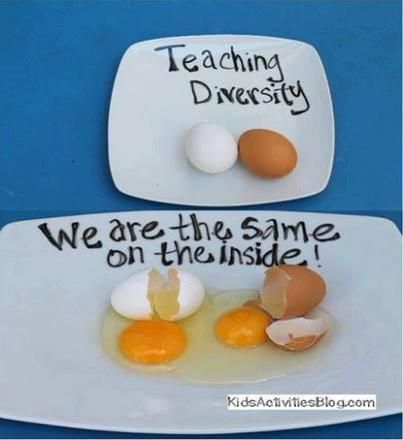
The shell should’nt be deceiving

This picture itself speaks a million words, but all I want to say be kind to everyone, we are all living beings and we are in no position or power to punish people, make them think poorly of themselves and shut them down for having a unique skin color. We are all beautiful creations of the Universe. You are One of a Kind and you matter.

Communication skills

Meaning of Communication

  • The word communication has originated from a Latin word ‘communis or communicare’ which means ‘to share, impart, participate, exchange, transmit or to make common’. 
  • In general, communication refers to the process of sharing information, ideas and thoughts between individual.
  • It is the process of imparting or exchanging of information, ideas, facts, opinions, beliefs, feelings through verbal or nonverbal means between two people or within a group of people, usually with the intent to motivate or influence behavior. 
  • The means of transferring the information from the sender to the receiver so that it is understood in the right context.

Types of Communication

Formal Communication

  • Formal communication refers to the official communication which takes place following the chain of command in the organisation. There are four directions of formal communication i.e. Downward, Upward, Horizontal, and Diagonal

Advantages of Formal Communication

  • Orderly flow of Information
  • Identified Sources
  • Authentic Information
  • Justification of Authority
  • Answerability for actions
  • Control 

Disdvantages of Formal Communication

  • Time Consuming
  • Lack of Personal Touch
  • Distortion 
  • Expensive

Communication Networks: 

Represents the pattern of contacts among the members of an organization. 

  • Chain Network: Chain network follows a formal chain of command where information flows vertically upwards or downwards. A superior and subordinate communicate with each other through vertical chain of command, both upwards and downwards. Information distortion is not likely to take place but communication system becomes time consuming. 
  • Y Network: Here C is the central person who communicates with A, B, D and E. It follows the formal chain of command where upward and downward communication takes place in the organizational hierarchy.
  • Wheel Network: All messages flow through A, who is at the centre of the wheel. He communicates with other members of the group, while members cannot communicate with each other. This communication network is found in highly formal organization structures where task-oriented approach to leadership is preferred over employee-oriented approach.
  • All Channel/Open/ Star Network: All the members in this network communicate with each other freely and regularly. It follows the informal channel of communication and provides maximum satisfaction to members. Information flows fast, though there may be problem of coordination. 
  • Circle Network: This network is similar to chain network except that information flows in a circular direction rather than vertical direction. A can communicate simultaneously with two persons, B and E but to communicate with D, he has to pass the messages through E or B and C

Informal Communication / Grapevine

Communication between individuals and groups which are not officially recognized is known as informal communication. It is also known as Grapevine.

  • The network or pathway of informal communication is known as grapevine.

Features

  • It transmits information in every direction throughout the organization
  • Transmits information rapidly.
  • Grapevine is selective with regard to the person who receives the information

Types of Grapevine chains / Informal Communication

  • Single Strand Network: Under this communication pattern, the information flows from one person to the next person in the network. Such as, one person will give information to another person who will communicate it to the next person and similarly the third person will also communicate the same message to the next person in the network and so on. This type of chain is less reliable and accurate to pass on the message. Here, the communication process is linear.
  • Gossip Chain Network: In the gossip chain network, there is an individual who tells the message to all other members in the network directly. He is generally the central person who seeks out and transmit information to all that he has obtained. Here, every person in the network communicates with each other informally. This network is often used when the subject matter is unrelated to the nature of the job. 
  • Probability Chain Network: Under this communication pattern the information passes randomly from persons to persons. Such as, there is an individual who acts as a source of message selects any person randomly in his network to communicate the message. That second person will again, select another person randomly and passes on the message to him, likewise the communication flows to different people chosen randomly. Here, the source of information for each member of the network is different. This communication pattern is used when the information is interesting, but not significant.
  • Cluster Chain Network: In the cluster chain network, there is an individual who, acts as a source of a message, transmits information to the pre-selected group of individuals out of whom few individuals again tell the same message to other selected group of individuals. Likewise, the chain continues, and the message reaches to all in the networks. 

Advantages of Informal Communication

  • Social Relations
  • Need Satisfaction
  • Speed
  • Avenue of Expression
  • Feedback
  • Supporting the formal channel
  • Better Human Relations 

Disadvantages of Informal Communication

  • Incomplete Information
  • Distortion
  • Unreliability
  • Leakage
  • Lack of Authenticity
  • Problem in Fixing Responsibility 

E-Commerce – Benefits and Disadvantages

Long gone are the days when you had to venture through 7-8 shops before buying a desirable mobile or shoes. It didn’t take long to get all of those suitable things you crave to be present on your few clicks which was quite unimaginable back in a decade or so.

The growth of E-Commerce escalated with double or even triple digit annually around mid-1990s and this escalation was a result of the launch of the first web browser, aptly named “World Wide Web”. Also, the sheer development of internet and its usage was a major catalyst in the E-Commerce boom. By the end of 2020, 60-70% of the world has connected to internet. Amazon, eBay emerged as the major dominators in the world of E-Commerce with Amazon still keeping up its level till date.

The development and evolution of e-commerce has made our life easier and less hectic. One can give countless advantages of it like convenience, security etc. but what about the benefits which get cloak under the blanket of the obviously known advantages?

Advantages

1) Economy – The Indian E-commerce market is likely to grow to US$ 200 billion by 2026 from US$ 38.5 billion as of 2017. Much of the progress for the industry has been prompted by an upsurge in internet and smartphone penetration

  • On October 23, 2020, Flipkart acquired a 7.8% stake in Aditya Birla Fashion and Retail, a subsidiary of the Aditya Birla Group, for Rs. 1,500 crore (US$ 203.8 million). (IBEF, 2021)
  • In October 2020, Amazon India collaborated with the Indian Railway Catering and Tourism Corporation (IRCTC) to enable users to book and reserve train tickets on Amazon. (IBEF, 2021)
  • In October 2020, Flipkart acquired a 140-acre land at Rs. 432 crore (US$ 58.87 million) to establish their largest fulfilling center in Asia, in Manesar, Gurgaon, in a bid to scale their fulfilment infrastructure to cater to increased demand post COVID-19. (IBEF, 2021)
  • In October 2020, Amazon India invested over Rs. 700 crore (US$ 95.40 million) into its payment unit, Amazon Pay. (IBEF, 2021)

2) Cost reduction – E-commerce is affordable and requires less investment when compared with a physical store. This is also a good opportunity for an individual and a new seller who wants to earn an income but doesn’t have the required capital to run his business. Sellers also don’t have to spend a lot of money to promote their product. The world of e-commerce has several affordable and quick ways to advertise a product. E-commerce is a virtual channel and sellers can easily show off their products. In e-commerce sellers can compare the products on their own by using different tools. This gives them a good idea of product alternatives available, the standard rates, if a product need is fulfilled. This one is more benefit for the customers too so the people are more confident about the product they are buying. (Amazon, 2020)

3) Boon in the current COVID situation – World wouldn’t have asked a better boon than getting your essentials and suitable needs at home without going out in this deadly pandemic which has been haunting the world now for more than a year. This doesn’t only keep you safe but also keeps the fatal infection from contracting.

By now, we all have at least got an idea that internet has become an amazingly powerful tool to conduct business electronically. Many companies have jumped into e-commerce realm after seeing its potential and profit margin. Now here kicks in the concerns related to e-commerce business. Increasing relevance of this field also increases privacy concerns. The dearth of consumer protection legislations also starts lurking around. Indeed, the dark side of e-commerce is not short listed.

Disadvantages

1) Security – One of the biggest drawbacks to ecommerce can be the lack of reliability and security due to poor implementation. Online transactions are mainly processed via debit card, credit card and internet banking and in very few cases via the “cash on delivery” option. Website owners try to take all available precautions to protect card details. However, what if the website is hacked by cyber criminals? This is a harsh reality with ecommerce websites. It is important to remain vigilant and proactive in protecting the website and, primarily, customer-related information. Security has been an issue from the start and is considered to be one of the main disadvantages of e-commerce.

2) Lack of Privacy – The privacy invasion problem is a serious drawback of e-commerce. A customer must provide their personal information before purchasing. Some websites do not have advanced encryption technology that can protect their personal information from hackers, and this is very important. The leakage of this confidential information can create many problems for a consumer.

3) Huge technological cost – E-commerce requires advanced platforms to improve performance. If you run into issues in the form of software, network, or domain issues, you will not be able to offer smooth transactions. The right technical infrastructure is expensive and requires large investments. It also needs to be updated regularly to accommodate changing times. The cost of running a successful business is a disadvantage of the e-commerce portal.

Conclusion

E-commerce is generally defined as the automation of routine business processes and operations and their transfer into virtual space. This process significantly increases business efficiency and simplifies daily routine work. Recent research has shown that businesses are moving quickly between local businesses. Many companies are using the internet and e-commerce in more convenient ways to market their products in the local market. Most of the online retailers are cheaper than the same products they sell, which is the main reason why today’s online stores are gaining market share. Some online stores have exceptional terms where you don’t have to pay for a certain amount for home delivery. For e-commerce sales as the reports are automated. It is convenient for small businesses to go online as they can easily compete with the larger ones. In addition, online sales save costs, there is no need to rent an in-store point of sale, and storage is not always required. It is much easier to access overseas markets through the internet. The biggest shortcoming of online stores is that they cannot display a product before buying it.

Tips For Put A Stop To Alcoholic Youth In India

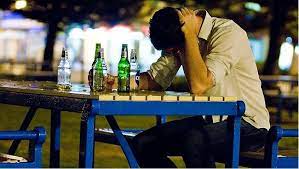
Alcohol, Is it not so exciting? Yes, of course in today’s generation, it is our youth’s favorite pain killer. Any depression comes in front of our youth, they blindly choose Alcohol. It’s a common practice for our Indian Youth. According to research, over 88 percent of Indians age under 25 purchase or consume alcoholic beverages. This is a bad habit, which our youth gradually add to their daily routine. In our youth dictionary, certain words are common like breakups, frustration, depression, anxiety, demotivation, and many more. Those words do not only affect our youth’s career growth also reduce their life span and are the root cause of increases in many diseases and alcoholic youth.

Teenagers are also not excluded from this alcohol consumption list. They are experimenting with alcohol nowadays. Curiosity and to feel old is the principal cause of that growing popularity of alcohol in teenager community. About 80 percent of school students have tried alcohol.

Adult & Alcohol

There is a scale of use among those who consume alcohol, which can range from one-time use, occasional use, regular use, perilous use, harmful use to dependence. But we only talk about the regular use community.

Influence Of Alcohol In Our Life and Body

It hampers our central nervous system and decreased our thinking ability. More alcohol leads to intoxication, cirrhosis in the liver, heart disease, diabetes, reduction in fertility, skin problems, memory problems, reduce immunity.

After consumed alcoholic substances, we have no control over our body language and our behavior, sometimes due to this, we are offended in our society. It also creates a bad impression among our family members, friends, and relatives.

Alcohol is closely linked with fights and cruelty, road accidents, intimidating sexual activity, and vulnerable sex, domestic violence, legal and financial difficulties. Minorities, economically and socially poverty-stricken communities are often victims of the dangerous effect of alcohol.

It affects depends on many internal and external control. At the community level, availability, accessibility, affordability, and adaptability directly impact the growth of alcohol usage.

Body Reaction After Drink

An average of 22 percentage of people (18-29 Years) in India are youth, which exceeds 261 million people and it’s larger than the population of Pakistan. But unfortunately, they are moving toward toxic India as per statics says. So we have to stop those steps of our youth towards destruction by focusing on certain areas. Not only domestically but also our cities and states are directly responsible for the growth in alcoholic youth. Our government should take certain steps, implement certain strategy and plan, which controls our youth mentality to win over the alcohol.

What Can Be Done?

  • Increase in taxation on alcoholic beverages
  • Minimum legal purchasing or drinking age
  • Restriction on sales
  • Prohibition or ban on alcohol
  • Regulating alcohol production and distribution
  • Advertising restriction
  • Promoting community action
  • Mass media campaigns
  • Educating school children and college students
  • Provision of alternative recreational facilities
  • Role of the family
  • Cooperation between stakeholders
  • Establishment of a national alcohol control authority or a similar agency
give time and act like friends

Parents do not have time for their children’s, there are many examples when an adult going through certain personal issues but he/she can not explain them to others, at this stage if parents are not talking to them, they are no options for their mental stability or mental pressure and prefer alcohol. So, discuss their problems with friendly manners keep away them from alcohol.

Our government also take initiative for this by certain rules and regulations. In India, certain states have already applied some strategies to reduce the level of alcohol consumption, and it works.

Socially and Domestically we can help our young masses from the consequences of alcohol. If we focus on the above key points then we can definitely extract our youth from this alcoholic world.

How to learn anything!

We all want to learn something in our life. It can be a language or a skill or a technology, it can be anything. There are some steps that we need to follow in order to learn it because we can’t simply sit and wait for a miracle to happen. So, I am going to help you all with what I know on how to learn something.

  • First of all, keep the habit of writing down things, I don’t know who needs to hear this but writing things down will really helps us to organize our thoughts and helps us figure out what we are going to do with it.
  • Next step is to write down what you already know about it or what you can do in order to learn it. If you don’t know that you might want to do some research and put things down on a paper or a document. Writing things down simply helps us to collect our thoughts and remember them in a text format, so that you don’t miss out on anything. For example, If you want to learn French, you can write things like “I want to learn the French language. I have learnt the basics of it. I can recall them from ABC website. I will register a language course on ABC website and start learning it.
  • The next step is the most important while learning something. Make sure you schedule your timing for learning the particular skill. Start off at a slower pace like an hour a day and then slowly increase it as you get used to the study time. Put the timing down on a piece of paper and stick it to your study table so that you don’t forget.

  • Be serious about it. Even if it is a very small thing, it is you who wanted to learn it. It will give you happiness when you achieve it. So don’t skip it thinking that it is not required, unless you have some other important work to do.
  • Set a daily goal for yourself. Setting goals will push you to learn more. You will tend to see yourself actively learning without getting bored. I would say keep a check list for every day. Wake up early and write down a to-do list and make sure you check all of them by the end of the day.
  • Setting bigger goals sometimes can be overwhelming and suffocating so keep your goals smaller and achievable. You will see yourself progressing in learning the particular thing.
  • Practical knowledge is very important when you learn something. You can see yourself making very little progress when you just attend courses and take notes. you need to apply it somewhere and practice. That is why they say “Practice makes a man perfect“. Best example for this is learning a new language, only if you practice it by speaking in that language with someone you will get good at it. Otherwise by time, you will forget the things that you have learnt.

Happy learning!

CAUTION TO THE DEEP SEA DIVERS- DECOMPRESSION SICKNESS

Have you experienced pain in you legs and hands after a good session of deep sea diving? This blog explains about this particular problem which is experienced by most of the deep sea divers. A particular aspect of this problem is based on the affinity for the nitrogen by the fatty tissues. It is recommended to read the previous blog (CRACKING OF FINGERS-GOOD OR NOT) to get a clear idea on the affinity of nitrogen by the fatty tissues.

The particular problem which can affect the deep sea divers is known as decompression sickness. It can be classified as one of the forms of embolism. Embolism refers to the obstruction caused by any mass carried in the circulation. The human body is known to have a closed system of vascular system unlike cockroaches which have open type where the fluids freely flow throughout the body.

Human Body, Circulatory System, Circulation, Blood
the representation of closed system of vasculation in the human body

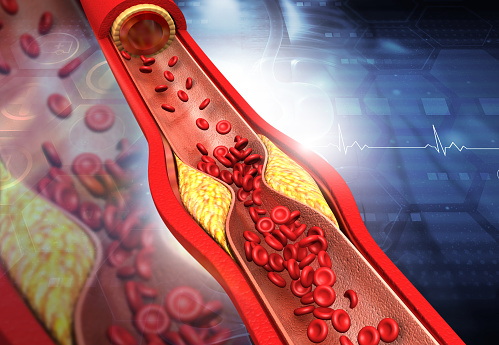
In the case of human beings, there are vessels which carry the blood throughout the body. They can be broadly classified as three namely the arteries (carry oxygenated blood), the veins (carry deoxygenated blood) and capillaries (the mix of two). A vessel is like a cylindrical tube and there are high chances for it to be obstructed. This is known as embolism and the substance causing it is known as emboli. The following list shows the various possible emboli:-

  • Thromboemboli
  • Tumour cell
  • Athermatous plaque (fat)
  • Tissue fragments
  • Parasites
  • Foreign bodies
  • Amniotic fluid
  • Bone marrow
  • Air/gases
an example of fat emboli which obstructs the artery

As a result, these substances which initially obstruct the blood vessel; slowing cover the blood vessel and finally block them. So the oxygen and nutrient rich blood cannot be delivered to the target which leads to the death of cells from lack of oxygen and nutrients (infarction in medical terminologies)

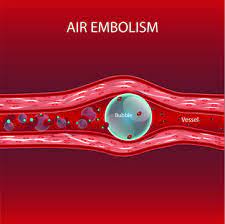
The primary concern for us is the gas/air. Air or gas embolism can occur when the air or gas is introduced into the vasculature. Air emboli is seen in common while using invasive biomedical equipment (invasive refers to penetration into the body). This can be seen while using injections, IV supplementation, catheter usage etc.

If gases enter into the body and cause embolism then it is known as gas embolism. The particular concern for the divers is decompression sickness. The decompression sickness or generalised barotrauma (baro- pressure trauma-sickness) is a medical condition which results in injuries due to release of several gas bubbles as a result of rapid decrease in the pressure in the surroundings.

The rapid decrease can occur in two cases. The first case is descending from higher altitude to normal altitude and the second case is descending from normal altitude to lower altitude. In both these cases, there is a rapid decline in the atmospheric pressure. There are two situations to analyse right here.

credit-facebook

Situation-1

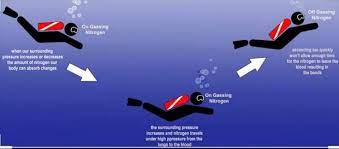
This occurs during the descent. As we go deep into the ocean, the pressure increases. So the gases that are present in the ocean diffuses into the blood and tissues. The primary gases which diffuse are nitrogen, oxygen and carbon-di-oxide.

Situation-2

This occurs when returning to original (ascent) quickly. As we go towards the surface of the ocean, the pressure decreases. So the gases which got diffused into blood, form bubbles and they are released from the blood. We already know that the fatty tissues have great affinity for nitrogen and hence they accept them. If the level of absorbed nitrogen is too much, then it can cause severe pain in the muscles and joints. Also these bubbles can block the blood vessels in any part of the body and can be fatal in areas like lung, brain etc.

The following are the consequences of the decompression sickness:-

Bends– acute pain in the skeletal muscles, joints and ligaments due to the accumulation of nitrogen bubbles

Chokes– accumulation of nitrogen bubbles in the lungs causing shortness of breath

Cerebral effects– stroke, vertigo, coma and even death

The severity of the consequences of decompression sickness depends on the following factors:-

  • Depth reached
  • Duration under the deep sea
  • Rate of ascent/descent (quick ascent after long descent can lead to this problem)
  • Condition of the individual

The chronic condition is known to as Caisson’s disease which can lead to the formation of gas emboli in the head of several bones like the tibia, femur and humerus and so on. The disease is named because it was seen primarily in deep sea divers who drill underwater tunnels. They are referred to as caissons (diving bell).

Man Left Looking Like Popeye After Diving Accident
the condition of bends seen in a peruvian diver suffering with decompression sickness

Hence it is important to understand that the decompression sickness is mostly rare but dangerous. It can become fatal if not treated soon. It is trivial that the condition arises with a quick ascent after a deep descent. The following are some of the steps that can be followed to prevent decompression sickness:-

  1. Take a safety stop or pauses in the ascent; this is done to make sure that there are gradual changes in the pressure
  2. Drinking lots of water
  3. Spending less time under the sea, this can reduce the concentration of nitrogen
  4. Avoiding air travel after diving
  5. keep nitroglycerin sublingual doses it can immediately cure the bends

Scuba and deep sea diving are indeed fun and interesting activities. It is recommended to enjoy and experience them at least once in a lifetime. But be aware of this problem that can occur while diving and take the precautionary measures responsively!!

HAPPY READING!!!

FIBRE AS A COMPONENT OF BALANCED DIET

Fibre, which can seemingly be perhaps the most missed fixings in our eating regimen, has benefits galore. While it keeps up with typical assimilation, it additionally assists us with remaining fuller for more by affecting the retention of supplements in the body. To know more, we need to see how fibre functions.

Dietary fibre is a kind of starch, clarifies master nutritionist Sparkly Surendran, and in authoritative terms it tends to be known as the consumable parts of plant food varieties that are not processed in people which is vital for assimilation of supplements. It adds mass to the eating regimen, impacts satiety, adds mass to stool and advances routineness. It is for the most part named dissolvable and insoluble dietary fibre premise their water solvency.

Dissolvable filaments are found in food sources like apples, beans, oats, citrus organic products, psyllium and so on Insoluble filaments are found in grains like entire wheat, wheat grain, vegetables like cauliflower, green beans, and so on

Multigrain atta is another acceptable wellspring of fibre. It is made of an assortment of grains that are normal wellsprings of fibre like wheat, oats, psyllium husk, chana, maize, soya and so forth It gives the upside of giving supplements and fibre advantage of various grains. These aides help assimilation and can altogether add to the fibre necessity of one’s every day diet.

Drink satisfactory measure of water and remember fibre for your eating regimen progressively to keep up with great assimilation.

Dietary fibre is the palatable part of plant food varieties that are impervious to absorption in small digestive tract. It is arranged into dissolvable and insoluble dietary fibre. It is a significant segment of our fair eating regimen and has numerous helpful properties. Utilization of dietary fibre keeps up with stomach related framework.

Our Indian eating regimen for the most part comprises of numerous normal wellsprings of dietary fibre, similar to oats like entire wheat, grain and ragi. Stringy vegetables like carrots, beets, cabbage, peas, broccoli and beans, just as natural products like apples, oranges, guava, are different wellsprings of fibre. Nuts and seeds including almonds, raisins, figs, pecans, groundnuts, flax seeds and so forth additionally contain fibre. Multi grains are additionally a decent wellspring of dietary fibre as they are a blend of assortment of entire grains.

The Indian Chamber of Clinical Exploration suggests that 40g of dietary fibre (in light of 2000 Kcal diet) is viewed as safe for every day admission Utilization of entire grains or multigrain items alongside at least 5 servings of vegetables and one serving of organic product is useful and altogether contribute towards the day-by-day necessity of dietary fibre.

As per prominent nutritionist Glossy Surendran, adding fibre to your eating routine, with careful dinner arranging helps absorption. There are numerous approaches to increase fibre admission. Adding 2 chapatis produced using atta with multigrain to a dinner with a little bit of rice and a mixture of vegetables is a decent beginning. Chapatis themselves can be made with ground carrot or beets, or even whitened spinach, and eaten with curd. Different changes to mainstream arrangements incorporate making kootu with chayote, plantain stem, spinach or keerai.

Multigrain Atta is one of the great wellsprings of dietary fibre. It is a blend of fluctuated entire grains like entire wheat, psyllium, soy bean, oats, corn, Bengal gram and so forth as each grain has its own wholesome profile, devouring multigrain helps to the upside of acquiring the nourishing profit with a combination of grains as various oats source various kinds of dietary fibre.

The dietary fibre in 3 chapatis made out of multigrain flour is comparable to the dietary fibre in 4 beetroots or 6 carrots and help add to ~1/fourth of day-by-day dietary fibre prerequisite. Adding 2 chapatis produced using atta with multigrain to a feast with a little part of rice and a mixture of vegetables is a decent beginning. A straightforward green serving of mixed greens can be given surface and fibre by throwing in some hacked apples, nuts or seeds.

So, you must have got It how important role does fibre plays in our diet. So, we should start including it in our daily diet which will definitely help us to build a healthy and fit physique both from inside and outside.

Qualities of a Good Leader

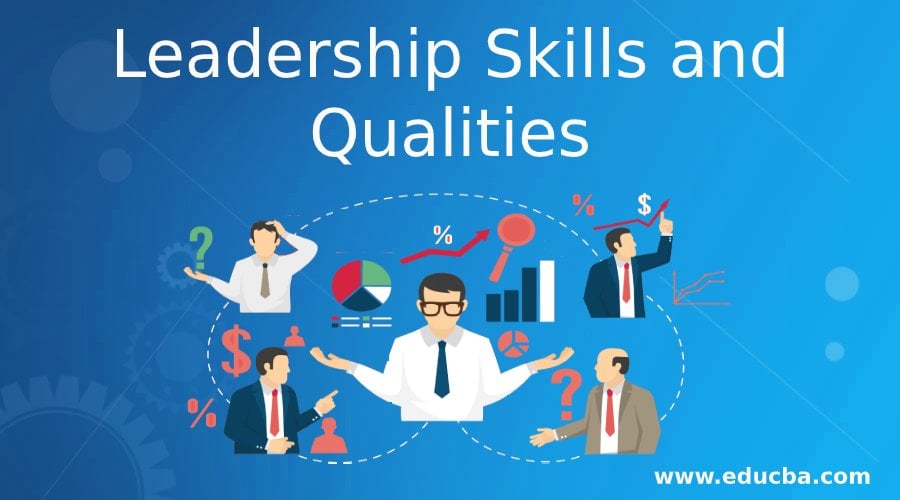
A leader is important because he/she can inspire others in a group or organization to achiever more and be better. A leader must have certain qualities that can turn her/him into a role model for others to follow and be respected. The different attributes can be learned through training and dedication.

1. Positive Attitude

Being the most significant characteristic that defines leadership, positive attitude is essential energy that a leader must have. Attitude is what shapes a leader. It’s not necessary that each member of a team will have the same approach, but imbibing a positive attitude in each of them can put an idea to life, regardless of the difficulty. Taking your group on an outing, offering snacks at work and appreciating each one without bias will keep them on track.

2. Accountability

Passing the buck on to others in situations challenged by failure is easy. But taking the responsibility of it and being accountable is what separates an employee from a leader. Accountability and Transparency go hand-in-hand. Larry Robins, a hedge fund maverick, once wrote an apology letter to his investors explaining about his failure to turn their funds into profit. Then, he started another hedge fund company without charging any brokerage free to his beloved investors to is what defines accountability.

3. Communication

Communication, as the definition goes, is the process of disseminating information from one party to another.  A leader must have the ability to communicate the vision in mind to his/her team members in a more definite and precise manner. Even a small amount of gap in communication can lead to chaos. Hence, the communication of a leader must be clear and crisp so that the entire team shares the same vision and goals.

4. Focus

The more a leader is focused, the better the outcome of his/her engagement with the team. The subordinates will typically follow the point of discussion set forth by the leader. ‘Focus is a trait that defines the pace of productivity and commitment to the team towards work. Therefore, it is important for the leader to ensure that the focus is crystal-clear and priorities for the team are set early on. Distraction from focus will eventually lead to poor productivity and hindrance in triumphing the goals set to be accomplished.

5. Responsibility

A good leader is never afraid to take responsibility. Inculcating this value will not only show that you are accountable and transparent but also will inspire others to take responsibility for their share of actions. While parents have a responsibility to nurture their child and educate them, a politician should give good governance to people of his/her country. While a teacher has a responsibility to inspire learning, a CEO has the responsibility to lead and execute a company’s strategies, and achieve the long-term goals.

Conclusion

The universal myth that leaders are born and not made is no more accurate, given the examples of several great leaders we have today. There is no denying that everybody can become a leader, but it is true that not every leader can be significant. A leader is one who takes up those and completes in collaboration with his team. Hence success and real leadership are synonymous.

Sources

https://grademiners.com/blog/leadership-qualities-that-you-must-include-in-what-makes-a-great-leader-essay

https://www.toppr.com/guides/essays/leadership-essay/

Entrepreneurship

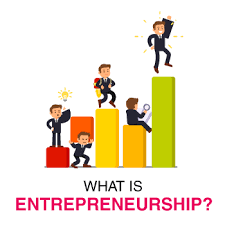
We often hear that so and so is an entrepreneur who has started his or her own business. It is also the case that when we hear the term entrepreneur, we tend to associate it with a person who has or is starting their own ventures or in other words, striking it on their own. This is indeed the case as the formal definition of Entrepreneurship is that it is the process of starting a business or an organization for profit or for social needs. We have used the phrase for profit or for social needs to delineate and separate the commercial entrepreneurship from social and charitable entrepreneurship. After defining entrepreneurship, it is now time to define who an entrepreneur is and what he or she does.

An entrepreneur is someone who develops a business model, acquires the necessary physical and human capital to start a new venture, and operationalizes it and is responsible for its success or failure. Note the emphasis of the phrase responsible for success or failure as the entrepreneur is distinct from the professional manager in the sense that the former either invests his or her own resources or raises capital from external sources and thus takes the blame for the failure as well as reaps the rewards in case of success whereas the latter or the professional manager does the job and the work assigned to him or her for a monetary consideration. In other words, the entrepreneur is the risk taker and an innovator in addition to being a creator of new enterprises whereas the professional manager is simply the executor.

Attributes of Entrepreneurs

Moving to the skills and capabilities that an entrepreneur needs to have, first and foremost, he or she has to be an innovator who has a game changing idea or a potentially new concept that can succeed in the crowded marketplace. Note that investors usually tend to invest in ideas and concepts which they feel would generate adequate returns for their capital and investments and hence, the entrepreneur needs to have a truly innovative idea for a new venture.

Leadership Qualities
Apart from this, the entrepreneur needs to have excellent organizational and people management skills as he or she has to build the organization or the venture from scratch and has to bond with his or her employees as well as vibe well with the other stakeholders to ensure success of the venture.

Further, the entrepreneur needs to be a leader who can inspire his or her employees as well as be a visionary and a person with a sense of mission as it is important that the entrepreneur motivates and drives the venture. This means that leadership, values, team building skills, and managerial abilities are the key skills and attributes that an entrepreneur needs to have.

Creative Destruction and Entrepreneurship

We often hear the term creative destruction being spoken about when talking about how some companies fade away whereas others succeed as well as maintain their leadership position in the marketplace. Creative destruction refers to the replacement of inferior products and companies by more efficient, innovative, and creative ones wherein the capitalist market based ecosystem ensures that only the best and brightest survive whereas others are blown away by the gales of creative destruction. In other words, entrepreneurs with game changing ideas and the skills and attributes that are needed to succeed ensure that their products, brands, and ventures take market share away from existing companies that are either not creating values or are simply inefficient and stuck in a time warp wherein they are unable to see the writing on the wall. Therefore, this process of destroying the old and the inefficient through newer and creative ideas is referred to as creative destruction which is often what the entrepreneur does when he or she launches a new venture.

Some Famous Entrepreneurs

Given this basic introduction to entrepreneurship, we can now turn to some famous examples of entrepreneurs who have succeeded despite heavy odds because they had game changing ideas and more importantly, they also had the necessary traits and skills that would make them legendary. For instance, both the founder of Microsoft, Bill Gates, and the late Steve Jobs, the founder of Apple, were college dropouts though their eventual success meant that they had not only truly innovative ideas, but they were also ready to strike it out for the longer term and hang on when the going got tough. Even the founder of Facebook, Mark Zuckerberg, as well as Google’s Larry Paige and Sergey Brian can be considered as truly revolutionary entrepreneurs. What all these legends have in common is that they had the vision and the sense of mission that they were going to change the world and with hard work, perseverance, and a nurturing ecosystem, they were able to self actualizes themselves.

General mental ability

General mental ability (GMA) tests are one of the most valid construct-based predictors of job performance and training success.

Thousands of validity studies and many meta-analyses have shown that they are excellent predictors of different organizational criteria, such as supervisory ratings, work sample tests, job knowledge acquisition, grades, production records, instructor ratings, promotions, sales, and wages, and that the correlation between GMA and performance appears to be similar across jobs that differ considerably in content (Schmidt and Hunter, 1998; Murphy, 2002; Ones et al., 2012; Schmitt, 2014; Salgado, 2017a; Berges et al., 2018; Rodríguez and López-Basterra, 2018).

Influences of mental ability

The influence of general mental ability, self-esteem and family socioeconomic status on leadership role occupancy and leader advancement as well as the moderating role of gender in these relationships.

The influence of general mental ability on the two leadership variables was not significant for either males or females, but the difference in its effect on the initial status of supervisory scope for males and females was significant. These results suggest that self-esteem plays an important role in leadership role occupancy and leader advancement and that the influence of family socioeconomic status on leader advancement is contingent on gender.

Let’s talk about the General mental ability in children

General mental ability in School Children has been a concern for researchers for a long time now. This is mainly because of its relationship with academic success in school. If a child has the right mental ability, then he or she can excel in academic subjects like History, Math, Science, Language Arts, and Mathematics.

The main purpose of the present research concerning general mental ability was to determine the various types of non-verbal problem-solving abilities among elementary school children. The test had two types-non-verbal, each having five subtests-parallel reasoning, naming the objects, pattern-building, association-making, and counting.

The number of children’s test will depend on the age of the children and the length of time they have been in school. For example, a sample of children from six months to eight years old and one sample of children from ten to twelve years old are given a test. The number of children who show average scores of about 60 percent and above in both kinds of tests is known as ‘average intelligence’. However, the results do not mean that all of them have the same intelligence level. This means that it is not possible for children to be classified as having average intelligence based on these general mental ability studies alone.

Generally, if a child has good results in these general mental ability tests, he or she will become successful in his or her life. The child will also have many friends who will listen to him or her talk about his or her experiences in school. and his or her school performance. He or she will be seen by many people as a bright and successful child.

Adolecense mental ability

Adolescence is a crucial period for developing and maintaining social and emotional habits important for mental well-being. These include adopting healthy sleep patterns; taking regular exercise; developing coping, problem-solving, and interpersonal skills; and learning to manage emotions. Supportive environments in the family, at school and in the wider community are also important. An estimated 10-20% of adolescents globally experience mental health conditions, yet these remain underdiagnosed and undertreated(1).

Some adolescents are at greater risk of mental health conditions due to their living conditions, stigma, discrimination or exclusion, or lack of access to quality support and services. These include adolescents living in humanitarian and fragile settings; adolescents with chronic illness, autism spectrum disorder, an intellectual disability or other neurological condition; pregnant adolescents, adolescent parents, or those in early and/or forced marriages; orphans; and adolescents from minority ethnic or sexual backgrounds or other discriminated groups.

Emotional disorders

Emotional disorders commonly emerge during adolescence. In addition to depression or anxiety, adolescents with emotional disorders can also experience excessive irritability, frustration or anger.

Suicide and self-harm

An estimated 62 000 adolescents died in 2016 as a result of self-harm. Suicide is the third leading cause of death in older adolescents (15-19 years). Nearly 90% of the world’s adolescents live in low-or middle-income countries and more than 90% of adolescent suicides are among adolescents living in those countries. Risk factors for suicide are multifaceted, including harmful use of alcohol, abuse in childhood, stigma against help-seeking, barriers to accessing care and access to means. Communication through digital media about suicidal behaviour is an emerging concern for this age group.

Risk-taking behaviour

Many risk-taking behaviours for health, such as substance use or sexual risk taking, start during adolescence.

Risk-taking behaviours can be both an unhelpful strategy to cope with poor mental health and can severely impact an adolescent’s mental and physical well-being.Worldwide, the prevalence of heavy episodic drinking among adolescents aged 15­-19 years was 13.6% in 2016, with males most at risk

Conclusion

The aims of this study were to identify and evaluate the types of mental health self-care support used by, and available to, CYP and their parents, and to establish how such support interfaces with statutory and non-statutory service provision. Through two inter-related systematic reviews, a mapping exercise and a case study, we are confident that we have achieved these aims. Moreover, in doing so, we have developed a model of self-care support that can help policy-makers and practitioners make decisions about the organisation and delivery of mental health self-care support for CYP and their families, and help researchers identify gaps in the knowledge base that might be resolved with future research in this area.

E commerce

E-commerce (electronic commerce) is the buying and selling of goods and services, or the transmitting of funds or data, over an electronic network, primarily the internet. These business transactions occur either as business-to-business (B2B), business-to-consumer (B2C), consumer-to-consumer or consumer-to-business. The terms e-commerce and e-business are often used interchangeably. The term e-tail is also sometimes used in reference to the transactional processes that make up online retail shopping.

Types of e-commerce

Business-to-business (B2B) e-commerce refers to the electronic exchange of products, services or information between businesses rather than between businesses and consumers. Examples include online directories and product and supply exchange websites that allow businesses to search for products, services and information and to initiate transactions through e-procurement interfaces.

Business-to-consumer (B2C) is the retail part of e-commerce on the internet. It is when businesses sell products, services or information directly to consumers. The term was popular during the dot-com boom of the late 1990s, when online retailers and sellers of goods were a novelty.

Consumer-to-consumer (C2C) is a type of e-commerce in which consumers trade products, services and information with each other online. These transactions are generally conducted through a third party that provides an online platform on which the transactions are carried out.

Online auctions and classified advertisements are two examples of C2C platforms, with eBay and Craigslist being two of the most popular of these platforms. Because eBay is a business, this form of e-commerce could also be called C2B2C — consumer-to-business-to-consumer.

Consumer-to-business (C2B) is a type of e-commerce in which consumers make their products and services available online for companies to bid on and purchase. This is the opposite of the traditional commerce model of B2C.

Business-to-administration (B2A) refers to transactions conducted online between companies and public administration or government bodies. Many branches of government are dependent on e-services or products in one way or another, especially when it comes to legal documents, registers, social security, fiscals and employment. Businesses can supply these electronically. B2A services have grown considerably in recent years as investments have been made in e-government capabilities.

Consumer-to-administration (C2A) refers to transactions conducted online between individual consumers and public administration or government bodies. The government rarely buys products or services from citizens, but individuals frequently use electronic means in the following areas:

  • Education. Disseminating information, distance learning/online lectures, etc.
  • Social security. Distributing information, making payments, etc.

Mobile e-commerce (M-commerce) is a type of e-commerce on the rise that features online sales transactions made using mobile devices, such as smartphones and tablets. M-commerce includes mobile shopping, mobile banking and mobile payments. Mobile chatbots also provide e-commerce opportunities to businesses, allowing consumers to complete transactions with companies via voice or text conversations.

Advantages and disadvantages of e-commerce

Benefits of e-commerce include its around-the-clock availability, the speed of access, the wide availability of goods and services for the consumer, easy accessibility and international reach.

  • Availability. Aside from outages or scheduled maintenance, allowing visitors to browse and shop at any time. Brick-and-mortar businesses tend to open for a fixed number of hours and may even close entirely on certain days.
  • Speed of access. While shoppers in a physical store can be slowed by crowds, e-commerce sites run quickly, which is determined by compute and bandwidth considerations on both consumer device and e-commerce site. Product pages and shopping cart pages load in a few seconds or less. An e-commerce transaction can comprise a few clicks and take less than five minutes.

The perceived disadvantages of e-commerce include sometimes limited customer service, consumers not being able to see or touch a product prior to purchase and the wait time for product shipping.

*Limited customer service: If a customer has a question or issue in a physical store, he or she can see a clerk, cashier or store manager for help. In an e-commerce store, customer service may be limited: The site may only provide support during certain hours of the day, or a call to a customer service phone number may keep the customer on hold.

*Not being able to touch or see:While images on a webpage can provide a good sense about a product, it’s different from experiencing it “directly,” such as playing music on speakers, assessing the picture quality of a television or trying on a shirt or dress. E-commerce can lead consumers to receive products that differ from their expectations, which leads to returns. In some scenarios, the customer bears the burden for the cost of shipping the returned item to the retailer.

E-commerce still represents one of the business methods that take advantage if done the right way, even if the stock market and commodities fell, but E-Commerce still able to survive and receive high transaction. E-commerce has a tremendous opportunity in the course of or business in Malaysia. In addition, it is also to introducing new techniques and styles in a transaction. Use the extensive E-Commerce in the Internet world is actually much better to bring the goodness of the individual or the state.

    E-Commerce has undeniably become an important part of our society. The successful companies of the future will be those that take E-Commerce seriously, dedicating sufficient resources to its development. E-Commerce is not an IT issue but a whole business undertaking. Companies that use it as a reason for completely re-designing their business processes are likely to reap the greatest benefits. Moreover, E-Commerce is a helpful technology that gives the consumer access to business and companies all over the world. 

Human Behavior .

When studying human behaviour based on a factor or event, the researcher observes the characteristics, behaviour, and reaction, then use if to conclude. A company willing to sell to its target market needs to first study the behaviour of the market

Descriptive research

Descriptive research aims to accurately and systematically describe a population, situation or phenomenon. It can answer what, where, when and how questions, but not why questions. A descriptive research design can use a wide variety of research methods to investigate one or more variables

A Foolproof Guide to General Science

Photo by Ekrulila on Pexels.

General science :-

General science or science is one of the most important channels of knowledge and plays a vital role in the preparation of competitive examinations. Studying subjects like Physics, Chemistry & Biology is important for the general understanding of things around us.

Here, we have compiled all three Subjects in detail with proper study notes under the “General Science” Section.

General Science, Life Science, and Earth and Space Science Standards

The standards for generalal science, life science, and earth and space science describe the subject matter of science using three widely accepted divisions of the domain of science. Science subject matter focuses on the science facts, concepts, principles, theories, and models that are important for all students to know, understand,

Science in Personal and Social Perspectives Standards:

An important purpose of science education is to give students a means to understand and act on personal and social issues. The science in personal and social perspectives

Criteria for the Content Standards

Three criteria influence the selection of science content. The first is an obligation to the domain of science. The subject matter in the General, physical, life, and earth and space science standards is central to science education and must be accurate. The presentation in national standards also must accommodate the needs of many individuals who will implement the standards in school science programs. The standards represent science.

Occasionally:

there are advances in science and technology that have important and long-lasting effects on science and society. Examples of such advances include the following
Copernican revolution
Newtonian mechanics
Relativity
Geologic time scale
Plate tectonics
Atomic theory
Nuclear physics
Biological evolution
Germ theory
Industrial revolution
Molecular biology
Information and communication
Quantum theory
Galactic universe
Medical and health technology

The historical perspective of scientific explanations demonstrates how scientific knowledge changes by evolving over time, almost always building on earlier knowledge.

Social Anxiety Disorder

SAD (Social Anxiety Disorder)

What is SAD?

Social anxiety disorder (SAD) more commonly referred to as social anxiety or social phobia is an inherent mental health issue characterized by senseless anxiety due to social interactions.

According to a research paper drafted by Phillip Jefferies and Michael Ungar, Social anxiety occurs when individuals fear social situations in which they anticipate negative evaluations by others or perceive that their presence will make others feel uncomfortable. (cited:

.https://journals.plos.org/plosone/article?id=10.1371/journal.pone.0239133

It is an intense persistent fear of being watched and judged by others. This fear can affect work, school and other day-to-day activities. It can even make it hard to keep friends. (cited:

https://www.nimh.nih.gov/health/publications/social-anxiety-disorder-more-than-just-shyness

According to some rough SAD statistics, this disorder affects about 7.1 percent of the population, 8 percent of women and 6.1 percent of men.

Though SAD can affect people regardless of age or gender, research points towards a general early (teenage) onset of social anxiety due to reasons unknown or some underlying trauma.

Causes of SAD

Social anxiety may have a plethora of underlying causes yet in some cases the disorder might be sudden and unexplained.

Ever since it was officially recognized as a disorder in 1980 by the American Psychiatric Association, scientists all over the world have been trying to identify and understand the causes of social anxiety disorder (SAD).

Like for most psychological conditions, the majority of contemporary professionals agree upon the idea that SAD is caused by a combination of genetics as well as environmental and socioeconomic factors.

What this means is that there is hardly one specific root cause of social anxiety, but rather a variety of factors that can lead to a certain vulnerability that favours its development. (Cited:

https://www.conquersocialanxiety.com/causes/

Social anxiety may also be directly linked to low confidence and constant self blame.

Visual search query image

social anxiety disorder likely arises from a complex interaction of biological and environmental factors. Possible causes include:

  • Inherited traits. Anxiety disorders tend to run in families. However, it isn’t entirely clear how much of this may be due to genetics and how much is due to learned behaviour.
  • Brain structure. A structure in the brain called the amygdala (uh-MIG-duh-luh) may play a role in controlling the fear response. People who have an overactive amygdala may have a heightened fear response, causing increased anxiety in social situations.
  • Environment. Social anxiety disorder may be a learned behaviour — some people may develop significant anxiety after an unpleasant or embarrassing social situation. Also, there may be an association between social anxiety disorder and parents who either model anxious behaviour in social situations or are more controlling or overprotective of their children. (cited:

https://www.mayoclinic.org/diseases-conditions/social-anxiety-disorder/symptoms-causes/syc-20353561

SYMPTOMS

Image
Getselfhelp.co.uk

Symptoms of SAD include physical, behavioural or cognitive changes that are often dead giveaways of some underlying issue.

Emotional and Behavioural Signs:

The following emotional and behavioural symptoms may show up in people with social anxiety:

  • Fearing situations where you might be judged
  • Fear of showing physical symptoms such as blushing, trembling, sweating, or an unsteady voice
  • Worrying you will embarrass or humiliate yourself
  • Intense fear of interacting with strangers
  • Avoiding any situation in which you will being the centre of attention
  • Getting anxiety in anticipation of an activity or event
  • Avoiding going places or speaking to people out of fear of embarrassment
  • Fearing people will notice your anxiety
  • Spending significant time analysing and critiquing the way you acted in a social situation
  • Expecting the worst outcomes from a negative social experience

For children, emotional and behavioural signs may include: 

  • Crying
  • Throwing temper tantrums (outbursts of crying and anger)
  • Clinging to parents or guardians
  • Refusing to speak to people 

Physical Signs:

Some of the external signs of social anxiety disorder include:

  • Blushing
  • Rapid heartbeat
  • Sweating
  • Difficulty catching your breath
  • Shaking
  • Nausea or upset stomach 
  • Light-headedness or dizziness
  • Tight muscles 

Social Signs:

One of the main signs of social anxiety is avoiding social situations. Someone with this disorder may avoid or find difficulty being in the following situations: 

Treatment and Self help

As established SAD is a disorder that requires thorough medical attention, which may include therapy, meditation, courses for instilling confidence etc.

  • Psychotherapy. Psychotherapy improves symptoms in most people with social anxiety disorder.
  • First choices in medications. Though several types of medications are available, selective serotonin reuptake inhibitors (SSRIs) are often the first type of drug tried for persistent symptoms of social anxiety.
  • Other medications. Other antidepressants. You may have to try several different antidepressants to find one that’s the most effective for you with the fewest side effects.
  • Stick with it. Don’t give up if treatment doesn’t work quickly. You can continue to make strides in psychotherapy over several weeks or months.
  • Alternative medicine. Several herbal remedies have been studied as treatments for anxiety. Results tend to be mixed, and in several studies people report no benefits from their use. (Reference: www.mayoclinic.org/diseases-conditions/social-anxiety-disorder/diagnosis-treatment/drc-20353567

Thinking Differently


When we’re in a social situation with a group of people, our focus of attention becomes totally caught up in our own thoughts and feelings.  We see everyone around us, but all we can think about is how they might be thinking critically about us!  The adrenaline response of anxiety makes us feel terrible too, so we’re thinking about how horrible that is, and how we just want to escape the situation. 

It is very helpful to learn how to change our focus of attention and take more control over how we react to thoughts.  We can learn to just notice the thoughts, acknowledge them, then let them pass.  Notice the Mind Bully and let it go – turn your focus of attention to something else.  First of all, you might learn to focus on your breathing.

Practise Mindful Breathing

(cited: https://www.getselfhelp.co.uk/socialanxiety.htm

Conclusion

In conclusion, social anxiety is the third most common disorder worldwide that affects millions of unsuspecting individuals every year throughout the world. It is high time that we treat social anxiety patients with respect and consideration and give this disorder its due attention without tiptoeing around it.

It is also absolutely essential for people suffering with SAD to seek medical help(easier said than done) but one has to start somewhere.

Lastly, there should be no embarrassment in seeking professional help and it should be absolutely normalised.

A strong will to overcome anxiety, is the guaranteed first step in the long overdue chain of recovery.

See the source image

Quit India Movement Day

What is Quit India Movement day ?

The Quit India Movement (translated into several Indian languages as the Leave India Movement), also known as the August movement, was a movement launched at the Bombay session of the All India Congress Committee by Mahatma Gandhi on 8 August 1942, during World War II, demanding an end to British rule in India.

Who is the father of quit india Movement day ?

Today is the 79th anniversary of Quit India movement. On this day in 1942, father of the nation Mahatma Gandhi gave the clarion call of Do or Die to all Indians to drive away Britishers from the country. The movement had begun from Gawalia Tank in Mumbai.

The movement demanded an end to British rule in India. Since the protest was held in August, it also went on to be known as August Kranti or August Movement. Every year, the day is celebrated by paying tribute to freedom fighters who laid their lives for the country.

The Quit India Movement also known as India August Movement or Bharat Chodo Andolan was launched at the Bombay session of the All India Congress Committee (AICC) by Mahatma Gandhi on August 8, 1942.

However, almost the entire Congress leadership, and not merely at the national level, was put into confinement less than twenty-four hours after Gandhi’s speech, and the greater number of the Congress leaders were to spend the rest of the war in jail. Gandhi made this speech to help India gain independence.

REOPENING OF KOTA COACHING

CM Gehlot has given signals for opening of the coachings in Rajasthan. In his prior meetings, UDH minister Shanti dhariwal advocated the importance of issue and dependence of students career , Gehlot said Coachings likely to open by August on several laid conditions.

Demand of OFFLINE CLASSES-

Covid 19 pandemic had brought our students future to a back foot. Online education though has open wings for new doors and opportunities but also could not be counted as substitute of offline education yet. Students from all over the nation are looking forward for offline classes. Kota being the one of the biggest coaching hub of India also withholds the future of future engineers, doctors and officers.

PANDEMIC AND SITUATION

States all over the India are one by one coming forward with way out and opening of various services. Bihar, Tamil nadu , and Uttar pradesh government has given nod to the decision.

With upsurge of 3rd wave , the condition around is still doubtful. Increased vaccination though has upraised the chances to make things work out. Second round of dosage is began acorss the nation and soon vaccination to be announced for age group of 12-18.

About 1.5 to 2 lakh JEE and NEET aspirants prepare from Kota, which has success rate around 20- 30% . Kota gives 100% accordingly environment to grown and learn and high competitive atmosphere. Since past few years , students consider Kota as their best place for preparation and also results have been great.

Life and dependence on coaching institutes

Kota has a big hand in running of economy of Rajasthan also it has been opportunity for different classes to get employment. Since this pandemic scenario and people losing there main source of income, unemployed has increased severely which has a retarded effect on the lifestyle.

Lower income groups such as street vendors, book stores, stationer, greengrocer etc. whose main buyer were students of kota , have lost their jobs which hits them hard in the situation.

Seeking solutions

With strict rules laid down as per the safety of students as well as citizens there could be space for opening of “education hub”.

  • Proper Vaccination and mask compulsion for citizens as well as students.
  • Institutes can run with 50% of attendance alternately.
  • Online and offline both mode could work hand in hand.
  • Proper sanitization of the place and following the rules of distance maintenance.

COOL AND HEALTHY

It is around summer, and you have come home from an intense gym session/casual cricket match with your friends. You take a bottle of ice-cold water or any chilled beverage from the refrigerator and chug it at once. You can feel the immense amount of pleasure you get from this just by reading this. But what if I say that your body hates this even though you like it? This article brings upon the ill-effects of drinking ice water and a sustainable solution/alternative to that.  

Ice water has some of its own benefits like ice water stimulates thirst enabling further consumption of water. Hence ice water can keep you hydrated. Also, ice water can keep one mentally active and awake. Research says that athletes who consume cold water are able to exercise or perform longer.

However, the benefits of ice water are countable and limited. On the other hand, there are many ill-effects of consuming ice water. Consumption of ice water and any chilled products can lead to “brain freeze”- an intense headache that is seen within few seconds of consumption of a chilled product. It is a principle that cold produces vasoconstriction (contraction of blood vessels) and this sudden experience of cold can make the blood vessels in the brain contract.

cartoonic representation of brain freeze

Hence there is limited blood and oxygen supply to the brain. This in medical conditions is known as shock. So in order to balance this more blood is supplied to the brain and hence the vessels swell. This can be considered as a mechanism of the brain in order to avoid consuming the cold substance. Hence this can be the reason for children not eating the ice cream after getting brain freeze. It is a natural defensive process and is not dangerous when it goes away within seconds but can be detrimental if prolonged. Repeated consumption can lead to migraines (heavy headache accompanied by nausea).

Also, ice water can disrupt the process of digestion. According to Ayurveda, there is a fire (jatharagni) inside us that helps in the process of digestion. This can be compared to the digestive enzymes and juices which aid in digestion. There must be an appropriate temperature for the digestive organs to work. This has also been proven scientifically which says that a minimum of 38’C of core body temperature is required. The ice water can disrupt the internal heat environment and can prolong digestion. This is not advisable in the long run.

a pictorial representation of inner fire- jatharagni

The entire process of digestion is prolonged especially in the regions of the stomach and intestine. Ice water can affect the absorption of nutrients in the small intestine. The intestine contract as a result and there can be chances that the stool becomes too hard. So it can lead to constipation. The worst time to drink ice water is after a meal. The reason is that the body raises the core temperature so as to start the process of digestion and ice can disrupt it. There are even more ill effects like a decrease in heart rate, improper fat metabolism, and throat irritation, and so on.

So a solution to all these problems is to avoid drinking ice cold water. But if we do so, we cannot rejoice in the pleasure we get from it. So we have to find an alternative method/source of ice water which is healthy for us. The answer lies with our ancestors. Years ago, there were no refrigerators then how was it possible for them to have cold water? They used earthen pots to get chilled water.

Earthen pots or Matka have been used for many years. They produce chilled water by the process of evaporative cooling. The pores present in the pot release the heat out by capillary action hence making the water ‘cool’. It is important to understand that the water is cool and is not cold.

This water provides the benefits of refrigerated ice water and rules out all its ill effects. The pot water does not only affects digestion problems but also enhances digestion. The minerals that are present in the water help in digestion and create a balance in the Ph. The minerals in pot water make it alkaline which balances the acidic Ph of the stomach. This can prevent a lot of digestive problems which can be caused due to excess acidic Ph.

Pot water does not irritate the throat and does not cause sore throat. Also, it refreshes the body with mineral-rich water and prevents dehydration and sunstroke in summer. The pot water also boosts metabolism. The earthen pots act as natural filters and remove the toxins. Apart from that, earthen pots are sustainable, eco-friendly, and also cheap to use. The fridges release chlorofluorocarbons (CFC) which is an important cause of ozone depletion. No such problems are seen in earthen pots.

earthen pots with water kept during summer to quench the thirst of several passerby’s
source- twitter

On the whole, the earthen pots have produced the benefits of refrigerated water and on the contrary, they have no ill effects as compared to refrigerated water. And the important point is that we can get these benefits at minimal cost and do not harm Mother Nature. So from here afterward, chug upon a pot full of Matka water after an intense gym session or long and tiring sports match. This time, your body also enjoys the water along with you.

HAPPY READING !!!

What’s love?

Easy. Isn’t it? The above question.

but are you sure? That the question is easy. Because for me it’s a very very hard question more than what I should wear at party tonight 🤣 but it’s fact though.

Love for is a transaction. You can turn it on and off, Easy ain’t it. Nope.

People says love is selfless but in my perspective till date, I think love is selfish, full of selfish. People become toxic in love, hurt those who use to once means world to them, accepting rebellious actions. People become south to north for those who they love. A disaster out of box.

its said we should always cherish the love when we get so that we won’t regret not accepting with full arms. It’s true though. Isn’t it? Yeah. Love is hard to get to one who craves the most. A beautiful feeling who should be able to embrace but at this point of human beings action, love is hard to get. Same as searching needle out of thousands pins in a box.

Love for me selfish as said because I love myself the most. I priority my own happiness foremost instead of others because if you won’t be happy you can’t share word of happiness with others or spread love. If you love yourself enough you will eventually bring to love others.

hence, before searching like a bee for honey. Learn to love yourself first and than you can successfully love others and share with others.

sorry for crappy post just wanted to share my opinions.

CRACKING OF JOINTS- GOOD OR NOT

written by Sairam Adithya

The cracking of the joints is often a common habit seen in a lot of people. This is especially seen in the joints of the fingers in the hand and legs (medically known as phalanges). Many people say that this is a very bad habit and can degrade your joints. However, to confirm this, it is essential to find the reason for the sound. Then, based on the cause we can come to a conclusion that whether the habit is good or not. This would be an appropriate and better approach.

In order to understand the noise, it is essential to understand joints. Joints can be called the nuts and bolts of the body. The joints are a medium of connection between several bones. There are about 360 joints and all of them fall into three main categories and have some subcategories. The table below well represents the classification.

Type Other namesMobility Constituent Example 
FibrousSynarthroses ImmovableHyaline(denser)Skull
Cartilaginous SynchondrosisSlightly movableHyaline cartilageSternum
SynovialDiarthrosesMovableArticular cartilage covered with synovial membraneKnee 

Out of these the synovial joints are of our importance. The prominent examples of a synovial joint include the knee, the hip and the forearms. There are six types of synovial joints which are tabulated below:-

Typedescription/analogyExample
Ball and socketThe tail of bone attached to the head of other boneShoulder
HingeHinge present between the doorKnee
PivotAction of turningNeck
CondyloidTwo plane motionWrist
SaddleLooks like a seat in horseThumb
Gliding Bones pass over each otherWrist
pictorial representation of different synovial joints in human body

Hence it is to be understood that the freely moving joints (synovial joints) are those which are capable of producing the cracking sound. Also, not all of them can do so, it is the phalanges of the hands and legs, the elbow, the neck, and sometimes the knee which can produce the cracking sounds.

The important characteristic of synovial joints is the presence of synovial fluid and a fatty layer. There are two specific functions for the fat layer. An important feature of fat is that it has the highest affinity for nitrogen. Affinity can be known as “chemical love”. Like it can be considered that nitrogen is a drug for the fat in our joints which has an irresistible addiction towards it (just for analogy, please don’t even think about drugs….).

i)       To provide protection from mechanical damage; For instance, banging the fingers/knee onto a wall

ii)     To trap the heat; heat is required for internal mechanisms to occur, so it is essential that fat (adipose tissue) encapsulates the heat

There are two important facts that have to be known relevant to this phenomenon. The first is the atmosphere; it is a collection of enormous amounts of gases, liquids, and lots more. What is trivial is that nitrogen constitutes about 78% of the total atmosphere. Phew! That is indeed huge. Another aspect is the process of diffusion. Diffusion is a passive method of gas transportation that moves from a higher concentration to a lower concentration.

a visualisation of diffusion between oxygen and hydrogen molecules

So what happens is that the nitrogen diffuses from the atmosphere (high concentration) to the fat present in the joint (low concentration). As a result of this process, nitrogen bubbles get accumulated in the gaps in the synovial fluid. As we press the joints or do any movements, the bubbles inside the gaps are forced to be released out. This process is known as capitation and as a result, a popping/cracking sound is developed.

To conclude, the release of the nitrogen bubbles are the ones responsible for the popping sound and this activity has nothing related to the health of the joints. You can pop the joints and this is not a bad habit (in the sense of health). Make sure that you don’t disturb others in the process!!

HAPPY READING!!!

Biography of A.P.J Abdul Kalam

Avul Pakir Jainulabdeen Abdul Kalam was born on 15 October 1931 to a Tamil Muslim family in the pilgrimage centre of Rameswaram on Pamban Island, then in the Madras Presidency and now in the State of Tamil Nadu. His father Jainulabdeen was a boat owner and imam of a local mosque; his mother Ashiamma was a housewife.His father owned a ferry that took Hindu pilgrims back and forth between Rameswaram and the now uninhabited Dhanushkodi.Kalam was the youngest of four brothers and one sister in his family.His ancestors had been wealthy traders and landowners, with numerous properties and large tracts of land. Their business had involved trading groceries between the mainland and the island and to and from Sri Lanka, as well as ferrying pilgrims between the mainland and Pamban. As a result, the family acquired the title of “Mara Kalam Iyakkivar” (wooden boat steerers), which over the years became shortened to “Marakier.” With the opening of the Pamban Bridge to the mainland in 1914, however, the businesses failed and the family fortune and properties were lost over time, apart from the ancestral home.By his early childhood, Kalam’s family had become poor; at an early age, he sold newspapers to supplement his family’s income.

In his school years, Kalam had average grades but was described as a bright and hardworking student who had a strong desire to learn. He spent hours on his studies, especially mathematics.After completing his education at the Schwartz Higher Secondary School, Ramanathapuram, Kalam went on to attend Saint Joseph’s College, Tiruchirapalli, then affiliated with the University of Madras, from where he graduated in physics in 1954.He moved to Madras in 1955 to study aerospace engineering in Madras Institute of Technology.While Kalam was working on a senior class project, the Dean was dissatisfied with his lack of progress and threatened to revoke his scholarship unless the project was finished within the next three days. Kalam met the deadline, impressing the Dean, who later said to him, “I was putting you under stress and asking you to meet a difficult deadline”.He narrowly missed achieving his dream of becoming a fighter pilot, as he placed ninth in qualifiers, and only eight positions were available in the IAF.

Career as a scientist;
After graduating from the Madras Institute of Technology in 1960, Kalam joined the Aeronautical Development Establishment of the Defence Research and Development Organisation (by Press Information Bureau, Government of India) as a scientist after becoming a member of the Defence Research & Development Service (DRDS). He started his career by designing a small hovercraft, but remained unconvinced by his choice of a job at DRDO.Kalam was also part of the INCOSPAR committee working under Vikram Sarabhai, the renowned space scientist.In 1969, Kalam was transferred to the Indian Space Research Organisation (ISRO) where he was the project director of India’s first Satellite Launch Vehicle (SLV-III) which successfully deployed the Rohini satellite in near-earth orbit in July 1980; Kalam had first started work on an expandable rocket project independently at DRDO in 1965.In 1969, Kalam received the government’s approval and expanded the programme to include more engineers.After graduating from the Madras Institute of Technology in 1960, Kalam joined the Aeronautical Development Establishment of the Defence Research and Development Organisation (by Press Information Bureau, Government of India) as a scientist after becoming a member of the Defence Research & Development Service (DRDS). He started his career by designing a small hovercraft, but remained unconvinced by his choice of a job at DRDO.Kalam was also part of the INCOSPAR committee working under Vikram Sarabhai, the renowned space scientist.In 1969, Kalam was transferred to the Indian Space Research Organisation (ISRO) where he was the project director of India’s first Satellite Launch Vehicle (SLV-III) which successfully deployed the Rohini satellite in near-earth orbit in July 1980; Kalam had first started work on an expandable rocket project independently at DRDO in 1965.In 1969, Kalam received the government’s approval and expanded the programme to include more engineers.

Presidency; Kalam served as the 11th President of India, succeeding K. R. Narayanan. He won the 2002 presidential election with an electoral vote of 922,884, surpassing the 107,366 votes won by Lakshmi Sahgal. His term lasted from 25 July 2002 to 25 July 2007.During his term as president, he was affectionately known as the People’s President.

Death On 27 July 2015, Kalam travelled to Shillong to deliver a lecture on “Creating a Livable Planet Earth” at the Indian Institute of Management Shillong. While climbing a flight of stairs, he experienced some discomfort, but was able to enter the auditorium after a brief rest.At around 6:35 p.m. IST, only five minutes into his lecture, he collapsed.He was rushed to the nearby Bethany Hospital in a critical condition; upon arrival, he lacked a pulse or any other signs of life.Despite being placed in the intensive care unit, Kalam was confirmed dead of a sudden cardiac arrest at 7:45 p.m IST.

FEMINISM

Feminism is not especially for women but it’s about all genders having equal rights and opportunities. A lot of people think that women’s rights has already been accomplished but at the same time there are so many forces against women’s rights like reproductive rights and having same pay as men in the same position but people make excuses for the earning gap. There are still some people with stereotypes thinking women should stay home for work and take care of their children’s and the most important thing for many women is still to please her men. When the women work outside the home, she still does more housework, and when men do it, things get postponed. Feminism put an end to sexism and to achieve full gender equality. There have been some extraordinary women who contribute in the history of the feminism. In many societies, women were traditionally locked in their homes as daughters, wives and mothers, and often we only know about women in history because of their relationships with famous men. Of course, many women throughout history played an important role in cultural and political life, but they are often invisible. The organized women’s movement dates back to the 19th century, although feminists and the struggle for equality have always been part of every human society. Women and scholars have divided the history of this organization into three “waves”. The first wave focuses mainly on the movement of suffrage women of the nineteenth and early twentieth centuries (especially with regard to women’s right to vote). The second wave refers to the ideas and actions associated with the women’s liberation movement that began in the 1960’s (which campaigned for women’s legal and social rights). The third wave refers to the continuous, apparent failure of the second wave of feminism, since the 1990s. first wave of feminism refers to the extended period of women’s labor between the nineteenth and early twentieth centuries in the United Kingdom and the United States. Initially it focused on the promotion of a contract equal to women’s property rights and the opposition to the patent marriage and ownership of married women (and their children) by their husbands. By the end of the nineteenth century, however, activism was focused on gaining political power, especially women’s rights. In 1854, Florence Nightingale established female nurses as military officers The second wave of feminism refers to the period of labor in the early 1960s and lasted until the late 1980s.  The second wave femininity has continued to exist since then and is associated with the so-called third wave femininity. S. Post-feminism describes a range of feminine points. Although they are not “anti-feminist,” women who follow feminism believe that women have reached the second level of waves while criticizing women’s third goals. The term was first used in the 1980s to describe attacks caused by the second wave. It is now a label for a variety of ideas that take critical steps in previous women’s discourses and incorporate the challenges of second wave ideas. Some feminists claim that feminism no longer applies to modern society. Amelia Jones wrote that the post-feminist writings that appeared in the 1980s and 1990s portrayed feminism circulating a second time as a monolithic organization and criticized it using common elements. Feminism has transformed the most important ideas in various areas of Western society, from culture to law. Women’s activists campaign for women’s legal rights (contract rights, property rights, voting rights); women’s rights to dignity and independence, abortion rights, and reproductive rights (including access to contraception and quality prenatal care); to protect women and girls from domestic violence, sexual assault and rape, to obtain employment rights, including maternity leave and equal pay; against misconduct; and other forms of gender-based discrimination.

How to Accelerate Azure Migration

Azure is a cloud computing platform and an online portal that allows you to access and manage cloud services and resources provided by Microsoft. These services include virtual computing, networking, storing data, and transforming it, depending upon your requirements. Azure supports multiple programming languages, including Java, Node.Js, and C#.

It’s free to start and follows a pay-per-use model, which means you pay only for the services you opt for.

Interestingly, 80 percent of the Fortune 500 companies use Azure services for their cloud computing needs. As it is a fast, flexible and affordable platform, its pricing and capabilities make it the best public cloud offering on the market. It is the second-largest cloud service provider right now.

Cloud Computing

Cloud computing is a technology that provides access to various computing resources over the internet. Cloud computing can be used for various purposes: machine learning, data analysis, storage, and backup, streaming media content and so much more.

Cloud Migration

Reduced cost, scalability, high-end security are the major reasons for cloud migration. Migrating to the cloud requires a lot of preparation and advanced work, but it is generally worth it, resulting in savings and greater flexibility. The overall goal or benefit of any migration to the cloud is to host applications and data in the IT environment in the most efficient way possible, based on factors such as cost, performance, and security.

A cloud migration strategy is a plan an organization makes to move its data and applications from on-premises architecture to the cloud. Not all workloads benefit from running on cloud-based infrastructure, so it is important to validate the most efficient way to prioritize and migrate applications before going live. A systematic, documented strategy is crucial.

Migration Process

Your exact roadmap for migrating to the cloud depends on the size and complexity of your environment. These are the basic steps:

Step 1: Planning your Migration

Before getting started, you should be clear on your reasons for the move and which strategy can best support them. Start by assessing your current environment. It is important to calculate your cloud server requirements based on current application resource requirements to avoid buying more than you need. At this critical stage, you will need the resources and expertise of a specialist. An application performance management (APM) solution can provide complete, real-time visibility into your environment and all its dependencies while rolling up strategy as part of the package.

Step 2: Choose a Migration Strategy

Once you have planned your migration and collected data on your current systems, you must decide on a migration strategy. These are the six most common approaches:

  • Rehosting (Lift and Shift”): Replicate on-premise architecture in the cloud. This involves lifting your stack and shifting it from on-premises hosting to the cloud.
  • Replatforming (“Lift and Reshape”): It involves making a few further adjustments to optimize your landscape for the cloud. Again, the core architecture of applications stays the same.
  • Repurchasing (Drop and Shop): This means redesigning and developing an application using cloud-native features. Even so, repurchasing might be your most cost-effective option if moving from a highly customized legacy landscape.
  • Refactoring (Re-architect): This means optimizing an application for the cloud by re-architecting. Refactoring is generally the most expensive option, but also the most compatible with future versions.
  • Retiring (Decommission): Once you have assessed your application portfolio for cloud readiness, you might find some applications are no longer useful. In this case, turn them off.
  • Retaining (No Movement): For some organizations, cloud adoption does not yet make sense. In this case, plan to revisit cloud computing at a later date. You should only migrate what makes sense for your business.

Step 3: Migrating your Apps and Data

Planned accurately, your actual migration should be plain sailing. Still, keep in mind cloud security concerns, such as complying with security policies and planning for data backup and recovery. Also, be sure to use APM to baseline premigration performance in preparation for the next step.

Step 4: Validating post-move Success

You cannot declare a cloud migration successful without evidence that it works as expected. With a solution like AppDynamics Business iQ, you can prove the benefits of cloud migration by comparing pre-and post-move application performance, from both a technical and business perspective, in a low-risk test environment.

With more than 200 services and numerous benefits, Microsoft Azure is the fastest-growing cloud computing platform adopted by businesses. Microsoft Azure’s total revenue is expected to surpass $19 billion by 2020. This growth in the implementation of Azure by businesses is creating various opportunities for professionals in this technology.

Sunil Bharti Mittal

Brief Introduction

Sunil Bharti Mittal

Sunil Bharti Mittal is the Founder and Chairman of Bharti Enterprises which is one of India’s leading conglomerates with heterogeneous work in telecom, real estate, agricultural field etc.  Bharti Airtel Limited is the forerunner company of Bharti Enterprises, it has stepped into being one of the  world’s largest telecommunications companies,as it has established operations in 18 countries across Asia and Africa. It’s base of operations is in New Delhi, India. The company ranks in top 3 mobile service providers worldwide. Bharti Airtel provides 2G, 3G, 4G and wireless services and mobile commerce.

Sunil Bharti’s Journey

He grew up in Ludhiana, a large city in North Delhi, graduating from Panjab University at the age of 19, he and a friend started a small bicycle-parts manufacturing business. “My mind was always in business development, sales, and closing deals,” says Mittal, widened the field of work from bicycle parts to wool blankets then stainless steel surgical equipment. Eventually Mittal moved to Bombay, which increased his resourcesand reach, Mittal began to focus on importing goods.“There were three fat books of Indian import policies, and I knew them backwards and forwards,” recalls Mittal, sitting in his office at the New Delhi headquarters of Bharti Enterprises, the multinational conglomerate he has built over the past 40 years. By the age of 24, Mittal became India’s largest importer of portable generators. In 1982, however, the government banned importation of “gen sets,” a move that would have ruined a less ambitious entrepreneur. Mittal easily parlayed his knowledge and drive into his next opportunity. On a business trip to Taipei, he had seen electronic push-button phones and soon began introducing them in India, which eventually led to his rise in the telecommunications business. While others ignored him, Mittal installed fiber-optic cables throughout India. By the time anyone noticed, it was too late. Bharti’s flagship Airtel is now the third-largest telecommunications company in the world. Mittal and his wife of 33 years, Nyna, are the proud parents of three grown children and have been thrilled to welcome their two grandchildren over the last few years. While none of his offspring is part of Bharti Enterprises, Mittal works closely with his two brothers. Rajan Mittal, who followed his brother’s lead and attended HBS’s OPM Program, serves as vice chairman of the company, and Rakesh Mittal oversees various emerging businesses as well as the Bharti Foundation.

Bharti’s Accomplishments

Bharti Airtel Limited

Bharti Enterprises is one of India’s most successful companies, with more than 30,000 employees. In addition to Airtel, its diverse concerns include realty, financial services, and an agri- and food business. One of the keys to Bharti’s growth is Mittal’s remarkable talent for partnering with others, including IBM, Ericsson, and Del Monte. He is also known for his creative problem solving. Instead of working against his rivals and duplicating efforts, he creates win-win opportunities.

Bharti’s Ethics and Work towards betterment of country

A brainchild of Sunil Mittal, the foundation works to improve rural education and has launched 254 schools throughout the country, serving 70,000 underprivileged children, who otherwise would not have access to education. “These children are going to change the lives of many,” says Mittal.
Sunil Bharti Mittal’s life story is partially based on an ability to find new ways when encountering an obstacle and on realizing dreams that others see as farfetched. One of his current dreams is to see a student from the Bharti Foundation attend Harvard. Looking at the determined and hopeful faces of these promising children, it seems like it is only a matter of time.

NORTH-EAST INDIA: FRAGILE PEACE

The boundary dispute between Assam and Mizoram dates back nearly a century and a half. While there have been several showdowns arising out of inter-state disputes between various states of the Northeast, the dispute between Assam and Mizoram has rarely culminated in violence. Yet, it escalated to unprecedented levels over the past week, as firing on the inter-state boundary left at least six Assam policemen dead and over 50 individuals injured.

Mizoram borders Assam’s Barak Valley, and both border Bangladesh. The boundary between the two states, which runs 165 km today, has a history dating back to the time when Mizoram was a district of Assam and known as Lushai Hills. Boundary demarcations in 1875 and 1933, particularly the second one, are at the heart of the dispute. The 1875 demarcation, notified on August 20 that year, derived from the Bengal Eastern Frontier Regulation (BEFR) Act, 1873. It differentiated Lushai Hills from the plains of Cachar in Assam’s Barak Valley. This was done in consultation with Mizo chiefs, and it became the basis for the Inner Line Reserve Forest demarcation in the Gazette two years later. The 1933 demarcation marks a boundary between Lushai Hills and Manipur, beginning at the tri-junction of Lushai Hills, Cachar district and Manipur. The Mizos do not accept this demarcation on the ground that their chiefs were not consulted at that time.

Places of tension between Assam & Mizoram

Which is boundary does Mizoram find acceptable?

According to Mizo leaders, the only acceptable boundary is the Inner Line of 1875 on the southern frontier of Cachar, notified as per the BEFR Act. (This was subsequently revised in 1878 as it sought to demarcate the Lushai Hills frontier from the plains of Assam). The Mizo leaders and a joint action committee on border issues submitted a memorandum to the PM claiming that the present demarcation between states is unacceptable because they were not consulted during the process.

The dispute has been simmering since Mizoram became a Union Territory in 1972 and then a state in the 1980s. The two states signed an agreement that the status quo should be maintained at no man’s land set up in the boundaries. While alleged transgressions have often happened over the decades, skirmishes have happened very frequently in recent months. Both the states claim that the other transgressed into their territory, and thereby triggering the violence.

Assam-Mizoram dispute: what led to such violence?                                                     

A team of around 200 Assam Police led by the IGP, Assam Police, and the DC, SP and DFO of Cachar travelled to the Vairengte autorickshaw stand on Monday. While Assam has reasoned that they went to “resolve matters”, Mizoram has said they “forced their way in”, overrunning security posts.

The Assam Home Minister, for his part, issued a statement: “In another breach of existing agreements and the existing status quo, Mizoram began constructing a road towards Rengti Basti in Assam, destroying the Inner Line Reserve Forest in Lailapur area. Simultaneously, the Mizoram side also set up a new armed camp on a hillock next to the camp of the neutral force, CRPF, in the same vicinity. A team of Assam officials including an IGP, DIG, DC Cachar, SP Cachar and DFO Cachar went to the area this morning to request the Mizoram side not to disturb the status quo.” 

What are the other border disputes in the region?

Assam, which shares its boundary with all other Northeast states, has been involved in disputes with several of its neighbours. Assam and Nagaland share has a 500-km boundary. Violent conflicts, some leading to deaths, have taken place in several phases since 1965.

With Arunachal Pradesh, Assam shares an around 800-km boundary. Here, the first clashes were reported in 1992. Each state has accused the other of boundary transgressions and illegal encroachment. These issues are now being heard in the Supreme Court.

With Meghalaya, Assam shares a boundary of 884 km. There has been a series of recent flare-ups here, too. The Meghalaya government claims it has 12 areas of disputes with Assam.

Where is this headed?

Following the intervention of Union Home Minister Amit Shah, who held closed-door meetings with the Northeast CMs in Shillong and discussed inter-state disputes and other issues — both sides have now retracted their forces.

In its statement, Mizoram has said it wants “that the inter-state border issue with Assam is resolved in an atmosphere of peace and understanding”. It has also called upon Assam to create a “congenial environment” for peaceful resolution of the dispute. Assam has asked Mizoram to “restrain its people and police personnel from indulging in wanton violence and work towards restoring peace”. It alleged that the fact that there was no casualty on Mizoram side was proof that Assam authorities had shown restraint. Assam Chief Minister Himanta Biswa Sarma and Mizoram Chief Minister Zoramthanga tagged each other in their tweets while calling for peace.

The Chief Ministers of these states had previously held talks in February this year and agreed on the need to maintain the status quo and peace.

Superfoods

Superfoods

Superfoods are foods that have a dozen or more unique properties. Superfoods comprise a specific set of edible, incredibly nutritious plants that are not entirely classifiable as foods or medicines. Some common superfoods are:

  • Algae
  • Berries- Acai berries, Blueberries, Goji berries
  • Leafy greens
  • Green tea
  • Legumes
  • Nuts and seeds
  • Olive oil
  • Dark chocolate

In this article, we will be looking at algae, specifically, microalgae.

Microalgae are microscopic aquatic organisms which use the solar energy and carbon dioxide for photosynthesis and produce a wide variety of complex substances and biologically active compounds. The aquatic microalgae are one of the oldest terrestrial organisms and can adapt to survive in adverse environmental conditions. They are characterized by the ability to grow and multiply rapidly within a short life cycle and are also easy to manipulate. Efficiency of microalgae in fixing carbon dioxide in the atmosphere is 10 to 50 times higher than that of terrestrial plants. The cultivation of microalgae reduces the level of pollutants in the air and in the aquatic environment. Microalgae is “20 times more productive than conventional crops,” with little needed in the way of input to keep them alive.

Microalgae
Microalgae

The edible types of algae are: Blue-green algae, Brown algae, Red algae and Green algae. Chlorella (a green algae) and Spirulina (a blue-green algae) are two extremely popular algae used as superfood. Spirulina is a potent source of phycocyanobilin. Nutrient-dense, like chlorella, and contains 10 percent more protein than chlorella, as well as more copper and thiamine, or vitamin B1. Chlorella is higher than spirulina in zinc, iron, magnesium, vitamin B2, calories, fat, and omega-3 fatty acids.

Production:

The large-scale microalgae cultivation started in the 1960s in Japan, in which Chlorella microalgae were used as a food additive. In the 1970s and 1980s, the industrial production of microalgae expanded to USA, China, Taiwan, Australia, India, Israel and Germany. In the last few years, the production of Spirulina and Chlorella microalgae has increased, and currently it is practiced by most countries. The annual production is about 7,500 tons of dry biomass (5,000 and 2,500 tons of Spirulina and Chlorella microalgae, respectively).

Microalgae production

Health Benefits of Algae:

  • Algae contain Omega-3 Fatty Acids
  • Algae deliver essential amino acids
  • Algae help in the prevention of diseases
  • Algae help in the development and maintenance of healthy kin

Dietary Supplements

 dietary supplement is a manufactured product intended to supplement one’s diet by taking a pill, capsule, tablet, powder or liquid. Eating a variety of healthy foods is the best way to get the nutrients you need. However, some people do not get enough vitamins and minerals from their daily diet, and their doctors may recommend a supplement. Dietary supplements may provide nutrients that might be missing from your daily diet.

Supplement can provide nutrients either extracted from food sources or that are synthetic in order to increase the quantity of their consumption. The various compounds for which dietary supplements are available are- vitamins, minerals, proteins, fibers, fatty acids, and amino acids. Dietary supplements are also available to enhance and support fertility, prenatal care, and for body-building.

Dietary supplements
Dietary supplements

Virtue of Mobile Computing

In this article, we will see how mobile phones, which are an integral part of everyday life have evolved over decades. How computing devices which once took a room space to operate, now can be operated in the hands.
So before we go into the concept of mobile computing, let’s see what is computing. In simple terms, if I have to say, computing is any algorithm, which takes some input, performs processing on that input, and gives the craved output.

Mobile Computing

Computers and Computing have a very wide application. Everyone uses computing whether it is for personal purposes or business purposes. All the businesses who want to scale, diversify or become efficient are becoming more and more automated by using computing technologies. We can see revolutionary change, in the way various business sectors work, which has happened in the last couple of years. For example In the industries like banking, financial, education, entertainment, and hospital. There are many more applications.
But in earlier times, computers that were used to do computing were quite big. They used to be fixed at some particular place and if anyone has to do some computational work then, a person would need to visit that place to work on a specific computer. But as the time passed, the size of computers decreased, decreased to such smaller size that computers with a good amount of processing capability were made portable and therefore this made possible that computing can be done from anywhere, anytime. So doing this computing from anywhere due to available portable devices is what mobile computing is. Basically, you can do computing while being mobile.

Laptop, Workspace, Desk, Workstation, Work Place

Benefits of Mobile Computing

In general, Mobile Computing is a dynamic technology that increases flow of information and its quality. More specifically, it leads to a range of benefits. Some benefits are provided below.

  • (1) Mobile computing has enabled users to work from anywhere as long as they are connected to a network. Employees have access to the organization’s database from remote locations. This has provided flexibility in working – for example, enabling home working, or working while traveling. Some companies like Facebook, Twitter, and Shopify have even allowed some of their employees to work from home permanently.
  • (2) Mobile computing has reduced the traveling time. Now employees don’t need to go their office place for every task they need to carry.
  • (3) Employees’ productivity has also been enhanced due to the fact that employees can now work in an environment in which they feel comfortable and productive.
  • (4) Management also has increased the flow of information. This improves management effectiveness, as information processing is key to any business success factor.
Woman, Brain, Laptop, Smartphone, Lady

Problems with Mobile Computing

But of course, nothing is perfect altogether. So yes there are some problems that are associated with mobile computing.

  • (1) Insufficient Bandwidth: Mobile internet is slower than using direct cables connections. However better using better networks like 4g or in the future, 5g can help to overcome this problem to a certain extent.
  • (2) Security: Mobile computing has weak security, since data travels through the spectrum in the air, there is the risk of data being hacked. This can be solved if there is the careful use of VPN i.e. Virtual Private Networks.
  • (3) Power: Mobile devices also have to rely on battery power. If the power source is not available, then the battery can only work for a limited amount of time.
  • (4) Health hazards: There are cases where people have been distracted while driving and using mobile phones. There are also serious allegations on mobile devices having harmful effects on health.

Conclusion

And lastly to summarize and conclude, mobile computer is nothing but one network that is not limited to the fixed location. Though it has some disadvantages, but as the technology is advancing, we are overcoming those problems and mobile computing is the future technology as it allows constant contact with the internet and data that needs sharing. The mobile world ensures that we are all connected at the touch of a button. The industry associated with mobile computing is worth more than a trillion dollars and being smartphones available at such low prices is beneficial as it ensures that nearly everyone has access to at least “basic computer” at all the times. What are your thoughts on this?

DELHI UNIVERSITY REOPENS COLLEGES

Image Source : Wikipedia

DELHI UNIVERSITY

DU was established in 1922 and has the motto of “Nishtha Dhriti Satyam” that means “dedication, steadfastness and truth“. Since then it has been home to many students. Starting from 750 students at its foundation to above 2 Lakhs in the current enrollment of the Undergraduate and Postgraduate courses.

The university gave orders in the first quarter of the year 2019 to close its colleges due to the rise of Covid-19 pandemic. Since the closure of colleges it had been following an online procedure to conduct the lectures, assignments and exams for the students who were enrolled in every stream i.e Science, Commerce and Arts for both undergraduation and postgraduation level courses through ABE (Assignment Based Evaluation) and OBE (Open Book Examination).

But in the month of December, 2020 when Delhi saw the lowest record of cases, students started to demand the Re-opening of colleges. As the students believed that they were not able to learn well through online classes, they urged the Delhi Government to reopen colleges.

In an unexpected manner the covid cases regained the pace. And the 2nd wave came out as more dangerous and fatal to the people. And the DU students had to leave the hope of colleges reopening.

05 – August, 2021 – Office Order : Reopening of Colleges of Delhi University (http://www.du.ac.in/uploads/new-web/05082021-Office%20Order%20-%20Re-opening%20of%20the%20University%20of%20Delhi.pdf)

Source : Delhi University

On 05/08/2021 Delhi University issued an order to conduct physical mode classes and practical/ project work of Undergraduate and Postgraduate programmes of Science Stream with effect from 16th August, 2021 observing the decline in Covid cases in Delhi.

06 – August, 2021 – Office Order : Deferment of classes for UG & PG to be conducted from 16.08.2021 as per Office Order No. No. Estab.II(i)/330/COVID-19/M/2020/1654 dated 05.08.2021 (http://www.du.ac.in/uploads/new-web/06082021_Office-Order.pdf)

Source : Delhi University

On 06/08/2021 Delhi University issued another order to defer (i.e postpone) the continuation of classes in physical mode of any stream. And further stated that the other guidelines remain the same.

For further notice and updates the students are advised to be in contact with the Delhi University website. As for now, the colleges are still closed and online classes are continued.

Tokyo olympics 2020

It has been history changing olympics for India. All the Indian players gave their best and bagged medals for India.

Medals recieved by india –

Neeraj Chopra – javelin throw – Gold Medal ( History created — india recieved its first athletic gold medal and recieved second olympic gold after 13 years.)

Mirabai Chanu – Weight Lifting – silver medal

Ravi Kumar Dahiya – Wrestling – Silver Medal

PV Sindhu – women’s singles in badminton – Bronze medal

Lovlina Borgohain – Women’s Welterweight Boxing – Bronze Medal

Bajrang Punia – wrestling – Bronze Medal

Hockey team too bagged bronze.

PROUD TO BE INDIAN !!

RICH PERSONALITIES.

At the beginning of 2021, a report says that there are 2,755 billionaires in the whole world, with a net worth of 13 trillion. Here, we will talk about the 10 top billionaires according to the Forbes world’s billionaires list.
1. Jeff Bezos is aged 57. He resides in Seattle and is the founder and executive chairperson of Amazon with a net worth of $1.77 billion. In 1994 Jeff Bezos founded and started Amazon.com from the garage and started selling books, shortly after their resignation from his previous company. He did pitch his ideas to his ex-boss David. E. Shaw but he wasn’t interested. Amazon slowly changed from one image to another by taking gradual steps. It is known as ‘Earth’s most customer-centric company. It is evident of the expansion of Amazon through various things like acquiring whole food in 2017 and launching its d. Bezos other projects include aerosol company Blue origin, the Washington Post which is purchased in 2013, and 10,000 years old clock which is also known as long now.

2. Elon Musk is aged 50 and has achieved a lot in few years. He resides in Austin, Texas with a net worth of $151 billion. You’ll know Elon Musk has introduced us to brand new Tesla which he has ake ownership of 20%. He had his hand on many different companies and originally applied for Stanford University. But he deferred his attendance due to the introduction and launch of zip2, a portion from reinvested to make x.com, an online payment system which is later known as Paypal. Musk has maintained his position as CEO and lead designer of his third project, ‘Space Exploration Technology’. In 2004, Elon Musk became the biggest funder of Tesla which led him to become the CEO of an electronic vehicle company. Tesla also produced energy storage devices, automobile accessories through its solar City in 2016.

3. Bill Gates is aged 65, with the highest assets and the worlds known richest person. The net worth is around $124 billion has a 1.3%  ownership stake. He has attended Harvard University in 1975, and alongside, he used to work with his friend Paul Allen to make new software for microcomputers. This project gained a success to Bill Gates so he dropped out of the university in his junior year itself and searched for Microsoft with his friend Paul. Microsoft is the largest company in the world, Microsoft also produces its line of computers, books through Microsoft press and sells video game systems. Gates has two big foundations named the William H gates foundation and the Gates learning foundation respectively, which were merged and became Bill and Melinda Gates Foundation. Melinda Gates is a Co-founder of this foundation. who is soon to be his ex-wife. This foundation has done wonders for Polio and malaria patients and has spent billions.

4. Mark Zuckerberg is aged 37 and is a billionaire at this age. He is the co-founder, chairman, CEO of the famous social media site Facebook. He developed Facebook alongside attending Harvard with his students Eduardo Saverin, Dustin Moskovitz, and Chris Hughes in 2004. As Facebook started getting famous and was used by other universities he dropped out of Harvard to focus entirely on his ongoing growing business. Facebook enables large of users to make profiles, connect with a bunch of people from worldwide, connecting families, create groups, it also hosts other brands like photo-sharing apps, Instagram which was introduced in 2012. Facebook earns most of it through advertisements. There are monthly 2.8 billion users, 2021 research says. Zuckerberg and his wife found a foundation named Chan Zuckerberg in 2015 with the initiative of fixing societal ills, like improving the quality of education, refining both the criminal justice system and US immigration system, and improving housing affordability, etc.

Microgreens

An Introduction to Microgreens

Microgreens are edible seedlings including vegetables and herbs, which have been used, primarily in the restaurant industry. They are used as a nutrition supplement, a visual enhancement, and a flavor and texture enhancement. They are harvested after the sprout stage of harvestation; just after the cotyledon leaves have developed with one set of true leaves when the plant is 1-3 inches in height and 7-21 days old (immature stage). Microgreens are composed of three parts: a central stem, cotyledon leaf or leaves, and a pair of young true leaves. Microgreens vary in taste, which can range from neutral to spicy, slightly sour or even bitter, depending on the variety. They have a flavor which is generally considered strong and concentrated.

M1

Difference between Sprouts and Microgreens

In the case of sprouts, the harvest time is earlier than microgreens

Microgreens are grown in soil or soil-like materials such as peat moss. Sprout seeds are soaked in water, usually for eight hours and then drained. The sprouting process occurs in dark or very low light conditions. Microgreens are planted with very low seed density compared to sprout processing.

A sprout consists of seed, root, and stem. On the other hand, microgreens are harvested without the roots.

How Microgreens are grown

At home

Fill container with soil and water lightly. Sprinkle the seed of choice on top of the soil as evenly as possible. Lightly mist seeds with water and cover container with a plastic lid. Check tray daily and mist water as needed to keep the seeds moist. A couple of days after the seeds have germinated, remove the plastic lid to expose them to light. After 10–14 days, the microgreens should be ready to harvest.

growing microgreens at home

In the industry commercially

Seeds are grown on large trays lined with absorbent growing mats. Seeds are sprinkled over the tray and grown covered for the first few days. Once the sprouts have reached the desired length the cover is removed. Sprouts are allowed to green under the fluorescent light and grown until the true leaves appear.

industrial production of microgreen

Types of Microgreens

Microgreens can be grown from different types of seeds. The most popular varieties are produced using seeds from the following plant families:

  • Brassicaceae family: Cauliflower, broccoli, cabbage, watercress, radish and arugula
  • Asteraceae family: Lettuce, endive, chicory and radicchio
  • Apiaceae family: Dill, carrot, fennel and celery
  • Amaryllidaceae family: Garlic, onion, leek
  • Amaranthaceae family: Amaranth, quinoa swiss chard, beet and spinach
  • Cucurbitaceae family: Melon, cucumber and squash

Health Benefits of Microgreens

  • Eating vegetables is linked to a lower risk of many diseases
  • Microgreens contain phytonutrients
  • Microgreens are juvenile seedlings that contain large concentration of vitamins, minerals and other higher health-giving phytonutrients compared to mature leaves
  • Young lettuce seedling after 7 days of germination contains highest total phenolic concentration and antioxidant capacity
  • Red cabbage, garnet amaranth, green Daikon and radish microgreens contain highest concentration of Vitamin E, C and K
  • All the nutrients that are packed in microgreens are essential for skin
  • Microgreen contain crystalline compounds having a wide range of health benefits such as an estrogen stabilizer DIM (diindolylmethane) which is necessary for both men and women

Issue related to poverty and Hunger

Introduction

Poverty has many faces , which have been changing from place to place and across time , and has been described in many ways. Most offen , poverty is a situation that people want to escape .

While addressing the constituent Assembly in 1947 , Jawaharlal Nehru had said, ” This achievement (Independence) is but a step , an opening of opportunity , to the great triumphs and achievements that awaits us… the ending of poverty and ignorance and disease and inequality of opportunity .

Catergorizing Poverty :

For the purpose of defining poverty They divided people into two categories; the poor and the non-poor and the poverty line separates the two. However, there are many kinds of poor; the absolutely poor, the very poor and the poor.

Similarly there are various kinds of non-poor; the middle class, the upper middle class , the rich, the very rich and the absolutely rich . Think of this as a line or continue from the very poor to the absolutely rich with the poverty line dividing the poor from the non-poor.

“Overcoming poverty is not a gesture of charity. It is an act of justice. It is the protection of a fundamental human right , the right to dignity and a decent life” ____ Nelson Mandela

Main causes of poverty in india:

Rapidly rising population: The population during the 45 years has increased at the rate of 2.2% per annum. On average 17 million people are added every year to its population which raises the demand for consumption goods considerably.

Low productivity in agriculture:- The level of productivity in agriculture is low due to subdivided and fragmented holding, lack of capital , use of traditional methods of cultivation , illiteracy etc. This is the main cause of poverty in india.

Under utilised resources :- The extences of under employment disguise unemployment of human resources has resulted in low production in agricultural sector . This brought a down fall in their standard of living.

Low rate of economic development:- The rate of economic development in india has been below the required level. Therefore , there persist a gap between level of availability and requirements of goods and services . The net result is poverty .

conclusion

Food insecurity and hunger have been constants throughout history. During times such as the Great Depression, the government has stepped up in an effort to help those suffering.

Today, there are still many in similar situations, although the problem of hunger has become invisible. The government is still making efforts to aid those in need, and thanks to research and media coverage, the issue of food insecurity is becoming more transparent. Communities and colleges are also battling social stigmas and lending a hand to those suffering from hunger.

Lord Dalhousie – Founder of modern India

Lord Dalhousie was an able administrator, though forceful and tough. His contribution in the development of communication-railways, roads, postal and telegraph services-contiributed to the modernization and unity of India. His notable achievement was the creation of modern, centralized states.

Other measures with the same object were carried out in the Company’s own territories. Bengal, long ruled by the Governor-General or his delegate, was placed under its own Lieutenant-Governor in May 1854.

A department of public works was in each presidency, and engineering colleges were provided. An imperial system of telegraphs followed. The first link of railway communication was completed in 1855.

The construction of massive irrigation works such as the 350-mile Ganges Canal, which contains thousands of miles of distributaries, was a substantial project that was particularly beneficial for the largely agricultural India.

He created an imperial system of post-offices, reducing the rates of carrying letters and introducing postage stamps. He created the department of public instruction; he improved the system of inspection of goals, abolishing the practice of branding convicts; freed converts to other religions from the loss of their civil rights; inaugurated the system of administrative reports; and enlarged the Legislative Council of India

.

To the civil service he gave improved leave and pension rules, while he purified its moral by forbidding all share in trading concerns, by vigorously punishing insolvents, and by his personal example of careful selection in the matter of patronage.

Another consequential set of reforms, were those aimed at modernizing the land tenure and revenue system.

8 Reasons why water is important for our body.

By Yogiraj Sadaphal

A river seems a magic thing. A magic, moving, living part of the very earth itself “.

Laura Gilpin

Water makes up 60-75 percent of a person’s weight. Dehydration can occur with a loss of merely 4% of total body water, and a loss of 15% can be fatal. Similarly, a human may go a month without eating but not more than three days without water.

Reasons of drink water are :-

1. It keeps your body temperature in check.

It’s critical to stay hydrated in order to keep your body temperature stable. During physical exercise and in heated situations, your body loses water through sweat. Sweat keeps your body cool, but if you don’t replace the water you lose, your body temperature will rise.

2. It helps excrete waste through perspiration, urination, and defecation.

To have good bowel and avoid constipation, you also need enough water in your system. Your kidneys are also responsible for removing waste from your body through urination. Adequate water intake aids in the proper functioning of your kidneys and the prevention of kidney stones.

3. It helps maximize physical performance.

During physical activity, it is important to drink plenty of water. During physical activity, athletes can sweat up to 6% to 10% of their body weight Trusted Source. Your strength, power, and endurance are all affected by hydration. Exercise in the heat without adequate hydration can result in dangerous medical issues such as low blood pressure and hyperthermia.

4. It helps in digestion.

Experts affirm that drinking water before, during, and after a meal will assist your body break down the food you eat more easily. The body adapts to variations in the consistency of food and stomach contents, whether they are more solid or liquid.

A Glass Of Water

5. It aids in the absorption of nutrients.

Water not only aids in the digestion of food, but it also aids in the dissolution of vitamins, minerals, and other nutrients. The vitamin components are subsequently delivered to the rest of your body for usage.

6.  It helps you lose weight.

Drinking water has been connected to body fat decrease and weight loss in both overweight girls as well as boys. While dieting and exercising, drinking more water may help you shed some pounds.

7. It enhances the flow of oxygen in the blood.

Water transports essential nutrients and oxygen throughout the body. Maintaining your daily water requirements will improve your circulation and benefit your overall health.

8. It makes you feel better.

Water deficiency can also have a negative impact on your mood. Dehydration can cause fatigue, confusion, and even anxiety.

A Brief Introduction to Stars

Stars are something we all know and see, glittering in the night sky above. Most people, however are content to just admire their beauty. These stars have their own fascinating physics and chemistry behind them. There are a lot of fascinating information which not many people are aware of. This article will attempt to give some basic information about stars to facilitate a greater interest in them.

What exactly are stars and how are they ‘born’

Stars are luminous spheroidal celestial objects made up of plasma. They are held together by their own gravity. They may be found singularly or in groups known as constellations. Stars are born in star nurseries called nebula. Nebula are nothings but clouds of gas and dust. Star formation begins due to instability in the gravity within molecular clouds. This gravitational instability soon causes the nebula cloud / clouds to collapse under its own gravitational force. The density of the region also increases. The gravitational energy gets converted into heat which causes a rise in temperature. After a certain period, the collapsed nebula cloud reaches the hydrostatic equilibrium condition. Hydrostatic equilibrium is the condition where and external force (like gravity) of an object either fluid or plastic in nature gets balanced by a pressure-gradient force. This gives rise to a protostar, which then evolves into a star.

Stars are comprised of gases, mainly hydrogen and helium. The structure of a star comprises of its core where various nuclear reactions take place, a conduction zone which carries energy outwards from the core, a convection zone which transfers gases of extremely high temperatures to the surface, and the surface of the star. The heat generated by these nuclear reactions is what makes the stars shine.

The types of stars

Red Giants

Red giants are stars which have run out of hydrogen from their core. As an alternative way, they start to use hydrogen present outside the core, which causes it to swell and puff up. After the hydrogen totally gets over, it starts burning up other gases which may cause it to grow into yellow or blue supergiants and hypergiants.

Betelguese, a red giant seen from a telescope

White Dwarfs

White Dwarfs are dying stars. They are formed from stars which has used up all of its available gas. It then collapses to form a small planet-sized star with only a white-hot and extremely dense core.

Sirius B, a white dwarf seen from a telescope

Neutron Stars

If a star roughly 5 times or more the size of our sun dies, it does not become a white dwarf. Instead, it undergoes a supernova explosion. Supernova explosions are very bright and powerful enough that it could be seen with the naked eye even on Earth despite the star being 168, 000 light years away (SN 1987A). The intense force of the gravity produced in the collapse causes the protons and electrons to merge forming a star made purely of neutrons, giving these stars the name ‘neutron stars’. However more massively sized stars, roughly 8 times the sun, instead collapse to form not neutron stars, but black holes, a region of space with gravity so extremely powerful that even light cannot escape it.  

Illustration of neutron star
Image of a black hole courtesy NASA

Diversity of India

Indian Society is a vast social order with multitude of culture, language, religion and caste. It has a very extensive history. Indian society was a layered society from ancient times. Rulers of India belonged from different culture and religion ruled for a long time. “Unity in Diversity” is most frequent feature of our Indian Society. It manifests to unity among individuals who have different culture, ideology, religion, language, ethnicity, etc. Despite the diversity in people, they have the sense of unity. India has different people in every society yet it doesn’t lose their separate identity. People have been living here peacefully for thousands of years.

People have freedom to live their life in their own way. People from different culture and religion interact with each other in many ways which leads to exposure, development of trust, bonding among them, mutual respect for each other, love, etc. Unity in Diversity binds people to maintain peace and harmony and brotherhood. If the people are united like this it will help in the growth and development of country.

History of Indian Society

In ancient Indian history, many races and tribes were involved. The Greek, the Aryans, and many others were living in India. Each and everyone contributed in the development of Indian society, language, art and architecture, and literacy. They blended so perfectible from north to south, east to west.

Significance of history in present

Some people want to rehabilitate the ancient Indian society and culture. This was for the concern of preservation of ancient art and architecture. This advancement cannot be achieved without the clear and accurate understanding of the history. This can’t go along with the achievement of modern science and technology. This will increase social inequalities that can plague India. All these species of the past have to be eradicated from India for the growth of the nation.

Importance of Unity in Diversity

Unity in Diversity is of much importance in the Development of the country, Global Recognition, National Integration, Peace and Harmony. It is very easy to divide people having different ideology but if the people of India are united it is very tough to break down the nation. Unity between people maintains peace in the nation. If the Indian Society is weak and distributed on different terms, India won’t be able to move on the path of development. India is always appreciated on international platforms for its unity. It is a symbol of Unity for other nations despite their different culture and religion.

Role of Unity in Diversity

In India People from different religion and culture live here. Every state has different beliefs, language, ideas, culture, religion, rituals, etc. People follow religion of their choice as India is Secular country. Yet, they live with the spirit of love and brotherhood. Indian Society learned this all from ancient times. There are about 29 religions and more than 1,000,500 languages are spoken. In spite of such differences Indians have unity among them which threatens global society. “United we stand, divided we fall.”

Our Indian Society taught us caste, religion, language, creed, race cannot divide us. We should always stand united for the improvement of nation. We should always believe in the concept of love, peace and brotherhood. The distinction in culture, religion, language makes us strong and makes India recognizable.

Simple ways to lose weight at home

We all are working from home due to the covid-19 pandemic situation. So, this allows us to lose extra weight and lead a healthy life. Check out these simple ways to lose weight at home.

Morning routine

Start your morning routine with a 30 minutes yoga session or a short walk. Now, this is where the hardest part comes, because of our laziness wake up late, after two days we start our routine. But we have to win over laziness to maintain our health. There’s a saying that “If you practice something for 21 days, then it becomes a habit”

Morning walk
Morning walk

Then start your day with a light breakfast, eat a fruit salad, or whatever your breakfast is, eat moderately. 

Drink water frequently, but only when you are thirsty. There’s a fact that “Drinking a gallon(3.4 liters) of water a day will make you lose your weight”. But you have to remember that “If you are drinking that much water, then you tend to lose your appetite, which is unhealthy”. So, drink water only when you are thirsty.

Afternoon routine

Afternoon meal is what you usually eat more. But you have to eat very light in the afternoon or skip your afternoon meal. The hard part in this is, you feel less active. Your stomach starts to groan when you start to do this. During this time, take a nap or try to distract yourself. 

Afternoon nap
Afternoon nap

Drink fruit juice, vegetable soup, or eat fruit salad, vegetable dishes.

Evening routine

Drink a cup of tea with light snacks you like between 4-6 pm. You can also drink a cup of milk or a health drink. 

Tea with snacks
Tea with snacks

Night routine

Eat your dinner between 7-8 pm. You can have a light or heavy dinner. After eating dinner, take a walk for 30 minutes on your terrace. Try to sleep 7-8 hours at night. 

A good sleep
A good sleep

It is a simple routine to lose weight gradually. You can lose up to 3-4 kg in six months by following this routine.

Simple Steps to Overcome Anxiety

Here are some steps that will help to overcome anxiety –

  • Just Breathe

One way to reconnect the mind to the body is breathing. Deep breathing helps you calm down and put your mind at ease. Take a slow breath in through the nose, hold it for 1 or 2 seconds and then exhale slowly through your mouth. Wait a few seconds before taking another breath. About 6-8 breathing cycles per minute is often helpful to decrease anxiety. As clinical psychologist Ryan Howes, Ph.D., “A big struggle right now is that with all the emotions people are feeling, it can be hard to tease out and identify what’s going on.”

  • Writing Down Your Thoughts

Writing down your thoughts, positive or negative, helps you gain perspective and feel better. It is one of the effective ways to monitor and control your anxiety is to keep track of your symptoms and the techniques that help you control them.

“You cannot always control what goes on outside, but you can always control what goes on inside.”

– Wayne Dyer

  • Get Quality Sleep

Anxiety is directly connected to sleeping problems. Excess worry and fear make it harder to fall asleep. Sleep is the time when your body gets time to recharge. Trying relaxation techniques or breathing techniques can help you to fall asleep quickly. Try to get at least 7-8 hours of sleep each night. 

  • Exercise Regularly

Exercise not only helps to prevent anxiety but also improves several mental health-related problems including depression, anxiety, and panic attacks. Regular exercise helps you take your mind off worries and releases feel-good endorphins that can enhance your sense of well-being.

  • Positive Thinking and Self-Talk

Positive thinking doesn’t mean that you keep your head in the sand and ignore life’s less pleasant situations. Positive thinking just means that you approach unpleasantness more positively and productively. You think the best is going to happen, not the worst. Positive thinking often starts with self-talk. Self-talk is the endless stream of unspoken thoughts that run through your head. These thoughts can be positive or negative. This enables you to cope better with stressful situations.

  • Work-Life Balance

Work-life balance is adjusting your day-to-day activities to achieve a sense of balance between work life and personal life. Balancing the demands of a busy lifestyle is not an easy thing to do, but is best managed by regularly reviewing and assessing your priorities. Anxiety can develop if an individual is unable to achieve a healthy work-life balance.

  • Positive Affirmations

Positive affirmations can change your negative thoughts to a positive ones. If you start focusing on what can be done rather than what can’t and begin to focus more on solutions than problems, then this can lower your stress levels by helping you feel more in control. Surrounding yourself with positive people who love you and believe in you.

  • Adjust Your Diet

There aren’t any diet changes that can cure anxiety. Try these steps –

  • Drink plenty of water
  • Limit or avoid alcohol
  • Limit or avoid caffeine 
  • Eat complex carbohydrates 
  • Eat lots of fresh fruits and vegetables, and don’t overeat

FEAR.

Leave your fear.

Hii wonderful’s,


Today I came up with a very familiar topic. And my topic is about “FEAR”.
Fear – being afraid to do or speak out something. Everyone is having their own fear.
-Fear of starting, something fresh or new
-Fear to speak out i.e., to share views.
-Fear of losing our loved ones
-Fear to face the failure
-Fear to face the truth and so on.
Because of our fear we are really losing so many of our opportunities, chances and happy moments.

Let me share a story.
There once was this criminal who had committed a crime. Anyway, he was sent to the king for his punishment. The king told him he had a choice of two punishments.

He could be hung by a rope.Or take what’s behind the big, dark, scary, mysterious iron door.

The criminal quickly decided on the rope.

As the noose was being slipped on him, he turned to the king and asked:

“By the way, out of curiosity, what’s behind that door?”

The king laughed and said:

“You know, it’s funny, I offer everyone the same choice, and nearly everyone picks the rope.”

“So,” said the criminal, “Tell me. What’s behind the door? I mean, obviously, I won’t tell anyone,” he said, pointing to the noose around his neck.

The king paused then answered: “Freedom, but it seems most people are so afraid of the unknown that they immediately take the rope.”

Like those criminals who missed their chance of escaping (or getting released) because of their fear, we missed many things because of our fear. But sometimes we even get feared, because of doing something unfair, as our conscience pricks us, for doing so.

Whatever it may be, let’s us take a STEP forward to Overcome our fear. And let’s us not do anything against our conscience.
That’s ok, what is going to happen.
-We may Get scoldings
-We may Face failures
-We may Lose someone (for speaking out/correcting a person)

That’s completely ok, As I said, in my previous content,’ living peacefully without any fears do matters than anything’.

Asusual at the end of the day everything is your choice
“Whether you gonna stay with fear or gonna leave your fear, decision is with you”.

Think about it.

Best of luck!!!

Have a good day.

The link for the above story:

A Short Story To Inspire You To Overcome Fear and Anxiety

The importance of solitude for a balanced life

In a society that values conformity over emotional support, where giving time to yourself is frowned upon , it is essential to liberate yourself from the sameness.
We as a society have been wired to conform to the social norms We constantly try to satisfy ourselves by satisfying others. True ,when you serve others you achieve some measure of happiness but if it comes at a cost where you neglect your own well being then it becomes a cause of concern

When people commit crimes , Society punishes them by locking up in solitary cells. This is not to say that they shouldn’t be punished though. You’d be considered a loser if you choose to stay at home on a Friday or a Saturday night.

The problem is that We’ve been wired to believe solitude is our worst
enemy.


We’ve also tried to equate loneliness with being alone. Loneliness is a feeling of emptiness. It means you feel isolated and not connected to others , it’s a feeling or an emotion. On the other hand, solitude is a state of being happy and content with your own company.


Twice a year, Bill Gates takes a self-proclaimed “think week.” He spends seven days of solitude in a cabin in the forest.He does it to self introspect , to read books , to escape from the everyday
stress in life and to develop a deeper creative thought.

Spending some valuable time with oneself is vital for your mental health and serves as an essentially ingredient for your personal growth . And perhaps the greatest gift to solitude is that it allows you to become the best version of yourself.

10 Things not taught to students in school or college

1. Get used to the ups and downs of life. In life , things are never always good or always bad. Learn to go with the flow and make the best of any situation.

2. People respect you more if you respect yourself. Do not show off before you prove yourself.

3. Do not make the mistake of thinking you can get a high post or attain overnight success after graduating college. It take a lot of hard work and effort.

4. If you think your teacher is strict, scary, hard, and dangerous, wait until you meet your boss. Your old teachers will pale in comparison.

5. Do not blame yourself for your defeat, just learn from your mistakes and move forward.

6. Your parents were not as boring and unimaginative before you were born, they matured after caring for and nurturing you.

7. Consolation prizes are only in school. In reality the rules are different for those who fail. There are No Second Chances for Losers.

8. In real life, you do not get vacation after a few months of work, like you do in school. You do not get the luxury of teachers i adult life. You have to rely on yourself and teach yourself.

9. What is shown on TV is not the reality of life. In reality there is Work and only Work.

10. Study Constantly and work hard. Do not tease your friends there may come a time that you have to work under them.

The Lovely Bones

The Lovely Bones is a 2002 novel by American writer Alice Sebold. It is the story of a teenage girl who, after being abused and murdered, watches from her personal Heaven as her family and friends struggle to move on with their lives while she comes to terms with her own death. The novel received critical praise and became an instant bestseller. A film adaptation, directed by Peter Jackson, who personally purchased the rights, was released in 2009. The novel was also later adapted as a play of the same name.

The lovely bones

OVERVIEW

On December 6, 1973, 14-year-old Susie Salmon takes her usual shortcut home from her school through a cornfield in Norristown, Pennsylvania. George Harvey, her 36-year-old neighbor, a bachelor who builds doll houses for a living, persuades her to look at an underground kid’s hideout he constructed in the field. Once she enters, he abuses and murders her, then dismembers her body and puts her remains in a safe that he dumps in a sinkhole, along with throwing her charm bracelet into a pond. Susie’s spirit flees toward her personal Heaven, and in doing so, rushes past her classmate, social outcast Ruth Connors, who can see Susie’s ghostly spirit.

The Salmon family initially refuses to believe Susie is dead, until a neighbor’s dog finds Susie’s elbow. The police talk to Harvey, finding him odd but not suspicious. Susie’s father, Jack, gradually suspects Harvey. Jack’s surviving daughter, Lindsey, eventually shares this sentiment. Jack takes an extended leave from work. Meanwhile, another of Susie’s classmates, Ray Singh, who had a crush on Susie in school, develops a friendship with Ruth, drawn together by their connection with Susie.

Sussie Salmon

Later, Detective Len Fenerman tells the Salmons the police have exhausted all leads and are dropping the investigation. That night, Jack peers out of his den window and sees a flashlight in the cornfield. Believing Harvey is returning to destroy evidence, Jack runs out to confront him, armed with a baseball bat. The figure is not Harvey, but Clarissa, Susie’s best friend who is dating Brian, one of Susie’s classmates. As Susie watches in horror from heaven, Brian—who was going to meet Clarissa in the cornfield—nearly beats Jack to death, and Clarissa breaks Jack’s knee. While Jack recovers from knee replacement surgery, Susie’s mother, Abigail, begins cheating on Jack with the widowed Fenerman.

Trying to help her father prove his suspicions, Lindsey sneaks into Harvey’s house and finds a diagram of the underground den, but is forced to leave when Harvey returns unexpectedly. The police do not arrest Lindsey for breaking and entering. Harvey flees from Norristown. Later, evidence is discovered linking Harvey to Susie’s murder as well as to those of several other girls. Meanwhile, Susie meets Harvey’s other victims in heaven and sees into his traumatic childhood.

Abigail leaves Jack and eventually takes a job at a winery in California. Abigail’s mother, Grandma Lynn, moves into the Salmons’ home to care for Buckley (Susie’s younger brother) and Lindsey. Eight years later, Lindsey and her boyfriend, Samuel Heckler, become engaged after finishing college, find an old house in the woods owned by a classmate’s father, and decide to fix it up and live there. Sometime after the celebration, while arguing with his son Buckley, Jack suffers a heart attack. The emergency prompts Abigail to return from California, but the reunion is tempered by Buckley’s lingering bitterness for her having abandoned the family for most of his childhood.

Sussie in the light house

Meanwhile, Harvey returns to Norristown, which has become more developed. He explores his old neighborhood and notices the school is being expanded into the cornfield where he murdered Susie. He drives by the sinkhole where Susie’s body rests and where Ruth and Ray are standing. Ruth senses the women Harvey has killed and is physically overcome. Susie, watching from heaven, is also overwhelmed with emotion and feels how she and Ruth transcend their present existence, and the two girls exchange positions: Susie, her spirit now in Ruth’s body, connects with Ray, who senses Susie’s presence and is stunned by the fact that Susie is briefly back with him. The two confess love as Susie has longed to do after witnessing her sister and Samuel. Afterwards, Susie returns to Heaven.

Susie moves on to another, larger part of Heaven, but occasionally watches earthbound events. Lindsey and Samuel have a daughter together named Abigail Suzanne. While stalking a young woman in New Hampshire, Harvey is hit on the shoulder by an icicle and falls to his death down a snow-covered slope into the ravine below. At the end of the novel, a Norristown couple finds Susie’s charm bracelet but don’t realize its significance, and Susie closes the story by wishing the reader “a long and happy life”.

A Long and Happy Life

SOURCES

https://en.wikipedia.org/wiki/The_Lovely_Bones

THE HISTORIC FRAMEWORK OF INDIAN TRADITION

Tradition is a custom or belief passed from past generation to present generation. India has a continuous history covering a long period. By following the Indologist, DR.A.L.Basham’s analysis, the Indian heritage can be best appreciated with different historical periods. This period is broadly discussed as follows:

BEFORE 1500 BC: PRE-VEDIC CULTURE OF THE INDUS VALLEY:

This culture came to light through excavations at Mohenjodaro (in Sind) and Harappa (Punjab) – both now in Pakistan, Harappa/Kalibangan (Rajasthan), Lothal (Gulf of Cambay)(Gujarat) and Surkotada (Gujarat). The Indus Valley finds reveal a great civilization that flourished in the dim, distant past. The civilization – the material aspects of life or the external features of living – was marked by: streets and lanes laid out according to a set plan; houses built of bricks; public tanks; places of worship; granaries for storing grain; fortifications. The people occupied themselves in agriculture, made use of pottery, and sculpted on metal. It was the Age of Bronze – objects made of the bronze-like knife – blades, saws, sickles, chisels, celts, razors, pins, tweezers, fishhooks were used in households. Spears, arrowheads, and short swords made of bronze were used for defense.

1500 BC – 1000 BC: EARLY VEDIC AGE:

The Vedic hymns which are chanted even today, the personal rituals that are practiced, The patriarchal and patrilineal family system are some of the legacies from this period.

1000 BC – 600 BC: LATER VEDIC TIMES:

To this period we owe the passion for speculation on ultimate causes (as reflected in the Upanishads), the quest for the Absolute (the concept of Brahman), the doctrine of transmigration and rebirth (the idea of Karma and consequences of good and bad acts), the concept of a release from a cycle of births and deaths ( the goal of Liberation or Moksha) and the glory of mysticism. This period saw the crystallization of the four classes (‘Varnas’, a social order originally conceived as a functional division of labor, which has turned out to be a mixed blessing though corruption); the introduction of iron; the domestication of the elephant; and the development of kingdoms out of tribal chieftainships.

600 BC – 320 BC: THE EMERGENCE OF BUDDHISM

Siddhartha Gotama, known as the Buddha, is the founder of Buddhism. The four main principles taught by Buddha are life is suffering, craving causes suffering, suffering can be overcome, following noble 8-fold paths to end suffering.

320 BC – 185 BC: THE MAURYAN EMPIRE:

We have inherited from this period: the Indian idea of statecraft as embodied in Arthasastra of the Mauryan Minister, Kautilya, also known as Chanakya; the earliest surviving sculpture of India (the Ashoka Pillar at Sarnath); the oldest artificial caves ( Lomas Rishi Caves, Barabar Hills, Bihar) and the most ancient Buddhist stupas (Sanchi). The national symbol of the Ashoka Chakra is taken from the Ashoka Pillar at Sarnath with its Lion Capital. The Dharma Chakra represents the dharma or the Law of the Buddha, and the lions the temporal power of the emperor who has dedicated all his resources to the victory of dharma (dharma Vijaya). “The symbolism of Indian art attained its highest expression in the Sarnath capital, which is as much Buddhist as Vedic in the significance of its several parts”.

184 BC-AD 320: THE PERIOD BETWEEN THE MAURYAS AND THE GUPTAS:

New forms of devotional religion, with Shiva and Vishnu as the central deities, emerged. The Mahabaratha and The Ramayana were edited. Sanskrit literature, consisting of drama and poetry, developed. Philosophical schools characterized by logical reasoning emerged.

AD 320 – AD 647: THE PERIOD BETWEEN THE RISE OF THE GUPTAS AND THE DEATH OF HARSHAVARDHANA:

This is the classical period of Indian civilization from which we have inherited the works of Kalidasa (Sanskrit drama and poetry); the paintings of Ajanta; the place notation of numerals (with nine digits and zero); The Puranas (legends illustrating the Vedic religious conceptions and philosophical doctrines). Stone-built temples appeared throughout the land. Worship of the deity as Mother Goddess came into vogue.

AD 647 – AD 1200: THE PERIOD OF BHAKTI SCHOOLS AND THE PHILOSOPHICAL SYSTEMS OF SRI SANKARA AND   SRIRAMANUJA:

The devotional hymns of the Alwars and the Nayanmars of the South gave an impetus to the bhakti movement in the country. To this period belong the imposing temple structures of the South and the bronze images of various gods.

AD 1192 – AD 1526: THE SULTANATE PERIOD (MUSLIM RULE):

The new style of architecture with the dome and the arch made its appearance. Vernacular literature appeared instead of Sanskrit which was the main vehicle of literary expression till then.

AD 1526 – AD 1707: THE MUGHAL EMPIRE:

Imposing edifices like the Taj Mahal belong to this period. Sikhism belongs to this period – ‘born as a small devotional sect and reborn, when the period concluded, as a martial brotherhood’.

18TH, 19TH, AND 20TH CENTURIES: THE DOMINANCE OF THE ENGLISH:

After a period of stagnation in the 18thcentury, India began to feel the impact of the West. The study of the English language was made compulsory and the English system of administration was introduced. As a reaction, the modern Indian renaissance, which included a revival of ancient learning and reform of Hindu social customs and practices, began with Raja Rammohan Roy is in the lead. Sri Ramakrishna, Swami Vivekananda, Dayananda Saraswati, Sri Aurobindo, among others, held up the glories of our religious and philosophical heritage, by precept and example. Mahatma Gandhi emerged as the Father of the Nation delivering the people from bondage into freedom. The subcontinent was divided into India and Pakistan and both countries attained complete independence from foreign rule. India became the Sovereign Democratic Republic on January 26th, 1950 with freedom and dignity assured to every individual citizen under the country’s new Constitution.

THE LIFE OF A INDIAN WOMAN

Women play a prime role in everyone’s life. Either a men or a women’s life, it always has something to do with a woman. The life of a successful woman involves a man and, the life of a successful man includes a woman. It is always one way or another. Let’s talk about the life of a woman in India.

Women in India are said to be dependable on a man. That is, a daughter has to depend on her father till she gets married. Then she has to rely on her husband by being his support. At last, if she has a son, then she has to rely on his son for her needs. Everyone can think this is some old story that is not happening everywhere. Yes, it is not the case in all places, but it’s just our misconception.

Life of a women
Life of a women

Yes, We all think independent women are still there even after their marriage. But think about reality, in a relationship, either one has to sacrifice for their happiness and, in most cases, a woman is doing it. Yes, even an independent woman sacrifices something at some point for their family’s happiness. In some cases, men did it. But when it comes to the majority, it’s always women. 

A painting of young indian girl cooking

So, the majority of the women are sacrificing something they need for their family(including parents, brother, husband, and children). I’m not bragging about it, but all I need to ask is, ‘Is a women’s sacrifice worth those?’ or ‘Why a woman always does it willingly?’. There’s no answer for those questions when asked to a woman in India. It’s not like they are not able to answer, it’s just, they are tired of explaining things to this Indian society.

A painting of a women holding her child

Most of the girls in India are taught to serve a man from the start of their life. And a boy is not taught to do his chores. And unfortunately, it’s not because of a man it’s because of a woman who believes the old myth she was told by. In India, “Woman has to be like gold, She has to melt herself to fit in the form the society expects, her value is high, but her voice is not respected”. 

But, we women believe everything changes in the future with our broad mindset!

Romeo Juliet – Love Retold

Fanfiction of Romeo and Juliet by wordsoflavanya

On the way to the castle

“Take your hand inside sweetheart, you’ll catch a cold,” said the nurse. The coldness of the night and the beauty of the moon can’t stop Julia from peeping out. She wrapped her warm arms around and lost herself in the view. She was distracted by the sudden fire and cries of the people. 

“Nurse, the carriages are set on fire by the Montagues” a stammered and broken voice was heard. 

“Julia, come here dear. We’ll be okay” comforted the nurse. 

A man who hid in his clothes pulled Julian’s hand. “Dare to harm my child!” the nurse shouted in anger. 

“What are you doing…we aren’t here for this” he took his hands off her. 

“But these people…they…”

“Romeo…let’s move. They’re here”, Benvolio shouted at the top of his voice. 

But they were already lost in their sight. They couldn’t take their eyes off each other but were forced to move. 

Tybalt and the Capulet men rushed to the scene and found the carriages and their commodities set on fire. Tybalt took off his sword and tried to tear their face cover. Within a strike of lightning, the men in the black horses disappeared. And Julian was finally able to hear the nurse’s voice.

“Are you okay dear…Speak something?” she asked. “Yeah…I…I’m okay…” she replied.

“Calm and cold was the night

Until the lovers were made to meet

The dreamers had their first dream

Romeo and Juliet – destiny they called

The moon smirked behind the clouds

As if it already knew their fate.”

That night neither the two eyes had a wink of sleep. Both had a question linger in their mind, “Are we meant to be?”

Capulet’s castle

“We are having a ball in a fortnight and Montague is trying to trigger us into a fight,” said Lady Capulet.

“Calm down. We must not react as we shall meet Count Paris anytime” advised the Lord. 

“You have promised Julian to me, Uncle,” Tybalt interrupted. 

“You are unable to save the people and my Julia…how can I promise my child to you and the connections are more important to us than your feelings” replied Lord Capulet and left the room hastily.

“Prepare the ball and let the Montagues be invited as it is a social gathering” ordered Lady to the servants. 

Juliet’s room

“Nurse, I think I’m in love. I couldn’t think of anything else since I met him” she told the nurse. 

“Julia, who are you talking about?” asked the nurse with a smile. 

“The man we met last night…Romeo”

 “Have you lost your mind? This can’t happen. Your father is going to announce your engagement in a fortnight. Better forget him dear” she advised her. 

“Why can’t you understand nurse, Count Paris isn’t a good man…” 

“But that’s what the Lord wants my child” she replied. Julia sighed and went outside the room to watch the stars or it was the silly reason she gave herself to get lost in Romeo’s thoughts. 

“Oh, Romeo! Thou art a Montague?

You and I are foes but I love you

I don’t care about the rest if I have you

Will I ever hear a word from you?”

She questioned looking at the sky. 

“Juliet, Oh my love!

And a sudden yet familiar voice hit her ears. 

Will you be my bride?

Our name is the pain

Our love is the cure”

“I recognize your voice, Romeo?” “How did you come here?” she asked. 

“Didn’t you want me here, Julia?” Romeo jumped into her balcony from the dark.  

“Your eyes are the lanterns of my night sky. I would get lost in the depth of your eyes and never wake up. You are the sun that lights up my world and the serene moon which makes me calm. You’re my life, my love!” 

“Don’t you feel the same, Juliet? 

“I do, my love”. Her eyes gleamed in the moonlight. 

“Come inside Juliet” her nurse called. 

“Go. Otherwise, they’ll find you Romeo” “Let’s meet at the square tomorrow at noon. I’ll wait for you,” she said, holding his hands unwilling to let go. 

“I’ll wait for you there…come soon. Good night love. Let’s meet in our dreams” he kissed her forehead. It’s been a perfect night for the lovers, the nightingale sang their love story and the sky blushed. 

“Where have you been my dear friend, I find something mysterious in you…?” 

“Mercutio, I met the most beautiful woman in the world. Her eyes teach me new words and I wish to be hers’ forever. I’m in love with her, my friend” 

“I’m in love with Juliet Capulet”

“So, Romeo Montague is in love with Capulet” “But do you know that Count Paris is suited to Juliet?” Mercutio asked.

“It doesn’t matter when love is the only language we know” he smiled and took his departure. 

At the Square

It has been their longest wait. They craved to see each other, hold hands, and to get lost in their world. Julia was on the way riding a black horse to meet the love of her life.

“You look more beautiful in the day than at night,” he said, resisting himself to adore her. 

“Finally, I see your hair color,” she said smiling.

A week passed in a fraction of a second. Their love grew stronger and greater as days passed by. They lived an eternity every time they met. They decided to marry in the presence of Friar Lawrence as they knew it would be impossible to convince their parents.

Two days before the ball

On a bright sunny day, at the holy church, the lovers exchanged their marriage vows. Their meeting wasn’t an accident. Their paths are meant to be crossed and now they are two bodies and a soul. It was the happiest moment for the lovers. They weren’t lovers anymore. After spending the entire day together, they had their goodbye kiss as husband and wife. 

“I’ll sort everything out very soon. Don’t you worry my wife” he said.

“We will,” she said. 

Some stories last for a lifetime

Some are just made to cross paths

But there are some which are

meant to be – the eternal one

Romeo and Juliet.

At the ball

The Capulets, the Montagues, the King and the Prince all were gathered for the ceremony. Lord Capulet was very eager to inform his daughter’s engagement with Count Prince. Tybalt was filled with anger. Romeo and Juliet were in mixed emotions. It is the last opportunity to expose their relationship to their family. 

“You’re beautiful Juliet Capulet, my wife,” said Count Prince.

“I’m a loyal wife of Romeo and I have the same second name as him” she confronted everyone in the hall. 

Everyone in the ceremony was speechless. Lord Capulet and Montague started to argue. Tybalt, who was full of anger, took out his sword and tried to attack Romeo. But he wasn’t ready to fight as Tybalt is his family now. Mercutio tried to convince Tybalt but was triggered by his anger. He took out his sword and started fighting. Within a moment, Mercutio was hurt. There was blood and he was on his verge of death. Romeo was crying beside him, unable to control his emotions.

“You must live, my friend. Violence won’t end violence; only love will. My love wasn’t meant to be and I want you to live. I want your love to end this war” he said. He smiled at a woman in the crowd. He knew she was the only one who could give him peace even in the pain. 

Mercutio died. 

The Prince lost his temper. He ordered Tybalt to leave the country. He also ordered the Capulets and the Montagues to accept Romeo and Juliet. Juliet was crying. Romeo consoled her. 

“We won’t accept you,” said Lord Capulet.

“Neither will we,” said Montague.

But the lovers were sure. It’s them or nothing. They started their life hoping it will grow beautiful someday. 

Ten years later

“Wake up kids. We need to pay a visit to your grandparents” Jula said to Catherine and Harry. 

Romeo entered the room.

“You’re beautiful my love” he kissed her. 

Julia held his hands and smiled at him. 

On a beautiful morning
At our home filled with
our children’s laughter
With you by my side
I would still tell,
“You’re beautiful”
And you’ll smile back at me.



Advantages of Fitness Trackers During Pandemic

Fitness bands have become quite popular nowadays. A fitness band is worn on the wrist, often with a display that can be used to control a smartphone or to keep track of information such as fitness levels.

              Fitness trackers certainly can be a helpful tool to track health and weight loss progress, the individual still has to stay motivated to make dietary changes or keep up with that new exercise routine.

“The health and fitness technology market is growing by 20 percent each year, making fitness trackers more popular by the minute”.

                While we are all social distancing due to the COVID-19 pandemic , fitness trackers can help us all stay on track with our fitness goals. Fitness trackers are a popular way to keep track of your progress. Depending on the tracker, can track steps, calories, distance traveled, caloric intake, and even heart rate and sleep. Some even offer GPS tracking to map your distance and pace.

Advantages of fitness trackers are mentioned below:

  • Personal accountability: Fitness trackers track your goals and your progress, psychologically encouraging you to walk more steps than you did yesterday; to run faster than you did yesterday; to sustain that peak heart rate for just a little longer for that intense interval training.
  • Promote activity in the workplace: Fitness is no longer an individual hobby or habit. Workplaces are getting involved in encouraging employees to adopt and maintain a healthy lifestyle.
  • Motivation: A fitness tracker gives a visual of your progress and accomplishments each day. Seeing your progress is good motivation to improve more and more each day.
  • Healthy eating: It is important to eat a healthy diet while you exercise. By keeping track of your food and water intake helps you maintain a healthy lifestyle.
  • Set goals: Set goals for yourself to accomplish each day. For example, 10,000 steps a day. It is a great feeling to know you are capable of achieving anything you set your mind to.
  • Tracks sleep: A fitness tracker has the ability to track your sleep patterns, how deep or light you sleep, how long you slept, and each time you woke up. Recognizing your sleep patterns can allow you to have a good night’s sleep and improve your mood the next day.
  • Stay Connected: There are some fitness trackers that include Wi-Fi and Bluetooth. This allows you to receive incoming calls, text messages, or emails without looking at your phone. It is a great way to stay connected without always being close to your phone.
  • Monitors Heart Rate: Most fitness trackers have the ability to monitor your heart rate by measuring your pulse. This allows you to reach your target heart rate with each workout. The maximum heart rate is about 220 minus your age. During moderate physical activities, your target heart rate is about 50-70% of the maximum heart rate and with vigorous workouts it should be about 70-85% of the maximum heart rate. The fitness tracker can detect changes that may occur to your heart rate.
  • Weight loss tool: trackers help to keep track of your weight.

OUR COMMON ENEMY

Photo by Nothing Ahead on Pexels.com

Us humans have a common enemy , that is fear . A human is born with just 2 fears – the fear of heights and fear of loud noises , and all the other fears are developed over the years . A normal amount of fear is good , it acts as a driving force and pushes you to do your best , but an abnormal amount of fear can be harmful as it prevents you from moving forward . There are ways to overcome these fears , here’s how :

IDENTIFY YOUR FEARS – The most important part of overcoming fear is actually identifying them . Knowing what exactly is causing so much fear helps you in becoming more aware about it . Once you know the root cause of your fears , it will be easy confronting it . Write down about in and sit with it for a while . Once have identified and being familiarised with your fear , you will be one step closer to overcoming and mastering your fear.

USE YOUR POWER OF IMAGINATION – When in a state of fear , we use our imagination to visualise the worst possible outcomes which inevitably leads to us being pushed deep into the labyrinth of negative thoughts . Instead of visualising the worst that can happen , try visualising the best possible outcome . This can help you resort to a state of calmness and prevent panicking .

FEAR CAN BE YOUR MOTIVATOR – Fear is actually your biggest motivator as it does not let you be in a state of complacency . Its the excess fear that is harmful . Your fear can actually lead you to the exact path you are supposed to be in. Stop viewing fear as a threat , view it as your guide that helps you in your life journey . Changing your mindset can really be beneficial .

NO MORE WHAT IFs – We humans have a tendency of complicating our lives by thinking about alternative outcomes. We have this ‘what if?’ question in our head , what if i lose ? what if this turns out to be horrible ? what if i fail? what if i hadn’t taken that step ? . Stop doing that , it’s not helping as what’s done is done , and we can never predict the future . So refrain from asking the what ifs as it gives fear more space in your head . Just let it be , let it go , just take action.

TALK TO SOMEONE – Talking about your fears with a friend , your parents or anyone in general can mitigate it and help you relax a bit . Ask for help if you need and discuss about your fears. It is very helpful as it helps you rationalise your fears and prevent it from spiralling out .

Master your fear , don’t let it have control over you .

Book Review – Swami And Friends by R.K Narayan

Swami and Friends: R. K. Narayan - Article | ATG

The Author of the Novel

Rasipuram Krishnaswami Iyer Narayanaswami commonly known as R. K. Narayan, was an Indian writer known for his work set in the fictional South Indian town of Malgudi. In his long career he published fourteen novels, over two hundred short stories, a memoir, two travel books, innumerable essays, and two plays. His first novel was Swami and Friends (1935). Sahitya Academy Award winner ,”The Guide ”was adapted for the film winning a Filmfare Award for Best Film and for Broadway. And He was Also Awarded Padama Bhushan And Padama Vibhushan.

Preface  the Novel

The Novel “Swami and Friends” was written by famous Indian author RK Narayan in 1935, This is a friendship based Book. The full story of this Book is based on Swami and his friends live in the small town of Malgudi in Southern India. Swami and Friends was written between the first and second world wars . A literary Period of notable creative experimentation that likely encouraged Narayan in his mission to create uniquely personal comedic depiction of his remembered childhood.

Theme of the Novel

The whole story revolve around the  10-year-old boy Swami. He is an unconstrained, indiscreet, wicked but then also an exceptionally honest child. His character is a kid in the fullest feeling of the world. How he grows up, his mischiefs which made his family irritated, his wonder, growing pains and innocence and many aspects are being portrayed in the novel. He lives in a universe of bossy grown-ups. He is a student at Albert Mission School. It is a British established school where importance is given to Christianity and English education.

Characterisation of the Novel

Swami is the central character of the plot.. As a child, he goes to school where he does not like studies and gets bored easily. He is an honest boy of seven but, on the other hand, he also does not hesitate telling lies to his father. He loves his granny’s stories. He is good at cricket and is nicknamed “Tate.” Later in the course of the novel, he became bolder and socially prominent.

Mani is one of the closest friends of Swami. He is known as “the mighty good for  nothing.” Swaminathan was proud of his friendship.

Rajam is the son of the Police Superintendent and one of Swami’s closest  friends. Rajam is new to Swami’s school at the start of the novel, and initially Swami and Mani view him as an enemy due to his quick wits, fine clothes, and fearless nature.

Shankar is another bosom friend of Swami. He is a brilliant boy of the class.. He could speak to the teachers in English in the open class

Swami’s another bosom friend was Samuel, the Pea. He was called the Pea as he was very small in size.

Somu, the monitor of the class. He was set about his business, whatever it was, with absolute confidence and calmness. He was known to be chummy even with the teachers.

Swami’s father, W.T. Srinivasan, is an imposing figure who works at the courts and is usually strict with Swami. Swami sometimes feels afraid of his father, but at other times he turns to him for help and support

Swami’s mother appears in the novel only occasionally, usually in the context of providing Swami with something he wants or backing him up in an argument with his father.

Swami’s grandmother, whom he calls Granny, is an old woman who lives with Swami and his mother and father. Swami views Granny as ancient and sometimes embarrassing, but she is also a source of comfort and security during times of change, particularly when Swami’s brother is born.

Conclusion of the Novel

The moral of swami and friends the book written by RK Narayan is it reminds us about our childhood memories such as mischief’s in childhood, plucking mangoes etc. and in short it briefly explains the sweetness of childhood and importance of friendship.  His father use to say you must rise up early to study and “remember boy, your examination is not going to wait but your granny can!”. Therefore this paragraph teaches us that  “never force any child too much to study”, as a first life lesson from swami & friends.

On International Cat Day 2021-You should know that Cats Are the Finest Pet You Can Have

British Shorthair tortie and white female cat with tortie and white kitten, and chocolate and cream bicolour kittens

The cat (Felis catus) is a domestic species of small carnivorous mammal. It is the only domesticated species in the family Felidae and is often referred to as the domestic cat to distinguish it from the wild members of the family.

Owning a cat can bring unconditional love and companionship in your life. Having a cat can also help to relieve stress and improve your heart health.Owning a cat can be an extraordinarily rewarding relationship. A cat has the ability to both calm your nervous system and provide an immediate outlet for fun and play.

        Most cats love to curl up in your lap at the end of a long day while you watch television or read a book. The simplicity of this act can cause an automatic release of all the right kinds of chemicals to your brain, allowing you to ease into the evening without the weight of the world on your shoulders.

On August 8, the world observes International Cat Day to celebrate and learn more about one of man’s common and ancient pets. Announced by International Fund for Animal Welfare, International Cat Day is being celebrated since 2002.  International Cat Day is celebrated to help raise public awareness about cats, to learn about ways to keep and protect them.

On International Cat Day, I would like to enlist why cats make a great pet:

1.Cats are good for your health:

While owning any pet can provide a numerous health benefits.

  • Lower the risk of stress and anxiety: Research studies shows that a cat’s purr can calm your nervous system and lower your blood pressure.
  • Reduce feelings of loneliness. Cats make great companion animals. They offer an unconditional love that can be equal to many human friends.
  • Improve your cardiovascular health. Cat owners have been reported to carry a lower risk for heart disease and stroke.

2. Cats are low maintenance: 

cats are most fascinating quality is that they are lower maintenance and cost less than dogs, who need walking, training, frequent grooming, and more toys and attention.

3. Cats are ideal pets for apartments:

Cats are also perfect for apartments or city living. They don’t need tons of space to play and explore. Compared to dogs, cats require less space and can take better advantage of vertical space. 

4. Cats are quiet:

cats are a great choice of pet. cats tend to meow when they’re hungry, but you rarely have to worry about being woken up or distracted from a task by a cat begging for attention. this makes them an ideal pet if you are working from home.
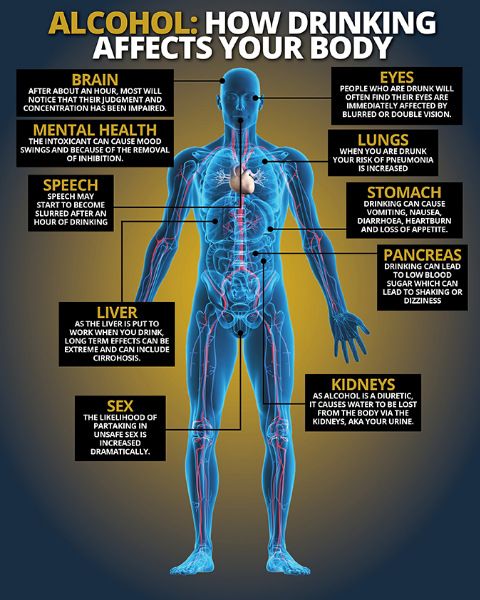
5.They’re independent:

cats are independent animals who like to scavenge and explore on their own terms, they are also very affectionate with their owners and people they trust. A cat will be there for you when you need them but they’re also perfectly adept at entertaining themselves. One of the best things about cats is that they are very independent creatures. Unlike dogs, who require quite a high level of attention cats are quite happy to have time to themselves.

6.cats can help kids to learn skills:

Cats can have a bunch of positive effects on children. According to study conducted owning a cat can teach kids social skills and help them cope with traumatic situations.

“Cats are connoisseurs of comfort.” – James Herriot