Sleepwalking

Did you ever Sleep walked? Here’s what I came to know that every 1 out of 3 kids aged between 4 to 8, sleep walk. And that’s a lot by the way.

Sleep walking formally known as Somnambulish is a strange phenomena where people get up and do things in their sleep, sometimes more than just walking and when they wake up they don’t have any recollection of what they were doing. Moreover, if they find way back to their bed they may not ever know that they were sleep walking.

Sleep walking is nothing about embarrassed about though or terrified for that matter, it’s relatively common. In a recent study Stanford found that 1 out of 3 people sleep walk at some point of their lives. It is specially common among children, between the age of 4 and 8. So what happened when we sleep walk.

Reasons

A leading theory about why we sleep walk is:-

  • In normal sleep cycle, your brains motor system continues to issue physical commands to the body.
  • Whereas those who sleep walks are suppressed by sleep chemical called GABA.
  • GABA access act as a break in your brain, it brings your mind and body down to rest by neutralizing Glutamate a chemical that causes excitement.
  • In sleep walkers there’s a glitch in the process that suppresses your boby from moving around namely that you don’t produce GABA.

So that’s why you are moving around when you’re still asleep. There are few causes of GABA deficient in the body:-

  1. Genetic sleepwalking :- when sleepwalking runs in the family
  2. Underdeveloped system:- when the boby simply hasn’t matured enough to produce the proper amount. That’s why it is more common amongst kids.
  3. Depression:- Those who suffer from depression are three times as likely to sleep walk.

Myths

You would have probably heard about the myth that you shouldn’t wake a sleepwalker because they’re going through a psychotic rage that could even kill you. But these are myths, if you see anyone sleepwalking, you are asked to wake them up gently, especially if they are in the kitchen or holding a knife.

Recently there was a story about a lady who drove 190 miles in her sleep without hurting or killing herself or anyone. She should be definitely called lucky.

India and South Asia

Southeast Asia is comprised of ten countries namely Burma, Brunei, Cambodia, Indonesia, Laos, Malaysia, the Philippines, Singapore, Thailand and Vietnam. All these countries are members of Association of South East Asian Nations (ASEAN). Burma (Myanmar) shares a contiguous land and sea frontier with India while Thailand, Indonesia and other countries in the region share
common maritime frontiers. Needless to say, that they are India’s close neighbors, with whom its relations date back to time immemorial. The history of the ancient Southeast Asian Kingdoms, i.e. Funan, Champa, Cambodge, Pagan, Dwarabati, Srivijaya and Majapahit indicate India’s intimate cultural ties. The art, architecture, epic and language have had similarities and their origin and growth cannot be understood in proper perspective without understanding their Indian counterparts. Ashoka the Great, had sent his emissaries, Sona and Uttara to spread the gospel of Buddhism in the region of Burma, Thailand, Laos and Cambodia. These nations declared Buddhism as their state religion. The impact of Hinduism still remains as part of their indigenous culture and religion. The ethnic Malays accepted Islam as their religion but the Muslims in Java have not yet disowned their Hindu traditions. Some of them still believe in animism and worship many spirits in different names. Bali remains a Hindu dominated society, and adherents of Buddhism
can be found in all parts of the Southeast Asia.


Malacca, Sunda and Lombok are the important sea-lanes linking East Asia with the rest of the world. Singapore, Malaysia and Thailand are industrially advanced. Singapore has an effective service sector in the field of finance, airlines, computers and shipping. Mainland Southeast Asia has diverse mountain ranges and rivers running from North to South, and most of them originate in Tibet. The main rivers are Mekong passing through Laos, Thailand, Cambodia and Vietnam. Other rivers are Irrawadi, Chindawin and Salween in Burma, Menam Chao Phraya in Thailand,
Song Koi (Red River) and Song Bo (Black Rivers) in Vietnam. These rivers bring rich alluvial deposits regularly to make the land fertile. Most fertile areas created by these rivers are lower Burma, Central Thailand, Tongking and Mekong deltas. Thailand and Vietnam are the largest rice exporting countries in the world. This unit examines various aspects of socio-economic-political features of South-East Asian countries. India’s relations with ASEAN countries are analysed in this Unit. India attaches great importance towards pursuing good neighbourly relations with the countries in Southeast Asia. The policy of “Look East” is the strategy of the Indian diplomacy ever since 1991 and its major thrust has been to improve India’s existing ties with the ASEAN region, and promote trade, investment, tourism, science and technology relations. Indian policies are endeavored to resurrect close historical and cultural ties, which were marred during the colonial period. The Cold War paradigm in the past prevented India to attend various issues in its bilateral relations but the situation changed only after the end of the Cold War. Various initiatives have been taken to rejuvenate our economic, cultural and strategic connections. Total bilateral trade with ASEAN countries has shown increasing trends from 5.98 billion in 1998-99 to 7.98 billion in 2002-03.


ASEAN investments which were dismal during the Cold War period, started coming and confidence was displayed on both sides. Various packages for the promotion of tourism were mooted and now it is not limited only to visit Buddhist sites in Bodh Gaya. India is willing to attract investments from the ASEAN region and they have been advocating liberalisation and free trade. ASEAN is trying to reciprocate the Indian gestures. They recognise the importance of
India as a great market where they find the existence of middle class people in millions. Besides, they have common historical, religious and security interests. Both of them support the policy of democratisation, liberalisation and free trade. Both are opposed to the rise of fundamentalism and terrorism and both are supporting human rights to be universally respected.

Are you a Smartphone Zombie?

Few days back i saw a question on a site asking “I want to put my phone aside and study, but i’m not able to do it? Is there any I can get rid of it?”

Well we can say that we all faced this phase where we get too much addicted to Mobile phone and couldn’t keep it aside and focus on other works. A research recently released the details of a study which told us where in the world was the biggest Smartphone penetration:-

  1. South Korea
  2. Australia
  3. Israel
  4. U.S
  5. Spain
  6. U.K

But this doesn’t mean that people in this countries are using mobile phones all the time. Based on a 2016 study led by Statistica, it does look like people in those countries might fall into the category of smartphone zombies. The study also said that

  • Brazilian spend the most hours on average connected to a smartphone as 4 hr 48 mins per day.
  • Chinese spend the most hours on average 3 hours 3 mins
  • Followed by U.S 2 hours 37 mins
  • Italy 2 hours 34 mins
  • Spain 2 hours 11 mins
  • South Korea 2 hours 10 mins

One thing range true for all countries in the study, and that was the fact time spent on a smartphone for the average person was up quite a lot from 2012 to 2016.

It’s not totally people’s fault that we are addicted to the smartphones. We have this exciting thing in our pocket that flashes, beeps and invites us to use it. NPR in 2018 talked about this manipulative object we carry around with us, that is just so irresistible. The story mentions Russian psychologist Ivan Pavlov, and what we know as Pavlov’s dog. The psychologist one day realised that when his dog heard a bell or a buzzer, he knew it was feeding time, thereby associate with a sound to eating, which led to the dog drooling and looking excited.

Modern psychologist tells us this is what is happening to us when we hear a beep or a ding inside our pocket; we become excitable, like Pavlov’s dog. Our reward is coming, and we get a hit of dopamine and we want more. We check our phone on average every 15 mins and that make the tech use psychological tricks to keep us checking in.

All the time spent checking in may affect our sleep, our relationship, our work, or even all the creative things we might do to have a flourishing existence. Psychologist tend to agree we should be checking in less, and tech producers need to start thinking about creating less powerful digital drugs. But that isn’t easy because as most people now need those beeps and likes, and need to feel that they are not missing out on something.

Experts even states that putting your phone down, you may experience withdrawal symptoms, such as craving, restlessness, irritability or difficulty in concentrating. So from now on you might turn off notifications, have a plan for the day and stick to it, take off the apps you really don’t need as that might lead to a kind of app surfing. In general, not many people are against these technologies, but we should be focusing on what we might call device quality time, educating ourselves and being productive and creative.

Gender and Socialization

Children learn early on that there are different expectations of boys and girls. Cross-cultural studies show that children get aware of gender roles by the age of two or three. By four or five years of age, most children are firmly embedded in the culturally appropriate gender roles. Children acquire these roles through socialization, a process in which people learn to behave in certain ways dictated by society’s values, beliefs, and attitudes. For example, society often views motorcycling as a male activity and therefore sees it as a part of the male gender role. Attitudes like this are usually based on stereotypes, oversimplified ideas about group members. Gender stereotypes involve an over-generalization of the attitudes, characteristics, or behavior patterns of women or men. For example, women may be thought of as too timid or weak to ride a motorcycle.

Gender stereotypes form the basis of sexism; Sexism refers to biased beliefs that place one gender over another; varies in severity; In parts of the world where women are severely undervalued, girls may not have equal access to food. They will also grow up believing that they deserve to be treated differently from boys. While it is illegal as discrimination in the United States, inequality of women continues to permeate social life. It should be noted that gender discrimination occurs at both micro and macro levels. Many sociologists focus on the discrimination that is built into the social fabric. This type of discrimination is known as institutional discrimination. Gender socialization occurs through four main agents in socialization: family, education, peers, and media. Each agent reinforces gender roles by creating and maintaining normative expectations for gender-specific behavior. Exposure also comes from secondary agents such as religion and the workplace. Repeated exposure to these agents over time leads men and women to mislead them into thinking that they are acting naturally rather than following a socially constructed role.

Family is the first agent of socialization. There is considerable evidence that parents socialize sons and daughters differently. Generally speaking, girls are given more latitude to step outside of their prescribed gender role. However, differential socialization typically results in greater privileges afforded to sons. For instance, boys are allowed more autonomy and independence at an earlier age than daughters. They may be given fewer restrictions on appropriate clothing, dating habits, or curfew. Sons are also often free from performing domestic duties such as cleaning or cooking and other household tasks that are considered feminine. Daughters are limited by their expectation to be passive and nurturing, generally obedient, and to assume many of the domestic responsibilities.

The strengthening of gender roles and stereotypes will continue till the child has reached school age. Until recently, schools made an explicit effort to stratify boys and girls. The first step in stratification was segregation. The girls were encouraged to take courses in home economics or the humanities. Studies suggest that gender socialization in schools is still happening today, possibly in a less overt way. Teachers may not even realize that they are acting to reproduce separated gender behavioral patterns. Ask students to arrange their seats or to align by gender, teachers may indicate that boys and girls should be treated differently.

Imitating the actions of other important people is the first step in developing separate sense of self. Like adults, children become agents who actively promote normative gender expectations and apply them to their surroundings. When children do not conform to the appropriate gender role, they may face negative sanctions such as being criticized or marginalized by their peers. Though many of these sanctions are informal, they can be quite severe. For example, a girl who wishes to take karate lessons instead of dance lessons may be referred to as a “tomboy” and has difficulty gaining acceptance from male and female peer groups. Children in particular are severely ridiculed because of gender mismatches.

Mass media serves as another significant agent of gender socialization. In television and films, women tend to play a less important role and are often portrayed as wives or mothers. When women are given a lead role, it often falls at one of the two extremes: a healthy and holy figure or a malicious hypersexual figure. The same inequality is widespread in children’s films.

Gaming – pros and cons

All of us at some point of our life have played some game, at least candy crush. So why not we know what the pros and cons are. We see Indian parents being against gaming and thinking it as a sin or something but is it really that bad? I have seen streamers play for 25 hours for their 25th birthday, is it that good for health?

Pros of gaming

  • Gaming is not actually that bad. There is good as well as a bad side for everything in this world just like gaming. Gaming improves our logical thinking and reflexes. As a gamer myself I can say that I have seen improving in the particular game by learning all tactics and stuff. So it is not a waste of time.

  • Social skills – Gamers can easily develop their social skills. If it is a multiplayer game, you need to communicate with your teammates. You will be communicating with people from various places and over time you will find yourself making a bunch of gamer friends online.

  • I am not sure about physical health but it does improve your mental health. My go-to mood changes is always gaming. It is like you sunk into the virtual world, so obviously you forget your life problems and have a good game. You will be inside the virtual world thinking how to kill this guy, how to win this match etc. and that would be your major problem at that time.

  • Increases brain function. You give your brain exercise by thinking deeply about how to win this match or something. Video games gives us a reason to implement reasoning and logical ability.

Cons of gaming

  • Health issues – I am not a doctor to find out what exactly it does to our eyes or health but I do know it is not good for our eyes to sit and play for more than 3 hours. For me 3 hours is the maximum, if I play beyond that I tend to get headaches. Obviously screen time should be reduced as everything now is done online. So it is better if we start playing outdoor games.

  • Too much of anything is good for nothing. Addiction is bad no matter what is it. That too addiction towards gaming is going to affect you mentally and physically as well. You can play games daily for a limited time but you can’t play the whole day.

  • The amount of negativity in the gaming community is more than negativity in any other place. I encounter with toxic players everyday. It is just easy for them to be toxic and hurt you as they are hiding behind a fake identity “game name”.

  • Not concentrating on other works. Going into the virtual world and never coming back to the real world is another problem. Again we need to know our limits of when to stop gaming. Anything in limit is not harmful according to me.

Conclusion

The only reason why parents are against gaming is that we tend to play for hours and hours and spoil our health which our parents obviously don’t like. So let them know that few hours of gaming is good and not going to affect anyone and have fun!

MACHINE LEARNING

MACHINE LEARNING

       Machine learning is the branch of Artificial Intelligence (AI). In AI, the machines are designed to simulate human behavior. Whereas in machine learning, the machines are allowed to learn from the past data without programming explicitly. Any technology user in today’s world has benefitted from machine learning. It is a continuously growing field and hence provides several opportunities to the research industries. In machine learning, tasks are classified into broad categories. Two of the most adopted machine learning categories are supervised learning and unsupervised learning. In supervised learning, the machines train the algorithms based on the sample input and output labeled by the humans. It uses patterns to predict values on additional unlabeled data. In unsupervised learning, the machine trains the algorithm with no labeled data. It will find the structure within its input data. As a field, machine learning deals with data, so having a piece of knowledge in statistics will be useful in better understanding concepts.

WHY MACHINE LEARNING?

  • It develops systems that can automatically adapt and customize themselves according to the individuals.
  • It can be a key for unlocking the value of corporate and customer data which in turn helps the company to stay ahead of the competition.
  • For growing data and the different available data, the computational process is cheaper and faster and provides affordable storage.
  • By using algorithms to build models, organizations can make better decisions without human intervention.
  • Relationships and correlations can be hidden in a large amount of data. Machine learning will help find these relationships.
  • As technology keeps changing, it is difficult to continuously redesign the system by hand.
  • In some cases like medical diagnostics, the amount of data available about certain tasks might be too large for explicitly encoding by humans.

VARIOUS FIELDS THAT USES MACHINE LEARNING:

GOVERNMENT: By using machine learning systems, the prediction of potential future scenarios and adapting rapid changes becomes easy for government officials. Machine learning helps to improve cybersecurity and cyber intelligence. It also helps by reducing the failure rates of the project.

HEALTHCARE: The use of sensors to predict the pulse rate, heartbeats, sugar levels, sleeping patterns helps the doctors to assess their patient’s health in real-time. It provides real-time data from past surgeries and past medical records which will improve the accuracy of the surgical robot tools. Some of the benefits are avoidance of human errors and will be helpful during complex surgeries.

MARKETING AND SALES: The marketing sector has been revolutionized since the arrival of artificial intelligence (AI) and machine learning. It has increased customer satisfaction by 10%. E-commerce and social media sites use machine learning to analyze the things that you are interested in and help in suggesting similar products to you based on your past habits. It has greatly helped in increasing the sales of e-shopping sites.

TRANSPORTATION: Through deep learning, machine learning, has explored the complex interactions of highways, traffic roads, accident-prone areas, crashes, environmental changes, and so on. It helped in traffic control management by providing results from the past day. So, the company can able to get their raw materials without any delay and supply their finished goods to the market inefficient time. 

FINANCE: The insights produced by machine learnings helps the investors to give a clear picture of risk and the right time for investment and helps to identify the high-risk clients and signs of fraudulent areas. It helps in analyzing the stock market movement to give financial recommendations. Machine learning also helps to be aware of the risks in the finance department.

MANUFACTURING: Machine learning has helped to improve productivity in the industrial field. It helps in the expansion of product and service lines due to mass production in a short time. Improved quality control with insights helps to improve the product’s quality. Ability to meet the customer’s new needs. Prediction helps to find risks and reduces the cost of production.

   Thus in today’s world, machine learning is implemented in several fields to complete the work faster and cheaper. The machine should be able to do all the works that man can do and machine learning will help to achieve this goal.

Delta or Delta plus? which one is more threatening?

DELTA OR DELTA PLUS VARIANT? WHICH IS A BIGGER THREAT AND WHY?

India has been immersed by an awful spread of novel Covid, particularly during the subsequent wave. It was fuelled significantly by the Delta variation, found first in Quite a while and observed to be ordinarily more irresistible than the first strain, and added caseloads consistently to a disabled medical services framework. It is likewise now the most predominant variation causing a flood of cases across the globe. In India, where the case tally has spiralled down, there’s as yet a conceivable chance of a third wave coming up and a fresher, more unnerving change, Delta Plus was found in certain conditions of the nation and still thought to be a potential danger.

The Delta variation of the infection, known to be significantly irresistible, contagious and serious in its assault drove the second flood of the infection in many pieces of the country. Simultaneously, the Delta Plus variation, likewise sequenced during a portion of the cases recognized during the subsequent wave, is said to convey forward changes from two variations supposedly infects even the individuals who have completely immunized, and furthermore cause passing. Yet, which among the two would it be advisable for us to be the most careful of? Could one be more potentially irresistible than the other?

DELTA VERSUS DELTA PLUS VARIATION : HOW WOULD THEY THINK ABOUT?

Both the Delta and Delta Plus variations have been classified as Variants of Concern (VoC), and are spreading in numerous nations. The most significant dangers were found in our own, where immunization inclusion is as yet on the lower side.

While the Delta variation (B.1.617.2) keeps on being a prevailing and quickly rising variation unleashing destruction across the world, it is likewise answerable for the outrageous storm of cases and pulverizations looked during the second wave in India. Not exclusively were greatest cases observed to be genomically followed to this variation of the infection, it actually stays to be a disturbing variation adding cases, even after the decay of the second wave direction in India. In states actually recording stressing caseloads, the Delta variation has been considered mindful.

In the meantime, the Delta Plus variation, which as well, was sequenced in Maharashtra, India, is a disturbing infection variation. Containing transformations of two COVID variations the Beta variation (found in South Africa) and the Delta variation (found in India), the Delta Plus contains two striking changes L452R and P871R.

WHICH ONE COULD RISE QUICKER

While the Delta variation of Covid was intensely liable for driving a dangerous second wave, the ascent of cases was additionally very quick with the variation in view of its high contagiousness. In any case, the Delta Plus variation, which contains transformations from the Delta variation has been named significantly really concerning. In examination, the Delta in addition to variation is said to spread very nearly ‘60% quicker’ than the Delta variation.

In any case, while clinical perceptions have proposed a higher infection danger, the presence of the Delta Plus variation is as yet on the lower side and has simply been found to spread at a much slower rate than anticipated. Until this point in time, three states represent most analysed instances of the new variation Maharashtra, Kerala and Madhya Pradesh.

Presently, while the Delta variation is as yet a predominant COVID strain, and the infection particularly dynamic, specialists recommend that the Delta variation, with its serious striking side effects could stay to be a waiting danger we may confront.

The proof accessible on contagiousness and spread have likewise agreed through examinations and genomic discoveries. According to specialists, Delta Plus, in spite of its extreme provisions and capacity to quickly spread, isn’t really rising quicker at the present time.

MANIFESTATION OF BOTH THE VARIANTS

The Delta variation of the infection is viewed as outrageous because of the seriousness of manifestations it causes, in contrast with the first strain. High lung contribution, respiratory challenges and gastrointestinal protests (even with gentle or moderate cases) were what separated it from past variations of concerns.

The Delta in addition to variation, in the interim, which is said to convey highlights from both the Delta variation and the Beta variation could be significantly more extreme in nature. A few examinations have recommended that the variation could without much of a stretch outperform resistant protections, and tie unequivocally to lung cell receptors. More examinations are in progress to decide an expounded rundown of potential signs and side effects.

While the majority of the indications are supposed to be like the Delta variation, underneath recorded could be the potential signs which draw a few concerns and consideration:

– Early-stage lung association

– Shortness of breath and breathing troubles

– Longer enduring fever and steady hack

– Gastrointestinal manifestations

– Skin rashes and sensitivities

– Dryness and watery eyes

– Appetite misfortune and queasiness

WHAT POSES GREATER THREAT FOR VACCINATED INDIVIDUALS?

With any variation, what studies have shown is that the greatest danger involves unvaccinated people. The Delta variation, with its serious side effects and high virus rate was seen to hugely affect the ones who were/are unvaccinated. The ones who gotten an advancement case, just proceeded to foster milder side effects and had a quicker recuperation course of events. The chances of hospitalization and mortality with immunization are definitely decreased.

Nonetheless, with the Delta Plus variation, not exclusively could the infection be conceivably compromising for the unvaccinated, however it has been seen to progressively influence the ones who have been completely inoculated too in various habits some asymptomatic, some experiencing gentle or moderate contaminations, and seldom implied the danger of hospitalizations. Until this point in time, more than 3 passing have been recorded in the nation, ascribed to the Delta Plus variation. Each of the 3 cases were connected to serious comorbidities also. Government reports additionally have given alerts that the fresher variation, while sidestepping the insusceptible guards, could likewise lessen a reaction to the monoclonal counter acting agent treatment.

It is additionally obscure concerning how powerful current immunizations are against the fresher variation, since it’s still leisurely spreading and a couple of cases have been distinguished up until this point. Notwithstanding, specialists and virologists keep on issuing preventative counsel, proposing that regardless of a low predominance, the Delta in addition to variation could dodge neutralizer assurance and along these lines, add to stresses.

Who was the First Plastic Surgeon?

Plastic surgery – the name implies an artificial substance – but it is derived from the Greek word “Plastikos” which means to mold or to give form. An important specialty has been taking shape, one that reshapes the lives of patients. So who was the first plastic surgeon?

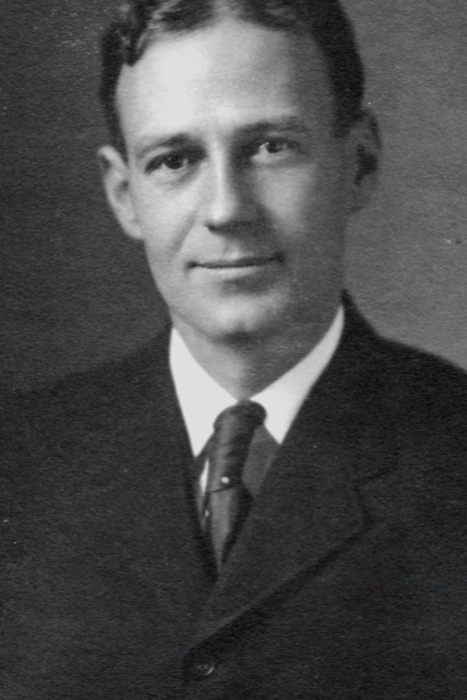
John Staige Davis was the first plastic surgeon. He played an important role not only at his council group in Hopkins but also in the United States in the plastic surgery. He limited his practice in the field of plastic surgery in those times. He was the only plastic surgeon who was there when World War I took place.

Dr. John Staige Davis

In 1991, Dr. Davis published the first English language textbook of plastic surgery and it is still used today. He sends copies to medical school founder, doctors and at that time no one acknowledged receiving it. And though plastic surgery at Hopkins would not gain the standard they deserved until the next century, Dr. Davis was helping to build the foundation for the entire discipline of plastic surgery in America.

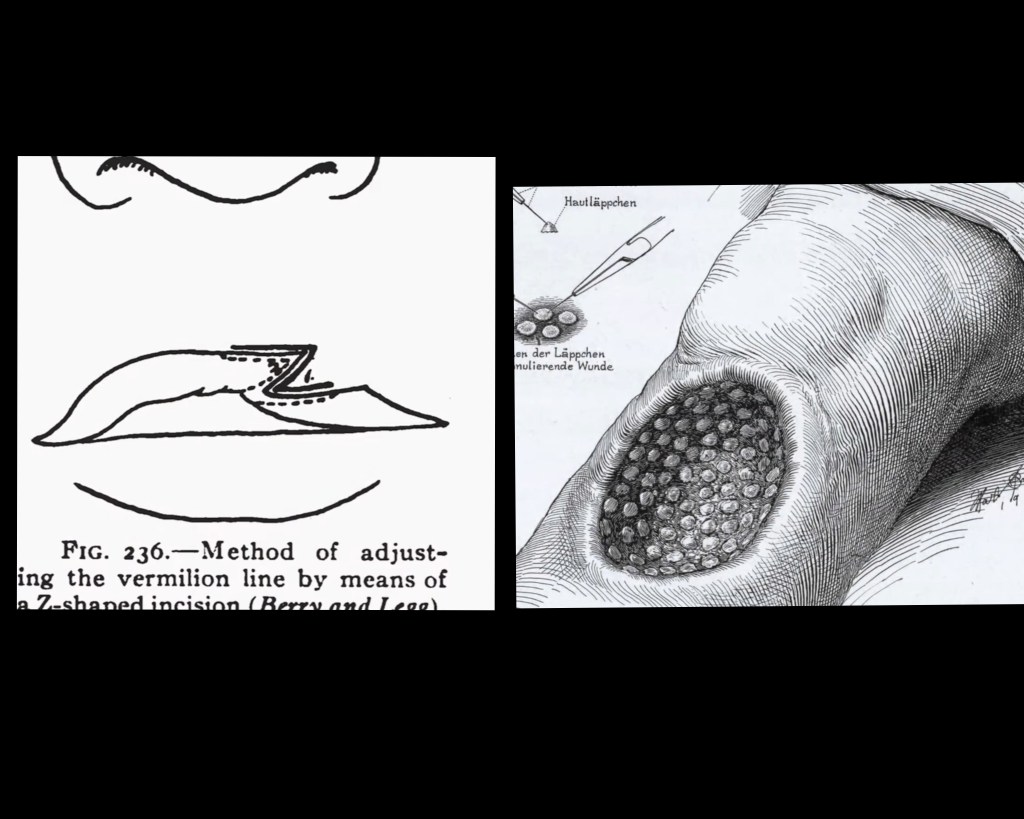
He used to pioneer the transferring tissue techniques known as “Z- plasty” and the use of small deep grafts to heal chronic wounds. He was the founding member of The American Board of Surgery and The American Board of Plastic surgery. Dr. Davis’s work and reputation starts Hopkins on its way to becoming a crossroad and destination for the country’s best plastic surgeons.

In 1942, John Staige Davis was part-time faculty member and was running a plastic clinic even though he was in his 70s by then and beyond his retirement age, two years from then a forth year medical student at Hopkins had the chance observe the master surgeon doing a cleft lip repair.

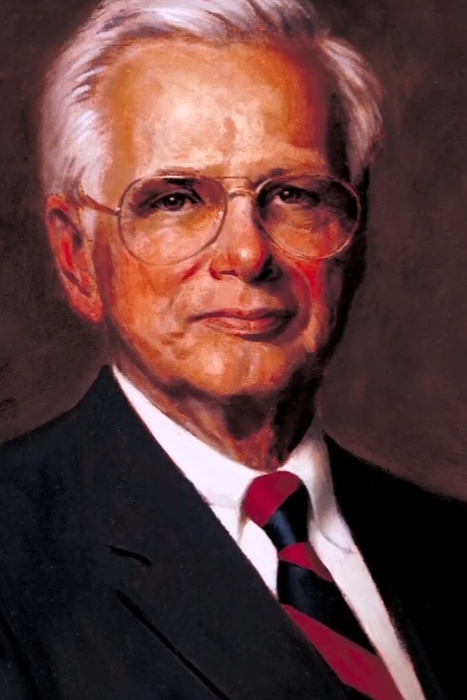
His successor Dr. Edgerton graduates and proceeds to work by joining the army and was serving at Valley Forge General Hospital in Pennsylvania. He was one of the few surgeon treating thousands of men coming back from combat with disfiguring wounds and burns needing plastic surgery. This horrendous war injuries united skill surgeon in their desire to heal wounded soldiers. This dynamic gave raise to a new and important speciality in medicine.

Dr. Edgerton

With the scientific foundation and tissue regeneration, transplantation, and stem cell biology plastic surgery is uniquely poised to make the next major advance in medicine. By regenerating or replacing missing body parts, plastic surgery can transform patients life in ways that could not have been imagined only recently.

John Staige Davis didn’t lived to see plastic surgery receive the recognition and support if required and deserved in the world. But his path-breaking work and clear vision allowed a greater dream to be realized.

Basic queries related to feminism. Part-1

Q1) What is feminism and when did it start?                                             

Feminism, one of the most influential ideologies, seeks to analyze the social position of women and lays the foundations for the reform and advancement of women in all areas of society.

This struggle for power, like class and race struggles, is potentially revolutionary. In fact, it is the oldest power struggle, the least public in its manifestations of conflict, and the most fundamental in its impact on society. In the Middle Ages or even ancient times, it makes more sense to start our studies at the end of the 18th century and the French Revolution. The Enlightenment and Revolution influenced women in France and other parts of Europe with the prospect of freedom and revolution. Mary Wollstonecraft is a leading early “feminist” writer and in her book “An Indication of the Rights of Woman (1792)”she says that women should have the same legal rights as men on the basis of equality of humanity, moral worth, rationality and freedom; It was wrong that women were defined by gender as denying their educational, legal, economic and political rights. She declared that there will be a beneficial revolution in the relationship between men and women.

As sensitive as these views appear today, they challenged the male-dominated power structures that ruled all levels of society in the 19th century. With men being liberated, women hoped their interests could be promoted through voting and parliament.

Three “waves” of feminism can be seen: the first between 1830 and 1930, focused mainly on legal and political rights; The second, in the 1960s and 1970s, focused on much more basic personal and relationship issues. The third over the past decade has also been essentially a reflection and re-evaluation of what has been accomplished.

Q1) Do you believe that only certain groups of people should be allowed to have an access to certain opportunities and rights? if no then why do we see this discrimination being practiced and why should anybody decide that?

Before answering the question, let’s deeply understand what equality of opportunity means.

Peter Westen, a renowned philosopher shows that an opportunity is a ternary relationship between a person, some obstacles, and the desired goal; however, a person only has an opportunity if he has a probability to achieve that goal. When you encounter insurmountable obstacles, you will have no chance. This makes it impossible to achieve a goal. For instance, one cannot have an opportunity to become the president of India if he is not a natural-born citizen. Many people, therefore, have no opportunity to become president of India. A person can have an opportunity even in the face of many, quite critical and severe, obstacles. So, a natural-born Indian citizen has the opportunity to become president, but he faces serious obstacles, such as accumulating the relevant number and distribution of votes, social obstructions, and gender obstructions.

For the opportunities to be equivalent within a group, each member of that group must confront obstacles that are not insurmountable. In our example, all Indian-born citizens have equal opportunities, when alterable obstacles such as race, gender, and religion are removed and when main barriers remain, such as getting democratically elected. One exception to alterable obstacles is that of biology. One can put a limit on sociological factors like racism, sexism, and casteism but not on the biological ones. Biology is the reason why men are preferred over women to form an army. The same reason goes for women as nurses are mostly women. You still can give equal opportunity to women to apply in the army but you can’t guarantee the equal outcome as a woman biologically has less stamina, power, and aggression than a man which are imperative to be a part of an army.

Now coming back to the question. No, I do not believe that only certain groups of people should be allowed to have an access to certain opportunities and rights. The real evaluation should be on the main obstacle. We should ultimately try to contain the alterable obstacles like racism, sexism, casteism etcetera. If we are able to minimize these obstacles, it will bring us quite close to achieve equality for opportunity.

The reason why discrimination is being practiced is because the alterable obstacles aren’t getting minimized as the sociological impact of flawed mentality taken from the society and the liberal provisions in the country are letting the young minds get corrupted.

They are taught from starting that, girls are only for household purposes and girls aren’t capable work outside the house.

They are also told that one cast is higher than another or one race is greater than another or one religion is purer than another. This impact does make the upcoming generation susceptible to becoming sexist and racist.

127th Amendment Bill, 2021: The way to comprehensive turn of events

Indian Constitution is well known for the social designing of a conventional society, to change it from the customary progressive request into a cutting-edge libertarian country, where positive segregation in the blessing of least advantaged areas of the general public, is looked as a system for advancement and development. Indeed, Right to Equality cherished in Article 15 and Article 16 plans to appear the longing of Constitution producers of India to carry thorough development to individuals of India. One of the systems to guarantee equity is the possibility of reservation in training in the state-run establishment just as work in the public authority and public area. As to Schedule Castes and Schedule Tribes instance of the booking is quite clear. Be that as it may, the account of reservation has seen many good and bad times on account of the Other Backward Communities.

In India, there has been a background marked by the backwardness of networks outside of the pale of timetable positions and clans. Rank System in our nation is a perplexing snare of social association where standing personalities advise person’s position in the customary social request. Notwithstanding, the issue with the standing framework is that for the sake of societal position it has prompted the double-dealing and inside and out torment of the lower stations throughout the long term, justifying the sear of pioneers like Baba Sahib Ambedkar, Jyotiba Phule and others. It is to guarantee the comprehensive advancement of individuals from the lower positions under the aegis of the Indian government assistance state, reservation is given. Truly, OBCs are those networks which fall in the middle of the least rungs of positions and the higher standings. Their issue is financial backwardness. To survey their backwardness different advisory groups from Kalekar Committee to Mandal Committee were establishes to distinguish the networks which are really in reverse, to bring them under the umbrella of State supported government assistance. It is in this light that the Hundred and Twenty Seventh Constitution Amendment Bill, 2021 should be seen.

127th Constitution Amendment Bill: States right to make Inclusive OBC list

The new revision bill was presented following quite a while of organization of the booking systems for the Obc’s. Starting from the giving the sacred height to the National Commission for the Backward Communities in 2017, the NCBC was made the nodal office to manage the issues in regards to OBCs including a pivotal part of complaint redressal which was being managed by the National Commission for Schedule Castes. The revision gave a solid balance to the OBCs by guaranteeing the institutional component and sacred status. Nonetheless, in ongoing past there have been many issues which have sprung up with respect to consideration/prohibition of networks in the OBC list. One of the significant mixes was brought about by the interest for the OBC status to Maratha people group in Maharashtra. This interest has seen cases and counter cases in different echelons of Judiciary. Yet, the Hon’ble Supreme Court judgment of 2021 completely made Central Government the watchman of OBC list. It put the Center in an off-kilter position since it has been the states which are principally liable for the government assistance of their residence. Additionally through this judgment, by one assessment, around 671 networks were kept out of the ambit of OBC classification, getting them far from the advantages that this booking involves.

The effectivity of 127th Constitution Amendment Bill 2021 should be surveyed against this foundation. The revision has enabled states to add networks to OBC list. It has enabled NCBC to be counseled by states in the matter concerning OBCs. It is a significant revision for different reasons. First and foremost, this change permits state governments to add networks to the OBC records that they consider fit. This proviso is huge in light of the fact that it permits the advantages of OBC reservation to reach to the grassroot level. Also, it unites the situation of NCBC, by ordering states to hold discussion with this established body in all issue identified with OBCs. Besides, this revision should be found in the light of development of the OBC reservation from advertisement hocism of early days to the more noteworthy organization of components that arrangements with the issues of OBCs, going from established status of NCBC to substantial job for states in keeping up with their OBC records. The greater clearness in this regard is a welcome advance as it will just reinforce the government assistance measures for the more vulnerable areas of our general public as embraced in the Constitution of India.

The ramifications of 127th Constitution Amendment Bill are all over. It’s undeniably true that the social design and chains of importance in India have stayed unaltered even get-togethers given to the more vulnerable networks, the synthesis of the elites in our nation is intensely shifted towards the forward positions. Reservation as a device of positive separation can be utilized to modify the social request to the advantage of the individuals who have been taken advantage of at its hands for millenniums. All the more critically, the equity that laws like this will grant will likewise guarantee social correspondence, and in the end might even modify the structure of the elites in our country. Just before 75th commemoration of India’s Independence, a fortunate advance was taken by noteworthy Prime Minister, Shri Narendra Modi for the advantages of in reverse networks of India. This choice will be an achievement for making another personality of a New India.

Alternately the meaning of this sacred alteration focuses to the more noteworthy need of advancement and development in our general public, a development that would reach to each person of India, so the requirement for reservation will become repetitive. The way that various networks need the front of OBC order is connected with the possibility that there is an immense degree for cultural improvement in India even following 74 years of our autonomy. This is a bleak reality that requirements further reflection and strategy development. Additionally, one worry that ascents from this alteration is the crystallization of rotating entryway strategy as to OBC reservation, as states will be constrained by the neighborhood governmental issues to add more current networks into their individual OBC records. This viewpoint should be remembered, in case we wind up weakening the impacts of this way breaking alteration.

All in all, the Constitution Amendment Bill has acquired sufficient measure of clearness the standard working systems of working of OBC reservation. It additionally has a gigantic potential to enable individuals from in reverse networks, upgrading their societal position through well-rounded schooling and business openings, making ready for comprehensive turn of events. In the hours of COVID-19 and financial difficulties, 127th Constitution Amendment Bill will actually want to connect the broadening bay of dejection and neediness. It will guarantee portrayal and strengthening to the networks that fall in the breaks of advancement talk in our country.

Six plans which PM Modi needs to arrive by any means, and need for a quantum hop in approach 2024

PM Narendra Modi’s push in his Independence Day discourse for “100% immersion” of government plans includes six key drives, which however have arrived at a huge populace up until now, need a quantum hop in the approach 2024 when Modi would look for a third term in office as PM.

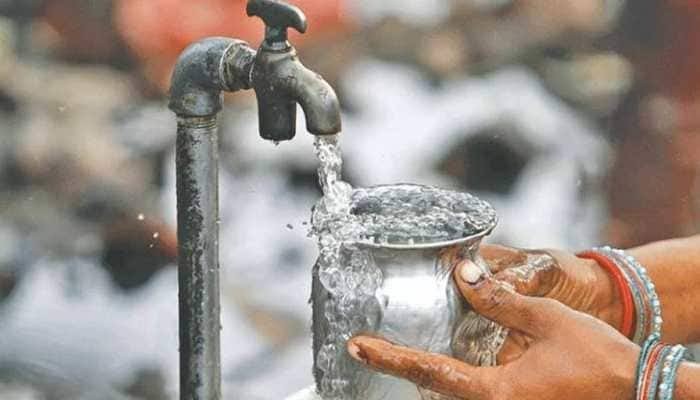
As rattled off by the PM himself, these plans are Ayushman Bharat which offers free clinical protection, Ujjwala Yojana that offers free LPG associations, the twin extra security plans upheld by the public authority, Atal Pension plot, the PM Housing Scheme, and Har Ghar Jal Scheme for drinking water. Four of them carried out in Modi’s initial term and assumed a part in his 2019 success while ‘Ayushman Bharat’ and ‘Har Ghar Jal’ solely affect the ground in Modi’s second term up until now.

“Crores of individuals are getting the advantages of many plans began over the most recent seven years. Today the speed of government plans has expanded and they are accomplishing the ideal objectives. We have advanced a lot quicker than previously. However, it doesn’t end here. We need to accomplish immersion. We need to push forward with an outlook of penny percent accomplishment… for this, we don’t need to keep a far off cut off time. We need to make our goals work out inside a couple of years,” the Prime Minister said from the Red Fort.

Ayushman Bharat – Lot to be finished

Dispatched in late 2018 not long before the Lok Sabha surveys, Ayushman Bharat should give free clinical protection family front of Rs 5 lakh to almost 50 crore individuals in the country. While the plan has no objectives given the idea of the plan includes clinical help, around 10 crore recipients have cards so far to approve their qualification for the plan, suggesting that almost 40 crore recipients are still to get these cards from the Centre. Different states have likewise stretched out the plan to cover 15 crores more individuals and have offered cards to 6 crores of such individuals up until now.

The two greatest states with the most recipients, Uttar Pradesh and Bihar, are slacking on this front of appropriating cards with 1.4 Cr and 70 lakh cards dispersed so far separately however both these states have almost 10 Cr recipients each. Two crore medical clinic confirmations have been accounted for under the plan to date with claims worth Rs 25,000 crore. In any case, UP and Bihar have revealed far less affirmations up until this point, at 7.7 lakh and 2.9 lakh separately, and more modest states have performed better, showing the plan’s mindfulness in UP and Bihar isn’t as wanted up until this point.

Ujjwala Yojana — Best Saturation

The free LPG association plan of Ujjwala was finished in front of the cut-off time in 2019 for eight crore recipients who didn’t have a gas association in the country. This was a distinct advantage conspire for the Modi government in the 2019 races. PM last week dispatched a second form of the plan in which one crore more recipients will get a free LPG association that is relied upon to convert into full LPG entrance in the country. Inside seven days of the dispatch, more than three lakhs of these associations have been given out and the public authority might accomplish its objective in 2021 itself.

Two Life Insurance Schemes — Need a Push

The two disaster protection plans dispatched in Modi’s initial term have seen unassuming improvement and have scope for more inclusion. They are wilful. PM Suraksha Bima Yojana (PMSBY) has 23.6 crore recipients as of date between the age of 18-70 who pay only Rs 12 as an expense in a year to get inadvertent extra security of Rs 2 lakh. The take-up of the PM Jeevan Jyoti Bima Yojana (PMJJBY) is lesser at just 10.5 crore recipients between the age of 18-50 who pay Rs 330 every year for a front of Rs 2 lakh if there should be an occurrence of death.

There are almost 55 crore individuals in the country in the age gathering of 18-50 years and around 65 crores in the age bunch 18-70 years.

Atal Pension Yojana — Big Scheme, Low Uptake

Just 3.13 crore individuals have selected themselves into the Atal Pension Yojana dispatched in PM Modi’s initial term as a feature of an aspiring point of a ‘general government backed retirement framework’. The plan is near the public authority’s heart as it offers a month-to-month annuity of Rs 1000 to Rs 5000 to any individual get-togethers age of 60 years relying upon how much premium he decides to pay, moves the annuity advantage to the companion of the recipient after their demise and moves the whole corpus of benefits abundance till the age of 60 years to the candidate after several passes away. The plan is available to anybody between 18-40 years old to join and this age bunch has more than 45 crore youngsters in the country.

PM Housing Scheme — 2022 point

This is one plan that is doing sensibly well against its aggressive objective of giving each vagrant a house before the finish of 2022. Against a new objective of conveying about 2.67 crore houses before the finish of 2022, 1.53 crore houses (60%) have been finished up until now and another 48 lakhs have been endorsed and are in different phases of development. The public authority is expecting to finish 2.01 crore houses consequently by March 2022 and the remainder of the objective (65 lakh houses) before the finish of 2022. Large states like Maharashtra and Tamil Nadu are anyway battling, covering under half and 40% generally speaking objective of theirs individually up until this point.

Har Ghar Jal — Game-Changer for 2024?

The funnelled drinking water for all plan dispatched in Modi government’s second term on Independence Day in 2019 could be the genuine distinct advantage for the BJP come 2024, as it has an objective for culmination around the same time. Just 17% of the nation’s families, about 3.2 crore, had faucet water associations when the plan started, and this has effectively ascended to 42% as of date with 4.7 crore associations given over the most recent two years. The Center has an aggressive point of going after the plan early in 2023, preceding the overall appointment of 2024. For that to occur, the greatest territory of Uttar Pradesh should beat as it actually has just 17% faucet water immersion with 32 lakhs out of 2.6 crore families covered up until this point. West Bengal, Jharkhand, and Chhattisgarh have under 15% inclusion. Rajasthan is at 20%.

Narendra Modi’s words from Red Fort are a message additionally to focal government divisions running these plans to propel themselves for 100% immersion. “The greatest benefit of this 100% achievement rate is that nobody stays denied of the advantages of the public authority plot. At the point when the public authority works with an objective to contact the individual in the last line, really at that time there is no separation and there is no degree for debasement,” the PM focused from the Red Fort on Sunday.

SEVEN INTERESTING FACTS ABOUT SPACE

1.In 3.75 billion years, the Milky Way and Andromeda galaxies will collide.

The Andromeda Galaxy is approaching the Milky Way- where our solar system is at a rate of around 110 kilometers per second (68 mi/s) and, the two will collide to form a giant elliptical galaxy.

Milky way
Milky way

2.Andromeda is probably the most massive galaxy in the Local Group.

There are around 1 trillion stars in the Andromeda galaxy, compared with the Milky Way, which has 200-400 billion.

Andromeda galaxy
Andromeda galaxy

3.If two pieces of the same type of metal touch in space, they will permanently bond.

This incredible fact is also known as cold welding, and it happens because the atoms of two pieces of metal have no way of knowing they are separate. It doesn’t happen on Earth because of the air and water found between the pieces.

Fusion of metal on space

4.The Moon was once a piece of Earth.

The theory is that when Earth was a relatively young planet, was struck by a giant object, and this collision broke a piece of the Earth away to create the moon. This piece then began to orbit the Earth as a result of its gravitational pull.

Earth and Moon
Earth and Moon

5.Space is completely silent.

Sound waves need a medium to travel through. Since there is no atmosphere in the vacuum of space, the realm between stars will always be eerily silent. Astronauts use radio waves to communicate.

Space
Space

6.The Apollo astronauts’ footprints on the moon will probably stay there for at least 100 million years.

Since the moon doesn’t have an atmosphere, there’s no wind or water to erode or wash away the Apollo astronauts’ mark on the moon. That means their footprints, overprints, spaceship prints, and discarded materials will stay preserved on the moon for a very long time. Erosion is still happening on the moon, just very slowly.

Astronaut in Moon
Astronaut in Moon

7.Some planets have no surface to land on.

There are four gas giants in our solar system — Jupiter, Saturn, Uranus, Neptune — where it wouldn’t be possible to land on. Although different in composition, a gas giant is usually made out of hydrogen and helium and has a small rocky center.

Jupiter
Jupiter

INTERESTING FACTS ABOUT INDIA

 Indian Culture
Indian Culture
  • India never invaded any country in her last 100000 years of history.
  • When many cultures were only nomadic forest dwellers over 5000 years ago, Indians established Harappan culture in Sindhu Valley (Indus Valley Civilization)
Indus Valley Civilization
  • The name ‘India’ derived from the River Indus, the valleys around which were the home of the early settlers. The Aryan worshippers referred to the river Indus as the Sindhu.
  • Chess- invented in India.
  • Algebra, Trigonometry, and Calculus are the studies, which originated in India.
  • The ‘Place Value System’ and the ‘Decimal System’, were developed in India in 100 B.C.
Brihadeswara Temple
Brihadeswara Temple
  • The World’s First Granite Temple is the Brihadeswara Temple at Tanjavur, Tamil Nadu. The shikhara of the temple is made from a single 80-tonne piece of granite. This magnificent temple was built in just five years, (between 1004 AD and 1009 AD) during the reign of Rajaraja Chola.
  • India has the largest democracy in the world, the 7th largest country in the world, and one of the most ancient civilizations.
  • The game of Snakes & Ladders was created by the 13th-century poet saint Gyandev. It was originally called ‘Mokshapat’. The ladders in the game represented virtues and the snakes indicated vices, that is good deeds take people to heaven and evil to a cycle of re-births.
  • The world’s highest cricket ground is in Chail, Himachal Pradesh. Built-in 1893 after leveling a hilltop, this cricket pitch is 2444 meters above sea level.
  • India has the largest number of Post Offices in the world.
  • The largest employer in India is the Indian Railways, employing over a million people.
University of Nalanda
  • The world’s first university was established in Takshila in 700 BC. More than 10,500 students from all over the world studied more than 60 subjects. The University of Nalanda built in the 4th century was one of the greatest achievements of ancient India in the field of education.
  • Ayurveda is the earliest school of medicine known to mankind. The Father of Medicine, Charaka, consolidated Ayurveda 2500 years ago.
  • India was one of the richest countries till the time of British rule in the early 17th Century. Christopher Columbus, attracted by India’s wealth, had come looking for a sea route to India when he discovered America by mistake.
  • The Art of Navigation & Navigating was born in the river Sindh over 6000 years ago. 
  • Bhaskaracharya rightly calculated the time taken by the earth to orbit the Sun hundreds of years before the astronomer Smart. According to his calculation, the time taken by the Earth to orbit the Sun was 365.258756484 days.
  • The value of “pi” was first calculated by the Indian Mathematician Budhayana, and he explained the concept of what is known as the Pythagorean Theorem. He discovered this in the 6th century, long before the European mathematicians.
  • Until 1896, India was the only source of diamonds in the world(Source: Gemological Institute of America).
Baily Bridge
Baily Bridge
  • The Baily Bridge is the highest in the world. It is located in the Ladakh valley between the Dras and Suru rivers in the Himalayan mountains. 
  • Sushruta is regarded as the Father of Surgery. Over 2600 years ago Sushrata & his team conducted complicated surgeries like cataracts, artificial limbs, cesareans, fractures, urinary stones, plastic surgery, and brain surgeries.
  • The four religions born in India – Hinduism, Buddhism, Jainism, and Sikhism, are followed by 25% of the world’s population.
  • Jainism and Buddhism were founded in India in 600 B.C. and 500 B.C. respectively.
  • Islam is India’s and the world’s second-largest religion.
  • Jews and Christians have lived continuously in India since 200 B.C. and 52 A.D. respectively.
  • The largest religious building in the world is Angkor Wat, a Hindu Temple in Cambodia built at the end of the 11th century.
  • Sikhism originated in the Holy city of Amritsar in Punjab. Famous for housing the Golden Temple, the city was founded in 1577.
Varanasi
Varanasi
  • Varanasi, also known as Benaras, was called “the Ancient City” when Lord Buddha visited it in 500 B.C. and is the oldest, continuously inhabited city in the world today.
  • Martial Arts were first created in India and later spread to Asia by Buddhist missionaries.
  • Yoga has its origins in India and has existed for over 5,000 years.

For further more facts refer to:

https://knowindia.gov.in/my-india-my-pride/interesting-facts-about-india.php

WHY ARE YOU SO QUIET?

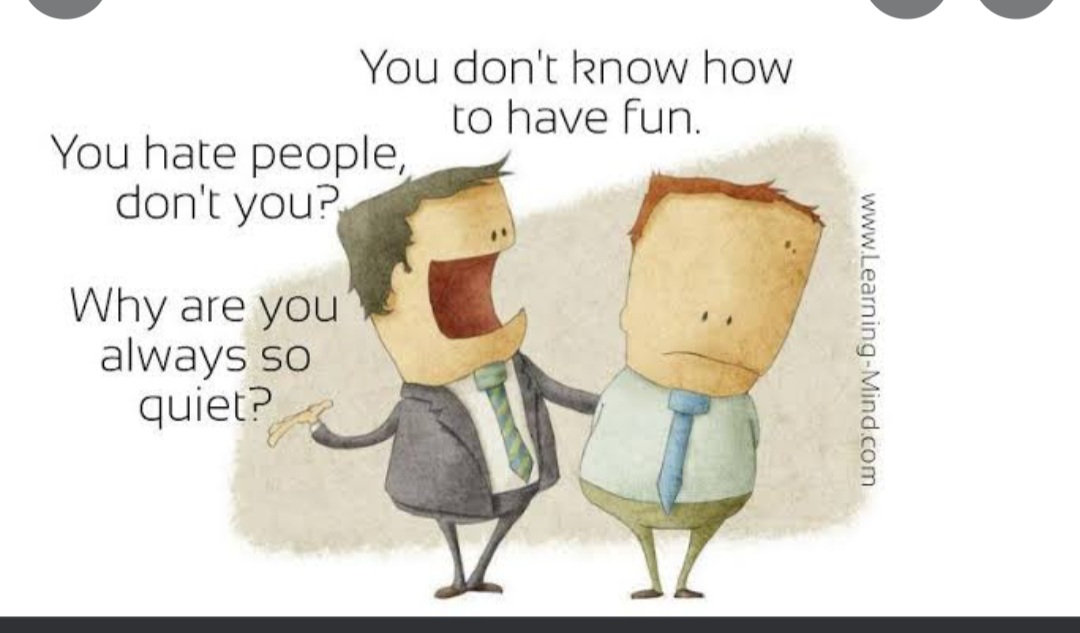
What happened? Why are you so quiet? Do you have any problem? Why are you always so serious? Why are you antisocial? Don’t you know how to have fun? These are some of the common questions asked from introverts. If you are an introvert these questions make you feel horrendous. Introverts are often misunderstood as depressed, baffled, devastated.

Common Misconceptions

There are many myths framed by people about introverts. If you are an introvert, you might have heard of the following misconceptions

 POOR PUBLIC SPEAKERS
People often think that you lack confidence and you don’t like to socialize so you can’t be a good public speaker.
✔This is just a myth, it may not apply to every introvert. If a person has the particular traits required to be a public speaker then personality type hardly plays any role in this.
 INTROVERTS DON’T HAVE ANY FUN
It is believed that introverts don’t have any fun, they don’t like to enjoy. They don’t like to go out.
✔Everyone likes to enjoy. Everyone has different ways to have fun. Your way of enjoying yourself may be different.
 YOU ARE EITHER OBLIVIOUS OR DOPE
People assume that introverts are fools, they think that most of the time you are lost in your world, you are not aware of anything, you are not ready to face the world.
✔This can’t be applied to all, you may be cognizant and you are a keen observer, you observe everything but just keep it yourself rather than conversing it with other people.
 YOU ARE SHY
This is the most common misconception about introverts.
✔Being shy and introverted is different
An introvert may not necessarily be shy. An introvert interacts with others only when necessary whereas a shy person is afraid to interact with anyone but this is not the case with introverts.

 YOU ARE DEPRESSED
People often think that you are depressed just because you don’t speak much. ✔ You spend most of the time with yourself so you are often misunderstood.
A person is much more than being an introvert, extrovert, ambivert. A person is defined by the qualities not by these personality types, but people just try to underestimate you if you don’t speak much, if you speak more then also people criticize you. Some people try to change themselves just by getting triggered by the particular questions or statements of people. My motive is not to depict any personality as inferior or superior, it’s just that if you are an introvert then many people want you to change your personality.

Every personality type has some weaknesses and strengths, even if you are an extrovert then also people have problems with you and you are perceived as a wild, loud, overweening person. Now how to answer those repulsive questions, you can just ignore them or just become blunt and reply whatever you want to or just give a cunning smile to that person. These may sound weird but most of the time they do work.
The biggest mistake an introvert can make is trying to become an extrovert and vice versa. Introversion is not any fault which needs to be fixed. Just remember no one will ever know you entirely, people only know some aspects of your life and they judge you on that basis and they will keep on judging, so never doubt your capabilities or try to change your personality under the influence of these people.

Introduction: Identity Politics and Political Correctness

Identity Politics

Identity politics is a term that describes a political approach wherein people of a particular religion, race, social background, class or other identifying factor develop political agendas and organize based upon the interlocking systems of oppression that may affect their lives and come from their various identities. Identity politics centers the lived experiences of those facing various systems of oppression to better understand the ways in which racial, economic, sex-based, gender-based, and other forms of oppression are linked and to ensure that political agendas and political actions arising out of identity politics leave no one behind.

There is a very positive element to identity politics, that identity politics can be a great source of strength and unity to minority communities: they help them feel psychologically safe and secure especially when coping with life in the West. Language, culture and religion are the ways in which people also cope with the psychological stress of trauma or rapid change — refugees and migrants will band together in ethnic communities in new countries in order to stay connected to what they have lost or left behind. More and more people join the social groups which results in more authority and power. And as it is said, power corrupts and absolute power corrupts absolutely. The social groups formed on the basis of their particular identity now starts to diminish, cancel and supress any valid argument made against them. Now that the majority of people are on the side of these social groups related to Feminism, Gay right activism, anti-racism etc, a person having an opposing but a valid strong argument can’t place it without being called as anti-feminist, homophobic, and racist. In most cases it leads to their career being destroyed.

This whole mob mentality which evolutionized from a primary cause to help the oppressed groups, class is because of the absolute power it gets on the later stages. They think that everything they do is correct and which is horribly wrong. This whole thing of identity politics has a bad effect on the society. Forget forgiveness, something said mistakenly isn’t tolerated at all and the criticism, hate and abuse the person has to suffer is immense and eventually leaves a mark for the rest of his life.

Political Correctness

Political correctness is a term used to describe language, policies, or measures that are intended to avoid offense or disadvantage to members of particular groups in society. The term has been used to describe a preference for inclusive language and avoidance of language or behaviour that can be seen as excluding, marginalizing, or insulting to groups of people disadvantaged or discriminated against, particularly groups defined by ethnicity, sex, or gender.

Political correctness makes sure we remain within societal boundaries that have been previously established. This helps us maintain the previous progress we have made regarding acceptance, equality and inclusivity. By directing people to be careful in their speech we help prevent negative polarisation and the acceptance of prejudices. This way we do not lose progress in tolerance and equality. The spread of hate crimes, extreme nationalism and prejudices can also be attributed to from lack of political correctness in politics. When people with a platform say bigoted things, the wider population sees these views as legitimate.

Political correctness restricts public debates and thinking in society and in mainstream media. This results in ‘touchy’ issues not being discussed efficiently. There is no flexibility with social boundaries. Political correctness is a form of social engineering used to silence people with ‘controversial’ ideas. Political correctness is not fixed, so what is unacceptable changes. But who gets to decide what qualifies as unacceptable? Politicians who condemn others citing political correctness (excluding ‘hate speech’ or clear examples of discrimination) are going against the principles of freedom of speech. They are silencing people according to their own standards. Some people think political correctness is a leftist plot that silences the right and removes ‘alternative politicians’ from mainstream media. Because much of the world’s views are not strictly ‘politically correct’, they are not represented. Others think that ‘The whole political correctness movement was invented by the Far Right to inhibit any meaningful discussion of diversity issues in order to keep racial, gender, and other barriers in place.

Why are cats amazing…

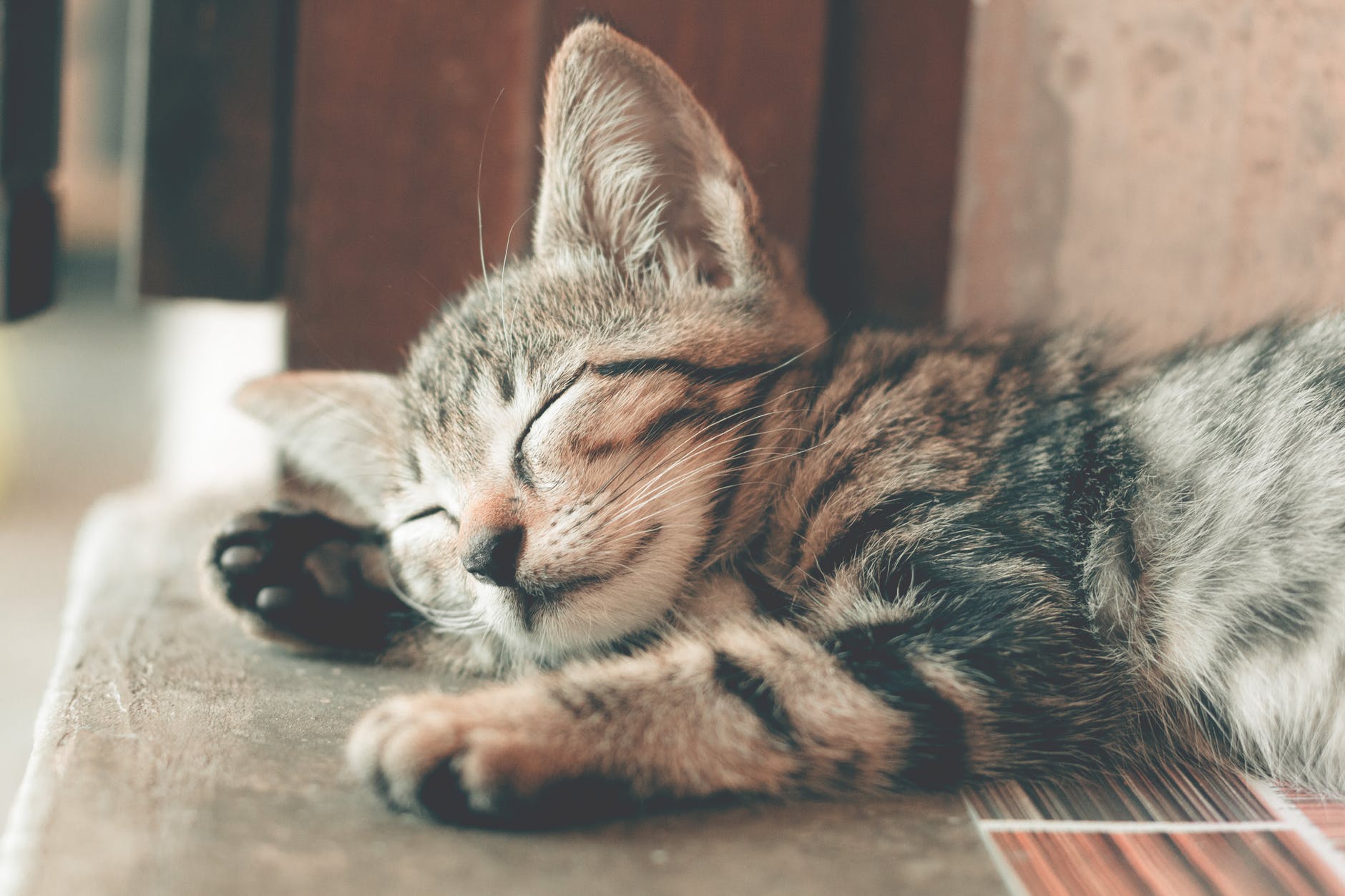
Cats are awesome pets. Although some people disagree with this, I am not backing off with my opinion. I am very much eligible to talk about why cats are the best because I have come across and lived with 9 different cats throughout my life. Each cat had something to teach me and gave something for me to miss about. I have decided to not have cats anymore because of the abundant love I have for them and because I lost many precious ones. I don’t think I can bear that pain.

Cats love you

Cats can seem to be mean at times. Sometimes, they ARE mean and that is the most attractive trait in a cat. But they love their owners abundantly and they have different ways to show it. Only people who can understand cat language can feel their love. Cats are loyal too. Cats are lovable too.

They live in their world

If you have lived with cats, you will know that they live in their worlds. They sleep and eat when you feed them. Sits on your lap and purrs for hours. Their lives are very simple. They may seem like they don’t show as much attention to you as much as dogs do. But no matter where you are they will search for you just to sit on your lap and sleep.

They are the cutest

You can simply adore them for the way they are, physically as well as mentally. Like I said before, you can simply watch a cat roaming around or playing or sleeping or just living in their cute little world. You can watch that all day and never get bored.

As I write this I am getting tons of memories about my cats flashing before my eyes and filling my eyes with tears. Losing a cat is the worst thing that could happen to a cat lover.

Before you judge me based on this article that I have only encountered with sweet cute cats I would like to stop you. I have an experience with an evil cat, like Mr. kat. I still couldn’t figure out what the cat’s mentality was but he doesn’t want to be touched. When I did he would scratch me and leave me bleeding. Yet I could never stop loving him and tried showing how much I loved him. He will catch my leg and scratch it even if I just walk past him. Not all cats are cute and silent. They all have their personalities and I have learned that we should respect that. That cat needed a trained professional who could handle him. Sadly I couldn’t handle him that well. We gave him away.

Another encounter is the complete opposite. I had this cutest and the smartest cat. She was potty trained and she knows her name too. She was the best cat I would say. One day at night during a power cut she ran away and we couldn’t find her. She left a big scar on my heart. Losing her is the worst thing that happened in my life.

I still love cats. I am just not ready to raise another cat on my own. Cats are beautiful inside out if we can understand them well. If you ever get a chance to provide a home to a cat, please do 🙂

Immunity Boosting Drinks – That Helps to Boost and Strengthen Your immune system

It is most important to have a healthy diet as well as take immunity boosters to prevent. Chances are that people who have a better immune system will be able to deal with infections better. Here are some easy-to-prepare homemade drinks that will not only keep you fit but also strengthen and boost your overall immune system. These nutritional drinks can be made with ingredients that are easily available in your kitchen.

1.Kadha: Homemade Kadhas prepared with common kitchen ingredients is one of the most traditional drinks that is often consumed by people to boost immunity. It is extremely beneficial to fight cold and cough. It also treats the respiratory disorder. It is prepared by boiling basil, cloves, cinnamon, ginger, carom seeds, turmeric and black pepper. You can also add honey or jaggery for taste.

2.  orange fruit juice:

Vitamin C has  antioxidant  properties, which protect your cells from substances that damage the body. A vitamin C deficiency can lead to delayed wound healing, an impaired immune response, and the inability to properly fight infections. However, if you have a cold, high doses of vitamin C might result in less severe symptoms and a quicker recovery. For adults, the tolerable upper limit is 2,000 milligrams a day.

Notable nutrients in orange juice contains

  • vitamin A from the oranges and grapefruit
  • vitamin B-6 from the oranges
  • vitamin B-9 (folate) from the oranges

3.Masala tea: It is quiet popular drink in India due to its essential benefits All the ingredients of this immunity booster Masala tea are easily available in your kitchen. The tea is not only anti-microbial and anti-inflammatory but is also rich in compounds that prevent infections. The phytonutrients present in raw honey have antibacterial and antiviral properties that boost the immune system and fight sickness. Boil grated ginger, cinnamon, peppercorns, cloves, cardamoms and tulsi leaves in half a cup of water for 30 minutes. Add a little bit of honey and have it.

4. veggie green Smoothie: This healthy and tasty green smoothie is perfect for summer. It is rich in Vitamin A, Vitamin C, Folic acid and other antioxidants that prevent inflammation and help the body fight infections. Take some spinach, pineapple, lemon juice, freshly chopped ginger, and almond milk or yoghurt and blend them all in a mixer. Serve it cold.

5. Turmeric milk:  Also called as Haldi doodh. As the name suggests, it is prepared with turmeric, honey and milk. Turmeric contains a compound called curcumin which modulates the immune system and its strong anti-inflammatory properties can help in inflammation and pain as well. Boil milk add turmeric and serve warm with honey to taste. Turmeric Milk helps to heal injuries. Drinking haldi doodh helps to recover from an injury and also keeps the infections at bay. It is antibacterial in nature which prohibits the attack of infections in the body.

6. Honey Lemonade: This is another easy-to-prepare drink with zero hassle that not only treats sore throat symptoms and cough but also keeps the respiratory tract hydrated and fights off extra mucus. Boil three to four cups of water in a deep pan and add grated ginger, one-inch cinnamon stick, three chopped garlic cloves, one teaspoon mint juice and lemon juice. As it blends, cool it for a few minutes and add honey and drink warm.

Mysterious Facts About Jagannath Temple

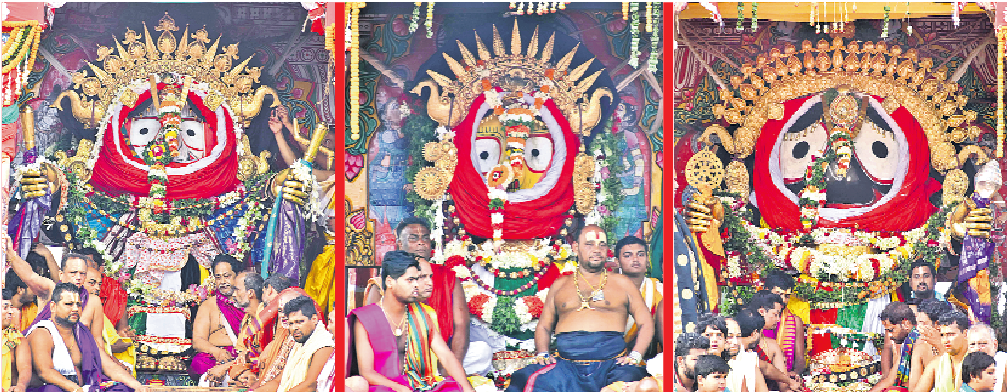
Iconic Temple

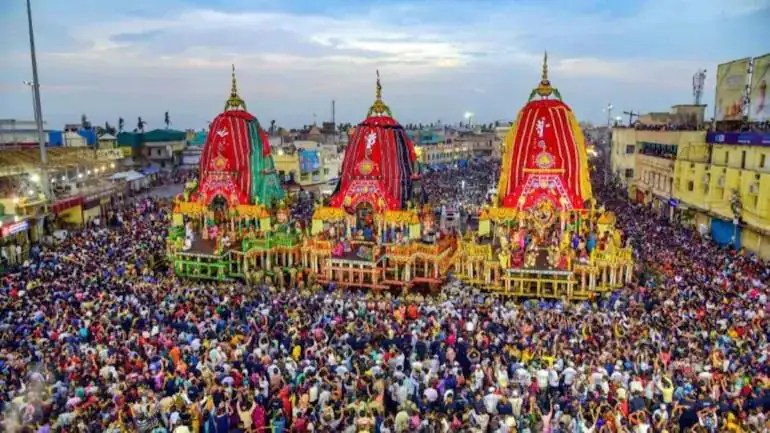
Odisha is a state of art and culture in the East India region. Among 30 districts in Odisha, Puri district is especially famous for Lord Jagannath all over the world. Jagannath is a blend of two Sanskrit words Jagat meaning universe and Nath meaning Lord. Jagannath temple is the pride of every Indian. This temple is a symbol of the greatest architecture of all time. Lord Jagannath’s Ratha Yatra is world-famous, it is held once a year. To see the Lord outside the temple large number of devotees are coming to watch this magnificent car festival. It’s a Hindu temple, expect them no one can enter this temple as per tradition. Originally Lord Jagannath was worshiped as Lord Neela Madhava by a tribal king named Viswabasu.In Hindu tradition, we know about Char Dham, among from all Puri Dham is a most excellent and divine place. In the 12 century, the Jagannath temple was constructed by king Anantavarman Chodaganga. The temple has its significance and is full of mystry.No one can tell the truth behind the mystery of Jagannath temple.

Let us know about some exciting stories of Jagannath Temple.

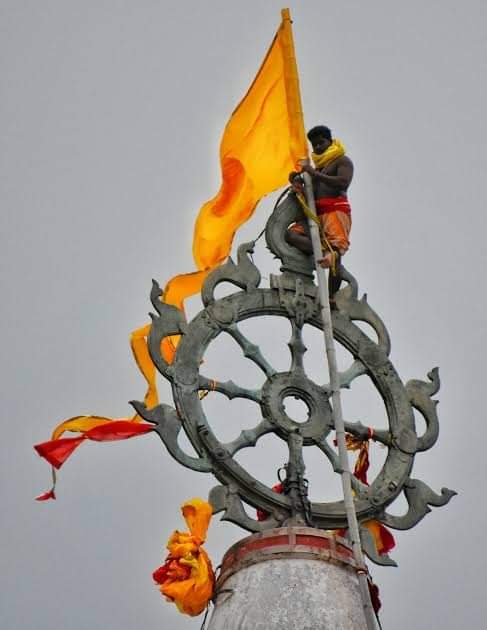
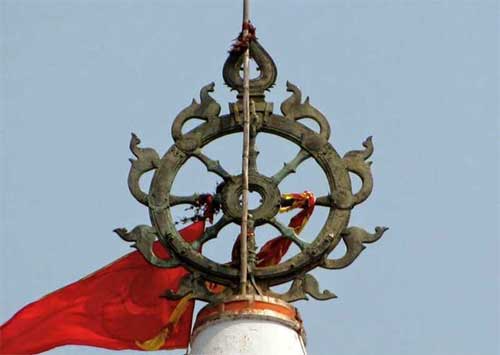
Climb To Neela chakra

We can see the temple top with the flying flag of different colors. Every day someone has to climb this 65 meters temple to change the flag. It is a daily ritual for many decades. This process will be done without any safety harness and with bare hands. History says if this ritual will be skipped one day in the calendar, the temple will be closed for 18 years.

Crimson Of Chaturdha Murti

The avatars are covered from 14 to 18 years, many hidden rituals performed by Daitas(Jagannaths Sevayats during his crimson) in a dark environment with no devotees and no cameras. New Murtis were replaced by those old wooden neem Murtis of Lord Jagannath, Balabhdra, Subhadra, and Sudarshana. It is automatically decaying in soil.

Opposite blow of air

Astonishingly, in the daytime, the light air blows from the land to the sea and the opposite happens in the evening. It only occurs in Jagannath temple Puri.

Never Wasted Mahaprasad

Every day around 2000 to 2,000,00 devotees are coming to Jagannath temple and feel blessed by eating Mahaprasad. But you will be surprised to know that the process of making Mahaprasad is a non-organized way.No one measures the amount of food they will cook for devotees. Supernaturally, the prepared food will never waste, not even a bite. 

Flag Against Wind

Jagannath temple’s flag at the top flew against the opposite direction of the wind as it is against science.No scientist can reveal the truth of this phenomenon. 

Magic Structcture of Neela chakra

The Neela Chakra is built with hard metal weighing about a tonne. We are amazed how our ancestors got up there without any machinery. The design is unique, that when you look at the Neela Chakra, its appearance is the same in every direction. Is it not a miracle? 

Soundless Temple

The sea sound was never audible within the temple premises. But when you step out from the temple, the sea sound comes again. This effect is rare and makes this phenomenon noticeable among scientists.

No Birds In the sky

We see the birds in the sky. The sky is the permanent address of birds. But unfortunately, no birds fly above the temple dome. No airplane can glide above the Neela Chakara.

Unusual Method Of Cooking

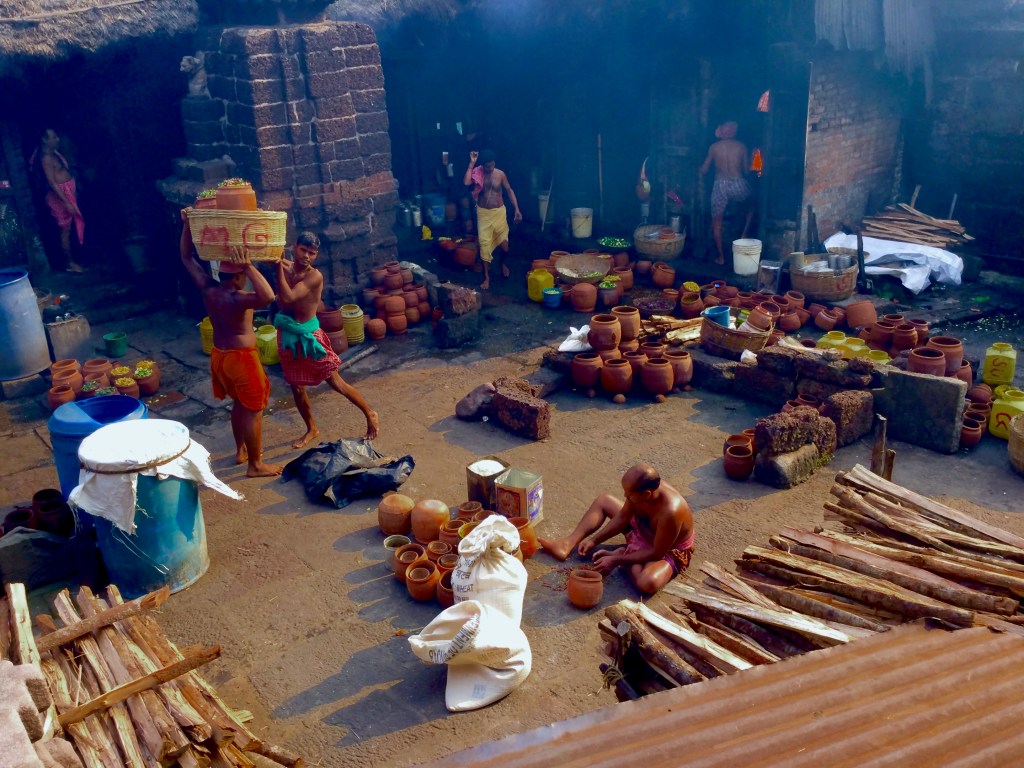
In Jagannath temple, their priest cooks all the food items. It is called Mahaprasad. They usually use seven pots for cooking. The process is like seven pots mounted one above the other. When the cooking is over, the topmost pot is cooked first. It is the magic of Lord Jagannath.

Ratha Yatra

In Rath Yatra, Lord Jagannath and his brother Lora Balbhadra and his sister Lora Subhadra came outside the temple to enjoy their vacation time by traveling to their motherland called Gundicha Mandir. Surprisingly these massive three Chariot built within sixty days with no engineers. Car painters are the architect of these 3 Chariots. Behind every design and architecture, there will be a great story. Nothing is without a purpose.

No Shadow

When some stand in front of sunlight, a shadow creates. But you never see a shadow of Shree Mandir at any time of the day and any direction also.

The scientist is still researching to know about the mystery behind the Jagannath temple.

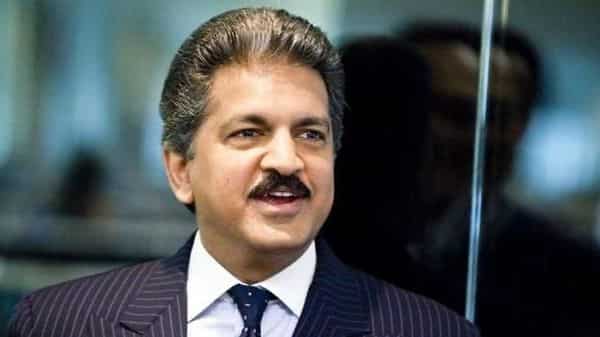
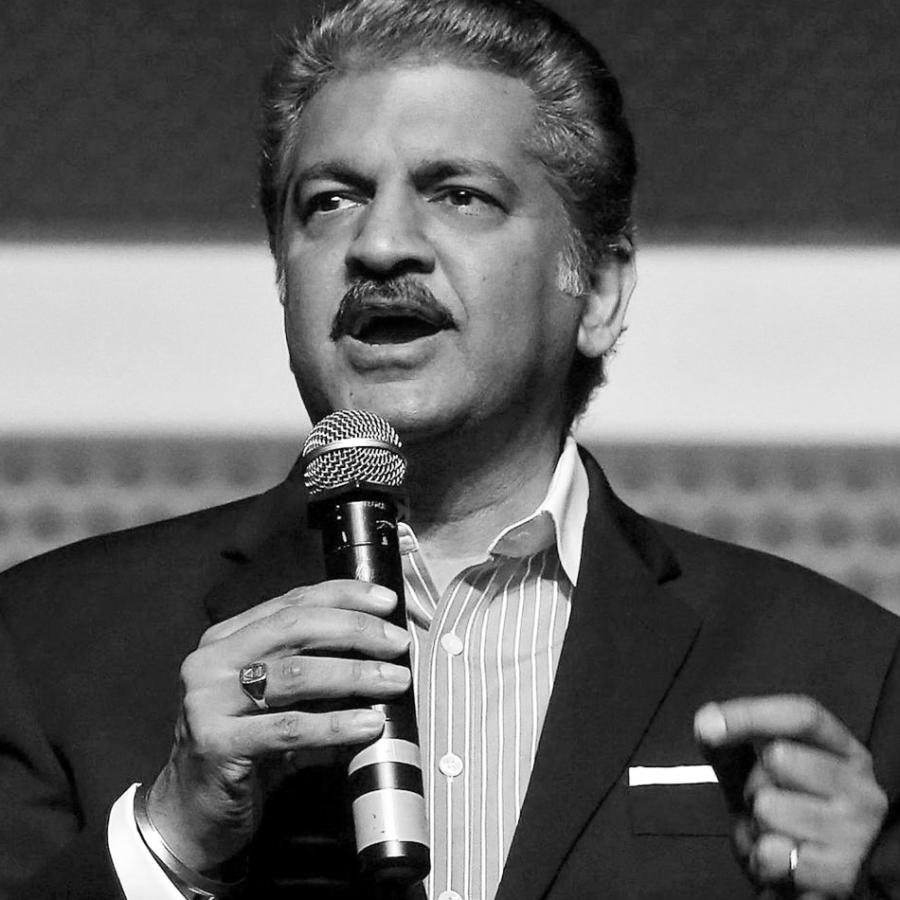
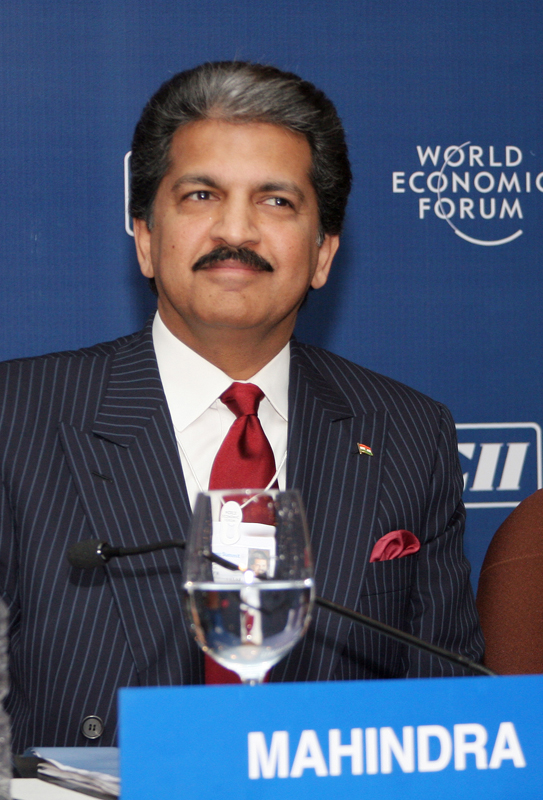
Anand Mahindra

About Anand Mahindra

Mr. Anand Mahindra is Chairman of the US $19 billion Mahindra
Group which is today one of India’s top industrial houses. The
Mahindra Group is a socially and environmentally responsible global
federation of companies with a leading presence in major sectors of
the Indian economy. The Group is present across the spectrum
from Agri-business to Aerospace and is now entering new areas like
renewables. Graduated with Honours (Magna cum laude) from
Harvard College, Cambridge, Massachusetts, in 1977. In 1981, he
secured an MBA degree from the Harvard Business School, Boston,
Massachusetts. He returned to India that year and joined Mahindra
Ugine Steel Company Ltd (MUSCO), which was, at that time, the
country’s foremost producer of specialty steels. In 1989, he was
appointed Deputy Managing Director and President of the company.
During his stint at MUSCO, he initiated the Mahindra Group’s
diversification into the new business areas of real estate
development and hospitality management.
Mr. Mahindra took over as Deputy Managing Director of the flagship
company Mahindra & Mahindra in 1991 at a time when the
turnover was US$ 177 million. He initiated a comprehensive
change programme in Mahindra & Mahindra Ltd. to make the company an
efficient and aggressive competitor in the new liberalized
economic environment in India.

Mahindra as an Influencer

Mahindra is well known for his Twitter influence. His Twitter
handle @anandmahindra has over 6 million followers. He was
ranked third in the ‘WorldofCEOs.com’ 2013 ranking of the ‘Top
30 CEOs on Social Media’. He was listed among the “10 CEOs You need To Follow On Twitter” by Benzinga in 2016. Fortune Magazine has listed him among the World’s 50 Greatest Leaders in 2014
and as one of the top 25 most powerful business people in Asia for
the year 2011.

Other International Boards and Committees that he serves on :-

  1. World Bank Group’s Advisory Board for Doing Business
  2. The French Prime Minister’s Strategic Attractiveness Council
  3. US – India Strategic Partnership Forum
  4. Harvard Business School – Asia – Pacific Advisory Board
  5. Harvard University Asia Centre – Advisory Committee
  6. Harvard Business School – Board of Dean’s Advisors
  7. Formula E Sustainability Committee
  8. President’s International Council of The J. Paul Getty Trust
  9. Honorary Advisory Committee for the John H. McArthur Distinguished Fellowship
  10. International Advertising Association World Congress 2018 – Governing Council
  11. US – India Business Council

Mahindra & Mahindra Ltd

Mahindra & Mahindra Limited is an Indian multinational automotive manufacturing corporation headquartered in Mumbai, Maharashtra, India. It was established in 1945 as Muhammad & Mahindra and later renamed as Mahindra and Mahindra. It is one of the largest vehicle manufacturers by production in India and the largest manufacturer of tractors in the world. It is a part of the Mahindra Group, an Indian conglomerate. It was ranked 17th on a list of top companies in India by Fortune India 500 in 2018. Its major competitors in the Indian market include Maruti Suzuki and Tata Motors.

Operations of M&M

Under the “Mahindra” brand name, the company produces SUVs, Multiple Utility Vehicles, pickups, lightweight commercial vehicles, heavyweight commercial vehicles, two wheeled motorcycles and tractors. Mahindra maintains business relations with foreign companies like Renault SA, France. M&M has a global presence and its products are exported to several countries. Its automotive global subsidiaries include:

  • Mahindra Europe S.r.l. based in Italy.
  • Mahindra Automotive North America (MANA) in US.
  • Ssangyong in South Korea
  • Automobili Pininfarina in Italy
  • Mahindra South Africa and Mahindra (China) Tractor Co. Ltd.
  • Mahindra Australia
  • Mahindra Brazil & Mexico

Global Recognition

  • Featured in Barron’s List of Top 30 CEOs worldwide (2016)
  • Appointed Chevalier de l’Ordre national la Légion d’Honneur (Knight in the National Order of the Legion of Honour) by the President of the French Republic (March 2016)
  • First Indian recipient of the Harvard Medal by the Harvard Alumni Association given for extraordinary service to Harvard University (2014)
  • Sustainable Development Leadership Award from The Energy and Resources Institute (TERI) (2014)
  • Knighted as ‘Grand Officer of the Order of the Star of Italy’, a civilian award of State, conferred by the President of Italy for achieving extraordinary results in the promotion of bilateral relations between Italy and India (2013)
  • Global Leadership Award by the US-India Business Council (2012)
  • Business Courage Award by Asia Business Leadership Forum (2012)
  • Best Transformational Leader Award by the Asian Centre for Corporate Governance & Sustainability (2012)
  • Featured in Asia’s 25 most powerful business people by Fortunemagazine (2011)
  • Lloyds Banking Group Business Leader of the Year Award at The Asian Awards (2011)

Indian Honours :

  • Disruptor Personality of the Year Award  by Bloomberg TV India (2016)
  • ‘Social Media Person of the Year’ by the Internet and Mobile Association of India (2016)
  • Conferred the degree of Doctor of Science (Honoris Causa) by the Indian Institute of Technology, Bombay, in recognition of outstanding contributions to the Indian automobile industry (2015)
  • Business Today CEO of the Year (2014)
  • ‘Special Recognition for Creating a True Global Indian MNC’ at India’s Best Market Analyst Award by Zee Business (2013)
  • Forbes India Leadership Awards ‘Entrepreneur for the Year’ (2013)
  • Business Leader of the Year by NDTV (2012)
  • Ernst & Young Entrepreneur of the Year India award (2009)
  • Indian of the Year award by NDTV (2009)

                      History is the future!


We have always been cramming the dates, years of the major events that have happened in the past or the main points of the revolution that happened. Those sure were the pain in the brain, the main reason of this beautiful subject being boring. What would have happened if we did put more emphasis on pondering over the ideas that triggered all those wars and revolutions?

It would have been better in my opinion that rather than making students cram the date of the attack on Bastille, the idea behind the attack was targeted, making students think whether it was the right way to do it? It would have better if the philosophy of Jean-Jacques Rousseau and Maximilian Robespierre was earmarked, and the opinion was taken of each student on that, training their brain on HOW TO THINK rather than WHAT TO THINK.

How does it affect the future? You know the basic problem in India is we feed students; we do not make them search for the food. There must be a reason why we are a hub of cheap labour in the world but not of high skilled labour and leaders. The root cause of this is the blocked vision and the one-dimensional brain that is the result of constant feeding without thinking. A labourer won’t question your ideas, but a thinker would dare to question the thinking and could even change it and that’s where the creative thinking comes from, expanding your horizons, increasing your dimensions. You can see the world with the eyes of Albert Einstein or Max Weber by not merely reading their ideas but to think over it.

We all have read about Hitler, and we have crammed what he did. If we had been more possessive about his thinking itself, we must have known how one man can control the peoples’ mind. He was one of the powerful orator the world has ever seen, flowing peoples’ mind with hatred against one race and then controlling the stuff that their mind should feed through media, newspaper and other magazines, eliminating the THINKERS and the people he felt weren’t suitable by his standards or were opposing his draconian actions. In the end, the majority of the people left were his followers and the next thing we know was the start of WW2.

Now see your country’s leader, are there any similarities? If there are and there isn’t a big opposition against him, people must have learnt History from a wrong way, now tell me how cramming the date of Hitler’s birth would have helped us?

Let’s take another example, we all are aware of the India-China standoff that occurred recently. It wasn’t the first time China has done that. China’s shenanigans commenced from blunders that Pt Jawaharlal Nehru made in the 1950s which also were the great catalysts in India losing the 1962 war.

India happily ignored Chinese claims until the early 1950s. Maps released by Beijing in 1954 showed the north-eastern edge of Jammu and Kashmir (Aksai Chin region) as the territory of the Chinese, which triggered the alarm. Instead of vigorously addressing the issue with China and trusting the country, the Jawaharlal Nehru government decided to remain silent. The obvious way out was to sit across the table and solve the problem. A diplomatic solution was possible, this was the moment. The controversial borders were not delimited, only delimited. (Singh, 2019)

The sheer cowardice of Nehru has been haunting us ever since. One can’t change the historical mistakes but we sure can learn from them.

History should be treated as a subject that imparts important modern competencies like writing, critical thinking, reasoning and decision making. This makes the matter more relatable, beneficial, engaging and in the long term, helpful for the country.

Art in paleolithic age


-Aastha Joshi

Upper paleolithic art was first discovered in the last quarter of 19 century. In 1879 Don Marcelino de sautuola found paintings on the roof of cave in Altamira. He examined the painting carefully and suggested that they were made by early stone age people. Panting were so brilliantly executed and the style of the paintings appeared to be very modern. The realistic manner in which painters depicted the animals in motion was considered beyond the capacity of Paleolithic people. Henri Breuil who did pioneering research on the upper paleolithic found nearly 200 paleolithic caves which contain paintings and engravings on the wall, apart from it another upper paleolithic cave has been situated at Lascaux in France.

Cave paintings were not the only source of art present at that particular point of time, objects like statuette, tools and clay figures, these objects depict animals and geometrical figures. The clay figure portray the human female body. While paintings were restricted to western Europe the other objects were widespread.

AURIGNACIAN CULTURE- They contained the evidences of first extensive evidence of upper paleolithic art. There were no paintings but beautifully carved ivory beads used for ornamentation, they made animal figures using bone and ivory and also made a flute like instrument from boneSOLUTREAN CULTURE- cave paintings emerged as a main form of art in them. Early painting were roughly outlined but later the lines become graceful and filled with details, the painting were also coloured with natural pigments, they were also expert in carving figures at the walls of the caves. This technique was called bas-relief where the figures are slightly raised on the surface of the wall.

MAGDALENIAN CULTURE-cave paintings were fully developed by this culture. V. Gordon Childe refer it as the most brilliant culture created by the hunter gatherers. 80% of upper paleolithic cave paintings were from these sites and they had a perfect technique of painting deep inside the caves. Lamps containing animal fat were used up for lighting the caves while the painters were working so it tells that painting demanded lots and lots of precision, skill and was a difficult job. There are scenes depicting human engaged in hunting.

Their were lots of debates on the art some felt that art is merely for arts sake were as some saw great in-depth meaning in the art and paintings,

these people attained advance level artistic sophistication which reveal their high level of thinking process.

Reinach had studied the paintings made by Australian aboriginal hunters I found that painting were ritual intended to improve chances of successful hunts, most of the animals painted were intended for hunts.

Breuil argued that upper paleolithic paintings were magicalin nature, by the term magic they meant ritual practices which intend to exert control over some objects.

Magical rituals marked the beginning of religious beliefs, the purpose of ritual was to give hunters greater control over animals which they hunted and so bison, deer and horses were predominant in their paintings

Andre Leroi-Gourhan- He tried placing animals,certain groups of animals are uniformly depicted in certain parts of caves. Bison and horse are invariably depicted deep inside the caves, while deer were always drawn near the entrance of caves. He classified a division of male and female nature. Some forces like horse, stag were representative of maleness while the female animals like ox and bison.

Count Begouen’s- his views on rituals were act of drawing itself and suggested two significant features of paintings, first is in many cases figures are drawn repeatedly on the spot in respective caves, second that majority of the paintings are located in the dark parts of the caves.

The rituals which reflect shared beliefs, gave rise to the cave paintings of the periods. Paintings were an important source of knowledge which help us to know significant facts about paleolithic age

Greatest Hindi Novels – You Must Read!

Literature has never failed to amaze us and to top it Hindi literature goes way beyond our imagination and there are many Hindi novels you must read. If you are bored of watching digital content in this lockdown and are planning to read books, and if you haven’t read Hindi literature, this is the time you should totally give it a try. Hindi language has all kinds of stories and has a very rich literary heritage. From the classic literature by Munshi Premchand to the heart-touching poems of Dr. Harivansh Rai Bachchan, many amazing Hindi novels touched the core of Indian culture and development. Here is a list of such amazing Hindi novels that will not fail to touch your hearts.

It is a difficult task to put together the best Hindi novels of all times, but somehow I manage to provide you the list of Best Hindi Novels by Indian Authors that everyone should read with our best of knowledge.

Godaan (Munshi Premchand)

Godaan is a beautifully described novel by Munshi Premchand that touches the subject of rural communities of India. It was published in 1936. It has been revered as one of the greatest Hindi novels of the Indian literature. The main theme of the novel was based on Indian peasantry. The theme includes: Socio-economic deprivation, Exploitation of rural people, Caste segregation, varied concept of dharma as held by different people. Impact of industrialization on the various sections of Indian community.vi condition of women in society child marriage and dowry. Godan is an epic of Indian peasant Hari and his wife Dhania who were cheated by the landlords money lenders priests and colonial bureaucrats. They formed a network of oppression robbed their land and converted them to landless Labourers. In the end the couple died with dignity.

Madhushala (Harivansh Rai Bachchan)

Madhushala is a beautifully written novel by Dr Harivansh Rai Bachchan. It is a series of poems that describe the complexity of life with comparisons to four Instruments which come almost in every verse: Madhu (wine), saaki (server), pyaala (cup) and madhushala (bar). It is applicable even in today’s life as we are experiencing religious discord. This book inspires brotherhood and harmony and gives hope to people who are trapped in religious disputes. A very famous and one other to the list of Hindi novels you must read.

Gunaho Ka Devta (Dharamvir Bharati)

Buy GUNAHO KA DEVTA Book Online at Low Prices in India | GUNAHO KA DEVTA  Reviews & Ratings - Amazon.in

Gunaho Ka Devta is a love story that revolves around a student, Chander, who falls in love with Sudha, the daughter of his college professor Dr. Shukla. This story also talks about caste discrimination in our society. The beautiful description of love, angst and confusion makes the book amazing.There is a television adaptation of the novel titled Ek Tha Chander Ek Thi Sudha which aired on Life OK.

Chandrakanta (Devki Nandan Khatri)

चंद्रकान्ता - देवकीनन्दन खत्री Chandrakanta - Hindi book by - Devkinandan  Khatri

This book written by Devaki Nandan Khatri is a romantic fantasy that tells the story of two lovers from rival kingdoms. There is a TV serial based on this novel as well. The princess Chandrakanta of Vijaygarh and the prince Virendra Singh of Naugarh go through a series of obstacles to be together and fulfil their love lives. The writing style of the book takes you in the world of “aiyars” and “tilism”. This is one of the best Hindi novels you must read if you like love stories with various challenges.

Rashmirathi (Ramdhari Singh Dinkar)

रश्मिरथी by Ramdhari Singh 'Dinkar'

This book is written by the well known Hindi Novelist, Ramdhari Singh ‘Dinkar’.

It lies in the top 10 in the list of best Hindi novels that one must-read. This book is about Kunti’s firstborn child, Karna and his life as he grows up to become a violent soldier although being raised in a very humble family. This book has various emotions including pride, courage, power, and honour. It is a beautifully written poem that explores various parts of Karna’s life.

Gaban (Mushi Premchand)

Gaban is also one of Munshi Premchand’s best Hindi novels. It is a typical middle-class love story with big desires and dreams. It is about a charming guy named Ramanath. He is not financially sound but he loves his wife too much and gifts her precious things which he cannot afford. Things hit the rock when he is bound with debts and the story gets interesting. Let’s see if he will make it through this crisis morally or will he commit any crime to cover his debts.

Maila Aanchal (Phanishwar Nath Renu)

मैला आंचल -फणीश्वरनाथ रेणु - भारतकोश, ज्ञान का हिन्दी महासागर

This book by Phanishwar Renu lies next in line with Munshi Premchand’s Godan. It is a very well-appreciated and touching story. It is set in the 90s during the Quit India Movement as the states experience a series of trails and rituals in the villages of North-East Bihar. It was the first novel by Phanishwar Nath Renu after which he gained popularity which gave rise to a series of other such books. It is quite often found in the Hindi curriculum of schools.

Volga Se Ganga (Rahul Sankrityayan)

Best Hindi Novels That Everyone Should Read : Volga Se Ganga

This book by Rahul Sankrityayan is a historical fiction that marks the entry of Aryans into the Volga from the steppes of Eurasia. A journey from the Volga to the Ganges contains 20 different short stories that are part fiction and explains the migration of Aryans to River Volga. The author’s influence from Marxist ideas is visible in his last three stories. If you like reading about history then you must add this book to your library.

Kamayani (Jaishankar Prasad)

Buy Kamayani Book Online at Low Prices in India | Kamayani Reviews &  Ratings - Amazon.in

Kamayani is considered to be one of the greatest written Hindi literature by Jaishankar Prasad. It is an epic poem that perceives the effects of human emotions, thoughts, and actions with the help of relevant metaphors. It was quite popular in the eighteenth century. It takes reference from mythology to try and explain human behaviour concerning human emotions. Another gem to the list of hindi novels you must read.

Need Ka Nirman Phir (Harivansh Rai Bachchan)

नीड़ का निर्माण फिर - हरिवंशराय बच्चन Neer Ka Nirman Phir - Hindi book by -  Harivansh Rai Bachchan

Need Ka Nirman Phir is a beautifully written poem by Harivansh Rai Bachchan. It is about his life and how he overcomes the challenges in his life. The book is full of examples that depict hope. No one should give up because, after every night, the sun comes and brings light into lives. It also has a part where his wife died but he still hoping for a better tomorrow.

If you don’t like to read, you haven’t found the right book.

J.K. Rowling

MAHARASHTRA GOVT. REPORTS NEW RAJIV GANDHI , BJP SCORNS MOVE

The Maharashtra government has reported another honour named after Rajiv Gandhi, days after the central government changed the name of the Rajiv Gandhi Khel Ratna Award to Major Dhyan Chand Khel Ratna Award.

minister of State for Information and Technology Satej Patil said the honour will be given to organizations and organizations for exceptional execution in the data innovation area, the birth commemoration of previous leader Rajiv Gandhi.

The BJP said it had no issue with the new honour except for tried to know why the Congress didn’t name the IT grant after Rajiv Gandhi regardless of being in power for 15 successive years.

BJP representative Madhav Bhandari said, “We have no resistance to the honor being given for the sake of Rajiv Gandhi. However, Congress ought to disclose with regards to why notwithstanding being in power for 15 successive years, it didn’t name the IT grant after Rajiv Gandhi? They are wading into controversy; their governmental issues just revolve around the name of Gandhi-Vadra family.”

He added, “It appears to be the Congress didn’t know about the commitment of Rajiv Gandhi this load of years and presently they have unexpectedly understood that he made a major commitment to the IT area.”

Patil tweeted on Tuesday evening, “… The honor, which will be reported on August 20, will be an enduring recognition for Late Shri Rajiv ji for his spearheading work in the innovation area in India.” Patil rejected that there was any political rationale in naming the honor after Rajiv Gandhi. “The world thinks about Rajiv Gandhi’s commitment to the IT area. He introduced the IT period, which has helped change the substance of the country,” he said.

It was chosen to report the honor at a gathering of the IT office on July 7, Patil said, adding, “The document was put before the Chief Minister, who endorsed it two days prior and afterward I tweeted it late in the evening,” he said.

The public authority will converse with different associations like NASSCOM to finish the modalities of the honor, Patil said.

“It will be given to organizations or foundations which dominate in the field with novel thoughts and developments. The honor will be given out by Chief Minister Uddhav Thackeray,” he said.

“This year, the honor will be reported on August 20, the choice technique will be finished and the honor will be given before October 30. From the following year, the appropriation of the honor will be given on August 20. Maharashtra IT Corporation Limited (MAHA-IT), the state government undertaking, has been selected the nodal organization to propose the honor,” Patil said.

Congress representative Atul Londhe said, “The IT upheaval introduced by Rajiv Gandhi lifted 24 crore individuals over the destitution line. It is the BJP which is wading into controversy by changing the name of Rajiv Gandhi Khel Ratna Award. We have not changed any name… We have no issue with an honor being named after Prime Minister Narendra Modi for his commitment to GST and demonetisation.”

BLOGGING vs VLOGGING – Major Differences!

One of the hottest debates in the digital world is blogging vs vlogging, both blogging and vlogging can help businesses and individuals grow their brand and make money online. The good thing about the digital space is that anyone can start blogging or vlogging. The startup costs, so to speak, are minimal. However, you have to have a strategy in place to succeed, as there’s tons of competition.

As there is a rapid rise in online video content, vlogging is also becoming a good option to generate income. But is it better than blogging? Let’s learn in this detailed blogging vs vlogging comparison.

What is a Blog?

Originally called a weblog, Blogs can be standalone websites or part of another website. Blogs can feature other media, too, like pictures, videos, audio clips, in addition to text. Just how you read op-eds in the newspaper, blogs are spaces for people to express their opinion or share their knowledge. Blogs are often created and managed by individuals but are also popular on business websites. People who write blog posts are called bloggers. Blogs typically contain dynamic links to other online content and may also include interactive or community engagement components such as a comments section. Blogs started out primarily as text documents, but today’s far more sophisticated blogs often feature dynamic visuals and videos.

What is a Vlog?

A vlog, or video log, is the video equivalent of a blog. Like blogs, most vlogs target a niche audience that shares common interests and needs. While vlogs can and should be supported by text or metadata, the star of a vlog is the person or people talking on the video, everything that’s written in a blog presented in video format with vocals and visuals.

Interestingly, the term vlog came about the same time YouTube became popular, which is the early 2000s. It’s not surprising as YouTube basically gave rise to vlogging. Just like blogs, vlogs can be related to a business or an individual.

As for the video content, it can be anything. From scientific data to personal stories to tutorials, vlog encompasses anything and everything you could think of finding on the internet.

Key Differences between Blog and Vlog

The key differences between blogging and vlogging are the degree to which the content creator uses video as well as where the content is hosted. If you love talking to people and feel comfortable on camera—and don’t necessarily want to build a website—vlogging may be best for you. If you’re a person who excels at the written word and wants to create your own website, blogging may be right for you.

Many people are choosing to blog and vlog as they find that using both text-based and video-based content helps them reach the widest audience possible.

Popularity

The most important thing in blogging vs vlogging comparison is which niche is more popular? Where is the traffic?

Video content is now certainly more popular than textual format. Video is slated to comprise a whopping 82% of the entire internet traffic. This is why video has become an extremely important marketing medium for all digital platforms.

In terms of popularity, vlogs may have a bigger potential audience just because of the nature of the media. For instance, YouTube has two billion users who watch one billion hours of videos every day.

With all those stats, video content has more outreach than a blog. That said, in certain scenarios, a blog may perform better than a vlog. Again, it depends on the niche and the audience as to what media they prefer.

Also, blogs now also feature videos regularly for this very reason. The richer the media, the more audience you can cater to. Many bloggers also make vlogs and use them in their blog posts. Others use videos from other creators to optimize their blogs and give it a visual feel.

Monetization

Dollars stack close-up Stock Photo by ©svl861 21072415

Monetization isn’t that different for a blog or a vlog, but the level of monetization may vary. Most blogs and vlogs make money through advertisements. However, vlogs rely more on advertisements than blogs and perhaps make good money from it. You can also make money blogging by using affiliate links. You work with affiliate marketing programs, such as Amazon Associates Program, and earn commission every time someone purchases something with your affiliate link.

Vlogs can also employ affiliate links in their text descriptions, but it remains more popular for blogs.

Another method of monetization is sponsorship, which is more common for vlogs. You basically get a sponsor who pays you to mention their brand or product in the video to promote it.

A lot of vloggers make money through sponsorships, but that doesn’t kick in until you have a lot of subscribers or followers.

Audience

The evolution of Internet traffic - Maurizio NaldiMaurizio Naldi

The audience for both pretty much depends on the niche you’re pursuing. However, some demographics might be more inclined toward reading. Similarly, some people respond to visual data better.

For instance, if your audience is young, perhaps people under 20, vlogging may be a much more viable solution than blogging. Younger demographics usually prefer watching videos over reading articles.

Conclusion

There are pros and cons to both as we’ve covered in the differences. If there’s one thing that’s common for both blogs and vlogs is that both require a lot of hard work and give you some tough competition. However, you can easily stand out with original content that gives people what they are looking for.

WORDS : Changing the world


Words have always been impacting the world in one or the other ways, be it in written form or spoken. Literature has shaped the present world from a confined mindset to a mindset which accepts everything easily and fight logically.


Positive impacts

  • Words have definitely played a great role in bringing the world to a stage of minimal illogical practices prevailing in the ancient world such as Sati Pratha, racism and many more.
  • Words of wisdoms has educated the world and helped it to reach the technically equipped world. Definitely the credit goes to the people who imagined the impossible and had courage to bring it true.
  • Words of courage has most us the fundamental rights. Countries like India, South Africa have gained their freedom by the courageous words of their freedom fighters.
  • Philosophical words have made their way in understanding human emotions and valuing it that now every company has a Human Resources Department and they are able to target their potential clients.
  • Even words have entertained the world and made their way to everyone’s heart and helped most to get different perspectives on a single matter. Works of the great writers are still remembered even after years and is even relevant in modern world.


Negative impacts

  • Once spoken, the words won’t return
  • The biggest problems of the words are that once they are said or written, it can’t come back. So, most of the times it eventually hurts the sentiments of the people. The current world being the digital era, trolling becomes the centric problem for the people online. Tolling is nothing but harass words said online to damage the identity of the individual or group of people. Since, the trollers are behind the account, it seems easy for them to generate hate. These hate words can damage the mental peace of an individual, can break through their confidence, can lead them to depression and worst steps can be taken by them.
  • Words have the greatest power to influence the people and most people use them to take their works from others. Bad influence is a major issued faced by the present-day younger generation as they are mostly online and online is only filled by the influencers. Good influencers exists but bad ones too. Insisted of thinking logically and rational, most of the younger kids blindly follows the words. This needs to be changed in the digital world to let the world grow into the better version.

Thus, words are creating impact on each one of us. So, watch out the words, process it before allowing it to impact your mind. Neglect the harmful words and hit like for the useful words.

Career in Psychology

Psychology is a study of human mind, behavior and how it influences their overall personality. If you are a person who loves to know about every aspects of human mind, then you should definitely go for a career in the same. Psychology is something that most people has interest in but refuse to make a career out of it thinking that there is no scope! Let me tell you, no career is any lesser than other careers if you are truly into it. Let us know some basics about career in psychology.

Types of job roles in psychology

  1. Career counsellors – Career counsellors are people who gives advice on choosing the right career paths for students who are in need of them. Choosing a career is one of the important decisions that we need to make in our lives and we need career counsellors to properly guide us towards the right path. You may think anyone can do that, even my aunt can do that. The difference is these people focus more on the suitable path for you rather than comparing jobs based on salary. They will first conduct tests to analyze your personality, interests, skills, intelligence level etc. You can opt for this job role if you believe you have enough knowledge about different career paths.
  2. Forensic psychologist – Forensic psychologists are professionals who work with police investigators. They are taken along with the investigators to crime scenes where they are needed for crime investigation and law cases. Psychologists are much suited for investigates since they know how human brain works, they know how to get the truth from the criminal.
  3. Clinical psychologists – Clinical psychologists have their own clinics or they work in hospitals. They deal with patients with mental illness and emotional disorders. They are professionals whoa are highly trained in diagnosis and psychological treatment. They conduct research and experiments on various psychology related topics to get better understanding of clinical psychology.
  4. Educational psychologists – Educational psychologists learn about the learning process of our brain, and differences in learning of individuals. They are professionals who work in schools or colleges where they help the students who are suffering with mental issues. Educational sector can be hectic at times and makes the students suffer with random disorders. We have always needed people to talk when we feel suffocated from school/college works. Well, that is why educational psychologists exist.

Myths about career in psychology

  • You can’t become a psychologist if you are an introvert” – It doesn’t matter whether you are an introvert or an extrovert if you have enough knowledge and the ability to cure patients with mental illness, If you can communicate your thoughts and give advice to your patients, then you can totally pursue that.
  • Psychologists can read minds” – Absolutely not, they have greater understanding of human personality and behavior with which they can infer your state of mind but they can’t read minds!

Man of Comedy and Tragedy

What is history without literature? What is art with the words of an author? When we think of words, poems, stories, of plays, the only name that comes as a flashcard in our head is Shakespeare. William Shakespeare, a magnificent author, poet, known for his famous plays all over the world but what do we know of his life? 

William Shakespeare was born in the year 1564, in the Elizabethan era, to John Shakespeare and Mary Arden Shakespeare and was the third child out of his eight siblings. Seeing the proof of his extraordinary work, Shakespeare was an enthusiast for reading, writing, and even acting. Literature had played an important role in his life, from the very first of his learnings. Latin was the language that used to go around in those times and William being a curious student learned Latin and hence most of his texts, plays and other writings are in Latin and then have been translated into English. Eventually, he started writing in English as he was fluent in the historic native English that he spoke in his everyday life. 

William Shakespeare got married when he was 18 years old to Anne Hathaway who was 26-year-old at that time. Soon after they were blessed with a daughter named Susanna in 1583. After another two years, Anne Hathaway gave birth to twins, Hamnet and Judith. Unfortunately, Shakespeare’s son Hamnet died when he was 11 years old due to an unknown illness. 

William Shakespeare lived a life filled with astonishing wordplay and interesting theories about life in a tragedy which he depicted in his writing, leaving a trace for upcoming authors, writers, poets to continue a dramatic course of literature around the world. His work was indeed a work of art. Writing plays about kings and queens, about betrayal, about revenge were his best works till today. Writing plays like Romeo and Juliet, which became a world classic story of romance in the Elizabethan era, made him the most astounding writer globally. 

Hamlet, one of his longest plays, has been his most famous after Romeo and Juliet. William Shakespeare found humor in most of his writings. He wrote plays like Twelfth Night and A Midsummer Night’s Dream to imbibe the role of tragic comedy in society giving a new view and perspective to the world and encouraging by implying that there is nothing wrong in finding humor in difficult times, just like in his plays. 

William Shakespeare was an inspiration for many forthcoming writers and even today he has been inspiring young authors and poets to write something that is out of this world. Shakespeare gave words meaning and gave people hope to write imaginary stories and make a new world of fiction through words, whether fantasy or just politically strong made-up scenarios. To all the book lovers, to all the blooming writers, to all the daydreamers, there is a place that can make you feel like the main character and that place is not a place but it is in the plays written by William Shakespeare. As T.S. Elliot rightfully said, “The purpose of literature is to turn blood into ink”

“HELL IS EMPTY AND ALL THE DEVILS ARE HERE”

-WILLIAM SHAKESPEARE.

Lok Sabha passes Bill to re-establish states’ controls over OBC list

Lok Sabha on August 10 passed the Constitution (127th Amendment) Bill that targets re-establishing forces of states and Union Territories to inform their own rundown of in reverse classes.

The Bill was gone through a division vote. Every one of the 385 individuals who were available in the House casted a ballot for the enactment.

The House saw conversation in a systematic way, dissimilar to recent long stretches of Monsoon Session when the procedures of both Lok Sabha and Rajya Sabha were upset because of the Opposition’s fights over Pegasus Project report, ranch change laws and value rise.

The Bill got support from all Opposition parties who participated in the discussion that went on for more than five-and-a-half hours before the division casting a ballot to pass the enactment occurred. However, before long the Bill was passed, the Opposition chiefs continued their dissent.

Association Minister of Social Justice and Empowerment Dr Virendra Kumar presented the Bill in the Lok Sabha on August 9. He moved the “memorable enactment” for thought at 12: 15 pm on August 10 which was trailed by comments by heads of both decision and Opposition parties till 5:45 pm.

“The Bill would profit 671 stations in the country. It will re-establish the states’ privileges to set up their own arrangements of OBCs so different networks can be given social and monetary equity,” he said.

Head of Congress in Lok Sabha, Adhir Ranjan Chowdhary said that when the first Constitution alteration was gotten 2018, Opposition had cautioned the public authority that it will remove privileges of state yet the public authority didn’t listen then, at that point. He said that the Congress party was being a party in question by helping out the public authority on the Constituent Amendment Bill.

“At the point when states began dissenting, individuals began dissenting and with an eye on political race, you (Centre) brought this Bill now. However, we additionally request that 50% roof be taken out,” Chowdhary said. No less than 30 individuals from parliament participated in the conversation on the Bill.

The Bill has political ramifications as restoring powers of the states to identify backward classes has been a demand by many regional parties and even the ruling BJP’s OBC leaders. The BJP, and the Opposition parties, including the Congress, want to get the support among the OBC communities in the poll-bound states, especially in the politically crucial Uttar Pradesh, sources said.

That is precisely why all Opposition parties are on the same page on the importance of the Bill, they said. The Congress, they said, paused the protest and participated in the discussion to prevent the government from projecting it as a party that is opposing a key legislation related to OBCs.

The new Bill, coming ahead of crucial elections in five states early next year, will effectively bypass the Supreme Court’s May 2021 decision, which triggered protests by state governments and other backward caste (OBC) groups.

On May 5, while scrapping the quota for Marathas in Maharashtra, the apex court had ruled that after the 102nd amendment to the Constitution made in 2018, only the Centre can notify socially and educationally backward classes, not the states.

During the discussion in Lok Sabha, most of the Opposition leaders who supported the Bill, including SP’s Akhilesh Yadav and AIMIM’s Asaduddin Owaisi, demanded to remove the 50 percent limit. Opposition support to pass the bill was significant as a constitutional amendment requires two-thirds majority of lawmakers who are present during the proceedings, with at least 50 percent in attendance.

Meanwhile, the protests continued in Rajya Sabha and the House was adjourned for the day.

5 Ways to Eat Less Processed Food

Processed food is any food item that has been canned, cooked, frozen, pasteurized, or packaged.

Reducing your intake of these highly processed foods is one of the most effective ways to improve your health and enhance the quality of your diet. You can enjoy many processed foods, including canned vegetables, frozen fruits, and pasteurized dairy products, as part of a healthy diet. However, some highly processed items are loaded with salt, sugar, additives, and preservatives, which can harm your health.

1.Refined grains for whole grains:

One of the simplest ways to reduce your intake of processed foods is to start trading them for healthier whole foods. In particular, you can swap refined grains like white pasta, rice, bread, and tortillas for whole grain alternatives, such as brown rice and whole grain pasta, bread, and tortillas.

              Whole grains are higher in important nutrients like fiber, but they’ve also been shown to protect against conditions like heart disease, diabetes, and certain types of cancer.

2.Keep healthy snacks handy:

keeping your kitchen stocked with plenty of portable, nutritious snacks can make it much easier to make healthy choices on the go.

  • Some of my favorite healthy snacks include fresh fruit, mixed nuts and veggies with hummus.
  • boiled eggs, turkey roll-ups, homemade kale chips, and overnight oats are a few great treats that you can whip up quickly and keep on hand for later.

3. consume more water:

Every day you lose water through your breath, perspiration, urine and bowel movements. For your body to function properly, you must replenish its water supply by consuming beverages and foods that contain water.

The U.S. National Academies of Sciences, Engineering, and Medicine determined that an adequate daily fluid intake is:

  • About 15.5 cups (3.7 liters) of fluids a day for men
  • About 11.5 cups (2.7 liters) of fluids a day for women

These recommendations cover fluids from water, other beverages and food. About 20% of daily fluid intake usually comes from food and the rest from drinks.

     Sugary beverages like soda, sweet tea, fruit juice are high in sugar and calories but low in essential nutrients. Gradually trading these drinks for water throughout the day is a great way to cut back on your intake of processed foods and improve your overall diet quality. Alternatively, you can try infusing water with fresh fruit or herbs for an added burst of flavor.

4. consume more vegetables:

vegetables are highly nutritious and great sources of fiber, which keeps you feeling full between meals to help decrease your appetite and curb cravings.

      When you’re preparing meals at home, include at least one serving of vegetables to increase your intake of healthy, unprocessed foods. This can be as easy as adding spinach to your scrambled eggs, sautéing broccoli for a simple side dish, or tossing carrots or cauliflower into soups or casseroles.

5. Try some food substitutes:

There are countless healthy substitutes for many processed products. Here are a few of my favorites:

  • top your salads with nuts or seeds instead of croutons.
  • Trade your sugary breakfast cereal for a bowl of oatmeal with fresh fruit.
  • Whip up a homemade vinaigrette with olive oil and vinegar to drizzle over salads in place of processed dressings.
  • Make trail mix using nuts, seeds, and dried fruit for a healthy alternative to store-bought varieties.

VEGANISM AND IT’S IMPORTANCE

What is Veganism?

Veganism is perhaps the best manners by which you can uphold basic entitlements, secure the planet, work on your wellbeing, and live without moral tradeoffs. An ever-increasing number of individuals are going veggie lover consistently, and on the off chance that you do focus on this way of life, you likely will not discover it as hard to follow as you might suspect.

While a few groups accept that veganism is unfortunate, unnatural, or outlandish, these thoughts are essentially bogus. Indeed, going veggie lover can really make you better and work on your relationship with the normal world and your body’s requirements. Besides, in the event that you believe it’s outlandish, perhaps you should give yourself more credit.

“Veganism is a philosophy that is against the mercilessness, abuse, and enduring of creatures. As a way of life, it is rejecting the utilization of creatures, regardless of whether in food, dress, amusement, or items tried on creatures.”

Why Veganism is important?

Mankind is draining the planet’s limited assets at a quick rate, the climate is going through uncommon, pointless and capricious changes, and individuals experience the ill effects of heap sicknesses connected to their eating regimens. You can’t fix all that by accepting veganism, yet you can be one piece of the arrangement.

Individuals will in general follow those they appreciate. In the event that you conclude that veganism is for you, your companions, relatives, and partners may follow after accordingly because of your model. In addition, when you quit eating meat, dairy, and eggs you are utilizing your wallet to take up arms. Organizations that sell meat and creature results just do as such in light of the fact that it makes them cash. At the point when their benefits begin to evaporate, they will think about alternate methods of working together.

Why go vegan?

  • Put Your Health First

It’s not difficult to snatch a supper at a drive-thru eatery — a hamburger and French fries or a meat taco — or to toss a couple of chicken bosoms in the stove when you return home from work. In any case, how are those propensities doing your wellbeing?

Vegetables and Fruit Heart Shaped

The facts really confirm that creature tissue and side-effects feed our bodies, yet they can likewise add to illness and different issues, which are talked about beneath. In the event that you ask any nutritionist what individuals should zero in on in their eating regimens, the person will say “foods grown from the ground.” That’s in every case highest in the brain of any expert who makes dietary suggestions. No nutritionist would say “steak and seared chicken,” for a valid justification — those are considerably more prone to shape part of an unfortunate eating regimen. In case you’re battling to get thinner or drag out your life expectancy, veganism might be the best initial step on your way.

  • Save the Environment

Processing plant cultivating contributes vigorously to natural issues from one side of the planet to the other. Contemplate the quantity of creatures that are butchered each day to fill grocery stores with stock. Those creatures must be taken care of, watered, and housed before they are annihilated. Deforestation across the world is driven by the avarices for more pastureland and creature feed, though taking care of the world with plant-based food sources would require just a negligible portion of that land.

Creatures in the horticulture business add to the pollution of the water table through fecal spillover. They devour huge loads of water and grain, which should be cultivated utilizing yet more water. Pesticides are added to creature feed crops, and the actual creatures are infused with unfortunate chemicals. It’s an endless loop that debases our environment.

We’re not simply discussing salmonella and E. coli here, however those are unquestionably hazardous. Foodborne disease can likewise result from the defilement of meat: dung, bug eggs, and different things you presumably don’t need in your mouth — not to mention your gut.

  •  Conserve Natural Resources

We also have to think about the natural resources that factory farming and crop raising deplete. Factory farms have to be powered, so they consume fossil fuels, and in general the more finite resources we use, the less will be left over for our children.

The crucial point here is the long production chain of factory farming — you need to put resources into growing the food for the animals, then growing the animals themselves, and then “processing” (just a pretty word for slaughtering) the animals. By contrast, the plant-based food chain is much shorter and requires fewer natural resources.

  • Creatures Die in Efforts to Prevent Predation

What many individuals don’t understand is that veganism adds to saving lives other than those of cows or chickens. These animals have regular hunters, and ranchers utilize savage techniques to trap and kill those hunters. As could be, it’s tied in with safeguarding the wellspring of their pay. Coyotes, wolves, and different hunters stall out in traps constantly. So do animals who don’t go after cultivated creatures, for example, birds who accidentally fly into these snares.

  • Diminish the Risk of Foodborne Illness

Identified with this are ailments that are not actually foodborne, however result from the escalated processing plant cultivating rehearses that are expected to transform creatures into human food. You might have known about bird influenza and pig influenza — they are called that since they in all likelihood began in chicken industrial facilities and hoard ranches. Microbes circling in industrial facility cultivating are one of the best and most squeezing dangers that humankind faces.

  • Further develop Digestion and Build More Lean Muscle

Processing is a confounded theme. It’s additionally tricky for some individuals. An ever-increasing number of purchasers are standing up against ulcerative colitis and IBS, two stomach related problems that have their underlying foundations in irritation of the stomach related parcel.

Plant-based eating regimens are wealthy in fiber, which helps processing. Furthermore, all that rich sustenance will help you assemble slender muscle and break up fat. Many individuals expect that they’ll battle to acquire muscle subsequent to going to veganism, however the inverse is frequently obvious. However long you keep on working out and devour adequate calories, you can prepare just as — or far better than — you could before veganism.

–        Improve Your Concentration

Similarly, you might discover that you can concentrate for longer periods of time after you take up veganism. You might also find that you get better performance reviews from your boss as a result. It’s amazing what eliminating meat and animal by-products from your diet can do for you.

  • You Might Live Longer

Specialists haven’t yet concurred about whether veganism prompts life span, yet there are a couple of new wellsprings of data to recommend that veggie lovers live more. One investigation recommends that, paying little heed to carb admission, individuals who eat plant-based eating regimens have diminished death rates. Curiously, the investigation likewise proposes that plant-based food turns out to be much more significant when lessening utilization of carbs — so in case you are doing keto or paleo diets and eating creatures, you might be all the more altogether shortening your future.

What next?

Veganism is an extraordinary method to save aware animals from hurt as well as to work on your life. Try not to sit around idly. Begin to make the change now.

Indeed, you may battle to discover great cafés right away, and discover a few difficulties in your shopping for food, however you’ll improve at it the more you’re vegetarian. It resembles any way of life change. It may not feel like it fits from the outset, however you steadily warm to it. Or then again perhaps like many, you rapidly understand that you’ve at long last settled on the most ideal decision and it feels totally right and regular all along.

Effects of Population on Geography of India

We can’t imagine a world without humans. Who will use earth’s resources and the environment? Human beings develop the economy and society. The people invent resources and use them for their needs. Their growth and characteristic give the background for understanding all aspects of the environment. Human beings are consumers of earth’s resources. It is important to keep track of all the people living, and their increase in number.

Size of India’s Population

The current population of India is 1,394,901,748 according to United Nations data. All these people are unevenly distributed across 3.28 million square kilometers of our geographical area. This is due to the varying population density of India. Population density is the total number of people per unit area. Population density is totally dependent on the geographical location and factors. India is one of the most populated country in the world.

Population Change

The number and density of population is constantly changing. It is generally determined by the growth per annum. Population growth can be determined in terms of percentage change per year. India’s population is consequently increasing steadily. Important aspect of the population growth is – births, deaths, and migration.

Birth rate – It is the number of births per thousand persons in a year.

Death rate – It is the number of deaths per thousand persons in a year.

Migration – It is the movement of people across regions and territories.

Birth rate is always increasing than death rate. High birth rate and declining death rate led to a large difference between birth rates and death rates.

Migration can be internal or international. Internal migration does not lead to population change, but it does affect the population density in the migrated areas. Migration plays a very significant role in changing the composition and distribution of population.

Characteristics of Population Change

Age Composition

It refers to the number of people in different age groups. The percentage of a population found within the children of different age groups, determines the social and economic structure of the nation. Population of a nation generally categorised into three broad categories:

  • Children – below 15 years
  • Working-age – 15- 59 years
  • Aged (Senior) – 59 years and above

Sex Ratio

It is the number of females per 1000 males in the population. India’s sex ratio helps in understanding the equality of males and females in the society, which consequently gives an idea of the nation’s culture.

Literacy rate

Literacy rate determines the social and economic structure of the country. Noteworthy, there has been a steady increase in literacy level in India. According to the census the literacy rate in the country is 74.04%.

Occupational Structure

The percentage of population that is involved in economic activities leads to economic growth of the country. Distribution of the population according to different types of occupation is know as occupational structure. This is an important element of the population of India. Also, our occupational structure has three broad categories –

  • Primary occupation – agriculture, fishing, mining, animal husbandry, forestry etc.
  • Secondary occupation – manufacturing, building, construction work etc.
  • Tertiary occupation – communication, transportation, administration etc.
Photo by Anna Shvets on Pexels.com

The study reveals that the country’s population growth is imposing an increasing burden on the country’s limited and continually degrading natural resource base.  The natural resources are under increasing strain, even though the majority of people survive at subsistence level. Population pressure on arable land contributes to the land degradation. The increasing population numbers and growing affluence have already resulted in rapid growth of energy production and consumption in India. The environmental effects like ground water and surface water contamination; air pollution and global warming are of growing concern owing to increasing consumption levels. Population is a dynamic phenomenon.

Woman of steel

India in the early 1800s was a place of riot, extortion and was trapped under the unsympathetic British rule. Being one of the richest country for spices and hard earned labour, the Indians not living under royalty were suppressed under the British rulers, even leading to the death of many. In times that hold importance of freedom, a young woman in her teens made a decision to change the world from wrong doings and eradicate the biased rule of another country over India. Rani Lakshmi Bai, a soul filled with patriotism and love for the country, stood up and fought with all her will to sustain a free Hindustan.

The Queen of Jhansi was born on 18th November 1828 in Varanasi. Since her childhood she was trained and taught to be a warrior and an independent woman to live on freely and to dream of an ‘Azaad’ Bharat. She was educated not only in her native languages but in English as a foreign language. Her maiden name was Manikarnika, which later after her marriage was known as Rani Lakshmi Bai. Manikarnika lost her mother at a young age and her responsibility entirely fell upon her Father, Moropant Tambe. He trained her for becoming the best version of herself by teaching her the importance of martial arts, horse riding, sword fighting, as well as shooting.

In the year 1842, Manikarnika married the King of Jhansi, Raja Gangadhar Rao Newalkar. On getting married into Jhansi, she was given the title of Rani Lakshmi Bai as a token of respect and honour to the new Queen of Jhansi. Being the Queen of Jhansi, Rani Lakshmi Bai couldn’t tolerate the cruelty of the British on poor Indians and setting them under their foot, to make a division between the elite and the common people of Jhansi. Crime and injustice against the people of Jhansi increased day by day, with the growth in death, either due to murder or suicide.

In the year 1851, Rani Lakshmi Bai gave birth to her son but within the period of four months, she lost him to illness. Thereafter, along with her husband, she decided to adopt a son for the future of Jhansi, for an heir to follow his father’s footsteps as Raja Gangadhar Rao was falling sick by every increasing day. Leading to this, in the year 1853, the Raja and Rani adopted a boy, Damodar Rao. Later in the year, Raja Gangadhar Rao Newalkar passed away and set the journey for Rani Lakshmi Bai to sit in his throne and lead Jhansi to its glorious future.

The British wanted Jhansi under their rule completely, and a woman ruling the kingdom only boosted their ego and insecurities. Rani Lakshmi Bai got a notice by one of the British officer, Major Ellis to evacuate and handover Jhansi to the British. Infuriated by this act, Rani Lakshmi Bai said her famous words, “Meri Jhansi Nahi Dungi.” With this spirit, she fought for the freedom of Jhansi and ripped it off of the British rule.

The battle for freedom and survival started three years after with a huge massacre on the palace of Jhansi in the midst of the night, in order to capture the Queen as commanded by Sir Hugh Rose. Lakshmi Bai and her soldiers fought bravely against the surprised attack. As Jhansi was attacked terribly, the Queen of Jhansi, tied her son to her back and rode on a horse till she reached Kelpi. The Peshwa understood the situation and helped her with an army of her own. This was a stepping stone for all the woman inspired and taught by Rani Lakshmi Bai for a better world and a brighter future. With the upcoming war, woman were made warriors to fight against the injustice caused by the British.

On the day of the battle, Rani Lakshmi Bai fought with fire in her veins and courage in her blood. She fought till her last breath and created history by burning herself on the battle field so no Englishmen could touch her even after death. Rani Lakshmi Bai, a true warrior Queen inspired millions across the country and even today she lights the hearts of every woman who have to fight their own battles of bravery and sacrifice. As it is rightfully said, “Khoob ladi Mardani, Jhansi ki Rani”.

FIVE AMAZING SCIENCE FACTS

Check out these five interesting science facts.

1.Babies have around 100 more bones than adults.

Babies have about 300 bones at birth, with cartilage between many of them. This extra flexibility helps them pass through the birth canal and also allows for rapid growth. During growth, they fuse as 206 bones to get an adult form.

Baby
Baby

2.Polar bears are nearly undetectable by infrared cameras.

Thermal cameras detect the heat lost by a subject as infrared, but polar bears are experts at conserving heat. The bears keep warm due to a thick layer of blubber under the skin. Add to this a dense fur coat, and they can endure the chilliest Arctic day. So, they are not detected by infrared cameras.

Polar bear
Polar bear

3.You can’t taste food without saliva.

For food to have taste, chemicals from the food must first dissolve in saliva. It’s only once they’ve been dissolved in a liquid that the chemicals can be detected by receptors on taste buds. You can check this by tasting food after rubbing your tongue with a clean cloth.

Mouth
Mouth

4.Betelgeuse can blow at any time within a couple of thousand years

If Betelgeuse(the second brightest star in constellation Orion) exploded, transitioning from the red supergiant stage to supernova, it would light our sky continuously for two months. It could happen anytime — within a couple of thousand years, tomorrow, or even now.

Betelgeuse
Betelgeuse

5.An individual blood cell takes about 60 seconds to make a complete circuit of the body.

You have about 5 liters of blood in your body, and the average heart pumps about 70 mL of blood out with each beat. A healthy heart also beats around 70 times a minute. So, if you multiply the amount of blood that the heart can pump by the number of beats in a minute, you get about 4.9 liters of blood pumped per minute, which is almost your whole body’s worth of blood. In just a minute, the heart pumps the entire blood volume around your body.

Blood cells
Blood cells

FIBRE AS A COMPONENT OF BALANCED DIET

Fibre, which can seemingly be perhaps the most missed fixings in our eating regimen, has benefits galore. While it keeps up with typical assimilation, it additionally assists us with remaining fuller for more by affecting the retention of supplements in the body. To know more, we need to see how fibre functions.

Dietary fibre is a kind of starch, clarifies master nutritionist Sparkly Surendran, and in authoritative terms it tends to be known as the consumable parts of plant food varieties that are not processed in people which is vital for assimilation of supplements. It adds mass to the eating regimen, impacts satiety, adds mass to stool and advances routineness. It is for the most part named dissolvable and insoluble dietary fibre premise their water solvency.

Dissolvable filaments are found in food sources like apples, beans, oats, citrus organic products, psyllium and so on Insoluble filaments are found in grains like entire wheat, wheat grain, vegetables like cauliflower, green beans, and so on

Multigrain atta is another acceptable wellspring of fibre. It is made of an assortment of grains that are normal wellsprings of fibre like wheat, oats, psyllium husk, chana, maize, soya and so forth It gives the upside of giving supplements and fibre advantage of various grains. These aides help assimilation and can altogether add to the fibre necessity of one’s every day diet.

Drink satisfactory measure of water and remember fibre for your eating regimen progressively to keep up with great assimilation.

Dietary fibre is the palatable part of plant food varieties that are impervious to absorption in small digestive tract. It is arranged into dissolvable and insoluble dietary fibre. It is a significant segment of our fair eating regimen and has numerous helpful properties. Utilization of dietary fibre keeps up with stomach related framework.

Our Indian eating regimen for the most part comprises of numerous normal wellsprings of dietary fibre, similar to oats like entire wheat, grain and ragi. Stringy vegetables like carrots, beets, cabbage, peas, broccoli and beans, just as natural products like apples, oranges, guava, are different wellsprings of fibre. Nuts and seeds including almonds, raisins, figs, pecans, groundnuts, flax seeds and so forth additionally contain fibre. Multi grains are additionally a decent wellspring of dietary fibre as they are a blend of assortment of entire grains.

The Indian Chamber of Clinical Exploration suggests that 40g of dietary fibre (in light of 2000 Kcal diet) is viewed as safe for every day admission Utilization of entire grains or multigrain items alongside at least 5 servings of vegetables and one serving of organic product is useful and altogether contribute towards the day-by-day necessity of dietary fibre.

As per prominent nutritionist Glossy Surendran, adding fibre to your eating routine, with careful dinner arranging helps absorption. There are numerous approaches to increase fibre admission. Adding 2 chapatis produced using atta with multigrain to a dinner with a little bit of rice and a mixture of vegetables is a decent beginning. Chapatis themselves can be made with ground carrot or beets, or even whitened spinach, and eaten with curd. Different changes to mainstream arrangements incorporate making kootu with chayote, plantain stem, spinach or keerai.

Multigrain Atta is one of the great wellsprings of dietary fibre. It is a blend of fluctuated entire grains like entire wheat, psyllium, soy bean, oats, corn, Bengal gram and so forth as each grain has its own wholesome profile, devouring multigrain helps to the upside of acquiring the nourishing profit with a combination of grains as various oats source various kinds of dietary fibre.

The dietary fibre in 3 chapatis made out of multigrain flour is comparable to the dietary fibre in 4 beetroots or 6 carrots and help add to ~1/fourth of day-by-day dietary fibre prerequisite. Adding 2 chapatis produced using atta with multigrain to a feast with a little part of rice and a mixture of vegetables is a decent beginning. A straightforward green serving of mixed greens can be given surface and fibre by throwing in some hacked apples, nuts or seeds.

So, you must have got It how important role does fibre plays in our diet. So, we should start including it in our daily diet which will definitely help us to build a healthy and fit physique both from inside and outside.

THE HISTORIC FRAMEWORK OF INDIAN TRADITION

Tradition is a custom or belief passed from past generation to present generation. India has a continuous history covering a long period. By following the Indologist, DR.A.L.Basham’s analysis, the Indian heritage can be best appreciated with different historical periods. This period is broadly discussed as follows:

BEFORE 1500 BC: PRE-VEDIC CULTURE OF THE INDUS VALLEY:

This culture came to light through excavations at Mohenjodaro (in Sind) and Harappa (Punjab) – both now in Pakistan, Harappa/Kalibangan (Rajasthan), Lothal (Gulf of Cambay)(Gujarat) and Surkotada (Gujarat). The Indus Valley finds reveal a great civilization that flourished in the dim, distant past. The civilization – the material aspects of life or the external features of living – was marked by: streets and lanes laid out according to a set plan; houses built of bricks; public tanks; places of worship; granaries for storing grain; fortifications. The people occupied themselves in agriculture, made use of pottery, and sculpted on metal. It was the Age of Bronze – objects made of the bronze-like knife – blades, saws, sickles, chisels, celts, razors, pins, tweezers, fishhooks were used in households. Spears, arrowheads, and short swords made of bronze were used for defense.

1500 BC – 1000 BC: EARLY VEDIC AGE:

The Vedic hymns which are chanted even today, the personal rituals that are practiced, The patriarchal and patrilineal family system are some of the legacies from this period.

1000 BC – 600 BC: LATER VEDIC TIMES:

To this period we owe the passion for speculation on ultimate causes (as reflected in the Upanishads), the quest for the Absolute (the concept of Brahman), the doctrine of transmigration and rebirth (the idea of Karma and consequences of good and bad acts), the concept of a release from a cycle of births and deaths ( the goal of Liberation or Moksha) and the glory of mysticism. This period saw the crystallization of the four classes (‘Varnas’, a social order originally conceived as a functional division of labor, which has turned out to be a mixed blessing though corruption); the introduction of iron; the domestication of the elephant; and the development of kingdoms out of tribal chieftainships.

600 BC – 320 BC: THE EMERGENCE OF BUDDHISM

Siddhartha Gotama, known as the Buddha, is the founder of Buddhism. The four main principles taught by Buddha are life is suffering, craving causes suffering, suffering can be overcome, following noble 8-fold paths to end suffering.

320 BC – 185 BC: THE MAURYAN EMPIRE:

We have inherited from this period: the Indian idea of statecraft as embodied in Arthasastra of the Mauryan Minister, Kautilya, also known as Chanakya; the earliest surviving sculpture of India (the Ashoka Pillar at Sarnath); the oldest artificial caves ( Lomas Rishi Caves, Barabar Hills, Bihar) and the most ancient Buddhist stupas (Sanchi). The national symbol of the Ashoka Chakra is taken from the Ashoka Pillar at Sarnath with its Lion Capital. The Dharma Chakra represents the dharma or the Law of the Buddha, and the lions the temporal power of the emperor who has dedicated all his resources to the victory of dharma (dharma Vijaya). “The symbolism of Indian art attained its highest expression in the Sarnath capital, which is as much Buddhist as Vedic in the significance of its several parts”.

184 BC-AD 320: THE PERIOD BETWEEN THE MAURYAS AND THE GUPTAS:

New forms of devotional religion, with Shiva and Vishnu as the central deities, emerged. The Mahabaratha and The Ramayana were edited. Sanskrit literature, consisting of drama and poetry, developed. Philosophical schools characterized by logical reasoning emerged.

AD 320 – AD 647: THE PERIOD BETWEEN THE RISE OF THE GUPTAS AND THE DEATH OF HARSHAVARDHANA:

This is the classical period of Indian civilization from which we have inherited the works of Kalidasa (Sanskrit drama and poetry); the paintings of Ajanta; the place notation of numerals (with nine digits and zero); The Puranas (legends illustrating the Vedic religious conceptions and philosophical doctrines). Stone-built temples appeared throughout the land. Worship of the deity as Mother Goddess came into vogue.

AD 647 – AD 1200: THE PERIOD OF BHAKTI SCHOOLS AND THE PHILOSOPHICAL SYSTEMS OF SRI SANKARA AND   SRIRAMANUJA:

The devotional hymns of the Alwars and the Nayanmars of the South gave an impetus to the bhakti movement in the country. To this period belong the imposing temple structures of the South and the bronze images of various gods.

AD 1192 – AD 1526: THE SULTANATE PERIOD (MUSLIM RULE):

The new style of architecture with the dome and the arch made its appearance. Vernacular literature appeared instead of Sanskrit which was the main vehicle of literary expression till then.

AD 1526 – AD 1707: THE MUGHAL EMPIRE:

Imposing edifices like the Taj Mahal belong to this period. Sikhism belongs to this period – ‘born as a small devotional sect and reborn, when the period concluded, as a martial brotherhood’.

18TH, 19TH, AND 20TH CENTURIES: THE DOMINANCE OF THE ENGLISH:

After a period of stagnation in the 18thcentury, India began to feel the impact of the West. The study of the English language was made compulsory and the English system of administration was introduced. As a reaction, the modern Indian renaissance, which included a revival of ancient learning and reform of Hindu social customs and practices, began with Raja Rammohan Roy is in the lead. Sri Ramakrishna, Swami Vivekananda, Dayananda Saraswati, Sri Aurobindo, among others, held up the glories of our religious and philosophical heritage, by precept and example. Mahatma Gandhi emerged as the Father of the Nation delivering the people from bondage into freedom. The subcontinent was divided into India and Pakistan and both countries attained complete independence from foreign rule. India became the Sovereign Democratic Republic on January 26th, 1950 with freedom and dignity assured to every individual citizen under the country’s new Constitution.

Advantages of Fitness Trackers During Pandemic

Fitness bands have become quite popular nowadays. A fitness band is worn on the wrist, often with a display that can be used to control a smartphone or to keep track of information such as fitness levels.

              Fitness trackers certainly can be a helpful tool to track health and weight loss progress, the individual still has to stay motivated to make dietary changes or keep up with that new exercise routine.

“The health and fitness technology market is growing by 20 percent each year, making fitness trackers more popular by the minute”.

                While we are all social distancing due to the COVID-19 pandemic , fitness trackers can help us all stay on track with our fitness goals. Fitness trackers are a popular way to keep track of your progress. Depending on the tracker, can track steps, calories, distance traveled, caloric intake, and even heart rate and sleep. Some even offer GPS tracking to map your distance and pace.

Advantages of fitness trackers are mentioned below:

  • Personal accountability: Fitness trackers track your goals and your progress, psychologically encouraging you to walk more steps than you did yesterday; to run faster than you did yesterday; to sustain that peak heart rate for just a little longer for that intense interval training.
  • Promote activity in the workplace: Fitness is no longer an individual hobby or habit. Workplaces are getting involved in encouraging employees to adopt and maintain a healthy lifestyle.
  • Motivation: A fitness tracker gives a visual of your progress and accomplishments each day. Seeing your progress is good motivation to improve more and more each day.
  • Healthy eating: It is important to eat a healthy diet while you exercise. By keeping track of your food and water intake helps you maintain a healthy lifestyle.
  • Set goals: Set goals for yourself to accomplish each day. For example, 10,000 steps a day. It is a great feeling to know you are capable of achieving anything you set your mind to.
  • Tracks sleep: A fitness tracker has the ability to track your sleep patterns, how deep or light you sleep, how long you slept, and each time you woke up. Recognizing your sleep patterns can allow you to have a good night’s sleep and improve your mood the next day.
  • Stay Connected: There are some fitness trackers that include Wi-Fi and Bluetooth. This allows you to receive incoming calls, text messages, or emails without looking at your phone. It is a great way to stay connected without always being close to your phone.
  • Monitors Heart Rate: Most fitness trackers have the ability to monitor your heart rate by measuring your pulse. This allows you to reach your target heart rate with each workout. The maximum heart rate is about 220 minus your age. During moderate physical activities, your target heart rate is about 50-70% of the maximum heart rate and with vigorous workouts it should be about 70-85% of the maximum heart rate. The fitness tracker can detect changes that may occur to your heart rate.
  • Weight loss tool: trackers help to keep track of your weight.

ICMR says, Covishield, Covaxin blend can give better outcomes

The examination was led on 18 individuals who have gotten two portions of two distinct vaccines and it has not yet been peer-assessed, reports said.

The Research:

The Indian Council of Medical Research has uncovered that a blend of Covishield and Covaxin, the two fundamental antibodies of India’s Covid inoculation program, can really yield better outcomes, news organization ANI detailed. The investigation was just led on 18 individuals of Uttar Pradesh’s Siddharth Nagar, who accidentally got two dosages of two separate immunizations / Vaccines. As indicated by the finding of the examination which is yet to be peer-checked on vaccination with a blend of an adenovirus vector stage-based antibody, trailed by inactivated entire infection immunization was protected as well as inspired better immunogenicity. Covishield, fabricated by Pune’s Serum Institute of India, is the adenovirus vector stage-based antibody and Covaxin, created and made by Bharat Biotech and the ICMR, is the entire infection immunization. Covishield and Covaxin have a place with two distinct sorts.

The investigation named ‘Fortunate Covid-19 Vaccine-Mix in Uttar Pradesh, India: Safety and Immunogenicity Assessment of a Heterologous Regime’ has been transferred on medRxiv. Under this investigation, 18 individuals got two dosages of two unique immunizations, the response of which was contrasted with 40 recipients of two portions of Covishield and 40 beneficiaries of two portions of Covaxin, news organization PTI announced. The examination length was from May to June 2021, it said.

Blending of immunizations is being talked about universally, all investigations are supportive of blending two antibodies to build the insurance against future contamination. The subject master panel of the Central Drugs Standard Control Organization has in July suggested a preliminary of blending Covishield and Covaxin, which will be led by the Christian Medical College in Vellore on 300 sound volunteers.

While that will be an appropriate clinical preliminary to examine the adequacy of the mixed drink of Covishield and Covaxin, the ICMR’s investigation depended on the goof-up that occurred in May. There was no prompt antagonistic effect of the misunderstanding of the recipients. Presently, further investigation has uncovered that the misunderstanding has really worked for insurance as these individuals have more security than the individuals who have gotten two shots of a similar antibody.

What WHO has to say:

The issue of blending antibodies is touchy as World Health Organization has cautioned that people ought not settle on blending immunizations. Niti Aayog part (wellbeing) Dr VK Paul had before said that hypothetically there is no issue in blending two antibodies as the second portion in such a case will function as a promoter shot. Yet, as the public authority began its immunization drive on January 16, it requested that wellbeing laborers practice outrageous alert to ensure that the recipients get the second shot of the very antibody that they got as their first shots.

What to Understand?

  • We don’t have to take two different doses of vaccine; second shot should be of the same vaccine which we got as first dose.
  • We should adhere to advice of WHO, it will benefit our health only.

PM Modi advises heads of Indian missions to guarantee “local goes global”

PM Narendra Modi said that the festival of the 75th Independence Day is a chance to construct an unmistakable vision and guide for India that incorporates the nation’s fare desires. PM Narendra Modi on Friday said the public authority’s choice to dispose of review tax assessment mirrors India’s obligation to follow through on guarantees and sends an unmistakable message to all financial backers about the opening up of additional opportunities.

Tending to a virtual gathering with heads of Indian missions and different partners from the exchange and business area, Modi asked authorities to make the most of new freedoms made by changes in worldwide stockpile chains in the post-Covid-19 time.

The gathering, the first of its sort, was joined by trade serve Piyush Goyal and outer undertakings serve S Jaishankar. The topic for the gathering, as illustrated by Modi, was “local goes global  – Make in India for the world”.

Alluding to the significance of security in working together, he said the choice by India to dispose of review tax collection shows the public authority’s responsibility and consistency in strategies. “It sends an unmistakable message to all financial backers that, pushing ahead, India isn’t just opening ways to additional opportunities however the conclusive legislature of India has the will to satisfy its guarantees,” he said.

The public authority on Thursday presented a Bill in Lok Sabha to forestall the personal expense division from raising assessment requests reflectively, a move that endeavours to end long-forthcoming debates with unfamiliar firms, for example, Vodafone Plc and Cairn Energy Plc that together include an amount of more than ₹20,000 crore.

The move was viewed as financial backer agreeable, and tries to finish chaotic prosecution and discretion, particularly with Cairn, which has brought about the organization marking guarantee to India’s abroad resources.

Modi said that the festival of the 75th Independence Day is a chance to assemble a reasonable vision and guide for India that incorporates the nation’s fare desires. As the world psychologists because of physical, mechanical and monetary availability, additional opportunities are being made for the extension of India’s fares. Modi focused on the significance of reinforcing fares to recapture India’s old portion of the worldwide economy.

He asked partners to zero in on making the most of new freedoms made by changes in the worldwide production network following the pandemic. As the nation moves towards “Atmanirbhar Bharat”, one of its objectives is to build sends out complex by getting to the worldwide inventory network. “While empowering rivalry and greatness, we need to get ready worldwide heroes in each area,” he added.

Modi recorded four factors that are critical for expanding trades. Assembling has expanded and must be subjectively cutthroat, while the issues of transport and coordinations ought to be taken out mutually by the Center, states and private partners. The public authority should work with exporters, and the global market for Indian items must be extended.

He focused on the job of states in accomplishing trade targets, carrying out changes, drawing in speculations, guaranteeing simplicity of working together and making last mile framework. The focal government is working intimately with states to limit the administrative weight to build fare and venture, he added.

Fare targets can be accomplished distinctly through an all-encompassing activity plan. With practically 50% of India’s fares going to just four significant objections and designing merchandise, diamonds and gems, petrol and synthetic items and drugs representing 60% of fares, there is a need to discover new objections and new fare items, he said.

The occasion was likewise joined by secretaries of in excess of 20 offices, state government authorities, and individuals from send out advancement gatherings and offices of business.

WHAT IS BLOOM’S TAXONOMY?

Hers’s a quick note about Bloom’s taxonomy! Find out!

Who devised it?

Benjamin Samuel Bloom was an American educational psychologist who chaired the committee of educators that devised the taxonomy. He made contributions to the classification of educational objectives and the theory of mastery learning. In 1956, he edited the first volume of The Taxonomy of Educational Objectives: The Classification of Educational Goals, which classified learning objectives.

Bloom’s Taxonomy

It is a set of three hierarchical models used to classify educational learning objectives into levels of complexity and specificity. The three lists cover the learning objectives in cognitive, affective, and psychomotor domains.

The Cognitive Domain

The cognitive domain has six levels: Remember, Understand, Apply, Analyze, Evaluate, and Create. It is knowledge-based. It is the primary domain.

Remember: It involves remembering facts, specific terms, categories, principles, theories, etc.

Understand: It involves understanding facts and ideas by organizing, summarizing, and giving descriptions.

Apply: It involves solving problems in new situations by applying acquired knowledge and facts.

Analyze: It involves examining and analysis of elements, relationships, and organization.

Evaluate: It involves presenting and defending opinions by making judgments about information. 

Create: It involves building a structure or production of communication and plans.

Cognitive Domain
Cognitive Domain

The Affective Domain:

It describes the way people react emotionally and their ability to feel emotions. It is emotion-based. There are five levels: Receiving, Responding, Valuing, Organizing, and Characterizing.

Receiving: The listener pays attention.

Responding: The listener reacts as a response.

Valuing: The listener associates a value to the knowledge acquired.

Organizing: The listener elaborating with their schema. 

Characterizing: The listener builds abstract knowledge.

Affective Domain
Affective Domain

The Psychomotor Domain

It describes the ability to physically manipulate a tool or instrument like a hand or a hammer. It is action-based.

Psychomotor Domain
Psychomotor Domain

The learning outcomes of the cognitive process of revised taxonomy were created in 2001.  These techniques and methods of the taxonomy of educational objectives are followed by many professors and teachers all over the world as a center for teaching.

HOW TO GET YOUR LIFE BACK TOGETHER

If you feel like wasting your life, then read this!

What are you doing?

Whatever is happening around you, your life never stops its flow for anyone. It has to go with its flow so you can pass through your darkest to bright days. If you feel like wasting your life, then definitely you are listening to your heart to heal from something or just chilling your life. It is not wrong, but too much of anything is good for nothing. That is, you are going beyond the limits your mind has allowed for you. Maybe you are a step behind in reaching your dream, yet your bad habits are stopping you to reach it.

Think about your life

What is that feeling?

Well, this feeling constantly tells you, “You’re wasting your life!”, “Everyone is doing something productive in their life!”, “You are good for nothing!”, “Stop procrastinating work!”…..and so on. Most of us feel like falling apart when we are going through our hard days. And it is okay to feel like those. We have to move forward so life will change. None is productive for every day. It’s just you only see them being happy and not their worst days. Remember, you have control of your life & you can’t change the past. So, It’s time to reach your goals like successful people.

Stop worrying
Stop worrying

How to solve it?

It is you who should know how you feel. Take time and sort your feelings first! Now start cleaning your working environment, your room, or your space. Now write a “To-do list” of everything you want to do when you’re free. Get those work done can be a long or short term or daily task. Start maintaining your health because if you feel healthy and fit, it will boost your confidence. Whenever you have finished a task, give yourself an appreciation. Plan your next day before you go to sleep. Try to stick with your plan. Don’t give time to your mind thinking about unnecessary things. Try to extend your plans for the long term because “Success always comes with long-term hard work.”

Quote
Quote

I hope you can get your life back on track with a good choice!

Pegasus – A malicious software

Pegasus, a malicious software, has been developed in 2010 by the Israel firm, the NSO(Niv Carmi, Omri Lavie, and Shalev Hulio-company’s founders) group. It was initially discovered for iOS devices later it extended to the Android devices.

Birth of Pegasus:

2016 – Hackers send malicious link to the targeted persons(smartphones,laptops) via text messages and email. This process was given a name called “spear fishing”.

2019 – Pegasus got updated where a single missed call on WhatsApp can infiltrate a device and even delete the record of this missed call which makes it difficult for the user to know what had happened to their device.

Also in the same year, WhatsApp Pegasus exploited a bug in its code to infect more than 1,400 iPhones and Android phones. These include journalists, government officials and human rights activists. But soon WhatsApp done away with the bug.

2021 – The Pegasus Project,an international investigative journalism effort, proved that various governments used the software to spy on opposition politicians, government officials, activists, journalists and many other.

Working of Pegasus:

=> Once the Pegasus got installed in a device, the entire control of device is in hacker’s hands. It gives access to hacker to gather data and forwards to the third party without the consent of the user.

=> It can read messages, emails, take screenshots, access contacts and know browser history.

=> Through hijacking, hacker gets access to microphone and camera turning it into a real-time surveillance device through capturing all activities in the phone’s vicinity.

=> Pegasus sends back the private data of the user to the hacker including contact list, calendar events, passwords, text messages and live voice calls from popular messaging apps thus accentuating the chances of user being blackmailed.

=> It is a software that can compromise a phone without the user having to click on a single link called “Zero-link-attack“.

=> Business executives, activists politicians, heads of state, many Royal Family members of Arab, journalists were found to be on the targeted list.

How to detect:

Mobile Verification Tool: A tool to check whether your phone has been targeted to attack or not and works with both iOS devices and Android. It has been developed by researchers at Amnesty International.

Measures taken to mitigate cyber crimes:

International Telecommunication Union: It is a specialized agency within the United Nations which plays an significant role in development and standardization of telecommunication and cyber security issues.

Budapest convention: An international convention which seeks to address Internet and computer crime by improving investigative techniques and increasing cooperation among nations. India is not a signatory to this convention.

Conclusion:

The government need to take certain measures to restrict the usage only for authorized agencies and purposes. Unrestricted usage will become power to hackers and a pain to the society. To reap the benefits of this software, proper implementation is necessary.

Improve Your Personal Development Skills – Tips to help you!

Nowadays, merely having a qualification isn’t enough in the job market. To land that dream job, it’s vital that you have specific skills, especially soft skills, for example, being able to communicate well or to work in a team.

Generally speaking, you don’t acquire these skills at university, but you do acquire them in daily working life. But how? Let’s take a look at some useful methods, tips, and examples.

What are skills?

Skill – an ability to perform a specific task or activity to a high level of proficiency

It’s possible to acquire and hone skills to perfection (or near‑perfection) through practice and dedication. Learning and mastering a skill involves far more than just a theoretical understanding of facts or concepts.

Personal development skills can be traits or qualities you already have or ones you can gain through education and training. Individuals will value different personal development skills depending on their goals, but here are some examples of skills people commonly practice to facilitate personal growth.

  • Communication
  • Interpersonal
  • Organization
  • Problem-solving
  • Self-confidence
  • Adaptability
  • Integrity
  • Work ethic
  • Leadership

Communication

Communication includes your ability to speak, write and listen. With these skills, you can understand what others are saying and feeling and also convey your own ideas and feelings. Good communicators can speak clearly and confidently, using a tone that is positive and appropriate for the situation.

Interpersonal

Also called people skills or social skills, interpersonal skills are the verbal and nonverbal behaviors and reactions to interactions with other people. They affect your ability to build relationships and make impressions on others in social situations.

Organization

Organization skills include the tidiness of your physical and digital spaces as well as your ability to plan, schedule and prioritize. Good organization can help save time, prevent miscommunications and improve efficiency.

Problem-solving

Problem-solving is your ability to handle challenging or surprising situations. Good problem-solvers can stay calm when they encounter obstacles and assess all their options to find the best solution.

Self-confidence

Self-confidence is the belief in your abilities, actions and decisions. If you have confidence in yourself, you might be more likely to pursue ambitious goals, try new things and believe you can succeed.

Adaptability

Adaptability is your ability to adjust quickly and easily to new things. People who handle change well often get along with a variety of personalities and thrive in any environment. They can also remain calm in surprising situations.

Integrity

People tend to trust those who are honest and stand by their values. Integrity means doing what is right and telling the truth, even if doing so presents challenges. Having integrity can lead to a good reputation and opportunities for advancement.

Work ethic

Work ethic includes not only hard work but also reliability, responsibility, quality, determination and discipline. People with good work ethic tend to be productive and have a positive attitude.

Leadership

Leadership is the ability to guide people. Good leaders can motivate others and help them reach a shared goal. They build confidence and improve morale.

Between stimulus and response there is a space. In that space is our power to choose our response. In our response lies our growth and our freedom.

Viktor Frankl

Cixous and Feminine writing


The history clearly shows that men are capable of writing the feminine and they can create woman’s writing by erasing or rejecting the boundaries of phallocentric ideas and the practiced confining which is assigned for women within the patriarchal structures. Many works produced by men are disjointed and disturbing in terms of narration and figurative language and has mirrored one man’s ideologies and experiences. They are all connected to the coded restrictions and limitations prescribed by centuries of patriarchy. By linking writing with having a penis, these authors insist that writing, or creativity in general, is a biological act, one that is rooted in the body, and specifically in the male body.
Cixous stated that women should surrender to their own bodies and to write with their bodies in order to produce real, strange, cyclical, non-linear texts of fiction and literature by introducing a concept called ecriture feminine. Ecriture feminine can never be codified. Critics opined that it is in a constant state of flux, ever-changing, ever-moving, bringing forth delights, disorganization and strangeness in ever changing ways. Cixous writes that “Nearly the entire history of writing is confounded with the history of reason […] it has been one with the phallocentric tradition” Woman has been ashamed due to repression by patriarchal ideology. Woman must “Write! Writing is for you, you are for you; your body is yours, take it”
Cixous believes women can most accurately tell their story by writing through their bodies. All through history women have been defined by and contained within their own bodies as a result of repressive male activity. Cixous suggests that women who have been defined by the male gaze has two options. The first option is that they can remain trapped inside themselves thereby perpetuating the passive role determined for them by the male. The second alternative women have, and the option Cixous supports, is that they can use their bodies as a tool. By using their bodies as a medium of communication, women are able to speak with the very thing that they have been confined within.
Cixous speaks positively and optimistically about women’s ability to reclaim their right to speak and write in a feminine style. She explains that the style must take on an unconventional form.
In her writing Cixous deviates from the accepted masculine style but she deliberately calls attention to the fact that she can not express her true thoughts as she feel them, by exposing the inadequacy of the current language. Since the immediate creation of a new language is not a feasible option, women are left with the option of only revealing the flaws that exist. Exposing these flaws is the only way women will be able to overcome the obstacles that are constructed by a patriarchal society. Sahe says “Language is the repressor of woman as it is governed by the governing masculine order”.
In The Laugh of the Medusa Cixous cries for a dismantlement of this structured alien discourse by saying woman must be together as woman and not allow the phallogocentric, male dominated world to prevent us, as woman, from being heard and recognized. Therefore she inscribes a form of writing for woman, with her own language, syntax and structure.

Why do girls hate boys?

Find out the secret reason!

Not all girls are the same

Okay, Not all girls are the same also not everyone is the same. Only some girls find boys annoying. Generally, Girls growing in a male dominant family hate every boy. This is because they can’t do anything they wish and they were supposed to obey every order of their male dominant in their family.

Girls hate for boys start from their home

Why?

Generally, girls love to share their emotions with their family but they are prohibited to show their feelings. This is because of some rude male in their family. They lose love for their family because their family failed to show they believe their girl. 

There’s also a chance because of their toxic relationship or the worst experience they had with their believable male friends. Maybe the wrong guidance of understanding the male community. All this is because an important male in their life failed to believe, show love, give freedom and teach about the good male community.

What happens next?

This leads girls to hate all men in the world. They stop believing that one day a man can change their life. They believe all men are born to submissive women in their life. They hate speaking with men. They believe there’s no good man on this planet. 

No, these girls are not feminists. They just want freedom from the male-dominant male dominant in their life.

Why girls hate boys?

A Man’s duty 

When it comes to understanding only men can educate clearly about their community. It comes like a dad to daughter, brother to sister, husband to wife, duty to teach them. They have to explain clearly the difference between good boys and bad boys, good relationships and toxic relationships.

 This can only be done by a man raised by a good mother. So, it’s not only a man’s duty also a women’s.

Conclusion

Remember when a girl hates boys, she needs the right education about the world, men’s community, and true love. She needs to socialize with everyone to overcome her hate.

Hey Guys, I tried my best to help you. If you ever come across a girl like this, Try to help them out.

Why you should be happy?

Sometimes, Everyone will say you should be happy. But Why? Find out!

You’re not alone:

Hey you, Yes you…Listen, buddy everyone is suffering from something in life, it’s not just you. Take your time. Don’t spend your life regretting the decision you made as a mistake. Life is too short! Be happy with what you have. Enjoy your human happiness.

 Why Happiness?

Everyone is making mistakes in every move of their life. You should choose yourself before everything because a positive psychological study shows that happy people can also make people around them happy. It’s simply a boomerang or a science of happiness,

“You’re happy–>Everyone is happy–>You’re happy”

Learn to forgive yourself.

How to be happy?

Okay, this is a quite tough question. You can if you wish!

1.Accept Yourself.
2.Love Yourself.
3.Choose happiness.

Well, this list can go longer. Hold to your positive emotions. In this world happiness, your happiness matter.

 True Happiness?

“Happiness is the consequence of personal effort. You fight for it, strive for it, insist upon it, and sometimes even travel around the world looking for it. You have to participate relentlessly in the manifestations of your blessings. And once you have achieved a state of happiness, you must never become lax about maintaining it. You must make a mighty effort to keep swimming upward into that happiness forever, to stay afloat on top of it.”

― Elizabeth Gilbert

 If You’re not a happy single, you can’t be happy in a relationship. Life is all about how you see, if you’re sad of your misfortune, “It’s okay, Something else is protected for you. Maybe you deserve better.”

“If you get what you want, then it’s God’s direction. If you don’t get what you want it’s God’s protection.”

It’s your pursuit of happiness, in the world of happy people.

Be kind. 

 Be yourself.

Be patient.

The last thing I wanna say is. Don’t hurt anyone. Think before your action. It is okay to be lost, but not too long. 

Discover yourself! Your life begins when you decide to change it!

Happiness is always a choice!

Climate change the greatest threat

Drought and Climate Change | Union of Concerned Scientists

Every other year we face various challenges due to climatic change. The human community is not the only living thing who are facing the problem rather, each and every living organism in the planet is affected due to the climate change. Some scientists have claimed that climate change was first noticed in 19th century when natural green house effect was first identified. Thomas edison was the one who initially voiced concern for climate change and spread awareness for renewable energy. Since that day many people and organisation came forward to promote renewable energy and various steps to reduce the rate at which the climate is changing.

The biggest threat of climate change is global warming. climate change leads to global warming and everybody knows about it but how does it actually affect our planet ? Well the global warming increases the average temperature of the earth due to which the glacier sheets melt and end up increasing the sea level which can submerge majority of the land and it will not only affect the human habitation but also affect the animals life as some animals do not have the capability to handle high temperature.

It can affect the economy as well, as the change in climate might result in droughts and can affect the cultivation of crops which will affect almost every human from every background. Due to climate change many natural resources are also depleting due to which the price of such resources are touching skies and it might become almost impossible for any normal human to afford it. Also pollution is another reason which is affecting the health, not only of humans but also of animals and plants. And who do you think is responsible for this ? obviously we humans are behind this destruction and only we have the power to stop this. Governments can only talk about the possible solutions and it’s implementations but it lies in our hand whether we are implementing right steps to reduce climate change or not. Atleast we are able to raise our voice against it but think about the poor animals who are suffering because of our deeds and can’t even fight for their rights to live in a healthy environment. So next time when you throw a plastic search for a dustbin first. I know such acts won’t have an immediate impact on environment but it really does have long term positive impact on environment.

Tagore’s Red Oleanders

Rabindranath Tagore

Rabindranath Tagore (7 May 1861 – 7 August 1941) was a poet, artist, educator, philosopher and humanitarian.

•Even though he often introduced himself as “Āmi Kobi,” or “I’m a poet,” he contributed extensively to various genres of writing, such as novels, short stories, plays, dance-dramas and essays.

•Composed roughly 2,230 songs and his writings address a variety of topics.

• In 1913 he became the first non-European to receive the Nobel Prize for literature.

•In 1915, he was knighted by the George V, King of the United Kingdom and Emperor of India, but he later renounced the knighthood as a protest against the 1919 Jaliānwala Bāgh massacre.

•His songs, Jana Gana Mana and Amar Śonar Bangla, later became the national anthems for India and Bangladesh respectively.

RED OLEANDERS

•Rakta Karabi first appeared in Prabasi– a Bengali magazine- in 1924 and in the same year the poet himself translated the play titled Red Oleanders and was published in the Visvabharati Quarterly.

•Red Oleanders was regarded a disaster by the Western critics.

•Indian life, philosophy, religion etc created a communication gap between the writer and Western readers.

MAIN IDEAS

•The play is the most mobilizing instrument for counter attack on post colonial society, and the by-product of the modern materialistic system.

•Nandini, the protagonist marks her presence at a time of the oppression of humanity by greed and power. The antagonist is the King, who stands for absolute authority but hides himself behind an iron curtain.

Red Oleanders is one of the sixty plays by Rabindranath Tagore.

•A play about evil and good, about greed and human sympathy, which separates and keeps fellow begins together.

•Story of Nandini who frees the oppressed souls of soulless mining Yaksha town where people forget the beauty of nature, the green meadows, the dazzling sunshine, the tenderness and love between humans.

•Nandini represents human virtue.

•The King transforms the town into a fort and humans are reduced to digging machines who search for gold in the dark – larger public including Nikhil ( the person Nandini loves ) were forced to fulfill the selfish motives of the King and the prople associated with him.

•Digging gold in darkness – Greedy persons will end up in darkness.

•Mining town of Yaksh is a dull place- people have forgotten the beauty of nature and the importance of love for one another – significant issues about where the society is heading.

•The play not only foresees ecological imbalance but also points out some aspects of urban industrial environment.

•The play not only foresees ecological imbalance but also points out some aspects of urban industrial environment.

•The transformation of the King which is the central theme of the drama symbolizes by action-reaction relationship between Nandini and the King.

• The King ultimately emerges as a symbol of human creativity turned perverse.

• He has all the power that human civilization has generated but this power has turned dead and perverse.

•The first three scenes could be taken as exposition scenes, which establish the situation, the level of action and the dramatic mode of the play. •Red Oleanders is described as a ‘a drama in one act’- , a form of play with certain distinctive features like one situation, one theme, a few characters.

IMAGERIES

•Imagery is the use of pictures or words to create images, especially to create an impression on mood.

•The wall symbolizes the distances that are built between the rich and the poor of the society.

•Yaksha Town is the first imagery used in the play- before the play was written existed a God Kuber who had tremendous amount of gold – Yaksha town digs Gold mine- Kuber’s servants were known an Yakshas.

SYMBOLS

•Symbols are objects, characters, figures, and colors used to represent abstract ideas or concepts.

•Nandini, Ranjan, Kishore, Bishu and the rest symbolizes the human characteristics like delight, sovereignty, independence, self determination love etc.

•The king is the symbol for absolute greed and dominant. The network of walls between the king and Nandini are the social distances between common folk and nobility,which does not hold any importance other than material possession.

•Yaksha town symbolizes an exploited ecosystem and illusory choice.

CONCLUSION

•Portrays a reality of the modern world.

• The king is an example of the revolution of industries and modern day advancement.

•The king keeps building and expanding his rein with modern advancement and buildings without any thought for nature and the people affected.

•This can be referred to the modern world Clearly as to how industries and government destroy nature without any notice.

•Nandini’s fight portrays women power and how affective it can be.

•Nandini stands and fights one target at a time, this also give us a message that you should always start with a goal in order to achieve a dream.

•This story about “Red Oleanders” portrays the way the world is going and how it works.

•Red Oleanders also carry similarity and bring together to a very well known work of literature in the Indian culture Mahabharata.

•The most evident similarities start with the resemblance that Nandini bears with Draupadi, the lead female character of the Mahabharata.


Why digital multitasking is bad?

Do you also switch between two digital tasks at once? Like watching television and surfing Instagram feed or watching a Netflix show and watching some reels or maybe texting your friend while attending online classes on your laptop. A recent study showed how switching or multitasking your screen time can affect your attention span or memory. A survey showed how adolescents are addicted to their phones and the average screen time recorded was 7 hours and 38 minutes. But, with digitalization and pandemic, this screen time is much more increased to massive 10 hours and 45 minutes every day.

A research study performed at Stanford University proved how multitasking between two or more digital media affects both attention span and memory. The study was performed on the 18-26 age group and many memory-related tasks were assigned. An electroencephalogram or EEG was used for data collection. As frontal and parietal parts of the brain are involved in attention and memory, these areas were the principal focus.

The group which multitasked scored low in the memory tasks and increased alpha wave was observed with shrinking in pupils. In contrast, the other group which do not multitask scored higher in memory tasks and no such observations were recorded in this case. After the study, the researchers concluded that digital media multitasking and attention spans & memory are correlated.

Furthermore, multitasking or switching between digital media causes switch-gaps, which means it takes longer to take a task, and it also increases the number of errors in the tasks.

Putting in a nutshell in some way or the other, multitasking between digital media can affect your attention span and memory, so it is better to do one task at a time because a person who chases two rabbits catches neither.

Microplastics & Nanoplastics : Architect of ecosystem degradation

Humans throw-away tonnes of plastic every day without even thinking that the same plastic is returning to them and can affect their biological systems. The plastic we throw away every day affects the entire ecosystem. Recently, a plastic dump was found stuck in the Arctic ice. When the plastic we throw away ends up in the water, tiny organisms ingest them and it enters their biological system as another eats on them and the cycle continues.

This is what biologists call bio-magnification. When organisms were exposed to plastic, it was seen that the plastic affected their biological system. For instance, when a team of scientists at the University of Plymouth exposed marine mussels to microplastics, they saw these microplastic damaged their DNA, ruptured their digestive tracts and deformed their gills. The same applies to other organisms as well. The plastic we throw aways turns into microplastic and nano plastics, which are so tiny and destroy biological systems. These nano plastics and microplastics are so tiny that they are indistinguishable from crustaceans, birds and other organisms.

Not only water, lots of microplastics and nanoplastics also end up in the soil which later gets incorporated by the bacteria, fungi and detritus living in the soil, therefore, screwing up the food web of the soil. The microbes in the soil have a special role in decomposition and affecting them would result in a disturbance in the process of decomposition. There are numerous studies done on how these microplastics and nanoplastics are degrading the ecosystem.

An interesting fact is that humans are the only species who are using plastic in day to day lives if we adopt some better choices or alternatives, we can save the whole ecosystem.

Green Algae : Predator or Autotrophs?

Green algae contributes about half of the oxygen to our atmosphere. They are one of the important species for the ecosystem. Green algae is in the oceans in many forms, such as single-cell or multiple-cell. Both single-celled and multiple-celled algae are autotrophs and make their food by performing photosynthesis. Recent studies done on single-cell green algae show that they also feed on bacteria that are found in the oceans.

They can act as a predator and hunt on these bacteria. This research opens a new chapter in the world of biology because it was earlier mentioned that these single-celled algae are autotrophs. Something visibly justified that why they are autotrophic is because they contain chlorophyll like other plants and thus perform photosynthesis. So does single-cell green algae autotrophic or heterotrophic? The answer is both.
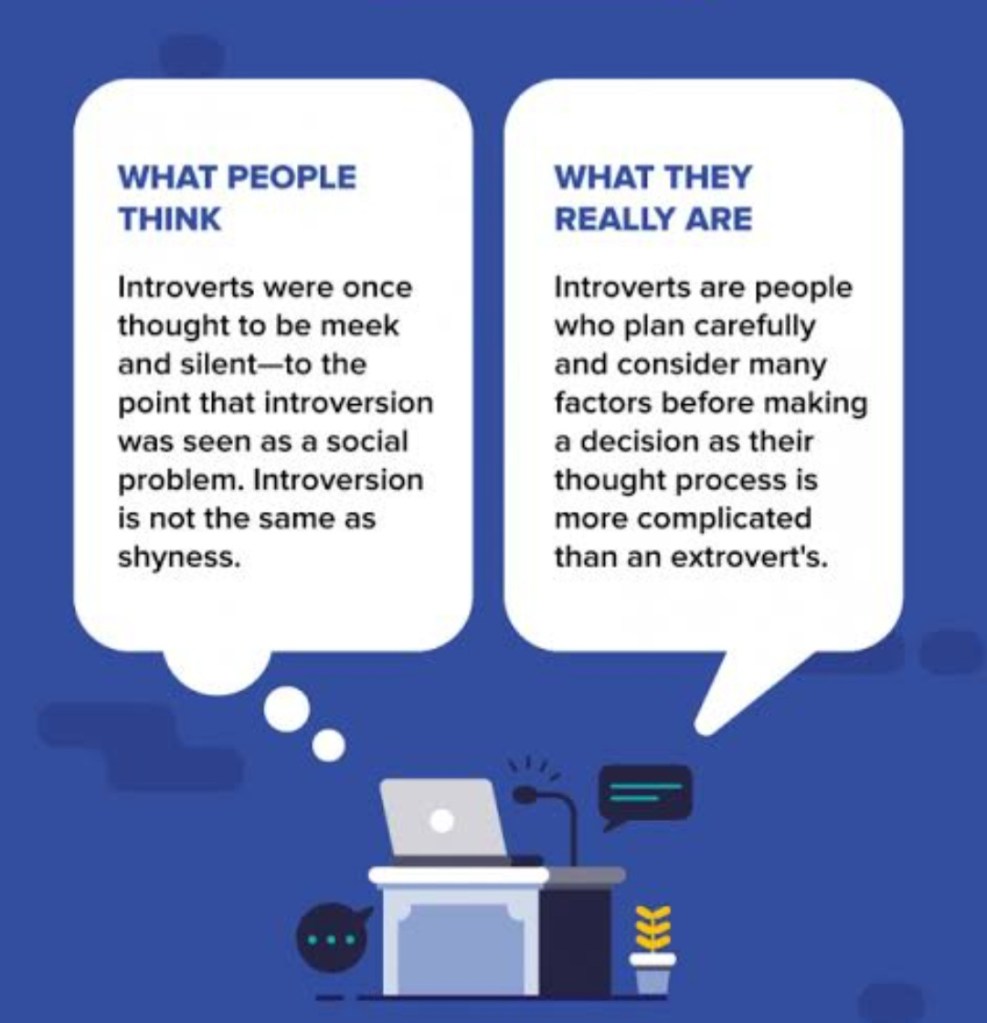
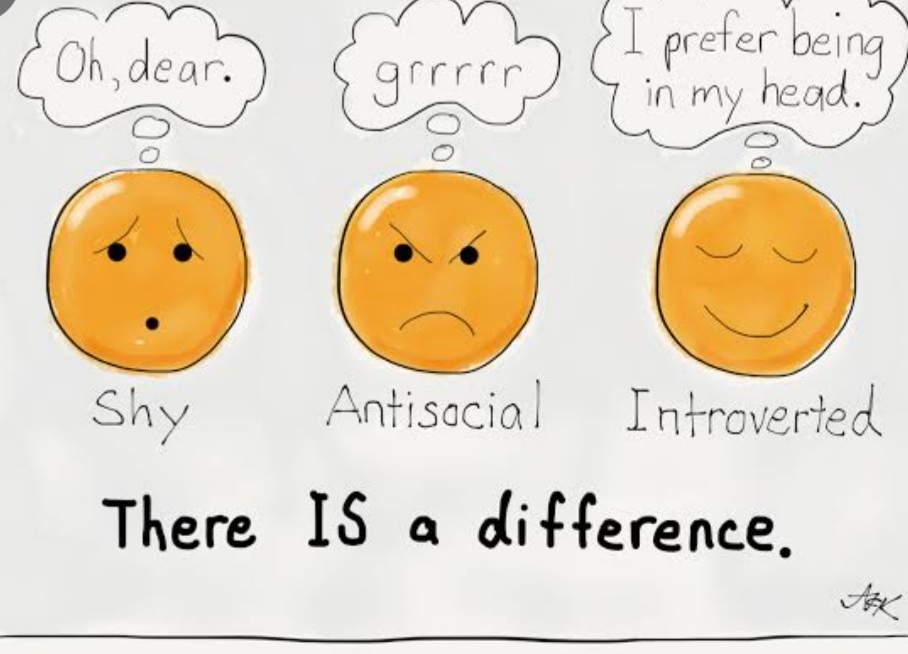
They perform both photosynthesis and predation according to their needs. The needs means the environmental needs as this research suggests that when proper conditions for photosynthesis are provided to these single-cell green algae they did not feed themselves on bacteria and stick to photosynthesis to make their food. In contrast, when conditions are suitable for performing photosynthesis were not provided to the single cell green algae, they changed their methods and adopted predation. Hence, reiterating that these single-cell green algae change their animal behaviour when extreme environmental condition occurred for their better survival. Which actually proves Darwin’s theory ‘The survival of the fittest’.

The above research was conducted by ecologist, Eunsoo Kim and her team.

A new human ancestor : Nesher Ramla Homo

There was a recent excavation in Israel found remains of a new human ancestor that none of us knew. The remains were found at the excavation site named Nesher Ramla. The results of dating the fossil show that the fossils are about 120000-140000 years old. The members of this group played a very vital role in the evolution of today’s homo sapiens. It is highlighted that this group of species joined the Neanderthals and Denisovans whom they later interbred.


This interbreeding among these populations was the thriving force for evolution. The scientists at the sites have still not named this new ancestor and is referring to it as Nesher Ramla Homo. With the discovery of this ancestor, the human phylogenetic tree is becoming much much more complex. Earlier new ancestors were discovered from South Africa and the Philippines named Homo naledi and Homo luzonensis respectively.

Nesher Ramla Homo is predicted to be the last ancestor contributing to European Neanderthal and East Asian Homo species evolution. According to the palaeontologist, a great level of cultural mixing has taken place due to this interbreeding between the two different communities. There is a lot more to know and discover about the human race still. The above study was done by Hershkovitz from Tel Aviv University in Israel.

Some Unheard Phobias

Eisoptrophobia


Eisoptrophobia is the fear of mirrors. People having this phobia cannot look at themselves in the mirrors or any other reflective surfaces.

Xanthophobia

closeup photo of sunflower


Xanthophobia is the fear of yellow colour. People having this phobia seems to get terrified seeing a yellow colour flower or a school bus and many more such yellow coloured things. They always try to avoid seeing the colour yellow at all costs.

Arachibutyrophobia

clear glass jar with brown liquid


Arachibutyrophobia is the fear of sticking peanut butter sticking to the roof of your mouth. People having this fear avoid eating peanut butter in any form.

Globophobia

person holding balloons


Globophobia is the fear of balloons. People having this phobia tend to run away even at the sight of a balloon.

Anemophobia

person holding gray corded hair dryer


Anemophobia is the fear of winds. People having this phobia gets triggered by air vents and even hair dryers.

Ablutophobia

person in green shirt washing stainless steel sink


Ablutophobia is the constant fear of cleaning, washing and bathing. It is a very uncommon phobia.

Lepidopterophobia

selective focus photography of butterfly on orange petaled flower


Lepidopterophobia is the fear of butterflies. People having this phobia says that they get triggered by seeing the pattern on the wings of the butterflies.

Trypophobia


Trypophobia is the fear of holes and circles. Extensive research is taking place on Trypophobia. People having Trypophobia are trigger by the image (and many such similar images) shown below.

Chromophobia

brush on watercolor paint


Chromophobia is the fear of colours. People having this phobia has a negative stimulus for colours and has also reported hormonal imbalances.

Turophobia

pizza with berries


Who does not like a double cheese margarita pizza? The truth is people who have Turophobia hates it. They often get nauseated even at the sight of cheese.

Meet Ham : The first Chimp in Space

On 31st March 1961, A chimpanzee named Ham was sent to space. NASA was later planning to send a human into Earth’s orbit. With Ham’s help, the project to send a human into earth’s orbital became successful. The competition was getting ignited between the United States and the Soviet Union. The Soviet Union had previously sent a dog to space and thus proving that mammals can survive in space. And this was how the ‘chimp in space’ project was born. Ham’s space flight lasted 16 ½ minutes and he spent a total of 6 ½  minutes in gravity.

NASA used to call Ham ‘Number 65’ as they thought that media and viewers will cling to a cute name and thus he was never called Ham until he arrived safely from space. Ham was given hardcore training by NASA so that Ham would survive in space.

On  31st January 1961, he was strapped to his capsule called the bio pack, he was also attached with biosensors. He was monitored using computers by NASA officials. Ham’s capsule was cracked due to the high speed and there was a loss of air pressure. Also, Ham landed 132 miles away in the Atlantic ocean from the predicted landing spot it took the recruited USS donner hours to search for harm but at last, he was rescued it was reported that due to the crack Ham was at high risk and was saved only by his suit.

After the space mission, it was reported that Ham was reluctant to sit back in that space chair. The data collected from Ham’s mission was really helpful to send Alan Shepher Jr., the First American in space in May 1961.

After the mission, Ham was sent to a zoo in Washington DC where he lived 17 years in solitude and 3 years with other chimpanzees. Unfortunately, he died on 19 January 1983 at the age of 25 (which is too young for a chimpanzee) His body was buried at the International Space Hall of Fame, New Mexico. Also, his skull is preserved at the National Museum of Health and Medicine in Maryland.

Image result for ham the the chim in space

Top Six Remote Places On Earth

Alert, Canada


Alert is a small village in Canada. An interesting fact to know is that Alert has a population of 5 people. This village is 500 miles away from the north pole. Also, due to its proximity to the north pole Alert, experiences 24-hour daylight or 24-hour Darkness due to its location. It is one of the remotest places on earth.

Tristan da Cunha

Tristan da Cunha is an island located in the southern part of the Atlantic ocean. This island is one of the remotest places and is only accessible via boats or ships. Trista da Cunha has a population of 271 people.

Mutuo County, China


Located on the hills of China and elevated to 8200 feet above Mutou County is another remotest place in the world. Though it is isolated Mutuo County has a population of 10000 which astonishing. This place is isolated from the rest of the world. Attempts have been made to construct roads in Mutuo County but unfortunately, the projects failed as the place is vulnerable to landslides and mudslides.

McMurdo Station, Antarctica

Image result for McMurdo Station


McMurdo is situated in Antarctica. Though this place is not inhabited, Researchers and Scientists often visit McMurdo for their research work. In total 1200 scientists work in McMurdo Station.

Ittoqqortoormiit, Greenland


The name may sound hard to pronounce and so is it to live in this place where 500 people are residing. The water here is mostly frozen and hence the place is inaccessible by boats or ships. People here are dependent on fishing and hunting.

Angle Inlet, USA

Image result for Angle Inlet


With an area of 5.22 Km2, Angle Inlet is another isolated place on earth. The place though comes under the USA but the place is only accessible through Canada due to the location. This place is really popular for fishing.

Relationship Goals (Ft. Animals)

Macaroni Penguins

Image result for Macaroni Royal Penguin


Gifting flowers is so cliché. Look at these Macaroni penguins gifting their partners stones and sticks as a sign of love. Isn’t that a real love language? The majority of the Macaroni penguins are monogamous which means they breed with each other for the rest of their lives.

Bald Eagles


These Bald Eagles are another such creature who mates for life.
The Bald Eagle couple devotes a lot of time to built their nest as strong they can. The National Audubon Society says that a strong nest built by these eagles showcases their strong relationship bond.

Coyotes

Image result for coyotes couples


They are one of the most loyal animals. They never stray from their family or partner ever. They are loyal to each other even when the bad times.

Prairie Voles

Image result for prairie voles couples


These cute little creatures have high levels of oxytocin. The Prairie Vole couple loves to make their nest together, raise their children together and mate throughout their life.

Seahorses

Image result for sea horse couple


These water living creatures are another example of animals who mate throughout their lives. Another interesting fact about seahorses is that in this monogamous relationship the male is the one who gives birth and has a brood pouch to hold their babies.

Beavers


Beavers relationship rule states “until death do us part”. These creatures mate throughout their lives and seek new partners if and only their partner dies.

Gibbons

Image result for gibbon couple


These monkey-like animals choose their partner and stay with them forever. They raise their kids together and the kids stay with their parents until they are adults after that they leave their parents in search of their partners.

Isn’t it amazing how these animals set relationship goals for us humans 🙂

HOW DOES DOGS HELP HUMANITY?

Dogs have not always held a special place in the hearts of their human companions. Their role among humans was mostly utilitarian until the 18th century, when the term “man’s best friend” came into the lexicon. Their working roles are reduced today, but their importance at home has only increased. From pets to sporting companions to service dogs, canines add a measurable degree of quality to the worlds of the humans they share their lives with.

Companionship

Dogs provide companionship and company. They can be a comfort to people who crave unconditional interaction with another living being. According to Vanderbilt University, dogs can decrease levels of human loneliness and give humans a sense of purpose as they care for their animal companions. This can be especially beneficial for people who live alone, don’t socialize much, are empty-nesters or recently experienced a major change of life, such as the loss of a close human companion to death or divorce.

Security

Dogs provide a sense of security for human companions. Trained watchdogs can provide a high degree of security, while even small house dogs can offer a sense of protection by alerting their owners to approaching strangers or unusual circumstances in the home. Dogs employed by government agencies and police organizations sniff out contraband in places likes airports and large public venues to ensure public security. According to a Texas A&M website, dogs utilized specifically for security purposes require a specialized degree of training to be safe and effective for their handlers.

Teaching Responsibility

Many families use the family dog to help teach responsibility to children. Kids can be taught valuable traits and life skills through positive interaction with the family pet and by taking responsibility for feeding, walking, training and grooming. Children can learn the value of treating all living things with respect and dignity when they have the opportunity care for and love a family dog.

Stress Reduction and Health Benefits

Dogs can help reduce stress levels in human beings and are often used for therapeutic purposes in hospitals, nursing homes and hospices. Playing with a dog, exercising, walking or running can help human beings reduce stress levels and increase their health and well-being. Studies by Harvard University and Kansas State show dog interaction with humans can help combat challenges associated with some form of heart disease and autism.

Service Animals

Dogs raised as service, assistance or therapy animals can open up the world for disabled individuals. Specially trained animal companions help with daily activities and assist people with challenges to make their way in the world. Service animals can make it possible for physically disadvantaged individuals to work, travel and live independently. Search-and-rescue dogs can track human scent in even the most challenging environments.

EMERGENCE OF QUEER THEORY

The acceptance of queer identity is not so easy in society. A hetero normative society wishes to build the society in a ‘normal’ manner. A strong consciousness of morality is manufactured and working in our society. As per heterosexual norms, sexual minorities are not human beings. They are portrayed to be unnatural and aberrant. The major reason behind the negative approach against them is that their life leads the ‘normal’ society into a feeling of insecurity. If a situation arrives where we have to admit their sexual identity, it would be the end of all established social laws on sexuality. It would be terrible for us to suffer if a homosexual makes any change to the existence of our ‘natural’ society. The social construction of Indian males and females doesn’t accept the individuality of homosexuals; in other words the elimination of power structure. In a hetero normative society, homo and heterosexuals are influenced by the power structure; the difference is this power structure is not that much visible to the ‘normalized categories’. Issues regarding the purpose of reproduction also make homosexuals ‘abnormal’. A hetero normative society provides two options to the homosexual community. This focuses specifically on sexuality as a primary component of human identity, social organization, and textual representation. There are certain theories related to homosexuality.

Gay/Lesbian theory:
It emerged prominently as a distinct field only by the 1990s. It emerged as a part of feminist studies. Both are similar in many ways, though the lesbian/gay movement has not yet gained the momentum of feminist movements. The lesbian/gay criticism field is strongly multi-disciplinary, with perhaps a predominance of cultural studies over literary material. But lesbian/gay criticism is not of exclusive interest to gays and lesbians. It may help define the nature of this field and make an initial comparison with feminist criticism. Books by gay/lesbian writers or critics are not necessarily part of gay/lesbian studies and the purpose of this criticism is that lesbian/gay studies do for sex and sexuality approximately what women’s studies do for gender.

Queer Theory:
The lesbian theory was not fully distinct from feminist studies. It was just a subfield called lesbian feminism. The second kind of lesbian thinking, designated libertarian lesbianism by Paulina Palmer, breaks away from feminism and makes new allegiances with gay men rather than with another woman. And this kind of lesbian theory sees itself as part of the field of ‘Queer theory’ or ‘Queer studies’, terms increasingly used by gays, despite the homophobic origins of the word ‘Queer’ as an abusive one in this context. The queer theory includes both queer readings of texts and theorizes the ‘queerness’ itself. The queer theory builds both upon feminist challenges to the idea that gender is part of the essential self and upon gay/lesbian studies to close examination of the socially constructed nature of sexual acts and identities.

Key Figures

Judith Pamela Butler is an American philosopher and gender theorist whose work has influenced political philosophy, ethics, and the fields of third-wave feminist, queer, and literary theory. She stated that no one can’t lay a specific claim to sexuality, but one can perform an identity: repeat clothing, gestures, attitudes, etc can be imitated as we as parodied. In one of the essays, she says “Since I was sixteen, being a lesbian is what I’ve been”. It indicates one has to constantly or repeatedly perform identity to maintain that.

Michel Foucault is a key poststructuralist influence on the development of queer theory. By his sociological research, he was able to identify four specific types of humans- that society has tried to control throughout history.
• Hysterical woman- commonly referred to as nymphomaniac.
• The masturbating child.
• The Malthus ( political economist Thomas Malthusian) couple: control reproduction, the rise of birth control, ethics of population control, etc.
• The perverse adult: Foucault termed this category as homosexuals. He says that homos and heteros are binaries but they are mutually dependent upon each other.

Key Principles

• Sexuality has always a connection with our social existence.
( Our attitudes towards sex, emotion, and erotic activity reveal much about the social classification and society’s economic and political priorities.
• Negative social attitudes about expressions of social desire have had a profound impact on many individual’s public and private lives.
• Social attitudes about sexuality have changed over time.
• Men’s same-sex desires have been treated differently from women’s over time.
• Social attitudes about sexuality have changed significantly across cultures, religions, classes, and ethnic groups.
• Social attitudes about sexuality resonate through literary texts that may challenge or maintain the status quo.

Hyperthyroidism Awareness

It is important to remember that hyperthyroidism can occur at any age. While most may present with a rather typical constellation of symptoms, many may present with exacerbation of pre-existing conditions which may make the diagnosis initially elusive. Worsening anxiety, insomnia, fatigue, panic attacks, palpitations, hypertension or diarrhea may not initially signal that the thyroid is involved. Clinicians must have a low threshold to check thyroid function early to rule out a component of hyperthyroidism.

Once a suppressed thyrotropin (TSH) has been detected, further investigation with serum triiodothyronine (T3) and free thyroxine (free T4) can help delineate overt from subclinical disease. A thorough history of past thyroid disease, as well as current medications and supplements, can help detect any pre-existing diagnoses or exogenous sources of thyroid hormone or over supplementation with iodine. More commonly, hyperthyroidism is due to either Graves diseasetoxic multinodular goiter or toxic adenoma. Distinction between these can usually be made with the assistance of a thyroid uptake scan, TSH receptor antibody measurement, and thyroid ultrasound. An additional physical exam finding of exophthalmos can further support the diagnosis of Graves’ disease. Understanding the etiology can help guide patient expectations. A small percentage of patients with Graves’ Disease may undergo spontaneous remission after 1 to 2 years, which may prompt patients to wait before considering a definitive treatment option.

With confirmation of the diagnosis of hyperthyroidism, focus is on hormonal control with an antithyroid medication (ATM, most commonly Methimazole in the United States). This may be augmented with beta-blockade, steroids, cholestyramine or SSKI for those who are difficult to control.

Many patients may need further consideration for definitive management with either radioactive iodine ablation (RAI) or thyroidectomy. Your local resources may also influence these options, but it is critical to understand that all three treatments (ATM, RAI and thyroidectomy) are possible options. Certain patient factors and priorities may alter the preferred definitive treatment. Smaller gland size, easy to control hormones, and lack of eye symptoms are factors that may favor continued ATM management. A large goiter with compressive symptoms, difficult to control hormones requiring high dose medications/ multiple modalities, pregnancy, severe eye disease, multiple nodules within the thyroid with or without thyroid cancer, or desire for rapid and reliable hormone control may favor thyroidectomy. RAI is a good option for patients with a smaller gland size, and a desire to pursue definitive management but avoid surgery.

There are also relative contraindications for treatment options. ATMs may have serious side effects, like agranulocytosis or liver failure, which prevent further use, or may cause skin eruptions making long term use intolerable. Additionally, high dose requirements or fluctuating doses may make long term use of ATMs not reliable. Women who are pregnant, wanting to become pregnant in the next 6 months to 1 year, breast feeding or have small children in the home will want to avoid RAI. Patients with severe eye involvement, have a large goiter with compressive symptoms, or are smokers should also avoid RAI. Thyroidectomy will be a poor option for patients with multiple previous neck operations on or around the thyroid due to internal scarring, or who are high risk for general anesthesia. Additionally, if they have a history of previous gastric bypass surgery, they are higher risk for major complications from hypocalcemia/hypoparathyroidism after thyroidectomy.

To help the patient navigate these decisions, it is important to allow them the opportunity to discuss each treatment option with respective physician experts – medical management with endocrinology, RAI with endocrinology and potentially nuclear medicine as well, and thyroidectomy with the thyroid surgeon.

In summary, patients with hyperthyroidism require medical control, as well as a clear understanding of the etiology of their hyperthyroidism. Patients with Graves disease, toxic multinodular goiter and toxic adenoma have more than one treatment option, and it is important for patients to be educated and engaged in treatment decisions.

For Further Reference:
American Thyroid Association Guidelines for Diagnosis and Management of Hyperthyroidism and other causes of Thyrotoxicosis| by the American Thyroid Association

Self care is not selfish thing

Often times, when we do something for ourselves, it is considered selfish. Growing up it is common to be taught to take care of other people and put others first. However, when it comes to our mental and emotional health, these types of actions of neglecting yourself to put others first can have huge consequences.

Self-care can be confusing and it can make you feel like you are putting too much attention on yourself. But remember, self-care never has and never will be selfish, especially when it comes to mental health.

In order to take care of other people, you must take care of yourself first. 

Why Self-Care is Important

Self-Care is one of the most important things that a person can do for themselves. It is not only vital for your physical health, but also your emotional and mental health as well.

There are many misconceptions around self-care and what exactly it entails. However, self-care is really not that complicated. At the most basic level,

self-care is just doing good things for yourself. This could be anything from working out, to taking an hour every night to journal, anything that makes you feel good.

Self-care requires you to know and understand yourself. You are forced to listen to your body and mind, understand what resources are running low and what you have to do to replenish them. 

There are many benefits that come with performing self-care. Some of them include increased productivity, improved resistance to illnesses & better physical health are just a few. These benefits are just the beginning.  Some of the other, more personal benefits are, enhanced self-esteem, increased self-knowledge, and most importantly, you have more to give to other people.

When you are mindful about reguarily carving out time for yourself and making sure that your physical, emotional, and mental needs are being met, you will feel better in all aspects of your life.

This makes it easier for you to work with and help others in their time of need. Just like when you are on an airplane, you have to take care of yourself before you can help anyone else. 

Stigma Around Self-Care

Self-care can be hard, not only because of the stigma that surrounds it, but because it can be extremely difficult to admit that you need help or to take care of yourself when you are struggling with your own mental health.

Growing up, it is extremely common to hear that you should put others before yourself. Kids are taught that being too vain or thinking about yourself is selfish. When you take time to take care of yourself, friends and family may start to get frustrated or say that you need to spend more time thinking about others and spending time with them.

Read also: We need support, not stigma. How do we end the stigma around mental illness and start talking about it?

However, the worst stigma, is self-stigma. The voice in your head that tells you to stop focusing on yourself, saying that you don’t deserve the time or attention that you are giving yourself.

You start to think about all of the things that you are neglecting and the people who deserve your attention more. However, this self-stigma, and any outside stigma, is far from true.

By taking care of yourself you are making sure that you will be able to help and encourage others.  

How you can Take Care of Yourself 

Self-care can be difficult because of the stigma that comes with it. However, understanding how, and being able to take care of yourself is one of the strongest things that you can do.

It is also important to distinguish between the things that actually make you feel good and things that you think make you feel good, but often have the reverse effect, like drugs & alcohol, over-eating, and taking risks. 

There are many different types of self-care; the most well-known is physical self-care. When people say that they are trying to take care of themselves this is often what they mean.

Physical self-care can be helpful not only for your physical health but also to help you let off steam. This doesn’t have to be going to the gym, it can also mean dancing around the house to your favorite song, doing yoga, or going outside and going for a walk. This could also be taking a nap when you need some extra rest or giving yourself a break when you are down or unwell.

However, while physical health is important and this type of self-care can make a huge difference, it can also be harmful to your mental health if you focus on your physical self too much and too often. Working out and getting the ‘perfect’ body isn’t what self-care is all about.

It is vital to remember the other parts of yourself that need to be taken care of, make sure that you aren’t focusing on the outer-self to avoid taking care of your inner-self. 

Sensory self-care helps to calm the mind. This will help you to live in the moment, focus better, and let go of the past and forget your anxieties.

This type of self-care is all about sight, smell, touch, and sound. This could be considered sitting outside at the beach, enjoying the feeling of the water on your skin from a shower or a bath, or listening to calming music. Anything that helps you feel calm and relaxed. 

Interrupting the Waste industries with Innovation

Rubicon started with a striking thought: make a cloud-based, full-administration squander the board stage, offering productive assistance anyplace in the US. Their versatile application accomplished to squander the executives how Uber had helped taxi administration. Five years after the case’s distribution, Harvard Business School Associate Professor Shai Bernstein and Rubicon organizer and CEO Nate Morris examine how the product startup utilized innovation to disturb the waste business and other suffering exercises of educator Bill Sahlman’s case about Rubicon. Americans discard a ton of stuff. That is to say, more than individuals in different nations. Americans normal 4.5 pounds of waste each day, contrasted with the worldwide normal of about 1.6 pounds each day. Presently, four and a half pounds may not sound so awful, yet it adds up. That is 1,600 pounds for every person, and 6,500 pounds for each family throughout a year. All in, Americans created 292 million tons of waste in 2018, as per the Environmental Protection Agency.

Teacher Shai Bernstein’s exploration centers around monetary issues identified with new companies and high development firms, and the association of these issues with advancement and enterprising movement. Nate Morris is the author of Morris Industries, a Lexington, Kentucky-based aggregate that is rethinking the mechanical economy. His energy to settle the ecological dangers presented by worldwide waste drove him to establish Rubicon. Along these lines, just to give a smidgen of setting. In this way, the Rubicon case is being instructed in our pioneering finance class, which is a second year EC course in which we are essentially strolling through the life-cycle of the firm, attempting to consider various wellsprings of capital that match the organizations at the various phases of the development of the organization. Also, in the primary model of the class, we are explicitly considering various attributes of plans of action that make a few firms more alluring to financial backers than others.

Another intriguing angle here is that the business has basically been working with enormous occupants for quite a long time. Furthermore, here we have Rubicon that is carrying innovation to the business and attempting to disturb the business with altogether different plans of action and altogether different methodology, which makes this so fascinating to see the crash between totally different ways to deal with squandering the executives. And afterward the other part that I would make reference to is that, toward the day’s end, Rubicon, what Rubicon does is essentially significant for our general public. Furthermore, pondering supportability, reusing, ESG, is a subject that truly, at the core of Rubicon’s central goal, and furthermore a large number of our understudies are truly enthusiastic about this theme. Thus, I believe that likewise adds to the ubiquity of this case and to the interest of understudies for this situation.

It’s a truly fascinating combination of innovation and industry elements and this manageability issue that, if you unite them all, makes it a truly intriguing case.”Waste is a point that not very many individuals need to discuss, not to mention start a new business. What’s more, the vast majority of the setting around our industry rotates around a famous TV program, The Sopranos. A spectacular show, done. Also, many individuals scratch their head about, truly, is that the business that you picked? Also, I was quickly attracted to the business for two or three unique reasons. I’m a Kentuckian, I experienced childhood in Kentucky. Went to a government funded school there. Was raised by a single parent in a common home, and experienced childhood in an association home too. My granddad was exceptionally associated with my life, ran an association and grew up around association laborers”, says Nate Morris.