First Olympic Gold Medal for Bermuda

Olympics is a leading international sports event held every four years. With more than 200 participant nations.

Each year hundreds of athletes from all over the world gather at the host country and rival each other for first place in different events. This year Bermuda,  a British island territory in North Atlantic which first participated in the games in the year 1936. Witnessed a major development as Flora Duffy wins first-ever gold for the country in triathlon.

Who is Flora Duffy?Duffy, a 33-year-old female athlete who was diagnosed with anemia in 2013. But still, she managed to bounce back. She is also a two-time former world triathlon series champion.

What is Triathlon?Triathlon is a grueling race made up of a one-mile open water swim, 25 miles of biking, and a run of 4.6 miles.


The 33-year-old finished with a time of 1hour55:36 minutes. Her opponent, Georgia Taylor-Brown ended in second place took a minute more than her. Third place was secured by the Katie Zaferes of the United States.

Covid – 19 Third wave

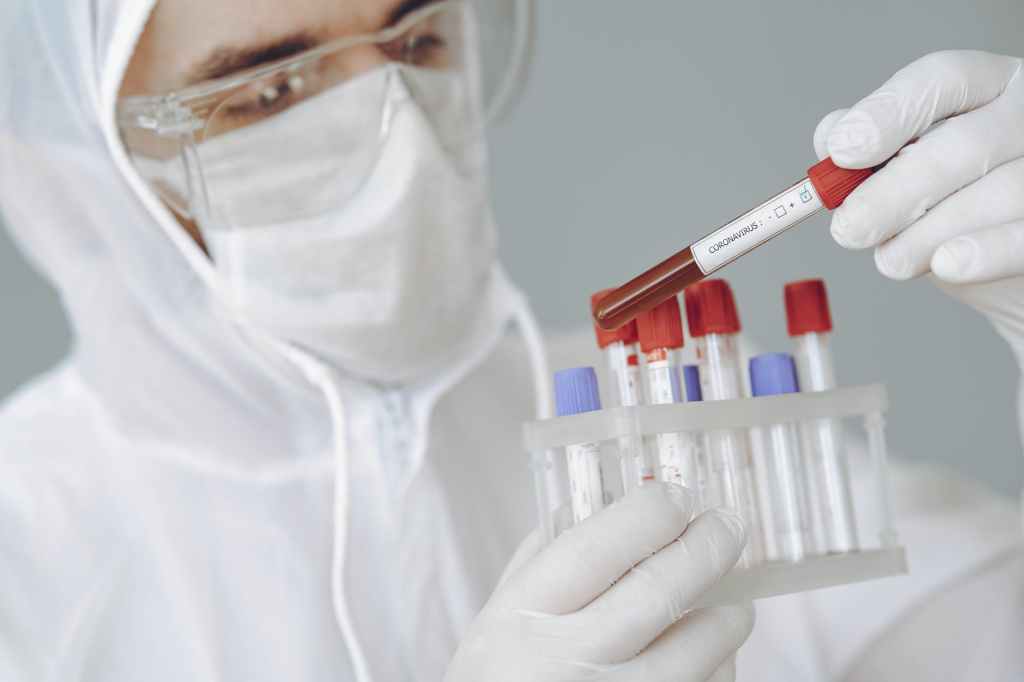
Corona virus has been creating a havoc for last one and a half year now. No one expected it to become a pandemic and a disaster when the first corona virus cases were detected in January 2020 in Wuhan , China . It affects lungs severly and even can lead to impairment of eyes , ears and many other organs of human body. It has also been accompanied by black and many other kinds of fungus. According to a study , It has killed more people in 16 months than a disaster kills in 20 years. It is really a catastrophe for human beings and an indication as well to set our ways right with nature.

India has already experienced first wave in 2020 and second wave in 2021 . Now the speculations are being done for the third wave . Experts suggest that it is most likely to come in august end and it may be inevitable but we can control it if we take proper precautions and health measures. Third wave is even expected to affect children and adolescents. Corona virus has affected all the sections of the society whether it is a daily wage earner or a businessman . Schools and other educational institutions have also been shut down for almost more than a year which has affected learning a lot. Students now sit in front of the screen for hours continuously to take online classes.

Students who had to apply for graduation , post graduation , PhD are in a jeopardy as some of them have not got their previous results or the entrance tests for further admission are not happening .

The recent variant of corona virus i.e Delta variant is even more transmissible and dangerous than the previous one. In second wave , many infected people died due to lack of oxygen and absence of timely action. 6.4 percent of the total population in infia has been fully vaccinated and many have got one or two doses. Vaccine has helped as people have been infected but not much people had to be hospitalised. Corona virus cannot be totally eliminated , it can be avoided with the help of vaccinations and precautions .

RCN To Be Delisted

Ripio credit network commonly known as RCN is a digital currency that aims to build an “open global credit network that connects lenders and borrowers on the Ethereum blockchain to create frictionless, transparent and borderless debt markets.”

Once the coin which enjoyed a market cap of nine million dollars is now facing the misfortune of being delisted from crypto exchanges.
Firstly Binance the giant crypto exchange barred RCN from trading from 16 July 2021.And now, CoinSwitch Kubar one of India’s exchange latched RCN trade.

What happens when crypto is delisted?When a digital currency is delisted it simply means that buying and selling of the particular coin will not take place on the platform from a given date.In such a scenario person is stuck with that currency as he/ she won’t have any alternative except keeping coins in the wallet or selling it before due date.

New Restrictions: Only 50 tourists now allowed at Mussoorie’s Kempty Falls.

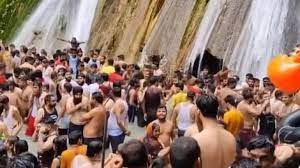
After sightseers spurned Covid standards at Mussoorie’s Kempty Falls, the Uttarakhand government on Friday declared that only 50 guests will be permitted at the waterfalls and they can not remain there past thirty minutes.

The district administration made this step after photographs of many tourists bathing together in the waterfalls became a web sensation via online media.

“Now only 50 tourists are allowed at Kempty Falls (waterfall) in Mussoorie, can’t stay at the spot more than half an hour” said Iva Ashish Srivastava, Tehri Garhwal District Magistrate.

Also District Magistrate has received many complaints about tourists not following the Covid-19 Guidelines while bathing in the waterfall.

The DM further said that the tourists should leave the waterfalls when the hooter rings and furthermore asked senior superintendent of police (SSP) and sub-divisional magistrate (SDM) to set up a check post and screen the vacationers around kempty.

JOURNALISM IN INDIA

Media interview

Gathering, creating, preparation and distribution of reports of current events based on facts and information is journalism. The term journalism is used for the profession whereas a journalist is a person who is responsible for collecting and presenting the news. 

Journalism is mainly classified into two sections – Print Journalism and Electronic (Audio/Visual) Journalism. Print Journalism involves newspapers, magazines and journals. Different work profiles in Print Journalism includes reporters, editors, correspondents, columnists and many more. Meanwhile, Electronic Journalism is dissemination of news or information through electronic media like radio, television and web. Prominent work profiles in electronic media include anchor, reporter, editor, correspondent etc.

Journalism Courses:

Here is a list of mainstream journalism courses:

  • Bachelor of Mass Media and Journalism (UG, 3 years)
  • Bachelor of Communication and Journalism (UG, 3 years)
  • B.Sc. in Journalism and Mass Communication (UG, 3 years)
  • BA in Media and Communication (UG, 3 years)
  • BA in Journalism (UG, 3 years)
  • BBA in Mass Communication and Journalism (UG, 3 years)
  • MA in Journalism and Mass Communication (PG, 2 years)
  • M.Sc. in Mass Communication (PG, 2 years)

The Scope in Journalism

In the recent years, the communication channels have widened from radio, television to digital and social mediums. India has one of the biggest media industries in the world providing ample number of job opportunities to the suitable candidates. Currently, Journalism has become one of the most prestigious careers in India. Candidates can avail job as a journalist in English, Hindi and many other vernacular languages. Candidates can also avail jobs in different types in different types of journalism mentioned below:

Types of Journalism
Broadcast JournalismCommunications
Fashion JournalismForeign Correspondent
Freelance WritingInvestigative Journalism
Newspaper ReporterPhotojournalism
Social MediaSports Journalism

Print Media

Below are some important job profiles and their roles in print media.

  • Reporter:  The role of a reporter is to gather news and report with accuracy. News sense, objectivity and timeliness are few important qualities, which a reporter should possess.
  • Correspondent: Correspondents are also known as special reporters who are assigned for a particular purpose. Correspondents can be of any beat like politics, sports, crime etc.
  • Feature Writer: The responsibility of a feature writer is to write soft stories with deep research and observations on particular subject.
  • Proof Reader: The role of a proof reader is to assess the edited copy. A proof reader must have good grammatical and punctuation skills.
  • Leader Writer: The role of a leader writer is to write their views on the current topics through editorials.
  • Editor: Editor’s responsibility is to maintain a journal’s reputation. He also ensures that article corresponds with the media in-house style guides.
  • Columnist: The role of a columnist is to write for a specific column in detail in the newspaper or magazine. The column can be related to any topic highlighting his viewpoint on any subject like politics, fashion or films.

Photo Journalists, Cartoonists are some other profiles.

Electronic Media

Here are various job profiles included in electronic media.

  • Researchers: The role of researchers involves deep research on a particular topic. Significant qualities required for this job profile are creativity and excellent research skills.
  • Electronic Media Reporters: An electronic media or broadcast reporter should have good verbal and presentation skills. He should have a news sense.
  • Presenters/Anchors: A presenter should be confident. He must have excellent communication skills, ability to remain balanced in stressful conditions.
  • Freelancers: Apart from the above-mentioned job profiles, freelancers are informal employees who are assigned particular task and are paid according to it.

Areas of work for a journalist

Below are few areas where a journalist can work at different profiles.

Journalists and Their Work Areas
News AgenciesPress Information Bureau
Legal Affairs DepartmentTelevision Industry
NewspapersCirculation and Public Relations
All India RadioJournals
BlogsWebsites

Pay Scale in Journalism:

Most of the aspirants chose journalism due to interest and passion. Check out how well journalists are paid in India.

According to a report in Glassdoor, the annual salary of a journalist at The Times of India ranges from Rs 2.33-9.58 lakh. Meanwhile, the annual salary of a reporter at The Hindu is Rs7.30 lakh.

The pay-scale of a journalist in print, television and radio with similar experiences differ. For example, a senior journalist in electronic media is paid more than a journalist in radio and newspaper with similar experiences. The major difference is because of the higher advertising revenue in television.

Pros and Cons of Journalism:

Journalism is a profession for curious people and like every other profession; journalism too has both pros and cons.

Pros:

  • New opportunities and challenges
  • Opportunity to work with informed people
  • You learn for a living
  • Opportunity to meet people
  • Opportunity to travel
  • A strong sense of achievement
  • You get paid for writing
  • Benefits of a press card

Cons:

  • Not very lucrative
  • Challenging and demanding
  • Long workdays
  • Work pressure
  • Stressful
  • Risk to life

Top social media marketing blogs

The world of Social Media is probably responsible for more innovation in digital marketing over the past 5 to 10 years than nearly any other discipline. From ephemeral story based content to live video to all the things being done with data for more personalized marketing, staying in top of what’s real vs. the hype in marketing is increasingly difficult.

Top help marketers find great sources of marketing advice, we’ve curated the BIGLIST of marketing blogs and more recently a marketing blogs from martech companies. Adding to that curation effort and our own solid social media marketing advice is today’s list of social media marketing blogs.

This list focuses in on blogs covering all aspects of social media marketing including the usual suspects of platforms including Twitter, Facebook, Instagram, YouTube and LinkedIn as well as newer platforms like TikTok. From trends to strategies to tactics to analytics, this group of blogs about social media and marketing is a great mix of big names, publications, platforms and a few names that are hopefully new to you.

1. Adweek Social Pro Daily @adweek
Platform news, industry trends and plenty of brand examples.
Our favorite post: Social Networks Finally Bypassed Print Newspapers as a Primary Source of News

2. Andrea Vahl Blog @AndreaVahl
Everything you wanted to know about Facebook advertising plus a glimpse of “Grandma Mary”.
Our favorite post: Facebook Video Ads – What’s Working Now

3. Awario Blog @AwarioApp
Social media monitoring, selling, research and influencer marketing advice.
Our favorite post: 10 of the best social media marketing tools for 2019

4. Brian Solis @briansolis
One of the true pioneering thought leaders on social media that continues to offer strategic insights – including how to temper social media use for a more creative, productive and happy life ala Lifescale.
Our favorite post: The Past, Present And Future Of Social Media – How We Fell To The Dark Side And Why The Force Is With Us

5. Brand24 Blog @brand24
Social listening, marketing and industry news plus best practices on everything from hashtags to social influencers.
Our favorite post: A Complete Guide to Social Media Analysis

6. CinchShare Blog @CinchShare
Social Media Marketing tips for small business including Instagram, Facebook, Pinterest and blogging advice.
Our favorite post: Grow your team on Facebook by doing these 3 things

7. Digimind Blog @digimindci
Social insight driven marketing advice, competitive social intelligence tips and soup to nuts social media campaign direction for agencies.
Our favorite post: Optimize Your Content Marketing Strategy in 13 Steps with Social Media Intelligence

8. DreamGrow Blog @dreamgrow
Social Media Marketing advice plus curated lists of resources.
Our favorite post: How To Integrate Social Media With eCommerce in 2019

9. Facebook Business Blog @facebook
Official blog from Facebook on advertising news, best practices and thought leadership.
Our favorite post: Turn Interested Shoppers Into Buyers with a Guided Shopping Experience in Messenger

10. Falcon Insights Hub @falconio
Social Media Marketing strategy, tactics and ROI measurement plus platform specific best practices.
Our favorite post: 5 Social Media Trends to Watch in 2019

11. Gary Vaynerchuk Blog @garyvee
The content machine that is Garyvee covers social media marketing thought leadership, trends, news and practical advice for specific social networks.
Our favorite post: 5 LinkedIn Marketing Strategies for 2019

12. Gleam Blog @gleamapp
A lot of how to social media marketing content, tips on using Gleam apps and advice on social contests, giveaways, coupons and product hunts.
Our favorite post: Stop Buying Likes: 25+ Tips to Drive Real Engagement on Facebook

13. Grow @markwschaefer
Mark Schaefer’s blog on the intersection of marketing, technology and humanity featuring provocative insights on industry trends, featured examples of social media and marketing in action and practical advice.
Our favorite post: What Is Your Social Media Marketing Purpose? (If You Don’t Know, This Will Help)

14. Hopper HQ Blog @hopper_hq
All things Instagram marketing ranging from trends to tips and a bit of advice on working with social influencers too.
Our favorite post: How to Measure B2B Social Media Marketing Success

15. Hot in Social Media @hotinsm
Social platform news and tips covering the gamut of social media marketing topics plus curated advice from industry experts.
Our favorite post: How to Use TikTok Like a PRO: Actionable Tips for Marketers

16. Iconosquare Blog @iconosquare
Focused information on marketing with Facebook and Instagram.
Our favorite post: Instagram Marketing Strategy: Your A-Z Guide

17. Instagram Business Blog @instagram
Official blog from Instagram sharing platform updates, features advertising advice.
Our favorite post: Creative Secrets of Instagram Stories

18. Jeff Bullas Blog @jeffbullas
Social Media Marketing best practices from Jeff and guest contributors.
Our favorite post: 9 Insider Tips For Increasing Your LinkedIn Leads

19. Jon Loomer Blog @jonloomer
This blog is Facebook marketing central – everything you ever wanted to know.
Our favorite post: How to Edit a Facebook Ad and Retain Social Proof

20. Karen’s PR & Social Media Blog @kfreberg
Dr. Karen Freberg’s take on social media marketing, PR and crisis communications.
Our favorite post: Super Bowl 2019: Trends & Takeaways from a Social Media Professor

21. Katie Lance Blog @katielance
Great example of a personal brand showcasing social media marketing advice with a slant towards the real estate audience.
Our favorite post: How to Attract Your Dream Client Through Social Media and Storytelling

22. Keyhole Blog @keyholeco
Recent attention to a variety of social media marketing tools as well as practical advice for Twitter, Facebook, Instagram and hashtag marketing.
Our favorite post: Hashtags: A Beginner’s Guide and How to Use them Effectively – Keyhole

23. Later Blog @latermedia
Instagram Marketing strategy, tips, tools, resources and guides.
Our favorite post: Real or Fake: 5 Instagram Algorithm Rumors Explained

24. LinkedIn Marketing Solutions Blog @linkedinmktg
Official blog from Linkedin offering marketing thought leadership, industry trends, news and practical advice on how to make the most of marketing and advertising on LinkedIn. (client)
Our favorite post: 10 Content Ideas for your LinkedIn Page

25. Louise Myers Visual Social Media Blog @Louise_Myers
Practice visual social media marketing tips for Facebook, Instagram, and Pinterest plus advice on blogging.
Our favorite post: How to Boost Your Social Media Strategy for 2019

26. Madalyn Sklar Blog @MadalynSklar
Literally everything you would ever want to know about building and engaging a community on Twitter with plenty of attention towards tools.
Our favorite post: How to Grow Your Twitter Community: 7 Essential Tips

27. Meltwater Blog: Social Media @MeltwaterSocial
Social Media thought leadership, practical advice and featured brand social media examples.
Our favorite post: Social Sidekick: Your Monthly Guide to Social Holidays, Themes, and Noteworthy Events

28. NetBase Blog @NetBase
Advice on social media listening, analytics and practical advice plus applications for social intelligence.
Our favorite post: Social Media Monitoring vs Social Listening – Yes, There’s a Difference!

29. Planoly Blog @planoly
Stay on top of Instagram and IG Marketing with practical tips and examples.
Our favorite post: How to Stay Motivated with Your Blog and Instagram

30. Problogger @problogger
Dedicated to the art and science of blogging and no one tells that story better than Darren Rowse.
Our favorite post: How to Start a Blog When You’re Not an Expert: 11 Ways to Make it Work

31. Quintly @quintly
Social Media Marketing research and analysis, best practices, trends and news about the platform.
Our favorite post: Instagram Study: We analyzed 9 million posts and here’s what we’ve learned

32. Snapchat for Business @snapchat
Official blog from Snapchat featuring the latest launches, announcements, and insights.
Our favorite post: CPG on Snapchat: Why Gen Z and millennials make all the difference

33. Socialnomics @equalman
Erik Qualman’s long running thought leadership blog on social media and marketing.
Our favorite post: 22 Social Media Tips From The Pros To Skyrocket Your 2019 ROI

34. Social Insider Blog @socialinsiderio
A cornucopia of how to articles on social media marketing plus a fun series of interviews with industry experts called Socialinsider Insta’rviews.
Our favorite post: The Most Impactful Social Media Trend That Businesses Should Integrate It In 2019

35. Social Media Examiner @SMExaminer
Probably the most popular blog about social media marketing from Mike Stelzner and team that also run the Social Media Marketing World conference.
Our favorite post: 10 Metrics to Track When Analyzing Your Social Media Marketing

36. Social Media Explorer @smxplorer
An original social media marketing blog covering the gamut of social media topics including tips, tools, news, and case studies.
Our favorite post: Up And Coming Social Media Trends Driven By Millennials And Generation Z

37. Social Media Lab @agorapulse
A special project from the folks at Agorapulse highlighting their investment of over $15k per month to help “Crack the Code” of social media and then report those results to readers.
Our favorite post: LinkedIn Post Length: Does Data Support the Idea that Longer is Better?

38. Social Media Today @socialmedia2day
A community blog offering a comprehensive view of social media marketing including updates to social platforms, trends, strategy and tactics.
Our favorite post: Social Media Calls to Action: 19 Words & Phrases to Generate More Engagement

39. Social Media Week News & Insights @socialmediaweek
Regular updates on the famous Social Media Week events in New York and Los Angeles plus coverage of social media technologies and marketing tactics.
Our favorite post: Boost Your Instagram Stories Game for 2019 With These 10 Practices

40. Social Report Blog @thesocialreport
A collection of practical posts about marketing on all of the major social networks plus trends and examples.
Our favorite post: 10 Top Social Media Scheduling Tools to Save Time in 2019

41. Social Sorted @SociallySorted
Donna Mortiz offers awesome monthly list posts of social media marketing ideas and in between shares visual and video marketing advice for social media channels.
Our favorite post: 60+ April Social Media Ideas – Videos, GIFs and more!

42. Spiderworking @Spiderworking
Amanda Webb covers social platform updates, examples and practical advice about small business social and content marketing.
Our favorite post: Relationship Marketing With Jessika Phillips, Pots Of Gold And LinkedIn Networking

43. Sue B Zimmerman @SueBZimmerman
The guru of Instagram marketing.
Our favorite post: How To Grow Instagram Followers in 2019

44. The Social Media Hat @SocialMediaHats
Mike Allton’s blog with practical advice about blogging, social media, SEO and email marketing.
Our favorite post: How to Create 26 Pieces Of Content From A Facebook Live

45. Talkwalker Blog @Talkwalker
Social Media Marketing and analytics blog with an emphasis on social monitoring and data applications.
Our favorite post: Social media trends that will impact 2019

46. Twitter Marketing Blog @Twitter
Official blog from Twitter about product news, marketing and advertising best practices and research.
Our favorite post: 10 ways marketing changed with Twitter

47. Unmetric Blog @unmetric
Social Media Marketing strategy, industry trends, and how to articles focused on brands.
Our favorite post: Brands vie for the throne in the game of social media marketing

One trend I’ve noticed is that many individuals that have really made a name for themselves as trusted voices in the social media space during the formative years of the industry simply are not blogging as much or have diversified into other areas of marketing. At the same time, a steady drumbeat of social media marketing advice can be found amongst a smaller number of highly focused industry blogs and companies serving the social media marketing industry.

Speaking of the social media marketing industry, you may have noticed some well known social media marketing technology brands are not on the above list. That’s because we’ve already included them in the martech list, but they certainly belong in this collection, so here they are:

Best Lifestyle Blogs to Follow in 2021

Lifestyle Blog niche is one of the most competitive blogging niches around. Lifestyle bloggers are competing against digital lifestyle magazines, in a niche that is already quite saturated. So lifestyle blogs that gain a large readership are of a high standard in both design and content.

Online mags often have huge budgets, a print edition as well as digital, and content that is varied and expertly written, with professional photos. But lifestyle blogs have an edge in that they can supply new content every day if they so wish. Lifestyle blogs are free to access whereas digital magazine editions can only be accessed through paid subscriptions.

For a lifestyle blog to thrive, the authors need to provide excellent, accurate content and photos that create interest and capture the readers’ imaginations. Lifestyle bloggers have raised their standards to compete with the best of both online mags and other lifestyle blogs.

But what exactly constitutes a lifestyle blog?

Let’s find out!

Defining Lifestyle Blogs

A lifestyle blog is defined as digital content representing the author’s everyday life and interests. The word “lifestyle” according to the dictionary means “habits, attitudes, moral standards, which together constitute the way of life of a given person or group”. (source: dictionary.com)

As a result, lifestyle blogs can fall into many micro-niches. This allows bloggers to provide content for a specific target audience. Lifestyle bloggers often promote products, brands, and services to monetize their blogs. So it’s almost essential that the person behind the blog is well-versed in whatever the specific topics are.

Here’s a shortlist of typical Lifestyle Blogging niches:

  • Luxury Lifestyle Blogs
  • Foodie Lifestyle Blogs
  • Home & Garden Lifestyle Blogs
  • Fashion Blogs & Beauty Lifestyle Blogs
  • Travel Blogs & Photography Lifestyle Blogs
  • Health & Fitness Lifestyle Blogs
  • Men’s Lifestyle Blogs
  • Natural Living Lifestyle Blogs
  • Outdoor Lifestyle Blogs
  • And Lifestyle Blogs for people with children (also called mom blogs or parenting blogs.)

Sometimes even these categories get split into various combinations, depending on the blogger. So you could end up with a Fashion and Travel Blog, A Natural Living Mom Blog, or even a Foodie and Photography Lifestyle blog.

Lifestyle blog vs. personal blog

Lifestyle blogs are not personal blogs because they focus more on users (readers). The content is created here for the reader and his expectations. What’s more, lifestyle blogs focus on the author’s benefits, not just on telling stories.

In personal blogs, the most important are the author’s emotions and thoughts, who expresses his opinions, writes about his experiences, feelings, reflections. In the personal blog, the author himself is the most important, not the reader.

I can’t write about lifestyle blogs without mentioning a few from each niche. I’ve tried to give you a selection of the most captivating from each subgenre (or micro-niche). These Lifestyle blogs check all the boxes. They are fun, relevant, trendy, polished, and loaded with content that appeals to a specific target audience.

A Quick Note To Would-Be Lifestyle Bloggers

Before I launch into “Our Best Of” list, a word of caution to would-be lifestyle bloggers; even if you have many areas of interest yourself, try to whittle your content down to cover only one or two main topics. This helps when you are trying to grow a steady, loyal readership.

Male readers don’t want to read about fishing, fashion, and raising a brood of ankle snappers! A young professional will not be interested in “Ten Tips To Wean Your Child off Breast Milk”, and your Luxury Lifestyle blog will not impress our Tree Hugging friends who will recoil in horror at the decadence of luxury lifestyles! Readers who enjoy luxury will also not be impressed with Frugal Living!

On the other hand, the lifestyle blogging niche allows the most freedom for bloggers who genuinely do have a vast array of topics that pair well together. If you can create the content and maintain the variety, then you will create space for a wider readership.

Top blogs in lifestyle category

This collection of blogs showcases the variety and range of lifestyle blogs that get it right!

1. Goop.com

Goop was one of the first lifestyle blogs to hit the circuit, way back in 2008. The brainchild of actress and mother, Gwyneth Paltrow, Goop covers everything for the modern woman. She focuses on wellness and how to create a balance between parenting and work. Something all working moms know about! She has a strong team behind her and Goop is a mini-empire in its own right.

Goop covers:

  • Beauty
  • Food & Home
  • Style
  • Travel
  • Wellness

Target Audience: Women of all ages and enlightened men.

2. The Pioneer Woman (thepioneerwoman.com)

This is a lifestyle blog that stands out for me. Unlike so many lifestyle blogs, Ree Drummond blogs about a lifestyle that all Americans know and love. Pure salt of the earth, rustic ranch life. The blog packs a punch! Ree has combined recipes, style, beauty, home & life, food & cooking, news, and entertainment. And great giveaways. She started as a lone ranger but now has a team of editors assisting her in keeping the blog relevant, trendy, and homegrown.

Target Audience: People keen on ranch-style living.

*3. Brightbazaarblog.com

Bright Bazaar blog was founded in 2009 by Will Taylor. This is the place where Will blogs about his love for colorful design, travel, and fashion. This blog is recommended by esteemed publishing houses Elle Decor, Martha Stewart Living, and many others.

If you need more home inspiration, look at other famous bloggers in the article: The Best Interior Design Blogs.

Target Audience: People who love design.

4. Cup of Jo (cupofjo.com)

Joanna Goddard is a perfect example of what can be achieved through blogging. Joanna launched Cup of Jo in 2007, as a hobby. At that time her career was quite a high-powered one. She has loads of editorial experience and her resume brags the likes of Cosmo, Bene, Glamour, and New York.

Today Cup of Jo has a team of writers and is Joanna’s full-time gig. She lives in Brooklynn with her husband and two kids. The blog covers relationships, design, food, style, travel, culture, and motherhood. This is a great blog for women.

Target Audience: Women and mothers of all ages

. Say Yes (sayyes.com)

. Say Yes (sayyes.com)

The Case for a New Avenger

S.H.I.E.L.D. might have missed assembling team members from India, but it is never too late to correct an oversight. Imagine our larger-than-life superhero, Rajinikanth, partnering with other Avengers in a combined mission to save the planet from dangerous predators with bad intentions. Some aliens, some familiar ones! Yes, India is far from America, and the distance seems to have increased during the pandemic, but Rajinikanth could give some worthy company to Iron Man and perhaps teach him a trick or two, too, through holographic interfaces and augmented reality. Who knows, he could also kill all the mutants of Coronaviruses in this quest!

I wish to present some facts now to give you a background of my strategic human resource and leadership plan for S.H.I.E.L.D. India has one of the largest numbers of gig workers in the world. As per a March 2021 report by consulting firm Boston Consulting Group (BCG) and Michael & Susan Dell Foundation, the gig economy in India is expected to soar to 90 million in approximately a decade from now. Choose any vocation here and you will be spoilt for choices. Almost everyone is an expert on politics, economics, socio-cultural issues, fashion, sports, career, marriage, children, nature, animals, traffic, the dos, and don’ts … the list is endless. People can even advice others on how they should lead their lives. It’s affection, silly!

War for talent? Clearly, recruiters have not been able to explore the depth of this vast pool. To reiterate, India is a land bubbling with high potentials. Now let us go back to the topic of superpowers. There is plan B too. Rajinikanth could have a serious competition in a plain-looking community here. S.H.I.E.L.D. could consider appointing some members from this fraternity too.

You are rolling your eyes? Why? Hear me out. Presenting to you the case of beholders of the mighty pen (over a sword or a gun), and the upholders of fine speech. Their words hit no less than the missiles unleashed by Israel over the Gaza strip. Let me walk you through the innate gifts of a less publicized community with an immensely amoeba-like (plasma membrane) flexibility.

The teachers.

The extremely sturdy ones can stand the whole day, operate (teach) without a table and a chair, or, the basic infrastructure, and sometimes work even at low or no salaries for months. The strengths, struggles and coping mechanism of the privileged ones out of this lot are embedded in different realms. More on that, later! You will be astonished to learn how many hats teachers can don at the same time. They juggle between being a mentor, coach, counsellor, Devil’s advocate, friend, philosopher, or guide. Interestingly, even their DNA personifies versatility. Over the years, the mutations in their genetic material have helped them learn how to make milestones of the stones thrown at them by students unhappy with their marks, and parents unhappy with the teachers for giving those marks! Talk about heightened senses, their eyes can easily observe and sense the intention behind each greeting, smile and calls to the office. They are like Sharma ji ka beta/beti’, always expected to excel at everything and set an ideal example for the others to emulate.

Here, I would take a detour and ask you to recall the violinists who continued to play music for as long as they were alive, just to calm the passengers on the sinking Titanic ship. On similar lines, teachers continued to teach while the pandemic unleashed havoc around the world. The unlearning of years of classroom teaching was replaced by the immediate need to adopt new technological tools and re-learn the art of virtual teaching. The new and changed landscape was no less than the one post Thanos snapping his finger.

Aren’t convinced yet? Go to the polling booths and follow the polio immunization drives, you will know what I mean.

Now the final hook. Except for some teachers working with elite institutions, the rest won’t even charge much for their services. You can simply smile, appreciate their work, show some respect, and boy, see how they melt! Just watch how it lights up their faces. They are so motivated, especially on September 5 every year in India, that even Abraham Maslow bows to them from time to time from his grave. Had told you about their genetic sequencing earlier, remember? I do hope I have presented their (our) case well, S.H.I.E.L.D. Hopefully, you will have a relook at your current team now.

On a sidenote, can I be a contender too? Just saying. I can take it up as a gig assignment during the semester breaks. Imagine the newest Avenger on the block and that too a female from India! It will further boost the diversity and inclusion factors for you. If you can give equitable salary and perks, you could even find yourself on the pages of Harvard cases.

You might want to provide supplements of Vitamin T(eacher) to your team if Rajinikanth’s diary of appointments is full. Professor Hulk would not mind some more erudite company. In return, I vow to start quoting your example in my classes as a great employer brand with an excellent employee value proposition. Who knows, I might even write a research article. Told you, pen and words are the weapons here. Think about it. What say? Are you game?

P.S. I have recently bought a telescope to keep an eye on the stars and planets too. Taking my possible future role tad too seriously, eh?

What are different types of aggressions

Researchers identify two types of aggression related to sports: instrumental aggression and hostile aggression.What is instrumental aggression?By nature, certain sports (such as football, ice hockey, etc.) have higher levels of contact between players. Thus, they inevitably include more aggression. But such violence is often within the bounds of the game. You often need to play with a certain measure of physical aggressiveness in order to win. That’s instrumental aggression.Hostile aggression, on the other hand, is violence that goes beyond the scope of the sport. Being hostile refers to “impulsive, angry aggression intended to hurt someone who has in some way provoked an individual” (Russell, 2008). One famous example of hostile aggression in sport is a 2006 World Cup football (soccer here in the U.S.) match. After being insulted by Italian athlete Marco Materazzi in the middle of the game, French player Zinedine Zidane delivered a serious headbutt to his chest, which sent him flying to the ground. Such action was in no way necessary to the game itself; it was simply a way to retaliate against the athlete. Zidane wanted to hurt his provoker as badly as possible.Hostile Aggression Among Teen AthletesIn discussing the problem of aggression, most experts are talking about the concept of hostile – not instrumental – aggression.In surveying 800 adolescent athletes playing 10 different sports all across the U.S., Shields (2005) found that 13% of students have tried to deliberately hurt an opponent at least once during a game. Seventeen percent have said something mean to an opponent. And almost 40% have tried to “get back” at another player.

Heroes Modeling Bad Behavior

Increased media attention on pro-athletes has revealed shocking displays of violence both on and off the sports field. This has an influence on young fans, who often admire and glamorize such athletes. One researcher (Smith, 1983) asked adolescent hockey players who their favorite National Hockey League (NHL) player was. He found that there was a positive correlation between skaters whose NHL hero was aggressive and the young athlete’s own play.

Aggressive Parents

But aggressive behavior isn’t only seen on TV. Often, it’s closer to home. Certain parents could be violent and aggressive with their children at home, as well as on the sports field. (One Minnesota survey found that 17% of adolescent athletes said that an adult had hit, kicked, and slapped them while participating in sports.) Experiencing such violent behavior has a mimicking effect, says researchers. See the case of Thomas Junta and Michael Costin in 2000, and what happened to their kids thereafter.

Showing Loyalty or Seeking Revenge

Moral reasoning theory suggests that some teens think aggressive behavior is not just okay, but even the right thing to do in certain circumstances. “Aggressive behavior is often…justified by players to demonstrate loyalty to teammates, and especially injured teammates, by seeking revenge particularly in competitive, body-checking leagues,” says Cusimano (2016). Hurtful insults, mean taunts, and even stares can provoke certain players, who will then retaliate by become more aggressive (Gordon Russell, 2008). Sports psychologists note that not all athletes respond to the same provocation in the same way. Personality differences, temperament, and even regional hometown (!) change the way athletes will respond to a hurtful remark. For example, Type-A teens will be more likely to get angry when they’re insulted.

Getting Too Hot

Sounds crazy, but it really is true: environmental factors like heat leads to aggression. Science even proves it. Research on weather and crime shows that acts of violence happen most during the summer. In the same vein, getting hot during a sports game can make an athlete more physically aggressive. In analyzing more than 2,300 National Football League games and matching them up with the temperatures on each day, researchers found that the hotter it was, the more aggressively teams played. They determined this conclusion based on comparing temperatures to the number of aggressive penalties teams accrued. Even when the temperature is fairly mild, though (or even cold, as in ice hockey) your teen athlete could be getting warm by all the physical activity they’re doing—running, throwing a ball, tackling, etc.—not to mention all the layers they’re wearing and the gear they’re carrying.

Biological factors

Certain teens may simply be more aggressive, naturally. Studies have shown, for example, that the level of testosterone in male athletes impacts their aggressive level. (Simpson, 2001). In one experiment, male participants with both high and low testosterone levels were given escalating shocks. The males with high hormone levels responded with more aggression than the others.  Changes in hormone levels can likewise increase or reduce aggression. During puberty, for example, which is when testosterone levels generally increase, competitive aggression increases as well.

Crowd Incitement

Many times, parents, coaches and fans encourage aggression from the sidelines. After analyzing parents’ remarks at more than 40 adolescent sports games, Meân and Kassing (2008) found that many parents and sports officials encourage a “war-like” aggression on the sports field. This winning-at-all-costs mentality (as evidenced by statements like ‘kill him!’, ‘trip him,’ “Do what you gotta do,’ let ‘em have it,”) could be trickling down to their children. These adolescents are getting the message that because it’s so important to win, playing aggressively is okay. To them, the sport transforms from “play” to “war” – because that’s what they’re hearing from the crowd.

Living Up to Expectations

They’re nervous about performing well. About 13% of parents admit they’ve angrily criticized their child’s sport performance after a game. (Shields, 2005). Oftentimes, sports have become so important to the parent, and the parent has such high expectations for performance and the winning of the game, that many children are probably “playing much more aggressively than they would if their main objective was to hang out with their friends and have fun.” Research shows that parents underestimate the pressure they place on their young athletes to succeed.

Changing the Culture: Sportsmanship First

According to a Monitoring the Future survey, 71% of adolescent boys and 68% of adolescent girls participate in school sports. With so many teen athletes playing sports, it’s important to understand the factors that can lead to hostile aggression and take any steps one can to reduce it.

For parents, this could mean being mindful of their interactions with their children. Parents who are calm and try their best to reduce angry outbursts (not just at sports games, but also at home) are more likely to produce children who will act similarly. Likewise, parents can do their best in maintaining a low-stress approach to sports so as not to pressure their young athletes. In regards to media exposure, parents can also try to limit how much violence their teens are exposed to by monitoring their TV and media consumption.

Though some factors linking to aggression (such as personality or hormone levels) are out of one’s control, youth sports officials can try to create an atmosphere where hurtful taunts, songs and chants are discouraged, and positive sportsmanship is encouraged. This might limit the number of provocations in the game and thus the number of fights between athletes. In the same vein, angry spectator violence – which is shown to have a mimicking effect on adolescents – should have appropriate consequences.

7 important tips to manage aggression in children

Manage child aggression: To develop a sound value system, tell them stories. For very small children, stories should be pleasant, free of fighting and violence, about animals and nature, sharing and caring. When they are five or six, it is okay to introduce stories with good people and ‘bad’ people.

child, who wanted to be perceived as the strongest of all, would speak loudly, look angry and hit everyone to prove his strength. When his grandfather came to visit, he behaved in the same way with him. However, his grandpa was never agitated and just smiled at his actions. The child was bewildered as he was only used to getting yelled at for what he did. The more he was yelled at, the stronger he would become, is what he thought!

Grandpa shares the Buddha story

The grandfather asked him if he would like to hear a story and the boy agreed. “Once upon a time, there was an enlightened master called Buddha. He travelled across the country teaching people how to be peaceful. Once while he was going through a forest, a tribesman called Angulimala came to him. He was a frightening man. He wore a garland of fingers of people whom he had sacrificed so he would be the strongest and feared the most. He wanted to have Buddha’s finger as the hundredth and complete his sacrificing ritual. Buddha smiled at him and said, “I am happy to be of use to you”. There was no trace of fear in him. Nobody had ever smiled at Angulimala. No one had ever spoken to him so kindly. The very presence of Buddha did something to him. Angulimala felt very weak for the first time in his life. He felt like a feather in front of a mountain. He realised that real strength is in having unshakable calmness, peace, and in compassion. He fell at Buddha’s feet. He was changed completely.” The child listened to every word from his grandpa with rapt attention.

Look out for the media children are exposed to

When you feel helpless or weak, the need to assert your strength comes out as violence. Where do children get the idea of violence? They see their parents, neighbours, friends, so many programmes on TV or videos on the mobile phone — all this exposure leaves impressions and has a strong impact on the minds of children, more than we know. They are sensitive even to suppressed violence. If you are angry inside but still act as if everything is okay, children will know it.

Handling aggression

Children get angry or show aggression for seemingly very silly reasons. But the real reason is something else, a sense of insecurity that has crept in somehow. That is why in olden days, parents would never show anger in front of a child. They would not even argue or use harsh words. Public display of anger was considered a weakness. Today, anger and aggression comes up at the drop of a hat. Any minor difference of opinion is enough to prompt the arrows to fly. We don’t know how to draw a line between expressing a difference of opinion and displaying aggression. If your child is aggressive, look into your own lifestyle. What are you doing? Are you yelling at your housekeeper or at your pet? Are you yelling at your own spouse? Or any one for that matter in front of the child? Are you sad? What is your reaction? And it does not matter that out of the 365 days, you have acted in aggression may be only a couple of times. Those few days are equally important for the child. This is why we need to meditate and practice pranayama or deep breathing techniques. Heyum Dukham Anagatam — stopping the misery before it comes — that is the benefit of yoga, because in life prevention is better than cure.

Engaging children in meaningful activities

The other important thing is to engage them in meaningful activities, and sports that allow them to channel their energy constructively. Just playing video games or watching TV with no physical activity only increases restlessness and makes them prone to aggression. You will notice that the day your child has more screen time, the more difficult he or she becomes to handle. Encourage them to go out and play, engage with real people, run and fill their lungs with some fresh air. In the olden days, movies were classified as suitable for watching only under parental guidance. Parents would control what a child can see. Today, it is a common occurrence that the elders are all engrossed in watching soaps on TV and are oblivious to the child who is also watching and taking in all the exaggerated emotions that are projected. It is very important to be sensitive about what their tender senses are exposed to. They should not be bombarded with heavy impressions.

What kind of stories are we telling our children?

To develop a sound value system, tell them stories. For very small children, perhaps around three or four, stories should be pleasant, free of fighting and violence, about animals and nature, sharing and caring. When they are five or six it is okay to introduce stories with good people and ‘bad’ people. Every culture has its stories of heroes who protected the innocent and fought villains who were up to no good. Through these stories they understand that the purpose of strength is to protect and not to hurt. They learn that the hero, the stronger one, is calm and collected.

While it is important to reprimand anger, it is equally important to recognise when they are gentle and appreciate them. When I was a child and would sometimes get angry, my grandmother would ask me to go to a certain corner of the house and leave my anger there. She would say that the angel in that corner would take the anger from me and go far, far away. I would believe her, go stand there and in a minute, come back smiling! Schools today don’t teach children how to deal with negative emotions. This is an important aspect of moulding the character of the child. Teachers should be strict about encouraging the right attitude in children. They should recognise the strength of a child who is able to walk away from a fight and not just react and hit back. They should reward and give attention to calmness in a child. Many times, an aggressive attitude in a child comes out from simply wanting attention. So, you can teach them by ignoring their sulking or shouting, and praising them and giving extra attention when they are well-mannered. And parents should give teachers the space to discipline the child if necessary. It is okay if your child has been naughty and the teacher has disciplined him or her. Parents must encourage reverence towards the teacher. If they say, “Who is he or she to tell my child what to do!” the child will not listen or respect the teacher anymore. When this happens, learning stops.

Food is important

The food that we give to our children also has a role to play. Too many sweets, fried food (like chips) and oily food increase restlessness in a child. Also, their food must be freshly cooked as far as possible and not packaged items kept in cold storage. Encourage them to enjoy fruits as much as chips; perhaps one chip-one fruit can be the deal! Where possible, it is advisable to avoid food products made from genetically modified grains and vegetables. The food has a direct impact on the mind and when consumed over a period of time, has a definite impact on the nature or attitude of the child.

Above all this, as parents, it is important to spend quality time doing ‘nothing’ with your child. Just sitting with them without looking at our mobile phones, giving complete attention to what they have to say, just being with them 100 per cent gives a great sense of security to the child. An insecure child is more likely to succumb to aggression than one who feels secure and attended to.

Teach children that the one who smiles come-what-may is stronger.

Show them when to stand up for what is right, and when to walk away from a fight.

As much as you can, protect their innocence.

As much as you can, give them pride in non-violence.

Why do people have so much aggression?

  • We all act aggressively from time to time—say while sitting in traffic or in the midst of an argument—but some are more aggressive than others.
  • There are several reasons we engage in aggressive behavior, which also help to explain why some people display aggression more often.
  • These causes include instinct, hormonal imbalance, genetics, temperament, nurture, and stress.
  • If there are excessively aggressive people in your life, like a loved one or coworker, you can learn to cope or deal with their behavior effectively.
  • First, try keeping your cool, empathizing, and expressing your concern—these actions should help you to navigate the interaction and make it more pleasant.
  • If these strategies don’t prove effective, consider distancing yourself from the overly aggressive person; your wellbeing should be your priority.

Aggression is hostile or violent behavior. It’s a woman yelling at her son for spilling his milk on the carpet. It’s a child pushing his friend down on the playground because she was playing with his favorite toy. It’s a girl snapping at her boyfriend because he didn’t invite her out with the guys.

As you can see (and probably know from personal experience), aggression can take many forms. We all act aggressively at some point or another in our lives, whether it’s yelling at the black Sudan that cut us off or getting into it with family or friends. But some are more aggressive than others—quick to react or engage in hostile behavior. Which begs an important question: why

What Causes Aggression? 6 Origins

Sure, traffic can spur aggression, as can a disagreement with a coworker. But what’s the psychology behind this behavior? There are actually a few reasons we become aggressive, which also help to explain why some people are more aggressive than others:

1. Instinct: Aggression is one of our many survival instincts. According to Sigmund Freud, aggression continuously builds up until it releases as aggressive behavior, at some point or another. Some individuals can suppress this aggression and use other survival instincts instead, but others simply react and release.

2. Hormonal imbalance: A hormonal imbalance in an individual can certainly contribute to aggressive behavior. For example, high levels of testosterone contribute to high levels of aggression. This explains why males are characteristically more aggressive than females.

3. Genetics: Aggression can also be passed down genetically. Children are at a greater risk of adapting aggressive tendencies if they have a biological background for it. Time and time again, father and son both display aggressive behavior.

4. Physiological illness and temperament: Serious illness can have a major effect on an individual’s mood and behavior, as the stress and other mental effects may bring about greater aggression. Additionally, one’s temperament can play a role in aggression. People with bad tempers typically become aggressive more quickly than calmer individuals.

5. Social learning: Aggression can be learned. Some become more aggressive due to personal experiences or observational learning. For example, children are always looking for cues on how to act, as illustrated by the Bobo doll experiment. They learn to act aggressively when they watch someone else commit violent acts like in movies or video games.

6. Psychological frustrations: It’s human nature to become frustrated when life just doesn’t seem to be going so well. This frustration may involve work or love, for example, and can lead to an all-around feeling of negativity. This negativity then represents a threat, which can lead to aggression

How to Cope with an Aggressive Individual

Dealing with someone who constantly lashes out in hostile or violent behavior is tough—especially when it’s someone you’re close to like your boyfriend or mother, or someone you can’t get away from, like a coworker. In any case, the following can help you deal with the aggressive people in your life more effectively:

  • Keep your cool. The last thing that will alleviate this situation is another aggressive individual. Maintain your composure and use your better judgment to handle the situation. Aggressive people often seek to intimidate and upset others. You have to ensure this doesn’t happen and instead of reacting with rage like they want you to, take a moment to count to ten and think of a better way to deal with the situation at hand.
  • Put yourself in their shoes. Even if the aggression seems unwarranted, take a moment to imagine yourself in their position. Maybe they grew up in an overly aggressive household. Or, maybe they have a lot on their plate and they’re reacting to the stress with aggression. This will help calm your own negative feelings down and empathize with the individual. Then, maybe you can turn the aggressive attack into a productive conversation.
  • Express your concern. Maybe there isn’t an obvious, underlying cause of the individual’s aggression. Once you’ve taken a step away and you’re both calm, express your concern for them. They may not realize the severity of their aggression or its effect on those around them. It could take someone like you bringing it to light for them to make that realization and make a change.
  • Distance yourself. Sometimes, these aggressive individuals are just not worth it and don’t deserve a place in your life. You have to prioritize your wellbeing and if that means cutting them out of your lives, then so be it. And if cutting them completely out of your life isn’t very realistic (think, an aggressive aunt or uncle that’s at every family reunion or your coworker who doesn’t look to be going anywhere anytime soon), then just distance yourself as best you can. Avoid them.

Ultimately, you have to decide if it’s worth dealing with the aggressive individual. If you decide that it’s not, kick them to the curb and distance yourself from them. But if you decide that this individual is worth it and could maybe use your help, do your best to sympathize with them and determine the underlying cause of the aggression. This will help you both moving forward

Feeling alone

LONELINESS is packed with feelings and emotions. It can consume you at any time – day or night – and create havoc with your emotions. Feeling lonely can cause you to lose perspective and, sometimes, to lose all hope. Even before COVID, we lived in an isolated culture where people were starved for connection. And now with the fear of COVID, loneliness is even more intensified.

There are days when my life is filled with the sound of voices on the phone, or pictures of friends on Zoom and Facetime, and yet, I feel alone. There have been times in my life when I would walk in a church filled with people, or show up at a party where I knew everyone, and yet, I felt alone. At some point, we’ve all experienced feelings of being alone and the shadow of loneliness that follows close behind.

Being alone isn’t a bad thing. It’s a good, necessary, healthy thing. It’s a time to reflect, to appreciate, to think, to create, to process your life. Reflection and synthesis of ideas is crucial to learning and growing, and for many people this can only be done when they are alone. Kierkegaard nails this with one of my favorite quotes: “Life can only be understood backwards, but it must be lived forwards.” Damn, Kierkegaard, I bet you spent a ton of time alone.

So why are we so damned afraid of being alone?

Because we’re afraid others will think we’re lonely. There’s something wrong with lonely people, or else why wouldn’t they have people around them? There must be something broken about them! If you learn someone is lonely, you best stay away from them. Leave them to their cats. Loneliness results in more loneliness; it’s a beast that feeds itself. (Please know that I don’t believe any of this — or at least I don’t want to, but these are thoughts that I hear in my head, because Society)

I’m not lonely! I have 2200 facebook friends. Look at all the things I share. Look at all those likes! I have all the likes! And retweets. Don’t even get me started on retweets. I have to call them RTs because I get so many I don’t even have time for all those other letters. Look at me on Instagram! Follow me! #TeamFollowBack Connect with me! Please, please, connect with me. How am I so damned lonely?! Nobody else feels this lonely. Look at all the friends they have on Facebook. Look at all those likes they’re getting…

We are living in a time when it’s easy to feel uncomfortable being alone, because there are so many ways you can “be” with other people. So we’re never truly alone. And that makes it ever more uncomfortable when we feel lonely.

I saw someone post a photo on Facebook last Friday night of themselves with a glass of wine and the caption “Relaxing into a much-needed quiet Friday night date with myself. #DontHate”

The irony hurt. If you really want to be alone, WHY ARE YOU TELLING THE WHOLE WORLD, my brain yelled.

Then I realized I knew the answer: this person is uncomfortable being alone on a Friday night, and this is how they are trying to mitigate that discomfort.

They are seeing all of their friends posting photos of their fun nights out with dozens of people and having so much fun and internalizing all of this as something being wrong with them. Maybe they chose to be alone tonight, or maybe they got ditched by a friend, or maybe they wanted to go out and don’t really have any friends who wanted to go out with them, but, whatever the case, they were probably terrified they would slip from enjoying a night alone into being lonely on a Friday night. The first is good. The second is bad. And maybe a “like” or a reassuring comment would stave that off.

spend a lot of time on the road traveling alone. And during the day, when I’m performing, or visiting a campus, or flying, eating, writing — keeping my mind busy — I’m on the road traveling alone; I’m not lonely on the road. And I enjoy it. I enjoy the aloneness. I thrive in it. But at night, when I get back to my hotel room and plop down on the bed, I regularly toe the line between being alone and being lonely.

I am usually good at landing on the enjoying a night alone side of the line, but sometimes, usually after a particularly long stretch on the road, of if a show doesn’t go as well as I want it to, I’ll find myself stumbling onto the lonely side. It probably doesn’t help that I have this disgusting and self-body-destroying habit of having a huge pizza delivered to my hotel room and eating it by myself in my underwear. And, as I am typing that, I am reminded of this

Tips for safe internet banking

All through the year, banks and financial institution are taking up innovative measures to protect its customers from such banking frauds. But sometimes it’s our very own negligence that makes us fall prey to such thefts. Whilst, both the banks and financial institutions are doing their part, we should too adopt a cautious attitude to protect ourselves. So, to help you out in this process, we have a gathered a list of some tips for safe internet banking that you can consider doing.

Digital advancements have made our lives much easier, we can now order food or purchase things in the comfort of our homes. These rapidly evolving advancements are also transforming the banking and financial sector in India. Whether someone is transferring funds, paying a bill or applying for such loans such technologies are enabling customers to do it in a more efficient and effective way. The number of users opting for internet banking is expected to double by 2020, making India an important hub for financial innovation. However, internet banking, just like like any other medium if not done with utmost precaution can prove to be risky. There are scams like phishing( fraudulent means for attaining confidential information) associated with internet banking which enables a third-party to access and misuse your personal information.

Banking online has made managing money a lot more convenient than it used to be. We don’t have to visit the bank to transfer our funds, or wait for the next paper statement to know what the balance is. All that information is at our fingertips. But while online banking has made things easier for us, it’s also made things easier for thieves.

Criminals don’t need to plan a heist to rob someone’s bank account anymore. All they need to do is wait for you to let your guard down and expose your personal information, or send out a virus that will collect the information. The only way to avoid becoming a thief’s next victim is to carefully guard your personal information and always practice these online banking safety tips. 

1. Don’t access your bank accounts on public Wi-Fi

When you’re on public Wi-Fi, hackers can more easily access your computer and steal personal information from it. You should never access your bank’s website through a computer, tablet, or mobile phone unless you’re on a secure Wi-Fi network with a password, or using your own cell phone data connection. This is much more difficult for thieves to hack, so it keeps your information safer.

2. Avoid saving your login information

Some websites give you the option to save your login information for future use, but if someone uses your computer or mobile device after you, they could gain access to your bank accounts. To at least help prevent this from happening, many banking sites now time out after a certain number of minutes of inactivity, and do not save your information.

3. Use strong passwords and change them often

Strong passwords have a mix of upper- and lowercase letters, numbers, and symbols. Many banks now require your online accounts to carry a password meeting these requirements. You should also change your password every couple of months, and use different passwords for all of your online accounts so that hackers will have a more difficult time gaining access to your information.

4. Use two-factor authentication whenever possible

Two-factor authentication is the next level of security that many banks are now offering. Usually, you give your bank your phone number, and it texts a code when you log in online. Some banks also enable you to request a code via email or a phone call. You must enter this code in addition to your password to log in. This way, even if someone has stolen your password, they cannot access your accounts. It’s another hoop to jump through, but it could help keep your money safe, so set it up if your bank offers it.

Internet Banking

The innovations of information technology and internet have opened the new horizons to the Banking service delivery to the customers. Banking services are available on the finger tips of the customer via Internet Banking. Internet Banking, Net Banking or online banking allows you to perform various financial and non-financial transactions in your account with a click of button without visiting branch or ATM. It offers you a whole lot of features that earlier available only with the branch

In today’s fast-paced life, you need on-demand banking solutions for a better lifestyle. Internet Banking service gives you complete control over fund in your accounts online. Say bid-adieu to long queues and tired teller counter clerk. Now do banking from the comfort of your home or office, vacations ANYWHERE and ANYTIME!

Internet banking allows banking user to get connected to it’s bank’s internet banking portal to perform desire banking functions. If you are a Bank customer then you can avail Internet Banking facility after having received secure access of your net banking account from your bank. After secure login you will have direct access to your account. All the banking functions, financial and non-financials, that bank has made available on the internet banking mode will be displayed in menu of your online user account. You can select to perform any transaction and further result will be as per the policy for the nature of the service.

Your internet banking works on the concept of data centralization in the core banking system and allowing restricted access through net banking channel.

You must be apprehensive about the safety and security of online banking. Nelito’s Internet Banking product has following features to make your banking safe and secure:

  • Internet Banking product is developed on SSL protocol and 128-bit encryption technology to provide a secure channel for data exchange – which keeps your online banking data secure and safe.
  • Customer login is also verified at 2 levels by userid-password combination and PAN Number or Date of Birth authentications.
  • 2 Factor Authentication (2FA) requires you to input OTP (One Time Password) sent only on to your registered mobile number for all key transactions.
  • Your login session gets expired after a certain period in case there is no activity in your logged in session. This secures any unauthorized access to your logged in session.
  • Tracking of wrong OTP and passwork attempts.

Thus your Netbanking is safe, fast and secure, enabling you to perform your banking transaction with total peace of mind .

Range of services and features on internet banking includes:

  • Account Balance of all accounts linked to your customer ID
  • View and Download account statement.
  • Fund transfer through NEFT & RTGS
  • Avail Different Deposit Schemes and Banking Services like insurance, credit cards, demand draft etc.
  • Cheque Status and Stop Payment Request
  • Pay government taxes
  • Pay online your utility bills like Electricity, Telephone, Subscription payments along with Charity and Donation.
  • Recharge your mobile/DTH connection.
  • 24 x 7 Money Transfer through IMPS
  • Set up standing instructions for transfer of fixed amount to be executed at fixed intervals.
  • Various non-financial transactions like cheque book request, profile change, KYC, inquiries 

SUPREME COURT ON EX GRATIA PAYMENT

Ex gratia

• Payment that is made to an individual – for damages
or claims.

• Party providing such assistance has no liability in
making the payment – moral commitments and
obligations.

Disaster management act – ex gratia assistance

• Enacted in the year 2005 – effective management of
disasters.

• Section 12 – describing the Guidelines for minimum
standards of relief.
Sub section (iii) – ex gratia assistance to be provided to the victims on account of loss of life.

2015 notification – government to pay ex gratia of ₹4 lakh each to victims’ families – under section 12
of DM act.

Government’s Response – negative

• Section 12 – recommendatory in nature and doesn’t mandate the government to provide it.

• Focus on utilising funds for food, medical care, oxygen,
vaccination – boost the economy – rather than pay a
one-time compensation.

• 15 th Finance Commission report for 2021-2026 – fixed
the funds for disaster management to ₹15,000 crore.
SC Justice – FC report cannot override a statutory provision .

Criticism

• Government for its inconsistency and
vague statement.

• Government – more concerned with the
areas of priority – question on its redevelopment projects such as the
Central Vista.

• Essential to spend on health infra development along with a helping hand to families impoverished now.

• IMF analysis of policy response:
Food, fuel & cash transfers to lower-income
households – 1.2% of GDP.
Budget and Atma Nirbhar Bharat Package –
13% of GDP.

Conclusion

• Suggestion to the Centre to review its tax

Fake currency of ₹17.82 crore recovered, seven arrested

NEWS

• Regarding the Fake Currency circulation in the country.

• Few facts related to it –
the measures taken by the
Government.

Fake Indian Currency note

• Refer to counterfeit currency notes circulated in the Indian economy.

Reserve Bank of India’s annual report for 2020-21

• Overall FICNs in circulation – decreased as compared to
the previous year.

• Fake banknotes of Rs. 500 denomination increased.
Increase of 31.3 per cent – compared to previous year.

• Decline in counterfeit notes detected in other denominations.

• Total of 2.09 lakh fake banknotes of all denominations were detected – significantly down from 2.97 lakh fake notes
detected during 2019-20.

MEASURES Taken BY THE
GOVERNMENT

• Terror Funding and Fake Currency

  • constituted in the National
    Investigation Agency.
    Conducts focused investigation
    of terror funding and fake
    currency cases.
  • • In 2018 – advisory on terror
    financing – issued to States/
    Union Territories.

• In 2019 – Guidelines issued – to States/ Union
Territories – investigation of cases of high
quality counterfeit Indian currency notes.

• Training programmes – conducted for the State
Police personnel.
 Fake Indian Currency Notes – source of Terror
Financing •

FICN Coordination Group – Ministry of Home
Affairs – share intelligence information among the
security agencies of the states/centre.
 Helps in countering the problem of circulation of
fake currency notes
• Government has Strengthened the provisions
in the Unlawful Activities (Prevention) Act,

  1. • Assists in combating terror financing by
    criminalizing – circulation of high quality
    fake Indian currency as a terrorist act.
     Allows takeover of any property that
    are used for terrorism
    • Increased security at the international
    borders – to ensure no external forces
    disturb the internal security

The irrational things about trust

The obvious and rational equation is that being trustworthy plus being transparent will lead you to be trusted. Verification of trustworthiness should lead to trust.

This makes sense. Being trustworthy (acting in a way that’s worthy of trust) plus being transparent so that people can see your trustworthiness—this should be sufficient.

How then, do we explain that brands like Coke and Google are trusted? The recipe is secret, the algorithm is secret, and competitors like DuckDuckGo certainly act in a more trustworthy way.

In fact, trust often comes from something very different. It’s mostly about symbols, expectations and mystery.

Consider the relationship you might enter into if you need surgery. You trust this woman to cut you open, you’re putting your life in her hands… without the transparency of seeing all of her surgical statistics, interviewing all previous patients, evaluating her board scores.

Instead, we leap into surgery on the basis of the recommendation from one doctor, on how the office feels, on a few minutes of bedside manner. We walk away from surgery because of a surly receptionist, or a cold demeanor. 

The same is true for just about all the food we eat. Not only don’t we visit the slaughterhouse or the restaurant kitchen, we make an effort to avoid imagining that they even exist.

In most commercial and organizational engagements, trust is something we want and something we seek out, but we use the most basic semiotics and personal interactions to choose where to place our trust. And once the trust is broken, there’s almost no amount of transparency that will help us change our mind.

This is trust from ten thousand years ago, a hangover from a far less complex age when statistical data hadn’t been conceived of, when unearthing history was unheard of. But that’s now hard-wired into how we judge and are judged.

Quick test: Consider how much you trust Trump, or Clinton, Cruz or Sanders, Scalia or RBG. Is that trust based on transparency? On a rational analysis of public statements and private acts? Or is it more hunch-filled than that? What are the signals and tropes you rely on? Tone of voice? Posture? Appearance? Would more transparency change your mind about someone you trust? What about someone you don’t? (Here’s a fascinating story on that topic, reconstructed and revealed).

It turns out that we grab trust when we need it, and that rebuilding trust after it’s been torn is really quite difficult. Because our expectations (which weren’t based on actual data) were shown to be false.

Real trust (even in our modern culture) doesn’t always come from divulging, from providing more transparency, but from the actions that people take (or that we think they take) before our eyes. It comes from people who show up before they have to, who help us when they think no one is watching. It comes from people and organizations that play a role that we need them to play.

Coca Cola controversy

As Cristiano Ronaldo snubbed Coca-Cola at the press conference ahead of Portugal’s Euro 2020 opener, the move had a spiralling effect all across the football fraternity. The move also coincided with the share prices of Coca-Cola dropping down, wiping off about USD 4 billion from their brand value. However, industry experts don’t feel the two incidents were related.

Highlights

  • Cristiano Ronaldo’s Coca-Cola snub at a Euro 2020 news conference has been a huge topic of discussion
  • The move also coincided with the brand value of Coke sinking by USD 4 billion
  • A market expert, however, has brushed aside any connection between the two

Ronaldo wasn’t pleased seeing Coca-Cola bottles placed on the table as he arrived to attend the press conference with Portugal manager Fernando Santos on the eve of the Hungary match. He put the Coke bottles aside and picked up a water bottle saying ‘Agua’, asking people to drink water over soft drinks.

While the move was to promote a healthier lifestyle, the fact that Coca-Cola is an official sponsor of Euro 2020, is bound to leave both the beverage brand and UEFA a little disappointed.

“Coke and UEFA will both be fuming,” sports marketing expert Tim Crow, who worked as an advisor to the beverage-maker for 20 years, was quoted as saying by The Athletic. “The fact is there’s an agreement between them, which all the FAs and players sign up to, and one of the contractual agreements is going to press conferences where you’re surrounded by the sponsors’ branding.”

It’s certainly not ideal that one of the most famous and most followed athletes on the planet makes a gesture like that. The sports marketing community will have raised more than an eyebrow in Ronaldo doing that,” he added.

A day after the incident, reports of Ronaldo’s move hurting Coca-Cola’s stock prices and brand value surfaced but Crow has dismissed any co-relation between the two incidents. Branding it as ‘complete nonsense’, Crow said that the investors in the United States of America are not impacted by what happens in a European football match’s press conference.

American investors are not driven by what happens in a press conference ahead of a European football match. It doesn’t work like that. Tonnes of stocks went down for several reasons but the two things are not related. There are a billion servings of Coke every day. I think they’ll be OK,” he said.

How to Make Money Blogging

. Online Courses and Workshops

Here at Smart Blogger, we make most of our income from online courses and workshops — over $1 million per year — but we are far from the only successful blog doing this. Most of the people making a lot of money from their blogs are doing it online

Books and Ebooks

Quite a few writers have parlayed their blogging success into a major publishing deal. Mark Manson, for instance, published a in 2015. Millions of readers later, he got a book deal with Harper Collins and went on to sell over 3,000,000 copies in the US alone.

Affiliate Marketing

If you’d like to create some passive income streams from your blog, one of the best choices is affiliate marketing — recommending the services, digital products, and physical products of other companies in exchange for a commission.

Advertising

Normally, we’re not big fans of selling ads on your site. You need roughly a million visitors per year for the large ad networks to take you seriously, and affiliate marketing is almost always more profitable and just as passive.

That being said, some niches like recipes, fashion, and news are hard to monetize through many of the other methods mentioned here, and they get LOTS of page views. In that case, putting a few ads on your site can make sense as a supplementary income source.

Speaking

There are many reasons to start a blog for personal use and only a handful of strong ones for business blogging. Blogging for business, projects, or anything else that might bring you money has a very straightforward purpose – to rank your website higher in Google SERPs, a.k.a. increase your visibility.

As a business, you rely on consumers to keep buying your products and services. As a new business, you rely on blogging to help you get to potential consumers and grab their attention. Without blogging, your website would remain invisible, whereas running a blog makes you searchable and competitive.

There are many reasons to start a blog for personal use and only a handful of strong ones for business blogging. Blogging for business, projects, or anything else that might bring you money has a very straightforward purpose – to rank your website higher in Google SERPs, a.k.a. increase your visibility.

As a business, you rely on consumers to keep buying your products and services. As a new business, you rely on blogging to help you get to potential consumers and grab their attention. Without blogging, your website would remain invisible, whereas running a blog makes you searchable and competitive.

Blogs and websites

Many people still wonder if there is any difference between a blog and a website. What is a blog and what is a website? It’s even more challenging to differentiate between the two today. Many companies are integrating blogs into their websites as well, which further confuses the two.

Hugging might even lower heart rates and blood pressure

The university of North Carolina conducted a studies with 59 women and found some interesting results after a short series of questions and general chatting about their partner some women ended each session with a 20 second hug

The women who received a hug from their partner had lower blood pressure and heart rates during stressful section of testing the researchers think that oxytocin that we mention earlier might be the causes for their better heart health

Hugging can be good for your heart health. In one studyTrusted Source, scientists split a group of about 200 adults into two groups:

  • One group had romantic partners hold hands for 10 minutes followed by a 20-second hug with each other.
  • The other group had romantic partners who sat in silence for 10 minutes and 20 seconds.

People in the first group showed greater reductions in blood pressure levels and heart rate than the second group.

According to these findings, an affectionate relationship may be good for you heart health.

Oxytocin is a chemical in our bodies that scientists sometimes call the “cuddle hormone.” This is because its levels rise when we hug, touch, or sit close to someone else. Oxytocin is associated with happiness and less stress.

Scientists have found that this hormone has a strong effect in women. Oxytocin causes a reduction in blood pressure and of the stress hormone norepinephrine.

One study found that the positive benefits of oxytocin were strongest in women who had better relationships and more frequent hugs with their romantic partner. Women also saw positive effects of oxytocin when they held their infants closely.

Hugging helps lower our stress throughout the day.

As you know how drinking too much coffee can kind of put us on edge for the next dew hours? Wll hugging can actually have the opposite effect like so many other unseen benefits this all goes back to good hormones some research believe that hugging and other Interpersonal touch can boot a hormones called oxytocin and also effects our endogenous opioid system

Big words right but basically it’s boils down to this simply through the act of hugging our brains can produce soothing chemicals that helps us feel more safe and less threatening throughout the day so when something stressful does come up we don’t have such an aggressive fight or flights response to it .

Depression

The hope to open anxiety & depression is a collection of heartfelt honestly by a people

In past few year articles anxiety depression and a host of other mental health condition have taken the internet by storm things that’s decades age many people were afraid to talk about they fear doing so might make them appear weak or flawed or troubled but not a wave of openess and honestly has led to more and more people to talk about there mental health and the issues they might be facing

You might be woundering but what exactly is mental health you have heard of things like anxiety and depression and you are some what familiar with negative effects stress can have on the body but you don’t know about the nuances of these things and why caring for our mental health such a crucial part of living happy healthy and well rounded life.

MPs question Twitter on its organisational structure, accountabilitySwati Mathur and Akhilesh Singh


NEW DELHI: There was a strong cross-party convergence at the meeting of the parliamentary standing committee on information technology on the need for Twitter to adhere to Indian laws even as members closely questioned the social media giant on its organisational structure and accountability in India.
Members of the committee, led by Congress MP Shashi Tharoor, pinned down Twitter India officials on what they felt were diversionary answers to questions about whether the US company respected Indian laws and the decision-making powers of the India office. The discussion in the committee came in the wake of Twitter delaying appointing officials to address grievances under new rules issued by the government and a row over its decision to flag certain BJP handles as “manipulated media” for tweeting about Congress’s alleged “toolkit” to defame the government. BJP’s Nishikant Dubey asked why Twitter failed to tag as “manipulated media” the recent video of a Ghaziabad man alleging assault, despite a clarification from UP police that the victim had made false claims.

news:

Covid third wave will not pose greater threat to children, reveals WHO-AIIMS survey

Children attend class organised during relaxation hours of Covid-19 lockdown in Jammu.

The WHO-AIIMS seroprevalence study revealed SARS-CoV-2 sero-positivity rate to be high among children and comparable to the adult population. A probable third wave of a prevalent Covid-19 virus variant will not disproportionately affect children than adults, showed a joint study by the World Health Organization (WHO) and the All India Institute of Medical Sciences (AIIMS).

The seroprevalence study revealed SARS-CoV-2 sero-positivity rate to be high among children and comparable to the adult population. The survey covered a total sample size of 10,000 across five selected states. Data of 4,500 participants from four states in India were taken for the results of the time of midterm analysis. More results are expected to come in the next two to three months.

The study found highest reported seroprevalence in any sero-assessment ever in South Delhi’s urban areas at 74.7 per cent, informed Dr Puneet Misra, Professor of Community Medicine at AIIMS, New Delhi, who led the survey.

Even before the second wave, children below the age of 18 in South Delhi had shown seroprevalence as high as 73.9 per cent. “These areas in Delhi and NCR (Faridabad) may have higher seroprevalence after the intense second wave. Probably, these levels of seroprevalence may be protective against any ‘third wave’,” Dr Misra said.

“In congested urban areas of Delhi, since children already have high seroprevalence, opening schools, may after all not be a very risky proposition. During the second wave, the NCR region of Faridabad (rural area) has a seroprevalence of 59.3 per cent (almost equal in both age groups), could be considered high compared to previous national surveys,” the survey said. Gorakhpur Rural showed a very high seroprevalence of 87.9 per cent in the age group 2-18 years) with 80.6 per cent and above 18 years with 90.3 per cent. These levels are likely to ward off the “third wave”. The survey established that rural areas have been mostly affected in, which means more chances of herd immunity.

The accelerated peaks and precipitous decline in Covid-19 cases in both Delhi and Uttar Pradesh could be explained partially by these findings. Overall, more than half (62.3 per cent) of the rural population surveyed showed evidence of past infection. The Agartala Rural site showed the least seroprevalence at 51.9 per cent. This was probably because it also included some tribal population which generally have lower mobility, translating into lower vulnerability to Covid-19 infection.

Third wave could hit as early as in 2-4 weeks, says Maharashtra Covid-19.

Third wave could hit as early as in 2-4 weeks, says Maharashtra Covid-19 task

The task force members also said that vaccination should be conducted aggressively
Get Notifications on latest Mumbai News
MUMBAI: In a grim augury for citizens, the state task force on Covid-19 has warned that the third wave could hit Maharashtra—or Mumbai— within the next two to four weeks if crowding in the last three days is an indication.
However, it said children would not be affected as much as those in lower middle-class clusters that haven’t been exposed to the virus so far.
What is the new Delta+ variant?
These predictions were part of the meeting chaired by CM Uddhav Thackeray on Wednesday to review preparedness for the projected third wave. It included task force members, the state health minister and senior bureaucrats.

Even Aryabhatta, Aristotle…’: Harsh Vardhan’s Covishield jibe at Rahul Gandhi


Dr Harsh Vardhan on Wednesday mocked at Rahul Gandhi for questioning the decision of delaying Covishield 2nd dose by three months.
Union health minister Dr Harsh Vardhan on Wednesday tore into Congress leader Rahul Gandhi for questioning the gap between the two doses of Covishield Covid-19 vaccine and said even Aryabhatta and Aristotle would bow in front of Rahul Gandhi for his knowledge. The health minister also said that the agenda of spreading confusion over vaccine will no longer work.


On Tuesday, Reuters quoted three members of the expert panel who reportedly said that extending the gap between two doses of Covishield to 12 to 16 weeks was not a unanimous decision. What was unanimously agreed upon was a gap of 8-12 weeks, as advised by the World Health Organization. The government on Wednesday issued statements dismissing the claim and it also published the minutes of the meeting in which the decision to widen the gap between the two doses. The Centre reiterated that it was a unanimous decision based on scientific evidence.

Cryptocurrency

What is this crytocurrency that everybody is talking about? In simple words, it is digital currency in encrypted form. Money transaction is processed and validated through data mining. As of now, using crypto currency is a very complex process. Still, it is becoming popular in recent times worldwide.

Here, money transaction is carried out between two parties only.Hence there is no third party involvement. After validation and processing through data mining,it is kept in public ledgers but the transactions are kept confidential.Once a transaction is validated, miners get this crypto currency as reward.

Litecoin, Bitcoin, Ethereum ,Pipple are some examples of cryptocurrency. Out of this, Bit coin is the most popular crypto currency.

Cryptocurrency works on Block Chain Technology, which is a decentralised technology spread across many computers that manages and records transactions.

There are more than 4000 cryptos worldwide as of now. It’s users are called miners. This virtual currency is exchanged over the internet and uses cryptography as a means of security. There is no central authority to manage this system and it is immune to government interference.It is highly confidential and totally decentralised person to person payment method. All the transactions and accounts can be traced but the owner accounts are usually not easily traceable.

International money transfer can also be done through crypto. As it is becoming popular nowadays, it’s value is getting increased. Some people even use it for investment purposes. A large number of individuals and businesses have started using this. Many online websites also accept virtual currencies as payment.

Bitcoin is a premier crytocurrency created by Satoshi Nakatomo on 31 st October, 2008. It is pseudonomous and is controlled by users called bitcoin miners. These miners use different computer program and resources to solve highly complicated mathematics problems and get a number of bitcoins in exchange. They do this by verifying transactions and adding them to a public ledger called Blockchain. It holds the transaction history of all bitcoins in circulation. These miners keep the network secure and ensure that all systems are synchronized together. Those miners who help to accurately track the transactions and maintain network are rewarded with cryptos.

Ripple or XRP is an open source digital payment platform. Here money can be transferred in actual currency or cryptocurrency. XRP is used as a bridge currency to settle cross border payment in a faster and cheaper manner.

The cryptocurrency has neither been made legal nor banned. In India, they are not in use legally. Experts are advising on shutting down its trading. Likewise, other major countries are thinking of banning cryptocurrencies. So we have to wait and watch if the crypto will become the future of transactions or goes away for good.

Amul vs PETA: What is the fight about?

PETA or People for Ethical Treatment of Animals has asked Amul, India’s largest co-operative milk producing industry to start producing vegan milk instead of animal milk, citing that Amul should change with time as plant-based milk is in high demand by the vegans (People who do not consume animal or animal products are known as vegans)

Amul published a myth buster against ‘plant-based milk’ and saying that plant-based milk should not be termed as milk because they do not fulfill the criterion to be termed as milk. Adding to it they said, that plant-based milk does not have any of the nutrients which are available in the milk of cows and buffaloes.

Even, FSSAI or Food Safety and Standard Authority India has set a regulation in 2017, preventing the use of the word milk in non-dairy or plant based products.

The milk industry is now around a controversial debate that techniques like artificial insemination, selective breeding and unnecessary lactating hormones are used upon the cows to get milk. Also, PETA stated how the dairy industry is the precursor for the beef industry.

Amul in return replied that their co-operative industry runs because farmers are the one who are providing milk to them and if they convert and start plant-based beverages then livelihoods of millions of farmers will end.

The fight between Amul and PETA, resulted in Amul writing a letter to the Prime Minister regarding banning of PETA in India.

Another fact to be noted is Indians are still reluctant to adopt veganism. The plant-based products are not really in demand in the Indian markets as they are in countries like United Kingdom, Australia and New Zealand etc. Comparing animal milk and plant-based milk, Plant based beverages are double the price of the regular animal milk. Hence, most of the consumers choose animal milk over plant based milk because of the cheaper rate. Indian markets are not yet ready to change and adopt veganism as of right now.

We cannot take sides or decide who is right and who is wrong PETA or Amul.

But we do know as a matter of fact that, many companies have started selling plant-based beverages in Indian market example, Sofit, Epigamia, Urban Platter and GoodMylk but it would take some awareness and time to make Indians adopt veganism completely.

Axiom announces crew for the first private space mission

It was everyone’s dream to go to space once. The dream started when we aspired to become astronauts but this dream changed as we grew up. Earlier it was only possible for astronauts to go to space. But Elon Musk had other plans. Currently, the world’s richest man, Elon Musk is preparing to send 3 people in space. Yes, you read it right. 3 people who are not astronauts will soon go on a journey to outer space and live the dream we all had.

Axiom Space announced on January 26 that it has selected a crew for the first-ever private mission to the International Space station. It is a crew of four people. One is a NASA veteran and three private paying customers. 

The proposed mission is set to launch a SpaceX Crew Dragon. But this mission will not happen before January 2022. The crew will stay at the International Space Station for a time period of eight days. The objective of this mission is to conduct extensive research and undertake “philanthropic projects”. 

The crew members are:

  • Michael Lopez-Alegria, a former NASA astronaut. He will be the flight’s commander 
  • Larry Connor will be the flight’s pilot.
  • Mark Pathy will serve as a mission specialist.
  • Eytan Stibbe will also serve as a mission specialist. 

Michael Lopez has logged a total of 260 days in outer space in his previous missions and is also the vice president at Axiom. Lopez-Alegria will be the first former NASA astronaut to return to orbit and visit the ISS. He will also be 63 when he launches. 

At the age of 71 years, Connor will become the second oldest person to fly to space. He is the head of the Connor Group, a luxury apartment investment firm with over $3 billion in assets. 

Pathy, 50, will be the 11th Canadian to fly to space after nine Canadian Space Agency astronauts and the co-founder of Cirque du Soleil, who became Canada’s first so-called “space tourist” in 2009.

Patthy is the CEO and Chairman of Marvik, a privately owned investment and financing company. 

Stibbe, who was born in Haifa, will be the second Israeli to launch into space, following his friend Ilan Ramon, who tragically died on the space shuttle Columbia in 2003. Stibbe founded the Vital Capital Fund, which is focused on business and financing ventures primarily in Africa. He is also one of the founders and is a board member of the Center for African Studies at Ben-Gurion University. 

Although Axiom did not disclose the price the three commercial astronauts paid to be on the Ax-1 mission. But according to internal sources, an estimate of cost-per-person is priced around $55 million. 

The mission now needs the approval from NASA. Axiom also proposed the potential of flying two per year. Axiom and NASA are currently working through a Basic Ordering Agreement that will enable private astronaut missions to the ISS. 

The Axiom space station modules will initially be attached to the Harmony node of the ISS. After the ISS is retired, the modules will be separated. It will then become the first free-flying commercial space station in low Earth orbit. 

How to create the initial team for your startup

 Establishing a startup is not a one day task. It requires a lot of hard work, patience and most importantly, it requires an excellent team to work with you to achieve your goals. And building a winning team that rides your startup to victory is not an easy task. The people you choose have the ability to make or break your business. You need to take a few essential steps at your initial stage to begin your work. 

  • Identify Positions

 If you are not doing a sole proprietorship, you and your co-founder need to know the positives and negatives of each other. You can’t be perfect in every skill, so you both must do a self-evaluation and know what are your strengths and weaknesses. When you know about it then you both can categorize your work according to your skills.

 When things between you and your co-founder are settled, you should start identifying positions to complete your team. Marketing and sales, accounting and finance, research and development are just a handful of examples of positions that you may need in your team.

  • Selecting your team members
  •   The process of hiring of team members should be done very accurately for the firm.
  •  Try to find T- shaped people for the organization. These people are experienced in one specific area but can handle other tasks too. They are quick learners and ready to take new challenges. They will benefit you more as compared to the employees experienced in a specific area. This will also help in recruiting a few numbers of employees in the beginning. 
  • Hire people who understand the importance of customer service.
  • You can appoint advisors to guide on important matters.
  • If your capital is limited, then you can go scouting in different colleges. Choose interns from there. Explain your plan to them and convince them to join you.

When you select your candidates, you must see that they fit in your startup culture, possess the right set of tools for your startup and should be passionate about what they do.

After selecting your candidates, there should be hiring and training. After this, they should be assigned their roles and responsibility. 

Always keep in mind whether you are choosing your 1st or your 100th candidate, you should know about the needs of your company and only then appoint someone who perfectly fits in that role.

  • Important things to keep in mind while building your startup:-
  • Be focused on your plan.
  • Make products keeping in mind what customers will be attracted to.
  •  Customer satisfaction must be a priority list.
  • You need to create a unique brand proposition of your product.
  • You must have good leadership quality.
  • Always communicate with your team members.
  • You must have a proper check on the cash flow of your company.
  • Never ignore or underestimate your competition.
  • Ability to listen and understand your teammates.
  • You should always be willing to learn and adapt to the changes happening around you.

In conclusion, this African proverb sums up beautifully:

If you want to go fast, go alone; if you want to go far, go together. 

Building your startup is a ride of ups and downs. You need to be calm and positive in the initial period. Thus, if you want to make your startup into the leading company, you need to start by building a winning team that will take you far.

Social Media Detox

Social media is a part of our daily routine. We spend hours looking at our phones, chatting and exploring things. We scroll endlessly until we go off to sleep at night. Our lives have somewhat started revolving around Instagram, Facebook, Twitter and Snapchat. We are curious to know what is happening around the world, the latest trends and keep yourself updated about the latest memes. On average a person spends 1 hour 40 minutes per day browsing through social media. 

Although the world has come closer because of social media it has also increased restlessness in human beings. We start feeling anxious if we don’t check our social media handles every half hour at most. 

Talking about the content of social media. There is a variety of content available to people. From funny to informative, social media has everything. But the lifestyle portrayed on social media can make people feel insecure about themselves. And this results in anxiety and depression. Because we desire to achieve that lifestyle instantly. We beat ourselves up and feel hopeless if we are not able to do that.

Therefore, it is very important to take a break from social media once in a while. It is very essential to break the online walls we have created for ourselves and connect with reality.

How to do a proper Social Media Detox?

  1. Deactivate your Instagram, Facebook and Twitter accounts. It will help you from not checking your social media accounts again and again. 
  2. Uninstall your social media apps. If the apps are not on your phone you will not feel the urge to use them.
  3. Replace social media with some other activity. The time you spend on social media, use it to do something else. Like rediscovering a long lost hobby or honing your skills. 
  4. Talk to your family and friends. The people you have been avoiding for a long time, it’s time to meet them and enjoy the moment like you did before social media took over you. 
  5. Practice meditation and mindfulness. Meditation gives you a moment to reflect on yourself and clears your mind up. Mindfulness will increase your attention span and you will not get distracted easily.

Benefits of social media detox:

There are many reasons how social media detox benefits our day to day life. Some of the benefits of social media detox are:

  • It breaks the comparison cycle. We usually compare ourselves to what we see online. A social media detox will help us break that comparison cycle and focus on ourselves completely.
  • It is not essential to post everything from your life on social media. It is because social media is a dangerous place and many cybercrimes happen through the stuff we post online. It is essential to maintain your privacy, and thus, you should refrain from posting for some time. 
  • We have become so anxious that we feel like we are running a race all the time. And this race is between who has a better life as portrayed on social media. This has made us very competitive. A social media detox will help overcome this feeling of continuous competitiveness. 
  • It will also improve our mood. We will have more time for ourselves and we can focus on other thighs that make us happy in real life. 

According to scientists, a social media detox should last up to 3 months at least. But the dopamine levels can take longer to return to the normal level if someone is excessively addicted to social media.

We have forgotten what it’s like to sit with our family and friends and live in the moment. We are so engrossed in our online lives that we forget how important human essence is. Maybe it’s time we switch off our phones and make real-life connections instead of online connections alone.

Thyroid Awareness Month

January is the Thyroid Awareness Month of the year. But do we know what thyroid is and how it affects our body?

According to research by the American Thyroid Association, 1 in 10 people suffer from a thyroid disorder. As many as 20 million Americans suffer from a thyroid disorder. More than half of the cases are undiagnosed.

What causes a thyroid is still unknown but if left undiagnosed, can cause various problems. Like an increased risk of osteoporosis, cardiovascular disease and infertility.

The thyroid plays a major role in our body. It regulates metabolism, body temperature and other physical functions. The thyroid produces hormones to keep our body functioning at a certain rate. 

What is the thyroid?

It is a small butterfly-shaped gland found in the lower neck. The gland produces the hormones T3 and T4. It is located above the collarbone and in front of the windpipe. The role of these hormones is to help regulate metabolism, manage body temperature and control heart rate. 

If these hormones are overproduced or underproduced, they can cause serious health issues. 

The two most common diseases related to the thyroid are:

Hyperthyroidism 

Hypothyroidism 

What is hyperthyroidism?

When the T4 (thyroxine) hormone is overproduced in the body, it causes hyperthyroidism. It is also known as an overactive thyroid. This disease causes an increase in metabolism which leads to weight loss and an irregular heartbeat. It affects about 1% of the population. It is five times more common in women than in men. It usually affects people under the age of 50 years and results in enlargement of the thyroid gland. 

It also causes insomnia, increased appetite, excessive perspiration and diarrhea. 

Even though it is associated with more energy, it can sometimes lead to a body break down and make one feel more tired. 

Other symptoms of hyperthyroidism are:

Anxiety

Oversensitive to heat

Increased sweating

Palpitations

Dry, thin skin

Hair loss

Trembling 

What is hypothyroidism?

It is more common than hyperthyroidism. It happens when the body cannot produce enough of the thyroid hormone. It results in a slow down of the body functions. It is also known as under-active thyroid. It affects heart rate, body temperature, and metabolism. 

It mostly affects people over the age of 60 years and increases with age. In older people, it can cause memory impairment, weight loss and loss of appetite. These happen because of old age as well, therefore, hypothyroidism is relatively difficult to diagnose in older people and remains under-diagnosed. 

The possible causes of hypothyroidism are autoimmune disease, certain medicines or surgical removal of a part of the thyroid gland.

Symptoms of hypothyroidism include:
Fatigue

Sensitive to cold/heat

Weight gain and inability to lose weight


Depression

Anxiety

Constipation

Numbness in limbs 

Other diseases that can happen because of improper functioning of the thyroid gland are Hashimoto’s disease and thyroid cancer. 

Thyroid cancer is of four types:

Papillary thyroid cancer is the most commonly differentiated thyroid cancer. It may spread to the lymph nodes of the neck even though it grows slowly.

Follicular thyroid cancer is the second most common thyroid cancer. It grows near areas where there is a high iodine deficiency in the body. It is easiest to cure. 

Medullary thyroid cancer is rare and mostly hereditary. It has higher chances of spreading to the lymph nodes of the neck than other types.

Anaplastic thyroid cancer is the most aggressive form of thyroid cancer and is the rarest of all. It grows rapidly and spreads easily, therefore it is the most dangerous one. 

How to diagnose thyroid disorders?

They can either be self-diagnosed at home first and later consulting the doctor is the best way to be sure.

For self-diagnoses, one can perform the following:

Stand in front of the mirror or take a hand mirror above the collarbones where the area below you Adam’s Apple is visible. 

  1. Tilt your head back and take a sip of water.
  2. Swallow the water and watch your neck for signs of bulging.
  3. Repeat a few times to make sure you don’t see obvious signs of bulging.
  4. If you see a huge bulge, nodule or an enlarged gland, contact a physician.

The only way to confirm you have a thyroid disease and which one is it, it by going through a blood test. 

Treatment:

The treatment usually includes medication to regulate hormone production. Doctors usually treat it with medications, iodine or hormones. In some cases, one may also need to undergo therapy or surgery. 

Thyroid awareness month is recognised to increase awareness about the disorders related to thyroid and their possible symptoms. The symptoms of a thyroid disorder are common in other disorders as well. Therefore it can become difficult to diagnose it and remain ignored. Thyroid disorders are not curable or preventable but are treatable. Consulting your doctor and getting regular health checkups can improve the quality of living to a great extent.

Donald Trump Leave White House for the Last Time

President Trump’s reign comes to an end after a rollercoaster of a journey. On Wednesday, he left Washington DC three hours ahead of the inauguration ceremony of the next US President, Joe Biden. He stated that it has been an “incredible four years” and promised his supporters and everyone else that he will be “back in some form”.

A small group of people waved goodbye to Trump and the First Lady Melania Trump as they walked out and boarded the Marine One helicopter at 8:15 am. The Trump family flew a short journey to the airbase from where they boarded a flight to Florida on Air Force One as Frank Sinatra’s “My Way” played on loudspeakers on the tarmac on a sunny but chilly day

“I just want to say goodbye but hopefully it’s not a long-term goodbye,” said Trump as he addressed a small group of people. 

Trump plans to stay at his Mar-a-Lago in Florida when the US will inaugurate its new President, Joe Biden. 

After the 21 gun salute and a serenade of “Hail to the Chief”, Trump said to his supporters “this has been a great journey”. He further added, “We’ve accomplished so much together. I will always fight for you.”

He also said, “it is my greatest honour and privilege to have been the president.”

Before departing the White House, Trump issued scores of pardons to people convicted of crimes or facing charges, including some prominent allies. 

Influential former Trump aide Steve Bannon — charged with defrauding people over funds raised to build the Mexico border wall, a flagship Trump policy was among 73 people on a list released by the White House.

The 74-year-old Trump has hinted at running for president again in 2024 but faces a trial in the Senate over his role in the January 6 storming of the US Capitol by his supporters and a potential ban on holding office in the future. 

After breaking his long silence, he also addressed the US citizens via pre-recorded video for the first time and urged the American to “pray” for the success of the incoming administration. 

Biden and Vice President-elect Kamala Harris will take the oath of office at the very spot where pro-Trump rioters clashed with police two weeks ago before storming Congress in a deadly insurrection.

Although the inauguration ceremony will go as it has for the last two centuries, this will be a little different from the rest because of the events that took place a few days ago at the US Capitol. 

Official Washington has taken on the dystopian look of an armed camp, protected by some 25,000 National Guard troops tasked with preventing any repeat of this month’s attack.

Because the pandemic is still raging in the US, the general public is forbidden from attending the inauguration ceremony. The National Mall seems unprecedentedly empty because of the said reason on Inauguration Day for the first time. Some 200,000 flags have been planted to represent the absent crowd.

CORONAVIRUS ON ICE CREAM CARTONS

After declaring itself Covid-free last year, China is witnessing another wave of corona cases.

And according to the latest reports, the novel coronavirus was found on an ice cream carton coming in from eastern China. 

The Daqiaodao Food Co, Ltd in Tianjin, adjacent to Beijing, was sealed and its employees were being tested for the coronavirus. But there was no indication that anyone among the employees had contracted the virus. 

The batch contained more than 29,000 cartons and most of it was not yet sold. Only 390 cartons were said to be sold to Tianjin. They are now being tracked and authorities elsewhere were notified of sales to their areas. The government said that they have recalled the cartons from the same batch. 

The ingredients included New Zealand milk powder and whey powder from Ukraine, the government said. 

On Saturday, the Health Commission of China blamed the travellers and imported goods saying they brought the virus from abroad. 

Whereas on Sunday, China reported 109 new confirmed cases of Covid-19, two-thirds of them in a northern province that is close to national capital Beijing, though no deaths have been reported. 

Currently, its death toll stands at 4953 and total cases at 88,227.

China was the first country to report a case of coronavirus in Central Wuhan in late 2019. The pandemic is said to have originated from that very place. 

Earlier this month, a team of WHO scientists travelled to China to discover the origins of the novel coronavirus.

According to reports, the Chinese government has banned the entry of two scientists. The Chinese government is of the view that the disease came from abroad and has highlighted what it says are discoveries of the coronavirus on imported fish and other food. But this theory has been rejected by various economies around the world.  

The WHO team says that the motive behind the investigation is not to blame some but to find the scientific answers. It is about studying an important interface between the human kingdom and the animal kingdom.

The investigation will apparently take months to complete even in the best circumstances. The team must also navigate attempts by China to politicize the inquiry.

The novel coronavirus has killed nearly two million people since the first outbreak first emerged in Wuhan. 

Thousands of mutations in the virus have taken place as it has passed from person to person around the world, but new variants recently detected in Britain and South Africa are seemingly more contagious.

Britain has imposed a lockdown for the third time since the first outbreak in the country. Other countries have also reported cases of the new variant and have imposed a strict check on the people entering the country. Adequate measures are being taken all around the world to control the mutant variant.

WHERE IS JACK MA, THE CO-FOUNDER OF ALIBABA?

Jack Ma is the second richest person in China and the co-founder of the Alibaba Group, a multinational technology company.
He is also the ambassador of Chinese business globally, an investor and a philanthropist.  Forbes ranked him 21st in “world’s most powerful people” in 2019. His total net worth as of January 2021 was estimated to be $58.3 billion. He was also ranked among the “world’s most powerful people” in 2017 by Fortune. 

Jack Ma wanted more from his life and thus, in September 2019 he retired from Alibaba. He wanted to pursue educational work, environmental causes and philanthropy. He has actively supported and worked for underprivileged communities in China, Africa, Australia and the Middle East. 

Apart from being a businessman, Ma likes being in the spotlight. He made his acting debut in a short film called Gong Shou Dao, participated in a singing competition, presented a dance performance on Alibaba’s 18th anniversary, all in the year 2017.

Recently, he was also the judge of his reality show Africa’s Business Heroes. But was later replaced because of a “schedule conflict”.

But for the past few months, he has not been seen publicly. After his last public appearance in October, no one is familiar with his whereabouts. This happened after he criticised the Chinese government stating that they need to change now. 

After the news flouted and people started questioning Jack Ma’s disappearance, China’s official newspaper printed an article stating that he is currently “embracing supervision”. This post was, however, taken down soon after. 

Jack’s Ant Group was also suspended after this event. They were offering a $37 billion public offering last November. Alibaba, which was co-founded by him, is also under antitrust investigation. Although he has retired from the company, he still holds a considerable amount of power in the company. All these events happened after Ma pointed out the banking system of China calling them “pawnshop mentality”. 

Jack has since then not posted anything on his social media also. For someone who loves the spotlight and is extremely active publicly, this event seems a bit unusual.

But this isn’t the first event where a celebrity or a millionaire has gone missing from China. A pattern can be observed here. All the previously missing celebrities or businessmen also hit the Chinese government with their critics one time or the other.

In 2020, a Chinese actress suddenly went missing and later it was reported that she was imprisoned for three months. 

Another similar event happened with a Chinese scientist, He Jiankui. He disappeared and was reportedly under house arrest. 

A reporter who revealed about the origins of the Coronavirus has also been missing ever since. 

It is yet uncertain as to where Jack Ma is. His company continues to keep silent about his whereabouts. But patterns and the chronology of the events similar to this have been seen in the past as well. 

All we can do is wait and see how this turns out and if Jack was actually “embracing supervision” or was it some other deeper and darker reason.

US CAPITOL STORMED BY TRUMP SUPPORTERS

On Wednesday, the US Congress resumed the process of certifying Joe Biden’s presidential victory. But something very unusual and surprising happened and the session had to stop midway. Trump supporters violently invaded the US Capitol and created heavy chaos in Washington DC.  

The violent riots left four people dead and the Washington Mayor had to impose a curfew immediately beginning 6 pm on Wednesday. The curfew has now been extended for 15 days. 52 people have been arrested so far. 

A lot of senators who were to support the objection reversed their decision after the violent riot.

WASHINGTON, DC – JANUARY 06: Pro-Trump supporters storm the U.S. Capitol following a rally with President Donald Trump on January 6, 2021 in Washington, DC. Trump supporters gathered in the nation’s capital today to protest the ratification of President-elect Joe Biden’s Electoral College victory over President Trump in the 2020 election. (Photo by Samuel Corum/Getty Images)

The US Capitol has seen violence many times in the last 220 years but such an event has never been witnessed before. The mob forced its way past the majestic marble columns, disrupting the passage of power and desecrating the seat of the world’s greatest democracy.

The lawmakers were forced to flee the Capitol and resulted in the death of one woman. The Senate, however, resumed the process of certifying more than six hours after the attack.

Leaders from around the world condemned the act of supporters of President Donald Trump.

Prime Minister Boris Johnson of Britain tweeted, “disgraceful scenes in US Congress”. Britain has been a staunch ally of the US for generations. He further added, “The United States stands for democracy around the world and it is now vital that there should be a peaceful and orderly transfer of power.”

German Foreign Minister Heiko Maas also tweeted, “Trump and his supporters should finally accept the decision of the American voters and stop trampling on democracy”. He added to it “contempt for democratic institutions has disastrous effects.”

The personal assistant of the President of Nigeria, Bashir Ahmed with a shrug emoji tweeted “The beauty of democracy?”. Nigeria and the US have seen several coups ever since independence.

“In this sad episode in the US, supporters of fascism showed their real face: anti-democratic and aggressive,’‘ tweeted Luis Roberto Barroso, Brazilian Supreme Court justice and the head of the country’s electoral court. He said he hoped “American society and institutions react with vigour to this threat to democracy.”

In a tweet, Prime Minister Narendra Modi said he was distressed to see news about “rioting and violence” in Washington DC. “Orderly and peaceful transfer of power must continue,” PM Modi said. 

Venezuela, which is under U.S. sanctions, said the events in Washington show that the U.S. “is suffering what it has generated in other countries with its politics of aggression.”

“This is the widely anticipated outcome of Trumpism,” tweeted a retired Italian centre-left politician, Pierluigi Castagnetti. “And unfortunately it won’t end today. When politics is replaced by deception and fanaticism of the people the drift is inevitable.”

Canadian Prime Minister Justin Trudeau said his country was “deeply disturbed” by the events in the U.S., Canada’s closest ally and neighbour.

Former US President Barack Obama also condemned the violence, saying: “History will rightly remember today’s violence at the Capitol, incited by a sitting president who has continued to baselessly lie about the outcome of a lawful election, as a moment of great dishonour and shame for our nation.”

Apple CEO Tim Cook also said in a tweet, “Today marks a sad and shameful chapter in our nation’s history. Those responsible for this insurrection should be held to account, and we must complete the transition to President-elect Biden’s administration. It’s especially when they are challenged that our ideals matter most.”

President Trump and his supporters are receiving backlash and resistance from all around the world. President Trump might even be removed from office before his term ends in January. The discussion is still ongoing amongst the members of President Trump’s cabinet.

The discussion is focused on the 25th Amendment to the US Constitution, which allows for a president’s removal by the vice president and cabinet if he is judged “unable to discharge the powers and duties of his office.”

The lawmakers said, “The president is unfit to remain in office for the next 14 days. Every second he retains the vast powers of the presidency is a threat to public order and national security.”

Mala’s new achievement: MALALA YOUSAFZAI SCHOLARSHIP ACT FOR PAKISTAN

Malala Yousafzai is a living example of bravery and resilience. The 23-year-old is well known around the world for her work as an activist to empower women. She has not only worked for the women of Pakistan but everywhere around the world. She is a female educationist and is the youngest Nobel Peace Prize, winner. 

Being the daughter of an educationalist activist, Mala was always inspired by her father’s work. In 2009, she wrote her first blog about her life during Pakistani Taliban occupation in Swat for BBC Urdu. She gained fame through interviews in print and television and was nominated for the International Children’s Peace Prize at the age of 11-12 years. 

Malala was shot in the head by an assassin in the year 2009. She was immediately taken to the Rawalpindi Institute of Cardiology in a critical condition. After the incident, Malala received an international outpour of support. The act was ordered by the Pakistani Taliban and they openly threatened her with a second attempt at her assassination. After this incident, the Pakistani Taliban was internationally denounced by governments, human rights organisations and feminist groups. 

After recovering, she became a prominent activist for the right to education. She founded the Malala Fund in 2012 and co-authored I AM MALALA with Shiza Shahid. It became an international bestseller. At the age of 17, she became the youngest-ever Nobel Prize laureate.
Ever since then, she has continuously worked for the right to education for girls.

Adding to her latest achievements, the US Congress passed the Malala Yousafzai Scholarship Act on January 1, 2021. With the passing of this act, the number of scholarships available to Pakistani women will expand. It will enable them to receive higher education under merit and needs-based programs. 

The bill has been passed by the US  Senate and will now head to the White House for the US President, Donald Trump’s sign to turn into a law. The bill requires the US Agency for International Development to award at least 50% of scholarships a Pakistan based higher education scholarship program to Pakistani women, between 2020-2022. A range of academic disciplines and the current eligibility criteria have to be taken into consideration. 

Since 2010, the USAID has awarded more than 6000 scholarships to young women to receive higher education in Pakistan. The bill further expands this program. 

A petition was signed by more than 1,000,000 people calling on the government to enrol every boy and girl in primary education. The petition was under the name “United Nations Special Envoy for Global Education”.

She was featured as one of the most influential people globally for three years, 2013, 2014 and 2015. On her 16th birthday, the UN named the day as “Malala Day”. The same day she spoke at the UN to call for worldwide access to education. It was her first public appearance since the attack.  She has received immense respect and support from everyone.

She continues to be an inspiration for thousands of girls around the world. Malala is yet to achieve a lot and improve uncountable lives. The world has a lot to learn from her. Her selfless contributions are heart-touching and never-ending.

NEW YEAR’S CELEBRATIONS AROUND THE WORLD

People around the world have been waiting for two things: the end of Covid-19 pandemic and the end of 2020. While the pandemic continues to stay, 2020 ended for good.


2020 proved to be a year like no other. The starting of the year saw the Australian forest fires, the death of Kobe Braynat and the breakout of a global pandemic. To top it off, the world was almost about to witness World War III. Luckily, that did not happen but the world came to a halt because of the coronavirus. People were forced to stay at home, some lost their jobs and many lost their loved ones. People named 2020 “The cursed year”.


New year celebrations are a sight to watch around the world. But this year the celebrations shifted to television only. The world watched the clock turn to 12 and the big celebrations but only from home.
We can say that the impact of the pandemic did not leave the new year celebrations alone as well.


Starting with the US, the new year celebration of Times Square, New York is said to be one of a kind. Everyone wishes to see it once in their lifetime. But this year only a handful of people were allowed to enter the Times Square. The frontline workers, first responders and their families were the only few people who saw the midnight ball drop. Celebrities performed through a televised event as usual.
Use of fireworks remained suspended in the cities of San Francisco and Las Vegas.


Australia witnesses new year first around the world. It was also under strict restrictions on movements, gatherings and internal borders. Yet, the fireworks over the Opera House and Harbour Bridge went on like every year.
Melbourne imposed harsh restrictions and cancelled the fireworks altogether.


Germany is under a lockdown till January 10. The government has banned the sale of fireworks and has limited the number of people in public gatherings.


China, which is believed to be the birthplace of the coronavirus saw a scaled-down new year’s celebration. The light show in Beijing was also cancelled. Wuhan however, saw a grand celebration where thousands of people gathered to release balloons in the air.


Russia also complied with the coronavirus restrictions and banned the celebrations. Yet, the fireworks at the Red Square happened like every year. On Thursday, the bars, restaurants and clubs remained closed. They are set to reopen on Friday as Russia starts weeklong festivities that span over Orthodox Christmas.


Italy imposed an 8:00 pm curfew. Bars, restaurants and clubs remained closed.
People stayed at home and continued closed celebrations.


Ireland imposed the highest level of restrictions and banned all celebrations. Household visits were cancelled, travel was limited to 5kms. All the non-essential shops remained closed as well.


England is currently tackling the new coronavirus variant. No celebrations were seen in London. The traditional London Eye celebration shifted to various locations across London.


Hong Kong continued to celebrate the new year indoors for the second year. Earlier it was due to security reasons but this time it was due to coronavirus.
Japan also cancelled the traditional new year’s celebrations.
The South Korea government banned visit to the Gangneung beach where people gather to witness the year’s first sunrise.

In India, Delhi announced a night curfew and restricted public gathering to five people. In Maharashtra, clubs, restaurants and hotels closed at 11 pm. No celebratory events or gatherings were allowed.


The fear of the coronavirus still looms over people. It could be clearly seen all around the world. Even though the celebrations shifted indoors, enthusiasm was seen in people. Some celebrated with families while some were away from home. Everyone prayed that 2021 makes things better around the globe.


People cheered and hoped 2021 brings happiness throughout the year.
I hope 2021 brings lots of happiness to you all. May you achieve all your goals and fulfil all your dreams.
Wishing everyone a very happy new year!

MENSTRUATION: A TABOO IN 21ST CENTURY

Menstruation marks the onset of adolescence in girls. A girl’s body undergoes several changes during this phase. Menarche or the first menstruation usually begins between the age of 11-15 years. It also embarks the beginning of maturity of the female reproductive organs. It is the phenomenon in which the lining of the uterus, resulting in bleeding from the vagina. Menstruation is a beautiful natural process in a woman’s life. Yet, many taboos still revolve around it. These are because of inaccurate, inadequate or incomplete knowledge about menstruation. It is always surrounded by secrecy and myths in many societies. Will we ever get over these taboos? Let us take a glance at the situation in India.

MYTHS RELATED TO MENSTRUATION

In India, taboos related to menstruation still prevail at a large scale. Even in 2020, girls aren’t allowed to talk about periods. They cannot mention it not only in front of males but in front of anyone. Most of the students get introduced to the phenomena of menstruation in class 8. The silence in the class and the disgust on the faces of students tells us a lot about the situation in our country.

Menstruation is still considered as dirty and impure. Cultural norms, parental influence, personal- preference and socio-economic pressures affect menstrual hygiene practices. 

 This social stigma is especially prominent in rural areas. Women are not permitted to engage in household works and not allowed to enter the kitchen. They are not allowed to pray and enter temples when on periods. In Hindu belief, it is always believed that a woman must be “purified” before returning to her daily chores. Some believe,     consuming curd, tamarind and pickles will disturb the menstrual flow. Some even view it as a disease and isolate those undergoing it. Some girls even to believe that exercising during periods may result in excess bleeding. There seems to be no logic and scientific reasoning behind the same. In reality, doctors say that exercising may relieve bloating and cramps. It also releases serotonin, making one feel happy. These taboos have led girls to associate their bodies with a curse and impure.

IMPACT OF MENSTRUATION MYTHS ON A WOMAN’S LIFE

The prevalence of these taboos have affected women’s emotional and mental state. Not only this but it also affects their lifestyle and health. Over 23% of girls drop out of school when they begin menstruating, in India. The main reason behind this is lack of clean toilets in school and access to sanitary products. 71% are unaware of periods until they get it themselves. Parents rarely prepare their daughters for something is set to happen. This unpreparedness leads to anxiety and fear. According to a study, only 35% of women use sanitary pads in India. The rest are dependent on old rags, ash, mud, soil and leaves. From an early stage in life, girls learn to tolerate mental and physical pain. This makes it difficult for them to reach out to others for help during periods. These unhealthy menstruation practices have a direct impact on reproductive health. Further deteriorating their health in the long run.

POSSIBLE STRATEGIES TO COMBAT THESE MYTHS

First and foremost, educating the girls from the very beginning is very important. These taboos still exist mainly because of lack of education. Awareness needs to be raised not only among girls but each human being. Sanitary products are sold at prices that are not affordable to everyone. Low-cost sanitary pads can be made and sold locally, especially in rural and slum areas. The National Rural Health Mission aims to provide low-cost sanitary pads to 1.5 crore adolescent girls. This scheme is yet in its pilot phase and needs more implementation. Men also need to be made aware of menstruation. They need to be sensitive about these issues and help to combat the disbeliefs. It is important for them to understand it and support all the women in their lives. Health workers and Anganwadi workers should be sensitised and involved in spreading awareness. Arunachalam Muruganantham, the real Padman of India is one such person who challenged the stereotypes. He not only gave women the opportunity to become entrepreneurs but also helped change the social outlook. Women and girls need to understand that they have the power to procreate because of this virtue. 

No girl or women should feel ashamed of bleeding every month. In the 21st century, where women are reaching new heights, they should not be pulled down because of this natural phenomenon. Today we talk about women empowerment but make women feel insecure about their bodies. Social media is accessible to almost everyone. This platform can help in raising awareness and showing support. It’s high time we stop judging and discriminating and start engaging in meaningful conversations about periods. Next time you hear the word “period”, don’t feel uncomfortable and talk about it openly. Starting to bring a change now will only help the generations to come.

Final Year Exams: Supreme Court to Announce Its Verdict Tomorrow

University Grants Commission’s (UGC) had passed on a circular on July 6, regarding the conduction of the final term university examinations during the novel covid 19 pandemic. The Supreme Court will pronounce its verdict on the pleas challenging the UGC circular.

UGC had earlier approached universities to view and get the status about the exams. It received responses from about 818 universities (121 deemed universities, 291 private universities, 51 central universities, and 355 state universities). Out of the 818 universities, 603 have either conducted the examination or are planning to conduct it in some time. While 209 others have already conducted examination on either on-line or off-line mode and 394 are planning to conduct examination in on-line or off-line or in a blended hybrid mode towards August or September.

Photo by Burst on Pexels.com

A bench headed by Justice Ashok Bhushan, R Subshash Reddy and MR Shah, had reserved its judgment for the matter on August 18. They will be pronouncing their judgement after a detailed hearing continuing for 2 days.

Last week, four states and Union territories – Maharashtra, Delhi, West Bengal and Odisha – had urged the apex court to give directions to the UGC to not impose examinations on lakhs of final year university students during the present condition. The court had concluded the hearing but deferred a judgement on the issue. Some states said they were not consulted before taking the decision regarding examinations and selecting the UGC guidelines. They have also said that the state governments have the power to take health related decisions in the interest of the people. The UGC Guidelines did not make sure of this and the opinion of the states were not taken into consideration while the guidelines were constructed.

A group of as many as 31 students from different universities across the country had approached the Supreme court and opposed the UGC circular dated 6 July. In that plea, the students have opposed the direction given to all universities in the country to finish taking the final year examinations before 30 September. The students have made a petition and requested for the examinations to be cancelled. They have suggested that the results of students could be calculated on the basis of their internal assessment or mid-term exams and past performance in previous years/semesters. In the petition it was requested that mark sheets of students should be issued before July 31. The petition was filed by students from across 13 states and one union territory. One of the students, among the 31 petitioners, who had tested positive for coronavirus have asked for directions from the UGC about the examinations. He has asked the UGC to adopt the CBSE model and conduct an examination at a later date. This is specially for the students who are not satisfied with their marks and the assessment of the papers. The plea suggested that previously planned examinations should be cancelled, keeping in mind the interests and health of the students in such a situation of the country, when the number of cases were rising every day. All educational educations across India were closed for the past few months due to the pandemic situation and the lockdowns. Most institutions have however started taking classes for intermediate students in the form of online classes/ lectures.

The Supreme Court will give its judgement and provide a verdict for the students, in a batch of petitions submitted for challenging the revised guidelines of the University Grants Commission (UGC) to conduct final year exams by September 30 of this year.

CAPTAIN COOL : signing off (part 1)

“Dhoni finishes off in style! A magnificent strike into the crowd. India lift the world Cup after 28 years. The party has started in the dressing room and it’s an Indian captain who has played an amazing innings on the night of the final,” this commentary by Ravi Shastri is bound to never leave us, even on our deathbeds; MSD winning us the WC with a six. One of the best moments that captured the finesse of our former Indian Captain.

It’s Saddening to say former, There was more to Mahi, than just being an Indian captain. He was the human embodiment of the hopes, aspirations and dreams of many. An emotion to the masses across the world.

Whistle podu,’ to the superstar. Thaliva, indeed!

The news of Dhoni’s retirement from the International level was a shocker. Throwing many a fans and even cricket enthusiasts in different parts of the world into an emotional dilemma.

The only words that one could gather was ‘did he have to hang his boots this early?’ A testament of the perception, that people had of Dhoni wearing the jersey in blue at least for the next few years.

Like always, he left us all awestruck and taken aback. Accustomed to putting us by the end of our seats, Mysterious like always, Dhoni bowed out from the major leagues. For old times sake right?

What could be adding to the trauma would be the fact that it marks the end of an era. The end of the dream team of India. Dhoni was the last one to leave, after legends like Viru, Zak, Yuvi, Bhaji and many more.

He was the man, the myth, the legend. Finding someone with true hate towards him would be something unattainable. He was committed to the game and nothing else, true gentleman who excelled in all his cricketing spectrums.

His on-field focus was impeccable.

He was the best finisher, wk and captain India has ever produced. The man’s focus to his is impeccable. He always looked deep in thought, always a couple of steps ahead the rest.

Captain cool was mostly a man of few words, if you think about it now, we never got much glimpses of him talking away on the telly.

Just like his words, he kept his emotions to himself too. Never letting them clouding over his judgements. Those piercing glances from within the helmet and charging down the 22 yards will never be forgotten.

Dhoni’s methods were unorthodox, but super efficient. From his batting style to just wearing one glove in tense situations to game changing bowler spell choices. A playmaker who steered the game of 22.

The story of a small time boy making upto the big leagues was beautifully portrayed in his biopic by the late star Sushant (RIP). I believe the movie just thickened our relationship with the man.

To be continued…

2000 Rupees Notes Not Printed By RBI In 2019-20, Currency is Still Valid

Rs. 2000 notes were introduced by the Government of India after the announcement of the demonetization of 500 and 1000 rupees notes in November, 2016. Currently, it is the highest denomination currency note of the country. According to the annual report of the RBI, the Rs 2000 denomination note was not printed at all during 2019-2020.

These notes were introduced after the government announced demonetisation of old Rs 500 and Rs 1,000 notes 4 years back. At that time, those two denominations had accounted for 86% of the then total currency in circulation.

The number of Rs 2,000 denomination notes had peaked at 3.36 billion units in 2017-18. This number had dropped to 3.29 billion in the years 2018-19. It has again fallen to 2.73 billion in 2019-20. The currency note presses of the Reserve Bank of India (RBI) did not print even one Rs 2,000 note in the last year. This happened because the presses did not receive any order for printing those. This seems to indicate a conscious decision for starting the trend of decreasing the number of notes which are circulated. The 2000 notes under circulation was 50% in 2016-17 and it has come down to almost 22% in 2019-20. These figures are based on RBI’s Annual Report for 2019-20, which was released on August 25 2020.

It is also known that RBI has also disposed a disproportionate share of Rs 2,000 notes in the soiled category. This has raised many questions on the government’s plan about the 2000 denomination note. In January, 2019 the was an indication that the Rs. 2000 notes were not being printed any further because there was adequate supply.

A total of 176.8 million pieces, which is quite a high number, of Rs 2,000 notes under the category of soiled notes were disposed of in 2019-20 by the RBI. While in 2018-19, just 1 million Rs 2,000 notes were disposed of and in 2016-17 or 2017-18, no Rs 2,000 notes were disposed of. Both the 2000 and 500 denomination notes were introduced after demonetisation. In 2019-20, the share of Rs 2000 notes which were disposed of was 6.5% while that of Rs.500 notes was 0.6%. Out of the 22 billion currency notes printed in 2019-20, more than 50% of those were of the Rs 500 denomination. Due to these changes in currency composition, the Rs 500 notes has reached a very high share in the total currency under circulation.

The Minister of State for Finance Anurag Singh Thakur had told the Lok Sabha on March 16, 2020 that, “Printing of bank notes of particular denomination is decided by the government in consultation with RBI to maintain the desired denomination mix for facilitating transactional demand of public. No indent was placed with the presses for printing of Rs 2,000 denomination notes for 2019-20. However, there is no decision to discontinue the printing of Rs 2,000 bank notes.”

A government official said that, “The Rs 2,000 notes were introduced in 2016 to quickly fill the gap created by demonetisation of Rs 500 and Rs 1,000 notes. It was the need of the hour. Gradually, with increased supply of smaller notes, including new notes of Rs 100 and Rs 200, and with growing popularity of digital transactions, the urgency to issue new Rs 2,000 notes is no longer there. But this does not mean that there is any move to discontinue Rs 2,000 notes. Increasingly, commercial banks are also using more and more smaller notes because their customers often find difficulties in getting change for Rs 2,000 notes.”

Black Man Shot by Police in Wisconsin, Protests Follow

Jacob Blake, a 29-year-old Black man was shot in the back by the Wisconsin police in the city of Kenosha. The incident happened on Sunday, while he was walking towards his car and was shot several times in the back. His three young sons witnessed the shooting from the car and were screaming after seeing their father being shot. Video footage of the shooting was shared on social media, which was taken from across the street, it shows the father-of-three leaning into the car. An officer is seen grabbing his shirt after which seven shots were heard. It is unclear what had happened before the video recording begun. He survived the shooting and had a surgery. His father had told the newspapers that his son is paralyzed but the doctors do not know whether its permanent.

At night, groups of protesters defying a dusk-to-dawn curfew gathered outside the courthouse. They confronted law enforcement officers in riot gear outside the county courthouse which was blocks away from where Jacob Blake was shot. They were shouting and tossing water bottles after which they were responded with tear gas and pepper balls.

Despite the curfew, demonstrations erupted on Sunday night, which lead the authorities to close public buildings. Governor Tony Evers have ordered National Guard troops to be deployed in the city to maintain order. He has condemned the incident and “the excessive use of force” and called for a special legislative session next week in order to reconsider police reforms. Protestors marched on the streets from Monday night into Tuesday morning. Many commercial and government buildings and vehicles were set ablaze. The disturbances and protests had slowed down by early morning. According to a protestor, the police used tear gas, rubber bullets and smoke bombs to disperse the crowd. Protestors were marching peacefully but a small group suddenly got violent and started setting fires and breaking glass. The instigators who were seen were reported to be white. After the demonstrations ended, the police and demonstrators had worked together to clean the debris.

The incident occurred three months after the death of George Floyd on May 25. The Black man was pinned to the street under the knee of a white police officer in Minneapolis. The incident sparked protests, against police brutality and racism within the U.S. criminal justice system, across the country and abroad.

Black Lives Matter activists have demanded the arrest of the officers involved in it. Attorney Crump, who also has also represented Floyd’s family, said in a statement, “Blake had been trying to de-escalate a domestic incident when the officers first shot him with a stun gun. As he was walking away to check on his children, police fired their weapons several times into his back at point-blank range.”

Sunday’s shooting had been termed a “domestic incident’ which the police responded to. According to a police statement, they had immediately taken him to the hospital. Authorities have given no further explanation of the details of the incident or what had led to the shooting. The officers who were involved in the shooting have been placed on administrative leave. The Wisconsin Department of Justice said on Monday that the investigation is underway.

Hitman’s Khel Ratna

A man known for his humungous sixes and stepping down the pitch for taking charge at the bowlers, one after the other. It’d have been a far bigger injustice if the ‘hitman’ was not named ‘hitman’.

His cricketing career was reincarnated at the ‘13 ICC Champions trophy, when the middle order batsman was asked to open alongside his long time, still standing opening partner Shikhar Dhawan. This time he didn’t need much time to prove his salt; marked off his return by scoring an amazing Ton.

A cricketing genius, in whose capable hands lies the powers to get the nation of the mark. One guy for the aspirations of 136 crores. Setting the blood pressure levels at pleasant levels when he strolls off to the 22 yards to give the bowling side a beating. His story is one which draws similarities with that of the ‘God of Cricket.’

This Mumbaikar’s journey from humble beginnings teaches us a grave lesson, that if we put our heart to it, anything under the sky is doable, period.

Rohit was called upto the National team in ‘07 as a middle order batsman who also knew his way around at the bowler’s end.

After debuting for the Nation, the first few years of his career went under a bit of turbulence.

With 4 IPL titles’ and a champions trophy under his belt for Mi, is superfluous accolades to prove his capabilities to adorn the Captain’s cap. Proving that luck without execution is just a whopping ‘duck’. (in cricketing terms.)

The Hitman being awarded the Rajiv Gandhi Khel Retna award on 22nd August came no shock to the rest of the countrymen. His stats in all 3 formats brought home the prestigious award as the 4th Cricketer after The God, Captain cool and VK47.

He’s the only cricketer in the world to have 3 double tons in limited over cricket against his name. With the mammoth (264 vs SL) being the highest runs scored by a batsman in an ODI innings. The hitman is also the Second Indian cricketer to score centuries in all three formats and also bagged ‘19 ICC WC ‘Golden Bat’ award for hitting 5 centuries in that WC. These are just a few feathers of his colourful blue cap.

Rohit Sharma attained a hat-trick of the most number of sixes internationally for 3 consecutive years, across 3 formats, which aided him to cross the milestone of 400 sixes last year. Making him the first Indian and fastest to cross the milestone.

He’s one of the best players of the Modern cricketing world and plays the game effortlessly, making it seem like child’s play.

A wholesome mixture of calmness and aggressiveness; composed like Captain cool and an angry young man with the bat like none other than Viru.

Rohit Sharma once got into trouble with the cops, while hitting one of his huge sixes in gully cricket, which ended up smashing the neighbor’s window. A couple of decades later, the very folks, who taunted him back then might be sitting in some corner, reciting his tales and cheering him on to hit one of those world class ‘sixes.’

Mining company Rio Tinto executives lose bonuses over destruction of ancient caves

 a canyon with a mountain in the background

Mining giant Rio Tinto has decided to cut the bonuses of three executives over the destruction of 46,000-year-old sacred indigenous sites  in Australia.

Rio Tinto’s chief executive Jean-Sebastien Jacques will be losing a total of £2.7 million. Chris Salisbury, chief executive of iron ore, and Simone Niven, group executive of corporate relations, will also lose payouts of more than half a million pounds each.

These executives will remain in their roles.

“It is clear that no single individual or error was responsible for the destruction of the Juukan rockshelters,” said Rio Tinto chairman Simon Thompson.

“But there were numerous missed opportunities over almost a decade and the company failed to uphold one of Rio Tinto’s core values – respect for local communities and for their heritage.”

In May, Mining company Rio Tinto issued an apology after blowing up a 46,000-year-old sacred indigenous site with dynamites to expand Australia’s iron ore mine.

This mining company is one of the largest with vast operations in Australia. The iron ore mines account for more than half of its total revenue, and these ancient sites were above about eight million tonnes of high-grade iron ore, with an estimated value at the time of £75 million.

The site they blew up was situated in Juukan Gorge, in Western Australia state’s resource-rich Pilbara region. It had two cave systems which consisted of artefacts indicating tens of thousands of years of continuous human occupation.

According to CNN, grinding stones, a bone sharpened into a tool and 4,000-year-old braided hair were among almost 7,000 relics that had been discovered at the site. 

The site was demolished despite a seven-year legal battle by the local custodians of the land, the Puutu Kunti Kurama and Pinikura People, to protect the site.

The CEO of Rio Tinto Iron Ore, Chris Salisbury issued a statement on Sunday, which read: “We pay our respects to the Puutu Kunti Kurama and Pinikura People (PKKP).”

“We are sorry for the distress we have caused. Our relationship with the PKKP matters a lot to Rio Tinto, having worked together for many years,” the statement said.

“We will continue to work with the PKKP to learn from what has taken place and strengthen our partnership. As a matter of urgency, we are reviewing the plans of all other sites in the Juukan Gorge area.”

“At Juukan, in partnership with the PKKP, we followed a heritage approval process for more than 10 years. In 2014 we performed a large-scale exercise in the Juukan area to preserve significant cultural heritage artifacts, recovering approximately 7,000 objects,” it added.

Australia’s Federal Indigenous Affairs Minister Ken Wyatt condemned the “destruction” and said that it should not have occurred and ensure that it does not happen again.

He said: “The West Australian State Government needs to ensure that their legislation and approvals processes protect our Indigenous cultural heritage. It seems quite clear, that in this instance, the legislation has failed.”

New Covid-19 Cases in New Zealand

On Tuesday, New Zealand announced that Auckland, its largest city, would be shutting down since 4 new cases has been found in the city.  It is the first case of domestic transmission for the nation after remaining covid free for 102 days.

New Zealand’s fight against Covid was recognised across the world. Prime Minister Jacinda Ardern was congratulated for her effective method and governance. A vigorous and decisive response to the pandemic had effectively curbed down the rates of infection. The Pacific island nation of 5 million citizens was considered to be the safest place as it remained Covid free for 100 days at a stretch. It had made a record of zero new cases of community transmission of Covid-19. From a first case on Feb 26 to the last one recorded on May 1st, the whole process of elimination took about 65 days. The nation was placed under lockdown for weeks when the virus first broke out and it had achieved a milestone of 100 days. After the last case was recorded on May 1st, the government had warned from before as countries like Australia and Vietnam which were once free from the virus are now fighting a second battle.

The Director General of Health had said that the 4 new cases are from a single family in South Auckland. It is the first local case in 102 days. The patients had no international travel history and contact tracing has been started.

With the announcement of shutdown, media reports suggested that people have started panic buying. The Prime Minister has made a surprise news conference and announced that Auckland will have Level 3 restriction from Wednesday as a “precautionary approach”. According to it, people should be staying at home, away from work, school or any social gathering. Any gathering of more than 10 people will not be allowed. This restriction would be applicable for 3 days, until Friday. This was done to assess the situation and gain further information about contact tracing. Immediate steps have been taken to find the source of the infection and to prevent further spread. There is an added concern because the source of the virus is not known this time. Travelling to Auckland, on North Island, would be restricted for people other than the ones who live there. The rest of New Zealand would go into Level 2 restriction from Wednesday for 3 days. Social gatherings would be restricted and mass gatherings of over 100 people would not be allowed. Since sources are unknown for the new cases, it is expected that there could be a rise in numbers in the coming few days.

Auckland Mayor Phil Goff has said, “I am urging Aucklanders to come together like we did last time to stamp out community transmission. Please remain calm, please do not panic buy and please follow the lockdown rules.” People have been instructed to use masks and to avoid all kinds of social gathering. Jacinda Ardern has told reporters, “No other country in the world was free of community transmission as long as New Zealand. Together we have beaten the virus before. We can do so again.”

New Zealand elections are scheduled to happen on September 19. The break of new cases was unexpected. Till now, the government has fought against the situation and done quite well as a result Ardern’s Labour Party has got a lot of support before the elections.

Lebanon Explosion: Massive explosion kills more than 100, thousands injured

There was a massive explosion in the port of Beirut on Tuesday, 4th August 2020. The explosion have resulted in the deaths of more than 100 people and 4000 injured. Much of the cities ports have been affected and buildings have been damaged. Hospitals have been filled beyond capacity and hospital authorities are pleading for blood supplies and generators. The injured had to be taken to hospitals outside Beirut. Streets are filled with ambulances and vehicles carrying the wounded and injured. The explosion has devastated the country, which was already in the middle of a financial crisis along with the corona virus pandemic. The economic condition was terrible with about half of the people living below poverty line.

Witnesses reported a massive mushroom cloud going into the sky and red fumes coming out of the site. At first people saw white dense fumes being emitted, after few seconds the big explosion happened sending a big white mushroom cloud and brownish red fumes into the sky. Residents said that they were thrown off their feet onto the ground by the tremors of the explosion. Windows and doors of building have been shattered across the capital. Local media have shown people being stuck inside rubble, damaged cars on the road and broken buildings. The port of Beirut has been heavily damaged. According to Germany’s geo-sciences centre, tremors of about 3.5 magnitude earthquake were reported to be felt and it reached as far as Cyprus, which is about 200 kilometres across the Mediterranean.

President Michel Aoun and Lebanon officials have blamed a warehouse, storing 2750 tons of Ammonium nitrate unsafely, close to the port for the blast. The Ammonium nitrate, which is used as a fertilizer and as an explosive, was stored in the site for about 6 years and there was a lot of negligence regarding the removal of it all these years. It was brought in by a ship which arrived at Beirut in 2013 and it was not allowed to leave due to some dispute. Since then the confiscated Ammonium nitrate was stored in the warehouse. It has been reported that a fire had started in one of the warehouses and then it spread to the warehouse containing the Ammonium nitrate. The explosion site is close to the place where a car bombing happened in 2005 which killed the former Prime Minister Rafik Hariri.

Army helicopters have helped in extinguishing the fires at the port. Emergency teams had started working. Red Cross has said that a search operation is working for finding over 100 missing people. Residents of Lebanon have reached the site and hospital and have started helping the injured. In a statement released by Unicef, it has been mentioned that their staff and their families have also been affected, some have been injured, others have had their homes damaged as a result of the explosion. Their child protection partners are providing psycho-social support to affected children and their families. Officials have informed that an investigation is being done to find out the exact reason behind the explosion and to know what had triggered the Ammonium nitrate. A number of port officials have also been kept under house arrest for the investigation. The future of the port is in danger as thousands of people have been left homeless in the middle of crisis. The President has declared 3 days of mourning and the government has declared 3 weeks of state emergency in the capital of Beirut. The Lebanon Prime Minister has requested for international assistance because there has been mass casualties and nearly half of the city has been damaged enormously.

POVERTY IN INDIA

India lifted 271 million people out of poverty in a decade. Poverty is a state of economic status where employment or financial resources of a person isn’t enough to meet the minimum standard of living and basic human needs aren’t met. A person needs basic shelter, food, access to health care and education as these are basic human needs to lead a life. But a poor person does not have access to most of these needs. Though India has pulled millions of people out of poverty but yet the distribution of wealth is extremely uneven across the population. In India, 1 per cent of the population holds 73 per cent of the wealth.
Poverty is a problem that all countries are facing but India had done an exceptional job lifting people out of poverty. In India, most poor people who can’t afford food can’t also afford shelter. Over dependency on monsoon with no proper irrigation makes people come to cities which have much stable employment opportunities. Poor people in India depend upon subsidized food rates provided by the government and free food given by organizations and temples. They end up sleeping on the streets with zero access to proper and safe food and basic health care. Urban poverty is higher than in rural poverty. The rural population migrates to cities in search of better job opportunities. Because of the lack of education, most jobs that they find are labour intensive and underpaid. Large numbers of people who live below the poverty line live in slums where there isn’t proper sanitation, infrastructure and no safe access to drinking water.
There are multiple causes of poverty is high employment levels. But the main causes of poverty are the lack of funds to invest in education and limited access to bank systems. Corruption, the growing population which means fewer job opportunities, clears dependency on irregular rains for agriculture and illiteracy. A large portion of the population is dependent on agriculture but agriculture doesn’t pay well low agriculture and many crop failure leads to farmers in debt traps some farmers go to banks or some go to other illegal methods. Historical causes are colonialism, slavery and frequent wars. Because the parents aren’t earning the children usually go get jobs. Children get jobs such as waitressing, mining and other such jobs. When the children are working their education is at pause thus the poverty circle continues. The government has incentives like Indira Awas Yojana which provides housing to the poor. The government has mid-day meal schemes to attract children to stay in schools and the Mahatma Gandhi National Rural Employment Guarantee Act secures the citizens right to work. The state governments offer food, rations as a cheap and subsidized rate to people owning a below poverty line card. There are also government schemes which allow subsidized school rates for people who own a below poverty line card.
Poverty is an issue for the entire country. India has an annual growth of 7 per cent for 15 years and has put more than 271 million people out of poverty. Elimination of poverty has been India’s priority and should continue to be.

Covid-19 Rapid antigen tests across India

With the increase in Covid-19 cases, many state governments across the country have started conducting rapid antigen tests to speed up the process of testing.

Photo by Gustavo Fring on Pexels.com

The Indian Council of Medical Research (ICMR) had previously approved the use of Rapid Antigen Tests (RAT) kits for the detection of Covid 19. The test uses nasal swab samples for detection and can be performed outside laboratory settings. The kit can give quick results in about 30 minutes so it will be possible to conduct a large number of tests. The Rapid Antigen Tests (RAT) will be conducted in both Covid-19 hospitals and containment zones. According to ICMR guidelines the test needs to be conducted under strict medical supervision and the kit temperature needs to be maintained between 2 to 30 degrees Celsius. Also, after the collection of the sample, the test needs to be conducted within an hour for a correct and effective result.

The test can be used on different categories of patients – patients with influenza-like symptoms and suspected of being infected with covid 19; asymptomatic patients who are hospitalized belonging to high-risk groups with other comorbidities; and asymptomatic patients undergoing surgical/non-surgical procedures like dental surgery, dialysis etc.

It has been pointed out that the rapid tests are very specific to the virus but not as sensitive as RT-PCR (Reverse Transcription Polymerase Chain Reaction) tests. ICMR guidelines suggest that patients getting positive results can be considered a true positive while patients getting negative results should be tested following an RT-PCR method for reconfirmation. SD Biosensor, the company which has been allowed by the ICMR to manufacture the test kits suggests that a negative result may be possible due to either a poor-quality specimen or if the concentration level of the antigen in the specimen is lower than the sensitivity of the test. There is also the possibility of differences in sensitivity between individuals of different age groups.

Many states including Madhya Pradesh, West Bengal, Andhra Pradesh and Delhi have started with these tests. The Madhya Pradesh government has planned to increase the number of tests to 2500 per day with the introduction of the rapid tests in the state capital Bhopal. Once the tests give good results they will be implemented in other districts as well. Previously RT-PCR test method was being used to conduct tests which required a laboratory setting and was more time-consuming. Using the more simplified rapid antigen testing method and as a part of the ‘Kill Corona’ campaign the government has decided to reach out to larger sections of the society. The West Bengal government has also started using rapid antigen test kits. State minister Firhad Hakim has introduced rapid antigen testing in parts of South Kolkata where about 50 people underwent the test. According to him, these kits will help in detecting the infection in a speedy manner. According to Kolkata Municipal Corporation (KMC) officials, the tests will be conducted across 16 boroughs of the civic body. From the results, the positive reports were also sent to the health department. Rapid tests were also conducted across Delhi, but the Arvind Kejriwal government had been pulled up by the Delhi High Court for over-dependence on the tests. This is because the Delhi government had asked all healthcare facilities to conduct RAT testing on individuals having a ‘high risk’. It has been said that the Rapid tests are quicker but not as reliable as the RT-PCR tests. The RAT tests have a possibility of giving false negative reports. If the test results are positive, one can be sure of the result but in case of negative results there is a possibility of the results being false, so one cannot entirely rely on them. All patients getting negative reports need to be examined once more with the RT-PCR method.

While the RAT testing has led to a high number of tests, the issue of false negatives is something to be concerned about. As a result of the mixed reactions on the RAT tests it is yet to be known whether they can be used as a reliable method of testing in future.

Serum Institute asked to revise protocol for Covid-19 vaccine clinical trial

A  Central Drugs Standard Control Organisation (CDSCO) expert panel has sought clarifications from Serum Institute of India (SII) over its application to the Drugs Controller General of India (DCGI) seeking permission for conducting phase 2 and 3 human clinical trials of the Oxford vaccine candidate for COVID-19, official sources said on Wednesday. The CDSCO has advised the Serum Institute of India (SII) to submit a revised protocol to perform the clinical trials in India for potential Covid-19 vaccine.

176752-ceo-web

The move comes when the Subject Expert Committee evaluated the submitted protocol by SII. The Subject Expert Committee (SEC) on COVID-19 which held its meeting on Tuesday deliberated on the application by SII and asked the Pune-based firm to revise its protocol for the phase 2 and 3 clinical trials, besides seeking some additional information. On Wednesday evening, SII submitted a revised protocol for conducting the trials to the DCGI. The firm plans to start phase 2 and 3 human trials in India in August. The domestic pharma giant has partnered with AstraZeneca for manufacturing the Oxford vaccine candidate for highly infectious disease Covid-19.

“The company on Tuesday was asked to clearly define phase 2 and phase 3 part of the protocol and resubmit their application for evaluation by the SEC,” an official source said. The panel also recommended that the proposed clinical trial sites be distributed across India, the source said. “They also have not given justification for the proposed enrolment of 1,600 subjects during the trial,” the source added. Additional Director, Government Affairs, SII, Prakash Kumar Singh said, “We have submitted our revised protocol to DCGI office today evening for further action by SEC and DCGI.”

The SII which has partnered with AstraZeneca for manufacturing the Oxford vaccine candidate for COVID-19 had submitted its application to the DCGI on Friday, seeking permission for conducting the phase 2 and 3 trials of the potential vaccine ‘Covidshield’.”According to the application, it would conduct an observer-blind, randomized controlled study to determine the safety and immunogenicity of ‘Covishield’ in healthy Indian adults. The firm said that around 1,600 participants of more than 18 years would be enrolled in the study,” a source had said.  A Lancet medical journal report has stated that a vaccine candidate developed at the University of Oxford has shown encouraging results and it appears to be “safe, well-tolerated, and immunogenic. Initial results of the first two-phase trials of the vaccine conducted in five trial sites in the UK showed it has an acceptable safety profile and homologous boosting increased antibody responses, the source said.

To introduce the vaccine, SII, the world’s largest vaccine maker by the number of doses produced and sold, has signed an agreement to manufacture the potential vaccine developed by the Jenner Institute (Oxford University) in collaboration with British-Swedish pharma company AstraZeneca. On the partnership with AstraZeneca, Serum Institute of India CEO Adar Poonawalla had said, “Serum Institute of India has entered a manufacturing partnership with AstraZeneca to produce and supply 1 billion doses of the COVID-19 vaccine being developed by Oxford University.”

SerumInstitute-696x391

These vaccines will be for India and middle and low-income countries across the world (GAVI countries), he had said. Last week, Oxford University announced the satisfactory progress with the vaccine, making it one of the leading ones among the dozens of vaccine candidates being developed around the world. The clinical trials of a potential Covid-19 vaccine on humans began in April. There was no immediate response from SII when ANI contacted them to make their version.

National Education Policy after 2020

The Union Cabinet on Wednesday approved the new National Education Policy (NEP) with an aim to introduce several changes in the Indian education system – from the school to college level. A single regulator for higher education institutions, multiple entries and exit options in degree courses, discontinuation of MPhil programs, low stakes board exams, common entrance exams for universities are among the highlights of the policy.  Speaking to reporters, Union minister Prakash Javadekar said the changes are important as the policy, which was framed in 1986 and revised in 1992, had not been revised since then.

thequint_2020-07_31e799a0-8295-47a7-a8eb-2f70f2753373_nep

The NEP 2020 aims at making “India a global knowledge superpower”.The new academic session will begin in September-October – the delay is due to the unprecedented coronavirus disease (Covid-19) outbreak – and the government aims to introduce the policy before the new session kicks in. The committee — which suggested changes in the education system under the NEP — was headed by former ISRO chief K Kasturirangan. The NEP was drafted in 1986 and updated in 1992. The NEP was part of the election manifesto of the ruling Bhartiya Janta Party (BJP) ahead of the 2014 elections.

Either one of the mother tongue or the local/regional language will be the medium of instruction up to Class 5 in all schools, the government said Wednesday while launching the National Education Policy 2020. Among other changes in the revision of the NEP, last done over three decades ago, is the extension of the right to education to cover all children between three and 18 years of age. The policy also proposes vocational education, with internships, for students from Class 6, a change to the 10+2 schooling structure, and a four-year bachelor’s program. NEP 2020 will bring two crores, out-of-school children, back into the mainstream, the government has claimed. Prime Minister Narendra Modi tweeted saying he “wholeheartedly welcomed” the policy, which he called a “long due and much-awaited reform in the education sector”.

In a bid to ramp up digital learning, a National Educational Technology Forum (NETF) would be created. “E-courses will be developed in eight regional languages initially and virtual labs will be developed,” Amit Khare, Higher Education Secretary, said. Top 100 foreign colleges will be allowed to set-up campuses in India. According to the HRD Ministry document, listing salient features of policy, “such (foreign) universities will be given special dispensation regarding regulatory, governance, and content norms on par with other autonomous institutions of India.” Standalone Higher Education Institutes and professional education institutes will be evolved into multi-disciplinary education. “There are over 45,000 affiliated colleges in our country. Under Graded Autonomy, Academic, Administrative and Financial Autonomy will be given to colleges, on the basis of the status of their accreditation,” he further said.

download (1)

Here are the important points in the National Education Policy 2020:

  1. The mother tongue or local or regional language is to be the medium of instruction in all schools up to Class 5 (preferably till Class 8 and beyond), according to the policy. Under the NEP 2020, Sanskrit will be offered at all levels and foreign languages from the secondary school level.
  2. The 10+2 structure has been replaced with 5+3+3+4, consisting of 12 years of school and three of Anganwadi or pre-school. This will be split as follows: a foundational stage (ages three and eight), three years of pre-primary (ages eight to 11), a preparatory stage (ages 11 to 14), and a secondary stage (ages 14 to 18). According to the government, the revised structure will “bring hitherto uncovered age group of three to six years, recognized globally as a crucial stage for the development of mental faculties, under school curriculum”.
  3. Instead of exams being held every year, school students will sit only for three – at Classes 3, 5, and 8. Assessment in other years will shift to a “regular and formative” style that is more “competency-based, promotes learning and development, and tests higher-order skills, such as analysis, critical thinking and conceptual clarity”.
  4. Board exams will continue to be held for Classes 10 and 12 but even these will be re-designed with “holistic development” as the aim. Standards for this will be established by a new national assessment center – PARAKH (Performance Assessment, Review, and Analysis of Knowledge for Holistic Development).
  5. The policy, the government has said, aims at reducing the curriculum load of students and allowing them to become more “multi-disciplinary” and “multi-lingual”. There will be no rigid separation between arts and sciences, between curricular and extra-curricular activities and between vocational and academic stream, the government said.
  6. To that end, the policy also proposes that higher education institutions like the IITs (Indian Institute of Technology) move towards “holistic education” by 2040 with greater inclusion of arts and humanities subjects for students studying science subjects, and vice versa.
  7. The NEP 2020 proposes a four-year undergraduate program with multiple exit options to give students flexibility. A multi-disciplinary bachelor’s degree will be awarded after completing four years of study. Students exiting after two years will get a diploma and those leaving after 12 months will have studied a vocational/professional course. MPhil (Master of Philosophy) courses are to be discontinued.
  8. A Higher Education Council of India (HECI) will be set up to regulate higher education; the focus will be on institutions that have 3,000 or more students. Among the council’s goals is to increase the gross enrolment ratio from 26.3 percent (2018) to 50 percent by 2035. The HECI will not, however, have jurisdiction over legal and medical colleges.

The Cabinet also approved changing the name of the HRD ministry to the education ministry.

S-400 missile to China

The S-400 Triumf, previously known as the S-300PMU-3, is an anti-aircraft weapon system developed in the 1990s by Russia’s Almaz Central Design Bureau as an upgrade of the S-300 family. It has been in service with the Russian Armed Forces since 2007. Considered to be the most advanced missile defense system in the world, the S-400 ‘Triumf’ system is capable of destroying targets at a distance of up to 400 kilometers and a height of up to 30 kilometers.

download

In 2017, the S-400 was described by The Economist as “one of the best air-defense systems currently made”, and Siemon Wezeman of Stockholm International Peace Research Institute (SIPRI) said it “is among the most advanced air defense systems available.” China, Saudi Arabia, Turkey, India, and Qatar expressed their appreciation for the S-400 system, and China was the first foreign buyer to make a government-to-government deal with Russia in 2014.

Amid a global uproar against China – coronavirus, a military standoff with India, Hong Kong, Taiwan, and the South China Sea, US – in just the past six months, Moscow has now announced the suspension of S-400 surface-to-air missile systems to Beijing, with the resumption of deliveries yet to be ascertained.

Russia has announced the suspension of S-400 surface-to-air missile systems to China and said the resumption of further deliveries is yet to be ascertained. Citing Chinese newspaper Sohu, UAWire reported, “This time, Russia announced the postponement of the delivery of missiles for the Chinese S-400 system. To a certain extent, we can say that it is for the sake of China. Getting a gun is not as easy as signing an invoice after receiving a weapon.” “They say that the work on delivering these weapons is quite complicated. While China has to send personnel for training, Russia also needs to send a lot of technical personnel to put the weapons into service,” Sohu said.

download (1)

Post-Russia’s announcement, China has reportedly said that Moscow was forced to make such a decision as it “is worried that the delivery of S-400 missiles at this time will affect the anti-pandemic actions of the People’s Liberation Army and does not want to cause trouble to China.” In 2018, China received the first batch of S-400 missile, a military-diplomatic source told Russia`s TASS news agency. Meanwhile, it should be noted that the suspension comes merely days after Russia had accused China of espionage, despite the two nations sharing considerably good relations over the years. This assertion had come up after Russian authorities had found the president of its St Petersburg Arctic Social Sciences Academy, Valery Mitko handing over classified material to the Chinese intelligence.

International Tiger Day

“Let us keep the tigers in jungles & not in history, save tigers”

Global Tiger Day, often called International Tiger Day, is an annual celebration to raise awareness for tiger conservation, held annually on 29 July. It was created in 2010 at the Saint Petersburg Tiger Summit. In the summit, governments of tiger-populated countries vowed to double the tiger population by 2022. Almost a decade has passed since then. The goal of the day is to promote a global system for protecting the natural habitats of tigers and to raise public awareness and support for tiger conservation issues. According to the WWF experts Darren Grover,  the world had lost around 97 percent of wild tigers in the last 100 years. Currently, only 3,000 tigers are left alive compared to around 100,000 Tiger a century ago.  Many international organizations, including the World Wildlife Fund (WWF), the International Fund for Animal Welfare (IFAW), and Smithsonian Conservation Biology Institute (SCBI), are also involved in the conservation of the wild tigers.

“The roar is rare.”

unnamed

The awe-inspiring tiger is one of the most iconic animals on Earth. The tiger population across the world dropped sharply since the beginning of the 20th century but now for the first time in conservation history, their numbers are on the rise. Union Minister for Environment, Forests and Climate Change, Prakash Javadekar, on Tuesday, released the detailed Status of Tigers Report 2018. According to the report, released on the eve of Global Tiger Day, tigers were observed to be increasing at a rate of 6 percent per annum in India from 2006 to 2018. In good news for India, Environment Minister, Prakash Javadekar on Tuesday said, the country “has 70 percent of world’s tiger population”, after releasing a report on tiger census ahead of International Tiger Day on July 29.

There are a number of different issues that tigers all around the world face. There are a number of threats that are driving tigers close to extinction, and we can do our bit to make sure that we do not lose these incredible creatures. Some of the threats that tigers face include poaching, conflict with humans, and habitat loss.  Poaching and the illegal trade industry is a very worrying one. This is the biggest threat that wild tigers face. Demand for tiger bone, skin, and other body parts is leading to poaching and trafficking. This is having a monumental impact on the sub-populations of tigers, resulting in localized extinctions. We often see tiger skins being used in home decor. Moreover, bones are used for medicines and tonics. This has seen illegal criminal syndicates get involved in the tiger trade in order to make huge profits. It really is a worrying industry. In fact, it is thought to be worth 10 billion dollars per annum in the United States alone. This is why we need to support charities and work hard to put an end to poaching and the illegal trade of tiger parts. While this represents the biggest threats to tigers, there are a number of other threats as well. This includes habitat loss. Throughout the world, tiger habitats have reduced because of access routes, human settlements, timber logging, plantations, and agriculture. In fact, only around seven percent of the historical range of a tiger is still intact today. That is an incredibly small and worrying amount. This can increase the number of conflicts between tigers, as they roman about and try to locate new habitats. Not only this, but genetic diversity can reduce because it can cause there to be inbreeding in small populations.

Since the tiger is an “umbrella species”, its conservation enables the conservation of their entire ecosystems. Several studies have shown that Tiger reserves harbor new species, which are found practically every year. Tiger reserves have also improved the water regimes in regions where they are located, improving groundwater tables and other water bodies, thus contributing favorably to the climate. This year marks the tenth International Tiger Day. On International Tiger Day, several countries discuss issues related to tiger conservation and also try to amass funds for wildlife preservation. Moreover, many celebrities also pitch in for International Tiger Day and try to spread awareness about the conditions of tigers using their massive social media presence. India is especially important for International Tiger Day 2020 as the country currently has 75% of all tigers on the planet. A lot of people are not aware of these threats, and so spreading the knowledge can help to make sure that we all do our bit to ensure that the tiger’s future is a fruitful one. There will be a lot of videos, infographics, and interesting pieces of content going around that you can share with others.

Male_Tiger_Ranthambhore

“Tiger is a symbol of Beauty, Bravery, Strength and Nationality. So Save the Tiger, Save the Nation’s Pride.”

World Hepatitis Day

On World Hepatitis Day, let us put an end to all forms of discrimination that is meted out to people suffereing from hepatitis.


World Hepatitis Day, observed on July 28 every year, aims to raise global awareness of hepatitis — a group of infectious diseases known as Hepatitis A, B, C, D, and E — and encourage prevention, diagnosis, and treatment. Hepatitis affects hundreds of millions of people worldwide, causing acute and chronic disease and killing close to 1.34 million people every year. Hepatitis causes liver diseases and can also kill a person. World Hepatitis Day is one of eight official global public health campaigns marked by the World Health Organization (WHO).

shutterstock_443761078-Converted

WHO keeps this year’s theme is “Hepatitis-free future,” with a strong focus on preventing hepatitis B among mothers and newborns. On 28 July, WHO will publish new recommendations on the prevention of mother-to-child transmission of the virus. HBV can be prevented among newborns through the use of a safe and effective vaccine. WHO is calling on all countries to work together to eliminate viral hepatitis as a public health threat by 2030.

Significance of the theme

WHO says, “A hepatitis-free future is achievable with a united effort.”

With 2020’s theme for World Hepatitis Day being “Hepatitis-free future”, it becomes all the more crucial to know about the nature, prevention, and treatment of these viral illnesses. Hepatitis A and E are usually self-limited infections and comparatively not as severe as the other types. Hepatitis B and C are the leading causes of hepatitis-related deaths and can lead to serious conditions and cause long-term liver damage like liver cirrhosis, acute on chronic liver failure, liver cancer, or even death. Hepatitis D usually occurs in conjunction with Hepatitis B. Hepatitis B and C especially pose a serious threat to India as suggested by the numbers.

Once diagnosed, the course of treatment is based on whether the infection is acute or chronic. In the current scenario, it is vital to get a test and have the medications started, as those with pre-existing health conditions are at a higher risk of contracting the COVID-19 virus. Increased awareness through campaigns, initiatives, and discussions will help spread information as well as reduce the stigma about the disease. Awareness will also enable access to testing, ultimately resulting in early diagnosis.

WHO mentions the following points in dealing with the situation:

  1. PREVENT infection among newborns.  All newborns should be vaccinated against hepatitis B at birth, followed by at least 2 additional doses.
  2. STOP TRANSMISSION from MOTHER to CHILD. All pregnant women should be routinely tested for hepatitis B, HIV, and syphilis and receive treatment if needed.
  3. LEAVE NO ONE BEHIND. Everyone should have access to hepatitis prevention, testing, and treatment services, including people who inject drugs, people in prisons, migrants, and other highly-affected populations.
  4. EXPAND access to testing and treatment. Timely testing and treatment of viral hepatitis can prevent liver cancer and other severe liver diseases.
  5. MAINTAIN essential hepatitis services during COVID-19. Prevention and care services for hepatitis – such as infant immunization, harm reduction services, and continuous treatment of chronic hepatitis B – are essential even during the pandemic.

Education of the masses is the way forward to find these missing millions and ensuring that they receive proper treatment and care. Only then, it is possible to drastically reduce the number of patients who would suffer from these diseases and eliminate the risk of the virus and achieve the dream of “Hepatitis-free” India.

2017-7-31--11-44-28-887_gvk-mialworld-hepatitis-day-2017free-camp4

Let us learn to protect ourselves from Hepatitis diseases on World Hepatitis Day.


Rafael aircraft coming to India from France

The Dassault Rafale is a French twin-engine, canard delta wing, multirole fighter aircraft designed and built by Dassault Aviation. Equipped with a wide range of weapons, the Rafale is intended to perform air supremacy, interdiction, aerial reconnaissance, ground support, in-depth strike, anti-ship strike, and nuclear deterrence missions. Many of the aircraft’s avionics and features, such as direct voice input, the RBE2 AA active electronically scanned array (AESA) radar, were domestically developed and produced for the Rafale program. Originally scheduled to enter service in 1996, the Rafale suffered significant delays due to post-Cold War budget cuts and changes in priorities. The aircraft is available in three main variants: Rafale C single-seat land-based version, Rafale B twin-seat land-based version, and Rafale M single-seat carrier-based version.

Rafel-piuja-390x220

The Rafale is being produced for both the French Air Force and for carrier-based operations in the French Navy. The Rafale has been marketed for export to several countries and was selected for purchase by the Indian Air Force, the Egyptian Air Force, and the Qatar Air Force.  Due to its great capabilities, the first batch of 5 raflaes arrives in India in two days.

On the one hand, when there are neighbors like China and on the other hand, when there are neighboring countries like Pakistan, India needs to work on both its army and the Indian Air Force. In such a situation, 5 Rafale aircraft was given to the Indian Army yesterday. These Rafale aircraft flew from France yesterday and reached the UAE airbase Al Dhafra today. Here their maintenance and refueling work will be done. After this, these fighter aircraft will fly and arrive at Ambala Air Force Base tomorrow. With this aircraft joining the Indian Air Force, the morale of the Indian Army will be greatly elevated. However, the condition of the Airforce is not good right now because there is a shortage of squadron. This thing has been told in many reports. But with Rafael joining the Indian Army, it can play a decisive role in winning a war.

1gd_5ecb8a1e88067

“You can call them (Rafale) both beauty and the beast,” said Indian Ambassador to France Jawed Ashraf after interacting with the IAF pilots at the airbase before they set off for India. “Delivery of 10 aircraft has been completed on schedule. Five will stay back in France for a training mission. The delivery of all 36 aircraft will be completed on schedule by the end of 2021,” the Indian embassy in Paris said in a statement. India and France signed a Euro 7.87-billion ( 59,000 crores approximately) deal on September 23, 2016, for 36 Rafale jets. The IAF official said the air-to-air refueling of the aircraft will be undertaken with dedicated tanker support from the French Air Force. “Our air force pilots tell us that these are extremely swift, nimble, versatile, and very deadly aircraft,” said Ashraf while congratulating the IAF pilots on becoming the first ones to fly one of the world’s most advanced fighter aircraft. The envoy thanked Dassault Aviation, the manufacturer of the aircraft, for delivering the fleet on time, the French government and the French Air Force for extending all required support.

Online Classes During Pandemic

COVID-19 began in the month of December in 2019 and soon it grew into a pandemic, leading to several losses of lives and locking down of many cities. Social distancing became the key to escape out of this problem. But, with this solution came other problems. We are able to follow social distancing by keeping us locked in our houses but this stopped students’ education too. But we can’t just stop everything due to this COVID thing. We need to find an effective solution to continue the education of students. We need to continue the functioning of schools and colleges.

Online Classes

In the times of the internet, the one and the only solution are online classes. The online way to share knowledge and information now is the internet. It has proved to be a real miracle these days, connecting millions and making information access fast and easy. Be it school, college, tuition, or coaching classes, knowledge is now being delivered to students who are sitting at their home and can learn things sitting there only. Students now need a mobile or desktop and fast internet connection to attend their online classes and learn things. It is not possible for a pandemic to stop students from learning.

download

How it is a different experience?

This way of learning is totally new to everyone, be it students, be it teachers or be it parents. We were already involved in some small ways of e-learning but a complete shift towards this type of mode is  something new and challenging to everyone. Teachers are continuously involved in finding new ways to make e-learning more interactive and interseting for students. They are continuously evolving their way of teaching and trying to give them a class-type of feeling. Teachers are also learning to adapt with new softwares and explore things. Students are learning how to deal with online homework submissions, doubt-sessions and examinations. But, the problem is that the medium of interaction is always an electronic device. Hence, students are subjected to fatigue and mental stress. They seem irritated and develop body pain sitting still at a particular position holding their phones or laptops. Students are also developing stress on eyes. It is quite difficult for them to adjust with all of these. It seems that this way of teaching costs their health, both mental and physical. Besides this, internet is not available to all the areas of the country and to all the students. Poor students can’t afford high speed data. This method of teaching, is thus, a barrier between poor students and education. It is a harsh truth that they are left behind. We need to work together towards this to make education available to underprivileged students also.

newslaundry_2020-06_aec18d7f-f6b0-4edd-bee2-a94995674237_onlineeducation__1_


Neuralink brain chip

Elon Musk‘s mysterious Neuralink startup is working on a brain-computer interface that will allow wearers to stream music directly to their brain, the technology entrepreneur has claimed. Mr. Musk, who also heads SpaceX and Tesla, is set to reveal new information about the mysterious startup next month but has been slowly releasing details over Twitter in recent days. The device that allows the human brain to connect to a computer could be implanted in a person for the first time later this year, announced the founder of Neuralink neurotechnology company, the tycoon Elon Musk. This crazy project of Elon Musk and his startup seems to be going well. Elon Musk said on Twitter that the Neuralink is working on an “awesome” new version of the company’s signature device. “Clearly better than Utah Array,” he said contentedly.

neuralink-brain-chip-implant

Neuralink’s ambitions are really great! The main purpose of the device is to compensate for entire sections of the brain lost due to a stroke, accident, or congenital disease. The billionaire businessman said that people would soon be able to use the brain chip technology of Neuralink to stream music into their brains without any special efforts. According to Musk, Neuralink chip would also be able to control hormone levels and help with anxiety relief and some other mental issues.  The Tesla CEO noted that those who are willing to get Neuralink chip into their brains would go through a process similar to laser eye surgery.

One part of it will involve a neurosurgical robot, which fits flexible “threads” into the brain connected to a tiny implantable computer chip. A research paper detailing the device claims that a single USB-C cable will provide “full-bandwidth data streaming” to the brain. Neuralink has 11 job postings listed on its website, offering roles for a mechanical engineer, a robotics software engineer, and a “histology technician”. Over the weekend, Mr. Musk made a request for people with specific expertise in wearables. Earlier this month, Mr. Musk hinted that Neuralink’s chip will be able to cure depression and addiction by “retraining” the parts of the brain responsible for these afflictions.

images

Of course, it is not yet clear what the updated concept looks like and whether it will work at all. SpaceX and Tesla chief, however, is full of optimism and enthusiasm. “The potential is truly transformational for restoring brain & motor functions,” he said in his tweet on Monday. If the arrival of the first tests on the human brain is encouraging, the road is long until the actual implantation of Neuralink. In another tweet, he says: “First, we need to make it super safe & easy to use, then determine the greatest utility vs. risk. From initially working to volume production & implantation is a long road.” Though the company is yet to make an announcement over its official plans, Musk recently said that there will be a progress update on August 28.

Neuralink was founded in 2016 and since then the company has only held one public presentation about how the technology will work. In 2019, Musk had said that Neuralink was developing a “sewing machine-like” device that would provide a direct connection between a computer and a chip inserted inside the brain.

AstraZeneca COVID-19 vaccine

The initial trial data for the COVID-19 vaccine that has been developed in a joint collaboration between Oxford University and AstraZeneca. The data has been widely awaited as the world looks forward to some good news on the front of a vaccine that could shield people from the deadly coronavirus outbreak that has already infected over 14 million people worldwide and killed over 6 lakh.

The potential vaccine is already in large-scale Phase III human trials to assess whether it can protect against COVID-19, but its developers have yet to report Phase I results which would show whether it is safe and whether or not it induces an immune response. The developers of the vaccine said this month they were encouraged by the immune response they had seen in trials so far and were expecting to publish Phase 1 data by the end of July.

vaccine2-reuters-1

How does the Oxford-AstraZeneca vaccine candidate work?

When someone is infected with the Covid-19 virus (SARS-CoV-2), the reason it spreads in the body easily is because of the spikes on its surface. These spikes, known as the ‘spike protein’, allow the virus to penetrate cells and, thereafter, multiply. The vaccine developed by Oxford and AstraZeneca, which belongs to a category called non-replicating viral vector vaccines, tries to build the body’s immunity against this spike protein. The idea is to create antibodies to fight this spiked surface so that the virus does not even have the chance to penetrate the cells. The vaccine uses a different virus — in this case, a weakened version of a common cold virus (adenovirus) that infects chimpanzees — to carry just the code to make the spike protein, like a Trojan horse. The adenovirus, genetically modified so that it cannot replicate in humans, will enter the cell and release the code to make only the spike protein. The body’s immune system is expected to recognize the spike protein as a potentially harmful foreign substance and starts building antibodies against it. Once immunity is built, the antibodies will attack the real virus if it tries to infect the body.

ap20200570773300-1595213568

Since the Covid-19 vaccine has been developed by a United Kingdom-funded university, UK will have intellectual property rights. Other countries such as India will need to enter into commercial deals or understanding via foundations such as Coalition for Epidemic Preparedness Innovations (CEPI) and Global Alliance for Vaccines and Immunization (GAVI). AstraZeneca also entered a deal with the Pune-based Serum Institute of India to supply one billion doses for low-and-middle-Income countries, with the first 400 million nicely before the end of 2020. It is not yet clear how many doses India will be able to land at first since the rollout of the vaccine will be subject to considerations that are commercial as well as that of equity. The World Health Organization’s chief scientist has described the Oxford vaccine as the leading candidate in a global race to halt the coronavirus pandemic that has killed more than 600,000 people. More than 100 vaccines are being developed and tested around the world to try to stop the coronavirus pandemic, which has killed more than 600,000 people and ravaged the global economy.

BLUIS (Bhubaneswar Land Use Intelligence System)

The Bhubaneswar Land Use Intelligence System is a geo-tagged repository that would monitor and detect all government lands in Bhubaneswar. This will be done by using high-resolution satellite imagery. For safeguarding government lands from encroachments by land grabbers- the launch of BLUIS makes Odisha the first state in the country to use satellite technology and artificial intelligence. Any attempt to change the use of government land in Bhubaneswar, BLUIS will raise alarm and guide the enforcement staff to the exact location of encroachment. ‘BLUIS’ and ‘Litigation Management System’ are among the 8 Technology-driven Solutions that were launched under the 5T initiatives by the Chief Minister.

Odisha-CM-Naveen-Patnaik-launches-BLUIS

Chief Minister Naveen Patnaik on 8 July 2020 unveiled BLUIS which would monitor changes in all government lands in Bhubaneswar by leveraging high-resolution satellite imagery. Along with that, he launched 8 technology-driven solutions under 5T initiatives for Home and GA & PG Departments through video conferencing. Along with BLUIS, the chief minister launched applications like e-Pravesh, e-Bhawan, e-Atithi, HRMS 2.0, HRMS mobile app, LMS 2.0, ORTPSA to improve public services. The 5T Initiative (Technology, Transparency, Teamwork, and Time Leading to Transformation) model of governance, launched in August 2019, requires each department of the State Government to draw up an annual work-plan for faster, better public service delivery systems leading to achieve transformational goals. Launching the services, Patnaik said that the 5T model of governance along with Mo Sarkar has brought about a perceptible improvement in the quality of governance and has eased the delivery of public services.

Encroachment of government land in the capital city of Bhubaneswar will no more be easy for land grabbers as the Bhubaneswar Land Use Intelligence System (BLUIS), a web and mobile-based solution, launched by Odisha government would raise alarm over attempts to change the land use. According to the government, BLUIS is a geo-tagged repository of all the government lands in Bhubaneswar, created through high-resolution satellite imagery to detect all changes taking place on government lands.

Odisha becomes the first state in India to use high-resolution satellite imagery utilizing space technology and artificial intelligence to monitor government lands. The lack of transparency and accountability of the enforcement in the current mechanisms and the increasing encroachment of government lands in Bhubaneswar resulted in the development of BLUIS.

images

“Bhubaneswar is one of the fastest-growing cities in India witnessing land-use changes on a daily basis. In the process, precious public land is prone to encroachment. The present mechanism of detection and enforcement lacks adequate transparency and accountability,” a senior officer said emphasizing real-time monitoring. A mobile application would alert the enforcement authorities of any new construction on government lands. The GPS on the application guides the enforcement staff to the exact location. Evidence of enforcement is uploaded on the application as geo-tagged images and videos,” he said. As per follow-up action, a case will be filed for removing encroachment. The Litigation Management System, an online application to record information on legal cases and enable end-to-end communication between government officials and advocates during different stages of a case, was also launched. It provides a smart technology solution to monitor court cases from initiation, online appointment scheduling, and allotment of the case to government advocate for preparation and submission of counter-affidavit.

DOWRY SYSTEM

Much has been said about the condition of women in free India. Statesmen, politicians and women who spend their time in social service and women’s Organisations have been talking day in and day out about the appalling state of women in India . There are many evil practices prevailing in India. One of these evils is the dowry system.

When one stops to think how this system must have caught such strong roots in Indian society, one can find it to be born out of convenience. Several explanations are given for the prevalence of the dowry system. Some trace it to the custom followed by many kings of the past and princely chieftains when they gave away their daughters in marriage. It was felt that the life of the daughters should start on a convenient and happy note. So when they were sent to their father- in-law’s house they were given large gifts. The kings or princess or the aristocratic classes wished to give their daughters a gift that would be consistent with their own dignity and status. The motive behind this was to ensure the happiness of the girls in their new homes. This settlement was a revelation of a natural affection of a father towards his daughter. But in later times the practice took a new turn.

It is one of the weakness of human beings to follow what others had done before. Very often they choose from past experiences only what is convenient for them without stopping to think whether it is good or bad. Similarly, when they saw that gifts accompany girls when the latter went to their new home after marriage, some unscrupulous men began to make this practice a convention. They saw in this practice a means of earning some easy money for themselves. The pawn in their game was the helpless girl. Parents of eligible bachelors see in the girls parents a gold mine which has to be exploited to its full capacity. So they began to demand certain things from the girls parents. In this way, what started as a convenience and a matter of personal prestige turned out to be a custom. What was received by the bridegroom’s father as a gift in olden days took on the nature of a ‘demand’ in later times.

What was once a voluntary gift became transformed into a custom known as dowry. A curious explanation is given by some people who demand dowry for their sons. They cite economic conditions as reasons for their demand. Since they have to satisfy many relatives and friends they require large funds and it is this that they expect from the other party. They do not require it is for themselves! This explanation is quietly and conveniently forgotten when they have to give away their daughter in marriage and when such a demand as theirs is made by a boy’s father. In other words, they want to GET but not to GIVE. At such times they forget that economic conditions are the same for all people and are not their own special lot alone. In this manner, the dowry system has come to stay in our society. During the recent past it has become common to all levels of society. Even men with large property and high income demand dowry.

Greed for money and wealth thus perpetuates an evil. To a certain extent the girls themselves are responsible for this. The admirable qualities of obedience, tolerance and patience prove to be disadvantages to them under these conditions. They dare not oppose these practices and refuse to yield to the ‘demands’. In the case of the boys, they plead their helplessness and inability to oppose their father. The very same boys would have protested to their father and even fought for their liberty in matters like getting a scooter and other things.

Today, the dowry system has become a positive evil. Avaricious vultures ill treat their daughter-in-law in many ways. There are a number of what have come to be known as dowry deaths. Girls are tortured and sent back to their parents and are refused readmission into their father – in-law’s house unless they come back with the demands fulfilled.

The remedy, therefore, lies more in the hands of the younger generation. But society cannot wash its hands off the whole affair, leaving the responsibility on the shoulders of the young couple. Voluntary Organisations must come forward to educate the public on the evils of the dowry system and also see to it that those who are intransigent are bought to book. What the machinery of the Government cannot do effectively must be attempted and accomplished by these Organisations and by individuals with a sense of duty and service. The ways may be difficult, but the evil MUST be driven away from life. Unless it is done at the earliest the malady will pass on to the future generations and posterity would inherit this.