Music can change you

These days we hear music all the time, it wakes us up, motivates our workouts, keeps us company on our commutes. It doesn’t matter what kind of music it is, it itself has the ability to affect our moods and our bodies in all sorts of ways. It can give us chills even can make us cry.
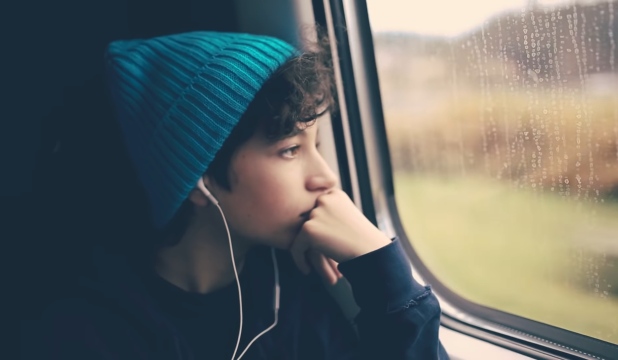
Effects on Brain

Music activates every area of the brain that scientists have mapped so far. In fact, there is no area of the brain that music doesn’t touching some ways.

25 years ago there was an idea which said that language is in left side of the brain and music is in right side of the brain but now with better quality tools, higher resolution, neuroimaging and better experimental methods, it is discovered that thats not at all right so how does it effects our brain?

When music enters and then gets shuttled off to different parts of the brain:-

  1. It stops at specialise processing units in auditory cortex, they track loudness, pitch, rhythm, etc.
  2. The visual cortex activates when you’re reading notes as a musician or watching music.
  3. Motor cortex activates when you move or dance or tap your feet, snap fingers, clapping your hands.
  4. The Cerebellum activates and immediate the emotional responses.
  5. The memory system in the Hippocampus will activate and will help you to recognise any familiar music or lines that you listen
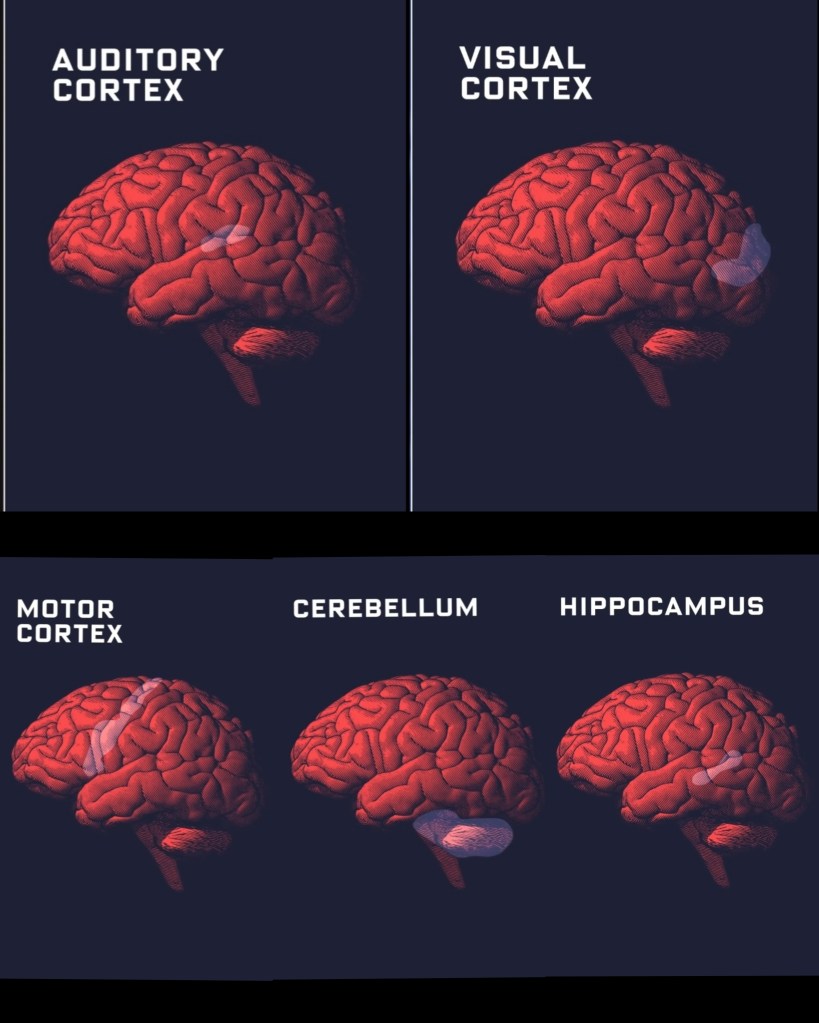
Hence, music is going on in both halves of the brain, left and right, the front, back, the inside, and the outside.

How playing Instruments helps?

We can start learning to play instrument at any age. Picking up an instrument can provide some huge benefits for Intelligence, Physical well-being, Brain.

Playing an instrument requires:-

  • Auditory motor
  • Sensory
  • Visual system to work together

This inner system cooperation has some incredible outcomes that can affect many areas of life.
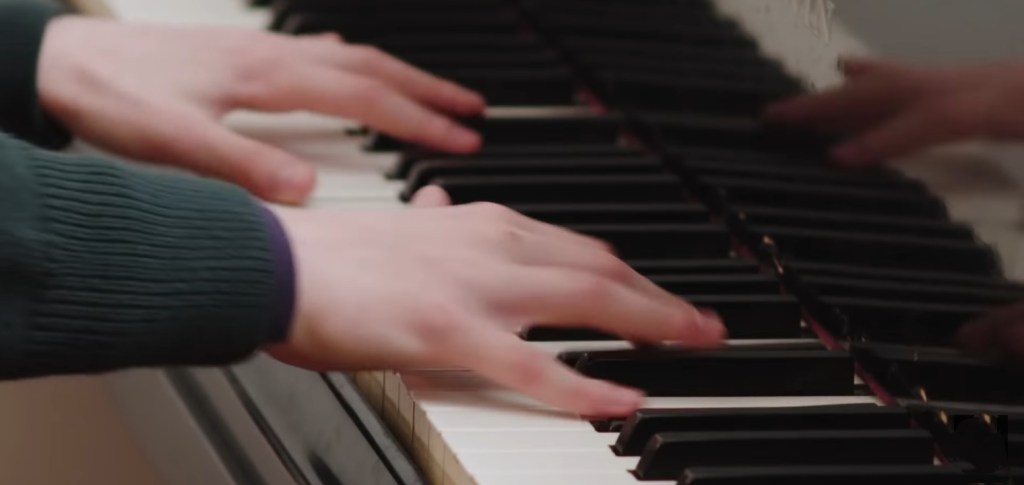
Different intensities of training produce different outcomes, even the most minimal practice can make a difference. Starting to play an instrument just one hour a week for few months can cause growth and increased activity in the parts of the brain responsible for memory, hearing, and motor. Researchers have found that this kind of activities can even increase IQ by 7 point or more.

Its also known that people who play musical instrument are better at other practical things too such as:-

  • Practical emotions
  • Learning new things/tasks
  • Creative problem solving

Musicians brain have better communication between left and right hemisphere which allows for more cooperation and out of the box thinking. Playing an instrument can also has benefits for brain and body.

  • boosting immune system function
  • Increase in resilience to hearing lose
  • Helps stroke patients regain motor skills

It’s been found that just listening to music can prompt the repair and regeneration of damage nerves in the brain.

Music is so much more than notes on a page, it can change the way we think, speak and feel. Music making and listen is really complex it’s not demystified till now it’s more mysterious than ever.


Zero Waste During Lockdown.

The Corona virus pandemic has swept over the planet and with it has brought about concepts like quarantine and social distancing which were earlier seen only in films. The lockdown that is widely being followed all over the world has not been the easiest time for people. With no provision to step out of the house, markets aren’t functioning and economies are crashing. A common man would wonder, ‘How am I supposed to help out, when I am locked inside my own house?’

Your miniscule contributions to the society, can massively assist the authorities and the paramedical staff in this time of need. A major step you can take during this quarantine period is to ensure that the waste produced in your home is minimized. In India alone, 21 million tonnes of food is wasted every year. This wasted food is often treated with plastic waste leading to emission of methane gas in a large quantity. While a life-threatening disease is upon the earth, one must not forget another crisis that is underway, that of global warming. Dealing with the COVID-19 gives us no excuse to forget caring for nature. The small roles we play at our house can make a huge impact outside.

How has Pandemic increased Waste Production?

The Corona Virus has forced the government to take some drastic measures. The shutting up of all non-essential shops across the country was the first of many shocks. People were advised to reduce their trips to the market in order to encourage social-distancing. Lots of families misunderstood this message and hoarded up on supplies to minimize their trips to the market. This uncalculated decision made by the people has led to the wastage of food on a large scale. The pandemic has led to the limitation of a few commodities and we cannot afford to waste even the slightest of food.

1. Buying Smart

The first step in moving towards a zero-waste lifestyle is to by only the amount of food you will require. Hoarding should be thoroughly discouraged as it is the main cause of waste production. The limited number of supplies means that the food you waste could have actually filled the stomach of a person in need.

2. Proper Storage

Advertisements

In these testing times, you never know, when even a single loaf of bread could be useful. Hopefully, the situation won’t get to such an extremity but storing items should still be a priority. Keep food items in cool and covered places to ensure that they are not spoiled. This could immensely reduce the amount of waste being produced at your place.

3. Use Items before they Expire

About 40% of the food produced in the country is thrown into the trash, uneaten. During the lockdown period, try and have a basic idea of the expiry dates all food items in your home. It is essential to make sure that no sort of canned or packaged food is kept win your house past its expiry date. Make sure that you have completely finished an item before going out to buy more. An interesting fact about packaged food is that some of it is safe to consume even after its ‘best before’ date. Check on the internet to find out if the can in your store room is still safe to consume. If not make sure it is disposed off correctly. Separate the food item from its packaging before throwing it away in two separate bins.

4. Utilize the Leftovers

The most important aspect of living a zero-waste life is to ensure that your leftovers are put to good use. Segregation into two different bins is an ideal way to dispose off leftover food. The only problem lying with this situation is that many garbage trucks and cleaners just pile all the garbage into one huge bag regardless of its recycling and ecological properties. The perfect way to deal with this problem would be to use the leftover food as compost.

People often avoid using compost as it is a long and slightly difficult process. The quarantine makes it a perfect time to finally do something good for the environment. Before creating compost make sure that you are doing it right. There are a lot of factors that need to be considered before generating a manure in your kitchen. Use proper tips and techniques from professionals for optimal results.

5Mini Farming

Now that you have composed manure just from your wasted food, it is time to put that compost to good use. Indoor farming is not easy and it requires care and time but it is not necessary for you to own a huge balcony or a garden. You can grow vegetables even in the small terrace of your house. There are families around India who have become completely self-sufficient. Shilpa and Nitin, a couple based in the traffic heavy Bengaluru, grow more than 50 vegetables in their small balcony. Just one small pot for each type of vegetable is enough to sustain a family of four. The food they consume is from their own balcony and the waste produced in their home is used as manure to grow more vegetables. This ecological cycle can have a huge positive impact on the environment.

6. Eat Healthy

Perhaps the most underestimated way to reduce food wastage is to eat healthy. Junk food, has a much faster rate of decay when compared to fresh vegetables and fruits. Having a balanced and planned diet can help you minimize the amount of waste you generate. If you do not have the provision to create compost and farm in your balcony, you can start by eating healthy.

The COVID-19 pandemic has not been an easy time of us. Para medical staff and nurses are working overtime to ensure that we are safe the least we can do is reduce the burden on the planet. Correct utilization of leftovers and controlled generation of waste will make sure that the country has ample supply of food for the poor and needy. Play your part in the quarantine by changing to a zero-waste lifestyle.

Advertisements

Countries that haven’t reported a Single case of Covid-19.

Most of the world has been struggling to contain COVID-19. The disease which was first reported in China, has become a global pandemic that many countries are still trying to get under control. But a hand full of nation have not reported a single case of COVID-19 to the World Health Organization (WHO).

Most are in southern and central area of Pacific ocean.

  1. Federated States of Micronesia
  2. The Marshall Islands
  3. Naru
  4. The Solomon Islands
  5. Vanuatu
  6. Tuvalu
  7. Kiribati
  8. Samoa
  9. Niue
  10. Tonga
  11. The Cook Islands
  12. Palau

These small islands are all technically Covid-19 free. Health experts these 12 countries escaped the pandemic because of a combination of remoteness, small number of people as their combined population adds up to just 1.6 million and because they closed borders when the Corona virus that causes Covid-19 began to spread widely. But just because they haven’t reported any Corona virus cases, does not mean these nations have entirely dodged the effect of the pandemic.

Tourism plays a major role in the economics of most of these countries. And as in many around the world, a lack of visitors has left hotels and restaurants struggling. The owner of the hotel says since March 2020 they have lost their whole business and have zero income.

Palau is one of the island nation feeling the economic pain of Covid-19. Streets that are normally bustling with visitors from abroad have been all but empty for months. With no guests, hotel in the country have also had to make serious cuts. A hotel owner says

No one in our hotel is making their full salary. Most people are 50% or below. Everybody is feeling the pain as thers is no economic opportunity left.

The Palau government recognized early on the economic toll of shutting it’s borders to foreigners. He says

Our capacity, our reality a situation here its that you’re better of with prevention than trying to do something about it later on. So, it became a question of economics or people’s lives, and the right thing to do for anybody in this world is to consider people’s lives.

The Government provided generous subsidies of up to US $10,000 for local people and a few hundred dollars for foreign workers affected by the halt in tourism. Not all Pacific countries rely on tourism as a main driver for their economies.

Countries like Marshall Islands and Federated States of Micronesia rely on fishing and farming and financial aid from the US. But with limited health care facilities and population spread across many islands, the nation’s priority has been keeping COVID-19 from their shores and educating citizens about thorough handwashing, social distancing and other precautionary measures.

Other than Island Nations

In addition to these tiny island nations, there are other countries that haven’t reported a single case of COVID-19 to the WHO: North Korea and Turkmenistan.

North Korea closed its borders in January 2020 and it’s leader Kim Jung-un has repeatedly said the disease is a “potential” threat. He even put the town of Kaesong, which borders South Korea, under lockdown in July 2020. But many observers are are sceptical about the country’s official statistics. They say North Korea’s weak healthcare system may not be able to confirm Corona virus infections, or that the ruling party may simply not be very transparent about whether there are any cases.

Health experts are also wary of Turkmenistan’s claim to be COVID-19 free. It is among the hardest countries in the world for foreigners to enter, and it also closes its borders early on in the pandemic. The authorities government in Turkmenistan also says there are no people in the country living with HIV or Aids, a claim most scientists say is just not plausible.

Back in Paula, where people are doing their best to ride out the economic toll of the pandemic, hotel owner have a bleak prediction about the future. They’re predicting how long will they continue to lose money before suspending more operations or total operations and just wait for the whole world to settle down? Because it’s a financial question arises, we’re willing to lose money, but how much money are we willing to lose?

So while border control, good hygiene and social distancing seem to have effectively kept the disease away from these places, there is no defence against the economic devastation caused by the global pandemic.

Digital Detox in 10 Steps

Digital Detoxification is a practice to limit the use of technology.  Digital Detox helps us to enhance the quality of our lives. It is a way to stop the constant urge to use social media. 

Do we really need Digital detox?

Our lives are filled with technology. According to a study we give about 2.5 hours daily on social media. But some take it too further than this.

Here is the list to check if you need a Digital Detox.

Do you:

  • Use social media late night instead of sleeping;
  • Get stressed, anxious, and irritated without social media;
  • Think about social media even after using cell phone;
  • Check likes, shares, comments constantly.

If yes, then you need Digital Detox.

Benefits of Digital Detox 

1. Keep your life balanced. 

According to Ayurveda a balanced mind, body, and life is key to all round health. 

2. Sleep benefits

The health of a person can be judged by his sleeping pattern. If you have irregular sleep and insomnia then your body might have some underlying problems. Using digital detox helps you sleep peacefully.

3. Time for Family and friends

Time spent with family and friends boost your Psychological health. Digital detox helps you to focus on your life. This gives you emotional wellbeing.

4. Embracing reality

The contemporary world is virtually oriented. People spend time getting perfect selfies, try to maintain a hectic online presence, and feel insecure about themselves. Same cycle again and again. 

Digital detox will give you inspiration, boost your creativity, and give you true values of life.

5. Look younger

A study shows that people who spend more time on screen age faster than others. Looking at the screen gives your skin wrinkles and lines. Digital detox helps you look fresh and young.

Check out this infographics for quick ways to detox:

How to Digital Detox

Here are 10 useful tips that you can do to Detox digitally:

1. Keep away from your cell phone for a minimum of 5 hours. You can increase as you like.

2. Keep away from distractions such as Netflix, gaming, other digital products.

3. Read a book during disconnection. Write a journal about how you feel during this time. You will be amazed that in a month your health has progressed.

4. Go out. Embrace nature. Do some activity that connects you to nature such as gardening, walking on beaches, swimming, or cycling in the morning. 

5. Play with your pets. This is the best time to bond with your pets.

6. Do volunteering. Give your hand to a person in need. Everything that goes around comes around.

7. Spend time with your family. 

8. Declutter your house.

9. Use cell phones ONLY when necessary. If you really need your cell phone, you may use it. Make sure you don’t exceed your time limit.

10. Practice your hobby and master it. Remove negative self with Digital Detox. 

Do these 10 simple Digital Detox techniques every week. You will be surprised with the productivity and efficiency you see in your life and work.

Here are 5 famous motivational quotes to inspire you while you Digitally Detox.

The body achieves what the mind believes.

Be patient with yourself. Nothing in nature blooms all year.

Your life only gets better when you do. Work on yourself and the rest will follow.

Nurturing yourself is not selfish—it’s essential to your survival and your well–being.

It is health that is real wealth and not pieces of gold and silver.

Understanding the Fine Line between Seasonal Influenza and COVID-19.

Starting off as a simple virus emerging from Wuhan, China, COVID-19, or the Novel Coronavirus, has brought the entire world to a halt. Be it economic, judicial or educational prospects, there is no clear picture as to what the future holds for us. With the virus currently holding an overall tally of 40,636 deaths and 8,23, 479 positive cases worldwide (as of 31st March, 2020), the pandemic has now become a life-threatening global phenomenon forcing numerous countries to impose lockdowns.

However, in this time when social distancing and hand hygiene play key roles, one more important aspect must be considered- correct information. While we are getting to know about numerous cases, another problem prevalent in most countries is the high number of people flocking to hospitals for testing even when they show flu-like symptoms, like a cold or mild fever. While it is certainly true that there is only a stark contrast between seasonal influenza (flu) and COVID-19, it manages to pose a major problem: it has not only increased traffic in the hospitals but also diverted the attention of hospital staff from cases that require immediate attention.

Thus, here are a few indicators which might be helpful in differentiating between the common flu and the Novel Coronavirus.

1. Difference in Major Symptoms

A COVID-19 patient will typically suffer from a fever; however, it is not necessary that every individual with flu will have a fever, particularly older adults or those with a weak immune system. While nausea and diarrhea are symptoms for both diseases, they are more prevalent in kids suffering from flu.

If the patient shows signs of dry coughing and shortness of breath, that’s more of an inclination towards a case of COVID-19.

2. Difference in Incubation Period

While a COVID-19 patient takes an average of four days between the initiation of the infection and the onset of symptoms, the incubation period ranges between 2 and 14 days. On the other hand, a flu patient’s incubation period ranges between 1 and 4 days, averaging at 2 days.

3. Difference in Period of Contagion

One of the major threats related to COVID-19 is that it can be contagious even if the patient doesn’t show symptoms. On the other hand, flu can be contagious a day before the symptoms appear, and for nearly 5-7 consequent days thereafter.

4. Difference in Severity and Course

The seasonal influenza or common flu usually takes nearly 3-7 days to resolve, with just 1% of the patients ending up in the hospital. The deathly COVID-19, on the other hand, lands nearly 20% of the confirmed cases in the hospital in a critical condition.

5. Effect on the Immune System

Believed to have an animal origin, the COVID-19 is caused by a newly discovered coronavirus called SARS-CoV-2, a novel virus. This signifies that the population doesn’t have pre-existing immunity to it, which makes it more difficult to prevent the disease from becoming fatal.

Seasonal flu, on the other side, is a disease which can recur, with the body developing antibodies each time. This reduces the extent to which the disease can affect the human body. However, for COVID-19, there is no current evidence to prove whether an individual can get it again post-recovery.

6. Difference in Mortality Rate

Based on information collected from different locations and using various population sizes, it has been gathered that 0.25-3% of the total population testing positive for COVID-19 succumbs to it. In the case of seasonal flu, the esteemed mortality rates are a mere 0.1% in comparison.

7. Difference in Rate of Transmission

With COVID-19 cases multiplying rapidly each day, the reproductive number (R0) for the disease appears to be higher than that of the seasonal flu, with the former being 2.2 and the latter, 1.28.

Advertisements

This is a clear indicator that a patient of COVID-19 is more likely to infect more people as compared to an individual suffering from flu.

8. Difference in Developed Vaccines and Medication

As a result of a novel coronavirus, COVID-19 is yet to have a valid vaccine or effective medication available for the general public. In the case of seasonal flu, however, the seasonal flu vaccine proves to be most effective. Antiviral medications also help to an enormous extent.

9. Difference in Target Population at Risk

While both flu and COVID-19 affect similar ranges of the population, especially those already suffering from asthma, chronic lung diseases, diabetes etc., the latter is found to have a more severe effect on the older population. Flu, however, is found to be more dangerous in the case of pregnant women and children under the age of 2 years.

10. Difference in Prevention Methods

Due to the nature of both diseases as well as their high rates of contagiousness, remaining in isolation is recommended, though more in the case of COVID-19. Also, COVID-19 highlights the need to maintain good hand hygiene (regular washing of hands with soap or alcohol-based sanitizer) and social distancing i.e. remaining at home if not in case of emergencies, maintaining a distance of 6 feet from another individual at all times and avoiding crowded places like malls and restaurants with heavy footfall.

In the case of flu, proper medication, rest and good nutrition are recommended to heal. Regular flu shots also play a key role in the prevention and faster cure of the disease.

Although remarkably similar in nature, both COVID-19 and Seasonal Influenza, on the deeper end, vary to a great extent. While COVID-19 has proved to be comparatively fatal and easily transmittable, flu is seen as a recurring phenomenon, largely treatable.

In these trying times, when most of the world is living under self-quarantine and isolation, we must remember that the first and foremost requirement is to bring the COVID-19 outbreak under control. Thus, upon showing any symptoms, we must consult a family doctor before crowding hospitals to get a seasonal flu treatment, which can be done from home!

Advertisements

BLOGGING vs VLOGGING – Major Differences!

One of the hottest debates in the digital world is blogging vs vlogging, both blogging and vlogging can help businesses and individuals grow their brand and make money online. The good thing about the digital space is that anyone can start blogging or vlogging. The startup costs, so to speak, are minimal. However, you have to have a strategy in place to succeed, as there’s tons of competition.

As there is a rapid rise in online video content, vlogging is also becoming a good option to generate income. But is it better than blogging? Let’s learn in this detailed blogging vs vlogging comparison.

What is a Blog?

Originally called a weblog, Blogs can be standalone websites or part of another website. Blogs can feature other media, too, like pictures, videos, audio clips, in addition to text. Just how you read op-eds in the newspaper, blogs are spaces for people to express their opinion or share their knowledge. Blogs are often created and managed by individuals but are also popular on business websites. People who write blog posts are called bloggers. Blogs typically contain dynamic links to other online content and may also include interactive or community engagement components such as a comments section. Blogs started out primarily as text documents, but today’s far more sophisticated blogs often feature dynamic visuals and videos.

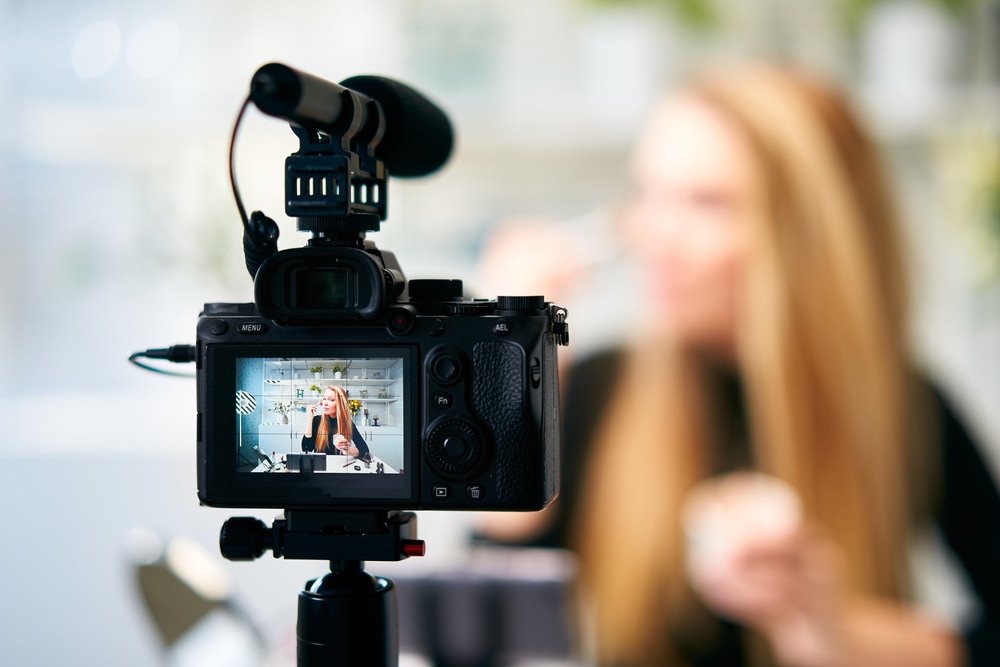
What is a Vlog?

A vlog, or video log, is the video equivalent of a blog. Like blogs, most vlogs target a niche audience that shares common interests and needs. While vlogs can and should be supported by text or metadata, the star of a vlog is the person or people talking on the video, everything that’s written in a blog presented in video format with vocals and visuals.

Interestingly, the term vlog came about the same time YouTube became popular, which is the early 2000s. It’s not surprising as YouTube basically gave rise to vlogging. Just like blogs, vlogs can be related to a business or an individual.

As for the video content, it can be anything. From scientific data to personal stories to tutorials, vlog encompasses anything and everything you could think of finding on the internet.

Key Differences between Blog and Vlog

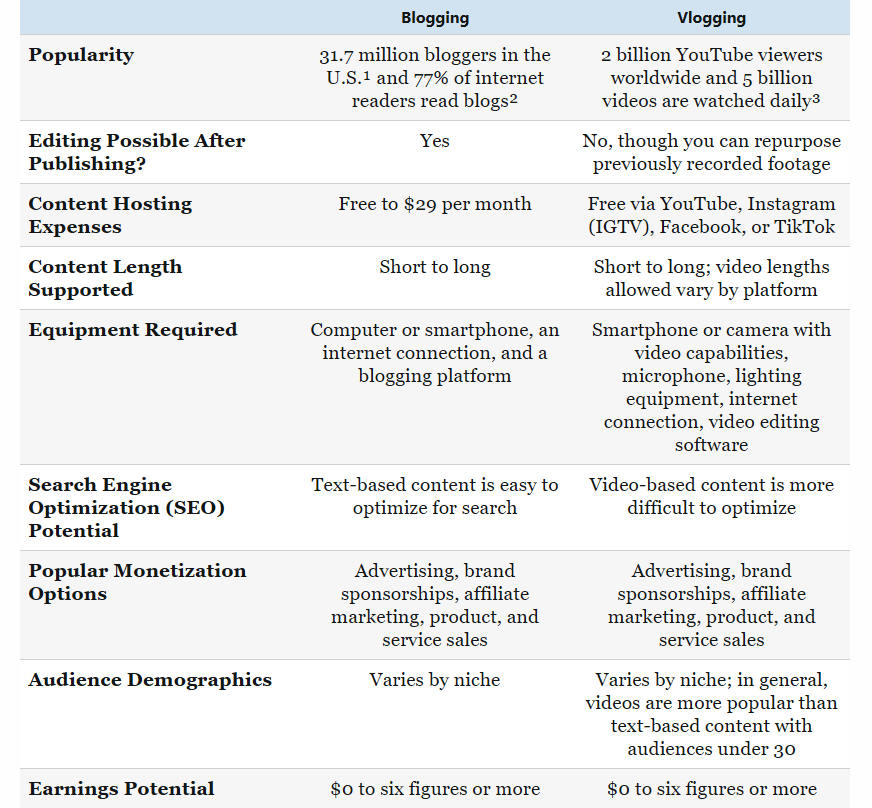
The key differences between blogging and vlogging are the degree to which the content creator uses video as well as where the content is hosted. If you love talking to people and feel comfortable on camera—and don’t necessarily want to build a website—vlogging may be best for you. If you’re a person who excels at the written word and wants to create your own website, blogging may be right for you.

Many people are choosing to blog and vlog as they find that using both text-based and video-based content helps them reach the widest audience possible.

Popularity

The most important thing in blogging vs vlogging comparison is which niche is more popular? Where is the traffic?

Video content is now certainly more popular than textual format. Video is slated to comprise a whopping 82% of the entire internet traffic. This is why video has become an extremely important marketing medium for all digital platforms.

In terms of popularity, vlogs may have a bigger potential audience just because of the nature of the media. For instance, YouTube has two billion users who watch one billion hours of videos every day.

With all those stats, video content has more outreach than a blog. That said, in certain scenarios, a blog may perform better than a vlog. Again, it depends on the niche and the audience as to what media they prefer.

Also, blogs now also feature videos regularly for this very reason. The richer the media, the more audience you can cater to. Many bloggers also make vlogs and use them in their blog posts. Others use videos from other creators to optimize their blogs and give it a visual feel.

Monetization

Dollars stack close-up Stock Photo by ©svl861 21072415

Monetization isn’t that different for a blog or a vlog, but the level of monetization may vary. Most blogs and vlogs make money through advertisements. However, vlogs rely more on advertisements than blogs and perhaps make good money from it. You can also make money blogging by using affiliate links. You work with affiliate marketing programs, such as Amazon Associates Program, and earn commission every time someone purchases something with your affiliate link.

Vlogs can also employ affiliate links in their text descriptions, but it remains more popular for blogs.

Another method of monetization is sponsorship, which is more common for vlogs. You basically get a sponsor who pays you to mention their brand or product in the video to promote it.

A lot of vloggers make money through sponsorships, but that doesn’t kick in until you have a lot of subscribers or followers.

Audience

The evolution of Internet traffic - Maurizio NaldiMaurizio Naldi

The audience for both pretty much depends on the niche you’re pursuing. However, some demographics might be more inclined toward reading. Similarly, some people respond to visual data better.

For instance, if your audience is young, perhaps people under 20, vlogging may be a much more viable solution than blogging. Younger demographics usually prefer watching videos over reading articles.

Conclusion

There are pros and cons to both as we’ve covered in the differences. If there’s one thing that’s common for both blogs and vlogs is that both require a lot of hard work and give you some tough competition. However, you can easily stand out with original content that gives people what they are looking for.

Coronavirus: Top 10 Popular Coronavirus Myths

Coronavirus has been causing a deadly disease which has taken upon the world within a very short period. This disease caused by Coronavirus has created not only a lot of panic among the public but has also resulted in several rising rumours and myths. At this stage, to curb the disease, it is very important to know everything about it. Here are ten myths which common people have mistaken as facts.

1. “Coronavirus can also be called Chinese disease.”

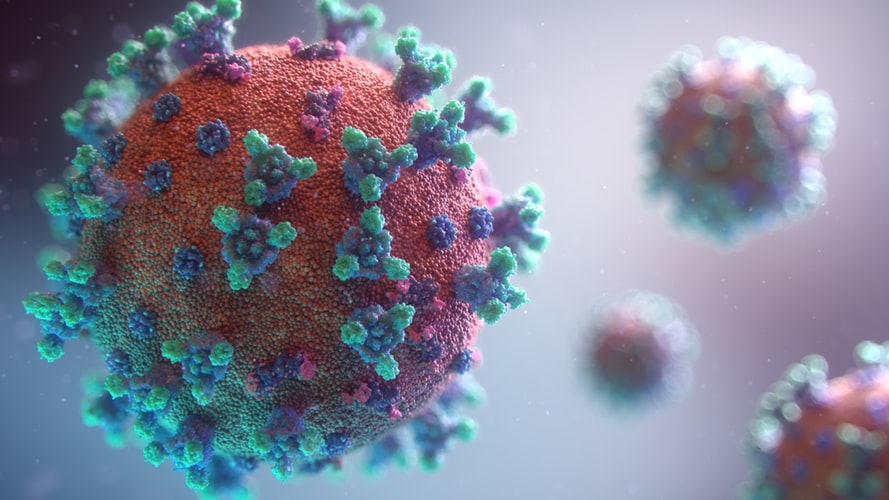
It’s called COVID 19 and not a Chinese virus. The name of the virus has been divided simply into, CO from corona because the shape of the virus appears to be crown-like, VI stands for the virus, D is for disease and ’19’ symbolizes that it started spreading in the year 2019. Many people are calling it a Chinese virus. Even President Donald Trump recently addressed it as ‘Chinese virus’. It’s not spreading from Chinese, not every Chinese person has it. A girl from Manipur, in India, was called ‘Corona’ by an old man, and he spat ‘paan’ on her face to show his disgrace towards her. North-eastern Indians are facing many racial remarks because of this outbreak. Many Chinese people living abroad have faced similar situations. It’s not just racist but also inhumane. People should address the virus with the correct name and should think twice before making any such insensitive remarks.

2. “Drinking alcohol can kill the virus.”

 False! Alcohol is a disinfectant was thought to be a killing substance of the virus, but it’s not as easy as it sounds. The virus, once inside the human body, cannot be killed by alcohol. Any surface might be disinfected with alcohol, but using alcohol on the skin can cause harmful reactions and consuming excessive alcohol can definitely take a toll on your liver.

3. “Only Old people can die of the virus.” 

Anyone, including a child of one day, or even inside the womb, can catch the virus. Younger people might have higher immunity and may have higher chances of surviving the virus, but it is still deadly for them. The virus is indeed more deadly for old people or people having an underlying health issue such as diabetes, heart problems or asthma, but that does not mean that the younger are safe. Everyone should take precautions.

4. “Stay away from people who are wearing a mask.” 

The virus has infected not everyone who is wearing a mask. They might just be wearing it to protect themselves. Incidents have been reported where people wearing masks in public were harassed. People can wear the mask as a precaution, but it should be noted that even though one is wearing a mask, the chances are that the virus enters through your eyes. Hence, the only solution is to suggest anyone who is coughing, should wear a mask or cough in their shoulder so that no droplets fall around and infect nearby people.

5. “Eating ginger, garlic or lemon will increase your immunity

 People started with their own home-based remedies. Eating healthy may increase immunity but will not create complete protection from the virus. Even drinking cow urine was said to be one of the ways to kill the virus. There was a lot of fake WhatsApp news which were circulated. It was also said that smoking weed could kill the virus. People also said that sitting in the sun or warm climate can kill the virus. People around the globe considered taking a hot bath can kill the virus within their body. The only way to cross-check any such news is to visit the ‘WHO’ site and check if they have published any such news or not. Any news related to the research of coronavirus, be it positive or negative, will be posted on the WHO site.

6.” Only people coming from abroad should get tested and be scared of having it.” 

 It’s highly wrong to think that only those people should be scared who have travelled recently abroad. Anyone who has symptoms of the virus should immediately get checked. Anyone who has a recent travel history should try self-quarantine. One should understand that if the person who recently travelled abroad failed to take any precautions and refused to self-quarantine, he/she might end up spreading it to others. So, you could be infected by a complete stranger in public. Staying at home and getting checked if showed any symptoms, is the only way to fight the spread of the virus.

 7.”It is a city disease.” 

 Most of the labourers are going back to their village or hometown, considering that the virus is only spreading in “cities.” However, they are not taking into account how there is a chance that they might transmit the virus with them to their respective hometown. Going back to your hometown, even with current zero cases of the virus, does not mean that one stops taking precautions to be safe. Under all circumstances, social distancing should be practised.

 8. “Chicken, dogs, and cats are spreading the virus.” 

No! The disease can be transmitted only through human contact. There has been no study which proves that animals can transmit the disease. Animals should not be treated with cruelty on any basis. One should consider the well-being of the street dogs and cats, and should at least feed them during the lockdown. In India, the rate of chicken had seen a drastic fall, especially in the state of Maharashtra, because of the rumour that the disease can be spread via eating chickens. In fact, the truth is that consumption of chicken may help in increasing your immunity and save you from the seasonal flu.

 9.” Coronavirus has a 97% Survival rate; the government is making us panic for nothing.”

To put this in a simple analogy, it’s like if you are given ten apples, and one of them is infected, you probably shouldn’t take the chance to infect yourself by eating any of them. There is a limited supply of healthcare services, and in a country like India, which is highly populated, should not risk the spread of it. If the number of cases keeps going higher, we might fall short on several doctors and nurses present to help the patients. 

10.” Stock as much food as possible.” 

The pandemic created such a panic among the public that on the announcement of the lockdown, people rushed to the stores to buy as much food as possible. In this rush, they forgot how close they were standing to strangers and how the deadly disease could be passed on unintentionally as many failed to wear a mask. Stocking of excess food will also create a shortage for others who are in need. People were found stocking up on basic medicine as well, such as fever and cold. This might have created a deficit for someone who is currently in need of it. The government is taking as many measures as possible to make ends meet. In Maharashtra, grocery shops will be open all day and night to provide essential items to the customers.

Advertisements

By Megha Sharma

Posted in Internship

Rating: 1 out of 5.

“Internships : A Door To Opportunity”

Internships- really being a door to opportunity for so many of us, being the only source for the growing students to learn something new & to explore different work fields in this leisure. Internships are the proven way to gain some knowledge, interest & maintaining a healthy connection with the work fields. This lockdown has taught us the meaning of internship, and to work as an intern in a firm. Since online studies are going on, doing an internship in this leisure is a perfect & productive way to utilise your free time! Internships not only enhance our skills, but also makes us confident, independent and self reliable. Since, adults has nothing to do in this lockdown, internships are way better to do something productive and to invest our time in learning something new. Internship is basically a platform where students puts up their education into practice, and develop relevant personality development and skills as well. For the college going students, internships plays a very important role in their lives. Being indulged in internships not only helps you to know more about the work fields, but also unleashes different side of your personality that you didn’t even know that it existed.

IMPORTANCE OF INTERNSHIPS

Internships plays a very prominent role in a students life, it provides a real life experience of working for the firms & companies for the fresher students! Freshers, who are new to this world, internships provides a platform for them to learn something new apart from their studies, and to enhance relevant interest in different fields. It is an ideal approach to gain understanding of your chosen Industry and field. Providing a platform to maintain a healthy yet professional connection with the work staff, and to learn & explore that how a firm works. It gives you a significant practical experience of working with the firm and also an opportunity to showcase your knowledge of degree program in real- life situations. Internships, based on hard work & stipend gives an opportunity to the students to showcase their hard work and skills on the respective fields and earn a minimal amount based on their skills and performance. It provides students the value of earning money on the basis of their hard work, and to work as an intern for a company.

ADVANTAGES OF INTERNSHIPS

  1. Get Industry Experience

The first and foremost factor of doing an internship is that it provides a platform for the students to explore the working of an industry or a company, and gives relevant workshops to learn that how exactly a company works. Fresher students learns how to work in a company by working as an intern so that they can gain experience of various fields they have chosen to work in. It further helps them to work in different fields , and hence built a significant connection with the workspace and the staff. It provides a practical way of learning and working for a company, and to gain an experience of how a company works and gives an opportunity to the students to put up the knowledge they’ve gained till now in real life situations.

2. Boost the value of your CV

There no task harder for a fresher to build a CV when they have literally no experience. No experience mentioned in the CV is a big turn off for most of the companies, why would a company hire you when you don’t have any work experience? The importance of doing an internship not only gives you opportunity to showcase your knowledge in real life situations, but also enhances your personality development and skills that are vested in your personality. You can easily know about the importance of internships when you will list down the accomplishments on a piece of paper, and that piece of paper literally decides your future. Thus, after completing an internship, you must sit down to contemplate over all the things you got to learn and how they can help you professionally as well as personally. As an intern, you will have to chance to take up new tasks and get an edge over your competitors, thus ensuring that your CV gets more than a casual glance from your potential employer.

3. Facilitates Self Growth

Internships not only help you in developing professionalism but also enhance self-growth. You certainly develop various characteristics like integrity, commitment, and self-motivation. Pursuing an internship, you will get to work on a wide range of tasks that will boost your managerial skills, and working in a team, you can polish your interpersonal and communication skills while learning about the importance of teamwork. Furthermore, you additionally get a chance to investigate the different choices that you have without the obligation of a full-time job. You can do different internships in different enterprises and profiles before you make sense of the best field for yourself. 

4. Learn new Abilities and Aptitude

While an undergraduate program gives you the perfect foundation for your professional journey,  internships add to it by giving you a chance to learn new aptitudes. These new abilities include a mix of both complicated and easy aptitudes. With a temporary position, you get the chance to learn new things, be it a software application or any other skill you wanted to explore. Many companies provide interns with the scope to explore working in different departments and find the best one they like working in. Correspondingly, you get the opportunity to improve your abilities by learning interpersonal and communication skills and how to behave in a workspace. 

In short, Internships plays a very prominent role in a students life it polishes our interpersonal and communication skills at its best! and helps us to explore more about the working sector in a very interesting manner. Apart from this, student also got a performance based stipend, solely based on their hard work and the performance they’ve showed while working as an intern. 

-SUKHMANI PANESAR

Diversity of India

Indian Society is a vast social order with multitude of culture, language, religion and caste. It has a very extensive history. Indian society was a layered society from ancient times. Rulers of India belonged from different culture and religion ruled for a long time. “Unity in Diversity” is most frequent feature of our Indian Society. It manifests to unity among individuals who have different culture, ideology, religion, language, ethnicity, etc. Despite the diversity in people, they have the sense of unity. India has different people in every society yet it doesn’t lose their separate identity. People have been living here peacefully for thousands of years.

People have freedom to live their life in their own way. People from different culture and religion interact with each other in many ways which leads to exposure, development of trust, bonding among them, mutual respect for each other, love, etc. Unity in Diversity binds people to maintain peace and harmony and brotherhood. If the people are united like this it will help in the growth and development of country.

History of Indian Society

In ancient Indian history, many races and tribes were involved. The Greek, the Aryans, and many others were living in India. Each and everyone contributed in the development of Indian society, language, art and architecture, and literacy. They blended so perfectible from north to south, east to west.

Significance of history in present

Some people want to rehabilitate the ancient Indian society and culture. This was for the concern of preservation of ancient art and architecture. This advancement cannot be achieved without the clear and accurate understanding of the history. This can’t go along with the achievement of modern science and technology. This will increase social inequalities that can plague India. All these species of the past have to be eradicated from India for the growth of the nation.

Importance of Unity in Diversity

Unity in Diversity is of much importance in the Development of the country, Global Recognition, National Integration, Peace and Harmony. It is very easy to divide people having different ideology but if the people of India are united it is very tough to break down the nation. Unity between people maintains peace in the nation. If the Indian Society is weak and distributed on different terms, India won’t be able to move on the path of development. India is always appreciated on international platforms for its unity. It is a symbol of Unity for other nations despite their different culture and religion.

Role of Unity in Diversity

In India People from different religion and culture live here. Every state has different beliefs, language, ideas, culture, religion, rituals, etc. People follow religion of their choice as India is Secular country. Yet, they live with the spirit of love and brotherhood. Indian Society learned this all from ancient times. There are about 29 religions and more than 1,000,500 languages are spoken. In spite of such differences Indians have unity among them which threatens global society. “United we stand, divided we fall.”

Our Indian Society taught us caste, religion, language, creed, race cannot divide us. We should always stand united for the improvement of nation. We should always believe in the concept of love, peace and brotherhood. The distinction in culture, religion, language makes us strong and makes India recognizable.

STOP Body Shaming

Have you ever hated yourself for being called thin, fat, tan, or textured? Have you ever wanted to become the celebrity who hides behind those makeup products? Have you ever tried to tear yourself apart for being you? According to the statistics, 91% of n are unhappy about their body image. Cases of teens having suicidal thoughts are increasing as body-shaming is becoming quite common among peers. So is this thought real else is it just an illusion that threatens us? No matter what it is you and your body, it is your responsibility to show utmost affection and positivity. 

Reasons for body-shaming:

  • Setting the imaginary bar high. (For example, Textured skin is normal. Being obese is normal. Acne and breakouts are just a part of your body. Social media and filters blinds people.) 
  • Ignorance (You are not beautiful if you are obese, you will not get a date being this tall, you will get rejected just because you are tan) 
  • Low self-esteem (Feeling inferior about their body, in turn, they end up criticizing and judging others.)

We might even body shame others without our knowledge, but those words hurt them to an extent they want to kill themselves. People start to feel unworthy of themselves when they hate their body and affect their psychological well-being. The Mental Health Foundation, which commissioned the survey, said the issue could affect anyone at any age. Words have the power to kill and heal, so we must choose them wisely. If you ever come across a person who feels inferior for being overweight or underweight, listen to them. Assure them positivity. Stand by them whenever they need you. 

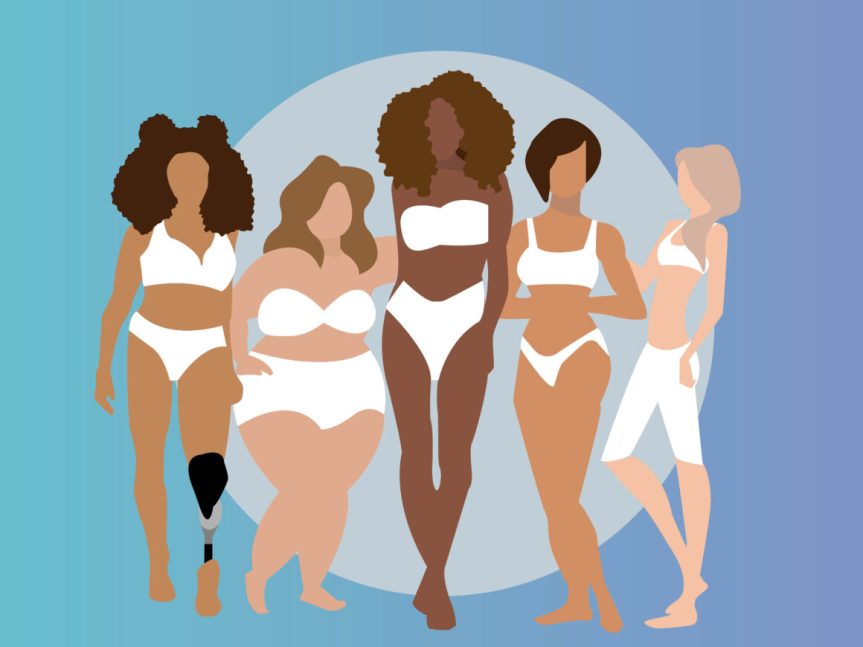
Thin or fat, dark or white, clear or textured – you are beautiful; you are adored.

Tips for loving yourself: 

  • Have a positive attitude. Life is beyond people’s criticism. Don’t bound yourself in their words. 
  • Have a supportive circle. Being with positive people lifts your daily mood. 
  • Distract yourself towards life goals. When you are successful, literally no one would ever talk about your body image but about your success story. 
  • Have a healthy lifestyle. Exercise, meditate, journal. These habits will make you develop yourself. 
  • Be worthy of yourself. Appearances are not everything. A beautiful heart is more important than a perfect figure. 

Confronting negative comments is the only way to stop body shaming. Let us normalize our tone, skin, and textures. We all are beautiful and blessed, and having a healthy mind and heart are more important. Love others irrespective of their figures and numbers but never forget to love yourself first.

It all comes down to who’s by your side.

Fifty-seven-year-old London Carter takes us back to his teenage life in North Carolina, where he still lives. He is a son of a Congressman and a complete stranger to his father. Jamie Sullivan, daughter of Hegbert Sullivan, is misunderstood by all the kids of her age. Fate brings them together through unexpected turns and events. The religious fanatic falls for the young naughty Landon and changes him. Eventually, they promise to accompany each other in life’s walk. Nicholas Sparks does not fail to make the readers cry. Jamie Sullivan is found to be ill. Did death steal her else did a miracle save her? Either way, their walk is to be remembered forever…

“First you will smile, and then you will cry — don’t say you haven’t been warned.”

– Nicholas Sparks, A Walk to Remember

Youth is never fun without mistakes, but there comes a time when incidents strike your heart so hard and make you feel regret. Nicholas Sparks does magic through his words and takes the readers forty years back through Landon’s voice. By this, the readers get to see the development of Landon over the years and his eventful seventeenth year in North Carolina, “one of the beautiful places in the world.” A Walk to Remember is not just a book about love. It is a story about growth and forgiveness in which the protagonist undergoes a massive change after a turbulent youth. Jamie Sullivan is boring and seem to have an uneventful life. As the plot progresses, her real character is revealed, her interests make the readers develop respect for her.

When the universe decides to make hearts collide, there is not a single thing that could stop it. In such a way, Landon and Jamie are thrown together and made to take chances. Even the smallest of the incidents in one’s life make way for a change and how one reacts to the changes is all about growth. Decision-making plays a role in shaping the future. The author reminds the readers that one must listen to his heart while making decisions. Life’s surprises make the heart suffer and heal, but importantly it makes you believe. Love makes one grow a belief in his soulmate, his friends, his family, and himself. The themes, logic, and love must not be missed out while analyzing the text. Landon always tells himself that Jamie is just a religious fanatic. Yet he finds her strangely attractive and, it is all the heart takes to fall in love defying logic. A walk to remember makes the readers smile, love, and weep at the same time.


“I’m sorry she never got her miracle. She did get her miracle, Landon, her miracle, was you.”

– Nicholas Sparks, A Walk to Remember.

A Walk to Remember revolves around love and friendship. This book will strangely attract anyone irrespective of age and specific genre reader. Readers will want to finish the book in a single sitting and get lost in the pages to find themselves. It might be a bittersweet love story, but you will definitely fall in love with the book. I would strongly recommend anyone to read Nicholas Sparks, A Walk to Remember and never forget. Happy remembering!

THE PRESENCE OF THE U.S. MILITARY TROOPS IN AFGHANISTAN.

AFGHANISTAN: BACKGROUND AND U.S. POLICY ( in brief )

Afghanistan emerged as a significant U.S. foreign policy concern in 2001, when the United States, in response to the terrorist attacks of September 11, 2001, led a military campaign against Al Qaeda and the Afghan Taliban government that harbored and supported it. in the intervening 19 years, the United States has suffered over 22,000 military casualties in Afghanistan and congress has appropriated approximately $144 billion for reconstruction and security forces there. In that time, an elected Afghan government has replaced the Taliban; improvement in most measures of human development is limited; and future prospects of gains remain mixed.

The United States and its international partners are removing their military forces from Afghanistan as part of a withdrawal announced by President Biden on April 14, 2021, heralding a possible end to the nearly two-decade U.S. military presence in the country. In a February 2020 agreement with the Taliban, the Trump Administration preventing other groups, including Al Qaeda, from using Afghan soil to recruit, train, or fundraise toward activities that threaten the United States or its allies.

INTRODUCTION :-

This report provides background information and analysis on U.S. policy in Afghanistan, with a focus on the ongoing U.S. military withdrawal and its implications for a number of factors, including :

  • security dynamics and the ongoing conflict between the Afghan government and the Taliban.
  • the social and political gains made in Afghanistan since 2001; and
  • intra- Afghan negotiations, which began in Doha, Qatar, in September 2020, but appear tp have since stalled.

The report also provides information on question about the future of U.S. development and security aid to Afghanistan.

BACKGROUND : U.S.- TALIBAN AGREEMENT

After more than a year of negotiations, U.S. and Taliban representatives signed a bilateral agreement on February 29, 2020, agreeing to two “interconnected” guarantees : the withdrawal of all U.S. and international forces by May 2021, and unspecific Taliban action to prevent other groups from using Afghan soil to threaten the United States and its allies.

In the months after the agreement, several U.S. officials asserted that the Taliban were not fulfilling their commitments under the accord, especially with the regard to Al Qaeda. U.S. officials also described increased Taliban violence as “not consistent” with agreement. Although no provisions in the publicly available agreement address Taliban attacks on U.S. forces in non- public annexes accompanying the accord. Some lawmakers have raised questions about the executive branch’s decision to classify these annexes.

IMPACTS OF SOCIAL MEDIA

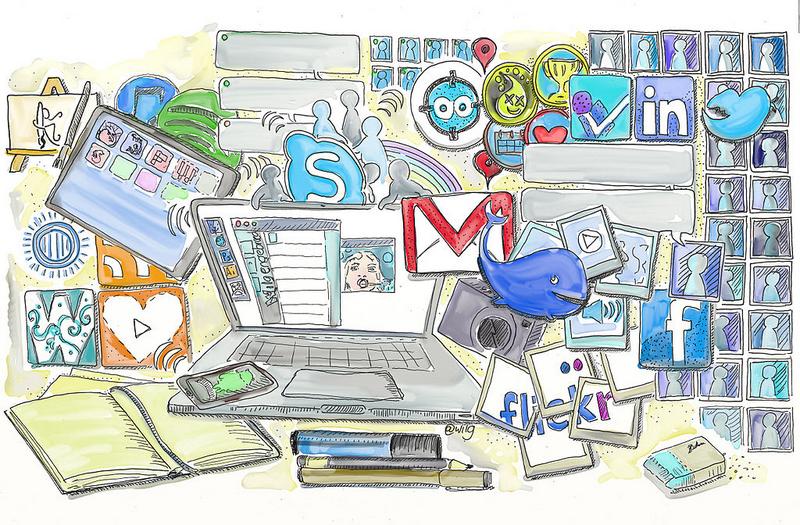
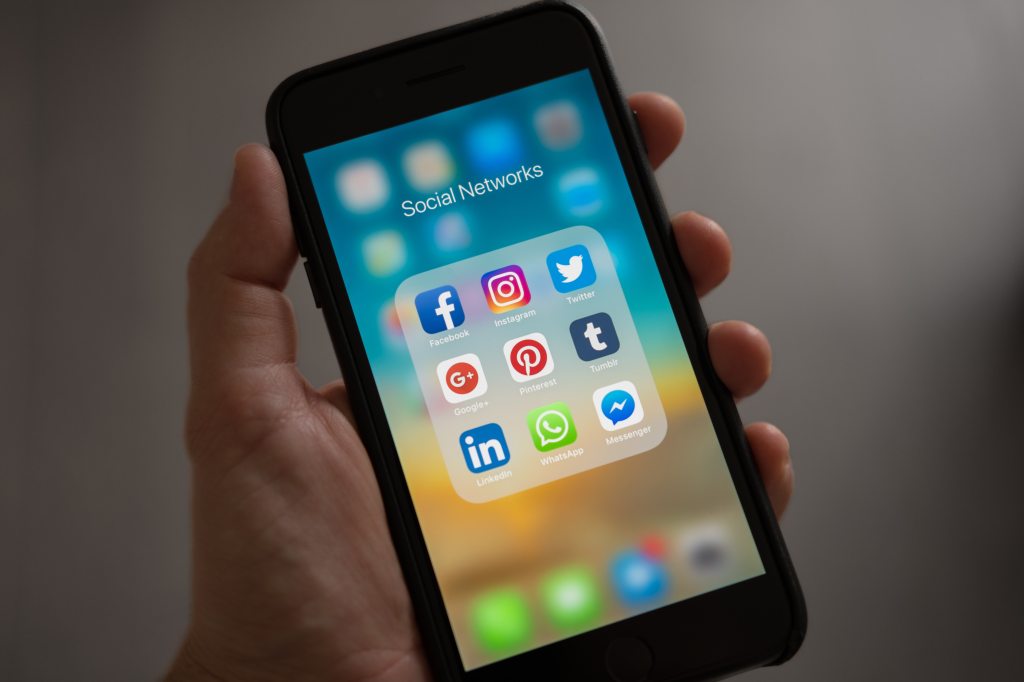
   Interacting with friends and families is always a concern for people across the long distance. Since communications are the way to strengthen the relationship between people, they started thinking to develop a way to solve this issue. People started to create new solutions where face-to-face communication is not possible. With the advancement of technology in the late 19th century, the first recognizable social media site named Six Degrees was created in 1997. It enables the users to upload their pictures and make friends with other people. After the invention of blogging in 1999, Social media has started reaching popularity. It has become a technological platform through which we can share our ideas, view, news, career opportunities, and information through virtual networks and communities. The arrival of YouTube, Facebook, and Twitter in the early 20th century made it easier to communicate with many new people. Today, some of the popular social media sites are LinkedIn, Instagram, Twitter, WhatsApp, Messenger, WeChat, etc,

Advantages of social media

           Social media has become an integral part of the modern world is the unbreakable truth. Some of the advantages of social media are listed below:

           REACHES LARGE AUDIENCE:   In the 21st century, millions of users use social media. So it is a great opportunity to market your product since it reaches an enormous number of people. Social media has the tremendous advantage of reaching many people, so you can find new leads for your products or services.

       EDUCATION: The benefits produced by social media in education is inevitable. It provides better communication between learners and teachers. Many e-learning apps are created and students can learn anything they want from anywhere in the world. It provides a great opportunity for the students to learn from many experts.

      INFORMATION AND UPDATES: Worldwide news is updated instantly on social media sites which makes people know the current happenings around the world. The information posted on social media websites reaches people faster than the traditional way of spreading the news.

SHOWCASE ONE’S TALENT: The vast usage of social media helps to showcase one’s hidden talents. Through this people can easily post their talented works. When people support them, it creates a self-belief in them to do something that they like.

Disadvantages of social media

            Though social media has advantages, it also negatively affected society. Some of the disadvantages of social media are listed below:

    HACKING: Whether the personal data and privacy of a person are secured or not is a big question in the cyber world. Hackers can easily hack the details of people through the information posted on their pages. Several Twitter and Facebook pages of celebrities and VIPs are hacked by affecting their personal lives. This is the dangerous drawback of social media among the others.

   ADDICTION: Teenagers are the ones who got most affected by social media. Sometimes they got deeply immersed in social media which cuts off them from society. Overuse of social media has caused a lot of health and mental problems.

   REPUTATION: Someone can easily frame the person by posting a false story. This will ruin the reputation of that person that he/she has gained so far. Due to the rumors, businesses can also suffer great losses.

 HEALTH ISSUES: Due to this pandemic, social media has got more users. The over usage of social media could bring many side effects on health. Some of the harmful consequences of excessive usage of social media are stress, anxiety, loss of sleep, eye problems, low self-esteem, etc.

      Everything has its advantages and disadvantages. It is all about how we use them. Social media has more advantages compares to drawbacks. It will be more advantageous unless it is used negatively. So it’s in the hands of ours to make it use it effectively.

What Is The Importance Of Social Media In Education?

For quite some time, social media has had an impact on our lives, and the trend of utilizing it is growing by the day. People use it as a platform to communicate with one another, post personal images, videos, opinions, and reviews on a variety of themes such as everyday life, politics, sports, markets, and much more over the internet using devices such as computers, tablets, and cell phones, among other things.

  1. Nowadays, social media usage is on the rise. Whether it’s social networking and networking sites like Facebook, blogs and information sites like Twitter and Tumblr, video sharing sites like YouTube and Daily-motion, or other platforms, they’ve made life easier by allowing people to quickly share nearly anything they want to know about. Humans’ reliance on these sources of socialization is undeniable, which is why every organization employs them to increase productivity and profits.
  2. The use of social media in education is no exception. We all know that education has been heavily reliant on print and electronic media for a long time, but both media are costly owing to their limited availability, but social media is both inexpensive and readily available. Most instructors and professors now use YouTube to present students various types of videos relating to their studies, and as a result, their productivity has increased significantly.
  3. Teachers have come up with the idea of creating a shared page for all students to communicate updates about any changes in class schedule, due dates for assignment submission and tests, and so on, because students increasingly use Facebook. It allows students to communicate with their lecturers and inquire about course challenges while at home. This does not end there; it also encourages collaboration: when students are working on a group assignment, they can better communicate with one another and share files and comments on the same page.
  4. Students no longer need to lug around hefty books: they may learn about anything by browsing collaborative media sources like Wikipedia at any time. Not just for students, but also for instructors, it functions as a dictionary. The most essential feature of these social media platforms is that they encourage open debate. When students and teachers communicate through these channels, they engage in a dialogue that leads to a useful conclusion, for example, when a teacher from Asia meets a teacher from Europe, both can share their perspectives on the educational system and learn about useful teaching methods they had never tried before.
  5. Diigo is another social bookmaking tool. Because it can pool intellectual information, this social media technology is simply user friendly for educators and learners. It provides tailored materials on any area of interest to its users. Wikis are also used as participatory platforms by educational systems all throughout the world, with site visitors contributing to their upkeep. Another social technology that is used in interactions is Twitter (Dixon, 2012). This program allows students to engage with their classmates as well as their professors. Teachers can utilize Twitter effectively to boost post-class discussions.
  6. Social media also exposes students to a variety of instruments that aid in the rapid advancement of the educational process. Students should be taught the benefits and drawbacks of such instructional tools and given the opportunity to utilize them whenever they want. Students can use social media to hold group discussions in the form of chats. Such technologies are critical for the advancement of education. Teachers’ teaching techniques have also benefited from the use of social media. Teachers can now offer online lessons that are transmitted over social media platforms like Skype, thanks to the advancement of social media.

Social Media : A boon or a bane?

Social Media is a virtual interactive platform for sharing ideas, views and information. It has become an inseparable part of our lives as it keeps us aware of the daily happenings around the world. With social media, we are just a few clicks away to access the unknown things. Without a doubt, social media has revolutionised the process of communication and with every passing day, communication game is getting stronger. Social Media applications like Facebook, Instagram, Twitter, Snapchat, Skype and other such apps has made life way more easier than ever.

Like the two sides of a coin, Social Media too has two sides.

Positive side of Social Media

Through social media, we can communicate with people even from far away places. We can broaden our friend circle through it by constantly interacting with unknown people and keeping in touch with our old friends.

Social Media has become a globalised platform to showcase the talents of people. People with various skills share their talents in the form of videos and post it on social media. It provides them with an opportunity to receive appreciation for their talent that further boost their confidence to carry on with what they excel in.

People can use Social Media platforms for business purposes. This is the most common thing that we witness nowadays. People start their business through social media applications like Facebook, Instagram, YouTube etc. YouTube is one such popular application that people use to earn money. People post videos on YouTube and gets paid if they fulfill the various criteria of getting paid, for example, crossing a certain number of views count, likes counts or subscribers count. A lot of businesses have flourished on Social Media and are still flourishing smoothly.

Social Media helps students in education too. Teachers can make use of social media to teach their students out of classroom situation. Especially in the time of pandemic when attending classes is not possible, social media applications have taken the place of classroom. Teachers takes online classes through various online meeting applications and share reading materials through other social media applications. Moreover, students can get extra information from surfing through social media.

Although Social Media has connected a lot of people and is making life easy, yet it has its own drawbacks.

Social Media makes people addicted to it when people constantly keeps on using social media. People are seen to spend quite a lot of time on social media ignoring other productive works. Social Media addiction keeps people aloof from real life situation that hampers their social life in the long run.

Social Media takes a toll on human health, be it physical health or mental health. Because a person sticks his eyes to the screen of various gadgets he is exposed to various eye ailments, headaches and body aches. Even his sleep schedule is disturbed when social media use is more than what is required.

Social Media gives us an unrealistic expectations of life and when in real we fail to meet with what we expected we become disappointed. When this disappointment goes on for a long time, we push ourselves to the web of depression. This greatly disturb our mental health.

Cyber bullying, hacking, catfishing etc are taking at a large scale in the present times. Social Media users are the easy targets of these online criminals. Because social media platforms has a thin layer of privacy, personal and private information of the users can be hacked. A person’s identity can be used in a derogatory manner by the criminals.

Social Media can also promote unhealthy competition among its users. Almost everyone on social media races to show how exciting their life is. Even though they lead a simple life yet they fake their lifestyle. When the other users constantly witness a happy and happening life of others, they feel insecured and inferior. In such cases, a person might not appreciate his own life and keeps on complaining about everything.

It can be said that social media is both a boon and a bane. Social Media can be used in both positive and negative ways. It is a great tool if operated with good intentions.

#MeToo

There are times when you feel the rage and anguish in the air, at least from a certain section of the society. Many are now raising their voices to improve their individual personality as well as the society as a whole. A society develops only when individuals themselves create ripples by hosting their arguments. Several movements are there which is woman centric and the MeToo movement being one among them. The movement first began as an offline protest and later it changed to an online movement. The movement was started around 2006 and it reached the online platforms in October 2017. It’s the voice of the educated women against the deep trenched male dominant culture at the workspace. The movement was founded by Tarana Burke, a social activist and community organizer. Burke, who is creating a documentary titled Me Too, has said she was inspired to use the phrase after being unable to respond to a 13-year-old girl who confided to her that she had been sexually assaulted. Burke said she later wished she had simply told the girl, ‘Me too’. It’s a platform for the oppressed and a means to express the abuse they had faced. When news of the allegations against Hollywood producer Harvey Weinstein broke last October, it unleashed a torrent of emotion, especially on social media, offering permission to disclose current and past experiences of sexual harassment and assault. In an unprecedented quantum of use, it offered many angry and upset women accessible ways of venting often long-repressed feelings. It also gave rise to the movement. A barrage of allegations has since emerged against high-profile men in entertainment, the media, politics, and tech. Many deny any wrongdoing. The repercussions are still in flux, but world’s power dynamics have undoubtedly shifted.

It’s a common practice in the world to abuse women irrespective of the age. It doesn’t mean that only women are being abused, men also belong to this but when compared the rate of abuse is very less. Abusing women has now become a part of culture mainly because of the stereotypes. is one way to overcome these stereotypes. The reason for the public explosion is that the judiciary or armed forces never bothered about their problems and their suffocations. It is seen that the law favors the oppressor more than the oppressed. The whole process shamed the victim. Many of the sexual assault happened when workplaces were not sensitive to the safety of women and social media platforms were nonexistent. Besides this, our power structure is dominated by men and the victims are young and vulnerable women.

Social media is both a boon and bane. It is depends on how we treat a certain issue.  movement has been very active in social media since the latter half of 2017. It is in fact the social media that urged the advancement of . The hashtag is doing the rounds in every nook and cranny of social media. As more and more women come out on social media with accounts of sexual harassment and abuse a great political cultural change in being shaped. The change brought by movement is immense and it has been able to give the possible credentials to women. It has achieved great success in challenging the social norms. Many men, who are charged of sexual assault through the movement, some admitted and apologized to the misconduct they have committed. This, in this instance, has become an eye opener for many men. In this wave of storm, prominent personalities are named for their harsh behavior. The is critical of the power and the way it enables sexual predators. is trying to fill the gender gap that has been produced by the patriarchy. There are so many laws to protect sexual harassment of women in workplace.

In a feminist perspective, is a translation of western culture. The movement can be analyzed from the notion of female experience. The subjects involved in the process are all women of all age. It determines the point of view without any hesitance or shyness and in a courageous manner. The experiences differ from other females and males. It can be related to the ‘second wave of feminism’ which portrays equal rights and representation as its key motive. In movement, there is no celebration of so called ‘feminity’. It’s a transformation from ‘inter – dependence’ to independence. In relation to Cixous’, ‘Ecriture Feminine’ which exemplifies women to writing about her body, is a continuation of this concept and not only writing about body but also writing about the sexual violence that is faced by women. It was a renewal of an old tradition of thoughts and action. movement revisits the history of Indian Feminism. The American Feminist critic Eliane Showalter classified the history of women’s writing into feminine phase, feminist phase and female phase. In feminine phase women writers imitated the dominant male artistic norms; in feminist phase a radical position was maintained and in female phase women started writing their own experiences. The movement can he considered as a part of female phase as it involves expressing the sexual violence that is imbibed upon them.

Fights with your Friends

Friendship has a different meaning for everybody around the world. Over the time of your life, you made friends and they are your chosen family, you cannot just walk past them. Even if you are an Introvert (like me) you always have that one friend you run to for your problems no matter how idiotic their advice is, and if you are an extrovert you have many friends but there is one friend for you people too who you run to for your idiotic advice.

Every friendship goes through their ups and downs, and somewhere or the other I think its important that friendship goes through that. Sometimes, after a fight you realise that how much important that particular friend is to you and how you don’t want to lose them.

Friends fight; it’s inevitable. You will even find yourself arguing with your best friend more than anyone else. That doesn’t necessarily mean they’re not your truest BFF. Sometimes, it’s the little arguments that are over before you even know it that end up bringing you all the more close

But why fight in the first place, might you ask? If they’re your BFF, shouldn’t you always be on cloud nine having the time of your life? Sure, but a true friendship needs to learn and grow on both ends. A great friendship requires some tough love and growing pains. Like any other relationship you care about, it goes through its rough patches in order to improve.

Here are seven reasons why you fight with your bestie more than anyone else.

1. You Can Be Brutally Honest With Each Other

The truth can hurt, but sometimes you really need to hear it. Your best friend feels comfortable enough confronting you on issues that most people would just bottle up and let them fester. Your BFF can be brutally honest, but they wouldn’t tell you something just to outwardly hurt you. They know in their heart that telling you is more important than any backlash they’ll receive from dishing out the truth. It’s just like a Band-Aid; you have to quickly rip it off, and you want your bestie to do that for you.

2. You Don’t Walk Away From Each Other

You can walk away from anyone else you argue with, but you stay with your BFF and fix it. You can’t let an argument go unresolved, or it will ruin your entire day. You may take a breather to calm down, but you never leave each other angry.

3. You Only Want What’s Best For Each Other

You will do everything in your power to help your best friend get what they want, but sometimes, you know what your friend wants isn’t actually what’s best for them. For example, maybe it’s a boyfriend who is actually horrible or a job that’s totally toxic. You will be there for them when they need you, but you can’t fake the support if you don’t think it’s what’s best for them.

4. You’re So Much Alike

You and your best friend are so much alike that at times it can be scary. It’s great that you have a lot of the same interests and personality traits, but that can be hard, too. You’re so much alike, your personalities may clash at times. If you’re both headstrong, it can make fights last a little longer because no one is willing to back down. But in the end, you always end up finding a compromise.

5. You Go To Them When You’re In A Bad Mood

You go to your bestie when you’re in a bad mood and want to vent. They’re perfect for you to let out all of your tension from a hard work day or frustrating rush hour traffic. They’re your sound board, but sometimes you’re just too far into your bad mood that you can even take it out on the people just there to listen. It happens to the best of us.

6. You Spend So Much Time Together, It’s Bound To Happen

I’m not a statistics genius, but I will say it makes sense that since your BFF is the person you spend the most time with, you’re bound to get into more fights with them. Your time spent with them, over the probability of a fight to happen, translates to these chances being higher than anyone else’s. Even though you may loathe it, you can’t argue with math.

7. Your Jealousy May Get The Best Of You At Times

Jealousy is like the evil queen in any friendship fairytale. It tries separate you two, but you won’t let it win. You may get jealous because your BFF is spending time with another friend, or she is using all her spare time with a new boyfriend. The jealousy will make you fight, but you’re only fighting because you want your BFF’s time all to yourself. In the end, you’ll defeat the jealousy and live happily ever after.

Hope for the best, but expect less

I’m not in this world to live up to your expectations and you’re not in this world to live up to mine. -Bruce Lee

A friend’s status update on a social media site: ‘Who hurt you? My own expectations.’

Yes, we all have expectations in our lives: what we want out of life and who we want to become. I believe one of the keys to happiness lies within the management of your expectations of people and circumstances. If you do not have expectations, you can never be disappointed. Often we tend to believe that the way we treat others will be the way we are treated in return. But, unfortunately, this does not always happen.

The biggest disappointments in our lives are often the result of misplaced expectations. This is especially true when it comes to our relationships and interactions with others. You need to make sure you enter into relationship with someone who has as big of a heart as you do. If you do not, you may feel as if you are being taken advantage of. You need to find people who appreciate what you do for them and who will reciprocate those actions.

There are two ways to be happy: improve your reality or lower your expectations. Having realistic expectations will allow you to accept the flaws each person has. We need to learn how to take responsibility for our own lives and our own decisions before we can expect others to do the same.

One of the biggest challenges we face in life is learning to accept people for who they truly are. Once you realize that your expectations cannot change people, the better off you will be. Give without expectation, accept without reservation, and love with hesitation. Unrealistic expectations most often do lead to disappointment. Too many people are obsessed with finding the perfect career or the perfect spouse, and as a result become increasingly frustrated when this does not happen in reality.

Expectation is the root of all heartache. Try to remain confident while maintaining positive aspirations; just remember not to make the aspirations so high that they are impractical or unreachable.

Acceptance is an amazing trait that needs to be actively worked toward. When things do not work out the way we had planned, it is much more beneficial to realize that is how life works rather than becoming frustrated at the situation. Have hope rather than expectations and you will tend not to be as disappointed.

People rarely behave exactly the way you want them to. Hope for the best, but expect less. And remember, the magnitude of your happiness will be directly proportional to your thoughts and how you choose to think about things. Even if a situation or relationship doesn’t work out at all, it’s still worth it, if it made you feel something new, taught you something afresh.

Effective tips for buying Twitch views and followers

Streaming things could be a hobby and an open door for opportunities. It began as a fun pastime for most and has quickly grown into a main entertainment channel for millions of people. Different platforms stream  different contents. Game streaming on Twitch is considered as the most popular one. It is a  website where PPL from all over the world can broadcast themselves or a video game that they are playing on the platform.

Setting your stream goal has primary importance. People are protective of their followers and they are not going to follow unless you have a channel that they actually want to come back to. To grow followers you need to make the channel interesting enough that people want to come back to it over and over. It is important to be respectful of your viewers’ time and attention. Instead of calling up the lurker’s name , a polite address might be enough. Telling your viewers about your goals would make them feel inspired to achieve them. Talk about the things you are going to do after you get partnered. It is necessary to motivate the viewers to take action while focusing on increasing followers. Say the exact things without the essence of artificiality. Asking for followers while you go live has a huge impact. Tell them how you want to be supported by playing on their belief system and identity. Write down a plan before you go live- like the stories  you are going to tell and the games you are going to play. It is important to make sure that you have lots of things to talk about even if your chat isn’t interactive. Get partnered and try to go full-time sometimes by streaming more and consistently on discoverable platforms. Watch other streamers and try to compare it with your style. It would be better if you are aware of different methods used by others. After your stream, spend some time to highlight the best bits. Asking other streamers for some constructive criticism on your stream helps  to get feedback from the same industry. Requesting some of your regular viewers if they want to be moderators is a great idea to make your platform active.

Social media acts as a great help for the self promotion of your stream without financial barriers. Go ahead with platforms like Facebook, Instagram, Twitter etc. and share your stream and be active. There would be more people to check out your activities. As a growing community, discord servers help in self promotion by giving a high reach to the stream. YouTube is also useful in showing off your skills by helping people to learn. Focus on learning and becoming a better streamer rather than criticizing or blaming yourself. Don’t go spending more money on your streaming setup when you are brand new. Those investments can come later on if things go well. Instead start a stable live stream and have a stream schedule. Make use of the tags when you settle your title and game for your livestream on Twitch. Be patient, confident and productive.

The Cristiano Ronaldo Effect

Cristiano Ronaldo one of the best footballers in the world currently and an all time great has used his social media influence to bring down the image of a big brand Coca Cola  . What he did is not unknown to most of us . In just a minute thirty seconds he caused a whooping loss of six billion dollars to such a big brand . He took two bottles of Coca Cola and set it aside . And just said ” ” Drink Water ” . It has caused great damage to the brand name of the company . The power and influence which such big players have is shown to all of us very frequently . 

Unpleasant effects of social media

As discussed earlier, there are dangerous as well as harmful effects of social media. While these are extremely bad, there can be not-so-good experiences on social media which might not be harmful but can affect your mood and lifestyle adversely, not now, but in the long term.

ENVY

A significant amount of people feel that social media made them feel negative emotions including frustration – and jealousy was the chief cause of that(according to various studies). This feeling is usually triggered by comparing people’s lives to others. Feeling jealous has caused an “envy spiral”, where people react to jealousy by adding to their profiles similar content that made them envious in the first place.

MOOD

People can have a low mood just by spending a very short time on social media. People can feel this way because they see it as a loss of time.
According to researchers from the University of California, a good/bad mood may also spread between people on social media.

FOMO (Fear of Missing Out)

Fear of Missing Out (FOMO) is a phenom that was produced about the same time as the growth of social media. It is one of the most popular negative effects of social media on society.
FOMO is a form of anxiety that you FEEL when you’re worried about missing out on a great experience that someone else is experiencing. For eg, you might continually check your messages to see if anyone has invited you out, or concentrate on your Instagram all day to make sure that no one is doing anything cool without you.
This panic receives consistent fuel from what you see on social media. With increased social media use, there’s a greater occasion for you to see if someone is having more fun than you are right now. And that causes Fear Of Missing Out.

Unrealistic Expectations

Social media forms an unrealistic expectation from life and friendship in our minds.
Most of the social media networks have a sharp lack of online authenticity. People use Social Media to share their interesting experiences, how much they love their significant other, and load up heavily staged photos.

But in fact, you have no way of understanding whether this is all a sham. While it looks great on the outside, that person could be in heavy debt, on poor terms with their significant other, and desperate for Instagram likes as a form of validation.

Negative Body Image

Speaking of Instagram celebrities, if you look at popular Instagram accounts, you’ll find unbelievably beautiful people wearing expensive clothes on their perfectly shaped bodies.
Today, body image is an issue for everyone. Of course, seeing so many supposedly perfect people (according to society’s standards) daily makes you conscious about how different you look from those pictures. And not everyone comes to healthy conclusions in this situation.
It’s really important to remember that everybody is human. No one wakes up every day looking like a supermodel, and while many people have gone to great lengths to train their bodies, that’s not the case for everyone who looks fit. In search of social media fame, many people have definitely taken unhealthy routes to appear more attractive.
Surround yourself with people who love you for who you are, and you won’t have to stress about Instagram beauty.

WELL-BEING

The more time people spend on social media, the worse they feel later on, and the more their life fulfillment declined over time.

Social media’s effects on well-being are ambiguous, Social media, however, has a more negative effect on the well-being of those who are more socially withdrawn.

It may make you worse at multitasking

Continually checking your e-mail on your phone, changing over to Instagram to scroll for a bit, and then opening Facebook to share what you’re doing might drive you to think that you are a great multitasker. However, In real life, handling various accounts and rearranging your attention so often and swiftly worsens your capacity to focus on multiple activities.

People who multitask heavily on social media do not perform as well as more moderate social media multitaskers in a variety of cognitive areas. The most significant issues seem to be with tasks that ask for sustained goal-oriented mindfulness. Disabling notifications can reduce the temptation to keep checking social media.

THE EVOLUTION OF TATA GROUP

Jamsetji Tata (1868-1904): The founder of the Tata group began with a textile mill in central India in the 1870s. His powerful vision inspired the steel and power industries in India, set the foundation for technical educaton, and helped the country leapfrog from backwardness to the ranks of industrialised nations.

Sir Dorab Tata (1904-1932): Through his endeavours in setting up Tata Steel and Tata Power, this elder son of Jamsetji Tata was instrumental in transforming his father’s grand vision into reality. It was also under his leadership that the Sir Dorabji Tata Trust, the premier charitable endowment of the Tatas, was created, propelling the Tata tradition of philanthropy.

Nowroji Saklatwala (1932-1938): Sir Dorab was succeeded as chairman of the Group by Sir Nowroji Saklatwala. In 1938, following Sir Nowroji’s demise, 34-year-old JRD Tata was appointed as the new chairman.

JRD Tata (1932-1991): The late chairman of the Tata Group pioneered civil aviation on the subcontinent in 1932 by launching the airline now known as Air India. That was the first of many path-breaking achievements that JRD, who guided the destiny of the Group for more than half a century, came to be remembered for.

Ratan Tata (1991-2012): Ratan N Tata was the Chairman of Tata Sons, the promoter holding company of the Tata group, since 1991. He was also the Chairman of the major Tata companies, including Tata Motors, Tata Steel, Tata Consultancy Services, Tata Power, Tata Global Beverages, Tata Chemicals, Indian Hotels and Tata Teleservices. During his tenure, the group’s revenues grew manifold, totalling over $83 billion in 2010-11. Tata also serves on the board of directors of Fiat SpA and Alcoa. He is also on the international advisory boards of Mitsubishi Corporation, the American International Group, JP Morgan Chase, Rolls Royce, Temasek Holdings and the Monetary Authority of Singapore.

HARMFUL EFFECTS OF SOCIAL MEDIA

Some effects of social media might not be dangerous but they can definitely prove to be harmful in your life. Some of the harmful effects of social media include:

Unhealthy Sleep Patterns

Not only are the dangerous effects of depression and anxiety are on the rise but also spending too much time on social media has shown effects of poor sleep which can be harmful. Various studies have shown that prolonged use of social media wrecks your sleep quality.

If you think that your sleep patterns have become abnormal and have managed to reduce productivity, decrease the amount of time you browse social media.

Do not let social media algorithms take away your precious sleep. When using your phone in bed at night, you’ll tell yourself that you will spend only five minutes checking your social media notifications, only to understand that an hour later you’re mindlessly scrolling through social media content you don’t even care about.

Now we are surrounded by unnatural lighting all day all night. Research has found that this can hinder the sleep hormone melatonin, which promotes sleep – and blue light, which is emitted by smartphone and laptop screens, is said to be the worst criminal. In other words, if you checking social media at night, you’re directed towards a restless slumber.
Blue light has a part to play and is a link with sleep disturbances.

The bright lights of our devices can delay circadian rhythms. But they couldn’t clarify whether social media causes disturbed sleep, or those who have interrupted sleep spend more time on social media.

One of the worst times to use social media is just before bed

General Addiction

Social media can be the most addictive thing on this planet. It has a compelling draw for many people that drives them to check it all the time without even thinking about it.
Try to remember the last time you went a whole day without checking any social media accounts.
At the end of the day, social media websites want to keep you scrolling for as long as possible so they can show you ads and earn money.
Just because you have been going overboard on social media use does not mean you certainly need to clear out all social networking platforms. However, if you think leaving social media is the best solution for you, it isn’t a wrong idea.

If social media addiction does exist, it would be a classified disorder. Studies conclude that social media addiction is a mental health difficulty that might require professional treatment. They found out that extreme usage was linked to a plethora of problems.

It may make you spend more money

Watch your wallet the next time you’re scrolling through your social media feeds—or, rather, put it under lock and key. According to a survey, 49 percent of millennials reported that social media influenced them to overspend on experiences.

Overeating

You may want to restrict your time scrolling through images of FOOD because it could lead to overeating. Looking at amazing images of mouthwatering food can makE you feel hungry, even when you’re not.

It may sabotage real-life conversations

We can spend so much time talking to people over social media—with slangs, likes, emoticons, and comments—that we may have a more complicated time engaging in conversation with people in real life. In-person conversations can be more disordered and less straight, however, they can also ultimately be more significant and bonding.

RELATIONSHIPS

If you’ve ever been talking to a friend who’s pulled their phone out to scroll through Instagram, you might have wondered what social media is doing to relationships.
Even the minor nearness of a phone can hinder our interactions, especially when we’re talking about something meaningful.

Those with a phone are usually less optimistic when recalling their interaction afterward, have less significant conversations, and feel less NEAR to their partner than others who do not use their phone.

THE MOST DANGEROUS IMPACTS OF SOCIAL MEDIA

SOCIAL MEDIA HAS A DANGEROUS IMPACT ON PEOPLE. THESE CAN BE:

1. ANXIETY

General anxiety can be provoked by social media, the characteristics of which include: trouble sleeping, trouble concentrating, feelings of worry as well as feelings of restlessness. People who use more social media platforms can have huge levels of general anxiety symptoms. Comparing yourself to other people online is a sure shot way to develop anxiety, and social media has made this easier to happen.

However, it is not clear how social media causes this general anxiety. Results have been mixed and more research needs to be conducted on this.

2. DEPRESSION

Some studies have found a connection between depression and social media usage.

Depressive indications, such as blue moods and feelings of uselessness and hopelessness, were linked to the quality of online interactions. There is a threefold risk of depression and anxiety among people who used the most social media platforms. Reasons include cyber-bullying, having a biased view of other people’s lives, and feeling like it is a waste to spend time on social media.

Your mood can be severely affected due to prolonged use of social media. In fact, habitual users are more likely to report poor mental health. One of the main reasons can be the fact that social media shows you the best part of everyone else’s lives, which you compare to the negatives in your own life.

The recommended amount of time you should spend on social networks is around half an hour per day. As with many other potential ills in life, it’s all about moderation.

3. CYBERBULLYING

While bullying is not a new concept, social media and technology have brought bullying to a new level. Bullying would be only possible to do face-to-face long before social media. However, now people easily bully people – anonymously as well as non-anonymously. Cyberbullying can have a deep impact on a person – negatively.

While social media makes it easy to meet new people and make friends, it also allows bullies to tear into others with a tiny effort. Bullies use the anonymity that social networks provide to gain people’s trust and then terrorize them in front of their peers. For example, they might create a fake profile and act kindly to a classmate, then later embarrass them online.

These online attacks often leave dark mental scars and even drive people to suicide in some cases. Since screens hide our faces, you can end up being brutal online without even realizing it.

4. SUICIDE

Social media can have an extremely negative impact on young minds and can drive them to take the worst action – leading them to even end their own life. Enough mental health education should be provided to strictly avoid this.

Suicide rates among teens have been growing rampantly and one of the main reasons can be social media.

5. LONELINESS

those who spend the most time on social media are likely to report experiencing social withdrawal, which can include a lack of a sense of social belonging, engagement with others and fulfilling relationships.

Spending more time on social media could replace face-to-face interaction, and can also make people feel excluded.

People who reduced their regular use of social media, restricting it to 30 minutes a day reached subdued levels of loneliness and felt better.

6. STRESS

People use social media to rant about everything. However, the downside to this is that our feeds often match an infinite stream of stress. Twitter was found to be a “significant contributor” to stress because it increases their awareness of other people’s stress.

7. LOW SELF-ESTEEM

Women’s magazines have usually been the cause of low self-esteem. However, now, social media, with its filters and lighting and ingenious angles, has been taking over as a root cause for low self-esteem.

Social media sites can make more than half of users feel incompetent. Half of the young adults feel unattractive due to social media.

Viewing other people’s selfies reduced people’s self-esteem because users compare themselves to photos of people looking most fortunate. However, it’s not just selfies that have the potential to dent self-esteem. Women who spent more time on social media felt less happy and confident.

THERE ARE THREE SIDES TO SOCIAL MEDIA- GOOD, BAD & UGLY. USING IT WISELY WILL PREVENT THIS UGLY DANGEROUS SIDE OF SOCIAL MEDIA.

The court was informed that the content has already been removed (Representational)


New Delhi: Instagram has informed the Delhi High Court that it removed certain objectionable content relating to Hindu gods and goddesses posted by a user on its platform.
Justice Rekha Palli also issued notice and sought response of Facebook and Instagram on a plea seeking direction to implement Information Technology (Intermediary Guidelines and Digital Ethics Code) Rules 2021 in its true letter and spirit.

The court was informed by senior advocate Mukul Rohatgi, representing Facebook which owns Instagram, that the content has already been removed and assured that keeping in view the grievance raised by the petitioner, the respondents will not disseminate the copies of the petition to any unrelated third party.

by TaboolaSponsored Links
Invest in Bitcoin with Just INR 100 – Sign Up Now
WazirX – Bitcoin Exchange
He also submitted that a Grievance Officer has already been appointed by Facebook under the new IT Rules, and the person concerned will also function in the same capacity for Instagram.

The court also issued notice and sought response of the Centre on a prayer that the government and the social media networks be directed to discharge their executive, statutory and all other obligations in relation to the IT Rules without any delay and listed the matter for further hearing on August 16 before the regular bench.

10 Advantages of Social Media Marketing

Envision spending just 6 hours every week to build your business’s acknowledgment, traffic, and deals with practically no expense. That’s correct! About 90% of advertisers asserted that social media created monstrous openness for their organization and that’s just one of its numerous benefits. Social organizations are currently a considerable piece of each marketing methodology, and the advantages of utilizing social media are incredible to the point that anybody not executing this financially savvy asset is passing up an amazing marketing opportunity. It’s not difficult to see that social media marketing is a vital component for achievement in marketing and numerous advertisers understand the potential for business development utilizing the stage. Nonetheless, a portion of these experts are uncertain of which strategies to apply and on the off chance that they are powerful. As per Social Media Analyst, about 96% of advertisers are as of now partaking in social media marketing, yet 85% of members aren’t certain which apparatuses are the awesome use. With our assistance, we will lessen the disarray by altogether clarifying the benefits of utilizing social media to showcase your business.

increased brand awareness

Social media is one of the most fee-green digital marketing methods used to syndicate content material and increase your commercial enterprise’ visibility. enforcing a social media method will substantially increase your logo reputation considering that you’ll be engaging with a huge audience of purchasers. To get started, create social media profiles on your business and start interacting with others. Get personnel, business partners, and sponsors to “like” and “percentage” your web page. certainly having people have interaction along with your content will increase logo focus and start building your reputation as a business. each submits this is shared may be brought to a brand new network of people, that could make them becoming capability customers and the more individuals who recognize about your commercial enterprise, the better. by way of making an investment only a few hours consistent with week, over ninety one% of entrepreneurs claimed that their social advertising and marketing efforts substantially improved their publicity. there is no doubt that by way of actually having a social media page your logo will gain, and with ordinary use, it can generate an extensive target market to your commercial enterprise.

more inbound traffic

Without advertising your enterprise on social media, your inbound traffic is limited for your usual customers. The people familiar together with your brand are possibly searching for the identical keywords you already rank for. without utilizing social media as a part of your advertising and marketing method, you’ll have a whole lot extra problem accomplishing absolutely everyone out of doors of your loyal client circle. each social media profile you upload on your advertising blend is a gateway in your internet site, and each piece of content material you put up is some other possibility to accumulate a new patron. Social media is a melting pot of various kinds of humans with varying backgrounds and behaviors. With exceptional human beings come unique desires and special ways of wondering. Syndicating your content material on as many platforms as feasible permits these people to organically attain your commercial enterprise. as an instance, perhaps a person in an older demographic of purchasers will search for your website the usage of a particular key-word on Facebook, but a millennial may want to begin their seek with the aid of using a special social media platform totally, due to the fact they look for merchandise definitely differently. by advertising on social media you may efficaciously open your business to a greater variety of versatile consumers all around the global.

improved search engine rankings

Even though posting on social media might get your enterprise a few site visitors, an extra attempt than this is required to peer substantial achievement. SEO could be very critical for attaining higher web page scores and acquiring visitors for your commercial enterprise internet site. whilst social media would not immediately boom search engine ratings, Social Media Examiner states that extra than 58% of entrepreneurs who have been the usage of social media for 365 days or longer nevertheless see stepped forward seek engine scores. Being capable of rank in the pinnacle positions in your key phrases will revolutionize your traffic and keep generating advantageous results for your commercial enterprise. let’s face it, everybody uses Google to discover records, and they possibly won’t navigate past page 1 because their answer typically is on the first page of results. if your commercial enterprise website is not ranked closer to the top of seek engine outcomes, you need to probably adjust your search engine optimization approach. to offer yourself the satisfactory risk of ranking higher through social media, create excessive satisfactory content that integrates your centered keywords. content that includes blogs, infographics, case research, business facts, and worker pictures will make your commercial enterprise’s social media profile exciting and credible. when you begin posting pleasant content material, you may start to build a social media community where fans will “like” and “share” your content material. most significantly, it offers you more opportunities to get in front of enterprise influencers who will write about your commercial enterprise and provide hyperlinks again – with a view to help to without delay growth seek engine rankings.

higher conversion rates

With accelerated visibility, your commercial enterprise profits extra possibilities for conversion. each weblog submission, photo, video, or comment may also lead viewers to your organization’s website and growth visitors. Social media advertising and marketing let your enterprise offer a superb impact thru a humanization element. whilst brands are interactive by using sharing content material, commenting, and posting statuses on social media, it personifies a logo. human beings opt to do enterprise with different people, rather than corporations. Over fifty one% of marketers claimed that taking the time to increase relationships with clients confirmed fantastic results in sales. The higher impression you’re making on a vacationer, the much more likely they’re to think of your enterprise whilst the want for your product or services arises. research has also proven that social media has a one hundred% higher lead-to-close fee than outbound marketing. while a brand is interactive online, customers who comply with your emblem’s debts often start to more absolutely believe the credibility of your enterprise. human beings use social media platforms to stay connected to their pals, family, and communities. when you consider that people are already speaking, why not throw your emblem into the mixture? more likely than not, they may point out your brand to a friend while your services or products are wanted, ordinary providing your business with social evidence of its exceptional. As pronounced by means of Social Media Examiner, approximately 66% of marketers noticed lead technology blessings by using the usage of social media platforms for a minimum of 6 hours per week. putting your brand in an environment wherein human beings are sharing, liking, and talking, can only improve the conversion charges in your current visitors.

better sutomer satisfaction

Social media is a networking and conversation platform. creating a voice for your business enterprise thru those platforms is vital in humanizing your enterprise. customers admire understanding that when they publish remarks on your pages, they’ll get hold of a customized reaction rather than an automatic message. Being able to acknowledge every comment indicates which you are attentive to your visitors’ desires and purpose to provide the best revel in.

every patron interplay on your commercial enterprise’s social media bills is an opportunity to publicly display your compassion for your clients. whether or not a person has a query or a grievance, social media allows you to address the problem through the use of interpersonal speak. A logo devoted to client delight that takes the time to compose personal messages will inherently be regarded in a fantastic light, although responding to patron criticism.

improved brand loyalty

One of the principal desires of just about all organizations is growing a devoted customer base. thinking about that customer pleasure and logo loyalty normally cross hand in hand, it’s miles essential to regularly interact with purchasers and begin growing a bond with them. Social media isn’t just constrained to introducing your logo’s products and promotional campaigns. clients see those structures as a provider channel where they can talk at once with the commercial enterprise. The millennial era is understood for being the maximum logo loyal customer of all. Born among the early 1980s and the early 2000s, millennials are the biggest era in US records — and will soon completely consume the marketplace. studies show that this phase of clients is 62% more dependable to manufacturers that without delay have interaction with them on social media. because those generation natives require a conversation with their manufacturers, organizations need to implement social media advertising to get the attention of their maximum influential customers.

more brand authority

Consumer pride and emblem loyalty each play an element in making your enterprise more authoritative, however, all of it comes down to communique. when clients see your corporation posting on social media, specifically replying to customers and posting unique content, it makes you appear extra credible. regularly interacting with customers demonstrates that your enterprise cares approximately customer satisfaction, and is to be had to reply to any questions that they may have. happy customers are keen to unfold the phrase approximately an amazing service or product and they typically turn to social media to specific their opinion. Having customers point out your enterprise on social media will promote your business, and display new traffic your price and emblem authority. once you got a few satisfied customers who’re vocal approximately their positive buy enjoy, you may let the advertising and marketing be achieved for you by means of real customers who enjoyed your products or services.

cost effective

Social media marketing and marketing is likely the most price-efficient part of a marketing method. Signing up and creating a profile is free for nearly all social networking structures, and any paid promotions making a decision to spend money on are a relatively low value as compared to other advertising and marketing tactics. Being value-effective is such a bonus because you can see a greater return on investment and maintain a bigger price range for other advertising and enterprise expenses. If making a decision to use paid marketing on social media, continually begin small to peer what you ought to anticipate. As you become extra relaxed, high-quality-tune your approach and strive to increase your price range. simply by means of spending a small amount of time and money, you could substantially boom your conversion prices and sooner or later get go back on investment on the money you first of all invested.

gain marketplace insight

One of the most precious advantages of social media is marketplace perception. What higher way to know the thoughts and needs of your customers than by using without delay speak to them? by means of monitoring the interest for your profiles, you may see patron’ pursuits and critiques that you won’t otherwise be privy to if your business didn’t have a social media presence. the usage of social media as a complementary research device can help benefit statistics as a way to aid you in know-how your enterprise. after you gain a big following, you can use extra gear to research the demographics of your purchasers. any other insightful component of social media advertising and marketing is the capacity to phase your content material syndication lists based on topic, and become aware of which styles of content material generate the maximum impressions. these tools provide you with the capability to measure conversions based on posts on numerous social media platforms to discover the best combination for generating revenue.

thought leadership

Posting insightful and nicely-written content material to your social media is a brilliant manner to come to be a professional and chief in your subject. there is nobody way to end up a thought leader – it requires work that can be supported via online networking gear. to set up yourself as an expert, be sure to utilize social media systems and construct your presence. Be communicative, connect to your audience, share content material, and promote your authority. while your social media campaign is aligned with different advertising efforts, your abilities may be highlighted and fans will look as much as you. Being able to immediately hook up with your clients creates a relationship that they’ll value, allowing you to come to be a terrific influencer for your area.

Top 15 Social Media Interview Questions

Social Media Marketing is a well-established field despite its relative youth. Over the past decade, social media has evolved from a fun diversion into serious business. Whether you’re a start-up or the President, you’re probably using some form of social media today.

Between Facebook, LinkedIn, Twitter, Instagram, Tumblr, Pinterest, Snapchat, and others, marketers have been forced to rethink entire marketing strategies that best reach the audiences of each platform. And, of course, that means a specialized skill set.

We’ve put together a list of interview questions that you are likely to encounter if you are interviewing for a social media marketing position.

  1. What is social media marketing?

Social media marketing is a training that comprises of utilizing social media stages like Facebook, Twitter, and others, to elevate items or administrations to acquire traffic and clients.

  1. How does social media advantage a business?

Social media benefits organizations in an assortment of ways, the most significant of which is building up an exchange with clients. Social media empowers clients or shoppers to discuss straightforwardly with brands, always changing the manner in which associations should work.

  1. Depict one technique that will assist you with succeeding a social media advertiser.

Genuineness is vital. Regardless of the sort of organization you’re meeting with, whether their crowd is organizations or buyers, it’s essential to be heritable. Thusly, brands can set up their dependability to their crowds.

  1. On which social media stages should my business set up a presence?

The response to this inquiry can fluctuate, contingent upon whether the association is a B2B or B2C organization. Set yourself up to answer dependent on the kind of organization you’re meeting with.

  1. Portray the interaction you use to make a social media schedule.

This inquiry is intended to help sort social media aficionados from social media directors. Be certain you comprehend and can depict an assortment of social media marketing best practices.

  1. Which marketing measurements are the most critical to follow?

Obviously, this inquiry can differ contingent upon the kind of association you’re meeting with. Exploration their business and social media presence, and answer this inquiry with your proposals dependent on what you’ve found out about their association.

  1. How would you get more retweets?

The absolute most basic approaches to motivate individuals to retweet incorporate learning the best occasions of day to tweet, interfacing with more Twitter clients, including pictures, and guaranteeing you leave enough characters for retweeters to react (this ought to be a lot simpler to do since Twitter permits 280 characters).

  1. In light of what you think about our organization, how might you suggest we use LinkedIn for marketing?

By utilizing LinkedIn Gatherings, most organizations can help set up themselves as thinking pioneers in their field.

  1. How could an organization gauge social media marketing achievement?

The response to this inquiry relies upon the association. You can address this inquiry in an overall manner by portraying an assortment of situations, including:

a. In the event that the objective is to change, track content downloads, online deals, online class enlistments, online b. lead age structure entries, etc. These measurements assist you with seeing the number of individuals made a move because of each.

c. On the off chance that the objective is commitment, figure out what number of individuals take an interest in the discussion: what number of remarks, answers, reports or retweets are the posts producing?

d. In the event that the objective is mindfulness, take a gander at reach, volume, and openness to figure out how broadly your message is spreading.

e. On the off chance that the objective is directing people to the site, track clicks, URL offers, and transformations, alongside the way individuals are utilizing to enter different pages on your site.

  1. How could you develop traffic in your past jobs?

Be set up to share real numbers. Tell your questioner whether you are depicting a situation where you had the option to develop traffic without anyone else, or whether you were a supporter of a group.

  1. Which channels were the best in your past jobs and why?

This answer relies altogether upon your past experience. Be set up to give your questioner explicit instances of what has functioned admirably before. Begin with a rundown of the kind of organization or brand you were working with so your questioner has the correct setting.

  1. Of all the substance you’ve seen as of late, what is your top pick and why?

Here is another inquiry that relies upon you. You may portray a piece of substance you kept in touch with yourself or one you saw online that grabbed your attention. What made it your top pick? Was it the plan? The data it gave?

  1. Which strategies or innovations do you use to gauge the nature of your social media crusades? How would you utilize what you’ve realized while planning future missions?

There is a great deal of apparatuses that organizations can use for social media marketing. You should realize how to utilize the most widely recognized ones and know about different instruments. For instance, devices utilized by an organization with only five representatives may be not the same as the apparatuses an enormous enterprise may utilize. You shouldn’t have to know each component of each instrument, or each and every procedure—simply portray what you know.

  1. Depict the best social media crusade you’ve run. What did you realize?

This inquiry is a variation of the mainstream “what is your proudest achievement” question and is nearly destined to be an inquiry you’ll look in a meeting. Be prepared for this one by illustrating the nuts and bolts of the mission. On the off chance that you can’t retain every one of the subtleties, carry a few notes to allude to.

  1. Depict the most disastrous social media crusade you’ve run. What did you realize?

With this inquiry, your questioner is hoping to figure out how you handle disappointment, regardless of whether it was your shortcoming straightforwardly. Here and there a little mix-up that was disregarded—a wrecked URL in a source of inspiration, for instance—can spell calamity for social media. This inquiry is another that you’ll in all likelihood experience, so set up your reaction ahead of time.

Impact of Social Media

  1. The Impact of Social Media on Politics
    A new study from Pew Research claims that about one in five U.S. adults gets their political news primarily through social media. The study also finds that those who do get their political news primarily through social media tend to be less well-informed and more likely to be exposed to unproven claims that people who get their news from traditional sources.In comparison to other media, the influence of social media in political campaigns has increased tremendously. Social networks play an increasingly important role in electoral politics — first in the ultimately unsuccessful candidacy of Howard Dean in 2003, then in the election of the first African-American president in 2008, and again in the Twitter-driven campaign of Donald Trump.The New York Times reports that “The election of Donald J. Trump is perhaps the starkest illustration yet that across the planet, social networks are helping to fundamentally rewire human society.” Because social media allows people to communicate more freely, they are helping to create surprisingly influential social organizations among once-marginalized groups.
  2. The Impact of Social Media on Society
    Almost a quarter of the world’s population is now on Facebook. In the U.S., nearly 80% of all internet users are on this platform. Because social networks feed off interactions among people, they become more powerful as they grow.Thanks to the internet, each person with marginal views can see that he’s not alone. And when these people find one another via social media, they can do things — create memes, publications, and entire online worlds that bolster their worldview, and then break into the mainstream.Without social media, social, ethical, environmental, and political ills would have minimal visibility. Increased visibility of issues has shifted the balance of power from the hands of a few to the masses.The flipside: Social media is slowly killing real activism and replacing it with ‘slacktivism’While social media activism brings an increased awareness about societal issues, questions remain as to whether this awareness is translating into real change. Some argue that social sharing has encouraged people to use computers and mobile phones to express their concerns on social issues without actually having to engage actively with campaigns in real life. Their support is limited to pressing the ‘Like’ button or sharing content.
    This passivity is a very human reaction when people are given options that absolve them from the responsibility to act. A 2013 study by the University of British Columbia’s Sauder School of Business found that when people are presented with the option of ‘liking’ a social cause, they use this to opt-out of actually committing time and money to a charitable cause. On the other hand, when people are allowed to show support in private, they are more likely to offer meaningful support by making a financial contribution.The researchers found that a public endorsement is meant to satisfy others’ opinions, whereas people who give in private do so because the cause is aligned to their values. This peer pressure may be a factor in the recent trend of political polls in the U.S. to misread voter intentions: people who respond to the polls may be answering how they think the pollsters expect or the way they think will please their peers, but in the privacy of the voting booth (or at home with a mail-in ballot), they vote according to their true preferences.
  3. The Impact of Social Media on Commerce
    The rise of social media means it’s unusual to find an organization that does not reach its customers and prospects through one social media platform or another. Companies see the importance of using social media to connect with customers and build revenue.Businesses have realized they can use social media to generate insights, stimulate demand, and create targeted product offerings. These functions are important in traditional brick-and-motor businesses and, obviously, in the world of e-commerce.Many studies suggest implementing social networks within the workplace can strengthen knowledge sharing. The result is to improve project management activities and enable the spread of specialized knowledge. Fully implementing social technologies in the workplace removes boundaries, eliminates silos, and can raise interaction and help create more highly skilled and knowledgeable workers.
  4. The Impact of Social Media on the World of Work
    Social media has had a profound effect on recruitment and hiring. Professional social networks such as LinkedIn are important social media platforms for anyone looking to stand out in their profession. They allow people to create and market a personal brand.Nineteen percent of hiring managers make their hiring decisions based on information found on social media. According to CareerBuilder’s 2018 social media recruitment survey, 70 percent of employers use social networking sites to research job candidates.
  5. The Impact of Social Media on Training and Development
    Job candidates who develop skills in the latest and most advanced social media techniques are far more employable.A 2020 survey by OnePoll on behalf of Pearson and Connections Academy asked 2,000 U.S. parents and their high-school aged children about the “new normal” of high school. Sixty-eight percent of students and 65% of their parents believe that social media will be a useful tool and part of the new high school normal.Blogs, wikis, LinkedIn, Twitter, Facebook, and podcasts are now common tools for learning in many educational institutions. Social media has contributed to the increase in long-distance online learning.Despite issues of lack of privacy and some instances of cheating among long-distance learners, this has not deterred social platforms from being used in education.

How does social media influence consumer behavior?

More purchasers are present via social media networks than at any other time. Purchasers are searching for surveys and suggestions. In this way, it’s fundamental to have a conspicuous online presence on different social media stages.

The most recent pattern in showcasing is the presentation of social media. Social media has the ability to impact possible clients from the beginning until the phase of a buy and past too.

To get going, shoppers need mindfulness about your image and its contribution. At a later stage, when they begin to limit their decisions, you need an online media influencer to persuade their decision. A steady discourse between the client and the brand is vital for keeping the relationship solid. An appealing and enlightening substance can stick the clients to your image.

Here are 4 manners by which social media impacts customer conduct:

Builds product awareness

Social media is an enormous impact on purchasers when they are endeavoring to assemble mindfulness about a specific item. At the point when individuals deal with an issue, they begin looking for an answer. Yet, the greater part of the occasions individuals don’t know which item or administration will take care of their issues.

How individuals become acquainted with about your item? A huge part of the crowd becomes acquainted with your image through the substance that is dispersed via social media.

The point of each business is to impact shopper conduct. On the off chance that you don’t have a brand presence via social media, you are passing up a significant chance to impact your customer purchasing conduct.

social proof as a greater force of buying descisions

Social media has brought about the advancement of social verification as a more prominent power for purchasing choices. Social verification has arisen because of the inclination of individuals to impersonate the conduct of individuals around them or individuals who mirror individuals who have an impact on them.

Glad clients will in general approach commending the items with likes, offers, audits, and remarks via online media. Advertisers are making social space more straightforward by sharing audits, remarks, likes, tweets, and pins of their cheerful clients to create brand trust and increment transformation rate.

Sharing tributes, contextual investigations, pictures, remarks, and recordings of glad clients will assemble more noteworthy trust and will function admirably on your arrival, page, counseling page, and sign-up page too.

The force of social confirmation can’t be subverted when online media has become a vital piece of purchasers and vendors. Social advertisers hoping to sell their items ought to have a strong social verification in a type of contextual analyses, pictures, video, unit cast meetings, and influencers as a component of their selling methodology. This will in the end expand the change rate.

promotions, discounts, and details on social media

Numerous web-based media clients have pursued web-based media gatherings/discussions that they are keen on. At the point when shoppers see advancements, limits, and arrangements via social media, it impacts their purchasing conduct.

Social media is an economic stage that gives brands moment reach to billions of dynamic web-based media clients. Brands ought to guarantee that the intended interest group sees your items, likes them, and offers them via social media, which assists with impacting buyer conduct.

social media influencers

Purchasers are bound to purchase when they get suggestions from an individual they trust. Big names and well-known individuals move their crowd and impact their purchasing conduct.

For instance, a powerful gamer would support gaming and tech items. Customers via online media admire these influencers for suggestions and guidance on items. A positive impact will urge the purchaser to purchase the item.

Influencer advertising can do something amazing for your image by drawing in more clients. Numerous advertisers are supplanting superstars with YouTube, Instagram, and Snapchat influencers. These online stars are giving unfiltered input on items, and purchasers love it.

Social media, which incorporates the substance, visuals, advancements, limits, and influencers, can impact the purchasing conduct of shoppers.

The impacts of social media on buyer conduct can’t be overlooked by brands and organizations.

Media mere puppet for politicians and giant corporations.

Media, the fourth pillar of democracy act like a puppet in front of politicians lately. With many toolkits, cases highlight. Excessive paid news reporting during Election. Exhibits how media is governed by political parties. Today massive advertisement by the political parties shows the nexus between media and political parties. Showcase their close economic connections. Media also alleged for running agenda and propaganda for their allied politician during elections. Which hampered the credibility of the media. Many journalists appear to favor their alleged political parties openly in their text, report, and debate. Even the questions asked in interviews are biased one sustaining only one side or party. Its been observed during elections, this funding increase manifold. To dominate media investment partnership, toolkit, gifts, privileges are some tactics that political parties used without coming into suspicion. Such malpractice is performed by political parties to bribe the Media. To use it as a weapon during election campaigns. witnessed in the way media seems divided in their message. They showcase only the positive side of their party, their positive work shaping the idea and ideology of the common people. Media runs agenda and propaganda to deviate audience from the basic problem of the society and shift towards the direction their funders want. media propagates only those messages there supportive parties want. Maximum paid news reports are linked with political parties. Many politician leaders names are highlighted and summoned by the election campaign. But lack of proof and unwillingness lead to no fruitful result. And no severe action was taken place. Now media listen and write only what there investor wants. The incomplete, partial and biased information shared by the news channel became a hindrance for the sovereignty of the country. Severe actions and identification of the political parties became the necessity of time. the large number of manipulation on the part of the media shows that it has lost the credibility and trust that people have in them prior. Passive audience are consuming the biased or manufactured message that can hamper the autonomy and sovereignty of the country. Nowadays, Beside politicians many private institutions and cooperate giants seem to invest their large chunks in the media .For example, Mukesh Ambani, his family and friends owned INX Media recently. That show media became a puppet now.

THE EVER EVOLVING SOCIAL MEDIA ENVIRONMENT

People’s information acquisition and processing has changed dramatically as a result of today’s digital revolution. The digital world is now dominated by social media as it has never been before. Customers no longer rely on companies to tell them what to purchase or how to feel about their products or services. Consumers, on the other hand, are more likely to discover useful information on their own or by trusted friends or resources. Most importantly, they want to do so at a time and location that is convenient for them. This shift in consumer culture and behaviour necessitates a significant shift in how companies view social media. Social networking entails far more than just posting information and interacting with it in the hopes of it going viral.

Alternatively, it is a strategic communications approach that aids in the development of personal relationships with clients as well as the achievement of business objectives. Social networking, when used strategically, is the most effective way to practice inbound marketing. Social media has the ability to influence public discussions and expectations, develop brand recognition and loyalty, draw partners and consumers, and establish brand evangelists because of its unique existence as both a public and one-on-one platform. Social media has generated a stir across the globe, and its rapid growth is reshaping our entire world in ways we’ve never seen before.

This means that having a social media presence is now more important than it was previously. Every company should embrace this shift because the world is changing by the minute. What used to work on Twitter, Instagram, or Facebook can no longer work. This increases the need for highly qualified and experienced social media administrators who are familiar with the entire business model. As a result, they will develop innovative strategies to meet the high-end demands of companies in the digital age.

Is ‘SOCIAL’ Media turning people ‘ANTI-SOCIAL’?

Social Media! One of the most happening things in people’s life these days. It was originally invented for people to connect, communicate and stay close to their loved ones but these days it has been used by people for the following main purposes: Learning, Interacting, Marketing, and Sharing.

Many of the young influencers have started using it as a means of earning. Companies are making huge amount out of Digital Marketing. Whether social media is good or bad has been a popular debate among both the old and new groups of people. Where some people find it comfortable to open up to some random person on social platforms, the vulnerable sides of these platforms aren’t hidden either. For one person social media can be a lifesaver whereas for the other person it can be just a video, a picture or even a heinous comment to conclude his career.

When on one hand it has made communication and connecting with people easy on the other hand it is also been accused of making people anti-social. Yes, you read that right. ‘SOCIAL’ Media accused of making people ‘ANTI-SOCIAL’; Irony! isn’t it? But what is more ironic is the fact of this being true. 

Our lives depend on these platforms even for the slightest of information. These has been proving itself like an escape from reality; if you don’t want to talk to someone in front of you, then put your heads down into your phone. Regardless of how useful these platforms may be many studies have shown that due to the virtual life people have started losing their confidence to engage with a present life situation. They have discovered a new way of dealing: by posting their experiences on various apps. 

Today not having access to internet is bigger issue to some than not having a dream for oneself. Imagining a situation where we can’t track our social accounts is worse than a nightmare. This has even led to a discovery of many mental disorders and the most interesting one for millennials is the FOMO. Those unknown to this acronym, it means Fear Of Missing Out. At present FOMO is more dangerous than depression!

 But for once let’s consider WHAT IF LIKE THE OTHER STORES IN MARKET, SOCIAL MEDIA TOO SHUTS DOWN AT 6 P.M? What will our life be like in the last quarter of the day? Will people start connecting again at the night parties again or will their FOMO dig into them?

If we take out the pros of this situation, we can list them as follows:

  • More people will show up at the parties and families will be spending more time at the dinner table in the absence of cell phones.
  • People will start discussing real problems with real people.  
  • What people are looking for in the world of social media may find it near them.
  • People may start spending time with their loved ones.
  • The hidden artist of the people will find the time to come out and hence allowing creative juices from the blocked canals of the brain to flow.
  • Out of the extra time, people may start taking care of their bodies more.
  • Even for a brief moment people will start paying attention to their own lives.

Aren’t these different therapies used by psychiatrists?

But this is all just an imagination and one thing which is not, is the need of improvement in living we all need. There is a fake world people have created around them. But we must understand that its not the Likes and comments that are important but the mental peace; which almost every other individual is lacking.  We shall conclude this post with words of a famous German diarist :

“The final forming of a person’s character lies in their own hand”

Anne Frank.

Social media and academia are often seen as contradictory pulls in the life of a college student

To keep pace with technological advancement, the Hon’ble Supreme Court of India has cited the right to Internet access as a fundamental right under Article 19(1)(a) of the Constitution of India. Since Social media in itself is a potential medium for large-scale dissemination of information, it is pretty obvious that it is necessary to keep abreast of the latest developments and to communicate with an extensively larger populace that makes it fall under the purview of the right to freedom of speech and expression. In 2017, Kerala became the first state to recognize the internet as a basic human right. Keeping this in mind, won’t it be a clear violation of fundamental right if a college student, an individual citizen of India who has attained the age of eighteen, being barred from access to social media?

Starting from addiction, the use of social media has a wide range of repercussions on the human body and mind. Addiction becomes a very incarnation of digital neo-colonialism where the physical body, the emotion and the intellection of an individual are being feloniously glued to the cobweb fabricated by social media. However, there are only twelve notches in a regular clock. Spending hours on Facebook and WhatsApp becomes an opportunity cost that has incurred as a result of compromising the time that could’ve been devoted to academic activities. Burning the midnight oil sitting in front of a mobile phone indisputably interrupts the sleeping time of a student that in turn will have adverse implications over his biological self. In addition to that, adolescent fantasizing has emerged as a recent issue that challenges the emotional self of a student, most probably caused due to devoting undue hours on social media and ‘sitting in an armchair with a mobile-phone dreaming up Utopias’, as suggested in a recent study report published by the University of Leeds. This is a situation where an individual fails to differentiate between fantasy and reality. It won’t be a surprise if the life of such individuals ends up in a lunatic asylum.

Similar to the statutory warning printed over a pack of cigarettes, the ill effects of social media are being selectively ignored by college students. This selective amnesia has been legitimized by the digitalization of the education system amidst the pandemic. Every college now has its own social media pages and WhatsApp groups have been legitimized as the “official” medium of dispensing college-related and academic-related information. Classes are being taken through WhatsApp, Facebook, Hangouts, Zoom, inter alia and on one fine day if the phone of a college student goes haywire, his day is irretrievably lost. The suggested books, often published by International universities may not be available in public libraries and in most cases, buying them from the open market would be nothing less than a daylight robbery. This makes college students depend on the digitized version of such books, often made available free of cost, making social media like WhatsApp intrinsic to the education system. Social media, therefore, becomes a potential platform for sharing notes, suggested readings, dissemination of urgent information and repeated timetable alterations and it will continue to be so even after the pandemic. It’s simply similar to the concept of a mixed economy where features of both capitalism and socialism exist side-by-side. This relation with academics makes social media an unfathomable part of college life.

In toto, social media has now become an indispensable part of any college student’s daily life, serving as a virtual encyclopedia and as a potential stress-buster. Aside from the health concerns posed by it, it has been adopted by the current education system and now, debates are even made to make social media an intrinsic part of the right to life and personal liberty. “Social Media: A Boon or a Bane” is one of the evergreen topics that are hotly debated for decades. Be it an English question paper of a 6th Grade student, this topic finds its place even in the UPSC interviews and columns of The Hindu. Whether it is a boon or a bane solely depends on your attitude towards the same. For instance, silkworms were given a boon to form a protective shield around them and it strives for its entire lifetime to create one and once it’s created, it loses its life by dint of its boon. A boon can easily be a bane and a bane can be metamorphosed into a charming boon. Therefore, social media can be a boon to some and bane to others depending on how they use the same. Utilizing social media in adherence to a systematic schedule and demarcating the boundary that separates academia and social media so that none of them hampers the time frame devoted to each other will make one a lucid, levelheaded college student. 

Social Media Detox

Social media is a part of our daily routine. We spend hours looking at our phones, chatting and exploring things. We scroll endlessly until we go off to sleep at night. Our lives have somewhat started revolving around Instagram, Facebook, Twitter and Snapchat. We are curious to know what is happening around the world, the latest trends and keep yourself updated about the latest memes. On average a person spends 1 hour 40 minutes per day browsing through social media. 

Although the world has come closer because of social media it has also increased restlessness in human beings. We start feeling anxious if we don’t check our social media handles every half hour at most. 

Talking about the content of social media. There is a variety of content available to people. From funny to informative, social media has everything. But the lifestyle portrayed on social media can make people feel insecure about themselves. And this results in anxiety and depression. Because we desire to achieve that lifestyle instantly. We beat ourselves up and feel hopeless if we are not able to do that.

Therefore, it is very important to take a break from social media once in a while. It is very essential to break the online walls we have created for ourselves and connect with reality.

How to do a proper Social Media Detox?

  1. Deactivate your Instagram, Facebook and Twitter accounts. It will help you from not checking your social media accounts again and again. 
  2. Uninstall your social media apps. If the apps are not on your phone you will not feel the urge to use them.
  3. Replace social media with some other activity. The time you spend on social media, use it to do something else. Like rediscovering a long lost hobby or honing your skills. 
  4. Talk to your family and friends. The people you have been avoiding for a long time, it’s time to meet them and enjoy the moment like you did before social media took over you. 
  5. Practice meditation and mindfulness. Meditation gives you a moment to reflect on yourself and clears your mind up. Mindfulness will increase your attention span and you will not get distracted easily.

Benefits of social media detox:

There are many reasons how social media detox benefits our day to day life. Some of the benefits of social media detox are:

  • It breaks the comparison cycle. We usually compare ourselves to what we see online. A social media detox will help us break that comparison cycle and focus on ourselves completely.
  • It is not essential to post everything from your life on social media. It is because social media is a dangerous place and many cybercrimes happen through the stuff we post online. It is essential to maintain your privacy, and thus, you should refrain from posting for some time. 
  • We have become so anxious that we feel like we are running a race all the time. And this race is between who has a better life as portrayed on social media. This has made us very competitive. A social media detox will help overcome this feeling of continuous competitiveness. 
  • It will also improve our mood. We will have more time for ourselves and we can focus on other thighs that make us happy in real life. 

According to scientists, a social media detox should last up to 3 months at least. But the dopamine levels can take longer to return to the normal level if someone is excessively addicted to social media.

We have forgotten what it’s like to sit with our family and friends and live in the moment. We are so engrossed in our online lives that we forget how important human essence is. Maybe it’s time we switch off our phones and make real-life connections instead of online connections alone.

WHAT IS SOCIAL MEDIA MARKETING?


Social Media Marketing is the use of social media platforms and websites to promote a product or service. Earlier, e-marketing and digital marketing were in vogue . But today, the term Social Media Marketing is gaining recognition. It connects you with your audience and helps in building your brand, increases sales and drives website traffic. It allows brands to establish their social media “tone” and “culture” and manage marketing campaign. 

The major social media platforms used are: Facebook, Twitter, Pintrest, Instagram, Snapchat and YouTube.

Through Social Media Marketing, companies keep in touch with individual followers. This helps instil loyalty into followers and potential customers. The use of new semantic analysis technology helps marketers detect buying signals. This includes content shared by people and questions posted.  

Below is a step by step guide you can use to enhance you social media presence:

  1. SETTING GOALS:

You should know what you want out of social media. Some may use social media for brand awareness whereas some may use it to drive website traffic. You should set realistic social media goals. To begin with, you should set small and achievable goals for yourself. This will scale your social media efforts and will be reasonable and affordable. 

You should pick out the social media platforms where your target audience is more. After creating a good social media presence on some platforms, you can expand it on other platforms as well. 

Your current social media marketing plan doesn’t have to be your plan forever. You can bring changes to it according to how your posts perform.

  1. PLANNING AND PUBLISHING:

Close to three billion people use the internet daily. In the initial stages, your main aim is being consistent on social media. All you’ve got to do is post pictures, videos or a blog post daily. This will bring you brand in the eyes of future customers. You need to plan your content beforehand and publish it at the right time. Also, being aware of your target audience is a must. Also, where does your target audience resides. A variety of social media scheduling tools allow you to publish your content on your preferred time.This saves your time and allows you to reach your audience when they engage with your content.

  1. ENGAGEMENT:

Engagement means that customers and stakeholders are active participants rather than passive. Engagement on social media can be divided into two parts: proactive and reactive conversations. Proactive means regularly posting content like photos and videos. Reactive conversations involve commenting and engaging. People might talk about your brand without your knowledge. So you will want to track conversations about your brand. But it is impossible to check all the notifications. Instead you can use a social media listening and engagement tool. It allows you to see all the mentions and messages throughout different platforms. It also enables you to see the posts that didn’t tag your business’s social media profile.

  1. ANALYTICS:

You will want to know how well your posts are doing in promoting and reaching out to people. You need to analyse the performance of your one post over the other. This will help you to fine tune your content for more engagement. Tracking the metrics of your content in real time will enable you to make small changes. It will save you from sweeping your entire strategy for a new one. You can be reactive in the short term to get the most out of your running campaign. Later,  proactively use these takeaways to inform your next major strategy. 

  1. ADVERTISING:

Promotion through social media ads is one way to promote your brand. It helps you reach greater audiences, even the people who don’t follow you. You can create ads according to your target audience. You can also specify the demographics, interests, etc. Social media advertising tools enable you to make bulk changes, automate processes and optimise ads.

Social media platforms are evolving everyday. You see some update almost everyday on the platforms you use. This means that social media marketing is also evolving everyday. Going with the current trends is one way of improving your content. People like to follow brands which post content with reference to the current trends. Because most of the users of social media consists of GenZs and millennials, it’s best to target them as your audience.

Digital Detox

It all started a few months back, spending time on my phone was making me feel sick to my stomach. The strive to remain connected was making me feel annoyed, distracted and detached than ever.

Ever since data charges got cheaper and cheaper, using social media platforms one after the other became a part of our day. A routine to be exact.

It started off with taking over our lives when we felt bored at first, time does fly when you’re having fun. The transition to a time when we grew bored of it often. We’re certainly overdoing it.

However it never felt like an addiction to me, but on contemplation it became rather obvious that the struggle was inflicted by the content I consumed. The connectivity was paying a one hefty fee.

As faith would have it, one day it finally hit me. A solution to my problem lies in plain sight. Simple but genius. ‘Why do I have to do it, if it’s not healthy for me?’

A grave moment of epiphany.

The pandemic has fuelled people to spend long hours on their phones. The amount of content consumption should be a reason for concern.

We fancy all that our brothers from the West preach. We try to dress like them, eat like them and when they went onto to discovering social media platforms, we accepted it wholeheartedly.

Now as more and more such brothers preach the need for digital detoxes, this can’t be more true. They more or less do have an elder sibling effect on us.

The solution was ever apparent, for the taking to the ones that seek. We’re all stressed, tensed and severely pumped up than ever before. We all do find it hard to manage time too, and our attention span is just a little more than that of a goldfish.

Above all, the lack of sleep has also been found to have it’s toll on a few. The trends seemed to have circulated a few years back, around the time when the data charges were dragged to the ground.

The very essence of us passing time, being the very reason behind the matter of concern. They say, “the best days are the ones that doesn’t make you check your phone,” so why not do it? Make it a reality.

Social media has helped us out immensely, letting us to be connected to our loved ones around the world. Helping relationships to sustain itself over geographical and time barriers.

However we fell short to draw the boundaries. Boundaries are necessary. Knowing where to draw the line can absolutely do wonders.

The idea of a digital detox seemed a bit paradoxical to me at first. Cutting out the use of any device that is electric, seems far too barbaric, now. Our lives are so entangled that getting rid of it is not an option. However, Striking a balance seems apter by leaps and bounds.

I believe radical changes can cause more bane than boon. Whereas baby steps can take you places. Rather than completely throwing it out the window, imposing restrictions can be the first step.

Reducing the screen time to a smaller periods and then slowly stepping up a notch every now and then.

If it gets better and better, do more of it. After all life’s more about doing things that sets One’s soul on fire right.

Why should one bicker from doing more of what makes you feel better.

I believe in preaching what I believe in, A couple of months down the line, following the following has made me feel so much better lately. I’m connected but disconnected. Life got so much better.

Live and let live, right?

Social Media surveillance

In the past decade, social media has gone from being extra entertaining to a fully integrated part of our lives. Social media is a good way to keep in touch with friends, families, and acquaintances, especially in the contemporary world. But it is not only being used by us but governments as well to keep in touch with its citizens. Governments are increasingly purchasing cutting edge technology to keep an eye on its citizens’ behavior on social media. This form of mass surveillance has made its way to a range of countries, from authoritarian powers to smaller and poorer countries. Coupled with an alarming rise in the number of countries where social media users have been arrested for their legitimate online activities, the growing employment of social media surveillance threatens to squeeze the space for civic activism on digital platforms. For e.g. in 2017, at least 7 people were arrested for posting ‘objectionable’ posts on social media against newly elected Chief Minister of Uttar Pradesh. As quickly as social media has insinuated into politics, the workplace, and elsewhere it continues to evolve at lightning speed making it a conundrum to guess which way it will morph next. Social media is not a utility, where people care about whether it works or not, rather people look for new hot things especially the younger generation.

Social media surveillance refers to the collection and processing of personal data pulled from digital communication platforms, often through automated technology that allows for real-time aggregation, organization, and analysis of large amounts of metadata and content. Governments have long employed people to monitor speech on social media, including by creating fraudulent accounts to connect with real-life users and gain access to networks. With the colossal amount of personal data people willingly release on social media, government agencies can easily collect and analyze populations of people as they please. Authorities in Iran have a legion of volunteers who monitor online speech. Any citizen can report for duty on the Cyber Police (FATA) website. Similarly, the ruling Communist Party in China has recruited thousands of individuals to sift through the internet and report problematic content and accounts to authorities. In India, various political parties have IT cells, although BJP has allegedly the strongest IT-cell. These groups not only monitor social media platforms but also are responsible for hate comments, cleaning some one’s image, or spread fake news. The market for social media surveillance has grown by large, giving intelligence and law enforcement agencies new tools for combing through massive amounts of information. Justifying their efforts in the name of enhancing security, limiting disinformation, and ensuring public order, governments have effectively co-opted social media platforms. While these platforms typically present themselves as social connectors and community builders, state agencies in repressive countries see them as vast storehouses of speech and personal information that can be observed, collected, and analyzed to detect and suppress dissent. Often the explanations leading to the arrests are stated that “the material was provocative and could lead to communal clash”, but it reflects the incompetency of the state to maintain harmony, and increased intolerance.China is a leader in developing, employing, and exporting social media surveillance tools. Its agencies work closely with leading companies to monitor individuals online. A complex web of regulations gives the Chinese state access to user content and metadata, allowing authorities to more easily identify and reprimand users who share sensitive content. Freedom of Net 2019: The Crisis of Social Media, examined 65 nations worldwide to find out, China topped the list of “World’s worst abuser of internet freedom” for 4 years in a row. In contrast, Iceland was “The World’s best protector of internet freedom”. India scored 55 out of 100 and was declared “partly free”. With the Internet restrictions closing in, it is a warning call to wake up to your rights.

What’s most alarming is how populist leaders and far-right groups have grown adept not only at creating viral disinformation but also at harnessing networks that disseminate it. The majority of the disinformation, wrote the authors, are from domestic sources rather than foreign interference.

Strong protections for democratic freedoms are necessary to ensure that the internet does not become a Trojan horse for tyranny and oppression,as technology advances to greater heights, the protection of our citizens must be greater as well.

Image by rawpixel.com

Doomscrolling

Doomscrolling is the act of endless scrolling of one’s news apps or social media apps and reading bad news. Although a problem existing since pre-COVID times, but the pandemic has exacerbated the problem. According to a new research conducted by the Pew Research Centre survey, 53% of adults say that the Internet has become “essential” during the pandemic. Twitter’s daily use numbers are up by 24% and Facebook’s numbers by 27% as shown by data analysis. With an emphasis on work from home, government updates, and making sure our loved ones are alive, mandates the use of the internet more than ever. With the advent of cheap internet and in an effort to make information accessible to all, many news sources are providing information on COVID for free. This ensures fewer barriers to being informed but simultaneously bolsters the abundance of doomsday headlines. Doomsday headlines inflict panic, anxiety in the reader, which in turn forces more screen time in the hope of finding some good news and finding solace. Thus the internet dictates what’s important rather the other way round. Checking the news feed for extra hours won’t hold the apocalypse but surely would make you psychologically weaker to face it. Already social media was being questioned about its net benefits in pre-COVID times as it was shown that social media bolsters the advent of anxiety and depression in its users,  global-pandemic and civil unrest have just exacerbated the situations. Feeling informed in such a volatile environment may be good, but being overwhelmed by tragedy serves no purpose. Many people think that staying updated on the situation would keep them safer but they don’t realize the fact that the consumption of bad news only leads to greater fear, anxiety, and stress. Instead one could try some habits in order to get rid of this malicious and vicious ‘unsatisfying addiction’.
  • Finding your voice in niche communities could help you a lot in overcoming the stress and reinforcing your emotional well-being. And these communities do not include social media communities. But remember if in the group if your voice feels another comment in-crowd, that might be not your place.
  • Sticking to sites that help you feel creative and empowered are good places to be. The Internet proves to be a space for expressing versions of ourselves. So why not do it while also enjoying instead of following the crowd.
  • Need social media? Use desktop versions of them, bookmarking the pages, groups or accounts so as to avoid falling in the trap of scrolling.
  • Dedicate some time for the do-good feel-good. Reviewing the businesses out there providing essential services could be a great way to make the most of your time. Restaurant owners, authors, small-business owners love your reviews, especially good ones.
  • Acquire a new skill, be it learning another language, drawing, coding, cooking, or whatever you feel like. This not only boosts our mental health but also distracts you from the bad news thereby providing serenity.
  • Cut back and create boundaries for social media use. Get to know the limit of your body and brain. If you are feeling agitated, anxious or stressed, put away your phone as your body is signaling you to stop.

The Importance of Solitude

Human beings are social creatures who seek to be in community. Relationality is an important aspect of our selves as we tend to develop our perceptions of ourselves through others. However, that is not the only thing necessary for us to have a healthy conception of who we are and what matters to us. We currently live in a world where constant interaction is privileged over taking time alone. We are always called to act, to do things quickly, to be efficient, and to be productive. Add to this equation the phenomenon of social media where we are continuously being exposed to the lifestyles and opinions of others, it is certain that we are more socially connected than ever. Yet, we find that all this boom in productivity and immersion in socializing has not really helped us better our relationship and communication skills. Rather, it seems to have done the opposite with more people finding it more difficult to maintain any relationship and social media considered one of the loneliest spaces to be in. It is in this context that we have to regain the concept of solitude, of healthy retirement from constant socializing, and of learning to understand oneself.

cheerful young woman with red leaf enjoying life and weather while reading book in autumn park
Photo by Andrea Piacquadio on Pexels.com

People often tend to confuse solitude and loneliness, and that is a mistake we should not make. To put it simply, we can say that loneliness has a negative connotation and is to indicate a situation where one longs for company but is unable to find it. Solitude, on the other hand, is contentment in a state of being alone where one is not seeking for the presence of another but the presence of oneself. Taking time for oneself comes easily for some, particularly for character types like introverts who thrive in their own spaces and are able to channel their energies well without external interventions. It might be harder for others who are social butterflies and they might not even consider it necessary. However, it is important to realize that solitude is more of a discipline that has to be developed rather than an inclination, because it does have tangible effects. It is more than just liking to be alone which would differ from one person to the other, but the requirement of time and space for quietness and rest.

Solitude is necessary for us to confront and process our own emotions as well as opinions and prejudices. It is easy for us to constantly move from one topic to another superficially, and thus be unaware of what we ourselves might be unconsciously endorsing or defending. It also limits us from completely placing our worth on something as fickle as the opinion of others or their treatment of us. It is vital that we spend time effectively switched off from the rest of the world so that we can choose how to spend our energies as well. Otherwise, we will burn out and be unable to contribute well to those around or be a good friend to someone who needs us. Solitude, since it allows us to acquaint with our own selves better, helps us in the way we are able to relate to others. Unless we know ourselves alone and who find ourselves to be, we will be less capable of meaningfully bonding with another. Thus, solitude has a dialectical relationship with community. It allows for introspection and thereby, better engagement with those around us, letting us see them in newer and deeper ways.

In a world where we are constantly bombarded by voices telling us to do and to be a million different things, the practice of embracing solitude is essential now more than ever. We have to find time to log off, to read, to sit in quietness, to think, or just be. This is an effective measure against being pressured into being what everyone else would want us to be and to realize who we are, where our interests lie, and what we care about, so that we can be more intentional and empathetic in our approach towards society and individuals.

#Cancelled: Unravelling The Toxicity of Cancel Culture


“I believe it’s worth thinking about what accountability looks like beyond simply exiling someone. In doing so, we can position ourselves more firmly within the values of social justice.”

Cancel. It’s dictionary definition is “to destroy the force, effectiveness, or validity of.” Cancel culture, originally started as a means to correct or inform the misguided. However, it has become something much worse. People go along with it because they think it’s a cool trend to follow. They have gone down this spiral of cancel culture and the idea that everything is offensive. Nowadays, anyone and everyone is getting cancelled. It has become so widespread that by now people think of it to be a normality.

But it shouldn’t be.

The problem arises when it turns into a bunch of people only doing it so that they can show everyone else how good of a person they are. Then everyone tries to out-do each other and ultimately, you end up with a bunch of people wasting their time going through years and years of tweets to find the one wrong thing that someone said and call them out on that. All this, despite the fact that society didn’t care about those things at the time and the person has clearly changed since then. It’s quintessential to realize that today’s morals cannot be applied to something that happened ten years ago.

It should be understood that there’s a huge difference between “I dislike or disagree with this person, and it’s important enough to me that I will not personally patronize them” and “I dislike or disagree with this person, therefore they shouldn’t have a career at all.” Lamentably, the latter view pretty much plagues the minds of most social media users.

Cancel culture is based on the premise that anyone who offends you does so with deliberation, intention, and (usually) malignant motivation. Cancel culture uses public shaming and group complaining to attempt to induce permanent harm to those with whom they take exception. It uses the legal system to induce financial crisis, uses the publicity system to amplify their voice, and generally acts like that kid you see in kindergarten who has to play alone because they can’t be around other people without attacking them for not submitting to their desire to dominate a cultural or economic space. These kinds of people tend to regularly miss noticing that the world and other people (by and large) could not possibly care less about them, if they even know they exist. These kinds of people tend to assume that their own perspective is always the most important and relevant one, and try to get attention by amplifying outrage to culturally blackmail perspectives and people with whom they disagree. Then, they refuse to accept the concerned person’s apology when they do apologize and admit it was wrong and insensitive. It just ends up turning into virtue signalling for selfish reasons. Worst of all, they are willing to injure others and ruin lives to do it.

Personally, I find it to be an appalling display of self- absorption and egotism by people who, I think, behave and seem to be so emotionally insensitive that they just stop caring about anyone but themselves. The worst of the lot always seems to be the same personality. Cancel culture will die the moment this becomes more apparent. The good news is, that’s probably not that far off. The sad news is that in the meanwhile, they’re deriding and tarnishing a far longer and better tradition of social and cultural discourse that actually delivers on change.

It’s generally organized by malicious people who only gather together to form groups of hatred and intolerance for anything that they deem unfit. They probably have never let go of a grudge in their life and are also very likely to be the ones who take a sick pride in that. Their circles are usually only held together by common bonds of hatred, but quickly implode upon themselves the moment they can gather a group to harm one another. They tend to be ruthless, claiming virtue but displaying a twisted set of morals that only fit their own bill. They try and sell you a picture they’ve created from fragments of reality, out of desperation to advance their narrative (i.e., that their upset is more important than anything else in the world) and, sadly, most will probably buy into it if they are not aware of their intentions.

Their logic, too, struggles to hold up, for example, the “once a racist, always a racist” argument. From this perspective, an ignorant 15 year old cannot possibly change and become more educated or grown as a human being. Their comments imply that the people they’re fighting to stop never grow, never change their views on particular topics and are social scum because of comments, posts, tweets, etc. from years ago. It’s embarrassing to say the least. The best part is the likely hypocrisy. I’m willing to wager that even they, themselves, have committed ignorance acts in the past, which just haven’t been exposed, but they don’t think about that.

These people are willing and happy to see others suffer and that’s pretty much the antithesis of the intent of public discourse and even public protest. Some of them, however, outgrow this behavior and learn more productive ways to advance change. Then again, these would be the ones that are actually interested in change, not retribution.

We need to become a more tolerant society not only in matters of differences in sex, sexual preference, race, religion, and nationality but also in showing the willingness to allow the existence of opinions or behavior that one does not necessarily agree with and not seek to harm the offender. It may be a fine line that we walk between a legitimate cancel and ill-advised one, but it’s a line that must be drawn to bring civility back to society.

We need to come up with ways to hold people accountable for their wrongdoing and yet at the same time remain in touch with their humanity enough to believe in their capacity to be transformed.

– Bell Hooks

How To Survive 2020

COVID-19 has infected millions of people. The economy is in the worst shape it has been in over a decade. Forest fires, job losses, murder hornet, locusts, 2020 has been difficult, strange and a traumatic year. And as the cherry on top, many of us have to stay at our homes or practice social distancing. If you’ve been witnessing or suffering through any of these events, you may be looking for answers on how to get through them.

With 2020 being such an abnormal year, there is a good chance it is taking a toll on your physical, financial and mental health. Here, what could be practiced to stay informed and survive 2020-

  1. Address Your Health- During 2020, you’re probably not going going outside often and spending time with your family and friend is more rare than ever. It is natural for these conditions to take a toll on your mental health. To help with all this, find ways to cope with how you are feeling. It is always important to talk to people you love through voice or video calls or texts, do your best to workout at home, and take your time out of the day to do things you love. And also, stay away from social media if all the negative news becomes too much for you.

  2. Organize Your Finances- If you have lost, or at risk of losing your job, it is good idea to minimize your spending. You can do this by breaking up your spending into essential and non-essential purchases. This will help you figure out your survival number, which is the lowest amount of money you need to survive. Look at other types of spending you can cut out, like your gym membership as your gym may not be open during the pandemic.
  3. Learning a New Skill- There is a good chance that you have a lot of time in your hands now and what better way to use it than utilizing it in learning something new? You can take an online coding course or even learn to knit. Learning something new and staying productive is hugely helpful to your mental health. You can also create a side hustle from it, allowing you to earn money, and if can not earn money from it, you can learn a new skill that saves you money like growing your own food or being able to fix appliances.
  4. Pay Attention- Even though what’s going o in the world can be extremely negative, it is important to stay informed. Use multiple, reliable news sources to educate yourself about what is going on. It can help relive some anxiety when you are more informed. That being said, don’t get overwhelmed by the news. Looking at COVID-19 stats or civil unrest all day can become exhausting, limit yourself to checking news just once in a day, and leave it to that.
  5. Reach Out- Remember that this year has been hard on all of us, and everyone is struggling in some way or another. Don’t be afraid to reach out if you are having a hard time, and remember to check-in on your loved ones to see how they are coping with this crazy year. We are all in this together, stand up for what is right. Support local businesses and donate to charity or your favorite causes if you can. Once, this is all over we’ll finally come back to normal. And hopefully, the new normal will be a better world than ever.
What happens if Social Media Disappears

Photo by Pixabay on Pexels.com

Sharing our meals, style, routine, work, relationships, friendships, opinion exercises, likes, and lives has become so normal, it’s now compulsive. We joke that if you didn’t post it, it didn’t happen. But what if one day, you went to post your beautiful meal on Instagram and you can’t find the app. Anywhere. There is also no YouTube, Facebook, Twitter, or Pinterest. This can’t be happening. Social media has disappeared. Would there be chaos? How would communication change? How would your brain change?


Social media is a huge part of everyday life, with those 16 to 24 years of age spending 3 hours a day, on an average using social media. At this age, if we live to our old age, we’ll end up spending seven years of our entire lives on social media. And it’s an amount expected to rise with younger generations. It would be a rough wake up call to lose connections and friends that were solely based on social media apps like Instagram. You would immediately feel disconnected, uninformed, and lost. Your brain would also be going through some major withdrawal symptoms. Using social media releases dopamine through the Ventral Tegmental Area of the brain or VTA, it’s the same neurotransmitter that releases those good feelings when you win a lottery, make love, or eat junk food. It makes us feel wonderful, at least momentarily, and the continuous craving keeps us coming back for more.

Social media is a drug and many of us are willing addicts. The VTA evolved in humans as a social tool, helping us in learning good behavior from bad. Now, the same chemical response once prompted by a real-life-friendly hug or celebration for personal achievement is triggered by virtual likes, or hearts or comments. Yet social media can make us feel the opposite of happy. The fear of missing out(FOMO), anxiety, jealously, insecurity, and needing instant approval from others, these are all impulses that increase with social media use.


So, while your brain is going through withdrawal, you’ll also be discovering what it feels like not to have to be connected all the time, which could be pretty refreshing. Just remember we did survive with no media for millennia. One of the first platform Friendster, came online in 2002, followed two years later by Facebook. It wasn’t until 2005, that YouTube changed our world. You still have e-mail and Google, so not all is lost, texting and calling still exist, so staying in contact with friends and family just requires a little more effort. You might begin reading books and magazines again, something needs to fill that void where influencers opinion used to be. You’d also have to get news the old-fashioned way without the filters of algorithms, which means you would be better informed. More than half of the world population get some form of news from social media, but platforms such as Facebook or Twitter do not have the ethical requirements of traditional journalism. The information on social media channels is not fact-checked, leaving it up to you to figure out what is credible and what is simply an opinion or worse a complete lie.
However, the actual good news is that you might get to know your neighbor, the lack of social media could bring physical communities closer since there isn’t the online option anymore.
We have a complicated relationship with social media, it has the potential to be both highly positive and very negative. In the global COVID-19 pandemic of 2020, social media became one of the only ways people could reach out to each other, during nationwide lockdowns. It brought comfort, connection, and entertainment during a difficult time. But at the same time, it also spread miscommunication about the virus.


Social Media is not disappearing any time soon, but it would be worthwhile for your mental health to consider how much time you spend on social platforms, then spend less, there is probably even an app for that.

Social Media and Its Impacts       


It is not too much of an exaggeration to say that the internet has become an intrinsic part of our daily existence. We turn to the world wide web for answers to all our questions and to access the materials we need. A huge amount of the time we spent in the virtual world is spent on social media platforms. Social media has become a phenomenon of its own, becoming the axis around which many debates, discussions, and even trade occur. New trends are set, news is shared, opinions are written, art is created, and community is built. The number of people using social media has risen steadily over the years and almost half of the entire globe is now virtually present on some platform or the other.
Social media has many benefits and has made our lives richer in many ways. Here are some of them:

  • We have increased awareness of social issues and access to much material to educate ourselves.
  • It has enabled us to connect across distances and remain in touch.
  • It has made global communities of like-minded people possible, and much creative and collaborative work done.
  • It has widened our perspectives and increased our reach.
  • The entertainment industry greatly relies on social media for promotion as well as for profit.
  • It allows for the propagation of ideas, ideologies, and support for those who might be struggling.

facebook application icon
Photo by Pixabay on Pexels.com

While these are all great things in themselves, it is no secret that social media has also become a cesspool of anger and narcissism. It has made people more disconnected from their immediate spaces and the challenges they face there. Despite the increased connectivity that we have with the world, social media has not helped with loneliness. Rather, it seems to have made the problem worse with the internet being considered one of the loneliest places in the world. Here are some other problems that social media has brought around:

  • Creates a sense of invincibility giving rise to the keyboard warrior culture, where one is extremely bold and loud but only under anonymity and on a screen.
  • Increased sense of isolation; does not aid in mental health issues and depression.
  • Many create false identities by their interactions and project these onto the people around them, even deluding themselves. This causes them to be unable to love who they are once they have to deal with their weaknesses and flaws in real life leading to numerous self-hate and self-perception issues.
  • Social media has not made us more empathetic as some would like to believe but rather has fostered reactionary comments, one-liner retorts designed to hurt, and increased intolerance. Conversational skills and capacity to understand another that comes with extended engagement deteriorates.
  • It has severe effects on our mental faculties, clarity of thought, time-span of attention, time spent with oneself and one’s thoughts, and ability to engage on the ground with those who may oppose us.
  • Encourages a culture of instant gratification where one’s image and identity are built around likes and shares, and where one seeks immediate results. Continued work and perseverance for a cause become boring and illogical when momentary satisfaction is available through virtual means.

It is time for us to truly consider what social media has done for us and how much of it is good. It is becoming increasingly clear that when given a free rein, it can cause an amount of harm that outweighs any good it might do in any way. It is the knowledge of the effects that addiction to a virtual world causes that lead to many wealthy and brilliant men like Steve Jobs putting strict limits on the time his children spend online. With so much of our everyday lives moving online with the pandemic, it is impossible to completely keep away from all online platforms. Yet it is the need of the hour that we find alternate unplugged means of balancing our mental and physical health. Moving away and “detoxing” from social media has become necessary if we are not to lose our grip in life and our ability to have meaningful conversations and relationships in reality.


Social Media Has Turned Into A Breeding Ground for Toxicity

Social Media is great – no contesting that. It’s a tool for self-empowerment, it’s a way to express yourself, it’s a way to stay connected with your inner circle….all of that. But what happens when the noise of social media becomes so intense that it overpowers your life? Unfortunately, that’s what social media has become for many people today. There’s everything from the infamous cancel culture, fleeting news trends, and fake influencers, to the body dysmorphia faced mostly by women users…..the list goes on.

Being a social media user myself, I find it disturbing how petty and superficial our reliance on social media has become. Instead of developing our personalities through real life experiences, we have developed digital walls. Walls filled with ideas of perfectionism and unrealistic standards of life. I’m still mind blown that we once lived in a world where social media was just another piece of entertainment. Now, it seems to be a necessity to function in life. You are not cool unless you have social media. If you don’t, you are deemed a social outcast. Life is not a picture, nor can it be summarized in a bunch of captions. We are not one-dimensional people, yet we are glued to boxes with snippets of other people’s lives. We wake up first thing in the morning checking our notifications to see how many likes and comments we’ve garnered. This was me, and I know this is a lot of you out there too. But at the end of the day, does of any this matter? If we as a community rely on digital acceptance to function as human beings, then it’s really just disappointing. Our happiness should not be defined by social media, let alone a heart or like. Social media is harmful to us, especially to the younger generation.

We as a society rely on digital acceptance to function as human beings. Nowadays, we can’t take a photo without some sort of embellishment, the “right” angle, or even a filter. We’ve been convinced that anything less than perfect is a flaw, and thus unacceptable. Curves, lips, accomplishments, awards, etc. define beauty and success. If it’s not an already altered image of our self, it’s one of something as trivial as food. But for what? To make someone jealous? Does happiness really need to come through the acceptance of others with a single like on a post? Our intentions on posting may be harmless, but our mind set is so focused on the opinions of other people. When are we going to focus on ourselves? Doing things for ourselves, because of what we want and need regardless of what other people may think.
Social media also enables commoditizing social status via likes is detrimental to mental health.
It’s disheartening to see what social media has done to our society. Nothing feels genuine anymore. A picture is taken to be posted on Snapchat. A video to be shared on our story. An activity because it’s popular on Instagram. We read posts on a person’s Facebook and assume to know their whole life.

Today’s social publishing environment rewards sensationalized content, thereby damaging healthy relationships online. These platforms reward “engagement” by highlighting highly liked posts more prominently in newsfeeds, accustomizing social media users to attempting to post that sensationalized content themselves. This attention-seeking behavior has left people vulnerable to dangerous propaganda and influence campaigns.

Social media is not life, instead, at this point, it has evolved into a wall. What was once a seemingly harmless platform, then, has now evolved into a powerful machine that, due to confusing hate speech and privacy policies, has set dangerous precedents for the future of social media.

At the end of the day, we need to come to the realization that social media doesn’t define us, but it should represent who we are.

Screenshot_20200717-165445_Chrome
Social Media has turned into a breeding ground for toxicity.

Is Cyberbullying Real?

Unless and until our society recognizes cyberbullying for what it is, the suffering of thousands of silent victims will continue.

Facebook, Instagram and Twitter may be the main social networks used to keep in touch with friends, but, worryingly, they are also the main sites used for cyberbullying and internet trolling.

Cyberbullying has been emerging as a growing concern for quite some years now. With the power of anonymity, people can verbally attack others over social networking sites, most often going after students with low self-esteem or a low circle of friends. These are not exclusive targets, but there’s a general consensus that these are the groups that are most affected by cyberbullying. Anybody can be a victim- although it’s the young teens that are most vulnerable.

Cyberbullying can affect its victims in more ways than you can imagine. Besides bringing down self esteem, it alienates you from social crowds, and in some cases, it may push people to severe depression and suicide. And, no it’s not as simple as ‘just turning the computer off’ or ‘simply looking away’. Think of it this way: if someone hurts your feelings on the phone, is stepping away from the phone going to magically fix it? No, because the issue lies with the person and the interaction, not the phone itself. Similarly, cyberbullying doesn’t end when you turn off the computer. Our real lives are so intertwined with social networks now that if you poison someone’s network, it will poison his or her real life. Besides, asking the bullied victim to not use the computer or advising them to refrain from going online is a rather harsh demand for obvious reasons. The focus should be on fixing the bully issue, not putting the onus on the victims. It’s even worse when the bullies wear the shroud of anonymity. After all, how do you deal with a bully when you don’t even know who he or she is. Cyberbullying is visceral too. Bullies can go out of their way to post unflattering pictures of you or paint you in a negative light in ways that they can’t do face-to-face.

What’s worse it that there’s not much that can be done about it. Cyberbullying is still protected by freedom of speech, and as long as a bully isn’t crossing over into obvious libel territory, they can’t really be touched. Even then, if you had a libel case, it is costly, expensive, and hard to prove.

So, why do people cyberbully? Is it out of jealousy or hatred? Or is it just the law of the jungle that the strong bullies the weak?

It is a myth that the strong bully the weak. It is those who cannot handle their stress with grace, who attack the gentle natured. The most clear, and psychological aspect is that they feel tough behind a computer screen, and believe that anything they say won’t affect them negatively in the grand scheme. It is a sort of thought process that most people employ when cyberbullying. Think of it this way. How much more likely are you to argue or even insult someone online than you are to do in person? You would probably feel “safer” attacking someone online as opposed to in-person, and understandably so. They could do it to feel better about themselves. A lot of bullying cases, IRL or online are usually fed by insecurity or hatred towards oneself. Again, most bullies have some underlying problem which they believe can be quelled by being aggressive online. It’s also much easier since they don’t have to worry about other factors and feel they are safe from consequence. Lastly, they could just be looking for attention. It is evident that most cyberbullies attack others for the sake of attention, and the ability to instigate a response out of a victim.

So, if you ever encounter a cyberbully, Know that it’s not your fault and Don’t respond or retaliate. Sometimes a reaction is exactly what aggressors are looking for because they think it gives them power over you, and you don’t want to empower a bully. Further, you should save the evidence and Use available tech tools to either block the person and/or report the person to the service.

Lets never forget that words impact people emotionally, and how you feel emotionally affects how you are physically. Pulling someone down will never help you reach the top.

Screenshot_20200716-120846_Chrome
A keyboard away doesn’t make it okay.

Why BTS is so popular?

BTS is the K-pop band that is becoming popular in the world. Made up of seven members- Suga, Jin, RM, J-Hope, Jimin, V and Jungkook, the band hails from South Korea. It was launched in 2013 and ever since that it has rocketed to global stardom. The group has produced music around various themes starting from the ‘School’ trilogy to ‘Love Yourself’ series.

Their album ‘Love Yourself; Answer’ has even managed to come on the top of US charts. This biggest K-pop group internationally doesn’t look like they will stop anytime soon.

Why BTS is so famous and successful?

  • They have grown into popularity simply because of the kind of music they make is what people want to listen. Their album ‘Love Yourself: Tear” sung in Korean became the first foreign language No.1 album in over 12 years. Not just this, many people have said that their music has played a role in their success. Unlike other K-pop bands, BTS also covers subjects that are untouched like bullying, mental health, and elitism.
  • With their amazing dance moves and extremely impressive music videos, they’ve gained a loyal fan base who have fallen in love with their music. BTS practices for hours to polish their performances. For their debut performance, they worked for 12 to 15 hours a day to get their best out. Well, it did pay off!
  • Internet- in particular social media- has played a major part in their success.
  • No band is successful without its fans. BTS has got some of the most loyal and dedicated fans in the world. They have over 23.7 million followers on Instagram and 19.4 million followers on Twitter. It was their fans only who cast 300 million online votes to make sure BTS wins the Billboard award.
  • They started with the western approach to music which most could relate to.
  • Their looks are an undeniable factor. They never look like clones of each other even if they dress similarly. Their visuals stand out. The 7 young, talented, good looking men came together in one place to awe the world with their music.
  • Not many K-pop idols are allowed to compose, but BTS writes their music mostly. When you’re are fully invested in your music, you become a lot more passionate. That’s the case why BTS is so passionate about their work and love what they do. They’re not conflicted or suppressed in any way.
  • One can’t ignore their high-concept MVs. Everything in their videos is eye-catching, whether it’s a small twitch in choreography or a tiny fashion accessory.

Records BTS has broken

  • In September 2018, BTS made the headlines on becoming the first K-pop group to speak at the United Nations.
  • The first-ever K-pop group to top the US album charts.
  • They became the first Korean artists to perform an act at the Billboard awards ceremony.
  • So many online records- they have also appeared in Guinness World records in 2019 twice.

In April 2019, BTS was invited as a musical guest on Saturday Night Live. This late-night TV show has been a staple of American pop culture for about 40 years, and it’s often considered a great achievement is one is invited on the show.

But BTS doesn’t seem to content on their laurels and have always been making rounds to other shows, making new fans. They are unstoppable!


The Problem with Online Activism Today

We live in times of great political and economic turmoil. Questions that have been pushed back till now are being asked on public platforms and many are unable to answer. There is also the rise of alternate ideologies, identities, and other categories which are challenging traditions and cultures, and rightly so.  An intrinsic part of our current culture is activism and social media engagement with issues in the world. Problems such as discrimination, violence, and abuse are talked about greatly and much needed debates held, often in the comments section of posts. While there is meaningful engagement, many activist pages on Facebook, Instagram, and Twitter are littered with comments of vitriolic language, multiple opinions, and yelling. While discussions are useful, one has to stop and wonder whether this is the best to go about bringing change.

Most of the social media today is usually seen protesting or talking about an issue. Posts are shared and people are called out. But we have to be mindful that it does not lead to a kind of elitism where only those who are educated in the ‘woke’ culture can speak. There has to be respectful space for dissent and dialogue that is inclusive of even opposing views. It is saddening that there is an increasing group of people who limit their activism to what they do online. We tend to become comfortable once we have posted something on a public platform and wait for approval from others. We shape our words in such a way that it will have a lot of impact or even invite debate. Once we have a debate going, it is often the sensational value of it rather than what is being said that is the focus. And this approach might be detrimental to true engagement. Such online activism also allows many to feel like they are actually doing something to change the status of things in the real world. This doesn’t mean that raising awareness online or speaking about it is unnecessary or useless but also shows that if our activism ends after posting something and ranting about it, we have changed nothing. It is a mechanism to gain emotional satisfaction especially in a culture that is oriented towards getting things done quickly and seeking instant gratification. Actually engaging on the ground is a messy affair and requires patience, perseverance, ability to listen, and also to accommodate. But we do not like those things and it is much more convenient to talk about discrimination sitting on our couches typing on our high-end laptop while watching Netflix. This is to be expected with the virtual world indulgence that we have but we need to realize that just because we enjoy something or think something is good does not mean that it is good.

A desire to change things is necessary and essential. But when we live in a culture geared towards justice but often becoming hateful in the process, unless we are able to see beyond our own opinions, look for objective frames of reference, and listen to those who have been systemically discriminated against, and then get onto practicing what we say in real life, no amount of sharing posts or shouting will change much. We have to learn to respond intelligently, with love and concern, rather than react spontaneously with anger and then stop with that. Unless we learn to do that, no matter how wronged we feel, the ultimate result of our campaign wouldn’t be effecting change but creating another kind of exclusivity which might not solve the problem at all.

The Digital Cocaine

Cocaine is a stimulant that affects the central nervous system, it powerfully affects the body and the mind. Using cocaine can damage brain cells, even after a few times of heavy use. Like other stimulants, cocaine gives you a rush of energy, which boosts your alertness, leaving you feeling a “high” from the drug.

While Cocaine can be in the form of powder or crack, a very prevalent sort of cocaine is the digital form which we commonly know as SOCIAL MEDIA. Just like cocaine, the use of social media realizes dopamine which travels through the brain and causes moments of happiness and satisfaction, these tiny moments of satisfaction leads to excessive use and thus leading to addiction.

This image has an empty alt attribute; its file name is apple-applications-apps-cell-phone-607812.jpg

Not only teens but grown-ups too use social media as a virtual scrapbook to document every detail of their life as they are living it. From multiple points of view, internet-based life has improved our lives by interacting and motivating individuals. Be that as it may, there is a clouded side also. Besides all the contrary posts via Social media, the cyberbullying, and the FOMO (Fear Of Missing Out) that exists, ongoing studies show that over the top online networking utilize prompts helpless dynamic, yet individuals who utilize web-based life perpetually frequently have mentalities, behaviors, and practices that impersonate those of an addiction fanatic.

Researchers at Michigan State University conducted a study where the participants completed a common psychological task known as the Iowa Gambling Task, which helps gauge value-based decision-making skills. During the task, the goal is for the participants to collect as much money as possible. The researchers found that those participants who spent more time on social media were likely to have less money at the end of the task. Meanwhile, those who spent less time on social media finished the task with more money. Because this type of deficit in decision-making skills often goes hand-in-hand with drug addiction as well as gambling addiction, the researchers likened the results of excessive social media use to aspects of addiction.

When some people are unable to check their social media accounts, it causes them to break out in cold sweat, they get anxious and nervous. Such situations are often referred to as social media anxiety disorder, by therapists, which is similar to social anxiety disorder.

It is important to see the initial signs of social addiction, just like any other addiction, this could also be kept under control. Just like any other addiction, this digital addiction could be lethal to human mind if not curbed on time.

New Media And Reporting Gender Based Violence

Trigger Warning: Mention of Rape and Sexual Assault

New Media has also changed the style of journalism, such as the rise of online journalism, where facts, information, and reports are produced and distributed through the internet. News in the New Media era is enabled to spread more widely and rapidly. News content is now enriched by lots of digital elements such as images, embed videos, comment box. These elements make the information presented becomes more attractive. One of the salient characters of online journalism is its dependency on speed in delivering information. When we talk about the emerging trends in media, we cannot afford to overlook the role of online media in changing the scenario in the context of women’s issues. The content that the online media produces reflects the pattern of value the society. The prevailing attitude of society gets revealed through the way subjects dealing with women are treated by the media (Arpita Sharma, 2012). 

Media has the choice of acting as both, a protagonist and as a perpetrator-it can either reinforce the gender-based discrimination by portraying sensational and stereotypical images of women or it can provide balanced reportage that empowers women and not degrades them while exposing acts of gender-based violence. Rape cases and sexual assault cases are not a recent trend in the society but sensitive reportage and wide coverage by media while also bringing these issues forefront are relatively very new. 

Gender-based violence or GBV is violence that is directed against a person because of their gender. Both women and men experience GBV but the majority of victims are women and girls. GBV and violence against women are terms that are synonymous as it is widely acknowledged that most gender-based violence is inflicted on women and girls, by men. The issue of GBV reaches every corner of the world. The numbers of women and girls affected by this problem are shocking. According to the World Health Organization’s data from 2013, one in every three women has been beaten, compelled into sex or are abused. One in five women is sexually abused as a child, according to a 2014 report.

In coverage of GVB, several stereotypes are often perpetuated by the new media. These include that rape is similar to sex, that the assailant is motivated by female lust, that the assailant is perverted, crazy or a monster, that the woman provokes rape or assault, and that only women are only victims. Scholars have found that these stereotypes and myths are pervasive in media coverage of rape and assault cases. Not only the language and the framing of the headlines but also the visuals used in the articles regarding GVB play an important role in the general perception of these issues.

In Gender-Sensitive Indicators for Media (UNESCO, 2012), under Category B- Gender Portrayal In Media Content, B1.5- Strategic Objective 5 states the indicators for the coverage of gender-based violence. Three of them are-

  1. Use of non-judgmental language, distinguishing between consensual sexual activity and criminal acts, and taking care not to blame the victim/survivor for the crime 

2. Use of the term ‘survivor’ rather than ‘victim’ unless the violence-affected person uses the latter term or has not survived 

3. Use of background information and statistics to present gender-based violence as a societal problem rather than as an individual, personal tragedy 

Terms such as ‘victim’ or ‘survivor’ are often used to describe individuals who undergo these experiences. The term ‘victim’ reiterates feelings of helplessness and lack of female agency, while the term survivor connotes a sense of strength and resilience. However, the affected person should have a say in what to refer them as. The ‘victim’ terminology limits individual self-agency and identity. It is important to note that experiences of violence do not define the individual, but rather are a piece of a larger self-identity. Such labels focus on experiences of violence and presuppose an individual’s inability to change or undergo any personal development to transform their identity into a peaceful, empowered personality. 

Images of sexual violence in the media often depicts women as covering their face, being silenced by looming hands, teary faces, large shadows near the woman, are some of the visual examples. These images not only fuel the stereotypes of women as helpless and weak, but also these images are also extremely triggering for the survivors of sexual assault and rape. 

When media reports women who have been assaulted or raped as nothing but victims, society can disengage and fail to take the issue as a broader societal issue and fail to take responsibility for any individual or group action to change it. It is crucial then for journalists to report on GBV in an informed way and to have a good theoretical understanding of the roots of these gender based violence’s and what needs to change in society. Otherwise, they can do harm by perpetuating patriarchal stereotypes and falsehoods. 

Friendship And Physical Distancing

Introverts or extrovert, social interaction is a need for everyone. No one is liking the fact that physical distancing isn’t taking place on their terms.

Self Isolation, physical distancing and ‘Real Friends’

To give you a breakup: Some of my friends aren’t taking self-isolation very well. Some don’t seem to be minding it at all. And then there are those who, on the surface, seem to be taking it well, but in reality are carrying the heavy load of being ‘the strong friend’.

In April, a tweet by the handle @/tiamowry got viral, it read “During this pandemic, you’ll really see who your friends are. Who’s really checking up on you? Making sure you’re okay? Remember that when all this is over?”. It was deleted after the backlash, but the sheer number of likes, retweets and all the ‘yes omg, you’re right’ comments it received made it clear that a lot of us follow the same mentality that the tweet reflected. The mentality, in plain words, is being self-absorbed. Sure, all of us want to receive love and feel loved. We want constant reassurance from our friends and family that care about us.

However, to go ahead and suggest that a friend who is not constantly checking up on you isn’t a ‘real’ friend is parochial. This mentality implies that the pandemic is only affecting you and your mental health. It fails to acknowledge that it is also affecting everyone else, which includes your ‘real’ friends.

The last thing you should do is measure the strength of your friendships based on how often a friend is checking up on you as if they don’t have other things that could be worrying them or occupying their time during a pandemic.

Personally, I’ve been checking in on my friends, talking to them as much as I can. Doing as much listening as sharing. In no way am I doing this expecting everyone else to do the same for me. While saying this, it is also important that I mention the context- I’m in an extremely privileged position than most in this whole situation. For one, I have a roof over my head, three hot meals and not any financial burden to keep me worried about. I am someone who can be described as an ‘overly productive’ person during the pandemic. While on most day I like to be buried in work, but there are also days when everything starts to take a toll on me, on those days, sometimes I’m busy pretending to be strong for people even though I can hardly seem do anything for my own mental health. The other times I prioritise myself, something I learned the hard way.

Who SHOULD YOU CHECK UP ON?

There is no fixed answer to this question. It could be people with emotional/mental disorders, your current friends, old friends, new friends, family or even distant relatives. It is okay to do this as long as it doesn’t cost you your own peace of mind. You can not help anyone if you yourself are struggling. If you are over extending yourself it is okay to not check in with people you regularly check in with. You can keep yourself first without dissolving in guilt.

UNLEARNING

Like I mentioned before, I personally don’t take offence to whether or not a friend drops me a text or randomly video calls me. The pandemic isn’t just about me nor is it just about them. It is something that we are all collectively experiencing combined with our own personal struggles.

Take a quick moment to practice a more open and accommodating mindset.

How Can You Avoid Getting Sucked Into Toxic Behaviour Online

A lot of us, without even realising, engage in toxic and unhealthy behaviours online. I’ll shares some tips that I follow for avoiding getting sucked into such behaviours.

RECOGNISING TOXIC BEHAVIOUR ONLINE

People today are always on some form of social media all the time, whether it’s Facebook, Instagram, Snapchat, TikTok, Twitter, the list is never ending. Though using social media has its own benefits, I feel as though a lot of people get trapped in unhealthy behaviour patterns online without even knowing, as it isn’t something we talk about often.

step 1: Unfollow the ones you compare yourself to

It is a drastic step, but I really do believe that this helps you to stop comparing yourself to others online. If you compare yourself to people online and if you’ve been doing for a while, then it will be natural for you to compare yourself to the ones that you deem perfect. The best way to stop doing this, is to unfollow such accounts and fill your feed with accounts that are raw and make you feel good and real about yourself. After you have completed this step, you will begin to feel positive about yourself when you scroll your feed.

step 2: Make yourself Realise that it’s just one photo not their whole life

When you post a picture on any social media platform, do you tend to post when you’re having a bad day, or do you post it when you know you look your best? It’s more likely that you post a picture when you feel good about yourself, when you’re enjoying yourself, when you’re having fun and you then post the highlight of your day. When we look a someone’s picture, we automatically assume that you know everything about their lives, and that everything in their life is as perfect at their post. When you realise that every single person tends to post only the bits of the day that they love or enjoy, the sooner you’ll be able to ditch the unhealthy pattern and it will instantly make you feel good and much happierWhen you realise that every single person tends to post only those bits of their day that they love or enjoy, the sooner you’ll be able to ditch this unhealthy pattern and it will instantly make you feel good and much happier about where you are in life.

step 3: Set aside time to scroll

But I seem to have even 5 free minutes to myself I will pick up my phone and scrolled through my social media feed as if it is my daily newspaper. But this is something that I am working on and that something that you should aim to change too. The more you endlessly scroll through your social media feed, be it any platform, the more you will be out of touch with reality. That is why it is important to set aside some time for scrolling. In a long run this would allow you to focus throughout the day on things that you actually need to do as you know whenThat is why it is important to set aside some time for scrolling. In a long run this would allow you to focus throughout the day on things that you actually need to do as you know when you have allotted time to scroll.

Social Media can be a positive and an empowering place, but when/if it starts to have a negative impact on your mental health then something needs to change. Start making these small CHANGES today – you can do it

Why you should never buy Instagram likes?

After Facebook, Instagram has become one of the fastest-growing social media channels. It is considered a top platform for brands to showcase their product and services through images and videos. However, Instagram now has changed its algorithm. It no longer displays posts chronologically, rather it will showcase posts of those pages that you have interacted with, the most. This means, that for a new brand its will be hard to gain likes and followers on the platform.

This can lead to brands doing dirty tactics such as buying likes. They think this will make them look more established, whereas it’s not the case.

How to buy likes on Instagram

There are two most popular methods generally used to gain likes. One is to create multiple fake accounts and make them like your page. Some services sell likes for Instagram. Another way is to subscribe to a service that provides Instagram bots access which will follow or like posts on related accounts, then bots later unfollow those accounts to maintain an ideal follower/following ratio.

The first method to artificially increase the follower count is a tad bit tedious and doesn’t help in improving interactions. Another problem with this method is, it is easy to see that most are multiple fake account followers with no photos/ videos or interactions. This is a clear sign of suspicious activity.

The second method is to buy likes for Instagram. It works to grow followers based on reciprocity – like for like, follow for following. In most cases, the new followers have no idea that in no-time the bot will unfollow them. It is a bit of deception that some may consider being unethical. If anyone calls you out it can affect your brand image.

Some bot services will leave generic one-two word comments on photos like ‘’Nice’, ‘Great Job’, ‘Extraordinary’. It may seem a real person is interacting with the posts. But in the worst cases, the Instagram bot can result in a PR disaster as its fake positive comments might end up on some contradictory post.

Reasons why buying likes is not a good idea

-Buying likes can damage a reputation rather than helping it. If by any chance, someone calls you out, this will lead to a lot of people turning against you and your brand. This can hamper you in the long run.

-If Instagram finds out, there are high chances it will deactivate it or shut it down permanently. It will soon become a ‘goodbye-account’. Instagram encourages users to engage in real-time. Anything that is fake, or using some kind of automation, is not something Instagram takes in a positive light.

-The Instagram appearance will be bad: Although it’s a known fact, that engagement rates go down the more followers the page has. But if you come across a profile that has 1 million followers, but hardly gets 2000 likes. It won’t be difficult to tell that those followers are fake. This may give a bad impression to real followers which will make them unfollow the page.

-Engagement will below: There will be no genuine engagement from the purchased likes or followers. Most of those aren’t real people at all, merely bot fake accounts.  The best engagement can from these is generally an automated comment ‘nice post’. Some of the signs of a typical fake follower include a blank profile picture and a general lack of intelligent interaction.

-No money will be earned: Brands would not like to work with the ones who buy likes or followers as they are easy to spot. Brands do not select influencers based likes or followers, they see the engagement. Many tools are available to help brands figure out. They don’t want to be stuck with unworthy accounts.

-Not a sustainable marketing strategy: Buying likes will not lead to long term goals that go around creating deep, meaningful relationships with the audience. For brands, turning this audience into real-time customers and to ensure that customers become brand advocates is necessary. None of these will come out fruitful if the likes are from fake accounts.

All to say, buying likes may seem tempting, but it does more harm than good. Instead of increasing engagement, it can decrease the engagement, destroying all the efforts. So it is better to skip the easy way out to social media marketing and go for a more sustainable plan. After all, real people are the ones who can become potential customers. Don’t buy followers or likes to fool the audience. It’s a big NO! NO! Rather build a genuine relationship with them and engage well. Be yourself, don’t sell yourself short. Grow the followers organically. Also, follow Instagram’s guidelines to avoid the potential of your account been taken down.

Lets Defeat Insta-Anxiety

The new common question that pops up in everyone’s mind is- How do we move past our anxieties and insecurities so we can grow our personally on social media?

1. Unfollow your celebrities

This can be hard, and it can even take a long time, especially if, like me, you follow hundreds of celebrities alone. It can be hard to break from the habit of constantly checking what your favourite celeb is doing or wearing but for the sake of your mental health you need to make this move.

You can easily find any ground breaking news of your favourite in the on sites like BuzzFeed or Cosmopolitan. 

2. Follow real and actual people

Instead of page 3 celebrities, follow more people who are like you, real people. If you are a writer, follow more writers. If you are a local blogger owner, follow other local bloggers. If you are an illustrator, follow more illustrators. If you just appreciate any form of art, be it singing, dancing, spoken poetry, follow more such artists. You’ll come to realise that everyone has flaws, no one is really perfect. On the upside, you’ll be lifting other talented people up, and they will be lifting you up. All will grow together. 

3. Do your own photoshoot

Take your phone and a tripod if you have one, and just walk around your house. Wander around and see what catches your eye, maybe it’s a well-lit corner in your house that you never noticed before or a tiny window with a sky view. Snap a picture or ten, then move onto the next thing. 

Look for the beauty in yourself and the world around you. Be raw, you don’t always have to filter your photos, you are beautiful as you are. Be as much or as less artistic you want to be while taking pictures. The more photos you take, the better you’ll get at it, don’t give up.

4. Try scheduling your posts

For me, scheduling Instagram posts saves me from a lot of fear. It’s less scary when you aren’t actively thinking about posting something. 

With Facebook’s Creator Studio, you can easily schedule your Instagram posts. For this all you need is a Facebook page and an Instagram page that are connected to each other, that’s it, it is that easy!

No more third-party scheduling apps that don’t even automatically post the images. Now, you can plan everything out in advance, schedule it for whenever you want, sit back and (try to) relax.

How Social Media Affects Your Self Awareness

I recently acquainted myself with a new term called ‘Smiling Depression’. This term is unusually used for people who appear happy on the outside but are in actual fact not happy. Because of social media, this condition has become more prevalent in social media users. 

We all know of Maslow’s hierarchy of our basic needs- self actualisation is one of the needs we have as an individual and we are constantly making efforts to craft this image that is better than the current one. We try so much that this becomes almost obsessive. As humans, we are set up with the basic instincts of self-improvement and we always somehow seem to know how to identify someone who we feel is ahead of us. This creates the an endless loop of ‘smiling depression’. 

Social media is an easy and dreamy out to reality. To create the image of a person who simply wakes up fresh and rejuvenated face, has time for make-up and heads out stylish without even trying to be, but how many of us can testify it as that easy? Very few if any. We all need to realise that regardless of the amount of time we spend creating these social identities online, we are only simple humans. Others are just better at creating and embracing these images and facades on social media.

So next time you are scrolling through your Instagram or Facebook feed, realise these points before you slip into ‘smiling depression’:

  1. You need a time-out from social media, maybe even for the rest of the day. People are not who they are online, their image on social media is highly curated and does not always represent reality. 
  2. Confront the negative thoughts and ask yourself  ‘Where are they coming from?’. Remind yourself we all wear a mask online, no one is as happy as they appear to be on social media. Everyone has problems, even celebrities. 
  3. If social media is your boredom killer where you scroll endlessly the whole day, logout and grab a book or download gaming app or do something that you like and you’re good at. Be more productive in real life and less online.

How Social Media Usage is affecting Teenagers

Many parents are concerned about how developmental cultural background could affect infants. We know that our elementary school students are gathering new social and cognitive skills at a stunning pace, and we don’t want hours spent glued to an iPad to hamper that. But puberty is an equally critical time of rapid growth, and very few of us are paying attention to how our teenagers’ use of technology—much more concentrated and intimate than a 3-year-old playing with dad’s iPhone—is influencing them. In reality, experts worry that the social media and text messages that have become so central to teenage life are fostering anxiety and reducing self-esteem.

The Negative Effects of Social Media on Teenagers, Youth or ...

Young people say there might be fair grounds to concern. A report commissioned by the Royal Public Health Society asked UK ages 14-24 whether social media sites have an impact on people’s health and well-being. Results of the study showed that Snapchat, Facebook, Twitter and Instagram all resulted in heightened feelings of depression, anxiety, negative picture of the body and isolation.

Indirect Communication:

Teens are specialists of staying engaged in the hours after school until long past bedtime. When they’re not doing their homework and when they are, they’re either online and on their mobile, messaging, tweeting, trolling, browsing, you name it.

Of course, before everybody had an Instagram account teens still kept busy, but they’re more likely to do their talking on the phone or in person while they were chilling out at the supermarket. It may have sounds like lots of aimless hanging around, but what they were doing was interacting, engaging with talents, and thriving and failing in lots of tiny real-time experiences that children are missing out on today. For one thing, while looking at a screen, modern teens learn to do the majority of their communication, not another person.

Reducing the Risks:

Talking implicitly, it definitely poses a barrier to effective contact but that’s not all. Understanding how to make friends is a significant part of growing up, as well as a certain amount of risk-taking is needed for friendship. That’s true in making a new friend, but it’s also true in keeping friends. If there are things that need to be answered — big or small — it takes the confidence to be truthful about your thoughts, and then hear what the other person has to say. Trying to learn to traverse these bridges efficiently is part of what makes friendship fun and exciting, and also scary.

But when friendship is done online and through text, children do so in a context that is robbed of many of the most personal – and sometimes terrifying aspects of communication. It’s extremely easy when you’re texting to keep your guard up, so there’s less at stake. You don’t hear or see the effect your words have on someone else. Because the conversation doesn’t take place in real time, each party can take more time to consider an answer. No wonder kids say it’s “too intense” to call someone on the phone — it requires more direct communication, and if you’re not used to it, it may be scary.

Conclusion:

The first thing parents can do to reduce the dangers of technology is first to limit their own use. It is up to the parents to set a clear example of what appears to be safe computer use. Some of us check our phones or emails too often, either out of genuine curiosity or out of a nervous habit. Kids would be able to see our faces, not to see our heads bent over a phone. Establish technology-free zones in the house and technology-free hours when nobody, including mom and dad, is using the devices. Get up a half hour earlier in the morning than your parents, and then check your messages. Pay them full attention before they are out of the house.

Is Social Media Changing the Parent and Child Relationships?

Social media is increasingly changing in front of our eyes and this modern medium of communication is almost difficult to ignore and shield from. Not only is it an integral part of social circle socialization but it is now used to advertise and inspire people in becoming part of a larger society. Many websites that provide communication through their website or apps such as Whatsapp, Hike, Snap Chat, Instagram, Facebook Messenger etc.

Social media behaviour of parents affects relationship with child

Relationships in so many families have changed today in the era of social media, as social media affects those connections in a number of unanticipated and sometimes negative ways.

With the latest mobile application such as dating apps or online matching apps, our relationship with family seems to be more affected. Whether social media is a blessing or a curse, it is one of the most contentious issues in today’s world for sure.

A finding from the research team at Kaspersky Lab says social media is affecting the relationship between parents and children significantly. It has been found that approximately twenty-one per cent of parents admit that relations with their children were damaged as a result of their being seen in a compromising social media circumstance.

With people preferring to post photos of themselves or others under the influence of alcohol, wearing something provocative or even nude to get more ‘likes,’ it’s clear that social media will harm offline relationships. But while we’d expect parents to disapprove of the online behaviour of their children, it seems to be the other way around.

More than a fifth of parents admit their connection with their children worsened after seeing their family members in compromising social media conditions. Just 14 per cent of parents, on the other hand, said they were irritated by online actions of their children. Additionally, about one in five (16 per cent) people have said their relationship with their spouse or partner was harmed as a result of being seen in a compromising social media situation.

Thanks to social media, interactions with families, acquaintances and employers are shifting as people connect less face-to – face. A substantial third of people agreed that they now interact less with their parents (31%), children (33%), spouses (23%), and friends (35%), because they can see and engage with them through social media.

Although people communicate less face-to – face, roughly half of respondents believe their relationship quality does not suffer at all and is even better as a result of being attached online with their loved ones.

Conclusion:

The quest for “likes” and social recognition causes people to post growing quantities of private information on social media sites, placing their peers, families and employers at risk as well as themselves. The irony of missing a lifetime of digital memories like images and conversations will make it difficult for those who want to cut themselves off from social media. Humans need to be more careful and cyber-savvy about the information they share on social media to protect themselves and their relationships.

Net Generation

The Internet is a boon no doubt about that. But where we can in our digital lives draw the line between convenience and addiction. Young people between the age of 11 to 31 are smart, quicker, more tolerant of diversity than other generations, they care strongly about justice and problems faced by their society, and are involved in some kind of civic activity at school, work or in their communities. This generation is more engaged politically and sees government as a tool for improving the world.

However, this generation is reckless about their privacy. In India, 1 out of 7 people are on social networking sites every second, 75% use the internet to escape their problems or overcome burden. India’s internet user base is the second largest after China globally. By 2020, there will be 730 million internet users in India. Many young people share very personal information and pictures on the internet and social networks. 

Considering the age of 11 to 19 years, one of the biggest challenges faced by parents of teens today is the internet. Despite social media playing a positive role for most, the high use of social it can harm youth self-esteem. Where children initially began using the internet to do homework that has become an afterthought and they are much more likely to spend their time alone socializing. Social networking sites, e-mails, and text messages enable teens to have relationships with almost anyone, new technology can make it difficult for parents to know what their teens are doing and who they spend time with. And how can they even know the Internet has become a major factor in building barriers between parents and children. There has been an increased communication gap between the two. Parents should keep these things into consideration and should teach them these following points-

Protecting your personal information and knowing that it’s not anonymous

If they face any cyberbullying, let your teen know to try not to retaliate or respond, speak to a trusted adult right away, aim to block the bully and report the behavior to the social media platforms

Should be taught how to use their time constructively by doing creative activities, involving in youth programs, etc. Set limits on when and how often they use the internet

Parents need to talk to them about online predators and warn them not to invite strangers into their networks

Parents can connect with teens by asking them for help with technology: Let the child be the teacher and show you how to e-mail, text, use social networks, or various other tasks on the internet

Warn them about the dangers of chatting with strangers and establishing online relationships with people they don’t know

Make teens aware of the far-reaching consequences of their postings. Some teens share personal thoughts and feelings just as they would in a private diary or journal. Sharing too much personal information can make them vulnerable to others

The Internet contains an endless supply of knowledge and information that allows you to learn about almost any topic or question you may have. Using a search engine like Google, you can ask virtually any question and find a web page with an answer to that question. There are also millions of videos on sites like YouTube that help explain various topics and even online courses that can be taken to help teach you about many different subjects.

In the past, it would take days and sometimes even months to receive a letter from someone else. Today, with the Internet, you can send an e-mail to anyone in the world and often have it delivered in less than a minute. With the help of GPS technology, the Internet can help map and direct you to almost every place in the world. You can quickly route to your location or find businesses in your area that may sell or provide you with a service you need.


Still, for every pro, there is a con. Just like teens, there are certain disadvantages that adults have to face. Spending too much time on the computer surfing the Internet or playing games can also lead to obesity and an unhealthy lifestyle. Social networking sites can also lead to depression as many people tend to compare their lives with others. The Internet and online games facilitate communication with others. Although you may find new connections around the world, you may also find yourself disconnecting from those in your real life. Social networking sites can also lead to depression as many people tend to compare their lives with others. Shifts focus quickly, which affects your interactions in general, making you more impatient and less focused on your activities. The Internet can hamper workplace productivity.


In the end, one should know that it is a great environment as evolution is a fundamental instinct in man, so do not hesitate to learn and develop, but always be aware of the unknown that conceals technology in its depth.

The New Watchdog

Mainstream media to new media- how has the shift affected political reporting

Politics is undoubtedly a game for supremacy solely played in the name of the people for evoking national interest. Fred Fedler was right then he said “journalism is built on reporting government”. The idea of ‘the watchdog’ means that the journalist, as an independent observer without any vested interest in any side of the controversy, can inform the public about what is going on, particularly if the government is corrupt or even incompetent. However, the political journalists do not play this role flawlessly. 

There is a paucity of good political reporting in India- reporting with an insight, reporting that captures in action the trouper of the political field, reporting that exposes the petty politics and the never ending hypocrisies of political parties and the conspiracies of those in power.

The grave situation that the Indian democracy is in, is that it is they who guide and shape the destiny of some 135 crore people. Lacking ideas, bereft of intelligence and character, they exploit religion and caste to stay in power. 

Most political commentators and reporters on traditional medias like mainstream news channels and newspapers have glorified politicians and never truthfully presented their failures as much as their achievements. Programmes of political parties are rarely critically evaluated by reporters of most traditional media and their flaws are never commented upon so that the people are carried away by their rhetoric or patriotic postures. The Inadequate political coverage, not judged by the quantity of the news brought in or reported but by the quality of it, brings down the credibility of the traditional media. 

The mediatization of the political news necessitates that media content is governed by media logic rather than political logic, and can be indicated by media interventionism where the journalists are in control of news making. (Esser, 2008, Strömbäck and Dimitrova, 2011, Zeh and Hopmann, 2013). 

The way we use social media today impacts what we read and how we read or listen to news. Consider politics for that matter- Political parties bank on news channels, such as ZEE News or NDTV to get their updates on how the election campaign is going. Unbeknownst to many, both of these news outlets are on opposite sides of the political spectrum. If you tune into Zee News, you will get a completely different view of any candidate than you would on NDTV and viseversa. This type of controlling what people read and hear causes a lot of misinterpretation. This is where political reporting in new media comes into, where you not just read what the journalist has to say but also what others think about it and more importantly why they think the way they do. Unlike the traditional media, you don’t hear one side of the story, on new media platforms you can view multitude versions of the same story. With the advent of political reporting via social media and news portals, journalists who act like the watchdogs are now backed up, not only by their organisation, but also by their viewers, readers and followers who make an informed choice. 

At the same time, the new media has initiated trends time and again. exposed how the traditional political reporters undercut the ideal aims of a free democratic press. The watchdog role is now played by the new media which had previously only been performed by trained political journalists who even under the worst of circumstances focused on uncovering the facts surrounding serious political wrongdoings.